EP4354878A1 - Multi-variant content streaming - Google Patents
Multi-variant content streaming Download PDFInfo
- Publication number
- EP4354878A1 EP4354878A1 EP23200328.5A EP23200328A EP4354878A1 EP 4354878 A1 EP4354878 A1 EP 4354878A1 EP 23200328 A EP23200328 A EP 23200328A EP 4354878 A1 EP4354878 A1 EP 4354878A1
- Authority
- EP
- European Patent Office
- Prior art keywords
- content
- variant
- user
- media player
- variant content
- Prior art date
- Legal status (The legal status is an assumption and is not a legal conclusion. Google has not performed a legal analysis and makes no representation as to the accuracy of the status listed.)
- Pending
Links
Images




Classifications
-
- H—ELECTRICITY
- H04—ELECTRIC COMMUNICATION TECHNIQUE
- H04N—PICTORIAL COMMUNICATION, e.g. TELEVISION
- H04N21/00—Selective content distribution, e.g. interactive television or video on demand [VOD]
- H04N21/60—Network structure or processes for video distribution between server and client or between remote clients; Control signalling between clients, server and network components; Transmission of management data between server and client, e.g. sending from server to client commands for recording incoming content stream; Communication details between server and client
- H04N21/63—Control signaling related to video distribution between client, server and network components; Network processes for video distribution between server and clients or between remote clients, e.g. transmitting basic layer and enhancement layers over different transmission paths, setting up a peer-to-peer communication via Internet between remote STB's; Communication protocols; Addressing
- H04N21/64—Addressing
- H04N21/6405—Multicasting
-
- H—ELECTRICITY
- H04—ELECTRIC COMMUNICATION TECHNIQUE
- H04N—PICTORIAL COMMUNICATION, e.g. TELEVISION
- H04N21/00—Selective content distribution, e.g. interactive television or video on demand [VOD]
- H04N21/40—Client devices specifically adapted for the reception of or interaction with content, e.g. set-top-box [STB]; Operations thereof
- H04N21/47—End-user applications
- H04N21/472—End-user interface for requesting content, additional data or services; End-user interface for interacting with content, e.g. for content reservation or setting reminders, for requesting event notification, for manipulating displayed content
- H04N21/47205—End-user interface for requesting content, additional data or services; End-user interface for interacting with content, e.g. for content reservation or setting reminders, for requesting event notification, for manipulating displayed content for manipulating displayed content, e.g. interacting with MPEG-4 objects, editing locally
-
- A—HUMAN NECESSITIES
- A63—SPORTS; GAMES; AMUSEMENTS
- A63F—CARD, BOARD, OR ROULETTE GAMES; INDOOR GAMES USING SMALL MOVING PLAYING BODIES; VIDEO GAMES; GAMES NOT OTHERWISE PROVIDED FOR
- A63F13/00—Video games, i.e. games using an electronically generated display having two or more dimensions
- A63F13/30—Interconnection arrangements between game servers and game devices; Interconnection arrangements between game devices; Interconnection arrangements between game servers
- A63F13/35—Details of game servers
- A63F13/355—Performing operations on behalf of clients with restricted processing capabilities, e.g. servers transform changing game scene into an encoded video stream for transmitting to a mobile phone or a thin client
-
- A—HUMAN NECESSITIES
- A63—SPORTS; GAMES; AMUSEMENTS
- A63F—CARD, BOARD, OR ROULETTE GAMES; INDOOR GAMES USING SMALL MOVING PLAYING BODIES; VIDEO GAMES; GAMES NOT OTHERWISE PROVIDED FOR
- A63F13/00—Video games, i.e. games using an electronically generated display having two or more dimensions
- A63F13/60—Generating or modifying game content before or while executing the game program, e.g. authoring tools specially adapted for game development or game-integrated level editor
- A63F13/65—Generating or modifying game content before or while executing the game program, e.g. authoring tools specially adapted for game development or game-integrated level editor automatically by game devices or servers from real world data, e.g. measurement in live racing competition
- A63F13/655—Generating or modifying game content before or while executing the game program, e.g. authoring tools specially adapted for game development or game-integrated level editor automatically by game devices or servers from real world data, e.g. measurement in live racing competition by importing photos, e.g. of the player
-
- A—HUMAN NECESSITIES
- A63—SPORTS; GAMES; AMUSEMENTS
- A63F—CARD, BOARD, OR ROULETTE GAMES; INDOOR GAMES USING SMALL MOVING PLAYING BODIES; VIDEO GAMES; GAMES NOT OTHERWISE PROVIDED FOR
- A63F13/00—Video games, i.e. games using an electronically generated display having two or more dimensions
- A63F13/85—Providing additional services to players
- A63F13/86—Watching games played by other players
-
- G—PHYSICS
- G06—COMPUTING OR CALCULATING; COUNTING
- G06F—ELECTRIC DIGITAL DATA PROCESSING
- G06F16/00—Information retrieval; Database structures therefor; File system structures therefor
- G06F16/70—Information retrieval; Database structures therefor; File system structures therefor of video data
- G06F16/73—Querying
- G06F16/738—Presentation of query results
-
- G—PHYSICS
- G11—INFORMATION STORAGE
- G11B—INFORMATION STORAGE BASED ON RELATIVE MOVEMENT BETWEEN RECORD CARRIER AND TRANSDUCER
- G11B27/00—Editing; Indexing; Addressing; Timing or synchronising; Monitoring; Measuring tape travel
- G11B27/10—Indexing; Addressing; Timing or synchronising; Measuring tape travel
- G11B27/102—Programmed access in sequence to addressed parts of tracks of operating record carriers
- G11B27/105—Programmed access in sequence to addressed parts of tracks of operating record carriers of operating discs
-
- G—PHYSICS
- G11—INFORMATION STORAGE
- G11B—INFORMATION STORAGE BASED ON RELATIVE MOVEMENT BETWEEN RECORD CARRIER AND TRANSDUCER
- G11B27/00—Editing; Indexing; Addressing; Timing or synchronising; Monitoring; Measuring tape travel
- G11B27/10—Indexing; Addressing; Timing or synchronising; Measuring tape travel
- G11B27/19—Indexing; Addressing; Timing or synchronising; Measuring tape travel by using information detectable on the record carrier
- G11B27/28—Indexing; Addressing; Timing or synchronising; Measuring tape travel by using information detectable on the record carrier by using information signals recorded by the same method as the main recording
- G11B27/32—Indexing; Addressing; Timing or synchronising; Measuring tape travel by using information detectable on the record carrier by using information signals recorded by the same method as the main recording on separate auxiliary tracks of the same or an auxiliary record carrier
- G11B27/322—Indexing; Addressing; Timing or synchronising; Measuring tape travel by using information detectable on the record carrier by using information signals recorded by the same method as the main recording on separate auxiliary tracks of the same or an auxiliary record carrier used signal is digitally coded
-
- H—ELECTRICITY
- H04—ELECTRIC COMMUNICATION TECHNIQUE
- H04N—PICTORIAL COMMUNICATION, e.g. TELEVISION
- H04N21/00—Selective content distribution, e.g. interactive television or video on demand [VOD]
- H04N21/20—Servers specifically adapted for the distribution of content, e.g. VOD servers; Operations thereof
- H04N21/25—Management operations performed by the server for facilitating the content distribution or administrating data related to end-users or client devices, e.g. end-user or client device authentication, learning user preferences for recommending movies
- H04N21/258—Client or end-user data management, e.g. managing client capabilities, user preferences or demographics, processing of multiple end-users preferences to derive collaborative data
- H04N21/25866—Management of end-user data
- H04N21/25891—Management of end-user data being end-user preferences
-
- H—ELECTRICITY
- H04—ELECTRIC COMMUNICATION TECHNIQUE
- H04N—PICTORIAL COMMUNICATION, e.g. TELEVISION
- H04N21/00—Selective content distribution, e.g. interactive television or video on demand [VOD]
- H04N21/20—Servers specifically adapted for the distribution of content, e.g. VOD servers; Operations thereof
- H04N21/25—Management operations performed by the server for facilitating the content distribution or administrating data related to end-users or client devices, e.g. end-user or client device authentication, learning user preferences for recommending movies
- H04N21/266—Channel or content management, e.g. generation and management of keys and entitlement messages in a conditional access system, merging a VOD unicast channel into a multicast channel
- H04N21/2668—Creating a channel for a dedicated end-user group, e.g. insertion of targeted commercials based on end-user profiles
-
- H—ELECTRICITY
- H04—ELECTRIC COMMUNICATION TECHNIQUE
- H04N—PICTORIAL COMMUNICATION, e.g. TELEVISION
- H04N21/00—Selective content distribution, e.g. interactive television or video on demand [VOD]
- H04N21/40—Client devices specifically adapted for the reception of or interaction with content, e.g. set-top-box [STB]; Operations thereof
- H04N21/45—Management operations performed by the client for facilitating the reception of or the interaction with the content or administrating data related to the end-user or to the client device itself, e.g. learning user preferences for recommending movies, resolving scheduling conflicts
- H04N21/4508—Management of client data or end-user data
- H04N21/4532—Management of client data or end-user data involving end-user characteristics, e.g. viewer profile, preferences
-
- H—ELECTRICITY
- H04—ELECTRIC COMMUNICATION TECHNIQUE
- H04N—PICTORIAL COMMUNICATION, e.g. TELEVISION
- H04N21/00—Selective content distribution, e.g. interactive television or video on demand [VOD]
- H04N21/40—Client devices specifically adapted for the reception of or interaction with content, e.g. set-top-box [STB]; Operations thereof
- H04N21/45—Management operations performed by the client for facilitating the reception of or the interaction with the content or administrating data related to the end-user or to the client device itself, e.g. learning user preferences for recommending movies, resolving scheduling conflicts
- H04N21/466—Learning process for intelligent management, e.g. learning user preferences for recommending movies
- H04N21/4667—Processing of monitored end-user data, e.g. trend analysis based on the log file of viewer selections
-
- H—ELECTRICITY
- H04—ELECTRIC COMMUNICATION TECHNIQUE
- H04N—PICTORIAL COMMUNICATION, e.g. TELEVISION
- H04N21/00—Selective content distribution, e.g. interactive television or video on demand [VOD]
- H04N21/40—Client devices specifically adapted for the reception of or interaction with content, e.g. set-top-box [STB]; Operations thereof
- H04N21/47—End-user applications
- H04N21/478—Supplemental services, e.g. displaying phone caller identification, shopping application
- H04N21/4788—Supplemental services, e.g. displaying phone caller identification, shopping application communicating with other users, e.g. chatting
-
- H—ELECTRICITY
- H04—ELECTRIC COMMUNICATION TECHNIQUE
- H04N—PICTORIAL COMMUNICATION, e.g. TELEVISION
- H04N21/00—Selective content distribution, e.g. interactive television or video on demand [VOD]
- H04N21/60—Network structure or processes for video distribution between server and client or between remote clients; Control signalling between clients, server and network components; Transmission of management data between server and client, e.g. sending from server to client commands for recording incoming content stream; Communication details between server and client
- H04N21/63—Control signaling related to video distribution between client, server and network components; Network processes for video distribution between server and clients or between remote clients, e.g. transmitting basic layer and enhancement layers over different transmission paths, setting up a peer-to-peer communication via Internet between remote STB's; Communication protocols; Addressing
- H04N21/64—Addressing
- H04N21/6408—Unicasting
-
- H—ELECTRICITY
- H04—ELECTRIC COMMUNICATION TECHNIQUE
- H04N—PICTORIAL COMMUNICATION, e.g. TELEVISION
- H04N21/00—Selective content distribution, e.g. interactive television or video on demand [VOD]
- H04N21/80—Generation or processing of content or additional data by content creator independently of the distribution process; Content per se
- H04N21/85—Assembly of content; Generation of multimedia applications
- H04N21/854—Content authoring
- H04N21/8541—Content authoring involving branching, e.g. to different story endings
-
- H—ELECTRICITY
- H04—ELECTRIC COMMUNICATION TECHNIQUE
- H04L—TRANSMISSION OF DIGITAL INFORMATION, e.g. TELEGRAPHIC COMMUNICATION
- H04L67/00—Network arrangements or protocols for supporting network services or applications
- H04L67/2866—Architectures; Arrangements
- H04L67/30—Profiles
- H04L67/306—User profiles
Definitions
- the present invention relates to a method and system for streaming content to media players.
- production teams When providing interactive entertainment that empowers audience members to determine how the performance will evolve, production teams typically tally the responses of participating audience members and then proceed to serve a single linear storyline that uses data from an aggregate audience decision, such as a majority vote.
- a baseline narrative could contain a story about a character following a path which comes to a fork. Audience members may engage with the storyline by deciding which of two paths the character should take. In a conventional approach, a majority vote would send the character down a single path and present that single outcome to all audience members regardless of their individual votes. Even in instances in which the aggregate vote is split evenly between the two paths, some tie-breaking mechanism is typically used to collapse the two potential alternatives into a single continuation path for the character. Unfortunately, however, the more compelling the performance and the more initially engaged audience members are with the development of the storyline, the more likely it is that such a binary outcome will alienate or at least undesirably ashamed those audience members who preferred the path not taken.
- the method further comprising:
- the method further comprising:
- the method further comprising:
- the method further comprising:
- the method wherein the second variant content is streamed to the first media player and the second media player asynchronously.
- the method further comprising:
- the method further comprising:
- generating the first variant content comprises compositing the primary content with an enhancement content layer including one or more features supplementing the primary content.
- the primary content comprises a primary storyline
- generating the first variant content comprises bifurcating the primary storyline to provide a first variant storyline
- An embodiment of the present invention provides a system including a processing hardware and a system memory storing a software code that when executed performs the method as described herein.
- processing hardware is further configured to execute the software code to:
- processing hardware is further configured to execute the software code to:
- processing hardware is further configured to execute the software code to:
- processing hardware is further configured to execute the software code to:
- the system wherein the second variant content is streamed to the first media player and the second media player asynchronously.
- processing hardware is further configured to execute the software code to:
- processing hardware is further configured to execute the software code to:
- generating the first variant content comprises compositing the primary content with an enhancement content layer including one or more features supplementing the primary content.
- the primary content comprises a primary storyline
- generating the first variant content comprises bifurcating the primary storyline to provide a first variant storyline
- An embodiment of the present invention provides a method for use by a system including processing hardware and a system memory storing a software code, the method comprising:
- the method further comprising:
- the method further comprising:
- the method further comprising:
- the method further comprising:
- the method wherein the second variant content is streamed to the first media player and the second media player asynchronously.
- the method further comprising:
- the method further comprising:
- generating the first variant content comprises compositing the primary content with an enhancement content layer including one or more features supplementing the primary content.
- the primary content comprises a primary storyline
- generating the first variant content comprises bifurcating the primary storyline to provide a first variant storyline
- production teams typically tally the responses of participating audience members and then proceed to serve a single linear storyline that uses data from an aggregate audience decision, such as a majority vote.
- a baseline narrative could contain a story about a character following a path which comes to a fork.
- a majority vote would send the character down a single path and present that single outcome to all audience members regardless of their individual votes, even in instances in which the aggregate vote is split evenly between the two paths.
- the more compelling the performance and the more initially engaged audience members are with the development of the storyline, the more likely it is that such a binary outcome will alienate or at least undesirably ashamed those audience members who preferred the path not taken.
- the present application discloses systems and methods providing multi-variant content streaming that address and overcome the deficiencies in the conventional art.
- By way of conceptual overview by treating the provision of streaming content more like an interactive video game that remote audiences can participate in, live or pre-recorded linear video production can be reimagined to create rich new experiences that are advantageously more responsive to the preferences of individual audience members.
- a primary content and a plurality of instances of variant content can be generated to serve the audience members (hereinafter "users") identified as belonging to different choice groups based on their interactive behavior.
- the present application discloses systems and methods providing a scalable entertainment experience in which remote users receive a personalized entertainment experience despite the fact that the ratio of each instance of the variant content to users is typically one-to-many rather than one-to-one.
- it is server-side resources rather than client-side resources that act as the switcher for directing the variant content to users, depending on the user's series of actions or their specific action or actions at a decision point or interaction point (hereinafter "interaction point").
- non-interactive passive users can participate in the variant content on the sidelines by contributing engagement that does not affect the plot, and which may be merged into some or all instances of the variant content.
- any number of non-interactive users could appear as live participants in the variant content using a virtual engagement tool such as a virtual reality (VR) headset or interactive web browser and be depicted as part of an audience (e.g., a crowd watching a race or a sporting event).
- the variant content delivered to a particular user could be tailored by the user to apply a filter to the primary content or to follow desired plot outcomes.
- a group of users might desire to view a feed that only shows fans of their preferred team while blocking fans of the opposing teams, and/or to follow narrative paths that highlight activity by their preferred team.
- the systems and methods disclosed by the present application may be substantially or fully automated.
- the terms “automation,” “automated,” and “automating” refer to systems and processes that do not require the participation of a human user, such as a human system administrator.
- a human production manager may review the performance of the systems and methods disclosed herein, and, in some cases may adjust their performance over time, that human involvement is optional.
- the processes described in the present application may be performed under the control of hardware processing components of the disclosed systems.
- streaming refers to the delivery of any type of communication signals usable for broadcast or transmission over Internet Protocol (IP).
- IP Internet Protocol
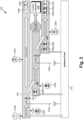
- FIG. 1 shows a diagram of exemplary multi-variant content streaming system 100, according to one implementation.
- Multi-variant content streaming system 100 includes computing platform 102 having processing hardware 104 and system memory 106 implemented as a computer-readable non-transitory storage medium.
- system memory 106 stores software code 110, content database 108, stream rendering services 150, and user profile database 120 including user profiles 122a, 122b, and 122c (hereinafter "user profiles 122a-122c").
- user profiles 122a-122c user profiles 122a-122c
- Figure 1 shows media players 130a, 130b, and 130c (hereinafter “media players 130a-130c”) utilized by respective users 128a, 128b, and 128c (hereinafter “user 128a-128c”) associated with respective user profiles 122a-122c.
- media players 130a-130c are in communication with computing platform 102 via communication network 124 and network communication links 126.
- FIG. 1 Also shown in Figure 1 are primary content 140 provided by multi-variant content streaming system 100, interaction data 134a, 134b, and 134c received from user 128a, interaction data 136 received from user 128b, interaction data 138 received from user 128c, first variant content 142 provided by multi-variant content streaming system 100, second variant content 144 also provided by multi-variant content streaming system 100, and displays 132a, 132b, and 132c (hereinafter "displays 132a-132c”) of respective media players 130a-130c.
- multi-variant content streaming system 100 streams primary content 140 to each of media players 130a-130c, and may receive interaction data 134a, 134b, 134c, 136, and 138 from media players 130a-130c via communication network 124 and network communication links 126.
- multi-variant content streaming system 100 In response to receiving interaction data 134a, 134b, 134c, 136, and 138 from media players 130a-130c, multi-variant content streaming system 100 generates first variant content 142 and second variant content 144, and variously streams one of primary content 140, first variant content 142, or second variant content 144 to each of media players 130a-130c as described in detail below by reference to Figures 4A , 4B , 4C , and 4D .
- Primary content 140 and first and second variant content 142 and 144 may be or include content of a variety of different types.
- primary content 140 and first and second variant content 142 and 144 may be or include audio-video content having both audio and video components, may include video unaccompanied by audio, or may include audio unaccompanied by video.
- primary content 140 and first and second variant content 142 and 144 may be or include digital representations of persons, fictional characters, locations, objects, and identifiers such as brands and logos, for example, which populate a VR, augmented reality (AR), or mixed reality (MR) environment.
- AR augmented reality
- MR mixed reality
- Such content may depict virtual worlds that can be experienced by any number of users synchronously and persistently, while providing continuity of data such as personal identity, user history, entitlements, possessions, payments, and the like.
- the content provided by primary content 140 and first and second variant content 142 and 144 may be a hybrid of traditional audio-video and fully immersive VR/AR/MR experiences, such as interactive video.
- system memory 106 may take the form of any computer-readable non-transitory storage medium.
- computer-readable non-transitory storage medium refers to any medium, excluding a carrier wave or other transitory signal that provides instructions to processing hardware of a computing platform, such as processing hardware 104 of computing platform 102.
- a computer-readable non-transitory storage medium may correspond to various types of media, such as volatile media and non-volatile media, for example.
- Volatile media may include dynamic memory, such as dynamic random access memory (dynamic RAM), while non-volatile memory may include optical, magnetic, or electrostatic storage devices.
- dynamic RAM dynamic random access memory
- non-volatile memory may include optical, magnetic, or electrostatic storage devices.
- Common forms of computer-readable non-transitory storage media include, for example, optical discs, RAM, programmable read-only memory (PROM), erasable PROM (EPROM), and FLASH memory.
- multi-variant content streaming system 100 may include one or more computing platforms, such as computer servers for example, which may be co-located, or may form an interactively linked but distributed system, such as a cloud-based system, for instance.
- processing hardware 104 and system memory 106 may correspond to distributed processor and memory resources within multi-variant content streaming system 100.
- software code 110, content database 108, stream rendering services 150, and user profile database 120 may be stored remotely from one another within the distributed memory resources of multi-variant content streaming system 100.
- stream rendering services 150 may be a video transcoding application internal to multi-variant content streaming system 100, such as Fast Forward Motion Picture Experts Group (FFmpeg) for instance.
- stream rendering services 150 may be an external transcoder, such as Elemental MediaLive ® provided by Amazon Web Services (aws ® ).
- Processing hardware 104 may include a plurality of hardware processing units, such as one or more central processing units, one or more graphics processing units, one or more tensor processing units, one or more field-programmable gate arrays (FPGAs), and an application programming interface (API) server, for example.
- CPU central processing unit
- GPU graphics processing unit
- tensor processing unit TPU
- a CPU includes an Arithmetic Logic Unit (ALU) for carrying out the arithmetic and logical operations of computing platform 102, as well as a Control Unit (CU) for retrieving programs, such as software code 110, from system memory 106, while a GPU may be implemented to reduce the processing overhead of the CPU by performing computationally intensive graphics or other processing tasks.
- a TPU is an application-specific integrated circuit (ASIC) configured specifically for artificial intelligence (AI) applications such as machine learning modeling.
- ASIC application-specific integrated circuit
- computing platform 102 may correspond to one or more web servers, accessible over a packet-switched network such as the Internet, for example.
- computing platform 102 may correspond to one or more computer servers supporting a private wide area network (WAN), local area network (LAN), or included in another type of limited distribution or private network.
- WAN wide area network
- LAN local area network
- multi-variant content streaming system 100 may be implemented virtually, such as in a data center.
- multi-variant content streaming system 100 may be implemented in software, or as virtual machines.
- Figure 1 depicts three media players 130a, 130b, and 130c in the interests conceptual clarity, it is noted that the plurality of media players receiving primary content 140 from multi-variant content streaming system 100 may include fewer than three media players, or more than three media players, such a hundreds, thousands, or millions of media players, for example.
- media players 130a, 130b, and 130c are shown respectively as a smart television (smart TV), a smartphone or tablet computer, and a desktop computer in Figure 1 , those representations are provided merely as examples as well.
- media players 130a-130c may be any suitable mobile or stationary computing devices or systems that implement data processing capabilities sufficient to provide a user interface, support connections to communication network 124, and implement the functionality ascribed to media players 130a-130b herein.
- any of media players 130a-130c may take the form of a laptop computer, smartwatch, or VR or AR device, for example.
- displays 132a-132c of respective media players 130a-130c may be physically integrated with respective media players 130a-130c, or may be communicatively coupled to but physically separate from respective media players 130a-130c.
- displays 132a-132c will typically be integrated with respective media players 130a-130c.
- respective displays 132a-132c may take the form of monitors separate from media players 130a-130c in the form of computer towers.
- displays 132a-132c may be implemented as liquid crystal displays (LCDs), light-emitting diode (LED) displays, organic light-emitting diode (OLED) displays, quantum dot (QD) displays, or any other suitable display screens that perform a physical transformation of signals to light.
- LCDs liquid crystal displays
- LED light-emitting diode
- OLED organic light-emitting diode
- QD quantum dot
- Figure 2 shows diagram 200 depicting a plurality of users interacting with software code 210 to obtain primary content 240, first variant content 242 and second variant content 244, according to one implementation.
- Figure 2 shows users 228a, 228b, and 228c (hereinafter “users 228a-228c"), other user or users 228n (hereinafter “other user(s) 228n”), interaction points 245a and 245b, and content database 208.
- software code 210, primary content 240, first variant content 242 and second variant content 244 correspond respectively in general to software code 110, primary content 140, first variant content 142, and second variant content 144, in Figure 1 .
- software code 110, primary content 140, first variant content 142 and second variant content 144 may share any of the characteristics attributed to respective software code 210, primary content 240, first variant content 242, and second variant content 244 by the present disclosure, and vice versa.
- users 228a-228c and content database 208, in Figure 2 correspond respectfully in general to users 128a-128c and content database 108, in Figure 1 . That is to say, users 128a-128c and content database 108 may share any of the characteristics attributed to respective users 228a-228c and content database 208 by the present disclosure, and vice versa.
- software code 210 streams primary content 240 that can be joined or acquired at various times by users 228a-228c.
- user 228a (hereinafter “first user 228a”) interacts with primary content 240 at interaction point 245a, and in response to that interaction, software code 210 generates first variant content 242, based on primary content 240, and streams first variant content 242 to first user 228a in lieu of primary content 240 while continuing to stream primary content 240 to user 228b (hereinafter "second user 228b”) and user 228c (hereinafter "third user 228c").
- any other user such as second user 228b, may abandon primary content 240 in favor of first variant content 242.
- software code 210 may inform all users receiving primary content 240, or any variant content, what variant content streams are presently active, as well as in some implementations, the comparative popularity of each active variant content stream among other users.
- first user 228a and second user 228b interact with first variant content 242 at interaction 245b.
- software code 210 generates second variant content 244, based on one or both of primary content 240 and first variant content 242, and streams second variant content 244 to first user 228a and second user 228b in lieu of first variant content 242, while continuing to stream primary content 240 to third user 228.
- a user joining an active stream will receive streaming content synchronously with content received by other users. For example, where second user 228b joins first variant content 242 at timestamp 00:06:30 relative to the generation of first variant content 242 in response to interaction by first user 228a with primary content 240, software code 210 may begin streaming first variant content 242 to second user 228b from timestamp 00:06:30.
- a user joining an active stream may receive streaming content asynchronously with content received by other users.
- software code 210 may begin streaming first variant content 242 to second user 228b from timestamp 00:00:00 relative to the generation of first variant content 242, despite the fact that first user 228a is contemporaneously being streamed first variant content 242 at timestamp 00:06:30 relative to the generation of first variant content 242.
- variant content stream may be terminated, as shown in Figure 2 for first variant content 242 after abandonment of first variant content 242 in favor of second variant content by first user 228a and second user 228b. Terminating an abandoned variant content stream advantageously reduces the computing overhead imposed on multi-variant content streaming system 100, as well as advantageously reducing unnecessary network traffic.
- variant content that has been abandoned may be saved to content database 208, and may be re-used in the future in response to an interaction with primary content 240 by third user 228c or any of other user(s) 228n.
- FIG. 3 shows diagram 300 providing a more detailed representation of exemplary software code 310 suitable for use by multi-variant content streaming system 100, in Figure 1 , in combination with stream rendering services 350 providing primary content 340 and layers 352a, 352b, and 352c of enhancement content (hereinafter “enhancement layers") for use in generating variant content, according to one implementation.
- software code 310 includes stream manager 312 and stream compositor 314.
- Also shown in Figure 3 are primary content 340, first variant content 342, second variant content 344, third variant content 346, other variant contents 354a, 354b, 354c, and 354d (hereinafter “other variant contents 354a-354d”), and users 328.
- Software code 310, primary content 340, first variant content 342, second variant content 344, and users 328 correspond respectively in general to software code 110/210, primary content 140/240, first variant content 142/242, second variant content 144/244, and users 128a-128c/228a-228c and 228n in Figures 1 and 2 . Consequently, software code 110/210 primary content 140/240, first variant content 142/242, second variant content 144/244, and users 128a-128c/228a-228c and 228n may share any of the characteristics attributed to software code 310 primary content 340, first variant content 342, second variant content 344, and users 328 by the present disclosure, and vice versa.
- software code 110/210 may contain features corresponding respectively to stream manager 312 and stream compositor 314.
- stream rendering services 350 in Figure 3 , corresponds in general to stream rendering services 150, in Figure 1 , and those corresponding features may share any of the characteristics attributed to either corresponding feature by the present disclosure.
- stream manager 312 of software code 310 responds to interactions by users 128a-128c/328 with content provided by multi-variant content streaming system 100, e.g., interactions by users 128a-128c/328 with first primary content 140/340, first variant content 142/342, second variant content 144/344, and so forth.
- first user 128a interaction by user 128a (hereinafter "first user 128a") with primary content 140/340 may result in stream manager 312 of software code 110/310 instructing stream compositor 314 to obtain enhancement layer 352a from stream rendering services 150/350, and to generate first variant content 142/342 based on primary content 140/340 using enhancement layer 352a.
- second variant content 344 may be generated by stream compositor 314 of software code 310 using primary content 340 and enhancement layer 352b, while third variant content 346 may be based on any of primary content 340 in combination with enhancement layers 352a and 352b, first variant content 342 in combination with enhancement layer 352b, or second variant content 344 in combination with enhancement layer 352a.
- variant content provided by software code 310 may include content from one or more of enhancement layers 352a, 352b, or 352c, but may omit primary content 340.
- Figure 3 depicts first variant content 342, second variant content 344, third variant content and other variant contents 354a-354d as being composited from various enhancement layers 352a, 352b, and 352c, that representation is merely exemplary.
- a live event serving as primary content 340 may be captured by a plurality of cameras each capturing a different perspective of the live event.
- first variant content 342, second variant content 344, and third variant content 346 may simply be different camera feeds, from different perspectives (e.g., different camera locations and/or different camera angles), of the same live event.
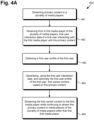
- FIG. 4A shows flowchart 460 outlining an exemplary method for performing multi-variant content streaming, according to one implementation
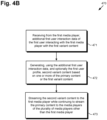
- Figure 4B shows flowchart 470 including exemplary actions for extending the method outlined in Figure 4A
- Figure 4C shows flowchart 480 including other exemplary actions for extending the method outlined in Figure 4A
- Figure 4D shows a continuation of flowchart 480 including exemplary actions for further extending the method outlined in Figures 4A and 4C , according to one implementation.
- flowchart 460 includes streaming primary content 140 to a plurality of media players including media players 130a-130c (action 461).
- Primary content 140 may be streamed to media players 130a-130c, in action 461, by software code 110, executed by processing hardware 104 of multi-variant content streaming system 100, and using communication network 124 and network communication links 126.
- primary content 140 may be or include content of a variety of different types.
- primary content 140 may be or include audio-video content having both audio and video components, may include video unaccompanied by audio, or may include audio unaccompanied by video.
- primary content 140 may be or include digital representations of persons, fictional characters, locations, objects, and identifiers such as brands and logos, for example, which populate a VR, augmented reality AR, or mixed reality MR environment.
- Such content may depict virtual worlds that can be experienced by any number of users synchronously and persistently, while providing continuity of data such as personal identity, user history, entitlements, possessions, payments, and the like.
- primary content 140 may be a hybrid of traditional audio-video and fully immersive VR/AR/MR experiences, such as interactive video.
- flowchart 460 further includes receiving from a first media player (hereinafter “first media player 130a”) of media players 130a-130c, first user interaction data (hereinafter “first user interaction data 134a”) of first user 128a interacting with first media player 130a with primary content 140 (action 462).
- Action 462 may be performed by software code 110 of multi-variant content streaming system 100, executed by processing hardware 104.
- first user interaction data 134a may include a selection by first user 128a of first media player 130a at an interaction point, such as a decision point, of primary content 140.
- primary content 140 includes a storyline, for instance, such an interaction point may be at a fork in the storyline, enabling first user 128a of first media player 130a to choose the continuation path preferred by first user 128a.
- first user interaction data 134a may identify a user initiated transition to a variant of primary content 140.
- primary content 140 includes a live performance, such as a sporting event for example
- first user interaction data 134a may identify a preference by first user 128a of first media player 130 for variant content focusing on a particular sports team or individual athlete.
- flowchart 460 may optionally include obtaining user profile 122a of first user 128a (hereinafter "first user profile 122a) (action 463).
- First user profile 122a may include a content consumption history of first user 128a, as well as preferences of first user 128a, either affirmatively identified by first user 128a or learned inferentially by multi-variant content streaming system 100 using machine learning.
- first user profile 122a may be obtained from user profile database 120 by software code 110 of multi-variant content streaming system 100, executed by processing hardware 104.
- flowchart 460 shows optional action 463 as following action 462, that representation is merely by way of example.
- optional action 463 may follow action 462, may precede action 462, or may be performed in parallel with, i.e., contemporaneously with, action 462.
- optional action 463 may be performed in parallel with action 461.
- flowchart 460 further includes generating, using first user interaction data 134a and optionally further using first user profile 122a of first user 128a, first variant content 142 based on primary content 140 (action 464).
- action 463 is optional, and when included in the method outlined by flowchart 460, the order in which actions 462 and 463 are performed can vary. Thus, in some implementations, action 464 may follow action 462, while in other implementations action 464 may follow action 463.
- first variant content 142/342 may include primary content 140/340 enhanced by one or more of enhancement layers 352a, 352b, or 352c.
- primary content 140/340 may be a live performance and generating first variant content 142/342 in action 464 may include compositing primary content 140/340 with an enhancement content layer including one or more features supplementing the live performance.
- first variant content 142/342 may include primary content 140/340 partly overlaid by fantasy sports data or other statistics relevant to the favored team or athlete.
- variant content such as other variant contents 354a-354d, may be based on primary content 140/340 but may not include primary content 140/340 per se.
- generating first variant content 142/342 may include bifurcating the primary storyline to provide a first variant storyline.
- first variant content 142 may be or include content of a variety of different types.
- first variant content 142 may be or include audio-video content having both audio and video components, may include video unaccompanied by audio, or may include audio unaccompanied by video.
- first variant content 142 may be or include digital representations of persons, fictional characters, locations, objects, and identifiers such as brands and logos, for example, which populate a VR, augmented reality AR, or mixed reality MR environment.
- Such content may depict virtual worlds that can be experienced by any number of users synchronously and persistently, while providing continuity of data such as personal identity, user history, entitlements, possessions, payments, and the like.
- first variant content 142 may be a hybrid of traditional audio-video and fully immersive VR/AR/MR experiences, such as interactive video.
- flowchart 460 further includes streaming first variant content 142 to first media player 130a while continuing to stream primary content 140 to media players 130b and 130c (i.e., media players other than first media player 130a) (action 465).
- First variant content 142 may be streamed to first media player 130a, and primary content 140 may continue to be streamed to media players 130b and 130c, in action 465, by software code 110, executed by processing hardware 104 of multi-variant content streaming system 100, and using communication network 124 and network communication links 126.
- FIG. 4B shows flowchart 470 including exemplary actions for extending the method outlined in Figure 4A , according to one implementation.
- flowchart 470 includes receiving from the first media player, interaction data 134b (hereinafter "additional first user interaction data 134b") of first user 128a interacting with first media player 130a with first variant content 142 (action 471).
- Action 471 may be performed by software code 110 of multi-variant content streaming system 100, executed by processing hardware 104.
- additional first user interaction data 134b may include a selection by first user 128a of first media player 130a at an interaction point, such as a decision point, of primary content 140.
- additional first user interaction data 134b may identify a user initiated transition to another variant of primary content 140.
- first user interaction data 134a may have expressed a preference by first user 128a of coverage of election results for one political party (Party A) to the exclusion of those of another party (Party B).
- first variant content 142 may include nationwide election results for Party A while omitting Party B elections results.
- First user 128a may subsequently provide additional first user interaction data 134b identifying interest by first user 128a in local election results for both Party A and Party B to the exclusion of other national election results.
- flowchart 470 further includes generating, using additional first user interaction data 134b and optionally further using first user profile 122a of first user 128a, second variant content 144 based on primary content 140 (action 473).
- Generation of second variant content 144 may be performed by software code 110 of multi-variant content streaming system 100, executed by processing hardware 104, in a manner analogous to that described above by reference to action 464.
- second variant content 144 may be or include content of a variety of different types.
- second variant content 144 may be or include audio-video content having both audio and video components, may include video unaccompanied by audio, or may include audio unaccompanied by video.
- second variant content 144 may be or include digital representations of persons, fictional characters, locations, objects, and identifiers such as brands and logos, for example, which populate a VR, augmented reality AR, or mixed reality MR environment.
- Such content may depict virtual worlds that can be experienced by any number of users synchronously and persistently, while providing continuity of data such as personal identity, user history, entitlements, possessions, payments, and the like.
- second variant content 144 may be a hybrid of traditional audio-video and fully immersive VR/AR/MR experiences, such as interactive video.
- flowchart 470 further includes streaming second variant content 144 to first media player 130a while continuing to stream primary content 140 to media players 130b and 130c other than first media player 130a (action 473).
- Second variant content 144 may be streamed to media player 130a, and primary content 140 may continue to be streamed to media players 130b and 130c, in action 473, by software code 110, executed by processing hardware 104 of multi-variant content streaming system 100, and using communication network 124 and network communication links 126.
- FIG. 4C shows flowchart 480 including other exemplary actions for extending the method outlined in Figure 4A , according to another implementation.
- flowchart 480 includes receiving from a second media player (hereinafter “second media player 130b") of media players 130a-130c, interaction data 136 (hereinafter “second user interaction data 136") of user 128b (hereinafter “second user 128b”) interacting with media player 130b (hereinafter “second media player 130b”) with primary content 140 (action 481).
- Action 481 may be performed by software code 110 of multi-variant content streaming system 100, executed by processing hardware 104.
- second interaction data 136 may include a selection by second user 128b of second media player 130b at an interaction point, such as a decision point, of primary content 140.
- second interaction data 136 may identify a user initiated transition to a variant of primary content 140.
- flowchart 480 may optionally include obtaining user profile 122b of second user 128b (hereinafter "second user profile 122b") (action 482).
- Second user profile 122b of may include a content consumption history of second user 128b, as well as preferences of second user 128b, either affirmatively identified by second user 128b or learned inferentially by multi-variant content streaming system 100 using machine learning.
- second user profile 122b may be obtained from user profile database 120 by software code 110 of multi-variant content streaming system 100, executed by processing hardware 104.
- flowchart 480 shows optional action 482 as following action 481, that representation is merely by way of example.
- optional action 482 may follow action 481, may precede action 481, may precede any of actions 462 through 465 outlined in Figure 4A , or may be performed in parallel with, i.e., contemporaneously with, action 481 or any of actions 462 through 465.
- optional action 482 in Figure 4C may be performed in parallel with action 461 in Figure 4A .
- flowchart 480 further includes generating, using second interaction data 136 and optionally further using second user profile 122b of second user 128b, second variant content 144 based on primary content 140 (action 483).
- Generation of second variant content 144 may be performed by software code 110 of multi-variant content streaming system 100, executed by processing hardware 104, in a manner analogous to that described above by reference to action 464.
- second variant content 144 may include primary content 140/340 enhanced by one or more of enhancement layers 352a, 352b, or 352c.
- flowchart 480 further includes streaming second variant content 144 to second media player 130b while continuing to stream first variant content 142 to first media player 130a and continuing to stream primary content 140 to media player 130c (i.e., a media player other than first media player 130a and second media player 130b) (action 484).
- First variant content 142 may be streamed to media player 130a
- second variant content 144 may be streamed to second media player 130b
- primary content 140 may continue to be streamed to media player 130c, in action 484, by software code 110, executed by processing hardware 104 of multi-variant content streaming system 100, and using communication network 124 and network communication links 126.
- flowchart 480 includes receiving from first media player 130a, interaction data 134c (hereinafter "more first user interaction data 134c”) of first user 128a interacting with first media player 130a with first variant content 142 (action 485).
- Action 485 may be performed by software code 110 of multi-variant content streaming system 100, executed by processing hardware 104.
- more first user interaction data 134c may include a selection by first user 128a of first media player 130a at an interaction point, such as a decision point, of first variant content 142.
- more first user interaction data 134c may identify a user initiated transition to another variant of primary content 140.
- flowchart 480 further includes identifying, using more first user interaction data 134c and optionally further using first user profile 122a, second variant content 144 as content desirable to first user 128a of first media player 130a (action 486).
- more first user interaction data 134c may identify a user initiated transition to another variant of primary content 140.
- more first user interaction data 134c may identify second variant content 144 as desirable to first user 128a and may cause the transition from first variant content 142 to second variant content 144 for first user 128a to be initiated.
- similarity between a storyline of second variant content 144 and a change in storyline of first variant content 142 due to more first user interaction data 134c may indicate that second variant content would be desirable to first user 128a.
- similarities between second variant content 144 and the content consumption patterns revealed by first user profile 122a may indicate that second variant content 144 would be desirable to first user 128a.
- Identification of second variant content 144 as desirable to first user 128a may be performed by software code 110 of multi-variant content streaming system 100, executed by processing hardware 104.
- flowchart 480 further includes streaming second variant content 144 to first media player 130a while continuing to stream second variant content 144 to second media player 130b and continuing to stream primary content 140 to media player 130c (i.e., a media player other than first media player 130a and second media player 130b) (action 487).
- Second variant content 144 may be streamed to first and second media players 130a and 130b, and primary content 140 may continue to be streamed to media player 130c, in action 487, by software code 110, executed by processing hardware 104 of multi-variant content streaming system 100, and using communication network 124 and network communication links 126.
- first user 128a may receive second variant content 144 synchronously with second user 128b.
- software code 110 may begin streaming second variant content 144 to first user 128a from timestamp 00:06:30.
- first user 128a may receive second variant content 144 asynchronously with variant content 144 received by second user 128b.
- software code 110 may begin streaming second variant content 144 to first user 128a from timestamp 00:00:00 despite the fact that second user 128 is contemporaneously being streamed second variant content 144 at timestamp 00:06:30.
- FIG. 4D shows a continuation of flowchart 480 including exemplary actions for further extending the method outlined in Figures 4A and 4C , according to one implementation.
- flowchart 480 further includes terminating streaming of first variant content 142 upon determination that first variant content 142 is no longer being streamed to any of the plurality of media players (action 488).
- that variant content stream may be terminated, as shown in Figure 2 for first variant content 242 after abandonment of first variant content 242 in favor of second variant content by users 228a and 228b.
- variant content that has been abandoned such as first variant content 242
- Actions 488 and 489 may be performed by software code of multi-variant content streaming system 100, executed by processing hardware 104.
- flowchart 480 further includes receiving from a third media player (hereinafter “third media player 130c”) of media players 130a-130c, interaction data 138 (hereinafter “third user interaction data 138") of user 128c (hereinafter “third user 128c”) interacting with media player 130c (hereinafter “third media player 130c”) with primary content 140 (action 490).
- Action 490 may be performed by software code 110 of multi-variant content streaming system 100, executed by processing hardware 104.
- third user interaction data 138 may include a selection by third user 128c of third media player 130c at an interaction point, such as a decision point, of primary content 140.
- third user interaction data 138 may identify a user initiated transition to a variant of primary content 140.
- flowchart 480 may optionally include obtaining user profile 122c of third user 128c (hereinafter "third user profile 128c) (action 491).
- Third user profile 122c of may include a content consumption history of third user 128c, as well as preferences of third user 128c, either affirmatively identified by third user 128c or learned inferentially by multi-variant content streaming system 100 using machine learning.
- third user profile 122c may be obtained from user profile database 120 by software code 110 of multi-variant content streaming system 100, executed by processing hardware 104.
- flowchart 480 shows optional action 491 as following action 490, that representation is merely by way of example.
- optional action 491 may follow action 490, may precede action 490, may precede any of actions 462 through 465 outlined in Figure 4A or actions 481 through 487 outlined in Figure 4C , or may be performed in parallel with, i.e., contemporaneously with, action 490 or any of actions 462 through 465 or actions 481 through 487.
- optional action 491 in Figure 4D may be performed in parallel with action 461 in Figure 4A .
- flowchart 480 further includes identifying, using third user interaction data 138 and optionally further using third user profile 122c of third user 128c, first variant content 142 as content desirable to third user 128c of third media player 130c (action 492). It is noted that third user interaction data 138 may identify a user initiated transition to another variant of primary content 140. In those use cases third user interaction data 138 may identify first variant content 142 as desirable to third user 128c and may cause the transition from primary content 140 to first variant content 142 for third user 128c to be initiated.
- first variant content 142 may be identified by software code 110 of multi-variant content streaming system 100, executed by processing hardware 104.
- action 491 is optional, and when included in the method outlined by flowchart 480, the order in which actions 490 and 491 are performed can vary. Thus, in some implementations, action 492 may follow action 490, while in other implementations action 492 may follow action 491.
- flowchart 480 further includes obtaining first variant content 142 from content database 108 (action 493).
- First variant content 142 may be obtained from content database 108, in action 493, by software code 110, executed by processing hardware 104 of multi-variant content streaming system 100.
- flowchart 480 further includes streaming first variant content 142 to only third media player 130c while continuing to stream second variant content 144 to first and second media players 130a and 130b, and continuing to stream primary content 140 to any others of the plurality of media players other than first media player 130a, second media player 130b, and third media player 130c (action 494).
- Second variant content 144 may continue to be streamed to first and second media players 130a and 130b, and first variant content may be streamed to third media player 130c, in action 494, by software code 110, executed by processing hardware 104 of multi-variant content streaming system 100, and using communication network 124 and network communication links 126.
- actions 461, 462, 464, and 465, or actions 461, 462, 463, 464, and 465 (hereinafter “actions 461-465"), or actions 461, 462, 464, 465, and actions 471, 472, and 473 (hereinafter “actions 471-473”), or actions 461-465 and actions 471-473, or actions 461, 462, 464, and 465, and actions 481, 483, 484, 485, 486, and 487, or actions 461-465 and actions 481, 483, 484, 485, 486, and 487, or actions 461, 462, 464, and 465, and actions 481, 482, 483, 484, 485, 486, and 487 (hereinafter “actions 481-487”), or actions 461-465 and actions 481-487, or actions 461, 462, 464, and 465, and actions 481, 483, 484, 485, 486, and 487 (hereinafter “actions 481-487”), or actions 461-465 and actions 481-487, or actions 461, 462, 464, and 465, and actions 481,
- the present application discloses systems and methods providing multi-variant content streaming.
- live or pre-recorded linear video production can be transformed into rich entertainment experiences that are advantageously more responsive to the preferences of individual audience members.
- the systems and methods disclosed by the present application advance the state-of-the-art by providing a scalable entertainment experience in which remote users receive a personalized entertainment experiences despite the fact that the ratio of each instance of the variant content to users is typically one-to-many rather than one-to-one.
- it is server-side resources rather than client-side resources that act as the switcher for directing the variant content to users, depending on the user's series of actions or their specific action or actions at an interaction point.
Landscapes
- Engineering & Computer Science (AREA)
- Multimedia (AREA)
- Databases & Information Systems (AREA)
- Signal Processing (AREA)
- Theoretical Computer Science (AREA)
- General Engineering & Computer Science (AREA)
- Data Mining & Analysis (AREA)
- Physics & Mathematics (AREA)
- Computational Linguistics (AREA)
- General Physics & Mathematics (AREA)
- Human Computer Interaction (AREA)
- Computer Security & Cryptography (AREA)
- Computer Graphics (AREA)
- Information Transfer Between Computers (AREA)
- Two-Way Televisions, Distribution Of Moving Picture Or The Like (AREA)
Abstract
Description
- The present invention relates to a method and system for streaming content to media players.
- When providing interactive entertainment that empowers audience members to determine how the performance will evolve, production teams typically tally the responses of participating audience members and then proceed to serve a single linear storyline that uses data from an aggregate audience decision, such as a majority vote. For example, a baseline narrative could contain a story about a character following a path which comes to a fork. Audience members may engage with the storyline by deciding which of two paths the character should take. In a conventional approach, a majority vote would send the character down a single path and present that single outcome to all audience members regardless of their individual votes. Even in instances in which the aggregate vote is split evenly between the two paths, some tie-breaking mechanism is typically used to collapse the two potential alternatives into a single continuation path for the character. Unfortunately, however, the more compelling the performance and the more initially engaged audience members are with the development of the storyline, the more likely it is that such a binary outcome will alienate or at least undesirably disappoint those audience members who preferred the path not taken.
- The present invention is defined by the features of the independent claims. The dependent claims describe preferred embodiments.
- An embodiment of the present invention provides a method comprising:
- streaming a primary content to a plurality of media players;
- receiving from a first media player of the plurality of media players first user interaction data of a first user interacting with the first media player with the primary content;
- generating, using the first user interaction data, a first variant content based on the primary content; and
- streaming the first variant content to the first media player while continuing to stream the primary content to media players of the plurality of media players other than the first media player.
- Preferably the method, further comprising:
- obtaining a first user profile of the first user;
- wherein the first variant content is generated further using the first user profile.
- Preferably the method, further comprising:
- receiving from the first media player additional first user interaction data of the first user interacting with the first media player with the first variant content;
- generating, using the additional first user interaction data, a second variant content based on at least one of the primary content or the first variant content; and
- streaming the second variant content to the first media player while continuing to stream the primary content to the media players of the plurality of media players other than the first media player.
- Preferably the method, further comprising:
- receiving from a second media player of the plurality of media players second interaction data of a second user interacting with the second media player with the primary content;
- generate, using the second interaction data, a second variant content based on the primary content; and
- streaming the second variant content to the second media player while continuing to stream the first variant content to the first media player and continuing to stream the primary content to media players of the plurality of media players other than the first media player and the second media player.
- Preferably the method, further comprising:
- receiving from the first media player more first user interaction data of the first user interacting with the first media player with the first variant content;
- identifying, using the more first user interaction data, the second variant content as content desirable to the first user; and
- streaming the second variant content to the first media player while continuing to stream the second variant content to the second media player and continuing to stream the primary content to the media players of the plurality of media players other than the first media player and the second media player.
- Preferably the method, wherein the second variant content is streamed to the first media player and the second media player asynchronously.
- Preferably the method, further comprising:
- terminating streaming of the first variant content upon determination that the first variant content is no longer being streamed to any of the plurality of media players; and
- saving the first variant content in a content database.
- Preferably the method, further comprising:
- receiving from a third media player of the plurality of media players third user interaction data of a third user interacting with the third media player with the primary content;
- identifying, using the third user interaction data, the first variant content as content desirable to the third user;
- obtaining the first variant content from the content database; and
- streaming the first variant content to only the third media player of the plurality of media players.
- Preferably the method, wherein generating the first variant content comprises compositing the primary content with an enhancement content layer including one or more features supplementing the primary content.
- Preferably the method, wherein the primary content comprises a primary storyline, and wherein generating the first variant content comprises bifurcating the primary storyline to provide a first variant storyline.
- An embodiment of the present invention provides a system including a processing hardware and a system memory storing a software code that when executed performs the method as described herein.
- An embodiment of the present invention provides a system comprising:
- processing hardware; and
- a system memory storing a software code;
- the processing hardware configured to execute the software code to:
- stream a primary content to a plurality of media players;
- receive from a first media player of the plurality of media players, first user interaction data of a first user interacting with the first media player with the primary content;
- generate, using the first user interaction data, a first variant content based on the primary content; and
- stream the first variant content to the first media player while continuing to stream the primary content to media players of the plurality of media players other than the first media player.
- Preferably the system, wherein the processing hardware is further configured to execute the software code to:
- obtain a first user profile of the first user;
- wherein the first variant content is generated further using the first user profile.
- Preferably the system, wherein the processing hardware is further configured to execute the software code to:
- receive from the first media player, additional first user interaction data of the first user interacting with the first media player with the first variant content;
- generate, using the additional first user interaction data, a second variant content based on at least one of the primary content or the first variant content; and
- stream the second variant content to the first media player while continuing to stream the primary content to the media players of the plurality of media players other than the first media player.
- Preferably the system, wherein the processing hardware is further configured to execute the software code to:
- receive from a second media player of the plurality of media players, second user interaction data of a second user interacting with the second media player with the primary content;
- generate, using the second interaction data, a second variant content based on the primary content; and
- stream the second variant content to the second media player while continuing to stream the first variant content to the first media player and continuing to stream the primary content to media players of the plurality of media players other than the first media player and the second media player.
- Preferably the system, wherein the processing hardware is further configured to execute the software code to:
- receive from the first media player, more first user interaction data of the first user interacting with the first media player with the first variant content;
- identify, using the more first user interaction data, the second variant content as content desirable to the first user; and
- stream the second variant content to the first media player while continuing to stream the second variant content to the second media player and continuing to stream the primary content to the media players of the plurality of media players other than the first media player and the second media player.
- Preferably the system, wherein the second variant content is streamed to the first media player and the second media player asynchronously.
- Preferably the system, wherein the processing hardware is further configured to execute the software code to:
- terminate streaming of the first variant content upon determination that the first variant content is no longer being streamed to any of the plurality of media players; and
- save the first variant content in a content database.
- Preferably the system, wherein the processing hardware is further configured to execute the software code to:
- receive from a third media player of the plurality of media players, third user interaction data of a third user interacting with the third media player with the primary content;
- identify, using the third user interaction data, the first variant content as content desirable to the third user;
- obtain the first variant content from the content database; and
- stream the first variant content to only the third media player of the plurality of media players.
- Preferably the system, wherein generating the first variant content comprises compositing the primary content with an enhancement content layer including one or more features supplementing the primary content.
- Preferably the system, wherein the primary content comprises a primary storyline, and wherein generating the first variant content comprises bifurcating the primary storyline to provide a first variant storyline.
- An embodiment of the present invention provides a method for use by a system including processing hardware and a system memory storing a software code, the method comprising:
- streaming, by the software code executed by the processing hardware, a primary content to a plurality of media players;
- receiving from a first media player of the plurality of media players, by the software code executed by the processing hardware, first user interaction data of a first user interacting with the first media player with the primary content;
- generating, by the software code executed by the processing hardware and using the first user interaction data, a first variant content based on the primary content; and
- streaming, by the software code executed by the processing hardware, the first variant content to the first media player while continuing to stream the primary content to media players of the plurality of media players other than the first media player.
- Preferably the method, further comprising:
- obtaining, by the software code executed by the processing hardware, a first user profile of the first user;
- wherein the first variant content is generated further using the first user profile.
- Preferably the method, further comprising:
- receiving from the first media player, by the software code executed by the processing hardware, additional first user interaction data of the first user interacting with the first media player with the first variant content;
- generating, by the software code executed by the processing hardware and using the additional first user interaction data, a second variant content based on at least one of the primary content or the first variant content; and
- streaming, by the software code executed by the processing hardware, the second variant content to the first media player while continuing to stream the primary content to the media players of the plurality of media players other than the first media player.
- Preferably the method, further comprising:
- receiving from a second media player of the plurality of media players, by the software code executed by the processing hardware, second interaction data of a second user interacting with the second media player with the primary content;
- generate, by the software code executed by the processing hardware and using the second interaction data, a second variant content based on the primary content; and
- streaming, by the software code executed by the processing hardware, the second variant content to the second media player while continuing to stream the first variant content to the first media player and continuing to stream the primary content to media players of the plurality of media players other than the first media player and the second media player.
- Preferably the method, further comprising:
- receiving from the first media player, by the software code executed by the processing hardware, more first user interaction data of the first user interacting with the first media player with the first variant content;
- identifying, by the software code executed by the processing hardware and using the more first user interaction data, the second variant content as content desirable to the first user; and
- streaming, by the software code executed by the processing hardware, the second variant content to the first media player while continuing to stream the second variant content to the second media player and continuing to stream the primary content to the media players of the plurality of media players other than the first media player and the second media player.
- Preferably the method, wherein the second variant content is streamed to the first media player and the second media player asynchronously.
- Preferably the method, further comprising:
- terminating, by the software code executed by the processing hardware, streaming of the first variant content upon determination that the first variant content is no longer being streamed to any of the plurality of media players; and
- saving, by the software code executed by the processing hardware, the first variant content in a content database.
- Preferably the method, further comprising:
- receiving from a third media player of the plurality of media players, by the software code executed by the processing hardware, third user interaction data of a third user interacting with the third media player with the primary content;
- identifying, by the software code executed by the processing hardware and using the third user interaction data, the first variant content as content desirable to the third user;
- obtaining, by the software code executed by the processing hardware, the first variant content from the content database; and
- streaming, by the software code executed by the processing hardware, the first variant content to only the third media player of the plurality of media players.
- Preferably the method, wherein generating the first variant content comprises compositing the primary content with an enhancement content layer including one or more features supplementing the primary content.
- Preferably the method, wherein the primary content comprises a primary storyline, and wherein generating the first variant content comprises bifurcating the primary storyline to provide a first variant storyline.
-
-
Figure 1 shows a diagram of an exemplary multi-variant content streaming system, according to one implementation; -
Figure 2 shows a diagram depicting a plurality of users interacting with software code of the system ofFigure 1 to obtain primary content and first and second variant content, according to one implementation; -
Figure 3 shows a diagram providing a more detailed representation of an exemplary software code suitable for use by a multi-variant content streaming system, in combination with stream rendering services available to the system, according to one implementation; -
Figure 4A shows a flowchart outlining an exemplary method for performing multi-variant content streaming, according to one implementation; -
Figure 4B shows a flowchart including exemplary actions for extending the method outlined inFigure 4A , according to one implementation; -
Figure 4C shows a flowchart including exemplary actions for extending the method outlined inFigure 4A , according to another implementation; and -
Figure 4D shows a flowchart including exemplary actions for further extending the method outlined inFigures 4A and4C , according to one implementation. - The following description contains specific information pertaining to implementations in the present disclosure. One skilled in the art will recognize that the present disclosure may be implemented in a manner different from that specifically discussed herein. The drawings in the present application and their accompanying detailed description are directed to merely exemplary implementations. Unless noted otherwise, like or corresponding elements among the figures may be indicated by like or corresponding reference numerals. Moreover, the drawings and illustrations in the present application are generally not to scale, and are not intended to correspond to actual relative dimensions.
- As noted above, when providing interactive entertainment that empowers audience members to determine how the performance will evolve, production teams typically tally the responses of participating audience members and then proceed to serve a single linear storyline that uses data from an aggregate audience decision, such as a majority vote. For example, a baseline narrative could contain a story about a character following a path which comes to a fork. In a conventional approach, a majority vote would send the character down a single path and present that single outcome to all audience members regardless of their individual votes, even in instances in which the aggregate vote is split evenly between the two paths. Unfortunately, however, the more compelling the performance and the more initially engaged audience members are with the development of the storyline, the more likely it is that such a binary outcome will alienate or at least undesirably disappoint those audience members who preferred the path not taken.
- The present application discloses systems and methods providing multi-variant content streaming that address and overcome the deficiencies in the conventional art. By way of conceptual overview, by treating the provision of streaming content more like an interactive video game that remote audiences can participate in, live or pre-recorded linear video production can be reimagined to create rich new experiences that are advantageously more responsive to the preferences of individual audience members.
- According to the present novel and inventive concepts, a primary content and a plurality of instances of variant content can be generated to serve the audience members (hereinafter "users") identified as belonging to different choice groups based on their interactive behavior. To that end, the present application discloses systems and methods providing a scalable entertainment experience in which remote users receive a personalized entertainment experience despite the fact that the ratio of each instance of the variant content to users is typically one-to-many rather than one-to-one. Moreover, according to the concepts disclosed herein, it is server-side resources rather than client-side resources that act as the switcher for directing the variant content to users, depending on the user's series of actions or their specific action or actions at a decision point or interaction point (hereinafter "interaction point").
- Additionally, in some implementations, non-interactive passive users (i.e., non-voting users) can participate in the variant content on the sidelines by contributing engagement that does not affect the plot, and which may be merged into some or all instances of the variant content. For instance, any number of non-interactive users could appear as live participants in the variant content using a virtual engagement tool such as a virtual reality (VR) headset or interactive web browser and be depicted as part of an audience (e.g., a crowd watching a race or a sporting event). The variant content delivered to a particular user could be tailored by the user to apply a filter to the primary content or to follow desired plot outcomes. For instance, in a sporting event, a group of users might desire to view a feed that only shows fans of their preferred team while blocking fans of the opposing teams, and/or to follow narrative paths that highlight activity by their preferred team. Moreover, in some implementations, the systems and methods disclosed by the present application may be substantially or fully automated.
- It is noted that, as defined in the present application, the terms "automation," "automated," and "automating" refer to systems and processes that do not require the participation of a human user, such as a human system administrator. For example, although in some implementations a human production manager may review the performance of the systems and methods disclosed herein, and, in some cases may adjust their performance over time, that human involvement is optional. Thus, in some implementations, the processes described in the present application may be performed under the control of hardware processing components of the disclosed systems. It is further noted that, as defined in the present application, "streaming" refers to the delivery of any type of communication signals usable for broadcast or transmission over Internet Protocol (IP).
-
Figure 1 shows a diagram of exemplary multi-variantcontent streaming system 100, according to one implementation. Multi-variantcontent streaming system 100 includescomputing platform 102 havingprocessing hardware 104 andsystem memory 106 implemented as a computer-readable non-transitory storage medium. According to the exemplary implementation shown inFigure 1 ,system memory 106stores software code 110,content database 108,stream rendering services 150, anduser profile database 120 includinguser profiles user profiles 122a-122c"). It is noted that, as used herein, the expression stream rendering services refers to video encoding and hosting services providing video transcoding and delivery. - In addition,
Figure 1 showsmedia players media players 130a-130c") utilized byrespective users user 128a-128c") associated withrespective user profiles 122a-122c. As shown inFigure 1 ,media players 130a-130c are in communication withcomputing platform 102 viacommunication network 124 and network communication links 126. Also shown inFigure 1 areprimary content 140 provided by multi-variantcontent streaming system 100,interaction data user 128a,interaction data 136 received fromuser 128b,interaction data 138 received fromuser 128c,first variant content 142 provided by multi-variantcontent streaming system 100,second variant content 144 also provided by multi-variantcontent streaming system 100, anddisplays displays 132a-132c") ofrespective media players 130a-130c. - According to the implementation shown in
Figure 1 , multi-variantcontent streaming system 100 streamsprimary content 140 to each ofmedia players 130a-130c, and may receiveinteraction data media players 130a-130c viacommunication network 124 and network communication links 126. In response to receivinginteraction data media players 130a-130c, multi-variantcontent streaming system 100 generatesfirst variant content 142 andsecond variant content 144, and variously streams one ofprimary content 140,first variant content 142, orsecond variant content 144 to each ofmedia players 130a-130c as described in detail below by reference toFigures 4A ,4B ,4C , and4D . -
Primary content 140 and first andsecond variant content primary content 140 and first andsecond variant content primary content 140 and first andsecond variant content primary content 140 and first andsecond variant content - With respect to the representation of
system 100 shown inFigure 1 , it is noted that althoughsoftware code 110,content database 108,stream rendering services 150, anduser profile database 120 are depicted as being stored insystem memory 106 for conceptual clarity, more generally,system memory 106 may take the form of any computer-readable non-transitory storage medium. The expression "computer-readable non-transitory storage medium," as used in the present application, refers to any medium, excluding a carrier wave or other transitory signal that provides instructions to processing hardware of a computing platform, such asprocessing hardware 104 ofcomputing platform 102. Thus, a computer-readable non-transitory storage medium may correspond to various types of media, such as volatile media and non-volatile media, for example. Volatile media may include dynamic memory, such as dynamic random access memory (dynamic RAM), while non-volatile memory may include optical, magnetic, or electrostatic storage devices. Common forms of computer-readable non-transitory storage media include, for example, optical discs, RAM, programmable read-only memory (PROM), erasable PROM (EPROM), and FLASH memory. - It is further noted that although
Figure 1 depictssoftware code 110,content database 108,stream rendering services 150, anduser profile database 120 as being mutually co-located insystem memory 106, that representation is also merely provided as an aid to conceptual clarity. More generally, multi-variantcontent streaming system 100 may include one or more computing platforms, such as computer servers for example, which may be co-located, or may form an interactively linked but distributed system, such as a cloud-based system, for instance. As a result,processing hardware 104 andsystem memory 106 may correspond to distributed processor and memory resources within multi-variantcontent streaming system 100. Thus, it is to be understood thatsoftware code 110,content database 108,stream rendering services 150, anduser profile database 120 may be stored remotely from one another within the distributed memory resources of multi-variantcontent streaming system 100. - Furthermore, in some implementations, one or more of
content database 108,stream rendering services 150, anduser profile database 120 may not be included in multi-variantcontent streaming system 100, but may rather be one or more remote resources communicatively coupled to multi-variantcontent streaming system 100 bycommunication network 124 and network communication links 126. By way of example, in some implementations,stream rendering services 150 may be a video transcoding application internal to multi-variantcontent streaming system 100, such as Fast Forward Motion Picture Experts Group (FFmpeg) for instance. Alternatively,stream rendering services 150 may be an external transcoder, such as Elemental MediaLive® provided by Amazon Web Services (aws®). -
Processing hardware 104 may include a plurality of hardware processing units, such as one or more central processing units, one or more graphics processing units, one or more tensor processing units, one or more field-programmable gate arrays (FPGAs), and an application programming interface (API) server, for example. By way of definition, as used in the present application, the terms "central processing unit" (CPU), "graphics processing unit" (GPU), and "tensor processing unit" (TPU) have their customary meaning in the art. That is to say, a CPU includes an Arithmetic Logic Unit (ALU) for carrying out the arithmetic and logical operations ofcomputing platform 102, as well as a Control Unit (CU) for retrieving programs, such assoftware code 110, fromsystem memory 106, while a GPU may be implemented to reduce the processing overhead of the CPU by performing computationally intensive graphics or other processing tasks. A TPU is an application-specific integrated circuit (ASIC) configured specifically for artificial intelligence (AI) applications such as machine learning modeling. - In some implementations,
computing platform 102 may correspond to one or more web servers, accessible over a packet-switched network such as the Internet, for example. Alternatively,computing platform 102 may correspond to one or more computer servers supporting a private wide area network (WAN), local area network (LAN), or included in another type of limited distribution or private network. As yet another alternative, in some implementations, multi-variantcontent streaming system 100 may be implemented virtually, such as in a data center. For example, in some implementations, multi-variantcontent streaming system 100 may be implemented in software, or as virtual machines. - Although
Figure 1 depicts threemedia players primary content 140 from multi-variantcontent streaming system 100 may include fewer than three media players, or more than three media players, such a hundreds, thousands, or millions of media players, for example. Moreover, althoughmedia players Figure 1 , those representations are provided merely as examples as well. More generally,media players 130a-130c may be any suitable mobile or stationary computing devices or systems that implement data processing capabilities sufficient to provide a user interface, support connections tocommunication network 124, and implement the functionality ascribed tomedia players 130a-130b herein. In other implementations, any ofmedia players 130a-130c may take the form of a laptop computer, smartwatch, or VR or AR device, for example. - With respect to
displays 132a-132c ofrespective media players 130a-130c,displays 132a-132c may be physically integrated withrespective media players 130a-130c, or may be communicatively coupled to but physically separate fromrespective media players 130a-130c. For example, wheremedia players 130a-130c are implemented as smartphones, smart TVs. tablet computers, or VR or AR devices,displays 132a-132c will typically be integrated withrespective media players 130a-130c. By contrast, where mediaplayers media players 130a-130c are implemented as desktop computers,respective displays 132a-132c may take the form of monitors separate frommedia players 130a-130c in the form of computer towers. Furthermore,displays 132a-132c may be implemented as liquid crystal displays (LCDs), light-emitting diode (LED) displays, organic light-emitting diode (OLED) displays, quantum dot (QD) displays, or any other suitable display screens that perform a physical transformation of signals to light. -
Figure 2 shows diagram 200 depicting a plurality of users interacting withsoftware code 210 to obtainprimary content 240,first variant content 242 andsecond variant content 244, according to one implementation. In addition tosoftware code 210,primary content 240,first variant content 242, andsecond variant content 244,Figure 2 showsusers users 228a-228c"), other user orusers 228n (hereinafter "other user(s) 228n"),interaction points content database 208. - It is noted that
software code 210,primary content 240,first variant content 242 andsecond variant content 244 correspond respectively in general tosoftware code 110,primary content 140,first variant content 142, andsecond variant content 144, inFigure 1 . Thus,software code 110,primary content 140,first variant content 142 andsecond variant content 144 may share any of the characteristics attributed torespective software code 210,primary content 240,first variant content 242, andsecond variant content 244 by the present disclosure, and vice versa. Moreover,users 228a-228c andcontent database 208, inFigure 2 , correspond respectfully in general tousers 128a-128c andcontent database 108, inFigure 1 . That is to say,users 128a-128c andcontent database 108 may share any of the characteristics attributed torespective users 228a-228c andcontent database 208 by the present disclosure, and vice versa. - As shown in
Figure 2 ,software code 210 streamsprimary content 240 that can be joined or acquired at various times byusers 228a-228c. As further shown inFigure 2 ,user 228a (hereinafter "first user 228a") interacts withprimary content 240 atinteraction point 245a, and in response to that interaction,software code 210 generatesfirst variant content 242, based onprimary content 240, and streamsfirst variant content 242 tofirst user 228a in lieu ofprimary content 240 while continuing to streamprimary content 240 touser 228b (hereinafter "second user 228b") anduser 228c (hereinafter "third user 228c"). - As also shown in
Figure 2 , once streaming offirst variant content 242 is initiated any other user, such assecond user 228b, may abandonprimary content 240 in favor offirst variant content 242. For example, in someimplementations software code 210 may inform all users receivingprimary content 240, or any variant content, what variant content streams are presently active, as well as in some implementations, the comparative popularity of each active variant content stream among other users. - According to the exemplary implementation shown in
Figure 2 , aftersecond user 228b begins to receivefirst variant content 242,first user 228a andsecond user 228b interact withfirst variant content 242 atinteraction 245b. In response to that interaction,software code 210 generatessecond variant content 244, based on one or both ofprimary content 240 andfirst variant content 242, and streamssecond variant content 244 tofirst user 228a andsecond user 228b in lieu offirst variant content 242, while continuing to streamprimary content 240 to third user 228. - It is noted that other user(s) 228n may join any active content stream (e.g.,
primary content 240 or any variant content) at any time during streaming of that active stream. In some implementations, a user joining an active stream will receive streaming content synchronously with content received by other users. For example, wheresecond user 228b joinsfirst variant content 242 at timestamp 00:06:30 relative to the generation offirst variant content 242 in response to interaction byfirst user 228a withprimary content 240,software code 210 may begin streamingfirst variant content 242 tosecond user 228b from timestamp 00:06:30. However, in other implementations, a user joining an active stream may receive streaming content asynchronously with content received by other users. For example, wheresecond user 228b joinsfirst variant content 242 at timestamp 00:06:30 relative to the generation offirst variant content 242 in response to interaction byfirst user 228a withprimary content 240,software code 210 may begin streamingfirst variant content 242 tosecond user 228b from timestamp 00:00:00 relative to the generation offirst variant content 242, despite the fact thatfirst user 228a is contemporaneously being streamedfirst variant content 242 at timestamp 00:06:30 relative to the generation offirst variant content 242. - It is also noted that in use cases in which users have abandoned a variant content stream, that variant content stream may be terminated, as shown in
Figure 2 forfirst variant content 242 after abandonment offirst variant content 242 in favor of second variant content byfirst user 228a andsecond user 228b. Terminating an abandoned variant content stream advantageously reduces the computing overhead imposed on multi-variantcontent streaming system 100, as well as advantageously reducing unnecessary network traffic. In some implementations, variant content that has been abandoned may be saved tocontent database 208, and may be re-used in the future in response to an interaction withprimary content 240 bythird user 228c or any of other user(s) 228n. -
Figure 3 shows diagram 300 providing a more detailed representation ofexemplary software code 310 suitable for use by multi-variantcontent streaming system 100, inFigure 1 , in combination withstream rendering services 350 providingprimary content 340 andlayers Figure 3 ,software code 310 includesstream manager 312 andstream compositor 314. Also shown inFigure 3 areprimary content 340,first variant content 342,second variant content 344,third variant content 346,other variant contents other variant contents 354a-354d"), andusers 328. -
Software code 310,primary content 340,first variant content 342,second variant content 344, andusers 328 correspond respectively in general tosoftware code 110/210,primary content 140/240,first variant content 142/242,second variant content 144/244, andusers 128a-128c/228a-228c and 228n inFigures 1 and2 . Consequently,software code 110/210primary content 140/240,first variant content 142/242,second variant content 144/244, andusers 128a-128c/228a-228c and 228n may share any of the characteristics attributed tosoftware code 310primary content 340,first variant content 342,second variant content 344, andusers 328 by the present disclosure, and vice versa. That is to say, although not shown inFigures 1 and2 ,software code 110/210 may contain features corresponding respectively to streammanager 312 andstream compositor 314. Moreover,stream rendering services 350, inFigure 3 , corresponds in general to streamrendering services 150, inFigure 1 , and those corresponding features may share any of the characteristics attributed to either corresponding feature by the present disclosure. - According to the exemplary implementation shown in
Figure 3 , and referring further toFigure 1 ,stream manager 312 ofsoftware code 310 responds to interactions byusers 128a-128c/328 with content provided by multi-variantcontent streaming system 100, e.g., interactions byusers 128a-128c/328 with firstprimary content 140/340,first variant content 142/342,second variant content 144/344, and so forth. By way of example, interaction byuser 128a (hereinafter "first user 128a") withprimary content 140/340 may result instream manager 312 ofsoftware code 110/310instructing stream compositor 314 to obtainenhancement layer 352a fromstream rendering services 150/350, and to generatefirst variant content 142/342 based onprimary content 140/340 usingenhancement layer 352a. - As further shown in
Figure 3 ,second variant content 344 may be generated bystream compositor 314 ofsoftware code 310 usingprimary content 340 andenhancement layer 352b, whilethird variant content 346 may be based on any ofprimary content 340 in combination withenhancement layers first variant content 342 in combination withenhancement layer 352b, orsecond variant content 344 in combination withenhancement layer 352a. Moreover, and as shown byother variant contents 354a-354d, in some instances, variant content provided bysoftware code 310 may include content from one or more ofenhancement layers primary content 340. - It is noted that although
Figure 3 depictsfirst variant content 342,second variant content 344, third variant content andother variant contents 354a-354d as being composited fromvarious enhancement layers primary content 340 may be captured by a plurality of cameras each capturing a different perspective of the live event. In those implementations,first variant content 342,second variant content 344, andthird variant content 346 may simply be different camera feeds, from different perspectives (e.g., different camera locations and/or different camera angles), of the same live event. - The functionality of multi-variant
content streaming system 100, inFigure 1 , will be further described below with reference toFigures 4A ,4B ,4C , and4D .Figure 4A showsflowchart 460 outlining an exemplary method for performing multi-variant content streaming, according to one implementation, whileFigure 4B showsflowchart 470 including exemplary actions for extending the method outlined inFigure 4A , according to one implementation.Figure 4C showsflowchart 480 including other exemplary actions for extending the method outlined inFigure 4A , according to another implementation, andFigure 4D shows a continuation offlowchart 480 including exemplary actions for further extending the method outlined inFigures 4A and4C , according to one implementation. With respect to the methods outlined byFigures 4A ,4B ,4C , and4D , it is noted that certain details and features have been left out offlowcharts - Referring to
Figure 4A with further reference toFigure 1 ,flowchart 460 includes streamingprimary content 140 to a plurality of media players includingmedia players 130a-130c (action 461).Primary content 140 may be streamed tomedia players 130a-130c, inaction 461, bysoftware code 110, executed by processinghardware 104 of multi-variantcontent streaming system 100, and usingcommunication network 124 and network communication links 126. - As noted above,
primary content 140 may be or include content of a variety of different types. For example,primary content 140 may be or include audio-video content having both audio and video components, may include video unaccompanied by audio, or may include audio unaccompanied by video. In addition, or alternatively, in some implementations,primary content 140 may be or include digital representations of persons, fictional characters, locations, objects, and identifiers such as brands and logos, for example, which populate a VR, augmented reality AR, or mixed reality MR environment. Such content may depict virtual worlds that can be experienced by any number of users synchronously and persistently, while providing continuity of data such as personal identity, user history, entitlements, possessions, payments, and the like. Moreover, in some implementations,primary content 140 may be a hybrid of traditional audio-video and fully immersive VR/AR/MR experiences, such as interactive video. - Continuing to refer to
Figures 4A and1 in combination,flowchart 460 further includes receiving from a first media player (hereinafter "first media player 130a") ofmedia players 130a-130c, first user interaction data (hereinafter "firstuser interaction data 134a") offirst user 128a interacting withfirst media player 130a with primary content 140 (action 462).Action 462 may be performed bysoftware code 110 of multi-variantcontent streaming system 100, executed by processinghardware 104. For example, firstuser interaction data 134a may include a selection byfirst user 128a offirst media player 130a at an interaction point, such as a decision point, ofprimary content 140. Whereprimary content 140 includes a storyline, for instance, such an interaction point may be at a fork in the storyline, enablingfirst user 128a offirst media player 130a to choose the continuation path preferred byfirst user 128a. - Alternatively, or in addition, first
user interaction data 134a may identify a user initiated transition to a variant ofprimary content 140. For instance, whereprimary content 140 includes a live performance, such as a sporting event for example, firstuser interaction data 134a may identify a preference byfirst user 128a of first media player 130 for variant content focusing on a particular sports team or individual athlete. - Continuing to refer to
Figures 4A and1 in combination, in some implementations, as shown inFigure 4A ,flowchart 460 may optionally include obtaininguser profile 122a offirst user 128a (hereinafter "first user profile 122a) (action 463).First user profile 122a may include a content consumption history offirst user 128a, as well as preferences offirst user 128a, either affirmatively identified byfirst user 128a or learned inferentially by multi-variantcontent streaming system 100 using machine learning. In implementations in whichoptional action 463 is performed,first user profile 122a may be obtained fromuser profile database 120 bysoftware code 110 of multi-variantcontent streaming system 100, executed by processinghardware 104. It is noted that althoughflowchart 460 showsoptional action 463 as followingaction 462, that representation is merely by way of example. In various implementations,optional action 463 may followaction 462, may precedeaction 462, or may be performed in parallel with, i.e., contemporaneously with,action 462. Moreover, it is further noted that, in some implementations,optional action 463 may be performed in parallel withaction 461. - Continuing to refer to
Figures 4A and1 in combination,flowchart 460 further includes generating, using firstuser interaction data 134a and optionally further usingfirst user profile 122a offirst user 128a,first variant content 142 based on primary content 140 (action 464). As noted above,action 463 is optional, and when included in the method outlined byflowchart 460, the order in whichactions action 464 may followaction 462, while inother implementations action 464 may followaction 463. - With respect to generation of
first variant content 142, it is noted that as described above by reference toFigure 3 , in some use cases,first variant content 142/342 may includeprimary content 140/340 enhanced by one or more ofenhancement layers primary content 140/340 may be a live performance and generatingfirst variant content 142/342 inaction 464 may include compositingprimary content 140/340 with an enhancement content layer including one or more features supplementing the live performance. As a specific example of the foregoing, whereprimary content 140/340 is a live broadcast of a sporting event, and one or more of firstuser interaction data 134a orfirst user profile 122a of identifies a particular team or athlete as being favored byfirst user 128a,first variant content 142/342 may includeprimary content 140/340 partly overlaid by fantasy sports data or other statistics relevant to the favored team or athlete. - Alternatively, and as further shown in
Figure 3 , in some use cases, variant content, such asother variant contents 354a-354d, may be based onprimary content 140/340 but may not includeprimary content 140/340 per se. For example, whereprimary content 140/340 has a primary storyline, generatingfirst variant content 142/342 may include bifurcating the primary storyline to provide a first variant storyline. - As noted above, like
primary content 140,first variant content 142 may be or include content of a variety of different types. For example,first variant content 142 may be or include audio-video content having both audio and video components, may include video unaccompanied by audio, or may include audio unaccompanied by video. In addition, or alternatively, in some implementations,first variant content 142 may be or include digital representations of persons, fictional characters, locations, objects, and identifiers such as brands and logos, for example, which populate a VR, augmented reality AR, or mixed reality MR environment. Such content may depict virtual worlds that can be experienced by any number of users synchronously and persistently, while providing continuity of data such as personal identity, user history, entitlements, possessions, payments, and the like. Moreover, in some implementations,first variant content 142 may be a hybrid of traditional audio-video and fully immersive VR/AR/MR experiences, such as interactive video. - Referring to
Figures 4A and1 in combination,flowchart 460 further includes streamingfirst variant content 142 tofirst media player 130a while continuing to streamprimary content 140 tomedia players first media player 130a) (action 465).First variant content 142 may be streamed tofirst media player 130a, andprimary content 140 may continue to be streamed tomedia players action 465, bysoftware code 110, executed by processinghardware 104 of multi-variantcontent streaming system 100, and usingcommunication network 124 and network communication links 126. -
Figure 4B showsflowchart 470 including exemplary actions for extending the method outlined inFigure 4A , according to one implementation. Referring toFigure 4B with further reference toFigure 1 ,flowchart 470 includes receiving from the first media player,interaction data 134b (hereinafter "additional firstuser interaction data 134b") offirst user 128a interacting withfirst media player 130a with first variant content 142 (action 471).Action 471 may be performed bysoftware code 110 of multi-variantcontent streaming system 100, executed by processinghardware 104. For example, additional firstuser interaction data 134b may include a selection byfirst user 128a offirst media player 130a at an interaction point, such as a decision point, ofprimary content 140. Alternatively, or in addition, additional firstuser interaction data 134b may identify a user initiated transition to another variant ofprimary content 140. - By way of example, where
primary content 140 includes live election coverage, firstuser interaction data 134a may have expressed a preference byfirst user 128a of coverage of election results for one political party (Party A) to the exclusion of those of another party (Party B). In such a use case,first variant content 142 may include nationwide election results for Party A while omitting Party B elections results.First user 128a may subsequently provide additional firstuser interaction data 134b identifying interest byfirst user 128a in local election results for both Party A and Party B to the exclusion of other national election results. - Continuing to refer to
Figures 4B and1 in combination,flowchart 470 further includes generating, using additional firstuser interaction data 134b and optionally further usingfirst user profile 122a offirst user 128a,second variant content 144 based on primary content 140 (action 473). Generation ofsecond variant content 144 may be performed bysoftware code 110 of multi-variantcontent streaming system 100, executed by processinghardware 104, in a manner analogous to that described above by reference toaction 464. - As noted above, like
primary content 140 andfirst variant content 142,second variant content 144 may be or include content of a variety of different types. For example,second variant content 144 may be or include audio-video content having both audio and video components, may include video unaccompanied by audio, or may include audio unaccompanied by video. In addition, or alternatively, in some implementations,second variant content 144 may be or include digital representations of persons, fictional characters, locations, objects, and identifiers such as brands and logos, for example, which populate a VR, augmented reality AR, or mixed reality MR environment. Such content may depict virtual worlds that can be experienced by any number of users synchronously and persistently, while providing continuity of data such as personal identity, user history, entitlements, possessions, payments, and the like. Moreover, in some implementations,second variant content 144 may be a hybrid of traditional audio-video and fully immersive VR/AR/MR experiences, such as interactive video. - Continuing to refer to
Figures 4B and1 in combination,flowchart 470 further includes streamingsecond variant content 144 tofirst media player 130a while continuing to streamprimary content 140 tomedia players first media player 130a (action 473).Second variant content 144 may be streamed tomedia player 130a, andprimary content 140 may continue to be streamed tomedia players action 473, bysoftware code 110, executed by processinghardware 104 of multi-variantcontent streaming system 100, and usingcommunication network 124 and network communication links 126. -
Figure 4C showsflowchart 480 including other exemplary actions for extending the method outlined inFigure 4A , according to another implementation. Referring toFigures 4C and1 in combination,flowchart 480 includes receiving from a second media player (hereinafter "second media player 130b") ofmedia players 130a-130c, interaction data 136 (hereinafter "seconduser interaction data 136") ofuser 128b (hereinafter "second user 128b") interacting withmedia player 130b (hereinafter "second media player 130b") with primary content 140 (action 481).Action 481 may be performed bysoftware code 110 of multi-variantcontent streaming system 100, executed by processinghardware 104. For example,second interaction data 136 may include a selection bysecond user 128b ofsecond media player 130b at an interaction point, such as a decision point, ofprimary content 140. Alternatively, or in addition,second interaction data 136 may identify a user initiated transition to a variant ofprimary content 140. - Continuing to refer to
Figures 4C and1 in combination, in some implementations, as shown inFigure 4C ,flowchart 480 may optionally include obtaininguser profile 122b ofsecond user 128b (hereinafter "second user profile 122b") (action 482).Second user profile 122b of may include a content consumption history ofsecond user 128b, as well as preferences ofsecond user 128b, either affirmatively identified bysecond user 128b or learned inferentially by multi-variantcontent streaming system 100 using machine learning. In implementations in whichoptional action 482 is performed,second user profile 122b may be obtained fromuser profile database 120 bysoftware code 110 of multi-variantcontent streaming system 100, executed by processinghardware 104. It is noted that althoughflowchart 480 showsoptional action 482 as followingaction 481, that representation is merely by way of example. In various implementations,optional action 482 may followaction 481, may precedeaction 481, may precede any ofactions 462 through 465 outlined inFigure 4A , or may be performed in parallel with, i.e., contemporaneously with,action 481 or any ofactions 462 through 465. Moreover, it is further noted that, in some implementations,optional action 482 inFigure 4C may be performed in parallel withaction 461 inFigure 4A . - Continuing to refer to
Figures 4C and1 in combination,flowchart 480 further includes generating, usingsecond interaction data 136 and optionally further usingsecond user profile 122b ofsecond user 128b,second variant content 144 based on primary content 140 (action 483). Generation ofsecond variant content 144 may be performed bysoftware code 110 of multi-variantcontent streaming system 100, executed by processinghardware 104, in a manner analogous to that described above by reference toaction 464. - As noted above,
action 482 is optional, and when included in the method outlined byflowchart 480, the order in whichactions action 483 may followaction 481, while inother implementations action 483 may followaction 482. With respect to generation ofsecond variant content 144, it is noted that as described above by reference toFigure 3 , in some use casessecond variant content 144/344 may includeprimary content 140/340 enhanced by one or more ofenhancement layers - Continuing to refer to
Figures 4C and1 in combination,flowchart 480 further includes streamingsecond variant content 144 tosecond media player 130b while continuing to streamfirst variant content 142 tofirst media player 130a and continuing to streamprimary content 140 tomedia player 130c (i.e., a media player other thanfirst media player 130a andsecond media player 130b) (action 484).First variant content 142 may be streamed tomedia player 130a,second variant content 144 may be streamed tosecond media player 130b, andprimary content 140 may continue to be streamed tomedia player 130c, inaction 484, bysoftware code 110, executed by processinghardware 104 of multi-variantcontent streaming system 100, and usingcommunication network 124 and network communication links 126. - Continuing to refer to
Figures 4C and1 in combination,flowchart 480 includes receiving fromfirst media player 130a,interaction data 134c (hereinafter "more firstuser interaction data 134c") offirst user 128a interacting withfirst media player 130a with first variant content 142 (action 485).Action 485 may be performed bysoftware code 110 of multi-variantcontent streaming system 100, executed by processinghardware 104. For example, more firstuser interaction data 134c may include a selection byfirst user 128a offirst media player 130a at an interaction point, such as a decision point, offirst variant content 142. Alternatively, or in addition, more firstuser interaction data 134c may identify a user initiated transition to another variant ofprimary content 140. - Continuing to refer to
Figures 4C and1 in combination,flowchart 480 further includes identifying, using more firstuser interaction data 134c and optionally further usingfirst user profile 122a,second variant content 144 as content desirable tofirst user 128a offirst media player 130a (action 486). As stated above, in some instances, more firstuser interaction data 134c may identify a user initiated transition to another variant ofprimary content 140. In those use cases more firstuser interaction data 134c may identifysecond variant content 144 as desirable tofirst user 128a and may cause the transition fromfirst variant content 142 tosecond variant content 144 forfirst user 128a to be initiated. Alternatively, similarity between a storyline ofsecond variant content 144 and a change in storyline offirst variant content 142 due to more firstuser interaction data 134c may indicate that second variant content would be desirable tofirst user 128a. In addition, or as yet another alternative, similarities betweensecond variant content 144 and the content consumption patterns revealed byfirst user profile 122a may indicate thatsecond variant content 144 would be desirable tofirst user 128a. Identification ofsecond variant content 144 as desirable tofirst user 128a may be performed bysoftware code 110 of multi-variantcontent streaming system 100, executed by processinghardware 104. - Continuing to refer to
Figures 4C and1 in combination,flowchart 480 further includes streamingsecond variant content 144 tofirst media player 130a while continuing to streamsecond variant content 144 tosecond media player 130b and continuing to streamprimary content 140 tomedia player 130c (i.e., a media player other thanfirst media player 130a andsecond media player 130b) (action 487).Second variant content 144 may be streamed to first andsecond media players primary content 140 may continue to be streamed tomedia player 130c, inaction 487, bysoftware code 110, executed by processinghardware 104 of multi-variantcontent streaming system 100, and usingcommunication network 124 and network communication links 126. - By analogy to the description provided above with reference to
Figure 2 , in some use cases,first user 128a may receivesecond variant content 144 synchronously withsecond user 128b. For example, wherefirst user 128a begins receivingsecond variant content 144 at timestamp 00:06:30 relative to the generation ofsecond variant content 144 in response tosecond interaction data 136 received fromsecond user 128b,software code 110 may begin streamingsecond variant content 144 tofirst user 128a from timestamp 00:06:30. However, in other implementations,first user 128a may receivesecond variant content 144 asynchronously withvariant content 144 received bysecond user 128b. For example, where first user begins to receivesecond variant content 144 at timestamp 00:06:30 relative to the generation ofsecond variant content 144 in response tosecond interaction data 136 received fromsecond user 128b,software code 110 may begin streamingsecond variant content 144 tofirst user 128a from timestamp 00:00:00 despite the fact that second user 128 is contemporaneously being streamedsecond variant content 144 at timestamp 00:06:30. -
Figure 4D shows a continuation offlowchart 480 including exemplary actions for further extending the method outlined inFigures 4A and4C , according to one implementation. Referring toFigures 4D and1 in combination,flowchart 480 further includes terminating streaming offirst variant content 142 upon determination thatfirst variant content 142 is no longer being streamed to any of the plurality of media players (action 488). As noted above by reference to another exemplary use case shown and described by reference toFigure 2 , in use cases in which users have abandoned a variant content stream, that variant content stream may be terminated, as shown inFigure 2 forfirst variant content 242 after abandonment offirst variant content 242 in favor of second variant content byusers Figure 2 , variant content that has been abandoned, such asfirst variant content 242, may be saved to content database 208 (action 489), and may be re-used in the future in response to an interaction withprimary content 240 bythird user 228c or any of other user(s) 228n.Actions content streaming system 100, executed by processinghardware 104. - Continuing to refer to
Figures 4D and1 in combination,flowchart 480 further includes receiving from a third media player (hereinafter "third media player 130c") ofmedia players 130a-130c, interaction data 138 (hereinafter "thirduser interaction data 138") ofuser 128c (hereinafter "third user 128c") interacting withmedia player 130c (hereinafter "third media player 130c") with primary content 140 (action 490).Action 490 may be performed bysoftware code 110 of multi-variantcontent streaming system 100, executed by processinghardware 104. For example, thirduser interaction data 138 may include a selection bythird user 128c ofthird media player 130c at an interaction point, such as a decision point, ofprimary content 140. Alternatively, or in addition, thirduser interaction data 138 may identify a user initiated transition to a variant ofprimary content 140. - Continuing to refer to
Figures 4D and1 in combination, in some implementations, as shown inFigure 4D ,flowchart 480 may optionally include obtaininguser profile 122c ofthird user 128c (hereinafter "third user profile 128c) (action 491).Third user profile 122c of may include a content consumption history ofthird user 128c, as well as preferences ofthird user 128c, either affirmatively identified bythird user 128c or learned inferentially by multi-variantcontent streaming system 100 using machine learning. In implementations in whichoptional action 491 is performed,third user profile 122c may be obtained fromuser profile database 120 bysoftware code 110 of multi-variantcontent streaming system 100, executed by processinghardware 104. It is noted that althoughflowchart 480 showsoptional action 491 as followingaction 490, that representation is merely by way of example. In various implementations,optional action 491 may followaction 490, may precedeaction 490, may precede any ofactions 462 through 465 outlined inFigure 4A oractions 481 through 487 outlined inFigure 4C , or may be performed in parallel with, i.e., contemporaneously with,action 490 or any ofactions 462 through 465 oractions 481 through 487. Moreover, it is further noted that, in some implementations,optional action 491 inFigure 4D may be performed in parallel withaction 461 inFigure 4A . - Continuing to refer to
Figures 4D and1 in combination,flowchart 480 further includes identifying, using thirduser interaction data 138 and optionally further usingthird user profile 122c ofthird user 128c,first variant content 142 as content desirable tothird user 128c ofthird media player 130c (action 492). It is noted that thirduser interaction data 138 may identify a user initiated transition to another variant ofprimary content 140. In those use cases thirduser interaction data 138 may identifyfirst variant content 142 as desirable tothird user 128c and may cause the transition fromprimary content 140 tofirst variant content 142 forthird user 128c to be initiated. Alternatively, similarity between a storyline offirst variant content 142 and a change in storyline ofprimary content 140 due to thirduser interaction data 138 may indicate that first variant content would be desirable tothird user 128c. In addition, or as yet another alternative, similarities betweenfirst variant content 142 and the content consumption patterns revealed bythird user profile 122c may indicate thatfirst variant content 142 would be desirable tothird user 128c. Identification offirst variant content 142 as desirable tothird user 128c may be performed bysoftware code 110 of multi-variantcontent streaming system 100, executed by processinghardware 104. As noted above,action 491 is optional, and when included in the method outlined byflowchart 480, the order in whichactions action 492 may followaction 490, while inother implementations action 492 may followaction 491. - Continuing to refer to
Figures 4D and1 in combination,flowchart 480 further includes obtainingfirst variant content 142 from content database 108 (action 493).First variant content 142 may be obtained fromcontent database 108, inaction 493, bysoftware code 110, executed by processinghardware 104 of multi-variantcontent streaming system 100. - Continuing to refer to
Figures 4D and1 in combination,flowchart 480 further includes streamingfirst variant content 142 to onlythird media player 130c while continuing to streamsecond variant content 144 to first andsecond media players primary content 140 to any others of the plurality of media players other thanfirst media player 130a,second media player 130b, andthird media player 130c (action 494).Second variant content 144 may continue to be streamed to first andsecond media players third media player 130c, inaction 494, bysoftware code 110, executed by processinghardware 104 of multi-variantcontent streaming system 100, and usingcommunication network 124 and network communication links 126. - With respect to the methods outlined by flowcharts 460, 470, and 480, it is noted that actions 461, 462, 464, and 465, or actions 461, 462, 463, 464, and 465 (hereinafter "actions 461-465"), or actions 461, 462, 464, 465, and actions 471, 472, and 473 (hereinafter "actions 471-473"), or actions 461-465 and actions 471-473, or actions 461, 462, 464, and 465, and actions 481, 483, 484, 485, 486, and 487, or actions 461-465 and actions 481, 483, 484, 485, 486, and 487, or actions 461, 462, 464, and 465, and actions 481, 482, 483, 484, 485, 486, and 487 (hereinafter "actions 481-487"), or actions 461-465 and actions 481-487, or actions 461, 462, 464, and 465, and actions 481, 483, 484, 485, 486, 487, 488, 489, 490, 492, 493, and 494, or actions 461-465 and actions 481, 483, 484, 485, 486, 487, 488, 489, 490, 492, 493, and 494, or actions 461, 462, 464, and 465, and actions 481, 482, 483, 484, 485, 486, 487, 488, 489, and 490 (hereinafter "actions 481-490") and actions 492, 493, and 494, or actions 461-465 and actions 481-490, and actions 492, 493, and 494, or actions 461, 462, 464, and 465, and actions 481, 483, 484, 485, 486, 487, and actions 488, 489, 490, 491, 492, 493, and 494 (hereinafter "actions 488-494"), or actions 461, 462, 464, and 465, and actions 481-490, 491, 492, 493, and 494 (hereinafter "actions 481-494"), or actions 461-465 and actions 481, 483, 484, 485, 486, 487, 488, 489, 490, 491, 492, 493, and 494, or actions 461-465 and actions 481- 494, may be performed as automated processes from which human involvement may be omitted.
- Thus, the present application discloses systems and methods providing multi-variant content streaming. By treating the provision of streaming content more like an interactive video game that remote users can participate in, live or pre-recorded linear video production can be transformed into rich entertainment experiences that are advantageously more responsive to the preferences of individual audience members. The systems and methods disclosed by the present application advance the state-of-the-art by providing a scalable entertainment experience in which remote users receive a personalized entertainment experiences despite the fact that the ratio of each instance of the variant content to users is typically one-to-many rather than one-to-one. Moreover, according to the concepts disclosed herein, it is server-side resources rather than client-side resources that act as the switcher for directing the variant content to users, depending on the user's series of actions or their specific action or actions at an interaction point.
- From the above description it is manifest that various techniques can be used for implementing the concepts described in the present application without departing from the scope of those concepts. Moreover, while the concepts have been described with specific reference to certain implementations, a person of ordinary skill in the art would recognize that changes can be made in form and detail without departing from the scope of those concepts. As such, the described implementations are to be considered in all respects as illustrative and not restrictive.
Claims (11)
- A method comprising:streaming a primary content to a plurality of media players;receiving from a first media player of the plurality of media players first user interaction data of a first user interacting with the first media player with the primary content;generating, using the first user interaction data, a first variant content based on the primary content; andstreaming the first variant content to the first media player while continuing to stream the primary content to media players of the plurality of media players other than the first media player.
- The method of claim 1, further comprising:obtaining a first user profile of the first user;wherein the first variant content is generated further using the first user profile.
- The method of claim 1 or 2, further comprising:receiving from the first media player additional first user interaction data of the first user interacting with the first media player with the first variant content;generating, using the additional first user interaction data, a second variant content based on at least one of the primary content or the first variant content; andstreaming the second variant content to the first media player while continuing to stream the primary content to the media players of the plurality of media players other than the first media player.
- The method of at least one of claims 1 to 3, further comprising:receiving from a second media player of the plurality of media players second interaction data of a second user interacting with the second media player with the primary content;generate, using the second interaction data, a second variant content based on the primary content; andstreaming the second variant content to the second media player while continuing to stream the first variant content to the first media player and continuing to stream the primary content to media players of the plurality of media players other than the first media player and the second media player.
- The method of claim 4, further comprising:receiving from the first media player more first user interaction data of the first user interacting with the first media player with the first variant content;identifying, using the more first user interaction data, the second variant content as content desirable to the first user; andstreaming the second variant content to the first media player while continuing to stream the second variant content to the second media player and continuing to stream the primary content to the media players of the plurality of media players other than the first media player and the second media player.
- The method of claim 5, wherein the second variant content is streamed to the first media player and the second media player asynchronously.
- The method of at least one of claims 1 to 6, further comprising:terminating streaming of the first variant content upon determination that the first variant content is no longer being streamed to any of the plurality of media players; andsaving the first variant content in a content database.
- The method of claim 7, further comprising:receiving from a third media player of the plurality of media players third user interaction data of a third user interacting with the third media player with the primary content;identifying, using the third user interaction data, the first variant content as content desirable to the third user;obtaining the first variant content from the content database; andstreaming the first variant content to only the third media player of the plurality of media players.
- The method of at least one of claims 1 to 8, wherein generating the first variant content comprises compositing the primary content with an enhancement content layer including one or more features supplementing the primary content.
- The method of at least one of claims 1 to 9, wherein the primary content comprises a primary storyline, and wherein generating the first variant content comprises bifurcating the primary storyline to provide a first variant storyline.
- A system including a processing hardware and a system memory storing a software code that when executed performs the method of any of claims 1-10.
Applications Claiming Priority (1)
| Application Number | Priority Date | Filing Date | Title |
|---|---|---|---|
| US17/963,837 US12556770B2 (en) | 2022-10-11 | 2022-10-11 | Multi-variant content streaming |
Publications (1)
| Publication Number | Publication Date |
|---|---|
| EP4354878A1 true EP4354878A1 (en) | 2024-04-17 |
Family
ID=88236633
Family Applications (1)
| Application Number | Title | Priority Date | Filing Date |
|---|---|---|---|
| EP23200328.5A Pending EP4354878A1 (en) | 2022-10-11 | 2023-09-28 | Multi-variant content streaming |
Country Status (2)
| Country | Link |
|---|---|
| US (1) | US12556770B2 (en) |
| EP (1) | EP4354878A1 (en) |
Citations (2)
| Publication number | Priority date | Publication date | Assignee | Title |
|---|---|---|---|---|
| US20190046879A1 (en) * | 2017-10-17 | 2019-02-14 | Kuma LLC | Systems and methods for interactive electronic games having scripted components |
| US20210067844A1 (en) * | 2019-08-26 | 2021-03-04 | Disney Enterprises, Inc. | Cloud-Based Image Rendering for Video Stream Enrichment |
Family Cites Families (50)
| Publication number | Priority date | Publication date | Assignee | Title |
|---|---|---|---|---|
| US7448063B2 (en) | 1991-11-25 | 2008-11-04 | Actv, Inc. | Digital interactive system for providing full interactivity with live programming events |
| US5903317A (en) | 1993-02-14 | 1999-05-11 | Orad Hi-Tech Systems Ltd. | Apparatus and method for detecting, identifying and incorporating advertisements in a video |
| US5914748A (en) | 1996-08-30 | 1999-06-22 | Eastman Kodak Company | Method and apparatus for generating a composite image using the difference of two images |
| US7360230B1 (en) | 1998-07-27 | 2008-04-15 | Microsoft Corporation | Overlay management |
| US7046732B1 (en) | 2001-06-15 | 2006-05-16 | Objectvideo, Inc. | Video coloring book |
| CA2365372A1 (en) | 2001-12-18 | 2003-06-18 | Ibm Canada Limited-Ibm Canada Limitee | Method and apparatus for editing a production data store by shadowing content |
| US20040210947A1 (en) | 2003-04-15 | 2004-10-21 | Shusman Chad W. | Method and apparatus for interactive video on demand |
| US7249067B2 (en) | 2002-10-04 | 2007-07-24 | Vpi Color, Llc | System and method for creating customized catalogues |
| JP3917063B2 (en) | 2002-11-21 | 2007-05-23 | 株式会社東芝 | Semiconductor device and manufacturing method thereof |
| US8645988B2 (en) | 2002-12-13 | 2014-02-04 | Sony Corporation | Content personalization for digital content |
| US7403654B2 (en) | 2004-10-04 | 2008-07-22 | Arcsoft, Inc. | Enhanced automatic red eye removal |
| US20060153300A1 (en) | 2005-01-12 | 2006-07-13 | Nokia Corporation | Method and system for motion vector prediction in scalable video coding |
| US7974341B2 (en) | 2005-05-03 | 2011-07-05 | Qualcomm, Incorporated | Rate control for multi-layer video design |
| US20070220429A1 (en) | 2006-03-17 | 2007-09-20 | Microsoft Corporation | Layered customization of a help user interface |
| US20080033804A1 (en) | 2006-07-14 | 2008-02-07 | Vulano Group, Inc. | Network architecture for dynamic personalized object placement in a multi-media program |
| US8869027B2 (en) | 2006-08-04 | 2014-10-21 | Apple Inc. | Management and generation of dashboards |
| US7536645B2 (en) | 2006-10-23 | 2009-05-19 | Research In Motion, Ltd | System and method for customizing layer based themes |
| US20080152006A1 (en) | 2006-12-22 | 2008-06-26 | Qualcomm Incorporated | Reference frame placement in the enhancement layer |
| GB0703974D0 (en) | 2007-03-01 | 2007-04-11 | Sony Comp Entertainment Europe | Entertainment device |
| US8091039B2 (en) | 2007-04-13 | 2012-01-03 | Apple Inc. | Authoring interface which distributes composited elements about the display |
| US7532515B2 (en) | 2007-05-14 | 2009-05-12 | Intel Corporation | Voltage reference generator using big flash cell |
| US8848787B2 (en) | 2007-10-15 | 2014-09-30 | Qualcomm Incorporated | Enhancement layer coding for scalable video coding |
| US8140340B2 (en) | 2008-01-18 | 2012-03-20 | International Business Machines Corporation | Using voice biometrics across virtual environments in association with an avatar's movements |
| US20090240736A1 (en) | 2008-03-24 | 2009-09-24 | James Crist | Method and System for Creating a Personalized Multimedia Production |
| US8584025B2 (en) | 2008-05-02 | 2013-11-12 | International Business Machines Corporation | Virtual world teleportation |
| US20100241507A1 (en) | 2008-07-02 | 2010-09-23 | Michael Joseph Quinn | System and method for searching, advertising, producing and displaying geographic territory-specific content in inter-operable co-located user-interface components |
| US8306969B2 (en) | 2008-09-23 | 2012-11-06 | Microsoft Corporation | Linking search queries to rich media themes |
| US9747371B2 (en) | 2008-10-14 | 2017-08-29 | Disney Enterprises, Inc. | Method and system for producing customized content |
| US8347343B2 (en) | 2008-11-18 | 2013-01-01 | Lg Electronics Inc. | Method for receiving a broadcast signal |
| KR101673426B1 (en) | 2009-04-01 | 2016-11-07 | 포스월 미디어, 인코포레이티드 | Systems, methods, and apparatuses for enhancing video advertising with interactive content |
| US11232458B2 (en) * | 2010-02-17 | 2022-01-25 | JBF Interlude 2009 LTD | System and method for data mining within interactive multimedia |
| US9176748B2 (en) | 2010-03-25 | 2015-11-03 | Apple Inc. | Creating presentations using digital media content |
| US9641790B2 (en) | 2011-10-17 | 2017-05-02 | Microsoft Technology Licensing, Llc | Interactive video program providing linear viewing experience |
| US9210467B2 (en) | 2012-02-07 | 2015-12-08 | Turner Broadcasting System, Inc. | Method and system for a universal remote control |
| US20150032900A1 (en) | 2012-02-15 | 2015-01-29 | Spencer Shanson | System for seamlessly switching between a cloud-rendered application and a full-screen video sourced from a content server |
| WO2014145921A1 (en) | 2013-03-15 | 2014-09-18 | Activevideo Networks, Inc. | A multiple-mode system and method for providing user selectable video content |
| US10194177B1 (en) | 2014-10-16 | 2019-01-29 | Sorenson Media, Inc. | Interweaving media content |
| US20170366867A1 (en) | 2014-12-13 | 2017-12-21 | Fox Sports Productions, Inc. | Systems and methods for displaying thermographic characteristics within a broadcast |
| US10375444B2 (en) * | 2015-02-13 | 2019-08-06 | Performance and Privacy Ireland Limited | Partial video pre-fetch |
| US9774891B1 (en) | 2016-03-28 | 2017-09-26 | Google Inc. | Cross-platform end caps |
| US10911794B2 (en) | 2016-11-09 | 2021-02-02 | Charter Communications Operating, Llc | Apparatus and methods for selective secondary content insertion in a digital network |
| WO2018213481A1 (en) | 2017-05-16 | 2018-11-22 | Sportscastr.Live Llc | Systems, apparatus, and methods for scalable low-latency viewing of integrated broadcast commentary and event video streams of live events, and synchronization of event information with viewed streams via multiple internet channels |
| US10827220B2 (en) | 2017-05-25 | 2020-11-03 | Turner Broadcasting System, Inc. | Client-side playback of personalized media content generated dynamically for event opportunities in programming media content |
| US10271077B2 (en) | 2017-07-03 | 2019-04-23 | At&T Intellectual Property I, L.P. | Synchronizing and dynamic chaining of a transport layer network service for live content broadcasting |
| US10306293B2 (en) | 2017-07-18 | 2019-05-28 | Wowza Media Systems, LLC | Systems and methods of server based interactive content injection |
| GB201715124D0 (en) | 2017-09-19 | 2017-11-01 | Real Time Objects Ltd | Graphics streaming |
| US20200066304A1 (en) | 2018-08-27 | 2020-02-27 | International Business Machines Corporation | Device-specific video customization |
| US11206441B2 (en) | 2019-11-13 | 2021-12-21 | Disney Enterprises, Inc. | Automated media production pipeline for generating personalized media content |
| US11997329B2 (en) | 2019-11-13 | 2024-05-28 | Disney Enterprises, Inc. | Generating media programs configured for seamless playback |
| US12003833B2 (en) | 2021-04-23 | 2024-06-04 | Disney Enterprises, Inc. | Creating interactive digital experiences using a realtime 3D rendering platform |
-
2022
- 2022-10-11 US US17/963,837 patent/US12556770B2/en active Active
-
2023
- 2023-09-28 EP EP23200328.5A patent/EP4354878A1/en active Pending
Patent Citations (2)
| Publication number | Priority date | Publication date | Assignee | Title |
|---|---|---|---|---|
| US20190046879A1 (en) * | 2017-10-17 | 2019-02-14 | Kuma LLC | Systems and methods for interactive electronic games having scripted components |
| US20210067844A1 (en) * | 2019-08-26 | 2021-03-04 | Disney Enterprises, Inc. | Cloud-Based Image Rendering for Video Stream Enrichment |
Non-Patent Citations (1)
| Title |
|---|
| MAX BAIN ET AL: "Condensed Movies: Story Based Retrieval with Contextual Embeddings", ARXIV.ORG, CORNELL UNIVERSITY LIBRARY, 201 OLIN LIBRARY CORNELL UNIVERSITY ITHACA, NY 14853, 23 October 2020 (2020-10-23), XP081795676 * |
Also Published As
| Publication number | Publication date |
|---|---|
| US20240121477A1 (en) | 2024-04-11 |
| US12556770B2 (en) | 2026-02-17 |
Similar Documents
| Publication | Publication Date | Title |
|---|---|---|
| US11593872B2 (en) | Immersive virtual entertainment system | |
| CN111417441B (en) | Method and system for rendering and encoding content for an online interactive gaming session | |
| US10653967B2 (en) | Systems and methods of video game streaming with interactive overlay and additional data | |
| AU2013346503B2 (en) | Multi-user interactive virtual environment including broadcast content and enhanced social layer content | |
| US11260295B2 (en) | Cloud-based game streaming | |
| US10403022B1 (en) | Rendering of a virtual environment | |
| US10617945B1 (en) | Game video analysis and information system | |
| JP2023515947A (en) | Surfacing pre-recorded gameplay videos for in-game player assistance | |
| US12132798B2 (en) | Systems and methods for adjusting storage based on determining content item popularity | |
| CN112423013B (en) | Online interaction method, client, server, computing device and storage medium | |
| CA3086239C (en) | Cloud-based image rendering for video stream enrichment | |
| US20220210520A1 (en) | Online video data output method, system, and cloud platform | |
| US20120276991A1 (en) | Interactive Entertainment and Competition System with Cause-Based Reward System | |
| Climent et al. | Social vr with holographic comms: Enablers for new engaging experiences within the tv/video consumption landscape | |
| Young et al. | Exploring the impact of volumetric graphics on the engagement of broadcast media professionals | |
| US12556770B2 (en) | Multi-variant content streaming | |
| KR101915065B1 (en) | Live streaming system for virtual reality contents and operating method thereof | |
| WO2022125964A1 (en) | Methods, systems, apparatuses, and devices for facilitating sharing of virtual experience between users | |
| US12212789B2 (en) | Unique remote experience of live event | |
| US20240378815A1 (en) | Matchmaking system and method for a virtual event | |
| de Amorim et al. | LiveSync: a Method for Real Time Video Streaming Synchronization from Independent Sources | |
| HK40037988A (en) | Online interaction method, client, server, computing apparatus and storage medium | |
| HK40037988B (en) | Online interaction method, client, server, computing apparatus and storage medium | |
| CN121309862A (en) | Information update methods, systems, readable storage media and devices for live streaming rooms | |
| HK40052347B (en) | Cloud game data processing method, device, equipment and medium |
Legal Events
| Date | Code | Title | Description |
|---|---|---|---|
| PUAI | Public reference made under article 153(3) epc to a published international application that has entered the european phase |
Free format text: ORIGINAL CODE: 0009012 |
|
| STAA | Information on the status of an ep patent application or granted ep patent |
Free format text: STATUS: THE APPLICATION HAS BEEN PUBLISHED |
|
| AK | Designated contracting states |
Kind code of ref document: A1 Designated state(s): AL AT BE BG CH CY CZ DE DK EE ES FI FR GB GR HR HU IE IS IT LI LT LU LV MC ME MK MT NL NO PL PT RO RS SE SI SK SM TR |
|
| STAA | Information on the status of an ep patent application or granted ep patent |
Free format text: STATUS: REQUEST FOR EXAMINATION WAS MADE |
|
| 17P | Request for examination filed |
Effective date: 20241014 |
|
| RBV | Designated contracting states (corrected) |
Designated state(s): AL AT BE BG CH CY CZ DE DK EE ES FI FR GB GR HR HU IE IS IT LI LT LU LV MC ME MK MT NL NO PL PT RO RS SE SI SK SM TR |