EP4354533A1 - Electrode assembly, winding method, device, battery cell, battery, and electrical apparatus - Google Patents
Electrode assembly, winding method, device, battery cell, battery, and electrical apparatus Download PDFInfo
- Publication number
- EP4354533A1 EP4354533A1 EP22894589.5A EP22894589A EP4354533A1 EP 4354533 A1 EP4354533 A1 EP 4354533A1 EP 22894589 A EP22894589 A EP 22894589A EP 4354533 A1 EP4354533 A1 EP 4354533A1
- Authority
- EP
- European Patent Office
- Prior art keywords
- separator
- electrode assembly
- electrode plate
- winding
- electrode
- Prior art date
- Legal status (The legal status is an assumption and is not a legal conclusion. Google has not performed a legal analysis and makes no representation as to the accuracy of the status listed.)
- Pending
Links
Images


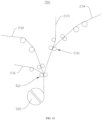

Classifications
-
- H—ELECTRICITY
- H01—ELECTRIC ELEMENTS
- H01M—PROCESSES OR MEANS, e.g. BATTERIES, FOR THE DIRECT CONVERSION OF CHEMICAL ENERGY INTO ELECTRICAL ENERGY
- H01M4/00—Electrodes
- H01M4/02—Electrodes composed of, or comprising, active material
- H01M4/13—Electrodes for accumulators with non-aqueous electrolyte, e.g. for lithium-accumulators; Processes of manufacture thereof
-
- H—ELECTRICITY
- H01—ELECTRIC ELEMENTS
- H01M—PROCESSES OR MEANS, e.g. BATTERIES, FOR THE DIRECT CONVERSION OF CHEMICAL ENERGY INTO ELECTRICAL ENERGY
- H01M10/00—Secondary cells; Manufacture thereof
- H01M10/04—Construction or manufacture in general
- H01M10/0431—Cells with wound or folded electrodes
-
- H—ELECTRICITY
- H01—ELECTRIC ELEMENTS
- H01M—PROCESSES OR MEANS, e.g. BATTERIES, FOR THE DIRECT CONVERSION OF CHEMICAL ENERGY INTO ELECTRICAL ENERGY
- H01M10/00—Secondary cells; Manufacture thereof
- H01M10/04—Construction or manufacture in general
- H01M10/0404—Machines for assembling batteries
- H01M10/0409—Machines for assembling batteries for cells with wound electrodes
-
- H—ELECTRICITY
- H01—ELECTRIC ELEMENTS
- H01M—PROCESSES OR MEANS, e.g. BATTERIES, FOR THE DIRECT CONVERSION OF CHEMICAL ENERGY INTO ELECTRICAL ENERGY
- H01M10/00—Secondary cells; Manufacture thereof
- H01M10/04—Construction or manufacture in general
- H01M10/0468—Compression means for stacks of electrodes and separators
-
- H—ELECTRICITY
- H01—ELECTRIC ELEMENTS
- H01M—PROCESSES OR MEANS, e.g. BATTERIES, FOR THE DIRECT CONVERSION OF CHEMICAL ENERGY INTO ELECTRICAL ENERGY
- H01M10/00—Secondary cells; Manufacture thereof
- H01M10/05—Accumulators with non-aqueous electrolyte
- H01M10/058—Construction or manufacture
- H01M10/0587—Construction or manufacture of accumulators having only wound construction elements, i.e. wound positive electrodes, wound negative electrodes and wound separators
-
- H—ELECTRICITY
- H01—ELECTRIC ELEMENTS
- H01M—PROCESSES OR MEANS, e.g. BATTERIES, FOR THE DIRECT CONVERSION OF CHEMICAL ENERGY INTO ELECTRICAL ENERGY
- H01M50/00—Constructional details or processes of manufacture of the non-active parts of electrochemical cells other than fuel cells, e.g. hybrid cells
- H01M50/40—Separators; Membranes; Diaphragms; Spacing elements inside cells
- H01M50/46—Separators, membranes or diaphragms characterised by their combination with electrodes
-
- H—ELECTRICITY
- H01—ELECTRIC ELEMENTS
- H01M—PROCESSES OR MEANS, e.g. BATTERIES, FOR THE DIRECT CONVERSION OF CHEMICAL ENERGY INTO ELECTRICAL ENERGY
- H01M2220/00—Batteries for particular applications
- H01M2220/20—Batteries in motive systems, e.g. vehicle, ship, plane
-
- Y—GENERAL TAGGING OF NEW TECHNOLOGICAL DEVELOPMENTS; GENERAL TAGGING OF CROSS-SECTIONAL TECHNOLOGIES SPANNING OVER SEVERAL SECTIONS OF THE IPC; TECHNICAL SUBJECTS COVERED BY FORMER USPC CROSS-REFERENCE ART COLLECTIONS [XRACs] AND DIGESTS
- Y02—TECHNOLOGIES OR APPLICATIONS FOR MITIGATION OR ADAPTATION AGAINST CLIMATE CHANGE
- Y02E—REDUCTION OF GREENHOUSE GAS [GHG] EMISSIONS, RELATED TO ENERGY GENERATION, TRANSMISSION OR DISTRIBUTION
- Y02E60/00—Enabling technologies; Technologies with a potential or indirect contribution to GHG emissions mitigation
- Y02E60/10—Energy storage using batteries
-
- Y—GENERAL TAGGING OF NEW TECHNOLOGICAL DEVELOPMENTS; GENERAL TAGGING OF CROSS-SECTIONAL TECHNOLOGIES SPANNING OVER SEVERAL SECTIONS OF THE IPC; TECHNICAL SUBJECTS COVERED BY FORMER USPC CROSS-REFERENCE ART COLLECTIONS [XRACs] AND DIGESTS
- Y02—TECHNOLOGIES OR APPLICATIONS FOR MITIGATION OR ADAPTATION AGAINST CLIMATE CHANGE
- Y02P—CLIMATE CHANGE MITIGATION TECHNOLOGIES IN THE PRODUCTION OR PROCESSING OF GOODS
- Y02P70/00—Climate change mitigation technologies in the production process for final industrial or consumer products
- Y02P70/50—Manufacturing or production processes characterised by the final manufactured product
Definitions
- This application relates to the field of new energy technologies, and specifically to an electrode assembly, a winding method and device, a battery cell, a battery, and an electric apparatus.
- starting sections of electrode plates have no tension, and therefore, during feeding, the starting sections of the electrode plates likely suffer from deviation, poor attachment to a separator, and the like, leading to a lower alignment degree of the electrode plates and affecting the percent of pass of the electrode plates in production.
- this application provides an electrode assembly, a winding method and device, a battery cell, a battery, and an electric apparatus so as to resolve the problem of low alignment degree of starting sections of electrode plates in an electrode assembly during winding.
- an electrode assembly includes a first separator, a first electrode plate, and a second separator that are stacked, where the first electrode plate is sandwiched between the first separator and the second separator; and along a width direction of the first electrode plate, partial edges of two sides of starting sections of the first separator and second separator are fixedly connected.
- the partial edges of the two sides of the starting sections of the first separator and second separator are fixedly connected, and the first electrode plate is sandwiched between the first separator and the second separator, such that the first separator and the second separator can limit displacement of the first electrode plate along the width direction rather than displacement of the first electrode plate along a length direction.
- This can not only ensure alignment degree of the starting sections during feeding of the first electrode plate but also ensure that the first separator, the first electrode plate, and the second separator can slide relative to each other during winding to adapt to different winding diameters, allowing for close attachment between the first separator, the first electrode plate, and the second separator, thereby ensuring winding quality of the electrode assembly and improving winding yield rate of the electrode assembly.
- partial edges of two sides of terminating sections of the first separator and second separator are fixedly connected.
- the partial edges of the two sides of the terminating sections of the first separator and second separator being fixedly connected can effectively ensure that terminating sections of the first separator, the first electrode plate, and the second separator are aligned, thereby preventing winding failure of the electrode assembly caused by tail misalignment while such winding failure affects production yield rate of the electrode assembly.
- the electrode assembly further includes a second electrode plate, where a starting section of the second electrode plate is fixedly connected to the second separator.
- the starting section of the second electrode plate being fixedly connected to the second separator ensures alignment degree of the starting section during feeding of the second electrode plate.
- a terminating section of the second electrode plate is fixedly connected to the second separator.
- the terminating section of the second electrode plate being fixedly connected to the second separator can effectively ensure that terminating sections of the first separator, the first electrode plate, the second separator, and the second electrode plate are aligned and closely attached to each other, thereby preventing winding failure of the electrode assembly caused by tail misalignment while such winding failure affects production yield rate of the electrode assembly.
- a battery cell is provided and includes the foregoing electrode assembly.
- the partial edges of the two sides of the starting sections of the first separator and second separator are fixedly connected, and the first electrode plate is sandwiched between the first separator and the second separator, such that the first separator and the second separator limit only displacement of the first electrode plate along the width direction rather than displacement of the first electrode plate along a length direction.
- a battery is provided and includes the foregoing battery cell.
- an electric apparatus includes the foregoing battery, where the battery is configured to supply electrical energy.
- a method for winding an electrode assembly includes a first separator, a first electrode plate, and a second separator that are stacked.
- the method for winding an electrode assembly includes: sequentially stacking starting sections of the first separator, the first electrode plate, and the second separator, and along a width direction of the first electrode plate, fixedly connecting partial edges of two sides of the starting sections of the first separator and second separator; and winding the first separator, the first electrode plate, and the second separator.
- the partial edges of the two sides of the starting sections of the first separator and second separator are fixedly connected, and the first electrode plate is sandwiched between the first separator and the second separator, such that the first separator and the second separator limit only displacement of the first electrode plate along the width direction rather than displacement of the first electrode plate along a length direction.
- the method for winding an electrode assembly further includes: along the width direction, fixedly connecting partial edges of two sides of terminating sections of the first separator and second separator.
- the partial edges of the two sides of the terminating sections of the first separator and second separator being fixedly connected can ensure that the terminating section of the first electrode plate sandwiched between the terminating sections of the first separator and second separator is aligned and closely attached to the first separator and second separator, preventing winding failure of the electrode assembly caused by tail misalignment of the terminating section of the first electrode plate.
- the electrode assembly further includes a second electrode plate. After the partial edges of the two sides of the starting sections of the first separator and second separator are fixedly connected, a starting section of the second electrode plate is fixedly connected to the second separator. The starting section of the second electrode plate being fixedly connected to the second separator ensures alignment degree of the starting section during feeding of the second electrode plate.
- the method for winding an electrode assembly further includes: fixedly connecting a terminating section of the second electrode plate and the second separator.
- the terminating section of the second electrode plate being fixedly connected to the second separator ensures that the terminating section of the second electrode plate is aligned and closely attached to the second separator, thereby preventing winding failure of the electrode assembly caused by tail misalignment of the terminating section of the second electrode plate.
- An electrode assembly includes a first separator, a first electrode plate, and a second separator that are stacked.
- the device for winding an electrode assembly includes: a first composite mechanism configured to fixedly connect, along a width direction of the first electrode plate, partial edges of two sides of starting sections of the first separator and second separator; and a winding mechanism disposed downstream the first composite mechanism and configured to wind the first separator, the first electrode plate, and the second separator to form the electrode assembly.
- the partial edges of the two sides of the starting sections of the first separator and second separator are fixedly connected via the first composite mechanism, and the first electrode plate is sandwiched between the first separator and the second separator, such that the first separator and the second separator limit only displacement of the first electrode plate along the width direction rather than displacement of the first electrode plate along a length direction.
- This can not only ensure alignment degree of the starting sections during feeding of the first electrode plate but also ensure that the first separator, the first electrode plate, and the second separator can slide relative to each other during winding to adapt to different winding diameters, allowing for close attachment between the first separator, the first electrode plate, and the second separator, thereby ensuring winding quality of the electrode assembly and improving winding yield rate of the electrode assembly.
- the first composite mechanism includes a first press-fit structure and a second press-fit structure opposite each other, where the first press-fit structure and the second press-fit structure fit each other for fixedly connecting, along the width direction, the partial edges of the two sides of the starting sections of the first separator and second separator.
- first press-fit structure and the second press-fit structure fit each other for fixedly connecting, along the width direction, the partial edges of the two sides of the starting sections of the first separator and second separator.
- the first press-fit structure includes a pressing portion and hot-pressing composite portions, where the hot-pressing composite portions are disposed at two ends of the pressing portion in the width direction; the hot-pressing composite portions protrude from the pressing portion; and the hot-pressing composite portions are configured to perform hot-pressing composite on the partial edges of the two sides of the starting sections of the first separator and second separator.
- the hot-pressing composite portions protruding from the pressing portion can ensure full hot-pressing composite of the partial edges of the two sides of the starting sections of the first separator and second separator, thereby further ensuring stability of connection between the first separator and the second separator.
- the hot-pressing composite portions are annular and protrude from the pressing portion.
- the hot-pressing composite portions being annular and protruding from the pressing portion ensures that the hot-pressing composite portions can rotate while pressing the first separator and second separator, achieving a function of driving feeding of the electrode assembly.
- the electrode assembly further includes a second electrode plate; and the device for winding an electrode assembly further includes a second composite mechanism, where the second composite mechanism is disposed between the first composite mechanism and the winding mechanism and is configured to fixedly connect a starting section of the second electrode plate and the second separator. With the second composite mechanism provided, the starting section of the second electrode plate is fixedly connected to the second separator, ensuring alignment degree of the second electrode plate.
- the term "and/or" is only an associative relationship for describing associated objects, indicating that three relationships may be present.
- a and/or B may indicate the following three cases: presence of A, presence of both A and B, and presence of B.
- the character "/" in this specification generally indicates an "or" relationship between contextually associated objects.
- a plurality of means more than two (inclusive).
- a plurality of groups means more than two (inclusive) groups
- a plurality of pieces means more than two (inclusive) pieces.
- the terms “mount”, “connect”, “join”, and “fasten” should be understood in their general senses. For example, they may refer to a fixed connection, a detachable connection, or an integral connection, may refer to a mechanical connection or electrical connection, and may refer to a direct connection, an indirect connection via an intermediate medium, or may be an internal communication between two components or an interactive relationship between two components. Persons of ordinary skill in the art can understand specific meanings of these terms in this application as appropriate to specific situations.
- Traction batteries have been not only used in energy storage power supply systems such as hydroelectric power plants, thermal power plants, wind power plants, and solar power plants, but also widely used in many other fields including electric transportation tools such as electric bicycles, electric motorcycles, and electric vehicles, military equipment, and aerospace. With the continuous expansion of application fields of batteries, market demands for batteries are also expanding.
- the electrode assembly serves as an important component in the battery, so higher requirements are imposed on the production yield rate of the electrode assemblies. With the advantages of high yield rate and low cost, winding methods have been widely used in production of electrode assemblies.
- starting sections and terminating sections of electrode plates have no tension, and therefore, during feeding, the starting sections of the electrode plates likely suffer from deviation, and terminating sections also likely suffer from tail misalignment, causing low alignment degree of the electrode plates.
- the starting sections and terminating sections of the electrode plates are uncontrolled during winding, so the electrode plates and the separators are poorly attached to each other.
- electrode plates and separators are fully composited through hot pressing before winding, such that the electrode plates and the separators are closely attached and connected to each other, ensuring the alignment between the starting sections and terminating sections.
- the inventors of this application have noted that during winding, the electrode plates and separators in different layers have different winding diameters. Therefore, after the electrode plates and separators are fully composited through hot pressing before winding, interaction forces between the electrode plates and separators in different layers increase gradually with the increase in the number of winding layers during winding. This leads to wrinkling or even detachment of the electrode plates and separators, causing winding failure.
- this application provides an electrode assembly, a winding method and device, a battery cell, a battery, and an electric apparatus.
- the electrode assembly partial edges of two sides of starting sections of a first separator and a second separator are fixedly connected, and a first electrode plate is sandwiched between the first separator and the second separator, such that the first separator and the second separator limit only displacement of the first electrode plate along a width direction rather than displacement of the first electrode plate along a length direction.
- the battery disclosed in the embodiments of this application may be used in, but is not limited to, electric apparatuses such as vehicles, ships, or aircrafts.
- An embodiment of this application provides an electric apparatus that uses a battery as a power source.
- the electric apparatus may be but is not limited to a mobile phone, a tablet, a laptop computer, an electric toy, an electric tool, an electric bicycle, an electric car, a ship, and a spacecraft.
- the electric toy may be a fixed or mobile electric toy, for example, a game console, an electric toy car, an electric toy ship, and an electric toy airplane.
- the spacecraft may include an airplane, a rocket, a space shuttle, a spaceship, and the like.
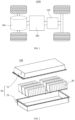
- the electric apparatus of an embodiment of this application being a vehicle 1000 is used as an example for description of the following embodiments.
- FIG. 1 is a schematic structural diagram of a vehicle 1000 according to some embodiments of this application.
- the vehicle 1000 may be a fossil fuel vehicle, a natural-gas vehicle, or a new energy vehicle, where the new energy vehicle may be a battery electric vehicle, a hybrid electric vehicle, a range-extended vehicle, or the like.
- the vehicle 1000 is provided with a battery 100 inside, and the battery 100 may be disposed at the bottom, front, or rear of the vehicle 1000.
- the battery 100 may be configured to supply power to the vehicle 1000.
- the battery 100 may be used as an operational power source for the vehicle 1000.
- the vehicle 1000 may further include a controller 200 and a motor 300, where the controller 200 is configured to control the battery 100 to supply power to the motor 300, for example, to satisfy power needs of start, navigation, and driving of the vehicle 1000.
- the battery 100 can be used as not only the operational power source for the vehicle 1000 but also a driving power source for the vehicle 1000, replacing or partially replacing fossil fuel or natural gas to provide driving traction for the vehicle 1000.
- FIG. 2 is a schematic structural exploded view of a battery 100 according to some embodiments of this application.
- the battery 100 includes a box 10 and a battery cell 20, where the battery cell 20 is accommodated in the box 10.
- the box 10 is configured to provide an accommodating space for the battery cell 20.
- the box 10 may be a variety of structures.
- the box 10 may include a first portion 11 and a second portion 12.
- the first portion 11 and the second portion 12 fit together so that the first portion 11 and the second portion 12 jointly define an accommodating space for accommodating the battery cell 20.
- the second portion 12 may be a hollow structure with one end open, and the first portion 11 may be a plate structure.
- the first portion 11 covers an open side of the second portion 12, so that the first portion 11 and the second portion 12 jointly define an accommodating space.
- both the first portion 11 and the second portion 12 may be a hollow structure with one side open, and the open side of the first portion 11 covers the open side of the second portion 12.
- the box 10 formed by the first portion 11 and the second portion 12 may be in various shapes, such as a cylinder or a cuboid.
- a plurality of battery cells 20 may be provided, and the plurality of battery cells 20 may be connected in series, parallel, or series-parallel, where being connected in series-parallel means a combination of series and parallel connections of the plurality of battery cells 20.
- the plurality of battery cells 20 may be directly connected in series, parallel, or series-parallel, and then an entirety of the plurality of battery cells 20 is accommodated in the box 10.
- the battery 100 may alternatively be formed in a manner that a plurality of battery cells 20 are connected in series, parallel, or series-parallel first to form a battery module and then a plurality of battery modules are connected in series, parallel, or series-parallel to form an entirety which is accommodated in the box 10.
- the battery 100 may further include other structures.
- the battery 100 may further include a busbar configured to implement electrical connection between the plurality of battery cells 20.
- Each battery cell 20 may be a secondary battery or a primary battery, or may be a lithium-sulfur battery, a sodium-ion battery, or a magnesium-ion battery, without being limited thereto.
- the battery cell 20 may be cylindrical, flat, cuboid, or of other shapes.
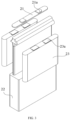
- FIG. 3 is a schematic structural exploded view of a battery cell 20 in a battery 100 according to some embodiments of this application.
- the battery cell 20 refers to a smallest unit constituting a battery.
- the battery cell 20 includes an end cover 21, a housing 22, an electrode assembly 23, and other functional components.
- the end cover 21 refers to a component that covers an opening of the housing 22 to isolate internal environment of the battery cell 20 from external environment. Without limitation, the end cover 21 may adapt to the housing 22 in shape so as to fit the housing 22. Optionally, the end cover 21 may be made of a material with specified hardness and strength (for example, aluminum alloy), so that the end cover 21 is less likely to deform when subjected to extrusion and collision, allowing the battery cell 20 to have higher structural strength and enhanced safety performance.
- the end cover 21 may be provided with functional components such as an electrode terminal 21a.
- the electrode terminal 21a may be configured to be electrically connected to the electrode assembly 23 for outputting or inputting electrical energy of the battery cell 20.
- the end cover 21 may also be provided with a pressure relief mechanism configured to relieve internal pressure when the internal pressure or temperature in the battery cell 20 reaches a threshold.
- the end cover 21 may also be made of various materials such as copper, iron, aluminum, stainless steel, aluminum alloy, and plastic. This is not particularly limited in the embodiments of this application.
- an insulator may also be provided at an inner side of the end cover 21. The insulator may be configured to isolate an electrically connected component in the housing 22 from the end cover 21 to reduce the risk of short circuit.
- the insulator may be made of plastic, rubber, or the like.
- the housing 22 is a component fitting with the end cover 21 to form an internal environment of the battery cell 20, where the internal environment formed may be configured to accommodate the electrode assembly 23, an electrolyte, and other components.
- the housing 22 and the end cover 21 may be independent components, and an opening may be provided in the housing 22, so that the end cover 21 can close the opening to form the internal environment of the battery cell 20.
- the end cover 21 and the housing 22 may be integrated.
- the housing 22 may be of various shapes and sizes, for example, a rectangular shape, a cylindrical shape, and a hexagonal prism shape. Specifically, the shape of the housing 22 may be determined based on a specific shape and size of the electrode assembly 23.
- the housing 22 may be made of various materials such as copper, iron, aluminum, stainless steel, aluminum alloy, and plastic. This is not particularly limited in the embodiments of this application.
- the electrode assembly 23 is a component in which electrochemical reactions take place in the battery cell 20.
- the housing 22 may include one or more electrode assemblies 23.
- the electrode assembly 23 is mainly formed by winding or stacking a positive electrode plate and a negative electrode plate, and typically a separator is provided between the positive electrode plate and the negative electrode plate.
- Parts of the positive electrode plate and the negative electrode plate with active substances constitute a body portion of the electrode assembly, while parts of the positive electrode plate and the negative electrode plate without active substances each constitute a tab 23a.
- a positive tab and a negative tab may both be located at one end of the body portion or be located at two ends of the body portion respectively.
- a positive electrode active substance and a negative electrode active substance react with an electrolyte, and the tabs 23a are connected to the electrode terminals to form a current loop.
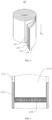
- FIG. 4 shows an exploded structure of a terminating section of an electrode assembly 23 according to an embodiment of this application
- FIG. 5 shows a structure of a starting section of the electrode assembly 23.
- the electrode assembly 23 includes a first separator 231, a first electrode plate 232, and a second separator 233 that are stacked.
- the first electrode plate 232 is sandwiched between the first separator 231 and the second separator 233; and along a width direction of the first electrode plate 232, partial edges of two sides of starting sections of the first separator 231 and second separator 233 are fixedly connected.
- the width direction of the first electrode plate 232 is an x-axis direction shown in the figure.
- the head of the first electrode plate 232 may be located at middle sections of the first separator 231 and second separator 233; and therefore, the starting section in this application is a section where the head is attached to the first separator 231 and second separator 233 after feeding of the first electrode plate 232, and the terminating section is a section where the tail of the first electrode plate 232 is attached to the first separator 231 and second separator 233.
- a region in which the first separator 231 and second separator 233 are fixedly connected is a first region 235 in the figure.
- the first region 235 is portions of the first separator 231 and second separator 233 that exceed the first electrode plate 232.
- the first separator 231 and second separator 233 may be fixed after hot-pressing composite on the two sides by a hot-pressing composite mechanism, or may be fixed after bonding by an adhesion mechanism.
- other fixed connection manners may also be used, which are not limited in this application.
- the partial edges of the two sides of the starting sections of the first separator 231 and second separator 233 are fixedly connected, and the first electrode plate 232 is sandwiched between the first separator 231 and the second separator 233, such that the first separator 231 and the second separator 233 limit only displacement of the first electrode plate 232 along the width direction rather than displacement of the first electrode plate 232 along a length direction.
- FIG. 6 shows a structure of an electrode assembly 23 according to an embodiment of this application. According to some embodiments of this application, along the width direction, partial edges of two sides of terminating sections of the first separator 231 and second separator 233 are fixedly connected.
- the partial edges of the two sides of the terminating sections of the first separator 231 and second separator 233 being fixedly connected can effectively ensure that terminating sections of the first separator 231, the first electrode plate 232, and the second separator 233 are aligned and closely attached to each other, thereby preventing winding failure of the electrode assembly caused by tail misalignment while such winding failure affects production yield rate of the electrode assembly 23.
- the electrode assembly 23 further includes a second electrode plate 234.
- a starting section of the second electrode plate 234 is fixedly connected to the second separator 233.
- a region in which the second electrode plate 234 and the second separator 233 are fixedly connected is a second region 236 in the figure.
- the starting section of the second electrode plate 234 is fixedly connected to the second separator 233 to ensure the alignment of the starting section during feeding of the second electrode plate 234.
- only the starting section of the second electrode plate 234 is fixed, and the remaining portion can smoothly slide towards the terminating section relative to the second separator 233 with proceeding of the winding so as to adapt to corresponding winding diameters, thereby allowing the second electrode plate 234 and the second separator 233 to be closely attached to each other.
- the terminating section of the second electrode plate 234 is fixedly connected to the second separator 233.
- the terminating section of the second electrode plate 234 being fixedly connected to the second separator 233 can effectively ensure that terminating sections of the first separator 231, the first electrode plate 232, the second separator 233, and the second electrode plate 234 are aligned and closely attached to each other, thereby preventing winding failure of the electrode assembly caused by tail misalignment.
- a battery cell is provided.
- the battery cell includes the foregoing electrode assembly 23.
- the partial edges of the two sides of the starting sections of the first separator 231 and second separator 233 are fixedly connected, and the first electrode plate 232 is sandwiched between the first separator 231 and the second separator 233, such that the first separator 231 and the second separator 233 limit only displacement of the first electrode plate 232 along the width direction rather than displacement of the first electrode plate 232 along a length direction.
- a battery is provided.
- the battery includes the foregoing battery cell.
- a plurality of battery cells may be provided, and the plurality of battery cells may be connected in series, parallel, or series-parallel, where being connected in series-parallel means a combination of series and parallel connections of the plurality of battery cells.
- the plurality of battery cells may be directly connected in series, parallel, or series-parallel, and then an entirety of the plurality of battery cells is accommodated in a box.
- the battery may alternatively be formed in a manner that the plurality of battery cells are connected in series, parallel, or series-parallel first to form battery modules and then a plurality of battery modules are connected in series, parallel, or series-parallel to form an entirety which is accommodated in the box.
- the battery may further include other structures.
- the battery may further include a busbar configured to implement electrical connection between the plurality of battery cells.
- an electric apparatus includes the foregoing battery, where the battery is configured to supply electrical energy.
- the electric apparatus may be but is not limited to a mobile phone, a tablet, a laptop computer, an electric toy, an electric tool, an electric bicycle, an electric car, a ship, or a spacecraft.
- the electric toy may be a fixed or mobile electric toy, for example, a game console, an electric toy car, an electric toy ship, and an electric toy airplane.
- the spacecraft may include an airplane, a rocket, a space shuttle, a spaceship, and the like.
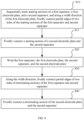
- a method for winding an electrode assembly is provided, which specifically refers to FIG. 7 in which a process of a method for winding an electrode assembly according to an embodiment of this application is showed.
- the electrode assembly includes a first separator, a first electrode plate, and a second separator.
- the method for winding an electrode assembly includes the following steps.
- the partial edges of the two sides of the starting sections of the first separator and second separator are fixedly connected, and the first electrode plate is sandwiched between the first separator and the second separator, such that the first separator and the second separator limit only displacement of the first electrode plate along the width direction rather than displacement of the first electrode plate along a length direction.
- This can not only ensure alignment degree of the starting sections during feeding of the first electrode plate but also ensure that the first separator, the first electrode plate, and the second separator can slide relative to each other during winding to adapt to different winding diameters, allowing for close attachment between the first separator, the first electrode plate, and the second separator, thereby ensuring winding quality of the electrode assembly and improving winding yield rate of the electrode assembly.
- FIG. 8 shows a process of a method for winding an electrode assembly according to another embodiment of this application.
- the method for winding an electrode assembly further includes the following step.
- the partial edges of the two sides of the terminating sections of the first separator and second separator being fixedly connected can ensure that the terminating section of the first electrode plate sandwiched between the terminating sections of the first separator and second separator is aligned and closely attached to the first separator and second separator, preventing winding failure of the electrode assembly caused by tail misalignment of the terminating section of the first electrode plate.
- the electrode assembly further includes a second electrode plate; and after step S 10, the method further includes the following step.
- Step S11 Fixedly connect a starting section of the second electrode plate and the second separator.
- the starting section of the second electrode plate being fixedly connected to the second separator ensures alignment degree of the starting section during feeding of the second electrode plate; and in addition, during winding, the second electrode plate may slide relative to the second separator to adapt to a corresponding winding diameter.
- steps S 11 and S10 may be interchangeable.
- the other steps are also interchangeable in a case that effects are not affected.
- the method for winding an electrode assembly further includes the following step.
- the terminating section of the second electrode plate being fixedly connected to the second separator ensures that the terminating section of the second electrode plate is aligned and closely attached to the second separator, thereby preventing scrapping of the electrode assembly caused by tail misalignment of the terminating section of the second electrode plate.
- a device for winding an electrode assembly is further provided, which specifically refers to FIG. 9 in which a structure of a device for winding an electrode assembly 500 according to an embodiment of this application is showed.
- the electrode assembly 23 includes a first separator 231, a first electrode plate 232, and a second separator 233 that are stacked in sequence.
- the device for winding an electrode assembly 500 includes a first composite mechanism 510 and a winding mechanism 520.
- the first composite mechanism 510 is configured to fixedly connect, along a width direction of the first electrode plate 232, partial edges of two sides of starting sections of the first separator 231 and second separator 233.
- the winding mechanism 520 is disposed downstream the first composite mechanism 510 and is configured to wind the first separator 231, the first electrode plate 232, and the second separator 233 to form the electrode assembly 23.
- the partial edges of the two sides of the starting sections of the first separator 231 and second separator 233 are fixedly connected via the first composite mechanism 510, and the first electrode plate 232 is sandwiched between the first separator 231 and the second separator 233, such that the first separator 231 and the second separator 233 limit only displacement of the first electrode plate 232 along the width direction rather than displacement of the first electrode plate 232 along a length direction.
- FIG. 10 shows a structure of a device for winding an electrode assembly 500 according to another embodiment of this application.
- the starting section of the second electrode plate 234 and the second separator 233 pass through a second composite mechanism 530
- the starting section of the second electrode plate 234 and the second separator 233 can be fixedly connected via the second composite mechanism 530; and when the starting section of the second separator 233 to which the second electrode plate 234 is fixed and the starting sections of the first electrode plate 232 and first separator 231 pass through the first composite mechanism 510, partial edges of two sides of the starting sections of the first separator 231 and second separator 233 can be fixedly connected via the first composite mechanism 510 and then wound by the winding mechanism 520.
- FIG. 11 shows a structure of a first composite mechanism 510 in a device for winding an electrode assembly 500 according to an embodiment of this application.
- the first composite mechanism 510 includes a first press-fit structure 511 and a second press-fit structure 512 opposite each other.
- the first press-fit structure 511 and the second press-fit structure 512 fit each other and are configured to fixedly connect, along a width direction of the first electrode plate 232, partial edges of two sides of the starting sections of the first separator 231 and second separator 233.
- the first press-fit structure 511 and the second press-fit structure 512 may both be cylindrical.
- the first separator 231, the first electrode plate 232, and the second separator 233 are clamped by an annular side surface of the first press-fit structure 511 and an annular side surface of the second press-fit structure 512.
- two sides of the first press-fit structure 511 may be configured as hot-pressing portions for hot-pressing composite and fixation of the partial edges of the two sides of the starting sections of the first separator 231 and second separator 233.
- the first press-fit structure 511 and the second press-fit structure 512 can further rotate to implement movable feeding of the first separator 231, the first electrode plate 232, and the second separator 233.
- first press-fit structure 511 and the second press-fit structure 512 may alternatively be cubes or in other shapes.
- the partial edges of the two sides of the starting sections of the first separator 231 and second separator 233 stop moving after reaching a position between the first press-fit structure 511 and the second press-fit structure 512.
- the first press-fit structure 511 and the second press-fit structure 512 move towards each other to implement press-fixation of the partial edges of the two sides of the starting sections of the first separator 231 and second separator 233, then the first press-fit structure 511 and the second press-fit structure 512 move away from each other to return to the original position, and the first separator 231 and second separator 233, which sandwich the first electrode plate 232 and are fixed through pressing, continue to move to be fed.
- the first press-fit structure 511 and the second press-fit structure 512 moving towards each other may be: the first press-fit structure 511 moving towards the second press-fit structure 512, the second press-fit structure 512 moving towards the first press-fit structure 511, or the first press-fit structure 511 moving towards the second press-fit structure 512 while the second press-fit structure 512 moving towards the first press-fit structure 511.
- the specific movement may be driven by an air cylinder, an electric cylinder, or a screw, or may be operated manually.
- the first press-fit structure 511 and the second press-fit structure 512 are driven to move towards each other so as to implement press-connection of the partial edges of the two sides of the starting sections of the first separator 231 and second separator 233; and after press fitting is completed, the first press-fit structure 511 and the second press-fit structure 512 move away from each other to ensure normal feeding of the first separator 231 and second separator 233.
- the foregoing steps can be repeated when the terminating sections of the first separator 231 and second separator 233 pass through the first composite mechanism 510.
- the first press-fit structure 511 includes a pressing portion 5111 and hot-pressing composite portions 5112, where the hot-pressing composite portions 5112 are disposed at two ends of the pressing portion 5111 in the width direction; the hot-pressing composite portions 5112 protrude from the pressing portion 5111; and the hot-pressing composite portions 5112 are configured to perform hot-pressing composite on the edges of the two sides of the starting sections of the first separator 231 and second separator 233.
- the hot-pressing composite portions 5112 protrude from the pressing portion 5111, meaning that a height difference h as shown in FIG. 11 is present between the hot-pressing composite portions 5112 and the pressing portion 5111.
- the hot-pressing composite manner can implement quick fixation between the partial edges of the two sides of the starting sections of the first separator 231 and second separator 233, improving the winding yield rate, and can ensure structural intactness of the first separator 231, the first electrode plate 232, and the second separator 233.
- the hot-pressing composite portions 5112 have high-temperature surfaces and abut against and press an edge surface of the first separator 231 or second separator 233 through the high-temperature surfaces, such that heat is transferred to the first separator 231 or second separator 233, and thus the partial edges of the two sides of the starting sections of the first separator 231 and second separator 233 are fixed through hot-pressing composite.
- the pressing portion 5111 therebetween may be configured to press-flatten middle portions of the first separator 231, the first electrode plate 232, and the second separator 233; the hot-pressing composite portions 5112 at the two ends are configured to implement hot-pressing composite of the partial edges of the two sides of the starting sections of the first separator 231 and second separator 233, to ensure that after the hot-pressing composite of the partial edges of the two sides of the starting sections of the first separator 231 and second separator 233, the middle portions of the first separator 231, the first electrode plate 232, and the second separator 233 are flat and closely attached to each other; and the hot-pressing composite portions 5112 protruding from the pressing portion 5111 can ensure full hot-press composite of the partial edges of the two sides of the starting sections of the first separator 231 and second separator 233, thereby further ensuring stability of connection between the first separator 231 and the second separator 233. It can be understood that in some embodiments, the pressing portion 5111 may alternatively be in no contact
- the pressing portion 5111 and the hot-pressing composite portions 5112 may be spaced apart to prevent the edge of the middle first electrode plate 232 from being hot-pressed during hot pressing of the edges of the first separator 231 and second separator 233.
- the hot-pressing composite portions 5112 are annular and protrude from the pressing portion 5111.
- the hot-pressing composite portions 5112 being annular and protruding from the pressing portion 5111 ensures that the hot-pressing composite portions 5112 can rotate while pressing the first separator 231 and second separator 233, improving processing efficiency and also achieving a function of driving feeding of the electrode assembly 23.
- FIG. 12 shows a structure of a second composite mechanism 530 in a device for winding an electrode assembly 500 according to an embodiment of this application.
- the electrode assembly 23 further includes a second electrode plate 234; and the device for winding an electrode assembly 500 further includes a second composite mechanism 530, where the second composite mechanism 530 is disposed between the first composite mechanism 510 and the winding mechanism 520 and is configured to fixedly connect a starting section of the second electrode plate 234 and the second separator 233.
- the second composite mechanism 530 may include a third press-fit structure 531 and a fourth press-fit structure 532.
- the third press-fit structure 531 and the fourth press-fit structure 532 move towards each other, the starting section of the second electrode plate 234 and the second separator 233 are composited through hot pressing.
- the third press-fit structure 531 and the fourth press-fit structure 532 may both be cylindrical.
- the starting section of the second electrode plate 234 and the second separator 233 are clamped and composited through hot pressing by an annular side surface of the third press-fit structure 531 and an annular side surface of the fourth press-fit structure 532, such that the starting section of the second electrode plate 234 and the second separator 233 are fixedly connected.
- the third press-fit structure 531 and the fourth press-fit structure 532 rotate to implement movable feeding of the second electrode plate 234 and the second separator 233.
- the third press-fit structure 531 and the fourth press-fit structure 532 moving towards each other may be: the third press-fit structure 531 moving towards the fourth press-fit structure 532, the fourth press-fit structure 532 moving towards the third press-fit structure 531, or the third press-fit structure 531 moving towards the fourth press-fit structure 532 while the fourth press-fit structure 532 moving towards the third press-fit structure 531.
- the specific movement r may be driven by an air cylinder, an electric cylinder, or a screw, or may be operated manually.
- the third press-fit structure 531 and the fourth press-fit structure 532 are driven to move towards each other so as to implement press-connection of the starting section of the second electrode plate 234 and the second separator 233; and after press fitting is completed, the third press-fit structure 531 and the fourth press-fit structure 532 move away from each other to ensure normal feeding of the second separator 233 and the second electrode plate 234. If it is necessary to fixedly connect the terminating section of the second electrode plate 234 and the second separator 233, the foregoing steps may be repeated when the terminating section of the second separator 233 and the second electrode plate 234 pass through the second composite mechanism 530.
- the starting section of the second electrode plate 234 is fixedly connected to the second separator 233, ensuring the alignment degree of the second electrode plate 234.
- the device for winding an electrode assembly 500 further includes a plurality of feeding mechanisms 540, which are configured to drive the first separator 231, the first electrode plate 232, the second separator 233, and the second electrode plate 234 to be fed, respectively.
- the feeding mechanisms 540 may be transfer rollers; the first separator 231, the first electrode plate 232, the second separator 233, and the second electrode plate 234 are placed on the transfer rollers; and the transfer rollers rotate to drive the first separator 231, the first electrode plate 232, the second separator 233, and the second electrode plate 234 to be movably fed.
- the feeding mechanisms 540 provided, the first separator 231, the first electrode plate 232, the second separator 233, and the second electrode plate 234 are movably fed, allowing for convenient automatic winding of the electrode assembly 23 and helping to improve the production yield rate of the electrode assembly 23.
- the device for winding an electrode assembly 500 further includes a plurality of deviation correction mechanisms 550, which are configured to correct feeding angles of the first electrode plate 232 and the second electrode plate 234, respectively.
- the deviation correction mechanisms 550 are disposed between the feeding mechanisms 540 in a feeding route for the first electrode plate 232 and the first composite mechanism 510 and between the feeding mechanisms 540 in a feeding route for the second electrode plate 234 and the second composite mechanism 530; before the first electrode plate 232 and second electrode plate 234 transferred via the feeding mechanism 540 reach the first composite mechanism 510 and the second composite mechanism 530, an angle at which the first electrode plate 232 enters the first composite mechanism 510 and an angle at which the second electrode plate 234 enters the second composite mechanism 530 are corrected by the deviation correction mechanisms 550.
- the deviation correction mechanisms 550 may be two transfer rollers opposite each other. A deviation correction space is formed between annular side surfaces of the transfer rollers. The first electrode plate 232 and second electrode plate 234 move towards a correct feeding direction after passing through the deviation correction space.
- the provision of the deviation correction mechanisms 550 can effectively ensure the alignment degree of the first electrode plate 232 and second electrode plate 234 during hot-pressing composite, thereby ensuring accurate winding of the electrode assembly.
Landscapes
- Chemical & Material Sciences (AREA)
- Chemical Kinetics & Catalysis (AREA)
- Electrochemistry (AREA)
- General Chemical & Material Sciences (AREA)
- Engineering & Computer Science (AREA)
- Manufacturing & Machinery (AREA)
- Materials Engineering (AREA)
- Secondary Cells (AREA)
Abstract
Description
- This application claims priority to
Chinese Patent Application No. 202111372226.0, filed on November 18, 2021 - This application relates to the field of new energy technologies, and specifically to an electrode assembly, a winding method and device, a battery cell, a battery, and an electric apparatus.
- With the rapid development of the new energy industry, increasingly high requirements are imposed on production yield rate of electrode assemblies. Winding methods, with the characteristics of high yield rate and low cost, have been widely used in production of electrode assemblies.
- However, during winding of an electrode assembly, starting sections of electrode plates have no tension, and therefore, during feeding, the starting sections of the electrode plates likely suffer from deviation, poor attachment to a separator, and the like, leading to a lower alignment degree of the electrode plates and affecting the percent of pass of the electrode plates in production.
- In view of the foregoing problems, this application provides an electrode assembly, a winding method and device, a battery cell, a battery, and an electric apparatus so as to resolve the problem of low alignment degree of starting sections of electrode plates in an electrode assembly during winding.
- According to an aspect of this application, an electrode assembly is provided and includes a first separator, a first electrode plate, and a second separator that are stacked, where the first electrode plate is sandwiched between the first separator and the second separator; and along a width direction of the first electrode plate, partial edges of two sides of starting sections of the first separator and second separator are fixedly connected.
- In the electrode assembly, the partial edges of the two sides of the starting sections of the first separator and second separator are fixedly connected, and the first electrode plate is sandwiched between the first separator and the second separator, such that the first separator and the second separator can limit displacement of the first electrode plate along the width direction rather than displacement of the first electrode plate along a length direction. This can not only ensure alignment degree of the starting sections during feeding of the first electrode plate but also ensure that the first separator, the first electrode plate, and the second separator can slide relative to each other during winding to adapt to different winding diameters, allowing for close attachment between the first separator, the first electrode plate, and the second separator, thereby ensuring winding quality of the electrode assembly and improving winding yield rate of the electrode assembly.
- In an optional manner, along the width direction, partial edges of two sides of terminating sections of the first separator and second separator are fixedly connected. The partial edges of the two sides of the terminating sections of the first separator and second separator being fixedly connected can effectively ensure that terminating sections of the first separator, the first electrode plate, and the second separator are aligned, thereby preventing winding failure of the electrode assembly caused by tail misalignment while such winding failure affects production yield rate of the electrode assembly.
- In an optional manner, the electrode assembly further includes a second electrode plate, where a starting section of the second electrode plate is fixedly connected to the second separator. The starting section of the second electrode plate being fixedly connected to the second separator ensures alignment degree of the starting section during feeding of the second electrode plate.
- In an optional manner, a terminating section of the second electrode plate is fixedly connected to the second separator. The terminating section of the second electrode plate being fixedly connected to the second separator can effectively ensure that terminating sections of the first separator, the first electrode plate, the second separator, and the second electrode plate are aligned and closely attached to each other, thereby preventing winding failure of the electrode assembly caused by tail misalignment while such winding failure affects production yield rate of the electrode assembly.
- According to another aspect of this application, a battery cell is provided and includes the foregoing electrode assembly.
- In the battery cell of this application, in the electrode assembly, the partial edges of the two sides of the starting sections of the first separator and second separator are fixedly connected, and the first electrode plate is sandwiched between the first separator and the second separator, such that the first separator and the second separator limit only displacement of the first electrode plate along the width direction rather than displacement of the first electrode plate along a length direction. This can not only ensure alignment degree of the starting sections during feeding of the first electrode plate but also ensure that the first separator, the first electrode plate, and the second separator can slide relative to each other during winding to adapt to different winding diameters, allowing for close attachment between the first separator, the first electrode plate, and the second separator, ensuring winding quality of the electrode assembly and increasing success rate of winding of the electrode assembly, thereby effectively improving the production yield rate of the battery cell.
- According to another aspect of this application, a battery is provided and includes the foregoing battery cell.
- According to another aspect of this application, an electric apparatus is provided and includes the foregoing battery, where the battery is configured to supply electrical energy.
- According to another aspect of this application, a method for winding an electrode assembly is provided. The electrode assembly includes a first separator, a first electrode plate, and a second separator that are stacked. The method for winding an electrode assembly includes: sequentially stacking starting sections of the first separator, the first electrode plate, and the second separator, and along a width direction of the first electrode plate, fixedly connecting partial edges of two sides of the starting sections of the first separator and second separator; and winding the first separator, the first electrode plate, and the second separator.
- In the electrode assembly, the partial edges of the two sides of the starting sections of the first separator and second separator are fixedly connected, and the first electrode plate is sandwiched between the first separator and the second separator, such that the first separator and the second separator limit only displacement of the first electrode plate along the width direction rather than displacement of the first electrode plate along a length direction. This can not only ensure alignment degree of the starting sections during feeding of the first electrode plate but also ensure that the first separator, the first electrode plate, and the second separator can slide relative to each other during winding to adapt to different winding diameters, allowing for close attachment between the first separator, the first electrode plate, and the second separator, ensuring winding quality of the electrode assembly and increasing success rate of winding of the electrode assembly, thereby effectively improving the production yield rate of the electrode assembly.
- In an optional manner, the method for winding an electrode assembly further includes: along the width direction, fixedly connecting partial edges of two sides of terminating sections of the first separator and second separator. The partial edges of the two sides of the terminating sections of the first separator and second separator being fixedly connected can ensure that the terminating section of the first electrode plate sandwiched between the terminating sections of the first separator and second separator is aligned and closely attached to the first separator and second separator, preventing winding failure of the electrode assembly caused by tail misalignment of the terminating section of the first electrode plate.
- In an optional manner, the electrode assembly further includes a second electrode plate. After the partial edges of the two sides of the starting sections of the first separator and second separator are fixedly connected, a starting section of the second electrode plate is fixedly connected to the second separator. The starting section of the second electrode plate being fixedly connected to the second separator ensures alignment degree of the starting section during feeding of the second electrode plate.
- In an optional manner, the method for winding an electrode assembly further includes: fixedly connecting a terminating section of the second electrode plate and the second separator. The terminating section of the second electrode plate being fixedly connected to the second separator ensures that the terminating section of the second electrode plate is aligned and closely attached to the second separator, thereby preventing winding failure of the electrode assembly caused by tail misalignment of the terminating section of the second electrode plate.
- According to another aspect of this application, a device for winding an electrode assembly is provided. An electrode assembly includes a first separator, a first electrode plate, and a second separator that are stacked. The device for winding an electrode assembly includes: a first composite mechanism configured to fixedly connect, along a width direction of the first electrode plate, partial edges of two sides of starting sections of the first separator and second separator; and a winding mechanism disposed downstream the first composite mechanism and configured to wind the first separator, the first electrode plate, and the second separator to form the electrode assembly.
- In the electrode assembly, the partial edges of the two sides of the starting sections of the first separator and second separator are fixedly connected via the first composite mechanism, and the first electrode plate is sandwiched between the first separator and the second separator, such that the first separator and the second separator limit only displacement of the first electrode plate along the width direction rather than displacement of the first electrode plate along a length direction. This can not only ensure alignment degree of the starting sections during feeding of the first electrode plate but also ensure that the first separator, the first electrode plate, and the second separator can slide relative to each other during winding to adapt to different winding diameters, allowing for close attachment between the first separator, the first electrode plate, and the second separator, thereby ensuring winding quality of the electrode assembly and improving winding yield rate of the electrode assembly.
- In an optional manner, the first composite mechanism includes a first press-fit structure and a second press-fit structure opposite each other, where the first press-fit structure and the second press-fit structure fit each other for fixedly connecting, along the width direction, the partial edges of the two sides of the starting sections of the first separator and second separator. Through fitting between the first press-fit structure and the second press-fit structure, the partial edges of the two sides of the starting sections of the first separator and second separator are quickly connected and fixed, achieving a stable and reliable structure after fixed connection.
- In an optional manner, the first press-fit structure includes a pressing portion and hot-pressing composite portions, where the hot-pressing composite portions are disposed at two ends of the pressing portion in the width direction; the hot-pressing composite portions protrude from the pressing portion; and the hot-pressing composite portions are configured to perform hot-pressing composite on the partial edges of the two sides of the starting sections of the first separator and second separator. The hot-pressing composite portions protruding from the pressing portion can ensure full hot-pressing composite of the partial edges of the two sides of the starting sections of the first separator and second separator, thereby further ensuring stability of connection between the first separator and the second separator.
- In an optional manner, the hot-pressing composite portions are annular and protrude from the pressing portion. The hot-pressing composite portions being annular and protruding from the pressing portion ensures that the hot-pressing composite portions can rotate while pressing the first separator and second separator, achieving a function of driving feeding of the electrode assembly.
- In an optional manner, the electrode assembly further includes a second electrode plate; and the device for winding an electrode assembly further includes a second composite mechanism, where the second composite mechanism is disposed between the first composite mechanism and the winding mechanism and is configured to fixedly connect a starting section of the second electrode plate and the second separator. With the second composite mechanism provided, the starting section of the second electrode plate is fixedly connected to the second separator, ensuring alignment degree of the second electrode plate.
- The foregoing description is merely an overview of the technical solution of this application. For a better understanding of the technical means in this application such that they can be implemented according to the content of the specification, and to make the above and other objectives, features and advantages of this application more obvious and easier to understand, the following describes specific embodiments of this application.
- Persons of ordinary skill in the art can clearly understand various other advantages and benefits by reading the detailed description of the preferred embodiments below. The accompanying drawings are merely intended to illustrate the preferred embodiments and are not intended to limit this application. Moreover, throughout the accompanying drawings, same parts are denoted by same reference signs. In the accompanying drawings:
-
FIG. 1 is a schematic structural diagram of a vehicle according to an embodiment of this application; -
FIG. 2 is a schematic structural exploded view of a battery according to an embodiment of this application; -
FIG. 3 is a schematic structural exploded view of a battery cell according to an embodiment of this application; -
FIG. 4 is a schematic structural exploded view of a terminating section of an electrode assembly according to an embodiment of this application; -
FIG. 5 is a schematic structural diagram of a starting section of an electrode assembly according to an embodiment of this application; -
FIG. 6 is a schematic structural diagram of an electrode assembly according to an embodiment of this application; -
FIG. 7 is a schematic flowchart of a method for winding an electrode assembly according to an embodiment of this application; -
FIG. 8 is a schematic flowchart of a method for winding an electrode assembly according to an embodiment of this application; -
FIG. 9 is a schematic structural diagram of a device for winding an electrode assembly according to an embodiment of this application; -
FIG. 10 is a schematic structural diagram of a device for winding an electrode assembly according to another embodiment of this application; -
FIG. 11 is a schematic structural diagram of a first composite mechanism of a device for winding an electrode assembly according to an embodiment of this application; and -
FIG. 12 is a schematic structural diagram of a second composite mechanism of a device for winding an electrode assembly according to an embodiment of this application. - Reference signs in the specific embodiments are described as follows:
-
vehicle 1000; -
battery 100;controller 200;motor 300; -
box 10;first portion 11;second portion 12; -
battery cell 20;end cover 21;electrode terminal 21a;housing 22; -
electrode assembly 23;tab 23a;first separator 231;first electrode plate 232;second separator 233;second electrode plate 234;first region 235;second region 236; - device for winding an
electrode assembly 500; firstcomposite mechanism 510; first press-fit structure 511; pressingportion 5111; hot-pressingcomposite portion 5112; second press-fit structure 512; windingmechanism 520; secondcomposite mechanism 530; third press-fit structure 531; fourth press-fit structure 532;feeding mechanism 540; anddeviation correction mechanism 550. - The following describes in detail the embodiments of technical solutions of this application with reference to the accompanying drawings. The following embodiments are merely intended for a clearer description of the technical solutions of this application and therefore are used as just examples which do not constitute any limitations on the protection scope of this application.
- Unless otherwise defined, all technical and scientific terms used herein shall have the same meanings as commonly understood by persons skilled in the art to which this application relates. The terms used herein are intended to merely describe the specific embodiments rather than to limit this application. The terms "include", "comprise", and any other variations thereof in the specification, claims and brief description of drawings of this application are intended to cover non-exclusive inclusions.
- In the description of the embodiments of this application, the terms "first", "second" and the like are merely intended to distinguish between different objects, and shall not be understood as any indication or implication of relative importance or any implicit indication of the number, sequence or primary-secondary relationship of the technical features indicated. In the description of this application, "a plurality of" means at least two unless otherwise specifically defined.
- In this specification, reference to "embodiment" means that specific features, structures or characteristics described with reference to the embodiment may be incorporated in at least one embodiment of this application. The word "embodiment" appearing in various places in the specification does not necessarily refer to the same embodiment or an independent or alternative embodiment that is exclusive of other embodiments. It is explicitly or implicitly understood by persons skilled in the art that the embodiments described herein may be combined with other embodiments.
- In the description of the embodiments of this application, the term "and/or" is only an associative relationship for describing associated objects, indicating that three relationships may be present. For example, A and/or B may indicate the following three cases: presence of A, presence of both A and B, and presence of B. In addition, the character "/" in this specification generally indicates an "or" relationship between contextually associated objects.
- In the description of the embodiments of this application, the term "a plurality of" means more than two (inclusive). Similarly, "a plurality of groups" means more than two (inclusive) groups, and "a plurality of pieces" means more than two (inclusive) pieces.
- In the description of the embodiments of this application, the orientations or positional relationships indicated by the technical terms "center", "longitudinal", "transverse", "length", "width", "thickness", "upper", "lower", "front", "rear", "left", "right", "vertical", "horizontal", "top", "bottom", "inside", "outside", "clockwise", "counterclockwise", "axial", " radial", "circumferential", and the like are based on the orientations or positional relationships as shown in the accompanying drawings. These terms are merely for ease and brevity of description of the embodiments of this application rather than indicating or implying that the means or components mentioned must have specific orientations or must be constructed or manipulated according to specific orientations, and therefore shall not be construed as any limitation on the embodiments of this application.
- In the description of the embodiments of this application, unless otherwise specified and defined explicitly, the terms "mount", "connect", "join", and "fasten" should be understood in their general senses. For example, they may refer to a fixed connection, a detachable connection, or an integral connection, may refer to a mechanical connection or electrical connection, and may refer to a direct connection, an indirect connection via an intermediate medium, or may be an internal communication between two components or an interactive relationship between two components. Persons of ordinary skill in the art can understand specific meanings of these terms in this application as appropriate to specific situations.
- Currently, from the perspective of market development, application of batteries is becoming more and more extensive. Traction batteries have been not only used in energy storage power supply systems such as hydroelectric power plants, thermal power plants, wind power plants, and solar power plants, but also widely used in many other fields including electric transportation tools such as electric bicycles, electric motorcycles, and electric vehicles, military equipment, and aerospace. With the continuous expansion of application fields of batteries, market demands for batteries are also expanding.
- The electrode assembly serves as an important component in the battery, so higher requirements are imposed on the production yield rate of the electrode assemblies. With the advantages of high yield rate and low cost, winding methods have been widely used in production of electrode assemblies.
- During winding of an electrode assembly, starting sections and terminating sections of electrode plates have no tension, and therefore, during feeding, the starting sections of the electrode plates likely suffer from deviation, and terminating sections also likely suffer from tail misalignment, causing low alignment degree of the electrode plates. In addition, the starting sections and terminating sections of the electrode plates are uncontrolled during winding, so the electrode plates and the separators are poorly attached to each other.
- To avoid the foregoing problems, in an existing electrode assembly, electrode plates and separators are fully composited through hot pressing before winding, such that the electrode plates and the separators are closely attached and connected to each other, ensuring the alignment between the starting sections and terminating sections.
- However, the inventors of this application have noted that during winding, the electrode plates and separators in different layers have different winding diameters. Therefore, after the electrode plates and separators are fully composited through hot pressing before winding, interaction forces between the electrode plates and separators in different layers increase gradually with the increase in the number of winding layers during winding. This leads to wrinkling or even detachment of the electrode plates and separators, causing winding failure.
- In view of this, this application provides an electrode assembly, a winding method and device, a battery cell, a battery, and an electric apparatus. In the electrode assembly, partial edges of two sides of starting sections of a first separator and a second separator are fixedly connected, and a first electrode plate is sandwiched between the first separator and the second separator, such that the first separator and the second separator limit only displacement of the first electrode plate along a width direction rather than displacement of the first electrode plate along a length direction. This can not only ensure alignment degree of the starting sections during feeding of the first electrode plate but also ensure that the first separator, the first electrode plate, and the second separator can slide relative to each other during winding to adapt to different winding diameters, allowing for close attachment between the first separator, the first electrode plate, and the second separator, ensuring winding quality of the electrode assembly and increasing success rate of winding of the electrode assembly, thereby effectively improving the production yield rate of the electrode assembly.
- The battery disclosed in the embodiments of this application may be used in, but is not limited to, electric apparatuses such as vehicles, ships, or aircrafts.
- An embodiment of this application provides an electric apparatus that uses a battery as a power source. The electric apparatus may be but is not limited to a mobile phone, a tablet, a laptop computer, an electric toy, an electric tool, an electric bicycle, an electric car, a ship, and a spacecraft. The electric toy may be a fixed or mobile electric toy, for example, a game console, an electric toy car, an electric toy ship, and an electric toy airplane. The spacecraft may include an airplane, a rocket, a space shuttle, a spaceship, and the like.
- For ease of description, the electric apparatus of an embodiment of this application being a
vehicle 1000 is used as an example for description of the following embodiments. - Referring to
FIG. 1, FIG. 1 is a schematic structural diagram of avehicle 1000 according to some embodiments of this application. Thevehicle 1000 may be a fossil fuel vehicle, a natural-gas vehicle, or a new energy vehicle, where the new energy vehicle may be a battery electric vehicle, a hybrid electric vehicle, a range-extended vehicle, or the like. Thevehicle 1000 is provided with abattery 100 inside, and thebattery 100 may be disposed at the bottom, front, or rear of thevehicle 1000. Thebattery 100 may be configured to supply power to thevehicle 1000. For example, thebattery 100 may be used as an operational power source for thevehicle 1000. Thevehicle 1000 may further include acontroller 200 and amotor 300, where thecontroller 200 is configured to control thebattery 100 to supply power to themotor 300, for example, to satisfy power needs of start, navigation, and driving of thevehicle 1000. - In some embodiments of this application, the
battery 100 can be used as not only the operational power source for thevehicle 1000 but also a driving power source for thevehicle 1000, replacing or partially replacing fossil fuel or natural gas to provide driving traction for thevehicle 1000. - Referring to
FIG. 2, FIG. 2 is a schematic structural exploded view of abattery 100 according to some embodiments of this application. Thebattery 100 includes abox 10 and abattery cell 20, where thebattery cell 20 is accommodated in thebox 10. Thebox 10 is configured to provide an accommodating space for thebattery cell 20. Thebox 10 may be a variety of structures. In some embodiments, thebox 10 may include afirst portion 11 and asecond portion 12. Thefirst portion 11 and thesecond portion 12 fit together so that thefirst portion 11 and thesecond portion 12 jointly define an accommodating space for accommodating thebattery cell 20. Thesecond portion 12 may be a hollow structure with one end open, and thefirst portion 11 may be a plate structure. Thefirst portion 11 covers an open side of thesecond portion 12, so that thefirst portion 11 and thesecond portion 12 jointly define an accommodating space. Alternatively, both thefirst portion 11 and thesecond portion 12 may be a hollow structure with one side open, and the open side of thefirst portion 11 covers the open side of thesecond portion 12. Certainly, thebox 10 formed by thefirst portion 11 and thesecond portion 12 may be in various shapes, such as a cylinder or a cuboid. - In the
battery 100, a plurality ofbattery cells 20 may be provided, and the plurality ofbattery cells 20 may be connected in series, parallel, or series-parallel, where being connected in series-parallel means a combination of series and parallel connections of the plurality ofbattery cells 20. The plurality ofbattery cells 20 may be directly connected in series, parallel, or series-parallel, and then an entirety of the plurality ofbattery cells 20 is accommodated in thebox 10. Certainly, thebattery 100 may alternatively be formed in a manner that a plurality ofbattery cells 20 are connected in series, parallel, or series-parallel first to form a battery module and then a plurality of battery modules are connected in series, parallel, or series-parallel to form an entirety which is accommodated in thebox 10. Thebattery 100 may further include other structures. For example, thebattery 100 may further include a busbar configured to implement electrical connection between the plurality ofbattery cells 20. - Each
battery cell 20 may be a secondary battery or a primary battery, or may be a lithium-sulfur battery, a sodium-ion battery, or a magnesium-ion battery, without being limited thereto. Thebattery cell 20 may be cylindrical, flat, cuboid, or of other shapes. - Referring to
FIG. 3, FIG. 3 is a schematic structural exploded view of abattery cell 20 in abattery 100 according to some embodiments of this application. Thebattery cell 20 refers to a smallest unit constituting a battery. As shown inFIG. 3 , thebattery cell 20 includes anend cover 21, ahousing 22, anelectrode assembly 23, and other functional components. - The
end cover 21 refers to a component that covers an opening of thehousing 22 to isolate internal environment of thebattery cell 20 from external environment. Without limitation, theend cover 21 may adapt to thehousing 22 in shape so as to fit thehousing 22. Optionally, theend cover 21 may be made of a material with specified hardness and strength (for example, aluminum alloy), so that theend cover 21 is less likely to deform when subjected to extrusion and collision, allowing thebattery cell 20 to have higher structural strength and enhanced safety performance. Theend cover 21 may be provided with functional components such as anelectrode terminal 21a. Theelectrode terminal 21a may be configured to be electrically connected to theelectrode assembly 23 for outputting or inputting electrical energy of thebattery cell 20. In some embodiments, theend cover 21 may also be provided with a pressure relief mechanism configured to relieve internal pressure when the internal pressure or temperature in thebattery cell 20 reaches a threshold. Theend cover 21 may also be made of various materials such as copper, iron, aluminum, stainless steel, aluminum alloy, and plastic. This is not particularly limited in the embodiments of this application. In some embodiments, an insulator may also be provided at an inner side of theend cover 21. The insulator may be configured to isolate an electrically connected component in thehousing 22 from theend cover 21 to reduce the risk of short circuit. For example, the insulator may be made of plastic, rubber, or the like. - The
housing 22 is a component fitting with theend cover 21 to form an internal environment of thebattery cell 20, where the internal environment formed may be configured to accommodate theelectrode assembly 23, an electrolyte, and other components. Thehousing 22 and theend cover 21 may be independent components, and an opening may be provided in thehousing 22, so that theend cover 21 can close the opening to form the internal environment of thebattery cell 20. Without limitation, theend cover 21 and thehousing 22 may be integrated. Thehousing 22 may be of various shapes and sizes, for example, a rectangular shape, a cylindrical shape, and a hexagonal prism shape. Specifically, the shape of thehousing 22 may be determined based on a specific shape and size of theelectrode assembly 23. Thehousing 22 may be made of various materials such as copper, iron, aluminum, stainless steel, aluminum alloy, and plastic. This is not particularly limited in the embodiments of this application. - The
electrode assembly 23 is a component in which electrochemical reactions take place in thebattery cell 20. Thehousing 22 may include one ormore electrode assemblies 23. Theelectrode assembly 23 is mainly formed by winding or stacking a positive electrode plate and a negative electrode plate, and typically a separator is provided between the positive electrode plate and the negative electrode plate. Parts of the positive electrode plate and the negative electrode plate with active substances constitute a body portion of the electrode assembly, while parts of the positive electrode plate and the negative electrode plate without active substances each constitute atab 23a. A positive tab and a negative tab may both be located at one end of the body portion or be located at two ends of the body portion respectively. During charge and discharge of the battery, a positive electrode active substance and a negative electrode active substance react with an electrolyte, and thetabs 23a are connected to the electrode terminals to form a current loop. - According to an aspect of this application, an electrode assembly is provided. Specifically, referring to
FIG. 4 and FIG. 5, FIG. 4 shows an exploded structure of a terminating section of anelectrode assembly 23 according to an embodiment of this application, andFIG. 5 shows a structure of a starting section of theelectrode assembly 23. Theelectrode assembly 23 includes afirst separator 231, afirst electrode plate 232, and asecond separator 233 that are stacked. Thefirst electrode plate 232 is sandwiched between thefirst separator 231 and thesecond separator 233; and along a width direction of thefirst electrode plate 232, partial edges of two sides of starting sections of thefirst separator 231 andsecond separator 233 are fixedly connected. - The width direction of the
first electrode plate 232 is an x-axis direction shown in the figure. - It should be noted that during winding, the head of the
first electrode plate 232 may be located at middle sections of thefirst separator 231 andsecond separator 233; and therefore, the starting section in this application is a section where the head is attached to thefirst separator 231 andsecond separator 233 after feeding of thefirst electrode plate 232, and the terminating section is a section where the tail of thefirst electrode plate 232 is attached to thefirst separator 231 andsecond separator 233. - As shown in
FIG. 5 , a region in which thefirst separator 231 andsecond separator 233 are fixedly connected is afirst region 235 in the figure. Thefirst region 235 is portions of thefirst separator 231 andsecond separator 233 that exceed thefirst electrode plate 232. Specifically, thefirst separator 231 andsecond separator 233 may be fixed after hot-pressing composite on the two sides by a hot-pressing composite mechanism, or may be fixed after bonding by an adhesion mechanism. Certainly, other fixed connection manners may also be used, which are not limited in this application. - In the
electrode assembly 23, the partial edges of the two sides of the starting sections of thefirst separator 231 andsecond separator 233 are fixedly connected, and thefirst electrode plate 232 is sandwiched between thefirst separator 231 and thesecond separator 233, such that thefirst separator 231 and thesecond separator 233 limit only displacement of thefirst electrode plate 232 along the width direction rather than displacement of thefirst electrode plate 232 along a length direction. This can not only ensure alignment degree of the starting sections during feeding of thefirst electrode plate 232 but also ensure that thefirst separator 231, thefirst electrode plate 232, and thesecond separator 233 can slide relative to each other during winding to adapt to different winding diameters, allowing for close attachment between thefirst separator 231, thefirst electrode plate 232, and thesecond separator 233, thereby ensuring winding quality of theelectrode assembly 23 and improving winding yield rate of theelectrode assembly 23. - Referring to
FIG. 6, FIG. 6 shows a structure of anelectrode assembly 23 according to an embodiment of this application. According to some embodiments of this application, along the width direction, partial edges of two sides of terminating sections of thefirst separator 231 andsecond separator 233 are fixedly connected. - Similarly, the partial edges of the two sides of the terminating sections of the
first separator 231 andsecond separator 233 being fixedly connected can effectively ensure that terminating sections of thefirst separator 231, thefirst electrode plate 232, and thesecond separator 233 are aligned and closely attached to each other, thereby preventing winding failure of the electrode assembly caused by tail misalignment while such winding failure affects production yield rate of theelectrode assembly 23. - Still referring to
FIG. 4 and FIG. 5 , according to some embodiments of this application, theelectrode assembly 23 further includes asecond electrode plate 234. A starting section of thesecond electrode plate 234 is fixedly connected to thesecond separator 233. - As shown in
FIG. 5 , a region in which thesecond electrode plate 234 and thesecond separator 233 are fixedly connected is asecond region 236 in the figure. - The starting section of the
second electrode plate 234 is fixedly connected to thesecond separator 233 to ensure the alignment of the starting section during feeding of thesecond electrode plate 234. In addition, during winding, only the starting section of thesecond electrode plate 234 is fixed, and the remaining portion can smoothly slide towards the terminating section relative to thesecond separator 233 with proceeding of the winding so as to adapt to corresponding winding diameters, thereby allowing thesecond electrode plate 234 and thesecond separator 233 to be closely attached to each other. - Still referring to
FIG. 6 , according to some embodiments of this application, the terminating section of thesecond electrode plate 234 is fixedly connected to thesecond separator 233. - The terminating section of the
second electrode plate 234 being fixedly connected to thesecond separator 233 can effectively ensure that terminating sections of thefirst separator 231, thefirst electrode plate 232, thesecond separator 233, and thesecond electrode plate 234 are aligned and closely attached to each other, thereby preventing winding failure of the electrode assembly caused by tail misalignment. - According to another aspect of this application, a battery cell is provided. The battery cell includes the foregoing
electrode assembly 23. - In the battery cell of this application, in the
electrode assembly 23, the partial edges of the two sides of the starting sections of thefirst separator 231 andsecond separator 233 are fixedly connected, and thefirst electrode plate 232 is sandwiched between thefirst separator 231 and thesecond separator 233, such that thefirst separator 231 and thesecond separator 233 limit only displacement of thefirst electrode plate 232 along the width direction rather than displacement of thefirst electrode plate 232 along a length direction. This can not only ensure alignment degree of the starting sections during feeding of thefirst electrode plate 232 but also ensure that thefirst separator 231, thefirst electrode plate 232, and thesecond separator 233 can slide relative to each other during winding to adapt to different winding diameters, allowing for close attachment between thefirst separator 231, thefirst electrode plate 232, and thesecond separator 233, ensuring winding quality of theelectrode assembly 23 and increasing success rate of winding of theelectrode assembly 23, thereby effectively improving the production yield rate of the battery cell. - According to another aspect of this application, a battery is provided. The battery includes the foregoing battery cell.
- In the battery, a plurality of battery cells may be provided, and the plurality of battery cells may be connected in series, parallel, or series-parallel, where being connected in series-parallel means a combination of series and parallel connections of the plurality of battery cells. The plurality of battery cells may be directly connected in series, parallel, or series-parallel, and then an entirety of the plurality of battery cells is accommodated in a box. Certainly, the battery may alternatively be formed in a manner that the plurality of battery cells are connected in series, parallel, or series-parallel first to form battery modules and then a plurality of battery modules are connected in series, parallel, or series-parallel to form an entirety which is accommodated in the box. The battery may further include other structures. For example, the battery may further include a busbar configured to implement electrical connection between the plurality of battery cells.
- According to another aspect of this application, an electric apparatus is provided. The electric apparatus includes the foregoing battery, where the battery is configured to supply electrical energy.
- The electric apparatus may be but is not limited to a mobile phone, a tablet, a laptop computer, an electric toy, an electric tool, an electric bicycle, an electric car, a ship, or a spacecraft. The electric toy may be a fixed or mobile electric toy, for example, a game console, an electric toy car, an electric toy ship, and an electric toy airplane. The spacecraft may include an airplane, a rocket, a space shuttle, a spaceship, and the like.
- According to another aspect of this application, a method for winding an electrode assembly is provided, which specifically refers to
FIG. 7 in which a process of a method for winding an electrode assembly according to an embodiment of this application is showed. The electrode assembly includes a first separator, a first electrode plate, and a second separator. The method for winding an electrode assembly includes the following steps. - S10. Sequentially stack starting sections of the first separator, the first electrode plate, and the second separator, and along a width direction of the first electrode plate, fixedly connect partial edges of two sides of the starting sections of the first separator and second separator.
- S20. Wind the first electrode plate, the first separator, and the second separator.
- In the electrode assembly, the partial edges of the two sides of the starting sections of the first separator and second separator are fixedly connected, and the first electrode plate is sandwiched between the first separator and the second separator, such that the first separator and the second separator limit only displacement of the first electrode plate along the width direction rather than displacement of the first electrode plate along a length direction. This can not only ensure alignment degree of the starting sections during feeding of the first electrode plate but also ensure that the first separator, the first electrode plate, and the second separator can slide relative to each other during winding to adapt to different winding diameters, allowing for close attachment between the first separator, the first electrode plate, and the second separator, thereby ensuring winding quality of the electrode assembly and improving winding yield rate of the electrode assembly.
- Referring to
FIG. 8, FIG. 8 shows a process of a method for winding an electrode assembly according to another embodiment of this application. According to some embodiments of this application, the method for winding an electrode assembly further includes the following step. - 530. Along the width direction, fixedly connect partial edges of two sides of terminating sections of the first separator and second separator.
- The partial edges of the two sides of the terminating sections of the first separator and second separator being fixedly connected can ensure that the terminating section of the first electrode plate sandwiched between the terminating sections of the first separator and second separator is aligned and closely attached to the first separator and second separator, preventing winding failure of the electrode assembly caused by tail misalignment of the terminating section of the first electrode plate.
- Still referring to
FIG. 8 , according to some embodiments of this application, the electrode assembly further includes a second electrode plate; and afterstep S 10, the method further includes the following step. - Step S11. Fixedly connect a starting section of the second electrode plate and the second separator.
- The starting section of the second electrode plate being fixedly connected to the second separator ensures alignment degree of the starting section during feeding of the second electrode plate; and in addition, during winding, the second electrode plate may slide relative to the second separator to adapt to a corresponding winding diameter.
- It can be understood that sequences of steps S 11 and S10 may be interchangeable. The other steps are also interchangeable in a case that effects are not affected.
- Still referring to
FIG. 8 , according to some embodiments of this application, the method for winding an electrode assembly further includes the following step. - S40. Fixedly connect a terminating section of the second electrode plate and the second separator.
- The terminating section of the second electrode plate being fixedly connected to the second separator ensures that the terminating section of the second electrode plate is aligned and closely attached to the second separator, thereby preventing scrapping of the electrode assembly caused by tail misalignment of the terminating section of the second electrode plate.
- According to another aspect of this application, a device for winding an electrode assembly is further provided, which specifically refers to
FIG. 9 in which a structure of a device for winding anelectrode assembly 500 according to an embodiment of this application is showed. Theelectrode assembly 23 includes afirst separator 231, afirst electrode plate 232, and asecond separator 233 that are stacked in sequence. The device for winding anelectrode assembly 500 includes a firstcomposite mechanism 510 and a windingmechanism 520. The firstcomposite mechanism 510 is configured to fixedly connect, along a width direction of thefirst electrode plate 232, partial edges of two sides of starting sections of thefirst separator 231 andsecond separator 233. The windingmechanism 520 is disposed downstream the firstcomposite mechanism 510 and is configured to wind thefirst separator 231, thefirst electrode plate 232, and thesecond separator 233 to form theelectrode assembly 23. - In the
electrode assembly 23, the partial edges of the two sides of the starting sections of thefirst separator 231 andsecond separator 233 are fixedly connected via the firstcomposite mechanism 510, and thefirst electrode plate 232 is sandwiched between thefirst separator 231 and thesecond separator 233, such that thefirst separator 231 and thesecond separator 233 limit only displacement of thefirst electrode plate 232 along the width direction rather than displacement of thefirst electrode plate 232 along a length direction. This can not only ensure alignment degree of the starting sections during feeding of thefirst electrode plate 232 but also ensure that thefirst separator 231, thefirst electrode plate 232, and thesecond separator 233 can slide relative to each other during winding to adapt to different winding diameters, allowing for close attachment between thefirst separator 231, thefirst electrode plate 232, and thesecond separator 233, ensuring winding quality of theelectrode assembly 23 and increasing success rate of winding of theelectrode assembly 23, thereby effectively improving the production yield rate of theelectrode assembly 23. - Referring to
FIG. 10, FIG. 10 shows a structure of a device for winding anelectrode assembly 500 according to another embodiment of this application. In some other embodiments of this application, when the starting section of thesecond electrode plate 234 and thesecond separator 233 pass through a secondcomposite mechanism 530, the starting section of thesecond electrode plate 234 and thesecond separator 233 can be fixedly connected via the secondcomposite mechanism 530; and when the starting section of thesecond separator 233 to which thesecond electrode plate 234 is fixed and the starting sections of thefirst electrode plate 232 andfirst separator 231 pass through the firstcomposite mechanism 510, partial edges of two sides of the starting sections of thefirst separator 231 andsecond separator 233 can be fixedly connected via the firstcomposite mechanism 510 and then wound by the windingmechanism 520. - Referring to
FIG. 11, FIG. 11 shows a structure of a firstcomposite mechanism 510 in a device for winding anelectrode assembly 500 according to an embodiment of this application. According to some embodiments of this application, the firstcomposite mechanism 510 includes a first press-fit structure 511 and a second press-fit structure 512 opposite each other. The first press-fit structure 511 and the second press-fit structure 512 fit each other and are configured to fixedly connect, along a width direction of thefirst electrode plate 232, partial edges of two sides of the starting sections of thefirst separator 231 andsecond separator 233. - When the first press-
fit structure 511 and the second press-fit structure 512 move towards each other, thefirst separator 231, thefirst electrode plate 232, and thesecond separator 233 are clamped between the first press-fit structure 511 and the second press-fit structure 512, such that the partial edges of the two sides of the starting sections of thefirst separator 231 andsecond separator 233 are fixedly connected. - As shown in
FIG. 11 , the first press-fit structure 511 and the second press-fit structure 512 may both be cylindrical. Thefirst separator 231, thefirst electrode plate 232, and thesecond separator 233 are clamped by an annular side surface of the first press-fit structure 511 and an annular side surface of the second press-fit structure 512. Moreover, two sides of the first press-fit structure 511 may be configured as hot-pressing portions for hot-pressing composite and fixation of the partial edges of the two sides of the starting sections of thefirst separator 231 andsecond separator 233. In addition, the first press-fit structure 511 and the second press-fit structure 512 can further rotate to implement movable feeding of thefirst separator 231, thefirst electrode plate 232, and thesecond separator 233. - It can be understood that the first press-
fit structure 511 and the second press-fit structure 512 may alternatively be cubes or in other shapes. The partial edges of the two sides of the starting sections of thefirst separator 231 andsecond separator 233 stop moving after reaching a position between the first press-fit structure 511 and the second press-fit structure 512. The first press-fit structure 511 and the second press-fit structure 512 move towards each other to implement press-fixation of the partial edges of the two sides of the starting sections of thefirst separator 231 andsecond separator 233, then the first press-fit structure 511 and the second press-fit structure 512 move away from each other to return to the original position, and thefirst separator 231 andsecond separator 233, which sandwich thefirst electrode plate 232 and are fixed through pressing, continue to move to be fed. - Specifically, the first press-
fit structure 511 and the second press-fit structure 512 moving towards each other may be: the first press-fit structure 511 moving towards the second press-fit structure 512, the second press-fit structure 512 moving towards the first press-fit structure 511, or the first press-fit structure 511 moving towards the second press-fit structure 512 while the second press-fit structure 512 moving towards the first press-fit structure 511. The specific movement may be driven by an air cylinder, an electric cylinder, or a screw, or may be operated manually. When the starting sections of thefirst separator 231 andsecond separator 233 pass through the firstcomposite mechanism 510, the first press-fit structure 511 and the second press-fit structure 512 are driven to move towards each other so as to implement press-connection of the partial edges of the two sides of the starting sections of thefirst separator 231 andsecond separator 233; and after press fitting is completed, the first press-fit structure 511 and the second press-fit structure 512 move away from each other to ensure normal feeding of thefirst separator 231 andsecond separator 233. If it is necessary to fixedly connect the partial edges of the two sides of the terminating sections of thefirst separator 231 andsecond separator 233, the foregoing steps can be repeated when the terminating sections of thefirst separator 231 andsecond separator 233 pass through the firstcomposite mechanism 510. - Through fitting between the first press-
fit structure 511 and the second press-fit structure 512, the partial edges of the two sides of the starting sections of thefirst separator 231 andsecond separator 233 are quickly connected and fixed, achieving a stable and reliable structure after fixed connection. - Still referring to
FIG. 11 , according to some embodiments of this application, the first press-fit structure 511 includes apressing portion 5111 and hot-pressingcomposite portions 5112, where the hot-pressingcomposite portions 5112 are disposed at two ends of thepressing portion 5111 in the width direction; the hot-pressingcomposite portions 5112 protrude from thepressing portion 5111; and the hot-pressingcomposite portions 5112 are configured to perform hot-pressing composite on the edges of the two sides of the starting sections of thefirst separator 231 andsecond separator 233. - Specifically, the hot-pressing
composite portions 5112 protrude from thepressing portion 5111, meaning that a height difference h as shown inFIG. 11 is present between the hot-pressingcomposite portions 5112 and thepressing portion 5111. The hot-pressing composite manner can implement quick fixation between the partial edges of the two sides of the starting sections of thefirst separator 231 andsecond separator 233, improving the winding yield rate, and can ensure structural intactness of thefirst separator 231, thefirst electrode plate 232, and thesecond separator 233. - The hot-pressing
composite portions 5112 have high-temperature surfaces and abut against and press an edge surface of thefirst separator 231 orsecond separator 233 through the high-temperature surfaces, such that heat is transferred to thefirst separator 231 orsecond separator 233, and thus the partial edges of the two sides of the starting sections of thefirst separator 231 andsecond separator 233 are fixed through hot-pressing composite. - The
pressing portion 5111 therebetween may be configured to press-flatten middle portions of thefirst separator 231, thefirst electrode plate 232, and thesecond separator 233; the hot-pressingcomposite portions 5112 at the two ends are configured to implement hot-pressing composite of the partial edges of the two sides of the starting sections of thefirst separator 231 andsecond separator 233, to ensure that after the hot-pressing composite of the partial edges of the two sides of the starting sections of thefirst separator 231 andsecond separator 233, the middle portions of thefirst separator 231, thefirst electrode plate 232, and thesecond separator 233 are flat and closely attached to each other; and the hot-pressingcomposite portions 5112 protruding from thepressing portion 5111 can ensure full hot-press composite of the partial edges of the two sides of the starting sections of thefirst separator 231 andsecond separator 233, thereby further ensuring stability of connection between thefirst separator 231 and thesecond separator 233. It can be understood that in some embodiments, thepressing portion 5111 may alternatively be in no contact with the middle portions of thefirst separator 231, thefirst electrode plate 232, and thesecond separator 233, only for connecting the two hot-pressingcomposite portions 5112. - As shown in
FIG. 11 , in some embodiments, thepressing portion 5111 and the hot-pressingcomposite portions 5112 may be spaced apart to prevent the edge of the middlefirst electrode plate 232 from being hot-pressed during hot pressing of the edges of thefirst separator 231 andsecond separator 233. - Still referring to
FIG. 11 , according to some embodiments of this application, the hot-pressingcomposite portions 5112 are annular and protrude from thepressing portion 5111. - The hot-pressing
composite portions 5112 being annular and protruding from thepressing portion 5111 ensures that the hot-pressingcomposite portions 5112 can rotate while pressing thefirst separator 231 andsecond separator 233, improving processing efficiency and also achieving a function of driving feeding of theelectrode assembly 23. - Referring to
FIG. 12, FIG. 12 shows a structure of a secondcomposite mechanism 530 in a device for winding anelectrode assembly 500 according to an embodiment of this application. According to some embodiments of this application, theelectrode assembly 23 further includes asecond electrode plate 234; and the device for winding anelectrode assembly 500 further includes a secondcomposite mechanism 530, where the secondcomposite mechanism 530 is disposed between the firstcomposite mechanism 510 and the windingmechanism 520 and is configured to fixedly connect a starting section of thesecond electrode plate 234 and thesecond separator 233. - As shown in
FIG. 12 , the secondcomposite mechanism 530 may include a third press-fit structure 531 and a fourth press-fit structure 532. When the third press-fit structure 531 and the fourth press-fit structure 532 move towards each other, the starting section of thesecond electrode plate 234 and thesecond separator 233 are composited through hot pressing. - The third press-
fit structure 531 and the fourth press-fit structure 532 may both be cylindrical. The starting section of thesecond electrode plate 234 and thesecond separator 233 are clamped and composited through hot pressing by an annular side surface of the third press-fit structure 531 and an annular side surface of the fourth press-fit structure 532, such that the starting section of thesecond electrode plate 234 and thesecond separator 233 are fixedly connected. In addition, the third press-fit structure 531 and the fourth press-fit structure 532 rotate to implement movable feeding of thesecond electrode plate 234 and thesecond separator 233. - Specifically, the third press-
fit structure 531 and the fourth press-fit structure 532 moving towards each other may be: the third press-fit structure 531 moving towards the fourth press-fit structure 532, the fourth press-fit structure 532 moving towards the third press-fit structure 531, or the third press-fit structure 531 moving towards the fourth press-fit structure 532 while the fourth press-fit structure 532 moving towards the third press-fit structure 531. The specific movement r may be driven by an air cylinder, an electric cylinder, or a screw, or may be operated manually. When the starting section of thesecond separator 233 and thesecond electrode plate 234 pass through the secondcomposite mechanism 530, the third press-fit structure 531 and the fourth press-fit structure 532 are driven to move towards each other so as to implement press-connection of the starting section of thesecond electrode plate 234 and thesecond separator 233; and after press fitting is completed, the third press-fit structure 531 and the fourth press-fit structure 532 move away from each other to ensure normal feeding of thesecond separator 233 and thesecond electrode plate 234. If it is necessary to fixedly connect the terminating section of thesecond electrode plate 234 and thesecond separator 233, the foregoing steps may be repeated when the terminating section of thesecond separator 233 and thesecond electrode plate 234 pass through the secondcomposite mechanism 530. - With the second
composite mechanism 530 provided, the starting section of thesecond electrode plate 234 is fixedly connected to thesecond separator 233, ensuring the alignment degree of thesecond electrode plate 234. - Still referring to
FIG. 9 , according to some embodiments of this application, the device for winding anelectrode assembly 500 further includes a plurality of feedingmechanisms 540, which are configured to drive thefirst separator 231, thefirst electrode plate 232, thesecond separator 233, and thesecond electrode plate 234 to be fed, respectively. - Specifically, the feeding
mechanisms 540 may be transfer rollers; thefirst separator 231, thefirst electrode plate 232, thesecond separator 233, and thesecond electrode plate 234 are placed on the transfer rollers; and the transfer rollers rotate to drive thefirst separator 231, thefirst electrode plate 232, thesecond separator 233, and thesecond electrode plate 234 to be movably fed. - With the feeding
mechanisms 540 provided, thefirst separator 231, thefirst electrode plate 232, thesecond separator 233, and thesecond electrode plate 234 are movably fed, allowing for convenient automatic winding of theelectrode assembly 23 and helping to improve the production yield rate of theelectrode assembly 23. - Still referring to
FIG. 9 , according to some embodiments of this application, the device for winding anelectrode assembly 500 further includes a plurality ofdeviation correction mechanisms 550, which are configured to correct feeding angles of thefirst electrode plate 232 and thesecond electrode plate 234, respectively. - Specifically, the
deviation correction mechanisms 550 are disposed between the feedingmechanisms 540 in a feeding route for thefirst electrode plate 232 and the firstcomposite mechanism 510 and between the feedingmechanisms 540 in a feeding route for thesecond electrode plate 234 and the secondcomposite mechanism 530; before thefirst electrode plate 232 andsecond electrode plate 234 transferred via thefeeding mechanism 540 reach the firstcomposite mechanism 510 and the secondcomposite mechanism 530, an angle at which thefirst electrode plate 232 enters the firstcomposite mechanism 510 and an angle at which thesecond electrode plate 234 enters the secondcomposite mechanism 530 are corrected by thedeviation correction mechanisms 550. - The
deviation correction mechanisms 550 may be two transfer rollers opposite each other. A deviation correction space is formed between annular side surfaces of the transfer rollers. Thefirst electrode plate 232 andsecond electrode plate 234 move towards a correct feeding direction after passing through the deviation correction space. - The provision of the
deviation correction mechanisms 550 can effectively ensure the alignment degree of thefirst electrode plate 232 andsecond electrode plate 234 during hot-pressing composite, thereby ensuring accurate winding of the electrode assembly. - In conclusion, it should be noted that the foregoing embodiments are merely intended to describe the technical solutions of this application rather than to limit this application. Although this application has been described in detail with reference to the foregoing embodiments, persons of ordinary skill in the art should understand that they can still make modifications to the technical solutions described in the foregoing embodiments or make equivalent replacements to some or all technical features thereof without departing from the scope of the technical solutions of the embodiments of this application. All such modifications and equivalent replacements shall fall within the scope of the claims and specification of this application. In particular, as long as there is no structural conflict, the various technical features mentioned in the embodiments can be combined in any manner. This application is not limited to the specific embodiments disclosed in this specification but includes all technical solutions falling within the scope of the claims.
Claims (16)
- An electrode assembly, characterized in that:the electrode assembly comprises a first separator, a first electrode plate, and a second separator that are stacked;the first electrode plate is sandwiched between the first separator and the second separator; andalong a width direction of the first electrode plate, partial edges of two sides of starting sections of the first separator and second separator are fixedly connected.
- The electrode assembly according to claim 1, wherein along the width direction, partial edges of two sides of terminating sections of the first separator and second separator are fixedly connected.
- The electrode assembly according to claim 1 or 2, wherein the electrode assembly further comprises a second electrode plate, wherein a starting section of the second electrode plate is fixedly connected to the second separator.
- The electrode assembly according to claim 3, wherein a terminating section of the second electrode plate is fixedly connected to the second separator.
- A battery cell comprising the electrode assembly according to any one of claims 1 to 4.
- A battery comprising the battery cell according to claim 5.
- An electric apparatus comprising the battery according to claim 6, wherein the battery is configured to supply electrical energy.
- A method for winding an electrode assembly, characterized in that:the electrode assembly comprises a first separator, a first electrode plate, and a second separator that are stacked; andthe method for winding an electrode assembly comprises:sequentially stacking starting sections of the first separator, the first electrode plate, and the second separator, and along a width direction of the first electrode plate, fixedly connecting partial edges of two sides of the starting sections of the first separator and second separator; andwinding the first separator, the first electrode plate, and the second separator.
- The method for winding an electrode assembly according to claim 8, wherein the method for winding an electrode assembly further comprises:
along the width direction, fixedly connecting partial edges of two sides of terminating sections of the first separator and second separator. - The method for winding an electrode assembly according to claim 8 or 9, wherein the electrode assembly further comprises a second electrode plate; and after the fixedly connecting partial edges of two sides of the starting sections of the first separator and second separator, the method for winding an electrode assembly comprises:
fixedly connecting a starting section of the second electrode plate and the second separator. - The method for winding an electrode assembly according to claim 10, wherein the method for winding an electrode assembly further comprises:
fixedly connecting a terminating section of the second electrode plate and the second separator. - A device for winding an electrode assembly, characterized in that:the electrode assembly comprises a first separator, a first electrode plate, and a second separator that are stacked; andthe device for winding an electrode assembly comprises:a first composite mechanism, configured to fixedly connect, along a width direction of the first electrode plate, partial edges of two sides of starting sections of the first separator and second separator; anda winding mechanism, disposed downstream the first composite mechanism and configured to wind the first separator, the first electrode plate, and the second separator to form the electrode assembly.
- The device for winding an electrode assembly according to claim 12, wherein the first composite mechanism comprises a first press-fit structure and a second press-fit structure opposite each other, wherein the first press-fit structure and the second press-fit structure cooperate with each other for fixedly connecting, along the width direction, the partial edges of the two sides of the starting sections of the first separator and second separator.
- The device for winding an electrode assembly according to claim 13, wherein the first press-fit structure comprises a pressing portion and hot-pressing composite portions, wherein the hot-pressing composite portions are disposed at two ends of the pressing portion in the width direction; the hot-pressing composite portions protrude from the pressing portion; and the hot-pressing composite portions are configured to perform hot-pressing composite on the partial edges of the two sides of the starting sections of the first separator and second separator.
- The device for winding an electrode assembly according to claim 14, wherein the hot-pressing composite portions are annular and protrude from the pressing portion.
- The device for winding an electrode assembly according to any one of claims 12 to 15, wherein the electrode assembly further comprises a second electrode plate; and the device for winding an electrode assembly further comprises a second composite mechanism, wherein the second composite mechanism is disposed between the first composite mechanism and the winding mechanism and is configured to fixedly connect a starting section of the second electrode plate and the second separator.
Applications Claiming Priority (2)
| Application Number | Priority Date | Filing Date | Title |
|---|---|---|---|
| CN202111372226.0A CN116137316A (en) | 2021-11-18 | 2021-11-18 | Electrode assembly, winding method, device, battery cell, battery, and electrical device |
| PCT/CN2022/127597 WO2023088052A1 (en) | 2021-11-18 | 2022-10-26 | Electrode assembly, winding method, device, battery cell, battery, and electrical apparatus |
Publications (2)
| Publication Number | Publication Date |
|---|---|
| EP4354533A1 true EP4354533A1 (en) | 2024-04-17 |
| EP4354533A4 EP4354533A4 (en) | 2025-07-30 |
Family
ID=86334362
Family Applications (1)
| Application Number | Title | Priority Date | Filing Date |
|---|---|---|---|
| EP22894589.5A Pending EP4354533A4 (en) | 2021-11-18 | 2022-10-26 | ELECTRODE ARRANGEMENT, WINDING METHOD, DEVICE, BATTERY CELL, BATTERY AND ELECTRICAL DEVICE |
Country Status (4)
| Country | Link |
|---|---|
| US (1) | US20240243337A1 (en) |
| EP (1) | EP4354533A4 (en) |
| CN (1) | CN116137316A (en) |
| WO (1) | WO2023088052A1 (en) |
Families Citing this family (2)
| Publication number | Priority date | Publication date | Assignee | Title |
|---|---|---|---|---|
| CN119725346A (en) * | 2023-09-28 | 2025-03-28 | 宁德时代新能源科技股份有限公司 | Pole piece composite device, bare cell winding equipment and bare cell winding method |
| CN221201271U (en) * | 2023-10-13 | 2024-06-21 | 宁德时代新能源科技股份有限公司 | Electrode assembly, battery cell, battery and electric equipment |
Family Cites Families (9)
| Publication number | Priority date | Publication date | Assignee | Title |
|---|---|---|---|---|
| WO2011096070A1 (en) * | 2010-02-05 | 2011-08-11 | トヨタ自動車株式会社 | Electrode body for nonaqueous electrolyte secondary battery, and nonaqueous electrolyte secondary battery |
| CN102487150B (en) * | 2010-12-03 | 2014-10-08 | 比亚迪股份有限公司 | Winding method and device of battery cell |
| CN103199305A (en) * | 2013-03-18 | 2013-07-10 | 东莞新能源科技有限公司 | Lithium ion battery cell and preparation method thereof |
| KR101841306B1 (en) * | 2013-12-18 | 2018-03-22 | 주식회사 엘지화학 | Electrode assembly comprising dfferent kind of separator comprising taping part for improving safety and lithium secondary batteries comprising the same |
| KR102950880B1 (en) * | 2019-05-23 | 2026-04-09 | 주식회사 엘지에너지솔루션 | Jelly-roll type electrode assembly and secondary battery including the same |
| CN111477973A (en) * | 2020-03-31 | 2020-07-31 | 惠州市恒泰科技股份有限公司 | Winding battery core, preparation process of winding battery core and lithium ion battery |
| CN112803062B (en) * | 2021-04-08 | 2021-08-03 | 江苏时代新能源科技有限公司 | Battery cell, battery, electric device, and method for manufacturing battery cell |
| CN113363595B (en) * | 2021-06-02 | 2023-02-21 | 深圳吉阳智能科技有限公司 | Power lithium ion battery and preparation method thereof |
| CN113422107A (en) * | 2021-07-23 | 2021-09-21 | 珠海冠宇电池股份有限公司 | Electrode assembly and application thereof |
-
2021
- 2021-11-18 CN CN202111372226.0A patent/CN116137316A/en not_active Withdrawn
-
2022
- 2022-10-26 EP EP22894589.5A patent/EP4354533A4/en active Pending
- 2022-10-26 WO PCT/CN2022/127597 patent/WO2023088052A1/en not_active Ceased
-
2024
- 2024-02-23 US US18/586,375 patent/US20240243337A1/en active Pending
Also Published As
| Publication number | Publication date |
|---|---|
| US20240243337A1 (en) | 2024-07-18 |
| WO2023088052A1 (en) | 2023-05-25 |
| EP4354533A4 (en) | 2025-07-30 |
| CN116137316A (en) | 2023-05-19 |
Similar Documents
| Publication | Publication Date | Title |
|---|---|---|
| US20250055069A1 (en) | Thermal management component, battery, and electric apparatus | |
| US20240243337A1 (en) | Electrode assembly, winding method and device, battery cell, battery, and electric apparatus | |
| EP4220807A1 (en) | Casing load-in apparatus and battery assembly device | |
| EP4418427A1 (en) | Battery box body, battery and electrical device | |
| EP4601103A1 (en) | Isolation plate, isolation plate assembly, battery module, battery pack, and electric device | |
| EP4456304A1 (en) | Separation membrane roll, electrode assembly, battery cell, battery and electric apparatus | |
| US20250046934A1 (en) | Battery and electric apparatus | |
| EP4407783A1 (en) | Safety structure, battery and electric device | |
| EP4456298A1 (en) | Battery top cover, top cover assembly, battery cell, battery, and electric device | |
| US20260081201A1 (en) | Cell winding process, cell winding device, cell, battery, and power consuming device | |
| US20250096442A1 (en) | Battery cell, battery, and electric apparatus | |
| EP4258445A1 (en) | Battery, electrical device, and method and device for preparing battery | |
| US20230114679A1 (en) | Battery cell, cover assembly, battery, electric apparatus, method, and device | |
| EP4510208A1 (en) | Electrode assembly, battery cell, battery and electric device | |
| US20250038245A1 (en) | Pressurizing apparatus, battery, battery cell, processing method, and production system | |
| US20240363975A1 (en) | Connecting component, battery cell, battery, and electric apparatus | |
| US20240222752A1 (en) | Battery cell, battery, electrical apparatus, and manufacturing method of battery cell | |
| CN221057567U (en) | Battery and lower box thereof, electric equipment and welding tool | |
| US20240006703A1 (en) | Battery, power consuming device and method for manufacturing battery | |
| CN221773827U (en) | Welding positioning tooling and battery production line | |
| US20230361436A1 (en) | Battery, electric device, and manufacturing method and manufacturing device of battery | |
| CN221668949U (en) | Battery and electricity utilization device | |
| US12537232B2 (en) | Battery cell, battery, electrical apparatus, and manufacturing method for battery cell | |
| EP4443579B1 (en) | Winding needle assembly and winding device | |
| CN118783002B (en) | Battery devices and power-consuming devices |
Legal Events
| Date | Code | Title | Description |
|---|---|---|---|
| STAA | Information on the status of an ep patent application or granted ep patent |
Free format text: STATUS: THE INTERNATIONAL PUBLICATION HAS BEEN MADE |
|
| PUAI | Public reference made under article 153(3) epc to a published international application that has entered the european phase |
Free format text: ORIGINAL CODE: 0009012 |
|
| STAA | Information on the status of an ep patent application or granted ep patent |
Free format text: STATUS: REQUEST FOR EXAMINATION WAS MADE |
|
| 17P | Request for examination filed |
Effective date: 20240109 |
|
| AK | Designated contracting states |
Kind code of ref document: A1 Designated state(s): AL AT BE BG CH CY CZ DE DK EE ES FI FR GB GR HR HU IE IS IT LI LT LU LV MC ME MK MT NL NO PL PT RO RS SE SI SK SM TR |
|
| RAP1 | Party data changed (applicant data changed or rights of an application transferred) |
Owner name: CONTEMPORARY AMPEREX TECHNOLOGY(HONG KONG) LIMITED |
|
| DAV | Request for validation of the european patent (deleted) | ||
| DAX | Request for extension of the european patent (deleted) | ||
| A4 | Supplementary search report drawn up and despatched |
Effective date: 20250627 |
|
| RIC1 | Information provided on ipc code assigned before grant |
Ipc: H01M 4/13 20100101AFI20250623BHEP Ipc: H01M 10/04 20060101ALI20250623BHEP Ipc: H01M 10/0587 20100101ALI20250623BHEP |