EP4354464A1 - Solid electrolyte composition, method for produing multialyer body that comprises solid electrolyte sheet and electrode, and method for produing battery - Google Patents
Solid electrolyte composition, method for produing multialyer body that comprises solid electrolyte sheet and electrode, and method for produing battery Download PDFInfo
- Publication number
- EP4354464A1 EP4354464A1 EP22820002.8A EP22820002A EP4354464A1 EP 4354464 A1 EP4354464 A1 EP 4354464A1 EP 22820002 A EP22820002 A EP 22820002A EP 4354464 A1 EP4354464 A1 EP 4354464A1
- Authority
- EP
- European Patent Office
- Prior art keywords
- solid electrolyte
- solvent
- electrolyte composition
- equal
- binder
- Prior art date
- Legal status (The legal status is an assumption and is not a legal conclusion. Google has not performed a legal analysis and makes no representation as to the accuracy of the status listed.)
- Pending
Links
- 239000007784 solid electrolyte Substances 0.000 title claims abstract description 601
- 239000000203 mixture Substances 0.000 title claims abstract description 279
- 238000000034 method Methods 0.000 title claims description 90
- 239000002904 solvent Substances 0.000 claims abstract description 179
- 239000011230 binding agent Substances 0.000 claims abstract description 110
- 239000010416 ion conductor Substances 0.000 claims abstract description 78
- CXWXQJXEFPUFDZ-UHFFFAOYSA-N tetralin Chemical compound C1=CC=C2CCCCC2=C1 CXWXQJXEFPUFDZ-UHFFFAOYSA-N 0.000 claims description 117
- 239000002270 dispersing agent Substances 0.000 claims description 69
- -1 amine compound Chemical class 0.000 claims description 43
- 238000000576 coating method Methods 0.000 claims description 36
- 238000004519 manufacturing process Methods 0.000 claims description 36
- 229920001971 elastomer Polymers 0.000 claims description 33
- 239000011248 coating agent Substances 0.000 claims description 32
- 239000000806 elastomer Substances 0.000 claims description 28
- 150000004945 aromatic hydrocarbons Chemical class 0.000 claims description 18
- PPBRXRYQALVLMV-UHFFFAOYSA-N Styrene Chemical compound C=CC1=CC=CC=C1 PPBRXRYQALVLMV-UHFFFAOYSA-N 0.000 claims description 16
- MTNDZQHUAFNZQY-UHFFFAOYSA-N imidazoline Chemical compound C1CN=CN1 MTNDZQHUAFNZQY-UHFFFAOYSA-N 0.000 claims description 9
- 150000002462 imidazolines Chemical class 0.000 claims description 8
- 239000010410 layer Substances 0.000 description 60
- 150000001875 compounds Chemical class 0.000 description 51
- 239000000463 material Substances 0.000 description 48
- 230000000052 comparative effect Effects 0.000 description 41
- 230000014759 maintenance of location Effects 0.000 description 40
- 230000002829 reductive effect Effects 0.000 description 36
- 239000003792 electrolyte Substances 0.000 description 31
- 239000002245 particle Substances 0.000 description 25
- 239000002203 sulfidic glass Substances 0.000 description 25
- 150000004820 halides Chemical class 0.000 description 24
- 125000005843 halogen group Chemical group 0.000 description 24
- RTZKZFJDLAIYFH-UHFFFAOYSA-N Diethyl ether Chemical compound CCOCC RTZKZFJDLAIYFH-UHFFFAOYSA-N 0.000 description 22
- 239000010408 film Substances 0.000 description 22
- 238000005259 measurement Methods 0.000 description 22
- VZSRBBMJRBPUNF-UHFFFAOYSA-N 2-(2,3-dihydro-1H-inden-2-ylamino)-N-[3-oxo-3-(2,4,6,7-tetrahydrotriazolo[4,5-c]pyridin-5-yl)propyl]pyrimidine-5-carboxamide Chemical compound C1C(CC2=CC=CC=C12)NC1=NC=C(C=N1)C(=O)NCCC(N1CC2=C(CC1)NN=N2)=O VZSRBBMJRBPUNF-UHFFFAOYSA-N 0.000 description 21
- 239000000243 solution Substances 0.000 description 21
- 239000011149 active material Substances 0.000 description 20
- 230000015572 biosynthetic process Effects 0.000 description 19
- IJGRMHOSHXDMSA-UHFFFAOYSA-N Atomic nitrogen Chemical compound N#N IJGRMHOSHXDMSA-UHFFFAOYSA-N 0.000 description 18
- 239000004215 Carbon black (E152) Substances 0.000 description 17
- 229930195733 hydrocarbon Natural products 0.000 description 17
- 229920000642 polymer Polymers 0.000 description 17
- 229910052794 bromium Inorganic materials 0.000 description 16
- 229910052740 iodine Inorganic materials 0.000 description 16
- 239000007774 positive electrode material Substances 0.000 description 15
- NIPNSKYNPDTRPC-UHFFFAOYSA-N N-[2-oxo-2-(2,4,6,7-tetrahydrotriazolo[4,5-c]pyridin-5-yl)ethyl]-2-[[3-(trifluoromethoxy)phenyl]methylamino]pyrimidine-5-carboxamide Chemical compound O=C(CNC(=O)C=1C=NC(=NC=1)NCC1=CC(=CC=C1)OC(F)(F)F)N1CC2=C(CC1)NN=N2 NIPNSKYNPDTRPC-UHFFFAOYSA-N 0.000 description 14
- 229910052801 chlorine Inorganic materials 0.000 description 14
- 150000002430 hydrocarbons Chemical class 0.000 description 14
- 238000002156 mixing Methods 0.000 description 14
- 239000007773 negative electrode material Substances 0.000 description 14
- AFCARXCZXQIEQB-UHFFFAOYSA-N N-[3-oxo-3-(2,4,6,7-tetrahydrotriazolo[4,5-c]pyridin-5-yl)propyl]-2-[[3-(trifluoromethoxy)phenyl]methylamino]pyrimidine-5-carboxamide Chemical compound O=C(CCNC(=O)C=1C=NC(=NC=1)NCC1=CC(=CC=C1)OC(F)(F)F)N1CC2=C(CC1)NN=N2 AFCARXCZXQIEQB-UHFFFAOYSA-N 0.000 description 13
- 238000001035 drying Methods 0.000 description 13
- 239000007787 solid Substances 0.000 description 13
- OKTJSMMVPCPJKN-UHFFFAOYSA-N Carbon Chemical compound [C] OKTJSMMVPCPJKN-UHFFFAOYSA-N 0.000 description 12
- 229910003002 lithium salt Inorganic materials 0.000 description 11
- 159000000002 lithium salts Chemical class 0.000 description 11
- 230000007547 defect Effects 0.000 description 10
- 229910052757 nitrogen Inorganic materials 0.000 description 10
- 229910052717 sulfur Inorganic materials 0.000 description 10
- MKYBYDHXWVHEJW-UHFFFAOYSA-N N-[1-oxo-1-(2,4,6,7-tetrahydrotriazolo[4,5-c]pyridin-5-yl)propan-2-yl]-2-[[3-(trifluoromethoxy)phenyl]methylamino]pyrimidine-5-carboxamide Chemical compound O=C(C(C)NC(=O)C=1C=NC(=NC=1)NCC1=CC(=CC=C1)OC(F)(F)F)N1CC2=C(CC1)NN=N2 MKYBYDHXWVHEJW-UHFFFAOYSA-N 0.000 description 9
- 239000002033 PVDF binder Substances 0.000 description 9
- NINIDFKCEFEMDL-UHFFFAOYSA-N Sulfur Chemical compound [S] NINIDFKCEFEMDL-UHFFFAOYSA-N 0.000 description 9
- 239000007788 liquid Substances 0.000 description 9
- 229920002981 polyvinylidene fluoride Polymers 0.000 description 9
- 239000011593 sulfur Substances 0.000 description 9
- XKRFYHLGVUSROY-UHFFFAOYSA-N Argon Chemical compound [Ar] XKRFYHLGVUSROY-UHFFFAOYSA-N 0.000 description 8
- 229910052782 aluminium Inorganic materials 0.000 description 8
- 238000010586 diagram Methods 0.000 description 8
- 229940021013 electrolyte solution Drugs 0.000 description 8
- 238000012423 maintenance Methods 0.000 description 8
- 229910052760 oxygen Inorganic materials 0.000 description 8
- 229910052799 carbon Inorganic materials 0.000 description 7
- 239000006185 dispersion Substances 0.000 description 7
- 229910052731 fluorine Inorganic materials 0.000 description 7
- 229910052733 gallium Inorganic materials 0.000 description 7
- 238000004898 kneading Methods 0.000 description 7
- 229910052744 lithium Inorganic materials 0.000 description 7
- 229910052751 metal Inorganic materials 0.000 description 7
- 230000008569 process Effects 0.000 description 7
- XLYOFNOQVPJJNP-UHFFFAOYSA-N water Substances O XLYOFNOQVPJJNP-UHFFFAOYSA-N 0.000 description 7
- 239000008096 xylene Substances 0.000 description 7
- YNQLUTRBYVCPMQ-UHFFFAOYSA-N Ethylbenzene Chemical compound CCC1=CC=CC=C1 YNQLUTRBYVCPMQ-UHFFFAOYSA-N 0.000 description 6
- 229910009297 Li2S-P2S5 Inorganic materials 0.000 description 6
- 229910009228 Li2S—P2S5 Inorganic materials 0.000 description 6
- URLKBWYHVLBVBO-UHFFFAOYSA-N Para-Xylene Chemical group CC1=CC=C(C)C=C1 URLKBWYHVLBVBO-UHFFFAOYSA-N 0.000 description 6
- JAWMENYCRQKKJY-UHFFFAOYSA-N [3-(2,4,6,7-tetrahydrotriazolo[4,5-c]pyridin-5-ylmethyl)-1-oxa-2,8-diazaspiro[4.5]dec-2-en-8-yl]-[2-[[3-(trifluoromethoxy)phenyl]methylamino]pyrimidin-5-yl]methanone Chemical compound N1N=NC=2CN(CCC=21)CC1=NOC2(C1)CCN(CC2)C(=O)C=1C=NC(=NC=1)NCC1=CC(=CC=C1)OC(F)(F)F JAWMENYCRQKKJY-UHFFFAOYSA-N 0.000 description 6
- QVGXLLKOCUKJST-UHFFFAOYSA-N atomic oxygen Chemical compound [O] QVGXLLKOCUKJST-UHFFFAOYSA-N 0.000 description 6
- 230000007423 decrease Effects 0.000 description 6
- 239000002241 glass-ceramic Substances 0.000 description 6
- 229910052738 indium Inorganic materials 0.000 description 6
- IVSZLXZYQVIEFR-UHFFFAOYSA-N m-xylene Chemical group CC1=CC=CC(C)=C1 IVSZLXZYQVIEFR-UHFFFAOYSA-N 0.000 description 6
- 239000010955 niobium Substances 0.000 description 6
- 239000003960 organic solvent Substances 0.000 description 6
- 239000001301 oxygen Substances 0.000 description 6
- 229920006132 styrene block copolymer Polymers 0.000 description 6
- 239000010936 titanium Substances 0.000 description 6
- 150000003738 xylenes Chemical class 0.000 description 6
- WHXSMMKQMYFTQS-UHFFFAOYSA-N Lithium Chemical compound [Li] WHXSMMKQMYFTQS-UHFFFAOYSA-N 0.000 description 5
- HBBGRARXTFLTSG-UHFFFAOYSA-N Lithium ion Chemical compound [Li+] HBBGRARXTFLTSG-UHFFFAOYSA-N 0.000 description 5
- CTQNGGLPUBDAKN-UHFFFAOYSA-N O-Xylene Chemical compound CC1=CC=CC=C1C CTQNGGLPUBDAKN-UHFFFAOYSA-N 0.000 description 5
- JBTWLSYIZRCDFO-UHFFFAOYSA-N ethyl methyl carbonate Chemical compound CCOC(=O)OC JBTWLSYIZRCDFO-UHFFFAOYSA-N 0.000 description 5
- 229910052736 halogen Inorganic materials 0.000 description 5
- 150000002367 halogens Chemical class 0.000 description 5
- 229910052739 hydrogen Inorganic materials 0.000 description 5
- 239000001257 hydrogen Substances 0.000 description 5
- 229910001416 lithium ion Inorganic materials 0.000 description 5
- 229910052758 niobium Inorganic materials 0.000 description 5
- 239000011255 nonaqueous electrolyte Substances 0.000 description 5
- 238000003825 pressing Methods 0.000 description 5
- 239000005060 rubber Substances 0.000 description 5
- 229910052710 silicon Inorganic materials 0.000 description 5
- BVKZGUZCCUSVTD-UHFFFAOYSA-L Carbonate Chemical compound [O-]C([O-])=O BVKZGUZCCUSVTD-UHFFFAOYSA-L 0.000 description 4
- 208000005156 Dehydration Diseases 0.000 description 4
- UFHFLCQGNIYNRP-UHFFFAOYSA-N Hydrogen Chemical compound [H][H] UFHFLCQGNIYNRP-UHFFFAOYSA-N 0.000 description 4
- 150000001450 anions Chemical class 0.000 description 4
- 229910052786 argon Inorganic materials 0.000 description 4
- 238000009835 boiling Methods 0.000 description 4
- 230000005587 bubbling Effects 0.000 description 4
- 230000006835 compression Effects 0.000 description 4
- 238000007906 compression Methods 0.000 description 4
- 230000018044 dehydration Effects 0.000 description 4
- 238000006297 dehydration reaction Methods 0.000 description 4
- 239000007789 gas Substances 0.000 description 4
- 229910002804 graphite Inorganic materials 0.000 description 4
- 239000010439 graphite Substances 0.000 description 4
- 238000010438 heat treatment Methods 0.000 description 4
- 239000002608 ionic liquid Substances 0.000 description 4
- INHCSSUBVCNVSK-UHFFFAOYSA-L lithium sulfate Chemical compound [Li+].[Li+].[O-]S([O-])(=O)=O INHCSSUBVCNVSK-UHFFFAOYSA-L 0.000 description 4
- 229910052752 metalloid Inorganic materials 0.000 description 4
- PXHVJJICTQNCMI-UHFFFAOYSA-N nickel Substances [Ni] PXHVJJICTQNCMI-UHFFFAOYSA-N 0.000 description 4
- 229920000346 polystyrene-polyisoprene block-polystyrene Polymers 0.000 description 4
- 239000002994 raw material Substances 0.000 description 4
- 238000001179 sorption measurement Methods 0.000 description 4
- 229920000468 styrene butadiene styrene block copolymer Polymers 0.000 description 4
- 239000000758 substrate Substances 0.000 description 4
- PBKONEOXTCPAFI-UHFFFAOYSA-N 1,2,4-trichlorobenzene Chemical compound ClC1=CC=C(Cl)C(Cl)=C1 PBKONEOXTCPAFI-UHFFFAOYSA-N 0.000 description 3
- PTTPXKJBFFKCEK-UHFFFAOYSA-N 2-Methyl-4-heptanone Chemical compound CC(C)CC(=O)CC(C)C PTTPXKJBFFKCEK-UHFFFAOYSA-N 0.000 description 3
- YLZOPXRUQYQQID-UHFFFAOYSA-N 3-(2,4,6,7-tetrahydrotriazolo[4,5-c]pyridin-5-yl)-1-[4-[2-[[3-(trifluoromethoxy)phenyl]methylamino]pyrimidin-5-yl]piperazin-1-yl]propan-1-one Chemical compound N1N=NC=2CN(CCC=21)CCC(=O)N1CCN(CC1)C=1C=NC(=NC=1)NCC1=CC(=CC=C1)OC(F)(F)F YLZOPXRUQYQQID-UHFFFAOYSA-N 0.000 description 3
- 239000001856 Ethyl cellulose Substances 0.000 description 3
- ZZSNKZQZMQGXPY-UHFFFAOYSA-N Ethyl cellulose Chemical compound CCOCC1OC(OC)C(OCC)C(OCC)C1OC1C(O)C(O)C(OC)C(CO)O1 ZZSNKZQZMQGXPY-UHFFFAOYSA-N 0.000 description 3
- IAYPIBMASNFSPL-UHFFFAOYSA-N Ethylene oxide Chemical group C1CO1 IAYPIBMASNFSPL-UHFFFAOYSA-N 0.000 description 3
- 229920000459 Nitrile rubber Polymers 0.000 description 3
- 239000005062 Polybutadiene Substances 0.000 description 3
- VYPSYNLAJGMNEJ-UHFFFAOYSA-N Silicium dioxide Chemical compound O=[Si]=O VYPSYNLAJGMNEJ-UHFFFAOYSA-N 0.000 description 3
- GWEVSGVZZGPLCZ-UHFFFAOYSA-N Titan oxide Chemical compound O=[Ti]=O GWEVSGVZZGPLCZ-UHFFFAOYSA-N 0.000 description 3
- YXFVVABEGXRONW-UHFFFAOYSA-N Toluene Chemical compound CC1=CC=CC=C1 YXFVVABEGXRONW-UHFFFAOYSA-N 0.000 description 3
- 239000012298 atmosphere Substances 0.000 description 3
- 229910052796 boron Inorganic materials 0.000 description 3
- 239000003575 carbonaceous material Substances 0.000 description 3
- 150000001768 cations Chemical class 0.000 description 3
- 230000008859 change Effects 0.000 description 3
- 239000002482 conductive additive Substances 0.000 description 3
- 239000000470 constituent Substances 0.000 description 3
- 125000004122 cyclic group Chemical group 0.000 description 3
- 239000002001 electrolyte material Substances 0.000 description 3
- 229920001249 ethyl cellulose Polymers 0.000 description 3
- 235000019325 ethyl cellulose Nutrition 0.000 description 3
- 238000011156 evaluation Methods 0.000 description 3
- 238000005227 gel permeation chromatography Methods 0.000 description 3
- 229910052732 germanium Inorganic materials 0.000 description 3
- 150000008282 halocarbons Chemical class 0.000 description 3
- 238000007602 hot air drying Methods 0.000 description 3
- 150000004678 hydrides Chemical class 0.000 description 3
- RAXXELZNTBOGNW-UHFFFAOYSA-N imidazole Natural products C1=CNC=N1 RAXXELZNTBOGNW-UHFFFAOYSA-N 0.000 description 3
- 239000012535 impurity Substances 0.000 description 3
- 230000003993 interaction Effects 0.000 description 3
- 229920003049 isoprene rubber Polymers 0.000 description 3
- 239000002184 metal Substances 0.000 description 3
- 239000007769 metal material Substances 0.000 description 3
- 125000002950 monocyclic group Chemical group 0.000 description 3
- 239000005486 organic electrolyte Substances 0.000 description 3
- 238000012856 packing Methods 0.000 description 3
- 229920002857 polybutadiene Polymers 0.000 description 3
- 125000003367 polycyclic group Chemical group 0.000 description 3
- 230000009467 reduction Effects 0.000 description 3
- 238000005070 sampling Methods 0.000 description 3
- 239000000126 substance Substances 0.000 description 3
- 229910052719 titanium Inorganic materials 0.000 description 3
- 229910052723 transition metal Inorganic materials 0.000 description 3
- 229910000314 transition metal oxide Inorganic materials 0.000 description 3
- 229910052725 zinc Inorganic materials 0.000 description 3
- 239000011701 zinc Substances 0.000 description 3
- GWHJZXXIDMPWGX-UHFFFAOYSA-N 1,2,4-trimethylbenzene Chemical compound CC1=CC=C(C)C(C)=C1 GWHJZXXIDMPWGX-UHFFFAOYSA-N 0.000 description 2
- WYUIWKFIFOJVKW-UHFFFAOYSA-N 1,2-dichloro-4-methylbenzene Chemical compound CC1=CC=C(Cl)C(Cl)=C1 WYUIWKFIFOJVKW-UHFFFAOYSA-N 0.000 description 2
- RFFLAFLAYFXFSW-UHFFFAOYSA-N 1,2-dichlorobenzene Chemical compound ClC1=CC=CC=C1Cl RFFLAFLAYFXFSW-UHFFFAOYSA-N 0.000 description 2
- YEJRWHAVMIAJKC-UHFFFAOYSA-N 4-Butyrolactone Chemical group O=C1CCCO1 YEJRWHAVMIAJKC-UHFFFAOYSA-N 0.000 description 2
- SBLRHMKNNHXPHG-UHFFFAOYSA-N 4-fluoro-1,3-dioxolan-2-one Chemical compound FC1COC(=O)O1 SBLRHMKNNHXPHG-UHFFFAOYSA-N 0.000 description 2
- PAYRUJLWNCNPSJ-UHFFFAOYSA-N Aniline Chemical compound NC1=CC=CC=C1 PAYRUJLWNCNPSJ-UHFFFAOYSA-N 0.000 description 2
- 229920000049 Carbon (fiber) Polymers 0.000 description 2
- HEDRZPFGACZZDS-UHFFFAOYSA-N Chloroform Chemical compound ClC(Cl)Cl HEDRZPFGACZZDS-UHFFFAOYSA-N 0.000 description 2
- XTHFKEDIFFGKHM-UHFFFAOYSA-N Dimethoxyethane Chemical compound COCCOC XTHFKEDIFFGKHM-UHFFFAOYSA-N 0.000 description 2
- ROSDSFDQCJNGOL-UHFFFAOYSA-N Dimethylamine Chemical compound CNC ROSDSFDQCJNGOL-UHFFFAOYSA-N 0.000 description 2
- 238000005033 Fourier transform infrared spectroscopy Methods 0.000 description 2
- 229910003528 Li(Ni,Co,Al)O2 Inorganic materials 0.000 description 2
- 229910003548 Li(Ni,Co,Mn)O2 Inorganic materials 0.000 description 2
- FUJCRWPEOMXPAD-UHFFFAOYSA-N Li2O Inorganic materials [Li+].[Li+].[O-2] FUJCRWPEOMXPAD-UHFFFAOYSA-N 0.000 description 2
- 229910013178 LiBO2 Inorganic materials 0.000 description 2
- 229910013375 LiC Inorganic materials 0.000 description 2
- 229910013385 LiN(SO2C2F5)2 Inorganic materials 0.000 description 2
- 229910013392 LiN(SO2CF3)(SO2C4F9) Inorganic materials 0.000 description 2
- 229910013406 LiN(SO2CF3)2 Inorganic materials 0.000 description 2
- 229910013426 LiN(SO2F)2 Inorganic materials 0.000 description 2
- 229910001290 LiPF6 Inorganic materials 0.000 description 2
- 229910008291 Li—B—O Inorganic materials 0.000 description 2
- BAVYZALUXZFZLV-UHFFFAOYSA-N Methylamine Chemical compound NC BAVYZALUXZFZLV-UHFFFAOYSA-N 0.000 description 2
- 239000004793 Polystyrene Substances 0.000 description 2
- XUIMIQQOPSSXEZ-UHFFFAOYSA-N Silicon Chemical compound [Si] XUIMIQQOPSSXEZ-UHFFFAOYSA-N 0.000 description 2
- WYURNTSHIVDZCO-UHFFFAOYSA-N Tetrahydrofuran Chemical compound C1CCOC1 WYURNTSHIVDZCO-UHFFFAOYSA-N 0.000 description 2
- 238000004833 X-ray photoelectron spectroscopy Methods 0.000 description 2
- XLOMVQKBTHCTTD-UHFFFAOYSA-N Zinc monoxide Chemical compound [Zn]=O XLOMVQKBTHCTTD-UHFFFAOYSA-N 0.000 description 2
- MCMNRKCIXSYSNV-UHFFFAOYSA-N Zirconium dioxide Chemical compound O=[Zr]=O MCMNRKCIXSYSNV-UHFFFAOYSA-N 0.000 description 2
- 125000004018 acid anhydride group Chemical group 0.000 description 2
- 125000001931 aliphatic group Chemical group 0.000 description 2
- 238000004458 analytical method Methods 0.000 description 2
- RDOXTESZEPMUJZ-UHFFFAOYSA-N anisole Chemical compound COC1=CC=CC=C1 RDOXTESZEPMUJZ-UHFFFAOYSA-N 0.000 description 2
- 229910052787 antimony Inorganic materials 0.000 description 2
- 229910052785 arsenic Inorganic materials 0.000 description 2
- 229910021383 artificial graphite Inorganic materials 0.000 description 2
- 229910052788 barium Inorganic materials 0.000 description 2
- 229910052791 calcium Inorganic materials 0.000 description 2
- 125000004432 carbon atom Chemical group C* 0.000 description 2
- 239000004917 carbon fiber Substances 0.000 description 2
- MVPPADPHJFYWMZ-UHFFFAOYSA-N chlorobenzene Chemical compound ClC1=CC=CC=C1 MVPPADPHJFYWMZ-UHFFFAOYSA-N 0.000 description 2
- RWGFKTVRMDUZSP-UHFFFAOYSA-N cumene Chemical compound CC(C)C1=CC=CC=C1 RWGFKTVRMDUZSP-UHFFFAOYSA-N 0.000 description 2
- 150000005676 cyclic carbonates Chemical class 0.000 description 2
- 150000004292 cyclic ethers Chemical class 0.000 description 2
- 238000000354 decomposition reaction Methods 0.000 description 2
- 238000007607 die coating method Methods 0.000 description 2
- 238000009792 diffusion process Methods 0.000 description 2
- XUCJHNOBJLKZNU-UHFFFAOYSA-M dilithium;hydroxide Chemical compound [Li+].[Li+].[OH-] XUCJHNOBJLKZNU-UHFFFAOYSA-M 0.000 description 2
- 229910001873 dinitrogen Inorganic materials 0.000 description 2
- 238000009826 distribution Methods 0.000 description 2
- 239000004210 ether based solvent Substances 0.000 description 2
- 125000000524 functional group Chemical group 0.000 description 2
- 238000004817 gas chromatography Methods 0.000 description 2
- 238000002290 gas chromatography-mass spectrometry Methods 0.000 description 2
- 239000011245 gel electrolyte Substances 0.000 description 2
- 229910052735 hafnium Inorganic materials 0.000 description 2
- 125000004435 hydrogen atom Chemical group [H]* 0.000 description 2
- 239000011261 inert gas Substances 0.000 description 2
- 229910052909 inorganic silicate Inorganic materials 0.000 description 2
- 229910003480 inorganic solid Inorganic materials 0.000 description 2
- 238000011835 investigation Methods 0.000 description 2
- 150000002500 ions Chemical class 0.000 description 2
- AMXOYNBUYSYVKV-UHFFFAOYSA-M lithium bromide Chemical compound [Li+].[Br-] AMXOYNBUYSYVKV-UHFFFAOYSA-M 0.000 description 2
- KWGKDLIKAYFUFQ-UHFFFAOYSA-M lithium chloride Chemical compound [Li+].[Cl-] KWGKDLIKAYFUFQ-UHFFFAOYSA-M 0.000 description 2
- 229910001547 lithium hexafluoroantimonate(V) Inorganic materials 0.000 description 2
- 229910001540 lithium hexafluoroarsenate(V) Inorganic materials 0.000 description 2
- 229910001496 lithium tetrafluoroborate Inorganic materials 0.000 description 2
- QSZMZKBZAYQGRS-UHFFFAOYSA-N lithium;bis(trifluoromethylsulfonyl)azanide Chemical compound [Li+].FC(F)(F)S(=O)(=O)[N-]S(=O)(=O)C(F)(F)F QSZMZKBZAYQGRS-UHFFFAOYSA-N 0.000 description 2
- MCVFFRWZNYZUIJ-UHFFFAOYSA-M lithium;trifluoromethanesulfonate Chemical compound [Li+].[O-]S(=O)(=O)C(F)(F)F MCVFFRWZNYZUIJ-UHFFFAOYSA-M 0.000 description 2
- 229910052749 magnesium Inorganic materials 0.000 description 2
- 229910021645 metal ion Inorganic materials 0.000 description 2
- MHAIQPNJLRLFLO-UHFFFAOYSA-N methyl 2-fluoropropanoate Chemical compound COC(=O)C(C)F MHAIQPNJLRLFLO-UHFFFAOYSA-N 0.000 description 2
- 239000002808 molecular sieve Substances 0.000 description 2
- PYLWMHQQBFSUBP-UHFFFAOYSA-N monofluorobenzene Chemical compound FC1=CC=CC=C1 PYLWMHQQBFSUBP-UHFFFAOYSA-N 0.000 description 2
- 239000000178 monomer Substances 0.000 description 2
- 229910021382 natural graphite Inorganic materials 0.000 description 2
- 229910052759 nickel Inorganic materials 0.000 description 2
- ZKATWMILCYLAPD-UHFFFAOYSA-N niobium pentoxide Chemical compound O=[Nb](=O)O[Nb](=O)=O ZKATWMILCYLAPD-UHFFFAOYSA-N 0.000 description 2
- 229940078552 o-xylene Drugs 0.000 description 2
- 230000000149 penetrating effect Effects 0.000 description 2
- 230000035515 penetration Effects 0.000 description 2
- 230000000737 periodic effect Effects 0.000 description 2
- 229910052698 phosphorus Inorganic materials 0.000 description 2
- 229920001084 poly(chloroprene) Polymers 0.000 description 2
- 229920003229 poly(methyl methacrylate) Polymers 0.000 description 2
- 229920002239 polyacrylonitrile Polymers 0.000 description 2
- 239000004926 polymethyl methacrylate Substances 0.000 description 2
- 229920002223 polystyrene Polymers 0.000 description 2
- 229920002742 polystyrene-block-poly(ethylene/propylene) -block-polystyrene Polymers 0.000 description 2
- 229920002743 polystyrene-poly(ethylene-ethylene/propylene) block-polystyrene Polymers 0.000 description 2
- 229920001343 polytetrafluoroethylene Polymers 0.000 description 2
- 239000004810 polytetrafluoroethylene Substances 0.000 description 2
- 239000000047 product Substances 0.000 description 2
- 229910052706 scandium Inorganic materials 0.000 description 2
- 239000010703 silicon Substances 0.000 description 2
- 150000003377 silicon compounds Chemical class 0.000 description 2
- URGAHOPLAPQHLN-UHFFFAOYSA-N sodium aluminosilicate Chemical compound [Na+].[Al+3].[O-][Si]([O-])=O.[O-][Si]([O-])=O URGAHOPLAPQHLN-UHFFFAOYSA-N 0.000 description 2
- 239000011877 solvent mixture Substances 0.000 description 2
- 239000010935 stainless steel Substances 0.000 description 2
- 229910001220 stainless steel Inorganic materials 0.000 description 2
- 229910052712 strontium Inorganic materials 0.000 description 2
- 229920003048 styrene butadiene rubber Polymers 0.000 description 2
- 229910052715 tantalum Inorganic materials 0.000 description 2
- 229910052718 tin Inorganic materials 0.000 description 2
- 150000003606 tin compounds Chemical class 0.000 description 2
- 238000012546 transfer Methods 0.000 description 2
- RIUWBIIVUYSTCN-UHFFFAOYSA-N trilithium borate Chemical compound [Li+].[Li+].[Li+].[O-]B([O-])[O-] RIUWBIIVUYSTCN-UHFFFAOYSA-N 0.000 description 2
- 238000007601 warm air drying Methods 0.000 description 2
- 238000005406 washing Methods 0.000 description 2
- 229910052727 yttrium Inorganic materials 0.000 description 2
- 229910052726 zirconium Inorganic materials 0.000 description 2
- NDMMKOCNFSTXRU-UHFFFAOYSA-N 1,1,2,3,3-pentafluoroprop-1-ene Chemical group FC(F)C(F)=C(F)F NDMMKOCNFSTXRU-UHFFFAOYSA-N 0.000 description 1
- BQCIDUSAKPWEOX-UHFFFAOYSA-N 1,1-Difluoroethene Chemical compound FC(F)=C BQCIDUSAKPWEOX-UHFFFAOYSA-N 0.000 description 1
- ZZXUZKXVROWEIF-UHFFFAOYSA-N 1,2-butylene carbonate Chemical compound CCC1COC(=O)O1 ZZXUZKXVROWEIF-UHFFFAOYSA-N 0.000 description 1
- LZDKZFUFMNSQCJ-UHFFFAOYSA-N 1,2-diethoxyethane Chemical compound CCOCCOCC LZDKZFUFMNSQCJ-UHFFFAOYSA-N 0.000 description 1
- ZPQOPVIELGIULI-UHFFFAOYSA-N 1,3-dichlorobenzene Chemical compound ClC1=CC=CC(Cl)=C1 ZPQOPVIELGIULI-UHFFFAOYSA-N 0.000 description 1
- WNXJIVFYUVYPPR-UHFFFAOYSA-N 1,3-dioxolane Chemical compound C1COCO1 WNXJIVFYUVYPPR-UHFFFAOYSA-N 0.000 description 1
- RYHBNJHYFVUHQT-UHFFFAOYSA-N 1,4-Dioxane Chemical compound C1COCCO1 RYHBNJHYFVUHQT-UHFFFAOYSA-N 0.000 description 1
- KJDRSWPQXHESDQ-UHFFFAOYSA-N 1,4-dichlorobutane Chemical compound ClCCCCCl KJDRSWPQXHESDQ-UHFFFAOYSA-N 0.000 description 1
- DURPTKYDGMDSBL-UHFFFAOYSA-N 1-butoxybutane Chemical compound CCCCOCCCC DURPTKYDGMDSBL-UHFFFAOYSA-N 0.000 description 1
- IBSQPLPBRSHTTG-UHFFFAOYSA-N 1-chloro-2-methylbenzene Chemical compound CC1=CC=CC=C1Cl IBSQPLPBRSHTTG-UHFFFAOYSA-N 0.000 description 1
- FUNUTBJJKQIVSY-UHFFFAOYSA-N 2,4-Dichlorotoluene Chemical compound CC1=CC=C(Cl)C=C1Cl FUNUTBJJKQIVSY-UHFFFAOYSA-N 0.000 description 1
- SMZOUWXMTYCWNB-UHFFFAOYSA-N 2-(2-methoxy-5-methylphenyl)ethanamine Chemical compound COC1=CC=C(C)C=C1CCN SMZOUWXMTYCWNB-UHFFFAOYSA-N 0.000 description 1
- NIXOWILDQLNWCW-UHFFFAOYSA-N 2-Propenoic acid Natural products OC(=O)C=C NIXOWILDQLNWCW-UHFFFAOYSA-N 0.000 description 1
- VSWICNJIUPRZIK-UHFFFAOYSA-N 2-piperideine Chemical compound C1CNC=CC1 VSWICNJIUPRZIK-UHFFFAOYSA-N 0.000 description 1
- NPDACUSDTOMAMK-UHFFFAOYSA-N 4-Chlorotoluene Chemical compound CC1=CC=C(Cl)C=C1 NPDACUSDTOMAMK-UHFFFAOYSA-N 0.000 description 1
- 229910018516 Al—O Inorganic materials 0.000 description 1
- QGZKDVFQNNGYKY-UHFFFAOYSA-O Ammonium Chemical compound [NH4+] QGZKDVFQNNGYKY-UHFFFAOYSA-O 0.000 description 1
- 229910017048 AsF6 Inorganic materials 0.000 description 1
- 229910011255 B2O3 Inorganic materials 0.000 description 1
- 229920002134 Carboxymethyl cellulose Polymers 0.000 description 1
- OIFBSDVPJOWBCH-UHFFFAOYSA-N Diethyl carbonate Chemical compound CCOC(=O)OCC OIFBSDVPJOWBCH-UHFFFAOYSA-N 0.000 description 1
- RWSOTUBLDIXVET-UHFFFAOYSA-N Dihydrogen sulfide Chemical compound S RWSOTUBLDIXVET-UHFFFAOYSA-N 0.000 description 1
- KMTRUDSVKNLOMY-UHFFFAOYSA-N Ethylene carbonate Chemical compound O=C1OCCO1 KMTRUDSVKNLOMY-UHFFFAOYSA-N 0.000 description 1
- 229910052688 Gadolinium Inorganic materials 0.000 description 1
- RAXXELZNTBOGNW-UHFFFAOYSA-O Imidazolium Chemical compound C1=C[NH+]=CN1 RAXXELZNTBOGNW-UHFFFAOYSA-O 0.000 description 1
- RRHGJUQNOFWUDK-UHFFFAOYSA-N Isoprene Chemical class CC(=C)C=C RRHGJUQNOFWUDK-UHFFFAOYSA-N 0.000 description 1
- 239000002227 LISICON Substances 0.000 description 1
- 229910000733 Li alloy Inorganic materials 0.000 description 1
- 229910008373 Li-Si-O Inorganic materials 0.000 description 1
- 229910003405 Li10GeP2S12 Inorganic materials 0.000 description 1
- 229910005313 Li14ZnGe4O16 Inorganic materials 0.000 description 1
- 229910011084 Li2Fe Inorganic materials 0.000 description 1
- 229910009997 Li2Mg Inorganic materials 0.000 description 1
- 229910010177 Li2MoO3 Inorganic materials 0.000 description 1
- 229910009294 Li2S-B2S3 Inorganic materials 0.000 description 1
- 229910009292 Li2S-GeS2 Inorganic materials 0.000 description 1
- 229910009311 Li2S-SiS2 Inorganic materials 0.000 description 1
- 229910009346 Li2S—B2S3 Inorganic materials 0.000 description 1
- 229910009351 Li2S—GeS2 Inorganic materials 0.000 description 1
- 229910009433 Li2S—SiS2 Inorganic materials 0.000 description 1
- 229910007786 Li2WO4 Inorganic materials 0.000 description 1
- 229910007822 Li2ZrO3 Inorganic materials 0.000 description 1
- 229910007860 Li3.25Ge0.25P0.75S4 Inorganic materials 0.000 description 1
- 229910002986 Li4Ti5O12 Inorganic materials 0.000 description 1
- 229910002984 Li7La3Zr2O12 Inorganic materials 0.000 description 1
- 229910010092 LiAlO2 Inorganic materials 0.000 description 1
- 229910032387 LiCoO2 Inorganic materials 0.000 description 1
- 229910003327 LiNbO3 Inorganic materials 0.000 description 1
- 229910000857 LiTi2(PO4)3 Inorganic materials 0.000 description 1
- 229910012946 LiV2O5 Inorganic materials 0.000 description 1
- 229910017283 LixM2Oy Inorganic materials 0.000 description 1
- 229910006711 Li—P—O Chemical class 0.000 description 1
- 229910006757 Li—Si—O Inorganic materials 0.000 description 1
- 229910007052 Li—Ti—O Inorganic materials 0.000 description 1
- 229920000914 Metallic fiber Polymers 0.000 description 1
- 229910017299 Mo—O Inorganic materials 0.000 description 1
- 229910014332 N(SO2CF3)2 Inorganic materials 0.000 description 1
- 229910014351 N(SO2F)2 Inorganic materials 0.000 description 1
- 239000002228 NASICON Substances 0.000 description 1
- NBIIXXVUZAFLBC-UHFFFAOYSA-N Phosphoric acid Chemical group OP(O)(O)=O NBIIXXVUZAFLBC-UHFFFAOYSA-N 0.000 description 1
- NQRYJNQNLNOLGT-UHFFFAOYSA-O Piperidinium(1+) Chemical compound C1CC[NH2+]CC1 NQRYJNQNLNOLGT-UHFFFAOYSA-O 0.000 description 1
- 229920003171 Poly (ethylene oxide) Polymers 0.000 description 1
- 239000004696 Poly ether ether ketone Substances 0.000 description 1
- 229920002845 Poly(methacrylic acid) Polymers 0.000 description 1
- 229920002319 Poly(methyl acrylate) Polymers 0.000 description 1
- 239000004952 Polyamide Substances 0.000 description 1
- 239000004962 Polyamide-imide Substances 0.000 description 1
- 239000004698 Polyethylene Substances 0.000 description 1
- 239000004642 Polyimide Substances 0.000 description 1
- 239000004734 Polyphenylene sulfide Substances 0.000 description 1
- 239000004743 Polypropylene Substances 0.000 description 1
- XBDQKXXYIPTUBI-UHFFFAOYSA-M Propionate Chemical group CCC([O-])=O XBDQKXXYIPTUBI-UHFFFAOYSA-M 0.000 description 1
- RWRDLPDLKQPQOW-UHFFFAOYSA-O Pyrrolidinium ion Chemical compound C1CC[NH2+]C1 RWRDLPDLKQPQOW-UHFFFAOYSA-O 0.000 description 1
- 229920002125 Sokalan® Polymers 0.000 description 1
- 229920006465 Styrenic thermoplastic elastomer Polymers 0.000 description 1
- 229910010252 TiO3 Inorganic materials 0.000 description 1
- ATJFFYVFTNAWJD-UHFFFAOYSA-N Tin Chemical compound [Sn] ATJFFYVFTNAWJD-UHFFFAOYSA-N 0.000 description 1
- RTAQQCXQSZGOHL-UHFFFAOYSA-N Titanium Chemical compound [Ti] RTAQQCXQSZGOHL-UHFFFAOYSA-N 0.000 description 1
- 229910007746 Zr—O Inorganic materials 0.000 description 1
- KXKVLQRXCPHEJC-UHFFFAOYSA-N acetic acid trimethyl ester Natural products COC(C)=O KXKVLQRXCPHEJC-UHFFFAOYSA-N 0.000 description 1
- 239000006230 acetylene black Substances 0.000 description 1
- 150000001252 acrylic acid derivatives Chemical class 0.000 description 1
- 125000002252 acyl group Chemical group 0.000 description 1
- 238000007259 addition reaction Methods 0.000 description 1
- 150000001338 aliphatic hydrocarbons Chemical class 0.000 description 1
- 229910045601 alloy Inorganic materials 0.000 description 1
- 239000000956 alloy Substances 0.000 description 1
- XAGFODPZIPBFFR-UHFFFAOYSA-N aluminium Chemical compound [Al] XAGFODPZIPBFFR-UHFFFAOYSA-N 0.000 description 1
- PNEYBMLMFCGWSK-UHFFFAOYSA-N aluminium oxide Inorganic materials [O-2].[O-2].[O-2].[Al+3].[Al+3] PNEYBMLMFCGWSK-UHFFFAOYSA-N 0.000 description 1
- 150000001412 amines Chemical class 0.000 description 1
- 125000003277 amino group Chemical group 0.000 description 1
- 229910003481 amorphous carbon Inorganic materials 0.000 description 1
- 238000013459 approach Methods 0.000 description 1
- 239000004760 aramid Substances 0.000 description 1
- 150000004982 aromatic amines Chemical class 0.000 description 1
- 229920003235 aromatic polyamide Polymers 0.000 description 1
- 239000011324 bead Substances 0.000 description 1
- 229910052797 bismuth Inorganic materials 0.000 description 1
- 229920001400 block copolymer Polymers 0.000 description 1
- YFRNYWVKHCQRPE-UHFFFAOYSA-N buta-1,3-diene;prop-2-enoic acid Chemical compound C=CC=C.OC(=O)C=C YFRNYWVKHCQRPE-UHFFFAOYSA-N 0.000 description 1
- MTAZNLWOLGHBHU-UHFFFAOYSA-N butadiene-styrene rubber Chemical class C=CC=C.C=CC1=CC=CC=C1 MTAZNLWOLGHBHU-UHFFFAOYSA-N 0.000 description 1
- 125000000484 butyl group Chemical group [H]C([*])([H])C([H])([H])C([H])([H])C([H])([H])[H] 0.000 description 1
- 229920005549 butyl rubber Polymers 0.000 description 1
- 239000006227 byproduct Substances 0.000 description 1
- 239000006229 carbon black Substances 0.000 description 1
- 235000019241 carbon black Nutrition 0.000 description 1
- 239000001768 carboxy methyl cellulose Substances 0.000 description 1
- 235000010948 carboxy methyl cellulose Nutrition 0.000 description 1
- 125000002843 carboxylic acid group Chemical group 0.000 description 1
- 239000008112 carboxymethyl-cellulose Substances 0.000 description 1
- 238000006243 chemical reaction Methods 0.000 description 1
- 229910052681 coesite Inorganic materials 0.000 description 1
- 239000000571 coke Substances 0.000 description 1
- 229920001940 conductive polymer Polymers 0.000 description 1
- 229920001577 copolymer Polymers 0.000 description 1
- 229910052593 corundum Inorganic materials 0.000 description 1
- 229910052906 cristobalite Inorganic materials 0.000 description 1
- 230000001186 cumulative effect Effects 0.000 description 1
- JKWMSGQKBLHBQQ-UHFFFAOYSA-N diboron trioxide Chemical compound O=BOB=O JKWMSGQKBLHBQQ-UHFFFAOYSA-N 0.000 description 1
- IEJIGPNLZYLLBP-UHFFFAOYSA-N dimethyl carbonate Chemical compound COC(=O)OC IEJIGPNLZYLLBP-UHFFFAOYSA-N 0.000 description 1
- NJLLQSBAHIKGKF-UHFFFAOYSA-N dipotassium dioxido(oxo)titanium Chemical compound [K+].[K+].[O-][Ti]([O-])=O NJLLQSBAHIKGKF-UHFFFAOYSA-N 0.000 description 1
- 239000011267 electrode slurry Substances 0.000 description 1
- 238000009503 electrostatic coating Methods 0.000 description 1
- 239000003480 eluent Substances 0.000 description 1
- 125000003700 epoxy group Chemical group 0.000 description 1
- 239000000835 fiber Substances 0.000 description 1
- IRVXMVSXMSXNLD-UHFFFAOYSA-N fluoromethoxyethene Chemical compound FCOC=C IRVXMVSXMSXNLD-UHFFFAOYSA-N 0.000 description 1
- 239000011888 foil Substances 0.000 description 1
- 239000002223 garnet Substances 0.000 description 1
- 239000011521 glass Substances 0.000 description 1
- 238000007756 gravure coating Methods 0.000 description 1
- 230000020169 heat generation Effects 0.000 description 1
- AHAREKHAZNPPMI-UHFFFAOYSA-N hexa-1,3-diene Chemical compound CCC=CC=C AHAREKHAZNPPMI-UHFFFAOYSA-N 0.000 description 1
- HCDGVLDPFQMKDK-UHFFFAOYSA-N hexafluoropropylene Chemical group FC(F)=C(F)C(F)(F)F HCDGVLDPFQMKDK-UHFFFAOYSA-N 0.000 description 1
- 239000003906 humectant Substances 0.000 description 1
- 150000002431 hydrogen Chemical class 0.000 description 1
- 229910000037 hydrogen sulfide Inorganic materials 0.000 description 1
- GLUUGHFHXGJENI-UHFFFAOYSA-O hydron piperazine Chemical compound [H+].C1CNCCN1 GLUUGHFHXGJENI-UHFFFAOYSA-O 0.000 description 1
- 125000002887 hydroxy group Chemical group [H]O* 0.000 description 1
- 230000006698 induction Effects 0.000 description 1
- 239000004615 ingredient Substances 0.000 description 1
- 230000005764 inhibitory process Effects 0.000 description 1
- 150000002484 inorganic compounds Chemical class 0.000 description 1
- 229910010272 inorganic material Inorganic materials 0.000 description 1
- 229910052742 iron Inorganic materials 0.000 description 1
- IQPQWNKOIGAROB-UHFFFAOYSA-N isocyanate group Chemical group [N-]=C=O IQPQWNKOIGAROB-UHFFFAOYSA-N 0.000 description 1
- 239000003273 ketjen black Substances 0.000 description 1
- 238000002386 leaching Methods 0.000 description 1
- 239000001989 lithium alloy Substances 0.000 description 1
- XGZVUEUWXADBQD-UHFFFAOYSA-L lithium carbonate Chemical compound [Li+].[Li+].[O-]C([O-])=O XGZVUEUWXADBQD-UHFFFAOYSA-L 0.000 description 1
- 229910052808 lithium carbonate Inorganic materials 0.000 description 1
- HSZCZNFXUDYRKD-UHFFFAOYSA-M lithium iodide Inorganic materials [Li+].[I-] HSZCZNFXUDYRKD-UHFFFAOYSA-M 0.000 description 1
- 229910001386 lithium phosphate Inorganic materials 0.000 description 1
- FPYJFEHAWHCUMM-UHFFFAOYSA-N maleic anhydride Chemical group O=C1OC(=O)C=C1 FPYJFEHAWHCUMM-UHFFFAOYSA-N 0.000 description 1
- 229910052748 manganese Inorganic materials 0.000 description 1
- AUHZEENZYGFFBQ-UHFFFAOYSA-N mesitylene Substances CC1=CC(C)=CC(C)=C1 AUHZEENZYGFFBQ-UHFFFAOYSA-N 0.000 description 1
- 125000001827 mesitylenyl group Chemical group [H]C1=C(C(*)=C(C([H])=C1C([H])([H])[H])C([H])([H])[H])C([H])([H])[H] 0.000 description 1
- 229910044991 metal oxide Inorganic materials 0.000 description 1
- 150000004706 metal oxides Chemical class 0.000 description 1
- VNWKTOKETHGBQD-UHFFFAOYSA-N methane Chemical compound C VNWKTOKETHGBQD-UHFFFAOYSA-N 0.000 description 1
- UZKWTJUDCOPSNM-UHFFFAOYSA-N methoxybenzene Substances CCCCOC=C UZKWTJUDCOPSNM-UHFFFAOYSA-N 0.000 description 1
- 238000003801 milling Methods 0.000 description 1
- YNAVUWVOSKDBBP-UHFFFAOYSA-O morpholinium Chemical compound [H+].C1COCCN1 YNAVUWVOSKDBBP-UHFFFAOYSA-O 0.000 description 1
- 238000000465 moulding Methods 0.000 description 1
- GUCVJGMIXFAOAE-UHFFFAOYSA-N niobium atom Chemical compound [Nb] GUCVJGMIXFAOAE-UHFFFAOYSA-N 0.000 description 1
- 150000004767 nitrides Chemical class 0.000 description 1
- 125000002560 nitrile group Chemical group 0.000 description 1
- 125000000449 nitro group Chemical group [O-][N+](*)=O 0.000 description 1
- 230000002093 peripheral effect Effects 0.000 description 1
- ABLZXFCXXLZCGV-UHFFFAOYSA-N phosphonic acid group Chemical group P(O)(O)=O ABLZXFCXXLZCGV-UHFFFAOYSA-N 0.000 description 1
- 229920001643 poly(ether ketone) Polymers 0.000 description 1
- 229920001483 poly(ethyl methacrylate) polymer Polymers 0.000 description 1
- 239000004584 polyacrylic acid Substances 0.000 description 1
- 229920002647 polyamide Polymers 0.000 description 1
- 229920002312 polyamide-imide Polymers 0.000 description 1
- 229920000767 polyaniline Polymers 0.000 description 1
- 229920000515 polycarbonate Polymers 0.000 description 1
- 239000004417 polycarbonate Substances 0.000 description 1
- 229920000570 polyether Polymers 0.000 description 1
- 229920006393 polyether sulfone Polymers 0.000 description 1
- 229920002530 polyetherether ketone Polymers 0.000 description 1
- 229920000120 polyethyl acrylate Polymers 0.000 description 1
- 229920000573 polyethylene Polymers 0.000 description 1
- 229920002720 polyhexylacrylate Polymers 0.000 description 1
- 229920000129 polyhexylmethacrylate Polymers 0.000 description 1
- 229920001721 polyimide Polymers 0.000 description 1
- 229920000069 polyphenylene sulfide Polymers 0.000 description 1
- 229920001155 polypropylene Polymers 0.000 description 1
- 229920000128 polypyrrole Polymers 0.000 description 1
- 229920005996 polystyrene-poly(ethylene-butylene)-polystyrene Polymers 0.000 description 1
- 229920000123 polythiophene Polymers 0.000 description 1
- 229920002689 polyvinyl acetate Polymers 0.000 description 1
- 239000011118 polyvinyl acetate Substances 0.000 description 1
- 229920000036 polyvinylpyrrolidone Polymers 0.000 description 1
- 239000001267 polyvinylpyrrolidone Substances 0.000 description 1
- 235000013855 polyvinylpyrrolidone Nutrition 0.000 description 1
- 239000000843 powder Substances 0.000 description 1
- RUOJZAUFBMNUDX-UHFFFAOYSA-N propylene carbonate Chemical compound CC1COC(=O)O1 RUOJZAUFBMNUDX-UHFFFAOYSA-N 0.000 description 1
- JUJWROOIHBZHMG-UHFFFAOYSA-O pyridinium Chemical compound C1=CC=[NH+]C=C1 JUJWROOIHBZHMG-UHFFFAOYSA-O 0.000 description 1
- 230000009257 reactivity Effects 0.000 description 1
- 229920005989 resin Polymers 0.000 description 1
- 239000011347 resin Substances 0.000 description 1
- 230000004044 response Effects 0.000 description 1
- 230000000717 retained effect Effects 0.000 description 1
- 238000007665 sagging Methods 0.000 description 1
- 150000003839 salts Chemical class 0.000 description 1
- 239000004576 sand Substances 0.000 description 1
- 229930195734 saturated hydrocarbon Natural products 0.000 description 1
- 238000007790 scraping Methods 0.000 description 1
- 229910052711 selenium Inorganic materials 0.000 description 1
- 239000000377 silicon dioxide Substances 0.000 description 1
- 125000003808 silyl group Chemical group [H][Si]([H])([H])[*] 0.000 description 1
- 239000002356 single layer Substances 0.000 description 1
- 238000005245 sintering Methods 0.000 description 1
- 239000002002 slurry Substances 0.000 description 1
- 238000002791 soaking Methods 0.000 description 1
- 239000007779 soft material Substances 0.000 description 1
- 238000009987 spinning Methods 0.000 description 1
- 238000005507 spraying Methods 0.000 description 1
- 239000007858 starting material Substances 0.000 description 1
- 238000003756 stirring Methods 0.000 description 1
- 229910052682 stishovite Inorganic materials 0.000 description 1
- 238000006467 substitution reaction Methods 0.000 description 1
- 125000000020 sulfo group Chemical group O=S(=O)([*])O[H] 0.000 description 1
- 239000004094 surface-active agent Substances 0.000 description 1
- 230000002194 synthesizing effect Effects 0.000 description 1
- 238000010345 tape casting Methods 0.000 description 1
- 229910052714 tellurium Inorganic materials 0.000 description 1
- 125000005207 tetraalkylammonium group Chemical group 0.000 description 1
- 125000005497 tetraalkylphosphonium group Chemical group 0.000 description 1
- BFKJFAAPBSQJPD-UHFFFAOYSA-N tetrafluoroethene Chemical group FC(F)=C(F)F BFKJFAAPBSQJPD-UHFFFAOYSA-N 0.000 description 1
- YLQBMQCUIZJEEH-UHFFFAOYSA-N tetrahydrofuran Natural products C=1C=COC=1 YLQBMQCUIZJEEH-UHFFFAOYSA-N 0.000 description 1
- 229920002725 thermoplastic elastomer Polymers 0.000 description 1
- 229920001187 thermosetting polymer Polymers 0.000 description 1
- 239000010409 thin film Substances 0.000 description 1
- 125000003396 thiol group Chemical group [H]S* 0.000 description 1
- OGIDPMRJRNCKJF-UHFFFAOYSA-N titanium oxide Inorganic materials [Ti]=O OGIDPMRJRNCKJF-UHFFFAOYSA-N 0.000 description 1
- 229910021561 transition metal fluoride Inorganic materials 0.000 description 1
- 150000003624 transition metals Chemical class 0.000 description 1
- 229910052905 tridymite Inorganic materials 0.000 description 1
- 125000001889 triflyl group Chemical group FC(F)(F)S(*)(=O)=O 0.000 description 1
- TWQULNDIKKJZPH-UHFFFAOYSA-K trilithium;phosphate Chemical compound [Li+].[Li+].[Li+].[O-]P([O-])([O-])=O TWQULNDIKKJZPH-UHFFFAOYSA-K 0.000 description 1
- ZNOKGRXACCSDPY-UHFFFAOYSA-N tungsten(VI) oxide Inorganic materials O=[W](=O)=O ZNOKGRXACCSDPY-UHFFFAOYSA-N 0.000 description 1
- 229930195735 unsaturated hydrocarbon Natural products 0.000 description 1
- 238000001291 vacuum drying Methods 0.000 description 1
- 229910001845 yogo sapphire Inorganic materials 0.000 description 1
- PRZWBGYJMNFKBT-UHFFFAOYSA-N yttrium Chemical compound [Y][Y][Y][Y][Y][Y][Y][Y][Y][Y][Y][Y][Y][Y][Y][Y][Y][Y][Y][Y][Y][Y][Y][Y][Y][Y][Y][Y][Y][Y][Y][Y][Y][Y][Y][Y][Y][Y][Y][Y][Y] PRZWBGYJMNFKBT-UHFFFAOYSA-N 0.000 description 1
- 239000011787 zinc oxide Substances 0.000 description 1
Images


Classifications
-
- H—ELECTRICITY
- H01—ELECTRIC ELEMENTS
- H01M—PROCESSES OR MEANS, e.g. BATTERIES, FOR THE DIRECT CONVERSION OF CHEMICAL ENERGY INTO ELECTRICAL ENERGY
- H01M10/00—Secondary cells; Manufacture thereof
- H01M10/05—Accumulators with non-aqueous electrolyte
- H01M10/056—Accumulators with non-aqueous electrolyte characterised by the materials used as electrolytes, e.g. mixed inorganic/organic electrolytes
- H01M10/0564—Accumulators with non-aqueous electrolyte characterised by the materials used as electrolytes, e.g. mixed inorganic/organic electrolytes the electrolyte being constituted of organic materials only
- H01M10/0566—Liquid materials
- H01M10/0568—Liquid materials characterised by the solutes
-
- H—ELECTRICITY
- H01—ELECTRIC ELEMENTS
- H01B—CABLES; CONDUCTORS; INSULATORS; SELECTION OF MATERIALS FOR THEIR CONDUCTIVE, INSULATING OR DIELECTRIC PROPERTIES
- H01B1/00—Conductors or conductive bodies characterised by the conductive materials; Selection of materials as conductors
- H01B1/06—Conductors or conductive bodies characterised by the conductive materials; Selection of materials as conductors mainly consisting of other non-metallic substances
-
- H—ELECTRICITY
- H01—ELECTRIC ELEMENTS
- H01B—CABLES; CONDUCTORS; INSULATORS; SELECTION OF MATERIALS FOR THEIR CONDUCTIVE, INSULATING OR DIELECTRIC PROPERTIES
- H01B1/00—Conductors or conductive bodies characterised by the conductive materials; Selection of materials as conductors
- H01B1/06—Conductors or conductive bodies characterised by the conductive materials; Selection of materials as conductors mainly consisting of other non-metallic substances
- H01B1/12—Conductors or conductive bodies characterised by the conductive materials; Selection of materials as conductors mainly consisting of other non-metallic substances organic substances
-
- H—ELECTRICITY
- H01—ELECTRIC ELEMENTS
- H01B—CABLES; CONDUCTORS; INSULATORS; SELECTION OF MATERIALS FOR THEIR CONDUCTIVE, INSULATING OR DIELECTRIC PROPERTIES
- H01B1/00—Conductors or conductive bodies characterised by the conductive materials; Selection of materials as conductors
- H01B1/06—Conductors or conductive bodies characterised by the conductive materials; Selection of materials as conductors mainly consisting of other non-metallic substances
- H01B1/12—Conductors or conductive bodies characterised by the conductive materials; Selection of materials as conductors mainly consisting of other non-metallic substances organic substances
- H01B1/122—Ionic conductors
-
- H—ELECTRICITY
- H01—ELECTRIC ELEMENTS
- H01M—PROCESSES OR MEANS, e.g. BATTERIES, FOR THE DIRECT CONVERSION OF CHEMICAL ENERGY INTO ELECTRICAL ENERGY
- H01M10/00—Secondary cells; Manufacture thereof
- H01M10/05—Accumulators with non-aqueous electrolyte
- H01M10/052—Li-accumulators
-
- H—ELECTRICITY
- H01—ELECTRIC ELEMENTS
- H01M—PROCESSES OR MEANS, e.g. BATTERIES, FOR THE DIRECT CONVERSION OF CHEMICAL ENERGY INTO ELECTRICAL ENERGY
- H01M10/00—Secondary cells; Manufacture thereof
- H01M10/05—Accumulators with non-aqueous electrolyte
- H01M10/056—Accumulators with non-aqueous electrolyte characterised by the materials used as electrolytes, e.g. mixed inorganic/organic electrolytes
- H01M10/0561—Accumulators with non-aqueous electrolyte characterised by the materials used as electrolytes, e.g. mixed inorganic/organic electrolytes the electrolyte being constituted of inorganic materials only
- H01M10/0562—Solid materials
-
- H—ELECTRICITY
- H01—ELECTRIC ELEMENTS
- H01M—PROCESSES OR MEANS, e.g. BATTERIES, FOR THE DIRECT CONVERSION OF CHEMICAL ENERGY INTO ELECTRICAL ENERGY
- H01M10/00—Secondary cells; Manufacture thereof
- H01M10/05—Accumulators with non-aqueous electrolyte
- H01M10/056—Accumulators with non-aqueous electrolyte characterised by the materials used as electrolytes, e.g. mixed inorganic/organic electrolytes
- H01M10/0564—Accumulators with non-aqueous electrolyte characterised by the materials used as electrolytes, e.g. mixed inorganic/organic electrolytes the electrolyte being constituted of organic materials only
- H01M10/0566—Liquid materials
- H01M10/0567—Liquid materials characterised by the additives
-
- H—ELECTRICITY
- H01—ELECTRIC ELEMENTS
- H01M—PROCESSES OR MEANS, e.g. BATTERIES, FOR THE DIRECT CONVERSION OF CHEMICAL ENERGY INTO ELECTRICAL ENERGY
- H01M10/00—Secondary cells; Manufacture thereof
- H01M10/05—Accumulators with non-aqueous electrolyte
- H01M10/056—Accumulators with non-aqueous electrolyte characterised by the materials used as electrolytes, e.g. mixed inorganic/organic electrolytes
- H01M10/0564—Accumulators with non-aqueous electrolyte characterised by the materials used as electrolytes, e.g. mixed inorganic/organic electrolytes the electrolyte being constituted of organic materials only
- H01M10/0566—Liquid materials
- H01M10/0569—Liquid materials characterised by the solvents
-
- H—ELECTRICITY
- H01—ELECTRIC ELEMENTS
- H01M—PROCESSES OR MEANS, e.g. BATTERIES, FOR THE DIRECT CONVERSION OF CHEMICAL ENERGY INTO ELECTRICAL ENERGY
- H01M10/00—Secondary cells; Manufacture thereof
- H01M10/05—Accumulators with non-aqueous electrolyte
- H01M10/058—Construction or manufacture
- H01M10/0585—Construction or manufacture of accumulators having only flat construction elements, i.e. flat positive electrodes, flat negative electrodes and flat separators
-
- H—ELECTRICITY
- H01—ELECTRIC ELEMENTS
- H01M—PROCESSES OR MEANS, e.g. BATTERIES, FOR THE DIRECT CONVERSION OF CHEMICAL ENERGY INTO ELECTRICAL ENERGY
- H01M4/00—Electrodes
- H01M4/02—Electrodes composed of, or comprising, active material
- H01M4/04—Processes of manufacture in general
- H01M4/0402—Methods of deposition of the material
- H01M4/0407—Methods of deposition of the material by coating on an electrolyte layer
-
- H—ELECTRICITY
- H01—ELECTRIC ELEMENTS
- H01M—PROCESSES OR MEANS, e.g. BATTERIES, FOR THE DIRECT CONVERSION OF CHEMICAL ENERGY INTO ELECTRICAL ENERGY
- H01M4/00—Electrodes
- H01M4/02—Electrodes composed of, or comprising, active material
- H01M4/62—Selection of inactive substances as ingredients for active masses, e.g. binders, fillers
- H01M4/621—Binders
- H01M4/622—Binders being polymers
-
- Y—GENERAL TAGGING OF NEW TECHNOLOGICAL DEVELOPMENTS; GENERAL TAGGING OF CROSS-SECTIONAL TECHNOLOGIES SPANNING OVER SEVERAL SECTIONS OF THE IPC; TECHNICAL SUBJECTS COVERED BY FORMER USPC CROSS-REFERENCE ART COLLECTIONS [XRACs] AND DIGESTS
- Y02—TECHNOLOGIES OR APPLICATIONS FOR MITIGATION OR ADAPTATION AGAINST CLIMATE CHANGE
- Y02E—REDUCTION OF GREENHOUSE GAS [GHG] EMISSIONS, RELATED TO ENERGY GENERATION, TRANSMISSION OR DISTRIBUTION
- Y02E60/00—Enabling technologies; Technologies with a potential or indirect contribution to GHG emissions mitigation
- Y02E60/10—Energy storage using batteries
-
- Y—GENERAL TAGGING OF NEW TECHNOLOGICAL DEVELOPMENTS; GENERAL TAGGING OF CROSS-SECTIONAL TECHNOLOGIES SPANNING OVER SEVERAL SECTIONS OF THE IPC; TECHNICAL SUBJECTS COVERED BY FORMER USPC CROSS-REFERENCE ART COLLECTIONS [XRACs] AND DIGESTS
- Y02—TECHNOLOGIES OR APPLICATIONS FOR MITIGATION OR ADAPTATION AGAINST CLIMATE CHANGE
- Y02P—CLIMATE CHANGE MITIGATION TECHNOLOGIES IN THE PRODUCTION OR PROCESSING OF GOODS
- Y02P70/00—Climate change mitigation technologies in the production process for final industrial or consumer products
- Y02P70/50—Manufacturing or production processes characterised by the final manufactured product
Definitions
- the present disclosure relates to a solid electrolyte composition, a method for manufacturing a multilayer body including a solid electrolyte sheet and an electrode, and a method for manufacturing a battery.
- PTL 1 discloses producing a multilayer body including a solid electrolyte sheet and an electrode by applying a solid electrolyte composition containing a solvent, a solid electrolyte, and a binder to an electrode and drying the resulting coating.
- a method for producing a multilayer body is referred to as the wet-on-dry technique.
- An object of the present disclosure is to provide a solid electrolyte composition suitable for the wet-on-dry technique.
- a solid electrolyte composition in an aspect of the present disclosure includes:
- the present disclosure provides a solid electrolyte composition suitable for the wet-on-dry technique.
- organic electrolyte solutions obtained by dissolving electrolyte salts in organic solvents are commonly used. Secondary batteries using organic electrolyte solutions present a concern for liquid leakage. The large amount of heat that is generated when short-circuiting, for example, occurs has also been pointed out.
- all-solid-state secondary batteries which use inorganic solid electrolytes instead of organic electrolyte solutions, are attracting attention. All-solid-state secondary batteries are free from liquid leakage. Since inorganic solid electrolytes exhibit high thermal stability, it is also expected that heat generation is reduced when short-circuiting, for example, occurs.
- a solid electrolyte sheet can be formed by applying the solid electrolyte composition to a surface of an electrode.
- the solid electrolyte sheet serves as, for example, a separator in the battery. Improving the energy density of the battery requires thinning the solid electrolyte sheet as a separator while preventing contact between the positive and negative electrodes.
- Thinning the solid electrolyte sheet used as a separator requires reducing the wet film thickness in the application of the solid electrolyte composition using a coater, such as a die coater.
- wet film thickness refers to the thickness of the entire film of the solid electrolyte composition formed by coating.
- the applied solid electrolyte composition is sensitive to the impact of, for example, wettability of the electrode and irregularities in the electrode. Once streaks or similar defects caused by such an impact occur in the dried coating, it is difficult to guarantee its function as a separator.
- Dried coating refers to a film obtained by removing solvent from the applied solid electrolyte composition.
- Streaks refers to a streak pattern that forms as a result of nonuniform thickness of a coating.
- the electrode is typically composed of a wide variety of materials including an active material, a solid electrolyte, and a binder and includes an active material layer having a relatively large porosity.
- Preparing a solid electrolyte composition having flowability requires mixing, for example, an ion conductor including a solid electrolyte and a binder with an organic solvent.
- the present inventors prepared solid electrolyte compositions by mixing various ion conductors and organic solvents and investigated the performance in solvent retention of the resulting solid electrolyte compositions. As a result, it was found that particular solid electrolyte compositions exhibit improved performance in solvent retention. It was also found that when a solid electrolyte composition with improved performance in solvent retention is used, a solid electrolyte sheet with reduced formation of streaks can be produced even if the wet film thickness is adjusted to be smaller in applying the solid electrolyte composition onto an electrode. From these points of view, the present inventors have conceived of the configurations of the present disclosure.
- a solid electrolyte composition according to a first aspect of the present disclosure includes:
- the solid electrolyte composition tends to be superior in performance in solvent retention.
- a thin and good solid electrolyte sheet can be easily produced by the wet-on-dry technique.
- the energy density of a battery can be improved.
- a solid electrolyte sheet formed from the solid electrolyte composition furthermore, tends to exhibit a reduced loss of ionic conductivity.
- the solid electrolyte composition is suitable for the wet-on-dry technique.
- the solid electrolyte composition according to the first aspect may be one for which, for example, 0.45 ⁇ S ⁇ /S ⁇ ⁇ 0.75 is satisfied.
- the performance in solvent retention of the solid electrolyte composition can be further improved.
- the solid electrolyte composition according to the first or second aspect may be one for which, for example, 0.45 ⁇ S ⁇ /S ⁇ ⁇ 0.70 is satisfied.
- the performance in solvent retention of the solid electrolyte composition can be further improved.
- the solid electrolyte composition according to any one of the first to third aspects may be one in which, for example, the binder includes an elastomer.
- the elastomer tends to be superior in flexibility and elasticity.
- the elastomer therefore, is suitable for use as a binder in a solid electrolyte sheet formed from the solid electrolyte composition.
- the solid electrolyte composition according to the fourth aspect may be one in which, for example, the elastomer includes a repeating unit derived from styrene.
- the elastomer tends to be superior in flexibility and elasticity.
- the elastomer therefore, is suitable for use as a binder in a solid electrolyte sheet formed from the solid electrolyte composition.
- the solid electrolyte composition according to any one of the first to fifth aspects may be one in which, for example, the solvent includes an aromatic hydrocarbon.
- the solubility of the binder in aromatic hydrocarbons tends to be high.
- an elastomer including a repeating unit derived from styrene has high solubility in aromatic hydrocarbons.
- the binder can be adsorbed onto the solid electrolyte more efficiently in the solid electrolyte composition. Through this, the performance in solvent retention of the solid electrolyte composition can be further improved.
- the solid electrolyte composition according to the sixth aspect may be one in which, for example, the solvent includes tetralin.
- the tetralin has a relatively high boiling point. With tetralin, not only is the performance in solvent retention of the solid electrolyte composition improved, but also the solid electrolyte composition can be manufactured in a stable manner through a kneading process.
- the solid electrolyte composition according to any one of the first to seventh aspects may be one that, for example, further contains a dispersant.
- the dispersant is able to, for example, lessen interactions between particles of the solid electrolyte.
- the binder can be adsorbed onto the solid electrolyte more efficiently. Through this, the performance in solvent retention of the solid electrolyte composition can be further improved.
- the solid electrolyte composition according to the eighth aspect may be one in which, for example, the dispersant includes an amine compound.
- the amine compound is suitable for improving the dispersibility of the solid electrolyte.
- the amine compound is suitable for use as a dispersant in the solid electrolyte composition.
- the solid electrolyte composition according to the ninth aspect may be one in which, for example, the dispersant includes imidazoline or an imidazoline derivative.
- the imidazoline or imidazoline derivative is suitable for improving the dispersibility of the solid electrolyte.
- the imidazoline or imidazoline derivative is suitable for use as a dispersant in the solid electrolyte composition.
- a manufacturing method is: a method for manufacturing a multilayer body including a solid electrolyte sheet and an electrode, the method including:
- a multilayer body including a good solid electrolyte sheet with reduced formation of streaks can be manufactured.
- a method according to a twelfth aspect of the present disclosure for manufacturing a battery includes:
- the thinning of an electrolyte layer included in the battery can be attempted.
- Fig. 1 is a schematic diagram of a solid electrolyte composition 1000 according to Embodiment 1.
- the solid electrolyte composition 1000 contains an ion conductor 111 and a solvent 102.
- the ion conductor 111 includes a solid electrolyte 101 and a binder 103.
- the ion conductor 111 is dispersed or dissolved in the solvent 102.
- the solid electrolyte 101 and the binder 103 therefore, are dispersed or dissolved in the solvent 102.
- the relation 0.40 ⁇ S ⁇ /S ⁇ ⁇ 0.80 is satisfied, where S ⁇ represents the specific surface area of the solid electrolyte 101, and S ⁇ represents the specific surface area of the ion conductor 111.
- This configuration improves the performance in solvent retention of the solid electrolyte composition 1000 according to Embodiment 1.
- a solid electrolyte sheet using the solid electrolyte composition 1000, therefore, a good solid electrolyte sheet with reduced formation of streaks can be obtained.
- a multilayer body including a solid electrolyte sheet with reduced formation of streaks and an electrode can be produced easily.
- the energy density of a battery can be improved by attempting the thinning of an electrolyte layer included in the battery.
- An example of a battery is an all-solid-state secondary battery.
- PTL 1 discloses producing a multilayer body including a solid electrolyte sheet and an electrode by the wet-on-dry technique using a solid electrolyte composition containing a solvent, a solid electrolyte, and a binder.
- a solid electrolyte composition containing a solvent, a solid electrolyte, and a binder.
- it is difficult to produce a solid electrolyte sheet with reduced formation of defects such as streaks while limiting the loss of ionic conductivity.
- nothing is disclosed about the fact that the specific surface area of an ion conductor, for example, contained in a solid electrolyte composition has impact on the performance in solvent retention of the solid electrolyte composition.
- the present inventors investigated solid electrolyte compositions containing an ion conductor and a solvent. As a result, the present inventors found that when the ratio S ⁇ /S ⁇ of the specific surface area S ⁇ of the ion conductor to the specific surface area S ⁇ of the solid electrolyte is greater than or equal to 0.80, the performance in solvent retention of the solid electrolyte composition decreases. It was also found that in that case, defects occur in a solid electrolyte sheet formed from the solid electrolyte composition. The formation of defects was significant particularly when the solid electrolyte composition was applied onto the electrode with the wet film thickness set small for the purpose of thinning the solid electrolyte sheet.
- the formation of defects results from the solvent contained in the solid electrolyte composition penetrating into an active material layer of the electrode when the solid electrolyte composition is applied onto the electrode.
- the solvent used in a solid electrolyte composition is typically a solvent of low reactivity with the solid electrolyte in order that the associated decrease in the ionic conductivity of the solid electrolyte will be reduced.
- the interactions between the solid electrolyte and the solvent are slight, and thus when the solid electrolyte composition is applied onto the active material layer, the solvent is abruptly lost from around the solid electrolyte. This causes the solid electrolyte to separate out rapidly. As a result, presumably, streaks or similar defects occur in the solid electrolyte sheet.
- the present inventors also found that when the ratio S ⁇ /S ⁇ described above is less than or equal to 0.40, the ionic conductivity of the ion conductor falls abruptly. Presumably, the abrupt fall in ionic conductivity results from the inhibition of ion conduction caused by particles of the solid electrolyte excessively adsorbing the binder and the binder positioning itself between multiple particles of the solid electrolyte.
- Embodiment 1 0.45 ⁇ S ⁇ /S ⁇ ⁇ 0.75 may be satisfied for the ratio S ⁇ /S ⁇ .
- This allows the performance in solvent retention of the solid electrolyte composition 1000 to be further improved.
- a solid electrolyte composition 1000 furthermore, a thinner solid electrolyte sheet can be easily manufactured by the wet-on-dry technique. With this solid electrolyte sheet, the energy density of a battery can be further improved.
- Embodiment 1 0.45 ⁇ S ⁇ /S ⁇ ⁇ 0.70 may be satisfied for the ratio S ⁇ /S ⁇ .
- This allows the performance in solvent retention of the solid electrolyte composition 1000 to be further improved.
- a solid electrolyte composition 1000 furthermore, a thinner solid electrolyte sheet can be easily manufactured by the wet-on-dry technique. With this solid electrolyte sheet, the energy density of a battery can be further improved.
- the specific surface area S ⁇ of the solid electrolyte 101 represents, for example, the specific surface area of a group of particles of the solid electrolyte 101.
- the specific surface area S ⁇ can be measured by, for example, the following BET (Brunauer-Emmett-Teller) multipoint method.
- BET Brunauer-Emmett-Teller
- the amount of nitrogen adsorbed on the solid electrolyte 101 is measured by nitrogen gas adsorption using a commercially available gas adsorption analyzer.
- multiple randomly chosen points e.g., ten points
- the specific surface area S ⁇ (unit: m 2 /g) can be calculated by BET (Brunauer-Emmett-Teller) analysis. It should be noted that if the group of particles of the solid electrolyte 101 is not milled, sintered, or otherwise manipulated in the course of production of the solid electrolyte composition 1000, the specific surface area of the solid electrolyte 101 does not greatly change between before and after the production of the solid electrolyte composition 1000. In that case, a measured specific surface area of a group of particles of the solid electrolyte 101 used as a raw material for producing the solid electrolyte composition 1000 can be deemed as the specific surface area S ⁇ .
- the specific surface area S ⁇ can be obtained by sampling the ion conductor 111 contained in a solid electrolyte sheet 201, acquiring a group of particles of the solid electrolyte 101 by washing the ion conductor 111 using a solvent in which the solid electrolyte 101 that constitutes this ion conductor 111 is insoluble and in which the other constituent materials, such as the binder 103, dissolve, and measuring their specific surface area.
- the sampling of the ion conductor 111 is performed by, for example, scraping off part of the solid electrolyte sheet. If a styrenic elastomer, for example, is used as the binder 103, furthermore, examples of solvents that can be used for such washing include aromatic hydrocarbon solvents, more specifically toluene.
- the specific surface area S ⁇ of the ion conductor 111 represents, for example, the specific surface area of a group of particles of the ion conductor 111.
- the specific surface area S ⁇ can be measured by, for example, the same method as the specific surface area S ⁇ except that a group of particles of the ion conductor 111 is used as the sample for measurement.
- the group of particles of the ion conductor 111 can be obtained by, for example, drying the solid electrolyte composition 1000, sufficiently loosening the resulting dry substance by hand, or without using a grinder or similar mechanical device, and further performing drying treatment.
- the specific surface area S ⁇ can be obtained by sampling the ion conductor 111 contained in a solid electrolyte sheet 201 and measuring its specific surface area.
- the performance in solvent retention of the solid electrolyte composition 1000 can be evaluated based on the percentage solvent retention when a drop of the solid electrolyte composition 1000 is placed on an electrode.
- Fig. 2 is a diagram for describing a method for identifying the percentage solvent retention of the solid electrolyte composition 1000.
- the percentage solvent retention can be identified by the following method. First, under 25°C conditions, a droplet having a diameter greater than or equal to 3 mm and less than or equal to 5 mm formed by the solid electrolyte composition 1000 is placed on an electrode.
- the electrode can be, for example, a negative electrode formed by applying a mixture containing graphite and a sulfide solid electrolyte onto a piece of metal foil.
- Fig. 2 is an image of a solid electrolyte composition 1000 and a solvent 102 that have spread out observed in plan view. As shown in Fig. 2 , the solvent 102 spreads out in such a manner as to surround the solid electrolyte composition 1000.
- the area S 1 (mm 2 ) of the solvent 102 that has spread out and the area S 2 (mm 2 ) of the solid electrolyte composition 1000 are measured.
- the area S 1 corresponds to the area of a circle having a diameter R 1 .
- the area S 2 corresponds to the area of a circle having a diameter R 2 .
- the percentage solvent retention of the solid electrolyte composition 1000 can be calculated according to the equation below based on the areas S 1 and S 2 .
- the percentage solvent retention measured by this method is a value that can vary, for example with the composition of the electrode used, the condition of the surface of the electrode, and the porosity of the electrode.
- the performance in solvent retention of solid electrolyte compositions 1000 is evaluated, therefore, it is needed to use the same type of electrode and make relative evaluations.
- a “solid electrolyte sheet” may be a solid electrolyte layer supported by an electrode.
- the solid electrolyte composition 1000 can be a slurry having flowability.
- a solid electrolyte sheet can be formed by a wet process, such as application.
- the solid electrolyte composition 1000 in Embodiment 1 contains an ion conductor 111 and a solvent 102.
- the ion conductor 111 includes a solid electrolyte 101 and a binder 103.
- the ion conductor 111, the solid electrolyte 101, the solvent 102, and the binder 103 will be described in detail.
- the solid electrolyte 101 in Embodiment 1 can be, for example, a sulfide solid electrolyte, oxide solid electrolyte, halide solid electrolyte, polymeric solid electrolyte, or complex hydride solid electrolyte.
- the solid electrolyte 101 may include a sulfide solid electrolyte.
- oxide solid electrolyte refers to a solid electrolyte containing oxygen.
- An oxide solid electrolyte may further contain anions of elements other than the sulfur and halogen elements as anions of elements other than oxygen.
- halide solid electrolyte refers to a solid electrolyte containing a halogen element and containing no sulfur.
- solid electrolyte containing no sulfur refers to a solid electrolyte represented by a formula that does not include the element sulfur.
- Solid electrolytes containing a trace of a sulfur component such as solid electrolytes in which sulfur constitutes less than or equal to 0.1% by mass, are included in solid electrolytes containing no sulfur.
- a halide solid electrolyte may further contain oxygen as an anion of an element other than halogen elements.
- the sulfide solid electrolyte can be, for example, Li 2 S-P 2 S 5 , Li 2 S-SiS 2 , Li 2 S-B 2 S 3 , Li 2 S-GeS 2 , Li 3.25 Ge 0.25 P 0.75 S 4 , or Li 10 GeP 2 S 12 .
- compounds such as LiX, Li 2 O, MO q , and Li p MO q may be added.
- the element X in “LiX” is at least one selected from the group consisting of F, Cl, Br, and I.
- the element M in "MO q " and “LipMO q " is at least one selected from the group consisting of P, Si, Ge, B, Al, Ga, In, Fe, and Zn.
- Each of p and q in "MO q " and "Li p MO q " is independently a natural number.
- the sulfide solid electrolyte may be, for example, a Li 2 S-P 2 S 5 glass-ceramic.
- a Li 2 S-P 2 S 5 glass-ceramic compounds such as LiX, Li 2 O, MO q , and LipMO q may be added, and two or more selected from LiCl, LiBr, and LiI may be added.
- Li 2 S-P 2 S 5 glass-ceramics are relatively soft materials; with a solid electrolyte sheet containing a Li 2 S-P 2 S 5 glass-ceramic, therefore, a battery with higher durability can be manufactured.
- the oxide solid electrolyte can be, for example, one of NASICON solid electrolytes, which are typified by LiTi 2 (PO 4 ) 3 and its substituted derivatives, (LaLi)TiO 3 -based perovskite solid electrolytes, LISICON solid electrolytes, which are typified by Li 14 ZnGe 4 O 16 , Li 4 SiO 4 , LiGeO 4 , and their substituted derivatives, garnet solid electrolytes, which are typified by Li 7 La 3 Zr 2 O 12 and its substituted derivatives, Li 3 PO 4 and its N-substituted derivatives, and glass and glass-ceramics based on a Li-B-O compound, such as LiBO 2 or Li 3 BO 3 , and to which Li 2 SO 4 or Li 2 CO 3 , for example, has been added.
- NASICON solid electrolytes which are typified by LiTi 2 (PO 4 ) 3 and its substituted derivatives
- the halide solid electrolyte contains, for example, Li, M1, and X.
- M1 is at least one selected from the group consisting of metal elements other than Li and of metalloid elements.
- X is at least one selected from the group consisting of F, Cl, Br, and I.
- Halide solid electrolytes have high thermal stability and thus allow the safety of a battery to be improved. Halide solid electrolytes, furthermore, contain no sulfur and thus allow the production of hydrogen sulfide gas to be reduced.
- the "metalloid elements” are B, Si, Ge, As, Sb, and Te.
- the "metal elements” are all elements included in groups 1 to 12 of the periodic table excluding hydrogen and all elements included in groups 13 to 16 of the periodic table excluding B, Si, Ge, As, Sb, Te, C, N, P, O, S, and Se.
- the "metalloid elements” and “metal elements” are a group of elements that can become cations when forming an inorganic compound with a halogen element.
- the halide solid electrolyte may be a material represented by formula (1) below. Li ⁇ M1 ⁇ X ⁇ (1)
- ⁇ , ⁇ , and ⁇ are each independently a value greater than 0.
- ⁇ can be, for example, 4 or 6.
- the ionic conductivity of the halide solid electrolyte improves, and thus the ionic conductivity of a solid electrolyte sheet formed from the solid electrolyte composition 1000 according to Embodiment 1 can improve.
- This solid electrolyte sheet when used in a battery, allows the cycle characteristics of the battery to be further improved.
- the halide solid electrolyte therefore, may contain Y as a metal element.
- a halide solid electrolyte containing Y may be represented by, for example, formula (2) below. Li a Me b Y c X 6 (2)
- the element Me is at least one selected from the group consisting of metal elements other than Li and Y and of metalloid elements.
- m represents the valence of the element Me.
- mb is the sum of the products of the proportion of each element and the valence of that element.
- Me includes elements Me1 and Me2
- mb is represented by m 1 b 1 +m 2 b 2 , where b 1 is the proportion of the element Me1, m 1 is the valence of the element Me1, b 2 is the proportion of the element Me2, and m 2 is the valence of the element Me2.
- the element X is at least one selected from the group consisting of F, Cl, Br, and I.
- the element Me may be, for example, at least one selected from the group consisting of Mg, Ca, Sr, Ba, Zn, Sc, Al, Ga, Bi, Zr, Hf, Ti, Sn, Ta, Gd, and Nb.
- the halide solid electrolyte can be, for example, one of the following materials. With the following materials, the ionic conductivity of the solid electrolyte 101 further improves, and thus the ionic conductivity of a solid electrolyte sheet formed from the solid electrolyte composition 1000 according to Embodiment 1 can improve. With this solid electrolyte sheet, the cycle characteristics of a battery can be further improved.
- the halide solid electrolyte may be a material represented by formula (A1) below. Li 6-3d Y d X 6 (A1)
- the element X is at least one selected from the group consisting of Cl, Br, and I.
- d satisfies 0 ⁇ d ⁇ 2.
- the halide solid electrolyte may be a material represented by formula (A2) below. Li 3 YX 6 (A2)
- the element X is at least one selected from the group consisting of Cl, Br, and I.
- the halide solid electrolyte may be a material represented by formula (A3) below. Li 3-3 ⁇ Y 1+ ⁇ Cl 6 (A3)
- the halide solid electrolyte may be a material represented by formula (A4) below. Li 3-3 ⁇ Y 1+ ⁇ Br 6 (A4)
- the halide solid electrolyte may be a material represented by formula (A5) below. L1 3-3 ⁇ +a Y 1+ ⁇ -a Me a Cl 6-x-y Br x I y (A5)
- the element Me is at least one selected from the group consisting of Mg, Ca, Sr, Ba, and Zn.
- the halide solid electrolyte may be a material represented by formula (A6) below. Li 3-3 ⁇ Y 1+ ⁇ -a Me a Cl 6-x-y Br x I y (A6)
- the element Me is at least one selected from the group consisting of Al, Sc, Ga, and Bi.
- the halide solid electrolyte may be a material represented by formula (A7) below. Li 3-3 ⁇ -a Y 1+ ⁇ -a Me a Cl 6-x-y Br x I y (A7)
- the element Me is at least one selected from the group consisting of Zr, Hf, and Ti.
- the halide solid electrolyte may be a material represented by formula (A8) below. Li 3-3 ⁇ -2a Y 1+ ⁇ -a Me a Cl 6-x-y Br x I y (A8)
- the element Me is at least one selected from the group consisting of Ta and Nb.
- the halide solid electrolyte may be a compound containing Li, M2, O (oxygen), and X2.
- the element M2 includes, for example, at least one selected from the group consisting of Nb and Ta.
- X2 is at least one selected from the group consisting of F, Cl, Br, and I.
- the compound containing Li, M2, X2, and O may be represented by, for example, the following formula: Li x M2O y X2 5+x-2y .
- x may satisfy 0.1 ⁇ x ⁇ 7.0.
- y may satisfy 0.4 ⁇ y ⁇ 1.9.
- the halide solid electrolyte can be, for example, Li 3 Y(Cl,Br,I) 6 , Li 2.7 Y 1.1 (Cl,Br,I) 6 , Li 2 Mg(F,Cl,Br,I) 4 , Li 2 Fe(F,Cl,Br,I) 4 , Li(Al,Ga,In)(F,Cl,Br,I) 4 , Li 3 (Al,Ga,In)(F,Cl,Br,I) 6 , Li 3 (Ca,Y,Gd)(Cl,Br,I) 6 , Li 2.7 (Ti,Al)F 6 , Li 2.5 (Ti,Al)F 6 , or Li(Ta,Nb)O(F,Cl) 4 .
- the polymeric solid electrolyte can be, for example, a compound of a polymeric compound and a lithium salt.
- the polymeric compound may have an ethylene oxide structure. Polymeric compounds having an ethylene oxide structure can accommodate a large amount of lithium salt. Such polymeric compounds, therefore, allow ionic conductivity to be further improved.
- the lithium salt can be, for example, LiPF 6 , LiBF 4 , LiSbF 6 , LiAsF 6 , LiSO 3 CF 3 , LiN(SO 2 F) 2 , LiN(SO 2 CF 3 ) 2 , LiN(SO 2 C 2 F 5 ) 2 , LiN(SO 2 CF 3 )(SO 2 C 4 F 9 ), or LiC(SO 2 CF 3 ) 3 .
- One lithium salt may be used alone, or two or more may be used in combination.
- the complex hydride solid electrolyte can be, for example, LiBH 4 -LiI or LiBH 4 -P 2 S 5 .
- the shape of the solid electrolyte 101 is not particularly limited and may be, for example, needle-like, spherical, or ellipsoidal.
- the shape of the solid electrolyte 101 may be particulate.
- the median diameter of this solid electrolyte 101 may be greater than or equal to 1 ⁇ m and less than or equal to 100 ⁇ m, or may be greater than or equal to 1 ⁇ m and less than or equal to 10 ⁇ m.
- the median diameter of the solid electrolyte 101 is greater than or equal to 1 ⁇ m and less than or equal to 100 ⁇ m, the solid electrolyte 101 can easily disperse in the solvent 102.
- the median diameter of this solid electrolyte 101 may be greater than or equal to 0.1 ⁇ m and less than or equal to 5 ⁇ m, or may be greater than or equal to 0.5 ⁇ m and less than or equal to 3 ⁇ m.
- the median diameter of the solid electrolyte 101 is greater than or equal to 0.1 ⁇ m and less than or equal to 5 ⁇ m, a solid electrolyte sheet manufactured from the solid electrolyte composition 1000 has higher surface smoothness and can have a denser structure.
- Median diameter refers to the particle diameter in a volume-based particle size distribution at which the cumulative volume is equal to 50%.
- the volume-based particle size distribution is determined by laser diffraction. The same applies to the other materials, which will be described later.
- the specific surface area S ⁇ of the solid electrolyte 101 may be greater than or equal to 0.1 m 2 /g and less than or equal to 100 m 2 /g, or may be greater than or equal to 1 m 2 /g and less than or equal to 10 m 2 /g.
- the specific surface area S ⁇ can be measured by the method described above.
- the ionic conductivity of the solid electrolyte 101 may be greater than or equal to 0.01 mS/cm 2 , may be greater than or equal to 0.1 mS/cm 2 , or may be greater than or equal to 1 mS/cm 2 .
- the ionic conductivity of the solid electrolyte 101 is greater than or equal to 0.01 mS/cm 2 , the power characteristics of a battery can be improved.
- the binder 103 is able to improve the dispersibility of the solid electrolyte 101 in the solvent 102 and adhesion between particles of the solid electrolyte 101.
- binders 103 include polyvinylidene fluoride (PVDF), polytetrafluoroethylene (PTFE), polyethylene, polypropylene, aramid resins, polyamides, polyimides, polyamide-imides, polyacrylonitrile, polyacrylic acid, polymethyl acrylate, polyethyl acrylate, polyhexyl acrylate, polymethacrylic acid, polymethyl methacrylate, polyethyl methacrylate, polyhexyl methacrylate, polyvinyl acetate, polyvinylpyrrolidone, polyethers, polycarbonates, polyethersulfones, polyetherketones, polyetheretherketones, polyphenylene sulfide, hexafluoropolypropylene, styrene butadiene rubber
- the binder 103 can alternatively be a copolymer synthesized using two or more monomers selected from the group consisting of tetrafluoroethylene, hexafluoroethylene, hexafluoropropylene, perfluoroalkyl vinyl ethers, vinylidene fluoride, chlorotrifluoroethylene, ethylene, propylene, butadiene, styrene, pentafluoropropylene, fluoromethyl vinyl ether, acrylates, acrylic acid, and hexadiene. One of these may be used alone, or two or more may be used in combination.
- the binder 103 may include an elastomer for excellent binding properties.
- Elastomer refers to a polymer having rubber elasticity.
- the elastomer used as a binder 103 may be a thermoplastic elastomer or may be a thermosetting elastomer.
- elastomers include styrene-ethylene-butylene-styrene block copolymers (SEBS), styrene-ethylene-propylene-styrene block copolymers (SEPS), styrene-ethylene-ethylene-propylene-styrene block copolymers (SEEPS), butadiene rubber (BR), isoprene rubber (IR), chloroprene rubber (CR), acrylonitrile-butadiene rubber (NBR), styrene-butylene rubber (SBR), styrene-butadiene-styrene block copolymers (SBS), styrene-isoprene-styrene block copolymers (SIS), hydrogenated isoprene rubber (HIR), hydrogenated butyl rubber (HIIR), hydrogenated nitrile rubber (HNBR), hydrogenated styrene-butylene rubber (HSBR), and acrylate but
- a mixture containing two or more selected from these may be used as the binder 103.
- the binder 103 includes an elastomer, a solid electrolyte sheet manufactured from the solid electrolyte composition 1000 tends to exhibit excellent flexibility and elasticity. In that case, the durability of the battery tends to improve.
- the elastomer included in the binder 103 may include a repeating unit derived from styrene.
- Repeating unit refers to a molecular structure derived from a monomer, and a repeating unit may also be referred to as a constitutional unit.
- an elastomer including a repeating unit derived from styrene may be referred to as a styrenic elastomer.
- Styrenic elastomers are better in flexibility and elasticity and thus are suitable for use as binders in a solid electrolyte sheet.
- the percentage of the repeating unit derived from styrene in the styrenic elastomer is not particularly limited. For example, the percentage is greater than or equal to 10% by mass and less than or equal to 70% by mass.
- styrenic elastomers examples include styrene-ethylene-butylene-styrene block copolymers (SEBS), styrene-ethylene-propylene-styrene block copolymers (SEPS), styrene-ethylene-ethylene-propylene-styrene block copolymers (SEEPS), styrene-butylene rubber (SBR), styrene-butadiene-styrene block copolymers (SBS), styrene-isoprene-styrene block copolymers (SIS), and hydrogenated styrene-butylene rubber (HSBR).
- SEBS styrene-ethylene-butylene-styrene block copolymers
- SEPS styrene-ethylene-propylene-styrene block copolymers
- SEEPS styrene-ethylene-ethylene-propylene-
- the binder 103 may include SBR or SEBS as a styrenic elastomer. A mixture containing two or more selected from these may be used as the binder 103. Because styrenic elastomers are flexible, with a binder 103 including a styrenic elastomer, flexibility can be imparted to a solid electrolyte sheet manufactured from the solid electrolyte composition 1000. As a result, the thinning of an electrolyte layer in a battery made with a solid electrolyte sheet can be achieved, and the energy density of the battery can be further improved.
- a polymer included in the binder 103 may include a modifying group.
- Modifying group refers to a functional group that chemically modifies all repeating units included in the polymer chain, a subset of the repeating units included in the polymer chain, or a terminal portion of the polymer chain.
- the modifying group can be introduced into the polymer chain through, for example, substitution reaction or addition reaction.
- the modifying group includes, for example, elements such as O and N, which have relatively high electronegativity, and Si, which has relatively low electronegativity. With a modifying group including such an element, polarity can be imparted to the polymer.
- modifying groups include a carboxylic acid group, an acid anhydride group, an acyl group, a hydroxy group, a sulfo group, a sulfanyl group, a phosphoric acid group, a phosphonic acid group, an isocyanate group, an epoxy group, a silyl group, an amino group, a nitrile group, and a nitro group.
- a specific example of an acid anhydride group is a maleic anhydride group.
- the weight-average molecular weight (M w ) of a polymer included in the binder 103 in Embodiment 1 may be, for example, greater than or equal to 1,000 and less than or equal to 1,000,000, or may be greater than or equal to 10,000 and less than or equal to 500,000.
- M w weight-average molecular weight
- the weight-average molecular weight of a polymer included in the binder 103 can be identified through, for example, a gel permeation chromatography (GPC) measurement using polystyrene as the standard.
- GPC gel permeation chromatography
- the weight-average molecular weight is a value calculated in relation to polystyrene.
- chloroform may be used as the eluent.
- the ion conductor 111 includes a solid electrolyte 101 and a binder 103.
- the ion conductor 111 includes multiple particles of the solid electrolyte 101 bound together by the binder 103.
- the percentage of the mass of the binder 103 to the mass of the solid electrolyte 101 is, for example, greater than or equal to 1% by mass, may be greater than or equal to 2% by mass, may be greater than or equal to 3% by mass, may be greater than or equal to 5% by mass, or may be greater than or equal to 8% by mass.
- the upper limit of the percentage of the mass of the binder 103 to the mass of the solid electrolyte 101 is, for example, 10% by mass.
- the shape of the ion conductor 111 is not particularly limited and may be, for example, needle-like, spherical, or ellipsoidal.
- the shape of the ion conductor 111 may be particulate.
- the median diameter of the ion conductor 111 may be greater than or equal to 0.1 ⁇ m and less than or equal to 10 ⁇ m, or may be greater than or equal to 0.5 ⁇ m and less than or equal to 3 ⁇ m.
- the specific surface area S ⁇ of the ion conductor 111 may be greater than or equal to 0.04 m 2 /g and less than or equal to 80 m 2 /g, may be greater than or equal to 1 m 2 /g and less than or equal to 15 m 2 /g, may be greater than or equal to 1.5 m 2 /g and less than or equal to 5 m 2 /g, or may be greater than or equal to 2.0 m 2 /g and less than or equal to 4.0 m 2 /g.
- the specific surface area S ⁇ can be measured by the method described above.
- the ionic conductivity of the ion conductor 111 may be greater than or equal to 0.01 mS/cm 2 , may be greater than or equal to 0.1 mS/cm 2 , or may be greater than or equal to 1 mS/cm 2 .
- the ion conductor 111 in the solid electrolyte composition 1000 tends to exhibit a reduced loss of ionic conductivity.
- the loss of ionic conductivity in the ion conductor 111 can be evaluated based on, for example, the percentage of the ionic conductivity of the ion conductor 111 to the ionic conductivity of the solid electrolyte 101. In the present disclosure, this percentage may be referred to as the percentage maintenance of ionic conductivity.
- the percentage maintenance of ionic conductivity is, for example, greater than or equal to 30%, may be greater than or equal to 40%, may be greater than or equal to 50%, may be greater than or equal to 60%, or may be greater than or equal to 70%.
- the upper limit of the percentage maintenance of ionic conductivity is not limited to a particular value. For example, the upper limit is 95%.
- the ion conductor 111 can be produced by, for example, mixing the solid electrolyte 101 and the binder 103 together.
- the method for mixing them together is not particularly limited, and an example is the method of mechanically milling and mixing together the solid electrolyte 101 and the binder 103 in their dry state.
- the wet process in which the solid electrolyte 101 is dispersed in a solution or dispersion containing the binder 103 to mix them together, may alternatively be used. With the wet process, the binder 103 can be mixed with the solid electrolyte 101 conveniently and uniformly. It is also allowed to produce the solid electrolyte composition 1000 by producing the ion conductor 111 in a solvent by the wet process.
- the solvent 102 may be an organic solvent.
- An organic solvent is a compound containing carbon.
- an organic solvent is a compound that contains elements such as carbon, hydrogen, nitrogen, oxygen, sulfur, and halogens.
- the solvent 102 may include at least one selected from the group consisting of a hydrocarbon, a compound having a halogen group, and a compound having an ether linkage.
- a hydrocarbon is a compound consisting solely of carbon and hydrogen.
- the hydrocarbon may be an aliphatic hydrocarbon.
- the hydrocarbon may be a saturated hydrocarbon or may be an unsaturated hydrocarbon.
- the hydrocarbon may be linear-chain or may be branched-chain.
- the number of carbon atoms included in the hydrocarbon is not particularly limited and may be greater than or equal to 7.
- the hydrocarbon may have a ring structure.
- the ring structure may be an alicyclic hydrocarbon or may be an aromatic hydrocarbon.
- the ring structure may be monocyclic or may be polycyclic.
- the ion conductor 111 can easily disperse in the solvent 102.
- the hydrocarbon may include an aromatic hydrocarbon in order that the dispersibility of the ion conductor 111 in the solid electrolyte composition 1000 will be increased. That is, the solvent 102 may include an aromatic hydrocarbon.
- the hydrocarbon may be an aromatic hydrocarbon. Styrenic elastomers have high solubility in aromatic hydrocarbons.
- the binder 103 includes a styrenic elastomer and when the solvent 102 includes an aromatic hydrocarbon, therefore, the binder 103 can be adsorbed onto the solid electrolyte 101 more efficiently in the solid electrolyte composition 1000. Through this, the performance in solvent retention of the solid electrolyte composition 1000 can be further improved.
- compound having a halogen group its portion other than the halogen group may be composed solely of carbon and hydrogen. That is, compound having a halogen group refers to a compound in which at least one of the hydrogen atoms included in a hydrocarbon has been replaced with a halogen group.
- halogen groups include F, Cl, Br, and I. At least one selected from the group consisting of F, Cl, Br, and I may be used as the halogen group.
- a compound having a halogen group can have high polarity.
- the ion conductor 111 is allowed to easily disperse in the solvent 102, and thus a solid electrolyte composition 1000 superior in dispersibility can be obtained.
- a solid electrolyte sheet manufactured from the solid electrolyte composition 1000 has excellent ionic conductivity and can have a denser structure at the same time.
- the number of carbon atoms included in the compound having a halogen group is not particularly limited and may be greater than or equal to 7. This makes the compound having a halogen group scarcely volatile, thus allowing the solid electrolyte composition 1000 to be manufactured in a stable manner.
- a compound having a halogen group can have a large molecular weight. That is, a compound having a halogen group can have a high boiling point.
- the compound having a halogen group may have a ring structure.
- the ring structure may be an alicyclic hydrocarbon or may be an aromatic hydrocarbon.
- the ring structure may be monocyclic or may be polycyclic.
- the compound having a halogen group may include an aromatic hydrocarbon in order that the dispersibility of the ion conductor 111 in the solid electrolyte composition 1000 will be increased.
- the compound having a halogen group may be an aromatic hydrocarbon.
- the compound having a halogen group may have the halogen group as its only functional group.
- the number of halogen atoms included in the compound having a halogen group is not particularly limited. At least one selected from the group consisting of F, Cl, Br, and I may be used as the halogen group.
- the compound having a halogen group may be a halogenated hydrocarbon.
- Halogenated hydrocarbon refers to a compound in which all hydrogen atoms included in a hydrocarbon have been replaced with halogen groups.
- compound having an ether linkage its portion other than the ether linkage may be composed solely of carbon and hydrogen. That is, compound having an ether linkage refers to a compound in which at least one of the C-C bonds included in a hydrocarbon has been replaced with a C-O-C linkage.
- a compound having an ether linkage can have high polarity.
- the ion conductor 111 is allowed to easily disperse in the solvent 102.
- a solid electrolyte composition 1000 superior in dispersibility can be obtained.
- a solid electrolyte sheet manufactured from the solid electrolyte composition 1000 has excellent ionic conductivity and can have a denser structure at the same time.
- the compound having an ether linkage may have a ring structure.
- the ring structure may be an alicyclic hydrocarbon or may be an aromatic hydrocarbon.
- the ring structure may be monocyclic or may be polycyclic.
- the compound having an ether linkage may include an aromatic hydrocarbon in order that the dispersibility of the ion conductor 111 in the solid electrolyte composition will be increased.
- the compound having an ether linkage may be an aromatic hydrocarbon.
- solvents 102 examples include ethyl benzene, mesitylene, pseudocumene, p-xylene, cumene, tetralin, m-xylene, dibutyl ether, 1,2,4-trichlorobenzene, chlorobenzene, 2,4-dichlorotoluene, anisole, o-chlorotoluene, m-dichlorobenzene, p-chlorotoluene, o-dichlorobenzene, 1,4-dichlorobutane, and 3,4-dichlorotoluene. One of these may be used alone, or two or more may be used in combination.
- mixed xylenes in which o-xylene, m-xylene, p-xylene, and ethylbenzene are mixed in a ratio by mass of 24:42:18:16 may be used.
- the solvent 102 may include tetralin.
- Tetralin has a relatively high boiling point. With tetralin, not only is the performance in solvent retention of the solid electrolyte composition 1000 improved, but also the solid electrolyte composition 1000 can be manufactured in a stable manner through a kneading process.
- the boiling point of the solvent 102 may be higher than or equal to 100°C and lower than or equal to 250°C.
- the solvent 102 may be liquid at room temperature (25°C). Such a solvent does not easily volatilize at room temperature and thus allows the solid electrolyte composition 1000 to be manufactured in a stable manner. Thus, a solid electrolyte composition 1000 that can be easily applied to a surface of an electrode or substrate is obtained.
- the solvent 102 contained in the solid electrolyte composition 1000 can be easily removed by drying as described below.
- the water content of the solvent 102 may be less than or equal to 10 ppm by mass.
- the loss of the ionic conductivity of the solid electrolyte 101 caused by its reaction can be reduced.
- Examples of methods for reducing the water content include dehydration methods using a molecular sieve and dehydration methods by bubbling using an inert gas, such as nitrogen or argon gas. Dehydration methods by bubbling using an inert gas are recommended because they allow deoxidation to be achieved simultaneously with water.
- the water content can be measured with a Karl Fischer moisture analyzer.
- the solvent 102 can be a liquid that can disperse the solid electrolyte 101.
- the solid electrolyte 101 does not need to be dissolved in the solvent 102.
- a solid electrolyte composition 1000 can be produced in which an ion-conducting phase formed during the manufacture of the solid electrolyte 101 is kept.
- a solid electrolyte sheet manufactured using this solid electrolyte composition 1000 can reduce a loss of ionic conductivity.
- the solvent 102 may partially or completely dissolve the solid electrolyte 101.
- the solvent 102 may partially or completely dissolve the solid electrolyte 101.
- the solid electrolyte composition 1000 may contain a dispersant.
- the dispersant may be a low-molecular-weight dispersant or may be a polymeric dispersant.
- a commercially available dispersant, humectant, or surfactant, for example, may be used as the dispersant.
- Dispersants are able to lessen interactions between particles of the solid electrolyte 101. With a dispersant, therefore, the binder 103 can be adsorbed onto the solid electrolyte 101 more efficiently. Through this, the performance in solvent retention of the solid electrolyte composition 1000 can be further improved.
- the dispersant may include an amine compound.
- Amine compounds are suitable for improving the dispersibility of the solid electrolyte 101.
- Amine compounds are suitable for use as dispersants in the solid electrolyte composition 1000.
- Examples of amine compounds include aliphatic amines, such as methylamine and dimethylamine, aromatic amines, such as aniline, and heterocyclic amines, such as imidazole and imidazoline.
- the dispersant may include imidazoline or an imidazoline derivative.
- Imidazoline or an imidazoline derivative is more suitable for improving the dispersibility of the solid electrolyte 101.
- Imidazoline or an imidazoline derivative is more suitable for use as a dispersant in the solid electrolyte composition 1000.
- An example of an imidazoline derivative is a 1-hydroxyethyl-2-alkenylimidazoline.
- the percentage of the mass of the dispersant to the mass of the solid electrolyte 101 is not particularly limited.
- the percentage is greater than or equal to 0.001% by mass and less than or equal to 10% by mass, and may be greater than or equal to 0.01% by mass and less than or equal to 1.0% by mass.
- the percentage of the mass of the dispersant is greater than or equal to 0.001% by mass, the dispersibility of the solid electrolyte 101 can be improved in the solid electrolyte composition 1000.
- the percentage of the mass of the dispersant is less than or equal to 10% by mass, the loss of the ionic conductivity of the solid electrolyte 101 can be reduced.
- the solid electrolyte composition 1000 may be in paste form or may be in the form of a dispersion.
- the ion conductor 111 is, for example, particles.
- the solid electrolyte composition 1000 includes particles of the ion conductor 111 mixed with the solvent 102.
- the method for mixing together the ion conductor 111 and the solvent 102 or the method for mixing together the solid electrolyte 101, the solvent 102, and the binder 103 is not particularly limited. Examples include mixing methods using a stirring, shaking, ultrasonic, rotary, or other mixing device.
- Examples include mixing methods using a high-speed homogenizer, thin-film spinning high-speed mixer, ultrasonic homogenizer, ball mill, bead mill, planetary mixer, sand mill, roll mill, kneader, or other dispersing and kneading device.
- One of these mixing methods may be used alone, or two or more may be used in combination.
- the solid electrolyte composition 1000 is manufactured by, for example, the following method. First, the solid electrolyte 101 and the solvent 102 are mixed together, and a binder solution and a dispersant solution, for example, are added. The resulting liquid mixture is subjected to high-speed shear treatment using an in-line disperser-mill. Through such a process, the ion conductor 111 is formed, the ion conductor 111 is dispersed and stabilized in the solvent 102 at the same time, and a solid electrolyte composition 1000 better in flowability can be manufactured.
- the high-speed shear treatment may be performed under peripheral velocity conditions under which the breakage of solid electrolyte 101 particles does not occur and under which disintegration between solid electrolyte 101 particles occurs.
- the specific surface area of the solid electrolyte 101 tends not to greatly change between before and after the production of the solid electrolyte composition 1000.
- the solid electrolyte composition 1000 may be produced by mixing together the solvent 102 and an ion conductor 111 that has been prepared beforehand and subjecting the resulting liquid mixture to high-speed shear treatment.
- the binder solution is, for example, a solution containing the binder 103 and the solvent 102.
- the composition of the solvent contained in the binder solution may be the same as or may be different from the composition of the solvent included in the dispersion of the solid electrolyte 101.
- the dispersant solution is, for example, a solution containing a dispersant and the solvent 102.
- the composition of the solvent contained in the dispersant solution may be the same as or may be different from the composition of the solvent included in the dispersion of the solid electrolyte 101.
- the solids concentration of the solid electrolyte composition 1000 is determined as appropriate according to the particle diameter of the solid electrolyte 101, the specific surface area of the solid electrolyte 101, the type of the solvent 102, and the type of the binder 103.
- the solids concentration may be greater than or equal to 20% by mass and less than or equal to 70% by mass, or may be greater than or equal to 30% by mass and less than or equal to 60% by mass.
- Embodiment 2 will now be described. Descriptions that are the same as in Embodiment 1 will be omitted where appropriate.
- Fig. 3 is a flowchart illustrating a method for manufacturing a multilayer body according to Embodiment 2.
- the method for manufacturing a multilayer body may include step S01, step S02, and step S03.
- Step S01 in Fig. 3 is a kneading step for producing a solid electrolyte composition 1000 and is described in Embodiment 1.
- the method for manufacturing a multilayer body includes step S02, in which a solid electrolyte composition 1000 in Embodiment 1 is applied, and step S03, in which the applied composition is dried. Steps S01, S02, and S03 may be performed in this order. Through these steps, a multilayer body 2000 having a good solid electrolyte sheet 201 with reduced formation of streaks can be manufactured using a solid electrolyte composition 1000 in Embodiment 1.
- Fig. 4 is a cross-sectional diagram of a multilayer body 2000 according to Embodiment 2.
- a multilayer body 2000 By performing a step of applying a solid electrolyte composition 1000 onto an electrode 202 as step S02, a multilayer body 2000 can be manufactured. This multilayer body 2000 can also be used as an electrode.
- step S02 a solid electrolyte composition 1000 is applied onto an electrode 202. Through this, a coating of the solid electrolyte composition 1000 is formed on the electrode 202.
- the electrode 202 may be a positive electrode or negative electrode or may be an element obtained by applying a solid electrolyte onto a positive electrode or negative electrode.
- the positive or negative electrode includes, for example, a current collector and an active material layer disposed on the current collector.
- Examples of application methods include die coating, gravure coating, doctor blading, bar coating, spray coating, and electrostatic coating.
- the application may be performed by die coating for the sake of productivity in mass production.
- the type of coating may be continuous coating or intermittent coating.
- a pressing step may be performed before step S02 to an extent that the interfacial resistance between the active material layer and the current collector and the interfacial resistance between the active material layer and the solid electrolyte layer do not increase excessively.
- the packing density of the electrode 202 can be increased.
- the penetration of solvent into the electrode 202 in step S02 can be further reduced, and, through this, a more uniform solid electrolyte sheet 201 can be produced.
- the electrode 202 it is not needed to perform a pressing step before step S02. By omitting pressing, the interfacial resistance between the active material layer and the solid electrolyte layer can be further reduced, and the power characteristics of a battery can be improved.
- the wet film thickness is not particularly limited.
- the wet film thickness is less than or equal to 100 ⁇ m, may be less than or equal to 80 ⁇ m, may be less than or equal to 60 ⁇ m, may be less than or equal to 50 ⁇ m, or may be less than or equal to 40 ⁇ m.
- the lower limit of the wet film thickness is not particularly limited. For example, the lower limit is 1 ⁇ m .
- step S03 the solid electrolyte composition 1000 applied onto the electrode 202 is dried.
- the solvent 102 is, for example, removed from the coating of the solid electrolyte composition 1000, and a solid electrolyte sheet 201 is manufactured.
- drying methods by which the solvent 102 is removed from the solid electrolyte composition 1000 include methods such as warm-air/hot-air drying, infrared heating drying, reduced pressure drying, vacuum drying, and radio-frequency induction heating drying. One of these may be used alone, or two or more may be used in combination.
- the solvent 102 may be removed from the solid electrolyte composition 1000 by warm-air/hot-air drying for manufacturing cost reasons.
- the set temperature of the warm air/hot air may be higher than or equal to 50°C and lower than or equal to 250°C, or may be higher than or equal to 80°C and lower than or equal to 150°C.
- the removal of the solvent 102 can be confirmed by, for example, Fourier-transform infrared spectroscopy (FT-IR), x-ray photoelectron spectroscopy (XPS), gas chromatography (GC), or gas chromatography/mass spectrometry (GC/MS).
- FT-IR Fourier-transform infrared spectroscopy
- XPS x-ray photoelectron spectroscopy
- GC gas chromatography
- GC/MS gas chromatography/mass spectrometry
- the ionic conductivity of the solid electrolyte sheet 201 may be greater than or equal to 0.1 mS/cm or may be greater than or equal to 1 mS/cm. Through the adjustment of the ionic conductivity to greater than or equal to 0.1 mS/cm, the power characteristics of the battery can improve.
- pressure molding using, for example, a press machine may be performed for the purpose of improving ionic conductivity.
- Embodiment 3 will now be described. Descriptions that are the same as in Embodiment 1 or 2 will be omitted where appropriate.
- Fig. 5 is a cross-sectional diagram of a battery 3000 according to Embodiment 3.
- a battery 3000 in Embodiment 3 includes a positive electrode 301, a negative electrode 303, and an electrolyte layer 302.
- the electrolyte layer 302 is located between the positive electrode 301 and the negative electrode 303.
- the electrolyte layer 302 includes a solid electrolyte sheet 201 produced in Embodiment 2.
- the battery 3000 includes a good solid electrolyte sheet 201 with reduced formation of streaks.
- a solid electrolyte sheet 201 being good with reduced formation of streaks means that reduced occurrence of defects has been achieved in the solid electrolyte sheet 201.
- the battery 3000 can be manufactured by, for example, combining a multilayer body 2000 in Embodiment 2 and an electrode having the polarity opposite the polarity of the electrode 202 included in the multilayer body 2000.
- This method is superior in terms of reducing the number of components involved compared with the transfer method, in which a solid electrolyte sheet 201 formed on a substrate is transferred to an electrode. In other words, this method is superior in productivity in mass production compared with the transfer method.
- the electrode 202 is the positive electrode
- the electrode having the polarity opposite the polarity of the electrode 202 is the negative electrode.
- the electrode having the polarity opposite the polarity of the electrode 202 is the positive electrode.
- the positive or negative electrode includes, for example, a current collector and an active material layer disposed on the current collector. There may be a layer containing a solid electrolyte on the active material layer of the positive electrode or on the active material layer of the negative electrode.
- Examples of methods for combining an electrode having the polarity opposite the polarity of the electrode 202 include the method of applying electrode slurry onto the solid electrolyte sheet 201 in the multilayer body 2000, and the method of producing the electrode beforehand by applying a mixture onto a current collector and drying the applied mixture and then allowing this electrode to bond with the multilayer body 2000.
- a method for manufacturing the battery 3000 includes, for example, applying a solid electrolyte composition 1000 onto a first electrode to form a coating, removing solvent from the coating to produce a solid electrolyte sheet 201, and placing a second electrode on the solid electrolyte sheet 201.
- methods for placing a second electrode on the solid electrolyte sheet 201 include the method of applying a second electrode composition onto the solid electrolyte sheet 201, and the method of transferring the second electrode onto the solid electrolyte sheet 201.
- the first electrode is the positive electrode
- the second electrode is the negative electrode.
- the second electrode is the positive electrode.
- Each of the first and second electrodes includes, for example, a current collector and an active material layer disposed on the current collector. There may be a layer containing a solid electrolyte on the active material layer of the first electrode or on the active material layer of the second electrode.
- the electrolyte layer 302 is a layer containing an electrolyte material.
- An example of an electrolyte material is a solid electrolyte.
- the solid electrolyte contained in the electrolyte layer 302 may be a solid electrolyte listed as an example of the solid electrolyte 101 in Embodiment 1.
- a solid electrolyte such as a sulfide solid electrolyte, oxide solid electrolyte, halide solid electrolyte, polymeric solid electrolyte, or complex hydride solid electrolyte can be used.
- the electrolyte layer 302 may contain a solid electrolyte as its main constituent.
- the electrolyte layer 302 may contain more than or equal to 70% solid electrolyte as a percentage by mass to the entire electrolyte layer 302 (more than or equal to 70% by mass solid electrolyte).
- the electrolyte layer 302 may contain a solid electrolyte as its main constituent and further contain inevitable impurities.
- inevitable impurities include starting materials used when synthesizing the solid electrolyte, by-products, and decomposition products.
- the electrolyte layer 302 may contain 100% solid electrolyte as a percentage by mass to the entire electrolyte layer 302 excluding impurities that inevitably become mixed in.
- the electrolyte layer 302 may contain two or more of the materials named as solid electrolytes.
- the electrolyte layer 302 may contain a halide solid electrolyte and a sulfide solid electrolyte.
- the electrolyte layer 302 may be a layer produced by stacking a layer made with the solid electrolyte sheet 201 and a layer containing a solid electrolyte having a composition different from the composition of the solid electrolyte 101 contained in the solid electrolyte sheet 201.
- the electrolyte layer 302 may be a single layer that is the solid electrolyte sheet 201 or may be two or more layers formed by other solid electrolytes.
- the electrolyte layer 302 may have a layer disposed between a layer made with the solid electrolyte sheet 201 and the negative electrode 303 and containing a solid electrolyte having a more negative reduction potential than the solid electrolyte 101 contained in the solid electrolyte sheet 201.
- a solid electrolyte having a more negative reduction potential than the solid electrolyte 101 is a sulfide solid electrolyte.
- the thickness of the electrolyte layer 302 may be greater than or equal to 1 ⁇ m and less than or equal to 300 ⁇ m.
- the thickness of the electrolyte layer 302 is greater than or equal to 1 ⁇ m, the possibility that the positive electrode 301 and the negative electrode 303 short-circuit decreases.
- the thickness of the electrolyte layer 302 is less than or equal to 300 ⁇ m, operation at a high power can be easily performed regarding the battery 3000. That is, when the thickness of the electrolyte layer 302 has been adjusted appropriately, sufficient safety of the battery 3000 can be ensured, and, at the same time, the battery 3000 can be operated at a high power.
- the thickness of the solid electrolyte sheet 201 included in the electrolyte layer 302 may be greater than or equal to 1 ⁇ m and less than or equal to 30 ⁇ m, may be greater than or equal to 1 ⁇ m and less than or equal to 15 ⁇ m, or may be greater than or equal to 1 ⁇ m and less than or equal to 7.5 ⁇ m.
- the thickness of the solid electrolyte sheet 201 is greater than or equal to 1 ⁇ m, the possibility that the positive electrode 301 and the negative electrode 303 short-circuit decreases.
- the thickness of the solid electrolyte sheet 201 is defined by, for example, an average from multiple randomly chosen points (e.g., three points) in a cross-section parallel to the thickness direction.
- the shape of a solid electrolyte included in the battery 3000 is not particularly limited.
- the shape of the solid electrolyte may be, for example, needle-like, spherical, or ellipsoidal.
- the shape of the solid electrolyte may be particulate.
- At least one selected from the group consisting of the positive electrode 301 and the negative electrode 303 may contain an electrolyte material.
- a solid electrolyte may be contained.
- the solid electrolyte can be a solid electrolyte listed as an example of a material that forms the solid electrolyte sheet 201.
- a sulfide solid electrolyte may be used as the solid electrolyte, and a halide solid electrolyte as mentioned above may be used as a coating material that covers the active material.
- the positive electrode 301 contains, for example, a material having properties of occluding and releasing metal ions (e.g., lithium ions) as a positive electrode active material.
- positive electrode active materials include lithium-containing transition metal oxides, transition metal fluorides, polyanionic materials, fluorinated polyanionic materials, transition metal sulfides, transition metal oxysulfides, and transition metal oxynitrides.
- lithium-containing transition metal oxides include Li(Ni,Co,Al)O 2 , Li(Ni,Co,Mn)O 2 , and LiCoO 2 .
- Li(Ni,Co,Al)O 2 means that any proportions of Ni, Co, and Al are contained.
- Li(Ni,Co,Mn)O 2 means that any proportions of Ni, Co, and Mn are contained.
- the median diameter of the solid electrolyte may be less than or equal to 100 ⁇ m.
- the positive electrode active material and the solid electrolyte can disperse well in the positive electrode 301. Through this, the charge-discharge characteristics of the battery 3000 improve.
- the median diameter of the solid electrolyte contained in the positive electrode 301 may be smaller than the median diameter of the positive electrode active material. This allows the solid electrolyte and the positive electrode active material to disperse well.
- the median diameter of the positive electrode active material may be greater than or equal to 0.1 ⁇ m and less than or equal to 100 ⁇ m.
- the median diameter of the positive electrode active material is greater than or equal to 0.1 ⁇ m, the positive electrode active material and the solid electrolyte can disperse well in the positive electrode 301. As a result of this, the charge-discharge characteristics of the battery 3000 improve.
- the median diameter of the positive electrode active material is less than or equal to 100 ⁇ m, the lithium diffusion rate inside the positive electrode active material improves. Thus, the battery 3000 can operate at a high power.
- the volume ratio "v1:(100 - v1)" of the positive electrode active material to the solid electrolyte may satisfy 30 ⁇ v1 ⁇ 95.
- v1 represents the proportion by volume of the positive electrode active material when the total volume of the positive electrode active material and solid electrolyte contained in the positive electrode 301 is assumed to be 100.
- 30 ⁇ v1 it is easy to ensure a sufficient energy density regarding the battery 3000.
- v3 ⁇ 95 is satisfied, operation at a high power can be performed more easily regarding the battery 3000.
- the thickness of the positive electrode 301 may be greater than or equal to 10 ⁇ m and less than or equal to 500 ⁇ m. When the thickness of the positive electrode 301 is greater than or equal to 10 ⁇ m, a sufficient energy density can be easily ensured regarding the battery 3000. When the thickness of the positive electrode 301 is less than or equal to 500 ⁇ m, operation at a high power can be performed more easily regarding the battery 3000.
- the negative electrode 303 contains, for example, a material having properties of occluding and releasing metal ions (e.g., lithium ions) as a negative electrode active material.
- negative electrode active materials include a metallic material, a carbon material, an oxide, a nitride, a tin compound, and a silicon compound.
- the metallic material may be an elemental metal or may be an alloy.
- metallic materials include lithium metal and lithium alloys.
- Examples of carbon materials include natural graphite, coke, graphitizing carbon, carbon fiber, spherical carbon, artificial graphite, and amorphous carbon.
- the capacity density of the battery 3000 can be improved.
- an oxide compound containing titanium (Ti) or niobium (Nb) the safety of the battery 3000 can be improved.
- the median diameter of the negative electrode active material may be greater than or equal to 0.1 ⁇ m and less than or equal to 100 ⁇ m.
- the median diameter of the negative electrode active material is greater than or equal to 0.1 ⁇ m, the negative electrode active material and the solid electrolyte can disperse well in the negative electrode 303. Through this, the charge-discharge characteristics of the battery 3000 improve.
- the median diameter of the negative electrode active material is less than or equal to 100 ⁇ m, the lithium diffusion rate inside the negative electrode active material improves. Thus, the battery 3000 can operate at a high power.
- the median diameter of the negative electrode active material may be larger than the median diameter of the solid electrolyte. This allows the solid electrolyte and the negative electrode active material to disperse well.
- the volume ratio "v2:(100 - v2)" of the negative electrode active material to the solid electrolyte contained in the negative electrode 303 may satisfy 30 ⁇ v2 ⁇ 95.
- v2 represents the proportion by volume of the negative electrode active material when the total volume of the negative electrode active material and solid electrolyte contained in the negative electrode 303 is assumed to be 100.
- 30 ⁇ v2 it is easy to ensure a sufficient energy density regarding the battery 3000.
- v2 ⁇ 95 is satisfied, operation at a high power can be performed more easily regarding the battery 3000.
- the thickness of the negative electrode 303 may be greater than or equal to 10 ⁇ m and less than or equal to 500 ⁇ m. When the thickness of the negative electrode 303 is greater than or equal to 10 ⁇ m, a sufficient energy density can be easily ensured regarding the battery 3000. When the thickness of the negative electrode 303 is less than or equal to 500 ⁇ m, operation at a high power can be performed more easily regarding the battery 3000.
- the positive electrode active material and the negative electrode active material may be covered with a coating material in order that the interfacial resistance between the active materials and the solid electrolyte is reduced.
- the coating material can be a material having low electronic conductivity.
- the coating material can be an oxide material, oxide solid electrolyte, or similar material.
- oxide materials that are used as coating materials include SiO 2 , Al 2 O 3 , TiO 2 , B 2 O 3 , Nb 2 O 5 , WO 3 , and ZrO 2 .
- oxide solid electrolytes that are used as coating materials include Li-Nb-O compounds, such as LiNbO 3 , Li-B-O compounds, such as LiBO 2 and Li 3 BO 3 , Li-Al-O compounds, such as LiAlO 2 , Li-Si-O compounds, such as Li 4 SiO 4 , Li-Ti-O compounds, such as Li 2 SO 4 and Li 4 Ti 5 O 12 , Li-Zr-O compounds, such as Li 2 ZrO 3 , Li-Mo-O compounds, such as Li 2 MoO 3 , Li-V-O compounds, such as LiV 2 O 5 , Li-W-O compounds, such as Li 2 WO 4 , and Li-P-O compounds, such as LiPO 4 .
- Oxide solid electrolytes have a high ionic conductivity and high high-potential stability. Through the use of an oxide solid electrolyte as a coating material, therefore, the charge-discharge efficiency of the battery 3000 can further improve.
- At least one selected from the group consisting of the positive electrode 301, the electrolyte layer 302, and the negative electrode 303 may contain a binding agent for the purpose of improved adhesion between particles.
- binding agents include those mentioned above in relation to the binder 103.
- the binding agent includes an elastomer, excellent flexibility and elasticity tend to be attained regarding each of the positive electrode 301, electrolyte layer 302, and negative electrode 303 included in the battery 3000. In that case, the durability of the battery 3000 tends to improve.
- At least one selected from the group consisting of the positive electrode 301, the electrolyte layer 302, and the negative electrode 303 may contain a nonaqueous electrolyte solution, gel electrolyte, or ionic liquid for the purpose of easier exchange of lithium ions and improved power characteristics of the battery 3000.
- the nonaqueous electrolyte solution contains a nonaqueous solvent and a lithium salt dissolved in the nonaqueous solvent.
- the nonaqueous solvent can be, for example, a cyclic carbonate solvent, linear carbonate solvent, cyclic ether solvent, linear ether solvent, cyclic ester solvent, linear ester solvent, or fluorinated solvent.
- cyclic carbonate solvents include ethylene carbonate, propylene carbonate, and butylene carbonate.
- linear carbonate solvents include dimethyl carbonate, ethyl methyl carbonate, and diethyl carbonate.
- Examples of cyclic ether solvents include tetrahydrofuran, 1,4-dioxane, and 1,3-dioxolane.
- linear ether solvents examples include 1,2-dimethoxyethane and 1,2-diethoxyethane.
- An example of a cyclic ester solvent is ⁇ -butyrolactone.
- An example of a linear ester solvent is methyl acetate.
- fluorinated solvents include fluoroethylene carbonate, methyl fluoropropionate, fluorobenzene, fluoroethyl methyl carbonate, and fluorodimethylene carbonate.
- the nonaqueous solvent one nonaqueous solvent selected from these may be used alone, or a mixture of two or more nonaqueous solvents selected from these may be used.
- At least one fluorinated solvent selected from the group consisting of fluoroethylene carbonate, methyl fluoropropionate, fluorobenzene, fluoroethyl methyl carbonate, and fluorodimethylene carbonate may be contained.
- lithium salts examples include LiPF 6 , LiBF 4 , LiSbF 6 , LiAsF 6 , LiSO 3 CF 3 , LiN(SO 2 F) 2 , LiN(SO 2 CF 3 ) 2 , LiN(SO 2 C 2 F 5 ) 2 , LiN(SO 2 CF 3 )(SO 2 C 4 F 9 ), and LiC(SO 2 CF 3 ) 3 .
- the lithium salt one lithium salt selected from these may be used alone, or a mixture of two or more lithium salts selected from these may be used.
- the concentration of the lithium salt in the nonaqueous electrolyte solution may be greater than or equal to 0.5 mol/liter and less than or equal to 2 mol/liter.
- the gel electrolyte can be a material produced by soaking a polymeric material with a nonaqueous electrolyte solution.
- polymeric materials include polyethylene oxide, polyacrylonitrile, polyvinylidene fluoride, polymethyl methacrylate, and polymers having ethylene oxide linkages.
- the cation that forms the ionic liquid may be, for example, an aliphatic linear quaternary cation, such as a tetraalkylammonium or tetraalkylphosphonium, an aliphatic cyclic ammonium, such as a pyrrolidinium, morpholinium, imidazolinium, tetrahydropyridinium, piperazinium, or piperidinium, or a nitrogen-containing heterocyclic aromatic cation, such as a pyridinium or imidazolium.
- an aliphatic linear quaternary cation such as a tetraalkylammonium or tetraalkylphosphonium
- an aliphatic cyclic ammonium such as a pyrrolidinium, morpholinium, imidazolinium, tetrahydropyridinium, piperazinium, or piperidinium
- a nitrogen-containing heterocyclic aromatic cation such
- the anion that forms the ionic liquid may be, for example, PF 6 - , BF 4 - , SbF 6 - , AsF 6 - , SO 3 CF 3 - , N(SO 2 F) 2 - , N(SO 2 CF 3 ) 2 - , N(SO 2 C 2 F 5 ) 2 - , N(SO 2 CF 3 )(SO 2 C 4 F 9 ) - , or C(SO 2 CF 3 ) 3 - .
- the ionic liquid may contain a lithium salt.
- At least one selected from the group consisting of the positive electrode 301 and the negative electrode 303 may contain a conductive additive for the purpose of improved electronic conductivity.
- conductive additives include graphites, such as natural graphite and artificial graphite, carbon blacks, such as acetylene black and Ketjenblack, electrically conductive fibers, such as carbon fibers and metallic fibers, electrically conductive powders, for example of fluorocarbons and aluminum, electrically conductive whiskers, for example of zinc oxide and potassium titanate, electrically conductive metal oxides, such as titanium oxide, and electrically conductive polymers, such as polyaniline, polypyrrole, and polythiophene.
- Examples of shapes of the battery 3000 include coin-shaped, cylindrical, square, sheet-shaped, button-shaped, flat-plate, and multilayer.
- solid electrolyte composition multilayer body including a solid electrolyte sheet and an electrode, and battery according to the present disclosure are not limited to the following examples.
- the solvent was a commercially available dehydrated solvent or solvent dehydrated by nitrogen bubbling.
- the water content of the solvent was less than or equal to 10 ppm by mass.
- a binder solution was prepared by adding a solvent to a binder and dissolving or dispersing the binder in the solvent.
- the concentration of the binder in the binder solution was adjusted to greater than or equal to 5% by mass and less than or equal to 10% by mass. Then dehydration treatment by nitrogen bubbling was performed until the water content of the binder solution reached less than or equal to 10 ppm by mass.
- Example 1-1 the solvent in the binder solution was tetralin.
- the binder was a styrene-ethylene/butylene-styrene block copolymer (SEBS), which is a hydrogenated styrenic thermoplastic elastomer.
- SEBS styrene-ethylene/butylene-styrene block copolymer
- the percentage of repeating units derived from styrene in the SEBS was 32% by mass.
- the weight-average molecular weight M w of the SEBS was 230,000.
- a dispersant was dehydrated by adding Molecular Sieves 4A 1/16 to the dispersant.
- a dispersant solution was prepared by adding, to the dehydrated dispersant, a solvent that had been dehydrated beforehand. The concentration of the dispersant in the dispersant solution was adjusted to 5% by mass.
- Example 1-1 the solvent in the dispersant solution was tetralin.
- the dispersant was DISPERBYK-109 (BYK Chemie Japan; base ingredient, a 1-hydroxyethyl-2-alkenylimidazoline; amine value, 140 mg KOH/g).
- tetralin the dispersant solution, and the binder solution were added to a Li 2 S-P 2 S 5 glass-ceramic (hereinafter described as "LPS").
- LPS Li 2 S-P 2 S 5 glass-ceramic
- the resulting liquid mixture was subjected to shear dispersion and kneading using an in-line disperser-mill (IKA, magic LAB). Through this, a solid electrolyte composition of Example 1-1 was obtained.
- the solids concentration of the solid electrolyte composition was 51% by mass.
- the measurement sample for the measurement of the specific surface area S ⁇ was the LPS, a raw material for the solid electrolyte composition.
- the measurement sample for the measurement of the specific surface area S ⁇ was prepared by the following method. First, the drying of the solid electrolyte composition of Example 1-1 was performed in an argon glove box with a dew point of lower than or equal to -60°C. The drying of the solid electrolyte composition was performed by heating the composition at 100°C for 1 hour in a vacuum atmosphere. As a result of this, the solvent was removed from the solid electrolyte composition, and a solid substance was obtained. This solid substance was sufficiently loosened by hand and then heated at 100°C for 1 hour in a vacuum atmosphere again. Through this, an ion conductor as the measurement sample for the measurement of the specific surface area S ⁇ was obtained.
- the specific surface areas S ⁇ and S ⁇ were measured using these measurement samples.
- the measurement was performed using a high-accuracy gas adsorption analyzer (MicrotracBEL, BELSORP MINI X).
- drying treatment was performed before the measurement by vacuum-heating the samples at 80°C for approximately 1 hour in sample tubes.
- the amount of nitrogen adsorbed on the measurement sample was measured by nitrogen gas adsorption first. The amount of adsorbed nitrogen was measured at about ten points at a relative pressure of greater than or equal to 0.05 and less than or equal to 0.30. Based on the data obtained, the specific surface areas S ⁇ and S ⁇ were calculated by BET analysis.
- the ratio S ⁇ /S ⁇ of the specific surface area S ⁇ of the ion conductor to the specific surface area S ⁇ of the solid electrolyte was 0.77.
- the solid electrolyte was an LPS, a sulfide solid electrolyte.
- the solvent was tetralin.
- the binder was an SEBS.
- the dispersant was DISPERBYK-109.
- a solid electrolyte composition of Example 1-2 was produced by the same method as in Example 1-1 except that in the production of the solid electrolyte composition, the materials were mixed in a ratio by mass of 100:2:0.25 (LPS:binder:dispersant).
- LPS liquid-spray polystyrene
- S ⁇ /S ⁇ 0.72.
- the solid electrolyte was an LPS, a sulfide solid electrolyte.
- the solvent was tetralin.
- the binder was an SEBS.
- the dispersant was DISPERBYK-109.
- a solid electrolyte composition of Example 1-3 was produced by the same method as in Example 1-1 except that the solids concentration of the solid electrolyte composition was adjusted to 45% by mass, that no dispersant was used, that the materials were mixed in a ratio by mass of 100:3 (LPS:binder), and that the liquid mixture was subjected to shear dispersion and kneading using a homogenizer (AS ONE, HG-200) and a generator (AS ONE, K-20S).
- the ratio S ⁇ /S ⁇ was 0.70.
- the solid electrolyte was an LPS, a sulfide solid electrolyte.
- the solvent was tetralin.
- the binder was an SEBS.
- a solid electrolyte composition of Example 1-4 was produced by the same method as in Example 1-3 except that the binder was a modified styrene-butadiene rubber (modified SBR).
- modified SBR modified styrene-butadiene rubber
- the ratio S ⁇ /S ⁇ was 0.66.
- the solid electrolyte was an LPS, a sulfide solid electrolyte.
- the solvent was tetralin.
- the binder was a modified SBR.
- a solid electrolyte composition of Example 1-5 was produced by the same method as in Example 1-1 except that in the production of the solid electrolyte composition, the materials were mixed in a ratio by mass of 100:3:0.25 (LPS:binder:dispersant).
- LPS liquid-spray polystyrene
- S ⁇ /S ⁇ 0.64.
- the solid electrolyte was an LPS, a sulfide solid electrolyte.
- the solvent was tetralin.
- the binder was an SEBS.
- the dispersant was DISPERBYK-109.
- a solid electrolyte composition of Example 1-6 was produced by the same method as in Example 1-1 except that the binder was a modified SBR, that the materials were mixed in a ratio by mass of 100:3:0.25 (LPS:binder:dispersant), and that the liquid mixture was subjected to shear dispersion and kneading using a homogenizer (AS ONE, HG-200) and a generator (AS ONE, K-20S).
- the ratio S ⁇ /S ⁇ was 0.63.
- the solid electrolyte was an LPS, a sulfide solid electrolyte.
- the solvent was tetralin.
- the binder was a modified SBR.
- the dispersant was DISPERBYK-109.
- a solid electrolyte composition of Example 1-7 was produced by the same method as in Example 1-3 except that the solids concentration of the solid electrolyte composition was adjusted to 49% by mass and that the materials were mixed in a ratio by mass of 100:5:0.25 (LPS:binder:dispersant).
- LPS liquid phase polymer
- binder solid electrolyte
- the dispersant was DISPERBYK-109.
- a solid electrolyte composition of Example 1-8 was produced by the same method as in Example 1-3 except that the solids concentration of the solid electrolyte composition was adjusted to 41% by mass and that the materials were mixed in a ratio by mass of 100:8:0.25 (LPS:binder:dispersant).
- LPS liquid phase polymer
- binder solid electrolyte
- the dispersant was DISPERBYK-109.
- a solid electrolyte composition of Comparative Example 1-1 was produced by the same method as in Example 1-6 except that the binder was polyvinylidene fluoride (PVDF).
- PVDF polyvinylidene fluoride
- the ratio S ⁇ /S ⁇ was 1.00.
- the solid electrolyte was an LPS, a sulfide solid electrolyte.
- the solvent was tetralin.
- the binder was PVDF.
- the dispersant was DISPERBYK-109.
- a solid electrolyte composition of Comparative Example 1-2 was produced by the same method as in Comparative Example 1-1 except that in the production of the solid electrolyte composition, the materials were mixed in a ratio by mass of 100:5:0.25 (LPS:binder:dispersant).
- LPS liquid-spray polystyrene
- binder PVDF
- the dispersant was DISPERBYK-109.
- a solid electrolyte composition of Comparative Example 1-3 was produced by the same method as in Example 1-4 except that the solvent was diisobutyl ketone, that the solids concentration of the solid electrolyte composition was adjusted to 57% by mass, and that the materials were mixed in a ratio by mass of 100:0.5:0.25 (LPS:binder:dispersant).
- the ratio S ⁇ /S ⁇ was 0.80.
- the solid electrolyte was an LPS, a sulfide solid electrolyte.
- the solvent was diisobutyl ketone.
- the binder was a modified SBR.
- the dispersant was DISPERBYK-109.
- a solid electrolyte composition of Comparative Example 1-4 was produced by the same method as in Example 1-8 except that the solids concentration of the solid electrolyte composition was adjusted to 37% by mass and that the materials were mixed in a ratio by mass of 100:12:0.25 (LPS:binder:dispersant).
- LPS liquid phase polymer
- binder solid electrolyte
- the dispersant was DISPERBYK-109.
- a solid electrolyte composition of Comparative Example 1-5 was produced by the same method as in Example 1-8 except that the solids concentration of the solid electrolyte composition was adjusted to 37% by mass and that the materials were mixed in a ratio by mass of 100:15:0.25 (LPS:binder:dispersant).
- LPS liquid phase polymer
- binder solid electrolyte
- the dispersant was DISPERBYK-109.
- a solid electrolyte composition of Comparative Example 1-6 was produced by the same method as in Comparative Example 1-5 except that the solvent in the binder solution was mixed xylenes and that the materials were mixed in a ratio by mass of 100:20:0.25 (LPS:binder:dispersant).
- the mixed xylenes was a solvent mixture containing o-xylene, m-xylene, p-xylene, and ethylbenzene in a ratio by mass of 24:42:18:16.
- the ratio S ⁇ /S ⁇ was 0.19.
- the solid electrolyte was an LPS, a sulfide solid electrolyte.
- the solvent was a solvent mixture of mixed xylenes and tetralin.
- the binder was an SEBS.
- the dispersant was DISPERBYK-109.
- a solid electrolyte composition of Reference Example 1-1 was produced by the same method as in Example 1-3 except that no binder and no dispersant were used.
- the ratio S ⁇ /S ⁇ was 1.00.
- the solid electrolyte was an LPS, a sulfide solid electrolyte.
- a solid electrolyte composition of Reference Example 1-2 was produced by the same method as in Example 1-6 except that no binder was used.
- the ratio S ⁇ /S ⁇ was 0.97.
- the solid electrolyte was an LPS, a sulfide solid electrolyte.
- the dispersant was DISPERBYK-109.
- the percentage solvent retention was measured by the method described above. The measurement of the percentage solvent retention was performed in a dry room with a dew point of lower than or equal to -40°C.
- the electrode was a negative electrode formed through the application of a mixture composed of graphite, an LPS, a modified SBR, ethyl cellulose, and a dispersant onto roughened nickel foil. In the mixture, the materials were composed according to a ratio by mass of 70:30:1:0.25:0.05 (graphite:LPS:modified SBR:ethyl cellulose: dispersant). The thickness of the roughened nickel foil was 12 ⁇ m. The thickness of the negative electrode was 110 ⁇ m. The packing density of the negative electrode was 55%.
- the percentage maintenance of ionic conductivity was measured by the following method. First, the ion conductor or solid electrolyte was obtained from the solid electrolyte composition by the method described above in relation to the specific surface area S ⁇ . Then 100 mg of the ion conductor or solid electrolyte was put into an electrically insulating casing and pressure-molded at a pressure of 740 MPa. Then stainless-steel pins were placed on the top and bottom of the compression-molded ion conductor or solid electrolyte.
- the ionic conductivity of the samples was determined by the electrochemical AC impedance method. Based on the results obtained, the percentage of the ionic conductivity of the ion conductor or solid electrolyte to the ionic conductivity of the LPS, a raw material for the solid electrolyte composition, was calculated.
- the solid electrolyte compositions of the Examples achieved a high percentage solvent retention and a high percentage maintenance of ionic conductivity at the same time unlike the solid electrolyte compositions of the Comparative Examples.
- the specific surface area S ⁇ represents the specific surface area of the solid electrolyte used as a raw material.
- the specific surface area S ⁇ represents the specific surface area of the solid electrolyte after the production of the solid electrolyte composition.
- the ratio S ⁇ /S ⁇ was approximately 1.
- coatings were produced by applying the solid electrolyte composition of Example 1-1 onto negative electrodes using a die coater.
- the negative electrodes contained graphite, silicon, an LPS, and a modified SBR.
- no pressing step was performed beforehand.
- three coatings varying in wet film thickness were produced by intermittent coating with a coating width of 98 mm and a length of 150 mm.
- the wet film thicknesses of the three coatings were 60 ⁇ m, 50 ⁇ m, and 40 ⁇ m.
- Multilayer bodies of Example 2-1 were produced by drying the resulting coatings by hot-air drying at higher than or equal to 80°C and lower than or equal to 110°C.
- Multilayer bodies of Example 2-2 were produced by the same method as in Example 2-1 except that the solid electrolyte composition was the solid electrolyte composition of Example 1-2.
- Multilayer bodies of Example 2-3 were produced by the same method as in Example 2-1 except that the solid electrolyte composition was the solid electrolyte composition of Example 1-5.
- Multilayer bodies of Comparative Example 2-1 were produced by the same method as in Example 2-1 except that the solid electrolyte composition was the solid electrolyte composition of Comparative Example 1-3.
- the solid electrolyte sheets produced under 60 ⁇ m wet film thickness conditions achieved a good result, with reduced formation of streaks.
- the weight per unit area of these solid electrolyte sheets was 4.1 mg/cm 2 .
- the thickness after compression treatment for these solid electrolyte sheets was 21 ⁇ m.
- the solid electrolyte sheet produced under 60 ⁇ m wet film thickness conditions had a poor result, with the formation of streaks.
- Comparative Example 2-1 the solid electrolyte composition of Comparative Example 1-3, for which the ratio S ⁇ /S ⁇ is large, was used. With this solid electrolyte composition, the percentage solvent retention was low, and it was difficult to produce a good coating. Because of this, presumably, the multilayer bodies of Comparative Example 2-1 experienced the formation of streaks on their solid electrolyte sheet.
- the solid electrolyte sheets produced under 50 ⁇ m wet film thickness conditions achieved a good result, with reduced formation of streaks.
- the weight per unit area of these solid electrolyte sheets was 3.3 mg/cm 2 .
- the thickness after compression treatment for these solid electrolyte sheets was 17 ⁇ m.
- the solid electrolyte sheet produced under 40 ⁇ m wet film thickness conditions achieved a good result, with reduced formation of streaks.
- the weight per unit area of this solid electrolyte sheet was 2.7 mg/cm 2 .
- the thickness after compression treatment for this solid electrolyte sheet was 14 ⁇ m.
- the solid electrolyte composition according to the present disclosure can be used for, for example, the manufacture of all-solid-state lithium-ion secondary batteries.
- Reference Signs List
Landscapes
- Chemical & Material Sciences (AREA)
- General Chemical & Material Sciences (AREA)
- Chemical Kinetics & Catalysis (AREA)
- Electrochemistry (AREA)
- Engineering & Computer Science (AREA)
- Manufacturing & Machinery (AREA)
- Physics & Mathematics (AREA)
- General Physics & Mathematics (AREA)
- Condensed Matter Physics & Semiconductors (AREA)
- Inorganic Chemistry (AREA)
- Spectroscopy & Molecular Physics (AREA)
- Conductive Materials (AREA)
- Secondary Cells (AREA)
Abstract
Description
- The present disclosure relates to a solid electrolyte composition, a method for manufacturing a multilayer body including a solid electrolyte sheet and an electrode, and a method for manufacturing a battery.
- PTL 1 discloses producing a multilayer body including a solid electrolyte sheet and an electrode by applying a solid electrolyte composition containing a solvent, a solid electrolyte, and a binder to an electrode and drying the resulting coating. Such a method for producing a multilayer body is referred to as the wet-on-dry technique.
- PTL 1:
Japanese Unexamined Patent Application Publication No. 2020-126777 - An object of the present disclosure is to provide a solid electrolyte composition suitable for the wet-on-dry technique.
- A solid electrolyte composition in an aspect of the present disclosure includes:
- a solvent; and
- an ion conductor dispersed in the solvent, the ion conductor including a solid electrolyte and a binder, wherein:
0.40 < Sβ/Sα < 0.80 is satisfied, where Sα represents a specific surface area of the solid electrolyte, and Sβ represents a specific surface area of the ion conductor. - The present disclosure provides a solid electrolyte composition suitable for the wet-on-dry technique.
-
- [
Fig. 1] Fig. 1 is a schematic diagram of a solid electrolyte composition according to Embodiment 1. - [
Fig. 2] Fig. 2 is a diagram for describing a method for identifying the percentage solvent retention of a solid electrolyte composition. - [
Fig. 3] Fig. 3 is a flowchart illustrating a method for manufacturing a multilayer body according to Embodiment 2. - [
Fig. 4] Fig. 4 is a cross-sectional diagram of a multilayer body according to Embodiment 2. - [
Fig. 5] Fig. 5 is a cross-sectional diagram of a battery according to Embodiment 3. - In the field of conventional secondary batteries, organic electrolyte solutions obtained by dissolving electrolyte salts in organic solvents are commonly used. Secondary batteries using organic electrolyte solutions present a concern for liquid leakage. The large amount of heat that is generated when short-circuiting, for example, occurs has also been pointed out.
- Meanwhile, all-solid-state secondary batteries, which use inorganic solid electrolytes instead of organic electrolyte solutions, are attracting attention. All-solid-state secondary batteries are free from liquid leakage. Since inorganic solid electrolytes exhibit high thermal stability, it is also expected that heat generation is reduced when short-circuiting, for example, occurs.
- Putting an all-solid-state secondary battery using a solid electrolyte into practical use requires preparing a solid electrolyte composition containing a solid electrolyte and having flowability. For example, a solid electrolyte sheet can be formed by applying the solid electrolyte composition to a surface of an electrode. The solid electrolyte sheet serves as, for example, a separator in the battery. Improving the energy density of the battery requires thinning the solid electrolyte sheet as a separator while preventing contact between the positive and negative electrodes.
- Thinning the solid electrolyte sheet used as a separator requires reducing the wet film thickness in the application of the solid electrolyte composition using a coater, such as a die coater. In the present disclosure, wet film thickness refers to the thickness of the entire film of the solid electrolyte composition formed by coating. With a reduced wet film thickness, the applied solid electrolyte composition is sensitive to the impact of, for example, wettability of the electrode and irregularities in the electrode. Once streaks or similar defects caused by such an impact occur in the dried coating, it is difficult to guarantee its function as a separator. Dried coating refers to a film obtained by removing solvent from the applied solid electrolyte composition. Streaks refers to a streak pattern that forms as a result of nonuniform thickness of a coating. The electrode is typically composed of a wide variety of materials including an active material, a solid electrolyte, and a binder and includes an active material layer having a relatively large porosity. When a solid electrolyte composition is applied onto the active material layer by the wet-on-dry technique, therefore, it is likely that streaks form on the coating as a result of the solvent contained in the solid electrolyte composition penetrating into the active material layer.
- According to an investigation by the present inventors, producing a good solid electrolyte sheet with reduced formation of streaks requires that solvent be retained in the solid electrolyte composition to some extent. When a solid electrolyte composition with low performance in solvent retention is used, it is likely that streaks form on the solid electrolyte sheet. When a solid electrolyte composition with low performance in solvent retention is used, therefore, obtaining a solid electrolyte sheet that reliably prevents the contact between the positive and negative electrodes requires applying the solid electrolyte composition under large wet film thickness conditions. In contrast, if the performance in solvent retention of the solid electrolyte composition can be improved, the formation of streaks is reduced even if the wet film thickness is adjusted to be small. That is, safety can be ensured even if the thickness of the solid electrolyte sheet is designed to be small.
- The approach of reducing the penetration of the solvent by compressing the electrode beforehand prior to applying the solid electrolyte composition is also possible. If excessive compression is performed regarding an electrode, however, the bondability between a current collector and the active material layer and the bondability between the active material layer and the solid electrolyte sheet, for example, can decrease, and, as a result, the characteristics of the battery can decrease. Producing a thin solid electrolyte sheet with reduced formation of streaks, therefore, needs improving the performance in solvent retention of the solid electrolyte composition.
- Preparing a solid electrolyte composition having flowability requires mixing, for example, an ion conductor including a solid electrolyte and a binder with an organic solvent. The present inventors prepared solid electrolyte compositions by mixing various ion conductors and organic solvents and investigated the performance in solvent retention of the resulting solid electrolyte compositions. As a result, it was found that particular solid electrolyte compositions exhibit improved performance in solvent retention. It was also found that when a solid electrolyte composition with improved performance in solvent retention is used, a solid electrolyte sheet with reduced formation of streaks can be produced even if the wet film thickness is adjusted to be smaller in applying the solid electrolyte composition onto an electrode. From these points of view, the present inventors have conceived of the configurations of the present disclosure.
- A solid electrolyte composition according to a first aspect of the present disclosure includes:
- a solvent; and
- an ion conductor dispersed in the solvent, the ion conductor including a solid electrolyte and a binder, wherein:
0.40 < Sβ/Sα < 0.80 is satisfied, where Sα represents a specific surface area of the solid electrolyte, and Sβ represents a specific surface area of the ion conductor. - According to the first aspect, the solid electrolyte composition tends to be superior in performance in solvent retention. With such a solid electrolyte composition, a thin and good solid electrolyte sheet can be easily produced by the wet-on-dry technique. With this solid electrolyte sheet, the energy density of a battery can be improved. A solid electrolyte sheet formed from the solid electrolyte composition, furthermore, tends to exhibit a reduced loss of ionic conductivity. Overall, the solid electrolyte composition is suitable for the wet-on-dry technique.
- In a second aspect of the present disclosure, the solid electrolyte composition according to the first aspect may be one for which, for example, 0.45 < Sβ/Sα < 0.75 is satisfied.
- According to the second aspect, the performance in solvent retention of the solid electrolyte composition can be further improved.
- In a third aspect of the present disclosure, the solid electrolyte composition according to the first or second aspect may be one for which, for example, 0.45 < Sβ/Sα < 0.70 is satisfied.
- According to the third aspect, the performance in solvent retention of the solid electrolyte composition can be further improved.
- In a fourth aspect of the present disclosure, the solid electrolyte composition according to any one of the first to third aspects may be one in which, for example, the binder includes an elastomer.
- According to the fourth aspect, the elastomer tends to be superior in flexibility and elasticity. The elastomer, therefore, is suitable for use as a binder in a solid electrolyte sheet formed from the solid electrolyte composition.
- In a fifth aspect of the present disclosure, the solid electrolyte composition according to the fourth aspect may be one in which, for example, the elastomer includes a repeating unit derived from styrene.
- According to the fifth aspect, the elastomer tends to be superior in flexibility and elasticity. The elastomer, therefore, is suitable for use as a binder in a solid electrolyte sheet formed from the solid electrolyte composition.
- In a sixth aspect of the present disclosure, the solid electrolyte composition according to any one of the first to fifth aspects may be one in which, for example, the solvent includes an aromatic hydrocarbon.
- According to the sixth aspect, the solubility of the binder in aromatic hydrocarbons tends to be high. In particular, an elastomer including a repeating unit derived from styrene has high solubility in aromatic hydrocarbons. When the solubility of the binder in aromatic hydrocarbons is high, the binder can be adsorbed onto the solid electrolyte more efficiently in the solid electrolyte composition. Through this, the performance in solvent retention of the solid electrolyte composition can be further improved.
- In a seventh aspect of the present disclosure, the solid electrolyte composition according to the sixth aspect may be one in which, for example, the solvent includes tetralin.
- According to the seventh aspect, the tetralin has a relatively high boiling point. With tetralin, not only is the performance in solvent retention of the solid electrolyte composition improved, but also the solid electrolyte composition can be manufactured in a stable manner through a kneading process.
- In an eighth aspect of the present disclosure, the solid electrolyte composition according to any one of the first to seventh aspects may be one that, for example, further contains a dispersant.
- According to the eighth aspect, the dispersant is able to, for example, lessen interactions between particles of the solid electrolyte. With a dispersant, therefore, the binder can be adsorbed onto the solid electrolyte more efficiently. Through this, the performance in solvent retention of the solid electrolyte composition can be further improved.
- In a ninth aspect of the present disclosure, the solid electrolyte composition according to the eighth aspect may be one in which, for example, the dispersant includes an amine compound.
- According to the ninth aspect, the amine compound is suitable for improving the dispersibility of the solid electrolyte. The amine compound is suitable for use as a dispersant in the solid electrolyte composition.
- In a tenth aspect of the present disclosure, the solid electrolyte composition according to the ninth aspect may be one in which, for example, the dispersant includes imidazoline or an imidazoline derivative.
- According to the tenth aspect, the imidazoline or imidazoline derivative is suitable for improving the dispersibility of the solid electrolyte. The imidazoline or imidazoline derivative is suitable for use as a dispersant in the solid electrolyte composition.
- A manufacturing method according to an eleventh aspect of the present disclosure is:
a method for manufacturing a multilayer body including a solid electrolyte sheet and an electrode, the method including: - applying the solid electrolyte composition according to any one of the first to tenth aspects onto an electrode to form a coating; and
- removing the solvent from the coating to produce a solid electrolyte sheet.
- According to the eleventh aspect, a multilayer body including a good solid electrolyte sheet with reduced formation of streaks can be manufactured.
- A method according to a twelfth aspect of the present disclosure for manufacturing a battery includes:
- applying the solid electrolyte composition according to any one of the first to tenth aspects onto a first electrode to form a coating;
- removing the solvent from the coating to produce a solid electrolyte sheet; and
- placing a second electrode on the solid electrolyte sheet.
- According to the twelfth aspect, the thinning of an electrolyte layer included in the battery can be attempted. A battery having a high energy density, therefore, can be manufactured.
- Embodiments of the present disclosure will now be described with reference to drawings. The present disclosure is not limited to the following embodiments.
-
Fig. 1 is a schematic diagram of asolid electrolyte composition 1000 according to Embodiment 1. Thesolid electrolyte composition 1000 contains anion conductor 111 and a solvent 102. Theion conductor 111 includes asolid electrolyte 101 and abinder 103. Theion conductor 111 is dispersed or dissolved in the solvent 102. Thesolid electrolyte 101 and thebinder 103, therefore, are dispersed or dissolved in the solvent 102. The relation 0.40 < Sβ/Sα < 0.80 is satisfied, where Sα represents the specific surface area of thesolid electrolyte 101, and Sβ represents the specific surface area of theion conductor 111. - This configuration improves the performance in solvent retention of the
solid electrolyte composition 1000 according to Embodiment 1. By manufacturing a solid electrolyte sheet using thesolid electrolyte composition 1000, therefore, a good solid electrolyte sheet with reduced formation of streaks can be obtained. More specifically, a multilayer body including a solid electrolyte sheet with reduced formation of streaks and an electrode can be produced easily. With this solid electrolyte sheet, furthermore, the energy density of a battery can be improved by attempting the thinning of an electrolyte layer included in the battery. An example of a battery is an all-solid-state secondary battery. - In PTL 1 discloses producing a multilayer body including a solid electrolyte sheet and an electrode by the wet-on-dry technique using a solid electrolyte composition containing a solvent, a solid electrolyte, and a binder. With the solid electrolyte composition disclosed in PTL 1, however, it is difficult to produce a solid electrolyte sheet with reduced formation of defects such as streaks while limiting the loss of ionic conductivity. In PTL 1, nothing is disclosed about the fact that the specific surface area of an ion conductor, for example, contained in a solid electrolyte composition has impact on the performance in solvent retention of the solid electrolyte composition.
- The present inventors investigated solid electrolyte compositions containing an ion conductor and a solvent. As a result, the present inventors found that when the ratio Sβ/Sα of the specific surface area Sβ of the ion conductor to the specific surface area Sα of the solid electrolyte is greater than or equal to 0.80, the performance in solvent retention of the solid electrolyte composition decreases. It was also found that in that case, defects occur in a solid electrolyte sheet formed from the solid electrolyte composition. The formation of defects was significant particularly when the solid electrolyte composition was applied onto the electrode with the wet film thickness set small for the purpose of thinning the solid electrolyte sheet. Presumably, the formation of defects results from the solvent contained in the solid electrolyte composition penetrating into an active material layer of the electrode when the solid electrolyte composition is applied onto the electrode. More specifically, the solvent used in a solid electrolyte composition is typically a solvent of low reactivity with the solid electrolyte in order that the associated decrease in the ionic conductivity of the solid electrolyte will be reduced. As a result, the interactions between the solid electrolyte and the solvent are slight, and thus when the solid electrolyte composition is applied onto the active material layer, the solvent is abruptly lost from around the solid electrolyte. This causes the solid electrolyte to separate out rapidly. As a result, presumably, streaks or similar defects occur in the solid electrolyte sheet.
- The present inventors also found that when the ratio Sβ/Sα described above is less than or equal to 0.40, the ionic conductivity of the ion conductor falls abruptly. Presumably, the abrupt fall in ionic conductivity results from the inhibition of ion conduction caused by particles of the solid electrolyte excessively adsorbing the binder and the binder positioning itself between multiple particles of the solid electrolyte.
- The present inventors further advanced their investigations based on these findings. As a result, it was found that by using a solid electrolyte composition for which the ratio Sβ/Sα described above is greater than 0.40 and less than 0.80, damage to performance in solvent retention is discouraged, and the abrupt fall in the ionic conductivity of the ion conductor can be reduced at the same time. As mentioned above, in Embodiment 1, 0.40 < Sβ/Sα < 0.80 is satisfied, where Sα represents the specific surface area of the
solid electrolyte 101, and Sβ represents the specific surface area of theion conductor 111. This allows the performance in solvent retention of thesolid electrolyte composition 1000 to be improved. By using a solid electrolyte composition with high performance in solvent retention, furthermore, a thinner solid electrolyte sheet can be easily manufactured by the wet-on-dry technique. With this solid electrolyte sheet, the energy density of a battery can be improved. - In Embodiment 1, 0.45 < Sβ/Sα < 0.75 may be satisfied for the ratio Sβ/Sα. This allows the performance in solvent retention of the
solid electrolyte composition 1000 to be further improved. With such asolid electrolyte composition 1000, furthermore, a thinner solid electrolyte sheet can be easily manufactured by the wet-on-dry technique. With this solid electrolyte sheet, the energy density of a battery can be further improved. - In Embodiment 1, 0.45 < Sβ/Sα < 0.70 may be satisfied for the ratio Sβ/Sα. This allows the performance in solvent retention of the
solid electrolyte composition 1000 to be further improved. With such asolid electrolyte composition 1000, furthermore, a thinner solid electrolyte sheet can be easily manufactured by the wet-on-dry technique. With this solid electrolyte sheet, the energy density of a battery can be further improved. - The specific surface area Sα of the
solid electrolyte 101 represents, for example, the specific surface area of a group of particles of thesolid electrolyte 101. The specific surface area Sα can be measured by, for example, the following BET (Brunauer-Emmett-Teller) multipoint method. First, the amount of nitrogen adsorbed on thesolid electrolyte 101 is measured by nitrogen gas adsorption using a commercially available gas adsorption analyzer. For the amount of adsorbed nitrogen, multiple randomly chosen points (e.g., ten points) are measured at a relative pressure greater than or equal to 0.05 and less than or equal to 0.30. Then, based on the data obtained, the specific surface area Sα (unit: m2/g) can be calculated by BET (Brunauer-Emmett-Teller) analysis. It should be noted that if the group of particles of thesolid electrolyte 101 is not milled, sintered, or otherwise manipulated in the course of production of thesolid electrolyte composition 1000, the specific surface area of thesolid electrolyte 101 does not greatly change between before and after the production of thesolid electrolyte composition 1000. In that case, a measured specific surface area of a group of particles of thesolid electrolyte 101 used as a raw material for producing thesolid electrolyte composition 1000 can be deemed as the specific surface area Sα. Alternatively, the specific surface area Sα can be obtained by sampling theion conductor 111 contained in asolid electrolyte sheet 201, acquiring a group of particles of thesolid electrolyte 101 by washing theion conductor 111 using a solvent in which thesolid electrolyte 101 that constitutes thision conductor 111 is insoluble and in which the other constituent materials, such as thebinder 103, dissolve, and measuring their specific surface area. The sampling of theion conductor 111 is performed by, for example, scraping off part of the solid electrolyte sheet. If a styrenic elastomer, for example, is used as thebinder 103, furthermore, examples of solvents that can be used for such washing include aromatic hydrocarbon solvents, more specifically toluene. - The specific surface area Sβ of the
ion conductor 111 represents, for example, the specific surface area of a group of particles of theion conductor 111. The specific surface area Sβ can be measured by, for example, the same method as the specific surface area Sα except that a group of particles of theion conductor 111 is used as the sample for measurement. The group of particles of theion conductor 111 can be obtained by, for example, drying thesolid electrolyte composition 1000, sufficiently loosening the resulting dry substance by hand, or without using a grinder or similar mechanical device, and further performing drying treatment. Alternatively, the specific surface area Sβ can be obtained by sampling theion conductor 111 contained in asolid electrolyte sheet 201 and measuring its specific surface area. - The performance in solvent retention of the
solid electrolyte composition 1000 can be evaluated based on the percentage solvent retention when a drop of thesolid electrolyte composition 1000 is placed on an electrode.Fig. 2 is a diagram for describing a method for identifying the percentage solvent retention of thesolid electrolyte composition 1000. The percentage solvent retention can be identified by the following method. First, under 25°C conditions, a droplet having a diameter greater than or equal to 3 mm and less than or equal to 5 mm formed by thesolid electrolyte composition 1000 is placed on an electrode. The electrode can be, for example, a negative electrode formed by applying a mixture containing graphite and a sulfide solid electrolyte onto a piece of metal foil. After the placement of the droplet, thesolid electrolyte composition 1000 and the solvent 102 leaching out of thesolid electrolyte composition 1000 wet and spread on the electrode.Fig. 2 is an image of asolid electrolyte composition 1000 and a solvent 102 that have spread out observed in plan view. As shown inFig. 2 , the solvent 102 spreads out in such a manner as to surround thesolid electrolyte composition 1000. At 3 minutes after the placement of the droplet, the area S1 (mm2) of the solvent 102 that has spread out and the area S2 (mm2) of thesolid electrolyte composition 1000 are measured. InFig. 2 , the area S1 corresponds to the area of a circle having a diameter R1. The area S2 corresponds to the area of a circle having a diameter R2. The percentage solvent retention of thesolid electrolyte composition 1000 can be calculated according to the equation below based on the areas S1 and S2. - Percentage solvent retention

- It should be noted that the percentage solvent retention measured by this method is a value that can vary, for example with the composition of the electrode used, the condition of the surface of the electrode, and the porosity of the electrode. When the performance in solvent retention of
solid electrolyte compositions 1000 is evaluated, therefore, it is needed to use the same type of electrode and make relative evaluations. - A "solid electrolyte sheet" may be a solid electrolyte layer supported by an electrode.
- The
solid electrolyte composition 1000 can be a slurry having flowability. When thesolid electrolyte composition 1000 has flowability, a solid electrolyte sheet can be formed by a wet process, such as application. - In the following, the
solid electrolyte composition 1000 according to Embodiment 1 will be described in detail. - The
solid electrolyte composition 1000 in Embodiment 1 contains anion conductor 111 and a solvent 102. Theion conductor 111 includes asolid electrolyte 101 and abinder 103. In the following, theion conductor 111, thesolid electrolyte 101, the solvent 102, and thebinder 103 will be described in detail. - The
solid electrolyte 101 in Embodiment 1 can be, for example, a sulfide solid electrolyte, oxide solid electrolyte, halide solid electrolyte, polymeric solid electrolyte, or complex hydride solid electrolyte. Thesolid electrolyte 101 may include a sulfide solid electrolyte. - In the present disclosure, "oxide solid electrolyte" refers to a solid electrolyte containing oxygen. An oxide solid electrolyte may further contain anions of elements other than the sulfur and halogen elements as anions of elements other than oxygen.
- In the present disclosure, "halide solid electrolyte" refers to a solid electrolyte containing a halogen element and containing no sulfur. In the present disclosure, solid electrolyte containing no sulfur refers to a solid electrolyte represented by a formula that does not include the element sulfur. Solid electrolytes containing a trace of a sulfur component, such as solid electrolytes in which sulfur constitutes less than or equal to 0.1% by mass, are included in solid electrolytes containing no sulfur. A halide solid electrolyte may further contain oxygen as an anion of an element other than halogen elements.
- The sulfide solid electrolyte can be, for example, Li2S-P2S5, Li2S-SiS2, Li2S-B2S3, Li2S-GeS2, Li3.25Ge0.25P0.75S4, or Li10GeP2S12. To these, compounds such as LiX, Li2O, MOq, and LipMOq may be added. The element X in "LiX" is at least one selected from the group consisting of F, Cl, Br, and I. The element M in "MOq" and "LipMOq" is at least one selected from the group consisting of P, Si, Ge, B, Al, Ga, In, Fe, and Zn. Each of p and q in "MOq" and "LipMOq" is independently a natural number.
- The sulfide solid electrolyte may be, for example, a Li2S-P2S5 glass-ceramic. To a Li2S-P2S5 glass-ceramic, compounds such as LiX, Li2O, MOq, and LipMOq may be added, and two or more selected from LiCl, LiBr, and LiI may be added. Li2S-P2S5 glass-ceramics are relatively soft materials; with a solid electrolyte sheet containing a Li2S-P2S5 glass-ceramic, therefore, a battery with higher durability can be manufactured.
- The oxide solid electrolyte can be, for example, one of NASICON solid electrolytes, which are typified by LiTi2(PO4)3 and its substituted derivatives, (LaLi)TiO3-based perovskite solid electrolytes, LISICON solid electrolytes, which are typified by Li14ZnGe4O16, Li4SiO4, LiGeO4, and their substituted derivatives, garnet solid electrolytes, which are typified by Li7La3Zr2O12 and its substituted derivatives, Li3PO4 and its N-substituted derivatives, and glass and glass-ceramics based on a Li-B-O compound, such as LiBO2 or Li3BO3, and to which Li2SO4 or Li2CO3, for example, has been added.
- The halide solid electrolyte contains, for example, Li, M1, and X. M1 is at least one selected from the group consisting of metal elements other than Li and of metalloid elements. X is at least one selected from the group consisting of F, Cl, Br, and I. Halide solid electrolytes have high thermal stability and thus allow the safety of a battery to be improved. Halide solid electrolytes, furthermore, contain no sulfur and thus allow the production of hydrogen sulfide gas to be reduced.
- In the present disclosure, the "metalloid elements" are B, Si, Ge, As, Sb, and Te.
- In the present disclosure, the "metal elements" are all elements included in groups 1 to 12 of the periodic table excluding hydrogen and all elements included in groups 13 to 16 of the periodic table excluding B, Si, Ge, As, Sb, Te, C, N, P, O, S, and Se.
- In the present disclosure, therefore, the "metalloid elements" and "metal elements" are a group of elements that can become cations when forming an inorganic compound with a halogen element.
- For example, the halide solid electrolyte may be a material represented by formula (1) below.
LiαM1βXγ (1)
- In formula (1) above,α, β, and γ are each independently a value greater than 0. γ can be, for example, 4 or 6.
- With this configuration, the ionic conductivity of the halide solid electrolyte improves, and thus the ionic conductivity of a solid electrolyte sheet formed from the
solid electrolyte composition 1000 according to Embodiment 1 can improve. This solid electrolyte sheet, when used in a battery, allows the cycle characteristics of the battery to be further improved. - In formula (1) above, the element M1 may include Y (=yttrium). The halide solid electrolyte, therefore, may contain Y as a metal element.
- A halide solid electrolyte containing Y may be represented by, for example, formula (2) below.
LiaMebYcX6 (2)
- In formula (2), a, b, and c may satisfy a + mb + 3c = 6 and c > 0. The element Me is at least one selected from the group consisting of metal elements other than Li and Y and of metalloid elements. m represents the valence of the element Me. It should be noted that when the element Me includes multiple elements, mb is the sum of the products of the proportion of each element and the valence of that element. For example, when Me includes elements Me1 and Me2, mb is represented by m1b1+m2b2, where b1 is the proportion of the element Me1, m1 is the valence of the element Me1, b2 is the proportion of the element Me2, and m2 is the valence of the element Me2. In formula (2) above, the element X is at least one selected from the group consisting of F, Cl, Br, and I.
- The element Me may be, for example, at least one selected from the group consisting of Mg, Ca, Sr, Ba, Zn, Sc, Al, Ga, Bi, Zr, Hf, Ti, Sn, Ta, Gd, and Nb.
- The halide solid electrolyte can be, for example, one of the following materials. With the following materials, the ionic conductivity of the
solid electrolyte 101 further improves, and thus the ionic conductivity of a solid electrolyte sheet formed from thesolid electrolyte composition 1000 according to Embodiment 1 can improve. With this solid electrolyte sheet, the cycle characteristics of a battery can be further improved. - The halide solid electrolyte may be a material represented by formula (A1) below.
Li6-3dYdX6 (A1)
- In formula (A1), the element X is at least one selected from the group consisting of Cl, Br, and I. In formula (A1), d satisfies 0 < d < 2.
- The halide solid electrolyte may be a material represented by formula (A2) below.
Li3YX6 (A2)
- In formula (A2), the element X is at least one selected from the group consisting of Cl, Br, and I.
- The halide solid electrolyte may be a material represented by formula (A3) below.
Li3-3δY1+δCl6 (A3)
- In formula (A3), δ satisfies 0 < δ ≤ 0.15.
- The halide solid electrolyte may be a material represented by formula (A4) below.
Li3-3δY1+δBr6 (A4)
- In formula (A4), δ satisfies 0 < δ ≤ 0.25.
- The halide solid electrolyte may be a material represented by formula (A5) below.
L13-3δ+aY1+δ-aMeaCl6-x-yBrxIy (A5)
- In formula (A5), the element Me is at least one selected from the group consisting of Mg, Ca, Sr, Ba, and Zn.
- In formula (A5) above, furthermore,


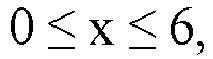


- The halide solid electrolyte may be a material represented by formula (A6) below.
Li3-3δY1+δ-aMeaCl6-x-yBrxIy (A6)
- In formula (A6), the element Me is at least one selected from the group consisting of Al, Sc, Ga, and Bi.
- In formula (A6) above, furthermore,


- The halide solid electrolyte may be a material represented by formula (A7) below.
Li3-3δ-aY1+δ-aMeaCl6-x-yBrxIy (A7)
- In formula (A7) above, the element Me is at least one selected from the group consisting of Zr, Hf, and Ti.
- In formula (A7) above, furthermore,


- The halide solid electrolyte may be a material represented by formula (A8) below.
Li3-3δ-2aY1+δ-aMeaCl6-x-yBrxIy (A8)
- In formula (A8), the element Me is at least one selected from the group consisting of Ta and Nb.
- In formula (A8) above, furthermore,


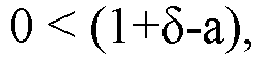


- The halide solid electrolyte may be a compound containing Li, M2, O (oxygen), and X2. The element M2 includes, for example, at least one selected from the group consisting of Nb and Ta. X2 is at least one selected from the group consisting of F, Cl, Br, and I.
- The compound containing Li, M2, X2, and O (oxygen) may be represented by, for example, the following formula: LixM2OyX25+x-2y. x may satisfy 0.1 < x < 7.0. y may satisfy 0.4 < y < 1.9.
- More specifically, the halide solid electrolyte can be, for example, Li3Y(Cl,Br,I)6, Li2.7Y1.1(Cl,Br,I)6, Li2Mg(F,Cl,Br,I)4, Li2Fe(F,Cl,Br,I)4, Li(Al,Ga,In)(F,Cl,Br,I)4, Li3(Al,Ga,In)(F,Cl,Br,I)6, Li3(Ca,Y,Gd)(Cl,Br,I)6, Li2.7(Ti,Al)F6, Li2.5(Ti,Al)F6, or Li(Ta,Nb)O(F,Cl)4. It should be noted that when an element in a formula is expressed like "(Al,Ga,In)" in the present disclosure, this notation represents at least one element selected from the group of elements in the parentheses. That is, "(Al,Ga,In)" is synonymous with "at least one selected from the group consisting of Al, Ga, and In." The same applies when other elements are listed.
- The polymeric solid electrolyte can be, for example, a compound of a polymeric compound and a lithium salt. The polymeric compound may have an ethylene oxide structure. Polymeric compounds having an ethylene oxide structure can accommodate a large amount of lithium salt. Such polymeric compounds, therefore, allow ionic conductivity to be further improved. The lithium salt can be, for example, LiPF6, LiBF4, LiSbF6, LiAsF6, LiSO3CF3, LiN(SO2F)2, LiN(SO2CF3)2, LiN(SO2C2F5)2, LiN(SO2CF3)(SO2C4F9), or LiC(SO2CF3)3. One lithium salt may be used alone, or two or more may be used in combination.
- The complex hydride solid electrolyte can be, for example, LiBH4-LiI or LiBH4-P2S5.
- The shape of the
solid electrolyte 101 is not particularly limited and may be, for example, needle-like, spherical, or ellipsoidal. The shape of thesolid electrolyte 101 may be particulate. - When the shape of the
solid electrolyte 101 is particulate (e.g., spherical), the median diameter of thissolid electrolyte 101 may be greater than or equal to 1 µm and less than or equal to 100 µm, or may be greater than or equal to 1 µm and less than or equal to 10 µm. When the median diameter of thesolid electrolyte 101 is greater than or equal to 1 µm and less than or equal to 100 µm, thesolid electrolyte 101 can easily disperse in the solvent 102. - When the shape of the
solid electrolyte 101 is particulate (e.g., spherical), the median diameter of thissolid electrolyte 101 may be greater than or equal to 0.1 µm and less than or equal to 5 µm, or may be greater than or equal to 0.5 µm and less than or equal to 3 µm. When the median diameter of thesolid electrolyte 101 is greater than or equal to 0.1 µm and less than or equal to 5 µm, a solid electrolyte sheet manufactured from thesolid electrolyte composition 1000 has higher surface smoothness and can have a denser structure. - Median diameter refers to the particle diameter in a volume-based particle size distribution at which the cumulative volume is equal to 50%. The volume-based particle size distribution is determined by laser diffraction. The same applies to the other materials, which will be described later.
- The specific surface area Sα of the
solid electrolyte 101 may be greater than or equal to 0.1 m2/g and less than or equal to 100 m2/g, or may be greater than or equal to 1 m2/g and less than or equal to 10 m2/g. When the specific surface area Sα of thesolid electrolyte 101 is greater than or equal to 0.1 m2/g and less than or equal to 100 m2/g, thesolid electrolyte 101 can easily disperse in the solvent 102. The specific surface area Sα can be measured by the method described above. - The ionic conductivity of the
solid electrolyte 101 may be greater than or equal to 0.01 mS/cm2, may be greater than or equal to 0.1 mS/cm2, or may be greater than or equal to 1 mS/cm2. When the ionic conductivity of thesolid electrolyte 101 is greater than or equal to 0.01 mS/cm2, the power characteristics of a battery can be improved. - <Binder>
- The
binder 103 is able to improve the dispersibility of thesolid electrolyte 101 in the solvent 102 and adhesion between particles of thesolid electrolyte 101. Examples ofbinders 103 include polyvinylidene fluoride (PVDF), polytetrafluoroethylene (PTFE), polyethylene, polypropylene, aramid resins, polyamides, polyimides, polyamide-imides, polyacrylonitrile, polyacrylic acid, polymethyl acrylate, polyethyl acrylate, polyhexyl acrylate, polymethacrylic acid, polymethyl methacrylate, polyethyl methacrylate, polyhexyl methacrylate, polyvinyl acetate, polyvinylpyrrolidone, polyethers, polycarbonates, polyethersulfones, polyetherketones, polyetheretherketones, polyphenylene sulfide, hexafluoropolypropylene, styrene butadiene rubber, carboxymethyl cellulose, and ethyl cellulose. Thebinder 103 can alternatively be a copolymer synthesized using two or more monomers selected from the group consisting of tetrafluoroethylene, hexafluoroethylene, hexafluoropropylene, perfluoroalkyl vinyl ethers, vinylidene fluoride, chlorotrifluoroethylene, ethylene, propylene, butadiene, styrene, pentafluoropropylene, fluoromethyl vinyl ether, acrylates, acrylic acid, and hexadiene. One of these may be used alone, or two or more may be used in combination. - The
binder 103 may include an elastomer for excellent binding properties. Elastomer refers to a polymer having rubber elasticity. The elastomer used as abinder 103 may be a thermoplastic elastomer or may be a thermosetting elastomer. Examples of elastomers include styrene-ethylene-butylene-styrene block copolymers (SEBS), styrene-ethylene-propylene-styrene block copolymers (SEPS), styrene-ethylene-ethylene-propylene-styrene block copolymers (SEEPS), butadiene rubber (BR), isoprene rubber (IR), chloroprene rubber (CR), acrylonitrile-butadiene rubber (NBR), styrene-butylene rubber (SBR), styrene-butadiene-styrene block copolymers (SBS), styrene-isoprene-styrene block copolymers (SIS), hydrogenated isoprene rubber (HIR), hydrogenated butyl rubber (HIIR), hydrogenated nitrile rubber (HNBR), hydrogenated styrene-butylene rubber (HSBR), and acrylate butadiene rubber (ABR). A mixture containing two or more selected from these may be used as thebinder 103. When thebinder 103 includes an elastomer, a solid electrolyte sheet manufactured from thesolid electrolyte composition 1000 tends to exhibit excellent flexibility and elasticity. In that case, the durability of the battery tends to improve. - The elastomer included in the
binder 103 may include a repeating unit derived from styrene. Repeating unit refers to a molecular structure derived from a monomer, and a repeating unit may also be referred to as a constitutional unit. In the present disclosure, an elastomer including a repeating unit derived from styrene may be referred to as a styrenic elastomer. Styrenic elastomers are better in flexibility and elasticity and thus are suitable for use as binders in a solid electrolyte sheet. The percentage of the repeating unit derived from styrene in the styrenic elastomer is not particularly limited. For example, the percentage is greater than or equal to 10% by mass and less than or equal to 70% by mass. - Examples of styrenic elastomers include styrene-ethylene-butylene-styrene block copolymers (SEBS), styrene-ethylene-propylene-styrene block copolymers (SEPS), styrene-ethylene-ethylene-propylene-styrene block copolymers (SEEPS), styrene-butylene rubber (SBR), styrene-butadiene-styrene block copolymers (SBS), styrene-isoprene-styrene block copolymers (SIS), and hydrogenated styrene-butylene rubber (HSBR). The
binder 103 may include SBR or SEBS as a styrenic elastomer. A mixture containing two or more selected from these may be used as thebinder 103. Because styrenic elastomers are flexible, with abinder 103 including a styrenic elastomer, flexibility can be imparted to a solid electrolyte sheet manufactured from thesolid electrolyte composition 1000. As a result, the thinning of an electrolyte layer in a battery made with a solid electrolyte sheet can be achieved, and the energy density of the battery can be further improved. - A polymer included in the
binder 103 may include a modifying group. Modifying group refers to a functional group that chemically modifies all repeating units included in the polymer chain, a subset of the repeating units included in the polymer chain, or a terminal portion of the polymer chain. The modifying group can be introduced into the polymer chain through, for example, substitution reaction or addition reaction. The modifying group includes, for example, elements such as O and N, which have relatively high electronegativity, and Si, which has relatively low electronegativity. With a modifying group including such an element, polarity can be imparted to the polymer. Examples of modifying groups include a carboxylic acid group, an acid anhydride group, an acyl group, a hydroxy group, a sulfo group, a sulfanyl group, a phosphoric acid group, a phosphonic acid group, an isocyanate group, an epoxy group, a silyl group, an amino group, a nitrile group, and a nitro group. A specific example of an acid anhydride group is a maleic anhydride group. When a polymer in thebinder 103 includes a modifying group, the dispersibility of thesolid electrolyte 101 contained in thesolid electrolyte composition 1000 can further improve. Thebinder 103 may include an SBR into which a modifying group has been introduced. - The weight-average molecular weight (Mw) of a polymer included in the
binder 103 in Embodiment 1 may be, for example, greater than or equal to 1,000 and less than or equal to 1,000,000, or may be greater than or equal to 10,000 and less than or equal to 500,000. When the weight-average molecular weight of the polymer included in thebinder 103 is greater than or equal to 1,000, particles of thesolid electrolyte 101 are able to adhere to one another with sufficient bonding strength. When the weight-average molecular weight of the polymer included in thebinder 103 is less than or equal to 1,000,000, it is unlikely that ion conduction between particles of thesolid electrolyte 101 is inhibited by thebinder 103, and the charge-discharge characteristics of a battery can be improved. The weight-average molecular weight of a polymer included in thebinder 103 can be identified through, for example, a gel permeation chromatography (GPC) measurement using polystyrene as the standard. In other words, the weight-average molecular weight is a value calculated in relation to polystyrene. In the GPC measurement, chloroform may be used as the eluent. - As mentioned above, the
ion conductor 111 includes asolid electrolyte 101 and abinder 103. Theion conductor 111 includes multiple particles of thesolid electrolyte 101 bound together by thebinder 103. - For the
ion conductor 111, the percentage of the mass of thebinder 103 to the mass of thesolid electrolyte 101 is, for example, greater than or equal to 1% by mass, may be greater than or equal to 2% by mass, may be greater than or equal to 3% by mass, may be greater than or equal to 5% by mass, or may be greater than or equal to 8% by mass. The upper limit of the percentage of the mass of thebinder 103 to the mass of thesolid electrolyte 101 is, for example, 10% by mass. - The shape of the
ion conductor 111 is not particularly limited and may be, for example, needle-like, spherical, or ellipsoidal. The shape of theion conductor 111 may be particulate. - When the shape of the
ion conductor 111 is particulate (e.g., spherical), the median diameter of theion conductor 111 may be greater than or equal to 0.1 µm and less than or equal to 10 µm, or may be greater than or equal to 0.5 µm and less than or equal to 3 µm. - The specific surface area Sβ of the
ion conductor 111 may be greater than or equal to 0.04 m2/g and less than or equal to 80 m2/g, may be greater than or equal to 1 m2/g and less than or equal to 15 m2/g, may be greater than or equal to 1.5 m2/g and less than or equal to 5 m2/g, or may be greater than or equal to 2.0 m2/g and less than or equal to 4.0 m2/g. The specific surface area Sβ can be measured by the method described above. - The ionic conductivity of the
ion conductor 111 may be greater than or equal to 0.01 mS/cm2, may be greater than or equal to 0.1 mS/cm2, or may be greater than or equal to 1 mS/cm2. - The
ion conductor 111 in thesolid electrolyte composition 1000 tends to exhibit a reduced loss of ionic conductivity. The loss of ionic conductivity in theion conductor 111 can be evaluated based on, for example, the percentage of the ionic conductivity of theion conductor 111 to the ionic conductivity of thesolid electrolyte 101. In the present disclosure, this percentage may be referred to as the percentage maintenance of ionic conductivity. The percentage maintenance of ionic conductivity is, for example, greater than or equal to 30%, may be greater than or equal to 40%, may be greater than or equal to 50%, may be greater than or equal to 60%, or may be greater than or equal to 70%. The upper limit of the percentage maintenance of ionic conductivity is not limited to a particular value. For example, the upper limit is 95%. - The
ion conductor 111 can be produced by, for example, mixing thesolid electrolyte 101 and thebinder 103 together. The method for mixing them together is not particularly limited, and an example is the method of mechanically milling and mixing together thesolid electrolyte 101 and thebinder 103 in their dry state. The wet process, in which thesolid electrolyte 101 is dispersed in a solution or dispersion containing thebinder 103 to mix them together, may alternatively be used. With the wet process, thebinder 103 can be mixed with thesolid electrolyte 101 conveniently and uniformly. It is also allowed to produce thesolid electrolyte composition 1000 by producing theion conductor 111 in a solvent by the wet process. - The solvent 102 may be an organic solvent. An organic solvent is a compound containing carbon. For example, an organic solvent is a compound that contains elements such as carbon, hydrogen, nitrogen, oxygen, sulfur, and halogens.
- The solvent 102 may include at least one selected from the group consisting of a hydrocarbon, a compound having a halogen group, and a compound having an ether linkage.
- A hydrocarbon is a compound consisting solely of carbon and hydrogen. The hydrocarbon may be an aliphatic hydrocarbon. The hydrocarbon may be a saturated hydrocarbon or may be an unsaturated hydrocarbon. The hydrocarbon may be linear-chain or may be branched-chain. The number of carbon atoms included in the hydrocarbon is not particularly limited and may be greater than or equal to 7. By using a hydrocarbon, a
solid electrolyte composition 1000 superior in the dispersibility of theion conductor 111 can be obtained. The loss of the ionic conductivity of thesolid electrolyte 101 caused by mixing with the solvent 102, furthermore, can be reduced. - The hydrocarbon may have a ring structure. The ring structure may be an alicyclic hydrocarbon or may be an aromatic hydrocarbon. The ring structure may be monocyclic or may be polycyclic. When a ring structure is present in the hydrocarbon, the
ion conductor 111 can easily disperse in the solvent 102. The hydrocarbon may include an aromatic hydrocarbon in order that the dispersibility of theion conductor 111 in thesolid electrolyte composition 1000 will be increased. That is, the solvent 102 may include an aromatic hydrocarbon. The hydrocarbon may be an aromatic hydrocarbon. Styrenic elastomers have high solubility in aromatic hydrocarbons. When thebinder 103 includes a styrenic elastomer and when the solvent 102 includes an aromatic hydrocarbon, therefore, thebinder 103 can be adsorbed onto thesolid electrolyte 101 more efficiently in thesolid electrolyte composition 1000. Through this, the performance in solvent retention of thesolid electrolyte composition 1000 can be further improved. - For the compound having a halogen group, its portion other than the halogen group may be composed solely of carbon and hydrogen. That is, compound having a halogen group refers to a compound in which at least one of the hydrogen atoms included in a hydrocarbon has been replaced with a halogen group. Examples of halogen groups include F, Cl, Br, and I. At least one selected from the group consisting of F, Cl, Br, and I may be used as the halogen group. A compound having a halogen group can have high polarity. By using a compound having a halogen group in the solvent 102, the
ion conductor 111 is allowed to easily disperse in the solvent 102, and thus asolid electrolyte composition 1000 superior in dispersibility can be obtained. As a result, a solid electrolyte sheet manufactured from thesolid electrolyte composition 1000 has excellent ionic conductivity and can have a denser structure at the same time. - The number of carbon atoms included in the compound having a halogen group is not particularly limited and may be greater than or equal to 7. This makes the compound having a halogen group scarcely volatile, thus allowing the
solid electrolyte composition 1000 to be manufactured in a stable manner. A compound having a halogen group can have a large molecular weight. That is, a compound having a halogen group can have a high boiling point. - The compound having a halogen group may have a ring structure. The ring structure may be an alicyclic hydrocarbon or may be an aromatic hydrocarbon. The ring structure may be monocyclic or may be polycyclic. When a ring structure is present in the compound having a halogen group, the
ion conductor 111 can easily disperse in the solvent 102. The compound having a halogen group may include an aromatic hydrocarbon in order that the dispersibility of theion conductor 111 in thesolid electrolyte composition 1000 will be increased. The compound having a halogen group may be an aromatic hydrocarbon. - The compound having a halogen group may have the halogen group as its only functional group. In that case, the number of halogen atoms included in the compound having a halogen group is not particularly limited. At least one selected from the group consisting of F, Cl, Br, and I may be used as the halogen group. By using such a compound in the solvent 102, the
ion conductor 111 is allowed to easily disperse in the solvent 102, and thus asolid electrolyte composition 1000 superior in dispersibility can be obtained. As a result, a solid electrolyte sheet manufactured from thesolid electrolyte composition 1000 has excellent ionic conductivity and can have a denser structure at the same time. By using such a compound in the solvent 102, a solid electrolyte sheet manufactured from thesolid electrolyte composition 1000 is allowed to easily have a dense structure with few defects such as pinholes and irregularities. - The compound having a halogen group may be a halogenated hydrocarbon. Halogenated hydrocarbon refers to a compound in which all hydrogen atoms included in a hydrocarbon have been replaced with halogen groups. By using a halogenated hydrocarbon in the solvent 102, the
ion conductor 111 is allowed to easily disperse in the solvent 102, and thus asolid electrolyte composition 1000 superior in dispersibility can be obtained. As a result, a solid electrolyte sheet manufactured from thesolid electrolyte composition 1000 has excellent ionic conductivity and can have a denser structure at the same time. By using such a compound in the solvent 102, a solid electrolyte sheet manufactured from thesolid electrolyte composition 1000 is allowed to easily have a dense structure with few defects such as pinholes and irregularities. - For the compound having an ether linkage, its portion other than the ether linkage may be composed solely of carbon and hydrogen. That is, compound having an ether linkage refers to a compound in which at least one of the C-C bonds included in a hydrocarbon has been replaced with a C-O-C linkage. A compound having an ether linkage can have high polarity. By using a compound having an ether linkage in the solvent 102, the
ion conductor 111 is allowed to easily disperse in the solvent 102. Thus, asolid electrolyte composition 1000 superior in dispersibility can be obtained. As a result, a solid electrolyte sheet manufactured from thesolid electrolyte composition 1000 has excellent ionic conductivity and can have a denser structure at the same time. - The compound having an ether linkage may have a ring structure. The ring structure may be an alicyclic hydrocarbon or may be an aromatic hydrocarbon. The ring structure may be monocyclic or may be polycyclic. When a ring structure is present in the compound having an ether linkage, the
ion conductor 111 can easily disperse in the solvent 102. The compound having an ether linkage may include an aromatic hydrocarbon in order that the dispersibility of theion conductor 111 in the solid electrolyte composition will be increased. The compound having an ether linkage may be an aromatic hydrocarbon. - Examples of
solvents 102 include ethyl benzene, mesitylene, pseudocumene, p-xylene, cumene, tetralin, m-xylene, dibutyl ether, 1,2,4-trichlorobenzene, chlorobenzene, 2,4-dichlorotoluene, anisole, o-chlorotoluene, m-dichlorobenzene, p-chlorotoluene, o-dichlorobenzene, 1,4-dichlorobutane, and 3,4-dichlorotoluene. One of these may be used alone, or two or more may be used in combination. - For cost reasons, commercially available xylene (mixed xylenes) may be used as the solvent 102. For example, mixed xylenes in which o-xylene, m-xylene, p-xylene, and ethylbenzene are mixed in a ratio by mass of 24:42:18:16 may be used.
- The solvent 102 may include tetralin. Tetralin has a relatively high boiling point. With tetralin, not only is the performance in solvent retention of the
solid electrolyte composition 1000 improved, but also thesolid electrolyte composition 1000 can be manufactured in a stable manner through a kneading process. - The boiling point of the solvent 102 may be higher than or equal to 100°C and lower than or equal to 250°C. The solvent 102 may be liquid at room temperature (25°C). Such a solvent does not easily volatilize at room temperature and thus allows the
solid electrolyte composition 1000 to be manufactured in a stable manner. Thus, asolid electrolyte composition 1000 that can be easily applied to a surface of an electrode or substrate is obtained. The solvent 102 contained in thesolid electrolyte composition 1000 can be easily removed by drying as described below. - The water content of the solvent 102 may be less than or equal to 10 ppm by mass. By reducing the water content, the loss of the ionic conductivity of the
solid electrolyte 101 caused by its reaction can be reduced. Examples of methods for reducing the water content include dehydration methods using a molecular sieve and dehydration methods by bubbling using an inert gas, such as nitrogen or argon gas. Dehydration methods by bubbling using an inert gas are recommended because they allow deoxidation to be achieved simultaneously with water. The water content can be measured with a Karl Fischer moisture analyzer. - The solvent 102 can be a liquid that can disperse the
solid electrolyte 101. Thesolid electrolyte 101 does not need to be dissolved in the solvent 102. When thesolid electrolyte 101 does not dissolve in the solvent 102, asolid electrolyte composition 1000 can be produced in which an ion-conducting phase formed during the manufacture of thesolid electrolyte 101 is kept. Thus, a solid electrolyte sheet manufactured using thissolid electrolyte composition 1000 can reduce a loss of ionic conductivity. - The solvent 102 may partially or completely dissolve the
solid electrolyte 101. By dissolving thesolid electrolyte 101, the density of a solid electrolyte sheet manufactured using thissolid electrolyte composition 1000 can be improved. - The
solid electrolyte composition 1000 may contain a dispersant. The dispersant may be a low-molecular-weight dispersant or may be a polymeric dispersant. A commercially available dispersant, humectant, or surfactant, for example, may be used as the dispersant. Dispersants are able to lessen interactions between particles of thesolid electrolyte 101. With a dispersant, therefore, thebinder 103 can be adsorbed onto thesolid electrolyte 101 more efficiently. Through this, the performance in solvent retention of thesolid electrolyte composition 1000 can be further improved. - For the
solid electrolyte composition 1000, the dispersant may include an amine compound. Amine compounds are suitable for improving the dispersibility of thesolid electrolyte 101. Amine compounds are suitable for use as dispersants in thesolid electrolyte composition 1000. Examples of amine compounds include aliphatic amines, such as methylamine and dimethylamine, aromatic amines, such as aniline, and heterocyclic amines, such as imidazole and imidazoline. - For the
solid electrolyte composition 1000, the dispersant may include imidazoline or an imidazoline derivative. Imidazoline or an imidazoline derivative is more suitable for improving the dispersibility of thesolid electrolyte 101. Imidazoline or an imidazoline derivative is more suitable for use as a dispersant in thesolid electrolyte composition 1000. An example of an imidazoline derivative is a 1-hydroxyethyl-2-alkenylimidazoline. - For the
solid electrolyte composition 1000, the percentage of the mass of the dispersant to the mass of thesolid electrolyte 101 is not particularly limited. For example, the percentage is greater than or equal to 0.001% by mass and less than or equal to 10% by mass, and may be greater than or equal to 0.01% by mass and less than or equal to 1.0% by mass. When the percentage of the mass of the dispersant is greater than or equal to 0.001% by mass, the dispersibility of thesolid electrolyte 101 can be improved in thesolid electrolyte composition 1000. When the percentage of the mass of the dispersant is less than or equal to 10% by mass, the loss of the ionic conductivity of thesolid electrolyte 101 can be reduced. - The
solid electrolyte composition 1000 may be in paste form or may be in the form of a dispersion. Theion conductor 111 is, for example, particles. Thesolid electrolyte composition 1000 includes particles of theion conductor 111 mixed with the solvent 102. In the manufacture of thesolid electrolyte composition 1000, the method for mixing together theion conductor 111 and the solvent 102 or the method for mixing together thesolid electrolyte 101, the solvent 102, and thebinder 103 is not particularly limited. Examples include mixing methods using a stirring, shaking, ultrasonic, rotary, or other mixing device. Examples include mixing methods using a high-speed homogenizer, thin-film spinning high-speed mixer, ultrasonic homogenizer, ball mill, bead mill, planetary mixer, sand mill, roll mill, kneader, or other dispersing and kneading device. One of these mixing methods may be used alone, or two or more may be used in combination. - The
solid electrolyte composition 1000 is manufactured by, for example, the following method. First, thesolid electrolyte 101 and the solvent 102 are mixed together, and a binder solution and a dispersant solution, for example, are added. The resulting liquid mixture is subjected to high-speed shear treatment using an in-line disperser-mill. Through such a process, theion conductor 111 is formed, theion conductor 111 is dispersed and stabilized in the solvent 102 at the same time, and asolid electrolyte composition 1000 better in flowability can be manufactured. In order that asolid electrolyte composition 1000 superior in flowability will be manufactured, the high-speed shear treatment may be performed under peripheral velocity conditions under which the breakage ofsolid electrolyte 101 particles does not occur and under which disintegration betweensolid electrolyte 101 particles occurs. When the breakage ofsolid electrolyte 101 particles does not occur, the specific surface area of thesolid electrolyte 101 tends not to greatly change between before and after the production of thesolid electrolyte composition 1000. Alternatively, thesolid electrolyte composition 1000 may be produced by mixing together the solvent 102 and anion conductor 111 that has been prepared beforehand and subjecting the resulting liquid mixture to high-speed shear treatment. - The binder solution is, for example, a solution containing the
binder 103 and the solvent 102. The composition of the solvent contained in the binder solution may be the same as or may be different from the composition of the solvent included in the dispersion of thesolid electrolyte 101. The dispersant solution is, for example, a solution containing a dispersant and the solvent 102. The composition of the solvent contained in the dispersant solution may be the same as or may be different from the composition of the solvent included in the dispersion of thesolid electrolyte 101. - The solids concentration of the
solid electrolyte composition 1000 is determined as appropriate according to the particle diameter of thesolid electrolyte 101, the specific surface area of thesolid electrolyte 101, the type of the solvent 102, and the type of thebinder 103. The solids concentration may be greater than or equal to 20% by mass and less than or equal to 70% by mass, or may be greater than or equal to 30% by mass and less than or equal to 60% by mass. By setting the solids concentration greater than or equal to 20% by mass, the sagging of thesolid electrolyte composition 1000 when it is applied to an electrode or other substrate can be reduced by increasing the viscosity of thesolid electrolyte composition 1000. By setting the solids concentration less than or equal to 70% by mass, the wet film thickness of thesolid electrolyte composition 1000 when it is applied to a substrate can be made relatively large, and thus a solid electrolyte sheet with a more uniform thickness can be manufactured. - Embodiment 2 will now be described. Descriptions that are the same as in Embodiment 1 will be omitted where appropriate.
- A method for manufacturing a multilayer body including a solid electrolyte sheet and an electrode will be described below with reference to
Fig. 3. Fig. 3 is a flowchart illustrating a method for manufacturing a multilayer body according to Embodiment 2. - The method for manufacturing a multilayer body may include step S01, step S02, and step S03. Step S01 in
Fig. 3 is a kneading step for producing asolid electrolyte composition 1000 and is described in Embodiment 1. The method for manufacturing a multilayer body includes step S02, in which asolid electrolyte composition 1000 in Embodiment 1 is applied, and step S03, in which the applied composition is dried. Steps S01, S02, and S03 may be performed in this order. Through these steps, amultilayer body 2000 having a goodsolid electrolyte sheet 201 with reduced formation of streaks can be manufactured using asolid electrolyte composition 1000 in Embodiment 1. -
Fig. 4 is a cross-sectional diagram of amultilayer body 2000 according to Embodiment 2. By performing a step of applying asolid electrolyte composition 1000 onto anelectrode 202 as step S02, amultilayer body 2000 can be manufactured. Thismultilayer body 2000 can also be used as an electrode. - In step S02, a
solid electrolyte composition 1000 is applied onto anelectrode 202. Through this, a coating of thesolid electrolyte composition 1000 is formed on theelectrode 202. - The
electrode 202 may be a positive electrode or negative electrode or may be an element obtained by applying a solid electrolyte onto a positive electrode or negative electrode. The positive or negative electrode includes, for example, a current collector and an active material layer disposed on the current collector. By applying asolid electrolyte composition 1000 onto anelectrode 202 and going through step S03 described below, amultilayer body 2000 of theelectrode 202 and asolid electrolyte sheet 201 is manufactured. - Examples of application methods include die coating, gravure coating, doctor blading, bar coating, spray coating, and electrostatic coating. The application may be performed by die coating for the sake of productivity in mass production. The type of coating may be continuous coating or intermittent coating.
- For the
electrode 202, a pressing step may be performed before step S02 to an extent that the interfacial resistance between the active material layer and the current collector and the interfacial resistance between the active material layer and the solid electrolyte layer do not increase excessively. With a pressing step, the packing density of theelectrode 202 can be increased. By increasing the packing density of theelectrode 202, the penetration of solvent into theelectrode 202 in step S02 can be further reduced, and, through this, a more uniformsolid electrolyte sheet 201 can be produced. - For the
electrode 202, it is not needed to perform a pressing step before step S02. By omitting pressing, the interfacial resistance between the active material layer and the solid electrolyte layer can be further reduced, and the power characteristics of a battery can be improved. - In step S02, the wet film thickness is not particularly limited. For example, the wet film thickness is less than or equal to 100 µm, may be less than or equal to 80 µm, may be less than or equal to 60 µm, may be less than or equal to 50 µm, or may be less than or equal to 40 µm. The lower limit of the wet film thickness is not particularly limited. For example, the lower limit is 1 µm .
- In step S03, the
solid electrolyte composition 1000 applied onto theelectrode 202 is dried. Through thesolid electrolyte composition 1000 being dried, the solvent 102 is, for example, removed from the coating of thesolid electrolyte composition 1000, and asolid electrolyte sheet 201 is manufactured. - Examples of drying methods by which the solvent 102 is removed from the
solid electrolyte composition 1000 include methods such as warm-air/hot-air drying, infrared heating drying, reduced pressure drying, vacuum drying, and radio-frequency induction heating drying. One of these may be used alone, or two or more may be used in combination. - The solvent 102 may be removed from the
solid electrolyte composition 1000 by warm-air/hot-air drying for manufacturing cost reasons. The set temperature of the warm air/hot air may be higher than or equal to 50°C and lower than or equal to 250°C, or may be higher than or equal to 80°C and lower than or equal to 150°C. - The removal of the solvent 102 can be confirmed by, for example, Fourier-transform infrared spectroscopy (FT-IR), x-ray photoelectron spectroscopy (XPS), gas chromatography (GC), or gas chromatography/mass spectrometry (GC/MS). It should be noted that as long as the dried
solid electrolyte sheet 201 has ionic conductivity, the solvent 102 does not need to have been completely removed. That is, part of the solvent 102 may remain in thesolid electrolyte sheet 201. - The ionic conductivity of the
solid electrolyte sheet 201 may be greater than or equal to 0.1 mS/cm or may be greater than or equal to 1 mS/cm. Through the adjustment of the ionic conductivity to greater than or equal to 0.1 mS/cm, the power characteristics of the battery can improve. For thesolid electrolyte sheet 201, pressure molding using, for example, a press machine may be performed for the purpose of improving ionic conductivity. - Embodiment 3 will now be described. Descriptions that are the same as in Embodiment 1 or 2 will be omitted where appropriate.
-
Fig. 5 is a cross-sectional diagram of abattery 3000 according to Embodiment 3. - A
battery 3000 in Embodiment 3 includes apositive electrode 301, anegative electrode 303, and anelectrolyte layer 302. - The
electrolyte layer 302 is located between thepositive electrode 301 and thenegative electrode 303. - The
electrolyte layer 302 includes asolid electrolyte sheet 201 produced in Embodiment 2. - The
battery 3000 includes a goodsolid electrolyte sheet 201 with reduced formation of streaks. For asolid electrolyte sheet 201, being good with reduced formation of streaks means that reduced occurrence of defects has been achieved in thesolid electrolyte sheet 201. Even when athinner electrolyte layer 302 is used, therefore, the possibility of contact (short-circuiting) between thepositive electrode 301 and thenegative electrode 303 can be reduced, and the energy density of thebattery 3000 can be improved. - The
battery 3000 can be manufactured by, for example, combining amultilayer body 2000 in Embodiment 2 and an electrode having the polarity opposite the polarity of theelectrode 202 included in themultilayer body 2000. This method is superior in terms of reducing the number of components involved compared with the transfer method, in which asolid electrolyte sheet 201 formed on a substrate is transferred to an electrode. In other words, this method is superior in productivity in mass production compared with the transfer method. When theelectrode 202 is the positive electrode, the electrode having the polarity opposite the polarity of theelectrode 202 is the negative electrode. When theelectrode 202 is the negative electrode, the electrode having the polarity opposite the polarity of theelectrode 202 is the positive electrode. The positive or negative electrode includes, for example, a current collector and an active material layer disposed on the current collector. There may be a layer containing a solid electrolyte on the active material layer of the positive electrode or on the active material layer of the negative electrode. Examples of methods for combining an electrode having the polarity opposite the polarity of theelectrode 202 include the method of applying electrode slurry onto thesolid electrolyte sheet 201 in themultilayer body 2000, and the method of producing the electrode beforehand by applying a mixture onto a current collector and drying the applied mixture and then allowing this electrode to bond with themultilayer body 2000. - A method for manufacturing the
battery 3000 includes, for example, applying asolid electrolyte composition 1000 onto a first electrode to form a coating, removing solvent from the coating to produce asolid electrolyte sheet 201, and placing a second electrode on thesolid electrolyte sheet 201. Examples of methods for placing a second electrode on thesolid electrolyte sheet 201 include the method of applying a second electrode composition onto thesolid electrolyte sheet 201, and the method of transferring the second electrode onto thesolid electrolyte sheet 201. When the first electrode is the positive electrode, the second electrode is the negative electrode. When the first electrode is the negative electrode, the second electrode is the positive electrode. Each of the first and second electrodes includes, for example, a current collector and an active material layer disposed on the current collector. There may be a layer containing a solid electrolyte on the active material layer of the first electrode or on the active material layer of the second electrode. - The
electrolyte layer 302 is a layer containing an electrolyte material. An example of an electrolyte material is a solid electrolyte. Theelectrolyte layer 302, therefore, may be a solid electrolyte layer. The solid electrolyte contained in theelectrolyte layer 302 may be a solid electrolyte listed as an example of thesolid electrolyte 101 in Embodiment 1. For example, a solid electrolyte such as a sulfide solid electrolyte, oxide solid electrolyte, halide solid electrolyte, polymeric solid electrolyte, or complex hydride solid electrolyte can be used. - The
electrolyte layer 302 may contain a solid electrolyte as its main constituent. Theelectrolyte layer 302 may contain more than or equal to 70% solid electrolyte as a percentage by mass to the entire electrolyte layer 302 (more than or equal to 70% by mass solid electrolyte). - With this configuration, the power characteristics of the
battery 3000 can be further improved. - The
electrolyte layer 302 may contain a solid electrolyte as its main constituent and further contain inevitable impurities. Examples of inevitable impurities include starting materials used when synthesizing the solid electrolyte, by-products, and decomposition products. - The
electrolyte layer 302 may contain 100% solid electrolyte as a percentage by mass to theentire electrolyte layer 302 excluding impurities that inevitably become mixed in. - With this configuration, the power characteristics of the
battery 3000 can be further improved. - The
electrolyte layer 302 may contain two or more of the materials named as solid electrolytes. For example, theelectrolyte layer 302 may contain a halide solid electrolyte and a sulfide solid electrolyte. - The
electrolyte layer 302 may be a layer produced by stacking a layer made with thesolid electrolyte sheet 201 and a layer containing a solid electrolyte having a composition different from the composition of thesolid electrolyte 101 contained in thesolid electrolyte sheet 201. Theelectrolyte layer 302 may be a single layer that is thesolid electrolyte sheet 201 or may be two or more layers formed by other solid electrolytes. - The
electrolyte layer 302 may have a layer disposed between a layer made with thesolid electrolyte sheet 201 and thenegative electrode 303 and containing a solid electrolyte having a more negative reduction potential than thesolid electrolyte 101 contained in thesolid electrolyte sheet 201. With this configuration, the reductive decomposition of thesolid electrolyte 101 that can result from contact between thesolid electrolyte 101 and the negative electrode active material can be reduced, and thus the power characteristics of thebattery 3000 can be improved. An example of a solid electrolyte having a more negative reduction potential than thesolid electrolyte 101 is a sulfide solid electrolyte. - The thickness of the
electrolyte layer 302 may be greater than or equal to 1 µm and less than or equal to 300 µm. When the thickness of theelectrolyte layer 302 is greater than or equal to 1 µm, the possibility that thepositive electrode 301 and thenegative electrode 303 short-circuit decreases. When the thickness of theelectrolyte layer 302 is less than or equal to 300 µm, operation at a high power can be easily performed regarding thebattery 3000. That is, when the thickness of theelectrolyte layer 302 has been adjusted appropriately, sufficient safety of thebattery 3000 can be ensured, and, at the same time, thebattery 3000 can be operated at a high power. - The thickness of the
solid electrolyte sheet 201 included in theelectrolyte layer 302 may be greater than or equal to 1 µm and less than or equal to 30 µm, may be greater than or equal to 1 µm and less than or equal to 15 µm, or may be greater than or equal to 1 µm and less than or equal to 7.5 µm. When the thickness of thesolid electrolyte sheet 201 is greater than or equal to 1 µm, the possibility that thepositive electrode 301 and thenegative electrode 303 short-circuit decreases. When the thickness of thesolid electrolyte sheet 201 is less than or equal to 30 µm, operation at a high power is possible because of a reduced internal resistance of thebattery 3000, and the energy density of thebattery 3000 can be improved. The thickness of thesolid electrolyte sheet 201 is defined by, for example, an average from multiple randomly chosen points (e.g., three points) in a cross-section parallel to the thickness direction. - The shape of a solid electrolyte included in the
battery 3000 is not particularly limited. The shape of the solid electrolyte may be, for example, needle-like, spherical, or ellipsoidal. The shape of the solid electrolyte may be particulate. - At least one selected from the group consisting of the
positive electrode 301 and thenegative electrode 303 may contain an electrolyte material. For example, a solid electrolyte may be contained. The solid electrolyte can be a solid electrolyte listed as an example of a material that forms thesolid electrolyte sheet 201. With this configuration, ionic conductivity (e.g., lithium-ion conductivity) inside thepositive electrode 301 ornegative electrode 303 improves, and operation at a high power can be performed regarding thebattery 3000. - For the
positive electrode 301 ornegative electrode 303, a sulfide solid electrolyte may be used as the solid electrolyte, and a halide solid electrolyte as mentioned above may be used as a coating material that covers the active material. - The
positive electrode 301 contains, for example, a material having properties of occluding and releasing metal ions (e.g., lithium ions) as a positive electrode active material. Examples of positive electrode active materials include lithium-containing transition metal oxides, transition metal fluorides, polyanionic materials, fluorinated polyanionic materials, transition metal sulfides, transition metal oxysulfides, and transition metal oxynitrides. Examples of lithium-containing transition metal oxides include Li(Ni,Co,Al)O2, Li(Ni,Co,Mn)O2, and LiCoO2. When a lithium-containing transition metal oxide, for example, is used as a positive electrode active material, the manufacturing cost for thepositive electrode 301 can be reduced, and the average discharge voltage of thebattery 3000 can be improved at the same time. Li(Ni,Co,Al)O2 means that any proportions of Ni, Co, and Al are contained. Li(Ni,Co,Mn)O2 means that any proportions of Ni, Co, and Mn are contained. - When the shape of the solid electrolyte contained in the
positive electrode 301 is particulate (e.g., spherical), the median diameter of the solid electrolyte may be less than or equal to 100 µm. When the median diameter of the solid electrolyte is less than or equal to 100 µm, the positive electrode active material and the solid electrolyte can disperse well in thepositive electrode 301. Through this, the charge-discharge characteristics of thebattery 3000 improve. - The median diameter of the solid electrolyte contained in the
positive electrode 301 may be smaller than the median diameter of the positive electrode active material. This allows the solid electrolyte and the positive electrode active material to disperse well. - The median diameter of the positive electrode active material may be greater than or equal to 0.1 µm and less than or equal to 100 µm. When the median diameter of the positive electrode active material is greater than or equal to 0.1 µm, the positive electrode active material and the solid electrolyte can disperse well in the
positive electrode 301. As a result of this, the charge-discharge characteristics of thebattery 3000 improve. When the median diameter of the positive electrode active material is less than or equal to 100 µm, the lithium diffusion rate inside the positive electrode active material improves. Thus, thebattery 3000 can operate at a high power. - For the
positive electrode 301, the volume ratio "v1:(100 - v1)" of the positive electrode active material to the solid electrolyte may satisfy 30 ≤ v1 ≤ 95. v1 represents the proportion by volume of the positive electrode active material when the total volume of the positive electrode active material and solid electrolyte contained in thepositive electrode 301 is assumed to be 100. When 30 ≤ v1 is satisfied, it is easy to ensure a sufficient energy density regarding thebattery 3000. When v3 ≤ 95 is satisfied, operation at a high power can be performed more easily regarding thebattery 3000. - The thickness of the
positive electrode 301 may be greater than or equal to 10 µm and less than or equal to 500 µm. When the thickness of thepositive electrode 301 is greater than or equal to 10 µm, a sufficient energy density can be easily ensured regarding thebattery 3000. When the thickness of thepositive electrode 301 is less than or equal to 500 µm, operation at a high power can be performed more easily regarding thebattery 3000. - The
negative electrode 303 contains, for example, a material having properties of occluding and releasing metal ions (e.g., lithium ions) as a negative electrode active material. Examples of negative electrode active materials include a metallic material, a carbon material, an oxide, a nitride, a tin compound, and a silicon compound. The metallic material may be an elemental metal or may be an alloy. Examples of metallic materials include lithium metal and lithium alloys. Examples of carbon materials include natural graphite, coke, graphitizing carbon, carbon fiber, spherical carbon, artificial graphite, and amorphous carbon. By silicon (Si), tin (Sn), a silicon compound, tin compound, or similar material being used, the capacity density of thebattery 3000 can be improved. By using an oxide compound containing titanium (Ti) or niobium (Nb), the safety of thebattery 3000 can be improved. - The median diameter of the negative electrode active material may be greater than or equal to 0.1 µm and less than or equal to 100 µm. When the median diameter of the negative electrode active material is greater than or equal to 0.1 µm, the negative electrode active material and the solid electrolyte can disperse well in the
negative electrode 303. Through this, the charge-discharge characteristics of thebattery 3000 improve. When the median diameter of the negative electrode active material is less than or equal to 100 µm, the lithium diffusion rate inside the negative electrode active material improves. Thus, thebattery 3000 can operate at a high power. - The median diameter of the negative electrode active material may be larger than the median diameter of the solid electrolyte. This allows the solid electrolyte and the negative electrode active material to disperse well.
- The volume ratio "v2:(100 - v2)" of the negative electrode active material to the solid electrolyte contained in the
negative electrode 303 may satisfy 30 ≤ v2 ≤ 95. v2 represents the proportion by volume of the negative electrode active material when the total volume of the negative electrode active material and solid electrolyte contained in thenegative electrode 303 is assumed to be 100. When 30 ≤ v2 is satisfied, it is easy to ensure a sufficient energy density regarding thebattery 3000. When v2 ≤ 95 is satisfied, operation at a high power can be performed more easily regarding thebattery 3000. - The thickness of the
negative electrode 303 may be greater than or equal to 10 µm and less than or equal to 500 µm. When the thickness of thenegative electrode 303 is greater than or equal to 10 µm, a sufficient energy density can be easily ensured regarding thebattery 3000. When the thickness of thenegative electrode 303 is less than or equal to 500 µm, operation at a high power can be performed more easily regarding thebattery 3000. - The positive electrode active material and the negative electrode active material may be covered with a coating material in order that the interfacial resistance between the active materials and the solid electrolyte is reduced. The coating material can be a material having low electronic conductivity. The coating material can be an oxide material, oxide solid electrolyte, or similar material.
- Examples of oxide materials that are used as coating materials include SiO2, Al2O3, TiO2, B2O3, Nb2O5, WO3, and ZrO2.
- Examples of oxide solid electrolytes that are used as coating materials include Li-Nb-O compounds, such as LiNbO3, Li-B-O compounds, such as LiBO2 and Li3BO3, Li-Al-O compounds, such as LiAlO2, Li-Si-O compounds, such as Li4SiO4, Li-Ti-O compounds, such as Li2SO4 and Li4Ti5O12, Li-Zr-O compounds, such as Li2ZrO3, Li-Mo-O compounds, such as Li2MoO3, Li-V-O compounds, such as LiV2O5, Li-W-O compounds, such as Li2WO4, and Li-P-O compounds, such as LiPO4. Oxide solid electrolytes have a high ionic conductivity and high high-potential stability. Through the use of an oxide solid electrolyte as a coating material, therefore, the charge-discharge efficiency of the
battery 3000 can further improve. - At least one selected from the group consisting of the
positive electrode 301, theelectrolyte layer 302, and thenegative electrode 303 may contain a binding agent for the purpose of improved adhesion between particles. Examples of binding agents include those mentioned above in relation to thebinder 103. When the binding agent includes an elastomer, excellent flexibility and elasticity tend to be attained regarding each of thepositive electrode 301,electrolyte layer 302, andnegative electrode 303 included in thebattery 3000. In that case, the durability of thebattery 3000 tends to improve. - At least one selected from the group consisting of the
positive electrode 301, theelectrolyte layer 302, and thenegative electrode 303 may contain a nonaqueous electrolyte solution, gel electrolyte, or ionic liquid for the purpose of easier exchange of lithium ions and improved power characteristics of thebattery 3000. - The nonaqueous electrolyte solution contains a nonaqueous solvent and a lithium salt dissolved in the nonaqueous solvent. The nonaqueous solvent can be, for example, a cyclic carbonate solvent, linear carbonate solvent, cyclic ether solvent, linear ether solvent, cyclic ester solvent, linear ester solvent, or fluorinated solvent. Examples of cyclic carbonate solvents include ethylene carbonate, propylene carbonate, and butylene carbonate. Examples of linear carbonate solvents include dimethyl carbonate, ethyl methyl carbonate, and diethyl carbonate. Examples of cyclic ether solvents include tetrahydrofuran, 1,4-dioxane, and 1,3-dioxolane. Examples of linear ether solvents include 1,2-dimethoxyethane and 1,2-diethoxyethane. An example of a cyclic ester solvent is γ-butyrolactone. An example of a linear ester solvent is methyl acetate. Examples of fluorinated solvents include fluoroethylene carbonate, methyl fluoropropionate, fluorobenzene, fluoroethyl methyl carbonate, and fluorodimethylene carbonate. As the nonaqueous solvent, one nonaqueous solvent selected from these may be used alone, or a mixture of two or more nonaqueous solvents selected from these may be used.
- In the nonaqueous electrolyte solution, at least one fluorinated solvent selected from the group consisting of fluoroethylene carbonate, methyl fluoropropionate, fluorobenzene, fluoroethyl methyl carbonate, and fluorodimethylene carbonate may be contained.
- Examples of lithium salts include LiPF6, LiBF4, LiSbF6, LiAsF6, LiSO3CF3, LiN(SO2F)2, LiN(SO2CF3)2, LiN(SO2C2F5)2, LiN(SO2CF3)(SO2C4F9), and LiC(SO2CF3)3. As the lithium salt, one lithium salt selected from these may be used alone, or a mixture of two or more lithium salts selected from these may be used. The concentration of the lithium salt in the nonaqueous electrolyte solution may be greater than or equal to 0.5 mol/liter and less than or equal to 2 mol/liter.
- The gel electrolyte can be a material produced by soaking a polymeric material with a nonaqueous electrolyte solution. Examples of polymeric materials include polyethylene oxide, polyacrylonitrile, polyvinylidene fluoride, polymethyl methacrylate, and polymers having ethylene oxide linkages.
- The cation that forms the ionic liquid may be, for example, an aliphatic linear quaternary cation, such as a tetraalkylammonium or tetraalkylphosphonium, an aliphatic cyclic ammonium, such as a pyrrolidinium, morpholinium, imidazolinium, tetrahydropyridinium, piperazinium, or piperidinium, or a nitrogen-containing heterocyclic aromatic cation, such as a pyridinium or imidazolium. The anion that forms the ionic liquid may be, for example, PF6 -, BF4 -, SbF6 -, AsF6 -, SO3CF3 -, N(SO2F)2 -, N(SO2CF3)2 -, N(SO2C2F5)2 -, N(SO2CF3)(SO2C4F9)-, or C(SO2CF3)3 -. The ionic liquid may contain a lithium salt.
- At least one selected from the group consisting of the
positive electrode 301 and thenegative electrode 303 may contain a conductive additive for the purpose of improved electronic conductivity. Examples of conductive additives include graphites, such as natural graphite and artificial graphite, carbon blacks, such as acetylene black and Ketjenblack, electrically conductive fibers, such as carbon fibers and metallic fibers, electrically conductive powders, for example of fluorocarbons and aluminum, electrically conductive whiskers, for example of zinc oxide and potassium titanate, electrically conductive metal oxides, such as titanium oxide, and electrically conductive polymers, such as polyaniline, polypyrrole, and polythiophene. By using a carbon material as a conductive additive, cost reduction can be attempted. - Examples of shapes of the
battery 3000 include coin-shaped, cylindrical, square, sheet-shaped, button-shaped, flat-plate, and multilayer. - The details of the present disclosure will now be described using examples and comparative examples. It should be noted that the solid electrolyte composition, multilayer body including a solid electrolyte sheet and an electrode, and battery according to the present disclosure are not limited to the following examples.
- In all steps below, the solvent was a commercially available dehydrated solvent or solvent dehydrated by nitrogen bubbling. The water content of the solvent was less than or equal to 10 ppm by mass.
- A binder solution was prepared by adding a solvent to a binder and dissolving or dispersing the binder in the solvent. The concentration of the binder in the binder solution was adjusted to greater than or equal to 5% by mass and less than or equal to 10% by mass. Then dehydration treatment by nitrogen bubbling was performed until the water content of the binder solution reached less than or equal to 10 ppm by mass.
- In Example 1-1, the solvent in the binder solution was tetralin. The binder was a styrene-ethylene/butylene-styrene block copolymer (SEBS), which is a hydrogenated styrenic thermoplastic elastomer. The percentage of repeating units derived from styrene in the SEBS was 32% by mass. The weight-average molecular weight Mw of the SEBS was 230,000.
- A dispersant was dehydrated by adding Molecular Sieves 4A 1/16 to the dispersant. A dispersant solution was prepared by adding, to the dehydrated dispersant, a solvent that had been dehydrated beforehand. The concentration of the dispersant in the dispersant solution was adjusted to 5% by mass.
- In Example 1-1, the solvent in the dispersant solution was tetralin. The dispersant was DISPERBYK-109 (BYK Chemie Japan; base ingredient, a 1-hydroxyethyl-2-alkenylimidazoline; amine value, 140 mg KOH/g).
- In an argon glove box with a dew point of lower than or equal to -60°C, tetralin, the dispersant solution, and the binder solution were added to a Li2S-P2S5 glass-ceramic (hereinafter described as "LPS"). The mixing of these materials was performed according to a ratio by mass of 100:1:0.25 (LPS:binder:dispersant). Then the resulting liquid mixture was subjected to shear dispersion and kneading using an in-line disperser-mill (IKA, magic LAB). Through this, a solid electrolyte composition of Example 1-1 was obtained. The solids concentration of the solid electrolyte composition was 51% by mass.
- First, measurement samples for the measurement of the specific surface areas Sα and Sβ were prepared. The measurement sample for the measurement of the specific surface area Sα was the LPS, a raw material for the solid electrolyte composition. The measurement sample for the measurement of the specific surface area Sβ was prepared by the following method. First, the drying of the solid electrolyte composition of Example 1-1 was performed in an argon glove box with a dew point of lower than or equal to -60°C. The drying of the solid electrolyte composition was performed by heating the composition at 100°C for 1 hour in a vacuum atmosphere. As a result of this, the solvent was removed from the solid electrolyte composition, and a solid substance was obtained. This solid substance was sufficiently loosened by hand and then heated at 100°C for 1 hour in a vacuum atmosphere again. Through this, an ion conductor as the measurement sample for the measurement of the specific surface area Sβ was obtained.
- Then the specific surface areas Sα and Sβ were measured using these measurement samples. The measurement was performed using a high-accuracy gas adsorption analyzer (MicrotracBEL, BELSORP MINI X). As for the measurement samples, drying treatment was performed before the measurement by vacuum-heating the samples at 80°C for approximately 1 hour in sample tubes. In the measurement of the specific surface areas, the amount of nitrogen adsorbed on the measurement sample was measured by nitrogen gas adsorption first. The amount of adsorbed nitrogen was measured at about ten points at a relative pressure of greater than or equal to 0.05 and less than or equal to 0.30. Based on the data obtained, the specific surface areas Sα and Sβ were calculated by BET analysis.
- For the solid electrolyte composition of Example 1-1, the ratio Sβ/Sα of the specific surface area Sβ of the ion conductor to the specific surface area Sα of the solid electrolyte was 0.77. The solid electrolyte was an LPS, a sulfide solid electrolyte. The solvent was tetralin. The binder was an SEBS. The dispersant was DISPERBYK-109.
- A solid electrolyte composition of Example 1-2 was produced by the same method as in Example 1-1 except that in the production of the solid electrolyte composition, the materials were mixed in a ratio by mass of 100:2:0.25 (LPS:binder:dispersant). For the solid electrolyte composition of Example 1-2, the ratio Sβ/Sα was 0.72. The solid electrolyte was an LPS, a sulfide solid electrolyte. The solvent was tetralin. The binder was an SEBS. The dispersant was DISPERBYK-109.
- A solid electrolyte composition of Example 1-3 was produced by the same method as in Example 1-1 except that the solids concentration of the solid electrolyte composition was adjusted to 45% by mass, that no dispersant was used, that the materials were mixed in a ratio by mass of 100:3 (LPS:binder), and that the liquid mixture was subjected to shear dispersion and kneading using a homogenizer (AS ONE, HG-200) and a generator (AS ONE, K-20S). For the solid electrolyte composition of Example 1-3, the ratio Sβ/Sα was 0.70. The solid electrolyte was an LPS, a sulfide solid electrolyte. The solvent was tetralin. The binder was an SEBS.
- A solid electrolyte composition of Example 1-4 was produced by the same method as in Example 1-3 except that the binder was a modified styrene-butadiene rubber (modified SBR). For the solid electrolyte composition of Example 1-4, the ratio Sβ/Sα was 0.66. The solid electrolyte was an LPS, a sulfide solid electrolyte. The solvent was tetralin. The binder was a modified SBR.
- A solid electrolyte composition of Example 1-5 was produced by the same method as in Example 1-1 except that in the production of the solid electrolyte composition, the materials were mixed in a ratio by mass of 100:3:0.25 (LPS:binder:dispersant). For the solid electrolyte composition of Example 1-5, the ratio Sβ/Sα was 0.64. The solid electrolyte was an LPS, a sulfide solid electrolyte. The solvent was tetralin. The binder was an SEBS. The dispersant was DISPERBYK-109.
- A solid electrolyte composition of Example 1-6 was produced by the same method as in Example 1-1 except that the binder was a modified SBR, that the materials were mixed in a ratio by mass of 100:3:0.25 (LPS:binder:dispersant), and that the liquid mixture was subjected to shear dispersion and kneading using a homogenizer (AS ONE, HG-200) and a generator (AS ONE, K-20S). For the solid electrolyte composition of Example 1-6, the ratio Sβ/Sα was 0.63. The solid electrolyte was an LPS, a sulfide solid electrolyte. The solvent was tetralin. The binder was a modified SBR. The dispersant was DISPERBYK-109.
- A solid electrolyte composition of Example 1-7 was produced by the same method as in Example 1-3 except that the solids concentration of the solid electrolyte composition was adjusted to 49% by mass and that the materials were mixed in a ratio by mass of 100:5:0.25 (LPS:binder:dispersant). For the solid electrolyte composition of Example 1-7, the ratio Sβ/Sα was 0.50. The solid electrolyte was an LPS, a sulfide solid electrolyte. The solvent was tetralin. The binder was an SEBS. The dispersant was DISPERBYK-109.
- A solid electrolyte composition of Example 1-8 was produced by the same method as in Example 1-3 except that the solids concentration of the solid electrolyte composition was adjusted to 41% by mass and that the materials were mixed in a ratio by mass of 100:8:0.25 (LPS:binder:dispersant). For the solid electrolyte composition of Example 1-8, the ratio Sβ/Sα was 0.42. The solid electrolyte was an LPS, a sulfide solid electrolyte. The solvent was tetralin. The binder was an SEBS. The dispersant was DISPERBYK-109.
- A solid electrolyte composition of Comparative Example 1-1 was produced by the same method as in Example 1-6 except that the binder was polyvinylidene fluoride (PVDF). For the solid electrolyte composition of Comparative Example 1-1, the ratio Sβ/Sα was 1.00. The solid electrolyte was an LPS, a sulfide solid electrolyte. The solvent was tetralin. The binder was PVDF. The dispersant was DISPERBYK-109.
- A solid electrolyte composition of Comparative Example 1-2 was produced by the same method as in Comparative Example 1-1 except that in the production of the solid electrolyte composition, the materials were mixed in a ratio by mass of 100:5:0.25 (LPS:binder:dispersant). For the solid electrolyte composition of Comparative Example 1-2, the ratio Sβ/Sα was 1.06. The solid electrolyte was an LPS, a sulfide solid electrolyte. The solvent was tetralin. The binder was PVDF. The dispersant was DISPERBYK-109.
- A solid electrolyte composition of Comparative Example 1-3 was produced by the same method as in Example 1-4 except that the solvent was diisobutyl ketone, that the solids concentration of the solid electrolyte composition was adjusted to 57% by mass, and that the materials were mixed in a ratio by mass of 100:0.5:0.25 (LPS:binder:dispersant). For the solid electrolyte composition of Comparative Example 1-3, the ratio Sβ/Sα was 0.80. The solid electrolyte was an LPS, a sulfide solid electrolyte. The solvent was diisobutyl ketone. The binder was a modified SBR. The dispersant was DISPERBYK-109.
- A solid electrolyte composition of Comparative Example 1-4 was produced by the same method as in Example 1-8 except that the solids concentration of the solid electrolyte composition was adjusted to 37% by mass and that the materials were mixed in a ratio by mass of 100:12:0.25 (LPS:binder:dispersant). For the solid electrolyte composition of Comparative Example 1-4, the ratio Sβ/Sα was 0.35. The solid electrolyte was an LPS, a sulfide solid electrolyte. The solvent was tetralin. The binder was an SEBS. The dispersant was DISPERBYK-109.
- A solid electrolyte composition of Comparative Example 1-5 was produced by the same method as in Example 1-8 except that the solids concentration of the solid electrolyte composition was adjusted to 37% by mass and that the materials were mixed in a ratio by mass of 100:15:0.25 (LPS:binder:dispersant). For the solid electrolyte composition of Comparative Example 1-5, the ratio Sβ/Sα was 0.28. The solid electrolyte was an LPS, a sulfide solid electrolyte. The solvent was tetralin. The binder was an SEBS. The dispersant was DISPERBYK-109.
- A solid electrolyte composition of Comparative Example 1-6 was produced by the same method as in Comparative Example 1-5 except that the solvent in the binder solution was mixed xylenes and that the materials were mixed in a ratio by mass of 100:20:0.25 (LPS:binder:dispersant). For the solid electrolyte composition of Comparative Example 1-6, the mixed xylenes was a solvent mixture containing o-xylene, m-xylene, p-xylene, and ethylbenzene in a ratio by mass of 24:42:18:16. The ratio Sβ/Sα was 0.19. The solid electrolyte was an LPS, a sulfide solid electrolyte. The solvent was a solvent mixture of mixed xylenes and tetralin. The binder was an SEBS. The dispersant was DISPERBYK-109.
- A solid electrolyte composition of Reference Example 1-1 was produced by the same method as in Example 1-3 except that no binder and no dispersant were used. For the solid electrolyte composition of Reference Example 1-1, the ratio Sβ/Sα was 1.00. The solid electrolyte was an LPS, a sulfide solid electrolyte.
- A solid electrolyte composition of Reference Example 1-2 was produced by the same method as in Example 1-6 except that no binder was used. For the solid electrolyte composition of Reference Example 1-2, the ratio Sβ/Sα was 0.97. The solid electrolyte was an LPS, a sulfide solid electrolyte. The dispersant was DISPERBYK-109.
- For the solid electrolyte compositions of Examples 1-1 to 1-8, Comparative Examples 1-1 to 1-6, and Reference Examples 1-1 and 1-2, the percentage solvent retention was measured by the method described above. The measurement of the percentage solvent retention was performed in a dry room with a dew point of lower than or equal to -40°C. The electrode was a negative electrode formed through the application of a mixture composed of graphite, an LPS, a modified SBR, ethyl cellulose, and a dispersant onto roughened nickel foil. In the mixture, the materials were composed according to a ratio by mass of 70:30:1:0.25:0.05 (graphite:LPS:modified SBR:ethyl cellulose: dispersant). The thickness of the roughened nickel foil was 12 µm. The thickness of the negative electrode was 110 µm. The packing density of the negative electrode was 55%.
- For the ion conductors contained in the solid electrolyte compositions of Examples 1-1 to 1-8 and Comparative Examples 1-1 to 1-6 and the solid electrolytes contained in the solid electrolyte compositions of Reference Examples 1-1 and 1-2, the percentage maintenance of ionic conductivity was measured by the following method. First, the ion conductor or solid electrolyte was obtained from the solid electrolyte composition by the method described above in relation to the specific surface area Sβ. Then 100 mg of the ion conductor or solid electrolyte was put into an electrically insulating casing and pressure-molded at a pressure of 740 MPa. Then stainless-steel pins were placed on the top and bottom of the compression-molded ion conductor or solid electrolyte. To the stainless-steel pins, current-collecting lead wires were attached. Then the inside of the electrically insulating casing was insulated from the outside atmosphere and tightly sealed using an electrically insulating ferrule. Lastly, the resulting battery was immobilized using four bolts from above and below, and a specific pressure of 150 MPa was applied to the ion conductor or solid electrolyte; in this manner, a sample for measuring ionic conductivity was produced. This sample was placed in a temperature-controlled chamber at 25°C. Using a potentiostat/galvanostat (Solartron Analytical, 1470E) and a frequency response analyzer (Solartron Analytical, 1255B), the ionic conductivity of the samples was determined by the electrochemical AC impedance method. Based on the results obtained, the percentage of the ionic conductivity of the ion conductor or solid electrolyte to the ionic conductivity of the LPS, a raw material for the solid electrolyte composition, was calculated. Through this, the percentage maintenance of ionic conductivity was identified for the ion conductors contained in the solid electrolyte compositions of Examples 1-1 to 1-8 and Comparative Examples 1-1 to 1-6 and the solid electrolytes contained in the solid electrolyte compositions of Reference Examples 1-1 and 1-2.
- The results of these measurements are presented in Table 1.
[Table 1] Ratio Sβ/Sα Type of the binder Type of the solvent Dispersant Percentage solvent retention (%) Percentage maintenance of ionic conductivity (%) Example 1-1 0.77 SEBS Tetralin Yes 27 71 Example 1-2 0.72 SEBS Tetralin Yes 40 63 Example 1-3 0.70 SEBS Tetralin No 51 49 Example 1-4 0.66 Modified SBR Tetralin No 53 44 Example 1-5 0.64 SEBS Tetralin Yes 64 51 Example 1-6 0.63 Modified SBR Tetralin Yes 64 54 Example 1-7 0.50 SEBS Tetralin Yes 87 41 Example 1-8 0.42 SEBS Tetralin Yes 79 39 Comparative Example 1-1 1.00 PVDF Tetralin Yes 15 88 Comparative Example 1-2 1.06 PVDF Tetralin Yes 15 80 Comparative Example 1-3 0.80 Modified SBR Diisobutyl ketone No 15 80 Comparative Example 1-4 0.35 SEBS Tetralin Yes 78 5.6 Comparative Example 1-5 0.28 SEBS Tetralin Yes 81 2.4 Comparative Example 1-6 0.19 SEBS Tetralin/Mixed xylenes Yes 86 0.76 Reference Example 1-1 1.00 None Tetralin No 19 88 Reference Example 1-2 0.97 None Tetralin Yes 22 78 - As can be seen from Table 1, the solid electrolyte compositions of the Examples, for which the ratio Sβ/Sα is greater than 0.40 and less than 0.80, achieved a high percentage solvent retention and a high percentage maintenance of ionic conductivity at the same time unlike the solid electrolyte compositions of the Comparative Examples. It should be noted that in Reference Examples 1-1 and 1-2, the specific surface area Sα represents the specific surface area of the solid electrolyte used as a raw material. The specific surface area Sβ represents the specific surface area of the solid electrolyte after the production of the solid electrolyte composition. As can be seen from Table 1, in Reference Examples 1-1 and 1-2, the ratio Sβ/Sα was approximately 1. That is, in Reference Examples 1-1 and 1-2, the specific surface area of the solid electrolyte changed little during the course of manufacture of the solid electrolyte composition. From these results, it is presumed that for the solid electrolyte compositions of the Examples and Comparative Examples, too, little change in the specific surface area of the solid electrolyte caused by excessive breakage, sintering, etc., occurred in the course of their manufacture.
- In an argon glove box with a dew point of lower than or equal to -60°C, coatings were produced by applying the solid electrolyte composition of Example 1-1 onto negative electrodes using a die coater. The negative electrodes contained graphite, silicon, an LPS, and a modified SBR. For the negative electrodes, no pressing step was performed beforehand. In the application of the solid electrolyte composition, three coatings varying in wet film thickness were produced by intermittent coating with a coating width of 98 mm and a length of 150 mm. The wet film thicknesses of the three coatings were 60 µm, 50 µm, and 40 µm. Multilayer bodies of Example 2-1 were produced by drying the resulting coatings by hot-air drying at higher than or equal to 80°C and lower than or equal to 110°C.
- Multilayer bodies of Example 2-2 were produced by the same method as in Example 2-1 except that the solid electrolyte composition was the solid electrolyte composition of Example 1-2.
- Multilayer bodies of Example 2-3 were produced by the same method as in Example 2-1 except that the solid electrolyte composition was the solid electrolyte composition of Example 1-5.
- Multilayer bodies of Comparative Example 2-1 were produced by the same method as in Example 2-1 except that the solid electrolyte composition was the solid electrolyte composition of Comparative Example 1-3.
- For the multilayer bodies of Examples 2-1 to 2-3 and Comparative Example 2-1, the solid electrolyte sheet was observed visually. The results are presented in Table 2. In Table 2, "Good" means that the result was good, with no streaks on the solid electrolyte sheet. "Poor" means that the result was poor, with streaks on the solid electrolyte sheet.
[Table 2] Ratio Sβ/Sα Percentage solvent retention (%) Streaks on the solid electrolyte sheet Wet film thickness 60 µm Wet film thickness 50 µm Wet film thickness 40 µm Example 2-1 0.77 27 Good Poor Poor Example 2-2 0.72 40 Good Good Poor Example 2-3 0.64 64 Good Good Good Comparative Example 2-1 0.80 15 Poor Poor Poor - As shown in Table 2, for the multilayer bodies of Examples 2-1 to 2-3, the solid electrolyte sheets produced under 60 µm wet film thickness conditions achieved a good result, with reduced formation of streaks. The weight per unit area of these solid electrolyte sheets was 4.1 mg/cm2. The thickness after compression treatment for these solid electrolyte sheets was 21 µm. As for the multilayer bodies of Comparative Example 2-1, the solid electrolyte sheet produced under 60 µm wet film thickness conditions had a poor result, with the formation of streaks.
- In Comparative Example 2-1, the solid electrolyte composition of Comparative Example 1-3, for which the ratio Sβ/Sα is large, was used. With this solid electrolyte composition, the percentage solvent retention was low, and it was difficult to produce a good coating. Because of this, presumably, the multilayer bodies of Comparative Example 2-1 experienced the formation of streaks on their solid electrolyte sheet.
- As shown in Table 2, for the multilayer bodies of Examples 2-2 and 2-3, the solid electrolyte sheets produced under 50 µm wet film thickness conditions achieved a good result, with reduced formation of streaks. The weight per unit area of these solid electrolyte sheets was 3.3 mg/cm2. The thickness after compression treatment for these solid electrolyte sheets was 17 µm.
- As shown in Table 2, for the multilayer bodies of Example 2-3, the solid electrolyte sheet produced under 40 µm wet film thickness conditions achieved a good result, with reduced formation of streaks. The weight per unit area of this solid electrolyte sheet was 2.7 mg/cm2. The thickness after compression treatment for this solid electrolyte sheet was 14 µm.
- As can be seen from Tables 1 and 2, with the solid electrolyte compositions of the Examples, for which the ratio Sβ/Sα is greater than 0.40 and less than 0.80, a solid electrolyte sheet with reduced formation of defects such as streaks was successfully produced with a limited loss of ionic conductivity. Overall, the solid electrolyte compositions of the Examples were suitable for the wet-on-dry technique.
- The solid electrolyte composition according to the present disclosure can be used for, for example, the manufacture of all-solid-state lithium-ion secondary batteries. Reference Signs List
-
- 101 solid electrolyte
- 102 solvent
- 103 binder
- 111 ion conductor
- 201 solid electrolyte sheet
- 202 electrode
- 301 positive electrode
- 302 electrolyte layer
- 303 negative electrode
- 1000 solid electrolyte composition
- 2000 multilayer body
- 3000 battery
Claims (12)
- A solid electrolyte composition comprising:a solvent; andan ion conductor dispersed in the solvent, the ion conductor including a solid electrolyte and a binder, wherein: 0.40 < Sβ/Sα < 0.80 is satisfied, where Sα represents a specific surface area of the solid electrolyte, and Sβ represents a specific surface area of the ion conductor.
- The solid electrolyte composition according to claim 1, wherein:
0.45 < Sβ/Sα < 0.75 is satisfied. - The solid electrolyte composition according to claim 1 or 2, wherein:
0.45 < Sβ/Sα < 0.70 is satisfied. - The solid electrolyte composition according to any one of claims 1 to 3, wherein:
the binder includes an elastomer. - The solid electrolyte composition according to claim 4, wherein:
the elastomer includes a repeating unit derived from styrene. - The solid electrolyte composition according to any one of claims 1 to 5, wherein:
the solvent includes an aromatic hydrocarbon. - The solid electrolyte composition according to claim 6, wherein:
the solvent includes tetralin. - The solid electrolyte composition according to any one of claims 1 to 7, further comprising:
a dispersant. - The solid electrolyte composition according to claim 8, wherein:
the dispersant includes an amine compound. - The solid electrolyte composition according to claim 9, wherein:
the dispersant includes imidazoline or an imidazoline derivative. - A method for manufacturing a multilayer body including a solid electrolyte sheet and an electrode, the method comprising:applying the solid electrolyte composition according to any one of claims 1 to 10 onto an electrode to form a coating; andremoving the solvent from the coating to produce a solid electrolyte sheet.
- A method for manufacturing a battery, the method comprising:applying the solid electrolyte composition according to any one of claims 1 to 10 onto a first electrode to form a coating;removing the solvent from the coating to produce a solid electrolyte sheet; andplacing a second electrode on the solid electrolyte sheet.
Applications Claiming Priority (2)
| Application Number | Priority Date | Filing Date | Title |
|---|---|---|---|
| JP2021095219 | 2021-06-07 | ||
| PCT/JP2022/020306 WO2022259819A1 (en) | 2021-06-07 | 2022-05-16 | Solid electrolyte composition, method for produing multialyer body that comprises solid electrolyte sheet and electrode, and method for produing battery |
Publications (2)
| Publication Number | Publication Date |
|---|---|
| EP4354464A1 true EP4354464A1 (en) | 2024-04-17 |
| EP4354464A4 EP4354464A4 (en) | 2024-12-18 |
Family
ID=84424879
Family Applications (1)
| Application Number | Title | Priority Date | Filing Date |
|---|---|---|---|
| EP22820002.8A Pending EP4354464A4 (en) | 2021-06-07 | 2022-05-16 | SOLID ELECTROLYTE COMPOSITION, METHOD FOR PRODUCING MULTILAYER BODY COMPRISING SOLID ELECTROLYTE SHEET AND ELECTRODE, AND METHOD FOR PRODUCING BATTERY |
Country Status (5)
| Country | Link |
|---|---|
| US (1) | US20240097193A1 (en) |
| EP (1) | EP4354464A4 (en) |
| JP (1) | JPWO2022259819A1 (en) |
| CN (1) | CN117413326A (en) |
| WO (1) | WO2022259819A1 (en) |
Cited By (1)
| Publication number | Priority date | Publication date | Assignee | Title |
|---|---|---|---|---|
| EP4415096A1 (en) * | 2023-02-08 | 2024-08-14 | Ricoh Company, Ltd. | Liquid composition, method for producing solid-electrolyte-containing layer, and method for producing electrochemical element |
Families Citing this family (2)
| Publication number | Priority date | Publication date | Assignee | Title |
|---|---|---|---|---|
| CN120418892A (en) * | 2022-12-28 | 2025-08-01 | Agc株式会社 | Method for producing sulfide solid electrolyte composite, and method for producing composite powder |
| CN118589029A (en) * | 2024-06-20 | 2024-09-03 | 高能时代(深圳)新能源科技有限公司 | A halide solid electrolyte and preparation method thereof and all-solid-state lithium-ion battery |
Family Cites Families (6)
| Publication number | Priority date | Publication date | Assignee | Title |
|---|---|---|---|---|
| KR101704172B1 (en) * | 2015-03-09 | 2017-02-07 | 현대자동차주식회사 | All-solid-state batteries containing nano solid electrolyte and method of manufacturing the same |
| CN107665994A (en) * | 2016-07-29 | 2018-02-06 | 比亚迪股份有限公司 | A kind of negative material and preparation method thereof, negative pole and all-solid lithium-ion battery |
| EP3736892A4 (en) * | 2018-01-05 | 2021-03-17 | Panasonic Intellectual Property Management Co., Ltd. | POSITIVE ELECTRODE MATERIAL AND BATTERY |
| EP3745499A4 (en) * | 2018-01-26 | 2021-03-24 | Panasonic Intellectual Property Management Co., Ltd. | POSITIVE ELECTRODE MATERIAL AND BATTERY |
| WO2019146308A1 (en) * | 2018-01-26 | 2019-08-01 | パナソニックIpマネジメント株式会社 | Electrode material and battery |
| JP7180422B2 (en) | 2019-02-05 | 2022-11-30 | トヨタ自動車株式会社 | Method for manufacturing all-solid-state battery |
-
2022
- 2022-05-16 EP EP22820002.8A patent/EP4354464A4/en active Pending
- 2022-05-16 CN CN202280039640.6A patent/CN117413326A/en active Pending
- 2022-05-16 JP JP2023527585A patent/JPWO2022259819A1/ja active Pending
- 2022-05-16 WO PCT/JP2022/020306 patent/WO2022259819A1/en not_active Ceased
-
2023
- 2023-11-20 US US18/513,702 patent/US20240097193A1/en active Pending
Cited By (1)
| Publication number | Priority date | Publication date | Assignee | Title |
|---|---|---|---|---|
| EP4415096A1 (en) * | 2023-02-08 | 2024-08-14 | Ricoh Company, Ltd. | Liquid composition, method for producing solid-electrolyte-containing layer, and method for producing electrochemical element |
Also Published As
| Publication number | Publication date |
|---|---|
| US20240097193A1 (en) | 2024-03-21 |
| EP4354464A4 (en) | 2024-12-18 |
| JPWO2022259819A1 (en) | 2022-12-15 |
| WO2022259819A1 (en) | 2022-12-15 |
| CN117413326A (en) | 2024-01-16 |
Similar Documents
| Publication | Publication Date | Title |
|---|---|---|
| US12166172B2 (en) | Ion conductor material and battery | |
| CN109088092B (en) | Sulfide solid electrolyte material and battery using same | |
| US9843045B2 (en) | Negative electrode active material and method for producing the same | |
| US20230094818A1 (en) | Solid electrolyte composition, method for manufacturing solid electrolyte sheet, and method for manufacturing battery | |
| JP6998335B2 (en) | Negative electrode active material and power storage device | |
| US20240097193A1 (en) | Solid electrolyte composition, method for manufacturing multilayer body including solid electrolyte sheet and electrode, and method for manufacturing battery | |
| US20160260963A1 (en) | Method for producing electrode body | |
| JP2002117851A (en) | Carbon material, negative electrode for secondary lithium ion battery, and secondary lithium ion battery | |
| CN117916825A (en) | Composition, battery, and method for producing the composition | |
| WO2021080066A1 (en) | Anode active material comprising silicon composite formed by network of conductive fibers, preparation method therefor, and lithium secondary battery comprising same | |
| JP2003132877A (en) | Positive electrode, solid electrolyte battery, and positive electrode manufacturing method | |
| US20250273686A1 (en) | Electrode and battery | |
| US20250070228A1 (en) | Solid electrolyte composition, electrode composition, manufacturing method of solid electrolyte sheet, manufacturing method of electrode sheet, and manufacturing method of battery | |
| KR20200033736A (en) | Sulfur-carbon composite, manufacturing method, positive electrode for lithium secondary battery and lithium secondary battery comprising thereof | |
| CN115315756B (en) | Solid electrolyte material and battery using the same | |
| US20250030046A1 (en) | Solid electrolyte composition, electrode composition, method for producing solid electrolyte sheet, method for producing electrode sheet, and method for producing battery | |
| KR102255530B1 (en) | Preparing method for electrode for lithium secondary battery, electrode for lithium secondary battery, and lithium secondary battery comprising the same | |
| KR101044577B1 (en) | High voltage lithium secondary battery | |
| KR102680032B1 (en) | Solid electrolyte for lithium secondary battery, method for preparing the same and lithium secondary battery including the solid electrolyte | |
| US20250070240A1 (en) | Solid electrolyte composition, electrode composition, and manufacturing method of solid electrolyte composition | |
| US20250070239A1 (en) | Solid electrolyte composition, electrode composition, manufacturing method of solid electrolyte sheet, manufacturing method of electrode sheet, and manufacturing method of battery | |
| EP4712156A1 (en) | Electrode and battery | |
| US20260058158A1 (en) | Electrode, battery, and method for producing the battery | |
| WO2025074695A1 (en) | Electrode composition, method for producing electrode composition, method for producing electrode sheet, and method for producing battery | |
| CN120858465A (en) | Negative electrode and lithium battery including the same |
Legal Events
| Date | Code | Title | Description |
|---|---|---|---|
| STAA | Information on the status of an ep patent application or granted ep patent |
Free format text: STATUS: THE INTERNATIONAL PUBLICATION HAS BEEN MADE |
|
| PUAI | Public reference made under article 153(3) epc to a published international application that has entered the european phase |
Free format text: ORIGINAL CODE: 0009012 |
|
| STAA | Information on the status of an ep patent application or granted ep patent |
Free format text: STATUS: REQUEST FOR EXAMINATION WAS MADE |
|
| 17P | Request for examination filed |
Effective date: 20231124 |
|
| AK | Designated contracting states |
Kind code of ref document: A1 Designated state(s): AL AT BE BG CH CY CZ DE DK EE ES FI FR GB GR HR HU IE IS IT LI LT LU LV MC MK MT NL NO PL PT RO RS SE SI SK SM TR |
|
| DAV | Request for validation of the european patent (deleted) | ||
| DAX | Request for extension of the european patent (deleted) | ||
| A4 | Supplementary search report drawn up and despatched |
Effective date: 20241118 |
|
| RIC1 | Information provided on ipc code assigned before grant |
Ipc: H01M 10/0585 20100101ALI20241112BHEP Ipc: H01M 10/0565 20100101ALI20241112BHEP Ipc: H01M 10/0562 20100101ALI20241112BHEP Ipc: H01B 1/12 20060101ALI20241112BHEP Ipc: H01B 1/06 20060101AFI20241112BHEP |