EP4353870A1 - Corrosion inhibitor for iron and iron alloys - Google Patents
Corrosion inhibitor for iron and iron alloys Download PDFInfo
- Publication number
- EP4353870A1 EP4353870A1 EP23182079.6A EP23182079A EP4353870A1 EP 4353870 A1 EP4353870 A1 EP 4353870A1 EP 23182079 A EP23182079 A EP 23182079A EP 4353870 A1 EP4353870 A1 EP 4353870A1
- Authority
- EP
- European Patent Office
- Prior art keywords
- iron
- corrosion inhibitor
- corrosion
- inhibitor composition
- thiocarboxamide
- Prior art date
- Legal status (The legal status is an assumption and is not a legal conclusion. Google has not performed a legal analysis and makes no representation as to the accuracy of the status listed.)
- Granted
Links
Images

Classifications
-
- C—CHEMISTRY; METALLURGY
- C23—COATING METALLIC MATERIAL; COATING MATERIAL WITH METALLIC MATERIAL; CHEMICAL SURFACE TREATMENT; DIFFUSION TREATMENT OF METALLIC MATERIAL; COATING BY VACUUM EVAPORATION, BY SPUTTERING, BY ION IMPLANTATION OR BY CHEMICAL VAPOUR DEPOSITION, IN GENERAL; INHIBITING CORROSION OF METALLIC MATERIAL OR INCRUSTATION IN GENERAL
- C23F—NON-MECHANICAL REMOVAL OF METALLIC MATERIAL FROM SURFACE; INHIBITING CORROSION OF METALLIC MATERIAL OR INCRUSTATION IN GENERAL; MULTI-STEP PROCESSES FOR SURFACE TREATMENT OF METALLIC MATERIAL INVOLVING AT LEAST ONE PROCESS PROVIDED FOR IN CLASS C23 AND AT LEAST ONE PROCESS COVERED BY SUBCLASS C21D OR C22F OR CLASS C25
- C23F11/00—Inhibiting corrosion of metallic material by applying inhibitors to the surface in danger of corrosion or adding them to the corrosive agent
- C23F11/04—Inhibiting corrosion of metallic material by applying inhibitors to the surface in danger of corrosion or adding them to the corrosive agent in markedly acid liquids
-
- C—CHEMISTRY; METALLURGY
- C09—DYES; PAINTS; POLISHES; NATURAL RESINS; ADHESIVES; COMPOSITIONS NOT OTHERWISE PROVIDED FOR; APPLICATIONS OF MATERIALS NOT OTHERWISE PROVIDED FOR
- C09K—MATERIALS FOR MISCELLANEOUS APPLICATIONS, NOT PROVIDED FOR ELSEWHERE
- C09K8/00—Compositions for drilling of boreholes or wells; Compositions for treating boreholes or wells, e.g. for completion or for remedial operations
- C09K8/02—Well-drilling compositions
- C09K8/03—Specific additives for general use in well-drilling compositions
- C09K8/035—Organic additives
-
- C—CHEMISTRY; METALLURGY
- C09—DYES; PAINTS; POLISHES; NATURAL RESINS; ADHESIVES; COMPOSITIONS NOT OTHERWISE PROVIDED FOR; APPLICATIONS OF MATERIALS NOT OTHERWISE PROVIDED FOR
- C09K—MATERIALS FOR MISCELLANEOUS APPLICATIONS, NOT PROVIDED FOR ELSEWHERE
- C09K8/00—Compositions for drilling of boreholes or wells; Compositions for treating boreholes or wells, e.g. for completion or for remedial operations
- C09K8/54—Compositions for in situ inhibition of corrosion in boreholes or wells
-
- C—CHEMISTRY; METALLURGY
- C23—COATING METALLIC MATERIAL; COATING MATERIAL WITH METALLIC MATERIAL; CHEMICAL SURFACE TREATMENT; DIFFUSION TREATMENT OF METALLIC MATERIAL; COATING BY VACUUM EVAPORATION, BY SPUTTERING, BY ION IMPLANTATION OR BY CHEMICAL VAPOUR DEPOSITION, IN GENERAL; INHIBITING CORROSION OF METALLIC MATERIAL OR INCRUSTATION IN GENERAL
- C23F—NON-MECHANICAL REMOVAL OF METALLIC MATERIAL FROM SURFACE; INHIBITING CORROSION OF METALLIC MATERIAL OR INCRUSTATION IN GENERAL; MULTI-STEP PROCESSES FOR SURFACE TREATMENT OF METALLIC MATERIAL INVOLVING AT LEAST ONE PROCESS PROVIDED FOR IN CLASS C23 AND AT LEAST ONE PROCESS COVERED BY SUBCLASS C21D OR C22F OR CLASS C25
- C23F11/00—Inhibiting corrosion of metallic material by applying inhibitors to the surface in danger of corrosion or adding them to the corrosive agent
- C23F11/08—Inhibiting corrosion of metallic material by applying inhibitors to the surface in danger of corrosion or adding them to the corrosive agent in other liquids
- C23F11/10—Inhibiting corrosion of metallic material by applying inhibitors to the surface in danger of corrosion or adding them to the corrosive agent in other liquids using organic inhibitors
- C23F11/16—Sulfur-containing compounds
-
- C—CHEMISTRY; METALLURGY
- C09—DYES; PAINTS; POLISHES; NATURAL RESINS; ADHESIVES; COMPOSITIONS NOT OTHERWISE PROVIDED FOR; APPLICATIONS OF MATERIALS NOT OTHERWISE PROVIDED FOR
- C09K—MATERIALS FOR MISCELLANEOUS APPLICATIONS, NOT PROVIDED FOR ELSEWHERE
- C09K2208/00—Aspects relating to compositions of drilling or well treatment fluids
- C09K2208/32—Anticorrosion additives
Definitions
- the disclosure herein generally relates to the field of inhibiting metallic corrosion, and, more particularly, to a corrosion inhibitor for iron and iron alloys.
- Corrosion inhibitors are generally organic or inorganic compounds which when used in small (usually in parts per million) quantities reduce the corrosion significantly through formation of a protective film or through similar such mechanisms.
- Corrosion inhibitors are extensively used for a wide variety of applications in the industry.
- the oil and gas industry uses corrosion inhibitors for acid well stimulation for enhancing oil recovery from rock formations.
- Conventional process of screening and designing of a corrosion inhibitor is largely empirical and, therefore, extremely time consuming and expensive.
- Embodiments of the present disclosure present technological improvements as solutions to one or more of the above-mentioned technical problems recognized by the inventors in the conventional corrosion inhibitors.
- a corrosion inhibitor composition for inhibiting corrosion of iron and iron alloys comprising: an effective amount of at least one of a) a naphthalene-1-thiocarboxamide and b) derivatives of naphthalene-1-thiocarboxamide, dissolved in an organic solvent.
- the iron alloys comprise carbon steel, stainless steel, alloy steel, steels and cast iron.
- the corrosion inhibitor composition is used with the metal in an environment where the iron and iron alloys would otherwise be corrodible therein at various temperatures.
- the environment is one of, a) a water-containing hydrocarbon b) a water-containing gas with acidic solution c) a water containing gas without acidic solution, d) acidic solution and e) a combination thereof.
- the organic solvent can be one or more or combination of tetra hydro furan (THF), dimethyl formamide, dimethyl sulphoxide, ethanol, propanol, diethyl ether, benzene, carbon tetrachloride, trichloro ethylene, ethers, esters, ketones, amines, tetrachloroethylene, toluene, methyl chloride, hexane, nitrated or chlorinated hydrocarbons, alcohols, acetonitrile, glycols, pyridine, xylene, and the like.
- the corrosion inhibitor composition is introduced into the environment in an amount in the range from about 0.01 to about 5000 parts per million by volume.
- the present disclosure addresses the problem of acid corrosion of iron and iron alloys which is relevant for a wide variety of industries such as oil and gas production and acid pickling etc.
- the technical solution provided in the present disclosure is a new corrosion inhibitor composition comprising an effective amount of Naphthalene-1-thiocarboxamide dissolved in an organic solvent for iron and iron alloys in hydrochloric acid i.e. HCl media. This is specifically relevant for acid well stimulation in the oil and gas industries.
- the corrosion inhibitor composition comprising an effective amount of Naphthalene-1-thiocarboxamide dissolved in an organic solvent is providing ⁇ 94-100 percentage corrosion inhibition efficiency in 1 M HCl for mild iron and iron alloys at a very low concentration of 1 millimolar (mM).
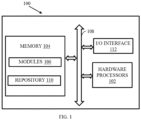
- FIG. 1 is a functional block diagram of a computing machine/system 100 for selecting optimal corrosion inhibitor molecule, in accordance with some embodiments of the present disclosure.
- the system 100 includes or is otherwise in communication with hardware processors 102, at least one memory such as a memory 104, an I/O interface 112.
- the hardware processors 102, memory 104, and the Input /Output (I/O) interface 112 may be coupled by a system bus such as a system bus 108 or a similar mechanism.
- the hardware processors 102 can be one or more hardware processors.
- the I/O interface 112 may include a variety of software and hardware interfaces, for example, a web interface, a graphical user interface, and the like.
- the I/O interface 112 may include a variety of software and hardware interfaces, for example, interfaces for peripheral device(s), such as a keyboard, a mouse, an external memory, a printer and the like. Further, the I/O interface 112 may enable the system 100 to communicate with other devices, such as web servers, and external databases.
- the I/O interface 112 can facilitate multiple communications within a wide variety of networks and protocol types, including wired networks, for example, local area network (LAN), cable, etc., and wireless networks, such as Wireless LAN (WLAN), cellular, or satellite.
- the I/O interface 112 may include one or more ports for connecting several computing systems with one another or to another server computer.
- the I/O interface 112 may include one or more ports for connecting several devices to one another or to another server.
- the one or more hardware processors 102 may be implemented as one or more microprocessors, microcomputers, microcontrollers, digital signal processors, central processing units, node machines, logic circuitries, and/or any devices that manipulate signals based on operational instructions.
- the one or more hardware processors 102 is configured to fetch and execute computer-readable instructions stored in the memory 104.
- the memory 104 may include any computer-readable medium known in the art including, for example, volatile memory, such as static random access memory (SRAM) and dynamic random access memory (DRAM), and/or non-volatile memory, such as read only memory (ROM), erasable programmable ROM, flash memories, hard disks, optical disks, and magnetic tapes.
- volatile memory such as static random access memory (SRAM) and dynamic random access memory (DRAM)
- non-volatile memory such as read only memory (ROM), erasable programmable ROM, flash memories, hard disks, optical disks, and magnetic tapes.
- the memory 104 includes a plurality of modules 106.
- the memory 104 also includes a data repository (or repository) 110 for storing data processed, received, and generated by the plurality of modules 106.
- the plurality of modules 106 include programs or coded instructions that supplement applications or functions performed by the system 100 for automated authoring of purposive models from NL documents.
- the plurality of modules 106 can include routines, programs, objects, components, and data structures, which performs particular tasks or implement particular abstract data types.
- the plurality of modules 106 may also be used as, signal processor(s), node machine(s), logic circuitries, and/or any other device or component that manipulates signals based on operational instructions.
- the plurality of modules 106 can be used by hardware, by computer-readable instructions executed by the one or more hardware processors 102, or by a combination thereof.
- the plurality of modules 106 can include various sub-modules (not shown).
- the plurality of modules 106 may include computer-readable instructions that supplement applications or functions performed by the system 100 for the semantic navigation using spatial graph and trajectory history.
- the data repository (or repository) 110 may include a plurality of abstracted piece of code for refinement and data that is processed, received, or generated as a result of the execution of the plurality of modules in the module(s) 106.
- the data repository 110 includes a molecular database comprising a plurality of molecular details.
- the data repository 110 is shown internal to the system 100, it will be noted that, in alternate embodiments, the data repository 110 can also be implemented external to the system 100, where the data repository 110 may be stored within a database (repository 110) communicatively coupled to the system 100.
- the data contained within such external database may be periodically updated. For example, new data may be added into the database (not shown in FIG. 1 ) and/or existing data may be modified and/or non-useful data may be deleted from the database.
- the data may be stored in an external system, such as a Lightweight Directory Access Protocol (LDAP) directory and a Relational Database Management System (RDBMS).
- LDAP Lightweight Directory Access Protocol
- RDBMS Relational Database Management System
- the present disclosure identified the Naphthalene-1-thiocarboxamide molecule as the corrosion inhibitor using a computational method based on the HOMO- LUMO (Highest Occupied Molecular Orbital - Lowest Unoccupied Molecular Orbital) energy gap values of the plurality of molecules.
- the computational method for identifying an optimal corrosion inhibitor molecule is performed using the computing machine 100 shown in FIG. 1 . Initially, a plurality of molecules or molecular details are obtained from a molecular database. Further, the HOMO-LUMO energy gaps are computed for each of the plurality of molecules obtained from the molecular database using Density Functional Theory (DFT) based techniques.
- DFT Density Functional Theory
- a plurality of potential molecules with the lowest HOMO-LUMO energy gap values are identified from the plurality of molecules based on a threshold. Further, a detailed DFT-based adsorption studies are performed on the plurality of potential molecules on a representative surface such as Fe (001) for iron and iron alloys, to compute its adsorption energy values. Further, the adsorption energy values of each of the plurality of potential molecules are compared with a known inhibitor compound (as reference) like trans-cinnamaldehyde, wherein, higher the magnitude of adsorption energy better the inhibitor.
- a known inhibitor compound like trans-cinnamaldehyde
- an optimal molecule for example, Naphthalene-1-thiocarboxamide
- adsorption energy value for example, a molecule having higher adsorption energy magnitude than the reference like trans-cinnamaldehyde is taken.
- the optimal corrosion inhibitor molecule is validated experimentally using standard weight loss tests of carbon steel samples in 1 molar HCl containing 1 millimolar (mM) concentration of the molecule selected in an organic solvent or inhibitor composition.
- corrosion inhibitor composition includes an effective amount of at least one of a) a naphthalene-1-thiocarboxamide and b) derivatives of the naphthalene-1-thiocarboxamide, dissolved in an organic solvent.
- the iron alloys include carbon steel, stainless steel, alloy steel, cast irons, invar steel, steels etc.
- the corrosion inhibitor composition is used with the iron and iron alloys in an environment where the metal would otherwise be corrodible therein at various temperatures.
- the environment is one of, a) a water-containing hydrocarbon b) a water-containing gas with acidic solution c) a water containing gas without acidic solution d) acidic solution and e) a combination thereof.
- the organic solvent can be one or more or combination of tetra hydro furan (THF), dimethyl formamide, dimethyl sulphoxide, ethanol, propanol, diethyl ether, benzene, carbon tetrachloride, trichloro ethylene, ethers, esters, ketones, amines, tetrachloroethylene, toluene, methyl chloride, hexane, nitrated or chlorinated hydrocarbons, alcohols, acetonitrile, glycols, pyridine, xylene, and the like.
- THF tetra hydro furan
- the corrosion inhibitor composition is introduced into the environment in an amount in the range from about 0.01 to about 5000 parts per million by volume.
- the corrosion inhibitor composition is included/added in the commodity and/or corrosive substances (for example, oil, gas, acid, alkaline, fertilizer and the like) stored in storage space or in transportation of the same via pipeline or umbilical, wherein the said corrosion inhibitor composition forms a layer on the metal.
- corrosive substances for example, oil, gas, acid, alkaline, fertilizer and the like
- the corrosion inhibitor composition is applied on a metal surface before introducing the commodity and/or corrosive substances in storage space or in transportation of the same via pipeline or umbilical or any kind of containers (for example, acid pickling, acid well stimulation, acid wash, scale removal and the like).
- the corrosion inhibitor composition is used in drilling and machining applications to protect iron and iron alloys.
- the corrosion inhibitor composition is used with or without lubricants/coolants.
- the corrosion inhibitor composition is used in combination with lubricants/coolants. In some other applications, the corrosion inhibitor composition is used without lubricants/coolants.
- the structure of the Naphthalene-1-thiocarboxamide molecule is shown in FIG. 2 and the quantum chemical descriptors of Naphthalene-1-thiocarboxamide is given in Table I.
- Table I the quantum chemical descriptors of Naphthalene-1-thiocarboxamide are compared to Trans Cinnamaldehyde. It is observed that Naphthalene-1-thiocarboxamide shows very low energy gap even lower than the commercially used trans-cinnamaldehyde.
- the identified molecule (Naphthalene-1-thiocarboxamide) strongly binds with the metal surface, metal being one of iron and iron alloys as illustrated in FIG.
- naphthalene-1-thiocarboxamide acting as barrier between corrosive element, and metal surface thus protecting iron and iron alloys from corrosion.
- naphthalene-1-thiocarboxamide adsorbs on iron surface in flat orientation. S, N and C atoms of naphthalene-1-thiocarboxamide make chemical bonds with iron surface atoms, forming a strong, impermeable layer on the surface of iron and iron alloys. Further, this strong impermeable layer of Naphthalene-1-thiocarboxamide protects iron and iron alloys from degradation and thus, the luster of the iron and iron alloys remains intact even after exposed to/left in acid.
- the present disclosure is experimented as follows: The examples of corrosion inhibition effect of the molecule i.e. Naphthalene 1-thiocarboxamide on iron (Fe) and iron alloys, are given at two temperatures.
- the composition of the iron and iron alloys used to test the inhibitor molecule is 0.044C-0.04Si-1.15Mn-0.028P-0.025S-0.051Cr-0.001Mo-0.001Ni-0.052Cu-0.011V-Balance Fe, all the amounts of elements are in weight percentages.
- C is Carbon
- Si Silicon
- Mn Manganese
- P Phosphorous
- S Sulphur
- Cr Chromium
- Mo Molybdenum
- Ni Nickel
- Cu Copper
- V Vanadium.
- the mild steel coupons were initially abraded with various emery papers of decreasing coarseness i.e. 80, 150, 220, 400 grits to obtain a fine finish surface.
- the fine finished coupons are cleaned with acetone and further wrapped in a paper to avoid any further oxidation and stored in a safe and dry place until further use.
- the 400 grit finished coupons are immersed in 100ml 1M HCl solution for 2hrs at room temperature and at 60°C, to find out the corrosion rate.
- the fine finished coupons are also immersed in 100ml 1M HCl along with the inhibitor composition i.e. Naphthalene 1-thiocarboxamide dissolved in tetrahydrofuran, with an effective concentration of inhibitor 1mM for 2hrs at the above temperatures.
- the below table provides the information on test results.
- the average Corrosion Rates (CR) at room temperature and 60 0 C in 1M HCl without inhibitor for 2hrs immersion are 1.1081cm/y and 16.42325cm/y respectively.
- the Inhibition Efficiency (IE) is calculated using the formula given below.
- IE % CR without inhibitor ⁇ CR with inhibitor CR without inhibitor ⁇ 100
- Table III Temperature ( 0 C) Concentration of inhibitor molecule (mM) Corrosion Rate (cm/y) Inhibition Efficiency (%) 27 1 0.0614 94.46 27 1 0 100 60 1 0.2233 98.64 60 1 0.2558 98.44
Landscapes
- Chemical & Material Sciences (AREA)
- Engineering & Computer Science (AREA)
- Materials Engineering (AREA)
- Organic Chemistry (AREA)
- Life Sciences & Earth Sciences (AREA)
- General Life Sciences & Earth Sciences (AREA)
- Mechanical Engineering (AREA)
- Metallurgy (AREA)
- Preventing Corrosion Or Incrustation Of Metals (AREA)
Abstract
Description
- The present application claims priority to
Indian application no. 202221058654, filed on October 13, 2022 - The disclosure herein generally relates to the field of inhibiting metallic corrosion, and, more particularly, to a corrosion inhibitor for iron and iron alloys.
- Metal corrosion is a ubiquitous phenomenon costing the global economy trillions of dollars annually. Besides, corrosion can also lead to catastrophic explosions and consequent loss of material and life. In general terms, corrosion is the deterioration of a metal or an alloy when exposed to the environment. Corrosion cannot be stopped but it can be reduced to certain extent. There are several ways by which corrosion reduction can be made possible, viz., by using paints, coatings, corrosion resistant alloys, etc. However, the use of corrosion inhibitors is one of the most economical and effective ways to combat corrosion in the industry. Corrosion inhibitors are generally organic or inorganic compounds which when used in small (usually in parts per million) quantities reduce the corrosion significantly through formation of a protective film or through similar such mechanisms. Corrosion inhibitors are extensively used for a wide variety of applications in the industry. In particular, the oil and gas industry uses corrosion inhibitors for acid well stimulation for enhancing oil recovery from rock formations. Conventional process of screening and designing of a corrosion inhibitor is largely empirical and, therefore, extremely time consuming and expensive. Besides, there is a need for design of corrosion inhibitors which are efficient at high temperatures.
- Performance of several corrosion inhibitors which are used conventionally depends on the medium treated, the type of surface that is susceptible to corrosion, the type of corrosion encountered, and the conditions to which the medium is exposed. Further, the most corrosion inhibitors do not show strong binding with iron and iron alloys surface and hence iron and iron alloys structures loses luster in presence of most of the conventionally used corrosion inhibitors. Further, an efficient and durable inhibitor that can effectively protect iron and iron alloys in aggressive environments such as high temperature for longer duration without affecting the luster is yet to be realized.
- Embodiments of the present disclosure present technological improvements as solutions to one or more of the above-mentioned technical problems recognized by the inventors in the conventional corrosion inhibitors.
- In an aspect, a corrosion inhibitor composition for inhibiting corrosion of iron and iron alloys, the corrosion inhibitor composition comprising: an effective amount of at least one of a) a naphthalene-1-thiocarboxamide and b) derivatives of naphthalene-1-thiocarboxamide, dissolved in an organic solvent. The iron alloys comprise carbon steel, stainless steel, alloy steel, steels and cast iron. The corrosion inhibitor composition is used with the metal in an environment where the iron and iron alloys would otherwise be corrodible therein at various temperatures. The environment is one of, a) a water-containing hydrocarbon b) a water-containing gas with acidic solution c) a water containing gas without acidic solution, d) acidic solution and e) a combination thereof. The organic solvent can be one or more or combination of tetra hydro furan (THF), dimethyl formamide, dimethyl sulphoxide, ethanol, propanol, diethyl ether, benzene, carbon tetrachloride, trichloro ethylene, ethers, esters, ketones, amines, tetrachloroethylene, toluene, methyl chloride, hexane, nitrated or chlorinated hydrocarbons, alcohols, acetonitrile, glycols, pyridine, xylene, and the like. The corrosion inhibitor composition is introduced into the environment in an amount in the range from about 0.01 to about 5000 parts per million by volume.
- It is to be understood that both the foregoing general description and the following detailed description are exemplary and explanatory only and are not restrictive of the invention, as claimed.
- The accompanying drawings, which are incorporated in and constitute a part of this disclosure, illustrate exemplary embodiments and, together with the description, serve to explain the disclosed principles:
-
FIG. 1 is a functional block diagram of a computing machine for selecting optimal corrosion inhibitor molecule, in accordance with some embodiments of the present disclosure. -
FIG. 2 illustrates the structure of a Naphthalene-1-thiocarboxamide molecule, in accordance with some embodiments of the present disclosure. -
FIG. 3 illustrates the Density Functional Theory (DFT) optimized adsorption structure of naphthalene-1-thiocarboxamide on Fe (001) surface, in accordance with some embodiments of the present disclosure. - Exemplary embodiments are described with reference to the accompanying drawings. In the figures, the left-most digit(s) of a reference number identifies the figure in which the reference number first appears. Wherever convenient, the same reference numbers are used throughout the drawings to refer to the same or like parts. While examples and features of disclosed principles are described herein, modifications, adaptations, and other implementations are possible without departing from the scope of the disclosed embodiments.
- Most of the conventional corrosion inhibitor compounds are either not so effective or require large amount of inhibitor for adequate protection. The inefficient corrosion inhibitor results in structural failure leading to serious economic, environmental and human losses. Further, most corrosion inhibitors do not show such strong binding with the surface of iron and iron alloys and the material loses luster i.e. corrodes in presence of most of the conventional corrosion inhibitors.
- In an embodiment, the present disclosure addresses the problem of acid corrosion of iron and iron alloys which is relevant for a wide variety of industries such as oil and gas production and acid pickling etc. The technical solution provided in the present disclosure is a new corrosion inhibitor composition comprising an effective amount of Naphthalene-1-thiocarboxamide dissolved in an organic solvent for iron and iron alloys in hydrochloric acid i.e. HCl media. This is specifically relevant for acid well stimulation in the oil and gas industries.
- In an embodiment, the corrosion inhibitor composition comprising an effective amount of Naphthalene-1-thiocarboxamide dissolved in an organic solvent is providing ~94-100 percentage corrosion inhibition efficiency in 1 M HCl for mild iron and iron alloys at a very low concentration of 1 millimolar (mM).
-
FIG. 1 is a functional block diagram of a computing machine/system 100 for selecting optimal corrosion inhibitor molecule, in accordance with some embodiments of the present disclosure. Thesystem 100 includes or is otherwise in communication withhardware processors 102, at least one memory such as amemory 104, an I/O interface 112. Thehardware processors 102,memory 104, and the Input /Output (I/O)interface 112 may be coupled by a system bus such as asystem bus 108 or a similar mechanism. In an embodiment, thehardware processors 102 can be one or more hardware processors. - The I/
O interface 112 may include a variety of software and hardware interfaces, for example, a web interface, a graphical user interface, and the like. The I/O interface 112 may include a variety of software and hardware interfaces, for example, interfaces for peripheral device(s), such as a keyboard, a mouse, an external memory, a printer and the like. Further, the I/O interface 112 may enable thesystem 100 to communicate with other devices, such as web servers, and external databases. - The I/
O interface 112 can facilitate multiple communications within a wide variety of networks and protocol types, including wired networks, for example, local area network (LAN), cable, etc., and wireless networks, such as Wireless LAN (WLAN), cellular, or satellite. For the purpose, the I/O interface 112 may include one or more ports for connecting several computing systems with one another or to another server computer. The I/O interface 112 may include one or more ports for connecting several devices to one another or to another server. - The one or
more hardware processors 102 may be implemented as one or more microprocessors, microcomputers, microcontrollers, digital signal processors, central processing units, node machines, logic circuitries, and/or any devices that manipulate signals based on operational instructions. Among other capabilities, the one ormore hardware processors 102 is configured to fetch and execute computer-readable instructions stored in thememory 104. - The
memory 104 may include any computer-readable medium known in the art including, for example, volatile memory, such as static random access memory (SRAM) and dynamic random access memory (DRAM), and/or non-volatile memory, such as read only memory (ROM), erasable programmable ROM, flash memories, hard disks, optical disks, and magnetic tapes. In an embodiment, thememory 104 includes a plurality ofmodules 106. Thememory 104 also includes a data repository (or repository) 110 for storing data processed, received, and generated by the plurality ofmodules 106. - The plurality of
modules 106 include programs or coded instructions that supplement applications or functions performed by thesystem 100 for automated authoring of purposive models from NL documents. The plurality ofmodules 106, amongst other things, can include routines, programs, objects, components, and data structures, which performs particular tasks or implement particular abstract data types. The plurality ofmodules 106 may also be used as, signal processor(s), node machine(s), logic circuitries, and/or any other device or component that manipulates signals based on operational instructions. Further, the plurality ofmodules 106 can be used by hardware, by computer-readable instructions executed by the one ormore hardware processors 102, or by a combination thereof. The plurality ofmodules 106 can include various sub-modules (not shown). The plurality ofmodules 106 may include computer-readable instructions that supplement applications or functions performed by thesystem 100 for the semantic navigation using spatial graph and trajectory history. - The data repository (or repository) 110 may include a plurality of abstracted piece of code for refinement and data that is processed, received, or generated as a result of the execution of the plurality of modules in the module(s) 106. In an embodiment, the
data repository 110 includes a molecular database comprising a plurality of molecular details. - Although the
data repository 110 is shown internal to thesystem 100, it will be noted that, in alternate embodiments, thedata repository 110 can also be implemented external to thesystem 100, where thedata repository 110 may be stored within a database (repository 110) communicatively coupled to thesystem 100. The data contained within such external database may be periodically updated. For example, new data may be added into the database (not shown inFIG. 1 ) and/or existing data may be modified and/or non-useful data may be deleted from the database. In one example, the data may be stored in an external system, such as a Lightweight Directory Access Protocol (LDAP) directory and a Relational Database Management System (RDBMS). Working of the components of thesystem 100 are explained with reference to the method steps depicted inFIG. 3 , FIGS. 6A and FIG. 6B. - In an embodiment, the present disclosure identified the Naphthalene-1-thiocarboxamide molecule as the corrosion inhibitor using a computational method based on the HOMO- LUMO (Highest Occupied Molecular Orbital - Lowest Unoccupied Molecular Orbital) energy gap values of the plurality of molecules. In an embodiment, the computational method for identifying an optimal corrosion inhibitor molecule is performed using the
computing machine 100 shown inFIG. 1 . Initially, a plurality of molecules or molecular details are obtained from a molecular database. Further, the HOMO-LUMO energy gaps are computed for each of the plurality of molecules obtained from the molecular database using Density Functional Theory (DFT) based techniques. Further, a plurality of potential molecules with the lowest HOMO-LUMO energy gap values are identified from the plurality of molecules based on a threshold. Further, a detailed DFT-based adsorption studies are performed on the plurality of potential molecules on a representative surface such as Fe (001) for iron and iron alloys, to compute its adsorption energy values. Further, the adsorption energy values of each of the plurality of potential molecules are compared with a known inhibitor compound (as reference) like trans-cinnamaldehyde, wherein, higher the magnitude of adsorption energy better the inhibitor. Further, an optimal molecule (for example, Naphthalene-1-thiocarboxamide) is selected based on the adsorption energy values, where in a molecule having higher adsorption energy magnitude than the reference like trans-cinnamaldehyde is taken. In an embodiment, it was identified that the adsorption energy of napthalene-1-thiocarboxamide (Eads = -74 kcal/mol) to be almost 68 percent higher than that of trans-cinnamaldehyde thus showing its excellent potential as a corrosion inhibitor. Finally, the optimal corrosion inhibitor molecule is validated experimentally using standard weight loss tests of carbon steel samples in 1 molar HCl containing 1 millimolar (mM) concentration of the molecule selected in an organic solvent or inhibitor composition. - The method to identify the optimal corrosion inhibitor molecule explained above in brief is in accordance with inventor's
Indian patent application no. 202221011898, filed on March 4, 2022 - In an embodiment, corrosion inhibitor composition includes an effective amount of at least one of a) a naphthalene-1-thiocarboxamide and b) derivatives of the naphthalene-1-thiocarboxamide, dissolved in an organic solvent.
- In an embodiment, the iron alloys include carbon steel, stainless steel, alloy steel, cast irons, invar steel, steels etc.
- In an embodiment, the corrosion inhibitor composition is used with the iron and iron alloys in an environment where the metal would otherwise be corrodible therein at various temperatures.
- In an embodiment, the environment is one of, a) a water-containing hydrocarbon b) a water-containing gas with acidic solution c) a water containing gas without acidic solution d) acidic solution and e) a combination thereof.
- In an embodiment, the organic solvent can be one or more or combination of tetra hydro furan (THF), dimethyl formamide, dimethyl sulphoxide, ethanol, propanol, diethyl ether, benzene, carbon tetrachloride, trichloro ethylene, ethers, esters, ketones, amines, tetrachloroethylene, toluene, methyl chloride, hexane, nitrated or chlorinated hydrocarbons, alcohols, acetonitrile, glycols, pyridine, xylene, and the like.
- In an embodiment, the corrosion inhibitor composition is introduced into the environment in an amount in the range from about 0.01 to about 5000 parts per million by volume.
- In embodiment, the corrosion inhibitor composition is included/added in the commodity and/or corrosive substances (for example, oil, gas, acid, alkaline, fertilizer and the like) stored in storage space or in transportation of the same via pipeline or umbilical, wherein the said corrosion inhibitor composition forms a layer on the metal.
- In embodiment, the corrosion inhibitor composition is applied on a metal surface before introducing the commodity and/or corrosive substances in storage space or in transportation of the same via pipeline or umbilical or any kind of containers (for example, acid pickling, acid well stimulation, acid wash, scale removal and the like).
- In another embodiments, the corrosion inhibitor composition is used in drilling and machining applications to protect iron and iron alloys. In said applications, the corrosion inhibitor composition is used with or without lubricants/coolants. For example, in some applications, the corrosion inhibitor composition is used in combination with lubricants/coolants. In some other applications, the corrosion inhibitor composition is used without lubricants/coolants.
- In an embodiment, the structure of the Naphthalene-1-thiocarboxamide molecule is shown in
FIG. 2 and the quantum chemical descriptors of Naphthalene-1-thiocarboxamide is given in Table I. Now referring to Table I, the quantum chemical descriptors of Naphthalene-1-thiocarboxamide are compared to Trans Cinnamaldehyde. It is observed that Naphthalene-1-thiocarboxamide shows very low energy gap even lower than the commercially used trans-cinnamaldehyde. The identified molecule (Naphthalene-1-thiocarboxamide) strongly binds with the metal surface, metal being one of iron and iron alloys as illustrated inFIG. 3 , acting as barrier between corrosive element, and metal surface thus protecting iron and iron alloys from corrosion. Now referring toFIG. 3 , naphthalene-1-thiocarboxamide adsorbs on iron surface in flat orientation. S, N and C atoms of naphthalene-1-thiocarboxamide make chemical bonds with iron surface atoms, forming a strong, impermeable layer on the surface of iron and iron alloys. Further, this strong impermeable layer of Naphthalene-1-thiocarboxamide protects iron and iron alloys from degradation and thus, the luster of the iron and iron alloys remains intact even after exposed to/left in acid.Table I Quantum chemical descriptors Naphthalene-1-thiocarboxamide Trans Cinnamaldehyde HOMO (eV) -5.89 -6.98 LUMO (eV) -1.85 -2.52 ΔEgap (eV) 4.04 4.44 Eads (kcal/mol) -73.77 -44.40 - Further, experimental validation via standard weight loss tests of mild steel samples in 1 M HCl containing 1 millimolar (mM) concentration of the inhibitor molecule is performed. The inhibition efficiency of napthalene-1-thiocarboxamide is ~94-100 percent as shown in Table II. Whereas the inhibition efficiency of trans-cinnamaldehyde even at 1.5mM is 77 percent in 1M HCl for the same mild steel.
Table II ID Conc. (mM) Weight loss (gms) CR (cm/y) Inhibition Efficiency (%) 1 1 0.002 0.0614 94.46 2 1 0 0 100 - In an embodiment, the present disclosure is experimented as follows: The examples of corrosion inhibition effect of the molecule i.e. Naphthalene 1-thiocarboxamide on iron (Fe) and iron alloys, are given at two temperatures. In an embodiment, the composition of the iron and iron alloys used to test the inhibitor molecule is 0.044C-0.04Si-1.15Mn-0.028P-0.025S-0.051Cr-0.001Mo-0.001Ni-0.052Cu-0.011V-Balance Fe, all the amounts of elements are in weight percentages. Here, C is Carbon, Si is Silicon, Mn is Manganese, P is Phosphorous, S is Sulphur, Cr is Chromium, Mo is Molybdenum, Ni is Nickel, Cu is Copper, and V is Vanadium.
- The mild steel coupons were initially abraded with various emery papers of decreasing coarseness i.e. 80, 150, 220, 400 grits to obtain a fine finish surface. The fine finished coupons are cleaned with acetone and further wrapped in a paper to avoid any further oxidation and stored in a safe and dry place until further use.
- Further, the 400 grit finished coupons are immersed in 100ml 1M HCl solution for 2hrs at room temperature and at 60°C, to find out the corrosion rate. Similarly, the fine finished coupons are also immersed in 100ml 1M HCl along with the inhibitor composition i.e. Naphthalene 1-thiocarboxamide dissolved in tetrahydrofuran, with an effective concentration of inhibitor 1mM for 2hrs at the above temperatures.
- The below table provides the information on test results. The average Corrosion Rates (CR) at room temperature and 600C in 1M HCl without inhibitor for 2hrs immersion are 1.1081cm/y and 16.42325cm/y respectively. The Inhibition Efficiency (IE) is calculated using the formula given below.

Table III Temperature (0C) Concentration of inhibitor molecule (mM) Corrosion Rate (cm/y) Inhibition Efficiency (%) 27 1 0.0614 94.46 27 1 0 100 60 1 0.2233 98.64 60 1 0.2558 98.44 - The written description describes the subject matter herein to enable any person skilled in the art to make and use the embodiments. The scope of the subject matter embodiments is defined by the claims and may include other modifications that occur to those skilled in the art. Such other modifications are intended to be within the scope of the claims if they have similar elements that do not differ from the literal language of the claims or if they include equivalent elements with insubstantial differences from the literal language of the claims.
- The illustrated steps are set out to explain the exemplary embodiments shown, and it should be anticipated that ongoing technological development will change the manner in which particular functions are performed. These examples are presented herein for purposes of illustration, and not limitation. Further, the boundaries of the functional building blocks have been arbitrarily defined herein for the convenience of the description. Alternative boundaries can be defined so long as the specified functions and relationships thereof are appropriately performed. Alternatives (including equivalents, extensions, variations, deviations, etc., of those described herein) will be apparent to persons skilled in the relevant art(s) based on the teachings contained herein. Such alternatives fall within the scope of the disclosed embodiments. Also, the words "comprising," "having," "containing," and "including," and other similar forms are intended to be equivalent in meaning and be open ended in that an item or items following any one of these words is not meant to be an exhaustive listing of such item or items, or meant to be limited to only the listed item or items. It must also be noted that as used herein and in the appended claims, the singular forms "a," "an," and "the" include plural references unless the context clearly dictates otherwise.
- It is intended that the disclosure and examples be considered as exemplary only, with a true scope of disclosed embodiments being indicated by the following claims.
Claims (7)
- A corrosion inhibitor composition for inhibiting corrosion of iron and iron alloys, the corrosion inhibitor composition comprising: an effective amount of at least one of a) a naphthalene-1-thiocarboxamide and b) derivatives of the naphthalene-1-thiocarboxamide, dissolved in an organic solvent.
- The corrosion inhibitor composition of claim 1, wherein iron alloys comprise carbon steel, stainless steel, alloy steel, steels, and cast irons.
- The corrosion inhibitor composition of claim 1, wherein the corrosion inhibitor composition is used with the metal in an environment where the iron and iron alloys would otherwise be corrodible therein at various temperatures.
- The environment of claim 3 is an acidic solution.
- The environment of claim 3 is one of, a) a water-containing hydrocarbon b) a water-containing gas with acidic solution c) a water containing gas without acidic solution and d) a combination thereof.
- The organic solvent of claim 1 is one or more or combination of tetra hydro furan (THF), dimethyl formamide, dimethyl sulphoxide, ethanol, propanol, diethyl ether, benzene, carbon tetrachloride, trichloro ethylene, ethers, esters, ketones, amines, tetrachloroethylene, toluene, methyl chloride, hexane, nitrated or chlorinated hydrocarbons, alcohols, acetonitrile, glycols, pyridine, and xylene.
- The corrosion inhibitor composition of claim 1, wherein the effective amount of corrosion inhibitor composition introduced into the environment is in the range from about 0.01 to about 5000 parts per million by volume.
Applications Claiming Priority (1)
| Application Number | Priority Date | Filing Date | Title |
|---|---|---|---|
| IN202221058654 | 2022-10-13 |
Publications (3)
| Publication Number | Publication Date |
|---|---|
| EP4353870A1 true EP4353870A1 (en) | 2024-04-17 |
| EP4353870C0 EP4353870C0 (en) | 2025-04-30 |
| EP4353870B1 EP4353870B1 (en) | 2025-04-30 |
Family
ID=87036505
Family Applications (1)
| Application Number | Title | Priority Date | Filing Date |
|---|---|---|---|
| EP23182079.6A Active EP4353870B1 (en) | 2022-10-13 | 2023-06-28 | Corrosion inhibitor for iron and iron alloys |
Country Status (2)
| Country | Link |
|---|---|
| US (1) | US20240133042A1 (en) |
| EP (1) | EP4353870B1 (en) |
Citations (3)
| Publication number | Priority date | Publication date | Assignee | Title |
|---|---|---|---|---|
| CN103806003A (en) * | 2014-02-24 | 2014-05-21 | 西北大学 | Acidic oil extraction medium corrosion inhibitor |
| CN103668215B (en) * | 2013-11-26 | 2015-11-18 | 中国海洋石油总公司 | A kind of anti-CO 2/ H 2the composite corrosion inhibitor of S/HCl corrosion |
| WO2016190865A1 (en) * | 2015-05-27 | 2016-12-01 | Halliburton Energy Services, Inc. | Corrosion inhibition of hcl treatment fluids with environmentally compatible solvent |
Family Cites Families (4)
| Publication number | Priority date | Publication date | Assignee | Title |
|---|---|---|---|---|
| CY800A (en) * | 1968-04-09 | 1976-12-01 | Wyeth John & Brother Ltd | Novel thiazoline derivatives, the preparation thereof and compositions containing the same |
| DE3837926A1 (en) * | 1988-11-09 | 1990-05-17 | Basf Ag | HERBICIDES THAT HAVE 2- (4-HETEROARYLOXY) - OR 2- (4-ARYLOXY) -PHENOXYROCYCLE OR -PROPIONIC ACID DERIVATIVES AND / OR CYCLOHEXENONE DERIVATIVES AS AN HERBICIDE ACTIVE INGREDIENT ADHESIVE INTENSIVE ADMINISTRATIVE INTENSIVE |
| AU3040102A (en) * | 2000-10-17 | 2002-04-29 | Du Pont | Insecticidal 1,8-naphthalenedicarboxamides |
| WO2009078981A2 (en) * | 2007-12-13 | 2009-06-25 | Sri International | Ppar-delta ligands and methods of their use |
-
2023
- 2023-06-28 EP EP23182079.6A patent/EP4353870B1/en active Active
- 2023-07-07 US US18/348,402 patent/US20240133042A1/en active Pending
Patent Citations (3)
| Publication number | Priority date | Publication date | Assignee | Title |
|---|---|---|---|---|
| CN103668215B (en) * | 2013-11-26 | 2015-11-18 | 中国海洋石油总公司 | A kind of anti-CO 2/ H 2the composite corrosion inhibitor of S/HCl corrosion |
| CN103806003A (en) * | 2014-02-24 | 2014-05-21 | 西北大学 | Acidic oil extraction medium corrosion inhibitor |
| WO2016190865A1 (en) * | 2015-05-27 | 2016-12-01 | Halliburton Energy Services, Inc. | Corrosion inhibition of hcl treatment fluids with environmentally compatible solvent |
Non-Patent Citations (2)
| Title |
|---|
| PRITHVI ET AL: "Inhibitive Effect of 2-[4-(Dimethylamino) Benzylidene] Hydrazinecarbothioamide on Corrosion of Mild Steel in Acidic Solution", SURFACE ENGINEERING AND APPLIED ELECTROCHEMISTRY, ALLERTON PRESS, HEIDELBERG, vol. 55, no. 4, 3 September 2019 (2019-09-03), pages 481 - 491, XP036877043, ISSN: 1068-3755, [retrieved on 20190903], DOI: 10.3103/S1068375519040112 * |
| SULAIMAN KAZEEM O ET AL: "Quantum chemical evaluation of the corrosion inhibition of novel aromatic hydrazide derivatives on mild steel in hydrochloric acid", COMPUTATIONAL AND THEORETICAL CHEMISTRY, ELSEVIER, AMSTERDAM, NL, vol. 1093, 13 August 2016 (2016-08-13), pages 73 - 80, XP029699793, ISSN: 2210-271X, DOI: 10.1016/J.COMPTC.2016.08.014 * |
Also Published As
| Publication number | Publication date |
|---|---|
| EP4353870C0 (en) | 2025-04-30 |
| US20240133042A1 (en) | 2024-04-25 |
| EP4353870B1 (en) | 2025-04-30 |
Similar Documents
| Publication | Publication Date | Title |
|---|---|---|
| Akpan et al. | Inhibition of mild steel corrosion in hydrochloric acid solution by Ciprofloxacin drug | |
| Shinato et al. | Corrosion protection of copper and copper alloys in different corrosive medium using environmentally friendly corrosion inhibitors | |
| Khadom et al. | Corrosion inhibition of steel in phosphoric acid | |
| Lyberatos et al. | Inhibition of aluminum 7075 alloy corrosion by the concerted action of nitrate and oxalate salts | |
| Zhang et al. | Inhibition behaviour of mild steel by three new benzaldehyde thiosemicarbazone derivatives in 0.5 M H2SO4: experimental and computational study | |
| US20240133042A1 (en) | Corrosion inhibitor for iron and iron alloys | |
| Choudhary et al. | Electrochemical Investigation of Hydroxy‐Substituted Thiosemicarbazone Derivatives as an Effective Corrosion Inhibitor for Mild Steel | |
| Koumya et al. | Pitting corrosion and effect of Euphorbia echinus extract on the corrosion behavior of AISI 321 stainless steel in chlorinated acid | |
| Brezinski | New environmental options for corrosion inhibitor intensifiers | |
| Osman | Hexadecyl trimethyl ammonium bromide as an effective inhibitor for the corrosion of steel in sulphuric acid solution | |
| Funkhouser | Acid corrosion inhibition with secondary acetylenic alcohols | |
| Rajendran et al. | HEDP‐Zn2+: a potential inhibitor system for mild steel in low chloride media | |
| Ofuyekpone et al. | Corrosion inhibition of chloride-induced attack on AISI 304L using novel corrosion inhibitor: a case study of extract of Centrosema pubescens | |
| Salma | Cost effective removal of iron sulfide and hydrogen sulfide from water using acrolein | |
| Walker et al. | Effect and inhibition of stimulation acids on corrosion resistant alloys | |
| Zafari et al. | Experimental and theoretical evaluation of two benzimidazole derivatives for steel corrosion protection in HCl | |
| Shetty | Corrosion inhibitors for AA6061 and AA6061-SiC composite in aggressive media: a review | |
| Sanni et al. | Surface and corrosion properties of Type 430 ferritic stainless steel in parsley (Petroselinum Sativum) essential oil-containing sulphuric acid solution | |
| Murungi et al. | A review of natural polysaccharides as corrosion inhibitors: recent progress and future opportunities | |
| Mainier et al. | Propargyl alcohol as a corrosion inhibitor for AISI 304L stainless steel in hydrochloric acid | |
| Ke et al. | Corrosion behavior of various 13 chromium tubulars in acid stimulation fluids | |
| Ke et al. | Thermal decomposition of thiocyanate corrosion inhibitors: a potential problem for successful well completions | |
| Abd El-Maksoud et al. | Novel gemini cationic thiazole-based surfactants as carbon steel corrosion inhibitors in 1 M HCl using experimental and theoretical tools | |
| Alquist et al. | Ferric Ion Corrosion During Acid Cleaning | |
| Quraishi et al. | Corrosion inhibition of mild steel in acid solutions by tetramethyl‐dithia‐octaazacyclotetradeca hexaene (MTAT) |
Legal Events
| Date | Code | Title | Description |
|---|---|---|---|
| PUAI | Public reference made under article 153(3) epc to a published international application that has entered the european phase |
Free format text: ORIGINAL CODE: 0009012 |
|
| STAA | Information on the status of an ep patent application or granted ep patent |
Free format text: STATUS: THE APPLICATION HAS BEEN PUBLISHED |
|
| AK | Designated contracting states |
Kind code of ref document: A1 Designated state(s): AL AT BE BG CH CY CZ DE DK EE ES FI FR GB GR HR HU IE IS IT LI LT LU LV MC ME MK MT NL NO PL PT RO RS SE SI SK SM TR |
|
| STAA | Information on the status of an ep patent application or granted ep patent |
Free format text: STATUS: REQUEST FOR EXAMINATION WAS MADE |
|
| 17P | Request for examination filed |
Effective date: 20240709 |
|
| RBV | Designated contracting states (corrected) |
Designated state(s): AL AT BE BG CH CY CZ DE DK EE ES FI FR GB GR HR HU IE IS IT LI LT LU LV MC ME MK MT NL NO PL PT RO RS SE SI SK SM TR |
|
| GRAP | Despatch of communication of intention to grant a patent |
Free format text: ORIGINAL CODE: EPIDOSNIGR1 |
|
| STAA | Information on the status of an ep patent application or granted ep patent |
Free format text: STATUS: GRANT OF PATENT IS INTENDED |
|
| RIC1 | Information provided on ipc code assigned before grant |
Ipc: C09K 8/54 20060101ALI20250120BHEP Ipc: C23F 11/16 20060101ALI20250120BHEP Ipc: C09K 8/035 20060101ALI20250120BHEP Ipc: C23F 11/04 20060101AFI20250120BHEP |
|
| INTG | Intention to grant announced |
Effective date: 20250207 |
|
| GRAS | Grant fee paid |
Free format text: ORIGINAL CODE: EPIDOSNIGR3 |
|
| GRAA | (expected) grant |
Free format text: ORIGINAL CODE: 0009210 |
|
| STAA | Information on the status of an ep patent application or granted ep patent |
Free format text: STATUS: THE PATENT HAS BEEN GRANTED |
|
| AK | Designated contracting states |
Kind code of ref document: B1 Designated state(s): AL AT BE BG CH CY CZ DE DK EE ES FI FR GB GR HR HU IE IS IT LI LT LU LV MC ME MK MT NL NO PL PT RO RS SE SI SK SM TR |
|
| REG | Reference to a national code |
Ref country code: CH Ref legal event code: EP Ref country code: GB Ref legal event code: FG4D |
|
| REG | Reference to a national code |
Ref country code: DE Ref legal event code: R096 Ref document number: 602023003157 Country of ref document: DE |
|
| REG | Reference to a national code |
Ref country code: IE Ref legal event code: FG4D |
|
| U01 | Request for unitary effect filed |
Effective date: 20250430 |
|
| U07 | Unitary effect registered |
Designated state(s): AT BE BG DE DK EE FI FR IT LT LU LV MT NL PT RO SE SI Effective date: 20250508 |
|
| U20 | Renewal fee for the european patent with unitary effect paid |
Year of fee payment: 3 Effective date: 20250624 |
|
| PG25 | Lapsed in a contracting state [announced via postgrant information from national office to epo] |
Ref country code: ES Free format text: LAPSE BECAUSE OF FAILURE TO SUBMIT A TRANSLATION OF THE DESCRIPTION OR TO PAY THE FEE WITHIN THE PRESCRIBED TIME-LIMIT Effective date: 20250430 |
|
| PG25 | Lapsed in a contracting state [announced via postgrant information from national office to epo] |
Ref country code: NO Free format text: LAPSE BECAUSE OF FAILURE TO SUBMIT A TRANSLATION OF THE DESCRIPTION OR TO PAY THE FEE WITHIN THE PRESCRIBED TIME-LIMIT Effective date: 20250730 Ref country code: GR Free format text: LAPSE BECAUSE OF FAILURE TO SUBMIT A TRANSLATION OF THE DESCRIPTION OR TO PAY THE FEE WITHIN THE PRESCRIBED TIME-LIMIT Effective date: 20250731 |
|
| PG25 | Lapsed in a contracting state [announced via postgrant information from national office to epo] |
Ref country code: PL Free format text: LAPSE BECAUSE OF FAILURE TO SUBMIT A TRANSLATION OF THE DESCRIPTION OR TO PAY THE FEE WITHIN THE PRESCRIBED TIME-LIMIT Effective date: 20250430 |
|
| PG25 | Lapsed in a contracting state [announced via postgrant information from national office to epo] |
Ref country code: HR Free format text: LAPSE BECAUSE OF FAILURE TO SUBMIT A TRANSLATION OF THE DESCRIPTION OR TO PAY THE FEE WITHIN THE PRESCRIBED TIME-LIMIT Effective date: 20250430 |
|
| PG25 | Lapsed in a contracting state [announced via postgrant information from national office to epo] |
Ref country code: RS Free format text: LAPSE BECAUSE OF FAILURE TO SUBMIT A TRANSLATION OF THE DESCRIPTION OR TO PAY THE FEE WITHIN THE PRESCRIBED TIME-LIMIT Effective date: 20250731 |
|
| PG25 | Lapsed in a contracting state [announced via postgrant information from national office to epo] |
Ref country code: IS Free format text: LAPSE BECAUSE OF FAILURE TO SUBMIT A TRANSLATION OF THE DESCRIPTION OR TO PAY THE FEE WITHIN THE PRESCRIBED TIME-LIMIT Effective date: 20250830 |
|
| PG25 | Lapsed in a contracting state [announced via postgrant information from national office to epo] |
Ref country code: SM Free format text: LAPSE BECAUSE OF FAILURE TO SUBMIT A TRANSLATION OF THE DESCRIPTION OR TO PAY THE FEE WITHIN THE PRESCRIBED TIME-LIMIT Effective date: 20250430 |
|
| PG25 | Lapsed in a contracting state [announced via postgrant information from national office to epo] |
Ref country code: CZ Free format text: LAPSE BECAUSE OF FAILURE TO SUBMIT A TRANSLATION OF THE DESCRIPTION OR TO PAY THE FEE WITHIN THE PRESCRIBED TIME-LIMIT Effective date: 20250430 |
|
| PG25 | Lapsed in a contracting state [announced via postgrant information from national office to epo] |
Ref country code: SK Free format text: LAPSE BECAUSE OF FAILURE TO SUBMIT A TRANSLATION OF THE DESCRIPTION OR TO PAY THE FEE WITHIN THE PRESCRIBED TIME-LIMIT Effective date: 20250430 |
|
| PG25 | Lapsed in a contracting state [announced via postgrant information from national office to epo] |
Ref country code: MC Free format text: LAPSE BECAUSE OF FAILURE TO SUBMIT A TRANSLATION OF THE DESCRIPTION OR TO PAY THE FEE WITHIN THE PRESCRIBED TIME-LIMIT Effective date: 20250430 |
|
| PLBE | No opposition filed within time limit |
Free format text: ORIGINAL CODE: 0009261 |
|
| STAA | Information on the status of an ep patent application or granted ep patent |
Free format text: STATUS: NO OPPOSITION FILED WITHIN TIME LIMIT |
|
| REG | Reference to a national code |
Ref country code: CH Ref legal event code: L10 Free format text: ST27 STATUS EVENT CODE: U-0-0-L10-L00 (AS PROVIDED BY THE NATIONAL OFFICE) Effective date: 20260311 |
|
| 26N | No opposition filed |
Effective date: 20260202 |
|
| PG25 | Lapsed in a contracting state [announced via postgrant information from national office to epo] |
Ref country code: IE Free format text: LAPSE BECAUSE OF NON-PAYMENT OF DUE FEES Effective date: 20250628 |