EP4351125A1 - Lossless photographing method and apparatus for mobile terminal, terminal device and storage medium - Google Patents
Lossless photographing method and apparatus for mobile terminal, terminal device and storage medium Download PDFInfo
- Publication number
- EP4351125A1 EP4351125A1 EP22814861.5A EP22814861A EP4351125A1 EP 4351125 A1 EP4351125 A1 EP 4351125A1 EP 22814861 A EP22814861 A EP 22814861A EP 4351125 A1 EP4351125 A1 EP 4351125A1
- Authority
- EP
- European Patent Office
- Prior art keywords
- photographing
- image
- output mode
- zoom multiple
- obtaining
- Prior art date
- Legal status (The legal status is an assumption and is not a legal conclusion. Google has not performed a legal analysis and makes no representation as to the accuracy of the status listed.)
- Pending
Links
- 238000000034 method Methods 0.000 title claims abstract description 52
- 238000012545 processing Methods 0.000 claims abstract description 41
- 230000004044 response Effects 0.000 claims description 45
- 238000001514 detection method Methods 0.000 claims description 12
- 230000006870 function Effects 0.000 description 13
- 238000010586 diagram Methods 0.000 description 9
- 230000000694 effects Effects 0.000 description 5
- 230000008569 process Effects 0.000 description 5
- 238000004590 computer program Methods 0.000 description 4
- 238000005516 engineering process Methods 0.000 description 4
- 230000008901 benefit Effects 0.000 description 3
- 230000007547 defect Effects 0.000 description 3
- 238000011161 development Methods 0.000 description 3
- 230000009286 beneficial effect Effects 0.000 description 2
- 238000012937 correction Methods 0.000 description 2
- 238000013461 design Methods 0.000 description 2
- 239000000284 extract Substances 0.000 description 2
- 230000006872 improvement Effects 0.000 description 2
- 230000003287 optical effect Effects 0.000 description 2
- 210000001747 pupil Anatomy 0.000 description 2
- 230000001360 synchronised effect Effects 0.000 description 2
- 235000007189 Oryza longistaminata Nutrition 0.000 description 1
- 240000007594 Oryza sativa Species 0.000 description 1
- 235000007164 Oryza sativa Nutrition 0.000 description 1
- 244000062793 Sorghum vulgare Species 0.000 description 1
- 238000004891 communication Methods 0.000 description 1
- 230000009977 dual effect Effects 0.000 description 1
- 239000004973 liquid crystal related substance Substances 0.000 description 1
- 235000019713 millet Nutrition 0.000 description 1
- 238000012986 modification Methods 0.000 description 1
- 230000004048 modification Effects 0.000 description 1
- 230000002265 prevention Effects 0.000 description 1
- 238000003672 processing method Methods 0.000 description 1
- 230000008439 repair process Effects 0.000 description 1
- 230000035945 sensitivity Effects 0.000 description 1
- 239000003381 stabilizer Substances 0.000 description 1
- 230000003068 static effect Effects 0.000 description 1
Images


Classifications
-
- H—ELECTRICITY
- H04—ELECTRIC COMMUNICATION TECHNIQUE
- H04N—PICTORIAL COMMUNICATION, e.g. TELEVISION
- H04N25/00—Circuitry of solid-state image sensors [SSIS]; Control thereof
- H04N25/40—Extracting pixel data from image sensors by controlling scanning circuits, e.g. by modifying the number of pixels sampled or to be sampled
- H04N25/42—Extracting pixel data from image sensors by controlling scanning circuits, e.g. by modifying the number of pixels sampled or to be sampled by switching between different modes of operation using different resolutions or aspect ratios, e.g. switching between interlaced and non-interlaced mode
-
- H—ELECTRICITY
- H04—ELECTRIC COMMUNICATION TECHNIQUE
- H04N—PICTORIAL COMMUNICATION, e.g. TELEVISION
- H04N23/00—Cameras or camera modules comprising electronic image sensors; Control thereof
- H04N23/50—Constructional details
- H04N23/54—Mounting of pick-up tubes, electronic image sensors, deviation or focusing coils
-
- H—ELECTRICITY
- H04—ELECTRIC COMMUNICATION TECHNIQUE
- H04N—PICTORIAL COMMUNICATION, e.g. TELEVISION
- H04N23/00—Cameras or camera modules comprising electronic image sensors; Control thereof
- H04N23/60—Control of cameras or camera modules
- H04N23/667—Camera operation mode switching, e.g. between still and video, sport and normal or high- and low-resolution modes
-
- H—ELECTRICITY
- H04—ELECTRIC COMMUNICATION TECHNIQUE
- H04N—PICTORIAL COMMUNICATION, e.g. TELEVISION
- H04N23/00—Cameras or camera modules comprising electronic image sensors; Control thereof
- H04N23/60—Control of cameras or camera modules
- H04N23/67—Focus control based on electronic image sensor signals
-
- H—ELECTRICITY
- H04—ELECTRIC COMMUNICATION TECHNIQUE
- H04N—PICTORIAL COMMUNICATION, e.g. TELEVISION
- H04N23/00—Cameras or camera modules comprising electronic image sensors; Control thereof
- H04N23/60—Control of cameras or camera modules
- H04N23/68—Control of cameras or camera modules for stable pick-up of the scene, e.g. compensating for camera body vibrations
- H04N23/682—Vibration or motion blur correction
- H04N23/683—Vibration or motion blur correction performed by a processor, e.g. controlling the readout of an image memory
-
- H—ELECTRICITY
- H04—ELECTRIC COMMUNICATION TECHNIQUE
- H04N—PICTORIAL COMMUNICATION, e.g. TELEVISION
- H04N23/00—Cameras or camera modules comprising electronic image sensors; Control thereof
- H04N23/60—Control of cameras or camera modules
- H04N23/69—Control of means for changing angle of the field of view, e.g. optical zoom objectives or electronic zooming
-
- H—ELECTRICITY
- H04—ELECTRIC COMMUNICATION TECHNIQUE
- H04N—PICTORIAL COMMUNICATION, e.g. TELEVISION
- H04N23/00—Cameras or camera modules comprising electronic image sensors; Control thereof
- H04N23/80—Camera processing pipelines; Components thereof
-
- H—ELECTRICITY
- H04—ELECTRIC COMMUNICATION TECHNIQUE
- H04N—PICTORIAL COMMUNICATION, e.g. TELEVISION
- H04N25/00—Circuitry of solid-state image sensors [SSIS]; Control thereof
- H04N25/40—Extracting pixel data from image sensors by controlling scanning circuits, e.g. by modifying the number of pixels sampled or to be sampled
-
- H—ELECTRICITY
- H04—ELECTRIC COMMUNICATION TECHNIQUE
- H04N—PICTORIAL COMMUNICATION, e.g. TELEVISION
- H04N25/00—Circuitry of solid-state image sensors [SSIS]; Control thereof
- H04N25/40—Extracting pixel data from image sensors by controlling scanning circuits, e.g. by modifying the number of pixels sampled or to be sampled
- H04N25/46—Extracting pixel data from image sensors by controlling scanning circuits, e.g. by modifying the number of pixels sampled or to be sampled by combining or binning pixels
-
- H—ELECTRICITY
- H04—ELECTRIC COMMUNICATION TECHNIQUE
- H04N—PICTORIAL COMMUNICATION, e.g. TELEVISION
- H04N23/00—Cameras or camera modules comprising electronic image sensors; Control thereof
- H04N23/60—Control of cameras or camera modules
- H04N23/62—Control of parameters via user interfaces
Definitions
- the present application relates to the field of mobile devices, and more particularly, to a lossless photographing method and apparatus for a mobile terminal, a terminal device, and a storage medium.
- mainstream mobile phone manufacturers generally use a combination of a wide-angle lens and a long-focus lens to realize optical zooming of a mobile phone photographing.
- the mobile phone When a camera is turned on, the mobile phone automatically initiates a dual camera photographing, and uses the wide-angle lens as a preview, and enables the long-focus lens in a ready state.
- the long-view image is obtained by the dual-camera photographing and has a better quality but a higher cost.
- the technical problems to be solved by the present application are, for the above drawbacks of the prior art, to provide a lossless photographing method and apparatus for a mobile terminal, a terminal device, and a storage medium.
- the present application can solve the problem of obtaining worse image quality by digital zooming when a single camera performs high-magnification zooming in the prior art.
- a lossless photographing method for a mobile terminal includes:
- the lossless photographing method further includes: before the obtaining of the zoom multiple instruction,
- the determining whether the zoom multiple corresponding to the current zoom multiple instruction is greater than or equal to 2 includes:
- the switching of the image output mode includes:
- the regaining and sending the photographing frame image includes:
- the lossless photographing method further includes: after the switching of the image output mode,
- the obtaining and outputting the image include:
- a lossless photographing apparatus includes:
- a terminal device includes: a memory, a processor, and a lossless photographing program stored on the memory and operable on the processor, where the lossless photographing program, when executed by the processor, implements steps of any of the lossless photographing methods described above.
- a computer readable storage medium stores a lossless photographing program for a mobile terminal which, when executed by a processor, causes the processor to perform steps of any of the lossless photographing methods described above.
- the present application provides the lossless photographing method for the mobile terminal, where the method includes: when a photographing instruction is received by the mobile terminal, detecting a zoom multiple in a current photographing state; when the zoom multiple is less than 2, maintaining an output mode of a camera sensor, and obtaining and sending a photographed frame image in the output mode for an image signal processing to output a final image; when the zoom multiple is greater than or equal to 2, switching an output mode of the camera sensor and obtaining and sending a photographing frame image in the switched output mode for the image signal processing to output a final image, where the final image obtained in the mode can achieve the effect that the final image is magnified lossless when the zoom multiple is 2 and improved significantly when the zoom multiple is greater than or equal to 2, thereby providing a better photographing quality for a mobile devices having a single camera.
- first”, “second” or the like are involved in the embodiments of the present application, the terms are for illustrative purposes only and are not to be construed as indicating or imposing a relative importance or implicitly indicating the number of technical features indicated. Thus, a feature that limited by “first”, “second” may expressly or implicitly include at least one of the features.
- the technical solutions of the various embodiments may be combined with each other, but the combination of the technical solutions must be realized by a person of ordinary skill in the art. When the combination of the technical solutions is inconsistent with each other or cannot be realized, the combination of the technical solutions should be considered not to exist or fall within the protection scope of the present application.
- the performance of new mobile phones introduced by various mobile device manufacturers is getting stronger and stronger, and the camera pixels mounted on the mobile phones are getting higher and higher.
- the mobile phones can easily perform various functions such as photographing and shooting video shake prevention, 10x mixed zooming, 4K ultra-high definition video shooting, so that people who can hardly take pictures can also take high-definition and beautiful pictures with their hands, and people in the field of shooting can also record details of life with their hands using high-pixel mobile phones.
- the low-configuration mobile phone can design a parity mobile phone focused on game performance or a parity mobile phone focused on a camera function according to user requirements.
- the main reason for blurring of the image quality is that a single camera adopts a single digital zoom mode when digital zooming. That is, the image output by the camera sensor is first cut at the center of the image according to the zoom multiple, and then the cut portion is stretched back to the original size. The zoom mode will lose the image quality, and the loss of the image quality is particularly serious when zooming in a high multiple, which brings a poor photographing experience to the user of the mobile phone having the single camera.
- an embodiment of the present application provides a lossless photographing method of a mobile terminal.
- the lossless photographing method according to the present embodiment can include: automatically detecting whether a photographing instruction is received by the mobile terminal; when the photographing instruction is received, obtaining a zoom multiple instruction of a camera sensor in a photographing state and determining whether the zoom multiple is greater than or equal to 2; and when the zoom multiple is greater than or equal to 2, switching an image output mode of the camera sensor to a Crop output mode, and further obtaining and sending a photographing frame image in the Crop output mode for and image signal processing and output.
- a final image obtained in the Crop output mode can provide a twice lossless zoom and a high multiple zoom image which greatly improves image quality based on the twice lossless zoom, thereby providing a better photographing image quality for a mobile phone having a single camera, and providing a better photographing experience for a user.
- an embodiment of the present application provides a lossless photographing method for a mobile terminal, which can be used in a mobile device such as a mobile phone or a tablet.
- the method described in the embodiment of the present application includes following steps.
- a zoom multiple instruction of a camera sensor in a current photographing state is obtained in response to a photographing instruction being detected.
- a zoom multiple instruction including a zoom multiple executed by the camera sensor in a current photographing state is obtained.
- the mobile phone when the photographing button is pressed on the touch screen, the mobile phone receives and detects a photographing instruction, and obtains a zoom multiple instruction including a zoom multiple executed by a camera, i.e., a camera sensor, at a moment when the photographing button is currently pressed.
- a camera i.e., a camera sensor
- the camera sensor executes a twice zooming instruction
- the mobile phone obtains a twice zooming instruction including a zooming multiple executed by the camera sensor.
- Whether a zoom multiple corresponding to the zoom multiple instruction is greater than or equal to 2 is further determined at step S200.
- the mobile terminal extracts the zoom multiple in the zoom multiple instruction, and determines whether the zoom multiple is greater than or equal to 2, including a first case that the zoom multiple is greater than or equal to 2 and a second case that the zoom multiple is less than 2.
- the step S200 includes:
- zoom magnification information of 2.1 is included in the zoom multiple instruction executed by the camera sensor and obtained by the mobile phone when the photographing button is pressed.
- the mobile phone extracts the zoom multiple of 2.1 of the camera sensor in the current photographing state from the zoom multiple instruction, and compares the zoom multiple with 2. If 2.1 is greater than or equal to 2, it is determined that the current zoom multiple is greater than or equal to 2.
- An image output mode is further switched in response to the zoom multiple being greater than or equal to 2 at a step S300.
- the lossless photographing method further includes: before the obtaining of the zoom multiple instruction,
- the image output mode of the camera sensor is switched.
- the step S300 includes:
- the mobile phone determines that the zoom multiple is greater than or equal to 2, the camera sensor switches the image output mode to the Crop output mode, rewrites a register of the camera sensor, and resets configuration of the register of the camera sensor in the Crop output mode.
- the Crop output mode is a center region cropping mode, which is a technology in which a camera sensor processes and directly outputs an obtained image by directly taking a middle quarter region of the image obtained by the camera sensor.
- an image Field of View (FOV) obtained at the time of outputting of the image is already an effect in which an image has twice zoom, and the image does not have a picture quality loss. That is, an original image photographed in a state of a zoom multiple of 2 and directly output in the Crop output mode is a lossless image having twice zoom. If a user clicks a photographing button in a preview state in which the zoom multiple is 1.5 when using the APP of the mobile phone, the mobile phone determines that the zoom multiple is less than 2, and the camera sensor does not switch the output mode and maintains the Binning output mode.
- the Binning output mode is a multi-in-one combination output mode, which is a technology in which a camera sensor processes and outputs an obtained image by combining a plurality of adjacent pixels in the image obtained by the camera sensor into one pixel.
- a camera sensor supporting a four-in-one combination output mode is used in the present embodiment, and adjacent four pixels can be combined into one pixel. Therefore, an image having a size of 1/4 of an original image obtained by the camera sensor is obtained.
- the FOV is unchanged, and the image sensitivity and the output speed can be improved, but the resolution of the image is reduced so that the captured image is blurred.
- a photographing frame image for an image signal processing are further regained and sent in the switched image output mode at a step S400.
- the image when the camera sensor is switched to the Crop output mode, the image is regained in the Crop output mode, and an image having twice zoom and no loss of an image quality or a lossless image based on the twice zoom can be obtained, to further obtain a higher zoom multiple image with a digital zoom.
- the final image After the image is sent for the image signal processing, the final image can be seen when the photographing is performed by the mobile phone in daily life.
- the step S400 includes:
- the waiting for the rewriting of the register of the camera sensor to be completed means waiting for processing parameters of the image obtained by the camera sensor in the Crop output mode to be written into the register, regaining a photographing frame image in the Crop output mode (for example, when the zoom multiple of the camera sensor in the current photographing state is 4, the camera sensor obtains an image within 1/4 of a region to obtain a lossless image having twice zoom, performs twice digital zoom on the lossless image to obtain a photographing frame image having four times zoom and lower image quality loss), sending the photographing frame image for an image signal processing and controlling the camera sensor to switch back to the Binning output mode to rewrite the register, and continuing to preview the image to wait for detection of a next photographing instruction.
- a photographing frame image in the Crop output mode for example, when the zoom multiple of the camera sensor in the current photographing state is 4, the camera sensor obtains an image within 1/4 of a region to obtain a lossless image having twice zoom, performs twice digital zoom on the lossless image to obtain a photographing frame
- the image signal processing is a processing method in which an image output by a camera sensor is processed to be close to an expected image of a human being.
- An original image directly output by the camera sensor is greatly different from an image expected or seen by human being due to a physical defect of the lens or the sensor itself and a difference of light rays.
- a human eye can automatically adjust a pupil to see a majority of things at brightness through the pupil, but a hardware cannot do this.
- a series of corrections of the IPS algorithm such as color correction, noise spot processing, and image repair are required for the original image to obtain an image expected by the human being.
- the lossless photographing method further includes: after switching the image output mode in response to the zoom multiple being greater than or equal to 2,
- a camera sensor of the mobile phone directly obtains and sends a photographing frame image in the Binning output mode for the image signal processing.
- a buffer queue (Buffer Queue) is set for temporarily storing the photographing frame image of the camera sensor, and the closest image output in the queue can be directly taken when the user clicks on the photographing.
- a temporary storage queue Queue of a fixed size is set.
- a user When a user performs image browsing and has not yet clicked the photographing button, a plurality of latest photographing frame images are stored in the Queue, and old photographing frame images are continuously deleted in a preview process and the latest photographing frame images are added.
- the user presses the photographing button the user directly obtains the latest photographing frame images from the Queue or selects an optimal image to be output by an algorithm, thereby achieving an effect of Zero Shutter Lag (ZSL), i.e., obtaining a final image at a photographing instant, and improving a photographing experience of the user when using a mobile terminal such as a mobile phone.
- ZSL Zero Shutter Lag
- the processed image is further obtained and outputted to finish photographing.
- the mobile terminal obtains an image on which the image signal processing has been completed, and stores the image in a storage space such as a memory of the mobile terminal or a cloud.
- the step S500 includes:
- an image captured by a user with a mobile phone can be generally stored in a photo album, i.e., a storage space of the mobile phone itself, after the image signal processing is performed on the image.
- the user may also connect a plurality of mobile terminals to the cloud, so that the images captured by the mobile terminals are directly uploaded to the cloud for storage.
- the Binning output mode and the Crop output mode are different from each other in the register configuration.
- image processing configurations of the display screen to which the images are output in the two output modes are also different from each other.
- the image processing configurations include configurations such as an Automatic Exposure (AE) exposure, an Auto White Balance (AWB) white balance, and the like. If the image in the Crop output mode is displayed on the display screen of the mobile terminal, the data stream needs to be restarted, and the image processing parameters need to be reconfigured.
- the step of switching the Binning output mode or the Crop output mode is arranged after the step of detecting the photographing instruction, so that the camera sensor needs to output at least one photographing frame image in the Crop output mode, and only the one photographing frame image needs to be processed in the background. That is, the image in the Crop mode is displayed on the display screen of the mobile terminal without restarting the data stream, thereby greatly reducing the sense of pause in photographing with the present embodiment.
- a camera sensor having a Seamless (no delay) switching function is used in the present embodiment, and the mobile terminal can directly set different output modes of the camera sensor and rewrite the register of the camera sensor with the Seamless switching function, thereby accelerating the switching speed of different modes.
- OIS Optical Image Stabilizer
- steps of detecting and determining whether a current zoom multiple is greater than or equal to 2 may be disposed before detecting the photographing instruction, and a pre-stored value may be set, where the pre-stored value has only two states of 0 and 1.
- the pre-stored value When the pre-stored value is 0, it indicates that the zoom multiple of the mobile terminal in the preview mode before photographing is less than 2.
- the pre-stored value When the pre-stored value is 1, it indicates that the zoom multiple of the mobile terminal in the preview mode before photographing is greater than or equal to 2.
- the mobile terminal detects the photographing instruction, the mobile terminal directly calls the pre-stored value and performs the steps of switching the mode and outputting the image.
- the step of determining that the sense of pause is not generated before the photographing instruction is detected may shorten determination step between the user pressing the photographing key and obtaining the final image, thereby further reducing the sense of pause that the user may generate when the mobile terminal is used for lossless photographing.
- the camera sensor in order to improve the use experience of the continuous shooting function of the mobile terminal, after the output mode of the camera sensor is switched to the Crop output mode and the mobile terminal obtains the photographing frame image, the camera sensor is switched back to the Binning output mode after a delay of 0. 1-0.2s, so that the user does not experience a continuous sense of pause due to the back-and-forth switching of the output mode of the camera sensor when the continuous shooting function or the manual multi-continuous shooting is used, resulting in a problem of reducing the use experience of the multi-continuous shooting.
- a switching bottom that supports a multi-continuous shooting function is set. When the multi-continuous shooting function is enabled, a delay of switching of the Crop output mode exists.
- the Crop output mode is switched back to the Binning output mode immediately after the mobile terminal obtains the photographing frame image.
- the delay is bound to the automatic multi-continuous shooting function of the mobile terminal.
- N N-continuous shooting function
- an embodiment of the present application provides a lossless photographing apparatus for a mobile terminal, including a photographing instruction detection module 610, a zoom multiple detection module 620, an output mode switching module 630, an output image obtaining module 640, an output image processing module 650, and an image outputting module 660.
- the photographing instruction detection module 610 is configured to detect whether a photographing instruction is received.
- the zoom multiple detection module 620 is configured to detect a zoom multiple of a camera sensor in a photographing state corresponding to the photographing instruction is greater than or equal to 2.
- the output mode switching module 630 is configured to switch an image output mode from a Binning output mode to a Crop output mode in response to the zoom multiple being greater than or equal to 2, and maintaining the image output mode to be the Binning output mode in response to the zoom multiple being less than 2.
- the output image obtaining module 640 is configured to obtain a photographing frame image output in the Crop output mode or the Binning output mode.
- the output image processing module 650 is configured to perform performing an image signal processing on the photographing frame image.
- the image outputting module 660 is configured to output the image into a storage space of a mobile terminal.
- the present application further provides a terminal device, of which a schematic structural diagram can be shown in FIG. 7 .
- the terminal device includes a processor, a memory, a network interface, and a display screen connected through a system bus.
- the processor of the terminal device is configured to provide computing and control capabilities.
- the memory of the terminal device includes a non-volatile storage medium and an internal memory.
- the non-volatile storage medium stores an operating system and a computer program.
- the internal memory provides an environment for the operation of the operating system and the computer program in the non-volatile storage medium.
- the network interface of the terminal device is configured to be in communication with an external terminal through a network connection.
- the computer program when executed by the processor, implements a lossless photographing for a mobile terminal.
- the display screen of the terminal device may be a liquid crystal display screen or an electronic ink display screen.
- FIG. 7 is merely a block diagram of a portion of the structure associated with the solution of the present application and does not constitute a definition of the terminal device to which the solution of the present application is applied.
- a particular terminal device may include more or fewer components than shown, or some combination of components, or have different arrangements of components.
- a terminal device includes: a memory, a processor, and a terminal data processing program stored on the memory and operable on the processor, where the process performs steps including:
- the lossless photographing method further includes: before the obtaining of the zoom multiple instruction,
- the determining whether the zoom multiple corresponding to the current zoom multiple instruction is greater than or equal to 2 includes:
- the switching the image output mode in response to the zoom multiple being greater than or equal to 2 includes:
- regaining and sending a photographing frame image for an image signal processing in the switched image output mode include:
- the lossless photographing method further includes: after the switching the image output mode in response to the zoom multiple being greater than or equal to 2,
- the obtaining and outputting the image include:
- non-volatile memory may include read only memory (ROM), programmable ROM (PROM), electrically programmable ROM (EPROM), electrically erasable programmable ROM (EEPROM), or flash memory.
- the volatile memory may include random access memory (RAM) or external cache memory.
- the RAM may be available in a variety of forms, such as static RAM (SRAM), dynamic RAM (DRAM), synchronous DRAM (SDRAM), double data rate SDRAM (DDRSDRAM), enhanced SDRAM (ESDRAM), synchronous link (Synchlink) DRAM (SLDRAM), memory bus (Rambus ) RAM (RDRAM), direct memory bus dynamic RAM (DRDRAM), and memory bus dynamic RAM (RDRAM).
- SRAM static RAM
- DRAM dynamic RAM
- SDRAM synchronous DRAM
- DDRSDRAM double data rate SDRAM
- ESDRAM enhanced SDRAM
- SLDRAM synchronous link (Synchlink) DRAM
- RDRAM memory bus
- DRAM direct memory bus dynamic RAM
- RDRAM memory bus dynamic RAM
- the method includes: obtaining the zoom multiple instruction of the camera sensor in the current photographing state in response to the photographing instruction being detected; determining whether the zoom multiple corresponding to the zoom multiple instruction is greater than or equal to 2; switching the image output mode in response to the zoom multiple being greater than or equal to 2; regaining and sending the photographing frame image for the image signal processing in the switched image output mode; and obtaining and outputting the processed image to finish photographing.
- the present application aims at solving the problem in the prior art of poor image quality when a mobile terminal carrying a single camera performs high zoom photographing, improving the picture quality photographed by the single camera, and improving the photographing experience when the user uses the mobile terminal.
Landscapes
- Engineering & Computer Science (AREA)
- Multimedia (AREA)
- Signal Processing (AREA)
- Studio Devices (AREA)
Abstract
Description
- The present application relates to the field of mobile devices, and more particularly, to a lossless photographing method and apparatus for a mobile terminal, a terminal device, and a storage medium.
- With the development of science and technology, mobile device manufacturers, such as mobile phone manufacturers, continuously introduce mobile phones equipped with higher pixel cameras as new products. Currently, mainstream mobile phone manufacturers generally use a combination of a wide-angle lens and a long-focus lens to realize optical zooming of a mobile phone photographing. When a camera is turned on, the mobile phone automatically initiates a dual camera photographing, and uses the wide-angle lens as a preview, and enables the long-focus lens in a ready state. When a user needs to shoot a long-view image, the long-view image is obtained by the dual-camera photographing and has a better quality but a higher cost. By means of digital zooming of a single camera, that is, by a method of clipping and amplifying a central portion of an image, the loss of the long-view image is relatively serious, and in the prior art, it is impossible to obtain the long-view image having the better image quality with the single camera.
- Accordingly, an improvement and a development is needed for defects existing in the prior art.
- The technical problems to be solved by the present application are, for the above drawbacks of the prior art, to provide a lossless photographing method and apparatus for a mobile terminal, a terminal device, and a storage medium. The present application can solve the problem of obtaining worse image quality by digital zooming when a single camera performs high-magnification zooming in the prior art.
- To solve the above problems, technical solutions of the present application are as follows.
- A lossless photographing method for a mobile terminal includes:
- obtaining a zoom multiple instruction of a camera sensor in a current photographing state in response to a photographing instruction being detected;
- determining whether a zoom multiple corresponding to the zoom multiple instruction is greater than or equal to 2;
- switching an image output mode in response to the zoom multiple being greater than or equal to 2;
- regaining and sending a photographing frame image for an image signal processing in the switched image output mode; and
- obtaining and outputting the processed image to finish photographing.
- The lossless photographing method further includes: before the obtaining of the zoom multiple instruction,
- presetting two image output modes including a Binning output mode and a Crop output mode on the camera sensor;
- obtaining a photographing frame image in the Crop output mode in response to the zoom multiple in the photographing state being greater than or equal to 2;
- obtaining the photographing frame image in the Binning output mode in response to the zoom multiple in the photographing state being less than 2; and
- previewing the image using the Binning output mode in response to the mobile terminal being in the photographing preview state.
- In the lossless photographing method, the determining whether the zoom multiple corresponding to the current zoom multiple instruction is greater than or equal to 2 includes:
- obtaining a zoom multiple of the zoom multiple instruction in the photographing state; and
- determining whether the zoom multiple is greater than or equal to 2.
- In the lossless photographing method, the switching of the image output mode includes:
- in response to the zoom multiple being greater than or equal to 2, switching the image output mode from the Binning output mode to the Crop output mode to rewrite a register of the camera sensor; and
- in response to the zoom multiple being less than 2, maintaining the image output mode to be the Binning output mode.
- In the lossless photographing method, the regaining and sending the photographing frame image includes:
- waiting for the rewriting of the register of the camera sensor to be completed;
- regaining the photographing frame image in the Crop output mode; and
- sending the regained photographing frame image for the image signal processing and switching the image output mode back to the Binning output mode to rewrite the register.
- The lossless photographing method further includes: after the switching of the image output mode,
- obtaining the photographing frame image in the Binning output mode; and
- sending the regained photographing frame image for the image signal processing.
- In the lossless photographing method, the obtaining and outputting the image include:
- obtaining the processed image; and
- storing the image in a storage space.
- A lossless photographing apparatus includes:
- a photographing instruction detection module for detecting whether a photographing instruction is received;
- a zoom multiple detection module for detecting whether a zoom multiple of a camera sensor in a photographing state corresponding to the photographing instruction is greater than or equal to 2;
- an output model switching module for switching an image output mode from a Binning output mode to a Crop output mode in response to the zoom multiple being greater than or equal to 2, and maintaining the image output mode to be the Binning output mode in response to the zoom multiple being less than 2;
- an output image obtaining module for obtaining a photographing frame image output in the Crop output mode or the Binning output mode; and
- an output image processing module for performing an image signal processing on the photographing frame image; and
- an image outputting module for outputting the image into a storage space of a mobile terminal.
- A terminal device includes: a memory, a processor, and a lossless photographing program stored on the memory and operable on the processor, where the lossless photographing program, when executed by the processor, implements steps of any of the lossless photographing methods described above.
- A computer readable storage medium stores a lossless photographing program for a mobile terminal which, when executed by a processor, causes the processor to perform steps of any of the lossless photographing methods described above.
- Compared with the prior art, the present application provides the lossless photographing method for the mobile terminal, where the method includes: when a photographing instruction is received by the mobile terminal, detecting a zoom multiple in a current photographing state; when the zoom multiple is less than 2, maintaining an output mode of a camera sensor, and obtaining and sending a photographed frame image in the output mode for an image signal processing to output a final image; when the zoom multiple is greater than or equal to 2, switching an output mode of the camera sensor and obtaining and sending a photographing frame image in the switched output mode for the image signal processing to output a final image, where the final image obtained in the mode can achieve the effect that the final image is magnified lossless when the zoom multiple is 2 and improved significantly when the zoom multiple is greater than or equal to 2, thereby providing a better photographing quality for a mobile devices having a single camera.
-
-
FIG. 1 is a flowchart of a specific implementation of a lossless photographing method for a mobile terminal according to some embodiments of the present application. -
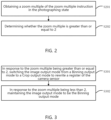
FIG. 2 is a schematic diagram of a flow of determining whether a zoom multiple corresponding to the zoom multiple instruction is greater than or equal to 2 according to some embodiments of the present application. -
FIG. 3 is a schematic diagram of a flow of switching an image output mode in response to the zoom multiple being greater than or equal to 2 according to some embodiments of the present application. -
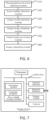
FIG. 4 is a schematic diagram of a flow of regaining and sending a photographing frame image for an image signal processing in the switched image output mode according to some embodiments of the present application. -
FIG. 5 is a schematic diagram of a flow of obtaining and outputting the processed image to finish photographing according to some embodiments of the present application. -
FIG. 6 is a schematic block diagram of a lossless photographing apparatus for a mobile terminal according to some embodiments of the present application. -
FIG. 7 is a schematic structural diagram of a terminal device according to some embodiments of the present application. - The implementation, functional features and advantages of the objects of the present application will be further described with reference to the embodiments and the accompanying drawings.
- It should be understood that the specific implementations described here are only used to explain the present application, and are not used to limit the present application.
- In the following description, suffixes such as "module", "part", or "unit" are for the purpose of benefit of illustration of the present application and have no particular meaning in themselves. Therefore, "module", "part", or "unit" can be used interchangeably.
- To make the objectives, technical solutions, and advantages of the present application more clear and definite, the present application is illustrated in detail below by referring to the accompanying drawings and illustrating the embodiments. It should be understood that the specific implementations described here are only used to explain the present application, and are not used to limit the present application.
- It should be noted that all directional indications (such as up, down, left, right, front, back, etc.) in the embodiments of the present application are only intended to explain a relative positional relationship, a motion situation, and the like between components in a particular pose (as shown in the drawings), and if the particular pose changes, the directional indication changes accordingly.
- In addition, if terms "first", "second" or the like are involved in the embodiments of the present application, the terms are for illustrative purposes only and are not to be construed as indicating or imposing a relative importance or implicitly indicating the number of technical features indicated. Thus, a feature that limited by "first", "second" may expressly or implicitly include at least one of the features. In addition, the technical solutions of the various embodiments may be combined with each other, but the combination of the technical solutions must be realized by a person of ordinary skill in the art. When the combination of the technical solutions is inconsistent with each other or cannot be realized, the combination of the technical solutions should be considered not to exist or fall within the protection scope of the present application.
- With the development of science and technology and the continuous improvement of people's living standards, the performance of new mobile phones introduced by various mobile device manufacturers, such as mobile phone manufacturers, is getting stronger and stronger, and the camera pixels mounted on the mobile phones are getting higher and higher. Nowadays, the mobile phones can easily perform various functions such as photographing and shooting video shake prevention, 10x mixed zooming, 4K ultra-high definition video shooting, so that people who can hardly take pictures can also take high-definition and beautiful pictures with their hands, and people in the field of shooting can also record details of life with their hands using high-pixel mobile phones.
- It has been found that each of the mobile phone manufacturer designs mobile phones and a user selects new mobile phones in consideration of the latest basic mobile phone, and a low-configuration mobile phone in the new mobile phones is also widely popular, for example, a mobile phone with a youth suffix in a millet mobile phone and a red rice mobile phone famous for a cost-effective ratio. The low-configuration mobile phone can design a parity mobile phone focused on game performance or a parity mobile phone focused on a camera function according to user requirements. However, when only a single camera can be mounted on the parity mobile phone for cost reasons, only a minimum requirement for photographing can be met, which is mainly manifested in defects such as blurring of picture quality and color distortion, so that the user cannot enjoy the photographing function of the parity mobile phone. The main reason for blurring of the image quality is that a single camera adopts a single digital zoom mode when digital zooming. That is, the image output by the camera sensor is first cut at the center of the image according to the zoom multiple, and then the cut portion is stretched back to the original size. The zoom mode will lose the image quality, and the loss of the image quality is particularly serious when zooming in a high multiple, which brings a poor photographing experience to the user of the mobile phone having the single camera.
- To solve the above problems, an embodiment of the present application provides a lossless photographing method of a mobile terminal. The lossless photographing method according to the present embodiment can include: automatically detecting whether a photographing instruction is received by the mobile terminal; when the photographing instruction is received, obtaining a zoom multiple instruction of a camera sensor in a photographing state and determining whether the zoom multiple is greater than or equal to 2; and when the zoom multiple is greater than or equal to 2, switching an image output mode of the camera sensor to a Crop output mode, and further obtaining and sending a photographing frame image in the Crop output mode for and image signal processing and output. A final image obtained in the Crop output mode can provide a twice lossless zoom and a high multiple zoom image which greatly improves image quality based on the twice lossless zoom, thereby providing a better photographing image quality for a mobile phone having a single camera, and providing a better photographing experience for a user.
- As shown in
FIG. 1 , an embodiment of the present application provides a lossless photographing method for a mobile terminal, which can be used in a mobile device such as a mobile phone or a tablet. The method described in the embodiment of the present application includes following steps. - At
step S 100, a zoom multiple instruction of a camera sensor in a current photographing state is obtained in response to a photographing instruction being detected. - In the embodiment, when it is detected in the mobile terminal that a physical button for photographing is pressed or a photographing button is pressed on the touch screen in a photographing application, a zoom multiple instruction including a zoom multiple executed by the camera sensor in a current photographing state is obtained.
- For example, in a case that a photographing application (APP) carried on a mobile phone of a certain brand is used, when the photographing button is pressed on the touch screen, the mobile phone receives and detects a photographing instruction, and obtains a zoom multiple instruction including a zoom multiple executed by a camera, i.e., a camera sensor, at a moment when the photographing button is currently pressed. For example, if an image is magnified twice by the user in a two-finger zooming manner when previewing the image, the camera sensor executes a twice zooming instruction, and the mobile phone obtains a twice zooming instruction including a zooming multiple executed by the camera sensor.
- Whether a zoom multiple corresponding to the zoom multiple instruction is greater than or equal to 2 is further determined at step S200.
- In the present embodiment, the mobile terminal extracts the zoom multiple in the zoom multiple instruction, and determines whether the zoom multiple is greater than or equal to 2, including a first case that the zoom multiple is greater than or equal to 2 and a second case that the zoom multiple is less than 2.
- Specifically, as shown in
FIG. 2 , the step S200 includes: - a step S201 of obtaining a zoom multiple of the zoom multiple instruction in the photographing state; and
- a step S202 of determining whether the zoom multiple is greater than or equal to 2.
- For example, if an image is magnified by 2.1 times by a user when using the photographing application and previewing the image, zoom magnification information of 2.1 is included in the zoom multiple instruction executed by the camera sensor and obtained by the mobile phone when the photographing button is pressed. The mobile phone extracts the zoom multiple of 2.1 of the camera sensor in the current photographing state from the zoom multiple instruction, and compares the zoom multiple with 2. If 2.1 is greater than or equal to 2, it is determined that the current zoom multiple is greater than or equal to 2.
- An image output mode is further switched in response to the zoom multiple being greater than or equal to 2 at a step S300.
- The lossless photographing method further includes: before the obtaining of the zoom multiple instruction,
- presetting two image output modes including a Binning output mode and a Crop output mode on the camera sensor;
- obtaining a photographing frame image in the Crop output mode in response to the zoom multiple in the photographing state being greater than or equal to 2;
- obtaining the photographing frame image in the Binning output mode in response to the zoom multiple in the photographing state being less than 2; and
- previewing the image using the Binning output mode in response to the mobile terminal being in the photographing preview state.
- In the present embodiment, when the mobile terminal determines that the zoom multiple in the photographing state is equal to or greater than 2, the image output mode of the camera sensor is switched.
- Specifically, as shown in
FIG. 3 , the step S300 includes: - a step S301 of, in response to the zoom multiple being greater than or equal to 2, switching the image output mode from the Binning output mode to the Crop output mode to rewrite a register of the camera sensor; and
- a step S302 of, in response to the zoom multiple being less than 2, maintaining the image output mode to be the Binning output mode.
- For example, if a user clicks a photographing button in a preview state in which the zoom multiple is 3 when the APP of the mobile phone is used for the photographing, the mobile phone determines that the zoom multiple is greater than or equal to 2, the camera sensor switches the image output mode to the Crop output mode, rewrites a register of the camera sensor, and resets configuration of the register of the camera sensor in the Crop output mode. The Crop output mode is a center region cropping mode, which is a technology in which a camera sensor processes and directly outputs an obtained image by directly taking a middle quarter region of the image obtained by the camera sensor. Therefore, an image Field of View (FOV) obtained at the time of outputting of the image is already an effect in which an image has twice zoom, and the image does not have a picture quality loss. That is, an original image photographed in a state of a zoom multiple of 2 and directly output in the Crop output mode is a lossless image having twice zoom. If a user clicks a photographing button in a preview state in which the zoom multiple is 1.5 when using the APP of the mobile phone, the mobile phone determines that the zoom multiple is less than 2, and the camera sensor does not switch the output mode and maintains the Binning output mode. The Binning output mode is a multi-in-one combination output mode, which is a technology in which a camera sensor processes and outputs an obtained image by combining a plurality of adjacent pixels in the image obtained by the camera sensor into one pixel. A camera sensor supporting a four-in-one combination output mode is used in the present embodiment, and adjacent four pixels can be combined into one pixel. Therefore, an image having a size of 1/4 of an original image obtained by the camera sensor is obtained. However, the FOV is unchanged, and the image sensitivity and the output speed can be improved, but the resolution of the image is reduced so that the captured image is blurred.
- A photographing frame image for an image signal processing are further regained and sent in the switched image output mode at a step S400.
- In the present embodiment, when the camera sensor is switched to the Crop output mode, the image is regained in the Crop output mode, and an image having twice zoom and no loss of an image quality or a lossless image based on the twice zoom can be obtained, to further obtain a higher zoom multiple image with a digital zoom. After the image is sent for the image signal processing, the final image can be seen when the photographing is performed by the mobile phone in daily life.
- Specifically, as shown in
FIG. 4 , the step S400 includes: - a step S401 of waiting for the rewriting of a register of the camera sensor to be completed;
- a step S402 of regaining the photographing frame image in the Crop output mode; and
- a step S403 of sending the regained photographing frame image for the image signal processing and switching the image output mode back to the Binning output mode to rewrite the register.
- For example, the waiting for the rewriting of the register of the camera sensor to be completed means waiting for processing parameters of the image obtained by the camera sensor in the Crop output mode to be written into the register, regaining a photographing frame image in the Crop output mode (for example, when the zoom multiple of the camera sensor in the current photographing state is 4, the camera sensor obtains an image within 1/4 of a region to obtain a lossless image having twice zoom, performs twice digital zoom on the lossless image to obtain a photographing frame image having four times zoom and lower image quality loss), sending the photographing frame image for an image signal processing and controlling the camera sensor to switch back to the Binning output mode to rewrite the register, and continuing to preview the image to wait for detection of a next photographing instruction. The image signal processing (an Image Signal Process algorithm) is a processing method in which an image output by a camera sensor is processed to be close to an expected image of a human being. An original image directly output by the camera sensor is greatly different from an image expected or seen by human being due to a physical defect of the lens or the sensor itself and a difference of light rays. A human eye can automatically adjust a pupil to see a majority of things at brightness through the pupil, but a hardware cannot do this. A series of corrections of the IPS algorithm such as color correction, noise spot processing, and image repair are required for the original image to obtain an image expected by the human being.
- The lossless photographing method further includes: after switching the image output mode in response to the zoom multiple being greater than or equal to 2,
- obtaining the photographing frame image in the Binning output mode; and
- sending the regained photographing frame image for the image signal processing.
- For example, when a user photographs an image of 1.5 times zoom using a mobile phone, a camera sensor of the mobile phone directly obtains and sends a photographing frame image in the Binning output mode for the image signal processing. To further improve an image obtaining speed in the Binning output mode, a buffer queue (Buffer Queue) is set for temporarily storing the photographing frame image of the camera sensor, and the closest image output in the queue can be directly taken when the user clicks on the photographing. Specifically, a temporary storage queue Queue of a fixed size is set. When a user performs image browsing and has not yet clicked the photographing button, a plurality of latest photographing frame images are stored in the Queue, and old photographing frame images are continuously deleted in a preview process and the latest photographing frame images are added. When the user presses the photographing button, the user directly obtains the latest photographing frame images from the Queue or selects an optimal image to be output by an algorithm, thereby achieving an effect of Zero Shutter Lag (ZSL), i.e., obtaining a final image at a photographing instant, and improving a photographing experience of the user when using a mobile terminal such as a mobile phone.
- The processed image is further obtained and outputted to finish photographing.
- In the present embodiment, the mobile terminal obtains an image on which the image signal processing has been completed, and stores the image in a storage space such as a memory of the mobile terminal or a cloud.
- Specifically, as shown in
FIG. 5 , the step S500 includes: - a step S501 of obtaining the processed image; and
- a step S502 of storing the image in a storage space.
- For example, an image captured by a user with a mobile phone can be generally stored in a photo album, i.e., a storage space of the mobile phone itself, after the image signal processing is performed on the image. The user may also connect a plurality of mobile terminals to the cloud, so that the images captured by the mobile terminals are directly uploaded to the cloud for storage.
- In the present embodiment, the Binning output mode and the Crop output mode are different from each other in the register configuration. In addition to the need to rewrite the register when switching of the image output mode for the Binning output mode, image processing configurations of the display screen to which the images are output in the two output modes are also different from each other. The image processing configurations include configurations such as an Automatic Exposure (AE) exposure, an Auto White Balance (AWB) white balance, and the like. If the image in the Crop output mode is displayed on the display screen of the mobile terminal, the data stream needs to be restarted, and the image processing parameters need to be reconfigured. In the present embodiment, the step of switching the Binning output mode or the Crop output mode is arranged after the step of detecting the photographing instruction, so that the camera sensor needs to output at least one photographing frame image in the Crop output mode, and only the one photographing frame image needs to be processed in the background. That is, the image in the Crop mode is displayed on the display screen of the mobile terminal without restarting the data stream, thereby greatly reducing the sense of pause in photographing with the present embodiment.
- In the second embodiment, in order to further improve a switching speed when the camera sensor performs switching of the output mode and reduce the sense of pause caused by the switching of the output mode, a camera sensor having a Seamless (no delay) switching function is used in the present embodiment, and the mobile terminal can directly set different output modes of the camera sensor and rewrite the register of the camera sensor with the Seamless switching function, thereby accelerating the switching speed of different modes. By providing an Optical Image Stabilizer (OIS) in the mobile terminal, the sense of pause generated by the camera sensor in switching the output mode can be further reduced to a non-sensible level.
- In the third embodiment, to further improve the processing speed of lossless photographing of the mobile terminal, steps of detecting and determining whether a current zoom multiple is greater than or equal to 2 may be disposed before detecting the photographing instruction, and a pre-stored value may be set, where the pre-stored value has only two states of 0 and 1. When the pre-stored value is 0, it indicates that the zoom multiple of the mobile terminal in the preview mode before photographing is less than 2. When the pre-stored value is 1, it indicates that the zoom multiple of the mobile terminal in the preview mode before photographing is greater than or equal to 2. When the mobile terminal detects the photographing instruction, the mobile terminal directly calls the pre-stored value and performs the steps of switching the mode and outputting the image. The step of determining that the sense of pause is not generated before the photographing instruction is detected may shorten determination step between the user pressing the photographing key and obtaining the final image, thereby further reducing the sense of pause that the user may generate when the mobile terminal is used for lossless photographing.
- In the fourth embodiment, in order to improve the use experience of the continuous shooting function of the mobile terminal, after the output mode of the camera sensor is switched to the Crop output mode and the mobile terminal obtains the photographing frame image, the camera sensor is switched back to the Binning output mode after a delay of 0. 1-0.2s, so that the user does not experience a continuous sense of pause due to the back-and-forth switching of the output mode of the camera sensor when the continuous shooting function or the manual multi-continuous shooting is used, resulting in a problem of reducing the use experience of the multi-continuous shooting. Alternatively, a switching bottom that supports a multi-continuous shooting function is set. When the multi-continuous shooting function is enabled, a delay of switching of the Crop output mode exists. When the multi-continuous shooting function is disabled, the Crop output mode is switched back to the Binning output mode immediately after the mobile terminal obtains the photographing frame image. Alternatively, the delay is bound to the automatic multi-continuous shooting function of the mobile terminal. Whenever the user performs an N-continuous shooting function (N>2), it waits for the continuous shooting function to be completed before the output mode is switched back to the Binning output mode. Exemplary device
- As shown in
FIG. 6 , an embodiment of the present application provides a lossless photographing apparatus for a mobile terminal, including a photographinginstruction detection module 610, a zoommultiple detection module 620, an outputmode switching module 630, an outputimage obtaining module 640, an outputimage processing module 650, and animage outputting module 660. Specifically, the photographinginstruction detection module 610 is configured to detect whether a photographing instruction is received. The zoommultiple detection module 620 is configured to detect a zoom multiple of a camera sensor in a photographing state corresponding to the photographing instruction is greater than or equal to 2. The outputmode switching module 630 is configured to switch an image output mode from a Binning output mode to a Crop output mode in response to the zoom multiple being greater than or equal to 2, and maintaining the image output mode to be the Binning output mode in response to the zoom multiple being less than 2. The outputimage obtaining module 640 is configured to obtain a photographing frame image output in the Crop output mode or the Binning output mode. The outputimage processing module 650 is configured to perform performing an image signal processing on the photographing frame image. Theimage outputting module 660 is configured to output the image into a storage space of a mobile terminal. - Based on the embodiments described above, the present application further provides a terminal device, of which a schematic structural diagram can be shown in
FIG. 7 . The terminal device includes a processor, a memory, a network interface, and a display screen connected through a system bus. The processor of the terminal device is configured to provide computing and control capabilities. The memory of the terminal device includes a non-volatile storage medium and an internal memory. The non-volatile storage medium stores an operating system and a computer program. The internal memory provides an environment for the operation of the operating system and the computer program in the non-volatile storage medium. The network interface of the terminal device is configured to be in communication with an external terminal through a network connection. The computer program, when executed by the processor, implements a lossless photographing for a mobile terminal. The display screen of the terminal device may be a liquid crystal display screen or an electronic ink display screen. - It should be understood by those skilled in the art that the schematic structural diagram shown in
Fig. 7 is merely a block diagram of a portion of the structure associated with the solution of the present application and does not constitute a definition of the terminal device to which the solution of the present application is applied. A particular terminal device may include more or fewer components than shown, or some combination of components, or have different arrangements of components. - A terminal device is provided in an embodiment, includes: a memory, a processor, and a terminal data processing program stored on the memory and operable on the processor, where the process performs steps including:
- obtaining a zoom multiple instruction of a camera sensor in a current photographing state in response to a photographing instruction being detected;
- determining whether a zoom multiple corresponding to the zoom multiple instruction is greater than or equal to 2;
- switching an image output mode in response to the zoom multiple being greater than or equal to 2;
- regaining and sending a photographing frame image for an image signal processing in the switched image output mode; and
- obtaining and outputting the processed image to finish photographing.
- The lossless photographing method further includes: before the obtaining of the zoom multiple instruction,
- presetting two image output modes including a Binning output mode and a Crop output mode on the camera sensor;
- obtaining a photographing frame image in the Crop output mode in response to the zoom multiple in the photographing state being greater than or equal to 2;
- obtaining the photographing frame image in the Binning output mode in response to the zoom multiple in the photographing state being less than 2; and
- previewing the image using the Binning output mode in response to the mobile terminal being in the photographing preview state.
- In the lossless photographing method, the determining whether the zoom multiple corresponding to the current zoom multiple instruction is greater than or equal to 2 includes:
- obtaining a zoom multiple of the zoom multiple instruction in the photographing state; and
- determining whether the zoom multiple is greater than or equal to 2.
- In the lossless photographing method, the switching the image output mode in response to the zoom multiple being greater than or equal to 2 includes:
- in response to the zoom multiple being greater than or equal to 2, switching the image output mode from the Binning output mode to the Crop output mode to rewrite a register of the camera sensor; and
- in response to the zoom multiple being less than 2, maintaining the image output mode to be the Binning output mode.
- In the lossless photographing method, regaining and sending a photographing frame image for an image signal processing in the switched image output mode include:
- waiting for the rewriting of the register of the camera sensor to be completed;
- regaining the photographing frame image in the Crop output mode; and
- sending the regained photographing frame image for the image signal processing and switching the image output mode back to the Binning output mode to rewrite the register.
- The lossless photographing method further includes: after the switching the image output mode in response to the zoom multiple being greater than or equal to 2,
- obtaining the photographing frame image in the Binning output mode; and
- sending the regained photographing frame image for the image signal processing.
- In the lossless photographing method, the obtaining and outputting the image include:
- obtaining the processed image; and
- storing the image in a storage space.
- It should be understood by those of ordinary skill in the art that all or a portion of the flows of implementing the methods of the embodiments described above may be accomplished by a computer program instructing relevant hardware that may be stored in a non-volatile computer-readable storage medium that, when executed, may include the flows of the method embodiments described above. Any reference to memory, storage, database or other medium used in the embodiments provided in the present application may include non-volatile and/or volatile memory. The non-volatile memory may include read only memory (ROM), programmable ROM (PROM), electrically programmable ROM (EPROM), electrically erasable programmable ROM (EEPROM), or flash memory. The volatile memory may include random access memory (RAM) or external cache memory. By way of illustration and not limitation, the RAM may be available in a variety of forms, such as static RAM (SRAM), dynamic RAM (DRAM), synchronous DRAM (SDRAM), double data rate SDRAM (DDRSDRAM), enhanced SDRAM (ESDRAM), synchronous link (Synchlink) DRAM (SLDRAM), memory bus (Rambus ) RAM (RDRAM), direct memory bus dynamic RAM (DRDRAM), and memory bus dynamic RAM (RDRAM).
- In summary, disclosed in the present application are the lossless photographing method and apparatus for the mobile terminal, the terminal device and the storage medium. The method includes: obtaining the zoom multiple instruction of the camera sensor in the current photographing state in response to the photographing instruction being detected; determining whether the zoom multiple corresponding to the zoom multiple instruction is greater than or equal to 2; switching the image output mode in response to the zoom multiple being greater than or equal to 2; regaining and sending the photographing frame image for the image signal processing in the switched image output mode; and obtaining and outputting the processed image to finish photographing. The present application aims at solving the problem in the prior art of poor image quality when a mobile terminal carrying a single camera performs high zoom photographing, improving the picture quality photographed by the single camera, and improving the photographing experience when the user uses the mobile terminal.
- It should be understood that the application of the present application is not limited to the above examples, and that modifications or changes may be made to those of ordinary skill in the art in light of the above description, all of which are intended to fall within the scope of the claims appended to the present application.
Claims (20)
- A lossless photographing method for a mobile terminal, comprising:obtaining a zoom multiple instruction of a camera sensor in a current photographing state in response to a photographing instruction being detected;determining whether a zoom multiple corresponding to the zoom multiple instruction is greater than or equal to 2;switching an image output mode in response to the zoom multiple being greater than or equal to 2;regaining and sending a photographing frame image for an image signal processing in the switched image output mode; andobtaining and outputting the processed image to finish photographing.
- The method of claim 1, further comprises: before the obtaining of the zoom multiple instruction,presetting two image output modes including a Binning output mode and a Crop output mode on the camera sensor;obtaining a photographing frame image in the Crop output mode in response to a zoom multiple in a photographing state being greater than or equal to 2;obtaining the photographing frame image in the Binning output mode in response to the zoom multiple in the photographing state being less than 2; andpreviewing the image using the Binning output mode in response to the mobile terminal being in a photographing preview state.
- The method of claim 1, wherein the determining whether the zoom multiple corresponding to the current zoom multiple instruction is greater than or equal to 2 comprises:obtaining a zoom multiple of the zoom multiple instruction in the photographing state; anddetermining whether the zoom multiple is greater than or equal to 2.
- The method of claim 1, wherein the switching of the image output mode comprises:in response to the zoom multiple being greater than or equal to 2, switching the image output mode from a Binning output mode to a Crop output mode to rewrite a register of the camera sensor; andin response to the zoom multiple being less than 2, maintaining the image output mode to be the Binning output mode.
- The method of claim 1, wherein the regaining and sending the photographing frame image comprise:waiting for rewriting of a register of the camera sensor to be completed;regaining the photographing frame image in the Crop output mode; andsending the regained photographing frame image for the image signal processing and switching the image output mode back to the Binning output mode to rewrite the register.
- The method of claim 4, further comprising: after the switching of the image output mode,obtaining a photographing frame image in the Binning output mode; andsending the obtained photographing frame image for the image signal processing.
- The method of claim 1, wherein the obtaining and outputting the processed image comprise:obtaining the processed image; andstoring the processed image in a storage space.
- The method of claim 1, wherein the obtaining of the zoom multiple instruction comprises:generating the photographing instruction when it is detected that a physical button for photographing in the mobile terminal is pressed or when it is detected that a photographing button under the touch screen in a photographing application of the mobile terminal is pressed; andobtaining the zoom multiple instruction of the camera sensor in the current photographing state based on the photographing instruction;
- The method of claim 1, further comprises: before the obtaining of the zoom multiple instruction,receiving a zoom multiple adjustment operation input by a user; andadjusting the zoom multiple of the camera based on the zoom multiple adjustment operation.
- The method of claim 6, further comprising: before obtaining the photographing frame image in the Binning output mode,providing a buffer queue for storing photographing frame images of the camera sensor; andstoring the photographing frame image obtained by the camera sensor in the buffer queue;the obtaining the photographing frame image in the Binning output mode comprises:
obtaining the photographing frame image from the buffer queue in the Binning output mode. - A lossless photographing apparatus, comprising:a photographing instruction detection module for detecting whether a photographing instruction is received;a zoom multiple detection module for detecting whether a zoom multiple of a camera sensor in a photographing state corresponding to the photographing instruction is greater than or equal to 2;an output model switching module for switching an image output mode from a Binning output mode to a Crop output mode in response to the zoom multiple being greater than or equal to 2, and maintaining the image output mode to be the Binning output mode in response to the zoom multiple being less than 2;an output image obtaining module for obtaining a photographing frame image output in the Crop output mode or the Binning output mode; andan output image processing module for performing an image signal processing on the photographing frame image; andan image outputting module for outputting the processed image into a storage space of a mobile terminal.
- The apparatus of claim 11, further comprising:a first setting module for presetting two image output modes including the Binning output mode and the Crop output mode on the camera sensor;a second setting module for obtaining a photographing frame image in the Crop output mode in response to the zoom multiple in the photographing state being greater than or equal to 2;a third setting module for obtaining the photographing frame image in the Binning output mode in response to the zoom multiple in the photographing state being less than 2; anda previewing module for previewing the image using the Binning output mode in response to the mobile terminal being in a photographing preview state.
- The apparatus of claim 11, wherein the zoom multiple detection module comprises:a first obtaining sub module for obtaining a zoom multiple of the zoom multiple instruction in the photographing state; anda determination sub module for determining whether the zoom multiple is greater than or equal to 2.
- The apparatus of claim 11, wherein the output model switching module comprises:a switching sub module for, in response to the zoom multiple being greater than or equal to 2, switching the image output mode from the Binning output mode to the Crop output mode to rewrite a register of the camera sensor; anda determination sub module for, in response to the zoom multiple being less than 2, maintaining the image output mode to be the Binning output mode.
- The apparatus of claim 11, wherein the output model switching module comprises:a waiting sub module for waiting for rewriting of a register of the camera sensor to be completed;a second obtaining sub module for regaining the photographing frame image in the Crop output mode; anda first sending sub module for sending the regained photographing frame image for the image signal processing and switching the image output mode back to the Binning output mode to rewrite the register.
- The apparatus of claim 14, further comprising:a third obtaining sub module for obtaining the photographing frame image in the Binning output mode; anda second sending sub module for sending the obtained photographing frame image for the image signal processing.
- The apparatus of claim 11, wherein the image outputting module comprises:a fourth obtaining sub module for obtaining the processed image; anda storage sub module for storing the processed image in a storage space.
- The apparatus of claim 11, wherein the photographing instruction detection module comprises:a detection sub module for generating a photographing instruction when it is detected that a physical button for photographing in the mobile terminal is pressed or when it is detected that a photographing button under the touch screen in a photographing application of the mobile terminal is pressed; anda fifth obtaining sub module for obtaining the zoom multiple instruction of the camera sensor in the current photographing state based on the photographing instruction.
- A terminal device, comprising: a memory, a processor, and a lossless photographing program stored on the memory and operable on the processor, wherein the lossless photographing program, when executed by the processor, implements steps of the lossless photographing method of any of claims 1-10.
- A computer readable storage medium storing a lossless photographing program for a mobile terminal thereon which, when executed by a processor, implement steps of the lossless photographing method of any of claims 1-10.
Applications Claiming Priority (2)
| Application Number | Priority Date | Filing Date | Title |
|---|---|---|---|
| CN202110600196.8A CN113347334B (en) | 2021-05-31 | 2021-05-31 | A mobile terminal lossless photographing method, device, terminal device and storage medium |
| PCT/CN2022/085659 WO2022252814A1 (en) | 2021-05-31 | 2022-04-07 | Lossless photographing method and apparatus for mobile terminal, terminal device and storage medium |
Publications (2)
| Publication Number | Publication Date |
|---|---|
| EP4351125A1 true EP4351125A1 (en) | 2024-04-10 |
| EP4351125A4 EP4351125A4 (en) | 2025-05-07 |
Family
ID=77472658
Family Applications (1)
| Application Number | Title | Priority Date | Filing Date |
|---|---|---|---|
| EP22814861.5A Pending EP4351125A4 (en) | 2021-05-31 | 2022-04-07 | Lossless photographing method and apparatus for mobile terminal, terminal device and storage medium |
Country Status (4)
| Country | Link |
|---|---|
| US (1) | US20240284045A1 (en) |
| EP (1) | EP4351125A4 (en) |
| CN (1) | CN113347334B (en) |
| WO (1) | WO2022252814A1 (en) |
Families Citing this family (7)
| Publication number | Priority date | Publication date | Assignee | Title |
|---|---|---|---|---|
| CN113347334B (en) * | 2021-05-31 | 2022-08-05 | 惠州Tcl移动通信有限公司 | A mobile terminal lossless photographing method, device, terminal device and storage medium |
| CN114007011A (en) * | 2021-10-26 | 2022-02-01 | 希姆通信息技术(上海)有限公司 | Output mode switching method and system based on camera |
| CN115118871B (en) * | 2022-02-11 | 2023-12-15 | 东莞市步步高教育软件有限公司 | Shooting pixel mode switching method, shooting pixel mode switching system, terminal equipment and storage medium |
| CN115550541B (en) * | 2022-04-22 | 2024-04-09 | 荣耀终端有限公司 | Camera parameter configuration method and electronic device |
| CN114640798B (en) * | 2022-05-09 | 2022-10-04 | 荣耀终端有限公司 | Image processing method, electronic device, and computer storage medium |
| CN118042275A (en) * | 2022-11-01 | 2024-05-14 | 荣耀终端有限公司 | A method for switching output mode and related equipment |
| CN117714858B (en) * | 2023-07-31 | 2024-12-20 | 荣耀终端有限公司 | Image processing method, electronic device and readable storage medium |
Family Cites Families (13)
| Publication number | Priority date | Publication date | Assignee | Title |
|---|---|---|---|---|
| SE1150505A1 (en) * | 2011-05-31 | 2012-12-01 | Mobile Imaging In Sweden Ab | Method and apparatus for taking pictures |
| US9160912B2 (en) * | 2012-06-08 | 2015-10-13 | Apple Inc. | System and method for automatic image capture control in digital imaging |
| US9215377B2 (en) * | 2013-12-04 | 2015-12-15 | Nokia Technologies Oy | Digital zoom with sensor mode change |
| CN107155059A (en) * | 2017-04-11 | 2017-09-12 | 深圳市金立通信设备有限公司 | A kind of image preview method and terminal |
| CN107124549A (en) * | 2017-05-05 | 2017-09-01 | 惠州Tcl移动通信有限公司 | Mobile terminal, camera camera control method, system and readable storage medium storing program for executing |
| CN107770451A (en) * | 2017-11-13 | 2018-03-06 | 广东欧珀移动通信有限公司 | Method, device, terminal and storage medium for photographing and processing |
| CN108322663B (en) * | 2018-05-14 | 2021-05-07 | Oppo广东移动通信有限公司 | Photographing method, device, terminal and storage medium |
| CN108377342B (en) * | 2018-05-22 | 2021-04-20 | Oppo广东移动通信有限公司 | Double-camera shooting method and device, storage medium and terminal |
| US10969941B2 (en) * | 2018-09-28 | 2021-04-06 | Apple Inc. | Underwater user interface |
| EP4475551B1 (en) * | 2019-08-26 | 2026-02-11 | Samsung Electronics Co., Ltd | System and method for content enhancement using quad color filter array sensors |
| US11218641B2 (en) * | 2019-09-09 | 2022-01-04 | Qualcomm Incorporated | Image capture mode adaptation |
| CN110855896A (en) * | 2019-12-13 | 2020-02-28 | 惠州Tcl移动通信有限公司 | Shooting method and device, storage medium and terminal equipment |
| CN113347334B (en) * | 2021-05-31 | 2022-08-05 | 惠州Tcl移动通信有限公司 | A mobile terminal lossless photographing method, device, terminal device and storage medium |
-
2021
- 2021-05-31 CN CN202110600196.8A patent/CN113347334B/en active Active
-
2022
- 2022-04-07 EP EP22814861.5A patent/EP4351125A4/en active Pending
- 2022-04-07 WO PCT/CN2022/085659 patent/WO2022252814A1/en not_active Ceased
- 2022-04-07 US US18/565,323 patent/US20240284045A1/en active Pending
Also Published As
| Publication number | Publication date |
|---|---|
| EP4351125A4 (en) | 2025-05-07 |
| WO2022252814A1 (en) | 2022-12-08 |
| US20240284045A1 (en) | 2024-08-22 |
| CN113347334B (en) | 2022-08-05 |
| CN113347334A (en) | 2021-09-03 |
Similar Documents
| Publication | Publication Date | Title |
|---|---|---|
| US20240284045A1 (en) | Lossless photographing method and apparatus for mobile terminal, terminal device and storage medium | |
| CN111373727B (en) | Shooting method, device and equipment | |
| CN110493526B (en) | Image processing method, device, device and medium based on multiple camera modules | |
| WO2022100677A1 (en) | Picture preview method and apparatus, and storage medium and electronic device | |
| CN110958401B (en) | Super night scene image color correction method and device and electronic equipment | |
| JP6727989B2 (en) | Image processing apparatus and control method thereof | |
| CN113824876B (en) | Image stabilization processing method, device, mobile terminal and medium under digital zoom | |
| JP2014096749A (en) | Imaging apparatus and image processing method | |
| WO2023125669A1 (en) | Image processing circuit, image processing method, electronic device, and readable storage medium | |
| US9167150B2 (en) | Apparatus and method for processing image in mobile terminal having camera | |
| US8773568B2 (en) | Imaging apparatus and method for improving manipulation of view finders | |
| WO2016101505A1 (en) | Photographing correction method, device and terminal of front camera lens | |
| JP2020184698A (en) | Imaging device and its control method | |
| CN114449130A (en) | Multi-camera video fusion method and system | |
| CN115134505A (en) | Preview picture generation method and device, electronic equipment and storage medium | |
| KR101502344B1 (en) | Interchangeable lens materializing method by software for camera of smart device | |
| CN111614865A (en) | Multi-camera brightness synchronization method, device, device and storage medium | |
| WO2023245385A1 (en) | Photographic preview method and apparatus, and storage medium | |
| KR100745576B1 (en) | Method and device for automatically adjusting the size of camera input window in portable terminal | |
| CN115914829B (en) | Photography method, device, equipment and medium for multi-camera equipment | |
| JP6283989B2 (en) | Image scaling processor | |
| JP5338248B2 (en) | Image processing apparatus, electronic camera, and image processing program | |
| CN118354198A (en) | Camera starting method, device, medium and electronic equipment | |
| CN116017173A (en) | Image debugging method, device, medium and equipment | |
| CN120881378A (en) | Image processing method, device, electronic equipment and storage medium |
Legal Events
| Date | Code | Title | Description |
|---|---|---|---|
| STAA | Information on the status of an ep patent application or granted ep patent |
Free format text: STATUS: THE INTERNATIONAL PUBLICATION HAS BEEN MADE |
|
| PUAI | Public reference made under article 153(3) epc to a published international application that has entered the european phase |
Free format text: ORIGINAL CODE: 0009012 |
|
| STAA | Information on the status of an ep patent application or granted ep patent |
Free format text: STATUS: REQUEST FOR EXAMINATION WAS MADE |
|
| 17P | Request for examination filed |
Effective date: 20231108 |
|
| AK | Designated contracting states |
Kind code of ref document: A1 Designated state(s): AL AT BE BG CH CY CZ DE DK EE ES FI FR GB GR HR HU IE IS IT LI LT LU LV MC MK MT NL NO PL PT RO RS SE SI SK SM TR |
|
| DAV | Request for validation of the european patent (deleted) | ||
| DAX | Request for extension of the european patent (deleted) | ||
| REG | Reference to a national code |
Ref country code: DE Ref legal event code: R079 Free format text: PREVIOUS MAIN CLASS: H04N0005225000 Ipc: H04N0023667000 |
|
| A4 | Supplementary search report drawn up and despatched |
Effective date: 20250404 |
|
| RIC1 | Information provided on ipc code assigned before grant |
Ipc: H04N 25/46 20230101ALI20250331BHEP Ipc: H04N 25/42 20230101ALI20250331BHEP Ipc: H04N 25/40 20230101ALI20250331BHEP Ipc: H04N 23/69 20230101ALI20250331BHEP Ipc: H04N 23/667 20230101AFI20250331BHEP |