EP4350856A1 - Battery pack assembly - Google Patents
Battery pack assembly Download PDFInfo
- Publication number
- EP4350856A1 EP4350856A1 EP23199866.7A EP23199866A EP4350856A1 EP 4350856 A1 EP4350856 A1 EP 4350856A1 EP 23199866 A EP23199866 A EP 23199866A EP 4350856 A1 EP4350856 A1 EP 4350856A1
- Authority
- EP
- European Patent Office
- Prior art keywords
- channel
- plate
- adhesive
- clamshell
- manifold
- Prior art date
- Legal status (The legal status is an assumption and is not a legal conclusion. Google has not performed a legal analysis and makes no representation as to the accuracy of the status listed.)
- Withdrawn
Links
- 239000000853 adhesive Substances 0.000 claims abstract description 59
- 230000001070 adhesive effect Effects 0.000 claims abstract description 59
- 238000000034 method Methods 0.000 claims abstract description 13
- 238000004891 communication Methods 0.000 claims description 8
- 238000004519 manufacturing process Methods 0.000 claims description 5
- 238000002347 injection Methods 0.000 claims description 4
- 239000007924 injection Substances 0.000 claims description 4
- 239000012530 fluid Substances 0.000 claims description 3
- 210000004027 cell Anatomy 0.000 description 44
- 239000007788 liquid Substances 0.000 description 3
- 239000000463 material Substances 0.000 description 3
- 239000000565 sealant Substances 0.000 description 3
- 210000004128 D cell Anatomy 0.000 description 2
- 238000012986 modification Methods 0.000 description 2
- 230000004048 modification Effects 0.000 description 2
- 230000000007 visual effect Effects 0.000 description 2
- 230000001419 dependent effect Effects 0.000 description 1
- 238000005516 engineering process Methods 0.000 description 1
- 230000009969 flowable effect Effects 0.000 description 1
- 239000003292 glue Substances 0.000 description 1
- 230000035939 shock Effects 0.000 description 1
- 239000007787 solid Substances 0.000 description 1
- 238000012795 verification Methods 0.000 description 1
- 238000003466 welding Methods 0.000 description 1
Images


Classifications
-
- H—ELECTRICITY
- H01—ELECTRIC ELEMENTS
- H01M—PROCESSES OR MEANS, e.g. BATTERIES, FOR THE DIRECT CONVERSION OF CHEMICAL ENERGY INTO ELECTRICAL ENERGY
- H01M50/00—Constructional details or processes of manufacture of the non-active parts of electrochemical cells other than fuel cells, e.g. hybrid cells
- H01M50/20—Mountings; Secondary casings or frames; Racks, modules or packs; Suspension devices; Shock absorbers; Transport or carrying devices; Holders
- H01M50/262—Mountings; Secondary casings or frames; Racks, modules or packs; Suspension devices; Shock absorbers; Transport or carrying devices; Holders with fastening means, e.g. locks
- H01M50/264—Mountings; Secondary casings or frames; Racks, modules or packs; Suspension devices; Shock absorbers; Transport or carrying devices; Holders with fastening means, e.g. locks for cells or batteries, e.g. straps, tie rods or peripheral frames
-
- H—ELECTRICITY
- H01—ELECTRIC ELEMENTS
- H01M—PROCESSES OR MEANS, e.g. BATTERIES, FOR THE DIRECT CONVERSION OF CHEMICAL ENERGY INTO ELECTRICAL ENERGY
- H01M50/00—Constructional details or processes of manufacture of the non-active parts of electrochemical cells other than fuel cells, e.g. hybrid cells
- H01M50/20—Mountings; Secondary casings or frames; Racks, modules or packs; Suspension devices; Shock absorbers; Transport or carrying devices; Holders
- H01M50/204—Racks, modules or packs for multiple batteries or multiple cells
- H01M50/207—Racks, modules or packs for multiple batteries or multiple cells characterised by their shape
- H01M50/213—Racks, modules or packs for multiple batteries or multiple cells characterised by their shape adapted for cells having curved cross-section, e.g. round or elliptic
-
- H—ELECTRICITY
- H01—ELECTRIC ELEMENTS
- H01M—PROCESSES OR MEANS, e.g. BATTERIES, FOR THE DIRECT CONVERSION OF CHEMICAL ENERGY INTO ELECTRICAL ENERGY
- H01M50/00—Constructional details or processes of manufacture of the non-active parts of electrochemical cells other than fuel cells, e.g. hybrid cells
- H01M50/20—Mountings; Secondary casings or frames; Racks, modules or packs; Suspension devices; Shock absorbers; Transport or carrying devices; Holders
- H01M50/204—Racks, modules or packs for multiple batteries or multiple cells
- H01M50/207—Racks, modules or packs for multiple batteries or multiple cells characterised by their shape
-
- H—ELECTRICITY
- H01—ELECTRIC ELEMENTS
- H01M—PROCESSES OR MEANS, e.g. BATTERIES, FOR THE DIRECT CONVERSION OF CHEMICAL ENERGY INTO ELECTRICAL ENERGY
- H01M50/00—Constructional details or processes of manufacture of the non-active parts of electrochemical cells other than fuel cells, e.g. hybrid cells
- H01M50/30—Arrangements for facilitating escape of gases
-
- H—ELECTRICITY
- H01—ELECTRIC ELEMENTS
- H01M—PROCESSES OR MEANS, e.g. BATTERIES, FOR THE DIRECT CONVERSION OF CHEMICAL ENERGY INTO ELECTRICAL ENERGY
- H01M50/00—Constructional details or processes of manufacture of the non-active parts of electrochemical cells other than fuel cells, e.g. hybrid cells
- H01M50/60—Arrangements or processes for filling or topping-up with liquids; Arrangements or processes for draining liquids from casings
- H01M50/609—Arrangements or processes for filling with liquid, e.g. electrolytes
- H01M50/627—Filling ports
-
- Y—GENERAL TAGGING OF NEW TECHNOLOGICAL DEVELOPMENTS; GENERAL TAGGING OF CROSS-SECTIONAL TECHNOLOGIES SPANNING OVER SEVERAL SECTIONS OF THE IPC; TECHNICAL SUBJECTS COVERED BY FORMER USPC CROSS-REFERENCE ART COLLECTIONS [XRACs] AND DIGESTS
- Y02—TECHNOLOGIES OR APPLICATIONS FOR MITIGATION OR ADAPTATION AGAINST CLIMATE CHANGE
- Y02E—REDUCTION OF GREENHOUSE GAS [GHG] EMISSIONS, RELATED TO ENERGY GENERATION, TRANSMISSION OR DISTRIBUTION
- Y02E60/00—Enabling technologies; Technologies with a potential or indirect contribution to GHG emissions mitigation
- Y02E60/10—Energy storage using batteries
Definitions
- the present invention relates to apparatus and methods for a battery pack.
- a clamshell plate for a battery pack comprising: an exterior surface; a recess within the clamshell plate for accommodating a battery cell therein; an channel extending around at least a portion of an inner diameter of the recess in which adhesive can be accommodated to secure the clamshell plate to the battery cell; a manifold opening into the channel; and a vent hole from the channel to the exterior surface of the clamshell plate.
- a battery pack comprising: a battery cell; and a clamshell plate including: an exterior surface; a recess within the clamshell plate for accommodating the battery cell therein; an channel extending around at least a portion of an inner diameter of the recess in which adhesive can be accommodated to secure the clamshell plate to the battery cell; a manifold opening into the channel; and a vent hole from the channel to the exterior surface of the clamshell plate.
- a method for manufacturing a battery pack comprising: inserting a battery into each recess of a plate that is in communication with a manifold enclosed within the plate and having conduit connections to an channel extending along at least a portion of an inner diameter around each recess; injecting adhesive into an inlet port to the manifold such that the adhesive flows through the manifold, through each of the conduit connections and into the channels around the recesses; and continuing to inject the adhesive until an indicator on the plate indicates that the adhesive has flowed around the channel.
- the battery pack includes multiple battery cells 12 held together by at least one clamshell plate.
- clamshell plate is a term in the art and such a plate can have various shapes.
- a clamshell plate of the type used in a battery pack assembly need not have a concave clamshell shape and need not come together with other plates in a clamshell arrangement.
- the clamshell of the present invention need not be shaped only like that illustrated.
- the clamshell plate of the present need not be flat and need not be rectangular or square.
- Useful battery cells 12 are each often cylindrically housed/shaped.
- D-cell batteries are often used and they have a cylindrical shape with a diameter d c that is known or can be readily determined.
- the assembly will include a plurality of battery cells 12.
- the battery cells are all of a similar shape and are arranged side by side, with their lengthwise dimensions substantially in parallel.
- the clamshell plates 14a, 14b are installed adjacent (i.e. on or near) the ends of the arrangement of battery cells.
- each clamshell plate has a plurality of recesses 18. While the illustrated recesses are holes passing fully through the plate, a recess could be an indent that is closed at one end or a tapered hole. Each recess 18 is sized to accommodate an end of one battery cell 12.
- each battery cell has at least one of its ends disposed in a recess a clamshell plate. As illustrated, each battery cell could have (i) its upper end installed in a recess of a top clamshell plate and (ii) its lower end installed in a recess of a lower clamshell plate 14b.
- Adhesive 20 is applied to secure the battery cells 12 to the plates 14a, 14b.
- Adhesive 20 resides between each battery cell and each plate. In the illustrated embodiment, there is a ring of adhesive 20 between the circumference of each battery cell and the inner diameter of the recess.
- the clamshell plates illustrated herein include recesses formed as holes, where each hole is configured for accepting the end of one of a plurality of battery cells.
- the clamshell plate is secured to the plurality of battery cells by injecting adhesive into an annular space between the circular surface that is the recess hole inner diameter and each battery circumference orthogonal to its long axis.
- the adhesive is selected to be injectable such as anywhere from a flowable paste to a pourable liquid.
- the adhesive should be substantially continuous about approximately one half of, and possibly about the full, circumference of each battery cell and the adhesive should be neatly contained in the annular space.
- the decision on the degree to which the adhesive extends around the battery cell may be dependent on any of the desired weight, adhesive cost, expected need for greater adhesion, etc.
- each battery recess has a groove around at least one half of its inner diameter, which can accommodate and retain adhesive.
- the grooves are formed within the thickness of the clamshell plate.
- each recess 18 includes an annular groove defined between an upper rim 18a and a lower rim 18b.
- Upper rim 18a has a diameter d rm just slightly larger than the diameter d c of the battery cell that is to be received in the recess and lower rim 18b has a diameter similar to and centred on the upper rim.
- Between the upper rim and the lower rim is a groove that forms a channel 18c, 18c' that extends at least partly around the recess.
- the channel has a diameter d rc that is larger than the diameters of the rims such that a groove with a depth is formed around the recess in the thickness of the plate.
- the upper rim 18a and the lower rim 18b are in close contact with the sides of the battery and the channel 18c, 18c' is open to the circumference of the outer surface of the battery cell.
- the channel can accommodate the adhesive 20 therein and the rims can, by close fit against the battery cell outer surface, prevent the adhesive from leaking out of the channel.
- a manifold arrangement 24 may be employed to direct and feed adhesive to a plurality of battery recesses simultaneously. Therefore, in one embodiment, between a plurality of the battery recesses, there is a manifold 24 (shown in dashed lines) that opens to a plurality of annular channels.
- the manifold is a conduit formed and enclosed within the thickness of the clamshell plate. The manifold has conduit connections to all of the annular channels that it is to service.
- the four recesses 18 on the left hand side are accessed through one manifold and the two recesses on the right hand side are accessed through a separate manifold between them. It is to be appreciated that a manifold can open into any number of recesses, not just two or four.
- the interconnected manifold 24 and plurality of annular channels 18c allow an applicator to dispense adhesive in one location: into the manifold 12.
- the adhesive is, therefore, introduced around the circumferences of the plurality of the battery cells.
- Using basic tools, multiple battery cells can be glued to a plate simultaneously, reducing labor cost as well as capital equipment costs.
- Adhesive can be introduced to the manifold via various means.
- the adhesive can be injected via a needle to the manifold.
- a needle injector can be inserted through the clamshell material to access the manifold and then the adhesive can be injected.
- the clamshell plate can include an inlet port. The inlet port extends from an outer surface of the clamshell plate to the manifold. The inlet port can extend from a side edge or from one of the planar upper or lower surfaces of the plate to open into the manifold.
- inlet ports 26 from the exterior, planar surface of the plate to manifolds 24.
- the manifold for the four recesses 18 on the left hand side is accessed via the left hand side port 26 and the manifold for the two recesses on the right hand side is accessed via port 26 on the right hand side.
- Adhesive injected at an inlet port 26 flows through its manifold and out through the plurality of annular channels 18c towards the recesses.
- indicators on the clamshell plate provide visual verification that glue has been injected and flowed into the groove of every recess.
- the indicator can be a window, a colour changing patch, or a vent hole. There may be more than one indicator per recess.
- the indicator is one or more vent holes 28.
- a vent hole is a physical hole through the rim that extends from the channel 18c to an outer surface of the plate.
- Each annular channel 18c around each cell recess 18 can have a vent hole 28. When adhesive begins to emerge from that channel's vent hole, this provides a visual indication that the adhesive has flowed a selected distance around the entire channel.
- Each vent is positioned at the point where the adhesive is intended to at least reach.
- a vent hole may be positioned about 90° around the recess, from where the manifold connection 25 opens into the channel 18c'.
- vent hole 28 may be positioned across the recess, such as diametrically opposite across the recess, from where the manifold connection opens into the annular channel.
- Vent holes 28, 28a, 28b can each be a distinct hole spaced from the rim edge of the recess or they can each be a notch in the rim ( Figure 7 ). All the vent holes may be on the same side of the plate, so they can all be observed at the same time. Typically, the vent holes 28, 28a, 28b are open on the same side of the plate on which the port 26 opens. This is generally the planar side of the plate that forms an exterior surface of the battery pack, so that the vents are easily visible from the environment around the battery pack.
- each battery recess 18 is a hole that extends fully through its plate such that the upper end of each battery cell protrudes up through the plate.
- the annular channels are formed between an upper end of the hole, which is upper rim 18a, and a lower end of the hole, which is lower rim 18b.
- the upper and lower ends of each hole have a diameter that closely fits against the outer diameter of the battery cell to be installed therein.
- the close tolerance fit between the hole upper and lower rims and the battery exterior surface creates a seal to prevent leakage of adhesive from the annular channels during the injection process.
- the holes permit the clamshell plate to be used on any shape battery terminal end surface and the hole leaves the battery terminal ends exposed for connection to contacts, etc.
- a sealant can be applied about the interface between the plate and the battery cell.
- a liquid sealant such as Locktite TM can be applied to the edge of the recess from the exterior surface prior to introducing the adhesive. The liquid sealant dries to form a seal about the rim and the battery outer surface, which will deter the adhesive from leaking out.
- recess 18 is a hole passing fully through the plate
- the present invention of annular channels and indicators can be used even where the recesses are indents on one side of the plate or are tapered holes with one rim 18a or 18b smaller in diameter than the other rim.
- the adhesive seal from the battery cell may be positioned in whole or in part against an upper end or shoulder of the battery cell, rather than just against the side surface as described above.
- the amount of adhesive applied can be controlled by the size of the annular channels. It has been found that channels of less than 3mm depth and height are more than adequate to hold the battery pack together.
- the plates may be only slightly thicker than the annular channel and therefore may be less than 5mm. With such a thin plate, advantageously most of the battery cell, such as a D-cell battery, is left exposed and open for airflow therepast. Therefore, the channels maintain the adhesive within the thickness of the plate.
- the annular channel has a depth of less than 2mm.
- the clamshell plate may be constructed by various methods, in one embodiment ( Figures 6A, 6B ) the clamshell plate may be constructed as a laminate of at least three plate layers.
- a middle layer can include cutouts that form the manifold lateral shape, the communication conduits and the recesses with diameter d rc defining the depth of the annular channels.
- a top and bottom layer can be attached, as by adhesives or polymeric welding, onto an upper surface and a lower surface, respectively of the middle layer.
- Each of the top and bottom layer can include holes of diameter d rm that can be positioned over the middle layer cutouts with diameter d rc and with a solid portion to close in the manifold cutout.
- the holes of diameter d rm will define the rims 18a, 18b of the recesses.
- One of the top or the bottom layers can further include the input ports 26 positioned in alignment with any manifold cutouts in the middle layer.
- One of the top or the bottom layers can also include the holes or notches 28 to create the vent holes.
- One of the top or the bottom plates generally has both the ports 26 and the holes or notches 28.
- a method for manufacturing a battery pack may include: inserting a battery into each recess of a plate that is in communication with a manifold enclosed within the plate and having conduit connections to an annular channel around each of the recesses. The method may then proceed by injecting adhesive into an inlet port that is in fluid communication with the manifold. In this step, the adhesive flows through the manifold, then through each of the conduit connections and then into the annular channels around the recesses. The injecting step continues until an indicator on the plate indicates that the adhesive has flowed entirely around the annular channels, to surround the batteries.
- the indicator is a vent hole opening from the annular channel in a position across the recess from the conduit connection opening to that annular channel and the injecting step continues until adhesive is visible through, and possibly emerges from, the vent hole.
Landscapes
- Chemical & Material Sciences (AREA)
- Chemical Kinetics & Catalysis (AREA)
- Electrochemistry (AREA)
- General Chemical & Material Sciences (AREA)
- Sealing Battery Cases Or Jackets (AREA)
Abstract
A clamshell plate for a battery pack is configured to facilitate connection via adhesive to a plurality of battery cells. The clamshell plate includes: an exterior surface; a recess within the clamshell plate for accommodating a battery cell therein; a channel extending around at least a portion of an inner diameter of the recess in which adhesive can be accommodated to secure the clamshell plate to the battery cell; a manifold opening into the channel; and a vent hole from the channel to the exterior surface of the clamshell plate. A battery pack and a method can employ the clamshell plate.
Description
- The present invention relates to apparatus and methods for a battery pack.
- There is much interest in developing battery-powered vehicles. These applications often require that the battery cells be mechanically coupled together. This is problematic, especially with large numbers of battery cells.
- If the technology is to be applied to aircraft, consideration also has to be given to minimize weight and to ensure resistance to shock and vibration failures.
- In accordance with a broad aspect of the present invention, there is provided a clamshell plate for a battery pack, comprising: an exterior surface; a recess within the clamshell plate for accommodating a battery cell therein; an channel extending around at least a portion of an inner diameter of the recess in which adhesive can be accommodated to secure the clamshell plate to the battery cell; a manifold opening into the channel; and a vent hole from the channel to the exterior surface of the clamshell plate.
- In accordance with another broad aspect of the present invention, there is provided a battery pack comprising: a battery cell; and a clamshell plate including: an exterior surface; a recess within the clamshell plate for accommodating the battery cell therein; an channel extending around at least a portion of an inner diameter of the recess in which adhesive can be accommodated to secure the clamshell plate to the battery cell; a manifold opening into the channel; and a vent hole from the channel to the exterior surface of the clamshell plate.
- In accordance with another broad aspect of the present invention, there is provided a method for manufacturing a battery pack comprising: inserting a battery into each recess of a plate that is in communication with a manifold enclosed within the plate and having conduit connections to an channel extending along at least a portion of an inner diameter around each recess; injecting adhesive into an inlet port to the manifold such that the adhesive flows through the manifold, through each of the conduit connections and into the channels around the recesses; and continuing to inject the adhesive until an indicator on the plate indicates that the adhesive has flowed around the channel.
- It is to be understood that other aspects of the present invention will become readily apparent to those skilled in the art from the following detailed description, wherein various embodiments of the invention are shown and described by way of illustration. As will be realized, the invention is capable of other and different embodiments and its several details are capable of modification in various other respects, all within the present invention. Furthermore, the various embodiments described may be combined, mutatis mutandis, with other embodiments described herein. Accordingly, the drawings and detailed description are to be regarded as illustrative in nature and not as restrictive.
- Referring to the drawings, several aspects of the present invention are illustrated by way of example, and not by way of limitation, in detail in the figures, wherein:
-
Figure 1 is a perspective view of a battery pack; -
Figure 2 is a side elevation view of the battery pack ofFigure 1 ; -
Figure 3 is a top perspective view of a clamshell plate; -
Figure 4 is a top plan view of the clamshell plate ofFigure 3 ; -
Figure 5 is an enlarged perspective view of a battery cell recess; -
Figure 6A, 6B and 6C are sectional views through the battery pack plate ofFigure 4 , as indicated.Figures 6A and 6B show a battery cell installed in the plate; and -
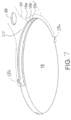
Figure 7 is an enlarged perspective view of another battery cell recess. - The detailed description set forth below in connection with the appended drawings is intended as a description of various embodiments of the present invention and is not intended to represent the only embodiments contemplated by the inventor. The detailed description includes specific details for providing a comprehensive understanding of the present invention. However, it will be apparent to those skilled in the art that the present invention may be practiced without these specific details.
- An apparatus and method have been invented relating to a
battery pack 10. The battery pack includesmultiple battery cells 12 held together by at least one clamshell plate. In the illustrated embodiment, there are two clamshell plates: anupper plate 14a and alower plate 14b. While six battery cells are shown in the embodiments illustrated herein, there may be any number of battery cells secured together with one or more plates in the battery pack. It is noted that clamshell plate is a term in the art and such a plate can have various shapes. For example, as illustrated, a clamshell plate of the type used in a battery pack assembly need not have a concave clamshell shape and need not come together with other plates in a clamshell arrangement. At the same time, however, the clamshell of the present invention need not be shaped only like that illustrated. For example, the clamshell plate of the present need not be flat and need not be rectangular or square. -
Useful battery cells 12 are each often cylindrically housed/shaped. For example, D-cell batteries are often used and they have a cylindrical shape with a diameter dc that is known or can be readily determined. The assembly will include a plurality ofbattery cells 12. The battery cells are all of a similar shape and are arranged side by side, with their lengthwise dimensions substantially in parallel. Theclamshell plates recesses 18. While the illustrated recesses are holes passing fully through the plate, a recess could be an indent that is closed at one end or a tapered hole. Eachrecess 18 is sized to accommodate an end of onebattery cell 12. Therefore, each battery cell has at least one of its ends disposed in a recess a clamshell plate. As illustrated, each battery cell could have (i) its upper end installed in a recess of a top clamshell plate and (ii) its lower end installed in a recess of alower clamshell plate 14b. - To hold the battery pack together,
adhesive 20 is applied to secure thebattery cells 12 to theplates Adhesive 20 resides between each battery cell and each plate. In the illustrated embodiment, there is a ring ofadhesive 20 between the circumference of each battery cell and the inner diameter of the recess. - As noted, the clamshell plates illustrated herein include recesses formed as holes, where each hole is configured for accepting the end of one of a plurality of battery cells. The clamshell plate is secured to the plurality of battery cells by injecting adhesive into an annular space between the circular surface that is the recess hole inner diameter and each battery circumference orthogonal to its long axis. The adhesive is selected to be injectable such as anywhere from a flowable paste to a pourable liquid.
- To provide a good adhesion and to facilitate operations, it has been found that the adhesive should be substantially continuous about approximately one half of, and possibly about the full, circumference of each battery cell and the adhesive should be neatly contained in the annular space. The decision on the degree to which the adhesive extends around the battery cell may be dependent on any of the desired weight, adhesive cost, expected need for greater adhesion, etc.
- To accomplish these goals, each battery recess has a groove around at least one half of its inner diameter, which can accommodate and retain adhesive. The grooves are formed within the thickness of the clamshell plate. In the illustrated embodiment, each
recess 18 includes an annular groove defined between anupper rim 18a and alower rim 18b.Upper rim 18a has a diameter drm just slightly larger than the diameter dc of the battery cell that is to be received in the recess andlower rim 18b has a diameter similar to and centred on the upper rim. Between the upper rim and the lower rim is a groove that forms achannel channel Figure 7 ,channel 18c' extends only part way, approximately 180° around the inner circumference of its recess hole. InFigures 1-5 , the channel is anannular channel 18c that extends around the entire inner circumference of each recess hole. - When the battery cell is positioned in its
recess 18, theupper rim 18a and thelower rim 18b are in close contact with the sides of the battery and thechannel battery cell 12 will bear. The channel can accommodate the adhesive 20 therein and the rims can, by close fit against the battery cell outer surface, prevent the adhesive from leaking out of the channel. - While adhesive could be introduced into the channel grooves by various means, a
manifold arrangement 24 may be employed to direct and feed adhesive to a plurality of battery recesses simultaneously. Therefore, in one embodiment, between a plurality of the battery recesses, there is a manifold 24 (shown in dashed lines) that opens to a plurality of annular channels. The manifold is a conduit formed and enclosed within the thickness of the clamshell plate. The manifold has conduit connections to all of the annular channels that it is to service. - Looking at the illustrated embodiment of
Figure 4 , for example, the fourrecesses 18 on the left hand side are accessed through one manifold and the two recesses on the right hand side are accessed through a separate manifold between them. It is to be appreciated that a manifold can open into any number of recesses, not just two or four. - The
interconnected manifold 24 and plurality ofannular channels 18c allow an applicator to dispense adhesive in one location: into themanifold 12. As the adhesive is injected, it flows from injection site through the manifold to the multiple annular channels in communication viaconnections 25 to the manifold. The adhesive is, therefore, introduced around the circumferences of the plurality of the battery cells. Using basic tools, multiple battery cells can be glued to a plate simultaneously, reducing labor cost as well as capital equipment costs. - Adhesive can be introduced to the manifold via various means. In one embodiment, if the clamshell material is penetrable by a needle, the adhesive can be injected via a needle to the manifold. For example, if the clamshell material is soft or meltable, a needle injector can be inserted through the clamshell material to access the manifold and then the adhesive can be injected. In another embodiment, the clamshell plate can include an inlet port. The inlet port extends from an outer surface of the clamshell plate to the manifold. The inlet port can extend from a side edge or from one of the planar upper or lower surfaces of the plate to open into the manifold.
- In the illustrated embodiment, there are
inlet ports 26 from the exterior, planar surface of the plate to manifolds 24. Looking at the illustrated embodiment ofFigure 4 , for example, the manifold for the fourrecesses 18 on the left hand side is accessed via the lefthand side port 26 and the manifold for the two recesses on the right hand side is accessed viaport 26 on the right hand side. - Adhesive injected at an
inlet port 26 flows through its manifold and out through the plurality ofannular channels 18c towards the recesses. Theport 26, of course, only extends through one side planar surface of the plate, so that the injected adhesive is forced to move through the path. - To ensure that the adhesive properly migrates partially or fully around the battery cells, indicators on the clamshell plate provide visual verification that glue has been injected and flowed into the groove of every recess. The indicator can be a window, a colour changing patch, or a vent hole. There may be more than one indicator per recess. In one embodiment, the indicator is one or more vent holes 28. A vent hole is a physical hole through the rim that extends from the
channel 18c to an outer surface of the plate. Eachannular channel 18c around eachcell recess 18 can have avent hole 28. When adhesive begins to emerge from that channel's vent hole, this provides a visual indication that the adhesive has flowed a selected distance around the entire channel. - Each vent is positioned at the point where the adhesive is intended to at least reach. For example with reference to
Figure 7 , if the manufacture process requires that the adhesive reach at least half of the full circumference, then a vent hole may be positioned about 90° around the recess, from where themanifold connection 25 opens into thechannel 18c'. In such an embodiment, there may be twovent holes 28a, 28b diametrically opposite each other across the recess and each about 90° around the recess, from where the manifold connection opens into the annular channel. - As another example with reference to
Figures 1-5 , if the manufacture process indicates that the adhesive should fully encircle the battery cell, then venthole 28 may be positioned across the recess, such as diametrically opposite across the recess, from where the manifold connection opens into the annular channel. - Vent holes 28, 28a, 28b can each be a distinct hole spaced from the rim edge of the recess or they can each be a notch in the rim (
Figure 7 ). All the vent holes may be on the same side of the plate, so they can all be observed at the same time. Typically, the vent holes 28, 28a, 28b are open on the same side of the plate on which theport 26 opens. This is generally the planar side of the plate that forms an exterior surface of the battery pack, so that the vents are easily visible from the environment around the battery pack. - It is noted above that this illustrated embodiment has
recesses 18 formed as holes through the clamshell plates. In particular, in this embodiment, eachbattery recess 18 is a hole that extends fully through its plate such that the upper end of each battery cell protrudes up through the plate. The annular channels are formed between an upper end of the hole, which isupper rim 18a, and a lower end of the hole, which islower rim 18b. The upper and lower ends of each hole have a diameter that closely fits against the outer diameter of the battery cell to be installed therein. As such, the close tolerance fit between the hole upper and lower rims and the battery exterior surface creates a seal to prevent leakage of adhesive from the annular channels during the injection process. At the same time, the holes permit the clamshell plate to be used on any shape battery terminal end surface and the hole leaves the battery terminal ends exposed for connection to contacts, etc. - If it is found that leakage of adhesive does occur, for example, from between the plate and the battery cell outer surface a sealant can be applied about the interface between the plate and the battery cell. For example, a liquid sealant such as Locktite™ can be applied to the edge of the recess from the exterior surface prior to introducing the adhesive. The liquid sealant dries to form a seal about the rim and the battery outer surface, which will deter the adhesive from leaking out.
- While an embodiment is described where
recess 18 is a hole passing fully through the plate, it is to be appreciated that the present invention of annular channels and indicators can be used even where the recesses are indents on one side of the plate or are tapered holes with onerim - In aircraft applications, weight is an important consideration. Therefore, the amount of adhesive applied can be controlled by the size of the annular channels. It has been found that channels of less than 3mm depth and height are more than adequate to hold the battery pack together. The plates may be only slightly thicker than the annular channel and therefore may be less than 5mm. With such a thin plate, advantageously most of the battery cell, such as a D-cell battery, is left exposed and open for airflow therepast. Therefore, the channels maintain the adhesive within the thickness of the plate. In one embodiment, the annular channel has a depth of less than 2mm.
- While the clamshell plate may be constructed by various methods, in one embodiment (
Figures 6A, 6B ) the clamshell plate may be constructed as a laminate of at least three plate layers. A middle layer can include cutouts that form the manifold lateral shape, the communication conduits and the recesses with diameter drc defining the depth of the annular channels. A top and bottom layer can be attached, as by adhesives or polymeric welding, onto an upper surface and a lower surface, respectively of the middle layer. Each of the top and bottom layer can include holes of diameter drm that can be positioned over the middle layer cutouts with diameter drc and with a solid portion to close in the manifold cutout. The holes of diameter drm will define therims input ports 26 positioned in alignment with any manifold cutouts in the middle layer. One of the top or the bottom layers can also include the holes ornotches 28 to create the vent holes. One of the top or the bottom plates generally has both theports 26 and the holes ornotches 28. - A method for manufacturing a battery pack, may include: inserting a battery into each recess of a plate that is in communication with a manifold enclosed within the plate and having conduit connections to an annular channel around each of the recesses. The method may then proceed by injecting adhesive into an inlet port that is in fluid communication with the manifold. In this step, the adhesive flows through the manifold, then through each of the conduit connections and then into the annular channels around the recesses. The injecting step continues until an indicator on the plate indicates that the adhesive has flowed entirely around the annular channels, to surround the batteries. In one embodiment, the indicator is a vent hole opening from the annular channel in a position across the recess from the conduit connection opening to that annular channel and the injecting step continues until adhesive is visible through, and possibly emerges from, the vent hole.
- The previous description of the disclosed embodiments is provided to enable any person skilled in the art to make or use the present invention. Various modifications to those embodiments will be readily apparent to those skilled in the art, and the generic principles defined herein may be applied to other embodiments without departing from the spirit or scope of the invention. Thus, the present invention is not intended to be limited to the embodiments shown herein, but is to be accorded the full scope consistent with the claims, wherein reference to an element in the singular, such as by use of the article "a" or "an" is not intended to mean "one and only one" unless specifically so stated, but rather "one or more". All structural and functional equivalents to the elements of the various embodiments described throughout the disclosure that are known or later come to be known to those of ordinary skill in the art are intended to be encompassed by the elements of the claims. Moreover, nothing disclosed herein is intended to be dedicated to the public regardless of whether such disclosure is explicitly recited in the claims. No claim element is to be construed under the provisions of 35 USC 112, sixth paragraph, unless the element is expressly recited using the phrase "means for" or "step for".
Claims (14)
- A clamshell plate for a battery pack, comprising:an exterior surface;a recess in the clamshell plate for accommodating a battery cell therein;a channel extending around at least a portion of an inner diameter of the recess in which adhesive can be accommodated to secure the clamshell plate to the battery cell;a manifold opening into the channel; anda vent hole from the channel to the exterior surface of the clamshell plate.
- The clamshell plate of claim 1 wherein the channel is an annular channel.
- The clamshell plate of claim 1 wherein the vent hole is positioned about 90° around the recess from where the manifold opens into the channel.
- The clamshell plate of claim 1 wherein the vent hole is positioned diametrically across the recess from where the manifold opens into the channel.
- The clamshell plate of claim 1 further comprising an injection port extending from a planar side of the exterior surface of the clamshell plate to the manifold and the vent hole is on the planar side.
- The clamshell plate of claim 1 further comprising a plurality of additional recesses, each having an adhesive channel and the manifold is additionally in fluid communication with the adhesive channels of the plurality of additional recesses.
- A battery pack comprising:a battery cell; anda clamshell plate including:an exterior surface;a recess in the clamshell plate for accommodating the battery cell therein;a channel extending around an inner diameter of the recess in which adhesive can be accommodated to secure the clamshell plate to the battery cell;a manifold opening into the channel; anda vent hole from the channel to the exterior surface of the clamshell plate.
- The battery pack of claim 7 wherein the vent hole is positioned at least 90° around the recess from where the manifold opens into the channel.
- The battery pack of claim 7 further comprising an injection port extending from a planar side of the exterior surface of the clamshell plate through the plate to the manifold and the vent hole is on the planar side.
- The battery pack of claim 7 further comprising a plurality of additional recesses, each having an annular adhesive channel and the manifold is additionally in fluid communication with the annular adhesive channels of the plurality of additional recesses.
- The battery pack of claim 7 wherein the recess is a hole and the channel encircles side walls of the battery cell, while a first end and an opposite end of the battery cell are exposed on the sides of the clamshell plate.
- A method for manufacturing a battery pack comprising:inserting a battery into each recess of a clamshell plate that is in communication with a manifold enclosed within the clamshell plate and having conduit connections to a channel around each recess;injecting adhesive into the manifold such that the adhesive flows through the manifold, through each of the conduit connections and into the channels around the recesses; andcontinuing to inject the adhesive until an indicator on the plate indicates that the adhesive has flowed around the channels.
- The method of claim 12, wherein the indicator is a vent hole that opens between the channel and an outer planar surface of the clamshell plate, and continuing to inject proceeds until the adhesive is visible in the vent hole.
- The method of claim 12, wherein inserting a battery positions the channel around side walls of the battery, while a first end and an opposite end of the battery cell are exposed on planar sides of the clamshell plate.
Applications Claiming Priority (1)
| Application Number | Priority Date | Filing Date | Title |
|---|---|---|---|
| US202263409966P | 2022-09-26 | 2022-09-26 |
Publications (1)
| Publication Number | Publication Date |
|---|---|
| EP4350856A1 true EP4350856A1 (en) | 2024-04-10 |
Family
ID=88287480
Family Applications (1)
| Application Number | Title | Priority Date | Filing Date |
|---|---|---|---|
| EP23199866.7A Withdrawn EP4350856A1 (en) | 2022-09-26 | 2023-09-26 | Battery pack assembly |
Country Status (4)
| Country | Link |
|---|---|
| US (1) | US20240106059A1 (en) |
| EP (1) | EP4350856A1 (en) |
| AU (1) | AU2023237019B1 (en) |
| CA (1) | CA3213705A1 (en) |
Families Citing this family (1)
| Publication number | Priority date | Publication date | Assignee | Title |
|---|---|---|---|---|
| DE102024127321A1 (en) * | 2024-09-23 | 2026-03-26 | Dr. Ing. H.C. F. Porsche Aktiengesellschaft | Support geometry, sealing arrangement and method for sealing a groove between at least two components |
Citations (2)
| Publication number | Priority date | Publication date | Assignee | Title |
|---|---|---|---|---|
| US20120125447A1 (en) * | 2009-05-20 | 2012-05-24 | Johnson Controls Advanced Power Solutions LLC | Lithium ion battery module |
| US20210391623A1 (en) * | 2020-06-11 | 2021-12-16 | Milwaukee Electric Tool Corporation | Battery pack |
Family Cites Families (4)
| Publication number | Priority date | Publication date | Assignee | Title |
|---|---|---|---|---|
| US8216502B2 (en) * | 2008-12-02 | 2012-07-10 | Tesla Motors, Inc. | Method for the external application of battery pack encapsulant |
| US9577227B2 (en) * | 2013-10-17 | 2017-02-21 | Tesla Motors, Inc. | Cell module assemblies |
| US10020550B2 (en) * | 2013-10-17 | 2018-07-10 | Tesla, Inc. | Energy storage pack |
| DE102018218343A1 (en) * | 2018-10-26 | 2020-04-30 | Robert Bosch Gmbh | Cell housing plate for the arrangement of round cells |
-
2023
- 2023-09-22 CA CA3213705A patent/CA3213705A1/en active Pending
- 2023-09-25 AU AU2023237019A patent/AU2023237019B1/en active Active
- 2023-09-26 EP EP23199866.7A patent/EP4350856A1/en not_active Withdrawn
- 2023-09-26 US US18/474,599 patent/US20240106059A1/en not_active Abandoned
Patent Citations (2)
| Publication number | Priority date | Publication date | Assignee | Title |
|---|---|---|---|---|
| US20120125447A1 (en) * | 2009-05-20 | 2012-05-24 | Johnson Controls Advanced Power Solutions LLC | Lithium ion battery module |
| US20210391623A1 (en) * | 2020-06-11 | 2021-12-16 | Milwaukee Electric Tool Corporation | Battery pack |
Also Published As
| Publication number | Publication date |
|---|---|
| CA3213705A1 (en) | 2024-03-26 |
| US20240106059A1 (en) | 2024-03-28 |
| AU2023237019B1 (en) | 2024-04-04 |
Similar Documents
| Publication | Publication Date | Title |
|---|---|---|
| EP3026732B1 (en) | Assembled battery and manufacturing method of assembled battery | |
| EP4350856A1 (en) | Battery pack assembly | |
| US10777860B2 (en) | Battery module assembly | |
| US9225042B2 (en) | Integral manifold | |
| CN107848308B (en) | Replaceable ink cartridge with cap manifold | |
| KR102858036B1 (en) | End cover assembly, battery cell, battery pack and device | |
| EP2874198B1 (en) | Battery design with bussing integral to battery assembly | |
| US6558628B1 (en) | Compartment cover, kit and method for forming the same | |
| EP0676822A1 (en) | Injection molded battery containment for bipolar batteries | |
| US20100215998A1 (en) | Secondary battery module | |
| EP3193419A1 (en) | Pass-through bulkhead seal fitting | |
| EP3832778B1 (en) | Apparatus for analyzing battery case | |
| US20110171507A1 (en) | Secondary battery | |
| CN114497877A (en) | Battery and battery pack | |
| US5368956A (en) | Multiple cell flat pack battery and short protection therefor | |
| EP4534210B1 (en) | Die coater for coating electrode slurry and insulating liquid | |
| CN217334200U (en) | Sealing structure, top cover assembly, battery monomer, battery and power utilization device | |
| JP6891784B2 (en) | How to manufacture assembled batteries | |
| CN113663748B (en) | Microfluid chip | |
| CN217211267U (en) | Battery shell airtightness test fixture and test device | |
| US10967642B2 (en) | Containers with lid manifolds | |
| CN216054937U (en) | Battery cover plate and battery | |
| EP4180127B1 (en) | Detection cassette and detection system | |
| US20110131917A1 (en) | Method of forming adhesive joint, structural subassembly, and joint construction | |
| US20250233249A1 (en) | Rechargeable energy storage system with cell and cell holder assembly with mechanically interlocking interfaces |
Legal Events
| Date | Code | Title | Description |
|---|---|---|---|
| PUAI | Public reference made under article 153(3) epc to a published international application that has entered the european phase |
Free format text: ORIGINAL CODE: 0009012 |
|
| STAA | Information on the status of an ep patent application or granted ep patent |
Free format text: STATUS: REQUEST FOR EXAMINATION WAS MADE |
|
| 17P | Request for examination filed |
Effective date: 20230926 |
|
| AK | Designated contracting states |
Kind code of ref document: A1 Designated state(s): AL AT BE BG CH CY CZ DE DK EE ES FI FR GB GR HR HU IE IS IT LI LT LU LV MC ME MK MT NL NO PL PT RO RS SE SI SK SM TR |
|
| STAA | Information on the status of an ep patent application or granted ep patent |
Free format text: STATUS: THE APPLICATION IS DEEMED TO BE WITHDRAWN |
|
| 18D | Application deemed to be withdrawn |
Effective date: 20241011 |