EP4349484A1 - Method for producing two-dimensional nickel silicate molecular sieve catalyst for dry reforming of methane and two-dimensional nickel silicate molecular sieve catalyst for dry reforming of methane produced by same method - Google Patents
Method for producing two-dimensional nickel silicate molecular sieve catalyst for dry reforming of methane and two-dimensional nickel silicate molecular sieve catalyst for dry reforming of methane produced by same method Download PDFInfo
- Publication number
- EP4349484A1 EP4349484A1 EP21944291.0A EP21944291A EP4349484A1 EP 4349484 A1 EP4349484 A1 EP 4349484A1 EP 21944291 A EP21944291 A EP 21944291A EP 4349484 A1 EP4349484 A1 EP 4349484A1
- Authority
- EP
- European Patent Office
- Prior art keywords
- mww
- nickel
- molecular sieve
- catalyst
- methane
- Prior art date
- Legal status (The legal status is an assumption and is not a legal conclusion. Google has not performed a legal analysis and makes no representation as to the accuracy of the status listed.)
- Pending
Links
Images


Classifications
-
- B—PERFORMING OPERATIONS; TRANSPORTING
- B01—PHYSICAL OR CHEMICAL PROCESSES OR APPARATUS IN GENERAL
- B01J—CHEMICAL OR PHYSICAL PROCESSES, e.g. CATALYSIS OR COLLOID CHEMISTRY; THEIR RELEVANT APPARATUS
- B01J29/00—Catalysts comprising molecular sieves
- B01J29/86—Borosilicates; Aluminoborosilicates
-
- B—PERFORMING OPERATIONS; TRANSPORTING
- B01—PHYSICAL OR CHEMICAL PROCESSES OR APPARATUS IN GENERAL
- B01J—CHEMICAL OR PHYSICAL PROCESSES, e.g. CATALYSIS OR COLLOID CHEMISTRY; THEIR RELEVANT APPARATUS
- B01J23/00—Catalysts comprising metals or metal oxides or hydroxides, not provided for in group B01J21/00
- B01J23/70—Catalysts comprising metals or metal oxides or hydroxides, not provided for in group B01J21/00 of the iron group metals or copper
- B01J23/74—Iron group metals
- B01J23/755—Nickel
-
- B—PERFORMING OPERATIONS; TRANSPORTING
- B01—PHYSICAL OR CHEMICAL PROCESSES OR APPARATUS IN GENERAL
- B01J—CHEMICAL OR PHYSICAL PROCESSES, e.g. CATALYSIS OR COLLOID CHEMISTRY; THEIR RELEVANT APPARATUS
- B01J29/00—Catalysts comprising molecular sieves
- B01J29/04—Catalysts comprising molecular sieves having base-exchange properties, e.g. crystalline zeolites
- B01J29/06—Crystalline aluminosilicate zeolites; Isomorphous compounds thereof
- B01J29/70—Crystalline aluminosilicate zeolites; Isomorphous compounds thereof of types characterised by their specific structure not provided for in groups B01J29/08 - B01J29/65
- B01J29/72—Crystalline aluminosilicate zeolites; Isomorphous compounds thereof of types characterised by their specific structure not provided for in groups B01J29/08 - B01J29/65 containing iron group metals, noble metals or copper
- B01J29/7276—MWW-type, e.g. MCM-22, ERB-1, ITQ-1, PSH-3 or SSZ-25
-
- B—PERFORMING OPERATIONS; TRANSPORTING
- B01—PHYSICAL OR CHEMICAL PROCESSES OR APPARATUS IN GENERAL
- B01J—CHEMICAL OR PHYSICAL PROCESSES, e.g. CATALYSIS OR COLLOID CHEMISTRY; THEIR RELEVANT APPARATUS
- B01J35/00—Catalysts, in general, characterised by their form or physical properties
- B01J35/30—Catalysts, in general, characterised by their form or physical properties characterised by their physical properties
- B01J35/391—Physical properties of the active metal ingredient
- B01J35/394—Metal dispersion value, e.g. percentage or fraction
-
- B—PERFORMING OPERATIONS; TRANSPORTING
- B01—PHYSICAL OR CHEMICAL PROCESSES OR APPARATUS IN GENERAL
- B01J—CHEMICAL OR PHYSICAL PROCESSES, e.g. CATALYSIS OR COLLOID CHEMISTRY; THEIR RELEVANT APPARATUS
- B01J37/00—Processes, in general, for preparing catalysts; Processes, in general, for activation of catalysts
- B01J37/08—Heat treatment
- B01J37/10—Heat treatment in the presence of water, e.g. steam
-
- C—CHEMISTRY; METALLURGY
- C01—INORGANIC CHEMISTRY
- C01B—NON-METALLIC ELEMENTS; COMPOUNDS THEREOF; METALLOIDS OR COMPOUNDS THEREOF NOT COVERED BY SUBCLASS C01C
- C01B3/00—Hydrogen; Gaseous mixtures containing hydrogen; Separation of hydrogen from mixtures containing it; Purification of hydrogen; Reversible storage of hydrogen
- C01B3/02—Production of hydrogen; Production of gaseous mixtures containing hydrogen
- C01B3/32—Production of hydrogen; Production of gaseous mixtures containing hydrogen by reaction of gaseous or liquid organic compounds with gasifying agents, e.g. water, carbon dioxide or air
- C01B3/34—Production of hydrogen; Production of gaseous mixtures containing hydrogen by reaction of gaseous or liquid organic compounds with gasifying agents, e.g. water, carbon dioxide or air by reaction of hydrocarbons with gasifying agents
- C01B3/38—Production of hydrogen; Production of gaseous mixtures containing hydrogen by reaction of gaseous or liquid organic compounds with gasifying agents, e.g. water, carbon dioxide or air by reaction of hydrocarbons with gasifying agents using catalysts
- C01B3/40—Production of hydrogen; Production of gaseous mixtures containing hydrogen by reaction of gaseous or liquid organic compounds with gasifying agents, e.g. water, carbon dioxide or air by reaction of hydrocarbons with gasifying agents using catalysts characterised by the catalyst
-
- B—PERFORMING OPERATIONS; TRANSPORTING
- B01—PHYSICAL OR CHEMICAL PROCESSES OR APPARATUS IN GENERAL
- B01J—CHEMICAL OR PHYSICAL PROCESSES, e.g. CATALYSIS OR COLLOID CHEMISTRY; THEIR RELEVANT APPARATUS
- B01J2229/00—Aspects of molecular sieve catalysts not covered by B01J29/00
- B01J2229/10—After treatment, characterised by the effect to be obtained
- B01J2229/18—After treatment, characterised by the effect to be obtained to introduce other elements into or onto the molecular sieve itself
- B01J2229/186—After treatment, characterised by the effect to be obtained to introduce other elements into or onto the molecular sieve itself not in framework positions
-
- C—CHEMISTRY; METALLURGY
- C01—INORGANIC CHEMISTRY
- C01B—NON-METALLIC ELEMENTS; COMPOUNDS THEREOF; METALLOIDS OR COMPOUNDS THEREOF NOT COVERED BY SUBCLASS C01C
- C01B2203/00—Integrated processes for the production of hydrogen or synthesis gas
- C01B2203/02—Processes for making hydrogen or synthesis gas
- C01B2203/0205—Processes for making hydrogen or synthesis gas containing a reforming step
- C01B2203/0227—Processes for making hydrogen or synthesis gas containing a reforming step containing a catalytic reforming step
- C01B2203/0238—Processes for making hydrogen or synthesis gas containing a reforming step containing a catalytic reforming step the reforming step being a carbon dioxide reforming step
-
- C—CHEMISTRY; METALLURGY
- C01—INORGANIC CHEMISTRY
- C01B—NON-METALLIC ELEMENTS; COMPOUNDS THEREOF; METALLOIDS OR COMPOUNDS THEREOF NOT COVERED BY SUBCLASS C01C
- C01B2203/00—Integrated processes for the production of hydrogen or synthesis gas
- C01B2203/10—Catalysts for performing the hydrogen forming reactions
- C01B2203/1041—Composition of the catalyst
- C01B2203/1047—Group VIII metal catalysts
- C01B2203/1052—Nickel or cobalt catalysts
- C01B2203/1058—Nickel catalysts
-
- C—CHEMISTRY; METALLURGY
- C01—INORGANIC CHEMISTRY
- C01B—NON-METALLIC ELEMENTS; COMPOUNDS THEREOF; METALLOIDS OR COMPOUNDS THEREOF NOT COVERED BY SUBCLASS C01C
- C01B2203/00—Integrated processes for the production of hydrogen or synthesis gas
- C01B2203/10—Catalysts for performing the hydrogen forming reactions
- C01B2203/1041—Composition of the catalyst
- C01B2203/1082—Composition of support materials
-
- C—CHEMISTRY; METALLURGY
- C01—INORGANIC CHEMISTRY
- C01B—NON-METALLIC ELEMENTS; COMPOUNDS THEREOF; METALLOIDS OR COMPOUNDS THEREOF NOT COVERED BY SUBCLASS C01C
- C01B2203/00—Integrated processes for the production of hydrogen or synthesis gas
- C01B2203/12—Feeding the process for making hydrogen or synthesis gas
- C01B2203/1205—Composition of the feed
- C01B2203/1211—Organic compounds or organic mixtures used in the process for making hydrogen or synthesis gas
- C01B2203/1235—Hydrocarbons
- C01B2203/1241—Natural gas or methane
-
- Y—GENERAL TAGGING OF NEW TECHNOLOGICAL DEVELOPMENTS; GENERAL TAGGING OF CROSS-SECTIONAL TECHNOLOGIES SPANNING OVER SEVERAL SECTIONS OF THE IPC; TECHNICAL SUBJECTS COVERED BY FORMER USPC CROSS-REFERENCE ART COLLECTIONS [XRACs] AND DIGESTS
- Y02—TECHNOLOGIES OR APPLICATIONS FOR MITIGATION OR ADAPTATION AGAINST CLIMATE CHANGE
- Y02P—CLIMATE CHANGE MITIGATION TECHNOLOGIES IN THE PRODUCTION OR PROCESSING OF GOODS
- Y02P20/00—Technologies relating to chemical industry
- Y02P20/50—Improvements relating to the production of bulk chemicals
- Y02P20/52—Improvements relating to the production of bulk chemicals using catalysts, e.g. selective catalysts
Definitions
- the present invention relates to a method of preparing a nickel silicate molecular sieve catalyst for dry reforming of methane (DRM), and more particularly, to a method of preparing a two-dimensional nickel silicate molecular sieve catalyst for DRM, wherein the catalyst, which has a large two-dimensional external surface area and nickel bonded to the surface area, and has structural stability and activity, is prepared through one-step hydrothermal treatment.
- DRM dry reforming of methane
- Dry reforming of methane is a reaction (Reaction Scheme 1) that converts two greenhouse gases, CH 4 and CO 2 , to syngas (a mixture of H 2 and CO). Since the DRM reaction is one of the core technologies of building a circular carbon economy, which recycles CO 2 into value-added chemicals such as synthetic fuels, methanol, and dimethyl ether to reduce carbon emissions, DRM is attracting attention from environmental and industrial sectors.
- catalysts in Group VIII including platinum (Pt), ruthenium (Ru), rhodium (Rh), palladium (Pd), nickel (Ni), and cobalt (Co) are being developed.
- Pt, Ru, Rh, and Pd have good catalytic activity, selectivity, and stability as noble metals but have low economic efficiency when used for industrial purposes because of their high prices.
- transition metals which are cheaper than noble metals, such as tungsten (W), titanium (Ti), vanadium (V), nickel (Ni), iron (Fe), copper (Cu), molybdenum (Mo), and cobalt (Co), have been conducted to use as a catalyst for DRM.
- Ni is relatively cheaper than other transition metals and has relatively high selectivity and a relatively high conversion rate in CO 2 reforming of methane, Ni is widely used as a catalyst for DRM.
- Ni is used as a catalyst, it is difficult to keep catalytic activity for a long time because of deactivation of the catalyst caused by coke deposition and sintering of the active metal in DRM.
- a catalyst support has been studied extensively to compensate for the above shortcoming of the active Ni metal. This is because catalytic activity and stability of a catalyst can vary significantly depending on not only the type and size of active metals, but also the type and surface area of supports on which the active metal is supported, and their metal-support interaction. Alumina is commonly used as a catalyst support.
- Korean Patent Publication No. 10-1959379 (published March 18, 2019 ) relates to a nickel-based catalyst for the combined reforming of methane and discloses that active metals, nickel (Ni), antimony (Sb), and molybdenum (Mo), are supported on a gamma alumina support.
- active metals nickel (Ni), antimony (Sb), and molybdenum (Mo)
- Ni nickel
- Sb antimony
- Mo molybdenum
- Korean Patent Publication No. 10-1487387 (published January 28, 2015 ) relates to a method of preparing a metal carbide-based methane reforming catalyst and discloses that catalytic activity can be improved by increasing the specific surface area by including a porous carbon material support and active ingredients such as Ni and Mo precursors.
- the preparation method of this related art document may cause a decrease in catalytic activity due to Ni agglomeration or formation of Ni clusters.
- the present invention is directed to providing a method of preparing a two-dimensional nickel silicate molecular sieve catalyst for dry reforming of methane (DRM), and the method simplifies a process for preparing a catalyst through one-step hydrothermal treatment and improves the structural stability and catalytic activity of a catalyst by enabling the catalyst to have a large two-dimensional external surface area and nickel bonded to the surface area through the one-step hydrothermal treatment.
- DRM methane
- the present invention is directed to providing a two-dimensional nickel silicate molecular sieve catalyst for DRM, prepared by the method.
- One aspect of the present invention provides a method of preparing a two-dimensional nickel silicate molecular sieve catalyst for dry reforming of methane (DRM), which includes: (a) synthesizing a layered borosilicate zeolite precursor having an MWW framework [B-MWW(P)]; and (b) adding a nickel precursor to the B-MWW(P) and performing hydrothermal treatment.
- DRM methane
- step (a) may include synthesizing a B-MWW(P) having an Si/B molar ratio of 5.0 to 20.0.
- a concentration of the nickel precursor in step (b) may be 0.1 to 5.0 M.
- a hydrothermal treatment temperature in step (b) may be 100 to 200 °C.
- Another aspect of the present invention provides a two-dimensional nickel silicate molecular sieve catalyst for DRM, prepared by the method described above.
- a Si/Ni molar ratio of the catalyst may be 1.5 to 30.
- the catalyst may have a catalyst deactivation rate of less than 5% for methane and carbon dioxide in DRM at 700 °C.
- the present invention can prepare a two-dimensional nickel silicate molecular sieve catalyst by substituting boron with nickel through one-step hydrothermal treatment of a B-MWW(P) and a nickel precursor and delaminating a three-dimensional layered MWW zeolite, and therefore, process efficiency can be improved.
- boron of a B-MWW(P) is substituted with nickel during the hydrothermal treatment, so nickel, as an active metal, can be bonded to a specific location of the MWW zeolite, and as the three-dimensional layered MWW zeolite is delaminated to form a two-dimensional framework with nickel being exposed to the outside, an external surface area, where the active nickel is bonded, is increased so that catalytic activity can be significantly increased.
- the present invention relates to a nickel silicate molecular sieve for dry reforming of methane (DRM) and a method of preparing the same.
- the present invention can improve the stability and activity of a catalyst by using nickel as an active metal to lower catalyst expenses and transforming a 3D zeolite into a 2D molecular sieve to increase an external surface area and bonding a large amount of active metal to a support.
- the present invention provides a method of preparing a two-dimensional nickel silicate molecular sieve catalyst for dry reforming of methane (DRM), which includes: (a) synthesizing a layered borosilicate zeolite precursor having an MWW framework [B-MWW(P)]; and (b) adding a nickel precursor to the B-MWW(P) and performing hydrothermal treatment.
- DRM methane
- FIG. 1 is a schematic diagram of a method of preparing a two-dimensional nickel silicate molecular sieve catalyst for dry reforming of methane (DRM) according to the present invention, and the present invention will be described in detail with reference to the schematic diagram.
- DRM methane
- step (a) is a step of (a) synthesizing a layered borosilicate zeolite precursor having an MWW framework [B-MWW(P)].
- the MWW is one of the zeolite framework topologies, which has a lamellar structure, and is a three-dimensional zeolite including two independent pore systems composed of a pore system of two-dimensional sinusoidal 10-membered ring (10-MR) channels with an elliptical ring cross-section of 4.1 ⁇ 5.1 ⁇ and a pore system including a 12-MR supercage connected to 10-MR windows.
- 10-MR 10-membered ring
- a layered borosilicate zeolite precursor having an MWW framework B-MWW(P), which having a structural specificity, is synthesized by including boron into a framework of a three-dimensional MWW zeolite, wherein boron is bonded in the MWW framework in a form of Si-O-B, and an Si/B molar ratio may be 5.0 to 20.0, preferably 10 to 15.
- Si/B molar ratio is less than 5
- Si content is relatively insufficient as an excess amount of B is included in the B-MWW(P), which may make it difficult to form a three-dimensional MWW zeolite.
- the Si/B molar ratio is greater than 20
- a relative amount of B compared to Si is reduced in the B-MWW(P), and sites that can be substituted with nickel are reduced during hydrothermal treatment, which may cause a decrease in catalytic activity.
- an organic structure-directing agent may be used to synthesize a layered B-MWW(P), and a three-dimensional MWW zeolite may be formed through removal of the organic SDA by calcination and condensation during the synthesis process, but step (a) is not limited thereto and any commonly known method may be used for the synthesis, so a detailed description thereof is omitted herein.
- step (b) is a step of performing hydrothermal treatment by adding an aqueous acidic nickel precursor solution of pH 4.0 or less to the B-MWW(P).
- an aqueous acidic nickel precursor solution is added to the synthesized B-MWW(P), and the mixture solution is hydrothermally treated at 100 to 200 °C. Therefore, the B-MWW(P) is delaminated under one-step while boron is substituted with nickel to prepare a two-dimensional multilayered nickel silicate molecular sieve.
- An amount of the aqueous nickel precursor solution may be adjusted according to a hydrothermal treatment temperature, and the aqueous nickel precursor solution may have a concentration of 0.1 to 5.0 M.
- concentration of the aqueous nickel precursor solution is less than 0.1 M, an increase in pH of the aqueous pretreatment solution causes a decrease in boron release and delamination of the MWW framework, and substitution of nickel becomes difficult.
- concentration of the aqueous nickel precursor solution exceeds 5.0 M, the MWW framework may collapse due to excessively low pH.
- the aqueous nickel precursor solution includes an acid component, preferable nitric acid, and has a pH of 4.0 or lower.
- boron is removed from the B-MWW(P) and is substituted with nickel by the acidic nickel precursor solution during hydrothermal treatment in step (b), and during the process, the MWW zeolite is delaminated as interlayer bonds are broken, and the three-dimensional B-MWW may be transformed into a two-dimensional nickel silicate molecular sieve.
- a temperature during the hydrothermal treatment is 100 to 200 °C.
- the three-dimensional B-MWW(P) may not be sufficiently delaminated, and the substitution of nickel is reduced at sites where deboronation occurs, which may make it difficult to form a two-dimensional nickel silicate molecular sieve.
- the number of defect sites in the molecular sieve is increased, an amount of nickel bonded to the framework is reduced, and therefore, the number of catalytically active sites may be reduced.
- the hydrothermal treatment may be performed at 100 to 200 °C, preferably at 140 to 160 °C.
- the hydrothermal treatment time is not limited as the hydrothermal treatment time may be adjusted according to a processing speed and reaction environment, and for example, may be 1 to 4 days.
- step (b) filtration, drying, and sintering may be further included.
- filtration, drying, and sintering may be further included.
- an occluded organic structure-directing agent in the framework may be removed from the two-dimensional nickel silicate molecular sieve.
- boron is substituted with nickel in the MWW framework, and an Si-O-Ni bond may be formed in the MWW framework, and therefore, controlling nickel bonding sites may become easy and an interaction with a zeolite may be improved.
- an external surface area, where the active nickel is bonded is increased so that catalytic activity may be significantly increased.
- a two-dimensional nickel silicate molecular sieve catalyst for dry reforming of methane (DRM) prepared according to the preparation method exhibits improved reactivity in DRM, that is, improved CH 4 and CO 2 conversion, depending on framework properties and nickel content.
- a Si/B molar ratio of the two-dimensional nickel silicate molecular sieve catalyst may be 11 to 130, and an Si/Ni molar ratio thereof may be 1.5 to 30.
- the two-dimensional nickel silicate molecular sieve catalyst may include not only Si and Ni, but also B in the framework, but when a relative amount of B in the Si/B molar ratio is less than 11, active Ni is not sufficient to replace B in the two-dimensional nickel silicate molecular sieve, which may cause a decrease in catalytic activity.
- a relative amount of Ni in the Si/Ni molar ratio of the two-dimensional nickel silicate molecular sieve catalyst framework is less than 1.5, an excess amount of Ni is included in the molecular sieve catalyst, and not only an Si-O-Ni bond, but also a nickel cluster is formed in the molecular sieve or on a surface of the molecular sieve, which may cause a decrease in catalytic activity.
- a relative amount of Ni exceeds 30, active Ni content in the molecular sieve is insufficient, which may cause a decrease in catalytic activity.
- the two-dimensional nickel silicate molecular sieve catalyst has Si and Ni in the framework, and the Si/Ni molar ratio may be 1.5 to 30, preferably 4 to 25, and the Si/B molar ratio may be 11 or more.
- a deactivation rate of the two-dimensional nickel silicate molecular sieve catalyst having such composition and framework characteristics for methane and carbon dioxide in DRM at 700 °C may be less than 5%.
- Hexamethyleneimine (99%) and sodium hydroxide (99%) used in synthesis of a B-MWW precursor were purchased from Sigma-Aldrich (USA), and boric acid (99.5%) was purchased from Junsei Chemical (Japan), and fumed silica was purchased from Evonik (Japan).
- nickel(II) nitrate hexahydrate (Ni(NO 3 ) 2 ⁇ 6H 2 O) (98%) was purchased from Samchun Chemicals (South Korea).
- the homogenized final solution was poured into a Teflon-lined stainless steel autoclave and heated at 175 °C for 7 days while stirring at 100 rpm.
- the prepared B-MWW(P) was added to a 0.25 to 1 M aqueous nickel (II) nitrate hexahydrate solution at 0.02 g/mL and mixed.
- the mixed solution was poured into a hydrothermal synthesis device (Teflon-lined stainless autoclave commercially available from PARR Instrument Company) and heated to 100 to 160 °C for 1 to 4 days while stirring at 0 to 100 rpm.
- Ni-DML-X-Y-Z was prepared, where X, Y, and Z refer to a hydrothermal synthesis temperature, a hydrothermal treatment time, and a molar concentration of nickel nitrate, respectively, and Examples 1 to 9 were prepared according to the X, Y, and Z.
- Ni/ ⁇ -Al 2 O 3 impregnated with 5 wt% nickel was prepared using incipient wetness impregnation.
- the synthesized Ni/ ⁇ -Al 2 O 3 was dried at 100 °C overnight and calcined at 550 °C for 3 hours.
- Ni/B-MWW precursor was used as a support to prepare Ni/B-MWW.
- the B-MWW precursor prepared in the example described above was used as a control group.
- Table 1 shows nickel silicate catalysts for dry reforming of methane, prepared by each of the above-described methods.
- Example 1 Ni-DML-100-4-1 B-MWW(P) 100 4 1 - -
- Example 2 Ni-DML-120-4-1 B-MWW(P) 120 4 1 - -
- Example 3 Ni-DML-140-4-1 B-MWW(P) 140 4 1 - -
- Example 5 Ni-DML-160-1-1 B-MWW(P) 160 1 1 - -
- Example 6 Ni-DML-160-2-1 B-MWW(P) 160 2 1 - -
- Example 7 Ni-DML-160-3-1 B-MWW(P) 160 3 1 -
- FIG. 2A is a graph of nitrogen content measured by analyzing the composition of Examples 1 to 4 (Ni-DMI,-X-4-1) using ICP elemental analysis, and based on the elemental analysis, Table 2 below shows calculated values of the framework compositions of Examples 1 to 4 assuming 72 T-atoms in an MWW unit cell.
- the framework composition is based on a molar ratio.
- the symbol " ⁇ " indicates a defect site.
- Example 1 to 4 when interlayer delamination and a nickel substitution mechanism were carried out in one-step, at a relatively low temperature of 100 °C or 120 °C, some nickel atoms took up the framework space, where boron atoms were removed, but some of the framework space, where boron atoms were removed, remained as defect sites. On the other hand, at a relatively high temperature of 140 °C or 160 °C, one or more nickel atoms may be present in an additional framework per substituted nickel atom in the framework.
- the catalyst of Example 4 (Ni-DML-160-4-1) included the largest number of nickel atoms in the framework, whose Si/Ni Framework ratio was 10.4.
- FIG. 2B illustrates a graph of N 2 adsorption isotherms according to a hydrothermal treatment temperature when the catalysts of Examples 1 to 4 (Ni-DMI,-X-4-1) were prepared, and as the hydrothermal treatment temperature increases, properties changed from a Type I microporous structure to a Type IV mesoporous structure.
- the results show that a three-dimensional B-MWW precursor was successfully transformed into a two-dimensional layered structure.
- Example 4 Ni-DMI,-160-4-1) shown in FIG. 2B is a typical characteristic of a parallel platelike pore, indicating a characteristic of a delaminated substance.
- FIG. 2C illustrates results of BET analysis of the catalysts of Examples 1 to 4 (Ni-DMI,-X-4-1), and it can be seen that an external surface area of Ni-DML was increased as the delamination of the B-MWW(P) was performed at a higher hydrothermal temperature.
- DRM catalytic activity was measured by supplying a feed gas stream composed of 40 vol% CH 4 and 40 vol% CO 2 (balanced with N 2 ) at a gas hourly space velocity (GHSV) of 30,000 mL/g cat h (supplying a feed gas stream composed of CH 4 , CO 2 , and N 2 at a rate of 20, 20, and 10 mL/min, respectively) to a reactor containing 0.1 g of the catalyst activated by the above process.
- GHSV gas hourly space velocity
- An inert gas, N 2 was used as an internal standard for GC-TCD analysis, and concentration changes due to an increase in gas volume after DRM were conducted.
- CH 4 conversion % CH 4 in ⁇ CH 4 out / CH 4 in ⁇ 100
- CO 2 conversion % CO 2 in ⁇ CO 2 out / CO 2 in ⁇ 100
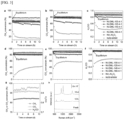
- FIG. 3 illustrates the catalytic activity of Examples 1 to 4 (Ni-DML-X-4-1) and Comparative Example 1 (Ni/ ⁇ -Al 2 O 3 ) and Comparative Example 2 (Ni/B-MWW) according to a measured DRM temperature and a usage time, and the results are summarized in Table 3 below.
- FIGS. 3A to C illustrate the CH 4 conversion, CO 2 conversion, and H 2 /CO ratios of Examples 1 to 4 (Ni-DMI,-X-4-1) and Comparative Example 1 (Ni/ ⁇ -Al 2 O 3 ) and Comparative Example 2 (Ni/B-MWW) measured in DRM at 700 °C, and through FIGS. 3A and B and Table 3, it can be seen that Examples 1 to 4 (Ni-DMI,-X-4-1), which have similar amounts of nickel compared to Comparative Example 1 (Ni/ ⁇ -Al 2 O 3 ) and Comparative Example 2 (Ni/B-MWW) showed higher and more stable CH 4 and CO 2 conversion at 700 °C. This is because catalyst deactivation due to coke deposition proceeded is much faster in Comparative Examples 1 and 2 compared to Examples 1 to 4.
- the deactivation rate of CO 2 conversion of Examples 1 to 4 (Ni-DML-X-4-1) for 12 hours was 0 to 1% while the deactivation rate of CO 2 conversion of Comparative Example 1 (Ni/ ⁇ -Al 2 O 3 ) and Comparative Example 2 (Ni/B-MWW) was 10% and 45%, respectively. This is because, in Examples 1 to 4 (Ni-DML-X-4-1), high activity and excellent stability may be maintained due to highly dispersed nickel sites on an external surface area.
- Example 1 Ni-DMI,100-4-1)
- Example 3 Ni-DML-140-4-1
- CH 4 conversion and H 2 /CO ratio of Example 4 were higher than the thermodynamic equilibrium value. This is because H 2 and molecular carbon were generated by catalytic methane cracking under high temperature DRM conditions.
- FIGS. 3D to F illustrate the CH 4 conversion, CO 2 conversion, and H 2 /CO ratios of Examples 1 to 4 (Ni-DML-X-4-1) and Comparative Example 1 (Ni/ ⁇ -Al 2 O 3 ) and Comparative Example 2 (Ni/B-MWW) measured in DRM at 750 °C, and the catalytic activity of Examples 1 to 4 was 8 to 18% higher than that of Examples 1 to 4 measured at 700 °C.
- the H 2 /CO ratios of Comparative Example 1 (Ni/ ⁇ -Al 2 O 3 ) and Comparative Example 2 (Ni/B-MWW) were lower than those of Examples 1 to 4 (Ni-DML-X-4-1), which may be explained by an effect of a reverse water gas shift (RWGS) in DRM.
- RWGS reverse water gas shift
- the RWGS reaction is a reaction in which and water react to produce CO 2 and hydrogen, and a lower H 2 /CO ratio indicates that the RWGS reaction occurs actively, which may be further supported by a relatively high CO 2 conversion compared to the CH 4 conversion.
- FIGS. 3G and H illustrate the CH 4 and CO 2 conversion and Raman spectra of Example 3 (Ni-DML-140-4-1) for 10-day use (marked with * in Table 3), 12-hour use, and (unused) fresh use in DRM at 750 °C. It can be seen that the deactivation of the catalyst of Example 3 was not detected because Example 3 maintained remarkable catalytic stability and activity for 10 days, rather, the CH 4 and CO 2 conversion increased by 1% or 2% ( FIG. 3G ) during time on stream (TOS).
- Ni-DML-100-4-1 700 65 64 77 76 0.87 0.86 2 1 3
- Example 2 Ni-DML-120-4-1 68 66 79 78 0.88 0.87 3 1 2
- Example 3 Ni-DML-140-4-1 70 69 80 80 0.88 0.88 1 0 1
- Example 4 Ni-DML-160-4-1 77 78 80 80 0.93 0.93 - 0 2
- Comparative Example 1 Ni/ ⁇ -Al 2 O 3 65 57 69 62 0.82 0.80 12 10 3 Comparative Example 2 Ni/B-MWW 35 15 51 28 0.63 0.45 57 45 -
- Example 1 Ni-DML-100-4-1 750 83 81 90 88 0.93 0.92 2 2 2
- Example 2 Ni-DML-120-4-1
- 81 90 90 0.91 0.91 1 0 1
- Example 3 Ni-DML-140-4-1
- FIG. 4 and Table 4 below illustrate catalytic activity according to a hydrothermal treatment time and nickel precursor concentration.
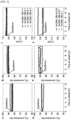
- FIG. 4A to C illustrate the CH 4 conversion, CO 2 conversion, and H 2 /CO ratios according to the hydrothermal treatment time of Examples 4 to 7 (Ni-DML-160-Y-1) measured in DRM at 750 °C,,respectively. It was found that the difference in catalytic activity according to hydrothermal treatment time was not significant.
- FIGS. 4D to F illustrate the CH 4 conversion, CO 2 conversion, and H 2 /CO ratios according to the nickel precursor concentration of Examples 4, 8 and 9 (Ni-DML-160-4-Z) measured in DRM at 750 °C, respectively, and it was found that catalytic activity was relatively low when the concentration of nickel precursor was low (0.25 to 0.5 M).
- Ni-DML-160-4-1 750 87 87 92 93 0.94 0.94 0 - 2
- Ni-DML-160-2-1 84 91 91 0.94 0.94 0 0 2
- Ni-DML-160-3-1 84 85 91 91 0.93 0.94 - 0 2
- Example 9 Ni-DML-160-4-0.5 87 84 86 86 0.86 0.85 3 0 4
Landscapes
- Chemical & Material Sciences (AREA)
- Chemical Kinetics & Catalysis (AREA)
- Organic Chemistry (AREA)
- Engineering & Computer Science (AREA)
- Materials Engineering (AREA)
- Inorganic Chemistry (AREA)
- Combustion & Propulsion (AREA)
- General Health & Medical Sciences (AREA)
- Health & Medical Sciences (AREA)
- Physics & Mathematics (AREA)
- Thermal Sciences (AREA)
- Crystallography & Structural Chemistry (AREA)
- Catalysts (AREA)
- Silicates, Zeolites, And Molecular Sieves (AREA)
- Hydrogen, Water And Hydrids (AREA)
Abstract
Description
- The present invention relates to a method of preparing a nickel silicate molecular sieve catalyst for dry reforming of methane (DRM), and more particularly, to a method of preparing a two-dimensional nickel silicate molecular sieve catalyst for DRM, wherein the catalyst, which has a large two-dimensional external surface area and nickel bonded to the surface area, and has structural stability and activity, is prepared through one-step hydrothermal treatment.
- Dry reforming of methane (DRM) is a reaction (Reaction Scheme 1) that converts two greenhouse gases, CH4 and CO2, to syngas (a mixture of H2 and CO). Since the DRM reaction is one of the core technologies of building a circular carbon economy, which recycles CO2 into value-added chemicals such as synthetic fuels, methanol, and dimethyl ether to reduce carbon emissions, DRM is attracting attention from environmental and industrial sectors.
<Reaction Scheme 1> CH4 + COz → 2CO + 2H2 ΔH°298 = 247 kJ/mol-1
- However, despite the great impact on the environment and industry, it is difficult to successfully commercialize DRM due to its complicated mechanism and endothermic nature. Indeed, in DRM, carbon deposits are generated due to the Boudouard reaction (2CO ↔ C + CO2, ΔH°298 = -190 kJmol-1) and methane cracking (CH4 → C + 2H2, ΔH°298 = 75 kJmol-1), and a side reaction such as the reverse water-gas shift reaction (RWGS, CO2 + H2 → CO + H2O, ΔH°298 = 41 kJmol-1), which reduces the H2/CO ratio of syngas, is involved.
- Therefore, it is necessary to develop a highly active and stable catalyst for the successful commercialization of DRM.
- Many studies on the possibility of using various transition metals as a catalyst in DRM have been conducted, and especially, catalysts in Group VIII, including platinum (Pt), ruthenium (Ru), rhodium (Rh), palladium (Pd), nickel (Ni), and cobalt (Co) are being developed. Among them, Pt, Ru, Rh, and Pd have good catalytic activity, selectivity, and stability as noble metals but have low economic efficiency when used for industrial purposes because of their high prices.
- Therefore, studies on transition metals, which are cheaper than noble metals, such as tungsten (W), titanium (Ti), vanadium (V), nickel (Ni), iron (Fe), copper (Cu), molybdenum (Mo), and cobalt (Co), have been conducted to use as a catalyst for DRM.
- Among these transition metals, since Ni is relatively cheaper than other transition metals and has relatively high selectivity and a relatively high conversion rate in CO2 reforming of methane, Ni is widely used as a catalyst for DRM.
- However, when Ni is used as a catalyst, it is difficult to keep catalytic activity for a long time because of deactivation of the catalyst caused by coke deposition and sintering of the active metal in DRM.
- Therefore, a catalyst support has been studied extensively to compensate for the above shortcoming of the active Ni metal. This is because catalytic activity and stability of a catalyst can vary significantly depending on not only the type and size of active metals, but also the type and surface area of supports on which the active metal is supported, and their metal-support interaction. Alumina is commonly used as a catalyst support.
-
Korean Patent Publication No. 10-1959379 (published March 18, 2019 - In addition,
Korean Patent Publication No. 10-1487387 (published January 28, 2015 - Therefore, in order to solve problems in DRM such as a decrease in catalytic activity caused by coke deposition and a reduction of active surface area of Ni due to sintering while including Ni as an active metal, it is necessary to develop a new type of catalyst for DRM and a method of preparing the catalyst, which can improve structural stability and catalytic activity and increase a catalyst lifetime through changing the support, Ni-support interaction, and catalyst framework.
- The present invention is directed to providing a method of preparing a two-dimensional nickel silicate molecular sieve catalyst for dry reforming of methane (DRM), and the method simplifies a process for preparing a catalyst through one-step hydrothermal treatment and improves the structural stability and catalytic activity of a catalyst by enabling the catalyst to have a large two-dimensional external surface area and nickel bonded to the surface area through the one-step hydrothermal treatment.
- In addition, the present invention is directed to providing a two-dimensional nickel silicate molecular sieve catalyst for DRM, prepared by the method.
- One aspect of the present invention provides a method of preparing a two-dimensional nickel silicate molecular sieve catalyst for dry reforming of methane (DRM), which includes: (a) synthesizing a layered borosilicate zeolite precursor having an MWW framework [B-MWW(P)]; and (b) adding a nickel precursor to the B-MWW(P) and performing hydrothermal treatment.
- In one example, step (a) may include synthesizing a B-MWW(P) having an Si/B molar ratio of 5.0 to 20.0.
- In one example, a concentration of the nickel precursor in step (b) may be 0.1 to 5.0 M.
- In one example, a hydrothermal treatment temperature in step (b) may be 100 to 200 °C.
- Another aspect of the present invention provides a two-dimensional nickel silicate molecular sieve catalyst for DRM, prepared by the method described above.
- In one example, a Si/Ni molar ratio of the catalyst may be 1.5 to 30.
- In one example, the catalyst may have a catalyst deactivation rate of less than 5% for methane and carbon dioxide in DRM at 700 °C.
- The present invention can prepare a two-dimensional nickel silicate molecular sieve catalyst by substituting boron with nickel through one-step hydrothermal treatment of a B-MWW(P) and a nickel precursor and delaminating a three-dimensional layered MWW zeolite, and therefore, process efficiency can be improved.
- In the present invention, boron of a B-MWW(P) is substituted with nickel during the hydrothermal treatment, so nickel, as an active metal, can be bonded to a specific location of the MWW zeolite, and as the three-dimensional layered MWW zeolite is delaminated to form a two-dimensional framework with nickel being exposed to the outside, an external surface area, where the active nickel is bonded, is increased so that catalytic activity can be significantly increased.
- The present invention relates to a nickel silicate molecular sieve for dry reforming of methane (DRM) and a method of preparing the same. The present invention can improve the stability and activity of a catalyst by using nickel as an active metal to lower catalyst expenses and transforming a 3D zeolite into a 2D molecular sieve to increase an external surface area and bonding a large amount of active metal to a support.
-
-
FIG. 1 is a schematic diagram of a method of preparing a nickel silicate molecular sieve catalyst and dry reforming of methane (DRM) according to an example of the present invention. -
FIG. 2 illustrates (A) nitrogen content measured using ICP elemental analysis, (B) N2 adsorption isotherms, and (C) BET surface area according to examples of the present invention. -
FIG. 3 illustrates (A) CH4 conversion, (B) CO2 conversion, and (C) H2/CO ratios of Examples 1 to 4 and Comparative Examples 1 and 2 in DRM at 700 °C, and (D) CH4 conversion, (E) CO2 conversion, and (F) H2/CO ratios of Examples 1 to 4 and Comparative Examples 1 and 2 in DRM at 750 °C, and (G) a CH4 conversion, a CO2 conversion, and an H2/CO ratio and (H) Raman spectra of Example 3 for 10-day use, 12-hour use, and the fresh in DRM at 750 °C, according an example of the present invention. -
FIG. 4 illustrates (A) CH4 conversion, (B) CO2 conversion, and (C) H2/CO ratios of Examples 4 to 7 according to a hydrothermal treatment time in DRM at 750 °C, and (D) CH4 conversion, (E) CO2 conversion, and (F) H2/CO ratios of Examples 4, 8, and 9 (Ni-DML-160-4-Z) according to a concentration of nickel precursor in DRM at 750 °C, according to an example of the present invention. - Unless otherwise specified, all technical and scientific terms used herein have the same meaning as they are commonly understood by those skilled in the art. Generally, the nomenclature used herein is well known and commonly used in the art.
- In this specification, when a part "includes" a certain component, it means that a part may further include other components rather than excluding other components, unless specifically stated to the contrary.
- Hereinafter, the present invention will be described in detail.
- In one aspect, the present invention provides a method of preparing a two-dimensional nickel silicate molecular sieve catalyst for dry reforming of methane (DRM), which includes: (a) synthesizing a layered borosilicate zeolite precursor having an MWW framework [B-MWW(P)]; and (b) adding a nickel precursor to the B-MWW(P) and performing hydrothermal treatment.
-
FIG. 1 is a schematic diagram of a method of preparing a two-dimensional nickel silicate molecular sieve catalyst for dry reforming of methane (DRM) according to the present invention, and the present invention will be described in detail with reference to the schematic diagram. - In the present invention, step (a) is a step of (a) synthesizing a layered borosilicate zeolite precursor having an MWW framework [B-MWW(P)].
- The MWW is one of the zeolite framework topologies, which has a lamellar structure, and is a three-dimensional zeolite including two independent pore systems composed of a pore system of two-dimensional sinusoidal 10-membered ring (10-MR) channels with an elliptical ring cross-section of 4.1 Å×5.1 Å and a pore system including a 12-MR supercage connected to 10-MR windows.
- In step (a), a layered borosilicate zeolite precursor having an MWW framework B-MWW(P), which having a structural specificity, is synthesized by including boron into a framework of a three-dimensional MWW zeolite, wherein boron is bonded in the MWW framework in a form of Si-O-B, and an Si/B molar ratio may be 5.0 to 20.0, preferably 10 to 15. When the Si/B molar ratio is less than 5, Si content is relatively insufficient as an excess amount of B is included in the B-MWW(P), which may make it difficult to form a three-dimensional MWW zeolite. When the Si/B molar ratio is greater than 20, a relative amount of B compared to Si is reduced in the B-MWW(P), and sites that can be substituted with nickel are reduced during hydrothermal treatment, which may cause a decrease in catalytic activity.
- For example, in step (a), an organic structure-directing agent (SDA) may be used to synthesize a layered B-MWW(P), and a three-dimensional MWW zeolite may be formed through removal of the organic SDA by calcination and condensation during the synthesis process, but step (a) is not limited thereto and any commonly known method may be used for the synthesis, so a detailed description thereof is omitted herein.
- In the present invention, step (b) is a step of performing hydrothermal treatment by adding an aqueous acidic nickel precursor solution of pH 4.0 or less to the B-MWW(P). Specifically, in step (b), an aqueous acidic nickel precursor solution is added to the synthesized B-MWW(P), and the mixture solution is hydrothermally treated at 100 to 200 °C. Therefore, the B-MWW(P) is delaminated under one-step while boron is substituted with nickel to prepare a two-dimensional multilayered nickel silicate molecular sieve.
- An amount of the aqueous nickel precursor solution may be adjusted according to a hydrothermal treatment temperature, and the aqueous nickel precursor solution may have a concentration of 0.1 to 5.0 M. When the concentration of the aqueous nickel precursor solution is less than 0.1 M, an increase in pH of the aqueous pretreatment solution causes a decrease in boron release and delamination of the MWW framework, and substitution of nickel becomes difficult. When the concentration of the aqueous nickel precursor solution exceeds 5.0 M, the MWW framework may collapse due to excessively low pH.
- The aqueous nickel precursor solution includes an acid component, preferable nitric acid, and has a pH of 4.0 or lower. Under this condition, boron is removed from the B-MWW(P) and is substituted with nickel by the acidic nickel precursor solution during hydrothermal treatment in step (b), and during the process, the MWW zeolite is delaminated as interlayer bonds are broken, and the three-dimensional B-MWW may be transformed into a two-dimensional nickel silicate molecular sieve.
- A temperature during the hydrothermal treatment is 100 to 200 °C. When the temperature is lower than 100 °C, the three-dimensional B-MWW(P) may not be sufficiently delaminated, and the substitution of nickel is reduced at sites where deboronation occurs, which may make it difficult to form a two-dimensional nickel silicate molecular sieve. In addition, while the number of defect sites in the molecular sieve is increased, an amount of nickel bonded to the framework is reduced, and therefore, the number of catalytically active sites may be reduced. On the other hand, when the temperature is higher than 200 °C, an amount of nickel clusters formed by agglomeration of the nickel precursor increases rather than that of nickel bonded to the delaminated MWW zeolite due to the high temperature, and therefore, it may be difficult to obtain a uniform composition. Therefore, the hydrothermal treatment may be performed at 100 to 200 °C, preferably at 140 to 160 °C.
- The hydrothermal treatment time is not limited as the hydrothermal treatment time may be adjusted according to a processing speed and reaction environment, and for example, may be 1 to 4 days.
- After step (b), filtration, drying, and sintering may be further included. As these processes may be carried out according to commonly known methods in the art, a detailed description will be omitted herein, and through the calcination step, an occluded organic structure-directing agent in the framework may be removed from the two-dimensional nickel silicate molecular sieve.
- According to the preparation method of the present invention, boron is substituted with nickel in the MWW framework, and an Si-O-Ni bond may be formed in the MWW framework, and therefore, controlling nickel bonding sites may become easy and an interaction with a zeolite may be improved. In particular, as the three-dimensional layered MWW zeolite is delaminated to form a two-dimensional framework with nickel being exposed to the outside, an external surface area, where the active nickel is bonded, is increased so that catalytic activity may be significantly increased.
- Therefore, a two-dimensional nickel silicate molecular sieve catalyst for dry reforming of methane (DRM) prepared according to the preparation method exhibits improved reactivity in DRM, that is, improved CH4 and CO2 conversion, depending on framework properties and nickel content.
- Specifically, a Si/B molar ratio of the two-dimensional nickel silicate molecular sieve catalyst may be 11 to 130, and an Si/Ni molar ratio thereof may be 1.5 to 30. The two-dimensional nickel silicate molecular sieve catalyst may include not only Si and Ni, but also B in the framework, but when a relative amount of B in the Si/B molar ratio is less than 11, active Ni is not sufficient to replace B in the two-dimensional nickel silicate molecular sieve, which may cause a decrease in catalytic activity.
- On the other hand, when a relative amount of Ni in the Si/Ni molar ratio of the two-dimensional nickel silicate molecular sieve catalyst framework is less than 1.5, an excess amount of Ni is included in the molecular sieve catalyst, and not only an Si-O-Ni bond, but also a nickel cluster is formed in the molecular sieve or on a surface of the molecular sieve, which may cause a decrease in catalytic activity. When a relative amount of Ni exceeds 30, active Ni content in the molecular sieve is insufficient, which may cause a decrease in catalytic activity.
- Therefore, the two-dimensional nickel silicate molecular sieve catalyst has Si and Ni in the framework, and the Si/Ni molar ratio may be 1.5 to 30, preferably 4 to 25, and the Si/B molar ratio may be 11 or more.
- A deactivation rate of the two-dimensional nickel silicate molecular sieve catalyst having such composition and framework characteristics for methane and carbon dioxide in DRM at 700 °C may be less than 5%.
- Hereinafter, examples of the present invention will be described in detail. However, the following examples are merely preferred examples of the present invention, and the present invention is not limited to the following examples.
- Hexamethyleneimine (99%) and sodium hydroxide (99%) used in synthesis of a B-MWW precursor were purchased from Sigma-Aldrich (USA), and boric acid (99.5%) was purchased from Junsei Chemical (Japan), and fumed silica was purchased from Evonik (Japan). As a nickel precursor, nickel(II) nitrate hexahydrate (Ni(NO3)2·6H2O) (98%) was purchased from Samchun Chemicals (South Korea).
- : Ni-delaminated MWW layer (Ni-DML)-X-Y-Z catalyst
- Hexamethyleneimine and sodium hydroxide were dissolved in deionized water, and then boric acid was added at 50 °C. After the boric acid was completely decomposed, fumed silica was slowly added, and the solution was homogenized.
- The homogenized final solution was poured into a Teflon-lined stainless steel autoclave and heated at 175 °C for 7 days while stirring at 100 rpm.
- After heating, a white solid was recovered by filtration with distilled water and then dried at room temperature to prepare a B-MWW precursor [B-MWW(P)].
- The prepared B-MWW(P) was added to a 0.25 to 1 M aqueous nickel (II) nitrate hexahydrate solution at 0.02 g/mL and mixed. The mixed solution was poured into a hydrothermal synthesis device (Teflon-lined stainless autoclave commercially available from PARR Instrument Company) and heated to 100 to 160 °C for 1 to 4 days while stirring at 0 to 100 rpm.
- After heating, the solution was washed with deionized water, filtered, and dried at room temperature and then calcined at 550 °C for 8 hours.
- Accordingly, Ni-DML-X-Y-Z was prepared, where X, Y, and Z refer to a hydrothermal synthesis temperature, a hydrothermal treatment time, and a molar concentration of nickel nitrate, respectively, and Examples 1 to 9 were prepared according to the X, Y, and Z.
- Using γ-Al2O3 as a support and nickel(II) nitrate hexahydrate as a precursor of an active metal, Ni/γ-Al2O3 impregnated with 5 wt% nickel was prepared using incipient wetness impregnation. The synthesized Ni/γ-Al2O3 was dried at 100 °C overnight and calcined at 550 °C for 3 hours.
- The same method used for preparing Ni/γ-Al2O3 was applied, except that a B-MWW precursor was used as a support to prepare Ni/B-MWW.
- The B-MWW precursor prepared in the example described above was used as a control group.
- Table 1 below shows nickel silicate catalysts for dry reforming of methane, prepared by each of the above-described methods.
[Table 1] Catalyst Hydrothermal synthesis Impregnation precursor Temperatu re (°C) Time (days) Concentra tion (M) Support Concentra tion (wt%) Example 1 Ni-DML-100-4-1 B-MWW(P) 100 4 1 - - Example 2 Ni-DML-120-4-1 B-MWW(P) 120 4 1 - - Example 3 Ni-DML-140-4-1 B-MWW(P) 140 4 1 - - Example 4 Ni-DML-160-4-1 B-MWW(P) 160 4 1 - - Example 5 Ni-DML-160-1-1 B-MWW(P) 160 1 1 - - Example 6 Ni-DML-160-2-1 B-MWW(P) 160 2 1 - - Example 7 Ni-DML-160-3-1 B-MWW(P) 160 3 1 - - Example 8 Ni-DML-160-4-0.25 B-MWW(P) 160 4 0.25 - - Example 9 Ni-DML-160-4-0.5 B-MWW(P) 160 4 0.5 - - Comparative Example 1 Ni/γ-Al2O3 - - - - γ-Al2O3 5 Comparative Example 2 Ni/B-MWW - - - - B-MWW 5 -
FIG. 2A is a graph of nitrogen content measured by analyzing the composition of Examples 1 to 4 (Ni-DMI,-X-4-1) using ICP elemental analysis, and based on the elemental analysis, Table 2 below shows calculated values of the framework compositions of Examples 1 to 4 assuming 72 T-atoms in an MWW unit cell. The framework composition is based on a molar ratio. The symbol "□" indicates a defect site.[Table 2] Catalyst Framework compositionb Si/B Si/NiTotal Si/NiFramework NiCluster/ NiFramework Control Group B-MWW B6.8Si65.2O144 9.5 - Example 1 Ni-DML-100-4-1 Ni2.7B3.4□0.7Si65.2O144 19.0 24.0 24.0 0 Example 2 Ni-DML-120-4-1 Ni3.7B3.1□1.6Si65.2O144 20.7 10.6 17.7 0.7 Example 3 Ni-DML-140-4-1 Ni4.2B2.6Si65.2O144 24.5 7.0 15.6 1.2 Example 4 Ni-DML-160-4-1 Ni6.3B0.5Si65.2O144 117.0 4.0 10.4 1.6 - In
FIG. 2A and Table 2, the Ni content of Examples 1 to 4 (Ni-DML-X-4-1) was increased in proportion to an increase in hydrothermal synthesis temperature during catalyst preparation. - During preparation of Examples 1 to 4 (Ni-DML-X-4-1), when interlayer delamination and a nickel substitution mechanism were carried out in one-step, at a relatively low temperature of 100 °C or 120 °C, some nickel atoms took up the framework space, where boron atoms were removed, but some of the framework space, where boron atoms were removed, remained as defect sites. On the other hand, at a relatively high temperature of 140 °C or 160 °C, one or more nickel atoms may be present in an additional framework per substituted nickel atom in the framework.
- Accordingly, the catalyst of Example 4 (Ni-DML-160-4-1) included the largest number of nickel atoms in the framework, whose Si/NiFramework ratio was 10.4.
-
FIG. 2B illustrates a graph of N2 adsorption isotherms according to a hydrothermal treatment temperature when the catalysts of Examples 1 to 4 (Ni-DMI,-X-4-1) were prepared, and as the hydrothermal treatment temperature increases, properties changed from a Type I microporous structure to a Type IV mesoporous structure. The results show that a three-dimensional B-MWW precursor was successfully transformed into a two-dimensional layered structure. - In addition, the hysteresis in the adsorption-desorption isotherm of Example 4 (Ni-DMI,-160-4-1) shown in
FIG. 2B is a typical characteristic of a parallel platelike pore, indicating a characteristic of a delaminated substance. -
FIG. 2C illustrates results of BET analysis of the catalysts of Examples 1 to 4 (Ni-DMI,-X-4-1), and it can be seen that an external surface area of Ni-DML was increased as the delamination of the B-MWW(P) was performed at a higher hydrothermal temperature. - An experiment was performed on a catalyst for dry reforming of methane (DRM) using a continuous flow device with a fixed-bed microreactor under atmospheric pressure, and the product was analyzed using a gas chromatograph (GC) equipped with a thermal conductivity detector (TCD). Before the experiment, the catalyst was activated under a flow of pure H2 (50 mL/min) at 700 °C for 3 hours and purged with N2 (60 mL/min) for 0.5 hours at the same temperature. (However, if necessary, the reaction proceeded without H2 pretreatment.)
- DRM catalytic activity was measured by supplying a feed gas stream composed of 40 vol% CH4 and 40 vol% CO2 (balanced with N2) at a gas hourly space velocity (GHSV) of 30,000 mL/gcath (supplying a feed gas stream composed of CH4, CO2, and N2 at a rate of 20, 20, and 10 mL/min, respectively) to a reactor containing 0.1 g of the catalyst activated by the above process. An inert gas, N2, was used as an internal standard for GC-TCD analysis, and concentration changes due to an increase in gas volume after DRM were conducted.
- In addition, a CH4 conversion, CO2 conversion, and H2/CO ratio were calculated using the following equations.


-
FIG. 3 illustrates the catalytic activity of Examples 1 to 4 (Ni-DML-X-4-1) and Comparative Example 1 (Ni/γ-Al2O3) and Comparative Example 2 (Ni/B-MWW) according to a measured DRM temperature and a usage time, and the results are summarized in Table 3 below. -
FIGS. 3A to C illustrate the CH4 conversion, CO2 conversion, and H2/CO ratios of Examples 1 to 4 (Ni-DMI,-X-4-1) and Comparative Example 1 (Ni/γ-Al2O3) and Comparative Example 2 (Ni/B-MWW) measured in DRM at 700 °C, and throughFIGS. 3A and B and Table 3, it can be seen that Examples 1 to 4 (Ni-DMI,-X-4-1), which have similar amounts of nickel compared to Comparative Example 1 (Ni/γ-Al2O3) and Comparative Example 2 (Ni/B-MWW) showed higher and more stable CH4 and CO2 conversion at 700 °C. This is because catalyst deactivation due to coke deposition proceeded is much faster in Comparative Examples 1 and 2 compared to Examples 1 to 4. - In general, in DRM, coke is formed much faster at a low temperature due to an increase in Boudouard reaction (2CO ↔ C + CO2).
- The deactivation rate of CO2 conversion of Examples 1 to 4 (Ni-DML-X-4-1) for 12 hours was 0 to 1% while the deactivation rate of CO2 conversion of Comparative Example 1 (Ni/γ-Al2O3) and Comparative Example 2 (Ni/B-MWW) was 10% and 45%, respectively. This is because, in Examples 1 to 4 (Ni-DML-X-4-1), high activity and excellent stability may be maintained due to highly dispersed nickel sites on an external surface area.
- In Examples 1 to 4, as a hydrothermal treatment temperature increased, the number of active nickel sites increased, and therefore, CH4 and CO2 conversion was increased.
- In
FIG. 3C , the H2/CO ratio of Example 1 (Ni-DMI,100-4-1) to Example 3 (Ni-DML-140-4-1) was about 0.89, which is close to a thermodynamic equilibrium value at the experimental temperature. On the other hand, the CH4 conversion and H2/CO ratio of Example 4 (Ni-DML-160-4-1) were higher than the thermodynamic equilibrium value. This is because H2 and molecular carbon were generated by catalytic methane cracking under high temperature DRM conditions. -
FIGS. 3D to F illustrate the CH4 conversion, CO2 conversion, and H2/CO ratios of Examples 1 to 4 (Ni-DML-X-4-1) and Comparative Example 1 (Ni/γ-Al2O3) and Comparative Example 2 (Ni/B-MWW) measured in DRM at 750 °C, and the catalytic activity of Examples 1 to 4 was 8 to 18% higher than that of Examples 1 to 4 measured at 700 °C. - In
FIGS. 3A to F , the H2/CO ratios of Comparative Example 1 (Ni/γ-Al2O3) and Comparative Example 2 (Ni/B-MWW) were lower than those of Examples 1 to 4 (Ni-DML-X-4-1), which may be explained by an effect of a reverse water gas shift (RWGS) in DRM. In other words, the RWGS reaction is a reaction in which and water react to produce CO2 and hydrogen, and a lower H2/CO ratio indicates that the RWGS reaction occurs actively, which may be further supported by a relatively high CO2 conversion compared to the CH4 conversion. -
FIGS. 3G and H illustrate the CH4 and CO2 conversion and Raman spectra of Example 3 (Ni-DML-140-4-1) for 10-day use (marked with * in Table 3), 12-hour use, and (unused) fresh use in DRM at 750 °C. It can be seen that the deactivation of the catalyst of Example 3 was not detected because Example 3 maintained remarkable catalytic stability and activity for 10 days, rather, the CH4 and CO2 conversion increased by 1% or 2% (FIG. 3G ) during time on stream (TOS). This is because endothermic side reactions such as methane cracking or the RWGS reaction occur at a high temperature, and an effect of the methane cracking became more pronounced at high temperatures, and as a result, the H2/CO ratio gradually increased over time. - The Raman spectra of
FIG. 3H showed that, compared to the unused (fresh use) catalyst, when the catalyst of Example 3 was used for 12 hours and 10 hours in DRM, signals corresponding to disordered crystalline graphite and ordered crystalline graphite were detected, and it can be seen that coke was formed.[Table 3] Catalyst Reaction Temperat ure (°C) CH4 conv. (%) CO2 conv. (%) H2/CO Deactivation Rate (%) Coke (wt%) 10 mim 12 h 10 min 12 h 10 min 12 h CH4 CO2 Example 1 Ni-DML-100-4-1 700 65 64 77 76 0.87 0.86 2 1 3 Example 2 Ni-DML-120-4-1 68 66 79 78 0.88 0.87 3 1 2 Example 3 Ni-DML-140-4-1 70 69 80 80 0.88 0.88 1 0 1 Example 4 Ni-DML-160-4-1 77 78 80 80 0.93 0.93 - 0 2 Comparative Example 1 Ni/γ-Al2O3 65 57 69 62 0.82 0.80 12 10 3 Comparative Example 2 Ni/B-MWW 35 15 51 28 0.63 0.45 57 45 - Example 1 Ni-DML-100-4-1 750 83 81 90 88 0.93 0.92 2 2 2 Example 2 Ni-DML-120-4-1 81 80 90 90 0.91 0.91 1 0 1 Example 3 Ni-DML-140-4-1 83 83 89 90 0.92 0.92 0 - 2 Example 3* Ni-DML-140-4-1 (10 days) 83 84 89 91 0.80 0.84 - - 6 Example 4 Ni-DML-160-4-1 87 87 92 93 0.94 0.94 0 - 2 Comparative Example 1 Ni/γ-Al2O3 81 80 84 82 0.92 0.91 1 2 2 Comparative Example 2 Ni/B-MWW 9 43 36 57 0.43 0.66 - - - -
FIG. 4 and Table 4 below illustrate catalytic activity according to a hydrothermal treatment time and nickel precursor concentration. -
FIG. 4A to C illustrate the CH4 conversion, CO2 conversion, and H2/CO ratios according to the hydrothermal treatment time of Examples 4 to 7 (Ni-DML-160-Y-1) measured in DRM at 750 °C,,respectively. It was found that the difference in catalytic activity according to hydrothermal treatment time was not significant. - Meanwhile,
FIGS. 4D to F illustrate the CH4 conversion, CO2 conversion, and H2/CO ratios according to the nickel precursor concentration of Examples 4, 8 and 9 (Ni-DML-160-4-Z) measured in DRM at 750 °C, respectively, and it was found that catalytic activity was relatively low when the concentration of nickel precursor was low (0.25 to 0.5 M).[Table 4] Catalyst Reaction Temperat ure (°C) CH4 conv. (%) CO2 conv. (%) H2/CO Deactivation Rate (%) Coke (wt%) 10 min 12 h 10 min 12 h 10 min 12 h CH4 CO2 Example 4 Ni-DML-160-4-1 750 87 87 92 93 0.94 0.94 0 - 2 Example 5 Ni-DML-160-1-1 84 83 90 90 0.95 0.95 1 0 2 Example 6 Ni-DML-160-2-1 84 84 91 91 0.94 0.94 0 0 2 Example 7 Ni-DML-160-3-1 84 85 91 91 0.93 0.94 - 0 2 Example 8 Ni-DML-160-4-0.25 87 88 91 89 0.86 0.86 - 2 6 Example 9 Ni-DML-160-4-0.5 87 84 86 86 0.86 0.85 3 0 4
Claims (7)
- A method of preparing a two-dimensional nickel silicate molecular sieve catalyst for dry reforming of methane (DRM), the method comprising:(a) synthesizing a layered borosilicate zeolite precursor having an MWW framework [B-MWW(P)]; and(b) adding a nickel precursor to the B-MWW(P) and performing hydrothermal treatment.
- The method of claim 1, wherein step (a) includes synthesizing a B-MWW(P) having an Si/B molar ratio of 5.0 to 20.0.
- The method of claim 1, wherein a concentration of the nickel precursor in step (b) is 0.1 to 5.0 M.
- The method of claim 1, wherein a hydrothermal treatment temperature in step (b) is 100 to 200 °C.
- A two-dimensional nickel silicate molecular sieve catalyst for dry reforming of methane (DRM), prepared by the method of any one of claims 1 to 4.
- The two-dimensional nickel silicate molecular sieve catalyst of claim 5, wherein an Si/Ni molar ratio of the catalyst is 1.5 to 30.
- The two-dimensional nickel silicate molecular sieve catalyst of claim 5, wherein the catalyst has a catalyst deactivation rate of less than 5% for methane and carbon dioxide in DRM at 700 °C.
Applications Claiming Priority (2)
| Application Number | Priority Date | Filing Date | Title |
|---|---|---|---|
| KR1020210069791A KR102408100B1 (en) | 2021-05-31 | 2021-05-31 | Synthesis method of 2-dimensional Nickel silicate molecular sieve catalyst for dry reforming of methane and 2-dimensional Nickel silicate molecular sieve catalyst for dry reforming of methane made thereby |
| PCT/KR2021/009424 WO2022255536A1 (en) | 2021-05-31 | 2021-07-21 | Method for producing two-dimensional nickel silicate molecular sieve catalyst for dry reforming of methane and two-dimensional nickel silicate molecular sieve catalyst for dry reforming of methane produced by same method |
Publications (2)
| Publication Number | Publication Date |
|---|---|
| EP4349484A1 true EP4349484A1 (en) | 2024-04-10 |
| EP4349484A4 EP4349484A4 (en) | 2025-07-02 |
Family
ID=81987677
Family Applications (1)
| Application Number | Title | Priority Date | Filing Date |
|---|---|---|---|
| EP21944291.0A Pending EP4349484A4 (en) | 2021-05-31 | 2021-07-21 | Process for the preparation of a two-dimensional nickel silicate molecular sieve catalyst for the dry reforming of methane |
Country Status (6)
| Country | Link |
|---|---|
| US (1) | US20240269658A1 (en) |
| EP (1) | EP4349484A4 (en) |
| JP (1) | JP7714056B2 (en) |
| KR (1) | KR102408100B1 (en) |
| CN (1) | CN117651610A (en) |
| WO (1) | WO2022255536A1 (en) |
Families Citing this family (5)
| Publication number | Priority date | Publication date | Assignee | Title |
|---|---|---|---|---|
| CN116371460A (en) * | 2023-03-16 | 2023-07-04 | 杭州极弱磁场重大科技基础设施研究院 | Preparation method of zeolite molecular sieve encapsulated metal catalyst for methane dry reforming |
| KR20240159086A (en) * | 2023-04-28 | 2024-11-05 | 한화솔루션 주식회사 | Catalyst for methane reforming and manufacturing method thereof |
| KR20250063004A (en) | 2023-10-31 | 2025-05-08 | 인천대학교 산학협력단 | Preparation method for cobalt silicate catalysts via hydrothermal treatment for ammonia oxidation catalysis |
| KR20250082928A (en) * | 2023-11-30 | 2025-06-09 | 롯데케미칼 주식회사 | Two-dimensional catalyst complex for dry reforming of methane reaction and method for preparing the same |
| KR20250082816A (en) | 2023-11-30 | 2025-06-09 | 인천대학교 산학협력단 | Method for producing magnesium silicate catalyst for dry reforming reaction of methane using hydrothermal treatment |
Family Cites Families (14)
| Publication number | Priority date | Publication date | Assignee | Title |
|---|---|---|---|---|
| US4210768A (en) * | 1978-08-24 | 1980-07-01 | Gulf Research And Development Company | Nickel silicate hydrogenation process |
| KR0132012B1 (en) * | 1994-02-26 | 1998-04-08 | 강박광 | Preparation of hydrocarbon reforming catalyst |
| KR100963778B1 (en) * | 2008-07-25 | 2010-06-14 | 현대제철 주식회사 | Method for preparing carbon dioxide reforming catalyst of methane and reforming method using the same |
| CN104302577A (en) * | 2012-02-07 | 2015-01-21 | 巴斯夫欧洲公司 | Preparation method of zeolite material |
| RU2650973C2 (en) * | 2013-02-05 | 2018-04-18 | Басф Се | Process for preparing titanium-containing zeolitic material having mww framework structure |
| KR101466470B1 (en) * | 2013-03-08 | 2014-12-02 | 성균관대학교산학협력단 | Nickel based catalyst of core-shell structure for steam and carbon dioxide mixed reforming reaction and preparation method thereof |
| KR101487387B1 (en) | 2013-10-24 | 2015-01-28 | 한국에너지기술연구원 | Preparation Method of Metal Carbide Methane Reforming Catalyst and Methane Reforming Catalyst Prepared by the Method |
| CN104437616B (en) * | 2014-11-21 | 2017-10-10 | 武汉工程大学 | Stratiform containing mesopore titanium-silicon molecular sieve catalyst and its preparation method and application |
| JP7055807B2 (en) * | 2016-09-06 | 2022-04-18 | ビーエーエスエフ ソシエタス・ヨーロピア | Solid thermal synthesis of boron-containing zeolite with MWW skeletal structure |
| KR101959379B1 (en) | 2017-04-27 | 2019-03-18 | 전남대학교산학협력단 | Catalysts for bi-reforming of methane |
| CN111699156B (en) | 2018-02-14 | 2023-12-15 | 雪佛龙美国公司 | Layered layered zeolite precursors and preparation methods thereof without ultrasonic treatment |
| US11033882B2 (en) | 2018-03-12 | 2021-06-15 | Washington State University | Catalysts comprising silicon modified nickel |
| CN111097494A (en) * | 2018-10-25 | 2020-05-05 | 中国石油化工股份有限公司 | Multi-component composite catalyst and preparation method thereof |
| CN109678172B (en) * | 2019-01-09 | 2021-05-04 | 武汉工程大学 | A kind of preparation method of titanium-containing MWW structure molecular sieve and its application in catalytic epoxidation |
-
2021
- 2021-05-31 KR KR1020210069791A patent/KR102408100B1/en active Active
- 2021-07-21 US US18/565,661 patent/US20240269658A1/en active Pending
- 2021-07-21 WO PCT/KR2021/009424 patent/WO2022255536A1/en not_active Ceased
- 2021-07-21 JP JP2023574592A patent/JP7714056B2/en active Active
- 2021-07-21 EP EP21944291.0A patent/EP4349484A4/en active Pending
- 2021-07-21 CN CN202180098896.XA patent/CN117651610A/en active Pending
Also Published As
| Publication number | Publication date |
|---|---|
| CN117651610A (en) | 2024-03-05 |
| JP7714056B2 (en) | 2025-07-28 |
| KR102408100B1 (en) | 2022-06-15 |
| JP2024522956A (en) | 2024-06-24 |
| WO2022255536A1 (en) | 2022-12-08 |
| US20240269658A1 (en) | 2024-08-15 |
| EP4349484A4 (en) | 2025-07-02 |
Similar Documents
| Publication | Publication Date | Title |
|---|---|---|
| KR102408100B1 (en) | Synthesis method of 2-dimensional Nickel silicate molecular sieve catalyst for dry reforming of methane and 2-dimensional Nickel silicate molecular sieve catalyst for dry reforming of methane made thereby | |
| Chen et al. | Insights into interface engineering in steam reforming reactions for hydrogen production | |
| Wu et al. | Revealing the synergistic effects of Rh and substituted La2B2O7 (B= Zr or Ti) for preserving the reactivity of catalyst in dry reforming of methane | |
| Liu et al. | MCM-41 supported nickel-based bimetallic catalysts with superior stability during carbon dioxide reforming of methane: Effect of strong metal–support interaction | |
| Abdel-Mageed et al. | Selective CO methanation on Ru/TiO2 catalysts: role and influence of metal–support interactions | |
| Rategarpanah et al. | Thermocatalytic conversion of methane to highly pure hydrogen over Ni–Cu/MgO· Al2O3 catalysts: Influence of noble metals (Pt and Pd) on the catalytic activity and stability | |
| Yasyerli et al. | Ru incorporated Ni–MCM-41 mesoporous catalysts for dry reforming of methane: Effects of Mg addition, feed composition and temperature | |
| EP1866083B1 (en) | Nickel on Ceria/Zirconia catalyst | |
| JP5592250B2 (en) | Catalytic hydrogenation of carbon dioxide to synthesis gas. | |
| Monteiro et al. | Dry reforming of methane using modified sodium and protonated titanate nanotube catalysts | |
| US20050261383A1 (en) | Novel syngas catalysts and their method of use | |
| JP5479494B2 (en) | Catalyst for use in a method for producing hydrogen by hydrocarbon reforming using steam, method for producing the catalyst, and use of the catalyst in the method for producing hydrogen | |
| Ko et al. | Pt–Ni/γ-Al2O3 catalyst for the preferential CO oxidation in the hydrogen stream | |
| Mathew et al. | Survey of heterogeneous catalysts for the CO2 reduction to CO via reverse water gas shift | |
| EP1161992A1 (en) | New catalysts for oxidative steam reforming of methanol as a new and efficient method for the selective production of hydrogen for fuel cells and their synthesis method | |
| Zhou et al. | Au3+ species boost the catalytic performance of Au/ZnO for the semi-hydrogenation of acetylene | |
| US9034786B2 (en) | Catalysts for producing hydrogen and synthesis gas | |
| US20200038844A1 (en) | Catalyst composition and catalytic processes for producing liquid hydrocarbons | |
| US20220135495A1 (en) | Direct synthesis of light olefins from carbon dioxide using yttria-stabilized zirconia support | |
| US20220203341A1 (en) | Steam reforming catalysts for sustainable hydrogen production from biobased materials | |
| Li et al. | Highly Efficient RuO x/NbO x-ZrO x Catalysts for Ammonia Removal via Tuning Acidic Active Species | |
| Liu et al. | A La2NiO4-zeolite membrane reactor for the CO2 reforming of methane to syngas | |
| JPH11276893A (en) | Metal fine particle-supported hydrocarbon modifying catalyst and its production | |
| Ajeebi et al. | Alumina-supported bimetallic catalysts with ruthenium and CoNi for enhanced ammonia decomposition | |
| US7001867B2 (en) | Rare earth aluminates and gallates supported rhodium catalysts for catalytic partial oxidation of hydrocarbons |
Legal Events
| Date | Code | Title | Description |
|---|---|---|---|
| STAA | Information on the status of an ep patent application or granted ep patent |
Free format text: STATUS: THE INTERNATIONAL PUBLICATION HAS BEEN MADE |
|
| PUAI | Public reference made under article 153(3) epc to a published international application that has entered the european phase |
Free format text: ORIGINAL CODE: 0009012 |
|
| STAA | Information on the status of an ep patent application or granted ep patent |
Free format text: STATUS: REQUEST FOR EXAMINATION WAS MADE |
|
| 17P | Request for examination filed |
Effective date: 20231127 |
|
| AK | Designated contracting states |
Kind code of ref document: A1 Designated state(s): AL AT BE BG CH CY CZ DE DK EE ES FI FR GB GR HR HU IE IS IT LI LT LU LV MC MK MT NL NO PL PT RO RS SE SI SK SM TR |
|
| DAV | Request for validation of the european patent (deleted) | ||
| DAX | Request for extension of the european patent (deleted) | ||
| A4 | Supplementary search report drawn up and despatched |
Effective date: 20250604 |
|
| RIC1 | Information provided on ipc code assigned before grant |
Ipc: C01B 3/40 20060101ALI20250528BHEP Ipc: B01J 29/76 20060101ALI20250528BHEP Ipc: B01J 37/10 20060101AFI20250528BHEP |