EP4346245A1 - Distributed call conflict processing method and system, and electronic device and storage medium - Google Patents
Distributed call conflict processing method and system, and electronic device and storage medium Download PDFInfo
- Publication number
- EP4346245A1 EP4346245A1 EP22902895.6A EP22902895A EP4346245A1 EP 4346245 A1 EP4346245 A1 EP 4346245A1 EP 22902895 A EP22902895 A EP 22902895A EP 4346245 A1 EP4346245 A1 EP 4346245A1
- Authority
- EP
- European Patent Office
- Prior art keywords
- electronic device
- sim card
- incoming call
- call
- identifier
- Prior art date
- Legal status (The legal status is an assumption and is not a legal conclusion. Google has not performed a legal analysis and makes no representation as to the accuracy of the status listed.)
- Granted
Links
Images










Classifications
-
- H—ELECTRICITY
- H04—ELECTRIC COMMUNICATION TECHNIQUE
- H04W—WIRELESS COMMUNICATION NETWORKS
- H04W4/00—Services specially adapted for wireless communication networks; Facilities therefor
- H04W4/16—Communication-related supplementary services, e.g. call-transfer or call-hold
-
- H—ELECTRICITY
- H04—ELECTRIC COMMUNICATION TECHNIQUE
- H04M—TELEPHONIC COMMUNICATION
- H04M1/00—Substation equipment, e.g. for use by subscribers
- H04M1/006—Call diverting means
-
- H—ELECTRICITY
- H04—ELECTRIC COMMUNICATION TECHNIQUE
- H04M—TELEPHONIC COMMUNICATION
- H04M19/00—Current supply arrangements for telephone systems
- H04M19/02—Current supply arrangements for telephone systems providing ringing current or supervisory tones, e.g. dialling tone or busy tone
- H04M19/04—Current supply arrangements for telephone systems providing ringing current or supervisory tones, e.g. dialling tone or busy tone the ringing-current being generated at the substations
-
- H—ELECTRICITY
- H04—ELECTRIC COMMUNICATION TECHNIQUE
- H04M—TELEPHONIC COMMUNICATION
- H04M1/00—Substation equipment, e.g. for use by subscribers
- H04M1/72—Mobile telephones; Cordless telephones, i.e. devices for establishing wireless links to base stations without route selection
- H04M1/724—User interfaces specially adapted for cordless or mobile telephones
- H04M1/72484—User interfaces specially adapted for cordless or mobile telephones wherein functions are triggered by incoming communication events
-
- H—ELECTRICITY
- H04—ELECTRIC COMMUNICATION TECHNIQUE
- H04M—TELEPHONIC COMMUNICATION
- H04M3/00—Automatic or semi-automatic exchanges
- H04M3/42—Systems providing special services or facilities to subscribers
- H04M3/42025—Calling or Called party identification service
- H04M3/42085—Called party identification service
- H04M3/42102—Making use of the called party identifier
-
- H—ELECTRICITY
- H04—ELECTRIC COMMUNICATION TECHNIQUE
- H04M—TELEPHONIC COMMUNICATION
- H04M3/00—Automatic or semi-automatic exchanges
- H04M3/42—Systems providing special services or facilities to subscribers
- H04M3/42229—Personal communication services, i.e. services related to one subscriber independent of his terminal and/or location
- H04M3/42263—Personal communication services, i.e. services related to one subscriber independent of his terminal and/or location where the same subscriber uses different terminals, i.e. nomadism
-
- H—ELECTRICITY
- H04—ELECTRIC COMMUNICATION TECHNIQUE
- H04M—TELEPHONIC COMMUNICATION
- H04M3/00—Automatic or semi-automatic exchanges
- H04M3/42—Systems providing special services or facilities to subscribers
- H04M3/46—Arrangements for calling a number of substations in a predetermined sequence until an answer is obtained
-
- H—ELECTRICITY
- H04—ELECTRIC COMMUNICATION TECHNIQUE
- H04M—TELEPHONIC COMMUNICATION
- H04M3/00—Automatic or semi-automatic exchanges
- H04M3/42—Systems providing special services or facilities to subscribers
- H04M3/54—Arrangements for diverting calls for one subscriber to another predetermined subscriber
-
- H—ELECTRICITY
- H04—ELECTRIC COMMUNICATION TECHNIQUE
- H04M—TELEPHONIC COMMUNICATION
- H04M1/00—Substation equipment, e.g. for use by subscribers
- H04M1/26—Devices for calling a subscriber
- H04M1/27—Devices whereby a plurality of signals may be stored simultaneously
- H04M1/274—Devices whereby a plurality of signals may be stored simultaneously with provision for storing more than one subscriber number at a time, e.g. using toothed disc
- H04M1/2745—Devices whereby a plurality of signals may be stored simultaneously with provision for storing more than one subscriber number at a time, e.g. using toothed disc using static electronic memories, e.g. chips
- H04M1/2749—Automatic dialling or redialling systems, e.g. on off-hook or redial on busy
-
- H—ELECTRICITY
- H04—ELECTRIC COMMUNICATION TECHNIQUE
- H04M—TELEPHONIC COMMUNICATION
- H04M1/00—Substation equipment, e.g. for use by subscribers
- H04M1/72—Mobile telephones; Cordless telephones, i.e. devices for establishing wireless links to base stations without route selection
- H04M1/724—User interfaces specially adapted for cordless or mobile telephones
- H04M1/72403—User interfaces specially adapted for cordless or mobile telephones with means for local support of applications that increase the functionality
- H04M1/72409—User interfaces specially adapted for cordless or mobile telephones with means for local support of applications that increase the functionality by interfacing with external accessories
- H04M1/72412—User interfaces specially adapted for cordless or mobile telephones with means for local support of applications that increase the functionality by interfacing with external accessories using two-way short-range wireless interfaces
-
- H—ELECTRICITY
- H04—ELECTRIC COMMUNICATION TECHNIQUE
- H04M—TELEPHONIC COMMUNICATION
- H04M2207/00—Type of exchange or network, i.e. telephonic medium, in which the telephonic communication takes place
- H04M2207/18—Type of exchange or network, i.e. telephonic medium, in which the telephonic communication takes place wireless networks
-
- H—ELECTRICITY
- H04—ELECTRIC COMMUNICATION TECHNIQUE
- H04M—TELEPHONIC COMMUNICATION
- H04M2250/00—Details of telephonic subscriber devices
- H04M2250/02—Details of telephonic subscriber devices including a Bluetooth® interface
-
- H—ELECTRICITY
- H04—ELECTRIC COMMUNICATION TECHNIQUE
- H04M—TELEPHONIC COMMUNICATION
- H04M2250/00—Details of telephonic subscriber devices
- H04M2250/04—Details of telephonic subscriber devices including near field communication means, e.g. RFID
-
- H—ELECTRICITY
- H04—ELECTRIC COMMUNICATION TECHNIQUE
- H04M—TELEPHONIC COMMUNICATION
- H04M2250/00—Details of telephonic subscriber devices
- H04M2250/06—Details of telephonic subscriber devices including a wireless LAN interface
-
- H—ELECTRICITY
- H04—ELECTRIC COMMUNICATION TECHNIQUE
- H04W—WIRELESS COMMUNICATION NETWORKS
- H04W4/00—Services specially adapted for wireless communication networks; Facilities therefor
- H04W4/80—Services using short range communication, e.g. near-field communication [NFC], radio-frequency identification [RFID] or low energy communication
Definitions
- This application relates to the field of electronic technologies, and in particular, to a distributed call conflict processing method and system, an electronic device, and a storage medium.
- a mobile phone may be added to a communication chain, for example, a tablet computer, a smartwatch, and an in-vehicle device.
- a called party may be a plurality of electronic devices associated based on a magic ring
- the plurality of electronic devices may simultaneously receive the incoming call event, to generate incoming call co-vibration.
- a user can transfer an operator call between different devices within a near field range based on the magic ring.
- the electronic devices on the side of the called party have various call conflict scenarios. This affects user experience.
- this application provides a distributed call conflict processing method and system, an electronic device, and a storage medium, to resolve a problem of a call conflict in a distributed call scenario, and improve user experience.
- Some implementations of this application provide a distributed call conflict processing method.
- the following describes this application from a plurality of aspects.
- beneficial effects of the following plurality of aspects refer to each other.
- this application provides a distributed call conflict processing method, applied to a system including a first electronic device and a second electronic device, where the first electronic device is near-field connected to the second electronic device, the first electronic device is a device having a telephone call function, the first electronic device has a first SIM card, and the method includes: The first electronic device receives an incoming call event from a calling party, and obtains an incoming call SIM card identifier in the incoming call event; if a SIM card indicated by the incoming call SIM card identifier is the first SIM card, a status identifier of the first SIM card indicates that the first SIM card is occupied, and a status identifier of the second electronic device indicates that the second electronic device is occupied, the first electronic device sends the incoming call event to the second electronic device; and the second electronic device outputs a prompt of an incoming call conflict.
- the method further includes: If the SIM card indicated by the incoming call SIM card identifier is the first SIM card, the status identifier of the first SIM card indicates that the first SIM card is occupied, and a status identifier of the first electronic device indicates that the first electronic device is occupied, the first electronic device outputs a prompt of an incoming call conflict.
- a mobile phone when a mobile phone answers an incoming call, it indicates that a user focuses on a mobile phone side, so that a prompt of an incoming call conflict is output by using the mobile phone, and a tablet computer is not notified. This can effectively remind the user of the incoming call conflict, reduce impact on use of the tablet computer, and improve user experience.
- the system further includes a third electronic device
- the third electronic device is a device having a modulation and demodulation function
- the first electronic device further includes a second SIM card
- the method further includes: If the SIM card indicated by the incoming call SIM card identifier is the second SIM card, the status identifier of the first SIM card indicates that the first SIM card is occupied, and the status identifier of the second electronic device indicates that the second electronic device is occupied, the first electronic device sends data of the second SIM card to the third electronic device, and sends the incoming call event to the third electronic device; and the third electronic device outputs an incoming call prompt by using the data of the second SIM card.
- a tablet computer when a tablet computer answers an incoming call, it indicates that a user focuses on the tablet computer side.
- a PC outputs a prompt of an incoming call conflict, to prompt the user.
- no prompt is displayed in a call interface of a mobile phone, a new incoming call notification of the user is displayed in a status bar, and a missed call log is generated, so that the user notices, in a timely manner, an incoming call that causes a call conflict, thereby improving user experience.
- the first electronic device further has a second SIM card
- the method further includes: If the SIM card indicated by the incoming call SIM card identifier is the second SIM card, the status identifier of the first SIM card indicates that the first SIM card is occupied, and a status identifier of the first electronic device indicates that the first electronic device is occupied, the first electronic device outputs a prompt of an incoming call conflict.
- a mobile phone when a mobile phone answers an incoming call, it indicates that a user focuses on a mobile phone side, so that a prompt of an incoming call conflict is output by using the mobile phone, and a tablet computer is not notified. This can effectively remind the user of the incoming call conflict, reduce impact on use of the tablet computer, and improve user experience.
- the second electronic device is a device having a modulation and demodulation function
- the first electronic device further has a second SIM card
- the method further includes: If the SIM card indicated by the incoming call SIM card identifier is the second SIM card, the status identifier of the first SIM card indicates that the first SIM card is occupied, and a status identifier of the first electronic device indicates that the first electronic device is occupied, the first electronic device sends data of the second SIM card to the second electronic device, and sends the incoming call event to the second electronic device; and the second electronic device outputs an incoming call prompt by using the data of the second SIM card.
- a mobile phone when a mobile phone answers an incoming call, it indicates that a user focuses on the mobile phone side. However, the mobile phone does not support a dual-call function. In this case, a tablet computer outputs a prompt of an incoming call conflict, to prompt the user. In addition, no prompt is displayed in a call interface of a mobile phone, a new incoming call notification of the user is displayed in a status bar, and a missed call log is generated, so that the user notices, in a timely manner, an incoming call that causes a call conflict, thereby improving user experience.
- the method further includes: If the SIM card indicated by the incoming call SIM card identifier is the second SIM card, and the status identifier of the first SIM card indicates that the first SIM card is occupied, the first electronic device displays a new incoming call notification in a status bar, and generates a missed call log for the incoming call event.
- the method further includes: The second electronic device sends an outgoing call event to the first electronic device; the first electronic device receives the outgoing call event, and obtains an outgoing call SIM card identifier in the outgoing call event; if a SIM card indicated by the outgoing call SIM card identifier is the first SIM card, and the status identifier of the first SIM card indicates that the first SIM card is occupied, the first electronic device sends status information to the second electronic device, where the status information includes the first SIM card being in a call state; and the second electronic device outputs a prompt of outgoing call failure based on the status information.
- the second electronic device when the mobile phone or the tablet computer answers an incoming call, if the second electronic device makes a call, there is a problem of an outgoing call conflict, and the second electronic device outputs a prompt of outgoing call failure, thereby avoiding ineffective waiting of a user of the second electronic device, also avoiding impact on a call on the mobile phone side, and improving user experience.
- the second electronic device is an electronic device having a modulation and demodulation function
- the first electronic device further has a second SIM card
- the method further includes: The first electronic device sends data of the second SIM card to the second electronic device; and the second electronic device sends an outgoing call event to another device by using the data of the second SIM card.
- the mobile phone or the tablet computer may send data of the other SIM card to the second electronic device (such as the PC), so that the user can communicate with a remote device by using the other SIM card, to meet a call requirement of the user to a maximum extent and improve user experience.
- the second electronic device such as the PC
- the method further includes: The second electronic device sends outgoing call information of the outgoing call event to the first electronic device; and the first electronic device generates a call log for the second SIM card based on the outgoing call information.
- the first electronic device includes a first distributed framework
- the second electronic device includes a second distributed framework
- the first electronic device communicates with the second distributed framework of the second electronic device by using the first distributed framework, so that the first electronic device and the second electronic device synchronously receive the incoming call event of the calling party.
- this application provides a distributed call conflict processing method, applied to a first electronic device, where the first electronic device and a second electronic device belong to a same system, the first electronic device is a device having a telephone call function, the first electronic device has a first SIM card, and the method includes: The first electronic device receives an incoming call event from a calling party, and obtains an incoming call SIM card identifier in the incoming call event; and if a SIM card indicated by the incoming call SIM card identifier is the first SIM card, a status identifier of the first SIM card indicates that the first SIM card is occupied, and a status identifier of the second electronic device indicates that the second electronic device is occupied, the first electronic device sends the incoming call event to the second electronic device; so that the second electronic device outputs a prompt of an incoming call conflict.
- the method further includes: If the SIM card indicated by the incoming call SIM card identifier is the first SIM card, the status identifier of the first SIM card indicates that the first SIM card is occupied, and a status identifier of the first electronic device indicates that the first electronic device is occupied, the first electronic device outputs a prompt of an incoming call conflict.
- the system further includes a third electronic device
- the third electronic device is a device having a modulation and demodulation function
- the first electronic device further includes a second SIM card
- the method further includes: If the SIM card indicated by the incoming call SIM card identifier is the second SIM card, the status identifier of the first SIM card indicates that the first SIM card is occupied, and the status identifier of the second electronic device indicates that the second electronic device is occupied, the first electronic device sends data of the second SIM card to the third electronic device, and sends the incoming call event to the third electronic device, so that the third electronic device outputs an incoming call prompt by using the data of the second SIM card.
- a tablet computer when a tablet computer answers an incoming call, it indicates that the user focuses on the tablet computer side.
- a PC outputs a prompt of an incoming call conflict, to prompt the user.
- no prompt is displayed in a call interface of a mobile phone, a new incoming call notification of the user is displayed in a status bar, and a missed call log is generated, so that the user notices, in a timely manner, an incoming call that causes a call conflict, thereby improving user experience.
- the first electronic device further has a second SIM card
- the method further includes: If the SIM card indicated by the incoming call SIM card identifier is the second SIM card, the status identifier of the first SIM card indicates that the first SIM card is occupied, and a status identifier of the first electronic device indicates that the first electronic device is occupied, the first electronic device outputs a prompt of an incoming call conflict.
- the second electronic device is a device having a modulation and demodulation function
- the first electronic device further has a second SIM card
- the method further includes: If the SIM card indicated by the incoming call SIM card identifier is the second SIM card, the status identifier of the first SIM card indicates that the first SIM card is occupied, and a status identifier of the first electronic device indicates that the first electronic device is occupied, the first electronic device sends data of the second SIM card to the second electronic device, and sends the incoming call event to the second electronic device, so that the second electronic device outputs an incoming call prompt by using the data of the second SIM card.
- a mobile phone when a mobile phone answers an incoming call, it indicates that the user focuses on the mobile phone side. However, the mobile phone does not support a dual-call function.
- a tablet computer outputs a prompt of an incoming call conflict, to prompt the user.
- no prompt is displayed in a call interface of a mobile phone, a new incoming call notification of the user is displayed in a status bar, and a missed call log is generated, so that the user notices, in a timely manner, an incoming call that causes a call conflict, thereby improving user experience.
- the method further includes: If the SIM card indicated by the incoming call SIM card identifier is the second SIM card, and the status identifier of the first SIM card indicates that the first SIM card is occupied, the first electronic device displays a new incoming call notification in a status bar, and generates a missed call log for the incoming call event.
- the method further includes: The first electronic device receives an outgoing call event sent by the second electronic device, and obtains an outgoing call SIM card identifier in the outgoing call event; and if a SIM card indicated by the outgoing call SIM card identifier is the first SIM card, and the status identifier of the first SIM card indicates that the first SIM card is occupied, the first electronic device sends status information to the second electronic device, where the status information includes the first SIM card being in a call state, so that the second electronic device outputs a prompt of outgoing call failure based on the status information.
- the distributed call conflict processing method in this embodiment of this application when the mobile phone or the tablet computer answers an incoming call, if another second electronic device makes a call, there is a problem of an outgoing call conflict, and the second electronic device outputs a prompt of outgoing call failure, thereby avoiding ineffective waiting of a user of the second electronic device, also avoiding impact on a call on the mobile phone side, and improving user experience.
- the second electronic device is an electronic device having a modulation and demodulation function
- the first electronic device further has a second SIM card
- the method further includes: The first electronic device sends data of the second SIM card to the second electronic device, so that the second electronic device sends an outgoing call event to another device by using the data of the second SIM card.
- the mobile phone or the tablet computer may send data of the other SIM card to the second electronic device (such as the PC), so that the user can communicate with a remote device by using the other SIM card, to meet a call requirement of the user to a maximum extent and improve user experience.
- the second electronic device such as the PC
- the method further includes: The first electronic device receives outgoing call information that is of the outgoing call event and that is sent by the second electronic device; and the first electronic device generates a call log for the second SIM card based on the outgoing call information.
- the first electronic device includes a first distributed framework
- the second electronic device includes a second distributed framework
- the first electronic device communicates with the second distributed framework of the second electronic device by using the first distributed framework, so that the first electronic device and the second electronic device synchronously receive the incoming call event of the calling party.
- this application provides a distributed call conflict processing method, applied to a second electronic device, where the second electronic device and a first electronic device belong to a same system, the first electronic device is a device having a telephone call function, the first electronic device has a first SIM card, and the method includes: The second electronic device receives an incoming call event sent by the first electronic device, where the incoming call event is an incoming call event received by the first electronic device from a calling party, a SIM card indicated by an incoming call SIM card identifier in the incoming call event is the first SIM card, a status identifier of the first SIM card indicates that the first SIM card is occupied, and a status identifier of the second electronic device indicates that the second electronic device is occupied; and the second electronic device outputs a prompt of an incoming call conflict.
- the second electronic device is a device having a modulation and demodulation function
- the first electronic device further has a second SIM card
- the method further includes: The second electronic device receives data of the second SIM card that is sent by the first electronic device, and receives the incoming call event sent by the first electronic device, where the incoming call event is an incoming call event received by the first electronic device from the calling party, the SIM card indicated by the incoming call SIM card identifier in the incoming call event is the second SIM card, the status identifier of the first SIM card indicates that the first SIM card is occupied, and a status identifier of the first electronic device indicates that the first electronic device is occupied; and the second electronic device outputs an incoming call prompt by using the data of the second SIM card.
- a mobile phone when a mobile phone answers an incoming call, it indicates that a user focuses on the mobile phone side. However, the mobile phone does not support a dual-call function. In this case, a tablet computer outputs a prompt of an incoming call conflict, to prompt the user. In addition, no prompt is displayed in a call interface of a mobile phone, a new incoming call notification of the user is displayed in a status bar, and a missed call log is generated, so that the user notices, in a timely manner, an incoming call that causes a call conflict, thereby improving user experience.
- the method further includes: The second electronic device sends an outgoing call event to the first electronic device, so that the first electronic device sends status information to the second electronic device when a SIM card indicated by an outgoing call SIM card identifier in the outgoing call event is the first SIM card and the status identifier of the first SIM card indicates that the first SIM card is occupied, where the status information includes the first SIM card being in a call state; and the second electronic device outputs a prompt of outgoing call failure based on the status information.
- the distributed call conflict processing method in this embodiment of this application when the mobile phone or the tablet computer answers an incoming call, if the second electronic device makes a call, there is a problem of an outgoing call conflict, and the another second electronic device outputs a prompt of outgoing call failure, thereby avoiding ineffective waiting of a user of the second electronic device, also avoiding impact on a call on the mobile phone side, and improving user experience.
- the second electronic device is an electronic device having a modulation and demodulation function
- the first electronic device further has a second SIM card
- the method further includes: The second electronic device receives data of the second SIM card that is sent by the first electronic device; and the second electronic device sends an outgoing call event to another device by using the data of the second SIM card.
- the mobile phone or the tablet computer may send data of the other SIM card to the second electronic device (such as the PC), so that the user can communicate with a remote device by using the other SIM card, to meet a call requirement of the user to a maximum extent and improve user experience.
- the second electronic device such as the PC
- the method further includes: The second electronic device sends outgoing call information of the outgoing call event to the first electronic device, so that the first electronic device generates a call log for the second SIM card based on the outgoing call information.
- this application provides a distributed call conflict processing system, including:
- this application provides an electronic device, including:
- this application provides a computer-readable storage medium, where the computer-readable storage medium stores a computer program, and when the computer program is run on an electronic device, the electronic device is enabled to perform any method in the embodiment of the foregoing second aspect or any method in the embodiment of the foregoing third aspect.
- this application provides a computer program product including instructions, where when the computer program product runs on an electronic device, the electronic device is enabled to perform any method in the embodiment of the foregoing second aspect or any method in the embodiment of the foregoing third aspect.
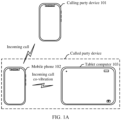
- FIG. 1A shows an example of a scenario diagram of a distributed architecture of a call system according to an embodiment of this application.
- the scenario diagram includes a calling party device 101 and a called party device, and the called party device may include at least one first electronic device that can implement a mobile data call capability with the calling party device 101, and at least one second electronic device.
- the first electronic device is an electronic device that has a telephone call function.
- the telephone call function may be a mobile data call capability implemented by using a base station, for example, making/answering a call, or may be an IP call capability implemented by using a cellular network, for example, a WeChat voice call.
- the mobile phone 102 and the tablet computer 103 are near-field connected.
- the mobile phone 102 and the tablet computer 103 are on a magic ring, and the near-field connection may be a network connection in a same local area network, a Bluetooth connection, or the like.
- the mobile phone 102 and the tablet computer 103 may be devices with a same account, to improve call security.
- the calling party device 101 initiates a telephone call to a plurality of called party devices
- the mobile phone 102 in the called party devices detects whether a call conflict exists.
- the mobile phone 102 and the tablet computer 103 may simultaneously output a prompt of an incoming call event (that is, implement incoming call co-vibration).
- the mobile phone may be a single subscriber identity module (Subscriber Identity Module, SIM) card mobile phone or a dual SIM card mobile phone
- the dual SIM card mobile phone may be a mobile phone that supports dual-call, or may be a mobile phone that does not support dual-call.
- Supporting dual-call means that when the mobile phone makes/answers a call by using one SIM card, answering of a call for the other SIM card is not affected. Based on this, the call conflict may include a plurality of scenarios shown in Table 1.
- the mobile phone 102 answers a distributed call Single SIM card mobile phone Scenario 1: New incoming call Scenario 2: The tablet computer 103 makes a call Dual SIM card mobile phone Scenario 3: New incoming call for a SIM card during a call Scenario 4: New incoming call for the other SIM card Scenario 5: The tablet computer 103 makes a call The tablet computer 103 answers a distributed call Single SIM card mobile phone Scenario 6: New incoming call Scenario 7: Another device makes a call on the magic ring Dual SIM card mobile phone Scenario 8: New incoming call for a SIM card during a call Scenario 9: New incoming call for the other SIM card Scenario 10: Another device makes a call on the magic ring
- the mobile phone 102 that receives an incoming call signal determines whether any one of the foregoing call conflict scenarios exists, and when any one of the foregoing call conflict scenarios exists, performs corresponding call conflict processing.
- the mobile phone 102 outputs a prompt of an incoming call conflict, such as a ring, a vibration, and an interface prompt.
- the interface prompt may include displaying an incoming call number, an incoming call user name, an answer key, and/or a hang-up key in an interface.
- a user may learn of related information of the call conflict, and then perform a related operation. For example, the user may tap the answer key, so that the mobile phone 102 answers the new incoming call, or the user may tap the hang-up key, so that the mobile phone 102 hangs up the new incoming call.
- the mobile phone 102 may hang up or hold an old incoming call. This is not limited.
- that the mobile phone 102 answers an incoming call is used to indicate that the mobile phone 102 communicates with a calling party, and that the mobile phone 102 hangs up an incoming call is used to indicate that the mobile phone 102 disconnects communication with the calling party.
- the mobile phone 102 may hold or hang up the old incoming call.
- the mobile phone 102 does not send an incoming call event to the tablet computer 103 and another device that is near-field connected, that is, the tablet computer 103 and the another device do not perform incoming call co-vibration with the mobile phone 102, to reduce impact on normal use of the tablet computer 103 and the another device that is near-field connected.
- the tablet computer 103 If the foregoing scenario 2 exists, that is, if the user makes a call on the tablet computer 103, the tablet computer 103 generates an outgoing call event, starts an outgoing call interface, and sends the outgoing call event to the mobile phone 102.
- the mobile phone 102 obtains a call status of a SIM card, and sends the call status of the SIM card to the tablet computer 103.
- the tablet computer 103 determines, based on the received information, that the SIM card is in a call state, closes the outgoing call interface, and outputs a prompt of outgoing call failure, such as a ring, a vibration, and an interface prompt, to prompt the user that a new call cannot be started and an outgoing call fails.
- the outgoing call interface is an interface for making a call to a remote device, and the outgoing call interface may display a number of a dialed call, a user name of the dialed call, a hang-up key, and/or the like.
- the tablet computer 103 and the mobile phone 102 serve as calling device
- the remote device serves as a called device.
- the foregoing outgoing call event is an incoming call event.
- the mobile phone 102 outputs a prompt of an incoming call conflict.
- the mobile phone 102 does not send an incoming call event to the tablet computer 103 and another device that is near-field connected, that is, the tablet computer 103 and the another device do not perform incoming call co-vibration with the mobile phone 102, to reduce impact on normal use of the tablet computer 103 and the another device that is near-field connected.
- the mobile phone 102 sends an incoming call event to the tablet computer 103, and transmits data of a SIM card with a new incoming call to the tablet computer 103, that is, virtualizes the SIM card with the new incoming call to the tablet computer 103.
- the tablet computer 103 is registered with an operator network based on the data of the SIM card with the new incoming call and by using an idle SIM card slot (which is actually using idle modulation and modulation and radio frequency resources), so that the tablet computer 103 has a call capability of the SIM card with the new incoming call.
- the tablet computer 103 that has the call capability of the SIM card with the new incoming call outputs an incoming call prompt based on the incoming call event, such as a ring, a vibration, an interface prompt, and a pop-up window.
- the mobile phone 102 that does not support dual-call may further display a new incoming call notification in a status bar, and generate a missed call log for the incoming call event.
- the mobile phone 102 transmits data of a SIM card with a new incoming call to the tablet computer 103.
- the tablet computer 103 is registered with an operator network based on the data of the SIM card with the new incoming call and by using an idle SIM card slot, so that the tablet computer 103 has a call capability of the SIM card with the new incoming call.
- the tablet computer 103 that has the call capability of the SIM card with the new incoming call directly sends an outgoing call event to a remote called device by using the SIM card with the new incoming call, and communicates with the remote called device.
- the mobile phone 102 sends an incoming call event to the tablet computer 103, so that the mobile phone 102 and the tablet computer 103 implement incoming call co-vibration.
- the mobile phone 102 does not send the incoming call event to another device that is near-field connected, that is, the another device does not perform incoming call co-vibration with the mobile phone 102, to avoid affecting normal use of the another device that is near-field connected.
- the tablet computer 103 receives the incoming call event, determines that the foregoing scenario 6 or scenario 8 exists, and outputs a prompt of an incoming call conflict, such as a ring, a vibration, and an interface prompt.
- the mobile phone 102 obtains a call status of a SIM card, and sends the call status of the SIM card to the another device.
- the another device determines, based on the received information, that the SIM card is in a call state, closes an outgoing call interface, and outputs a prompt of outgoing call failure, such as a ring, a vibration, and an interface prompt, to prompt the user that a new call cannot be started and an outgoing call fails.
- the mobile phone 102 sends an incoming call event to another device that is near-field connected, and transmits data of a SIM card with a new incoming call to the another device, that is, virtualizes the SIM card with the new incoming call to the another device.
- the another device is registered with an operator network based on the data of the SIM card with the new incoming call and by using an idle SIM card slot (which is actually using idle modulation and demodulation and radio frequency resources), so that the another device has a call capability of the SIM card with the new incoming call.
- the another device that has the call capability of the SIM card with the new incoming call outputs an incoming call prompt based on the incoming call event, such as a ring, a vibration, and a pop-up window, to notify the user that a new incoming call exists.
- the incoming call event such as a ring, a vibration, and a pop-up window
- the mobile phone 102 may further display a new incoming call notification in a status bar, and generate a missed call log for the incoming call event.
- the mobile phone 102 transmits data of a SIM card with a new incoming call to another device that is near-field connected.
- the another device is registered with an operator network based on the data of the SIM card with the new incoming call and by using an idle SIM card slot, so that the another device has a call capability of the SIM card with the new incoming call.
- the another device that has the call capability of the SIM card with the new incoming call directly sends an outgoing call event to a remote called device by using the SIM card with the new incoming call, and communicates with the remote called device.
- the device that is registered with the operator network by using the idle SIM card slot needs to have a modulation and demodulation function.
- the mobile phone 102 may record a status identifier of a SIM card, a status identifier of the mobile phone 102, and a status identifier of the tablet computer 103.
- the tablet computer 103 may record a status identifier of a SIM card and the status identifier of the tablet computer 103.
- the foregoing status identifier indicates whether a corresponding device is occupied, to determine a device that establishes a call connection to the remote calling device.
- a status identifier of a SIM card 1 indicates that the SIM card 1 is occupied, and the status identifier of the mobile phone 102 indicates that the mobile phone 102 is occupied, it indicates that the mobile phone 102 establishes a call connection to the remote calling device by using the SIM card 1.
- a status identifier of a SIM card 1 indicates that the SIM card 1 is occupied, and the status identifier of the tablet computer 103 indicates that the tablet computer 103 is occupied, it indicates that the tablet computer 103 establishes a call connection to the remote calling device by using the SIM card 1.
- the call conflict scenario may be understood as follows: When establishing a call connection to the remote calling device by using a SIM card, the mobile phone 102 or the tablet computer 103 further receives a new incoming call event or generates a new outgoing call event.
- the first electronic device may be a tablet computer or a notebook computer that has a mobile data call capability, or a wearable electronic device such as a watch.
- the second electronic device may be an electronic device that has a mobile data call capability, or may be an electronic device that has no mobile data call capability but can perform data communication with the first electronic device by using a network, for example, a mobile phone, a tablet computer, a notebook computer, an ultra-mobile personal computer, a personal digital assistant (Personal Digital Assistant, PDA), a television, or a wearable electronic device such as a watch or a band.
- PDA Personal Digital Assistant
- incoming call co-vibration may be that a server simultaneously delivers an incoming call signal to the mobile phone and the tablet computer, so that the mobile phone and the tablet computer implement incoming call co-vibration.
- FIG. 1B shows an example of another scenario diagram of a distributed architecture of a call system according to an embodiment of this application.
- a server 106 may send an incoming call signal to a mobile phone 104.
- the mobile phone 104 and a watch 105 may be wirelessly connected, for example, through Bluetooth.
- the mobile phone 104 may send the incoming call signal to the watch 105 through Bluetooth, so that the mobile phone 104 and the watch 105 implement incoming call co-vibration.
- a call conflict processing procedure for the mobile phone and the watch is described above, and is not described herein.
- FIG. 2A is a schematic diagram of a structure of an electronic device according to an embodiment of this application.
- the electronic device shown in FIG. 2A may be used as the first electronic device, or may be used as the second electronic device.
- the electronic device shown in FIG. 2A may include a processor 110, an external memory interface 120, an internal memory 121, a universal serial bus (Universal Serial Bus, USB) interface 130, a charging management module 140, a power management module 141, a battery 142, an antenna 1, an antenna 2, a mobile communication module 150, a wireless communication module 160, an audio module 170, a speaker 170A, a receiver 170B, a microphone 170C, a headset jack 170D, a sensor module 180, a key 190, a motor 191, an indicator 192, a camera 193, a display screen 194, a subscriber identity module (Subscriber Identity Module, SIM) card interface 195, and the like.
- SIM Subscriber Identity Module
- the sensor module 180 may include a pressure sensor 180A, a gyroscope sensor 180B, a barometric pressure sensor 180C, a magnetic sensor 180D, an acceleration sensor 180E, a distance sensor 180F, an optical proximity sensor 180G, a fingerprint sensor 180H, a temperature sensor 180J, a touch sensor 180K, an ambient light sensor 180L, a bone conduction sensor 180M, and the like.
- the structure illustrated in this embodiment of this application does not constitute a specific limitation on the electronic device.
- the electronic device may include more or fewer components than those shown in the figure, or combine some components, or split some components, or have different component arrangements.
- the components shown in the figure may be implemented by using hardware, software, or a combination of software and hardware.
- the processor 110 may include one or more processing units.
- the processor 110 may include an application processor (Application Processor, AP), a modem processor (modem), a graphics processing unit (Graphics Processing Unit, GPU), an image signal processor (Image Signal Processor, ISP), a controller, a memory, a video codec, a digital signal processor (Digital Signal Processor, DSP), a baseband processor, a neural-network processing unit (Neural-network Processing Unit, NPU), and/or the like.
- Different processing units may be independent components, or may be integrated into one or more processors.
- the processor 110 may generate an operation control signal based on instruction operation code and a timing signal, to complete control of instruction fetching and instruction execution.
- a memory may be further disposed in the processor 110 to store instructions and data.
- the memory in the processor 110 is a cache.
- the memory may store instructions or data that are or is just used or cyclically used by the processor 110. If the processor 110 needs to use the instructions or the data again, the instructions or the data may be invoked directly from the memory, to avoid repeated access and reduce waiting time of the processor 110, thereby improving system efficiency.
- the processor 110 may include one or more interfaces.
- the interface may include an inter-integrated circuit (Inter-Integrated Circuit, I2C) interface, an inter-integrated circuit sound (Inter-Integrated Circuit Sound, I2S) interface, a pulse code modulation (Pulse Code Modulation, PCM) interface, a universal asynchronous receiver/transmitter (Universal Asynchronous Receiver/Transmitter, UART) interface, a mobile industry processor interface (Mobile Industry Processor Interface, MIPI), a general-purpose input/output (General-Purpose Input/Output, GPIO) interface, and a subscriber identity module (Subscriber Identity Module, SIM) interface.
- I2C inter-integrated circuit
- I2S inter-integrated circuit Sound
- PCM pulse code modulation
- PCM Pulse Code Modulation
- UART Universal Asynchronous Receiver/Transmitter
- MIPI Mobile Industry Processor Interface
- GPIO General-Purpose Input/Output
- SIM Subscriber Identity Module
- the I2C interface is a bidirectional synchronous serial bus, including a serial data line (Serial Data Line, SDA) and a serial clock line (Derail Clock Line, SCL).
- the processor 110 may include a plurality of I2C interfaces.
- the processor 110 may be separately coupled to the touch sensor 180K, a charger, a camera flash, the camera 193, and the like by using different I2C interfaces.
- the processor 110 may be coupled to the touch sensor 180K by using the I2C interface, so that the processor 110 and the touch sensor 180K communicate with each other by using the I2C interface, thereby implementing a touch function of the electronic device.
- the I2S interface may be used for audio communication.
- the processor 110 may include a plurality of I2S interfaces.
- the processor 110 may be coupled to the audio module 170 by using the I2S interface, to implement communication between the processor 110 and the audio module 170.
- the audio module 170 may transmit an audio signal to the wireless communication module 160 by using the I2S interface, to implement a function of answering a call by using a Bluetooth headset.
- the PCM interface may also be used for audio communication, to sample, quantize, and encode an analog signal.
- the audio module 170 may be coupled to the wireless communication module 160 by using the PCM interface.
- the audio module 170 may transmit, by using the wireless communication module 160, obtained downlink audio stream data and obtained uplink audio stream data to an electronic device wirelessly connected to the electronic device.
- the audio module 170 may also transmit an audio signal to the wireless communication module 160 by using the PCM interface, to implement the function of answering a call by using the Bluetooth headset. Both the I2S interface and the PCM interface may be used for audio communication.
- the UART interface is a universal serial data bus used for asynchronous communication.
- the bus may be a bidirectional communication bus.
- the bus converts to-be-transmitted data between serial communication and parallel communication.
- the UART interface is usually configured to connect the processor 110 to the wireless communication module 160.
- the processor 110 communicates with a Bluetooth module in the wireless communication module 160 by using the UART interface, to implement a Bluetooth function.
- the audio module 170 may transfer an audio signal to the wireless communication module 160 by using the UART interface, to implement a function of obtaining downlink audio stream data by using an electronic device connected through Bluetooth.
- the MIPI interface may be configured to connect the processor 110 to peripheral components such as the display screen 194 and the camera 193.
- the MIPI interface includes a camera serial interface (Camera Serial Interface, CSI), a display serial interface (Display Serial Interface, DSI), and the like.
- the processor 110 and the camera 193 communicate with each other by using the CSI interface, to implement a photographing function of the electronic device 100.
- the processor 110 communicates with the display screen 194 by using the DSI interface, to implement a display function of the electronic device.
- the interface connection relationship between the modules illustrated in this embodiment of this application is merely an example for description, and does not constitute a limitation on the structure of the electronic device.
- the electronic device may alternatively use an interface connection manner different from that in the foregoing embodiment, or use a combination of a plurality of interface connection manners.
- a wireless communication function of the electronic device may be implemented by using the antenna 1, the antenna 2, the mobile communication module 150, the wireless communication module 160, the modem processor, the baseband processor, and the like.
- the antenna 1 and the antenna 2 are configured to transmit and receive an electromagnetic wave signal.
- Each antenna in the electronic device may be configured to cover one or more communication frequency bands. Different antennas may be further multiplexed to increase antenna utilization.
- the antenna 1 may be multiplexed as a diversity antenna of a wireless local area network. In some other embodiments, the antenna may be used in combination with a tuning switch.
- the mobile communication module 150 may provide a solution to wireless communication such as 2G/3G/4G/5G applied to the first electronic device.
- the mobile communication module 150 may implement transmission of call data between two electronic devices. For example, when the electronic device serves as a called party device, downlink audio stream data from a calling party device may be obtained, and uplink audio stream data may be transmitted to the calling party device.
- the wireless communication module 160 may provide a solution to wireless communication applied to the electronic device, for example, a wireless local area network (Wireless Local Area Networks, WLAN) (for example, a wireless fidelity (Wireless Fidelity, Wi-Fi) network), Bluetooth (Bluetooth, BT), a global navigation satellite system (Global Navigation Satellite System, GNSS), frequency modulation (Frequency Modulation, FM), near field communication (Near Field Communication, NFC), and an infrared (infrared, IR) technology.
- WLAN wireless Local Area Networks
- WLAN wireless local area network
- Wi-Fi Wireless Fidelity, Wi-Fi
- Bluetooth Bluetooth
- BT Global Navigation Satellite System
- GNSS Global Navigation Satellite System
- FM Frequency Modulation
- NFC Near Field Communication
- infrared infrared
- the antenna 1 and the mobile communication module 150 in the electronic device are coupled, and the antenna 2 and the wireless communication module 160 are coupled, so that the electronic device can communicate with a network and another device by using a wireless communication technology.
- the electronic device may implement a local area network connection to another electronic device by using the wireless communication module 160.
- the wireless communication technology may include a global system for mobile communications (Global System for Mobile Communications, GSM), a general packet radio service (General Packet Radio Service, GPRS), code division multiple access (Code Division Multiple Access, CDMA), wideband code division multiple access (Wideband Code Division Multiple Access, WCDMA), time division-synchronous code division multiple access (Time-Division-Synchronous Code Division Multiple Access, TD-SCDMA), long term evolution (Long Term Evolution, LTE), BT, a GNSS, a WLAN, NFC, FM, an IR technology, and/or the like.
- GSM Global System for Mobile Communications
- GPRS General Packet Radio Service
- CDMA Code Division Multiple Access
- WCDMA wideband Code Division Multiple Access
- WCDMA Wideband Code Division Multiple Access
- time division-synchronous code division multiple access Time-Division-Synchronous Code Division Multiple Access
- LTE Long Term Evolution
- BT a GNSS
- WLAN Wireless Local Area Network
- NFC Wireless Fidel
- the GNSS may include a global positioning system (Global Positioning System, GPS), a global navigation satellite system (Global Navigation Satellite System, GLONASS), a BeiDou navigation satellite system (Beidou Navigation Satellite System, BDS), a quasi-zenith satellite system (Quasi-Zenith Satellite System, QZSS), a satellite based augmentation system (Satellite Based Augmentation System, SBAS), and/or the like.
- GPS Global Positioning System
- GLONASS Global Navigation Satellite System
- BeiDou navigation satellite system Beidou Navigation Satellite System
- BDS BeiDou navigation satellite system
- QZSS quasi-zenith satellite system
- SBAS satellite based augmentation system
- the display screen 194 is configured to display an image, a video, and the like.
- the display screen 194 includes a display panel.
- the display panel may be a liquid crystal display (Liquid Crystal Display, LCD), an organic light-emitting diode (Organic Light-Emitting Diode, OLED), an active-matrix organic light-emitting diode (Active-Matrix Organic Light Emitting Diode, AMOLED), a flexible light-emitting diode (Flex Light-Emitting Diode, FLED), a MiniLED, a MicroLED, a Micro-OLED, a quantum dot light emitting diode (Quantum dot Light Emitting Diode, QLED), and the like.
- the electronic device may include one or N display screens 194, where N is a positive integer greater than 1.
- the display screen 194 may display an incoming call prompt interface, an incoming call conflict prompt interface, an outgoing call failure prompt interface, and an outgoing call interface, so that a user learns of status information of a call conflict and the like based on interface content displayed on the display screen.
- the external memory interface 120 may be configured to be connected to an external memory card, for example, a Micro secure digital (Secure Digital Memory, SD) card, to expand a storage capacity of the electronic device.
- the external memory card communicates with the processor 110 by using the external memory interface 120, to implement a data storage function, for example, to store files such as music, a video, and a recording file in the external memory card.
- the internal memory 121 may be configured to store computer-executable program code, and the executable program code includes instructions.
- the internal memory 121 may include a program storage area and a data storage area.
- the program storage area may store an operating system, an application (for example, a sound playback function, an image playback function, and a recording function) required by at least one function, and the like.
- the data storage area may store data (for example, uplink audio data, downlink audio data, and a phone book) and the like created during use of the electronic device.
- the internal memory 121 may include a high-speed random access memory, and may further include a non-volatile memory, for example, at least one magnetic disk storage device, a flash memory device, or a universal flash storage (Universal Flash Storage, UFS).
- the processor 110 performs various function applications and data processing of the electronic device by running the instructions stored in the internal memory 121 and/or the instructions stored in the memory disposed in the processor 110.
- the electronic device may implement a call conflict processing function by using the audio module 170, the speaker 170A, the receiver 170B, the microphone 170C, the headset jack 170D, the application processor, and the like.
- the audio module 170 is configured to convert digital audio information into an analog audio signal for output, and is also configured to convert an analog audio signal into a digital audio signal for input.
- the audio module 170 may be further configured to encode and decode an audio signal.
- the audio module 170 may be disposed in the processor 110, or some functional modules of the audio module 170 may be disposed in the processor 110.
- the receiver 170B also referred to as an "earpiece" is configured to convert an audio electrical signal into a sound signal.
- the electronic device may hear, by using the receiver 170B, voice transmitted by the calling party device.
- the microphone 170C also referred to as a "mic” or “mike”, is configured to convert a sound signal into an audio electrical signal.
- the user may make a sound by approaching the mouth to the microphone 170C, to input a sound signal to the microphone 170C, so as to collect uplink audio stream data.
- the pressure sensor 180A is configured to sense a pressure signal, and may convert the pressure signal into an electrical signal.
- the pressure sensor 180A may be disposed on the display screen 194.
- a manual call answer function may be implemented.
- a manual call hang-up function may be implemented.
- the touch sensor 180K is also referred to as a "touch component”.
- the touch sensor 180K may be disposed on the display screen 194.
- the touch sensor 180K and the display screen 194 form a touchscreen, also referred to as a "touch control screen”.
- the touch sensor 180K is configured to detect a touch operation performed on or near the touch sensor 180K.
- the touch sensor 180K may transmit the detected touch operation to the application processor, to determine a type of a touch event, and provide a visual output related to the touch operation by using the display screen 194.
- the touch sensor 180K may alternatively be disposed on a surface of the electronic device at a position different from that of the display screen 194.
- the motor 191 may generate a vibration prompt.
- the motor 191 may be configured to provide a vibration prompt for an incoming call, and may also be configured to provide vibration feedback for touch. For example, after an incoming signal is received, the motor 191 generates a vibration to prompt the user that a call needs to be answered.
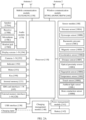
- FIG. 2B is a block diagram of a software structure of an electronic device according to an embodiment of this application.
- a layered architecture software is divided into several layers, and each layer has a clear role and task.
- the layers communicate with each other by using software interfaces.
- the Android system is divided into four layers: an application layer, an application framework layer, an Android runtime (Android Runtime) and system library, and a kernel layer from top to bottom.
- the Android system is divided into five layers: an application layer, an application framework layer, an Android runtime (Android Runtime) and system library, a hardware abstraction layer, and a kernel layer from top to bottom.
- FIG. 2B is merely described by using an example in which the layered architecture includes an application layer, an application framework layer, a hardware abstraction layer, and a kernel layer. This is not limited.
- the application layer may include a series of application packages.
- the application layer may include a call application and the like.
- the application layer may further include applications such as a Camera, Gallery, Calendar, Phone, Map, Navigation, WLAN, Bluetooth, Music, Video, Messages, and Recorder.
- the user may obtain a call interface during a call by using the call application, and implement a logical operation of a call process.
- the application framework layer provides an application programming interface (Application Programming Interface, API) and a programming framework for applications at the application layer.
- API Application Programming Interface
- the application framework layer includes some predefined functions.
- the application framework layer may include a communication protocol framework, a drawing and rendering module, a distributed framework, an audio framework, a file management framework, and the like.
- the communication protocol framework belongs to a part of a telephone manager, configured to provide a communication function for the electronic device, for example, management of a call status (including answering and hanging up).
- the drawing and rendering module belongs to a part of a video system, including visual controls such as a text display control and a picture display control.
- the video system may be configured to create an application.
- a display interface may include one or more views.
- an incoming call conflict prompt interface in a call process may include a text display view and a picture display view.
- the distributed framework is configured to implement data synchronization between devices in a local area network, for example, synchronize an incoming call signal, so that two devices in the local area network implement incoming call co-vibration, and synchronize a recording file.
- the audio framework may belong to a content provider, configured to store and obtain data, and enable the data to be accessed by an application.
- the data may include videos, images, audio, calls made and answered, and the like.
- the file management framework belongs to a part of a resource manager, configured to provide various resources for an application, such as a localized character string, an icon, a picture, a layout file, a recording file, and a video file.
- the Android Runtime includes a kernel library and a virtual machine.
- the Android Runtime is responsible for scheduling and management of the Android system.
- the kernel library includes two parts: One part is a functional function that needs to be invoked by a java language, and the other part is a kernel library of the Android system.
- the application layer and the application framework layer are run in the virtual machine.
- the virtual machine executes java files at the application layer and the application framework layer as binary files.
- the virtual machine is configured to perform functions such as lifecycle management of an object, stack management, thread management, security and exception management, and garbage collection.
- the hardware abstraction layer is an interface layer between an operating system kernel and a hardware circuit, and is configured to abstract hardware to provide a virtual hardware platform for the operating system.
- the hardware abstraction layer may include a transmission channel module, a display processing module, a magic ring, an audio stream processing module, an external storage module, and the like.
- the kernel layer may include at least an inter process communication (Inter Process Communication, IPC), a display driver, a soft bus, an audio driver, a storage driver, and the like.
- IPC Inter Process Communication
- the kernel layer processes the signal into an incoming call event
- the application framework layer obtains the incoming call event by using the transmission channel module of the hardware layer
- the application layer obtains the incoming call event by invoking the communication protocol framework, and starts a telephone application.
- the kernel layer starts the display screen 194 by using the display driver, to display, on the display screen 194, a call interface corresponding to the telephone application layer program. The user may answer a call or hang up a call by using an answer key or a hang-up key in the call interface.
- the electronic device may communicate with an electronic device A by using a local area network. After a call is received, an incoming call event is synchronized, by using the distributed framework, to an electronic device connected to the electronic device, for example, the electronic device A, so that the two electronic devices implement incoming call co-vibration.
- a mobile phone, a tablet computer, and a PC may be three electronic devices associated based on a magic ring.
- the mobile phone, the tablet computer, and the PC are separately logged in to by using an Honor account, a trust relationship is established based on the Honor account, and execution of the distributed call conflict processing method is considered based on the established trust relationship, to improve call security of the user.
- two major scenarios may be included, and the two major scenarios are respectively a scenario in which a call conflict exists when the mobile phone answers an incoming call and a scenario in which a call conflict exists when the tablet computer answers an incoming call.
- the scenario in which a call conflict exists when the mobile phone answers an incoming call further includes the scenarios 1-5 shown in Table 1
- the scenario in which a call conflict exists when the tablet computer answers an incoming call further includes the scenarios 6-10 shown in Table 1.
- Scenario 1 The scenario in which a call conflict exists when the mobile phone answers an incoming call.
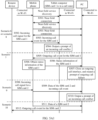
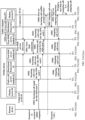
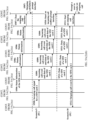
- FIG. 4A1 , FIG. 4A(2)(a) , and FIG. 4A(2)(b) are interaction flowcharts of a distributed call conflict processing method in a scenario according to an embodiment of this application.
- the method is applied to a system including a mobile phone, a tablet computer, and a PC.
- the mobile phone and the tablet computer are used as an example.
- the mobile phone, the tablet computer, and the PC (not shown) are included.
- the mobile phone includes a display screen 41, a native call service module 42, a distributed framework 43, and a near-field service module 44.
- the tablet computer includes a near-field service module 51, a distributed framework 52, and a display screen 53.
- the distributed framework may also be referred to as a distributed call service module.
- the flowcharts include S401-S412.
- S401 The mobile phone, the tablet computer, and the PC are near-field connected.
- the mobile phone, the tablet computer, and the PC are connected to same Wi-Fi.
- the mobile phone and the tablet computer are as an example.
- the mobile phone and the tablet computer establish a near-field connection to each other by using a near-field service discovery protocol and the near-field service module 44 and the near-field service module 51, respectively.
- the mobile phone and the PC establish a near-field connection to each other, and the PC and the tablet computer establish a near-field connection to each other.
- the mobile phone, the tablet computer, and the PC may be on a magic ring, to improve information security.
- the mobile phone, the tablet computer, and the PC may also be connected to same Wi-Fi by using a same account, and when a distance is less than a specified distance, a near-field connection is established. This is not limited.
- the mobile phone may be connected to one or N SIM cards by using the SIM card interface 195 in FIG. 2A , for example, connected to a SIM card 1 by using the SIM card interface 195.
- a remote device delivers an incoming call signal for the SIM card 1.
- the mobile phone may obtain the incoming call signal for the SIM card 1 by using the mobile communication module 150 in FIG. 2A , and enable the native call service module 42 (for example, the kernel layer) to generate an incoming call event for the SIM card 1, and then enable the distributed framework 43 to obtain the incoming call event for the SIM card 1.
- the native call service module 42 for example, the kernel layer
- the distributed framework 43 synchronizes the incoming call event to the distributed framework 52 of the tablet computer by using the near-field service module 44 and the near-field service module 51, so that the mobile phone and the tablet computer can simultaneously output a prompt of the incoming call event, such as a ring, a vibration, and an interface prompt.
- the mobile phone After the mobile phone and the tablet computer can simultaneously output the prompt of the incoming call event, the mobile phone answers the incoming call event, so that the mobile phone communicates with the remote device by using the SIM card 1.
- the mobile phone records a status identifier of the SIM card 1 as a first identifier, and records a status identifier of the mobile phone as a second identifier, where the first identifier indicates that the SIM card 1 is occupied, and the second identifier indicates that the mobile phone is occupied.
- the SIM card 1 is in a call state.
- Another remote device delivers an incoming call signal for the SIM card 1, and the mobile phone obtains the incoming call signal.
- the remote device may be a server, a mobile phone, or the like.
- the mobile phone may obtain the incoming call signal for the SIM card 1 by using the mobile communication module 150 in FIG. 2A , and enable the native call service module 42 to generate an incoming call event for the SIM card 1.
- S403 The mobile phone outputs a prompt of an incoming call conflict.
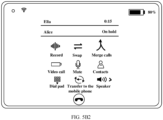
- the mobile phone may determine that a call conflict exists, outputs the prompt of the incoming call conflict by using the display screen 41, for example, starts an incoming call interface and rings, and does not notify the distributed framework 43, that is, does not notify the tablet computer and the PC. In this case, the tablet computer and the PC do not have an incoming call notification.
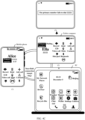
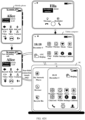
- FIG. 4B 1 shows an example of an incoming call conflict prompt interface of a mobile phone.
- (1) is a call interface of the mobile phone. In this case, if the mobile phone further receives an incoming call, an incoming call conflict occurs.
- (2) is an incoming call conflict prompt interface of the mobile phone.
- the prompt that is of the incoming call conflict refer to S402-S403.
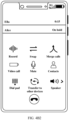
- the user may answer or hang up the new incoming call. If the user answers the new incoming call and holds an old incoming call, the call interface of the mobile phone is shown in FIG. 4B2 .
- the mobile phone When the mobile phone answers an incoming call, it indicates that the user focuses on the mobile phone side, so that a prompt of an incoming call conflict is output by using the mobile phone, and the tablet computer is not notified. This can effectively remind the user of the incoming call conflict, reduce impact on use of the tablet computer, and improve user experience.
- S404 The tablet computer sends an outgoing call event for the SIM card 1 to the mobile phone.
- the user enters a phone number into the tablet computer on the tablet computer, and makes a call by using the SIM card 1.
- the distributed framework 52 of the tablet computer Based on the operation in which the user makes a call, the distributed framework 52 of the tablet computer generates the outgoing call event for the SIM card 1, and displays an outgoing call interface by using the display screen 53, to prompt the user that an outgoing call is a distributed outgoing call.
- the distributed framework 52 sends the outgoing call event to the distributed framework 43 by using the near-field service module 51 and the near-field service module 44.
- S405 The mobile phone obtains status information of the SIM card 1, and feeds back the status information of the SIM card 1 to the tablet computer.
- the distributed framework 43 sends the outgoing call event to the native call service module 42, obtains the status information (for example, the foregoing first identifier, indicating that the SIM card 1 is in a call state) of the SIM card 1 by invoking the native call service module 42, and feeds back the status information of the SIM card 1 to the distributed framework 52 by using the near-field service module 51 and the near-field service module 44.
- the status information for example, the foregoing first identifier, indicating that the SIM card 1 is in a call state
- S406 The tablet computer closes the outgoing call interface and outputs a prompt of outgoing call failure.
- the distributed frame 52 closes the outgoing call interface displayed on the display screen 53, and controls the display screen 53 to output an outgoing call failure prompt interface.
- FIG. 4C shows an example of an outgoing call failure prompt interface of a tablet computer.
- (1) is a call interface of the mobile phone.
- an outgoing call interface of the tablet computer is shown in (2) in FIG. 4C .
- the tablet computer closes the outgoing call interface, and displays an outgoing call failure prompt interface shown in (3) in FIG. 4C .
- the tablet computer When the mobile phone answers an incoming call, if the tablet computer makes a call, there is a problem of an outgoing call conflict, and the tablet computer outputs a prompt of outgoing call failure, thereby avoiding ineffective waiting of a user of the tablet computer, also avoiding impact on a call on the mobile phone side, and improving user experience.
- S407 Another remote device delivers an incoming call signal for a SIM card 2, and the mobile phone obtains the incoming call signal. Then, if the mobile phone supports a dual-call function, S408 is performed. If the mobile phone does not support a dual-call function, S409 is performed.
- the mobile phone may be connected to one or N SIM cards by using the SIM card interface 195 in FIG. 2A , for example, connected to the SIM card 1 and the SIM card 2 by using the SIM card interface 195.
- the mobile phone may obtain the incoming call signal for the SIM card 2 by using the mobile communication module 150 in FIG. 2A , and enable the native call service module 42 to generate an incoming call event for the SIM card 2.
- S408 The mobile phone outputs a prompt of an incoming call conflict.
- the mobile phone may determine that a call conflict exists, outputs the prompt of the incoming call conflict by using the display screen 41, for example, starts an incoming call interface and rings, and does not notify the distributed framework 43, that is, does not notify the tablet computer and the PC. In this case, the tablet computer and the PC do not have an incoming call notification, for example, as shown in FIG. 4B1 .
- the mobile phone When the mobile phone answers an incoming call, it indicates that the user focuses on the mobile phone side, so that a prompt of an incoming call conflict is output by using the mobile phone, and the tablet computer is not notified. This can effectively remind the user of the incoming call conflict, reduce impact on use of the tablet computer, and improve user experience.
- the mobile phone sends data of the SIM card 2 to the tablet computer, and sends the incoming call event for the SIM card 2 to the tablet computer.
- the tablet computer has a modulation and demodulation function.
- the mobile phone cannot implement a function of outputting a prompt of an incoming call conflict. If the native call service module 42 of the mobile phone detects that the mobile phone establishes a call connection to the another remote device by using the SIM card 1, the mobile phone may determine that a call conflict exists, and sends the data of the SIM card 2 to the distributed framework 43.
- the distributed framework 43 feeds back the data of the SIM card 2 and the incoming call event for the SIM card 2 to the distributed framework 52 of the tablet computer by using the near-field service module 51 and the near-field service module 44.
- the distributed framework 52 is registered with an operator network based on the data of the SIM card 2 and by using an idle SIM card slot, so that the tablet computer has a call capability of the SIM card 2.
- the display screen 41 of the mobile phone does not start an incoming call interface, that is, no prompt is displayed in the call interface, a new incoming call notification of the user is displayed in a status bar, and a missed call log is generated.
- S410 The tablet computer outputs a prompt of an incoming call conflict.
- the distributed framework 52 of the tablet computer controls the display screen 53 to output an incoming call conflict prompt interface.
- FIG. 4D1 shows an example of an incoming call conflict prompt interface of a tablet computer, such as outputting pop-up window information of a new incoming call.
- (1) and (2) are respectively a call interface of the mobile phone and an original interface of the tablet computer. In this case, the mobile phone further receives an incoming call.
- the interfaces of the mobile phone and the tablet computer after call conflict processing are shown in (3) and (4) in FIG. 4D 1 .
- the interface of the tablet computer after call conflict processing may also output the prompt of the incoming call conflict in a manner of pop-up window information, as shown in FIG. 4D2 .
- For a process of outputting the prompt of the incoming call conflict refer to descriptions in S407 and S409-S410.
- the mobile phone When the mobile phone answers an incoming call, it indicates that the user focuses on the mobile phone side. However, the mobile phone does not support the dual-call function. In this case, the
- tablet computer outputs a prompt of an incoming call conflict, to prompt the user.
- no prompt is displayed in a call interface of the mobile phone, a new incoming call notification of the user is displayed in a status bar, and a missed call log is generated, so that the user notices, in a timely manner, an incoming call that causes a call conflict, thereby improving user experience.
- S411 The mobile phone sends data of a SIM card 2 to the tablet computer.
- the tablet computer has a modulation and demodulation function.
- the mobile phone may perform step S411 to send the data of the SIM card 2 to the tablet computer, or may send the data of the SIM card 2 to the tablet computer after the tablet computer makes a call. This is not limited.
- FIG. 4E shows an example of an outgoing call interface of a tablet computer.
- ( 1 ) and (2) are respectively a call interface of the mobile phone and an original interface of the tablet computer. In this case, the tablet computer makes a call.
- the interface of the mobile phone after call conflict processing remains unchanged, as shown in (1) in FIG. 4E .
- the interface of the tablet computer after call conflict processing is shown in (3) in FIG. 4E .
- the mobile phone may send data of the other SIM card to the tablet computer, so that the user can communicate with the remote device by using the other SIM card, to meet a call requirement of the user to a maximum extent and improve user experience.
- Scenario 2 The scenario in which a call conflict exists when the tablet computer answers an incoming call.
- FIG. 5A1 , FIG. 5A(2)(a) , and FIG. 5A(2)(b) are interaction flowcharts of a distributed call conflict processing method in a scenario according to an embodiment of this application.
- the method is applied to a system including a mobile phone, a tablet computer, and a PC.
- the mobile phone, the tablet computer, and the PC are included.
- the mobile phone includes a display screen 41, a native call service module 42, a distributed framework 43, and a near-field service module 44.
- the tablet computer/PC includes a near-field service module 51, a distributed framework 52, and a display screen 53.
- the distributed framework may also be referred to as a distributed call service module.
- the flowcharts include S501-S512.
- S501 The mobile phone, the tablet computer, and the PC are near-field connected.
- the mobile phone, the tablet computer, and the PC are connected to same Wi-Fi.
- the mobile phone and the tablet computer are as an example.
- the mobile phone and the tablet computer establish a near-field connection by using a near-field service discovery protocol and the near-field service module 44 and the near-field service module 51, respectively.
- the mobile phone and the PC establish a near-field connection
- the PC and the tablet computer establish a near-field connection.
- the tablet computer after the mobile phone and the tablet computer can simultaneously output a prompt of an incoming call event for a SIM card 1, the tablet computer answers the incoming call event, so that the tablet computer can communicate with a remote device by using the SIM card 1.
- the tablet computer sends event information of the answered the incoming call event to the mobile phone.
- the mobile phone Based on the received event information, the mobile phone records a status identifier of the SIM card 1 as a first identifier, and records a status identifier of the tablet computer as a third identifier, where the first identifier indicates that the SIM card 1 is occupied, and the third identifier indicates that the tablet computer is occupied.
- Another remote device delivers an incoming call signal for the SIM card 1, and the mobile phone obtains the incoming call signal.
- the remote device may be a server, a mobile phone, or the like.
- the mobile phone may obtain the incoming call signal for the SIM card 1 by using the mobile communication module 150 in FIG. 2A , and enable the native call service module 42 to generate an incoming call event for the SIM card 1.
- S503 The mobile phone sends the incoming call event for the SIM card 1 to the tablet computer.
- the native call service module 42 of the mobile phone does not detect that the mobile phone establishes a call connection to the another remote device by using the SIM card 1, sends the incoming call event for the SIM card 1 to the distributed framework 43, and does not start an incoming call interface.
- the distributed framework 43 detects that the status identifier of the SIM card 1 is the first identifier, and the status identifier of the tablet computer is the third identifier, that is, the tablet computer establishes a call connection to the another remote device by using the SIM card 1, the distributed framework synchronizes the incoming call event to the distributed framework 52 of the tablet computer by using the near-field service module 44 and the near-field service module 51, and does not notify the PC of the incoming call event.
- the native call service module 42 of the mobile phone detects that the status identifier of the SIM card 1 is the first identifier, and the status identifier of the tablet computer is the third identifier, that is, the tablet computer establishes a call connection to the another remote device by using the SIM card 1, sends the incoming call event for the SIM card 1 to the distributed framework 43, and does not start the incoming call interface.
- the distributed framework 43 synchronizes the incoming call event to the distributed framework 52 of the tablet computer by using the near-field service module 44 and the near-field service module 51, and does not notify the PC of the incoming call event.
- S504 The tablet computer outputs a prompt of an incoming call conflict.
- the tablet computer may determine that a call conflict exists, and outputs the prompt of the incoming call conflict by using the display screen 53, for example, starts an incoming call interface and rings, to remind the user of the distributed incoming call conflict.
- FIG. 5B1 shows an example of an incoming call conflict prompt interface of a tablet computer.
- (1) is a call interface of the tablet computer.
- (2) is an incoming call conflict prompt interface of the tablet computer.
- S502-S504. Based on the prompt that is of the incoming call conflict and that is output in FIG. 5B 1 , the user may answer or hang up the new incoming call. If the user answers the new incoming call and holds an old incoming call, the call interface of the tablet computer is shown in FIG. 5B2 .
- the tablet computer When the tablet computer answers an incoming call, it indicates that the user focuses on the tablet computer side, so that a prompt of an incoming call conflict is output by using the tablet computer, and the PC is not notified. This can effectively remind the user of the incoming call conflict, reduce impact on use of the PC, and improve user experience.
- S505 The PC sends an outgoing call event for the SIM card 1 to the mobile phone.
- the user enters a phone number into the PC on the PC, and makes a call by using the SIM card 1.
- the distributed framework of the PC Based on the operation in which the user makes a call, the distributed framework of the PC generates the outgoing call event for the SIM card 1, and displays an outgoing call interface by using the display screen of the PC.
- the distributed framework of the PC sends the outgoing call event to the distributed framework 43 of the mobile phone by using the near-field service module of the PC and the near-field service module 44.
- S506 The mobile phone obtains status information of the SIM card 1, and feeds back the status information of the SIM card 1 to the PC.
- the distributed framework 43 sends the outgoing call event to the native call service module 42, obtains the status information (for example, the foregoing first identifier, indicating that the SIM card 1 is in a call state) of the SIM card 1 by invoking the native call service module 42, and feeds back the status information of the SIM card 1 to the distributed framework of the PC by using the near-field service module of the PC and the near-field service module 44.
- the status information for example, the foregoing first identifier, indicating that the SIM card 1 is in a call state
- S507 The PC closes the outgoing call interface, and outputs a prompt of outgoing call failure.
- the distributed framework of the PC closes the outgoing call interface displayed on the display screen of the PC, and controls the display screen of the PC to output an outgoing call failure prompt interface.
- FIG. 5C shows an example of an outgoing call failure prompt interface of a PC.
- (1) is a call interface of the tablet computer.
- an outgoing call interface of the PC is shown in (2) in FIG. 5C .
- the PC closes the outgoing call interface, and displays an outgoing call failure prompt interface shown in (3) in FIG. 5C .
- the tablet computer answers an incoming call, if the PC makes a call, there is a problem of an outgoing call conflict, and the PC outputs a prompt of outgoing call failure, thereby avoiding ineffective waiting of a user of the PC side, also avoiding impact on a call on the tablet computer side, and improving user experience.
- S508 Another remote device delivers an incoming call signal for a SIM card 2, and the mobile phone obtains the incoming call signal.
- the mobile phone may be connected to one or N SIM cards by using the SIM card interface 195 in FIG. 2A , for example, connected to the SIM card 1 and the SIM card 2 by using the SIM card interface 195.
- the mobile phone may obtain the incoming call signal for the SIM card 2 by using the mobile communication module 150 in FIG. 2A , and enable the native call service module 42 to generate an incoming call event for the SIM card 2.
- the mobile phone sends data of the SIM card 2 to the PC, and sends the incoming call event for the SIM card 2 to the PC.
- the PC has a modulation and demodulation function.
- the native call service module 42 of the mobile phone does not detect that the mobile phone establishes a call connection to the another remote device, and sends the incoming call event for the SIM card 2 to the distributed framework 43.
- the distributed framework 43 detects that the tablet computer establishes a call connection to the remote device by using the SIM card 1, obtains the data of the SIM card 2, and feeds back the data of the SIM card 2 and the incoming call event for the SIM card 2 to the distributed framework of the PC by using the near-field service module of the PC and the near field service module 44.
- the native call service module 42 of the mobile phone detects that the tablet computer establishes a call connection to the remote device by using the SIM card 1, and sends the incoming call event for the SIM card 2 to the distributed framework 43.
- the distributed framework 43 obtains the data of the SIM card 2, and feeds back the data of the SIM card 2 and the incoming call event for the SIM card 2 to the distributed framework of the PC.
- the distributed framework 43 may directly obtain the data of the SIM card 2 from the SIM card 2, or the native call service module 42 may obtain the data of the SIM card 2 from the SIM card 2, and send the obtained data of the SIM card 2 to the distributed framework 43. This is not limited.
- the distributed framework of the PC is registered with an operator network based on the data of the SIM card 2 and by using an idle SIM card slot, so that the PC has a call capability of the SIM card 2.
- the display screen 41 of the mobile phone does not start an incoming call interface, that is, no prompt is displayed in the call interface, a new incoming call notification of the user is displayed in a status bar, and a missed call log is generated.
- S510 The PC outputs a prompt of an incoming call conflict.
- the distributed framework of the PC controls the display screen of the PC to output an incoming call conflict prompt interface.
- FIG. 5D1 shows an example of an incoming call conflict prompt interface of a PC.
- (1), (2), and (3) are respectively a call interface of the tablet computer, an original interface of the PC, and an original interface of the mobile phone.
- the mobile phone further receives an incoming call.
- the interfaces of the mobile phone and the PC after call conflict processing are shown in (4) and (5) in FIG. 5D1 .
- the interface of the tablet computer after call conflict processing may also output the prompt of the incoming call conflict in a manner of pop-up window information, as shown in FIG. 5D2 .
- For a process of outputting the prompt of the incoming call conflict refer to descriptions in S508-S510.
- the tablet computer When the tablet computer answers an incoming call, it indicates that the user focuses on the tablet computer side. In this case, the PC outputs a prompt of an incoming call conflict, to prompt the user. In addition, no prompt is displayed in a call interface of the mobile phone, a new incoming call notification of the user is displayed in a status bar, and a missed call log is generated, so that the user notices, in a timely manner, an incoming call that causes a call conflict, thereby improving user experience.
- S511 The mobile phone sends data of a SIM card 2 to the PC.
- the PC has a modulation and demodulation function.
- the mobile phone may perform step S511 to send the data of the SIM card 2 to the PC, or may send the data of the SIM card 2 to the PC after the PC makes a call. This is not limited.
- S512 The PC sends an outgoing call event for the SIM card 2 to the remote device.
- the PC is registered with an operator network based on the data of the SIM card 2. It may be understood that a native call service module is generated on the tablet computer. The native call service module of the PC directly sends the outgoing call event for the SIM card 2 to the remote device, and establishes a call connection to the remote device.
- FIG. 5E shows an example of an outgoing call interface of a PC.
- ( 1 ) and ( 2 ) are respectively a call interface of the tablet computer and an original interface of the PC.
- the PC makes a call.
- the interface of the mobile phone after call conflict processing remains unchanged, as shown in (1) in FIG. 5E .
- the interface of the PC after call conflict processing is shown in (3) in FIG. 5E .
- For a process of outputting the prompt of the incoming call conflict refer to descriptions in S511-512.
- the tablet computer may send data of the other SIM card to the PC, so that the user can communicate with the remote device by using the other SIM card, to meet a call requirement of the user to a maximum extent and improve user experience.
- an embodiment of this application further provides a schematic flowchart of obtaining data of a second SIM card (SIM card 2) by a second electronic device (such as a tablet computer). As shown in FIG. 6 , the flowchart includes S601-S606.
- a mobile phone sends a first request to the tablet computer, where the first request is used to obtain a status of a modulation and demodulation function.
- the mobile phone after the mobile phone or a PC establishes a call connection to a remote device by using a SIM card 1, the mobile phone sends, to the tablet computer, the request, namely, the first request, for obtaining the status of the modulation and demodulation function.
- the tablet computer detects that the modulation and demodulation function is in an available state, and sends a second request to the mobile phone, where the second request is used to obtain data of a SIM card 2.
- S603 The mobile phone sends the data of the SIM card 2 to the tablet computer based on the second request.
- the tablet computer is registered with an operator network based on the data of the SIM card 2 and by using an idle SIM card slot, so that the tablet computer has a call capability of the SIM card 2.
- the tablet computer may establish a call connection to the remote device by using the call capability of the SIM card 2.
- the tablet computer makes an outgoing call by using the call capability of the SIM card 2.
- the tablet computer may establish a call connection to the remote device by using the call capability of the SIM card 2, to communicate with the device.
- S605 The tablet computer synchronizes outgoing call information of the SIM card 2 to the mobile phone.
- S606 The mobile phone generates a call log for the SIM card 2 based on the outgoing call information.
- the user uses the mobile phone more frequently than the
- tablet computer and synchronizes the outgoing call information of the SIM card 2 to the mobile phone, to generate the call log, so as to remind the user of the outgoing call information in a timely manner, and improve user experience.
- the process for obtaining the data of the SIM card 2 provided in this embodiment of this application is applicable to obtaining the data of the SIM card 2 in the foregoing scenario 4, scenario 5, scenario 9, and scenario 10. Details are not described herein again.
- an embodiment of this application further provides an electronic device, including:
- An embodiment of this application further provides a computer-readable storage medium.
- the computer-readable storage medium stores a computer program.
- a processor is enabled to perform the method explained in FIG. 4A1 , FIG. 4A(2)(a) and FIG. 4A(2)(b) , FIG. 5A1 , and FIG. 5A(2)(a) and FIG. 5A(2)(b) in the foregoing embodiments.
- An embodiment of this application further provides a computer program product including instructions.
- a processor is enabled to perform the method shown in FIG. 4A1 , FIG. 4A(2)(a) and FIG. 4A(2)(b) , FIG. 5A1 , and FIG. 5A(2)(a) and FIG. 5A(2)(b) in the foregoing embodiments.
- An embodiment of this application further provides a distributed call conflict processing system.
- the system includes:
- FIG. 9 is a block diagram of an SoC (System on Chip, system on chip) according to an embodiment of this application.
- the SoC includes: an interconnection unit 905, coupled to an application processor 901; a system proxy unit 907; a bus controller unit 908; an integrated memory controller unit 904; a group of or one or more coprocessors 902, where the processor may include integrated graphics logic, an image processor, an audio processor, and a video processor; a static random access memory (Static Random Access Memory, SRAM) unit 903; and a direct memory access (Direct Memory Access, DMA) unit 906.
- SRAM static random access memory
- DMA direct memory access
- the coprocessor 902 includes a dedicated processor, such as a network or communication processor, a compression engine, a general-purpose computing on graphics processing unit (General-Purpose computing on Graphics Processing Units, GPGPU), a high-throughput many integrated core (Many Integrated Core, MIC) processor, or an embedded processor.
- a dedicated processor such as a network or communication processor, a compression engine, a general-purpose computing on graphics processing unit (General-Purpose computing on Graphics Processing Units, GPGPU), a high-throughput many integrated core (Many Integrated Core, MIC) processor, or an embedded processor.
- the SRAM unit 903 may include one or more computer-readable media configured to store data and/or instructions.
- the computer-readable storage medium may store instructions, and specifically store temporary and permanent copies of the instructions.
- the instructions may include the following: When the instructions are executed by at least one unit in the processor, the SoC is enabled to perform the distributed call conflict processing method in the foregoing embodiments. For details, refer to the methods explained in FIG. 4A1 , FIG. 4A(2)(a) and FIG. 4A(2)(b) , FIG. 5A1 , and FIG. 5A(2)(a) and FIG. 5A(2)(b) in the foregoing embodiments. Details are not described herein again.
- Embodiments of mechanisms disclosed in this application may be implemented by using hardware, software, firmware, or a combination of these implementation methods.
- the embodiments of this application may be implemented as a computer program or program code executed on a programmable system.
- the programmable system includes at least one processor, a storage system (including a volatile memory and a non-volatile memory and/or a storage element), at least one input device, and at least one output device.
- the program code may be applied to an input instruction to perform various functions described in this application and generate output information.
- the output information may be applied to one or more output devices in a known manner.
- the processing system includes any system having a processor such as a digital signal processor (Digital Signal Processor, DSP), a microcontroller, an application-specific integrated circuit (Application Specific Integrated Circuit, ASIC), or a microprocessor.
- DSP Digital Signal Processor
- ASIC Application Specific Integrated Circuit
- the program code may be implemented by using a high-level programming language or an object-oriented programming language, to communicate with the processing system.
- the program code may also be implemented by using an assembly language or a machine language.
- the mechanisms described in this application are not limited to a scope of any specific programming language.
- the language may be a compilation language or an interpretation language.
- the disclosed embodiments may be implemented by using hardware, firmware, software, or any combination thereof.
- the disclosed embodiments may be further implemented as instructions carried or stored on one or more transitory or non-transitory machine-readable (for example, computer-readable) storage media, and the instructions may be read and executed by one or more processors.
- the instructions may be distributed by using a network or another computer-readable storage medium.
- the machine-readable storage medium may include any mechanism used to store or transmit information in a machine (for example, computer) readable form, including but not limited to a floppy disk, an optical disc, a compact disc read-only memory (Compact Disc Read Only Memory, CD-ROMs), a magneto-optical disk, a read-only memory (Read Only Memory, ROM), a random access memory (RAM), an erasable programmable read-only memory (Erasable Programmable Read Only Memory, EPROM), an electrically erasable programmable read-only memory (Electrically Erasable Programmable Read Only Memory, EEPROM), a magnetic card or an optical card, a flash memory, or a tangible machine-readable memory configured to transmit information (such as a carrier, an infrared signal, and a digital signal) via the Internet in electrical, optical, or acoustic form or another form of propagation signal. Therefore, the machine-readable storage medium includes any type of machine-readable storage medium suitable for storing or transmitting electronic instructions
- a logical unit/module may be a physical unit/module, or may be a part of a physical unit/module, or may be implemented as a combination of a plurality of physical units/modules. Physical implementations of these logical units/modules are not most important, and only a combination of functions implemented by these logical units/modules is a key to resolving the technical problem proposed in this application.
- units/modules that are not closely related to resolving the technical problem proposed in this application are not introduced. This does not mean that no other units/modules exist in the foregoing device embodiments.
Landscapes
- Engineering & Computer Science (AREA)
- Signal Processing (AREA)
- Computer Networks & Wireless Communication (AREA)
- Human Computer Interaction (AREA)
- Telephone Function (AREA)
- Telephonic Communication Services (AREA)
Abstract


Description
- This application claims priority to
Chinese Patent Application No. 202111492320.X, filed with the China National Intellectual Property Administration on December 8, 2021 - This application relates to the field of electronic technologies, and in particular, to a distributed call conflict processing method and system, an electronic device, and a storage medium.
- With continuous development of communication technologies, increasingly more electronic devices other than a mobile phone may be added to a communication chain, for example, a tablet computer, a smartwatch, and an in-vehicle device.
- In the context of a distributed call, that is, if a called party may be a plurality of electronic devices associated based on a magic ring, when a calling party sends an incoming call event to the called party, the plurality of electronic devices may simultaneously receive the incoming call event, to generate incoming call co-vibration. Further, a user can transfer an operator call between different devices within a near field range based on the magic ring. However, when the operator call is transferred between different devices, the electronic devices on the side of the called party have various call conflict scenarios. This affects user experience.
- In view of this, this application provides a distributed call conflict processing method and system, an electronic device, and a storage medium, to resolve a problem of a call conflict in a distributed call scenario, and improve user experience.
- Some implementations of this application provide a distributed call conflict processing method. The following describes this application from a plurality of aspects. For implementations and beneficial effects of the following plurality of aspects, refer to each other.
- According to a first aspect, this application provides a distributed call conflict processing method, applied to a system including a first electronic device and a second electronic device, where the first electronic device is near-field connected to the second electronic device, the first electronic device is a device having a telephone call function, the first electronic device has a first SIM card, and the method includes: The first electronic device receives an incoming call event from a calling party, and obtains an incoming call SIM card identifier in the incoming call event; if a SIM card indicated by the incoming call SIM card identifier is the first SIM card, a status identifier of the first SIM card indicates that the first SIM card is occupied, and a status identifier of the second electronic device indicates that the second electronic device is occupied, the first electronic device sends the incoming call event to the second electronic device; and the second electronic device outputs a prompt of an incoming call conflict.
- In the distributed call conflict processing method in this embodiment of this application, when a tablet computer answers an incoming call, it indicates that a user focuses on the tablet computer side, so that a prompt of an incoming call conflict is output by using the tablet computer, and a PC is not notified. This can effectively remind the user of the incoming call conflict, reduce impact on use of the PC, and improve user experience.
- In a possible implementation of the foregoing first aspect, the method further includes: If the SIM card indicated by the incoming call SIM card identifier is the first SIM card, the status identifier of the first SIM card indicates that the first SIM card is occupied, and a status identifier of the first electronic device indicates that the first electronic device is occupied, the first electronic device outputs a prompt of an incoming call conflict.
- In the distributed call conflict processing method in this embodiment of this application, when a mobile phone answers an incoming call, it indicates that a user focuses on a mobile phone side, so that a prompt of an incoming call conflict is output by using the mobile phone, and a tablet computer is not notified. This can effectively remind the user of the incoming call conflict, reduce impact on use of the tablet computer, and improve user experience.
- In a possible implementation of the foregoing first aspect, the system further includes a third electronic device, the third electronic device is a device having a modulation and demodulation function, the first electronic device further includes a second SIM card, and the method further includes: If the SIM card indicated by the incoming call SIM card identifier is the second SIM card, the status identifier of the first SIM card indicates that the first SIM card is occupied, and the status identifier of the second electronic device indicates that the second electronic device is occupied, the first electronic device sends data of the second SIM card to the third electronic device, and sends the incoming call event to the third electronic device; and the third electronic device outputs an incoming call prompt by using the data of the second SIM card.
- In the distributed call conflict processing method in this embodiment of this application, when a tablet computer answers an incoming call, it indicates that a user focuses on the tablet computer side. In this case, a PC outputs a prompt of an incoming call conflict, to prompt the user. In addition, no prompt is displayed in a call interface of a mobile phone, a new incoming call notification of the user is displayed in a status bar, and a missed call log is generated, so that the user notices, in a timely manner, an incoming call that causes a call conflict, thereby improving user experience.
- In a possible implementation of the foregoing first aspect, the first electronic device further has a second SIM card, and the method further includes: If the SIM card indicated by the incoming call SIM card identifier is the second SIM card, the status identifier of the first SIM card indicates that the first SIM card is occupied, and a status identifier of the first electronic device indicates that the first electronic device is occupied, the first electronic device outputs a prompt of an incoming call conflict.
- In the distributed call conflict processing method in this embodiment of this application, when a mobile phone answers an incoming call, it indicates that a user focuses on a mobile phone side, so that a prompt of an incoming call conflict is output by using the mobile phone, and a tablet computer is not notified. This can effectively remind the user of the incoming call conflict, reduce impact on use of the tablet computer, and improve user experience.
- In a possible implementation of the foregoing first aspect, the second electronic device is a device having a modulation and demodulation function, the first electronic device further has a second SIM card, and the method further includes: If the SIM card indicated by the incoming call SIM card identifier is the second SIM card, the status identifier of the first SIM card indicates that the first SIM card is occupied, and a status identifier of the first electronic device indicates that the first electronic device is occupied, the first electronic device sends data of the second SIM card to the second electronic device, and sends the incoming call event to the second electronic device; and the second electronic device outputs an incoming call prompt by using the data of the second SIM card.
- In the distributed call conflict processing method in this embodiment of this application, when a mobile phone answers an incoming call, it indicates that a user focuses on the mobile phone side. However, the mobile phone does not support a dual-call function. In this case, a tablet computer outputs a prompt of an incoming call conflict, to prompt the user. In addition, no prompt is displayed in a call interface of a mobile phone, a new incoming call notification of the user is displayed in a status bar, and a missed call log is generated, so that the user notices, in a timely manner, an incoming call that causes a call conflict, thereby improving user experience.
- In a possible implementation of the foregoing first aspect, the method further includes: If the SIM card indicated by the incoming call SIM card identifier is the second SIM card, and the status identifier of the first SIM card indicates that the first SIM card is occupied, the first electronic device displays a new incoming call notification in a status bar, and generates a missed call log for the incoming call event.
- In a possible implementation of the foregoing first aspect, the method further includes: The second electronic device sends an outgoing call event to the first electronic device; the first electronic device receives the outgoing call event, and obtains an outgoing call SIM card identifier in the outgoing call event; if a SIM card indicated by the outgoing call SIM card identifier is the first SIM card, and the status identifier of the first SIM card indicates that the first SIM card is occupied, the first electronic device sends status information to the second electronic device, where the status information includes the first SIM card being in a call state; and the second electronic device outputs a prompt of outgoing call failure based on the status information.
- In the distributed call conflict processing method in this embodiment of this application, when the mobile phone or the tablet computer answers an incoming call, if the second electronic device makes a call, there is a problem of an outgoing call conflict, and the second electronic device outputs a prompt of outgoing call failure, thereby avoiding ineffective waiting of a user of the second electronic device, also avoiding impact on a call on the mobile phone side, and improving user experience.
- In a possible implementation of the foregoing first aspect, the second electronic device is an electronic device having a modulation and demodulation function, the first electronic device further has a second SIM card, and the method further includes: The first electronic device sends data of the second SIM card to the second electronic device; and the second electronic device sends an outgoing call event to another device by using the data of the second SIM card.
- In the distributed call conflict processing method in this embodiment of this application, when answering an incoming call by using one SIM card, the mobile phone or the tablet computer may send data of the other SIM card to the second electronic device (such as the PC), so that the user can communicate with a remote device by using the other SIM card, to meet a call requirement of the user to a maximum extent and improve user experience.
- In a possible implementation of the foregoing first aspect, the method further includes: The second electronic device sends outgoing call information of the outgoing call event to the first electronic device; and the first electronic device generates a call log for the second SIM card based on the outgoing call information.
- In a possible implementation of the foregoing first aspect, the first electronic device includes a first distributed framework, and the second electronic device includes a second distributed framework; and the first electronic device communicates with the second distributed framework of the second electronic device by using the first distributed framework, so that the first electronic device and the second electronic device synchronously receive the incoming call event of the calling party.
- According to a second aspect, this application provides a distributed call conflict processing method, applied to a first electronic device, where the first electronic device and a second electronic device belong to a same system, the first electronic device is a device having a telephone call function, the first electronic device has a first SIM card, and the method includes: The first electronic device receives an incoming call event from a calling party, and obtains an incoming call SIM card identifier in the incoming call event; and if a SIM card indicated by the incoming call SIM card identifier is the first SIM card, a status identifier of the first SIM card indicates that the first SIM card is occupied, and a status identifier of the second electronic device indicates that the second electronic device is occupied, the first electronic device sends the incoming call event to the second electronic device; so that the second electronic device outputs a prompt of an incoming call conflict.
- In the distributed call conflict processing method in this embodiment of this application, when a tablet computer answers an incoming call, it indicates that a user focuses on the tablet computer side, so that a prompt of an incoming call conflict is output by using the tablet computer, and a PC is not notified. This can effectively remind the user of the incoming call conflict, reduce impact on use of the PC, and improve user experience.
- In a possible implementation of the foregoing second aspect, the method further includes: If the SIM card indicated by the incoming call SIM card identifier is the first SIM card, the status identifier of the first SIM card indicates that the first SIM card is occupied, and a status identifier of the first electronic device indicates that the first electronic device is occupied, the first electronic device outputs a prompt of an incoming call conflict.
- In the distributed call conflict processing method in this embodiment of this application, when a mobile phone answers an incoming call, it indicates that the user focuses on a mobile phone side, so that a prompt of an incoming call conflict is output by using the mobile phone, and a tablet computer is not notified. This can effectively remind the user of the incoming call conflict, reduce impact on use of the tablet computer, and improve user experience.
- In a possible implementation of the foregoing second aspect, the system further includes a third electronic device, the third electronic device is a device having a modulation and demodulation function, the first electronic device further includes a second SIM card, and the method further includes: If the SIM card indicated by the incoming call SIM card identifier is the second SIM card, the status identifier of the first SIM card indicates that the first SIM card is occupied, and the status identifier of the second electronic device indicates that the second electronic device is occupied, the first electronic device sends data of the second SIM card to the third electronic device, and sends the incoming call event to the third electronic device, so that the third electronic device outputs an incoming call prompt by using the data of the second SIM card.
- In the distributed call conflict processing method in this embodiment of this application, when a tablet computer answers an incoming call, it indicates that the user focuses on the tablet computer side. In this case, a PC outputs a prompt of an incoming call conflict, to prompt the user. In addition, no prompt is displayed in a call interface of a mobile phone, a new incoming call notification of the user is displayed in a status bar, and a missed call log is generated, so that the user notices, in a timely manner, an incoming call that causes a call conflict, thereby improving user experience.
- In a possible implementation of the foregoing second aspect, the first electronic device further has a second SIM card, and the method further includes: If the SIM card indicated by the incoming call SIM card identifier is the second SIM card, the status identifier of the first SIM card indicates that the first SIM card is occupied, and a status identifier of the first electronic device indicates that the first electronic device is occupied, the first electronic device outputs a prompt of an incoming call conflict.
- In the distributed call conflict processing method in this embodiment of this application, when a mobile phone answers an incoming call, it indicates that the user focuses on a mobile phone side, so that a prompt of an incoming call conflict is output by using the mobile phone, and a tablet computer is not notified. This can effectively remind the user of the incoming call conflict, reduce impact on use of the tablet computer, and improve user experience.
- In a possible implementation of the foregoing second aspect, the second electronic device is a device having a modulation and demodulation function, the first electronic device further has a second SIM card, and the method further includes: If the SIM card indicated by the incoming call SIM card identifier is the second SIM card, the status identifier of the first SIM card indicates that the first SIM card is occupied, and a status identifier of the first electronic device indicates that the first electronic device is occupied, the first electronic device sends data of the second SIM card to the second electronic device, and sends the incoming call event to the second electronic device, so that the second electronic device outputs an incoming call prompt by using the data of the second SIM card.
- In the distributed call conflict processing method in this embodiment of this application, when a mobile phone answers an incoming call, it indicates that the user focuses on the mobile phone side. However, the mobile phone does not support a dual-call function. In this case, a tablet computer outputs a prompt of an incoming call conflict, to prompt the user. In addition, no prompt is displayed in a call interface of a mobile phone, a new incoming call notification of the user is displayed in a status bar, and a missed call log is generated, so that the user notices, in a timely manner, an incoming call that causes a call conflict, thereby improving user experience.
- In a possible implementation of the foregoing second aspect, the method further includes: If the SIM card indicated by the incoming call SIM card identifier is the second SIM card, and the status identifier of the first SIM card indicates that the first SIM card is occupied, the first electronic device displays a new incoming call notification in a status bar, and generates a missed call log for the incoming call event.
- In a possible implementation of the foregoing second aspect, the method further includes: The first electronic device receives an outgoing call event sent by the second electronic device, and obtains an outgoing call SIM card identifier in the outgoing call event; and if a SIM card indicated by the outgoing call SIM card identifier is the first SIM card, and the status identifier of the first SIM card indicates that the first SIM card is occupied, the first electronic device sends status information to the second electronic device, where the status information includes the first SIM card being in a call state, so that the second electronic device outputs a prompt of outgoing call failure based on the status information.
- In the distributed call conflict processing method in this embodiment of this application, when the mobile phone or the tablet computer answers an incoming call, if another second electronic device makes a call, there is a problem of an outgoing call conflict, and the second electronic device outputs a prompt of outgoing call failure, thereby avoiding ineffective waiting of a user of the second electronic device, also avoiding impact on a call on the mobile phone side, and improving user experience.
- In a possible implementation of the foregoing second aspect, the second electronic device is an electronic device having a modulation and demodulation function, the first electronic device further has a second SIM card, and the method further includes: The first electronic device sends data of the second SIM card to the second electronic device, so that the second electronic device sends an outgoing call event to another device by using the data of the second SIM card.
- In the distributed call conflict processing method in this embodiment of this application, when answering an incoming call by using one SIM card, the mobile phone or the tablet computer may send data of the other SIM card to the second electronic device (such as the PC), so that the user can communicate with a remote device by using the other SIM card, to meet a call requirement of the user to a maximum extent and improve user experience.
- In a possible implementation of the foregoing second aspect, the method further includes: The first electronic device receives outgoing call information that is of the outgoing call event and that is sent by the second electronic device; and the first electronic device generates a call log for the second SIM card based on the outgoing call information.
- In a possible implementation of the foregoing second aspect, the first electronic device includes a first distributed framework, and the second electronic device includes a second distributed framework; and the first electronic device communicates with the second distributed framework of the second electronic device by using the first distributed framework, so that the first electronic device and the second electronic device synchronously receive the incoming call event of the calling party.
- According to a third aspect, this application provides a distributed call conflict processing method, applied to a second electronic device, where the second electronic device and a first electronic device belong to a same system, the first electronic device is a device having a telephone call function, the first electronic device has a first SIM card, and the method includes: The second electronic device receives an incoming call event sent by the first electronic device, where the incoming call event is an incoming call event received by the first electronic device from a calling party, a SIM card indicated by an incoming call SIM card identifier in the incoming call event is the first SIM card, a status identifier of the first SIM card indicates that the first SIM card is occupied, and a status identifier of the second electronic device indicates that the second electronic device is occupied; and the second electronic device outputs a prompt of an incoming call conflict. In the distributed call conflict processing method in this embodiment of this application, when a tablet computer answers an incoming call, it indicates that a user focuses on the tablet computer side, so that a prompt of an incoming call conflict is output by using the tablet computer, and a PC is not notified. This can effectively remind the user of the incoming call conflict, reduce impact on use of the PC, and improve user experience.
- In a possible implementation of the foregoing third aspect, the second electronic device is a device having a modulation and demodulation function, the first electronic device further has a second SIM card, and the method further includes: The second electronic device receives data of the second SIM card that is sent by the first electronic device, and receives the incoming call event sent by the first electronic device, where the incoming call event is an incoming call event received by the first electronic device from the calling party, the SIM card indicated by the incoming call SIM card identifier in the incoming call event is the second SIM card, the status identifier of the first SIM card indicates that the first SIM card is occupied, and a status identifier of the first electronic device indicates that the first electronic device is occupied; and the second electronic device outputs an incoming call prompt by using the data of the second SIM card.
- In the distributed call conflict processing method in this embodiment of this application, when a mobile phone answers an incoming call, it indicates that a user focuses on the mobile phone side. However, the mobile phone does not support a dual-call function. In this case, a tablet computer outputs a prompt of an incoming call conflict, to prompt the user. In addition, no prompt is displayed in a call interface of a mobile phone, a new incoming call notification of the user is displayed in a status bar, and a missed call log is generated, so that the user notices, in a timely manner, an incoming call that causes a call conflict, thereby improving user experience.
- In a possible implementation of the foregoing third aspect, the method further includes: The second electronic device sends an outgoing call event to the first electronic device, so that the first electronic device sends status information to the second electronic device when a SIM card indicated by an outgoing call SIM card identifier in the outgoing call event is the first SIM card and the status identifier of the first SIM card indicates that the first SIM card is occupied, where the status information includes the first SIM card being in a call state; and the second electronic device outputs a prompt of outgoing call failure based on the status information.
- In the distributed call conflict processing method in this embodiment of this application, when the mobile phone or the tablet computer answers an incoming call, if the second electronic device makes a call, there is a problem of an outgoing call conflict, and the another second electronic device outputs a prompt of outgoing call failure, thereby avoiding ineffective waiting of a user of the second electronic device, also avoiding impact on a call on the mobile phone side, and improving user experience.
- In a possible implementation of the foregoing third aspect, the second electronic device is an electronic device having a modulation and demodulation function, the first electronic device further has a second SIM card, and the method further includes: The second electronic device receives data of the second SIM card that is sent by the first electronic device; and the second electronic device sends an outgoing call event to another device by using the data of the second SIM card.
- In the distributed call conflict processing method in this embodiment of this application, when answering an incoming call by using one SIM card, the mobile phone or the tablet computer may send data of the other SIM card to the second electronic device (such as the PC), so that the user can communicate with a remote device by using the other SIM card, to meet a call requirement of the user to a maximum extent and improve user experience.
- In a possible implementation of the foregoing third aspect, the method further includes: The second electronic device sends outgoing call information of the outgoing call event to the first electronic device, so that the first electronic device generates a call log for the second SIM card based on the outgoing call information.
- According to a fourth aspect, this application provides a distributed call conflict processing system, including:
- a first electronic device, configured to perform any method in the embodiment of the foregoing second aspect; and
- a second electronic device, configured to perform any method in the embodiment of the foregoing third aspect.
- According to a fifth aspect, this application provides an electronic device, including:
- a memory, configured to store instructions to be executed by one or more processors of the device; and
- the processor, configured to execute the instructions, so that the electronic device performs any method in the embodiment of the foregoing second aspect or any method in the embodiment of the foregoing third aspect.
- According to a sixth aspect, this application provides a computer-readable storage medium, where the computer-readable storage medium stores a computer program, and when the computer program is run on an electronic device, the electronic device is enabled to perform any method in the embodiment of the foregoing second aspect or any method in the embodiment of the foregoing third aspect.
- According to a seventh aspect, this application provides a computer program product including instructions, where when the computer program product runs on an electronic device, the electronic device is enabled to perform any method in the embodiment of the foregoing second aspect or any method in the embodiment of the foregoing third aspect.
-
-
FIG. 1A is a scenario diagram of a distributed architecture of a call system according to an embodiment of this application; -
FIG. 1B is another scenario diagram of a distributed architecture of a call system according to an embodiment of this application; -
FIG. 2A is a schematic diagram of a structure of an electronic device according to an embodiment of this application; -
FIG. 2B is a block diagram of a software structure of an electronic device according to an embodiment of this application; -
FIG. 3 is a scenario diagram of a magic ring according to an embodiment of this application; -
FIG. 4A1 is an interaction flowchart of a distributed call conflict processing method in a scenario according to an embodiment of this application; -
FIG. 4A(2)(a) andFIG. 4A(2)(b) are a detailed interaction flowchart in the scenario shown inFIG. 4A1 ; -
FIG. 4B1-FIG. 4E are schematic diagrams of interfaces for call conflict processing on a mobile phone, a tablet computer, and a PC based on the interaction flowcharts shown inFIG. 4A1 ,FIG. 4A(2)(a) , andFIG. 4A(2)(b) ; -
FIG. 5A1 is an interaction flowchart of a distributed call conflict processing method in another scenario according to an embodiment of this application; -
FIG. 5A(2)(a) andFIG. 5A(2)(b) are a detailed interaction flowchart in the scenario shown inFIG. 5A1 ; -
FIG. 5B1-FIG. 5E are schematic diagrams of interfaces for call conflict processing on a mobile phone, a tablet computer, and a PC based on the interaction flowcharts shown inFIG. 5A1 ,FIG. 5A(2)(a) , andFIG. 5A(2)(b) ; -
FIG. 6 is a schematic flowchart of obtaining data of a second SIM card by a second electronic device according to an embodiment of this application; -
FIG. 7 is a schematic diagram of a structure of an electronic device according to an embodiment of this application; -
FIG. 8 is a schematic diagram of a structure of a distributed call conflict processing system according to an embodiment of this application; and -
FIG. 9 is a schematic diagram of a structure of a system on chip according to an embodiment of this application. - The following clearly and completely describes technical solutions in embodiments of this application with reference to the accompanying drawings in the embodiments of this application.
-
FIG. 1A shows an example of a scenario diagram of a distributed architecture of a call system according to an embodiment of this application. The scenario diagram includes a callingparty device 101 and a called party device, and the called party device may include at least one first electronic device that can implement a mobile data call capability with the callingparty device 101, and at least one second electronic device. - In this embodiment of this application, the first electronic device is an electronic device that has a telephone call function. For example, the telephone call function may be a mobile data call capability implemented by using a base station, for example, making/answering a call, or may be an IP call capability implemented by using a cellular network, for example, a WeChat voice call. For a
mobile phone 102 and atablet computer 103 shown inFIG. 1A , themobile phone 102 and thetablet computer 103 are near-field connected. For example, themobile phone 102 and thetablet computer 103 are on a magic ring, and the near-field connection may be a network connection in a same local area network, a Bluetooth connection, or the like. On the magic ring, themobile phone 102 and thetablet computer 103 may be devices with a same account, to improve call security. When the callingparty device 101 initiates a telephone call to a plurality of called party devices, themobile phone 102 in the called party devices detects whether a call conflict exists. When no call conflict exists, themobile phone 102 and thetablet computer 103 may simultaneously output a prompt of an incoming call event (that is, implement incoming call co-vibration). - In this embodiment of this application, the mobile phone may be a single subscriber identity module (Subscriber Identity Module, SIM) card mobile phone or a dual SIM card mobile phone, and the dual SIM card mobile phone may be a mobile phone that supports dual-call, or may be a mobile phone that does not support dual-call. Supporting dual-call means that when the mobile phone makes/answers a call by using one SIM card, answering of a call for the other SIM card is not affected. Based on this, the call conflict may include a plurality of scenarios shown in Table 1.
Table 1 The mobile phone 102 answers a distributed callSingle SIM card mobile phone Scenario 1: New incoming call Scenario 2: The tablet computer 103 makes a callDual SIM card mobile phone Scenario 3: New incoming call for a SIM card during a call Scenario 4: New incoming call for the other SIM card Scenario 5: The tablet computer 103 makes a callThe tablet computer 103 answers a distributed callSingle SIM card mobile phone Scenario 6: New incoming call Scenario 7: Another device makes a call on the magic ring Dual SIM card mobile phone Scenario 8: New incoming call for a SIM card during a call Scenario 9: New incoming call for the other SIM card Scenario 10: Another device makes a call on the magic ring - The
mobile phone 102 that receives an incoming call signal determines whether any one of the foregoing call conflict scenarios exists, and when any one of the foregoing call conflict scenarios exists, performs corresponding call conflict processing. - For example, if the foregoing
scenario 1 orscenario 3 exists, themobile phone 102 outputs a prompt of an incoming call conflict, such as a ring, a vibration, and an interface prompt. The interface prompt may include displaying an incoming call number, an incoming call user name, an answer key, and/or a hang-up key in an interface. Based on the prompt of the incoming call conflict, a user may learn of related information of the call conflict, and then perform a related operation. For example, the user may tap the answer key, so that themobile phone 102 answers the new incoming call, or the user may tap the hang-up key, so that themobile phone 102 hangs up the new incoming call. When answering the new incoming call, themobile phone 102 may hang up or hold an old incoming call. This is not limited. - In this embodiment of this application, that the
mobile phone 102 answers an incoming call is used to indicate that themobile phone 102 communicates with a calling party, and that themobile phone 102 hangs up an incoming call is used to indicate that themobile phone 102 disconnects communication with the calling party. After answering the new incoming call, themobile phone 102 may hold or hang up the old incoming call. - In the foregoing
scenario 1 orscenario 3, themobile phone 102 does not send an incoming call event to thetablet computer 103 and another device that is near-field connected, that is, thetablet computer 103 and the another device do not perform incoming call co-vibration with themobile phone 102, to reduce impact on normal use of thetablet computer 103 and the another device that is near-field connected. - If the foregoing
scenario 2 exists, that is, if the user makes a call on thetablet computer 103, thetablet computer 103 generates an outgoing call event, starts an outgoing call interface, and sends the outgoing call event to themobile phone 102. In this case, themobile phone 102 obtains a call status of a SIM card, and sends the call status of the SIM card to thetablet computer 103. Thetablet computer 103 determines, based on the received information, that the SIM card is in a call state, closes the outgoing call interface, and outputs a prompt of outgoing call failure, such as a ring, a vibration, and an interface prompt, to prompt the user that a new call cannot be started and an outgoing call fails. - The outgoing call interface is an interface for making a call to a remote device, and the outgoing call interface may display a number of a dialed call, a user name of the dialed call, a hang-up key, and/or the like. When the user makes a call on the
tablet computer 103, thetablet computer 103 and themobile phone 102 serve as calling device, and the remote device serves as a called device. For the called device, the foregoing outgoing call event is an incoming call event. - If the foregoing
scenario 4 exists, for a mobile phone that supports dual-call, themobile phone 102 outputs a prompt of an incoming call conflict. In the foregoingscenario 4, themobile phone 102 does not send an incoming call event to thetablet computer 103 and another device that is near-field connected, that is, thetablet computer 103 and the another device do not perform incoming call co-vibration with themobile phone 102, to reduce impact on normal use of thetablet computer 103 and the another device that is near-field connected. - If the foregoing
scenario 4 exists, for a mobile phone that does not support dual-call, themobile phone 102 sends an incoming call event to thetablet computer 103, and transmits data of a SIM card with a new incoming call to thetablet computer 103, that is, virtualizes the SIM card with the new incoming call to thetablet computer 103. In this case, thetablet computer 103 is registered with an operator network based on the data of the SIM card with the new incoming call and by using an idle SIM card slot (which is actually using idle modulation and modulation and radio frequency resources), so that thetablet computer 103 has a call capability of the SIM card with the new incoming call. Thetablet computer 103 that has the call capability of the SIM card with the new incoming call outputs an incoming call prompt based on the incoming call event, such as a ring, a vibration, an interface prompt, and a pop-up window. - In addition, in the foregoing
scenario 4, themobile phone 102 that does not support dual-call may further display a new incoming call notification in a status bar, and generate a missed call log for the incoming call event. - If the foregoing
scenario 5 exists, themobile phone 102 transmits data of a SIM card with a new incoming call to thetablet computer 103. Thetablet computer 103 is registered with an operator network based on the data of the SIM card with the new incoming call and by using an idle SIM card slot, so that thetablet computer 103 has a call capability of the SIM card with the new incoming call. By default, thetablet computer 103 that has the call capability of the SIM card with the new incoming call directly sends an outgoing call event to a remote called device by using the SIM card with the new incoming call, and communicates with the remote called device. - If the foregoing
scenario 6 orscenario 8 exists, themobile phone 102 sends an incoming call event to thetablet computer 103, so that themobile phone 102 and thetablet computer 103 implement incoming call co-vibration. Herein, themobile phone 102 does not send the incoming call event to another device that is near-field connected, that is, the another device does not perform incoming call co-vibration with themobile phone 102, to avoid affecting normal use of the another device that is near-field connected. Thetablet computer 103 receives the incoming call event, determines that the foregoingscenario 6 orscenario 8 exists, and outputs a prompt of an incoming call conflict, such as a ring, a vibration, and an interface prompt. - If the foregoing
scenario 7 exists, that is, if another device that is near-field connected sends an outgoing call event to themobile phone 102, themobile phone 102 obtains a call status of a SIM card, and sends the call status of the SIM card to the another device. The another device determines, based on the received information, that the SIM card is in a call state, closes an outgoing call interface, and outputs a prompt of outgoing call failure, such as a ring, a vibration, and an interface prompt, to prompt the user that a new call cannot be started and an outgoing call fails. - If the foregoing
scenario 9 exists, themobile phone 102 sends an incoming call event to another device that is near-field connected, and transmits data of a SIM card with a new incoming call to the another device, that is, virtualizes the SIM card with the new incoming call to the another device. In this case, the another device is registered with an operator network based on the data of the SIM card with the new incoming call and by using an idle SIM card slot (which is actually using idle modulation and demodulation and radio frequency resources), so that the another device has a call capability of the SIM card with the new incoming call. The another device that has the call capability of the SIM card with the new incoming call outputs an incoming call prompt based on the incoming call event, such as a ring, a vibration, and a pop-up window, to notify the user that a new incoming call exists. - In addition, in the foregoing
scenario 9, themobile phone 102 may further display a new incoming call notification in a status bar, and generate a missed call log for the incoming call event. - If the foregoing
scenario 10 exists, themobile phone 102 transmits data of a SIM card with a new incoming call to another device that is near-field connected. The another device is registered with an operator network based on the data of the SIM card with the new incoming call and by using an idle SIM card slot, so that the another device has a call capability of the SIM card with the new incoming call. By default, the another device that has the call capability of the SIM card with the new incoming call directly sends an outgoing call event to a remote called device by using the SIM card with the new incoming call, and communicates with the remote called device. - For the foregoing
scenario 4 in which the mobile phone does not support dual-call, the foregoingscenario 5, the foregoingscenario 9, and the foregoingscenario 10, to implement the foregoing embodiments, the device that is registered with the operator network by using the idle SIM card slot needs to have a modulation and demodulation function. - In this embodiment of this application, the
mobile phone 102 may record a status identifier of a SIM card, a status identifier of themobile phone 102, and a status identifier of thetablet computer 103. Thetablet computer 103 may record a status identifier of a SIM card and the status identifier of thetablet computer 103. The foregoing status identifier indicates whether a corresponding device is occupied, to determine a device that establishes a call connection to the remote calling device. For example, if a status identifier of aSIM card 1 indicates that theSIM card 1 is occupied, and the status identifier of themobile phone 102 indicates that themobile phone 102 is occupied, it indicates that themobile phone 102 establishes a call connection to the remote calling device by using theSIM card 1. For another example, if a status identifier of aSIM card 1 indicates that theSIM card 1 is occupied, and the status identifier of thetablet computer 103 indicates that thetablet computer 103 is occupied, it indicates that thetablet computer 103 establishes a call connection to the remote calling device by using theSIM card 1. - In this embodiment of this application, the call conflict scenario may be understood as follows: When establishing a call connection to the remote calling device by using a SIM card, the
mobile phone 102 or thetablet computer 103 further receives a new incoming call event or generates a new outgoing call event. - In the foregoing embodiment, description is provided by using the mobile phone as the first electronic device and the tablet computer as the second electronic device. In some embodiments of this application, the first electronic device may be a tablet computer or a notebook computer that has a mobile data call capability, or a wearable electronic device such as a watch. The second electronic device may be an electronic device that has a mobile data call capability, or may be an electronic device that has no mobile data call capability but can perform data communication with the first electronic device by using a network, for example, a mobile phone, a tablet computer, a notebook computer, an ultra-mobile personal computer, a personal digital assistant (Personal Digital Assistant, PDA), a television, or a wearable electronic device such as a watch or a band. In another scenario of this application, incoming call co-vibration may be that a server simultaneously delivers an incoming call signal to the mobile phone and the tablet computer, so that the mobile phone and the tablet computer implement incoming call co-vibration.
FIG. 1B shows an example of another scenario diagram of a distributed architecture of a call system according to an embodiment of this application. In this scenario, aserver 106 may send an incoming call signal to amobile phone 104. Themobile phone 104 and awatch 105 may be wirelessly connected, for example, through Bluetooth. Themobile phone 104 may send the incoming call signal to thewatch 105 through Bluetooth, so that themobile phone 104 and thewatch 105 implement incoming call co-vibration. A call conflict processing procedure for the mobile phone and the watch is described above, and is not described herein. - The following describes the distributed call conflict processing method in this embodiment of this application with reference to specific structures of the first electronic device and the second electronic device.
-
FIG. 2A is a schematic diagram of a structure of an electronic device according to an embodiment of this application. The electronic device shown inFIG. 2A may be used as the first electronic device, or may be used as the second electronic device. The electronic device shown inFIG. 2A may include aprocessor 110, anexternal memory interface 120, aninternal memory 121, a universal serial bus (Universal Serial Bus, USB) interface 130, acharging management module 140, apower management module 141, abattery 142, anantenna 1, anantenna 2, amobile communication module 150, awireless communication module 160, anaudio module 170, aspeaker 170A, areceiver 170B, amicrophone 170C, aheadset jack 170D, asensor module 180, a key 190, amotor 191, anindicator 192, acamera 193, adisplay screen 194, a subscriber identity module (Subscriber Identity Module, SIM)card interface 195, and the like. Thesensor module 180 may include apressure sensor 180A, agyroscope sensor 180B, abarometric pressure sensor 180C, amagnetic sensor 180D, anacceleration sensor 180E, adistance sensor 180F, anoptical proximity sensor 180G, afingerprint sensor 180H, atemperature sensor 180J, atouch sensor 180K, an ambient light sensor 180L, abone conduction sensor 180M, and the like. - It may be understood that the structure illustrated in this embodiment of this application does not constitute a specific limitation on the electronic device. In some other embodiments of this application, the electronic device may include more or fewer components than those shown in the figure, or combine some components, or split some components, or have different component arrangements. The components shown in the figure may be implemented by using hardware, software, or a combination of software and hardware.
- The
processor 110 may include one or more processing units. For example, theprocessor 110 may include an application processor (Application Processor, AP), a modem processor (modem), a graphics processing unit (Graphics Processing Unit, GPU), an image signal processor (Image Signal Processor, ISP), a controller, a memory, a video codec, a digital signal processor (Digital Signal Processor, DSP), a baseband processor, a neural-network processing unit (Neural-network Processing Unit, NPU), and/or the like. Different processing units may be independent components, or may be integrated into one or more processors. - The
processor 110 may generate an operation control signal based on instruction operation code and a timing signal, to complete control of instruction fetching and instruction execution. - A memory may be further disposed in the
processor 110 to store instructions and data. In some embodiments, the memory in theprocessor 110 is a cache. The memory may store instructions or data that are or is just used or cyclically used by theprocessor 110. If theprocessor 110 needs to use the instructions or the data again, the instructions or the data may be invoked directly from the memory, to avoid repeated access and reduce waiting time of theprocessor 110, thereby improving system efficiency. - In some embodiments, the
processor 110 may include one or more interfaces. The interface may include an inter-integrated circuit (Inter-Integrated Circuit, I2C) interface, an inter-integrated circuit sound (Inter-Integrated Circuit Sound, I2S) interface, a pulse code modulation (Pulse Code Modulation, PCM) interface, a universal asynchronous receiver/transmitter (Universal Asynchronous Receiver/Transmitter, UART) interface, a mobile industry processor interface (Mobile Industry Processor Interface, MIPI), a general-purpose input/output (General-Purpose Input/Output, GPIO) interface, and a subscriber identity module (Subscriber Identity Module, SIM) interface. - The I2C interface is a bidirectional synchronous serial bus, including a serial data line (Serial Data Line, SDA) and a serial clock line (Derail Clock Line, SCL). In some embodiments, the
processor 110 may include a plurality of I2C interfaces. Theprocessor 110 may be separately coupled to thetouch sensor 180K, a charger, a camera flash, thecamera 193, and the like by using different I2C interfaces. For example, theprocessor 110 may be coupled to thetouch sensor 180K by using the I2C interface, so that theprocessor 110 and thetouch sensor 180K communicate with each other by using the I2C interface, thereby implementing a touch function of the electronic device. - The I2S interface may be used for audio communication. In some embodiments, the
processor 110 may include a plurality of I2S interfaces. Theprocessor 110 may be coupled to theaudio module 170 by using the I2S interface, to implement communication between theprocessor 110 and theaudio module 170. In some embodiments, theaudio module 170 may transmit an audio signal to thewireless communication module 160 by using the I2S interface, to implement a function of answering a call by using a Bluetooth headset. - The PCM interface may also be used for audio communication, to sample, quantize, and encode an analog signal. In some embodiments, the
audio module 170 may be coupled to thewireless communication module 160 by using the PCM interface. Theaudio module 170 may transmit, by using thewireless communication module 160, obtained downlink audio stream data and obtained uplink audio stream data to an electronic device wirelessly connected to the electronic device. - In some embodiments, the
audio module 170 may also transmit an audio signal to thewireless communication module 160 by using the PCM interface, to implement the function of answering a call by using the Bluetooth headset. Both the I2S interface and the PCM interface may be used for audio communication. - The UART interface is a universal serial data bus used for asynchronous communication. The bus may be a bidirectional communication bus. The bus converts to-be-transmitted data between serial communication and parallel communication. In some embodiments, the UART interface is usually configured to connect the
processor 110 to thewireless communication module 160. For example, theprocessor 110 communicates with a Bluetooth module in thewireless communication module 160 by using the UART interface, to implement a Bluetooth function. In some embodiments, theaudio module 170 may transfer an audio signal to thewireless communication module 160 by using the UART interface, to implement a function of obtaining downlink audio stream data by using an electronic device connected through Bluetooth. - The MIPI interface may be configured to connect the
processor 110 to peripheral components such as thedisplay screen 194 and thecamera 193. The MIPI interface includes a camera serial interface (Camera Serial Interface, CSI), a display serial interface (Display Serial Interface, DSI), and the like. In some embodiments, theprocessor 110 and thecamera 193 communicate with each other by using the CSI interface, to implement a photographing function of the electronic device 100. Theprocessor 110 communicates with thedisplay screen 194 by using the DSI interface, to implement a display function of the electronic device. - It can be understood that the interface connection relationship between the modules illustrated in this embodiment of this application is merely an example for description, and does not constitute a limitation on the structure of the electronic device. In some other embodiments of this application, the electronic device may alternatively use an interface connection manner different from that in the foregoing embodiment, or use a combination of a plurality of interface connection manners. A wireless communication function of the electronic device may be implemented by using the
antenna 1, theantenna 2, themobile communication module 150, thewireless communication module 160, the modem processor, the baseband processor, and the like. - The
antenna 1 and theantenna 2 are configured to transmit and receive an electromagnetic wave signal. Each antenna in the electronic device may be configured to cover one or more communication frequency bands. Different antennas may be further multiplexed to increase antenna utilization. For example, theantenna 1 may be multiplexed as a diversity antenna of a wireless local area network. In some other embodiments, the antenna may be used in combination with a tuning switch. - The
mobile communication module 150 may provide a solution to wireless communication such as 2G/3G/4G/5G applied to the first electronic device. In some embodiments, themobile communication module 150 may implement transmission of call data between two electronic devices. For example, when the electronic device serves as a called party device, downlink audio stream data from a calling party device may be obtained, and uplink audio stream data may be transmitted to the calling party device. - The
wireless communication module 160 may provide a solution to wireless communication applied to the electronic device, for example, a wireless local area network (Wireless Local Area Networks, WLAN) (for example, a wireless fidelity (Wireless Fidelity, Wi-Fi) network), Bluetooth (Bluetooth, BT), a global navigation satellite system (Global Navigation Satellite System, GNSS), frequency modulation (Frequency Modulation, FM), near field communication (Near Field Communication, NFC), and an infrared (infrared, IR) technology. - In some embodiments, the
antenna 1 and themobile communication module 150 in the electronic device are coupled, and theantenna 2 and thewireless communication module 160 are coupled, so that the electronic device can communicate with a network and another device by using a wireless communication technology. In an embodiment of this application, the electronic device may implement a local area network connection to another electronic device by using thewireless communication module 160. The wireless communication technology may include a global system for mobile communications (Global System for Mobile Communications, GSM), a general packet radio service (General Packet Radio Service, GPRS), code division multiple access (Code Division Multiple Access, CDMA), wideband code division multiple access (Wideband Code Division Multiple Access, WCDMA), time division-synchronous code division multiple access (Time-Division-Synchronous Code Division Multiple Access, TD-SCDMA), long term evolution (Long Term Evolution, LTE), BT, a GNSS, a WLAN, NFC, FM, an IR technology, and/or the like. The GNSS may include a global positioning system (Global Positioning System, GPS), a global navigation satellite system (Global Navigation Satellite System, GLONASS), a BeiDou navigation satellite system (Beidou Navigation Satellite System, BDS), a quasi-zenith satellite system (Quasi-Zenith Satellite System, QZSS), a satellite based augmentation system (Satellite Based Augmentation System, SBAS), and/or the like. - The
display screen 194 is configured to display an image, a video, and the like. Thedisplay screen 194 includes a display panel. The display panel may be a liquid crystal display (Liquid Crystal Display, LCD), an organic light-emitting diode (Organic Light-Emitting Diode, OLED), an active-matrix organic light-emitting diode (Active-Matrix Organic Light Emitting Diode, AMOLED), a flexible light-emitting diode (Flex Light-Emitting Diode, FLED), a MiniLED, a MicroLED, a Micro-OLED, a quantum dot light emitting diode (Quantum dot Light Emitting Diode, QLED), and the like. In some embodiments, the electronic device may include one or N display screens 194, where N is a positive integer greater than 1. - In some embodiments, the
display screen 194 may display an incoming call prompt interface, an incoming call conflict prompt interface, an outgoing call failure prompt interface, and an outgoing call interface, so that a user learns of status information of a call conflict and the like based on interface content displayed on the display screen. - The
external memory interface 120 may be configured to be connected to an external memory card, for example, a Micro secure digital (Secure Digital Memory, SD) card, to expand a storage capacity of the electronic device. The external memory card communicates with theprocessor 110 by using theexternal memory interface 120, to implement a data storage function, for example, to store files such as music, a video, and a recording file in the external memory card. - The
internal memory 121 may be configured to store computer-executable program code, and the executable program code includes instructions. Theinternal memory 121 may include a program storage area and a data storage area. The program storage area may store an operating system, an application (for example, a sound playback function, an image playback function, and a recording function) required by at least one function, and the like. The data storage area may store data (for example, uplink audio data, downlink audio data, and a phone book) and the like created during use of the electronic device. In addition, theinternal memory 121 may include a high-speed random access memory, and may further include a non-volatile memory, for example, at least one magnetic disk storage device, a flash memory device, or a universal flash storage (Universal Flash Storage, UFS). Theprocessor 110 performs various function applications and data processing of the electronic device by running the instructions stored in theinternal memory 121 and/or the instructions stored in the memory disposed in theprocessor 110. - The electronic device may implement a call conflict processing function by using the
audio module 170, thespeaker 170A, thereceiver 170B, themicrophone 170C, theheadset jack 170D, the application processor, and the like. - The
audio module 170 is configured to convert digital audio information into an analog audio signal for output, and is also configured to convert an analog audio signal into a digital audio signal for input. Theaudio module 170 may be further configured to encode and decode an audio signal. In some embodiments, theaudio module 170 may be disposed in theprocessor 110, or some functional modules of theaudio module 170 may be disposed in theprocessor 110. - The
receiver 170B, also referred to as an "earpiece", is configured to convert an audio electrical signal into a sound signal. When the electronic device answers a call or receives a voice message, the electronic device may hear, by using thereceiver 170B, voice transmitted by the calling party device. - The
microphone 170C, also referred to as a "mic" or "mike", is configured to convert a sound signal into an audio electrical signal. When making a call or sending voice information, the user may make a sound by approaching the mouth to themicrophone 170C, to input a sound signal to themicrophone 170C, so as to collect uplink audio stream data. - The
pressure sensor 180A is configured to sense a pressure signal, and may convert the pressure signal into an electrical signal. In some embodiments, thepressure sensor 180A may be disposed on thedisplay screen 194. In some embodiments, when the user presses the answer key on thedisplay screen 194, a manual call answer function may be implemented. When the user presses the hang-up key on thedisplay screen 194, a manual call hang-up function may be implemented. Thetouch sensor 180K is also referred to as a "touch component". Thetouch sensor 180K may be disposed on thedisplay screen 194. Thetouch sensor 180K and thedisplay screen 194 form a touchscreen, also referred to as a "touch control screen". Thetouch sensor 180K is configured to detect a touch operation performed on or near thetouch sensor 180K. Thetouch sensor 180K may transmit the detected touch operation to the application processor, to determine a type of a touch event, and provide a visual output related to the touch operation by using thedisplay screen 194. In some other embodiments, thetouch sensor 180K may alternatively be disposed on a surface of the electronic device at a position different from that of thedisplay screen 194. - The
motor 191 may generate a vibration prompt. Themotor 191 may be configured to provide a vibration prompt for an incoming call, and may also be configured to provide vibration feedback for touch. For example, after an incoming signal is received, themotor 191 generates a vibration to prompt the user that a call needs to be answered. -
FIG. 2B is a block diagram of a software structure of an electronic device according to an embodiment of this application. - In a layered architecture, software is divided into several layers, and each layer has a clear role and task. The layers communicate with each other by using software interfaces. In some embodiments, the Android system is divided into four layers: an application layer, an application framework layer, an Android runtime (Android Runtime) and system library, and a kernel layer from top to bottom. In some embodiments, the Android system is divided into five layers: an application layer, an application framework layer, an Android runtime (Android Runtime) and system library, a hardware abstraction layer, and a kernel layer from top to bottom.
FIG. 2B is merely described by using an example in which the layered architecture includes an application layer, an application framework layer, a hardware abstraction layer, and a kernel layer. This is not limited. - The application layer may include a series of application packages.
- As shown in
FIG. 2B , the application layer may include a call application and the like. In addition, in some embodiments, the application layer may further include applications such as a Camera, Gallery, Calendar, Phone, Map, Navigation, WLAN, Bluetooth, Music, Video, Messages, and Recorder. - In some embodiments, the user may obtain a call interface during a call by using the call application, and implement a logical operation of a call process.
- The application framework layer provides an application programming interface (Application Programming Interface, API) and a programming framework for applications at the application layer. The application framework layer includes some predefined functions.
- As shown in
FIG. 2B , the application framework layer may include a communication protocol framework, a drawing and rendering module, a distributed framework, an audio framework, a file management framework, and the like. - The communication protocol framework belongs to a part of a telephone manager, configured to provide a communication function for the electronic device, for example, management of a call status (including answering and hanging up).
- The drawing and rendering module belongs to a part of a video system, including visual controls such as a text display control and a picture display control. The video system may be configured to create an application. A display interface may include one or more views. For example, an incoming call conflict prompt interface in a call process may include a text display view and a picture display view.
- The distributed framework is configured to implement data synchronization between devices in a local area network, for example, synchronize an incoming call signal, so that two devices in the local area network implement incoming call co-vibration, and synchronize a recording file.
- The audio framework may belong to a content provider, configured to store and obtain data, and enable the data to be accessed by an application. The data may include videos, images, audio, calls made and answered, and the like.
- The file management framework belongs to a part of a resource manager, configured to provide various resources for an application, such as a localized character string, an icon, a picture, a layout file, a recording file, and a video file.
- The Android Runtime includes a kernel library and a virtual machine. The Android Runtime is responsible for scheduling and management of the Android system.
- The kernel library includes two parts: One part is a functional function that needs to be invoked by a java language, and the other part is a kernel library of the Android system.
- The application layer and the application framework layer are run in the virtual machine. The virtual machine executes java files at the application layer and the application framework layer as binary files. The virtual machine is configured to perform functions such as lifecycle management of an object, stack management, thread management, security and exception management, and garbage collection.
- The hardware abstraction layer is an interface layer between an operating system kernel and a hardware circuit, and is configured to abstract hardware to provide a virtual hardware platform for the operating system.
- As shown in
FIG. 2B , the hardware abstraction layer may include a transmission channel module, a display processing module, a magic ring, an audio stream processing module, an external storage module, and the like. - Security of the system, memory management, process management, a network protocol stack, and a driver model all depend on the kernel layer. The kernel layer may include at least an inter process communication (Inter Process Communication, IPC), a display driver, a soft bus, an audio driver, a storage driver, and the like.
- The following describes examples of working processes of software and hardware of the electronic device with reference to a call scenario in
FIG. 2B . - When the
mobile communication module 150 receives an incoming call signal, the kernel layer processes the signal into an incoming call event, the application framework layer obtains the incoming call event by using the transmission channel module of the hardware layer, and the application layer obtains the incoming call event by invoking the communication protocol framework, and starts a telephone application. In addition, the kernel layer starts thedisplay screen 194 by using the display driver, to display, on thedisplay screen 194, a call interface corresponding to the telephone application layer program. The user may answer a call or hang up a call by using an answer key or a hang-up key in the call interface. - In an embodiment of this application, the electronic device may communicate with an electronic device A by using a local area network. After a call is received, an incoming call event is synchronized, by using the distributed framework, to an electronic device connected to the electronic device, for example, the electronic device A, so that the two electronic devices implement incoming call co-vibration.
- In this embodiment of this application, a mobile phone, a tablet computer, and a PC may be three electronic devices associated based on a magic ring. As shown in
FIG. 3 , for example, the mobile phone, the tablet computer, and the PC are separately logged in to by using an Honor account, a trust relationship is established based on the Honor account, and execution of the distributed call conflict processing method is considered based on the established trust relationship, to improve call security of the user. - In this embodiment of this application, from a perspective of a call conflict, two major scenarios may be included, and the two major scenarios are respectively a scenario in which a call conflict exists when the mobile phone answers an incoming call and a scenario in which a call conflict exists when the tablet computer answers an incoming call. The scenario in which a call conflict exists when the mobile phone answers an incoming call further includes the scenarios 1-5 shown in Table 1, and the scenario in which a call conflict exists when the tablet computer answers an incoming call further includes the scenarios 6-10 shown in Table 1.
- The following describes in detail the distributed call conflict processing method in the embodiments of this application with reference to the two scenarios.
- Scenario 1: The scenario in which a call conflict exists when the mobile phone answers an incoming call.
-
FIG. 4A1 ,FIG. 4A(2)(a) , andFIG. 4A(2)(b) are interaction flowcharts of a distributed call conflict processing method in a scenario according to an embodiment of this application. The method is applied to a system including a mobile phone, a tablet computer, and a PC. The mobile phone and the tablet computer are used as an example. As shown inFIG. 4A1 ,FIG. 4A(2)(a) , andFIG. 4A(2)(b) , the mobile phone, the tablet computer, and the PC (not shown) are included. The mobile phone includes adisplay screen 41, a nativecall service module 42, a distributedframework 43, and a near-field service module 44. The tablet computer includes a near-field service module 51, a distributedframework 52, and adisplay screen 53. The distributed framework may also be referred to as a distributed call service module. As shown inFIG. 4A1 ,FIG. 4A(2)(a) , andFIG. 4A(2)(b) , the flowcharts include S401-S412. - S401: The mobile phone, the tablet computer, and the PC are near-field connected.
- The mobile phone, the tablet computer, and the PC are connected to same Wi-Fi. The mobile phone and the tablet computer are as an example. As shown in
FIG. 4A1 ,FIG. 4A(2)(a) , andFIG. 4A(2)(b) , the mobile phone and the tablet computer establish a near-field connection to each other by using a near-field service discovery protocol and the near-field service module 44 and the near-field service module 51, respectively. Similarly, the mobile phone and the PC establish a near-field connection to each other, and the PC and the tablet computer establish a near-field connection to each other. - In this embodiment of this application, the mobile phone, the tablet computer, and the PC may be on a magic ring, to improve information security. In this embodiment of this application, the mobile phone, the tablet computer, and the PC may also be connected to same Wi-Fi by using a same account, and when a distance is less than a specified distance, a near-field connection is established. This is not limited.
- In this embodiment of this application, the mobile phone may be connected to one or N SIM cards by using the
SIM card interface 195 inFIG. 2A , for example, connected to aSIM card 1 by using theSIM card interface 195. A remote device delivers an incoming call signal for theSIM card 1. The mobile phone may obtain the incoming call signal for theSIM card 1 by using themobile communication module 150 inFIG. 2A , and enable the native call service module 42 (for example, the kernel layer) to generate an incoming call event for theSIM card 1, and then enable the distributedframework 43 to obtain the incoming call event for theSIM card 1. The distributedframework 43 synchronizes the incoming call event to the distributedframework 52 of the tablet computer by using the near-field service module 44 and the near-field service module 51, so that the mobile phone and the tablet computer can simultaneously output a prompt of the incoming call event, such as a ring, a vibration, and an interface prompt. - After the mobile phone and the tablet computer can simultaneously output the prompt of the incoming call event, the mobile phone answers the incoming call event, so that the mobile phone communicates with the remote device by using the
SIM card 1. In this case, the mobile phone records a status identifier of theSIM card 1 as a first identifier, and records a status identifier of the mobile phone as a second identifier, where the first identifier indicates that theSIM card 1 is occupied, and the second identifier indicates that the mobile phone is occupied. When the status identifier of theSIM card 1 is the first identifier, theSIM card 1 is in a call state. - S402: Another remote device delivers an incoming call signal for the
SIM card 1, and the mobile phone obtains the incoming call signal. The remote device may be a server, a mobile phone, or the like. - In this embodiment of this application, in the foregoing
scenario 1 andscenario 3, the mobile phone may obtain the incoming call signal for theSIM card 1 by using themobile communication module 150 inFIG. 2A , and enable the nativecall service module 42 to generate an incoming call event for theSIM card 1. - S403: The mobile phone outputs a prompt of an incoming call conflict.
- If the native
call service module 42 of the mobile phone detects that the status identifier of theSIM card 1 is the first identifier, and the status identifier of the mobile phone is the second identifier, that is, the mobile phone establishes a call connection to the another remote device by using theSIM card 1, the mobile phone may determine that a call conflict exists, outputs the prompt of the incoming call conflict by using thedisplay screen 41, for example, starts an incoming call interface and rings, and does not notify the distributedframework 43, that is, does not notify the tablet computer and the PC. In this case, the tablet computer and the PC do not have an incoming call notification. -
FIG. shows an example of an incoming call conflict prompt interface of a mobile phone. In4B 1FIG. 4B1 , (1) is a call interface of the mobile phone. In this case, if the mobile phone further receives an incoming call, an incoming call conflict occurs. InFIG. 4B1 , (2) is an incoming call conflict prompt interface of the mobile phone. For a process of outputting the prompt of the incoming call conflict, refer to S402-S403. Based on the prompt that is of the incoming call conflict and that is output inFIG. 4B1 , the user may answer or hang up the new incoming call. If the user answers the new incoming call and holds an old incoming call, the call interface of the mobile phone is shown inFIG. 4B2 . - When the mobile phone answers an incoming call, it indicates that the user focuses on the mobile phone side, so that a prompt of an incoming call conflict is output by using the mobile phone, and the tablet computer is not notified. This can effectively remind the user of the incoming call conflict, reduce impact on use of the tablet computer, and improve user experience.
- S404: The tablet computer sends an outgoing call event for the
SIM card 1 to the mobile phone. - In the foregoing
scenario 2, the user enters a phone number into the tablet computer on the tablet computer, and makes a call by using theSIM card 1. Based on the operation in which the user makes a call, the distributedframework 52 of the tablet computer generates the outgoing call event for theSIM card 1, and displays an outgoing call interface by using thedisplay screen 53, to prompt the user that an outgoing call is a distributed outgoing call. In addition, the distributedframework 52 sends the outgoing call event to the distributedframework 43 by using the near-field service module 51 and the near-field service module 44. - S405: The mobile phone obtains status information of the
SIM card 1, and feeds back the status information of theSIM card 1 to the tablet computer. - The distributed
framework 43 sends the outgoing call event to the nativecall service module 42, obtains the status information (for example, the foregoing first identifier, indicating that theSIM card 1 is in a call state) of theSIM card 1 by invoking the nativecall service module 42, and feeds back the status information of theSIM card 1 to the distributedframework 52 by using the near-field service module 51 and the near-field service module 44. - S406: The tablet computer closes the outgoing call interface and outputs a prompt of outgoing call failure.
- The distributed
frame 52 closes the outgoing call interface displayed on thedisplay screen 53, and controls thedisplay screen 53 to output an outgoing call failure prompt interface. -
FIG. 4C shows an example of an outgoing call failure prompt interface of a tablet computer. InFIG. 4C , (1) is a call interface of the mobile phone. In this case, if the tablet computer makes a call, an outgoing call interface of the tablet computer is shown in (2) inFIG. 4C . When it is determined that an outgoing call conflict exists, the tablet computer closes the outgoing call interface, and displays an outgoing call failure prompt interface shown in (3) inFIG. 4C . For a process of outputting the prompt of the outgoing call conflict, refer to descriptions in S404-S406. - When the mobile phone answers an incoming call, if the tablet computer makes a call, there is a problem of an outgoing call conflict, and the tablet computer outputs a prompt of outgoing call failure, thereby avoiding ineffective waiting of a user of the tablet computer, also avoiding impact on a call on the mobile phone side, and improving user experience.
- S407: Another remote device delivers an incoming call signal for a
SIM card 2, and the mobile phone obtains the incoming call signal. Then, if the mobile phone supports a dual-call function, S408 is performed. If the mobile phone does not support a dual-call function, S409 is performed. In this embodiment of this application, the mobile phone may be connected to one or N SIM cards by using theSIM card interface 195 inFIG. 2A , for example, connected to theSIM card 1 and theSIM card 2 by using theSIM card interface 195. - In the foregoing
scenario 4, the mobile phone may obtain the incoming call signal for theSIM card 2 by using themobile communication module 150 inFIG. 2A , and enable the nativecall service module 42 to generate an incoming call event for theSIM card 2. - S408: The mobile phone outputs a prompt of an incoming call conflict.
- If the native
call service module 42 of the mobile phone detects that the mobile phone establishes a call connection to the another remote device by using theSIM card 1, the mobile phone may determine that a call conflict exists, outputs the prompt of the incoming call conflict by using thedisplay screen 41, for example, starts an incoming call interface and rings, and does not notify the distributedframework 43, that is, does not notify the tablet computer and the PC. In this case, the tablet computer and the PC do not have an incoming call notification, for example, as shown inFIG. 4B1 . - When the mobile phone answers an incoming call, it indicates that the user focuses on the mobile phone side, so that a prompt of an incoming call conflict is output by using the mobile phone, and the tablet computer is not notified. This can effectively remind the user of the incoming call conflict, reduce impact on use of the tablet computer, and improve user experience.
- S409: The mobile phone sends data of the
SIM card 2 to the tablet computer, and sends the incoming call event for theSIM card 2 to the tablet computer. The tablet computer has a modulation and demodulation function. - Because the mobile phone does not support the dual-call function, the mobile phone cannot implement a function of outputting a prompt of an incoming call conflict. If the native
call service module 42 of the mobile phone detects that the mobile phone establishes a call connection to the another remote device by using theSIM card 1, the mobile phone may determine that a call conflict exists, and sends the data of theSIM card 2 to the distributedframework 43. The distributedframework 43 feeds back the data of theSIM card 2 and the incoming call event for theSIM card 2 to the distributedframework 52 of the tablet computer by using the near-field service module 51 and the near-field service module 44. - In this case, the distributed
framework 52 is registered with an operator network based on the data of theSIM card 2 and by using an idle SIM card slot, so that the tablet computer has a call capability of theSIM card 2. - In addition, the
display screen 41 of the mobile phone does not start an incoming call interface, that is, no prompt is displayed in the call interface, a new incoming call notification of the user is displayed in a status bar, and a missed call log is generated. - S410: The tablet computer outputs a prompt of an incoming call conflict.
- The distributed
framework 52 of the tablet computer controls thedisplay screen 53 to output an incoming call conflict prompt interface. -
FIG. 4D1 shows an example of an incoming call conflict prompt interface of a tablet computer, such as outputting pop-up window information of a new incoming call. InFIG. are respectively a call interface of the mobile phone and an original interface of the tablet computer. In this case, the mobile phone further receives an incoming call. The interfaces of the mobile phone and the tablet computer after call conflict processing are shown in (3) and (4) in4D 1, (1) and (2)FIG. . In this embodiment of this application, the interface of the tablet computer after call conflict processing may also output the prompt of the incoming call conflict in a manner of pop-up window information, as shown in4D 1FIG. 4D2 . For a process of outputting the prompt of the incoming call conflict, refer to descriptions in S407 and S409-S410. - When the mobile phone answers an incoming call, it indicates that the user focuses on the mobile phone side. However, the mobile phone does not support the dual-call function. In this case, the
- tablet computer outputs a prompt of an incoming call conflict, to prompt the user. In addition, no prompt is displayed in a call interface of the mobile phone, a new incoming call notification of the user is displayed in a status bar, and a missed call log is generated, so that the user notices, in a timely manner, an incoming call that causes a call conflict, thereby improving user experience.
- S411: The mobile phone sends data of a
SIM card 2 to the tablet computer. The tablet computer has a modulation and demodulation function. - In this embodiment of this application, after answering a call by using the
SIM card 1, the mobile phone may perform step S411 to send the data of theSIM card 2 to the tablet computer, or may send the data of theSIM card 2 to the tablet computer after the tablet computer makes a call. This is not limited. - S412: The tablet computer sends an outgoing call event for the
SIM card 2 to the remote device. In the foregoingscenario 5, the tablet computer is registered with an operator network based on the data of theSIM card 2. It may be understood that a native call service module is generated on the tablet computer. The native call service module of the tablet computer directly sends the outgoing call event for theSIM card 2 to the remote device, and starts an outgoing call interface, to prompt the user to make an outgoing call. This outgoing call is not a distributed outgoing call.FIG. 4E shows an example of an outgoing call interface of a tablet computer. InFIG. 4E , (1 ) and (2) are respectively a call interface of the mobile phone and an original interface of the tablet computer. In this case, the tablet computer makes a call. The interface of the mobile phone after call conflict processing remains unchanged, as shown in (1) inFIG. 4E . The interface of the tablet computer after call conflict processing is shown in (3) inFIG. 4E . For a process of outputting the prompt of the incoming call conflict, refer to descriptions in S411-412. - When answering an incoming call by using one SIM card, the mobile phone may send data of the other SIM card to the tablet computer, so that the user can communicate with the remote device by using the other SIM card, to meet a call requirement of the user to a maximum extent and improve user experience.
- Scenario 2: The scenario in which a call conflict exists when the tablet computer answers an incoming call.
-
FIG. 5A1 ,FIG. 5A(2)(a) , andFIG. 5A(2)(b) are interaction flowcharts of a distributed call conflict processing method in a scenario according to an embodiment of this application. The method is applied to a system including a mobile phone, a tablet computer, and a PC. As shown inFIG. 5A1 ,FIG. 5A(2)(a) , andFIG. 5A(2)(b) , the mobile phone, the tablet computer, and the PC are included. The mobile phone includes adisplay screen 41, a nativecall service module 42, a distributedframework 43, and a near-field service module 44. The tablet computer/PC includes a near-field service module 51, a distributedframework 52, and adisplay screen 53. The distributed framework may also be referred to as a distributed call service module. As shown inFIG. 5A1 ,FIG. 5A(2)(a), and FIG. 5A(2)(b), the flowcharts include S501-S512. - S501: The mobile phone, the tablet computer, and the PC are near-field connected.
- The mobile phone, the tablet computer, and the PC are connected to same Wi-Fi. The mobile phone and the tablet computer are as an example. As shown in
FIG. 5A1 ,FIG. 5A(2)(a) , andFIG. 5A(2)(b) , the mobile phone and the tablet computer establish a near-field connection by using a near-field service discovery protocol and the near-field service module 44 and the near-field service module 51, respectively. Similarly, the mobile phone and the PC establish a near-field connection, and the PC and the tablet computer establish a near-field connection. - In this embodiment of this application, after the mobile phone and the tablet computer can simultaneously output a prompt of an incoming call event for a
SIM card 1, the tablet computer answers the incoming call event, so that the tablet computer can communicate with a remote device by using theSIM card 1. In this case, the tablet computer sends event information of the answered the incoming call event to the mobile phone. Based on the received event information, the mobile phone records a status identifier of theSIM card 1 as a first identifier, and records a status identifier of the tablet computer as a third identifier, where the first identifier indicates that theSIM card 1 is occupied, and the third identifier indicates that the tablet computer is occupied. - S502: Another remote device delivers an incoming call signal for the
SIM card 1, and the mobile phone obtains the incoming call signal. The remote device may be a server, a mobile phone, or the like. - In this embodiment of this application, in the foregoing
scenario 6 andscenario 8, the mobile phone may obtain the incoming call signal for theSIM card 1 by using themobile communication module 150 inFIG. 2A , and enable the nativecall service module 42 to generate an incoming call event for theSIM card 1. - S503: The mobile phone sends the incoming call event for the
SIM card 1 to the tablet computer. Optionally, the nativecall service module 42 of the mobile phone does not detect that the mobile phone establishes a call connection to the another remote device by using theSIM card 1, sends the incoming call event for theSIM card 1 to the distributedframework 43, and does not start an incoming call interface. If the distributedframework 43 detects that the status identifier of theSIM card 1 is the first identifier, and the status identifier of the tablet computer is the third identifier, that is, the tablet computer establishes a call connection to the another remote device by using theSIM card 1, the distributed framework synchronizes the incoming call event to the distributedframework 52 of the tablet computer by using the near-field service module 44 and the near-field service module 51, and does not notify the PC of the incoming call event. - Optionally, the native
call service module 42 of the mobile phone detects that the status identifier of theSIM card 1 is the first identifier, and the status identifier of the tablet computer is the third identifier, that is, the tablet computer establishes a call connection to the another remote device by using theSIM card 1, sends the incoming call event for theSIM card 1 to the distributedframework 43, and does not start the incoming call interface. The distributedframework 43 synchronizes the incoming call event to the distributedframework 52 of the tablet computer by using the near-field service module 44 and the near-field service module 51, and does not notify the PC of the incoming call event. - S504: The tablet computer outputs a prompt of an incoming call conflict.
- If the distributed
framework 52 of the tablet computer detects that the tablet computer establishes a call connection to the another remote device by using theSIM card 1, the tablet computer may determine that a call conflict exists, and outputs the prompt of the incoming call conflict by using thedisplay screen 53, for example, starts an incoming call interface and rings, to remind the user of the distributed incoming call conflict. -
FIG. 5B1 shows an example of an incoming call conflict prompt interface of a tablet computer. InFIG. 5B1, (1) is a call interface of the tablet computer. In this case, if the mobile phone further receives an incoming call, an incoming call conflict occurs. InFIG. 5B1, (2) is an incoming call conflict prompt interface of the tablet computer. For a process of outputting the prompt of the incoming call conflict, refer to S502-S504. Based on the prompt that is of the incoming call conflict and that is output inFIG. , the user may answer or hang up the new incoming call. If the user answers the new incoming call and holds an old incoming call, the call interface of the tablet computer is shown in5B 1FIG. 5B2 . - When the tablet computer answers an incoming call, it indicates that the user focuses on the tablet computer side, so that a prompt of an incoming call conflict is output by using the tablet computer, and the PC is not notified. This can effectively remind the user of the incoming call conflict, reduce impact on use of the PC, and improve user experience.
- S505: The PC sends an outgoing call event for the
SIM card 1 to the mobile phone. - In the foregoing
scenario 7, the user enters a phone number into the PC on the PC, and makes a call by using theSIM card 1. Based on the operation in which the user makes a call, the distributed framework of the PC generates the outgoing call event for theSIM card 1, and displays an outgoing call interface by using the display screen of the PC. In addition, the distributed framework of the PC sends the outgoing call event to the distributedframework 43 of the mobile phone by using the near-field service module of the PC and the near-field service module 44. For details, refer to the foregoing descriptions in step S404. - S506: The mobile phone obtains status information of the
SIM card 1, and feeds back the status information of theSIM card 1 to the PC. - The distributed
framework 43 sends the outgoing call event to the nativecall service module 42, obtains the status information (for example, the foregoing first identifier, indicating that theSIM card 1 is in a call state) of theSIM card 1 by invoking the nativecall service module 42, and feeds back the status information of theSIM card 1 to the distributed framework of the PC by using the near-field service module of the PC and the near-field service module 44. - S507: The PC closes the outgoing call interface, and outputs a prompt of outgoing call failure. The distributed framework of the PC closes the outgoing call interface displayed on the display screen of the PC, and controls the display screen of the PC to output an outgoing call failure prompt interface.
-
FIG. 5C shows an example of an outgoing call failure prompt interface of a PC. InFIG. 5C, (1) is a call interface of the tablet computer. In this case, if the PC makes a call, an outgoing call interface of the PC is shown in(2) inFIG. 5C . When it is determined that an outgoing call conflict exists, the PC closes the outgoing call interface, and displays an outgoing call failure prompt interface shown in (3) inFIG. 5C . For a process of outputting the prompt of the outgoing call conflict, refer to descriptions in S505-S507. - When the tablet computer answers an incoming call, if the PC makes a call, there is a problem of an outgoing call conflict, and the PC outputs a prompt of outgoing call failure, thereby avoiding ineffective waiting of a user of the PC side, also avoiding impact on a call on the tablet computer side, and improving user experience.
- S508: Another remote device delivers an incoming call signal for a
SIM card 2, and the mobile phone obtains the incoming call signal. - In this embodiment of this application, the mobile phone may be connected to one or N SIM cards by using the
SIM card interface 195 inFIG. 2A , for example, connected to theSIM card 1 and theSIM card 2 by using theSIM card interface 195. - In the foregoing
scenario 9, the mobile phone may obtain the incoming call signal for theSIM card 2 by using themobile communication module 150 inFIG. 2A , and enable the nativecall service module 42 to generate an incoming call event for theSIM card 2. - S509: The mobile phone sends data of the
SIM card 2 to the PC, and sends the incoming call event for theSIM card 2 to the PC. The PC has a modulation and demodulation function. - Optionally, the native
call service module 42 of the mobile phone does not detect that the mobile phone establishes a call connection to the another remote device, and sends the incoming call event for theSIM card 2 to the distributedframework 43. The distributedframework 43 detects that the tablet computer establishes a call connection to the remote device by using theSIM card 1, obtains the data of theSIM card 2, and feeds back the data of theSIM card 2 and the incoming call event for theSIM card 2 to the distributed framework of the PC by using the near-field service module of the PC and the nearfield service module 44. - Optionally, the native
call service module 42 of the mobile phone detects that the tablet computer establishes a call connection to the remote device by using theSIM card 1, and sends the incoming call event for theSIM card 2 to the distributedframework 43. The distributedframework 43 obtains the data of theSIM card 2, and feeds back the data of theSIM card 2 and the incoming call event for theSIM card 2 to the distributed framework of the PC. - In this embodiment of this application, the distributed
framework 43 may directly obtain the data of theSIM card 2 from theSIM card 2, or the nativecall service module 42 may obtain the data of theSIM card 2 from theSIM card 2, and send the obtained data of theSIM card 2 to the distributedframework 43. This is not limited. - In this case, the distributed framework of the PC is registered with an operator network based on the data of the
SIM card 2 and by using an idle SIM card slot, so that the PC has a call capability of theSIM card 2. - In addition, the
display screen 41 of the mobile phone does not start an incoming call interface, that is, no prompt is displayed in the call interface, a new incoming call notification of the user is displayed in a status bar, and a missed call log is generated. - S510: The PC outputs a prompt of an incoming call conflict.
- The distributed framework of the PC controls the display screen of the PC to output an incoming call conflict prompt interface.
-
FIG. 5D1 shows an example of an incoming call conflict prompt interface of a PC. InFIG. 5D1, (1), (2), and (3) are respectively a call interface of the tablet computer, an original interface of the PC, and an original interface of the mobile phone. In this case, the mobile phone further receives an incoming call. The interfaces of the mobile phone and the PC after call conflict processing are shown in(4) and (5) inFIG. 5D1 . In this embodiment of this application, the interface of the tablet computer after call conflict processing may also output the prompt of the incoming call conflict in a manner of pop-up window information, as shown inFIG. 5D2 . For a process of outputting the prompt of the incoming call conflict, refer to descriptions in S508-S510. - When the tablet computer answers an incoming call, it indicates that the user focuses on the tablet computer side. In this case, the PC outputs a prompt of an incoming call conflict, to prompt the user. In addition, no prompt is displayed in a call interface of the mobile phone, a new incoming call notification of the user is displayed in a status bar, and a missed call log is generated, so that the user notices, in a timely manner, an incoming call that causes a call conflict, thereby improving user experience.
- S511: The mobile phone sends data of a
SIM card 2 to the PC. The PC has a modulation and demodulation function. - In this embodiment of this application, after answering a call by using the
SIM card 1, the mobile phone may perform step S511 to send the data of theSIM card 2 to the PC, or may send the data of theSIM card 2 to the PC after the PC makes a call. This is not limited. - S512: The PC sends an outgoing call event for the
SIM card 2 to the remote device. - In the foregoing
scenario 10, the PC is registered with an operator network based on the data of theSIM card 2. It may be understood that a native call service module is generated on the tablet computer. The native call service module of the PC directly sends the outgoing call event for theSIM card 2 to the remote device, and establishes a call connection to the remote device. -
FIG. 5E shows an example of an outgoing call interface of a PC. InFIG. 5E , (1 ) and (2 ) are respectively a call interface of the tablet computer and an original interface of the PC. In this case, the PC makes a call. The interface of the mobile phone after call conflict processing remains unchanged, as shown in(1) inFIG. 5E . The interface of the PC after call conflict processing is shown in(3) inFIG. 5E . For a process of outputting the prompt of the incoming call conflict, refer to descriptions in S511-512. - When answering an incoming call by using one SIM card, the tablet computer may send data of the other SIM card to the PC, so that the user can communicate with the remote device by using the other SIM card, to meet a call requirement of the user to a maximum extent and improve user experience.
- In some embodiments, an embodiment of this application further provides a schematic flowchart of obtaining data of a second SIM card (SIM card 2) by a second electronic device (such as a tablet computer). As shown in
FIG. 6 , the flowchart includes S601-S606. - S601: A mobile phone sends a first request to the tablet computer, where the first request is used to obtain a status of a modulation and demodulation function.
- In this embodiment of this application, after the mobile phone or a PC establishes a call connection to a remote device by using a
SIM card 1, the mobile phone sends, to the tablet computer, the request, namely, the first request, for obtaining the status of the modulation and demodulation function. - S602: The tablet computer detects that the modulation and demodulation function is in an available state, and sends a second request to the mobile phone, where the second request is used to obtain data of a
SIM card 2. - S603: The mobile phone sends the data of the
SIM card 2 to the tablet computer based on the second request. - The tablet computer is registered with an operator network based on the data of the
SIM card 2 and by using an idle SIM card slot, so that the tablet computer has a call capability of theSIM card 2. In this case, the tablet computer may establish a call connection to the remote device by using the call capability of theSIM card 2. - S604: The tablet computer makes an outgoing call by using the call capability of the
SIM card 2. The tablet computer may establish a call connection to the remote device by using the call capability of theSIM card 2, to communicate with the device. - S605: The tablet computer synchronizes outgoing call information of the
SIM card 2 to the mobile phone. - S606: The mobile phone generates a call log for the
SIM card 2 based on the outgoing call information. - In this embodiment of this application, the user uses the mobile phone more frequently than the
- tablet computer, and synchronizes the outgoing call information of the
SIM card 2 to the mobile phone, to generate the call log, so as to remind the user of the outgoing call information in a timely manner, and improve user experience. - The process for obtaining the data of the
SIM card 2 provided in this embodiment of this application is applicable to obtaining the data of theSIM card 2 in the foregoingscenario 4,scenario 5,scenario 9, andscenario 10. Details are not described herein again. - Referring to
FIG. 7 , an embodiment of this application further provides an electronic device, including: - a
memory 701, configured to store instructions to be executed by one or more processors of the device; and - a
processor 702, configured to perform the method explained with reference toFIG. 4A1 ,FIG. 4A(2)(a) andFIG. 4A(2)(b) ,FIG. 5A1 , andFIG. 5A(2)(a) andFIG. 5A(2)(b) in the foregoing embodiments. - An embodiment of this application further provides a computer-readable storage medium. The computer-readable storage medium stores a computer program. When the computer program is run by an electronic device, a processor is enabled to perform the method explained in
FIG. 4A1 ,FIG. 4A(2)(a) andFIG. 4A(2)(b) ,FIG. 5A1 , andFIG. 5A(2)(a) andFIG. 5A(2)(b) in the foregoing embodiments. - An embodiment of this application further provides a computer program product including instructions. When the computer program product runs on an electronic device, a processor is enabled to perform the method shown in
FIG. 4A1 ,FIG. 4A(2)(a) andFIG. 4A(2)(b) ,FIG. 5A1 , andFIG. 5A(2)(a) andFIG. 5A(2)(b) in the foregoing embodiments. - An embodiment of this application further provides a distributed call conflict processing system.
- As shown in
FIG. 8 , the system includes: - a first
electronic device 801, configured to perform the method performed by the first electronic device inFIG. 4A1 ,FIG. 4A(2)(a) andFIG. 4A(2)(b) ,FIG. 5A1 , andFIG. 5A(2)(a) andFIG. 5A(2)(b) in the foregoing embodiments; and - a second
electronic device 802, configured to perform the method performed by the second electronic device inFIG. 4A1 ,FIG. 4A(2)(a) andFIG. 4A(2)(b) ,FIG. 5A1 , andFIG. 5A(2)(a) andFIG. 5A(2)(b) in the foregoing embodiments. -
FIG. 9 is a block diagram of an SoC (System on Chip, system on chip) according to an embodiment of this application. InFIG. 9 , similar components have a same reference numeral. In addition, a dashed-line box is an optional feature of a more advanced SoC. InFIG. 9 , the SoC includes: aninterconnection unit 905, coupled to anapplication processor 901; asystem proxy unit 907; a bus controller unit 908; an integratedmemory controller unit 904; a group of or one ormore coprocessors 902, where the processor may include integrated graphics logic, an image processor, an audio processor, and a video processor; a static random access memory (Static Random Access Memory, SRAM)unit 903; and a direct memory access (Direct Memory Access, DMA)unit 906. In an embodiment, thecoprocessor 902 includes a dedicated processor, such as a network or communication processor, a compression engine, a general-purpose computing on graphics processing unit (General-Purpose computing on Graphics Processing Units, GPGPU), a high-throughput many integrated core (Many Integrated Core, MIC) processor, or an embedded processor. - The
SRAM unit 903 may include one or more computer-readable media configured to store data and/or instructions. The computer-readable storage medium may store instructions, and specifically store temporary and permanent copies of the instructions. The instructions may include the following: When the instructions are executed by at least one unit in the processor, the SoC is enabled to perform the distributed call conflict processing method in the foregoing embodiments. For details, refer to the methods explained inFIG. 4A1 ,FIG. 4A(2)(a) andFIG. 4A(2)(b) ,FIG. 5A1 , andFIG. 5A(2)(a) andFIG. 5A(2)(b) in the foregoing embodiments. Details are not described herein again. - Embodiments of mechanisms disclosed in this application may be implemented by using hardware, software, firmware, or a combination of these implementation methods. The embodiments of this application may be implemented as a computer program or program code executed on a programmable system. The programmable system includes at least one processor, a storage system (including a volatile memory and a non-volatile memory and/or a storage element), at least one input device, and at least one output device.
- The program code may be applied to an input instruction to perform various functions described in this application and generate output information. The output information may be applied to one or more output devices in a known manner. For the purpose of this application, the processing system includes any system having a processor such as a digital signal processor (Digital Signal Processor, DSP), a microcontroller, an application-specific integrated circuit (Application Specific Integrated Circuit, ASIC), or a microprocessor.
- The program code may be implemented by using a high-level programming language or an object-oriented programming language, to communicate with the processing system. When required, the program code may also be implemented by using an assembly language or a machine language. In fact, the mechanisms described in this application are not limited to a scope of any specific programming language. In any scenario, the language may be a compilation language or an interpretation language.
- In some cases, the disclosed embodiments may be implemented by using hardware, firmware, software, or any combination thereof. The disclosed embodiments may be further implemented as instructions carried or stored on one or more transitory or non-transitory machine-readable (for example, computer-readable) storage media, and the instructions may be read and executed by one or more processors. For example, the instructions may be distributed by using a network or another computer-readable storage medium. Therefore, the machine-readable storage medium may include any mechanism used to store or transmit information in a machine (for example, computer) readable form, including but not limited to a floppy disk, an optical disc, a compact disc read-only memory (Compact Disc Read Only Memory, CD-ROMs), a magneto-optical disk, a read-only memory (Read Only Memory, ROM), a random access memory (RAM), an erasable programmable read-only memory (Erasable Programmable Read Only Memory, EPROM), an electrically erasable programmable read-only memory (Electrically Erasable Programmable Read Only Memory, EEPROM), a magnetic card or an optical card, a flash memory, or a tangible machine-readable memory configured to transmit information (such as a carrier, an infrared signal, and a digital signal) via the Internet in electrical, optical, or acoustic form or another form of propagation signal. Therefore, the machine-readable storage medium includes any type of machine-readable storage medium suitable for storing or transmitting electronic instructions or information in the machine (for example, computer) readable form.
- In the accompanying drawings, some structure or method features may be shown in a particular arrangement and/or order. However, it should be understood that such specific arrangement and/or sorting may not be required. Instead, in some embodiments, these features may be described in a manner and/or order different from that shown in the accompanying drawings of the specification. In addition, inclusion of the structure or method features in a particular figure does not imply that all embodiments need to include the features. In some embodiments, these features may not be included, or these features may be combined with other features.
- It should be noted that all the units/modules mentioned in the device embodiments of this application are logical units/modules. Physically, a logical unit/module may be a physical unit/module, or may be a part of a physical unit/module, or may be implemented as a combination of a plurality of physical units/modules. Physical implementations of these logical units/modules are not most important, and only a combination of functions implemented by these logical units/modules is a key to resolving the technical problem proposed in this application. In addition, to highlight the innovative part of this application, in the foregoing device embodiments of this application, units/modules that are not closely related to resolving the technical problem proposed in this application are not introduced. This does not mean that no other units/modules exist in the foregoing device embodiments.
- It should be noted that in the examples and specification of this patent, relational terms such as first and second are only used to distinguish one entity or operation from another entity or operation, and do not necessarily require or imply that there is any such actual relationship or order between these entities or operations. In addition, the term "include", "comprise", or any other variant thereof is intended to cover non-exclusive inclusion, so that a process, method, article, or device that includes a series of elements includes not only those elements but also other elements that are not expressly listed, or includes elements inherent to such a process, method, article, or device. Without further limitation, the element defined by the sentence "including a" does not exclude that other identical elements also exist in the process, method, article, or device including the element.
- Although this application has been illustrated or described with reference to some preferred embodiments of this application, a person of ordinary skill in the art should understand that various modifications may be made to forms and details without departing from the spirit and scope of this application.
Claims (28)
- A distributed call conflict processing method, applied to a system comprising a first electronic device and a second electronic device, wherein the first electronic device is near-field connected to the second electronic device, the first electronic device is a device having a telephone call function, the first electronic device has a first SIM card, and the method comprises:receiving, by the first electronic device, an incoming call event from a calling party, and obtaining an incoming call SIM card identifier in the incoming call event;if a SIM card indicated by the incoming call SIM card identifier is the first SIM card, a status identifier of the first SIM card indicates that the first SIM card is occupied, and a status identifier of the second electronic device indicates that the second electronic device is occupied, sending, by the first electronic device, the incoming call event to the second electronic device; andoutputting, by the second electronic device, a prompt of an incoming call conflict.
- The method according to claim 1, wherein the method further comprises:
if the SIM card indicated by the incoming call SIM card identifier is the first SIM card, the status identifier of the first SIM card indicates that the first SIM card is occupied, and a status identifier of the first electronic device indicates that the first electronic device is occupied, outputting, by the first electronic device, a prompt of an incoming call conflict. - The method according to claim 1, wherein the system further comprises a third electronic device, the third electronic device is a device having a modulation and demodulation function, the first electronic device further has a second SIM card, and the method further comprises:if the SIM card indicated by the incoming call SIM card identifier is the second SIM card, the status identifier of the first SIM card indicates that the first SIM card is occupied, and the status identifier of the second electronic device indicates that the second electronic device is occupied, sending, by the first electronic device, data of the second SIM card to the third electronic device, and sending the incoming call event to the third electronic device; andoutputting, by the third electronic device, an incoming call prompt by using the data of the second SIM card.
- The method according to claim 1, wherein the first electronic device further has a second SIM card, and the method further comprises:
if the SIM card indicated by the incoming call SIM card identifier is the second SIM card, the status identifier of the first SIM card indicates that the first SIM card is occupied, and a status identifier of the first electronic device indicates that the first electronic device is occupied, outputting, by the first electronic device, a prompt of an incoming call conflict. - The method according to claim 1, wherein the second electronic device is a device having a modulation and demodulation function, the first electronic device further has a second SIM card, and the method further comprises:if the SIM card indicated by the incoming call SIM card identifier is the second SIM card, the status identifier of the first SIM card indicates that the first SIM card is occupied, and a status identifier of the first electronic device indicates that the first electronic device is occupied, sending, by the first electronic device, data of the second SIM card to the second electronic device, and sending the incoming call event to the second electronic device; andoutputting, by the second electronic device, an incoming call prompt by using the data of the second SIM card.
- The method according to claim 3 or 5, wherein the method further comprises:
if the SIM card indicated by the incoming call SIM card identifier is the second SIM card, and the status identifier of the first SIM card indicates that the first SIM card is occupied, displaying, by the first electronic device, a new incoming call notification in a status bar, and generating a missed call log for the incoming call event. - The method according to any one of claims 1-5, wherein the method further comprises:sending, by the second electronic device, an outgoing call event to the first electronic device;receiving, by the first electronic device, the outgoing call event, and obtaining an outgoing call SIM card identifier in the outgoing call event;if a SIM card indicated by the outgoing call SIM card identifier is the first SIM card, and the status identifier of the first SIM card indicates that the first SIM card is occupied, sending, by the first electronic device, status information to the second electronic device, wherein the status information comprises the first SIM card being in a call state; andoutputting, by the second electronic device, a prompt of outgoing call failure based on the status information.
- The method according to any one of claims 1-5, wherein the second electronic device is an electronic device having a modulation and demodulation function, the first electronic device further has a second SIM card, and the method further comprises:sending, by the first electronic device, data of the second SIM card to the second electronic device; andsending, by the second electronic device, an outgoing call event to another device by using the data of the second SIM card.
- The method according to claim 8, wherein the method further comprises:sending, by the second electronic device, outgoing call information of the outgoing call event to the first electronic device; andgenerating, by the first electronic device, a call log for the second SIM card based on the outgoing call information.
- The method according to any one of claims 1-5, wherein the first electronic device comprises a first distributed framework, and the second electronic device comprises a second distributed framework; and
the first electronic device communicates with the second distributed framework of the second electronic device by using the first distributed framework, so that the first electronic device and the second electronic device synchronously receive the incoming call event of the calling party. - A distributed call conflict processing method, applied to a first electronic device, wherein the first electronic device and a second electronic device belong to a same system, the first electronic device is a device having a telephone call function, the first electronic device has a first SIM card, and the method comprises:receiving, by the first electronic device, an incoming call event from a calling party, and obtaining an incoming call SIM card identifier in the incoming call event; andif a SIM card indicated by the incoming call SIM card identifier is the first SIM card, a status identifier of the first SIM card indicates that the first SIM card is occupied, and a status identifier of the second electronic device indicates that the second electronic device is occupied, sending, by the first electronic device, the incoming call event to the second electronic device, so that the second electronic device outputs a prompt of an incoming call conflict.
- The method according to claim 11, wherein the method further comprises:
if the SIM card indicated by the incoming call SIM card identifier is the first SIM card, the status identifier of the first SIM card indicates that the first SIM card is occupied, and a status identifier of the first electronic device indicates that the first electronic device is occupied, outputting, by the first electronic device, a prompt of an incoming call conflict. - The method according to claim 11, wherein the system further comprises a third electronic device, the third electronic device is a device having a modulation and demodulation function, the first electronic device further has a second SIM card, and the method further comprises:
if the SIM card indicated by the incoming call SIM card identifier is the second SIM card, the status identifier of the first SIM card indicates that the first SIM card is occupied, and the status identifier of the second electronic device indicates that the second electronic device is occupied, sending, by the first electronic device, data of the second SIM card to the third electronic device, and sending the incoming call event to the third electronic device, so that the third electronic device outputs an incoming call prompt by using the data of the second SIM card. - The method according to claim 11, wherein the first electronic device further has a second SIM card, and the method further comprises:
if the SIM card indicated by the incoming call SIM card identifier is the second SIM card, the status identifier of the first SIM card indicates that the first SIM card is occupied, and a status identifier of the first electronic device indicates that the first electronic device is occupied, outputting, by the first electronic device, a prompt of an incoming call conflict. - The method according to claim 11, wherein the second electronic device is a device having a modulation and demodulation function, the first electronic device further has a second SIM card, and the method further comprises:
if the SIM card indicated by the incoming call SIM card identifier is the second SIM card, the status identifier of the first SIM card indicates that the first SIM card is occupied, and a status identifier of the first electronic device indicates that the first electronic device is occupied, sending, by the first electronic device, data of the second SIM card to the second electronic device, and sending the incoming call event to the second electronic device, so that the second electronic device outputs an incoming call prompt by using the data of the second SIM card. - The method according to claim 13 or 15, wherein the method further comprises:
if the SIM card indicated by the incoming call SIM card identifier is the second SIM card, and the status identifier of the first SIM card indicates that the first SIM card is occupied, displaying, by the first electronic device, a new incoming call notification in a status bar, and generating a missed call log for the incoming call event. - The method according to any one of claims 11-15, wherein the method further comprises:receiving, by the first electronic device, an outgoing call event sent by the second electronic device, and obtaining an outgoing call SIM card identifier in the outgoing call event; andif a SIM card indicated by the outgoing call SIM card identifier is the first SIM card, and the status identifier of the first SIM card indicates that the first SIM card is occupied, sending, by the first electronic device, status information to the second electronic device, wherein the status information comprises the first SIM card being in a call state, so that the second electronic device outputs a prompt of outgoing call failure based on the status information.
- The method according to any one of claims 11-15, wherein the second electronic device is an electronic device having a modulation and demodulation function, the first electronic device further has a second SIM card, and the method further comprises:
sending, by the first electronic device, data of the second SIM card to the second electronic device, so that the second electronic device sends an outgoing call event to another device by using the data of the second SIM card. - The method according to claim 18, wherein the method further comprises:receiving, by the first electronic device, outgoing call information that is of the outgoing call event and that is sent by the second electronic device; andgenerating, by the first electronic device, a call log for the second SIM card based on the outgoing call information.
- A distributed call conflict processing method, applied to a second electronic device, wherein the second electronic device and a first electronic device belong to a same system, the first electronic device is a device having a telephone call function, the first electronic device has a first SIM card, and the method comprises:receiving, by the second electronic device, an incoming call event sent by the first electronic device, wherein the incoming call event is an incoming call event received by the first electronic device from a calling party, a SIM card indicated by an incoming call SIM card identifier in the incoming call event is the first SIM card, a status identifier of the first SIM card indicates that the first SIM card is occupied, and a status identifier of the second electronic device indicates that the second electronic device is occupied; andoutputting, by the second electronic device, a prompt of an incoming call conflict.
- The method according to claim 20, wherein the second electronic device is a device having a modulation and demodulation function, the first electronic device further has a second SIM card, and the method further comprises:receiving, by the second electronic device, data of the second SIM card that is sent by the first electronic device, and receiving the incoming call event sent by the first electronic device, wherein the incoming call event is the incoming call event received by the first electronic device from the calling party, the SIM card indicated by the incoming call SIM card identifier in the incoming call event is the second SIM card, the status identifier of the first SIM card indicates that the first SIM card is occupied, and a status identifier of the first electronic device indicates that the first electronic device is occupied; andoutputting, by the second electronic device, an incoming call prompt by using the data of the second SIM card.
- The method according to claim 20 or 21, wherein the method further comprises:sending, by the second electronic device, an outgoing call event to the first electronic device, so that the first electronic device sends status information to the second electronic device when a SIM card indicated by an outgoing call SIM card identifier in the outgoing call event is the first SIM card and the status identifier of the first SIM card indicates that the first SIM card is occupied, wherein the status information comprises the first SIM card being in a call state; andoutputting, by the second electronic device, a prompt of outgoing call failure based on the status information.
- The method according to claim 20 or 21, wherein the second electronic device is an electronic device having a modulation and demodulation function, the first electronic device further has a second SIM card, and the method further comprises:receiving, by the second electronic device, data of the second SIM card that is sent by the first electronic device; andsending, by the second electronic device, an outgoing call event to another device by using the data of the second SIM card.
- The method according to claim 23, wherein the method further comprises:
sending, by the second electronic device, outgoing call information of the outgoing call event to the first electronic device, so that the first electronic device generates a call log for the second SIM card based on the outgoing call information. - An electronic device, comprising:a memory, configured to store instructions to be executed by one or more processors of the device; andthe processor, configured to execute the instructions, so that the electronic device performs the method according to any one of claims 11-19 or the electronic device performs the method according to any one of claims 20-24.
- A distributed call conflict processing system, comprising:a first electronic device, configured to perform the method according to any one of claims 11-19; anda second electronic device, configured to perform the method according to any one of claims 20-24.
- A computer-readable storage medium, wherein the computer-readable storage medium stores a computer program, and when the computer program is run on an electronic device, the electronic device is enabled to perform the method according to any one of claims 11-19 or the method according to any one of claims 20-24.
- A computer program product comprising instructions, wherein when the computer program product runs on an electronic device, the electronic device is enabled to perform the method according to any one of claims 11-19 or the method according to any one of claims 20-24.
Applications Claiming Priority (2)
| Application Number | Priority Date | Filing Date | Title |
|---|---|---|---|
| CN202111492320.XA CN116249081B (en) | 2021-12-08 | 2021-12-08 | Distributed call conflict processing method, system, electronic device and storage medium |
| PCT/CN2022/114933 WO2023103462A1 (en) | 2021-12-08 | 2022-08-25 | Distributed call conflict processing method and system, and electronic device and storage medium |
Publications (3)
| Publication Number | Publication Date |
|---|---|
| EP4346245A1 true EP4346245A1 (en) | 2024-04-03 |
| EP4346245A4 EP4346245A4 (en) | 2024-10-16 |
| EP4346245B1 EP4346245B1 (en) | 2025-10-01 |
Family
ID=86628269
Family Applications (1)
| Application Number | Title | Priority Date | Filing Date |
|---|---|---|---|
| EP22902895.6A Active EP4346245B1 (en) | 2021-12-08 | 2022-08-25 | Distributed call conflict processing method and system, and electronic device and storage medium |
Country Status (3)
| Country | Link |
|---|---|
| EP (1) | EP4346245B1 (en) |
| CN (2) | CN116249081B (en) |
| WO (1) | WO2023103462A1 (en) |
Family Cites Families (14)
| Publication number | Priority date | Publication date | Assignee | Title |
|---|---|---|---|---|
| US6141556A (en) * | 1999-05-27 | 2000-10-31 | Qwest Communications International Inc. | Telecommunications system with multi-extension services |
| CN101951287B (en) * | 2010-09-07 | 2015-06-17 | 展讯通信(上海)有限公司 | Receiving conflict overcoming method for multi-card and multi-standby communication terminal |
| WO2013149398A1 (en) * | 2012-04-06 | 2013-10-10 | Nokia Corporation | Method and apparatus for providing missed call alert |
| CN104468962B (en) * | 2013-09-24 | 2018-06-01 | 联想(北京)有限公司 | The processing method and electronic equipment of a kind of call request |
| KR102178301B1 (en) * | 2014-08-19 | 2020-11-12 | 삼성전자주식회사 | Method for controlling call forwarding information and electronic device thereof |
| CN105338178B (en) * | 2015-09-30 | 2019-06-11 | 宇龙计算机通信科技(深圳)有限公司 | Communication method and device based on dual-card dual-standby single-pass terminal |
| CN105554291B (en) * | 2015-12-25 | 2019-10-29 | Tcl移动通信科技(宁波)有限公司 | A kind of user reminding method and system |
| JP6888113B2 (en) * | 2017-03-25 | 2021-06-16 | 華為技術有限公司Huawei Technologies Co.,Ltd. | Communication methods and terminals for implementing dual SIM dual active |
| CN109525717A (en) * | 2018-10-30 | 2019-03-26 | 上海与德科技有限公司 | Incoming call reminding method, system and server based on mobile terminal |
| CN109327621A (en) * | 2018-11-21 | 2019-02-12 | Oppo广东移动通信有限公司 | Method, device, system, equipment and storage medium for reminding incoming call |
| CN111835907A (en) * | 2019-04-22 | 2020-10-27 | 华为技术有限公司 | A method, device and system for transferring services across electronic devices |
| CN110191241B (en) * | 2019-06-14 | 2021-06-29 | 华为技术有限公司 | A voice communication method and related device |
| CN112887926B (en) * | 2019-11-30 | 2022-08-09 | 华为技术有限公司 | Calling method and device |
| CN113572731B (en) * | 2021-06-18 | 2022-08-26 | 荣耀终端有限公司 | Voice communication method, personal computer, terminal and computer readable storage medium |
-
2021
- 2021-12-08 CN CN202111492320.XA patent/CN116249081B/en active Active
- 2021-12-08 CN CN202511241819.1A patent/CN121001048A/en active Pending
-
2022
- 2022-08-25 EP EP22902895.6A patent/EP4346245B1/en active Active
- 2022-08-25 WO PCT/CN2022/114933 patent/WO2023103462A1/en not_active Ceased
Also Published As
| Publication number | Publication date |
|---|---|
| WO2023103462A1 (en) | 2023-06-15 |
| EP4346245A4 (en) | 2024-10-16 |
| CN116249081B (en) | 2025-09-05 |
| US20240323268A1 (en) | 2024-09-26 |
| CN121001048A (en) | 2025-11-21 |
| CN116249081A (en) | 2023-06-09 |
| EP4346245B1 (en) | 2025-10-01 |
Similar Documents
| Publication | Publication Date | Title |
|---|---|---|
| EP4177746A1 (en) | Task processing method and related apparatus | |
| WO2019219072A1 (en) | Information transmission method, terminal, and network device | |
| WO2020077512A1 (en) | Voice communication method, electronic device, and system | |
| CN114189846B (en) | Method, system, electronic device and storage medium for avoiding missed call | |
| CN111405681A (en) | Wi-Fi Aware chain establishment method, system, electronic device and storage medium | |
| EP4033341A1 (en) | Always on display method and mobile device | |
| WO2021147761A1 (en) | Method, apparatus, and terminal for uplink transmission processing | |
| WO2022022427A1 (en) | Communication method and system and related apparatus | |
| WO2021018281A1 (en) | Paging method and apparatus, and terminal and network side device | |
| CN116033057B (en) | Distributed call recording synchronization method, electronic device and readable storage medium | |
| JP2022517653A (en) | Wireless communication method and terminal equipment | |
| US20240422260A1 (en) | Call method, electronic device, network device, and system | |
| CN111556479A (en) | Information sharing method and related device | |
| CN113395364A (en) | Access method of application server and terminal | |
| US20240129694A1 (en) | Call Transfer Method and Terminal Device | |
| CN114338922B (en) | Video playing method and video playing device | |
| CN114125353B (en) | Calling method of video telephone, terminal device and storage medium | |
| WO2020151408A1 (en) | Contact displaying method and related device | |
| EP4346245B1 (en) | Distributed call conflict processing method and system, and electronic device and storage medium | |
| CN114697438B (en) | Method, device, equipment and storage medium for carrying out call by utilizing intelligent equipment | |
| US12634386B2 (en) | Distributed call conflict processing method and system, electronic device, and storage medium | |
| CN116264600A (en) | Incoming call reminder method, electronic device and computer-readable storage medium | |
| CN116405594A (en) | Voice call method and device | |
| WO2023236646A1 (en) | Incoming call display method and electronic devices | |
| WO2022078085A1 (en) | Method and apparatus for measuring synchronization signal block, and mobile terminal |
Legal Events
| Date | Code | Title | Description |
|---|---|---|---|
| STAA | Information on the status of an ep patent application or granted ep patent |
Free format text: STATUS: THE INTERNATIONAL PUBLICATION HAS BEEN MADE |
|
| PUAI | Public reference made under article 153(3) epc to a published international application that has entered the european phase |
Free format text: ORIGINAL CODE: 0009012 |
|
| STAA | Information on the status of an ep patent application or granted ep patent |
Free format text: STATUS: REQUEST FOR EXAMINATION WAS MADE |
|
| 17P | Request for examination filed |
Effective date: 20231228 |
|
| AK | Designated contracting states |
Kind code of ref document: A1 Designated state(s): AL AT BE BG CH CY CZ DE DK EE ES FI FR GB GR HR HU IE IS IT LI LT LU LV MC MK MT NL NO PL PT RO RS SE SI SK SM TR |
|
| A4 | Supplementary search report drawn up and despatched |
Effective date: 20240916 |
|
| RIC1 | Information provided on ipc code assigned before grant |
Ipc: H04M 3/54 20060101ALI20240910BHEP Ipc: H04M 3/46 20060101ALI20240910BHEP Ipc: H04M 3/42 20060101ALI20240910BHEP Ipc: H04W 4/16 20090101AFI20240910BHEP |
|
| GRAP | Despatch of communication of intention to grant a patent |
Free format text: ORIGINAL CODE: EPIDOSNIGR1 |
|
| STAA | Information on the status of an ep patent application or granted ep patent |
Free format text: STATUS: GRANT OF PATENT IS INTENDED |
|
| DAV | Request for validation of the european patent (deleted) | ||
| DAX | Request for extension of the european patent (deleted) | ||
| INTG | Intention to grant announced |
Effective date: 20250319 |
|
| GRAS | Grant fee paid |
Free format text: ORIGINAL CODE: EPIDOSNIGR3 |
|
| GRAA | (expected) grant |
Free format text: ORIGINAL CODE: 0009210 |
|
| STAA | Information on the status of an ep patent application or granted ep patent |
Free format text: STATUS: THE PATENT HAS BEEN GRANTED |
|
| AK | Designated contracting states |
Kind code of ref document: B1 Designated state(s): AL AT BE BG CH CY CZ DE DK EE ES FI FR GB GR HR HU IE IS IT LI LT LU LV MC MK MT NL NO PL PT RO RS SE SI SK SM TR |
|
| REG | Reference to a national code |
Ref country code: GB Ref legal event code: FG4D Ref country code: CH Ref legal event code: F10 Free format text: ST27 STATUS EVENT CODE: U-0-0-F10-F00 (AS PROVIDED BY THE NATIONAL OFFICE) Effective date: 20251001 |
|
| REG | Reference to a national code |
Ref country code: IE Ref legal event code: FG4D |
|
| REG | Reference to a national code |
Ref country code: DE Ref legal event code: R096 Ref document number: 602022022515 Country of ref document: DE |
|
| REG | Reference to a national code |
Ref country code: NL Ref legal event code: FP |
|
| REG | Reference to a national code |
Ref country code: AT Ref legal event code: MK05 Ref document number: 1843861 Country of ref document: AT Kind code of ref document: T Effective date: 20251001 |
|
| PG25 | Lapsed in a contracting state [announced via postgrant information from national office to epo] |
Ref country code: ES Free format text: LAPSE BECAUSE OF FAILURE TO SUBMIT A TRANSLATION OF THE DESCRIPTION OR TO PAY THE FEE WITHIN THE PRESCRIBED TIME-LIMIT Effective date: 20251001 |
|
| REG | Reference to a national code |
Ref country code: LT Ref legal event code: MG9D |
|
| PG25 | Lapsed in a contracting state [announced via postgrant information from national office to epo] |
Ref country code: NO Free format text: LAPSE BECAUSE OF FAILURE TO SUBMIT A TRANSLATION OF THE DESCRIPTION OR TO PAY THE FEE WITHIN THE PRESCRIBED TIME-LIMIT Effective date: 20260101 |
|
| PG25 | Lapsed in a contracting state [announced via postgrant information from national office to epo] |
Ref country code: AT Free format text: LAPSE BECAUSE OF FAILURE TO SUBMIT A TRANSLATION OF THE DESCRIPTION OR TO PAY THE FEE WITHIN THE PRESCRIBED TIME-LIMIT Effective date: 20251001 Ref country code: FI Free format text: LAPSE BECAUSE OF FAILURE TO SUBMIT A TRANSLATION OF THE DESCRIPTION OR TO PAY THE FEE WITHIN THE PRESCRIBED TIME-LIMIT Effective date: 20251001 Ref country code: HR Free format text: LAPSE BECAUSE OF FAILURE TO SUBMIT A TRANSLATION OF THE DESCRIPTION OR TO PAY THE FEE WITHIN THE PRESCRIBED TIME-LIMIT Effective date: 20251001 |
|
| PG25 | Lapsed in a contracting state [announced via postgrant information from national office to epo] |
Ref country code: RS Free format text: LAPSE BECAUSE OF FAILURE TO SUBMIT A TRANSLATION OF THE DESCRIPTION OR TO PAY THE FEE WITHIN THE PRESCRIBED TIME-LIMIT Effective date: 20260101 |
|
| PG25 | Lapsed in a contracting state [announced via postgrant information from national office to epo] |
Ref country code: IS Free format text: LAPSE BECAUSE OF FAILURE TO SUBMIT A TRANSLATION OF THE DESCRIPTION OR TO PAY THE FEE WITHIN THE PRESCRIBED TIME-LIMIT Effective date: 20260201 |
|
| PG25 | Lapsed in a contracting state [announced via postgrant information from national office to epo] |
Ref country code: PT Free format text: LAPSE BECAUSE OF FAILURE TO SUBMIT A TRANSLATION OF THE DESCRIPTION OR TO PAY THE FEE WITHIN THE PRESCRIBED TIME-LIMIT Effective date: 20260202 Ref country code: CZ Free format text: LAPSE BECAUSE OF FAILURE TO SUBMIT A TRANSLATION OF THE DESCRIPTION OR TO PAY THE FEE WITHIN THE PRESCRIBED TIME-LIMIT Effective date: 20251001 |
|
| PG25 | Lapsed in a contracting state [announced via postgrant information from national office to epo] |
Ref country code: PL Free format text: LAPSE BECAUSE OF FAILURE TO SUBMIT A TRANSLATION OF THE DESCRIPTION OR TO PAY THE FEE WITHIN THE PRESCRIBED TIME-LIMIT Effective date: 20251001 |
|
| PG25 | Lapsed in a contracting state [announced via postgrant information from national office to epo] |
Ref country code: LV Free format text: LAPSE BECAUSE OF FAILURE TO SUBMIT A TRANSLATION OF THE DESCRIPTION OR TO PAY THE FEE WITHIN THE PRESCRIBED TIME-LIMIT Effective date: 20251001 |
|
| PG25 | Lapsed in a contracting state [announced via postgrant information from national office to epo] |
Ref country code: BG Free format text: LAPSE BECAUSE OF FAILURE TO SUBMIT A TRANSLATION OF THE DESCRIPTION OR TO PAY THE FEE WITHIN THE PRESCRIBED TIME-LIMIT Effective date: 20251001 |