EP4345694A1 - Data processing device and data processing method - Google Patents
Data processing device and data processing method Download PDFInfo
- Publication number
- EP4345694A1 EP4345694A1 EP21949275.8A EP21949275A EP4345694A1 EP 4345694 A1 EP4345694 A1 EP 4345694A1 EP 21949275 A EP21949275 A EP 21949275A EP 4345694 A1 EP4345694 A1 EP 4345694A1
- Authority
- EP
- European Patent Office
- Prior art keywords
- intermediate data
- data
- candidate
- pieces
- untrained
- Prior art date
- Legal status (The legal status is an assumption and is not a legal conclusion. Google has not performed a legal analysis and makes no representation as to the accuracy of the status listed.)
- Ceased
Links
Images





Classifications
-
- G—PHYSICS
- G06—COMPUTING OR CALCULATING; COUNTING
- G06N—COMPUTING ARRANGEMENTS BASED ON SPECIFIC COMPUTATIONAL MODELS
- G06N20/00—Machine learning
-
- G—PHYSICS
- G06—COMPUTING OR CALCULATING; COUNTING
- G06N—COMPUTING ARRANGEMENTS BASED ON SPECIFIC COMPUTATIONAL MODELS
- G06N3/00—Computing arrangements based on biological models
- G06N3/02—Neural networks
- G06N3/08—Learning methods
-
- G—PHYSICS
- G10—MUSICAL INSTRUMENTS; ACOUSTICS
- G10L—SPEECH ANALYSIS TECHNIQUES OR SPEECH SYNTHESIS; SPEECH RECOGNITION; SPEECH OR VOICE PROCESSING TECHNIQUES; SPEECH OR AUDIO CODING OR DECODING
- G10L15/00—Speech recognition
- G10L15/06—Creation of reference templates; Training of speech recognition systems, e.g. adaptation to the characteristics of the speaker's voice
-
- G—PHYSICS
- G10—MUSICAL INSTRUMENTS; ACOUSTICS
- G10L—SPEECH ANALYSIS TECHNIQUES OR SPEECH SYNTHESIS; SPEECH RECOGNITION; SPEECH OR VOICE PROCESSING TECHNIQUES; SPEECH OR AUDIO CODING OR DECODING
- G10L15/00—Speech recognition
- G10L15/06—Creation of reference templates; Training of speech recognition systems, e.g. adaptation to the characteristics of the speaker's voice
- G10L15/063—Training
-
- G—PHYSICS
- G10—MUSICAL INSTRUMENTS; ACOUSTICS
- G10L—SPEECH ANALYSIS TECHNIQUES OR SPEECH SYNTHESIS; SPEECH RECOGNITION; SPEECH OR VOICE PROCESSING TECHNIQUES; SPEECH OR AUDIO CODING OR DECODING
- G10L25/00—Speech or voice analysis techniques not restricted to a single one of groups G10L15/00 - G10L21/00
- G10L25/27—Speech or voice analysis techniques not restricted to a single one of groups G10L15/00 - G10L21/00 characterised by the analysis technique
- G10L25/30—Speech or voice analysis techniques not restricted to a single one of groups G10L15/00 - G10L21/00 characterised by the analysis technique using neural networks
Definitions
- the present disclosure relates to a data processing device and a data processing method.
- Patent Literature 1 which is one of the above-described data processing devices, retraining is performed subsequent to training additionally.
- Patent Literature 1 JP 2016-161823 A
- the retraining may not be performed even though it is a range which is out of the range where the training has already been performed and in which it would be desirable to newly perform the retraining.
- An object of the present disclosure is at least one of suppressing the retraining from being performed within a range where the retraining is performed and it is not necessary to perform the retraining, and promoting the retraining to be performed in a range which is out of the range where the retraining is performed and in which it is desirable to perform the retraining.
- a data processing device includes: a first generating unit to generate a plurality of pieces of candidate input data by putting together a plurality of pieces of trained input data used for first training in a machine learning model and a plurality of pieces of untrained input data not used for the first training; a second generating unit to generate a plurality of pieces of candidate intermediate data by putting together trained intermediate data given by inputting the plurality of pieces of the trained input data into the machine learning model and untrained intermediate data given by inputting the plurality of pieces of untrained input data into the machine learning model; a first selection unit to select one piece of candidate intermediate data from among the plurality of pieces of the candidate intermediate data, the first selection unit more preferentially selecting the one piece of candidate intermediate data having a greater degree of heterogeneity when used for second training subsequent to the first training as compared with selected intermediate data including selected trained intermediate data that is the trained intermediate data already selected and selected untrained intermediate data that is the untrained intermediate data already selected; and
- the data processing device of the present disclosure it is possible to suppress the retraining from being performed within a range in which the training has been performed and it is unnecessary to perform the retraining, and it is possible to promote the retraining to be performed in a range which is out of the range in which the training has been performed and in which it is desirable to perform the retraining.
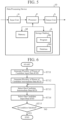
- FIG. 1 is a functional block diagram of a data processing device 10 according to the embodiment. A function of the data processing device 10 according to the embodiment will be described with reference to FIG. 1 .
- An object of the data processing device 10 of the embodiment is to receive inputs of trained input data GND, untrained input data MND, trained intermediate data GCD, and untrained intermediate data MCD, and output selected input data SND to be used for retraining subsequent to training of a machine learning model KGM (illustrated in FIG. 2 ).
- the data processing device 10 includes a first generating unit 11A, a second generating unit 11B, a first selection unit 12A, a second selection unit 12B and a control unit 13.
- the data processing device 10 corresponds to a "data processing device 10"
- the first generating unit 11A corresponds to a "first generating unit”
- the second generating unit 11B corresponds to a "second generating unit”
- the first selection unit 12A corresponds to a "first selection unit”
- the second selection unit 12B corresponds to a "second selection unit”.
- the trained input data GND corresponds to "trained input data”
- the untrained input data MND corresponds to "untrained input data”
- the trained intermediate data GCD corresponds to "trained intermediate data”
- the untrained intermediate data MCD corresponds to "untrained intermediate data”.
- the training corresponds to "first training”, and the retraining corresponds to "second training”.
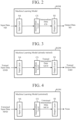
- FIG. 2 illustrates a configuration of a machine learning model KGM according to the embodiment.
- the machine learning model KGM includes an input layer NS, an intermediate layer CS and an output layer SS, which are well known.
- training is performed in which the input layer NS receives an input of input data ND, the intermediate layer CS generates intermediate data CD from the input data ND, and the output layer SS generates output data SD from the intermediate data CD.
- the input layer NS, the intermediate layer CS and the output layer SS are constituted by neural networks
- each of the input layer NS, the intermediate layer CS and the output layer SS is constituted by one or more neural network layers, and each has an independent number of layers.
- FIG. 3 illustrates the trained input data GND and the trained intermediate data GCD according to the embodiment.
- the "trained input data GND” (also illustrated in FIG. 1 ) refers to the input data ND (illustrated in FIG. 2 ) already used for training the machine learning model KGM.
- the "trained intermediate data GCD" (also illustrated in FIG. 1 ) refers to the intermediate data CD (illustrated in FIG. 2 ) generated by the intermediate layer CS in response to the trained input data GND described above.
- the "trained output data GSD” refers to the output data SD (illustrated in FIG. 2 ) generated by the output layer SS in response to the trained intermediate data GCD described above.
- FIG. 4 illustrates the untrained input data MND and the untrained intermediate data MCD according to the embodiment.
- the "untrained input data MND” refers to the input data ND (illustrated in FIG. 2 .) that has not yet been used for training the machine learning model KGM but has been used for the purpose of tentatively obtaining the untrained intermediate data MCD.
- the "untrained intermediate data MCD” refers to the intermediate data CD (illustrated in FIG. 2 ) generated by the intermediate layer CS in response to the untrained input data MND described above.
- the output layer SS does not generate the output data SD (illustrated in FIG. 2 ) corresponding to the trained output data GSD (illustrated in FIG. 3 ).
- the first generating unit 11A generates a plurality of pieces of candidate input data KND by putting together a plurality of pieces of trained input data GND and a plurality of pieces of untrained input data MND.
- the second generating unit 11B generates a plurality of pieces of candidate intermediate data KCD by putting together a plurality of pieces of trained intermediate data GCD and a plurality of pieces of untrained intermediate data MCD.
- the first selection unit 12A selects one piece of candidate intermediate data KCD from among the plurality of pieces of candidate intermediate data KCD. Specifically, the first selection unit 12A more preferentially selects one piece of candidate intermediate data KCD having a greater degree of heterogeneity when used for the retraining than the plurality of pieces of selected intermediate data SCD among the plurality of pieces of candidate intermediate data KCD.
- the "selected intermediate data SCD" includes selected trained intermediate data SGCD and selected untrained intermediate data SMCD.
- the "selected trained intermediate data SGCD" is trained intermediate data GCD already selected by the first selection unit 12A among the plurality of pieces of trained intermediate data GCD (illustrated in FIG. 1 ).
- the "selected untrained intermediate data SMCD" is untrained intermediate data MCD already selected by the first selection unit 12A among the plurality of pieces of untrained intermediate data MCD (illustrated in FIG. 1 ).
- Heterogeneous when used for retraining means that, for example, the knowledge acquired by retraining when used for the retraining described above is likely to be different from the knowledge acquired by training when used for the training described above.
- the second selection unit 12B selects one piece of candidate input data KND corresponding to one piece of candidate intermediate data KCD selected by the first selection unit 12A among the plurality of pieces of candidate input data KND generated by the first generating unit 11A as the selected input data SND to be used for retraining.
- the candidate input data KND corresponds to "candidate input data”
- the candidate intermediate data KCD corresponds to “candidate intermediate data”
- the selected intermediate data SCD corresponds to "selected intermediate data”
- the selected trained intermediate data SGCD corresponds to "selected trained intermediate data”
- the selected untrained intermediate data SMCD corresponds to "selected untrained intermediate data”.
- the control unit 13 monitors and controls the entire operation of the data processing device 10.
- FIG. 5 illustrates the configuration of the data processing device 10 according to the embodiment.
- the data processing device 10 includes an input unit N, a processor P, an output unit S, a storage medium K and a memory M to perform the above-described functions.
- the input unit N includes, for example, a keyboard, a mouse, a touch panel, a camera, a microphone and a scanner.
- the processor P is a core of a well-known computer that operates hardware in accordance with software.
- the output unit S includes, for example, a liquid crystal monitor, a printer and a touch panel.
- the memory M includes, for example, a dynamic random access memory (DRAM) and a static random access memory (SRAM).
- the storage medium K includes, for example, a hard disk drive (HDD), a solid state drive (SSD) and a read only memory (ROM).
- the storage medium K stores a program PR and a database DB.
- the program PR is a set of commands that defines contents of processing to be executed by the processor P.
- the database DB is used, for example, to temporarily or permanently store the plurality of pieces of candidate input data KND and the plurality of pieces of candidate intermediate data KCD.
- the processor P executes the program PR stored in the storage medium K on the memory M, controls the operations of the input unit N and the output unit S as necessary, and operates the database DB in the storage medium K, thereby implementing the function of each of the units of the first generating unit 11A to the control unit 13.
- FIG. 6 is a flowchart illustrating an operation of the data processing device 10 according to the embodiment.
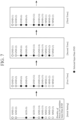
- FIG. 7 is a state transition diagram of candidate input data KND according to the embodiment.
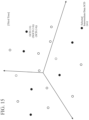
- FIGS. 8 to 15 are state transition diagrams of the candidate intermediate data KCD according to the embodiment.
- Step ST11 The processor P (illustrated in FIG. 5 ) generates a plurality of pieces of candidate input data KND by putting together, as initial setting, a plurality of pieces of trained input data GND (1) to GND (15) and untrained input data MND (1) to MND (3) as the first generating unit 11A (illustrated in FIG. 1 ) as illustrated in FIG. 7 .
- Step ST12 The processor P generates a plurality of pieces of candidate intermediate data KCD by putting together, as initial setting, a plurality of pieces of trained intermediate data GCD (1) to GCD (15) and a plurality of pieces of untrained intermediate data MCD (1) to MCD (3) as the second generating unit 11B (illustrated in FIG. 1 ) as illustrated in FIG. 8 .
- Step ST13 The processor P, as the first selection unit 12A (illustrated in FIG. 1 ), calculates the K-neighbor distance with respect to the selected intermediate data SCD in each of the candidate intermediate data KCD other than the selected intermediate data SCD (9), SCD (12), and SCD (15).
- the K-neighbor distance is defined as a sum or an average of distances (Euclidean distance, Mahalanobis distance, and the like) between target data and K pieces of selected intermediate data SCD which are closest to the target data.
- the K-neighbor distance since the K-neighbor distance is used as a scale for comparing the magnitude relationship of each data for the purpose of data selection, the K-neighbor distance may be defined as a sum of distances to K pieces of data or may be defined as an average of distances to K pieces of data.
- the first selection unit 12A calculates the following for the trained intermediate data GCD (8).
- the first selection unit 12A calculates the following for the untrained intermediate data MCD (2).
- the first selection unit 12A calculates the following for the trained intermediate data GCD (6).
- the first selection unit 12A calculates the K-neighbor distance to the selected intermediate data SCD for the remaining candidate intermediate data KCD. Then, the candidate intermediate data KCD, which has the longest K-neighbor distance KYav among each of the K-neighbor distances KYav of the candidate intermediate data KCD, is selected.
- the first selection unit 12A selects the trained intermediate data GCD (6).
- Step ST14 As illustrated in FIG. 7 , the second selection unit 12B selects, for the first time, the trained intermediate data GCD (6) selected by the first selection unit 12A among the plurality of pieces of candidate input data KND, that is, the trained input data GND (6) corresponding to the selected trained intermediate data SGCD (6) as the selected input data SND (illustrated in FIG. 1 ).
- Step ST15 The processor P determines, as the control unit 13 (illustrated in FIG. 1 ), whether or not the condition is satisfied.
- the "condition” is, for example, completing preparation of a predetermined number of pieces of selected input data SND or completing selection of all the candidate intermediate data KCD having the K-neighbor distance KYav exceeding a predetermined threshold with respect to the K-neighbor distance KYav.
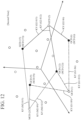
- Step ST13 The first selection unit 12A calculates K-neighbor distance between each of the candidate intermediate data KCD other than the four pieces of selected intermediate data SCD (6), SCD (9), SCD (12) and SCD (15) and the four pieces of selected intermediate data SCD.
- the first selection unit 12A calculates the following for the trained intermediate data GCD (2).
- the result of the first processing may be stored and used as it is.
- the first selection unit 12A calculates the following for the untrained intermediate data MCD (2). For the distance calculated in the first processing, instead of the calculation, the result of the first processing may be stored and used as it is.
- the first selection unit 12A calculates the following for the trained intermediate data GCD (1).
- the result of the first processing may be stored and used as it is.
- the first selection unit 12A calculates the K-neighbor distance to the selected intermediate data SCD for the remaining candidate intermediate data KCD. Then, the candidate intermediate data KCD, which has the longest K-neighbor distance KYav among each of the K-neighbor distance KYav of the candidate intermediate data KCD, is selected.
- the first selection unit 12A selects the untrained intermediate data MCD (2).
- Step ST14 As illustrated in FIG. 7 , the second selection unit 12B selects the untrained intermediate data MCD (2) selected by the first selection unit 12A from among the plurality of pieces of candidate input data KND, that is, the untrained input data MND (2) corresponding to the selected untrained intermediate data SMCD (2) as the selected input data SND (illustrated in FIG. 1 ).
- Step ST15 The control unit 13 determines whether or not the condition is satisfied.
- Step ST13 The first selection unit 12A calculates K-neighbor distance between each of all the candidate intermediate data KCD other than the five pieces of selected intermediate data SCD (2), SCD (6), SCD (9), SCD (12) and SCD (15) and the five pieces of selected intermediate data SCD.
- the first selection unit 12A calculates the following for the trained intermediate data GCD (2). For the distance calculated in the first and second processing, instead of the calculation, the result of the first and second processing may be stored and used as it is.
- the first selection unit 12A calculates the following for the trained intermediate data GCD (3).
- the result of the first and second processing may be stored and used as it is.
- the first selection unit 12A calculates the following for the trained intermediate data GCD (1).
- the result of the first and second processing may be stored and used as it is.
- the first selection unit 12A calculates the K-neighbor distance to the selected intermediate data SCD for the remaining candidate intermediate data KCD. Then, the candidate intermediate data KCD, which has each K-neighbor distance KYav of the candidate intermediate data KCD, is selected.
- the first selection unit 12A selects the trained intermediate data GCD (14).
- Step ST14 As illustrated in FIG. 7 , the second selection unit 12B selects the trained intermediate data GCD (14) selected by the first selection unit 12A among the plurality of pieces of candidate input data KND, that is, the trained input data GND (14) corresponding to the selected trained intermediate data SGCD (14) as the selected input data SND (illustrated in FIG. 1 ).
- the data processing device 10 performs the fourth processing, the fifth processing and so on in the same manner as described above.
- the first selection unit 12A selects the candidate intermediate data KCD having the longest K-neighbor distance KYav from the closest three selected intermediate data SCD, in other words, selects the candidate intermediate data KCD having a greater degree of heterogeneity when used for retraining.
- the second selection unit 12B selects, as the selected input data SND, the candidate input data KND corresponding to the selected candidate intermediate data KCD among the candidate input data KND including the trained input data GND and the untrained input data MND in order to use the candidate input data KND for retraining.
- the ratio between the number of the plurality of pieces of selected trained intermediate data SGCD and the number of the plurality of pieces of selected untrained intermediate data SMCD is desirably substantially equal to the ratio between the number of the plurality of pieces of trained intermediate data GCD and the number of the plurality of pieces of untrained intermediate data MCD.
- the data processing device 10 of the modification example is different from the data processing device 10 of the embodiment using four types of data, that is, the trained input data GND, the trained intermediate data GCD, the untrained input data MND, and the untrained intermediate data MCD, and uses only the latter two types of data, that is, the untrained input data MND and the untrained intermediate data MCD.
- the data processing device 10 of the modification example unlike the data processing device 10 of the embodiment, only the plurality of pieces of untrained input data MND constitute the plurality of pieces of candidate input data KND, and similarly, only the plurality of pieces of untrained intermediate data MCD constitute the plurality of pieces of candidate intermediate data KCD. In other words, unlike the data processing device 10 of the embodiment, it is unnecessary to generate the plurality of pieces of candidate input data KND, and it is unnecessary to generate the plurality of pieces of candidate intermediate data KCD.
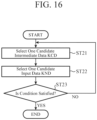
- FIG. 16 is a flowchart illustrating an operation of the data processing device 10 according to the modification example.
- Step ST21 A processor P (illustrated in FIG. 5 ), as the first selection unit 12A ( FIG. 1 ), performs processing similar to that in step ST 13 (first time) of the embodiment, but unlike step ST 13 (first time) of the embodiment, selects, for example, the untrained intermediate data MCD (2) (illustrated in FIG. 8 ) among the plurality of pieces of candidate intermediate data KCD including only the plurality of pieces of untrained intermediate data MCD.
- an object is to acquire knowledge close to the knowledge acquired by training using all the untrained input data MND by training with a small number of data.
- the K-neighbor distance calculated to select the untrained intermediate data may be the K-neighbor distance with the data obtained by adding the trained intermediate data GCD in addition to the selected intermediate data SCD.
- an object is to preferentially select untrained intermediate data MCD having knowledge different from the knowledge acquired by training of the trained input data GND as retraining data.
- Step ST22 The processor P selects, as the second selection unit 12B (illustrated in FIG. 1 ), untrained input data MND (2) corresponding to the selected untrained intermediate data MCD (2) among the plurality of pieces of candidate input data KND including only the plurality of pieces of untrained input data MND.
- Step ST23 The processor P determines, as the control unit 13 ( FIG. 1 ), whether or not the condition is satisfied.
- Step ST21 The first selection unit 12A performs processing similar to that in step ST 13 (second time) of the embodiment, but unlike step ST13 (second time) of the embodiment, selects, for example, the untrained intermediate data MCD (1) (illustrated in FIG. 8 ) among the plurality of pieces of candidate intermediate data KCD including only the plurality of pieces of untrained intermediate data MCD.
- Step ST22 The second selection unit 12B selects untrained input data MND (1) corresponding to the selected untrained intermediate data MCD (1) among the plurality of pieces of candidate input data KND including only the plurality of pieces of untrained input data MND.
- Step ST23 The control unit 13 determines whether or not the condition is satisfied.
- Step ST21 The first selection unit 12A performs processing similar to that in step ST 13 (third time) of the embodiment, but unlike step ST13 (third time) of the embodiment, selects, for example, the untrained intermediate data MCD (3) (illustrated in FIG. 8 ) among the plurality of pieces of candidate intermediate data KCD including only the plurality of pieces of untrained intermediate data MCD.
- Step ST22 The second selection unit 12B selects untrained input data MND (3) corresponding to the selected untrained intermediate data MCD (1) among the plurality of pieces of candidate input data KND including only the plurality of pieces of untrained input data MND.
- Step ST23 The control unit 13 determines whether or not the condition is satisfied.
- the data processing device 10 of the modification example performs the fourth processing, the fifth processing and so on in the same manner as described above.
- the data processing device 10 of the modification example substantially similar to the data processing device 10 of the embodiment, it is possible to suppress the retraining from being performed within a range in which it is unnecessary to perform the retraining, and it is possible to promote the retraining in a range in which it is desirable to perform the retraining.
- Components in the embodiment may be deleted, changed, or another component may be added as appropriate without departing from the gist of the present disclosure.
- the data processing device can be used, for example, to select input data to be used when a machine learning model is retrained.
- 10 data processing device, 11A: first generating unit, 11B: second generating unit, 12A: first selection unit, 12B: second selection unit, 13: control unit, CD: intermediate data, CS: intermediate layer, DB: database, GCD: trained intermediate data, GND: trained input data, GSD: trained output data, K: storage medium, KCD: candidate intermediate data, KGM: machine learning model, KND: candidate input data, KY: distance, KYav: K-neighbor distance, M: memory, MCD: untrained intermediate data, MND: untrained input data, N: input unit, ND: input data, NS: input layer, P: processor, PR: program, S: output unit, SCD: selected intermediate data, SD: output data, SGCD: selected trained intermediate data, SMCD: selected untrained intermediate data, SND: selected input data, SS: output layer
Landscapes
- Engineering & Computer Science (AREA)
- Physics & Mathematics (AREA)
- Artificial Intelligence (AREA)
- Theoretical Computer Science (AREA)
- Computational Linguistics (AREA)
- Health & Medical Sciences (AREA)
- Software Systems (AREA)
- Human Computer Interaction (AREA)
- Audiology, Speech & Language Pathology (AREA)
- Acoustics & Sound (AREA)
- Multimedia (AREA)
- Evolutionary Computation (AREA)
- Computing Systems (AREA)
- Data Mining & Analysis (AREA)
- General Engineering & Computer Science (AREA)
- General Physics & Mathematics (AREA)
- Mathematical Physics (AREA)
- General Health & Medical Sciences (AREA)
- Molecular Biology (AREA)
- Biomedical Technology (AREA)
- Biophysics (AREA)
- Life Sciences & Earth Sciences (AREA)
- Medical Informatics (AREA)
- Computer Vision & Pattern Recognition (AREA)
- Signal Processing (AREA)
- Information Retrieval, Db Structures And Fs Structures Therefor (AREA)
- Machine Translation (AREA)
- Stored Programmes (AREA)
- Image Analysis (AREA)
Abstract
Description
- The present disclosure relates to a data processing device and a data processing method.
- In the acoustic model training support device described in
Patent Literature 1, which is one of the above-described data processing devices, retraining is performed subsequent to training additionally. - Patent Literature 1:
JP 2016-161823 A - However, in the acoustic model training support device described above, all the trained data used in the training is used at the time of the retraining. As a result, there is a problem that the retraining may be performed even though it is within a range in which the training has already been performed and not necessary to newly perform the retraining.
- In the acoustic model training support device described above, at the time of the retraining, in addition to the plurality of pieces of trained data, candidate data selected, among the plurality of pieces of candidate data to be used in addition to the plurality of pieces of trained data, from a relationship with the plurality of pieces of trained data, for example, a relationship between an intermediate feature amount of the plurality of pieces of candidate data and an intermediate feature amount of the plurality of pieces of trained data is newly used. Thus, there is also a problem that the retraining may not be performed even though it is a range which is out of the range where the training has already been performed and in which it would be desirable to newly perform the retraining.
- An object of the present disclosure is at least one of suppressing the retraining from being performed within a range where the retraining is performed and it is not necessary to perform the retraining, and promoting the retraining to be performed in a range which is out of the range where the retraining is performed and in which it is desirable to perform the retraining.
- In order to solve the above problems, a data processing device according to the present disclosure includes: a first generating unit to generate a plurality of pieces of candidate input data by putting together a plurality of pieces of trained input data used for first training in a machine learning model and a plurality of pieces of untrained input data not used for the first training; a second generating unit to generate a plurality of pieces of candidate intermediate data by putting together trained intermediate data given by inputting the plurality of pieces of the trained input data into the machine learning model and untrained intermediate data given by inputting the plurality of pieces of untrained input data into the machine learning model; a first selection unit to select one piece of candidate intermediate data from among the plurality of pieces of the candidate intermediate data, the first selection unit more preferentially selecting the one piece of candidate intermediate data having a greater degree of heterogeneity when used for second training subsequent to the first training as compared with selected intermediate data including selected trained intermediate data that is the trained intermediate data already selected and selected untrained intermediate data that is the untrained intermediate data already selected; and a second selection unit to select one piece of candidate input data, from among the plurality of pieces of the candidate input data, corresponding to the one piece of candidate intermediate data as data to be used at a time of the second training.
- According to the data processing device of the present disclosure, it is possible to suppress the retraining from being performed within a range in which the training has been performed and it is unnecessary to perform the retraining, and it is possible to promote the retraining to be performed in a range which is out of the range in which the training has been performed and in which it is desirable to perform the retraining.
-
-
FIG. 1 is a functional block diagram of adata processing device 10 according to an embodiment. -
FIG. 2 illustrates a configuration of a machine learning model KGM according to the embodiment. -
FIG. 3 illustrates trained input data GND and trained intermediate data GCD according to the embodiment. -
FIG. 4 illustrates untrained input data MND and untrained intermediate data MCD according to the embodiment. -
FIG. 5 illustrates the configuration of thedata processing device 10 according to the embodiment. -
FIG. 6 is a flowchart illustrating an operation of thedata processing device 10 according to the embodiment. -
FIG. 7 is a state transition diagram of candidate input data KND according to the embodiment. -
FIG. 8 is a state transition diagram (part 1) of candidate intermediate data KCD according to the embodiment. -
FIG. 9 is a state transition diagram (part 2) of candidate intermediate data KCD according to the embodiment. -
FIG. 10 is a state transition diagram (part 3) of candidate intermediate data KCD according to the embodiment. -
FIG. 11 is a state transition diagram (part 4) of candidate intermediate data KCD according to the embodiment. -
FIG. 12 is a state transition diagram (part 5) of candidate intermediate data KCD according to the embodiment. -
FIG. 13 is a state transition diagram (part 6) of candidate intermediate data KCD according to the embodiment. -
FIG. 14 is a state transition diagram (part 7) of candidate intermediate data KCD according to the embodiment. -
FIG. 15 is a state transition diagram (part 8) of candidate intermediate data KCD according to the embodiment. -
FIG. 16 is a flowchart illustrating an operation of adata processing device 10 according to a modification example. - An embodiment of a data processing device according to the present disclosure will be described.
-
FIG. 1 is a functional block diagram of adata processing device 10 according to the embodiment. A function of thedata processing device 10 according to the embodiment will be described with reference toFIG. 1 . - An object of the
data processing device 10 of the embodiment is to receive inputs of trained input data GND, untrained input data MND, trained intermediate data GCD, and untrained intermediate data MCD, and output selected input data SND to be used for retraining subsequent to training of a machine learning model KGM (illustrated inFIG. 2 ). For this purpose, thedata processing device 10 includes afirst generating unit 11A, a second generatingunit 11B, afirst selection unit 12A, asecond selection unit 12B and acontrol unit 13. - The
data processing device 10 corresponds to a "data processing device 10", thefirst generating unit 11A corresponds to a "first generating unit", thesecond generating unit 11B corresponds to a "second generating unit", thefirst selection unit 12A corresponds to a "first selection unit", and thesecond selection unit 12B corresponds to a "second selection unit". - The trained input data GND corresponds to "trained input data", the untrained input data MND corresponds to "untrained input data", the trained intermediate data GCD corresponds to "trained intermediate data", and the untrained intermediate data MCD corresponds to "untrained intermediate data".
- The training corresponds to "first training", and the retraining corresponds to "second training".
-
FIG. 2 illustrates a configuration of a machine learning model KGM according to the embodiment. - As illustrated in
FIG. 2 , the machine learning model KGM includes an input layer NS, an intermediate layer CS and an output layer SS, which are well known. In the machine learning model KGM, as conventionally known, training is performed in which the input layer NS receives an input of input data ND, the intermediate layer CS generates intermediate data CD from the input data ND, and the output layer SS generates output data SD from the intermediate data CD. In this training, in a case where the input layer NS, the intermediate layer CS and the output layer SS are constituted by neural networks, each of the input layer NS, the intermediate layer CS and the output layer SS is constituted by one or more neural network layers, and each has an independent number of layers. -
FIG. 3 illustrates the trained input data GND and the trained intermediate data GCD according to the embodiment. - The "trained input data GND" (also illustrated in
FIG. 1 ) refers to the input data ND (illustrated inFIG. 2 ) already used for training the machine learning model KGM. - The "trained intermediate data GCD" (also illustrated in
FIG. 1 ) refers to the intermediate data CD (illustrated inFIG. 2 ) generated by the intermediate layer CS in response to the trained input data GND described above. - Note that the "trained output data GSD" refers to the output data SD (illustrated in
FIG. 2 ) generated by the output layer SS in response to the trained intermediate data GCD described above. -
FIG. 4 illustrates the untrained input data MND and the untrained intermediate data MCD according to the embodiment. - The "untrained input data MND" refers to the input data ND (illustrated in
FIG. 2 .) that has not yet been used for training the machine learning model KGM but has been used for the purpose of tentatively obtaining the untrained intermediate data MCD. - The "untrained intermediate data MCD" refers to the intermediate data CD (illustrated in
FIG. 2 ) generated by the intermediate layer CS in response to the untrained input data MND described above. - Note that, since the untrained intermediate data MCD is tentatively obtained, the output layer SS does not generate the output data SD (illustrated in
FIG. 2 ) corresponding to the trained output data GSD (illustrated inFIG. 3 ). - Referring back to
FIG. 1 , functions of thedata processing device 10 will be described. - The
first generating unit 11A generates a plurality of pieces of candidate input data KND by putting together a plurality of pieces of trained input data GND and a plurality of pieces of untrained input data MND. - The second generating
unit 11B generates a plurality of pieces of candidate intermediate data KCD by putting together a plurality of pieces of trained intermediate data GCD and a plurality of pieces of untrained intermediate data MCD. - The
first selection unit 12A selects one piece of candidate intermediate data KCD from among the plurality of pieces of candidate intermediate data KCD. Specifically, thefirst selection unit 12A more preferentially selects one piece of candidate intermediate data KCD having a greater degree of heterogeneity when used for the retraining than the plurality of pieces of selected intermediate data SCD among the plurality of pieces of candidate intermediate data KCD. - The "selected intermediate data SCD" includes selected trained intermediate data SGCD and selected untrained intermediate data SMCD.
- The "selected trained intermediate data SGCD" is trained intermediate data GCD already selected by the
first selection unit 12A among the plurality of pieces of trained intermediate data GCD (illustrated inFIG. 1 ). - The "selected untrained intermediate data SMCD" is untrained intermediate data MCD already selected by the
first selection unit 12A among the plurality of pieces of untrained intermediate data MCD (illustrated inFIG. 1 ). - "Heterogeneous when used for retraining" means that, for example, the knowledge acquired by retraining when used for the retraining described above is likely to be different from the knowledge acquired by training when used for the training described above.
- The
second selection unit 12B selects one piece of candidate input data KND corresponding to one piece of candidate intermediate data KCD selected by thefirst selection unit 12A among the plurality of pieces of candidate input data KND generated by thefirst generating unit 11A as the selected input data SND to be used for retraining. - The candidate input data KND corresponds to "candidate input data", the candidate intermediate data KCD corresponds to "candidate intermediate data", the selected intermediate data SCD corresponds to "selected intermediate data", the selected trained intermediate data SGCD corresponds to "selected trained intermediate data", and the selected untrained intermediate data SMCD corresponds to "selected untrained intermediate data".
- The
control unit 13 monitors and controls the entire operation of thedata processing device 10. -
FIG. 5 illustrates the configuration of thedata processing device 10 according to the embodiment. - As illustrated in
FIG. 5 , thedata processing device 10 includes an input unit N, a processor P, an output unit S, a storage medium K and a memory M to perform the above-described functions. - The input unit N includes, for example, a keyboard, a mouse, a touch panel, a camera, a microphone and a scanner. The processor P is a core of a well-known computer that operates hardware in accordance with software. The output unit S includes, for example, a liquid crystal monitor, a printer and a touch panel. The memory M includes, for example, a dynamic random access memory (DRAM) and a static random access memory (SRAM). The storage medium K includes, for example, a hard disk drive (HDD), a solid state drive (SSD) and a read only memory (ROM).
- The storage medium K stores a program PR and a database DB. The program PR is a set of commands that defines contents of processing to be executed by the processor P. The database DB is used, for example, to temporarily or permanently store the plurality of pieces of candidate input data KND and the plurality of pieces of candidate intermediate data KCD.
- Regarding the relationship between the function and the configuration in the
data processing device 10, on the hardware, the processor P executes the program PR stored in the storage medium K on the memory M, controls the operations of the input unit N and the output unit S as necessary, and operates the database DB in the storage medium K, thereby implementing the function of each of the units of thefirst generating unit 11A to thecontrol unit 13. -
FIG. 6 is a flowchart illustrating an operation of thedata processing device 10 according to the embodiment. -
FIG. 7 is a state transition diagram of candidate input data KND according to the embodiment. -
FIGS. 8 to 15 are state transition diagrams of the candidate intermediate data KCD according to the embodiment. - The operation of the
data processing device 10 of the embodiment will be described with reference to the flowchart ofFIG. 6 , the state transition diagram of the candidate input data KND ofFIG. 7 , and the state transition diagrams of the candidate intermediate data KCD ofFIGS. 8 to 15 . - For ease of description and understanding, the following is assumed. However, in order to enable illustration in the present description, a case where the dimension of the intermediate data CD is three will be described (
FIGS. 8 to 15 ). - (1A) The plurality of pieces of trained input data GND, the plurality of pieces of untrained input data MND, the plurality of pieces of trained intermediate data GCD, and the plurality of pieces of untrained intermediate data MCD are prepared in advance.
- (1B) The plurality of pieces of trained intermediate data GCD and the plurality of pieces of untrained intermediate data MCD are distributed in the space illustrated in
FIG. 8 . - (1C) The three pieces of selected intermediate data SCD are given in advance. More specifically, as illustrated in
FIG. 9 , the trained intermediate data GCD (9), GCD (12), and GCD (15) are selected from among the plurality of pieces of candidate intermediate data KCD (illustrated inFIG. 8 ), and exist as the selected intermediate data SCD (9), SCD (12), and SCD (15). - Step ST11: The processor P (illustrated in
FIG. 5 ) generates a plurality of pieces of candidate input data KND by putting together, as initial setting, a plurality of pieces of trained input data GND (1) to GND (15) and untrained input data MND (1) to MND (3) as thefirst generating unit 11A (illustrated inFIG. 1 ) as illustrated inFIG. 7 . - Step ST12: The processor P generates a plurality of pieces of candidate intermediate data KCD by putting together, as initial setting, a plurality of pieces of trained intermediate data GCD (1) to GCD (15) and a plurality of pieces of untrained intermediate data MCD (1) to MCD (3) as the
second generating unit 11B (illustrated inFIG. 1 ) as illustrated inFIG. 8 . - Step ST13: The processor P, as the
first selection unit 12A (illustrated inFIG. 1 ), calculates the K-neighbor distance with respect to the selected intermediate data SCD in each of the candidate intermediate data KCD other than the selected intermediate data SCD (9), SCD (12), and SCD (15). Herein, the K-neighbor distance is defined as a sum or an average of distances (Euclidean distance, Mahalanobis distance, and the like) between target data and K pieces of selected intermediate data SCD which are closest to the target data. In the present embodiment, since the K-neighbor distance is used as a scale for comparing the magnitude relationship of each data for the purpose of data selection, the K-neighbor distance may be defined as a sum of distances to K pieces of data or may be defined as an average of distances to K pieces of data. Hereinafter, in the present example, a case where the distance is a Euclidean distance and K=3 will be described. - As illustrated in
FIG. 10 , for example, thefirst selection unit 12A calculates the following for the trained intermediate data GCD (8). - (1-1-1) Distance KY (G8-S9) between trained intermediate data GCD (8) and selected intermediate data SCD (9)
- (1-1-2) Distance KY (G8-S12) between trained intermediate data GCD (8) and selected intermediate data SCD (12)
- (1-1-3) Distance KY (G8-S15) between trained intermediate data GCD (8) and selected intermediate data SCD (15)
- (1-1-4) K-neighbor distances KYav (G8) of distances KY (G8-S9), KY (G8-S12) and KY (G8-S15) (not illustrated)
- Similar to the above, as illustrated in
FIG. 10 , for example, thefirst selection unit 12A calculates the following for the untrained intermediate data MCD (2). - (1-2-1) Distance KY (M2- S9) between untrained intermediate data MCD (2) and selected intermediate data SCD (9)
- (1-2-2) Distance KY (M2-S12) between untrained intermediate data MCD (2) and selected intermediate data SCD (12)
- (1-2-3) Distance KY (M2-S15) between untrained intermediate data MCD (2) and selected intermediate data SCD (15)
- (1-2-4) K-neighbor distances KYav (M2) of distances KY (M2-S9), KY (M2-S12) and KY (M2-S15) (not illustrated)
- Similar to the above, as illustrated in
FIG. 10 , for example, thefirst selection unit 12A calculates the following for the trained intermediate data GCD (6). - (1-3-1) Distance KY (G6-S9) between trained intermediate data GCD (6) and selected intermediate data SCD (9)
- (1-3-2) Distance KY (G6-S12) between trained intermediate data GCD (6) and selected intermediate data SCD (12)
- (1-3-3) Distance KY (G6-S15) between trained intermediate data GCD (6) and selected intermediate data SCD (15)
- (1-3-4) K-neighbor distances KYav (G6) of distances KY (G6-S9), KY (G6-S12) and KY (G6-S15) (not illustrated)
- Similarly, the
first selection unit 12A calculates the K-neighbor distance to the selected intermediate data SCD for the remaining candidate intermediate data KCD. Then, the candidate intermediate data KCD, which has the longest K-neighbor distance KYav among each of the K-neighbor distances KYav of the candidate intermediate data KCD, is selected. - Herein, as illustrated in
FIG. 11 , for example, suppose that thefirst selection unit 12A selects the trained intermediate data GCD (6). - Step ST14: As illustrated in
FIG. 7 , thesecond selection unit 12B selects, for the first time, the trained intermediate data GCD (6) selected by thefirst selection unit 12A among the plurality of pieces of candidate input data KND, that is, the trained input data GND (6) corresponding to the selected trained intermediate data SGCD (6) as the selected input data SND (illustrated inFIG. 1 ). - Step ST15: The processor P determines, as the control unit 13 (illustrated in
FIG. 1 ), whether or not the condition is satisfied. The "condition" is, for example, completing preparation of a predetermined number of pieces of selected input data SND or completing selection of all the candidate intermediate data KCD having the K-neighbor distance KYav exceeding a predetermined threshold with respect to the K-neighbor distance KYav. - When the condition is satisfied, the processing ends via "YES", and on the other hand, when the condition is not satisfied, the processing returns to step ST13 via " NO".
- Herein, suppose that the condition is not satisfied.
- Step ST13: The
first selection unit 12A calculates K-neighbor distance between each of the candidate intermediate data KCD other than the four pieces of selected intermediate data SCD (6), SCD (9), SCD (12) and SCD (15) and the four pieces of selected intermediate data SCD. - Hereinafter, as illustrated in
FIG. 12 , for example, suppose the following for the trained intermediate data GCD (2), the untrained intermediate data MCD (2) and the trained intermediate data GCD (1). - (2A) The three selected intermediate data SCD (6), SCD (12) and SCD (15) are closest to the trained intermediate data GCD (2).
- (2B) The three selected intermediate data SCD (9), SCD (12) and SCD (15) are closest to the untrained intermediate data MCD (2).
- (2C) The three selected intermediate data SCD (6), SCD (9) and SCD (12) are closest to the trained intermediate data GCD (1).
- Similar to the above, as illustrated in
FIG. 12 , for example, thefirst selection unit 12A calculates the following for the trained intermediate data GCD (2). For the distance calculated in the first processing, instead of the calculation, the result of the first processing may be stored and used as it is. - (2-3-1) Distance KY (G2-S6) between trained intermediate data GCD (2) and selected intermediate data SCD (6)
- (2-3-2) Distance KY (G2-S12) between trained intermediate data GCD (2) and selected intermediate data SCD (12)
- (2-3-3) Distance KY (G2-S15) between trained intermediate data GCD (2) and selected intermediate data SCD (15)
- (2-3-4) K-neighbor distances KYav (G2) of distances KY (G2-S6), KY (G2-S12) and KY (G2-S15) (not illustrated)
- Similar to the above, as illustrated in
FIG. 12 , for example, thefirst selection unit 12A calculates the following for the untrained intermediate data MCD (2). For the distance calculated in the first processing, instead of the calculation, the result of the first processing may be stored and used as it is. - (2-2-1) Distance KY (M2-S9) between untrained intermediate data MCD (2) and selected intermediate data SCD (9)
- (2-2-2) Distance KY (M2-S12) between untrained intermediate data MCD (2) and selected intermediate data SCD (12)
- (2-2-3) Distance KY (M2-S15) between untrained intermediate data MCD (2) and selected intermediate data SCD (15)
- (2-2-4) K-neighbor distances KYav (M2) of distances KY (M2-S9), KY (M2-S12) and KY (M2-S15) (not illustrated)
- Similar to the above, as illustrated in
FIG. 12 , for example, thefirst selection unit 12A calculates the following for the trained intermediate data GCD (1). For the distance calculated in the first processing, instead of the calculation, the result of the first processing may be stored and used as it is. - (2-1-1) Distance KY (G1-S6) between trained intermediate data GCD (1) and selected intermediate data SCD (6)
- (2-1-2) Distance KY (G1-S9) between trained intermediate data GCD (1) and selected intermediate data SCD (9)
- (2-1-3) Distance KY (G1-S12) between trained intermediate data GCD (1) and selected intermediate data SCD (12)
- (2-1-4) K-neighbor distances KYav (G1) of distances KY (G1-S6), KY (G1-S9) and KY (G1-S12) (not illustrated)
- Similarly, the
first selection unit 12A calculates the K-neighbor distance to the selected intermediate data SCD for the remaining candidate intermediate data KCD. Then, the candidate intermediate data KCD, which has the longest K-neighbor distance KYav among each of the K-neighbor distance KYav of the candidate intermediate data KCD, is selected. - Herein, as illustrated in
FIG. 13 , for example, suppose that thefirst selection unit 12A selects the untrained intermediate data MCD (2). - Step ST14: As illustrated in
FIG. 7 , thesecond selection unit 12B selects the untrained intermediate data MCD (2) selected by thefirst selection unit 12A from among the plurality of pieces of candidate input data KND, that is, the untrained input data MND (2) corresponding to the selected untrained intermediate data SMCD (2) as the selected input data SND (illustrated inFIG. 1 ). - Step ST15: The
control unit 13 determines whether or not the condition is satisfied. - Herein, suppose that the condition is not satisfied. The processing returns to step ST13 again after "NO".
- Step ST13: The
first selection unit 12A calculates K-neighbor distance between each of all the candidate intermediate data KCD other than the five pieces of selected intermediate data SCD (2), SCD (6), SCD (9), SCD (12) and SCD (15) and the five pieces of selected intermediate data SCD. - Hereinafter, as illustrated in
FIG. 14 , for example, suppose the following for the trained intermediate data GCD (2), GCD (3) and GCD (1). - (3A) The three selected intermediate data SCD (6), SCD (12) and SCD (15) are closest to the trained intermediate data GCD (2).
- (3B) The three selected intermediate data SCD (2), SCD (9) and SCD (15) are closest to the trained intermediate data GCD (3).
- (3C) The three selected intermediate data SCD (6), SCD (9) and SCD (12) are closest to the trained intermediate data GCD (1).
- As illustrated in
FIG. 14 , for example, thefirst selection unit 12A calculates the following for the trained intermediate data GCD (2). For the distance calculated in the first and second processing, instead of the calculation, the result of the first and second processing may be stored and used as it is. - (3-3-1) Distance KY (G2-S6) between trained intermediate data GCD (2) and selected intermediate data SCD (6)
- (3-3-2) Distance KY (G2-S12) between trained intermediate data GCD (2) and selected intermediate data SCD (12)
- (3-3-3) Distance KY (G2-S15) between trained intermediate data GCD (2) and selected intermediate data SCD (15)
- (3-3-4) K-neighbor distances KYav (G2) of distances KY (G2-S6), KY (G2-S12) and KY (G2-S15) (not illustrated)
- Similar to the above, as illustrated in
FIG. 1 , for example, thefirst selection unit 12A calculates the following for the trained intermediate data GCD (3). For the distance calculated in the first and second processing, instead of the calculation, the result of the first and second processing may be stored and used as it is. - (3-2-1) Distance KY (G3-S2) between trained intermediate data GCD (3) and selected intermediate data SCD (2)
- (3-2-2) Distance KY (G3-S9) between trained intermediate data GCD (3) and selected intermediate data SCD (9)
- (3-2-3) Distance KY (G3-S15) between trained intermediate data GCD (3) and selected intermediate data SCD (15)
- (3-2-4) K-neighbor distances KYav (G3) of distances KY (G3-S2), KY (G3-S9) and KY (G3-S15) (not illustrated)
- Similar to the above, as illustrated in
FIG. 14 , for example, thefirst selection unit 12A calculates the following for the trained intermediate data GCD (1). For the distance calculated in the first and second processing, instead of the calculation, the result of the first and second processing may be stored and used as it is. - (3-1-1) Distance KY (G1-S6) between trained intermediate data GCD (1) and selected intermediate data SCD (6)
- (3-1-2) Distance KY (G1-S9) between trained intermediate data GCD (1) and selected intermediate data SCD (9)
- (3-1-3) Distance KY (G1-S12) between trained intermediate data GCD (1) and selected intermediate data SCD (12)
- (3-1-4) K-neighbor distances KYav (G1) of distances KY (G1-S6), KY (G1-S9) and KY (G1-S12) (not illustrated)
- Similarly, the
first selection unit 12A calculates the K-neighbor distance to the selected intermediate data SCD for the remaining candidate intermediate data KCD. Then, the candidate intermediate data KCD, which has each K-neighbor distance KYav of the candidate intermediate data KCD, is selected. - Herein, as illustrated in
FIG. 15 , for example, suppose that thefirst selection unit 12A selects the trained intermediate data GCD (14). - Step ST14: As illustrated in
FIG. 7 , thesecond selection unit 12B selects the trained intermediate data GCD (14) selected by thefirst selection unit 12A among the plurality of pieces of candidate input data KND, that is, the trained input data GND (14) corresponding to the selected trained intermediate data SGCD (14) as the selected input data SND (illustrated inFIG. 1 ). - The
data processing device 10 performs the fourth processing, the fifth processing and so on in the same manner as described above. - As described above, in the
data processing device 10 of the embodiment, thefirst selection unit 12A selects the candidate intermediate data KCD having the longest K-neighbor distance KYav from the closest three selected intermediate data SCD, in other words, selects the candidate intermediate data KCD having a greater degree of heterogeneity when used for retraining. - After the selection, the
second selection unit 12B selects, as the selected input data SND, the candidate input data KND corresponding to the selected candidate intermediate data KCD among the candidate input data KND including the trained input data GND and the untrained input data MND in order to use the candidate input data KND for retraining. - Thus, it is possible to suppress the retraining from being performed within a range in which the training has been performed and it is unnecessary to perform the retraining, and it is possible to promote the retraining to be performed in a range which is out of the range in which the training has been performed and in which it is desirable to perform the retraining.
- In the selection of the candidate intermediate data KCD by the
second selection unit 12B, for example, the ratio between the number of the plurality of pieces of selected trained intermediate data SGCD and the number of the plurality of pieces of selected untrained intermediate data SMCD is desirably substantially equal to the ratio between the number of the plurality of pieces of trained intermediate data GCD and the number of the plurality of pieces of untrained intermediate data MCD. - A modification example of the
data processing device 10 according to the embodiment will be described - The
data processing device 10 of the modification example is different from thedata processing device 10 of the embodiment using four types of data, that is, the trained input data GND, the trained intermediate data GCD, the untrained input data MND, and the untrained intermediate data MCD, and uses only the latter two types of data, that is, the untrained input data MND and the untrained intermediate data MCD. - Therefore, in the
data processing device 10 of the modification example, unlike thedata processing device 10 of the embodiment, only the plurality of pieces of untrained input data MND constitute the plurality of pieces of candidate input data KND, and similarly, only the plurality of pieces of untrained intermediate data MCD constitute the plurality of pieces of candidate intermediate data KCD. In other words, unlike thedata processing device 10 of the embodiment, it is unnecessary to generate the plurality of pieces of candidate input data KND, and it is unnecessary to generate the plurality of pieces of candidate intermediate data KCD. -
FIG. 16 is a flowchart illustrating an operation of thedata processing device 10 according to the modification example. - The operation of the
data processing device 10 of the modification example will be described with reference to the flowchart ofFIG. 16 . - Step ST21: A processor P (illustrated in
FIG. 5 ), as thefirst selection unit 12A (FIG. 1 ), performs processing similar to that in step ST 13 (first time) of the embodiment, but unlike step ST 13 (first time) of the embodiment, selects, for example, the untrained intermediate data MCD (2) (illustrated inFIG. 8 ) among the plurality of pieces of candidate intermediate data KCD including only the plurality of pieces of untrained intermediate data MCD. In this case, an object is to acquire knowledge close to the knowledge acquired by training using all the untrained input data MND by training with a small number of data. On the other hand, the K-neighbor distance calculated to select the untrained intermediate data may be the K-neighbor distance with the data obtained by adding the trained intermediate data GCD in addition to the selected intermediate data SCD. In this case, an object is to preferentially select untrained intermediate data MCD having knowledge different from the knowledge acquired by training of the trained input data GND as retraining data. - Step ST22: The processor P selects, as the
second selection unit 12B (illustrated inFIG. 1 ), untrained input data MND (2) corresponding to the selected untrained intermediate data MCD (2) among the plurality of pieces of candidate input data KND including only the plurality of pieces of untrained input data MND. - Step ST23: The processor P determines, as the control unit 13 (
FIG. 1 ), whether or not the condition is satisfied. - Herein, suppose that the condition is not satisfied. The processing returns to step ST21 again after "NO".
- Step ST21: The
first selection unit 12A performs processing similar to that in step ST 13 (second time) of the embodiment, but unlike step ST13 (second time) of the embodiment, selects, for example, the untrained intermediate data MCD (1) (illustrated inFIG. 8 ) among the plurality of pieces of candidate intermediate data KCD including only the plurality of pieces of untrained intermediate data MCD. - Step ST22: The
second selection unit 12B selects untrained input data MND (1) corresponding to the selected untrained intermediate data MCD (1) among the plurality of pieces of candidate input data KND including only the plurality of pieces of untrained input data MND. - Step ST23: The
control unit 13 determines whether or not the condition is satisfied. - Herein, suppose that the condition is not satisfied, and the processing returns to step ST21 again.
- Step ST21: The
first selection unit 12A performs processing similar to that in step ST 13 (third time) of the embodiment, but unlike step ST13 (third time) of the embodiment, selects, for example, the untrained intermediate data MCD (3) (illustrated inFIG. 8 ) among the plurality of pieces of candidate intermediate data KCD including only the plurality of pieces of untrained intermediate data MCD. - Step ST22: The
second selection unit 12B selects untrained input data MND (3) corresponding to the selected untrained intermediate data MCD (1) among the plurality of pieces of candidate input data KND including only the plurality of pieces of untrained input data MND. - Step ST23: The
control unit 13 determines whether or not the condition is satisfied. - Herein, suppose that the condition is not satisfied, and the processing returns to step ST21 again.
- The
data processing device 10 of the modification example performs the fourth processing, the fifth processing and so on in the same manner as described above. - In the
data processing device 10 of the modification example, substantially similar to thedata processing device 10 of the embodiment, it is possible to suppress the retraining from being performed within a range in which it is unnecessary to perform the retraining, and it is possible to promote the retraining in a range in which it is desirable to perform the retraining. - Components in the embodiment may be deleted, changed, or another component may be added as appropriate without departing from the gist of the present disclosure.
- The data processing device according to the present disclosure can be used, for example, to select input data to be used when a machine learning model is retrained.
- 10: data processing device, 11A: first generating unit, 11B: second generating unit, 12A: first selection unit, 12B: second selection unit, 13: control unit, CD: intermediate data, CS: intermediate layer, DB: database, GCD: trained intermediate data, GND: trained input data, GSD: trained output data, K: storage medium, KCD: candidate intermediate data, KGM: machine learning model, KND: candidate input data, KY: distance, KYav: K-neighbor distance, M: memory, MCD: untrained intermediate data, MND: untrained input data, N: input unit, ND: input data, NS: input layer, P: processor, PR: program, S: output unit, SCD: selected intermediate data, SD: output data, SGCD: selected trained intermediate data, SMCD: selected untrained intermediate data, SND: selected input data, SS: output layer
Claims (6)
- A data processing device comprising:a first generating unit to generate a plurality of pieces of candidate input data by putting together a plurality of pieces of trained input data used for first training in a machine learning model and a plurality of pieces of untrained input data not used for the first training;a second generating unit to generate a plurality of pieces of candidate intermediate data by putting together trained intermediate data given by inputting the plurality of pieces of the trained input data into the machine learning model and untrained intermediate data given by inputting the plurality of pieces of untrained input data into the machine learning model;a first selection unit to select one piece of candidate intermediate data from among the plurality of pieces of the candidate intermediate data, the first selection unit more preferentially selecting the one piece of candidate intermediate data having a greater degree of heterogeneity when used for second training subsequent to the first training as compared with selected intermediate data including selected trained intermediate data that is the trained intermediate data already selected and selected untrained intermediate data that is the untrained intermediate data already selected; anda second selection unit to select one piece of candidate input data, from among the plurality of pieces of the candidate input data, corresponding to the one piece of candidate intermediate data as data to be used at a time of the second training.
- A data processing device comprising:a first selection unit to select one piece of candidate intermediate data from among a plurality of pieces of candidate intermediate data which are untrained intermediate data given by inputting, to a machine learning model, a plurality of pieces of untrained input data not used for first training in the machine learning model, the first selection unit more preferentially selecting the one piece of candidate intermediate data having a greater degree of heterogeneity when used for second training subsequent to the first training as compared with selected intermediate data which is selected untrained intermediate data that is the untrained intermediate data already selected; anda second selection unit to select one piece of candidate input data corresponding to the one piece of candidate intermediate data selected from among a plurality of pieces of candidate input data which are the plurality of pieces of untrained input data to be used at a time of the second training.
- A data processing device comprising:a first selection unit to select one piece of candidate intermediate data from among a plurality of pieces of candidate intermediate data which are untrained intermediate data given by inputting, to a machine learning model, a plurality of pieces of untrained input data not used for first training in the machine learning model, the first selection unit more preferentially selecting the one piece of candidate intermediate data having a greater degree of heterogeneity when used for second training subsequent to the first training as compared with trained intermediate data and selected intermediate data which is selected untrained intermediate data that is the untrained intermediate data already selected; anda second selection unit to select one piece of candidate input data corresponding to the one piece of candidate intermediate data selected from among a plurality of pieces of candidate input data which are the plurality of pieces of untrained input data to be used at a time of the second training.
- A data processing method comprising:generating, by a first generating unit, a plurality of pieces of candidate input data by putting together a plurality of pieces of trained input data used for first training in a machine learning model and a plurality of pieces of untrained input data not used for the first training;generating, by a second generating unit, a plurality of pieces of candidate intermediate data by putting together trained intermediate data given by inputting the plurality of pieces of the trained input data into the machine learning model and untrained intermediate data given by inputting the plurality of pieces of untrained input data into the machine learning model;selecting, by a first selection unit, one piece of candidate intermediate data from among the plurality of pieces of the candidate intermediate data, the first selection unit more preferentially selecting the one piece of candidate intermediate data having a greater degree of heterogeneity when used for second training subsequent to the first training as compared with selected intermediate data including selected trained intermediate data that is the trained intermediate data already selected and selected untrained intermediate data that is the untrained intermediate data already selected; andselecting, by a second selection unit, one piece of candidate input data, from among the plurality of pieces of the candidate input data, corresponding to the one piece of candidate intermediate data as data to be used at a time of the second training.
- A data processing method comprising:selecting, by a first selection unit, one piece of candidate intermediate data from among a plurality of pieces of candidate intermediate data which are untrained intermediate data given by inputting, to a machine learning model, a plurality of pieces of untrained input data not used for first training in the machine learning model, the first selection unit more preferentially selecting the one piece of candidate intermediate data having a greater degree of heterogeneity when used for second training subsequent to the first training as compared with selected intermediate data which is selected untrained intermediate data that is the untrained intermediate data already selected; andselecting, by a second selection unit, one piece of candidate input data corresponding to the one piece of candidate intermediate data selected from among a plurality of pieces of candidate input data which are the plurality of pieces of untrained input data to be used at a time of the second training.
- A data processing method comprising:selecting, by a first selection unit, one piece of candidate intermediate data from among a plurality of pieces of candidate intermediate data which are untrained intermediate data given by inputting, to a machine learning model, a plurality of pieces of untrained input data not used for first training in the machine learning model, the first selection unit more preferentially selecting the one piece of candidate intermediate data having a greater degree of heterogeneity when used for second training subsequent to the first training as compared with trained intermediate data and selected intermediate data which is selected untrained intermediate data that is the untrained intermediate data already selected; andselecting, by a second selection unit, one piece of candidate input data corresponding to the one piece of candidate intermediate data selected from among a plurality of pieces of candidate input data which are the plurality of pieces of untrained input data to be used at a time of the second training.
Applications Claiming Priority (1)
| Application Number | Priority Date | Filing Date | Title |
|---|---|---|---|
| PCT/JP2021/025545 WO2023281640A1 (en) | 2021-07-07 | 2021-07-07 | Data processing device and data processing method |
Publications (2)
| Publication Number | Publication Date |
|---|---|
| EP4345694A1 true EP4345694A1 (en) | 2024-04-03 |
| EP4345694A4 EP4345694A4 (en) | 2024-07-31 |
Family
ID=84800454
Family Applications (1)
| Application Number | Title | Priority Date | Filing Date |
|---|---|---|---|
| EP21949275.8A Ceased EP4345694A4 (en) | 2021-07-07 | 2021-07-07 | DATA PROCESSING DEVICE AND DATA PROCESSING METHOD |
Country Status (7)
| Country | Link |
|---|---|
| US (1) | US20240161010A1 (en) |
| EP (1) | EP4345694A4 (en) |
| JP (1) | JP7337307B2 (en) |
| KR (1) | KR102729986B1 (en) |
| CN (1) | CN117597697A (en) |
| TW (1) | TWI869640B (en) |
| WO (1) | WO2023281640A1 (en) |
Family Cites Families (13)
| Publication number | Priority date | Publication date | Assignee | Title |
|---|---|---|---|---|
| KR20100062801A (en) * | 2008-12-01 | 2010-06-10 | 한국전자통신연구원 | Method and apparatus of training data verication using machine learning |
| WO2016061283A1 (en) * | 2014-10-14 | 2016-04-21 | Skytree, Inc. | Configurable machine learning method selection and parameter optimization system and method |
| KR20160050807A (en) * | 2014-10-31 | 2016-05-11 | 삼성에스디에스 주식회사 | Apparatus for data analysis and prediction and method thereof |
| JP6306528B2 (en) | 2015-03-03 | 2018-04-04 | 株式会社日立製作所 | Acoustic model learning support device and acoustic model learning support method |
| US11334789B2 (en) * | 2015-03-17 | 2022-05-17 | Qualcomm Incorporated | Feature selection for retraining classifiers |
| US10867246B1 (en) * | 2017-08-24 | 2020-12-15 | Arimo, LLC | Training a neural network using small training datasets |
| KR101897962B1 (en) * | 2017-11-27 | 2018-10-31 | 한국인터넷진흥원 | Method for performing machine learning for neural network model and apparatus thereof |
| CN109671433B (en) * | 2019-01-10 | 2023-06-16 | 腾讯科技(深圳)有限公司 | Keyword detection method and related device |
| DE102019206050A1 (en) * | 2019-04-26 | 2020-10-29 | Robert Bosch Gmbh | Selection of new unlabeled learning data sets for active learning |
| EP3798944A1 (en) * | 2019-09-30 | 2021-03-31 | Hoya Lens Thailand Ltd. | Learning model generation method, computer program, eyeglass lens selection support method, and eyeglass lens selection support system |
| JP7404817B2 (en) * | 2019-11-27 | 2023-12-26 | オムロン株式会社 | Learning device, detection device, learning method, and learning program |
| JP7298825B2 (en) * | 2019-12-24 | 2023-06-27 | 株式会社 東京ウエルズ | Learning support device, learning device, learning support method, and learning support program |
| KR102315622B1 (en) * | 2019-12-27 | 2021-10-21 | 재단법인대구경북과학기술원 | Method and apparatus for determining training data for updating algorithm |
-
2021
- 2021-07-07 WO PCT/JP2021/025545 patent/WO2023281640A1/en not_active Ceased
- 2021-07-07 EP EP21949275.8A patent/EP4345694A4/en not_active Ceased
- 2021-07-07 JP JP2023532120A patent/JP7337307B2/en active Active
- 2021-07-07 KR KR1020237044484A patent/KR102729986B1/en active Active
- 2021-07-07 CN CN202180100032.7A patent/CN117597697A/en active Pending
- 2021-11-26 TW TW110144157A patent/TWI869640B/en active
-
2023
- 2023-12-21 US US18/392,732 patent/US20240161010A1/en active Pending
Also Published As
| Publication number | Publication date |
|---|---|
| WO2023281640A1 (en) | 2023-01-12 |
| US20240161010A1 (en) | 2024-05-16 |
| JP7337307B2 (en) | 2023-09-01 |
| EP4345694A4 (en) | 2024-07-31 |
| KR20240001332A (en) | 2024-01-03 |
| CN117597697A (en) | 2024-02-23 |
| KR102729986B1 (en) | 2024-11-13 |
| JPWO2023281640A1 (en) | 2023-01-12 |
| TWI869640B (en) | 2025-01-11 |
| TW202303586A (en) | 2023-01-16 |
Similar Documents
| Publication | Publication Date | Title |
|---|---|---|
| EP3605407A1 (en) | Information processing device, information processing method, and computer-readable storage medium | |
| JP2018537788A (en) | Extension of neural network using external memory | |
| CN116991711A (en) | A test case generation method, device, terminal equipment and storage medium | |
| US5963902A (en) | Methods and apparatus for decreasing the size of generated models trained for automatic pattern recognition | |
| CN105590623A (en) | Letter-to-phoneme conversion model generating method and letter-to-phoneme conversion generating device based on artificial intelligence | |
| JP5361615B2 (en) | Behavior control learning method, behavior control learning device, behavior control learning program | |
| KR102689642B1 (en) | Method and apparattus for generative model with arbitrary resolution and scale using diffusion model and implicit neural network | |
| KR20230088455A (en) | High-speed emission low-latency streaming ASR with sequence-level emission normalization | |
| EP4345694A1 (en) | Data processing device and data processing method | |
| KR102864472B1 (en) | Apparatus and method for image processing for machine learning | |
| JP6436086B2 (en) | Classification dictionary generation device, classification dictionary generation method, and program | |
| JP7246337B2 (en) | Computer system and work estimation method | |
| US11288534B2 (en) | Apparatus and method for image processing for machine learning | |
| US20210158153A1 (en) | Method and system for processing fmcw radar signal using lightweight deep learning network | |
| WO2022249373A1 (en) | Information processing device, information processing method, and program | |
| JPWO2022249373A5 (en) | ||
| CN110928253A (en) | Dynamic weighting heuristic scheduling method of automatic manufacturing system | |
| JP2020077236A (en) | Search program, search method, and search device | |
| JP2022151502A (en) | Program, information processing device and method | |
| WO2022249392A1 (en) | Information processing device, information processing method, and program | |
| CN114253726B (en) | Application expansion and contraction method, device, storage medium and electronic device | |
| CN112329941A (en) | Method and device for updating deep learning model | |
| JP7211556B1 (en) | neural network system | |
| JP7655779B2 (en) | Learning model updating device and learning model updating method | |
| WO2020044566A1 (en) | Data processing system and data processing method |
Legal Events
| Date | Code | Title | Description |
|---|---|---|---|
| STAA | Information on the status of an ep patent application or granted ep patent |
Free format text: STATUS: THE INTERNATIONAL PUBLICATION HAS BEEN MADE |
|
| PUAI | Public reference made under article 153(3) epc to a published international application that has entered the european phase |
Free format text: ORIGINAL CODE: 0009012 |
|
| STAA | Information on the status of an ep patent application or granted ep patent |
Free format text: STATUS: REQUEST FOR EXAMINATION WAS MADE |
|
| 17P | Request for examination filed |
Effective date: 20231214 |
|
| AK | Designated contracting states |
Kind code of ref document: A1 Designated state(s): AL AT BE BG CH CY CZ DE DK EE ES FI FR GB GR HR HU IE IS IT LI LT LU LV MC MK MT NL NO PL PT RO RS SE SI SK SM TR |
|
| A4 | Supplementary search report drawn up and despatched |
Effective date: 20240702 |
|
| RIC1 | Information provided on ipc code assigned before grant |
Ipc: G10L 15/16 20060101ALI20240626BHEP Ipc: G10L 15/06 20130101ALI20240626BHEP Ipc: G06N 3/08 20230101AFI20240626BHEP |
|
| DAV | Request for validation of the european patent (deleted) | ||
| DAX | Request for extension of the european patent (deleted) | ||
| REG | Reference to a national code |
Ref country code: DE Ref legal event code: R003 |
|
| STAA | Information on the status of an ep patent application or granted ep patent |
Free format text: STATUS: THE APPLICATION HAS BEEN REFUSED |
|
| 18R | Application refused |
Effective date: 20251006 |