EP4345097A1 - Substituted triazine compound - Google Patents
Substituted triazine compound Download PDFInfo
- Publication number
- EP4345097A1 EP4345097A1 EP22795825.3A EP22795825A EP4345097A1 EP 4345097 A1 EP4345097 A1 EP 4345097A1 EP 22795825 A EP22795825 A EP 22795825A EP 4345097 A1 EP4345097 A1 EP 4345097A1
- Authority
- EP
- European Patent Office
- Prior art keywords
- alkyl
- alkylene
- esi
- compound
- salt
- Prior art date
- Legal status (The legal status is an assumption and is not a legal conclusion. Google has not performed a legal analysis and makes no representation as to the accuracy of the status listed.)
- Pending
Links
Classifications
-
- A—HUMAN NECESSITIES
- A61—MEDICAL OR VETERINARY SCIENCE; HYGIENE
- A61P—SPECIFIC THERAPEUTIC ACTIVITY OF CHEMICAL COMPOUNDS OR MEDICINAL PREPARATIONS
- A61P25/00—Drugs for disorders of the nervous system
-
- C—CHEMISTRY; METALLURGY
- C07—ORGANIC CHEMISTRY
- C07D—HETEROCYCLIC COMPOUNDS
- C07D253/00—Heterocyclic compounds containing six-membered rings having three nitrogen atoms as the only ring hetero atoms, not provided for by group C07D251/00
- C07D253/02—Heterocyclic compounds containing six-membered rings having three nitrogen atoms as the only ring hetero atoms, not provided for by group C07D251/00 not condensed with other rings
- C07D253/06—1,2,4-Triazines
- C07D253/065—1,2,4-Triazines having three double bonds between ring members or between ring members and non-ring members
- C07D253/07—1,2,4-Triazines having three double bonds between ring members or between ring members and non-ring members with hetero atoms, or with carbon atoms having three bonds to hetero atoms with at the most one bond to halogen, e.g. ester or nitrile radicals, directly attached to ring carbon atoms
-
- A—HUMAN NECESSITIES
- A61—MEDICAL OR VETERINARY SCIENCE; HYGIENE
- A61K—PREPARATIONS FOR MEDICAL, DENTAL OR TOILETRY PURPOSES
- A61K31/00—Medicinal preparations containing organic active ingredients
- A61K31/33—Heterocyclic compounds
- A61K31/395—Heterocyclic compounds having nitrogen as a ring hetero atom, e.g. guanethidine or rifamycins
- A61K31/53—Heterocyclic compounds having nitrogen as a ring hetero atom, e.g. guanethidine or rifamycins having six-membered rings with three nitrogens as the only ring hetero atoms, e.g. chlorazanil, melamine
-
- A—HUMAN NECESSITIES
- A61—MEDICAL OR VETERINARY SCIENCE; HYGIENE
- A61P—SPECIFIC THERAPEUTIC ACTIVITY OF CHEMICAL COMPOUNDS OR MEDICINAL PREPARATIONS
- A61P29/00—Non-central analgesic, antipyretic or antiinflammatory agents, e.g. antirheumatic agents; Non-steroidal antiinflammatory drugs [NSAID]
-
- A—HUMAN NECESSITIES
- A61—MEDICAL OR VETERINARY SCIENCE; HYGIENE
- A61P—SPECIFIC THERAPEUTIC ACTIVITY OF CHEMICAL COMPOUNDS OR MEDICINAL PREPARATIONS
- A61P43/00—Drugs for specific purposes, not provided for in groups A61P1/00-A61P41/00
-
- C—CHEMISTRY; METALLURGY
- C07—ORGANIC CHEMISTRY
- C07D—HETEROCYCLIC COMPOUNDS
- C07D211/00—Heterocyclic compounds containing hydrogenated pyridine rings, not condensed with other rings
- C07D211/04—Heterocyclic compounds containing hydrogenated pyridine rings, not condensed with other rings with only hydrogen or carbon atoms directly attached to the ring nitrogen atom
- C07D211/06—Heterocyclic compounds containing hydrogenated pyridine rings, not condensed with other rings with only hydrogen or carbon atoms directly attached to the ring nitrogen atom having no double bonds between ring members or between ring members and non-ring members
- C07D211/36—Heterocyclic compounds containing hydrogenated pyridine rings, not condensed with other rings with only hydrogen or carbon atoms directly attached to the ring nitrogen atom having no double bonds between ring members or between ring members and non-ring members with hetero atoms or with carbon atoms having three bonds to hetero atoms with at the most one bond to halogen, e.g. ester or nitrile radicals, directly attached to ring carbon atoms
- C07D211/56—Nitrogen atoms
-
- C—CHEMISTRY; METALLURGY
- C07—ORGANIC CHEMISTRY
- C07D—HETEROCYCLIC COMPOUNDS
- C07D401/00—Heterocyclic compounds containing two or more hetero rings, having nitrogen atoms as the only ring hetero atoms, at least one ring being a six-membered ring with only one nitrogen atom
- C07D401/02—Heterocyclic compounds containing two or more hetero rings, having nitrogen atoms as the only ring hetero atoms, at least one ring being a six-membered ring with only one nitrogen atom containing two hetero rings
- C07D401/12—Heterocyclic compounds containing two or more hetero rings, having nitrogen atoms as the only ring hetero atoms, at least one ring being a six-membered ring with only one nitrogen atom containing two hetero rings linked by a chain containing hetero atoms as chain links
-
- C—CHEMISTRY; METALLURGY
- C07—ORGANIC CHEMISTRY
- C07D—HETEROCYCLIC COMPOUNDS
- C07D401/00—Heterocyclic compounds containing two or more hetero rings, having nitrogen atoms as the only ring hetero atoms, at least one ring being a six-membered ring with only one nitrogen atom
- C07D401/14—Heterocyclic compounds containing two or more hetero rings, having nitrogen atoms as the only ring hetero atoms, at least one ring being a six-membered ring with only one nitrogen atom containing three or more hetero rings
-
- C—CHEMISTRY; METALLURGY
- C07—ORGANIC CHEMISTRY
- C07D—HETEROCYCLIC COMPOUNDS
- C07D403/00—Heterocyclic compounds containing two or more hetero rings, having nitrogen atoms as the only ring hetero atoms, not provided for by group C07D401/00
- C07D403/02—Heterocyclic compounds containing two or more hetero rings, having nitrogen atoms as the only ring hetero atoms, not provided for by group C07D401/00 containing two hetero rings
- C07D403/12—Heterocyclic compounds containing two or more hetero rings, having nitrogen atoms as the only ring hetero atoms, not provided for by group C07D401/00 containing two hetero rings linked by a chain containing hetero atoms as chain links
-
- C—CHEMISTRY; METALLURGY
- C07—ORGANIC CHEMISTRY
- C07D—HETEROCYCLIC COMPOUNDS
- C07D405/00—Heterocyclic compounds containing both one or more hetero rings having oxygen atoms as the only ring hetero atoms, and one or more rings having nitrogen as the only ring hetero atom
- C07D405/02—Heterocyclic compounds containing both one or more hetero rings having oxygen atoms as the only ring hetero atoms, and one or more rings having nitrogen as the only ring hetero atom containing two hetero rings
- C07D405/12—Heterocyclic compounds containing both one or more hetero rings having oxygen atoms as the only ring hetero atoms, and one or more rings having nitrogen as the only ring hetero atom containing two hetero rings linked by a chain containing hetero atoms as chain links
-
- C—CHEMISTRY; METALLURGY
- C07—ORGANIC CHEMISTRY
- C07D—HETEROCYCLIC COMPOUNDS
- C07D405/00—Heterocyclic compounds containing both one or more hetero rings having oxygen atoms as the only ring hetero atoms, and one or more rings having nitrogen as the only ring hetero atom
- C07D405/14—Heterocyclic compounds containing both one or more hetero rings having oxygen atoms as the only ring hetero atoms, and one or more rings having nitrogen as the only ring hetero atom containing three or more hetero rings
-
- C—CHEMISTRY; METALLURGY
- C07—ORGANIC CHEMISTRY
- C07D—HETEROCYCLIC COMPOUNDS
- C07D407/00—Heterocyclic compounds containing two or more hetero rings, at least one ring having oxygen atoms as the only ring hetero atoms, not provided for by group C07D405/00
- C07D407/14—Heterocyclic compounds containing two or more hetero rings, at least one ring having oxygen atoms as the only ring hetero atoms, not provided for by group C07D405/00 containing three or more hetero rings
-
- C—CHEMISTRY; METALLURGY
- C07—ORGANIC CHEMISTRY
- C07D—HETEROCYCLIC COMPOUNDS
- C07D409/00—Heterocyclic compounds containing two or more hetero rings, at least one ring having sulfur atoms as the only ring hetero atoms
- C07D409/02—Heterocyclic compounds containing two or more hetero rings, at least one ring having sulfur atoms as the only ring hetero atoms containing two hetero rings
- C07D409/12—Heterocyclic compounds containing two or more hetero rings, at least one ring having sulfur atoms as the only ring hetero atoms containing two hetero rings linked by a chain containing hetero atoms as chain links
-
- C—CHEMISTRY; METALLURGY
- C07—ORGANIC CHEMISTRY
- C07D—HETEROCYCLIC COMPOUNDS
- C07D413/00—Heterocyclic compounds containing two or more hetero rings, at least one ring having nitrogen and oxygen atoms as the only ring hetero atoms
- C07D413/02—Heterocyclic compounds containing two or more hetero rings, at least one ring having nitrogen and oxygen atoms as the only ring hetero atoms containing two hetero rings
- C07D413/12—Heterocyclic compounds containing two or more hetero rings, at least one ring having nitrogen and oxygen atoms as the only ring hetero atoms containing two hetero rings linked by a chain containing hetero atoms as chain links
-
- C—CHEMISTRY; METALLURGY
- C07—ORGANIC CHEMISTRY
- C07F—ACYCLIC, CARBOCYCLIC OR HETEROCYCLIC COMPOUNDS CONTAINING ELEMENTS OTHER THAN CARBON, HYDROGEN, HALOGEN, OXYGEN, NITROGEN, SULFUR, SELENIUM OR TELLURIUM
- C07F5/00—Compounds containing elements of Groups 3 or 13 of the Periodic Table
- C07F5/02—Boron compounds
- C07F5/027—Organoboranes and organoborohydrides
-
- C—CHEMISTRY; METALLURGY
- C07—ORGANIC CHEMISTRY
- C07F—ACYCLIC, CARBOCYCLIC OR HETEROCYCLIC COMPOUNDS CONTAINING ELEMENTS OTHER THAN CARBON, HYDROGEN, HALOGEN, OXYGEN, NITROGEN, SULFUR, SELENIUM OR TELLURIUM
- C07F5/00—Compounds containing elements of Groups 3 or 13 of the Periodic Table
- C07F5/02—Boron compounds
- C07F5/025—Boronic and borinic acid compounds
Definitions
- the present invention relates to a substituted triazine compound or a salt thereof having an inhibitory effect on NLRP3 inflammasome activation and expected to be useful as an active ingredient of a pharmaceutical composition, for example, a pharmaceutical composition for preventing and/or treating an inflammatory disease or a neurodegenerative disease.
- An inflammasome is an assembly of intracellular proteins induced from endogenic/exogenic alarm molecules and is a mechanism responsible for amplification of an inflammatory reaction caused by activation and induction of cell death, which are caused by cleavage of inflammatory cytokines IL-1 ⁇ and IL-18 through activation of caspase 1.
- a plurality of types of molecules are known, which include NLRP1, NLRP3, NLRC4 and AIM2.
- NLRP3 is activated by recognizing cellular stress caused by, e.g., an extracellular ATP molecule, a toxin of a pathogen, a crystal of uric acid or cholesterol, and abnormal aggregation of a protein(s).
- Cryopyrin-associated periodic syndrome As a disease caused by gain-of-function mutation of NLRP3, Cryopyrin-associated periodic syndrome (CAPS) is known ( Nature Genetics, Vol. 29, No. 3, page 301-305, 2001 ). Also, it is reported that NLRP3 inflammasome is activated or highly expressed in a wide variety of diseases such as gout ( Arthritis Research and Therapy, Vol. 12, No. 2, Article No. 206, 2010 ), non-alcoholic steatohepatitis ( Journal of Molecular Medicine, Vol. 92, No. 10, page 1069-1082, 2014 ), inflammatory bowel disease ( Gut, Vol. 59, No. 9, page 1192-1100, 2010 ), Alzheimer's disease ( Nature, Vol. 493, No.
- Parkinson's disease PLoS ONE, Vol. 8, No. 1, Article No. e55375, 2013
- amyotrophic lateral sclerosis Inflammation, Vol. 41, No. 1, page 93-103, 2018
- multiple system atrophy Journal of Neuropathology and Exprimental Neurology, Vol. 77, No. 11, page 1055-1065, 2018 ).
- ⁇ -synuclein fibers activate NLRP3 to promote IL-1 ⁇ production from microglia; and that administration of NLRP3 inhibitors improve functions in a mouse model having ⁇ -synucleinopathy induced by ⁇ -synuclein fibers ( Science Translational Medicine, Vol. 10, Article No. eaah4066, 2018 ).
- PTL 1 discloses that compounds represented by the following formula have an inhibitory effect on NLRP3 inflammasome activation (for the reference symbols in the formula, see, the publication).
- PTL2 discloses that compounds represented by the following formula have an inhibitory effect on NLRP3 inflammasome activation (for the reference symbols in the formula, see, the publication).
- PTL3 discloses that compounds represented by the following formula have an inhibitory effect on NLRP3 inflammasome activation (for the reference symbols in the formula, see, the publication).
- PTL4 discloses that compounds represented by the following formula have an inhibitory effect on NLRP3 inflammasome activation (for the reference symbols in the formula, see, the publication).
- PTL6 discloses that compounds represented by the following formula are useful in treatment of Huntington's disease (B represents a hetero ring, and for the other reference symbols in the formula, see, the publication).
- PTL7 discloses that compounds represented by the following formula have a modulatory function on mRNA splicing (for the reference symbols in the formula, see, the publication).
- PTL8 discloses that compounds represented by the following formula have a modulatory function on muscle contraction (for the reference symbols in the formula, see, the publication).
- the invention provides a pharmaceutical composition, particularly a compound having an inhibitory effect on NLRP3 inflammasome activation and expected to be useful as an active ingredient of a pharmaceutical composition for preventing and/or treating, e.g., an inflammatory disease or a neurodegenerative disease.
- the present inventors conducted intensive studies on a compound having an inhibitory effect on NLRP3 inflammasome activation. As a result, they found that a substituted triazine compound has an inhibitory effect on NLRP3 inflammasome activation and expected to be useful as an active ingredient of a pharmaceutical composition for preventing and/or treating, e.g., inflammatory disease and a neurodegenerative disease. Based on the finding, the present invention was accomplished.
- the present invention relates to a compound of formula (I) or a salt thereof, and a pharmaceutical composition comprising a compound of formula (I) or a salt thereof and one or more excipients.
- the present invention relates to a pharmaceutical composition
- a pharmaceutical composition comprising a compound of formula (I) or a salt thereof and one or more pharmaceutically acceptable excipients, particularly, a pharmaceutical composition for preventing and/or treating an inflammatory disease or a neurodegenerative disease.
- the pharmaceutical composition includes a preventive and/or therapeutic agent comprising a compound of formula (I) or a salt thereof, for an inflammatory disease or a neurodegenerative disease.
- the present invention relates to a compound of formula (I) or a salt thereof as an NLRP3 inflammasome activation inhibitor; a compound of formula (I) or a salt thereof to be used as an NLRP3 inflammasome activation inhibitor; an NLRP3 inflammasome activation inhibitor comprising a compound of formula (I) or a salt thereof; a pharmaceutical composition comprising a compound of formula (I) or a salt thereof and one or more pharmaceutically acceptable excipients, which is an NLRP3 inflammasome activation inhibitor; use of a compound of formula (I) or a salt thereof for the manufacture of a medicament or a pharmaceutical composition for preventing and/or treating an inflammatory disease and/or a neurodegenerative disease; use of a compound of formula (I) or a salt thereof for preventing and/or treating an inflammatory disease and/or a neurodegenerative disease; a compound of formula (I) or a salt thereof for use in preventing and/or treating an inflammatory disease and/or a neurode
- a compound of formula (I) or a salt thereof has an inhibitory effect on NLRP3 inflammasome activation and can be used as a preventive and/or therapeutic drug for, e.g., an inflammatory disease and/or a neurodegenerative disease.
- C 1-6 alkyl refers to a linear or branched saturated hydrocarbon group having 1 to 6 carbon atoms (hereinafter simply referred to as C 1-6 ).
- Examples of the C 1-6 alkyl include methyl, ethyl, n-propyl, isopropyl, n-butyl, isobutyl, sec-butyl, tert-butyl, n-pentyl, 1-methylbutyl, 2-methylbutyl, 3-methylbutyl, 1,1-dimethylpropyl, 2,2-dimethylpropyl, 1,2-dimethylpropyl, 1-ethylpropyl, n-hexyl, 1,3-dimethylbutyl and 1-ethyl-2-methylpropyl.
- the C 1-6 alkyl represents methyl, ethyl, n-propyl, n-butyl, isobutyl, tert-butyl or 2,2-dimethylpropyl as an embodiment.
- the C 1-6 alkyl represents a linear or branched C 1-4 alkyl as an embodiment; methyl, ethyl, n-propyl, n-butyl, isobutyl or tert-butyl as an embodiment; and n-propyl or isobutyl as an embodiment.
- the C 1-6 alkyl represents methyl, ethyl, n-propyl or isopropyl as another embodiment; methyl or isopropyl as an embodiment; isopropyl as an embodiment; and methyl as an embodiment.
- C 1-6 alkylene refers to a linear or branched C 1-6 divalent saturated hydrocarbon.
- Examples of the C 1-6 alkylene include methylene, ethylene, trimethylene, tetramethylene, pentamethylene, hexamethylene, methylmethylene, 2-methylethylene, 2,2-dimethylethylene, 2-methyltrimethylene, ethylethylene, 1,2-dimethylethylene and 1,1,2,2-tetramethylethylene.
- the C 1-6 alkylene represents C 1-4 alkylene as an embodiment; methylene or ethylene as an embodiment; ethylene as an embodiment; and methylene as another embodiment.
- C 3-8 cycloalkyl refers to a C 3-8 saturated cyclic hydrocarbon group, which may have a crosslink and form a spiro ring.
- Examples of the C 3-8 cycloalkyl include cyclopropyl, cyclobutyl, cyclopentyl, cyclohexyl, cycloheptyl, cyclooctyl, bicyclo[1.1.1]pentyl, bicyclo[3.1.0]hexyl, bicyclo[2.2.1]heptyl, bicyclo[3.1.1]heptyl, bicyclo[3.3.0]octyl, spiro [2.2]pentyl, spiro [3.3]heptyl and spiro [2.5]octyl.
- the C 3-8 cycloalkyl represents cyclopropyl, cyclobutyl, cyclopentyl, cyclohexyl, cycloheptyl, bicyclo[1.1.1]pentyl, bicyclo[2.2.1]heptyl or spiro [3.3]heptyl as an embodiment.
- the C 3-8 cycloalkyl represents a C 3-6 saturated cyclic hydrocarbon group as an embodiment; cyclopropyl, cyclobutyl, cyclopentyl or cyclohexyl, as an embodiment; and cyclopropyl further as an embodiment.
- the C 3-8 cycloalkyl represents cyclobutyl or cyclohexyl as another embodiment; cyclobutyl as another embodiment; cyclopentyl as another embodiment; and cyclohexyl as another embodiment.
- the "4 to 8-membered saturated heterocyclyl” refers to a 4 to 8-membered saturated cyclic hydrocarbon group having one or more heteroatoms, particularly oxygen atoms, nitrogen atoms or sulfur atoms as atoms constituting a ring.
- the "4 to 8-membered saturated heterocyclyl” may have a crosslink and form a spiro ring.
- Examples of the "4 to 8-membered saturated heterocyclyl" include oxetanyl, azetidinyl, thietanyl, tetrahydrofuranyl, pyrrolidinyl, tetrahydrothiophenyl, tetrahydropyranyl, piperidinyl, tetrahydrothiopyranyl, oxepanyl, azepanyl, thiepanyl, oxocanyl, azocanyl, thiocanyl, dioxolanyl, imidazolidinyl, pyrazoridinyl, dithiolanyl, oxazolidinyl, isoxazolidinyl, thiazolidinyl, isothiazolidinyl, dioxanyl, piperazinyl, dithianyl, morpholinyl, thiomorpholinyl, oxathialanyl, dioxepan
- the "4 to 8-membered saturated heterocyclyl” is oxetanyl, azetidinyl, tetrahydrofuranyl, pyrrolidinyl, tetrahydropyranyl, piperidinyl, tetrahydrothiopyranyl, azepanyl, morpholinyl, 3-oxabicyclo[3.1.0]hexyl or 6-azaspiro[2.5]octyl, as an embodiment.
- the "4 to 8-membered saturated heterocyclyl” is a 4 to 7-membered saturated heterocyclyl, as an embodiment.
- the "4 to 7-membered saturated heterocyclyl” is oxetanyl, azetidinyl, tetrahydrofuranyl, pyrrolidinyl, tetrahydropyranyl, piperidinyl, tetrahydrothiopyranyl, azepanyl, morpholinyl or 3-oxabicyclo[3.1.0]hexyl, as an embodiment; tetrahydrofuranyl, pyrrolidinyl, tetrahydropyranyl, piperidinyl or morpholinyl as an embodiment; and tetrahydrofuranyl or tetrahydropyranyl as an embodiment.
- the "4 to 7-membered saturated heterocyclyl” is pyrrolidinyl or piperidinyl as another embodiment; tetrahydropyranyl or piperidinyl as another embodiment; morpholinyl as another embodiment; and oxetanyl or azetidinyl as another embodiment.
- aryl refers to C 6-14 monocyclic to tricyclic aromatic hydrocarbon group and includes a cyclic group obtained by condensation with C 5-8 cycloalkene at a double bond site thereof.
- Examples of the “aryl” include phenyl, naphthyl, tetrahydronaphthyl, indenyl and fluorenyl.
- the “aryl” is phenyl as an embodiment.
- heteroaryl refers to a 5 to 6-membered aromatic ring group having 1 to 4 heteroatoms selected from oxygen, sulfur and nitrogen.
- heteroaryl examples include pyrrolyl, furfuryl, thienyl, pyrazolyl, imidazolyl, isoxazolyl, oxazolyl, isothiazolyl, thiazolyl, triazolyl, oxadiazolyl, thiadiazolyl, tetrazolyl, pyridyl, pyrazinyl, pyrimidinyl, pyridazinyl and triazinyl.
- the "heteroaryl” is pyrazolyl, pyridazinyl or pyridyl as an embodiment; pyrazolyl or pyridyl as an embodiment; and pyrazolyl, as an embodiment.
- halogen refers to F, Cl, Br or I.
- the "halogen” is F or Cl as an embodiment; F as an embodiment; and Cl as another embodiment.
- halogeno-C 1-6 alkyl refers to a linear or branched C 1-6 alkyl group substituted with one or more halogens.
- the "halogeno-C 1-6 alkyl” is trifluoromethyl, trifluoroethyl, trifluoropropyl, 2-fluoro-2-methylpropyl, difluoromethyl, difluoroethyl, fluoromethyl or chloromethyl as an embodiment; trifluoromethyl or difluoromethyl, as an embodiment; trifluoromethyl as an embodiment; and difluoromethyl as another embodiment.
- substitution refers to the case having no substituents or the case “having one or more substituents”. Substitution may be carried out at any site at which usually a hydrogen atom is present in a group.
- the "inflammatory disease” refers to a disease including autoinflammatory diseases including Cryopyrin-associated periodic syndrome (CAPS), gout and pseudo-gout; and non-alcoholic steatohepatitis (NASH), but the “inflammatory disease” is not limited to these.
- the “inflammatory disease” is an autoinflammatory disease in an embodiment, and CAPS as another embodiment.
- Cryopyrin-associated periodic syndrome (CAPS) refers to a disease consisting of diseases of Familial cold autoinflammatory syndrome (FCAS), Muckle-Wells syndrome (MWS) and Neonatal-onset multisystem inflammatory disease/Chronic Infantile Neurological, Cutaneous, and Articular syndrome (NOMID/CINCA syndrome).
- the "neurodegenerative disease” refers to a disease group including ⁇ -synucleinopathy including Parkinson's disease, multiple system atrophy and Lewy body dementia; Alzheimer's disease; amyotrophic lateral sclerosis; and multiple sclerosis, but the “neurodegenerative disease” is not limited to these.
- the “neurodegenerative disease” is Alzheimer's disease, multiple sclerosis and amyotrophic lateral sclerosis as an embodiment; multiple sclerosis as an embodiment.
- the “neurodegenerative disease” is ⁇ -synucleinopathy as another embodiment; Parkinson's disease, as another embodiment; multiple system atrophy as another embodiment; and Lewy body dementias as another embodiment.
- Examples of compounds of the present invention include a compound or a salt thereof, wherein the compound is selected from the group of:
- one embodiment of compounds of the present invention include a compound or a salt thereof, which is selected from the group of:
- Examples of compounds of the present invention include following compounds:
- a compound of formula (I) or a salt thereof may sometimes have an asymmetric center or an axial chirality, and correspondingly, enantiomers (optical isomers) thereof may exist.
- (R) form and (S) form enantiomers individually isolated and a mixture (including a racemic mixture or non-racemic mixture) of enantiomers are all included in the compound of formula (I) or a salt thereof.
- an enantiomer is "stereochemically pure".
- the phrase “stereochemically pure” refers to the degree of purity, which is recognized as substantially stereochemically pure by that those skilled in the art.
- an enantiomer is defined as a compound having a stereochemical purity of, for example, 90%ee (enantiomeric excess) or more, 95%ee or more, 98%ee or more or 99%ee or more.
- the present invention further includes a pharmaceutically acceptable prodrug of a compound represented by formula (I).
- the pharmaceutically acceptable prodrug refers to a compound having a group, which can be converted into, e.g., an amino group, a hydroxy group or a carboxyl group, by decomposition with a solvent or in physiological conditions. Examples of a group responsible for formation of a prodrug are described, for example, in Prog. Med., 5, 2157-2161 (1985 ) and "Development of pharmaceuticals" (Hirokawa Shoten, 1990), Vol. 7, molecular design 163-198 .
- the salt of a compound of formula (I) is a pharmaceutically acceptable salt of a compound of formula (I).
- An acid addition salt or a salt with a base may be formed depending on the type of a substituent.
- Specific examples of the salt include acid addition salts including salts of inorganic acids such as hydrochloric acid, hydrogen bromide, hydrogen iodide acid, sulfuric acid, nitric acid, and phosphoric acid, and organic acids such as formic acid, acetic acid, propionic acid, oxalic acid, malonic acid, succinic acid, fumaric acid, maleic acid, lactic acid, malic acid, mandelic acid, tartaric acid, dibenzoyl tartaric acid, ditoluoyl tartaric acid, citric acid, methanesulfonic acid, ethane sulfonic acid, benzenesulfonic acid, p-toluenesulfonic acid, aspartic acid, glutamic acid; salt
- the present invention includes hydrates, solvates and crystal polymorphism forms of a compound of formula (I) or a salt thereof.
- the present invention includes a compound of formula (I) or a salt thereof labeled with one or more pharmaceutically acceptable radioactive or non-radioactive isotopes, as a whole.
- isotopes to be suitably used as an isotope label to the compound of the present invention include isotopes of hydrogen (e.g., 2 H and 3 H), carbon (e.g., 11 C, 13 C and 14 C), nitrogen (e.g., 13 N and 15 N), oxygen (e.g., 15 O, 17 O and 18 O), fluorine (e.g., 18 F), chlorine (e.g., 36 Cl), iodine (e.g., 123 I and 125 I), phosphor (e.g., 32 P) and sulfur (e.g., 35 S).
- hydrogen e.g., 2 H and 3 H
- carbon e.g., 11 C, 13 C and 14 C
- nitrogen e.g., 13 N and 15 N
- oxygen e.g.
- the compound of the invention of the present application labeled with an isotope can be used in studies such as tissue distribution study of a drug and/or a substrate.
- a radioisotope such as tritium ( 3 H) and carbon 14 ( 14 C), since it is easily labeled and simply detected, can be used for the purpose of labelling and detection.
- an isotope is switched to a heavier isotope, for example, from a hydrogen atom to a deuterium ( 2 H) atom, metabolic stability is improved.
- Such a case may be therapeutically advantageous (for example, an increase of in vivo half-life, a reduction of dosage requirement, reduction of drug interaction).
- Positron emission isotopes can be used in positron emission tomography (PET) for examining a substrate receptor occupancy.
- PET positron emission tomography
- the compound labeled with an isotope of the present invention can be produced by a method commonly known to those skilled in the art or in the same process as described in Examples or Production Examples except that an appropriate reagent labeled with an isotope is used in place of a reagent not labeled.
- a compound of formula (I) or a salt thereof can be produced by taking advantage of the fundamental structure or properties based on the types of substituents and using various synthesis methods known in the art thereto.
- replacing the functional group with an appropriate protective group a group easily converted into the functional group
- Examples of the protective group are described, for example, in " Greene's Protective Groups in Organic Synthesis (4th edition, 2006) written by "Wuts (P. G. M. Wuts) and Greene (T. W. Greene ).
- the protective group to be used may be appropriately selected depending on the reaction conditions. In this method, a reaction is carried out by introducing the protective group and thereafter, the protective group is removed, as needed. In this manner, a desired compound can be obtained.
- a prodrug of a compound of formula (I) can be produced by introducing a predetermined group in the same manner as in the protective group in the stage starting from a raw material to an intermediate or subjecting the compound of formula (I) obtained further to a reaction.
- the reaction can be carried out by applying methods ordinarily known to those skilled in the art, such as esterification, amidation and dehydration.
- CN cyano
- DMF N,N-dimethylformamide
- DMSO dimethylsulfoxide
- DIPEA N,N-diisopropylethylamine
- mCPBA m-chloroperbenzoic acid
- NBS N-bromosuccinimide
- NCS N-chlorosuccinimide
- NIS N-iodosuccinimide
- NMP 1-methylpyrrolidin-2-one
- Me methyl
- PdCl 2 (PPh 3 ) 2 bis(triphenylphosphine)palladium (II) dichloride
- PdCl 2 (dppf) [1,1'-bis(diphenylphosphino)ferrocene]palladium (II) dichloride
- PdCl 2 (dppf)•CH 2 Cl 2 [1,1'-bis(diphenylphos)
- This step is a step of obtaining a compound of formula (IV) by reacting a compound of formula (II) and a compound of formula (III).
- a compound of formula (II) and a compound of formula (III) are used in equal amounts or either one of the compounds is used in an excessive amount.
- the mixture of these are stirred in an inert solvent to a reaction or in the absence of a solvent, under cooling to heat reflux, preferably at room temperature to 190°C, usually for 0.1 hours to 5 days.
- solvent used herein examples include, but are not particularly limited to, ethers such as diethyl ether, THF, 1,4-dioxane and 1,2-dimethoxyethane; alcohols such as methanol, ethanol, 1-propanol, 2-propanol and 1-butanol; water, pyridine, acetonitrile, NMP, DMF, DMSO; and mixtures thereof. It may be advantageous to carry out the reaction in the presence of an organic base such as triethylamine and DIPEA, or an inorganic base such as potassium carbonate, sodium carbonate, cesium carbonate and sodium hydride, in order to smoothly facilitate the reaction. The reaction may be carried out while applying microwave.
- ethers such as diethyl ether, THF, 1,4-dioxane and 1,2-dimethoxyethane
- alcohols such as methanol, ethanol, 1-propanol, 2-propanol and 1-butanol
- water pyridine, ace
- This step is a step of obtaining a compound of formula (I) by reacting a compound of formula (IV) and a compound of formula (V).
- the compound of formula (IV) and the compound of formula (V) are used in equal amounts or either one of the compounds is used in an excessive amount.
- the mixture of these are stirred in an inert solvent to a reaction in the presence of a catalyst and a base, under cooling to heat reflux, preferably at room temperature to 150°C, usually for 0.1 hours to 5 days.
- Examples of the solvent used herein include, but are not particularly limited to, Pd(PPh 3 ) 4 , PdCl 2 (PPh 3 ) 2 , PdCl 2 (dppf), PdCl 2 (dppf)•CH 2 Cl 2 , Pd 2 (dba) 3 and RuPhos Pd G3.
- Examples of the base include, but are not particularly limited to, tripotassium phosphate, sodium carbonate, potassium carbonate, cesium carbonate, sodium hydroxide, and sodium-t-butoxide.
- the solvent examples include, but are not particularly limited to, ethers such as diethyl ether, THF, 1,4-dioxane and 1,2-dimethoxyethane; aromatic hydrocarbons such as benzene, toluene and xylene; water, pyridine, acetonitrile, NMP, DMF, DMSO, and mixtures thereof.
- ethers such as diethyl ether, THF, 1,4-dioxane and 1,2-dimethoxyethane
- aromatic hydrocarbons such as benzene, toluene and xylene
- water pyridine, acetonitrile, NMP, DMF, DMSO, and mixtures thereof.
- This step is a step of obtaining a compound of formula (VII) by reacting a compound of formula (VI) and an oxidizing agent.
- a compound of formula (VI) and an oxidizing agent are used in equal amounts or either one of them is used in an excessive amount.
- the mixture are stirred in an inert solvent to a reaction under cooling to room temperature conditions, preferably at -78°C to room temperature, usually for 0.1 hours to 5 days.
- the oxidizing agent used herein include, but are not particularly limited to, mCPBA, hydrogen peroxide, Oxone (registered trademark).
- solvent examples include, but are not particularly limited to, halogenated solvents such as dichloromethane, chloroform, carbon tetrachloride; ethers such as diethyl ether, THF, 1,4-dioxane and 1,2-dimethoxyethane; aromatic hydrocarbons such as benzene, toluene, xylene and mixtures thereof of.
- halogenated solvents such as dichloromethane, chloroform, carbon tetrachloride
- ethers such as diethyl ether, THF, 1,4-dioxane and 1,2-dimethoxyethane
- aromatic hydrocarbons such as benzene, toluene, xylene and mixtures thereof of.
- the step is a step of obtaining a compound of formula (VIII) by reacting a compound of formula (VII) and a compound of formula (III).
- a compound of formula (VII) and a compound of formula (III) are used in equal amounts or either one of the compounds is used in an excessive amount.
- the mixture of these is stirred in an inert solvent to a reaction or in the absence of a solvent under cooling to heat reflux, preferably at 0 to 190°C, usually for 0.1 hours to 5 days.
- solvent used herein examples include, but are not particularly limited to, ethers such as diethyl ether, THF, 1,4-dioxane and 1,2-dimethoxyethane; alcohols such as methanol, ethanol, 1-propanol, 2-propanol and 1-butanol; water, pyridine, acetonitrile, NMP, DMF, DMSO, dichloromethane and mixtures thereof. It may be advantageous to carry out the reaction in the presence of an organic base such as triethylamine and DIPEA, or an inorganic base such as potassium carbonate, sodium carbonate, cesium carbonate and sodium hydride, in order to smoothly facilitate the reaction. The reaction may be carried out while applying microwave. Note that, the compound of formula (VIII) can be sometimes obtained also by adding the compound of formula (III) directly to the reaction mixture of the first step.
- ethers such as diethyl ether, THF, 1,4-dioxane and 1,2-dimethoxyethan
- This step is a step of obtaining a compound of formula (IV) by reacting a compound of formula (VIII) and a halogenating agent.
- a compound of formula (VIII) and a halogenating agent are used in equal amounts or either one of them is used in an excessive amount.
- the mixture of these is stirred in an inert solvent to a reaction or in the absence of a solvent, under cooling to heat reflux, preferably at -78 to 50°C, usually for 0.1 hours to 5 days.
- halogenating agent examples include, but are not particularly limited to, NCS, NBS, NIS, bromine, iodine, dibromoisocyanuric acid, tetra-n-butylammonium tribromide and pyridinium tribromide.
- solvents include, but are not particularly limited to, ethers such as diethyl ether, THF, 1,4-dioxane and 1,2-dimethoxyethane; alcohols such as methanol, ethanol, 1-propanol, 2-propanol and 1-butanol; water, pyridine, acetonitrile, NMP, DMF, DMSO and mixtures thereof.
- the step is a step of obtaining a compound of formula (I) by reacting a compound of formula (IV) and a compound of formula (V) as in the second step of the first process.
- Another compound of formula (I) can be obtained by subjecting the compound of formula (I) obtained by the above process used as a raw material to chemical modification reactions ordinarily employed by those skilled in the art, such as alkylation, esterification, amidation, sulfonylation, and deprotection reactions.
- a compounds of formula (I) is isolated and purified as a free compound, a salt, hydrate and solvate thereof, or a crystalline polymorph.
- a salt of a compound of formula (I) can also be produced by subjecting the compound to a reaction for forming a salt routinely employed.
- Isolation and purification can be carried out using conventional chemical operations such as extraction, fractional crystallization, and various types of fractional chromatographic methods.
- Various isomers can be produced by selecting appropriate raw-material compounds or separated by using the difference in physicochemical properties between the isomers.
- an optical isomer can be obtained by general optical resolution of a racemate (e.g., fractional crystallization leading to a diastereomeric salt with an optically active base or an acid, chromatography using, e.g., chiral column) or can be produced from a suitable optically active raw material compound.
- a racemate e.g., fractional crystallization leading to a diastereomeric salt with an optically active base or an acid, chromatography using, e.g., chiral column
- chromatography e.g., chiral column
- the pharmacological activities of a compound of formula (I) were confirmed by the following tests. Also, the pharmacological activities can be confirmed by modified tests known in the technical field.
- PMA phorbol myristate acetate, SIGMA, P1585
- the culture medium was exchanged with serum-free RPMI-1640 medium, and a compound known in concentration was added.
- the cells were cultured at 37°C for 15 minutes.
- LPS lipopolysaccharide, SIMGA, L2880
- ATP adenosine triphosphate, SIGMA, A2383
- the supernatant was collected and the concentration of IL-1 ⁇ was measured by ELISA (DuoSet ELISA human IL-1 ⁇ , R&D Systems, DY201).
- the concentration of IL-1 ⁇ was plotted against the logarithm of the concentration of the test compound, and the IC 50 value was calculated by sigmoidal Emax model nonlinear regression analysis. The results are shown in Table 1-1 and Table 1-2. It was confirmed that compounds of Examples suppress IL-1 ⁇ production.
- THP-1 cells 50 ng/mL PMA (phorbol myristate acetate, SIGMA, P1585) was added and then the cells were cultured at 37°C for 2 days.
- the culture medium was exchanged with serum-free RPMI-1640 medium, and a compound known in concentration was added.
- the cells were cultured at 37°C for 15 minutes.
- LPS lipopolysaccharide, SIMGA, L2880 was added such that the final concentrations of them became 50 ng/mL.
- the cells were cultured at 37°C for 2 hours.
- the supernatant was collected and the concentration of TNF- ⁇ was measured by ELISA (DuoSet ELISA human TNF- ⁇ , R&D Systems, DY201).
- the concentration of TNF- ⁇ was plotted against the logarithm of the concentration of the test compound, and the IC 50 value was calculated by sigmoidal Emax model nonlinear regression analysis.
- the cerebrospinal fluid was subjected to Western blotting using an anti-IL-1 ⁇ antibody (Millipore, AB1832P) to measure IL-1 ⁇ p17, and then, the suppression rate thereof relative to the solvent-administered group was calculated.
- an anti-IL-1 ⁇ antibody Millipore, AB1832P
- Table 2 shows the suppression rate of IL-1 ⁇ p17 relative to the solvent-administered group, for the compounds of Examples 59, 75, 131, 132 and 164, which are the compounds of formula (I).
- Dose refers to a dosage amount of each test compound, and Ex59, Ex75, Ex131, Ex132 and Ex164 represent Example 59, Example 75, Example 131, Example 132 and Example 164, respectively. It was confirmed that the compounds have inhibitory effects on IL-1 ⁇ production.
- Dose Ex59 Ex75 Ex131 Ex132 Ex 164 0.3 mg/kg 45% 12% -33% -3.7% 67% 1 mg/kg 54% 73% -54% 88% 81% 3 mg/kg 85% 100% 61% 88% 80%
- mice 8 ⁇ g of mouse ⁇ -synuclein fibrotic protein (StressMarq Biosciences Inc., SPR-324) was administered at the left striatum. Thirteen to fourteen weeks later, a test compound suspended in a 0.5% methyl cellulose solution was orally administered once per day. To a negative control group, a 0.5% methyl cellulose solution is administered. Four weeks later after initiation of administration, motor function was evaluated by the hanging wire test. A mouse was allowed to catch a wire horizontally stretched. When the mouse falls, the mouse was allowed to catch the wire again. This operation was continued for 3 minutes, and the number of falls was recorded. In this study, it was confirmed that a specific compound of formula (I) or a salt thereof has improvement effects on movement disorder.
- mice Male C57BL / 6J mice are orally administered with the compound suspended in 0.5% methylcellulose at an arbitrary dose at single or multiple times, and blood is collected after certain periods of time.
- LPS is added to the blood to a final concentration of 50 ng / mL, which is cultured at 37 °C for 3 hours.
- ATP is added to a final concentration of 5 mM, which is cultured at 37 °C for 30 minutes.
- the concentration of IL-1 ⁇ is measured by the ELISA method (DuoSet ELISA mouse IL-1 ⁇ , R & D Systems, DY401).
- hERG human Ether-a-go-go Related Gene
- the compound of formula (I) or a salt thereof can be used for the preventing and/or treating e.g., an inflammatory disease and a neurodegenerative disease, as higly safe pharmaceuticals.
- the compounds of formula (I) or a salt thereof can be used for the preventing and/or treating a neurodegenerative disease, particularly ⁇ -synucleinopathy including Parkinson's disease, multiple system atrophy and Lewy body dementia.
- a pharmaceutical composition comprising one or more of compounds of formula (I) or salts thereof as an active ingredient can be prepared by using an excipient commonly used in the art, more specifically, e.g., a pharmaceutical excipient, a pharmaceutical carrier, in accordance with a method routinely employed.
- an excipient commonly used in the art, more specifically, e.g., a pharmaceutical excipient, a pharmaceutical carrier, in accordance with a method routinely employed.
- Dosage form may be either oral administration using tablets, pills, capsules, granules, powders and liquids or parenteral administration using e.g., injection such as intra-articular, intravenous and intramuscular injections, suppositories, eye drops, eye ointments, transdermal liquids, ointments, transdermal patches, transmucosal fluids, transmucosal patches and inhalants.
- injection such as intra-articular, intravenous and intramuscular injections, suppositories, eye drops, eye ointments, transdermal liquids, ointments, transdermal patches, transmucosal fluids, transmucosal patches and inhalants.
- a solid composition for oral administration e.g., tablets, powders and granules
- one or more active ingredients are blended with at least one inert excipient.
- Inert additives such as a lubricant, a disintegrant, a stabilizer and a dissolution aid may be incorporated in the composition in accordance with a method routinely used.
- Tablets, powders, granules or pills may be coated with wax, sugar film or a film of gastric soluble or enteric soluble material, as needed.
- a liquid composition for oral administration contains a pharmaceutically acceptable opalizer, solution, suspension, syrup or elixir and an inert diluent ordinarily used such as purified water or ethanol.
- the liquid composition may contain, other than an inert diluent, an auxiliary agent such as a solubilizer, a wetting agent and a suspension, a sweetener, a flavoring agent, an aromatic agent and a preservative.
- An injection for parenteral administration contains an aseptic aqueous or non-aqueous solvent, a suspension or an emulsifying agent.
- the aqueous solvent include distilled water for injection and saline.
- the non-aqueous solvent include an alcohol such as ethanol.
- the injections may further contain a tonicity agent, a preservative, a wetting agent, an emulsifier, a dispersant, a stabilizer or a dissolution aid.
- the injections can be sterilized, for example, by filtration through a bacteria-retaining filter, blending a disinfectant or irradiation. These can be also used by preparing an aseptic solid composition and dissolving or suspending the solid composition in aseptic water or an aseptic solvent for injection before use.
- Example of the external preparation include ointments, plasters, creams, jellies, patches, sprays, lotions, eye drops and eye ointments.
- External preparations contain an ointment base, a lotion base, an aqueous or non-aqueous liquid, a suspension and an emulsion that are generally used.
- transmucosal agents such as inhalants and nasal agents
- liquid or semi-solid agents are used and prepared in accordance with methods conventionally known.
- excipients known in the technical field may be added and further pH adjusters, preservatives, surfactants, lubricants, stabilizers and thickeners may be appropriately added.
- an appropriate device for inhalation or insufflation can be used.
- a device or atomizer known in the technical field such as a metered dose inhalation device may be used.
- the compound can be administered alone or in the form a powder mixture previously prepared or in combination with a pharmaceutically acceptable carrier in the form of a solution or suspension by use of such a device. Dry powder inhalers and other devices may be for single or multiple doses.
- Dry powders or powder-containing capsules may be used in the inhalers.
- the device may have the form of, for example, pressurized aerosol spray using a suitable gas such as chlorofluoroalkane or carbon dioxide appropriately as an ejection agent.
- the appropriate daily dose is about 0.001 to 100 mg/kg body weight, preferably 0.1 to 30 mg/kg, and further preferably 0.1 to 10 mg/kg, and administered once or in two or four divided portions.
- a daily dose is about 0.0001 to 10 mg/kg body weight and administered once or in several divided doses.
- a dose of about 0.001 to 100 mg/kg body weight is administered once or in a plurality of divided portions. The dose is appropriately determined on a case-by-case basis, in consideration of the symptom, age and gender.
- the pharmaceutical composition of the present invention contains 0.01-100 wt%, or in some cases, 0.01-50 wt%, of one or more compounds of formula (I) or salts thereof as the active ingredient, although the content thereof varies depending on the route of administration, dosage form, site of administration, and type of excipient or additive.
- a compound of formula (I) can be used in combination with various therapeutic agents or preventive agents for diseases to which the compound of formula (I) conceivably produces an effect.
- simultaneous administration or sequential administration with or without predetermined intervals may be made.
- a preparation for simultaneous administration may be a blending agent or consist of individual drug products.
- the onset temperature of the DSC curve obtained by measuring under the following conditions is shown in the table below as the melting point.
- DSC was measured using an aluminum sample pan and DSC Q2000 (manufactured by TA Instruments) under the conditions of measurement temperature range: 25 to 300 °C, heating rate: 10 °C/min, nitrogen flow rate: 50 mL / min. The measurement was performed without the lid on the aluminum sample pan.
- the powder X-ray diffraction results described herein are obtained by measurement performed under the conditions of bulb: Cu, tube current: 40 mA, tube voltage: 45 kV, step width: 0.013 °, wavelength: 1.5418 angstrom and measurement diffraction angle range (2 ⁇ ): 2.5 to 40 ° using Empyrean (PANalytical).
- the powder X-ray diffraction patterns described herein crystal lattice intervals and general patterns are important due to the nature of the data for identification of crystals.
- the diffraction angle may be within the error range of ⁇ 0.2 °. Diffraction angles and diffraction intensity should not be taken in a strict sense because there may be some errors depending on the direction of crystal growth, the size of particles and the measurement conditions.
- a steric configuration marked with "#" means that the configuration is a relative configuration, and that other steric configurations are absolute steric configurations.
- aqueous sodium hydroxide solution means a 1 mol/L aqueous sodium hydroxide solution.
- the obtained residue was purified by silica gel column chromatography (chloroform/methanol) to obtain 6-chloro-N-[(3R)-1-cyclopropylpiperidin-3-yl]-5-methyl-1,2,4-triazin-3-amine (1.2 g), as a solid substance.
- the organic layer was washed sequentially with a saturated aqueous sodium thiosulfate solution and a saturated aqueous sodium chloride solution, and dried over anhydrous sodium sulfate. After the solution was concentrated under reduced pressure, the obtained residue was purified by silica gel column chromatography (hexane/ethyl acetate) to obtain 5-cyclopropyl-2-iodophenol (5 g), as an oily substance.
- the organic layer was washed with a saturated aqueous sodium chloride solution, and then, dried over anhydrous sodium sulfate. After concentrated under reduced pressure, the solution was purified by silica gel column chromatography (hexane/ethyl acetate). The obtained purified product was purified by reversed phase silica gel column chromatography (10 mM aqueous ammonium hydrogen carbonate solution/methanol) to obtain tert-butyl [(3S,4R)-3-hydroxy-3-methyloxan-4-yl]carbamate (830 mg), as a solid substance.
- the reaction mixture was concentrated under reduced pressure and the obtained residue was purified by silica gel column chromatography (basic and neutral silica gel, hexane/ethyl acetate and chloroform/methanol) to obtain 6-[4-(difluoromethoxy)-2-(methoxymethoxy)phenyl]-5-methyl-N-[(3R)-1-methylpiperidin-3-yl]-1,2,4-triazin-3-amine (6.4 g), as a solid substance.
- the obtained residue was purified by silica gel column chromatography (ethyl acetate/methanol) to obtain tert-butyl 2-carbamoyl-5-( ⁇ 6-[2-hydroxy-4-(trifluoromethyl)phenyl]-5-methyl-1,2,4-triazin-3-yl ⁇ amino)piperidine-1-carboxylate (80 mg), as a solid substance.
- the obtained residue was purified by silica gel column chromatography (basic and neutral silica gel, chloroform/methanol). To the purified product obtained, ethyl acetate and diisopropyl ether were added. The mixture was subjected to sonication. The precipitated solid substance was filtered to obtain 2-(3- ⁇ [(1R,2R)-2-hydroxycyclohexyl]amino ⁇ -5-methyl-1,2,4-triazin-6-yl)-5-(trifluoromethoxy)phenol (190 mg), as a solid substance.
- the obtained mixture was extracted with chloroform and the organic layer was dried over anhydrous sodium sulfate. After the solution was concentrated under reduced pressure, the obtained residue was purified by silica gel column chromatography (basic and neutral silica gel, chloroform/methanol). To the purified product obtained, diethyl ether (3 mL) and hexane (9 mL) were added. The mixture was stirred for 5 minutes. The precipitated solid substance was filtered to obtain 2-(3- ⁇ [(1R,2R)-2-hydroxycyclohexyl]amino ⁇ -5-methyl-1,2,4-triazin-6-yl)-5-methoxyphenol (80 mg), as a solid substance.
- the obtained residue was purified by silica gel column chromatography (basic and neutral silica gel, chloroform/methanol). To the purified product obtained, diisopropyl ether and hexane were added. The mixture was subjected to sonication. The precipitated solid substance was filtered to obtain 2-(3- ⁇ [(1R,3S)-3-hydroxycyclohexyl]amino ⁇ -5-methyl-1,2,4-triazin-6-yl)-5-(trifluoromethyl)phenol (160 mg), as a solid substance.
- the reaction mixture was allowed to cool to room temperature and methanol (3 mL) and 12 M hydrochloric acid (2 mL) were added thereto at room temperature. The mixture was stirred at 60°C for 2 hours. To the reaction mixture, basic silica gel was added. The reaction mixture was concentrated under reduced pressure. The obtained residue was purified by silica gel column chromatography (basic and neutral silica gel, chloroform/methanol). To the purified product obtained, diisopropyl ether was added. The mixture was subjected to sonication.
- the precipitated solid substance was filtered to obtain 5-(difluoromethoxy)-2-(3- ⁇ [(1R,2R)-2-hydroxycyclohexyl]amino ⁇ -5-methyl-1,2,4-triazin-6-yl)phenol (59 mg), as a solid substance.
- the obtained residue was purified by silica gel column chromatography (dichloromethane/methanol) to obtain 2-(3- ⁇ [(1R,2R)-2-aminocyclohexyl]amino ⁇ -5-methyl-1,2,4-triazin-6-yl)-5-(trifluoromethyl)phenol (220 mg), as a solid substance.
- the combined organic layer was washed with saturated aqueous sodium chloride solution and dried with anhydrous sodium sulfate. After the mixture was concentrated under reduced pressure, the obtained residue was dissolved with chloroform/methanol (9/1), and basic silica gel was added. After the mixture was concentrated under reduced pressure, the obtained residue was purified by silica gel column chromatography (basic and neutral silica gel, and chloroform/methanol). To the purified substance, ethyl acetate (36 mL) was added, and the mixture was stirred at 80°C. To the mixture, heptane (180 mL) was added at the same temperature.
- organic layer A To a mixture of methyl (1S,3R)-3-( ⁇ 6-[2-hydroxy-4-(trifluoromethyl)phenyl]-5-methyl-1,2,4-triazin-3-yl ⁇ amino)cyclopentane-1-carboxylate (250 mg), THF (3 mL) and water (1.5 mL), lithium hydroxide monohydrate (65 mg) was added, which was stirred at room temperature for 17 hours. To the reaction mixture, 10% hydrochloric acid was added to pH 2 to 3. Water was added to the mixture, which was then extracted with ethyl acetate. The organic layer was washed with saturated sodium chloride aqueous solution and dried over anhydrous sodium sulfate (this organic layer is referred to as organic layer A).
- organic layer B To a mixture of methyl (1S,3R)-3-( ⁇ 6-[2-hydroxy-4-(trifluoromethyl)phenyl]-5-methyl-1,2,4-triazin-3-yl ⁇ amino)cyclopentane-1-carboxylate (55 mg), THF (0.7 mL) and water (0.35 mL), lithium hydroxide monohydrate (15 mg) was added, which was stirred at room temperature for 17 hours. To the reaction mixture, 10% hydrochloric acid was added to pH 2 to 3. Water was added to the mixture, which was then extracted with ethyl acetate. The organic layer was washed with saturated sodium chloride aqueous solution and dried over anhydrous sodium sulfate (this organic layer is referred to as organic layer B).
- the compound of formula (I) or a salt thereof has an inhibitory effect on NLRP3 inflammasome activation and expected to be used as a preventive and/or therapeutic drug for an inflammatory disease and/or a neurodegenerative disease.
Landscapes
- Chemical & Material Sciences (AREA)
- Organic Chemistry (AREA)
- Health & Medical Sciences (AREA)
- General Health & Medical Sciences (AREA)
- Public Health (AREA)
- Veterinary Medicine (AREA)
- Animal Behavior & Ethology (AREA)
- Life Sciences & Earth Sciences (AREA)
- Pharmacology & Pharmacy (AREA)
- Medicinal Chemistry (AREA)
- Nuclear Medicine, Radiotherapy & Molecular Imaging (AREA)
- Chemical Kinetics & Catalysis (AREA)
- General Chemical & Material Sciences (AREA)
- Engineering & Computer Science (AREA)
- Bioinformatics & Cheminformatics (AREA)
- Neurosurgery (AREA)
- Neurology (AREA)
- Biomedical Technology (AREA)
- Pain & Pain Management (AREA)
- Rheumatology (AREA)
- Epidemiology (AREA)
- Pharmaceuticals Containing Other Organic And Inorganic Compounds (AREA)
- Plural Heterocyclic Compounds (AREA)
Abstract
Description
- The present invention relates to a substituted triazine compound or a salt thereof having an inhibitory effect on NLRP3 inflammasome activation and expected to be useful as an active ingredient of a pharmaceutical composition, for example, a pharmaceutical composition for preventing and/or treating an inflammatory disease or a neurodegenerative disease.
- An inflammasome is an assembly of intracellular proteins induced from endogenic/exogenic alarm molecules and is a mechanism responsible for amplification of an inflammatory reaction caused by activation and induction of cell death, which are caused by cleavage of inflammatory cytokines IL-1β and IL-18 through activation of caspase 1. As the molecule recognizing alarm molecules, a plurality of types of molecules are known, which include NLRP1, NLRP3, NLRC4 and AIM2. NLRP3 is activated by recognizing cellular stress caused by, e.g., an extracellular ATP molecule, a toxin of a pathogen, a crystal of uric acid or cholesterol, and abnormal aggregation of a protein(s).
- As a disease caused by gain-of-function mutation of NLRP3, Cryopyrin-associated periodic syndrome (CAPS) is known (Nature Genetics, Vol. 29, No. 3, page 301-305, 2001). Also, it is reported that NLRP3 inflammasome is activated or highly expressed in a wide variety of diseases such as gout (Arthritis Research and Therapy, Vol. 12, No. 2, Article No. 206, 2010), non-alcoholic steatohepatitis (Journal of Molecular Medicine, Vol. 92, No. 10, page 1069-1082, 2014), inflammatory bowel disease (Gut, Vol. 59, No. 9, page 1192-1100, 2010), Alzheimer's disease (Nature, Vol. 493, No. 7434, page 674-678, 2013), Parkinson's disease (PLoS ONE, Vol. 8, No. 1, Article No. e55375, 2013), amyotrophic lateral sclerosis (Inflammation, Vol. 41, No. 1, page 93-103, 2018) and multiple system atrophy (Journal of Neuropathology and Exprimental Neurology, Vol. 77, No. 11, page 1055-1065, 2018).
- Also, it is known that α-synuclein fibers activate NLRP3 to promote IL-1β production from microglia; and that administration of NLRP3 inhibitors improve functions in a mouse model having α-synucleinopathy induced by α-synuclein fibers (Science Translational Medicine, Vol. 10, Article No. eaah4066, 2018).
- PTL 1 discloses that compounds represented by the following formula have an inhibitory effect on NLRP3 inflammasome activation (for the reference symbols in the formula, see, the publication).

- PTL2 discloses that compounds represented by the following formula have an inhibitory effect on NLRP3 inflammasome activation (for the reference symbols in the formula, see, the publication).

- PTL3 discloses that compounds represented by the following formula have an inhibitory effect on NLRP3 inflammasome activation (for the reference symbols in the formula, see, the publication).

- PTL4 discloses that compounds represented by the following formula have an inhibitory effect on NLRP3 inflammasome activation (for the reference symbols in the formula, see, the publication).

- PTL5, which is published after the priority date of the present application, discloses that compounds represented by the following formula have an inhibitory effect on NLRP3 inflammasome activation (for the reference symbols in the formula, see, the publication).

- Also, PTL6 discloses that compounds represented by the following formula are useful in treatment of Huntington's disease (B represents a hetero ring, and for the other reference symbols in the formula, see, the publication).

- PTL7 discloses that compounds represented by the following formula have a modulatory function on mRNA splicing (for the reference symbols in the formula, see, the publication).

- PTL8 discloses that compounds represented by the following formula have a modulatory function on muscle contraction (for the reference symbols in the formula, see, the publication).


-
- PTL1: International Publication No.
WO 2020/234715 - PTL2: International Publication No.
WO 2019/008025 - PTL3: International Publication No.
WO 2017/184604 - PTL4: International Publication No.
WO 2018/015445 - PTL5: International Publication No.
WO 2021/193897 - PTL6: International Publication No.
WO 2019/191229 - PTL7: International Publication No.
WO 2020/163248 - PTL8: International Publication No.
WO 2011/133920 - The invention provides a pharmaceutical composition, particularly a compound having an inhibitory effect on NLRP3 inflammasome activation and expected to be useful as an active ingredient of a pharmaceutical composition for preventing and/or treating, e.g., an inflammatory disease or a neurodegenerative disease.
- The present inventors conducted intensive studies on a compound having an inhibitory effect on NLRP3 inflammasome activation. As a result, they found that a substituted triazine compound has an inhibitory effect on NLRP3 inflammasome activation and expected to be useful as an active ingredient of a pharmaceutical composition for preventing and/or treating, e.g., inflammatory disease and a neurodegenerative disease. Based on the finding, the present invention was accomplished.
- More specifically, the present invention relates to a compound of formula (I) or a salt thereof, and a pharmaceutical composition comprising a compound of formula (I) or a salt thereof and one or more excipients.

- R1 are the same or different from each other, and are C1-6 alkyl, halogeno-C1-6 alkyl, C3-8 cycloalkyl, halogen, -O-C1-6 alkyl, -O-halogeno-C1-6 alkyl or cyano,
- R2 is C1-6 alkyl, C3-8 cycloalkyl, halogeno-C1-6 alkyl, -O-C1-6 alkyl, -N(C1-6 alkyl)2 or aryl,
- R3 is H or C1-6 alkyl,
- R4 is C1-6 alkyl substituted with the same or different one to four R5, -C1-6 alkylene-(aryl optionally substituted with the same or different one to four R6), -C1-6 alkylene-(C3- 8 cycloalkyl optionally substituted with the same or different one to four R7), -C1-6 alkylene-(heteroaryl optionally substituted with the same or different one to four R8), -C1-6 alkylene-(4 to 7-membered saturated heterocyclyl optionally substituted with the same or different one to four R9), C3-8 cycloalkyl optionally substituted with the same or different one to four R10, a heteroaryl optionally substituted with the same or different one to four R11, or a 4 to 8-membered saturated heterocyclyl optionally substituted with the same or different one to four R12,
- R5 is -OR13, -NR14R15, halogen or cyano,
- R6 is C1-6 alkyl, halogeno-C1-6 alkyl, C3-8 cycloalkyl, -OR13, -NR14R15, -C1-6 alkylene-OR13, -C1-6 alkylene-NR14R15, halogen or cyano,
- R7 is C1-6 alkyl, halogeno-C1-6 alkyl, C3-8 cycloalkyl, -OR13, -NR14R15, -C1-6 alkylene-OR13, -C1-6 alkylene-NR14R15, halogen or cyano,
- R8 is C1-6 alkyl, halogeno-C1-6 alkyl, C3-8 cycloalkyl, -OR13, -NR14R15, -C1-6 alkylene-OR13, -C1-6 alkylene-NR14R15, halogen or cyano,
- R9 is C1-6 alkyl, halogeno-C1-6 alkyl, C3-8 cycloalkyl, -OR13, -NR14R15, -C1-6 alkylene-OR13, -C1-6 alkylene-NR14R15, halogen, cyano, oxo, -C(O)-C1-6 alkyl or -S(O)2-C1-6 alkyl,
- R10 is C1-6 alkyl, halogeno-C1-6 alkyl, C3-8 cycloalkyl, -OR13, -NR14R15, -C1-6 alkylene-OR13, -C1-6 alkylene-NR14R15, halogen, -C(O)-OH or cyano,
- R11 is C1-6 alkyl, halogeno-C1-6 alkyl, C3-8 cycloalkyl, -OR13, -NR14R15, -C1-6 alkylene-OR13, -C1-6 alkylene-NR14R15, halogen or cyano,
- R12 is C1-6 alkyl, halogeno-C1-6 alkyl, C3-8 cycloalkyl, 4 to 7-membered saturated heterocyclyl, -OR13, -NR14R15, -C1-6 alkylene-C3-8 cycloalkyl, -C1-6 alkylene-OR13, -C1-6 alkylene-NR14R15, -C1-6 alkylene-cyano, -C1-6 alkylene-C(O)-OH, halogen, cyano, oxo, - C(O)-NH2, -C(O)-C1-6 alkyl or -S(O)2-C1-6 alkyl,
- R13 is H or C1-6 alkyl,
- R14 and R15 are the same or different from each other, and are H, C1-6 alkyl or -C(O)-C1-6 alkyl, and
- n is an integer of 1 to 4 and represents the number of R1 substituents.
- Note that, unless otherwise specified, if the reference symbols of a chemical formula in the specification are used in another chemical formula, the same reference symbols express the same meanings.
- The present invention relates to a pharmaceutical composition comprising a compound of formula (I) or a salt thereof and one or more pharmaceutically acceptable excipients, particularly, a pharmaceutical composition for preventing and/or treating an inflammatory disease or a neurodegenerative disease. Note that, the pharmaceutical composition includes a preventive and/or therapeutic agent comprising a compound of formula (I) or a salt thereof, for an inflammatory disease or a neurodegenerative disease.
- The present invention relates to a compound of formula (I) or a salt thereof as an NLRP3 inflammasome activation inhibitor; a compound of formula (I) or a salt thereof to be used as an NLRP3 inflammasome activation inhibitor; an NLRP3 inflammasome activation inhibitor comprising a compound of formula (I) or a salt thereof; a pharmaceutical composition comprising a compound of formula (I) or a salt thereof and one or more pharmaceutically acceptable excipients, which is an NLRP3 inflammasome activation inhibitor; use of a compound of formula (I) or a salt thereof for the manufacture of a medicament or a pharmaceutical composition for preventing and/or treating an inflammatory disease and/or a neurodegenerative disease; use of a compound of formula (I) or a salt thereof for preventing and/or treating an inflammatory disease and/or a neurodegenerative disease; a compound of formula (I) or a salt thereof for use in preventing and/or treating an inflammatory disease and/or a neurodegenerative disease; and a method for preventing and/or treating an inflammatory disease and/or a neurodegenerative disease, comprising administering to a subject an effective amount of a compound of formula (I) or a salt thereof. Note that, the "subject" refers to a human or another animal requiring prevention and/or treatment of a disease as mentioned above; in an embodiment, is a human requiring prevention and/or treatment of a disease as mentioned above.
- A compound of formula (I) or a salt thereof has an inhibitory effect on NLRP3 inflammasome activation and can be used as a preventive and/or therapeutic drug for, e.g., an inflammatory disease and/or a neurodegenerative disease.
- Now, the present invention will be more specifically described below.
- In the specification, the following terms have the following meanings, unless otherwise specified. The following definitions are made to clearly determine the terms and not intended to limit them. If the terms used herein are not specifically defined, the terms are those used in senses ordinarily known to those skilled in the art.
- In the specification, the "C1-6 alkyl" refers to a linear or branched saturated hydrocarbon group having 1 to 6 carbon atoms (hereinafter simply referred to as C1-6). Examples of the C1-6 alkyl include methyl, ethyl, n-propyl, isopropyl, n-butyl, isobutyl, sec-butyl, tert-butyl, n-pentyl, 1-methylbutyl, 2-methylbutyl, 3-methylbutyl, 1,1-dimethylpropyl, 2,2-dimethylpropyl, 1,2-dimethylpropyl, 1-ethylpropyl, n-hexyl, 1,3-dimethylbutyl and 1-ethyl-2-methylpropyl. The C1-6 alkyl represents methyl, ethyl, n-propyl, n-butyl, isobutyl, tert-butyl or 2,2-dimethylpropyl as an embodiment. The C1-6 alkyl represents a linear or branched C1-4 alkyl as an embodiment; methyl, ethyl, n-propyl, n-butyl, isobutyl or tert-butyl as an embodiment; and n-propyl or isobutyl as an embodiment. The C1-6 alkyl represents methyl, ethyl, n-propyl or isopropyl as another embodiment; methyl or isopropyl as an embodiment; isopropyl as an embodiment; and methyl as an embodiment.
- The "C1-6 alkylene" refers to a linear or branched C1-6 divalent saturated hydrocarbon. Examples of the C1-6 alkylene include methylene, ethylene, trimethylene, tetramethylene, pentamethylene, hexamethylene, methylmethylene, 2-methylethylene, 2,2-dimethylethylene, 2-methyltrimethylene, ethylethylene, 1,2-dimethylethylene and 1,1,2,2-tetramethylethylene. The C1-6 alkylene represents C1-4 alkylene as an embodiment; methylene or ethylene as an embodiment; ethylene as an embodiment; and methylene as another embodiment.
- The "C3-8 cycloalkyl" refers to a C3-8 saturated cyclic hydrocarbon group, which may have a crosslink and form a spiro ring. Examples of the C3-8 cycloalkyl include cyclopropyl, cyclobutyl, cyclopentyl, cyclohexyl, cycloheptyl, cyclooctyl, bicyclo[1.1.1]pentyl, bicyclo[3.1.0]hexyl, bicyclo[2.2.1]heptyl, bicyclo[3.1.1]heptyl, bicyclo[3.3.0]octyl, spiro [2.2]pentyl, spiro [3.3]heptyl and spiro [2.5]octyl. The C3-8 cycloalkyl represents cyclopropyl, cyclobutyl, cyclopentyl, cyclohexyl, cycloheptyl, bicyclo[1.1.1]pentyl, bicyclo[2.2.1]heptyl or spiro [3.3]heptyl as an embodiment. The C3-8 cycloalkyl represents a C3-6 saturated cyclic hydrocarbon group as an embodiment; cyclopropyl, cyclobutyl, cyclopentyl or cyclohexyl, as an embodiment; and cyclopropyl further as an embodiment. The C3-8 cycloalkyl represents cyclobutyl or cyclohexyl as another embodiment; cyclobutyl as another embodiment; cyclopentyl as another embodiment; and cyclohexyl as another embodiment.
- The "4 to 8-membered saturated heterocyclyl" refers to a 4 to 8-membered saturated cyclic hydrocarbon group having one or more heteroatoms, particularly oxygen atoms, nitrogen atoms or sulfur atoms as atoms constituting a ring. The "4 to 8-membered saturated heterocyclyl" may have a crosslink and form a spiro ring. Examples of the "4 to 8-membered saturated heterocyclyl" include oxetanyl, azetidinyl, thietanyl, tetrahydrofuranyl, pyrrolidinyl, tetrahydrothiophenyl, tetrahydropyranyl, piperidinyl, tetrahydrothiopyranyl, oxepanyl, azepanyl, thiepanyl, oxocanyl, azocanyl, thiocanyl, dioxolanyl, imidazolidinyl, pyrazoridinyl, dithiolanyl, oxazolidinyl, isoxazolidinyl, thiazolidinyl, isothiazolidinyl, dioxanyl, piperazinyl, dithianyl, morpholinyl, thiomorpholinyl, oxathialanyl, dioxepanyl, diazepanyl, dithiepanyl, oxaazepanyl, thieazepanyl, oxathiepanyl, 3-oxadicyclo[3.1.0]hexyl, 2-oxaspiro[3.3]heptyl, 2-oxa-6-azaspiro[3.3]heptyl, 7-oxabicyclo[2.2.1]heptyl or 6-azaspiro[2.5]octyl. The "4 to 8-membered saturated heterocyclyl" is oxetanyl, azetidinyl, tetrahydrofuranyl, pyrrolidinyl, tetrahydropyranyl, piperidinyl, tetrahydrothiopyranyl, azepanyl, morpholinyl, 3-oxabicyclo[3.1.0]hexyl or 6-azaspiro[2.5]octyl, as an embodiment. The "4 to 8-membered saturated heterocyclyl" is a 4 to 7-membered saturated heterocyclyl, as an embodiment. The "4 to 7-membered saturated heterocyclyl" is oxetanyl, azetidinyl, tetrahydrofuranyl, pyrrolidinyl, tetrahydropyranyl, piperidinyl, tetrahydrothiopyranyl, azepanyl, morpholinyl or 3-oxabicyclo[3.1.0]hexyl, as an embodiment; tetrahydrofuranyl, pyrrolidinyl, tetrahydropyranyl, piperidinyl or morpholinyl as an embodiment; and tetrahydrofuranyl or tetrahydropyranyl as an embodiment. The "4 to 7-membered saturated heterocyclyl" is pyrrolidinyl or piperidinyl as another embodiment; tetrahydropyranyl or piperidinyl as another embodiment; morpholinyl as another embodiment; and oxetanyl or azetidinyl as another embodiment.
- The "aryl" refers to C6-14 monocyclic to tricyclic aromatic hydrocarbon group and includes a cyclic group obtained by condensation with C5-8 cycloalkene at a double bond site thereof. Examples of the "aryl" include phenyl, naphthyl, tetrahydronaphthyl, indenyl and fluorenyl. The "aryl" is phenyl as an embodiment.
- The "heteroaryl" refers to a 5 to 6-membered aromatic ring group having 1 to 4 heteroatoms selected from oxygen, sulfur and nitrogen. Examples of the "heteroaryl" include pyrrolyl, furfuryl, thienyl, pyrazolyl, imidazolyl, isoxazolyl, oxazolyl, isothiazolyl, thiazolyl, triazolyl, oxadiazolyl, thiadiazolyl, tetrazolyl, pyridyl, pyrazinyl, pyrimidinyl, pyridazinyl and triazinyl. The "heteroaryl" is pyrazolyl, pyridazinyl or pyridyl as an embodiment; pyrazolyl or pyridyl as an embodiment; and pyrazolyl, as an embodiment.
- The "halogen" refers to F, Cl, Br or I. The "halogen" is F or Cl as an embodiment; F as an embodiment; and Cl as another embodiment.
- The "halogeno-C1-6 alkyl" refers to a linear or branched C1-6 alkyl group substituted with one or more halogens. The "halogeno-C1-6 alkyl" is trifluoromethyl, trifluoroethyl, trifluoropropyl, 2-fluoro-2-methylpropyl, difluoromethyl, difluoroethyl, fluoromethyl or chloromethyl as an embodiment; trifluoromethyl or difluoromethyl, as an embodiment; trifluoromethyl as an embodiment; and difluoromethyl as another embodiment.
- In the specification, the phrase "optionally substituted" refers to the case having no substituents or the case "having one or more substituents".
Substitution may be carried out at any site at which usually a hydrogen atom is present in a group. - Even if a combination is not specifically described, one or more embodiments may be combined with another embodiment.
- In the specification, the "inflammatory disease" refers to a disease including autoinflammatory diseases including Cryopyrin-associated periodic syndrome (CAPS), gout and pseudo-gout; and non-alcoholic steatohepatitis (NASH), but the "inflammatory disease" is not limited to these. The "inflammatory disease" is an autoinflammatory disease in an embodiment, and CAPS as another embodiment. In this regard, "Cryopyrin-associated periodic syndrome (CAPS)" refers to a disease consisting of diseases of Familial cold autoinflammatory syndrome (FCAS), Muckle-Wells syndrome (MWS) and Neonatal-onset multisystem inflammatory disease/Chronic Infantile Neurological, Cutaneous, and Articular syndrome (NOMID/CINCA syndrome).
- In the specification, the "neurodegenerative disease" refers to a disease group including α-synucleinopathy including Parkinson's disease, multiple system atrophy and Lewy body dementia; Alzheimer's disease; amyotrophic lateral sclerosis; and multiple sclerosis, but the "neurodegenerative disease" is not limited to these. The "neurodegenerative disease" is Alzheimer's disease, multiple sclerosis and amyotrophic lateral sclerosis as an embodiment; multiple sclerosis as an embodiment. The "neurodegenerative disease" is α-synucleinopathy as another embodiment; Parkinson's disease, as another embodiment; multiple system atrophy as another embodiment; and Lewy body dementias as another embodiment.
- An embodiment of a compound of formula (I) or a salt thereof in the present invention will be described below.
- (1-1) A compound of formula (I) or a salt thereof (n represents the number of R1 substituents).

- (1-2) The compound or a salt thereof, wherein the formula (I) is the following formula (Ia) (k is the number of R1b substituents).

- (2-1) The compound or a salt thereof, wherein n is an integer of 1 to 4.
- (2-2) The compound or a salt thereof, wherein n is an integer of 1 to 3.
- (2-3) The compound or a salt thereof, wherein n is an integer of 1 or 2.
- (2-4) The compound or a salt thereof, wherein n is 1.
- (3-1) The compound or a salt thereof, wherein k is 0 or 1.
- (3-2) The compound or a salt thereof, wherein k is 0.
- (4-1) The compound or a salt thereof, wherein R1 are the same or different from each other, and are C1-6 alkyl, halogeno-C1-6 alkyl, C3-8 cycloalkyl, halogen, -O-C1-6 alkyl, -O-halogeno-C1-6 alkyl or cyano.
- (4-2) The compound or a salt thereof, wherein R1 in the formula (I) is R1a and R1b in the formula (Ia).
- (5-1) The compound or a salt thereof, wherein R1a is C1-6 alkyl, halogeno-C1-6 alkyl, C3-8 cycloalkyl, halogen, -O-C1-6 alkyl, -O-halogeno-C1-6 alkyl or cyano.
- (5-2) The compound or a salt thereof, wherein R1a is C1-6 alkyl, halogeno-C1-6 alkyl, C3-8 cycloalkyl, halogen, -O-C1-6 alkyl or -O-halogeno-C1-6 alkyl.
- (5-3) The compound or a salt thereof, wherein R1a is halogeno-C1-6 alkyl, C3-8 cycloalkyl, halogen, -O-C1-6 alkyl or -O-halogeno-C1-6 alkyl.
- (5-4) The compound or a salt thereof, wherein R1a is halogeno-C1-6 alkyl, halogen, - O-C1-6 alkyl or -O-halogeno-C1-6 alkyl.
- (5-5) The compound or a salt thereof, wherein R1a is halogeno-C1-6 alkyl.
- (5-6) The compound or a salt thereof, wherein R1a is halogen.
- (5-7) The compound or a salt thereof, wherein R1a is -O-C1-6 alkyl.
- (5-8) The compound or a salt thereof, wherein R1a is -O-halogeno-C1-6 alkyl.
- (5-9) The compound or a salt thereof, wherein R1a is halogeno-C1-6 alkyl, -O-C1-6 alkyl or -O-halogeno-C1-6 alkyl.
- (6-1) The compound or a salt thereof, wherein R1b are the same or different from each other, and are C1-6 alkyl, halogeno-C1-6 alkyl or halogen.
- (6-2) The compound or a salt thereof, wherein R1b is halogen.
- (7-1) The compound or a salt thereof, wherein R2 is C1-6 alkyl, C3-8 cycloalkyl, halogeno-C1-6 alkyl, -O-C1-6 alkyl, -N(C1-6 alkyl)2 or aryl.
- (7-2) The compound or a salt thereof, wherein R2 is C1-6 alkyl, C3-8 cycloalkyl, halogeno-C1-6 alkyl, -N(C1-6 alkyl)2 or aryl.
- (7-3) The compound or a salt thereof, wherein R2 is C1-6 alkyl or C3-8 cycloalkyl.
- (7-4) The compound or a salt thereof, wherein R2 is C1-6 alkyl.
- (7-5) The compound or a salt thereof, wherein R2 is C3-8 cycloalkyl.
- (8-1) The compound or a salt thereof, wherein R3 is H or C1-6 alkyl.
- (8-2) The compound or a salt thereof, wherein R3 is H.
- (9-1) The compound or a salt thereof, wherein R4 is C1-6 alkyl substituted with the same or different one to four R5; -C1-6 alkylene-(aryl optionally substituted with the same or different one to four R6); -C1-6 alkylene-(C3-8 cycloalkyl optionally substituted with the same or different one to four R7), -C1-6 alkylene-(heteroaryl optionally substituted with the same or different one to four R8); -C1-6 alkylene-(4 to 7-membered saturated heterocyclyl optionally substituted with the same or different one to four R9); C3-8 cycloalkyl optionally substituted with the same or different one to four R10; heteroaryl optionally substituted with the same or different one to four R11; or 4 to 8-membered saturated heterocyclyl optionally substituted with the same or different one to four R12.
- (9-2) The compound or a salt thereof, wherein R4 is C1-6 alkyl substituted with the same or different one to four R5; -C1-6 alkylene-(aryl optionally substituted with the same or different one to four R6); -C1-6 alkylene-(C3-8 cycloalkyl optionally substituted with the same or different one to four R7), -C1-6 alkylene-(heteroaryl optionally substituted with the same or different one to four R8); -C1-6 alkylene-(4 to 7-membered saturated heterocyclyl optionally substituted with the same or different one to four R9); C3-8 cycloalkyl optionally substituted with the same or different one to four R10; heteroaryl optionally substituted with the same or different one to four R11; or 4 to 7-membered saturated heterocyclyl optionally substituted with the same or different one to four R12.
- (9-3) The compound or a salt thereof, wherein R4 is C1-6 alkyl substituted with the same or different one to four R5; -C1-6 alkylene-(aryl optionally substituted with the same or different one to four R6); -C1-6 alkylene-(C3-8 cycloalkyl optionally substituted with the same or different one to four R7); -C1-6 alkylene-heteroaryl; -C1-6 alkylene-(4 to 7-membered saturated heterocyclyl optionally substituted with the same or different one to four R9); C3-8 cycloalkyl optionally substituted with the same or different one to four R10; heteroaryl; or 4 to 7-membered saturated heterocyclyl optionally substituted with the same or different one to four R12.
- (9-4) The compound or a salt thereof, wherein R4 is -C1-6 alkylene-(C3-8 cycloalkyl optionally substituted with the same or different one to four R7), -C1-6 alkylene-(4 to 7-membered saturated heterocyclyl optionally substituted with the same or different one to four R9, C3-8 cycloalkyl optionally substituted with the same or different one to four R10, or 4 to 7-membered saturated heterocyclyl optionally substituted with the same or different one to four R12.
- (9-5) The compound or a salt thereof, wherein R4 is C3-8 cycloalkyl optionally substituted with the same or different one to four R10, or 4 to 7-membered saturated heterocyclyl optionally substituted with the same or different one to four R12.
- (9-6) The compound or a salt thereof, wherein R4 is C1-6 alkyl substituted with the same or different 1 to 4 substituents R5.
- (9-7) The compound or a salt thereof, wherein R4 is C1-6 alkyl substituted with the same or different one to three R5.
- (9-8) The compound or a salt thereof, wherein R4 is C1-6 alkyl substituted with the same or different one or two R5.
- (9-9) The compound or a salt thereof, wherein R4 is C1-6 alkyl substituted with one R5.
- (9-10) The compound or a salt thereof, wherein R4 is -C1-6 alkylene-(aryl optionally substituted with the same or different one to four R6).
- (9-11) The compound or a salt thereof, wherein R4 is -C1-6 alkylene-(aryl optionally substituted with the same or different one to three R6).
- (9-12) The compound or a salt thereof, wherein R4 is -C1-6 alkylene-(aryl optionally substituted with the same or different one or two R6).
- (9-13) The compound or a salt thereof, wherein R4 is -C1-6 alkylene-(aryl optionally substituted with one R6).
- (9-14) The compound or a salt thereof, wherein R4 is -C1-6 alkylene-aryl.
- (9-15) The compound or a salt thereof, wherein R4 is -C1-6 alkylene-(C3-8 cycloalkyl optionally substituted with the same or different one to four R7).
- (9-16) The compound or a salt thereof, wherein R4 is -C1-6 alkylene-(C3-8 cycloalkyl optionally substituted with the same or different one to three R7).
- (9-17) The compound or a salt thereof, wherein R4 is -C1-6 alkylene-(C3-8 cycloalkyl optionally substituted with the same or different one or two R7).
- (9-18) The compound or a salt thereof, wherein R4 is -C1-6 alkylene-(C3-8 cycloalkyl optionally substituted with one R7).
- (9-19) The compound or a salt thereof, wherein R4 is -C1-6 alkylene-C3-8 cycloalkyl.
- (9-20) The compound or a salt thereof, wherein R4 is -C1-6 alkylene-(heteroaryl optionally substituted with the same or different one to four R8).
- (9-21) The compound or a salt thereof, wherein R4 is -C1-6 alkylene-(heteroaryl optionally substituted with the same or different one to three R8).
- (9-22) The compound or a salt thereof, wherein R4 is -C1-6 alkylene-(heteroaryl optionally substituted with the same or different one or two R8).
- (9-23) The compound or a salt thereof, wherein R4 is -C1-6 alkylene-(heteroaryl optionally substituted with one R8).
- (9-24) The compound or a salt thereof, wherein R4 is -C1-6 alkylene-heteroaryl.
- (9-25) The compound or a salt thereof, wherein R4 is -C1-6 alkylene-(4 to 7-membered saturated heterocyclyl optionally substituted with the same or different one to four R9.
- (9-26) The compound or a salt thereof, wherein R4 is -C1-6 alkylene-(4 to 7-membered saturated heterocyclyl optionally substituted with the same or different one to three R9.
- (9-27) The compound or a salt thereof, wherein R4 is -C1-6 alkylene-(4 to 7-membered saturated heterocyclyl optionally substituted with the same or different one or two R9.
- (9-28) The compound or a salt thereof, wherein R4 is -C1-6 alkylene-(4 to 7-membered saturated heterocyclyl optionally substituted with one R9).
- (9-29) The compound or a salt thereof, wherein R4 is -C1-6 alkylene-4 to 7-membered saturated heterocyclyl.
- (9-30) The compound or a salt thereof, wherein R4 is -C3-8 cycloalkyl optionally substituted with the same or different one to four R10.
- (9-31) The compound or a salt thereof, wherein R4 is C3-8 cycloalkyl optionally substituted with the same or different one to three R10.
- (9-32) The compound or a salt thereof, wherein R4 is C3-8 cycloalkyl optionally substituted with the same or different one or two R10.
- (9-33) The compound or a salt thereof, wherein R4 is C3-8 cycloalkyl optionally substituted with one R10.
- (9-34) The compound or a salt thereof, wherein R4 is -C3-8 cycloalkyl.
- (9-35) The compound or a salt thereof, wherein R4 is heteroaryl optionally substituted with the same or different one to four R11.
- (9-36) The compound or a salt thereof, wherein R4 is heteroaryl optionally substituted with the same or different one to three R11.
- (9-37) The compound or a salt thereof, wherein R4 is heteroaryl optionally substituted with the same or different one or two R11
- (9-38) The compound or a salt thereof, wherein R4 is heteroaryl optionally substituted with one R11.
- (9-39) The compound or a salt thereof, wherein R4 is heteroaryl.
- (9-40) The compound or a salt thereof, wherein R4 is 4 to 7-membered saturated heterocyclyl optionally substituted with the same or different one to four R12.
- (9-41) The compound or a salt thereof, wherein R4 is 4 to 7-membered saturated heterocyclyl optionally substituted with the same or different one to three R12.
- (9-42) The compound or a salt thereof, wherein R4 is 4 to 7-membered saturated heterocyclyl optionally substituted with the same or different one or two R12.
- (9-43) The compound or a salt thereof, wherein R4 is 4 to 7-membered saturated heterocyclyl optionally substituted with one R12.
- (9-44) The compound or a salt thereof, wherein R4 is 4 to 7-membered saturated heterocyclyl.
- (9-45) The compound or a salt thereof, wherein R4 is -C1-6 alkylene-(4 to 7-membered saturated heterocyclyl); C3-8 cycloalkyl optionally substituted with the same or different one to two R10; or 4 to 7-membered saturated heterocyclyl optionally substituted with one R12.
- (9-46) The compound or a salt thereof, wherein R4 is C3-8 cycloalkyl optionally substituted with one R10; or 4 to 7-membered saturated heterocyclyl optionally substituted with one R12.
- (9-47) The compound or a salt thereof, wherein R4 is -C1-6 alkylene-(4 to 7-membered saturated heterocyclyl optionally substituted with the same or different one to four R9); C3-8 cycloalkyl optionally substituted with the same or different one to four R10; or 4 to 7-membered saturated heterocyclyl optionally substituted with the same or different one to four R12.
- (10-1) The compound or a salt thereof, wherein R5 is -OR13, -NR14R15, halogen or cyano.
- (10-2) The compound or a salt thereof, wherein R5 is -OR13 or -NR14R15.
- (10-3) The compound or a salt thereof, wherein R5 is -OR13.
- (10-4) The compound or a salt thereof, wherein R5 is -NR14R15.
- (11-1) The compound or a salt thereof, wherein R6 is C1-6 alkyl, a halogeno-C1-6 alkyl, C3-8 cycloalkyl, -OR13, -NR14R15, -C1-6 alkylene-OR13, -C1-6 alkylene-NR14R15, halogen or cyano.
- (11-2) The compound or a salt thereof, wherein R6 is C1-6 alkyl, halogeno-C1-6 alkyl, -OR13, -NR14R15 or halogen.
- (11-3) The compound or a salt thereof, wherein R6 is -OR13.
- (12-1) The compound or a salt thereof, wherein R7 is C1-6 alkyl, halogeno-C1-6 alkyl, C3-8 cycloalkyl, -OR13, -NR14R15, -C1-6 alkylene-OR13, -C1-6 alkylene-NR14R15, halogen or cyano.
- (12-2) The compound or a salt thereof, wherein R7 is -OR13, -NR14R15, -C1-6 alkylene-OR13 or -C1-6 alkylene-NR14R15.
- (12-3) The compound or a salt thereof, wherein R7 is -OR13 or -NR14R15.
- (12-4) The compound or a salt thereof, wherein R7 is -OR13.
- (12-5) The compound or a salt thereof, wherein R7 is -NR14R15.
- (12-6) The compound or a salt thereof, wherein R7 is -C1-6 alkylene-OR13 or -C1-6 alkylene-NR14R15.
- (12-7) The compound or a salt thereof, wherein R7 is -C1-6 alkylene-OR13.
- (12-8) The compound or a salt thereof, wherein k7 is -C1-6 alkylene-NR14R15.
- (13-1) The compound or a salt thereof, wherein R8 is C1-6 alkyl, halogeno-C1-6 alkyl, C3-8 cycloalkyl, -OR13, -NR14R15, -C1-6 alkylene-OR13, -C1-6 alkylene-NR14R15, halogen or cyano.
- (13-2) The compound or a salt thereof, wherein R8 is C1-6 alkyl, halogeno-C1-6 alkyl, -OR13, -NR14R15 or halogen.
- (13-3) The compound or a salt thereof, wherein R8 is -OR13, -NR14R15 or halogen.
- (14-1) The compound or a salt thereof, wherein R9 is C1-6 alkyl, halogeno-C1-6 alkyl, C3-8 cycloalkyl, -OR13, -NR14R15, -C1-6 alkylene-OR13, -C1-6 alkylene-NR14R15, halogen, cyano, oxo, -C(O)-C1-6 alkyl or -S(O)2-C1-6 alkyl.
- (14-2) The compound or a salt thereof, wherein R9 is C1-6 alkyl, halogeno-C1-6 alkyl, -OR13, -NR14R15, halogen, oxo or -C(O)-C1-6 alkyl.
- (14-3) The compound or a salt thereof, wherein R9 is -OR13, -NR14R15, halogen or - C(O)-C1-6 alkyl.
- (14-4) The compound or a salt thereof, wherein R9 is -OR13 or -C(O)-C1-6 alkyl.
- (14-5) The compound or a salt thereof, wherein R9 is -C(O)-C1-6 alkyl.
- (15-1) The compound or a salt thereof, wherein R10 is C1-6 alkyl, halogeno-C1-6 alkyl, C3-8 cycloalkyl, -OR13, -NR14R15, -C1-6 alkylene-OR13, -C1-6 alkylene-NR14R15, halogen, - C(O)-OH or cyano.
- (15-2) The compound or a salt thereof, wherein R10 is C1-6 alkyl, halogeno-C1-6 alkyl, C3-8 cycloalkyl, -OR13, -NR14R15, -C1-6 alkylene-OR13, -C1-6 alkylene-NR14R15, halogen or cyano.
- (15-3) The compound or a salt thereof, wherein R10 is C1-6 alkyl, -OR13, -NR14R15, - C1-6 alkylene-OR13, -C1-6 alkylene-NR14R15, halogen or cyano.
- (15-4) The compound or a salt thereof, wherein R10 is C1-6 alkyl, -OR13, -NR14R15, halogen or cyano.
- (15-5) The compound or a salt thereof, wherein R10 is C1-6 alkyl, -OR13 or -NR14R15.
- (15-6) The compound or a salt thereof, wherein R10 is C1-6 alkyl or -OR13.
- (15-7) The compound or a salt thereof, wherein R10 is -OR13 or -NR14R15.
- (15-8) The compound or a salt thereof, wherein R10 is -OR13.
- (15-9) The compound or a salt thereof, wherein R10 is -NR14R15.
- (16-1) The compound or a salt thereof, wherein R11 is C1-6 alkyl, a halogeno-C1-6 alkyl, C3-8 cycloalkyl, -OR13, -NR14R15, -C1-6 alkylene-OR13, -C1-6 alkylene-NR14R15, halogen or cyano.
- (16-2) The compound or a salt thereof, wherein R11 is C1-6 alkyl, halogeno-C1-6 alkyl, -OR13, -NR14R15, -C1-6 alkylene-OR13, -C1-6 alkylene-NR14R15 or halogen.
- (16-3) The compound or a salt thereof, wherein R11 is C1-6 alkyl or -C1-6 alkylene-OR13.
- (16-4) The compound or a salt thereof, wherein R11 is C1-6 alkyl.
- (16-5) The compound or a salt thereof, wherein R11 is -C1-6 alkylene-OR13 thereof.
- (17-1) The compound or a salt thereof, wherein R12 is C1-6 alkyl, halogeno-C1-6 alkyl, C3-8 cycloalkyl, 4 to 7-membered saturated heterocyclyl, -OR13, -NR14R15, -C1-6 alkylene-C3-8 cycloalkyl, -C1-6 alkylene-OR13, -C1-6 alkylene-NR14R15, -C1-6 alkylene-cyano, -C1-6 alkylene-C(O)-OH, halogen, cyano, oxo, -C(O)-NH2, -C(O)-C1-6 alkyl or -S(O)2-C1-6 alkyl.
- (17-2) The compound or a salt thereof, wherein R12 is C1-6 alkyl, halogeno-C1-6 alkyl, C3-8 cycloalkyl, -OR13, -NR14R15, -C1-6 alkylene-OR13, -C1-6 alkylene-NR14R15, halogen, cyano, oxo, -C(O)-C1-6 alkyl or -S(O)2-C1-6 alkyl.
- (17-3) The compound or a salt thereof, wherein R12 is C1-6 alkyl, C3-8 cycloalkyl, - OR13, -NR14R15, -C1-6 alkylene-OR13, -C1-6 alkylene-NR14R15, oxo, -C(O)-C1-6 alkyl or -S(O)2-C1-6 alkyl.
- (17-4) The compound or a salt thereof, wherein R12 is C1-6 alkyl, C3-8 cycloalkyl, - OR13, -C1-6 alkylene-OR13, oxo or -C(O)-C1-6 alkyl.
- (17-5) The compound or a salt thereof, wherein R12 is C1-6 alkyl, C3-8 cycloalkyl, - OR13 or oxo.
- (17-6) The compound or a salt thereof, wherein R12 is C1-6 alkyl, -OR13 or oxo.
- (17-7) The compound or a salt thereof, wherein R12 is C1-6 alkyl or -OR13.
- (17-8) The compound or a salt thereof, wherein R12 is -OR13.
- (17-9) The compound or a salt thereof, wherein R12 is oxo.
- (17-10) The compound or a salt thereof, wherein R12 is C3-8 cycloalkyl.
- (17-11) The compound or a salt thereof, wherein R12 is -C(O)-C1-6 alkyl.
- (17-12) The compound or a salt thereof, wherein R12 is C1-6 alkyl, C3-8 cycloalkyl or - OR13.
- (17-13) The compound or a salt thereof, wherein R12 is C1-6 alkyl.
- (18-1) The compound or a salt thereof, wherein R13 is H or C1-6 alkyl.
- (18-2) The compound or a salt thereof, wherein R13 is H.
- (18-3) The compound or a salt thereof, wherein R13 is C1-6 alkyl.
- (19-1) The compound or a salt thereof, wherein R14 and R15 are the same or different from each other, and are H, C1-6 alkyl or -C(O)-C1-6 alkyl.
- (19-2) The compound or a salt thereof, wherein R14 and R15 are the same or different from each other, and are H or C1-6 alkyl.
- (19-3) The compound or a salt thereof, wherein R14 and R15 are H.
- (19-4) The compound or a salt thereof, wherein R14 is -C(O)-C1-6 alkyl and R15 is H.
- (20) The compound or a salt thereof, having a combination of two or more embodiments of groups selected from those described in the above (1-1) to (19-4) and not mutually contradicted. Examples of the groups include, but are not particularly limited to, the following combinations.
- (20-1) The compound or a salt thereof, having a combination of embodiments (1-1), (2-1), (4-1), (7-1), (8-1), (9-2), (10-1), (11-1), (12-1), (13-1), (14-1), (15-2), (16-1), (17-2), (18-1) and (19-1).
- (20-2) The compound or a salt thereof, having a combination of embodiments (1-2), (3-1), (5-1), (6-1), (7-2), (8-2), (9-3), (10-1), (11-3), (12-2), (14-5), (15-3), (17-2), (18-1) and (19-1).
- (20-3) The compound or a salt thereof, having a combination of embodiments (1-2), (3-2), (5-2), (6-1), (7-3), (8-2), (9-4), (12-2), (14-5), (15-3), (17-2), (18-1) and (19-1).
- (20-4) The compound or a salt thereof, having a combination of embodiments (1-2), (3-2), (5-8), (7-4), (8-2), (9-33), (15-8), and (18-2).
- (20-5) The compound or a salt thereof, having a combination of embodiments (1-2), (3-2), (5-6), (7-4), (8-2), (9-43), (17-8), and (18-2).
- (20-6) The compound or a salt thereof, having a combination of embodiments (1-2), (3-2), (5-5), (7-5), (8-2), (9-32), (15-6), and (18-2).
- (20-7) The compound or a salt thereof, having a combination of embodiments (1-2), (3-2), (5-7), (7-4), (8-2), (9-33), (15-8), and (18-2).
- (20-8) The compound or a salt thereof, having a combination of embodiments (1-2), (3-2), (5-5), (7-4), (8-2), (9-43), and (17-10).
- (20-9) The compound or a salt thereof, having a combination of embodiments (1-2), (3-2), (5-5), (7-4), (8-2), (9-33), (15-8), and (18-2).
- (20-10) The compound or a salt thereof, having a combination of embodiments (1-2), (3-2), (5-5), (7-4), (8-2), (9-33), (15-9), and (19-3).
- (20-11) The compound or a salt thereof, having a combination of embodiments (1-2), (3-2), (5-5), (7-4), (8-2), and (9-29).
- (20-12) The compound or a salt thereof, having a combination of embodiments (1-2), (3-2), (5-5), (7-4), (8-2), (9-43) and (17-8).
- (20-13) The compound or a salt thereof, having a combination of embodiments (1-2), (3-2), (5-8), (7-4), (8-2), (9-43) and (17-8).
- (20-14) The compound or a salt thereof, having a combination of embodiments (1-2), (3-2), (5-4), (7-3), (8-2), (9-45), (15-5), (17-12), (18-2) and (19-3).
- (20-15) The compound or a salt thereof, having a combination of embodiments (1-2), (3-2), (5-9), (7-4), (8-2), (9-46), (15-7), (17-13), (18-2) and (19-3).
- (20-16) The compound or a salt thereof, in which the formula (I) is the formula (Ia), wherein R1a is trifluoromethyl, Cl, -O-methyl, -O-difluoromethyl, or -O-trifluoromethyl; R2 is methyl, or cyclopropyl; R3 is H; R4 is -methylene-morpholinyl, cyclobutyl optionally substituted with the same or different one to two R10, cyclohexyl optionally substituted with the same or different one to two R10, tetrahydropyranyl optionally substituted with one substituent, R12, or piperidinyl optionally substituted with one R12; R10 is methyl, -OH, or - NH2; R12 is methyl, cyclopropyl, or -OH; and k is 0.
- Examples of compounds of the present invention include a compound or a salt thereof, wherein the compound is selected from the group of:
- 2-(3-{[(1R,2R)-2-hydroxycyclohexyl]amino}-5-methyl-1,2,4-triazin-6-yl)-5-(trifluoromethoxy)phenol,
- (3S,4R)-4-{[6-(4-chloro-2-hydroxyphenyl)-5-methyl-1,2,4-triazin-3-yl]amino}oxan-3-ol,
- 2-(5-cyclopropyl-3-{[(1s,3s)-3-hydroxy-3-methylcyclobutyl]amino}-1,2,4-triazin-6-yl)-5-(trifluoromethyl)phenol,
- 2-(3-{[(1R,2R)-2-hydroxycyclohexyl]amino}-5-methyl-1,2,4-triazin-6-yl)-5-methoxyphenol,
- 2-(3-{[(3R)-1-cyclopropylpiperidin-3-yl]amino}-5-methyl-1,2,4-triazin-6-yl)-5-(trifluoromethyl)phenol,
- 2-(3-{[(1R,3S)-3-hydroxycyclohexyl]amino}-5-methyl-1,2,4-triazin-6-yl)-5-(trifluoromethyl)phenol,
- 5-(difluoromethoxy)-2-(3-{[(1R,2R)-2-hydroxycyclohexyl]amino}-5-methyl-1,2,4-triazin-6-yl)phenol,
- 2-(3-{[(1R,2R)-2-aminocyclohexyl]amino}-5-methyl-1,2,4-triazin-6-yl)-5-(trifluoromethyl)phenol,
- 2-[5-methyl-3-({[(2R)-morpholin-2-yl]methyl}amino)-1,2,4-triazin-6-yl]-5-(trifluoromethyl)phenol,
- 2-(5-methyl-3-{[(3R)-1-methylpiperidin-3-yl]amino}-1,2,4-triazin-6-yl)-5-(trifluoromethyl)phenol, and
- 5-(difluoromethoxy)-2-(5-methyl-3-{[(3R)-1-methylpiperidin-3-yl]amino}-1,2,4-triazin-6-yl)phenol.
- Also, one embodiment of compounds of the present invention include a compound or a salt thereof, which is selected from the group of:
- 2-(3-{[(1R,2R)-2-hydroxycyclohexyl]amino}-5-methyl-1,2,4-triazin-6-yl)-5-(trifluoromethoxy)phenol,
- (3S,4R)-4-{[6-(4-chloro-2-hydroxyphenyl)-5-methyl-1,2,4-triazin-3-yl]amino}oxan-3-ol,
- 2-(5-cyclopropyl-3-{[(1s,3s)-3-hydroxy-3-methylcyclobutyl]amino}-1,2,4-triazin-6-yl)-5-(trifluoromethyl)phenol,
- 2-(3-{[(1R,2R)-2-hydroxycyclohexyl]amino}-5-methyl-1,2,4-triazin-6-yl)-5-methoxyphenol,
- 2-(3-{[(3R)-1-cyclopropylpiperidin-3-yl]amino}-5-methyl-1,2,4-triazin-6-yl)-5-(trifluoromethyl)phenol,
- 2-(3-{[(1R,3S)-3-hydroxycyclohexyl]amino}-5-methyl-1,2,4-triazin-6-yl)-5-(trifluoromethyl)phenol,
- 5-(difluoromethoxy)-2-(3-{[(1R,2R)-2-hydroxycyclohexyl]amino}-5-methyl-1,2,4-triazin-6-yl)phenol,
- 2-(3-{[(1R,2R)-2-aminocyclohexyl]amino}-5-methyl-1,2,4-triazin-6-yl)-5-(trifluoromethyl)phenol, and
- 2-[5-methyl-3-({[(2R)-morpholin-2-yl]methyl}amino)-1,2,4-triazin-6-yl]-5-(trifluoromethyl)phenol.
- Examples of compounds of the present invention include following compounds:
- 2-(3-{[(1R,2R)-2-hydroxycyclohexyl]amino}-5-methyl-1,2,4-triazin-6-yl)-5-methoxyphenol monohydrochloride,
- 2-(3-{[(1R,3S)-3-hydroxycyclohexyl]amino}-5-methyl-1,2,4-triazin-6-yl)-5-(trifluoromethyl)phenol monohydrochloride,
- 5-(difluoromethoxy)-2-(3-{[(1R,2R)-2-hydroxycyclohexyl]amino}-5-methyl-1,2,4-triazin-6-yl)phenol monohydrochloride,
- 2-(5-methyl-3-{[(3R)-1-methylpiperidin-3-yl]amino}-1,2,4-triazin-6-yl)-5-(trifluoromethyl)phenol dihydrochloride, and
- 2-(3-{[(1R,2R)-2-aminocyclohexyl]amino}-5-methyl-1,2,4-triazin-6-yl)-5-(trifluoromethyl)phenol dihydrochloride.
- In the compounds represented by formula (I), tautomers and geometric isomers may exist depending on the types of substituents. In the specification, only a single type of isomer may sometimes be shown as the form of a compound of formula (I) or a salt thereof. Other isomers are also included in the present invention, and isomers isolated or a mixture thereof are also included herein.
- A compound of formula (I) or a salt thereof may sometimes have an asymmetric center or an axial chirality, and correspondingly, enantiomers (optical isomers) thereof may exist. (R) form and (S) form enantiomers individually isolated and a mixture (including a racemic mixture or non-racemic mixture) of enantiomers are all included in the compound of formula (I) or a salt thereof. In an embodiment, an enantiomer is "stereochemically pure". The phrase "stereochemically pure" refers to the degree of purity, which is recognized as substantially stereochemically pure by that those skilled in the art. As another embodiment, an enantiomer is defined as a compound having a stereochemical purity of, for example, 90%ee (enantiomeric excess) or more, 95%ee or more, 98%ee or more or 99%ee or more.
- The present invention further includes a pharmaceutically acceptable prodrug of a compound represented by formula (I). The pharmaceutically acceptable prodrug refers to a compound having a group, which can be converted into, e.g., an amino group, a hydroxy group or a carboxyl group, by decomposition with a solvent or in physiological conditions. Examples of a group responsible for formation of a prodrug are described, for example, in Prog. Med., 5, 2157-2161 (1985) and "Development of pharmaceuticals" (Hirokawa Shoten, 1990), Vol. 7, molecular design 163-198.
- The salt of a compound of formula (I) is a pharmaceutically acceptable salt of a compound of formula (I). An acid addition salt or a salt with a base may be formed depending on the type of a substituent. Specific examples of the salt include acid addition salts including salts of inorganic acids such as hydrochloric acid, hydrogen bromide, hydrogen iodide acid, sulfuric acid, nitric acid, and phosphoric acid, and organic acids such as formic acid, acetic acid, propionic acid, oxalic acid, malonic acid, succinic acid, fumaric acid, maleic acid, lactic acid, malic acid, mandelic acid, tartaric acid, dibenzoyl tartaric acid, ditoluoyl tartaric acid, citric acid, methanesulfonic acid, ethane sulfonic acid, benzenesulfonic acid, p-toluenesulfonic acid, aspartic acid, glutamic acid; salts of inorganic bases such as sodium, potassium, magnesium, calcium and aluminum; salts with organic bases such as methylamine, ethylamine, ethanolamine, ricin and ornithine; salts of amino acids and amino acid derivatives such as acetyl leucine; and ammonium salts.
- The present invention includes hydrates, solvates and crystal polymorphism forms of a compound of formula (I) or a salt thereof.
- The present invention includes a compound of formula (I) or a salt thereof labeled with one or more pharmaceutically acceptable radioactive or non-radioactive isotopes, as a whole. Examples of isotopes to be suitably used as an isotope label to the compound of the present invention include isotopes of hydrogen (e.g., 2H and 3H), carbon (e.g., 11C, 13C and 14C), nitrogen (e.g., 13N and 15N), oxygen (e.g., 15O, 17O and 18O), fluorine (e.g., 18F), chlorine (e.g., 36Cl), iodine (e.g., 123I and 125I), phosphor (e.g., 32P) and sulfur (e.g., 35S). The compound of the invention of the present application labeled with an isotope can be used in studies such as tissue distribution study of a drug and/or a substrate. For example, a radioisotope such as tritium (3H) and carbon 14 (14C), since it is easily labeled and simply detected, can be used for the purpose of labelling and detection. In the case where an isotope is switched to a heavier isotope, for example, from a hydrogen atom to a deuterium (2H) atom, metabolic stability is improved. Such a case may be therapeutically advantageous (for example, an increase of in vivo half-life, a reduction of dosage requirement, reduction of drug interaction). Positron emission isotopes (e.g., 11C, 18F, 15O and 13N) can be used in positron emission tomography (PET) for examining a substrate receptor occupancy. The compound labeled with an isotope of the present invention can be produced by a method commonly known to those skilled in the art or in the same process as described in Examples or Production Examples except that an appropriate reagent labeled with an isotope is used in place of a reagent not labeled.
- A compound of formula (I) or a salt thereof can be produced by taking advantage of the fundamental structure or properties based on the types of substituents and using various synthesis methods known in the art thereto. At this time, depending on the type of functional group, replacing the functional group with an appropriate protective group (a group easily converted into the functional group) in the stage starting from a raw material to an intermediate is sometimes effective in view of manufacturing technique. Examples of the protective group are described, for example, in "Greene's Protective Groups in Organic Synthesis (4th edition, 2006) written by "Wuts (P. G. M. Wuts) and Greene (T. W. Greene). The protective group to be used may be appropriately selected depending on the reaction conditions. In this method, a reaction is carried out by introducing the protective group and thereafter, the protective group is removed, as needed. In this manner, a desired compound can be obtained.
- A prodrug of a compound of formula (I) can be produced by introducing a predetermined group in the same manner as in the protective group in the stage starting from a raw material to an intermediate or subjecting the compound of formula (I) obtained further to a reaction. The reaction can be carried out by applying methods ordinarily known to those skilled in the art, such as esterification, amidation and dehydration.
- Now, typical production processes for a compound of formula (I) will be described. Each of the processes can be carried out with reference to the literatures attached hereto. Note that the production process of the present invention is not limited to the following examples.
- In the specification, the following brevity codes will be sometimes used.
- CN: cyano, DMF: N,N-dimethylformamide, DMSO: dimethylsulfoxide, DIPEA: N,N-diisopropylethylamine, mCPBA: m-chloroperbenzoic acid, NBS: N-bromosuccinimide, NCS: N-chlorosuccinimide, NIS: N-iodosuccinimide, NMP: 1-methylpyrrolidin-2-one, Me: methyl, Oxone (registered trademark): potassium peroxymonosulfate, PdCl2(PPh3)2: bis(triphenylphosphine)palladium (II) dichloride, PdCl2(dppf): [1,1'-bis(diphenylphosphino)ferrocene]palladium (II) dichloride, PdCl2(dppf)•CH2Cl2: [1,1'-bis(diphenylphosphino)ferrocene]palladium (II) dichloride/dichloromethane adduct, Pd2(dba)3: (1E,4E)-1,5-diphenylpenta-1,4-dien-3-one/palladium (3: 2), Pd(PPh3)4: tetrakis(triphenylphosphine)palladium, SPhos Pd G3: (2-dicyclohexylphosphino-2',6'-dimethoxybiphenyl) [2-(2'-amino-1,1'-biphenyl)]palladium (II) methanesulfonic acid, RuPhos Pd G3: (2-dicyclohexylphosphino-2',6'-diisopropoxy-1,1'-biphenyl)[2-(2'-amino-1,1'-biphenyl)]palladium (II) methanesulfonic acid, THF: tetrahydrofuran, TFA: trifluoroacetic acid.
-

- This step is a step of obtaining a compound of formula (IV) by reacting a compound of formula (II) and a compound of formula (III). In the reaction, a compound of formula (II) and a compound of formula (III) are used in equal amounts or either one of the compounds is used in an excessive amount. The mixture of these are stirred in an inert solvent to a reaction or in the absence of a solvent, under cooling to heat reflux, preferably at room temperature to 190°C, usually for 0.1 hours to 5 days. Examples of the solvent used herein include, but are not particularly limited to, ethers such as diethyl ether, THF, 1,4-dioxane and 1,2-dimethoxyethane; alcohols such as methanol, ethanol, 1-propanol, 2-propanol and 1-butanol; water, pyridine, acetonitrile, NMP, DMF, DMSO; and mixtures thereof. It may be advantageous to carry out the reaction in the presence of an organic base such as triethylamine and DIPEA, or an inorganic base such as potassium carbonate, sodium carbonate, cesium carbonate and sodium hydride, in order to smoothly facilitate the reaction. The reaction may be carried out while applying microwave.
- This step is a step of obtaining a compound of formula (I) by reacting a compound of formula (IV) and a compound of formula (V).
In this reaction, the compound of formula (IV) and the compound of formula (V) are used in equal amounts or either one of the compounds is used in an excessive amount. The mixture of these are stirred in an inert solvent to a reaction in the presence of a catalyst and a base, under cooling to heat reflux, preferably at room temperature to 150°C, usually for 0.1 hours to 5 days. Examples of the solvent used herein include, but are not particularly limited to, Pd(PPh3)4, PdCl2(PPh3)2, PdCl2(dppf), PdCl2(dppf)•CH2Cl2, Pd2(dba)3 and RuPhos Pd G3. Examples of the base include, but are not particularly limited to, tripotassium phosphate, sodium carbonate, potassium carbonate, cesium carbonate, sodium hydroxide, and sodium-t-butoxide. Examples of the solvent include, but are not particularly limited to, ethers such as diethyl ether, THF, 1,4-dioxane and 1,2-dimethoxyethane; aromatic hydrocarbons such as benzene, toluene and xylene; water, pyridine, acetonitrile, NMP, DMF, DMSO, and mixtures thereof. The reaction may be carried out while applying microwave. -

- This step is a step of obtaining a compound of formula (VII) by reacting a compound of formula (VI) and an oxidizing agent. In the reaction, a compound of formula (VI) and an oxidizing agent are used in equal amounts or either one of them is used in an excessive amount. The mixture are stirred in an inert solvent to a reaction under cooling to room temperature conditions, preferably at -78°C to room temperature, usually for 0.1 hours to 5 days. Examples of the oxidizing agent used herein include, but are not particularly limited to, mCPBA, hydrogen peroxide, Oxone (registered trademark). Examples of the solvent include, but are not particularly limited to, halogenated solvents such as dichloromethane, chloroform, carbon tetrachloride; ethers such as diethyl ether, THF, 1,4-dioxane and 1,2-dimethoxyethane; aromatic hydrocarbons such as benzene, toluene, xylene and mixtures thereof of.
- The step is a step of obtaining a compound of formula (VIII) by reacting a compound of formula (VII) and a compound of formula (III).
- In the reaction, a compound of formula (VII) and a compound of formula (III) are used in equal amounts or either one of the compounds is used in an excessive amount. The mixture of these is stirred in an inert solvent to a reaction or in the absence of a solvent under cooling to heat reflux, preferably at 0 to 190°C, usually for 0.1 hours to 5 days. Examples of the solvent used herein include, but are not particularly limited to, ethers such as diethyl ether, THF, 1,4-dioxane and 1,2-dimethoxyethane; alcohols such as methanol, ethanol, 1-propanol, 2-propanol and 1-butanol; water, pyridine, acetonitrile, NMP, DMF, DMSO, dichloromethane and mixtures thereof. It may be advantageous to carry out the reaction in the presence of an organic base such as triethylamine and DIPEA, or an inorganic base such as potassium carbonate, sodium carbonate, cesium carbonate and sodium hydride, in order to smoothly facilitate the reaction. The reaction may be carried out while applying microwave. Note that, the compound of formula (VIII) can be sometimes obtained also by adding the compound of formula (III) directly to the reaction mixture of the first step.
- This step is a step of obtaining a compound of formula (IV) by reacting a compound of formula (VIII) and a halogenating agent. In the reaction, a compound of formula (VIII) and a halogenating agent are used in equal amounts or either one of them is used in an excessive amount. The mixture of these is stirred in an inert solvent to a reaction or in the absence of a solvent, under cooling to heat reflux, preferably at -78 to 50°C, usually for 0.1 hours to 5 days. Examples of the halogenating agent to be used here include, but are not particularly limited to, NCS, NBS, NIS, bromine, iodine, dibromoisocyanuric acid, tetra-n-butylammonium tribromide and pyridinium tribromide. Examples of solvents include, but are not particularly limited to, ethers such as diethyl ether, THF, 1,4-dioxane and 1,2-dimethoxyethane; alcohols such as methanol, ethanol, 1-propanol, 2-propanol and 1-butanol; water, pyridine, acetonitrile, NMP, DMF, DMSO and mixtures thereof.
- The step is a step of obtaining a compound of formula (I) by reacting a compound of formula (IV) and a compound of formula (V) as in the second step of the first process.
- Another compound of formula (I) can be obtained by subjecting the compound of formula (I) obtained by the above process used as a raw material to chemical modification reactions ordinarily employed by those skilled in the art, such as alkylation, esterification, amidation, sulfonylation, and deprotection reactions.
- A compounds of formula (I) is isolated and purified as a free compound, a salt, hydrate and solvate thereof, or a crystalline polymorph.
- A salt of a compound of formula (I) can also be produced by subjecting the compound to a reaction for forming a salt routinely employed.
- Isolation and purification can be carried out using conventional chemical operations such as extraction, fractional crystallization, and various types of fractional chromatographic methods. Various isomers can be produced by selecting appropriate raw-material compounds or separated by using the difference in physicochemical properties between the isomers.
- For example, an optical isomer can be obtained by general optical resolution of a racemate (e.g., fractional crystallization leading to a diastereomeric salt with an optically active base or an acid, chromatography using, e.g., chiral column) or can be produced from a suitable optically active raw material compound.
- The pharmacological activities of a compound of formula (I) were confirmed by the following tests. Also, the pharmacological activities can be confirmed by modified tests known in the technical field.
- To THP-1 cells, 50 ng/mL PMA (phorbol myristate acetate, SIGMA, P1585) was added at 37°C and then the cells were cultured for 2 days. The culture medium was exchanged with serum-free RPMI-1640 medium, and a compound known in concentration was added. The cells were cultured at 37°C for 15 minutes. LPS (lipopolysaccharide, SIMGA, L2880) and ATP (adenosine triphosphate, SIGMA, A2383) were added such that the final concentrations of them became 50 ng/mL and 5 mM, respectively. The cells were cultured at 37°C for 2 hours. The supernatant was collected and the concentration of IL-1β was measured by ELISA (DuoSet ELISA human IL-1β, R&D Systems, DY201). The concentration of IL-1β was plotted against the logarithm of the concentration of the test compound, and the IC50 value was calculated by sigmoidal Emax model nonlinear regression analysis. The results are shown in Table 1-1 and Table 1-2. It was confirmed that compounds of Examples suppress IL-1β production.
[Table 1-1] Ex IC50 (nM) Ex IC50 (nM) Ex IC50 (nM) Ex IC50 (nM) Ex IC50 (nM) 1 7.6 34 49 67 9.6 100 6.4 133 95 2 32 35 50 68 57 101 130 134 38 3 69 36 17 69 30 102 11 135 450 4 35 37 11 70 10 103 30 136 61 5 21 38 11 71 8.2 104 91 137 1500 6 26 39 19 72 8.3 105 36 138 5.6 7 28 40 22 73 1.3 106 26 139 690 8 6.9 41 310 74 620 107 25 140 160 9 59 42 28 75 6.5 108 21 141 470 10 40 43 19 76 16 109 17 142 340 11 15 44 7.0 77 67 110 15 143 220 12 53 45 24 78 27 111 12 144 160 13 260 46 30 79 14 112 18 145 39 14 62 47 8.8 80 12 113 37 146 12 15 100 48 34 81 42 114 33 147 28 16 88 49 14 82 30 115 8.5 148 150 17 66 50 31 83 32 116 23 149 23 18 88 51 33 84 38 117 19 150 6.8 19 7.4 52 21 85 57 118 47 151 35 20 34 53 63 86 12 119 42 152 22 21 290 54 7.3 87 130 120 83 153 7.8 22 13 55 11 88 180 121 43 154 31 23 23 56 12 89 230 122 15 155 370 24 40 57 0.50 90 53 123 54 156 23 25 77 58 9.3 91 52 124 37 157 5.7 26 62 59 14 92 200 125 33 158 850 27 10 60 38 93 130 126 20 159 120 28 630 61 36 94 70 127 10 160 210 29 84 62 28 95 410 128 7.9 161 70 30 18 63 200 96 81 129 55 162 350 31 25 64 62 97 150 130 260 163 640 32 10 65 110 98 280 131 9.5 33 150 66 150 99 9.4 132 15 [Table 1-2] Ex IC50 (nM) Ex IC50 (nM) Ex IC50 (nM) Ex IC50 (nM) Ex IC50 (nM) 164 1.5 169 38 174 1.1 179 19 184 5.8 165 6.7 170 390 175 24 180 180 185 5.2 166 23 171 240 176 43 181 12 186 11 167 580 172 35 177 48 182 67 187 1.3 168 26 173 58 178 4.2 183 150 188 21 - To THP-1 cells, 50 ng/mL PMA (phorbol myristate acetate, SIGMA, P1585) was added and then the cells were cultured at 37°C for 2 days. The culture medium was exchanged with serum-free RPMI-1640 medium, and a compound known in concentration was added. The cells were cultured at 37°C for 15 minutes. LPS (lipopolysaccharide, SIMGA, L2880) was added such that the final concentrations of them became 50 ng/mL. The cells were cultured at 37°C for 2 hours. The supernatant was collected and the concentration of TNF-α was measured by ELISA (DuoSet ELISA human TNF-α, R&D Systems, DY201). The concentration of TNF-α was plotted against the logarithm of the concentration of the test compound, and the IC50 value was calculated by sigmoidal Emax model nonlinear regression analysis.
- It was confirmed in this study that the compounds of Examples 27, 31, 59, 73, 75, 108, 131, 132, 141, 164 and 174, which are the compounds of formula (I), showed IC50 values of 10 µM or higher.
- Male Wistar rats of 10-14 weeks old were administered with 12.5 µg/5 µL LPS (SIGMA, L2880) in the cisterna magna under isoflurane anesthesia. Two hours later, a test compound was orally administered. Further one hour later, 50 µg/5 µL BzATP (2'(3')-O-(4-benzoylbenzoyl)adenosine 5'-triphosphate triethylammonium salt, SIGMA, B6396) was administered in the cisterna magna. Thirty minutes later, the cerebrospinal fluid was collected. The cerebrospinal fluid was subjected to Western blotting using an anti-IL-1β antibody (Millipore, AB1832P) to measure IL-1β p17, and then, the suppression rate thereof relative to the solvent-administered group was calculated.
- Table 2 shows the suppression rate of IL-1β p17 relative to the solvent-administered group, for the compounds of Examples 59, 75, 131, 132 and 164, which are the compounds of formula (I). In the Table, Dose refers to a dosage amount of each test compound, and Ex59, Ex75, Ex131, Ex132 and Ex164 represent Example 59, Example 75, Example 131, Example 132 and Example 164, respectively. It was confirmed that the compounds have inhibitory effects on IL-1β production.
[Table 2] Dose Ex59 Ex75 Ex131 Ex132 Ex 164 0.3 mg/kg 45% 12% -33% -3.7% 67% 1 mg/kg 54% 73% -54% 88% 81% 3 mg/kg 85% 100% 61% 88% 80% - To male C57BL/6J mice, 8 µg of mouse α-synuclein fibrotic protein (StressMarq Biosciences Inc., SPR-324) was administered at the left striatum. Thirteen to fourteen weeks later, a test compound suspended in a 0.5% methyl cellulose solution was orally administered once per day. To a negative control group, a 0.5% methyl cellulose solution is administered. Four weeks later after initiation of administration, motor function was evaluated by the hanging wire test. A mouse was allowed to catch a wire horizontally stretched. When the mouse falls, the mouse was allowed to catch the wire again. This operation was continued for 3 minutes, and the number of falls was recorded. In this study, it was confirmed that a specific compound of formula (I) or a salt thereof has improvement effects on movement disorder.
- Male C57BL / 6J mice are orally administered with the compound suspended in 0.5% methylcellulose at an arbitrary dose at single or multiple times, and blood is collected after certain periods of time. LPS is added to the blood to a final concentration of 50 ng / mL, which is cultured at 37 °C for 3 hours. Then, ATP is added to a final concentration of 5 mM, which is cultured at 37 °C for 30 minutes. After removing blood cells by centrifugation, the concentration of IL-1β is measured by the ELISA method (DuoSet ELISA mouse IL-1β, R & D Systems, DY401).
- The evaluation of in vitro phototoxicity tests was based on ICH S10: Guidelines for Evaluation of Phototoxicity of Drugs (Notification No. 0521-1) and OECD guideline for testing of chemicals 432: In vitro 3T3 NRU phototoxicity test, 2004, which was described in the OECD report. In this test, it was confirmed that the compounds of Examples 59, 75, 131, 132 and 164 had no phototoxic effect.
- As a safety pharmacological test, the human Ether-a-go-go Related Gene (hereinafter referred to as hERG) channel inhibitory effect was evaluated. The hERG channel inhibitory effect was evaluated using a modified method described in Combinatorial Chemistry & High Throughput Screening, 12, 1, 78-95 (2009). In this study, the compound of Examples 59, 75, 131, 132 and 164 showed IC50 values of 10 µM or higher.
- From the above results, it is expected that the compound of formula (I) or a salt thereof can be used for the preventing and/or treating e.g., an inflammatory disease and a neurodegenerative disease, as higly safe pharmaceuticals.
- In the Test Example 1, it was confirmed that the compounds listed in Table 1, which are the compounds of formula (I) or a salt thereof, suppress IL-1β production. In the Test Example 3, it was confirmed that the compounds of Examples 59, 75, 131, 132 and 164 have inhibitory effects on IL-1β production in central nervous system. In the Test Example 4 of mouse α-synuclein fiber-induced neuroinflammation model, it was confirmed that a specific compound of formula (I) or a salt thereof improves moter function. From the above results, it is strongly expected that the compounds of formula (I) or a salt thereof can be used for the preventing and/or treating a neurodegenerative disease, particularly α-synucleinopathy including Parkinson's disease, multiple system atrophy and Lewy body dementia.
- In addition, it is demostrated from the results of Test Examples 6 and 7, that the compounds of the Examples 59, 75, 131, 132 and 164 do not show a phototoxic effect and hERG channel inhibitory effect of these compounds is weak. From the above results, it is strongly expected that the compounds of the Examples 59, 75, 131, 132 and 164 can be highly safe pharmaceuticals.
- A pharmaceutical composition comprising one or more of compounds of formula (I) or salts thereof as an active ingredient can be prepared by using an excipient commonly used in the art, more specifically, e.g., a pharmaceutical excipient, a pharmaceutical carrier, in accordance with a method routinely employed.
- Dosage form may be either oral administration using tablets, pills, capsules, granules, powders and liquids or parenteral administration using e.g., injection such as intra-articular, intravenous and intramuscular injections, suppositories, eye drops, eye ointments, transdermal liquids, ointments, transdermal patches, transmucosal fluids, transmucosal patches and inhalants.
- As a solid composition for oral administration, e.g., tablets, powders and granules, are used. In such solid compositions, one or more active ingredients are blended with at least one inert excipient. Inert additives such as a lubricant, a disintegrant, a stabilizer and a dissolution aid may be incorporated in the composition in accordance with a method routinely used. Tablets, powders, granules or pills may be coated with wax, sugar film or a film of gastric soluble or enteric soluble material, as needed.
- A liquid composition for oral administration contains a pharmaceutically acceptable opalizer, solution, suspension, syrup or elixir and an inert diluent ordinarily used such as purified water or ethanol. The liquid composition may contain, other than an inert diluent, an auxiliary agent such as a solubilizer, a wetting agent and a suspension, a sweetener, a flavoring agent, an aromatic agent and a preservative.
- An injection for parenteral administration contains an aseptic aqueous or non-aqueous solvent, a suspension or an emulsifying agent. Examples of the aqueous solvent include distilled water for injection and saline. Examples of the non-aqueous solvent include an alcohol such as ethanol. The injections may further contain a tonicity agent, a preservative, a wetting agent, an emulsifier, a dispersant, a stabilizer or a dissolution aid. The injections can be sterilized, for example, by filtration through a bacteria-retaining filter, blending a disinfectant or irradiation. These can be also used by preparing an aseptic solid composition and dissolving or suspending the solid composition in aseptic water or an aseptic solvent for injection before use.
- Example of the external preparation include ointments, plasters, creams, jellies, patches, sprays, lotions, eye drops and eye ointments. External preparations contain an ointment base, a lotion base, an aqueous or non-aqueous liquid, a suspension and an emulsion that are generally used.
- As transmucosal agents such as inhalants and nasal agents, liquid or semi-solid agents are used and prepared in accordance with methods conventionally known. For example, excipients known in the technical field may be added and further pH adjusters, preservatives, surfactants, lubricants, stabilizers and thickeners may be appropriately added. For administration, an appropriate device for inhalation or insufflation can be used. For example, a device or atomizer known in the technical field such as a metered dose inhalation device may be used. The compound can be administered alone or in the form a powder mixture previously prepared or in combination with a pharmaceutically acceptable carrier in the form of a solution or suspension by use of such a device. Dry powder inhalers and other devices may be for single or multiple doses. Dry powders or powder-containing capsules may be used in the inhalers. Alternatively, the device may have the form of, for example, pressurized aerosol spray using a suitable gas such as chlorofluoroalkane or carbon dioxide appropriately as an ejection agent.
- In oral administration, the appropriate daily dose is about 0.001 to 100 mg/kg body weight, preferably 0.1 to 30 mg/kg, and further preferably 0.1 to 10 mg/kg, and administered once or in two or four divided portions. In the case of intravenous administration, a daily dose is about 0.0001 to 10 mg/kg body weight and administered once or in several divided doses. As a transmucosal agent, a dose of about 0.001 to 100 mg/kg body weight is administered once or in a plurality of divided portions. The dose is appropriately determined on a case-by-case basis, in consideration of the symptom, age and gender.
- The pharmaceutical composition of the present invention contains 0.01-100 wt%, or in some cases, 0.01-50 wt%, of one or more compounds of formula (I) or salts thereof as the active ingredient, although the content thereof varies depending on the route of administration, dosage form, site of administration, and type of excipient or additive.
- A compound of formula (I) can be used in combination with various therapeutic agents or preventive agents for diseases to which the compound of formula (I) conceivably produces an effect. In the case of combination use, simultaneous administration or sequential administration with or without predetermined intervals may be made. A preparation for simultaneous administration may be a blending agent or consist of individual drug products.
- Now, the production process for a compound of formula (I) will be more specifically described based on Examples. Note that, the present invention is not limited to the compounds described in the following Production Examples. The production processes for raw material compounds will be described below. The production process for a compound of formula (I) is not limited to those specifically described in Examples shown below. A compound of formula (I) can be produced also by combination of these production processes or a method obvious to those skilled in the art.
- The onset temperature of the DSC curve obtained by measuring under the following conditions is shown in the table below as the melting point. DSC was measured using an aluminum sample pan and DSC Q2000 (manufactured by TA Instruments) under the conditions of measurement temperature range: 25 to 300 °C, heating rate: 10 °C/min, nitrogen flow rate: 50 mL / min. The measurement was performed without the lid on the aluminum sample pan.
- The powder X-ray diffraction results described herein are obtained by measurement performed under the conditions of bulb: Cu, tube current: 40 mA, tube voltage: 45 kV, step width: 0.013 °, wavelength: 1.5418 angstrom and measurement diffraction angle range (2θ): 2.5 to 40 ° using Empyrean (PANalytical). In the powder X-ray diffraction patterns described herein, crystal lattice intervals and general patterns are important due to the nature of the data for identification of crystals. In general, the diffraction angle may be within the error range of ± 0.2 °. Diffraction angles and diffraction intensity should not be taken in a strict sense because there may be some errors depending on the direction of crystal growth, the size of particles and the measurement conditions.
- In Examples, Production Examples and the tables (described later), the following brevity codes are sometimes used.
- PEx: Production Example No., Ex: Example No., PSyn: Production Example No. employing the same method, Syn: Example No. employing the same method, Str: chemical structural formula, DAT: physicochemical data, EI+: m/z value in mass spectrometry (electron ionization EI, unless otherwise specified, [M]+), ESI+: m/z value in mass spectrometry (ionization method ESI, unless otherwise specified, [M+H]+), ESI-: m/z value in mass spectrometry (ionization method ESI, unless otherwise specified [M-H]-), FAB: m/z value in mass spectrometry (ionization method FAB, unless otherwise specified [M+H]+), CI: m/z value in mass spectrometry (ionization method CI, unless otherwise specified [M+H]+), 1H-NMR (400 MHz, CDCl3): δ value (ppm) of a signal in CDCl3 by 1H-NMR, 1H-NMR (400 MHz, DMSO-d6) and 1H-NMR (500 MHz, DMSO-d6): δ value (ppm) of a signal in DMSO-d6 by 1H-NMR, 1H-NMR (400 MHz, CD3OD) and 1H-NMR (500 MHz, CD3OD): δ value (ppm) of a signal in CD3OD by 1H-NMR, J: coupling constant, s: singlet, d: doublet, t: triplet, q: quartet, dd: double-doublet, tt: triple-triplet, br: broad (example: br s), and m: multiplet, m.p.: melting point, 2θ: diffraction angle of peaks in powder X-ray diffraction.
- In the tables (described later), in the columns of PSyn and Syn, hyphen (-) means that the production method is described as sentences in Production Example or Example.
- In the tables (described later), in the column of chemical structural formula, a steric configuration marked with "#" means that the configuration is a relative configuration, and that other steric configurations are absolute steric configurations.
- For convenience sake, concentration, mol/L will be shown by M. For example, 1 M aqueous sodium hydroxide solution means a 1 mol/L aqueous sodium hydroxide solution.
- A mixture of 3,6-dichloro-5-methyl-1,2,4-triazine (800 mg), (1R,2R)-2-aminocyclohexan-1-ol monohydrochloride (1.1 g), 1,4-dioxane (20 mL) and DIPEA (2.5 mL) was stirred at 100°C for one hour under an argon atmosphere. To the reaction mixture, water was added and the mixture was extracted with chloroform. The organic layer was dried over anhydrous sodium sulfate and the solution was concentrated under reduced pressure. The obtained residue was purified by silica gel column chromatography (chloroform/methanol) to obtain (1R,2R)-2-[(6-chloro-5-methyl-1,2,4-triazin-3-yl)amino]cyclohexan-1-ol (710 mg), as a solid substance.
- A mixture of 3,6-dichloro-5-methyl-1,2,4-triazine (120 mg), 1,4-dioxane (5.0 mL), DIPEA (0.38 mL) and (3S,4R)-4-aminoxan-3-ol monohydrochloride (170 mg) was stirred at 100°C for 2.5 hours under an argon atmosphere. To the reaction mixture, water was added and the mixture was extracted with chloroform. After the organic layer was concentrated under reduced pressure, the obtained residue was purified by silica gel column chromatography (chloroform/methanol) to obtain (3S,4R)-4-[(6-chloro-5-methyl-1,2,4-triazin-3-yl)amino]oxan-3-ol (90 mg), as an oily substance.
- A mixture of 3,6-dichloro-5-methyl-1,2,4-triazine (190 mg), (3R)-1-cyclopropylpiperidin-3-amine mono(trifluoroacetic acid) salt (290 mg), 1,4-dioxane (5 mL) and DIPEA (1 mL) was stirred at 100°C for 2 hours (the mixture is designated as mixture A). A mixture of 3,6-dichloro-5-methyl-1,2,4-triazine (600 mg), (3R)-1-cyclopropylpiperidin-3-amine mono(trifluoroacetic acid) salt (930 mg), 1,4-dioxane (5 mL) and DIPEA (1.6 mL) was stirred at 100°C for 2 hours (the mixture is designated as mixture B). Mixture A and mixture B were combined, and then, basic silica gel was added thereto. The mixture was concentrated under reduced pressure. The obtained residue was purified by silica gel column chromatography (chloroform/methanol) to obtain 6-chloro-N-[(3R)-1-cyclopropylpiperidin-3-yl]-5-methyl-1,2,4-triazin-3-amine (1.2 g), as a solid substance.
- A mixture of 3,6-dichloro-5-methyl-1,2,4-triazine (400 mg), (1S,3R)-3-aminocyclohexan-1-ol monohydrochloride (370 mg), DIPEA (0.84 mL) and 1,4-dioxane (5 mL) was stirred at 100°C for 4 hours. To the reaction mixture, water was added and the mixture was extracted with chloroform. After the organic layer was concentrated under reduced pressure, the obtained residue was purified by silica gel column chromatography (chloroform/methanol) to obtain (1S,3R)-3-[(6-chloro-5-methyl-1,2,4-triazin-3-yl)amino]cyclohexan-1-ol (320 mg), as a solid substance.
- A mixture of 3,6-dichloro-5-methyl-1,2,4-triazine (150 mg), 1,4-dioxane (5 mL), tert-butyl [(1R,2R)-2-aminocyclohexyl]carbamate (290 mg) and DIPEA (0.48 mL) was stirred at 90°C for 2.5 hours under an argon atmosphere. After allowed to cool to room temperature, the reaction mixture was poured in water and extracted with ethyl acetate. The organic layer was washed with a saturated aqueous sodium chloride solution, dried over anhydrous sodium sulfate and concentrated under reduced pressure. The obtained residue was purified by silica gel column chromatography (hexane/ethyl acetate) to obtain tert-butyl {(1R,2R)-2-[(6-chloro-5-methyl-1,2,4-triazin-3-yl)amino]cyclohexyl}carbamate (280 mg), as an oily substance.
- To a mixture of tert-butyl (2S)-2-(aminomethyl)morpholine-4-carboxylate (400 mg) and 1,4-dioxane (6 mL), 3,6-dichloro-5-methyl-1,2,4-triazine (200 mg) and DIPEA (0.32 mL) were added at room temperature. The mixture was stirred at 95 to 99°C for 3 hours. After the reaction mixture was allowed to cool to room temperature, water was poured to the mixture, which was then extracted with ethyl acetate. The organic layer was washed with a saturated aqueous sodium chloride solution, dried over anhydrous sodium sulfate and concentrated under reduced pressure. The obtained residue was purified by silica gel column chromatography (hexane/ethyl acetate) to obtain tert-butyl (2S)-2-{[(6-chloro-5-methyl-1,2,4-triazin-3-yl)amino]methyl}morpholine-4-carboxylate (410 mg), as an oily substance.
- A mixture of 1-bromo-4-(difluoromethoxy)-2-(methoxymethoxy)benzene (920 mg), 1,4-dioxane (9.2 mL), bis(pinacolato)diboron (1.2 g), PdCl2(dppf) (240 mg) and potassium acetate (960 mg) was stirred at 100°C for 3 hours. After the reaction mixture was allowed to cool to room temperature, PdCl2 (dppf) (240 mg) was added thereto. The mixture was stirred at 100°C for 2 hours. The obtained mixture was allowed to cool to room temperature, bis(pinacolato)diboron (620 mg) was added thereto. The mixture was stirred at 100°C for 3 hours. After the reaction mixture was allowed to cool to room temperature, hexane was added thereto. The mixture was stirred at room temperature for 30 minutes. The obtained mixture was filtered with celite (registered trademark). The filtration was concentrated under reduced pressure to obtain 2-[4-(difluoromethoxy)-2-(methoxymethoxy)phenyl]-4,4,5,5-tetramethyl-1,3,2-dioxaborolane (2.0 g), as an oily substance. The substance was used in the following step without purification.
- To a mixture of tert-butyl [(3R)-1-cyclopropylpiperidin-3-yl]carbamate (3 g) and dichloromethane (20 mL), TFA (5.7 mL) was added on ice. The mixture was stirred at room temperature for 16 hours. To the reaction mixture, dichloromethane (10 mL) was added and TFA (5.7 mL) was added on ice. The mixture was stirred at room temperature for 2 hours. The reaction mixture was concentrated under reduced pressure. To the obtained residue, toluene was added, and then, the mixture was concentrated under reduced pressure. This operation was repeated three times to obtain (3R)-1-cyclopropylpiperidine-3-amine mono(trifluoroacetic acid) salt (3.2 g), as an oily substance.
- To a mixture of 5-cyclopropyl-3-(methylsulfanyl)-1,2,4-triazine (150 mg) and dichloromethane (3 mL), mCPBA (70%, 550 mg) was added on ice. The mixture was stirred at room temperature for 2 hours. To the reaction mixture, (1s,3s)-3-amino-1-methylcyclobutan-1-ol monohydrochloride (250 mg) and DIPEA (0.62 mL) were added and the reaction mixture was stirred at room temperature for 4 hours. To the obtained mixture, (1s,3s)-3-amino-1-methylcyclobutan-1-ol monohydrochloride (550 mg) and DIPEA (0.62 mL) were added and the reaction mixture was stirred at 50°C for one hour. To the reaction mixture, a saturated aqueous sodium thiosulfate solution was added and the reaction mixture was extracted with chloroform. After the organic layer was concentrated under reduced pressure, the obtained residue was purified by silica gel column chromatography (chloroform/methanol) to obtain (1s,3s)-3-[(5-cyclopropyl-1,2,4-triazin-3-yl)amino]-1-methylcyclobutan-1-ol (170 mg), as a solid substance.
- To a mixture of (1s,3s)-3-[(5-cyclopropyl-1,2,4-triazin-3-yl)amino]-1-methylcyclobutan-1-ol (170 mg), acetonitrile (4 mL) and water (6 mL), NBS (270 mg) was added on ice. The mixture was stirred at room temperature for 18 hours. After the reaction mixture was concentrated under reduced pressure, the obtained residue was purified by silica gel column chromatography (chloroform/methanol) to obtain (1s,3s)-3-[(6-bromo-5-cyclopropyl-1,2,4-triazin-3-yl)amino]-1-methylcyclobutan-1-ol (180 mg), as a solid substance.
- A mixture of tert-butyl {(1R,2R)-2-[(6-chloro-5-methyl-1,2,4-triazin-3-yl)amino]cyclohexyl}carbamate (270 mg), [2-hydroxy-4-(trifluoromethyl)phenyl]boronic acid (330 mg), 1,4-dioxane (8 mL), water (2 mL), potassium carbonate (220 mg) and PdCl2 (dppf)•CH2Cl2 (65 mg) was stirred at 100 to 110°C for 4 hours under an argon atmosphere. After allowed to cool to room temperature, the reaction mixture was poured in water and extracted with ethyl acetate. The organic layer was washed with a saturated aqueous sodium chloride solution, dried over anhydrous sodium sulfate and concentrated under reduced pressure. The obtained residue was purified by silica gel column chromatography (hexane/ethyl acetate) to obtain tert-butyl [(1R,2R)-2-({6-[2-hydroxy-4-(trifluoromethyl)phenyl]-5-methyl-1,2,4-triazin-3-yl}amino)cyclohexyl]carbamate (320 mg), as a solid substance.
- To a mixture of tert-butyl (2S)-2-{[(6-chloro-5-methyl-1,2,4-triazin-3-yl)amino]methyl}morpholine-4-carboxylate (410 mg) and 1,4-dioxane (12 mL) and water (3 mL), [2-hydroxy-4-(trifluoromethyl)phenyl]boronic acid (490 mg), potassium carbonate (330 mg) and PdCl2 (dppf)•CH2Cl2 (96 mg) were added at room temperature under an argon atmosphere. The mixture was stirred at 97 to 103°C for 15 hours. After the reaction mixture was allowed to cool to room temperature, water was added to the reaction mixture, which was then extracted with ethyl acetate. The organic layer was washed with a saturated aqueous sodium chloride solution, dried over anhydrous sodium sulfate and concentrated under reduced pressure. The obtained residue was purified by silica gel column chromatography (hexane/ethyl acetate) to obtain tert-butyl (2S)-2-[({6-[2-hydroxy-4-(trifluoromethyl)phenyl]-5-methyl-1,2,4-triazin-3-yl}amino)methyl]morpholine-4-carboxylate (390 mg), as a solid substance.
- To a mixture of tert-butyl (3R,4R)-3-hydroxy-4-({6-[2-hydroxy-4-(trifluoromethyl)phenyl]-5-methyl-1,2,4-triazin-3-yl}amino)piperidine-1-carboxylate (400 mg) and dichloromethane (6 mL), TFA (1.5 mL) was added. The mixture was stirred at room temperature for 30 minutes. After the reaction mixture was concentrated under reduced pressure, the obtained residue was purified by silica gel column chromatography (basic silica gel, chloroform/methanol). To the purified product, ethyl acetate was added and the mixture was subjected to sonication. The solid precipitated was filtered to obtain (3R,4R)-4-({6-[2-hydroxy-4-(trifluoromethyl)phenyl]-5-methyl-1,2,4-triazin-3-yl}amino)piperidin-3-ol (170 mg), as a solid substance.
- To a mixture of 2-amino-5-cyclopropylphenol (3.5 g) and ethanol (50 mL), 12 M hydrochloric acid (16 mL) was added at -15°C. The mixture was stirred at the same temperature for 10 minutes. To the obtained mixture, amyl nitrite (9.6 mL) was added at - 15°C, and the mixture was stirred at the same temperature for 30 minutes. To the obtained mixture, a mixture of potassium iodide (51 g) and water (50 mL) were added dropwise at - 15°C. The mixture was stirred under an argon atmosphere for 20 hours while raising temperature from -15°C to room temperature. The reaction mixture was extracted with ethyl acetate. The organic layer was washed sequentially with a saturated aqueous sodium thiosulfate solution and a saturated aqueous sodium chloride solution, and dried over anhydrous sodium sulfate. After the solution was concentrated under reduced pressure, the obtained residue was purified by silica gel column chromatography (hexane/ethyl acetate) to obtain 5-cyclopropyl-2-iodophenol (5 g), as an oily substance.
- A mixture of selenium dioxide (5.1 g), 1,1-difluoroacetone (3.2 mL), 1,4-dioxane (60 mL) and water (2 mL) was stirred at 100°C for 16 hours under an argon atmosphere. After allowed to cool to room temperature, the reaction mixture was filtered with celite (registered trademark). To the obtained filtrate, water (14 mL) and sodium hydrogen carbonate (6.6 g) were added on ice. To the obtained mixture, a mixture of methyl hydrazinecarboximidothioate monohydroiodide (9.4 g) and water (81 mL) was added on ice. The mixture was stirred at room temperature for 2 days. After the reaction mixture was filtered, the filtrate was concentrated under reduced pressure. A saturated aqueous sodium thiosulfate solution was added to the obtained residue. The mixture was extracted with chloroform. The organic layer was dried over anhydrous sodium sulfate. After the solution was concentrated under reduced pressure, the obtained residue was purified by silica gel column chromatography (hexane/ethyl acetate) to obtain 5-(difluoromethyl)-3-(methylsulfanyl)-1,2,4-triazine (840 mg), as an oily substance.
- To a mixture of tert-butyl [(3R)-piperidin-3-yl]carbamate (5.1 g), THF (38 mL) and methanol (38 mL), [(1-ethoxycyclopropyl)oxy]tri(methyl)silane (10 mL) and acetic acid (7.3 mL) were added. The mixture was stirred at room temperature for 30 minutes. To the obtained mixture, sodium cyanoborohydride (2.4 g) was added and the mixture was stirred at 60°C for 12 hours. After the reaction mixture was allowed to cool to room temperature, ice was added thereto. To the obtained mixture, water and a saturated aqueous sodium chloride solution were added. The mixture was extracted with ethyl acetate. The organic layer was washed with a saturated aqueous sodium chloride solution and dried over anhydrous sodium sulfate. After the solution was concentrated under reduced pressure, the obtained residue was purified by silica gel column chromatography (hexane/ethyl acetate) to obtain tert-butyl [(3R)-1-cyclopropylpiperidin-3-yl]carbamate (3 g), as a solid substance.
- To a mixture of 5-cyclopropyl-3-(methylsulfanyl)-1,2,4-triazine (450 mg) and dichloromethane (20 mL), mCPBA (70%, 1700 mg) was added on ice. The mixture was stirred at room temperature for 2 hours. To the reaction mixture, a saturated aqueous sodium thiosulfate solution was added, and then, the mixture was extracted with chloroform. After the organic layer was concentrated under reduced pressure, the obtained residue was purified by silica gel column chromatography (chloroform/methanol) to obtain 5-cyclopropyl-3-(methanesulfonyl)-1,2,4-triazine (590 mg), as a solid substance.
- A mixture of 5-cyclopropyl-3-(methanesulfonyl)-1,2,4-triazine (490 mg), DIPEA (1.6 mL), (3S)-3-aminopyrrolidin-2-one monohydrochloride (340 mg) and 1,4-dioxane (5 mL) was stirred at 90°C for 4 hours under an argon atmosphere. After allowed to cool to room temperature, the reaction mixture was concentrated under reduced pressure. The obtained residue was purified by silica gel column chromatography (basic and neutral silica gel, chloroform/methanol) to obtain (3S)-3-[(5-cyclopropyl-1,2,4-triazin-3-yl)amino]pyrrolidin-2-one (210 mg), as a solid substance.
- A mixture of tert-butyl ((3R,4R)-3-hydroxy-4-({6-[2-hydroxy-4-(trifluoromethyl)phenyl]-5-methyl-1,2,4-triazin-3-yl}amino)pyrrolidine-1-carboxylate (500 mg), 1,4-dioxane (5.0 mL) and 4 M 1,4-dioxane solution of hydrogen chloride (5.0 mL) was stirred at room temperature for 16 hours under a nitrogen atmosphere. The reaction mixture was concentrated under reduced pressure to obtain (3R,4R)-4-({ 6-[2-hydroxy-4-(trifluoromethyl)phenyl]-5-methyl-1,2,4-triazin-3-yl}amino)pyrrolidin-3-ol monohydrochloride (500 mg), as a solid substance.
- To a mixture of ((3R,4R)-4-({6-[2-hydroxy-4-(trifluoromethyl)phenyl]-5-methyl-1,2,4-triazin-3-yl}amino)pyrrolidin-3-ol monohydrochloride (250 mg) and dichloromethane (10 mL), DIPEA (0.37 mL) and acetyl chloride (0.075 mL) were added at 0°C under a nitrogen atmosphere. The mixture was stirred at room temperature for 3 hours. To the reaction mixture, ethyl acetate was added, and then, the mixture was washed sequentially with water, a saturated aqueous sodium chloride solution and a saturated aqueous sodium hydrogen carbonate solution. After the organic layer was dried over anhydrous sodium sulfate, the solution was concentrated under reduced pressure to obtain (3R,4R)-1-acetyl-4-({6-[2-hydroxy-4-(trifluoromethyl)phenyl]-5-methyl-1,2,4-triazin-3-yl}amino)pyrrolidin-3-yl acetate (280 mg), as a solid substance.
- To a mixture of tert-butyl [(3S,4R)-3-hydroxyoxan-4-yl]carbamate (3.7 g) and dichloromethane (46 mL), 1,1,1-triacetoxy-1,1-dihydro-1,2-benziodoxol-3-(1H)-one (8.8 g) was added on ice under an argon atmosphere. The mixture was stirred at the same temperature for 30 minutes. After the temperature of the reaction mixture was raised to room temperature, the reaction mixture was stirred for 2.5 hours. To the obtained mixture, 1,1,1-triacetoxy-1,1-dihydro-1,2-benziodoxol-3-(1H)-one (1.1 g) was added and the mixture was stirred at room temperature for one hour. To the reaction mixture, a saturated aqueous sodium sulfite solution was added on ice, and then, a saturated aqueous sodium hydrogen carbonate solution was added. The mixture was extracted with dichloromethane, and then, the organic layer was dried over anhydrous sodium sulfate. After concentrated under reduced pressure, the solution was purified by silica gel column chromatography (hexane/ethyl acetate) to obtain tert-butyl [(4R)-3-oxoxoxan-4-yl]carbamate (3.4 g), as a solid substance.
- To a mixture of tert-butyl [(4R)-3-oxoxoxan-4-yl]carbamate (2.8 g) and THF (42 mL), a 1 M THF solution of methylmagnesium bromide (32 mL) was added at a temperature of -73°C to -65°C under an argon atmosphere. The mixture was stirred for 4 hours while raising the temperature from -70°C to 8°C. After the temperature of the reaction mixture was raised to room temperature, the mixture was stirred at the same temperature, overnight. To the obtained mixture, an aqueous ammonium chloride solution was added, and then, the mixture was extracted with ethyl acetate. The organic layer was washed with a saturated aqueous sodium chloride solution, and then, dried over anhydrous sodium sulfate. After concentrated under reduced pressure, the solution was purified by silica gel column chromatography (hexane/ethyl acetate). The obtained purified product was purified by reversed phase silica gel column chromatography (10 mM aqueous ammonium hydrogen carbonate solution/methanol) to obtain tert-butyl [(3S,4R)-3-hydroxy-3-methyloxan-4-yl]carbamate (830 mg), as a solid substance.
- To a mixture of tert-butyl [(3S,4R)-3-hydroxy-3-methyloxan-4-yl]carbamate (890 mg) and dichloromethane (3 mL), TFA (1 mL) was added. The mixture was stirred at room temperature for 2 hours. To the obtained mixture, TFA (0.50 mL) was added and the mixture was stirred for 2 hours at room temperature. After the reaction mixture was concentrated under reduced pressure, to the obtained residue, 1,4-dioxane (5 mL), 3,6-dichloro-5-methyl-1,2,4-triazine (630 mg) and DIPEA (2 mL) were added. The mixture was stirred at 100°C for 1.5 hours. To the obtained mixture, basic silica gel was added, and then, the mixture was concentrated under reduced pressure. The obtained residue was purified with silica gel column chromatography (chloroform/methanol) to obtain (3S,4R)-4-[(6-chloro-5-methyl-1,2,4-triazin-3-yl)amino]-3-methyloxan-3-ol (380 mg), as an oily substance.
- To a mixture of potassium carbonate (1.7 g) and DMF (7.4 mL), a mixture of 4-bromo-3-(methoxymethoxy)phenol (1.9 g), sodium chlorodifluoroacetate (2.4 g) and DMF (11 mL) was added dropwise at 95°C over one hour. The mixture was stirred at the same temperature for 15 minutes. After the reaction mixture was allowed to cool to room temperature, potassium carbonate (1.7 g) and sodium chlorodifluoroacetate (2.4 g) were added thereto. The mixture was stirred at 95°C for one hour. After the obtained mixture was allowed to cool to room temperature, ethyl acetate and water were added thereto. The mixture was extracted with ethyl acetate. The organic layer was washed sequentially with water and a saturated aqueous sodium chloride solution, and dried over anhydrous sodium sulfate. After the solution was concentrated under reduced pressure, the obtained residue was purified by silica gel column chromatography (hexane/ethyl acetate) to obtain 1-bromo-4-(difluoromethoxy)-2-(methoxymethoxy)benzene (920 mg), as an oily substance.
- To a mixture of 6-[2-methoxy-4-(trifluoromethyl)phenyl]-5-methyl-N-{[(2S)-pyrrolidin-2-yl]methyl}-1,2,4-triazin-3-amine (220 mg) and dichloromethane (6 mL), DIPEA (0.16 mL) and acetic anhydride (0.085 mL) were added while stirring on ice. The mixture was stirred for 2 hours while the temperature of the mixture was allowed to rise naturally to room temperature. To the reaction mixture, a saturated aqueous ammonium chloride solution was added. The mixture was extracted with dichloromethane. The organic layer was dried over anhydrous sodium sulfate and concentrated under reduced pressure. The obtained residue was purified by silica gel column chromatography (dichloromethane/methanol) to obtain 1-{(2S)-2-[({6-[2-methoxy-4-(trifluoromethyl)phenyl]-5-methyl-1,2,4-triazin-3-yl}amino)methyl]pyrrolidin-1-yl}ethan-1-one (160 mg), as a solid substance.
- A mixture of 3-(methylsulfanyl)-5-(trifluoromethyl)-1,2,4-triazine (160 mg), 1,4-dioxane (6 mL) and (R)-(-)-1-amino-2-propanol (120 mg) was stirred at room temperature for 2 days. To the reaction mixture, (R)-(-)-1-amino-2-propanol (120 mg) and 1,4-dioxane (1 mL) were added and the mixture was stirred at room temperature for further one day. After the reaction mixture was concentrated under reduced pressure, the obtained residue was purified by silica gel column chromatography (hexane/ethyl acetate) to obtain (2R)-1-{[5-(trifluoromethyl)-1,2,4-triazin-3-yl]amino}propan-2-ol (91 mg), as an oily substance.
- To a mixture of (2R)-4-amino-2-methylbutan-1-ol (2.0 g) and THF (7 mL), di-tert-butyl dicarbonate (4.5 mL) was added dropwise while stirring on ice. The mixture was stirred for 2 hours while the temperature of the mixture was allowed to rise naturally to room temperature. After the reaction mixture was concentrated under reduced pressure, the obtained residue was purified by silica gel column chromatography (dichloromethane/methanol) to obtain tert-butyl [(3R)-4-hydroxy-3-methylbutyl]carbamate (3.6 g), as an oily substance.
- To a mixture of tert-butyl [(3R)-4-hydroxy-3-methylbutyl]carbamate (1.8 g), dichloromethane (30 mL) and triethylamine (1.9 mL), methanesulfonyl chloride (1.1 mL) was added dropwise while stirring on ice. The mixture was stirred for 1.5 hours on ice. The temperature of the reaction mixture was raised to room temperature and a saturated aqueous sodium hydrogen carbonate solution (30 mL) was gradually added thereto. Thereafter, the mixture was extracted with dichloromethane. The organic layer was dried over anhydrous sodium sulfate, and then concentrated under reduced pressure to obtain (2R)-4-[(tert-butoxycarbonyl)amino]-2-methylbutyl methane sulfonate (2.7 g), as an oily substance.
- To a mixture of (2R)-4-[(tert-butoxycarbonyl)amino]-2-methylbutyl methane sulfonate (2.7 g) and DMF (16 mL), sodium azide (1.9 g) was added while stirring on ice. The temperature of the reaction mixture was raised to room temperature, and then, the mixture was stirred for 4 hours and stirred at a temperature of 47 to 56°C for 17 hours. After the reaction mixture was allowed to cool to room temperature, water (30 mL) was added thereto. The mixture was extracted with ethyl acetate. The organic layer was washed with a saturated aqueous sodium chloride solution, dried over anhydrous sodium sulfate and concentrated under reduced pressure. The obtained residue was purified by silica gel column chromatography (hexane/ethyl acetate) to obtain tert-butyl [(3R)-4-azido-3-methylbutyl]carbamate (1.8 g), as an oily substance.
- A mixture of tert-butyl [(3R)-4-azido-3-methylbutyl]carbamate (1.8 g), THF (19 mL), water (1.5 mL) and triphenylphosphine (2.2 g) was stirred at room temperature for 16 hours. The reaction mixture was concentrated under reduced pressure and the obtained residue was purified by silica gel column chromatography (dichloromethane/methanol) to obtain tert-butyl [(3R)-4-amino-3-methylbutyl]carbamate (0.65 g), as an oily substance.
- To a mixture of tert-butyl {[1-(2-aminoethyl)cyclobutyl]methyl}carbamate (290 mg), dichloromethane (13 mL) and DIPEA (0.26 mL), acetic anhydride (0.14 mL) was added while stirring on ice. Thereafter, the mixture was stirred at room temperature for 6 hours. To the reaction mixture, water and 10% hydrochloric acid were added and the mixture was extracted with dichloromethane. The organic layer was dried over anhydrous sodium sulfate and the solution was concentrated under reduced pressure to obtain tert-butyl {[1-(2-acetamidoethyl)cyclobutyl]methyl}carbamate (360 mg), as an oily substance.
- A mixture of tert-butyl [(1R,3R)-3-cyanocyclopentyl]carbamate (180 mg) and an about 4 M 1,4-dioxane solution of hydrogen chloride (1 mL) was stirred at room temperature for 19 hours. The reaction mixture was concentrated under reduced pressure to obtain (1R,3R)-3-aminocyclopentane-1-carbonitrile monohydrochloride (150 mg), as a solid substance.
- To a mixture of (3R)-1-methylpiperidin-3-amine dihydrochloride (14 g) and 2-propanol (48 mL), DIPEA (37 mL) was added at room temperature and stirred at 80°C for 10 minutes. To the mixture, a mixture of 3,6-dichloro-5-methyl-1,2,4-triazine (8.8 g) and 2-propanol (64 mL) was added dropwise at 80°C and washed with 2-propanol (16 mL). The mixture was stirred at 80°C for 2 hours. After the reaction mixture was allowed to cool to room temperature, water and saturated aqueous sodium chloride solution were added, and then, the mixture was extracted with chloroform. After the organic layer was dried over anhydrous magnesium sulfate and concentrated under reduced pressure, the obtained residue was purified by silica gel column chromatography (chloroform/methanol) to obtain 6-chloro-5-methyl-N-[(3R)-1-methylpiperidin-3-yl]-1,2,4-triazin-3-amine (8.8 g), as a solid substance.
- A mixture of 6-chloro-5-methyl-N-[(3R)-1-methylpiperidin-3-yl]-1,2,4-triazin-3-amine (4.5 g), 1,4-dioxane (90 mL), water (18 mL), 2-[4-(difluoromethoxy)-2-(methoxymethoxy)phenyl]-4,4,5,5-tetramethyl-1,3,2-dioxaborolane (12 g), RuPhos Pd G3 (1.6 g) and potassium carbonate (7.7 g) was stirred at 100°C for 14 hours under an argon atmosphere. After the reaction mixture was allowed to cool to room temperature, chloroform/methanol (9/1) and water were added, which was stirred at room temperature for 10 minutes. After the organic layer was separated by adding saturated aqueous sodium chloride solution to the mixture, the organic layer was dried over anhydrous sodium sulfate. The reaction mixture was concentrated under reduced pressure and the obtained residue was purified by silica gel column chromatography (basic and neutral silica gel, hexane/ethyl acetate and chloroform/methanol) to obtain 6-[4-(difluoromethoxy)-2-(methoxymethoxy)phenyl]-5-methyl-N-[(3R)-1-methylpiperidin-3-yl]-1,2,4-triazin-3-amine (6.4 g), as a solid substance.
- To a mixture of 4-bromo-3-hydroxybenzaldehyde (2.9 g) and dichloromethane (30 mL), DIPEA (2.9 mL) and chloromethylmethylether (1.2 mL) were added, which was stirred at room temperature for 1 hour. To the reaction mixture, water was added and the organic layer was separated and concentrated under reduced pressure. The obtained residue was purified by silica gel column chromatography (hexane/ethyl acetate) to obtain 4-bromo-3-(methoxymethoxy)benzaldehyde (1.4 g), as an oily substance.
- To a mixture of 4-bromo-3-(methoxymethoxy)benzaldehyde (1.4 g) and dichloromethane (20 mL), diethylaminosulfur trifluoride (2.2 mL) was added on ice. After the mixture was stirred at the same temperature for 1 hour, the temperature of the reaction mixture was raised to room temperature, and then, the mixture was stirred for 3 hours. To the reaction mixture, a mixture of ice water, sodium bicarbonate and chloroform was added, which was stirred. After the organic layer was separated and concentrated under reduced pressure, the obtained residue was purified by silica gel column chromatography (hexane/ethyl acetate) to obtain 1-bromo-4-(difluoromethyl)-2-(methoxymethoxy)benzene (1.3 g), as an oily substance.
- To a mixture of 2-(5-methyl-3-{[(3R)-piperidin-3-yl]amino}-1,2,4-triazin-6-yl)-5-(trifluoromethyl)phenol (160 mg), dichloromethane (4.4 mL) and methanol (0.4 mL), tert-butyl 3-oxoazetidine-1-carboxylate (150 mg) was added, which was stirred at room temperature for 30 minutes. To the reaction mixture, sodium triacetoxyborohydride (190 mg) was added, which was stirred at room temperature for 21 hours. To the reaction mixture, tert-butyl 3-oxoazetidine-1-carboxylate (150 mg) and sodium triacetoxyborohydride (190 mg) were added, which was stirred at room temperature for 25 hours. To the reaction mixture, saturated aqueous sodium hydrogen carbonate solution was added, and the reaction mixture was extracted with dichloromethane. After the organic layer was dried over anhydrous sodium sulfate and concentrated under reduced pressure, the obtained residue was purified by silica gel column chromatography (dichloromethane/methanol) to obtain tert-butyl 3-[(3R)-3-({6-[2-hydroxy-4-(trifluoromethyl)phenyl]-5-methyl-1,2,4-triazin-3-yl}amino)piperidin-1-yl]azetidine-1-carboxylate (220 mg), as a solid substance.
- To a mixture of 1-(tert-butyloxycarbonyl)-5-({6-[2-hydroxy-4-(trifluoromethyl)phenyl]-5-methyl-1,2,4-triazin-3-yl}amino)piperidine-2-carboxylic acid (200 mg) and THF (2 mL), triethylamine (56 µL), methyl chloroformate (31 µL) and 25% aqueous ammonia (0.1 mL) were added while stirring on ice. The mixture was stirred for 6 hours while the temperature of the mixture was allowed to rise naturally to room temperature. To the reaction mixture, triethylamine (110 µL), methyl chloroformate (62 µL) and 25% aqueous ammonia (0.2 mL) were added, which was stirred at room temperature for 15 hours. The reaction mixture was concentrated under reduced pressure. After water was added to the residue, the mixture was extracted with ethyl acetate. The organic layer was washed with a saturated aqueous sodium chloride solution, dried over anhydrous sodium sulfate and concentrated under reduced pressure. The organic layer was washed with citric acid aqueous solution, saturated sodium hydrogen carbonate aqueous solution and saturated sodium chloride aqueous solution, dried with anhydrous sodium sulfate and concentrated under reduced pressure. The obtained residue was purified by silica gel column chromatography (ethyl acetate/methanol) to obtain tert-butyl 2-carbamoyl-5-({6-[2-hydroxy-4-(trifluoromethyl)phenyl]-5-methyl-1,2,4-triazin-3-yl}amino)piperidine-1-carboxylate (80 mg), as a solid substance.
- To a mixure of 1-tert-butyl 2-metyl 5-({6-[2-hydroxy-4-(trifluoromethyl)phenyl]-5-methyl-1,2,4-triazin-3-yl}amino)piperidine-1,2-dicarboxylate (430 mg), THF (3.5 mL), methanol (0.7 mL) and water (2.5 mL), lithium hydroxide monohydrate (1.0 g) was added, which was stirred at 55 to 65°C for 3.5 hours. After the reaction mixture was allowed to cool to room temperature, the reaction mixture was concentrated under reduced pressure. After water was added to the residue, 10% hydrochloric acid was gradually added to pH 3 while stirred at room temperature. After the organic layer was washed with a saturated aqueous sodium chloride solution, the organic layer was dried over anhydrous sodium sulfate and concentrated under reduced pressure to obtain 1-(tert-butoxycarbonyl)-5-({6-[2-hydroxy-4-(trifluoromethyl)phenyl]-5-methyl-1,2,4-triazin-3-yl}amino)piperidine-2-carboxylic acid (440 mg), as a solid substance.
- A mixture of tert-butyl (3R)-3-({6-[2-(acetyloxy)-4-(trifluoromethyl)phenyl]-5-methyl-1,2,4-triazin-3-yl}amino)piperidine-1-carboxylate (470 mg), dichloromethane (9 mL) and TFA (1 mL) was stirred at room temperature for 4.5 hours. The reaction mixture was concentrated under reduced pressure. After dichloromethane (12 mL) and ethyl bromoacetate (0.3 mL) were added to the obtained residue, DIPEA (1.5 mL) was added dropwise and stirred at room temperature for 4 hours. To the reaction mixture, saturated aqueous sodium hydrogen carbonate solution was added, and the reaction mixture was extracted with dichloromethane. After the organic layer was dried over anhydrous sodium sulfate and concentrated under reduced pressure, the obtained residue was purified by silica gel column chromatography (hexane/ethyl acetate) to obtain ethyl [(3R)-3-({6-[2-(acetyloxy)-4-(trifluoromethyl)phenyl]-5-methyl-1,2,4-triazin-3-yl}amino)piperidine-1-yl]acetate (300 mg), as a solid substance.
- To a mixture of tert-butyl (3R)-3-({6-[2-hydroxy-4-(trifluoromethyl)phenyl]-5-methyl-1,2,4-triazin-3-yl}amino)piperidin-1-carboxylate (710 mg) and dichloromethane (10 mL), DIPEA (0.53 mL) and acetic anhydride (0.3 mL) were added at 0°C. The mixture was stirred for 5.5 hours while the temperature of the mixture was allowed to rise naturally to room temperature. After water was added to the reaction mixture, the mixture was extracted with dichloromethane. After the organic layer was dried over anhydrous sodium sulfate and concentrated under reduced pressure, the obtained residue was purified by silica gel column chromatography (hexane/ethyl acetate) to obtain tert-butyl (3R)-3-({6-[2-(acetyloxy)-4-(trifluoromethyl)phenyl]-5-methyl-1,2,4-triazin-3-yl}amino)piperidine-1-carboxylate (470 mg), as an oily substance.
- A mixture of (1R,2R)-2-[(6-chloro-5-methyl-1,2,4-triazin-3-yl)amino]cyclohexan-1-ol (710 mg), 1,4-dioxane (8.6 mL), water (2.1 mL), [2-hydroxy-4-(trifluoromethyl)phenyl]boronic acid (1.8 g), potassium carbonate (1.2 g) and RuPhos Pd G3 (250 mg) was stirred while applying microwave at 100°C for one hour under an argon atmosphere. To the reaction mixture, RuPhos Pd G3 (120 mg) was added under an argon atmosphere. The mixture was stirred at 100°C for one hour while applying microwave. Water was added to the mixture, which was then extracted with chloroform. After the organic layer was concentrated under reduced pressure, the obtained residue was purified by silica gel column chromatography (basic and neutral silica gel, chloroform/methanol) to obtain 2-(3-{ [(1R,2R)-2-hydroxycyclohexyl]amino}-5-methyl-1,2,4-triazin-6-yl)-5-(trifluoromethyl)phenol (560 mg), as a solid substance.
- A mixture of (1R,2R)-2-[(6-chloro-5-methyl-1,2,4-triazin-3-yl)amino]cyclohexan-1-ol (170 mg), 1,4-dioxane (2.8 mL), water (0.70 mL), [2-hydroxy-4-(trifluoromethoxy)phenyl]boronic acid (200 mg), potassium carbonate (290 mg) and PdCl2 (dppf)•CH2Cl2 (58 mg) was stirred while applying microwave at 100°C for 2 hours under an argon atmosphere. After the reaction mixture was allowed to cool to room temperature, basic silica gel was added thereto. The mixture was concentrated under reduced pressure. The obtained residue was purified by silica gel column chromatography (basic and neutral silica gel, chloroform/methanol). To the purified product obtained, ethyl acetate and diisopropyl ether were added. The mixture was subjected to sonication. The precipitated solid substance was filtered to obtain 2-(3-{[(1R,2R)-2-hydroxycyclohexyl]amino}-5-methyl-1,2,4-triazin-6-yl)-5-(trifluoromethoxy)phenol (190 mg), as a solid substance.
- A mixture of (3S,4R)-4-[(6-chloro-5-methyl-1,2,4-triazin-3-yl)amino]oxan-3-ol (100 mg), 1,4-dioxane (2 mL), water (0.40 mL), (4-chloro-2-hydroxyphenyl)boronic acid (77 mg), potassium carbonate (180 (mg) and PdCl2 (dppf)•CH2Cl2(35 mg) was stirred while applying microwave at 120°C for one hour under an argon atmosphere. Water was added to the mixture, which was then extracted with chloroform. After the organic layer was concentrated under reduced pressure, the obtained residue was purified by silica gel column chromatography (basic and neutral silica gel, chloroform/methanol). To the purified product obtained, diisopropyl ether was added. The mixture was subjected to sonication. The precipitated solid substance was filtered to obtain (3S,4R)-4-{[6-(4-chloro-2-hydroxyphenyl)-5-methyl-1,2,4-triazin-3-yl]amino}oxan-3-ol (44 mg), as a solid substance.
- To a mixture of (1R,2R)-2-[(6-chloro-5-methyl-1,2,4-triazin-3-yl)amino]cyclohexan-1-ol (70 mg), 1,4-dioxane (2.8 mL), 5-methoxy-2-(4,4,5,5-tetramethyl-1,3,2-dioxaborolan-2-yl)phenol (87 mg), RuPhos Pd G3 (24 mg), potassium carbonate (120 mg) and water (0.56 mL) was stirred while applying microwave at 100°C for one hour. After the reaction mixture was cooled to room temperature, chloroform and water were added thereto. The mixture was stirred at room temperature for 5 minutes. The obtained mixture was extracted with chloroform and the organic layer was dried over anhydrous sodium sulfate. After the solution was concentrated under reduced pressure, the obtained residue was purified by silica gel column chromatography (basic and neutral silica gel, chloroform/methanol). To the purified product obtained, diethyl ether (3 mL) and hexane (9 mL) were added. The mixture was stirred for 5 minutes. The precipitated solid substance was filtered to obtain 2-(3-{[(1R,2R)-2-hydroxycyclohexyl]amino}-5-methyl-1,2,4-triazin-6-yl)-5-methoxyphenol (80 mg), as a solid substance.
- A mixture of 6-chloro-N-[(3R)-1-cyclopropylpiperidin-3-yl]-5-methyl-1,2,4-triazin-3-amine (100 mg), 1,4-dioxane (3 mL), water (0.60 mL), [2-hydroxy-4-(trifluoromethyl)phenyl]boronic acid (94 mg), potassium carbonate (160 mg) and PdCl2 (dppf)•CH2Cl2(31 mg) was stirred at 100°C for 2 hours under an argon atmosphere. To the reaction mixture, basic silica gel was added. The mixture was concentrated under reduced pressure and the obtained residue was purified by silica gel column chromatography (basic and neutral silica gel, chloroform/methanol). To the purified product obtained, diisopropyl ether and hexane were added and the mixture was subjected to sonication. The precipitated solid substance was obtained by filtration (the solid is designated as solid A). The filtrate was concentrated under reduced pressure and hexane was added thereto. The mixture was subjected to sonication. The precipitated solid substance was obtained by filtration (the solid is designated as solid B). Solid A and solid B were combined to obtain 2-(3-{[(3R)-1-cyclopropylpiperidin-3-yl]amino}-5-methyl-1,2,4-triazin-6-yl)-5-(trifluoromethyl)phenol (45 mg), as a solid substance.
- A mixture of (1S,3R)-3-[(6-chloro-5-methyl-1,2,4-triazin-3-yl)amino]cyclohexan-1-ol (120 mg), [2-hydroxy-4-(trifluoromethyl)phenyl]boronic acid (150 mg), RuPhos Pd G3 (42 mg), potassium carbonate (140 mg), 1,4-dioxane (2.4 mL) and water (0.60 mL) was stirred at 100°C for 2 hours under an argon atmosphere. After the reaction mixture was allowed to cool to room temperature, basic silica gel was added thereto. The mixture was concentrated under reduced pressure. The obtained residue was purified by silica gel column chromatography (basic and neutral silica gel, chloroform/methanol). To the purified product obtained, diisopropyl ether and hexane were added. The mixture was subjected to sonication. The precipitated solid substance was filtered to obtain 2-(3-{[(1R,3S)-3-hydroxycyclohexyl]amino}-5-methyl-1,2,4-triazin-6-yl)-5-(trifluoromethyl)phenol (160 mg), as a solid substance.
- A mixture of (1s,3s)-3-[(6-bromo-5-cyclopropyl-1,2,4-triazin-3-yl)amino]-1-methylcyclobutan-1-ol (180 mg), [2-hydroxy-4-(trifluoromethyl)phenyl]boronic acid (380 mg), RuPhos Pd G3 (53 mg), potassium carbonate (340 mg), 1,4-dioxane (4 mL) and water (1 mL) was stirred at 70°C for 5 hours under an argon atmosphere. To the reaction mixture, water was added and the mixture was extracted with chloroform. The organic layer was dried over anhydrous sodium sulfate. After the solution was concentrated under reduced pressure, the obtained residue was purified by silica gel column chromatography (basic and neutral silica gel, chloroform/methanol). To the purified product obtained, diisopropyl ether and hexane were added. The mixture was subjected to trituration. The precipitated solid substance was obtained by filtration and washed with hexane to obtain 2-(5-cyclopropyl-3-{[(1s,3s)-3-hydroxy-3-methylcyclobutyl]amino}-1,2,4-triazin-6-yl)-5-(trifluoromethyl)phenol (48 mg), as a solid substance.
- A mixture of (1R,2R)-2-[(6-chloro-5-methyl-1,2,4-triazin-3-yl)amino]cyclohexan-1-ol (99 mg), 1,4-dioxane (3 mL), water (0.60 mL), 2-[4-(difluoromethoxy)-2-(methoxymethoxy)phenyl]-4,4,5,5-tetramethyl-1,3,2-dioxaborolane (390 mg), RuPhos Pd G3 (35 mg) and potassium carbonate (170 mg) was stirred at 100°C for 1.7 hours under an argon atmosphere. The reaction mixture was allowed to cool to room temperature and methanol (3 mL) and 12 M hydrochloric acid (2 mL) were added thereto at room temperature. The mixture was stirred at 60°C for 2 hours. To the reaction mixture, basic silica gel was added. The reaction mixture was concentrated under reduced pressure. The obtained residue was purified by silica gel column chromatography (basic and neutral silica gel, chloroform/methanol). To the purified product obtained, diisopropyl ether was added. The mixture was subjected to sonication. The precipitated solid substance was filtered to obtain 5-(difluoromethoxy)-2-(3-{ [(1R,2R)-2-hydroxycyclohexyl]amino}-5-methyl-1,2,4-triazin-6-yl)phenol (59 mg), as a solid substance.
- A mixture of tert-butyl [(1R,2R)-2-({6-[2-hydroxy-4-(trifluoromethyl)phenyl]-5-methyl-1,2,4-triazin-3-yl}amino)cyclohexyl]carbamate (310 mg), dichloromethane (7 mL) and trifluoroacetic acid (0.7 mL) was stirred at room temperature for 2 hours. To the reaction mixture, a saturated aqueous sodium hydrogen carbonate solution was added dropwise while stirring on ice. The mixture was extracted with a solvent mixture of dichloromethane/methanol = 10/1. The organic layer was dried over anhydrous sodium sulfate, and then, concentrated under reduced pressure. The obtained residue was purified by silica gel column chromatography (dichloromethane/methanol) to obtain 2-(3-{[(1R,2R)-2-aminocyclohexyl]amino}-5-methyl-1,2,4-triazin-6-yl)-5-(trifluoromethyl)phenol (220 mg), as a solid substance.
- A mixture of tert-butyl (2S)-2-[({6-[2-hydroxy-4-(trifluoromethyl)phenyl]-5-methyl-1,2,4-triazin-3-yl}amino)methyl]morpholine-4-carboxylate (350 mg), dichloromethane (7 mL) and trifluoroacetic acid (1 mL) was stirred at room temperature for 2 hours. To the reaction mixture, trifluoroacetic acid (1 mL) was added while stirring under room temperature and stirred for 15 hours further at room temperature. To the reaction mixture, a saturated aqueous sodium hydrogen carbonate solution was added dropwise while stirring on ice. After methanol was added, the mixture was extracted with dichloromethane. The organic layer was dried over anhydrous sodium sulfate and concentrated under reduced pressure. The obtained residue was purified by silica gel column chromatography (dichloromethane/methanol) to obtain 2-[5-methyl-3-({[(2R)-morpholin-2-yl]methyl}amino)-1,2,4-triazin-6-yl]-5-(trifluoromethyl)phenol (210 mg), as a solid substance.
- To a mixture of tert-butyl [(2R)-1-({6-[2-hydroxy-4-(trifluoromethyl)phenyl]-5-methyl-1,2,4-triazin-3-yl}amino)propan-2-yl]carbamate (140 mg) and dichloromethane (5.0 mL), 4 M 1,4-dioxane solution of hydrogen chloride (1.0 mL) was added at 0°C. The mixture was stirred at room temperature for 4 hours. After the reaction mixture was concentrated under reduced pressure, the obtained residue was washed with diethyl ether to obtain 2-(3-{[(2R)-2-aminopropyl]amino}-5-methyl-1,2,4-triazin-6-yl)-5-(trifluoromethyl)phenol monohydrochloride (70 mg), as a solid substance.
- A mixture of 2-(5-methyl-3-{[1-(oxan-2-yl)-1H-pyrazol-4-yl]amino}-1,2,4-triazin-6-yl)-5-(trifluoromethyl)phenol (210 mg), dichloromethane (5 mL) and trifluoroacetic acid (0.5 mL) was stirred at room temperature for 4 hours. To the reaction mixture, trifluoroacetic acid (0.5 mL) was added at room temperature. The mixture was stirred for 2 hours further at room temperature. To the reaction mixture, a saturated aqueous sodium hydrogen carbonate solution was added dropwise while stirring on ice. The precipitated solid substance was obtained by filtration and washed with water. To the obtained solid substance, dichloromethane and hexane were added. The mixture was subjected to trituration. The precipitated solid substance was filtered to obtain 2-{5-methyl-3-[(1H-pyrazol-4-yl)amino]-1,2,4-triazin-6-yl}-5-(trifluoromethyl)phenol (140 mg), as a solid substance.
- To a mixture of 1-{(2S)-2-[({6-[2-methoxy-4-(trifluoromethyl)phenyl]-5-methyl-1,2,4-triazin-3-yl}amino)methyl]pyrrolidin-1-yl}ethan-1-one (150 mg) and dichloromethane (1.8 mL), boron tribromide (17% dichloromethane solution, 1.8 mL) was added dropwise while stirring on ice. The reaction mixture was stirred for 2 hours while the temperature of the mixture was allowed to rise naturally to room temperature. To the reaction mixture, a saturated aqueous sodium hydrogen carbonate solution was added dropwise while stirring on ice. After the temperature of the mixture was raised to room temperature, the mixture was extracted with dichloromethane. The organic layer was dried over anhydrous sodium sulfate and concentrated under reduced pressure. The obtained residue was purified by silica gel column chromatography (dichloromethane/methanol) to obtain 1-{(2S)-2-[({6-[2-hydroxy-4-(trifluoromethyl)phenyl]-5-methyl-1,2,4-triazin-3-yl}amino)methyl]pyrrolidin-1-yl}ethan-1-one (120 mg), as a solid substance.
- To a mixture of 2-(3-{[(1R,2R)-2-aminocyclohexyl]amino}-5-methyl-1,2,4-triazin-6-yl)-5-(trifluoromethyl)phenol (210 mg) and dichloromethane (6 mL), DIPEA (0.2 mL) and acetic anhydride (0.1 mL) were added while stirring on ice. The reaction mixture was stirred for 14 hours while the temperature of the mixture was allowed to rise naturally to room temperature. After the reaction mixture was concentrated under reduced pressure, methanol (2 mL), water (0.2 mL) and potassium carbonate (160 mg) were added thereto. The mixture was stirred at room temperature for 21 hours and concentrated under reduced pressure. Dichloromethane, 10% hydrochloric acid and a saturated aqueous sodium hydrogen carbonate solution were added to the mixture, which was then extracted with dichloromethane. The organic layer was dried over anhydrous sodium sulfate and concentrated under reduced pressure. The obtained residue was purified by silica gel column chromatography (dichloromethane/methanol) to obtain N-[(1R,2R)-2-({ 6-[2-hydroxy-4-(trifluoromethyl)phenyl]-5-methyl-1,2,4-triazin-3-yl}amino)cyclohexyl]acetamide (170 mg), as a solid substance.
- To a mixture of (3R,4R)-4-({6-[2-hydroxy-4-(trifluoromethyl)phenyl]-5-methyl-1,2,4-triazin-3-yl}amino)piperidin-3-ol (52 mg) and dichloromethane (5 mL), acetyl chloride (0.050 mL) was added at 0°C. The mixture was stirred at a temperature of 0°C to 10°C for 3 hours. The temperature of the reaction mixture was raised to room temperature and the mixture was stirred at the same temperature for 1.5 hours. To the obtained mixture, pyridine (0.011 mL) was added and the mixture was stirred at room temperature for 3 days. To the reaction mixture, 1 M aqueous sodium hydroxide solution (1.3 mL) was added and the mixture was stirred at room temperature for 2 days. To the obtained mixture, 1M hydrochloric acid (1.3 mL) was added at 0°C and the mixture was extracted with chloroform. After the organic layer was concentrated under reduced pressure, the obtained residue was purified by silica gel column chromatography (chloroform/methanol) to obtain 1-[(3R,4R)-3-hydroxy-4-({6-[2-hydroxy-4-(trifluoromethyl)phenyl]-5-methyl-1,2,4-triazin-3-yl}amino)piperidin-1-yl]ethan-1-one (16 mg), as a solid substance.
- A mixture of (3R,4R)-4-({6-[2-hydroxy-4-(trifluoromethyl)phenyl]-5-methyl-1,2,4-triazin-3-yl}amino)pyrrolidin-3-ol monohydrochloride (250 mg), dichloromethane (5.0 mL), DIPEA (0.18 mL) and methanesulfonyl chloride (0.054 mL) was stirred at room temperature for 3 hours, under a nitrogen atmosphere. After the reaction mixture was concentrated under reduced pressure, the obtained residue was purified by reversed phase silica gel column chromatography (0.1% TFA aqueous solution/acetonitrile) to obtain (3R,4R)-4-({6-[2-hydroxy-4-(trifluoromethyl)phenyl]-5-methyl-1,2,4-triazin-3-yl}amino)-1-(methanesulfonyl)pyrrolidin-3-ol (9 mg), as a solid substance.
- To a mixture of 2-(5-methyl-3-{[(3R)-pyrrolidin-3-yl]amino}-1,2,4-triazin-6-yl)-5-(trifluoromethyl)phenol (120 mg), 1,4-dioxane-2,5-diol (85 mg), dichloromethane (3 mL) and acetic acid (0.40 mL), sodium triacetoxyborohydride (150 mg) was added under an argon atmosphere. The mixture was stirred at room temperature for 2 hours. To the reaction mixture, water was added and the mixture was extracted with chloroform. After the organic layer was concentrated under reduced pressure, the obtained residue was purified by silica gel column chromatography (chloroform/methanol) to obtain2-(3-{[(3R)-1-(2-hydroxyethyl)pyrrolidin-3-yl]amino}-5-methyl-1,2,4-triazin-6-yl)-5-(trifluoromethyl)phenol (10 mg), as a solid substance.
- To a mixture of (3R,4R)-1-acetyl-4-({6-[2-hydroxy-4-(trifluoromethyl)phenyl]-5-methyl-1,2,4-triazin-3-yl}amino)pyrrolidin-3-yl acetate (250 mg) and methanol (10 mL), potassium carbonate (240 mg) was added at 0°C under a nitrogen atmosphere. The mixture was stirred at room temperature for 16 hours. The reaction mixture was filtered with celite (registered trademark) and washed with ethyl acetate. The filtrate was concentrated under reduced pressure. The obtained residue was purified by silica gel column chromatography (dichloromethane/methanol) to obtain 1-[(3R,4R)-3-hydroxy-4-({6-[2-hydroxy-4-(trifluoromethyl)phenyl]-5-methyl-1,2,4-triazin-3-yl}amino)pyrrolidin-1-yl]ethan-1-one (45 mg), as a solid substance.
- To a mixture of [2-hydroxy-4-(trifluoromethyl)phenyl] boronic acid (4.5 g) and 1,4-dioxane (30 mL), 6-chloro-5-methyl-N-[(3R)-1-methylpiperidin-3-yl]-1,2,4-triazin-3-amine (3.5 g), RuPhos Pd G3 (1.3 g), potassium carbonate (6.0 g) and water (6 mL) were added at room temperature and stirred overnight at 100°C under an argon atmosphere. After the reaction mixture was allowed to cool to room temperature, water and saturated aqueous sodium chloride solution were added to the reaction liquid, the mixture was extracted with chloroform. The organic layer was dried over anhydrous magnesium sulfate. After the reaction mixture was concentrated under reduced pressure, the obtained residue was purified by silica gel column chromatography (basic and neutral silica gel, and chloroform/methanol). The purified substance was suspended in ethyl acetate/hexane and filtered to obtain 2-(5-methyl-3-{[(3R)-1-methylpiperidin-3-yl]amino}-1,2,4-triazin-6-yl)-5-(trifluoromethyl)phenol (3.0 g), as a solid substance.
- To a mixture of 6-[4-(difluoromethoxy)-2-(methoxymethoxy)phenyl]-5-methyl-N-[(3R)-1-methylpiperidin-3-yl]-1,2,4-triazin-3-amine (5.4 g) and methanol (50 mL), 12M hydrochloric acid (10 mL) was added at room temperature and stirred at 60°C for 1.5 hours. The reaction mixture was cooled with ice, and saturated aqueous sodium hydrogen carbonate solution (300 mL) was added to the mixture and stirred at room temperature for 30 minutes. The obtained mixture was extracted with chloroform and chloroform/methanol (9/1). The combined organic layer was washed with saturated aqueous sodium chloride solution and dried with anhydrous sodium sulfate. After the mixture was concentrated under reduced pressure, the obtained residue was dissolved with chloroform/methanol (9/1), and basic silica gel was added. After the mixture was concentrated under reduced pressure, the obtained residue was purified by silica gel column chromatography (basic and neutral silica gel, and chloroform/methanol). To the purified substance, ethyl acetate (36 mL) was added, and the mixture was stirred at 80°C. To the mixture, heptane (180 mL) was added at the same temperature. After the mixture was allowed to cool to room temperature, the solid substance was filtered to obtain 5-(difluoromethoxy)-2-(5-methyl-3-{[(3R)-1-methylpiperidin-3-yl]amino}-1,2,4-triazin-6-yl)phenol (3.0 g), as a solid substance.
- To a mixture of 2-(5-methyl-3-{[(3R)-piperidin-3-yl]amino}-1,2,4-triazin-6-yl)-5-(trifluoromethyl)phenol (100 mg), dichloromethane (1.5 mL) and methanol (0.15 mL), acrylonitrile (28 µL) was added, which was stirred at room temperature for 6 hours. To the mixture, acrylonitrile (160 µL) was added, which was stirred at room temperature for 26 hours. After the reaction mixture was concentrated under reduced pressure, the obtained residue was purified by silica gel column chromatography (dichloromethane/methanol) to obtain 3-[(3R)-3-({6-[2-hydroxy-4-(trifluoromethyl)phenyl]-5-methyl-1,2,4-triazin-3-yl}amino)piperidin-1-yl]propanenitrile (31 mg), as a solid substance.
- To a mixture of methyl (1S,3R)-3-({ 6-[2-hydroxy-4-(trifluoromethyl)phenyl]-5-methyl-1,2,4-triazin-3-yl}amino)cyclopentane-1-carboxylate (250 mg), THF (3 mL) and water (1.5 mL), lithium hydroxide monohydrate (65 mg) was added, which was stirred at room temperature for 17 hours. To the reaction mixture, 10% hydrochloric acid was added to pH 2 to 3. Water was added to the mixture, which was then extracted with ethyl acetate. The organic layer was washed with saturated sodium chloride aqueous solution and dried over anhydrous sodium sulfate (this organic layer is referred to as organic layer A). To a mixture of methyl (1S,3R)-3-({6-[2-hydroxy-4-(trifluoromethyl)phenyl]-5-methyl-1,2,4-triazin-3-yl}amino)cyclopentane-1-carboxylate (55 mg), THF (0.7 mL) and water (0.35 mL), lithium hydroxide monohydrate (15 mg) was added, which was stirred at room temperature for 17 hours. To the reaction mixture, 10% hydrochloric acid was added to pH 2 to 3. Water was added to the mixture, which was then extracted with ethyl acetate. The organic layer was washed with saturated sodium chloride aqueous solution and dried over anhydrous sodium sulfate (this organic layer is referred to as organic layer B). After the organic layers A and B were combined and concentrated under reduced pressure, the obtained residue was purified by silica gel column chromatography (hexane/ethyl acetate) to obtain (1S,3R)-3-({6-[2-hydroxy-4-(trifluoromethyl)phenyl]-5-methyl-1,2,4-triazin-3-yl}amino)cyclopentane-1-carboxylic acid (190 mg), as a solid substance.
- To a mixture of 2-(3-{ [(1R,2R)-2-hydroxycyclohexyl]amino}-5-methyl-1,2,4-triazin-6-yl)-5-methoxyphenol (200 mg) and ethanol (1 mL), 4M hydrogen chloride ethyl acetate solution (0.23 mL) was added, which was stirred at room temperature for 10 minutes. After the reaction liquid was concentrated under reduced pressure, ethyl acetate (2 mL) was added to the residue and stirred at 50°C for 48 hours. After the reaction mixture was allowed to cool to room temperature, the solid substance was filtered and washed with cold ethyl acetate (1 mL) to obtain 2-(3-{[(1R,2R)-2-hydroxycyclohexyl]amino}-5-methyl-1,2,4-triazin-6-yl)-5-methoxyphenol monohydrochloride (170 mg), as a crystal.
- To a mixture of 2-(3- { [(1R,3 S)-3-hydroxycyclohexyl]amino}-5-methyl-1,2,4-triazin-6-yl)-5-(trifluoromethyl)phenol (100 mg), dichloromethane (2 mL) and 1,4-dioxane (1 mL), 4M hydrogen chloride 1,4-dioxane solution (0.082 mL) was added, which was stirred at room temperature for 2 hours. After the reaction liquid was concentrated under reduced pressure, 2-butanone (2 mL) was added to the residue and stirred at 50°C for 72 hours. After the reaction mixture was allowed to cool to room temperature, the solid substance was filtered and washed with cold 2-butanone (1 mL) to obtain 2-(3-{[(1R,3S)-3-hydroxycyclohexyl]amino}-5-methyl-1,2,4-triazin-6-yl)-5-(trifluoromethyl)phenol monohydrochloride (31 mg), as a crystal.
- To a mixure of 5-(difluoromethoxy)-2-(3- { [(1R,2R)-2-hydroxycyclohexyl]amino}-5-methyl-1,2,4-triazin-6-yl)phenol (200 mg) and ethanol (1 mL), 4M hydrogen chloride ethyl acetate solution (0.2 mL) was added, which was stirred at room temperature for 10 minutes. After the reaction liquid was concentrated under reduced pressure, ethyl acetate (2 mL) was added to the residue and stirred at 50°C for 48 hours. After the reaction mixture was allowed to cool to room temperature, the solid substance was filtered and washed with cold ethyl acetate (1 mL) to obtain 5-(difluoromethoxy)-2-(3-{[(1R,2R)-2-hydroxycyclohexyl]amino}-5-methyl-1,2,4-triazin-6-yl)phenol monohydrochloride (160 mg), as a crystal.
- To a mixture of 2-(5-methyl-3-{[(3R)-1-methylpiperidin-3-yl]amino}-1,2,4-triazin-6-yl)-5-(trifluoromethyl)phenol (200 mg) and ethanol (1 mL), 4M hydrogen chloride ethyl acetate solution (0.34 mL) was added, which was stirred at room temperature for 10 minutes. After the reaction liquid was concentrated under reduced pressure, ethyl acetate (2 mL) was added to the residue and stirred at 50°C for 48 hours. After the reaction mixture was allowed to cool to room temperature, the solid substance was filtered and washed with cold ethyl acetate (1 mL) to obtain 2-(5-methyl-3-{[(3R)-1-methylpiperidin-3-yl]amino}-1,2,4-triazin-6-yl)-5-(trifluoromethyl)phenol dihydrochloride (160 mg), as a crystal.
- To a mixture of 2-(3-{ [(1R, 2R)-2-aminocyclohexyl]amino}-5-methyl-1,2,4-triazin-6-yl)-5-(trifluoromethyl)phenol (960 mg) and ethyl acetate (3 mL), 4M hydrogen chloride 1,4-dioxane solution (1.4 mL) and ethyl acetate (3 mL) were added, which was stirred at room temperature for 2 hours. To the reaction mixture, ethyl acetate was added, and the precipitated solid was obtained by filtration and dried to obtain a crude product (880 mg) as a solid. A mixture of the crude product (180 mg) and ethyl acetate (2 mL) was stirred at 50°C for 62 hours. After the reaction mixture was allowed to cool to room temperature, the precipitated solid substance was filtered to obtain 2-(3-{[(1R,2R)-2-aminocyclohexyl]amino}-5-methyl-1,2,4-triazin-6-yl)-5-(trifluoromethyl)phenol dihydrochloride (45 mg), as a crystal.
- Compounds of Production Examples and Examples listed in the tables below were prepared in the same manner as in the above-described Production Examples or Examples.
[Table 3-1] PEx Str PEx Str 1 
11 
2 
12 
3 
13 
4 
14 
5 
15 
6 
16 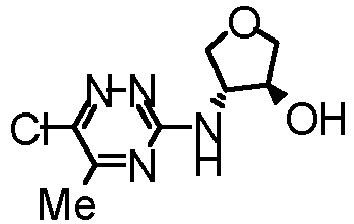
7 
17 
8 
18 
9 
19 
10 
20 
[Table 3-2] PEx Str PEx Str 21 
31 
22 
32 
23 
33 
24 
34 
25 
35 
26 
36 
27 
37 
28 
38 
29 
39 
30 
40 
[Table 3-3] PEx Str PEx Str 41 
51 
42 
52 
43 
53 
44 
54 
45 
55 
46 
56 
47 
57 
48 
58 
49 
59 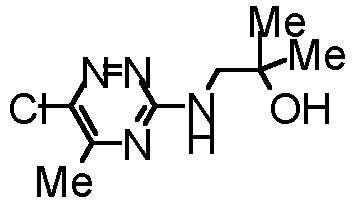
50 
60 
[Table 3-4] PEx Str PEx Str 61 
71 
62 
72 
63 
73 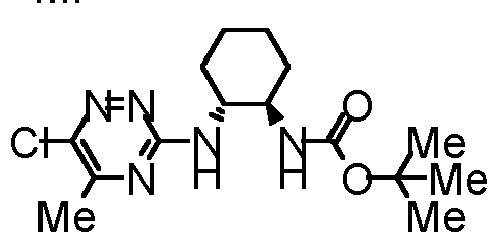
64 
74 
65 
75 
66 
76 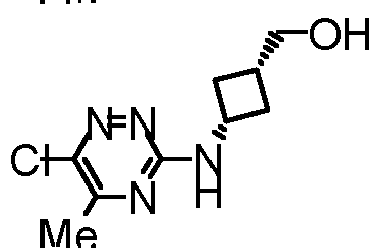
67 
77 
68 
78 
69 
79 
70 
80 
[Table 3-5] PEx Str PEx Str 81 
91 
82 
92 
83 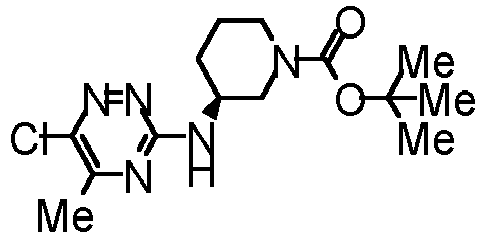
93 
84 
94 
85 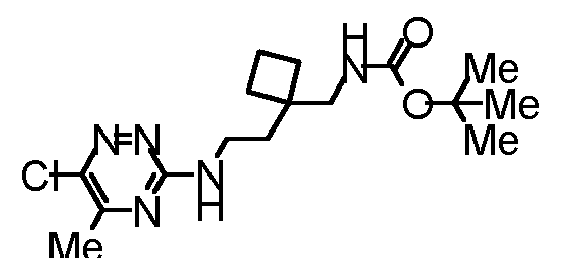
95 
86 
96 
87 
97 
88 
98 
89 
99 
90 
100 
[Table 3-6] PEx Str PEx Str 101 
111 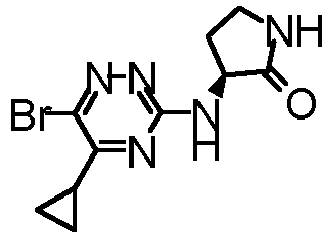
102 
112 
103 
113 
104 
114 
105 
115 
106 
116 
107 
117 
108 
118 
109 
119 
110 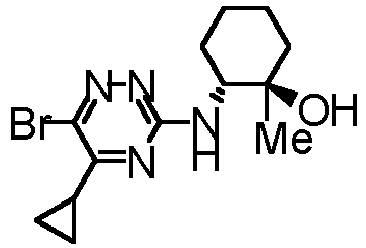
120 
[Table 3-7] PEx Str PEx Str 121 
131 
122 
132 
123 
133 
124 
134 
125 
135 
126 
136 
127 
137 
128 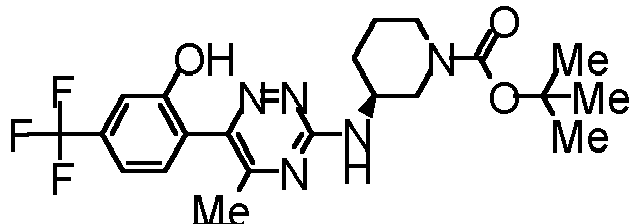
138 
129 
139 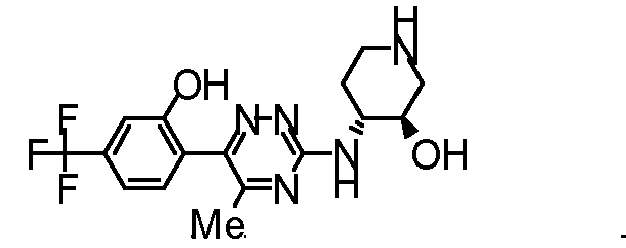
130 
140 
[Table 3-8] PEx Str PEx Str 141 
151 
142 
152 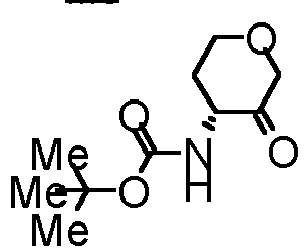
143 
153 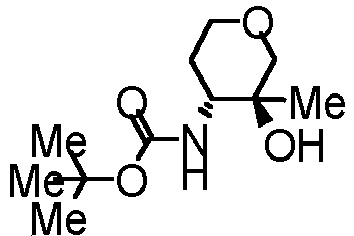
144 
154 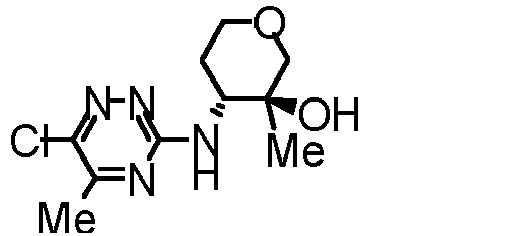
145 
155 
146 
156 
147 
157 
148 
158 
149 
159 
150 
160 
[Table 3-9] PEx Str PEx Str 161 
165 
162 
166 
163 
167 
164 
168 
[Table 3-10] PEx Str PEx Str 169 
179 
170 
180 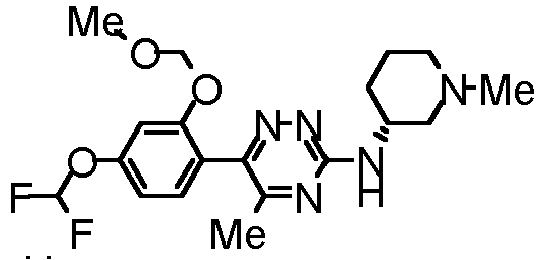
171 
181 
172 
182 
173 
183 
174 
184 
175 
185 
176 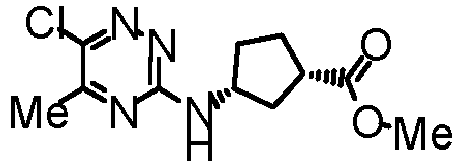
186 
177 
187 
178 
188 
[Table 3-11] PEx Str PEx Str 189 
194 
190 
195 
191 
196 
192 
197 
193 
[Table 4-1] Ex Str Ex Str 1 
11 
2 
12 
3 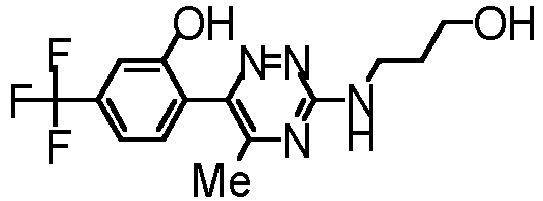
13 
4 
14 
5 
15 
6 
16 
7 
17 
8 
18 
9 
19 
10 
20 
[Table 4-2] Ex Str Ex Str 21 
31 
22 
32 
23 
33 
24 
34 
25 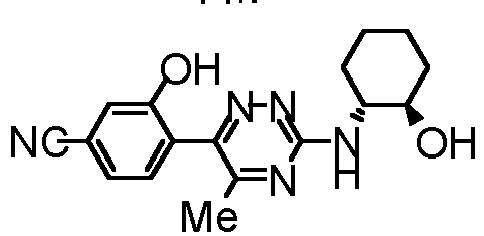
35 
26 
36 
27 
37 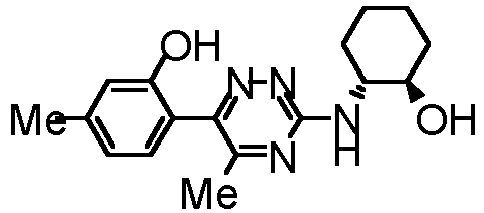
28 
38 
29 
39 
30 
40 
[Table 4-3] Ex Str Ex Str 41 
51 
42 
52 
43 
53 
44 
54 
45 
55 
46 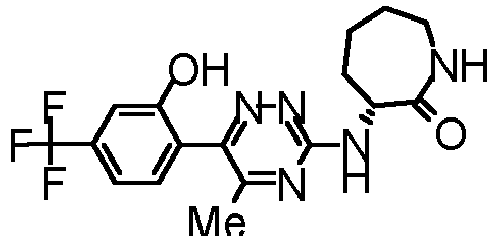
56 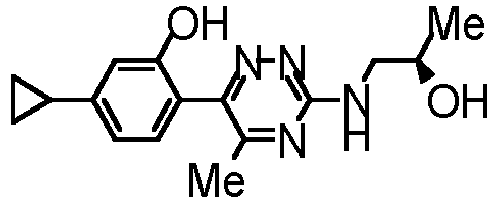
47 
57 
48 
58 
49 
59 
50 
60 
[Table 4-4] Ex Str Ex Str 61 
71 
62 
72 
63 
73 
64 
74 
65 
75 
66 
76 
67 
77 
68 
78 
69 
79 
70 
80 
[Table 4-5] Ex Str Ex Str 81 
91 
82 
92 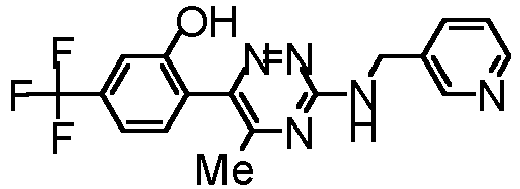
83 
93 
84 
94 
85 
95 
86 
96 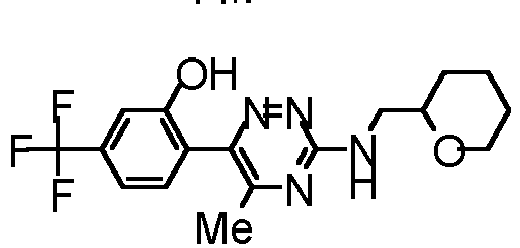
87 
97 
88 
98 
89 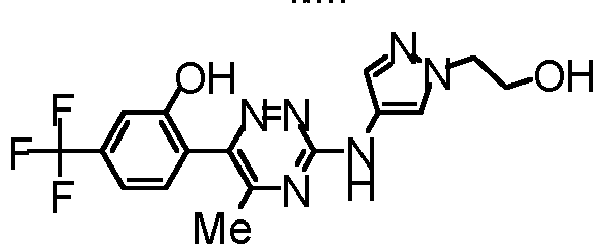
99 
90 
100 
[Table 4-6] Ex Str Ex Str 101 
111 
102 
112 
103 
113 
104 
114 
105 
115 
106 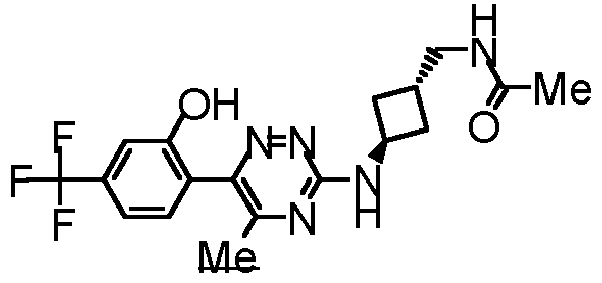
116 
107 
117 
108 
118 
109 
119 
110 
120 
[Table 4-7] Ex Str Ex Str 121 
131 
122 
132 
123 
133 
124 
134 
125 
135 
126 
136 
127 
137 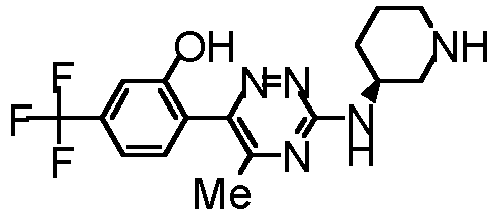
128 
138 
129 
139 
130 
140 
[Table 4-8] Ex Str Ex Str 141 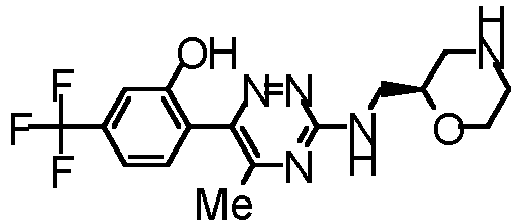
151 
142 
152 
143 
153 
144 
154 
145 
155 
146 
156 
147 
157 
148 
158 
149 
159 
150 
160 
[Table 4-9] Ex Str 161 
162 
163 
[Table 4-10] Ex Str Ex Str 164 
174 
165 
175 
166 
176 
167 
177 
168 
178 
169 
179 
170 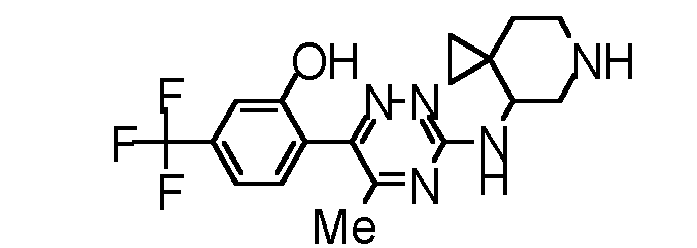
180 
171 
181 
172 
182 
173 
183 
[Table 4-11] Ex Str 184 
185 
186 
187 
188 
[Table 5-1] PEx PSyn DAT 1 - ESI+; 243, 245 2 1 ESI+; 217, 219 3 1 ESI+; 203, 205 4 1 FAB; 203 5 1 ESI+; 229, 231 6 1 ESI+; 227 7 1 ESI+; 249, 251 8 1 ESI+; 229, 231 9 1 ESI+; 231, 233 10 1 ESI+; 217, 219 11 - ESI+; 245, 247 12 1 ESI+; 277, 279 13 1 ESI+; 229, 231 14 1 ESI+; 217, 219 15 1 ESI+; 243, 245 16 1 ESI+; 231, 233 17 1 ESI+; 229, 231 18 1 ESI+; 229, 231 19 1 ESI+; 243, 245 20 1 ESI+; 245, 247 21 1 ESI+; 255, 257 22 1 ESI+; 229, 231 23 1 ESI+; 227, 229 24 1 ESI+; 243, 245 25 1 ESI+; 237, 239 26 1 ESI+; 231, 233 27 1 ESI+; 229, 231 28 1 ESI+; 217, 219 29 1 ESI+; 229, 231 30 1 ESI+; 229, 231 31 1 ESI+; 241, 243 32 1 ESI+; 255, 257 33 1 ESI+; 243, 245 34 1 ESI+; 243, 245 35 1 ESI+; 242, 244 [Table 5-2] PEx PSyn DAT 36 1 ESI+; 228, 230 37 1 ESI+; 228, 230 38 1 ESI+; 242, 244 39 1 ESI+; 256, 258 40 1 ESI+; 257, 259 41 1 ESI+; 279, 281 42 1 ESI+; 314 43 1 ESI+; 344, 346 44 1 ESI+; 265, 267 45 1 ESI+; 302, 304 46 1 ESI+; 214, 216 47 1 ESI+; 228, 230 48 1 ESI+; 229, 231 49 1 ESI-; 212, 214 50 1 ESI+; 228 51 1 ESI+; 257, 259 52 1 ESI+; 279, 281 53 - ESI+; 268, 270 54 1 ESI+; 242, 244 55 - ESI+; 243, 245 56 1 ESI+; 257, 259 57 1 ESI-; 328, 330 58 1 ESI+; 257, 259 59 1 1H-NMR (400 MHz, CDCl3) δ ppm 1.30 (6 H, s) 2.14 (1 H, br s) 2.47 (3 H, s) 3.53 (2 H, d, J=6.4 Hz) 5.65 (1 H, br s) 60 1 ESI+; 280, 282 [M+Na]+ 61 1 1H-NMR (400 MHz, CDCl3) δ ppm 2.51 (3 H, s) 3.86 - 3.96 (2 H, m) 5.52 (1 H, br s) 5.98 (1 H, tt, J=4.1, 55.6 Hz) 62 1 ESI+; 272, 274 63 1 1H-NMR (400 MHz, CDCl3) δ ppm 2.55 (3 H, s) 2.99 (1 H, br s) 4.03 (2 H, t, J=4.6 Hz) 4.25 (2 H, t, J=4.6 Hz) 7.10 (1 H, br s) 7.57 (1 H, s) 7.98 (1 H, s) 64 1 1H-NMR (400 MHz, CDCl3) δ ppm 2.56 (3 H, s) 2.94 (1 H, br s) 3.99 (2 H, br s) 4.18 (2 H, t, J=4.6 Hz) 6.79 (1 H, d, J=2.3 Hz) 7.38 (1 H, d, J=2.3 Hz) 7.74 (1 H, br s) [Table 5-3] PEx PSyn DAT 65 1 ESI+; 236, 238 66 1 ESI+; 225, 227 67 1 ESI+; 225, 227 68 1 ESI+; 258, 260 69 1 ESI+; 243, 245 70 1 ESI+; 225, 227 71 1 ESI+; 350, 352 [M+Na]+ 72 1 ESI+; 364, 366 [M+Na]+ 73 - ESI+; 364, 366 [M+Na]+ 74 1 ESI+; 317, 319 [M+Na]+ 75 1 ESI+; 251, 253 [M+Na]+ 76 1 ESI+; 229, 231 77 1 ESI+; 317, 319 [M+Na]+ 78 1 EI+; 197 79 1 ESI+; 291, 293 [M+Na]+ 80 1 ESI+; 238, 240 81 1 ESI+; 352, 354 [M+Na]+ 82 1 ESI+; 260, 262 [M+Na]+ 83 1 ESI+; 350, 352 [M+Na]+ 84 1 ESI+; 350, 352 [M+Na]+ 85 1 ESI+; 378, 380 [M+Na]+ 86 1 ESI+; 331, 333 [M+Na]+ 87 - ESI+; 366, 368 [M+Na]+ 88 1 ESI+; 320, 322 [M+Na]+ 89 1 ESI+; 366, 368 [M+Na]+ 90 1 ESI+; 350, 352 [M+Na]+ 91 1 ESI+; 350, 352 [M+Na]+ 92 1 ESI+; 270, 272 93 1 ESI+; 270, 272 94 - ESI+; 353 [M+Na]+ 95 94 ESI+; 283 [M+Na]+ 96 94 - 97 - ESI+; 141 98 97 ESI+; 130 99 - ESI+; 221 [Table 5-4] PEx PSyn DAT 100 99 ESI+; 235 101 99 ESI+; 221 102 99 ESI+; 237 103 99 ESI+; 245 104 99 ESI+; 249 105 - ESI+; 299 106 105 ESI+; 315 107 105 ESI+; 301 108 105 ESI+; 315 109 105 ESI+; 325 110 105 ESI+; 327 111 105 ESI+; 300 112 105 ESI+; 243, 245 113 105 ESI+; 349, 351 114 105 ESI+; 315, 317 115 105 ESI+; 275, 277 116 105 ESI+; 301, 303 117 - ESI+; 468 118 117 ESI+; 440 119 117 ESI+; 470 120 117 ESI+; 428 121 117 ESI+; 456 122 117 ESI+; 468 123 117 ESI+; 454 124 117 ESI+; 468 125 117 ESI+; 421 126 117 ESI+; 443 [M+Na]+ 127 117 ESI+; 456 128 117 ESI+; 454 129 117 ESI+; 454 130 117 ESI+; 504 [M+Na]+ 131 117 ESI+; 435 132 - ESI+; 470 133 117 ESI+; 492 [M+Na]+ 134 117 ESI+; 476 [M+Na]+ [Table 5-5] PEx PSyn DAT 135 117 ESI+; 454 136 117 ESI+; 484 137 117 ESI+; 434, 436 138 117 ESI+; 414 139 - ESI+; 370 140 139 ESI+; 368 141 - ESI-; 259 142 - ESI+; 178 143 - ESI+; 241 144 - ESI+; 200 145 - ESI+; 220 146 145 ESI+; 165 147 145 ESI+; 271 148 145 ESI+; 237 149 145 ESI+; 197 150 - FAB; 356 151 - FAB; 440 152 - ESI+; 238 [M+Na]+ 153 - ESI+; 254 [M+Na]+ 154 - ESI+; 259, 261 155 - CI; 283 156 - ESI+; 410 157 - ESI+; 223 158 - ESI+; 226 [M+Na]+ 159 - 1H-NMR (400 MHz, CDCl3) δ ppm 1.03 (3 H, d, J=6.9 Hz) 1.46 (9 H, s) 1.60 - 1.69 (2H, m) 1.91-2.01 (1 H, m) 3.02 (3 H, s) 3.11 - 3.24 (2 H, m) 4.05 - 4.11 (2 H, m) 4.55 (1 H, br s) 160 - ESI+; 251 [M+Na]+ 161 - 1H-NMR (400 MHz, CDCl3) δ ppm 0.93 (3 H, d, J=6.4 Hz) 1.26 - 1.35 (1 H, m) 1.44 (9 H, s) 1.49 - 1.62 (2 H, m) 2.52 - 2.57 (1 H, m) 2.60 - 2.65 (1 H, m) 3.07 - 3.21 (2 H, m) 4.73 (1 H, br s) 162 - ESI+; 293 [M+Na]+ 163 162 ESI+; 243 [Table 5-6] PEx PSyn DAT 164 162 1H-NMR (400 MHz, CDCl3) δ ppm 1.43 (9 H, s) 1.96 - 2.05 (5 H, m) 2.09 - 2.18 (2 H, m) 2.32 - 2.40 (1 H, m) 3.32 - 3.35 (2 H, m) 4.17 - 4.23 (1 H, m) 4.71 - 4.72 (1 H, m) 5.50 (1 H, br s) 165 - ESI+; 111 166 165 ESI+; 171 167 165 ESI+; 143 168 165 ESI+; 143 [Table 5-7] PEx PSyn DAT 169 - ESI+; 242, 244 170 1 ESI+; 243, 245 171 1 ESI+; 243, 245 172 1 ESI+; 376, 378 [M+Na]+ 173 1 ESI+; 358, 360 174 1 ESI+; 386, 388 [M+Na]+ 175 1 ESI+; 386, 388 176 1 ESI+; 271, 273 177 94 EI+; 350 178 94 EI+; 314 179 105 ESI+; 287 180 - ESI+; 410 181 117 ESI+; 395 182 117 ESI+; 431 183 117 ESI+; 480 184 117 ESI+; 484 185 117 ESI+; 490 186 117 ESI+; 512 187 117 ESI+; 397 188 139 ESI+; 390 189 145 ESI+; 209 190 - EI+; 244 191 190 EI+; 302 192 - EI+; 266 193 - ESI+; 509 194 - ESI+; 519 [M+Na]+ 195 - ESI-; 496 196 - ESI+; 482 197 - ESI+; 496 [Table 6-1] Ex Syn DAT 1 - ESI+; 369 2 1 ESI+; 343 3 1 FAB; 329 4 1 FAB; 329 5 1 ESI+; 355 6 1 FAB; 353 7 1 ESI+; 375 8 1 ESI+; 355 9 1 ESI+; 357 10 1 ESI+; 343 11 1 ESI+; 371 12 1 ESI+; 403 13 1 ESI+; 355 14 1 ESI+; 343 15 1 ESI+; 369 16 1 ESI+; 357 17 1 ESI+; 355 18 1 ESI+; 355 19 1 FAB; 335 20 1 ESI+; 369 21 1 ESI+; 371 22 1 ESI+; 381 23 1 ESI+; 355 24 1 ESI+; 353 25 1 FAB; 326 26 1 ESI+; 369 27 - ESI+; 385 1H NMR (500 MHz, DMSO-d 6) δ ppm 1.17 - 1.33 (4 H, m) 1.59 - 1.70 (2 H, m) 1.86 - 2.03 (2 H, m) 2.17 (3 H, s) 3.38 - 3.47 (1 H, m) 3.65-3.81 (1 H, m) 4.61 (1 H, d, J=5.0 Hz) 6.84 - 6.94 (2 H, m) 7.26 - 7.42 (2 H, m) 10.43 (1 H, br s) 28 1 ESI+; 363 29 1 ESI+; 357 30 1 ESI+; 355 [Table 6-2] Ex Syn DAT 31 - ESI+; 337, 339 1H NMR (500 MHz, DMSO-d 6) δ ppm 1.48 - 1.58 (1 H, m) 1.90 - 2.01 (1 H, m) 2.17 (3 H, s) 3.03 - 3.10 (1 H, m) 3.33 - 3.41 (1 H, m) 3.47 - 3.56 (1 H, m) 3.78 - 3.86 (2 H, m) 3.88 - 3.98 (1 H, m) 4.96 (1 H, d, J=5.4 Hz) 6.96 - 6.99 (2 H, m) 7.24 - 7.28 (1 H, m) 7.38 - 7.66 (1 H, m) 10.30 (1 H, br s) 32 1 ESI+; 387 33 1 ESI+; 343 34 1 ESI+; 355 35 1 ESI+; 355 36 1 FAB; 343 37 1 FAB; 315 38 1 ESI+; 367 39 1 ESI+; 381 40 1 ESI+; 369 41 1 ESI+; 369 42 1 ESI+; 368 43 1 ESI+; 354 44 1 ESI+; 354 45 1 ESI+; 368 46 1 ESI+; 382 47 1 ESI+; 383 48 1 ESI+; 405 49 1 ESI+; 321, 323 50 1 ESI+; 371 51 1 ESI+; 301 52 1 ESI+; 317 53 1 ESI+; 319 54 1 ESI+; 349, 351 55 1 ESI+; 329 56 1 ESI+; 301 57 1 FAB; 391 58 1 ESI+; 399 [Table 6-3] Ex Syn DAT 59 - ESI+; 331 1H NMR (500 MHz, DMSO-d 6) δ ppm 1.17 - 1.32 (4 H, m) 1.58 - 1.70 (2 H, m) 1.86 - 1.94 (1 H, m) 1.94 - 2.03 (1 H, m) 2.17 (3 H, s) 3.36 - 3.46 (1 H, m) 3.64 - 3.79 (4 H, m) 4.60 (1 H, d, J=4.9 Hz) 6.47 - 6.53 (2 H, m) 7.06 - 7.26 (2 H, m) 9.80 (1 H, s) 60 1 ESI+; 317 61 1 ESI+; 333 62 1 ESI+; 340 63 1 ESI+; 354 64 1 ESI+; 355 65 1 ESI+; 340 66 1 ESI+; 354 67 1 ESI+; 341 68 1 ESI+; 383 69 1 ESI+; 405 70 1 ESI+; 320, 322 71 1 ESI+; 300 72 1 ESI+; 370 73 - ESI+; 394 1H NMR (500 MHz, DMSO-d 6) δ ppm 0.26 - 0.36 (2 H, m) 0.36 - 0.45 (2 H, m) 1.31 - 1.51 (2 H, m) 1.60 - 1.70 (2 H, m) 1.80 - 1.91 (1 H, m) 2.09 - 2.22 (5 H, m) 2.77 - 2.84 (1 H, m) 3.01 - 3.14 (1 H, m) 3.80 - 4.04 (1 H, m) 7.22 (1 H, d, J=1.0 Hz) 7.26 (1 H, dd, J=7.9, 1.0 Hz) 7.30 - 7.85 (2 H, m) 10.50 (1 H, br s) 74 1 ESI+; 368 75 - ESI+; 369 1H NMR (500 MHz, DMSO-d 6) δ ppm 1.03 - 1.34 (4 H, m) 1.67 - 1.75 (1 H, m) 1.77 - 1.91 (2 H, m) 2.07 - 2.15 (1 H, m) 2.18 (3 H, s) 3.43 - 3.54 (1 H, m) 3.74 - 3.98 (1 H, m) 4.66 (1 H, d, J=4.6 Hz) 7.22 (1 H, d, J=1.0 Hz) 7.24 - 7.28 (1 H, m) 7.36 - 7.90 (2 H, m) 10.51 (1 H, br s) 76 1 ESI+; 383 [Table 6-4] Ex Syn DAT 77 1 ESI+; 327 78 1 ESI+; 343 79 1 ESI+; 383 80 1 ESI+; 385 81 1 ESI+; 315 82 1 ESI+; 335, 337 83 1 ESI+; 341 84 1 ESI+; 385 85 1 ESI+; 343 86 1 ESI+; 384 87 1 ESI+; 335 88 1 ESI+; 398 89 1 ESI+; 381 90 1 ESI+; 381 91 1 ESI+; 325 92 1 ESI+; 362 93 1 ESI+; 351 94 1 ESI+; 351 95 1 ESI+; 384 96 1 ESI+; 369 97 1 ESI+; 351 98 1 ESI+; 431 99 1 ESI+; 355 100 1 ESI+; 355 101 1 ESI+; 324 102 1 ESI+; 364 103 1 ESI+; 364 104 1 ESI+; 424 105 1 ESI+; 396 106 1 ESI+; 396 107 1 ESI+; 395 [Table 6-5] Ex Syn DAT 108 - ESI+; 381 1H NMR (500 MHz, DMSO-d 6) δ ppm 0.94 - 1.07 (4 H, m) 1.27 (3 H, s) 1.60 - 1.67 (1 H, m) 2.00 - 2.07 (2 H, m) 2.29 - 2.38 (2 H, m) 3.64 - 4.06 (1 H, m) 4.94 (1 H, s) 7.20 - 7.23 (1 H, m) 7.24 - 7.28 (1 H, m) 7.40 - 8.20 (2 H, m) 10.45 (1 H, br s) 109 108 ESI+; 395 110 108 ESI+; 381 111 108 ESI+; 397 112 108 ESI+; 413 113 108 ESI+; 363, 365 114 108 ESI+; 343 115 108 ESI+; 361, 363 116 108 ESI+; 411 117 108 ESI+; 341 118 108 ESI+; 405 119 108 ESI+; 327 120 108 ESI+; 397 121 108 ESI+; 347, 349 122 108 ESI+; 409 123 108 ESI+; 375, 377 124 108 ESI+; 425 125 108 ESI+; 346, 348 126 108 ESI+; 396 127 108 ESI+; 380 128 108 ESI+; 397 129 108 ESI+; 357 130 108 ESI+; 383 131 - ESI+; 367 1H NMR (500 MHz, DMSO-d 6) δ ppm 1.14 - 1.34 (4 H, m) 1.56 - 1.72 (2 H, m) 1.86 - 2.02 (2 H, m) 2.17 (3 H, s) 3.37 - 3.47 (1 H, m) 3.64-3.81 (1 H, m) 4.60 (1 H, d, J=5.0 Hz) 6.69 - 6.75 (2 H, m) 7.09 - 7.41 (3 H, m) 10.21 (1 H, br s) [Table 6-6] Ex Syn DAT 132 - ESI+; 368 1H-NMR (400 MHz, CDCl3) δ ppm 1.13 - 1.44 (4 H, m) 1.68 - 1.71 (2H, m) 1.96 - 2.01 (2 H, m) 2.27 (3 H, s) 2.98 - 3.15 (1 H, m) 3.87 - 4.05 (1 H, m) 7.20 (1 H, d, J=8.4 Hz) 7.30 - 7.33 (2 H, m) 133 132 ESI+; 340 134 132 ESI+; 354 135 132 ESI+; 368 136 132 ESI+; 356 137 132 ESI+; 354 138 132 ESI+; 354 139 132 ESI+; 382 140 132 ESI+; 351 141 - ESI+; 370 1H-NMR (400 MHz, CD3OD) δ ppm 2.31 (3 H, s) 2.72 - 2.78 (1 H, m) 2.91 - 2.99 (2 H, m) 3.12 - 3.16 (1 H, m) 3.53 - 3.63 (2 H, m) 3.66 - 3.73 (1 H, m) 3.81 - 3.86 (1 H, m) 3.96 - 3.99 (1 H, m) 7.18 (1 H, s) 7.26 (1 H, dd, J=0.9, 7.8 Hz) 7.46 (1 H, d, J=7.8 Hz) 142 132 ESI+; 370 143 132 ESI+; 354 144 132 ESI+; 354 145 132 ESI+; 384 146 132 ESI+; 334, 336 147 132 ESI+; 314 148 - ESI+; 328 149 - ESI+; 337 150 149 ESI+; 337 151 - ESI+; 396 152 - ESI+; 410 153 152 ESI+; 410 154 152 ESI+; 396 155 152 ESI+; 412 156 152 ESI+; 396 157 152 ESI+; 396 [Table 6-7] Ex Syn DAT 158 152 ESI+; 412 159 - ESI+; 412 160 - FAB; 434 161 - ESI+; 384 162 161 ESI+; 370 163 - FAB; 398 [Table 6-8] Ex Syn DAT 164 - ESI+; 368 1H NMR (500 MHz, DMSO-d 6) δ ppm 1.25 - 1.38 (1 H, m) 1.47 - 1.60 (1 H, m) 1.65 - 1.75 (1 H, m) 1.79 - 1.94 (3 H, m) 2.13 - 2.26 (6 H, m) 2.58 - 2.69 (1 H, m) 2.80 - 2.95 (1 H, m) 3.90 - 4.11 (1 H, m) 7.21 - 7.24 (1 H, m) 7.24 - 7.29 (1 H, m) 7.32 - 7.90 (2 H, m) 10.52 (1 H, br s) 165 1 ESI+; 383 166 1 ESI+; 369 167 1 ESI+; 369 168 108 ESI+; 331 169 131 ESI+; 387 170 132 ESI+; 380 171 132 ESI+; 384 172 132 ESI+; 409 173 132 ESI+; 397 174 - ESI+; 366 1H NMR (500 MHz, DMSO-d 6) δ ppm 1.24 - 1.37 (1 H, m) 1.46 - 1.60 (1 H, m) 1.64 - 1.75 (1 H, m) 1.78 - 1.95 (3 H, m) 2.14 - 2.22 (6 H, m) 2.57 - 2.69 (1 H, m) 2.78 - 2.97 (1 H, m) 3.87 - 4.10 (1 H, m) 6.68 - 6.80 (2 H, m) 7.07 - 7.60 (3 H, m) 10.21 (1 H, br s) 175 174 ESI+; 351 176 174 ESI+; 387 177 161 ESI+; 396 178 161 ESI+; 408 179 161 ESI+; 410 180 161 ESI+; 404 181 - ESI+; 407 182 - ESI+; 383 183 182 ESI+; 412 [Table 6-9] Ex Syn DAT 184 - ESI+; 331 1H NMR (500 MHz, CD3OD) δ ppm 1.28 - 1.58 (4 H, m) 1.70 - 1.90 (2 H, m) 1.97 - 2.14 (2 H, m) 2.53 (3 H, s) 3.47 - 3.79 (2 H, m) 3.82 (3 H, s) 6.51 (1 H, d, J=2.3 Hz) 6.58 (1 H, dd, J=8.5, 2.4 Hz) 7.22 (1 H, d, J=8.4 Hz) 2θ(°)=8.4, 13.8, 14.5, 16.2, 17.5, 20.1, 21,1, 22.6, 23.6, 25.3 m.p.; 184.75°C 185 - ESI+; 369 1H NMR (500 MHz, DMSO-d 6) δ ppm 1.03 - 1.14 (1 H, m) 1.14 - 1.35 (3 H, m) 1.67 - 1.76 (1 H, m) 1.76 - 1.92 (2 H, m) 2.05 - 2.18 (1 H, m) 2.23 (3 H, s) 3.42 - 3.95 (3 H, m) 7.23 - 7.31 (2 H, m) 7.49 (1 H, d, J=7.6 Hz) 8.12 (1 H, br s) 10.67 (1 H, br s) 2θ(°)=5.8, 9.5, 12.6, 13.5, 14.4, 14.8, 16.3, 17.1, 18.3, 23.3 m.p.; 158.63°C 186 - ESI+; 367 1H NMR (500 MHz, CD3OD) δ ppm 1.30 - 1.57 (4 H, m) 1.74 - 1.87 (2 H, m) 1.98 - 2.12 (2 H, m) 2.52 (3 H, s) 3.47 - 3.78 (2 H, m) 6.79 (1 H, dd, J=8.4, 2.3 Hz) 6.72 - 7.05 (2 H, m) 7.34 (1 H, d, J=8.4 Hz) 2θ(°)=8.9, 9.5, 15.3, 18.2, 19.8, 20.7, 21.5, 21.8, 25.1, 27.0 m.p.; 153.32°C 187 - ESI+; 368 1H NMR (500 MHz, CD3OD) δ ppm 1.67 - 1.82 (1 H, m) 1.90 - 2.19 (2 H, m) 2.19 - 2.29 (1 H, m) 2.51 (3 H, s) 2.87 - 3.18 (5 H, m) 3.50 - 3.61 (1 H, m) 3.71 - 3.89 (1 H, m) 4.30 - 4.60 (1 H, m) 7.21 - 7.26(1 H, m) 7.28 - 7.33(1 H, m) 7.52 (1 H, d, J=7.8 Hz) 2θ(°)=5.2, 9.6, 13.0, 15.4, 15.9, 17.9, 20.2, 20.9, 23.9, 29.0 188 - ESI+; 368 1H-NMR (400 MHz, DMSO-d 6) δ ppm 1.24 - 1.31 (2 H, m) 1.37 - 1.48 (2 H, m) 1.73 - 1.76 (2 H, m) 1.99 - 2.09 (2 H, m) 2.24 (3 H, s) 3.04 - 3.11 (1 H, m) 3.97 - 4.16 (1 H, m) 7.28 - 7.29 (2 H, m) 7.48 (1 H, d, J=8.3 Hz) 7.63 (1 H, br s) 7.95 (3 H, br s) 10.71 (1 H, br s) 2θ(°)=5.9, 8.6, 15.5, 17.6, 21.6, 23.8, 24.8, 27.4, 28.6, 31.4 - The compound of formula (I) or a salt thereof has an inhibitory effect on NLRP3 inflammasome activation and expected to be used as a preventive and/or therapeutic drug for an inflammatory disease and/or a neurodegenerative disease.
Claims (13)
- A compound of formula (I) or a salt thereof
 R1 are the same or different from each other, and are C1-6 alkyl, halogeno-C1-6 alkyl, C3-8 cycloalkyl, halogen, -O-C1-6 alkyl, -O-halogeno-C1-6 alkyl or cyano,R2 is C1-6 alkyl, C3-8 cycloalkyl, halogeno-C1-6 alkyl, -O-C1-6 alkyl, -N(C1-6 alkyl)2 or aryl,R3 is H or C1-6 alkyl,R4 is C1-6 alkyl substituted with the same or different one to four R5, -C1-6 alkylene-(aryl optionally substituted with the same or different one to four R6), -C1-6 alkylene-(C3-8 cycloalkyl optionally substituted with the same or different one to four R7), -C1-6 alkylene-(heteroaryl optionally substituted with the same or different one to four R8), -C1-6 alkylene-(4 to 7-membered saturated heterocyclyl optionally substituted with the same or different one to four R9), C3-8 cycloalkyl optionally substituted with the same or different one to four R10, heteroaryl optionally substituted with the same or different one to four R11, or a 4 to 8-membered saturated heterocyclyl optionally substituted with the same or different one to four R12,R5 is -OR13, -NR14R15, halogen or cyano,R6 is C1-6 alkyl, halogeno-C1-6 alkyl, C3-8 cycloalkyl, -OR13, -NR14R15, -C1-6 alkylene-OR13, -C1-6 alkylene-NR14R15, halogen or cyano,R7 is C1-6 alkyl, halogeno-C1-6 alkyl, C3-8 cycloalkyl, -OR13, -NR14R15, -C1-6 alkylene-OR13, -C1-6 alkylene-NR14R15, halogen or cyano,R8 is C1-6 alkyl, halogeno-C1-6 alkyl, C3-8 cycloalkyl, -OR13, -NR14R15, -C1-6 alkylene-OR13, -C1-6 alkylene-NR14R15, halogen or cyano,R9 is C1-6 alkyl, halogeno-C1-6 alkyl, C3-8 cycloalkyl, -OR13, -NR14R15, -C1-6 alkylene-OR13, -C1-6 alkylene-NR14R15, halogen, cyano, oxo, -C(O)-C1-6 alkyl or -S(O)2-C1-6 alkyl,R10 is C1-6 alkyl, halogeno-C1-6 alkyl, C3-8 cycloalkyl, -OR13, -NR14R15, -C1-6 alkylene-OR13, -C1-6 alkylene-NR14R15, halogen, -C(O)-OH or cyano,R11 is C1-6 alkyl, halogeno-C1-6 alkyl, C3-8 cycloalkyl, -OR13, -NR14R15, -C1-6 alkylene-OR13, -C1-6 alkylene-NR14R15, halogen or cyano,R12 is C1-6 alkyl, halogeno-C1-6 alkyl, C3-8 cycloalkyl, 4 to 7-membered saturated heterocyclyl, -OR13, -NR14R15, -C1-6 alkylene-C3-8 cycloalkyl, -C1-6 alkylene-OR13, -C1-6 alkylene-NR14R15, -C1-6 alkylene-cyano, -C1-6 alkylene-C(O)-OH, halogen, cyano, oxo, - C(O)-NH2, -C(O)-C1-6 alkyl or -S(O)2-C1-6 alkyl,R13 is H or C1-6 alkyl,R14 and R15 are the same or different from each other, and are H, C1-6 alkyl or -C(O)-C1-6 alkyl, andn is an integer of 1 to 4, which represents the number of R1 substituents].
 - The compound or a salt thereof according to claim 1, wherein R4 is C1-6 alkyl substituted with the same or different one to four R5; -C1-6 alkylene-(aryl optionally substituted with the same or different one to four R6); -C1-6 alkylene-(C3-8 cycloalkyl optionally substituted with the same or different one to four R7), -C1-6 alkylene-(heteroaryl optionally substituted with the same or different one to four R8); -C1-6 alkylene-(4 to 7-membered saturated heterocyclyl optionally substituted with the same or different one to four R9); C3-8 cycloalkyl optionally substituted with the same or different one to four R10; heteroaryl optionally substituted with the same or different one to four R11; or 4 to 7-membered saturated heterocyclyl optionally substituted with the same or different one to four R12;R10 is C1-6 alkyl, halogeno-C1-6 alkyl, C3-8 cycloalkyl, -OR13, -NR14R15, -C1-6 alkylene-OR13, -C1-6 alkylene-NR14R15, halogen or cyano; andR12 is C1-6 alkyl, halogeno-C1-6 alkyl, C3-8 cycloalkyl, -OR13, -NR14R15, -C1-6 alkylene-OR13, -C1-6 alkylene-NR14R15, halogen, cyano, oxo, -C(O)-C1-6 alkyl or -S(O)2-C1-6 alkyl.
- The compound or a salt thereof according to claim 2, wherein the formula (I) is formula (Ia).
 R1a is C1-6 alkyl, halogeno-C1-6 alkyl, C3-8 cycloalkyl, halogen, -O-C1-6 alkyl, -O-halogeno-C1-6 alkyl or cyano,R1b are the same or different from each other, and are C1-6 alkyl, halogeno-C1-6 alkyl or halogen,R2 is C1-6 alkyl, C3-8 cycloalkyl, halogeno-C1-6 alkyl, -N(C1-6 alkyl)2 or aryl,R3 is H,R4 is C1-6 alkyl substituted with the same or different one to four R5, -C1-6 alkylene-(aryl optionally substituted with the same or different one to four R6), -C1-6 alkylene-(C3-8 cycloalkyl optionally substituted with the same or different one to four R7), -C1-6 alkylene-heteroaryl, -C1-6 alkylene-(4 to 7-membered saturated heterocyclyl optionally substituted with the same or different one to four R9), C3-8 cycloalkyl optionally substituted with the same or different one to four R10, heteroaryl or 4 to 7-membered saturated heterocyclyl optionally substituted with the same or different one to four R12,R5 is -OR13, -NR14R15, halogen or cyano,R6 is -OR13,R7 is -OR13, -NR14R15, -C1-6 alkylene-OR13 or -C1-6 alkylene-NR14R15,R9 is -C(O)-C1-6 alkyl,R10 is C1-6 alkyl, -OR13, -NR14R15, -C1-6 alkylene-OR13, -C1-6 alkylene-NR14R15, halogen or cyano,R12 is C1-6 alkyl, halogeno-C1-6 alkyl, C3-8 cycloalkyl, -OR13, -NR14R15, -C1-6 alkylene-OR13, -C1-6 alkylene-NR14R15, halogen, cyano, oxo, -C(O)-C1-6 alkyl or -S(O)2-C2-6 alkyl,R13 is H or C1-6 alkyl,R14 and R15 are the same or different from each other, and are H, C1-6 alkyl or -C(O)-C1-6 alkyl, andk is 0 or 1, which represents the number of R1b substituents].
 - The compound or a salt thereof according to claim 3, whereinR1a is C1-6 alkyl, halogeno-C1-6 alkyl, C3-8 cycloalkyl, halogen, -O-C1-6 alkyl or -O-halogeno-C1-6 alkyl,R2 is C1-6 alkyl or C3-8 cycloalkyl,R4 is -C1-6 alkylene-(C3-8 cycloalkyl optionally substituted with the same or different one to four R7), -C1-6 alkylene-(4 to 7-membered saturated heterocyclyl optionally substituted with the same or different one to four R9), C3-8 cycloalkyl optionally substituted with the same or different one to four R10, or a 4 to 7-membered saturated heterocyclyl optionally substituted with the same or different one to four R12, andk represents 0.
- The compound or a salt thereof according to claim 1, wherein the compound is selected from the group consisting of2-(3-{[(1R,2R)-2-hydroxycyclohexyl]amino}-5-methyl-1,2,4-triazin-6-yl)-5-(trifluoromethoxy)phenol,(3S,4R)-4-{[6-(4-chloro-2-hydroxyphenyl)-5-methyl-1,2,4-triazin-3-yl]amino}oxan-3-ol,2-(5-cyclopropyl-3-{[(1s,3s)-3-hydroxy-3-methylcyclobutyl]amino}-1,2,4-triazin-6-yl)-5-(trifluoromethyl)phenol,2-(3-{[(1R,2R)-2-hydroxycyclohexyl]amino}-5-methyl-1,2,4-triazin-6-yl)-5-methoxyphenol,2-(3-{[(3R)-1-cyclopropylpiperidin-3-yl]amino}-5-methyl-1,2,4-triazin-6-yl)-5-(trifluoromethyl)phenol,2-(3-{[(1R,3S)-3-hydroxycyclohexyl]amino}-5-methyl-1,2,4-triazin-6-yl)-5-(trifluoromethyl)phenol,5-(difluoromethoxy)-2-(3-{[(1R,2R)-2-hydroxycyclohexyl]amino}-5-methyl-1,2,4-triazin-6-yl)phenol,2-(3-{[(1R,2R)-2-aminocyclohexyl]amino}-5-methyl-1,2,4-triazin-6-yl)-5-(trifluoromethyl)phenol,2-[5-methyl-3-({[(2R)-morpholin-2-yl]methyl}amino)-1,2,4-triazin-6-yl]-5-(trifluoromethyl)phenol,2-(5-methyl-3-{[(3R)-1-methylpiperidin-3-yl]amino}-1,2,4-triazin-6-yl)-5-(trifluoromethyl)phenol, and5-(difluoromethoxy)-2-(5-methyl-3-{[(3R)-1-methylpiperidin-3-yl]amino}-1,2,4-triazin-6-yl)phenol.
- The compound or a salt thereof according to claim 1, wherein the compound is selected from the group consisting of2-(3-{[(1R,2R)-2-hydroxycyclohexyl]amino}-5-methyl-1,2,4-triazin-6-yl)-5-methoxyphenol monohydrochloride,2-(3-{[(1R,3S)-3-hydroxycyclohexyl]amino}-5-methyl-1,2,4-triazin-6-yl)-5-(trifluoromethyl)phenol monohydrochloride,5-(difluoromethoxy)-2-(3-{[(1R,2R)-2-hydroxycyclohexyl]amino}-5-methyl-1,2,4-triazin-6-yl)phenol monohydrochloride,2-(5-methyl-3-{[(3R)-1-methylpiperidin-3-yl]amino}-1,2,4-triazin-6-yl)-5-(trifluoromethyl)phenol dihydrochloride, and2-(3-{[(1R,2R)-2-aminocyclohexyl]amino}-5-methyl-1,2,4-triazin-6-yl)-5-(trifluoromethyl)phenol dihydrochloride.
- A pharmaceutical composition comprising the compound or a salt thereof according to claim 1 and one or more pharmaceutically acceptable excipients.
- The pharmaceutical composition according to claim 7, which is an NLRP3 inflammasome activation inhibitor.
- The pharmaceutical composition according to claim 7, which is a pharmaceutical composition for preventing and/or treating an inflammatory disease and/or a neurodegenerative disease.
- Use of the compound or a salt thereof according to claim 1, for the manufacture of a pharmaceutical composition for preventing and/or treating an inflammatory disease and/or a neurodegenerative disease.
- Use of the compound or a salt thereof according to claim 1, for preventing and/or treating an inflammatory disease and/or a neurodegenerative disease.
- The compound or a salt thereof according to claim 1, for use in preventing and/or treating an inflammatory disease and/or a neurodegenerative disease.
- A method for preventing and/or treating an inflammatory disease and/or a neurodegenerative disease, comprising administering to a subject an effective amount of the compound or a salt thereof according to claim 1.
Applications Claiming Priority (2)
| Application Number | Priority Date | Filing Date | Title |
|---|---|---|---|
| JP2021075905 | 2021-04-28 | ||
| PCT/JP2022/018994 WO2022230912A1 (en) | 2021-04-28 | 2022-04-27 | Substituted triazine compound |
Publications (2)
| Publication Number | Publication Date |
|---|---|
| EP4345097A1 true EP4345097A1 (en) | 2024-04-03 |
| EP4345097A4 EP4345097A4 (en) | 2025-04-23 |
Family
ID=83848494
Family Applications (1)
| Application Number | Title | Priority Date | Filing Date |
|---|---|---|---|
| EP22795825.3A Pending EP4345097A4 (en) | 2021-04-28 | 2022-04-27 | Substituted triazine compound |
Country Status (11)
| Country | Link |
|---|---|
| US (1) | US12692241B2 (en) |
| EP (1) | EP4345097A4 (en) |
| JP (1) | JPWO2022230912A1 (en) |
| KR (1) | KR20240004371A (en) |
| CN (1) | CN117222626A (en) |
| AU (1) | AU2022267160A1 (en) |
| BR (1) | BR112023022451A2 (en) |
| CA (1) | CA3218212A1 (en) |
| MX (1) | MX2023012795A (en) |
| TW (1) | TWI924849B (en) |
| WO (1) | WO2022230912A1 (en) |
Families Citing this family (18)
| Publication number | Priority date | Publication date | Assignee | Title |
|---|---|---|---|---|
| US11618751B1 (en) | 2022-03-25 | 2023-04-04 | Ventus Therapeutics U.S., Inc. | Pyrido-[3,4-d]pyridazine amine derivatives useful as NLRP3 derivatives |
| US11319319B1 (en) | 2021-04-07 | 2022-05-03 | Ventus Therapeutics U.S., Inc. | Compounds for inhibiting NLRP3 and uses thereof |
| LT4337652T (en) | 2021-05-12 | 2025-06-25 | F. Hoffmann-La Roche Ag | Nlrp3 inhibitors |
| EP4347571B1 (en) * | 2021-06-04 | 2026-04-22 | F. Hoffmann-La Roche AG | Triazine derivatives and their use in the treatment of cancer. |
| PL4363406T3 (en) | 2021-07-02 | 2026-01-05 | Astrazeneca Ab | NLRP3 INFLAMASOME INHIBITORS |
| WO2023066377A1 (en) * | 2021-10-22 | 2023-04-27 | 索智生物科技(浙江)有限公司 | Nitrogen-containing compound, preparation method therefor and application thereof |
| MX2024008548A (en) * | 2022-01-07 | 2024-07-19 | Transthera Sciences Nanjing Inc | Nlrp3 inflammasome inhibitor and uses thereof. |
| US12331048B2 (en) | 2022-10-31 | 2025-06-17 | Ventus Therapeutics U.S., Inc. | Pyrido-[3,4-d]pyridazine amine derivatives useful as NLRP3 inhibitors |
| US20260167637A1 (en) * | 2022-11-04 | 2026-06-18 | Transthera Sciences (Nanjing), Inc. | Nlrp3 inflammasome inhibitor and use thereof |
| WO2024094150A1 (en) * | 2022-11-04 | 2024-05-10 | Insilico Medicine Ip Limited | Nlrp3 inflammasome inhibitors and uses thereof |
| CN120569372A (en) | 2023-01-24 | 2025-08-29 | 第一三共株式会社 | Substituted benzene compounds |
| WO2024169858A1 (en) * | 2023-02-17 | 2024-08-22 | 成都赜灵生物医药科技有限公司 | Six-membered nitrogen heterocyclic compound and use thereof |
| EP4683918A1 (en) * | 2023-03-20 | 2026-01-28 | Insilico Medicine IP Limited | Nlrp3 inflammasome inhibitors and uses thereof |
| JP2026509587A (en) * | 2023-03-23 | 2026-03-19 | 成都▲ざ▼▲霊▼生物医▲薬▼科技有限公司 | Triazine compounds and their uses |
| AU2024280075A1 (en) | 2023-06-02 | 2025-12-11 | Merck Sharp & Dohme Llc | 5,6-Unsaturated Bicyclic Heterocycles Useful as Inhibitors of Nod-Like Receptor Protein 3 |
| EP4777504A1 (en) * | 2023-09-12 | 2026-07-22 | Zomagen Biosciences Ltd | Nlrp3 modulators |
| TW202545527A (en) | 2024-01-16 | 2025-12-01 | 英商諾得瑟拉公司 | Nlrp3 and glp-1a combination therapies |
| CN118440041B (en) * | 2024-07-02 | 2024-09-27 | 苏州凯瑞医药科技有限公司 | Preparation method of chiral 4-amino-3-hydroxytetrahydropyran |
Family Cites Families (22)
| Publication number | Priority date | Publication date | Assignee | Title |
|---|---|---|---|---|
| EP2560488B1 (en) | 2010-04-23 | 2015-10-28 | Cytokinetics, Inc. | Certain amino-pyridines and amino-triazines, compositions thereof, and methods for their use |
| US11447460B2 (en) | 2016-04-18 | 2022-09-20 | Novartis Ag | Compounds and compositions for treating conditions associated with NLRP activity |
| EP3272739A1 (en) | 2016-07-20 | 2018-01-24 | NodThera Limited | Sulfonyl urea derivatives and their use in the control of interleukin-1 activity |
| CN110914256A (en) | 2017-07-07 | 2020-03-24 | 英夫拉索姆有限公司 | Novel sulfonamide carboxamide compounds |
| BR112020019373A2 (en) | 2018-03-27 | 2020-12-29 | Ptc Therapeutics, Inc. | COMPOUNDS FOR THE TREATMENT OF HUTINGTON'S DISEASE |
| WO2020163248A1 (en) | 2019-02-04 | 2020-08-13 | Skyhawk Therapeutics, Inc. | Methods and compositions for modulating splicing |
| EP3920918A4 (en) * | 2019-02-05 | 2022-11-16 | Skyhawk Therapeutics, Inc. | Methods and compositions for modulating splicing |
| CA3139821A1 (en) | 2019-05-13 | 2020-11-19 | Ptc Therapeutics, Inc. | Compounds for treating huntington's disease |
| AR119731A1 (en) | 2019-05-17 | 2022-01-05 | Novartis Ag | NLRP3 INFLAMASOME INHIBITORS |
| CN115279739B (en) | 2020-03-27 | 2025-07-22 | 尼科治疗有限公司 | Substituted pyridazine compounds |
| TW202231281A (en) | 2020-12-25 | 2022-08-16 | 大陸商上海拓界生物醫藥科技有限公司 | A class of pyridazine containing compounds and medicinal uses thereof |
| LT4337652T (en) | 2021-05-12 | 2025-06-25 | F. Hoffmann-La Roche Ag | Nlrp3 inhibitors |
| EP4347571B1 (en) * | 2021-06-04 | 2026-04-22 | F. Hoffmann-La Roche AG | Triazine derivatives and their use in the treatment of cancer. |
| CA3226995A1 (en) | 2021-07-21 | 2023-01-26 | Nico Therapeutics, Inc. | Annulated pyridazine compound |
| CN118302417A (en) | 2021-08-25 | 2024-07-05 | Ptc医疗公司 | NLRP3 inhibitors |
| IL310992A (en) | 2021-08-25 | 2024-04-01 | Ptc Therapeutics Inc | Inhibitors of nlrp3 |
| WO2023028536A1 (en) * | 2021-08-25 | 2023-03-02 | Ptc Therapeutics, Inc. | 1,2,4-triazine derivatives useful as inhibitors of nlrp3 |
| WO2023051761A1 (en) | 2021-09-30 | 2023-04-06 | 成都奥睿药业有限公司 | Pharmaceutical use and preparation method for substituted heteroaryl phthalazine derivative |
| WO2023066377A1 (en) | 2021-10-22 | 2023-04-27 | 索智生物科技(浙江)有限公司 | Nitrogen-containing compound, preparation method therefor and application thereof |
| CN118234730A (en) | 2021-11-17 | 2024-06-21 | 豪夫迈·罗氏有限公司 | Heterocyclic NLRP3 inhibitors |
| MX2024008548A (en) | 2022-01-07 | 2024-07-19 | Transthera Sciences Nanjing Inc | Nlrp3 inflammasome inhibitor and uses thereof. |
| EP4499646A4 (en) | 2022-03-31 | 2026-03-18 | Hangzhou Highlightll Pharmaceutical Co Ltd | NLRP3-INFLAMMASOM-INHIBITORS |
-
2022
- 2022-04-27 WO PCT/JP2022/018994 patent/WO2022230912A1/en not_active Ceased
- 2022-04-27 TW TW111116038A patent/TWI924849B/en active
- 2022-04-27 CA CA3218212A patent/CA3218212A1/en active Pending
- 2022-04-27 BR BR112023022451A patent/BR112023022451A2/en unknown
- 2022-04-27 KR KR1020237036874A patent/KR20240004371A/en active Pending
- 2022-04-27 MX MX2023012795A patent/MX2023012795A/en unknown
- 2022-04-27 JP JP2023517579A patent/JPWO2022230912A1/ja active Pending
- 2022-04-27 US US18/288,588 patent/US12692241B2/en active Active
- 2022-04-27 CN CN202280031504.2A patent/CN117222626A/en active Pending
- 2022-04-27 EP EP22795825.3A patent/EP4345097A4/en active Pending
- 2022-04-27 AU AU2022267160A patent/AU2022267160A1/en active Pending
Also Published As
| Publication number | Publication date |
|---|---|
| EP4345097A4 (en) | 2025-04-23 |
| JPWO2022230912A1 (en) | 2022-11-03 |
| AU2022267160A1 (en) | 2023-11-23 |
| CA3218212A1 (en) | 2022-11-03 |
| TWI924849B (en) | 2026-05-11 |
| KR20240004371A (en) | 2024-01-11 |
| CN117222626A (en) | 2023-12-12 |
| BR112023022451A2 (en) | 2024-01-02 |
| US20240239758A1 (en) | 2024-07-18 |
| TW202309000A (en) | 2023-03-01 |
| US12692241B2 (en) | 2026-07-28 |
| MX2023012795A (en) | 2023-11-08 |
| WO2022230912A1 (en) | 2022-11-03 |
Similar Documents
| Publication | Publication Date | Title |
|---|---|---|
| US20240239758A1 (en) | Substituted triazine compound | |
| EP3728238B1 (en) | Sulphonyl urea derivatives as nlrp3 inflammasome modulators | |
| US20250084092A1 (en) | Annulated pyridazine compound | |
| TWI802591B (en) | Compound having ring structures | |
| AU2019210624A1 (en) | Cyclopropylamines as lsd1 inhibitors | |
| UA129887C2 (en) | Piperidine modulators of cxcr7 receptors | |
| UA74850C2 (en) | Amide derivatives as nmda receptor antagonists | |
| TW202432551A (en) | Fused cyclic pyridazine derivatives | |
| TWI866007B (en) | p38 MAPK/MK2 PATHWAY REGULATOR, AND COMPOSITION, PREPARATION METHOD, AND USE THEREOF | |
| CN113874354B (en) | Pyridone derivative, preparation method thereof and application thereof in medicine | |
| CN120584106A (en) | NLRP3 inflammasome inhibitors | |
| TW202045487A (en) | Pd-l1 antagonist compounds | |
| JP5739426B2 (en) | Substituted pyridine compounds | |
| CN121194978A (en) | Compounds for EGFR kinase degradation | |
| TW202417426A (en) | Triazole compound and use as lpar1 antagonist thereof | |
| EP4486720A1 (en) | Aryl alkynamide derivatives | |
| WO2019111980A1 (en) | Cycloalkylacetic acid-type diamide derivative | |
| WO2025161144A1 (en) | Aryl heterocyclic kv1.3 inhibitor, and preparation method therefor and use thereof | |
| TW202539657A (en) | Bicyclic tyrosine kinase 2 inhibitors and uses thereof | |
| CN120774888A (en) | Aryl heterocyclic compounds and their use as Kv1.3 potassium channel inhibitors | |
| HK40039990A (en) | Sulphonyl urea derivatives as nlrp3 inflammasome modulators | |
| HK40023323A (en) | Compound having cyclic structure | |
| HK1183877B (en) | Substituted pyridine compound |
Legal Events
| Date | Code | Title | Description |
|---|---|---|---|
| STAA | Information on the status of an ep patent application or granted ep patent |
Free format text: STATUS: THE INTERNATIONAL PUBLICATION HAS BEEN MADE |
|
| PUAI | Public reference made under article 153(3) epc to a published international application that has entered the european phase |
Free format text: ORIGINAL CODE: 0009012 |
|
| STAA | Information on the status of an ep patent application or granted ep patent |
Free format text: STATUS: REQUEST FOR EXAMINATION WAS MADE |
|
| 17P | Request for examination filed |
Effective date: 20231027 |
|
| AK | Designated contracting states |
Kind code of ref document: A1 Designated state(s): AL AT BE BG CH CY CZ DE DK EE ES FI FR GB GR HR HU IE IS IT LI LT LU LV MC MK MT NL NO PL PT RO RS SE SI SK SM TR |
|
| DAV | Request for validation of the european patent (deleted) | ||
| DAX | Request for extension of the european patent (deleted) | ||
| A4 | Supplementary search report drawn up and despatched |
Effective date: 20250325 |
|
| RIC1 | Information provided on ipc code assigned before grant |
Ipc: C07D 413/12 20060101ALI20250319BHEP Ipc: C07D 409/12 20060101ALI20250319BHEP Ipc: C07D 405/14 20060101ALI20250319BHEP Ipc: C07D 405/12 20060101ALI20250319BHEP Ipc: C07D 403/12 20060101ALI20250319BHEP Ipc: C07D 401/14 20060101ALI20250319BHEP Ipc: C07D 401/12 20060101ALI20250319BHEP Ipc: A61P 43/00 20060101ALI20250319BHEP Ipc: A61P 29/00 20060101ALI20250319BHEP Ipc: A61P 25/00 20060101ALI20250319BHEP Ipc: A61K 31/55 20060101ALI20250319BHEP Ipc: A61K 31/5377 20060101ALI20250319BHEP Ipc: A61K 31/53 20060101ALI20250319BHEP Ipc: C07D 253/07 20060101AFI20250319BHEP |
|
| RAP1 | Party data changed (applicant data changed or rights of an application transferred) |
Owner name: TENVIE THERAPEUTICS INC. |
|
| RAP3 | Party data changed (applicant data changed or rights of an application transferred) |
Owner name: TENVIE THERAPEUTICS, INC. |