EP4344231A1 - Video processing method and apparatus, and device and storage medium - Google Patents
Video processing method and apparatus, and device and storage medium Download PDFInfo
- Publication number
- EP4344231A1 EP4344231A1 EP22857615.3A EP22857615A EP4344231A1 EP 4344231 A1 EP4344231 A1 EP 4344231A1 EP 22857615 A EP22857615 A EP 22857615A EP 4344231 A1 EP4344231 A1 EP 4344231A1
- Authority
- EP
- European Patent Office
- Prior art keywords
- video
- target video
- identifier
- state
- playing
- Prior art date
- Legal status (The legal status is an assumption and is not a legal conclusion. Google has not performed a legal analysis and makes no representation as to the accuracy of the status listed.)
- Pending
Links
Images


Classifications
-
- H—ELECTRICITY
- H04—ELECTRIC COMMUNICATION TECHNIQUE
- H04N—PICTORIAL COMMUNICATION, e.g. TELEVISION
- H04N21/00—Selective content distribution, e.g. interactive television or video on demand [VOD]
- H04N21/40—Client devices specifically adapted for the reception of or interaction with content, e.g. set-top-box [STB]; Operations thereof
- H04N21/43—Processing of content or additional data, e.g. demultiplexing additional data from a digital video stream; Elementary client operations, e.g. monitoring of home network or synchronising decoder's clock; Client middleware
- H04N21/442—Monitoring of processes or resources, e.g. detecting the failure of a recording device, monitoring the downstream bandwidth, the number of times a movie has been viewed, the storage space available from the internal hard disk
- H04N21/44204—Monitoring of content usage, e.g. the number of times a movie has been viewed, copied or the amount which has been watched
-
- H—ELECTRICITY
- H04—ELECTRIC COMMUNICATION TECHNIQUE
- H04N—PICTORIAL COMMUNICATION, e.g. TELEVISION
- H04N21/00—Selective content distribution, e.g. interactive television or video on demand [VOD]
- H04N21/20—Servers specifically adapted for the distribution of content, e.g. VOD servers; Operations thereof
- H04N21/25—Management operations performed by the server for facilitating the content distribution or administrating data related to end-users or client devices, e.g. end-user or client device authentication, learning user preferences for recommending movies
- H04N21/258—Client or end-user data management, e.g. managing client capabilities, user preferences or demographics, processing of multiple end-users preferences to derive collaborative data
-
- H—ELECTRICITY
- H04—ELECTRIC COMMUNICATION TECHNIQUE
- H04N—PICTORIAL COMMUNICATION, e.g. TELEVISION
- H04N21/00—Selective content distribution, e.g. interactive television or video on demand [VOD]
- H04N21/40—Client devices specifically adapted for the reception of or interaction with content, e.g. set-top-box [STB]; Operations thereof
- H04N21/43—Processing of content or additional data, e.g. demultiplexing additional data from a digital video stream; Elementary client operations, e.g. monitoring of home network or synchronising decoder's clock; Client middleware
- H04N21/442—Monitoring of processes or resources, e.g. detecting the failure of a recording device, monitoring the downstream bandwidth, the number of times a movie has been viewed, the storage space available from the internal hard disk
- H04N21/44213—Monitoring of end-user related data
- H04N21/44218—Detecting physical presence or behaviour of the user, e.g. using sensors to detect if the user is leaving the room or changes his face expression during a TV programme
-
- H—ELECTRICITY
- H04—ELECTRIC COMMUNICATION TECHNIQUE
- H04N—PICTORIAL COMMUNICATION, e.g. TELEVISION
- H04N21/00—Selective content distribution, e.g. interactive television or video on demand [VOD]
- H04N21/40—Client devices specifically adapted for the reception of or interaction with content, e.g. set-top-box [STB]; Operations thereof
- H04N21/43—Processing of content or additional data, e.g. demultiplexing additional data from a digital video stream; Elementary client operations, e.g. monitoring of home network or synchronising decoder's clock; Client middleware
- H04N21/442—Monitoring of processes or resources, e.g. detecting the failure of a recording device, monitoring the downstream bandwidth, the number of times a movie has been viewed, the storage space available from the internal hard disk
- H04N21/44213—Monitoring of end-user related data
- H04N21/44222—Analytics of user selections, e.g. selection of programmes or purchase activity
-
- H—ELECTRICITY
- H04—ELECTRIC COMMUNICATION TECHNIQUE
- H04N—PICTORIAL COMMUNICATION, e.g. TELEVISION
- H04N21/00—Selective content distribution, e.g. interactive television or video on demand [VOD]
- H04N21/40—Client devices specifically adapted for the reception of or interaction with content, e.g. set-top-box [STB]; Operations thereof
- H04N21/45—Management operations performed by the client for facilitating the reception of or the interaction with the content or administrating data related to the end-user or to the client device itself, e.g. learning user preferences for recommending movies, resolving scheduling conflicts
- H04N21/4508—Management of client data or end-user data
- H04N21/4532—Management of client data or end-user data involving end-user characteristics, e.g. viewer profile, preferences
-
- H—ELECTRICITY
- H04—ELECTRIC COMMUNICATION TECHNIQUE
- H04N—PICTORIAL COMMUNICATION, e.g. TELEVISION
- H04N21/00—Selective content distribution, e.g. interactive television or video on demand [VOD]
- H04N21/80—Generation or processing of content or additional data by content creator independently of the distribution process; Content per se
- H04N21/83—Generation or processing of protective or descriptive data associated with content; Content structuring
- H04N21/835—Generation of protective data, e.g. certificates
- H04N21/8352—Generation of protective data, e.g. certificates involving content or source identification data, e.g. Unique Material Identifier [UMID]
-
- H—ELECTRICITY
- H04—ELECTRIC COMMUNICATION TECHNIQUE
- H04N—PICTORIAL COMMUNICATION, e.g. TELEVISION
- H04N21/00—Selective content distribution, e.g. interactive television or video on demand [VOD]
- H04N21/80—Generation or processing of content or additional data by content creator independently of the distribution process; Content per se
- H04N21/83—Generation or processing of protective or descriptive data associated with content; Content structuring
- H04N21/835—Generation of protective data, e.g. certificates
- H04N21/8355—Generation of protective data, e.g. certificates involving usage data, e.g. number of copies or viewings allowed
Definitions
- the present disclosure relates to the field of data processing, and in particular, to a video processing method, apparatus, and device, and a storage medium.
- a video type that indicates only supporting playing once for each user may also be referred to as a flashing video type has attracted attention from people.
- a video player can play the video normally; however, when the same user wants to trigger to watch the flashing video again in any scenario, the video player displays that the video cannot be played and prompts the user that the flashing video only can be watched once.
- the present disclosure provides a video processing method, which ensures the playing effect for a flashing video by way of determining whether the target video has been played on a current terminal based on the has Viewed state of the target video recorded in the server for the current user, thereby enhancing the experience of the user watching the video.
- the present disclosure provides a video processing method, and the method comprises:
- the method before the playing the target video, the method further comprises: inquiring whether the target video belongs to the hasViewed state for the current user in a local history record.
- the playing the target video comprises: playing the target video if it is determined that, in the local history record, the target video does not belong to the hasViewed state for the current user.
- the method further comprises: storing a record that the target video is in the hasViewed state for the current user in the local history record.
- the method further comprises: displaying a preset destroyed state of the target video if it is determined that, in the local history record, the target video belongs to the hasViewed state for the current user.
- the playing the target video if it is determined that, in the local history record, the target video does not belong to the hasViewed state for the current user comprises: playing the target video if it is determined that the video playing history information carrying the video identifier of the target video and the user identifier of the current user does not exist in the local history record.
- the method further comprises: displaying a preset destroyed state of the target video if the video state identifier is determined to belong to the hasViewed identifier.
- the method further comprises: reporting video playing history information carrying a video identifier of the target video and a user identifier of the current user to the server, where the video playing history information is used for updating a playing state of the target video for the current user at the server.
- the present disclosure provides a video processing apparatus, and the apparatus comprises:
- the present disclosure provides a computer-readable storage medium, the computer-readable storage medium stores instructions, when the instructions are run on a terminal device, the terminal device is caused to implement the above-mentioned method.
- the present disclosure provides a device, comprising a memory, a processor, and a computer program stored on the memory and executable on the processor, and the processor is configured to, when executing the computer program, implement the above-mentioned method.
- the present disclosure provides a computer program product, the computer program product comprises a computer program/instruction, and when the computer program/instruction is executed by a processor, the above-mentioned method is implemented.
- the embodiments of the present disclosure provides a video processing method, firstly, it is determined whether a target video belongs to a preset video type, and the preset video type is a video type that indicates only supporting playing once for each user; it is determined whether a video state identifier of the target video belongs to a has Viewed identifier if the target video is determined to belong to the preset video type, and the video state identifier is used for characterizing whether the target video recorded in a server is in a has Viewed state for a current user; and then the target video is played if the video state identifier is determined not to belong to the has Viewed identifier.
- the embodiments of the present disclosure ensure the playing effect for a flashing video by way of determining whether the target video has been played on a current terminal based on the has Viewed state of the target video recorded in the server for the current user, thereby enhancing the experience of the user watching the video.
- a flashing video type is a video type that indicates only supporting playing once for each user (exclusive of a video maker).
- most video types support repeatedly playing and there is lack of processing experience for the flashing video, therefore, a technical problem urgently needing to be solved at present is how to guarantee a playing effect for a flashing video such that each flashing video can only be played once for each user to meet the viewing expectation of the user for the flashing video, thereby enhancing the viewing experience of the user.
- an embodiment of the present disclosure provide a video processing method, firstly, it is determined whether a target video belongs to a preset video type, and the preset video type is a video type that indicates only supporting playing once for each user; it is determined whether a video state identifier of the target video belongs to a has Viewed identifier if the target video is determined to belong to the preset video type, and the video state identifier is used for characterizing whether the target video recorded in a server is in a has Viewed state for a current user; and then the target video is played if the video state identifier is determined not to belong to the has Viewed identifier.
- the embodiments of the present disclosure ensure the playing effect for a flashing video by way of determining whether the target video has been played on a current terminal based on the has Viewed state of the target video recorded in the server for the current user, thereby enhancing the experience of the user watching the video.
- FIG. 1 is a flowchart of a video processing method provided in an embodiment of the present disclosure
- the video processing method includes the following steps.
- S101 determining whether a target video belongs to a preset video type.
- the preset video type is a video type that indicates only supporting playing once for each user.
- the video processing method provided in the embodiment of the present disclosure may be applied to a client, and the client includes, for example, a client deployed at a smart phone, a client deployed at a tablet computer, and the like.
- the preset video type is a video type that indicates only supporting playing once for each user.
- the preset video type may be referred to as a flashing video type and may also be referred to as a burn-after-reading video type, and the like.
- the client upon receiving a play trigger operation for the target video, the client firstly requests the target video from a server, and the server may also return a video type identifier of the target video to the client while returning the target video to the client, and the video type identifier is used for uniquely identifying the video type to which the target video belongs.
- the client determines whether the target video belongs to the preset video type based on the video type identifier of the target video, i.e., determines whether the target video belongs to the flashing video type.
- the video type identifier "1" is used for identifying the preset video type, namely the flashing video type, if it is determined that the video type identifier of the target video is "1", it may be determined that the target video belongs to the preset video type; and if it is determined that the video type identifier of the target video is not "1", it may be determined that the target video does not belong to the preset video type.
- S102 determining whether a video state identifier of the target video belongs to a hasViewed identifier if the target video is determined to belong to the preset video type.
- the video state identifier is used for characterizing whether the target video recorded in a server is in a has Viewed state for a current user.
- the client is in communication connection with the server. Based on the communication connection between the client and the server, when the target video is played at the client, the client is capable of reporting video playing history information of the target video to the server, and the video playing history information is used for characterizing playing record information of the target video.
- the server is capable of determining the video state identifier of the target video based on the video playing history information reported by the client, and sending the video state identifier to the client while sending the target video to the client, and the video state identifier is used for characterizing whether the target video recorded in the server is in the has Viewed state for the current user.
- the client further needs to determine whether the target video is in the has Viewed state for the current user after determining that the target video belongs to the preset video type. Specifically, the client may determine whether the target video is in the hasViewed state for the current user based on the video state identifier of the target video, i.e., determine whether the video state identifier of the target video belongs to the hasViewed identifier.
- the video state identifier of the target video may be represented by using a value of a hasViewed field of the target video. If the value of the hasViewed field is true, it indicates that the video state identifier of the target video belongs to the hasViewed identifier; on the contrary, if the value of the hasViewed field is false, it indicates that the video state identifier of the target video does not belong to the hasViewed identifier.
- the client determines whether the target video is in the hasViewed state for the current user based on the video state identifier of the target video, if the value of the hasViewed field of the target video sent by the server is true, it is determined that the record that the target video is in the hasViewed state for the current user is recorded in the server; if the value of the hasViewed field of the target video sent by the server is false, it is determined that the record that the target video is in an unviewed state for the current user is recorded in the server.
- the video state identifier if the video state identifier is determined not to be the has Viewed identifier, it indicates that the target video recorded in the server is in the unviewed state for the current user, that is to say, based on the principle of only supporting playing once for each user, the target video can also be played for the current user. Therefore, upon determining that the video state identifier of the target video is not the has Viewed identifier, the target video can be directly played.
- the client determines that the value of the has Viewed field of the target video sent by the server is false, it indicates that the record that the target video is in the unviewed state for the current user is recorded in the server, and at this time, the target video can be played for the current user, which is in conformity with the principle of only supporting playing the target video once for each user.
- the video state identifier is determined to be the hasViewed identifier, a preset destroyed state of the target video is displayed.
- the video state identifier of the target video is determined to belong to the hasViewed identifier, it indicates that the record that the target video is in the hasViewed state for the current user is recorded in the server.
- the client Based on the principle of only supporting playing once for each user, the client cannot play the target video again for the current user, and in order to prompt the user, the client can display the preset destroyed state of the target video to the current user.
- the preset destroyed state is used for prompting the current user that the target video is of the video type that indicates only supporting playing once, and the target video has been played by the current user and cannot be played again.
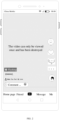
- FIG. 2 is a schematic diagram of a target video playing interface provided in an embodiment of the present disclosure
- a mask layer is displayed on the target video playing interface
- a text prompt e.g., text such as "the video can only be viewed once and has been destroyed"
- the preset video type is a video type that indicates only supporting playing once for each user; it is determined whether a video state identifier of the target video belongs to a has Viewed identifier if the target video is determined to belong to the preset video type, and the video state identifier is used for characterizing whether the target video recorded in a server is in a has Viewed state for a current user; and then the target video is played if the video state identifier is determined not to belong to the has Viewed identifier.
- the embodiments of the present disclosure ensure the playing effect for a flashing video by way of determining whether the target video has been played on a current terminal based on the has Viewed state of the target video recorded in the server for the current user, thereby enhancing the experience of the user watching the video.
- the video state identifier of the target video is determined based on the video playing history information by the server and is sent to the client by the server.
- the problem of non-timely updating of the video playing history information may occur between interfaces of different servers.
- scenario A e.g., a recommended scenario
- scenario B e.g., a home page of an author of the
- whether the target video belongs to the hasViewed state for the current user can be determined in combination with the local history record of the client, so as to further ensure the use experience of the user when the user playes the target video of the preset video type.
- whether the target video is in the hasViewed state for the current user is determined by querying in the local history record. If the target video is determined not to be in the has Viewed state for the current user from the local history record, the target video is played.
- the embodiments of the present disclosure may further allow for determining whether the target video is in the hasViewed state for the current user by querying in the local history record of the client.
- the local history record stores data that can characterize whether the target video is in the has Viewed state for the current user, and the client may perform a query operation on the local history record.
- a deduplication dictionary may be set at the client to store data indicating whether the target video is in the has Viewed state for the current user, and the client may perform the query operation on the deduplication dictionary.
- the target video may be played for the current user.
- the preset destroyed state of the target video is displayed.
- the video state identifier of the target video is determined not to belong to the has Viewed identifier and it is determined that, in the local history record, the target video is in the has Viewed state for the current user, it indicates that the video state identifier of the target video determined by the server based on the video playing history information may be wrong due to non-timely updating of the video playing history information between the interfaces of different servers.
- the client determines that, in the local history record, the target video is in the has Viewed state for the current user, based on the principle of only supporting playing once for each user, the client cannot play the target video again for the current user.
- the preset destroyed state of the target video may be displayed for the current user.
- the local history record includes the video playing history information carrying a video identifier and a user identifier, and the video playing history information is used for recording that the video corresponding to the video identifier is in the hasViewed state for the user corresponding to the user identifier.
- the video playing history information carrying the video identifier of the target video and the user identifier of the current user in the local history record, it indicates that the target video corresponding to the video identifier is in the hasViewed state for the user corresponding to the user identifier, and thus the preset destroyed state of the target video is displayed.
- whether the target video is in the hasViewed state for the current user is determined by querying in the local history record (e.g., the deduplication dictionary).
- the video identifier (e.g., item ID0) of the target video and the user identifier (e.g., user id0) of the current user may be used as keys, and whether the video playing history information carrying item ID0 and user id0 is stored is looked up in the deduplication dictionary, if it is determined that there is no video playing history information carrying item ID0 and user id0 in the deduplication dictionary, it indicates that the target video has not been played for the current user yet, and thus the target video can be played.
- the video playing history information carrying item ID0 and user id0 in the deduplication dictionary it indicates that the target video has been played for the current user, and at this time, the target video cannot be played for the current user, and the preset destroyed state of the target video may be displayed for the current user.
- a record that the target video is in the hasViewed state for the current user is stored in the local history record.
- the target video is played, and the record that the target video is in the hasViewed state for the current user is stored in the local history record.
- the video playing history information carrying item ID0 and user id0 is stored in the deduplication dictionary.
- the preset destroyed state of the target video may be displayed for the current user based on the video playing history information that the target video (with the video identifier of item ID0) is in the hasViewed state for the current user (with the user identifier of user id0) in the deduplication dictionary.
- the embodiments of the present disclosure allow for determining whether the target video is in the hasViewed state for the current user in combination with the local history record of the client and further guarantees the playing effect for the flashing video, thereby better enhancing the experience of the user watching the video.
- the video playing history information is not only stored in the local history record of the client but also needs to be reported to the server, and the server stores the video playing history information.
- the server may determine whether the video state identifier of the target video of the preset video type requested by the client to play is the hasViewed identifier based on the locally stored video playing history information. For example, the server may determine the value of the hasViewed field based on the video playing history information. Specifically, if the server receives the video playing history information reported by the client, it indicates that there is the record information that the target video has been played for the current user in the local history record, and thus the value of the hasViewed field may be set to true.
- the value of the hasViewed field indicates that the video state identifier of the target video is the hasViewed identifier. If the server does not receive the video playing history information reported by the client, it indicates that there is no record information that the target video has been played for the current user in the local history record, and thus the value of the hasViewed field may be set to false. If the value of the hasViewed field is false, it indicates that the video state identifier of the target video is not the hasViewed identifier.
- the client reports the video playing history information carrying the video identifier of the target video and the user identifier of the current user to the server.
- the video playing history information is used for updating the playing state of the target video for the current user at the server.
- the client reports the video playing history information carrying the video identifier (e.g., item ID0) of the target video and the user identifier (e.g., user id0) of the current user to the server, and the server updates the playing state of the target video for the current user based on the video playing history information, so that the server can send the updated video state identifier to the client when the current user triggers the playing operation on the target video again.
- the video playing history information carrying the video identifier (e.g., item ID0) of the target video and the user identifier (e.g., user id0) of the current user
- the server updates the playing state of the target video for the current user based on the video playing history information, so that the server can send the updated video state identifier to the client when the current user triggers the playing operation on the target video again.
- the video state identifier of the target video may be updated as the has Viewed identifier (e.g., the value of hasViewed is updated to true), so that the server can send the video state identifier with the value of the hasViewed field being true to the client when the current user triggers the playing operation on the target video again.
- the client may determine that the target video has been played for the current user based on the updated video state identifier and thus displays the preset destroyed state of the target video for the current user.
- a dual-link reporting manner may be used so as to guarantee the security of reporting the video playing history information.
- an embodiment of the present disclosure may also report the video playing history information corresponding to the video of the preset video type by using one dedicated link, thereby avoiding delay in reporting and reporting the video playing history information to the server in time.
- the accuracy of determining the video state identifier of the target video subsequently by the server based on the video playing history information is guaranteed.
- the present disclosure provides a specific application scenario of a video processing method.
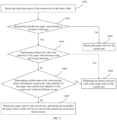
- FIG. 3 which is a flowchart of another video processing method provided in an embodiment of the present disclosure, taking a case that the preset video type is the flashing video type and the video state identifier is represented by using the value of the hasViewed field of the target video as an example, the video processing method includes the following steps.
- the client when the current user triggers the playing operation on the target video, the client receives the playing request for the target video and requests the target video from the server.
- S302 determining whether the target video belongs to the preset video type; if no, S303 is performed; and if yes, S304 is performed.
- the preset video type is a video type that indicates only supporting playing once for each user.
- the server may also return the video type identifier of the target video to the client while returning the target video to the client, and the video type identifier is used for uniquely identifying the video type to which the target video belongs.
- the preset video type is the flashing video type as an example
- the video type identifier "1" is used for identifying the flashing video type
- S304 is performed. If the video type identifier of the target video is determined not to be "1", it may be determined that the type of the target video is not the flashing video type, and then S303 is performed.
- the target video may be directly played for the current user.
- S304 determining whether the video state identifier of the target video belongs to the has Viewed identifier; if yes, S305 is performed; and if no, S306 is performed.
- the video state identifier is used for characterizing whether the target video recorded in the server is in the has Viewed state for the current user.
- the video state identifier of the target video is determined by the server based on the video playing history information reported by the client, and the video state identifier is sent to the client while the target video is sent to the client, and the video playing history information is used for characterizing the playing record information of the target video.
- the video state identifier is represented by using the value of the hasViewed field of the target video as an example, if the value of the has Viewed field is true, it indicates that the video state identifier of the target video is the has Viewed identifier, and it is determined that the server records that the target video is in the has Viewed state for the current user, and thus S305 is performed. If the value of the has Viewed field is false, it indicates that the video state identifier of the target video is not the hasViewed identifier, and it is determined that the server records that the target video is in the unviewed state for the current user, and thus S306 is performed.
- the client cannot play the target video again for the current user.
- the preset destroyed state of the target video may be displayed to the current user.
- the mask layer is displayed on the target video playing interface, and the text prompt "the video can only be viewed once and has been destroyed" is displayed on the mask layer.
- S306 determining whether there is the video playing history information carrying the video identifier of the target video and the user identifier of the current user in the local history record; if yes, S305 is performed; and if no, S307 is performed.
- the local history record includes the video playing history information carrying the video identifier (e.g., item ID0) and the user identifier (e.g., user id0), and the video playing history information is used for recording that the video corresponding to the video identifier is in the hasViewed state for the user corresponding to the user identifier.
- the video playing history information carrying the video identifier (e.g., item ID0) and the user identifier (e.g., user id0)
- the video playing history information is used for recording that the video corresponding to the video identifier is in the hasViewed state for the user corresponding to the user identifier.
- the video playing history information carrying the video identifier of the target video and the user identifier of the current user in the local history record is determined; if no, it indicates that the video corresponding to the video identifier (item ID0) is in the unviewed state for the user corresponding to the user identifier (user id0), and thus S307 is performed. If yes, it indicates that the video corresponding to the video identifier (item ID0) is in the hasViewed state for the user corresponding to the user identifier (user id0), and thus S305 is performed to display the preset destroyed state of the target video.
- the specific preset destroyed state may be the same as that exemplified in S305, which will not be redundantly described here.
- the video state identifier of the target video is determined not to belong to the has Viewed identifier and it is determined that, in the local history record, the target video is in the has Viewed state for the current user, it indicates that the video state identifier of the target video determined by the server based on the video playing history information may be wrong due to non-timely updating of the video playing history information between the interfaces of different servers.
- S307 playing the target video for the current user, and storing the record that the target video is in the has Viewed state for the current user in the local history record.
- the target video may be played.
- the video playing history information carrying the video identifier of the target video and the user identifier of the current user is stored in the local history record of the client.
- the video playing history information carrying item ID0 and user id0 is stored in the deduplication dictionary.
- the preset destroyed state of the target video may be displayed to the current user based on the video playing history information that the target video (with the video identifier of item ID0) is in the has Viewed state for the current user (with the user identifier of user id0) in the deduplication dictionary.
- whether the target video belongs to the preset video type is determined, if no, the target video is played for the current user, and if yes, whether the video state identifier of the target video is the has Viewed identifier is determined continuously; if yes, the preset destroyed state of the target video is displayed to the current user, and if no, whether there is the video playing history information carrying the video identifier of the target video and the user identifier of the current user in the local history record is determined continuously; if yes, the preset destroyed state of the target video is displayed to the current user, and if no, the target video is played for the current user, and the record that the target video is in the has Viewed state for the current user is stored in the local history record.
- the embodiments of the present disclosure allows for determining whether the target video is in the has Viewed state for the current user in combination with the local history record of the client, effectively avoids the problem that the video state identifier is wrong due to non-timely updating of the video playing history information between interfaces of the servers, and further guarantees the playing effect for the flashing video, thereby better enhancing the experience of the user watching the video.
- the present disclosure further provides a video processing apparatus 400.
- a video processing apparatus 400 includes:
- the apparatus further comprises: an inquiring module, configured to inquire whether the target video belongs to the hasViewed state for the current user in a local history record.
- the playing module 403 comprises: a playing sub-module, configured to play the target video if it is determined that, in the local history record, the target video does not belong to the hasViewed state for the current user.
- the apparatus further comprises: a storage module, configured to store a record that the target video is in the hasViewed state for the current user in the local history record.
- the apparatus further comprises: a first display module, configured to display a preset destroyed state of the target video if it is determined that, in the local history record, the target video belongs to the hasViewed state for the current user.
- the local history record comprises video playing history information carrying a video identifier and a user identifier
- the inquiring module comprises: a determination sub-module, configured to determine whether video playing history information carrying a video identifier of the target video and a user identifier of the current user exists in the local history record.
- the playing sub-module is further configured to: play the target video if it is determined that the video playing history information carrying the video identifier of the target video and the user identifier of the current user does not exist in the local history record.
- the apparatus further comprises: a second display module, configured to display a preset destroyed state of the target video if the video state identifier is determined to belong to the has Viewed identifier.
- the apparatus further comprises: a reporting module, configured to report video playing history information carrying a video identifier of the target video and a user identifier of the current user to the server, where the video playing history information is used for updating a playing state of the target video for the current user at the server.
- a reporting module configured to report video playing history information carrying a video identifier of the target video and a user identifier of the current user to the server, where the video playing history information is used for updating a playing state of the target video for the current user at the server.
- the preset video type is a video type that indicates only supporting playing once for each user; it is determined whether a video state identifier of the target video belongs to a has Viewed identifier if the target video is determined to belong to the preset video type, and the video state identifier is used for characterizing whether the target video recorded in a server is in a has Viewed state for a current user; and then the target video is played if the video state identifier is determined not to belong to the has Viewed identifier.
- the embodiments of the present disclosure ensure the playing effect for a flashing video by way of determining whether the target video has been played on a current terminal based on the has Viewed state of the target video recorded in the server for the current user, thereby enhancing the experience of the user watching the video.
- the embodiments of the present disclosure further provide a computer-readable storage medium, the computer-readable storage medium stores instructions, when the instructions are run on a terminal device, the terminal device is caused to implement the video processing method described in the embodiments of the present disclosure.
- the embodiments of the present disclosure further provide a computer program product, the computer program product comprises a computer program/instruction, and when the computer program/instruction is executed by a processor, the video processing method described in the embodiments of the present disclosure is implemented.
- an embodiment of the present disclosure further provides a video processing device 500.
- the video processing device 500 may include:
- processors 501 in the video processing device can be one or more, and one processor is taken as an example in FIG. 5 .
- the processor 501, the memory 502, the input apparatus 503, and the output apparatus 504 may be connected through a bus or other means, and the connection through a bus is taken as an example in FIG. 5 .
- the memory 502 may be used to store software programs and modules, and the processor 501 executes various functional applications and data processing of the video processing device by running the software programs and modules stored in the memory 502.
- the memory 502 may mainly include a storage program area and a storage data area, the storage program area may store an operating system, an application program required by at least one function, and the like.
- the memory 502 may include a high-speed random-access memory, and may also include a non-volatile memory, such as at least one magnetic disk memory device, a flash memory device, or other volatile solid-state memory devices.
- the input apparatus 503 can be used to receive input numeric or character information and to generate signal input related to user settings and function control of the video processing device.
- the processor 501 can load the executable files corresponding to the processes of one or more application programs into the memory 502 according to the following instructions, and the processor 501 can run the application programs stored in the memory 502, thus implementing various functions of the above video processing device.
Landscapes
- Engineering & Computer Science (AREA)
- Multimedia (AREA)
- Signal Processing (AREA)
- Databases & Information Systems (AREA)
- Health & Medical Sciences (AREA)
- General Health & Medical Sciences (AREA)
- Social Psychology (AREA)
- Computer Networks & Wireless Communication (AREA)
- Computer Security & Cryptography (AREA)
- Computer Graphics (AREA)
- Two-Way Televisions, Distribution Of Moving Picture Or The Like (AREA)
Abstract
Description
- The present application claims priority of the
Chinese Patent Application No. 202110948294.0, filed on August 18, 2021 - The present disclosure relates to the field of data processing, and in particular, to a video processing method, apparatus, and device, and a storage medium.
- With the continuous development of the Internet short video technology, people have increasingly diversified requirements on video types, and various video types have been emerged.
- At present, a video type that indicates only supporting playing once for each user (except a video maker) and may also be referred to as a flashing video type has attracted attention from people. Specifically, when a user watches a certain flashing video for the first time, a video player can play the video normally; however, when the same user wants to trigger to watch the flashing video again in any scenario, the video player displays that the video cannot be played and prompts the user that the flashing video only can be watched once.
- However, because videos in most scenarios at present can be played repeatedly and there is lack of processing experience for the flashing video, a technical problem urgently needing to be solved at present is how to guarantee a playing effect for a flashing video such that each flashing video can only be played once for each user to meet the viewing expectation of the user for the flashing video, thereby enhancing the viewing experience of the user.
- In order to solve or at least partially solve the above technical problems, the present disclosure provides a video processing method, which ensures the playing effect for a flashing video by way of determining whether the target video has been played on a current terminal based on the has Viewed state of the target video recorded in the server for the current user, thereby enhancing the experience of the user watching the video.
- In a first aspect, the present disclosure provides a video processing method, and the method comprises:
- determining whether a target video belongs to a preset video type, the preset video type being a video type that indicates only supporting playing once for each user;
- determining whether a video state identifier of the target video belongs to a hasViewed identifier if the target video is determined to belong to the preset video type, the video state identifier being used for characterizing whether the target video recorded in a server is in a hasViewed state for a current user; and
- playing the target video if the video state identifier is determined not to belong to the hasViewed identifier.
- In an alternative implementation, before the playing the target video, the method further comprises:
inquiring whether the target video belongs to the hasViewed state for the current user in a local history record. - Correspondingly, the playing the target video comprises:
playing the target video if it is determined that, in the local history record, the target video does not belong to the hasViewed state for the current user. - In an alternative implementation, after the playing the target video, the method further comprises:
storing a record that the target video is in the hasViewed state for the current user in the local history record. - In an alternative implementation, the method further comprises:
displaying a preset destroyed state of the target video if it is determined that, in the local history record, the target video belongs to the hasViewed state for the current user. - In an alternative implementation, the local history record comprises video playing history information carrying a video identifier and a user identifier; the inquiring whether the target video belongs to the hasViewed state for the current user in a local history record comprises:
determining whether video playing history information carrying a video identifier of the target video and a user identifier of the current user exists in the local history record. - Correspondingly, the playing the target video if it is determined that, in the local history record, the target video does not belong to the hasViewed state for the current user comprises:
playing the target video if it is determined that the video playing history information carrying the video identifier of the target video and the user identifier of the current user does not exist in the local history record. - In an alternative implementation, the method further comprises:
displaying a preset destroyed state of the target video if the video state identifier is determined to belong to the hasViewed identifier. - In an alternative implementation, after the playing the target video, the method further comprises:
reporting video playing history information carrying a video identifier of the target video and a user identifier of the current user to the server, where the video playing history information is used for updating a playing state of the target video for the current user at the server. - In a second aspect, the present disclosure provides a video processing apparatus, and the apparatus comprises:
- a first determination module, configured to determine whether a target video belongs to a preset video type, the preset video type being a video type that indicates only supporting playing once for each user;
- a second determination module, configured to determine whether a video state identifier of the target video belongs to a hasViewed identifier if the target video is determined to belong to the preset video type, the video state identifier being used for characterizing whether the target video recorded in a server is in a hasViewed state for a current user; and
- a playing module, configured to play the target video if the video state identifier is determined not to belong to the hasViewed identifier.
- In a third aspect, the present disclosure provides a computer-readable storage medium, the computer-readable storage medium stores instructions, when the instructions are run on a terminal device, the terminal device is caused to implement the above-mentioned method.
- In a fourth aspect, the present disclosure provides a device, comprising a memory, a processor, and a computer program stored on the memory and executable on the processor, and the processor is configured to, when executing the computer program, implement the above-mentioned method.
- In a fifth aspect, the present disclosure provides a computer program product, the computer program product comprises a computer program/instruction, and when the computer program/instruction is executed by a processor, the above-mentioned method is implemented.
- Compared with the prior art, the technical solution provided by the embodiments of the present disclosure has the following advantages:
- the embodiments of the present disclosure provides a video processing method, firstly, it is determined whether a target video belongs to a preset video type, and the preset video type is a video type that indicates only supporting playing once for each user; it is determined whether a video state identifier of the target video belongs to a has Viewed identifier if the target video is determined to belong to the preset video type, and the video state identifier is used for characterizing whether the target video recorded in a server is in a has Viewed state for a current user; and then the target video is played if the video state identifier is determined not to belong to the has Viewed identifier. The embodiments of the present disclosure ensure the playing effect for a flashing video by way of determining whether the target video has been played on a current terminal based on the has Viewed state of the target video recorded in the server for the current user, thereby enhancing the experience of the user watching the video.
- The accompanying drawings herein are incorporated into and constitute a part of the specification, show the embodiments consistent with the present disclosure, and together with the specification, serve to explain the principles of the present disclosure.
- In order to more clearly illustrate the technical solutions of the embodiments of the present disclosure or the prior art, the drawings required for describing the embodiments or the prior art will be briefly described in the following; it is obvious that those skilled in the art can obtain other drawing(s) according to these drawings, without any inventive work.
-
FIG. 1 is a flowchart of a video processing method provided in an embodiment of the present disclosure; -
FIG. 2 is a schematic diagram of a target video playing interface provided in an embodiment of the present disclosure; -
FIG. 3 is a flowchart of another video processing method provided in an embodiment of the present disclosure; -
FIG. 4 is a structural schematic diagram of a video processing apparatus provided in an embodiment of the present disclosure; and -
FIG. 5 is a structural schematic diagram of a video processing device provided in an embodiment of the present disclosure. - In order to understand the above objects, features, and advantages of the present disclosure more clearly, the technical solutions of the present disclosure will be further described below. It should be noted that, in case of no conflict, the embodiments of the present disclosure and the features in the embodiments can be combined with each other.
- In the following description, many specific details are set forth in order to fully understand the present disclosure, but the present disclosure may be implemented in other ways than those described herein; apparently, the embodiments in the specification are just a part but not all of the embodiments of the present disclosure.
- A flashing video type is a video type that indicates only supporting playing once for each user (exclusive of a video maker). At present, most video types support repeatedly playing and there is lack of processing experience for the flashing video, therefore, a technical problem urgently needing to be solved at present is how to guarantee a playing effect for a flashing video such that each flashing video can only be played once for each user to meet the viewing expectation of the user for the flashing video, thereby enhancing the viewing experience of the user.
- For this purpose, an embodiment of the present disclosure provide a video processing method, firstly, it is determined whether a target video belongs to a preset video type, and the preset video type is a video type that indicates only supporting playing once for each user; it is determined whether a video state identifier of the target video belongs to a has Viewed identifier if the target video is determined to belong to the preset video type, and the video state identifier is used for characterizing whether the target video recorded in a server is in a has Viewed state for a current user; and then the target video is played if the video state identifier is determined not to belong to the has Viewed identifier. The embodiments of the present disclosure ensure the playing effect for a flashing video by way of determining whether the target video has been played on a current terminal based on the has Viewed state of the target video recorded in the server for the current user, thereby enhancing the experience of the user watching the video.
- On this basis, an embodiment of the present disclosure provides a video processing method. With reference to
FIG. 1 , which is a flowchart of a video processing method provided in an embodiment of the present disclosure, the video processing method includes the following steps. - S101: determining whether a target video belongs to a preset video type.
- The preset video type is a video type that indicates only supporting playing once for each user.
- The video processing method provided in the embodiment of the present disclosure may be applied to a client, and the client includes, for example, a client deployed at a smart phone, a client deployed at a tablet computer, and the like.
- In a video playing scenario, before the client plays the target video, firstly, it is determined whether the target video belongs to the preset video type, and the preset video type is a video type that indicates only supporting playing once for each user. For example, the preset video type may be referred to as a flashing video type and may also be referred to as a burn-after-reading video type, and the like.
- In practical application, upon receiving a play trigger operation for the target video, the client firstly requests the target video from a server, and the server may also return a video type identifier of the target video to the client while returning the target video to the client, and the video type identifier is used for uniquely identifying the video type to which the target video belongs. The client determines whether the target video belongs to the preset video type based on the video type identifier of the target video, i.e., determines whether the target video belongs to the flashing video type.
- For example, assuming that the video type identifier "1" is used for identifying the preset video type, namely the flashing video type, if it is determined that the video type identifier of the target video is "1", it may be determined that the target video belongs to the preset video type; and if it is determined that the video type identifier of the target video is not "1", it may be determined that the target video does not belong to the preset video type.
- S102: determining whether a video state identifier of the target video belongs to a hasViewed identifier if the target video is determined to belong to the preset video type.
- The video state identifier is used for characterizing whether the target video recorded in a server is in a has Viewed state for a current user.
- In an embodiment of the present disclosure, the client is in communication connection with the server. Based on the communication connection between the client and the server, when the target video is played at the client, the client is capable of reporting video playing history information of the target video to the server, and the video playing history information is used for characterizing playing record information of the target video.
- The server is capable of determining the video state identifier of the target video based on the video playing history information reported by the client, and sending the video state identifier to the client while sending the target video to the client, and the video state identifier is used for characterizing whether the target video recorded in the server is in the has Viewed state for the current user.
- The specific implementation of determining the video state identifier of the target video by the server based on the video playing history information will be introduced in subsequent embodiments, which will not be redundantly described here.
- In the embodiment of the present disclosure, because the preset video type indicates only supporting playing once for each user, the client further needs to determine whether the target video is in the has Viewed state for the current user after determining that the target video belongs to the preset video type. Specifically, the client may determine whether the target video is in the hasViewed state for the current user based on the video state identifier of the target video, i.e., determine whether the video state identifier of the target video belongs to the hasViewed identifier.
- In an alternative implementation, the video state identifier of the target video may be represented by using a value of a hasViewed field of the target video. If the value of the hasViewed field is true, it indicates that the video state identifier of the target video belongs to the hasViewed identifier; on the contrary, if the value of the hasViewed field is false, it indicates that the video state identifier of the target video does not belong to the hasViewed identifier. Specifically, the client determines whether the target video is in the hasViewed state for the current user based on the video state identifier of the target video, if the value of the hasViewed field of the target video sent by the server is true, it is determined that the record that the target video is in the hasViewed state for the current user is recorded in the server; if the value of the hasViewed field of the target video sent by the server is false, it is determined that the record that the target video is in an unviewed state for the current user is recorded in the server.
- S103: playing the target video if the video state identifier is determined not to belong to the has Viewed identifier.
- In an embodiment of the present disclosure, if the video state identifier is determined not to be the has Viewed identifier, it indicates that the target video recorded in the server is in the unviewed state for the current user, that is to say, based on the principle of only supporting playing once for each user, the target video can also be played for the current user. Therefore, upon determining that the video state identifier of the target video is not the has Viewed identifier, the target video can be directly played.
- For example, if the client determines that the value of the has Viewed field of the target video sent by the server is false, it indicates that the record that the target video is in the unviewed state for the current user is recorded in the server, and at this time, the target video can be played for the current user, which is in conformity with the principle of only supporting playing the target video once for each user.
- In an alternative implementation, if the video state identifier is determined to be the hasViewed identifier, a preset destroyed state of the target video is displayed.
- In an embodiment of the present disclosure, if the video state identifier of the target video is determined to belong to the hasViewed identifier, it indicates that the record that the target video is in the hasViewed state for the current user is recorded in the server. Based on the principle of only supporting playing once for each user, the client cannot play the target video again for the current user, and in order to prompt the user, the client can display the preset destroyed state of the target video to the current user. The preset destroyed state is used for prompting the current user that the target video is of the video type that indicates only supporting playing once, and the target video has been played by the current user and cannot be played again.
- In an embodiment of the present disclosure, there may be a plurality of methods for displaying the preset destroyed state of the target video. For example, as shown in
FIG. 2 , which is a schematic diagram of a target video playing interface provided in an embodiment of the present disclosure, a mask layer is displayed on the target video playing interface, and a text prompt, e.g., text such as "the video can only be viewed once and has been destroyed", is displayed on the mask layer. - In the video processing method provided in the embodiments of the present disclosure, firstly, it is determined whether a target video belongs to a preset video type, and the preset video type is a video type that indicates only supporting playing once for each user; it is determined whether a video state identifier of the target video belongs to a has Viewed identifier if the target video is determined to belong to the preset video type, and the video state identifier is used for characterizing whether the target video recorded in a server is in a has Viewed state for a current user; and then the target video is played if the video state identifier is determined not to belong to the has Viewed identifier. The embodiments of the present disclosure ensure the playing effect for a flashing video by way of determining whether the target video has been played on a current terminal based on the has Viewed state of the target video recorded in the server for the current user, thereby enhancing the experience of the user watching the video.
- Based on the content in the above embodiments, the video state identifier of the target video is determined based on the video playing history information by the server and is sent to the client by the server. The problem of non-timely updating of the video playing history information may occur between interfaces of different servers. For example, the current user plays the target video of the preset video type in scenario A (e.g., a recommended scenario) and immediately switches to scenario B (e.g., a home page of an author of the target video) to play the target video again, because the interface of the scenario B has not received the information indicating that the target video has been played yet, the video state identifier of the target video determined by the server based on the video playing history information of the interface of the scenario B may be wrong, leading to that the video state identifier sent to the client may not belong to the hasViewed identifier (e.g., hasViewed=false), which in turn results in that the client determines that the target video is in the unviewed state for the current user based on the video state identifier sent by the server. Consequently, the target video of the preset video type is played for several times for the current user, thus affecting the user experience.
- Therefore, in order to further guarantee the effect that the target video of the preset video type can be played only once for each user, on the basis of the above embodiments, whether the target video belongs to the hasViewed state for the current user can be determined in combination with the local history record of the client, so as to further ensure the use experience of the user when the user playes the target video of the preset video type.
- In an alternative implementation, before playing the target video, whether the target video is in the hasViewed state for the current user is determined by querying in the local history record. If the target video is determined not to be in the has Viewed state for the current user from the local history record, the target video is played.
- In an embodiment of the present disclosure, if the video state identifier of the target video is determined not to belong to the has Viewed identifier, it indicates that the server records that the target video is in the unviewed state for the current user. To avoid the problem that the video state identifier is wrong due to non-timely updating of the video playing history information between the interfaces of the servers, the embodiments of the present disclosure may further allow for determining whether the target video is in the hasViewed state for the current user by querying in the local history record of the client. The local history record stores data that can characterize whether the target video is in the has Viewed state for the current user, and the client may perform a query operation on the local history record. For example, a deduplication dictionary may be set at the client to store data indicating whether the target video is in the has Viewed state for the current user, and the client may perform the query operation on the deduplication dictionary.
- In an embodiment of the present disclosure, after determining that the video state identifier of the target video is not the has Viewed identifier and determining that the local history record records that the target video is not in the has Viewed state for the current user, the target video may be played for the current user.
- In an alternative implementation, if it is determined that, in the local history record, the target video is in the has Viewed state for the current user, the preset destroyed state of the target video is displayed.
- In an embodiment of the present disclosure, if the video state identifier of the target video is determined not to belong to the has Viewed identifier and it is determined that, in the local history record, the target video is in the has Viewed state for the current user, it indicates that the video state identifier of the target video determined by the server based on the video playing history information may be wrong due to non-timely updating of the video playing history information between the interfaces of different servers.
- Moreover, because the client determines that, in the local history record, the target video is in the has Viewed state for the current user, based on the principle of only supporting playing once for each user, the client cannot play the target video again for the current user. To prompt the user, the preset destroyed state of the target video may be displayed for the current user. For the method of displaying the preset destroyed state of the target video, reference may be made to the method described in S103 of the above embodiment, which will not be redundantly described here.
- In an alternative implementation, the local history record includes the video playing history information carrying a video identifier and a user identifier, and the video playing history information is used for recording that the video corresponding to the video identifier is in the hasViewed state for the user corresponding to the user identifier. Firstly, it is determined whether there is the video playing history information carrying the video identifier of the target video and the user identifier of the current user in the local history record, if it is determined that there is no video playing history information carrying the video identifier of the target video and the user identifier of the current user in the local history record, it indicates that the target video corresponding to the video identifier is in the un-played state for the user corresponding to the user identifier, and thus the target video is played. If it is determined that there is the video playing history information carrying the video identifier of the target video and the user identifier of the current user in the local history record, it indicates that the target video corresponding to the video identifier is in the hasViewed state for the user corresponding to the user identifier, and thus the preset destroyed state of the target video is displayed.
- For example, whether the target video is in the hasViewed state for the current user is determined by querying in the local history record (e.g., the deduplication dictionary). Specifically, the video identifier (e.g., item ID0) of the target video and the user identifier (e.g., user id0) of the current user may be used as keys, and whether the video playing history information carrying item ID0 and user id0 is stored is looked up in the deduplication dictionary, if it is determined that there is no video playing history information carrying item ID0 and user id0 in the deduplication dictionary, it indicates that the target video has not been played for the current user yet, and thus the target video can be played. If it is determined that there is the video playing history information carrying item ID0 and user id0 in the deduplication dictionary, it indicates that the target video has been played for the current user, and at this time, the target video cannot be played for the current user, and the preset destroyed state of the target video may be displayed for the current user.
- In an alternative implementation, after the target video is played, and a record that the target video is in the hasViewed state for the current user is stored in the local history record.
- In an embodiment of the present disclosure, if it is determined that there is no video playing history information carrying the video identifier (e.g., item ID0) of the target video and the user identifier (e.g., user id0) of the current user in the local history record (e.g., the deduplication dictionary), the target video is played, and the record that the target video is in the hasViewed state for the current user is stored in the local history record. For example, the video playing history information carrying item ID0 and user id0 is stored in the deduplication dictionary.
- If the current user triggers a playing operation on the target video again, the preset destroyed state of the target video may be displayed for the current user based on the video playing history information that the target video (with the video identifier of item ID0) is in the hasViewed state for the current user (with the user identifier of user id0) in the deduplication dictionary.
- The embodiments of the present disclosure allow for determining whether the target video is in the hasViewed state for the current user in combination with the local history record of the client and further guarantees the playing effect for the flashing video, thereby better enhancing the experience of the user watching the video.
- In an embodiment of the present disclosure, after the target video is played, the video playing history information is not only stored in the local history record of the client but also needs to be reported to the server, and the server stores the video playing history information. The server may determine whether the video state identifier of the target video of the preset video type requested by the client to play is the hasViewed identifier based on the locally stored video playing history information. For example, the server may determine the value of the hasViewed field based on the video playing history information. Specifically, if the server receives the video playing history information reported by the client, it indicates that there is the record information that the target video has been played for the current user in the local history record, and thus the value of the hasViewed field may be set to true. If the value of the hasViewed field is true, it indicates that the video state identifier of the target video is the hasViewed identifier. If the server does not receive the video playing history information reported by the client, it indicates that there is no record information that the target video has been played for the current user in the local history record, and thus the value of the hasViewed field may be set to false. If the value of the hasViewed field is false, it indicates that the video state identifier of the target video is not the hasViewed identifier.
- In an alternative implementation, after the target video is played, the client reports the video playing history information carrying the video identifier of the target video and the user identifier of the current user to the server.
- The video playing history information is used for updating the playing state of the target video for the current user at the server.
- In an embodiment of the present disclosure, after the target video is played, the client reports the video playing history information carrying the video identifier (e.g., item ID0) of the target video and the user identifier (e.g., user id0) of the current user to the server, and the server updates the playing state of the target video for the current user based on the video playing history information, so that the server can send the updated video state identifier to the client when the current user triggers the playing operation on the target video again. For example, the video state identifier of the target video may be updated as the has Viewed identifier (e.g., the value of hasViewed is updated to true), so that the server can send the video state identifier with the value of the hasViewed field being true to the client when the current user triggers the playing operation on the target video again. Furthermore, the client may determine that the target video has been played for the current user based on the updated video state identifier and thus displays the preset destroyed state of the target video for the current user.
- In an embodiment of the present disclosure, when the client reports the video playing history information corresponding to the target video to the server, a dual-link reporting manner may be used so as to guarantee the security of reporting the video playing history information.
- In addition, an embodiment of the present disclosure may also report the video playing history information corresponding to the video of the preset video type by using one dedicated link, thereby avoiding delay in reporting and reporting the video playing history information to the server in time. Thus, the accuracy of determining the video state identifier of the target video subsequently by the server based on the video playing history information is guaranteed.
- Based on the above embodiments, the present disclosure provides a specific application scenario of a video processing method. As shown in
FIG. 3 , which is a flowchart of another video processing method provided in an embodiment of the present disclosure, taking a case that the preset video type is the flashing video type and the video state identifier is represented by using the value of the hasViewed field of the target video as an example, the video processing method includes the following steps. - S301: receiving a playing request of the current user for the target video.
- In an embodiment of the present disclosure, when the current user triggers the playing operation on the target video, the client receives the playing request for the target video and requests the target video from the server.
- S302: determining whether the target video belongs to the preset video type; if no, S303 is performed; and if yes, S304 is performed.
- The preset video type is a video type that indicates only supporting playing once for each user.
- In an embodiment of the present disclosure, the server may also return the video type identifier of the target video to the client while returning the target video to the client, and the video type identifier is used for uniquely identifying the video type to which the target video belongs. Taking a case that the preset video type is the flashing video type as an example, assuming that the video type identifier "1" is used for identifying the flashing video type, if the video type identifier of the target video is determined to be "1", it may be determined that the type of the target video is the flashing video type, and then S304 is performed. If the video type identifier of the target video is determined not to be "1", it may be determined that the type of the target video is not the flashing video type, and then S303 is performed.
- S303: playing the target video for the current user.
- In an embodiment of the present disclosure, based on the above S302, if the target video is determined not to belong to the flashing video type, the target video may be directly played for the current user.
- S304: determining whether the video state identifier of the target video belongs to the has Viewed identifier; if yes, S305 is performed; and if no, S306 is performed.
- The video state identifier is used for characterizing whether the target video recorded in the server is in the has Viewed state for the current user.
- In an embodiment of the present disclosure, the video state identifier of the target video is determined by the server based on the video playing history information reported by the client, and the video state identifier is sent to the client while the target video is sent to the client, and the video playing history information is used for characterizing the playing record information of the target video.
- Taking a case that the video state identifier is represented by using the value of the hasViewed field of the target video as an example, if the value of the has Viewed field is true, it indicates that the video state identifier of the target video is the has Viewed identifier, and it is determined that the server records that the target video is in the has Viewed state for the current user, and thus S305 is performed. If the value of the has Viewed field is false, it indicates that the video state identifier of the target video is not the hasViewed identifier, and it is determined that the server records that the target video is in the unviewed state for the current user, and thus S306 is performed.
- S305: displaying the preset destroyed state of the target video for the current user.
- In an embodiment of the present disclosure, based on the above S304, if it is determined that the target video is in the has Viewed state for the current user, based on the principle of only supporting playing once for each user, the client cannot play the target video again for the current user. To prompt the user, the preset destroyed state of the target video may be displayed to the current user. With reference to
FIG. 2 , the mask layer is displayed on the target video playing interface, and the text prompt "the video can only be viewed once and has been destroyed" is displayed on the mask layer. - S306: determining whether there is the video playing history information carrying the video identifier of the target video and the user identifier of the current user in the local history record; if yes, S305 is performed; and if no, S307 is performed.
- In an embodiment of the present disclosure, the local history record includes the video playing history information carrying the video identifier (e.g., item ID0) and the user identifier (e.g., user id0), and the video playing history information is used for recording that the video corresponding to the video identifier is in the hasViewed state for the user corresponding to the user identifier.
- Whether there is the video playing history information carrying the video identifier of the target video and the user identifier of the current user in the local history record (e.g., the deduplication dictionary) is determined; if no, it indicates that the video corresponding to the video identifier (item ID0) is in the unviewed state for the user corresponding to the user identifier (user id0), and thus S307 is performed. If yes, it indicates that the video corresponding to the video identifier (item ID0) is in the hasViewed state for the user corresponding to the user identifier (user id0), and thus S305 is performed to display the preset destroyed state of the target video. The specific preset destroyed state may be the same as that exemplified in S305, which will not be redundantly described here.
- In an embodiment of the present disclosure, based on the above S304, if the video state identifier of the target video is determined not to belong to the has Viewed identifier and it is determined that, in the local history record, the target video is in the has Viewed state for the current user, it indicates that the video state identifier of the target video determined by the server based on the video playing history information may be wrong due to non-timely updating of the video playing history information between the interfaces of different servers.
- S307: playing the target video for the current user, and storing the record that the target video is in the has Viewed state for the current user in the local history record.
- In an embodiment of the present disclosure, based on the above S306, if it is determined that there is no video playing history information carrying the video identifier (e.g., item ID0) of the target video and the user identifier (e.g., user id0) of the current user in the local history record (e.g., the deduplication dictionary), the target video may be played. Moreover, the video playing history information carrying the video identifier of the target video and the user identifier of the current user is stored in the local history record of the client. For example, the video playing history information carrying item ID0 and user id0 is stored in the deduplication dictionary.
- If the current user triggers the playing operation on the target video again, the preset destroyed state of the target video may be displayed to the current user based on the video playing history information that the target video (with the video identifier of item ID0) is in the has Viewed state for the current user (with the user identifier of user id0) in the deduplication dictionary.
- In the video processing method provided in the embodiments of the present disclosure, whether the target video belongs to the preset video type is determined, if no, the target video is played for the current user, and if yes, whether the video state identifier of the target video is the has Viewed identifier is determined continuously; if yes, the preset destroyed state of the target video is displayed to the current user, and if no, whether there is the video playing history information carrying the video identifier of the target video and the user identifier of the current user in the local history record is determined continuously; if yes, the preset destroyed state of the target video is displayed to the current user, and if no, the target video is played for the current user, and the record that the target video is in the has Viewed state for the current user is stored in the local history record.
- Thus it can be seen that the embodiments of the present disclosure allows for determining whether the target video is in the has Viewed state for the current user in combination with the local history record of the client, effectively avoids the problem that the video state identifier is wrong due to non-timely updating of the video playing history information between interfaces of the servers, and further guarantees the playing effect for the flashing video, thereby better enhancing the experience of the user watching the video.
- Based on the same inventive concept as the above method embodiments, the present disclosure further provides a
video processing apparatus 400. With reference toFIG. 4 , which is a structural schematic diagram of a video processing apparatus provided in an embodiment of the present disclosure, thevideo processing apparatus 400 includes: - a
first determination module 401, configured to determine whether a target video belongs to a preset video type, where the preset video type is a video type that indicates only supporting playing once for each user; - a
second determination module 402, configured to determine whether a video state identifier of the target video belongs to a has Viewed identifier if the target video is determined to belong to the preset video type, where the video state identifier is used for characterizing whether the target video recorded in a server is in a has Viewed state for a current user; and - a
playing module 403, configured to play the target video if the video state identifier is determined not to belong to the has Viewed identifier. - In an alternative implementation, the apparatus further comprises:
an inquiring module, configured to inquire whether the target video belongs to the hasViewed state for the current user in a local history record. - Correspondingly, the
playing module 403 comprises:
a playing sub-module, configured to play the target video if it is determined that, in the local history record, the target video does not belong to the hasViewed state for the current user. - In an alternative implementation, the apparatus further comprises:
a storage module, configured to store a record that the target video is in the hasViewed state for the current user in the local history record. - In an alternative implementation, the apparatus further comprises:
a first display module, configured to display a preset destroyed state of the target video if it is determined that, in the local history record, the target video belongs to the hasViewed state for the current user. - In an alternative implementation, the local history record comprises video playing history information carrying a video identifier and a user identifier, and the inquiring module comprises:
a determination sub-module, configured to determine whether video playing history information carrying a video identifier of the target video and a user identifier of the current user exists in the local history record. - Correspondingly, the playing sub-module is further configured to:
play the target video if it is determined that the video playing history information carrying the video identifier of the target video and the user identifier of the current user does not exist in the local history record. - In an alternative implementation, the apparatus further comprises:
a second display module, configured to display a preset destroyed state of the target video if the video state identifier is determined to belong to the has Viewed identifier. - In an alternative implementation, the apparatus further comprises:
a reporting module, configured to report video playing history information carrying a video identifier of the target video and a user identifier of the current user to the server, where the video playing history information is used for updating a playing state of the target video for the current user at the server. - In the video processing apparatus provided in the embodiments of the present disclosure, firstly, it is determined whether a target video belongs to a preset video type, and the preset video type is a video type that indicates only supporting playing once for each user; it is determined whether a video state identifier of the target video belongs to a has Viewed identifier if the target video is determined to belong to the preset video type, and the video state identifier is used for characterizing whether the target video recorded in a server is in a has Viewed state for a current user; and then the target video is played if the video state identifier is determined not to belong to the has Viewed identifier. The embodiments of the present disclosure ensure the playing effect for a flashing video by way of determining whether the target video has been played on a current terminal based on the has Viewed state of the target video recorded in the server for the current user, thereby enhancing the experience of the user watching the video.
- In addition to the above method and apparatus, the embodiments of the present disclosure further provide a computer-readable storage medium, the computer-readable storage medium stores instructions, when the instructions are run on a terminal device, the terminal device is caused to implement the video processing method described in the embodiments of the present disclosure.
- The embodiments of the present disclosure further provide a computer program product, the computer program product comprises a computer program/instruction, and when the computer program/instruction is executed by a processor, the video processing method described in the embodiments of the present disclosure is implemented.
- In addition, an embodiment of the present disclosure further provides a
video processing device 500. As shown inFIG. 5 , which is a structural schematic diagram of a video processing device provided in an embodiment of the present disclosure, thevideo processing device 500 may include: - a
processor 501, amemory 502, aninput apparatus 503, and anoutput apparatus 504. The number ofprocessors 501 in the video processing device can be one or more, and one processor is taken as an example inFIG. 5 . In some embodiments of the present disclosure, theprocessor 501, thememory 502, theinput apparatus 503, and theoutput apparatus 504 may be connected through a bus or other means, and the connection through a bus is taken as an example inFIG. 5 . - The
memory 502 may be used to store software programs and modules, and theprocessor 501 executes various functional applications and data processing of the video processing device by running the software programs and modules stored in thememory 502. Thememory 502 may mainly include a storage program area and a storage data area, the storage program area may store an operating system, an application program required by at least one function, and the like. In addition, thememory 502 may include a high-speed random-access memory, and may also include a non-volatile memory, such as at least one magnetic disk memory device, a flash memory device, or other volatile solid-state memory devices. Theinput apparatus 503 can be used to receive input numeric or character information and to generate signal input related to user settings and function control of the video processing device. - Specifically, in the embodiment, the
processor 501 can load the executable files corresponding to the processes of one or more application programs into thememory 502 according to the following instructions, and theprocessor 501 can run the application programs stored in thememory 502, thus implementing various functions of the above video processing device. - It should be understood that in the specification, the relational terms such as "first", "second", etc. are only used for distinguishing one entity or operation from another entity or operation, and do not necessarily require or imply any such actual relationship or order between these entities or operations. Moreover, the term "comprise/include", "contain", and any variations thereof are intended to cover non-exclusive inclusion, such that a process, method, article, or device including a series of elements includes not only those elements, but also other elements not explicitly listed or elements inherent to such process, method, article, or device. Without further restrictions, an element defined by the phrase "comprising/including one" does not exclude the existence of other identical elements in the process, method, article, or device including the element.
- What has been described above is only the specific implementation of the present disclosure, so that those skilled in the art can understand or implement the present disclosure. Various modifications to these embodiments will be apparent to those skilled in the art, and the general principles defined herein can be implemented in other embodiments without departing from the spirit or scope of the present disclosure. Therefore, the present disclosure will not be limited to the embodiments described herein, but is to be accorded the widest scope consistent with the principles and novel features disclosed herein.
Claims (11)
- A video processing method, characterized in that, the method comprises:determining whether a target video belongs to a preset video type, wherein the preset video type is a video type that indicates only supporting playing once for each user;determining whether a video state identifier of the target video belongs to a hasViewed identifier if the target video is determined to belong to the preset video type, wherein the video state identifier is used for characterizing whether the target video recorded in a server is in a hasViewed state for a current user; andplaying the target video if the video state identifier is determined not to belong to the hasViewed identifier.
- The method according to claim 1, characterized in that, before the playing the target video, the method further comprises:inquiring whether the target video belongs to the hasViewed state for the current user in a local history record,correspondingly, the playing the target video comprises:
playing the target video if it is determined that, in the local history record, the target video does not belong to the hasViewed state for the current user. - The method according to claim 2, characterized in that, after the playing the target video, the method further comprises:
storing a record that the target video is in the hasViewed state for the current user in the local history record. - The method according to claim 2 or 3, characterized in that, the method further comprises:
displaying a preset destroyed state of the target video if it is determined that, in the local history record, the target video belongs to the hasViewed state for the current user. - The method according to claim 2, characterized in that, the local history record comprises video playing history information carrying a video identifier and a user identifier; the inquiring whether the target video belongs to the has Viewed state for the current user in a local history record comprises:determining whether video playing history information carrying a video identifier of the target video and a user identifier of the current user exists in the local history record; andcorrespondingly, the playing the target video if it is determined that, in the local history record, the target video does not belong to the has Viewed state for the current user comprises:
playing the target video if it is determined that the video playing history information carrying the video identifier of the target video and the user identifier of the current user does not exist in the local history record. - The method according to claim 1, characterized in that, the method further comprises:
displaying a preset destroyed state of the target video if the video state identifier is determined to belong to the has Viewed identifier. - The method according to claim 1, characterized in that, after the playing the target video, the method further comprises:
reporting video playing history information carrying a video identifier of the target video and a user identifier of the current user to the server, wherein the video playing history information is used for updating a playing state of the target video for the current user at the server. - A video processing apparatus, characterized in that, the apparatus comprises:a first determination module, configured to determine whether a target video belongs to a preset video type, wherein the preset video type is a video type that indicates only supporting playing once for each user;a second determination module, configured to determine whether a video state identifier of the target video belongs to a has Viewed identifier if the target video is determined to belong to the preset video type, wherein the video state identifier is used for characterizing whether the target video recorded in a server is in a has Viewed state for a current user; anda playing module, configured to play the target video if the video state identifier is determined not to belong to the has Viewed identifier.
- A computer-readable storage medium, characterized in that, the computer-readable storage medium stores instructions, when the instructions are run on a terminal device, the terminal device is caused to implement the method according to any one of claims 1 to 7.
- A device, characterized by comprising a memory, a processor, and a computer program stored on the memory and executable on the processor, wherein the processor is configured to, when executing the computer program, implement the method according to any one of claims 1 to 7.
- A computer program product, characterized in that, the computer program product comprises a computer program/instruction, and when the computer program/instruction is executed by a processor, the method according to any one of claims 1 to 7 is implemented.
Applications Claiming Priority (2)
| Application Number | Priority Date | Filing Date | Title |
|---|---|---|---|
| CN202110948294.0A CN115942029A (en) | 2021-08-18 | 2021-08-18 | A video processing method, device, equipment and storage medium |
| PCT/CN2022/110516 WO2023020303A1 (en) | 2021-08-18 | 2022-08-05 | Video processing method and apparatus, and device and storage medium |
Publications (2)
| Publication Number | Publication Date |
|---|---|
| EP4344231A1 true EP4344231A1 (en) | 2024-03-27 |
| EP4344231A4 EP4344231A4 (en) | 2024-11-27 |
Family
ID=85240023
Family Applications (1)
| Application Number | Title | Priority Date | Filing Date |
|---|---|---|---|
| EP22857615.3A Pending EP4344231A4 (en) | 2021-08-18 | 2022-08-05 | VIDEO PROCESSING METHOD AND APPARATUS, AND RECORDING DEVICE AND MEDIUM |
Country Status (4)
| Country | Link |
|---|---|
| EP (1) | EP4344231A4 (en) |
| JP (1) | JP7732003B2 (en) |
| CN (1) | CN115942029A (en) |
| WO (1) | WO2023020303A1 (en) |
Family Cites Families (9)
| Publication number | Priority date | Publication date | Assignee | Title |
|---|---|---|---|---|
| JP2001251602A (en) * | 2000-03-03 | 2001-09-14 | Matsushita Electric Ind Co Ltd | Program receiving device and transmitting device |
| US7464392B2 (en) | 2001-11-20 | 2008-12-09 | Starz Encore Group Llc | Viewing limit controls |
| CN102595196A (en) | 2012-01-12 | 2012-07-18 | 华为技术有限公司 | Method and device for receiving application data |
| CN103379451B (en) * | 2013-06-21 | 2017-09-08 | 宇龙计算机通信科技(深圳)有限公司 | The inspection method and its system of burn-after-reading information |
| US20160149956A1 (en) * | 2014-11-21 | 2016-05-26 | Whip Networks, Inc. | Media management and sharing system |
| CN105120074A (en) * | 2015-07-20 | 2015-12-02 | 陈包容 | Information burn-after-reading method and information burn-after-reading device |
| CN106210079A (en) * | 2016-07-15 | 2016-12-07 | 徐文波 | The method and apparatus that multimedia messages is shared |
| CN106791934A (en) * | 2016-12-14 | 2017-05-31 | 暴风集团股份有限公司 | For the encryption player method and encryption system of VIP videos |
| CN107801055A (en) * | 2017-11-01 | 2018-03-13 | 北京邦邦共赢网络科技有限公司 | A kind of method and apparatus that image is presented |
-
2021
- 2021-08-18 CN CN202110948294.0A patent/CN115942029A/en active Pending
-
2022
- 2022-08-05 WO PCT/CN2022/110516 patent/WO2023020303A1/en not_active Ceased
- 2022-08-05 JP JP2023578706A patent/JP7732003B2/en active Active
- 2022-08-05 EP EP22857615.3A patent/EP4344231A4/en active Pending
Also Published As
| Publication number | Publication date |
|---|---|
| WO2023020303A1 (en) | 2023-02-23 |
| JP2024523439A (en) | 2024-06-28 |
| CN115942029A (en) | 2023-04-07 |
| EP4344231A4 (en) | 2024-11-27 |
| US20240340492A1 (en) | 2024-10-10 |
| JP7732003B2 (en) | 2025-09-01 |
Similar Documents
| Publication | Publication Date | Title |
|---|---|---|
| EP4087258A1 (en) | Method and apparatus for displaying live broadcast data, and device and storage medium | |
| US12589295B2 (en) | Interaction scene starting method and apparatus, storage medium, client, and server | |
| CN108521607B (en) | Method and device for processing advertisements in video, storage medium and intelligent terminal | |
| US11310066B2 (en) | Method and apparatus for pushing information | |
| US20190149872A1 (en) | Information exchanging method and device, audio terminal and computer-readable storage medium | |
| EP4170475A1 (en) | Method, apparatus, and device for video-based interaction, and storage medium | |
| CN109600656B (en) | Video list display method and device, terminal equipment and storage medium | |
| US11962837B2 (en) | Video update push method and terminal | |
| EP4701206A1 (en) | Interface interaction method and apparatus, device, and storage medium | |
| US20250307304A1 (en) | Multimedia work display method, apparatus and device, and storage medium | |
| JP7058795B2 (en) | Video processing methods, devices, terminals and storage media | |
| CN111209437A (en) | A label processing method, device, storage medium and electronic device | |
| CN113672748B (en) | Multimedia information playing method and device | |
| WO2015081796A1 (en) | Method and device for synchronizing play record between mobile terminal and smart television | |
| WO2017156983A1 (en) | List callup method and device | |
| CN111949807A (en) | Data processing method, apparatus, computer equipment and storage medium | |
| WO2026012403A1 (en) | Interface interaction method and apparatus, and device and storage medium | |
| CN113676761B (en) | Multimedia resource playing method and device and main control equipment | |
| CN113556568B (en) | Cloud application running method, system, device and storage medium | |
| CN109462777B (en) | Video heat updating method, device, terminal and storage medium | |
| WO2026067487A1 (en) | Association relationship determination method and apparatus, device, storage medium, and program product | |
| US12634554B2 (en) | Video processing method and apparatus, and device and storage medium | |
| US20240340492A1 (en) | Video processing method and apparatus, and device and storage medium | |
| AU2018403361A1 (en) | Data transmission | |
| CN111356006B (en) | Video playing method, device, server and storage medium |
Legal Events
| Date | Code | Title | Description |
|---|---|---|---|
| STAA | Information on the status of an ep patent application or granted ep patent |
Free format text: STATUS: THE INTERNATIONAL PUBLICATION HAS BEEN MADE |
|
| PUAI | Public reference made under article 153(3) epc to a published international application that has entered the european phase |
Free format text: ORIGINAL CODE: 0009012 |
|
| STAA | Information on the status of an ep patent application or granted ep patent |
Free format text: STATUS: REQUEST FOR EXAMINATION WAS MADE |
|
| 17P | Request for examination filed |
Effective date: 20231220 |
|
| AK | Designated contracting states |
Kind code of ref document: A1 Designated state(s): AL AT BE BG CH CY CZ DE DK EE ES FI FR GB GR HR HU IE IS IT LI LT LU LV MC MK MT NL NO PL PT RO RS SE SI SK SM TR |
|
| A4 | Supplementary search report drawn up and despatched |
Effective date: 20241024 |
|
| DAV | Request for validation of the european patent (deleted) | ||
| DAX | Request for extension of the european patent (deleted) | ||
| RIC1 | Information provided on ipc code assigned before grant |
Ipc: H04N 21/45 20110101ALI20241018BHEP Ipc: H04N 21/8355 20110101ALI20241018BHEP Ipc: H04N 21/8352 20110101ALI20241018BHEP Ipc: H04N 21/442 20110101ALI20241018BHEP Ipc: H04N 21/258 20110101ALI20241018BHEP Ipc: H04N 21/488 20110101ALI20241018BHEP Ipc: H04N 21/472 20110101AFI20241018BHEP |
|
| STAA | Information on the status of an ep patent application or granted ep patent |
Free format text: STATUS: EXAMINATION IS IN PROGRESS |
|
| 17Q | First examination report despatched |
Effective date: 20250708 |