EP4343955A1 - Tab plate and wound battery - Google Patents
Tab plate and wound battery Download PDFInfo
- Publication number
- EP4343955A1 EP4343955A1 EP22803900.4A EP22803900A EP4343955A1 EP 4343955 A1 EP4343955 A1 EP 4343955A1 EP 22803900 A EP22803900 A EP 22803900A EP 4343955 A1 EP4343955 A1 EP 4343955A1
- Authority
- EP
- European Patent Office
- Prior art keywords
- tab plate
- tabs
- angle
- electrode tab
- plate
- Prior art date
- Legal status (The legal status is an assumption and is not a legal conclusion. Google has not performed a legal analysis and makes no representation as to the accuracy of the status listed.)
- Pending
Links
Images




Classifications
-
- H—ELECTRICITY
- H01—ELECTRIC ELEMENTS
- H01M—PROCESSES OR MEANS, e.g. BATTERIES, FOR THE DIRECT CONVERSION OF CHEMICAL ENERGY INTO ELECTRICAL ENERGY
- H01M50/00—Constructional details or processes of manufacture of the non-active parts of electrochemical cells other than fuel cells, e.g. hybrid cells
- H01M50/50—Current conducting connections for cells or batteries
- H01M50/531—Electrode connections inside a battery casing
- H01M50/533—Electrode connections inside a battery casing characterised by the shape of the leads or tabs
-
- H—ELECTRICITY
- H01—ELECTRIC ELEMENTS
- H01M—PROCESSES OR MEANS, e.g. BATTERIES, FOR THE DIRECT CONVERSION OF CHEMICAL ENERGY INTO ELECTRICAL ENERGY
- H01M10/00—Secondary cells; Manufacture thereof
- H01M10/04—Construction or manufacture in general
- H01M10/0431—Cells with wound or folded electrodes
-
- H—ELECTRICITY
- H01—ELECTRIC ELEMENTS
- H01M—PROCESSES OR MEANS, e.g. BATTERIES, FOR THE DIRECT CONVERSION OF CHEMICAL ENERGY INTO ELECTRICAL ENERGY
- H01M10/00—Secondary cells; Manufacture thereof
- H01M10/05—Accumulators with non-aqueous electrolyte
- H01M10/058—Construction or manufacture
- H01M10/0587—Construction or manufacture of accumulators having only wound construction elements, i.e. wound positive electrodes, wound negative electrodes and wound separators
-
- H—ELECTRICITY
- H01—ELECTRIC ELEMENTS
- H01M—PROCESSES OR MEANS, e.g. BATTERIES, FOR THE DIRECT CONVERSION OF CHEMICAL ENERGY INTO ELECTRICAL ENERGY
- H01M4/00—Electrodes
- H01M4/02—Electrodes composed of, or comprising, active material
- H01M4/04—Processes of manufacture in general
-
- H—ELECTRICITY
- H01—ELECTRIC ELEMENTS
- H01M—PROCESSES OR MEANS, e.g. BATTERIES, FOR THE DIRECT CONVERSION OF CHEMICAL ENERGY INTO ELECTRICAL ENERGY
- H01M50/00—Constructional details or processes of manufacture of the non-active parts of electrochemical cells other than fuel cells, e.g. hybrid cells
- H01M50/50—Current conducting connections for cells or batteries
- H01M50/531—Electrode connections inside a battery casing
-
- H—ELECTRICITY
- H01—ELECTRIC ELEMENTS
- H01M—PROCESSES OR MEANS, e.g. BATTERIES, FOR THE DIRECT CONVERSION OF CHEMICAL ENERGY INTO ELECTRICAL ENERGY
- H01M50/00—Constructional details or processes of manufacture of the non-active parts of electrochemical cells other than fuel cells, e.g. hybrid cells
- H01M50/50—Current conducting connections for cells or batteries
- H01M50/531—Electrode connections inside a battery casing
- H01M50/536—Electrode connections inside a battery casing characterised by the method of fixing the leads to the electrodes, e.g. by welding
-
- H—ELECTRICITY
- H01—ELECTRIC ELEMENTS
- H01M—PROCESSES OR MEANS, e.g. BATTERIES, FOR THE DIRECT CONVERSION OF CHEMICAL ENERGY INTO ELECTRICAL ENERGY
- H01M50/00—Constructional details or processes of manufacture of the non-active parts of electrochemical cells other than fuel cells, e.g. hybrid cells
- H01M50/50—Current conducting connections for cells or batteries
- H01M50/531—Electrode connections inside a battery casing
- H01M50/538—Connection of several leads or tabs of wound or folded electrode stacks
-
- Y—GENERAL TAGGING OF NEW TECHNOLOGICAL DEVELOPMENTS; GENERAL TAGGING OF CROSS-SECTIONAL TECHNOLOGIES SPANNING OVER SEVERAL SECTIONS OF THE IPC; TECHNICAL SUBJECTS COVERED BY FORMER USPC CROSS-REFERENCE ART COLLECTIONS [XRACs] AND DIGESTS
- Y02—TECHNOLOGIES OR APPLICATIONS FOR MITIGATION OR ADAPTATION AGAINST CLIMATE CHANGE
- Y02E—REDUCTION OF GREENHOUSE GAS [GHG] EMISSIONS, RELATED TO ENERGY GENERATION, TRANSMISSION OR DISTRIBUTION
- Y02E60/00—Enabling technologies; Technologies with a potential or indirect contribution to GHG emissions mitigation
- Y02E60/10—Energy storage using batteries
-
- Y—GENERAL TAGGING OF NEW TECHNOLOGICAL DEVELOPMENTS; GENERAL TAGGING OF CROSS-SECTIONAL TECHNOLOGIES SPANNING OVER SEVERAL SECTIONS OF THE IPC; TECHNICAL SUBJECTS COVERED BY FORMER USPC CROSS-REFERENCE ART COLLECTIONS [XRACs] AND DIGESTS
- Y02—TECHNOLOGIES OR APPLICATIONS FOR MITIGATION OR ADAPTATION AGAINST CLIMATE CHANGE
- Y02P—CLIMATE CHANGE MITIGATION TECHNOLOGIES IN THE PRODUCTION OR PROCESSING OF GOODS
- Y02P70/00—Climate change mitigation technologies in the production process for final industrial or consumer products
- Y02P70/50—Manufacturing or production processes characterised by the final manufactured product
Definitions
- the present application relates to the technical field of battery technology, and in particular, to a tab plate and a wound battery.
- lithium-ion batteries have been widely used due to their high specific power, long cycle life, good safety performance, and pollution-free advantages.
- Traditional wound batteries are mainly single tab or multitab wound batteries, while full-tab wound batteries are increasingly recognized due to their low internal resistance and high energy density.
- the manufacturing method of full-tab wound batteries usually involves coating one end of the positive and negative electrode plates with active material (the part coated with active material is called the coating area), and leaving the other end as a blank part (the part uncoated with active material, which is called the empty foil area).
- the full-tab is formed by flattening the blank part.
- the object of the present application is to provide a tab plate and a wound battery, aiming to address the shortcomings of the background mentioned above.
- the rolling pressure required to flatten the tabs can be reduced when the winding direction is the same as the angle a, thereby avoiding the deformation of the tab plate and reducing the falling off of the active materials from the positive and negative electrode plates, so as to greatly improve the yield rate of full-tab wound cells.
- the stress of bending the tabs 14 can be reduced, thereby ensuring the quality of the wound battery.
- the wound battery not only has a simple design, but also has good electrical performance, high yield rate, and strong practicality.
- An embodiment of the present application provides a tab plate, including a coating area and an empty foil area located on one side of the coating area.
- a boundary line is formed at a connection position between the empty foil area and the coating area.
- the empty foil area is cut to form a plurality of tabs of quadrilateral structure, and the plurality of tabs are arranged in sequence along a length direction of the tab plate.
- Four sides of each tab include a first side, a second side and a third side.
- the third side is located in the empty foil area and is close to the boundary line, and the third side is parallel to the boundary line and is at a distance of less than 5 mm from the boundary line.
- the first side is arranged opposite to the second side, and both the first side and the second side intersect with the third side.
- An angle a is formed between the first side and the third side, and the angle a is an acute angle.
- the third side is located in the empty foil area and is close to the boundary line, and the third side is parallel to the boundary line and is at a distance of less than 3 mm from the boundary line.
- the entire empty foil area is cut to form a plurality of tabs of quadrilateral structure, or the empty foil area is cut partially to form a plurality of tabs of quadrilateral structure.
- the bending or folding distance of each tab towards the central hole can be consistent or inconsistent; for example, it is possible to fold all tabs with the third side or boundary line as the folding line towards the central hole in order to have a uniform bending or folding distance; it is also possible to use the third side or boundary line as the folding line for some tabs, while other tabs use any position in the empty foil area as the folding line.
- the tab plate is a positive electrode tab plate and/or a negative electrode tab plate, and a winding direction of the tab plate is the same as an orientation of the angle a.
- each tab also include a fourth side, and the fourth side is away from the boundary line and is arranged opposite to the third side.
- the fourth side together with the first side, the second side and the third side form a quadrilateral shape.
- an angle formed between the first side and the fourth side is rounded, and/or an angle formed between the second side and the fourth side is rounded.
- the intersection of the two sides after being rounded is a smooth transition, which is more conducive to reducing the pressure required to flatten the tabs and reducing tip discharge.
- the angle a is less than 60°; or the angle a is less than 45°. This angle range is more conducive to reducing the pressure required to flatten the tabs.
- an angle formed between the second side and the third side is b, the angle b is a right angle or obtuse angle, and the sum of the angle a and the angle b is less than or equal to 180°.
- the tabs have a parallelogram structure.
- a spacing between every two adjacent tabs there is a spacing between every two adjacent tabs, and a length of the spacing is 1/100-1, or 1/10-1/2, or 1/5-1/3 of a length of the tab.
- the length of the spacing is 0.1 mm-10 mm; or 1 mm-4 mm; or 0.1 mm-1 mm; or 5 mm-8 mm.
- a ratio of the length to the width of each tab is (1-4):2, or (1-3):2, or 0.5:1.
- Another embodiment of the present application also provides a wound battery, including a positive electrode tab plate and a negative electrode tab plate, wherein the positive electrode tab plate and/or the negative electrode tab plate are/is the aforementioned tab plate.
- the wound battery further includes a first separator, and the first separator is sandwiched between the positive electrode tab plate and the negative electrode tab plate.
- the positive electrode tab plate, the first separator and the negative electrode tab plate are stacked and wound to form a battery cell.
- the tabs of the positive electrode tab plate and the tabs of the negative electrode tab plate are respectively located at both ends of the battery cell.
- a distance of the tabs of the positive electrode tab plate beyond a top end of the first separator after being flattened is 0.5-5 mm, and a distance of the tabs of the negative electrode tab plate beyond a bottom end of the first separator after being flattened is less than 5 mm.
- the tab plate provided in the present application sets the tabs in a quadrilateral structure, and the angle formed between the first side and the third side is an acute angle.
- the winding direction of the tab plate is consistent with the orientation of the acute angle.
- the wound battery not only has a simple design, but also has good electrical performance, high yield rate, and strong practicality.
- an embodiment of the present application provides a tab plate 1, which, before being cut, includes a coating area 11 and an empty foil area 12 located on one side of the coating area 11.
- a boundary line 13 is formed at the connection position between the empty foil area 12 and the coating area 11.
- the tab plate 1 is a rectangular structure before being cut, with a length direction X and a width direction Y.
- the tab plate 1 is divided into a coating area 11 and an empty foil area 12, wherein the coating area 11 is coated with an active material, and the empty foil area 12 is not coated with the active material.
- each tab 14 includes a first side 141, a second side 142, and a third side 143.
- the third side 143 is located in the empty foil area 12 and is close to the boundary line 13.
- the third side 143 is parallel to the boundary line and is at a distance of less than 5 mm from the boundary line 13.
- the first side 141 is arranged opposite to the second side 142, and both the first side 141 and the second side 142 intersect with the third side 143.
- the third side 143 coincides with the boundary line 13.
- An angle a is formed between the first side 141 and the third side 143, and the angle a is an acute angle.
- the tab plate 1 is a positive electrode tab plate 21 and/or a negative electrode tab plate 22 (the structures of the positive electrode tab plate 21 and the negative electrode tab plate 22 can refer to FIGS. 5 , 8 , and 9 ), and the winding direction S of the tab plate 1 is the same as the orientation of the angle a.
- the winding direction S of the positive electrode tab plate 21 and the negative electrode tab plate 22 is counterclockwise as shown in FIG. 5 .
- the orientation of the angle a is the same as the winding direction S.
- the tab 14 is set to be a quadrilateral structure, and the angle a formed between the first side 141 and the third side 143 is an acute angle.
- the winding direction S of the tab plate 1 is consistent with the orientation of the acute angle, and by bending and flattening the tabs 14 towards the central hole while winding the tab plate 1, the rolling pressure required for flattening the tabs 14 can be effectively reduced, thereby avoiding the deformation of the coating area 11 of the tab plate 1 and reducing the falling off of the active material from the tab plate 1, so as to greatly improve the yield rate of full-tab wound cells.
- each tab 14 also include a fourth side 144.
- the fourth side 144 is away from the boundary line 13 and is arranged opposite to the third side 143.
- the fourth side 144 together with the first side 141, the second side 142 and the third side 143 form a quadrilateral shape.
- the third side 143 coincides with the boundary line 13
- the fourth side 144 is parallel to the third side 143.
- the third side 143 may not coincide with the boundary line 13.
- the third side 143 and the boundary line 13 are separated from each other, and the empty foil area 12 between the third side 143 and the boundary line 13 is a parallelogram structure.
- the third side 143 and the boundary line 13 are separated from each other, and the empty foil area 12 between the third side 143 and the boundary line 13 is a rectangular structure.
- the angle formed between the first side 141 and the fourth side 144 is rounded, and the angle formed between the second side 142 and the fourth side 144 is also rounded.
- the intersection of the two sides after being rounded is a smooth transition, which is more conducive to reducing the pressure required to flatten the tabs 14 and reducing tip discharge.
- the angle formed between the second side 142 and the third side 143 is b, and the angle b is a right or obtuse angle.
- the sum of the angle a and the angle b is less than or equal to 180°.
- the angle b is an obtuse angle, and the sum of the angle a and the angle b is equal to 180°. That is, in this embodiment, the tab 14 is a parallelogram structure.
- the angle a formed between the first side 141 and the third side 143 is less than 60°.
- the angle a is greater than or equal to 15° and less than or equal to 45°.
- the length N of the spacing is 1/10-1/2 of the length L of the tab 14 (i.e., the length of the third side 143 or the fourth side 144).
- the length N of the spacing is 1/100-1, or 1/10-1/2, or 1/5-1/3 of the length L of the tab 14.
- the length N of the spacing is 0.1 mm-10 mm.
- the ratio of the length L to the width W of each tab 14 is (1-4):2.
- the ratio of the length L to the width W of each tab 14 is (1-3):2 or 0.5:1.
- the tabs 14 can also be of other shapes, such as a trapezoidal structure.
- the angle formed between the first side 141 and the third side 143 is an acute angle
- the angle formed between the second side 142 and the third side 143 is a right angle, that is, the tab 14 is a right angled trapezoidal structure.
- the end of the second side 142 of the previous tab 14 close to the boundary line 13 is connected to the end of the first side 141 of the latter tab 14 close to the boundary line 13 (that is, there is no gap between the two ends).
- the end of the second side 142 of the previous tab 14 away from the boundary line 13 is separated from the end of the first side 141 of the latter tab 14 away from the boundary line 13, and the length N of the spacing is 1/10-1/2 of the length of the third side 143.
- the angle formed between the first side 141 and the third side 143 is an acute angle
- the angle formed between the second side 142 and the third side 143 is an obtuse angle
- the sum of the acute angle and the obtuse angle is less than 180°
- the tab 14 is an obtuse trapezoidal structure.
- the end of the second side 142 of the previous tab 14 away from the boundary line 13 is separated from the end of the first side 141 of the latter tab 14 away from the boundary line 13, and the length N of the spacing is 1/10-1/2 of the length of the third side 143.
- this embodiment also provides a wound battery, which includes a positive electrode tab plate 21 and a negative electrode tab plate 22.
- the positive electrode tab plate 21 and the negative electrode tab plate 22 are both the aforementioned tab plate 1.
- the wound battery also includes a first separator 23, and the first separator 23 is sandwiched between the positive electrode tab plate 21 and the negative electrode tab plate 22.
- the positive electrode tab plate 21, the first separator 23 and the negative electrode tab plate 22 are stacked and wound to form a battery cell 2.
- the tabs 211 of the positive electrode tab plate 21 and the tabs 221 of the negative electrode tab plate 22 are respectively located at both ends of the battery cell 2.
- FIGS. 6 and 7 after completing the winding and flattening of the tabs 211/221, the tabs 211 of the positive electrode tab plate 21 and the tabs 221 of the negative electrode tab plate 22 are respectively overlapped to form a circular structure.
- the orientation of the angle a on the tabs 211 of the positive electrode tab plate 21 and the orientation of the angle a on the tabs 221 of the negative electrode tab plate 22 are both the same as the winding direction S.
- the rolling pressure required for flattening the tabs 211/221 can be effectively reduced, thereby avoiding the deformation of the positive and negative electrode tab plates 21/22 and reducing the falling off of the active materials from the positive and negative electrode tab plates 21/22, so as to greatly improve the yield rate of full-tab wound cells.
- both the tabs 211 of the positive electrode tab plate 21 and the tabs 221 of the negative electrode tab plate 22 are rounded.
- the intersection of the two sides after being rounded is a smooth transition, which is more conducive to reducing the pressure required to flatten the tabs 211/221 and reducing tip discharge.
- the wound battery also includes a second separator 24.
- the positive electrode tab plate 21, the first separator 23, the negative electrode tab plate 22 and the second separator 24 are sequentially stacked from inside to outside, and are wound to form a battery cell 2 after the four are stacked.
- a distance of the tabs 211 of the positive electrode tab plate 21 beyond a top end of the first separator 23 after being flattened is 0.5-5 mm
- a distance of the tabs 221 of the negative electrode tab plate 22 beyond a bottom end of the first separator 23 after being flattened is less than 5 mm.
- the distance of the tabs 211 of the positive electrode tab plate 21 beyond the top end of the first separator 23 after being flattened is less than 3 mm
- the distance of the tabs 221 of the negative electrode tab plate 22 beyond the bottom end of the first separator 23 after being flattened is less than 3 mm.
- the distance of the tabs 211 of the positive electrode tab plate 21 beyond the top end of the first separator 23 after being flattened is less than 3 mm and greater than 1.5 mm
- the distance of the tabs 221 of the negative electrode tab plate 22 beyond the bottom end of the first separator 23 after being flattened is less than 3 mm and greater than 1.5 mm.
- This embodiment also provides a preparation method for a wound battery, and the method specifically includes: coating the positive electrode tab plate 21 and the negative electrode tab plate 22 using a coating machine to ensure that an empty foil area is formed on both the positive electrode tab plate 21 and the negative electrode tab plate 22; cutting the empty foil area(s) of the positive electrode tab plate 21 and/or the negative electrode tab plate 22 into a plurality of quadrilateral tabs 211/221 through laser cutting; then, winding the positive electrode tab plate 21, the negative electrode tab plate 22 and the separator 23/24 into a cylindrical shape, and bending and flattening the tabs 211/221 towards the central hole 20 during the winding process.
- the tab plate 1 with tabs sets the tabs 14 in a quadrilateral structure, and the angle a formed between the first side 141 and the third side 143 is an acute angle.
- the winding direction S of the tab plate 1 is consistent with the orientation of the acute angle.
- the wound battery not only has a simple design, but also has good electrical performance, high yield rate, and strong practicality.
Landscapes
- Chemical & Material Sciences (AREA)
- Chemical Kinetics & Catalysis (AREA)
- Electrochemistry (AREA)
- General Chemical & Material Sciences (AREA)
- Engineering & Computer Science (AREA)
- Manufacturing & Machinery (AREA)
- Connection Of Batteries Or Terminals (AREA)
Abstract
Description
- The present application relates to the technical field of battery technology, and in particular, to a tab plate and a wound battery.
- With the development of electronic technology, lithium-ion batteries have been widely used due to their high specific power, long cycle life, good safety performance, and pollution-free advantages. Traditional wound batteries are mainly single tab or multitab wound batteries, while full-tab wound batteries are increasingly recognized due to their low internal resistance and high energy density.
- The manufacturing method of full-tab wound batteries usually involves coating one end of the positive and negative electrode plates with active material (the part coated with active material is called the coating area), and leaving the other end as a blank part (the part uncoated with active material, which is called the empty foil area). During the winding process of the positive and negative electrode plates (or after the winding of the positive and negative electrode plates is completed), the full-tab is formed by flattening the blank part.
- In the process of bending the blank part inward, in order to flatten the tabs, it is usually necessary to apply significant pressure on the surface perpendicular to the electrode plate (i.e., on the two cylindrical end faces of the cylindrical battery formed after winding), which can easily cause the active materials on the positive and negative electrode plates to fall off, and even cause deformation of the electrode plates, greatly reducing the performance of the wound battery.
- The object of the present application is to provide a tab plate and a wound battery, aiming to address the shortcomings of the background mentioned above. By setting the tabs into a quadrilateral structure and forming an acute angle a between the first side and the third side, the rolling pressure required to flatten the tabs can be reduced when the winding direction is the same as the angle a, thereby avoiding the deformation of the tab plate and reducing the falling off of the active materials from the positive and negative electrode plates, so as to greatly improve the yield rate of full-tab wound cells. In addition, since there is no need for significant pressure to flatten the tabs, the stress of bending the
tabs 14 can be reduced, thereby ensuring the quality of the wound battery. The wound battery not only has a simple design, but also has good electrical performance, high yield rate, and strong practicality. - An embodiment of the present application provides a tab plate, including a coating area and an empty foil area located on one side of the coating area. A boundary line is formed at a connection position between the empty foil area and the coating area. The empty foil area is cut to form a plurality of tabs of quadrilateral structure, and the plurality of tabs are arranged in sequence along a length direction of the tab plate. Four sides of each tab include a first side, a second side and a third side. The third side is located in the empty foil area and is close to the boundary line, and the third side is parallel to the boundary line and is at a distance of less than 5 mm from the boundary line. The first side is arranged opposite to the second side, and both the first side and the second side intersect with the third side. An angle a is formed between the first side and the third side, and the angle a is an acute angle. Alternatively, the third side is located in the empty foil area and is close to the boundary line, and the third side is parallel to the boundary line and is at a distance of less than 3 mm from the boundary line.
- According to the object of the present application, the entire empty foil area is cut to form a plurality of tabs of quadrilateral structure, or the empty foil area is cut partially to form a plurality of tabs of quadrilateral structure.
- According to actual operation process, the bending or folding distance of each tab towards the central hole can be consistent or inconsistent; for example, it is possible to fold all tabs with the third side or boundary line as the folding line towards the central hole in order to have a uniform bending or folding distance; it is also possible to use the third side or boundary line as the folding line for some tabs, while other tabs use any position in the empty foil area as the folding line.
- In an achievable manner, the tab plate is a positive electrode tab plate and/or a negative electrode tab plate, and a winding direction of the tab plate is the same as an orientation of the angle a.
- In an achievable manner, the four sides of each tab also include a fourth side, and the fourth side is away from the boundary line and is arranged opposite to the third side. The fourth side together with the first side, the second side and the third side form a quadrilateral shape.
- In an achievable manner, an angle formed between the first side and the fourth side is rounded, and/or an angle formed between the second side and the fourth side is rounded. The intersection of the two sides after being rounded is a smooth transition, which is more conducive to reducing the pressure required to flatten the tabs and reducing tip discharge.
- In an achievable manner, the angle a is less than 60°; or the angle a is less than 45°. This angle range is more conducive to reducing the pressure required to flatten the tabs.
- In an achievable manner, an angle formed between the second side and the third side is b, the angle b is a right angle or obtuse angle, and the sum of the angle a and the angle b is less than or equal to 180°.
- In an achievable manner, the tabs have a parallelogram structure.
- In an achievable manner, there is a spacing between every two adjacent tabs, and a length of the spacing is 1/100-1, or 1/10-1/2, or 1/5-1/3 of a length of the tab.
- In an achievable manner, the length of the spacing is 0.1 mm-10 mm; or 1 mm-4 mm; or 0.1 mm-1 mm; or 5 mm-8 mm.
- In an achievable manner, a ratio of the length to the width of each tab is (1-4):2, or (1-3):2, or 0.5:1.
- Another embodiment of the present application also provides a wound battery, including a positive electrode tab plate and a negative electrode tab plate, wherein the positive electrode tab plate and/or the negative electrode tab plate are/is the aforementioned tab plate.
- In an achievable manner, the wound battery further includes a first separator, and the first separator is sandwiched between the positive electrode tab plate and the negative electrode tab plate. The positive electrode tab plate, the first separator and the negative electrode tab plate are stacked and wound to form a battery cell. The tabs of the positive electrode tab plate and the tabs of the negative electrode tab plate are respectively located at both ends of the battery cell.
- In an achievable manner, a distance of the tabs of the positive electrode tab plate beyond a top end of the first separator after being flattened is 0.5-5 mm, and a distance of the tabs of the negative electrode tab plate beyond a bottom end of the first separator after being flattened is less than 5 mm.
- The tab plate provided in the present application sets the tabs in a quadrilateral structure, and the angle formed between the first side and the third side is an acute angle. During the process of winding the tab plate to form a battery cell, the winding direction of the tab plate is consistent with the orientation of the acute angle. By bending and flattening the tabs towards the central hole while winding the tab plate, the rolling pressure required for flattening the tabs can be effectively reduced, thereby avoiding the deformation of the tab plate and reducing the falling off of the active material from the electrode plate, so as to greatly improve the yield rate of full-tab wound cells. In addition, since there is no need for significant pressure to flatten the tabs, the stress of bending the
tabs 14 can be reduced, thereby ensuring the quality of the wound battery. The wound battery not only has a simple design, but also has good electrical performance, high yield rate, and strong practicality. -
-
FIG. 1 is a schematic diagram of the structure of the tab plate before cutting in the first embodiment of the present application. -
FIG. 2 is a schematic diagram of the structure of the tab plate after cutting in the first embodiment of the present application. -
FIG. 3 is an enlarged schematic diagram of the structure at position A inFIG. 2 . -
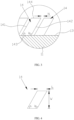
FIG. 4 is a schematic diagram of the structure of a single tab inFIG. 3 . -
FIG. 5 is a schematic diagram of the three-dimensional structure of the wound battery in the first embodiment of the present application. -
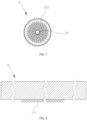
FIG. 6 is a top view ofFIG. 5 . -
FIG. 7 is a bottom view ofFIG. 5 . -
FIG. 8 is a schematic diagram of the structure of the positive electrode tab plate inFIG. 5 . -
FIG. 9 is a schematic diagram of the structure of the negative electrode tab plate inFIG. 5 . -
FIG. 10 is a schematic diagram of the structure of the tab plate in the second embodiment of the present application. -
FIG. 11 is a schematic diagram of the structure of the tab plate in the third embodiment of the present application. -
FIG. 12 is a schematic diagram of the structure of the tab plate in the fourth embodiment of the present application. -
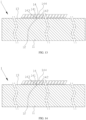
FIG. 13 is a schematic diagram of the structure of the tab plate in the fifth embodiment of the present application. -
FIG. 14 is a schematic diagram of the structure of the tab plate in the sixth embodiment of the present application. - The following will provide a further detailed description of the specific implementations of the present application in conjunction with the accompanying drawings and embodiments. The following embodiments are used to illustrate the present application, but are not intended to limit the scope of the present application.
- The terms "first", "second", "third", "fourth", etc. (if any) in the specification and claims of the present application are only used to distinguish similar objects, and are not intended to be used to describe a specific sequence or order.
- The terms "up", "down", "left", "right", "front", "back", "top", "bottom" (if any) mentioned in the specification and claims of the present application are defined based on the position of the structure in the figures and the position between the structures in the figures, and only for the clarity and convenience of expressing the technical solution. It should be understood that the use of these directional words should not limit the scope of protection in the present application.
- As shown in
FIG. 1 , an embodiment of the present application provides atab plate 1, which, before being cut, includes acoating area 11 and anempty foil area 12 located on one side of thecoating area 11. Aboundary line 13 is formed at the connection position between theempty foil area 12 and thecoating area 11. Specifically, thetab plate 1 is a rectangular structure before being cut, with a length direction X and a width direction Y. On the width direction Y of thetab plate 1, thetab plate 1 is divided into acoating area 11 and anempty foil area 12, wherein thecoating area 11 is coated with an active material, and theempty foil area 12 is not coated with the active material. - As shown in
FIGS. 2 to 4 , after cutting thetab plate 1, theempty foil area 12 is cut to form a plurality oftabs 14 of quadrilateral structure, and the plurality oftabs 14 are arranged in sequence along the length direction X of thetab plate 1. The four sides of eachtab 14 include afirst side 141, asecond side 142, and athird side 143. Thethird side 143 is located in theempty foil area 12 and is close to theboundary line 13. Thethird side 143 is parallel to the boundary line and is at a distance of less than 5 mm from theboundary line 13. Thefirst side 141 is arranged opposite to thesecond side 142, and both thefirst side 141 and thesecond side 142 intersect with thethird side 143. When the distance between thethird side 143 and theboundary line 13 is 0 mm, thethird side 143 coincides with theboundary line 13. An angle a is formed between thefirst side 141 and thethird side 143, and the angle a is an acute angle. - Specifically, the
tab plate 1 is a positiveelectrode tab plate 21 and/or a negative electrode tab plate 22 (the structures of the positiveelectrode tab plate 21 and the negativeelectrode tab plate 22 can refer toFIGS. 5 ,8 , and9 ), and the winding direction S of thetab plate 1 is the same as the orientation of the angle a. Referring toFIG. 5 , the winding direction S of the positiveelectrode tab plate 21 and the negativeelectrode tab plate 22 is counterclockwise as shown inFIG. 5 . During the winding process of the positiveelectrode tab plate 21 and the negativeelectrode tab plate 22, the orientation of the angle a is the same as the winding direction S. In this embodiment, thetab 14 is set to be a quadrilateral structure, and the angle a formed between thefirst side 141 and thethird side 143 is an acute angle. During the process of winding thetab plate 1 to form a battery cell, the winding direction S of thetab plate 1 is consistent with the orientation of the acute angle, and by bending and flattening thetabs 14 towards the central hole while winding thetab plate 1, the rolling pressure required for flattening thetabs 14 can be effectively reduced, thereby avoiding the deformation of thecoating area 11 of thetab plate 1 and reducing the falling off of the active material from thetab plate 1, so as to greatly improve the yield rate of full-tab wound cells. - As shown in
FIG. 3 , as an embodiment, the four sides of eachtab 14 also include afourth side 144. Thefourth side 144 is away from theboundary line 13 and is arranged opposite to thethird side 143. Thefourth side 144 together with thefirst side 141, thesecond side 142 and thethird side 143 form a quadrilateral shape. - As shown in
FIG. 3 , as an embodiment, thethird side 143 coincides with theboundary line 13, and thefourth side 144 is parallel to thethird side 143. - Of course, the
third side 143 may not coincide with theboundary line 13. As shown inFIG. 13 , as an embodiment, thethird side 143 and theboundary line 13 are separated from each other, and theempty foil area 12 between thethird side 143 and theboundary line 13 is a parallelogram structure. As shown inFIG. 14 , as another embodiment, thethird side 143 and theboundary line 13 are separated from each other, and theempty foil area 12 between thethird side 143 and theboundary line 13 is a rectangular structure. - As shown in
FIG. 12 , as an embodiment, the angle formed between thefirst side 141 and thefourth side 144 is rounded, and the angle formed between thesecond side 142 and thefourth side 144 is also rounded. The intersection of the two sides after being rounded is a smooth transition, which is more conducive to reducing the pressure required to flatten thetabs 14 and reducing tip discharge. - As shown in
FIG. 3 , as an embodiment, the angle formed between thesecond side 142 and thethird side 143 is b, and the angle b is a right or obtuse angle. The sum of the angle a and the angle b is less than or equal to 180°. - As another embodiment, in this embodiment, the angle b is an obtuse angle, and the sum of the angle a and the angle b is equal to 180°. That is, in this embodiment, the
tab 14 is a parallelogram structure. - As shown in
FIGS. 3 and 4 , as an embodiment, the angle a formed between thefirst side 141 and thethird side 143 is less than 60°. - As another embodiment, the angle a is greater than or equal to 15° and less than or equal to 45°.
- As shown in
FIGS. 2 to 4 , as an embodiment, there is a spacing between every twoadjacent tabs 14, and the length N of the spacing is 1/10-1/2 of the length L of the tab 14 (i.e., the length of thethird side 143 or the fourth side 144). - As another embodiment, the length N of the spacing is 1/100-1, or 1/10-1/2, or 1/5-1/3 of the length L of the
tab 14. - As an embodiment, the length N of the spacing is 0.1 mm-10 mm.
- As shown in
FIG. 4 , as an embodiment, the ratio of the length L to the width W of eachtab 14 is (1-4):2. - As another embodiment, the ratio of the length L to the width W of each
tab 14 is (1-3):2 or 0.5:1. - Of course, in other embodiments, the
tabs 14 can also be of other shapes, such as a trapezoidal structure. As shown inFIG. 10 , the angle formed between thefirst side 141 and thethird side 143 is an acute angle, and the angle formed between thesecond side 142 and thethird side 143 is a right angle, that is, thetab 14 is a right angled trapezoidal structure. Meanwhile, from left to right, in every twoadjacent tabs 14, the end of thesecond side 142 of theprevious tab 14 close to theboundary line 13 is connected to the end of thefirst side 141 of thelatter tab 14 close to the boundary line 13 (that is, there is no gap between the two ends). Due to the trapezoidal structure of thetabs 14, the end of thesecond side 142 of theprevious tab 14 away from theboundary line 13 is separated from the end of thefirst side 141 of thelatter tab 14 away from theboundary line 13, and the length N of the spacing is 1/10-1/2 of the length of thethird side 143. - As shown in
FIG. 11 , in another embodiment, the angle formed between thefirst side 141 and thethird side 143 is an acute angle, the angle formed between thesecond side 142 and thethird side 143 is an obtuse angle, and the sum of the acute angle and the obtuse angle is less than 180°, that is, thetab 14 is an obtuse trapezoidal structure. Meanwhile, from left to right, in every twoadjacent tabs 14, the end of thesecond side 142 of theprevious tab 14 close to theboundary line 13 is connected to the end of thefirst side 141 of thelatter tab 14 close to the boundary line 13 (that is, there is no gap between the two ends). Due to the trapezoidal structure of thetabs 14, the end of thesecond side 142 of theprevious tab 14 away from theboundary line 13 is separated from the end of thefirst side 141 of thelatter tab 14 away from theboundary line 13, and the length N of the spacing is 1/10-1/2 of the length of thethird side 143. - As shown in
FIGS. 5 to 9 , this embodiment also provides a wound battery, which includes a positiveelectrode tab plate 21 and a negativeelectrode tab plate 22. The positiveelectrode tab plate 21 and the negativeelectrode tab plate 22 are both theaforementioned tab plate 1. - As shown in
FIG. 5 , as an embodiment, the wound battery also includes afirst separator 23, and thefirst separator 23 is sandwiched between the positiveelectrode tab plate 21 and the negativeelectrode tab plate 22. The positiveelectrode tab plate 21, thefirst separator 23 and the negativeelectrode tab plate 22 are stacked and wound to form abattery cell 2. Thetabs 211 of the positiveelectrode tab plate 21 and thetabs 221 of the negativeelectrode tab plate 22 are respectively located at both ends of thebattery cell 2. As shown inFIGS. 6 and7 , after completing the winding and flattening of thetabs 211/221, thetabs 211 of the positiveelectrode tab plate 21 and thetabs 221 of the negativeelectrode tab plate 22 are respectively overlapped to form a circular structure. - Specifically, as shown in
FIGS. 5 ,8 , and9 , the orientation of the angle a on thetabs 211 of the positiveelectrode tab plate 21 and the orientation of the angle a on thetabs 221 of the negativeelectrode tab plate 22 are both the same as the winding direction S. During the winding process of thebattery cell 2, by flattening thetabs 211/221 towards thecentral hole 20 while winding the positive and negativeelectrode tab plates 21/22, the rolling pressure required for flattening thetabs 211/221 can be effectively reduced, thereby avoiding the deformation of the positive and negativeelectrode tab plates 21/22 and reducing the falling off of the active materials from the positive and negativeelectrode tab plates 21/22, so as to greatly improve the yield rate of full-tab wound cells. - As an embodiment, as shown in
FIGS. 8 and9 , both thetabs 211 of the positiveelectrode tab plate 21 and thetabs 221 of the negativeelectrode tab plate 22 are rounded. The intersection of the two sides after being rounded is a smooth transition, which is more conducive to reducing the pressure required to flatten thetabs 211/221 and reducing tip discharge. - As an embodiment, the wound battery also includes a
second separator 24. The positiveelectrode tab plate 21, thefirst separator 23, the negativeelectrode tab plate 22 and thesecond separator 24 are sequentially stacked from inside to outside, and are wound to form abattery cell 2 after the four are stacked. - As an embodiment, a distance of the
tabs 211 of the positiveelectrode tab plate 21 beyond a top end of thefirst separator 23 after being flattened is 0.5-5 mm, and a distance of thetabs 221 of the negativeelectrode tab plate 22 beyond a bottom end of thefirst separator 23 after being flattened is less than 5 mm. - As another embodiment, the distance of the
tabs 211 of the positiveelectrode tab plate 21 beyond the top end of thefirst separator 23 after being flattened is less than 3 mm, and the distance of thetabs 221 of the negativeelectrode tab plate 22 beyond the bottom end of thefirst separator 23 after being flattened is less than 3 mm. - As another embodiment, the distance of the
tabs 211 of the positiveelectrode tab plate 21 beyond the top end of thefirst separator 23 after being flattened is less than 3 mm and greater than 1.5 mm, and the distance of thetabs 221 of the negativeelectrode tab plate 22 beyond the bottom end of thefirst separator 23 after being flattened is less than 3 mm and greater than 1.5 mm. - This embodiment also provides a preparation method for a wound battery, and the method specifically includes: coating the positive
electrode tab plate 21 and the negativeelectrode tab plate 22 using a coating machine to ensure that an empty foil area is formed on both the positiveelectrode tab plate 21 and the negativeelectrode tab plate 22; cutting the empty foil area(s) of the positiveelectrode tab plate 21 and/or the negativeelectrode tab plate 22 into a plurality ofquadrilateral tabs 211/221 through laser cutting; then, winding the positiveelectrode tab plate 21, the negativeelectrode tab plate 22 and theseparator 23/24 into a cylindrical shape, and bending and flattening thetabs 211/221 towards thecentral hole 20 during the winding process. - The
tab plate 1 with tabs provided in this embodiment of the present application sets thetabs 14 in a quadrilateral structure, and the angle a formed between thefirst side 141 and thethird side 143 is an acute angle. During the process of winding thetab plate 1 to form a battery cell, the winding direction S of thetab plate 1 is consistent with the orientation of the acute angle. By bending and flattening thetabs 14 towards the central hole while winding thetab plate 1, the rolling pressure required for flattening thetabs 14 can be effectively reduced, thereby avoiding the deformation of thetab plate 1 and reducing the falling off of the active material from thetab plate 1, so as to greatly improve the yield rate of full-tab wound cells. In addition, since there is no need for significant pressure to flatten thetabs 14, the stress of bending thetabs 14 can be reduced, thereby ensuring the quality of the wound battery. The wound battery not only has a simple design, but also has good electrical performance, high yield rate, and strong practicality. - The above are only the specific embodiments of the present application, but the scope of protection of the present application is not limited to this. Any technical personnel familiar with this technical field who can easily think of changes or replacements within the scope of technology disclosed in the present application should be covered within the scope of protection of the present application. Therefore, the protection scope of the present application should be based on the protection scope of the claims.
Claims (12)
- A tab plate, comprising a coating area (11) and an empty foil area (12) located on one side of the coating area (11), a boundary line (13) being formed at a connection position between the empty foil area (12) and the coating area (11), wherein the empty foil area (12) is cut to form a plurality of tabs (14) of quadrilateral structure, and the plurality of tabs (14) are arranged in sequence along a length direction (X) of the tab plate (1), four sides of each tab (14) comprise a first side (141), a second side (142) and a third side (143), the third side (143) is located in the empty foil area (12) and is close to the boundary line (13), and the third side (143) is parallel to the boundary line (13) and is at a distance of less than 5 mm from the boundary line (13); the first side (141) is arranged opposite to the second side (142), and both the first side (141) and the second side (142) intersect with the third side (143), an angle a is formed between the first side (141) and the third side (143), and the angle a is an acute angle.
- The tab plate as claimed in claim 1, wherein the tab plate (1) is a positive electrode tab plate (21) and/or a negative electrode tab plate (22), and a winding direction (S) of the tab plate (1) is the same as an orientation of the angle a.
- The tab plate as claimed in claim 1, wherein the four sides of each tab (14) also comprise a fourth side (144), the fourth side (144) is away from the boundary line (13) and is arranged opposite to the third side (143), the fourth side (144) together with the first side (141), the second side (142) and the third side (143) form a quadrilateral shape.
- The tab plate as claimed in claim 3, wherein an angle formed between the first side (141) and the fourth side (144) is rounded, and/or an angle formed between the second side (142) and the fourth side (144) is rounded.
- The tab plate as claimed in claim 1, wherein an angle formed between the second side (142) and the third side (143) is b, the angle b is a right angle or obtuse angle, and the sum of the angle a and the angle b is less than or equal to 180°.
- The tab plate as claimed in claim 1, wherein the tabs (14) have a parallelogram structure.
- The tab plate as claimed in any one of claims 1 to 6, wherein there is a spacing between every two adjacent tabs (14), and a length (N) of the spacing is 1/10-1/2 of a length (L) of the tab (14).
- The tab plate as claimed in claim 7, wherein the length (N) of the spacing is 0.1 mm-10 mm.
- The tab plate as claimed in any one of claims 1 to 6, wherein a ratio of the length (L) to the width (W) of each tab (14) is (1-4):2.
- A wound battery, comprising a positive electrode tab plate (21) and/or a negative electrode tab plate (22), wherein the positive electrode tab plate (21) and/or the negative electrode tab plate (22) are/is the tab plate (1) as claimed in any one of claims 1 to 9.
- The wound battery as claimed in claim 10, wherein the wound battery further comprises a first separator (23), the first separator (23) is sandwiched between the positive electrode tab plate (21) and the negative electrode tab plate (22), wherein the positive electrode tab plate (21), the first separator (23) and the negative electrode tab plate (22) are stacked and wound to form a battery cell (2), tabs (211) of the positive electrode tab plate (21) and tabs (221) of the negative electrode tab plate (22) are respectively located at both ends of the battery cell (2).
- The wound battery as claimed in claim 11, wherein a distance of the tabs (211) of the positive electrode tab plate (21) beyond a top end of the first separator (23) after being flattened is 0.5-5 mm, and a distance of the tabs (221) of the negative electrode tab plate (22) beyond a bottom end of the first separator (23) after being flattened is less than 5 mm.
Applications Claiming Priority (2)
| Application Number | Priority Date | Filing Date | Title |
|---|---|---|---|
| CN202110536556.2A CN113270693A (en) | 2021-05-17 | 2021-05-17 | Full-tab pole piece and winding battery |
| PCT/CN2022/092887 WO2022242578A1 (en) | 2021-05-17 | 2022-05-13 | Tab plate and wound battery |
Publications (2)
| Publication Number | Publication Date |
|---|---|
| EP4343955A1 true EP4343955A1 (en) | 2024-03-27 |
| EP4343955A4 EP4343955A4 (en) | 2025-11-05 |
Family
ID=77231333
Family Applications (1)
| Application Number | Title | Priority Date | Filing Date |
|---|---|---|---|
| EP22803900.4A Pending EP4343955A4 (en) | 2021-05-17 | 2022-05-13 | TONGUE PLATE AND WRAPPED BATTERY |
Country Status (4)
| Country | Link |
|---|---|
| US (1) | US20240222807A1 (en) |
| EP (1) | EP4343955A4 (en) |
| CN (3) | CN113270693A (en) |
| WO (1) | WO2022242578A1 (en) |
Families Citing this family (20)
| Publication number | Priority date | Publication date | Assignee | Title |
|---|---|---|---|---|
| CN113270693A (en) * | 2021-05-17 | 2021-08-17 | 微宏动力系统(湖州)有限公司 | Full-tab pole piece and winding battery |
| CN215578778U (en) * | 2021-05-21 | 2022-01-18 | 湖北亿纬动力有限公司 | A new type of cylindrical battery |
| CN113488746A (en) * | 2021-07-06 | 2021-10-08 | 湖北亿纬动力有限公司 | Manufacturing process of multi-tab battery cell and multi-tab battery cell |
| CN113871730A (en) * | 2021-10-09 | 2021-12-31 | 中山天贸电池有限公司 | A kind of battery cell and processing method of lithium ion cylindrical power battery |
| CN116014312A (en) * | 2021-10-22 | 2023-04-25 | 株式会社Lg新能源 | Cylindrical battery, battery pack including the cylindrical battery, and automobile |
| KR102406005B1 (en) * | 2021-10-28 | 2022-06-08 | 이계설 | Flagforming device after laser notching of secondary batteries for electric vehicles |
| US12249681B2 (en) | 2021-11-19 | 2025-03-11 | Lg Energy Solution, Ltd. | Electrode assembly, battery, and battery pack and vehicle including the same |
| CN114388874B (en) * | 2021-12-22 | 2025-01-07 | 海目星激光科技集团股份有限公司 | A battery core processing system |
| CN217239697U (en) * | 2022-01-21 | 2022-08-19 | 宁德时代新能源科技股份有限公司 | Battery monomer, battery and power consumption device |
| CN218456142U (en) * | 2022-01-28 | 2023-02-07 | 湖北亿纬动力有限公司 | Electrode assembly and energy storage device |
| EP4503318A4 (en) * | 2022-03-31 | 2025-08-13 | Ningde Amperex Technology Ltd | BATTERY AND ELECTRONIC DEVICE THEREFOR |
| WO2023206191A1 (en) * | 2022-04-28 | 2023-11-02 | 宁德时代新能源科技股份有限公司 | Electrode assembly, battery cell, battery, and electric device |
| CN115020630B (en) * | 2022-06-23 | 2024-06-25 | 三一技术装备有限公司 | Processing method of pole piece and pole piece unit, pole piece, battery and pole lug roll cutting device |
| CN118248919A (en) * | 2022-12-22 | 2024-06-25 | 厦门海辰储能科技股份有限公司 | Electrode assembly, battery cell, energy storage device, electrical equipment and processing method |
| CN118676549A (en) * | 2023-03-15 | 2024-09-20 | 比亚迪股份有限公司 | Battery cell and battery |
| JP2024170783A (en) * | 2023-05-29 | 2024-12-11 | トヨタ自動車株式会社 | Energy storage cell |
| EP4475262A1 (en) * | 2023-06-07 | 2024-12-11 | Automotive Cells Company SE | Tab shape for a battery electrode |
| CN221080286U (en) * | 2023-10-13 | 2024-06-04 | 惠州亿纬锂能股份有限公司 | Multipolar ear battery |
| CN221327752U (en) * | 2023-10-27 | 2024-07-12 | 惠州亿纬锂能股份有限公司 | Pole piece, winding core and battery core |
| CN118782726B (en) * | 2024-06-17 | 2026-02-03 | 宁德新能源科技有限公司 | Pole piece, lamination cell and soft package battery |
Family Cites Families (25)
| Publication number | Priority date | Publication date | Assignee | Title |
|---|---|---|---|---|
| FR2094491A5 (en) * | 1970-06-23 | 1972-02-04 | Accumulateurs Fixes | |
| JPH10162861A (en) * | 1996-11-27 | 1998-06-19 | Kazuo Tagawa | Electrode structure of lithium ion battery and method of manufacturing the same |
| KR100599749B1 (en) * | 2004-06-23 | 2006-07-12 | 삼성에스디아이 주식회사 | Secondary Battery and Electrode Assembly Used in the Same |
| CN2852406Y (en) * | 2005-10-26 | 2006-12-27 | 深圳市比克电池有限公司 | Pole piece assembly of lithium ion battery and battery |
| CN102437306A (en) * | 2011-12-02 | 2012-05-02 | 苏州冠硕新能源有限公司 | Pole piece of secondary battery, manufacturing method for pole piece of secondary battery and secondary battery using pole piece |
| CN102569901B (en) * | 2011-12-27 | 2016-01-13 | 华为技术有限公司 | A kind of lithium ion battery, core of lithium ion cell and preparation method thereof |
| JP6582877B2 (en) * | 2015-10-29 | 2019-10-02 | 株式会社豊田自動織機 | Method for manufacturing electrode assembly and electrode assembly |
| JP6880772B2 (en) * | 2017-01-25 | 2021-06-02 | 日本ケミコン株式会社 | Capacitors and their manufacturing methods |
| CN207441852U (en) * | 2017-11-29 | 2018-06-01 | 宁德时代新能源科技股份有限公司 | Pole piece coiled material, electrode assembly and secondary cell |
| CN108162796A (en) * | 2018-02-28 | 2018-06-15 | 福州市正通通讯器材有限公司 | A kind of wireless charging system for electric automobile based on regenerative resource |
| CN208352427U (en) * | 2018-05-24 | 2019-01-08 | 银隆新能源股份有限公司 | A kind of battery pole piece and lithium ion battery of multi pole ears |
| KR102712362B1 (en) * | 2018-10-12 | 2024-10-04 | 삼성에스디아이 주식회사 | Secondary battery |
| CN209641733U (en) * | 2019-03-22 | 2019-11-15 | 东莞天予天正新能源科技有限公司 | It is a kind of for protecting the pole piece structure of diaphragm |
| CN211017230U (en) * | 2019-12-02 | 2020-07-14 | 宁德时代新能源科技股份有限公司 | Battery cell pole piece and battery cell |
| CN111162154B (en) * | 2020-03-05 | 2020-12-04 | 华引芯(武汉)科技有限公司 | Ultraviolet light-emitting element and all-inorganic packaging method |
| CN111211358A (en) * | 2020-03-18 | 2020-05-29 | 联动天翼新能源有限公司 | Multi-lug quick-charging cylindrical lithium battery |
| CN111668444A (en) * | 2020-05-22 | 2020-09-15 | 惠州锂威新能源科技有限公司 | A kind of preparation method of multi-pole ear battery core and multi-pole ear battery core |
| CN212365995U (en) * | 2020-05-22 | 2021-01-15 | 惠州锂威新能源科技有限公司 | Pole piece for winding type multi-lug battery cell and winding type multi-lug battery cell |
| CN111668451B (en) * | 2020-05-22 | 2023-12-15 | 惠州锂威新能源科技有限公司 | A method for preparing pole pieces for wound multi-pole batteries, pole pieces and batteries |
| CN212783704U (en) * | 2020-07-23 | 2021-03-23 | 郑州比克新能源汽车有限公司 | Multi-tab structure of cylindrical battery |
| CN213071293U (en) * | 2020-08-21 | 2021-04-27 | 广东微电新能源有限公司 | Button cell pole piece and button cell |
| CN112103455A (en) * | 2020-08-28 | 2020-12-18 | 中天储能科技有限公司 | Tab structure, application of tab structure, preparation method and preparation device |
| CN113270693A (en) * | 2021-05-17 | 2021-08-17 | 微宏动力系统(湖州)有限公司 | Full-tab pole piece and winding battery |
| CN113193165B (en) * | 2021-05-28 | 2023-06-06 | 微宏动力系统(湖州)有限公司 | Tab pole piece and winding battery |
| CN217387456U (en) * | 2021-12-09 | 2022-09-06 | 微宏动力系统(湖州)有限公司 | Pole piece and battery cell |
-
2021
- 2021-05-17 CN CN202110536556.2A patent/CN113270693A/en active Pending
- 2021-05-17 CN CN202111329483.6A patent/CN114122630B/en active Active
-
2022
- 2022-05-13 EP EP22803900.4A patent/EP4343955A4/en active Pending
- 2022-05-13 WO PCT/CN2022/092887 patent/WO2022242578A1/en not_active Ceased
- 2022-05-13 CN CN202290000450.9U patent/CN222380806U/en active Active
- 2022-05-13 US US18/561,745 patent/US20240222807A1/en active Pending
Also Published As
| Publication number | Publication date |
|---|---|
| CN113270693A (en) | 2021-08-17 |
| WO2022242578A1 (en) | 2022-11-24 |
| US20240222807A1 (en) | 2024-07-04 |
| CN114122630A (en) | 2022-03-01 |
| CN114122630B (en) | 2025-12-09 |
| CN222380806U (en) | 2025-01-21 |
| EP4343955A4 (en) | 2025-11-05 |
Similar Documents
| Publication | Publication Date | Title |
|---|---|---|
| EP4343955A1 (en) | Tab plate and wound battery | |
| EP4350872A1 (en) | Tab electrode plate and wound battery | |
| CN107293809A (en) | Soft package lithium ion battery and manufacturing method thereof | |
| CN105161673B (en) | The manufacturing process and multi pole ears battery of a kind of multi pole ears battery core | |
| CN108565387A (en) | A kind of lithium ion battery cell lug laser formation technique | |
| CN103943885A (en) | Bent soft roll lithium-ion rechargeable battery and manufacturing method thereof | |
| CN219832696U (en) | Full-tab battery pole piece structure, battery winding core and cylindrical battery | |
| CN110165287B (en) | Battery cell winding device, battery cell production method and power battery | |
| US12212022B2 (en) | Multi-tab cylindrical battery roll core and lithium ion battery | |
| CN202695607U (en) | Lithium ion battery pole piece | |
| CN212365995U (en) | Pole piece for winding type multi-lug battery cell and winding type multi-lug battery cell | |
| CN110400959B (en) | Winding type double-core package, manufacturing method of winding type double-core package and lithium ion battery | |
| CN221201203U (en) | Battery pole piece, winding core and battery | |
| CN218039724U (en) | Full-tab pole piece and winding battery | |
| CN102024990A (en) | Method for manufacturing cells of power lithium ion batteries | |
| CN115911265A (en) | Battery pole piece, pole core and battery | |
| CN101582521A (en) | Coiled lithium-ion secondary battery taking winding needle as positive and negative electrodes and manufacturing method thereof | |
| CN103346353B (en) | A kind of battery battery core, its manufacture method and battery thereof | |
| CN108400386A (en) | Improve the preparation method of the flexible battery of bending property | |
| CN114744376B (en) | Misplacement tab welding method for reducing foil waste and improving welding yield | |
| CN201741765U (en) | Battery cell of power-type lithium ion battery | |
| CN218827724U (en) | Battery cell and electrode plate thereof | |
| CN206134840U (en) | Winding support core, secondary battery and battery winder | |
| CN117276689A (en) | C-type all-pole lug core, battery and manufacturing method | |
| CN116565284A (en) | Novel winding type battery cell |
Legal Events
| Date | Code | Title | Description |
|---|---|---|---|
| STAA | Information on the status of an ep patent application or granted ep patent |
Free format text: STATUS: THE INTERNATIONAL PUBLICATION HAS BEEN MADE |
|
| PUAI | Public reference made under article 153(3) epc to a published international application that has entered the european phase |
Free format text: ORIGINAL CODE: 0009012 |
|
| STAA | Information on the status of an ep patent application or granted ep patent |
Free format text: STATUS: REQUEST FOR EXAMINATION WAS MADE |
|
| 17P | Request for examination filed |
Effective date: 20231130 |
|
| AK | Designated contracting states |
Kind code of ref document: A1 Designated state(s): AL AT BE BG CH CY CZ DE DK EE ES FI FR GB GR HR HU IE IS IT LI LT LU LV MC MK MT NL NO PL PT RO RS SE SI SK SM TR |
|
| DAV | Request for validation of the european patent (deleted) | ||
| DAX | Request for extension of the european patent (deleted) | ||
| A4 | Supplementary search report drawn up and despatched |
Effective date: 20251002 |
|
| RIC1 | Information provided on ipc code assigned before grant |
Ipc: H01M 50/533 20210101AFI20250926BHEP Ipc: H01M 10/04 20060101ALI20250926BHEP Ipc: H01M 4/04 20060101ALI20250926BHEP Ipc: H01M 10/0587 20100101ALI20250926BHEP Ipc: H01M 50/531 20210101ALI20250926BHEP Ipc: H01M 50/536 20210101ALI20250926BHEP Ipc: H01M 50/538 20210101ALI20250926BHEP |