EP4340400A1 - Method and apparatus for gsm silent call prolongation - Google Patents
Method and apparatus for gsm silent call prolongation Download PDFInfo
- Publication number
- EP4340400A1 EP4340400A1 EP22195786.3A EP22195786A EP4340400A1 EP 4340400 A1 EP4340400 A1 EP 4340400A1 EP 22195786 A EP22195786 A EP 22195786A EP 4340400 A1 EP4340400 A1 EP 4340400A1
- Authority
- EP
- European Patent Office
- Prior art keywords
- mobile station
- unrealizable
- sending
- setup message
- call
- Prior art date
- Legal status (The legal status is an assumption and is not a legal conclusion. Google has not performed a legal analysis and makes no representation as to the accuracy of the status listed.)
- Granted
Links
Images



Classifications
-
- H—ELECTRICITY
- H04—ELECTRIC COMMUNICATION TECHNIQUE
- H04W—WIRELESS COMMUNICATION NETWORKS
- H04W4/00—Services specially adapted for wireless communication networks; Facilities therefor
- H04W4/02—Services making use of location information
-
- H—ELECTRICITY
- H04—ELECTRIC COMMUNICATION TECHNIQUE
- H04W—WIRELESS COMMUNICATION NETWORKS
- H04W64/00—Locating users or terminals or network equipment for network management purposes, e.g. mobility management
-
- H—ELECTRICITY
- H04—ELECTRIC COMMUNICATION TECHNIQUE
- H04W—WIRELESS COMMUNICATION NETWORKS
- H04W64/00—Locating users or terminals or network equipment for network management purposes, e.g. mobility management
- H04W64/003—Locating users or terminals or network equipment for network management purposes, e.g. mobility management locating network equipment
-
- H—ELECTRICITY
- H04—ELECTRIC COMMUNICATION TECHNIQUE
- H04W—WIRELESS COMMUNICATION NETWORKS
- H04W76/00—Connection management
- H04W76/30—Connection release
-
- H—ELECTRICITY
- H04—ELECTRIC COMMUNICATION TECHNIQUE
- H04M—TELEPHONIC COMMUNICATION
- H04M2242/00—Special services or facilities
- H04M2242/30—Determination of the location of a subscriber
-
- H—ELECTRICITY
- H04—ELECTRIC COMMUNICATION TECHNIQUE
- H04M—TELEPHONIC COMMUNICATION
- H04M3/00—Automatic or semi-automatic exchanges
- H04M3/22—Arrangements for supervision, monitoring or testing
- H04M3/2281—Call monitoring, e.g. for law enforcement purposes; Call tracing; Detection or prevention of malicious calls
-
- H—ELECTRICITY
- H04—ELECTRIC COMMUNICATION TECHNIQUE
- H04W—WIRELESS COMMUNICATION NETWORKS
- H04W76/00—Connection management
- H04W76/10—Connection setup
-
- H—ELECTRICITY
- H04—ELECTRIC COMMUNICATION TECHNIQUE
- H04W—WIRELESS COMMUNICATION NETWORKS
- H04W76/00—Connection management
- H04W76/20—Manipulation of established connections
- H04W76/25—Maintenance of established connections
Definitions
- the present invention relates to a method for GSM silent call prolongation.
- the present invention further relates to a method for localizing the position of a mobile station.
- the present invention also relates to a mobile apparatus for performing said methods, as well as a vehicle and a system comprising such a mobile apparatus.
- a public interest e.g. for security applications
- determining, whether a particular mobile station is in the coverage area of a particular base station of the network For these security applications, it is possible to set up a call (e.g. a GSM silent call) with a specific mobile station, which is not noticed by a user of the mobile station. This call can then be used for localization of the mobile station.
- a call e.g. a GSM silent call
- This call can then be used for localization of the mobile station.
- recent mobile stations abort this call too early (e.g. after only 3 minutes), so that localization of the mobile station cannot be completed.
- the object of the present invention is to provide an approach for prolonging a GSM silent call.
- An inventive method for GSM silent call prolongation comprises the steps of: activating a mobile station by establishing a mobile terminated call, MTC, communication link to the mobile station, wherein the establishing of the MTC communication link is performed without sending an assignment command message to the mobile station; sending a first unrealizable SETUP message to establish the silent call; and sending at least one more unrealizable SETUP message to prolong the silent call.
- the activating of the mobile station is performed by a base transceiver station, BTS, and/or a base station controller, BSC.
- the first unrealizable SETUP message is sent by a BTS and/or a BSC.
- the at least one more unrealizable SETUP message is sent by a BTS and/or a BSC.
- the at least one more unrealizable SETUP message is sent to keep the GSM silent call active.
- the step of sending the at least one more unrealizable SETUP message is repeated after a predefined amount of time.
- the step of sending at least one more unrealizable SETUP message is repeated after a predefined number of identity requests is sent.
- the predefined number comprises at least 500 identity requests.
- sending the unrealizable SETUP message every 500 identity requests corresponds to sending the unrealizable SETUP message about every 3 minutes.
- sending the unrealizable SETUP message every 500 identity requests prevents that the mobile station causes an error due to a too high number of identity requests received subsequently.
- the identity requests are sent from a BTS and/or a BSC to the mobile station.
- the step of sending the at least one more unrealizable SETUP message is repeated until a break condition is met.
- the first unrealizable SETUP message is for at least one of: making the mobile station answering with an error message; keeping the mobile station active; keeping the mobile station waiting in a call control level; keeping the mobile station ending measurement reports which in particular facilitate locating the mobile station.
- This provides various ways of preventing that the silent call is aborted, respectively ensures that the mobile station can be located.
- the measurement reports are sent from the mobile station to a base transceiver station, BTS.
- the first unrealizable SETUP message comprises a call control message that the mobile station cannot carry out.
- the call control message is a message that the mobile station cannot fulfill.
- An inventive method for localizing a mobile station comprises the steps of: activating a mobile station by performing the method above or any of its advantageous implementation forms; localizing the mobile station by using the established MTC communication link.
- activating the mobile station comprises transmitting a call request to the mobile station, wherein the call request is adapted to cause the mobile station to transmit a locator signal whilst blocking an assignment process, wherein the location of the mobile station is determined based on the locator signal.
- the call request prompts the mobile station to transmit channel signals which comprise information for identifying a channel used by the mobile station.
- sending the at least one more unrealizable SETUP message is repeated until the mobile station is localized.
- the inventive method for localization comprises the same advantages as the inventive method for GSM silent call prolongation.
- An inventive mobile apparatus comprises a network device which is compatible with the communication standard of a network of the mobile station, in particular with the standard of a GSM based network, and which is configured to perform a method according to any one of the methods or their advantageous implementation forms above.
- the mobile apparatus further comprises a backpack which is configured and designed to receive the network device inside the backpack.
- the inventive apparatus comprises the same advantages as the inventive method for GSM silent call prolongation.
- An inventive vehicle in particular motor vehicle, comprises a mobile apparatus or any of its advantageous implementation forms as described above.
- the inventive vehicle comprises the same advantages as the inventive method for GSM silent call prolongation.
- An inventive system comprises a mobile apparatus as described above; and a locating device which is adapted to determine the direction and/or localize the location of a mobile station based on channel signals which are transmitted by the mobile station.
- the inventive system comprises the same advantages as the inventive method for GSM silent call prolongation.
- An inventive computer program comprises instructions which, when the program is executed by a computer, cause the computer to carry out any one of the methods described above.
- the inventive computer program product comprises the same advantages as the inventive method for GSM silent call prolongation.
- FIG. 1 the function of an embodiment of the inventive method is described based on FIG. 1 .
- FIG. 2 the inventive method is described in more detail, in particular by explaining optional features of the device.
- FIG. 3 the function of another embodiment of the inventive method is described.
- Figures 4 , 5 and 6 describe the function of an inventive mobile apparatus, vehicle and system implementing the method of any one of FIG. 1 , FIG. 2 or FIG. 3 .
- Fig. 1 schematically shows a method 100 according to an embodiment of the present invention.
- GSM silent calls too early, e.g. already after 7 minutes, before localization of the mobile station can be completed.
- the method 100 enables prolonging this duration, in particular as long as it is deemed useful in a use case at hand, to successfully complete localization of the mobile station.
- the method 100 is for prolongation of a GSM silent call and comprises a first step of activating 101 a mobile station MS by establishing a mobile terminated call (MTC) communication link to the mobile station MS, wherein the establishing of the MTC communication link is performed without sending an assignment command message to the mobile station MS.
- MTC mobile terminated call
- the GSM silent call is based on an active incomplete terminating call without alerting on B-party side.
- the MTC is discussed in 3GPP specification TS 24.008 V13.4.0, chapter 5.2.2.
- a network side device e.g., a BSC or a BTS
- a terminating call can be delayed by entering an Identity Request Loop (alternatively for IMSI or IMEI or TMSI).
- IMSI International Mobile Subscriber Identity
- IMEI IMEI
- TMSI Transmission Management Function
- a call control activity of the mobile station MS can be initiated during the request loop.
- Call control activity effects the extension of the duration of the request loop.
- the call control activity may have a minimum call control impact. Therefore a call control message can be willfully defined as "unrealizable" by the mobile station.
- the mobile station can respond to this message by sending a "Release Complete” message and an error cause.
- the method 100 further comprises a second step of sending 102 a first unrealizable SETUP message to establish the silent call.
- the method 100 further comprises a third step of sending 103 at least one more unrealizable SETUP message to prolong the silent call.
- the SETUP message from TS 24.008 V13.4.0, chapter 9.3.23 can be used.
- the optional message parameter "Bearer Capability” (BC) can be used for this purpose.
- the value of the BC element "TransferMode” can be set to "b_mode(1)”.
- the value of the BC element "InfoTransferCapability” can be set to "reserved (7)”. This leads to an unrealizable CC_SETUP message, which the mobile station does not understand and responds by a "CC_Release Complete" message with an error cause.
- the step of sending the at least one more unrealizable SETUP message is repeated after a predefined amount of time. That is, it is waited for a certain time interval, until the unrealizable SETUP message is sent again.
- the step of sending at least one more unrealizable SETUP message is repeated after a predefined number of identity requests is sent.
- sending the unrealizable SETUP message is adapted to the duration of an Identity request loop.
- the step of sending the at least one more unrealizable SETUP message is repeated until a break condition is met.
- the at least one more unrealizable SETUP message is sent until the mobile station is localized.
- the first unrealizable SETUP message is for at least one of: making the mobile station answering with an error message; keeping the mobile station active; keeping the mobile station waiting in a call control level; keeping the mobile station sending measurement reports which in particular facilitate locating the mobile station.
- the first unrealizable SETUP message comprises a call control message that the mobile station cannot carry out.
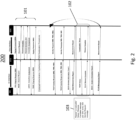
- FIG. 2 shows a schematic view of a method 100 according to an embodiment of the present disclosure in more detail.
- the method 100 shown in FIG. 2 comprises all features and functionality of the method 100 of FIG. 1 , as well as the following optional features:
- the function of the network side can be provided by a BTS and/or a BSC.
- the network side can start a MTC communication link establishment by sending a paging request message and by receiving a paging response message.
- the mobile station MS can respond by sending a channel request to the network side.
- the network side sends an immediate assignment signal the mobile station MS.
- paging and channels assignment procedure After this paging and channels assignment procedure, optional authentication, cyphering and TMSI reallocation procedures (partially shown in Fig. 2 ) may take place.
- identity request signals to determine IMSI data and/or IMEI data may be sent to the mobile station MS.
- the mobile station MS responds with corresponding identity responses.
- a call control or call connection procedure can be initiated.
- a specific setup procedure is initiated.
- the network side i.e. the BTS or the BSC
- the mobile station can respond to this message by sending a "Release Complete" message and an error cause.
- the mobile station is kept waiting in a call control level and keeps sending measurement reports which in particular facilitate locating the mobile station.
- the mobile station MS will remain in a "wait state".
- the mobile station MS will periodically send Measurement Report messages 29 to the network side.
- the mobile station MS transmits continuously measurement result messages over the SACCH channel.
- the mobile station MS may be localized by using the Measurement Report messages as locator signals.
- At least one more unrealizable SETUP message is sent to the mobile station. This can be done after sending a predefined number of identity request messages (e.g. after at maximum, or at least 500 messages).
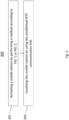
- Fig. 3 shows a schematic flow chart for illustrating an embodiment of a method 300 for localizing a mobile station according to the present invention.
- a mobile station MS can be activated without user interaction, i.e. without being recognized by the user of the mobile station MS.
- a method can be employed such as the one described with regard to FIG. 1 or FIG. 2 .
- a locator signal which is produced and transmitted by the mobile station MS during the first step 301 is used by a specially designed locating device (see Fig. 6 ).
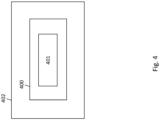
- Fig. 4 shows a block diagram of a mobile apparatus 400 according to the present invention.
- the mobile apparatus 400 comprises a network device 401 and is configured to perform a method for activating and/or localizing a mobile station MS, as described above with regard to Fig. 1 - 3 .
- This network device 401 may be portable and thus mobile.
- the network device 401 can be similar in construction to a regular network base transceiver station (BTS) and also operates similar to a BTS.
- BTS network base transceiver station
- the network device 401 can be adapted to emulate a wireless micro-network where the network device 401 operates as the master system of a communication to the mobile stations MS.
- the emulated wireless micro-network of the network device 401 may be compatible with the communication standard of the mobile station MS.
- the network device 401 can be arranged within a backpack 402. This makes the mobile apparatus 40 portable, as it can be carried by a user.
- Fig. 5 shows a block diagram of a vehicle 500 according to according to the present invention.
- the vehicle 500 can be a motor vehicle, such as a van, car, truck, etc., and comprises a mobile apparatus 400, which is arranged inside the vehicle, e.g. within the passenger compartment of the vehicle 500.
- Fig. 6 shows a schematic illustration of a system 600 according to the present invention.
- the system 600 comprises a mobile apparatus 400 and a locating device 601.
- This locating device 601 is adapted to localize the direction and/or location of a mobile station MS caught by the mobile apparatus 400.
- the localization can be executed by the locating device 601 based on channel signals which are transmitted by the mobile station MS.
- the locating device 601 can comprise a portable directional antenna and a measurement device, such as a spectrum analyzer.
- Mobile station is a terminology used in GSM standard and stands for any kind of wireless telecommunication device.
- a mobile station can be any device used directly by an end-user to communicate.
- mobile stations can be understood to include in addition to conventional hand-held cell phones also smartphones, tablet PCs and laptops equipped with a mobile broadband adapter, for example mobile computers, navigational devices, PDAs (Personal Digital Assistants) and any other device with this communication functionality.
- the expression "mobile station” used in the present description can be understood to include any devices that have such an integrated mobile communications functionality, irrespective of whether further functionalities are integrated in these devices.
- the mobile station is typically connected via the base transceiver station (BTS) to the base station controller (BSC) .
- BTS base transceiver station
- BSC base station controller
Landscapes
- Engineering & Computer Science (AREA)
- Computer Networks & Wireless Communication (AREA)
- Signal Processing (AREA)
- Mobile Radio Communication Systems (AREA)
Abstract
Description
- The present invention relates to a method for GSM silent call prolongation. The present invention further relates to a method for localizing the position of a mobile station. The present invention also relates to a mobile apparatus for performing said methods, as well as a vehicle and a system comprising such a mobile apparatus.
- In a cellular mobile network, there exists a public interest (e.g. for security applications) in determining, whether a particular mobile station is in the coverage area of a particular base station of the network. For these security applications, it is possible to set up a call (e.g. a GSM silent call) with a specific mobile station, which is not noticed by a user of the mobile station. This call can then be used for localization of the mobile station. However, recent mobile stations abort this call too early (e.g. after only 3 minutes), so that localization of the mobile station cannot be completed.
- The current procedure for GSM silent call is no longer sufficient for newer mobile stations. In consequence a GSM direction finding is no longer guaranteed. Therefore, there is a need to prolong a GSM silent call and prevent it from being terminated too early.
- Against this background, the object of the present invention is to provide an approach for prolonging a GSM silent call.
- This object is solved by the features of the independent claims. The dependent claims contain further developments.
- An inventive method for GSM silent call prolongation comprises the steps of: activating a mobile station by establishing a mobile terminated call, MTC, communication link to the mobile station, wherein the establishing of the MTC communication link is performed without sending an assignment command message to the mobile station; sending a first unrealizable SETUP message to establish the silent call; and sending at least one more unrealizable SETUP message to prolong the silent call.
- This ensures that the GSM silent call is kept alive long enough to complete localization of the mobile station.
- In particular, the activating of the mobile station is performed by a base transceiver station, BTS, and/or a base station controller, BSC.
- In particular, the first unrealizable SETUP message is sent by a BTS and/or a BSC.
- In particular, the at least one more unrealizable SETUP message is sent by a BTS and/or a BSC.
- In other words, the at least one more unrealizable SETUP message is sent to keep the GSM silent call active.
- Advantageously and preferably, the step of sending the at least one more unrealizable SETUP message is repeated after a predefined amount of time.
- This ensures that the at least one more unrealizable SETUP message is sent again, before the silent call is terminated.
- Advantageously and preferably, the step of sending at least one more unrealizable SETUP message is repeated after a predefined number of identity requests is sent.
- This ensures that the time period for sending the at least one more unrealizable SETUP message again can be precisely made dependent on a number of identity requests.
- In particular, the predefined number comprises at least 500 identity requests.
- In particular, sending the unrealizable SETUP message every 500 identity requests corresponds to sending the unrealizable SETUP message about every 3 minutes.
- In particular, sending the unrealizable SETUP message every 500 identity requests is early enough before the silent call is terminated due to not receiving the unrealizable SETUP message.
- In particular, sending the unrealizable SETUP message every 500 identity requests prevents that the mobile station causes an error due to a too high number of identity requests received subsequently.
- In particular, the identity requests are sent from a BTS and/or a BSC to the mobile station.
- Advantageously and preferably, the step of sending the at least one more unrealizable SETUP message is repeated until a break condition is met.
- This ensures that the silent call can be terminated upon request.
- Advantageously and preferably, the first unrealizable SETUP message is for at least one of: making the mobile station answering with an error message; keeping the mobile station active; keeping the mobile station waiting in a call control level; keeping the mobile station ending measurement reports which in particular facilitate locating the mobile station.
- This provides various ways of preventing that the silent call is aborted, respectively ensures that the mobile station can be located.
- In particular, the measurement reports are sent from the mobile station to a base transceiver station, BTS.
- Advantageously and preferably, the first unrealizable SETUP message comprises a call control message that the mobile station cannot carry out.
- This ensures that the SETUP message cannot be realized by the mobile station, thereby prolonging the silent call.
- In other words, the call control message is a message that the mobile station cannot fulfill.
- An inventive method for localizing a mobile station comprises the steps of: activating a mobile station by performing the method above or any of its advantageous implementation forms; localizing the mobile station by using the established MTC communication link.
- Advantageously and preferably, activating the mobile station comprises transmitting a call request to the mobile station, wherein the call request is adapted to cause the mobile station to transmit a locator signal whilst blocking an assignment process, wherein the location of the mobile station is determined based on the locator signal.
- Advantageously and preferably, the call request prompts the mobile station to transmit channel signals which comprise information for identifying a channel used by the mobile station.
- Advantageously and preferably, sending the at least one more unrealizable SETUP message is repeated until the mobile station is localized.
- The inventive method for localization comprises the same advantages as the inventive method for GSM silent call prolongation.
- An inventive mobile apparatus comprises a network device which is compatible with the communication standard of a network of the mobile station, in particular with the standard of a GSM based network, and which is configured to perform a method according to any one of the methods or their advantageous implementation forms above.
- Advantageously and preferably, the mobile apparatus further comprises a backpack which is configured and designed to receive the network device inside the backpack.
- The inventive apparatus comprises the same advantages as the inventive method for GSM silent call prolongation.
- An inventive vehicle, in particular motor vehicle, comprises a mobile apparatus or any of its advantageous implementation forms as described above.
- The inventive vehicle comprises the same advantages as the inventive method for GSM silent call prolongation.
- An inventive system comprises a mobile apparatus as described above; and a locating device which is adapted to determine the direction and/or localize the location of a mobile station based on channel signals which are transmitted by the mobile station.
- The inventive system comprises the same advantages as the inventive method for GSM silent call prolongation.
- An inventive computer program comprises instructions which, when the program is executed by a computer, cause the computer to carry out any one of the methods described above.
- The inventive computer program product comprises the same advantages as the inventive method for GSM silent call prolongation.
- An exemplary embodiment of the invention is now further explained with respect to the drawings by way of examples only, in which
- FIG. 1
- shows a schematic view of a method according to an embodiment of the present invention;
- FIG. 2
- shows a schematic view of a method according to an embodiment of the present invention in more detail;
- FIG. 3
- shows a schematic view of another method according to an embodiment of the present invention;
- FIG. 4
- shows a schematic view of a mobile apparatus according to an embodiment of the present invention;
- FIG. 5
- shows a schematic view of a mobile apparatus according to an embodiment of the present invention; and
- FIG. 6
- shows a schematic view of a system according to an embodiment of the present invention.
- In the following, the function of an embodiment of the inventive method is described based on
FIG. 1 . Then, based onFIG. 2 , the inventive method is described in more detail, in particular by explaining optional features of the device. InFIG. 3 , the function of another embodiment of the inventive method is described.Figures 4 ,5 and6 describe the function of an inventive mobile apparatus, vehicle and system implementing the method of any one ofFIG. 1 ,FIG. 2 orFIG. 3 . -
Fig. 1 schematically shows amethod 100 according to an embodiment of the present invention. - Current mobile stations (e.g., mobile phones, mobile terminals, user equipment) terminate active GSM silent calls too early, e.g. already after 7 minutes, before localization of the mobile station can be completed. The
method 100 enables prolonging this duration, in particular as long as it is deemed useful in a use case at hand, to successfully complete localization of the mobile station. - The
method 100 is for prolongation of a GSM silent call and comprises a first step of activating 101 a mobile station MS by establishing a mobile terminated call (MTC) communication link to the mobile station MS, wherein the establishing of the MTC communication link is performed without sending an assignment command message to the mobile station MS. The GSM silent call is based on an active incomplete terminating call without alerting on B-party side. The MTC is discussed in 3GPP specification TS 24.008 V13.4.0, chapter 5.2.2. - In other words, a network side device (e.g., a BSC or a BTS) starts with an MTC via message PAGING COMMAND and message PAGING RESPONSE. Then, a terminating call can be delayed by entering an Identity Request Loop (alternatively for IMSI or IMEI or TMSI). As long as this loop will be continued by a mobile station MS, direction finding (i.e. localization of the mobile station) is possible. Newer mobile stations MS (e.g. smart phones) interrupt this procedure by sending a RELEASE INDICATION message and thereby abort localization of the mobile station too early.
- To prolong the GSM silent call, a call control activity of the mobile station MS can be initiated during the request loop. Call control activity effects the extension of the duration of the request loop.
- The call control activity may have a minimum call control impact. Therefore a call control message can be willfully defined as "unrealizable" by the mobile station. The mobile station can respond to this message by sending a "Release Complete" message and an error cause.
- To this end, the
method 100 further comprises a second step of sending 102 a first unrealizable SETUP message to establish the silent call. - To maintain the request loop and keep up the GSM silent call, the
method 100 further comprises a third step of sending 103 at least one more unrealizable SETUP message to prolong the silent call. - For building the unrealizable SETUP message, the SETUP message from TS 24.008 V13.4.0, chapter 9.3.23 can be used. The optional message parameter "Bearer Capability" (BC) can be used for this purpose. The value of the BC element "TransferMode" can be set to "paket_mode(1)". The value of the BC element "InfoTransferCapability" can be set to "reserved (7)". This leads to an unrealizable CC_SETUP message, which the mobile station does not understand and responds by a "CC_Release Complete" message with an error cause.
- Thereby, the GSM silent call can be effectively prolonged.
- Optionally, the step of sending the at least one more unrealizable SETUP message is repeated after a predefined amount of time. That is, it is waited for a certain time interval, until the unrealizable SETUP message is sent again.
- Further optionally, the step of sending at least one more unrealizable SETUP message is repeated after a predefined number of identity requests is sent. Thereby, sending the unrealizable SETUP message is adapted to the duration of an Identity request loop.
- Optionally, the step of sending the at least one more unrealizable SETUP message is repeated until a break condition is met. For example, the at least one more unrealizable SETUP message is sent until the mobile station is localized.
- Optionally, the first unrealizable SETUP message is for at least one of: making the mobile station answering with an error message; keeping the mobile station active; keeping the mobile station waiting in a call control level; keeping the mobile station sending measurement reports which in particular facilitate locating the mobile station.
- Optionally, the first unrealizable SETUP message comprises a call control message that the mobile station cannot carry out.
-
FIG. 2 shows a schematic view of amethod 100 according to an embodiment of the present disclosure in more detail. Themethod 100 shown inFIG. 2 comprises all features and functionality of themethod 100 ofFIG. 1 , as well as the following optional features:
As shown inFIG. 2 , the function of the network side can be provided by a BTS and/or a BSC. The network side can start a MTC communication link establishment by sending a paging request message and by receiving a paging response message. Upon sending the paging request message, the mobile station MS can respond by sending a channel request to the network side. After a random access process, the network side sends an immediate assignment signal the mobile station MS. - After this paging and channels assignment procedure, optional authentication, cyphering and TMSI reallocation procedures (partially shown in
Fig. 2 ) may take place. - Additionally, identity request signals to determine IMSI data and/or IMEI data may be sent to the mobile station MS. The mobile station MS responds with corresponding identity responses.
- As a next step a call control or call connection procedure can be initiated. For this call control procedure a specific setup procedure is initiated.
- To prolong the GSM silent call, the network side (i.e. the BTS or the BSC) sends an unrealizable SETUP message to the mobile station MS. The mobile station can respond to this message by sending a "Release Complete" message and an error cause. Thereby, the mobile station is kept waiting in a call control level and keeps sending measurement reports which in particular facilitate locating the mobile station.
- In other words, the mobile station MS will remain in a "wait state". The mobile station MS will periodically send Measurement Report messages 29 to the network side. In this wait state the mobile station MS transmits continuously measurement result messages over the SACCH channel. During the wait state, the mobile station MS may be localized by using the Measurement Report messages as locator signals.
- In order to keep the mobile station in this state, at least one more unrealizable SETUP message is sent to the mobile station. This can be done after sending a predefined number of identity request messages (e.g. after at maximum, or at least 500 messages).
-
Fig. 3 shows a schematic flow chart for illustrating an embodiment of amethod 300 for localizing a mobile station according to the present invention. - In a
first step 301, a mobile station MS can be activated without user interaction, i.e. without being recognized by the user of the mobile station MS. For thisactivation step 301, a method can be employed such as the one described with regard toFIG. 1 orFIG. 2 . - In a
second step 302, the mobile station MS is localized by using the established MTC communication link. Here, a locator signal which is produced and transmitted by the mobile station MS during thefirst step 301 is used by a specially designed locating device (seeFig. 6 ). -
Fig. 4 shows a block diagram of amobile apparatus 400 according to the present invention. Themobile apparatus 400 comprises anetwork device 401 and is configured to perform a method for activating and/or localizing a mobile station MS, as described above with regard toFig. 1 - 3 . Thisnetwork device 401 may be portable and thus mobile. Thenetwork device 401 can be similar in construction to a regular network base transceiver station (BTS) and also operates similar to a BTS. Thenetwork device 401 can be adapted to emulate a wireless micro-network where thenetwork device 401 operates as the master system of a communication to the mobile stations MS. The emulated wireless micro-network of thenetwork device 401 may be compatible with the communication standard of the mobile station MS. - In the embodiment shown in
Fig. 4 , thenetwork device 401 can be arranged within abackpack 402. This makes the mobile apparatus 40 portable, as it can be carried by a user. -
Fig. 5 shows a block diagram of avehicle 500 according to according to the present invention. Thevehicle 500 can be a motor vehicle, such as a van, car, truck, etc., and comprises amobile apparatus 400, which is arranged inside the vehicle, e.g. within the passenger compartment of thevehicle 500. -
Fig. 6 shows a schematic illustration of asystem 600 according to the present invention. Thesystem 600 comprises amobile apparatus 400 and alocating device 601. This locatingdevice 601 is adapted to localize the direction and/or location of a mobile station MS caught by themobile apparatus 400. The localization can be executed by the locatingdevice 601 based on channel signals which are transmitted by the mobile station MS. For this purpose, the locatingdevice 601 can comprise a portable directional antenna and a measurement device, such as a spectrum analyzer. - Although the present invention has been described above with reference to preferred embodiments, it is not restricted to said embodiments but can be modified in numerous different ways. In particular, in the foregoing specification the invention has been described with reference to specific examples of embodiments of the invention. It will, however, be evident that various modifications and changes may be made therein without departing from the scope of the invention as set forth in the appended claims.
- "Mobile station" is a terminology used in GSM standard and stands for any kind of wireless telecommunication device. A mobile station can be any device used directly by an end-user to communicate. Thus, for instance, mobile stations can be understood to include in addition to conventional hand-held cell phones also smartphones, tablet PCs and laptops equipped with a mobile broadband adapter, for example mobile computers, navigational devices, PDAs (Personal Digital Assistants) and any other device with this communication functionality. The expression "mobile station" used in the present description can be understood to include any devices that have such an integrated mobile communications functionality, irrespective of whether further functionalities are integrated in these devices. For communication purposes, the mobile station is typically connected via the base transceiver station (BTS) to the base station controller (BSC) . In UMTS and LTE a "mobile station" roughly corresponds to a user equipment.
- It is important to note that the inventive system and method very closely correspond. Therefore, all of the above said regarding the system is also applicable to the method and vice versa. Everything which is described in the description and/or claimed in the claims and/or drawn in the drawings can be combined.
- The invention is not limited to the illustrated embodiment. All features described above or features shown in the figures can be combined with each other in any advantageous manner within the scope of the invention.
Claims (15)
- A method (100) for GSM silent call prolongation, the method (100) comprising the steps of:- activating (101) a mobile station (MS) by establishing a mobile terminated call, MTC, communication link to the mobile station (MS), wherein the establishing of the MTC communication link is performed without sending an assignment command message to the mobile station (MS);- sending (102) a first unrealizable SETUP message to establish the silent call; and- sending (103) at least one more unrealizable SETUP message to prolong the silent call.
- The method (100) according to claim 1, wherein the step of sending the at least one more unrealizable SETUP message is repeated after a predefined amount of time.
- The method (100) according to claim 1 or 2, wherein the step of sending at least one more unrealizable SETUP message is repeated after a predefined number of identity requests is sent.
- The method (100) according to any one of the preceding claims, wherein the step of sending the at least one more unrealizable SETUP message is repeated until a break condition is met.
- The method (100) according to any one of the preceding claims, wherein the first unrealizable SETUP message is for at least one of:- making the mobile station (MS) answering with an error message;- keeping the mobile station (MS) active;- keeping the mobile station (MS) waiting in a call control level;- keeping the mobile station (MS) sending measurement reports which in particular facilitate locating the mobile station (MS).
- The method according to any one of the preceding claims, wherein the first unrealizable SETUP message comprises a call control message that the mobile station (MS) cannot carry out.
- A method (300) for localizing a mobile station (MS), the method (300) comprising the steps of:- activating (301) a mobile station (MS) by performing the method according to any of the claims 1 to 6; and- localizing (302) the mobile station (MS) by using the established MTC communication link.
- The method (300) according to claim 7, wherein activating the mobile station (MS) comprises transmitting a call request to the mobile station (MS), wherein the call request is adapted to cause the mobile station (MS) to transmit a locator signal whilst blocking an assignment process, wherein the location of the mobile station (MS) is determined based on the locator signal.
- The method (300) according to claim 7 or 8, wherein the call request prompts the mobile station (MS) to transmit channel signals which comprise information for identifying a channel used by the mobile station (MS).
- The method (300) according to any one of claims 7, 8 or 9, wherein sending the at least one more unrealizable SETUP message is repeated until the mobile station (MS) is localized.
- A mobile apparatus (400), comprising a network device (401) which is compatible with the communication standard of a network of the mobile station (MS), in particular with the standard of a GSM based network, and which is configured to perform a method (100, 300) according to any one of the preceding claims.
- The mobile apparatus (400) according to claim 11, further comprising a backpack (402) which is configured and designed to receive the network device (401) inside the backpack (402).
- A vehicle (500), in particular motor vehicle, comprising a mobile apparatus (400) according to any of the claims 11 or 12.
- A system (600), comprising- a mobile apparatus (400) according to any of the claims 11 or 12; and- a locating device (601) which is adapted to determine the direction and/or localize the location of a mobile station (MS) based on channel signals which are transmitted by the mobile station (MS).
- A computer program comprising instructions which, when the program is executed by a computer, cause the computer to carry out the method (100, 300) according to any one of claims 1 to 10.
Priority Applications (2)
| Application Number | Priority Date | Filing Date | Title |
|---|---|---|---|
| EP22195786.3A EP4340400B1 (en) | 2022-09-15 | 2022-09-15 | Method and apparatus for silent call prolongation |
| US18/360,876 US12568535B2 (en) | 2022-09-15 | 2023-07-28 | Method and apparatus for GSM silent call prolongation |
Applications Claiming Priority (1)
| Application Number | Priority Date | Filing Date | Title |
|---|---|---|---|
| EP22195786.3A EP4340400B1 (en) | 2022-09-15 | 2022-09-15 | Method and apparatus for silent call prolongation |
Publications (2)
| Publication Number | Publication Date |
|---|---|
| EP4340400A1 true EP4340400A1 (en) | 2024-03-20 |
| EP4340400B1 EP4340400B1 (en) | 2024-11-06 |
Family
ID=83594023
Family Applications (1)
| Application Number | Title | Priority Date | Filing Date |
|---|---|---|---|
| EP22195786.3A Active EP4340400B1 (en) | 2022-09-15 | 2022-09-15 | Method and apparatus for silent call prolongation |
Country Status (2)
| Country | Link |
|---|---|
| US (1) | US12568535B2 (en) |
| EP (1) | EP4340400B1 (en) |
Citations (1)
| Publication number | Priority date | Publication date | Assignee | Title |
|---|---|---|---|---|
| EP3217739A1 (en) * | 2016-03-09 | 2017-09-13 | Rohde & Schwarz GmbH & Co. KG | Method for activating and localizing a mobile station without user interaction, mobile apparatus, vehicle and system |
Family Cites Families (16)
| Publication number | Priority date | Publication date | Assignee | Title |
|---|---|---|---|---|
| JPH07217164A (en) | 1994-01-31 | 1995-08-15 | Oda Tatami Shokai:Kk | Method for coating printing on tatami mat |
| DE19610086C2 (en) | 1996-03-14 | 2000-02-17 | Siemens Ag | Method and arrangement for handling protocols between telecommunication devices of wireless telecommunication systems |
| DE29815173U1 (en) | 1998-08-25 | 1999-02-11 | Neuenhaus, Jürgen, 63263 Neu-Isenburg | Device for the computer-controlled remote monitoring of sailing yachts and / or motor boats |
| AU2001285234A1 (en) | 2000-09-01 | 2002-03-22 | Vxtel, Inc. | Integrated telecommunications processor for packet networks |
| US8971937B2 (en) * | 2004-07-20 | 2015-03-03 | Google Technology Holdings LLC | System and method for silent retry |
| US7428521B2 (en) | 2005-06-29 | 2008-09-23 | Microsoft Corporation | Precomputation of context-sensitive policies for automated inquiry and action under uncertainty |
| RU2363106C1 (en) | 2007-12-20 | 2009-07-27 | Общество с ограниченной ответственностью Научно-производственная фирма "РАДИОСЕРВИС" | Method of local suppression of mobile communication |
| ES2330294B1 (en) | 2008-06-05 | 2010-09-08 | Javier Cerdan Torras | PERSONAL SECURITY DEVICE. |
| KR101766474B1 (en) * | 2010-03-23 | 2017-08-23 | 인터디지탈 패튼 홀딩스, 인크 | Apparatus and method for efficient signaling for machine type communication |
| CN102123410B (en) | 2011-02-28 | 2014-04-30 | 北京拓明科技有限公司 | Silence call positioning method based on A-interface signaling |
| BR102012031841A2 (en) | 2012-12-13 | 2014-09-23 | Braerg Grupo Brasileiro De Pesquisas Especializadas Ltda | PROCESS FOR OBTAINING BIOFUEL FROM LIGNOCELLULOSTIC AND / OR AMILACEOUS BIOMASS |
| US9374786B1 (en) | 2015-02-17 | 2016-06-21 | Qualcomm Incorporated | System and methods for improving opportunistic envelope tracking in a multi-subscriber identity module (SIM) wireless communication device |
| US20160242072A1 (en) * | 2015-02-18 | 2016-08-18 | Qualcomm Incorporated | Handling over-sized call setup messages |
| EP3373620B1 (en) * | 2015-11-04 | 2020-10-14 | LG Electronics Inc. | Serving node relocating method in wireless communication system and device for same |
| HK1253298A1 (en) * | 2015-12-11 | 2019-06-14 | 瑞典爱立信有限公司 | A radio network node and a wireless device, and methods therein |
| US20200304546A1 (en) * | 2019-03-22 | 2020-09-24 | Avaya Inc. | Mobility caller authenticity service system and method |
-
2022
- 2022-09-15 EP EP22195786.3A patent/EP4340400B1/en active Active
-
2023
- 2023-07-28 US US18/360,876 patent/US12568535B2/en active Active
Patent Citations (1)
| Publication number | Priority date | Publication date | Assignee | Title |
|---|---|---|---|---|
| EP3217739A1 (en) * | 2016-03-09 | 2017-09-13 | Rohde & Schwarz GmbH & Co. KG | Method for activating and localizing a mobile station without user interaction, mobile apparatus, vehicle and system |
Also Published As
| Publication number | Publication date |
|---|---|
| US12568535B2 (en) | 2026-03-03 |
| US20240098808A1 (en) | 2024-03-21 |
| EP4340400B1 (en) | 2024-11-06 |
Similar Documents
| Publication | Publication Date | Title |
|---|---|---|
| EP4195600B1 (en) | Method and apparatus for reporting ai network model support capability, method and apparatus for receiving ai network model support capability, and storage medium, user equipment and base station | |
| CN112262597B (en) | Communication method and device, network equipment, UE and storage medium | |
| US12615509B2 (en) | Method for information transmission, communication device and storage medium | |
| US8364159B2 (en) | Method and apparatus for monitoring a channel during an active session in a wireless communication system | |
| CN114902730B (en) | Information transmission method, apparatus, communication device and storage medium | |
| EP3361783B1 (en) | Method and device for transmitting data in internet of vehicles system | |
| CN111819905B (en) | Method, device, communication equipment and storage medium for determining random access configuration | |
| CN113383603B (en) | Indication method, device, communication equipment and storage medium for transmitting data | |
| US20200178322A1 (en) | Method for determining location of user equipment (UE) using portable pseudo base station in LTE | |
| CN111557102B (en) | Information transmission method, device, communication equipment and storage medium | |
| CN112673705A (en) | Information transmission method, device, communication equipment and storage medium | |
| WO2023044636A1 (en) | Fast radio link failure recovery | |
| US20110176473A1 (en) | Method of Transmitting ETWS Notification Messages in a Gerancellular Radio System | |
| EP2557846B1 (en) | Terminal called processing/testing method and long time evolution system | |
| CN114503648B (en) | Methods, devices, communication equipment and storage media for early identification | |
| EP4340400B1 (en) | Method and apparatus for silent call prolongation | |
| US20070123266A1 (en) | Method for signalling and time reduction during connection release | |
| US12610394B2 (en) | Method, apparatus, user equipment, and storage medium for communication | |
| EP3410775A1 (en) | Communication terminal and method for establishing a connection | |
| US9894598B2 (en) | Network override of device volte setting | |
| CN119497189A (en) | Parallel search for user equipment (UE) in connected mode | |
| EP3217739B1 (en) | Methods for activating and localizing a mobile station without user interaction, mobile apparatus, vehicle and system | |
| US20250254750A1 (en) | Wireless transmission method and apparatus, and communication device and storage medium | |
| US12477389B2 (en) | Uplink transmission method, communication device and storage medium | |
| EP1059816B1 (en) | Signalling radio service requirements |
Legal Events
| Date | Code | Title | Description |
|---|---|---|---|
| PUAI | Public reference made under article 153(3) epc to a published international application that has entered the european phase |
Free format text: ORIGINAL CODE: 0009012 |
|
| STAA | Information on the status of an ep patent application or granted ep patent |
Free format text: STATUS: THE APPLICATION HAS BEEN PUBLISHED |
|
| STAA | Information on the status of an ep patent application or granted ep patent |
Free format text: STATUS: REQUEST FOR EXAMINATION WAS MADE |
|
| AK | Designated contracting states |
Kind code of ref document: A1 Designated state(s): AL AT BE BG CH CY CZ DE DK EE ES FI FR GB GR HR HU IE IS IT LI LT LU LV MC MK MT NL NO PL PT RO RS SE SI SK SM TR |
|
| 17P | Request for examination filed |
Effective date: 20240223 |
|
| RBV | Designated contracting states (corrected) |
Designated state(s): AL AT BE BG CH CY CZ DE DK EE ES FI FR GB GR HR HU IE IS IT LI LT LU LV MC MK MT NL NO PL PT RO RS SE SI SK SM TR |
|
| GRAP | Despatch of communication of intention to grant a patent |
Free format text: ORIGINAL CODE: EPIDOSNIGR1 |
|
| STAA | Information on the status of an ep patent application or granted ep patent |
Free format text: STATUS: GRANT OF PATENT IS INTENDED |
|
| INTG | Intention to grant announced |
Effective date: 20240430 |
|
| GRAS | Grant fee paid |
Free format text: ORIGINAL CODE: EPIDOSNIGR3 |
|
| RBV | Designated contracting states (corrected) |
Designated state(s): AL AT BE BG CY CZ DE DK EE ES FI FR GB GR HR HU IS IT LT LU LV MC MK MT NL NO PL PT RO RS SE SI SK SM TR |
|
| GRAA | (expected) grant |
Free format text: ORIGINAL CODE: 0009210 |
|
| STAA | Information on the status of an ep patent application or granted ep patent |
Free format text: STATUS: THE PATENT HAS BEEN GRANTED |
|
| AK | Designated contracting states |
Kind code of ref document: B1 Designated state(s): AL AT BE BG CY CZ DE DK EE ES FI FR GB GR HR HU IS IT LT LU LV MC MK MT NL NO PL PT RO RS SE SI SK SM TR |
|
| REG | Reference to a national code |
Ref country code: GB Ref legal event code: FG4D |
|
| REG | Reference to a national code |
Ref country code: DE Ref legal event code: R096 Ref document number: 602022007431 Country of ref document: DE |
|
| REG | Reference to a national code |
Ref country code: LT Ref legal event code: MG9D |
|
| REG | Reference to a national code |
Ref country code: NL Ref legal event code: MP Effective date: 20241106 |
|
| P01 | Opt-out of the competence of the unified patent court (upc) registered |
Free format text: CASE NUMBER: APP_7342/2025 Effective date: 20250212 |
|
| PG25 | Lapsed in a contracting state [announced via postgrant information from national office to epo] |
Ref country code: IS Free format text: LAPSE BECAUSE OF FAILURE TO SUBMIT A TRANSLATION OF THE DESCRIPTION OR TO PAY THE FEE WITHIN THE PRESCRIBED TIME-LIMIT Effective date: 20250306 Ref country code: HR Free format text: LAPSE BECAUSE OF FAILURE TO SUBMIT A TRANSLATION OF THE DESCRIPTION OR TO PAY THE FEE WITHIN THE PRESCRIBED TIME-LIMIT Effective date: 20241106 Ref country code: PT Free format text: LAPSE BECAUSE OF FAILURE TO SUBMIT A TRANSLATION OF THE DESCRIPTION OR TO PAY THE FEE WITHIN THE PRESCRIBED TIME-LIMIT Effective date: 20250306 |
|
| PG25 | Lapsed in a contracting state [announced via postgrant information from national office to epo] |
Ref country code: FI Free format text: LAPSE BECAUSE OF FAILURE TO SUBMIT A TRANSLATION OF THE DESCRIPTION OR TO PAY THE FEE WITHIN THE PRESCRIBED TIME-LIMIT Effective date: 20241106 Ref country code: NL Free format text: LAPSE BECAUSE OF FAILURE TO SUBMIT A TRANSLATION OF THE DESCRIPTION OR TO PAY THE FEE WITHIN THE PRESCRIBED TIME-LIMIT Effective date: 20241106 |
|
| REG | Reference to a national code |
Ref country code: AT Ref legal event code: MK05 Ref document number: 1740715 Country of ref document: AT Kind code of ref document: T Effective date: 20241106 |
|
| PG25 | Lapsed in a contracting state [announced via postgrant information from national office to epo] |
Ref country code: BG Free format text: LAPSE BECAUSE OF FAILURE TO SUBMIT A TRANSLATION OF THE DESCRIPTION OR TO PAY THE FEE WITHIN THE PRESCRIBED TIME-LIMIT Effective date: 20241106 |
|
| PG25 | Lapsed in a contracting state [announced via postgrant information from national office to epo] |
Ref country code: ES Free format text: LAPSE BECAUSE OF FAILURE TO SUBMIT A TRANSLATION OF THE DESCRIPTION OR TO PAY THE FEE WITHIN THE PRESCRIBED TIME-LIMIT Effective date: 20241106 |
|
| PG25 | Lapsed in a contracting state [announced via postgrant information from national office to epo] |
Ref country code: NO Free format text: LAPSE BECAUSE OF FAILURE TO SUBMIT A TRANSLATION OF THE DESCRIPTION OR TO PAY THE FEE WITHIN THE PRESCRIBED TIME-LIMIT Effective date: 20250206 |
|
| PG25 | Lapsed in a contracting state [announced via postgrant information from national office to epo] |
Ref country code: LV Free format text: LAPSE BECAUSE OF FAILURE TO SUBMIT A TRANSLATION OF THE DESCRIPTION OR TO PAY THE FEE WITHIN THE PRESCRIBED TIME-LIMIT Effective date: 20241106 Ref country code: GR Free format text: LAPSE BECAUSE OF FAILURE TO SUBMIT A TRANSLATION OF THE DESCRIPTION OR TO PAY THE FEE WITHIN THE PRESCRIBED TIME-LIMIT Effective date: 20250207 Ref country code: AT Free format text: LAPSE BECAUSE OF FAILURE TO SUBMIT A TRANSLATION OF THE DESCRIPTION OR TO PAY THE FEE WITHIN THE PRESCRIBED TIME-LIMIT Effective date: 20241106 |
|
| PG25 | Lapsed in a contracting state [announced via postgrant information from national office to epo] |
Ref country code: PL Free format text: LAPSE BECAUSE OF FAILURE TO SUBMIT A TRANSLATION OF THE DESCRIPTION OR TO PAY THE FEE WITHIN THE PRESCRIBED TIME-LIMIT Effective date: 20241106 |
|
| PG25 | Lapsed in a contracting state [announced via postgrant information from national office to epo] |
Ref country code: RS Free format text: LAPSE BECAUSE OF FAILURE TO SUBMIT A TRANSLATION OF THE DESCRIPTION OR TO PAY THE FEE WITHIN THE PRESCRIBED TIME-LIMIT Effective date: 20250206 |
|
| PG25 | Lapsed in a contracting state [announced via postgrant information from national office to epo] |
Ref country code: SM Free format text: LAPSE BECAUSE OF FAILURE TO SUBMIT A TRANSLATION OF THE DESCRIPTION OR TO PAY THE FEE WITHIN THE PRESCRIBED TIME-LIMIT Effective date: 20241106 |
|
| PG25 | Lapsed in a contracting state [announced via postgrant information from national office to epo] |
Ref country code: DK Free format text: LAPSE BECAUSE OF FAILURE TO SUBMIT A TRANSLATION OF THE DESCRIPTION OR TO PAY THE FEE WITHIN THE PRESCRIBED TIME-LIMIT Effective date: 20241106 |
|
| PG25 | Lapsed in a contracting state [announced via postgrant information from national office to epo] |
Ref country code: EE Free format text: LAPSE BECAUSE OF FAILURE TO SUBMIT A TRANSLATION OF THE DESCRIPTION OR TO PAY THE FEE WITHIN THE PRESCRIBED TIME-LIMIT Effective date: 20241106 |
|
| PG25 | Lapsed in a contracting state [announced via postgrant information from national office to epo] |
Ref country code: RO Free format text: LAPSE BECAUSE OF FAILURE TO SUBMIT A TRANSLATION OF THE DESCRIPTION OR TO PAY THE FEE WITHIN THE PRESCRIBED TIME-LIMIT Effective date: 20241106 |
|
| PG25 | Lapsed in a contracting state [announced via postgrant information from national office to epo] |
Ref country code: SK Free format text: LAPSE BECAUSE OF FAILURE TO SUBMIT A TRANSLATION OF THE DESCRIPTION OR TO PAY THE FEE WITHIN THE PRESCRIBED TIME-LIMIT Effective date: 20241106 |
|
| PG25 | Lapsed in a contracting state [announced via postgrant information from national office to epo] |
Ref country code: CZ Free format text: LAPSE BECAUSE OF FAILURE TO SUBMIT A TRANSLATION OF THE DESCRIPTION OR TO PAY THE FEE WITHIN THE PRESCRIBED TIME-LIMIT Effective date: 20241106 |
|
| PG25 | Lapsed in a contracting state [announced via postgrant information from national office to epo] |
Ref country code: IT Free format text: LAPSE BECAUSE OF FAILURE TO SUBMIT A TRANSLATION OF THE DESCRIPTION OR TO PAY THE FEE WITHIN THE PRESCRIBED TIME-LIMIT Effective date: 20241106 |
|
| REG | Reference to a national code |
Ref country code: DE Ref legal event code: R097 Ref document number: 602022007431 Country of ref document: DE |
|
| PG25 | Lapsed in a contracting state [announced via postgrant information from national office to epo] |
Ref country code: SE Free format text: LAPSE BECAUSE OF FAILURE TO SUBMIT A TRANSLATION OF THE DESCRIPTION OR TO PAY THE FEE WITHIN THE PRESCRIBED TIME-LIMIT Effective date: 20241106 |
|
| PLBE | No opposition filed within time limit |
Free format text: ORIGINAL CODE: 0009261 |
|
| STAA | Information on the status of an ep patent application or granted ep patent |
Free format text: STATUS: NO OPPOSITION FILED WITHIN TIME LIMIT |
|
| PGFP | Annual fee paid to national office [announced via postgrant information from national office to epo] |
Ref country code: DE Payment date: 20250919 Year of fee payment: 4 |
|
| 26N | No opposition filed |
Effective date: 20250807 |
|
| PGFP | Annual fee paid to national office [announced via postgrant information from national office to epo] |
Ref country code: FR Payment date: 20250926 Year of fee payment: 4 |
|
| PG25 | Lapsed in a contracting state [announced via postgrant information from national office to epo] |
Ref country code: LU Free format text: LAPSE BECAUSE OF NON-PAYMENT OF DUE FEES Effective date: 20250915 |
|
| REG | Reference to a national code |
Ref country code: BE Ref legal event code: MM Effective date: 20250930 |
|
| PG25 | Lapsed in a contracting state [announced via postgrant information from national office to epo] |
Ref country code: LT Free format text: LAPSE BECAUSE OF FAILURE TO SUBMIT A TRANSLATION OF THE DESCRIPTION OR TO PAY THE FEE WITHIN THE PRESCRIBED TIME-LIMIT Effective date: 20241106 |
|
| PG25 | Lapsed in a contracting state [announced via postgrant information from national office to epo] |
Ref country code: MC Free format text: LAPSE BECAUSE OF FAILURE TO SUBMIT A TRANSLATION OF THE DESCRIPTION OR TO PAY THE FEE WITHIN THE PRESCRIBED TIME-LIMIT Effective date: 20241106 |
|
| PG25 | Lapsed in a contracting state [announced via postgrant information from national office to epo] |
Ref country code: BE Free format text: LAPSE BECAUSE OF NON-PAYMENT OF DUE FEES Effective date: 20250930 |