EP4339965A1 - Method and system for eeg motor imagery classification - Google Patents
Method and system for eeg motor imagery classification Download PDFInfo
- Publication number
- EP4339965A1 EP4339965A1 EP23179166.6A EP23179166A EP4339965A1 EP 4339965 A1 EP4339965 A1 EP 4339965A1 EP 23179166 A EP23179166 A EP 23179166A EP 4339965 A1 EP4339965 A1 EP 4339965A1
- Authority
- EP
- European Patent Office
- Prior art keywords
- classifier
- node
- graph
- edge
- label
- Prior art date
- Legal status (The legal status is an assumption and is not a legal conclusion. Google has not performed a legal analysis and makes no representation as to the accuracy of the status listed.)
- Pending
Links
Images


Classifications
-
- G—PHYSICS
- G06—COMPUTING OR CALCULATING; COUNTING
- G06N—COMPUTING ARRANGEMENTS BASED ON SPECIFIC COMPUTATIONAL MODELS
- G06N3/00—Computing arrangements based on biological models
- G06N3/02—Neural networks
- G06N3/08—Learning methods
-
- G—PHYSICS
- G16—INFORMATION AND COMMUNICATION TECHNOLOGY [ICT] SPECIALLY ADAPTED FOR SPECIFIC APPLICATION FIELDS
- G16H—HEALTHCARE INFORMATICS, i.e. INFORMATION AND COMMUNICATION TECHNOLOGY [ICT] SPECIALLY ADAPTED FOR THE HANDLING OR PROCESSING OF MEDICAL OR HEALTHCARE DATA
- G16H50/00—ICT specially adapted for medical diagnosis, medical simulation or medical data mining; ICT specially adapted for detecting, monitoring or modelling epidemics or pandemics
- G16H50/20—ICT specially adapted for medical diagnosis, medical simulation or medical data mining; ICT specially adapted for detecting, monitoring or modelling epidemics or pandemics for computer-aided diagnosis, e.g. based on medical expert systems
-
- A—HUMAN NECESSITIES
- A61—MEDICAL OR VETERINARY SCIENCE; HYGIENE
- A61B—DIAGNOSIS; SURGERY; IDENTIFICATION
- A61B5/00—Measuring for diagnostic purposes; Identification of persons
- A61B5/24—Detecting, measuring or recording bioelectric or biomagnetic signals of the body or parts thereof
- A61B5/316—Modalities, i.e. specific diagnostic methods
- A61B5/369—Electroencephalography [EEG]
-
- A—HUMAN NECESSITIES
- A61—MEDICAL OR VETERINARY SCIENCE; HYGIENE
- A61B—DIAGNOSIS; SURGERY; IDENTIFICATION
- A61B5/00—Measuring for diagnostic purposes; Identification of persons
- A61B5/24—Detecting, measuring or recording bioelectric or biomagnetic signals of the body or parts thereof
- A61B5/316—Modalities, i.e. specific diagnostic methods
- A61B5/369—Electroencephalography [EEG]
- A61B5/372—Analysis of electroencephalograms
- A61B5/374—Detecting the frequency distribution of signals, e.g. detecting delta, theta, alpha, beta or gamma waves
-
- A—HUMAN NECESSITIES
- A61—MEDICAL OR VETERINARY SCIENCE; HYGIENE
- A61B—DIAGNOSIS; SURGERY; IDENTIFICATION
- A61B5/00—Measuring for diagnostic purposes; Identification of persons
- A61B5/72—Signal processing specially adapted for physiological signals or for diagnostic purposes
- A61B5/7221—Determining signal validity, reliability or quality
-
- A—HUMAN NECESSITIES
- A61—MEDICAL OR VETERINARY SCIENCE; HYGIENE
- A61B—DIAGNOSIS; SURGERY; IDENTIFICATION
- A61B5/00—Measuring for diagnostic purposes; Identification of persons
- A61B5/72—Signal processing specially adapted for physiological signals or for diagnostic purposes
- A61B5/7235—Details of waveform analysis
- A61B5/7264—Classification of physiological signals or data, e.g. using neural networks, statistical classifiers, expert systems or fuzzy systems
- A61B5/7267—Classification of physiological signals or data, e.g. using neural networks, statistical classifiers, expert systems or fuzzy systems involving training the classification device
Definitions
- the disclosure herein generally relates to the field of Electroencephalogram (EEG) classification, and, more particularly, to method and system for EEG motor imagery classification.
- EEG Electroencephalogram
- BCI Brain-computer interface
- the BCI systems decode the patterns in brain activity to control electro-mechanical devices.
- One such BCI system is Electroencephalogram (EEG) based Motor Imagery.
- EEG is a popular method to record the brain's electrical activity due to its high temporal resolution and portability.
- Motor imagery (MI) can be defined as a subject's mental process of motor activity without actual movement.
- MI Motor imagery
- the underlying functional connectivity within the sensory motor cortex changes resulting in an amplitude suppression or Event Related Desynchronization (ERD) or an amplitude increase or Event Related Synchronization (ERS) of central mu (8-12Hz) and beta (18-25Hz) rhythms.
- ERP Event Related Desynchronization
- ERS Event Related Synchronization
- the nodes are defined in two ways: the first approach is to use source-space (EEG signal source i.e., the brain) to determine the nodes, usually captured from brain source imaging techniques or source reconstruction using EEG.
- EEG EEG signal source
- anatomical regions of the brain are used to generate the cortical networks or connectomes.
- the second method uses the sensor-space (EEG electrode position e.g., 10-20 electrode system) of the EEG acquisition systems to define the nodes.
- the EEG signals acquired at sensor level are described as a linear combination of the active brain and non-brain electrical sources whose activities are volume conducted on the scalp. Due to the volume conduction, many correlations exist between electrodes thereby reducing the spatial resolution which affect the detection of various functional interactions between brain regions.
- Existing deep learning works employ the sensor-space for EEG graph representations wherein the channels of the EEG are considered as nodes and connection between the nodes are either predefined or are based on certain heuristics. However, these representations are ineffective and fail to accurately capture the underlying brain's functional networks.
- EEG-GAT Graph Attention Networks for Classification of Electroencephalogram (EEG) Signals by Andac Demir et.al. discloses a method of generating EEG representations using a graph shift operator to learn the optimal connectivity pattern between EEG channels. But this method does not learn the importance of each edge (i.e., the edge weight). Also, the graph embedding or representation is obtained using the readout functions such as sum or mean which are static functions and may not accurately represent the graph.
- EEG-GNN Graph Neural Networks for Classification of Electroencephalogram (EEG) Signals by Andac Demir et.al.
- EEG signal represents EEG signal as a graph, where nodes represent the EEG channels and the node connectivity (edges) is based on the policy formulated by neuro-scientist (for example, based on distance between electrodes). So, the accuracy of graph representation largely depends on expertise of the neuro-scientist.
- a method for EEG motor imagery classification includes receiving one or more Electroencephalogram (EEG) signals and corresponding ground truth labels comprising a ground truth graph label, a ground truth edge label, and a ground truth node label.
- EEG Electroencephalogram
- Each of the one or more EEG signals comprise a plurality of channels.
- the method further includes extracting a plurality of temporal embeddings corresponding to each of the plurality of channels of each of the one or more EEG signals using a temporal feature extractor. Further, the method includes constructing one or more graphs corresponding to each of the one or more EEG signals.
- Each of the one or more graphs comprise a plurality of nodes corresponding to the plurality of channels and a weighted adjacency matrix defining connectivity between each pair of nodes among the plurality of nodes.
- Each of the plurality of nodes is associated with the plurality of temporal embeddings of the corresponding channel.
- the method includes iteratively training a Graph Neural Network (GNN), the weighted adjacency matrix, a graph classifier, a node classifier, and an edge classifier for a plurality of pre-defined number of iterations by generating a plurality of node embeddings corresponding to each of the one or more EEG signals by the Graph Neural Network (GNN) using the one or more graphs; classifying each of the one or more EEG signals based on the corresponding plurality of node embeddings using the graph classifier, the node classifier, and the edge classifier to obtain a graph label, a node label and an edge label, wherein the graph label provides motor imagery classification, the node label provides quality of the EEG signal, and the edge label determines affinity between a pair of nodes among the plurality of nodes; and updating the GNN, the weighted adjacency matrix, the graph classifier, the node classifier, and the edge classifier based on a total loss obtained as a
- a system for EEG motor imagery classification includes a memory storing instructions; one or more communication interfaces; and one or more hardware processors coupled to the memory via the one or more communication interfaces, wherein the one or more hardware processors are configured by the instructions to: receive one or more Electroencephalogram (EEG) signals and corresponding ground truth labels comprising a ground truth graph label, a ground truth edge label, and a ground truth node label.
- EEG Electroencephalogram
- Each of the one or more EEG signals comprise a plurality of channels.
- the one or more hardware processors are further configured to extract a plurality of temporal embeddings corresponding to each of the plurality of channels of each of the one or more EEG signals using a temporal feature extractor.
- the one or more hardware processors are configured to construct one or more graphs corresponding to each of the one or more EEG signals.
- Each of the one or more graphs comprise a plurality of nodes corresponding to the plurality of channels and a weighted adjacency matrix defining connectivity between each pair of nodes among the plurality of nodes.
- Each of the plurality of nodes is associated with the plurality of temporal embeddings of the corresponding channel.
- the one or more hardware processors are configured to iteratively train a Graph Neural Network (GNN), the weighted adjacency matrix, a graph classifier, a node classifier, and an edge classifier for a plurality of pre-defined number of iterations by generating a plurality of node embeddings corresponding to each of the one or more EEG signals by the Graph Neural Network (GNN) using the one or more graphs; classifying each of the one or more EEG signals based on the corresponding plurality of node embeddings using the graph classifier, the node classifier, and the edge classifier to obtain a graph label, a node label and an edge label, wherein the graph label provides motor imagery classification, the node label provides quality of the EEG signal, and the edge label determines affinity between a pair of nodes among the plurality of nodes; and updating the GNN, the weighted adjacency matrix, the graph classifier, the node classifier, and the edge classifier based on a
- one or more non-transitory machine-readable information storage mediums comprising one or more instructions which when executed by one or more hardware processors cause a method for EEG motor imagery classification.
- the method includes receiving one or more Electroencephalogram (EEG) signals and corresponding ground truth labels comprising a ground truth graph label, a ground truth edge label, and a ground truth node label.
- EEG Electroencephalogram
- Each of the one or more EEG signals comprise a plurality of channels.
- the method further includes extracting a plurality of temporal embeddings corresponding to each of the plurality of channels of each of the one or more EEG signals using a temporal feature extractor. Further, the method includes constructing one or more graphs corresponding to each of the one or more EEG signals.
- Each of the one or more graphs comprise a plurality of nodes corresponding to the plurality of channels and a weighted adjacency matrix defining connectivity between each pair of nodes among the plurality of nodes.
- Each of the plurality of nodes is associated with the plurality of temporal embeddings of the corresponding channel.
- the method includes iteratively training a Graph Neural Network (GNN), the weighted adjacency matrix, a graph classifier, a node classifier, and an edge classifier for a plurality of pre-defined number of iterations by generating a plurality of node embeddings corresponding to each of the one or more EEG signals by the Graph Neural Network (GNN) using the one or more graphs; classifying each of the one or more EEG signals based on the corresponding plurality of node embeddings using the graph classifier, the node classifier, and the edge classifier to obtain a graph label, a node label and an edge label, wherein the graph label provides motor imagery classification, the node label provides quality of the EEG signal, and the edge label determines affinity between a pair of nodes among the plurality of nodes; and updating the GNN, the weighted adjacency matrix, the graph classifier, the node classifier, and the edge classifier based on a total loss obtained as a
- Embodiments of present disclosure generates a representation (embedding) of the EEG signal by feeding a graph as input to a trained Graph Neural Network (GNN).
- the graph comprises nodes corresponding to EEG channels and connectivity between the nodes is defined by a weighted adjacency matrix.
- the GNN and weighted adjacency matrix are trained together using training samples unlike state of the art methods.
- the embedding generated by the trained GNN accurately represents the EEG signal and therefore can be used for accurate motor imagery classification (i.e. graph classification).
- the embedding can also be used for node and edge classification by using appropriate classifiers.
- FIG. 1 through 3 where similar reference characters denote corresponding features consistently throughout the figures, there are shown preferred embodiments and these embodiments are described in the context of the following exemplary system and/or method.
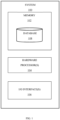
- FIG. 1 illustrates an exemplary block diagram of a system for EEG motor imagery classification.
- the system 100 includes one or more processors 104, communication interface device(s) 106 or Input/Output (I/O) interface(s) 106 or user interface 106, and one or more data storage devices or memory 102 operatively coupled to the one or more processors 104.
- the memory 102 comprises a database 108.
- the one or more processors 104 that are hardware processors can be implemented as one or more microprocessors, microcomputers, microcontrollers, digital signal processors, central processing units, state machines, logic circuitries, and/or any devices that manipulate signals based on operational instructions.
- the processor(s) is configured to fetch and execute computer-readable instructions stored in the memory.
- the system 100 can be implemented in a variety of computing systems, such as laptop computers, notebooks, hand-held devices, workstations, mainframe computers, servers, a network cloud, and the like.
- the I/O interface device(s) 106 can include a variety of software and hardware interfaces, for example, a web interface, a graphical user interface, and the like and can facilitate multiple communications within a wide variety of networks N/W and protocol types, including wired networks, for example, LAN, cable, etc., and wireless networks, such as WLAN, cellular, or satellite.
- the I/O interface device(s) 106 receives an EEG signal as input and gives classification of the EEG signal as output.
- the memory 102 may include any computer-readable medium known in the art including, for example, volatile memory, such as static random access memory (SRAM) and dynamic random access memory (DRAM), and/or non-volatile memory, such as read only memory (ROM), erasable programmable ROM, flash memories, hard disks, optical disks, and magnetic tapes.
- volatile memory such as static random access memory (SRAM) and dynamic random access memory (DRAM)
- non-volatile memory such as read only memory (ROM), erasable programmable ROM, flash memories, hard disks, optical disks, and magnetic tapes.
- the system 100 comprises one or more data storage devices or the memory 102 operatively coupled to the processor(s) 104 and is configured to store instructions for execution of steps of the method (200) depicted in FIG. 2 by the processor(s) or one or more hardware processors 104.
- the steps of the method of the present disclosure will now be explained with reference to the components or blocks of the system 100 as depicted in FIG. 1 , the steps of flow diagram as depicted in FIGS. 2 and 3 .
- process steps, method steps, techniques or the like may be described in a sequential order, such processes, methods, and techniques may be configured to work in alternate orders. In other words, any sequence or order of steps that may be described does not necessarily indicate a requirement that the steps to be performed in that order.
- the steps of processes described herein may be performed in any order practical. Further, some steps may be performed simultaneously.
- FIG. 2 is a flow diagram illustrating method for training a model comprising a Graph Neural Network and classifiers for EEG signal classification, according to some embodiments of the present disclosure.
- the steps of method 200 are explained in conjunction with functional block diagram illustrated in FIG. 3 .
- the one or more hardware processors 104 are configured to receive one or more EEG signals and their corresponding ground truth labels comprising ground truth graph label, ground truth node label and ground truth edge label.
- Each of the one or more EEG signals comprise a plurality of channels which are electrodes capturing brainwave activity. For example, an EEG signal recorded by a 16-electrode EEG device has 16 channels.
- the one or more hardware processors are configured to extract a plurality of temporal embeddings (alternatively referred as temporal features) from each of the plurality of channels of each of the one or more EEG signals via a temporal feature extractor illustrated in FIG. 3 .
- the temporal feature extractor is a neural network such as Recurrent Neural Network (RNN), temporal convolutional neural network, transformer etc.
- RNN Recurrent Neural Network
- An example architecture of the temporal feature extractor is given in table 1 where N represents number of channels in the one or more EEG signals and T represents the duration of the one or more EEG signals which is expressed in terms of number of samples.
- the 1D convolution layers (Conv1D) and the average pooling layers (Avg. pool) extract the plurality of temporal features h 0 of each channel of each of the one or more EEG signals.
- the output of the temporal feature extractor is given by equation 1, wherein x represents the one or more EEG signals with N channels, f represents the temporal feature extractor with parameters ⁇ f , and h 0 represents the plurality of temporal embeddings corresponding to the one or more EEG signals.
- the temporal embeddings indicate activity and nature of the EEG signals, for example, entropy, coherence etc.
- one or more graphs are constructed corresponding to each of the one or more EEG signals at step 206 of the method 200.
- Each graph comprises a plurality of nodes corresponding to each of the plurality of channels of corresponding EEG signal among the one or more EEG signals and a weighted adjacency matrix ( A W ) defining connectivity (alternatively referred as edges) between each pair of nodes among the plurality of nodes.
- a W weighted adjacency matrix
- Each of the plurality of nodes is associated with the plurality of temporal embeddings ( h 0 ) of the corresponding channel.
- the one or more hardware processors are configured to iteratively train a Graph Neural Network (GNN), the weighted adjacency matrix, a graph classifier, a node classifier, and an edge classifier for a plurality of pre-defined number of iterations by steps 208A to 208C.
- GNN Graph Neural Network
- a plurality of node embeddings ( h n ) corresponding to each of the one or more EEG signals are generated by the GNN using the one or more graphs according to equation 2.
- each node embedding is a feature vector that represents each node in each of the one or more graphs.
- the plurality of node embeddings together represent the entire graph and the corresponding EEG signal.
- the temporal embeddings associated with the nodes of the one or more graphs are considered as h old in equation 2.
- the node embeddings generated at the previous iteration are considered as h old .
- h new represents updated node embedding generated by the GNN at a current iteration.
- i th node embedding is given by equation 3, wherein N i represents set of nodes that are in neighborhood of node i in the one or more graphs, W represents a transformation matrix which is used to transform the h old to h new and can be updated during training of the GNN, b represents bias, and ⁇ represents non-linearity (for example, ReLu).
- the node embedding generated at the end of the plurality of iterations is given by equation 4, wherein h 0 is the temporal embedding, A W is the weighted adjacency matrix and ⁇ GNN is weights of the GNN.
- each of the one or more EEG signals are classified, at the step 208B, based on the corresponding plurality of node embeddings using the graph classifier, the node classifier, and the edge classifier to obtain a graph label, a node label, and an edge label.
- the graph label provides motor imagery classification
- the node label provides quality of the EEG signal (for example, good or poor)
- the edge label determines affinity between a pair of nodes among the plurality of nodes (for example, strong or weak).
- the node embeddings are vectorized or flattened before feeding into the graph classifier.
- the node embeddings are concatenated before feeding into the edge classifier while they are fed as it is into the node classifier to classify the one or more EEG signals.
- Example architectures of the graph classifier, the node classifier and the edge classifier are given in tables 2, 3 and 4, respectively.
- N represents number of channels in the one or more EEG signals
- T represents length of the one or more EEG signals expressed in terms of samples
- h in and h out represent the number of input and output neurons of the fully connected (FC) layer
- FC fully connected
- the graph label ⁇ graph is predicted according to equation 5, wherein h is vectorized node embedding, ⁇ graph represents parameters of the graph classifier and Cls graph represents the graph classifier.
- a graph classification loss is calculated based on the predicted graph label and the ground truth graph label.
- An example calculation is given by equation 6, wherein CE is cross entropy loss which calculates additional values required to predict ground truth y graph instead of the predicted classification ⁇ graph .
- other loss functions such as variants of cross entropy loss, hinge loss, supervised contrastive loss etc. can be used instead in alternate embodiments.
- the node label ⁇ node for i th node in a graph among the one or more graphs is predicted according to equation 7, wherein h i is the node embedding of the i th node, Cls node represents the node classifier, and ⁇ node represents parameters of the node classifier.
- a node classification loss is calculated based on the predicted node label and ground truth node label.
- N is total number of nodes in a graph among the one or more graphs
- CE is cross entropy loss which calculates additional values required to predict ground truth y node instead of the predicted classification ⁇ node .
- the edge label ⁇ edge for an edge connecting a node i and a node j in a graph among the one or more graphs is predicted according to equation 9, wherein h i and h j are the node embeddings of the node i and node j respectively, Cls edge represents the edge classifier, and ⁇ edge represents the parameter of the edge classifier. All the edges in the graph can be classified in a similar way to obtain the edge labels. Once the edges are classified, an edge classification loss is calculated based on predicted edge label and ground truth edge label.
- Equation 10 An example calculation is given in equation 10, wherein
- a total loss is determined as sum of graph classification loss, node classification loss and the edge classification loss according to equation 11. Further, the GNN, the weighted adjacency matrix, the graph classifier, the node classifier, and the edge classifier are updated based on the total loss at the step 208C. Unlike state of the art methods where the weighted adjacency matrix is pre-defined or based on certain heuristics, in the method of present disclosure, it is learnt along with the GNN to accurately represent the EEG signals.
- L total L graph + L node + L edge
- the weighted adjacency matrix, the graph classifier, the node classifier, and the edge classifier For updating the GNN, the weighted adjacency matrix, the graph classifier, the node classifier, and the edge classifier a first, a second, a third, a fourth and a fifth gradient of the total loss with respect to parameters of the GNN, the weighted adjacency matrix, the graph classifier, the node classifier, and the edge classifier, respectively are calculated. Then, the GNN, the weighted adjacency matrix, the graph classifier, the node classifier, and the edge classifier are updated using an optimizer (for example, Adam optimizer) based on the computed first, second, third, fourth and fifth gradient.
- an optimizer for example, Adam optimizer
- the weighted adjacency matrix and the classifiers are trained by the step 208, they can be used for classifying any input EEG signal as illustrated in FIG. 3 .
- an input EEG signal comprising a plurality of channels is received and temporal embedding of each of the plurality of channels is extracted using the temporal feature extractor.
- a graph is constructed with the plurality of channels as nodes and the trained weighted adjacency matrix defines the edges between the nodes. Each node is associated with the temporal embedding of the corresponding channel.
- node embeddings are generated by the trained GNN for each node of the graph which are fed into the trained graph classifier, the node classifier, and the edge classifier to classify the EEG signal. Since the EEG signal is accurately represented by the weighted adjacency matrix, the classifications are also accurate. Also, the method of present disclosure is able to determine graph label, node label, and edge label using same node embeddings generated by the GNN unlike state of the art methods which provide only graph classification. Thus, the method of present disclosure is more accurate and has a wider range of applications than the state of the art methods.
- the experimental results are provided to highlight effectiveness of the method of present disclosure on the EEG MI classification task (i.e. graph classification).
- Pytorch with Deep Graph Library (DGL) is used for the experiments.
- DGL Deep Graph Library
- ⁇ model' is used to together refer to the GNN, temporal feature extractor, and the graph classifier.
- the dataset used is physionet EEG motor movement and imagery dataset (EEG-MMIDB) ( G. Schalk et.al., "Bci2000: a general-purpose brain-computer interface (bci) system," IEEE Transactions on biomedical engineering, vol. 51, no. 6, pp. 1034-1043, 2004 ; A. L. Goldberger et.al., "Physiobank, physiotoolkit, and physionet: components of a new research resource for complex physiologic signals," circulation, vol. 101, no. 23, pp. e215-e220, 2000 ).
- the dataset contains EEG signals recorded from 109 subjects.
- the EEG signals were obtained via BCI2000 system using 64-channels at a sampling rate of 160Hz.
- EEG signals are pre-processed by performing average re-referencing and z-scoring before performing the method of present disclosure and no other artifact removal techniques were used.
- Two class subset For the two-class classification task, EEG signals of subjects performing the following activities are considered- (a) imagine open and close of left fist, and (b) imagine open and close of right fist;
- Four class subset For the four-class classification task, EEG signals of subjects performing the following activities are considered- (a) imagine open and close of left fist, (b) imagine open and close of right fist, (c) imagine open and close of both feet; and (d) resting.
- Two versions of the EEG trial data are taken for training and testing of the models. They are: (i) 6 seconds duration: The duration of each EEG trial is 6 seconds. The trial data consists of 4 seconds of imagery activity, and 1 second of resting-state before and after the start of imagery activity; (ii) 3 seconds duration: The duration of each EEG trial is 3 seconds. The trial data consists of first 3 seconds of imagery activity.
- Evaluation the performance of the proposed method is evaluated in a cross-subject setting wherein the model is evaluated on the EEG signals from the subjects that are not part of the training set, i.e., disjoint sets of subjects are used for training and testing.
- the mean accuracy of the model for 5-fold cross-validation is reported and compared with the following methods: (i) Park et al. ("Augmented complex common spatial patterns for classification of noncircular eeg from motor imagery tasks," IEEE Transactions on neural systems and rehabilitation engineering, vol. 22, no. 1, pp. 1-10, 2013 .): The method uses a complex-valued, common spatial pattern (CSP) algorithm with the Strong Uncorrelating Transform (SUT) for feature extraction.
- CSP complex-valued, common spatial pattern
- SUT Strong Uncorrelating Transform
- a Support Vector Machine is trained on the extracted features for the motor imagery classification task;
- Dose et al. (“A deep learning mi-eeg classification model for bcis.” in EUSIPCO, 2018, pp.1676-1679 .): This method represents EEG signals as a 2D grid, where each row represents the signal of a particular EEG lead. 2D convolution layers are used to extract the Spatio-temporal features. These features are fed to a fully connected layer to obtain the final prediction. This method considers raw EEG signals for feature extraction.
- the experimental setup and evaluation protocol used to evaluate method of present disclosure are similar to the Dose et al.
- Table 5 shows the performance of the models on the two-class dataset. The accuracy of the model in the subject independent setting is shown. The method of present disclosure achieves a mean accuracy of 82.92%. Further, it can be observed that the performance of the method of present disclosure is better than the existing approaches.
- Table 6 shows the performance of the models on the four-class dataset. The models are trained and tested on EEG signals with different durations. The method of present disclosure achieves a mean accuracy of 64.38% and 68.60% on the cross-validation set containing EEG signals with a duration of 3 and 6 seconds, respectively. Table 5 Methods Number of channels Accuracy (%) Park et.al. 58 72.37 Dose et. al. 64 80.10 Method of present disclosure 64 82.92 Table 6 Method Duration Accuracy(%) Dose et. al. 3 59.71 6 65.73 Method of present disclosure 3 64.38 6 68.60
- Ablation study Following ablation experiments are performed to highlight the effectiveness of the method of present disclosure.
- Ablation-1 Temporal convolution and GNN with a fixed adjacency matrix. In this experiment, the temporal feature for each channel is obtained by the temporal convolution block. Then the GNN with a fixed adjacency matrix is used to aggregate channel features. This experiment is performed to highlight the need for GNN with a trainable adjacency matrix. Table 7 shows the result for this experiment. It can be observed that there is a drop in the performance of the model from 68.60% to 59.22%.
- Ablation-2 Temporal convolution with pooling-based channel feature aggregation. In this experiment, the temporal features of each channel are obtained by the temporal convolution block.
- a pooling layer (such as mean, sum, and max) is used to aggregate the channel features.
- This experiment is performed to highlight the importance of the GNN with a trainable weighted adjacency matrix. Table 7 shows the result for this experiment. It can be observed that there is a drop in the performance of the model from 68.60% to 56.97%, 57.86%, and 57.71% for mean, max, and sum pooling layers, respectively.
- Table 7 Method Duration (seconds) Accuracy(%) Ablation-1 6 59.22 Ablation-2 Mean pool 6 56.97 Max pool 6 57.86 Sum pool 6 57.71
- Such computer-readable storage means contain program-code means for implementation of one or more steps of the method, when the program runs on a server or mobile device or any suitable programmable device.
- the hardware device can be any kind of device which can be programmed including e.g., any kind of computer like a server or a personal computer, or the like, or any combination thereof.
- the device may also include means which could be e.g., hardware means like e.g., an application-specific integrated circuit (ASIC), a field-programmable gate array (FPGA), or a combination of hardware and software means, e.g., an ASIC and an FPGA, or at least one microprocessor and at least one memory with software processing components located therein.
- the means can include both hardware means and software means.
- the method embodiments described herein could be implemented in hardware and software.
- the device may also include software means. Alternatively, the embodiments may be implemented on different hardware devices, e.g., using a plurality of CPUs.
- the embodiments herein can comprise hardware and software elements.
- the embodiments that are implemented in software include but are not limited to, firmware, resident software, microcode, etc.
- the functions performed by various components described herein may be implemented in other components or combinations of other components.
- a computer-usable or computer readable medium can be any apparatus that can comprise, store, communicate, propagate, or transport the program for use by or in connection with the instruction execution system, apparatus, or device.
- a computer-readable storage medium refers to any type of physical memory on which information or data readable by a processor may be stored.
- a computer-readable storage medium may store instructions for execution by one or more processors, including instructions for causing the processor(s) to perform steps or stages consistent with the embodiments described herein.
- the term "computer-readable medium” should be understood to include tangible items and exclude carrier waves and transient signals, i.e., be non-transitory. Examples include random access memory (RAM), read-only memory (ROM), volatile memory, nonvolatile memory, hard drives, CD ROMs, DVDs, flash drives, disks, and any other known physical storage media.
Landscapes
- Health & Medical Sciences (AREA)
- Engineering & Computer Science (AREA)
- Life Sciences & Earth Sciences (AREA)
- Physics & Mathematics (AREA)
- Biomedical Technology (AREA)
- General Health & Medical Sciences (AREA)
- Medical Informatics (AREA)
- Public Health (AREA)
- Biophysics (AREA)
- Molecular Biology (AREA)
- Pathology (AREA)
- Artificial Intelligence (AREA)
- Veterinary Medicine (AREA)
- Surgery (AREA)
- Heart & Thoracic Surgery (AREA)
- Animal Behavior & Ethology (AREA)
- Psychiatry (AREA)
- Theoretical Computer Science (AREA)
- Computer Vision & Pattern Recognition (AREA)
- Psychology (AREA)
- Physiology (AREA)
- Mathematical Physics (AREA)
- Data Mining & Analysis (AREA)
- Evolutionary Computation (AREA)
- Signal Processing (AREA)
- Computational Linguistics (AREA)
- Computing Systems (AREA)
- General Engineering & Computer Science (AREA)
- General Physics & Mathematics (AREA)
- Software Systems (AREA)
- Epidemiology (AREA)
- Databases & Information Systems (AREA)
- Primary Health Care (AREA)
- Fuzzy Systems (AREA)
- Measurement And Recording Of Electrical Phenomena And Electrical Characteristics Of The Living Body (AREA)
Abstract
Description
- The present application claims priority to
Indian application no. 202221053592, filed on September 19, 2022 - The disclosure herein generally relates to the field of Electroencephalogram (EEG) classification, and, more particularly, to method and system for EEG motor imagery classification.
- Brain-computer interface (BCI) research has vast medical applications such as stroke rehabilitation and neural prosthesis. The BCI systems decode the patterns in brain activity to control electro-mechanical devices. One such BCI system is Electroencephalogram (EEG) based Motor Imagery. EEG is a popular method to record the brain's electrical activity due to its high temporal resolution and portability. Motor imagery (MI) can be defined as a subject's mental process of motor activity without actual movement. During the process of motor movement or imagery, the underlying functional connectivity within the sensory motor cortex changes resulting in an amplitude suppression or Event Related Desynchronization (ERD) or an amplitude increase or Event Related Synchronization (ERS) of central mu (8-12Hz) and beta (18-25Hz) rhythms. It is widely accepted that the process of MI involves similar cortical regions involved in the preparation or planning of movements. Hence, the motor imagery and movement preparation can be theorized as similar functional activities. Accurate classification of the neural activity is of great importance to enable these EEG based MI systems.
- Spatio-temporal analysis of networks between lobes of the brain helps in learning about patterns of neuronal activity associated with motor functions. The most intuitive way to represent and analyze these networks is using graph which is a topographical representation consisting of a set of nodes and edges. In graph-based studies, typically, the nodes are defined in two ways: the first approach is to use source-space (EEG signal source i.e., the brain) to determine the nodes, usually captured from brain source imaging techniques or source reconstruction using EEG. Here, anatomical regions of the brain are used to generate the cortical networks or connectomes. The second method uses the sensor-space (EEG electrode position e.g., 10-20 electrode system) of the EEG acquisition systems to define the nodes. The EEG signals acquired at sensor level are described as a linear combination of the active brain and non-brain electrical sources whose activities are volume conducted on the scalp. Due to the volume conduction, many correlations exist between electrodes thereby reducing the spatial resolution which affect the detection of various functional interactions between brain regions. Existing deep learning works employ the sensor-space for EEG graph representations wherein the channels of the EEG are considered as nodes and connection between the nodes are either predefined or are based on certain heuristics. However, these representations are ineffective and fail to accurately capture the underlying brain's functional networks.
- One recent work EEG-GAT: Graph Attention Networks for Classification of Electroencephalogram (EEG) Signals by Andac Demir et.al. discloses a method of generating EEG representations using a graph shift operator to learn the optimal connectivity pattern between EEG channels. But this method does not learn the importance of each edge (i.e., the edge weight). Also, the graph embedding or representation is obtained using the readout functions such as sum or mean which are static functions and may not accurately represent the graph. Another recent work EEG-GNN: Graph Neural Networks for Classification of Electroencephalogram (EEG) Signals by Andac Demir et.al. represents EEG signal as a graph, where nodes represent the EEG channels and the node connectivity (edges) is based on the policy formulated by neuro-scientist (for example, based on distance between electrodes). So, the accuracy of graph representation largely depends on expertise of the neuro-scientist.
- Embodiments of the present disclosure present technological improvements as solutions to one or more of the above-mentioned technical problems recognized by the inventors in conventional systems. For example, in one embodiment, a method for EEG motor imagery classification is provided. The method includes receiving one or more Electroencephalogram (EEG) signals and corresponding ground truth labels comprising a ground truth graph label, a ground truth edge label, and a ground truth node label. Each of the one or more EEG signals comprise a plurality of channels. The method further includes extracting a plurality of temporal embeddings corresponding to each of the plurality of channels of each of the one or more EEG signals using a temporal feature extractor. Further, the method includes constructing one or more graphs corresponding to each of the one or more EEG signals. Each of the one or more graphs comprise a plurality of nodes corresponding to the plurality of channels and a weighted adjacency matrix defining connectivity between each pair of nodes among the plurality of nodes. Each of the plurality of nodes is associated with the plurality of temporal embeddings of the corresponding channel. Furthermore, the method includes iteratively training a Graph Neural Network (GNN), the weighted adjacency matrix, a graph classifier, a node classifier, and an edge classifier for a plurality of pre-defined number of iterations by generating a plurality of node embeddings corresponding to each of the one or more EEG signals by the Graph Neural Network (GNN) using the one or more graphs; classifying each of the one or more EEG signals based on the corresponding plurality of node embeddings using the graph classifier, the node classifier, and the edge classifier to obtain a graph label, a node label and an edge label, wherein the graph label provides motor imagery classification, the node label provides quality of the EEG signal, and the edge label determines affinity between a pair of nodes among the plurality of nodes; and updating the GNN, the weighted adjacency matrix, the graph classifier, the node classifier, and the edge classifier based on a total loss obtained as a sum of a graph classification loss, a node classification loss, and an edge classification loss.
- In another aspect, a system for EEG motor imagery classification is provided. The system includes a memory storing instructions; one or more communication interfaces; and one or more hardware processors coupled to the memory via the one or more communication interfaces, wherein the one or more hardware processors are configured by the instructions to: receive one or more Electroencephalogram (EEG) signals and corresponding ground truth labels comprising a ground truth graph label, a ground truth edge label, and a ground truth node label. Each of the one or more EEG signals comprise a plurality of channels. The one or more hardware processors are further configured to extract a plurality of temporal embeddings corresponding to each of the plurality of channels of each of the one or more EEG signals using a temporal feature extractor. Further, the one or more hardware processors are configured to construct one or more graphs corresponding to each of the one or more EEG signals. Each of the one or more graphs comprise a plurality of nodes corresponding to the plurality of channels and a weighted adjacency matrix defining connectivity between each pair of nodes among the plurality of nodes. Each of the plurality of nodes is associated with the plurality of temporal embeddings of the corresponding channel. Furthermore, the one or more hardware processors are configured to iteratively train a Graph Neural Network (GNN), the weighted adjacency matrix, a graph classifier, a node classifier, and an edge classifier for a plurality of pre-defined number of iterations by generating a plurality of node embeddings corresponding to each of the one or more EEG signals by the Graph Neural Network (GNN) using the one or more graphs; classifying each of the one or more EEG signals based on the corresponding plurality of node embeddings using the graph classifier, the node classifier, and the edge classifier to obtain a graph label, a node label and an edge label, wherein the graph label provides motor imagery classification, the node label provides quality of the EEG signal, and the edge label determines affinity between a pair of nodes among the plurality of nodes; and updating the GNN, the weighted adjacency matrix, the graph classifier, the node classifier, and the edge classifier based on a total loss obtained as a sum of a graph classification loss, a node classification loss, and an edge classification loss.
- In yet another aspect, there are provided one or more non-transitory machine-readable information storage mediums comprising one or more instructions which when executed by one or more hardware processors cause a method for EEG motor imagery classification. The method includes receiving one or more Electroencephalogram (EEG) signals and corresponding ground truth labels comprising a ground truth graph label, a ground truth edge label, and a ground truth node label. Each of the one or more EEG signals comprise a plurality of channels. The method further includes extracting a plurality of temporal embeddings corresponding to each of the plurality of channels of each of the one or more EEG signals using a temporal feature extractor. Further, the method includes constructing one or more graphs corresponding to each of the one or more EEG signals. Each of the one or more graphs comprise a plurality of nodes corresponding to the plurality of channels and a weighted adjacency matrix defining connectivity between each pair of nodes among the plurality of nodes. Each of the plurality of nodes is associated with the plurality of temporal embeddings of the corresponding channel. Furthermore, the method includes iteratively training a Graph Neural Network (GNN), the weighted adjacency matrix, a graph classifier, a node classifier, and an edge classifier for a plurality of pre-defined number of iterations by generating a plurality of node embeddings corresponding to each of the one or more EEG signals by the Graph Neural Network (GNN) using the one or more graphs; classifying each of the one or more EEG signals based on the corresponding plurality of node embeddings using the graph classifier, the node classifier, and the edge classifier to obtain a graph label, a node label and an edge label, wherein the graph label provides motor imagery classification, the node label provides quality of the EEG signal, and the edge label determines affinity between a pair of nodes among the plurality of nodes; and updating the GNN, the weighted adjacency matrix, the graph classifier, the node classifier, and the edge classifier based on a total loss obtained as a sum of a graph classification loss, a node classification loss, and an edge classification loss.
- It is to be understood that both the foregoing general description and the following detailed description are exemplary and explanatory only and are not restrictive of the invention, as claimed.
- The accompanying drawings, which are incorporated in and constitute a part of this disclosure, illustrate exemplary embodiments and, together with the description, serve to explain the disclosed principles:
-
FIG. 1 illustrates an exemplary block diagram of a system for EEG motor imagery classification, according to some embodiments of the present disclosure. -
FIGS. 2A and2B collectively referred asFIG. 2 is a flow diagram illustrating method for training a model comprising a Graph Neural Network and classifiers for EEG signal classification, according to some embodiments of the present disclosure. -
FIG. 3 is a functional block diagram illustrating method of EEG motor imagery classification, according to some embodiments of the present disclosure. - Exemplary embodiments are described with reference to the accompanying drawings. In the figures, the left-most digit(s) of a reference number identifies the figure in which the reference number first appears. Wherever convenient, the same reference numbers are used throughout the drawings to refer to the same or like parts. While examples and features of disclosed principles are described herein, modifications, adaptations, and other implementations are possible without departing from the scope of the disclosed embodiments.
- Existing EEG based MI classification methods construct graphs using static adjacency matrix that are either pre-defined or based on certain heuristics. Hence, the constructed graph does not accurately represent the EEG signal. Embodiments of present disclosure generates a representation (embedding) of the EEG signal by feeding a graph as input to a trained Graph Neural Network (GNN). The graph comprises nodes corresponding to EEG channels and connectivity between the nodes is defined by a weighted adjacency matrix. The GNN and weighted adjacency matrix are trained together using training samples unlike state of the art methods. Thus, the embedding generated by the trained GNN accurately represents the EEG signal and therefore can be used for accurate motor imagery classification (i.e. graph classification). In addition, the embedding can also be used for node and edge classification by using appropriate classifiers.
- Referring now to the drawings, and more particularly to
FIG. 1 through 3 , where similar reference characters denote corresponding features consistently throughout the figures, there are shown preferred embodiments and these embodiments are described in the context of the following exemplary system and/or method. -
FIG. 1 illustrates an exemplary block diagram of a system for EEG motor imagery classification. In an embodiment, thesystem 100 includes one ormore processors 104, communication interface device(s) 106 or Input/Output (I/O) interface(s) 106 oruser interface 106, and one or more data storage devices ormemory 102 operatively coupled to the one ormore processors 104. Thememory 102 comprises adatabase 108. The one ormore processors 104 that are hardware processors can be implemented as one or more microprocessors, microcomputers, microcontrollers, digital signal processors, central processing units, state machines, logic circuitries, and/or any devices that manipulate signals based on operational instructions. Among other capabilities, the processor(s) is configured to fetch and execute computer-readable instructions stored in the memory. In an embodiment, thesystem 100 can be implemented in a variety of computing systems, such as laptop computers, notebooks, hand-held devices, workstations, mainframe computers, servers, a network cloud, and the like. - The I/O interface device(s) 106 can include a variety of software and hardware interfaces, for example, a web interface, a graphical user interface, and the like and can facilitate multiple communications within a wide variety of networks N/W and protocol types, including wired networks, for example, LAN, cable, etc., and wireless networks, such as WLAN, cellular, or satellite. In an embodiment, the I/O interface device(s) 106 receives an EEG signal as input and gives classification of the EEG signal as output. The
memory 102 may include any computer-readable medium known in the art including, for example, volatile memory, such as static random access memory (SRAM) and dynamic random access memory (DRAM), and/or non-volatile memory, such as read only memory (ROM), erasable programmable ROM, flash memories, hard disks, optical disks, and magnetic tapes. Functions of the components ofsystem 100 are explained in conjunction with flow diagrams depicted inFIGS. 2 and3 for EEG motor imagery classification. - In an embodiment, the
system 100 comprises one or more data storage devices or thememory 102 operatively coupled to the processor(s) 104 and is configured to store instructions for execution of steps of the method (200) depicted inFIG. 2 by the processor(s) or one ormore hardware processors 104. The steps of the method of the present disclosure will now be explained with reference to the components or blocks of thesystem 100 as depicted inFIG. 1 , the steps of flow diagram as depicted inFIGS. 2 and3 . Although process steps, method steps, techniques or the like may be described in a sequential order, such processes, methods, and techniques may be configured to work in alternate orders. In other words, any sequence or order of steps that may be described does not necessarily indicate a requirement that the steps to be performed in that order. The steps of processes described herein may be performed in any order practical. Further, some steps may be performed simultaneously. -
FIG. 2 is a flow diagram illustrating method for training a model comprising a Graph Neural Network and classifiers for EEG signal classification, according to some embodiments of the present disclosure. The steps ofmethod 200 are explained in conjunction with functional block diagram illustrated inFIG. 3 . Atstep 202 of themethod 200, the one ormore hardware processors 104 are configured to receive one or more EEG signals and their corresponding ground truth labels comprising ground truth graph label, ground truth node label and ground truth edge label. Each of the one or more EEG signals comprise a plurality of channels which are electrodes capturing brainwave activity. For example, an EEG signal recorded by a 16-electrode EEG device has 16 channels. - Once the one or more EEG signals are received, at
step 204 of themethod 200 the one or more hardware processors are configured to extract a plurality of temporal embeddings (alternatively referred as temporal features) from each of the plurality of channels of each of the one or more EEG signals via a temporal feature extractor illustrated inFIG. 3 . The temporal feature extractor is a neural network such as Recurrent Neural Network (RNN), temporal convolutional neural network, transformer etc. An example architecture of the temporal feature extractor is given in table 1 where N represents number of channels in the one or more EEG signals and T represents the duration of the one or more EEG signals which is expressed in terms of number of samples. For example, an EEG signal of 3 seconds sampled at the rate of 100 samples/sec will yield 300 samples, therefore T=300. The 1D convolution layers (Conv1D) and the average pooling layers (Avg. pool) extract the plurality of temporal features h 0 of each channel of each of the one or more EEG signals. The output of the temporal feature extractor is given by equation 1, wherein x represents the one or more EEG signals with N channels, f represents the temporal feature extractor with parameters θf , and h 0 represents the plurality of temporal embeddings corresponding to the one or more EEG signals. The temporal embeddings indicate activity and nature of the EEG signals, for example, entropy, coherence etc.
Table 1 Layer Kernel Stride Padding Input Output Conv1D 15 1 same N,T N,T Avg. pool 2 2 valid N,T N,T/2 Conv1D 15 1 same N,T/2 N,T/2 Avg. pool 2 2 valid N,T/2 N,T/4 - Once the temporal features are extracted, one or more graphs (G) are constructed corresponding to each of the one or more EEG signals at
step 206 of themethod 200. Each graph comprises a plurality of nodes corresponding to each of the plurality of channels of corresponding EEG signal among the one or more EEG signals and a weighted adjacency matrix (AW ) defining connectivity (alternatively referred as edges) between each pair of nodes among the plurality of nodes. Each of the plurality of nodes is associated with the plurality of temporal embeddings (h 0) of the corresponding channel. - Once the one or more graphs are constructed, at
step 208 of themethod 200, the one or more hardware processors are configured to iteratively train a Graph Neural Network (GNN), the weighted adjacency matrix, a graph classifier, a node classifier, and an edge classifier for a plurality of pre-defined number of iterations bysteps 208A to 208C. Atstep 208A, a plurality of node embeddings (hn ) corresponding to each of the one or more EEG signals are generated by the GNN using the one or more graphs according to equation 2. As understood by a person skilled in the art, each node embedding is a feature vector that represents each node in each of the one or more graphs. Thus, the plurality of node embeddings together represent the entire graph and the corresponding EEG signal. In the first iteration of training, the temporal embeddings associated with the nodes of the one or more graphs are considered as hold in equation 2. In the subsequent iterations, the node embeddings generated at the previous iteration are considered as hold. hnew represents updated node embedding generated by the GNN at a current iteration. In general, ith node embedding is given by equation 3, wherein


- Once the node embeddings are generated, each of the one or more EEG signals are classified, at the
step 208B, based on the corresponding plurality of node embeddings using the graph classifier, the node classifier, and the edge classifier to obtain a graph label, a node label, and an edge label. The graph label provides motor imagery classification, the node label provides quality of the EEG signal (for example, good or poor), and the edge label determines affinity between a pair of nodes among the plurality of nodes (for example, strong or weak). In an embodiment, the node embeddings are vectorized or flattened before feeding into the graph classifier. Similarly, the node embeddings are concatenated before feeding into the edge classifier while they are fed as it is into the node classifier to classify the one or more EEG signals. Example architectures of the graph classifier, the node classifier and the edge classifier are given in tables 2, 3 and 4, respectively. Here, N represents number of channels in the one or more EEG signals, T represents length of the one or more EEG signals expressed in terms of samples, hin and hout represent the number of input and output neurons of the fully connected (FC) layer,

Table 2 Layer hin hout input output Flatten - - N,T/4 NxT/4 FC NxT/4 64 NxT/4 64 FC 64 4 or 2 64 4 or 2 Table 3 Layer hin hout input output FC T/4 64 T/4 64 FC 64 
64 
Table 4 Layer hin hout input output Concat - - [T/4], [T/4] T/2 FC T/2 64 T/2 64 FC 64 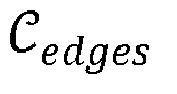
64 
- The graph label ŷgraph is predicted according to equation 5, wherein h is vectorized node embedding, θgraph represents parameters of the graph classifier and Clsgraph represents the graph classifier. Once the graph label is predicted, a graph classification loss is calculated based on the predicted graph label and the ground truth graph label. An example calculation is given by equation 6, wherein CE is cross entropy loss which calculates additional values required to predict ground truth ygraph instead of the predicted classification ŷgraph. As understood by a person skilled in the art, other loss functions such as variants of cross entropy loss, hinge loss, supervised contrastive loss etc. can be used instead in alternate embodiments. The node label ŷnode for ith node in a graph among the one or more graphs is predicted according to equation 7, wherein hi is the node embedding of the ith node, Clsnode represents the node classifier, and θnode represents parameters of the node classifier. Once the node label is predicted, a node classification loss is calculated based on the predicted node label and ground truth node label. An example calculation is given by equation 8, wherein N is total number of nodes in a graph among the one or more graphs, CE is cross entropy loss which calculates additional values required to predict ground truth ynode instead of the predicted classification ŷnode. The edge label ŷedge for an edge connecting a node i and a node j in a graph among the one or more graphs is predicted according to equation 9, wherein hi and hj are the node embeddings of the node i and node j respectively, Clsedge represents the edge classifier, and θedge represents the parameter of the edge classifier. All the edges in the graph can be classified in a similar way to obtain the edge labels. Once the edges are classified, an edge classification loss is calculated based on predicted edge label and ground truth edge label. An example calculation is given in equation 10, wherein |E| is total number of edges in a graph among the one or more graphs, CE is cross entropy loss which calculates additional values required to predict ground truth yi,j edge instead of the predicted classification ŷi,j edge for the edge ei,j connecting node i and node j.


- Once the one or more EEG signals are classified and classification losses are calculated, a total loss is determined as sum of graph classification loss, node classification loss and the edge classification loss according to equation 11. Further, the GNN, the weighted adjacency matrix, the graph classifier, the node classifier, and the edge classifier are updated based on the total loss at the
step 208C. Unlike state of the art methods where the weighted adjacency matrix is pre-defined or based on certain heuristics, in the method of present disclosure, it is learnt along with the GNN to accurately represent the EEG signals.
- For updating the GNN, the weighted adjacency matrix, the graph classifier, the node classifier, and the edge classifier a first, a second, a third, a fourth and a fifth gradient of the total loss with respect to parameters of the GNN, the weighted adjacency matrix, the graph classifier, the node classifier, and the edge classifier, respectively are calculated. Then, the GNN, the weighted adjacency matrix, the graph classifier, the node classifier, and the edge classifier are updated using an optimizer (for example, Adam optimizer) based on the computed first, second, third, fourth and fifth gradient.
- Once the GNN, the weighted adjacency matrix and the classifiers are trained by the
step 208, they can be used for classifying any input EEG signal as illustrated inFIG. 3 . Initially, an input EEG signal comprising a plurality of channels is received and temporal embedding of each of the plurality of channels is extracted using the temporal feature extractor. Further, a graph is constructed with the plurality of channels as nodes and the trained weighted adjacency matrix defines the edges between the nodes. Each node is associated with the temporal embedding of the corresponding channel. Further, node embeddings are generated by the trained GNN for each node of the graph which are fed into the trained graph classifier, the node classifier, and the edge classifier to classify the EEG signal. Since the EEG signal is accurately represented by the weighted adjacency matrix, the classifications are also accurate. Also, the method of present disclosure is able to determine graph label, node label, and edge label using same node embeddings generated by the GNN unlike state of the art methods which provide only graph classification. Thus, the method of present disclosure is more accurate and has a wider range of applications than the state of the art methods. - The experimental results are provided to highlight effectiveness of the method of present disclosure on the EEG MI classification task (i.e. graph classification). Pytorch with Deep Graph Library (DGL) is used for the experiments. The term `model' is used to together refer to the GNN, temporal feature extractor, and the graph classifier.
- Dataset: The dataset used is physionet EEG motor movement and imagery dataset (EEG-MMIDB) (G. Schalk et.al., "Bci2000: a general-purpose brain-computer interface (bci) system," IEEE Transactions on biomedical engineering, vol. 51, no. 6, pp. 1034-1043, 2004; A. L. Goldberger et.al., "Physiobank, physiotoolkit, and physionet: components of a new research resource for complex physiologic signals," circulation, vol. 101, no. 23, pp. e215-e220, 2000). The dataset contains EEG signals recorded from 109 subjects. The EEG signals were obtained via BCI2000 system using 64-channels at a sampling rate of 160Hz. Each subject participated in 3 trials of left, right, both fists and both feet motor imagery and movement. The EEG signals are pre-processed by performing average re-referencing and z-scoring before performing the method of present disclosure and no other artifact removal techniques were used.
- Following are the details of the dataset used for experiments: (i) Two class subset: For the two-class classification task, EEG signals of subjects performing the following activities are considered- (a) imagine open and close of left fist, and (b) imagine open and close of right fist; (ii) Four class subset: For the four-class classification task, EEG signals of subjects performing the following activities are considered- (a) imagine open and close of left fist, (b) imagine open and close of right fist, (c) imagine open and close of both feet; and (d) resting. Two versions of the EEG trial data are taken for training and testing of the models. They are: (i) 6 seconds duration: The duration of each EEG trial is 6 seconds. The trial data consists of 4 seconds of imagery activity, and 1 second of resting-state before and after the start of imagery activity; (ii) 3 seconds duration: The duration of each EEG trial is 3 seconds. The trial data consists of first 3 seconds of imagery activity.
- Evaluation: the performance of the proposed method is evaluated in a cross-subject setting wherein the model is evaluated on the EEG signals from the subjects that are not part of the training set, i.e., disjoint sets of subjects are used for training and testing. The mean accuracy of the model for 5-fold cross-validation is reported and compared with the following methods: (i) Park et al. ("Augmented complex common spatial patterns for classification of noncircular eeg from motor imagery tasks," IEEE Transactions on neural systems and rehabilitation engineering, vol. 22, no. 1, pp. 1-10, 2013.): The method uses a complex-valued, common spatial pattern (CSP) algorithm with the Strong Uncorrelating Transform (SUT) for feature extraction. A Support Vector Machine (SVM) is trained on the extracted features for the motor imagery classification task; (ii) Dose et al. ("A deep learning mi-eeg classification model for bcis." in EUSIPCO, 2018, pp.1676-1679.): This method represents EEG signals as a 2D grid, where each row represents the signal of a particular EEG lead. 2D convolution layers are used to extract the Spatio-temporal features. These features are fed to a fully connected layer to obtain the final prediction. This method considers raw EEG signals for feature extraction. The experimental setup and evaluation protocol used to evaluate method of present disclosure are similar to the Dose et al.
- Results: Table 5 shows the performance of the models on the two-class dataset. The accuracy of the model in the subject independent setting is shown. The method of present disclosure achieves a mean accuracy of 82.92%. Further, it can be observed that the performance of the method of present disclosure is better than the existing approaches. Table 6 shows the performance of the models on the four-class dataset. The models are trained and tested on EEG signals with different durations. The method of present disclosure achieves a mean accuracy of 64.38% and 68.60% on the cross-validation set containing EEG signals with a duration of 3 and 6 seconds, respectively.
Table 5 Methods Number of channels Accuracy (%) Park et.al. 58 72.37 Dose et. al. 64 80.10 Method of present disclosure 64 82.92 Table 6 Method Duration Accuracy(%) Dose et. al. 3 59.71 6 65.73 Method of present disclosure 3 64.38 6 68.60 - Ablation study: Following ablation experiments are performed to highlight the effectiveness of the method of present disclosure. (i) Ablation-1: Temporal convolution and GNN with a fixed adjacency matrix. In this experiment, the temporal feature for each channel is obtained by the temporal convolution block. Then the GNN with a fixed adjacency matrix is used to aggregate channel features. This experiment is performed to highlight the need for GNN with a trainable adjacency matrix. Table 7 shows the result for this experiment. It can be observed that there is a drop in the performance of the model from 68.60% to 59.22%. (ii) Ablation-2: Temporal convolution with pooling-based channel feature aggregation. In this experiment, the temporal features of each channel are obtained by the temporal convolution block. Instead of GNN, a pooling layer (such as mean, sum, and max) is used to aggregate the channel features. This experiment is performed to highlight the importance of the GNN with a trainable weighted adjacency matrix. Table 7 shows the result for this experiment. It can be observed that there is a drop in the performance of the model from 68.60% to 56.97%, 57.86%, and 57.71% for mean, max, and sum pooling layers, respectively.
Table 7 Method Duration (seconds) Accuracy(%) Ablation-1 6 59.22 Ablation-2 Mean pool 6 56.97 Max pool 6 57.86 Sum pool 6 57.71 - The written description describes the subject matter herein to enable any person skilled in the art to make and use the embodiments. The scope of the subject matter embodiments is defined by the claims and may include other modifications that occur to those skilled in the art. Such other modifications are intended to be within the scope of the claims if they have similar elements that do not differ from the literal language of the claims or if they include equivalent elements with insubstantial differences from the literal language of the claims.
- It is to be understood that the scope of the protection is extended to such a program and in addition to a computer-readable means having a message therein; such computer-readable storage means contain program-code means for implementation of one or more steps of the method, when the program runs on a server or mobile device or any suitable programmable device. The hardware device can be any kind of device which can be programmed including e.g., any kind of computer like a server or a personal computer, or the like, or any combination thereof. The device may also include means which could be e.g., hardware means like e.g., an application-specific integrated circuit (ASIC), a field-programmable gate array (FPGA), or a combination of hardware and software means, e.g., an ASIC and an FPGA, or at least one microprocessor and at least one memory with software processing components located therein. Thus, the means can include both hardware means and software means. The method embodiments described herein could be implemented in hardware and software. The device may also include software means. Alternatively, the embodiments may be implemented on different hardware devices, e.g., using a plurality of CPUs.
- The embodiments herein can comprise hardware and software elements. The embodiments that are implemented in software include but are not limited to, firmware, resident software, microcode, etc. The functions performed by various components described herein may be implemented in other components or combinations of other components. For the purposes of this description, a computer-usable or computer readable medium can be any apparatus that can comprise, store, communicate, propagate, or transport the program for use by or in connection with the instruction execution system, apparatus, or device.
- The illustrated steps are set out to explain the exemplary embodiments shown, and it should be anticipated that ongoing technological development will change the manner in which particular functions are performed. These examples are presented herein for purposes of illustration, and not limitation. Further, the boundaries of the functional building blocks have been arbitrarily defined herein for the convenience of the description. Alternative boundaries can be defined so long as the specified functions and relationships thereof are appropriately performed. Alternatives (including equivalents, extensions, variations, deviations, etc., of those described herein) will be apparent to persons skilled in the relevant art(s) based on the teachings contained herein. Such alternatives fall within the scope of the disclosed embodiments. Also, the words "comprising," "having," "containing," and "including," and other similar forms are intended to be equivalent in meaning and be open ended in that an item or items following any one of these words is not meant to be an exhaustive listing of such item or items or meant to be limited to only the listed item or items. It must also be noted that as used herein and in the appended claims, the singular forms "a," "an," and "the" include plural references unless the context clearly dictates otherwise.
- Furthermore, one or more computer-readable storage media may be utilized in implementing embodiments consistent with the present disclosure. A computer-readable storage medium refers to any type of physical memory on which information or data readable by a processor may be stored. Thus, a computer-readable storage medium may store instructions for execution by one or more processors, including instructions for causing the processor(s) to perform steps or stages consistent with the embodiments described herein. The term "computer-readable medium" should be understood to include tangible items and exclude carrier waves and transient signals, i.e., be non-transitory. Examples include random access memory (RAM), read-only memory (ROM), volatile memory, nonvolatile memory, hard drives, CD ROMs, DVDs, flash drives, disks, and any other known physical storage media.
- It is intended that the disclosure and examples be considered as exemplary only, with a true scope of disclosed embodiments being indicated by the following claims.
Claims (15)
- A processor implemented method comprising:receiving (202), via one or more hardware processors, one or more Electroencephalogram 'EEG' signals and corresponding ground truth labels comprising a ground truth graph label, a ground truth edge label, and a ground truth node label, wherein each of the one or more EEG signals comprise a plurality of channels;extracting (204), via the one or more hardware processors, a plurality of temporal embeddings corresponding to each of the plurality of channels of each of the one or more EEG signals using a temporal feature extractor;constructing (206), via the one or more hardware processors, one or more graphs corresponding to each of the one or more EEG signals, wherein each of the one or more graphs comprise a plurality of nodes corresponding to the plurality of channels and a weighted adjacency matrix defining connectivity between each pair of nodes among the plurality of nodes, and wherein each of the plurality of nodes is associated with the plurality of temporal embeddings of the corresponding channel; anditeratively training (208), via the one or more hardware processors, a Graph Neural Network `GNN', the weighted adjacency matrix, a graph classifier, a node classifier, and an edge classifier for a plurality of pre-defined number of iterations for classifying the one or more EEG signals by:generating (208A) a plurality of node embeddings corresponding to each of the one or more EEG signals by the GNN using the one or more graphs;classifying (208B) each of the one or more EEG signals based on the corresponding plurality of node embeddings using the graph classifier, the node classifier, and the edge classifier to obtain a graph label, a node label, and an edge label, wherein the graph label provides motor imagery classification, the node label provides quality of the EEG signal, and the edge label determines affinity between a pair of nodes among the plurality of nodes; andupdating (208C) the GNN, the weighted adjacency matrix, the graph classifier, the node classifier, and the edge classifier based on a total loss obtained as a sum of a graph classification loss, a node classification loss, and an edge classification loss.
- The method of claim 1, wherein the GNN, the graph classifier, the node classifier, and the edge classifier are used to classify a test EEG signal during inference based on a graph constructed using the weighted adjacency matrix and a plurality of temporal embeddings corresponding to each of a plurality of channels of the test EEG signal.
- The method of claim 1, wherein the plurality of node embeddings are vectorized before feeding into the graph classifier.
- The method of claim 1, wherein the plurality of node embeddings are concatenated before feeding into the edge classifier.
- The method of claim 1, wherein the GNN, the weighted adjacency matrix, the graph classifier, the node classifier, and the edge classifier are updated by:calculating a first, a second, a third, a fourth and a fifth gradient of the total loss with respect to parameters of the GNN, the weighted adjacency matrix, the graph classifier, the node classifier, and the edge classifier; andupdating the GNN, the weighted adjacency matrix, the graph classifier, the node classifier, and the edge classifier using an optimizer based on the computed first, second, third, fourth and fifth gradient.
- A system (100), comprising:a memory (102) storing instructions;one or more communication interfaces (106); and
one or more hardware processors (104) coupled to the memory (102) via the one or more communication interfaces (106), wherein the one or more hardware processors (104) are configured by the instructions to:receive one or more Electroencephalogram 'EEG' signals and corresponding ground truth labels comprising a ground truth graph label, a ground truth edge label, and a ground truth node label, wherein each of the one or more EEG signals comprise a plurality of channels;extract a plurality of temporal embeddings corresponding to each of the plurality of channels of each of the one or more EEG signals using a temporal feature extractor;construct one or more graphs corresponding to each of the one or more EEG signals, wherein each of the one or more graphs comprise a plurality of nodes corresponding to the plurality of channels and a weighted adjacency matrix defining connectivity between each pair of nodes among the plurality of nodes, and wherein each of the plurality of nodes is associated with the plurality of temporal embeddings of the corresponding channel; anditeratively train a Graph Neural Network `GNN', the weighted adjacency matrix, a graph classifier, a node classifier, and an edge classifier for a plurality of pre-defined number of iterations for classifying the one or more EEG signals by:generating a plurality of node embeddings corresponding to each of the one or more EEG signals by the GNN using the one or more graphs;classifying each of the one or more EEG signals based on the corresponding plurality of node embeddings using the graph classifier, the node classifier, and the edge classifier to obtain a graph label, a node label, and an edge label, wherein the graph label provides motor imagery classification, the node label provides quality of the EEG signal, and the edge label determines affinity between a pair of nodes among the plurality of nodes; andupdating the GNN, the weighted adjacency matrix, the graph classifier, the node classifier, and the edge classifier based on a total loss obtained as a sum of a graph classification loss, a node classification loss, and an edge classification loss. - The system of claim 6, wherein the GNN, the graph classifier, the node classifier, and the edge classifier are used to classify a test EEG signal during inference based on a graph constructed using the weighted adjacency matrix and a plurality of temporal embeddings corresponding to each of a plurality of channels of the test EEG signal.
- The system of claim 6, wherein the one or more hardware processors are configured to vectorize the plurality of node embeddings before feeding into the graph classifier.
- The system of claim 6, wherein the one or more hardware processors are configured to concatenate the plurality of node embeddings before feeding into the edge classifier.
- The system of claim 6, wherein one or more hardware processors are configured to update the GNN, the weighted adjacency matrix, the graph classifier, the node classifier, and the edge classifier by:calculating a first, a second, a third, a fourth and a fifth gradient of the total loss with respect to parameters of the GNN, the weighted adjacency matrix, the graph classifier, the node classifier, and the edge classifier; andupdating the GNN, the weighted adjacency matrix, the graph classifier, the node classifier, and the edge classifier using an optimizer based on the computed first, second, third, fourth and fifth gradient.
- One or more non-transitory machine-readable information storage mediums comprising one or more instructions which when executed by one or more hardware processors cause:receiving one or more Electroencephalogram 'EEG' signals and corresponding ground truth labels comprising a ground truth graph label, a ground truth edge label, and a ground truth node label, wherein each of the one or more EEG signals comprise a plurality of channels;extracting a plurality of temporal embeddings corresponding to each of the plurality of channels of each of the one or more EEG signals using a temporal feature extractor;constructing one or more graphs corresponding to each of the one or more EEG signals, wherein each of the one or more graphs comprise a plurality of nodes corresponding to the plurality of channels and a weighted adjacency matrix defining connectivity between each pair of nodes among the plurality of nodes, and wherein each of the plurality of nodes is associated with the plurality of temporal embeddings of the corresponding channel; anditeratively training a Graph Neural Network (GNN), the weighted adjacency matrix, a graph classifier, a node classifier, and an edge classifier for a plurality of pre-defined number of iterations for classifying the one or more EEG signals by:generating a plurality of node embeddings corresponding to each of the one or more EEG signals by the GNN using the one or more graphs;classifying each of the one or more EEG signals based on the corresponding plurality of node embeddings using the graph classifier, the node classifier, and the edge classifier to obtain a graph label, a node label, and an edge label, wherein the graph label provides motor imagery classification, the node label provides quality of the EEG signal, and the edge label determines affinity between a pair of nodes among the plurality of nodes; andupdating the GNN, the weighted adjacency matrix, the graph classifier, the node classifier, and the edge classifier based on a total loss obtained as a sum of a graph classification loss, a node classification loss, and an edge classification loss.
- The one or more non-transitory machine-readable information storage mediums of claim 11, wherein the GNN, the graph classifier, the node classifier, and the edge classifier are used to classify a test EEG signal during inference based on a graph constructed using the weighted adjacency matrix and a plurality of temporal embeddings corresponding to each of a plurality of channels of the test EEG signal.
- The one or more non-transitory machine-readable information storage mediums of claim 11, wherein the plurality of node embeddings are vectorized before feeding into the graph classifier.
- The one or more non-transitory machine-readable information storage mediums of claim 11, wherein the plurality of node embeddings are concatenated before feeding into the edge classifier.
- The one or more non-transitory machine-readable information storage mediums of claim 11, wherein the GNN, the weighted adjacency matrix, the graph classifier, the node classifier, and the edge classifier are updated by:calculating a first, a second, a third, a fourth and a fifth gradient of the total loss with respect to parameters of the GNN, the weighted adjacency matrix, the graph classifier, the node classifier, and the edge classifier; andupdating the GNN, the weighted adjacency matrix, the graph classifier, the node classifier, and the edge classifier using an optimizer based on the computed first, second, third, fourth and fifth gradient.
Applications Claiming Priority (1)
| Application Number | Priority Date | Filing Date | Title |
|---|---|---|---|
| IN202221053592 | 2022-09-19 |
Publications (1)
| Publication Number | Publication Date |
|---|---|
| EP4339965A1 true EP4339965A1 (en) | 2024-03-20 |
Family
ID=86776548
Family Applications (1)
| Application Number | Title | Priority Date | Filing Date |
|---|---|---|---|
| EP23179166.6A Pending EP4339965A1 (en) | 2022-09-19 | 2023-06-14 | Method and system for eeg motor imagery classification |
Country Status (2)
| Country | Link |
|---|---|
| US (1) | US20240104377A1 (en) |
| EP (1) | EP4339965A1 (en) |
Families Citing this family (2)
| Publication number | Priority date | Publication date | Assignee | Title |
|---|---|---|---|---|
| CN118277865B (en) * | 2024-04-19 | 2025-06-10 | 杭州电子科技大学 | A group motor imagery classification and recognition method based on EEG multi-view decoding |
| CN119649992B (en) * | 2024-11-29 | 2025-06-20 | 西安交通大学城市学院 | Cooperative control method and system for integrated rehabilitation equipment |
-
2023
- 2023-06-14 US US18/334,718 patent/US20240104377A1/en active Pending
- 2023-06-14 EP EP23179166.6A patent/EP4339965A1/en active Pending
Non-Patent Citations (9)
| Title |
|---|
| A. L. GOLDBERGER: "Physiobank, physiotoolkit, and physionet: components of a new research resource for complex physiologic signals", CIRCULATION, vol. 101, no. 23, 2000, pages e215 - e220 |
| DOSE ET AL.: "A deep learning mi-eeg classification model for bcis", EUSIPCO, 2018, pages 1676 - 1679, XP033461727, DOI: 10.23919/EUSIPCO.2018.8553332 |
| G. SCHALK: "Bci2000: a general-purpose brain-computer interface (bci) system", IEEE TRANSACTIONS ON BIOMEDICAL ENGINEERING, vol. 51, no. 6, 2004, pages 1034 - 1043, XP011113318, DOI: 10.1109/TBME.2004.827072 |
| KLEPL DOMINIK ET AL: "Graph Neural Network-based EEG Classification: A Survey", IEEE TRANSACTIONS ON NEURAL SYSTEMS AND REHABILITATION ENGINEERING, 20 December 2023 (2023-12-20), USA, pages 1 - 14, XP093124048, ISSN: 1534-4320, Retrieved from the Internet <URL:https://arxiv.org/pdf/2310.02152.pdf> DOI: 10.1109/TNSRE.2024.3355750 * |
| LI XIAOYU ET AL: "Classify EEG and Reveal Latent Graph Structure with Spatio-Temporal Graph Convolutional Neural Network", 2019 IEEE INTERNATIONAL CONFERENCE ON DATA MINING (ICDM), IEEE, 8 November 2019 (2019-11-08), pages 389 - 398, XP033700433, DOI: 10.1109/ICDM.2019.00049 * |
| LI YAN ET AL: "Mutualgraphnet: a novel model for motor imagery classification", ARXIV.ORG, 2 September 2021 (2021-09-02), Ithaca, XP093124044, Retrieved from the Internet <URL:https://arxiv.org/pdf/2109.04361v1.pdf> [retrieved on 20240125], DOI: 10.48550/arXiv.2109.04361 * |
| PARK ET AL.: "Augmented complex common spatial patterns for classification of noncircular eeg from motor imagery tasks", IEEE TRANSACTIONS ON NEURAL SYSTEMS AND REHABILITATION ENGINEERING, vol. 22, no. 1, 2013, pages 1 - 10, XP011536700, DOI: 10.1109/TNSRE.2013.2294903 |
| SUN BIAO ET AL: "Adaptive Spatiotemporal Graph Convolutional Networks for Motor Imagery Classification", IEEE SIGNAL PROCESSING LETTERS, IEEE, USA, vol. 28, 8 January 2021 (2021-01-08), pages 219 - 223, XP011835374, ISSN: 1070-9908, [retrieved on 20210203], DOI: 10.1109/LSP.2021.3049683 * |
| VIVEK B S ET AL: "ST-GNN for EEG Motor Imagery Classification", 2022 IEEE-EMBS INTERNATIONAL CONFERENCE ON BIOMEDICAL AND HEALTH INFORMATICS (BHI), IEEE, 27 September 2022 (2022-09-27), pages 1 - 4, XP034219484, DOI: 10.1109/BHI56158.2022.9926806 * |
Also Published As
| Publication number | Publication date |
|---|---|
| US20240104377A1 (en) | 2024-03-28 |
Similar Documents
| Publication | Publication Date | Title |
|---|---|---|
| Saeedi et al. | Major depressive disorder diagnosis based on effective connectivity in EEG signals: a convolutional neural network and long short-term memory approach | |
| CN109447183A (en) | Model training method, device, equipment and medium | |
| US11854703B2 (en) | Simulating abnormalities in medical images with generative adversarial networks | |
| WO2024108483A1 (en) | Multimodal neural biological signal processing method and apparatus, and server and storage medium | |
| US11354339B2 (en) | Method and system for clustering users using cognitive stress report for classifying stress levels | |
| JP2020502683A (en) | System and method for iterative classification using neurophysiological signals | |
| US11751795B2 (en) | Predicting disease by comparing vector and person vector extracted from biosignal of person | |
| Omar et al. | Enhancing EEG signals classification using LSTM‐CNN architecture | |
| Bhat et al. | Gan-based data augmentation for improving the classification of eeg signals | |
| Naga Srinivasu et al. | Variational autoencoders‐basedself‐learning model for tumor identification and impact analysis from 2‐D MRI images | |
| EP4085838B1 (en) | Ensemble generative adversarial network based simulation of cardiovascular disease specific biomedical signals | |
| US20240104377A1 (en) | Method and system for eeg motor imagery classification | |
| CN111150392A (en) | A method and device for constructing multi-type emotion recognition in a directed dynamic brain function network | |
| US8271414B2 (en) | Network characterization, feature extraction and application to classification | |
| Kashefi Amiri et al. | Epileptic seizure detection from electroencephalogram signals based on 1D CNN-LSTM deep learning model using discrete wavelet transform | |
| Jalali et al. | VGA‐Net: Vessel graph based attentional U‐Net for retinal vessel segmentation | |
| Gonzalez-Castillo et al. | Manifold learning for fMRI time-varying functional connectivity | |
| Gandhi et al. | Denoising time series data using asymmetric generative adversarial networks | |
| Ma et al. | Partial prior transfer learning based on self-attention CNN for EEG decoding in stroke patients | |
| Al Amin et al. | An ANN Network-Based Approach for Early Detection of Parkinson's Disease Through Image Processing | |
| Gokapay et al. | Enhanced MRI-based brain tumor segmentation and feature extraction using Berkeley wavelet transform and ETCCNN | |
| Zali-Vargahan et al. | Semisupervised Deep Features of Time‐Frequency Maps for Multimodal Emotion Recognition | |
| Kaur et al. | A Hybrid Deep Learning Framework Using Scaling‐Basis Chirplet Transform for Motor Imagery EEG Recognition in Brain–Computer Interface Applications | |
| CN115730269A (en) | Multimodal neurobiological signal processing method, device, server and storage medium | |
| Acharya et al. | Comparative analysis of feature extraction technique on EEG-based dataset |
Legal Events
| Date | Code | Title | Description |
|---|---|---|---|
| PUAI | Public reference made under article 153(3) epc to a published international application that has entered the european phase |
Free format text: ORIGINAL CODE: 0009012 |
|
| STAA | Information on the status of an ep patent application or granted ep patent |
Free format text: STATUS: THE APPLICATION HAS BEEN PUBLISHED |
|
| AK | Designated contracting states |
Kind code of ref document: A1 Designated state(s): AL AT BE BG CH CY CZ DE DK EE ES FI FR GB GR HR HU IE IS IT LI LT LU LV MC ME MK MT NL NO PL PT RO RS SE SI SK SM TR |
|
| STAA | Information on the status of an ep patent application or granted ep patent |
Free format text: STATUS: REQUEST FOR EXAMINATION WAS MADE |
|
| 17P | Request for examination filed |
Effective date: 20240708 |
|
| RBV | Designated contracting states (corrected) |
Designated state(s): AL AT BE BG CH CY CZ DE DK EE ES FI FR GB GR HR HU IE IS IT LI LT LU LV MC ME MK MT NL NO PL PT RO RS SE SI SK SM TR |