EP4336815A1 - Incoming call response method and corresponding terminal and communication system - Google Patents
Incoming call response method and corresponding terminal and communication system Download PDFInfo
- Publication number
- EP4336815A1 EP4336815A1 EP23758891.8A EP23758891A EP4336815A1 EP 4336815 A1 EP4336815 A1 EP 4336815A1 EP 23758891 A EP23758891 A EP 23758891A EP 4336815 A1 EP4336815 A1 EP 4336815A1
- Authority
- EP
- European Patent Office
- Prior art keywords
- terminal
- incoming call
- indication information
- sim number
- network
- Prior art date
- Legal status (The legal status is an assumption and is not a legal conclusion. Google has not performed a legal analysis and makes no representation as to the accuracy of the status listed.)
- Granted
Links
Images






Classifications
-
- H—ELECTRICITY
- H04—ELECTRIC COMMUNICATION TECHNIQUE
- H04M—TELEPHONIC COMMUNICATION
- H04M3/00—Automatic or semi-automatic exchanges
- H04M3/42—Systems providing special services or facilities to subscribers
- H04M3/46—Arrangements for calling a number of substations in a predetermined sequence until an answer is obtained
- H04M3/465—Arrangements for simultaneously calling a number of substations until an answer is obtained
-
- H—ELECTRICITY
- H04—ELECTRIC COMMUNICATION TECHNIQUE
- H04M—TELEPHONIC COMMUNICATION
- H04M3/00—Automatic or semi-automatic exchanges
- H04M3/02—Calling substations, e.g. by ringing
-
- H—ELECTRICITY
- H04—ELECTRIC COMMUNICATION TECHNIQUE
- H04M—TELEPHONIC COMMUNICATION
- H04M3/00—Automatic or semi-automatic exchanges
- H04M3/42—Systems providing special services or facilities to subscribers
- H04M3/42229—Personal communication services, i.e. services related to one subscriber independent of his terminal and/or location
- H04M3/42263—Personal communication services, i.e. services related to one subscriber independent of his terminal and/or location where the same subscriber uses different terminals, i.e. nomadism
-
- H—ELECTRICITY
- H04—ELECTRIC COMMUNICATION TECHNIQUE
- H04W—WIRELESS COMMUNICATION NETWORKS
- H04W4/00—Services specially adapted for wireless communication networks; Facilities therefor
- H04W4/16—Communication-related supplementary services, e.g. call-transfer or call-hold
-
- H—ELECTRICITY
- H04—ELECTRIC COMMUNICATION TECHNIQUE
- H04W—WIRELESS COMMUNICATION NETWORKS
- H04W76/00—Connection management
- H04W76/10—Connection setup
-
- H—ELECTRICITY
- H04—ELECTRIC COMMUNICATION TECHNIQUE
- H04M—TELEPHONIC COMMUNICATION
- H04M2201/00—Electronic components, circuits, software, systems or apparatus used in telephone systems
- H04M2201/22—Synchronisation circuits
-
- H—ELECTRICITY
- H04—ELECTRIC COMMUNICATION TECHNIQUE
- H04W—WIRELESS COMMUNICATION NETWORKS
- H04W4/00—Services specially adapted for wireless communication networks; Facilities therefor
- H04W4/80—Services using short range communication, e.g. near-field communication [NFC], radio-frequency identification [RFID] or low energy communication
Definitions
- This application relates to the communication field, and in particular, to a method for responding to an incoming call, a corresponding terminal, and a communication system.
- the service may allow a user to add an auxiliary terminal to a mobile phone number account and a package, so that a mobile phone terminal (which may also be referred to as a primary terminal) and the auxiliary terminal are associated and share a same mobile phone number.
- a mobile phone terminal which may also be referred to as a primary terminal
- the auxiliary terminal are associated and share a same mobile phone number.
- both the associated primary terminal and auxiliary terminal ring as a called terminal.
- a simultaneous ringing mode may be used for ringing, that is, the primary terminal and the auxiliary terminal simultaneously ring.
- the other terminal stops ringing.
- the other terminal does not stop ringing, but continues ringing. As a result, the user is disturbed, and user experience is reduced.
- this application provides a method for responding to an incoming call for two associated terminals that use a one-number dual-terminal service, a corresponding terminal, and a communication system.
- An aspect of this application provides a communication system, where the communication system includes a first terminal and a second terminal, the first terminal has a first subscriber identity module SIM number, the second terminal has a second SIM number, and the first SIM number is the same as the second SIM number; the first terminal and the second terminal simultaneously receive, from a network, an incoming call that is for the first SIM number and the second SIM number and that is from a third SIM number; in response to an incoming call rejection instruction that is entered by a user for the incoming call, the first terminal sends, to the network, a message used to reject the incoming call, and sends indication information to the second terminal, where the indication information is used to indicate the second terminal to send, to the network, a message used to reject the incoming call; and the second terminal receives the indication information, and sends, to the network based on the indication information, the message used to reject the incoming call.
- the communication system includes a first terminal and a second terminal, the first terminal has a first subscriber identity module SIM number, the second terminal
- both the first terminal and the second terminal provide an incoming call reminder.
- the first terminal in response to the incoming call rejection instruction, stops providing the incoming call reminder; and in response to the indication information, the second terminal stops providing the incoming call reminder.
- the first terminal determines that a distance between the first terminal and the second terminal meets a preset level.
- the first terminal when the first terminal receives first information from the second terminal, the first terminal and the second terminal have a same cell identity, and the distance between the first terminal and the second terminal is less than a preset threshold, the first terminal determines that the distance between the first terminal and the second terminal meets the preset level, where the first information includes an identity of a cell to which the second terminal belongs.
- the first terminal and the second terminal before the first terminal determines that the distance between the first terminal and the second terminal meets the preset level, the first terminal and the second terminal establish a Bluetooth communication link when receiving the incoming call.
- the first terminal receives the first information from the second terminal by using the Bluetooth communication link; or the first terminal sends the indication information to the second terminal by using the Bluetooth communication link.
- the first terminal and the second terminal disconnect the Bluetooth communication link.
- the first terminal determines that the second terminal is a terminal that has a SIM number the same as the first SIM number.
- Another aspect of this application provides a method for responding to an incoming call, where the method is performed by a first terminal, the first terminal has a first subscriber identity module SIM number, and the method includes: receiving, from a network, an incoming call that is for the first SIM number and that is from a third SIM number; and in response to an incoming call rejection instruction that is entered by a user for the incoming call, sending, to the network, a message used to reject the incoming call, and sending indication information to a second terminal, where the second terminal has a second SIM number, the second SIM number is the same as the first SIM number, the second terminal and the first terminal simultaneously receive, from the network, the incoming call that is for the first SIM number and the second SIM number and that is from the third SIM number, and the indication information is used to indicate the second terminal to send, to the network, a message used to reject the incoming call.
- the method further includes: in response to the incoming call, providing an incoming call reminder.
- the method further includes: in response to the incoming call rejection instruction, stopping providing the incoming call reminder.
- the method before the first terminal sends the indication information to the second terminal, the method further includes: determining, by the first terminal, that a distance between the first terminal and the second terminal meets a preset level.
- the determining, by the first terminal, that a distance between the first terminal and the second terminal meets a preset level includes: when the first terminal receives first information from the second terminal, the first terminal and the second terminal have a same cell identity, and the distance between the first terminal and the second terminal is less than a preset threshold, determining, by the first terminal, that the distance between the first terminal and the second terminal meets the preset level, where the first information includes an identity of a cell to which the second terminal belongs.
- the method further includes: when receiving the incoming call, establishing, by the first terminal, a Bluetooth communication link with the second terminal.
- the method further includes: receiving the first information from the second terminal by using the Bluetooth communication link; or sending the indication information to the second terminal by using the Bluetooth communication link.
- the method further includes: disconnecting the Bluetooth communication link with the second terminal.
- the method before the first terminal sends the indication information to the second terminal, the method further includes: determining that the second terminal is a terminal that has a SIM number the same as the first SIM number.
- the indication information carries the third SIM number.
- Another aspect of this application provides a method for responding to an incoming call, where the method is performed by a second terminal, the second terminal has a second subscriber identity module SIM number, and the method includes: receiving, from a network, an incoming call that is for the second SIM number and that is from a third SIM number; receiving indication information from a first terminal, where the first terminal has a first SIM number, the first SIM number is the same as the second SIM number, the first terminal and the second terminal simultaneously receive, from the network, the incoming call that is for the first SIM number and the second SIM number and that is from the third SIM number, and the indication information is used to indicate the second terminal to send, to the network, a message used to reject the incoming call; and sending, to the network based on the indication information, the message used to reject the incoming call.
- the method further includes: in response to the incoming call, providing an incoming call reminder.
- the method further includes: in response to the indication information, stopping providing the incoming call reminder.
- the method further includes: sending first information to the first terminal, where the first information includes an identity of a cell to which the second terminal belongs, and the first information is used to determine whether a distance between the first terminal and the second terminal meets a preset level.
- the method further includes: when receiving the incoming call, establishing a Bluetooth communication link with the first terminal.
- the method further includes: sending the first information to the first terminal by using the Bluetooth communication link; or receiving the indication information from the first terminal by using the Bluetooth communication link.
- the method further includes: disconnecting the Bluetooth communication link with the first terminal.
- the indication information carries the third SIM number.
- the method before the sending, to the network based on the indication information, the message used to reject the incoming call, the method further includes: determining that the second terminal is a terminal that has a SIM number the same as the first SIM number; or determining that an incoming call number in the incoming call is the same as an incoming call number carried in the indication information.
- a terminal including: a memory, configured to store computer program code, where the computer program code includes computer instructions; and a processor, configured to: when the computer instructions are run, enable the terminal to perform the foregoing method.
- one of the two associated terminals can reject an incoming call, and indicate the other terminal to also reject the incoming call, thereby preventing the user from being disturbed, and improving user experience.
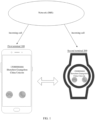
- FIG. 1 is a schematic diagram of a scenario to which an embodiment of this application can be applied.
- a first terminal 100 and a second terminal 200 are two associated terminals that use a one-number dual-terminal service.
- the first terminal 100 may be a primary terminal
- the second terminal 200 may be an auxiliary terminal.
- both the first terminal 100 and the second terminal 200 present a same number to the outside (that is, share a same number) regardless of whether the first terminal 100 and the second terminal 200 serve as a calling party or a called party.
- FIG. 1 is a schematic diagram of a scenario to which an embodiment of this application can be applied.
- a first terminal 100 and a second terminal 200 are two associated terminals that use a one-number dual-terminal service.
- the first terminal 100 may be a primary terminal
- the second terminal 200 may be an auxiliary terminal.
- both the first terminal 100 and the second terminal 200 present a same number to the outside (that is, share a same number) regardless of whether the first terminal 100 and
- the network may include an internet protocol multimedia subsystem (IP Multimedia Subsystem, IMS) (shown in the figure).
- IMS internet protocol multimedia subsystem
- the network may further include an access network, for example, an access network that includes one or more base stations, or a core network (not shown in the figure).
- the first terminal 100 may be any terminal that can make a call with another terminal by using a wireless communication network (for example, a 5G network).
- the first terminal 100 may have a subscriber identity module (Subscriber Identification Module, SIM) card interface to insert a SIM card into the first terminal 100, and make a call with another terminal by using the SIM card.
- SIM Subscriber Identification Module
- the first terminal 100 may make a call with another terminal by using an embedded SIM (embedded SIM, eSIM) card.
- embedded SIM embedded SIM
- the second terminal 200 may be any terminal that has a call function and the like of the first terminal 100.
- Both the first terminal 100 and the second terminal 200 may be but are not limited to a mobile or fixed terminal such as a mobile phone, a wearable device (for example, a watch or a band), a tablet computer, a notebook computer, an ultra-mobile personal computer (Ultra-Mobile Personal Computer, UMPC), a handheld computer, and a personal digital assistant (Personal Digital Assistant, PDA).
- the first terminal 100 and the second terminal 200 may communicate with each other in a wired or wireless manner.
- the wireless manner includes communication manners such as Bluetooth and wireless fidelity (Wireless Fidelity, WIFI).
- a number shared by the first terminal 100 and the second terminal 200 may be a mobile phone number corresponding to SIM in the first terminal 100.
- both the first terminal 100 and the second terminal 200 ring as a called terminal.
- the simultaneous ringing mode means that when the mobile phone number is called, both the first terminal 100 and the second terminal 200 basically simultaneously ring as a called terminal. "Basically” may be understood as that a difference between ringing start times of the first terminal 100 and the second terminal 200 is less than a threshold.
- the first terminal 100 and the second terminal 200 display information (for example, one or more of a mobile phone number corresponding to the incoming call and corresponding home region information) related to the incoming call.
- both the first terminal 100 and the second terminal 200 serve as a called terminal, and display the mobile phone number "13088886666," a hang-up icon (an icon in a lower left corner of a display interface in FIG. 1 ), and an answer icon (an icon in a lower right corner of the display interface in FIG. 1 ).
- either of the first terminal 100 and the second terminal 200 may reject the incoming call, and indicate the other terminal to also reject the incoming call.
- the first terminal 100 can reject the incoming call, and indicate the second terminal 200 to also reject the incoming call; or after detecting the incoming call rejection instruction entered by the user, the second terminal 200 can reject the incoming call, and indicate the first terminal 100 to also reject the incoming call.
- the following case is avoided: After the user rejects a call on one of two associated terminals that use a one-number dual-terminal service, the other terminal continues to ring to disturb the user. This improves user experience.
- FIG. 2 is a schematic diagram of a hardware structure of a first terminal 100 in two associated terminals that use a one-number dual-terminal service according to an embodiment of this application.
- the first terminal 100 may include a processor 110, an external memory interface 120, an internal memory 121, a universal serial bus (universal serial bus, USB) interface 130, a charging management module 140, a power management module 141, a battery 142, an antenna 1, an antenna 2, a mobile communication module 150, a wireless communication module 160, an audio module 170, a speaker 170A, a receiver 170B, a microphone 170C, a headset jack 170D, a sensor module 180, a key 190, a motor 191, an indicator 192, a camera 193, a display screen 194, a SIM card interface 195, and the like.
- a processor 110 an external memory interface 120, an internal memory 121, a universal serial bus (universal serial bus, USB) interface 130, a charging management module 140, a power management module
- the sensor module 180 may include a pressure sensor 180A, a gyroscope sensor 180B, a barometric pressure sensor 180C, a magnetic sensor 180D, an acceleration sensor 180E, a distance sensor 180F, an optical proximity sensor 180G, a fingerprint sensor 180H, a temperature sensor 180J, a touch sensor 180K, an ambient light sensor 180L, a bone conduction sensor 180M, and the like.
- the structure shown in FIG. 2 does not constitute a specific limitation on the first terminal 100.
- the first terminal 100 may include more or fewer components than shown in the figure, or combine some components, or split some components, or have different component arrangements.
- the components shown in the figure may be implemented by using hardware, software, or a combination of software and hardware.
- the processor 110 may include one or more processing units.
- the processor 110 may include an application processor (Application Processor, AP), a modem (Modem), a graphics processing unit (Graphics Processing Unit, GPU), an image signal processor (Image Signal Processor, ISP), a controller, a video codec, a digital signal processor (Digital Signal Processor, DSP), a baseband processor, a neural-network processing unit (Neural-network Processing Unit, NPU), and/or the like.
- Different processing units may be independent devices, or may be integrated into one or more processors.
- the charging management module 140 is configured to receive charging input from a charger.
- the charger may be a wireless charger, or may be a wired charger.
- the power management module 141 is configured to connect to the battery 142, the charging management module 140, and the processor 110.
- the power management module 141 receives input of the battery 142 and/or the charging management module 140, and supplies power to the processor 110, the internal memory 121, the display screen 194, the camera 193, the wireless communication module 160, and the like.
- a wireless communication function of the first terminal 100 may be implemented by using the antenna 1, the antenna 2, the mobile communication module 150, the wireless communication module 160, the modem, the baseband processor, and the like.
- the antenna 1 and the antenna 2 are configured to transmit and receive an electromagnetic wave signal.
- Each antenna in the first terminal 100 may be configured to cover a single communication band or a plurality of communication bands. Different antennas may be further multiplexed to improve antenna utilization.
- the mobile communication module 150 may provide a solution to wireless communication including 2G/3G/4G/5G applied to the first terminal 100.
- the wireless communication module 160 may provide a solution to wireless communication including a wireless local area network (Wireless Local Area Networks, WLAN) (such as a Wi-Fi network), Bluetooth (BlueTooth, BT), a global navigation satellite system (Global Navigation Satellite System, GNSS), frequency modulation (Frequency Modulation, FM), a near field communication (Near Field Communication, NFC) technology, an infrared technology, and the like applied to the first terminal 100.
- the wireless communication module 160 may be one or more devices integrating at least one communication processing module.
- the wireless communication module 160 receives an electromagnetic wave by using the antenna 2, performs frequency modulation and filtering processing on an electromagnetic wave signal, and sends a processed signal to the processor 110.
- the wireless communication module 160 may further receive a to-be-sent signal from the processor 110, perform frequency modulation and amplification on the signal, and convert the signal into an electromagnetic wave for radiation by using the antenna 2.
- the wireless communication module 160 may be specifically a Bluetooth chip.
- the Bluetooth chip may include one or more memories, one or more processors, and the like.
- the processor in the Bluetooth chip may perform operations such as frequency modulation, filtering, operation, and determining on the electromagnetic wave received by using the antenna 2, and convert a processed signal into an electromagnetic wave for radiation by using the antenna 2, that is, no processing needs to be performed by the processor 110.
- the wireless communication module 160 or the processor 110 may perform steps performed by the first terminal in a method for responding to an incoming call provided in the embodiments of this application.
- steps performed by the first terminal in a method for responding to an incoming call provided in the embodiments of this application.
- the first terminal 100 implements a display function by using the GPU, the display screen 194, the application processor, and the like.
- the GPU is a microprocessor for image processing, and is connected to the display screen 194 and the application processor.
- the display screen 194 is configured to display an image, a video, or the like,
- the display screen 194 of the first terminal 100 may display a series of graphical user interfaces (Graphical User Interface, GUI).
- GUI Graphic User Interface
- the electronic device 200 may implement a photographing function by using the ISP, the camera 193, the video codec, the GPU, the display screen 194, the application processor, and the like.
- the camera 193 is configured to capture a still image or a video.
- the external memory interface 120 may be configured to connect an external storage card, for example, a Micro SD card, to expand a storage capacity of the electronic device 200.
- an external storage card for example, a Micro SD card
- the internal memory 121 may be configured to store computer-executable program code, and the executable program code includes instructions.
- the processor 110 performs various function applications and data processing of the first terminal 100 by running the instructions stored in the internal memory 121.
- the first terminal 100 may implement an audio function, such as music playing and recording, by using the audio module 170, the speaker 170A, the receiver 170B, the microphone 170C, the headset jack 170D, the application processor, and the like.
- an audio function such as music playing and recording
- the SIM card interface 195 is configured to connect to a SIM card.
- the SIM card may be inserted into the SIM card interface 195 or removed from the SIM card interface 195 to implement contact with or separation from the first terminal 100.
- the first terminal 100 may support one or N SIM card interfaces, where N is a positive integer greater than 1.
- the SIM card interface 195 may support a Nano SIM card, a Micro SIM card, a SIM card, and the like. A plurality of cards may be simultaneously inserted into a same SIM card interface 195.
- the SIM card interface 195 may be further compatible with the external memory card.
- the first terminal 100 interacts with a network by using a SIM card to implement functions such as calling and data communication.
- an operating system runs, for example, a Harmony operating system, an iOS operating system, an Android operating system, or a Windows (windows) operating system.
- An application can be installed and run on the operating system. In some other embodiments, there may be a plurality of operating systems running in the first terminal 100.
- FIG. 3 is a schematic diagram of a hardware structure of a second terminal 200 in two associated terminals that use a one-number dual-terminal service according to an embodiment of this application.
- the second terminal 200 may include a processor 201, a memory 202, a Bluetooth communication module 203, an antenna 204-1, an antenna 204-2, a power switch 205, a USB communication processing module 206, an audio module 207, a sensor module 208, a mobile communication module 209, and a display module 210.
- the second terminal 200 may further include another module such as a motor.
- the processor 201 may be configured to read and execute computer-readable instructions.
- the processor 201 may include a controller, an arithmetic unit, a register, and the like.
- the controller may be responsible for decoding an instruction, and sending a control signal for an operation corresponding to the instruction.
- the arithmetic unit may be responsible for storing a register operand and an intermediate operation result that are temporarily stored during instruction execution.
- a hardware architecture of the processor 201 may be an application-specific integrated circuit (Application Specific Integrated Circuit, ASIC) architecture, a microprocessor without interlocked pipeline stages (Microprocessor without Interlocked Pipeline Stages, MIPS) architecture, an advanced reduced instruction set computing machines (Advanced RISC Machine, ARM) architecture, a network processor (Network Processor, NP) architecture, or the like.
- ASIC Application Specific Integrated Circuit
- MIPS microprocessor without Interlocked Pipeline Stages
- ARM advanced reduced instruction set computing machines
- NP Network Processor
- the processor 201 may be configured to parse a signal received by the Bluetooth communication module 203, for example, a request, a command, or a heartbeat packet that is sent by the first device 100.
- the processor 201 may be configured to perform a corresponding processing operation based on a parsing result, for example, generate a response corresponding to a request or a response corresponding to a command.
- the processor 201 may be further configured to parse a signal received by the mobile communication module 209, for example, an incoming call sent by a network to the second terminal 200.
- the processor 201 may be configured to perform a corresponding processing operation based on a parsing result, for example, generate a response for an incoming call.
- the memory 202 is coupled to the processor 201, and is configured to store various software programs and/or a plurality of groups of instructions.
- the memory 202 may include a high-speed random access memory, and may also include a nonvolatile memory, for example, one or more magnetic disk storage devices, a flash memory device, or another nonvolatile solid-state storage device.
- the memory 202 may store an operating system, for example, an embedded operating system such as uCOS, VxWorks, or RTLinux.
- the memory 202 may further store a communication program.
- the communication program may be configured to communicate with the first terminal 100, one or more servers, or another terminal.
- the Bluetooth communication module 203 may include a classic Bluetooth (BR/EDR) module and a Bluetooth low energy (BLE) module.
- the Bluetooth communication module 203 may be specifically a Bluetooth chip.
- the Bluetooth chip may include one or more memories, one or more processors, and the like.
- the processor in the Bluetooth chip may perform operations such as frequency modulation, filtering, operation, and determining on the electromagnetic wave received by using the antenna 204-1, and convert a processed signal into an electromagnetic wave for radiation by using the antenna 204-1, that is, no processing needs to be performed by the processor 201.
- the Bluetooth communication module 203, the mobile communication module 209, or the processor 201 may perform steps performed by the second terminal 200 in a method for responding to an incoming call provided in the embodiments of this application.
- the second terminal 200 may perform steps performed by the second terminal 200 in a method for responding to an incoming call provided in the embodiments of this application.
- FIG. 5A , FIG. 5B , FIG. 8A , and FIG. 8B Details are not described herein again.
- a wireless communication function of the second terminal 200 may be implemented by using the antenna 204-1, the antenna 204-2, the Bluetooth communication module 203, the mobile communication module 209, the modem, and the like.
- the antenna 204-1 or 204-2 may be configured to transmit and receive an electromagnetic wave signal.
- Each antenna in the second terminal 200 may be configured to cover a single communication band or a plurality of communication bands.
- the power switch 205 may be configured to control a power supply to supply power to the second terminal 200.
- the USB communication processing module 206 may be configured to communicate with another terminal through a USB interface (not shown).
- the audio module 207 may be configured to output an audio signal through an audio output interface, so that the second terminal 200 supports audio playing.
- the audio module may be further configured to receive audio data through an audio input interface.
- the sensor module 208 may include one or more sensors, for example, an acceleration sensor and a gyroscope sensor.
- the mobile communication module 209 may provide a solution to wireless communication including 2G/3G/4G/5G applied to the second terminal 200.
- the display module 210 is configured to display an image, a video, or the like,
- the display module 210 of the second terminal 200 may display series of graphical user interfaces (Graphical User Interface, GUI) such as an answer icon and a hang-up icon for an incoming call.
- GUI graphical User Interface
- the structure shown in FIG. 3 does not constitute a specific limitation on the second terminal 200.
- the second terminal 200 may include more or fewer components than shown in the figure, or combine some components, or split some components, or have different component arrangements.
- the components shown in the figure may be implemented by using hardware, software, or a combination of software and hardware.
- the structure of the first terminal 100 may be shown in FIG. 3
- the structure of the second terminal 200 may be shown in FIG. 2 . This is not limited in this embodiment of this application.
- FIG. 4A , FIG. 4B , FIG. 5A , and FIG. 5B the following describes a flowchart of a method for responding to an incoming call for two associated terminals that use a one-number dual-terminal service according to an embodiment of this application.
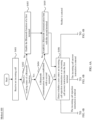
- FIG. 4A and FIG. 4B are a flowchart of a method 400 for responding to an incoming call for two associated terminals that use a one-number dual-terminal service according to an embodiment of this application.
- the "two associated terminals that use a one-number dual-terminal service" mentioned herein may be the first terminal 100 and the second terminal 200 that are described above.
- the method 400 is performed by the first terminal 100.
- the method 400 may include step S401 to step S411.
- step S401 the first terminal 100 receives an incoming call.
- the first terminal 100 and the second terminal 200 basically simultaneously receive an incoming call for a mobile phone number shared by the first terminal 100 and the second terminal 200.
- the first terminal 100 and the second terminal 200 may basically simultaneously ring.
- the first terminal 100 and the second terminal 200 may display information (for example, one or more of a mobile phone number corresponding to the incoming call and corresponding home region information) related to the incoming call.
- step S402 the first terminal 100 detects a working status of a Bluetooth function of the first terminal 100.
- the working status of the Bluetooth function may include the following: The Bluetooth function is enabled and the Bluetooth function is not enabled.
- the first terminal 100 may perform step S403.
- the first terminal 100 may directly perform step S404.
- step S403 the first terminal 100 enables the Bluetooth function of the first terminal 100.
- the first terminal 100 may enable the Bluetooth function of the first terminal 100 in a conventional Bluetooth function enabling manner. This is not limited in this application.
- the first terminal 100 may perform step S405.
- step S404 the first terminal 100 determines whether the first terminal 100 establishes a Bluetooth communication link with the second terminal 200. When the first terminal 100 determines that the first terminal 100 does not establish a Bluetooth communication link with the second terminal 200, the first terminal performs step S405. When the first terminal 100 determines that the first terminal 100 establishes a Bluetooth communication link with the second terminal 200, the first terminal performs step S406.
- the first terminal 100 establishes a Bluetooth communication link with the second terminal 200.
- the first terminal 100 may establish a Bluetooth communication link between the first terminal 100 and the second terminal 200 by using a conventional Bluetooth communication link establishment method.
- the second terminal 200 may be in a Bluetooth advertising state.
- the first terminal 100 sends a scanning request to the second terminal 200.
- the second terminal 200 feeds back response information to the first terminal 100.
- the first terminal 100 sends a connection request to the second terminal 200, and performs pairing and binding with the second terminal 200, to establish a Bluetooth communication link with the second terminal 200.
- the first terminal may perform step S406.
- step S406 the first terminal 100 detects whether a user enters an incoming call rejection instruction or an incoming call answer instruction into the first terminal 100.
- a display screen of the first terminal 100 may display a hang-up icon and an answer icon.
- the user may touch or tap the hang-up icon to enter the incoming call rejection instruction into the first terminal 100.
- the user may touch or tap the answer icon to enter the incoming call answer instruction into the first terminal 100.
- the first terminal 100 may determine, by detecting whether the hang-up icon is touched or tapped, whether the incoming call rejection instruction of the user is entered into the first terminal 100. Specifically, when the first terminal 100 detects that the hang-up icon is touched or tapped, the first terminal 100 can determine that the incoming call rejection instruction of the user is entered into the first terminal 100. In this case, the first terminal 100 performs step S407.
- the incoming call rejection instruction may also be a voice instruction. For example, the user may enter a hang-up instruction through a voice recognition interface.
- the first terminal 100 may determine, by detecting whether the answer icon is touched or tapped, whether the incoming call answer instruction of the user is entered into the first terminal 100. Specifically, when the first terminal 100 detects that the answer icon is touched or tapped, the first terminal 100 can determine that the incoming call answer instruction of the user is entered into the first terminal 100. In this case, the first terminal 100 performs step S408.
- the first terminal 100 may perform step S409 to determine whether the first terminal 100 receives a third indication message from the second terminal 200. If a determining result of step S409 is that the first terminal 100 receives the third indication message from the second terminal 200, the first terminal 100 performs step S410. If a determining result of step S409 is that the first terminal 100 does not receive the third indication message from the second terminal 200, the first terminal 100 may ring based on a ringing time that is set in an existing incoming call procedure, and stop ringing after the ringing time expires (not shown in the figure).
- the first terminal 100 sends second indication information to the second terminal 200.
- the second indication information is used to indicate the second terminal 200 to reject the incoming call.
- the second indication information may include an instruction for hanging up a current incoming call.
- the second indication information may further include one or more of an incoming call number, a mobile phone number shared by the first terminal 100 and the second terminal 200, location information of the first terminal 100, and the like.
- step S408 the first terminal 100 sends incoming call response information to a base station.
- the incoming call response information may be an answer message in a conventional incoming call answer procedure.
- the first terminal 100 determines whether the first terminal 100 receives the third indication information from the second terminal 200.
- the third indication information is sent to the first terminal 100 when the second terminal 200 detects that an incoming call rejection instruction is entered into the second terminal 200.
- the third indication information is used to indicate the first terminal 100 to reject the incoming call.
- the third indication information may include an instruction for hanging up a current incoming call.
- the third indication information may further include one or more of an incoming call number, a mobile phone number shared by the first terminal 100 and the second terminal 200, location information of the second terminal 200, and the like.
- step S410 the first terminal 100 rejects the incoming call.
- that the first terminal 100 rejects the incoming call may be stopping an incoming call reminder (for example, the first terminal 100 stops ringing or vibrating, or an auxiliary device such as a headset of the first terminal 100 stops ringing), and sending incoming call response information to the base station.
- the incoming call response information may be a cancel (cancel) message in an incoming call hang-up procedure.
- step S410 and step S407 may be simultaneously performed, or step S410 may be performed before step S407.
- the first terminal 100 may restore the working status of the Bluetooth function of the first terminal 100 to a working status existing when the incoming call is received.
- the first terminal 100 may disable the Bluetooth function of the first terminal 100 in step S411. It should be understood that, when the incoming call is received, if the working status of the Bluetooth function of the first terminal 100 is that the Bluetooth function is enabled, the first terminal 100 may not perform step S411.
- information may be exchanged between the first terminal 100 and the second terminal 200 by using a Bluetooth communication link.
- the first terminal 100 may send the second indication information to the second terminal 200 by using a Bluetooth communication link, or receive the third indication information from the second terminal 200 by using a Bluetooth communication link.
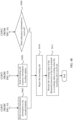
- FIG. 5A and FIG. 5B are a flowchart of another method 500 for responding to an incoming call for two associated terminals that use a one-number dual-terminal service according to an embodiment of this application.
- the "two associated terminals that use a one-number dual-terminal service" mentioned herein may be the first terminal 100 and the second terminal 200 that are described above.
- the method 500 is performed by the second terminal 200.
- the method 500 is similar to the method 400, and may include step S501 to step S511.
- step S501 the second terminal 200 receives an incoming call.
- step S501 the second terminal 200 receives an incoming call.
- step S401 For an execution principle and a process of step S501, refer to step S401. Details are not described herein again.
- step S502 the second terminal 200 detects a working status of a Bluetooth function of the second terminal 200.
- step S502 For an execution principle and a process of step S502, refer to step S402. Details are not described herein again.
- the second terminal 200 may perform step S503.
- the second terminal 200 may directly perform step S504.
- step S503 the second terminal 200 enables the Bluetooth function of the second terminal 200.
- step S503 For an execution principle and a process of step S503, refer to step S403. Details are not described herein again.
- the second terminal 200 may perform step S505.
- step S504 the second terminal 200 determines whether the second terminal 200 establishes a Bluetooth communication link with the first terminal 100. For an execution principle and a process of step S504, refer to step S404. Details are not described herein again.
- step S505 the second terminal 200 determines that the second terminal 200 establishes a Bluetooth communication link with the first terminal 100.
- step S505 the second terminal 200 establishes a Bluetooth communication link with the first terminal 100.
- step S505 For an execution principle and a process of step S505, refer to step S405. Details are not described herein again.
- the first terminal 100 may serve as a primary device in Bluetooth communication
- the second terminal 200 may serve as a secondary device in Bluetooth communication.
- the first terminal 100 may perform step S405 based on an operation that is of the primary device and that is specified in an existing Bluetooth communication protocol
- the second terminal 200 may perform step S505 based on an operation that is of the secondary device and that is specified in the existing Bluetooth communication protocol.
- the first terminal 100 may serve as a secondary device in Bluetooth communication
- the second terminal 200 may serve as a primary device in Bluetooth communication.
- the first terminal 100 may perform step S405 based on an operation that is of the secondary device and that is specified in an existing Bluetooth communication protocol
- the second terminal 200 may perform step S505 based on an operation that is of the primary device and that is specified in the existing Bluetooth communication protocol.
- step S505 the second terminal 200 may perform step S506.
- step S506 the second terminal 200 detects whether a user enters an incoming call rejection instruction or an incoming call answer instruction into the second terminal 200.
- step S406 Details are not described herein again.
- the second terminal 200 When the second terminal 200 detects that a hang-up icon is touched or tapped, the second terminal 200 can determine that the incoming call rejection instruction of the user is entered into the second terminal 200. In this case, the second terminal 200 performs step S507.
- the second terminal 200 When the second terminal 200 detects that an answer icon is touched or tapped, the second terminal 200 can determine that the incoming call answer instruction of the user is entered into the second terminal 200. In this case, the second terminal 200 performs step S508.
- the second terminal 200 may perform step S509 to determine whether the second terminal 200 receives a second indication message from the first terminal 100. If a determining result of step S509 is that the second terminal 200 receives the second indication message from the first terminal 100, the second terminal 200 performs step S510. If a determining result of step S509 is that the second terminal 200 does not receive the second indication message from the first terminal 100, the second terminal 200 may ring based on a ringing time that is set in an existing incoming call procedure, and stop ringing after the ringing time expires (not shown in the figure).
- step S507 the second terminal 200 sends third indication information to the first terminal 100.
- step S508 the second terminal 200 sends incoming call response information to a base station.
- step S508 For an execution principle and a process of step S508, refer to step S408. Details are not described herein again.
- step S509 the second terminal 200 determines whether the second terminal 200 receives the second indication information from the first terminal 100.
- step S510 the second terminal 200 rejects the incoming call.
- step S410 For an execution principle and a process of step S510, refer to step S410. Details are not described herein again.
- step S510 and step S507 may be simultaneously performed, or step S510 may be performed before step S507.
- step S511 the second terminal 200 may restore the working status of the Bluetooth function of the second terminal 200 to a working status existing when the incoming call is received.
- step S411 Details are not described herein again.
- both the first terminal 100 and the second terminal 200 when receiving an incoming call, both the first terminal 100 and the second terminal 200 detect whether respective Bluetooth functions are enabled and whether a Bluetooth communication link is established with a peer, to subsequently send, to the peer by using the Bluetooth communication link, indication information used to indicate the peer to hang up a current incoming call.
- the first terminal 100 and the second terminal 200 may exchange, in any wired communication manner or another wireless communication manner other than Bluetooth, the indication information used to indicate the peer to hang up the current incoming call.
- the wired communication manner is, for example, a communication manner in which a transmission medium such as a cable, an optical cable, or a waveguide is used.
- the wireless communication manner is, for example, a short-range communication manner such as wireless fidelity (Wireless Fidelity, WiFi), ZigBee (ZigBee), or near field communication (Near Field Communication, NFC).
- This application provides another embodiment, that is, when the distance between the first terminal 100 and the second terminal 200 meets a preset level, after detecting the incoming call rejection instruction entered by the user, either of the first terminal 100 and the second terminal 200 may reject the incoming call, and indicate the other terminal to also reject the incoming call.
- the first terminal 100 can reject the incoming call, and indicate the second terminal 200 to also reject the incoming call; or after detecting the incoming call rejection instruction entered by the user, the second terminal 200 can reject the incoming call, and indicate the first terminal 100 to also reject the incoming call.
- the following case is avoided: When the distance between the first terminal 100 and the second terminal 200 is short, and after the user rejects to answer a call on one terminal, the other terminal continues to ring to disturb the user. This improves user experience.
- FIG. 6A and FIG. 6B are a flowchart of a method 600 for responding to an incoming call for two associated terminals that use a one-number dual-terminal service according to another embodiment of this application.
- the "two associated terminals that use a one-number dual-terminal service" mentioned herein may be the first terminal 100 and the second terminal 200 that are described above.
- the method 600 is performed by the first terminal 100.
- the method 600 may include step S601 to step S612.
- step S601 the first terminal 100 receives an incoming call.
- step S401 For an execution principle and a process of step S601, refer to step S401. Details are not described herein again.
- step S602 the first terminal 100 detects a working status of a Bluetooth function of the first terminal 100.
- step S602 For an execution principle and a process of step S602, refer to step S402. Details are not described herein again.
- the first terminal 100 may perform step S603.
- the first terminal 100 may directly perform step S604.
- step S603 the first terminal 100 enables the Bluetooth function of the first terminal 100.
- step S603 For an execution principle and a process of step S603, refer to step S403. Details are not described herein again.
- the first terminal 100 may perform step S605.
- step S604 the first terminal 100 determines whether the first terminal 100 establishes a Bluetooth communication link with the second terminal 200. When the first terminal 100 determines that the first terminal 100 does not establish a Bluetooth communication link with the second terminal 200, the first terminal performs step S605. When the first terminal 100 determines that the first terminal 100 establishes a Bluetooth communication link with the second terminal 200, the first terminal performs step S606.
- step S605 the first terminal 100 establishes a Bluetooth communication link with the second terminal 200.
- step S405 Details are not described herein again.
- step S606 the first terminal 100 determines whether a distance between the first terminal 100 and the second terminal 200 meets a preset level.
- the preset level may indicate that the distance between the first terminal 100 and the second terminal 200 is short enough.
- the first terminal 100 may determine, based on one or more factors, whether the distance between the first terminal 100 and the second terminal 200 meets the preset level.
- the one or more factors include, for example, whether the first terminal 100 and the second terminal 200 have a same serving cell, whether the first terminal 100 and the second terminal 200 are in a same local area network, whether the distance (for example, one or more of a horizontal distance, a vertical distance, and a linear distance) between the first terminal 100 and the second terminal 200 meets a preset condition, and whether the first terminal 100 and the second terminal 200 are in a Wi-Fi direct state.
- the first terminal 100 may select one or more of the foregoing factors for different scenarios to determine whether the distance between the first terminal 100 and the second terminal 200 meets the preset level. For example, for a scenario in which the first terminal 100 and the second terminal 200 may be located in coverage of a same cell (for example, a small cell (small cell), a micro cell (micro cell), a pico cell (pico cell), or a femto cell (femto cell)), the first terminal 100 may determine, based on whether the first terminal 100 and the second terminal 200 have a same serving cell and whether the distance between the first terminal 100 and the second terminal 200 meets a threshold, whether the distance between the first terminal 100 and the second terminal 200 meets the preset level.
- a same cell for example, a small cell (small cell), a micro cell (micro cell), a pico cell (pico cell), or a femto cell (femto cell)
- the first terminal 100 may determine, based on whether the first terminal 100 and the second terminal 200 have a
- Step S606 may include a plurality of substeps.
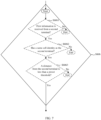
- FIG. 7 is a flowchart in which a first terminal 100 determines whether a distance between the first terminal 100 and a second terminal 200 meets a preset level according to an embodiment of this application.
- step S606 includes three substeps: step S6061, step S6062, and step S6063.
- the first terminal 100 determines (for example, determines) whether first information is received from the second terminal 200.
- the first information includes an identity (cell ID) of a cell to which the second terminal belongs.
- the "cell to which the second terminal belongs" mentioned herein may be a serving cell of the second terminal.
- the first information may further include location information of the second terminal 200, for example, a longitude and a latitude of a geographic region to which the second terminal 200 belongs.
- the first terminal 100 When the first terminal 100 receives the first information sent by the second terminal 200, it indicates that the first terminal 100 and the second terminal 200 are in a distance range in which Bluetooth communication can be performed. In this case, the first terminal 100 performs step S6062.
- the distance range For Bluetooth communication of a citizen version, the distance range may be 8 ⁇ 30 meters. For Bluetooth communication of commercial and industrial versions, the distance range may be 80 ⁇ 100 meters.
- the first terminal 100 When the first terminal 100 does not receive the first information sent by the second terminal 200, it indicates that the first terminal 100 and the second terminal 200 are not in a distance range in which Bluetooth communication can be performed. Therefore, if the distance between the first terminal 100 and the second terminal 200 is not short enough and does not meet the preset level, the method 600 ends.
- step S6062 the first terminal 100 determines (for example, determines) whether the first terminal 100 and the second terminal 200 have a same cell identity.
- the first terminal 100 performs step S6063.
- the first terminal 100 and the second terminal 200 do not have a same cell identity, it indicates that the distance between the first terminal 100 and the second terminal 200 does not meet the preset level. In this case, the method 600 ends.
- the first terminal 100 may have a plurality of serving cells, and/or the second terminal 200 may have a plurality of serving cells.
- the first terminal 100 performs step S6063, and it is not necessary that identities of all the serving cells of the first terminal 100 are totally the same as identities of all the serving cells of the second terminal 200.
- the first terminal 100 determines (for example, determines) whether the distance between the first terminal 100 and the second terminal 200 is less than a preset threshold.
- the preset threshold may be a distance value for reliable Bluetooth communication between the first terminal 100 and the second terminal 200.
- the preset threshold is a value within the distance range that is described above and in which Bluetooth communication can be performed between the first terminal 100 and the second terminal 200. In an example in which the distance range is 8 ⁇ 30 meters, the preset threshold may be 10.
- the first terminal 100 may determine the distance between the first terminal 100 and the second terminal 200 by using any method that can be used to measure the distance between the first terminal 100 and the second terminal 200.
- the first terminal 100 may determine the distance between the first terminal 100 and the second terminal 200 by using a conventional Bluetooth ranging method (for example, a Bluetooth ranging algorithm based on a received signal strength indicator (Received Signal Strength Indication, RSSI)), and then compare the determined distance with the preset threshold, to determine whether the distance between the first terminal 100 and the second terminal 200 is less than the preset threshold.
- a conventional Bluetooth ranging method for example, a Bluetooth ranging algorithm based on a received signal strength indicator (Received Signal Strength Indication, RSSI)
- the first terminal 100 determines that the distance between the first terminal 100 and the second terminal 200 meets the preset level. In this case, the first terminal 100 may perform step S607. When the distance between the first terminal 100 and the second terminal 200 is greater than or equal to the preset threshold, the first terminal 100 determines that the distance between the first terminal 100 and the second terminal 200 does not meet the preset level. In this case, the method 600 ends.
- the method 600 ends when the distance between the first terminal 100 and the second terminal 200 is greater than or equal to the preset threshold, the first terminal 100 and the second terminal 200 may perform a corresponding operation based on an incoming call answer or rejection procedure specified in an existing one-number dual-terminal service. For example, after the first terminal 100 rejects the incoming call, the second terminal 200 still rings.
- the first terminal 100 sends first indication information to the second terminal 200.
- the first indication information is used to indicate that the distance between the first terminal 100 and the second terminal 200 meets the preset level.
- the second terminal 200 can determine that the distance between the second terminal 200 and the first terminal 100 meets the preset level. Based on an example of this embodiment of this application, the first terminal 100 may not perform step S607.
- step S608 the first terminal 100 detects whether a user enters an incoming call rejection instruction or an incoming call answer instruction into the first terminal 100.
- step S608 For an execution principle and a process of step S608, refer to step S406. Details are not described herein again.
- the first terminal 100 When the first terminal 100 detects that a hang-up icon is touched or tapped, the first terminal 100 can determine that the incoming call rejection instruction of the user is entered into the first terminal 100. In this case, the first terminal 100 performs step S609.
- the first terminal 100 When the first terminal 100 detects that an answer icon is touched or tapped, the first terminal 100 can determine that the incoming call answer instruction of the user is entered into the first terminal 100. In this case, the first terminal 100 performs step S610.
- the first terminal 100 may perform step S611 to determine whether the first terminal 100 receives a third indication message from the second terminal 200. If a determining result of step S611 is that the first terminal 100 receives the third indication message from the second terminal 200, the first terminal 100 performs step S612. If a determining result of step S611 is that the first terminal 100 does not receive the third indication message from the second terminal 200, the first terminal 100 may ring based on a ringing time that is set in an existing incoming call procedure, and stop ringing after the ringing time expires (not shown in the figure).
- step S609 the first terminal 100 sends second indication information to the second terminal 200.
- step S608 For an execution principle and a process of step S608, refer to step S407. Details are not described herein again.
- step S610 the first terminal 100 sends incoming call response information to a base station.
- step S408 For an execution principle and a process of step S610, refer to step S408. Details are not described herein again.
- step S611 the first terminal 100 determines whether the first terminal 100 receives the third indication information from the second terminal 200.
- step S611 the first terminal 100 determines whether the first terminal 100 receives the third indication information from the second terminal 200.
- step S409 Details are not described herein again.
- step S612 the first terminal 100 rejects the incoming call.
- step S410 For an execution principle and a process of step S612, refer to step S410. Details are not described herein again.
- step S612 and step S609 may be simultaneously performed, or step S612 may be performed before step S609.
- step S613 the first terminal 100 may restore the working status of the Bluetooth function of the first terminal 100 to a working status existing when the incoming call is received.
- step S411 Details are not described herein again.
- the first terminal first determines whether the distance between the first terminal and the second terminal meets the preset level (that is, first performs step S606), and then determines whether the first terminal receives the third indication information from the second terminal (that is, then performs step S611). Based on another embodiment of this application, the first terminal may first determine whether the third indication information is received from the second terminal (that is, first perform step S611), and then determine whether the distance between the first terminal and the second terminal meets the preset level (that is, then perform step S606).
- the first terminal may determine whether the distance between the first terminal and the second terminal meets the preset level, and reject the incoming call when the distance between the first terminal and the second terminal meets the preset level. In other words, even if the first terminal receives the third indication message from the second terminal, the first terminal may not reject the incoming call because the distance between the first terminal and the second terminal does not meet the preset level.
- the first terminal may perform step S608 and step S610 after step S601.
- FIG. 8A and FIG. 8B are a flowchart of another method 800 for responding to an incoming call for two associated terminals that use a one-number dual-terminal service according to another embodiment of this application.
- the "two associated terminals that use a one-number dual-terminal service" mentioned herein may be the first terminal 100 and the second terminal 200 that are described above.
- the method 800 is performed by the second terminal 200.
- the method 800 may include step S801 to step S810.
- step S801 the second terminal 200 receives an incoming call.
- step S501 For an execution principle and a process of step S801, refer to step S501. Details are not described herein again.
- step S802 the second terminal 200 detects a working status of a Bluetooth function of the second terminal 200.
- step S802 For an execution principle and a process of step S802, refer to step S502. Details are not described herein again.
- step S803 the second terminal 200 enables the Bluetooth function of the second terminal 200.
- step S803 For an execution principle and a process of step S803, refer to step S503. Details are not described herein again.
- the second terminal 200 may perform step S805.
- step S804 the second terminal 200 determines whether the second terminal 200 establishes a Bluetooth communication link with the first terminal 100. For an execution principle and a process of step S804, refer to step S504. Details are not described herein again.
- the second terminal 200 determines that the second terminal 200 does not establish a Bluetooth communication link with the first terminal 100
- the second terminal 200 performs step S805.
- the second terminal 200 determines that the second terminal 200 establishes a Bluetooth communication link with the first terminal 100
- the second terminal 200 performs step S806.
- step S805 the second terminal 200 establishes a Bluetooth communication link with the first terminal 100.
- step S805 For an execution principle and a process of step S805, refer to step S505. Details are not described herein again.
- the second terminal 200 receives first indication information from the first terminal 100.
- the first indication information is used to indicate that a distance between the first terminal 100 and the second terminal 200 meets a preset level.
- the second terminal 200 can determine that the distance between the second terminal 200 and the first terminal 100 meets the preset level.
- step S807 the second terminal 200 detects whether a user enters an incoming call rejection instruction or an incoming call answer instruction into the second terminal 200.
- step S506 Details are not described herein again.
- the second terminal 200 When the second terminal 200 detects that a hang-up icon is touched or tapped, the second terminal 200 can determine that the incoming call rejection instruction of the user is entered into the second terminal 200. In this case, the second terminal 200 performs step S808.
- the second terminal 200 When the second terminal 200 detects that an answer icon is touched or tapped, the second terminal 200 can determine that the incoming call answer instruction of the user is entered into the second terminal 200. In this case, the second terminal 200 performs step S809.
- the second terminal 200 may perform step S810.
- step S808 the second terminal 200 sends third indication information to the first terminal 100.
- step S507 Details are not described herein again.
- step S809 the second terminal 200 sends incoming call response information to a base station.
- step S508 For an execution principle and a process of step S809, refer to step S508. Details are not described herein again.
- step S810 the second terminal 200 determines whether the second terminal 200 receives second indication information from the first terminal 100.
- step S810 the second terminal 200 determines whether the second terminal 200 receives second indication information from the first terminal 100.
- step S811 the second terminal 200 rejects the incoming call.
- step S510 For an execution principle and a process of step S811, refer to step S510. Details are not described herein again.
- step S811 and step S808 may be simultaneously performed, or step S811 may be performed before step S808.
- step S812 the second terminal 200 may restore the working status of the Bluetooth function of the second terminal 200 to a working status existing when the incoming call is received.
- step S511 Details are not described herein again.
- the first terminal 100 directly sends, to the second terminal 200 by using the Bluetooth communication link, the indication information used to hang up the current incoming call.
- the first terminal 100 may indirectly send, to the second terminal 200 by using the network, the indication information used to hang up the current incoming call.
- the first terminal 100 may send, to the network, the indication information used to indicate the second terminal 200 to hang up the current incoming call, and then the network forwards the indication information to the second terminal 200.
- the first terminal may send, to the network, the indication information used to indicate the second terminal 200 to hang up the current incoming call, and then the network forwards the indication information to the second terminal 200.
- the network may send, to the other of the first terminal 100 and the second terminal 200, the indication information used to hang up the current incoming call.
- the other terminal that receives the indication information rejects the incoming call, for example, stops the incoming call reminder, and sends a cancel message in an incoming call hang-up procedure to the network.
- the network when the network receives information that is from one of the first terminal 100 and the second terminal 200 and that is used to reject an incoming call or the network receives the indication information that is sent by one of the first terminal 100 and the second terminal 200 and that is used to indicate the other terminal to hang up the current incoming call, the network may stop calling the other of the first terminal 100 and the second terminal 200, for example, stop playing a ringing tone to the other terminal.
- the foregoing embodiment can be applied to a scenario in which a same user has only one first terminal and only one second terminal, and the first terminal and the second terminal are two associated terminals that use a one-number dual-terminal service.
- a same user has a plurality of terminals, where the first terminal and the second terminal are two associated terminals that use a one-number dual-terminal service.
- a same user may have one mobile phone and a plurality of wearable watches, but the user subscribes to a one-number dual-terminal service only for the mobile phone and one of the plurality of wearable watches.
- the first terminal and the second terminal are respectively the mobile phone and the watch for which the one-number dual-terminal service has been subscribed.
- the foregoing embodiment may be transformed and/or modified.
- some steps may be added to ensure that the second terminal in the foregoing embodiment is a second terminal for which the one-number dual-terminal service has been subscribed, that is, it is determined that the second terminal is a terminal that has a SIM number the same as the first SIM number, instead of another terminal for which the one-number dual-terminal service is not subscribed.
- the first terminal may store and record an identifier of a second terminal for which the one-number dual-terminal service has been subscribed.
- the first terminal may determine, by using the identifier of the second terminal that establishes a Bluetooth communication link with the first terminal, whether the second terminal is a second terminal for which the one-number dual-terminal service has been subscribed.
- the first terminal may send, to the second terminal, the indication information used to hang up the current incoming call.
- the second terminal may first determine whether the one-number dual-terminal service has been subscribed for the second terminal (for example, determine whether an eSIM card is mounted on the second terminal). If the one-number dual-terminal service has been subscribed for the second terminal, the second terminal rejects the incoming call based on the indication information. Alternatively, the second terminal may determine whether an incoming call number in the incoming call for the second terminal is the same as an incoming call number carried in the indication information. If the incoming call number in the incoming call for the second terminal is the same as the incoming call number carried in the indication information, the second terminal rejects the incoming call based on the indication information.
- An embodiment of this application further provides a computer-readable storage medium.
- the computer-readable storage medium includes instructions, and when the instructions are run on an electronic device, the electronic device is enabled to perform the method steps related to the first terminal in FIG. 4A and FIG. 4B , FIG. 6A and FIG. 6B , and FIG. 7 or the method steps related to the second terminal in FIG. 5A , FIG. 5B , FIG. 8A , and FIG. 8B , to implement the method in the foregoing embodiment.
- An embodiment of this application further provides a computer program product including instructions.
- the computer program product runs on an electronic device, the electronic device is enabled to perform the method steps related to the first terminal in FIG. 4A and FIG. 4B , FIG. 6A and FIG. 6B , and FIG. 7 or the method steps related to the second terminal in FIG. 5A , FIG. 5B , FIG. 8A , and FIG. 8B , to implement the method in the foregoing embodiment.
- An embodiment of this application further provides a terminal.
- the terminal includes a processor and a memory.
- the memory is configured to store computer program code.
- the computer program code includes computer instructions.
- the terminal executes the computer instructions, the terminal performs the method steps related to the first terminal in FIG. 4A and FIG. 4B , FIG. 6A and FIG. 6B , and FIG. 7 or the method steps related to the second terminal in FIG. 5A , FIG. 5B , FIG. 8A , and FIG. 8B , to implement the method in the foregoing embodiment.
- the terminal may be an integrated circuit IC or a system-on-chip SOC.
- the integrated circuit may be a general integrated circuit, a field programmable gate array FPGA, or an application-specific integrated circuit ASIC.
- one of the two associated terminals can reject an incoming call, and indicate the other terminal to also reject the incoming call, thereby preventing the user from being disturbed, and improving user experience.
- the disclosed system, apparatus, and method may be implemented in other manners.
- the described apparatus embodiment is merely an example.
- the module or unit division is merely logical function division and may be another division in actual implementation.
- a plurality of units or components may be combined or integrated into another system, or some features may be ignored or not performed.
- the displayed or discussed mutual couplings or direct couplings or communication connections may be implemented through some interfaces.
- the indirect couplings or communication connections between the apparatuses or units may be implemented in electronic, mechanical, or other forms.
- the units described as separate components may or may not be physically separated, and components displayed as units may or may not be physical units, that is, may be located in one place, or may be distributed on a plurality of network units. Some or all of the units may be selected based on actual requirements to achieve the objectives of the solutions of the embodiments.
- the functional units in the embodiments of this application may be integrated into one processing unit, or each unit may exist alone physically, or two or more units may be integrated into one unit.
- the foregoing integrated unit may be implemented in a form of hardware, or may be implemented in a form of a software functional unit.
- the integrated unit When the integrated unit is implemented in the form of the software functional unit and sold or used as an independent product, the integrated unit may be stored in a computer-readable storage medium.
- the computer software product is stored in a storage medium and includes several instructions for instructing a computer device (which may be a personal computer, a server, or a network device) or a processor to perform all or some of the steps of the methods described in the embodiments.
- the foregoing storage medium includes any medium that can store program code, for example, a flash memory, a removable hard disk, a read-only memory, a random access memory, a magnetic disk, or an optical disc.
Landscapes
- Engineering & Computer Science (AREA)
- Signal Processing (AREA)
- Computer Networks & Wireless Communication (AREA)
- Telephone Function (AREA)
- Mobile Radio Communication Systems (AREA)
Abstract

Description
- This application claims priority to
Chinese Patent Application No. 202210178610.5, filed with the China National Intellectual Property Administration on February 25, 2022 - This application relates to the communication field, and in particular, to a method for responding to an incoming call, a corresponding terminal, and a communication system.
- Currently, many operators such as China Mobile provide a one-number dual-terminal service (https://hdh.10086.cn/pc/yhszd.jsp). The service may allow a user to add an auxiliary terminal to a mobile phone number account and a package, so that a mobile phone terminal (which may also be referred to as a primary terminal) and the auxiliary terminal are associated and share a same mobile phone number. When the mobile phone number is called, both the associated primary terminal and auxiliary terminal ring as a called terminal. For two associated terminals that use the one-number dual-terminal service, a simultaneous ringing mode may be used for ringing, that is, the primary terminal and the auxiliary terminal simultaneously ring.
- In the simultaneous ringing mode, after the user answers a call on either of the primary terminal and the auxiliary terminal, the other terminal stops ringing. However, after the user rejects to answer the call on either of the primary terminal and the auxiliary terminal, the other terminal does not stop ringing, but continues ringing. As a result, the user is disturbed, and user experience is reduced.
- To overcome the foregoing disadvantage, this application provides a method for responding to an incoming call for two associated terminals that use a one-number dual-terminal service, a corresponding terminal, and a communication system.
- An aspect of this application provides a communication system, where the communication system includes a first terminal and a second terminal, the first terminal has a first subscriber identity module SIM number, the second terminal has a second SIM number, and the first SIM number is the same as the second SIM number; the first terminal and the second terminal simultaneously receive, from a network, an incoming call that is for the first SIM number and the second SIM number and that is from a third SIM number; in response to an incoming call rejection instruction that is entered by a user for the incoming call, the first terminal sends, to the network, a message used to reject the incoming call, and sends indication information to the second terminal, where the indication information is used to indicate the second terminal to send, to the network, a message used to reject the incoming call; and the second terminal receives the indication information, and sends, to the network based on the indication information, the message used to reject the incoming call.
- Based on an example of this application, in response to the incoming call, both the first terminal and the second terminal provide an incoming call reminder.
- Based on an example of this application, in response to the incoming call rejection instruction, the first terminal stops providing the incoming call reminder; and in response to the indication information, the second terminal stops providing the incoming call reminder.
- Based on an example of this application, before the first terminal sends the indication information to the second terminal, the first terminal determines that a distance between the first terminal and the second terminal meets a preset level.
- Based on an example of this application, when the first terminal receives first information from the second terminal, the first terminal and the second terminal have a same cell identity, and the distance between the first terminal and the second terminal is less than a preset threshold, the first terminal determines that the distance between the first terminal and the second terminal meets the preset level, where the first information includes an identity of a cell to which the second terminal belongs.
- Based on an example of this application, before the first terminal determines that the distance between the first terminal and the second terminal meets the preset level, the first terminal and the second terminal establish a Bluetooth communication link when receiving the incoming call.
- Based on an example of this application, the first terminal receives the first information from the second terminal by using the Bluetooth communication link; or the first terminal sends the indication information to the second terminal by using the Bluetooth communication link.
- Based on an example of this application, after the first terminal and the second terminal reject the incoming call, the first terminal and the second terminal disconnect the Bluetooth communication link.
- Based on an example of this application, before the first terminal sends the indication information to the second terminal, the first terminal determines that the second terminal is a terminal that has a SIM number the same as the first SIM number.
- Based on an example of this application, the indication information carries the third SIM number; and that the second terminal sends, to the network based on the indication information, the message used to reject the incoming call includes: after determining that the indication information carries the third SIM number, the second terminal sends, to the network, the message used to reject the incoming call.
- Another aspect of this application provides a method for responding to an incoming call, where the method is performed by a first terminal, the first terminal has a first subscriber identity module SIM number, and the method includes: receiving, from a network, an incoming call that is for the first SIM number and that is from a third SIM number; and in response to an incoming call rejection instruction that is entered by a user for the incoming call, sending, to the network, a message used to reject the incoming call, and sending indication information to a second terminal, where the second terminal has a second SIM number, the second SIM number is the same as the first SIM number, the second terminal and the first terminal simultaneously receive, from the network, the incoming call that is for the first SIM number and the second SIM number and that is from the third SIM number, and the indication information is used to indicate the second terminal to send, to the network, a message used to reject the incoming call.
- Based on an example of this application, the method further includes: in response to the incoming call, providing an incoming call reminder.
- Based on an example of this application, the method further includes: in response to the incoming call rejection instruction, stopping providing the incoming call reminder.
- Based on an example of this application, before the first terminal sends the indication information to the second terminal, the method further includes: determining, by the first terminal, that a distance between the first terminal and the second terminal meets a preset level.
- Based on an example of this application, the determining, by the first terminal, that a distance between the first terminal and the second terminal meets a preset level includes: when the first terminal receives first information from the second terminal, the first terminal and the second terminal have a same cell identity, and the distance between the first terminal and the second terminal is less than a preset threshold, determining, by the first terminal, that the distance between the first terminal and the second terminal meets the preset level, where the first information includes an identity of a cell to which the second terminal belongs.
- Based on an example of this application, before the first terminal determines that the distance between the first terminal and the second terminal meets the preset level, the method further includes: when receiving the incoming call, establishing, by the first terminal, a Bluetooth communication link with the second terminal.
- Based on an example of this application, the method further includes: receiving the first information from the second terminal by using the Bluetooth communication link; or sending the indication information to the second terminal by using the Bluetooth communication link.
- Based on an example of this application, after the first terminal rejects the incoming call, the method further includes: disconnecting the Bluetooth communication link with the second terminal.
- Based on an example of this application, before the first terminal sends the indication information to the second terminal, the method further includes: determining that the second terminal is a terminal that has a SIM number the same as the first SIM number.
- Based on an example of this application, the indication information carries the third SIM number.
- Another aspect of this application provides a method for responding to an incoming call, where the method is performed by a second terminal, the second terminal has a second subscriber identity module SIM number, and the method includes: receiving, from a network, an incoming call that is for the second SIM number and that is from a third SIM number; receiving indication information from a first terminal, where the first terminal has a first SIM number, the first SIM number is the same as the second SIM number, the first terminal and the second terminal simultaneously receive, from the network, the incoming call that is for the first SIM number and the second SIM number and that is from the third SIM number, and the indication information is used to indicate the second terminal to send, to the network, a message used to reject the incoming call; and sending, to the network based on the indication information, the message used to reject the incoming call.
- Based on an example of this application, the method further includes: in response to the incoming call, providing an incoming call reminder.
- Based on an example of this application, the method further includes: in response to the indication information, stopping providing the incoming call reminder.
- Based on an example of this application, the method further includes: sending first information to the first terminal, where the first information includes an identity of a cell to which the second terminal belongs, and the first information is used to determine whether a distance between the first terminal and the second terminal meets a preset level.
- Based on an example of this application, the method further includes: when receiving the incoming call, establishing a Bluetooth communication link with the first terminal.
- Based on an example of this application, the method further includes: sending the first information to the first terminal by using the Bluetooth communication link; or receiving the indication information from the first terminal by using the Bluetooth communication link.
- Based on an example of this application, after the second terminal rejects the incoming call, the method further includes: disconnecting the Bluetooth communication link with the first terminal.
- Based on an example of this application, the indication information carries the third SIM number.
- Based on an example of this application, before the sending, to the network based on the indication information, the message used to reject the incoming call, the method further includes: determining that the second terminal is a terminal that has a SIM number the same as the first SIM number; or determining that an incoming call number in the incoming call is the same as an incoming call number carried in the indication information.
- Another aspect of this application provides a terminal, including: a memory, configured to store computer program code, where the computer program code includes computer instructions; and a processor, configured to: when the computer instructions are run, enable the terminal to perform the foregoing method.
- Based on the method for responding to an incoming call for two associated terminals that use a one-number dual-terminal service, the corresponding terminal, and the communication system in this application, after detecting an incoming call rejection instruction entered by the user, one of the two associated terminals can reject an incoming call, and indicate the other terminal to also reject the incoming call, thereby preventing the user from being disturbed, and improving user experience.
- The foregoing and other objectives, features, and advantages of this application are clearer with reference to the detailed description of the accompanying drawings. The accompanying drawings herein are incorporated into this specification, constitute a part of this specification, and are used to explain the principles of this application together with this specification. In the accompanying drawings, same reference numerals represent same or similar elements, features, and structures.
-
FIG. 1 is a schematic diagram of a scenario to which an embodiment of this application can be applied; -
FIG. 2 is a schematic diagram of a hardware structure of a first terminal in two associated terminals that use a one-number dual-terminal service according to an embodiment of this application; -
FIG. 3 is a schematic diagram of a hardware structure of a second terminal in two associated terminals that use a one-number dual-terminal service according to an embodiment of this application; -
FIG. 4A andFIG. 4B are a flowchart of a method for responding to an incoming call for two associated terminals that use a one-number dual-terminal service according to an embodiment of this application; -
FIG. 5A andFIG. 5B are a flowchart of another method for responding to an incoming call for two associated terminals that use a one-number dual-terminal service according to an embodiment of this application; -
FIG. 6A andFIG. 6B are a flowchart of a method for responding to an incoming call for two associated terminals that use a one-number dual-terminal service according to another embodiment of this application; -
FIG. 7 is a flowchart in which a first terminal determines whether a distance between the first terminal and a second terminal meets a preset level according to another embodiment of this application; and -
FIG. 8A andFIG. 8B are a flowchart of another method for responding to an incoming call for two associated terminals that use a one-number dual-terminal service according to another embodiment of this application. - The terms "first", "second", "third", and the like in the specification, claims, and accompanying drawings of this application are used to distinguish between different objects, but are not used to limit a specific sequence.
- In embodiments of this application, words such as "example" or "for example" are used to represent giving examples, illustrations, or descriptions. Any embodiment or design solution described as "an example" or "for example" in the embodiments of this application should not be construed as being more preferred or advantageous than other embodiments or design solutions. Exactly, use of the word such as "as an example" or "for example" is intended to present related concepts in a specific manner.
- The terms used in implementations of this application are merely intended to explain specific embodiments of this application and are not intended to limit this application. The following describes embodiments of this application in detail with reference to the accompanying drawings.
- First, a scenario to which an embodiment of this application can be applied is described with reference to
FIG. 1. FIG. 1 is a schematic diagram of a scenario to which an embodiment of this application can be applied. As shown inFIG. 1 , afirst terminal 100 and asecond terminal 200 are two associated terminals that use a one-number dual-terminal service. Thefirst terminal 100 may be a primary terminal, and thesecond terminal 200 may be an auxiliary terminal. In addition, both thefirst terminal 100 and thesecond terminal 200 present a same number to the outside (that is, share a same number) regardless of whether thefirst terminal 100 and thesecond terminal 200 serve as a calling party or a called party.FIG. 1 shows a case in which both thefirst terminal 100 and thesecond terminal 200 receive, from a network, an incoming call for the same number when thefirst terminal 100 and thesecond terminal 200 serve as a called party. The network may include an internet protocol multimedia subsystem (IP Multimedia Subsystem, IMS) (shown in the figure). The network may further include an access network, for example, an access network that includes one or more base stations, or a core network (not shown in the figure). - The
first terminal 100 may be any terminal that can make a call with another terminal by using a wireless communication network (for example, a 5G network). Thefirst terminal 100 may have a subscriber identity module (Subscriber Identification Module, SIM) card interface to insert a SIM card into thefirst terminal 100, and make a call with another terminal by using the SIM card. Alternatively, thefirst terminal 100 may make a call with another terminal by using an embedded SIM (embedded SIM, eSIM) card. - The
second terminal 200 may be any terminal that has a call function and the like of thefirst terminal 100. - Both the
first terminal 100 and thesecond terminal 200 may be but are not limited to a mobile or fixed terminal such as a mobile phone, a wearable device (for example, a watch or a band), a tablet computer, a notebook computer, an ultra-mobile personal computer (Ultra-Mobile Personal Computer, UMPC), a handheld computer, and a personal digital assistant (Personal Digital Assistant, PDA). Thefirst terminal 100 and thesecond terminal 200 may communicate with each other in a wired or wireless manner. The wireless manner includes communication manners such as Bluetooth and wireless fidelity (Wireless Fidelity, WIFI). - This embodiment of this application is described below by using an example in which the
first terminal 100 is a mobile phone and thesecond terminal 200 is a wearable watch. In an example in which thefirst terminal 100 is a mobile phone and thesecond terminal 200 is a wearable watch, a number shared by thefirst terminal 100 and thesecond terminal 200 may be a mobile phone number corresponding to SIM in thefirst terminal 100. - In this embodiment of this application, when the mobile phone number is called, both the
first terminal 100 and thesecond terminal 200 ring as a called terminal. When a simultaneous ringing mode is used for ringing, thefirst terminal 100 and thesecond terminal 200 simultaneously ring. In other words, the simultaneous ringing mode means that when the mobile phone number is called, both thefirst terminal 100 and thesecond terminal 200 basically simultaneously ring as a called terminal. "Basically" may be understood as that a difference between ringing start times of thefirst terminal 100 and thesecond terminal 200 is less than a threshold. In addition, in response to the incoming call, thefirst terminal 100 and thesecond terminal 200 display information (for example, one or more of a mobile phone number corresponding to the incoming call and corresponding home region information) related to the incoming call. For example, as shown inFIG. 1 , when a user uses a mobile phone number "13088886666" to call a mobile phone number shared by thefirst terminal 100 and thesecond terminal 200, both thefirst terminal 100 and thesecond terminal 200 serve as a called terminal, and display the mobile phone number "13088886666," a hang-up icon (an icon in a lower left corner of a display interface inFIG. 1 ), and an answer icon (an icon in a lower right corner of the display interface inFIG. 1 ). - In this embodiment of this application, after detecting an incoming call rejection instruction entered by the user, either of the
first terminal 100 and thesecond terminal 200 may reject the incoming call, and indicate the other terminal to also reject the incoming call. For example, after detecting the incoming call rejection instruction entered by the user, thefirst terminal 100 can reject the incoming call, and indicate thesecond terminal 200 to also reject the incoming call; or after detecting the incoming call rejection instruction entered by the user, thesecond terminal 200 can reject the incoming call, and indicate thefirst terminal 100 to also reject the incoming call. In this embodiment of this application, the following case is avoided: After the user rejects a call on one of two associated terminals that use a one-number dual-terminal service, the other terminal continues to ring to disturb the user. This improves user experience. -
FIG. 2 is a schematic diagram of a hardware structure of afirst terminal 100 in two associated terminals that use a one-number dual-terminal service according to an embodiment of this application. As shown inFIG. 2 , thefirst terminal 100 may include aprocessor 110, an external memory interface 120, aninternal memory 121, a universal serial bus (universal serial bus, USB) interface 130, acharging management module 140, apower management module 141, abattery 142, anantenna 1, anantenna 2, amobile communication module 150, awireless communication module 160, anaudio module 170, aspeaker 170A, areceiver 170B, amicrophone 170C, aheadset jack 170D, asensor module 180, a key 190, amotor 191, anindicator 192, acamera 193, adisplay screen 194, a SIM card interface 195, and the like. Thesensor module 180 may include apressure sensor 180A, agyroscope sensor 180B, a barometric pressure sensor 180C, amagnetic sensor 180D, anacceleration sensor 180E, adistance sensor 180F, anoptical proximity sensor 180G, afingerprint sensor 180H, atemperature sensor 180J, atouch sensor 180K, an ambientlight sensor 180L, abone conduction sensor 180M, and the like. - It may be understood that the structure shown in
FIG. 2 does not constitute a specific limitation on thefirst terminal 100. In another embodiment of this application, thefirst terminal 100 may include more or fewer components than shown in the figure, or combine some components, or split some components, or have different component arrangements. The components shown in the figure may be implemented by using hardware, software, or a combination of software and hardware. - The
processor 110 may include one or more processing units. For example, theprocessor 110 may include an application processor (Application Processor, AP), a modem (Modem), a graphics processing unit (Graphics Processing Unit, GPU), an image signal processor (Image Signal Processor, ISP), a controller, a video codec, a digital signal processor (Digital Signal Processor, DSP), a baseband processor, a neural-network processing unit (Neural-network Processing Unit, NPU), and/or the like. Different processing units may be independent devices, or may be integrated into one or more processors. - The
charging management module 140 is configured to receive charging input from a charger. The charger may be a wireless charger, or may be a wired charger. - The
power management module 141 is configured to connect to thebattery 142, thecharging management module 140, and theprocessor 110. Thepower management module 141 receives input of thebattery 142 and/or thecharging management module 140, and supplies power to theprocessor 110, theinternal memory 121, thedisplay screen 194, thecamera 193, thewireless communication module 160, and the like. - A wireless communication function of the
first terminal 100 may be implemented by using theantenna 1, theantenna 2, themobile communication module 150, thewireless communication module 160, the modem, the baseband processor, and the like. - The
antenna 1 and theantenna 2 are configured to transmit and receive an electromagnetic wave signal. Each antenna in thefirst terminal 100 may be configured to cover a single communication band or a plurality of communication bands. Different antennas may be further multiplexed to improve antenna utilization. - The
mobile communication module 150 may provide a solution to wireless communication including 2G/3G/4G/5G applied to thefirst terminal 100. - The
wireless communication module 160 may provide a solution to wireless communication including a wireless local area network (Wireless Local Area Networks, WLAN) (such as a Wi-Fi network), Bluetooth (BlueTooth, BT), a global navigation satellite system (Global Navigation Satellite System, GNSS), frequency modulation (Frequency Modulation, FM), a near field communication (Near Field Communication, NFC) technology, an infrared technology, and the like applied to thefirst terminal 100. Thewireless communication module 160 may be one or more devices integrating at least one communication processing module. Thewireless communication module 160 receives an electromagnetic wave by using theantenna 2, performs frequency modulation and filtering processing on an electromagnetic wave signal, and sends a processed signal to theprocessor 110. Thewireless communication module 160 may further receive a to-be-sent signal from theprocessor 110, perform frequency modulation and amplification on the signal, and convert the signal into an electromagnetic wave for radiation by using theantenna 2. - In some embodiments, in an example in which the
wireless communication module 160 provides Bluetooth communication, thewireless communication module 160 may be specifically a Bluetooth chip. The Bluetooth chip may include one or more memories, one or more processors, and the like. The processor in the Bluetooth chip may perform operations such as frequency modulation, filtering, operation, and determining on the electromagnetic wave received by using theantenna 2, and convert a processed signal into an electromagnetic wave for radiation by using theantenna 2, that is, no processing needs to be performed by theprocessor 110. - The
wireless communication module 160 or theprocessor 110 may perform steps performed by the first terminal in a method for responding to an incoming call provided in the embodiments of this application. For details, refer to related descriptions of the first terminal inFIG. 4A andFIG. 4B ,FIG. 6A andFIG. 6B , andFIG. 7 . Details are not described herein again. - The
first terminal 100 implements a display function by using the GPU, thedisplay screen 194, the application processor, and the like. The GPU is a microprocessor for image processing, and is connected to thedisplay screen 194 and the application processor. - The
display screen 194 is configured to display an image, a video, or the like, Thedisplay screen 194 of thefirst terminal 100 may display a series of graphical user interfaces (Graphical User Interface, GUI). - The
electronic device 200 may implement a photographing function by using the ISP, thecamera 193, the video codec, the GPU, thedisplay screen 194, the application processor, and the like. - The
camera 193 is configured to capture a still image or a video. - The external memory interface 120 may be configured to connect an external storage card, for example, a Micro SD card, to expand a storage capacity of the
electronic device 200. - The
internal memory 121 may be configured to store computer-executable program code, and the executable program code includes instructions. Theprocessor 110 performs various function applications and data processing of thefirst terminal 100 by running the instructions stored in theinternal memory 121. - The
first terminal 100 may implement an audio function, such as music playing and recording, by using theaudio module 170, thespeaker 170A, thereceiver 170B, themicrophone 170C, theheadset jack 170D, the application processor, and the like. - The SIM card interface 195 is configured to connect to a SIM card. The SIM card may be inserted into the SIM card interface 195 or removed from the SIM card interface 195 to implement contact with or separation from the
first terminal 100. Thefirst terminal 100 may support one or N SIM card interfaces, where N is a positive integer greater than 1. The SIM card interface 195 may support a Nano SIM card, a Micro SIM card, a SIM card, and the like. A plurality of cards may be simultaneously inserted into a same SIM card interface 195. The SIM card interface 195 may be further compatible with the external memory card. Thefirst terminal 100 interacts with a network by using a SIM card to implement functions such as calling and data communication. - On the foregoing components, an operating system runs, for example, a Harmony operating system, an iOS operating system, an Android operating system, or a Windows (windows) operating system. An application can be installed and run on the operating system. In some other embodiments, there may be a plurality of operating systems running in the
first terminal 100. -
FIG. 3 is a schematic diagram of a hardware structure of asecond terminal 200 in two associated terminals that use a one-number dual-terminal service according to an embodiment of this application. As shown inFIG. 3 , thesecond terminal 200 may include aprocessor 201, amemory 202, a Bluetooth communication module 203, an antenna 204-1, an antenna 204-2, apower switch 205, a USB communication processing module 206, anaudio module 207, asensor module 208, amobile communication module 209, and adisplay module 210. In addition to the modules shown in the figure, thesecond terminal 200 may further include another module such as a motor. - The
processor 201 may be configured to read and execute computer-readable instructions. Theprocessor 201 may include a controller, an arithmetic unit, a register, and the like. The controller may be responsible for decoding an instruction, and sending a control signal for an operation corresponding to the instruction. The arithmetic unit may be responsible for storing a register operand and an intermediate operation result that are temporarily stored during instruction execution. A hardware architecture of theprocessor 201 may be an application-specific integrated circuit (Application Specific Integrated Circuit, ASIC) architecture, a microprocessor without interlocked pipeline stages (Microprocessor without Interlocked Pipeline Stages, MIPS) architecture, an advanced reduced instruction set computing machines (Advanced RISC Machine, ARM) architecture, a network processor (Network Processor, NP) architecture, or the like. - In some embodiments, the
processor 201 may be configured to parse a signal received by the Bluetooth communication module 203, for example, a request, a command, or a heartbeat packet that is sent by thefirst device 100. Theprocessor 201 may be configured to perform a corresponding processing operation based on a parsing result, for example, generate a response corresponding to a request or a response corresponding to a command. - In addition, the
processor 201 may be further configured to parse a signal received by themobile communication module 209, for example, an incoming call sent by a network to thesecond terminal 200. Theprocessor 201 may be configured to perform a corresponding processing operation based on a parsing result, for example, generate a response for an incoming call. - The
memory 202 is coupled to theprocessor 201, and is configured to store various software programs and/or a plurality of groups of instructions. In specific implementation, thememory 202 may include a high-speed random access memory, and may also include a nonvolatile memory, for example, one or more magnetic disk storage devices, a flash memory device, or another nonvolatile solid-state storage device. Thememory 202 may store an operating system, for example, an embedded operating system such as uCOS, VxWorks, or RTLinux. Thememory 202 may further store a communication program. The communication program may be configured to communicate with thefirst terminal 100, one or more servers, or another terminal. - The Bluetooth communication module 203 may include a classic Bluetooth (BR/EDR) module and a Bluetooth low energy (BLE) module. The Bluetooth communication module 203 may be specifically a Bluetooth chip. The Bluetooth chip may include one or more memories, one or more processors, and the like. The processor in the Bluetooth chip may perform operations such as frequency modulation, filtering, operation, and determining on the electromagnetic wave received by using the antenna 204-1, and convert a processed signal into an electromagnetic wave for radiation by using the antenna 204-1, that is, no processing needs to be performed by the
processor 201. - In some embodiments, the Bluetooth communication module 203, the
mobile communication module 209, or theprocessor 201 may perform steps performed by thesecond terminal 200 in a method for responding to an incoming call provided in the embodiments of this application. For details, refer to related descriptions of thesecond terminal 200 inFIG. 5A ,FIG. 5B ,FIG. 8A , andFIG. 8B . Details are not described herein again. - A wireless communication function of the
second terminal 200 may be implemented by using the antenna 204-1, the antenna 204-2, the Bluetooth communication module 203, themobile communication module 209, the modem, and the like. - The antenna 204-1 or 204-2 may be configured to transmit and receive an electromagnetic wave signal. Each antenna in the
second terminal 200 may be configured to cover a single communication band or a plurality of communication bands. - The
power switch 205 may be configured to control a power supply to supply power to thesecond terminal 200. - The USB communication processing module 206 may be configured to communicate with another terminal through a USB interface (not shown).
- The
audio module 207 may be configured to output an audio signal through an audio output interface, so that thesecond terminal 200 supports audio playing. The audio module may be further configured to receive audio data through an audio input interface. - The
sensor module 208 may include one or more sensors, for example, an acceleration sensor and a gyroscope sensor. - The
mobile communication module 209 may provide a solution to wireless communication including 2G/3G/4G/5G applied to thesecond terminal 200. - The
display module 210 is configured to display an image, a video, or the like, Thedisplay module 210 of thesecond terminal 200 may display series of graphical user interfaces (Graphical User Interface, GUI) such as an answer icon and a hang-up icon for an incoming call. - It may be understood that the structure shown in
FIG. 3 does not constitute a specific limitation on thesecond terminal 200. In another embodiment of this application, thesecond terminal 200 may include more or fewer components than shown in the figure, or combine some components, or split some components, or have different component arrangements. The components shown in the figure may be implemented by using hardware, software, or a combination of software and hardware. - In another embodiment of this application, the structure of the
first terminal 100 may be shown inFIG. 3 , and the structure of thesecond terminal 200 may be shown inFIG. 2 . This is not limited in this embodiment of this application. - With reference to
FIG. 4A ,FIG. 4B ,FIG. 5A , andFIG. 5B , the following describes a flowchart of a method for responding to an incoming call for two associated terminals that use a one-number dual-terminal service according to an embodiment of this application. -
FIG. 4A andFIG. 4B are a flowchart of amethod 400 for responding to an incoming call for two associated terminals that use a one-number dual-terminal service according to an embodiment of this application. The "two associated terminals that use a one-number dual-terminal service" mentioned herein may be thefirst terminal 100 and thesecond terminal 200 that are described above. Themethod 400 is performed by thefirst terminal 100. Themethod 400 may include step S401 to step S411. - Specifically, in step S401, the
first terminal 100 receives an incoming call. - In an example of this embodiment of this application, the
first terminal 100 and thesecond terminal 200 basically simultaneously receive an incoming call for a mobile phone number shared by thefirst terminal 100 and thesecond terminal 200. When receiving the incoming call, thefirst terminal 100 and thesecond terminal 200 may basically simultaneously ring. - In addition, in response to the incoming call, the
first terminal 100 and thesecond terminal 200 may display information (for example, one or more of a mobile phone number corresponding to the incoming call and corresponding home region information) related to the incoming call. - In step S402, the
first terminal 100 detects a working status of a Bluetooth function of thefirst terminal 100. - In an example of this embodiment of this application, the working status of the Bluetooth function may include the following: The Bluetooth function is enabled and the Bluetooth function is not enabled. When detecting that the Bluetooth function of the
first terminal 100 is not enabled, thefirst terminal 100 may perform step S403. When detecting that the Bluetooth function of thefirst terminal 100 is enabled, thefirst terminal 100 may directly perform step S404. - In step S403, the
first terminal 100 enables the Bluetooth function of thefirst terminal 100. For example, thefirst terminal 100 may enable the Bluetooth function of thefirst terminal 100 in a conventional Bluetooth function enabling manner. This is not limited in this application. After step S403, thefirst terminal 100 may perform step S405. - In step S404, the
first terminal 100 determines whether thefirst terminal 100 establishes a Bluetooth communication link with thesecond terminal 200. When thefirst terminal 100 determines that thefirst terminal 100 does not establish a Bluetooth communication link with thesecond terminal 200, the first terminal performs step S405. When thefirst terminal 100 determines that thefirst terminal 100 establishes a Bluetooth communication link with thesecond terminal 200, the first terminal performs step S406. - In step S405, the
first terminal 100 establishes a Bluetooth communication link with thesecond terminal 200. For example, thefirst terminal 100 may establish a Bluetooth communication link between thefirst terminal 100 and thesecond terminal 200 by using a conventional Bluetooth communication link establishment method. For example, in an example in which thefirst terminal 100 serves as a primary device for Bluetooth communication and thesecond terminal 200 serves as a secondary device for Bluetooth communication, thesecond terminal 200 may be in a Bluetooth advertising state. After receiving Bluetooth advertising from thesecond terminal 200, thefirst terminal 100 sends a scanning request to thesecond terminal 200. After receiving the scanning request, thesecond terminal 200 feeds back response information to thefirst terminal 100. Then, thefirst terminal 100 sends a connection request to thesecond terminal 200, and performs pairing and binding with thesecond terminal 200, to establish a Bluetooth communication link with thesecond terminal 200. - After performing step S405, the first terminal may perform step S406.
- In step S406, the
first terminal 100 detects whether a user enters an incoming call rejection instruction or an incoming call answer instruction into thefirst terminal 100. - In an example of this embodiment of this application, when the
first terminal 100 receives the incoming call, a display screen of thefirst terminal 100 may display a hang-up icon and an answer icon. The user may touch or tap the hang-up icon to enter the incoming call rejection instruction into thefirst terminal 100. Alternatively, the user may touch or tap the answer icon to enter the incoming call answer instruction into thefirst terminal 100. - In this example, the
first terminal 100 may determine, by detecting whether the hang-up icon is touched or tapped, whether the incoming call rejection instruction of the user is entered into thefirst terminal 100. Specifically, when thefirst terminal 100 detects that the hang-up icon is touched or tapped, thefirst terminal 100 can determine that the incoming call rejection instruction of the user is entered into thefirst terminal 100. In this case, thefirst terminal 100 performs step S407. In addition, the incoming call rejection instruction may also be a voice instruction. For example, the user may enter a hang-up instruction through a voice recognition interface. - In addition, in this example, the
first terminal 100 may determine, by detecting whether the answer icon is touched or tapped, whether the incoming call answer instruction of the user is entered into thefirst terminal 100. Specifically, when thefirst terminal 100 detects that the answer icon is touched or tapped, thefirst terminal 100 can determine that the incoming call answer instruction of the user is entered into thefirst terminal 100. In this case, thefirst terminal 100 performs step S408. - In addition, when the
first terminal 100 detects neither the incoming call rejection instruction nor the incoming call answer instruction, thefirst terminal 100 may perform step S409 to determine whether thefirst terminal 100 receives a third indication message from thesecond terminal 200. If a determining result of step S409 is that thefirst terminal 100 receives the third indication message from thesecond terminal 200, thefirst terminal 100 performs step S410. If a determining result of step S409 is that thefirst terminal 100 does not receive the third indication message from thesecond terminal 200, thefirst terminal 100 may ring based on a ringing time that is set in an existing incoming call procedure, and stop ringing after the ringing time expires (not shown in the figure). - In step S407, the
first terminal 100 sends second indication information to thesecond terminal 200. The second indication information is used to indicate thesecond terminal 200 to reject the incoming call. For example, the second indication information may include an instruction for hanging up a current incoming call. In addition, the second indication information may further include one or more of an incoming call number, a mobile phone number shared by thefirst terminal 100 and thesecond terminal 200, location information of thefirst terminal 100, and the like. - In step S408, the
first terminal 100 sends incoming call response information to a base station. The incoming call response information may be an answer message in a conventional incoming call answer procedure. - In step S409, the
first terminal 100 determines whether thefirst terminal 100 receives the third indication information from thesecond terminal 200. The third indication information is sent to thefirst terminal 100 when thesecond terminal 200 detects that an incoming call rejection instruction is entered into thesecond terminal 200. The third indication information is used to indicate thefirst terminal 100 to reject the incoming call. For example, the third indication information may include an instruction for hanging up a current incoming call. In addition, the third indication information may further include one or more of an incoming call number, a mobile phone number shared by thefirst terminal 100 and thesecond terminal 200, location information of thesecond terminal 200, and the like. - After step S407 or when the determining result of step S409 is yes, the
first terminal 100 may perform step S410 and step S411. - In step S410, the
first terminal 100 rejects the incoming call. - In an example of this embodiment of this application, that the
first terminal 100 rejects the incoming call may be stopping an incoming call reminder (for example, thefirst terminal 100 stops ringing or vibrating, or an auxiliary device such as a headset of thefirst terminal 100 stops ringing), and sending incoming call response information to the base station. The incoming call response information may be a cancel (cancel) message in an incoming call hang-up procedure. - In another example of this embodiment of this application, step S410 and step S407 may be simultaneously performed, or step S410 may be performed before step S407.
- In step S411, the
first terminal 100 may restore the working status of the Bluetooth function of thefirst terminal 100 to a working status existing when the incoming call is received. - For example, when the incoming call is received, if the working status of the Bluetooth function of the
first terminal 100 is that the Bluetooth function is not enabled, thefirst terminal 100 may disable the Bluetooth function of thefirst terminal 100 in step S411. It should be understood that, when the incoming call is received, if the working status of the Bluetooth function of thefirst terminal 100 is that the Bluetooth function is enabled, thefirst terminal 100 may not perform step S411. - In this embodiment of this application, information may be exchanged between the
first terminal 100 and thesecond terminal 200 by using a Bluetooth communication link. For example, thefirst terminal 100 may send the second indication information to thesecond terminal 200 by using a Bluetooth communication link, or receive the third indication information from thesecond terminal 200 by using a Bluetooth communication link. -
FIG. 5A andFIG. 5B are a flowchart of anothermethod 500 for responding to an incoming call for two associated terminals that use a one-number dual-terminal service according to an embodiment of this application. The "two associated terminals that use a one-number dual-terminal service" mentioned herein may be thefirst terminal 100 and thesecond terminal 200 that are described above. Themethod 500 is performed by thesecond terminal 200. Themethod 500 is similar to themethod 400, and may include step S501 to step S511. - Specifically, in step S501, the
second terminal 200 receives an incoming call. For an execution principle and a process of step S501, refer to step S401. Details are not described herein again. - In step S502, the
second terminal 200 detects a working status of a Bluetooth function of thesecond terminal 200. For an execution principle and a process of step S502, refer to step S402. Details are not described herein again. - When detecting that the Bluetooth function of the
second terminal 200 is not enabled, thesecond terminal 200 may perform step S503. When detecting that the Bluetooth function of thesecond terminal 200 is enabled, thesecond terminal 200 may directly perform step S504. - In step S503, the
second terminal 200 enables the Bluetooth function of thesecond terminal 200. For an execution principle and a process of step S503, refer to step S403. Details are not described herein again. After step S503, thesecond terminal 200 may perform step S505. - In step S504, the
second terminal 200 determines whether thesecond terminal 200 establishes a Bluetooth communication link with thefirst terminal 100. For an execution principle and a process of step S504, refer to step S404. Details are not described herein again. When thesecond terminal 200 determines that thesecond terminal 200 does not establish a Bluetooth communication link with thefirst terminal 100, thesecond terminal 200 performs step S505. When thesecond terminal 200 determines that thesecond terminal 200 establishes a Bluetooth communication link with thefirst terminal 100, thesecond terminal 200 performs step S506. - In step S505, the
second terminal 200 establishes a Bluetooth communication link with thefirst terminal 100. For an execution principle and a process of step S505, refer to step S405. Details are not described herein again. - It should be understood that, in a process of establishing the Bluetooth communication link between the
first terminal 100 and thesecond terminal 200, thefirst terminal 100 may serve as a primary device in Bluetooth communication, and thesecond terminal 200 may serve as a secondary device in Bluetooth communication. In this case, thefirst terminal 100 may perform step S405 based on an operation that is of the primary device and that is specified in an existing Bluetooth communication protocol, and thesecond terminal 200 may perform step S505 based on an operation that is of the secondary device and that is specified in the existing Bluetooth communication protocol. - Alternatively, in a process of establishing the Bluetooth communication link between the
first terminal 100 and thesecond terminal 200, thefirst terminal 100 may serve as a secondary device in Bluetooth communication, and thesecond terminal 200 may serve as a primary device in Bluetooth communication. In this case, thefirst terminal 100 may perform step S405 based on an operation that is of the secondary device and that is specified in an existing Bluetooth communication protocol, and thesecond terminal 200 may perform step S505 based on an operation that is of the primary device and that is specified in the existing Bluetooth communication protocol. - After performing step S505, the
second terminal 200 may perform step S506. - In step S506, the
second terminal 200 detects whether a user enters an incoming call rejection instruction or an incoming call answer instruction into thesecond terminal 200. For an execution principle and a process of step S506, refer to step S406. Details are not described herein again. - When the
second terminal 200 detects that a hang-up icon is touched or tapped, thesecond terminal 200 can determine that the incoming call rejection instruction of the user is entered into thesecond terminal 200. In this case, thesecond terminal 200 performs step S507. - When the
second terminal 200 detects that an answer icon is touched or tapped, thesecond terminal 200 can determine that the incoming call answer instruction of the user is entered into thesecond terminal 200. In this case, thesecond terminal 200 performs step S508. - In addition, when the
second terminal 200 detects neither the incoming call rejection instruction nor the incoming call answer instruction, thesecond terminal 200 may perform step S509 to determine whether thesecond terminal 200 receives a second indication message from thefirst terminal 100. If a determining result of step S509 is that thesecond terminal 200 receives the second indication message from thefirst terminal 100, thesecond terminal 200 performs step S510. If a determining result of step S509 is that thesecond terminal 200 does not receive the second indication message from thefirst terminal 100, thesecond terminal 200 may ring based on a ringing time that is set in an existing incoming call procedure, and stop ringing after the ringing time expires (not shown in the figure). - In step S507, the
second terminal 200 sends third indication information to thefirst terminal 100. - In step S508, the
second terminal 200 sends incoming call response information to a base station. For an execution principle and a process of step S508, refer to step S408. Details are not described herein again. - In step S509, the
second terminal 200 determines whether thesecond terminal 200 receives the second indication information from thefirst terminal 100. - After step S507 or when the determining result of step S509 is yes, the
second terminal 200 may perform step S510 and step S511. - In step S510, the
second terminal 200 rejects the incoming call. For an execution principle and a process of step S510, refer to step S410. Details are not described herein again. - In another example of this embodiment of this application, step S510 and step S507 may be simultaneously performed, or step S510 may be performed before step S507.
- In step S511, the
second terminal 200 may restore the working status of the Bluetooth function of thesecond terminal 200 to a working status existing when the incoming call is received. For an execution principle and a process of step S511, refer to step S411. Details are not described herein again. - In the foregoing embodiment, when receiving an incoming call, both the
first terminal 100 and thesecond terminal 200 detect whether respective Bluetooth functions are enabled and whether a Bluetooth communication link is established with a peer, to subsequently send, to the peer by using the Bluetooth communication link, indication information used to indicate the peer to hang up a current incoming call. In another embodiment of this application, thefirst terminal 100 and thesecond terminal 200 may exchange, in any wired communication manner or another wireless communication manner other than Bluetooth, the indication information used to indicate the peer to hang up the current incoming call. The wired communication manner is, for example, a communication manner in which a transmission medium such as a cable, an optical cable, or a waveguide is used. The wireless communication manner is, for example, a short-range communication manner such as wireless fidelity (Wireless Fidelity, WiFi), ZigBee (ZigBee), or near field communication (Near Field Communication, NFC). - When a distance between the
first terminal 100 and thesecond terminal 200 is short, an operation in which the user refuses to answer an incoming call on one terminal indicates that it is currently inconvenient for the user to answer the incoming call or the user does not want to answer the incoming call. If the other terminal continues to ring, the user is disturbed, and user experience is reduced. This application provides another embodiment, that is, when the distance between thefirst terminal 100 and thesecond terminal 200 meets a preset level, after detecting the incoming call rejection instruction entered by the user, either of thefirst terminal 100 and thesecond terminal 200 may reject the incoming call, and indicate the other terminal to also reject the incoming call. - Specifically, when the distance between the
first terminal 100 and thesecond terminal 200 meets the preset level, after detecting the incoming call rejection instruction entered by the user, thefirst terminal 100 can reject the incoming call, and indicate thesecond terminal 200 to also reject the incoming call; or after detecting the incoming call rejection instruction entered by the user, thesecond terminal 200 can reject the incoming call, and indicate thefirst terminal 100 to also reject the incoming call. In this embodiment, the following case is avoided: When the distance between thefirst terminal 100 and thesecond terminal 200 is short, and after the user rejects to answer a call on one terminal, the other terminal continues to ring to disturb the user. This improves user experience. - The following describes specific implementations of this embodiment with reference to
FIG. 6A-FIG. 8B . -
FIG. 6A andFIG. 6B are a flowchart of amethod 600 for responding to an incoming call for two associated terminals that use a one-number dual-terminal service according to another embodiment of this application. The "two associated terminals that use a one-number dual-terminal service" mentioned herein may be thefirst terminal 100 and thesecond terminal 200 that are described above. Themethod 600 is performed by thefirst terminal 100. Themethod 600 may include step S601 to step S612. - Specifically, in step S601, the
first terminal 100 receives an incoming call. For an execution principle and a process of step S601, refer to step S401. Details are not described herein again. - In step S602, the
first terminal 100 detects a working status of a Bluetooth function of thefirst terminal 100. For an execution principle and a process of step S602, refer to step S402. Details are not described herein again. - When detecting that the Bluetooth function of the
first terminal 100 is not enabled, thefirst terminal 100 may perform step S603. When detecting that the Bluetooth function of thefirst terminal 100 is enabled, thefirst terminal 100 may directly perform step S604. - In step S603, the
first terminal 100 enables the Bluetooth function of thefirst terminal 100. For an execution principle and a process of step S603, refer to step S403. Details are not described herein again. After step S603, thefirst terminal 100 may perform step S605. - In step S604, the
first terminal 100 determines whether thefirst terminal 100 establishes a Bluetooth communication link with thesecond terminal 200. When thefirst terminal 100 determines that thefirst terminal 100 does not establish a Bluetooth communication link with thesecond terminal 200, the first terminal performs step S605. When thefirst terminal 100 determines that thefirst terminal 100 establishes a Bluetooth communication link with thesecond terminal 200, the first terminal performs step S606. - In step S605, the
first terminal 100 establishes a Bluetooth communication link with thesecond terminal 200. For an execution principle and a process of step S605, refer to step S405. Details are not described herein again. - In step S606, the
first terminal 100 determines whether a distance between thefirst terminal 100 and thesecond terminal 200 meets a preset level. The preset level may indicate that the distance between thefirst terminal 100 and thesecond terminal 200 is short enough. - The
first terminal 100 may determine, based on one or more factors, whether the distance between thefirst terminal 100 and thesecond terminal 200 meets the preset level. The one or more factors include, for example, whether thefirst terminal 100 and thesecond terminal 200 have a same serving cell, whether thefirst terminal 100 and thesecond terminal 200 are in a same local area network, whether the distance (for example, one or more of a horizontal distance, a vertical distance, and a linear distance) between thefirst terminal 100 and thesecond terminal 200 meets a preset condition, and whether thefirst terminal 100 and thesecond terminal 200 are in a Wi-Fi direct state. - The
first terminal 100 may select one or more of the foregoing factors for different scenarios to determine whether the distance between thefirst terminal 100 and thesecond terminal 200 meets the preset level. For example, for a scenario in which thefirst terminal 100 and thesecond terminal 200 may be located in coverage of a same cell (for example, a small cell (small cell), a micro cell (micro cell), a pico cell (pico cell), or a femto cell (femto cell)), thefirst terminal 100 may determine, based on whether thefirst terminal 100 and thesecond terminal 200 have a same serving cell and whether the distance between thefirst terminal 100 and thesecond terminal 200 meets a threshold, whether the distance between thefirst terminal 100 and thesecond terminal 200 meets the preset level. The following describes step S606 with reference toFIG. 7 . - Step S606 may include a plurality of substeps. For example,
FIG. 7 is a flowchart in which afirst terminal 100 determines whether a distance between thefirst terminal 100 and asecond terminal 200 meets a preset level according to an embodiment of this application. As shown inFIG. 7 , step S606 includes three substeps: step S6061, step S6062, and step S6063. - Specifically, in step S6061, the
first terminal 100 determines (for example, determines) whether first information is received from thesecond terminal 200. The first information includes an identity (cell ID) of a cell to which the second terminal belongs. The "cell to which the second terminal belongs" mentioned herein may be a serving cell of the second terminal. - In an example of this embodiment of this application, the first information may further include location information of the
second terminal 200, for example, a longitude and a latitude of a geographic region to which thesecond terminal 200 belongs. - When the
first terminal 100 receives the first information sent by thesecond terminal 200, it indicates that thefirst terminal 100 and thesecond terminal 200 are in a distance range in which Bluetooth communication can be performed. In this case, thefirst terminal 100 performs step S6062. For Bluetooth communication of a citizen version, the distance range may be 8~30 meters. For Bluetooth communication of commercial and industrial versions, the distance range may be 80∼100 meters. - When the
first terminal 100 does not receive the first information sent by thesecond terminal 200, it indicates that thefirst terminal 100 and thesecond terminal 200 are not in a distance range in which Bluetooth communication can be performed. Therefore, if the distance between thefirst terminal 100 and thesecond terminal 200 is not short enough and does not meet the preset level, themethod 600 ends. - In step S6062, the
first terminal 100 determines (for example, determines) whether thefirst terminal 100 and thesecond terminal 200 have a same cell identity. When thefirst terminal 100 and thesecond terminal 200 have a same cell identity, thefirst terminal 100 performs step S6063. When thefirst terminal 100 and thesecond terminal 200 do not have a same cell identity, it indicates that the distance between thefirst terminal 100 and thesecond terminal 200 does not meet the preset level. In this case, themethod 600 ends. - In an example of this embodiment of this application, the
first terminal 100 may have a plurality of serving cells, and/or thesecond terminal 200 may have a plurality of serving cells. In this case, provided that one of identities of the plurality of serving cells of thefirst terminal 100 is the same as one of identities the plurality of serving cell of thesecond terminal 200, thefirst terminal 100 performs step S6063, and it is not necessary that identities of all the serving cells of thefirst terminal 100 are totally the same as identities of all the serving cells of thesecond terminal 200. - In step S6063, the
first terminal 100 determines (for example, determines) whether the distance between thefirst terminal 100 and thesecond terminal 200 is less than a preset threshold. The preset threshold may be a distance value for reliable Bluetooth communication between thefirst terminal 100 and thesecond terminal 200. The preset threshold is a value within the distance range that is described above and in which Bluetooth communication can be performed between thefirst terminal 100 and thesecond terminal 200. In an example in which the distance range is 8~30 meters, the preset threshold may be 10. - In an example of this embodiment of this application, the
first terminal 100 may determine the distance between thefirst terminal 100 and thesecond terminal 200 by using any method that can be used to measure the distance between thefirst terminal 100 and thesecond terminal 200. For example, thefirst terminal 100 may determine the distance between thefirst terminal 100 and thesecond terminal 200 by using a conventional Bluetooth ranging method (for example, a Bluetooth ranging algorithm based on a received signal strength indicator (Received Signal Strength Indication, RSSI)), and then compare the determined distance with the preset threshold, to determine whether the distance between thefirst terminal 100 and thesecond terminal 200 is less than the preset threshold. - In an example of this embodiment of this application, when the distance between the
first terminal 100 and thesecond terminal 200 is less than the preset threshold, thefirst terminal 100 determines that the distance between thefirst terminal 100 and thesecond terminal 200 meets the preset level. In this case, thefirst terminal 100 may perform step S607. When the distance between thefirst terminal 100 and thesecond terminal 200 is greater than or equal to the preset threshold, thefirst terminal 100 determines that the distance between thefirst terminal 100 and thesecond terminal 200 does not meet the preset level. In this case, themethod 600 ends. - It should be understood that although the
method 600 ends when the distance between thefirst terminal 100 and thesecond terminal 200 is greater than or equal to the preset threshold, thefirst terminal 100 and thesecond terminal 200 may perform a corresponding operation based on an incoming call answer or rejection procedure specified in an existing one-number dual-terminal service. For example, after thefirst terminal 100 rejects the incoming call, thesecond terminal 200 still rings. - Back to
FIG. 6A andFIG. 6B , in step S607, thefirst terminal 100 sends first indication information to thesecond terminal 200. The first indication information is used to indicate that the distance between thefirst terminal 100 and thesecond terminal 200 meets the preset level. When receiving the first indication information, thesecond terminal 200 can determine that the distance between thesecond terminal 200 and thefirst terminal 100 meets the preset level. Based on an example of this embodiment of this application, thefirst terminal 100 may not perform step S607. - In step S608, the
first terminal 100 detects whether a user enters an incoming call rejection instruction or an incoming call answer instruction into thefirst terminal 100. For an execution principle and a process of step S608, refer to step S406. Details are not described herein again. - When the
first terminal 100 detects that a hang-up icon is touched or tapped, thefirst terminal 100 can determine that the incoming call rejection instruction of the user is entered into thefirst terminal 100. In this case, thefirst terminal 100 performs step S609. - When the
first terminal 100 detects that an answer icon is touched or tapped, thefirst terminal 100 can determine that the incoming call answer instruction of the user is entered into thefirst terminal 100. In this case, thefirst terminal 100 performs step S610. - In addition, when the
first terminal 100 detects neither the incoming call rejection instruction nor the incoming call answer instruction, thefirst terminal 100 may perform step S611 to determine whether thefirst terminal 100 receives a third indication message from thesecond terminal 200. If a determining result of step S611 is that thefirst terminal 100 receives the third indication message from thesecond terminal 200, thefirst terminal 100 performs step S612. If a determining result of step S611 is that thefirst terminal 100 does not receive the third indication message from thesecond terminal 200, thefirst terminal 100 may ring based on a ringing time that is set in an existing incoming call procedure, and stop ringing after the ringing time expires (not shown in the figure). - In step S609, the
first terminal 100 sends second indication information to thesecond terminal 200. For an execution principle and a process of step S608, refer to step S407. Details are not described herein again. - In step S610, the
first terminal 100 sends incoming call response information to a base station. For an execution principle and a process of step S610, refer to step S408. Details are not described herein again. - In step S611, the
first terminal 100 determines whether thefirst terminal 100 receives the third indication information from thesecond terminal 200. For an execution principle and a process of step S611, refer to step S409. Details are not described herein again. - After step S609 or when the determining result of step S611 is yes, the
first terminal 100 may perform step S612 and step S613. - In step S612, the
first terminal 100 rejects the incoming call. For an execution principle and a process of step S612, refer to step S410. Details are not described herein again. - In another example of this embodiment of this application, step S612 and step S609 may be simultaneously performed, or step S612 may be performed before step S609.
- In step S613, the
first terminal 100 may restore the working status of the Bluetooth function of thefirst terminal 100 to a working status existing when the incoming call is received. For an execution principle and a process of step S613, refer to step S411. Details are not described herein again. - In the foregoing flowchart, the first terminal first determines whether the distance between the first terminal and the second terminal meets the preset level (that is, first performs step S606), and then determines whether the first terminal receives the third indication information from the second terminal (that is, then performs step S611). Based on another embodiment of this application, the first terminal may first determine whether the third indication information is received from the second terminal (that is, first perform step S611), and then determine whether the distance between the first terminal and the second terminal meets the preset level (that is, then perform step S606). For example, after the first terminal determines that the first terminal receives the third indication information from the second terminal, the first terminal may determine whether the distance between the first terminal and the second terminal meets the preset level, and reject the incoming call when the distance between the first terminal and the second terminal meets the preset level. In other words, even if the first terminal receives the third indication message from the second terminal, the first terminal may not reject the incoming call because the distance between the first terminal and the second terminal does not meet the preset level.
- In addition, in this embodiment of this application, the first terminal may perform step S608 and step S610 after step S601.
-
FIG. 8A andFIG. 8B are a flowchart of anothermethod 800 for responding to an incoming call for two associated terminals that use a one-number dual-terminal service according to another embodiment of this application. The "two associated terminals that use a one-number dual-terminal service" mentioned herein may be thefirst terminal 100 and thesecond terminal 200 that are described above. Themethod 800 is performed by thesecond terminal 200. Themethod 800 may include step S801 to step S810. - Specifically, in step S801, the
second terminal 200 receives an incoming call. For an execution principle and a process of step S801, refer to step S501. Details are not described herein again. - In step S802, the
second terminal 200 detects a working status of a Bluetooth function of thesecond terminal 200. For an execution principle and a process of step S802, refer to step S502. Details are not described herein again. - In step S803, the
second terminal 200 enables the Bluetooth function of thesecond terminal 200. For an execution principle and a process of step S803, refer to step S503. Details are not described herein again. After step S803, thesecond terminal 200 may perform step S805. - In step S804, the
second terminal 200 determines whether thesecond terminal 200 establishes a Bluetooth communication link with thefirst terminal 100. For an execution principle and a process of step S804, refer to step S504. Details are not described herein again. When thesecond terminal 200 determines that thesecond terminal 200 does not establish a Bluetooth communication link with thefirst terminal 100, thesecond terminal 200 performs step S805. When thesecond terminal 200 determines that thesecond terminal 200 establishes a Bluetooth communication link with thefirst terminal 100, thesecond terminal 200 performs step S806. - In step S805, the
second terminal 200 establishes a Bluetooth communication link with thefirst terminal 100. For an execution principle and a process of step S805, refer to step S505. Details are not described herein again. - In step S806, the
second terminal 200 receives first indication information from thefirst terminal 100. The first indication information is used to indicate that a distance between thefirst terminal 100 and thesecond terminal 200 meets a preset level. When receiving the first indication information, thesecond terminal 200 can determine that the distance between thesecond terminal 200 and thefirst terminal 100 meets the preset level. - In step S807, the
second terminal 200 detects whether a user enters an incoming call rejection instruction or an incoming call answer instruction into thesecond terminal 200. For an execution principle and a process of step S807, refer to step S506. Details are not described herein again. - When the
second terminal 200 detects that a hang-up icon is touched or tapped, thesecond terminal 200 can determine that the incoming call rejection instruction of the user is entered into thesecond terminal 200. In this case, thesecond terminal 200 performs step S808. - When the
second terminal 200 detects that an answer icon is touched or tapped, thesecond terminal 200 can determine that the incoming call answer instruction of the user is entered into thesecond terminal 200. In this case, thesecond terminal 200 performs step S809. - In addition, when the
second terminal 200 detects neither the incoming call rejection instruction nor the incoming call answer instruction, thesecond terminal 200 may perform step S810. - In step S808, the
second terminal 200 sends third indication information to thefirst terminal 100. For an execution principle and a process of step S808, refer to step S507. Details are not described herein again. - In step S809 the
second terminal 200 sends incoming call response information to a base station. For an execution principle and a process of step S809, refer to step S508. Details are not described herein again. - In step S810, the
second terminal 200 determines whether thesecond terminal 200 receives second indication information from thefirst terminal 100. For an execution principle and a process of step S810, refer to step S509. Details are not described herein again. - After step S808 or when the determining result of step S810 is yes, the
second terminal 200 may perform step S811 and step S812. - In step S811, the
second terminal 200 rejects the incoming call. For an execution principle and a process of step S811, refer to step S510. Details are not described herein again. - In another example of this embodiment of this application, step S811 and step S808 may be simultaneously performed, or step S811 may be performed before step S808.
- In step S812, the
second terminal 200 may restore the working status of the Bluetooth function of thesecond terminal 200 to a working status existing when the incoming call is received. For an execution principle and a process of step S812, refer to step S511. Details are not described herein again. - In the foregoing embodiment, the
first terminal 100 directly sends, to thesecond terminal 200 by using the Bluetooth communication link, the indication information used to hang up the current incoming call. In another embodiment of this application, thefirst terminal 100 may indirectly send, to thesecond terminal 200 by using the network, the indication information used to hang up the current incoming call. For example, thefirst terminal 100 may send, to the network, the indication information used to indicate thesecond terminal 200 to hang up the current incoming call, and then the network forwards the indication information to thesecond terminal 200. In addition, only when the distance between thefirst terminal 100 and thesecond terminal 200 meets the preset level, the first terminal may send, to the network, the indication information used to indicate thesecond terminal 200 to hang up the current incoming call, and then the network forwards the indication information to thesecond terminal 200. In still another embodiment of this application, when the network receives information that is from one of thefirst terminal 100 and thesecond terminal 200 and that is used to reject an incoming call, the network may send, to the other of thefirst terminal 100 and thesecond terminal 200, the indication information used to hang up the current incoming call. The other terminal that receives the indication information rejects the incoming call, for example, stops the incoming call reminder, and sends a cancel message in an incoming call hang-up procedure to the network. In still another embodiment of this application, when the network receives information that is from one of thefirst terminal 100 and thesecond terminal 200 and that is used to reject an incoming call or the network receives the indication information that is sent by one of thefirst terminal 100 and thesecond terminal 200 and that is used to indicate the other terminal to hang up the current incoming call, the network may stop calling the other of thefirst terminal 100 and thesecond terminal 200, for example, stop playing a ringing tone to the other terminal. - The foregoing embodiment can be applied to a scenario in which a same user has only one first terminal and only one second terminal, and the first terminal and the second terminal are two associated terminals that use a one-number dual-terminal service.
- In actual application, the following scenario further exists: A same user has a plurality of terminals, where the first terminal and the second terminal are two associated terminals that use a one-number dual-terminal service. For example, a same user may have one mobile phone and a plurality of wearable watches, but the user subscribes to a one-number dual-terminal service only for the mobile phone and one of the plurality of wearable watches. In this case, the first terminal and the second terminal are respectively the mobile phone and the watch for which the one-number dual-terminal service has been subscribed. For this scenario, the foregoing embodiment may be transformed and/or modified. Specifically, in the foregoing embodiment, some steps may be added to ensure that the second terminal in the foregoing embodiment is a second terminal for which the one-number dual-terminal service has been subscribed, that is, it is determined that the second terminal is a terminal that has a SIM number the same as the first SIM number, instead of another terminal for which the one-number dual-terminal service is not subscribed.
- Based on an example of this embodiment of this application, during subscription of the one-number dual-terminal service, the first terminal may store and record an identifier of a second terminal for which the one-number dual-terminal service has been subscribed. In the embodiment described with reference to
FIG. 4A andFIG. 4B orFIG. 6A andFIG. 6B , after the first terminal receives the incoming call and establishes a Bluetooth communication link with the second terminal, the first terminal may determine, by using the identifier of the second terminal that establishes a Bluetooth communication link with the first terminal, whether the second terminal is a second terminal for which the one-number dual-terminal service has been subscribed. If the second terminal is a second terminal for which the one-number dual-terminal service has been subscribed, after detecting the incoming call rejection instruction entered by the user, the first terminal may send, to the second terminal, the indication information used to hang up the current incoming call. - In addition, in the embodiment described with reference to
FIG. 5A andFIG. 5B orFIG. 8A andFIG. 8B , after the second terminal receives, from the first terminal, the indication information used to hang up the current incoming call, the second terminal may first determine whether the one-number dual-terminal service has been subscribed for the second terminal (for example, determine whether an eSIM card is mounted on the second terminal). If the one-number dual-terminal service has been subscribed for the second terminal, the second terminal rejects the incoming call based on the indication information. Alternatively, the second terminal may determine whether an incoming call number in the incoming call for the second terminal is the same as an incoming call number carried in the indication information. If the incoming call number in the incoming call for the second terminal is the same as the incoming call number carried in the indication information, the second terminal rejects the incoming call based on the indication information. - An embodiment of this application further provides a computer-readable storage medium. The computer-readable storage medium includes instructions, and when the instructions are run on an electronic device, the electronic device is enabled to perform the method steps related to the first terminal in
FIG. 4A andFIG. 4B ,FIG. 6A andFIG. 6B , andFIG. 7 or the method steps related to the second terminal inFIG. 5A ,FIG. 5B ,FIG. 8A , andFIG. 8B , to implement the method in the foregoing embodiment. - An embodiment of this application further provides a computer program product including instructions. When the computer program product runs on an electronic device, the electronic device is enabled to perform the method steps related to the first terminal in
FIG. 4A andFIG. 4B ,FIG. 6A andFIG. 6B , andFIG. 7 or the method steps related to the second terminal inFIG. 5A ,FIG. 5B ,FIG. 8A , andFIG. 8B , to implement the method in the foregoing embodiment. - An embodiment of this application further provides a terminal. The terminal includes a processor and a memory. The memory is configured to store computer program code. The computer program code includes computer instructions. When the processor executes the computer instructions, the terminal performs the method steps related to the first terminal in
FIG. 4A andFIG. 4B ,FIG. 6A andFIG. 6B , andFIG. 7 or the method steps related to the second terminal inFIG. 5A ,FIG. 5B ,FIG. 8A , andFIG. 8B , to implement the method in the foregoing embodiment. The terminal may be an integrated circuit IC or a system-on-chip SOC. The integrated circuit may be a general integrated circuit, a field programmable gate array FPGA, or an application-specific integrated circuit ASIC. - Based on the method for responding to an incoming call for two associated terminals that use a one-number dual-terminal service and the corresponding terminal in the embodiments of this application, after detecting an incoming call rejection instruction entered by the user, one of the two associated terminals can reject an incoming call, and indicate the other terminal to also reject the incoming call, thereby preventing the user from being disturbed, and improving user experience.
- In the several embodiments provided in this application, it should be understood that the disclosed system, apparatus, and method may be implemented in other manners. For example, the described apparatus embodiment is merely an example. For example, the module or unit division is merely logical function division and may be another division in actual implementation. For example, a plurality of units or components may be combined or integrated into another system, or some features may be ignored or not performed. In addition, the displayed or discussed mutual couplings or direct couplings or communication connections may be implemented through some interfaces. The indirect couplings or communication connections between the apparatuses or units may be implemented in electronic, mechanical, or other forms.
- The units described as separate components may or may not be physically separated, and components displayed as units may or may not be physical units, that is, may be located in one place, or may be distributed on a plurality of network units. Some or all of the units may be selected based on actual requirements to achieve the objectives of the solutions of the embodiments.
- In addition, the functional units in the embodiments of this application may be integrated into one processing unit, or each unit may exist alone physically, or two or more units may be integrated into one unit. The foregoing integrated unit may be implemented in a form of hardware, or may be implemented in a form of a software functional unit.
- When the integrated unit is implemented in the form of the software functional unit and sold or used as an independent product, the integrated unit may be stored in a computer-readable storage medium. Based on such an understanding, the technical solutions of the embodiments essentially, or the part contributing to the conventional technology, or all or some of the technical solutions may be implemented in a form of a software product. The computer software product is stored in a storage medium and includes several instructions for instructing a computer device (which may be a personal computer, a server, or a network device) or a processor to perform all or some of the steps of the methods described in the embodiments. The foregoing storage medium includes any medium that can store program code, for example, a flash memory, a removable hard disk, a read-only memory, a random access memory, a magnetic disk, or an optical disc.
- The foregoing descriptions are merely specific implementations of this application, but are not intended to limit the protection scope of this application. Any variation or replacement made within the technical scope disclosed in this application shall fall within the protection scope of this application. Therefore, the protection scope of this application shall be subject to the protection scope of the claims.
Claims (38)
- A communication system, wherein the communication system comprises a first terminal and a second terminal, the first terminal has a first subscriber identity module SIM number, the second terminal has a second SIM number, and the first SIM number is the same as the second SIM number;the first terminal and the second terminal simultaneously receive, from a network, an incoming call that is for the first SIM number and the second SIM number and that is from a third SIM number;in response to an incoming call rejection instruction that is entered by a user for the incoming call, the first terminal sends, to the network, a message used to reject the incoming call, and sends indication information to the second terminal, wherein the indication information is used to indicate the second terminal to send, to the network, a message used to reject the incoming call; andthe second terminal receives the indication information, and sends, to the network based on the indication information, the message used to reject the incoming call.
- The communication system according to claim 1, wherein
in response to the incoming call, both the first terminal and the second terminal provide an incoming call reminder. - The communication system according to claim 2, whereinin response to the incoming call rejection instruction, the first terminal stops providing the incoming call reminder; andin response to the indication information, the second terminal stops providing the incoming call reminder.
- The communication system according to any one of claims 1 to 3, wherein
before the first terminal sends the indication information to the second terminal, the first terminal determines that a distance between the first terminal and the second terminal meets a preset level. - The communication system according to claim 4, wherein
when the first terminal receives first information from the second terminal, the first terminal and the second terminal have a same cell identity, and the distance between the first terminal and the second terminal is less than a preset threshold, the first terminal determines that the distance between the first terminal and the second terminal meets the preset level, wherein the first information comprises an identity of a cell to which the second terminal belongs. - The communication system according to claim 4, wherein
before the first terminal determines that the distance between the first terminal and the second terminal meets the preset level, the first terminal and the second terminal establish a Bluetooth communication link when receiving the incoming call. - The communication system according to claim 6, whereinthe first terminal receives the first information from the second terminal by using the Bluetooth communication link; orthe first terminal sends the indication information to the second terminal by using the Bluetooth communication link.
- The communication system according to claim 6, wherein
after the first terminal and the second terminal reject the incoming call, the first terminal and the second terminal disconnect the Bluetooth communication link. - The communication system according to claim 1, wherein
before the first terminal sends the indication information to the second terminal, the first terminal determines that the second terminal is a terminal that has a SIM number the same as the first SIM number. - The communication system according to claim 1, whereinthe indication information carries the third SIM number; andthat the second terminal sends, to the network based on the indication information, the message used to reject the incoming call comprises:
after determining that the indication information carries the third SIM number, the second terminal sends, to the network, the message used to reject the incoming call. - A method for responding to an incoming call, wherein the method is performed by a first terminal, the first terminal has a first subscriber identity module SIM number, and the method comprises:receiving, from a network, an incoming call that is for the first SIM number and that is from a third SIM number; andin response to an incoming call rejection instruction that is entered by a user for the incoming call, sending, to the network, a message used to reject the incoming call, and sending indication information to a second terminal, wherein the second terminal has a second SIM number, the second SIM number is the same as the first SIM number, the second terminal and the first terminal simultaneously receive, from the network, the incoming call that is for the first SIM number and the second SIM number and that is from the third SIM number, and the indication information is used to indicate the second terminal to send, to the network, a message used to reject the incoming call.
- The method according to claim 11, further comprising:
in response to the incoming call, providing an incoming call reminder. - The method according to claim 12, further comprising:
in response to the incoming call rejection instruction, stopping providing the incoming call reminder. - The method according to any one of claims 11 to 13, wherein before the first terminal sends the indication information to the second terminal, the method further comprises:
determining, by the first terminal, that a distance between the first terminal and the second terminal meets a preset level. - The method according to claim 14, wherein the determining, by the first terminal, that a distance between the first terminal and the second terminal meets a preset level comprises:
when the first terminal receives first information from the second terminal, the first terminal and the second terminal have a same cell identity, and the distance between the first terminal and the second terminal is less than a preset threshold, determining, by the first terminal, that the distance between the first terminal and the second terminal meets the preset level, wherein the first information comprises an identity of a cell to which the second terminal belongs. - The method according to claim 14, wherein before the determining, by the first terminal, that a distance between the first terminal and the second terminal meets a preset level, the method further comprises:
when receiving the incoming call, establishing, by the first terminal, a Bluetooth communication link with the second terminal. - The method according to claim 16, further comprising:receiving the first information from the second terminal by using the Bluetooth communication link; orsending the indication information to the second terminal by using the Bluetooth communication link.
- The method according to claim 16, wherein after the first terminal rejects the incoming call, the method further comprises:
disconnecting the Bluetooth communication link with the second terminal. - The method according to claim 11, wherein before the first terminal sends the indication information to the second terminal, the method further comprises:
determining that the second terminal is a terminal that has a SIM number the same as the first SIM number. - The method according to claim 11, wherein
the indication information carries the third SIM number. - A method for responding to an incoming call, wherein the method is performed by a second terminal, the second terminal has a second subscriber identity module SIM number, and the method comprises:receiving, from a network, an incoming call that is for the second SIM number and that is from a third SIM number;receiving indication information from a first terminal, wherein the first terminal has a first SIM number, the first SIM number is the same as the second SIM number, the first terminal and the second terminal simultaneously receive, from the network, the incoming call that is for the first SIM number and the second SIM number and that is from the third SIM number, and the indication information is used to indicate the second terminal to send, to the network, a message used to reject the incoming call; andsending, to the network based on the indication information, the message used to reject the incoming call.
- The method according to claim 21, further comprising:
in response to the incoming call, providing an incoming call reminder. - The method according to claim 22, further comprising:
in response to the indication information, stopping providing the incoming call reminder. - The method according to any one of claims 21 to 23, further comprising:
sending first information to the first terminal, wherein the first information comprises an identity of a cell to which the second terminal belongs, and the first information is used to determine whether a distance between the first terminal and the second terminal meets a preset level. - The method according to claim 24, further comprising:
when receiving the incoming call, establishing a Bluetooth communication link with the first terminal. - The method according to claim 25, further comprising:sending the first information to the first terminal by using the Bluetooth communication link; orreceiving the indication information from the first terminal by using the Bluetooth communication link.
- The method according to claim 25 or 26, wherein after the second terminal rejects the incoming call, the method further comprises:
disconnecting the Bluetooth communication link with the first terminal. - The method according to claim 21, wherein
the indication information carries the third SIM number. - The method according to claim 21, wherein before the sending, to the network based on the indication information, the message used to reject the incoming call, the method further comprises:determining that the second terminal is a terminal that has a SIM number the same as the first SIM number; ordetermining that an incoming call number in the incoming call is the same as an incoming call number carried in the indication information.
- A terminal, comprising:a memory, configured to store computer program code, wherein the computer program code comprises computer instructions; anda processor, configured to: when the computer instructions are run, enable the terminal to perform the method according to any one of claims 11 to 29.
- A communication system, wherein the communication system comprises a first terminal and a second terminal, the first terminal has a first subscriber identity module SIM number, the second terminal has a second SIM number, and the first SIM number is the same as the second SIM number;the first terminal and the second terminal simultaneously receive, from a network, an incoming call that is for the first SIM number and the second SIM number and that is from a third SIM number;in response to an incoming call rejection instruction that is entered by a user for the incoming call, the first terminal sends, to the network, a message used to reject the incoming call;the first terminal receives first information from the second terminal, wherein the first information comprises an identity of a cell to which the second terminal belongs;when the first terminal and the second terminal have a same cell identity, if a distance between the first terminal and the second terminal is less than a preset threshold, the first terminal determines that the distance between the first terminal and the second terminal meets a preset level;when the distance between the first terminal and the second terminal meets the preset level, the first terminal sends indication information to the second terminal, wherein the indication information is used to indicate the second terminal to send, to the network, a message used to reject the incoming call, and the indication information comprises one or more of the third SIM number, the first SIM number, location information of the first terminal, and the like; andthe second terminal receives the indication information, and sends, to the network based on the indication information, the message used to reject the incoming call.
- The communication system according to claim 31, wherein
in response to the incoming call, both the first terminal and the second terminal provide an incoming call reminder. - The communication system according to claim 32, whereinin response to the incoming call rejection instruction, the first terminal stops providing the incoming call reminder; andin response to the indication information, the second terminal stops providing the incoming call reminder.
- The communication system according to claim 31, wherein
before the first terminal determines that the distance between the first terminal and the second terminal meets the preset level, the first terminal and the second terminal establish a Bluetooth communication link when receiving the incoming call. - The communication system according to claim 34, whereinthe first terminal receives the first information from the second terminal by using the Bluetooth communication link; orthe first terminal sends the indication information to the second terminal by using the Bluetooth communication link.
- The communication system according to claim 34, wherein
after the first terminal and the second terminal reject the incoming call, the first terminal and the second terminal disconnect the Bluetooth communication link. - The communication system according to claim 31, wherein
before the first terminal sends the indication information to the second terminal, the first terminal determines that the second terminal is a terminal that has a SIM number the same as the first SIM number. - The communication system according to claim 31, whereinthe indication information carries the third SIM number; andthat the second terminal sends, to the network based on the indication information, the message used to reject the incoming call comprises:
after determining that the indication information carries the third SIM number, the second terminal sends, to the network, the message used to reject the incoming call.
Applications Claiming Priority (2)
| Application Number | Priority Date | Filing Date | Title |
|---|---|---|---|
| CN202210178610.5A CN114244960B (en) | 2022-02-25 | 2022-02-25 | Incoming call response method and corresponding terminal and communication system |
| PCT/CN2023/070478 WO2023160265A1 (en) | 2022-02-25 | 2023-01-04 | Incoming call response method and corresponding terminal and communication system |
Publications (3)
| Publication Number | Publication Date |
|---|---|
| EP4336815A1 true EP4336815A1 (en) | 2024-03-13 |
| EP4336815A4 EP4336815A4 (en) | 2024-10-09 |
| EP4336815B1 EP4336815B1 (en) | 2025-08-13 |
Family
ID=80748366
Family Applications (1)
| Application Number | Title | Priority Date | Filing Date |
|---|---|---|---|
| EP23758891.8A Active EP4336815B1 (en) | 2022-02-25 | 2023-01-04 | Incoming call response method and corresponding terminal and communication system |
Country Status (4)
| Country | Link |
|---|---|
| US (1) | US20250343857A1 (en) |
| EP (1) | EP4336815B1 (en) |
| CN (1) | CN114244960B (en) |
| WO (1) | WO2023160265A1 (en) |
Cited By (1)
| Publication number | Priority date | Publication date | Assignee | Title |
|---|---|---|---|---|
| EP4344180A4 (en) * | 2022-07-20 | 2024-10-09 | Honor Device Co., Ltd. | INCOMING CALL REMINDER METHOD AND ELECTRONIC DEVICE |
Families Citing this family (3)
| Publication number | Priority date | Publication date | Assignee | Title |
|---|---|---|---|---|
| CN114244960B (en) * | 2022-02-25 | 2022-07-22 | 荣耀终端有限公司 | Incoming call response method and corresponding terminal and communication system |
| CN115412521B (en) * | 2022-05-26 | 2024-07-19 | 青岛海尔科技有限公司 | Message status synchronization method, device, storage medium and electronic device |
| CN115473756B (en) * | 2022-07-29 | 2024-07-19 | 青岛海尔科技有限公司 | Message sending method, device, storage medium and electronic device |
Family Cites Families (12)
| Publication number | Priority date | Publication date | Assignee | Title |
|---|---|---|---|---|
| KR102017845B1 (en) * | 2012-09-20 | 2019-09-03 | 삼성전자주식회사 | Method and apparatus for displaying missed calls on mobile terminal |
| US9509853B2 (en) * | 2014-12-01 | 2016-11-29 | T-Mobile Usa, Inc. | SIP IMS call forking to multiple associated devices |
| WO2016196577A1 (en) * | 2015-06-05 | 2016-12-08 | Apple Inc. | Call management between multiple user devices |
| US11172410B2 (en) * | 2015-09-30 | 2021-11-09 | Apple Inc. | Device, system and method for synchronizing multiple devices |
| CN107172604B (en) * | 2016-03-08 | 2020-06-02 | 北京小米移动软件有限公司 | Call processing method, device and terminal electronic device |
| US10476920B2 (en) * | 2017-05-31 | 2019-11-12 | T-Mobile Usa, Inc. | Enhanced telephony application server session management |
| CN110234131A (en) * | 2018-07-28 | 2019-09-13 | 华为技术有限公司 | A kind of communication means and device |
| CN109040493B (en) * | 2018-08-14 | 2020-12-01 | 中国联合网络通信集团有限公司 | Terminal equipment calling method, device, device and storage medium |
| CN109040456B (en) * | 2018-08-14 | 2020-10-09 | 中国联合网络通信集团有限公司 | Terminal equipment calling method, device, equipment and storage medium |
| CN113873077A (en) * | 2020-06-30 | 2021-12-31 | 华为技术有限公司 | Call prompt method, call device, readable storage medium and chip system |
| CN113905128B (en) * | 2021-09-08 | 2022-09-20 | 荣耀终端有限公司 | Call reminder method and terminal |
| CN114244960B (en) * | 2022-02-25 | 2022-07-22 | 荣耀终端有限公司 | Incoming call response method and corresponding terminal and communication system |
-
2022
- 2022-02-25 CN CN202210178610.5A patent/CN114244960B/en active Active
-
2023
- 2023-01-04 WO PCT/CN2023/070478 patent/WO2023160265A1/en not_active Ceased
- 2023-01-04 US US18/571,968 patent/US20250343857A1/en active Pending
- 2023-01-04 EP EP23758891.8A patent/EP4336815B1/en active Active
Cited By (1)
| Publication number | Priority date | Publication date | Assignee | Title |
|---|---|---|---|---|
| EP4344180A4 (en) * | 2022-07-20 | 2024-10-09 | Honor Device Co., Ltd. | INCOMING CALL REMINDER METHOD AND ELECTRONIC DEVICE |
Also Published As
| Publication number | Publication date |
|---|---|
| EP4336815B1 (en) | 2025-08-13 |
| EP4336815A4 (en) | 2024-10-09 |
| CN114244960A (en) | 2022-03-25 |
| WO2023160265A1 (en) | 2023-08-31 |
| US20250343857A1 (en) | 2025-11-06 |
| CN114244960B (en) | 2022-07-22 |
Similar Documents
| Publication | Publication Date | Title |
|---|---|---|
| EP4336815B1 (en) | Incoming call response method and corresponding terminal and communication system | |
| US11082815B2 (en) | Method of operating function and resource of electronic device | |
| US8977269B2 (en) | Extending use of a cellular communication capabilities in a wireless device to another device | |
| US12004024B2 (en) | Cell measurement method, apparatus, device, and storage medium | |
| US20230129780A1 (en) | Wi-Fi Aware Link Establishment Method and System, Electronic Device, and Storage Medium | |
| US11134435B2 (en) | Electronic device supporting multiple wireless communication protocols and method therefor | |
| CN120343529A (en) | Bluetooth communication method, wearable device and system | |
| EP3979704B1 (en) | Method for determining network switching resource and method for configuring network switching resource | |
| EP4102927A1 (en) | Dual wifi connection method and electronic device | |
| EP3986001B1 (en) | Voice call method, apparatus and system | |
| CN113302997A (en) | Method and device for distinguishing paging capacity of base station and communication equipment | |
| US20240357625A1 (en) | Method and apparatus for sidelink bandwidth part configuration | |
| KR20210051749A (en) | Method for performing emergency call and electronic device therefor | |
| CN112469014A (en) | Method and electronic equipment for configuring Bluetooth connection parameters | |
| US20240340635A1 (en) | Terminal capability reporting method and apparatus, and storage medium | |
| CN114916054A (en) | Communication method, device and terminal equipment | |
| CN113691979B (en) | Wireless data transmission method, electronic device, system and storage medium | |
| US20240023065A1 (en) | Information indication method and apparatus, and information determination method and apparatus | |
| CN113302998A (en) | Method and device for distinguishing paging capacity of base station and communication equipment | |
| CN117135654B (en) | Method for establishing voice service and electronic device | |
| CN113545140A (en) | Communication processing method, device and computer storage medium | |
| US20200059845A1 (en) | Wireless communication method and apparatus | |
| EP4415424A1 (en) | Information reporting method, information reporting apparatus and storage medium | |
| US12621656B2 (en) | Capability sending method and apparatus, and capability receiving method and apparatus | |
| CN118450544B (en) | Call establishment method and electronic equipment |
Legal Events
| Date | Code | Title | Description |
|---|---|---|---|
| STAA | Information on the status of an ep patent application or granted ep patent |
Free format text: STATUS: THE INTERNATIONAL PUBLICATION HAS BEEN MADE |
|
| PUAI | Public reference made under article 153(3) epc to a published international application that has entered the european phase |
Free format text: ORIGINAL CODE: 0009012 |
|
| STAA | Information on the status of an ep patent application or granted ep patent |
Free format text: STATUS: REQUEST FOR EXAMINATION WAS MADE |
|
| 17P | Request for examination filed |
Effective date: 20231205 |
|
| AK | Designated contracting states |
Kind code of ref document: A1 Designated state(s): AL AT BE BG CH CY CZ DE DK EE ES FI FR GB GR HR HU IE IS IT LI LT LU LV MC ME MK MT NL NO PL PT RO RS SE SI SK SM TR |
|
| A4 | Supplementary search report drawn up and despatched |
Effective date: 20240905 |
|
| RIC1 | Information provided on ipc code assigned before grant |
Ipc: H04W 4/80 20180101ALI20240830BHEP Ipc: H04M 3/46 20060101ALI20240830BHEP Ipc: H04M 3/02 20060101ALI20240830BHEP Ipc: H04W 4/16 20090101ALI20240830BHEP Ipc: H04M 3/42 20060101AFI20240830BHEP |
|
| GRAP | Despatch of communication of intention to grant a patent |
Free format text: ORIGINAL CODE: EPIDOSNIGR1 |
|
| STAA | Information on the status of an ep patent application or granted ep patent |
Free format text: STATUS: GRANT OF PATENT IS INTENDED |
|
| DAV | Request for validation of the european patent (deleted) | ||
| DAX | Request for extension of the european patent (deleted) | ||
| INTG | Intention to grant announced |
Effective date: 20250303 |
|
| GRAS | Grant fee paid |
Free format text: ORIGINAL CODE: EPIDOSNIGR3 |
|
| GRAA | (expected) grant |
Free format text: ORIGINAL CODE: 0009210 |
|
| STAA | Information on the status of an ep patent application or granted ep patent |
Free format text: STATUS: THE PATENT HAS BEEN GRANTED |
|
| AK | Designated contracting states |
Kind code of ref document: B1 Designated state(s): AL AT BE BG CH CY CZ DE DK EE ES FI FR GB GR HR HU IE IS IT LI LT LU LV MC ME MK MT NL NO PL PT RO RS SE SI SK SM TR |
|
| REG | Reference to a national code |
Ref country code: GB Ref legal event code: FG4D |
|
| REG | Reference to a national code |
Ref country code: CH Ref legal event code: EP |
|
| REG | Reference to a national code |
Ref country code: DE Ref legal event code: R096 Ref document number: 602023005744 Country of ref document: DE |
|
| REG | Reference to a national code |
Ref country code: IE Ref legal event code: FG4D |
|
| REG | Reference to a national code |
Ref country code: NL Ref legal event code: FP |
|
| PG25 | Lapsed in a contracting state [announced via postgrant information from national office to epo] |
Ref country code: IS Free format text: LAPSE BECAUSE OF FAILURE TO SUBMIT A TRANSLATION OF THE DESCRIPTION OR TO PAY THE FEE WITHIN THE PRESCRIBED TIME-LIMIT Effective date: 20251213 |
|
| PG25 | Lapsed in a contracting state [announced via postgrant information from national office to epo] |
Ref country code: NO Free format text: LAPSE BECAUSE OF FAILURE TO SUBMIT A TRANSLATION OF THE DESCRIPTION OR TO PAY THE FEE WITHIN THE PRESCRIBED TIME-LIMIT Effective date: 20251113 |
|
| REG | Reference to a national code |
Ref country code: LT Ref legal event code: MG9D |
|
| PG25 | Lapsed in a contracting state [announced via postgrant information from national office to epo] |
Ref country code: PT Free format text: LAPSE BECAUSE OF FAILURE TO SUBMIT A TRANSLATION OF THE DESCRIPTION OR TO PAY THE FEE WITHIN THE PRESCRIBED TIME-LIMIT Effective date: 20251215 |
|
| PG25 | Lapsed in a contracting state [announced via postgrant information from national office to epo] |
Ref country code: FI Free format text: LAPSE BECAUSE OF FAILURE TO SUBMIT A TRANSLATION OF THE DESCRIPTION OR TO PAY THE FEE WITHIN THE PRESCRIBED TIME-LIMIT Effective date: 20250813 |
|
| PG25 | Lapsed in a contracting state [announced via postgrant information from national office to epo] |
Ref country code: HR Free format text: LAPSE BECAUSE OF FAILURE TO SUBMIT A TRANSLATION OF THE DESCRIPTION OR TO PAY THE FEE WITHIN THE PRESCRIBED TIME-LIMIT Effective date: 20250813 |
|
| PGFP | Annual fee paid to national office [announced via postgrant information from national office to epo] |
Ref country code: NL Payment date: 20251215 Year of fee payment: 4 |
|
| PG25 | Lapsed in a contracting state [announced via postgrant information from national office to epo] |
Ref country code: GR Free format text: LAPSE BECAUSE OF FAILURE TO SUBMIT A TRANSLATION OF THE DESCRIPTION OR TO PAY THE FEE WITHIN THE PRESCRIBED TIME-LIMIT Effective date: 20251114 |
|
| PG25 | Lapsed in a contracting state [announced via postgrant information from national office to epo] |
Ref country code: SE Free format text: LAPSE BECAUSE OF FAILURE TO SUBMIT A TRANSLATION OF THE DESCRIPTION OR TO PAY THE FEE WITHIN THE PRESCRIBED TIME-LIMIT Effective date: 20250813 |
|
| PG25 | Lapsed in a contracting state [announced via postgrant information from national office to epo] |
Ref country code: LV Free format text: LAPSE BECAUSE OF FAILURE TO SUBMIT A TRANSLATION OF THE DESCRIPTION OR TO PAY THE FEE WITHIN THE PRESCRIBED TIME-LIMIT Effective date: 20250813 |
|
| PG25 | Lapsed in a contracting state [announced via postgrant information from national office to epo] |
Ref country code: BG Free format text: LAPSE BECAUSE OF FAILURE TO SUBMIT A TRANSLATION OF THE DESCRIPTION OR TO PAY THE FEE WITHIN THE PRESCRIBED TIME-LIMIT Effective date: 20250813 Ref country code: PL Free format text: LAPSE BECAUSE OF FAILURE TO SUBMIT A TRANSLATION OF THE DESCRIPTION OR TO PAY THE FEE WITHIN THE PRESCRIBED TIME-LIMIT Effective date: 20250813 |
|
| PG25 | Lapsed in a contracting state [announced via postgrant information from national office to epo] |
Ref country code: RS Free format text: LAPSE BECAUSE OF FAILURE TO SUBMIT A TRANSLATION OF THE DESCRIPTION OR TO PAY THE FEE WITHIN THE PRESCRIBED TIME-LIMIT Effective date: 20251113 |
|
| PG25 | Lapsed in a contracting state [announced via postgrant information from national office to epo] |
Ref country code: ES Free format text: LAPSE BECAUSE OF FAILURE TO SUBMIT A TRANSLATION OF THE DESCRIPTION OR TO PAY THE FEE WITHIN THE PRESCRIBED TIME-LIMIT Effective date: 20250813 |
|
| REG | Reference to a national code |
Ref country code: AT Ref legal event code: MK05 Ref document number: 1826002 Country of ref document: AT Kind code of ref document: T Effective date: 20250813 |
|
| PG25 | Lapsed in a contracting state [announced via postgrant information from national office to epo] |
Ref country code: SM Free format text: LAPSE BECAUSE OF FAILURE TO SUBMIT A TRANSLATION OF THE DESCRIPTION OR TO PAY THE FEE WITHIN THE PRESCRIBED TIME-LIMIT Effective date: 20250813 |
|
| PG25 | Lapsed in a contracting state [announced via postgrant information from national office to epo] |
Ref country code: DK Free format text: LAPSE BECAUSE OF FAILURE TO SUBMIT A TRANSLATION OF THE DESCRIPTION OR TO PAY THE FEE WITHIN THE PRESCRIBED TIME-LIMIT Effective date: 20250813 |
|
| PGFP | Annual fee paid to national office [announced via postgrant information from national office to epo] |
Ref country code: DE Payment date: 20251203 Year of fee payment: 4 |
|
| PG25 | Lapsed in a contracting state [announced via postgrant information from national office to epo] |
Ref country code: AT Free format text: LAPSE BECAUSE OF FAILURE TO SUBMIT A TRANSLATION OF THE DESCRIPTION OR TO PAY THE FEE WITHIN THE PRESCRIBED TIME-LIMIT Effective date: 20250813 |
|
| PG25 | Lapsed in a contracting state [announced via postgrant information from national office to epo] |
Ref country code: IT Free format text: LAPSE BECAUSE OF FAILURE TO SUBMIT A TRANSLATION OF THE DESCRIPTION OR TO PAY THE FEE WITHIN THE PRESCRIBED TIME-LIMIT Effective date: 20250813 |
|
| PG25 | Lapsed in a contracting state [announced via postgrant information from national office to epo] |
Ref country code: CZ Free format text: LAPSE BECAUSE OF FAILURE TO SUBMIT A TRANSLATION OF THE DESCRIPTION OR TO PAY THE FEE WITHIN THE PRESCRIBED TIME-LIMIT Effective date: 20250813 |
|
| PG25 | Lapsed in a contracting state [announced via postgrant information from national office to epo] |
Ref country code: SK Free format text: LAPSE BECAUSE OF FAILURE TO SUBMIT A TRANSLATION OF THE DESCRIPTION OR TO PAY THE FEE WITHIN THE PRESCRIBED TIME-LIMIT Effective date: 20250813 Ref country code: EE Free format text: LAPSE BECAUSE OF FAILURE TO SUBMIT A TRANSLATION OF THE DESCRIPTION OR TO PAY THE FEE WITHIN THE PRESCRIBED TIME-LIMIT Effective date: 20250813 |