EP4336635A1 - Method for sealing pouch of pouch-type secondary battery and main sealing tool used in same method - Google Patents
Method for sealing pouch of pouch-type secondary battery and main sealing tool used in same method Download PDFInfo
- Publication number
- EP4336635A1 EP4336635A1 EP22878889.9A EP22878889A EP4336635A1 EP 4336635 A1 EP4336635 A1 EP 4336635A1 EP 22878889 A EP22878889 A EP 22878889A EP 4336635 A1 EP4336635 A1 EP 4336635A1
- Authority
- EP
- European Patent Office
- Prior art keywords
- sealing
- pouch
- full
- secondary battery
- type secondary
- Prior art date
- Legal status (The legal status is an assumption and is not a legal conclusion. Google has not performed a legal analysis and makes no representation as to the accuracy of the status listed.)
- Pending
Links
Images




Classifications
-
- H—ELECTRICITY
- H01—ELECTRIC ELEMENTS
- H01M—PROCESSES OR MEANS, e.g. BATTERIES, FOR THE DIRECT CONVERSION OF CHEMICAL ENERGY INTO ELECTRICAL ENERGY
- H01M50/00—Constructional details or processes of manufacture of the non-active parts of electrochemical cells other than fuel cells, e.g. hybrid cells
- H01M50/10—Primary casings; Jackets or wrappings
- H01M50/172—Arrangements of electric connectors penetrating the casing
- H01M50/174—Arrangements of electric connectors penetrating the casing adapted for the shape of the cells
- H01M50/178—Arrangements of electric connectors penetrating the casing adapted for the shape of the cells for pouch or flexible bag cells
-
- H—ELECTRICITY
- H01—ELECTRIC ELEMENTS
- H01M—PROCESSES OR MEANS, e.g. BATTERIES, FOR THE DIRECT CONVERSION OF CHEMICAL ENERGY INTO ELECTRICAL ENERGY
- H01M10/00—Secondary cells; Manufacture thereof
- H01M10/04—Construction or manufacture in general
- H01M10/049—Processes for forming or storing electrodes in the battery container
-
- B—PERFORMING OPERATIONS; TRANSPORTING
- B29—WORKING OF PLASTICS; WORKING OF SUBSTANCES IN A PLASTIC STATE IN GENERAL
- B29C—SHAPING OR JOINING OF PLASTICS; SHAPING OF MATERIAL IN A PLASTIC STATE, NOT OTHERWISE PROVIDED FOR; AFTER-TREATMENT OF THE SHAPED PRODUCTS, e.g. REPAIRING
- B29C65/00—Joining or sealing of preformed parts, e.g. welding of plastics materials; Apparatus therefor
-
- B—PERFORMING OPERATIONS; TRANSPORTING
- B29—WORKING OF PLASTICS; WORKING OF SUBSTANCES IN A PLASTIC STATE IN GENERAL
- B29C—SHAPING OR JOINING OF PLASTICS; SHAPING OF MATERIAL IN A PLASTIC STATE, NOT OTHERWISE PROVIDED FOR; AFTER-TREATMENT OF THE SHAPED PRODUCTS, e.g. REPAIRING
- B29C65/00—Joining or sealing of preformed parts, e.g. welding of plastics materials; Apparatus therefor
- B29C65/02—Joining or sealing of preformed parts, e.g. welding of plastics materials; Apparatus therefor by heating, with or without pressure
- B29C65/04—Dielectric heating, e.g. high-frequency welding, i.e. radio frequency welding of plastic materials having dielectric properties, e.g. PVC
-
- B—PERFORMING OPERATIONS; TRANSPORTING
- B29—WORKING OF PLASTICS; WORKING OF SUBSTANCES IN A PLASTIC STATE IN GENERAL
- B29C—SHAPING OR JOINING OF PLASTICS; SHAPING OF MATERIAL IN A PLASTIC STATE, NOT OTHERWISE PROVIDED FOR; AFTER-TREATMENT OF THE SHAPED PRODUCTS, e.g. REPAIRING
- B29C65/00—Joining or sealing of preformed parts, e.g. welding of plastics materials; Apparatus therefor
- B29C65/74—Joining or sealing of preformed parts, e.g. welding of plastics materials; Apparatus therefor by welding and severing, or by joining and severing, the severing being performed in the area to be joined, next to the area to be joined, in the joint area or next to the joint area
-
- B—PERFORMING OPERATIONS; TRANSPORTING
- B29—WORKING OF PLASTICS; WORKING OF SUBSTANCES IN A PLASTIC STATE IN GENERAL
- B29C—SHAPING OR JOINING OF PLASTICS; SHAPING OF MATERIAL IN A PLASTIC STATE, NOT OTHERWISE PROVIDED FOR; AFTER-TREATMENT OF THE SHAPED PRODUCTS, e.g. REPAIRING
- B29C66/00—General aspects of processes or apparatus for joining preformed parts
- B29C66/01—General aspects dealing with the joint area or with the area to be joined
- B29C66/05—Particular design of joint configurations
- B29C66/10—Particular design of joint configurations particular design of the joint cross-sections
- B29C66/11—Joint cross-sections comprising a single joint-segment, i.e. one of the parts to be joined comprising a single joint-segment in the joint cross-section
- B29C66/112—Single lapped joints
- B29C66/1122—Single lap to lap joints, i.e. overlap joints
-
- B—PERFORMING OPERATIONS; TRANSPORTING
- B29—WORKING OF PLASTICS; WORKING OF SUBSTANCES IN A PLASTIC STATE IN GENERAL
- B29C—SHAPING OR JOINING OF PLASTICS; SHAPING OF MATERIAL IN A PLASTIC STATE, NOT OTHERWISE PROVIDED FOR; AFTER-TREATMENT OF THE SHAPED PRODUCTS, e.g. REPAIRING
- B29C66/00—General aspects of processes or apparatus for joining preformed parts
- B29C66/01—General aspects dealing with the joint area or with the area to be joined
- B29C66/345—Progressively making the joint, e.g. starting from the middle
- B29C66/3452—Making complete joints by combining partial joints
-
- B—PERFORMING OPERATIONS; TRANSPORTING
- B29—WORKING OF PLASTICS; WORKING OF SUBSTANCES IN A PLASTIC STATE IN GENERAL
- B29C—SHAPING OR JOINING OF PLASTICS; SHAPING OF MATERIAL IN A PLASTIC STATE, NOT OTHERWISE PROVIDED FOR; AFTER-TREATMENT OF THE SHAPED PRODUCTS, e.g. REPAIRING
- B29C66/00—General aspects of processes or apparatus for joining preformed parts
- B29C66/40—General aspects of joining substantially flat articles, e.g. plates, sheets or web-like materials; Making flat seams in tubular or hollow articles; Joining single elements to substantially flat surfaces
- B29C66/41—Joining substantially flat articles ; Making flat seams in tubular or hollow articles
- B29C66/43—Joining a relatively small portion of the surface of said articles
- B29C66/433—Casing-in, i.e. enclosing an element between two sheets by an outlined seam
-
- B—PERFORMING OPERATIONS; TRANSPORTING
- B29—WORKING OF PLASTICS; WORKING OF SUBSTANCES IN A PLASTIC STATE IN GENERAL
- B29C—SHAPING OR JOINING OF PLASTICS; SHAPING OF MATERIAL IN A PLASTIC STATE, NOT OTHERWISE PROVIDED FOR; AFTER-TREATMENT OF THE SHAPED PRODUCTS, e.g. REPAIRING
- B29C66/00—General aspects of processes or apparatus for joining preformed parts
- B29C66/80—General aspects of machine operations or constructions and parts thereof
- B29C66/81—General aspects of the pressing elements, i.e. the elements applying pressure on the parts to be joined in the area to be joined, e.g. the welding jaws or clamps
- B29C66/814—General aspects of the pressing elements, i.e. the elements applying pressure on the parts to be joined in the area to be joined, e.g. the welding jaws or clamps characterised by the design of the pressing elements, e.g. of the welding jaws or clamps
- B29C66/8141—General aspects of the pressing elements, i.e. the elements applying pressure on the parts to be joined in the area to be joined, e.g. the welding jaws or clamps characterised by the design of the pressing elements, e.g. of the welding jaws or clamps characterised by the surface geometry of the part of the pressing elements, e.g. welding jaws or clamps, coming into contact with the parts to be joined
- B29C66/81411—General aspects of the pressing elements, i.e. the elements applying pressure on the parts to be joined in the area to be joined, e.g. the welding jaws or clamps characterised by the design of the pressing elements, e.g. of the welding jaws or clamps characterised by the surface geometry of the part of the pressing elements, e.g. welding jaws or clamps, coming into contact with the parts to be joined characterised by its cross-section, e.g. transversal or longitudinal, being non-flat
-
- B—PERFORMING OPERATIONS; TRANSPORTING
- B29—WORKING OF PLASTICS; WORKING OF SUBSTANCES IN A PLASTIC STATE IN GENERAL
- B29C—SHAPING OR JOINING OF PLASTICS; SHAPING OF MATERIAL IN A PLASTIC STATE, NOT OTHERWISE PROVIDED FOR; AFTER-TREATMENT OF THE SHAPED PRODUCTS, e.g. REPAIRING
- B29C66/00—General aspects of processes or apparatus for joining preformed parts
- B29C66/80—General aspects of machine operations or constructions and parts thereof
- B29C66/81—General aspects of the pressing elements, i.e. the elements applying pressure on the parts to be joined in the area to be joined, e.g. the welding jaws or clamps
- B29C66/814—General aspects of the pressing elements, i.e. the elements applying pressure on the parts to be joined in the area to be joined, e.g. the welding jaws or clamps characterised by the design of the pressing elements, e.g. of the welding jaws or clamps
- B29C66/8145—General aspects of the pressing elements, i.e. the elements applying pressure on the parts to be joined in the area to be joined, e.g. the welding jaws or clamps characterised by the design of the pressing elements, e.g. of the welding jaws or clamps characterised by the constructional aspects of the pressing elements, e.g. of the welding jaws or clamps
-
- B—PERFORMING OPERATIONS; TRANSPORTING
- B29—WORKING OF PLASTICS; WORKING OF SUBSTANCES IN A PLASTIC STATE IN GENERAL
- B29C—SHAPING OR JOINING OF PLASTICS; SHAPING OF MATERIAL IN A PLASTIC STATE, NOT OTHERWISE PROVIDED FOR; AFTER-TREATMENT OF THE SHAPED PRODUCTS, e.g. REPAIRING
- B29C66/00—General aspects of processes or apparatus for joining preformed parts
- B29C66/80—General aspects of machine operations or constructions and parts thereof
- B29C66/83—General aspects of machine operations or constructions and parts thereof characterised by the movement of the joining or pressing tools
- B29C66/832—Reciprocating joining or pressing tools
- B29C66/8322—Joining or pressing tools reciprocating along one axis
-
- H—ELECTRICITY
- H01—ELECTRIC ELEMENTS
- H01M—PROCESSES OR MEANS, e.g. BATTERIES, FOR THE DIRECT CONVERSION OF CHEMICAL ENERGY INTO ELECTRICAL ENERGY
- H01M10/00—Secondary cells; Manufacture thereof
- H01M10/04—Construction or manufacture in general
-
- H—ELECTRICITY
- H01—ELECTRIC ELEMENTS
- H01M—PROCESSES OR MEANS, e.g. BATTERIES, FOR THE DIRECT CONVERSION OF CHEMICAL ENERGY INTO ELECTRICAL ENERGY
- H01M10/00—Secondary cells; Manufacture thereof
- H01M10/04—Construction or manufacture in general
- H01M10/0404—Machines for assembling batteries
-
- H—ELECTRICITY
- H01—ELECTRIC ELEMENTS
- H01M—PROCESSES OR MEANS, e.g. BATTERIES, FOR THE DIRECT CONVERSION OF CHEMICAL ENERGY INTO ELECTRICAL ENERGY
- H01M50/00—Constructional details or processes of manufacture of the non-active parts of electrochemical cells other than fuel cells, e.g. hybrid cells
- H01M50/10—Primary casings; Jackets or wrappings
- H01M50/102—Primary casings; Jackets or wrappings characterised by their shape or physical structure
- H01M50/105—Pouches or flexible bags
-
- H—ELECTRICITY
- H01—ELECTRIC ELEMENTS
- H01M—PROCESSES OR MEANS, e.g. BATTERIES, FOR THE DIRECT CONVERSION OF CHEMICAL ENERGY INTO ELECTRICAL ENERGY
- H01M50/00—Constructional details or processes of manufacture of the non-active parts of electrochemical cells other than fuel cells, e.g. hybrid cells
- H01M50/50—Current conducting connections for cells or batteries
- H01M50/543—Terminals
- H01M50/547—Terminals characterised by the disposition of the terminals on the cells
- H01M50/548—Terminals characterised by the disposition of the terminals on the cells on opposite sides of the cell
-
- H—ELECTRICITY
- H01—ELECTRIC ELEMENTS
- H01M—PROCESSES OR MEANS, e.g. BATTERIES, FOR THE DIRECT CONVERSION OF CHEMICAL ENERGY INTO ELECTRICAL ENERGY
- H01M50/00—Constructional details or processes of manufacture of the non-active parts of electrochemical cells other than fuel cells, e.g. hybrid cells
- H01M50/50—Current conducting connections for cells or batteries
- H01M50/543—Terminals
- H01M50/547—Terminals characterised by the disposition of the terminals on the cells
- H01M50/55—Terminals characterised by the disposition of the terminals on the cells on the same side of the cell
-
- H—ELECTRICITY
- H01—ELECTRIC ELEMENTS
- H01M—PROCESSES OR MEANS, e.g. BATTERIES, FOR THE DIRECT CONVERSION OF CHEMICAL ENERGY INTO ELECTRICAL ENERGY
- H01M50/00—Constructional details or processes of manufacture of the non-active parts of electrochemical cells other than fuel cells, e.g. hybrid cells
- H01M50/50—Current conducting connections for cells or batteries
- H01M50/543—Terminals
- H01M50/552—Terminals characterised by their shape
- H01M50/553—Terminals adapted for prismatic, pouch or rectangular cells
-
- H—ELECTRICITY
- H01—ELECTRIC ELEMENTS
- H01M—PROCESSES OR MEANS, e.g. BATTERIES, FOR THE DIRECT CONVERSION OF CHEMICAL ENERGY INTO ELECTRICAL ENERGY
- H01M50/00—Constructional details or processes of manufacture of the non-active parts of electrochemical cells other than fuel cells, e.g. hybrid cells
- H01M50/50—Current conducting connections for cells or batteries
- H01M50/543—Terminals
- H01M50/552—Terminals characterised by their shape
- H01M50/553—Terminals adapted for prismatic, pouch or rectangular cells
- H01M50/557—Plate-shaped terminals
-
- B—PERFORMING OPERATIONS; TRANSPORTING
- B29—WORKING OF PLASTICS; WORKING OF SUBSTANCES IN A PLASTIC STATE IN GENERAL
- B29C—SHAPING OR JOINING OF PLASTICS; SHAPING OF MATERIAL IN A PLASTIC STATE, NOT OTHERWISE PROVIDED FOR; AFTER-TREATMENT OF THE SHAPED PRODUCTS, e.g. REPAIRING
- B29C2793/00—Shaping techniques involving a cutting or machining operation
- B29C2793/009—Shaping techniques involving a cutting or machining operation after shaping
-
- B—PERFORMING OPERATIONS; TRANSPORTING
- B29—WORKING OF PLASTICS; WORKING OF SUBSTANCES IN A PLASTIC STATE IN GENERAL
- B29L—INDEXING SCHEME ASSOCIATED WITH SUBCLASS B29C, RELATING TO PARTICULAR ARTICLES
- B29L2031/00—Other particular articles
- B29L2031/34—Electrical apparatus, e.g. sparking plugs or parts thereof
- B29L2031/3468—Batteries, accumulators or fuel cells
-
- B—PERFORMING OPERATIONS; TRANSPORTING
- B29—WORKING OF PLASTICS; WORKING OF SUBSTANCES IN A PLASTIC STATE IN GENERAL
- B29L—INDEXING SCHEME ASSOCIATED WITH SUBCLASS B29C, RELATING TO PARTICULAR ARTICLES
- B29L2031/00—Other particular articles
- B29L2031/712—Containers; Packaging elements or accessories, Packages
- B29L2031/7146—Battery-cases
-
- Y—GENERAL TAGGING OF NEW TECHNOLOGICAL DEVELOPMENTS; GENERAL TAGGING OF CROSS-SECTIONAL TECHNOLOGIES SPANNING OVER SEVERAL SECTIONS OF THE IPC; TECHNICAL SUBJECTS COVERED BY FORMER USPC CROSS-REFERENCE ART COLLECTIONS [XRACs] AND DIGESTS
- Y02—TECHNOLOGIES OR APPLICATIONS FOR MITIGATION OR ADAPTATION AGAINST CLIMATE CHANGE
- Y02E—REDUCTION OF GREENHOUSE GAS [GHG] EMISSIONS, RELATED TO ENERGY GENERATION, TRANSMISSION OR DISTRIBUTION
- Y02E60/00—Enabling technologies; Technologies with a potential or indirect contribution to GHG emissions mitigation
- Y02E60/10—Energy storage using batteries
-
- Y—GENERAL TAGGING OF NEW TECHNOLOGICAL DEVELOPMENTS; GENERAL TAGGING OF CROSS-SECTIONAL TECHNOLOGIES SPANNING OVER SEVERAL SECTIONS OF THE IPC; TECHNICAL SUBJECTS COVERED BY FORMER USPC CROSS-REFERENCE ART COLLECTIONS [XRACs] AND DIGESTS
- Y02—TECHNOLOGIES OR APPLICATIONS FOR MITIGATION OR ADAPTATION AGAINST CLIMATE CHANGE
- Y02P—CLIMATE CHANGE MITIGATION TECHNOLOGIES IN THE PRODUCTION OR PROCESSING OF GOODS
- Y02P70/00—Climate change mitigation technologies in the production process for final industrial or consumer products
- Y02P70/50—Manufacturing or production processes characterised by the final manufactured product
Definitions
- the present invention relates to a pouch sealing method for a pouch-type secondary battery and a main sealing tool used in this method.
- Lithium secondary batteries which are attracting attention as a next-generation power source among rechargeable secondary batteries, have high energy density, no memory effect, a low degree of spontaneous discharge even when not in use, and very lightweight. Accordingly, the lithium secondary batteries are often used in portable electronic devices such as laptop computers, cameras, and mobile phones. In addition, due to high energy density, the lithium secondary batteries are increasingly used in the field of a defense industry, an automation system, an automobile and an aviation industry, and are widely commercially available for a motor drive source for electric vehicles and hybrid vehicles.
- Such lithium secondary batteries can generally be classified into lithium ion batteries using a liquid electrolyte and lithium polymer batteries using a polymer electrolyte depending on the type of electrolytic solution.
- the secondary batteries are manufactured in various shapes, and can be broadly classified into cylindrical, prismatic, and pouch types.
- the pouch-type lithium secondary battery has a case made of a pouch packaging material that is significantly lighter and more flexible than the aluminum case, and can have a higher energy density than the prismatic lithium secondary battery.
- a sealing portion is formed at an edge of an exterior material to seal the pouch exterior material. Since the edge increases a dead space of the secondary battery and causes a decrease in the energy density per volume, a technology for increasing the energy density of the secondary battery by bending or folding the edge sealing portion is used.
- a method for maximally reducing a proportion of the dead space due to the sealing portion formed at the edge compared to the exterior material having the same size by forming a sealing portion having a predetermined width as close to the electrode assembly as possible at the edge of the exterior material is also applied.
- Korean Patent Publication No. 10-0883919 discloses a technique of cutting out a corner in which left and right sealing portions and an upper sealing portion intersect to fold the sealing portions of the left and right edge and fold the sealing portion of the upper edge.
- the corner in which the both sealing portions and the upper sealing portion intersect is cut out in this way, there is a problem that the sealing reliability of the exterior material deteriorates, and there may be a problem that the connection of a tab-lead coupling part inside the exterior material may be damaged or a short circuit occurs between the electrode assembly and the electrode tab, when bending the upper sealing portion along a bending line excessively nearer to the electrode assembly accommodated in the exterior material.
- the present invention was devised to solve the above problems of the related art.
- the present invention provides a pouch sealing method for a pouch-type secondary battery, the method including:
- an outer horizontal portion of the corrected portion may be symmetrically removed to the inclined sealing portion to form an inclined portion.
- an electrode terminal of the pouch-type secondary battery may be formed only in one direction or in two directions symmetrical to each other.
- the degassing sealing may include sealing a distal end of the full-length direction of the dead space in a straight line to the full-length direction
- the degassing sealing may be include sealing a dead space distal end of the full- length direction of the battery housing portion in a straight line to the full-length direction; or does not include the sealing of the distal end,_when the distal end of the full-length direction of the battery housing portion is in the state of being sealed by the pouch case structure.
- the present invention provides a main sealing tool used for the main sealing, the main sealing tool including:
- an inclined pressing portion may be further coupled to the other end of the linear pressing portion, wherein the additioned inclined pressing portion is coupled in the same direction and at the same internal angle with the linear pressing portion.
- the inclined pressing portion may have a a shape similar to a triangular prism or a quadrangular prism.
- the main sealing tool may further include an extension through which the linear pressing portion extends further outward from the inclined pressing portion.
- the pouch sealing method for a pouch-type secondary battery of the present invention provides excellent sealing and insulating properties, while minimizing the ratio of dead space of the sealing portion.
- the pouch sealing tool used in the above method effectively reduces the ratio of dead space and provides excellent sealing and insulating properties to the pouch case.
- a pouch-type secondary battery having a structure as shown in FIG. 1 is manufactured to reduce the dead space due to the sealing portion on the side where the electrode terminals are located.
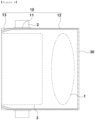
- sealing in the form shown in FIG. 2 is performed when degassing sealing.
- FIG. 4 is a diagram showing an embodiment of a degassing sealing in the pouch sealing of the pouch-type secondary battery of the present invention
- FIG. 5 is a diagram showing an embodiment of the main sealing in the pouch sealing of the pouch-type secondary battery of the present invention.
- the pouch sealing method of the pouch-type secondary battery of the present invention includes:
- the degassing sealing is formed such that a full-width sealing portion 10 including an electrode terminal sealing portion 11 includes a horizontal sealing portion 12 formed from the electrode terminal 2 to a distal end of the dead space 1 in a horizontal direction, and an inclined sealing portion 13 in the direction opposite to the horizontal sealing portion 12, wherein the inclined sealing portion 13 includes an inclined portion inclined toward a electrode assembly housing portion 3 between the electrode terminal 1 and a distal end.
- the main sealing includes performance of a parallel sealing 21 which is parallel to a full-length direction of the electrode assembly housing portion 3, and performance of a correction 22 such that the horizontal sealing portion 12 of the full-width sealing portion is symmetrical with the inclined sealing portion 13 of the opposite direction.
- the pouch sealing method for a pouch-type secondary battery according to the present invention may further include a process of forming an inclined portion (chamfering step) by symmetrically removing an outer horizontal portion 15 of the corrected portion 22 to the inclined sealing portion 13 after main sealing. At this time, the dead space 1 can be removed by cutting before and after the main sealing.
- the main sealing can be performed using the main sealing tool 100 shown in FIGS. 8 and 9 .
- the main sealing tool 100 may include a linear pressing portion 110 that performs a parallel sealing 21 parallel to a full-length direction of the electrode assembly housing portion 3 (forming the parallel sealing portion 20), and an inclined pressing portion 120 coupled to one end of the linear pressing portion with an internal angle between exceeding 90 degrees to 150 degrees, more preferably 100 degrees to 130 degrees.
- the inclined pressing portion 120 is used to correct the horizontal sealing portion 12 of the full-width sealing portion 10 to be symmetrical with the inclined sealing portion 13 of the opposite direction.
- An inclined pressing portion 120' may be further coupled to the other end of the linear pressing portion 110, wherein the inclined pressing portion 120' is coupled in the same direction and at the same internal angle.
- the inclined portion pressing portion 120 of the main sealing tool 100 may be applied only to the remaining inclined portion except for the horizontal sealing portion 12 for degassing sealing or may be applied to the horizontal sealing portion 12 and the inclined portion at the same time.
- the electrode terminal 2 in the pouch-type secondary battery, may be formed only in one direction, or may exist in both directions symmetrical with each other.
- both sides of the full-width sealing portion 10 may be formed in the same form and in the same manner.
- the degassing sealing may include sealing the distal end of the full-length direction of the dead space 1 in a straight line to the full-length direction to form a full-length direction degassing sealing portion (30 of FIG. 4 ).
- the degassing sealing may include sealing the distal end of the battery housing portion in the full-length direction (direction opposite to the dead space) in a straight line to the full-length direction. If the distal end of the battery housing portion in the full- length direction is in the state of being sealed by the pouch case structure (see FIG. 4 ), it may not include the sealing.
- a sufficient flow path is formed through which the gas can escape from the battery housing portion 3 to the dead space 1 in the degassing process.
- FIG. 7(a) the cross-sectional area of the space where the battery housing portion 3 is located increases by 9.43%, and as shown in FIG. 7(b) , the cross-sectional area of the dead space 1 also increases by 3.99%.
- the degassing sealing of the step (a) is a step of sealing a dead space to perform a degassing process for removing gas generated after the formation process, and can be performed by a method known in the art, except for formation of the horizontal sealing portion 12 as described above.
- the formation process of step (b) and the degassing process of step (c) can be performed by a method known in the art.
- a formation process in the present invention means a process that is also called an activation process in this field. Due to the characteristics of the secondary battery, the activation process for the activation of an anode active material and the formation of a stable Solid Electrolyte Interface (SEI) film at a cathode needs to precede at the initial cycle. However, a large amount of gas is generated by the activation process and exists inside the exterior material. Such gas needs to be removed through an opening or a cut formed in the gas pocket (dead space) of the exterior material, and the exterior material is heat-welded and sealed to form the final product shape (main sealing). The process of discharging the gas inside the secondary battery in this way is called a degassing process.
- SEI Solid Electrolyte Interface
- FIG. 8 is a perspective view showing an embodiment of the main sealing tool 100 used for the main sealing in the pouch sealing of the pouch-type secondary battery of the present invention
- FIG. 9 is a diagram showing a photograph of the actual form of the main sealing tool, and its specification.
- the main sealing tool of the present invention has a linear pressing portion 110 that performs a parallel sealing (20 of FIGS. 5 ) parallel to the electrode assembly housing portion in the full-length direction, and an inclined pressing portion 120 coupled to one end of the linear pressing portion with an internal angle between exceeding 90 degrees to 150 degrees, preferably 100 to 130 degrees, and the inclined pressing portion 120 performs a function of correcting the horizontal sealing portion 12 of the full-width sealing portion 10 to be symmetrical with the inclined sealing portion 13 of an opposite direction.
- the form of the linear pressing portion 110 is not particularly limited as long as it is a form capable of performing the parallel sealing 21 (formation of the parallel sealing portion 20), it may have a quadrangular prism shape.
- an inclined pressing portion 120' may be further coupled to the other end of the linear pressing portion 110, wherein the inclined pressing portion 120' is coupled in the same direction and at the same internal angle.
- the inclined pressing portion 120 is not particularly limited as long as it has a form capable of forming the corrected inclined sealing portion 14 as shown in FIG. 5 , as shown in FIGS. 8 and 9 , it may be in the form similar to a triangular prism, and specifically in the form of a right-angled triangular prism.
- the corrected inclined sealing portion 14 can be formed even in the case of a quadrangular prism shape, the shape is not particularly limited.
- the main sealing tool 100 may further include an extension 130 in which the linear pressing portion 110 extends further outward from the inclined pressing portion 120, as shown in FIGS. 8 and 9 .
- the extension 130 can perform the function of coupling the main sealing tool 100 to the pressure device.
Landscapes
- Chemical & Material Sciences (AREA)
- Chemical Kinetics & Catalysis (AREA)
- Electrochemistry (AREA)
- General Chemical & Material Sciences (AREA)
- Engineering & Computer Science (AREA)
- Mechanical Engineering (AREA)
- Manufacturing & Machinery (AREA)
- Sealing Battery Cases Or Jackets (AREA)
Abstract
Description
- The present application claims the benefit of priority based on
Korean Patent Application No. 10-2021-0132371 filed on October 6, 2021 - The present invention relates to a pouch sealing method for a pouch-type secondary battery and a main sealing tool used in this method.
- Lithium secondary batteries, which are attracting attention as a next-generation power source among rechargeable secondary batteries, have high energy density, no memory effect, a low degree of spontaneous discharge even when not in use, and very lightweight. Accordingly, the lithium secondary batteries are often used in portable electronic devices such as laptop computers, cameras, and mobile phones. In addition, due to high energy density, the lithium secondary batteries are increasingly used in the field of a defense industry, an automation system, an automobile and an aviation industry, and are widely commercially available for a motor drive source for electric vehicles and hybrid vehicles.
- Such lithium secondary batteries can generally be classified into lithium ion batteries using a liquid electrolyte and lithium polymer batteries using a polymer electrolyte depending on the type of electrolytic solution. In addition, the secondary batteries are manufactured in various shapes, and can be broadly classified into cylindrical, prismatic, and pouch types.
- In particular, the pouch-type lithium secondary battery has a case made of a pouch packaging material that is significantly lighter and more flexible than the aluminum case, and can have a higher energy density than the prismatic lithium secondary battery.
- In the pouch-type lithium secondary battery, a sealing portion is formed at an edge of an exterior material to seal the pouch exterior material. Since the edge increases a dead space of the secondary battery and causes a decrease in the energy density per volume, a technology for increasing the energy density of the secondary battery by bending or folding the edge sealing portion is used.
- In addition, a method for maximally reducing a proportion of the dead space due to the sealing portion formed at the edge compared to the exterior material having the same size by forming a sealing portion having a predetermined width as close to the electrode assembly as possible at the edge of the exterior material is also applied.
- For example,
Korean Patent Publication No. 10-0883919 -
Korean Patent Publication No. 10-0883919 - The present invention was devised to solve the above problems of the related art.
- It is an object of the present invention to provide a pouch sealing method for a pouch-type secondary battery capable of ensuring excellent sealing and insulating properties, while maximally reducing the ratio of dead space due to the sealing portion of the pouch-type secondary battery, and a sealing tool used in the method.
- In order to achieve the above object, the present invention provides a pouch sealing method for a pouch-type secondary battery, the method including:
- wherein the degassing sealing is formed such that a full-width sealing portion including an electrode terminal sealing portion includes a horizontal sealing portion formed from an electrode terminal to a dead space distal end in a horizontal direction, and an inclined sealing portion in the direction opposite to the horizontal sealing portion, wherein the inclined sealing portion includes an inclined portion inclined toward a battery housing portion between the electrode terminal and a distal end, and
- the main sealing includes a parallel sealing which is parallel to a full-length direction of the electrode assembly housing portion, and sealing for correcting the horizontal sealing portion of the full-width sealing portion to be symmetrical with the inclined sealing portion of the opposite direction.
- In an embodiment of the present invention, after the main sealing, an outer horizontal portion of the corrected portion may be symmetrically removed to the inclined sealing portion to form an inclined portion.
- In an embodiment of the present invention, an electrode terminal of the pouch-type secondary battery may be formed only in one direction or in two directions symmetrical to each other.
- In an embodiment of the invention, the degassing sealing may include sealing a distal end of the full-length direction of the dead space in a straight line to the full-length direction
- In an embodiment of the present invention, the degassing sealing may be include sealing a dead space distal end of the full- length direction of the battery housing portion in a straight line to the full-length direction; or does not include the sealing of the distal end,_when the distal end of the full-length direction of the battery housing portion is in the state of being sealed by the pouch case structure.
- Further, the present invention provides a main sealing tool used for the main sealing, the main sealing tool including:
- a linear pressing portion that performs a parallel sealing parallel to a full-length direction of an electrode assembly housing portion; and an inclined pressing portion coupled to one end of the linear pressing portion with an internal angle between exceeding 90 degrees to 150 degrees,
- wherein the inclined pressing portion performs a function of correcting the horizontal sealing portion of the full-width sealing portion to be symmetrical with an inclined sealing portion in an opposite direction.
- In an embodiment of the present invention, an inclined pressing portion may be further coupled to the other end of the linear pressing portion,
wherein the additioned inclined pressing portion is coupled in the same direction and at the same internal angle with the linear pressing portion. - In an embodiment of the present invention, the inclined pressing portion may have a a shape similar to a triangular prism or a quadrangular prism.
- In an embodiment of the invention, the main sealing tool may further include an extension through which the linear pressing portion extends further outward from the inclined pressing portion.
- The pouch sealing method for a pouch-type secondary battery of the present invention provides excellent sealing and insulating properties, while minimizing the ratio of dead space of the sealing portion.
- Also, the pouch sealing tool used in the above method effectively reduces the ratio of dead space and provides excellent sealing and insulating properties to the pouch case.
-
-
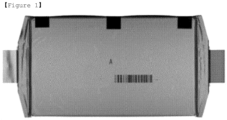
FIG. 1 is a photograph of the form of a pouch-type secondary battery with a reduced dead space. -
FIG. 2 is a diagram schematically showing the form of degassing sealing performed in the process of manufacturing the pouch-type secondary battery having the form shown inFIG. 1 . -
FIG. 3 is a diagram showing the cause of deterioration of sealing and insulating properties caused by the degassing sealing of the form shown inFIG. 2 . -
FIG. 4 is a diagram showing an embodiment of the degassing sealing in the pouch sealing of the pouch-type secondary battery of the present invention. -
FIG. 5 is a diagram showing an embodiment of a main sealing in the pouch sealing of the pouch-type secondary battery of the present invention. -
FIG. 6 is an enlarged view of an embodiment of the main sealing in the pouch sealing of the pouch-type secondary battery of the present invention. -
FIG. 7 is a diagram showing the effect of an embodiment of the degassing sealing in the pouch sealing of the pouch-type secondary battery of the present invention. -
FIG. 8 is a perspective view showing an embodiment form of a main sealing tool used for main sealing in the pouch sealing of the pouch-type secondary battery of the present invention. -
FIG. 9 is a diagram showing a photograph of the actual shape of the main sealing tool used for the main sealing in the pouch sealing of the pouch-type secondary battery of the present invention and its specification. - Hereinafter, the present invention will be described in detail based on the accompanying drawings so that a person having ordinary knowledge in the technical field to which the present invention belongs can easily carry it out. This invention may, however, be embodied in many different forms and is not limited to the embodiments set forth herein.
- When a certain component is referred to as being "connected to, provided in or installed in" another component, it may be directly connected to or installed in the other component, but it should be understood that other configurations may be present between them. On the other hand, when a certain component is referred to as being "directly connected to, provided in, or installed in" another component, it should be understood that there are no other components between them.
- The present invention will be described below.
- In the related art, a pouch-type secondary battery having a structure as shown in
FIG. 1 is manufactured to reduce the dead space due to the sealing portion on the side where the electrode terminals are located. In order to manufacture the pouch-type secondary battery as described above, sealing in the form shown inFIG. 2 is performed when degassing sealing. - However, when such a sealing structure is applied, as shown in
FIG. 3 , the space between the edge of the electrode assembly on the side where the electrode terminals are located and the sealing portion is formed to be narrow (part (2)). Therefore, after the formation process, when the gas existing in the electrode assembly housing portion escapes from the narrow space in the cell press process, a large pressure is formed, and the inclined sealing portion on the dead space side is damaged by such pressure. As a result, the insulating properties of the sealing portion also deteriorate. -
FIG. 4 is a diagram showing an embodiment of a degassing sealing in the pouch sealing of the pouch-type secondary battery of the present invention, andFIG. 5 is a diagram showing an embodiment of the main sealing in the pouch sealing of the pouch-type secondary battery of the present invention. - The pouch sealing method of the pouch-type secondary battery of the present invention includes:
- (a) a step of performing degassing sealing including a
dead space 1; - (b) a step of performing a formation process;
- (c) a step of performing a degassing process; and
- (d) a step of performing main sealing.
- As shown in
FIG. 4 , the degassing sealing is formed such that a full-width sealing portion 10 including an electrodeterminal sealing portion 11 includes ahorizontal sealing portion 12 formed from theelectrode terminal 2 to a distal end of thedead space 1 in a horizontal direction, and an inclined sealingportion 13 in the direction opposite to thehorizontal sealing portion 12, wherein the inclined sealingportion 13 includes an inclined portion inclined toward a electrodeassembly housing portion 3 between theelectrode terminal 1 and a distal end. - As shown in
FIG. 5 , the main sealing includes performance of a parallel sealing 21 which is parallel to a full-length direction of the electrodeassembly housing portion 3, and performance of acorrection 22 such that thehorizontal sealing portion 12 of the full-width sealing portion is symmetrical with the inclined sealingportion 13 of the opposite direction. - As shown in
FIG. 5(b) , the pouch sealing method for a pouch-type secondary battery according to the present invention may further include a process of forming an inclined portion (chamfering step) by symmetrically removing an outerhorizontal portion 15 of the correctedportion 22 to the inclined sealingportion 13 after main sealing. At this time, thedead space 1 can be removed by cutting before and after the main sealing. - In an embodiment of the invention, the main sealing can be performed using the
main sealing tool 100 shown inFIGS. 8 and9 . - As shown in
FIGS. 8 and9 , themain sealing tool 100 may include a linearpressing portion 110 that performs a parallel sealing 21 parallel to a full-length direction of the electrode assembly housing portion 3 (forming the parallel sealing portion 20), and an inclined pressingportion 120 coupled to one end of the linear pressing portion with an internal angle between exceeding 90 degrees to 150 degrees, more preferably 100 degrees to 130 degrees. - The inclined
pressing portion 120 is used to correct thehorizontal sealing portion 12 of the full-width sealing portion 10 to be symmetrical with the inclined sealingportion 13 of the opposite direction. - An inclined pressing portion 120' may be further coupled to the other end of the linear
pressing portion 110, wherein the inclined pressing portion 120' is coupled in the same direction and at the same internal angle. - In an embodiment of the present invention, in the pouch sealing method for the pouch-type secondary battery, when the main sealing performs the
correction 22 such that thehorizontal sealing portion 12 of the full-width sealing portion 10 is symmetrical with the inclined sealingportion 13 of the opposite direction, as shown inFIG. 6 , the inclinedportion pressing portion 120 of themain sealing tool 100 may be applied only to the remaining inclined portion except for thehorizontal sealing portion 12 for degassing sealing or may be applied to thehorizontal sealing portion 12 and the inclined portion at the same time. - In an embodiment of the present invention, in the pouch-type secondary battery, the
electrode terminal 2 may be formed only in one direction, or may exist in both directions symmetrical with each other. When the electrode terminals exist in both directions symmetrical with each other, both sides of the full-width sealing portion 10 may be formed in the same form and in the same manner. - In an embodiment of the present invention, the degassing sealing may include sealing the distal end of the full-length direction of the
dead space 1 in a straight line to the full-length direction to form a full-length direction degassing sealing portion (30 ofFIG. 4 ). - In an embodiment of the present invention, the degassing sealing may include sealing the distal end of the battery housing portion in the full-length direction (direction opposite to the dead space) in a straight line to the full-length direction. If the distal end of the battery housing portion in the full- length direction is in the state of being sealed by the pouch case structure (see
FIG. 4 ), it may not include the sealing. - According to the pouch sealing method for a pouch-type secondary battery of the present invention, as shown in
FIG. 7 , a sufficient flow path is formed through which the gas can escape from thebattery housing portion 3 to thedead space 1 in the degassing process. Moreover, according to such a degassing sealing form, there is provided an effect in which, as shown inFIG. 7(a) , the cross-sectional area of the space where thebattery housing portion 3 is located increases by 9.43%, and as shown inFIG. 7(b) , the cross-sectional area of thedead space 1 also increases by 3.99%. - In an embodiment of the present invention, the degassing sealing of the step (a) is a step of sealing a dead space to perform a degassing process for removing gas generated after the formation process, and can be performed by a method known in the art, except for formation of the
horizontal sealing portion 12 as described above. In addition, the formation process of step (b) and the degassing process of step (c) can be performed by a method known in the art. - Even in the case of the main sealing in the above step (d), it can be performed by the method known in this field, except for the process of forming the corrected inclined sealing
portion 14 ofFIG. 5 . - A formation process in the present invention means a process that is also called an activation process in this field. Due to the characteristics of the secondary battery, the activation process for the activation of an anode active material and the formation of a stable Solid Electrolyte Interface (SEI) film at a cathode needs to precede at the initial cycle. However, a large amount of gas is generated by the activation process and exists inside the exterior material. Such gas needs to be removed through an opening or a cut formed in the gas pocket (dead space) of the exterior material, and the exterior material is heat-welded and sealed to form the final product shape (main sealing). The process of discharging the gas inside the secondary battery in this way is called a degassing process.
-
FIG. 8 is a perspective view showing an embodiment of themain sealing tool 100 used for the main sealing in the pouch sealing of the pouch-type secondary battery of the present invention, andFIG. 9 is a diagram showing a photograph of the actual form of the main sealing tool, and its specification. - The main sealing tool of the present invention has a linear
pressing portion 110 that performs a parallel sealing (20 ofFIGS. 5 ) parallel to the electrode assembly housing portion in the full-length direction, and an inclined pressingportion 120 coupled to one end of the linear pressing portion with an internal angle between exceeding 90 degrees to 150 degrees, preferably 100 to 130 degrees, and the inclined pressingportion 120 performs a function of correcting thehorizontal sealing portion 12 of the full-width sealing portion 10 to be symmetrical with the inclined sealingportion 13 of an opposite direction. - In an embodiment of the present invention, although the form of the linear
pressing portion 110 is not particularly limited as long as it is a form capable of performing the parallel sealing 21 (formation of the parallel sealing portion 20), it may have a quadrangular prism shape. - In an embodiment of the present invention, an inclined pressing portion 120' may be further coupled to the other end of the linear
pressing portion 110, wherein the inclined pressing portion 120' is coupled in the same direction and at the same internal angle. - In an embodiment of the present invention, although the inclined pressing
portion 120 is not particularly limited as long as it has a form capable of forming the corrected inclined sealingportion 14 as shown inFIG. 5 , as shown inFIGS. 8 and9 , it may be in the form similar to a triangular prism, and specifically in the form of a right-angled triangular prism. However, since the corrected inclined sealingportion 14 can be formed even in the case of a quadrangular prism shape, the shape is not particularly limited. - In an embodiment of the present invention, the
main sealing tool 100 may further include an extension 130 in which the linearpressing portion 110 extends further outward from the inclined pressingportion 120, as shown inFIGS. 8 and9 . The extension 130 can perform the function of coupling themain sealing tool 100 to the pressure device. - Although the present invention was described in relation with the aforementioned preferable embodiments, various modifications and variations may be made without departing from the spirit and scope of the invention. Accordingly, the appended claims shall include such modifications or variations insofar as they fall within the spirit of the present invention.
-
- 1: Dead space 2: Electrode terminal
- 3. Battery housing portion 10: Full-width sealing portion
- 11: Electrode terminal sealing portion 12: Horizontal sealing portion
- 13: Inclined sealing portion 14: Corrected inclined sealing portion
- 15: Horizontal portion 20: Main sealing portion
- 21: Parallel sealing portion 22: Corrected portion
- 30: Full-length direction degassing sealing portion
- 100: Main sealing tool 110: Linear pressing portion
- 120: Inclined pressing portion 130: Extension
Claims (9)
- A pouch sealing method for a pouch-type secondary battery, the method comprising:(a) performing degassing sealing including a dead space;(b) performing a formation process;(c) performing a degassing process; and(d) performing main sealing,wherein the degassing sealing is formed such that a full-width sealing portion including an electrode terminal sealing portion includes a horizontal sealing portion formed from an electrode terminal to a dead space distal end in a horizontal direction, and an inclined sealing portion in the direction opposite to the horizontal sealing portion, wherein the inclined sealing portion includes an inclined portion inclined toward a battery housing portion between the electrode terminal and a distal end, andthe main sealing includes a parallel sealing which is parallel to a full-length direction of the electrode assembly housing portion, and sealing for correcting the horizontal sealing portion of the full-width sealing portion to be symmetrical with the inclined sealing portion of the opposite direction.
- The pouch sealing method for the pouch-type secondary battery according to claim 1, wherein after the main sealing, an outer horizontal portion of the corrected portion is symmetrically removed to the inclined sealing portion to form an inclined portion.
- The pouch sealing method for the pouch-type secondary battery according to claim 1, wherein the electrode terminal of the pouch-type secondary battery is formed only in one direction or in two directions symmetrical to each other.
- The pouch sealing method for the pouch-type secondary battery according to claim 1, wherein the degassing sealing includes sealing a distal end of the full-length direction of the dead space in a straight line in the full-length direction.
- The pouch sealing method for the pouch-type secondary battery according to claim 1, wherein the degassing sealing includes sealing a distal end of the full-width direction of the battery housing portion in a straight line to the full-length direction; or does not include the sealing of the distal end, in case that the distal end of the full-length direction of the battery housing portion is in the state of being sealed by the pouch case structure.
- A main sealing tool used for the main sealing according to claim 1, comprising:a linear pressing portion that performs a parallel sealing parallel to a full-length direction of an electrode assembly housing portion; and an inclined pressing portion coupled to one end of the linear pressing portion with an internal angle between exceeding 90 degrees to 150 degrees,wherein the inclined pressing portion performs a function of correcting the horizontal sealing portion of the full-width sealing portion to be symmetrical with an inclined sealing portion in an opposite direction.
- The main sealing tool according to claim 6, wherein an inclined pressing portion is further coupled to the other end of the linear pressing portion,
wherein the additioned inclined pressing portion is coupled in the same direction and at the same internal angle with the inclined pressing portion. - The main sealing tool according to any of claims 6 and 7, wherein the inclined pressing portion has a shape similar to a triangular prism or a quadrangular prism.
- The main sealing tool according to any of claims 6 and 7, wherein the main sealing tool further comprises an extension through which the linear pressing portion extends further outward from the inclined pressing portion.
Applications Claiming Priority (2)
| Application Number | Priority Date | Filing Date | Title |
|---|---|---|---|
| KR1020210132371A KR102904725B1 (en) | 2021-10-06 | 2021-10-06 | Pouch sealing method for pouch-type secondary battery and main sealing tool used in the same |
| PCT/KR2022/015004 WO2023059068A1 (en) | 2021-10-06 | 2022-10-05 | Method for sealing pouch of pouch-type secondary battery and main sealing tool used in same method |
Publications (2)
| Publication Number | Publication Date |
|---|---|
| EP4336635A1 true EP4336635A1 (en) | 2024-03-13 |
| EP4336635A4 EP4336635A4 (en) | 2025-06-04 |
Family
ID=85803576
Family Applications (1)
| Application Number | Title | Priority Date | Filing Date |
|---|---|---|---|
| EP22878889.9A Pending EP4336635A4 (en) | 2021-10-06 | 2022-10-05 | Method for sealing a bag of a bag-type secondary battery and main sealing tool used in this method |
Country Status (6)
| Country | Link |
|---|---|
| US (1) | US20240396075A1 (en) |
| EP (1) | EP4336635A4 (en) |
| JP (1) | JP7725771B2 (en) |
| KR (1) | KR102904725B1 (en) |
| CN (1) | CN117413414A (en) |
| WO (1) | WO2023059068A1 (en) |
Family Cites Families (12)
| Publication number | Priority date | Publication date | Assignee | Title |
|---|---|---|---|---|
| JP4518744B2 (en) * | 2003-03-31 | 2010-08-04 | 三洋電機株式会社 | LAMINATED BATTERY, PROCESS FOR PRODUCING THE SAME, AND L-SHAPE FOR PRODUCTION OF LAMINATED BATTERY |
| KR100883919B1 (en) | 2006-04-03 | 2009-02-18 | 주식회사 엘지화학 | Excellent capacity battery pack |
| KR101558049B1 (en) * | 2013-09-30 | 2015-10-06 | 주식회사 엘지화학 | Method for manufacturing second battery |
| KR101732652B1 (en) * | 2014-09-30 | 2017-05-24 | 주식회사 엘지화학 | A method for manufacturing a Lithium ion Secondary Battery |
| KR20170022511A (en) * | 2015-08-21 | 2017-03-02 | 주식회사 엘지화학 | Battery Cell Having Slope Portion at Corner |
| KR102367387B1 (en) * | 2017-08-29 | 2022-02-24 | 주식회사 엘지에너지솔루션 | Method for Sealing Side Part of Pouch-Type Battery Comprising Two Sealing Steps |
| KR102347901B1 (en) * | 2017-10-17 | 2022-01-06 | 주식회사 엘지에너지솔루션 | Pouch-Type Battery Case Having Structure to Prevent Crack and Method for Preparing the Same |
| KR102347884B1 (en) * | 2017-10-17 | 2022-01-06 | 주식회사 엘지에너지솔루션 | Sealing Block to Prevent Crack of Pouch-Type Secondary Battery, Pouch-Type Battery Case and Sealing Method for Pouch-Type Battery Case Using thereof |
| CN209785987U (en) * | 2019-06-26 | 2019-12-13 | 宁德时代新能源科技股份有限公司 | Secondary battery |
| CN210040267U (en) * | 2019-07-08 | 2020-02-07 | 江苏时代新能源科技有限公司 | Secondary battery |
| CN114600303B (en) * | 2019-12-03 | 2024-05-17 | 株式会社Lg新能源 | Pouch type secondary battery, battery pack, and method of manufacturing pouch type secondary battery |
| KR20210132371A (en) | 2020-04-27 | 2021-11-04 | 주식회사 엘엑스세미콘 | Moistureproofing chip on film package and fabricating method thereof |
-
2021
- 2021-10-06 KR KR1020210132371A patent/KR102904725B1/en active Active
-
2022
- 2022-10-05 WO PCT/KR2022/015004 patent/WO2023059068A1/en not_active Ceased
- 2022-10-05 CN CN202280039541.8A patent/CN117413414A/en active Pending
- 2022-10-05 JP JP2023574769A patent/JP7725771B2/en active Active
- 2022-10-05 US US18/569,681 patent/US20240396075A1/en active Pending
- 2022-10-05 EP EP22878889.9A patent/EP4336635A4/en active Pending
Also Published As
| Publication number | Publication date |
|---|---|
| KR102904725B1 (en) | 2025-12-24 |
| EP4336635A4 (en) | 2025-06-04 |
| WO2023059068A1 (en) | 2023-04-13 |
| JP7725771B2 (en) | 2025-08-20 |
| KR20230049348A (en) | 2023-04-13 |
| JP2024520726A (en) | 2024-05-24 |
| US20240396075A1 (en) | 2024-11-28 |
| CN117413414A (en) | 2024-01-16 |
Similar Documents
| Publication | Publication Date | Title |
|---|---|---|
| US12057545B2 (en) | Pouch exterior material for secondary battery, pouch type secondary battery using the same, and method of manufacturing the same | |
| US12368182B2 (en) | Stepped electrochemical cells with folded sealed portion | |
| US12597675B2 (en) | Pouch-type battery cell including venting member and battery pack including the same | |
| US20210119285A1 (en) | Battery cell | |
| US20200185668A1 (en) | Deep Pouch Cell and Method of Manufacturing Same | |
| KR102421369B1 (en) | A method of manufacturing pouch-typed secondary battery and Jig for used therefor | |
| EP4167354A1 (en) | Secondary battery | |
| US12476298B2 (en) | Pouch type battery case and pouch type secondary battery | |
| US20210050564A1 (en) | Battery cell and battery pack | |
| WO2025016142A9 (en) | Battery cell casing, electrochemical apparatus and preparation method therefor, and electrical device | |
| KR102236347B1 (en) | Method for Manufacturing Secondary Battery | |
| US20240396075A1 (en) | Pouch Sealing Method for Pouch-Type Secondary Battery and Main Sealing Tool Used in the Method | |
| US6207318B1 (en) | Electrochemical batteries with restricted liquid electrolyte volume | |
| US20030129488A1 (en) | Planar battery and method of sealing | |
| US11258146B2 (en) | Battery cell having overcharge prevention member | |
| JP2006278184A (en) | Square battery and its manufacturing method | |
| KR100542680B1 (en) | Lithium ion secondary battery | |
| EP4250467A1 (en) | Secondary battery and manufacturing method therefor | |
| JP2005294012A (en) | Sealed battery | |
| JP2026512254A (en) | Secondary battery and method for manufacturing the same | |
| WO2025208830A1 (en) | Battery and electric device | |
| HK40000566B (en) | Stepped electrochemical cells with folded sealed portion | |
| HK40000566A (en) | Stepped electrochemical cells with folded sealed portion |
Legal Events
| Date | Code | Title | Description |
|---|---|---|---|
| STAA | Information on the status of an ep patent application or granted ep patent |
Free format text: STATUS: THE INTERNATIONAL PUBLICATION HAS BEEN MADE |
|
| PUAI | Public reference made under article 153(3) epc to a published international application that has entered the european phase |
Free format text: ORIGINAL CODE: 0009012 |
|
| STAA | Information on the status of an ep patent application or granted ep patent |
Free format text: STATUS: REQUEST FOR EXAMINATION WAS MADE |
|
| 17P | Request for examination filed |
Effective date: 20231204 |
|
| AK | Designated contracting states |
Kind code of ref document: A1 Designated state(s): AL AT BE BG CH CY CZ DE DK EE ES FI FR GB GR HR HU IE IS IT LI LT LU LV MC ME MK MT NL NO PL PT RO RS SE SI SK SM TR |
|
| DAV | Request for validation of the european patent (deleted) | ||
| DAX | Request for extension of the european patent (deleted) | ||
| A4 | Supplementary search report drawn up and despatched |
Effective date: 20250508 |
|
| RIC1 | Information provided on ipc code assigned before grant |
Ipc: B29L 31/00 20060101ALI20250430BHEP Ipc: B29C 65/00 20060101ALI20250430BHEP Ipc: H01M 50/557 20210101ALI20250430BHEP Ipc: H01M 50/548 20210101ALI20250430BHEP Ipc: H01M 10/04 20060101ALI20250430BHEP Ipc: H01M 50/105 20210101ALI20250430BHEP Ipc: H01M 50/178 20210101AFI20250430BHEP |
|
| STAA | Information on the status of an ep patent application or granted ep patent |
Free format text: STATUS: EXAMINATION IS IN PROGRESS |
|
| 17Q | First examination report despatched |
Effective date: 20260311 |