EP4335702B1 - Protector - Google Patents
Protector Download PDFInfo
- Publication number
- EP4335702B1 EP4335702B1 EP23194539.5A EP23194539A EP4335702B1 EP 4335702 B1 EP4335702 B1 EP 4335702B1 EP 23194539 A EP23194539 A EP 23194539A EP 4335702 B1 EP4335702 B1 EP 4335702B1
- Authority
- EP
- European Patent Office
- Prior art keywords
- wall body
- protrusion
- wall
- protector
- face
- Prior art date
- Legal status (The legal status is an assumption and is not a legal conclusion. Google has not performed a legal analysis and makes no representation as to the accuracy of the status listed.)
- Active
Links
Images




Classifications
-
- B—PERFORMING OPERATIONS; TRANSPORTING
- B60—VEHICLES IN GENERAL
- B60R—VEHICLES, VEHICLE FITTINGS, OR VEHICLE PARTS, NOT OTHERWISE PROVIDED FOR
- B60R16/00—Electric or fluid circuits specially adapted for vehicles and not otherwise provided for; Arrangement of elements of electric or fluid circuits specially adapted for vehicles and not otherwise provided for
- B60R16/02—Electric or fluid circuits specially adapted for vehicles and not otherwise provided for; Arrangement of elements of electric or fluid circuits specially adapted for vehicles and not otherwise provided for electric constitutive elements
- B60R16/0207—Wire harnesses
- B60R16/0215—Protecting, fastening and routing means therefor
-
- H—ELECTRICITY
- H02—GENERATION; CONVERSION OR DISTRIBUTION OF ELECTRIC POWER
- H02G—INSTALLATION OF ELECTRIC CABLES OR LINES, OR OF COMBINED OPTICAL AND ELECTRIC CABLES OR LINES
- H02G3/00—Installations of electric cables or lines or protective tubing therefor in or on buildings, equivalent structures or vehicles
- H02G3/02—Details
- H02G3/04—Protective tubing or conduits, e.g. cable ladders or cable troughs
- H02G3/0462—Tubings, i.e. having a closed section
- H02G3/0487—Tubings, i.e. having a closed section with a non-circular cross-section
Definitions
- the present invention relates to a protector.
- the protection target part of the wire may be covered with a protector in order to prevent interference between the wire and the peripheral components.
- a protector is disclosed in Japanese Patent No. 6198183 .
- Such a protector is also disclosed in KR 2010 0002373 A , KR 101 899 954 B1 , US 2022/134976 A1 and EP 2 876 762 A1 .
- FIG. 1 to FIG. 5 One embodiment of a protector according to the present invention will be described with reference to FIG. 1 to FIG. 5 .
- the protector 1 is a wire protection component for enabling protection of a protection target part We1 by housing the protection target part We1 of a wire (hereinafter, referred to as "protection target wire") We that is a protection target of the protector 1 itself, preventing interference between the protection target part We1 and its peripheral components, and the like.
- the protection target part We1 is an area where the space with respect to the peripheral component changes due to external input applied during normal traveling, which is a place where interference with the peripheral component is concerned due to the change in the space.
- the protector 1 is assembled to the protection target wire We, and configures a wire harness WH together with the protection target wire We ( FIG. 1 ).
- the wire harness WH is loaded on a vehicle such as an automobile and routed along vehicle structural components (car body structures configuring the car body, components fixed to the body structures, and the like).
- vehicle structural components car body structures configuring the car body, components fixed to the body structures, and the like.
- the wire harness WH illustrated herein is routed in an engine compartment along a wall face Bd1 of a dash panel Bd that is one of the car body structures.
- the protector 1 is molded with an insulating material such as a synthetic resin.
- the protector 1 includes a protector main body 10 in which the protection target part We1 of the protection target wire We is housed ( FIG. 1 , FIG. 2 , FIG. 4 , and FIG. 5 ).
- the protector main body 10 is the part to be the main body of the protector 1, and protects the protection target part We1 from the peripheral components during normal traveling. Therefore, the protector main body 10 has an internal space for housing and routing the protection target part We1.
- the protector main body 10 illustrated herein includes: a housing member 11 that houses and routes the protection target part We1 inserted from an insertion port; and a cover member 12 that is assembled to the housing member 11 and closes the insertion port ( FIG. 1 ).
- the protector main body 10 illustrated herein is, for example, screw-fixed to the wall face Bd1 of the dash panel Bd.
- the protector 1 also includes a protrusion housing body 20 that is connected to the protector main body 10 and houses a protrusion Pr from the wall face of the peripheral component disposed in the surroundings of the protector main body 10 ( FIG. 1 to FIG. 5 ).
- the protrusion housing body 20 prevents the peripheral component disposed in the surroundings of the protrusion Pr from interfering with the protrusion Pr.
- the dash panel Bd exists as a peripheral component in the surroundings of the protector main body 10, and a stud bolt made of metal protrudes from the wall face Bd1 of the dash panel Bd as the protrusion Pr toward the front side of the vehicle within the engine compartment.
- the protrusion housing body 20 discussed herein houses the protrusion (stud bolt) Pr therein to prevent interference between the protrusion Pr and the peripheral component of the protrusion Pr.
- a high-voltage wire (hereinafter, referred to as "external wire”) Weh, which is a different wire from the protection target wire We that carries low-voltage electricity, and which carries higher-voltage electricity compared to the protection target wire We, is routed on the front side of the vehicle with respect to the protrusion (stud bolt) Pr ( FIG. 3 ).
- the external wire Weh and the protrusion (stud bolt) Pr are disposed opposing to each other with a space provided therebetween in the front-rear direction of the vehicle.
- the external wire Weh may be a wire that is concerned about interfering with the protrusion Pr due to changes in the space with respect to the protrusion (stud bolt) Pr caused by external input applied during normal traveling. Furthermore, the external wire Weh may be capable of maintaining the space to be in a size that does not cause interference with the protrusion Pr, even when there is a change in the space with respect to the protrusion (stud bolt) Pr caused due to external input applied during normal traveling.
- the space between the external wire Weh and the protrusion (stud bolt) Pr becomes much narrower than that of normal driving, so that there is a concern about interference caused therebetween.
- the protrusion housing body 20 discussed herein is provided to protect the external wire Weh from the protrusion (stud bolt) Pr when such an impact load is applied from the front side of the vehicle.
- the protrusion housing body 20 includes: a first wall body 21 in a cylindrical shape that surrounds the protrusion Pr inserted from a first opening 21a at one end; and a second wall body 22 that closes a second opening at another end of the first wall body 21 ( FIG. 2 to FIG. 5 ).
- the protrusion housing body 20 discussed herein is disposed such that the cylinder axis direction of the first wall body 21 is aligned with the front-rear direction of the vehicle (in other words, the protruding direction of the protrusion (stud bolt) Pr) and the first opening 21a is facing toward the wall face Bd1 of the dash panel Bd.
- the first wall body 21 is formed as a cylindrical body configured with a U-shaped first wall part 21b that is protruding toward the upper side of the vehicle and a flat-plate shaped second wall part 21c that closes the U-shaped opening ( FIG. 2 , FIG. 3 , and FIG. 5 ).
- the protrusion housing body 20 is formed such that the protrusion (stud bolt) Pr does not break through the second wall body 22 even when an annular end face 21d of the first wall body 21 on the first opening 21a side ( FIG. 2 , FIG. 3 , and FIG. 5 ) and the wall face Bd1 of the dash panel Bd come in contact.
- the first wall body 21 is formed as a cylindrical body that is longer in the cylinder axis direction than the maximum protrusion amount of the protrusion (stud bolt) Pr from the wall face of the peripheral component (wall face Bd1 of the dash panel Bd) ( FIG. 3 ).
- the second wall body 22 is formed as a flat-plate shaped wall body that closes the second opening at the other end of the first wall body 21. Furthermore, the second wall body 22 is interposed between the external wire Weh and the tip of the protrusion (stud bolt) Pr ( FIG. 3 ). Note that the second wall body 22 may be, for example, formed by locally thinning the thickness of the flat-plate shaped wall body to be away from the tip of the protrusion (stud bolt) Pr, or may be formed as a convex plate part that is bulged outward to be away from the tip of the protrusion (stud bolt) Pr.
- the protector 1 can have not only the original wire protection function of protecting the protection target part We1 of the protection target wire We with the protector main body 10, but also the wire protection function of protecting the external wire Weh from the protrusion (stud bolts) Pr when an impact load is applied to the vehicle from the outside.
- the rigidity of the protrusion housing body 20 according to the present embodiment can be improved by closing the second opening at the other end of the first wall body 21 in a cylindrical shape with the second wall body 22. Therefore, the protrusion housing body 20 can keep its shape and prevent the protrusion (stud bolt) Pr inside thereof from contacting the external wire Weh even when the external wire Weh collides with the protrusion housing body 20 when an impact load is applied to the vehicle from the outside, thereby making it possible to improve the protection function of the external wire Weh.
- the protrusion housing body 20 can reduce the body size and still ensure the protection function of the external wire Weh.
- the second wall body 22 is formed to have lower rigidity than the first wall body 21 and may be bent by the load received from the external wire Weh.
- the load which the second wall body 22 receives from the external wire Weh is caused by the impact load applied in the crash test of the vehicle (the previous frontal crash test).
- the second wall body 22 bends to absorb the input load and reduces the force that is transmitted from the second wall body 22 to the first wall body 21. This allows this protrusion housing body 20 to ease the load received from the external wire Weh caused due to the impact load, so that the protection function of the external wire Weh can be improved.
- the third wall body 23 discussed herein is formed as a U-shaped wall body similar to the first wall part 21b of the first wall body 21, with two end parts on the opening side of the U shape connected to the second wall part 21c of the first wall body 21 ( FIG. 2 and FIG. 5 ). Furthermore, the opening of the third wall body 23 on the second wall body 22 side is closed by the second wall body 22.
- the third wall body 23 may be formed as a cylindrical body similar to and coaxial with the first wall body 21.
- the protrusion housing body 20 may employ a double-walled structure with the first wall body 21 in a cylindrical shape and the third wall body 23 in a cylindrical shape.
- the second wall body 22 in the protrusion housing body 20 is desirable to be formed to have lower rigidity than that of a rigid body configured with the first wall body 21, the third wall body 23, and the connecting wall bodies 24 so as to be bent by the load received from the external wire Weh.
- the protrusion housing body 20 when an impact load is applied to the vehicle from the outside and the external wire Weh inputs a load to the second wall body 22, the second wall body 22 bends to absorb the input load and a reduced force transmits from the second wall body 22 to the rigid body configured with the first wall body 21, the third wall body 23, and the connecting wall bodies 24. This allows the protrusion housing body 20 to ease the load received from the external wire Weh caused due to the impact load, so that the protection function of the external wire Weh can be improved.
- the protrusion housing body 20 can avoid catching the tip of the protrusion (stud bolt) Pr during the insertion and allows it to be inserted into the inner side.
- the space between the inner peripheral face of the first wall body 21 and the outer peripheral face of the third wall body 23 is formed narrower than the tip shape of the protrusion (stud bolt) Pr for making it possible to avoid mis-insertion of the protrusion (stud bolt) Pr therebetween.
- the protrusion housing body 20 by disposing the end face 23a of the third wall body 23 on the first opening 21a side on a deeper side than the first opening 21a and forming the end face 23a in a tapered face toward the inner side of the third wall body 23, the end face 23a can be shaped to catch the protrusion (stud bolt) Pr and guide the protrusion (stud bolt) Pr toward the inner side of the third wall body 23. Therefore, the protrusion housing body 20 can improve the workability of assembly when inserting the protrusion (stud bolt) Pr.
- the end face 24a of the connecting wall body 24 on the first opening 21a side also functions as a shape to catch the protrusion (stud bolt) Pr, thereby making it possible to further improve the workability of assembly when inserting the protrusion (stud bolt) Pr.
- the protector 1 has the protection function of protecting the external wire Weh from the protrusion (stud bolt) Pr caused due to the input of an impact load. Furthermore, the protector 1 can achieve the wire protection function by the protrusion housing body 20 together with the reduction in the body size of the protrusion housing body 20. Moreover, the protector 1 is designed such that the protrusion housing body 20 does not hinder the workability of assembly to the wall face Bd1 of the dash panel Bd.
- a protector 2 includes: a protector main body 110 in which a protection target part We1 of a protection target wire We is housed; and a protrusion housing body 120 that houses a protrusion (stud bolt) Pr from the wall face of the peripheral component (wall face Bd1 of the dash panel Bd) disposed in the surroundings of the protector main body 110 ( FIG. 6 , FIG. 7 , and FIG. 9 ).
- the protector main body 110 of the modification example includes a housing member 111 that houses and routes the protection target part We1 inserted from the insertion port, and a cover member 112 that is assembled to the housing member 111 and closes the insertion port thereof ( FIG. 6 ), and protects the protection target part We1 from the peripheral component during normal traveling.
- the protector main body 110 is, for example, screw-fixed to the wall face Bd1 of the dash panel Bd.
- the protrusion housing body 120 of the modification example prevents the peripheral component (external electric wire Weh) disposed in the surroundings of the protrusion (stud bolt) Pr from interfering with the protrusion Pr when an impact load is applied to the car body.
- the protrusion housing body 120 of the modification example includes: a cylindrical first wall body 121, in an angular cylindrical shape, that surrounds the protrusion Pr inserted from a first opening 121a at one end; and a second wall body 122, in a rectangular flat-plate shape, that closes a second opening at another end of the first wall body 121 ( FIG. 7 and FIG. 8 ).
- the protrusion housing body 120 is disposed such that the cylinder axis direction of the first wall body 121 is aligned with the front-rear direction of the vehicle (the protruding direction of the protrusion (stud bolt) Pr) and the first opening 121a is facing toward the wall face Bd1 of the dash panel Bd.
- the protrusion housing body 120 has the second wall body 122 interposed between the external wire Weh and the tip of the protrusion (stud bolt) Pr.
- the protrusion housing body 120 of the modification example includes: a third wall body 123 that is disposed on the inner side of the first wall body 121 with its outer peripheral face opposing, with a space, to the inner peripheral face of the first wall body 121, and houses the protrusion Pr inserted from the first opening 121a of the first wall body 121; and a plurality of connecting wall bodies 124 that are arranged around the axis of the cylinder of the first wall body 121 for connecting the inner peripheral face of the first wall body 121 and the outer peripheral face of the third wall body 123 ( FIG. 7 to FIG. 9 ).
- the second wall body 122 of the modification example is formed to have lower rigidity than that of the rigid body configured with the first wall body 121, the third wall body 123, and the connecting wall bodies 124 so as to be bent by the load received from the external wire Weh.
- the second wall body 122 does not necessarily have to be a flat-plate shaped wall body, as in the case of the second wall body 22 according to the embodiment.
- the third wall body 123 of the modification example is formed as a U-shaped wall body similar to the three wall parts arranged opposing to three of the four flat-plate shaped wall parts of the first wall body 121 with a space provided therebetween, and the two end parts on the opening side of the U shape are connected to the remaining wall part of the first wall body 121 ( FIG. 7 ). Furthermore, the opening of the third wall body 123 on the second wall body 122 side is closed by the second wall body 122.
- the third wall body 123 may be formed as an angular cylindrical body similar to and coaxial with the first wall body 121.
- the protrusion housing body 120 may employ a double-walled structure with the first wall body 121 in an angular cylindrical shape and the third wall body 123 in an angular cylindrical shape.
- the protector 2 has the protection function of protecting the external wire Weh from the protrusion (stud bolt) Pr caused due to the input of an impact load. Furthermore, like the protector 1 of the embodiment, the protector 2 can achieve the wire protection function by the protrusion housing body 120 together with the reduction in the body size of the protrusion housing body 120.
- the second wall body 122 of the modification example is disposed in a position where the space with respect to the external wire Weh is wider compared to the case of the second wall body 22 of the embodiment.
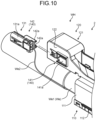
- a connector 131 provided at the terminal of a branch wire We2 from the protection target wire We is attached to the second wall body 122 of the modification example ( FIG. 6 to FIG. 8 , FIG. 10 , and FIG. 11 ). That connector 131 is, for example, in a size corresponding to the enlarged part of the space between the second wall body 122 and the external wire Weh.
- the connector 131 is, by a holding structure 140 provided between the second wall body 122 and itself, assembled to the second wall body 122 and holds the assembled state ( FIG. 10 and FIG. 11 ).
- the holding structure 140 employs a sliding structure with which the connector 131 is assembled by sliding it along the outer wall face of the second wall body 122.
- the holding structure 140 includes a first engagement part 141 provided on the second wall body 122, and a second engagement part 142 provided on a resin casing 131a of the connector 131 ( FIG. 10 and FIG. 11 ).
- the first engagement part 141 has a flexible piece part 141a in a rectangular flat-plate shape with flexibility ( FIG. 10 ).
- the second engagement part 142 has a guide rail part 142a that guides the flexible piece part 141a to an assembly completion position while sliding it ( FIG. 10 and FIG. 11 ).
- the holding structure 140 allows a claw part protruding from the flexible piece part 141a of the first engagement part 141 and a claw part protruding from a flexible piece part 142b ( FIG. 11 ) of the second engagement part 142 to engage each other at the assembly completion position, thereby keeping the assembly state.
- the protector 2 of the modification example can also have the connector 131 assembled to the second wall body 122, depending on the size of the space between the second wall body 122 and the external wire Weh.
- the protector according to the present embodiment is capable of protecting the external wire from the protrusion by the protrusion housing body provided between the protrusion and the external wire. Therefore, the protector 1 has the protection function of protecting the external wire from the protrusion caused due to the input of an impact load.
Landscapes
- Engineering & Computer Science (AREA)
- Mechanical Engineering (AREA)
- Architecture (AREA)
- Civil Engineering (AREA)
- Structural Engineering (AREA)
- Details Of Indoor Wiring (AREA)
- Installation Of Indoor Wiring (AREA)
Description
- The present invention relates to a protector.
- Conventionally, in vehicles such as automobiles, when there is a change in the space between a wire and its peripheral components due to external input applied during traveling, the protection target part of the wire may be covered with a protector in order to prevent interference between the wire and the peripheral components. For example, such a protector is disclosed in
Japanese Patent No. 6198183 KR 2010 0002373 A KR 101 899 954 B1 US 2022/134976 A1 andEP 2 876 762 A1 . - By the way, on vehicles, crash tests are conducted in which impact loads are applied from the outside. Among various types of wires installed in vehicles, there are some types that may interfere with peripheral components when impact loads are applied to the car body in crash tests, even though the wires do not interfere with the peripheral components by external input applied during normal traveling. It is desirable for the protector to also have a wire protection function against such impact loads.
- Therefore, it is an object of the present invention to provide a protector with a wire protection function for the input of impact loads.
- In order to achieve the above mentioned object, a protector according to one aspect of the present invention is found in
claim 1. - The above and other objects, features, advantages and technical and industrial significance of this invention will be better understood by reading the following detailed description of presently preferred embodiments of the invention, when considered in connection with the accompanying drawings.
-
-
FIG. 1 is a perspective view illustrating a protector according to an embodiment after being assembled to a car body; -
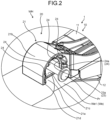
FIG. 2 is a perspective view of the protector according to the embodiment viewed from another angle after being assembled to the car body, which is an enlarged view of a protrusion housing body and surroundings thereof; -
FIG. 3 is a sectional view taken along X-X line inFIG. 1 ; -
FIG. 4 is a perspective view of the protector according to the embodiment before being assembled to the car body, which is an enlarged view of the protrusion housing body and surroundings thereof; -
FIG. 5 is a plan view of the protrusion housing body according to the embodiment when viewed from a first opening; -
FIG. 6 is a perspective view illustrating a protector according to a modification example after being assembled to a car body; -
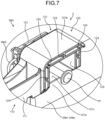
FIG. 7 is a perspective view of the protector according to the modification example viewed from another angle after being assembled to the car body, which is an enlarged view of a protrusion housing body and surroundings thereof; -
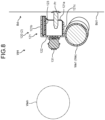
FIG. 8 is a sectional view taken along Y-Y line inFIG. 6 ; -
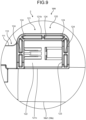
FIG. 9 is a plan view of the protrusion housing body according to the modification example when viewed from a first opening; -
FIG. 10 is a perspective view illustrating a holding structure of a connector; and -
FIG. 11 is a perspective view illustrating the connector. - Hereinafter, an embodiment of a protector according to the present invention will be described in detail with reference to the accompanying drawings. Note, however, that the present invention is not limited by the embodiment.
- One embodiment of a protector according to the present invention will be described with reference to
FIG. 1 to FIG. 5 . -
Reference sign 1 inFIG. 1 to FIG. 5 indicates the protector of the present embodiment. Theprotector 1 is a wire protection component for enabling protection of a protection target part We1 by housing the protection target part We1 of a wire (hereinafter, referred to as "protection target wire") We that is a protection target of theprotector 1 itself, preventing interference between the protection target part We1 and its peripheral components, and the like. The protection target part We1 is an area where the space with respect to the peripheral component changes due to external input applied during normal traveling, which is a place where interference with the peripheral component is concerned due to the change in the space. - The
protector 1 is assembled to the protection target wire We, and configures a wire harness WH together with the protection target wire We (FIG. 1 ). The wire harness WH is loaded on a vehicle such as an automobile and routed along vehicle structural components (car body structures configuring the car body, components fixed to the body structures, and the like). For example, the wire harness WH illustrated herein is routed in an engine compartment along a wall face Bd1 of a dash panel Bd that is one of the car body structures. - The
protector 1 is molded with an insulating material such as a synthetic resin. Theprotector 1 includes a protectormain body 10 in which the protection target part We1 of the protection target wire We is housed (FIG. 1 ,FIG. 2 ,FIG. 4 , andFIG. 5 ). The protectormain body 10 is the part to be the main body of theprotector 1, and protects the protection target part We1 from the peripheral components during normal traveling. Therefore, the protectormain body 10 has an internal space for housing and routing the protection target part We1. For example, the protectormain body 10 illustrated herein includes: ahousing member 11 that houses and routes the protection target part We1 inserted from an insertion port; and acover member 12 that is assembled to thehousing member 11 and closes the insertion port (FIG. 1 ). The protectormain body 10 illustrated herein is, for example, screw-fixed to the wall face Bd1 of the dash panel Bd. - The
protector 1 also includes aprotrusion housing body 20 that is connected to the protectormain body 10 and houses a protrusion Pr from the wall face of the peripheral component disposed in the surroundings of the protector main body 10 (FIG. 1 to FIG. 5 ). Theprotrusion housing body 20 prevents the peripheral component disposed in the surroundings of the protrusion Pr from interfering with the protrusion Pr. - In this example, the dash panel Bd exists as a peripheral component in the surroundings of the protector
main body 10, and a stud bolt made of metal protrudes from the wall face Bd1 of the dash panel Bd as the protrusion Pr toward the front side of the vehicle within the engine compartment. Thus, theprotrusion housing body 20 discussed herein houses the protrusion (stud bolt) Pr therein to prevent interference between the protrusion Pr and the peripheral component of the protrusion Pr. - For example, in the engine compartment discussed herein, a high-voltage wire (hereinafter, referred to as "external wire") Weh, which is a different wire from the protection target wire We that carries low-voltage electricity, and which carries higher-voltage electricity compared to the protection target wire We, is routed on the front side of the vehicle with respect to the protrusion (stud bolt) Pr (
FIG. 3 ). In other words, the external wire Weh and the protrusion (stud bolt) Pr are disposed opposing to each other with a space provided therebetween in the front-rear direction of the vehicle. The external wire Weh may be a wire that is concerned about interfering with the protrusion Pr due to changes in the space with respect to the protrusion (stud bolt) Pr caused by external input applied during normal traveling. Furthermore, the external wire Weh may be capable of maintaining the space to be in a size that does not cause interference with the protrusion Pr, even when there is a change in the space with respect to the protrusion (stud bolt) Pr caused due to external input applied during normal traveling. - In the meantime, during a crash test of the vehicle, an impact load greater than external output during normal traveling is applied to the car body. Therefore, when such an impact load is applied to the car body, the change in the space between the components becomes greater than that of normal driving. For example, in a vehicle such as a hybrid vehicle that uses an electric motor as a drive source, during a frontal crash test, the impact load applied to the front side of the vehicle causes the powertrain such as an internal combustion engine and transmission pushed from the car body or the like to move toward the dash panel Bd side, and the external electric wire Weh also moves together with the powertrain toward the dash panel Bd side. Therefore, when that impact load is applied to the car body, the space between the external wire Weh and the protrusion (stud bolt) Pr becomes much narrower than that of normal driving, so that there is a concern about interference caused therebetween. The
protrusion housing body 20 discussed herein is provided to protect the external wire Weh from the protrusion (stud bolt) Pr when such an impact load is applied from the front side of the vehicle. - Specifically, the
protrusion housing body 20 includes: afirst wall body 21 in a cylindrical shape that surrounds the protrusion Pr inserted from a first opening 21a at one end; and asecond wall body 22 that closes a second opening at another end of the first wall body 21 (FIG. 2 to FIG. 5 ). Theprotrusion housing body 20 discussed herein is disposed such that the cylinder axis direction of thefirst wall body 21 is aligned with the front-rear direction of the vehicle (in other words, the protruding direction of the protrusion (stud bolt) Pr) and the first opening 21a is facing toward the wall face Bd1 of the dash panel Bd. - The
first wall body 21 is formed as a cylindrical body configured with a U-shapedfirst wall part 21b that is protruding toward the upper side of the vehicle and a flat-plate shapedsecond wall part 21c that closes the U-shaped opening (FIG. 2 ,FIG. 3 , andFIG. 5 ). - Furthermore, the
protrusion housing body 20 is formed such that the protrusion (stud bolt) Pr does not break through thesecond wall body 22 even when anannular end face 21d of thefirst wall body 21 on the first opening 21a side (FIG. 2 ,FIG. 3 , andFIG. 5 ) and the wall face Bd1 of the dash panel Bd come in contact. Thus, in order to prevent the protrusion (stud bolt) Pr from contacting thesecond wall body 22, thefirst wall body 21 is formed as a cylindrical body that is longer in the cylinder axis direction than the maximum protrusion amount of the protrusion (stud bolt) Pr from the wall face of the peripheral component (wall face Bd1 of the dash panel Bd) (FIG. 3 ). - The
second wall body 22 is formed as a flat-plate shaped wall body that closes the second opening at the other end of thefirst wall body 21. Furthermore, thesecond wall body 22 is interposed between the external wire Weh and the tip of the protrusion (stud bolt) Pr (FIG. 3 ). Note that thesecond wall body 22 may be, for example, formed by locally thinning the thickness of the flat-plate shaped wall body to be away from the tip of the protrusion (stud bolt) Pr, or may be formed as a convex plate part that is bulged outward to be away from the tip of the protrusion (stud bolt) Pr. - As described, even when an impact load is applied from the front side of the vehicle, the
protrusion housing body 20 keeps the protrusion (stud bolt) Pr housed therein, and prevents the protrusion (stud bolt) Pr from contacting the external wire Weh. Therefore, theprotector 1 according to the present embodiment can have not only the original wire protection function of protecting the protection target part We1 of the protection target wire We with the protectormain body 10, but also the wire protection function of protecting the external wire Weh from the protrusion (stud bolts) Pr when an impact load is applied to the vehicle from the outside. - Furthermore, the rigidity of the
protrusion housing body 20 according to the present embodiment can be improved by closing the second opening at the other end of thefirst wall body 21 in a cylindrical shape with thesecond wall body 22. Therefore, theprotrusion housing body 20 can keep its shape and prevent the protrusion (stud bolt) Pr inside thereof from contacting the external wire Weh even when the external wire Weh collides with theprotrusion housing body 20 when an impact load is applied to the vehicle from the outside, thereby making it possible to improve the protection function of the external wire Weh. From another viewpoint, if it is possible to provide desired rigidity only with a certain size of thefirst wall body 21, by providing thesecond wall body 22 to thefirst wall body 21 formed in a size smaller than that, theprotrusion housing body 20 can reduce the body size and still ensure the protection function of the external wire Weh. - Note here that the
second wall body 22 is formed to have lower rigidity than thefirst wall body 21 and may be bent by the load received from the external wire Weh. The load which thesecond wall body 22 receives from the external wire Weh is caused by the impact load applied in the crash test of the vehicle (the previous frontal crash test). In theprotrusion housing body 20, when an impact load is applied to the vehicle from the outside and the external wire Weh inputs a load to thesecond wall body 22, thesecond wall body 22 bends to absorb the input load and reduces the force that is transmitted from thesecond wall body 22 to thefirst wall body 21. This allows thisprotrusion housing body 20 to ease the load received from the external wire Weh caused due to the impact load, so that the protection function of the external wire Weh can be improved. - Even when the
second wall body 22 of theprotrusion housing body 20 brakes by the load received from the external wire Weh, thefirst wall body 21 can receive the load. Furthermore, even when theannular end face 21d on thefirst opening 21a side further comes in contact with the wall face Bd1 of the dash panel Bd, theprotrusion housing body 20 does not allow the protrusion (stud bolt) Pr to be pushed out of the second opening of thefirst wall body 21 due to the length of thefirst wall body 21 in the cylinder axis direction. Therefore, theprotrusion housing body 20 can maintain the protection function of the external wire Weh even if something happens. - For example, in the
protrusion housing body 20, by making the thickness of thesecond wall body 22 thinner than that of thefirst wall body 21, the rigidity of thesecond wall body 22 is lowered compared to that of thefirst wall body 21 such that thesecond wall body 22 is easily bent by the load from the external wire Weh. Theprotrusion housing body 20 may be formed in this manner to have a difference in the rigidly between thesecond wall body 22 and the other parts, or the difference in the rigidity may be generated as in the following example. - The
protrusion housing body 20 discussed herein includes: athird wall body 23 that is disposed on an inner side thefirst wall body 21 with its outer peripheral face opposing, with a space, to the inner peripheral face of thefirst wall body 21, and surrounds the protrusion Pr inserted from thefirst opening 21a of thefirst wall body 21; and a plurality of connectingwall bodies 24 that are arranged around the axis of the cylinder of thefirst wall body 21 for connecting the inner peripheral face of thefirst wall body 21 and the outer peripheral face of the third wall body 23 (FIG. 2 ,FIG. 3 , andFIG. 5 ). - The
third wall body 23 discussed herein is formed as a U-shaped wall body similar to thefirst wall part 21b of thefirst wall body 21, with two end parts on the opening side of the U shape connected to thesecond wall part 21c of the first wall body 21 (FIG. 2 andFIG. 5 ). Furthermore, the opening of thethird wall body 23 on thesecond wall body 22 side is closed by thesecond wall body 22. - The connecting
wall body 24 discussed herein is formed to extend from the end part of thethird wall body 23 on thefirst opening 21a side to thesecond wall body 22, and is connected also to the second wall body 22 (FIG. 3 ). - Although not illustrated in the drawings, the
third wall body 23 may be formed as a cylindrical body similar to and coaxial with thefirst wall body 21. In other words, theprotrusion housing body 20 may employ a double-walled structure with thefirst wall body 21 in a cylindrical shape and thethird wall body 23 in a cylindrical shape. - The
second wall body 22 in theprotrusion housing body 20 is desirable to be formed to have lower rigidity than that of a rigid body configured with thefirst wall body 21, thethird wall body 23, and the connectingwall bodies 24 so as to be bent by the load received from the external wire Weh. In theprotrusion housing body 20, when an impact load is applied to the vehicle from the outside and the external wire Weh inputs a load to thesecond wall body 22, thesecond wall body 22 bends to absorb the input load and a reduced force transmits from thesecond wall body 22 to the rigid body configured with thefirst wall body 21, thethird wall body 23, and the connectingwall bodies 24. This allows theprotrusion housing body 20 to ease the load received from the external wire Weh caused due to the impact load, so that the protection function of the external wire Weh can be improved. - By the way, the
protrusion housing body 20 is desirable to make the space between the inner peripheral face of thefirst wall body 21 and the outer peripheral face of thethird wall body 23 narrower than the tip shape of the protrusion (stud bolt) Pr. Furthermore, thethird wall body 23 is desirable to be formed such that anend face 23a on thefirst opening 21a side is disposed offset toward thesecond wall body 22 side than thefirst opening 21a, and theend face 23a on thefirst opening 21a side is formed as a tapered face sloping from its own outer peripheral face side to inner peripheral face side (FIG. 2 andFIG. 3 ). Thereby, when inserting the protrusion (stud bolt) Pr from thefirst opening 21a at the time of assembling theprotector 1 to the wall face Bd1 of the dash panel Bd, theprotrusion housing body 20 can avoid catching the tip of the protrusion (stud bolt) Pr during the insertion and allows it to be inserted into the inner side. In other words, in theprotrusion housing body 20, the space between the inner peripheral face of thefirst wall body 21 and the outer peripheral face of thethird wall body 23 is formed narrower than the tip shape of the protrusion (stud bolt) Pr for making it possible to avoid mis-insertion of the protrusion (stud bolt) Pr therebetween. Furthermore, in theprotrusion housing body 20, by disposing theend face 23a of thethird wall body 23 on thefirst opening 21a side on a deeper side than thefirst opening 21a and forming theend face 23a in a tapered face toward the inner side of thethird wall body 23, theend face 23a can be shaped to catch the protrusion (stud bolt) Pr and guide the protrusion (stud bolt) Pr toward the inner side of thethird wall body 23. Therefore, theprotrusion housing body 20 can improve the workability of assembly when inserting the protrusion (stud bolt) Pr. - Note here that, in the
protrusion housing body 20, each of the connectingwall bodies 24 also has a tapered face. In other words, anend face 24a of the connectingwall body 24 on thefirst opening 21a side is: connected, on thefirst wall body 21 side, to theend face 21d of thefirst wall body 21 on thefirst opening 21a side; connected, on thethird wall body 23 side, to theend face 23a of thethird wall body 23 on thefirst opening 21a side; and formed as a tapered face sloping from thefirst wall body 21 side to thethird wall body 23 side (FIG. 2 andFIG. 3 ). Therefore, in theprotrusion housing body 20, theend face 24a of the connectingwall body 24 on thefirst opening 21a side also functions as a shape to catch the protrusion (stud bolt) Pr, thereby making it possible to further improve the workability of assembly when inserting the protrusion (stud bolt) Pr. - As described above, the
protector 1 according to the present embodiment has the protection function of protecting the external wire Weh from the protrusion (stud bolt) Pr caused due to the input of an impact load. Furthermore, theprotector 1 can achieve the wire protection function by theprotrusion housing body 20 together with the reduction in the body size of theprotrusion housing body 20. Moreover, theprotector 1 is designed such that theprotrusion housing body 20 does not hinder the workability of assembly to the wall face Bd1 of the dash panel Bd. - Like the
protector 1 according to the embodiment described above, aprotector 2 according to a modification example includes: a protectormain body 110 in which a protection target part We1 of a protection target wire We is housed; and aprotrusion housing body 120 that houses a protrusion (stud bolt) Pr from the wall face of the peripheral component (wall face Bd1 of the dash panel Bd) disposed in the surroundings of the protector main body 110 (FIG. 6 ,FIG. 7 , andFIG. 9 ). - While different in shape from the protector
main body 10 of the embodiment, the protectormain body 110 of the modification example, like the protectormain body 10, includes ahousing member 111 that houses and routes the protection target part We1 inserted from the insertion port, and acover member 112 that is assembled to thehousing member 111 and closes the insertion port thereof (FIG. 6 ), and protects the protection target part We1 from the peripheral component during normal traveling. The protectormain body 110 is, for example, screw-fixed to the wall face Bd1 of the dash panel Bd. - Furthermore, while different in shape from the
protrusion housing body 20 of the embodiment, theprotrusion housing body 120 of the modification example, like theprotrusion housing body 20, prevents the peripheral component (external electric wire Weh) disposed in the surroundings of the protrusion (stud bolt) Pr from interfering with the protrusion Pr when an impact load is applied to the car body. - The
protrusion housing body 120 of the modification example includes: a cylindricalfirst wall body 121, in an angular cylindrical shape, that surrounds the protrusion Pr inserted from afirst opening 121a at one end; and asecond wall body 122, in a rectangular flat-plate shape, that closes a second opening at another end of the first wall body 121 (FIG. 7 andFIG. 8 ). Like theprotrusion housing body 20 of the embodiment, theprotrusion housing body 120 is disposed such that the cylinder axis direction of thefirst wall body 121 is aligned with the front-rear direction of the vehicle (the protruding direction of the protrusion (stud bolt) Pr) and thefirst opening 121a is facing toward the wall face Bd1 of the dash panel Bd. Furthermore, like theprotrusion housing body 20 of the embodiment, theprotrusion housing body 120 has thesecond wall body 122 interposed between the external wire Weh and the tip of the protrusion (stud bolt) Pr. - Furthermore, the
protrusion housing body 120 of the modification example includes: athird wall body 123 that is disposed on the inner side of thefirst wall body 121 with its outer peripheral face opposing, with a space, to the inner peripheral face of thefirst wall body 121, and houses the protrusion Pr inserted from thefirst opening 121a of thefirst wall body 121; and a plurality of connectingwall bodies 124 that are arranged around the axis of the cylinder of thefirst wall body 121 for connecting the inner peripheral face of thefirst wall body 121 and the outer peripheral face of the third wall body 123 (FIG. 7 to FIG. 9 ). - Like the
first wall body 21 of the embodiment, thefirst wall body 121 of the modification example is formed as a cylindrical body that is longer in the direction of the cylinder axis than the maximum protrusion amount of the protrusion (stud bolt) Pr from the wall face of the peripheral component (wall face Bd1 of the dash panel Bd) to prevent the protrusion (stud bolt) Pr from contacting the second wall body 122 (FIG. 8 ). - Like the
second wall body 22 of the embodiment, thesecond wall body 122 of the modification example is formed to have lower rigidity than that of the rigid body configured with thefirst wall body 121, thethird wall body 123, and the connectingwall bodies 124 so as to be bent by the load received from the external wire Weh. Note that thesecond wall body 122 does not necessarily have to be a flat-plate shaped wall body, as in the case of thesecond wall body 22 according to the embodiment. - The
third wall body 123 of the modification example is formed as a U-shaped wall body similar to the three wall parts arranged opposing to three of the four flat-plate shaped wall parts of thefirst wall body 121 with a space provided therebetween, and the two end parts on the opening side of the U shape are connected to the remaining wall part of the first wall body 121 (FIG. 7 ). Furthermore, the opening of thethird wall body 123 on thesecond wall body 122 side is closed by thesecond wall body 122. - The connecting
wall body 124 of the modification example is formed to extend from the end part of thethird wall body 123 on thefirst opening 121a side to thesecond wall body 122, and is connected also to thesecond wall body 122. - Although not illustrated in the drawings, the
third wall body 123 may be formed as an angular cylindrical body similar to and coaxial with thefirst wall body 121. In other words, theprotrusion housing body 120 may employ a double-walled structure with thefirst wall body 121 in an angular cylindrical shape and thethird wall body 123 in an angular cylindrical shape. - As described, like the
protector 1 of the embodiment, theprotector 2 according to the modification example has the protection function of protecting the external wire Weh from the protrusion (stud bolt) Pr caused due to the input of an impact load. Furthermore, like theprotector 1 of the embodiment, theprotector 2 can achieve the wire protection function by theprotrusion housing body 120 together with the reduction in the body size of theprotrusion housing body 120. - Note here that the
second wall body 122 of the modification example is disposed in a position where the space with respect to the external wire Weh is wider compared to the case of thesecond wall body 22 of the embodiment. Thus, aconnector 131 provided at the terminal of a branch wire We2 from the protection target wire We is attached to thesecond wall body 122 of the modification example (FIG. 6 to FIG. 8 ,FIG. 10 , andFIG. 11 ). Thatconnector 131 is, for example, in a size corresponding to the enlarged part of the space between thesecond wall body 122 and the external wire Weh. - The
connector 131 is, by a holdingstructure 140 provided between thesecond wall body 122 and itself, assembled to thesecond wall body 122 and holds the assembled state (FIG. 10 andFIG. 11 ). The holdingstructure 140 employs a sliding structure with which theconnector 131 is assembled by sliding it along the outer wall face of thesecond wall body 122. The holdingstructure 140 includes afirst engagement part 141 provided on thesecond wall body 122, and asecond engagement part 142 provided on aresin casing 131a of the connector 131 (FIG. 10 andFIG. 11 ). - The
first engagement part 141 has aflexible piece part 141a in a rectangular flat-plate shape with flexibility (FIG. 10 ). On the other hand, thesecond engagement part 142 has aguide rail part 142a that guides theflexible piece part 141a to an assembly completion position while sliding it (FIG. 10 andFIG. 11 ). For example, the holdingstructure 140 allows a claw part protruding from theflexible piece part 141a of thefirst engagement part 141 and a claw part protruding from aflexible piece part 142b (FIG. 11 ) of thesecond engagement part 142 to engage each other at the assembly completion position, thereby keeping the assembly state. - In the
protrusion housing body 120, when an impact load is applied to the vehicle from the outside and the external wire Weh inputs a load to thesecond wall body 122 via theconnector 131, thesecond wall body 122 bends to absorb the input load and the reduced force transmits from thesecond wall body 122 to the rigid body configured with thefirst wall body 121, thethird wall body 123, and the connectingwall bodies 124. This allows thisprotrusion housing body 120 to ease the load received from the external wire Weh caused due to the impact load, so that the protection function of the external wire Weh can be improved. - As described, the
protector 2 of the modification example can also have theconnector 131 assembled to thesecond wall body 122, depending on the size of the space between thesecond wall body 122 and the external wire Weh. - The protector according to the present embodiment is capable of protecting the external wire from the protrusion by the protrusion housing body provided between the protrusion and the external wire. Therefore, the
protector 1 has the protection function of protecting the external wire from the protrusion caused due to the input of an impact load.
Claims (5)
- A protector (1, 2) comprising:a protector main body (10, 110) that is adapted to house a protection target part (We1) of a protection target wire (We); anda protrusion housing body (20, 120) that is connected to the protector main body (10, 110) and adapted to house a protrusion (Pr) from a wall face (Bd1) of a peripheral component (Bd) disposed in a surrounding of the protector main body (10, 110), whereinthe protrusion housing body (20, 120) includes: a first wall body (21, 121), in a cylindrical shape, that is adapted to surround the protrusion (Pr) which may be inserted from a first opening (21a, 121a) at one end; and a second wall body (22, 122) that closes a second opening at another end of the first wall body (21, 121),in order to be able to prevent the protrusion (Pr) from contacting the second wall body (22, 122), the first wall body (21, 121) is formed in a cylindrical body that is longer in a cylinder axis direction than a maximum protrusion amount of the protrusion (Pr) from the wall face (Bd1) of the peripheral component (Bd), andthe second wall body (22, 122) is adapted to be interposed between an external wire (Weh) different from the protection target wire and a tip of the protrusion (Pr) disposed opposing to the external wire (Weh),characterized in that the second wall body (22, 122) is formed to have lower rigidity than the first wall body (21, 121) to be bent by a load received from the external wire (Weh).
- The protector (1, 2) according to claim 1, whereinthe protrusion housing body (20, 120) includes: a third wall body (23, 123) that is disposed in an inner side of the first wall body (21, 121) with an external peripheral face opposing, with a space, to an inner peripheral face of the first wall body (21, 121), the third wall body (23, 123) adapted to surround the protrusion (Pr) inserted from the first opening (21a, 121a) of the first wall body (21, 121); and a plurality of connecting wall bodies (24, 124) arranged around a cylinder axis of the first wall body (21, 121) for connecting the inner peripheral face of the first wall body (21, 121) and the outer peripheral face of the third wall body (23, 123), andthe second wall body (22, 122) is formed to have lower rigidity than a rigidity of a rigid body configured with the first wall body (21, 121), the third wall body (23, 123), and the connecting wall bodies (24, 124) to be able to be bent by a load received from the external wire (Weh).
- The protector (1) according to claim 1, whereinthe protrusion housing body (20) includes: a third wall body (23) that is disposed in an inner side of the first wall body (21) with an external peripheral face opposing, with a space, to an inner peripheral face of the first wall body (21), the third wall body (23) adapted to surround the protrusion (Pr) inserted from the first opening (21a) of the first wall body (21); and a plurality of connecting wall bodies (24) arranged around a cylinder axis of the first wall body (21) for connecting the inner peripheral face of the first wall body (21) and the outer peripheral face of the third wall body (23),the second wall body is formed to have lower rigidity than a rigidity of a rigid body configured with the first wall body (21), the third wall body (23), and the connecting wall bodies (24) to be able to be bent by a load received from the external wire (Weh),the space between the inner peripheral face of the first wall body (21) and the outer peripheral face of the third wall body (23) is formed narrower than a tip shape of the protrusion (Pr), andthe third wall body (23) is formed such that: an end face (23a) on the first opening (21a) side is disposed offset toward the second wall body (22) side than the first opening (21a); and the end face (23a) on the first opening (21a) side is formed in a tapered face sloping from the outer peripheral face side of the third wall body (23) itself toward an inner peripheral face side.
- The protector (2) according to claim 1, further comprising:
a holding structure (140) that is provided between the second wall body (122) and a connector (131), the holding structure (140) allowing the connector (131) to be assembled to the second wall body (122) and holding an assembly state. - The protector (1, 2) according to any one of claims 1 to 4, wherein the load that the second wall body (22, 122) may receive from the external wire (Weh) is generated due to an impact load applied during a crash test of a vehicle.
Applications Claiming Priority (1)
| Application Number | Priority Date | Filing Date | Title |
|---|---|---|---|
| JP2022140442A JP7629426B2 (en) | 2022-09-05 | 2022-09-05 | Protector |
Publications (2)
| Publication Number | Publication Date |
|---|---|
| EP4335702A1 EP4335702A1 (en) | 2024-03-13 |
| EP4335702B1 true EP4335702B1 (en) | 2025-06-25 |
Family
ID=87889633
Family Applications (1)
| Application Number | Title | Priority Date | Filing Date |
|---|---|---|---|
| EP23194539.5A Active EP4335702B1 (en) | 2022-09-05 | 2023-08-31 | Protector |
Country Status (3)
| Country | Link |
|---|---|
| EP (1) | EP4335702B1 (en) |
| JP (1) | JP7629426B2 (en) |
| CN (1) | CN117650466A (en) |
Families Citing this family (1)
| Publication number | Priority date | Publication date | Assignee | Title |
|---|---|---|---|---|
| FR3165225A1 (en) * | 2024-08-02 | 2026-02-06 | Renault Sas | Protective part to cover protrusions on the body structure of a powertrain of an automobile |
Family Cites Families (7)
| Publication number | Priority date | Publication date | Assignee | Title |
|---|---|---|---|---|
| JP3239687B2 (en) * | 1995-05-16 | 2001-12-17 | 住友電装株式会社 | Molding protector for wire harness |
| JP2002010438A (en) | 2000-06-20 | 2002-01-11 | Sumitomo Wiring Syst Ltd | Protector |
| KR100996115B1 (en) * | 2008-06-30 | 2010-11-24 | 쌍용자동차 주식회사 | Wire harness protector. |
| JP5892604B2 (en) * | 2012-07-17 | 2016-03-23 | 矢崎総業株式会社 | Arm feeder |
| KR20170091732A (en) | 2015-08-24 | 2017-08-09 | 스미토모 덴소 가부시키가이샤 | Electric wire housing protector |
| KR101899954B1 (en) * | 2017-03-16 | 2018-09-18 | 주식회사 경신 | Mounting cover device of protector |
| JP7208207B2 (en) * | 2020-11-02 | 2023-01-18 | 矢崎総業株式会社 | Wire fixing structure and wire harness |
-
2022
- 2022-09-05 JP JP2022140442A patent/JP7629426B2/en active Active
-
2023
- 2023-08-31 EP EP23194539.5A patent/EP4335702B1/en active Active
- 2023-09-04 CN CN202311129911.XA patent/CN117650466A/en active Pending
Also Published As
| Publication number | Publication date |
|---|---|
| JP7629426B2 (en) | 2025-02-13 |
| CN117650466A (en) | 2024-03-05 |
| JP2024035854A (en) | 2024-03-15 |
| EP4335702A1 (en) | 2024-03-13 |
Similar Documents
| Publication | Publication Date | Title |
|---|---|---|
| EP3831665B1 (en) | Electric connection box and wire harness | |
| JP5098827B2 (en) | Grommet | |
| EP3578421B1 (en) | Liquid-proof structure of fitting body, electrical connection box, and wire harness | |
| US9716377B2 (en) | Electrical wire protection member | |
| US20200194938A1 (en) | Integrated multipole connector | |
| US9340170B2 (en) | Wire harness exterior member and wire harness | |
| JP5098828B2 (en) | Grommet | |
| EP3974261B1 (en) | Grommet and wire harness | |
| WO2012043263A1 (en) | Conduction path connection structure | |
| EP4335702B1 (en) | Protector | |
| CN109672059B (en) | Connection structure for connecting wire harness to inner circuit body of housing | |
| EP3745540B1 (en) | Connector and wire harness | |
| US9343889B2 (en) | Electric wire fixing device | |
| JP7480747B2 (en) | Terminal Block Unit | |
| EP3851329B1 (en) | Wire harness | |
| JP2025031737A (en) | Wire harness and wire harness system | |
| US12384310B2 (en) | Instrument panel structure | |
| US20180127029A1 (en) | Vehicle structure | |
| CN115117824A (en) | Wire grommet assembly and wire harness | |
| US20240359647A1 (en) | Penetration member mounting structure | |
| WO2024100774A1 (en) | Fixing structure | |
| JP2025081033A (en) | connector | |
| WO2023199806A1 (en) | Connector | |
| JP2024071903A (en) | Protector |
Legal Events
| Date | Code | Title | Description |
|---|---|---|---|
| PUAI | Public reference made under article 153(3) epc to a published international application that has entered the european phase |
Free format text: ORIGINAL CODE: 0009012 |
|
| STAA | Information on the status of an ep patent application or granted ep patent |
Free format text: STATUS: REQUEST FOR EXAMINATION WAS MADE |
|
| 17P | Request for examination filed |
Effective date: 20230831 |
|
| AK | Designated contracting states |
Kind code of ref document: A1 Designated state(s): AL AT BE BG CH CY CZ DE DK EE ES FI FR GB GR HR HU IE IS IT LI LT LU LV MC ME MK MT NL NO PL PT RO RS SE SI SK SM TR |
|
| GRAP | Despatch of communication of intention to grant a patent |
Free format text: ORIGINAL CODE: EPIDOSNIGR1 |
|
| STAA | Information on the status of an ep patent application or granted ep patent |
Free format text: STATUS: GRANT OF PATENT IS INTENDED |
|
| RIC1 | Information provided on ipc code assigned before grant |
Ipc: H02G 3/04 20060101ALN20250312BHEP Ipc: B60R 16/02 20060101AFI20250312BHEP |
|
| RIC1 | Information provided on ipc code assigned before grant |
Ipc: H02G 3/04 20060101ALN20250326BHEP Ipc: B60R 16/02 20060101AFI20250326BHEP |
|
| INTG | Intention to grant announced |
Effective date: 20250404 |
|
| GRAS | Grant fee paid |
Free format text: ORIGINAL CODE: EPIDOSNIGR3 |
|
| GRAA | (expected) grant |
Free format text: ORIGINAL CODE: 0009210 |
|
| STAA | Information on the status of an ep patent application or granted ep patent |
Free format text: STATUS: THE PATENT HAS BEEN GRANTED |
|
| AK | Designated contracting states |
Kind code of ref document: B1 Designated state(s): AL AT BE BG CH CY CZ DE DK EE ES FI FR GB GR HR HU IE IS IT LI LT LU LV MC ME MK MT NL NO PL PT RO RS SE SI SK SM TR |
|
| REG | Reference to a national code |
Ref country code: GB Ref legal event code: FG4D |
|
| REG | Reference to a national code |
Ref country code: CH Ref legal event code: EP |
|
| REG | Reference to a national code |
Ref country code: DE Ref legal event code: R096 Ref document number: 602023004263 Country of ref document: DE |
|
| REG | Reference to a national code |
Ref country code: CH Ref legal event code: EP |
|
| REG | Reference to a national code |
Ref country code: IE Ref legal event code: FG4D |
|
| PG25 | Lapsed in a contracting state [announced via postgrant information from national office to epo] |
Ref country code: FI Free format text: LAPSE BECAUSE OF FAILURE TO SUBMIT A TRANSLATION OF THE DESCRIPTION OR TO PAY THE FEE WITHIN THE PRESCRIBED TIME-LIMIT Effective date: 20250625 |
|
| PGFP | Annual fee paid to national office [announced via postgrant information from national office to epo] |
Ref country code: DE Payment date: 20250828 Year of fee payment: 3 |
|
| REG | Reference to a national code |
Ref country code: LT Ref legal event code: MG9D |
|
| PG25 | Lapsed in a contracting state [announced via postgrant information from national office to epo] |
Ref country code: GR Free format text: LAPSE BECAUSE OF FAILURE TO SUBMIT A TRANSLATION OF THE DESCRIPTION OR TO PAY THE FEE WITHIN THE PRESCRIBED TIME-LIMIT Effective date: 20250926 Ref country code: NO Free format text: LAPSE BECAUSE OF FAILURE TO SUBMIT A TRANSLATION OF THE DESCRIPTION OR TO PAY THE FEE WITHIN THE PRESCRIBED TIME-LIMIT Effective date: 20250925 |
|
| PG25 | Lapsed in a contracting state [announced via postgrant information from national office to epo] |
Ref country code: BG Free format text: LAPSE BECAUSE OF FAILURE TO SUBMIT A TRANSLATION OF THE DESCRIPTION OR TO PAY THE FEE WITHIN THE PRESCRIBED TIME-LIMIT Effective date: 20250625 |
|
| PG25 | Lapsed in a contracting state [announced via postgrant information from national office to epo] |
Ref country code: HR Free format text: LAPSE BECAUSE OF FAILURE TO SUBMIT A TRANSLATION OF THE DESCRIPTION OR TO PAY THE FEE WITHIN THE PRESCRIBED TIME-LIMIT Effective date: 20250625 |
|
| PG25 | Lapsed in a contracting state [announced via postgrant information from national office to epo] |
Ref country code: RS Free format text: LAPSE BECAUSE OF FAILURE TO SUBMIT A TRANSLATION OF THE DESCRIPTION OR TO PAY THE FEE WITHIN THE PRESCRIBED TIME-LIMIT Effective date: 20250925 |
|
| PG25 | Lapsed in a contracting state [announced via postgrant information from national office to epo] |
Ref country code: LV Free format text: LAPSE BECAUSE OF FAILURE TO SUBMIT A TRANSLATION OF THE DESCRIPTION OR TO PAY THE FEE WITHIN THE PRESCRIBED TIME-LIMIT Effective date: 20250625 |
|
| REG | Reference to a national code |
Ref country code: NL Ref legal event code: MP Effective date: 20250625 |
|
| PG25 | Lapsed in a contracting state [announced via postgrant information from national office to epo] |
Ref country code: NL Free format text: LAPSE BECAUSE OF FAILURE TO SUBMIT A TRANSLATION OF THE DESCRIPTION OR TO PAY THE FEE WITHIN THE PRESCRIBED TIME-LIMIT Effective date: 20250625 |
|
| PG25 | Lapsed in a contracting state [announced via postgrant information from national office to epo] |
Ref country code: PT Free format text: LAPSE BECAUSE OF FAILURE TO SUBMIT A TRANSLATION OF THE DESCRIPTION OR TO PAY THE FEE WITHIN THE PRESCRIBED TIME-LIMIT Effective date: 20251027 |
|
| REG | Reference to a national code |
Ref country code: AT Ref legal event code: MK05 Ref document number: 1806169 Country of ref document: AT Kind code of ref document: T Effective date: 20250625 |
|
| PG25 | Lapsed in a contracting state [announced via postgrant information from national office to epo] |
Ref country code: IS Free format text: LAPSE BECAUSE OF FAILURE TO SUBMIT A TRANSLATION OF THE DESCRIPTION OR TO PAY THE FEE WITHIN THE PRESCRIBED TIME-LIMIT Effective date: 20251025 |
|
| PG25 | Lapsed in a contracting state [announced via postgrant information from national office to epo] |
Ref country code: AT Free format text: LAPSE BECAUSE OF FAILURE TO SUBMIT A TRANSLATION OF THE DESCRIPTION OR TO PAY THE FEE WITHIN THE PRESCRIBED TIME-LIMIT Effective date: 20250625 Ref country code: SM Free format text: LAPSE BECAUSE OF FAILURE TO SUBMIT A TRANSLATION OF THE DESCRIPTION OR TO PAY THE FEE WITHIN THE PRESCRIBED TIME-LIMIT Effective date: 20250625 |
|
| PG25 | Lapsed in a contracting state [announced via postgrant information from national office to epo] |
Ref country code: CZ Free format text: LAPSE BECAUSE OF FAILURE TO SUBMIT A TRANSLATION OF THE DESCRIPTION OR TO PAY THE FEE WITHIN THE PRESCRIBED TIME-LIMIT Effective date: 20250625 |
|
| PG25 | Lapsed in a contracting state [announced via postgrant information from national office to epo] |
Ref country code: PL Free format text: LAPSE BECAUSE OF FAILURE TO SUBMIT A TRANSLATION OF THE DESCRIPTION OR TO PAY THE FEE WITHIN THE PRESCRIBED TIME-LIMIT Effective date: 20250625 |
|
| PG25 | Lapsed in a contracting state [announced via postgrant information from national office to epo] |
Ref country code: EE Free format text: LAPSE BECAUSE OF FAILURE TO SUBMIT A TRANSLATION OF THE DESCRIPTION OR TO PAY THE FEE WITHIN THE PRESCRIBED TIME-LIMIT Effective date: 20250625 |
|
| PG25 | Lapsed in a contracting state [announced via postgrant information from national office to epo] |
Ref country code: SK Free format text: LAPSE BECAUSE OF FAILURE TO SUBMIT A TRANSLATION OF THE DESCRIPTION OR TO PAY THE FEE WITHIN THE PRESCRIBED TIME-LIMIT Effective date: 20250625 |
|
| PG25 | Lapsed in a contracting state [announced via postgrant information from national office to epo] |
Ref country code: ES Free format text: LAPSE BECAUSE OF FAILURE TO SUBMIT A TRANSLATION OF THE DESCRIPTION OR TO PAY THE FEE WITHIN THE PRESCRIBED TIME-LIMIT Effective date: 20250625 |
|
| PG25 | Lapsed in a contracting state [announced via postgrant information from national office to epo] |
Ref country code: RO Free format text: LAPSE BECAUSE OF FAILURE TO SUBMIT A TRANSLATION OF THE DESCRIPTION OR TO PAY THE FEE WITHIN THE PRESCRIBED TIME-LIMIT Effective date: 20250625 |
|
| PG25 | Lapsed in a contracting state [announced via postgrant information from national office to epo] |
Ref country code: MC Free format text: LAPSE BECAUSE OF FAILURE TO SUBMIT A TRANSLATION OF THE DESCRIPTION OR TO PAY THE FEE WITHIN THE PRESCRIBED TIME-LIMIT Effective date: 20250625 |
|
| PG25 | Lapsed in a contracting state [announced via postgrant information from national office to epo] |
Ref country code: DK Free format text: LAPSE BECAUSE OF FAILURE TO SUBMIT A TRANSLATION OF THE DESCRIPTION OR TO PAY THE FEE WITHIN THE PRESCRIBED TIME-LIMIT Effective date: 20250625 |
|
| PG25 | Lapsed in a contracting state [announced via postgrant information from national office to epo] |
Ref country code: LU Free format text: LAPSE BECAUSE OF NON-PAYMENT OF DUE FEES Effective date: 20250831 Ref country code: IT Free format text: LAPSE BECAUSE OF FAILURE TO SUBMIT A TRANSLATION OF THE DESCRIPTION OR TO PAY THE FEE WITHIN THE PRESCRIBED TIME-LIMIT Effective date: 20250625 |
|
| PLBE | No opposition filed within time limit |
Free format text: ORIGINAL CODE: 0009261 |
|
| STAA | Information on the status of an ep patent application or granted ep patent |
Free format text: STATUS: NO OPPOSITION FILED WITHIN TIME LIMIT |