EP4335649A1 - Printing system and estimation method - Google Patents
Printing system and estimation method Download PDFInfo
- Publication number
- EP4335649A1 EP4335649A1 EP23195823.2A EP23195823A EP4335649A1 EP 4335649 A1 EP4335649 A1 EP 4335649A1 EP 23195823 A EP23195823 A EP 23195823A EP 4335649 A1 EP4335649 A1 EP 4335649A1
- Authority
- EP
- European Patent Office
- Prior art keywords
- information
- pretreatment liquid
- fabric
- printing
- liquid
- Prior art date
- Legal status (The legal status is an assumption and is not a legal conclusion. Google has not performed a legal analysis and makes no representation as to the accuracy of the status listed.)
- Granted
Links
Images



Classifications
-
- B—PERFORMING OPERATIONS; TRANSPORTING
- B41—PRINTING; LINING MACHINES; TYPEWRITERS; STAMPS
- B41J—TYPEWRITERS; SELECTIVE PRINTING MECHANISMS, i.e. MECHANISMS PRINTING OTHERWISE THAN FROM A FORME; CORRECTION OF TYPOGRAPHICAL ERRORS
- B41J3/00—Typewriters or selective printing or marking mechanisms characterised by the purpose for which they are constructed
- B41J3/407—Typewriters or selective printing or marking mechanisms characterised by the purpose for which they are constructed for marking on special material
- B41J3/4078—Printing on textile
-
- B—PERFORMING OPERATIONS; TRANSPORTING
- B41—PRINTING; LINING MACHINES; TYPEWRITERS; STAMPS
- B41J—TYPEWRITERS; SELECTIVE PRINTING MECHANISMS, i.e. MECHANISMS PRINTING OTHERWISE THAN FROM A FORME; CORRECTION OF TYPOGRAPHICAL ERRORS
- B41J11/00—Devices or arrangements of selective printing mechanisms, e.g. ink-jet printers or thermal printers, for supporting or handling copy material in sheet or web form
- B41J11/0015—Devices or arrangements of selective printing mechanisms, e.g. ink-jet printers or thermal printers, for supporting or handling copy material in sheet or web form for treating before, during or after printing or for uniform coating or laminating the copy material before or after printing
Definitions
- the present disclosure relates to a printing system and an estimation method.
- JP-A-2022-3175 describes that application of a pretreatment liquid to a fabric improves a rubbing fastness of the fabric.
- the pretreatment liquid may deteriorate over time.
- an intended rubbing fastness may not be obtained.
- a user replaces the pretreatment liquid and then performs printing again. This is troublesome for the user.
- a printing system for solving the above-described problem includes a pretreatment unit configured to apply a pretreatment liquid to a fabric, a printing unit configured to eject a printing liquid to the fabric to which the pretreatment liquid was applied, a storage unit configured to store a data table indicating a correspondence relationship between a time elapsed from manufacture of the pretreatment liquid and a rubbing fastness of the fabric on which the pretreatment liquid was used, and a control unit, wherein the control unit includes an acquisition unit configured to acquire freshness information regarding freshness of the pretreatment liquid to be applied by the pretreatment unit and use date information indicating a time to start using the pretreatment liquid, and an estimation unit configured to output, based on the freshness information, the use date information, and the data table, an estimation level of the rubbing fastness to be obtained by using the pretreatment liquid at the time indicated by the use date information.
- An estimation method for solving the above-described problem is an estimation method for estimating a rubbing fastness of a fabric to which a pretreatment liquid is to be applied, the estimation method including acquiring freshness information regarding freshness of the pretreatment liquid to be applied to the fabric and use date information indicating a time to start using the pretreatment liquid, and outputting, based on the freshness information, the use date information, and a data table indicating a correspondence relationship between a time elapsed from manufacture of the pretreatment liquid and the rubbing fastness of the fabric on which the pretreatment liquid was used, an estimation level of the rubbing fastness to be obtained by using the pretreatment liquid at the time indicated by the use date information.
- the printing system is a system including an ink-jet printer printing a character and an image such as a photograph by ejecting ink, which is an example of a printing liquid, to a fabric such as a woven fabric or a knitted fabric.
- a printing system 10 includes a printing apparatus 11 and a server device 12.
- the printing system 10 is configured by connecting the printing apparatus 11 and the server device 12 in a communicable manner.
- the printing apparatus 11 and the server device 12 are connected by, for example, a network.
- the printing apparatus 11 includes a printing unit 21.
- the printing unit 21 is configured to perform printing on a fabric 99 by ejecting one or more printing liquids.
- the printing unit 21 ejects a printing liquid to the fabric 99 to which a pretreatment liquid described below has been applied.
- the printing unit 21 ejects, for example, a plurality of printing liquids having different colors. Examples of the plurality of printing liquids include cyan ink, magenta ink, yellow ink, and black ink. Examples of the printing liquids include pigment ink.
- the printing unit 21 includes one or more heads 22.
- Each head 22 includes one or more nozzles 23.
- Each head 22 ejects the printing liquid from each nozzle 23 to the fabric 99.
- the printing unit 21 may include a head 22 for each of the colors of the printing liquids. That is, the printing unit 21 may include a head 22 ejecting a cyan printing liquid, a head 22 ejecting a magenta printing liquid, a head 22 ejecting a yellow printing liquid, and a head 22 ejecting a black printing liquid.
- the printing unit 21 may include one head 22 ejecting the plurality of printing liquids.
- the head 22 may include one or more nozzles 23 ejecting a cyan printing liquid, one or more nozzles 23 ejecting a magenta printing liquid, one or more nozzles 23 ejecting a yellow printing liquid, and one or more nozzles 23 ejecting a black printing liquid.
- the printing unit 21 may include a carriage 24.
- the head 22 is mounted at the carriage 24.
- the carriage 24 scans the fabric 99.
- the printing apparatus 11 is, for example, a serial printer in which the head 22 scans the fabric 99 together with the carriage 24.
- the printing apparatus 11 may be a line printer in which the heads 22 can simultaneously eject the printing liquids over the width of the fabric 99.
- the printing apparatus 11 includes a pretreatment unit 25.
- the pretreatment unit 25 performs pretreatment on the fabric 99 before printing.
- the pretreatment unit 25 applies a pretreatment liquid to the fabric 99.
- the pretreatment liquid is a liquid promoting fixation of the printing liquid to the fabric 99.
- the pretreatment liquid reacts with the printing liquid, so that pigments contained in the printing liquid coagulate.
- the pretreatment liquid contains, for example, a cationic resin. When the cationic resin reacts with the pigment ink, the pigments coagulate.
- an image printed on the fabric 99 can be easily fixed to the fabric 99. This results in improvement of the rubbing fastness of the fabric 99.
- the rubbing fastness includes a dry rubbing fastness and a wet rubbing fastness.
- Application of the pretreatment liquid to the fabric 99 improves both the dry rubbing fastness and the wet rubbing fastness.
- the dry rubbing fastness is equal to or greater than the wet rubbing fastness.
- the rubbing fastness is evaluated based on standards such as JIS and ISO.
- the rubbing fastness is evaluated, for example, in nine grades from Grade 5 to Grade 1. As the grade increases, discoloring is less likely to occur, i.e., the rubbing fastness increases.
- the rubbing fastness is evaluated based on, for example, the reflection density of the printing liquid of the fabric 99 after a rubbing test.
- the pretreatment unit 25 may apply the pretreatment liquid to the fabric 99 by ejecting the pretreatment liquid to the fabric 99.
- the pretreatment unit 25 includes the same head as the printing unit 21.
- the pretreatment unit 25 may include a head different from that of the printing unit 21 or the pretreatment unit 25 and the printing unit 21 may include the common head 22. That is, the printing apparatus 11 may include a head 22 ejecting the printing liquid and a head ejecting the pretreatment liquid or may include one head 22 including a nozzle 23 ejecting the printing liquid and a nozzle ejecting the pretreatment liquid.
- the pretreatment unit 25 ejects the pretreatment liquid to a region of the fabric 99 where the printing liquid is to be ejected. Thus, the region where the pretreatment liquid is ejected overlaps the region where the printing liquid is to be ejected.
- the pretreatment unit 25 is not limited to those that eject the pretreatment liquid and may apply the pretreatment liquid to the fabric 99 by immersing the fabric 99 in the pretreatment liquid.
- the pretreatment unit 25 may include a storage tank storing the pretreatment liquid. The pretreatment unit 25 applies the pretreatment liquid to the fabric 99 by causing the fabric 99 to pass through the storage tank.
- the pretreatment unit 25 is supplied with the pretreatment liquid from an accommodation body 26.
- the accommodation body 26 accommodates the pretreatment liquid.
- the accommodation body 26 is, for example, a cartridge attached to the pretreatment unit 25.
- the accommodation body 26 is attachable to and detachable from the pretreatment unit 25.
- the accommodation body 26 is not limited to the cartridge and may be, for example, a bottle injecting the pretreatment liquid into the pretreatment unit 25.
- the accommodation body 26 includes an IC chip 27.
- the IC chip 27 stores freshness information D1.
- the freshness information D1 is information regarding the freshness of the pretreatment liquid accommodated in the accommodation body 26.
- the pretreatment liquid containing a cationic resin is used, the freshness of the pretreatment liquid is represented by the amount of cation contained in the pretreatment liquid.
- the amount of cation contained in the pretreatment liquid changes overtime. Specifically, the amount of cation contained in the pretreatment liquid decreases over time. That is, as the amount of cation contained in the pretreatment liquid decreases, the freshness of the pretreatment liquid decreases.
- the freshness of the pretreatment liquid can be regarded as a function of time.
- the rubbing fastness of the fabric 99 on which the pretreatment liquid was used decreases from an intended value. That is, the rubbing fastness of the fabric 99 depends on the freshness of the used pretreatment liquid.
- the rubbing fastness of the fabric 99 can be regarded as a function of the freshness of the pretreatment liquid.
- the freshness information D1 is factor information for estimating, based on a data table T1 described below, the freshness of the pretreatment liquid in the accommodation body 26 already mounted at the printing apparatus 11.
- the freshness information D1 is information indicating a factor regarding the rubbing fastness.
- the freshness information D1 may be, for example, information indicating the manufacture date of the pretreatment liquid, that is, the manufacturing time, or information indicating the use expiration date of the pretreatment liquid. The smaller the number of days elapsed from the manufacture date is or the larger the number of days remaining until the use expiration date is, the fresher the pretreatment liquid is.
- the pretreatment liquid containing a cationic resin As to the pretreatment liquid containing a cationic resin, the smaller the number of days elapsed from the manufacture date is or the larger the number of days remaining until the use expiration date is, the higher the freshness is, that is, the larger the amount of cation is.
- the pretreatment liquid When the pretreatment liquid is fresher, the pretreatment liquid is more reactive with the printing liquid.
- the fresher pretreatment liquid more greatly contributes to improvement of the rubbing fastness.
- the degree of improvement in the rubbing fastness is small. That is, the degree of improvement in the rubbing fastness by the pretreatment liquid depends on the freshness of the pretreatment liquid, that is, a factor relating to the rubbing fastness. For example, when the factor is the manufacture date, the rubbing fastness increases as the number of days elapsed from the manufacture date decreases. Thus, when the freshness of the pretreatment liquid is low, that is, when the number of days elapsed from the manufacture date increases, it is more likely that the intended rubbing fastness may not be obtained.
- the vertical axis represents the rubbing fastness of the fabric 99
- the horizontal axis represents the freshness of the pretreatment liquid.
- the vertical axis represents a value obtained by converting, into the rubbing fastness, the reflection density of the printing liquid of the fabric 99 after the rubbing test.
- the reflection density of the printing liquid of the pretreatment liquid is an optical density.
- the conversion value of 5.0 represents Grade 5
- the conversion value of 3.5 represents Grade 3-4.
- the horizontal axis represents the time elapsed from manufacture of the pretreatment liquid.
- the horizontal axis represents the number of days in which the pretreatment liquid is left to stand in an environment at a temperature of 60°C.
- the pretreatment liquid significantly deteriorates.
- the rubbing fastness of the fabric 99 on which the pretreatment liquid left to stand for five days in an environment at a temperature of 60°C was used is substantially the same as the rubbing fastness of the fabric 99 on which the pretreatment liquid left to stand for six months in an environment at a temperature of 25°C was used.
- the degree of deterioration of the pretreatment liquid left to stand for five days in an environment at a temperature of 60°C is substantially the same as the degree of deterioration of the pretreatment liquid left to stand for six months in an environment at a temperature of 25°C. That is, the graphs shown in FIGs. 2, 3 , 4, and 5 are results of evaluating, by an accelerated test, the correspondence relationship between the time elapsed from manufacture of the pretreatment liquid and the rubbing fastness of the fabric 99 on which the pretreatment liquid was used.
- the graphs shown in FIGs. 2 and 3 show the correspondence relationship between the freshness of the pretreatment liquid and the rubbing fastness of the 100% cotton fabric 99.
- FIGs. 2, 3 , 4, and 5 show the correspondence relationship between the freshness of the pretreatment liquid and the rubbing fastness of the fabric 99 made with 35% cotton and 65% polyester. Note that the graphs shown in FIGs. 2, 3 , 4, and 5 may be subjected to nonlinear interpolation as appropriate by fitting or the like.
- the correspondence relationship between the time elapsed from manufacture of the pretreatment liquid and the rubbing fastness of the fabric 99 on which the pretreatment liquid was used is different according to the type of the fabric 99. This is because the ease of fixation of the printing liquid is different according to the type of the fabric 99.
- the rubbing fastness significantly decreases according to the freshness of the pretreatment liquid
- the rubbing fastness moderately decreases according to the freshness of the pretreatment liquid.
- the rubbing fastness is different according to the type of the fabric 99.
- the 100% cotton fabric 99 has a dry rubbing fastness of Grade 4-5 to Grade 5 and a wet rubbing fastness of Grade 3-4 to Grade 4.
- the fabric 99 made with 35% cotton and 65% polyester has a dry rubbing fastness of Grade 4-5 and a wet rubbing fastness of Grade 3-4.
- the rubbing fastness shown in FIG. 6 is a value evaluated based on ISO 105-X12. For example, in the case of a yellow printing liquid, the dry rubbing fastness is Grade 4-5 and the wet rubbing fastness is Grade 3, whereas in the case of a black printing liquid, the dry rubbing fastness is Grade 2 and the wet rubbing fastness is Grade 2. That is, the black printing liquid is difficult to be fixed to the fabric 99.
- the rubbing fastness is different according to not only the type of the fabric 99 and the color of the printing liquid but also a printing duty.
- the printing duty indicates a ratio of an area printed per unit area when an image is printed on the fabric 99. That is, the printing duty is a ratio of an area occupied by the printing liquid per unit area. As the amount of the printing liquid ejected to the fabric 99 increases, the printing liquid is more difficult to be fixed to the fabric 99.
- the printing apparatus 11 may include a posttreatment unit 28.
- the posttreatment unit 28 performs posttreatment on the fabric 99 to which the printing liquid has been ejected.
- the posttreatment unit 28 performs posttreatment on the fabric 99 to improve the rubbing fastness of the fabric 99.
- the posttreatment unit 28 does not perform the posttreatment on the fabric 99. That is, the posttreatment unit 28 performs the posttreatment on the fabric 99 when the rubbing fastness of the fabric 99 cannot be sufficiently obtained only by the pretreatment.
- the posttreatment unit 28 applies a posttreatment liquid to the fabric 99, for example.
- the posttreatment liquid is a liquid covering an image printed on the fabric 99.
- the posttreatment liquid is a so-called overcoat liquid.
- the posttreatment liquid has a role of a protective layer by covering the image. Thus, the image is less likely to come off the fabric 99. This results in improvement of the rubbing fastness of the fabric 99.
- the posttreatment liquid is applied to the fabric 99, the softness of the fabric 99 may be impaired. Thus, a sufficient rubbing fastness may be obtained using only the pretreatment liquid.
- the posttreatment unit 28 may apply the posttreatment liquid to the fabric 99 by ejecting the posttreatment liquid to the fabric 99 or may apply the posttreatment liquid to the fabric 99 by immersing the fabric 99 in the posttreatment liquid. That is, the posttreatment unit 28 may include a head ejecting the posttreatment liquid or may include a storage tank storing the posttreatment liquid.
- the posttreatment unit 28 is not limited to those that eject the posttreatment liquid and may dry the fabric 99, for example.
- the posttreatment unit 28 dries the fabric 99 by heating the fabric 99. Although it is only slight as compared with the case where the posttreatment liquid is applied, drying the fabric 99 improves the rubbing fastness.
- the rubbing fastness is typically improved when the posttreatment liquid is applied to the fabric 99 as compared with the case where the posttreatment liquid is not applied to the fabric 99.
- the dry rubbing fastness is Grade 4-5 and the wet rubbing fastness is Grade 4-5 when the posttreatment liquid is applied
- the dry rubbing fastness is Grade 2 and the wet rubbing fastness is Grade 2 when the posttreatment liquid is not applied.
- the printing apparatus 11 includes a display unit 29.
- the display unit 29 is configured to display information.
- the display unit 29 is, for example, a display.
- the display unit 29 displays, for example, information received from the server device 12.
- the display unit 29 may display first information M1 or second information M2 based on the information received from the server device 12. The first information M1 and the second information M2 will be described below.
- the printing apparatus 11 includes an operation unit 30.
- the operation unit 30 may be, for example, a pointing device or a touch panel. The user can input information to the printing apparatus 11 or give an instruction to the printing apparatus 11 by operating the operation unit 30.
- the printing apparatus 11 includes a processing circuit 31.
- the processing circuit 31 controls the printing apparatus 11. For example, the processing circuit 31 receives an instruction from the user through the operation unit 30, thereby controlling the printing apparatus 11 in accordance with the instruction.
- the processing circuit 31 communicates with the server device 12.
- the processing circuit 31 transmits and receives information to and from the server device 12.
- the processing circuit 31 may be configured of one or more processors executing various types of processing in accordance with a computer program.
- the processing circuit 31 may be configured of one or more dedicated hardware circuits, such as an application-specific integrated circuit, executing at least some of the various types of processing.
- the processing circuit 31 may be configured of a circuit including a combination of a processor and a hardware circuit.
- the processor includes a CPU and a memory such as a RAM and a ROM.
- the memory stores a program code or a command configured to cause the CPU to execute processing.
- the memory that is, a computer-readable medium, includes any readable medium that can be accessed by a general purpose or special purpose computer.
- the processing circuit 31 acquires the freshness information D1.
- the processing circuit 31 acquires the freshness information D1 by reading the freshness information D1 from the IC chip 27.
- the processing circuit 31 may acquire the freshness information D1 through the operation unit 30.
- the user inputs information described at the accommodation body 26, for example, the manufacture date of the pretreatment liquid and the use expiration date of the pretreatment liquid to the processing circuit 31 through the operation unit 30.
- the processing circuit 31 may acquire use date information D2.
- the processing circuit 31 may acquire the current date and time counted by a timer (not illustrated) as the use date information D2.
- the timer is, for example, a circuit counting the current date and time and is included in the printing apparatus 11.
- the processing circuit 31 may acquire the current date and time as the use date information D2 through a network.
- the use date information D2 may be input to the processing circuit 31 through the operation unit 30 by the user who uses the printing apparatus 11, for example.
- the use date information D2 is information indicating a time to start use of the pretreatment liquid, for example, a use date of starting use of the pretreatment liquid.
- the use date information D2 is information indicating a date and time after the manufacture date.
- the use date information D2 is information indicating a date and time before the use expiration date.
- the use date information D2 is information indicating a date and time after the manufacture date and before the use expiration date. This corresponds to the fact that the user uses the pretreatment liquid after the manufacture date and before the use expiration date.
- the use date information D2 is not limited to information indicating a date and time when the user actually uses the pretreatment liquid and may be information indicating a scheduled date and time when the user uses the pretreatment liquid.
- the freshness of the pretreatment liquid at the use date can be grasped from the freshness information D1 and the use date information D2. That is, by acquiring the use date information D2, not only the freshness of the pretreatment liquid at the current time but also the freshness of the pretreatment liquid at the scheduled use date after a predetermined period from the current time can be grasped.
- the processing circuit 31 may acquire fabric type information D3.
- the fabric type information D3 is information indicating the type of the fabric 99 on which printing is to be performed.
- the fabric type information D3 indicates a mass ratio of fiber constituting the fabric 99, such as cotton, wool, silk, or polyester.
- the fabric type information D3 may include information indicating a way of weaving the fabric 99 and a way of knitting the fabric 99.
- the processing circuit 31 acquires the fabric type information D3 through the operation unit 30.
- the user inputs the mass ratio of the fiber constituting the fabric 99, the way of weaving, the way of knitting, and the like to the processing circuit 31 through the operation unit 30.
- the processing circuit 31 may acquire the fabric type information D3 from an analysis device analyzing the type of the fabric 99.
- the analysis device may identify the mass ratio, the way of weaving, the way of knitting, and the like of the fiber constituting the fabric 99 by analyzing a captured image obtained by capturing the fabric 99.
- the processing circuit 31 may acquire a target level D4.
- the target level D4 is information indicating the rubbing fastness of the fabric 99 desired by the user.
- the processing circuit 31 acquires the target level D4, for example, through the operation unit 30. In this case, the user inputs the desired rubbing fastness to the processing circuit 31 through the operation unit 30.
- the processing circuit 31 may acquire the target level D4 from a terminal such as a personal computer or a smart phone owned by the user.
- the target level D4 may include information specifying a standard for the rubbing fastness.
- the target level D4 indicates the desired rubbing fastness in the ISO standard or the desired rubbing fastness in the JIS standard.
- the user specifies the standard of the rubbing fastness through the operation unit 30.
- the target level D4 may be information indicating the rubbing fastness of the fabric 99 desired by the user for each color of the printing liquid.
- the user specifies the desired rubbing fastness for each color of the printing liquid.
- the user specifies one desired rubbing fastness.
- the processing circuit 31 may acquire duty information D5.
- the duty information D5 is information indicating a printing duty.
- the duty information D5 indicates a printing duty for each color of the printing liquid.
- the processing circuit 31 acquires the duty information D5 based on, for example, image data to be printed.
- the processing circuit 31 acquires the image data, for example, through the operation unit 30.
- the user inputs the image data to the processing circuit 31 through the operation unit 30.
- the processing circuit 31 may acquire the image data from a terminal such as a personal computer or a smart phone owned by the user.
- the processing circuit 31 transmits the acquired information to the server device 12.
- the processing circuit 31 transmits the acquired information to the server device 12, for example, before performing the pretreatment on the fabric 99.
- the processing circuit 31 transmits the freshness information D1 to the server device 12.
- the processing circuit 31 may transmit the use date information D2 to the server device 12.
- the processing circuit 31 may transmit the fabric type information D3 to the server device 12.
- the processing circuit 31 may transmit the target level D4 to the server device 12.
- the processing circuit 31 may transmit the duty information D5 to the server device 12.
- the processing circuit 31 transmits at least the freshness information D1 to the server device 12.
- the processing circuit 31 transmits, for example, the freshness information D1, the use date information D2, the fabric type information D3, the target level D4, and the duty information D5 to the server device 12 in a mutually associated manner.
- the processing circuit 31 receives, from the server device 12, information based on the transmitted information. For example, the processing circuit 31 displays the received information on the display unit 29. The processing circuit 31 may display the first information M1 or the second information M2 on the display unit 29 based on the received information. The processing circuit 31 may store the first information M1 and the second information M2 or may receive the first information M1 or the second information M2 from the server device 12.
- the server device 12 includes a storage unit 41.
- the storage unit 41 controls the server device 12.
- the storage unit 41 is, for example, a memory such as a RAM and a ROM.
- the storage unit 41 stores various programs.
- the storage unit 41 stores at least one data table T1.
- the data table T1 indicates the correspondence relationship between a time elapsed from manufacture of the pretreatment liquid and the rubbing fastness of the fabric 99 on which the pretreatment liquid was used. That is, the data table T1 is a table in which the freshness of the pretreatment liquid and the rubbing fastness of the fabric 99 on which the pretreatment liquid was used are associated with each other. It can be said that the data table T1 is information indicating the reactivity with the printing liquid with respect to the freshness of the pretreatment liquid.
- the data table T1 is data in which a parameter indicating the freshness of the pretreatment liquid and a parameter indicating the rubbing fastness of fabric 99 on which the pretreatment liquid was used are associated with each other.
- the parameter indicating the rubbing fastness may include a parameter indicating the dry rubbing fastness and a parameter indicating the wet rubbing fastness.
- the data table T1 may be obtained, for example, through an experiment of measuring the rubbing fastness of each of the fabrics 99 on which the pretreatment liquids different in freshness were used or may be obtained through a simulation.
- the graphs shown in FIGs. 2 to 5 are examples of the data table T1.
- the storage unit 41 may store the plurality of data tables T1 so as to indicate, for each type of the fabric 99, the correspondence relationship between the freshness of the pretreatment liquid and the rubbing fastness. That is, the storage unit 41 may store, for each type of the fabric 99, the data table T1 in which the parameter indicating the freshness of the pretreatment liquid and the parameter indicating the rubbing fastness of the fabric 99 on which the pretreatment liquid was used are associated with each other. It can be said that each of the plurality of data tables T1 is associated with the parameter indicating the type of the fabric 99.
- the plurality of data tables T1 each can be represented by data in which the parameter indicating the freshness of the pretreatment liquid, the parameter indicating the rubbing fastness of the fabric 99 on which the pretreatment liquid was used, and the parameter indicating the type of the fabric 99 are associated with each other.
- the plurality of data tables T1 include, for example, the data table T1 indicating the correspondence relationship between the freshness of the pretreatment liquid and the rubbing fastness in the case of the 100% cotton fabric 99 and the data table T1 indicating the correspondence relationship between the freshness of the pretreatment liquid and the rubbing fastness in the case of the 100% wool fabric 99.
- the storage unit 41 may store the plurality of data tables T1 so as to indicate, for each color of the printing liquid, the correspondence relationship between the freshness of the pretreatment liquid and the rubbing fastness. That is, the storage unit 41 may store, for each color of the printing liquid, the data table T1 in which the parameter indicating the freshness of the pretreatment liquid and the parameter indicating the rubbing fastness of the fabric 99 on which the pretreatment liquid was used are associated with each other. It can also be said that each of the plurality of data tables T1 is associated with the parameter indicating the color of the printing liquid.
- the plurality of data tables T1 each can be represented by data in which the parameter indicating the freshness of the pretreatment liquid, the parameter indicating the rubbing fastness of the fabric 99 on which the pretreatment liquid was used, and the parameter indicating the color of the printing liquid are associated with each other.
- the plurality of data tables T1 include, for example, the data table T1 indicating the correspondence relationship between the freshness of the pretreatment liquid and the rubbing fastness in the case of a yellow printing liquid and the data table T1 indicating the correspondence relationship between the freshness of the pretreatment liquid and the rubbing fastness in the case of a black printing liquid.
- the storage unit 41 may store the plurality of data tables T1 so as to indicate, for each printing duty, the correspondence relationship between the freshness of the pretreatment liquid and the rubbing fastness. That is, the storage unit 41 may store, for each printing duty, the data table T1 in which the parameter indicating the freshness of the pretreatment liquid and the parameter indicating the rubbing fastness of the fabric 99 on which the pretreatment liquid was used are associated with each other. It can also be said that each of the plurality of data tables T1 is associated with the parameter indicating the printing duty.
- the plurality of data tables T1 each can be represented by data in which the parameter indicating the freshness of the pretreatment liquid, the parameter indicating the rubbing fastness of the fabric 99 on which the pretreatment liquid was used, and the parameter indicating the printing duty are associated with each other.
- the plurality of data tables T1 include, for example, the data table T1 indicating the correspondence relationship between the freshness of the pretreatment liquid and the rubbing fastness in the case of a predetermined printing liquid having a printing duty of 80%, and the data table T1 indicating the correspondence relationship between the freshness of the pretreatment liquid and the rubbing fastness in the case of a predetermined printing liquid having a printing duty of 60%.
- the storage unit 41 may store the plurality of data tables T1 so as to indicate, for each standard of the rubbing fastness, the correspondence relationship between the freshness of the pretreatment liquid and the rubbing fastness. That is, the storage unit 41 may store, for each standard of the rubbing fastness, the data table T1 in which the parameter indicating the freshness of the pretreatment liquid and the parameter indicating the rubbing fastness of the fabric 99 on which the pretreatment liquid was used are associated with each other. It can also be said that each of the plurality of data tables T1 is associated with the parameter indicating the standard of the rubbing fastness.
- the plurality of data tables T1 each can be represented by data in which the parameter indicating the freshness of the pretreatment liquid, the parameter indicating the rubbing fastness of the fabric 99 on which the pretreatment liquid was used, and the parameter indicating the standard of the rubbing fastness are associated with each other.
- the plurality of data tables T1 include, for example, the data table T1 indicating the correspondence relationship between the freshness of the pretreatment liquid and the rubbing fastness based on the JIS standard and the data table T1 indicating the correspondence relationship between the freshness of the pretreatment liquid and the rubbing fastness based on the ISO standard.
- the standard of the desired rubbing fastness may be different according to the user.
- the storage unit 41 may store the plurality of data tables T1 each indicating the rubbing fastness evaluated based on the standard such as ISO or JIS.
- the plurality of data tables T1 each can be represented by data in which, for example, the parameter indicating the freshness of the pretreatment liquid, the parameter indicating the type of the fabric 99, the parameter indicating the color of the printing liquid, the parameter indicating the printing duty, the parameter indicating the standard of the rubbing fastness, and the parameter indicating the rubbing fastness are associated with each other.
- the plurality of data tables T1 each can be represented by data in which, among the parameter indicating the rubbing fastness, the parameter indicating the type of the fabric 99, the parameter indicating the color of the printing liquid, the parameter indicating the printing duty, and the parameter indicating the standard of the rubbing fastness, at least the parameter indicating the rubbing fastness is associated with the parameter indicating the freshness of the pretreatment liquid.
- the server device 12 includes a control unit 42.
- the control unit 42 controls the server device 12.
- the control unit 42 includes, for example, a CPU.
- the control unit 42 may include a hardware circuit.
- the control unit 42 includes an acquisition unit 43.
- the acquisition unit 43 acquires information from the printing apparatus 11.
- the acquisition unit 43 is, for example, an interface communicating with the outside.
- the acquisition unit 43 acquires, for example, the freshness information D1, the use date information D2, the fabric type information D3, the target level D4, and the duty information D5.
- the acquisition unit 43 acquires, for example, the freshness information D1, the use date information D2, the fabric type information D3, the target level D4, and the duty information D5 through the processing circuit 31.
- the acquisition unit 43 may acquire the current date and time counted by the timer (not illustrated) as the use date information D2.
- the timer is, for example, a circuit counting the current date and time and is included in the server device 12.
- the acquisition unit 43 may acquire the current date and time as the use date information D2 through a network.
- the control unit 42 includes an estimation unit 44.
- the estimation unit 44 executes estimation processing of estimating the rubbing fastness by referring to the data table T1 based on information acquired from the printing apparatus 11.
- the control unit 42 functions as the estimation unit 44 by executing a program defining the estimation processing.
- the program defining the estimation processing is stored in, for example, the storage unit 41.
- the estimation unit 44 outputs an estimation level D6 indicating an estimated rubbing fastness.
- the estimation unit 44 outputs the estimation level D6 of the rubbing fastness based on the information acquired by the acquisition unit 43 and the data table T1.
- the estimation unit 44 outputs the estimation level D6 based on the information including at least the freshness information D1 and the use date information D2 and the data table T1.
- the estimation unit 44 Based on the freshness information D1 and the use date information D2, the estimation unit 44 outputs the estimation level D6 of the rubbing fastness estimated to be obtained when the pretreatment liquid having the freshness indicated by the freshness information D1 and the use date information D2 is used.
- the storage unit 41 stores, for example, the data table T1 shown in FIG. 3
- the estimation unit 44 outputs the estimation level D6 based on the freshness information D1, the use date information D2, and the data table T1 illustrated in FIG. 3 .
- the estimation unit 44 regards a specific date of the manufacturing time as the origin of the horizontal axis of the data table T1 shown in FIG. 3 .
- the estimation unit 44 extracts the value of the vertical axis at the date after the date (origin) of the manufacturing time, that is, the date indicated by the use date information D2 with reference to the data table T1 shown in FIG. 3 .
- the estimation unit 44 outputs the estimation level D6 by extracting the value of the vertical axis at the date indicated by the use date information D2 using the date of the manufacturing time as a beginning date. Note that the beginning date is not limited to the date of the manufacturing time, but may be the use expiration date.
- the estimation unit 44 may output, for each color of the printing liquid, the estimation level D6 of the rubbing fastness estimated to be obtained when the pretreatment liquid having the freshness indicated by the freshness information D1 and the use date information D2 is used. For example, based on the freshness information D1, the use date information D2, and the fabric type information D3, the estimation unit 44 may output the estimation level D6 of the rubbing fastness estimated to be obtained when the pretreatment liquid having the freshness indicated by the freshness information D1 and the use date information D2 is used on the fabric 99 indicated by the fabric type information D3.
- the estimation unit 44 may output the estimation level D6 of the rubbing fastness estimated to be obtained when the pretreatment liquid having the freshness indicated by the freshness information D1 and the use date information D2 is used and then printing is performed with the amount of the printing liquid indicated by the duty information D5.
- the estimation unit 44 may output the estimation level D6 to the printing apparatus 11.
- the estimation level D6 is displayed on the display unit 29.
- the user can grasp the estimation level D6 by checking the display unit 29. That is, the user can grasp the rubbing fastness based on the freshness of the pretreatment liquid without performing printing.
- the estimation unit 44 outputs the estimation level D6 to a determination unit 45 described below.
- the estimation unit 44 may output the estimation level D6 of the rubbing fastness estimated for each of the plurality of printing liquids.
- the estimation unit 44 may output the estimation level D6 of one representative rubbing fastness among these rubbing fastnesses. For example, when estimating the rubbing fastness for each color of the printing liquid, the estimation unit 44 may output the estimation level D6 of the lowest rubbing fastness among the respective rubbing fastnesses estimated for the plurality of printing liquids.
- the estimation unit 44 may output the estimation level D6 of the rubbing fastness related to the printing liquid having the largest printing duty among the respective rubbing fastnesses estimated for the plurality of printing liquids.
- the control unit 42 may include the determination unit 45.
- the determination unit 45 executes determination processing of determining whether the estimation level D6 is equal to or higher than the target level D4.
- the control unit 42 functions as the determination unit 45 by executing a program defining the determination processing.
- the program defining the determination processing is stored in, for example, the storage unit 41.
- the determination unit 45 Based on the estimation level D6 output by the estimation unit 44 and the target level D4 acquired by the acquisition unit 43, the determination unit 45 outputs a determination result indicating whether the estimation level D6 is equal to or higher than the target level D4. For example, the determination unit 45 outputs the determination result to the printing apparatus 11.
- the determination result is displayed on the display unit 29 as the first information M1 or the second information M2.
- the user can understand whether the estimation level D6 is equal to or higher than the target level D4 by checking the first information M1 or the second information M2. That is, the user can understand whether the desired rubbing fastness can be obtained based on the freshness of the pretreatment liquid without performing printing.
- the determination unit 45 may determine whether the rubbing fastness equal to or higher than the target level D4 can be obtained by replacement of the pretreatment liquid.
- the determination unit 45 can determine, by referring to the data table T1, whether the rubbing fastness equal to or higher than the target level D4 can be obtained by replacement of the pretreatment liquid.
- the determination unit 45 may output a replacement indicator indicating the freshness of the pretreatment liquid necessary for obtaining the rubbing fastness equal to or higher than the target level D4.
- the determination unit 45 may output, for example, a limit of the number of days elapsed from the manufacture date or a limit of the number of days remaining until the use expiration date as the replacement indicator.
- the user checks the replacement indicator such as the limit of the number of elapsed days or the limit of the number of remaining days, thereby understanding that the pretreatment liquid the number of elapsed days of which does not exceed the limit of the number of elapsed days or the pretreatment liquid the number of remaining days of which is larger than the limit of the number of remaining days should be used.
- the first information M1 is displayed on the display unit 29 when the determination unit 45 determines that the estimation level D6 is equal to or higher than the target level D4. That is, the first information M1 is information indicating that the estimation level D6 is equal to or higher than the target level D4.
- the first information M1 is, for example, a message.
- the first information M1 is displayed on the display unit 29, so that the user understands that the estimation level D6 is equal to or higher than the target level D4, that is, the desired rubbing fastness can be obtained using the pretreatment liquid in use.
- the second information M2 is displayed on the display unit 29 when the determination unit 45 determines that the estimation level D6 is lower than the target level D4. That is, the second information M2 is information indicating that the estimation level D6 is lower than the target level D4.
- the second information M2 is, for example, a message.
- the second information M2 is displayed on the display unit 29, so that the user understands that the estimation level D6 is lower than the target level D4, that is, the desired rubbing fastness cannot be obtained using the pretreatment liquid in use.
- the second information M2 may include a message prompting replacement of the pretreatment liquid.
- the second information M2 may include a message prompting performing of the posttreatment.
- the second information M2 may include a posttreatment condition indicating a specific condition of the posttreatment. Examples of the posttreatment condition include the type of the posttreatment liquid, the concentration of the posttreatment liquid, the drying temperature, and the drying time.
- the estimation processing is executed in the printing system 10 before the printing apparatus 11 performs printing on the fabric 99.
- the estimation processing is executed, for example, when information is transmitted from the printing apparatus 11 to the server device 12.
- the estimation processing includes the determination processing.
- the acquisition unit 43 acquires information from the printing apparatus 11. Specifically, the acquisition unit 43 acquires information including the freshness information D1 from the printing apparatus 11.
- the acquisition unit 43 may acquire the use date information D2 from the printing apparatus 11, may acquire the use date information D2 from the server device 12, or may acquire the use date information D2 from the outside through a network.
- step S12 the estimation unit 44 estimates the rubbing fastness based on the information including the freshness information D1 and the use date information D2.
- the estimation level D6 is output.
- the estimation level D6 may be output to the printing apparatus 11. In this case, the estimation processing ends.
- step S13 the determination unit 45 determines whether the estimation level D6 is equal to or higher than the target level D4.
- the processing proceeds to step S14.
- the determination unit 45 determines that the estimation level D6 is lower than the target level D4, the processing proceeds to step S15.
- step S14 the display unit 29 displays the first information M1 based on the determination result.
- the display unit 29 displays the first information M1, and thus the estimation processing ends.
- step S15 the determination unit 45 determines whether the rubbing fastness equal to or higher than the target level D4 can be obtained by replacement of the pretreatment liquid.
- the processing proceeds to step S16.
- the determination unit 45 determines that the rubbing fastness equal to or higher than the target level D4 cannot be obtained by replacement of the pretreatment liquid, the processing proceeds to step S17.
- step S16 the display unit 29 displays the second information M2 based on the determination result. Specifically, the display unit 29 displays information prompting replacement of the pretreatment liquid or performing of the posttreatment. The user obtains the fabric 99 having a desired rubbing fastness by replacing the pretreatment liquid or performing the posttreatment. The display unit 29 displays the second information M2, and thus the estimation processing ends.
- step S17 the display unit 29 displays the second information M2 based on the determination result. Specifically, the display unit 29 displays information prompting performing of the posttreatment. The user performs the posttreatment, thereby obtaining the fabric 99 having a desired rubbing fastness. The display unit 29 displays the second information M2, and thus the estimation processing ends.
- the estimation method indicated by the estimation processing includes acquiring the freshness information D1 and the use date information D2 and outputting the estimation level D6 based on the freshness information D1, the use date information D2, and the data table T1.
- the estimation method further includes determining whether the estimation level D6 is equal to or higher than the target level D4 and displaying the first information M1 or the second information M2 based on the determination result.
- the freshness of the pretreatment liquid at the time indicated by the use date information D2 can be grasped based on the freshness information D1 and the use date information D2.
- the printing system 10 estimates the rubbing fastness to be obtained when the pretreatment liquid having the freshness indicated by the freshness information D1 and the use date information D2 is used. As a result, the user can grasp the rubbing fastness without performing printing. This reduces the user's time and effort.
- the estimation unit 44 outputs the estimation level D6 corresponding to the fabric type indicated by the fabric type information D3 based on the freshness information D1, the use date information D2, the fabric type information D3, and the data table T1.
- the printing system 10 estimates the rubbing fastness to be obtained when the pretreatment liquid having the freshness indicated by the freshness information D1 and the use date information D2 is used on the fabric 99 indicated by the fabric type information D3.
- the user can grasp the rubbing fastness according to the type of the fabric 99 without performing printing.
- the estimation unit 44 outputs the estimation level D6 of the rubbing fastness for each color of the printing liquid based on the freshness information D1, the use date information D2, and the data table T1.
- the printing system 10 estimates, for each color of the printing liquid, the rubbing fastness to be obtained when the pretreatment liquid having the freshness indicated by the freshness information D1 and the use date information D2 is used. As a result, the user can grasp the rubbing fastness for each color of the printing liquid without performing printing.
- the display unit 29 displays the first information M1 when the determination unit 45 determines that the estimation level D6 is equal to or higher than the target level D4.
- the display unit 29 displays the second information M2 when the determination unit 45 determines that the estimation level D6 is lower than the target level D4. According to the above-described configuration, the user can understand whether the estimation level D6 is equal to or higher than the target level D4 by checking the first information M1 or the second information M2.
- the second information M2 includes a message prompting performing of the posttreatment.
- the user when the estimation level D6 is lower than the target level D4, the user can understand that the posttreatment by the posttreatment unit 28 should be performed.
- the second information M2 includes a message prompting replacement of the pretreatment liquid to be applied to the fabric 99 by the pretreatment unit 25.
- the user when the estimation level D6 is lower than the target level D4, the user can understand that the pretreatment liquid should be replaced.
- the freshness of the pretreatment liquid at the time indicated by the use date information can be grasped from the freshness information and the use date information.
- the printing system estimates the rubbing fastness to be obtained when the pretreatment liquid having the freshness indicated by the freshness information and the use date information is used. As a result, the user can grasp the rubbing fastness without performing printing. This reduces the user's time and effort.
- the correspondence relationship between the time elapsed from manufacture of the pretreatment liquid and the rubbing fastness of the fabric on which the pretreatment liquid was used exhibits a different characteristic according to the type of the fabric.
- the printing system estimates the rubbing fastness to be obtained when the pretreatment liquid having the freshness indicated by the freshness information and the use date information is used on the fabric indicated by the fabric type information.
- the user can grasp the rubbing fastness according to the type of the fabric without performing printing.
- the correspondence relationship between the time elapsed from manufacture of the pretreatment liquid and the rubbing fastness of the fabric on which the pretreatment liquid was used exhibits a different characteristic according to the color of the printing liquid.
- the printing system estimates, for each color of the printing liquid, the rubbing fastness to be obtained when the pretreatment liquid having the freshness indicated by the freshness information and the use date information is used. As a result, the user can grasp the rubbing fastness for each color of the printing liquid without performing printing.
- the posttreatment unit performs the posttreatment on the fabric, thereby improving the rubbing fastness of the fabric. According to the above-described configuration, when the estimation level is lower than the target level, the user can understand that the posttreatment by the posttreatment unit should be performed.
- the user when the estimation level is lower than the target level, the user can understand that the pretreatment liquid should be replaced.
Landscapes
- Engineering & Computer Science (AREA)
- Textile Engineering (AREA)
- Treatment Of Fiber Materials (AREA)
- Theoretical Computer Science (AREA)
- Ink Jet (AREA)
- Human Computer Interaction (AREA)
- Physics & Mathematics (AREA)
- General Engineering & Computer Science (AREA)
- General Physics & Mathematics (AREA)
Abstract
Description
- The present application is based on, and claims priority from
JP Application Serial Number 2022-141998, filed September 7, 2022 - The present disclosure relates to a printing system and an estimation method.
-
JP-A-2022-3175 - The pretreatment liquid may deteriorate over time. When the deteriorating pretreatment liquid is used, an intended rubbing fastness may not be obtained. When the intended rubbing fastness is not obtained, a user replaces the pretreatment liquid and then performs printing again. This is troublesome for the user.
- A printing system for solving the above-described problem includes a pretreatment unit configured to apply a pretreatment liquid to a fabric, a printing unit configured to eject a printing liquid to the fabric to which the pretreatment liquid was applied, a storage unit configured to store a data table indicating a correspondence relationship between a time elapsed from manufacture of the pretreatment liquid and a rubbing fastness of the fabric on which the pretreatment liquid was used, and a control unit, wherein the control unit includes an acquisition unit configured to acquire freshness information regarding freshness of the pretreatment liquid to be applied by the pretreatment unit and use date information indicating a time to start using the pretreatment liquid, and an estimation unit configured to output, based on the freshness information, the use date information, and the data table, an estimation level of the rubbing fastness to be obtained by using the pretreatment liquid at the time indicated by the use date information.
- An estimation method for solving the above-described problem is an estimation method for estimating a rubbing fastness of a fabric to which a pretreatment liquid is to be applied, the estimation method including acquiring freshness information regarding freshness of the pretreatment liquid to be applied to the fabric and use date information indicating a time to start using the pretreatment liquid, and outputting, based on the freshness information, the use date information, and a data table indicating a correspondence relationship between a time elapsed from manufacture of the pretreatment liquid and the rubbing fastness of the fabric on which the pretreatment liquid was used, an estimation level of the rubbing fastness to be obtained by using the pretreatment liquid at the time indicated by the use date information.
-
-
FIG. 1 is a block diagram illustrating an embodiment of a printing system. -
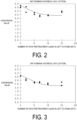
FIG. 2 is a graph showing a correspondence relationship between freshness of a pretreatment liquid and a dry rubbing fastness of a 100% cotton fabric on which the pretreatment liquid was used. -
FIG. 3 is a graph showing a correspondence relationship between the freshness of the pretreatment liquid and a wet rubbing fastness of the 100% cotton fabric on which the pretreatment liquid was used. -
FIG. 4 is a graph showing a correspondence relationship between the freshness of the pretreatment liquid and a dry rubbing fastness of a fabric, made with 35% cotton and 65% polyester, on which the pretreatment liquid was used. -
FIG. 5 is a graph showing a correspondence relationship between the freshness of the pretreatment liquid and a wet rubbing fastness of the fabric, made with 35% cotton and 65% polyester, on which the pretreatment liquid was used. -
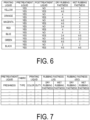
FIG. 6 is a table showing, for each color of a printing liquid, changes in the rubbing fastness by the pretreatment liquid and a posttreatment liquid. -
FIG. 7 is a table showing an example of a data table. -
FIG. 8 is a flowchart illustrating an example of estimation processing. - An embodiment of a printing system will be described below with reference to the accompanying drawings. The printing system is a system including an ink-jet printer printing a character and an image such as a photograph by ejecting ink, which is an example of a printing liquid, to a fabric such as a woven fabric or a knitted fabric.
- As illustrated in
FIG. 1 , aprinting system 10 includes aprinting apparatus 11 and aserver device 12. Theprinting system 10 is configured by connecting theprinting apparatus 11 and theserver device 12 in a communicable manner. Theprinting apparatus 11 and theserver device 12 are connected by, for example, a network. - The
printing apparatus 11 includes aprinting unit 21. Theprinting unit 21 is configured to perform printing on afabric 99 by ejecting one or more printing liquids. Theprinting unit 21 ejects a printing liquid to thefabric 99 to which a pretreatment liquid described below has been applied. Theprinting unit 21 ejects, for example, a plurality of printing liquids having different colors. Examples of the plurality of printing liquids include cyan ink, magenta ink, yellow ink, and black ink. Examples of the printing liquids include pigment ink. - The
printing unit 21 includes one ormore heads 22. Eachhead 22 includes one ormore nozzles 23. Eachhead 22 ejects the printing liquid from eachnozzle 23 to thefabric 99. - The
printing unit 21 may include ahead 22 for each of the colors of the printing liquids. That is, theprinting unit 21 may include ahead 22 ejecting a cyan printing liquid, ahead 22 ejecting a magenta printing liquid, ahead 22 ejecting a yellow printing liquid, and ahead 22 ejecting a black printing liquid. Theprinting unit 21 may include onehead 22 ejecting the plurality of printing liquids. In other words, thehead 22 may include one ormore nozzles 23 ejecting a cyan printing liquid, one ormore nozzles 23 ejecting a magenta printing liquid, one ormore nozzles 23 ejecting a yellow printing liquid, and one ormore nozzles 23 ejecting a black printing liquid. - The
printing unit 21 may include acarriage 24. Thehead 22 is mounted at thecarriage 24. Thecarriage 24 scans thefabric 99. Theprinting apparatus 11 is, for example, a serial printer in which thehead 22 scans thefabric 99 together with thecarriage 24. Theprinting apparatus 11 may be a line printer in which theheads 22 can simultaneously eject the printing liquids over the width of thefabric 99. - The
printing apparatus 11 includes apretreatment unit 25. Thepretreatment unit 25 performs pretreatment on thefabric 99 before printing. Thepretreatment unit 25 applies a pretreatment liquid to thefabric 99. The pretreatment liquid is a liquid promoting fixation of the printing liquid to thefabric 99. Specifically, the pretreatment liquid reacts with the printing liquid, so that pigments contained in the printing liquid coagulate. The pretreatment liquid contains, for example, a cationic resin. When the cationic resin reacts with the pigment ink, the pigments coagulate. Thus, an image printed on thefabric 99 can be easily fixed to thefabric 99. This results in improvement of the rubbing fastness of thefabric 99. - The rubbing fastness includes a dry rubbing fastness and a wet rubbing fastness. Application of the pretreatment liquid to the
fabric 99 improves both the dry rubbing fastness and the wet rubbing fastness. Typically, when the pretreatment liquid is applied to thesame fabric 99 under the same conditions, the dry rubbing fastness is equal to or greater than the wet rubbing fastness. - The rubbing fastness is evaluated based on standards such as JIS and ISO. The rubbing fastness is evaluated, for example, in nine grades from
Grade 5 to Grade 1. As the grade increases, discoloring is less likely to occur, i.e., the rubbing fastness increases. The rubbing fastness is evaluated based on, for example, the reflection density of the printing liquid of thefabric 99 after a rubbing test. - The
pretreatment unit 25 may apply the pretreatment liquid to thefabric 99 by ejecting the pretreatment liquid to thefabric 99. In this case, thepretreatment unit 25 includes the same head as theprinting unit 21. Thepretreatment unit 25 may include a head different from that of theprinting unit 21 or thepretreatment unit 25 and theprinting unit 21 may include thecommon head 22. That is, theprinting apparatus 11 may include ahead 22 ejecting the printing liquid and a head ejecting the pretreatment liquid or may include onehead 22 including anozzle 23 ejecting the printing liquid and a nozzle ejecting the pretreatment liquid. Thepretreatment unit 25 ejects the pretreatment liquid to a region of thefabric 99 where the printing liquid is to be ejected. Thus, the region where the pretreatment liquid is ejected overlaps the region where the printing liquid is to be ejected. - The
pretreatment unit 25 is not limited to those that eject the pretreatment liquid and may apply the pretreatment liquid to thefabric 99 by immersing thefabric 99 in the pretreatment liquid. In this case, thepretreatment unit 25 may include a storage tank storing the pretreatment liquid. Thepretreatment unit 25 applies the pretreatment liquid to thefabric 99 by causing thefabric 99 to pass through the storage tank. - The
pretreatment unit 25 is supplied with the pretreatment liquid from anaccommodation body 26. Theaccommodation body 26 accommodates the pretreatment liquid. Theaccommodation body 26 is, for example, a cartridge attached to thepretreatment unit 25. Theaccommodation body 26 is attachable to and detachable from thepretreatment unit 25. Theaccommodation body 26 is not limited to the cartridge and may be, for example, a bottle injecting the pretreatment liquid into thepretreatment unit 25. - The
accommodation body 26 includes anIC chip 27. TheIC chip 27 stores freshness information D1. The freshness information D1 is information regarding the freshness of the pretreatment liquid accommodated in theaccommodation body 26. When the pretreatment liquid containing a cationic resin is used, the freshness of the pretreatment liquid is represented by the amount of cation contained in the pretreatment liquid. The amount of cation contained in the pretreatment liquid changes overtime. Specifically, the amount of cation contained in the pretreatment liquid decreases over time. That is, as the amount of cation contained in the pretreatment liquid decreases, the freshness of the pretreatment liquid decreases. Thus, the freshness of the pretreatment liquid can be regarded as a function of time. When the amount of cation contained in the pretreatment liquid decreases, the rubbing fastness of thefabric 99 on which the pretreatment liquid was used decreases from an intended value. That is, the rubbing fastness of thefabric 99 depends on the freshness of the used pretreatment liquid. Thus, the rubbing fastness of thefabric 99 can be regarded as a function of the freshness of the pretreatment liquid. - The freshness information D1 is factor information for estimating, based on a data table T1 described below, the freshness of the pretreatment liquid in the
accommodation body 26 already mounted at theprinting apparatus 11. In other words, the freshness information D1 is information indicating a factor regarding the rubbing fastness. The freshness information D1 may be, for example, information indicating the manufacture date of the pretreatment liquid, that is, the manufacturing time, or information indicating the use expiration date of the pretreatment liquid. The smaller the number of days elapsed from the manufacture date is or the larger the number of days remaining until the use expiration date is, the fresher the pretreatment liquid is. As to the pretreatment liquid containing a cationic resin, the smaller the number of days elapsed from the manufacture date is or the larger the number of days remaining until the use expiration date is, the higher the freshness is, that is, the larger the amount of cation is. - When the pretreatment liquid is fresher, the pretreatment liquid is more reactive with the printing liquid. The fresher pretreatment liquid more greatly contributes to improvement of the rubbing fastness. When the freshness of the pretreatment liquid is low, the degree of improvement in the rubbing fastness is small. That is, the degree of improvement in the rubbing fastness by the pretreatment liquid depends on the freshness of the pretreatment liquid, that is, a factor relating to the rubbing fastness. For example, when the factor is the manufacture date, the rubbing fastness increases as the number of days elapsed from the manufacture date decreases. Thus, when the freshness of the pretreatment liquid is low, that is, when the number of days elapsed from the manufacture date increases, it is more likely that the intended rubbing fastness may not be obtained.
- As shown in
FIGs. 2, 3 ,4, and 5 , as the freshness of the pretreatment liquid decreases, the rubbing fastness obtained by using the pretreatment liquid decreases. In the graphs shown inFIGs. 2, 3 ,4, and 5 , the vertical axis represents the rubbing fastness of thefabric 99, and the horizontal axis represents the freshness of the pretreatment liquid. In detail, the vertical axis represents a value obtained by converting, into the rubbing fastness, the reflection density of the printing liquid of thefabric 99 after the rubbing test. The reflection density of the printing liquid of the pretreatment liquid is an optical density. For example, the conversion value of 5.0 representsGrade 5, and the conversion value of 3.5 represents Grade 3-4. The horizontal axis represents the time elapsed from manufacture of the pretreatment liquid. In more detail, the horizontal axis represents the number of days in which the pretreatment liquid is left to stand in an environment at a temperature of 60°C. At high temperatures, the pretreatment liquid significantly deteriorates. For example, the rubbing fastness of thefabric 99 on which the pretreatment liquid left to stand for five days in an environment at a temperature of 60°C was used is substantially the same as the rubbing fastness of thefabric 99 on which the pretreatment liquid left to stand for six months in an environment at a temperature of 25°C was used. Thus, the degree of deterioration of the pretreatment liquid left to stand for five days in an environment at a temperature of 60°C is substantially the same as the degree of deterioration of the pretreatment liquid left to stand for six months in an environment at a temperature of 25°C. That is, the graphs shown inFIGs. 2, 3 ,4, and 5 are results of evaluating, by an accelerated test, the correspondence relationship between the time elapsed from manufacture of the pretreatment liquid and the rubbing fastness of thefabric 99 on which the pretreatment liquid was used. The graphs shown inFIGs. 2 and 3 show the correspondence relationship between the freshness of the pretreatment liquid and the rubbing fastness of the 100% cotton fabric 99. The graphs shown inFIGs. 4 and 5 show the correspondence relationship between the freshness of the pretreatment liquid and the rubbing fastness of thefabric 99 made with 35% cotton and 65% polyester. Note that the graphs shown inFIGs. 2, 3 ,4, and 5 may be subjected to nonlinear interpolation as appropriate by fitting or the like. - Even when the same pretreatment liquid is used, the correspondence relationship between the time elapsed from manufacture of the pretreatment liquid and the rubbing fastness of the
fabric 99 on which the pretreatment liquid was used is different according to the type of thefabric 99. This is because the ease of fixation of the printing liquid is different according to the type of thefabric 99. In the case of the 100% cotton fabric 99, the rubbing fastness significantly decreases according to the freshness of the pretreatment liquid, whereas in the case of thefabric 99 made with 35% cotton and 65% polyester, the rubbing fastness moderately decreases according to the freshness of the pretreatment liquid. - Even when the pretreatment liquid having the same freshness is used, the rubbing fastness is different according to the type of the
fabric 99. For example, when the pretreatment liquid left to stand for 0 day is used, the 100% cotton fabric 99 has a dry rubbing fastness of Grade 4-5 toGrade 5 and a wet rubbing fastness of Grade 3-4 toGrade 4. On the other hand, when the pretreatment liquid left to stand for 0 day is used, thefabric 99 made with 35% cotton and 65% polyester has a dry rubbing fastness of Grade 4-5 and a wet rubbing fastness of Grade 3-4. - As shown in
FIG. 6 , even when the same pretreatment liquid is used, the rubbing fastness is different according to the color of the printing liquid. This is because the reactivity with the pretreatment liquid is different according to the color of the printing liquid, that is, the type of the printing liquid. The rubbing fastness shown inFIG. 6 is a value evaluated based on ISO 105-X12. For example, in the case of a yellow printing liquid, the dry rubbing fastness is Grade 4-5 and the wet rubbing fastness isGrade 3, whereas in the case of a black printing liquid, the dry rubbing fastness isGrade 2 and the wet rubbing fastness isGrade 2. That is, the black printing liquid is difficult to be fixed to thefabric 99. - The rubbing fastness is different according to not only the type of the
fabric 99 and the color of the printing liquid but also a printing duty. The printing duty indicates a ratio of an area printed per unit area when an image is printed on thefabric 99. That is, the printing duty is a ratio of an area occupied by the printing liquid per unit area. As the amount of the printing liquid ejected to thefabric 99 increases, the printing liquid is more difficult to be fixed to thefabric 99. - As illustrated in
FIG. 1 , theprinting apparatus 11 may include aposttreatment unit 28. Theposttreatment unit 28 performs posttreatment on thefabric 99 to which the printing liquid has been ejected. Theposttreatment unit 28 performs posttreatment on thefabric 99 to improve the rubbing fastness of thefabric 99. Thus, when thefabric 99 has a sufficient rubbing fastness before the posttreatment, theposttreatment unit 28 does not perform the posttreatment on thefabric 99. That is, theposttreatment unit 28 performs the posttreatment on thefabric 99 when the rubbing fastness of thefabric 99 cannot be sufficiently obtained only by the pretreatment. - The
posttreatment unit 28 applies a posttreatment liquid to thefabric 99, for example. The posttreatment liquid is a liquid covering an image printed on thefabric 99. The posttreatment liquid is a so-called overcoat liquid. The posttreatment liquid has a role of a protective layer by covering the image. Thus, the image is less likely to come off thefabric 99. This results in improvement of the rubbing fastness of thefabric 99. When the posttreatment liquid is applied to thefabric 99, the softness of thefabric 99 may be impaired. Thus, a sufficient rubbing fastness may be obtained using only the pretreatment liquid. - In a manner similar to the
pretreatment unit 25, theposttreatment unit 28 may apply the posttreatment liquid to thefabric 99 by ejecting the posttreatment liquid to thefabric 99 or may apply the posttreatment liquid to thefabric 99 by immersing thefabric 99 in the posttreatment liquid. That is, theposttreatment unit 28 may include a head ejecting the posttreatment liquid or may include a storage tank storing the posttreatment liquid. - The
posttreatment unit 28 is not limited to those that eject the posttreatment liquid and may dry thefabric 99, for example. For example, theposttreatment unit 28 dries thefabric 99 by heating thefabric 99. Although it is only slight as compared with the case where the posttreatment liquid is applied, drying thefabric 99 improves the rubbing fastness. - As shown in
FIG. 6 , the rubbing fastness is typically improved when the posttreatment liquid is applied to thefabric 99 as compared with the case where the posttreatment liquid is not applied to thefabric 99. For example, in the case of a black printing liquid, the dry rubbing fastness is Grade 4-5 and the wet rubbing fastness is Grade 4-5 when the posttreatment liquid is applied, whereas the dry rubbing fastness isGrade 2 and the wet rubbing fastness isGrade 2 when the posttreatment liquid is not applied. - As illustrated in
FIG. 1 , theprinting apparatus 11 includes adisplay unit 29. Thedisplay unit 29 is configured to display information. Thedisplay unit 29 is, for example, a display. Thedisplay unit 29 displays, for example, information received from theserver device 12. Thedisplay unit 29 may display first information M1 or second information M2 based on the information received from theserver device 12. The first information M1 and the second information M2 will be described below. - The
printing apparatus 11 includes anoperation unit 30. Theoperation unit 30 may be, for example, a pointing device or a touch panel. The user can input information to theprinting apparatus 11 or give an instruction to theprinting apparatus 11 by operating theoperation unit 30. - The
printing apparatus 11 includes aprocessing circuit 31. Theprocessing circuit 31 controls theprinting apparatus 11. For example, theprocessing circuit 31 receives an instruction from the user through theoperation unit 30, thereby controlling theprinting apparatus 11 in accordance with the instruction. Theprocessing circuit 31 communicates with theserver device 12. Theprocessing circuit 31 transmits and receives information to and from theserver device 12. - The
processing circuit 31 may be configured of one or more processors executing various types of processing in accordance with a computer program. Theprocessing circuit 31 may be configured of one or more dedicated hardware circuits, such as an application-specific integrated circuit, executing at least some of the various types of processing. Theprocessing circuit 31 may be configured of a circuit including a combination of a processor and a hardware circuit. The processor includes a CPU and a memory such as a RAM and a ROM. The memory stores a program code or a command configured to cause the CPU to execute processing. The memory, that is, a computer-readable medium, includes any readable medium that can be accessed by a general purpose or special purpose computer. - The
processing circuit 31 acquires the freshness information D1. Theprocessing circuit 31 acquires the freshness information D1 by reading the freshness information D1 from theIC chip 27. For example, theprocessing circuit 31 may acquire the freshness information D1 through theoperation unit 30. In this case, the user inputs information described at theaccommodation body 26, for example, the manufacture date of the pretreatment liquid and the use expiration date of the pretreatment liquid to theprocessing circuit 31 through theoperation unit 30. - The
processing circuit 31 may acquire use date information D2. Theprocessing circuit 31 may acquire the current date and time counted by a timer (not illustrated) as the use date information D2. The timer is, for example, a circuit counting the current date and time and is included in theprinting apparatus 11. Theprocessing circuit 31 may acquire the current date and time as the use date information D2 through a network. The use date information D2 may be input to theprocessing circuit 31 through theoperation unit 30 by the user who uses theprinting apparatus 11, for example. - The use date information D2 is information indicating a time to start use of the pretreatment liquid, for example, a use date of starting use of the pretreatment liquid. Thus, when the freshness information D1 is information indicating the manufacture date, the use date information D2 is information indicating a date and time after the manufacture date. When the freshness information D1 is information indicating the use expiration date, the use date information D2 is information indicating a date and time before the use expiration date. Thus, the use date information D2 is information indicating a date and time after the manufacture date and before the use expiration date. This corresponds to the fact that the user uses the pretreatment liquid after the manufacture date and before the use expiration date. The use date information D2 is not limited to information indicating a date and time when the user actually uses the pretreatment liquid and may be information indicating a scheduled date and time when the user uses the pretreatment liquid. As a result, the freshness of the pretreatment liquid at the use date can be grasped from the freshness information D1 and the use date information D2. That is, by acquiring the use date information D2, not only the freshness of the pretreatment liquid at the current time but also the freshness of the pretreatment liquid at the scheduled use date after a predetermined period from the current time can be grasped.
- The
processing circuit 31 may acquire fabric type information D3. The fabric type information D3 is information indicating the type of thefabric 99 on which printing is to be performed. The fabric type information D3 indicates a mass ratio of fiber constituting thefabric 99, such as cotton, wool, silk, or polyester. The fabric type information D3 may include information indicating a way of weaving thefabric 99 and a way of knitting thefabric 99. - For example, the
processing circuit 31 acquires the fabric type information D3 through theoperation unit 30. In this case, the user inputs the mass ratio of the fiber constituting thefabric 99, the way of weaving, the way of knitting, and the like to theprocessing circuit 31 through theoperation unit 30. Theprocessing circuit 31 may acquire the fabric type information D3 from an analysis device analyzing the type of thefabric 99. For example, the analysis device may identify the mass ratio, the way of weaving, the way of knitting, and the like of the fiber constituting thefabric 99 by analyzing a captured image obtained by capturing thefabric 99. - The
processing circuit 31 may acquire a target level D4. The target level D4 is information indicating the rubbing fastness of thefabric 99 desired by the user. Theprocessing circuit 31 acquires the target level D4, for example, through theoperation unit 30. In this case, the user inputs the desired rubbing fastness to theprocessing circuit 31 through theoperation unit 30. Theprocessing circuit 31 may acquire the target level D4 from a terminal such as a personal computer or a smart phone owned by the user. - The target level D4 may include information specifying a standard for the rubbing fastness. In this case, the target level D4 indicates the desired rubbing fastness in the ISO standard or the desired rubbing fastness in the JIS standard. For example, the user specifies the standard of the rubbing fastness through the
operation unit 30. - The target level D4 may be information indicating the rubbing fastness of the
fabric 99 desired by the user for each color of the printing liquid. In this case, the user specifies the desired rubbing fastness for each color of the printing liquid. Typically, the user specifies one desired rubbing fastness. - The
processing circuit 31 may acquire duty information D5. The duty information D5 is information indicating a printing duty. The duty information D5 indicates a printing duty for each color of the printing liquid. - The
processing circuit 31 acquires the duty information D5 based on, for example, image data to be printed. Theprocessing circuit 31 acquires the image data, for example, through theoperation unit 30. In this case, the user inputs the image data to theprocessing circuit 31 through theoperation unit 30. Theprocessing circuit 31 may acquire the image data from a terminal such as a personal computer or a smart phone owned by the user. - The
processing circuit 31 transmits the acquired information to theserver device 12. Theprocessing circuit 31 transmits the acquired information to theserver device 12, for example, before performing the pretreatment on thefabric 99. Theprocessing circuit 31 transmits the freshness information D1 to theserver device 12. Theprocessing circuit 31 may transmit the use date information D2 to theserver device 12. Theprocessing circuit 31 may transmit the fabric type information D3 to theserver device 12. Theprocessing circuit 31 may transmit the target level D4 to theserver device 12. Theprocessing circuit 31 may transmit the duty information D5 to theserver device 12. - Among the freshness information D1, the use date information D2, the fabric type information D3, the target level D4, and the duty information D5, the
processing circuit 31 transmits at least the freshness information D1 to theserver device 12. Theprocessing circuit 31 transmits, for example, the freshness information D1, the use date information D2, the fabric type information D3, the target level D4, and the duty information D5 to theserver device 12 in a mutually associated manner. - The
processing circuit 31 receives, from theserver device 12, information based on the transmitted information. For example, theprocessing circuit 31 displays the received information on thedisplay unit 29. Theprocessing circuit 31 may display the first information M1 or the second information M2 on thedisplay unit 29 based on the received information. Theprocessing circuit 31 may store the first information M1 and the second information M2 or may receive the first information M1 or the second information M2 from theserver device 12. - The
server device 12 includes astorage unit 41. Thestorage unit 41 controls theserver device 12. Thestorage unit 41 is, for example, a memory such as a RAM and a ROM. Thestorage unit 41 stores various programs. - The
storage unit 41 stores at least one data table T1. The data table T1 indicates the correspondence relationship between a time elapsed from manufacture of the pretreatment liquid and the rubbing fastness of thefabric 99 on which the pretreatment liquid was used. That is, the data table T1 is a table in which the freshness of the pretreatment liquid and the rubbing fastness of thefabric 99 on which the pretreatment liquid was used are associated with each other. It can be said that the data table T1 is information indicating the reactivity with the printing liquid with respect to the freshness of the pretreatment liquid. - The data table T1 is data in which a parameter indicating the freshness of the pretreatment liquid and a parameter indicating the rubbing fastness of
fabric 99 on which the pretreatment liquid was used are associated with each other. The parameter indicating the rubbing fastness may include a parameter indicating the dry rubbing fastness and a parameter indicating the wet rubbing fastness. The data table T1 may be obtained, for example, through an experiment of measuring the rubbing fastness of each of thefabrics 99 on which the pretreatment liquids different in freshness were used or may be obtained through a simulation. The graphs shown inFIGs. 2 to 5 are examples of the data table T1. - The
storage unit 41 may store the plurality of data tables T1 so as to indicate, for each type of thefabric 99, the correspondence relationship between the freshness of the pretreatment liquid and the rubbing fastness. That is, thestorage unit 41 may store, for each type of thefabric 99, the data table T1 in which the parameter indicating the freshness of the pretreatment liquid and the parameter indicating the rubbing fastness of thefabric 99 on which the pretreatment liquid was used are associated with each other. It can be said that each of the plurality of data tables T1 is associated with the parameter indicating the type of thefabric 99. Thus, the plurality of data tables T1 each can be represented by data in which the parameter indicating the freshness of the pretreatment liquid, the parameter indicating the rubbing fastness of thefabric 99 on which the pretreatment liquid was used, and the parameter indicating the type of thefabric 99 are associated with each other. The plurality of data tables T1 include, for example, the data table T1 indicating the correspondence relationship between the freshness of the pretreatment liquid and the rubbing fastness in the case of the 100% cotton fabric 99 and the data table T1 indicating the correspondence relationship between the freshness of the pretreatment liquid and the rubbing fastness in the case of the 100% wool fabric 99. - The
storage unit 41 may store the plurality of data tables T1 so as to indicate, for each color of the printing liquid, the correspondence relationship between the freshness of the pretreatment liquid and the rubbing fastness. That is, thestorage unit 41 may store, for each color of the printing liquid, the data table T1 in which the parameter indicating the freshness of the pretreatment liquid and the parameter indicating the rubbing fastness of thefabric 99 on which the pretreatment liquid was used are associated with each other. It can also be said that each of the plurality of data tables T1 is associated with the parameter indicating the color of the printing liquid. Thus, the plurality of data tables T1 each can be represented by data in which the parameter indicating the freshness of the pretreatment liquid, the parameter indicating the rubbing fastness of thefabric 99 on which the pretreatment liquid was used, and the parameter indicating the color of the printing liquid are associated with each other. The plurality of data tables T1 include, for example, the data table T1 indicating the correspondence relationship between the freshness of the pretreatment liquid and the rubbing fastness in the case of a yellow printing liquid and the data table T1 indicating the correspondence relationship between the freshness of the pretreatment liquid and the rubbing fastness in the case of a black printing liquid. - The
storage unit 41 may store the plurality of data tables T1 so as to indicate, for each printing duty, the correspondence relationship between the freshness of the pretreatment liquid and the rubbing fastness. That is, thestorage unit 41 may store, for each printing duty, the data table T1 in which the parameter indicating the freshness of the pretreatment liquid and the parameter indicating the rubbing fastness of thefabric 99 on which the pretreatment liquid was used are associated with each other. It can also be said that each of the plurality of data tables T1 is associated with the parameter indicating the printing duty. Thus, the plurality of data tables T1 each can be represented by data in which the parameter indicating the freshness of the pretreatment liquid, the parameter indicating the rubbing fastness of thefabric 99 on which the pretreatment liquid was used, and the parameter indicating the printing duty are associated with each other. The plurality of data tables T1 include, for example, the data table T1 indicating the correspondence relationship between the freshness of the pretreatment liquid and the rubbing fastness in the case of a predetermined printing liquid having a printing duty of 80%, and the data table T1 indicating the correspondence relationship between the freshness of the pretreatment liquid and the rubbing fastness in the case of a predetermined printing liquid having a printing duty of 60%. - The
storage unit 41 may store the plurality of data tables T1 so as to indicate, for each standard of the rubbing fastness, the correspondence relationship between the freshness of the pretreatment liquid and the rubbing fastness. That is, thestorage unit 41 may store, for each standard of the rubbing fastness, the data table T1 in which the parameter indicating the freshness of the pretreatment liquid and the parameter indicating the rubbing fastness of thefabric 99 on which the pretreatment liquid was used are associated with each other. It can also be said that each of the plurality of data tables T1 is associated with the parameter indicating the standard of the rubbing fastness. Thus, the plurality of data tables T1 each can be represented by data in which the parameter indicating the freshness of the pretreatment liquid, the parameter indicating the rubbing fastness of thefabric 99 on which the pretreatment liquid was used, and the parameter indicating the standard of the rubbing fastness are associated with each other. The plurality of data tables T1 include, for example, the data table T1 indicating the correspondence relationship between the freshness of the pretreatment liquid and the rubbing fastness based on the JIS standard and the data table T1 indicating the correspondence relationship between the freshness of the pretreatment liquid and the rubbing fastness based on the ISO standard. The standard of the desired rubbing fastness may be different according to the user. Thus, thestorage unit 41 may store the plurality of data tables T1 each indicating the rubbing fastness evaluated based on the standard such as ISO or JIS. - As shown in
FIG. 7 , the plurality of data tables T1 each can be represented by data in which, for example, the parameter indicating the freshness of the pretreatment liquid, the parameter indicating the type of thefabric 99, the parameter indicating the color of the printing liquid, the parameter indicating the printing duty, the parameter indicating the standard of the rubbing fastness, and the parameter indicating the rubbing fastness are associated with each other. The plurality of data tables T1 each can be represented by data in which, among the parameter indicating the rubbing fastness, the parameter indicating the type of thefabric 99, the parameter indicating the color of the printing liquid, the parameter indicating the printing duty, and the parameter indicating the standard of the rubbing fastness, at least the parameter indicating the rubbing fastness is associated with the parameter indicating the freshness of the pretreatment liquid. - As illustrated in
FIG. 1 , theserver device 12 includes acontrol unit 42. Thecontrol unit 42 controls theserver device 12. Thecontrol unit 42 includes, for example, a CPU. Thecontrol unit 42 may include a hardware circuit. - The
control unit 42 includes anacquisition unit 43. Theacquisition unit 43 acquires information from theprinting apparatus 11. Theacquisition unit 43 is, for example, an interface communicating with the outside. Theacquisition unit 43 acquires, for example, the freshness information D1, the use date information D2, the fabric type information D3, the target level D4, and the duty information D5. Theacquisition unit 43 acquires, for example, the freshness information D1, the use date information D2, the fabric type information D3, the target level D4, and the duty information D5 through theprocessing circuit 31. For example, theacquisition unit 43 may acquire the current date and time counted by the timer (not illustrated) as the use date information D2. The timer is, for example, a circuit counting the current date and time and is included in theserver device 12. Theacquisition unit 43 may acquire the current date and time as the use date information D2 through a network. - The
control unit 42 includes anestimation unit 44. Theestimation unit 44 executes estimation processing of estimating the rubbing fastness by referring to the data table T1 based on information acquired from theprinting apparatus 11. Thecontrol unit 42 functions as theestimation unit 44 by executing a program defining the estimation processing. The program defining the estimation processing is stored in, for example, thestorage unit 41. - The
estimation unit 44 outputs an estimation level D6 indicating an estimated rubbing fastness. Thus, theestimation unit 44 outputs the estimation level D6 of the rubbing fastness based on the information acquired by theacquisition unit 43 and the data table T1. Specifically, theestimation unit 44 outputs the estimation level D6 based on the information including at least the freshness information D1 and the use date information D2 and the data table T1. - Based on the freshness information D1 and the use date information D2, the
estimation unit 44 outputs the estimation level D6 of the rubbing fastness estimated to be obtained when the pretreatment liquid having the freshness indicated by the freshness information D1 and the use date information D2 is used. When thestorage unit 41 stores, for example, the data table T1 shown inFIG. 3 , theestimation unit 44 outputs the estimation level D6 based on the freshness information D1, the use date information D2, and the data table T1 illustrated inFIG. 3 . When the freshness information D1 is, for example, information indicating the manufacturing time, theestimation unit 44 regards a specific date of the manufacturing time as the origin of the horizontal axis of the data table T1 shown inFIG. 3 . That is, the value of the origin of the horizontal axis of the data table T1 shown inFIG. 3 is updated to the value at the specific date of the manufacturing time. Then, theestimation unit 44 extracts the value of the vertical axis at the date after the date (origin) of the manufacturing time, that is, the date indicated by the use date information D2 with reference to the data table T1 shown inFIG. 3 . In summary, theestimation unit 44 outputs the estimation level D6 by extracting the value of the vertical axis at the date indicated by the use date information D2 using the date of the manufacturing time as a beginning date. Note that the beginning date is not limited to the date of the manufacturing time, but may be the use expiration date. - For example, based on the freshness information D1 and the use date information D2, the
estimation unit 44 may output, for each color of the printing liquid, the estimation level D6 of the rubbing fastness estimated to be obtained when the pretreatment liquid having the freshness indicated by the freshness information D1 and the use date information D2 is used. For example, based on the freshness information D1, the use date information D2, and the fabric type information D3, theestimation unit 44 may output the estimation level D6 of the rubbing fastness estimated to be obtained when the pretreatment liquid having the freshness indicated by the freshness information D1 and the use date information D2 is used on thefabric 99 indicated by the fabric type information D3. For example, based on the freshness information D1, the use date information D2, and the duty information D5, theestimation unit 44 may output the estimation level D6 of the rubbing fastness estimated to be obtained when the pretreatment liquid having the freshness indicated by the freshness information D1 and the use date information D2 is used and then printing is performed with the amount of the printing liquid indicated by the duty information D5. - The
estimation unit 44 may output the estimation level D6 to theprinting apparatus 11. In this case, the estimation level D6 is displayed on thedisplay unit 29. The user can grasp the estimation level D6 by checking thedisplay unit 29. That is, the user can grasp the rubbing fastness based on the freshness of the pretreatment liquid without performing printing. In the example, theestimation unit 44 outputs the estimation level D6 to adetermination unit 45 described below. - When estimating the rubbing fastness for each color of the printing liquid, the
estimation unit 44 may output the estimation level D6 of the rubbing fastness estimated for each of the plurality of printing liquids. In addition, when estimating the rubbing fastness for each color of the printing liquid, theestimation unit 44 may output the estimation level D6 of one representative rubbing fastness among these rubbing fastnesses. For example, when estimating the rubbing fastness for each color of the printing liquid, theestimation unit 44 may output the estimation level D6 of the lowest rubbing fastness among the respective rubbing fastnesses estimated for the plurality of printing liquids. For example, when estimating the rubbing fastness for each color of the printing liquid, theestimation unit 44 may output the estimation level D6 of the rubbing fastness related to the printing liquid having the largest printing duty among the respective rubbing fastnesses estimated for the plurality of printing liquids. - The
control unit 42 may include thedetermination unit 45. Thedetermination unit 45 executes determination processing of determining whether the estimation level D6 is equal to or higher than the target level D4. Thecontrol unit 42 functions as thedetermination unit 45 by executing a program defining the determination processing. The program defining the determination processing is stored in, for example, thestorage unit 41. - Based on the estimation level D6 output by the
estimation unit 44 and the target level D4 acquired by theacquisition unit 43, thedetermination unit 45 outputs a determination result indicating whether the estimation level D6 is equal to or higher than the target level D4. For example, thedetermination unit 45 outputs the determination result to theprinting apparatus 11. The determination result is displayed on thedisplay unit 29 as the first information M1 or the second information M2. The user can understand whether the estimation level D6 is equal to or higher than the target level D4 by checking the first information M1 or the second information M2. That is, the user can understand whether the desired rubbing fastness can be obtained based on the freshness of the pretreatment liquid without performing printing. - When the estimation level D6 is lower than the target level D4, the
determination unit 45 may determine whether the rubbing fastness equal to or higher than the target level D4 can be obtained by replacement of the pretreatment liquid. Thedetermination unit 45 can determine, by referring to the data table T1, whether the rubbing fastness equal to or higher than the target level D4 can be obtained by replacement of the pretreatment liquid. When determining that the rubbing fastness equal to or higher than the target level D4 can be obtained by replacement of the pretreatment liquid, thedetermination unit 45 may output a replacement indicator indicating the freshness of the pretreatment liquid necessary for obtaining the rubbing fastness equal to or higher than the target level D4. Thedetermination unit 45 may output, for example, a limit of the number of days elapsed from the manufacture date or a limit of the number of days remaining until the use expiration date as the replacement indicator. In this case, the user checks the replacement indicator such as the limit of the number of elapsed days or the limit of the number of remaining days, thereby understanding that the pretreatment liquid the number of elapsed days of which does not exceed the limit of the number of elapsed days or the pretreatment liquid the number of remaining days of which is larger than the limit of the number of remaining days should be used. - Next, the first information M1 and the second information M2 will be described.
- The first information M1 is displayed on the
display unit 29 when thedetermination unit 45 determines that the estimation level D6 is equal to or higher than the target level D4. That is, the first information M1 is information indicating that the estimation level D6 is equal to or higher than the target level D4. The first information M1 is, for example, a message. The first information M1 is displayed on thedisplay unit 29, so that the user understands that the estimation level D6 is equal to or higher than the target level D4, that is, the desired rubbing fastness can be obtained using the pretreatment liquid in use. - The second information M2 is displayed on the
display unit 29 when thedetermination unit 45 determines that the estimation level D6 is lower than the target level D4. That is, the second information M2 is information indicating that the estimation level D6 is lower than the target level D4. The second information M2 is, for example, a message. The second information M2 is displayed on thedisplay unit 29, so that the user understands that the estimation level D6 is lower than the target level D4, that is, the desired rubbing fastness cannot be obtained using the pretreatment liquid in use. - The second information M2 may include a message prompting replacement of the pretreatment liquid. The second information M2 may include a message prompting performing of the posttreatment. In this case, the second information M2 may include a posttreatment condition indicating a specific condition of the posttreatment. Examples of the posttreatment condition include the type of the posttreatment liquid, the concentration of the posttreatment liquid, the drying temperature, and the drying time.
- Next, the estimation processing indicating an estimation method for estimating the rubbing fastness will be described. The estimation processing is executed in the
printing system 10 before theprinting apparatus 11 performs printing on thefabric 99. The estimation processing is executed, for example, when information is transmitted from theprinting apparatus 11 to theserver device 12. In the example, the estimation processing includes the determination processing. - As illustrated in
FIG. 8 , in step S11, theacquisition unit 43 acquires information from theprinting apparatus 11. Specifically, theacquisition unit 43 acquires information including the freshness information D1 from theprinting apparatus 11. Theacquisition unit 43 may acquire the use date information D2 from theprinting apparatus 11, may acquire the use date information D2 from theserver device 12, or may acquire the use date information D2 from the outside through a network. - In step S12, the
estimation unit 44 estimates the rubbing fastness based on the information including the freshness information D1 and the use date information D2. Thus, the estimation level D6 is output. The estimation level D6 may be output to theprinting apparatus 11. In this case, the estimation processing ends. - In step S13, the
determination unit 45 determines whether the estimation level D6 is equal to or higher than the target level D4. When thedetermination unit 45 determines that the estimation level D6 is equal to or higher than the target level D4, the processing proceeds to step S14. When thedetermination unit 45 determines that the estimation level D6 is lower than the target level D4, the processing proceeds to step S15. - In step S14, the
display unit 29 displays the first information M1 based on the determination result. Thedisplay unit 29 displays the first information M1, and thus the estimation processing ends. - In step S15, the
determination unit 45 determines whether the rubbing fastness equal to or higher than the target level D4 can be obtained by replacement of the pretreatment liquid. When thedetermination unit 45 determines that the rubbing fastness equal to or higher than the target level D4 can be obtained by replacement of the pretreatment liquid, the processing proceeds to step S16. When thedetermination unit 45 determines that the rubbing fastness equal to or higher than the target level D4 cannot be obtained by replacement of the pretreatment liquid, the processing proceeds to step S17. - In step S16, the
display unit 29 displays the second information M2 based on the determination result. Specifically, thedisplay unit 29 displays information prompting replacement of the pretreatment liquid or performing of the posttreatment. The user obtains thefabric 99 having a desired rubbing fastness by replacing the pretreatment liquid or performing the posttreatment. Thedisplay unit 29 displays the second information M2, and thus the estimation processing ends. - In step S17, the
display unit 29 displays the second information M2 based on the determination result. Specifically, thedisplay unit 29 displays information prompting performing of the posttreatment. The user performs the posttreatment, thereby obtaining thefabric 99 having a desired rubbing fastness. Thedisplay unit 29 displays the second information M2, and thus the estimation processing ends. - As described above, the estimation method indicated by the estimation processing includes acquiring the freshness information D1 and the use date information D2 and outputting the estimation level D6 based on the freshness information D1, the use date information D2, and the data table T1. The estimation method further includes determining whether the estimation level D6 is equal to or higher than the target level D4 and displaying the first information M1 or the second information M2 based on the determination result.
- Next, actions and effects of the example described above will be described.
- (1) The
control unit 42 includes theacquisition unit 43 that acquires the freshness information D1 and the use date information D2, and theestimation unit 44 that outputs the estimation level D6 of the rubbing fastness based on the freshness information D1, the use date information D2, and the data table T1. - The freshness of the pretreatment liquid at the time indicated by the use date information D2 can be grasped based on the freshness information D1 and the use date information D2. Thus, according to the above-described configuration, the
printing system 10 estimates the rubbing fastness to be obtained when the pretreatment liquid having the freshness indicated by the freshness information D1 and the use date information D2 is used. As a result, the user can grasp the rubbing fastness without performing printing. This reduces the user's time and effort. - (2) The
estimation unit 44 outputs the estimation level D6 corresponding to the fabric type indicated by the fabric type information D3 based on the freshness information D1, the use date information D2, the fabric type information D3, and the data table T1. - According to the above-described configuration, the
printing system 10 estimates the rubbing fastness to be obtained when the pretreatment liquid having the freshness indicated by the freshness information D1 and the use date information D2 is used on thefabric 99 indicated by the fabric type information D3. Thus, the user can grasp the rubbing fastness according to the type of thefabric 99 without performing printing. - (3) The
estimation unit 44 outputs the estimation level D6 of the rubbing fastness for each color of the printing liquid based on the freshness information D1, the use date information D2, and the data table T1. - According to the above-described configuration, the
printing system 10 estimates, for each color of the printing liquid, the rubbing fastness to be obtained when the pretreatment liquid having the freshness indicated by the freshness information D1 and the use date information D2 is used. As a result, the user can grasp the rubbing fastness for each color of the printing liquid without performing printing. - (4) The
display unit 29 displays the first information M1 when thedetermination unit 45 determines that the estimation level D6 is equal to or higher than the target level D4. Thedisplay unit 29 displays the second information M2 when thedetermination unit 45 determines that the estimation level D6 is lower than the target level D4. According to the above-described configuration, the user can understand whether the estimation level D6 is equal to or higher than the target level D4 by checking the first information M1 or the second information M2. - (5) The second information M2 includes a message prompting performing of the posttreatment.
- According to the above-described configuration, when the estimation level D6 is lower than the target level D4, the user can understand that the posttreatment by the
posttreatment unit 28 should be performed. - (6) The second information M2 includes a message prompting replacement of the pretreatment liquid to be applied to the
fabric 99 by thepretreatment unit 25. - According to the above-described configuration, when the estimation level D6 is lower than the target level D4, the user can understand that the pretreatment liquid should be replaced.
- The above-described example can be modified and implemented as follows. The above-described example and the following modifications can be mutually combined and implemented within a technically consistent range.
- When the
determination unit 45 determines that the estimation level D6 is lower than the target level D4, the content of the second information M2 displayed by thedisplay unit 29 may be different according to the difference between the estimation level D6 and the target level D4. For example, thedisplay unit 29 may display, as the second information M2, a message indicating the magnitude of the difference between the estimation level D6 and the target level D4 in stages according to the difference between the estimation level D6 and the target level D4. - The
printing system 10 may be configured of theprinting apparatus 11 and a personal computer owned by the user. In this case, the personal computer includes thestorage unit 41 and thecontrol unit 42. - The
processing circuit 31 may acquire, based on a user operation, instruction information for instructing theprinting apparatus 11 to output the estimation level D6. Theacquisition unit 43 may acquire, based on a user operation, instruction information for instructing theserver device 12 to output the estimation level D6. In this case, theacquisition unit 43 may acquire the instruction information via theprocessing circuit 31. The instruction information may be input to theprocessing circuit 31 by the user operating theoperation unit 30. - The time indicated by the use date information D2 may be a date and time when the
processing circuit 31 acquires the instruction information or may be a date and time when theacquisition unit 43 acquires the instruction information. For example, the timer may calculate the date and time when theprocessing circuit 31 acquires the instruction information. - The
processing circuit 31 may execute the estimation processing of estimating the rubbing fastness. In other words, the estimation method for estimating the rubbing fastness may be applied to theprinting apparatus 11. In this case, theprocessing circuit 31 corresponds to theacquisition unit 43 and theestimation unit 44. The functional units such as theacquisition unit 43 and theestimation unit 44 included in theserver device 12 may be included in theprinting apparatus 11. For example, theprinting apparatus 11 may estimate the rubbing fastness by reading the data table T1 stored in theserver device 12. - Hereinafter, technical ideas and working effects thereof understood from the above-described example and modifications will be described.
- (A) A printing system includes a pretreatment unit configured to apply a pretreatment liquid to a fabric, a printing unit configured to eject a printing liquid to the fabric to which the pretreatment liquid was applied, a storage unit configured to store a data table indicating a correspondence relationship between a time elapsed from manufacture of the pretreatment liquid and a rubbing fastness of the fabric on which the pretreatment liquid was used, and a control unit, wherein the control unit includes an acquisition unit configured to acquire freshness information regarding freshness of the pretreatment liquid to be applied by the pretreatment unit and use date information indicating a time to start using the pretreatment liquid, and an estimation unit configured to output, based on the freshness information, the use date information, and the data table, an estimation level of the rubbing fastness to be obtained by using the pretreatment liquid at the time indicated by the use date information.
- The freshness of the pretreatment liquid at the time indicated by the use date information can be grasped from the freshness information and the use date information. Thus, according to the above-described configuration, the printing system estimates the rubbing fastness to be obtained when the pretreatment liquid having the freshness indicated by the freshness information and the use date information is used. As a result, the user can grasp the rubbing fastness without performing printing. This reduces the user's time and effort.
- (B) In the above-described printing system, the storage unit may store the data table for an individual type of the fabric, the acquisition unit may acquire fabric type information indicating a type of the fabric to be used for printing, and the estimation unit may output the estimation level based on the freshness information, the use date information, the fabric type information, and the data table.
- The correspondence relationship between the time elapsed from manufacture of the pretreatment liquid and the rubbing fastness of the fabric on which the pretreatment liquid was used exhibits a different characteristic according to the type of the fabric. According to the above-described configuration, the printing system estimates the rubbing fastness to be obtained when the pretreatment liquid having the freshness indicated by the freshness information and the use date information is used on the fabric indicated by the fabric type information. Thus, the user can grasp the rubbing fastness according to the type of the fabric without performing printing.
- (C) In the printing system described above, the storage unit may store the data table for an individual color of the printing liquid, and the estimation unit may output, based on the freshness information, the use date information, and the data table, the estimation level for the individual color of the printing liquid.
- The correspondence relationship between the time elapsed from manufacture of the pretreatment liquid and the rubbing fastness of the fabric on which the pretreatment liquid was used exhibits a different characteristic according to the color of the printing liquid. According to the above-described configuration, the printing system estimates, for each color of the printing liquid, the rubbing fastness to be obtained when the pretreatment liquid having the freshness indicated by the freshness information and the use date information is used. As a result, the user can grasp the rubbing fastness for each color of the printing liquid without performing printing.
- (D) The above-described printing system may include a display unit configured to display information, wherein the acquisition unit may acquire a target level indicating a rubbing fastness desired by a user, the control unit may include a determination unit configured to determine whether the estimation level output by the estimation unit is equal to or higher than the target level, the display unit may display first information when the determination unit determines that the estimation level is equal to or higher than the target level, and the display unit may display second information different from the first information when the determination unit determines that the estimation level is lower than the target level. According to the above-described configuration, the user can understand whether the estimation level is equal to or higher than the target level by checking the first information or the second information.
- (E) The above-described printing system may include a posttreatment unit configured to perform posttreatment on the fabric to which the printing liquid was ejected, wherein the second information may include a message prompting performing of the posttreatment.
- The posttreatment unit performs the posttreatment on the fabric, thereby improving the rubbing fastness of the fabric. According to the above-described configuration, when the estimation level is lower than the target level, the user can understand that the posttreatment by the posttreatment unit should be performed.
- (F) In the above-described printing system described above, the second information may include a message prompting replacement of the pretreatment liquid.
- According to the above-described configuration, when the estimation level is lower than the target level, the user can understand that the pretreatment liquid should be replaced.
- (G) An estimation method is an estimation method for estimating a rubbing fastness of a fabric to which a pretreatment liquid is to be applied, the estimation method including acquiring freshness information regarding freshness of the pretreatment liquid to be applied to the fabric and use date information indicating a time to start using the pretreatment liquid, and outputting, based on the freshness information, the use date information, and a data table indicating a correspondence relationship between a time elapsed from manufacture of the pretreatment liquid and the rubbing fastness of the fabric on which the pretreatment liquid was used, an estimation level of the rubbing fastness to be obtained by using the pretreatment liquid at the time indicated by the use date information. According to the above-described method, the same effect as that of the above-described printing system can be obtained.
Claims (7)
- A printing system comprising:a pretreatment unit configured to apply a pretreatment liquid to a fabric;a printing unit configured to eject a printing liquid to the fabric to which the pretreatment liquid was applied;a storage unit configured to store a data table indicating a correspondence relationship between a time elapsed from manufacture of the pretreatment liquid and a rubbing fastness of the fabric on which the pretreatment liquid was used; anda control unit, whereinthe control unit includes:an acquisition unit configured to acquire freshness information regarding freshness of the pretreatment liquid to be applied by the pretreatment unit and use date information indicating a time to start using the pretreatment liquid andan estimation unit configured to output, based on the freshness information, the use date information, and the data table, an estimation level of the rubbing fastness to be obtained by using the pretreatment liquid at the time indicated by the use date information.
- The printing system according to claim 1, whereinthe storage unit stores the data table for an individual type of the fabric,the acquisition unit acquires fabric type information indicating a type of the fabric to be used for printing, andthe estimation unit outputs the estimation level based on the freshness information, the use date information, the fabric type information, and the data table.
- The printing system according to claim 1, whereinthe storage unit stores the data table for an individual color of the printing liquid andthe estimation unit outputs, based on the freshness information, the use date information, and the data table, the estimation level for the individual color of the printing liquid.
- The printing system according to claim 1, further comprisinga display unit configured to display information, whereinthe acquisition unit acquires a target level indicating a rubbing fastness desired by a user,the control unit includes a determination unit configured to determine whether the estimation level output by the estimation unit is equal to or higher than the target level,the display unit displays first information when the determination unit determines that the estimation level is equal to or higher than the target level, andthe display unit displays second information different from the first information when the determination unit determines that the estimation level is lower than the target level.
- The printing system according to claim 4, further comprisinga posttreatment unit configured to perform posttreatment on the fabric to which the printing liquid was ejected, whereinthe second information includes a message prompting performing of the posttreatment.
- The printing system according to claim 4, wherein
the second information includes a message prompting replacement of the pretreatment liquid. - An estimation method for estimating a rubbing fastness of a fabric to which a pretreatment liquid is to be applied, the estimation method comprising:acquiring freshness information regarding freshness of the pretreatment liquid to be applied to the fabric and use date information indicating a time to start using the pretreatment liquid; andoutputting, based on the freshness information, the use date information, and a data table indicating a correspondence relationship between a time elapsed from manufacture of the pretreatment liquid and the rubbing fastness of the fabric on which the pretreatment liquid was used, an estimation level of the rubbing fastness to be obtained by using the pretreatment liquid at the time indicated by the use date information.
Applications Claiming Priority (1)
| Application Number | Priority Date | Filing Date | Title |
|---|---|---|---|
| JP2022141998A JP2024037276A (en) | 2022-09-07 | 2022-09-07 | Printing system and estimation method |
Publications (2)
| Publication Number | Publication Date |
|---|---|
| EP4335649A1 true EP4335649A1 (en) | 2024-03-13 |
| EP4335649B1 EP4335649B1 (en) | 2025-10-15 |
Family
ID=87934014
Family Applications (1)
| Application Number | Title | Priority Date | Filing Date |
|---|---|---|---|
| EP23195823.2A Active EP4335649B1 (en) | 2022-09-07 | 2023-09-06 | Printing system and estimation method |
Country Status (4)
| Country | Link |
|---|---|
| US (1) | US12515461B2 (en) |
| EP (1) | EP4335649B1 (en) |
| JP (1) | JP2024037276A (en) |
| CN (1) | CN117656670A (en) |
Citations (2)
| Publication number | Priority date | Publication date | Assignee | Title |
|---|---|---|---|---|
| JP2022003175A (en) | 2020-06-23 | 2022-01-11 | 京セラドキュメントソリューションズ株式会社 | Inkjet printing equipment |
| JP2022141998A (en) | 2021-03-16 | 2022-09-30 | 株式会社ミツバ | Motor controller and motor control system |
Family Cites Families (2)
| Publication number | Priority date | Publication date | Assignee | Title |
|---|---|---|---|---|
| JP7052208B2 (en) * | 2017-03-28 | 2022-04-12 | セイコーエプソン株式会社 | Pretreatment liquid, ink set and recording method |
| JP2024141572A (en) * | 2023-03-29 | 2024-10-10 | 理想科学工業株式会社 | Image processing device, image processing method, and program |
-
2022
- 2022-09-07 JP JP2022141998A patent/JP2024037276A/en active Pending
-
2023
- 2023-09-05 US US18/461,228 patent/US12515461B2/en active Active
- 2023-09-06 EP EP23195823.2A patent/EP4335649B1/en active Active
- 2023-09-06 CN CN202311147864.1A patent/CN117656670A/en active Pending
Patent Citations (2)
| Publication number | Priority date | Publication date | Assignee | Title |
|---|---|---|---|---|
| JP2022003175A (en) | 2020-06-23 | 2022-01-11 | 京セラドキュメントソリューションズ株式会社 | Inkjet printing equipment |
| JP2022141998A (en) | 2021-03-16 | 2022-09-30 | 株式会社ミツバ | Motor controller and motor control system |
Also Published As
| Publication number | Publication date |
|---|---|
| EP4335649B1 (en) | 2025-10-15 |
| JP2024037276A (en) | 2024-03-19 |
| US20240076829A1 (en) | 2024-03-07 |
| US12515461B2 (en) | 2026-01-06 |
| CN117656670A (en) | 2024-03-08 |
Similar Documents
| Publication | Publication Date | Title |
|---|---|---|
| EP3091398B1 (en) | Image recording apparatus, server, and communication system | |
| US11468278B2 (en) | Information processing device, information processing method, and program thereof | |
| EP4335649B1 (en) | Printing system and estimation method | |
| CN108804057A (en) | Print color matching method, device, terminal and computer readable storage medium | |
| US20090010498A1 (en) | Print emulation of test pattern | |
| US11904618B2 (en) | Information processing device, information processing method, and program thereof | |
| US11794491B2 (en) | Information processing device, information processing method, and program thereof | |
| US20240326496A1 (en) | Image processing apparatus, image processing method, and storage medium | |
| CN108052297A (en) | A kind of receipt content modification and printing equipment, system and method | |
| US12162297B2 (en) | Information processing device, information processing method, and program thereof | |
| JP2001293855A (en) | Printer, printer host, printer system including the same, and storage medium storing operation program of printer host | |
| JP7552256B2 (en) | Information processing device, information processing method, and program thereof | |
| EP4316860B1 (en) | Printing system | |
| US11440329B2 (en) | Liquid ejecting system, specific liquid container, provision method, and delivery system | |
| CN107368865A (en) | Test consumable management method and management system | |
| Kalav | Troubleshooting ink jet printing of cotton substrates using a knowledge-based expert system | |
| CN114901481B (en) | Can printing system and can printing device | |
| JP2006272826A (en) | Printing apparatus, printing method, and printing system | |
| BİLGİ et al. | ISTANBUL TECHNICAL UNIVERSITY GRADUATE SCHOOL OF SCIENCE ENGINEERING AND TECHNOLOGY Ph. D. THESIS NOVEMBER 2012 | |
| JP2004148637A (en) | Program, printer host and ink remaining amount management method | |
| JP2025079122A (en) | Display method, display device | |
| JP2022146146A (en) | Printing condition setting method and printing condition setting system | |
| CN119261386A (en) | A method, device, electronic device and storage medium for detecting nozzle status | |
| JP2023091891A (en) | image forming device | |
| CN108648227A (en) | Print fee calculation procedure, device and print system |
Legal Events
| Date | Code | Title | Description |
|---|---|---|---|
| PUAI | Public reference made under article 153(3) epc to a published international application that has entered the european phase |
Free format text: ORIGINAL CODE: 0009012 |
|
| STAA | Information on the status of an ep patent application or granted ep patent |
Free format text: STATUS: THE APPLICATION HAS BEEN PUBLISHED |
|
| AK | Designated contracting states |
Kind code of ref document: A1 Designated state(s): AL AT BE BG CH CY CZ DE DK EE ES FI FR GB GR HR HU IE IS IT LI LT LU LV MC ME MK MT NL NO PL PT RO RS SE SI SK SM TR |
|
| STAA | Information on the status of an ep patent application or granted ep patent |
Free format text: STATUS: REQUEST FOR EXAMINATION WAS MADE |
|
| 17P | Request for examination filed |
Effective date: 20240731 |
|
| RBV | Designated contracting states (corrected) |
Designated state(s): AL AT BE BG CH CY CZ DE DK EE ES FI FR GB GR HR HU IE IS IT LI LT LU LV MC ME MK MT NL NO PL PT RO RS SE SI SK SM TR |
|
| GRAP | Despatch of communication of intention to grant a patent |
Free format text: ORIGINAL CODE: EPIDOSNIGR1 |
|
| STAA | Information on the status of an ep patent application or granted ep patent |
Free format text: STATUS: GRANT OF PATENT IS INTENDED |
|
| INTG | Intention to grant announced |
Effective date: 20250527 |
|
| GRAS | Grant fee paid |
Free format text: ORIGINAL CODE: EPIDOSNIGR3 |
|
| GRAA | (expected) grant |
Free format text: ORIGINAL CODE: 0009210 |
|
| STAA | Information on the status of an ep patent application or granted ep patent |
Free format text: STATUS: THE PATENT HAS BEEN GRANTED |
|
| AK | Designated contracting states |
Kind code of ref document: B1 Designated state(s): AL AT BE BG CH CY CZ DE DK EE ES FI FR GB GR HR HU IE IS IT LI LT LU LV MC ME MK MT NL NO PL PT RO RS SE SI SK SM TR |
|
| REG | Reference to a national code |
Ref country code: GB Ref legal event code: FG4D Ref country code: CH Ref legal event code: F10 Free format text: ST27 STATUS EVENT CODE: U-0-0-F10-F00 (AS PROVIDED BY THE NATIONAL OFFICE) Effective date: 20251015 |
|
| REG | Reference to a national code |
Ref country code: DE Ref legal event code: R096 Ref document number: 602023007500 Country of ref document: DE |
|
| REG | Reference to a national code |
Ref country code: IE Ref legal event code: FG4D |
|
| REG | Reference to a national code |
Ref country code: NL Ref legal event code: MP Effective date: 20251015 |
|
| REG | Reference to a national code |
Ref country code: AT Ref legal event code: MK05 Ref document number: 1846644 Country of ref document: AT Kind code of ref document: T Effective date: 20251015 |
|
| PG25 | Lapsed in a contracting state [announced via postgrant information from national office to epo] |
Ref country code: NL Free format text: LAPSE BECAUSE OF FAILURE TO SUBMIT A TRANSLATION OF THE DESCRIPTION OR TO PAY THE FEE WITHIN THE PRESCRIBED TIME-LIMIT Effective date: 20251015 |
|
| PG25 | Lapsed in a contracting state [announced via postgrant information from national office to epo] |
Ref country code: ES Free format text: LAPSE BECAUSE OF FAILURE TO SUBMIT A TRANSLATION OF THE DESCRIPTION OR TO PAY THE FEE WITHIN THE PRESCRIBED TIME-LIMIT Effective date: 20251015 |
|
| REG | Reference to a national code |
Ref country code: LT Ref legal event code: MG9D |
|
| PG25 | Lapsed in a contracting state [announced via postgrant information from national office to epo] |
Ref country code: NO Free format text: LAPSE BECAUSE OF FAILURE TO SUBMIT A TRANSLATION OF THE DESCRIPTION OR TO PAY THE FEE WITHIN THE PRESCRIBED TIME-LIMIT Effective date: 20260115 |
|
| PG25 | Lapsed in a contracting state [announced via postgrant information from national office to epo] |
Ref country code: AT Free format text: LAPSE BECAUSE OF FAILURE TO SUBMIT A TRANSLATION OF THE DESCRIPTION OR TO PAY THE FEE WITHIN THE PRESCRIBED TIME-LIMIT Effective date: 20251015 Ref country code: FI Free format text: LAPSE BECAUSE OF FAILURE TO SUBMIT A TRANSLATION OF THE DESCRIPTION OR TO PAY THE FEE WITHIN THE PRESCRIBED TIME-LIMIT Effective date: 20251015 Ref country code: HR Free format text: LAPSE BECAUSE OF FAILURE TO SUBMIT A TRANSLATION OF THE DESCRIPTION OR TO PAY THE FEE WITHIN THE PRESCRIBED TIME-LIMIT Effective date: 20251015 |
|
| PG25 | Lapsed in a contracting state [announced via postgrant information from national office to epo] |
Ref country code: RS Free format text: LAPSE BECAUSE OF FAILURE TO SUBMIT A TRANSLATION OF THE DESCRIPTION OR TO PAY THE FEE WITHIN THE PRESCRIBED TIME-LIMIT Effective date: 20260115 |
|
| PG25 | Lapsed in a contracting state [announced via postgrant information from national office to epo] |
Ref country code: IS Free format text: LAPSE BECAUSE OF FAILURE TO SUBMIT A TRANSLATION OF THE DESCRIPTION OR TO PAY THE FEE WITHIN THE PRESCRIBED TIME-LIMIT Effective date: 20260215 |
|
| PG25 | Lapsed in a contracting state [announced via postgrant information from national office to epo] |
Ref country code: PT Free format text: LAPSE BECAUSE OF FAILURE TO SUBMIT A TRANSLATION OF THE DESCRIPTION OR TO PAY THE FEE WITHIN THE PRESCRIBED TIME-LIMIT Effective date: 20260216 |
|
| PG25 | Lapsed in a contracting state [announced via postgrant information from national office to epo] |
Ref country code: PL Free format text: LAPSE BECAUSE OF FAILURE TO SUBMIT A TRANSLATION OF THE DESCRIPTION OR TO PAY THE FEE WITHIN THE PRESCRIBED TIME-LIMIT Effective date: 20251015 |
|
| PG25 | Lapsed in a contracting state [announced via postgrant information from national office to epo] |
Ref country code: LV Free format text: LAPSE BECAUSE OF FAILURE TO SUBMIT A TRANSLATION OF THE DESCRIPTION OR TO PAY THE FEE WITHIN THE PRESCRIBED TIME-LIMIT Effective date: 20251015 |
|
| PG25 | Lapsed in a contracting state [announced via postgrant information from national office to epo] |
Ref country code: BG Free format text: LAPSE BECAUSE OF FAILURE TO SUBMIT A TRANSLATION OF THE DESCRIPTION OR TO PAY THE FEE WITHIN THE PRESCRIBED TIME-LIMIT Effective date: 20251015 |