EP4333098A1 - Electrode for secondary battery and secondary battery comprising same - Google Patents
Electrode for secondary battery and secondary battery comprising same Download PDFInfo
- Publication number
- EP4333098A1 EP4333098A1 EP22846173.7A EP22846173A EP4333098A1 EP 4333098 A1 EP4333098 A1 EP 4333098A1 EP 22846173 A EP22846173 A EP 22846173A EP 4333098 A1 EP4333098 A1 EP 4333098A1
- Authority
- EP
- European Patent Office
- Prior art keywords
- electrode
- secondary battery
- active material
- carbon fibers
- electrically conductive
- Prior art date
- Legal status (The legal status is an assumption and is not a legal conclusion. Google has not performed a legal analysis and makes no representation as to the accuracy of the status listed.)
- Pending
Links
Images


Classifications
-
- H—ELECTRICITY
- H01—ELECTRIC ELEMENTS
- H01M—PROCESSES OR MEANS, e.g. BATTERIES, FOR THE DIRECT CONVERSION OF CHEMICAL ENERGY INTO ELECTRICAL ENERGY
- H01M4/00—Electrodes
- H01M4/02—Electrodes composed of, or comprising, active material
- H01M4/13—Electrodes for accumulators with non-aqueous electrolyte, e.g. for lithium-accumulators; Processes of manufacture thereof
-
- H—ELECTRICITY
- H01—ELECTRIC ELEMENTS
- H01M—PROCESSES OR MEANS, e.g. BATTERIES, FOR THE DIRECT CONVERSION OF CHEMICAL ENERGY INTO ELECTRICAL ENERGY
- H01M4/00—Electrodes
- H01M4/02—Electrodes composed of, or comprising, active material
- H01M4/04—Processes of manufacture in general
- H01M4/0402—Methods of deposition of the material
- H01M4/0404—Methods of deposition of the material by coating on electrode collectors
-
- H—ELECTRICITY
- H01—ELECTRIC ELEMENTS
- H01M—PROCESSES OR MEANS, e.g. BATTERIES, FOR THE DIRECT CONVERSION OF CHEMICAL ENERGY INTO ELECTRICAL ENERGY
- H01M10/00—Secondary cells; Manufacture thereof
- H01M10/05—Accumulators with non-aqueous electrolyte
- H01M10/052—Li-accumulators
-
- H—ELECTRICITY
- H01—ELECTRIC ELEMENTS
- H01M—PROCESSES OR MEANS, e.g. BATTERIES, FOR THE DIRECT CONVERSION OF CHEMICAL ENERGY INTO ELECTRICAL ENERGY
- H01M10/00—Secondary cells; Manufacture thereof
- H01M10/05—Accumulators with non-aqueous electrolyte
- H01M10/052—Li-accumulators
- H01M10/0525—Rocking-chair batteries, i.e. batteries with lithium insertion or intercalation in both electrodes; Lithium-ion batteries
-
- H—ELECTRICITY
- H01—ELECTRIC ELEMENTS
- H01M—PROCESSES OR MEANS, e.g. BATTERIES, FOR THE DIRECT CONVERSION OF CHEMICAL ENERGY INTO ELECTRICAL ENERGY
- H01M4/00—Electrodes
- H01M4/02—Electrodes composed of, or comprising, active material
- H01M4/04—Processes of manufacture in general
- H01M4/043—Processes of manufacture in general involving compressing or compaction
- H01M4/0435—Rolling or calendering
-
- H—ELECTRICITY
- H01—ELECTRIC ELEMENTS
- H01M—PROCESSES OR MEANS, e.g. BATTERIES, FOR THE DIRECT CONVERSION OF CHEMICAL ENERGY INTO ELECTRICAL ENERGY
- H01M4/00—Electrodes
- H01M4/02—Electrodes composed of, or comprising, active material
- H01M4/13—Electrodes for accumulators with non-aqueous electrolyte, e.g. for lithium-accumulators; Processes of manufacture thereof
- H01M4/139—Processes of manufacture
-
- H—ELECTRICITY
- H01—ELECTRIC ELEMENTS
- H01M—PROCESSES OR MEANS, e.g. BATTERIES, FOR THE DIRECT CONVERSION OF CHEMICAL ENERGY INTO ELECTRICAL ENERGY
- H01M4/00—Electrodes
- H01M4/02—Electrodes composed of, or comprising, active material
- H01M4/62—Selection of inactive substances as ingredients for active masses, e.g. binders, fillers
-
- H—ELECTRICITY
- H01—ELECTRIC ELEMENTS
- H01M—PROCESSES OR MEANS, e.g. BATTERIES, FOR THE DIRECT CONVERSION OF CHEMICAL ENERGY INTO ELECTRICAL ENERGY
- H01M4/00—Electrodes
- H01M4/02—Electrodes composed of, or comprising, active material
- H01M4/62—Selection of inactive substances as ingredients for active masses, e.g. binders, fillers
- H01M4/621—Binders
- H01M4/622—Binders being polymers
- H01M4/623—Binders being polymers fluorinated polymers
-
- H—ELECTRICITY
- H01—ELECTRIC ELEMENTS
- H01M—PROCESSES OR MEANS, e.g. BATTERIES, FOR THE DIRECT CONVERSION OF CHEMICAL ENERGY INTO ELECTRICAL ENERGY
- H01M4/00—Electrodes
- H01M4/02—Electrodes composed of, or comprising, active material
- H01M4/62—Selection of inactive substances as ingredients for active masses, e.g. binders, fillers
- H01M4/624—Electric conductive fillers
- H01M4/625—Carbon or graphite
-
- H—ELECTRICITY
- H01—ELECTRIC ELEMENTS
- H01M—PROCESSES OR MEANS, e.g. BATTERIES, FOR THE DIRECT CONVERSION OF CHEMICAL ENERGY INTO ELECTRICAL ENERGY
- H01M4/00—Electrodes
- H01M4/02—Electrodes composed of, or comprising, active material
- H01M2004/021—Physical characteristics, e.g. porosity, surface area
-
- Y—GENERAL TAGGING OF NEW TECHNOLOGICAL DEVELOPMENTS; GENERAL TAGGING OF CROSS-SECTIONAL TECHNOLOGIES SPANNING OVER SEVERAL SECTIONS OF THE IPC; TECHNICAL SUBJECTS COVERED BY FORMER USPC CROSS-REFERENCE ART COLLECTIONS [XRACs] AND DIGESTS
- Y02—TECHNOLOGIES OR APPLICATIONS FOR MITIGATION OR ADAPTATION AGAINST CLIMATE CHANGE
- Y02E—REDUCTION OF GREENHOUSE GAS [GHG] EMISSIONS, RELATED TO ENERGY GENERATION, TRANSMISSION OR DISTRIBUTION
- Y02E60/00—Enabling technologies; Technologies with a potential or indirect contribution to GHG emissions mitigation
- Y02E60/10—Energy storage using batteries
Definitions
- the present invention relates to an electrode for a secondary battery and a secondary battery comprising the same.
- Electrochemical devices are the most noteworthy area in this respect, and among them, the development of a secondary battery capable of charging/discharging is the focus of attention. Recently, in developing these secondary batteries, research and development on the design of new electrodes and batteries are being actively carried out in order to improve capacity density and specific energy.
- lithium secondary batteries are in the spotlight because of their high operating voltage and significantly higher energy density compared to conventional batteries.
- the electrode for the secondary battery is generally manufactured by laminating an electrode active material layer, which is formed by binding an active material and an electrically conductive material used as necessary with a binder, on a current collector. Specifically, a method of applying a slurry containing an electrode active material, a binder, an electrically conductive material, etc. on a current collector and removing the solvent by heat or the like is generally used. However, the method described above has a disadvantage that the solvent must be removed from the slurry for the electrode, and thus economic feasibility and productivity are lowered.
- a method for manufacturing an electrode without using the slurry for the electrode has been proposed. That is, a technique for manufacturing an electrode film by mixing an active material, a binder, and an electrically conductive material without a liquid medium such as a solvent or a dispersion medium, and then passing the powder mixture through a rolling roll is being actively developed.
- binders called “fibrillizable binders” or “fibril-forming binders” are used in these methods.
- the binder makes it possible to produce a free-standing electrode film by binding the active material and the electrically conductive material while being fibrillated.
- the electrode film prepared in this way is used for manufacturing the electrode in a manner of stacking it on the current collector.
- the conventional method as described above provides various advantages compared to the method of applying the slurry for the electrode.
- the strength of the electrode film used as a free-standing film is not sufficiently maintained, which acts as a cause of lowering the productivity of the lamination process for the current collector.
- the above problems are acting as a major obstacle to the development of secondary batteries.
- the present invention provides an electrode for a secondary battery, comprising a dry electrode film comprising an active material, an electrically conductive material, and a fibrillated binder; and a current collector on which the electrode film is laminated, wherein the electrically conductive material comprises carbon fibers.
- the present invention provides a secondary battery comprising the electrode.
- the electrode for secondary battery of the present invention comprises a dry free-standing electrode film having excellent strength, and thus greatly reduces the defect rate caused by the lack of strength of the electrode film during the manufacture of the electrode, thereby providing the effect of remarkably improving the productivity in the manufacture of the electrode.
- the present invention provides the effect of greatly improving the quality of the battery by improving the charging/discharging characteristics and lifetime characteristics of the battery according to the reduction of the defect rate as described above.
- the electrode for the secondary battery of the present invention comprises a dry electrode film comprising an active material, an electrically conductive material, and a fibrillated binder; and a current collector on which the electrode film is laminated, wherein the electrically conductive material comprises carbon fibers.
- the present invention is characterized in that the strength of the electrode film is improved by incorporating carbon fibers into the electrode film as an electrically conductive material.
- the average diameter of the carbon fibers is equal to the average particle diameter of the active material particles or greater than the average particle diameter of the active material particles. If the average diameter of the carbon fibers is smaller than the average particle diameter of the active material particles, it is difficult to expect an improvement in strength by the carbon fibers. This is because, in the dry electrode film, if the diameter of the carbon fibers is smaller than the particle diameter of the active material, the carbon fibers are not firmly fixed between the particles of the active material. Conversely, if the diameter of the carbon fibers is larger than the particle diameter of the active material, the carbon fibers are firmly fixed in the dry electrode film, thereby greatly improving the strength of the dry electrode film.
- the average diameter of the carbon fibers may be 1 to 10 times, preferably 1.1 to 5 times, and more preferably 1.2 to 2 times relative to the average particle diameter of the active material particles. If the average diameter of the carbon fiber is less than 1 time compared to the average particle diameter of the active material particles, the effect of improving the strength of the electrode film is not great. If the average diameter of the carbon fiber exceeds 10 times the average particle diameter of the active material particles, since the volume of the carbon fibers occupies most of the area of the electrode, the energy density is very low, and the uniformity of the electrode is also very poor, and thus it is undesirable.
- the carbon fibers may have an average diameter of 0.05 gm to 100 gm, and the active material particles may have an average particle diameter of 0.01 gm to 20 gm.
- the carbon fibers may be contained in an amount of 0.1 to 5% by weight based on the total weight of the electrode film. If the carbon fibers are contained in an amount of 0.1% by weight, it is difficult to expect the effect of improving the strength. If the carbon fibers exceed 5% by weight, since the energy density of the electrode is lowered, it is not preferable for manufacturing a battery having a high capacity.
- the carbon fibers may have a length of 5 gm to 1500 gm, preferably 100 gm to 1000 gm, and more preferably 200 gm to 800 gm.
- the active material all of the components commonly used for the positive electrode and the negative electrode may be used.
- the active material may be particles of any one active material selected from the group consisting of LiCoO 2 , LiNiO 2 , LiMn 2 O 4 , LiCoPO 4 , LiFePO 4 and LiNi1-x-y-zCoxM1yM2zO 2 (wherein M1 and M2 are each independently any one selected from the group consisting of Al, Ni, Co, Fe, Mn, V, Cr, Ti, W, Ta, Mg and Mo, and x, y and z are, independently of each other, the atomic fractions of the elements of the oxide composition and 0 ⁇ x ⁇ 0.5, 0 ⁇ y ⁇ 0.5, 0 ⁇ z ⁇ 0.5, 0 ⁇ x+y+z ⁇ 1), or a mixture of two or more thereof.
- the electrode active material is a negative electrode active material, it may be any one active material selected from the group consisting of carbonaceous material such as natural graphite or artificial graphite (mesophase carbon microbeads(MCMB), pyrolytic carbon, liquid crystal pitch-based carbon fiber (mesophase pitch-based carbon fiber), liquid crystal pitches (mesophase pitches), petroleum or coal tar pitch derived cokes, etc.); lithium-containing titanium composite oxide (LTO), metals(Me) which are Si, Sn, Li, Zn, Mg, Cd, Ce, Ni or Fe; alloys composed of the above-described metals (Me); oxides of the above-described metals (Me) (MeOx, for example:SiO); and a composite of the above-described metals (Me) and carbon, or a mixture of two or more thereof.
- carbonaceous material such as natural graphite or artificial graphite (mesophase carbon microbeads(MCMB), pyrolytic carbon, liquid crystal pitch-based
- the active material may be contained, for example, in an amount of 85 to 98% by weight based on the total weight of the electrode film.
- an electrically conductive material other than the carbon fiber may be further comprised as the electrically conductive material.
- the electrically conductive material is not particularly limited as long as it has conductivity without causing chemical change in the secondary battery.
- it may be at least one selected from the group consisting of carbon black such as carbon black, acetylene black, Ketjen black, channel black, furnace black, lamp black, thermal black, etc.; metal powders such as aluminum and nickel powder; electrically conductive whiskers such as zinc oxide and potassium titanate; electrically conductive metal oxides such as titanium oxide; polyphenylene derivatives.
- the electrically conductive material may be contained, for example, in an amount of 1 to 10% by weight, specifically 2 to 5% by weight, based on the total weight of the electrode film.
- the electrically conductive material other than the carbon fiber may be contained in an amount of 1 to 5% by weight based on the total weight of the electrode film.
- the fibrillated binder may comprise any one or more of polyvinylidene fluoride-hexafluoropropylene and polytetrafluoroethylene, and preferably may be polytetrafluoroethylene.
- the electrode for the secondary battery of the present invention may further comprise a binder other than the binder described above.
- the other binder is a component that assists bonding between the active material and the electrically conductive materials or adhesion to the current collector, and may be used without limitation as long as it is a material that can be used for the electrode.
- the binder may be a non-acrylic polymer or an acrylic polymer.
- the acrylic polymer is not limited as long as it is a polymer in which at least one repeating unit of the binder polymer is derived from an acrylic monomer.
- the acrylic monomer may be an alkyl acrylate, an alkyl methacrylate, an isoalkyl (meth) acrylate, and in this case, "alkyl” may be an alkyl group having 1 to 10 carbon atoms, and more specifically, an alkyl group having 1 to 5 carbon atoms.
- acrylic monomer may comprise methyl (meth)acrylate, ethyl (meth)acrylate, propyl (meth)acrylate, butyl (meth)acrylate, and pentyl (meth)acrylate.
- the acrylic polymer may be a homopolymer composed of one repeating unit derived from an acrylic monomer, a copolymer including repeating units derived from two or more acrylic monomers, or a mixture of two or more thereof.
- the acrylic polymer may be a copolymer of at least one non-acrylic monomer and an acrylate monomer, such as at least one selected from the group consisting of acrylate-styrene-butadiene rubber, acrylate-acrylonitrile-styrene-butadiene rubber, methyl acrylate-styrene-butadiene rubber, methyl acrylate-acrylonitrile-styrene-butadiene rubber, ethyl acrylate-styrene-butadiene rubber, ethyl acrylate-acrylonitrile-styrene-butadiene rubber, propyl acrylate-styrene-butadiene rubber, propyl acrylate-acrylonitrile-styrene-butadiene rubber, butyl acrylate-styrene-butadiene rubber, and butyl acrylate-acrylonitrile-styrene-butadiene
- the acrylic polymer may be a mixture of two or more types of homoacrylic polymers, a mixture of two or more types of acrylic copolymers, or a mixture of copolymers of two or more types of non-acrylic monomers and acrylate monomers, and also, may be a mixture of two or more of a homoacrylic polymer, an acrylic copolymer, and a copolymer of a non-acrylic monomer and an acrylate monomer.
- the non-acrylic polymer means a polymer comprising at least one repeating unit derived from a non-acrylic monomer, and specifically, may be a homopolymer composed of one type of repeating unit, a copolymer including two or more different types of repeating units, a mixture of two or more different types of homopolymers, or a mixture of two or more thereof.
- non-acrylic polymer may be one from the group consisting of styrene-butadiene rubber (SBR), a mixture of polystyrene and polybutadiene, polyvinylidene fluoride (PVDF), polyvinylidene fluoride-cohexafluoropropylene, polyvinylidene fluoride-cotrichloroethylene, polytetrafluoroethylene (PTFE), polyvinylpyrrolidone, polyethylene oxide, polyarylate, cellulose acetate, cellulose acetate butyrate, cellulose acetate propionate, cyanoethylpullulan, cyanoethyl polyvinyl alcohol, cyanoethyl cellulose, cyanoethyl sucrose, pullulan, and carboxyl methyl cellulose (CMC) or a mixture of two or more thereof.
- SBR styrene-butadiene rubber
- PVDF polyvinylidene fluoride
- the total binder content including the fibrillated binder may be 0.01 to 5% by weight, specifically, 1 to 4% by weight based on the total weight of the electrode film. If the content of the binder satisfies this range, the adhesive strength between the electrode active material layer and the current collector can be improved, the resistance of the electrode can be reduced or the detachment of the electrode can be prevented even after the degradation of the cell by improving adhesive strength, and the migration of the binder to the surface of the electrode can be suppressed, and thus the ionic conductivity or electrical conductivity in the electrode can be improved.
- a known current collector used in secondary batteries may be used without limitation.
- stainless steel, aluminum, nickel, titanium, carbon, copper; stainless steel surface-treated with carbon, nickel, titanium or silver; aluminum-cadmium alloy; a non-conductive polymer surface-treated with an electrically conductive material; a non-conductive polymer surface-treated with metal; a conductive polymer and the like may be used.
- a method of manufacturing an electrode according to an embodiment of the present invention may comprise the steps of preparing a mixture by dry mixing an active material, an electrically conductive material, and a binder (primary mixing); applying a high shear force to the mixture (secondary mixing); preparing a free-standing film by pressing the secondary mixture; and placing the free-standing electrode film on a current collector and rolling them.
- the high shear force may be 50N to 1000N.
- the active material, the electrically conductive material, and the binder are the same as those described above, descriptions thereof will be omitted.
- the mixture may be prepared by dry mixing the active material, the electrically conductive material, and the binder.
- the dry mixing means mixing in the absence of a solvent.
- the dry mixing may be performed by mixing at 600 rpm to 20000 rpm, specifically, 1000 rpm to 12000 rpm, for 0.5 to 10 minutes at room temperature or lower using a stirring device.
- the step of applying the high shear force may be performed before placing the mixture on the current collector.
- the step of applying the high shear force may comprise applying a high shear force by shear compressing the mixture.
- a device for applying a shear force for example, PBV-0.1L (Irie Shokai company)
- the high shear force may be applied by shearing and compressing the mixture at 10 rpm to 100 rpm for 1 minute to 10 minutes.
- the active material, the binder, and the electrically conductive material in the mixture may be entangled with each other, and thus the electrically conductive material, the active material, and the binder may form aggregated particles (granule). Therefore, by the presence of the particles described above, the active material and the binder are supported by the electrically conductive material of carbon fibers, so that the bonding strength can be increased. Accordingly, the process of disposing the mixture on the current collector can be facilitated.
- the high shear force may be 50N to 1000N, specifically 100N to 500N, and more specifically 100N to 300N.
- a high shear force in the above range may be applied to induce entanglement of carbon fibers or the like.
- the pressurization may be performed using a Two roll mill MR-3 (Inoue company) or the like.
- the step of rolling the current collector on which the free-standing film is located may be performed through a roll press method.
- the present invention relates to a secondary battery comprising a positive electrode, a negative electrode, and a separator interposed between the positive electrode and the negative electrode, wherein at least one of the positive electrode and negative electrode is the aforementioned electrode.
- the electrode according to the present invention is used only as any one of the positive electrode and negative electrode, the other electrode may be any one of electrodes known in the art without limitation.
- the secondary battery will be described as an example. Specifically, a lithium secondary battery will be described as an example.
- a porous polymer film commonly used as a separator in a lithium secondary battery for example, a porous polymer film made of a polyolefin-based polymer such as ethylene homopolymer, propylene homopolymer, ethylene/butene copolymer, ethylene/hexene copolymer, and ethylene/methacrylate copolymer may be used alone or may be laminated and used.
- a porous polymer film made of a polyolefin-based polymer such as ethylene homopolymer, propylene homopolymer, ethylene/butene copolymer, ethylene/hexene copolymer, and ethylene/methacrylate copolymer may be used alone or may be laminated and used.
- an insulating thin film having high ion permeability and mechanical strength may be used.
- the separator may comprise a safety reinforced separator (SRS) having an organic/inorganic composite porous coating layer coated thinly by connecting and fixing inorganic particles to the surface of a separator substrate such as a porous polymer film through a binder polymer.
- SRS safety reinforced separator
- a conventional porous nonwoven fabric for example, a nonwoven fabric made of glass fiber having a high melting point, polyethylene terephthalate fiber, etc. may be used, and a form in which the porous coating layer of the above-described organic/inorganic composite is applied even on the porous nonwoven fabric is also possible, but is not limited thereto.
- the lithium secondary battery of the present invention can be manufactured by accommodating the assembly of the positive electrode and the negative electrode in a battery case and injecting electrolyte.
- the electrolyte may comprise a lithium salt and an organic solvent for dissolving it.
- the lithium salt may be used without limitation as long as it is commonly used in electrolytes for secondary batteries, and for example, the anion of the lithium salt may be at least one selected from the group consisting of F - , Cl - , I - , NO 3 - , N(CN) 2 - , BF 4 - , ClO 4 - , PF 6 - , (CF 3 ) 2 PF 4 - , (CF 3 ) 3 PF 3 - , (CF 3 ) 4 PF 2 - , (CF 3 ) 5 PF - , (CF 3 ) 6 P - , CF 3 SO 3 - , CF 3 CF 2 SO 3 - , (CF 3 SO 2 ) 2 N - , (FSO 2 ) 2 N - , CF 3 CF 2 (CF 3 ) 2 CO - , (CF 3 SO 2 ) 2 CH
- the organic solvent comprised in the electrolyte may be used without limitation as long as it is used in this field, and representatively, may be at least one selected from the group consisting of propylene carbonate, ethylene carbonate, diethyl carbonate, dimethyl carbonate, ethylmethyl carbonate, methylpropyl carbonate, dipropyl carbonate, dimethyl sulfoxide, acetonitrile, dimethoxyethane, diethoxyethane, vinylene carbonate, sulfolane, gamma-butyrolactone, propylenesulfite and tetrahydrofuran.
- propylene carbonate ethylene carbonate, diethyl carbonate, dimethyl carbonate, ethylmethyl carbonate, methylpropyl carbonate, dipropyl carbonate, dimethyl sulfoxide, acetonitrile, dimethoxyethane, diethoxyethane, vinylene carbonate, sulfolane, gamm
- ethylene carbonate and propylene carbonate which are cyclic carbonates
- a linear carbonate having a low viscosity and a low dielectric constant such as dimethyl carbonate and diethyl carbonate
- an electrolyte having a high electrical conductivity can be prepared, and thus can be used more preferably.
- the electrolyte stored according to the present invention may further comprise an additive such as an overcharging inhibitor comprised in a conventional electrolyte solution.
- a known solid electrolyte may be used as the electrolyte.
- the secondary battery according to an embodiment of the present invention may be a stack type, a wound type, a stack and fold type, or a cable type.
- the secondary battery may be used not only in a battery cell used as a power source for a small device, but also as a unit cell in a medium or large-sized battery module comprising a plurality of battery cells.
- Preferred examples of the medium or large-sized device may comprise electric vehicles, hybrid electric vehicles, plug-in hybrid electric vehicles, and power storage systems, and in particular, the secondary battery can be usefully used in hybrid electric vehicles and batteries for storing new and renewable energy, which are areas requiring high output.
- NCM powder product name: GL80, LG Chem company
- 2g of Li250 Li250 (Denka company) as an electrically conductive material and 1 g of carbon fibers having a diameter of 12 ⁇ m and a length of 200 ⁇ m
- 2 g of PTFE as a binder were mixed at 5000 rpm for 1 minute without solvent using Lab Blender (Waring company) as a blender(first mixing).
- Lab Blender Waring company
- high shear mixing was performed by applying a shear force of 250N to the mixture (PBV-0.1L, Irie Shokai company) (second mixing).
- the secondary mixture in the form of dough was prepared as a free-standing film using a Two roll mill MR-3 (Inoue company). Thereafter, the free-standing film was placed on one side of an aluminum current collector having a thickness of 15 ⁇ m, and pressurized to prepare a positive electrode.
- a positive electrode was manufactured in the same way as in Example 1, except that in Example 1, NCM powder (brand name: GL80, LG Chem company), which is a particle of positive electrode active material with an average particle diameter of 10 ⁇ m, and carbon fibers having a diameter of 15 ⁇ m and a length of 500 ⁇ m are used.
- NCM powder brand name: GL80, LG Chem company
- a positive electrode was manufactured in the same way as in Example 1, except that in Example 1, NCM powder (brand name: GL80, LG Chem company), which is a particle of positive electrode active material with an average particle diameter of 10 ⁇ m, and carbon fibers having a diameter of 20 ⁇ m and a length of 800 ⁇ m are used.
- NCM powder brand name: GL80, LG Chem company
- a negative electrode was manufactured in the same manner as in Example 1, except that in Example 1, artificial graphite powder, which is a negative electrode active material with an average particle diameter of 7 ⁇ m, is used instead of a positive electrode active material.
- a positive electrode was manufactured in the same way as in Example 1, except that in Example 1, NCM powder (brand name: GL80, LG Chem company), which is a particle of positive electrode active material with an average particle diameter of 10 ⁇ m, and carbon fibers having a diameter of 5 ⁇ m and a length of 150 ym are used.
- NCM powder brand name: GL80, LG Chem company
- a positive electrode was manufactured in the same way as in Example 1, except that in Example 1, NCM powder (brand name: GL80, LG Chem company), which is a particle of positive electrode active material with an average particle diameter of 10 ⁇ m, and carbon fibers having a diameter of 8 ⁇ m and a length of 100 ⁇ m are used.
- NCM powder brand name: GL80, LG Chem company
- a positive electrode was manufactured in the same way as in Example 1, except that in Example 1, NCM powder (brand name: GL80, LG Chem company), which is a particle of positive electrode active material with an average particle diameter of 5 ⁇ m, and carbon fibers having a diameter of 56 ⁇ m and a length of 100 ⁇ m are used.
- NCM powder brand name: GL80, LG Chem company
- the strength of the free-standing films prepared in Examples 1 to 4 and the free-standing films prepared in Comparative Examples 1 to 3 was measured by sampling electrodes with a width of 20 mm, a length of 200 mm, and a thickness of 200 ⁇ m and measuring the strength by using a UTM equipment from Instron company under the condition of 500 mm/min by a 180 degree peel measurement method.
- Example 5 Batteries of Example 5, Comparative Example 4, and Comparative Example 5 were prepared using the positive electrodes prepared in Example 1, Comparative Example 1, and Comparative Example 3, respectively.
- a specific manufacturing method is as follows.
- Natural graphite as a negative electrode active material, carbon black which is an electrically conductive material, and a PVdF binder were mixed in an N-methylpyrrolidone solvent in a weight ratio of 85:10:5 to prepare a composition for forming a negative electrode, and the composition was applied to a copper current collector to prepare a negative electrode.
- a separator of porous polyethylene was interposed between each positive electrode prepared in Example 1, Comparative Example1, and Comparative Example 3, and the negative electrode prepared in (1) above to manufacture an electrode assembly, and the electrode assembly was placed inside the case, and then, the electrolyte was injected into the case to manufacture a lithium secondary battery.
- Example 5 The secondary batteries of Example 5, Comparative Example 4, and Comparative Example 5 were charged and discharged to evaluate the initial discharging efficiency and capacity retention rate, and the results are shown in Table 2 below. Cycles 1 and 2 were charged and discharged at 0.1C, and from cycle 3 to cycle 49, charging and discharging were performed at 0.33C. Cycle 50 ended in the charged state (lithium is in the negative electrode).
Landscapes
- Chemical & Material Sciences (AREA)
- Chemical Kinetics & Catalysis (AREA)
- Electrochemistry (AREA)
- General Chemical & Material Sciences (AREA)
- Engineering & Computer Science (AREA)
- Manufacturing & Machinery (AREA)
- Materials Engineering (AREA)
- Battery Electrode And Active Subsutance (AREA)
Abstract
Description
- This application claims the benefit of priority based on
Korean Patent Application No. 10-2021-0096481 filed on July 22, 2021 - The present invention relates to an electrode for a secondary battery and a secondary battery comprising the same.
- Recently, there is increasing interest in energy storage technology. As the application area thereof extends to the energy for mobile phones, camcorders, notebook PCs, and even electric vehicles, the effort of research and development of electrochemical devices is being carried out more and more concretely.
- Electrochemical devices are the most noteworthy area in this respect, and among them, the development of a secondary battery capable of charging/discharging is the focus of attention. Recently, in developing these secondary batteries, research and development on the design of new electrodes and batteries are being actively carried out in order to improve capacity density and specific energy.
- Among secondary batteries that are currently put to practical use, lithium secondary batteries are in the spotlight because of their high operating voltage and significantly higher energy density compared to conventional batteries.
- Meanwhile, along with the expansion or development of usage of secondary batteries, there is a continuous need for improvement in the electrode in terms of low resistance, high capacity, and improvement of mechanical properties and productivity.
- The electrode for the secondary battery is generally manufactured by laminating an electrode active material layer, which is formed by binding an active material and an electrically conductive material used as necessary with a binder, on a current collector. Specifically, a method of applying a slurry containing an electrode active material, a binder, an electrically conductive material, etc. on a current collector and removing the solvent by heat or the like is generally used. However, the method described above has a disadvantage that the solvent must be removed from the slurry for the electrode, and thus economic feasibility and productivity are lowered.
- Therefore, in order to improve this disadvantage, a method for manufacturing an electrode without using the slurry for the electrode has been proposed. That is, a technique for manufacturing an electrode film by mixing an active material, a binder, and an electrically conductive material without a liquid medium such as a solvent or a dispersion medium, and then passing the powder mixture through a rolling roll is being actively developed. Generally, binders called "fibrillizable binders" or "fibril-forming binders" are used in these methods. The binder makes it possible to produce a free-standing electrode film by binding the active material and the electrically conductive material while being fibrillated. The electrode film prepared in this way is used for manufacturing the electrode in a manner of stacking it on the current collector.
- The conventional method as described above provides various advantages compared to the method of applying the slurry for the electrode. However, when the electrode is manufactured by the above method, the strength of the electrode film used as a free-standing film is not sufficiently maintained, which acts as a cause of lowering the productivity of the lamination process for the current collector. In particular, depending on the direction of development to reduce the amount of binder used in order to develop a battery exhibiting high capacity and high efficiency, the above problems are acting as a major obstacle to the development of secondary batteries.
-
Korean Laid-open Patent Publication No. 10-2006-0025230 - It is an object of the present invention to provide an electrode for a secondary battery including a dry free-standing electrode film having excellent strength and a secondary battery including the same, which has been devised to solve the above problems of the prior art.
- In order to achieve the above object, the present invention provides an electrode for a secondary battery, comprising a dry electrode film comprising an active material, an electrically conductive material, and a fibrillated binder; and a current collector on which the electrode film is laminated, wherein the electrically conductive material comprises carbon fibers.
- In addition, the present invention provides a secondary battery comprising the electrode.
- The electrode for secondary battery of the present invention comprises a dry free-standing electrode film having excellent strength, and thus greatly reduces the defect rate caused by the lack of strength of the electrode film during the manufacture of the electrode, thereby providing the effect of remarkably improving the productivity in the manufacture of the electrode.
- In addition, the present invention provides the effect of greatly improving the quality of the battery by improving the charging/discharging characteristics and lifetime characteristics of the battery according to the reduction of the defect rate as described above.
-
-
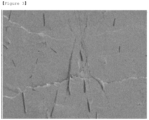
FIG. 1 is an image of carbon fibers contained in the electrode of the present invention. -
FIG. 2 is an image of the form of the fibrillated binder contained in the electrode of the present invention. -
FIG. 3 is an image of the surface of the electrode of the present invention. - Hereinafter, the present invention will be described in more detail to help the understanding of the present invention.
- The terms and words used in the present specification and claims should not be construed as limited to ordinary or dictionary terms, and should be construed in a sense and concept consistent with the technical idea of the present invention, based on the principle that the inventor can properly define the concept of a term to describe his invention in the best way possible.
- The terminology used herein is for the purpose of describing particular embodiments only and is not intended to be limiting of the present invention. The singular forms "a," "an," and "the" include plural referents unless the context clearly dictates otherwise.
- It is to be understood that the terms "comprise", or "have", etc., as used in the present specification, are intended to designate the presence of implemented features, numbers, steps, components, parts or combinations thereof, but not to preclude the possibility of the presence or addition of one or more other features, numbers, steps, components, or combinations thereof.
- The electrode for the secondary battery of the present invention comprises a dry electrode film comprising an active material, an electrically conductive material, and a fibrillated binder; and a current collector on which the electrode film is laminated, wherein the electrically conductive material comprises carbon fibers.
- Various types of dry electrode film have been proposed in this field, but when the strength of the electrode film is not maintained, for example, since it is difficult to apply to secondary batteries through a roll to roll process, strength is a very important factor in electrode film.
- The present invention is characterized in that the strength of the electrode film is improved by incorporating carbon fibers into the electrode film as an electrically conductive material.
- In one embodiment of the present invention, preferably, the average diameter of the carbon fibers is equal to the average particle diameter of the active material particles or greater than the average particle diameter of the active material particles. If the average diameter of the carbon fibers is smaller than the average particle diameter of the active material particles, it is difficult to expect an improvement in strength by the carbon fibers. This is because, in the dry electrode film, if the diameter of the carbon fibers is smaller than the particle diameter of the active material, the carbon fibers are not firmly fixed between the particles of the active material. Conversely, if the diameter of the carbon fibers is larger than the particle diameter of the active material, the carbon fibers are firmly fixed in the dry electrode film, thereby greatly improving the strength of the dry electrode film.
- In one embodiment of the present invention, the average diameter of the carbon fibers may be 1 to 10 times, preferably 1.1 to 5 times, and more preferably 1.2 to 2 times relative to the average particle diameter of the active material particles. If the average diameter of the carbon fiber is less than 1 time compared to the average particle diameter of the active material particles, the effect of improving the strength of the electrode film is not great. If the average diameter of the carbon fiber exceeds 10 times the average particle diameter of the active material particles, since the volume of the carbon fibers occupies most of the area of the electrode, the energy density is very low, and the uniformity of the electrode is also very poor, and thus it is undesirable.
- In one embodiment of the present invention, the carbon fibers may have an average diameter of 0.05 gm to 100 gm, and the active material particles may have an average particle diameter of 0.01 gm to 20 gm.
- In one embodiment of the present invention, the carbon fibers may be contained in an amount of 0.1 to 5% by weight based on the total weight of the electrode film. If the carbon fibers are contained in an amount of 0.1% by weight, it is difficult to expect the effect of improving the strength. If the carbon fibers exceed 5% by weight, since the energy density of the electrode is lowered, it is not preferable for manufacturing a battery having a high capacity.
- In one embodiment of the present invention, the carbon fibers may have a length of 5 gm to 1500 gm, preferably 100 gm to 1000 gm, and more preferably 200 gm to 800 gm.
- Hereinafter, the present invention will be described for each component.
- As the active material, all of the components commonly used for the positive electrode and the negative electrode may be used. Specifically, for example, if the active material is a positive electrode active material, it may be particles of any one active material selected from the group consisting of LiCoO2, LiNiO2, LiMn2O4, LiCoPO4, LiFePO4 and LiNi1-x-y-zCoxM1yM2zO2 (wherein M1 and M2 are each independently any one selected from the group consisting of Al, Ni, Co, Fe, Mn, V, Cr, Ti, W, Ta, Mg and Mo, and x, y and z are, independently of each other, the atomic fractions of the elements of the oxide composition and 0≤x<0.5, 0≤y<0.5, 0≤z<0.5, 0<x+y+z≤1), or a mixture of two or more thereof.
- In addition, if the electrode active material is a negative electrode active material, it may be any one active material selected from the group consisting of carbonaceous material such as natural graphite or artificial graphite (mesophase carbon microbeads(MCMB), pyrolytic carbon, liquid crystal pitch-based carbon fiber (mesophase pitch-based carbon fiber), liquid crystal pitches (mesophase pitches), petroleum or coal tar pitch derived cokes, etc.); lithium-containing titanium composite oxide (LTO), metals(Me) which are Si, Sn, Li, Zn, Mg, Cd, Ce, Ni or Fe; alloys composed of the above-described metals (Me); oxides of the above-described metals (Me) (MeOx, for example:SiO); and a composite of the above-described metals (Me) and carbon, or a mixture of two or more thereof.
- The active material may be contained, for example, in an amount of 85 to 98% by weight based on the total weight of the electrode film.
- In one embodiment of the present invention, an electrically conductive material other than the carbon fiber may be further comprised as the electrically conductive material. The electrically conductive material is not particularly limited as long as it has conductivity without causing chemical change in the secondary battery. For example, it may be at least one selected from the group consisting of carbon black such as carbon black, acetylene black, Ketjen black, channel black, furnace black, lamp black, thermal black, etc.; metal powders such as aluminum and nickel powder; electrically conductive whiskers such as zinc oxide and potassium titanate; electrically conductive metal oxides such as titanium oxide; polyphenylene derivatives.
- The electrically conductive material may be contained, for example, in an amount of 1 to 10% by weight, specifically 2 to 5% by weight, based on the total weight of the electrode film.
- The electrically conductive material other than the carbon fiber may be contained in an amount of 1 to 5% by weight based on the total weight of the electrode film.
- In one embodiment of the present invention, the fibrillated binder may comprise any one or more of polyvinylidene fluoride-hexafluoropropylene and polytetrafluoroethylene, and preferably may be polytetrafluoroethylene.
- In addition, the electrode for the secondary battery of the present invention may further comprise a binder other than the binder described above. The other binder is a component that assists bonding between the active material and the electrically conductive materials or adhesion to the current collector, and may be used without limitation as long as it is a material that can be used for the electrode. Specifically, the binder may be a non-acrylic polymer or an acrylic polymer.
- The acrylic polymer is not limited as long as it is a polymer in which at least one repeating unit of the binder polymer is derived from an acrylic monomer. The acrylic monomer may be an alkyl acrylate, an alkyl methacrylate, an isoalkyl (meth) acrylate, and in this case, "alkyl" may be an alkyl group having 1 to 10 carbon atoms, and more specifically, an alkyl group having 1 to 5 carbon atoms.
- Specific examples of the acrylic monomer may comprise methyl (meth)acrylate, ethyl (meth)acrylate, propyl (meth)acrylate, butyl (meth)acrylate, and pentyl (meth)acrylate.
- The acrylic polymer may be a homopolymer composed of one repeating unit derived from an acrylic monomer, a copolymer including repeating units derived from two or more acrylic monomers, or a mixture of two or more thereof.
- In addition, the acrylic polymer may be a copolymer of at least one non-acrylic monomer and an acrylate monomer, such as at least one selected from the group consisting of acrylate-styrene-butadiene rubber, acrylate-acrylonitrile-styrene-butadiene rubber, methyl acrylate-styrene-butadiene rubber, methyl acrylate-acrylonitrile-styrene-butadiene rubber, ethyl acrylate-styrene-butadiene rubber, ethyl acrylate-acrylonitrile-styrene-butadiene rubber, propyl acrylate-styrene-butadiene rubber, propyl acrylate-acrylonitrile-styrene-butadiene rubber, butyl acrylate-styrene-butadiene rubber, and butyl acrylate-acrylonitrile-styrene-butadiene rubber. In the case of a copolymer of a non-acrylic monomer and an acrylate monomer, the weight% of the repeating unit derived from the acrylate monomer may be 5 to 45% by weight, specifically 5 to 35% by weight.
- In addition, the acrylic polymer may be a mixture of two or more types of homoacrylic polymers, a mixture of two or more types of acrylic copolymers, or a mixture of copolymers of two or more types of non-acrylic monomers and acrylate monomers, and also, may be a mixture of two or more of a homoacrylic polymer, an acrylic copolymer, and a copolymer of a non-acrylic monomer and an acrylate monomer.
- The non-acrylic polymer means a polymer comprising at least one repeating unit derived from a non-acrylic monomer, and specifically, may be a homopolymer composed of one type of repeating unit, a copolymer including two or more different types of repeating units, a mixture of two or more different types of homopolymers, or a mixture of two or more thereof.
- Specific examples of the non-acrylic polymer may be one from the group consisting of styrene-butadiene rubber (SBR), a mixture of polystyrene and polybutadiene, polyvinylidene fluoride (PVDF), polyvinylidene fluoride-cohexafluoropropylene, polyvinylidene fluoride-cotrichloroethylene, polytetrafluoroethylene (PTFE), polyvinylpyrrolidone, polyethylene oxide, polyarylate, cellulose acetate, cellulose acetate butyrate, cellulose acetate propionate, cyanoethylpullulan, cyanoethyl polyvinyl alcohol, cyanoethyl cellulose, cyanoethyl sucrose, pullulan, and carboxyl methyl cellulose (CMC) or a mixture of two or more thereof. Among them, polyvinylidene fluoride (PVDF), polyethylene oxide (PEO), etc. may be preferably used.
- In one embodiment of the present invention, the total binder content including the fibrillated binder may be 0.01 to 5% by weight, specifically, 1 to 4% by weight based on the total weight of the electrode film. If the content of the binder satisfies this range, the adhesive strength between the electrode active material layer and the current collector can be improved, the resistance of the electrode can be reduced or the detachment of the electrode can be prevented even after the degradation of the cell by improving adhesive strength, and the migration of the binder to the surface of the electrode can be suppressed, and thus the ionic conductivity or electrical conductivity in the electrode can be improved.
- As the current collector, a known current collector used in secondary batteries may be used without limitation. For example, stainless steel, aluminum, nickel, titanium, carbon, copper; stainless steel surface-treated with carbon, nickel, titanium or silver; aluminum-cadmium alloy; a non-conductive polymer surface-treated with an electrically conductive material; a non-conductive polymer surface-treated with metal; a conductive polymer and the like may be used.
- Hereinafter, a method of manufacturing the electrode for the secondary battery of the present invention will be described by way of example.
- A method of manufacturing an electrode according to an embodiment of the present invention may comprise the steps of preparing a mixture by dry mixing an active material, an electrically conductive material, and a binder (primary mixing); applying a high shear force to the mixture (secondary mixing); preparing a free-standing film by pressing the secondary mixture; and placing the free-standing electrode film on a current collector and rolling them.
- The high shear force may be 50N to 1000N. Here, since the active material, the electrically conductive material, and the binder are the same as those described above, descriptions thereof will be omitted.
- The mixture may be prepared by dry mixing the active material, the electrically conductive material, and the binder. The dry mixing means mixing in the absence of a solvent. The dry mixing may be performed by mixing at 600 rpm to 20000 rpm, specifically, 1000 rpm to 12000 rpm, for 0.5 to 10 minutes at room temperature or lower using a stirring device.
- The step of applying the high shear force may be performed before placing the mixture on the current collector. The step of applying the high shear force may comprise applying a high shear force by shear compressing the mixture. Specifically, when using a device for applying a shear force, for example, PBV-0.1L (Irie Shokai company), the high shear force may be applied by shearing and compressing the mixture at 10 rpm to 100 rpm for 1 minute to 10 minutes. However, it is not necessarily limited to such a method.
- When a high shear force is applied to the mixture, the active material, the binder, and the electrically conductive material in the mixture may be entangled with each other, and thus the electrically conductive material, the active material, and the binder may form aggregated particles (granule). Therefore, by the presence of the particles described above, the active material and the binder are supported by the electrically conductive material of carbon fibers, so that the bonding strength can be increased. Accordingly, the process of disposing the mixture on the current collector can be facilitated.
- The high shear force may be 50N to 1000N, specifically 100N to 500N, and more specifically 100N to 300N. In the present invention, a high shear force in the above range may be applied to induce entanglement of carbon fibers or the like.
- In the step of preparing the free-standing film, the pressurization may be performed using a Two roll mill MR-3 (Inoue company) or the like.
- The step of rolling the current collector on which the free-standing film is located may be performed through a roll press method.
- In addition, the present invention relates to a secondary battery comprising a positive electrode, a negative electrode, and a separator interposed between the positive electrode and the negative electrode, wherein at least one of the positive electrode and negative electrode is the aforementioned electrode. When the electrode according to the present invention is used only as any one of the positive electrode and negative electrode, the other electrode may be any one of electrodes known in the art without limitation.
- Hereinafter, the secondary battery will be described as an example. Specifically, a lithium secondary battery will be described as an example.
- As the separator, a porous polymer film commonly used as a separator in a lithium secondary battery, for example, a porous polymer film made of a polyolefin-based polymer such as ethylene homopolymer, propylene homopolymer, ethylene/butene copolymer, ethylene/hexene copolymer, and
ethylene/methacrylate copolymer may be used alone or may be laminated and used. In addition, an insulating thin film having high ion permeability and mechanical strength may be used. The separator may comprise a safety reinforced separator (SRS) having an organic/inorganic composite porous coating layer coated thinly by connecting and fixing inorganic particles to the surface of a separator substrate such as a porous polymer film through a binder polymer. In addition, a conventional porous nonwoven fabric, for example, a nonwoven fabric made of glass fiber having a high melting point, polyethylene terephthalate fiber, etc. may be used, and a form in which the porous coating layer of the above-described organic/inorganic composite is applied even on the porous nonwoven fabric is also possible, but is not limited thereto. - The lithium secondary battery of the present invention can be manufactured by accommodating the assembly of the positive electrode and the negative electrode in a battery case and injecting electrolyte.
- The electrolyte may comprise a lithium salt and an organic solvent for dissolving it. The lithium salt may be used without limitation as long as it is commonly used in electrolytes for secondary batteries, and for example, the anion of the lithium salt may be at least one selected from the group consisting of F-, Cl-, I-, NO3 -, N(CN)2 -, BF4 -, ClO4 -, PF6 -, (CF3)2PF4 -, (CF3)3PF3 -, (CF3)4PF2 -, (CF3)5PF-, (CF3)6P-, CF3SO3 -, CF3CF2SO3 -, (CF3SO2)2N-, (FSO2)2N-, CF3CF2(CF3)2CO-, (CF3SO2)2CH-, (SF5)3C-, (CF3SO2)3C-, CF3(CF2)7SO3 -, CF3CO2 -, CH3CO2 -, SCN- and (CF3CF2SO2)2N-.
- The organic solvent comprised in the electrolyte may be used without limitation as long as it is used in this field, and representatively, may be at least one selected from the group consisting of propylene carbonate, ethylene carbonate, diethyl carbonate, dimethyl carbonate, ethylmethyl carbonate, methylpropyl carbonate, dipropyl carbonate, dimethyl sulfoxide, acetonitrile, dimethoxyethane, diethoxyethane, vinylene carbonate, sulfolane, gamma-butyrolactone, propylenesulfite and tetrahydrofuran.
- In particular, among the carbonate-based organic solvents, ethylene carbonate and propylene carbonate, which are cyclic carbonates, are highly viscous organic solvents and have a high dielectric constant, so they can well dissociate lithium salts in the electrolyte, and thus can be used preferably. If a linear carbonate having a low viscosity and a low dielectric constant, such as dimethyl carbonate and diethyl carbonate, is mixed in an appropriate ratio with the cyclic carbonate, an electrolyte having a high electrical conductivity can be prepared, and thus can be used more preferably.
- Optionally, the electrolyte stored according to the present invention may further comprise an additive such as an overcharging inhibitor comprised in a conventional electrolyte solution.
- A known solid electrolyte may be used as the electrolyte.
- The secondary battery according to an embodiment of the present invention may be a stack type, a wound type, a stack and fold type, or a cable type. In addition, the secondary battery may be used not only in a battery cell used as a power source for a small device, but also as a unit cell in a medium or large-sized battery module comprising a plurality of battery cells. Preferred examples of the medium or large-sized device may comprise electric vehicles, hybrid electric vehicles, plug-in hybrid electric vehicles, and power storage systems, and in particular, the secondary battery can be usefully used in hybrid electric vehicles and batteries for storing new and renewable energy, which are areas requiring high output.
- With respect to the construction and manufacturing method of the secondary battery of the present invention, for parts not described above, the construction and manufacturing method known in the art may be applied without limitation.
- Hereinafter, the present invention will be described in detail with reference to examples in order to specifically describe the present invention. However, the embodiments according to the present invention may be modified in various other forms, and the scope of the present invention should not be construed as being limited to the embodiments described below. Examples of the present invention are provided in order to more completely explain the present invention to those of ordinary skill in the art.
- 96g of NCM powder (product name: GL80, LG Chem company), which is a particle of positive electrode active material with an average particle diameter of 10µm, 2g of Li250 (Denka company) as an electrically conductive material and 1 g of carbon fibers having a diameter of 12 µm and a length of 200 µm, and 2 g of PTFE as a binder were mixed at 5000 rpm for 1 minute without solvent using Lab Blender (Waring company) as a blender(first mixing). Next, high shear mixing was performed by applying a shear force of 250N to the mixture (PBV-0.1L, Irie Shokai company) (second mixing). Next, the secondary mixture in the form of dough was prepared as a free-standing film using a Two roll mill MR-3 (Inoue company). Thereafter, the free-standing film was placed on one side of an aluminum current collector having a thickness of 15 µm, and pressurized to prepare a positive electrode.
- A positive electrode was manufactured in the same way as in Example 1, except that in Example 1, NCM powder (brand name: GL80, LG Chem company), which is a particle of positive electrode active material with an average particle diameter of 10µm, and carbon fibers having a diameter of 15 µm and a length of 500 µm are used.
- A positive electrode was manufactured in the same way as in Example 1, except that in Example 1, NCM powder (brand name: GL80, LG Chem company), which is a particle of positive electrode active material with an average particle diameter of 10µm, and carbon fibers having a diameter of 20 µm and a length of 800 µm are used.
- A negative electrode was manufactured in the same manner as in Example 1, except that in Example 1, artificial graphite powder, which is a negative electrode active material with an average particle diameter of 7µm, is used instead of a positive electrode active material.
- A positive electrode was manufactured in the same way as in Example 1, except that in Example 1, NCM powder (brand name: GL80, LG Chem company), which is a particle of positive electrode active material with an average particle diameter of 10µm, and carbon fibers having a diameter of 5 µm and a length of 150 ym are used.
- A positive electrode was manufactured in the same way as in Example 1, except that in Example 1, NCM powder (brand name: GL80, LG Chem company), which is a particle of positive electrode active material with an average particle diameter of 10µm, and carbon fibers having a diameter of 8 µm and a length of 100 µm are used.
- A positive electrode was manufactured in the same way as in Example 1, except that in Example 1, NCM powder (brand name: GL80, LG Chem company), which is a particle of positive electrode active material with an average particle diameter of 5µm, and carbon fibers having a diameter of 56 µm and a length of 100 µm are used.
- The strength of the free-standing films prepared in Examples 1 to 4 and the free-standing films prepared in Comparative Examples 1 to 3 was measured by sampling electrodes with a width of 20 mm, a length of 200 mm, and a thickness of 200 µm and measuring the strength by using a UTM equipment from Instron company under the condition of 500 mm/min by a 180 degree peel measurement method.
- At the time of the measurement, the maximum value of the force applied up to the time point at which cracks did not occur on the film was evaluated as the strength of the free-standing film, and the measurement results are shown in Table 1 below.
Table 1: Strength (kgf/cm2) Example 1 free-standing electrode 34 Example 2 free-standing electrode 38 Example 3 free-standing electrode 45 Example 4 free-standing electrode 31 Comparative Example 1 free-standing electrode 20 Comparative Example 2 free-standing electrode 18 Comparative Example 3 free-standing electrode 44 - Batteries of Example 5, Comparative Example 4, and Comparative Example 5 were prepared using the positive electrodes prepared in Example 1, Comparative Example 1, and Comparative Example 3, respectively. A specific manufacturing method is as follows.
- Natural graphite as a negative electrode active material, carbon black which is an electrically conductive material, and a PVdF binder were mixed in an N-methylpyrrolidone solvent in a weight ratio of 85:10:5 to prepare a composition for forming a negative electrode, and the composition was applied to a copper current collector to prepare a negative electrode.
- A separator of porous polyethylene was interposed between each positive electrode prepared in Example 1, Comparative Example1, and Comparative Example 3, and the negative electrode prepared in (1) above to manufacture an electrode assembly, and the electrode assembly was placed inside the case, and then, the electrolyte was injected into the case to manufacture a lithium secondary battery. At this time, the electrolyte solution was prepared by dissolving lithium hexafluorophosphate (LiPF6) at a concentration of 1.0M in an organic solvent consisting of ethylene carbonate/dimethyl carbonate/ethylmethyl carbonate (mixed volume ratio of EC/DMC/EMC = 3/4/3). Through this, lithium secondary batteries of Example 5, Comparative Example 4 and Comparative Example 5 were manufactured.
- The secondary batteries of Example 5, Comparative Example 4, and Comparative Example 5 were charged and discharged to evaluate the initial discharging efficiency and capacity retention rate, and the results are shown in Table 2 below. Cycles 1 and 2 were charged and discharged at 0.1C, and from cycle 3 to cycle 49, charging and discharging were performed at 0.33C. Cycle 50 ended in the charged state (lithium is in the negative electrode).
- Charging conditions: CC (constant current)/CV (constant voltage)(4.25V/0.05C current cut-off)
- Discharging condition: CC (constant current) condition 3.0V
- The initial discharging efficiency and capacity retention rate were respectively derived by the following calculations.


Table 2: Initial discharging efficiency (%) Capacity retention rate (%) Example 5 99.7 92 Lithium secondary battery Comparative Example 4 99.4 90 lithium secondary battery Comparative Example 5 99.4 76 lithium secondary battery
Claims (10)
- An electrode for a secondary battery, comprising:a dry electrode film comprising an active material, an electrically conductive material, and a fibrillated binder; and a current collector on which the electrode film is stacked,wherein the electrically conductive material comprises carbon fibers.
- The electrode for the secondary battery according to claim 1, wherein the average diameter of the carbon fibers is equal to or greater than an average particle diameter of active material particles.
- The electrode for the secondary battery according to claim 2, wherein the average diameter of the carbon fibers is 1 to 10 times the average particle diameter of the active material particles.
- The electrode for the secondary battery according to claim 3, wherein the average diameter of the carbon fibers is 0.05 µm to 100 µm, and the average particle diameter of the active material particles is 0.01 µm to 20 µm.
- The electrode for the secondary battery according to claim 2, wherein the carbon fibers are contained in an amount of 0.1 to 5% by weight based on a total weight of the electrode film.
- The electrode for the secondary battery according to claim 5, wherein the electrically conductive material further comprises an electrically conductive material other than the carbon fibers in an amount of 1 to 5% by weight based on the total weight of the electrode film.
- The electrode for the secondary battery according to claim 2, wherein the carbon fibers have a length of 5 µm to 1500 µm.
- The electrode for the secondary battery according to claim 1, wherein the fibrillated binder comprises at least one of polyvinylidene fluoride-hexafluoropropylene and polytetrafluoroethylene.
- A secondary battery comprising the electrode of claim 1.
- The secondary battery according to claim 9, wherein the secondary battery is a lithium secondary battery.
Applications Claiming Priority (2)
| Application Number | Priority Date | Filing Date | Title |
|---|---|---|---|
| KR1020210096481A KR102854278B1 (en) | 2021-07-22 | 2021-07-22 | Electrode for secondary battery and secondary battery comprising the same |
| PCT/KR2022/010456 WO2023003303A1 (en) | 2021-07-22 | 2022-07-18 | Electrode for secondary battery and secondary battery comprising same |
Publications (2)
| Publication Number | Publication Date |
|---|---|
| EP4333098A1 true EP4333098A1 (en) | 2024-03-06 |
| EP4333098A4 EP4333098A4 (en) | 2025-11-19 |
Family
ID=84979510
Family Applications (1)
| Application Number | Title | Priority Date | Filing Date |
|---|---|---|---|
| EP22846173.7A Pending EP4333098A4 (en) | 2021-07-22 | 2022-07-18 | ELECTRODE FOR SECONDARY BATTERY AND SECONDARY BATTERY SO THAT |
Country Status (6)
| Country | Link |
|---|---|
| US (1) | US20240290935A1 (en) |
| EP (1) | EP4333098A4 (en) |
| JP (1) | JP7712403B2 (en) |
| KR (1) | KR102854278B1 (en) |
| CN (1) | CN117480631A (en) |
| WO (1) | WO2023003303A1 (en) |
Families Citing this family (1)
| Publication number | Priority date | Publication date | Assignee | Title |
|---|---|---|---|---|
| WO2025193055A1 (en) * | 2024-03-13 | 2025-09-18 | 주식회사 씨엔피솔루션즈 | Electrode composition for manufacturing dry electrode, dry electrode formed using electrode composition, secondary battery comprising dry electrode, and dry electrode manufacturing method and device using electrode composition |
Family Cites Families (16)
| Publication number | Priority date | Publication date | Assignee | Title |
|---|---|---|---|---|
| JPH10188998A (en) * | 1996-12-20 | 1998-07-21 | Tokyo Electric Power Co Inc:The | Anode conductive material for sodium-sulfur battery |
| JP3226027B2 (en) * | 1998-05-08 | 2001-11-05 | 日本電気株式会社 | Battery electrode and secondary battery using the same |
| US20050266298A1 (en) | 2003-07-09 | 2005-12-01 | Maxwell Technologies, Inc. | Dry particle based electro-chemical device and methods of making same |
| KR100868290B1 (en) * | 2007-05-04 | 2008-11-12 | 한국과학기술연구원 | A negative electrode for a secondary battery having a negative electrode active material having a nanofiber network structure, a secondary battery using the same, and a method of manufacturing a negative electrode active material for a secondary battery |
| DE102012203019A1 (en) * | 2012-02-28 | 2013-08-29 | Technische Universität Dresden | Cathode for lithium-containing batteries and solvent-free process for their preparation |
| KR101516225B1 (en) * | 2013-05-03 | 2015-05-04 | 주식회사 제낙스 | Non-woven collector, method of fabricating a battery with the same and system for fabricating the same |
| CN107408673B (en) * | 2015-03-24 | 2020-07-10 | 日本瑞翁株式会社 | Manufacturing method of slurry composition for secondary battery positive electrodes, positive electrode for secondary batteries, and secondary battery |
| WO2017010476A1 (en) | 2015-07-16 | 2017-01-19 | 昭和電工株式会社 | Production method for graphite-containing carbon powder for secondary battery, and carbon material for battery electrode |
| EP3252193B1 (en) * | 2016-04-04 | 2018-12-26 | Tec One Co., Ltd. | Carbon fiber, carbon fiber material production method, electrical device, rechargeable battery, and product |
| WO2017175262A1 (en) * | 2016-04-04 | 2017-10-12 | テックワン株式会社 | Carbon fiber, carbon fiber material production method, electrical device, and rechargeable battery |
| ES2947366T3 (en) * | 2017-04-28 | 2023-08-07 | Lg Energy Solution Ltd | Cathode, secondary battery comprising the same, and method for manufacturing the same cathode |
| JP7119363B2 (en) | 2017-10-13 | 2022-08-17 | トヨタ自動車株式会社 | All-solid battery |
| US11545666B2 (en) * | 2018-03-30 | 2023-01-03 | Tesla, Inc. | Compositions and methods for dry electrode films including microparticulate non-fibrillizable binders |
| KR20210096481A (en) | 2020-01-28 | 2021-08-05 | 엘지전자 주식회사 | Air conditioner |
| EP4152441A4 (en) | 2020-06-11 | 2024-11-06 | LG Energy Solution, Ltd. | ALL-SOLID-STATE BATTERY COMPRISING SILICON (SI) AS ANODE ACTIVE MATERIAL |
| WO2022255307A1 (en) | 2021-05-31 | 2022-12-08 | 帝人株式会社 | Electrode sheet for lithium ion secondary battery |
-
2021
- 2021-07-22 KR KR1020210096481A patent/KR102854278B1/en active Active
-
2022
- 2022-07-18 CN CN202280041973.2A patent/CN117480631A/en active Pending
- 2022-07-18 EP EP22846173.7A patent/EP4333098A4/en active Pending
- 2022-07-18 US US18/573,385 patent/US20240290935A1/en active Pending
- 2022-07-18 JP JP2023578125A patent/JP7712403B2/en active Active
- 2022-07-18 WO PCT/KR2022/010456 patent/WO2023003303A1/en not_active Ceased
Also Published As
| Publication number | Publication date |
|---|---|
| JP2024524958A (en) | 2024-07-09 |
| KR102854278B1 (en) | 2025-09-02 |
| CN117480631A (en) | 2024-01-30 |
| EP4333098A4 (en) | 2025-11-19 |
| JP7712403B2 (en) | 2025-07-23 |
| KR20230015109A (en) | 2023-01-31 |
| WO2023003303A1 (en) | 2023-01-26 |
| US20240290935A1 (en) | 2024-08-29 |
Similar Documents
| Publication | Publication Date | Title |
|---|---|---|
| EP3863084B1 (en) | Negative electrode and secondary battery including same | |
| KR20210053862A (en) | Positive electrode material for lithium secondary battery, positive electrode and lithium secondary battery including the same | |
| EP4243113A1 (en) | Electrode for secondary battery, method for manufacturing same, and secondary battery comprising electrode | |
| EP2549577B1 (en) | Lithium secondary battery using ionic liquid | |
| KR20180058197A (en) | Positive electrode for secondary battery, method for preparing the same, and secondary battery comprising the same | |
| KR20200017821A (en) | Method for preparing a dry electrode | |
| EP3975305A1 (en) | Method for manufacturing secondary battery | |
| KR102417589B1 (en) | Double layer electrode, and lithium secondary battery comprising the same | |
| EP4184652A1 (en) | Method for charging and discharging secondary battery | |
| KR20190051354A (en) | Method for manufacturing positive electrode | |
| EP3863105B1 (en) | Secondary battery | |
| EP4002539A1 (en) | Method for manufacturing secondary battery | |
| KR20240088617A (en) | Positive electrode and lithium secondary battery comprising the same | |
| CN115244733A (en) | Positive electrode for lithium secondary battery and lithium secondary battery | |
| KR20180134615A (en) | Positive electrode for secondary battery, method for preparing the same, and lithium secondary battery comprising the same | |
| KR20210120686A (en) | Method for manufacturing negative electrode | |
| KR102530195B1 (en) | Method for manufacturing negative electrode for secondary battery | |
| KR101858334B1 (en) | Non-aqueous electrolyte secondary battery | |
| US20240047637A1 (en) | Negative electrode and method for manufacturing the same | |
| EP4496042A1 (en) | Anode current collector for anode-free battery, and anode-free battery comprising same | |
| KR20180038764A (en) | Electrode active material slurry composition and secondary battery comprising electrode using the same | |
| EP4002546A1 (en) | Battery system, method for using same, and battery pack including same | |
| EP4333098A1 (en) | Electrode for secondary battery and secondary battery comprising same | |
| KR20230109972A (en) | Adhesion reinforcing composition, current collector comrising same, positive electrode comprising the current collector, method for preparing the positive electrode and lithium secondary battery comprising the positive electrode | |
| US20230378424A1 (en) | Method for manufacturing negative electrode |
Legal Events
| Date | Code | Title | Description |
|---|---|---|---|
| STAA | Information on the status of an ep patent application or granted ep patent |
Free format text: STATUS: THE INTERNATIONAL PUBLICATION HAS BEEN MADE |
|
| PUAI | Public reference made under article 153(3) epc to a published international application that has entered the european phase |
Free format text: ORIGINAL CODE: 0009012 |
|
| STAA | Information on the status of an ep patent application or granted ep patent |
Free format text: STATUS: REQUEST FOR EXAMINATION WAS MADE |
|
| 17P | Request for examination filed |
Effective date: 20231130 |
|
| AK | Designated contracting states |
Kind code of ref document: A1 Designated state(s): AL AT BE BG CH CY CZ DE DK EE ES FI FR GB GR HR HU IE IS IT LI LT LU LV MC MK MT NL NO PL PT RO RS SE SI SK SM TR |
|
| DAV | Request for validation of the european patent (deleted) | ||
| DAX | Request for extension of the european patent (deleted) | ||
| A4 | Supplementary search report drawn up and despatched |
Effective date: 20251021 |
|
| RIC1 | Information provided on ipc code assigned before grant |
Ipc: H01M 4/13 20100101AFI20251015BHEP Ipc: H01M 4/62 20060101ALI20251015BHEP Ipc: H01M 10/052 20100101ALI20251015BHEP Ipc: H01M 4/139 20100101ALI20251015BHEP Ipc: H01M 10/0525 20100101ALI20251015BHEP |