EP4331922B1 - Mounting bracket for an airbag - Google Patents
Mounting bracket for an airbag Download PDFInfo
- Publication number
- EP4331922B1 EP4331922B1 EP23192266.7A EP23192266A EP4331922B1 EP 4331922 B1 EP4331922 B1 EP 4331922B1 EP 23192266 A EP23192266 A EP 23192266A EP 4331922 B1 EP4331922 B1 EP 4331922B1
- Authority
- EP
- European Patent Office
- Prior art keywords
- clamping element
- end portion
- mounting bracket
- mounting
- clamping
- Prior art date
- Legal status (The legal status is an assumption and is not a legal conclusion. Google has not performed a legal analysis and makes no representation as to the accuracy of the status listed.)
- Active
Links
Images







Classifications
-
- B—PERFORMING OPERATIONS; TRANSPORTING
- B60—VEHICLES IN GENERAL
- B60R—VEHICLES, VEHICLE FITTINGS, OR VEHICLE PARTS, NOT OTHERWISE PROVIDED FOR
- B60R21/00—Arrangements or fittings on vehicles for protecting or preventing injuries to occupants or pedestrians in case of accidents or other traffic risks
- B60R21/02—Occupant safety arrangements or fittings, e.g. crash pads
- B60R21/16—Inflatable occupant restraints or confinements designed to inflate upon impact or impending impact, e.g. air bags
- B60R21/20—Arrangements for storing inflatable members in their non-use or deflated condition; Arrangement or mounting of air bag modules or components
- B60R21/213—Arrangements for storing inflatable members in their non-use or deflated condition; Arrangement or mounting of air bag modules or components in vehicle roof frames or pillars
-
- B—PERFORMING OPERATIONS; TRANSPORTING
- B60—VEHICLES IN GENERAL
- B60R—VEHICLES, VEHICLE FITTINGS, OR VEHICLE PARTS, NOT OTHERWISE PROVIDED FOR
- B60R21/00—Arrangements or fittings on vehicles for protecting or preventing injuries to occupants or pedestrians in case of accidents or other traffic risks
- B60R21/02—Occupant safety arrangements or fittings, e.g. crash pads
- B60R21/16—Inflatable occupant restraints or confinements designed to inflate upon impact or impending impact, e.g. air bags
- B60R21/20—Arrangements for storing inflatable members in their non-use or deflated condition; Arrangement or mounting of air bag modules or components
- B60R21/217—Inflation fluid source retainers, e.g. reaction canisters; Connection of bags, covers, diffusers or inflation fluid sources therewith or together
- B60R21/2171—Inflation fluid source retainers, e.g. reaction canisters; Connection of bags, covers, diffusers or inflation fluid sources therewith or together specially adapted for elongated cylindrical or bottle-like inflators with a symmetry axis perpendicular to the main direction of bag deployment, e.g. extruded reaction canisters
Definitions
- the invention relates to a mounting bracket.
- the invention relates to a mounting bracket for mounting an airbag to a component of a vehicle, and even more particular, for mounting side curtain airbags of a vehicle.
- a side curtain airbag assembly is typically retained behind the interior trim of the headliner, just above the side window of the vehicle. During a crash event, the airbag is then deployed between the vehicle occupant and the window or other side structures of the vehicle.
- the fasteners or mounts used for holding a side curtain airbag in place must be strong enough to retain the airbag assembly in place even during aggressive, rapid deployment of the air bag during a vehicle crash event, as well as, functionally suitable for easy handling and assembly so as to simplify the alignment of the components.
- the mount can be assembled quickly and easily in a simple operation at the vehicle, rather than having to mount a preassembled side airbag curtain system.
- the invention is defined by the independent claim 1.
- a mounting bracket for mounting an airbag to a component of a vehicle, the airbag having an inflator and a cushion received over an end of the inflator, the mounting bracket comprising:
- Each of the first clamping element and the second clamping element comprise an open-ended sleeve member having a first end portion and a second end portion circumferentially spaced apart from the first end portion.
- bracket that allows for assembly at the vehicle installation, e.g., the inflator and IC cushion can be correctly mounted within the bracket when installing the bracket with the vehicle, wherein the bracket provides for easily accessible and recognisable predetermined locations of the components minimising the risk of incorrect alignment.
- the open-ended sleeve members allow for a secure fit without the risk of misalignment while installing the side curtain airbag with the vehicle onsite.
- the first end portion comprises a first protrusion facing the second end portion and the second end portion comprises a second protrusion facing the first end portion and which is offset from the first protrusion.
- the first protrusion and the second protrusion are curved protrusions such that the clamp applies an even circumferential pressure during use.
- the first end portion further comprises a third protrusion spaced apart from the first protrusion and facing the second end portion, and wherein the second protrusion is received in a gap between the first protrusion and the third protrusion, in use.
- each mounting portion comprises a first mounting flange extending from first end portion and a second mounting flange extending from the second end portion of each of the clamping elements, and wherein the first and second mounting flanges each comprise an aperture configured to receive a fastening element therethrough.
- the second end portion is moveable towards the first end portion to a fastened position so as to reduce the circumference of the open-ended sleeve member, and wherein the second end portion is configured to be secured relative to the first end portion in the fastened position.
- first clamping element, the second clamping element, and the elongate member are integrally formed.
- the first clamping element is arranged to clamp the cushion and the inflator.
- the first clamping element and/or the second clamping element comprises a first arcuate clamping portion and a second arcuate clamping portion pivotally connected to the first arcuate portion, and wherein the second arcuate clamping element is pivotable between an open position and a closed position.
- at least one edge of the first arcuate clamping portion or the second arcuate clamping portion is provided with a tongue
- at least one adjacent edge of the other of the first arcuate clamping portion or the second arcuate clamping portion is provided with a groove configured to receive the tongue when the second arcuate clamping element is in the closed position.
- the tongue is an arcuate tongue having the same curvature as the first arcuate clamping portion and/or the second arcuate clamping portion.
- a first end of each of the first clamping element and the second clamping element comprises a mounting flange for receiving an end portion of the elongate member therethrough.
- the mounting flange is bent and comprises a first portion extending away from the clamping element and a second portion extending back towards the clamping element, and wherein there is a gap between the first portion and the second portion for receiving the end portion of the elongate member therethrough.
- the mounting flange has at least one aperture and the end portion of the elongate member has an aperture, and each clamping element is mountable to the end portion of the elongate member by a fastener extending through the aperture of the mounting element and the aperture of the elongate member.
- a second end of each of the first clamping element and the second clamping element comprises a securing flange having at least one aperture for receiving a fastener and positioned to align with at least one aperture in the mounting flange for receiving a fastener to secure the securing flange to the mounting flange
- outer edges of an inner surface of the first clamping element and/or the second clamping element are chamfered and are widened radially outwards.
- first clamping element and/or the second clamping element is arranged to contact the inflator about the entire circumference of the inflator to provide a continuous radial clamping force to the inflator.
- the described example embodiments relate to mounting assemblies suitable for securing airbags and in particular side curtain airbags.
- the embodiments of the invention are normally applied in vehicles. Although the invention is described with respect to vehicles, the invention is not restricted to vehicles altogether, but may also be used in other structures requiring attachment of accessories or peripheral components to a structure.
- the terms 'connected', 'attached', 'coupled', 'mounted' are intended to include direct connections between two members without any other members interposed therebetween, as well as, indirect connections between members in which one or more other members are interposed therebetween.
- the terminology includes the words specifically mentioned above, derivatives thereof, and words of similar import.
- the following illustrated example embodiment(s) relate(s) to a mounting bracket for mounting an airbag (side curtain airbag) to a component of a vehicle.
- the drawings illustrate a new design of a mounting bracket which applies an even circumferential pressure to a cushion sleeve and an inflator of an airbag to prevent gas leakage from the cushion between the sleeve and the inflator.
- the airbag may be a curtain airbag.
- the mounting bracket 100 has a first clamping element 101a, a second clamping element 101b and an elongate member 102 extending between the first clamping element 101a and the second clamping element 101b.
- the elongate member 102 may be planar or curved so as to conform with a portion of the surface of an airbag inflator.
- Each one of a first mounting member 103a and a second mounting member 103b extend from the first and second clamping elements 101a, 101b, respectively.
- Each of the first and second mounting members 103a, 103b having a mounting aperture 104a, 104b for receiving a fastener, such as a screw or a clip, to mount the mounting bracket 100 to a component of a vehicle (not shown).
- Each clamping element 101a, 101b includes an open-ended sleeve member 124a, 124b having a first end portion 105a, 105b and a second end portion 106a, 106b.
- the second end portion 106a, 106b is circumferentially spaced apart from and configured to intermeshingly engage with the first end portion 105a, 105b.
- Each one of the first and second clamping elements 101a, 101b further includes a first adjustable portion 122a, 122b extending tangentially from the first end portion 105a, 105b and a second adjustable portion 123a, 123b extending tangentially from the second end portion 106a, 106b.
- the first adjustable portion 122a, 122b has a first and second curved protrusion 107a, 107b, 108a, 108b, axially spaced apart from one another (i.e. in a direction along a central axis of the first and second clamping elements 101a,b when in situ, coupled with the elongate member 102).
- the first and second curved protrusions 107a, 107b, 108a, 108b are curved so as to conform with the cylindrical shape of the sleeve member 124a, 124b during use.
- the second adjustable portion 123a, 123b has a third curved protrusion 109a, 109b which is positioned between the axially spaced apart first and second curved protrusions 107a, 107b, 108a, 108b, during use.
- the third protrusion 109a, 109b is also curved so as to conform with the cylindrical shape defined by the closing sleeve member 124a, 124b.
- the third curved protrusion 109a, 109b is meshingly received within the space between the first and second curved protrusions 107a, 107b, 108a, 108b such that the third curved protrusion 109a, 109b circumferentially overlaps with the first and second curved protrusions 107a, 107b, 108a, 108b so as to form a continuous inner surface of the closing sleeve members 124a and 124b.
- the slidingly intermeshing arrangement of the first and second protrusion with the third protrusion allows for an even pressure about the circumference of the inflator and the airbag sleeve received within the clamping elements 101a, 101b, thus, providing an improved clamping force on the inflator and prevents gas leakages.
- one curved protrusion may be provided with the first adjustable portion 122a, 122b and two curved protrusions may be provided with the second adjustable portion 123a, 123b.
- only one protrusion may be provided on each of the first adjustable portion 122a, 122b and the second adjustable portion 123a, 123b, the protrusions offset from one another.
- two or three protrusions may be provided on one or both of the first and second adjustable portions 122a, 122b, 123a, 123b.
- the protrusions provided on either one of the first and second adjustable portion 123a,b are shaped so as to form an inner surface with the open ended sleeve members 124a,b defining a full circle, during use.
- Each one of the first and second mounting members 103a,b comprises a first mounting flange 110a, 110b extending from the first adjustable portion 122a, 122b and a second mounting flange 111a, 111b extending from the second adjustable portion 123a, 123b.
- the first and second mounting flanges 110a,b, 111a,b have respective apertures 104a,b, 112a,b concentrically aligned with one another, during use.
- Each aperture 104a,b, 112a,b of the first and second mounting flanges 110a,b, 111a,b has a raised lip forming a cylindrical protrusion.
- the diameters of the cylindrical protrusions of respective apertures 104a,b and 112a,b are such that the raised lip of the aperture 104a, 104b of the first mounting flange 110a, 110b is matingly received within the raised lip of the aperture 112a, 112b of the second mounting flange 111a, 111b.
- the apertures 104a, 104b, 112a, 112b are sized to receive a screw, clip, or other fastening element.
- the first mounting flange 110a, 110b has three locking flanges 113a, 113b, 114a, 114b, 115a, 115b (first to third), which extend from the edges of the first mounting flange 110a, 110b (i.e. in a direction parallel to a central axis of the interlocking apertures 104a,b and 112a,b).
- Each one of the three locking flanges 113a, 113b, 114a, 114b, 115a, 115b is made from a resilient material.
- each locking flange 113a,b, 114a,b, 115a,b comprises an inwardly projecting tine or surface 116a,b, 117a,b, 118a,b (first to third) extending inwardly downward towards the second mounting flange 111a,b, in use.
- a first and second contact surface 119a,b, 120a,b (i.e. the bottom surface) of each inwardly projecting tine or surface 116a,b, 117a,b, 118a,b is facing the second mounting flange 111a,b so as to prevent the second mounting flange 111a,b from moving out of engagement with the first mounting flange 110a,b.
- the locking flanges 113a,b, 114a,b, 115a,b thus lock the first mounting flange 110a,b in a preassembled position with respect to the second mounting flange 111a, 111b.
- the locking flanges 113a,b, 114a,b, 115a,b resiliently flex outwards, away from the aperture 104a,b so as to allow the second mounting flange 111a,b to be pushed past the inwardly projecting tines or surfaces 116a,b, 117a,b, 118a,b into the pre-assembled position.
- a screw, clip or any other suitable fastening means can then be inserted through the concentrically aligned apertures 104a,b, 112a,b to secure the mounting flange 100 to a component of a vehicle.
- the locking flanges 113a,b, 114a,b, 115a,b are simply deflected outwards, e.g. by the user, to allow the second mounting flange 111a,b to be moved away from the locking flanges 113a,b, 114a,b, 115a,b.
- a screw is inserted through the apertures 104a,b, 112a,b.
- the screw is then tightened to secure the first mounting flange 110a,b against the second mounting flange 111a,b.
- the tightening of the screws reduces the distance between the first and second end portions 105a,b and 106a,b and increases the intermeshing overlap of the curved protrusions 107a,b, 108a,b, 109a,b, thereby increasing the circumferential pressure applied to the inflator received within the clamps 101a, 101b.
- the mounting bracket 100 is integrally formed.
- the mounting bracket 100 is formed from a sheet metal.
- the mounting bracket may be formed by stamping the sheet metal.
- the first and second protrusions 107a,b, 108a,b and the third protrusions are embossed portions of the sheet metal.
- the lips of the apertures 104a,b, 112a,b are also formed by embossing.
- the inwardly projecting tines or surfaces 116a,b, 117a,b, 118a,b of the locking flanges 113a,b, 114a,b, 115a,b may be formed by embossing a portion of the locking flanges 113a,b, 114a,b and 115a,b, or may be formed by cutting and bending the sheet metal forming the locking flanges 113a,b, 114a,b and 115a,b, or a combination thereof, as shown in Figures 6(a) and 6(b) .
- FIG. 7 to 11 An example embodiment of a mounting bracket 200 according to a second aspect which is not part of the present invention is shown in Figures 7 to 11 .
- the mounting bracket 200 has a first clamping element 201a, a second clamping element 201b and an elongate member 202.
- the elongate member 202 may be planar or curved so as to conform with a portion of the surface of an airbag inflator.
- the elongate member 202 has a central mounting aperture 204 for receiving a fastener, such as a screw or a clip, to mount the mounting bracket 200 to a component of a vehicle (not shown).
- the mounting bracket may have two or more mounting apertures.
- the mounting apertures may be disposed in at a central portion of the mounting bracket between the clamping elements, or may be disposed at end portions of the mounting bracket that extend beyond the clamping elements.
- the mounting bracket may have other means adapted to mount or affix the mounting bracket to a vehicle component.
- first and second clamping elements 201a and 201b of the example embodiment are identical and are mounted over opposing first and second end portions 232a and 232b of the elongate member 202.
- the first and second end portions 232a, 232b each have an aperture for securing the clamping elements 201a, 201b thereto.
- a mounting flange 210 is extending from a first clamping portion 222 of respective first and second clamping element 201a,b for mounting the first and second clamping elements 201a,b to the elongate member 202, and optionally to a vehicle component (not shown).
- the mounting flanges 210 are bent over so that a first portion 210a of the mounting flange 210 extends substantially radially away from the clamping element 201a or 201b to then fold over into a second portion 210b of the mounting flange 210 forming a generally U-shaped side-profile.
- a gap between the first and second portions 210a, 210b is configured to receive respective end portions 232a or 232b of the elongate member 202 therethrough.
- a second clamping portion 223 comprises a securing flange 211 substantially mirroring the first clamping portion and mounting flange 210.
- the first and second clamping portions 222, 223 are of arcuate shape, so as to form a circular shape or cylinder when assembled first clamping portion 222 and second clamping portion 223 are in a closed position, as shown in Figures 7 and 9 .
- the mounting flange 210 extends from a first end of the first clamping portion 222, and the substantially mirroring securing flange 211 extends from a first end of the second clamping portion 223 having the same U-shaped (or backwards-folded) bent arrangement as the mounting flange 210.
- first and second clamping portions 222, 223 are pivotally coupled at respective second ends utilising a ring 225 or loop or the like.
- a hook element 228 is extending from respective second ends of the first and second clamping portions 222, 223, each one adapted to operably receive the ring 225 or loop. Accordingly, when assembled, the first and second clamping portions 222, 223 are pivotable between a closed position, as shown in Figure 7 , and an open position, as shown in Figure 8 .
- the U-shaped profile of the mounting flange 210 and the securing flange 211 form a spring element. This applies a bias against the screw, in use, to prevent the screw from loosening.
- Each one of respective first and second portions 210a,b, 211a,b of the mounting flange 210 and the securing flange 211 have suitable fixing apertures.
- the fixing apertures of respective first and second portion are coaxial and can be aligned with a respective aperture of the elongate member 202.
- the fixing apertures and the aperture in the first and second end portions 232a, 232b are sized to receive a fastening element, such as a pin, screw or clip.
- a fastener 1000 is inserted through the fixing apertures in the securing flange 211 and, when closed, through the fixing apertures of the mounting flange 210, as well as, the respective aperture in the first or second end portion 232a, 232b of the elongate member 202.
- the fastener 1000 secures the clamping elements 201a or 201b to the elongate member 202 and secures the first and second clamping portions when in the closed position.
- the fastener 1000 may be a pin, screw, clip, or any other fastener suitable for securing the mounting flange 210 and the securing flange 211 together, and for securing the mounting and securing flanges 210, 211 to the elongate member 202.
- the fastener 1000 is a threaded screw.
- the aperture in each of the first and second end portions 232a, 232b is formed by a cylindrical element 227 which has an threaded internal surface for threadingly receiving the threaded screw 1000.
- the cylindrical element 227 is protruding into the gap between first and second portions 210a,b of the mounting flange 210 forming a contact surface for the elongate member 202.
- the elongate member 202 is arcuate to match the arcuate profile of the elongate member 202.
- the two mating arcuate surfaces between the cylindrical element 227 and the elongate member 202 provide an improved contact engagement between the elongate member 202 and respective clamping elements 201a,b, allowing the elongate member 202 to tilt relative to the fastener 1000 (i.e. its elongate axis) within a predetermined limited range.
- first ends of each of the first clamping portion 222 and the second clamping portion 223 are circumferentially spaced apart from one another.
- the first and second ends of the first clamping portion 222 each have an arcuate tongue 207 protruding circumferentially outward in line with the circumference of the assembled clamping element 201a,b, i.e. the arcuate tongue 207 has the same curvature as the first clamping portion 222.
- the first and second ends of the second clamping portion 223 each comprise a groove 208 sized and shaped to slidingly receive a respective tongue 207 extending from the ends of the first clamping portion 222.
- the groove 208 is sized such that the tongue 207 is received within the groove 208, and an inner surface of the tongue 207 is level with the inner surface of the second clamping portion 223, when assembled (matingly engaged).
- the mated tongues 207 and grooves provide a continuous contact surface of the first and second clamping elements 222, 223 about the circumference of the inflator.
- the clamping elements 201a, 201b are adapted to apply an evenly distributed radial clamping force F to the inflator. This also restricts leakage of air between the sleeve and the inflator when the mounting bracket 200 is clamped about both the sleeve and the inflator.
- the tongues 207 and grooves 208 may be provided on either of the first and second clamping portions 222, 223 in a complimentary arrangement.
- the first clamping portion 222 may have a tongue 207 at the first end and a groove 208 at the second end
- the second clamping portion 223 may have a groove 208 at the first end and a tongue 207 at the second end, or vice versa.
- an O-ring 229 may be provided about the fastener 1000 between first and second portions 211a, 211b of the securing flange 211.
- the O-ring 229 may be formed from an elastomer material. Accordingly, the O-ring 229 holds the fastener 1000 in a pre-assembled position in the securing flange 211. This allows the fastener 1000 to be pre-assembled in the securing flange 211 during transport and assembly. Alternatively, other means of holding the fastener 1000 in the pre-assembled position in the securing flange 211 may be used.
- a gap 'G' is provided between the mounting flange 210 and the securing flange 211 when the clamping elements 201a, 201b are in the closed position.
- This provides a tolerance to allow for small variations in the diameter of the inflator, or to allow for a sleeve of an airbag cushion to be positioned over the inflator.
- this gap G permits movement of the first clamping portion 222 relative to the a second clamping portion 223. This movement allows the clamping element 201a, 201b to adapt to the inflator (not shown) as the fastener 1000 is tightened.
- an inner surface of each of the first and second clamping portions 222, 223 is chamfered at its outer edges 226a, 226b.
- the chamfered outer edges 226a, 226b are widened radially outwards.
- the chamfered outer edges 226a, 226b may also be rounded.
- the chamfered outer edges 226a, 226b prevent or at least minimise potential damage to the sleeve of the airbag cushion when the clamping element 201a or 201b is clamped about the sleeve and the inflator (not shown).
- the clamping elements 201a and 201b are provided in an open position, as shown in Figure 8 .
- the clamping elements 201a and 201b are placed about the inflator and moved to a closed position by moving the first end of each of the clamping portions 222, 223, towards the first end of the other one of the clamping portions 222, 223.
- one or both of the clamping elements 201a, 201b may also be placed about the sleeve of the airbag cushion to secure the sleeve to the inflator.
- the fastener 1000 is then inserted through apertures in the securing flange 211, the first or second end portion 232a or 232b of the elongate member 202, and the mounting flange 210 to secure each clamping element 201a and 201b in the closed position and to securing each clamping element 201a and 201b to the elongate member 202, as shown in Figures 7 and 9 .
- the mounting bracket 200 Before, or after, securing the mounting bracket 200 to the inflator, the mounting bracket 200 is secured to the component (e.g. vehicle structure). To secure the mounting bracket 200 to the component, a screw is inserted through the mounting aperture 204 of the elongate member 202 and fastened to the component.
- the component e.g. vehicle structure
- first clamping element 101a or 202a and the second clamping element 101b or 202b are fastened around a portion of the inflator (not shown) which is not covered by the sleeve of the airbag cushion.
- An additional clamp may be used to fasten the sleeve of the airbag cushion (not shown) over an end section of an inflator.
- the additional clamp may be separate to the mounting bracket 100, 200 or may be a feature of the mounting bracket 100, 200.
- the first clamping element 101a or 201a is fastened around the sleeve of the airbag cushion which is positioned over an end section of an inflator to secure the sleeve to the inflator and the second fastening element 101b or 201b is fastened around a portion of the inflator which is not covered by the sleeve of the airbag cushion.
- the clamping elements 101a, 101b or 201a, 201b may be adjustable and can be clamped to inflators having various circumferential diameters.
- the clamping elements101a, 101b or 201a, 201b will thus be able to apply an even circumferential pressure, irrespective of the circumferential diameter of the inflator received therein.
- the mounting bracket 100 or 200 may have a third clamping element having the same structure as the first and second clamping elements 101a, 101b or 201a, 201b.
- the third clamping element may be fastened around the sleeve of the cushion when positioned over the inflator, or fastened around a portion of the inflator which is not covered by the sleeve.
- the mounting portion 103a, 103b may alternatively be apertures provided in the elongate member 102.
- the elongate member 102 may have one, two or three apertures.
- the apertures are sized to receive a screw, clip, or any other suitable fastening means.
- FIG. 12 to 19 An example embodiment of a mounting bracket 300 according to a third aspect which is not part of the present invention is shown in Figures 12 to 19 .
- the mounting bracket 300 includes a first and second clamping element 301a,b that are operably coupled so as to provide a stepless and tightenable clamp fixing.
- the function and operation of the clamps and fixing is self-explanatory from the schematic figures, such as sequence of Fig.19 , and is thus not described in any more detail other than the essential characterising differences.
- first and second clamping elements 301a,b are pivotably coupled with the elongate member 302 so as to allow at least one of the clamping elements, e.g.
- the first clamping element 301a comprises a toothed end portion 303 operably engageable with a resilient locking clamp 304, such that the toothed end portion 303 can slide through the resilient locking clamp 304 in a first direction (closing direction) and prevents sliding movement between the toothed end portion 303 and the resilient locking clamp 304 in a second direction (opening direction) when lockingly engaged, i.e. the clamp can be tightened by sliding the toothed end portion 303 through the apertures 306 of the resilient locking clamp 304, but cannot be opened (or loosened) unless the resilient locking clamp 304 is "opened” (i.e. disengaged from the teeth 305 of the toothed end portion 303.
- the second clamping element 301b comprises a hooked end portion 307 adapted to retainingly receive the resilient locking clamp 304.
- a central tongue member 308 is provided at the second clamping element 301b to guidingly engage with the first clamping element 301a.
- Rounded or chamfered outer edges 309a,b are provided as already described for the first and second aspect of the mounting bracket 100, 200.
- a spring portion 310 may be provided on the first clamping element 301a, so as to provide a radial spring bias (biased tension).
- the spring portion 310 may be a simple loop element incorporated into the first clamping element 301a, or the second clamping element 301b, or both. During use, when tightening the two engaged clamping elements 301a,b, the spring portion 310 will allow some extension (gap is opening) with increasing biasing force.
- Figure 16 illustrates a detailed view of the clamping element 301a,b end portions lockingly coupled via the locking clamp 304.
- the stepless pivot joint with the elongate member 302 and the guiding tongue member 308 provide for full 360 degrees of evenly distributed radial forces onto the inflator 2000 when clamped therein.
- the first and second clamping elements 301a,b are moved into an open position, an inflator 2000 is positioned into the open clamps 301a,b onto the curved elongate member 302 and the clamps 301a,b are locked and tightened around the inflator 2000 via the toothed fixing and locking clamp 304.
- a specific tool 3000 may be used to disengage the locking clamp 304 and teeth 305 of the toothed end portion 303.
- FIG. 20 to 26 An example embodiment of a mounting bracket 400 according to a fourth aspect which is not part of the present invention is shown in Figures 20 to 26 .
- Figure 20 illustrates a perspective view of the mounting bracket 400 in a closed position (without the inflator) and Figure 21 illustrates the mounting bracket 400 in an open position.
- Figure 21 illustrates the mounting bracket 400 in an open position.
- the first and second clamping elements 401a,b are provided by a single band looped through a raised slot 407 of the elongate member 402 so as to align perpendicular to the longitudinal axis of the elongate member 402.
- a plurality of such raised slots 407 are incorporated into a central portion of the elongate member 402 and parallelly arranged along the longitudinal axis of the elongate member 402.
- any suitable number of metal bands may be looped through the raised slots 407 in order to form a first and second clamping element 401a,b.
- the one or more metal bands may be removed from the elongate member 402 and coupled with a different (shape) elongate member comprising the raised slots 407 for engagement with the single bands, thus, providing a modular solution of the mounting bracket 400.
- the first clamping element 401a is provided with a toothed end portion 403 and the second clamping element 401b is provided with corresponding apertured end portion 406 comprising a plurality of apertures 408 adapted to lockingly engage with the teeth 405 of the toothed end portion 403, at least when the first and second engaged clamping elements 401a,b move relative to each other in a first direction (i.e. to open).
- the teeth 405 are configured to allow relative movement of the engaged first and second clamping elements 401a,b in a second direction (i.e. to close).
- the toothed end portion 403 further comprises guide members 409 extending laterally away from bending back towards a lateral edge of the toothed end portion 403 so as to form a U-shaped guide for the apertured end portion 406.
- the apertured end portion comprises a stop member 410 formed at the end of the apertures 408 and adapted to stoppingly engage with the guide members 409.
- the stop member 410 is formed by two opposing lateral extensions of a lateral edge portion 411 of the second clamping element 401b, each one bent back towards the lateral edge portion so as to form a loop suitable to function as a stopper.
- At least one metal band is pulled through one of the raised slots 407 forming first and second clamping elements 401a,b and arranged in an open position.
- An inflator (not shown) is then positioned onto the elongate element 402 and the apertured end portion 406 is slidingly engaged with the guide members 409 of the toothed end portion 403 such that the teeth 405 lockingly engage with a corresponding aperture 408.
- the apertured end portion 406 is moved into the close position until the stop member 410 abuts with the guid members 409.
- the arrangement of the raised slots and slidingly engaging toothed and apertured end portions 403, 406 provides for a stepless clamp with radial forces of the formed 360° loop distributed evenly around the inflator.
- the edges of the first and second clamping elements 401a,b are rounded or chamfered.
Landscapes
- Engineering & Computer Science (AREA)
- Mechanical Engineering (AREA)
- Air Bags (AREA)
Description
- The invention relates to a mounting bracket. In particular, the invention relates to a mounting bracket for mounting an airbag to a component of a vehicle, and even more particular, for mounting side curtain airbags of a vehicle.
- Side curtain airbags have been added as an additional measure of passenger safety in automobiles. A side curtain airbag assembly is typically retained behind the interior trim of the headliner, just above the side window of the vehicle. During a crash event, the airbag is then deployed between the vehicle occupant and the window or other side structures of the vehicle.
- Currently, fasteners and mounts for side curtain airbags have to be preassembled with a mounting bracket (i.e. pre-closed clamps or ties) before the assembly can be installed at the vehicle. This assembly steps required for installing the airbag assembly can be time consuming and complex, including positioning the airbag in the proper location, separately acquiring and securing a bolt or screw. Also, available inflator bracket include sharp edges and/or small contact surfaces where the clamps are positioned, thus, providing a high risk of damaging the inflator of the airbag potentially causing leaks. Document
US 2011/248483 A1 discloses a mounting bracket according to the preamble of claim 1. Further mounting brackets are known from documentsJP2009154670 A US 2020/384938 A1 . - Further, the fasteners or mounts used for holding a side curtain airbag in place must be strong enough to retain the airbag assembly in place even during aggressive, rapid deployment of the air bag during a vehicle crash event, as well as, functionally suitable for easy handling and assembly so as to simplify the alignment of the components. For example, it is necessary to retain a side curtain airbag assembly in a fixed position without rattling during vehicle operation, wherein the components of the mount must ensure a tight fit and provide sufficient sealing of the airbag cushion when attached to the inflator. Desirably, the mount can be assembled quickly and easily in a simple operation at the vehicle, rather than having to mount a preassembled side airbag curtain system.
- Issues such as those noted above and others have been present in the assembly and installation structures and processes for installing mounting assemblies used to attach side curtain airbags in automobiles. Accordingly, improvements in fastener assembly structures, installation processes and installation verification procedures are desirable and advantageous.
- The invention is defined by the independent claim 1.
- Dependent claims describe optional features.
- There is provided a mounting bracket for mounting an airbag to a component of a vehicle, the airbag having an inflator and a cushion received over an end of the inflator, the mounting bracket comprising:
- a first clamping element;
- a second clamping element;
- an elongate member coupled between the first clamping element and the second clamping element; and
- one or more mounting portions for mounting the mounting bracket to the component, wherein the one or more mounting portions are disposed on at least one of the first clamping element, the second clamping element or the elongate member,
- wherein the first clamping element and the second clamping element are spaced apart along a length of the elongate member such that, in use, the first clamping element and the second clamping element are arranged to clamp the inflator.
- Each of the first clamping element and the second clamping element comprise an open-ended sleeve member having a first end portion and a second end portion circumferentially spaced apart from the first end portion.
- This provides the advantage of bracket that allows for assembly at the vehicle installation, e.g., the inflator and IC cushion can be correctly mounted within the bracket when installing the bracket with the vehicle, wherein the bracket provides for easily accessible and recognisable predetermined locations of the components minimising the risk of incorrect alignment. The open-ended sleeve members allow for a secure fit without the risk of misalignment while installing the side curtain airbag with the vehicle onsite.
- The first end portion comprises a first protrusion facing the second end portion and the second end portion comprises a second protrusion facing the first end portion and which is offset from the first protrusion.
- Preferably, the first protrusion and the second protrusion are curved protrusions such that the clamp applies an even circumferential pressure during use. Even more preferably, the first end portion further comprises a third protrusion spaced apart from the first protrusion and facing the second end portion, and wherein the second protrusion is received in a gap between the first protrusion and the third protrusion, in use.
- Advantageously, each mounting portion comprises a first mounting flange extending from first end portion and a second mounting flange extending from the second end portion of each of the clamping elements, and wherein the first and second mounting flanges each comprise an aperture configured to receive a fastening element therethrough.
- Advantageously, the second end portion is moveable towards the first end portion to a fastened position so as to reduce the circumference of the open-ended sleeve member, and wherein the second end portion is configured to be secured relative to the first end portion in the fastened position.
- Advantageously, the first clamping element, the second clamping element, and the elongate member are integrally formed.
- Advantageously, when the mounting bracket is in use, the first clamping element is arranged to clamp the cushion and the inflator.
- Advantageously, the first clamping element and/or the second clamping element comprises a first arcuate clamping portion and a second arcuate clamping portion pivotally connected to the first arcuate portion, and wherein the second arcuate clamping element is pivotable between an open position and a closed position. Preferably, at least one edge of the first arcuate clamping portion or the second arcuate clamping portion is provided with a tongue, and at least one adjacent edge of the other of the first arcuate clamping portion or the second arcuate clamping portion is provided with a groove configured to receive the tongue when the second arcuate clamping element is in the closed position. Even more preferably, the tongue is an arcuate tongue having the same curvature as the first arcuate clamping portion and/or the second arcuate clamping portion.
- Advantageously, a first end of each of the first clamping element and the second clamping element comprises a mounting flange for receiving an end portion of the elongate member therethrough. Preferably, the mounting flange is bent and comprises a first portion extending away from the clamping element and a second portion extending back towards the clamping element, and wherein there is a gap between the first portion and the second portion for receiving the end portion of the elongate member therethrough.
- Advantageously, the mounting flange has at least one aperture and the end portion of the elongate member has an aperture, and each clamping element is mountable to the end portion of the elongate member by a fastener extending through the aperture of the mounting element and the aperture of the elongate member.
- Advantageously, a second end of each of the first clamping element and the second clamping element comprises a securing flange having at least one aperture for receiving a fastener and positioned to align with at least one aperture in the mounting flange for receiving a fastener to secure the securing flange to the mounting flange Advantageously, outer edges of an inner surface of the first clamping element and/or the second clamping element are chamfered and are widened radially outwards.
- Advantageously, wherein the first clamping element and/or the second clamping element is arranged to contact the inflator about the entire circumference of the inflator to provide a continuous radial clamping force to the inflator.
- Example embodiment(s) of the invention are illustrated in the accompanying drawings, in which:
-
Figure 1 illustrates a prior art example of a mounting bracket; -
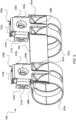
Figure 2 illustrates a front perspective view of a mounting bracket according to a first embodiment of the present invention; -
Figure 3 illustrates a front view of the mounting bracket shown inFigure 1 ; -
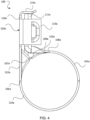
Figure 4 illustrates a side view of the mounting bracket shown inFigure 1 ; -
Figure 5 illustrates a rear perspective view of the mounting bracket shown inFigure 1 ; -
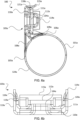
Figure 6 illustrates a cross-sectional view (a) along the line A-A inFigure 3 and (b) along the line B-B inFigure 3 ; -
Figure 7 illustrates a perspective view of a mounting bracket in a closed position according to an aspect which is not part of the present invention; -
Figure 8 illustrates a perspective view of the mounting bracket shown inFigure 7 in an open position; -
Figure 9 illustrates a schematic side view of the mounting bracket shown inFigure 7 ; -
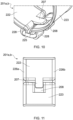
Figure 10 illustrates a perspective partial view of a connection between two portions of clamping elements of the mounting bracket shown inFigure 7 ; -
Figure 11 illustrates a cut-away top view of the connection between two portions of the clamping elements of the mounting bracket shown inFigure 7 ; -
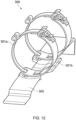
Figure 12 illustrates a perspective view of a mounting bracket in a closed position according to an aspect which is not part of the present invention; -
Figure 13 illustrates a perspective view of the mounting bracket shown inFigure 12 in an open position; -
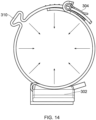
Figure 14 illustrates a schematic side view of the mounting bracket shown inFigure 12 ; -
Figure 15 illustrates a perspective partial view (close-up) of a connection between two portions of clamping elements of the mounting bracket shown inFigure 12 at a first end of the clamping elements; -
Figure 16 illustrates a perspective ;view (close-up) of a connection between two portions of clamping elements of the mounting bracket shown inFigure 12 at a second end of the clamping elements; -
Figure 17 illustrates a front view of a first portion of a clamping element of the mounting bracket shown inFigure 12 including round or chamfered edges (arrow); -
Figure 18 illustrates a rear view of a second portion of a clamping element of the mounting bracket shown inFigure 12 including round or chamfered edges (arrow); -
Figures 19 (a) to (e) illustrate an assembly sequence of the mounting bracket shown inFigure 12 ; -
Figure 20 illustrates a perspective view of a mounting bracket in a closed position according to an aspect which is not part of the present invention; -
Figure 21 illustrates a perspective view of the mounting bracket shown inFigure 20 in an open position; -
Figure 22 illustrates a schematic side view (incl. arrows illustrating the radial clamp forces) of the mounting bracket shown inFigure 20 ; -
Figure 23 illustrates a perspective close-up view of the connection between the clamping element and the elongate member of the mounting bracket shown inFigure 20 ; -
Figure 24 illustrates a perspective close-up view of a stepless fixing of the clamp (toothed fixing) of the mounting bracket inFigure 20 ; -
Figure 25 illustrates a cut-away front view of a clamping element of the mounting bracket shown inFigure 20 including round or chamfered edges (arrow), and -
Figure 26 illustrates a different perspective view of the mounting bracket shown inFigure 20 with clamps in a closed position. - The described example embodiments relate to mounting assemblies suitable for securing airbags and in particular side curtain airbags. The embodiments of the invention are normally applied in vehicles. Although the invention is described with respect to vehicles, the invention is not restricted to vehicles altogether, but may also be used in other structures requiring attachment of accessories or peripheral components to a structure.
- Certain terminology is used in the following description for convenience only and is not limiting. The words 'right', 'left', 'lower', 'upper', 'front', 'rear', 'upward', 'down', 'downward', 'above' and 'below' designate directions in the drawings to which reference is made and are with respect to the described component when assembled and mounted (e.g. in situ). The words 'inner', 'inwardly' and 'outer', 'outwardly' refer to directions toward and away from, respectively, a designated centerline or a geometric center of an element being described (e.g. central axis), the particular meaning being readily apparent from the context of the description.
- Further, as used herein, the terms 'connected', 'attached', 'coupled', 'mounted' are intended to include direct connections between two members without any other members interposed therebetween, as well as, indirect connections between members in which one or more other members are interposed therebetween. The terminology includes the words specifically mentioned above, derivatives thereof, and words of similar import.
- Further, unless otherwise specified, the use of ordinal adjectives, such as, 'first', 'second', 'third' etc. merely indicate that different instances of like objects are being referred to and are not intended to imply that the objects so described must be in a given sequence, either temporally, spatially, in ranking or in any other manner.
- Through the description and claims of this specification, the terms 'comprise' and 'contain', and variations thereof, are interpreted to mean 'including but not limited to', and they are not intended to (and do not) exclude other moieties, additives, components, integers or steps. Throughout the description and claims of this specification, the singular encompasses the plural unless the context otherwise requires. In particular, where the indefinite article is used, the specification is to be understood as contemplating plurality, as well as, singularity, unless the context requires otherwise.
- Features, integers, characteristics, compounds, chemical moieties or groups described in conjunction with a particular aspect, embodiment or example of the invention are to be understood to be applicable to any other aspect, embodiment or example described herein unless incompatible therewith. All of the features disclosed in this specification (including any accompanying claims, abstract and drawings), and/or all of the steps of any method or process so disclosed, may be combined in any combination, except combinations where at least some of such features and/or steps are mutually exclusive. The invention is not restricted to the details of any foregoing embodiments. The invention extends to any novel one, or any novel combination, of the features disclosed in this specification (including any accompanying claims, abstract or drawings), or to any novel one, or any novel combination, of the steps of any method or process so disclosed.
- The following illustrated example embodiment(s) relate(s) to a mounting bracket for mounting an airbag (side curtain airbag) to a component of a vehicle.
- The drawings illustrate a new design of a mounting bracket which applies an even circumferential pressure to a cushion sleeve and an inflator of an airbag to prevent gas leakage from the cushion between the sleeve and the inflator. The airbag may be a curtain airbag.
- Referring now to
Figures 2 to 6 , a mountingbracket 100 according to a first aspect of the present invention is shown. The mountingbracket 100 has afirst clamping element 101a, asecond clamping element 101b and anelongate member 102 extending between thefirst clamping element 101a and thesecond clamping element 101b. Theelongate member 102 may be planar or curved so as to conform with a portion of the surface of an airbag inflator. Each one of a first mountingmember 103a and a second mountingmember 103b extend from the first andsecond clamping elements members aperture bracket 100 to a component of a vehicle (not shown). - Each clamping
element sleeve member first end portion second end portion second end portion first end portion - Each one of the first and
second clamping elements adjustable portion first end portion adjustable portion second end portion adjustable portion curved protrusion second clamping elements 101a,b when in situ, coupled with the elongate member 102). The first and secondcurved protrusions sleeve member adjustable portion curved protrusion curved protrusions third protrusion closing sleeve member second end portion first end portion curved protrusion curved protrusions curved protrusion curved protrusions closing sleeve members clamping elements - In some examples, one curved protrusion may be provided with the first
adjustable portion adjustable portion adjustable portion adjustable portion adjustable portions adjustable portion 123a,b, are shaped so as to form an inner surface with the open endedsleeve members 124a,b defining a full circle, during use. - Each one of the first and second mounting
members 103a,b, comprises afirst mounting flange adjustable portion second mounting flange adjustable portion flanges 110a,b, 111a,b haverespective apertures 104a,b, 112a,b concentrically aligned with one another, during use. Eachaperture 104a,b, 112a,b of the first and second mountingflanges 110a,b, 111a,b has a raised lip forming a cylindrical protrusion. The diameters of the cylindrical protrusions ofrespective apertures 104a,b and 112a,b are such that the raised lip of theaperture flange aperture second mounting flange apertures - As shown in
Figures 2 and3 , the first mountingflange flanges flange apertures 104a,b and 112a,b). Each one of the threelocking flanges Figures 6(a) and 6(b) , each lockingflange 113a,b, 114a,b, 115a,b comprises an inwardly projecting tine orsurface 116a,b, 117a,b, 118a,b (first to third) extending inwardly downward towards thesecond mounting flange 111a,b, in use. A first andsecond contact surface 119a,b, 120a,b (i.e. the bottom surface) of each inwardly projecting tine orsurface 116a,b, 117a,b, 118a,b is facing thesecond mounting flange 111a,b so as to prevent thesecond mounting flange 111a,b from moving out of engagement with the first mountingflange 110a,b. The locking flanges 113a,b, 114a,b, 115a,b thus lock the first mountingflange 110a,b in a preassembled position with respect to thesecond mounting flange - When closing the clamps 101a, 101b, the locking
flanges 113a,b, 114a,b, 115a,b resiliently flex outwards, away from theaperture 104a,b so as to allow thesecond mounting flange 111a,b to be pushed past the inwardly projecting tines orsurfaces 116a,b, 117a,b, 118a,b into the pre-assembled position. A screw, clip or any other suitable fastening means can then be inserted through the concentrically alignedapertures 104a,b, 112a,b to secure the mountingflange 100 to a component of a vehicle. In order to open theclamps flanges 113a,b, 114a,b, 115a,b are simply deflected outwards, e.g. by the user, to allow thesecond mounting flange 111a,b to be moved away from the lockingflanges 113a,b, 114a,b, 115a,b. - To secure the mounting
bracket 100 to the component, a screw is inserted through theapertures 104a,b, 112a,b. The screw is then tightened to secure the first mountingflange 110a,b against thesecond mounting flange 111a,b. The tightening of the screws reduces the distance between the first andsecond end portions 105a,b and 106a,b and increases the intermeshing overlap of thecurved protrusions 107a,b, 108a,b, 109a,b, thereby increasing the circumferential pressure applied to the inflator received within theclamps - The mounting
bracket 100 is integrally formed. The mountingbracket 100 is formed from a sheet metal. The mounting bracket may be formed by stamping the sheet metal. As shown inFigure 5 , the first andsecond protrusions 107a,b, 108a,b and the third protrusions (not shown) are embossed portions of the sheet metal. The lips of theapertures 104a,b, 112a,b (forming respective cylindrical protrusions) are also formed by embossing. The inwardly projecting tines orsurfaces 116a,b, 117a,b, 118a,b of the lockingflanges 113a,b, 114a,b, 115a,b may be formed by embossing a portion of the lockingflanges 113a,b, 114a,b and 115a,b, or may be formed by cutting and bending the sheet metal forming the lockingflanges 113a,b, 114a,b and 115a,b, or a combination thereof, as shown inFigures 6(a) and 6(b) . - An example embodiment of a mounting
bracket 200 according to a second aspect which is not part of the present invention is shown inFigures 7 to 11 . The mountingbracket 200 has afirst clamping element 201a, asecond clamping element 201b and anelongate member 202. Theelongate member 202 may be planar or curved so as to conform with a portion of the surface of an airbag inflator. Theelongate member 202 has acentral mounting aperture 204 for receiving a fastener, such as a screw or a clip, to mount the mountingbracket 200 to a component of a vehicle (not shown). In alternative examples, the mounting bracket may have two or more mounting apertures. The mounting apertures may be disposed in at a central portion of the mounting bracket between the clamping elements, or may be disposed at end portions of the mounting bracket that extend beyond the clamping elements. The mounting bracket may have other means adapted to mount or affix the mounting bracket to a vehicle component. - As shown in
Figures 7 to 9 , the first andsecond clamping elements second end portions elongate member 202. The first andsecond end portions clamping elements flange 210 is extending from afirst clamping portion 222 of respective first andsecond clamping element 201a,b for mounting the first andsecond clamping elements 201a,b to theelongate member 202, and optionally to a vehicle component (not shown). The mountingflanges 210 are bent over so that afirst portion 210a of the mountingflange 210 extends substantially radially away from theclamping element second portion 210b of the mountingflange 210 forming a generally U-shaped side-profile. A gap between the first andsecond portions respective end portions elongate member 202 therethrough. - A
second clamping portion 223 comprises a securingflange 211 substantially mirroring the first clamping portion and mountingflange 210. The first andsecond clamping portions portion 222 andsecond clamping portion 223 are in a closed position, as shown inFigures 7 and9 . The mountingflange 210 extends from a first end of thefirst clamping portion 222, and the substantially mirroring securingflange 211 extends from a first end of thesecond clamping portion 223 having the same U-shaped (or backwards-folded) bent arrangement as the mountingflange 210. Further, the first andsecond clamping portions ring 225 or loop or the like. Ahook element 228 is extending from respective second ends of the first andsecond clamping portions ring 225 or loop. Accordingly, when assembled, the first andsecond clamping portions Figure 7 , and an open position, as shown inFigure 8 . - The U-shaped profile of the mounting
flange 210 and the securingflange 211 form a spring element. This applies a bias against the screw, in use, to prevent the screw from loosening. - Each one of respective first and
second portions 210a,b, 211a,b of the mountingflange 210 and the securingflange 211 have suitable fixing apertures. The fixing apertures of respective first and second portion are coaxial and can be aligned with a respective aperture of theelongate member 202. The fixing apertures and the aperture in the first andsecond end portions Figures 7 and9 , a fastener 1000 is inserted through the fixing apertures in the securingflange 211 and, when closed, through the fixing apertures of the mountingflange 210, as well as, the respective aperture in the first orsecond end portion elongate member 202. The fastener 1000 secures theclamping elements elongate member 202 and secures the first and second clamping portions when in the closed position. - As mentioned previously, the fastener 1000 may be a pin, screw, clip, or any other fastener suitable for securing the mounting
flange 210 and the securingflange 211 together, and for securing the mounting and securingflanges elongate member 202. In one example, the fastener 1000 is a threaded screw. The aperture in each of the first andsecond end portions cylindrical element 227 which has an threaded internal surface for threadingly receiving the threaded screw 1000. Thecylindrical element 227 is protruding into the gap between first andsecond portions 210a,b of the mountingflange 210 forming a contact surface for theelongate member 202. In this example embodiment is arcuate to match the arcuate profile of theelongate member 202. The two mating arcuate surfaces between thecylindrical element 227 and theelongate member 202 provide an improved contact engagement between theelongate member 202 andrespective clamping elements 201a,b, allowing theelongate member 202 to tilt relative to the fastener 1000 (i.e. its elongate axis) within a predetermined limited range. - The first ends of each of the
first clamping portion 222 and thesecond clamping portion 223 are circumferentially spaced apart from one another. The first and second ends of thefirst clamping portion 222 each have anarcuate tongue 207 protruding circumferentially outward in line with the circumference of the assembled clampingelement 201a,b, i.e. thearcuate tongue 207 has the same curvature as thefirst clamping portion 222. The first and second ends of thesecond clamping portion 223 each comprise agroove 208 sized and shaped to slidingly receive arespective tongue 207 extending from the ends of thefirst clamping portion 222. As shown in detail inFigure 10 , thegroove 208 is sized such that thetongue 207 is received within thegroove 208, and an inner surface of thetongue 207 is level with the inner surface of thesecond clamping portion 223, when assembled (matingly engaged). Thus, the matedtongues 207 and grooves provide a continuous contact surface of the first andsecond clamping elements Figure 9 , theclamping elements bracket 200 is clamped about both the sleeve and the inflator. - In some examples, the
tongues 207 andgrooves 208 may be provided on either of the first andsecond clamping portions first clamping portion 222 may have atongue 207 at the first end and agroove 208 at the second end, and thesecond clamping portion 223 may have agroove 208 at the first end and atongue 207 at the second end, or vice versa. - Further, as shown in
Figures 8 and9 , an O-ring 229 may be provided about the fastener 1000 between first andsecond portions flange 211. The O-ring 229 may be formed from an elastomer material. Accordingly, the O-ring 229 holds the fastener 1000 in a pre-assembled position in the securingflange 211. This allows the fastener 1000 to be pre-assembled in the securingflange 211 during transport and assembly. Alternatively, other means of holding the fastener 1000 in the pre-assembled position in the securingflange 211 may be used. - As shown in
Figure 9 , a gap 'G' is provided between the mountingflange 210 and the securingflange 211 when theclamping elements first clamping portion 222 relative to the asecond clamping portion 223. This movement allows theclamping element - According to an example of the present invention, as shown in
Figure 11 , an inner surface of each of the first andsecond clamping portions outer edges outer edges outer edges outer edges clamping element - To secure the mounting
bracket 200 about the inflator, theclamping elements Figure 8 . Theclamping elements portions portions clamping elements flange 211, the first orsecond end portion elongate member 202, and the mountingflange 210 to secure eachclamping element element elongate member 202, as shown inFigures 7 and9 . - Before, or after, securing the mounting
bracket 200 to the inflator, the mountingbracket 200 is secured to the component (e.g. vehicle structure). To secure the mountingbracket 200 to the component, a screw is inserted through the mountingaperture 204 of theelongate member 202 and fastened to the component. - In some examples, the
first clamping element 101a or 202a and thesecond clamping element 101b or 202b are fastened around a portion of the inflator (not shown) which is not covered by the sleeve of the airbag cushion. An additional clamp may be used to fasten the sleeve of the airbag cushion (not shown) over an end section of an inflator. The additional clamp may be separate to the mountingbracket bracket - In other examples, the
first clamping element second fastening element - In some examples, the
clamping elements - In some examples, the mounting
bracket second clamping elements - In some examples, the mounting
portion elongate member 102. Theelongate member 102 may have one, two or three apertures. The apertures are sized to receive a screw, clip, or any other suitable fastening means. - An example embodiment of a mounting
bracket 300 according to a third aspect which is not part of the present invention is shown inFigures 12 to 19 . As with theother embodiments bracket 300 includes a first andsecond clamping element 301a,b that are operably coupled so as to provide a stepless and tightenable clamp fixing. The function and operation of the clamps and fixing is self-explanatory from the schematic figures, such as sequence ofFig.19 , and is thus not described in any more detail other than the essential characterising differences. Here, first andsecond clamping elements 301a,b are pivotably coupled with theelongate member 302 so as to allow at least one of the clamping elements, e.g. 301a, to rotate away from theother clamping element 301b into an open position. Thefirst clamping element 301a comprises atoothed end portion 303 operably engageable with aresilient locking clamp 304, such that thetoothed end portion 303 can slide through theresilient locking clamp 304 in a first direction (closing direction) and prevents sliding movement between thetoothed end portion 303 and theresilient locking clamp 304 in a second direction (opening direction) when lockingly engaged, i.e. the clamp can be tightened by sliding thetoothed end portion 303 through theapertures 306 of theresilient locking clamp 304, but cannot be opened (or loosened) unless theresilient locking clamp 304 is "opened" (i.e. disengaged from theteeth 305 of thetoothed end portion 303. - The
second clamping element 301b comprises ahooked end portion 307 adapted to retainingly receive theresilient locking clamp 304. Acentral tongue member 308 is provided at thesecond clamping element 301b to guidingly engage with thefirst clamping element 301a. Rounded or chamferedouter edges 309a,b are provided as already described for the first and second aspect of the mountingbracket - Furthermore, as shown particularly in
Figures 13 and14 , aspring portion 310 may be provided on thefirst clamping element 301a, so as to provide a radial spring bias (biased tension). Thespring portion 310 may be a simple loop element incorporated into thefirst clamping element 301a, or thesecond clamping element 301b, or both. During use, when tightening the twoengaged clamping elements 301a,b, thespring portion 310 will allow some extension (gap is opening) with increasing biasing force. -
Figure 16 illustrates a detailed view of theclamping element 301a,b end portions lockingly coupled via the lockingclamp 304. The stepless pivot joint with theelongate member 302 and the guidingtongue member 308 provide for full 360 degrees of evenly distributed radial forces onto theinflator 2000 when clamped therein. - As illustrated in the sequence of
Figures 19 (a) to (e) , during assembly, the first andsecond clamping elements 301a,b are moved into an open position, aninflator 2000 is positioned into theopen clamps 301a,b onto the curvedelongate member 302 and theclamps 301a,b are locked and tightened around theinflator 2000 via the toothed fixing and lockingclamp 304. In order to open the lockedclamps 301a,b, aspecific tool 3000 may be used to disengage the lockingclamp 304 andteeth 305 of thetoothed end portion 303. - An example embodiment of a mounting
bracket 400 according to a fourth aspect which is not part of the present invention is shown inFigures 20 to 26 . -
Figure 20 illustrates a perspective view of the mountingbracket 400 in a closed position (without the inflator) andFigure 21 illustrates the mountingbracket 400 in an open position. Again, only the essential characterising features are described in any more detail. Like features (see mountingbrackets - The first and
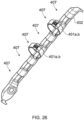
second clamping elements 401a,b are provided by a single band looped through a raisedslot 407 of theelongate member 402 so as to align perpendicular to the longitudinal axis of theelongate member 402. A plurality of such raisedslots 407 are incorporated into a central portion of theelongate member 402 and parallelly arranged along the longitudinal axis of theelongate member 402. Thus, any suitable number of metal bands may be looped through the raisedslots 407 in order to form a first andsecond clamping element 401a,b. Also, the one or more metal bands may be removed from theelongate member 402 and coupled with a different (shape) elongate member comprising the raisedslots 407 for engagement with the single bands, thus, providing a modular solution of the mountingbracket 400. - The
first clamping element 401a is provided with atoothed end portion 403 and thesecond clamping element 401b is provided with correspondingapertured end portion 406 comprising a plurality ofapertures 408 adapted to lockingly engage with theteeth 405 of thetoothed end portion 403, at least when the first and second engaged clampingelements 401a,b move relative to each other in a first direction (i.e. to open). Theteeth 405 are configured to allow relative movement of the engaged first andsecond clamping elements 401a,b in a second direction (i.e. to close). - As particularly shown in
Figure 24 , thetoothed end portion 403 further comprisesguide members 409 extending laterally away from bending back towards a lateral edge of thetoothed end portion 403 so as to form a U-shaped guide for theapertured end portion 406. The apertured end portion comprises astop member 410 formed at the end of theapertures 408 and adapted to stoppingly engage with theguide members 409. Thestop member 410 is formed by two opposing lateral extensions of alateral edge portion 411 of thesecond clamping element 401b, each one bent back towards the lateral edge portion so as to form a loop suitable to function as a stopper. - In use, at least one metal band is pulled through one of the raised
slots 407 forming first andsecond clamping elements 401a,b and arranged in an open position. An inflator (not shown) is then positioned onto theelongate element 402 and theapertured end portion 406 is slidingly engaged with theguide members 409 of thetoothed end portion 403 such that theteeth 405 lockingly engage with acorresponding aperture 408. Theapertured end portion 406 is moved into the close position until thestop member 410 abuts with theguid members 409. The arrangement of the raised slots and slidingly engaging toothed andapertured end portions other example embodiments second clamping elements 401a,b are rounded or chamfered. - It will be appreciated by persons skilled in the art that the above embodiment(s) have been described by way of example only and not in any limitative sense, and that various alterations and modifications are possible without departing from the scope of the invention as defined by the appended claims. The embodiments described are mounting brackets for a side curtain airbag assembly. It will be appreciated that the mounting brackets described above could be used to secure other airbags.
Reference list: 100 mounting bracket (1st) 222 1st clamping portion 101a,b 1st, 2nd clamping element 223 2nd clamping portion 102 elongate member 225 ring or loop 103a,b 1st, 2nd mounting member 226a,b outer edges, chamfered 104a,b mounting aperture 227 cylindrical element 105a,b first end portion 228 hook element 106a,b second end portion 229 O-ring 107a,b first curved protrusion 232a,b 1st, 2nd end portion 108a,b second curved protrusion 300 mounting bracket (3rd) 109a,b third curved protrusion 301a,b 1st, 2nd clamping element 110a,b first mounting flange 302 elongate member 111a,b second mounting flange 303 toothed end portion 112a,b aperture 304 resilient locking clamp 113a,b 1st locking flange 305 teeth 114a,b 2nd locking flange 306 aperture 115a,b 3rd locking flange 307 hooked end portion 116a,b 1st tine or surface 308 central tongue member 117a,b 2nd tine or surface 309a,b outer edges, round or chamfered 118a,b 3rd tine or surface 310 spring portion 119a,b 1st contact surface 400 mounting bracket (4th) 120a,b 2nd contact surface 401a,b 1st, 2nd clamping element 122a,b first adjustable portion 402 elongate member 123a,b second adjustable portion 403 toothed end portion 124a,b open ended sleeve member 405 teeth 200 mounting backet (2nd) 406 apertured end portion 201a,b 1st, 2nd clamping element 407 raised slot 202 elongate member 408 apertures 204 central mounting aperture 409 guide members 207 arcuate tongue 410 stop member 208 groove 411 lateral edge portion 210 mounting flange 1000 fastener 210a,b 1st, 2nd portion of flange 2000 inflator 211 securing flange 3000 tool 211a,b 1st, 2nd portions of flange
Claims (8)
- A mounting bracket (100) for mounting an airbag to a component of a vehicle, the airbag having an inflator (2000) and a cushion received over an end of the inflator (2000), the mounting bracket (100) comprising:a first clamping element (101a);a second clamping element (101b);an elongate member (102) coupled between the first clamping element (101a) and the second clamping element (101b); andone or more mounting portions (103a, 103b) for mounting the mounting bracket (100) to the component, wherein the one or more mounting portions (103a, 103b) are disposed on at least one of the first clamping element (101a), the second clamping element (101b) or the elongate member (102);wherein the first clamping element (101a) and the second clamping element (101b) are spaced apart along a length of the elongate member (102) such that, in use, the first clamping element (101a) and the second clamping element (101b) are arranged to clamp the inflator (2000); andwherein each of the first clamping element (101a) and the second clamping element (101b) comprise an open-ended sleeve member (124a, 124b) having a first end portion (105a) and a second end portion (105b) circumferentially spaced apart from the first end portion (105a);characterised in that the first end portion (105a) comprises a first protrusion (107a, 107b) facing the second end portion (105b) and in that the second end portion (105b) comprises a second protrusion (108a, 108b) facing the first end portion (105a) and which is offset from the first protrusion (107a, 107b).
- The mounting bracket (100) according to claim 1, wherein the first protrusion (107a, 107b) and the second protrusion (108a, 108b) are curved protrusions such that the clamp applies an even circumferential pressure during use.
- The mounting bracket (100) according to claim 1 or claim 2, wherein the first end portion (105a) further comprises a third protrusion (109a, 109b) spaced apart from the first protrusion (107a, 107b) and facing the second end portion (105b), and wherein the second protrusion (108a, 108b) is received in a gap between the first protrusion (107a, 107a) and the third protrusion (109a, 109b), in use.
- The mounting bracket (100) according to any of claims 1 to 3, wherein each mounting portion (103a, 103b) comprises a first mounting flange (110a, 110b) extending from first end portion (105a) and a second mounting flange (111a, 111b) extending from the second end portion (105b) of each of the clamping elements (101a, 101b), and wherein the first (110a, 110b) and second (111a, 111b) mounting flanges each comprise an aperture (112a, 112b) configured to receive a fastening element therethrough.
- The mounting bracket (100) according to any of claims 1 to 4, wherein the second end portion (105b) is moveable towards the first end portion (105a) to a fastened position so as to reduce the circumference of the open-ended sleeve member, and wherein the second end portion (105b) is configured to be secured relative to the first end portion (105a) in the fastened position.
- The mounting bracket (100) according to any preceding claim, wherein the first clamping element (101a), the second clamping element (101b), and the elongate member (102) are integrally formed.
- The mounting bracket (100) according to any preceding claim, wherein, in use, the first clamping element (101a) is arranged to clamp the cushion and the inflator (2000).
- The mounting bracket (100) according to any preceding claim, wherein outer edges of an inner surface of the first clamping element (101a) and/or the second clamping element (101b) are chamfered and are widened radially outwards, and wherein the first clamping element (101a) and/or the second clamping element (101b) is arranged to contact the inflator (2000) about the entire circumference of the inflator (2000) to provide a continuous radial clamping force to the inflator (2000).
Applications Claiming Priority (3)
| Application Number | Priority Date | Filing Date | Title |
|---|---|---|---|
| EP22382811 | 2022-08-31 | ||
| EP23382004 | 2023-01-04 | ||
| EP23168122 | 2023-04-14 |
Publications (2)
| Publication Number | Publication Date |
|---|---|
| EP4331922A1 EP4331922A1 (en) | 2024-03-06 |
| EP4331922B1 true EP4331922B1 (en) | 2025-04-02 |
Family
ID=87569879
Family Applications (1)
| Application Number | Title | Priority Date | Filing Date |
|---|---|---|---|
| EP23192266.7A Active EP4331922B1 (en) | 2022-08-31 | 2023-08-18 | Mounting bracket for an airbag |
Country Status (1)
| Country | Link |
|---|---|
| EP (1) | EP4331922B1 (en) |
Family Cites Families (3)
| Publication number | Priority date | Publication date | Assignee | Title |
|---|---|---|---|---|
| JP2009154670A (en) * | 2007-12-26 | 2009-07-16 | Nippon Plast Co Ltd | Inflator mounting apparatus and airbag system |
| DE102010014050A1 (en) * | 2010-04-07 | 2011-10-13 | Gm Global Technology Operations Llc (N.D.Ges.D. Staates Delaware) | Motor vehicle body with side airbag system |
| KR102693555B1 (en) * | 2019-06-04 | 2024-08-08 | 현대모비스 주식회사 | Curtain airbag device |
-
2023
- 2023-08-18 EP EP23192266.7A patent/EP4331922B1/en active Active
Also Published As
| Publication number | Publication date |
|---|---|
| EP4331922A1 (en) | 2024-03-06 |
Similar Documents
| Publication | Publication Date | Title |
|---|---|---|
| US5729930A (en) | Adjustable assembly for connecting a window regulator to a movable window | |
| EP0466347A2 (en) | Mounting clamp for a generally cylindrical article | |
| US7114221B2 (en) | Two-piece interior trim retainer | |
| US5518292A (en) | Fixing device for a seat covering | |
| EP1749713B1 (en) | Seat belt assembly and method of installation | |
| US6851702B2 (en) | Mounting assembly for inflatable curtain | |
| US7213304B2 (en) | Resilient clip fastener | |
| US8381368B2 (en) | Vehicle clip centering device and method | |
| US6176660B1 (en) | Releasable fastener with lateral stabilizing brace members and latch legs carrying fastener insertion guide | |
| US6287043B1 (en) | Connection between a support and a plate element | |
| GB2327921A (en) | Air bag device for vehicle | |
| EP4331922B1 (en) | Mounting bracket for an airbag | |
| EP1379400B1 (en) | Sun visor clip | |
| EP0830965B1 (en) | Vehicle sunshade mounting fastener | |
| US20250084879A1 (en) | Fastening Clip | |
| US8474110B1 (en) | Clip apparatus | |
| DE202005009002U1 (en) | Modular sub-assembly for airbag unit in motor vehicle has retaining element extending along one edge of airbag packet and over it grip fastening means provided on support for fastening of airbag packet on support | |
| US5599039A (en) | Spring retainer air bag mounting device | |
| US6604725B1 (en) | Device for securing a hydraulic modulator to a vehicle | |
| US10214148B2 (en) | System to secure objects within a vehicle | |
| JP4922487B2 (en) | Pre-assembled bellows structure for covering propeller shaft | |
| EP1935722A1 (en) | Vehicle interior trim clip | |
| WO2008105694A1 (en) | An air-bag module and method of mounting an air-bag module | |
| US12546347B2 (en) | Fastening clip assembly | |
| US20250084887A1 (en) | Fastening Clip |
Legal Events
| Date | Code | Title | Description |
|---|---|---|---|
| PUAI | Public reference made under article 153(3) epc to a published international application that has entered the european phase |
Free format text: ORIGINAL CODE: 0009012 |
|
| STAA | Information on the status of an ep patent application or granted ep patent |
Free format text: STATUS: THE APPLICATION HAS BEEN PUBLISHED |
|
| AK | Designated contracting states |
Kind code of ref document: A1 Designated state(s): AL AT BE BG CH CY CZ DE DK EE ES FI FR GB GR HR HU IE IS IT LI LT LU LV MC ME MK MT NL NO PL PT RO RS SE SI SK SM TR |
|
| STAA | Information on the status of an ep patent application or granted ep patent |
Free format text: STATUS: REQUEST FOR EXAMINATION WAS MADE |
|
| 17P | Request for examination filed |
Effective date: 20240829 |
|
| RBV | Designated contracting states (corrected) |
Designated state(s): AL AT BE BG CH CY CZ DE DK EE ES FI FR GB GR HR HU IE IS IT LI LT LU LV MC ME MK MT NL NO PL PT RO RS SE SI SK SM TR |
|
| GRAP | Despatch of communication of intention to grant a patent |
Free format text: ORIGINAL CODE: EPIDOSNIGR1 |
|
| STAA | Information on the status of an ep patent application or granted ep patent |
Free format text: STATUS: GRANT OF PATENT IS INTENDED |
|
| RIC1 | Information provided on ipc code assigned before grant |
Ipc: B60R 21/217 20110101ALI20241024BHEP Ipc: B60R 21/213 20110101AFI20241024BHEP |
|
| INTG | Intention to grant announced |
Effective date: 20241121 |
|
| RIN1 | Information on inventor provided before grant (corrected) |
Inventor name: MARINO, IVAN MARTIN Inventor name: DIEZ, VICTOR |
|
| GRAS | Grant fee paid |
Free format text: ORIGINAL CODE: EPIDOSNIGR3 |
|
| P01 | Opt-out of the competence of the unified patent court (upc) registered |
Free format text: CASE NUMBER: APP_2620/2025 Effective date: 20250115 |
|
| GRAA | (expected) grant |
Free format text: ORIGINAL CODE: 0009210 |
|
| STAA | Information on the status of an ep patent application or granted ep patent |
Free format text: STATUS: THE PATENT HAS BEEN GRANTED |
|
| AK | Designated contracting states |
Kind code of ref document: B1 Designated state(s): AL AT BE BG CH CY CZ DE DK EE ES FI FR GB GR HR HU IE IS IT LI LT LU LV MC ME MK MT NL NO PL PT RO RS SE SI SK SM TR |
|
| REG | Reference to a national code |
Ref country code: GB Ref legal event code: FG4D |
|
| REG | Reference to a national code |
Ref country code: CH Ref legal event code: EP |
|
| REG | Reference to a national code |
Ref country code: IE Ref legal event code: FG4D |
|
| REG | Reference to a national code |
Ref country code: DE Ref legal event code: R096 Ref document number: 602023002706 Country of ref document: DE |
|
| REG | Reference to a national code |
Ref country code: NL Ref legal event code: MP Effective date: 20250402 |
|
| PG25 | Lapsed in a contracting state [announced via postgrant information from national office to epo] |
Ref country code: NL Free format text: LAPSE BECAUSE OF FAILURE TO SUBMIT A TRANSLATION OF THE DESCRIPTION OR TO PAY THE FEE WITHIN THE PRESCRIBED TIME-LIMIT Effective date: 20250402 |
|
| REG | Reference to a national code |
Ref country code: AT Ref legal event code: MK05 Ref document number: 1781009 Country of ref document: AT Kind code of ref document: T Effective date: 20250402 |
|
| PG25 | Lapsed in a contracting state [announced via postgrant information from national office to epo] |
Ref country code: FI Free format text: LAPSE BECAUSE OF FAILURE TO SUBMIT A TRANSLATION OF THE DESCRIPTION OR TO PAY THE FEE WITHIN THE PRESCRIBED TIME-LIMIT Effective date: 20250402 Ref country code: ES Free format text: LAPSE BECAUSE OF FAILURE TO SUBMIT A TRANSLATION OF THE DESCRIPTION OR TO PAY THE FEE WITHIN THE PRESCRIBED TIME-LIMIT Effective date: 20250402 Ref country code: PT Free format text: LAPSE BECAUSE OF FAILURE TO SUBMIT A TRANSLATION OF THE DESCRIPTION OR TO PAY THE FEE WITHIN THE PRESCRIBED TIME-LIMIT Effective date: 20250804 |
|
| PGFP | Annual fee paid to national office [announced via postgrant information from national office to epo] |
Ref country code: DE Payment date: 20250827 Year of fee payment: 3 |
|
| REG | Reference to a national code |
Ref country code: LT Ref legal event code: MG9D |
|
| PG25 | Lapsed in a contracting state [announced via postgrant information from national office to epo] |
Ref country code: GR Free format text: LAPSE BECAUSE OF FAILURE TO SUBMIT A TRANSLATION OF THE DESCRIPTION OR TO PAY THE FEE WITHIN THE PRESCRIBED TIME-LIMIT Effective date: 20250703 Ref country code: NO Free format text: LAPSE BECAUSE OF FAILURE TO SUBMIT A TRANSLATION OF THE DESCRIPTION OR TO PAY THE FEE WITHIN THE PRESCRIBED TIME-LIMIT Effective date: 20250702 |
|
| PG25 | Lapsed in a contracting state [announced via postgrant information from national office to epo] |
Ref country code: PL Free format text: LAPSE BECAUSE OF FAILURE TO SUBMIT A TRANSLATION OF THE DESCRIPTION OR TO PAY THE FEE WITHIN THE PRESCRIBED TIME-LIMIT Effective date: 20250402 |
|
| PG25 | Lapsed in a contracting state [announced via postgrant information from national office to epo] |
Ref country code: BG Free format text: LAPSE BECAUSE OF FAILURE TO SUBMIT A TRANSLATION OF THE DESCRIPTION OR TO PAY THE FEE WITHIN THE PRESCRIBED TIME-LIMIT Effective date: 20250402 |
|
| PG25 | Lapsed in a contracting state [announced via postgrant information from national office to epo] |
Ref country code: HR Free format text: LAPSE BECAUSE OF FAILURE TO SUBMIT A TRANSLATION OF THE DESCRIPTION OR TO PAY THE FEE WITHIN THE PRESCRIBED TIME-LIMIT Effective date: 20250402 |
|
| PG25 | Lapsed in a contracting state [announced via postgrant information from national office to epo] |
Ref country code: AT Free format text: LAPSE BECAUSE OF FAILURE TO SUBMIT A TRANSLATION OF THE DESCRIPTION OR TO PAY THE FEE WITHIN THE PRESCRIBED TIME-LIMIT Effective date: 20250402 |
|
| PG25 | Lapsed in a contracting state [announced via postgrant information from national office to epo] |
Ref country code: RS Free format text: LAPSE BECAUSE OF FAILURE TO SUBMIT A TRANSLATION OF THE DESCRIPTION OR TO PAY THE FEE WITHIN THE PRESCRIBED TIME-LIMIT Effective date: 20250702 |
|
| PG25 | Lapsed in a contracting state [announced via postgrant information from national office to epo] |
Ref country code: IS Free format text: LAPSE BECAUSE OF FAILURE TO SUBMIT A TRANSLATION OF THE DESCRIPTION OR TO PAY THE FEE WITHIN THE PRESCRIBED TIME-LIMIT Effective date: 20250802 |
|
| PG25 | Lapsed in a contracting state [announced via postgrant information from national office to epo] |
Ref country code: LV Free format text: LAPSE BECAUSE OF FAILURE TO SUBMIT A TRANSLATION OF THE DESCRIPTION OR TO PAY THE FEE WITHIN THE PRESCRIBED TIME-LIMIT Effective date: 20250402 |
|
| REG | Reference to a national code |
Ref country code: DE Ref legal event code: R097 Ref document number: 602023002706 Country of ref document: DE |
|
| PG25 | Lapsed in a contracting state [announced via postgrant information from national office to epo] |
Ref country code: DK Free format text: LAPSE BECAUSE OF FAILURE TO SUBMIT A TRANSLATION OF THE DESCRIPTION OR TO PAY THE FEE WITHIN THE PRESCRIBED TIME-LIMIT Effective date: 20250402 Ref country code: SM Free format text: LAPSE BECAUSE OF FAILURE TO SUBMIT A TRANSLATION OF THE DESCRIPTION OR TO PAY THE FEE WITHIN THE PRESCRIBED TIME-LIMIT Effective date: 20250402 |
|
| PG25 | Lapsed in a contracting state [announced via postgrant information from national office to epo] |
Ref country code: CZ Free format text: LAPSE BECAUSE OF FAILURE TO SUBMIT A TRANSLATION OF THE DESCRIPTION OR TO PAY THE FEE WITHIN THE PRESCRIBED TIME-LIMIT Effective date: 20250402 |
|
| PG25 | Lapsed in a contracting state [announced via postgrant information from national office to epo] |
Ref country code: EE Free format text: LAPSE BECAUSE OF FAILURE TO SUBMIT A TRANSLATION OF THE DESCRIPTION OR TO PAY THE FEE WITHIN THE PRESCRIBED TIME-LIMIT Effective date: 20250402 |
|
| PG25 | Lapsed in a contracting state [announced via postgrant information from national office to epo] |
Ref country code: SK Free format text: LAPSE BECAUSE OF FAILURE TO SUBMIT A TRANSLATION OF THE DESCRIPTION OR TO PAY THE FEE WITHIN THE PRESCRIBED TIME-LIMIT Effective date: 20250402 |
|
| PG25 | Lapsed in a contracting state [announced via postgrant information from national office to epo] |
Ref country code: IT Free format text: LAPSE BECAUSE OF FAILURE TO SUBMIT A TRANSLATION OF THE DESCRIPTION OR TO PAY THE FEE WITHIN THE PRESCRIBED TIME-LIMIT Effective date: 20250402 |
|
| PLBE | No opposition filed within time limit |
Free format text: ORIGINAL CODE: 0009261 |
|
| STAA | Information on the status of an ep patent application or granted ep patent |
Free format text: STATUS: NO OPPOSITION FILED WITHIN TIME LIMIT |
|
| REG | Reference to a national code |
Ref country code: CH Ref legal event code: L10 Free format text: ST27 STATUS EVENT CODE: U-0-0-L10-L00 (AS PROVIDED BY THE NATIONAL OFFICE) Effective date: 20260211 |
|
| PG25 | Lapsed in a contracting state [announced via postgrant information from national office to epo] |
Ref country code: RO Free format text: LAPSE BECAUSE OF FAILURE TO SUBMIT A TRANSLATION OF THE DESCRIPTION OR TO PAY THE FEE WITHIN THE PRESCRIBED TIME-LIMIT Effective date: 20250402 |
|
| 26N | No opposition filed |
Effective date: 20260105 |
|
| PG25 | Lapsed in a contracting state [announced via postgrant information from national office to epo] |
Ref country code: MC Free format text: LAPSE BECAUSE OF FAILURE TO SUBMIT A TRANSLATION OF THE DESCRIPTION OR TO PAY THE FEE WITHIN THE PRESCRIBED TIME-LIMIT Effective date: 20250402 |
|
| PG25 | Lapsed in a contracting state [announced via postgrant information from national office to epo] |
Ref country code: LU Free format text: LAPSE BECAUSE OF NON-PAYMENT OF DUE FEES Effective date: 20250818 |