EP4331535B1 - Dental medicament applicator - Google Patents
Dental medicament applicator Download PDFInfo
- Publication number
- EP4331535B1 EP4331535B1 EP23194463.8A EP23194463A EP4331535B1 EP 4331535 B1 EP4331535 B1 EP 4331535B1 EP 23194463 A EP23194463 A EP 23194463A EP 4331535 B1 EP4331535 B1 EP 4331535B1
- Authority
- EP
- European Patent Office
- Prior art keywords
- wing
- dental
- medicament applicator
- recited
- active matrix
- Prior art date
- Legal status (The legal status is an assumption and is not a legal conclusion. Google has not performed a legal analysis and makes no representation as to the accuracy of the status listed.)
- Active
Links
Images



Classifications
-
- A—HUMAN NECESSITIES
- A61—MEDICAL OR VETERINARY SCIENCE; HYGIENE
- A61C—DENTISTRY; APPARATUS OR METHODS FOR ORAL OR DENTAL HYGIENE
- A61C19/00—Dental auxiliary appliances
- A61C19/06—Implements for therapeutic treatment
- A61C19/063—Medicament applicators for teeth or gums, e.g. treatment with fluorides
-
- A—HUMAN NECESSITIES
- A61—MEDICAL OR VETERINARY SCIENCE; HYGIENE
- A61K—PREPARATIONS FOR MEDICAL, DENTAL OR TOILETRY PURPOSES
- A61K8/00—Cosmetics or similar toiletry preparations
- A61K8/18—Cosmetics or similar toiletry preparations characterised by the composition
- A61K8/19—Cosmetics or similar toiletry preparations characterised by the composition containing inorganic ingredients
- A61K8/20—Halogens; Compounds thereof
- A61K8/21—Fluorides; Derivatives thereof
-
- A—HUMAN NECESSITIES
- A61—MEDICAL OR VETERINARY SCIENCE; HYGIENE
- A61K—PREPARATIONS FOR MEDICAL, DENTAL OR TOILETRY PURPOSES
- A61K8/00—Cosmetics or similar toiletry preparations
- A61K8/18—Cosmetics or similar toiletry preparations characterised by the composition
- A61K8/30—Cosmetics or similar toiletry preparations characterised by the composition containing organic compounds
- A61K8/64—Proteins; Peptides; Derivatives or degradation products thereof
-
- A—HUMAN NECESSITIES
- A61—MEDICAL OR VETERINARY SCIENCE; HYGIENE
- A61Q—SPECIFIC USE OF COSMETICS OR SIMILAR TOILETRY PREPARATIONS
- A61Q11/00—Preparations for care of the teeth, of the oral cavity or of dentures; Dentifrices, e.g. toothpastes; Mouth rinses
-
- A—HUMAN NECESSITIES
- A61—MEDICAL OR VETERINARY SCIENCE; HYGIENE
- A61K—PREPARATIONS FOR MEDICAL, DENTAL OR TOILETRY PURPOSES
- A61K2800/00—Properties of cosmetic compositions or active ingredients thereof or formulation aids used therein and process related aspects
- A61K2800/80—Process related aspects concerning the preparation of the cosmetic composition or the storage or application thereof
- A61K2800/87—Application Devices; Containers; Packaging
-
- A—HUMAN NECESSITIES
- A61—MEDICAL OR VETERINARY SCIENCE; HYGIENE
- A61K—PREPARATIONS FOR MEDICAL, DENTAL OR TOILETRY PURPOSES
- A61K2800/00—Properties of cosmetic compositions or active ingredients thereof or formulation aids used therein and process related aspects
- A61K2800/80—Process related aspects concerning the preparation of the cosmetic composition or the storage or application thereof
- A61K2800/92—Oral administration
Definitions
- the present disclosure relates, in general, to dental devices for treatment and care of the teeth in an oral cavity, and more particularly, to a dental medicament applicator for treating interproximal caries and the like.
- Dental caries which are also referred to as tooth decay or cavities, are one of the most common and widespread persistent diseases in the oral cavity. When an individual eats certain food, bacteria in the oral cavity break down the food and produce acids that have the ability to seriously damage hard tissues of a tooth in the oral cavity. The result may be the formation of dental caries. In current clinical dentistry practice, interproximal caries are extremely difficult to treat due to the location of the dental caries between teeth. Previous efforts to address these issues have included various methods and devices for administering therapeutic agents within the oral cavity. For instance, US Publication No.
- the invention is defined by the attached set of claims. It would be advantageous to achieve systems and methods that would improve upon existing limitations in functionality with respect to treatment of dental caries and, in particular, interproximal caries. It would also be desirable to enable a mechanical-based and chemical-based medical solution that would provide simplified and accelerated treatment of interproximal caries. It would be further advantageous to enable a form factor-based solution that would provide for accurate delivery of substances for treating dental caries and, in particular, interproximal caries.
- a placement device is sized for insertion at a dental site, such as an interproximal site.
- the placement device includes a central body and at least one matrix secured to the central body containing a topical substance, such as a fluoride-containing chemical agent, silver diamine fluoride, or a peptide-based chemical agent, for example.
- a topical substance such as a fluoride-containing chemical agent, silver diamine fluoride, or a peptide-based chemical agent, for example.
- One or more wings extend from the central body to provide subterminal opposition surfaces to hold the placement device during placement. The one or more wings are non-active; that is, free of the topical substance.
- the active matrix in response to being physically affixed to the dental site, delivers the topical substance at a controlled rate to the dental site while the placement device dissolves at a quicker controlled rate.
- the wing 16 includes a front 42, a rear 44, an upper end 46, a lower end 48, a proximal end 50, and a distal end 52.
- the wing 16 has a rectangular form, like a strip, in this embodiment, but it should be appreciated that the wing 16 may have other forms as well. Further, the wing 16 may be at least partially integrated with the central body 14 or the wing 16 may be integral with the central body 14.
- the inorganic or organic fluoride-containing chemical agent may be sodium fluoride, Stannous fluoride, Stannous hexafluorozirconate, calcium fluoride, difluorosilane, hydrogen fluoride, sodium monofluorophosphate, ytterbium trifluoride, sodium hexafluorosilicate, ammonium fluoride, amine fluoride, and fluoroaluminosilicate glass, as well as any mixture thereof.
- the dental medicament applicator 10 consists of the placement device 12 including the central body 14 having the wings 16, 18.
- the active matrix 120 having the topical substance is connected to the central body 14.
- the placement device 12 and the active matrix 120 may be manufactured using a number of techniques appropriate to water-soluble polymers (synthetic, semi-synthetic, or natural) or polysaccharides including, but not limited to, as discussed above, polyethylene glycol, polyacrylamides, polyacrylic acid copolymer, polyvinyl alcohol, xanthan gum, pectines, chitosan derivatives, dextran, carrageenan, guar gum, hydroxy propyl cellulose, hydroxy ethyl cellulose, sodium carboxy methyl cellulose, and hyaluronic acid.
- water-soluble polymers synthetic, semi-synthetic, or natural
- polysaccharides including, but not limited to, as discussed above, polyethylene glycol, polyacrylamides, polyacrylic acid copolymer, polyvinyl
- pullulan, agar, alginates, carboxymethylcellulose, carrageenan, cellulose, gellan gum, Kelcogel ® , Kelcogel ® F, Kelco Biopolymers, starches and retted flax extracts are also suitable.
- Other examples of natural products that are suitable include lipids, polyisoprenes (e.g., latex rubber and gutta percha), resins and gums ( e.g., tragacanth and storax) and proteins ( e.g., alpha or beta chitin, soluble elastin, and collagen or denatured collagen in the form of gelatin) .
- any method of sealing the water-soluble films, i.e., the active matrix 120 to the central body 14, may be used during manufacturing. Such manufacturing methods include the use of an adhesive or heat sealing. Other methods include infra-red, radio frequency, ultrasonic, laser, solvent, and vibration and spin welding sealing.
- the seal desirably is water-soluble.
- a suitable heat-sealing temperature is, for example, 120°C to 195°C, especially 140°C to 150° C.
- a suitable sealing pressure is, for example, from 250 kPa to 600 kPa, especially 276 kPa to 552 kPa, more especially from 345 kPa to 483 kPa or from 400 kPa to 800 kPa, especially 500 kPa to 700 kPa, for example depending on the heat-sealing machine used.
- Suitable sealing dwell times are 0.4 to 2.5 seconds.
- the active matrix 120 is bonded to the central body 14 of the placement device 12 by simply applying water to the back of the active matrix 120 and then using pressure to adhere the active matrix to the central body 14.
- an adhesive can also be substituted in lieu of water to moisten the active matrix 120 and then apply pressure to seal the active matrix to the central body 14.
- the dental medicament applicator 10 is being utilized within an oral cavity O having teeth T 1 , T 2 , T 3 , T 4 , T 5 , T 6 , T 7 , T 8 , T 9 , and T 10 as well as gum tissue G.
- the use of the dental medicament applicator does not form part of the claimed invention.
- Dental caries C which represent the dental site, are located on an interproximal surface S of tooth T 4 .
- a dental professional having hands H is positioning the dental medicament applicator 10 with the use of the wings 16, 18 in a direction of placement A between teeth T 3 and T 4 .
- Prior to the dental professional placing the dental medicament applicator 10 various preparatory steps may have been taken.
- an approach using dental separators to open the interproximal contact to allow the dental professional to more easily place the dental medicament applicator 10 may be utilized.
- the dental professional positions the placement device 12 of the dental medicament applicator 10 over the dental caries C, such that the active matrix 120 will contact the dental caries C.
- the proximal viewing areas 62, 102 provide line-of-sight corridors 130, 132 that are utilized to correctly position the central body 14 of the dental medicament applicator 10 such that the wings 16, 18 are adjacent to the dental caries C and in position to contact adjacent or proximate dental surfaces.
- the subterminal opposition surfaces 54, 56, 58, 60 provide multiple contact points for the dental professional or other user to position the dental medicament applicator - whether using hands or self-locking tweezers, for example - while the dental professional or other user utilizes the line-of-sight corridors 130, 132 for visual confirmation of correct placement.
- the wings 16, 18 may have a different and greater transparency than the central body 14 to create visual distinction therebetween. Such visual distinction further assists in placement and demarcates the wings 16, 18 which have an absence of the topical substance from the active matrix 120, which includes the topical substance therein.
- the wings 16, 18 have a larger surface area than the active matrix 120 to provide sufficient space for maneuvering the dental medicament applicator 10 within the mouth, including avoiding unwanted contact with the check and tongue. Additionally, the wings 16, 18 are sculptable and may each be appropriately cut to optimize placement.
- the dental professional selectively contacts the wings 14, 16 to contact adjacent or proximate dental surfaces.
- the placement device 14 in response to being physically affixed at the dental site, dissolves at a controlled rate, while the active matrix 120 delivers the topical substance at a controlled rate to the dental caries C during a slower dissolving which involves a gelatinous stage.
- the active matrix 120 is then bio-reabsorbed leaving a treated dental carie CT, which is best seen in figure 8E .
- the dental medicament applicator 10 provides simplified and accelerated treatment of interproximal caries that is targeted to a specific dental site, thereby mitigating the risk of undesired contact between the topical substance and other bone or tissue.
- the dental medicament applicator 10 provides resorbable, water-based polymers that can be impregnated with fluoride or other materials such as silver diamine fluoride (SDF) or amelogenin peptides, and bonded together, along with multiple other possible polymer compounds and ratios that produce varied times of release of the fluoride and that also allow better adherence and longer presence of the medicated active matrix to the tooth.
- SDF silver diamine fluoride
- amelogenin peptides amelogenin peptides
- the dental medicament applicator 10 may be placed by either a dental professional or a consumer into the affected interproximal space by simply removing a fresh dental medicament applicator 10 from a sealed pouch, grasping the wings 16, 18 between each thumb and forefinger, gently pulling the placement device 12 taut and sliding the placement device 12 with the active matrix 120 facing the dental caries into the interproximal space.
- the dental professional or consumer will center the active matrix 120 over the incipient lesion and then bend the wings 16, 18 around the interproximal areas comprising mesial and/or distal tooth surfaces.
- saliva from the mouth or a couple of drops of water from an air/water syringe onto the wings 16, 18 will start the dissolution and/or resorptive process.
- the wings 16, 18 may be completely dissolve in about 20 to about 60 seconds, during which time the active matrix 120, which may be fluoride-impregnated, will begin to become gelatinous and begin to release sodium fluoride into the area with the lesion. In some embodiments, the active matrix 120 will release fluoride for about 30 to about 90 minutes after which the matrix will completely dissolve.
- Patients may then be evaluated for risk level which will determine frequency of treatment. If a patient has two or more incipient lesions, then such a patient may be considered high risk by dental guidelines. High risk patients may require reapplication every three months until the dental professional confirms that the lesions have been arrested. If the patient is determined to be normal risk, the dental medicament applicator 10 should be reapplied every six months during routine check-ups. The patient requires no monitoring and is free to go once the procedure has been accomplished.
- the dental medicament applicator 10 includes the central body 14 with the wings 16, 18, as well as the active matrix 120.
- the wing 16 has a polygon form 160, which is shown as an isosceles trapezium.
- the wing 18 has a polygon form 162, which is also shown as an isosceles trapezium.
- the dental medicament applicator 10 includes the central body 14 with the wings 16, 18, as well as the active matrix 120.
- the wing 16 has a semi-elliptical form 164.
- the wing 18 has a semi-elliptical form 166.
- the dental medicament applicator 10 includes the central body 14 with the wings 16, 18, as well as the active matrix 120.
- the wing 16 has a rectangular form 168.
- the wing 18 has a rectangular form 170.
- a placement device 182 is sized for insertion at a dental site, such as an interproximal site.
- the placement device 182 includes a central body 184 having a front 186, a rear 188, an upper end 190, a lower end 192, a lateral end 194, and a lateral end 196.
- the body 184 also includes a vertical axis 198 and a horizontal axis 200.
- a wing 210 includes a front 212, a rear 214, an upper end 216, a lower end 218, a proximal end 230, and a distal end 232.
Landscapes
- Health & Medical Sciences (AREA)
- Life Sciences & Earth Sciences (AREA)
- General Health & Medical Sciences (AREA)
- Veterinary Medicine (AREA)
- Public Health (AREA)
- Animal Behavior & Ethology (AREA)
- Epidemiology (AREA)
- Oral & Maxillofacial Surgery (AREA)
- Birds (AREA)
- Dentistry (AREA)
- Chemical & Material Sciences (AREA)
- Inorganic Chemistry (AREA)
- Dental Preparations (AREA)
- Cosmetics (AREA)
Description
- This application is a continuation-in-part of copending
United States Patent Application No. 17/668,840, entitled "Dental Medicament Applicator" filed on February 10, 2022, in the names of Tyler Ferris et al. September 13, 2022 as United States Patent No. 11,439,489 United States Patent Application No. 63/147,751, entitled "Dental Medicament Applicator" and filed on February 10, 2021, in the names of Tyler Ferris - The present disclosure relates, in general, to dental devices for treatment and care of the teeth in an oral cavity, and more particularly, to a dental medicament applicator for treating interproximal caries and the like.
- Dental caries, which are also referred to as tooth decay or cavities, are one of the most common and widespread persistent diseases in the oral cavity. When an individual eats certain food, bacteria in the oral cavity break down the food and produce acids that have the ability to seriously damage hard tissues of a tooth in the oral cavity. The result may be the formation of dental caries. In current clinical dentistry practice, interproximal caries are extremely difficult to treat due to the location of the dental caries between teeth. Previous efforts to address these issues have included various methods and devices for administering therapeutic agents within the oral cavity. For instance,
US Publication No. 2022/0249217 entitled "Dental Medicament Applicator" and filed in the name of Cav-Aid LLC (US) describes a method and device for delivering a therapeutic agent via a device affixed to the surface of a tooth, designed to release the agent over time and avoid the first pass effect, thus improving patient compliance and enabling localized treatment.US Publication No. 2015/0290122 entitled "Method of Orally Administering a Treating Agent Over an Extended Period" and filed in the name of Irwin N. Boe (US) elaborates on methods of fixing a treating agent relative to at least one tooth and releasing it over an extended period, emphasizing device configurations such as reservoir-type carriers, coatings, and dissolvable matrices.US Patent No. 4,226,848 entitled "Method and Preparation for Administration to the Mucosa of the Oral or Nasal Cavity" and filed in the name of Teijin Limited (Japan) discusses mucosa-adhesive preparations for administering medicaments in the oral or nasal cavity, focusing on controlled release through a swelling adhesive matrix. However, despite these advancements, effectively treating interproximal caries remains a significant challenge. Accordingly, there is a need for improved systems and methods for effectively treating dental caries and, in particular, hard to reach interproximal caries. - The invention is defined by the attached set of claims. It would be advantageous to achieve systems and methods that would improve upon existing limitations in functionality with respect to treatment of dental caries and, in particular, interproximal caries. It would also be desirable to enable a mechanical-based and chemical-based medical solution that would provide simplified and accelerated treatment of interproximal caries. It would be further advantageous to enable a form factor-based solution that would provide for accurate delivery of substances for treating dental caries and, in particular, interproximal caries.
- To better address one or more of these concerns, a dental medicament applicator is disclosed. In one embodiment of the dental medicament applicator, a placement device is sized for insertion at a dental site, such as an interproximal site. The placement device includes a central body and at least one matrix secured to the central body containing a topical substance, such as a fluoride-containing chemical agent, silver diamine fluoride, or a peptide-based chemical agent, for example. One or more wings extend from the central body to provide subterminal opposition surfaces to hold the placement device during placement. The one or more wings are non-active; that is, free of the topical substance. The active matrix, in response to being physically affixed to the dental site, delivers the topical substance at a controlled rate to the dental site while the placement device dissolves at a quicker controlled rate. These and other aspects of the invention will be apparent from and elucidated with reference to the embodiments described hereinafter.
- For a more complete understanding of the features and advantages of the present invention, reference is now made to the detailed description of the invention along with the accompanying figures in which corresponding numerals in the different figures refer to corresponding parts and in which:
-
Figure 1 is a front elevation view of one embodiment of a dental medicament applicator, according to some exemplary aspects of the teachings presented herein; -
Figure 2 is a rear elevation view of the dental medicament applicator depicted infigure 1 ; -
Figure 3 is a top plan view of the dental medicament applicator depicted infigure 1 ; -
Figure 4 is a bottom plan view of the dental medicament applicator depicted infigure 1 ; -
Figure 5 is a lateral elevation view of the dental medicament applicator depicted infigure 1 ; -
Figure 6 is another lateral elevation view of the dental medicament applicator depicted infigure 1 ; -
Figure 7 is an illustrative diagram depicting a lingual view from a tongue of an oral cavity where the dental medicament applicator offigure 1 is being utilized, according to some exemplary aspects of the teachings presented herein; -
Figure 8A is an illustrative diagram depicting a cross-sectional view of an interproximal space between two teeth where the dental medicament applicator offigure 1 is in a first operational configuration, which does not form part of the claimed invention; -
Figure 8B is an illustrative diagram depicting a cross-sectional view of an interproximal space between two teeth where the dental medicament applicator offigure 8A is in a second operational configuration, which does not form part of the claimed invention; -
Figure 8C is an illustrative diagram depicting a cross-sectional view of an interproximal space between two teeth where the dental medicament applicator offigure 8A is in a third operational configuration, which does not form part of the claimed invention; -
Figure 8D is an illustrative diagram depicting a cross-sectional view of an interproximal space between two teeth where the dental medicament applicator offigure 8A is in a fourth operational configuration, which does not form part of the claimed invention; -
Figure 8E is an illustrative diagram depicting a cross-sectional view of an interproximal space between two teeth where the dental medicament applicator offigure 8A is in a fifth operational configuration, which does not form part of the claimed invention; -
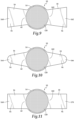
Figure 9 is a front elevation view of a further embodiment of a dental medicament applicator; -
Figure 10 is a front elevation view of a still further embodiment of a dental medicament applicator; -
Figure 11 is a front elevation view of an additional embodiment of a dental medicament applicator; -
Figure 12 is a front elevation view of another embodiment of a dental medicament applicator; -
Figure 13 is a rear elevation view of the dental medicament applicator depicted infigure 12 ; -
Figure 14 is a top plan view of the dental medicament applicator depicted infigure 12 ; -
Figure 15 is a bottom plan view of the dental medicament applicator depicted infigure 12 ; -
Figure 16 is a lateral elevation view of the dental medicament applicator depicted infigure 12 ; and -
Figure 17 is another lateral elevation view of the dental medicament applicator depicted infigure 12 . - While the making and using of various embodiments of the present invention are discussed in detail below, it should be appreciated that the present invention provides many applicable inventive concepts, which can be embodied in a wide variety of specific contexts. The specific embodiments discussed herein are merely illustrative of specific ways to make and use the invention, and do not delimit the scope of the present invention.
- Referring initially to
figure 1 through figure 6 , therein is depicted one embodiment of a dental medicament applicator that may be utilized to treat dental caries and interproximal caries, for example, which is schematically illustrated and designated 10. Aplacement device 12 is sized for insertion at a dental site, such as an interproximal site. As shown, theplacement device 12 includes acentral body 14, awing 16, and awing 18. Thecentral body 14 may include afront 20, a rear 22, anupper end 24, alower end 26, alateral end 28, and alateral end 30. Theplacement device 12 also includes avertical axis 32 and ahorizontal axis 34, which includes atransverse axis 36 at thewing 16 and atransverse axis 38 at thewing 18. Thevertical axis 32 has a length LV and the horizontal axis has a length LH. The length LV may be about 3mm to about 5mm in some embodiments. The length LH may be about 55mm to about 65mm. The placement device may also have a thickness T of about 100 microns to about 130 microns. - The
wing 16 includes afront 42, a rear 44, anupper end 46, alower end 48, aproximal end 50, and adistal end 52. Thewing 16 has a rectangular form, like a strip, in this embodiment, but it should be appreciated that thewing 16 may have other forms as well. Further, thewing 16 may be at least partially integrated with thecentral body 14 or thewing 16 may be integral with thecentral body 14. - As shown in the illustrated embodiment, the
wing 16 of theplacement device 12 of thedental medicament applicator 10 includes thetransverse axis 36 from thedistal end 52 of thewing 16 through theproximal end 50 of thewing 16. Thetransverse axis 36 has a transverse length LW1, which is sufficient to provide subterminal opposition surfaces 54, 56, 58, 60 in which palmar surfaces of a thumb and an index finger can hold thewing 16 therebetween. Further, thetransverse axis 36 provides aproximal viewing area 62 interposed between thecentral body 14 and the subterminal opposition surfaces 54, 56, 58, 60. The transverse length LW1 of thetransverse axis 36 is greater than twice the mean width for a human tooth, which may be less than 10mm. In some embodiments, the transverse length LW1 may be greater than 18mm and in some other embodiments, the transverse length LW1 of thetransverse axis 36 may be about 25mm to about 30mm. Thewing 16 may also have a thickness T of about 100 microns to about 130 microns in some embodiments. - The
wing 18 may include a structure similar to the structure of thewing 16. More particularly, thewing 18 includes a front 82, a rear 84, anupper end 86, alower end 88, aproximal end 90, and adistal end 92. Thewing 18 has a rectangular form, like a strip, in this embodiment, but it should be appreciated that thewing 18 may have other forms as well. Further, thewing 18 may be at least partially integrated with thecentral body 14 or thewing 18 may be integral with thecentral body 14. - As shown in the illustrated embodiment, the
wing 18 includes thetransverse axis 38 from thedistal end 92 of thewing 18 through theproximal end 90 of thewing 18. Thetransverse axis 38 has a transverse length LW2, which is sufficient to provide subterminal opposition surfaces 94, 96, 98, 100 in which palmar surfaces of a thumb and an index finger can hold thewing 18 therebetween. Further, thetransverse axis 38 provides aproximal viewing area 102 interposed between thecentral body 14 and the subterminal opposition surfaces 94, 96, 98, 100. The transverse length LW2 of thetransverse axis 38 is greater than twice the mean width for a human tooth. In some embodiments, the transverse length LW2 may be greater than 18mm and in some other embodiments, the transverse length LW2 of thetransverse axis 38 may be about 25mm to about 30mm. Thewing 18 may also have a thickness T of about 100 microns to about 130 microns in some embodiments. - The
placement device 12, which, as previously discussed, includes thecentral body 14 and thewings placement device 12 may be a polymeric membrane or strip. By way of example and not by way of limitation, theplacement device 12 may comprise a synthetic polymer or a natural polymer which may be at least one of polysacaccharides, lipids, polyisoprene, gum and proteins, or any mixture thereof. The natural polymer may be a protein selected from collagen and gelatin, for example. Preferably, the polymer is cross-linked, typically by at least one of glutaraldehyde, formaldehyde, glycol dimethacrylate, tannic acid, and allyl methacrylate. With respect to collagen, by way of example, collagen utilized in theplacement device 12 may be untreated or treated with fixing agents to prolong its resistance to digestion. By way of further example, denatured collagen can be impregnated with chromium salts to enhance its tensile strength and retard its absorption. With respect to cross-linking a polymer, a polymeric matrices, such as gelatin matrices, have efficacy when texture is taken into consideration. Gelatin matrices, like collagen, may be lysine-cross linked with glutaraldehyde to address these issues. - Alternatively, the
placement device 12 is made of an organic or natural material, such as a macromolecule like acidic proteins, glycoproteins or sulfated polysaccharides, or smaller molecules such as xylitol, polyaspartic acid or polyglutamic acid, for example. More particular examples of natural products include polysaccharide polymers (e.g., pullulan, agar, alginates, carboxymethylcellulose, carrageenan, cellulose, gellan gum, Kelcogel®, Kelcogel® F, Kelco Biopolymers, starches and retted flax extracts), lipids, polyisoprenes (e.g., latex rubber and gutta percha), resins and gums (e.g., tragacanth and storax) and proteins (e.g., alpha or beta chitin, soluble elastin and collagen or denatured collagen in the form of gelatin). - It should be appreciated, however, that a completely natural matrix of gelatin without cross-linking can also be utilized in the
placement device 12. Furthermore, natural cross-linkings are also feasible, for example calcium and hydroxylysin or leucine, dihydroxylysine or leucine, lysine, arginine, proteins, polysaccharides such as dextran, lipids such as sodium docusate and dehydrodihydroxylysine or leucine. - Synthetic products may also serve as a composition of the
placement device 12 include homopolymers or copolymers with a wide molecular weight range formed by condensation, additional anionic, cationic, and/or catalytic polymerization systems. Examples of such synthetic products for use in theplacement device 12 are acrylamide based polymers and a cationic monomer, cyanoacrylates, polycarbonates, polyurethane, polyester urethane dimethacrylate, polycaprolactones, ethyl triglycide methacrylate, polysulphides, povidone, polyacrylic methacrylic acid, acrylic and modifications such as poly(hydroxyethyl methacrylate), poly(methylmethacrylate) modified with small amounts of ethyl, butyl, or other alkyl methacrylates, polyethylene glycol, sodium polyacrylate PEG 400 and PEG 3350, and other carbomers. Some of these are indeed commercial or laboratory products such as polymethylvinylether-co-maleic anhydride and polyvinylether-co-maleic anhydride and polyvinyl pyrrolidone, carboxymethylcellulose, silated hydroxyethylcellulose or hydroxypropyl methylcellulose, hydroxy-propyl methyl cellulose (HPMC, including pharmacy grade HPMC), glycerin, and aqueous methacrylic polymer formulations for sustained and controlled release of dental and other products (e.g., Eudragit® Rohm). These polymers may require activators and cross-linking. However, other agents are at times required, for example retarding agents such as hydroquinone and eugenol. Other yet different examples are zinc eugenolate, petrolateum, and stearyl alcohol. Other gels may be included, such as Carbopol polymers or sodium-based solutions mixed with phosphoric acid and hydrofluoric acid. - The
placement device 12 may also include, by way of example, and not by way of limitation, a starch-based polymer selected from the group consisting of native starches, modified starches, and thermoplastic starch polymers. Theplacement device 12 may also include, by way of further example, and not by way of limitation, at least one synthetic polymer selected from the group consisting of polyvinyl alcohols (PVOHs), polyester amides, polyester urethanes, aliphatic polyesters, aromatic polyesters, and copolymers of aliphatic polyesters and aromatic polyesters. - It is to be appreciated that the degree of cross-linking is of major significance to the rate of release of the active or auxiliary agents, including topical substances, that form a portion of the
dental medicament applicator 10. The determination of the degree of cross-linking of the polymeric matrix or matrices in theplacement device 12 is informed by the desired application of thedental medicament applicator 10. Examples of factors that may inhibit the biodegradation of the matrix or matrices include are the use of antimicrobial agents, preservatives, sterilizing agent inhibitors, such as inhibitors of matrix metalloptoteinases, and enzyme inhibitors, for example. - The matrices within the
placement device 12 may be strengthened not only by cross-linking, but also by other techniques as well. Polymer composite compositions may be utilized in which the polymer fibers, e.g., collagen fibers and gelatin, are strengthened by adding particular catechol-containing compounds, particularly compounds which have two or more catechol groups, to the polymeric material and forming a polymer of the compounds that intercalate within the polymeric material, e.g., forming a polymer composite. The resulting polymer that forms may be a scaffold-like structure throughout the polymeric material without the necessity of cross-linking the individual polymeric materials, e.g., collagen or gelatin polypeptides. This scaffolding provides synthetic polymer fibers having a tensile strength, stiffness, and strain at failure that is comparable to or better than natural polymeric material fibers. - In some embodiments, at least one
active matrix 120 is secured to thefront 20 of thecentral body 14 and the at least oneactive matrix 120 contains a topical substance. The at least oneactive matrix 120 may have a length and width similar too, including smaller, than thecentral body 14. With respect to thickness, theactive matrix 120 may have a thickness or width W of about 100 microns to about 250 microns or 870 microns in some embodiments. The thickness of thedental medicament applicator 10 in some embodiments is therefore about 200 microns to about 380 microns. In other embodiments, the thickness of theplacement device 12 and theactive matrix 120 may be adjusted to provide a total thickness of about 500 microns to about 1,000 microns. It should be appreciated that the selection of the topical substance, which will be discussed in further detail hereinbelow, in theactive matrix 120 impacts the thickness of theactive matrix 120 and therefore the thickness of theplacement device 12. - The
active matrix 120 may have a composition similar to that of theplacement device 12, which may include biodegradable materials, bioresorbable materials, or resorbable materials, for example. By way of example and not by way of limitation, theactive matrix 120 may comprise a synthetic polymer or a natural polymer which may be at least one of polysacaccharides, lipids, polyisoprene, gum and proteins, or any mixture thereof. The natural polymer may be a protein selected from collagen and gelatin, for example. Preferably, the polymer is cross-linked, typically by at least one of glutaraldehyde, formaldehyde, glycol dimethacrylate, tannic acid, and allyl methacrylate. With respect to collagen, by way of example, collagen utilized in theactive matrix 120 may be untreated or treated with fixing agents to prolong its resistance to digestion. By way of further example, denatured collagen can be impregnated with chromium salts to enhance its tensile strength and retard its absorption. With respect to cross-linking a polymer, a polymeric matrices, such as gelatin matrices, have efficacy when texture is taken into consideration. Gelatin matrices, like collagen, may be lysine-cross linked with glutaraldehyde to address these issues. - Alternatively, the
active matrix 120 is made of an organic or natural material, such as a macromolecule like acidic proteins, glycoproteins or sulfated polysaccharides, or smaller molecules such as xylitol, polyaspartic acid or polyglutamic acid, for example. More particular examples of natural products include polysaccharide polymers (e.g., pullulan, agar, alginates, carboxymethylcellulose, carrageenan, cellulose, gellan gum, Kelcogel®, Kelcogel® F, Kelco Biopolymers, starches and retted flax extracts), lipids, polyisoprenes (e.g., latex rubber and gutta percha), resins and gums (e.g., tragacanth and storax) and proteins (e.g., alpha or beta chitin, soluble elastin and collagen or denatured collagen in the form of gelatin). - It should be appreciated, however, that a completely natural matrix of gelatin without cross-linking can also be utilized in the
active matrix 120. Furthermore, natural cross-linkings are also feasible, for example, calcium and hydroxylysin or leucine, dihydroxylysine or leucine, lysine, arginine, proteins, polysaccharides such as dextran, lipids such as sodium docusate, and dehydrodihydroxylysine or leucine. - Synthetic products may also serve as a composition of the
active matrix 120 include homopolymers or copolymers with a wide molecular weight range formed by condensation, additional anionic, cationic, and/or catalytic polymerization systems. Examples of such synthetic products for use in theplacement device 12 are acrylamide based polymers and a cationic monomer, cyanoacrylates, polycarbonates, polyurethane, polyester urethane dimethacrylate, polycaprolactones, ethyl triglycide methacrylate, polysulphides, povidone, polyacrylic methacrylic acid, acrylic and modifications such as poly(hydroxyethyl methacrylate), poly(methylmethacrylate) modified with small amounts of ethyl, butyl, or other alkyl methacrylates, polyethylene glycol, sodium polyacrylate PEG 400 and PEG 3350, and other carbomers. Some of these are indeed commercial or laboratory products, such as polymethylvinylether-co-maleic anhydride, polyvinylether-co-maleic anhydride, and polyvinyl pyrrolidone, carboxymethylcellulose, silated hydroxyethylcellulose or hydroxypropyl methylcellulose, hydroxy-propyl methyl cellulose (HPMC, including pharmacy grade HPMC), glycerin, and aqueous methacrylic polymer formulations for sustained and controlled release of dental and other products (e.g., Eudragit® Rohm). These polymers may require activators and cross-linking. However, other agents are at times required, for example, retarding agents such as hydroquinone and eugenol. Other yet different examples are zinc eugenolate, petrolateum, and stearyl alcohol. Other gels may be included such as Carbopol polymers or sodium-based solutions mixed with phosphoric acid and hydrofluoric acid. - The
active matrix 120 may also include, by way of example, and not by way of limitation, a starch-based polymer selected from the group consisting of native starches, modified starches, and thermoplastic starch polymers. Theactive matrix 120 may also include, by way of further example, and not by way of limitation, at least one synthetic polymer selected from the group consisting of polyvinyl alcohols (PVOHs), polyester amides, polyester urethanes, aliphatic polyesters, aromatic polyesters, and copolymers of aliphatic polyesters and aromatic polyesters. - It is to be appreciated that the degree of cross-linking is of major significance to the rate of release of the active or auxiliary agents, including topical substances, that form the
active matrix 120. The determination of the degree of cross-linking of the polymeric matrix or matrices in theactive matrix 120 is informed by the desired application of thedental medicament applicator 10. Examples of factors that may inhibit the biodegradation of the matrix or matrices include the use of antimicrobial agents, preservatives, sterilizing agent inhibitors, such as inhibitors of matrix metalloptoteinases, and enzyme inhibitors, for example. - The matrices within the
active matrix 120 may be strengthened not only by cross-linking, but also by other techniques as well. Polymer composite compositions may be utilized in which the polymer fibers, e.g., collagen fibers and gelatin, are strengthened by adding particular catechol-containing compounds, particularly compounds which have two or more catechol groups, to the polymeric material and forming a polymer of the compounds that intercalate within the polymeric material, e.g., forming a polymer composite. The resulting polymer that forms may be a scaffold-like structure throughout the polymeric material without the necessity of cross-linking the individual polymeric materials, e.g., collagen or gelatin polypeptides. This scaffolding provides synthetic polymer fibers having a tensile strength, stiffness, and strain at failure that is comparable to or better than natural polymeric material fibers. - The
active matrix 120, in response to being physically affixed to the dental site, delivers the topical substance at a controlled rate to the dental site. The topical substance may be a fluoride-containing chemical agent. By way of example, and not by way of limitation, the topical substance within theactive matrix 120 may be any one of inorganic or organic fluoride-containing chemical agents, including sodium fluoride, stannous fluoride, stannous hexafluorozirconate, calcium fluoride, difluorosilane, hydrogen fluoride, sodium monofluorophosphate, ytterbium trifluoride, sodium hexafluorosilicate, ammonium fluoride, amine fluoride, and fluoroaluminosilicate glass, as well as any mixture thereof. The period of fluoridation required by the chemical agent is dependent on the type of fluoride, concentration, and period of delivery. It should be appreciated that other chemical or physical interventions and the type of surface or lesion being treated may also impact the period of fluoridation. Further, chronic toxicity due to fluoride (F) may be reached at 0.1 mg F/Kg of body weight. Thus, the weight of the patient impacts fluoride concentration as well. By way of example, and not by way of limitation, in applications where sodium fluoride is selected, the applicable concentration will be 1% - 4%. By way of further example, and not by way of limitation, the sodium fluoride will have a concentration of about 1% to 9% or, in further examples, the concentration may be 3% to 7%. - That is, with respect to fluoride, the
active matrix 120 may have a topical substance having about 0.2mg to about 1.5mg of fluoride with some embodiments having about 0.2mg to about 0.3mg. It should be appreciated that the amount of fluoride may vary and, in general, a lower amount of fluoride in the topical substance will translate into a thinner active matrix and make placement easier in tight interproximal spaces. - In another implementation, the topical substance may be silver diamine fluoride. Silver diamine fluoride (SDF), a clear liquid that combines the antibacterial effects of silver and the remineralizing effects of fluoride, is a promising therapeutic agent for managing caries lesions in young children and those with special care needs. SDF has only recently become available in the United States. SDF may also have the name "silver-diamine fluoride" or "silver hydrazine fluoride." SDF is frequently utilized as an aqueous SDF, 34% to 42% weight/volume, with 38% weight volume being preferred in many cases, with a presentation as a light-sensitive liquid with ammonia odor and blue coloring having a specific gravity of about 1.25. When the silver in SDF is applied to a dental site on a tooth, it oxidizes and leaves a black stain on the damaged cavity portion of the tooth and may cause staining in other areas of the oral cavity. Therefore, SDF must be delivered at a controlled rate to the desired dental site. The
dental medicament applicator 10 accomplishes this goal as will be discussed in further detail hereinbelow. - As mentioned, the
body 14, in response to being physically affixed to the dental site, delivers the topical substance at a controlled rate to the dental site. The topical substance may be a peptide-based chemical agent. The peptide-based chemical agent may include, by way of example and not by way of limitation, polypeptides, or the composition may further comprise one or more other active agents suitable for an intended use, including but not limited to antimicrobial polypeptides (inhibiting bacterial infection), biomineralization-promoting polypeptides (i.e., any polypeptides that are useful for controlling or promoting biomineralization), inorganic material-binding polypeptides, three-dimensional scaffold-forming polypeptides, collagen, chitosan, amphiphilic peptides, protein-binding polypeptides, enamelin-derived polypeptides, tuftelin-derived peptides, statherin-derived polypeptides, dentin-derived polypeptides, bone sialoprotein-derived polypeptides, osteocalcin-derived polypeptides, osteopontin-derived polypeptides, proteins with caries inhibitory activity, casein, and bone morphogenetic-derived polypeptides. - By way of further example, and not by way of limitation, the topical substance, when including the peptide-based chemical agent, may be a combination of amelogenin, an inorganic or organic fluoride-containing chemical agent, an inorganic or organic calcium-containing chemical agent, and an inorganic or organic phosphate-containing chemical agent. By way of further example, and not by way of limitation, the topical substance may be at least one of amelogenin, an inorganic or organic fluoride-containing chemical agent, an inorganic or organic calcium-containing chemical agent, and an inorganic or organic phosphate-containing chemical agent.
- Amelogenins are a group of protein isoforms produced by alternative splicing or proteolysis from the AMELX gene, on the X chromosome, and also the AMELY gene in males, on the Y chromosome. Amelogenins are involved in amelogenesis, the development of enamel. Amelogenins are type of extracellular matrix protein, which, together with ameloblastins, enamelins and tuftelins, direct the mineralization of enamel to form a highly organized matrix of rods, interrod crystal and proteins. As previously discussed, the inorganic or organic fluoride-containing chemical agent may be sodium fluoride, Stannous fluoride, Stannous hexafluorozirconate, calcium fluoride, difluorosilane, hydrogen fluoride, sodium monofluorophosphate, ytterbium trifluoride, sodium hexafluorosilicate, ammonium fluoride, amine fluoride, and fluoroaluminosilicate glass, as well as any mixture thereof.
- By way of example, and not by way of limitation, the inorganic or organic calcium-containing chemical agent may be integrated into calcium phosphates, casein phosphopeptide/amorphous calcium phosphate nanocomplexes, casein phosphopeptide-amorphous calcium phosphate, octacalcium phosphate complexes, calcium phosphate crystal structures, dicalcium phosphate dihydrate-based compounds, calcium phosphate pastes, or in vitro calcium phosphate mineralizable compounds. Also, by way of example and not by way of limitation, the inorganic or organic phosphate-containing chemical agent may be integrated into calcium phosphates, casein phosphopeptide/amorphous calcium phosphate nanocomplexes, casein phosphopeptide-amorphous calcium phosphate, octacalcium phosphate complexes, calcium phosphate crystal structures, dicalcium phosphate dihydrate-based compounds, calcium phosphate pastes, or in vitro calcium phosphate mineralizable compounds.
- As outlined hereinabove, the
dental medicament applicator 10 consists of theplacement device 12 including thecentral body 14 having thewings active matrix 120 having the topical substance is connected to thecentral body 14. Further, as discussed above, theplacement device 12 and theactive matrix 120 may be manufactured using a number of techniques appropriate to water-soluble polymers (synthetic, semi-synthetic, or natural) or polysaccharides including, but not limited to, as discussed above, polyethylene glycol, polyacrylamides, polyacrylic acid copolymer, polyvinyl alcohol, xanthan gum, pectines, chitosan derivatives, dextran, carrageenan, guar gum, hydroxy propyl cellulose, hydroxy ethyl cellulose, sodium carboxy methyl cellulose, and hyaluronic acid. Also, as previously discussed, with respect to polysaccharide polymers, pullulan, agar, alginates, carboxymethylcellulose, carrageenan, cellulose, gellan gum, Kelcogel®, Kelcogel® F, Kelco Biopolymers, starches and retted flax extracts are also suitable. Other examples of natural products that are suitable include lipids, polyisoprenes (e.g., latex rubber and gutta percha), resins and gums (e.g., tragacanth and storax) and proteins (e.g., alpha or beta chitin, soluble elastin, and collagen or denatured collagen in the form of gelatin) . - Any method of sealing the water-soluble films, i.e., the
active matrix 120 to thecentral body 14, may be used during manufacturing. Such manufacturing methods include the use of an adhesive or heat sealing. Other methods include infra-red, radio frequency, ultrasonic, laser, solvent, and vibration and spin welding sealing. The seal desirably is water-soluble. A suitable heat-sealing temperature is, for example, 120°C to 195°C, especially 140°C to 150° C. A suitable sealing pressure is, for example, from 250 kPa to 600 kPa, especially 276 kPa to 552 kPa, more especially from 345 kPa to 483 kPa or from 400 kPa to 800 kPa, especially 500 kPa to 700 kPa, for example depending on the heat-sealing machine used. Suitable sealing dwell times are 0.4 to 2.5 seconds. - Using these techniques, the
active matrix 120 is bonded to thecentral body 14 of theplacement device 12 by simply applying water to the back of theactive matrix 120 and then using pressure to adhere the active matrix to thecentral body 14. Depending upon the desired composition of theactive matrix 120, an adhesive can also be substituted in lieu of water to moisten theactive matrix 120 and then apply pressure to seal the active matrix to thecentral body 14. - Referring now to
figure 7 through figure 8E , in one operational embodiment, thedental medicament applicator 10 is being utilized within an oral cavity O having teeth T1, T2, T3, T4, T5, T6, T7, T8, T9, and T10 as well as gum tissue G. The use of the dental medicament applicator does not form part of the claimed invention. Dental caries C, which represent the dental site, are located on an interproximal surface S of tooth T4. A dental professional having hands H is positioning thedental medicament applicator 10 with the use of thewings dental medicament applicator 10, various preparatory steps may have been taken. By way of example and not by way of limitation, an approach using dental separators to open the interproximal contact to allow the dental professional to more easily place thedental medicament applicator 10 may be utilized. - As best seen in
figure 8A and figure 8B , the dental professional positions theplacement device 12 of thedental medicament applicator 10 over the dental caries C, such that theactive matrix 120 will contact the dental caries C. As shown, theproximal viewing areas sight corridors central body 14 of thedental medicament applicator 10 such that thewings sight corridors wings central body 14 to create visual distinction therebetween. Such visual distinction further assists in placement and demarcates thewings active matrix 120, which includes the topical substance therein. Further, to assist with placement, thewings active matrix 120 to provide sufficient space for maneuvering thedental medicament applicator 10 within the mouth, including avoiding unwanted contact with the check and tongue. Additionally, thewings - As best seen in
figure 8B and figure 8C , once thebody 14 of thedental medicament applicator 10 is correctly positioned and affixed to the dental site, the dental professional selectively contacts thewings figure 8C, figure 8D , theplacement device 14, in response to being physically affixed at the dental site, dissolves at a controlled rate, while theactive matrix 120 delivers the topical substance at a controlled rate to the dental caries C during a slower dissolving which involves a gelatinous stage. Theactive matrix 120 is then bio-reabsorbed leaving a treated dental carie CT, which is best seen infigure 8E . In this manner thedental medicament applicator 10 provides simplified and accelerated treatment of interproximal caries that is targeted to a specific dental site, thereby mitigating the risk of undesired contact between the topical substance and other bone or tissue. - The
dental medicament applicator 10 provides resorbable, water-based polymers that can be impregnated with fluoride or other materials such as silver diamine fluoride (SDF) or amelogenin peptides, and bonded together, along with multiple other possible polymer compounds and ratios that produce varied times of release of the fluoride and that also allow better adherence and longer presence of the medicated active matrix to the tooth. These resorbable, water-based polymers also have handling properties for the clinician that avoid crumbling upon insertion. - The
dental medicament applicator 10 may be placed by either a dental professional or a consumer into the affected interproximal space by simply removing a freshdental medicament applicator 10 from a sealed pouch, grasping thewings placement device 12 taut and sliding theplacement device 12 with theactive matrix 120 facing the dental caries into the interproximal space. The dental professional or consumer will center theactive matrix 120 over the incipient lesion and then bend thewings wings wings active matrix 120, which may be fluoride-impregnated, will begin to become gelatinous and begin to release sodium fluoride into the area with the lesion. In some embodiments, theactive matrix 120 will release fluoride for about 30 to about 90 minutes after which the matrix will completely dissolve. - Patients may then be evaluated for risk level which will determine frequency of treatment. If a patient has two or more incipient lesions, then such a patient may be considered high risk by dental guidelines. High risk patients may require reapplication every three months until the dental professional confirms that the lesions have been arrested. If the patient is determined to be normal risk, the
dental medicament applicator 10 should be reapplied every six months during routine check-ups. The patient requires no monitoring and is free to go once the procedure has been accomplished. - Other embodiments of the
dental medicament applicator 10 will now be presented infigure 9 through figure 17 . Referring initially tofigure 9 , thedental medicament applicator 10 includes thecentral body 14 with thewings active matrix 120. Thewing 16 has apolygon form 160, which is shown as an isosceles trapezium. Similarly, thewing 18 has apolygon form 162, which is also shown as an isosceles trapezium. The embodiment offigure 9 and the following embodiments infigures 10-17 all show thedental medicament applicator 10 having thewings figure 9 through figure 11 , and proximal viewing areas, such as theproximal viewing areas figure 9 through figure 11 . Each of these embodiments shows one of the many varied forms of thedental medicament application 10 that fall within the teachings presented herein. - Referring now to
figure 10 , thedental medicament applicator 10 includes thecentral body 14 with thewings active matrix 120. Thewing 16 has asemi-elliptical form 164. Similarly, thewing 18 has asemi-elliptical form 166. Referring now tofigure 11 , thedental medicament applicator 10 includes thecentral body 14 with thewings active matrix 120. Thewing 16 has arectangular form 168. Similarly, thewing 18 has arectangular form 170. - Referring now to
figure 12 through figure 17 , in some embodiments of thedental medicament applicator 10, aplacement device 182 is sized for insertion at a dental site, such as an interproximal site. As shown, theplacement device 182 includes acentral body 184 having a front 186, a rear 188, anupper end 190, alower end 192, alateral end 194, and alateral end 196. Thebody 184 also includes avertical axis 198 and ahorizontal axis 200. Awing 210 includes a front 212, a rear 214, anupper end 216, alower end 218, aproximal end 230, and adistal end 232. Thewing 210 has the shape of alobe 234 and includes subterminal opposition surfaces 236 and aproximal viewing area 238. It should be appreciated that the embodiments of thedental medicament applicator 10 presented infigure 9 through figure 17 are exemplary and intended to show variations in the design of thedental medicament applicator 10. - Relative terms, such as, but not limited to, "upper," "lower," "front," "rear," "lateral," "vertical," or "horizontal" have been used herein to describe one element's relationship to another element as illustrated in the figures. Such relative terms are intended to encompass different orientations of the device in addition to the orientation depicted in the figures and the use of such relative terms should not be construed as limiting. Further, the order of execution or performance of the methods and techniques illustrated and described herein is not essential, unless otherwise specified. The methods and techniques do not form part of the claimed invention. That is, elements of the methods and techniques may be performed in any order, unless otherwise specified, and that the methods may include more or less elements than those disclosed herein. For example, it is contemplated that executing or performing a particular element before, contemporaneously with, or after another element are all possible sequences of execution.
- While this invention has been described with reference to illustrative embodiments, this description is not intended to be construed in a limiting sense. Various modifications and combinations of the illustrative embodiments as well as other embodiments of the invention, will be apparent to persons skilled in the art upon reference to the description. The scope of protection is determined by the attached set of claims.
Claims (15)
- A dental medicament applicator (10) comprising:a placement device (12) sized for insertion at a dental site, the dental site being an interproximal site, the placement device (12) including a central body (14), a first wing (16), and a second wing (18);the central body (14) having a front (20), a rear (22), an upper end (24), a lower end (26), a first lateral end (28), and a second lateral end (30);the first wing (16) having a proximal end (50) and a distal end (52), the first wing (16) being coupled to the first lateral end (28), the first wing (16) providing subterminal opposition surfaces (54, 56, 58, 60) in which palmar surfaces of a thumb and an index finger can hold the first wing (16) therebetween, the first wing (16) having a transverse axis (36) from the distal end (52) to the proximal end (50), the transverse axis (36) having a transverse length (LW1) greater than twice the mean width for a human tooth, the first wing (16) being free of a topical substance for treating incipient lesions;the second wing (18) having a proximal end (90) and a distal end (92), the second wing (18) being coupled to the second lateral end (30), the second wing (18) providing subterminal opposition surfaces (94, 96, 98, 100) in which palmar surfaces of a thumb and an index finger can hold the second wing (18) therebetween, the second wing (18) having a transverse axis (38) from the distal end to the proximal end, the transverse axis (38) having a transverse length (LW2) greater than twice the mean width for a human tooth, the second wing (18) being free of the topical substance;at least one active matrix (120) secured to the front (20) of the central body (14), the at least one active matrix (120) containing the topical substance;each of the first wing (16) and the second wing (18) having a larger surface area than the at least one active matrix (120);the placement device (12), in response to being physically affixed to the dental site, dissolving at a first controlled rate; andthe at least one active matrix (120), in response to being physically affixed to the dental site, delivering the topical substance at a second controlled rate to the dental site, the second controlled rate being slower in time than the first controlled rate.
- The dental medicament applicator (10) as recited in claim 1, wherein the central body (14) and the first wing (16) are integral.
- The dental medicament applicator (10) as recited in claim 1, wherein the central body (14) and the second wing (18) are integral.
- The dental medicament applicator (10) as recited in claim 1, wherein the central body (14) and the at least one active matrix (120) are integral.
- The dental medicament applicator (10) as recited in claim 1, wherein the first wing (16) further comprises a proximal viewing area (62) interposed between the central body (14) and the subterminal opposition surfaces (54, 56, 58, 60).
- The dental medicament applicator (10) as recited in claim 1, wherein each of the first and second wings (16, 18) have a first transparency and the at least one active matrix (120) has a second transparency, the first transparency being more transparent than the second transparency.
- The dental medicament applicator (10) as recited in claim 1, wherein the mean width for a human tooth is less than 10mm.
- The dental medicament applicator (10) as recited in claim 1, wherein each of the first and second wings (16, 18) comprise a shape selected from the group consisting of single lobes, double lobes, polygon forms, and rectangular forms.
- The dental medicament applicator (10) as recited in claim 1, wherein the placement device (12) further comprises a material selected from the group consisting of biodegradable materials, bioresorbable materials, and resorbable materials.
- The dental medicament applicator (10) as recited in claim 1, wherein the at least one matrix (120) further comprises a material selected from the group consisting of biodegradable materials, bioresorbable materials, and resorbable materials.
- The dental medicament applicator (10) as recited in claim 1, wherein the topical substance further comprises a fluoride-containing chemical agent.
- The dental medicament applicator (10) as recited in claim 1, wherein the topical substance further comprises a peptide-based chemical agent, the peptide-based chemical agent including a combination of amelogenin, a fluoride-containing chemical agent, a calcium-containing chemical agent, and a phosphate-containing chemical agent.
- The dental medicament applicator (10) as recited in claim 1, wherein the first wing (16) and the second wing (18) dissolve at the first controlled rate in about 20 seconds to about 60 seconds.
- The dental medicament applicator (10) as recited in claim 1, wherein the topical substance is delivered at the second controlled rate in about 30 minutes to about 90 minutes.
- The dental medicament applicator (10) as recited in claim 1, wherein the second controlled rate includes a gelatinous phase.
Applications Claiming Priority (1)
| Application Number | Priority Date | Filing Date | Title |
|---|---|---|---|
| US17/929,081 US12419730B2 (en) | 2021-02-10 | 2022-09-01 | Dental medicament applicator |
Publications (2)
| Publication Number | Publication Date |
|---|---|
| EP4331535A1 EP4331535A1 (en) | 2024-03-06 |
| EP4331535B1 true EP4331535B1 (en) | 2025-07-09 |
Family
ID=87889204
Family Applications (1)
| Application Number | Title | Priority Date | Filing Date |
|---|---|---|---|
| EP23194463.8A Active EP4331535B1 (en) | 2022-09-01 | 2023-08-31 | Dental medicament applicator |
Country Status (4)
| Country | Link |
|---|---|
| EP (1) | EP4331535B1 (en) |
| CA (1) | CA3210217A1 (en) |
| ES (1) | ES3041793T3 (en) |
| MX (1) | MX2023010139A (en) |
Family Cites Families (3)
| Publication number | Priority date | Publication date | Assignee | Title |
|---|---|---|---|---|
| GB2042888B (en) * | 1979-03-05 | 1983-09-28 | Teijin Ltd | Preparation for administration to the mucosa of the oral or nasal cavity |
| US9662274B2 (en) * | 2014-04-11 | 2017-05-30 | Innovative Products, Inc. | Method of orally administering a treating agent over an extended period |
| WO2022173968A1 (en) * | 2021-02-10 | 2022-08-18 | Cav-Aid LLC | Dental medicament applicator |
-
2023
- 2023-08-25 CA CA3210217A patent/CA3210217A1/en active Pending
- 2023-08-30 MX MX2023010139A patent/MX2023010139A/en unknown
- 2023-08-31 EP EP23194463.8A patent/EP4331535B1/en active Active
- 2023-08-31 ES ES23194463T patent/ES3041793T3/en active Active
Also Published As
| Publication number | Publication date |
|---|---|
| CA3210217A1 (en) | 2024-03-01 |
| MX2023010139A (en) | 2024-03-04 |
| ES3041793T3 (en) | 2025-11-14 |
| EP4331535A1 (en) | 2024-03-06 |
Similar Documents
| Publication | Publication Date | Title |
|---|---|---|
| US7850453B2 (en) | Reshapable device for fixation at a dental site | |
| EP1263347B1 (en) | System for the controlled delivery of an active material to a dental site | |
| US5160737A (en) | Liquid polymer composition, and method of use | |
| US9668844B2 (en) | Device for fixation at a dental site | |
| JP2010535573A5 (en) | ||
| ES2237104T3 (en) | CARRIER DEVICE FOR PHARMACEUTICAL PRODUCTS SUITABLE FOR THE CONTRIBUTION OF PHARMACEUTICAL COMPOUNDS TO MUCOUS SURFACES. | |
| US20050175959A1 (en) | System for the controlled delivery of an active material to a dental site | |
| CN107106512A (en) | Stop blooding and Wound protection film in oral cavity | |
| SK15832003A3 (en) | Liquid polymer composition for prevention and treatment of the oral cavity diseases | |
| US11439489B2 (en) | Dental medicament applicator | |
| US12193901B2 (en) | Dental medicament applicator | |
| EP4331535A1 (en) | Dental medicament applicator | |
| Desbrieres et al. | Application of chitosan-based formulations in controlled drug delivery | |
| K Maurya et al. | Therapeutic potential of mucoadhesive drug delivery systems-An updated patent review | |
| JP2003519641A (en) | Topical medicinal bioadhesive composition, and methods of use and preparation thereof | |
| JPS6317809B2 (en) | ||
| Josic | The effect of cross-linker on endogenous enzymatic activity within radicular dentin and bond strength between intraradicular post and radicular dentin | |
| KR20050055858A (en) | The drug delivery system for the oral cavity | |
| Magbool et al. | Sid Ahmed | |
| JP2025541371A (en) | Multi-zone oral film for the treatment of periodontal and dental diseases or disorders - Patent Application 20070122999 |
Legal Events
| Date | Code | Title | Description |
|---|---|---|---|
| PUAI | Public reference made under article 153(3) epc to a published international application that has entered the european phase |
Free format text: ORIGINAL CODE: 0009012 |
|
| STAA | Information on the status of an ep patent application or granted ep patent |
Free format text: STATUS: THE APPLICATION HAS BEEN PUBLISHED |
|
| AK | Designated contracting states |
Kind code of ref document: A1 Designated state(s): AL AT BE BG CH CY CZ DE DK EE ES FI FR GB GR HR HU IE IS IT LI LT LU LV MC ME MK MT NL NO PL PT RO RS SE SI SK SM TR |
|
| STAA | Information on the status of an ep patent application or granted ep patent |
Free format text: STATUS: REQUEST FOR EXAMINATION WAS MADE |
|
| 17P | Request for examination filed |
Effective date: 20240906 |
|
| RBV | Designated contracting states (corrected) |
Designated state(s): AL AT BE BG CH CY CZ DE DK EE ES FI FR GB GR HR HU IE IS IT LI LT LU LV MC ME MK MT NL NO PL PT RO RS SE SI SK SM TR |
|
| GRAP | Despatch of communication of intention to grant a patent |
Free format text: ORIGINAL CODE: EPIDOSNIGR1 |
|
| STAA | Information on the status of an ep patent application or granted ep patent |
Free format text: STATUS: GRANT OF PATENT IS INTENDED |
|
| INTG | Intention to grant announced |
Effective date: 20250204 |
|
| GRAS | Grant fee paid |
Free format text: ORIGINAL CODE: EPIDOSNIGR3 |
|
| GRAA | (expected) grant |
Free format text: ORIGINAL CODE: 0009210 |
|
| STAA | Information on the status of an ep patent application or granted ep patent |
Free format text: STATUS: THE PATENT HAS BEEN GRANTED |
|
| AK | Designated contracting states |
Kind code of ref document: B1 Designated state(s): AL AT BE BG CH CY CZ DE DK EE ES FI FR GB GR HR HU IE IS IT LI LT LU LV MC ME MK MT NL NO PL PT RO RS SE SI SK SM TR |
|
| REG | Reference to a national code |
Ref country code: GB Ref legal event code: FG4D |
|
| REG | Reference to a national code |
Ref country code: CH Ref legal event code: EP |
|
| REG | Reference to a national code |
Ref country code: IE Ref legal event code: FG4D |
|
| REG | Reference to a national code |
Ref country code: DE Ref legal event code: R096 Ref document number: 602023004665 Country of ref document: DE |
|
| PGFP | Annual fee paid to national office [announced via postgrant information from national office to epo] |
Ref country code: ES Payment date: 20250908 Year of fee payment: 3 |
|
| PGFP | Annual fee paid to national office [announced via postgrant information from national office to epo] |
Ref country code: DE Payment date: 20250813 Year of fee payment: 3 |
|
| PGFP | Annual fee paid to national office [announced via postgrant information from national office to epo] |
Ref country code: IT Payment date: 20250901 Year of fee payment: 3 |
|
| PGFP | Annual fee paid to national office [announced via postgrant information from national office to epo] |
Ref country code: FR Payment date: 20250722 Year of fee payment: 3 |
|
| REG | Reference to a national code |
Ref country code: NL Ref legal event code: MP Effective date: 20250709 |
|
| REG | Reference to a national code |
Ref country code: ES Ref legal event code: FG2A Ref document number: 3041793 Country of ref document: ES Kind code of ref document: T3 Effective date: 20251114 |
|
| PG25 | Lapsed in a contracting state [announced via postgrant information from national office to epo] |
Ref country code: PT Free format text: LAPSE BECAUSE OF FAILURE TO SUBMIT A TRANSLATION OF THE DESCRIPTION OR TO PAY THE FEE WITHIN THE PRESCRIBED TIME-LIMIT Effective date: 20251110 |
|
| PG25 | Lapsed in a contracting state [announced via postgrant information from national office to epo] |
Ref country code: NL Free format text: LAPSE BECAUSE OF FAILURE TO SUBMIT A TRANSLATION OF THE DESCRIPTION OR TO PAY THE FEE WITHIN THE PRESCRIBED TIME-LIMIT Effective date: 20250709 |
|
| REG | Reference to a national code |
Ref country code: AT Ref legal event code: MK05 Ref document number: 1811113 Country of ref document: AT Kind code of ref document: T Effective date: 20250709 |
|
| PG25 | Lapsed in a contracting state [announced via postgrant information from national office to epo] |
Ref country code: IS Free format text: LAPSE BECAUSE OF FAILURE TO SUBMIT A TRANSLATION OF THE DESCRIPTION OR TO PAY THE FEE WITHIN THE PRESCRIBED TIME-LIMIT Effective date: 20251109 |
|
| PG25 | Lapsed in a contracting state [announced via postgrant information from national office to epo] |
Ref country code: NO Free format text: LAPSE BECAUSE OF FAILURE TO SUBMIT A TRANSLATION OF THE DESCRIPTION OR TO PAY THE FEE WITHIN THE PRESCRIBED TIME-LIMIT Effective date: 20251009 |
|
| REG | Reference to a national code |
Ref country code: LT Ref legal event code: MG9D |
|
| PG25 | Lapsed in a contracting state [announced via postgrant information from national office to epo] |
Ref country code: AT Free format text: LAPSE BECAUSE OF FAILURE TO SUBMIT A TRANSLATION OF THE DESCRIPTION OR TO PAY THE FEE WITHIN THE PRESCRIBED TIME-LIMIT Effective date: 20250709 |
|
| PG25 | Lapsed in a contracting state [announced via postgrant information from national office to epo] |
Ref country code: FI Free format text: LAPSE BECAUSE OF FAILURE TO SUBMIT A TRANSLATION OF THE DESCRIPTION OR TO PAY THE FEE WITHIN THE PRESCRIBED TIME-LIMIT Effective date: 20250709 |
|
| PG25 | Lapsed in a contracting state [announced via postgrant information from national office to epo] |
Ref country code: HR Free format text: LAPSE BECAUSE OF FAILURE TO SUBMIT A TRANSLATION OF THE DESCRIPTION OR TO PAY THE FEE WITHIN THE PRESCRIBED TIME-LIMIT Effective date: 20250709 |
|
| PG25 | Lapsed in a contracting state [announced via postgrant information from national office to epo] |
Ref country code: GR Free format text: LAPSE BECAUSE OF FAILURE TO SUBMIT A TRANSLATION OF THE DESCRIPTION OR TO PAY THE FEE WITHIN THE PRESCRIBED TIME-LIMIT Effective date: 20251010 |
|
| PG25 | Lapsed in a contracting state [announced via postgrant information from national office to epo] |
Ref country code: SE Free format text: LAPSE BECAUSE OF FAILURE TO SUBMIT A TRANSLATION OF THE DESCRIPTION OR TO PAY THE FEE WITHIN THE PRESCRIBED TIME-LIMIT Effective date: 20250709 |
|
| PG25 | Lapsed in a contracting state [announced via postgrant information from national office to epo] |
Ref country code: LV Free format text: LAPSE BECAUSE OF FAILURE TO SUBMIT A TRANSLATION OF THE DESCRIPTION OR TO PAY THE FEE WITHIN THE PRESCRIBED TIME-LIMIT Effective date: 20250709 |
|
| PG25 | Lapsed in a contracting state [announced via postgrant information from national office to epo] |
Ref country code: BG Free format text: LAPSE BECAUSE OF FAILURE TO SUBMIT A TRANSLATION OF THE DESCRIPTION OR TO PAY THE FEE WITHIN THE PRESCRIBED TIME-LIMIT Effective date: 20250709 Ref country code: PL Free format text: LAPSE BECAUSE OF FAILURE TO SUBMIT A TRANSLATION OF THE DESCRIPTION OR TO PAY THE FEE WITHIN THE PRESCRIBED TIME-LIMIT Effective date: 20250709 |
|
| PG25 | Lapsed in a contracting state [announced via postgrant information from national office to epo] |
Ref country code: RS Free format text: LAPSE BECAUSE OF FAILURE TO SUBMIT A TRANSLATION OF THE DESCRIPTION OR TO PAY THE FEE WITHIN THE PRESCRIBED TIME-LIMIT Effective date: 20251009 |
|
| PG25 | Lapsed in a contracting state [announced via postgrant information from national office to epo] |
Ref country code: RO Free format text: LAPSE BECAUSE OF FAILURE TO SUBMIT A TRANSLATION OF THE DESCRIPTION OR TO PAY THE FEE WITHIN THE PRESCRIBED TIME-LIMIT Effective date: 20250709 |
|
| PG25 | Lapsed in a contracting state [announced via postgrant information from national office to epo] |
Ref country code: SM Free format text: LAPSE BECAUSE OF FAILURE TO SUBMIT A TRANSLATION OF THE DESCRIPTION OR TO PAY THE FEE WITHIN THE PRESCRIBED TIME-LIMIT Effective date: 20250709 |
|
| PG25 | Lapsed in a contracting state [announced via postgrant information from national office to epo] |
Ref country code: DK Free format text: LAPSE BECAUSE OF FAILURE TO SUBMIT A TRANSLATION OF THE DESCRIPTION OR TO PAY THE FEE WITHIN THE PRESCRIBED TIME-LIMIT Effective date: 20250709 |
|
| PG25 | Lapsed in a contracting state [announced via postgrant information from national office to epo] |
Ref country code: LU Free format text: LAPSE BECAUSE OF NON-PAYMENT OF DUE FEES Effective date: 20250831 |
|
| PG25 | Lapsed in a contracting state [announced via postgrant information from national office to epo] |
Ref country code: CZ Free format text: LAPSE BECAUSE OF FAILURE TO SUBMIT A TRANSLATION OF THE DESCRIPTION OR TO PAY THE FEE WITHIN THE PRESCRIBED TIME-LIMIT Effective date: 20250709 |
|
| PG25 | Lapsed in a contracting state [announced via postgrant information from national office to epo] |
Ref country code: EE Free format text: LAPSE BECAUSE OF FAILURE TO SUBMIT A TRANSLATION OF THE DESCRIPTION OR TO PAY THE FEE WITHIN THE PRESCRIBED TIME-LIMIT Effective date: 20250709 Ref country code: SK Free format text: LAPSE BECAUSE OF FAILURE TO SUBMIT A TRANSLATION OF THE DESCRIPTION OR TO PAY THE FEE WITHIN THE PRESCRIBED TIME-LIMIT Effective date: 20250709 |
|
| PLBE | No opposition filed within time limit |
Free format text: ORIGINAL CODE: 0009261 |
|
| STAA | Information on the status of an ep patent application or granted ep patent |
Free format text: STATUS: NO OPPOSITION FILED WITHIN TIME LIMIT |