EP4328869B1 - Method for highlighting a vehicle in an image being provided by a rearview camera, data processing apparatus, digital rearview system, vehicle, computer program and computer-readable storage medium - Google Patents
Method for highlighting a vehicle in an image being provided by a rearview camera, data processing apparatus, digital rearview system, vehicle, computer program and computer-readable storage medium Download PDFInfo
- Publication number
- EP4328869B1 EP4328869B1 EP22191993.9A EP22191993A EP4328869B1 EP 4328869 B1 EP4328869 B1 EP 4328869B1 EP 22191993 A EP22191993 A EP 22191993A EP 4328869 B1 EP4328869 B1 EP 4328869B1
- Authority
- EP
- European Patent Office
- Prior art keywords
- image
- vehicle
- headlight
- color
- image portion
- Prior art date
- Legal status (The legal status is an assumption and is not a legal conclusion. Google has not performed a legal analysis and makes no representation as to the accuracy of the status listed.)
- Active
Links
Images

Classifications
-
- H—ELECTRICITY
- H04—ELECTRIC COMMUNICATION TECHNIQUE
- H04N—PICTORIAL COMMUNICATION, e.g. TELEVISION
- H04N7/00—Television systems
- H04N7/18—Closed-circuit television [CCTV] systems, i.e. systems in which the video signal is not broadcast
-
- G—PHYSICS
- G06—COMPUTING OR CALCULATING; COUNTING
- G06T—IMAGE DATA PROCESSING OR GENERATION, IN GENERAL
- G06T5/00—Image enhancement or restoration
- G06T5/20—Image enhancement or restoration using local operators
-
- B—PERFORMING OPERATIONS; TRANSPORTING
- B60—VEHICLES IN GENERAL
- B60R—VEHICLES, VEHICLE FITTINGS, OR VEHICLE PARTS, NOT OTHERWISE PROVIDED FOR
- B60R1/00—Optical viewing arrangements; Real-time viewing arrangements for drivers or passengers using optical image capturing systems, e.g. cameras or video systems specially adapted for use in or on vehicles
- B60R1/20—Real-time viewing arrangements for drivers or passengers using optical image capturing systems, e.g. cameras or video systems specially adapted for use in or on vehicles
- B60R1/22—Real-time viewing arrangements for drivers or passengers using optical image capturing systems, e.g. cameras or video systems specially adapted for use in or on vehicles for viewing an area outside the vehicle, e.g. the exterior of the vehicle
- B60R1/23—Real-time viewing arrangements for drivers or passengers using optical image capturing systems, e.g. cameras or video systems specially adapted for use in or on vehicles for viewing an area outside the vehicle, e.g. the exterior of the vehicle with a predetermined field of view
- B60R1/26—Real-time viewing arrangements for drivers or passengers using optical image capturing systems, e.g. cameras or video systems specially adapted for use in or on vehicles for viewing an area outside the vehicle, e.g. the exterior of the vehicle with a predetermined field of view to the rear of the vehicle
-
- G—PHYSICS
- G06—COMPUTING OR CALCULATING; COUNTING
- G06T—IMAGE DATA PROCESSING OR GENERATION, IN GENERAL
- G06T11/00—Two-dimensional [2D] image generation
-
- G—PHYSICS
- G06—COMPUTING OR CALCULATING; COUNTING
- G06T—IMAGE DATA PROCESSING OR GENERATION, IN GENERAL
- G06T5/00—Image enhancement or restoration
- G06T5/90—Dynamic range modification of images or parts thereof
-
- G—PHYSICS
- G06—COMPUTING OR CALCULATING; COUNTING
- G06T—IMAGE DATA PROCESSING OR GENERATION, IN GENERAL
- G06T7/00—Image analysis
- G06T7/10—Segmentation; Edge detection
- G06T7/11—Region-based segmentation
-
- G—PHYSICS
- G06—COMPUTING OR CALCULATING; COUNTING
- G06T—IMAGE DATA PROCESSING OR GENERATION, IN GENERAL
- G06T7/00—Image analysis
- G06T7/90—Determination of colour characteristics
-
- G—PHYSICS
- G06—COMPUTING OR CALCULATING; COUNTING
- G06V—IMAGE OR VIDEO RECOGNITION OR UNDERSTANDING
- G06V20/00—Scenes; Scene-specific elements
- G06V20/50—Context or environment of the image
- G06V20/56—Context or environment of the image exterior to a vehicle by using sensors mounted on the vehicle
- G06V20/58—Recognition of moving objects or obstacles, e.g. vehicles or pedestrians; Recognition of traffic objects, e.g. traffic signs, traffic lights or roads
- G06V20/584—Recognition of moving objects or obstacles, e.g. vehicles or pedestrians; Recognition of traffic objects, e.g. traffic signs, traffic lights or roads of vehicle lights or traffic lights
-
- G—PHYSICS
- G08—SIGNALLING
- G08G—TRAFFIC CONTROL SYSTEMS
- G08G1/00—Traffic control systems for road vehicles
- G08G1/01—Detecting movement of traffic to be counted or controlled
- G08G1/04—Detecting movement of traffic to be counted or controlled using optical or ultrasonic detectors
-
- G—PHYSICS
- G06—COMPUTING OR CALCULATING; COUNTING
- G06T—IMAGE DATA PROCESSING OR GENERATION, IN GENERAL
- G06T2207/00—Indexing scheme for image analysis or image enhancement
- G06T2207/30—Subject of image; Context of image processing
- G06T2207/30248—Vehicle exterior or interior
- G06T2207/30252—Vehicle exterior; Vicinity of vehicle
Definitions
- the present disclosure relates to a method for highlighting a vehicle in an image being provided by a rearview camera of a digital rearview system.
- the present disclosure is further directed to a data processing apparatus comprising means for carrying out the above method, a digital rearview system, and a vehicle comprising a digital rearview system.
- the present disclosure relates to a computer program and a computer-readable storage medium.
- Digital rearview systems for vehicles, especially cars and trucks are known.
- digital rearview systems use a rearview camera being configured to capture an image of a traffic situation behind the respective vehicle. These images may be transmitted to a display device of the digital rearview system which is configured to display these images to a driver of the vehicle being equipped with such a digital rearview system.
- US 2021/0201085 A1 discloses a vehicular system for testing the performance of a headlamp detection system.
- the testing system comprises a trained model or trained neural network that is able to artificially add headlights in images which do not show headlights when being input into the trained model or trained neural network.
- US 2022/097689 discloses a system for providing alert notifications of possible vehicle contact events which includes a display configured to highlight an image of the nearby vehicle in response to the control signal.
- a method for highlighting a vehicle in an image being provided by a rearview camera of a digital rearview system comprises:
- the traffic situation is a traffic situation which is arranged in the rear of the vehicle which is equipped with the digital rearview system. This traffic situation may be designated as a rearward traffic situation.
- the frontal view includes all the views which show the front of the rearward vehicle, i.e. fully frontal and partially frontal views are covered.
- accentuating the image portion representing the at least one headlight means to make this image portion more prominent and therefore more noticeable for a user of the digital rearview system. This manner of highlighting the vehicle in the rearview mirror is very natural, i.e. it does not unnecessarily distract the driver of the vehicle comprising the rearview system. This also enhances road safety.
- the method according to the present disclosure is especially useful in a case in which the vehicle performing the method drives in an environment with little or no light, i.e. a dark environment. Moreover, the method according to the present disclosure is especially advantageous if the vehicle in the image is of a dark color.
- the method according to the present disclosure is terminated in a case in which the at least one headlight is determined to be lit up.
- the received image of a traffic situation comprising the frontal view of the vehicle may be a standing or moving image.
- the received image may be a picture or a video.
- recognizing at least one headlight of the vehicle in the image comprises applying an object recognition technique.
- Applying the object recognition technique for example comprises applying an artificial neural network being trained to recognize the headlights in the image or applying a machine learning technique being configured to recognize the headlights in the image.
- determining whether the at least one headlight is lit up comprises assessing whether a color of the image portion representing the at least one headlight exceeds a predefined color threshold or falls below a predefined color threshold. Additionally or alternatively, determining whether the at least one headlight is lit up comprises assessing whether a brightness of the image portion representing the at least one headlight exceeds a predefined brightness threshold.
- the predefined color threshold may be defined as a wavelength threshold or a frequency threshold.
- the color threshold may be defined as an RGB-threshold. In all of these examples, the color threshold may divide a color space into a portion of comparatively bright colors and a portion of comparatively dark colors.
- a brightness threshold may divide a brightness space into a portion of comparatively high brightness and a portion of comparatively low brightness. In a case in which the color of the image portion representing the at least one headlight is attributed to the portion of comparatively high brightness, it is determined that the headlight is lit up. Otherwise, it is determined that the headlight is not lit up.
- the brightness threshold may be defined as an average brightness of the received image.
- the brightness threshold may be application-specific. In any one of these examples, one may determine whether the at least one headlight is lit up with a high reliability.
- accentuating the image portion representing the at least one headlight comprises lightening the color of the image portion and/or increasing a brightness of the image portion.
- Lightening a color is to be understood in that a color of the image portion representing the at least one headlight is amended into a lighter color. Preferable light colors are light yellow and white.
- Increasing the brightness of the image portion representing the at least one headlight means that the radiation intensity of the light sources being attributed to this image portion is increased.
- lightening of the color and increasing the brightness may be combined.
- an image portion representing the at least one headlight has a dark gray color in the original image. In order to accentuate this image portion, the color may be amended to white and the radiation intensity may be doubled.
- the method further comprising defining a brightness transition zone surrounding the accentuated image portion.
- the brightness is decreasing in a direction away from the accentuated image portion.
- the brightness gradually decreases from the brightness of the accentuated image portion to the brightness of the original image.
- the method further comprises detecting whether the recognized at least one headlight is moving.
- the image portion representing the at least one headlight is accentuated, if it is determined that the at least one headlight is moving.
- the headlight is only accentuated for moving vehicles, not for vehicles being at a standstill, e.g. parked. Consequently, the visibility of moving vehicles is enhanced while the visibility of non-moving vehicles is not amended with respect to the original image.
- a driver may thus more easily focus on moving vehicles.
- the driver does not need to be concerned with distinguishing moving vehicles over non-moving vehicles. This further increases road safety.
- Whether the recognized at least one headlight is moving may be determined by comparing two images which have been captured by the digital rearview system at different points in time. If in these images a size of at least one headlight or a size of the vehicle has not changed, it may be determined that the vehicle and the at least one headlight being represented in the image do not move relative to the vehicle performing the method and comprising the digital rearview system. If the size of the headlights or the vehicle in the image has increased, it may be determined that the headlights and the corresponding vehicle are moving towards the vehicle performing the method and comprising the digital rearview system.
- the headlights and the corresponding vehicle are moving away from the vehicle performing the method and comprising the digital rearview system. It is noted that these movements are relative movements of the vehicle performing the method and the vehicle being shown in the image and comprising the at least one headlight. From a time difference between the two images and a difference in size of the at least one headlight or the vehicle shown in the images, a relative speed may be determined. Additionally, a current speed of the vehicle performing the method and comprising the digital rearview system needs to be considered in order to determine whether the vehicle being shown in the image and the corresponding at least one headlight are moving in absolute terms. In the present method, the image portion representing the at least one headlight is accentuated, if it is determined that the at least one headlight is moving in absolute terms.
- the method further comprises determining a color of the vehicle in the image, wherein the image portion representing the at least one headlight is accentuated, if the color of the vehicle exceeds a predefined color threshold or falls below a predefined color threshold.
- the color threshold may be defined as outlined above. This means that also in the present context, the current threshold divides a color space into a portion of comparatively light colors and a portion of comparatively dark colors. Consequently, the image portion representing the at least one headlight may only be accentuated if the color of the vehicle is determined to belong to the portion of comparatively dark colors. It is known that vehicles of comparatively dark color are more difficult to be visually detected as compared to vehicles of comparatively light color. Thus, the method may be performed in a situation, where the visibility of vehicles of comparatively light color is sufficient and the visibility of vehicles of comparatively dark color is to be improved. Thereby, unnecessary distraction of the driver is avoided.
- the method may be at least partly computer-implemented, and may be implemented in software or in hardware, or in software and hardware. Further, the method may be carried out by computer program instructions running on means that provide data processing functions.
- the data processing means may be a suitable computing means, such as an electronic control module etc., which may also be a distributed computer system.
- the data processing means or the computer respectively, may comprise one or more of a processor, a memory, a data interface, or the like.
- a data processing apparatus comprising means for carrying out the method according to the present disclosure.
- a vehicle in the image being provided by the rearview camera of the digital rearview system is highlighted by accentuating the image portion representing the at least one headlight.
- the visibility of this vehicle is enhanced. Consequently, a driver is able to detect the vehicle in the image with higher ease and reliability. This enhances road safety.
- a digital rearview system comprising a rearview camera being configured to capture an image of a traffic situation comprising a frontal view of a vehicle.
- the digital rearview system comprises a data processing apparatus according to the present disclosure being communicatively connected to the rearview camera such that the image captured by the rearview camera is receivable by the data processing apparatus.
- the digital rearview system comprises a display device being communicatively connected to the data processing apparatus such that the image modified by the data processing apparatus is receivable by the display device and being configured to provide the modified image to a driver.
- a vehicle being positioned rearward with respect to the vehicle being equipped with the digital rearview system and being captured in the image being provided by the rearview camera of the digital rearview system is highlighted by accentuating the image portion representing the at least one headlight.
- the visibility of this vehicle is enhanced. Consequently, a driver is able to detect the vehicle in the image with higher ease and reliability. This enhances road safety.
- a vehicle comprising a digital rearview system according to the present disclosure.
- the display device of the digital rearview system is arranged in a passenger compartment of the vehicle.
- a driver of such a vehicle is able to detect a vehicle forming part of a rearward traffic situation with high ease and reliability. This enhances road safety. This is especially useful in a case in which the vehicle drives in an environment with little or no light, i.e. a dark environment, or in a case in which the vehicle in the rearward traffic situation is of a dark color.
- a computer program comprising instructions which, when the program is executed by a computer, cause the computer to carry out the method according to the present disclosure.
- a computer-readable storage medium comprising instructions which, when executed by a computer, cause the computer to carry out the method according to the present disclosure. Also by the computer-readable storage medium, a vehicle in an image being provided by the rearview camera of the digital rearview system is highlighted by accentuating the image portion representing the at least one headlight. Consequently, the visibility of this vehicle is enhanced and a driver is able to detect the vehicle in the image with higher ease and reliability. This enhances road safety.
- Figure 1 shows a vehicle 10 comprising a digital rearview system 12.
- the digital rearview system 12 has a rearview camera 14 being installed in the back of the vehicle 10 facing rearwards.
- the rearview camera 14 is configured to capture an image I of a traffic situation in the back of the vehicle 10. If a vehicle 16 is travelling behind the vehicle 10, the captured image I comprises a frontal view of the vehicle 16 (cf. Figures 2 (a) ).
- the vehicle 16 may also be called a surrounding vehicle.
- the digital rearview system 12 also comprises a data processing apparatus 18 which is communicatively connected to the rearview camera 14.
- a data processing apparatus 18 which is communicatively connected to the rearview camera 14.
- the image I captured by the rearview camera 14 is receivable by the data processing apparatus 18.
- the digital rearview system 12 comprises a display device 20 which is communicatively connected to the data processing apparatus 18.
- the display device 20 is arranged in a passenger compartment 22 of the vehicle 10.
- Figure 1 also shows an enlarged view of the data processing apparatus 18. Details of the data processing apparatus 18 can be seen in this enlarged view.
- the data processing apparatus 18 comprises a data processing unit 24 and a data storage unit 26.
- the data storage unit 26 comprises a computer-readable storage medium 28 and on the computer-readable storage medium 28 a computer program 30 is provided.
- the computer program comprises instructions which, when executed by the data processing unit 24 or more generally a computer, cause the computer to carry out a method for highlighting a vehicle in an image being provided by a rearview camera 14 of the digital rearview system 12.
- the display device 20 is configured to receive the image I in a condition in which it has been modified by the data processing apparatus 18. Using the display device 20, this image I may be provided to a driver of the vehicle 10.
- the data processing unit 24 and a data storage unit 26 form means 32 for carrying out the method for highlighting a vehicle in an image being provided by a rearview camera 14 of a digital rearview system 12.
- a first step S1 an image I of a traffic situation comprising a frontal view of the vehicle 16 is received at the data processing apparatus 18.
- This image I is captured by the rearview camera 14 and may correspond to the image shown in Figure 2 (a) .
- a second step S2 the headlights 34a, 34b of the vehicle 16 in the image are recognized. This is done by using an object recognition technique.
- step S3 it is detected whether the recognized headlights 34a, 34b are moving. If so, the method is continued. If the recognized headlights 34a, 34b are not moving, the method is abandoned.
- a color of the vehicle 16 in the image I is determined.
- the determined color is compared to a color threshold which is provided on the data storage unit 26.
- the color threshold divides a color space into a portion of comparatively light colors and a portion of comparatively dark colors. If the determined color falls within the portion of comparatively light colors, the method is abandoned. Otherwise, the method is continued.
- a fifth step S5 it is determined whether the headlights 34a, 34b are lit up.
- a color of the image portion representing the headlights 34a, 34b is assessed. Again, the assessed color is compared to a corresponding color threshold which divides a color space into a portion of comparatively light colors and a portion of comparatively dark colors. If the determined color falls within the portion of comparatively light colors, it is determined, that the headlights 34a, 34b are lit up and the method is abandoned. Otherwise, it is determined that the headlights 34a, 34b are not lit up and the method is continued.
- a brightness of the image portion representing the headlights 34a, 34b is assessed.
- the image portion is a portion of the image I.
- a brightness of this image portion is determined and compared to a predefined brightness threshold.
- the brightness threshold defines a border between a predefined high brightness and a predefined low brightness. If the determined brightness falls within the predefined high brightness, the headlights 34a, 34b are considered to be lit up and the method is abandoned. Otherwise, the headlights 34a, 34b are considered not to be lit up and the method is continued.
- the image portion representing the headlights 34a, 34b is accentuated in a sixth step S6.
- the accentuation may be done according to several variants.
- the color of the image portion representing the headlight 34a, 34b is lightened.
- the color is changed from grey to white.
- the brightness of the image portion representing the headlight 34a, 34b is increased.
- the color may be maintained.
- a brightness transition zone 36 may be defined.
- the brightness transition zone 36 is a zone of decreasing brightness surrounding the accentuated image portion. The brightness is decreasing from a level of the accentuated image portion towards a brightness of the surrounding, non-accentuated image portions.
- a seventh step S7 the image I comprising the accentuated portion and the brightness transition zone 36 is provided to the display device 20.
- the driver of the vehicle 10 can easily and quickly detect the vehicle 16 forming part of a rearward traffic situation.
- a computer program may be stored/distributed on a suitable medium such as an optical storage medium or a solid-state medium supplied together with or as part of other hardware, but may also be distributed in other forms, such as via the Internet or other wired or wireless telecommunication systems. Any reference signs in the claims should not be construed as limiting the scope of the claims.
Landscapes
- Engineering & Computer Science (AREA)
- Physics & Mathematics (AREA)
- General Physics & Mathematics (AREA)
- Theoretical Computer Science (AREA)
- Multimedia (AREA)
- Computer Vision & Pattern Recognition (AREA)
- Mechanical Engineering (AREA)
- Signal Processing (AREA)
- Traffic Control Systems (AREA)
- Image Analysis (AREA)
- Closed-Circuit Television Systems (AREA)
Description
- The present disclosure relates to a method for highlighting a vehicle in an image being provided by a rearview camera of a digital rearview system.
- The present disclosure is further directed to a data processing apparatus comprising means for carrying out the above method, a digital rearview system, and a vehicle comprising a digital rearview system.
- Additionally, the present disclosure relates to a computer program and a computer-readable storage medium.
- Digital rearview systems for vehicles, especially cars and trucks are known. In contrast to a purely optical rearview system which essentially use a mirror for the observation of a rearward traffic situation, digital rearview systems use a rearview camera being configured to capture an image of a traffic situation behind the respective vehicle. These images may be transmitted to a display device of the digital rearview system which is configured to display these images to a driver of the vehicle being equipped with such a digital rearview system.
- Beyond that,
US 2021/0201085 A1 discloses a vehicular system for testing the performance of a headlamp detection system. The testing system comprises a trained model or trained neural network that is able to artificially add headlights in images which do not show headlights when being input into the trained model or trained neural network.US 2022/097689 discloses a system for providing alert notifications of possible vehicle contact events which includes a display configured to highlight an image of the nearby vehicle in response to the control signal. - It is an objective of the present disclosure to improve such digital rearview systems in that the visibility of objects forming part of the traffic situation behind the vehicle is enhanced.
- The problem is at least partially solved or alleviated by the subject matter of the independent claims of the present disclosure, wherein further examples are incorporated in the dependent claims.
- According to a first aspect, there is provided a method for highlighting a vehicle in an image being provided by a rearview camera of a digital rearview system. The method comprises:
- receiving an image of a traffic situation comprising a frontal view of the vehicle,
- recognizing at least one headlight of the vehicle in the image,
- determining whether the at least one headlight is lit up,
- accentuating an image portion of the image, wherein the image portion represents the at least one headlight, if it is determined that the at least one headlight is not lit up,
- providing the image including the accentuated image portion to a display device.
- If a vehicle in the image being provided by the rearview camera of the digital rearview system is highlighted by accentuating the image portion representing the at least one headlight, the visibility of this vehicle is enhanced. Consequently, a driver of the vehicle being equipped with the digital rearview system is able to detect the vehicle in the image with higher ease and reliability. The detection may also happen very quickly. This enhances road safety. It is noted that the vehicle which is equipped with the digital rearview system on which the present method may be run is different from the vehicle being shown in the image which is provided by the rearview camera of the digital rearview system. In this context, the traffic situation is a traffic situation which is arranged in the rear of the vehicle which is equipped with the digital rearview system. This traffic situation may be designated as a rearward traffic situation. Furthermore, the frontal view includes all the views which show the front of the rearward vehicle, i.e. fully frontal and partially frontal views are covered. Moreover, accentuating the image portion representing the at least one headlight means to make this image portion more prominent and therefore more noticeable for a user of the digital rearview system. This manner of highlighting the vehicle in the rearview mirror is very natural, i.e. it does not unnecessarily distract the driver of the vehicle comprising the rearview system. This also enhances road safety.
- It is noted that the method according to the present disclosure is especially useful in a case in which the vehicle performing the method drives in an environment with little or no light, i.e. a dark environment. Moreover, the method according to the present disclosure is especially advantageous if the vehicle in the image is of a dark color.
- According to an example, the method according to the present disclosure is terminated in a case in which the at least one headlight is determined to be lit up.
- The received image of a traffic situation comprising the frontal view of the vehicle may be a standing or moving image. In other words, the received image may be a picture or a video.
- In an example, recognizing at least one headlight of the vehicle in the image comprises applying an object recognition technique. Using such a technique leads to a quick and reliable recognition of the at least one headlight. Applying the object recognition technique for example comprises applying an artificial neural network being trained to recognize the headlights in the image or applying a machine learning technique being configured to recognize the headlights in the image.
- In an example, determining whether the at least one headlight is lit up comprises assessing whether a color of the image portion representing the at least one headlight exceeds a predefined color threshold or falls below a predefined color threshold. Additionally or alternatively, determining whether the at least one headlight is lit up comprises assessing whether a brightness of the image portion representing the at least one headlight exceeds a predefined brightness threshold. In this context, the predefined color threshold may be defined as a wavelength threshold or a frequency threshold. Alternatively the color threshold may be defined as an RGB-threshold. In all of these examples, the color threshold may divide a color space into a portion of comparatively bright colors and a portion of comparatively dark colors. In a case in which the color of the image portion representing the at least one headlight is attributed to the portion of the color space relating to comparatively bright colors, it is determined that the headlight is lit up. Otherwise, it is determined that the headlight is not lit up. Also a brightness threshold may divide a brightness space into a portion of comparatively high brightness and a portion of comparatively low brightness. In a case in which the color of the image portion representing the at least one headlight is attributed to the portion of comparatively high brightness, it is determined that the headlight is lit up. Otherwise, it is determined that the headlight is not lit up. In this context, the brightness threshold may be defined as an average brightness of the received image. Thus, if the image portion representing the at least one headlight is brighter than the average brightness of the image, it is determined that the headlights are lit up. Otherwise, it is determined that the headlights are not lit up. In another example, the brightness threshold may be application-specific. In any one of these examples, one may determine whether the at least one headlight is lit up with a high reliability.
- In an example, accentuating the image portion representing the at least one headlight comprises lightening the color of the image portion and/or increasing a brightness of the image portion. Lightening a color is to be understood in that a color of the image portion representing the at least one headlight is amended into a lighter color. Preferable light colors are light yellow and white. Increasing the brightness of the image portion representing the at least one headlight means that the radiation intensity of the light sources being attributed to this image portion is increased. Of course, lightening of the color and increasing the brightness may be combined. For example, an image portion representing the at least one headlight has a dark gray color in the original image. In order to accentuate this image portion, the color may be amended to white and the radiation intensity may be doubled.
- According to an example, the method further comprising defining a brightness transition zone surrounding the accentuated image portion. Inside the brightness transition zone, the brightness is decreasing in a direction away from the accentuated image portion. In other words, within the brightness transition zone, the brightness gradually decreases from the brightness of the accentuated image portion to the brightness of the original image. Using such a brightness transition zone has the effect that the accentuated image portion resembles to a captured headlight being lit up to an increased extent. Thus, for a driver the image comprising the accentuated image portion appears to be more natural. This further reduces the distraction of a driver by the provided image.
- According to an example, the method further comprises detecting whether the recognized at least one headlight is moving. The image portion representing the at least one headlight is accentuated, if it is determined that the at least one headlight is moving. Put otherwise, the headlight is only accentuated for moving vehicles, not for vehicles being at a standstill, e.g. parked. Consequently, the visibility of moving vehicles is enhanced while the visibility of non-moving vehicles is not amended with respect to the original image. A driver may thus more easily focus on moving vehicles. Moreover, the driver does not need to be concerned with distinguishing moving vehicles over non-moving vehicles. This further increases road safety.
- Whether the recognized at least one headlight is moving, may be determined by comparing two images which have been captured by the digital rearview system at different points in time. If in these images a size of at least one headlight or a size of the vehicle has not changed, it may be determined that the vehicle and the at least one headlight being represented in the image do not move relative to the vehicle performing the method and comprising the digital rearview system. If the size of the headlights or the vehicle in the image has increased, it may be determined that the headlights and the corresponding vehicle are moving towards the vehicle performing the method and comprising the digital rearview system. If the size of the headlights or the vehicle in the image has decreased, it may be determined that the headlights and the corresponding vehicle are moving away from the vehicle performing the method and comprising the digital rearview system. It is noted that these movements are relative movements of the vehicle performing the method and the vehicle being shown in the image and comprising the at least one headlight. From a time difference between the two images and a difference in size of the at least one headlight or the vehicle shown in the images, a relative speed may be determined. Additionally, a current speed of the vehicle performing the method and comprising the digital rearview system needs to be considered in order to determine whether the vehicle being shown in the image and the corresponding at least one headlight are moving in absolute terms. In the present method, the image portion representing the at least one headlight is accentuated, if it is determined that the at least one headlight is moving in absolute terms.
- In an example, the method further comprises determining a color of the vehicle in the image, wherein the image portion representing the at least one headlight is accentuated, if the color of the vehicle exceeds a predefined color threshold or falls below a predefined color threshold. Also in this context, the color threshold may be defined as outlined above. This means that also in the present context, the current threshold divides a color space into a portion of comparatively light colors and a portion of comparatively dark colors. Consequently, the image portion representing the at least one headlight may only be accentuated if the color of the vehicle is determined to belong to the portion of comparatively dark colors. It is known that vehicles of comparatively dark color are more difficult to be visually detected as compared to vehicles of comparatively light color. Thus, the method may be performed in a situation, where the visibility of vehicles of comparatively light color is sufficient and the visibility of vehicles of comparatively dark color is to be improved. Thereby, unnecessary distraction of the driver is avoided.
- The method may be at least partly computer-implemented, and may be implemented in software or in hardware, or in software and hardware. Further, the method may be carried out by computer program instructions running on means that provide data processing functions. The data processing means may be a suitable computing means, such as an electronic control module etc., which may also be a distributed computer system. The data processing means or the computer, respectively, may comprise one or more of a processor, a memory, a data interface, or the like.
- According to a second aspect, there is provided a data processing apparatus comprising means for carrying out the method according to the present disclosure. When using such a data processing apparatus, a vehicle in the image being provided by the rearview camera of the digital rearview system is highlighted by accentuating the image portion representing the at least one headlight. Thus, the visibility of this vehicle is enhanced. Consequently, a driver is able to detect the vehicle in the image with higher ease and reliability. This enhances road safety.
- According to a third aspect, there is provided a digital rearview system. The digital rearview system comprises a rearview camera being configured to capture an image of a traffic situation comprising a frontal view of a vehicle. Moreover, the digital rearview system comprises a data processing apparatus according to the present disclosure being communicatively connected to the rearview camera such that the image captured by the rearview camera is receivable by the data processing apparatus. Additionally, the digital rearview system comprises a display device being communicatively connected to the data processing apparatus such that the image modified by the data processing apparatus is receivable by the display device and being configured to provide the modified image to a driver. Thus, when using such a digital rearview system, a vehicle being positioned rearward with respect to the vehicle being equipped with the digital rearview system and being captured in the image being provided by the rearview camera of the digital rearview system is highlighted by accentuating the image portion representing the at least one headlight. Thus, the visibility of this vehicle is enhanced. Consequently, a driver is able to detect the vehicle in the image with higher ease and reliability. This enhances road safety.
- According to a fourth aspect, there is provided a vehicle comprising a digital rearview system according to the present disclosure. The display device of the digital rearview system is arranged in a passenger compartment of the vehicle. A driver of such a vehicle is able to detect a vehicle forming part of a rearward traffic situation with high ease and reliability. This enhances road safety. This is especially useful in a case in which the vehicle drives in an environment with little or no light, i.e. a dark environment, or in a case in which the vehicle in the rearward traffic situation is of a dark color.
- According to a fifth aspect, there is provided a computer program comprising instructions which, when the program is executed by a computer, cause the computer to carry out the method according to the present disclosure. Thus, a vehicle in an image being provided by the rearview camera of the digital rearview system may be highlighted by accentuating the image portion representing the at least one headlight. Consequently, the visibility of this vehicle is enhanced and a driver is able to detect the vehicle in the image with higher ease and reliability. This enhances road safety.
- According to a sixth aspect, there is provided a computer-readable storage medium comprising instructions which, when executed by a computer, cause the computer to carry out the method according to the present disclosure. Also by the computer-readable storage medium, a vehicle in an image being provided by the rearview camera of the digital rearview system is highlighted by accentuating the image portion representing the at least one headlight. Consequently, the visibility of this vehicle is enhanced and a driver is able to detect the vehicle in the image with higher ease and reliability. This enhances road safety.
- It should be noted that the above examples may be combined with each other irrespective of the aspect involved.
- These and other aspects of the present disclosure will become apparent from and elucidated with reference to the examples described hereinafter.
- Examples of the disclosure will be described in the following with reference to the following drawings.
- Figure 1
- shows a vehicle according to the present disclosure being equipped with a digital rearview system according to the present disclosure having a data processing apparatus according to the present disclosure, a computer-readable storage medium according to the present disclosure and a computer program according to the present disclosure, wherein the data processing apparatus is also represented in an enlarged view,
- Figure 2 (a)
- shows an image being received by the data processing apparatus of
Figure 1 , - Figure 2 (b)
- shows the image of
Figure 2 (a) in a modified state in which it is provided to a driver of the vehicle ofFigure 1 by the digital rearview system ofFigure 1 , and - Figure 3
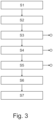
- illustrates steps of a method for highlighting a vehicle in an image being provided by a rearview camera of a digital rearview system according to the present disclosure.
- The figures are merely schematic representations and serve only to illustrate examples of the disclosure. Identical or equivalent elements are in principle provided with the same reference signs.
-
Figure 1 shows avehicle 10 comprising a digitalrearview system 12. - The digital
rearview system 12 has arearview camera 14 being installed in the back of thevehicle 10 facing rearwards. - Thus, the
rearview camera 14 is configured to capture an image I of a traffic situation in the back of thevehicle 10. If avehicle 16 is travelling behind thevehicle 10, the captured image I comprises a frontal view of the vehicle 16 (cf.Figures 2 (a) ). - The
vehicle 16 may also be called a surrounding vehicle. - The digital
rearview system 12 also comprises adata processing apparatus 18 which is communicatively connected to therearview camera 14. Thus, the image I captured by therearview camera 14 is receivable by thedata processing apparatus 18. - Moreover, the digital
rearview system 12 comprises adisplay device 20 which is communicatively connected to thedata processing apparatus 18. - The
display device 20 is arranged in apassenger compartment 22 of thevehicle 10. -
Figure 1 also shows an enlarged view of thedata processing apparatus 18. Details of thedata processing apparatus 18 can be seen in this enlarged view. - The
data processing apparatus 18 comprises a data processing unit 24 and a data storage unit 26. - The data storage unit 26 comprises a computer-
readable storage medium 28 and on the computer-readable storage medium 28 acomputer program 30 is provided. The computer program comprises instructions which, when executed by the data processing unit 24 or more generally a computer, cause the computer to carry out a method for highlighting a vehicle in an image being provided by arearview camera 14 of the digitalrearview system 12. - Due to the fact that the
data processing apparatus 18 is communicatively connected to thedisplay device 20, thedisplay device 20 is configured to receive the image I in a condition in which it has been modified by thedata processing apparatus 18. Using thedisplay device 20, this image I may be provided to a driver of thevehicle 10. - More generally speaking, the data processing unit 24 and a data storage unit 26 form means 32 for carrying out the method for highlighting a vehicle in an image being provided by a
rearview camera 14 of a digitalrearview system 12. - In the following, this method will be explained with reference to
Figures 2 (a), 2 (b) and3 . - In a first step S1, an image I of a traffic situation comprising a frontal view of the
vehicle 16 is received at thedata processing apparatus 18. This image I is captured by therearview camera 14 and may correspond to the image shown inFigure 2 (a) . - Thereafter, in a second step S2, the
headlights vehicle 16 in the image are recognized. This is done by using an object recognition technique. - In an optional third step S3, it is detected whether the recognized
headlights headlights - In a further optional fourth step S4, a color of the
vehicle 16 in the image I is determined. The determined color is compared to a color threshold which is provided on the data storage unit 26. As has already been explained before, the color threshold divides a color space into a portion of comparatively light colors and a portion of comparatively dark colors. If the determined color falls within the portion of comparatively light colors, the method is abandoned. Otherwise, the method is continued. - Then, in a fifth step S5, it is determined whether the
headlights - To this end, a color of the image portion representing the
headlights headlights headlights - It is noted that the color thresholds used for the determination whether the
headlights - Additionally, during step S5, a brightness of the image portion representing the
headlights - The brightness threshold defines a border between a predefined high brightness and a predefined low brightness. If the determined brightness falls within the predefined high brightness, the
headlights headlights - If the
headlights headlights - The accentuation may be done according to several variants.
- In a first variant, the color of the image portion representing the
headlight - In a second variant, the brightness of the image portion representing the
headlight - Of course, it is also possible to combine these variants, i.e. to lighten the color and increase the brightness.
- When accentuating the image portion representing the
headlights brightness transition zone 36 may be defined. Thebrightness transition zone 36 is a zone of decreasing brightness surrounding the accentuated image portion. The brightness is decreasing from a level of the accentuated image portion towards a brightness of the surrounding, non-accentuated image portions. - In a seventh step S7, the image I comprising the accentuated portion and the
brightness transition zone 36 is provided to thedisplay device 20. Thus, the driver of thevehicle 10 can easily and quickly detect thevehicle 16 forming part of a rearward traffic situation. - Other variations to the disclosed examples can be understood and effected by those skilled in the art in practicing the claimed disclosure, from the study of the drawings, the disclosure, and the appended claims. In the claims the word "comprising" does not exclude other elements or steps and the indefinite article "a" or "an" does not exclude a plurality. A single processor or other unit may fulfill the functions of several items or steps recited in the claims. The mere fact that certain measures are recited in mutually different dependent claims does not indicate that a combination of these measures cannot be used to advantage. A computer program may be stored/distributed on a suitable medium such as an optical storage medium or a solid-state medium supplied together with or as part of other hardware, but may also be distributed in other forms, such as via the Internet or other wired or wireless telecommunication systems. Any reference signs in the claims should not be construed as limiting the scope of the claims.
-
- 10
- vehicle
- 12
- digital rearview system
- 14
- rearview camera
- 16
- vehicle
- 18
- data processing apparatus
- 20
- display device
- 22
- passenger compartment
- 24
- processing unit
- 26
- data storage unit
- 28
- computer-readable storage medium
- 30
- computer program
- 32
- means
- 34a
- headlight
- 34b
- headlight
- 36
- brightness transition zone
- I
- image
- S1
- first step
- S2
- second step
- S3
- third step
- S4
- fourth step
- S5
- fifth step
- S6
- sixth step
- S7
- seventh step
Claims (12)
- A method for highlighting a vehicle (16) in an image (I) being provided by a rearview camera (14) of a digital rearview system (12), comprising:- receiving an image (I) of a traffic situation comprising a frontal view of the vehicle (16) (S1),- recognizing at least one headlight (34a, 34b) of the vehicle (16) in the image (I) (S2),- determining whether the at least one headlight (34a, 34b) is lit up (S5),- accentuating an image portion of the image (I), wherein the image portion represents the at least one headlight (34a, 34b) and providing the image (I) including the accentuated image portion to a display device (20) (S7), if it is determined that the at least one headlight (34a, 34b) is not lit up (S6), or terminating the method if it is determined that the at least one headlight (34a, 34b) is lit up.
- The method according to claim 1, wherein recognizing at least one headlight (34a, 34b) of the vehicle (16) in the image (I) comprises applying an object recognition technique.
- The method according to claim 1 or 2, wherein determining whether the at least one headlight (34a, 34b) is lit up comprisesassessing whether a color of the image portion representing the at least one headlight (34a, 34b) exceeds a predefined color threshold or falls below a predefined color threshold and/orassessing whether a brightness of the image portion representing the at least one headlight (34a, 34b) exceeds a predefined brightness threshold.
- The method according to any one of the preceding claims, wherein accentuating the image portion representing the at least one headlight (34a, 34b) comprises lightening the color of the image portion and/or increasing a brightness of the image portion.
- The method according to any one of the preceding claims, further comprising defining a brightness transition zone (36) surrounding the accentuated image portion, wherein inside the brightness transition zone (36) the brightness is decreasing in a direction away from the accentuated image portion.
- The method according to any one of the preceding claims, further comprising detecting whether the recognized at least one headlight (34a, 34b) is moving (S3),
wherein the image portion representing the at least one headlight (34a, 34b) is accentuated, if it is determined that the at least one headlight (34a, 34b) is moving or wherein the method is terminated if it is determined that the at least one headlight (34a, 34b) is not moving. - The method according to any one of the preceding claims, further comprising determining a color of the vehicle (16) in the image (I) (S4),
wherein the image portion representing the at least one headlight (34a, 34b) is accentuated, if the color of the vehicle (16) is determined to belong to the portion of comparatively dark colors or wherein the method is terminated if the color of the vehicle (16) is determined to belong to the portion of comparatively light colors, wherein a color threshold divides a color space into a portion of comparatively light colors and a portion of comparatively dark colors. - A data processing apparatus (18) comprising means (32) for carrying out the method according to any one of the preceding claims.
- A digital rearview system (12), comprising:- a rearview camera (14) being configured to capture an image (I) of a traffic situation comprising a frontal view of a vehicle (16),- a data processing apparatus (18) according to claim 8 being communicatively connected to the rearview camera (14) such that the image (I) captured by the rearview camera (14) is receivable by the data processing apparatus (18), and- a display device (20) being communicatively connected to the data processing apparatus (18) such that the image (I) modified by the data processing apparatus (18) is receivable by the display device (20) and being configured to provide the modified image (I) to a driver.
- A vehicle (10) comprising a digital rearview system (12) according to claim 9, wherein the display device (20) is arranged in a passenger compartment (22) of the vehicle (10).
- A computer program (30) comprising instructions which, when the program is executed by a computer, cause the computer to carry out the method of any one of claims 1 to 7.
- A computer-readable storage medium (28) comprising instructions which, when executed by a computer, cause the computer to carry out the method of any one of claims 1 to 7.
Priority Applications (3)
| Application Number | Priority Date | Filing Date | Title |
|---|---|---|---|
| EP22191993.9A EP4328869B1 (en) | 2022-08-24 | 2022-08-24 | Method for highlighting a vehicle in an image being provided by a rearview camera, data processing apparatus, digital rearview system, vehicle, computer program and computer-readable storage medium |
| US18/449,419 US20240070815A1 (en) | 2022-08-24 | 2023-08-14 | Method for highlighting a vehicle in an image being provided by a rearview camera, data processing apparatus, digital rearview system, vehicle, computer program and computer-readable storage medium |
| CN202311083230.4A CN117640880A (en) | 2022-08-24 | 2023-08-24 | Method for highlighting a vehicle in an image provided by a rear-view camera |
Applications Claiming Priority (1)
| Application Number | Priority Date | Filing Date | Title |
|---|---|---|---|
| EP22191993.9A EP4328869B1 (en) | 2022-08-24 | 2022-08-24 | Method for highlighting a vehicle in an image being provided by a rearview camera, data processing apparatus, digital rearview system, vehicle, computer program and computer-readable storage medium |
Publications (2)
| Publication Number | Publication Date |
|---|---|
| EP4328869A1 EP4328869A1 (en) | 2024-02-28 |
| EP4328869B1 true EP4328869B1 (en) | 2025-02-19 |
Family
ID=83059273
Family Applications (1)
| Application Number | Title | Priority Date | Filing Date |
|---|---|---|---|
| EP22191993.9A Active EP4328869B1 (en) | 2022-08-24 | 2022-08-24 | Method for highlighting a vehicle in an image being provided by a rearview camera, data processing apparatus, digital rearview system, vehicle, computer program and computer-readable storage medium |
Country Status (3)
| Country | Link |
|---|---|
| US (1) | US20240070815A1 (en) |
| EP (1) | EP4328869B1 (en) |
| CN (1) | CN117640880A (en) |
Family Cites Families (3)
| Publication number | Priority date | Publication date | Assignee | Title |
|---|---|---|---|---|
| JP6565806B2 (en) * | 2016-06-28 | 2019-08-28 | 株式会社デンソー | Camera system |
| US11620522B2 (en) * | 2019-12-31 | 2023-04-04 | Magna Electronics Inc. | Vehicular system for testing performance of headlamp detection systems |
| US11724692B2 (en) * | 2020-09-25 | 2023-08-15 | GM Global Technology Operations LLC | Detection, warning and preparative action for vehicle contact mitigation |
-
2022
- 2022-08-24 EP EP22191993.9A patent/EP4328869B1/en active Active
-
2023
- 2023-08-14 US US18/449,419 patent/US20240070815A1/en not_active Abandoned
- 2023-08-24 CN CN202311083230.4A patent/CN117640880A/en active Pending
Also Published As
| Publication number | Publication date |
|---|---|
| CN117640880A (en) | 2024-03-01 |
| US20240070815A1 (en) | 2024-02-29 |
| EP4328869A1 (en) | 2024-02-28 |
Similar Documents
| Publication | Publication Date | Title |
|---|---|---|
| US9317757B2 (en) | Method and apparatus for detecting a rear vehicle light | |
| US9418287B2 (en) | Object detection apparatus | |
| US7566851B2 (en) | Headlight, taillight and streetlight detection | |
| US9415719B2 (en) | Headlight control device | |
| EP2471691B1 (en) | Obstacle detection device, obstacle detection system provided therewith, and obstacle detection method | |
| EP2009611A1 (en) | Road division line detector | |
| JP4980970B2 (en) | Image pickup means adjustment device and object detection device | |
| EP3079948B1 (en) | Method for operating a rearview camera system of a motor vehicle after detection of a headlight flasher, rearview camera system and motor vehicle | |
| JP2023516994A (en) | Automotive ambient monitoring system | |
| US9367749B2 (en) | Object detection apparatus | |
| EP3553694A1 (en) | Distance estimation of vehicle headlights | |
| JP2006298362A (en) | Method for early detection of arrival at dark area | |
| EP4328869B1 (en) | Method for highlighting a vehicle in an image being provided by a rearview camera, data processing apparatus, digital rearview system, vehicle, computer program and computer-readable storage medium | |
| KR20200005282A (en) | Apparatus and method for lateral image processing of a mirrorless car | |
| US12028951B2 (en) | Camera based adaptive brightness backup light system | |
| KR102806490B1 (en) | System, apparatus and method for estimating risk of distraction through RGB-based driver eye tracking | |
| US12530906B2 (en) | System for avoiding accidents caused by wild animals crossing at dusk and at night | |
| CN113963548A (en) | Vehicle surroundings image processing apparatus and method, monitoring system | |
| CN110942044A (en) | High beam violation detection method and device, electronic device and storage medium | |
| JP7262043B2 (en) | Anomaly detection system, moving body, anomaly detection method, and program | |
| JP4679469B2 (en) | In-vehicle image processing device | |
| JP4818027B2 (en) | In-vehicle image processing device | |
| JP7636113B2 (en) | Video Display System | |
| JP7262044B2 (en) | Anomaly detection system, moving body, anomaly detection method, and program | |
| KR102671798B1 (en) | Apparatus and method for controlling transparent panel |
Legal Events
| Date | Code | Title | Description |
|---|---|---|---|
| PUAI | Public reference made under article 153(3) epc to a published international application that has entered the european phase |
Free format text: ORIGINAL CODE: 0009012 |
|
| STAA | Information on the status of an ep patent application or granted ep patent |
Free format text: STATUS: REQUEST FOR EXAMINATION WAS MADE |
|
| 17P | Request for examination filed |
Effective date: 20230425 |
|
| AK | Designated contracting states |
Kind code of ref document: A1 Designated state(s): AL AT BE BG CH CY CZ DE DK EE ES FI FR GB GR HR HU IE IS IT LI LT LU LV MC MK MT NL NO PL PT RO RS SE SI SK SM TR |
|
| STAA | Information on the status of an ep patent application or granted ep patent |
Free format text: STATUS: EXAMINATION IS IN PROGRESS |
|
| 17Q | First examination report despatched |
Effective date: 20240408 |
|
| GRAP | Despatch of communication of intention to grant a patent |
Free format text: ORIGINAL CODE: EPIDOSNIGR1 |
|
| STAA | Information on the status of an ep patent application or granted ep patent |
Free format text: STATUS: GRANT OF PATENT IS INTENDED |
|
| INTG | Intention to grant announced |
Effective date: 20240913 |
|
| GRAS | Grant fee paid |
Free format text: ORIGINAL CODE: EPIDOSNIGR3 |
|
| GRAA | (expected) grant |
Free format text: ORIGINAL CODE: 0009210 |
|
| STAA | Information on the status of an ep patent application or granted ep patent |
Free format text: STATUS: THE PATENT HAS BEEN GRANTED |
|
| AK | Designated contracting states |
Kind code of ref document: B1 Designated state(s): AL AT BE BG CH CY CZ DE DK EE ES FI FR GB GR HR HU IE IS IT LI LT LU LV MC MK MT NL NO PL PT RO RS SE SI SK SM TR |
|
| REG | Reference to a national code |
Ref country code: GB Ref legal event code: FG4D |
|
| REG | Reference to a national code |
Ref country code: CH Ref legal event code: EP |
|
| P01 | Opt-out of the competence of the unified patent court (upc) registered |
Free format text: CASE NUMBER: APP_6004/2025 Effective date: 20250205 |
|
| REG | Reference to a national code |
Ref country code: IE Ref legal event code: FG4D |
|
| REG | Reference to a national code |
Ref country code: DE Ref legal event code: R096 Ref document number: 602022010738 Country of ref document: DE |
|
| REG | Reference to a national code |
Ref country code: NL Ref legal event code: MP Effective date: 20250219 |
|
| PG25 | Lapsed in a contracting state [announced via postgrant information from national office to epo] |
Ref country code: RS Free format text: LAPSE BECAUSE OF FAILURE TO SUBMIT A TRANSLATION OF THE DESCRIPTION OR TO PAY THE FEE WITHIN THE PRESCRIBED TIME-LIMIT Effective date: 20250519 |
|
| PG25 | Lapsed in a contracting state [announced via postgrant information from national office to epo] |
Ref country code: FI Free format text: LAPSE BECAUSE OF FAILURE TO SUBMIT A TRANSLATION OF THE DESCRIPTION OR TO PAY THE FEE WITHIN THE PRESCRIBED TIME-LIMIT Effective date: 20250219 |
|
| PG25 | Lapsed in a contracting state [announced via postgrant information from national office to epo] |
Ref country code: PL Free format text: LAPSE BECAUSE OF FAILURE TO SUBMIT A TRANSLATION OF THE DESCRIPTION OR TO PAY THE FEE WITHIN THE PRESCRIBED TIME-LIMIT Effective date: 20250219 |
|
| PG25 | Lapsed in a contracting state [announced via postgrant information from national office to epo] |
Ref country code: ES Free format text: LAPSE BECAUSE OF FAILURE TO SUBMIT A TRANSLATION OF THE DESCRIPTION OR TO PAY THE FEE WITHIN THE PRESCRIBED TIME-LIMIT Effective date: 20250219 |
|
| REG | Reference to a national code |
Ref country code: LT Ref legal event code: MG9D |
|
| PG25 | Lapsed in a contracting state [announced via postgrant information from national office to epo] |
Ref country code: NO Free format text: LAPSE BECAUSE OF FAILURE TO SUBMIT A TRANSLATION OF THE DESCRIPTION OR TO PAY THE FEE WITHIN THE PRESCRIBED TIME-LIMIT Effective date: 20250519 Ref country code: IS Free format text: LAPSE BECAUSE OF FAILURE TO SUBMIT A TRANSLATION OF THE DESCRIPTION OR TO PAY THE FEE WITHIN THE PRESCRIBED TIME-LIMIT Effective date: 20250619 |
|
| PG25 | Lapsed in a contracting state [announced via postgrant information from national office to epo] |
Ref country code: NL Free format text: LAPSE BECAUSE OF FAILURE TO SUBMIT A TRANSLATION OF THE DESCRIPTION OR TO PAY THE FEE WITHIN THE PRESCRIBED TIME-LIMIT Effective date: 20250219 |
|
| PG25 | Lapsed in a contracting state [announced via postgrant information from national office to epo] |
Ref country code: HR Free format text: LAPSE BECAUSE OF FAILURE TO SUBMIT A TRANSLATION OF THE DESCRIPTION OR TO PAY THE FEE WITHIN THE PRESCRIBED TIME-LIMIT Effective date: 20250219 |
|
| PG25 | Lapsed in a contracting state [announced via postgrant information from national office to epo] |
Ref country code: LV Free format text: LAPSE BECAUSE OF FAILURE TO SUBMIT A TRANSLATION OF THE DESCRIPTION OR TO PAY THE FEE WITHIN THE PRESCRIBED TIME-LIMIT Effective date: 20250219 Ref country code: PT Free format text: LAPSE BECAUSE OF FAILURE TO SUBMIT A TRANSLATION OF THE DESCRIPTION OR TO PAY THE FEE WITHIN THE PRESCRIBED TIME-LIMIT Effective date: 20250620 |
|
| PG25 | Lapsed in a contracting state [announced via postgrant information from national office to epo] |
Ref country code: BG Free format text: LAPSE BECAUSE OF FAILURE TO SUBMIT A TRANSLATION OF THE DESCRIPTION OR TO PAY THE FEE WITHIN THE PRESCRIBED TIME-LIMIT Effective date: 20250219 Ref country code: GR Free format text: LAPSE BECAUSE OF FAILURE TO SUBMIT A TRANSLATION OF THE DESCRIPTION OR TO PAY THE FEE WITHIN THE PRESCRIBED TIME-LIMIT Effective date: 20250520 |
|
| REG | Reference to a national code |
Ref country code: AT Ref legal event code: MK05 Ref document number: 1769074 Country of ref document: AT Kind code of ref document: T Effective date: 20250219 |
|
| PG25 | Lapsed in a contracting state [announced via postgrant information from national office to epo] |
Ref country code: SE Free format text: LAPSE BECAUSE OF FAILURE TO SUBMIT A TRANSLATION OF THE DESCRIPTION OR TO PAY THE FEE WITHIN THE PRESCRIBED TIME-LIMIT Effective date: 20250219 |
|
| PG25 | Lapsed in a contracting state [announced via postgrant information from national office to epo] |
Ref country code: SM Free format text: LAPSE BECAUSE OF FAILURE TO SUBMIT A TRANSLATION OF THE DESCRIPTION OR TO PAY THE FEE WITHIN THE PRESCRIBED TIME-LIMIT Effective date: 20250219 |
|
| PG25 | Lapsed in a contracting state [announced via postgrant information from national office to epo] |
Ref country code: DK Free format text: LAPSE BECAUSE OF FAILURE TO SUBMIT A TRANSLATION OF THE DESCRIPTION OR TO PAY THE FEE WITHIN THE PRESCRIBED TIME-LIMIT Effective date: 20250219 |
|
| PGFP | Annual fee paid to national office [announced via postgrant information from national office to epo] |
Ref country code: DE Payment date: 20250724 Year of fee payment: 4 |
|
| PG25 | Lapsed in a contracting state [announced via postgrant information from national office to epo] |
Ref country code: IT Free format text: LAPSE BECAUSE OF FAILURE TO SUBMIT A TRANSLATION OF THE DESCRIPTION OR TO PAY THE FEE WITHIN THE PRESCRIBED TIME-LIMIT Effective date: 20250219 |
|
| PG25 | Lapsed in a contracting state [announced via postgrant information from national office to epo] |
Ref country code: AT Free format text: LAPSE BECAUSE OF FAILURE TO SUBMIT A TRANSLATION OF THE DESCRIPTION OR TO PAY THE FEE WITHIN THE PRESCRIBED TIME-LIMIT Effective date: 20250219 |
|
| PGFP | Annual fee paid to national office [announced via postgrant information from national office to epo] |
Ref country code: FR Payment date: 20250725 Year of fee payment: 4 |
|
| PG25 | Lapsed in a contracting state [announced via postgrant information from national office to epo] |
Ref country code: EE Free format text: LAPSE BECAUSE OF FAILURE TO SUBMIT A TRANSLATION OF THE DESCRIPTION OR TO PAY THE FEE WITHIN THE PRESCRIBED TIME-LIMIT Effective date: 20250219 Ref country code: CZ Free format text: LAPSE BECAUSE OF FAILURE TO SUBMIT A TRANSLATION OF THE DESCRIPTION OR TO PAY THE FEE WITHIN THE PRESCRIBED TIME-LIMIT Effective date: 20250219 |
|
| PG25 | Lapsed in a contracting state [announced via postgrant information from national office to epo] |
Ref country code: RO Free format text: LAPSE BECAUSE OF FAILURE TO SUBMIT A TRANSLATION OF THE DESCRIPTION OR TO PAY THE FEE WITHIN THE PRESCRIBED TIME-LIMIT Effective date: 20250219 |
|
| PG25 | Lapsed in a contracting state [announced via postgrant information from national office to epo] |
Ref country code: SK Free format text: LAPSE BECAUSE OF FAILURE TO SUBMIT A TRANSLATION OF THE DESCRIPTION OR TO PAY THE FEE WITHIN THE PRESCRIBED TIME-LIMIT Effective date: 20250219 |
|
| REG | Reference to a national code |
Ref country code: DE Ref legal event code: R097 Ref document number: 602022010738 Country of ref document: DE |
|
| PLBE | No opposition filed within time limit |
Free format text: ORIGINAL CODE: 0009261 |
|
| STAA | Information on the status of an ep patent application or granted ep patent |
Free format text: STATUS: NO OPPOSITION FILED WITHIN TIME LIMIT |
|
| REG | Reference to a national code |
Ref country code: CH Ref legal event code: L10 Free format text: ST27 STATUS EVENT CODE: U-0-0-L10-L00 (AS PROVIDED BY THE NATIONAL OFFICE) Effective date: 20251231 |
|
| 26N | No opposition filed |
Effective date: 20251120 |
|
| REG | Reference to a national code |
Ref country code: CH Ref legal event code: H13 Free format text: ST27 STATUS EVENT CODE: U-0-0-H10-H13 (AS PROVIDED BY THE NATIONAL OFFICE) Effective date: 20260324 |
|
| PG25 | Lapsed in a contracting state [announced via postgrant information from national office to epo] |
Ref country code: MC Free format text: LAPSE BECAUSE OF FAILURE TO SUBMIT A TRANSLATION OF THE DESCRIPTION OR TO PAY THE FEE WITHIN THE PRESCRIBED TIME-LIMIT Effective date: 20250219 |
|
| PG25 | Lapsed in a contracting state [announced via postgrant information from national office to epo] |
Ref country code: LU Free format text: LAPSE BECAUSE OF NON-PAYMENT OF DUE FEES Effective date: 20250824 |
|
| PG25 | Lapsed in a contracting state [announced via postgrant information from national office to epo] |
Ref country code: CH Free format text: LAPSE BECAUSE OF NON-PAYMENT OF DUE FEES Effective date: 20250831 |