EP4328843A1 - Work planning assistance device and work planning assistance method - Google Patents
Work planning assistance device and work planning assistance method Download PDFInfo
- Publication number
- EP4328843A1 EP4328843A1 EP22804295.8A EP22804295A EP4328843A1 EP 4328843 A1 EP4328843 A1 EP 4328843A1 EP 22804295 A EP22804295 A EP 22804295A EP 4328843 A1 EP4328843 A1 EP 4328843A1
- Authority
- EP
- European Patent Office
- Prior art keywords
- crane
- situation image
- work situation
- carriage
- specifications
- Prior art date
- Legal status (The legal status is an assumption and is not a legal conclusion. Google has not performed a legal analysis and makes no representation as to the accuracy of the status listed.)
- Pending
Links
Images



Classifications
-
- G—PHYSICS
- G06—COMPUTING OR CALCULATING; COUNTING
- G06Q—INFORMATION AND COMMUNICATION TECHNOLOGY [ICT] SPECIALLY ADAPTED FOR ADMINISTRATIVE, COMMERCIAL, FINANCIAL, MANAGERIAL OR SUPERVISORY PURPOSES; SYSTEMS OR METHODS SPECIALLY ADAPTED FOR ADMINISTRATIVE, COMMERCIAL, FINANCIAL, MANAGERIAL OR SUPERVISORY PURPOSES, NOT OTHERWISE PROVIDED FOR
- G06Q10/00—Administration; Management
- G06Q10/06—Resources, workflows, human or project management; Enterprise or organisation planning; Enterprise or organisation modelling
- G06Q10/063—Operations research, analysis or management
- G06Q10/0631—Resource planning, allocation, distributing or scheduling for enterprises or organisations
-
- G—PHYSICS
- G06—COMPUTING OR CALCULATING; COUNTING
- G06Q—INFORMATION AND COMMUNICATION TECHNOLOGY [ICT] SPECIALLY ADAPTED FOR ADMINISTRATIVE, COMMERCIAL, FINANCIAL, MANAGERIAL OR SUPERVISORY PURPOSES; SYSTEMS OR METHODS SPECIALLY ADAPTED FOR ADMINISTRATIVE, COMMERCIAL, FINANCIAL, MANAGERIAL OR SUPERVISORY PURPOSES, NOT OTHERWISE PROVIDED FOR
- G06Q10/00—Administration; Management
- G06Q10/04—Forecasting or optimisation specially adapted for administrative or management purposes, e.g. linear programming or "cutting stock problem"
-
- G—PHYSICS
- G06—COMPUTING OR CALCULATING; COUNTING
- G06Q—INFORMATION AND COMMUNICATION TECHNOLOGY [ICT] SPECIALLY ADAPTED FOR ADMINISTRATIVE, COMMERCIAL, FINANCIAL, MANAGERIAL OR SUPERVISORY PURPOSES; SYSTEMS OR METHODS SPECIALLY ADAPTED FOR ADMINISTRATIVE, COMMERCIAL, FINANCIAL, MANAGERIAL OR SUPERVISORY PURPOSES, NOT OTHERWISE PROVIDED FOR
- G06Q10/00—Administration; Management
- G06Q10/06—Resources, workflows, human or project management; Enterprise or organisation planning; Enterprise or organisation modelling
-
- G—PHYSICS
- G06—COMPUTING OR CALCULATING; COUNTING
- G06Q—INFORMATION AND COMMUNICATION TECHNOLOGY [ICT] SPECIALLY ADAPTED FOR ADMINISTRATIVE, COMMERCIAL, FINANCIAL, MANAGERIAL OR SUPERVISORY PURPOSES; SYSTEMS OR METHODS SPECIALLY ADAPTED FOR ADMINISTRATIVE, COMMERCIAL, FINANCIAL, MANAGERIAL OR SUPERVISORY PURPOSES, NOT OTHERWISE PROVIDED FOR
- G06Q10/00—Administration; Management
- G06Q10/06—Resources, workflows, human or project management; Enterprise or organisation planning; Enterprise or organisation modelling
- G06Q10/063—Operations research, analysis or management
- G06Q10/0637—Strategic management or analysis, e.g. setting a goal or target of an organisation; Planning actions based on goals; Analysis or evaluation of effectiveness of goals
-
- G—PHYSICS
- G06—COMPUTING OR CALCULATING; COUNTING
- G06Q—INFORMATION AND COMMUNICATION TECHNOLOGY [ICT] SPECIALLY ADAPTED FOR ADMINISTRATIVE, COMMERCIAL, FINANCIAL, MANAGERIAL OR SUPERVISORY PURPOSES; SYSTEMS OR METHODS SPECIALLY ADAPTED FOR ADMINISTRATIVE, COMMERCIAL, FINANCIAL, MANAGERIAL OR SUPERVISORY PURPOSES, NOT OTHERWISE PROVIDED FOR
- G06Q10/00—Administration; Management
- G06Q10/06—Resources, workflows, human or project management; Enterprise or organisation planning; Enterprise or organisation modelling
- G06Q10/067—Enterprise or organisation modelling
-
- G—PHYSICS
- G06—COMPUTING OR CALCULATING; COUNTING
- G06Q—INFORMATION AND COMMUNICATION TECHNOLOGY [ICT] SPECIALLY ADAPTED FOR ADMINISTRATIVE, COMMERCIAL, FINANCIAL, MANAGERIAL OR SUPERVISORY PURPOSES; SYSTEMS OR METHODS SPECIALLY ADAPTED FOR ADMINISTRATIVE, COMMERCIAL, FINANCIAL, MANAGERIAL OR SUPERVISORY PURPOSES, NOT OTHERWISE PROVIDED FOR
- G06Q50/00—Information and communication technology [ICT] specially adapted for implementation of business processes of specific business sectors, e.g. utilities or tourism
- G06Q50/08—Construction
Definitions
- the present invention relates to a technique for assisting with work of carrying a load suspended by a crane, and the like.
- Patent Literature 1 Japanese Patent Laid-Open No. 2009-169777
- an object of the present invention is to provide a system and the like capable of reducing effects of how much knowledge/experience a user has and making it easy for the user to decide a plan for work by a crane.
- a work planning assistance device of the present invention comprises:
- the work planning assistance device in the above configuration, it is possible to cause a user to grasp the space occupation aspect of the building and the arrangement aspect of the plurality of candidate carriage points, through the primary work situation image output to the output interface. Thereby, it is possible to cause the user to take a guess which candidate carriage points at which positions are to be specified as the first carriage points, in consideration of the space occupation aspect of the building and the arrangement aspect of the plurality of candidate carriage points.
- a work planning assistance device as one embodiment of the present invention shown in FIG. 1 is configured with a work planning assistance server 10 that is capable of mutually communicating with each of information terminals 20 and a database server 102 via a network.
- the work planning assistance server 10 includes a first planning assistance processing component 11 and a second planning assistance processing component 12.
- Each of the first planning assistance processing component 11 and the second planning assistance processing component 12 is configured with an arithmetic processing device (a CPU, a processor core, or the like) and a storage device (memories such as a ROM and a RAM). It is designed that the arithmetic processing device reads necessary data and/or a program (software) from the storage device and executes arithmetic processing as described later according to the program for the data.
- the database server 102 constitutes a database that stores and holds data required for work planning by each information terminal 20, such as data indicating a spatial arrangement aspect of a building and a crane in a virtual space.
- the database server 102 may be a component of the work planning assistance server 10.
- Each information terminal 20 shown in FIG. 1 is configured with a smartphone, a tablet terminal, a personal computer, or a beacon.
- the information terminal 20 includes a terminal input interface 21, a terminal output interface 22 and a terminal control device 24.
- the terminal input interface 21 is configured with capacitance-type touch buttons constituting a touch panel.
- the terminal output interface 22 is configured with an acoustic output device and, furthermore, wireless communication equipment in addition to an image display device constituting the touch panel.
- a specification signal is transmitted to the outside of the information terminal 20 by the wireless communication equipment.
- a terminal control device 24 is configured with an arithmetic processing device (a CPU, a processor core, or the like) and a storage device (memories such as a ROM and a RAM).
- each block indicated by "C ⁇ " is used for simplification of description, means transmission and/or reception of data, and means such a conditional branch that a process in a branch direction is executed on condition of transmission and/or reception of the data.
- a specified work situation specified through the terminal input interface 21 is recognized by the terminal control device 24 and transmitted to the work planning assistance server 10 ( FIG. 2 /STEP 212).
- the "specified work situation" is a factor for recognizing a specified work situation model, which is one work situation model among a plurality of different work situation models.
- Each work situation model is defined by a space occupation aspect of a building and an arrangement aspect of candidate carriage points in a virtual space.
- Each work situation model may be defined by a landform of a point around a building where a crane may be arranged.
- Each situation model may be defined by a space occupation aspect of vehicles and/or workers coming and going on a site.
- a terminal identifier for identifying the information terminal 20 is also transmitted to the work planning assistance server 10.
- the work planning assistance server 10 When the specified work situation is received by the work planning assistance server 10 ( FIG. 2 /C1 1), a space occupation aspect of a building and an arrangement aspect of a plurality of candidate carriage points in a virtual space, which define a specified work situation model according to the specified work situation, are recognized by the first planning assistance processing component 11 ( FIG. 2 /STEP 112).
- a space occupation aspect of an almost rectangular parallelepiped building Q is defined by a three-dimensional area ⁇ X, Y, Z
- f 1 and f 2 are functions (for example, linear functions) of a main variable X for defining an aspect of spread of the building Q in a Y direction.
- g 1 and g 2 are functions of main variables X and Y for defining an aspect of spread of the building Q in a Z direction. Further, as shown in FIGS. 3 and 4 , a plurality of candidate carriage points P in the virtual space are distributedly arranged on top and side parts of the building Q.
- the candidate carriage points P are defined by coordinate values (x, y, z) of points or a two-dimensional or three-dimensional area that spreads based on the reference points.
- a primary work situation image indicating the space occupation aspect of the building Q and an arrangement aspect of the plurality of candidate carriage points P are generated and transmitted to the information terminal 20 by the first planning assistance processing component 11 ( FIG. 2 /STEP 114).
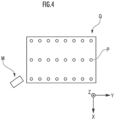
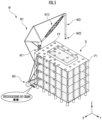
- the primary work situation image When the primary work situation image is received by the information terminal 20 ( FIG. 2 /C21), the primary work situation image is output to the terminal output interface 22 by the terminal control device 24 ( FIG. 2 /STEP 214). Thereby, a perspective image as shown in FIG. 3 and/or a bird's-eye image as shown in FIG. 4 are/is output to the terminal output interface 22 as the primary work situation image indicating the space occupation aspect of the building Q and the arrangement aspect of the plurality of candidate carriage points P in the virtual space.
- an arrangement aspect of first carriage points P1 specified through the terminal input interface 21 is recognized by the terminal control device 24 and transmitted to the work planning assistance server 10 ( FIG. 2 /STEP 222).
- the terminal identifier for identifying the information terminal 20 is also transmitted to the work planning assistance server 10.
- the carriage points P1 are specified as shown in FIGS. 5 and 6 .
- second carriage points P2 are also shown.
- the work planning assistance server 10 When the arrangement aspect of the first carriage points P1 is received by the work planning assistance server 10 ( FIG 2 /C22), an arrangement aspect and specifications of a crane M in the virtual space making it possible to carry materials to the first carriage points P1 (or from the first carriage points P1) by the crane M while avoiding interference of the crane M and the materials with the building Q are recognized by the second planning assistance processing component 12 based on the space occupation aspect of the building Q and the arrangement aspect of the first carriage points P1 ( FIG. 2 /STEP 122).
- a change aspect of a position of a hook M22 and/or the material is decided as a material position trajectory such that the change aspect does not overlap with the building Q, for each of a plurality of types of cranes M with different arrangement aspects and different specifications.
- a position and a direction (a unit vector indicating the direction) of a base M0, which is a component of each crane M, is recognized as the arrangement aspect of the crane M.
- a shape and a size of each of a boom M11 and a jib M12 constituting the base M0 and an attachment M1 a tolerance ranges of a turning angle ⁇ and an elevation angle ⁇ 1 of the boom M11, a tolerance range of an elevation angle ⁇ 2 of the jib M12, a winding limit of the hook M22 suspended from the attachment M1 via a wire M21, and the like are recognized as the specifications of the crane M.
- the hook M22 may include a main hook suspended from a tip part (for example, a boom point sheave) of the boom M11 and/or an auxiliary hook suspended from a tip part (for example, a jib point sheave) of the jib M12.
- the tolerance range (an upper-limit height and a lower-limit height) of a height above sea level of a highest reaching part of the crane M is determined by the tolerance range of each of the elevation angles ⁇ 1 and ⁇ 2.
- the tolerance range (the upper-limit height and the lower-limit height) of the height above sea level of the highest reaching part of the crane M may be determined by the tolerance range of a quantity of state determining a position and/or a posture of a movable part of the crane M.
- the plurality of types of cranes M may include a mobile crane such as a crawler crane or a wheel crane (a tire traveling crane, a rough terrain crane, a truck crane, or all terrain crane) or may include a stationary crane such as a jib crane, a climbing crane, or a tower crane.
- the crane M may be a luffing crane or a fixed jib crane.
- Each crane M may have a boom, a jib, a mast and/or a strut as attachments.
- the boom may be a lattice boom in addition to a Telesco (registered trademark) (telescopic) boom.
- such a time series or a change aspect of each of a turning angle ⁇ and the elevation angle ⁇ 1 of the boom M11, the elevation angle ⁇ 2 of the jib M12, and a length of the wire M21 that realizes the material position trajectory is decided as a crane posture trajectory according to inverse kinematics.
- the crane posture trajectory is tentatively decided such that each of the turning angle ⁇ and the elevation angle ⁇ 1 of the boom M11, the elevation angle ⁇ 2 of the jib M12, and the length of the wire M21 is not out of the tolerance range.
- the tolerance range of each of the elevation angle ⁇ 1 of the boom M11 and the elevation angle ⁇ 2 of the boom M12 may be determined based on an upper-limit height position of a top edge (an upper limit of Z-coordinate value) of the crane M and/or the attachment M1.
- the base M0 is defined as a rectangular parallelepiped; each of the boom M11 and the jib M12 is defined as a quadrangular prism or a cylinder; and the wire M21 is defined as a line; and the hook M22 is defined as a point.
- a shape and a size of the hook M22 may be defined to encompass a size of the materials to be carried.
- the arrangement aspect and the specifications of the crane M are recognized as the arrangement aspect and the specifications of the crane M making it possible to carry the materials by the crane M to the first carriage points P1 while avoiding interference of the crane M and the materials with the building Q.
- a secondary work situation image to which the arrangement aspect and specifications of the crane M are added is generated and transmitted to the information terminal 20 by the second planning assistance processing component 12 ( FIG. 2 /STEP 124).
- the secondary work situation image When the secondary work situation image is received by the information terminal 20 ( FIG. 2 /C22), the secondary work situation image is output to the terminal output interface 22 by the terminal control device 24 ( FIG. 2 /STEP 224).
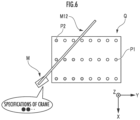
- a perspective image shown in FIG. 5 and/or a bird's-eye image shown in FIG. 6 are/is output to the terminal output interface 22 as the secondary work situation image, the secondary work situation image being the primary work situation image indicating the space occupation aspect of the building Q and the arrangement aspect of the plurality of candidate carriage points P in the virtual space, to which the arrangement aspect and the specifications of the crane M are added.
- the first carriage points P1 see the white circles
- the second carriage points P2 see the black circles
- the work planning assistance server 10 (the work planning assistance device) that performs the functions described above, it is possible to cause a user to grasp the space occupation aspect of the building Q and the arrangement aspect of the plurality of candidate carriage points P determined based on the specified work situation specified through the terminal input interface 21 of the information terminal 20, through the primary work situation image output to the terminal output interface 22 of the information terminal 20 (see FIG. 2 /STEP 212 -> C11 -> STEP 112 -> STEP 114 -> C21 -> STEP 214, and FIGS. 3 and 4 ).
- the user it is possible to cause the user to take a guess where the crane M is to be arranged, in consideration of the space occupation aspect of the building Q and the arrangement aspect of the plurality of candidate carriage points P.
- the work planning assistance device is configured with the work planning assistance server 10 in the above embodiment, the work planning assistance device may be configured with the information terminal 20 as another embodiment. That is, the first planning assistance processing component 11 and/or the second planning assistance processing component 12 may be configured with the terminal control device 24.
- the first planning assistance processing component 11 may cause the primary work situation image, which indicates the time series of each of the space occupation aspect of the building Q and the arrangement aspect of the plurality of candidate carriage points P, to be output to the terminal output interface 22, and recognize a time series of the arrangement aspect of the first carriage points P1 specified through the terminal input interface 21.
- the second planning assistance processing component 12 may recognize a time series of the material attributes input through the terminal input interface 21, recognize the time series of the arrangement aspect and of the specifications of the crane M for carrying the materials having the material attributes to the first carriage points P1 while avoiding the interference of each of the crane M and the materials with the building Q based on the time series of each of the space occupation aspect of the building Q, the first carriage points P1, and the material attributes, generate the secondary work situation image, the secondary work situation image being the primary work situation image to which the time series of the arrangement aspect and of the specifications of the crane M are added, and cause the secondary work situation image to be output to the terminal output interface 22.
- a primary work situation image (a plurality of intermittent still images or video) showing that the building Q shown in each of FIGS. 3 and 4 is extended (for example, in the Z direction) according to work progress, and new candidate carriage points P appear on an extended part (furthermore, candidate carriage points P that have existed so for disappear) is output to the terminal output interface 22.
- the user who has specified the arrangement aspect of the first carriage points P1 through the terminal input interface 21 grasp a time-series change aspect of the arrangement aspect and/or the specifications of the crane M for carrying the materials to the first carriage points P1 (or from the first carriage points P1) by the crane M while avoiding interference of the crane M and the materials with the building Q, through the secondary work situation image output to the terminal output interface 22.
- the secondary work situation image (a plurality of intermittent still images or video) in which the arrangement aspect and/or the specifications of the crane M shown in each of FIGS. 5 and 6 are/is transitioning is output to the terminal output interface 22.
- a crane M1 having first specifications is arranged in a first posture at a first point in a first work period
- a crane M2 having second specifications that are the same as or different from the first specifications is arranged in a second posture at a second point different from the first point in a second work period after the first work period.
- the second planning assistance processing component 12 may recognize one time series in which frequency of changing the specifications of the crane M is the lowest among a plurality of time series of combinations of the arrangement aspect and the specifications of the crane M, generate the secondary work situation image, the secondary work situation image being the primary work situation image to which the one time series of the combination of the arrangement aspect and the specifications of the crane M is added, and cause the secondary work situation image to be output to the terminal output interface 22.
- the work planning assistance device in the above configuration, it is possible to cause the user who has specified the candidate carriage points and the material attributes through the terminal input interface 21 to grasp an appropriate time series of the arrangement aspect and the specifications of the crane M for carrying the materials to the first carriage points P1 while avoiding interference of the crane M and the materials with the building Q, through the secondary work situation image output to the terminal output interface 22 so that the frequency of changing the specifications of the crane M is the lowest.
- the other time series is selected as the time series for which the frequency of changing the specifications of the crane is the lowest.
- the second planning assistance processing component 12 may limit the material attributes that can be specified through the terminal input interface 21, according to a selectable arrangement aspect and specifications of the crane M.
- An inner diameter R0 and an outer diameter R1 of the inner circular-arc shaped area S 1 are geometrically determined based on the tolerance range of the elevation angle ⁇ 1 of the boom M11 and the tolerance range of the elevation angle ⁇ 2 of the jib M12 that are determined according to the material weight W (S 1).
- An inner diameter R1 and an outer diameter R2 of the outer circular-arc shaped area S2 are geometrically determined based on the tolerance range of the elevation angle ⁇ 1 of the boom M11 and the tolerance range of the elevation angle ⁇ 2 of the jib M12 that are determined according to the material weight W (S2) ( ⁇ W(S1)).
- a material weight W(i) (W(S2) ⁇ W(i) ⁇ W(S1)) is specified as a material attribute
- specification of an arrangement aspect of the crane M at any of the candidate arrangement points B1, B2, ..., Bm at which the inner circular-arc shaped area S1 shown in FIG. 7 does not overlap with a first carriage point P1(i), among candidate arrangement points of the crane M A1, A2, ..., Am and B1, B2, ..., Bm shown in FIG. 8 is prohibited.
- the second planning assistance processing component 12 may recognize the arrangement aspect and the specifications of the crane M for carrying the materials to the first carriage points P1 based on the space occupation aspect of the building Q, the arrangement aspect of the first carriage points P1, the material attributes, and external factors that affect a situation of carriage of the materials by the crane M.
- the work planning assistance device in the above configuration, it is possible to cause the user who sees the secondary work situation image output to the terminal output interface 22 to grasp the arrangement aspect and the specifications of the crane M making it possible to carry the materials to the first carriage points P1 by the crane M while avoiding interference of the crane M and the materials with the building Q, in consideration of the external factors that affect the situation of carriage of the materials by the crane M.
- the “external factors” include the tolerance range of the height above sea level of the highest reaching part of the crane M, a geographical area where the base M0 of the crane M can be arranged, weather conditions (presence/absence of rainfall/snowfall, an amount of rain/snow, presence/absence of freezing, and the like) determining a geographical area, and/or a direction of and speed of wind to the crane M and the materials.
- the second planning assistance processing component 12 may recognize the time series of at least one of the arrangement aspect and the specifications of the crane M for carrying the materials to the first carriage points P1 based on a time series of the external factors, generate the secondary work situation image, the secondary work situation image being the primary work situation image where at least one of the time series of the arrangement aspect of the crane M and the specifications is expressed in a time series, and cause the secondary work situation image to be output to the terminal output interface 22.
- the work planning assistance device in the above configuration, it is possible to cause the user who sees the secondary work situation image output to the terminal output interface 22 to grasp the time series of the arrangement aspect and/or the specifications of the crane M making it possible to carry the materials to the first carriage points P1 by the crane M while avoiding interference of the crane M and the materials with the building Q, in consideration of the external factors that affect the situation of carriage of the materials by the crane M.
- a work plan including time-series selection of the arrangement aspect and/or the specifications of the crane M in consideration of effects of the external factors, according to the specification aspect of the first carriage points P1 more accurately.
- the second planning assistance processing component recognizes the arrangement aspect and the specifications of the crane for carrying the materials to the first carriage points based on the space occupation aspect of the building, the arrangement aspect of the first carriage points, the material attributes, and the external factors that affect a situation of carriage of the materials by the crane.
- the work planning assistance device in the above configuration, it is possible to cause the user who sees the secondary work situation image output to the output interface to grasp the arrangement aspect and the specifications of the crane making it possible to carry the materials to the first carriage points by the crane while avoiding interference of the crane and the materials with the building, in consideration of the external factors that affect the situation of carriage of the materials by the crane.
- a work plan including selection of the arrangement aspect and the specifications of the crane in consideration of effects of the external factors, according to the specification aspect of the first carriage points more accurately.
- the second planning assistance processing component recognizes a time series of at least one of the arrangement aspect and the specifications of the crane for carrying the materials to the first carriage points based on a time series of the external factors, generates the secondary work situation image, the secondary work situation image being the primary work situation image where at least one of the time series of the arrangement aspect of the crane or the specifications is expressed in a time series, and causes the secondary work situation image to be output to the output interface.
- the work planning assistance device in the above configuration, it is possible to cause the user who sees the secondary work situation image output to the output interface to grasp the time series of the arrangement aspect and/or the specifications of the crane making it possible to carry the materials to the first carriage points by the crane while avoiding interference of the crane and the materials with the building, in consideration of the external factors that affect the situation of carriage of the materials by the crane.
- a work plan including time-series selection of the arrangement aspect and/or the specifications of the crane in consideration of effects of the external factors according to the specification aspect of the first carriage points more accurately.
- the first planning assistance processing component causes the primary work situation image, which indicates a time series of each of the space occupation aspect of the building and the arrangement aspect of the plurality of candidate carriage points, to be output to the output interface, and recognizes a time series of the arrangement aspect of the first carriage points specified through the input interface; and the second planning assistance processing component recognizes a time series of the material attributes input through the input interface, recognizes the time series of the arrangement aspect and of the specifications of the crane for carrying the materials having the material attributes to the first carriage points while avoiding the interference of each of the crane and the materials with the building based on the time series of each of the space occupation aspect of the building, the first carriage points, and the material attributes, generates the secondary work situation image, the secondary work situation image being the primary work situation image to which the time series of the arrangement aspect and of the specifications of the crane are added, and causes the secondary work situation image to be output to the output interface.
- the work planning assistance device in the above configuration, it is possible to cause the user to grasp the time series of each of the space occupation aspect of the building and the arrangement aspect of the plurality of candidate carriage points, through the primary work situation image output to the output interface. Thereby, it is possible to cause the user to take a guess which candidate carriage point at which position is to be specified as a first carriage point at each point of time, in consideration of the space occupation aspect of the building and the arrangement aspect of the plurality of candidate carriage points.
- the second planning assistance processing component recognizes one time series in which frequency of changing the specifications of the crane is the lowest among a plurality of time series of combinations of the arrangement aspect and the specifications of the crane, generates the secondary work situation image, the secondary work situation image being the primary work situation image to which the one time series of the combination of the arrangement aspect and the specifications of the crane is added, and causes the secondary work situation image to be output to the output interface.
- the work planning assistance device in the above configuration, it is possible to cause the user who has specified the candidate carriage points and the material attributes through the input interface to grasp the appropriate time series of the arrangement aspect and the specifications of the crane for carrying the materials to the first carriage points while avoiding interference of the crane and the materials with the building, through the secondary work situation image output to the output interface so that the frequency of changing the specifications of the crane is the lowest. Therefore, it is possible for the user to easily decide how a crane having which specifications is to be arranged around a building in time series (at each of different points of time) so that the frequency of changing the specifications of the crane is the lowest, regardless of the user's knowledge/experience.
- the second planning assistance processing component limits material attributes that can be specified through the input interface, according to a selectable arrangement aspect and specifications of the crane.
Landscapes
- Business, Economics & Management (AREA)
- Human Resources & Organizations (AREA)
- Engineering & Computer Science (AREA)
- Strategic Management (AREA)
- Economics (AREA)
- Entrepreneurship & Innovation (AREA)
- General Physics & Mathematics (AREA)
- Theoretical Computer Science (AREA)
- General Business, Economics & Management (AREA)
- Marketing (AREA)
- Physics & Mathematics (AREA)
- Tourism & Hospitality (AREA)
- Quality & Reliability (AREA)
- Operations Research (AREA)
- Educational Administration (AREA)
- Development Economics (AREA)
- Game Theory and Decision Science (AREA)
- Health & Medical Sciences (AREA)
- General Health & Medical Sciences (AREA)
- Primary Health Care (AREA)
- Management, Administration, Business Operations System, And Electronic Commerce (AREA)
- Control And Safety Of Cranes (AREA)
Abstract
Description
- The present invention relates to a technique for assisting with work of carrying a load suspended by a crane, and the like.
- There is proposed a technique for, in a work simulation system for plant construction, reflecting a content of evaluation/analysis on specification inputs by a user and making adjustments so that a content of the specification inputs is included within an input range among set value input units that are mutually related, in order to realize improvement of efficiency of whole construction work (see, for example, Patent Literature 1).
- Patent Literature 1:
Japanese Patent Laid-Open No. 2009-169777 - According to a difference in knowledge and/or experience among users, there may be a case where it is not easy to decide a work plan, including where around a building which crane with which performance is to be arranged.
- Therefore, an object of the present invention is to provide a system and the like capable of reducing effects of how much knowledge/experience a user has and making it easy for the user to decide a plan for work by a crane.
- A work planning assistance device of the present invention comprises:
- a first planning assistance processing component configured to cause a primary work situation image indicating a space occupation aspect of a building and an arrangement aspect of a plurality of candidate carriage points to be output to an output interface, recognize candidate carriage points specified through an input interface from among the plurality of candidate carriage points as first carriage points, and cause the first carriage points to be output to the output interface in a form distinguishable from second carriage points, which are other candidate carriage points, in the primary work situation image; and
- a second planning assistance processing component configured to recognize material attributes specified through the input interface, recognize an arrangement aspect and specifications of a crane for carrying materials having the material attributes to the first carriage points while avoiding interference of each of the crane and the materials with the building, based on the space occupation aspect of the building, an arrangement aspect of the first carriage points, and the material attributes, generate a secondary work situation image, the secondary work situation image being the primary work situation image to which the arrangement aspect and the specifications of the crane are added, and cause the secondary work situation image to be output to the output interface.
- According to the work planning assistance device in the above configuration, it is possible to cause a user to grasp the space occupation aspect of the building and the arrangement aspect of the plurality of candidate carriage points, through the primary work situation image output to the output interface. Thereby, it is possible to cause the user to take a guess which candidate carriage points at which positions are to be specified as the first carriage points, in consideration of the space occupation aspect of the building and the arrangement aspect of the plurality of candidate carriage points.
- Furthermore, it is possible to cause the user who has specified the first carriage points through the input interface to grasp the arrangement aspect and the specifications of the crane for carrying the materials to the first carriage points (or from the first carriage points) by the crane while avoiding interference of the crane and the materials with the building, through the secondary work situation image output to the output interface. Thereby, it is possible to make it easier to decide a work plan including selection of the arrangement aspect and the specifications of the crane according to a specification aspect of the first carriage points.
-
-
FIG. 1 is a configuration diagram of a work planning assistance device as one embodiment of the present invention. -
FIG. 2 is a flowchart indicating functions of the work planning assistance device. -
FIG. 3 is a diagram about a primary work situation image (a perspective image). -
FIG. 4 is a diagram about the primary work situation image (a bird's-eye image). -
FIG. 5 is a diagram about a secondary work situation image (a perspective image). -
FIG. 6 is a diagram about the secondary work situation image (a bird's-eye image). -
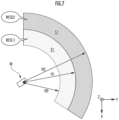
FIG. 7 is a diagram about an output aspect of material attribute information. -
FIG. 8 is a diagram about an aspect of restricting specification of second factors. - A work planning assistance device as one embodiment of the present invention shown in
FIG. 1 is configured with a workplanning assistance server 10 that is capable of mutually communicating with each ofinformation terminals 20 and adatabase server 102 via a network. The workplanning assistance server 10 includes a first planningassistance processing component 11 and a second planningassistance processing component 12. Each of the first planningassistance processing component 11 and the second planningassistance processing component 12 is configured with an arithmetic processing device (a CPU, a processor core, or the like) and a storage device (memories such as a ROM and a RAM). It is designed that the arithmetic processing device reads necessary data and/or a program (software) from the storage device and executes arithmetic processing as described later according to the program for the data. - The
database server 102 constitutes a database that stores and holds data required for work planning by eachinformation terminal 20, such as data indicating a spatial arrangement aspect of a building and a crane in a virtual space. Thedatabase server 102 may be a component of the workplanning assistance server 10. - Each
information terminal 20 shown inFIG. 1 is configured with a smartphone, a tablet terminal, a personal computer, or a beacon. As shown inFIG. 1 , theinformation terminal 20 includes aterminal input interface 21, aterminal output interface 22 and aterminal control device 24. Theterminal input interface 21 is configured with capacitance-type touch buttons constituting a touch panel. Theterminal output interface 22 is configured with an acoustic output device and, furthermore, wireless communication equipment in addition to an image display device constituting the touch panel. A specification signal is transmitted to the outside of theinformation terminal 20 by the wireless communication equipment. Aterminal control device 24 is configured with an arithmetic processing device (a CPU, a processor core, or the like) and a storage device (memories such as a ROM and a RAM). - Functions of a remote operation assistance system and an image pickup function control system by the above components will be described, using a flowchart shown in
FIG. 2 . In the flowchart, each block indicated by "C●" is used for simplification of description, means transmission and/or reception of data, and means such a conditional branch that a process in a branch direction is executed on condition of transmission and/or reception of the data. - In the
information terminal 20, a specified work situation specified through theterminal input interface 21 is recognized by theterminal control device 24 and transmitted to the work planning assistance server 10 (FIG. 2 /STEP 212). The "specified work situation" is a factor for recognizing a specified work situation model, which is one work situation model among a plurality of different work situation models. Each work situation model is defined by a space occupation aspect of a building and an arrangement aspect of candidate carriage points in a virtual space. Each work situation model may be defined by a landform of a point around a building where a crane may be arranged. Each situation model may be defined by a space occupation aspect of vehicles and/or workers coming and going on a site. At this time, a terminal identifier for identifying theinformation terminal 20 is also transmitted to the workplanning assistance server 10. - When the specified work situation is received by the work planning assistance server 10 (
FIG. 2 /C1 1), a space occupation aspect of a building and an arrangement aspect of a plurality of candidate carriage points in a virtual space, which define a specified work situation model according to the specified work situation, are recognized by the first planning assistance processing component 11 (FIG. 2 /STEP 112). - According to the work situation model, for example, in a virtual space in which coordinate values (X, Y, Z) are defined by a three-dimensional Cartesian coordinate system, which is shown in
FIGS. 3 and4 , a space occupation aspect of an almost rectangular parallelepiped building Q is defined by a three-dimensional area {X, Y, Z| X1 ≤ X ≤ X2, f1(X) ≤ Y ≤ f2(Y), gi(X, Y) ≤ Z ≤ g2(X, Y)}. Here, f1 and f2 are functions (for example, linear functions) of a main variable X for defining an aspect of spread of the building Q in a Y direction. g1 and g2 are functions of main variables X and Y for defining an aspect of spread of the building Q in a Z direction. Further, as shown inFIGS. 3 and4 , a plurality of candidate carriage points P in the virtual space are distributedly arranged on top and side parts of the building Q. The candidate carriage points P are defined by coordinate values (x, y, z) of points or a two-dimensional or three-dimensional area that spreads based on the reference points. - Next, a primary work situation image indicating the space occupation aspect of the building Q and an arrangement aspect of the plurality of candidate carriage points P are generated and transmitted to the
information terminal 20 by the first planning assistance processing component 11 (FIG. 2 /STEP 114). - When the primary work situation image is received by the information terminal 20 (
FIG. 2 /C21), the primary work situation image is output to theterminal output interface 22 by the terminal control device 24 (FIG. 2 /STEP 214). Thereby, a perspective image as shown inFIG. 3 and/or a bird's-eye image as shown inFIG. 4 are/is output to theterminal output interface 22 as the primary work situation image indicating the space occupation aspect of the building Q and the arrangement aspect of the plurality of candidate carriage points P in the virtual space. - In the
information terminals 20, an arrangement aspect of first carriage points P1 specified through theterminal input interface 21 is recognized by theterminal control device 24 and transmitted to the work planning assistance server 10 (FIG. 2 /STEP 222). At this time, the terminal identifier for identifying theinformation terminal 20 is also transmitted to the workplanning assistance server 10. For example, among the plurality of candidate carriage points P shown inFIGS. 3 and4 , the carriage points P1 (see white circles) are specified as shown inFIGS. 5 and6 . InFIGS. 5 and6 , second carriage points P2 (see black circles) as unspecified candidate carriage points p are also shown. - When the arrangement aspect of the first carriage points P1 is received by the work planning assistance server 10 (
FIG 2 /C22), an arrangement aspect and specifications of a crane M in the virtual space making it possible to carry materials to the first carriage points P1 (or from the first carriage points P1) by the crane M while avoiding interference of the crane M and the materials with the building Q are recognized by the second planningassistance processing component 12 based on the space occupation aspect of the building Q and the arrangement aspect of the first carriage points P1 (FIG. 2 /STEP 122). - Specifically, from a material carriage start point P0 = (X0, Y0, Z0) to a first carriage point P1 = (X1, Y1, Z1) (or from the first carriage point P1 = (X1, Y1, Z1) to a carriage end point P0 = (X0, Y0, Z0)), a change aspect of a position of a hook M22 and/or the material is decided as a material position trajectory such that the change aspect does not overlap with the building Q, for each of a plurality of types of cranes M with different arrangement aspects and different specifications.
- For example, a position and a direction (a unit vector indicating the direction) of a base M0, which is a component of each crane M, is recognized as the arrangement aspect of the crane M.
- As shown in
FIG. 5 , a shape and a size of each of a boom M11 and a jib M12 constituting the base M0 and an attachment M1, a tolerance ranges of a turning angle φ and an elevation angle θ1 of the boom M11, a tolerance range of an elevation angle Θ2 of the jib M12, a winding limit of the hook M22 suspended from the attachment M1 via a wire M21, and the like are recognized as the specifications of the crane M. The hook M22 may include a main hook suspended from a tip part (for example, a boom point sheave) of the boom M11 and/or an auxiliary hook suspended from a tip part (for example, a jib point sheave) of the jib M12. - The tolerance range (an upper-limit height and a lower-limit height) of a height above sea level of a highest reaching part of the crane M is determined by the tolerance range of each of the elevation angles θ1 and θ2. When a structure of the crane M is different, however, the tolerance range (the upper-limit height and the lower-limit height) of the height above sea level of the highest reaching part of the crane M may be determined by the tolerance range of a quantity of state determining a position and/or a posture of a movable part of the crane M.
- The plurality of types of cranes M may include a mobile crane such as a crawler crane or a wheel crane (a tire traveling crane, a rough terrain crane, a truck crane, or all terrain crane) or may include a stationary crane such as a jib crane, a climbing crane, or a tower crane. In addition to the tower crane, the crane M may be a luffing crane or a fixed jib crane. Each crane M may have a boom, a jib, a mast and/or a strut as attachments. The boom may be a lattice boom in addition to a Telesco (registered trademark) (telescopic) boom.
- Further, such a time series or a change aspect of each of a turning angle φ and the elevation angle θ1 of the boom M11, the elevation angle Θ2 of the jib M12, and a length of the wire M21 that realizes the material position trajectory is decided as a crane posture trajectory according to inverse kinematics. At this time, the crane posture trajectory is tentatively decided such that each of the turning angle φ and the elevation angle θ1 of the boom M11, the elevation angle Θ2 of the jib M12, and the length of the wire M21 is not out of the tolerance range. For example, the tolerance range of each of the elevation angle θ1 of the boom M11 and the elevation angle Θ2 of the boom M12 may be determined based on an upper-limit height position of a top edge (an upper limit of Z-coordinate value) of the crane M and/or the attachment M1.
- Next, a time series or a change aspect of a space occupation aspect of the crane M, and thus the attachment M1 (and the wire M21) which are components of the crane M are decided based on the crane posture trajectory. In order to determine the space occupation aspect of the crane M in the virtual space, for example, the base M0 is defined as a rectangular parallelepiped; each of the boom M11 and the jib M12 is defined as a quadrangular prism or a cylinder; and the wire M21 is defined as a line; and the hook M22 is defined as a point. A shape and a size of the hook M22 may be defined to encompass a size of the materials to be carried.
- Then, if the time series of the space occupation aspect of the crane M does not overlap with the building Q, the arrangement aspect and the specifications of the crane M are recognized as the arrangement aspect and the specifications of the crane M making it possible to carry the materials by the crane M to the first carriage points P1 while avoiding interference of the crane M and the materials with the building Q.
- Next, a secondary work situation image to which the arrangement aspect and specifications of the crane M are added is generated and transmitted to the
information terminal 20 by the second planning assistance processing component 12 (FIG. 2 /STEP 124). - When the secondary work situation image is received by the information terminal 20 (
FIG. 2 /C22), the secondary work situation image is output to theterminal output interface 22 by the terminal control device 24 (FIG. 2 /STEP 224). Thereby, a perspective image shown inFIG. 5 and/or a bird's-eye image shown inFIG. 6 are/is output to theterminal output interface 22 as the secondary work situation image, the secondary work situation image being the primary work situation image indicating the space occupation aspect of the building Q and the arrangement aspect of the plurality of candidate carriage points P in the virtual space, to which the arrangement aspect and the specifications of the crane M are added. As shown in each ofFIGS. 5 and6 , the first carriage points P1 (see the white circles) and the second carriage points P2 (see the black circles) may be identifiably expressed in the secondary work situation image. - According to the work planning assistance server 10 (the work planning assistance device) that performs the functions described above, it is possible to cause a user to grasp the space occupation aspect of the building Q and the arrangement aspect of the plurality of candidate carriage points P determined based on the specified work situation specified through the
terminal input interface 21 of theinformation terminal 20, through the primary work situation image output to theterminal output interface 22 of the information terminal 20 (seeFIG. 2 /STEP 212 -> C11 -> STEP 112 -> STEP 114 -> C21 -> STEP 214, andFIGS. 3 and4 ). Thereby, it is possible to cause the user to take a guess where the crane M is to be arranged, in consideration of the space occupation aspect of the building Q and the arrangement aspect of the plurality of candidate carriage points P. - Furthermore, it is possible to cause the user who has specified the first carriage points P1 through the
terminal input interface 21 to grasp the arrangement aspect and the specifications of the crane M for carrying the materials to the first carriage points P1 (or from the first carriage points P1) by the crane M while avoiding interference of the crane M and the materials with the building Q, through the secondary work situation image output to theterminal output interface 22 of the information terminal 20 (seeFIG. 2 /STEP 222 -> C12 -> STEP 122 -> STEP 124 -> C22 -> STEP 224, andFIGS. 5 and6 ). Thereby, it is possible to make it easy to decide a work plan including selection of the arrangement aspect and the specifications of the crane M according to a specification aspect of the first carriage points P1 more accurately. - Though the work planning assistance device is configured with the work
planning assistance server 10 in the above embodiment, the work planning assistance device may be configured with theinformation terminal 20 as another embodiment. That is, the first planningassistance processing component 11 and/or the second planningassistance processing component 12 may be configured with theterminal control device 24. - The first planning
assistance processing component 11 may cause the primary work situation image, which indicates the time series of each of the space occupation aspect of the building Q and the arrangement aspect of the plurality of candidate carriage points P, to be output to theterminal output interface 22, and recognize a time series of the arrangement aspect of the first carriage points P1 specified through theterminal input interface 21. Further, the second planningassistance processing component 12 may recognize a time series of the material attributes input through theterminal input interface 21, recognize the time series of the arrangement aspect and of the specifications of the crane M for carrying the materials having the material attributes to the first carriage points P1 while avoiding the interference of each of the crane M and the materials with the building Q based on the time series of each of the space occupation aspect of the building Q, the first carriage points P1, and the material attributes, generate the secondary work situation image, the secondary work situation image being the primary work situation image to which the time series of the arrangement aspect and of the specifications of the crane M are added, and cause the secondary work situation image to be output to theterminal output interface 22. - According to the work planning assistance device in the above configuration, it is possible to cause the user who sees the primary work situation image output to the
terminal output interface 22 to grasp the time-series of each of the space occupation aspect of the building Q and the arrangement aspect of the plurality of candidate carriage points P. For example, a primary work situation image (a plurality of intermittent still images or video) showing that the building Q shown in each ofFIGS. 3 and4 is extended (for example, in the Z direction) according to work progress, and new candidate carriage points P appear on an extended part (furthermore, candidate carriage points P that have existed so for disappear) is output to theterminal output interface 22. Thereby, it is possible to cause the user to take a guess which candidate carriage point P at which position is to be specified as a first carriage point P1 at each point of time, in consideration of the space occupation aspect of the building Q and the arrangement aspect of the plurality of candidate carriage points P. - Furthermore, it is possible to cause the user who has specified the arrangement aspect of the first carriage points P1 through the
terminal input interface 21 to grasp a time-series change aspect of the arrangement aspect and/or the specifications of the crane M for carrying the materials to the first carriage points P1 (or from the first carriage points P1) by the crane M while avoiding interference of the crane M and the materials with the building Q, through the secondary work situation image output to theterminal output interface 22. For example, the secondary work situation image (a plurality of intermittent still images or video) in which the arrangement aspect and/or the specifications of the crane M shown in each ofFIGS. 5 and6 are/is transitioning is output to theterminal output interface 22. For example, it is possible to cause the user to grasp such transition that a crane M1 having first specifications is arranged in a first posture at a first point in a first work period, and a crane M2 having second specifications that are the same as or different from the first specifications is arranged in a second posture at a second point different from the first point in a second work period after the first work period. Thereby, it is possible to make it easy to decide a work plan including time-series selection of the arrangement aspect and the specifications of the crane M according to the specification aspect of the first carriage points P1 more accurately. - The second planning
assistance processing component 12 may recognize one time series in which frequency of changing the specifications of the crane M is the lowest among a plurality of time series of combinations of the arrangement aspect and the specifications of the crane M, generate the secondary work situation image, the secondary work situation image being the primary work situation image to which the one time series of the combination of the arrangement aspect and the specifications of the crane M is added, and cause the secondary work situation image to be output to theterminal output interface 22. - According to the work planning assistance device in the above configuration, it is possible to cause the user who has specified the candidate carriage points and the material attributes through the
terminal input interface 21 to grasp an appropriate time series of the arrangement aspect and the specifications of the crane M for carrying the materials to the first carriage points P1 while avoiding interference of the crane M and the materials with the building Q, through the secondary work situation image output to theterminal output interface 22 so that the frequency of changing the specifications of the crane M is the lowest. For example, between one time series defined by the crane M1 having the first specifications in the first work period, the crane M2 having the second specifications in the second work period after the first work period, and a crane M3 having third specifications in a third work period after the second work period, and another time series defined by the crane M2 having the second specifications in the first work period and the second work period after the first work period and the crane M3 having the third specifications in the third work period, the other time series is selected as the time series for which the frequency of changing the specifications of the crane is the lowest. Therefore, it is possible for the user to easily decide how a crane M having which specifications is to be arranged around the building Q in time series (at each of different points of time) so that the frequency of changing the specifications of the crane M is the lowest, regardless of the user's knowledge/experience. - The second planning
assistance processing component 12 may limit the material attributes that can be specified through theterminal input interface 21, according to a selectable arrangement aspect and specifications of the crane M. - For example, as shown in
FIG. 7 , a plurality of circular-arc shaped areas S1 and S2 as movement areas of the hook M22 in a state of the wire M21 extending in a vertical direction or the Z direction, corresponding to a movement range of the attachment M1 based on the crane M or the base M0 thereof, and masses W(S1) and W(S2) (furthermore, shapes and sizes) of materials that can be carried in the inner circular-arc shaped area S1 and the outer circular-arc shaped area S2, respectively, are defined. An inner diameter R0 and an outer diameter R1 of the inner circular-arc shapedarea S 1 are geometrically determined based on the tolerance range of the elevation angle θ1 of the boom M11 and the tolerance range of the elevation angle Θ2 of the jib M12 that are determined according to the material weight W (S 1). An inner diameter R1 and an outer diameter R2 of the outer circular-arc shaped area S2 are geometrically determined based on the tolerance range of the elevation angle θ1 of the boom M11 and the tolerance range of the elevation angle Θ2 of the jib M12 that are determined according to the material weight W (S2) (< W(S1)). - Here, if a material weight W(i) (W(S2) < W(i) ≤ W(S1)) is specified as a material attribute, specification of an arrangement aspect of the crane M at any of the candidate arrangement points B1, B2, ..., Bm at which the inner circular-arc shaped area S1 shown in
FIG. 7 does not overlap with a first carriage point P1(i), among candidate arrangement points of the crane M A1, A2, ..., Am and B1, B2, ..., Bm shown inFIG. 8 , is prohibited. - On the other hand, specification of the arrangement aspect of the crane M at any of the candidate arrangement points A1, A2, ..., Am at which the inner circular-arc shaped area S1 shown in
FIG. 7 overlaps with the first carriage point P1(i) is allowed. Further, if a material weight W(i) (W(i) ≤ W(S2)) is specified as a material attribute, specification of an arrangement aspect of the crane M at any of the candidate arrangement points B1, B2, ..., Bm at which the outer circular-arc shaped area S2 shown inFIG. 7 overlaps with the first carriage points P1(i), among the candidate arrangement points of the crane M A1, A2, ..., Am and B1, B2, ..., Bm shown inFIG. 8 , is allowed. - According to the work planning assistance device in the above configuration, by material attributes that the user can specify through the
terminal input interface 21 being restricted in consideration of selectable crane arrangement aspects and/or specifications, it is avoided that such unreasonable work planning assistance information that the arrangement aspect and/or the specifications of the crane M are exceeded is generated. - The second planning
assistance processing component 12 may recognize the arrangement aspect and the specifications of the crane M for carrying the materials to the first carriage points P1 based on the space occupation aspect of the building Q, the arrangement aspect of the first carriage points P1, the material attributes, and external factors that affect a situation of carriage of the materials by the crane M. - According to the work planning assistance device in the above configuration, it is possible to cause the user who sees the secondary work situation image output to the
terminal output interface 22 to grasp the arrangement aspect and the specifications of the crane M making it possible to carry the materials to the first carriage points P1 by the crane M while avoiding interference of the crane M and the materials with the building Q, in consideration of the external factors that affect the situation of carriage of the materials by the crane M. The "external factors" include the tolerance range of the height above sea level of the highest reaching part of the crane M, a geographical area where the base M0 of the crane M can be arranged, weather conditions (presence/absence of rainfall/snowfall, an amount of rain/snow, presence/absence of freezing, and the like) determining a geographical area, and/or a direction of and speed of wind to the crane M and the materials. Thereby, it is possible to make it easy to decide a work plan including selection of the arrangement aspect and the specifications of the crane M in consideration of effects of the external factors, according to the specification aspect of the first carriage points P1 more accurately. - The second planning
assistance processing component 12 may recognize the time series of at least one of the arrangement aspect and the specifications of the crane M for carrying the materials to the first carriage points P1 based on a time series of the external factors, generate the secondary work situation image, the secondary work situation image being the primary work situation image where at least one of the time series of the arrangement aspect of the crane M and the specifications is expressed in a time series, and cause the secondary work situation image to be output to theterminal output interface 22. - According to the work planning assistance device in the above configuration, it is possible to cause the user who sees the secondary work situation image output to the
terminal output interface 22 to grasp the time series of the arrangement aspect and/or the specifications of the crane M making it possible to carry the materials to the first carriage points P1 by the crane M while avoiding interference of the crane M and the materials with the building Q, in consideration of the external factors that affect the situation of carriage of the materials by the crane M. Thereby, it is possible to make it easy to decide a work plan including time-series selection of the arrangement aspect and/or the specifications of the crane M in consideration of effects of the external factors, according to the specification aspect of the first carriage points P1 more accurately. - In the work planning assistance device in the above configuration, it is preferable that the second planning assistance processing component recognizes the arrangement aspect and the specifications of the crane for carrying the materials to the first carriage points based on the space occupation aspect of the building, the arrangement aspect of the first carriage points, the material attributes, and the external factors that affect a situation of carriage of the materials by the crane.
- According to the work planning assistance device in the above configuration, it is possible to cause the user who sees the secondary work situation image output to the output interface to grasp the arrangement aspect and the specifications of the crane making it possible to carry the materials to the first carriage points by the crane while avoiding interference of the crane and the materials with the building, in consideration of the external factors that affect the situation of carriage of the materials by the crane. Thereby, it is possible to make it easy to decide a work plan including selection of the arrangement aspect and the specifications of the crane in consideration of effects of the external factors, according to the specification aspect of the first carriage points more accurately.
- In the work planning assistance device in the above configuration, it is preferable that the second planning assistance processing component recognizes a time series of at least one of the arrangement aspect and the specifications of the crane for carrying the materials to the first carriage points based on a time series of the external factors, generates the secondary work situation image, the secondary work situation image being the primary work situation image where at least one of the time series of the arrangement aspect of the crane or the specifications is expressed in a time series, and causes the secondary work situation image to be output to the output interface.
- According to the work planning assistance device in the above configuration, it is possible to cause the user who sees the secondary work situation image output to the output interface to grasp the time series of the arrangement aspect and/or the specifications of the crane making it possible to carry the materials to the first carriage points by the crane while avoiding interference of the crane and the materials with the building, in consideration of the external factors that affect the situation of carriage of the materials by the crane. Thereby, it is possible to make it easy to decide a work plan including time-series selection of the arrangement aspect and/or the specifications of the crane in consideration of effects of the external factors according to the specification aspect of the first carriage points more accurately.
- In the work planning assistance device in the above configuration, it is preferable that the first planning assistance processing component causes the primary work situation image, which indicates a time series of each of the space occupation aspect of the building and the arrangement aspect of the plurality of candidate carriage points, to be output to the output interface, and recognizes a time series of the arrangement aspect of the first carriage points specified through the input interface; and the second planning assistance processing component recognizes a time series of the material attributes input through the input interface, recognizes the time series of the arrangement aspect and of the specifications of the crane for carrying the materials having the material attributes to the first carriage points while avoiding the interference of each of the crane and the materials with the building based on the time series of each of the space occupation aspect of the building, the first carriage points, and the material attributes, generates the secondary work situation image, the secondary work situation image being the primary work situation image to which the time series of the arrangement aspect and of the specifications of the crane are added, and causes the secondary work situation image to be output to the output interface.
- According to the work planning assistance device in the above configuration, it is possible to cause the user to grasp the time series of each of the space occupation aspect of the building and the arrangement aspect of the plurality of candidate carriage points, through the primary work situation image output to the output interface. Thereby, it is possible to cause the user to take a guess which candidate carriage point at which position is to be specified as a first carriage point at each point of time, in consideration of the space occupation aspect of the building and the arrangement aspect of the plurality of candidate carriage points.
- Furthermore, it is possible to cause the user who has specified the arrangement aspect of the first carriage points through the input interface to grasp the arrangement aspect and the specifications of the crane for carrying the materials to the first carriage points (or from the first carriage points) by the crane while avoiding interference of the crane and the materials with the building, through the secondary work situation image output to the output interface. Thereby, it is possible to make it easy to decide a work plan including selection of the arrangement aspect and the specifications of the crane, according to the specification aspect of the first carriage points more accurately.
- In the work planning assistance device in the above configuration, it is preferable that the second planning assistance processing component recognizes one time series in which frequency of changing the specifications of the crane is the lowest among a plurality of time series of combinations of the arrangement aspect and the specifications of the crane, generates the secondary work situation image, the secondary work situation image being the primary work situation image to which the one time series of the combination of the arrangement aspect and the specifications of the crane is added, and causes the secondary work situation image to be output to the output interface.
- According to the work planning assistance device in the above configuration, it is possible to cause the user who has specified the candidate carriage points and the material attributes through the input interface to grasp the appropriate time series of the arrangement aspect and the specifications of the crane for carrying the materials to the first carriage points while avoiding interference of the crane and the materials with the building, through the secondary work situation image output to the output interface so that the frequency of changing the specifications of the crane is the lowest. Therefore, it is possible for the user to easily decide how a crane having which specifications is to be arranged around a building in time series (at each of different points of time) so that the frequency of changing the specifications of the crane is the lowest, regardless of the user's knowledge/experience.
- In the work planning assistance device in the above configuration, it is preferable that the second planning assistance processing component limits material attributes that can be specified through the input interface, according to a selectable arrangement aspect and specifications of the crane.
- According to the work planning assistance device in the above configuration, by material attributes that the user can specify through the input interface being restricted in consideration of the selectable crane arrangement aspects and/or specifications, it is avoided that such unreasonable work planning assistance information that the arrangement aspect and/or the specifications of the crane are exceeded is generated.
-
- 10
- work planning assistance server (work planning assistance device)
- 11
- first planning assistance processing component
- 12
- second planning assistance processing component
- 20
- information terminal
- 21
- terminal input interface
- 22
- terminal output interface
- An
- candidate arrangement position
- Bm
- candidate arrangement position
- M
- crane
- M0
- base
- M1
- attachment
- M11
- boom
- M12
- jib
- M21
- wire
- M22
- hook
- P
- candidate carriage point
- P1
- first carriage point
- P2
- second carriage point
Claims (7)
- A work planning assistance device comprising:a first planning assistance processing component configured to cause a primary work situation image indicating a space occupation aspect of a building and an arrangement aspect of a plurality of candidate carriage points to be output to an output interface, recognize candidate carriage points specified through an input interface from among the plurality of candidate carriage points as first carriage points, and cause the first carriage points to be output to the output interface in a form distinguishable from second carriage points, which are other candidate carriage points, in the primary work situation image; anda second planning assistance processing component configured to recognize material attributes specified through the input interface, recognize an arrangement aspect and specifications of a crane for carrying materials having the material attributes to the first carriage points while avoiding interference of each of the crane and the materials with the building, based on the space occupation aspect of the building, an arrangement aspect of the first carriage points, and the material attributes, generate a secondary work situation image, the secondary work situation image being the primary work situation image to which the arrangement aspect and the specifications of the crane are added, and cause the secondary work situation image to be output to the output interface.
- The work planning assistance device according to claim 1, wherein
the second planning assistance processing component recognizes the arrangement aspect and the specifications of the crane for carrying the materials to the first carriage points based on the space occupation aspect of the building, the arrangement aspect of the first carriage points, the material attributes, and external factors that affect a situation of carriage of the materials by the crane. - The work planning assistance device according to claim 2, wherein the second planning assistance processing component recognizes a time series of at least one of the arrangement aspect and the specifications of the crane for carrying the materials to the first carriage points based on a time series of the external factors, generates the secondary work situation image, the secondary work situation image being the primary work situation image where at least one of the time series of the arrangement aspect of the crane and the specifications is expressed in a time series, and causes the secondary work situation image to be output to the output interface.
- The work planning assistance device according to any one of claims 1 to 3,
whereinthe first planning assistance processing component causes the primary work situation image, which indicates a time series of each of the space occupation aspect of the building and the arrangement aspect of the plurality of candidate carriage points, to be output to the output interface, and recognizes a time series of the arrangement aspect of the first carriage points specified through the input interface; andthe second planning assistance processing component recognizes a time series of the material attributes input through the input interface, recognizes the time series of the arrangement aspect and of the specifications of the crane for carrying the materials having the material attributes to the first carriage points while avoiding the interference of each of the crane and the materials with the building based on the time series of each of the space occupation aspect of the building, the first carriage points, and the material attributes, generates the secondary work situation image, the secondary work situation image being the primary work situation image to which the time series of the arrangement aspect and of the specifications of the crane are added, and causes the secondary work situation image to be output to the output interface. - The work planning assistance device according to any one of claims 1 to 4,
wherein
the second planning assistance processing component recognizes one time series in which frequency of changing the specifications of the crane is the lowest among a plurality of time series of combinations of the arrangement aspect and the specifications of the crane, generates the secondary work situation image, the secondary work situation image being the primary work situation image to which the one time series of the combination of the arrangement aspect and the specifications of the crane is added, and causes the secondary work situation image to be output to the output interface. - The work planning assistance device according to any one of claims 1 to 5,
wherein
the second planning assistance processing component limits material attributes that can be specified through the input interface, according to a selectable arrangement aspect and specifications of the crane. - A work planning assistance method comprising a first planning assistance process and a second planning assistance process, whereinthe first planning assistance process comprises steps of:causing a primary work situation image indicating a space occupation aspect of a building and an arrangement aspect of a plurality of candidate carriage points to be output to an output interface;recognizing candidate carriage points specified through an input interface from among the plurality of candidate carriage points as first carriage points; andcausing the first carriage points to be output to the output interface in a form distinguishable from second carriage points, which are other candidate carriage points, in the primary work situation image; andthe second planning assistance process comprises steps ofrecognizing material attributes specified through the input interface;recognizing an arrangement aspect and specifications of a crane for carrying materials having the material attributes to the first carriage points while avoiding interference of each of the crane and the materials with the building, based on the space occupation aspect of the building, an arrangement aspect of the first carriage points, and the material attributes; andgenerating a secondary work situation image, the secondary work situation image being the primary work situation image to which the arrangement aspect and the specifications of the crane are added, and causing the secondary work situation image to be output to the output interface.
Applications Claiming Priority (2)
| Application Number | Priority Date | Filing Date | Title |
|---|---|---|---|
| JP2021086523A JP7593231B2 (en) | 2021-05-21 | 2021-05-21 | Work plan support device and work plan support method |
| PCT/JP2022/008606 WO2022244374A1 (en) | 2021-05-21 | 2022-03-01 | Work planning assistance device and work planning assistance method |
Publications (2)
| Publication Number | Publication Date |
|---|---|
| EP4328843A1 true EP4328843A1 (en) | 2024-02-28 |
| EP4328843A4 EP4328843A4 (en) | 2024-10-16 |
Family
ID=84140890
Family Applications (1)
| Application Number | Title | Priority Date | Filing Date |
|---|---|---|---|
| EP22804295.8A Pending EP4328843A4 (en) | 2021-05-21 | 2022-03-01 | Work planning assistance device and work planning assistance method |
Country Status (4)
| Country | Link |
|---|---|
| US (1) | US12488294B2 (en) |
| EP (1) | EP4328843A4 (en) |
| JP (1) | JP7593231B2 (en) |
| WO (1) | WO2022244374A1 (en) |
Families Citing this family (6)
| Publication number | Priority date | Publication date | Assignee | Title |
|---|---|---|---|---|
| JP2024068684A (en) * | 2022-11-09 | 2024-05-21 | 株式会社三洋物産 | Gaming Machines |
| JP2024068685A (en) * | 2022-11-09 | 2024-05-21 | 株式会社三洋物産 | Gaming Machines |
| JP2024069792A (en) * | 2022-11-10 | 2024-05-22 | 株式会社三洋物産 | Gaming Machines |
| JP2024069793A (en) * | 2022-11-10 | 2024-05-22 | 株式会社三洋物産 | Gaming Machines |
| JP2024069791A (en) * | 2022-11-10 | 2024-05-22 | 株式会社三洋物産 | Gaming Machines |
| JP2024069794A (en) * | 2022-11-10 | 2024-05-22 | 株式会社三洋物産 | Gaming Machines |
Family Cites Families (13)
| Publication number | Priority date | Publication date | Assignee | Title |
|---|---|---|---|---|
| JP4672028B2 (en) * | 2008-01-18 | 2011-04-20 | 日立Geニュークリア・エナジー株式会社 | Work simulation system for plant construction |
| US20160034608A1 (en) * | 2014-07-31 | 2016-02-04 | Trimble Navigation Limited | Updating a building information model |
| KR101595243B1 (en) | 2015-05-04 | 2016-02-19 | 주식회사 두올테크 | Automatic modeling system for facility in field based building information modeling and method thereof |
| DE102016004382A1 (en) * | 2016-04-08 | 2017-10-12 | Liebherr-Werk Biberach Gmbh | Method and device for planning and / or controlling and / or simulating the operation of a construction machine |
| KR101885692B1 (en) * | 2016-11-16 | 2018-08-06 | 현대건설 주식회사 | Heavy equipment management system based on BIM and heavy equipment management method of the same |
| JP3211204U (en) | 2017-04-12 | 2017-06-29 | コリア インスティチュート オブ オーシャン サイエンス アンド テクノロジー | Integrated solution system for ship and offshore plant production simulation |
| US11459214B2 (en) * | 2017-07-04 | 2022-10-04 | Psa International Pte Ltd | Apparatus and method for remote crane control |
| JP6756874B1 (en) | 2019-05-29 | 2020-09-16 | 東急建設株式会社 | Construction plan support system and construction plan support method |
| CN110155883B (en) * | 2019-06-26 | 2020-10-27 | 上海应用技术大学 | Path planning system of bridge crane |
| JP7312637B2 (en) | 2019-07-25 | 2023-07-21 | 大成建設株式会社 | Crane planning support system |
| AU2020324926A1 (en) * | 2019-08-02 | 2022-03-17 | Global Engineers Technology Pte. Ltd. | Method and system for managing a crane and/or construction site |
| JP7184001B2 (en) | 2019-09-11 | 2022-12-06 | コベルコ建機株式会社 | simulation device |
| CA3197017A1 (en) * | 2020-11-27 | 2022-06-02 | Sho TAGO | Construction information integration system, construction information integration method, and construction information integration program |
-
2021
- 2021-05-21 JP JP2021086523A patent/JP7593231B2/en active Active
-
2022
- 2022-03-01 WO PCT/JP2022/008606 patent/WO2022244374A1/en not_active Ceased
- 2022-03-01 US US18/561,968 patent/US12488294B2/en active Active
- 2022-03-01 EP EP22804295.8A patent/EP4328843A4/en active Pending
Also Published As
| Publication number | Publication date |
|---|---|
| WO2022244374A1 (en) | 2022-11-24 |
| US12488294B2 (en) | 2025-12-02 |
| EP4328843A4 (en) | 2024-10-16 |
| JP7593231B2 (en) | 2024-12-03 |
| US20240273425A1 (en) | 2024-08-15 |
| JP2022179207A (en) | 2022-12-02 |
Similar Documents
| Publication | Publication Date | Title |
|---|---|---|
| US12488294B2 (en) | Work planning assistance device and work planning assistance method | |
| CN102663196B (en) | Automobile crane hoisting simulation method on basis of virtual reality | |
| CN103298728B (en) | Crane maneuvering assistance | |
| US9688518B2 (en) | Three dimensional rendering of job site | |
| CN112429647B (en) | Control method and control device of crane | |
| KR102282518B1 (en) | Method for providing information about managing construction equipment and user equpment therefor | |
| CN112249902B (en) | Tower crane control method, device and system for smart construction site and tower crane virtual control cabin | |
| US20210072727A1 (en) | Construction Machine, in Particular a Crane, and Method for the Control Thereof | |
| CN111891922B (en) | Crane operation real-time navigation system and method | |
| EP4006818A1 (en) | Simulator | |
| US9227821B1 (en) | Crane operation simulation | |
| EP4386688A1 (en) | Working plan assistance device and working plan assistance method | |
| JP7156561B2 (en) | Performance information server, work machine display operation application, model information providing method, model information acquisition method, and model information acquisition system | |
| EP4328844A1 (en) | Device for assisting with work planning and method for assisting with work planning | |
| CN114693187B (en) | Operation analysis method and device of tower crane cluster, storage medium and terminal | |
| CN117740021B (en) | Park navigation task execution method and device, electronic equipment and readable storage medium | |
| CN119774460A (en) | A tower crane path planning method, system and storage medium | |
| CN118833733A (en) | Tower crane control method and device | |
| US12600604B2 (en) | Information acquisition system | |
| CN116049542A (en) | Recommended methods, recommended installations and electronics for hoisting planning | |
| CN119580197B (en) | Safety monitoring method and system for hoisted articles of tower crane | |
| JP2021124985A (en) | Performance information server, work-machine display operation application, method for providing environmental load information, method for acquiring environmental load information, and environmental load information acquiring system | |
| JP7528730B2 (en) | How to decide whether or not to attend | |
| CN121742281A (en) | Engineering machinery multi-mode man-machine interaction system based on mobile platform, control method of engineering machinery and related equipment | |
| CN120124170A (en) | A method and system for simulating construction of assembled buildings |
Legal Events
| Date | Code | Title | Description |
|---|---|---|---|
| STAA | Information on the status of an ep patent application or granted ep patent |
Free format text: STATUS: THE INTERNATIONAL PUBLICATION HAS BEEN MADE |
|
| PUAI | Public reference made under article 153(3) epc to a published international application that has entered the european phase |
Free format text: ORIGINAL CODE: 0009012 |
|
| STAA | Information on the status of an ep patent application or granted ep patent |
Free format text: STATUS: REQUEST FOR EXAMINATION WAS MADE |
|
| 17P | Request for examination filed |
Effective date: 20231120 |
|
| AK | Designated contracting states |
Kind code of ref document: A1 Designated state(s): AL AT BE BG CH CY CZ DE DK EE ES FI FR GB GR HR HU IE IS IT LI LT LU LV MC MK MT NL NO PL PT RO RS SE SI SK SM TR |
|
| DAV | Request for validation of the european patent (deleted) | ||
| DAX | Request for extension of the european patent (deleted) | ||
| A4 | Supplementary search report drawn up and despatched |
Effective date: 20240917 |
|
| RIC1 | Information provided on ipc code assigned before grant |
Ipc: G06Q 10/06 20230101ALI20240911BHEP Ipc: G06Q 50/08 20120101AFI20240911BHEP |