EP4328752A1 - Method, device and computer program for collecting logs in an edge-network - Google Patents
Method, device and computer program for collecting logs in an edge-network Download PDFInfo
- Publication number
- EP4328752A1 EP4328752A1 EP22306270.4A EP22306270A EP4328752A1 EP 4328752 A1 EP4328752 A1 EP 4328752A1 EP 22306270 A EP22306270 A EP 22306270A EP 4328752 A1 EP4328752 A1 EP 4328752A1
- Authority
- EP
- European Patent Office
- Prior art keywords
- logs
- master node
- network
- processing
- processing nodes
- Prior art date
- Legal status (The legal status is an assumption and is not a legal conclusion. Google has not performed a legal analysis and makes no representation as to the accuracy of the status listed.)
- Pending
Links
Images

Classifications
-
- H—ELECTRICITY
- H04—ELECTRIC COMMUNICATION TECHNIQUE
- H04L—TRANSMISSION OF DIGITAL INFORMATION, e.g. TELEGRAPHIC COMMUNICATION
- H04L43/00—Arrangements for monitoring or testing data switching networks
- H04L43/04—Processing captured monitoring data, e.g. for logfile generation
-
- G—PHYSICS
- G06—COMPUTING OR CALCULATING; COUNTING
- G06F—ELECTRIC DIGITAL DATA PROCESSING
- G06F11/00—Error detection; Error correction; Monitoring
- G06F11/30—Monitoring
- G06F11/34—Recording or statistical evaluation of computer activity, e.g. of down time, of input/output operation ; Recording or statistical evaluation of user activity, e.g. usability assessment
- G06F11/3466—Performance evaluation by tracing or monitoring
- G06F11/3476—Data logging
-
- G—PHYSICS
- G06—COMPUTING OR CALCULATING; COUNTING
- G06F—ELECTRIC DIGITAL DATA PROCESSING
- G06F11/00—Error detection; Error correction; Monitoring
- G06F11/07—Responding to the occurrence of a fault, e.g. fault tolerance
- G06F11/16—Error detection or correction of the data by redundancy in hardware
- G06F11/20—Error detection or correction of the data by redundancy in hardware using active fault-masking, e.g. by switching out faulty elements or by switching in spare elements
- G06F11/202—Error detection or correction of the data by redundancy in hardware using active fault-masking, e.g. by switching out faulty elements or by switching in spare elements where processing functionality is redundant
- G06F11/2023—Failover techniques
-
- G—PHYSICS
- G06—COMPUTING OR CALCULATING; COUNTING
- G06F—ELECTRIC DIGITAL DATA PROCESSING
- G06F11/00—Error detection; Error correction; Monitoring
- G06F11/07—Responding to the occurrence of a fault, e.g. fault tolerance
- G06F11/16—Error detection or correction of the data by redundancy in hardware
- G06F11/20—Error detection or correction of the data by redundancy in hardware using active fault-masking, e.g. by switching out faulty elements or by switching in spare elements
- G06F11/202—Error detection or correction of the data by redundancy in hardware using active fault-masking, e.g. by switching out faulty elements or by switching in spare elements where processing functionality is redundant
- G06F11/2035—Error detection or correction of the data by redundancy in hardware using active fault-masking, e.g. by switching out faulty elements or by switching in spare elements where processing functionality is redundant without idle spare hardware
-
- G—PHYSICS
- G06—COMPUTING OR CALCULATING; COUNTING
- G06F—ELECTRIC DIGITAL DATA PROCESSING
- G06F11/00—Error detection; Error correction; Monitoring
- G06F11/30—Monitoring
- G06F11/3003—Monitoring arrangements specially adapted to the computing system or computing system component being monitored
- G06F11/3006—Monitoring arrangements specially adapted to the computing system or computing system component being monitored where the computing system is distributed, e.g. networked systems, clusters, multiprocessor systems
-
- G—PHYSICS
- G06—COMPUTING OR CALCULATING; COUNTING
- G06F—ELECTRIC DIGITAL DATA PROCESSING
- G06F11/00—Error detection; Error correction; Monitoring
- G06F11/30—Monitoring
- G06F11/34—Recording or statistical evaluation of computer activity, e.g. of down time, of input/output operation ; Recording or statistical evaluation of user activity, e.g. usability assessment
- G06F11/3466—Performance evaluation by tracing or monitoring
- G06F11/3495—Performance evaluation by tracing or monitoring for systems
-
- H—ELECTRICITY
- H04—ELECTRIC COMMUNICATION TECHNIQUE
- H04L—TRANSMISSION OF DIGITAL INFORMATION, e.g. TELEGRAPHIC COMMUNICATION
- H04L61/00—Network arrangements, protocols or services for addressing or naming
- H04L61/50—Address allocation
- H04L61/5007—Internet protocol [IP] addresses
Definitions
- the present invention relates to a device for collecting logs in an edge-network.
- the invention also relates to a method for collecting logs in an edge-network, and a computer program for carrying out such a method.
- the invention also relates to an edge-network implementing such as device, a method or a computer program.
- the field of the invention is the field of collecting logs in edge networks, or in other words the field of edge-based log collection solutions, especially for cybersecurity purposes.
- log sources also called security devices
- a log collector arranged in the network concerned by the logs: such a log collector is also called an edge-based log collector.
- This log collector collects/receives the logs from log sources of the network, such as firewalls in said network, end-point protection systems (EPP), proxies, etc.
- EPP end-point protection systems
- proxies etc.
- the edge based log collectors compress the logs, encrypt and send them to the cloud system where it is uncompressed, unencrypted to process the logs for detection of attacks in the network, and more generally for cybersecurity concerns.
- such log sources have to be resilient. Plus the log collector has to process high volume of logs without dropping any log. In practice, such log processing systems have main issues.
- the edge-based log collector is reconfigured, for example said log collector is down, or in case of maintenance, or even in case of reconfiguration of the network.
- it is mandatory to reconfigure all the log sources in the network so that said log sources send the logs to said new log collector.
- Such a reconfiguration is cumbersome and time consuming, and prevents continuous log flow towards the cloud system.
- a purpose of the present invention is to overcome at least one of these drawbacks.
- Another purpose of the present invention is to provide a more efficient solution for edge-based log collection, regarding at least one of the drawbacks mentioned above.
- Another purpose of the present invention is to provide a solution for edge-based log collection that allows a less cumbersome and time consuming modification of the log collector implemented in the network.
- Another purpose of the present invention is to provide a more robust solution for edge-based log collection that ensures an improved availability for log flow.
- Another purpose of the present invention is to provide a solution for edge-based log collection capable of efficiently processing high volumes of logs.
- an edge-based log collecting device for collecting logs from several log sources located in a remote network, called edge-network, and sending said logs to a cloud-based system distant from said edge-network, said device being located in said edge-network, said device comprising:
- the present invention thus proposes a log collecting device for collecting logs in an edge-network, located in said edge-network.
- the log collecting device collects logs from the log sources located in said edge-network.
- the device according to the invention comprises several processing nodes for processing the logs collected, or received, from log sources.
- the device according to the invention is capable of efficiently processing high volumes of logs.
- the device and more particularly the processing nodes, is/are configured to elect one of the processing nodes as a master node that receives the logs from the log sources of the edge-network.
- the invention allows a better availability for log flow.
- the invention makes it possible to elect a new master node, when the current master node is down or unavailable, to ensure improved, and mode particularly continuous, log flow from the log sources towards the cloud system.
- the invention proposes a more efficient solution for edge-based log collection.
- At least one, and in particular each, processing node may be configured to compress the logs, and/or encrypt and/or send it to the cloud system.
- processing node may be configured to carry out another function, or processing, as those mentioned above.
- At least two, and in particular all, of the processing nodes may carry out log processing in parallel, simultaneously or one after the other.
- At least one, and in particular each, of the processing nodes may be a physical machine or a virtual machine.
- At least one, and in particular each, of the processing nodes may be a computer, a processor, a chip, a gateway, etc.
- the processing nodes may be configured to switch the master node according to the election algorithm.
- the master node may be changed any time, for example during use of the device.
- the switch of the master node may comprise an election of another processing node as the new master node.
- the current master node may then become a processing node, if said node is still available.
- the switch of the master node may be done upon request, or when the current master node is down or unavailable, or at a given frequency.
- the processing nodes may be configured to elect one of the processing nodes as the master node at the start of the device. In this case, when the device is started a master node is elected before the logs are collected and processed by the device according to the invention.
- the master node may be selected in a different manner, for example by an operator or by a configuration data, or randomly among the processing nodes.
- the processing nodes may be configured to elect one of the remaining available processing nodes as the master node, according to the election algorithm.
- the device according to the invention ensures high availability and continuous log flow from the log sources to the could system.
- the device according to the invention may comprise an odd number of processing nodes equal to, or greater than, three.
- Such an odd, or uneven, number of nodes makes it easier to elect the master node.
- a new master node may be elected among the remaining available nodes, if the number of the remaining available processing nodes is greater than, or equal to, a predefined threshold.
- the threshold thus defines a minimum number of available processing nodes, in order to elect a new master node. If the number of remaining available processing nodes is smaller than the threshold, the device may be stopped and no new master node may be elected.
- the threshold also called quorum, and noted Q, may be established based on a strict majority of the processing nodes in the device according to the invention, at the start of said device.
- the election algorithm may be any type of election algorithm.
- the election algorithm may be a random voting algorithm in which each available processing node votes for another available processing node, except itself.
- a floating public IP address may be associated to the master node so that when a processing node is elected as the master node said public IP address is assigned to said processing node.
- the public IP address remains unchanged for the log sources even when the master node is changed/switched in the device according to the invention. More particularly, the public floating IP address is bound to the master node at the start of the device. When the master node is switched from one of the processing node to another one of the processing node, the floating IP address is assigned and associated to said new processing node that becomes the master node. The log sources continue sending the logs to the same floating public IP address. The logs are received by the device and always routed to the processing node acting as the master node, regardless the processing node that is currently the master node.
- the change of the master node is totally transparent for the log sources. There is no need to change the IP address of the master node at the level of each log source.
- the invention proposes a solution for edge-based log collection that allows a less cumbersome and time consuming modification regarding the log collector implemented in the network.
- the assignment of the floating public IP address from one of the processing node to another processing node may be done with appropriate infrastructure APIs.
- the processing nodes including the master node, may be organized as a cluster in which a private IP address is assigned to each of said processing node, said private IP addresses being used by said processing nodes to communicate with each other, and in particular for processing load balancing.
- the master node receives the logs from the log sources, for example through the public floating IP address.
- the logs may be distributed among the processing nodes of the device, through the private IP addresses associated to said processing nodes, organised as a cluster.
- the invention proposes a solution for edge-based log collection capable of efficiently processing high volumes of logs, since the processing loads may be balanced between several processing nodes, in an efficient manner.
- a load balancing agent such as Apache Nifi technology agent, may be used in the device according to the invention, and more particularly in each processing node, in order to implement load balancing. This ensures that there will be no need to run a separate front end load balancer, thus reducing costs and added complexity associated to such a front-end component itself.
- the method according to the invention may comprise at least one, or a combination of at least two, of the optional features recited above in connection with the device according to the invention.
- the method according to the invention provides the same advantages/benefits, and responds to the same drawbacks, as those mentioned above for the device according to the invention.
- the method according to the invention may further comprise at least one iteration of a step for switching the master node from one of the processing nodes to another one of the processing nodes.
- a new processing node may be elected as the new master node, for example according to the election algorithm.
- the processing node that is the current master node will no longer be the master node and will be used as a processing node, if it is still available.
- the switching step may be carried any time during use of the device.
- the switching step may be carried out upon request.
- the switching step may be carried out at a given frequency.
- the switching step may be carried out when the current master node is unavailable, or down, the new master node being elected among the remaining available processing nodes.
- the method according to the invention allows continuous log collection and continuous log flow, even when the current master node is down.
- a floating public IP address may be associated to the master node and used by the log sources to communicate with said master node.
- the method according to the invention may comprise a step for assigning said floating public IP address to said processing node.
- the processing nodes including the master node, may be organized as a cluster.
- the method may comprise a step for assigning a private IP address to each of said processing node, said private IP addresses being used by said processing nodes to communicate with each other.
- the computer program may be in any programming language such as C, C++, JAVA, Python, etc.
- the computer program may be in machine language.
- the computer program may be stored, in a non-transient memory, such as a USB stick, a flash memory, a hard-disk, a processor, a programmable electronic chop, etc.
- a non-transient memory such as a USB stick, a flash memory, a hard-disk, a processor, a programmable electronic chop, etc.
- the computer program may be stored in a computerized device such as a Smartphone, a tablet, a computer, a server, etc.
- an edge-network comprising several log sources, said network also comprising:
- the invention also concerns an edge-network implementing the device, the method and/or the computer program according to the invention.
- the edge-network may be any kind of edge-network, such as a company network for example.
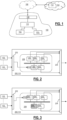
- FIGURE 1 is a diagrammatic representation of a non-limitative example of an edge-network according to the present invention.
- the edge-network 100 also called the network 100 in the following, shown in FIGURE 1 , may be any kind of edge-network.
- the network 100 may be a company network, for example.
- the network 100 may be a local network, or a network distributed among several locations/sites.
- the network 100 comprises several log sources.
- the network comprises M log sources 102 1 -102 m , located in said network 100.
- the log sources may be designated with the references 102i or 102 in the following.
- the network 100 is connected to the cloud 104, for example through a communication network 106, such as for example the Internet.
- the network comprises a gateway 108 that connects the network 100 to the Internet 106.
- the network 100 also comprises a device according to the invention 110, for collecting the logs from the log sources and sending the same to a system 112 located in the cloud 104.
- a device 110 for collecting the logs from the log sources and sending the same to a system 112 located in the cloud 104.
- An example of a device 110 will be described in the following with reference to FIGURE 2 .
- the log sources 102 may be devices such as firewalls, end-point protection systems (EPP), proxies, etc.
- EPP end-point protection systems
- the network 100 comprises other components such as servers, user devices, etc. that are not shown in FIGURE 1 .
- FIGURES 2 and 3 are diagrammatic representations of a non-limitative example of a device according to the present invention for collecting logs.
- the device 200 shown in FIGURES 2 and 3 , may be used in any edge-network, and especially in the edge-network 100 of FIGURE 1 .
- the device 200 may be the log collecting device 110 of FIGURE 1 .
- the device 200 comprises at least one communication interface 202 for receiving the logs from the log sources 102 i .
- the device 200 comprises at least one communication interface 204 for sending the logs to the cloud system 114, through the gateway 108 (not represented in FIGURES 2 and 3 ).
- the device 200 comprises several processing nodes, for example N processing nodes.
- N 5
- the processing nodes, PN, 206 1 -206 5 may be designated with the references 206 i or 206 in the following.
- the PN 206 1 -206 5 are organised as a cluster 208. Moreover, each processing node 206 i is assigned a private IP address. Thus, the processing nodes 206 1 -206 5 may communicate with each other in the cluster 208 so that log processing load may be balanced between the PN 206 1 -206 5 very efficiently and transparently.
- Each PN 206 i may comprise a load balancing agent, such as an Apache Nifi agent, to balance load between the PN 206 1 -206 5 , thus avoiding use of an additional component in the device 200 for load balancing between the nodes 206 1 -206 5 .
- a load balancing agent such as an Apache Nifi agent
- the PNs 206 1 -206 5 are configured to elect one of the PNs 206 1 -206 5 , as the master node. To do so, each PN 206 i comprises an electing agent in order to vote for one of the other PNs, according to an election algorithm.
- the election algorithm may be any type of election algorithm.
- the election algorithm may be a random voting algorithm in which each available processing node votes for another available processing node, except itself.
- the election of the master node may be carried at the start of the device.
- the election of the master node may also be carried out each time the current master node is down or unavailable.
- a master node may be elected among the remaining available nodes, if the number of the remaining available processing nodes is greater than, or equal to, a predefined threshold, also called quorum, Q.
- one of the PN 206 1 -206 5 is chosen as the master node.
- the master node is configured to:
- a floating public IP address referenced FPIP, is associated to the master node so that when a processing node is elected as the master node said floating public IP address is assigned to said processing node.
- This floating public IP address is the one already assigned to the log sources 102 i -102 m , hence there will be no need to communicate it to the log sources 102 1 -102 m when the processing node is elected as the master node.
- the floating public IP address FPIP remains unchanged when the master node is changed/switched in the device 200. In other words, the public floating IP address FPIP is bound to the master node at the start of the device.
- the master node is switched from one of the processing nodes 206 i to another one of the processing nodes 206 i , the floating IP address is assigned and associated to said new processing node that becomes the master node.
- the log sources 102 continue sending the logs to said floating public IP address.
- the logs are received by the device 200 and are always routed to the master node, for example by the interface 202, regardless the change of the processing node acting as the master node.
- the assignment of the floating public IP address FPIP from one of the processing nodes 206 i to another one of the processing nodes 206 1 -206 5 may be done with appropriate network infrastructure APIs.
- the PN 206 4 is chosen as the master node, at the start of the device 200, as shown in FIGURE 2 .
- the floating IP address FPIP is assigned to the processing node 206 4 , for example by inscription in the API used in the device 200, or in the cluster 208, or in the interface 202.
- the remaining processing nodes 206 1 -206 3 and 206 5 elect a new master node among the remaining available processing nodes 206 1 -206 3 and 206s.
- the processing node 206 1 is elected to be the new master node, as shown in FIGURE 3 .
- the FPIP previously assigned to the processing node 206 4
- the PN 206 4 is unavailable and does not participate in the election of the new master node, nor in the log processing.
- the log sources 102 continue sending logs to the floating public IP address FPIP, now assigned to the PN 206 1 acting as the master node.
- At least one, and in particular each, of the processing nodes 206 i may be a physical machine or a virtual machine.
- at least one, and in particular each, of the processing nodes 206 i may be a computer, a processor, a chip, gateway, etc.
- At least one, in particular each, processing node 202 i is configured to compress the logs, encrypt the logs and send the compressed encrypted logs to the cloud system 114, through the interface 204.
- the processing nodes 206 i may process logs simultaneously or in turn.
- processing node 206 i may be configured to carry out another function, or processing, as those mentioned above.
- FIGURE 4 is a diagrammatic representation of a non-limitative example of a method according to the present invention.
- the method 400 may be used in any kind of edge-network for collecting logs, and more particularly in the edge-network 100 of FIGURE 1 .
- the method 400 may be carried out with a device according to the invention, and more particularly with the device 200 of FIGURES 2-3 .
- the method 400 may comprise an optional step 402 for defining a private IP address for each of the processing node of the device, i.e. for the PN 206 1 -206 5 .
- the private IP addresses are used by the PNs to communicate with each other, and more particularly by the master node to communicate with the other PNs, especially for processing load balancing.
- This step 402 is optional because the private IP addresses may be defined in the processing nodes beforehand.
- the method comprises a step 404 for defining a floating public IP address FPIP that will be attached to the master node.
- This floating public IP address FPIP is communicated to each log source so that each log source sends the log(s) to said address.
- the method 400 further may comprise an optional step 406 for loading in at least one, and especially in each, processing node a load balancing agent, such as the Apache Nifi agent.
- This step 406 is also optional because the load balancing agent(s) may be loaded in the processing nodes beforehand.
- the method 400 may further comprise an optional step 408 for loading in at least one, and especially in each, processing node an electing, or a voting, agent, for electing a master node among the processing nodes of the device.
- This step 408 is also optional because the electing agent(s) may be loaded in the processing nodes beforehand.
- the method 400 further comprises a step 410 for electing a master node.
- the election of the master node may be done as described above, for example according to an election algorithm.
- the floating public IP address is assigned to the processing node elected as the master node, for example by assigning said floating public IP address to said node in a device's API.
- the method 400 comprises a processing phase 420.
- the processing phase comprises a step 422 during which the master node receives logs from log sources.
- the received logs are distributed, by the master node, among all the processing nodes of the device, at a step 424.
- Each processing node processes the logs it received from the master node at a step 426 of the processing phase 412.
- the master node may also process part of the logs so that the logs are balanced among all of the available processing nodes, including the master node.
- the logs may be compressed, and/or encrypted.
- each processing node sends the logs it processed to the cloud system.
- the processing phase 412 is repeated as long as the current master node is available, and as long as logs are received.
- the system comprises a step 430 electing a new master node among the available processing nodes, in a similar way as the step 410.
- step 412 the floating public IP address is assigned to the processing node elected as the new master node.
- the method then continues to the processing phase 420 with the new master node, and so on.
- steps 402-410 in a different order than the one shown in FIGURE 4 .
- steps 422-428 are shown as discrete steps.
- each of the steps 422-428 may be a continuous step carried out continuously throughout the processing step.
- step 430 may be carried out on demand, or at a given frequency, instead of or in addition to, what has been described above.
- the invention is not limited to the examples detailed above.
- the number of the log sources, the number of the processing nodes, their arrangement, etc. are not limited to the examples described above.
Landscapes
- Engineering & Computer Science (AREA)
- Theoretical Computer Science (AREA)
- General Engineering & Computer Science (AREA)
- Physics & Mathematics (AREA)
- Quality & Reliability (AREA)
- General Physics & Mathematics (AREA)
- Computer Networks & Wireless Communication (AREA)
- Signal Processing (AREA)
- Computer Hardware Design (AREA)
- Computing Systems (AREA)
- Data Mining & Analysis (AREA)
- Mathematical Physics (AREA)
- Hardware Redundancy (AREA)
- Data Exchanges In Wide-Area Networks (AREA)
Abstract
said device (200) is configured to elect, according to a predetermined election algorithm, one of said processing nodes (2061-2065) as a master node configured for:
- receiving the logs from all log sources (1021-102m) of the local network, and
-sharing said logs with the other processing nodes (2061-2065).
Description
- The present invention relates to a device for collecting logs in an edge-network. The invention also relates to a method for collecting logs in an edge-network, and a computer program for carrying out such a method. The invention also relates to an edge-network implementing such as device, a method or a computer program.
- The field of the invention is the field of collecting logs in edge networks, or in other words the field of edge-based log collection solutions, especially for cybersecurity purposes.
- In the cybersecurity landscape, there is a need to collect and process logs from log sources, also called security devices, to determine security issues in the networks, such as company networks. In a SaaS model, the collection of logs from different log sources is done by a log collector arranged in the network concerned by the logs: such a log collector is also called an edge-based log collector. This log collector collects/receives the logs from log sources of the network, such as firewalls in said network, end-point protection systems (EPP), proxies, etc. The edge based log collectors compress the logs, encrypt and send them to the cloud system where it is uncompressed, unencrypted to process the logs for detection of attacks in the network, and more generally for cybersecurity concerns. Hence, such log sources have to be resilient. Plus the log collector has to process high volume of logs without dropping any log. In practice, such log processing systems have main issues.
- First, when the edge-based log collector implemented in the network is down, no log flow can be achieved. Thus, with the current log collectors it is not possible to achieve an uninterrupted log flow from the log sources to the cloud system.
- Second, it may happen that the edge-based log collector is reconfigured, for example said log collector is down, or in case of maintenance, or even in case of reconfiguration of the network. With the current solutions, it is mandatory to reconfigure all the log sources in the network so that said log sources send the logs to said new log collector. Such a reconfiguration is cumbersome and time consuming, and prevents continuous log flow towards the cloud system.
- Moreover, current log collectors are not able to process high volumes of logs. The current techniques use load balancers, or routing servers, placed upstream the log collector. This technique, in addition to not being an efficient solution for high volume log processing, creates a bottleneck for log flow.
- A purpose of the present invention is to overcome at least one of these drawbacks.
- Another purpose of the present invention is to provide a more efficient solution for edge-based log collection, regarding at least one of the drawbacks mentioned above.
- Another purpose of the present invention is to provide a solution for edge-based log collection that allows a less cumbersome and time consuming modification of the log collector implemented in the network.
- Another purpose of the present invention is to provide a more robust solution for edge-based log collection that ensures an improved availability for log flow.
- Another purpose of the present invention is to provide a solution for edge-based log collection capable of efficiently processing high volumes of logs.
- The invention makes it possible to achieve at least one of these aims by an edge-based log collecting device for collecting logs from several log sources located in a remote network, called edge-network, and sending said logs to a cloud-based system distant from said edge-network, said device being located in said edge-network, said device comprising:
- at least one interface for receiving logs from said log sources,
- at least one interface for sending logs to said distant system, and
- several processing nodes for processing the received logs and sending them to said system;
- receiving the logs from all log sources of the local network, and
- sharing said logs with the other processing nodes.
- The present invention thus proposes a log collecting device for collecting logs in an edge-network, located in said edge-network. The log collecting device collects logs from the log sources located in said edge-network. Moreover, the device according to the invention comprises several processing nodes for processing the logs collected, or received, from log sources. Thus the device according to the invention is capable of efficiently processing high volumes of logs.
- Moreover, the device, and more particularly the processing nodes, is/are configured to elect one of the processing nodes as a master node that receives the logs from the log sources of the edge-network. Thus it is possible to elect any one of the processing nodes as the master node, at the start of the device, and any time during use of the device according to the invention. Thus, the invention according to the invention allows a better availability for log flow. Indeed, the invention makes it possible to elect a new master node, when the current master node is down or unavailable, to ensure improved, and mode particularly continuous, log flow from the log sources towards the cloud system.
- Furthermore, since the master node may be changed easily and the device according to the invention comprises several processing nodes, each of which may be elected as the master node, the invention proposes a more efficient solution for edge-based log collection.
- According to some embodiments, at least one, and in particular each, processing node may be configured to compress the logs, and/or encrypt and/or send it to the cloud system.
- Of course, at least one, and in particular each, processing node may be configured to carry out another function, or processing, as those mentioned above.
- According to some embodiments, at least two, and in particular all, of the processing nodes may carry out log processing in parallel, simultaneously or one after the other.
- According to some embodiments, at least one, and in particular each, of the processing nodes may be a physical machine or a virtual machine.
- For example, at least one, and in particular each, of the processing nodes may be a computer, a processor, a chip, a gateway, etc.
- In some embodiments, the processing nodes may be configured to switch the master node according to the election algorithm.
- Thus, the master node may be changed any time, for example during use of the device.
- The switch of the master node may comprise an election of another processing node as the new master node. The current master node may then become a processing node, if said node is still available.
- The switch of the master node may be done upon request, or when the current master node is down or unavailable, or at a given frequency.
- In some embodiments, the processing nodes may be configured to elect one of the processing nodes as the master node at the start of the device. In this case, when the device is started a master node is elected before the logs are collected and processed by the device according to the invention.
- Alternatively, at the start of the device, the master node may be selected in a different manner, for example by an operator or by a configuration data, or randomly among the processing nodes.
- According to some embodiments, when the current master node is unavailable or is down, the processing nodes may be configured to elect one of the remaining available processing nodes as the master node, according to the election algorithm.
- Thus, the device according to the invention ensures high availability and continuous log flow from the log sources to the could system.
- In some embodiments, the device according to the invention may comprise an odd number of processing nodes equal to, or greater than, three.
- Such an odd, or uneven, number of nodes makes it easier to elect the master node.
- According to some embodiments, a new master node may be elected among the remaining available nodes, if the number of the remaining available processing nodes is greater than, or equal to, a predefined threshold.
- The threshold thus defines a minimum number of available processing nodes, in order to elect a new master node. If the number of remaining available processing nodes is smaller than the threshold, the device may be stopped and no new master node may be elected.
- The threshold, also called quorum, and noted Q, may be established based on a strict majority of the processing nodes in the device according to the invention, at the start of said device. When the number of the processing nodes of the device is N, for example an odd number greater or equal to 3, the quorum Q may be Q= N/2+1. For example, if N=3, the quorum is equal to 2 and if N=5, the quorum is equal to 3.
- According to some embodiments, the election algorithm may be any type of election algorithm.
- For example, the election algorithm may be a random voting algorithm in which each available processing node votes for another available processing node, except itself.
- According to particularly advantageous embodiments, a floating public IP address may be associated to the master node so that when a processing node is elected as the master node said public IP address is assigned to said processing node.
- Thus, the public IP address remains unchanged for the log sources even when the master node is changed/switched in the device according to the invention. More particularly, the public floating IP address is bound to the master node at the start of the device. When the master node is switched from one of the processing node to another one of the processing node, the floating IP address is assigned and associated to said new processing node that becomes the master node. The log sources continue sending the logs to the same floating public IP address. The logs are received by the device and always routed to the processing node acting as the master node, regardless the processing node that is currently the master node.
- In other words, the change of the master node is totally transparent for the log sources. There is no need to change the IP address of the master node at the level of each log source. Thus the invention proposes a solution for edge-based log collection that allows a less cumbersome and time consuming modification regarding the log collector implemented in the network.
- The assignment of the floating public IP address from one of the processing node to another processing node may be done with appropriate infrastructure APIs.
- According to particularly advantageous embodiments of the invention, the processing nodes, including the master node, may be organized as a cluster in which a private IP address is assigned to each of said processing node, said private IP addresses being used by said processing nodes to communicate with each other, and in particular for processing load balancing.
- Thus, the master node receives the logs from the log sources, for example through the public floating IP address. When the logs are received, they may be distributed among the processing nodes of the device, through the private IP addresses associated to said processing nodes, organised as a cluster. Thus, the invention proposes a solution for edge-based log collection capable of efficiently processing high volumes of logs, since the processing loads may be balanced between several processing nodes, in an efficient manner.
- For example, a load balancing agent, such as Apache Nifi technology agent, may be used in the device according to the invention, and more particularly in each processing node, in order to implement load balancing. This ensures that there will be no need to run a separate front end load balancer, thus reducing costs and added complexity associated to such a front-end component itself.
- According to another aspect of the same invention, it is proposed a method for collecting logs from several log sources located in a remote network, called edge-network, and sending said logs to a cloud-based system distant from said edge-network, with a log collecting device located in said edge-network, said device comprising:
- at least one interface for receiving logs from said log sources,
- at least one interface for sending logs to said distant system, and
- several processing nodes for processing the received logs and sending them to said system;
- receiving the logs from said log sources, and
- sharing said logs with the other processing nodes.
- In addition to the features recited here, the method according to the invention may comprise at least one, or a combination of at least two, of the optional features recited above in connection with the device according to the invention. The method according to the invention provides the same advantages/benefits, and responds to the same drawbacks, as those mentioned above for the device according to the invention.
- In some embodiments, the method according to the invention may further comprise at least one iteration of a step for switching the master node from one of the processing nodes to another one of the processing nodes.
- In this case, a new processing node may be elected as the new master node, for example according to the election algorithm. The processing node that is the current master node will no longer be the master node and will be used as a processing node, if it is still available.
- The switching step may be carried any time during use of the device.
- The switching step may be carried out upon request.
- The switching step may be carried out at a given frequency.
- In some embodiments, the switching step may be carried out when the current master node is unavailable, or down, the new master node being elected among the remaining available processing nodes.
- Thus, the method according to the invention allows continuous log collection and continuous log flow, even when the current master node is down.
- In some embodiments, a floating public IP address may be associated to the master node and used by the log sources to communicate with said master node. In these embodiments, when a processing node is elected as master node the method according to the invention may comprise a step for assigning said floating public IP address to said processing node.
- Thus, there is no need to change the address to which the log sources send the logs when the master node is changed, as explained above in connection with the device according to the invention.
- According to some embodiments, the processing nodes, including the master node, may be organized as a cluster.
- In this case, the method may comprise a step for assigning a private IP address to each of said processing node, said private IP addresses being used by said processing nodes to communicate with each other.
- According to another aspect of the same invention, it is proposed a computer program comprising instructions, which when executed by a computer, cause the computer to carry out the steps of the method according to the invention.
- The computer program may be in any programming language such as C, C++, JAVA, Python, etc.
- The computer program may be in machine language.
- The computer program may be stored, in a non-transient memory, such as a USB stick, a flash memory, a hard-disk, a processor, a programmable electronic chop, etc.
- The computer program may be stored in a computerized device such as a Smartphone, a tablet, a computer, a server, etc.
- According to another aspect of the same invention, it is proposed an edge-network comprising several log sources, said network also comprising:
- a device according to the invention, or
- means configured for carrying out the steps of the method according to the invention;
- In other terms, the invention also concerns an edge-network implementing the device, the method and/or the computer program according to the invention.
- The edge-network according may be any kind of edge-network, such as a company network for example.
- Other advantages and characteristics will become apparent on examination of the detailed description of an embodiment which is in no way limitative, and the attached figures, where:
-
FIGURE 1 is a diagrammatic representation of a non-limitative example of an edge-network according to the invention; -
FIGURES 2 and 3 are diagrammatic representations of a non-limitative example of a device according to the present invention; and -
FIGURE 4 is a diagrammatic representation of a non-limitative example of a method according to the present invention. - It is well understood that the embodiments that will be described below are in no way limitative. In particular, it is possible to imagine variants of the invention comprising only a selection of the characteristics described hereinafter, in isolation from the other characteristics described, if this selection of characteristics is sufficient to confer a technical advantage or to differentiate the invention with respect to the state of the prior art. Such a selection comprises at least one, preferably functional, characteristic without structural details, or with only a part of the structural details if this part alone is sufficient to confer a technical advantage or to differentiate the invention with respect to the prior art.
- In the FIGURES, elements common to several figures retain the same reference.
-
FIGURE 1 is a diagrammatic representation of a non-limitative example of an edge-network according to the present invention. - The edge-
network 100, also called thenetwork 100 in the following, shown inFIGURE 1 , may be any kind of edge-network. Thenetwork 100 may be a company network, for example. - The
network 100 may be a local network, or a network distributed among several locations/sites. - The
network 100 comprises several log sources. In the example shown inFIGURE 1 , the network comprises M log sources 1021-102m, located in saidnetwork 100. The log sources may be designated with thereferences 102i or 102 in the following. - The
network 100 is connected to thecloud 104, for example through acommunication network 106, such as for example the Internet. In this regard, the network comprises agateway 108 that connects thenetwork 100 to theInternet 106. - The
network 100 also comprises a device according to theinvention 110, for collecting the logs from the log sources and sending the same to asystem 112 located in thecloud 104. An example of adevice 110 will be described in the following with reference toFIGURE 2 . - The log sources 102 may be devices such as firewalls, end-point protection systems (EPP), proxies, etc.
- Of course, the
network 100 comprises other components such as servers, user devices, etc. that are not shown inFIGURE 1 . -
FIGURES 2 and 3 are diagrammatic representations of a non-limitative example of a device according to the present invention for collecting logs. - The
device 200, shown inFIGURES 2 and 3 , may be used in any edge-network, and especially in the edge-network 100 ofFIGURE 1 . - The
device 200 may be thelog collecting device 110 ofFIGURE 1 . - The
device 200 comprises at least onecommunication interface 202 for receiving the logs from the log sources 102i. - The
device 200 comprises at least onecommunication interface 204 for sending the logs to the cloud system 114, through the gateway 108 (not represented inFIGURES 2 and 3 ). - The
device 200 comprises several processing nodes, for example N processing nodes. In the example shown inFIGURES 2 and 3 , N=5. The processing nodes, PN, 2061-2065 may be designated with thereferences - The PN 2061-2065 are organised as a
cluster 208. Moreover, eachprocessing node 206i is assigned a private IP address. Thus, the processing nodes 2061-2065 may communicate with each other in thecluster 208 so that log processing load may be balanced between the PN 2061-2065 very efficiently and transparently. - Each
PN 206i may comprise a load balancing agent, such as an Apache Nifi agent, to balance load between the PN 2061-2065, thus avoiding use of an additional component in thedevice 200 for load balancing between the nodes 2061-2065. - According to a very advantageous feature, the PNs 2061-2065 are configured to elect one of the PNs 2061-2065, as the master node. To do so, each
PN 206i comprises an electing agent in order to vote for one of the other PNs, according to an election algorithm. - The election algorithm may be any type of election algorithm. For example, the election algorithm may be a random voting algorithm in which each available processing node votes for another available processing node, except itself.
- The election of the master node may be carried at the start of the device.
- The election of the master node may also be carried out each time the current master node is down or unavailable.
- According to some embodiments, a master node may be elected among the remaining available nodes, if the number of the remaining available processing nodes is greater than, or equal to, a predefined threshold, also called quorum, Q.
- In a non-limitative example, the quorum may be established based on a strict majority of the processing nodes in the
device 200. In this case, Q=3 in the example shown inFIGURES 2-3 . - Thus, one of the PN 2061-2065 is chosen as the master node.
- The master node is configured to:
- receive the logs from all log sources 1021-102m, and
- share said logs with the other
processing nodes PN 206i, in order to balance load for example by using the Apache Nifi agent and the private IP addresses of thePNs 206i. - According to an advantageous feature, a floating public IP address, referenced FPIP, is associated to the master node so that when a processing node is elected as the master node said floating public IP address is assigned to said processing node. This floating public IP address is the one already assigned to the log sources 102i-102m, hence there will be no need to communicate it to the log sources 1021-102m when the processing node is elected as the master node.
- The floating public IP address FPIP remains unchanged when the master node is changed/switched in the
device 200. In other words, the public floating IP address FPIP is bound to the master node at the start of the device. When the master node is switched from one of theprocessing nodes 206i to another one of theprocessing nodes 206i, the floating IP address is assigned and associated to said new processing node that becomes the master node. The log sources 102 continue sending the logs to said floating public IP address. The logs are received by thedevice 200 and are always routed to the master node, for example by theinterface 202, regardless the change of the processing node acting as the master node. - The assignment of the floating public IP address FPIP from one of the
processing nodes 206i to another one of the processing nodes 2061-2065 may be done with appropriate network infrastructure APIs. - For example, in the example shown in FUGURES 2-3, the
PN 2064 is chosen as the master node, at the start of thedevice 200, as shown inFIGURE 2 . The floating IP address FPIP is assigned to theprocessing node 2064, for example by inscription in the API used in thedevice 200, or in thecluster 208, or in theinterface 202. - When the
PN 2064 acting as the master node is down, or unavailable, the remaining processing nodes 2061-2063 and 2065 elect a new master node among the remaining available processing nodes 2061-2063 and 206s. For example, theprocessing node 2061 is elected to be the new master node, as shown inFIGURE 3 . Using the network level API calls that the network supports, the FPIP, previously assigned to theprocessing node 2064, is assigned to theprocessing node 2061 elected as the new master node. ThePN 2064 is unavailable and does not participate in the election of the new master node, nor in the log processing. The log sources 102 continue sending logs to the floating public IP address FPIP, now assigned to thePN 2061 acting as the master node. - At least one, and in particular each, of the
processing nodes 206i may be a physical machine or a virtual machine. For example, at least one, and in particular each, of theprocessing nodes 206i may be a computer, a processor, a chip, gateway, etc. - At least one, in particular each, processing
node 202i is configured to compress the logs, encrypt the logs and send the compressed encrypted logs to the cloud system 114, through theinterface 204. - The
processing nodes 206i may process logs simultaneously or in turn. - Of course, at least one, and in particular each, processing
node 206i may be configured to carry out another function, or processing, as those mentioned above. -
FIGURE 4 is a diagrammatic representation of a non-limitative example of a method according to the present invention. - The
method 400, shown inFIGURE 4 , may be used in any kind of edge-network for collecting logs, and more particularly in the edge-network 100 ofFIGURE 1 . - The
method 400 may be carried out with a device according to the invention, and more particularly with thedevice 200 ofFIGURES 2-3 . - The
method 400 may comprise anoptional step 402 for defining a private IP address for each of the processing node of the device, i.e. for the PN 2061-2065. The private IP addresses are used by the PNs to communicate with each other, and more particularly by the master node to communicate with the other PNs, especially for processing load balancing. Thisstep 402 is optional because the private IP addresses may be defined in the processing nodes beforehand. - The method comprises a
step 404 for defining a floating public IP address FPIP that will be attached to the master node. This floating public IP address FPIP is communicated to each log source so that each log source sends the log(s) to said address. - The
method 400 further may comprise anoptional step 406 for loading in at least one, and especially in each, processing node a load balancing agent, such as the Apache Nifi agent. Thisstep 406 is also optional because the load balancing agent(s) may be loaded in the processing nodes beforehand. - The
method 400 may further comprise anoptional step 408 for loading in at least one, and especially in each, processing node an electing, or a voting, agent, for electing a master node among the processing nodes of the device. Thisstep 408 is also optional because the electing agent(s) may be loaded in the processing nodes beforehand. - The
method 400 further comprises astep 410 for electing a master node. The election of the master node may be done as described above, for example according to an election algorithm. - At a
step 412, the floating public IP address is assigned to the processing node elected as the master node, for example by assigning said floating public IP address to said node in a device's API. - After the master node is elected and the floating public IP address attached to the master node is assigned to the processing node acting as master node, the
method 400 comprises aprocessing phase 420. - The processing phase comprises a
step 422 during which the master node receives logs from log sources. - The received logs are distributed, by the master node, among all the processing nodes of the device, at a
step 424. - Each processing node processes the logs it received from the master node at a
step 426 of theprocessing phase 412. The master node may also process part of the logs so that the logs are balanced among all of the available processing nodes, including the master node. For example, the logs may be compressed, and/or encrypted. - At a
step 428, each processing node sends the logs it processed to the cloud system. - The
processing phase 412 is repeated as long as the current master node is available, and as long as logs are received. - If the current master node is down or unavailable, the system comprises a
step 430 electing a new master node among the available processing nodes, in a similar way as thestep 410. - Once the new master node is elected, the process resumes to step 412 where the floating public IP address is assigned to the processing node elected as the new master node.
- The method then continues to the
processing phase 420 with the new master node, and so on. - Of course the method according to the invention is not limited to the example described above in connection with the
FIGURE 4 . For example, steps 402-410 in a different order than the one shown inFIGURE 4 . Moreover, steps 422-428 are shown as discrete steps. In other embodiments, each of the steps 422-428 may be a continuous step carried out continuously throughout the processing step. In some embodiments,step 430 may be carried out on demand, or at a given frequency, instead of or in addition to, what has been described above. - Of course, the invention is not limited to the examples detailed above. For example, the number of the log sources, the number of the processing nodes, their arrangement, etc. are not limited to the examples described above.
Claims (13)
- An edge-based log collecting device (110;200) for collecting logs from several log sources (1021-102m) located in a remote network, called edge-network, (100) and sending said logs to a cloud-based system (112) distant from said edge-network (100), said device (110;200) being located in said edge-network (100), said device (110;200) comprising:- at least one interface (202) for receiving logs from said log sources (1021-102m),- at least one interface (204) for sending logs to said distant system (112), and- several processing nodes (2061-2065) for processing the received logs and sending them to said system (112);said device (110;200) is configured to elect, according to a predetermined election algorithm, one of said processing nodes (2061-2065) as a master node configured for:- receiving the logs from all log sources (1021-102m) of the local network, and- sharing said logs with the other processing nodes (2061-2065).
- The device (110;200) according to the preceding claim, characterized in that the processing nodes (2061-2065) are configured to switch the master node according to the election algorithm.
- The device (110;200) according to any one of the preceding claims, characterized in that, when the current master node (2064) is unavailable, the processing nodes (2061-2063,2065) are configured to elect one (2061) of the remaining available processing nodes (2061-2063,2065) as the master node, according to the election algorithm.
- The device (110;200) according to any one of the preceding claims, characterized in that said device (110;200) comprises an odd number of processing nodes (2061-2065) equal to, or greater than, three.
- The device (110;200) according to any one of the preceding claim, characterized in that a floating public IP address is associated to the master node (2064;2061) so that when a processing node is elected as the master node said public IP address is assigned to said processing node.
- The device (110;200) according to any one of the preceding claims, characterized in that the processing nodes (2061-2065), including the master node, are organized as a cluster (208) in which a private IP address is assigned to each of said processing node (2061-2065), said private IP addresses being used by said processing nodes (2061-2065) to communicate with each other.
- A method (400) for collecting logs from several log sources (1021-102m) located in a remote network, called edge-network, (100) and sending said logs to a cloud-based system (112) distant from said edge-network (100), with a log collecting device (100;200) located in said edge-network (100), said device (110;200) comprising:- at least one interface (202) for receiving logs from said log sources(1021-102m),- at least one interface (204) for sending logs to said distant system (112), and- several processing nodes (2061-2065) for processing the received logs and sending them to said system (112);said method (400) comprising a step (410;430) of electing, according to an election algorithm, one of said processing nodes (2061-2065) as a master node configured for:- receiving the logs from said log sources (1021-102m), and- sharing said logs with the other processing nodes (2061-2065).
- The method (400) according to the preceding claim, characterized in that said method (400) further comprises at least one iteration of a step (430) for switching the master node from one of the processing nodes (2061-2065) to another one of the processing nodes (2061-2065).
- The method (400) according to any one of the preceding claims, characterized in that the switching step (430) is carried out when the current master node (2064) is unavailable, the new master node (2061) being elected among the remaining available processing nodes (2061-2063,2065).
- The method (400) according to any of the preceding claim, characterized in that it comprises a step (404) for assigning a floating public IP address to the master node and used by the log sources (1021-102m) to communicate with said master node, and in that when a processing node is elected as master node said method comprising a step (412) for assigning said floating public IP address to said processing node.
- The method (400) according to any one of the claims 7 to 10, characterized in that the processing nodes (2061-2065), including the master node, are organized as a cluster (208), said method (400) comprising a step (402) for assigning a private IP address to each of said processing node (2061-2065), said private IP addresses being used by said processing nodes (2061-2065) to communicate with each other.
- Computer program comprising instructions which, when executed by a computer, cause the computer to carry out the steps of the method (400) according to any one of the claims 7 to 11.
- Edge-network (100) comprising several log sources (1021-102m), said network (100) also comprising:- a device (110;200) according to anyone of the claims 1 to 6; or- means configured for carrying out the steps of the method (400) according to any one of the claims 7 to 11;for collecting logs from said log sources (1021-102m).
Priority Applications (2)
| Application Number | Priority Date | Filing Date | Title |
|---|---|---|---|
| EP22306270.4A EP4328752A1 (en) | 2022-08-27 | 2022-08-27 | Method, device and computer program for collecting logs in an edge-network |
| US18/356,447 US12199845B2 (en) | 2022-08-27 | 2023-07-21 | Method, device and computer program for collecting logs in an edge-network |
Applications Claiming Priority (1)
| Application Number | Priority Date | Filing Date | Title |
|---|---|---|---|
| EP22306270.4A EP4328752A1 (en) | 2022-08-27 | 2022-08-27 | Method, device and computer program for collecting logs in an edge-network |
Publications (1)
| Publication Number | Publication Date |
|---|---|
| EP4328752A1 true EP4328752A1 (en) | 2024-02-28 |
Family
ID=83995043
Family Applications (1)
| Application Number | Title | Priority Date | Filing Date |
|---|---|---|---|
| EP22306270.4A Pending EP4328752A1 (en) | 2022-08-27 | 2022-08-27 | Method, device and computer program for collecting logs in an edge-network |
Country Status (2)
| Country | Link |
|---|---|
| US (1) | US12199845B2 (en) |
| EP (1) | EP4328752A1 (en) |
Citations (1)
| Publication number | Priority date | Publication date | Assignee | Title |
|---|---|---|---|---|
| EP3140734A1 (en) * | 2014-05-09 | 2017-03-15 | Nutanix, Inc. | Mechanism for providing external access to a secured networked virtualization environment |
Family Cites Families (4)
| Publication number | Priority date | Publication date | Assignee | Title |
|---|---|---|---|---|
| US10868865B2 (en) * | 2017-11-20 | 2020-12-15 | Moshe Shadmon | System and apparatus to manage data using a peer-to-peer network and the blockchain |
| US11048538B2 (en) * | 2018-02-26 | 2021-06-29 | Amazon Technologies, Inc. | Autonomous cell-based control plane for scalable virtualized computing |
| US11803461B2 (en) * | 2019-10-30 | 2023-10-31 | Hewlett Packard Enterprise Development Lp | Validation of log files using blockchain system |
| US11360745B2 (en) * | 2020-03-31 | 2022-06-14 | Fujitsu Limited | Code generation for log-based mashups |
-
2022
- 2022-08-27 EP EP22306270.4A patent/EP4328752A1/en active Pending
-
2023
- 2023-07-21 US US18/356,447 patent/US12199845B2/en active Active
Patent Citations (2)
| Publication number | Priority date | Publication date | Assignee | Title |
|---|---|---|---|---|
| EP3140734A1 (en) * | 2014-05-09 | 2017-03-15 | Nutanix, Inc. | Mechanism for providing external access to a secured networked virtualization environment |
| EP3140734B1 (en) * | 2014-05-09 | 2020-04-08 | Nutanix, Inc. | Mechanism for providing external access to a secured networked virtualization environment |
Non-Patent Citations (1)
| Title |
|---|
| JAVED ASAD ET AL: "IoTEF: A Federated Edge-Cloud Architecture for Fault-Tolerant IoT Applications", JOURNAL OF GRID COMPUTING, SPRINGER NETHERLANDS, DORDRECHT, vol. 18, no. 1, 10 January 2020 (2020-01-10), pages 57 - 80, XP037079353, ISSN: 1570-7873, [retrieved on 20200110], DOI: 10.1007/S10723-019-09498-8 * |
Also Published As
| Publication number | Publication date |
|---|---|
| US12199845B2 (en) | 2025-01-14 |
| US20240073114A1 (en) | 2024-02-29 |
Similar Documents
| Publication | Publication Date | Title |
|---|---|---|
| CN107078969B (en) | Computer device, system and method for realizing load balancing | |
| CN109274707B (en) | Load scheduling method and device | |
| US9356912B2 (en) | Method for load-balancing IPsec traffic | |
| CN112612769B (en) | File processing method, device and storage medium | |
| CN107566484B (en) | Traffic scheduling method and device | |
| CN110535976B (en) | Session maintaining method and device | |
| CN105447110A (en) | Method for rapidly loading data in batches of database cluster and loading system | |
| CN105939279A (en) | Traffic processing method and device | |
| CN109842686B (en) | A load balancing system for cross-region cluster scheduling | |
| CN110661644A (en) | Technology for virtualizing equipment and exchanging traditional equipment by utilizing network function | |
| CN104504495A (en) | Operation and maintenance exception handling method, device and equipment | |
| CN113114503B (en) | Deployment method and device based on application delivery network requirements | |
| CN105554113A (en) | Game processing method and system capable of accommodating a large number of players | |
| US12199845B2 (en) | Method, device and computer program for collecting logs in an edge-network | |
| CN111404951B (en) | Tenant creating method of cloud network, computer equipment and storage medium | |
| CN112711465B (en) | Data processing method, device, electronic device and storage medium based on cloud platform | |
| Aditya et al. | A high availability (HA) MariaDB Galera Cluster across data center with optimized WRR scheduling algorithm of LVS-TUN | |
| CN111641664A (en) | Method, device and system for service request of crawler equipment | |
| CN114024971A (en) | Business data processing method, Kubernetes cluster and medium | |
| CN113794755A (en) | Shared service pushing method and system based on micro-service architecture | |
| CN105743802B (en) | Method for realizing service cooperative scheduling and computing single board | |
| CN115225714B (en) | Resource processing method and system for cloud services | |
| CN113904871B (en) | Access method of network slice, PCF entity, terminal and communication system | |
| CN110266614B (en) | Ethernet data exchange method and device | |
| CN118921370A (en) | Credit service processing system |
Legal Events
| Date | Code | Title | Description |
|---|---|---|---|
| PUAI | Public reference made under article 153(3) epc to a published international application that has entered the european phase |
Free format text: ORIGINAL CODE: 0009012 |
|
| STAA | Information on the status of an ep patent application or granted ep patent |
Free format text: STATUS: THE APPLICATION HAS BEEN PUBLISHED |
|
| AK | Designated contracting states |
Kind code of ref document: A1 Designated state(s): AL AT BE BG CH CY CZ DE DK EE ES FI FR GB GR HR HU IE IS IT LI LT LU LV MC MK MT NL NO PL PT RO RS SE SI SK SM TR |
|
| STAA | Information on the status of an ep patent application or granted ep patent |
Free format text: STATUS: REQUEST FOR EXAMINATION WAS MADE |
|
| 17P | Request for examination filed |
Effective date: 20240726 |
|
| RBV | Designated contracting states (corrected) |
Designated state(s): AL AT BE BG CH CY CZ DE DK EE ES FI FR GB GR HR HU IE IS IT LI LT LU LV MC MK MT NL NO PL PT RO RS SE SI SK SM TR |
|
| STAA | Information on the status of an ep patent application or granted ep patent |
Free format text: STATUS: EXAMINATION IS IN PROGRESS |
|
| P01 | Opt-out of the competence of the unified patent court (upc) registered |
Free format text: CASE NUMBER: APP_22846/2025 Effective date: 20250514 |
|
| 17Q | First examination report despatched |
Effective date: 20250523 |