EP4325598A2 - Dual-cation metal battery and charging and discharging method thereof - Google Patents
Dual-cation metal battery and charging and discharging method thereof Download PDFInfo
- Publication number
- EP4325598A2 EP4325598A2 EP23171871.9A EP23171871A EP4325598A2 EP 4325598 A2 EP4325598 A2 EP 4325598A2 EP 23171871 A EP23171871 A EP 23171871A EP 4325598 A2 EP4325598 A2 EP 4325598A2
- Authority
- EP
- European Patent Office
- Prior art keywords
- constant
- dual
- positive electrode
- discharging
- charging
- Prior art date
- Legal status (The legal status is an assumption and is not a legal conclusion. Google has not performed a legal analysis and makes no representation as to the accuracy of the status listed.)
- Pending
Links
- 238000007599 discharging Methods 0.000 title claims abstract description 135
- 229910052751 metal Inorganic materials 0.000 title claims abstract description 123
- 239000002184 metal Substances 0.000 title claims abstract description 123
- 238000000034 method Methods 0.000 title claims abstract description 36
- 239000007774 positive electrode material Substances 0.000 claims abstract description 88
- KEAYESYHFKHZAL-UHFFFAOYSA-N Sodium Chemical compound [Na] KEAYESYHFKHZAL-UHFFFAOYSA-N 0.000 claims abstract description 26
- 229910052744 lithium Inorganic materials 0.000 claims abstract description 25
- 239000008151 electrolyte solution Substances 0.000 claims abstract description 22
- GELKBWJHTRAYNV-UHFFFAOYSA-K lithium iron phosphate Chemical compound [Li+].[Fe+2].[O-]P([O-])([O-])=O GELKBWJHTRAYNV-UHFFFAOYSA-K 0.000 claims abstract description 17
- 239000000203 mixture Substances 0.000 claims abstract description 14
- 229910052493 LiFePO4 Inorganic materials 0.000 claims abstract 3
- 229910000399 iron(III) phosphate Inorganic materials 0.000 claims description 62
- 239000000463 material Substances 0.000 abstract description 10
- 230000007774 longterm Effects 0.000 abstract description 6
- 229910001416 lithium ion Inorganic materials 0.000 description 45
- HBBGRARXTFLTSG-UHFFFAOYSA-N Lithium ion Chemical compound [Li+] HBBGRARXTFLTSG-UHFFFAOYSA-N 0.000 description 44
- 239000011734 sodium Substances 0.000 description 41
- 229910021312 NaFePO4 Inorganic materials 0.000 description 38
- 229910001415 sodium ion Inorganic materials 0.000 description 32
- 238000012360 testing method Methods 0.000 description 26
- 230000008569 process Effects 0.000 description 21
- 238000007254 oxidation reaction Methods 0.000 description 14
- 125000004122 cyclic group Chemical group 0.000 description 11
- 230000004044 response Effects 0.000 description 11
- 239000010450 olivine Substances 0.000 description 10
- 229910052609 olivine Inorganic materials 0.000 description 10
- 230000003647 oxidation Effects 0.000 description 10
- 238000006722 reduction reaction Methods 0.000 description 10
- 238000009830 intercalation Methods 0.000 description 9
- 230000002687 intercalation Effects 0.000 description 9
- 150000001768 cations Chemical class 0.000 description 8
- VVNXEADCOVSAER-UHFFFAOYSA-N lithium sodium Chemical compound [Li].[Na] VVNXEADCOVSAER-UHFFFAOYSA-N 0.000 description 8
- RUOJZAUFBMNUDX-UHFFFAOYSA-N propylene carbonate Chemical compound CC1COC(=O)O1 RUOJZAUFBMNUDX-UHFFFAOYSA-N 0.000 description 7
- 238000002484 cyclic voltammetry Methods 0.000 description 6
- 230000009977 dual effect Effects 0.000 description 6
- 230000009467 reduction Effects 0.000 description 6
- FKNQFGJONOIPTF-UHFFFAOYSA-N Sodium cation Chemical compound [Na+] FKNQFGJONOIPTF-UHFFFAOYSA-N 0.000 description 5
- 230000005611 electricity Effects 0.000 description 5
- 239000003792 electrolyte Substances 0.000 description 5
- 238000004146 energy storage Methods 0.000 description 5
- 229910001290 LiPF6 Inorganic materials 0.000 description 4
- 239000010406 cathode material Substances 0.000 description 4
- -1 lithium hexafluorophosphate Chemical compound 0.000 description 4
- DGAQECJNVWCQMB-PUAWFVPOSA-M Ilexoside XXIX Chemical compound C[C@@H]1CC[C@@]2(CC[C@@]3(C(=CC[C@H]4[C@]3(CC[C@@H]5[C@@]4(CC[C@@H](C5(C)C)OS(=O)(=O)[O-])C)C)[C@@H]2[C@]1(C)O)C)C(=O)O[C@H]6[C@@H]([C@H]([C@@H]([C@H](O6)CO)O)O)O.[Na+] DGAQECJNVWCQMB-PUAWFVPOSA-M 0.000 description 3
- WHXSMMKQMYFTQS-UHFFFAOYSA-N Lithium Chemical compound [Li] WHXSMMKQMYFTQS-UHFFFAOYSA-N 0.000 description 3
- 229910019398 NaPF6 Inorganic materials 0.000 description 3
- 230000008859 change Effects 0.000 description 3
- 239000003365 glass fiber Substances 0.000 description 3
- 238000010248 power generation Methods 0.000 description 3
- 229910052708 sodium Inorganic materials 0.000 description 3
- 239000000243 solution Substances 0.000 description 3
- 239000002904 solvent Substances 0.000 description 3
- KMTRUDSVKNLOMY-UHFFFAOYSA-N Ethylene carbonate Chemical compound O=C1OCCO1 KMTRUDSVKNLOMY-UHFFFAOYSA-N 0.000 description 2
- 125000002091 cationic group Chemical group 0.000 description 2
- 239000002131 composite material Substances 0.000 description 2
- 230000003247 decreasing effect Effects 0.000 description 2
- 238000009792 diffusion process Methods 0.000 description 2
- IEJIGPNLZYLLBP-UHFFFAOYSA-N dimethyl carbonate Chemical compound COC(=O)OC IEJIGPNLZYLLBP-UHFFFAOYSA-N 0.000 description 2
- 229910000625 lithium cobalt oxide Inorganic materials 0.000 description 2
- BFZPBUKRYWOWDV-UHFFFAOYSA-N lithium;oxido(oxo)cobalt Chemical compound [Li+].[O-][Co]=O BFZPBUKRYWOWDV-UHFFFAOYSA-N 0.000 description 2
- AWRQDLAZGAQUNZ-UHFFFAOYSA-K sodium;iron(2+);phosphate Chemical compound [Na+].[Fe+2].[O-]P([O-])([O-])=O AWRQDLAZGAQUNZ-UHFFFAOYSA-K 0.000 description 2
- OKTJSMMVPCPJKN-UHFFFAOYSA-N Carbon Chemical compound [C] OKTJSMMVPCPJKN-UHFFFAOYSA-N 0.000 description 1
- 229910020299 Li0.25FePO4 Inorganic materials 0.000 description 1
- 229910003005 LiNiO2 Inorganic materials 0.000 description 1
- 239000011230 binding agent Substances 0.000 description 1
- 230000015572 biosynthetic process Effects 0.000 description 1
- 229910052799 carbon Inorganic materials 0.000 description 1
- 230000000052 comparative effect Effects 0.000 description 1
- QHGJSLXSVXVKHZ-UHFFFAOYSA-N dilithium;dioxido(dioxo)manganese Chemical compound [Li+].[Li+].[O-][Mn]([O-])(=O)=O QHGJSLXSVXVKHZ-UHFFFAOYSA-N 0.000 description 1
- 239000007772 electrode material Substances 0.000 description 1
- 239000011888 foil Substances 0.000 description 1
- 150000002642 lithium compounds Chemical class 0.000 description 1
- 239000002994 raw material Substances 0.000 description 1
- 230000007704 transition Effects 0.000 description 1
Images



Classifications
-
- H—ELECTRICITY
- H01—ELECTRIC ELEMENTS
- H01M—PROCESSES OR MEANS, e.g. BATTERIES, FOR THE DIRECT CONVERSION OF CHEMICAL ENERGY INTO ELECTRICAL ENERGY
- H01M4/00—Electrodes
- H01M4/02—Electrodes composed of, or comprising, active material
- H01M4/36—Selection of substances as active materials, active masses, active liquids
- H01M4/362—Composites
- H01M4/364—Composites as mixtures
-
- H—ELECTRICITY
- H01—ELECTRIC ELEMENTS
- H01M—PROCESSES OR MEANS, e.g. BATTERIES, FOR THE DIRECT CONVERSION OF CHEMICAL ENERGY INTO ELECTRICAL ENERGY
- H01M10/00—Secondary cells; Manufacture thereof
- H01M10/05—Accumulators with non-aqueous electrolyte
- H01M10/052—Li-accumulators
-
- H—ELECTRICITY
- H01—ELECTRIC ELEMENTS
- H01M—PROCESSES OR MEANS, e.g. BATTERIES, FOR THE DIRECT CONVERSION OF CHEMICAL ENERGY INTO ELECTRICAL ENERGY
- H01M10/00—Secondary cells; Manufacture thereof
- H01M10/05—Accumulators with non-aqueous electrolyte
- H01M10/052—Li-accumulators
- H01M10/0525—Rocking-chair batteries, i.e. batteries with lithium insertion or intercalation in both electrodes; Lithium-ion batteries
-
- H—ELECTRICITY
- H01—ELECTRIC ELEMENTS
- H01M—PROCESSES OR MEANS, e.g. BATTERIES, FOR THE DIRECT CONVERSION OF CHEMICAL ENERGY INTO ELECTRICAL ENERGY
- H01M10/00—Secondary cells; Manufacture thereof
- H01M10/05—Accumulators with non-aqueous electrolyte
- H01M10/054—Accumulators with insertion or intercalation of metals other than lithium, e.g. with magnesium or aluminium
-
- H—ELECTRICITY
- H01—ELECTRIC ELEMENTS
- H01M—PROCESSES OR MEANS, e.g. BATTERIES, FOR THE DIRECT CONVERSION OF CHEMICAL ENERGY INTO ELECTRICAL ENERGY
- H01M10/00—Secondary cells; Manufacture thereof
- H01M10/42—Methods or arrangements for servicing or maintenance of secondary cells or secondary half-cells
- H01M10/44—Methods for charging or discharging
-
- H—ELECTRICITY
- H01—ELECTRIC ELEMENTS
- H01M—PROCESSES OR MEANS, e.g. BATTERIES, FOR THE DIRECT CONVERSION OF CHEMICAL ENERGY INTO ELECTRICAL ENERGY
- H01M4/00—Electrodes
- H01M4/02—Electrodes composed of, or comprising, active material
- H01M4/13—Electrodes for accumulators with non-aqueous electrolyte, e.g. for lithium-accumulators; Processes of manufacture thereof
- H01M4/134—Electrodes based on metals, Si or alloys
-
- H—ELECTRICITY
- H01—ELECTRIC ELEMENTS
- H01M—PROCESSES OR MEANS, e.g. BATTERIES, FOR THE DIRECT CONVERSION OF CHEMICAL ENERGY INTO ELECTRICAL ENERGY
- H01M4/00—Electrodes
- H01M4/02—Electrodes composed of, or comprising, active material
- H01M4/13—Electrodes for accumulators with non-aqueous electrolyte, e.g. for lithium-accumulators; Processes of manufacture thereof
- H01M4/136—Electrodes based on inorganic compounds other than oxides or hydroxides, e.g. sulfides, selenides, tellurides, halogenides or LiCoFy
-
- H—ELECTRICITY
- H01—ELECTRIC ELEMENTS
- H01M—PROCESSES OR MEANS, e.g. BATTERIES, FOR THE DIRECT CONVERSION OF CHEMICAL ENERGY INTO ELECTRICAL ENERGY
- H01M4/00—Electrodes
- H01M4/02—Electrodes composed of, or comprising, active material
- H01M4/36—Selection of substances as active materials, active masses, active liquids
- H01M4/38—Selection of substances as active materials, active masses, active liquids of elements or alloys
- H01M4/381—Alkaline or alkaline earth metals elements
-
- H—ELECTRICITY
- H01—ELECTRIC ELEMENTS
- H01M—PROCESSES OR MEANS, e.g. BATTERIES, FOR THE DIRECT CONVERSION OF CHEMICAL ENERGY INTO ELECTRICAL ENERGY
- H01M4/00—Electrodes
- H01M4/02—Electrodes composed of, or comprising, active material
- H01M4/36—Selection of substances as active materials, active masses, active liquids
- H01M4/38—Selection of substances as active materials, active masses, active liquids of elements or alloys
- H01M4/381—Alkaline or alkaline earth metals elements
- H01M4/382—Lithium
-
- H—ELECTRICITY
- H01—ELECTRIC ELEMENTS
- H01M—PROCESSES OR MEANS, e.g. BATTERIES, FOR THE DIRECT CONVERSION OF CHEMICAL ENERGY INTO ELECTRICAL ENERGY
- H01M4/00—Electrodes
- H01M4/02—Electrodes composed of, or comprising, active material
- H01M4/36—Selection of substances as active materials, active masses, active liquids
- H01M4/38—Selection of substances as active materials, active masses, active liquids of elements or alloys
- H01M4/40—Alloys based on alkali metals
- H01M4/405—Alloys based on lithium
-
- H—ELECTRICITY
- H01—ELECTRIC ELEMENTS
- H01M—PROCESSES OR MEANS, e.g. BATTERIES, FOR THE DIRECT CONVERSION OF CHEMICAL ENERGY INTO ELECTRICAL ENERGY
- H01M4/00—Electrodes
- H01M4/02—Electrodes composed of, or comprising, active material
- H01M4/36—Selection of substances as active materials, active masses, active liquids
- H01M4/58—Selection of substances as active materials, active masses, active liquids of inorganic compounds other than oxides or hydroxides, e.g. sulfides, selenides, tellurides, halogenides or LiCoFy; of polyanionic structures, e.g. phosphates, silicates or borates
- H01M4/5825—Oxygenated metallic salts or polyanionic structures, e.g. borates, phosphates, silicates, olivines
-
- H—ELECTRICITY
- H01—ELECTRIC ELEMENTS
- H01M—PROCESSES OR MEANS, e.g. BATTERIES, FOR THE DIRECT CONVERSION OF CHEMICAL ENERGY INTO ELECTRICAL ENERGY
- H01M50/00—Constructional details or processes of manufacture of the non-active parts of electrochemical cells other than fuel cells, e.g. hybrid cells
- H01M50/40—Separators; Membranes; Diaphragms; Spacing elements inside cells
- H01M50/46—Separators, membranes or diaphragms characterised by their combination with electrodes
-
- H—ELECTRICITY
- H01—ELECTRIC ELEMENTS
- H01M—PROCESSES OR MEANS, e.g. BATTERIES, FOR THE DIRECT CONVERSION OF CHEMICAL ENERGY INTO ELECTRICAL ENERGY
- H01M4/00—Electrodes
- H01M4/02—Electrodes composed of, or comprising, active material
- H01M2004/026—Electrodes composed of, or comprising, active material characterised by the polarity
- H01M2004/027—Negative electrodes
-
- H—ELECTRICITY
- H01—ELECTRIC ELEMENTS
- H01M—PROCESSES OR MEANS, e.g. BATTERIES, FOR THE DIRECT CONVERSION OF CHEMICAL ENERGY INTO ELECTRICAL ENERGY
- H01M4/00—Electrodes
- H01M4/02—Electrodes composed of, or comprising, active material
- H01M2004/026—Electrodes composed of, or comprising, active material characterised by the polarity
- H01M2004/028—Positive electrodes
-
- Y—GENERAL TAGGING OF NEW TECHNOLOGICAL DEVELOPMENTS; GENERAL TAGGING OF CROSS-SECTIONAL TECHNOLOGIES SPANNING OVER SEVERAL SECTIONS OF THE IPC; TECHNICAL SUBJECTS COVERED BY FORMER USPC CROSS-REFERENCE ART COLLECTIONS [XRACs] AND DIGESTS
- Y02—TECHNOLOGIES OR APPLICATIONS FOR MITIGATION OR ADAPTATION AGAINST CLIMATE CHANGE
- Y02E—REDUCTION OF GREENHOUSE GAS [GHG] EMISSIONS, RELATED TO ENERGY GENERATION, TRANSMISSION OR DISTRIBUTION
- Y02E60/00—Enabling technologies; Technologies with a potential or indirect contribution to GHG emissions mitigation
- Y02E60/10—Energy storage using batteries
Definitions
- the present disclosure relates to a secondary battery, and more particularly to a dual-cation metal battery and a charging and discharging method thereof to reduce the cost of materials, maintain the long-term service life and provide multiple varied applications.
- Lithium-ion battery (Lithium-ion battery) is a secondary battery that can be recharged and discharged repeatedly. With the lithium ions moved between the positive electrode and the negative electrode, the lithium-ion battery is capable of implementing the charging and discharging work. Therefore, the lithium-ion battery needs to use an intercalated lithium compound as the electrode material.
- the positive electrode materials used in the conventional lithium-ion batteries are mainly the lithium cobalt oxide (LiCoO 2 ), the lithium manganate (LiMn 2 0 4 ), the lithium nickelate (LiNiO 2 ) and the lithium iron phosphate (LiFePO 4 ). Particularly, since the lithium iron phosphate has the features of good safety, large specific capacity, long cycle life, high temperature resistance and low cost, the lithium iron phosphate batteries are widely used in an electric vehicle and energy storage equipment.
- One object of the present disclosure is to provide a dual-cation metal battery and a charging and discharging method thereof to reduce the cost of materials, maintain the long-term service life and provide multiple varied applications.
- the lithium ions and the sodium ions are allowed to be intercalated or intercalated together in the olivine structure of lithium iron phosphate (LiFePO 4 ) and heterosite (FePO 4 ), so as to form dual-cation positive electrode material of Li x Na 1-x FePO 4 with the olivine structure. Therefore, two different voltage platforms of LiFePO 4 and NaFePO 4 are provided in a metal battery.
- the sodium ions are used to replace part of the lithium ions to form the dual-cation positive electrode material Li x Na 1-x FePO 4 , so that it is different from the conventional lithium-ion positive electrode material and the conventional sodium-ion positive electrode material, which is a single-cation cathode material.
- the dual-cation metal battery of the present disclosure uses sodium ions, which are more abundant in the earth's crustal elements, to replace part of the lithium ions.
- the voltage platform and the capacity greater than the sodium iron phosphate cathode material are provided and the multiple varied applications are achieved.
- Another object of the present disclosure is to provide a dual-cation metal battery and a charging and discharging method thereof.
- the lithium metal and the sodium metal are mixed as a composite negative electrode. Since the lithium metal (theoretical capacitance of lithium metal is 3840 mAh/g) and the sodium metal (theoretical capacitance of sodium metal is 1166 mAh/g) both have high capacitance per gram, it is helpful of reducing the thickness of the negative electrode, so as to achieve the purpose of increasing the energy density of the battery.
- a further object of the present disclosure is to provide a dual-cation metal battery and a charging and discharging method thereof.
- the dual-cation metal battery includes the positive electrode materials such as heterosite (FePO 4 ), lithium iron phosphate (LiFePO 4 ) or Li x Na 1-x FePO 4 combined with a mixture of the lithium metal and the sodium metal.
- the positive electrode materials such as heterosite (FePO 4 ), lithium iron phosphate (LiFePO 4 ) or Li x Na 1-x FePO 4 combined with a mixture of the lithium metal and the sodium metal.
- There are two different voltage platforms of LiFePO 4 and NaFePO 4 in the charging and discharging process Preferably, different electrical properties are shown by using different charging and discharging modes in the case of the dual-cation positive electrode material of Li x Na 1-x FePO 4 matched with the lithium-sodium metal negative electrode.
- the dual-cation metal battery When the dual-cation metal battery is discharged in a ramp voltage mode, it allows to control the ratio of the lithium-ion intercalation structure and the sodium-ion intercalation structure by controlling the rate of voltage drop.
- the dual-cation metal battery can be used in an energy storage battery application that does not require a large discharge current output.
- the dual-cation metal battery is used in a solar power generation system. The solar power is generated during the day with full sunlight, and the current from the solar panel can slowly fill the battery. When discharging at night, if a higher power is needed, it can be discharged through the constant-current-constant-voltage discharging mode. That is, the dual-cation metal battery is discharged through the LiFePO 4 voltage platform.
- the dual cation metal battery does not require high power output, it can be discharged using the ramp voltage discharging mode to make full use of the electricity released by the NaFePO 4 voltage platform. Therefore, the ramp voltage mode or constant- current-constant-voltage can be selected according to the actual application conditions.
- a dual-cation metal battery includes a positive electrode, a negative electrode, an electrolyte solution and a separator.
- the positive electrode includes a positive electrode material selected from the group consisting of heterosite (FePO 4 ), lithium iron phosphate (LiFePO 4 ) and Li x Na 1-x FePO 4 , and 0 ⁇ x ⁇ 1.
- the negative electrode includes a metal mixture consisting of lithium metal and sodium metal, wherein a weight ratio of the lithium metal to the sodium metal is 1:3.
- the electrolyte solution is disposed between the positive electrode and the negative electrode.
- the separator is disposed in the electrolyte solution, wherein the positive electrode and the negative electrode are separated from each other by the separator.
- the dual-cation metal battery is charged and discharged through a constant-current-constant-voltage mode, wherein the constant-current-constant-voltage mode is a 0.1C constant-current-constant-voltage mode.
- the dual-cation metal battery is charged and discharged through a constant-current-constant-voltage mode and a ramp voltage mode switched, wherein the constant-current-constant-voltage mode is a 0.1C constant-current-constant-voltage mode, and the ramp voltage mode includes a charging-and-discharging interval ranged from 2.0 V to 4.0 V and a charging-and-discharging rate of ⁇ 0.2 mV/s
- the positive electrode material is Li x Na 1-x FePO 4
- the dual-cation metal battery is charged through a constant-current-constant-voltage mode, and discharged through a ramp voltage mode, wherein the constant-current-constant-voltage mode is 0.1C constant-current-constant-voltage mode, and the ramp voltage mode includes a discharging interval ranged from 4.0 V to 2.0 V, and a discharging rate of - 0.2 mV/s.
- the ramp voltage mode includes the discharge interval ranged from 2.8 V to a cut-off voltage of 2.0 V.
- a charging and discharging method of a dual-cation metal battery includes: (a) providing a dual-cation metal battery comprising a positive electrode, a negative electrode, an electrolyte solution and a separator, wherein the positive electrode comprises a positive electrode material selected from the group consisting of heterosite (FePO 4 ), lithium iron phosphate (LiFePO 4 ) and Li x Na 1-x FePO 4 , and 0 ⁇ x ⁇ 1, wherein the negative electrode comprises a metal mixture consisting of lithium metal and sodium metal, and a weight ratio of the lithium metal to the sodium metal is 1:3, wherein the electrolyte solution is disposed between the positive electrode and the negative electrode, wherein the separator is disposed in the electrolyte solution, and the positive electrode and the negative electrode are separated from each other by the separator; and(b) selecting a constant-current-constant-voltage mode or a ramp voltage mode for charging or discharging the dual-cation metal battery
- the dual-cation metal battery is charged and discharged through the constant-current-constant-voltage mode in the step (b), wherein the constant-current-constant-voltage mode is a 0.1C constant-current-constant-voltage mode.
- the dual-cation metal battery is charged and discharged through the constant-current-constant-voltage mode and the ramp voltage mode switched in the step (b), wherein the constant-current-constant-voltage mode is a 0.1C constant-current-constant-voltage mode, and the ramp voltage mode includes a charging-and-discharging interval ranged from 2.0 V to 4.0 V and a charging-and-discharging rate of ⁇ 0.2 mV/s.
- the positive electrode material is Li x Na 1-x FePO 4
- the dual-cation metal battery is charged through the constant-current-constant-voltage mode, and discharged through the ramp voltage mode in the step (b), wherein the constant-current-constant-voltage mode is 0.1C constant-current-constant-voltage mode, and the ramp voltage mode includes a discharging interval ranged from 4.0 V to 2.0 V, and a discharging rate of -0.2 mV/s.
- the ramp voltage mode includes the discharge interval ranged from 2.8 V to a cut-off voltage of 2.0 V.
- first and second features are formed in direct contact
- additional features may be formed between the first and second features, such that the first and second features may not be in direct contact
- present disclosure may repeat reference numerals and/or letters in the various examples. This repetition is for the purpose of simplicity and clarity and does not in itself dictate a relationship between the various embodiments and/or configurations discussed.
- spatially relative terms such as “inner,” “outer,” “high,” “low” and the like, may be used herein for ease of description to describe one element or feature's relationship to another element(s) or feature(s) as illustrated in the figures.
- the spatially relative terms are intended to encompass different orientations of the device in use or operation in addition to the orientation depicted in the figures.
- the apparatus may be otherwise oriented (rotated 90 degrees or at other orientations) and the spatially relative descriptors used herein may likewise be interpreted accordingly.
- the word "about” means within an acceptable standard error of ordinary skill in the art-recognized average.
- all of the numerical ranges, amounts, values and percentages such as the number for the herein disclosed materials, time duration, temperature, operating conditions, the ratio of the amount, and the like, should be understood as the word “about” decorator. Accordingly, unless otherwise indicated, the numerical parameters of the present invention and scope of the appended patent proposed is to follow changes in the desired approximations. At least, the number of significant digits for each numerical parameter should at least be reported and explained by conventional rounding technique is applied. Herein, it can be expressed as a range between from one endpoint to the other or both endpoints. Unless otherwise specified, all ranges disclosed herein are inclusive.
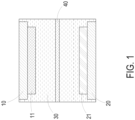
- FIG. 1 is a schematic view illustrating a dual-cation metal battery according to an embodiment of the present disclosure.
- the dual-cation metal battery 1 (or referred to as the metal battery) of the present disclosure includes a positive electrode 10, a negative electrode 20, an electrolyte solution 30 and a separator 40.
- the positive electrode 10 includes a positive electrode material 11.
- the positive electrode material 11 is selected from the group consisting of heterosite (FePO 4 ), lithium iron phosphate (LiFePO 4 ) and Li x Na 1-x FePO 4 , and 0 ⁇ x ⁇ 1.
- the negative electrode 20 includes a metal mixture 21.
- the metal mixture 21 I consisting of lithium metal and sodium metal, and a weight ratio of the lithium metal to the sodium metal is 1:3.
- the electrolyte solution is 1.0 M lithium hexafluorophosphate (LiPF 6 )/sodium hexafluorophosphate (NaPF 6 ) in propylene carbonate (PC) solution, and disposed between the positive electrode 10 and the negative electrode 20.
- the electrolyte solution 20 is adjustable according to the practical requirements, and the present disclosure is not limited thereto.
- the separator 40 is a glass-fiber filter paper and disposed in the electrolyte solution 30, and the positive electrode 10 and the negative electrode 20 are separated from each other by the separator 40. In this way, two different voltage platforms of LiFePO 4 and NaFePO 4 are provided in the metal battery 1, so as to achieve the purposes of reducing the cost of materials, maintaining the long-term service life and providing multiple varied applications
- the dual-cation positive electrode material of Li x Na 1-x FePO 4 included in the positive electrode material 11 refers to allowing Li + ions and Na + ions be intercalated or intercalated together in the structure of lithium iron phosphate (LiFePO 4 ), so that two positive electrode materials, LiFePO 4 and NaFePO 4 with the olivine structure, are disposed on the same positive electrode 10.
- the lithium ions are removed from the olivine structure of lithium iron phosphate (LiFePO 4 )
- the olivine structure of lithium iron phosphate (LiFePO 4 ) will transform into the structure of heterosite (FePO 4 ).
- the structure of heterosite (FePO 4 ) can exist stably in the atmospheric environment.
- the heterosite (FePO 4 ) is applied to the positive electrode material 11 of the metal battery 1, the cationic lithium or cationic sodium required for the subsequent charging and discharging is provided by the metal mixture 21 of the negative electrode 20.
- the present disclosure is not limited thereto.
- the electrolyte 30 is 1.0 M lithium hexafluorophosphate (LiPF 6 )/sodium hexafluorophosphate (NaPF 6 ) in propylene carbonate (PC) solution.
- the separator 40 is a glass-fiber filter paper.
- the negative electrode 20 that includes the lithium-sodium metal mixture 21
- the lithium metal and the sodium metal with a weight ratio of 1:3 are mixed, and then the lithium-sodium metal mixture is rolled to a thickness of 200 ⁇ m.
- the positive electrode 10 includes Li 0.25 Na 0.75 FePO 4 served as the positive electrode material 11.
- a positive electrode sheet of LiFePO 4 , a lithium foil, a separator and 1.0 M LiPF 6 ethylene carbonate (EC)/dimethyl carbonate (DMC) electrolyte solution are assembled in a Swagelok three-electrode battery. Then, a 0.1C slow charging is performed and cooperated with charging time.
- the Swagelok battery is dissembled, the positive electrode sheet containing 25% lithium ions is taken out.
- Dimethyl carbonate (DMC) solvent is used to rinse the positive electrode containing 25% lithium ions three times to remove excess electrolyte.
- the Li 0.25 FePO 4 material is be obtained, and the positive electrode 10 with the positive electrode material 11 is pretreated.
- the rinsed positive electrode 10 the electrolyte solution 30 of 1.0 M LiPF 6 /NaPF 6 in propylene carbonate (PC) solution, the separator 40 of the glass-fiber filter paper and the negative electrode 20 of the lithium metal and the sodium metal are assembled in a button cell, so as to obtain the metal battery 1 for testing a dual-cation positive electrode material 11.
- the aforementioned test half-cell is discharged in a ramp voltage (V-ramp) mode. That is, the discharging is performed from 2.8 V at a rate of -0.2 mV/sec to a cut-off voltage of 2.0 V to ensure that the sodium ions are intercalated in the structure of the positive electrode material 11 to form Li 0.25 Na 0.75 FePO 4 .
- the positive electrode material 11 is selected from the group consisting of heterosite (FePO 4 ), lithium iron phosphate (LiFePO 4 ) and Li x Na 1-x FePO 4 .
- the positive electrode material 11 is adjustable according to the practical requirements, and the present disclosure is not limited thereto.
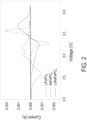
- the dual-cation positive electrode material 11 in the metal battery 1 is further analyzed for electrochemical characteristics by cyclic voltammetry. Taking the aforementioned metal battery 1 with Li 0.25 Na 0.75 FePO 4 as an example to test the dual-positive electrode material 11. After a slow scan is performed at a scan rate of 0.1 mV/s by cyclic voltammetry, the oxidation peak and the reduction peak of the obtained dual-cation positive electrode 11 are shown in FIG. 2 . For the positive electrode material 11 of Li 0.25 Na 0.75 FePO 4 , the highest value of its oxidation peak appears at 3.7 V, which is higher than that of LiFePO 4 and NaFePO 4 .
- the electrolyte solvent used in the metal battery 1 is PC, which is different from the electrolyte impedance of the electrolyte solvent used for testing LiFePO 4 and NaFePO 4 . Since the impedance of the electrolyte solution 30 of the present disclosure is higher, the delay of the oxidation peak occurs. Certainly, in other embodiment, the electrolyte solution is further optimized to reduce the delay of the oxidation peak due to high impedance, and it is not redundantly described herein. In addition, regarding the part of the reduction peak, the positive electrode material 11 of Li 0.25 Na 0.75 FePO 4 has the reduction peak ranged from 3.3 V (corresponding to LiFePO 4 ) to 2.6 V (corresponding to NaFePO 4 ).
- the lithium ions and the sodium ions coexist in the positive electrode material 11 of Li x Na 1-x FePO 4 of the present disclosure.
- the ionic radius of lithium ions is 0.76 ⁇
- the ionic radius of sodium ions is 1.02 ⁇
- the volume of sodium ions is 34% larger than that of lithium ions
- the diffusion rate of sodium ions is 1/2 of that of lithium ions. 10. Therefore, it is allowed to select an appropriate charging and discharging mode to change the result of intercalation of lithium ions and sodium ions into the positive electrode material 11 of the metal battery 1.
- FIG. 3 is a cyclic voltammogram shows the dual-cation metal battery including the positive electrode material of Li 0.25 Na 0.75 FePO 4 according the embodiment of the present disclosure under different cut-off voltage ranges.
- the dual-cation metal battery 1 including the positive electrode material 11 of Li 0.25 Na 0.75 FePO 4 is further tested with four oxidation reaction cut-off voltages of 3.6 V, 3.8 V, 4.0 V and 4.2 V, and a scan rate is 0.2 mV/s.
- the testing results of cyclic voltammetry with different cut-off voltages are shown in FIG. 3 .
- FIG. 3 when the cut-off voltage is set at 3.6 V and 3.8 V, the highest values of the oxidation peaks are similar.
- the cut-off voltage when the cut-off voltage is set at 4.0 V and 4.2 V, the highest values of the oxidation peaks are similar.
- the area of the oxidation peak is increased as the cut-off voltage is set higher, and the area of the oxidation peak is larger. That is, the more lithium ions or sodium ions are migrated out of the structure of the positive electrode material 11.
- the reduction reaction potentials of the LiFePO 4 voltage platform and the NaFePO 4 voltage platform have different levels of response currents.
- the oxidation reaction cut-off voltage is 3.6 V, judging from the area of the oxidation peak, it can be seen that fewer cations are moved out from the structure of the positive electrode material 11, so that vacant position in the structure is also less. Therefore, during the reduction reaction, in the range of LiFePO 4 reduction voltage (3.2 ⁇ 3.5 V), the phenomenon of lithium-ion intercalation structure appears first, and a higher response current is generated in this interval.
- the oxidation reaction cut-off voltages are 3.8 V, 4.0 V, and 4.2 V, respectively, the area of the oxidation peak are increased gradually. That is, the number of cations that moved out of the structure of the positive electrode material 11 is increased gradually.
- the metal battery 1 of the present disclosure is allowed to adjust the number of lithium ions or sodium ions intercalated into the structure of the positive electrode material 11 through different scanning cut-off voltages and scanning rates in the oxidation reaction. Certainly, the present disclosure is not limited thereto.
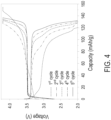
- FIG. 4 shows a cyclic charge/discharge testing of the dual-cation metal battery including the positive electrode material of Li 0.25 Na 0.75 FePO 4 through the 0.1C constant-current-constant-voltage (CC-CV) mode.
- CC-CV constant-current-constant-voltage
- the discharge capacity of NaFePO 4 is accounted for a higher proportion, and it indicates that Li 0.25 Na 0.75 FePO 4 has a higher proportion of sodium ions in the first cycle of charging and discharging. So the electricity released during discharging is mainly provided by the electricity released by NaFePO 4 .
- the proportion of the charging voltage platform of NaFePO 4 is decreased.
- a decreasing pattern is shown in the discharging voltage platform of NaFePO 4 . Instead, the proportion of discharging voltage platform of LiFePO 4 is increased gradually.
- the discharging voltage platform and discharging voltage of NaFePO 4 are disappeared gradually.
- the charging and discharging capacities in the first cycle to the fifth cycle are shown in Table 1. It is observed from the charging and discharging capacities in Table 1 that the 0.1 C discharge capacity of NaFePO 4 is about 120 ⁇ 125 mAh/g. When 25% of the sodium ions are replaced by the lithium ions in the structure to make Li 0.25 Na 0.75 FePO 4 , the 0.1 C discharging capacity of Li 0.25 Na 0.75 FePO 4 is higher than the 0.1C discharging capacity of NaFePO 4 . On the other hand, Li x Na 1-x FePO 4 provides a discharging capacity higher than that of NaFePO 4 , and Li x Na 1-x FePO 4 further includes two discharging voltage platforms of LiFePO 4 and NaFePO 4 .
- the constant-current-constant-voltage mode (CC-CV) is suitable to utilize in the dual-cation metal battery 1 with the positive electrode material 11 of Li 0.25 Na 0.75 FePO 4 when a higher proportion of discharging capacity of LiFePO 4 or a higher discharging power is required. Since the diffusion rate of sodium ions is 1/10 of that of lithium ions, when using constant current to discharge, the discharging voltage of NaFePO 4 is low, and the lithium ions are intercalated into the structure of the positive electrode material 11 under a relatively high voltage condition.
- the charging and discharging modes of the metal battery 1 of the present disclosure is not limited thereto.
- Table 1 lists the charging and discharging capacities of the dual-cation metal battery with the positive electrode material of Li 0.25 Na 0.75 FePO 4 through the 0.1C constant-current-constant-voltage (CC-CV) mode.
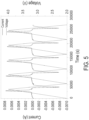
- FIG. 5 shows a cyclic charge/discharge testing of the dual-cation metal battery including the positive electrode material of Li 0.25 Na 0.75 FePO 4 through the ramp voltage (V-ramp) mode.
- V-ramp ramp voltage
- the charging is carried out at a ratio about 0.6 C.
- the maximum value of the response current is about 0.75 mA, and the discharging is carried out at a rate about 0.7 C.
- the ramp voltage mode is used to discharge, there is a turning point near the discharge voltage of 2.7V. So it can be used to judge that the ramp voltage mode is used to discharge.
- the dual-cation metal battery 1 with the positive electrode material 11 of Li 0.25 Na 0.75 FePO 4 is allowed to provide the discharging voltage platform of NaFePO 4 and the discharge capacity of NaFePO 4 .
- Table 2 lists the charging and discharging capacities of the dual-cation metal battery 1 with the positive electrode material 11 of Li 0.25 Na 0.75 FePO 4 through the ramp voltage mode (V-ramp). The obtained data are shown in Table 2.
- the charging and discharging capacities and the voltage interval corresponding to the response current of the metal battery 1 are similar to the charging and discharging capacities and the charging and discharging voltage platform of LiFePO 4 . Therefore, it can be inferred that the main proportion of the charging and discharging capacity obtained by charging and discharging Li 0.25 Na 0.75 FePO 4 through the ramp voltage mode is mostly the charging and discharging capacity provided by LiFePO 4 .
- Table 2 lists the charging and discharging capacities of the dual-cation metal battery with the positive electrode material of Li 0.25 Na 0.75 FePO 4 through the ramp voltage (V-ramp) mode.
- FIG. 6 shows a cyclic charge/discharge testing of a coin cell with heterosite/ sodium-metal anode through the ramp voltage mode.
- the charging and discharging test is carried out through the ramp voltage to observe the relative relationship between voltage and current.
- the charging-and-discharging interval is ranged from 2.0 V to 3.6 V, and the charging-and-discharging rate is ⁇ 0.2 mV/s.
- the two voltage platforms are observed when charging and discharging the constant-current-constant-voltage mode. That is, there are two phase transition points in the structure of olivine NaFePO 4 .
- the phases that appear during the redox process of olivine NaFePO 4 are FePO 4 , Na 0.7 FePO 4 and NaFePO 4 , so that two voltage platforms are observed during the charging process.
- the maximum response current is observed in the discharging voltage interval ranged from 3.0 V to 2.6 V, which is similar to the discharge voltage of 2.75 V when the olivine NaFePO 4 is charged and discharged through the constant-current-constant-voltage mode.
- Table 3 lists the charging and discharging capacities of the coin cell with the positive electrode of heterosite and the negative electrode of sodium metal through the ramp voltage (V-ramp) mode.
- FIG. 7 shows a cyclic charge/discharge testing of the dual-cation metal battery including the positive electrode material of Li 0.25 Na 0.75 FePO 4 through the constant-current-constant-voltage mode and the ramp voltage mode switched.
- the dual-cation metal battery 1 including the positive electrode material 11 of Li 0.25 Na 0.75 FePO 4 is charged and discharged through the constant-current-constant-voltage (CC-CV) mode and the ramp voltage (V-ramp) mode switched.
- the metal battery 1 is charged through the ramp voltage mode in the charging process, the charging voltage interval is ranged from 2.0 V to 4.2 V, and the charging rate is 0.2 mV/s.
- the metal battery 1 is discharged through the 0.1C constant-current discharge mode in the discharging process.
- the testing results are shown in FIG. 7 .
- a response current is observed in the charging voltage interval ranged from 3.4 V to 3.8 V.
- the sodium ions and the lithium ions in the structure of the positive electrode material 11 begin to move out of the structure.
- the discharging process is started through the constant-circuit discharging mode, the constant-current discharging is performed in the voltage interval with the higher discharge voltage 3.4 V, and the lithium ions are intercalated into the structure of the positive electrode material 11. Therefore, the discharging voltage platform is maintained between 3.3 V and 3.4 V, and this discharging voltage interval is the discharging voltage platform of the LiFePO 4 .
- Table 4 lists the charging and discharging capacities of the dual-cation metal battery 1 with the positive electrode material 11 of Li 0.25 Na 0.75 FePO 4 through the constant-current-constant-voltage (CC-CV) mode and the ramp voltage (V-ramp) mode switched. As shown in Table 4, after comparing the charging capacity, the discharging capacity and the relationship of the circuit and the voltage, it can be inferred that the charging capacity and discharging capacity measured in testing is provided through the LiFePO 4 voltage platform in Li x Na 1-x FePO 4 .
- Table 4 lists the charging and discharging capacities of the dual-cation metal battery with the positive electrode material of Li 0.25 Na 0.75 FePO 4 through the constant-current-constant-voltage (CC-CV) mode and the ramp voltage (V-ramp) mode switched.
- the sodium ions and the lithium ions are removed from the structure of the positive electrode material 11 in the charging process of the dual-cation metal battery 1 containing positive electrode material 11 of Li 0.25 Na 0.75 FePO 4 . Moreover, in the discharging process, the sodium ions or the lithium ions are moved from the negative electrode 20 to the positive electrode 10 and then intercalate into the structure of the positive electrode material 11. It can be understood from the foregoing descriptions that the voltage platforms for the intercalation of sodium ions or lithium ions into the structure of the positive electrode material 11 are different, and controlling the voltage in the process is regarded as an important factor, so as to allow the sodium ions or the lithium ions to be intercalated into the structure of the positive electrode material 11 sequentially to complete the discharging behavior.
- the constant-current-constant-voltage mode is used for charging during the charging process
- the ramp voltage mode is used for discharging during the discharging process.
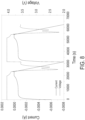
- the testing results are shown in FIG. 8 .
- the ramp voltage discharging mode is used to discharge, there are two different response current peaks observed in the discharge intervals of LiFePO 4 and NaFePO 4 , respectively.
- the charging process performed through the constant-current-constant-voltage mode with the discharging process performed through the ramp voltage mode is suitable for the dual-cation metal battery 1 containing the positive electrode material 11 of Li x Na 1-x FePO 4 positive electrode material 11.
- the present disclosure is not limited thereto.
- Table 5 lists the charging and discharging capacities of the dual-cation metal battery 1 with the positive electrode material 11 of Li 0.25 Na 0.75 FePO 4 through the constant-current-constant-voltage (CC-CV) mode in the charging process and the ramp voltage (V-ramp) mode in the discharging process.
- the discharging capacity measured through testing is the sum of the discharging capacities of the LiFePO 4 voltage platform and the NaFePO 4 voltage platform in Li 0.25 Na 0.75 FePO 4 at different stages of the discharge voltage.
- Table 5 lists the charging and discharging capacities of the dual-cation metal battery with the positive electrode material of Li 0.25 Na 0.75 FePO 4 through the constant-current-constant-voltage (CC-CV) mode in the charging process and the ramp voltage discharging mode in the discharging process.
- the lithium-sodium dual-cation positive electrode material 11 of the positive electrode 10 combined with the negative electrode 20 of the lithium-sodium metal mixture 21 is used in the metal battery 1 of the present disclosure. Moreover, in different usage situations, it allows to select different discharge modes to make the metal battery 1 exhibit different characteristics.
- the positive electrode 10 including the positive electrode material of the heterosite (FePO 4 ) and the negative electrode 20 including the lithium-sodium metal mixture 21 are used to produce the metal battery 1 for carrying out the testing of the mixed charging and discharging mode.
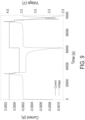
- the testing results are shown in FIG. 9 .
- the charging voltage platform and the discharging voltage platform are observed in FIG. 9 , the measured charging capacity and discharging capacity are mostly provided through the LiFePO 4 voltage platform in the dual-cation positive electrode material 11.
- the discharge capacity of the first cycle is 138.9 mAh/g.
- the discharge capacity of the second cycle is 121.8 mAh/g.
- one part of the discharging capacity through the LiFePO 4 voltage platform is 42.7 mAh/g in the discharging voltage interval ranged from 3.44 V to 3.0 V
- another part of the discharging capacity of the NafePO4 voltage platform is 79.1 mAh/g in the discharging voltage interval ranged from 2.99 V to 2.0 V. Since the proportions of the discharging capacity through the LiFePO 4 voltage platform and NaFePO 4 voltage platform is about 1:2, Li:Na in the positive electrode material 11 of the Li x Na 1-x FePO 4 can be estimated as 1:2. At this time, the structural formula of the positive electrode material 11 can be written as Li 0.33 Na 0.66 FePO 4 .
- Table 6 lists the charging and discharging capacities of the dual-cation metal battery with the positive electrode material of heterosite (FePO 4 ) through the constant-current-constant-voltage (CC-CV) mode and the ramp voltage (V-ramp) mode.
- the rate of voltage drop is controlled in the ramp voltage discharge mode to achieve the purpose of discharging. It allows to control the ratio of the lithium-ion intercalation structure and the sodium-ion intercalation structure.
- the dual-cation metal battery 1 is suitable for an energy storage battery application that does not require a large discharge current output.
- the dual-cation metal battery 1 is used in a solar power generation system. The solar power is generated during the day with full sunlight, and the current from the solar panel can slowly fill the battery. For discharging at night to meet the requirements of higher power, the metal battery 1 can be discharged through the constant-current-constant-voltage discharging mode. That is, the dual-cation metal battery is discharged through the LiFePO 4 voltage platform.
- the dual cation metal battery 1 does not require high power output, it can be discharged through the ramp voltage discharging mode to make full use of the electricity released by the NaFePO 4 voltage platform. Therefore, the ramp voltage mode or constant- current-constant-voltage can be selected according to the actual application conditions.
- the present disclosure is not limited thereto and not redundantly described hereafter.
- the present disclosure provides a dual-cation metal battery and a charging and discharging method thereof to reduce the cost of materials, maintain the long-term service life and provide multiple varied applications.
- the lithium ions and the sodium ions are allowed to be intercalated or intercalated together in the olivine structure of lithium iron phosphate (LiFePO 4 ) and heterosite (FePO 4 ), so as to form dual-cation positive electrode material of Li x Na 1-x FePO 4 with the olivine structure. Therefore, two different voltage platforms of LiFePO 4 and NaFePO 4 are provided in a metal battery.
- the sodium ions are used to replace part of the lithium ions to form the dual-cation positive electrode material Li x Na 1-x FePO 4 , so that it is different from the conventional lithium-ion positive electrode material and the conventional sodium-ion positive electrode material, which is a single-cation cathode material.
- the dual-cation metal battery of the present disclosure uses sodium ions, which are more abundant in the earth's crustal elements, to replace part of the lithium ions.
- the voltage platform and the capacity greater than the sodium iron phosphate cathode material are provided and the multiple varied applications are achieved.
- the lithium metal and the sodium metal are mixed as a composite negative electrode.
- the dual-cation metal battery includes the positive electrode materials such as heterosite (FePO 4 ), lithium iron phosphate (LiFePO 4 ) or Li x Na 1-x FePO 4 combined with a mixture of the lithium metal and the sodium metal.
- the positive electrode materials such as heterosite (FePO 4 ), lithium iron phosphate (LiFePO 4 ) or Li x Na 1-x FePO 4 combined with a mixture of the lithium metal and the sodium metal.
- the dual-cation positive electrode material of Li x Na 1-x FePO 4 matched with the lithium-sodium metal negative electrode.
- the dual-cation metal battery can be used in an energy storage battery application that does not require a large discharge current output.
- the dual-cation metal battery is used in a solar power generation system. The solar power is generated during the day with full sunlight, and the current from the solar panel can slowly fill the battery.
- the dual-cation metal battery When discharging at night, if a higher power is needed, it can be discharged through the constant-current-constant-voltage discharging mode. That is, the dual-cation metal battery is discharged through the LiFePO 4 voltage platform. On the contrary, if considering that the dual cation metal battery does not require high power output, it can be discharged using the ramp voltage discharging mode to make full use of the electricity released by the NaFePO 4 voltage platform. Therefore, the ramp voltage mode or constant- current-constant-voltage can be selected according to the actual application conditions.
Landscapes
- Chemical & Material Sciences (AREA)
- Chemical Kinetics & Catalysis (AREA)
- Electrochemistry (AREA)
- General Chemical & Material Sciences (AREA)
- Engineering & Computer Science (AREA)
- Materials Engineering (AREA)
- Manufacturing & Machinery (AREA)
- Inorganic Chemistry (AREA)
- Crystallography & Structural Chemistry (AREA)
- Composite Materials (AREA)
- Secondary Cells (AREA)
- Battery Electrode And Active Subsutance (AREA)
Abstract
Description
- The present disclosure relates to a secondary battery, and more particularly to a dual-cation metal battery and a charging and discharging method thereof to reduce the cost of materials, maintain the long-term service life and provide multiple varied applications.
- Lithium-ion battery (Lithium-ion battery) is a secondary battery that can be recharged and discharged repeatedly. With the lithium ions moved between the positive electrode and the negative electrode, the lithium-ion battery is capable of implementing the charging and discharging work. Therefore, the lithium-ion battery needs to use an intercalated lithium compound as the electrode material. The positive electrode materials used in the conventional lithium-ion batteries are mainly the lithium cobalt oxide (LiCoO2), the lithium manganate (LiMn204), the lithium nickelate (LiNiO2) and the lithium iron phosphate (LiFePO4). Particularly, since the lithium iron phosphate has the features of good safety, large specific capacity, long cycle life, high temperature resistance and low cost, the lithium iron phosphate batteries are widely used in an electric vehicle and energy storage equipment.
- In recent years, with the extensive application of lithium-ion battery on the electric vehicle and the energy storage equipment, the prices of related raw materials have been caused to fluctuate drastically. Considering that the future demand will continue to increase, it is even more important to find alternatives to replace lithium ions. Furthermore, when looking for alternatives to replace lithium ions in lithium-ion battery, it is necessary to consider the impact of differences in voltage platforms on the convenience of use, the product life, and the battery stability.
- Therefore, there is a need to provide a dual-cation metal battery and a charging and discharging method thereof to reduce the cost of materials, maintain the long-term service life, provide multiple varied applications and obviate the drawbacks encountered by the prior arts.
- One object of the present disclosure is to provide a dual-cation metal battery and a charging and discharging method thereof to reduce the cost of materials, maintain the long-term service life and provide multiple varied applications. The lithium ions and the sodium ions are allowed to be intercalated or intercalated together in the olivine structure of lithium iron phosphate (LiFePO4) and heterosite (FePO4), so as to form dual-cation positive electrode material of LixNa1-xFePO4 with the olivine structure. Therefore, two different voltage platforms of LiFePO4 and NaFePO4 are provided in a metal battery. In the present disclosure, the sodium ions are used to replace part of the lithium ions to form the dual-cation positive electrode material LixNa1-xFePO4, so that it is different from the conventional lithium-ion positive electrode material and the conventional sodium-ion positive electrode material, which is a single-cation cathode material. The dual-cation metal battery of the present disclosure uses sodium ions, which are more abundant in the earth's crustal elements, to replace part of the lithium ions. In addition to making secondary battery materials more sustainable, the voltage platform and the capacity greater than the sodium iron phosphate cathode material are provided and the multiple varied applications are achieved.
- Another object of the present disclosure is to provide a dual-cation metal battery and a charging and discharging method thereof. In a dual cation metal battery, the lithium metal and the sodium metal are mixed as a composite negative electrode. Since the lithium metal (theoretical capacitance of lithium metal is 3840 mAh/g) and the sodium metal (theoretical capacitance of sodium metal is 1166 mAh/g) both have high capacitance per gram, it is helpful of reducing the thickness of the negative electrode, so as to achieve the purpose of increasing the energy density of the battery.
- A further object of the present disclosure is to provide a dual-cation metal battery and a charging and discharging method thereof. The dual-cation metal battery includes the positive electrode materials such as heterosite (FePO4), lithium iron phosphate (LiFePO4) or LixNa1-xFePO4 combined with a mixture of the lithium metal and the sodium metal. There are two different voltage platforms of LiFePO4 and NaFePO4 in the charging and discharging process. Preferably, different electrical properties are shown by using different charging and discharging modes in the case of the dual-cation positive electrode material of LixNa1-xFePO4 matched with the lithium-sodium metal negative electrode. When the dual-cation metal battery is discharged in a ramp voltage mode, it allows to control the ratio of the lithium-ion intercalation structure and the sodium-ion intercalation structure by controlling the rate of voltage drop. On the other hand, the dual-cation metal battery can be used in an energy storage battery application that does not require a large discharge current output. For example, the dual-cation metal battery is used in a solar power generation system. The solar power is generated during the day with full sunlight, and the current from the solar panel can slowly fill the battery. When discharging at night, if a higher power is needed, it can be discharged through the constant-current-constant-voltage discharging mode. That is, the dual-cation metal battery is discharged through the LiFePO4 voltage platform. On the contrary, if considering that the dual cation metal battery does not require high power output, it can be discharged using the ramp voltage discharging mode to make full use of the electricity released by the NaFePO4 voltage platform. Therefore, the ramp voltage mode or constant- current-constant-voltage can be selected according to the actual application conditions.
- In accordance with an aspect of the present disclosure, a dual-cation metal battery is provided and includes a positive electrode, a negative electrode, an electrolyte solution and a separator. The positive electrode includes a positive electrode material selected from the group consisting of heterosite (FePO4), lithium iron phosphate (LiFePO4) and LixNa1-xFePO4, and 0<x<1. The negative electrode includes a metal mixture consisting of lithium metal and sodium metal, wherein a weight ratio of the lithium metal to the sodium metal is 1:3. The electrolyte solution is disposed between the positive electrode and the negative electrode. The separator is disposed in the electrolyte solution, wherein the positive electrode and the negative electrode are separated from each other by the separator.
- In an embodiment, the dual-cation metal battery is charged and discharged through a constant-current-constant-voltage mode, wherein the constant-current-constant-voltage mode is a 0.1C constant-current-constant-voltage mode.
- In an embodiment, the dual-cation metal battery is charged and discharged through a constant-current-constant-voltage mode and a ramp voltage mode switched, wherein the constant-current-constant-voltage mode is a 0.1C constant-current-constant-voltage mode, and the ramp voltage mode includes a charging-and-discharging interval ranged from 2.0 V to 4.0 V and a charging-and-discharging rate of ±0.2 mV/s
- In an embodiment, the positive electrode material is LixNa1-xFePO4, the dual-cation metal battery is charged through a constant-current-constant-voltage mode, and discharged through a ramp voltage mode, wherein the constant-current-constant-voltage mode is 0.1C constant-current-constant-voltage mode, and the ramp voltage mode includes a discharging interval ranged from 4.0 V to 2.0 V, and a discharging rate of - 0.2 mV/s.
- In an embodiment, the ramp voltage mode includes the discharge interval ranged from 2.8 V to a cut-off voltage of 2.0 V.
- In accordance with an aspect of the present disclosure, a charging and discharging method of a dual-cation metal battery is provided and includes: (a) providing a dual-cation metal battery comprising a positive electrode, a negative electrode, an electrolyte solution and a separator, wherein the positive electrode comprises a positive electrode material selected from the group consisting of heterosite (FePO4), lithium iron phosphate (LiFePO4) and LixNa1-xFePO4, and 0<x<1, wherein the negative electrode comprises a metal mixture consisting of lithium metal and sodium metal, and a weight ratio of the lithium metal to the sodium metal is 1:3, wherein the electrolyte solution is disposed between the positive electrode and the negative electrode, wherein the separator is disposed in the electrolyte solution, and the positive electrode and the negative electrode are separated from each other by the separator; and(b) selecting a constant-current-constant-voltage mode or a ramp voltage mode for charging or discharging the dual-cation metal battery.
- In an embodiment, the dual-cation metal battery is charged and discharged through the constant-current-constant-voltage mode in the step (b), wherein the constant-current-constant-voltage mode is a 0.1C constant-current-constant-voltage mode.
- In an embodiment, the dual-cation metal battery is charged and discharged through the constant-current-constant-voltage mode and the ramp voltage mode switched in the step (b), wherein the constant-current-constant-voltage mode is a 0.1C constant-current-constant-voltage mode, and the ramp voltage mode includes a charging-and-discharging interval ranged from 2.0 V to 4.0 V and a charging-and-discharging rate of ±0.2 mV/s.
- In an embodiment, the positive electrode material is LixNa1-xFePO4, the dual-cation metal battery is charged through the constant-current-constant-voltage mode, and discharged through the ramp voltage mode in the step (b), wherein the constant-current-constant-voltage mode is 0.1C constant-current-constant-voltage mode, and the ramp voltage mode includes a discharging interval ranged from 4.0 V to 2.0 V, and a discharging rate of -0.2 mV/s.
- In an embodiment, the ramp voltage mode includes the discharge interval ranged from 2.8 V to a cut-off voltage of 2.0 V.
- The above contents of the present disclosure will become more readily apparent to those ordinarily skilled in the art after reviewing the following detailed description and accompanying drawings, in which:
-
FIG. 1 is a schematic view illustrating a dual-cation metal battery according to an embodiment of the present disclosure; -
FIG. 2 is a cyclic voltammogram showing the dual-cation positive electrode material of the dual-cation metal battery according the embodiment of the present disclosure and compared with LiFePO4, NaFePO4; -
FIG. 3 is a cyclic voltammogram shows the dual-cation metal battery including the positive electrode material of Li0.25Na0.75FePO4 according the embodiment of the present disclosure under different cut-off voltage ranges; -
FIG. 4 shows a cyclic charge/discharge testing of the dual-cation metal battery including the positive electrode material of Li0.25Na0.75FePO4 through the 0.1C constant-current-constant-voltage (CC-CV) mode; -
FIG. 5 shows a cyclic charge/discharge testing of the dual-cation metal battery including the positive electrode material of Li0.25Na0.75FePO4 through the ramp voltage (V-ramp) mode; -
FIG. 6 shows a cyclic charge/discharge testing of a coin cell with heterosite/ sodium-metal anode through the ramp voltage mode; -
FIG. 7 shows a cyclic charge/discharge testing of the dual-cation metal battery including the positive electrode material of Li0.25Na0.75FePO4 through the constant-current-constant-voltage mode and the ramp voltage mode switched; -
FIG. 8 shows a cyclic charge/discharge testing of the dual-cation metal battery including the positive electrode material of Li0.25Na0.75FePO4 through the constant-current-constant-voltage mode for charging and the ramp voltage mode for discharging; and -
FIG. 9 shows a cyclic charge/discharge testing of the dual-cation metal battery including the positive electrode material of heterosite through the constant-current-constant-voltage mode and the ramp voltage mode switched. - The present disclosure will now be described more specifically with reference to the following embodiments. It is to be noted that the following descriptions of preferred embodiments of this disclosure are presented herein for purpose of illustration and description only. It is not intended to be exhaustive or to be limited to the precise form disclosed. For example, the formation of a first feature over or on a second feature in the description that follows may include embodiments in which the first and second features are formed in direct contact, and may also include embodiments in which additional features may be formed between the first and second features, such that the first and second features may not be in direct contact. In addition, the present disclosure may repeat reference numerals and/or letters in the various examples. This repetition is for the purpose of simplicity and clarity and does not in itself dictate a relationship between the various embodiments and/or configurations discussed. Further, spatially relative terms, such as "inner," "outer," "high," "low" and the like, may be used herein for ease of description to describe one element or feature's relationship to another element(s) or feature(s) as illustrated in the figures. The spatially relative terms are intended to encompass different orientations of the device in use or operation in addition to the orientation depicted in the figures. The apparatus may be otherwise oriented (rotated 90 degrees or at other orientations) and the spatially relative descriptors used herein may likewise be interpreted accordingly. When an element is referred to as being "connected," or "coupled," to another element, it can be directly connected or coupled to the other element or intervening elements may be present. Although the wide numerical ranges and parameters of the present disclosure are approximations, numerical values are set forth in the specific examples as precisely as possible. In addition, although the "first," "second," "third," and the like terms in the claims be used to describe the various elements can be appreciated, these elements should not be limited by these terms, and these elements are described in the respective embodiments are used to express the different reference numerals, these terms are only used to distinguish one element from another element. For example, a first element could be termed a second element, and, similarly, a second element could be termed a first element, without departing from the scope of example embodiments. Besides, "and / or" and the like may be used herein for including any or all combinations of one or more of the associated listed items. Alternatively, the word "about" means within an acceptable standard error of ordinary skill in the art-recognized average. In addition to the operation / working examples, or unless otherwise specifically stated otherwise, in all cases, all of the numerical ranges, amounts, values and percentages, such as the number for the herein disclosed materials, time duration, temperature, operating conditions, the ratio of the amount, and the like, should be understood as the word "about" decorator. Accordingly, unless otherwise indicated, the numerical parameters of the present invention and scope of the appended patent proposed is to follow changes in the desired approximations. At least, the number of significant digits for each numerical parameter should at least be reported and explained by conventional rounding technique is applied. Herein, it can be expressed as a range between from one endpoint to the other or both endpoints. Unless otherwise specified, all ranges disclosed herein are inclusive.
-
FIG. 1 is a schematic view illustrating a dual-cation metal battery according to an embodiment of the present disclosure. In the embodiment, the dual-cation metal battery 1 (or referred to as the metal battery) of the present disclosure includes apositive electrode 10, anegative electrode 20, anelectrolyte solution 30 and aseparator 40. Thepositive electrode 10 includes apositive electrode material 11. Preferably but not exclusively, thepositive electrode material 11 is selected from the group consisting of heterosite (FePO4), lithium iron phosphate (LiFePO4) and LixNa1-xFePO4, and 0<x<1. Thenegative electrode 20 includes ametal mixture 21. Preferably but not exclusively, the metal mixture 21 I consisting of lithium metal and sodium metal, and a weight ratio of the lithium metal to the sodium metal is 1:3. The electrolyte solution is 1.0 M lithium hexafluorophosphate (LiPF6)/sodium hexafluorophosphate (NaPF6) in propylene carbonate (PC) solution, and disposed between thepositive electrode 10 and thenegative electrode 20. In other embodiments, theelectrolyte solution 20 is adjustable according to the practical requirements, and the present disclosure is not limited thereto. Preferably but not exclusively, theseparator 40 is a glass-fiber filter paper and disposed in theelectrolyte solution 30, and thepositive electrode 10 and thenegative electrode 20 are separated from each other by theseparator 40. In this way, two different voltage platforms of LiFePO4 and NaFePO4 are provided in themetal battery 1, so as to achieve the purposes of reducing the cost of materials, maintaining the long-term service life and providing multiple varied applications - Notably, in the embodiment, the dual-cation positive electrode material of LixNa1-xFePO4 included in the
positive electrode material 11 refers to allowing Li+ ions and Na+ ions be intercalated or intercalated together in the structure of lithium iron phosphate (LiFePO4), so that two positive electrode materials, LiFePO4 and NaFePO4 with the olivine structure, are disposed on the samepositive electrode 10. After the lithium ions are removed from the olivine structure of lithium iron phosphate (LiFePO4), the olivine structure of lithium iron phosphate (LiFePO4) will transform into the structure of heterosite (FePO4). The structure of heterosite (FePO4) can exist stably in the atmospheric environment. There is no structural damage due to the removal of cations. Preferably but not exclusively, in an embodiment, the heterosite (FePO4) is applied to thepositive electrode material 11 of themetal battery 1, the cationic lithium or cationic sodium required for the subsequent charging and discharging is provided by themetal mixture 21 of thenegative electrode 20. Certainly, the present disclosure is not limited thereto. - Preferably but not exclusively, in the embodiment, the
positive electrode 10 is made into a positive electrode sheet in a manner that the proportioning is (the positive electrode material 11: the auxiliary carbon: the binder = 8:1:1). Theelectrolyte 30 is 1.0 M lithium hexafluorophosphate (LiPF6)/sodium hexafluorophosphate (NaPF6) in propylene carbonate (PC) solution. Theseparator 40 is a glass-fiber filter paper. For preparing thenegative electrode 20 that includes the lithium-sodium metal mixture 21, the lithium metal and the sodium metal with a weight ratio of 1:3 are mixed, and then the lithium-sodium metal mixture is rolled to a thickness of 200 µm. Thereafter, a circular lithium-sodium metal negative electrode sheet with a diameter of 12 mm is cut out and served as thenegative electrode 20 for testing. Notably, in an embodiment, thepositive electrode 10 includes Li0.25Na0.75FePO4 served as thepositive electrode material 11. For preparing thepositive electrode 10 including the positive electrode material of Li0.25Na0.75FePO4, a positive electrode sheet of LiFePO4, a lithium foil, a separator and 1.0 M LiPF6 ethylene carbonate (EC)/dimethyl carbonate (DMC) electrolyte solution are assembled in a Swagelok three-electrode battery. Then, a 0.1C slow charging is performed and cooperated with charging time. After 75% of the lithium ions is removed, the Swagelok battery is dissembled, the positive electrode sheet containing 25% lithium ions is taken out. Dimethyl carbonate (DMC) solvent is used to rinse the positive electrode containing 25% lithium ions three times to remove excess electrolyte. In that, the Li0.25FePO4 material is be obtained, and thepositive electrode 10 with thepositive electrode material 11 is pretreated. Thereafter, the rinsedpositive electrode 10, theelectrolyte solution 30 of 1.0 M LiPF6/NaPF6 in propylene carbonate (PC) solution, theseparator 40 of the glass-fiber filter paper and thenegative electrode 20 of the lithium metal and the sodium metal are assembled in a button cell, so as to obtain themetal battery 1 for testing a dual-cationpositive electrode material 11. In the embodiment, in order to ensure that sodium ions are intercalated in the structure of thepositive electrode material 11, the aforementioned test half-cell is discharged in a ramp voltage (V-ramp) mode. That is, the discharging is performed from 2.8 V at a rate of -0.2 mV/sec to a cut-off voltage of 2.0 V to ensure that the sodium ions are intercalated in the structure of thepositive electrode material 11 to form Li0.25Na0.75FePO4. Certainly, in other embodiments, thepositive electrode material 11 is selected from the group consisting of heterosite (FePO4), lithium iron phosphate (LiFePO4) and LixNa1-xFePO4. Thepositive electrode material 11 is adjustable according to the practical requirements, and the present disclosure is not limited thereto. - In the embodiment, the dual-cation
positive electrode material 11 in themetal battery 1 is further analyzed for electrochemical characteristics by cyclic voltammetry. Taking theaforementioned metal battery 1 with Li0.25Na0.75FePO4 as an example to test the dual-positive electrode material 11. After a slow scan is performed at a scan rate of 0.1 mV/s by cyclic voltammetry, the oxidation peak and the reduction peak of the obtained dual-cationpositive electrode 11 are shown inFIG. 2 . For thepositive electrode material 11 of Li0.25Na0.75FePO4, the highest value of its oxidation peak appears at 3.7 V, which is higher than that of LiFePO4 and NaFePO4. In the present embodiment, the electrolyte solvent used in themetal battery 1 is PC, which is different from the electrolyte impedance of the electrolyte solvent used for testing LiFePO4 and NaFePO4. Since the impedance of theelectrolyte solution 30 of the present disclosure is higher, the delay of the oxidation peak occurs. Certainly, in other embodiment, the electrolyte solution is further optimized to reduce the delay of the oxidation peak due to high impedance, and it is not redundantly described herein. In addition, regarding the part of the reduction peak, thepositive electrode material 11 of Li0.25Na0.75FePO4 has the reduction peak ranged from 3.3 V (corresponding to LiFePO4) to 2.6 V (corresponding to NaFePO4). It can be seen that the lithium ions and the sodium ions coexist in thepositive electrode material 11 of LixNa1-xFePO4 of the present disclosure. Notably, the ionic radius of lithium ions is 0.76 Å, the ionic radius of sodium ions is 1.02 Å, the volume of sodium ions is 34% larger than that of lithium ions, and the diffusion rate of sodium ions is 1/2 of that of lithium ions. 10. Therefore, it is allowed to select an appropriate charging and discharging mode to change the result of intercalation of lithium ions and sodium ions into thepositive electrode material 11 of themetal battery 1. -
FIG. 3 is a cyclic voltammogram shows the dual-cation metal battery including the positive electrode material of Li0.25Na0.75FePO4 according the embodiment of the present disclosure under different cut-off voltage ranges. In the embodiment, the dual-cation metal battery 1 including thepositive electrode material 11 of Li0.25Na0.75FePO4 is further tested with four oxidation reaction cut-off voltages of 3.6 V, 3.8 V, 4.0 V and 4.2 V, and a scan rate is 0.2 mV/s. The testing results of cyclic voltammetry with different cut-off voltages are shown inFIG. 3 . As shown inFIG. 3 , when the cut-off voltage is set at 3.6 V and 3.8 V, the highest values of the oxidation peaks are similar. In addition, when the cut-off voltage is set at 4.0 V and 4.2 V, the highest values of the oxidation peaks are similar. The area of the oxidation peak is increased as the cut-off voltage is set higher, and the area of the oxidation peak is larger. That is, the more lithium ions or sodium ions are migrated out of the structure of thepositive electrode material 11. In addition, regarding the of the reduction peak, with the difference of the charging cut-off voltage, the reduction reaction potentials of the LiFePO4 voltage platform and the NaFePO4 voltage platform have different levels of response currents. When the oxidation reaction cut-off voltage is 3.6 V, judging from the area of the oxidation peak, it can be seen that fewer cations are moved out from the structure of thepositive electrode material 11, so that vacant position in the structure is also less. Therefore, during the reduction reaction, in the range of LiFePO4 reduction voltage (3.2~3.5 V), the phenomenon of lithium-ion intercalation structure appears first, and a higher response current is generated in this interval. When the oxidation reaction cut-off voltages are 3.8 V, 4.0 V, and 4.2 V, respectively, the area of the oxidation peak are increased gradually. That is, the number of cations that moved out of the structure of thepositive electrode material 11 is increased gradually. Therefore, when scanning the reduction reaction, the response currents produced at the reduction reaction potentials of the LiFePO4 voltage platform and the NaFePO4 voltage platform have different changes. It can be known that themetal battery 1 of the present disclosure is allowed to adjust the number of lithium ions or sodium ions intercalated into the structure of thepositive electrode material 11 through different scanning cut-off voltages and scanning rates in the oxidation reaction. Certainly, the present disclosure is not limited thereto. -
FIG. 4 shows a cyclic charge/discharge testing of the dual-cation metal battery including the positive electrode material of Li0.25Na0.75FePO4 through the 0.1C constant-current-constant-voltage (CC-CV) mode. When the dual-cation metal battery 1 including thepositive electrode material 11 of Li0.25Na0.75FePO4 is charged and discharged through the constant-current-constant-voltage (CC-CV) mode, two charging platforms of NaFePO4 are observed in the first cycle of charging, and the discharge platforms of LiFePO4 and NaFePO4 are observed in the first cycle of discharging. Notably, the discharge capacity of NaFePO4 is accounted for a higher proportion, and it indicates that Li0.25Na0.75FePO4 has a higher proportion of sodium ions in the first cycle of charging and discharging. So the electricity released during discharging is mainly provided by the electricity released by NaFePO4. In the second cycle of charging, the proportion of the charging voltage platform of NaFePO4 is decreased. Moreover, in the second cycle of discharging, a decreasing pattern is shown in the discharging voltage platform of NaFePO4. Instead, the proportion of discharging voltage platform of LiFePO4 is increased gradually. In case of charging and discharging from the third cycle to the fifth cycle, the discharging voltage platform and discharging voltage of NaFePO4 are disappeared gradually. The charging and discharging capacities in the first cycle to the fifth cycle are shown in Table 1. It is observed from the charging and discharging capacities in Table 1 that the 0.1 C discharge capacity of NaFePO4 is about 120~125 mAh/g. When 25% of the sodium ions are replaced by the lithium ions in the structure to make Li0.25Na0.75FePO4, the 0.1 C discharging capacity of Li0.25Na0.75FePO4 is higher than the 0.1C discharging capacity of NaFePO4. On the other hand, LixNa1-xFePO4 provides a discharging capacity higher than that of NaFePO4, and LixNa1-xFePO4 further includes two discharging voltage platforms of LiFePO4 and NaFePO4. Therefore, it provides a discharge power higher than that of single discharging platform of NaFePO4. Notably, from the perspective of the charging and discharging voltage platform and the trend of capacity change, the constant-current-constant-voltage mode (CC-CV) is suitable to utilize in the dual-cation metal battery 1 with thepositive electrode material 11 of Li0.25Na0.75FePO4 when a higher proportion of discharging capacity of LiFePO4 or a higher discharging power is required. Since the diffusion rate of sodium ions is 1/10 of that of lithium ions, when using constant current to discharge, the discharging voltage of NaFePO4 is low, and the lithium ions are intercalated into the structure of thepositive electrode material 11 under a relatively high voltage condition. Certainly, the charging and discharging modes of themetal battery 1 of the present disclosure is not limited thereto.Table 1 lists the charging and discharging capacities of the dual-cation metal battery with the positive electrode material of Li0.25Na0.75FePO4 through the 0.1C constant-current-constant-voltage (CC-CV) mode. Cycle # Capacity (mAh/g) Charging Discharging 1 157 120 2 131 128 3 135 128 4 136 130 5 138 132 -
FIG. 5 shows a cyclic charge/discharge testing of the dual-cation metal battery including the positive electrode material of Li0.25Na0.75FePO4 through the ramp voltage (V-ramp) mode. When the dual-cation metal battery 1 including thepositive electrode material 11 of Li0.25Na0.75FePO4 is charged and discharged through the ramp voltage mode, a charging-and-discharging interval is set and ranged from 2.0 V to 4.0 V, a charging rate is set at +0.2 mV/s and a discharging rate is set at -0.2 mV/s. The results obtained are shown in FIG. When the ramp voltage mode is utilized to charge, a large response current peak appears in a voltage interval ranged from 3.2 V to 3.8 V. As the maximum value of the response current is about 0.7mA, the charging is carried out at a ratio about 0.6 C. In addition, when the ramp voltage mode is utilized to discharge, the maximum value of the response current is about 0.75 mA, and the discharging is carried out at a rate about 0.7 C. Notably, when the ramp voltage mode is used to discharge, there is a turning point near the discharge voltage of 2.7V. So it can be used to judge that the ramp voltage mode is used to discharge. In other words, when the discharging conditions are set appropriately, the dual-cation metal battery 1 with thepositive electrode material 11 of Li0.25Na0.75FePO4 is allowed to provide the discharging voltage platform of NaFePO4 and the discharge capacity of NaFePO4. - Table 2 lists the charging and discharging capacities of the dual-
cation metal battery 1 with thepositive electrode material 11 of Li0.25Na0.75FePO4 through the ramp voltage mode (V-ramp). The obtained data are shown in Table 2. The charging and discharging capacities and the voltage interval corresponding to the response current of themetal battery 1 are similar to the charging and discharging capacities and the charging and discharging voltage platform of LiFePO4. Therefore, it can be inferred that the main proportion of the charging and discharging capacity obtained by charging and discharging Li0.25Na0.75FePO4 through the ramp voltage mode is mostly the charging and discharging capacity provided by LiFePO4.Table 2 lists the charging and discharging capacities of the dual-cation metal battery with the positive electrode material of Li0.25Na0.75FePO4 through the ramp voltage (V-ramp) mode. Cycle # Capacity (mAh/g) Charging Discharging 1 163 157 2 162 156 3 162 156 4 161 155 5 161 155 - In addition, according to the testing results, it is observed that the lithium ions and the sodium ions are intercalated into the structure, when the aforementioned dual-cation metal battery with the
positive electrode material 11 of Li0.25Na0.75FePO4 is charged and discharged through the ramp voltage mode.FIG. 6 shows a cyclic charge/discharge testing of a coin cell with heterosite/ sodium-metal anode through the ramp voltage mode. When the sodium ions are intercalated and intercalated into the structure of heterosite (FePO4) by using the ramp voltage for charging and discharging, a comparative example of a coin cell with the positive electrode of heterosite (FePO4) and the negative electrode of sodium metal is provided to further understand the relationship between voltage and current. The charging and discharging test is carried out through the ramp voltage to observe the relative relationship between voltage and current. Preferably but not exclusively, the charging-and-discharging interval is ranged from 2.0 V to 3.6 V, and the charging-and-discharging rate is ±0.2 mV/s. During the charging process, there are two large response current peaks. It is similar to that the two voltage platforms are observed when charging and discharging the constant-current-constant-voltage mode. That is, there are two phase transition points in the structure of olivine NaFePO4. In other words, the phases that appear during the redox process of olivine NaFePO4 are FePO4, Na0.7FePO4 and NaFePO4, so that two voltage platforms are observed during the charging process. During the discharging process, the maximum response current is observed in the discharging voltage interval ranged from 3.0 V to 2.6 V, which is similar to the discharge voltage of 2.75 V when the olivine NaFePO4 is charged and discharged through the constant-current-constant-voltage mode.Table 3 lists the charging and discharging capacities of the coin cell with the positive electrode of heterosite and the negative electrode of sodium metal through the ramp voltage (V-ramp) mode. Cycle # Capacity (mAh/g) Charging Charging 1 123.9 125.8 2 126.4 123.2 3 127.3 123.0 4 128.6 123.9 -
FIG. 7 shows a cyclic charge/discharge testing of the dual-cation metal battery including the positive electrode material of Li0.25Na0.75FePO4 through the constant-current-constant-voltage mode and the ramp voltage mode switched. In the embodiment, the dual-cation metal battery 1 including thepositive electrode material 11 of Li0.25Na0.75FePO4 is charged and discharged through the constant-current-constant-voltage (CC-CV) mode and the ramp voltage (V-ramp) mode switched. Preferably but not exclusively, themetal battery 1 is charged through the ramp voltage mode in the charging process, the charging voltage interval is ranged from 2.0 V to 4.2 V, and the charging rate is 0.2 mV/s. Moreover, themetal battery 1 is discharged through the 0.1C constant-current discharge mode in the discharging process. In this way, the corresponding relationship of the current and the voltage and the charging and discharging capacities are observed. The testing results are shown inFIG. 7 . According to the testing results, a response current is observed in the charging voltage interval ranged from 3.4 V to 3.8 V. At this time, the sodium ions and the lithium ions in the structure of thepositive electrode material 11 begin to move out of the structure. When the discharging process is started through the constant-circuit discharging mode, the constant-current discharging is performed in the voltage interval with the higher discharge voltage 3.4 V, and the lithium ions are intercalated into the structure of thepositive electrode material 11. Therefore, the discharging voltage platform is maintained between 3.3 V and 3.4 V, and this discharging voltage interval is the discharging voltage platform of the LiFePO4. - Table 4 lists the charging and discharging capacities of the dual-
cation metal battery 1 with thepositive electrode material 11 of Li0.25Na0.75FePO4 through the constant-current-constant-voltage (CC-CV) mode and the ramp voltage (V-ramp) mode switched. As shown in Table 4, after comparing the charging capacity, the discharging capacity and the relationship of the circuit and the voltage, it can be inferred that the charging capacity and discharging capacity measured in testing is provided through the LiFePO4 voltage platform in LixNa1-xFePO4.Table 4 lists the charging and discharging capacities of the dual-cation metal battery with the positive electrode material of Li0.25Na0.75FePO4 through the constant-current-constant-voltage (CC-CV) mode and the ramp voltage (V-ramp) mode switched. Cycle # Capacity (mAh/g) Charging Charging 1 160 155 2 166 155 3 166 158 4 165 158 5 164 158 - From the above, the sodium ions and the lithium ions are removed from the structure of the
positive electrode material 11 in the charging process of the dual-cation metal battery 1 containingpositive electrode material 11 of Li0.25Na0.75FePO4. Moreover, in the discharging process, the sodium ions or the lithium ions are moved from thenegative electrode 20 to thepositive electrode 10 and then intercalate into the structure of thepositive electrode material 11. It can be understood from the foregoing descriptions that the voltage platforms for the intercalation of sodium ions or lithium ions into the structure of thepositive electrode material 11 are different, and controlling the voltage in the process is regarded as an important factor, so as to allow the sodium ions or the lithium ions to be intercalated into the structure of thepositive electrode material 11 sequentially to complete the discharging behavior. In an embodiment, the constant-current-constant-voltage mode is used for charging during the charging process, and the ramp voltage mode is used for discharging during the discharging process. The testing results are shown inFIG. 8 . As shown inFIG. 8 , when the ramp voltage discharging mode is used to discharge, there are two different response current peaks observed in the discharge intervals of LiFePO4 and NaFePO4, respectively. Accordingly, the charging process performed through the constant-current-constant-voltage mode with the discharging process performed through the ramp voltage mode is suitable for the dual-cation metal battery 1 containing thepositive electrode material 11 of LixNa1-xFePO4positive electrode material 11. The present disclosure is not limited thereto. - Table 5 lists the charging and discharging capacities of the dual-
cation metal battery 1 with thepositive electrode material 11 of Li0.25Na0.75FePO4 through the constant-current-constant-voltage (CC-CV) mode in the charging process and the ramp voltage (V-ramp) mode in the discharging process. As shown in Table 5 and the cyclic charge/discharge testing inFIG. 8 , the discharging capacity measured through testing is the sum of the discharging capacities of the LiFePO4 voltage platform and the NaFePO4 voltage platform in Li0.25Na0.75FePO4 at different stages of the discharge voltage.Table 5 lists the charging and discharging capacities of the dual-cation metal battery with the positive electrode material of Li0.25Na0.75FePO4 through the constant-current-constant-voltage (CC-CV) mode in the charging process and the ramp voltage discharging mode in the discharging process. Cycle # Capacity (mAh/g) Charging Charging 1 103.8 94.5 2 102.2 92.8 - From the above, the lithium-sodium dual-cation
positive electrode material 11 of thepositive electrode 10 combined with thenegative electrode 20 of the lithium-sodium metal mixture 21 is used in themetal battery 1 of the present disclosure. Moreover, in different usage situations, it allows to select different discharge modes to make themetal battery 1 exhibit different characteristics. - In an embodiment, the
positive electrode 10 including the positive electrode material of the heterosite (FePO4) and thenegative electrode 20 including the lithium-sodium metal mixture 21 are used to produce themetal battery 1 for carrying out the testing of the mixed charging and discharging mode. The testing results are shown inFIG. 9 . In the first cycle of charging and discharging through the 0.1 C constant-current-constant-voltage mode, the charging voltage platform and the discharging voltage platform are observed inFIG. 9 , the measured charging capacity and discharging capacity are mostly provided through the LiFePO4 voltage platform in the dual-cationpositive electrode material 11. Preferably, the discharge capacity of the first cycle is 138.9 mAh/g. In the second cycle of charging through the 0.1 C constant-current-constant-voltage mode and discharging through the ramp voltage mode, two reduction peaks of the LiFePO4 voltage platform and the NaFePO4 voltage platform are observed in sequence during the discharging process. This phenomenon means that lithium ions and the sodium ions are sequentially intercalated into the structure of thepositive electrode 10 according to the change of voltage during discharging. Preferably, the discharge capacity of the second cycle is 121.8 mAh/g. Moreover, one part of the discharging capacity through the LiFePO4 voltage platform is 42.7 mAh/g in the discharging voltage interval ranged from 3.44 V to 3.0 V, and another part of the discharging capacity of the NafePO4 voltage platform is 79.1 mAh/g in the discharging voltage interval ranged from 2.99 V to 2.0 V. Since the proportions of the discharging capacity through the LiFePO4 voltage platform and NaFePO4 voltage platform is about 1:2, Li:Na in thepositive electrode material 11 of the LixNa1-xFePO4 can be estimated as 1:2. At this time, the structural formula of thepositive electrode material 11 can be written as Li0.33Na0.66FePO4.Table 6 lists the charging and discharging capacities of the dual-cation metal battery with the positive electrode material of heterosite (FePO4) through the constant-current-constant-voltage (CC-CV) mode and the ramp voltage (V-ramp) mode. Cycle # Capacity (mAh/g) Charging Charging 1 146.1 139.8 2 147.4 121.8 - In the embodiment, the rate of voltage drop is controlled in the ramp voltage discharge mode to achieve the purpose of discharging. It allows to control the ratio of the lithium-ion intercalation structure and the sodium-ion intercalation structure. The dual-
cation metal battery 1 is suitable for an energy storage battery application that does not require a large discharge current output. Preferably but not exclusively, the dual-cation metal battery 1 is used in a solar power generation system. The solar power is generated during the day with full sunlight, and the current from the solar panel can slowly fill the battery. For discharging at night to meet the requirements of higher power, themetal battery 1 can be discharged through the constant-current-constant-voltage discharging mode. That is, the dual-cation metal battery is discharged through the LiFePO4 voltage platform. On the contrary, if considering that the dualcation metal battery 1 does not require high power output, it can be discharged through the ramp voltage discharging mode to make full use of the electricity released by the NaFePO4 voltage platform. Therefore, the ramp voltage mode or constant- current-constant-voltage can be selected according to the actual application conditions. The present disclosure is not limited thereto and not redundantly described hereafter. - In summary, the present disclosure provides a dual-cation metal battery and a charging and discharging method thereof to reduce the cost of materials, maintain the long-term service life and provide multiple varied applications. The lithium ions and the sodium ions are allowed to be intercalated or intercalated together in the olivine structure of lithium iron phosphate (LiFePO4) and heterosite (FePO4), so as to form dual-cation positive electrode material of LixNa1-xFePO4 with the olivine structure. Therefore, two different voltage platforms of LiFePO4 and NaFePO4 are provided in a metal battery. In the present disclosure, the sodium ions are used to replace part of the lithium ions to form the dual-cation positive electrode material LixNa1-xFePO4, so that it is different from the conventional lithium-ion positive electrode material and the conventional sodium-ion positive electrode material, which is a single-cation cathode material. The dual-cation metal battery of the present disclosure uses sodium ions, which are more abundant in the earth's crustal elements, to replace part of the lithium ions. In addition to making secondary battery materials more sustainable, the voltage platform and the capacity greater than the sodium iron phosphate cathode material are provided and the multiple varied applications are achieved. In a dual cation metal battery, the lithium metal and the sodium metal are mixed as a composite negative electrode. Since the lithium metal (theoretical capacitance of lithium metal is 3840 mAh/g) and the sodium metal (theoretical capacitance of sodium metal is 1166 mAh/g) both have high capacitance per gram, it is helpful of reducing the thickness of the negative electrode, so as to achieve the purpose of increasing the energy density of the battery. The dual-cation metal battery includes the positive electrode materials such as heterosite (FePO4), lithium iron phosphate (LiFePO4) or LixNa1-xFePO4 combined with a mixture of the lithium metal and the sodium metal. There are two different voltage platforms of LiFePO4 and NaFePO4 in the charging and discharging process. Preferably, different electrical properties are shown by using different charging and discharging modes in the case of the dual-cation positive electrode material of LixNa1-xFePO4 matched with the lithium-sodium metal negative electrode. When the dual-cation metal battery is discharged in a ramp voltage mode, it allows to control the ratio of the lithium-ion intercalation structure and the sodium-ion intercalation structure by controlling the rate of voltage drop. On the other hand, the dual-cation metal battery can be used in an energy storage battery application that does not require a large discharge current output. For example, the dual-cation metal battery is used in a solar power generation system. The solar power is generated during the day with full sunlight, and the current from the solar panel can slowly fill the battery. When discharging at night, if a higher power is needed, it can be discharged through the constant-current-constant-voltage discharging mode. That is, the dual-cation metal battery is discharged through the LiFePO4 voltage platform. On the contrary, if considering that the dual cation metal battery does not require high power output, it can be discharged using the ramp voltage discharging mode to make full use of the electricity released by the NaFePO4 voltage platform. Therefore, the ramp voltage mode or constant- current-constant-voltage can be selected according to the actual application conditions.
Claims (10)
- A dual-cation metal battery (1) characterized by comprising:a positive electrode (10) comprising a positive electrode material (11) selected from the group consisting of heterosite (FePO4), lithium iron phosphate (LiFePO4) and LixNa1-xFePO4, wherein 0<x<1;a negative electrode (20) comprising a metal mixture (21) consisting of lithium metal and sodium metal, wherein a weight ratio of the lithium metal to the sodium metal is 1:3;an electrolyte solution (30), disposed between the positive electrode (10) and the negative electrode (20); anda separator (40) disposed in the electrolyte solution (30), wherein the positive electrode (10) and the negative electrode (20) are separated from each other by the separator (40).
- The dual-cation metal battery (1) according to claim 1, wherein the dual-cation metal battery (1) is charged and discharged through a constant-current-constant-voltage mode, wherein the constant-current-constant-voltage mode is a 0.1C constant-current-constant-voltage mode.
- The dual-cation metal battery (1) according to claim 1 or 2, wherein the dual-cation metal battery (1) is charged and discharged through a constant-current-constant-voltage mode and a ramp voltage mode switched, wherein the constant-current-constant-voltage mode is a 0.1C constant-current-constant-voltage mode, and the ramp voltage mode includes a charging-and-discharging interval ranged from 2.0 V to 4.0 V and a charging-and-discharging rate of +0.2 mV/s and -0.2 mV/s
- The dual-cation metal battery (1) according to any of the claims 1 to 3, wherein the positive electrode material (11) is LixNa1-xFePO4, the dual-cation metal battery (1) is charged through a constant-current-constant-voltage mode, and discharged through a ramp voltage mode, wherein the constant-current-constant-voltage mode is 0.1C constant-current-constant-voltage mode, and the ramp voltage mode includes a discharging interval ranged from 4.0 V to 2.0 V, and a discharging rate of -0.2 mV/s.
- The dual-cation metal battery (1) according to claim 4, wherein the ramp voltage mode includes the discharge interval ranged from 2.8 V to a cut-off voltage of 2.0 V.
- A charging and discharging method of a dual-cation metal battery (1), characterized by comprising:(a) providing a dual-cation metal battery (1) comprising a positive electrode (10), a negative electrode (20), an electrolyte solution (30) and a separator (40), wherein the positive electrode (10) comprises a positive electrode material (11) selected from the group consisting of heterosite (FePO4), lithium iron phosphate (LiFePO4) and LixNa1-xFePO4, and 0<x<1, wherein the negative electrode (20) comprises a metal mixture (21) consisting of lithium metal and sodium metal, and a weight ratio of the lithium metal to the sodium metal is 1:3, wherein the electrolyte solution (30) is disposed between the positive electrode (10) and the negative electrode (20), wherein the separator (40) is disposed in the electrolyte solution (30), and the positive electrode (10) and the negative electrode (20) are separated from each other by the separator (40); and(b) selecting a constant-current-constant-voltage mode or a ramp voltage mode for charging or discharging the dual-cation metal battery (1).
- The charging and discharging method of the dual-cation metal battery (1) according to claim 6, wherein the dual-cation metal battery (1) is charged and discharged through the constant-current-constant-voltage mode in the step (b), wherein the constant-current-constant-voltage mode is a 0.1C constant-current-constant-voltage mode.
- The charging and discharging method of the dual-cation metal battery (1) according to claim 6 or 7, wherein the dual-cation metal battery (1) is charged and discharged through the constant-current-constant-voltage mode and the ramp voltage mode switched in the step (b), wherein the constant-current-constant-voltage mode is a 0.1C constant-current-constant-voltage mode, and the ramp voltage mode includes a charging-and-discharging interval ranged from 2.0 V to 4.0 V and a charging-and-discharging rate of ±0.2 mV/s.
- The charging and discharging method of the dual-cation metal battery (1) according to any of the claims 6 to 8, wherein the positive electrode material (11) is LixNa1-xFePO4, the dual-cation metal battery is charged through the constant-current-constant-voltage mode, and discharged through the ramp voltage mode in the step (b), wherein the constant-current-constant-voltage mode is 0.1C constant-current-constant-voltage mode, and the ramp voltage mode includes a discharging interval ranged from 4.0 V to 2.0 V, and a discharging rate of -0.2 mV/s.
- The charging and discharging method of the dual-cation metal battery (1) according to claim 9, wherein the ramp voltage mode includes the discharge interval ranged from 2.8 V to a cut-off voltage of 2.0 V.
Applications Claiming Priority (1)
| Application Number | Priority Date | Filing Date | Title |
|---|---|---|---|
| TW111131180A TWI827205B (en) | 2022-08-18 | 2022-08-18 | Dual-cation metal battery and charging and discharging method thereof |
Publications (2)
| Publication Number | Publication Date |
|---|---|
| EP4325598A2 true EP4325598A2 (en) | 2024-02-21 |
| EP4325598A3 EP4325598A3 (en) | 2024-03-13 |
Family
ID=86330147
Family Applications (1)
| Application Number | Title | Priority Date | Filing Date |
|---|---|---|---|
| EP23171871.9A Pending EP4325598A3 (en) | 2022-08-18 | 2023-05-05 | Dual-cation metal battery and charging and discharging method thereof |
Country Status (6)
| Country | Link |
|---|---|
| US (1) | US20240063370A1 (en) |
| EP (1) | EP4325598A3 (en) |
| JP (1) | JP7644166B2 (en) |
| KR (1) | KR102800000B1 (en) |
| CN (1) | CN117594791A (en) |
| TW (1) | TWI827205B (en) |
Families Citing this family (1)
| Publication number | Priority date | Publication date | Assignee | Title |
|---|---|---|---|---|
| CN119725816B (en) * | 2024-11-28 | 2025-12-19 | 江苏正力新能电池技术股份有限公司 | Sodium-ion battery formation method and sodium-ion battery |
Family Cites Families (13)
| Publication number | Priority date | Publication date | Assignee | Title |
|---|---|---|---|---|
| US4027076A (en) * | 1976-02-23 | 1977-05-31 | General Electric Company | Sealed lithium-sodium electrochemical cell |
| WO2002097907A2 (en) * | 2001-04-06 | 2002-12-05 | Valence Technology, Inc. | Sodium ion batteries |
| JP5142544B2 (en) * | 2006-03-20 | 2013-02-13 | 三洋電機株式会社 | Nonaqueous electrolyte secondary battery |
| CN102709534B (en) * | 2012-06-19 | 2015-04-15 | 武汉大学 | A kind of negative electrode material of sodium ion battery |
| US10673065B2 (en) * | 2015-04-07 | 2020-06-02 | Brown University | Cation energy storage device and methods |
| US10026995B2 (en) * | 2016-01-15 | 2018-07-17 | Nanotek Instruments, Inc. | Method of producing alkali metal or alkali-ion batteries having high volumetric and gravimetric energy densities |
| US11043696B2 (en) * | 2016-04-29 | 2021-06-22 | University Of Maryland, College Park | Metal alloy layers on substrates, methods of making same, and uses thereof |
| JP7175284B2 (en) * | 2017-05-24 | 2022-11-18 | ナノテク インストゥルメンツ,インコーポレイテッド | Alkaline metal batteries with deformable quasi-solid electrode materials |
| CN107785576B (en) * | 2017-09-15 | 2019-07-09 | 香港中文大学(深圳) | Carbene Li1-xNaxFePO4Nano material and its preparation method and application |
| EP3861580A4 (en) * | 2018-10-03 | 2022-08-03 | The Board of Trustees of the Leland Stanford Junior University | ION-CONDUCTING ORGANIC NETWORKS FOR BATTERY APPLICATIONS |
| KR20260036347A (en) * | 2019-06-18 | 2026-03-16 | 메사추세츠 인스티튜트 오브 테크놀로지 | Electrochemical materials including solid and liquid phases |
| US20210151741A1 (en) * | 2019-11-15 | 2021-05-20 | Global Graphene Group, Inc. | Metal-containing graphene balls as an anode active material for an alkali metal battery |
| CN113299897B (en) * | 2021-06-02 | 2023-06-02 | 桂林电子科技大学 | Na (Na) 3 V 2 (PO 4 ) 3 Mixed ion full battery with @ C as positive electrode material |
-
2022
- 2022-08-18 TW TW111131180A patent/TWI827205B/en active
-
2023
- 2023-05-02 US US18/142,460 patent/US20240063370A1/en active Pending
- 2023-05-05 EP EP23171871.9A patent/EP4325598A3/en active Pending
- 2023-05-08 CN CN202310509490.7A patent/CN117594791A/en active Pending
- 2023-05-08 KR KR1020230059007A patent/KR102800000B1/en active Active
- 2023-05-08 JP JP2023076925A patent/JP7644166B2/en active Active
Also Published As
| Publication number | Publication date |
|---|---|
| JP7644166B2 (en) | 2025-03-11 |
| JP2024028104A (en) | 2024-03-01 |
| US20240063370A1 (en) | 2024-02-22 |
| CN117594791A (en) | 2024-02-23 |
| TWI827205B (en) | 2023-12-21 |
| EP4325598A3 (en) | 2024-03-13 |
| KR102800000B1 (en) | 2025-04-23 |
| KR20240025446A (en) | 2024-02-27 |
| TW202410526A (en) | 2024-03-01 |
Similar Documents
| Publication | Publication Date | Title |
|---|---|---|
| US11631852B2 (en) | Secondary battery, preparation method thereof, and battery module, battery pack, and apparatus associated therewith | |
| KR102270869B1 (en) | Additive for nonaqueous electrolyte, nonaqueous electrolyte for lithium secondary battery comprising the same, and lithium secondary battery | |
| Guyomard et al. | Rechargeable Li1+ x Mn2 O 4/carbon cells with a new electrolyte composition: potentiostatic studies and application to practical cells | |
| JP3823683B2 (en) | Nonaqueous electrolyte and lithium secondary battery using the same | |
| US11011321B2 (en) | Electrochemical energy storage device | |
| JP5078334B2 (en) | Nonaqueous electrolyte secondary battery | |
| CN101147281A (en) | Electrode for lithium secondary battery containing electrode additive and lithium secondary battery using the same | |
| KR100700711B1 (en) | Hybrid electric energy storage device | |
| EP4679560A1 (en) | Sodium supplement material, preparation method thereof, positive eletrode plate and sodium ion battery | |
| US20200365941A1 (en) | Electrolyte solution for lithium-iron-phosphate-based lithium secondary battery and lithium secondary battery comprising same | |
| EP4325598A2 (en) | Dual-cation metal battery and charging and discharging method thereof | |
| US20160233491A1 (en) | Bismuth-antimony anodes for lithium or sodium ion batteries | |
| US20160126540A1 (en) | Lithium ionic energy storage element and method for making the same | |
| KR102812961B1 (en) | Lithium ion battery and method for manufacturing lithium ion battery | |
| KR102473691B1 (en) | Electrolyte for lithium secondary battery | |
| US20230016431A1 (en) | Lithium Ion Battery and Method for Producing a Lithium Ion Battery | |
| US20230216031A1 (en) | Cathode Active Material, and Lithium Ion Battery Comprising Said Cathode Active Material | |
| KR101542183B1 (en) | Cathode materials for lithium secondary battery with high voltage having high stability and excellent charging and discharging cycle | |
| US10833319B2 (en) | Active material for a positive electrode of a battery cell, positive electrode, and battery cell | |
| EP4471888B1 (en) | Energy storage cells with rapid charge and discharge capabilities having nb2o5 and activated carbon as negative active material and lithium manganese oxide as positive active material | |
| CN117638055B (en) | A battery material and its preparation method and application | |
| KR102557285B1 (en) | High concentration electrolyte for lithium metal battery, and lithium secondary battery comprising same | |
| US10790502B2 (en) | Active material for a positive electrode of a battery cell, positive electrode, and battery cell | |
| US20230253548A1 (en) | Cathode Active Material and Lithium Ion Battery Comprising Said Cathode Active Material | |
| EP3965180A1 (en) | Solid electrolyte interphase in li secondary batteries |
Legal Events
| Date | Code | Title | Description |
|---|---|---|---|
| PUAI | Public reference made under article 153(3) epc to a published international application that has entered the european phase |
Free format text: ORIGINAL CODE: 0009012 |
|
| STAA | Information on the status of an ep patent application or granted ep patent |
Free format text: STATUS: THE APPLICATION HAS BEEN PUBLISHED |
|
| PUAL | Search report despatched |
Free format text: ORIGINAL CODE: 0009013 |
|
| AK | Designated contracting states |
Kind code of ref document: A2 Designated state(s): AL AT BE BG CH CY CZ DE DK EE ES FI FR GB GR HR HU IE IS IT LI LT LU LV MC ME MK MT NL NO PL PT RO RS SE SI SK SM TR |
|
| AK | Designated contracting states |
Kind code of ref document: A3 Designated state(s): AL AT BE BG CH CY CZ DE DK EE ES FI FR GB GR HR HU IE IS IT LI LT LU LV MC ME MK MT NL NO PL PT RO RS SE SI SK SM TR |
|
| RIC1 | Information provided on ipc code assigned before grant |
Ipc: H01M 10/44 20060101ALI20240205BHEP Ipc: H01M 10/054 20100101ALI20240205BHEP Ipc: H01M 10/052 20100101ALI20240205BHEP Ipc: H01M 4/58 20100101ALI20240205BHEP Ipc: H01M 4/40 20060101ALI20240205BHEP Ipc: H01M 4/38 20060101ALI20240205BHEP Ipc: H01M 4/136 20100101ALI20240205BHEP Ipc: H01M 4/134 20100101AFI20240205BHEP |
|
| STAA | Information on the status of an ep patent application or granted ep patent |
Free format text: STATUS: REQUEST FOR EXAMINATION WAS MADE |
|
| 17P | Request for examination filed |
Effective date: 20240715 |
|
| RBV | Designated contracting states (corrected) |
Designated state(s): AL AT BE BG CH CY CZ DE DK EE ES FI FR GB GR HR HU IE IS IT LI LT LU LV MC ME MK MT NL NO PL PT RO RS SE SI SK SM TR |
|
| RAV | Requested validation state of the european patent: fee paid |
Extension state: MA Effective date: 20241112 |