EP4323162B1 - Apparatus for cutting and conveying a strip of material and relative method for producing electrical energy storage devices - Google Patents
Apparatus for cutting and conveying a strip of material and relative method for producing electrical energy storage devices Download PDFInfo
- Publication number
- EP4323162B1 EP4323162B1 EP22718806.7A EP22718806A EP4323162B1 EP 4323162 B1 EP4323162 B1 EP 4323162B1 EP 22718806 A EP22718806 A EP 22718806A EP 4323162 B1 EP4323162 B1 EP 4323162B1
- Authority
- EP
- European Patent Office
- Prior art keywords
- strip
- support element
- conveying
- cutting
- along
- Prior art date
- Legal status (The legal status is an assumption and is not a legal conclusion. Google has not performed a legal analysis and makes no representation as to the accuracy of the status listed.)
- Active
Links
Images



Classifications
-
- B—PERFORMING OPERATIONS; TRANSPORTING
- B26—HAND CUTTING TOOLS; CUTTING; SEVERING
- B26D—CUTTING; DETAILS COMMON TO MACHINES FOR PERFORATING, PUNCHING, CUTTING-OUT, STAMPING-OUT OR SEVERING
- B26D1/00—Cutting through work characterised by the nature or movement of the cutting member or particular materials not otherwise provided for; Apparatus or machines therefor; Cutting members therefor
- B26D1/01—Cutting through work characterised by the nature or movement of the cutting member or particular materials not otherwise provided for; Apparatus or machines therefor; Cutting members therefor involving a cutting member which does not travel with the work
- B26D1/12—Cutting through work characterised by the nature or movement of the cutting member or particular materials not otherwise provided for; Apparatus or machines therefor; Cutting members therefor involving a cutting member which does not travel with the work having a cutting member moving about an axis
- B26D1/25—Cutting through work characterised by the nature or movement of the cutting member or particular materials not otherwise provided for; Apparatus or machines therefor; Cutting members therefor involving a cutting member which does not travel with the work having a cutting member moving about an axis with a non-circular cutting member
- B26D1/34—Cutting through work characterised by the nature or movement of the cutting member or particular materials not otherwise provided for; Apparatus or machines therefor; Cutting members therefor involving a cutting member which does not travel with the work having a cutting member moving about an axis with a non-circular cutting member moving about an axis parallel to the line of cut
- B26D1/40—Cutting through work characterised by the nature or movement of the cutting member or particular materials not otherwise provided for; Apparatus or machines therefor; Cutting members therefor involving a cutting member which does not travel with the work having a cutting member moving about an axis with a non-circular cutting member moving about an axis parallel to the line of cut and coacting with a rotary member
- B26D1/405—Cutting through work characterised by the nature or movement of the cutting member or particular materials not otherwise provided for; Apparatus or machines therefor; Cutting members therefor involving a cutting member which does not travel with the work having a cutting member moving about an axis with a non-circular cutting member moving about an axis parallel to the line of cut and coacting with a rotary member for thin material, e.g. for sheets, strips or the like
-
- B—PERFORMING OPERATIONS; TRANSPORTING
- B26—HAND CUTTING TOOLS; CUTTING; SEVERING
- B26D—CUTTING; DETAILS COMMON TO MACHINES FOR PERFORATING, PUNCHING, CUTTING-OUT, STAMPING-OUT OR SEVERING
- B26D1/00—Cutting through work characterised by the nature or movement of the cutting member or particular materials not otherwise provided for; Apparatus or machines therefor; Cutting members therefor
- B26D1/0006—Cutting members therefor
-
- B—PERFORMING OPERATIONS; TRANSPORTING
- B26—HAND CUTTING TOOLS; CUTTING; SEVERING
- B26D—CUTTING; DETAILS COMMON TO MACHINES FOR PERFORATING, PUNCHING, CUTTING-OUT, STAMPING-OUT OR SEVERING
- B26D1/00—Cutting through work characterised by the nature or movement of the cutting member or particular materials not otherwise provided for; Apparatus or machines therefor; Cutting members therefor
- B26D1/01—Cutting through work characterised by the nature or movement of the cutting member or particular materials not otherwise provided for; Apparatus or machines therefor; Cutting members therefor involving a cutting member which does not travel with the work
- B26D1/04—Cutting through work characterised by the nature or movement of the cutting member or particular materials not otherwise provided for; Apparatus or machines therefor; Cutting members therefor involving a cutting member which does not travel with the work having a linearly-movable cutting member
- B26D1/045—Cutting through work characterised by the nature or movement of the cutting member or particular materials not otherwise provided for; Apparatus or machines therefor; Cutting members therefor involving a cutting member which does not travel with the work having a linearly-movable cutting member for thin material, e.g. for sheets, strips or the like
-
- B—PERFORMING OPERATIONS; TRANSPORTING
- B26—HAND CUTTING TOOLS; CUTTING; SEVERING
- B26D—CUTTING; DETAILS COMMON TO MACHINES FOR PERFORATING, PUNCHING, CUTTING-OUT, STAMPING-OUT OR SEVERING
- B26D5/00—Arrangements for operating and controlling machines or devices for cutting, cutting-out, stamping-out, punching, perforating, or severing by means other than cutting
- B26D5/20—Arrangements for operating and controlling machines or devices for cutting, cutting-out, stamping-out, punching, perforating, or severing by means other than cutting with interrelated action between the cutting member and work feed
-
- B—PERFORMING OPERATIONS; TRANSPORTING
- B26—HAND CUTTING TOOLS; CUTTING; SEVERING
- B26D—CUTTING; DETAILS COMMON TO MACHINES FOR PERFORATING, PUNCHING, CUTTING-OUT, STAMPING-OUT OR SEVERING
- B26D7/00—Details of apparatus for cutting, cutting-out, stamping-out, punching, perforating, or severing by means other than cutting
- B26D7/27—Means for performing other operations combined with cutting
- B26D7/32—Means for performing other operations combined with cutting for conveying or stacking cut product
-
- H—ELECTRICITY
- H01—ELECTRIC ELEMENTS
- H01G—CAPACITORS; CAPACITORS, RECTIFIERS, DETECTORS, SWITCHING DEVICES, LIGHT-SENSITIVE OR TEMPERATURE-SENSITIVE DEVICES OF THE ELECTROLYTIC TYPE
- H01G11/00—Hybrid capacitors, i.e. capacitors having different positive and negative electrodes; Electric double-layer [EDL] capacitors; Processes for the manufacture thereof or of parts thereof
- H01G11/84—Processes for the manufacture of hybrid or EDL capacitors, or components thereof
-
- H—ELECTRICITY
- H01—ELECTRIC ELEMENTS
- H01G—CAPACITORS; CAPACITORS, RECTIFIERS, DETECTORS, SWITCHING DEVICES, LIGHT-SENSITIVE OR TEMPERATURE-SENSITIVE DEVICES OF THE ELECTROLYTIC TYPE
- H01G13/00—Apparatus specially adapted for manufacturing capacitors; Processes specially adapted for manufacturing capacitors not provided for in groups H01G4/00 - H01G11/00
-
- H—ELECTRICITY
- H01—ELECTRIC ELEMENTS
- H01M—PROCESSES OR MEANS, e.g. BATTERIES, FOR THE DIRECT CONVERSION OF CHEMICAL ENERGY INTO ELECTRICAL ENERGY
- H01M10/00—Secondary cells; Manufacture thereof
- H01M10/04—Construction or manufacture in general
- H01M10/0404—Machines for assembling batteries
- H01M10/0409—Machines for assembling batteries for cells with wound electrodes
-
- H—ELECTRICITY
- H01—ELECTRIC ELEMENTS
- H01M—PROCESSES OR MEANS, e.g. BATTERIES, FOR THE DIRECT CONVERSION OF CHEMICAL ENERGY INTO ELECTRICAL ENERGY
- H01M10/00—Secondary cells; Manufacture thereof
- H01M10/04—Construction or manufacture in general
- H01M10/0431—Cells with wound or folded electrodes
-
- B—PERFORMING OPERATIONS; TRANSPORTING
- B26—HAND CUTTING TOOLS; CUTTING; SEVERING
- B26D—CUTTING; DETAILS COMMON TO MACHINES FOR PERFORATING, PUNCHING, CUTTING-OUT, STAMPING-OUT OR SEVERING
- B26D1/00—Cutting through work characterised by the nature or movement of the cutting member or particular materials not otherwise provided for; Apparatus or machines therefor; Cutting members therefor
- B26D1/0006—Cutting members therefor
- B26D2001/0066—Cutting members therefor having shearing means, e.g. shearing blades, abutting blades
-
- Y—GENERAL TAGGING OF NEW TECHNOLOGICAL DEVELOPMENTS; GENERAL TAGGING OF CROSS-SECTIONAL TECHNOLOGIES SPANNING OVER SEVERAL SECTIONS OF THE IPC; TECHNICAL SUBJECTS COVERED BY FORMER USPC CROSS-REFERENCE ART COLLECTIONS [XRACs] AND DIGESTS
- Y02—TECHNOLOGIES OR APPLICATIONS FOR MITIGATION OR ADAPTATION AGAINST CLIMATE CHANGE
- Y02E—REDUCTION OF GREENHOUSE GAS [GHG] EMISSIONS, RELATED TO ENERGY GENERATION, TRANSMISSION OR DISTRIBUTION
- Y02E60/00—Enabling technologies; Technologies with a potential or indirect contribution to GHG emissions mitigation
- Y02E60/10—Energy storage using batteries
-
- Y—GENERAL TAGGING OF NEW TECHNOLOGICAL DEVELOPMENTS; GENERAL TAGGING OF CROSS-SECTIONAL TECHNOLOGIES SPANNING OVER SEVERAL SECTIONS OF THE IPC; TECHNICAL SUBJECTS COVERED BY FORMER USPC CROSS-REFERENCE ART COLLECTIONS [XRACs] AND DIGESTS
- Y02—TECHNOLOGIES OR APPLICATIONS FOR MITIGATION OR ADAPTATION AGAINST CLIMATE CHANGE
- Y02P—CLIMATE CHANGE MITIGATION TECHNOLOGIES IN THE PRODUCTION OR PROCESSING OF GOODS
- Y02P70/00—Climate change mitigation technologies in the production process for final industrial or consumer products
- Y02P70/50—Manufacturing or production processes characterised by the final manufactured product
Definitions
- the present invention relates to an apparatus for cutting and conveying a strip of material and to a relative method for producing electrical energy storage devices.
- Such an apparatus and method are known from the publication WO 2019/092585 A2 .
- the present invention is advantageously, but not exclusively, applied to the production of rechargeable batteries, more in particular comprising windings, to which the following description will explicitly refer without thereby losing generality.
- cylindrical windings around a filiform core (or spine) and with a substantially circular cross-section forming storage devices of the jelly roll type
- planar windings around a flat core with a non-circular cross-section both of the spiral wound type, with a continuous electrode and a continuous separator, and with an interrupted electrode and a continuous separator.
- the known winding methods and apparatuses provide, in the case of non-laminated electrodes, for first feeding the separator strips to the winding core and subsequently, when the separator strips are gripped around the winding core (i.e. only after performing at least one turn around the winding core), for feeding the electrode strips between the separator strips.
- the electrode strips during the winding, are held and dragged into rotation by the separator strips so as to form a winding.
- the electrode strips are cut and at least one further closing turn is performed with the separator strips.
- the winding is closed by means of, for example, an adhesive tape (in what is known as a taping operation).
- the winding core is typically mounted on a rotating platform arranged and configured so that, at each rotation step of such rotating platform, the winding core is moved between a winding station, where the winding is formed, a closing station, where such already formed winding is closed (taping), and an unloading station, where the closed winding is unloaded.
- the electrodes are generally grasped by a gripping assembly which moves linearly in an intermittent manner (parallel to the strip of electrode) and is composed of two clamps which, once they reach the speed of the strip of electrode, close and hold said strip while a cutting assembly cuts the electrode downstream of the gripping assembly.
- Said clamps are generally used for introducing the flap held thereby, after the cutting, into the next winding.
- the linear movement of the gripping assembly (and of the cutting assembly) is currently carried out by means of an electric linear motor, which, however, is subjected to extreme accelerations in the case of high winding speeds.
- the linear motor burdened by the weight of the gripping assembly and of the cutting assembly, accelerates until it reaches the speed of the strip to be cut, grasps it, cuts it and decelerates, keeping gripped the flap upstream of the cut strip.
- Such flap remains partially hanging from the gripping assembly, which, however, requires a certain deceleration space, making complex the subsequent reinsertion of the strip into the next winding, since the first support for the flap (for example a roller or a pair of rollers), subsequent to the gripping assembly, is necessarily distant from the cutting point since it is necessary to allow the gripping assembly to decelerate.
- first support for the flap for example a roller or a pair of rollers
- the object of the present invention is to provide an apparatus for cutting and conveying a strip of material and a relative method for producing electrical energy storage devices, which allow overcoming, at least partially, the drawbacks of the prior art and are, at the same time, easy and cost-effective to embody.
- an apparatus for cutting and conveying a strip of material and a relative method for producing electrical energy storage devices as claimed in the following independent claims and, preferably, in any one of the claims directly or indirectly dependent on the independent claims, are provided.
- reference numeral 1 indicates, as a whole, an apparatus for cutting and conveying a strip 2 of material for producing electrical energy devices.
- the following description will explicitly refer to the, advantageous but not exclusive, use of the apparatus 1 for cutting and conveying an electrode (anode or cathode) strip, and even more particularly for producing capacitors or cylindrical or oval rechargeable batteries, for example of the jelly roll type.
- the cutting and conveying apparatus is used for cutting the electrode strip so as to allow, with a flap, the closure of a winding in winding step, and for conveying the other flap so as to insert it into the next winding.
- the strip 2 of material is a strip 2 of electrode E.
- the strip 2 is one or more separator strips or a strip of electrode/separator composite material.
- the apparatus 1 comprises an actuator system 3 and a conveying unit 4, which in turn comprises a pair 5 of opposing rollers 6 between which the strip 2 of material transits and of which at least one roller 6 is rotatably operable by the actuator system 3, so as to move the strip 2 along a conveying path CP.
- the pair 5 of rollers 6 partially compresses the strip 2 of material, so as to be able to drag/push it by friction.
- the rotatably operable roller 6 is the bottom roller.
- the rotatably operable roller 6 is the top roller 6. In further non-limiting embodiments, both rollers 6 of the pair 5 are rotatably operable with respective opposite synchronous motions.
- the actuator system 3 is an electric motor 7, in particular brushless.
- the actuator system 3 is an electric motor of a different type or arranged differently, for example at or inside the motorized (i.e. rotatably operable) roller 6.
- the apparatus 1 comprises motion transmission means configured to space the roller 6 apart from the motor 7.
- the electric motor 7 moves in rotation the roller 6, which can be made with a reduced diameter (for example less than 30 mm).
- the motion transmission means are toothed belts 8.
- it is possible to use other known means for the transmission of the motion such as flat belts, axle bearings, gearwheels...
- the apparatus 1 also comprises a conveying unit 9, arranged downstream (along the conveying path CP) of the conveying unit 4 and it too comprising a pair 10 of opposing rollers 11 between which said strip 2 of material transits.
- the conveying unit 9 allows providing support to the strip 2 of material up to the proximity of a subsequent (for example winding) station so as to facilitate the insertion of the strip of material providing a suitable support.
- the apparatus 1 further comprises a cutting unit 12, arranged, along the conveying path CP, between the conveying unit 4 and the conveying unit 9.
- the cutting unit 12 comprises (at least) one support element 13, which in turn comprises a portion 14 (illustrated in a dark grey colour in the appended figures) movable along a direction PD parallel to the conveying path CP, and a portion 15 (illustrated in a light grey colour in the appended figures) movable along a direction TD transverse (preferably perpendicular) to the conveying path.
- the cutting unit 12 further comprises a blade 16, mounted on board the portion 15 of the support element 13 and configured to transversely (preferably perpendicularly) cut the strip 2 of material during the movement of the portion 15 of the support element 13.
- the blade 16 is integral with the portion 15 of the support element 13.
- the portion 14 of the support element and the portion 15 of the support element are configured to move at least partially synchronously along the direction D parallel to the conveying path CP.
- the portion 14 of the support element and the portion 15 of the support element are configured to move for at least a section of their motion, more precisely during the cutting, at the same linear speed as the strip 2 of material along the direction PD.
- the cutting and conveying apparatus 1 further comprises an actuator system 17 configured to cause, by means of a rotary motion, an intermittent motion of at least the portion 14 of the support element 13.
- the actuator system 17 comprises an electric motor M, preferably of the brushless type.
- the portion 15 of the support element 13 is supported by the portion 14 of the support element 13, in particular wherein the portion 14 of the support element is slidingly coupled to the portion 15 of the support element.
- the portion 14 and the portion 15 are slidingly coupled so as to be able to move relatively (i.e. with respect to each other) along the direction TD.
- the portion 14 and the portion 15 are slidingly coupled by means of linear guides 24 (for example, complementary or with intermediate sliding elements). Sliding along the linear guides 24, the portion 15 moves transversely to the strip 2 of electrode E so as to cut it along the conveying path CP, into a flap 21 upstream of the blade 16 and a flap 21' downstream of the blade 16.
- linear guides 24 are coupled to each other and arranged along a direction parallel to the direction TD, preferably they are perpendicular to the conveying path CP.
- the support element 13 comprises a base body 18 (in particular on which the actuator system 17 is mounted, for example a machine plate or any element that is substantially fixed to/integral with a machine frame).
- the portion 14 of the support element 13 is supported by the base body 18. More specifically, the portion 14 of the support element 13 is slidingly coupled to the base body 18.
- the portion 14 and the body 18 are slidingly coupled so as to be able to move relatively (i.e. with respect to each other) along the direction PD.
- the portion 14 and the body 18 are slidingly coupled by means of linear guides 25 (for example, complementary or with intermediate sliding elements). Sliding along the linear guides 25, the portion 14 moves parallel to the strip 2 of electrode E so as to support it along the conveying path CP, before and after the cutting.
- the portion 14 is configured to support at least the flap 21 upstream of the blade 16, preferably also the flap 21' downstream of the blade 16.
- the cutting unit 12 comprises a counter-blade 19 mounted on board the support element 13, in particular on board the portion 14, and is configured to assist the blade 16 in cutting the strip (2) of material, more in particular by providing a contrast.
- the blade and counter-blade can be exchanged with each other without thereby departing from the scope of protection of the present application.
- the counter-blade 19 is arranged transversely to the strip of material and at an average distance of less than 10 mm (preferably less than 5 mm) from the same.
- the apparatus 1 is configured so that the distance between the counter-blade 19 and the conveying path CP of the strip 2 is substantially constant.
- the counter-blade 19 is integral with the portion 14 of the support element 13.
- the apparatus 1 comprises at least one support element 20 configured to support and accompany, upstream or downstream (of the blade 16 or) of the counter-blade 19, the flap 21, 21' of the strip 2 of material once the same has been cut.
- the flaps 21, 21' in the absence of a support, tend to bend slightly in the cutting direction TD (when the blade is lowered), which makes the subsequent insertion of the flap 21 for the production of the next winding difficult.
- the support element 20 comprises at least a (fixed or movable) rest element 22 upstream of the counter-blade 19 and preferably integral with the portion 14.
- the element 22 acts both as a rest in order to prevent a bending of the flap 21, and as a guide element in order to convey the flap 21 towards the next winding, i.e. towards the conveying unit 9.
- the rest element 22 is arranged at (i.e. at a distance less than 50 mm, preferably less than 20 mm from) the counter-blade 19.
- the element 22 has a bevelled oblong shape and is arranged transversely (perpendicularly) to the conveying path CP.
- the support element 20 comprises at least one (fixed or movable) rest element 22' upstream of the counter-blade 19 and preferably integral with the conveying unit 4.
- the element 22' acts both as a rest (especially in the case of vertical conveying paths, as illustrated in the following) in order to prevent a bending of the flap 21, and as a guide element in order to convey the flap 21 towards the next winding, i.e. towards the conveying unit 9.
- the rest element 22' is arranged at (i.e. at a distance less than 50 mm, preferably less than 20 mm from) the rollers 6. Specifically, the closer the element 22' is to the rollers 6, the better the guidance provided to the strip 2 of material.
- the element 22' has a bevelled oblong shape and is arranged transversely (perpendicularly) to the conveying path CP, preferably on the same side as the blade 16, i.e. on the side opposite the element 22.
- the support element 20 further comprises a comb clamp 23.
- the clamp 23 is arranged downstream of the counter-blade 19 and is integral with the portion 14.
- the comb clamp 23 has its teeth facing a comb clamp 23' complementary to the comb clamp 23 and integral with the conveying unit 10.
- the comb clamps 23, 23' allow both supporting the flap 21' after the cutting of the strip 2 of electrode, and facilitating the insertion of the flap 21 towards the conveying unit 10, between the rollers 11, i.e. towards the next winding.
- At least one roller 11 is rotatably operable, in particular synchronously with the operated roller 6, so as to move said strip 2 along the conveying path CP.
- the pair 5 of rollers 6 and/or the pair 10 of rollers 11 are configured to be opened (independently of each other), in particular following the cutting so as to accommodate the cut flap 21 of the strip of material advanced by means of the conveying unit 4.
- the comb clamps 23, 23' cooperating, support the flap 21 until transiting between the open rollers 11, allowing, following the closure of the pair 10 of rollers 11, dragging the strip 2 inserting the flap 21 into the next winding.
- the pair 5 of rollers 6 and/or the pair 10 of rollers 11 are configured to be opened (independently of each other) during a winding step of the strip 2. In such manner, it is possible to reduce the stress on the strip 2 of material currently in winding step.
- the portion 15 of the support element 13 is configured to perform a substantially circular movement (in particular a translation).
- the portion 14 of the support element 13 is simultaneously configured to perform a substantially intermittent linear movement parallel to the direction PD. More in particular, the portion 14 of the element 13 and the portion 15 of the element 13 are configured to move at the same linear speed along the direction PD, more precisely, during the entire cutting step, the portion 14 of the element 13 and the portion 15 of the element 13 are configured to move at the same linear speed as the strip 2 of material along the conveying path CP.
- the portion 14 and the portion 15 of the support element 13 are both moved by the actuator system 17.
- the actuator system 17 is directly connected only to the portion 15 of the element 13.
- the apparatus 1 comprises an eccentric element 26, which connects, by means of a rotating element such as a bearing 28, the actuator system 17 (i.e. the motor M) to the portion 15 of the element 13.
- the eccentric element 26 is a crank element.
- the portion 14 of the element 13 comprises a through-slot 27, passed through by the eccentric element 26, which, during the rotation of the actuator system 17 moves inside the slot 27.
- the slot 27 has an elongated shape along the direction TD.
- the rotation of the motor M determines, by means of the eccentric element 26, a circular movement (translation) of the blade 16.
- a circular movement is possible thanks to the sliding coupling generated by the linear guides 24 and 25 (which determine the two degrees of freedom necessary for the portion 15 to move in a circular manner).
- the portion 14 is interposed between the base body 18 and the portion 15 (operated directly by the actuator system 17). In such manner, the portion 14 has a single degree of freedom thanks to the linear guides 25. Therefore, the portion 14, upon the circular movement of the portion 15, will move with a linear movement along the direction PD and parallel to the conveying path CP.
- the strip 2 is conveyed at a substantially constant speed (by the unit 4 and/or dragged by the rotation of the winding in which it is engaged).
- the strip 2 for example of electrode E, must be cut with relative precision, so as to meet the requirements of the client.
- the actuator system 17 starts working, operating the motor M and bringing the portion 15 (and therefore pushing also the portion 14) to a speed such to have a component parallel to the direction PD equal to the speed of the strip 2.
- the cutting unit 12 divides the strip 2 into two flaps 21 and 21', which respectively lay down at the element 22 and at the comb clamps 23.
- the conveying unit 4 immediately slows the flap 21 down letting it rest on the element 22, in other non-limiting embodiments, the conveying unit 4 gently pushes the flap 21, as soon as the cutting is completed, up to engaging at least the comb clamps 23 (so as to have support in order to subsequently engage the clamps 23' and the pair 10 of rollers 11). In the meantime, the flap 21' is returned by the winding being formed. Subsequently, the flap 21 is pushed by the conveying unit 4 and/or by the conveying unit 9 into the next winding. As soon as the flap 21 has been grasped by the strips of separator S of the next winding, the cutting unit returns to a waiting position that allows reaching again, at the moment of the next cutting, the linear speed of the strip 2 of material to be cut.
- a machine 30 for producing electrical energy storage devices comprising at least one apparatus 1 according to the foregoing description is provided.
- the machine 30 comprises two apparatuses 1, respectively for the cathode E' and the anode E".
- the machine 30 comprises a feeding system 31 (for each strip 2, i.e. for each electrode E', E"), configured to feed, in particular at a constant speed, the strip 2 of material to be wound along the conveying path CP.
- a feeding system 31 for each strip 2, i.e. for each electrode E', E"
- the machine 30 also comprises a winding apparatus 32 comprising a core 33 on which to wind the strip 2 of material forming a winding 34.
- the winding 34 is formed by winding around the core 33 the two electrodes E', E" , interspersed with two strips of separator material S.
- the machine 30 further comprises a gripping unit 35 and a cutting unit 36, respectively configured to grasp and cut the strips of separator S.
- the cathode E' is inserted between the two separators S, while the anode E" is inserted in an independent manner as the innermost layer of the four (i.e. the two electrodes and the two separators) .
- the electrodes E' and E it is possible to close the winding 34 with one or more turns of outer anode E'' (anyway inside a closure of separator S, but without having the cathode E' facing it).
- the cathode E' is inserted into the winding 34 from a direction substantially perpendicular to the one from which the anode E" is inserted.
- the machine 30 comprises a further pair of rollers (idle or motorized) arranged downstream of the conveying unit 9, before the winding 34.
- this further pair of rollers is arranged at a distance of no more than 150 mm, preferably no more than 100 mm, from the rollers 11 of the conveying unit 9.
- the further pair of rollers is provided along the feeding path of the anode.
- a method for producing electrical energy storage devices using a cutting and conveying apparatus 1 according to the foregoing description and/or a machine 50 according to the foregoing description is provided.
- the method comprising the steps of:
- the portion 14 of the support element 13 and the portion 15 of the support element 13 are moved (at least partially) synchronously along the direction PD parallel to the conveying path CP.
- the actuator system 17 is rotatably controlled so as to cause, by means of a rotary motion, an intermittent motion of at least the portion 14 of the support element 13.
- the method comprises the further step of winding the strip 2 of electrode E around the winding core 33 to form the winding 34.
- the method comprises the step of controlling the actuator system 17 so as to move (translate) the portions 14 and 15 along a respectively alternate linear and circular path.
- the actuator system 17 is controlled to move the portion 15 only, whereas the portion 14 is consequently dragged by means of the linear guides 24 and 25.
- linear guides 24 constrain the portion 14 to move along the linear guides 25.
- the actuator system 17 is moved with a motion profile comprising at least two sub-steps: a cutting step and a recovery step.
- the system 17 is controlled so as to move the portion 14 and/or the portion 15 with a speed having a component along the direction PD that is substantially constant, specifically equal to the winding speed of the strip 2.
- the system 17 is controlled so as to move the portion 14 and/or the portion 15 with a speed having a component along the direction PD that is variable and different from the speed of the strip 2.
- the conveying unit 9 is opened (see Figure 7 ).
- the flap 21 continues to be pushed by the conveying unit 4 until it engages (reaches and stops at) the rollers 11 or in any case the comb clamp 23, 23'.
- the flap 21, upon reaching the conveying unit 9 awaits the arrival of a new core 33.
- the unit 4 and/or the unit 9 is controlled for inserting the strip 2 into the new winding 34 around the new core 33.
- the material 2 is fed to the apparatus 1 in the form of a strip.
- the strip 2 is both conveyed by the conveying unit 4 and/or 9, and dragged by the core 33 which rotates for forming the winding 34 recalling the strip 2.
- the actuator system 17 is activated (see Figures 4-7 ), which, by rotating around the axis AX, moves the portion 15 and thus the blade 16.
- the actuator system 17 moves the portion 14 and thus the counter-blade 19 and the support element 20.
- the moment when the strip 2 is cut is when the blade 16 is located at the lowest position in its circular path, engaging the counter-blade 19.
- the flap 21' is returned by the rotation of the core 33, whereas the flap 21 is stopped while it waits for a new core.
- the bulks can be considerably reduced, since it will no longer be necessary to ensure a certain distance for the braking of the system according to the prior art, as the gripping elements (i.e. the rollers 6 and 11) are fixed and the blade, by continuing its circular motion, leaves the conveying path without requiring further bulk.
- the present invention allows constantly supporting the strip, so as to greatly reduce the risk that the electrode can be ruined or that it can fail the insertion at the next core.
- a further advantage of the present invention lies in bringing the insertion point (for example the rollers 11 or the further rollers described above in the case of the anode) closer to the core, thus simplifying the insertion operations and making them more reliable, preventing the presence of long flaps of material that are difficult to control.
Landscapes
- Engineering & Computer Science (AREA)
- Mechanical Engineering (AREA)
- Forests & Forestry (AREA)
- Life Sciences & Earth Sciences (AREA)
- Manufacturing & Machinery (AREA)
- Power Engineering (AREA)
- General Chemical & Material Sciences (AREA)
- Electrochemistry (AREA)
- Chemical Kinetics & Catalysis (AREA)
- Chemical & Material Sciences (AREA)
- Microelectronics & Electronic Packaging (AREA)
- Battery Electrode And Active Subsutance (AREA)
- Physical Or Chemical Processes And Apparatus (AREA)
Description
- The present invention relates to an apparatus for cutting and conveying a strip of material and to a relative method for producing electrical energy storage devices. Such an apparatus and method are known from the publication
WO 2019/092585 A2 . - In particular, the present invention is advantageously, but not exclusively, applied to the production of rechargeable batteries, more in particular comprising windings, to which the following description will explicitly refer without thereby losing generality.
- In the field of the production of electrical energy storage devices, and in particular of cylindrical batteries or of capacitors, it is known to feed, by means of respective feeding units, the electrode strips and the separator strips along different feeding paths which all converge towards a rotating winding core which is configured to hold and wind (generally around an oblong support) the electrode strips and the separator strips arranged offset relative to each other, so as to form a winding. In particular, it is known to manufacture cylindrical windings around a filiform core (or spine) and with a substantially circular cross-section (forming storage devices of the jelly roll type), or planar windings around a flat core with a non-circular cross-section (both of the spiral wound type, with a continuous electrode and a continuous separator, and with an interrupted electrode and a continuous separator).
- Specifically, the known winding methods and apparatuses provide, in the case of non-laminated electrodes, for first feeding the separator strips to the winding core and subsequently, when the separator strips are gripped around the winding core (i.e. only after performing at least one turn around the winding core), for feeding the electrode strips between the separator strips. In this manner, the electrode strips, during the winding, are held and dragged into rotation by the separator strips so as to form a winding. Before the winding is ended, the electrode strips are cut and at least one further closing turn is performed with the separator strips. Once the winding is ended and also the separator strips are cut, the winding is closed by means of, for example, an adhesive tape (in what is known as a taping operation).
- Still more specifically, the winding core is typically mounted on a rotating platform arranged and configured so that, at each rotation step of such rotating platform, the winding core is moved between a winding station, where the winding is formed, a closing station, where such already formed winding is closed (taping), and an unloading station, where the closed winding is unloaded.
- In recent years, various winding apparatuses have been developed for producing electrical energy storage devices. In these apparatuses, in the final part of the winding step, the electrodes are generally grasped by a gripping assembly which moves linearly in an intermittent manner (parallel to the strip of electrode) and is composed of two clamps which, once they reach the speed of the strip of electrode, close and hold said strip while a cutting assembly cuts the electrode downstream of the gripping assembly. Said clamps are generally used for introducing the flap held thereby, after the cutting, into the next winding.
- The linear movement of the gripping assembly (and of the cutting assembly) is currently carried out by means of an electric linear motor, which, however, is subjected to extreme accelerations in the case of high winding speeds. In other words, the linear motor, burdened by the weight of the gripping assembly and of the cutting assembly, accelerates until it reaches the speed of the strip to be cut, grasps it, cuts it and decelerates, keeping gripped the flap upstream of the cut strip. Such flap remains partially hanging from the gripping assembly, which, however, requires a certain deceleration space, making complex the subsequent reinsertion of the strip into the next winding, since the first support for the flap (for example a roller or a pair of rollers), subsequent to the gripping assembly, is necessarily distant from the cutting point since it is necessary to allow the gripping assembly to decelerate.
- In order to partially overcome these issues, supports (for example skids or idle rollers) have been added on board the gripping assembly (and thus the aforementioned linear motor), increasing though the mass of the same. As a result, in the high-speed (i.e. at least hundreds of millimetres per second) winding of even very small windings, the linear motor has disproportionately large dimensions with respect to the rest of the automated machine, since it needs the space and the torque necessary to accelerate the entire gripping assembly up to the linear winding speed and subsequently decelerate, after the cutting, until it comes to a stop.
- All this thus leads to increasing the bulks and the costs of the automated machine. Moreover, the intermittent movement is a constraint on the increase of the productivity of said automated machine.
- The object of the present invention is to provide an apparatus for cutting and conveying a strip of material and a relative method for producing electrical energy storage devices, which allow overcoming, at least partially, the drawbacks of the prior art and are, at the same time, easy and cost-effective to embody.
- In accordance with the present invention, an apparatus for cutting and conveying a strip of material and a relative method for producing electrical energy storage devices as claimed in the following independent claims and, preferably, in any one of the claims directly or indirectly dependent on the independent claims, are provided.
- The claims describe preferred embodiments of the present invention forming integral part of the present description.
- The present invention will now be described with reference to the accompanying drawings, which illustrate some non-limiting example embodiments thereof, wherein:
-
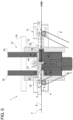
Figure 1 is a perspective view of a cutting and conveying apparatus in accordance with the present invention; -
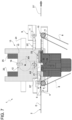
Figure 2 is a perspective and sectional view of the cutting and conveying apparatus ofFigure 1 ; -
Figure 3 is a front and schematic view of a part of an automated machine for producing electrical energy storage devices comprising two apparatuses ofFigure 1 ; and -
Figures 4 to 7 illustrate schematic front views of different operating steps of the apparatus ofFigure 1 . - In the appended figures, reference numeral 1 indicates, as a whole, an apparatus for cutting and conveying a
strip 2 of material for producing electrical energy devices. - In particular, the following description will explicitly refer to the, advantageous but not exclusive, use of the apparatus 1 for cutting and conveying an electrode (anode or cathode) strip, and even more particularly for producing capacitors or cylindrical or oval rechargeable batteries, for example of the jelly roll type. In this case, advantageously but not limitedly, the cutting and conveying apparatus is used for cutting the electrode strip so as to allow, with a flap, the closure of a winding in winding step, and for conveying the other flap so as to insert it into the next winding.
- Advantageously but not necessarily, the
strip 2 of material is astrip 2 of electrode E. In other non-limiting cases, thestrip 2 is one or more separator strips or a strip of electrode/separator composite material. - The apparatus 1 comprises an
actuator system 3 and a conveying unit 4, which in turn comprises apair 5 of opposing rollers 6 between which thestrip 2 of material transits and of which at least one roller 6 is rotatably operable by theactuator system 3, so as to move thestrip 2 along a conveying path CP. In particular, thepair 5 of rollers 6 partially compresses thestrip 2 of material, so as to be able to drag/push it by friction. - In the non-limiting embodiment of
Figure 1 , the rotatably operable roller 6 is the bottom roller. - In other non-limiting embodiments, the rotatably operable roller 6 is the top roller 6. In further non-limiting embodiments, both rollers 6 of the
pair 5 are rotatably operable with respective opposite synchronous motions. - In the non-limiting embodiment of
Figures 1 and2 , theactuator system 3 is anelectric motor 7, in particular brushless. In other non-limiting embodiments, theactuator system 3 is an electric motor of a different type or arranged differently, for example at or inside the motorized (i.e. rotatably operable) roller 6. - Advantageously but not necessarily, the apparatus 1 comprises motion transmission means configured to space the roller 6 apart from the
motor 7. In such manner, theelectric motor 7 moves in rotation the roller 6, which can be made with a reduced diameter (for example less than 30 mm). According to the non-limiting embodiment ofFigures 1 and2 , the motion transmission means aretoothed belts 8. Obviously, it is possible to use other known means for the transmission of the motion such as flat belts, axle bearings, gearwheels... - Advantageously, the apparatus 1 also comprises a conveying
unit 9, arranged downstream (along the conveying path CP) of the conveying unit 4 and it too comprising apair 10 ofopposing rollers 11 between which saidstrip 2 of material transits. Theconveying unit 9 allows providing support to thestrip 2 of material up to the proximity of a subsequent (for example winding) station so as to facilitate the insertion of the strip of material providing a suitable support. - The apparatus 1 further comprises a
cutting unit 12, arranged, along the conveying path CP, between the conveying unit 4 and theconveying unit 9. In particular, thecutting unit 12 comprises (at least) onesupport element 13, which in turn comprises a portion 14 (illustrated in a dark grey colour in the appended figures) movable along a direction PD parallel to the conveying path CP, and a portion 15 (illustrated in a light grey colour in the appended figures) movable along a direction TD transverse (preferably perpendicular) to the conveying path. - The
cutting unit 12 further comprises ablade 16, mounted on board theportion 15 of thesupport element 13 and configured to transversely (preferably perpendicularly) cut thestrip 2 of material during the movement of theportion 15 of thesupport element 13. Advantageously but not necessarily, theblade 16 is integral with theportion 15 of thesupport element 13. - Advantageously, the
portion 14 of the support element and theportion 15 of the support element are configured to move at least partially synchronously along the direction D parallel to the conveying path CP. In particular, in such manner, theportion 14 of the support element and theportion 15 of the support element are configured to move for at least a section of their motion, more precisely during the cutting, at the same linear speed as thestrip 2 of material along the direction PD. - Preferably, the cutting and conveying apparatus 1 further comprises an
actuator system 17 configured to cause, by means of a rotary motion, an intermittent motion of at least theportion 14 of thesupport element 13. In particular, theactuator system 17 comprises an electric motor M, preferably of the brushless type. - Advantageously but not necessarily, the
portion 15 of thesupport element 13 is supported by theportion 14 of thesupport element 13, in particular wherein theportion 14 of the support element is slidingly coupled to theportion 15 of the support element. - In the non-limiting embodiment of
Figures 1 and2 , theportion 14 and theportion 15 are slidingly coupled so as to be able to move relatively (i.e. with respect to each other) along the direction TD. Preferably, theportion 14 and theportion 15 are slidingly coupled by means of linear guides 24 (for example, complementary or with intermediate sliding elements). Sliding along thelinear guides 24, theportion 15 moves transversely to thestrip 2 of electrode E so as to cut it along the conveying path CP, into aflap 21 upstream of theblade 16 and a flap 21' downstream of theblade 16. - In particular, the
linear guides 24 are coupled to each other and arranged along a direction parallel to the direction TD, preferably they are perpendicular to the conveying path CP. - Advantageously but not necessarily, as illustrated in
Figures 1 and2 , thesupport element 13 comprises a base body 18 (in particular on which theactuator system 17 is mounted, for example a machine plate or any element that is substantially fixed to/integral with a machine frame). In particular, theportion 14 of thesupport element 13 is supported by thebase body 18. More specifically, theportion 14 of thesupport element 13 is slidingly coupled to thebase body 18. - In the non-limiting embodiment of
Figures 1 and2 , theportion 14 and thebody 18 are slidingly coupled so as to be able to move relatively (i.e. with respect to each other) along the direction PD. Preferably, theportion 14 and thebody 18 are slidingly coupled by means of linear guides 25 (for example, complementary or with intermediate sliding elements). Sliding along thelinear guides 25, theportion 14 moves parallel to thestrip 2 of electrode E so as to support it along the conveying path CP, before and after the cutting. In particular, theportion 14 is configured to support at least theflap 21 upstream of theblade 16, preferably also the flap 21' downstream of theblade 16. - According to the non-limiting embodiments of the appended figures, the cutting
unit 12 comprises a counter-blade 19 mounted on board thesupport element 13, in particular on board theportion 14, and is configured to assist theblade 16 in cutting the strip (2) of material, more in particular by providing a contrast. Obviously, it is understood that the blade and counter-blade can be exchanged with each other without thereby departing from the scope of protection of the present application. - In particular, the counter-blade 19 is arranged transversely to the strip of material and at an average distance of less than 10 mm (preferably less than 5 mm) from the same.
- Advantageously but not necessarily, the apparatus 1 is configured so that the distance between the counter-blade 19 and the conveying path CP of the
strip 2 is substantially constant. - Advantageously but not necessarily, the counter-blade 19 is integral with the
portion 14 of thesupport element 13. - According to some advantageous non-limiting embodiments, like those illustrated in the appended figures, the apparatus 1 comprises at least one
support element 20 configured to support and accompany, upstream or downstream (of theblade 16 or) of the counter-blade 19, theflap 21, 21' of thestrip 2 of material once the same has been cut. In such manner, it is possible to support theflaps 21, 21' after the cutting and for the next insertion. Specifically, theflaps 21, 21', in the absence of a support, tend to bend slightly in the cutting direction TD (when the blade is lowered), which makes the subsequent insertion of theflap 21 for the production of the next winding difficult. - In the non-limiting embodiment of
Figure 1 , thesupport element 20 comprises at least a (fixed or movable)rest element 22 upstream of the counter-blade 19 and preferably integral with theportion 14. In such manner, after the cutting, theelement 22 acts both as a rest in order to prevent a bending of theflap 21, and as a guide element in order to convey theflap 21 towards the next winding, i.e. towards the conveyingunit 9. Preferably, therest element 22 is arranged at (i.e. at a distance less than 50 mm, preferably less than 20 mm from) the counter-blade 19. Specifically, the closer theelement 22 is to the counter-blade 19, the better the support provided to theflap 21. In particular, theelement 22 has a bevelled oblong shape and is arranged transversely (perpendicularly) to the conveying path CP. - Advantageously but not necessarily, the
support element 20 comprises at least one (fixed or movable) rest element 22' upstream of the counter-blade 19 and preferably integral with the conveying unit 4. In such manner, the element 22' acts both as a rest (especially in the case of vertical conveying paths, as illustrated in the following) in order to prevent a bending of theflap 21, and as a guide element in order to convey theflap 21 towards the next winding, i.e. towards the conveyingunit 9. - Preferably, the rest element 22' is arranged at (i.e. at a distance less than 50 mm, preferably less than 20 mm from) the rollers 6. Specifically, the closer the element 22' is to the rollers 6, the better the guidance provided to the
strip 2 of material. In particular, the element 22' has a bevelled oblong shape and is arranged transversely (perpendicularly) to the conveying path CP, preferably on the same side as theblade 16, i.e. on the side opposite theelement 22. - Alternatively or additionally, and as illustrated in the non-limiting embodiment of
Figure 1 , thesupport element 20 further comprises acomb clamp 23. - Preferably, the
clamp 23 is arranged downstream of the counter-blade 19 and is integral with theportion 14. In particular, thecomb clamp 23 has its teeth facing a comb clamp 23' complementary to thecomb clamp 23 and integral with the conveyingunit 10. - The comb clamps 23, 23' allow both supporting the flap 21' after the cutting of the
strip 2 of electrode, and facilitating the insertion of theflap 21 towards the conveyingunit 10, between therollers 11, i.e. towards the next winding. - Advantageously but not necessarily, in the
pair 10 ofrollers 11, at least oneroller 11 is rotatably operable, in particular synchronously with the operated roller 6, so as to move saidstrip 2 along the conveying path CP. In such manner, it is possible to move close, to the winding in which thestrip 2 is to be inserted, the dragging point of thestrip 2 from the conveying unit 4 towards the conveyingunit 10. - In some preferred non-limiting cases, the
pair 5 of rollers 6 and/or thepair 10 ofrollers 11 are configured to be opened (independently of each other), in particular following the cutting so as to accommodate thecut flap 21 of the strip of material advanced by means of the conveying unit 4. In such manner, for example, the comb clamps 23, 23', cooperating, support theflap 21 until transiting between theopen rollers 11, allowing, following the closure of thepair 10 ofrollers 11, dragging thestrip 2 inserting theflap 21 into the next winding. - Alternatively or additionally, the
pair 5 of rollers 6 and/or thepair 10 ofrollers 11 are configured to be opened (independently of each other) during a winding step of thestrip 2. In such manner, it is possible to reduce the stress on thestrip 2 of material currently in winding step. - In the non-limiting embodiment shown in the appended figures, the
portion 15 of thesupport element 13 is configured to perform a substantially circular movement (in particular a translation). In particular, theportion 14 of thesupport element 13 is simultaneously configured to perform a substantially intermittent linear movement parallel to the direction PD. More in particular, theportion 14 of theelement 13 and theportion 15 of theelement 13 are configured to move at the same linear speed along the direction PD, more precisely, during the entire cutting step, theportion 14 of theelement 13 and theportion 15 of theelement 13 are configured to move at the same linear speed as thestrip 2 of material along the conveying path CP. - Advantageously but not necessarily, and as illustrated in the non-limiting embodiments of the appended figures, the
portion 14 and theportion 15 of thesupport element 13 are both moved by theactuator system 17. - In the non-limiting embodiment of
Figures 1 and2 , theactuator system 17 is directly connected only to theportion 15 of theelement 13. - In particular, as illustrated in the non-limiting embodiment of
Figure 2 , the apparatus 1 comprises aneccentric element 26, which connects, by means of a rotating element such as abearing 28, the actuator system 17 (i.e. the motor M) to theportion 15 of theelement 13. In such manner, the circular (eccentric) movement of theportion 15, thus of theblade 16, corresponds to the rotation of the motor M (taking into account potential reductions). More in particular, theeccentric element 26 is a crank element. - According to the non-limiting embodiment of
Figure 2 , theportion 14 of theelement 13 comprises a through-slot 27, passed through by theeccentric element 26, which, during the rotation of theactuator system 17 moves inside theslot 27. In particular, theslot 27 has an elongated shape along the direction TD. - In use, the rotation of the motor M determines, by means of the
eccentric element 26, a circular movement (translation) of theblade 16. Such circular movement is possible thanks to the sliding coupling generated by thelinear guides 24 and 25 (which determine the two degrees of freedom necessary for theportion 15 to move in a circular manner). - At the same time, still due to the sliding coupling generated by the
linear guides portion 14 is interposed between thebase body 18 and the portion 15 (operated directly by the actuator system 17). In such manner, theportion 14 has a single degree of freedom thanks to the linear guides 25. Therefore, theportion 14, upon the circular movement of theportion 15, will move with a linear movement along the direction PD and parallel to the conveying path CP. - Therefore, in use, the
strip 2 is conveyed at a substantially constant speed (by the unit 4 and/or dragged by the rotation of the winding in which it is engaged). At the moment of the closing of the winding, thestrip 2, for example of electrode E, must be cut with relative precision, so as to meet the requirements of the client. Once the predefined length has been reached, theactuator system 17 starts working, operating the motor M and bringing the portion 15 (and therefore pushing also the portion 14) to a speed such to have a component parallel to the direction PD equal to the speed of thestrip 2. As the movement of the motor M continues, the cuttingunit 12 divides thestrip 2 into twoflaps 21 and 21', which respectively lay down at theelement 22 and at the comb clamps 23. In some embodiments, the conveying unit 4 immediately slows theflap 21 down letting it rest on theelement 22, in other non-limiting embodiments, the conveying unit 4 gently pushes theflap 21, as soon as the cutting is completed, up to engaging at least the comb clamps 23 (so as to have support in order to subsequently engage the clamps 23' and thepair 10 of rollers 11). In the meantime, the flap 21' is returned by the winding being formed. Subsequently, theflap 21 is pushed by the conveying unit 4 and/or by the conveyingunit 9 into the next winding. As soon as theflap 21 has been grasped by the strips of separator S of the next winding, the cutting unit returns to a waiting position that allows reaching again, at the moment of the next cutting, the linear speed of thestrip 2 of material to be cut. - In accordance with a further aspect of the present invention, a machine 30 (at least partially illustrated in
Figure 3 ) for producing electrical energy storage devices comprising at least one apparatus 1 according to the foregoing description is provided. Preferably, themachine 30 comprises two apparatuses 1, respectively for the cathode E' and the anode E". - In particular, the
machine 30 comprises a feeding system 31 (for eachstrip 2, i.e. for each electrode E', E"), configured to feed, in particular at a constant speed, thestrip 2 of material to be wound along the conveying path CP. - Preferably, the
machine 30 also comprises a windingapparatus 32 comprising a core 33 on which to wind thestrip 2 of material forming a winding 34. In particular, the winding 34 is formed by winding around the core 33 the two electrodes E', E" , interspersed with two strips of separator material S. In particular, themachine 30 further comprises agripping unit 35 and acutting unit 36, respectively configured to grasp and cut the strips of separator S. - Advantageously but not necessarily, the cathode E' is inserted between the two separators S, while the anode E" is inserted in an independent manner as the innermost layer of the four (i.e. the two electrodes and the two separators) . In such manner, thanks to the independence in the management of the electrodes E' and E", it is possible to close the winding 34 with one or more turns of outer anode E'' (anyway inside a closure of separator S, but without having the cathode E' facing it).
- In the non-limiting embodiment of
Figure 3 , the cathode E' is inserted into the winding 34 from a direction substantially perpendicular to the one from which the anode E" is inserted. - According to a further non-limiting embodiment not illustrated, the
machine 30 comprises a further pair of rollers (idle or motorized) arranged downstream of the conveyingunit 9, before the winding 34. - In particular, this further pair of rollers is arranged at a distance of no more than 150 mm, preferably no more than 100 mm, from the
rollers 11 of the conveyingunit 9. Preferably, the further pair of rollers is provided along the feeding path of the anode. - In accordance with a further aspect of the present invention, a method for producing electrical energy storage devices using a cutting and conveying apparatus 1 according to the foregoing description and/or a machine 50 according to the foregoing description is provided.
- In particular, the method comprising the steps of:
- conveying the
strip 2 of material by means of the conveying unit 4 comprising thepair 5 of opposing rollers 6 driving in rotation at least one roller 6 so as to move thestrip 2 along the conveying path CP; - supporting by means of the conveying
unit 9 comprising thepair 10 ofrollers 11 opposite thestrip 2 of material; - cutting the
strip 2 of material by means of the cuttingunit 12 placed between the conveying unit 4 and the conveyingunit 9, and comprising thesupport element 13, which comprises in turn theportion 14 movable along the direction PD parallel to the conveying path CP, and theportion 15 movable along the direction TD transverse to the conveying path CP; wherein the cuttingunit 12 comprises theblade 16, mounted on board theportion 15 of thesupport element 13, which cuts transversely thestrip 2 of material during the movement of theportion 15 of thesupport element 13. - Advantageously, the
portion 14 of thesupport element 13 and theportion 15 of thesupport element 13 are moved (at least partially) synchronously along the direction PD parallel to the conveying path CP. - In particular, during the cutting step, the
actuator system 17 is rotatably controlled so as to cause, by means of a rotary motion, an intermittent motion of at least theportion 14 of thesupport element 13. - Advantageously but not necessarily, the method comprises the further step of winding the
strip 2 of electrode E around the winding core 33 to form the winding 34. - In some preferred non-limiting cases, the method comprises the step of controlling the
actuator system 17 so as to move (translate) theportions actuator system 17 is controlled to move theportion 15 only, whereas theportion 14 is consequently dragged by means of thelinear guides - Specifically, the
linear guides 24 constrain theportion 14 to move along the linear guides 25. - Advantageously but not necessarily, the
actuator system 17 is moved with a motion profile comprising at least two sub-steps: a cutting step and a recovery step. In particular, during the cutting step, thesystem 17 is controlled so as to move theportion 14 and/or theportion 15 with a speed having a component along the direction PD that is substantially constant, specifically equal to the winding speed of thestrip 2. More in particular, during the recovery step, thesystem 17 is controlled so as to move theportion 14 and/or theportion 15 with a speed having a component along the direction PD that is variable and different from the speed of thestrip 2. - Advantageously but not necessarily, as soon as the
strip 2 of material is cut, the conveyingunit 9 is opened (seeFigure 7 ). In particular, preferably, theflap 21 continues to be pushed by the conveying unit 4 until it engages (reaches and stops at) therollers 11 or in any case thecomb clamp 23, 23'. - Preferably, after the cutting, the
flap 21, upon reaching the conveyingunit 9 awaits the arrival of a new core 33. After the arrival of the new core 33, the unit 4 and/or theunit 9 is controlled for inserting thestrip 2 into the new winding 34 around the new core 33. - In use, the
material 2 is fed to the apparatus 1 in the form of a strip. In particular, thestrip 2 is both conveyed by the conveying unit 4 and/or 9, and dragged by the core 33 which rotates for forming the winding 34 recalling thestrip 2. When it is time to cut thestrip 2 in order to complete the winding 34, theactuator system 17 is activated (seeFigures 4-7 ), which, by rotating around the axis AX, moves theportion 15 and thus theblade 16. At the same time, theactuator system 17 moves theportion 14 and thus the counter-blade 19 and thesupport element 20. - Advantageously but not necessarily, the moment when the
strip 2 is cut is when theblade 16 is located at the lowest position in its circular path, engaging the counter-blade 19. As mentioned above, the flap 21' is returned by the rotation of the core 33, whereas theflap 21 is stopped while it waits for a new core. - Although the invention described above makes particular reference to a very specific example embodiment, it is not to be considered limited to such example embodiment, falling within its scope all the variations, modifications or simplifications covered by the appended claims, such as, for example, a different geometry or composition of the machine, a different type of actuator systems, a different type of cutting, etc.
- The apparatuses, the machine and the method described above entail numerous advantages.
- First of all, they allow cutting a strip that is wound at very high speed (hundreds of mm per second), since the limits imposed by the alternating motion of the linear motors currently in use are overcome as the motor M is controlled with a one-directional rotary motion.
- Additionally, the bulks can be considerably reduced, since it will no longer be necessary to ensure a certain distance for the braking of the system according to the prior art, as the gripping elements (i.e. the rollers 6 and 11) are fixed and the blade, by continuing its circular motion, leaves the conveying path without requiring further bulk.
- Moreover, contrary to the known rotary cutting with blade and counter-blade mounted on two respective drums, the present invention allows constantly supporting the strip, so as to greatly reduce the risk that the electrode can be ruined or that it can fail the insertion at the next core.
- A further advantage of the present invention lies in bringing the insertion point (for example the
rollers 11 or the further rollers described above in the case of the anode) closer to the core, thus simplifying the insertion operations and making them more reliable, preventing the presence of long flaps of material that are difficult to control.
Claims (15)
- Apparatus (1) for cutting and conveying a strip (2) of material for producing electrical energy storage devices; the apparatus (1) comprises:- a first conveying unit (4) configured to convey said strip (2) along a conveying path (CP);- a cutting unit (12), arranged downstream of the first conveying unit (4) and characterised by comprising a support element (13), which comprises in turn a first portion (14) movable along a first direction (PD) parallel to the conveying path (CP), and a second portion (15) movable at least along a second direction (TD) transverse to the conveying path (CP); the cutting unit (12) further comprising a blade (16), mounted on board the second portion (15) of the support element (13) and configured to transversely cut the strip (2) of material during the movement of the second portion (15) of the support element (13);wherein the first portion (14) of the support element (13) and the second portion (15) of the support element (13) are configured to move at least partially synchronously along the direction (PD) parallel to the conveying path (CP);the cutting and conveying apparatus (1) further comprising a first actuator system (17) configured to cause, by means of a rotary motion, an intermittent motion of at least the first portion (14) of the support element (13).
- Apparatus (1) according to claim 1 and comprising a second actuator system (3); and comprising a first conveying unit (4), which comprises a first pair (5) of opposing rollers (6) between which said strip (2) of material transits and of which at least one first roller is rotatably operable by the second actuator system (3), which is configured to move said strip (2) along the conveying path (CP); in particular, the apparatus (1) comprises a second conveying unit (9), arranged downstream of the first conveying unit (4) and comprising a second pair (10) of opposing rollers (11) between which said strip (2) of material transits; in particular, the cutting unit (12) is arranged between the first conveying unit (4) and the second conveying unit (9).
- Apparatus (1) according to claim 1 or 2, wherein the second portion (15) of the support element (13) is supported by the first portion (14) of the support element (13), in particular wherein the second portion (15) of the support element (13) is slidingly coupled to the first portion (14) of the support element (13).
- Apparatus (1) according to any one of the preceding claims, wherein the support element (13) comprises a base body (18); and wherein the first portion (14) of the support element (13) is supported by the base body (18), in particular wherein the first portion (14) of the support element (13) is slidingly coupled to the base body (18).
- Apparatus (1) according to any one of the preceding claims, wherein the blade (16) is integral with the second portion (15) of the support element (13).
- Apparatus (1) according to any one of the preceding claims, wherein the cutting unit (12) comprises a counter-blade (19) mounted on board the support element (13), in particular on board the first portion (14), and configured to assist the blade (16) in cutting the strip (2) of material by providing a contrast; in particular, wherein the counter-blade (19) is integral with the first portion (14) of the support element (13).
- Apparatus (1) according to any one of the preceding claims and comprising at least one support element (20) configured to support and accompany, upstream or downstream of the counter-blade (19), a flap (21, 21') of the strip (2) of material once the same has been cut.
- Apparatus (1) according to any one of the preceding claims, wherein, in the second pair (10) of rollers (11), at least one second roller is rotatably operable, in particular synchronously with the first roller, so as to move said strip (2) along the conveying path (CP).
- Apparatus (1) according to any one of the preceding claims, wherein the first and/or the second pair (10) of rollers (6, 11) is configured to be opened, in particular following the cutting so as to accommodate a cut flap (21, 21') of the strip (2) of material advanced by means of the first conveying unit (4).
- Apparatus (1) according to any one of the preceding claims, wherein the strip (2) of material is a strip (2) of electrode (E).
- Apparatus (1) according to any one of the preceding claims wherein the second portion (15) of the support element (13) is configured to perform a substantially circular movement.
- Apparatus (1) according to any one of the preceding claims, wherein the first portion (14) and the second portion (15) of the support element (13) are both moved by the first actuator system (17).
- A machine (30) for producing electrical energy storage devices comprising: an apparatus (1) according to any one of claims 1 to 12; a feeding system (31), configured to feed a strip (2) of material to be wound along the conveying path (CP); and a winding apparatus (1) comprising a core (33) on which to wind the strip (2) of material forming a winding (34).
- A method for producing electrical energy storage devices comprises the steps of:- conveying a strip (2) of material by means of a first conveying unit (4) comprising a first pair (5) of opposing rollers (6) driving in rotation at least a first roller so as to move said strip (2) along a conveying path (CP) ;- supporting by means of a second conveying unit (9) comprising a second pair (10) of rollers (11) opposite said strip (2) of material;- cutting the strip (2) of material by means of a cutting unit (12) placed between the first conveying unit (4) and the second conveying unit (9), and characterised by comprising a support element (13), which comprises in turn a first portion (14) movable along a first direction (PD) parallel to the conveying path (CP), and a second portion (15) movable at least along a second direction (TD) transverse to the conveying path (CP); wherein the cutting unit (12) further comprises a blade (16), mounted on board the second portion (15) of the support element (13), which cuts transversely the strip (2) of material during the movement of the second portion (15) of the support element (13);wherein the first portion (14) of the support element (13) and the second portion (15) of the support element (13) are moved at least partially synchronously along the direction (PD) parallel to the conveying path (CP);wherein, during the cutting step, a first actuator system (17) is rotatably controlled so as to cause, by means of a rotary motion, an intermittent motion of at least the first portion (14) of the support element (13).
- Method according to claim 14, wherein the strip (2) of material is a strip (2) of electrode (E); the method comprising the further step of winding said strip (2) of electrode (E) around a winding core (33).
Applications Claiming Priority (2)
| Application Number | Priority Date | Filing Date | Title |
|---|---|---|---|
| IT102021000009248A IT202100009248A1 (en) | 2021-04-13 | 2021-04-13 | EQUIPMENT FOR CUTTING AND CONVEYING A BELT OF MATERIAL AND RELATED METHOD FOR THE PRODUCTION OF ELECTRIC ENERGY STORAGE DEVICES |
| PCT/IB2022/053458 WO2022219549A1 (en) | 2021-04-13 | 2022-04-13 | Apparatus for cutting and conveying a strip of material and relative method for producing electrical energy storage devices |
Publications (2)
| Publication Number | Publication Date |
|---|---|
| EP4323162A1 EP4323162A1 (en) | 2024-02-21 |
| EP4323162B1 true EP4323162B1 (en) | 2024-09-04 |
Family
ID=76921126
Family Applications (1)
| Application Number | Title | Priority Date | Filing Date |
|---|---|---|---|
| EP22718806.7A Active EP4323162B1 (en) | 2021-04-13 | 2022-04-13 | Apparatus for cutting and conveying a strip of material and relative method for producing electrical energy storage devices |
Country Status (6)
| Country | Link |
|---|---|
| US (1) | US20240198553A1 (en) |
| EP (1) | EP4323162B1 (en) |
| HU (1) | HUE068159T2 (en) |
| IT (1) | IT202100009248A1 (en) |
| PL (1) | PL4323162T3 (en) |
| WO (1) | WO2022219549A1 (en) |
Families Citing this family (1)
| Publication number | Priority date | Publication date | Assignee | Title |
|---|---|---|---|---|
| IT202300024321A1 (en) * | 2023-11-16 | 2025-05-16 | Ima Spa | METHOD FOR MANUFACTURING ELECTRIC ENERGY STORAGE DEVICES AND RELATED WINDING MACHINE FOR MANUFACTURING SUCH DEVICES |
Citations (1)
| Publication number | Priority date | Publication date | Assignee | Title |
|---|---|---|---|---|
| WO2021209923A1 (en) * | 2020-04-14 | 2021-10-21 | Manz Italy S.R.L. | Support apparatus and method for the production of electric energy storage devices |
Family Cites Families (1)
| Publication number | Priority date | Publication date | Assignee | Title |
|---|---|---|---|---|
| WO2019092585A2 (en) * | 2017-11-13 | 2019-05-16 | Manz Italy S.R.L. | Assembly of electrodes |
-
2021
- 2021-04-13 IT IT102021000009248A patent/IT202100009248A1/en unknown
-
2022
- 2022-04-13 US US18/554,723 patent/US20240198553A1/en active Pending
- 2022-04-13 HU HUE22718806A patent/HUE068159T2/en unknown
- 2022-04-13 WO PCT/IB2022/053458 patent/WO2022219549A1/en not_active Ceased
- 2022-04-13 EP EP22718806.7A patent/EP4323162B1/en active Active
- 2022-04-13 PL PL22718806.7T patent/PL4323162T3/en unknown
Patent Citations (1)
| Publication number | Priority date | Publication date | Assignee | Title |
|---|---|---|---|---|
| WO2021209923A1 (en) * | 2020-04-14 | 2021-10-21 | Manz Italy S.R.L. | Support apparatus and method for the production of electric energy storage devices |
Also Published As
| Publication number | Publication date |
|---|---|
| WO2022219549A1 (en) | 2022-10-20 |
| US20240198553A1 (en) | 2024-06-20 |
| EP4323162A1 (en) | 2024-02-21 |
| IT202100009248A1 (en) | 2022-10-13 |
| HUE068159T2 (en) | 2024-12-28 |
| PL4323162T3 (en) | 2024-11-25 |
Similar Documents
| Publication | Publication Date | Title |
|---|---|---|
| EP4136695B1 (en) | Support apparatus and method for the production of electric energy storage devices | |
| KR20050096923A (en) | An architecture for a device for winding an electric energy storage assembly | |
| ITMO20110034A1 (en) | CUTTING APPARATUS | |
| CN103311577A (en) | Winding device | |
| EP4323162B1 (en) | Apparatus for cutting and conveying a strip of material and relative method for producing electrical energy storage devices | |
| IT202100021314A1 (en) | APPARATUS AND RELATED METHOD OF WINDING TAPES OF MATERIAL FOR THE PRODUCTION OF ELECTRIC ENERGY STORAGE DEVICES | |
| CN118591913A (en) | Manufacturing machine and method for manufacturing cylindrical electrochemical cells | |
| EP3446353B1 (en) | Winding apparatus | |
| WO2022254391A1 (en) | Apparatus for cutting and conveying a strip of material for the production of electrical energy storage devices and relative method | |
| US20240208101A1 (en) | Automatic machine for the production of electrical energy storage devices starting from at least one strip of material and motion transmission assembly | |
| CN215625782U (en) | Material belt processing equipment | |
| CN112271320B (en) | Winding machine | |
| EP4094280B1 (en) | Winding apparatus and method for the production of power storage devices | |
| CN214030832U (en) | Mica Sheet Winding Machine | |
| KR20170032270A (en) | Slitter for cutting cord band | |
| KR20250023696A (en) | Electrode notching system of secondary battery using dynamic buffer | |
| CN119013879A (en) | Assembly for tensioning wires forming an electrical winding component | |
| CN119953928A (en) | Winding machine and method of using the same | |
| IT202300008721A1 (en) | COIL LOADING APPARATUS, RELATED MACHINE COMPRISING THE LOADING APPARATUS AND METHOD FOR MANUFACTURING ELECTRIC ENERGY STORAGE DEVICES | |
| IT202300009891A1 (en) | Winding apparatus and method for winding together one or more ribbon separators and electrode sheets | |
| IT202000007840A1 (en) | WINDING APPARATUS AND METHOD FOR THE PRODUCTION OF ELECTRICITY STORAGE DEVICES | |
| IT202000007849A1 (en) | SUPPORT APPARATUS AND METHOD FOR THE PRODUCTION OF ELECTRICITY STORAGE DEVICES | |
| ITRE970072A1 (en) | LABELING MACHINE FOR IRREGULAR ELONGATED FORM PRODUCTS |
Legal Events
| Date | Code | Title | Description |
|---|---|---|---|
| STAA | Information on the status of an ep patent application or granted ep patent |
Free format text: STATUS: UNKNOWN |
|
| STAA | Information on the status of an ep patent application or granted ep patent |
Free format text: STATUS: THE INTERNATIONAL PUBLICATION HAS BEEN MADE |
|
| PUAI | Public reference made under article 153(3) epc to a published international application that has entered the european phase |
Free format text: ORIGINAL CODE: 0009012 |
|
| STAA | Information on the status of an ep patent application or granted ep patent |
Free format text: STATUS: REQUEST FOR EXAMINATION WAS MADE |
|
| 17P | Request for examination filed |
Effective date: 20231020 |
|
| AK | Designated contracting states |
Kind code of ref document: A1 Designated state(s): AL AT BE BG CH CY CZ DE DK EE ES FI FR GB GR HR HU IE IS IT LI LT LU LV MC MK MT NL NO PL PT RO RS SE SI SK SM TR |
|
| REG | Reference to a national code |
Ref country code: DE Ref legal event code: R079 Free format text: PREVIOUS MAIN CLASS: B26D0001400000 Ipc: B26D0001000000 Ref country code: DE Ref legal event code: R079 Ref document number: 602022005899 Country of ref document: DE Free format text: PREVIOUS MAIN CLASS: B26D0001400000 Ipc: B26D0001000000 |
|
| GRAP | Despatch of communication of intention to grant a patent |
Free format text: ORIGINAL CODE: EPIDOSNIGR1 |
|
| STAA | Information on the status of an ep patent application or granted ep patent |
Free format text: STATUS: GRANT OF PATENT IS INTENDED |
|
| RIC1 | Information provided on ipc code assigned before grant |
Ipc: H01G 11/84 20130101ALI20240319BHEP Ipc: B65H 35/08 20060101ALI20240319BHEP Ipc: B65H 35/06 20060101ALI20240319BHEP Ipc: B26D 7/32 20060101ALI20240319BHEP Ipc: B26D 5/20 20060101ALI20240319BHEP Ipc: B26D 1/40 20060101ALI20240319BHEP Ipc: B26D 1/04 20060101ALI20240319BHEP Ipc: B26D 1/00 20060101AFI20240319BHEP |
|
| DAV | Request for validation of the european patent (deleted) | ||
| DAX | Request for extension of the european patent (deleted) | ||
| INTG | Intention to grant announced |
Effective date: 20240404 |
|
| GRAS | Grant fee paid |
Free format text: ORIGINAL CODE: EPIDOSNIGR3 |
|
| P01 | Opt-out of the competence of the unified patent court (upc) registered |
Free format text: CASE NUMBER: APP_37910/2024 Effective date: 20240625 |
|
| GRAA | (expected) grant |
Free format text: ORIGINAL CODE: 0009210 |
|
| STAA | Information on the status of an ep patent application or granted ep patent |
Free format text: STATUS: THE PATENT HAS BEEN GRANTED |
|
| AK | Designated contracting states |
Kind code of ref document: B1 Designated state(s): AL AT BE BG CH CY CZ DE DK EE ES FI FR GB GR HR HU IE IS IT LI LT LU LV MC MK MT NL NO PL PT RO RS SE SI SK SM TR |
|
| REG | Reference to a national code |
Ref country code: GB Ref legal event code: FG4D |
|
| REG | Reference to a national code |
Ref country code: CH Ref legal event code: EP |
|
| REG | Reference to a national code |
Ref country code: IE Ref legal event code: FG4D |
|
| REG | Reference to a national code |
Ref country code: DE Ref legal event code: R096 Ref document number: 602022005899 Country of ref document: DE |
|
| REG | Reference to a national code |
Ref country code: SE Ref legal event code: TRGR |
|
| REG | Reference to a national code |
Ref country code: LT Ref legal event code: MG9D |
|
| REG | Reference to a national code |
Ref country code: HU Ref legal event code: AG4A Ref document number: E068159 Country of ref document: HU |
|
| REG | Reference to a national code |
Ref country code: NL Ref legal event code: MP Effective date: 20240904 |
|
| PG25 | Lapsed in a contracting state [announced via postgrant information from national office to epo] |
Ref country code: NO Free format text: LAPSE BECAUSE OF FAILURE TO SUBMIT A TRANSLATION OF THE DESCRIPTION OR TO PAY THE FEE WITHIN THE PRESCRIBED TIME-LIMIT Effective date: 20241204 |
|
| PG25 | Lapsed in a contracting state [announced via postgrant information from national office to epo] |
Ref country code: GR Free format text: LAPSE BECAUSE OF FAILURE TO SUBMIT A TRANSLATION OF THE DESCRIPTION OR TO PAY THE FEE WITHIN THE PRESCRIBED TIME-LIMIT Effective date: 20241205 Ref country code: FI Free format text: LAPSE BECAUSE OF FAILURE TO SUBMIT A TRANSLATION OF THE DESCRIPTION OR TO PAY THE FEE WITHIN THE PRESCRIBED TIME-LIMIT Effective date: 20240904 |
|
| PG25 | Lapsed in a contracting state [announced via postgrant information from national office to epo] |
Ref country code: BG Free format text: LAPSE BECAUSE OF FAILURE TO SUBMIT A TRANSLATION OF THE DESCRIPTION OR TO PAY THE FEE WITHIN THE PRESCRIBED TIME-LIMIT Effective date: 20240904 |
|
| PG25 | Lapsed in a contracting state [announced via postgrant information from national office to epo] |
Ref country code: LV Free format text: LAPSE BECAUSE OF FAILURE TO SUBMIT A TRANSLATION OF THE DESCRIPTION OR TO PAY THE FEE WITHIN THE PRESCRIBED TIME-LIMIT Effective date: 20240904 |
|
| PG25 | Lapsed in a contracting state [announced via postgrant information from national office to epo] |
Ref country code: HR Free format text: LAPSE BECAUSE OF FAILURE TO SUBMIT A TRANSLATION OF THE DESCRIPTION OR TO PAY THE FEE WITHIN THE PRESCRIBED TIME-LIMIT Effective date: 20240904 |
|
| PG25 | Lapsed in a contracting state [announced via postgrant information from national office to epo] |
Ref country code: RS Free format text: LAPSE BECAUSE OF FAILURE TO SUBMIT A TRANSLATION OF THE DESCRIPTION OR TO PAY THE FEE WITHIN THE PRESCRIBED TIME-LIMIT Effective date: 20241204 Ref country code: ES Free format text: LAPSE BECAUSE OF FAILURE TO SUBMIT A TRANSLATION OF THE DESCRIPTION OR TO PAY THE FEE WITHIN THE PRESCRIBED TIME-LIMIT Effective date: 20240904 |
|
| PG25 | Lapsed in a contracting state [announced via postgrant information from national office to epo] |
Ref country code: RS Free format text: LAPSE BECAUSE OF FAILURE TO SUBMIT A TRANSLATION OF THE DESCRIPTION OR TO PAY THE FEE WITHIN THE PRESCRIBED TIME-LIMIT Effective date: 20241204 Ref country code: NO Free format text: LAPSE BECAUSE OF FAILURE TO SUBMIT A TRANSLATION OF THE DESCRIPTION OR TO PAY THE FEE WITHIN THE PRESCRIBED TIME-LIMIT Effective date: 20241204 Ref country code: LV Free format text: LAPSE BECAUSE OF FAILURE TO SUBMIT A TRANSLATION OF THE DESCRIPTION OR TO PAY THE FEE WITHIN THE PRESCRIBED TIME-LIMIT Effective date: 20240904 Ref country code: HR Free format text: LAPSE BECAUSE OF FAILURE TO SUBMIT A TRANSLATION OF THE DESCRIPTION OR TO PAY THE FEE WITHIN THE PRESCRIBED TIME-LIMIT Effective date: 20240904 Ref country code: GR Free format text: LAPSE BECAUSE OF FAILURE TO SUBMIT A TRANSLATION OF THE DESCRIPTION OR TO PAY THE FEE WITHIN THE PRESCRIBED TIME-LIMIT Effective date: 20241205 Ref country code: FI Free format text: LAPSE BECAUSE OF FAILURE TO SUBMIT A TRANSLATION OF THE DESCRIPTION OR TO PAY THE FEE WITHIN THE PRESCRIBED TIME-LIMIT Effective date: 20240904 Ref country code: ES Free format text: LAPSE BECAUSE OF FAILURE TO SUBMIT A TRANSLATION OF THE DESCRIPTION OR TO PAY THE FEE WITHIN THE PRESCRIBED TIME-LIMIT Effective date: 20240904 Ref country code: BG Free format text: LAPSE BECAUSE OF FAILURE TO SUBMIT A TRANSLATION OF THE DESCRIPTION OR TO PAY THE FEE WITHIN THE PRESCRIBED TIME-LIMIT Effective date: 20240904 |
|
| REG | Reference to a national code |
Ref country code: AT Ref legal event code: MK05 Ref document number: 1719882 Country of ref document: AT Kind code of ref document: T Effective date: 20240904 |
|
| PG25 | Lapsed in a contracting state [announced via postgrant information from national office to epo] |
Ref country code: NL Free format text: LAPSE BECAUSE OF FAILURE TO SUBMIT A TRANSLATION OF THE DESCRIPTION OR TO PAY THE FEE WITHIN THE PRESCRIBED TIME-LIMIT Effective date: 20240904 |
|
| PG25 | Lapsed in a contracting state [announced via postgrant information from national office to epo] |
Ref country code: PT Free format text: LAPSE BECAUSE OF FAILURE TO SUBMIT A TRANSLATION OF THE DESCRIPTION OR TO PAY THE FEE WITHIN THE PRESCRIBED TIME-LIMIT Effective date: 20250106 Ref country code: IS Free format text: LAPSE BECAUSE OF FAILURE TO SUBMIT A TRANSLATION OF THE DESCRIPTION OR TO PAY THE FEE WITHIN THE PRESCRIBED TIME-LIMIT Effective date: 20250104 |
|
| PG25 | Lapsed in a contracting state [announced via postgrant information from national office to epo] |
Ref country code: SM Free format text: LAPSE BECAUSE OF FAILURE TO SUBMIT A TRANSLATION OF THE DESCRIPTION OR TO PAY THE FEE WITHIN THE PRESCRIBED TIME-LIMIT Effective date: 20240904 Ref country code: RO Free format text: LAPSE BECAUSE OF FAILURE TO SUBMIT A TRANSLATION OF THE DESCRIPTION OR TO PAY THE FEE WITHIN THE PRESCRIBED TIME-LIMIT Effective date: 20240904 |
|
| PG25 | Lapsed in a contracting state [announced via postgrant information from national office to epo] |
Ref country code: EE Free format text: LAPSE BECAUSE OF FAILURE TO SUBMIT A TRANSLATION OF THE DESCRIPTION OR TO PAY THE FEE WITHIN THE PRESCRIBED TIME-LIMIT Effective date: 20240904 Ref country code: AT Free format text: LAPSE BECAUSE OF FAILURE TO SUBMIT A TRANSLATION OF THE DESCRIPTION OR TO PAY THE FEE WITHIN THE PRESCRIBED TIME-LIMIT Effective date: 20240904 |
|
| PG25 | Lapsed in a contracting state [announced via postgrant information from national office to epo] |
Ref country code: CZ Free format text: LAPSE BECAUSE OF FAILURE TO SUBMIT A TRANSLATION OF THE DESCRIPTION OR TO PAY THE FEE WITHIN THE PRESCRIBED TIME-LIMIT Effective date: 20240904 |
|
| PG25 | Lapsed in a contracting state [announced via postgrant information from national office to epo] |
Ref country code: SK Free format text: LAPSE BECAUSE OF FAILURE TO SUBMIT A TRANSLATION OF THE DESCRIPTION OR TO PAY THE FEE WITHIN THE PRESCRIBED TIME-LIMIT Effective date: 20240904 |
|
| REG | Reference to a national code |
Ref country code: DE Ref legal event code: R097 Ref document number: 602022005899 Country of ref document: DE |
|
| PG25 | Lapsed in a contracting state [announced via postgrant information from national office to epo] |
Ref country code: DK Free format text: LAPSE BECAUSE OF FAILURE TO SUBMIT A TRANSLATION OF THE DESCRIPTION OR TO PAY THE FEE WITHIN THE PRESCRIBED TIME-LIMIT Effective date: 20240904 |
|
| PLBE | No opposition filed within time limit |
Free format text: ORIGINAL CODE: 0009261 |
|
| STAA | Information on the status of an ep patent application or granted ep patent |
Free format text: STATUS: NO OPPOSITION FILED WITHIN TIME LIMIT |
|
| PGFP | Annual fee paid to national office [announced via postgrant information from national office to epo] |
Ref country code: IT Payment date: 20250430 Year of fee payment: 4 |
|
| 26N | No opposition filed |
Effective date: 20250605 |
|
| REG | Reference to a national code |
Ref country code: DE Ref legal event code: R119 Ref document number: 602022005899 Country of ref document: DE |
|
| REG | Reference to a national code |
Ref country code: CH Ref legal event code: H13 Free format text: ST27 STATUS EVENT CODE: U-0-0-H10-H13 (AS PROVIDED BY THE NATIONAL OFFICE) Effective date: 20251125 |
|
| REG | Reference to a national code |
Ref country code: SE Ref legal event code: EUG |
|
| PG25 | Lapsed in a contracting state [announced via postgrant information from national office to epo] |
Ref country code: HU Free format text: LAPSE BECAUSE OF NON-PAYMENT OF DUE FEES Effective date: 20250414 |
|
| PG25 | Lapsed in a contracting state [announced via postgrant information from national office to epo] |
Ref country code: LU Free format text: LAPSE BECAUSE OF NON-PAYMENT OF DUE FEES Effective date: 20250413 |
|
| PG25 | Lapsed in a contracting state [announced via postgrant information from national office to epo] |
Ref country code: MC Free format text: LAPSE BECAUSE OF FAILURE TO SUBMIT A TRANSLATION OF THE DESCRIPTION OR TO PAY THE FEE WITHIN THE PRESCRIBED TIME-LIMIT Effective date: 20240904 |
|
| REG | Reference to a national code |
Ref country code: BE Ref legal event code: MM Effective date: 20250430 |
|
| PG25 | Lapsed in a contracting state [announced via postgrant information from national office to epo] |
Ref country code: DE Free format text: LAPSE BECAUSE OF NON-PAYMENT OF DUE FEES Effective date: 20251104 |
|
| PG25 | Lapsed in a contracting state [announced via postgrant information from national office to epo] |
Ref country code: FR Free format text: LAPSE BECAUSE OF NON-PAYMENT OF DUE FEES Effective date: 20250430 |
|
| PG25 | Lapsed in a contracting state [announced via postgrant information from national office to epo] |
Ref country code: BE Free format text: LAPSE BECAUSE OF NON-PAYMENT OF DUE FEES Effective date: 20250430 |
|
| PG25 | Lapsed in a contracting state [announced via postgrant information from national office to epo] |
Ref country code: CH Free format text: LAPSE BECAUSE OF NON-PAYMENT OF DUE FEES Effective date: 20250430 |
|
| PG25 | Lapsed in a contracting state [announced via postgrant information from national office to epo] |
Ref country code: SE Free format text: LAPSE BECAUSE OF NON-PAYMENT OF DUE FEES Effective date: 20250414 |
|
| PG25 | Lapsed in a contracting state [announced via postgrant information from national office to epo] |
Ref country code: IE Free format text: LAPSE BECAUSE OF NON-PAYMENT OF DUE FEES Effective date: 20250413 |
|
| PG25 | Lapsed in a contracting state [announced via postgrant information from national office to epo] |
Ref country code: PL Free format text: LAPSE BECAUSE OF NON-PAYMENT OF DUE FEES Effective date: 20250413 |