EP4321499A1 - Method for preparing deuterated chemical by means of deuteration reaction of carbon-hydrogen bond with deuterium gas under catalysis of alkali - Google Patents
Method for preparing deuterated chemical by means of deuteration reaction of carbon-hydrogen bond with deuterium gas under catalysis of alkali Download PDFInfo
- Publication number
- EP4321499A1 EP4321499A1 EP22784111.1A EP22784111A EP4321499A1 EP 4321499 A1 EP4321499 A1 EP 4321499A1 EP 22784111 A EP22784111 A EP 22784111A EP 4321499 A1 EP4321499 A1 EP 4321499A1
- Authority
- EP
- European Patent Office
- Prior art keywords
- cesium
- rubidium
- potassium
- reaction
- deuterated
- Prior art date
- Legal status (The legal status is an assumption and is not a legal conclusion. Google has not performed a legal analysis and makes no representation as to the accuracy of the status listed.)
- Pending
Links
Images











Classifications
-
- C—CHEMISTRY; METALLURGY
- C07—ORGANIC CHEMISTRY
- C07C—ACYCLIC OR CARBOCYCLIC COMPOUNDS
- C07C5/00—Preparation of hydrocarbons from hydrocarbons containing the same number of carbon atoms
-
- C—CHEMISTRY; METALLURGY
- C07—ORGANIC CHEMISTRY
- C07B—GENERAL METHODS OF ORGANIC CHEMISTRY; APPARATUS THEREFOR
- C07B59/00—Introduction of isotopes of elements into organic compounds ; Labelled organic compounds per se
- C07B59/001—Acyclic or carbocyclic compounds
-
- C—CHEMISTRY; METALLURGY
- C07—ORGANIC CHEMISTRY
- C07B—GENERAL METHODS OF ORGANIC CHEMISTRY; APPARATUS THEREFOR
- C07B59/00—Introduction of isotopes of elements into organic compounds ; Labelled organic compounds per se
- C07B59/002—Heterocyclic compounds
-
- C—CHEMISTRY; METALLURGY
- C07—ORGANIC CHEMISTRY
- C07C—ACYCLIC OR CARBOCYCLIC COMPOUNDS
- C07C17/00—Preparation of halogenated hydrocarbons
- C07C17/35—Preparation of halogenated hydrocarbons by reactions not affecting the number of carbon or of halogen atoms in the reaction
-
- C—CHEMISTRY; METALLURGY
- C07—ORGANIC CHEMISTRY
- C07C—ACYCLIC OR CARBOCYCLIC COMPOUNDS
- C07C209/00—Preparation of compounds containing amino groups bound to a carbon skeleton
- C07C209/68—Preparation of compounds containing amino groups bound to a carbon skeleton from amines, by reactions not involving amino groups, e.g. reduction of unsaturated amines, aromatisation, or substitution of the carbon skeleton
-
- C—CHEMISTRY; METALLURGY
- C07—ORGANIC CHEMISTRY
- C07C—ACYCLIC OR CARBOCYCLIC COMPOUNDS
- C07C303/00—Preparation of esters or amides of sulfuric acids; Preparation of sulfonic acids or of their esters, halides, anhydrides or amides
- C07C303/36—Preparation of esters or amides of sulfuric acids; Preparation of sulfonic acids or of their esters, halides, anhydrides or amides of amides of sulfonic acids
- C07C303/40—Preparation of esters or amides of sulfuric acids; Preparation of sulfonic acids or of their esters, halides, anhydrides or amides of amides of sulfonic acids by reactions not involving the formation of sulfonamide groups
-
- C—CHEMISTRY; METALLURGY
- C07—ORGANIC CHEMISTRY
- C07C—ACYCLIC OR CARBOCYCLIC COMPOUNDS
- C07C315/00—Preparation of sulfones; Preparation of sulfoxides
- C07C315/04—Preparation of sulfones; Preparation of sulfoxides by reactions not involving the formation of sulfone or sulfoxide groups
-
- C—CHEMISTRY; METALLURGY
- C07—ORGANIC CHEMISTRY
- C07C—ACYCLIC OR CARBOCYCLIC COMPOUNDS
- C07C319/00—Preparation of thiols, sulfides, hydropolysulfides or polysulfides
- C07C319/14—Preparation of thiols, sulfides, hydropolysulfides or polysulfides of sulfides
- C07C319/20—Preparation of thiols, sulfides, hydropolysulfides or polysulfides of sulfides by reactions not involving the formation of sulfide groups
-
- C—CHEMISTRY; METALLURGY
- C07—ORGANIC CHEMISTRY
- C07C—ACYCLIC OR CARBOCYCLIC COMPOUNDS
- C07C41/00—Preparation of ethers; Preparation of compounds having groups, groups or groups
- C07C41/01—Preparation of ethers
- C07C41/18—Preparation of ethers by reactions not forming ether-oxygen bonds
-
- C—CHEMISTRY; METALLURGY
- C07—ORGANIC CHEMISTRY
- C07D—HETEROCYCLIC COMPOUNDS
- C07D209/00—Heterocyclic compounds containing five-membered rings, condensed with other rings, with one nitrogen atom as the only ring hetero atom
- C07D209/02—Heterocyclic compounds containing five-membered rings, condensed with other rings, with one nitrogen atom as the only ring hetero atom condensed with one carbocyclic ring
- C07D209/04—Indoles; Hydrogenated indoles
- C07D209/08—Indoles; Hydrogenated indoles with only hydrogen atoms or radicals containing only hydrogen and carbon atoms, directly attached to carbon atoms of the hetero ring
-
- C—CHEMISTRY; METALLURGY
- C07—ORGANIC CHEMISTRY
- C07D—HETEROCYCLIC COMPOUNDS
- C07D209/00—Heterocyclic compounds containing five-membered rings, condensed with other rings, with one nitrogen atom as the only ring hetero atom
- C07D209/56—Ring systems containing three or more rings
- C07D209/80—[b, c]- or [b, d]-condensed
- C07D209/82—Carbazoles; Hydrogenated carbazoles
- C07D209/86—Carbazoles; Hydrogenated carbazoles with only hydrogen atoms, hydrocarbon or substituted hydrocarbon radicals, directly attached to carbon atoms of the ring system
-
- C—CHEMISTRY; METALLURGY
- C07—ORGANIC CHEMISTRY
- C07D—HETEROCYCLIC COMPOUNDS
- C07D213/00—Heterocyclic compounds containing six-membered rings, not condensed with other rings, with one nitrogen atom as the only ring hetero atom and three or more double bonds between ring members or between ring members and non-ring members
- C07D213/02—Heterocyclic compounds containing six-membered rings, not condensed with other rings, with one nitrogen atom as the only ring hetero atom and three or more double bonds between ring members or between ring members and non-ring members having three double bonds between ring members or between ring members and non-ring members
- C07D213/04—Heterocyclic compounds containing six-membered rings, not condensed with other rings, with one nitrogen atom as the only ring hetero atom and three or more double bonds between ring members or between ring members and non-ring members having three double bonds between ring members or between ring members and non-ring members having no bond between the ring nitrogen atom and a non-ring member or having only hydrogen or carbon atoms directly attached to the ring nitrogen atom
- C07D213/06—Heterocyclic compounds containing six-membered rings, not condensed with other rings, with one nitrogen atom as the only ring hetero atom and three or more double bonds between ring members or between ring members and non-ring members having three double bonds between ring members or between ring members and non-ring members having no bond between the ring nitrogen atom and a non-ring member or having only hydrogen or carbon atoms directly attached to the ring nitrogen atom containing only hydrogen and carbon atoms in addition to the ring nitrogen atom
- C07D213/16—Heterocyclic compounds containing six-membered rings, not condensed with other rings, with one nitrogen atom as the only ring hetero atom and three or more double bonds between ring members or between ring members and non-ring members having three double bonds between ring members or between ring members and non-ring members having no bond between the ring nitrogen atom and a non-ring member or having only hydrogen or carbon atoms directly attached to the ring nitrogen atom containing only hydrogen and carbon atoms in addition to the ring nitrogen atom containing only one pyridine ring
-
- C—CHEMISTRY; METALLURGY
- C07—ORGANIC CHEMISTRY
- C07D—HETEROCYCLIC COMPOUNDS
- C07D213/00—Heterocyclic compounds containing six-membered rings, not condensed with other rings, with one nitrogen atom as the only ring hetero atom and three or more double bonds between ring members or between ring members and non-ring members
- C07D213/02—Heterocyclic compounds containing six-membered rings, not condensed with other rings, with one nitrogen atom as the only ring hetero atom and three or more double bonds between ring members or between ring members and non-ring members having three double bonds between ring members or between ring members and non-ring members
- C07D213/04—Heterocyclic compounds containing six-membered rings, not condensed with other rings, with one nitrogen atom as the only ring hetero atom and three or more double bonds between ring members or between ring members and non-ring members having three double bonds between ring members or between ring members and non-ring members having no bond between the ring nitrogen atom and a non-ring member or having only hydrogen or carbon atoms directly attached to the ring nitrogen atom
- C07D213/06—Heterocyclic compounds containing six-membered rings, not condensed with other rings, with one nitrogen atom as the only ring hetero atom and three or more double bonds between ring members or between ring members and non-ring members having three double bonds between ring members or between ring members and non-ring members having no bond between the ring nitrogen atom and a non-ring member or having only hydrogen or carbon atoms directly attached to the ring nitrogen atom containing only hydrogen and carbon atoms in addition to the ring nitrogen atom
- C07D213/22—Heterocyclic compounds containing six-membered rings, not condensed with other rings, with one nitrogen atom as the only ring hetero atom and three or more double bonds between ring members or between ring members and non-ring members having three double bonds between ring members or between ring members and non-ring members having no bond between the ring nitrogen atom and a non-ring member or having only hydrogen or carbon atoms directly attached to the ring nitrogen atom containing only hydrogen and carbon atoms in addition to the ring nitrogen atom containing two or more pyridine rings directly linked together, e.g. bipyridyl
-
- C—CHEMISTRY; METALLURGY
- C07—ORGANIC CHEMISTRY
- C07D—HETEROCYCLIC COMPOUNDS
- C07D233/00—Heterocyclic compounds containing 1,3-diazole or hydrogenated 1,3-diazole rings, not condensed with other rings
- C07D233/04—Heterocyclic compounds containing 1,3-diazole or hydrogenated 1,3-diazole rings, not condensed with other rings having one double bond between ring members or between a ring member and a non-ring member
- C07D233/06—Heterocyclic compounds containing 1,3-diazole or hydrogenated 1,3-diazole rings, not condensed with other rings having one double bond between ring members or between a ring member and a non-ring member with only hydrogen atoms or radicals containing only hydrogen and carbon atoms, directly attached to ring carbon atoms
-
- C—CHEMISTRY; METALLURGY
- C07—ORGANIC CHEMISTRY
- C07D—HETEROCYCLIC COMPOUNDS
- C07D307/00—Heterocyclic compounds containing five-membered rings having one oxygen atom as the only ring hetero atom
- C07D307/02—Heterocyclic compounds containing five-membered rings having one oxygen atom as the only ring hetero atom not condensed with other rings
- C07D307/26—Heterocyclic compounds containing five-membered rings having one oxygen atom as the only ring hetero atom not condensed with other rings having one double bond between ring members or between a ring member and a non-ring member
- C07D307/28—Heterocyclic compounds containing five-membered rings having one oxygen atom as the only ring hetero atom not condensed with other rings having one double bond between ring members or between a ring member and a non-ring member with only hydrogen atoms, hydrocarbon or substituted hydrocarbon radicals, directly attached to ring carbon atoms
-
- C—CHEMISTRY; METALLURGY
- C07—ORGANIC CHEMISTRY
- C07D—HETEROCYCLIC COMPOUNDS
- C07D317/00—Heterocyclic compounds containing five-membered rings having two oxygen atoms as the only ring hetero atoms
- C07D317/08—Heterocyclic compounds containing five-membered rings having two oxygen atoms as the only ring hetero atoms having the hetero atoms in positions 1 and 3
- C07D317/44—Heterocyclic compounds containing five-membered rings having two oxygen atoms as the only ring hetero atoms having the hetero atoms in positions 1 and 3 ortho- or peri-condensed with carbocyclic rings or ring systems
- C07D317/46—Heterocyclic compounds containing five-membered rings having two oxygen atoms as the only ring hetero atoms having the hetero atoms in positions 1 and 3 ortho- or peri-condensed with carbocyclic rings or ring systems condensed with one six-membered ring
- C07D317/48—Methylenedioxybenzenes or hydrogenated methylenedioxybenzenes, unsubstituted on the hetero ring
- C07D317/50—Methylenedioxybenzenes or hydrogenated methylenedioxybenzenes, unsubstituted on the hetero ring with only hydrogen atoms, hydrocarbon or substituted hydrocarbon radicals, directly attached to atoms of the carbocyclic ring
-
- C—CHEMISTRY; METALLURGY
- C07—ORGANIC CHEMISTRY
- C07D—HETEROCYCLIC COMPOUNDS
- C07D319/00—Heterocyclic compounds containing six-membered rings having two oxygen atoms as the only ring hetero atoms
- C07D319/10—1,4-Dioxanes; Hydrogenated 1,4-dioxanes
- C07D319/12—1,4-Dioxanes; Hydrogenated 1,4-dioxanes not condensed with other rings
-
- C—CHEMISTRY; METALLURGY
- C07—ORGANIC CHEMISTRY
- C07D—HETEROCYCLIC COMPOUNDS
- C07D333/00—Heterocyclic compounds containing five-membered rings having one sulfur atom as the only ring hetero atom
- C07D333/50—Heterocyclic compounds containing five-membered rings having one sulfur atom as the only ring hetero atom condensed with carbocyclic rings or ring systems
- C07D333/52—Benzo[b]thiophenes; Hydrogenated benzo[b]thiophenes
- C07D333/54—Benzo[b]thiophenes; Hydrogenated benzo[b]thiophenes with only hydrogen atoms, hydrocarbon or substituted hydrocarbon radicals, directly attached to carbon atoms of the hetero ring
-
- C—CHEMISTRY; METALLURGY
- C07—ORGANIC CHEMISTRY
- C07B—GENERAL METHODS OF ORGANIC CHEMISTRY; APPARATUS THEREFOR
- C07B2200/00—Indexing scheme relating to specific properties of organic compounds
- C07B2200/05—Isotopically modified compounds, e.g. labelled
-
- C—CHEMISTRY; METALLURGY
- C07—ORGANIC CHEMISTRY
- C07C—ACYCLIC OR CARBOCYCLIC COMPOUNDS
- C07C2531/00—Catalysts comprising hydrides, coordination complexes or organic compounds
- C07C2531/02—Catalysts comprising hydrides, coordination complexes or organic compounds containing organic compounds or metal hydrides
- C07C2531/12—Catalysts comprising hydrides, coordination complexes or organic compounds containing organic compounds or metal hydrides containing organo-metallic compounds or metal hydrides
-
- C—CHEMISTRY; METALLURGY
- C07—ORGANIC CHEMISTRY
- C07C—ACYCLIC OR CARBOCYCLIC COMPOUNDS
- C07C2601/00—Systems containing only non-condensed rings
- C07C2601/12—Systems containing only non-condensed rings with a six-membered ring
- C07C2601/14—The ring being saturated
Definitions
- This application relates to the field of organic synthesis and, more specifically, to a method for preparing deuterated chemicals through a deuteration reaction of a carbon-hydrogen bond with deuterium gas under catalysis of alkali.
- Deuterated compounds as a class of high-value-added compounds, have wide applications in organic synthesis, mechanistic studies, drug metabolism, and drug modification. In recent years, the development of new, mild, efficient, and universally applicable deuteration methods has garnered significant attention from chemists.
- transition metal-catalyzed hydrogen-deuterium exchange reactions have been widely used for the synthesis of deuterated compounds.
- This method typically requires expensive transition metal catalysts or complex ligands and is commonly employed for the selective deuteration reaction of C(sp 2 )-H bonds in aromatic and heteroaromatic compounds containing directing groups.
- This application provides a method for the deuteration of carbon-hydrogen bonds, comprising the following steps: In the presence of a catalyst, introducing deuterium gas into a compound containing carbon-hydrogen bonds for deuteration to produce deuterated compounds: wherein, said catalyst is selected from at least one of alkali metal hydroxides, alkali metal alkoxides, alkali metal hydrides, alkali metal hydrocarbon compounds, and alkali metal amino compounds.
- said alkali metal hydroxide is selected from at least one of lithium hydroxide, sodium hydroxide, potassium hydroxide, rubidium hydroxide, and cesium hydroxide; said alkali metal alkoxide is selected from at least one of lithium methoxide, lithium ethoxide, lithium isopropoxide, lithium tert-butoxide, sodium methoxide, sodium ethoxide, sodium isopropoxide, sodium tert-butoxide, potassium methoxide, potassium ethoxide, potassium isopropoxide, potassium tert-butoxide, alkoxyl rubidium, and alkoxyl cesium; said alkoxyl rubidium is selected from at least one of rubidium methoxide, rubidium ethoxide, rubidium isopropoxide, and rubidium tert-butoxide; said alkoxyl cesium is selected from at least one of cesium methoxide, cesium ethoxide, cesium is
- Said alkali metal hydride is selected from at least one of lithium hydride, sodium hydride, potassium hydride, rubidium hydride, and cesium hydride;
- said alkoxyl rubidium or alkoxyl cesium can be prepared by reacting rubidium hydroxide or cesium hydroxide with methanol, ethanol, isopropanol, or tert-butanol.
- alkali metal hydrocarbon compound and amine, or alkali metal salt and lithium amide is added to the reaction system of said deuteration reaction, alkali metal amino compounds are synthesized in situ. Under the catalytic action of the in situ-synthesized alkali metal amino compounds, the deuteration reaction is carried out.
- alkali metal amino compounds can be added directly to the reaction system of the deuteration reaction as finished catalysts for catalysis, or they can be synthesized in situ in the reaction system of the deuteration reaction for catalysis.
- alkali metal amino compounds are synthesized in situ in said reaction system of the deuteration reaction by acid-base reactions between alkali metal hydrocarbon compounds and amines. Under the catalytic action of the in situ-synthesized alkali metal amino compounds, said deuterium exchange reaction is carried out.
- said alkali metal benzyl compounds are obtained by the reaction of butyl lithium, toluene and alkali metal tert-butoxide salts; said alkali metal tert-butoxide salts are selected from at least one of potassium tert-butoxide, rubidium tert-butoxide, and cesium tert-butoxide.
- benzyl potassium is obtained by the reaction of butyl lithium, toluene and potassium tert-butoxide
- benzyl rubidium is obtained by the reaction of butyl lithium, toluene and rubidium tert-butoxide.
- alkali metal amino compounds are synthesized in situ in the reaction system of said deuteration reaction by salt exchange reactions between alkali metal salts and lithium amide. Then, under the catalytic action of the in situ-synthesized alkali metal amino compounds, said deuteration reaction is carried out.
- a mixture of sodium tert-butoxide (NaOtBu) or potassium tert-butoxide (KOtBu) and lithium diisopropylamide (LDA) is added to the reaction system of said deuteration reaction, resulting in the in situ synthesis of sodium diisopropylamide (NaDA) or potassium diisopropylamide (KDA). Then, under the catalytic action of the in situ-synthesized NaDA or KDA, said deuteration reaction is carried out.
- a mixture of rubidium fluoride (RbF) and lithium bis(trimethylsilyl)amide (LiHMDS) is added to the reaction system of said deuteration reaction, leading to the in situ synthesis of rubidium bis(trimethylsilyl)amide (RbHMDS). Then, under the catalytic action of the in situ-synthesized RbHMDS, said deuteration reaction is carried out.
- CsCI cesium chloride
- Cs 2 CO 3 cesium carbonate
- CsTFA cesium trifluoroacetate
- CsClO 4 cesium perchlorate
- LiHMDS lithium bis(trimethylsilyl)amide
- TMPLi lithium tetramethylpiperidide
- CsF cesium fluoride
- TMPLi lithium tetramethylpiperidide
- the alkali metal amino compound can also be prepared according to the method of in situ synthesis of alkali metal amino compound by the acid-base reaction between a mixture of alkali metal hydrocarbon compound and amine or the salt exchange reaction between a mixture of alkali metal salt and lithium amide.
- the alkali metal amino compound is then obtained through separation and purification.
- the prepared alkali metal amino compound is introduced into the reaction system of said deuteration reaction to carry out said deuteration reaction.
- said compounds containing carbon-hydrogen bonds are selected from at least one of the following: aromatic compounds with carbon-hydrogen bonds at the benzyl position; thioether compounds with carbon-hydrogen bonds at the ⁇ position; sulfone, sulfoxide, sulfonamide, and sulfinamide compounds with carbon-hydrogen bonds at the ⁇ position; aryl ether compounds, fluorobenzene compounds; aromatic hydrocarbons, heteroaromatic hydrocarbons with aromatic carbon-hydrogen bonds, and alkene compounds with alkenyl carbon-hydrogen bonds.
- said aromatic hydrocarbon compounds with carbon-hydrogen bonds at the benzyl position include but are not limited to toluene, alkylbenzenes, alkylpyridines, alkylfurans, alkylthiophenes, alkylpyrroles, benzyl ethers, benzyl thioethers, benzylamines, or benzylsilane compounds.
- Said thioether compounds with carbon-hydrogen bonds at the ⁇ position include but are not limited to methyl aryl thioethers, methyl alkyl thioethers, or dialkyl thioethers.
- Said sulfone, sulfoxide, sulfonamide, and sulfinamide compounds with carbon-hydrogen bonds at the ⁇ position include but are not limited to dimethyl sulfoxide, phenyl methyl sulfoxide, dialkyl sulfoxides, alkyl aryl sulfoxides, dialkyl sulfones, alkyl aryl sulfones, N,N- dimethyl sulfonamide, alkyl sulfonamides, or alkyl sulfinamides.
- Said aryl ether compounds with aromatic carbon-hydrogen bonds include but are not limited to phenyl methyl ether, dimethoxybenzene, 1,3,5-trimethoxybenzene, diphenyl ether, 1,2-methylenedioxybenzene, benzodioxane, or alkoxypyridine.
- Said fluorobenzene compounds include but are not limited to fluorobenzene, difluorobenzene, fluoronaphthalene or alkyl fluorobenzene.
- Said aromatic hydrocarbons include but are not limited to benzene, biphenyl, naphthalene, anthracene, phenanthrene, pyrene, perylene, triphenylamine, or N-phenylcarbazole.
- Said heteroaromatic hydrocarbons compounds include but are not limited to pyridine, phenylpyridine, bipyridine, furan, thiophene, pyrrole, benzofuran, benzothiophene, indole, carbazole, imidazole, oxazole or thiazole.
- Said alkenes with alkenyl carbon-hydrogen bonds include but are not limited to methylstyrene, allylbenzene, 2,3-dihydrofuran, or 1,4-dioxene.
- said deuteration reaction is as shown in any one of Reaction Equations 1-5.
- R 1 -R 5 are independently selected from any one of H, C 1 -C 10 hydrocarbon group, C 6 -C 20 aryl group, halogens, C 1 -C 10 hydrocarboxyl group, C 3 -C 9 silyl group, or C 1 -C 20 amino group. Two adjacent groups in R 1 -R 3 can be connected into a ring.
- X 1 is a carbon atom or a nitrogen atom
- X 2 is an oxygen atom, a sulfur atom, or a nitrogen atom.
- R 6 -R 10 are independently selected from any one of H, C 1 -C 10 hydrocarbon group, C 6 -C 20 aryl group, halogen, C 1 -C 10 hydrocarboxyl group, or C 1 -C 20 amino group. Two adjacent groups in R 6 -R 8 can be connected into a ring.
- X 2 is an oxygen atom, a sulfur atom, or a nitrogen atom
- X 3 is any one of a silicon atom, an oxygen atom, a sulfur atom, a carbon atom, or a nitrogen atom.
- R is a C 1 -C 10 hydrocarbon group or a C 6 -C 20 aryl group.
- R 11 -R 20 are independently selected from any one of H, C 1 -C 10 hydrocarbon group, C 6 -C 20 aryl group, halogen, C 1 -C 10 hydrocarboxyl group, or C 1 -C 20 amino group.
- the deuteration reaction includes but is not limited to the deuteration reactions shown in Reaction Equations 1 to Reaction Equation 5, and the carbon-hydrogen bonds that are deuterated are selected from the C(sp 3 )-H bonds at the benzyl position of the aromatic hydrocarbon compounds containing carbon-hydrogen bonds at the benzyl position.
- said deuteration reaction is as shown in any one of Reaction Equations 6-7.
- R 21 -R 23 are independently selected from any one of H, C 1 -C 10 hydrocarbon group, C 6 -C 20 aryl group, C 3 -C 9 silyl group, C 1 -C 10 alkyloxyl group, or C 1 -C 20 amino group.
- R 21 -R 23 can be connected into an aliphatic hydrocarbon ring or an aromatic ring.
- R 24 -R 28 are independently selected from any one of H, C 1 -C 10 hydrocarbon group, C 6 -C 20 aryl group, halogen, C 1 -C 10 hydrocarboxyl group, C 1 -C 10 hydrocarbon sulfur group, or C 1 -C 20 amino group.
- X 4 is a carbon atom or a nitrogen atom.
- said deuteration reaction includes but is not limited to the deuteration reactions shown in Reaction Equation 6-7, and the carbon-hydrogen bonds that are deuterated are selected from at least one of the C(sp 3 )-H bonds at the ⁇ position directly connected to sulfur atoms in the thioether compounds with carbon-hydrogen bonds at the ⁇ position.
- the catalyst in Reaction Equation 1-7 is selected from at least one of potassium diisopropylamide, potassium bis(trimethylsilyl)amide, potassium tetramethylpiperidide, rubidium diisopropylamide, rubidium bis(trimethylsilyl)amide, rubidium tetramethylpiperidide, cesium diisopropylamide, cesium bis(trimethylsilyl)amide, and cesium tetramethylpiperidide.
- said deuteration reaction is as shown in any one of Reaction Equations 8-12.
- R 29 is independently selected from any one of C 1 -C 10 hydrocarbon group, C 6 -C 20 aryl group, C 1 -C 10 alkyloxyl group, or C 1 -C 20 amino group.
- R 30 is independently selected from any one of C 1 -C 10 hydrocarbon group or C 6 -C 20 aryl group, and R 29 and R 30 can be connected into a ring.
- R 31 -R 34 are independently selected from any one of H, C 1 -C 10 hydrocarbon group, C 6 -C 20 aryl group, C 1 -C 10 alkyloxyl group, or C 1 -C 20 amino group, and two adjacent groups in R 31 -R 34 can be connected into a ring.
- the catalyst in Reaction Equations 8-11 is selected from at least one of potassium tert-butoxide, sodium hydroxide, and potassium hydroxide.
- said deuteration reaction is as shown in any one of Reaction Equations 13-15.
- R 35 -R 40 are independently selected from any one of H, C 1 -C 10 hydrocarbon group, or C 6 -C 20 aryl group, and two adjacent groups in R 35 -R 40 can be connected into a ring.
- said deuteration reaction is as shown in any one of Reaction Equations 16-17.
- R 36 -R 38 are independently selected from any one of H, C 1 -C 10 hydrocarbon group, or C 6 -C 20 aryl group, and two adjacent groups in R 36 -R 38 can be connected into a ring.
- X 5 is selected from any one of silicon, oxygen, sulfur, carbon, or nitrogen atoms.
- deuteration reaction can occur at any position on aromatic heterocycles such as pyridine, furan, and thiophene.
- said deuteration reaction is as shown in Reaction Equation 18.
- R 41 and R 42 are independently selected from any one of H, C 1 -C 10 , hydrocarbon group, C 6 -C 20 aryl group, C 3 -C 9 silyl group, C 1 -C 10 alkoxyl group, or C 1 -C 20 amino group, and R 41 and R 42 can be connected into an aliphatic hydrocarbon ring or an aromatic ring.
- said deuteration reaction includes but is not limited to the deuteration reactions as shown in Reaction Equations 12-18, and the carbon-hydrogen bonds that are deuterated are selected from at least one of the C(sp 2 )-H bonds contained in the above reaction substrates.
- the catalyst in Reaction Equations 13-18 is selected from at least one of potassium diisopropylamide, potassium bis(trimethylsilyl)amide, potassium tetramethylpiperidide, rubidium diisopropylamide, rubidium bis(trimethylsilyl)amide, rubidium tetramethylpiperidide, cesium diisopropylamide, cesium bis(trimethylsilyl)amide, and cesium tetramethylpiperidide.
- the chemical formula of said C 3 -C 9 silane groups is -Si Y 1 Y 2 Y 3 , where Y 1 , Y 2 , and Y 3 are independently selected from C 1 -C 3 alkyl groups.
- the chemical formula of C 1 -C 10 alkyloxyl groups or C 1 -C 10 hydrocarboxyl groups is -OY 4 , where Y 4 is selected from C 1 -C 10 alkyl groups or C 6 -C 10 aryl groups.
- the chemical formula of C 1 -C 20 amino groups is -NY 5 Y 6 , where Y 5 and Y 6 are independently selected from C 1 -C 10 alkyl groups or C 6 -C 10 aryl groups.
- the molar amount of said catalyst is 1%-100% of the molar amount of said compound containing carbon-hydrogen bonds.
- the pressure of deuterium gas in said deuteration reaction is 1 bar to 50 bar.
- said deuteration reaction is carried out in an organic solvent or under solvent-free conditions, and said organic solvents are selected from at least one of aromatic hydrocarbon solvents, alkane solvents, and ether solvents.
- the aromatic hydrocarbon solvents are selected from at least one of deuterated benzene, benzene, and tert-butylbenzene
- the alkane solvents are selected from at least one of n-hexane, cyclohexane, and decalin
- the ether solvents are selected from at least one of ether, tetrahydrofuran, methyl tert-butyl ether, methyl cyclopentyl ether, and n-butyl ether.
- reaction temperature for said deuteration reaction is 40°C-150°C, and the reaction time is 12 hours-96 hours.
- the gas in the reaction vessel can be replaced with fresh deuterium gas for further reaction, and through two or more such processes, a high deuteration rate of the reactants can be achieved.
- the deuteration reaction is carried out in a sealed container, and an inert atmosphere such as nitrogen or argon can be introduced into the sealed container.
- This application provides a deuteration method for carbon-hydrogen bonds, which, in the presence of a catalyst, involves the addition of deuterium gas to a compound containing a carbon-hydrogen bond to perform a deuteration reaction to generate deuterated compounds.
- deuterium gas as the deuterium source, avoiding the use of a large amount of deuterium oxide as a deuterium source, thus avoiding multiple water removal steps, cumbersome steps, and a large amount of energy waste.
- using inexpensive and readily available alkali metal compounds as catalysts for deuteration reactions instead of expensive transition metal catalysts and complex ligands, offers advantages of low cost, excellent substrate functional group compatibility, and high deuteration rate.
- the deuteration method disclosed in this application is characterized by mild reaction conditions, simple operation, and the ability to prepare deuterated products in one step.
- This deuteration method opens up a new, low-cost, and environmentally friendly pathway for the preparation of deuterated chemicals and pharmaceuticals, which has high practical value.
- the compounds containing C-H bonds that is, the reaction substrate of the deuteration reaction is selected from at least one of the aromatic compounds with C-H bonds at the benzyl position, thioether compounds with C-H bonds at the alpha position, sulfone, sulfoxide, sulfamide, sulfinamide compounds with C-H bonds at the ⁇ position, aryl ether compounds, fluorobenzene compounds, aromatic hydrocarbons, heteroaromatic hydrocarbons with aryl C-H bonds and alkenes with alkenyl C-H bonds.
- the deuterated C-H bond in the present application relates to at least one of the C(sp 3 )-H bond at the benzyl position in the above reaction substrate, the C(sp 3 )-H bond at the ⁇ position connected to the sulfur atom on the thioether group, the C(sp 3 )-H bond at the ⁇ position directly connected to the sulfur atom of the sulfone, sulfoxide, sulfamide or sulfinamide group, and the C(sp 2 )-H bonds in the benzene ring with the sulfone, sulfoxide, sulfamide or sulfinamide group as the directing group and the C(sp 2 )-H bonds of aryl ethers, fluorobenzenes, aromatic hydrocarbons, heteroaromatic hydrocarbons and alkenes having alkenyl hydrocarbon bonds.
- the deuteration method of the present application has good deuteration effect on the above-mentione
- CsHMDS cesium bis(trimethylsilyl)amide
- the preparation of the cesium bis(trimethylsilyl)amide (CsHMDS) catalyst used in the following examples includes: Under an inert atmosphere, 10 mmol of lithium bis(trimethylsilyl)amide (LiHMDS), 10 mmol of cesium fluoride (CsF), and 30 mL of dry n-hexane were added to a reaction flask equipped with a magnetic stirrer. The reaction solution was heated and refluxed for 15 hours. After the reaction was completed, the solvent was evaporated. Then, 30 mL of toluene was added to dissolve cesium bis(trimethylsilyl)amide (CsHMDS), filtered, and the solvent was drained to obtain 2.20 g of white solid, with a yield of 75%.
- the preparation of the benzyl potassium (BnK) catalyst used in the following examples includes: At -78°C, 21 mL of n-butyl lithium ("BuLi, molar concentration 2.4 M) in hexane was slowly added to a suspension of 100 mL of potassium tert-butoxide (KO t Bu, molar quantity 50 mmol) in toluene in a Schlenk flask. The reaction solution was slowly increased to room temperature and stirred at room temperature for 48 hours. After the reaction, the red suspension was filtered to obtain 4.43 g of red solid, which was benzyl potassium (BnK), with a yield of 68%.
- BuLi potassium tert-butoxide
- the gas chromatography-mass spectrometry (GC-MS) analysis used in the following examples involved dissolving 1-2 mg of the reaction product obtained after the reaction in 1 mL of ethyl acetate, testing using the GCMS-Q2020 NX instrument to determine the molecular weight and abundance of the product, and then calculate deuteration rate using the IsoPat 2 calculation method (the IsoPat2 calculation method of Reference J. Org. Chem. 2007, 72, 5778-5783 . which is incorporated into this application by reference).
- the reaction solution was separated by column chromatography, and the obtained deuterated 4-phenyltoluene was subjected to nuclear magnetic resonance 1 HNMR and 13 C NMR testing, with 1 H NMR performed at a frequency of 400 MHz using deuterated chloroform as the deuterated solvent and 13 C NMR performed at a frequency of 101 MHz using deuterated chloroform as the deuterated solvent.
- the deuteration rate was calculated based on 1 H NMR data, and the deuteration rate of the carbon-hydrogen bond at the benzyl position of deuterated 4-phenyltoluene was determined to be 31%.
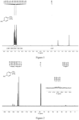
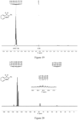
- Example 6 the 1 H NMR spectrum is shown in Figure 1 , 1H NMR (400 MHz, CDCl 3 ) ⁇ 7.64-7.57 (m, 2H), 7.55-7.49 (m, 2H), 7.48-7.41 (m, 2H), 7.38-7.32 (m, 1H), 7.30-7.26 (m, 2H), 2.44-2.33 (m, 0.07H, deuterated positions).
- the 13 C NMR spectrum is shown in Figure 2 , 13 C NMR (101 MHz, CDCl 3 ) ⁇ 141.3, 138.5, 137.1, 129.6, 128.9, 127.14, 127.12, 127.11, 20.8-20.2 (m, 1C, deuterated positions).
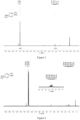
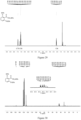
- Example 21 the 1 H NMR spectrum is shown in Figure 3 , 1H NMR (400 MHz, C 6 D 6 ) ⁇ 6.98 (s, 4H), 2.17-2.05 (m, 0.39H, deuterated positions).
- the 13 C NMR spectrum is shown in Figure 4 , 13C NMR (101 MHz, C 6 D 6 ) ⁇ 134.7, 129.3, 20.6-19.8 (m, 2C, deuterated positions).
- the deuteration rate was calculated, and the deuteration rate of the carbon-hydrogen bond at the benzyl position on deuterated p-xylene was determined to be 94%.
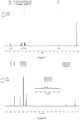
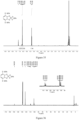
- Example 22 the 1 H NMR spectrum is shown in Figure 5 , 1H NMR (400 MHz, CDCl 3 ) ⁇ 7.73-7.65 (m, 2H), 7.65-7.58 (m, 2H), 7.56-7.48 (m, 2H), 7.45-7.34 (m, 3H), 2.90-2.65 (m, 0.06H, deuterated positions), 1.43-1.30 (m, 3H).
- the 13 C NMR spectrum is shown in Figure 6 , 13C NMR (101 MHz, CDCl 3 ) ⁇ 143.4, 141.3, 138.8, 128.8, 128.4, 127.2, 127.14, 127.09, 28.5-27.5 (m, 1C, deuterated positions), 15.6.
- the deuteration rate was calculated, and the deuteration rate of the carbon-hydrogen bond at the benzyl position on deuterated 4-ethylbiphenyl was determined to be 97%.
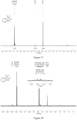
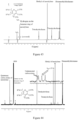
- Example 23 the 1 H NMR spectrum is shown in Figure 7 , 1H NMR (400 MHz, C 6 D 6 ) ⁇ 8.61-8.32 (m, 1H), 7.07-6.98 (m, 1H), 6.71-6.57 (m, 2H), 2.47-2.30 (m, 0.23H, deuterated positions).
- the 13 C NMR spectrum is shown in Figure 8 , 13C NMR (101 MHz, C 6 D 6 ) ⁇ 158.8, 149.7, 135.6, 122.9, 120.6, 24.0-23.4 (m, 1C, deuterated positions).
- the deuteration rate was calculated, and the deuteration rate of the carbon-hydrogen bond at the benzyl position on deuterated 2-methylpyridine was determined to be 92%.
- the 13 C NMR spectrum is shown in Figure 10 , 13C NMR (101 MHz, C 6 D 6 ) ⁇ 150.9, 147.5, 135.8, 132.7, 123.0, 18.0-16.9 (m, 1C, deuterated positions).
- the deuteration rate was calculated, and the deuteration rate of the carbon-hydrogen bond at the benzyl position on deuterated 3-methylpyridine was determined to be 82%.
- Example 25 the 1 H NMR spectrum is shown in Figure 11 , 1H NMR (400 MHz, CDCl 3 ) ⁇ 7.65-7.54 (m, 1H), 7.35-7.27 (m, 1H), 7.25-7.19 (m, 1H), 7.18-7.10 (m, 1H), 6.24 (s, 1H), 3.69 (s, 3H), 2.58-2.34 (m, 0.31H, deuterated positions).
- the 13 C NMR spectrum is shown in Figure 12 , 13C NMR (101 MHz, CDCl 3 ) ⁇ 137.4, 136.8, 128.0, 120.5, 119.7, 119.3, 108.8, 99.5, 29.42, 12.8-11.9 (m, 1C, deuterated positions).
- the deuteration rate was calculated, and the deuteration rate of the carbon-hydrogen bond at the benzyl positions on deuterated 1,2-dimethylindole was determined to be 90%.
- Example 26 the 1 H NMR spectrum is shown in Figure 13 , 1H NMR (400 MHz, C 6 D 6 ) ⁇ 7.60-7.57 (m, 0.08H, deuterated positions), 7.56-7.49 (m, 1H), 7.25-7.15 (m, 1H), 7.13-7.04 (m, 1H), 6.67 (s, 0.03H, deuterated positions), 2.26-2.07 (m, 0.11H, deuterated positions).
- the deuteration rates were calculated based on 1 H NMR data, the deuteration rates of the carbon-hydrogen bonds at different deuterated positions on deuterated 2-methylbenzothiophene were obtained, as shown in the reaction Equation.
- Example 27 the 1 H NMR spectrum is shown in Figure 15 , 1H NMR (400 MHz, CDCl 3 ) ⁇ 7.43-7.34 (m, 4H), 7.34-7.24 (m, 6H), 4.14-3.99 (m, 0.06H, deuterated positions).
- the 13 C NMR spectrum is shown in Figure 16 , 13C NMR (101 MHz, CDCl 3 ) ⁇ 141.2, 129.1, 128.6, 126.2, 41.9-41.0 (m, 1C, deuterated positions).
- the deuteration rates were calculated based on 1 H NMR data, the deuteration rate of the carbon-hydrogen bond at the benzyl position on deuterated diphenylmethane was found to be 97%.
- benzyl methyl ether (CAS: 538-86-3 ) (0.0366 g, 0.3 mmol), benzene (0.5 mL), and cesium bis(trimethylsilyl)amide (0.0087 g, 0.03 mmol, 10 mol%) were added sequentially.
- the autoclave was sealed, filled with deuterium gas to achieve the pressure of deuterium gas in the autoclave is 4 bar, heated at 80°C for 24 hours to undergo the deuteration reaction. Then, the reaction solution was separated by column chromatography, with a separation yield of 42%. The resulting product was subjected to 1 H NMR and 13 C NMR testing using deuterated chloroform as the deuterated solvent.
- Example 28 the 1 H NMR spectrum is shown in Figure 17 , 1H NMR (400 MHz, CDCl 3 ) ⁇ 7.42-7.27 (m, 5H), 4.56-4.36 (m, 0.19H, deuterated positions), 3.39 (s, 3H).
- the 13 C NMR spectrum is shown in Figure 18 , 13C NMR (101 MHz, CDCl 3 ) ⁇ 138.2, 128.5, 127.9, 127.8, 74.7-73.9 (m, labeled, 1C, deuterated positions), 58.2, 58.1.
- the deuteration rates were calculated based on 1 H NMR data, the deuteration rate of the carbon-hydrogen bond at the benzyl position on deuterated benzyl methyl ether was found to be 91%.
- benzyl phenyl sulfide (CAS: 831-91-4 ) (0.0601 g, 0.3 mmol), benzene (0.5 mL), and potassium bis(trimethylsilyl)amide (0.0060 g, 0.03 mmol, 10 mol%) were added sequentially.
- the autoclave was sealed, filled with deuterium gas to achieve the pressure of deuterium gas in the autoclave is 4 bar, heated at 80°C for 24 hours to undergo the deuteration reaction. Then, the reaction solution was separated by column chromatography, with a separation yield of 99%.
- the resulting product was subjected to 1 H NMR and 13 C NMR testing using deuterated chloroform as the deuterated solvent.
- Example 29 the 1 H NMR spectrum is shown in Figure 19 , 1H NMR (400 MHz, CDCl 3 ) ⁇ 7.37-7.21 (m, 9H), 7.21-7.15 (m, 1H), 4.18-4.03 (m, 0.05H, deuterated positions).
- the 13 C NMR spectrum is shown in Figure 20 , 13C NMR (101 MHz, CDCl 3 ) ⁇ 137.4, 136.4, 130.8, 129.9, 128.9, 128.6, 127.2, 126.4, 38.8-38.1 (m, 1C, deuterated positions).
- the deuteration rates were calculated based on 1 H NMR data, the deuteration rate of the carbon-hydrogen bond at the benzyl position on deuterated benzyl phenyl sulfide was found to be 98%.
- N-ethyl-N-benzyl aniline (CAS: 92-59-1 ) (0.0634 g, 0.3 mmol), benzene (0.5 mL), and cesium bis(trimethylsilyl)amide (0.0087 g, 0.03 mmol, 10 mol%) were added sequentially.
- the autoclave was sealed, filled with deuterium gas to achieve the pressure of deuterium gas in the autoclave is 4 bar, heated at 80°C for 24 hours to undergo the deuteration reaction. Then, the reaction solution was subjected to column chromatography, with a separation yield of 98%. The resulting product was subjected to 1 H NMR and 13 C NMR testing using deuterated chloroform as the deuterated solvent.
- the 13 C NMR spectrum is shown in Figure 22 , 13C NMR (101 MHz, CDCl 3 ) ⁇ 148.6, 139.33, 139.27, 129.3, 128.6, 126.9, 126.7, 116.1, 112.2, 54.0-53.5 (m, 1C, deuterated positions), 45.2, 45.1, 12.2.
- the deuteration rates were calculated based on 1 H NMR data, the deuteration rate of the carbon-hydrogen bond at the benzyl position on deuterated N-ethyl-N-benzyl aniline was found to be 83%.
- phenyl methyl sulfide (CAS: 100-68-5 ) (0.0372 g, 0.3 mmol), deuterated benzene (0.5 mL), and potassium bis(trimethylsilyl)amide (0.0060 g, 0.03 mmol, 10 mol%) were added sequentially.
- the autoclave was sealed, filled with deuterium gas to achieve the pressure of deuterium gas in the autoclave is 4 bar, heated at 60 °C for 24 hours to undergo the deuteration reaction. Then, the reaction solution was subjected to 1 H NMR and 13 C NMR testing directly.
- Example 31 the 1 H NMR spectrum is shown in Figure 23 , 1H NMR (400 MHz, C 6 D 6 ) ⁇ 7.13-7.08 (m, 2H), 7.04-6.99 (m, 2H), 6.93-6.87 (m, 1H), 1.97-1.93 (m, 0.19H, deuterated positions).
- the 13 C NMR spectrum is shown in Figure 24 , 13C NMR (101 MHz, C 6 D 6 ) ⁇ 139.2, 129.1, 126.9, 125.1, 15.4-14.5 (m, 1C, deuterated positions).
- the deuteration rates were calculated based on 1 H NMR data, the deuteration rate of the carbon-hydrogen bond at the deuterated position in deuterated phenyl methyl sulfide was found to be 94%.
- methylthiocyclohexyl ester (CAS: 7133-37-1 ) (0.0391 g, 0.3 mmol), deuterated benzene (0.5 mL), and cesium bis(trimethylsilyl)amide (0.0087 g, 0.03 mmol, 10 mol%) were added sequentially.
- the autoclave was sealed, filled with 4 bar deuterium gas, heated at 80°C for 48 hours to undergo the deuteration reaction. Then, deuterium gas was refilled to maintain a pressure of 4 bar for the deuterium gas inside the autoclave, and the reaction was continued for another 48 hours. Afterward, the reaction solution was subjected to 1 H NMR and 13 C NMR testing, and the deuteration rate is shown in the figure.
- Example 32 the 1 H NMR spectrum is shown in Figure 25 , 1H NMR (400 MHz, C 6 D 6 ) ⁇ 2.42-2.24 (m, 1H), 1.90-1.83 (m, 2H), 1.82-1.77 (m, 0.19H, deuterated positions), 1.64-1.57 (m, 2H), 1.45-1.40 (m, 1H), 1.31-1.23 (m, 2H), 1.12-1.05 (m, 3H).
- the 13 C NMR spectrum is shown in Figure 26 , 13C NMR (101 MHz, C 6 D 6 ) ⁇ 45.0, 44.9, 33.5, 26.3, 26.2, 13.1-12.3 (m, 1C, deuterated positions).
- the deuteration rates were calculated based on 1 H NMR data, the deuteration rate of the carbon-hydrogen bond at the deuterated position in deuterated methylthiocyclohexyl ester was found to be 93%.
- the deuteration rates were calculated based on 1 H NMR data, the deuteration rate of the the carbon-hydrogen bond at the deuterated position in deuterated dimethyl sulfoxide was found to be 91%.
- the deuteration rates were calculated based on 1 H NMR data, to obtain the deuteration rates of the C-H bonds at different deuterated positions in deuterated phenyl methyl sulfoxide, as shown in the reaction equation.
- N,N- dimethylmethanesulfonamide (CAS: 918-05-8 ) (0.0370 g, 0.3 mmol), deuterated benzene (0.5 mL), and potassium tert-butoxide (0.0034 g, 0.03 mmol, 10 mol%) were added sequentially.
- the autoclave was sealed, filled with 4 bar deuterium gas, heated at 80°C for 48 hours to undergo the deuteration reaction. Subsequently, the reaction solution was subjected to 1 H NMR and 13 C NMR testing directly.
- the 1 H NMR spectrum is shown in Figure 31
- the 13 C NMR spectrum is shown in Figure 32 .
- the deuteration rate was calculated based on 1 H NMR data, the deuteration rate of the carbon-hydrogen bond at the deuterated position in deuterated N,N- dimethylmethanesulfonamide was found to be 72%.
- Example 36 1 H NMR hydrogen spectrum is shown in Figure 33 , 1H NMR (400 MHz, C 6 D 6 ) ⁇ 7.15-7.09 (m, 2H), 6.88-6.78 (m, 1.07H, deuterated positions), 3.31 (s, 3H).
- the 13 C NMR carbon spectrum is shown in Figure 34 , 13C NMR (101 MHz, C 6 D 6 ) ⁇ 160.2, 129.6, 120.8, 114.3-113.8 (m, 2C, deuterated positions), 54.6.
- the deuteration rate was calculated based on 1 H NMR data, the deuteration rate of the carbon-hydrogen bond at the deuterated position in deuterated anisole was found to be 97%.
- 1,3-benzodioxole (CAS: 274-09-9 ) (0.0367 g, 0.3 mmol), deuterated benzene (0.5 mL), and potassium bis(trimethylsilyl)amide (0.0180 g, 0.09 mmol, 30 mol%) were added sequentially.
- the autoclave was sealed, filled with 4 bar deuterium gas, heated at 80°C for 24 hours to undergo the deuteration reaction. Subsequently, the reaction solution was subjected to 1 H NMR and 13 C NMR testing directly.
- Example 37 1 H NMR hydrogen spectrum is shown in Figure 35 , 1H NMR (400 MHz, C 6 D 6 ) ⁇ 6.71-6.64 (m, 0.20H, deuterated positions), 6.60 (s, 2H), 5.39-5.20 (m, 1.44H, deuterated positions).
- the 13 C NMR carbon spectrum is shown in Figure 36 , 13C NMR (101 MHz, C 6 D 6 ) ⁇ 148.0, 121.8, 108.9-108.4 (m, 2C, deuterated positions), 100.6-100.0 (m, 1C, deuterated positions).
- the deuteration rates were calculated based on 1 H NMR data to obtain the deuteration rates of the C-H bonds at different deuterated positions in deuterated 1,3-benzodioxole, as shown in the reaction equation.
- Example 38 1 H NMR hydrogen spectrum is shown in Figure 37 , 1H NMR (400 MHz, CDCl 3 ) ⁇ 7.59-7.50 (m, 4H), 7.48-7.40 (m, 2H), 7.38-7.31 (m, 1H), 7.18-7.08 (m, 0.05H, deuterated positions).
- the deuteration rate was calculated based on 1 H NMR data, the deuteration rate of the carbon-hydrogen bond at the deuterated position in deuterated 4-fluorobiphenyl was found to be 98%.
- Example 39 1 H NMR hydrogen spectrum is shown in Figure 39 , 1H NMR (400 MHz, C 6 D 6 ) ⁇ 6.58-6.42 (m, 0.53H, deuterated positions), 3.97 (s, 2H, internal standard dibromomethane).
- the deuteration rate was calculated based on 1 H NMR data, the deuteration rate of the carbon-hydrogen bond at the deuterated position in deuterated 1,4-difluorobenzene was found to be 93%.
- the deuteration rate was calculated based on 1 H NMR data, the deuteration rate of the carbon-hydrogen bond at the deuterated position in deuterated benzene was found to be 78%.
- naphthalene (CAS: 91-20-3 ) (0.0385 g, 0.3 mmol) benzene (0.5 mL) and cesium bis(trimethylsilyl)amide (0.0435 g, 0.15 mmol, 50 mol%) were added sequentially.
- the autoclave was sealed, filled with 4 bar deuterium gas, heated at 120°C for 48 hours to undergo the deuteration reaction.
- the average deuteration rate was determined to be 81% through the analysis using Gas Chromatography-Mass Spectrometry (GC-MS) and IsoPat 2 software .
- GC-MS Gas Chromatography-Mass Spectrometry
- N-phenylcarbazole (CAS: 1150-62-5 ) (0.0730 g, 0.3 mmol), methyl tert-butyl ether (0.5 mL) and cesium bis(trimethylsilyl)amide (0.0435 g, 0.15 mmol, 50 mol%) were added sequentially.
- the autoclave was sealed, filled with 4 bar deuterium gas, heated at 100°C for 24 hours to undergo the deuteration reaction.
- the average deuteration rate was determined to be 39% through the analysis using Gas Chromatography-Mass Spectrometry (GC-MS) and IsoPat 2 software.
- GC-MS Gas Chromatography-Mass Spectrometry
- the deuteration rate was calculated based on 1 H NMR data, the deuteration rate of the carbon-hydrogen bond at the deuterated position in deuterated pyridine was found to be 97%.
- the deuteration rates were calculated based on 1 H NMR data, the deuteration rates of the carbon-hydrogen bonds at different positions in deuterated 2-phenylpyridine were obtained as shown in the reaction equation.
- the deuteration rates were calculated based on 1 H NMR data, the deuteration rates of the carbon-hydrogen bonds at different positions in deuterated 2,2'-bipyridine were obtained as shown in the reaction equation.
- N-methylindole (CAS: 603-76-9 ) (0.0394 g, 0.3 mmol), benzene (0.5 mL) and potassium bis(trimethylsilyl)amide (0.0060 g, 0.03 mmol, 10 mol%) were added sequentially.
- the autoclave was sealed, filled with 4 bar deuterium gas, heated at 80°C for 24 hours to undergo the deuteration reaction. Then, the reaction solution was separated by column chromatography with a separation yield of 95%. The obtained product was subjected to 1 H NMR and 13 C NMR testing, using deuterated chloroform (CDCl 3 ) as the deuterated solvent.
- Example 47 1 H NMR hydrogen spectrum is shown in Figure 48 , 1H NMR (400 MHz, CDCl 3 ) ⁇ 7.74-7.66 (m, 1H), 7.42-7.35 (m, 1H), 7.33-7.25 (m, 1H), 7.21-7.14 (m, 1H), 7.13-7.07 (m, 0.04H, deuterated positions), 6.55 (s, 1H), 3.84 (s, 3H).
- the 13 C NMR carbon spectrum is shown in Figure 49 , 13C NMR (101 MHz, CDCl 3 ) ⁇ 136.8, 128.6, 129.1-128.4 (m, 1C, deuterated positions), 121.6, 121.0, 119.4, 109.3, 101.8, 32.9.
- the deuteration rate was calculated based on 1 H NMR data, the deuteration rate of the carbon-hydrogen bond at the deuterated position in deuterated N-methylindole was found to be 96%.
- the 13 C NMR spectrum is shown in Figure 51 , 13C NMR (101 MHz, C 6 D 6 ) ⁇ 140.2, 140.1, 126.4-126.2 (m, 1C, deuterated positions), 124.5, 124.4, 124.0 (1C, deuterated positions), 123.90, 123.86, 123.83, 122.7.
- the deuteration rates were calculated based on 1 H NMR data, the deuteration rates of the carbon-hydrogen bonds at different positions in deuterated benzothiophene were obtained as shown in the reaction equation.
- the deuteration rates were calculated based on 1 H NMR data, the deuteration rates of the carbon-hydrogen bonds at different positions in deuterated ⁇ -methylstyrene were obtained as shown in the reaction equation.
- the deuteration rates were calculated based on 1 H NMR data, the deuteration rates of the carbon-hydrogen bonds at different positions in deuterated 2,3-dihydrofuran were obtained as shown in the reaction equation.
- 1,4-dioxene (CAS: 543-75-9 ) (0.0258 g, 0.3 mmol), deuterated benzene (0.5 mL) and cesium bis(trimethylsilyl)amide (0.0087 g, 0.03 mmol, 10 mol%) were added sequentially.
- the autoclave was sealed, filled with 4 bar deuterium gas, heated at 120°C for 24 hours to undergo the deuteration reaction. Then, the reaction solution was directly subjected to 1 H NMR and 13 C NMR testing. The 1 H NMR spectrum is shown in Figure 54 .
- the deuteration rates were calculated based on 1 H NMR data, the deuteration rates of the carbon-hydrogen bonds at different positions in deuterated 1,4-dioxene were obtained as shown in the reaction equation.
- the deuteration rates were calculated based on 1 H NMR data, the deuteration rates of the carbon-hydrogen bonds at different positions in deuterated 1,3-bis-(2,4,6-trimethylphenyl)imidazol-2-ylidene were obtained as shown in the reaction equation.
Landscapes
- Chemical & Material Sciences (AREA)
- Organic Chemistry (AREA)
- Chemical Kinetics & Catalysis (AREA)
- Organic Low-Molecular-Weight Compounds And Preparation Thereof (AREA)
Abstract
Description
- This application claims priority of the Chinese patent applications filed with
China National Intellectual Property Administration (CNIPA) on April 9, 2021, with application number 202110381786.6 April 15, 2021, with application number 202110406555.6 April 30, 2021, with application number 202110479540.2 October 25, 2021, with application number 202111239237.1 October 25, 2021, with application number 202111239460.6 - This application relates to the field of organic synthesis and, more specifically, to a method for preparing deuterated chemicals through a deuteration reaction of a carbon-hydrogen bond with deuterium gas under catalysis of alkali.
- Deuterated compounds, as a class of high-value-added compounds, have wide applications in organic synthesis, mechanistic studies, drug metabolism, and drug modification. In recent years, the development of new, mild, efficient, and universally applicable deuteration methods has garnered significant attention from chemists.
- With the advancement of C-H bond activation reactions, transition metal-catalyzed hydrogen-deuterium exchange reactions have been widely used for the synthesis of deuterated compounds. This method typically requires expensive transition metal catalysts or complex ligands and is commonly employed for the selective deuteration reaction of C(sp2)-H bonds in aromatic and heteroaromatic compounds containing directing groups. There has been less research on the selective hydrogen-deuterium exchange reactions of C(sp2)-H and C(sp3)-H bonds in aromatic compounds without directing groups.
- On the other hand, current deuteration reactions often involve heating to prepare deuterated compounds in the presence of a large quantity of deuterium water. However, due to the equilibrium of the hydrogen-deuterium exchange reaction, it is more economical to remove the resulting water and replace it with fresh deuterium water after multiple cycles of chemical equilibrium to achieve a deuterated product with a high deuteration rate. This method requires a significant amount of deuterium water as a deuterium source and involves numerous water separation operations, leading to cumbersome steps and substantial energy waste. Therefore, there is an urgent need for the development of a simple, efficient, and cost-effective method for carbon-hydrogen bond deuteration.
- The purpose of this application is to provide a simple, efficient, and cost-effective method for preparing deuterated chemical compounds through a deuteration reaction of a carbon-hydrogen bond with deuterium gas under catalysis of alkali. The specific technical solution is as follows:
This application provides a method for the deuteration of carbon-hydrogen bonds, comprising the following steps:
In the presence of a catalyst, introducing deuterium gas into a compound containing carbon-hydrogen bonds for deuteration to produce deuterated compounds:
wherein, said catalyst is selected from at least one of alkali metal hydroxides, alkali metal alkoxides, alkali metal hydrides, alkali metal hydrocarbon compounds, and alkali metal amino compounds. - In one embodiment of this application, said alkali metal hydroxide is selected from at least one of lithium hydroxide, sodium hydroxide, potassium hydroxide, rubidium hydroxide, and cesium hydroxide;
said alkali metal alkoxide is selected from at least one of lithium methoxide, lithium ethoxide, lithium isopropoxide, lithium tert-butoxide, sodium methoxide, sodium ethoxide, sodium isopropoxide, sodium tert-butoxide, potassium methoxide, potassium ethoxide, potassium isopropoxide, potassium tert-butoxide, alkoxyl rubidium, and alkoxyl cesium; said alkoxyl rubidium is selected from at least one of rubidium methoxide, rubidium ethoxide, rubidium isopropoxide, and rubidium tert-butoxide; said alkoxyl cesium is selected from at least one of cesium methoxide, cesium ethoxide, cesium isopropoxide, and cesium tert-butoxide. - Said alkali metal hydride is selected from at least one of lithium hydride, sodium hydride, potassium hydride, rubidium hydride, and cesium hydride;
- said alkali metal hydrocarbon compound is selected from at least one of methyl lithium, trimethylsilylmethyl lithium, ethyl lithium, n-butyl lithium, sec-butyl lithium, tert-butyl lithium, benzyl lithium, phenyl lithium, benzyl sodium, benzyl potassium, benzyl rubidium, and benzyl cesium;
- said alkali metal amino compound is selected from at least one of lithium amide, lithium dimethylamide, lithium diethylamide, lithium diisopropylamide, lithium bis(trimethylsilyl)amide, lithium tetramethylpiperidide, sodium amide, sodium diisopropylamide, sodium bis(trimethylsilyl)amide, potassium amide, potassium dimethylamide, potassium diethylamide, potassium diisopropylamide, potassium bis(trimethylsilyl)amide, potassium tetramethylpiperidide, rubidium dimethylamide, rubidium diethylamide, rubidium diisopropylamide, rubidium bis(trimethylsilyl)amide, rubidium tetramethylpiperidide, cesium dimethylamide, cesium diethylamide, cesium diisopropylamide, cesium bis(trimethylsilyl)amide, and cesium tetramethylpiperidide.
- In this application, said alkoxyl rubidium or alkoxyl cesium can be prepared by reacting rubidium hydroxide or cesium hydroxide with methanol, ethanol, isopropanol, or tert-butanol.
- In one embodiment of this application, wherein:
- said alkali metal amino compound is synthesized in situ using an alkali metal hydrocarbon compound and an amine, or using lithium amide and an alkali metal salt; said alkali metal amino compound is selected from at least one of sodium diisopropylamide, potassium dimethylamide, potassium diethylamide, potassium diisopropylamide, potassium bis(trimethylsilyl)amide, potassium tetramethylpiperidide, rubidium dimethylamide, rubidium diethylamide, rubidium diisopropylamide, rubidium bis(trimethylsilyl)amide, rubidium tetramethylpiperidide, cesium dimethylamide, cesium diethylamide, cesium diisopropylamide, cesium bis(trimethylsilyl)amide, and cesium tetramethylpiperidide;
- wherein, said alkali metal hydrocarbon compound is selected from at least one of butyl lithium, benzyl potassium, benzyl rubidium, and benzyl cesium;
- said amine is selected from at least one of dimethylamine, diethylamine, diisopropylamine, bis(trimethylsilyl)amine, and tetramethylpiperidide;
- said lithium amide is selected from at least one of lithium dimethylamide, lithium diethylamide, lithium diisopropylamide, lithium bis(trimethylsilyl)amide, and lithium tetramethylpiperidide;
- said alkali metal salt is selected from at least one of sodium salt, potassium salt, rubidium salt, and cesium salt; said sodium salt is selected from sodium hydride and sodium tert-butoxide; said potassium salt is selected from potassium hydride and potassium tert-butoxide; said rubidium salt is selected from at least one of rubidium fluoride, rubidium chloride, rubidium bromide, rubidium iodide, rubidium nitrate, rubidium sulfate, rubidium carbonate, rubidium formate, rubidium acetate, and rubidium perchlorate; said cesium salt is selected from at least one of cesium fluoride, cesium chloride, cesium bromide, cesium iodide, cesium nitrate, cesium sulfate, cesium carbonate, cesium formate, cesium acetate, cesium trifluoroacetate, and cesium perchlorate.
- In this application, a mixture of alkali metal hydrocarbon compound and amine, or alkali metal salt and lithium amide, is added to the reaction system of said deuteration reaction, alkali metal amino compounds are synthesized in situ. Under the catalytic action of the in situ-synthesized alkali metal amino compounds, the deuteration reaction is carried out.
- It should be noted that alkali metal amino compounds can be added directly to the reaction system of the deuteration reaction as finished catalysts for catalysis, or they can be synthesized in situ in the reaction system of the deuteration reaction for catalysis.
- In this application, alkali metal amino compounds are synthesized in situ in said reaction system of the deuteration reaction by acid-base reactions between alkali metal hydrocarbon compounds and amines. Under the catalytic action of the in situ-synthesized alkali metal amino compounds, said deuterium exchange reaction is carried out.
- Wherein, said alkali metal benzyl compounds are obtained by the reaction of butyl lithium, toluene and alkali metal tert-butoxide salts; said alkali metal tert-butoxide salts are selected from at least one of potassium tert-butoxide, rubidium tert-butoxide, and cesium tert-butoxide. For example, benzyl potassium is obtained by the reaction of butyl lithium, toluene and potassium tert-butoxide, and benzyl rubidium is obtained by the reaction of butyl lithium, toluene and rubidium tert-butoxide.
- In this application, alkali metal amino compounds are synthesized in situ in the reaction system of said deuteration reaction by salt exchange reactions between alkali metal salts and lithium amide. Then, under the catalytic action of the in situ-synthesized alkali metal amino compounds, said deuteration reaction is carried out.
- For example, a mixture of sodium tert-butoxide (NaOtBu) or potassium tert-butoxide (KOtBu) and lithium diisopropylamide (LDA) is added to the reaction system of said deuteration reaction, resulting in the in situ synthesis of sodium diisopropylamide (NaDA) or potassium diisopropylamide (KDA). Then, under the catalytic action of the in situ-synthesized NaDA or KDA, said deuteration reaction is carried out.
- For example, a mixture of rubidium fluoride (RbF) and lithium bis(trimethylsilyl)amide (LiHMDS) is added to the reaction system of said deuteration reaction, leading to the in situ synthesis of rubidium bis(trimethylsilyl)amide (RbHMDS). Then, under the catalytic action of the in situ-synthesized RbHMDS, said deuteration reaction is carried out.
- A mixture of cesium salts, such as cesium chloride (CsCI), cesium carbonate (Cs2CO3), cesium trifluoroacetate (CsTFA), or cesium perchlorate (CsClO4), and lithium bis(trimethylsilyl)amide (LiHMDS) is added to the reaction system of said deuteration reaction, resulting in the in situ synthesis of cesium bis(trimethylsilyl)amide (CsHMDS). Then, under the catalytic action of the in situ-synthesized CsHMDS, said deuteration reaction is carried out.
- For another example, a mixture of butyl lithium and tetramethylpiperidine is added to the reaction system of said deuteration reaction, leading to the in situ synthesis of lithium tetramethylpiperidide (TMPLi). Then, under the catalytic action of the in situ-synthesized TMPLi, said deuteration reaction is carried out.
- For another example, a mixture of cesium fluoride (CsF) and lithium tetramethylpiperidide (TMPLi) is added to said reaction system of the deuteration reaction, resulting in the in situ synthesis of cesium tetramethylpiperidide (TMPCs). Then, under the catalytic action of the in situ-synthesized TMPCs, said deuteration reaction is carried out.
- The above methods for in situ synthesis of catalysts are simple to operate and the above in situ-synthesized alkali metal amino compounds provide excellent catalytic effects for said deuteration reaction.
- In this application, the alkali metal amino compound can also be prepared according to the method of in situ synthesis of alkali metal amino compound by the acid-base reaction between a mixture of alkali metal hydrocarbon compound and amine or the salt exchange reaction between a mixture of alkali metal salt and lithium amide. The alkali metal amino compound is then obtained through separation and purification. Subsequently, the prepared alkali metal amino compound is introduced into the reaction system of said deuteration reaction to carry out said deuteration reaction.
- In one embodiment of this application, said compounds containing carbon-hydrogen bonds are selected from at least one of the following: aromatic compounds with carbon-hydrogen bonds at the benzyl position; thioether compounds with carbon-hydrogen bonds at the α position; sulfone, sulfoxide, sulfonamide, and sulfinamide compounds with carbon-hydrogen bonds at the α position; aryl ether compounds, fluorobenzene compounds; aromatic hydrocarbons, heteroaromatic hydrocarbons with aromatic carbon-hydrogen bonds, and alkene compounds with alkenyl carbon-hydrogen bonds.
- In this application, said aromatic hydrocarbon compounds with carbon-hydrogen bonds at the benzyl position include but are not limited to toluene, alkylbenzenes, alkylpyridines, alkylfurans, alkylthiophenes, alkylpyrroles, benzyl ethers, benzyl thioethers, benzylamines, or benzylsilane compounds.
- Said thioether compounds with carbon-hydrogen bonds at the α position include but are not limited to methyl aryl thioethers, methyl alkyl thioethers, or dialkyl thioethers.
- Said sulfone, sulfoxide, sulfonamide, and sulfinamide compounds with carbon-hydrogen bonds at the α position include but are not limited to dimethyl sulfoxide, phenyl methyl sulfoxide, dialkyl sulfoxides, alkyl aryl sulfoxides, dialkyl sulfones, alkyl aryl sulfones, N,N-dimethyl sulfonamide, alkyl sulfonamides, or alkyl sulfinamides.
- Said aryl ether compounds with aromatic carbon-hydrogen bonds include but are not limited to phenyl methyl ether, dimethoxybenzene, 1,3,5-trimethoxybenzene, diphenyl ether, 1,2-methylenedioxybenzene, benzodioxane, or alkoxypyridine.
- Said fluorobenzene compounds include but are not limited to fluorobenzene, difluorobenzene, fluoronaphthalene or alkyl fluorobenzene.
- Said aromatic hydrocarbons include but are not limited to benzene, biphenyl, naphthalene, anthracene, phenanthrene, pyrene, perylene, triphenylamine, or N-phenylcarbazole.
- Said heteroaromatic hydrocarbons compounds include but are not limited to pyridine, phenylpyridine, bipyridine, furan, thiophene, pyrrole, benzofuran, benzothiophene, indole, carbazole, imidazole, oxazole or thiazole.
- Said alkenes with alkenyl carbon-hydrogen bonds include but are not limited to methylstyrene, allylbenzene, 2,3-dihydrofuran, or 1,4-dioxene.
- In one embodiment of this application, said deuteration reaction is as shown in any one of Reaction Equations 1-5.
-
Reaction Equation 1 is as follows:
-
Reaction Equation 2 is as follows:
- R1-R5 are independently selected from any one of H, C1-C10 hydrocarbon group, C6-C20 aryl group, halogens, C1-C10 hydrocarboxyl group, C3-C9 silyl group, or C1-C20 amino group. Two adjacent groups in R1-R3 can be connected into a ring. X1 is a carbon atom or a nitrogen atom, and X2 is an oxygen atom, a sulfur atom, or a nitrogen atom.
-
Reaction Equation 3 is as follows:
-
Reaction Equation 4 is as follows:
- R6-R10 are independently selected from any one of H, C1-C10 hydrocarbon group, C6-C20 aryl group, halogen, C1-C10 hydrocarboxyl group, or C1-C20 amino group. Two adjacent groups in R6-R8 can be connected into a ring. X2 is an oxygen atom, a sulfur atom, or a nitrogen atom, and X3 is any one of a silicon atom, an oxygen atom, a sulfur atom, a carbon atom, or a nitrogen atom. R is a C1-C10 hydrocarbon group or a C6-C20 aryl group.
-
Reaction Equation 5 is as follows:
- R11-R20 are independently selected from any one of H, C1-C10 hydrocarbon group, C6-C20 aryl group, halogen, C1-C10 hydrocarboxyl group, or C1-C20 amino group.
- It should be noted that when the compound containing carbon-hydrogen bonds is selected from aromatic hydrocarbon compounds with carbon-hydrogen bonds at the benzyl position, i.e., the substrate of the deuteration reaction contains benzyl carbon-hydrogen bonds, said deuteration reaction includes but is not limited to the deuteration reactions shown in
Reaction Equations 1 toReaction Equation 5, and the carbon-hydrogen bonds that are deuterated are selected from the C(sp3)-H bonds at the benzyl position of the aromatic hydrocarbon compounds containing carbon-hydrogen bonds at the benzyl position. - In one embodiment of this application, said deuteration reaction is as shown in any one of Reaction Equations 6-7.
- Reaction Equation 6 is as follows:

- R21-R23 are independently selected from any one of H, C1-C10 hydrocarbon group, C6-C20 aryl group, C3-C9 silyl group, C1-C10 alkyloxyl group, or C1-C20 amino group. R21-R23 can be connected into an aliphatic hydrocarbon ring or an aromatic ring.
- Reaction Equation 7 is as follows:

- R24-R28 are independently selected from any one of H, C1-C10 hydrocarbon group, C6-C20 aryl group, halogen, C1-C10 hydrocarboxyl group, C1-C10 hydrocarbon sulfur group, or C1-C20 amino group. X4 is a carbon atom or a nitrogen atom.
- It should be noted that when the compound containing carbon-hydrogen bonds is selected from thioether compounds with carbon-hydrogen bonds at the α position, said deuteration reaction includes but is not limited to the deuteration reactions shown in Reaction Equation 6-7, and the carbon-hydrogen bonds that are deuterated are selected from at least one of the C(sp3)-H bonds at the α position directly connected to sulfur atoms in the thioether compounds with carbon-hydrogen bonds at the α position.
- In one embodiment of this application, the catalyst in Reaction Equation 1-7 is selected from at least one of potassium diisopropylamide, potassium bis(trimethylsilyl)amide, potassium tetramethylpiperidide, rubidium diisopropylamide, rubidium bis(trimethylsilyl)amide, rubidium tetramethylpiperidide, cesium diisopropylamide, cesium bis(trimethylsilyl)amide, and cesium tetramethylpiperidide.
- In one embodiment of this application, said deuteration reaction is as shown in any one of Reaction Equations 8-12.
-
Reaction Equation 8 is as follows:
- Reaction Equation 9 is as follows:

-
Reaction Equation 10 is as follows:
-
Reaction Equation 11 is as follows:
-
Reaction Equation 12 is as follows:
- R29 is independently selected from any one of C1-C10 hydrocarbon group, C6-C20 aryl group, C1-C10 alkyloxyl group, or C1-C20 amino group. R30 is independently selected from any one of C1-C10 hydrocarbon group or C6-C20 aryl group, and R29 and R30 can be connected into a ring. R31-R34 are independently selected from any one of H, C1-C10 hydrocarbon group, C6-C20 aryl group, C1-C10 alkyloxyl group, or C1-C20 amino group, and two adjacent groups in R31-R34 can be connected into a ring.
- It should be noted that when said compound containing carbon-hydrogen bonds is selected from said compounds with carbon-hydrogen bonds at the α position in sulfones, sulfoxides, sulfonamides, and sulfinamides, and in aromatic sulfones, sulfoxides, sulfonamides, and sulfinamides, i.e., when the reaction substrates in the deuteration reaction contains an S=O structure, said deuteration reaction includes but is not limited to the deuteration reactions as shown in any one of Reaction Equations 8-12, and the carbon-hydrogen bonds that are deuterated are selected from at least one of the C(sp3)-H bonds directly connected to sulfur atoms in the compounds containing carbon-hydrogen bonds and the C(sp2)-H bonds on the benzene ring with a group containing an S=O structure as the directing group. Wherein, the above group containing the S=O structure is selected from at least one of the sulfones, sulfoxides, sulfonamide, or sulfinamide groups in the reaction substrates mentioned above.
- In one embodiment of this application, the catalyst in Reaction Equations 8-11 is selected from at least one of potassium tert-butoxide, sodium hydroxide, and potassium hydroxide.
- In one embodiment of this application, said deuteration reaction is as shown in any one of Reaction Equations 13-15.
-
Reaction Equation 13 is as follows:
-
Reaction Equation 14 is as follows:
-
Reaction Equation 15 is as follows:
- R35-R40 are independently selected from any one of H, C1-C10 hydrocarbon group, or C6-C20 aryl group, and two adjacent groups in R35-R40 can be connected into a ring.
- In one embodiment of this application, said deuteration reaction is as shown in any one of Reaction Equations 16-17.
-
Reaction Equation 16 is as follows:
-
Reaction Equation 17 is as follows:
- R36-R38 are independently selected from any one of H, C1-C10 hydrocarbon group, or C6-C20 aryl group, and two adjacent groups in R36-R38 can be connected into a ring. X5 is selected from any one of silicon, oxygen, sulfur, carbon, or nitrogen atoms.
- It should be noted that said deuteration reaction can occur at any position on aromatic heterocycles such as pyridine, furan, and thiophene.
- In one embodiment of this application, said deuteration reaction is as shown in
Reaction Equation 18. -
Reaction Equation 18 is as follows:
- R41 and R42 are independently selected from any one of H, C1-C10, hydrocarbon group, C6-C20 aryl group, C3-C9 silyl group, C1-C10 alkoxyl group, or C1-C20 amino group, and R41 and R42 can be connected into an aliphatic hydrocarbon ring or an aromatic ring.
- It should be noted that when the reaction substrate for said deuteration reaction contains a C(sp2)-H bond, said deuteration reaction includes but is not limited to the deuteration reactions as shown in Reaction Equations 12-18, and the carbon-hydrogen bonds that are deuterated are selected from at least one of the C(sp2)-H bonds contained in the above reaction substrates.
- In one embodiment of this application, the catalyst in Reaction Equations 13-18 is selected from at least one of potassium diisopropylamide, potassium bis(trimethylsilyl)amide, potassium tetramethylpiperidide, rubidium diisopropylamide, rubidium bis(trimethylsilyl)amide, rubidium tetramethylpiperidide, cesium diisopropylamide, cesium bis(trimethylsilyl)amide, and cesium tetramethylpiperidide.
- In this application, the chemical formula of said C3-C9 silane groups is -Si Y1Y2Y3, where Y1, Y2, and Y3 are independently selected from C1-C3 alkyl groups. The chemical formula of C1-C10 alkyloxyl groups or C1-C10 hydrocarboxyl groups is -OY4, where Y4 is selected from C1-C10 alkyl groups or C6-C10 aryl groups. The chemical formula of C1-C20 amino groups is -NY5Y6, where Y5 and Y6 are independently selected from C1-C10 alkyl groups or C6-C10 aryl groups.
- In one embodiment of this application, the molar amount of said catalyst is 1%-100% of the molar amount of said compound containing carbon-hydrogen bonds.
- In one embodiment of this application, the pressure of deuterium gas in said deuteration reaction is 1 bar to 50 bar.
- In one embodiment of this application, said deuteration reaction is carried out in an organic solvent or under solvent-free conditions, and said organic solvents are selected from at least one of aromatic hydrocarbon solvents, alkane solvents, and ether solvents. Among them, the aromatic hydrocarbon solvents are selected from at least one of deuterated benzene, benzene, and tert-butylbenzene; the alkane solvents are selected from at least one of n-hexane, cyclohexane, and decalin; the ether solvents are selected from at least one of ether, tetrahydrofuran, methyl tert-butyl ether, methyl cyclopentyl ether, and n-butyl ether.
- In this application, the reaction temperature for said deuteration reaction is 40°C-150°C, and the reaction time is 12 hours-96 hours.
- In this application, after a period of the deuteration reaction, the gas in the reaction vessel can be replaced with fresh deuterium gas for further reaction, and through two or more such processes, a high deuteration rate of the reactants can be achieved.
- In this application, the deuteration reaction is carried out in a sealed container, and an inert atmosphere such as nitrogen or argon can be introduced into the sealed container.
- The advantageous effects of this application are as follows:
This application provides a deuteration method for carbon-hydrogen bonds, which, in the presence of a catalyst, involves the addition of deuterium gas to a compound containing a carbon-hydrogen bond to perform a deuteration reaction to generate deuterated compounds. By using deuterium gas as the deuterium source, avoiding the use of a large amount of deuterium oxide as a deuterium source, thus avoiding multiple water removal steps, cumbersome steps, and a large amount of energy waste. Additionally, using inexpensive and readily available alkali metal compounds as catalysts for deuteration reactions, instead of expensive transition metal catalysts and complex ligands, offers advantages of low cost, excellent substrate functional group compatibility, and high deuteration rate. Furthermore, the deuteration method disclosed in this application is characterized by mild reaction conditions, simple operation, and the ability to prepare deuterated products in one step. This deuteration method opens up a new, low-cost, and environmentally friendly pathway for the preparation of deuterated chemicals and pharmaceuticals, which has high practical value. - In addition, in the deuteration method of the present application, the compounds containing C-H bonds, that is, the reaction substrate of the deuteration reaction is selected from at least one of the aromatic compounds with C-H bonds at the benzyl position, thioether compounds with C-H bonds at the alpha position, sulfone, sulfoxide, sulfamide, sulfinamide compounds with C-H bonds at the α position, aryl ether compounds, fluorobenzene compounds, aromatic hydrocarbons, heteroaromatic hydrocarbons with aryl C-H bonds and alkenes with alkenyl C-H bonds. The deuterated C-H bond in the present application relates to at least one of the C(sp3)-H bond at the benzyl position in the above reaction substrate, the C(sp3)-H bond at the α position connected to the sulfur atom on the thioether group, the C(sp3)-H bond at the α position directly connected to the sulfur atom of the sulfone, sulfoxide, sulfamide or sulfinamide group, and the C(sp2)-H bonds in the benzene ring with the sulfone, sulfoxide, sulfamide or sulfinamide group as the directing group and the C(sp2)-H bonds of aryl ethers, fluorobenzenes, aromatic hydrocarbons, heteroaromatic hydrocarbons and alkenes having alkenyl hydrocarbon bonds. In addition, the deuteration method of the present application has good deuteration effect on the above-mentioned reaction substrates and the above-mentioned carbon-hydrogen bonds, and has the advantages of wide application range and high deuteration rate.
- Of course, the implementation of any method of this application does not necessarily need to achieve all the advantages described above.
- In order to provide a clearer understanding of the technical solutions in the embodiments of this application, a brief introduction to the drawings required for the embodiments is presented below. It is evident that the following descriptions of the drawings are only some of the embodiments of this application, and those skilled in the art can obtain additional drawings based on these.
-
Figure 1 is the 1H NMR spectrum of deuterated 4-phenyltoluene in Example 6; -
Figure 2 is the 13C NMR spectrum of deuterated 4-phenyltoluene in Example 6; -
Figure 3 is the 1H NMR spectrum of deuterated p-xylene in Example 21; -
Figure 4 is the 13C NMR spectrum of deuterated p-xylene in Example 21; -
Figure 5 is the 1H NMR spectrum of deuterated 4-ethylbiphenyl in Example 22; -
Figure 6 is the 13C NMR spectrum of deuterated 4-ethylbiphenyl in Example 22; -
Figure 7 is the 1H NMR spectrum of deuterated 2-methylpyridine in Example 23; -
Figure 8 is the 13C NMR spectrum of deuterated 2-methylpyridine in Example 23; -
Figure 9 is the 1H NMR spectrum of deuterated 3-methylpyridine in Example 24; -
Figure 10 is the 13C NMR spectrum of deuterated 3-methylpyridine in Example 24; -
Figure 11 is the 1H NMR spectrum of deuterated 1,2-dimethylindole in Example 25; -
Figure 12 is the 13C NMR spectrum of deuterated 1,2-dimethylindole in Example 25; -
Figure 13 is the 1H NMR spectrum of deuterated 2-methylbenzothiophene in Example 26; -
Figure 14 is the 13C NMR spectrum of deuterated 2-methylbenzothiophene in Example 26; -
Figure 15 is the 1H NMR spectrum of deuterated diphenylmethane in Example 27; -
Figure 16 is the 13C NMR spectrum of deuterated diphenylmethane in Example 27; -
Figure 17 is the 1H NMR spectrum of deuterated benzylmethyl ether in Example 28; -
Figure 18 is the 13C NMR spectrum of deuterated benzylmethyl ether in Example 28; -
Figure 19 is the 1H NMR spectrum of deuterated benzyl phenyl sulfide in Example 29; -
Figure 20 is the 13C NMR spectrum of deuterated benzyl phenyl sulfide in Example 29; -
Figure 21 is the 1H NMR spectrum of deuterated N-ethyl-N-benzyl aniline in Example 30; -
Figure 22 is the 13C NMR spectrum of deuterated N-ethyl-N-benzyl aniline in Example 30; -
Figure 23 is the 1H NMR spectrum of deuterated phenyl methyl sulfide in Example 31; -
Figure 24 is the 13C NMR spectrum of deuterated phenyl methyl sulfide in Example 31; -
Figure 25 is the 1H NMR spectrum of deuterated methylthiocyclohexyl ester in Example 32; -
Figure 26 is the 13C NMR spectrum of deuterated methylthiocyclohexyl ester in Example 32; -
Figure 27 is the 1H NMR spectrum of deuterated dimethyl sulfoxide in Example 33; -
Figure 28 is the 13C NMR spectrum of deuterated dimethyl sulfoxide in Example 33; -
Figure 29 is the 1H NMR spectrum of deuterated phenyl methyl sulfoxide in Example 34; -
Figure 30 is the 13C NMR spectrum of deuterated phenyl methyl sulfoxide in Example 34; -
Figure 31 is the 1H NMR spectrum of deuterated N,N-dimethylmethanesulfonamide in Example 35; -
Figure 32 is the 13C NMR spectrum of deuterated N,N-dimethylmethanesulfonamide in Example 35; -
Figure 33 is the 1H NMR spectrum of deuterated anisole in Example 36; -
Figure 34 is the 13C NMR spectrum of deuterated anisole in Example 36; -
Figure 35 is the 1H NMR spectrum of deuterated 1,3-benzodioxole in Example 37; -
Figure 36 is the 13C NMR spectrum of deuterated 1,3-benzodioxole in Example 37; -
Figure 37 is the 1H NMR spectrum of deuterated 4-fluorobiphenyl in Example 38; -
Figure 38 is the 13C NMR spectrum of deuterated 4-fluorobiphenyl in Example 38; -
Figure 39 is the 1H NMR spectrum of deuterated 1,4-difluorobenzene in Example 39; -
Figure 40 is the 13C NMR spectrum of deuterated 1,4-difluorobenzene in Example 39; -
Figure 41 is the 1H NMR spectrum of deuterated benzene in Example 40; -
Figure 42 is the 13C NMR spectrum of deuterated benzene in Example 40; -
Figure 43 is the 1H NMR spectrum of deuterated pyridine in Example 45; -
Figure 44 is the 13C NMR spectrum of deuterated pyridine in Example 45; -
Figure 45 is the 1H NMR spectrum of deuterated 2-phenylpyridine in Example 46; -
Figure 46 is the 13C NMR spectrum of deuterated 2-phenylpyridine in Example 46; -
Figure 47 is the 1H NMR spectrum of deuterated 2,2'-bipyridine in Example 47; -
Figure 48 is the 1H NMR spectrum of deuterated N-methylindole in Example 48; -
Figure 49 is the 13C NMR spectrum of deuterated N-methylindole in Example 48; -
Figure 50 is the 1H NMR spectrum of deuterated benzothiophene in Example 49; -
Figure 51 is the 13C NMR spectrum of deuterated benzothiophene in Example 49; -
Figure 52 is the 1H NMR spectrum of deuterated β-methylstyrene in Example 50; -
Figure 53 is the 1H NMR spectrum of deuterated 2,3-dihydrofuran in Example 51; -
Figure 54 is the 1H NMR spectrum of deuterated 1,4-dioxene in Example 52; -
Figure 55 is the 1H NMR spectrum of deuterated 1,3-bis-(2,4,6-trimethylphenyl)imidazol-2-ylidene in Example 53. - In order to make the objectives, technical solutions, and advantages of the present application clearer and more understandable, specific embodiments are described below with reference to the attached drawings for further illustrating the present application. Obviously, the described embodiments are only part of the embodiments of the present application, not all of them. All other embodiments obtained by those skilled in the art based on the embodiments in the present application are within the scope of protection of the present application.
- Below, examples are provided to further illustrate the embodiments of the present application. The chemical structures of deuterated products in the deuteration reactions of the embodiments show the positions of deuterated carbon-hydrogen bonds and the corresponding deuteration rate.
- The following abbreviations are used in the examples:
Table 1 Full name Abbreviation Full name Abbreviation Lithium bis(trimethylsilyl)amide LiHMDS Potassium tert-butoxide KOtBu Sodium bis(trimethylsilyl)amide NaHMDS Potassium hydride KH Potassium bis(trimethylsilyl)amide KHMDS Cesium fluoride CsF Cesium bis(trimethylsilyl)amide CsHMDS Rubidium fluoride RbF Benzyl potassium BnK Cesium carbonate Cs2CO3 Methyl tert-Butyl ether TBME Deuterium D2 Benzene-d6 C6D6 - The preparation of the cesium bis(trimethylsilyl)amide (CsHMDS) catalyst used in the following examples includes:
Under an inert atmosphere, 10 mmol of lithium bis(trimethylsilyl)amide (LiHMDS), 10 mmol of cesium fluoride (CsF), and 30 mL of dry n-hexane were added to a reaction flask equipped with a magnetic stirrer. The reaction solution was heated and refluxed for 15 hours. After the reaction was completed, the solvent was evaporated. Then, 30 mL of toluene was added to dissolve cesium bis(trimethylsilyl)amide (CsHMDS), filtered, and the solvent was drained to obtain 2.20 g of white solid, with a yield of 75%. - The preparation of the benzyl potassium (BnK) catalyst used in the following examples includes:
At -78°C, 21 mL of n-butyl lithium ("BuLi, molar concentration 2.4 M) in hexane was slowly added to a suspension of 100 mL of potassium tert-butoxide (KOtBu,molar quantity 50 mmol) in toluene in a Schlenk flask. The reaction solution was slowly increased to room temperature and stirred at room temperature for 48 hours. After the reaction, the red suspension was filtered to obtain 4.43 g of red solid, which was benzyl potassium (BnK), with a yield of 68%. - The gas chromatography-mass spectrometry (GC-MS) analysis used in the following examples involved dissolving 1-2 mg of the reaction product obtained after the reaction in 1 mL of ethyl acetate, testing using the GCMS-Q2020 NX instrument to determine the molecular weight and abundance of the product, and then calculate deuteration rate using the IsoPat2 calculation method (the IsoPat2 calculation method of Reference J. Org. Chem. 2007, 72, 5778-5783. which is incorporated into this application by reference).
-

- Under an inert atmosphere, in a 25 mL autoclave, 4-phenyltoluene (CAS: 644-08-6) (0.0504 g, 0.3 mmol), deuterated benzene (0.5 mL), and potassium hydride (0.0012 g, 0.03 mmol, 10 mol%) were sequentially added. The autoclave was sealed, filled with deuterium gas to achieve the pressure of deuterium gas in the autoclave is 4 bar, heated at 80°C for 24 hours to undergo the deuteration reaction. After the reaction, the reaction solution was separated by column chromatography, and the obtained deuterated 4-phenyltoluene was subjected to nuclear magnetic resonance 1HNMR and 13C NMR testing, with 1H NMR performed at a frequency of 400 MHz using deuterated chloroform as the deuterated solvent and 13C NMR performed at a frequency of 101 MHz using deuterated chloroform as the deuterated solvent.
- The deuteration rate was calculated based on 1H NMR data, and the deuteration rate of the carbon-hydrogen bond at the benzyl position of deuterated 4-phenyltoluene was determined to be 31%.
- Except for the preparation parameters and deuteration rates as shown in Table 2, the rest were the same as Example 1.
Table 2 Example Catalyst and its molar quantity (mol%) Reaction temperature (°C) Reaction time (h) Deuterium gas pressure (bar) Reaction solvent Deuteration rate (%) Column chromatography separation yield (%) 1 KH (10) 80 24 4 C6D6 31 97 2 BnK (10) 80 24 4 C6D6 <10 98 3 KHMDS (10) 80 24 4 C6D6 30 97 4 NaHMDS (10) 80 24 4 C6D6 <5 97 5 LiHMDS (10) 80 24 4 C6D6 <5 97 6 CsF (10) + LiHMDS (10) 80 24 4 C6D6 97 97 7 RbF (10) + LiHMDS (10) 80 24 4 C6D6 90 98 8 Cs2CO3 (5) + LiHMDS (10) 80 24 4 C6D6 75 98 9 CsF (10) 80 24 4 C6D6 <5 97 10 CsF (5) + LiHMDS (5) 80 24 4 C6D6 87 97 11 CsF (10) + LiHMDS (10) 80 36 4 C6D6 99 99 12 CsF (10) + LiHMDS 100 24 4 C6D6 98 99 (10) 13 CsHMDS (10) 80 24 4 C6D6 97 98 14 CsF (10) + LiHMDS (10) 80 24 4 Benzene 96 96 15 CsF (10) + LiHMDS (10) 80 24 4 Tetrahydrofuran 42 96 16 CsF (10) + LiHMDS (10) 80 24 4 Ether 97 95 17 CsF (10) + LiHMDS (10) 80 24 4 TBME 97 96 18 CsF (10) + LiHMDS (10) 80 24 4 n-Hexane 95 95 19 CsF (10) + LiHMDS (10) 80 24 4 Cyclohexane 96 96 20 CsF (30) + LiHMDS (30) 80 24 1 Benzene 97 97 - In Example 6, the 1H NMR spectrum is shown in
Figure 1 , 1H NMR (400 MHz, CDCl3) δ 7.64-7.57 (m, 2H), 7.55-7.49 (m, 2H), 7.48-7.41 (m, 2H), 7.38-7.32 (m, 1H), 7.30-7.26 (m, 2H), 2.44-2.33 (m, 0.07H, deuterated positions).The 13C NMR spectrum is shown inFigure 2 ,13 C NMR (101 MHz, CDCl3) δ 141.3, 138.5, 137.1, 129.6, 128.9, 127.14, 127.12, 127.11, 20.8-20.2 (m, 1C, deuterated positions). -

- Under an inert atmosphere, in a 25 mL autoclave, p-xylene (CAS: 106-42-3) (0.0319g, 0.3 mmol), deuterated benzene (0.5 mL), and cesium bis(trimethylsilyl)amide (0.0087g, 0.03 mmol, 10 mol%) were sequentially added. The autoclave was sealed, filled with deuterium gas to achieve the pressure of deuterium gas in the autoclave is 4 bar, heated at 80°C for 24 hours to undergo the deuteration reaction. Deuterium gas was then refilled to maintain a pressure of 4 bar for the deuterium gas inside the autoclave, and the reaction was continued for another 24 hours. After completion of the reaction, the reaction solution was directly subjected to 1H NMR and 13C NMR testing.
- In Example 21, the 1H NMR spectrum is shown in
Figure 3 , 1H NMR (400 MHz, C6D6) δ 6.98 (s, 4H), 2.17-2.05 (m, 0.39H, deuterated positions). The 13C NMR spectrum is shown inFigure 4 , 13C NMR (101 MHz, C6D6) δ 134.7, 129.3, 20.6-19.8 (m, 2C, deuterated positions). - Based on the 1H NMR data, the deuteration rate was calculated, and the deuteration rate of the carbon-hydrogen bond at the benzyl position on deuterated p-xylene was determined to be 94%.
-

- Under an inert atmosphere, in a 25 mL autoclave, 4-ethylbiphenyl (CAS: 5707-44-8) (0.0547 g, 0.3 mmol), benzene (0.5 mL), and cesium bis(trimethylsilyl)amide (0.0264 g, 0.09 mmol, 30 mol%) were added sequentially. The autoclave was sealed, filled with deuterium gas to achieve the pressure of deuterium gas in the autoclave is 4 bar, heated at 80°C for 24 hours to undergo the deuteration reaction. The reaction solution was then separated by column chromatography, with a separation yield of 98%. The obtained product was subjected to 1H NMR and 13C NMR testing using deuterated chloroform (CDCl3) as the deuterated solvent.
- In Example 22, the 1H NMR spectrum is shown in
Figure 5 , 1H NMR (400 MHz, CDCl3) δ 7.73-7.65 (m, 2H), 7.65-7.58 (m, 2H), 7.56-7.48 (m, 2H), 7.45-7.34 (m, 3H), 2.90-2.65 (m, 0.06H, deuterated positions), 1.43-1.30 (m, 3H). The 13C NMR spectrum is shown inFigure 6 , 13C NMR (101 MHz, CDCl3) δ 143.4, 141.3, 138.8, 128.8, 128.4, 127.2, 127.14, 127.09, 28.5-27.5 (m, 1C, deuterated positions), 15.6. - Based on the 1H NMR data, the deuteration rate was calculated, and the deuteration rate of the carbon-hydrogen bond at the benzyl position on deuterated 4-ethylbiphenyl was determined to be 97%.
-

- Under an inert atmosphere, in a 25 mL autoclave, 2-methylpyridine (CAS: 109-06-8) (0.0280 g, 0.3 mmol), deuterated benzene (0.5 mL), and cesium bis(trimethylsilyl)amide (0.0087 g, 0.03 mmol, 10 mol%) were added sequentially. The autoclave was sealed, filled with deuterium gas to achieve the pressure of deuterium gas in the autoclave is 4 bar, heated at 80°C for 24 hours to undergo the deuteration reaction. Then, the reaction solution was directly subjected to 1H NMR and 13C NMR testing.
- In Example 23, the 1H NMR spectrum is shown in
Figure 7 , 1H NMR (400 MHz, C6D6) δ 8.61-8.32 (m, 1H), 7.07-6.98 (m, 1H), 6.71-6.57 (m, 2H), 2.47-2.30 (m, 0.23H, deuterated positions). The 13C NMR spectrum is shown inFigure 8 , 13C NMR (101 MHz, C6D6) δ 158.8, 149.7, 135.6, 122.9, 120.6, 24.0-23.4 (m, 1C, deuterated positions). - Based on the 1H NMR data, the deuteration rate was calculated, and the deuteration rate of the carbon-hydrogen bond at the benzyl position on deuterated 2-methylpyridine was determined to be 92%.
-

- Under an inert atmosphere, in a 25 mL autoclave, 3-methylpyridine (CAS: 108-99-6) (0.0280 g, 0.3 mmol), deuterated benzene (0.5 mL), and cesium bis(trimethylsilyl)amide (0.0087 g, 0.03 mmol, 10 mol%) were added sequentially. The autoclave was sealed, filled with deuterium gas to achieve the pressure of deuterium gas in the autoclave is 4 bar, heated at 80°C for 24 hours to undergo the deuteration reaction. Then, the reaction solution was directly subjected to 1H NMR and 13C NMR testing.
- In Example 24, the 1H NMR spectrum is shown in
Figure 9 , 1H NMR (400 MHz, C6D6) δ 8.44 (s, 2H), 6.90 (d, J = 6.4Hz, 1H), 6.79-6.60 (m, 1H), 1.87-1.69 (m, 0.55H, deuterated positions). The 13C NMR spectrum is shown inFigure 10 , 13C NMR (101 MHz, C6D6) δ 150.9, 147.5, 135.8, 132.7, 123.0, 18.0-16.9 (m, 1C, deuterated positions). - Based on the 1H NMR data, the deuteration rate was calculated, and the deuteration rate of the carbon-hydrogen bond at the benzyl position on deuterated 3-methylpyridine was determined to be 82%.
-

- Under an inert atmosphere, in a 25 mL autoclave, 1,2-dimethylindole (CAS: 875-79-6) (0.0436 g, 0.3 mmol), benzene (0.5 mL), and cesium bis(trimethylsilyl)amide (0.0264 g, 0.09 mmol, 30 mol%) were added sequentially. The autoclave was sealed, filled with 4 bar deuterium gas, heated at 80°C for 24 hours to undergo the deuteration reaction. Then, the reaction solution was separated by column chromatography, with a separation yield of 97%. The obtained product was then subjected to 1H NMR and 13C NMR testing using deuterated chloroform (CDCl3) as the deuterated solvent.
- In Example 25, the 1H NMR spectrum is shown in
Figure 11 , 1H NMR (400 MHz, CDCl3) δ 7.65-7.54 (m, 1H), 7.35-7.27 (m, 1H), 7.25-7.19 (m, 1H), 7.18-7.10 (m, 1H), 6.24 (s, 1H), 3.69 (s, 3H), 2.58-2.34 (m, 0.31H, deuterated positions). The 13C NMR spectrum is shown inFigure 12 , 13C NMR (101 MHz, CDCl3) δ 137.4, 136.8, 128.0, 120.5, 119.7, 119.3, 108.8, 99.5, 29.42, 12.8-11.9 (m, 1C, deuterated positions). - Based on the 1H NMR data, the deuteration rate was calculated, and the deuteration rate of the carbon-hydrogen bond at the benzyl positions on deuterated 1,2-dimethylindole was determined to be 90%.
- Preparation of Deuterated 2-Methylbenzothiophene

- Under an inert atmosphere, in a 25 mL autoclave, 2-methylbenzothiophene (CAS: 1195-14-8) (0.0445 g, 0.3 mmol), deuterated benzene (0.5 mL), and cesium bis(trimethylsilyl)amide (0.0264 g, 0.09 mmol, 30 mol%) were added sequentially. The autoclave was sealed, filled with 4 bar deuterium gas, heated at 80°C for 24 hours to undergo the deuteration reaction. Then, the reaction solution was directly subjected to 1H NMR and 13C NMR testing.
- In Example 26, the 1H NMR spectrum is shown in
Figure 13 , 1H NMR (400 MHz, C6D6) δ 7.60-7.57 (m, 0.08H, deuterated positions), 7.56-7.49 (m, 1H), 7.25-7.15 (m, 1H), 7.13-7.04 (m, 1H), 6.67 (s, 0.03H, deuterated positions), 2.26-2.07 (m, 0.11H, deuterated positions). The 13C NMR spectrum is shown inFigure 14 , 13C NMR (101 MHz, C6D6) δ 141.0, 140.6, 140.2, 124.4, 124.3, 123.8, 123.7, 122.9, 122.3-121.6 (m, 2C, deuterated positions), 15.2-14.4 (m, 1C, deuterated positions). - The deuteration rates were calculated based on 1H NMR data, the deuteration rates of the carbon-hydrogen bonds at different deuterated positions on deuterated 2-methylbenzothiophene were obtained, as shown in the reaction Equation.
-

- Under an inert atmosphere, in a 25 mL autoclave, diphenylmethane (CAS: 101-81-5) (0.0504 g, 0.3 mmol), benzene (0.5 mL), and cesium bis(trimethylsilyl)amide (0.0087 g, 0.03 mmol, 10 mol%) were added sequentially. The autoclave was sealed, filled with deuterium gas to achieve the pressure of deuterium gas in the autoclave is 4 bar, heated at 80°C for 24 hours to undergo the deuteration reaction. Then, the reaction solution was separated by column chromatography, with a separation yield of 94%. The resulting product was subjected to 1H NMR and 13C NMR testing using deuterated chloroform as the deuterated solvent.
- In Example 27, the 1H NMR spectrum is shown in
Figure 15 , 1H NMR (400 MHz, CDCl3) δ 7.43-7.34 (m, 4H), 7.34-7.24 (m, 6H), 4.14-3.99 (m, 0.06H, deuterated positions). The 13C NMR spectrum is shown inFigure 16 , 13C NMR (101 MHz, CDCl3) δ 141.2, 129.1, 128.6, 126.2, 41.9-41.0 (m, 1C, deuterated positions). - The deuteration rates were calculated based on 1H NMR data, the deuteration rate of the carbon-hydrogen bond at the benzyl position on deuterated diphenylmethane was found to be 97%.
-

- Under an inert atmosphere, in a 25 mL autoclave, benzyl methyl ether (CAS: 538-86-3) (0.0366 g, 0.3 mmol), benzene (0.5 mL), and cesium bis(trimethylsilyl)amide (0.0087 g, 0.03 mmol, 10 mol%) were added sequentially. The autoclave was sealed, filled with deuterium gas to achieve the pressure of deuterium gas in the autoclave is 4 bar, heated at 80°C for 24 hours to undergo the deuteration reaction. Then, the reaction solution was separated by column chromatography, with a separation yield of 42%. The resulting product was subjected to 1H NMR and 13C NMR testing using deuterated chloroform as the deuterated solvent.
- In Example 28, the 1H NMR spectrum is shown in
Figure 17 , 1H NMR (400 MHz, CDCl3) δ 7.42-7.27 (m, 5H), 4.56-4.36 (m, 0.19H, deuterated positions), 3.39 (s, 3H). The 13C NMR spectrum is shown inFigure 18 , 13C NMR (101 MHz, CDCl3) δ 138.2, 128.5, 127.9, 127.8, 74.7-73.9 (m, labeled, 1C, deuterated positions), 58.2, 58.1. - The deuteration rates were calculated based on 1H NMR data, the deuteration rate of the carbon-hydrogen bond at the benzyl position on deuterated benzyl methyl ether was found to be 91%.
-

- Under an inert atmosphere, in a 25 mL autoclave, benzyl phenyl sulfide (CAS: 831-91-4) (0.0601 g, 0.3 mmol), benzene (0.5 mL), and potassium bis(trimethylsilyl)amide (0.0060 g, 0.03 mmol, 10 mol%) were added sequentially. The autoclave was sealed, filled with deuterium gas to achieve the pressure of deuterium gas in the autoclave is 4 bar, heated at 80°C for 24 hours to undergo the deuteration reaction. Then, the reaction solution was separated by column chromatography, with a separation yield of 99%. The resulting product was subjected to 1H NMR and 13C NMR testing using deuterated chloroform as the deuterated solvent.
- In Example 29, the 1H NMR spectrum is shown in
Figure 19 , 1H NMR (400 MHz, CDCl3) δ 7.37-7.21 (m, 9H), 7.21-7.15 (m, 1H), 4.18-4.03 (m, 0.05H, deuterated positions). The 13C NMR spectrum is shown inFigure 20 , 13C NMR (101 MHz, CDCl3) δ 137.4, 136.4, 130.8, 129.9, 128.9, 128.6, 127.2, 126.4, 38.8-38.1 (m, 1C, deuterated positions). - The deuteration rates were calculated based on 1H NMR data, the deuteration rate of the carbon-hydrogen bond at the benzyl position on deuterated benzyl phenyl sulfide was found to be 98%.
-

- Under an inert atmosphere, in a 25 mL autoclave, N-ethyl-N-benzyl aniline (CAS: 92-59-1) (0.0634 g, 0.3 mmol), benzene (0.5 mL), and cesium bis(trimethylsilyl)amide (0.0087 g, 0.03 mmol, 10 mol%) were added sequentially. The autoclave was sealed, filled with deuterium gas to achieve the pressure of deuterium gas in the autoclave is 4 bar, heated at 80°C for 24 hours to undergo the deuteration reaction. Then, the reaction solution was subjected to column chromatography, with a separation yield of 98%. The resulting product was subjected to 1H NMR and 13C NMR testing using deuterated chloroform as the deuterated solvent.
- In Example 30, the 1H NMR spectrum is shown in
Figure 21 , 1H NMR (400 MHz, CDCl3) δ 7.49-7.21 (m, 7H), 6.90-6.71 (m, 3H), 4.75-4.47 (m, 0.35H, deuterated positions), 3.69-3.45 (m, 2H), 1.31 (t, J = 7.0 Hz, 3H). The 13C NMR spectrum is shown inFigure 22 , 13C NMR (101 MHz, CDCl3) δ 148.6, 139.33, 139.27, 129.3, 128.6, 126.9, 126.7, 116.1, 112.2, 54.0-53.5 (m, 1C, deuterated positions), 45.2, 45.1, 12.2. - The deuteration rates were calculated based on 1H NMR data, the deuteration rate of the carbon-hydrogen bond at the benzyl position on deuterated N-ethyl-N-benzyl aniline was found to be 83%.
-

- Under an inert atmosphere, in a 25 mL autoclave, phenyl methyl sulfide (CAS: 100-68-5) (0.0372 g, 0.3 mmol), deuterated benzene (0.5 mL), and potassium bis(trimethylsilyl)amide (0.0060 g, 0.03 mmol, 10 mol%) were added sequentially. The autoclave was sealed, filled with deuterium gas to achieve the pressure of deuterium gas in the autoclave is 4 bar, heated at 60 °C for 24 hours to undergo the deuteration reaction. Then, the reaction solution was subjected to 1H NMR and 13C NMR testing directly.
- In Example 31, the 1H NMR spectrum is shown in
Figure 23 , 1H NMR (400 MHz, C6D6) δ 7.13-7.08 (m, 2H), 7.04-6.99 (m, 2H), 6.93-6.87 (m, 1H), 1.97-1.93 (m, 0.19H, deuterated positions). The 13C NMR spectrum is shown inFigure 24 , 13C NMR (101 MHz, C6D6) δ 139.2, 129.1, 126.9, 125.1, 15.4-14.5 (m, 1C, deuterated positions). - The deuteration rates were calculated based on 1H NMR data, the deuteration rate of the carbon-hydrogen bond at the deuterated position in deuterated phenyl methyl sulfide was found to be 94%.
-

- Under an inert atmosphere, in a 25 mL autoclave, methylthiocyclohexyl ester (CAS: 7133-37-1) (0.0391 g, 0.3 mmol), deuterated benzene (0.5 mL), and cesium bis(trimethylsilyl)amide (0.0087 g, 0.03 mmol, 10 mol%) were added sequentially. The autoclave was sealed, filled with 4 bar deuterium gas, heated at 80°C for 48 hours to undergo the deuteration reaction. Then, deuterium gas was refilled to maintain a pressure of 4 bar for the deuterium gas inside the autoclave, and the reaction was continued for another 48 hours. Afterward, the reaction solution was subjected to 1H NMR and 13C NMR testing, and the deuteration rate is shown in the figure.
- In Example 32, the 1H NMR spectrum is shown in
Figure 25 , 1H NMR (400 MHz, C6D6) δ 2.42-2.24 (m, 1H), 1.90-1.83 (m, 2H), 1.82-1.77 (m, 0.19H, deuterated positions), 1.64-1.57 (m, 2H), 1.45-1.40 (m, 1H), 1.31-1.23 (m, 2H), 1.12-1.05 (m, 3H). The 13C NMR spectrum is shown inFigure 26 , 13C NMR (101 MHz, C6D6) δ 45.0, 44.9, 33.5, 26.3, 26.2, 13.1-12.3 (m, 1C, deuterated positions). - The deuteration rates were calculated based on 1H NMR data, the deuteration rate of the carbon-hydrogen bond at the deuterated position in deuterated methylthiocyclohexyl ester was found to be 93%.
-

- Under an inert atmosphere, in a 25 mL autoclave, dimethyl sulfoxide (CAS: 67-68-5) (0.0234 g, 0.3 mmol), deuterated benzene (0.5 mL), and potassium tert-butoxide (0.0034 g, 0.03 mmol, 10 mol%) were added sequentially. The autoclave was sealed, filled with 4 bar deuterium gas, heated at 80°C for 48 hours to undergo the deuteration reaction. Subsequently, the reaction solution was treated with 1,3,5-Trimethoxybenzene (0.0218 g) as an internal standard, and then subjected to 1H NMR and 13C NMR testing. The 1H NMR spectrum is shown in
Figure 27 , and the 13C NMR spectrum is shown inFigure 28 . - The deuteration rates were calculated based on 1H NMR data, the deuteration rate of the the carbon-hydrogen bond at the deuterated position in deuterated dimethyl sulfoxide was found to be 91%.
-

- Under an inert atmosphere, in a 25 mL autoclave, phenyl methyl sulfoxide (CAS: 1193-82-4) (0.0421 g, 0.3 mmol), deuterated benzene (0.5 mL), and potassium tert-butoxide (0.0034 g, 0.03 mmol, 10 mol%) were added sequentially. The autoclave was sealed, filled with 4 bar deuterium gas, heated at 80°C for 48 hours to undergo the deuteration reaction. Subsequently, the reaction solution was subjected to 1H NMR and 13C NMR testing directly. The 1H NMR spectrum is shown in
Figure 29 , and the 13C NMR spectrum is shown inFigure 30 . - The deuteration rates were calculated based on 1H NMR data, to obtain the deuteration rates of the C-H bonds at different deuterated positions in deuterated phenyl methyl sulfoxide, as shown in the reaction equation.
-

- Under an inert atmosphere, in a 25 mL autoclave, N,N-dimethylmethanesulfonamide (CAS: 918-05-8) (0.0370 g, 0.3 mmol), deuterated benzene (0.5 mL), and potassium tert-butoxide (0.0034 g, 0.03 mmol, 10 mol%) were added sequentially. The autoclave was sealed, filled with 4 bar deuterium gas, heated at 80°C for 48 hours to undergo the deuteration reaction. Subsequently, the reaction solution was subjected to 1H NMR and 13C NMR testing directly. The 1H NMR spectrum is shown in
Figure 31 , and the 13C NMR spectrum is shown inFigure 32 . - The deuteration rate was calculated based on 1H NMR data, the deuteration rate of the carbon-hydrogen bond at the deuterated position in deuterated N,N-dimethylmethanesulfonamide was found to be 72%.
-

- Under an inert atmosphere, in a 25 mL autoclave, anisole (CAS: 100-66-3) (0.0324 g, 0.3 mmol), deuterated benzene (0.5 mL), and cesium bis(trimethylsilyl)amide (0.0087 g, 0.03 mmol, 10 mol%) were added sequentially. The autoclave was sealed, filled with 4 bar deuterium gas, heated at 80°C for 24 hours to undergo the deuteration reaction. Deuterium gas was refilled to maintain a pressure of 4 bar for the deuterium gas inside the autoclave, and the reaction was continued for another 24 hours. Subsequently, the reaction solution was subjected to 1H NMR and 13C NMR analysis directly.
- In Example 36, 1H NMR hydrogen spectrum is shown in
Figure 33 , 1H NMR (400 MHz, C6D6) δ 7.15-7.09 (m, 2H), 6.88-6.78 (m, 1.07H, deuterated positions), 3.31 (s, 3H). The 13C NMR carbon spectrum is shown inFigure 34 , 13C NMR (101 MHz, C6D6) δ 160.2, 129.6, 120.8, 114.3-113.8 (m, 2C, deuterated positions), 54.6. - The deuteration rate was calculated based on 1H NMR data, the deuteration rate of the carbon-hydrogen bond at the deuterated position in deuterated anisole was found to be 97%.
-

- Under an inert atmosphere, in a 25 mL autoclave, 1,3-benzodioxole (CAS: 274-09-9) (0.0367 g, 0.3 mmol), deuterated benzene (0.5 mL), and potassium bis(trimethylsilyl)amide (0.0180 g, 0.09 mmol, 30 mol%) were added sequentially. The autoclave was sealed, filled with 4 bar deuterium gas, heated at 80°C for 24 hours to undergo the deuteration reaction. Subsequently, the reaction solution was subjected to 1H NMR and 13C NMR testing directly.
- In Example 37, 1H NMR hydrogen spectrum is shown in
Figure 35 , 1H NMR (400 MHz, C6D6) δ 6.71-6.64 (m, 0.20H, deuterated positions), 6.60 (s, 2H), 5.39-5.20 (m, 1.44H, deuterated positions). The 13C NMR carbon spectrum is shown inFigure 36 , 13C NMR (101 MHz, C6D6) δ 148.0, 121.8, 108.9-108.4 (m, 2C, deuterated positions), 100.6-100.0 (m, 1C, deuterated positions). - The deuteration rates were calculated based on 1H NMR data to obtain the deuteration rates of the C-H bonds at different deuterated positions in deuterated 1,3-benzodioxole, as shown in the reaction equation.
-

- Under an inert atmosphere, in a 25 mL autoclave, 4-fluorobiphenyl (CAS: 324-74-3) (0.0516 g, 0.3 mmol), benzene (0.5 mL), cesium fluoride (0.0046 g, 0.03 mmol, 10 mol%), and lithium bis(trimethylsilyl)amide (0.0050 g, 0.03 mmol, 10 mol%) were added sequentially. The autoclave was sealed, filled with 4 bar deuterium gas, heated at 80°C for 24 hours to undergo the deuteration reaction. Subsequently, deuterium gas was refilled to maintain a pressure of 4 bar for the deuterium gas inside the autoclave, and the reaction was continued for another 24 hours. Then, the reaction solution was separated by column chromatography, with a separation yield of 98%. The obtained product was analyzed by 1H NMR and 13C NMR, using deuterated chloroform as the deuterated solvent.
- In Example 38, 1H NMR hydrogen spectrum is shown in
Figure 37 , 1H NMR (400 MHz, CDCl3) δ 7.59-7.50 (m, 4H), 7.48-7.40 (m, 2H), 7.38-7.31 (m, 1H), 7.18-7.08 (m, 0.05H, deuterated positions). The 13C NMR carbon spectrum is shown inFigure 38 , 13C NMR (101 MHz, CDCl3) δ 162.6 (d, J = 246.4Hz), 140.4, 137.4, 128.9, 128.7 (d, J = 8.0Hz), 127.4, 127.1, 115.8-115.1 (m, 2C, deuterated positions). - The deuteration rate was calculated based on 1H NMR data, the deuteration rate of the carbon-hydrogen bond at the deuterated position in deuterated 4-fluorobiphenyl was found to be 98%.
-

- Under an inert atmosphere, in a 25 mL autoclave, 1,4-difluorobenzene (CAS: 540-36-3) (0.0342 g, 0.3 mmol), deuterated benzene (0.5 mL), and cesium bis(trimethylsilyl)amide (0.0087 g, 0.03 mmol, 10 mol%) were added sequentially. The autoclave was sealed, filled with 4 bar deuterium gas, heated at 80°C for 24 hours to undergo the deuteration reaction. Subsequently, deuterium gas was refilled to maintain a pressure of 4 bar for the deuterium gas inside the autoclave, and the reaction was continued for another 24 hours. Then, dibromomethane (CAS: 74-95-3) (0.0264 g) was added to the reaction solution as an internal standard. The reaction solution was directly subjected to 1H NMR and 13C NMR testing.
- In Example 39, 1H NMR hydrogen spectrum is shown in
Figure 39 , 1H NMR (400 MHz, C6D6) δ 6.58-6.42 (m, 0.53H, deuterated positions), 3.97 (s, 2H, internal standard dibromomethane). the 13C NMR carbon spectrum is shown inFigure 40 , 13C NMR (101 MHz, C6D6) δ 159.0 (d, J= 239.3Hz), 116.6-115.8 (m, 4C, deuterated positions), 19.0 (Internal standard dibromomethane). - The deuteration rate was calculated based on 1H NMR data, the deuteration rate of the carbon-hydrogen bond at the deuterated position in deuterated 1,4-difluorobenzene was found to be 93%.
-

- Under an inert atmosphere, in a 25 mL autoclave, benzene (CAS: 71-43-2) (0.5000 g, 6.4 mmol) and cesium bis(trimethylsilyl)amide (0.3000 g, 1.02 mmol, 16 mol%) were added sequentially. The autoclave was sealed, filled with 14 bar deuterium gas, heated at 120°C for 60 hours to undergo the deuteration reaction. Subsequently, the reaction solution was separated and purified, added with mesitylene (2.1 mmol) as an internal standard, then subjected to 1H NMR and 13C NMR testing. 1H NMR hydrogen spectrum is shown in
Figure 41 , the 13C NMR carbon spectrum is shown inFigure 42 . - The deuteration rate was calculated based on 1H NMR data, the deuteration rate of the carbon-hydrogen bond at the deuterated position in deuterated benzene was found to be 78%.
-

- Under an inert atmosphere, in a 25 mL autoclave, biphenyl (CAS: 92-52-4) (0.0463 g, 0.3 mmol), benzene (0.5 mL) and cesium bis(trimethylsilyl)amide (0.0435 g, 0.15 mmol, 50 mol%) were added sequentially. The autoclave was sealed, filled with 4 bar deuterium gas, heated at 120°C for 48 hours to undergo the deuteration reaction. Deuterium gas was refilled to maintain a pressure of 4 bar for the deuterium gas inside the autoclave, and the reaction was continued for another 48 hours. The average deuteration rate was determined to be 96% through the analysis using Gas Chromatography-Mass Spectrometry (GC-MS) and IsoPat2 software.
-

- Under an inert atmosphere, in a 25 mL autoclave, naphthalene (CAS: 91-20-3) (0.0385 g, 0.3 mmol) benzene (0.5 mL) and cesium bis(trimethylsilyl)amide (0.0435 g, 0.15 mmol, 50 mol%) were added sequentially. The autoclave was sealed, filled with 4 bar deuterium gas, heated at 120°C for 48 hours to undergo the deuteration reaction. The average deuteration rate was determined to be 81% through the analysis using Gas Chromatography-Mass Spectrometry (GC-MS) and IsoPat2 software .
-

- Under an inert atmosphere, in a 25 mL autoclave, triphenylamine (CAS: 603-34-9) (0.0736 g, 0.3 mmol), methyl tert-butyl ether (1.0 mL) and cesium bis(trimethylsilyl)amide (0.0435 g, 0.15 mmol, 50 mol%) were added sequentially. The autoclave was sealed, filled with 4 bar deuterium gas, heated at 120°C for 48 hours to undergo the deuteration reaction. Deuterium gas was refilled to maintain a pressure of 4 bar for the deuterium gas inside the autoclave, and the reaction continued for another 48 hours. The average deuteration rate was determined to be 53% through the analysis using Gas Chromatography-Mass Spectrometry (GC-MS) and IsoPat2 software.
-

- Under an inert atmosphere, in a 25 mL autoclave, N-phenylcarbazole (CAS: 1150-62-5) (0.0730 g, 0.3 mmol), methyl tert-butyl ether (0.5 mL) and cesium bis(trimethylsilyl)amide (0.0435 g, 0.15 mmol, 50 mol%) were added sequentially. The autoclave was sealed, filled with 4 bar deuterium gas, heated at 100°C for 24 hours to undergo the deuteration reaction. The average deuteration rate was determined to be 39% through the analysis using Gas Chromatography-Mass Spectrometry (GC-MS) and IsoPat2 software.
-

- Under an inert atmosphere, in a 25 mL autoclave, pyridine (CAS: 110-86-1) (0.0237 g, 0.3 mmol), deuterated benzene (0.5 mL) and cesium bis(trimethylsilyl)amide (0.0435 g, 0.15 mmol, 50 mol%) were added sequentially. The autoclave was sealed, filled with 4 bar deuterium gas, heated at 100°C for 24 hours to undergo the deuteration reaction. Then, the reaction solution was added with mesitylene (0.0120 g, 0.1 mmol) as an internal standard, and subjected to 1H NMR and 13C NMR testing. The 1H NMR spectrum is shown in
Figure 43 , and the 13C NMR spectrum is shown inFigure 44 . - The deuteration rate was calculated based on 1H NMR data, the deuteration rate of the carbon-hydrogen bond at the deuterated position in deuterated pyridine was found to be 97%.
-

- Under an inert atmosphere, in a 25 mL autoclave, 2-phenylpyridine (CAS: 1008-89-5) (0.0467 g, 0.3 mmol), benzene (0.5 mL) and cesium bis(trimethylsilyl)amide (0.0435 g, 0.15 mmol, 50 mol%) were added sequentially. The autoclave was sealed, filled with 4 bar deuterium gas, heated at 100°C for 24 hours to undergo the deuteration reaction. Then, the reaction solution was separated and purified, added with mesitylene (0.0120 g, 0.1 mmol) as an internal standard, subjected to 1H NMR and 13C NMR testing. The 1H NMR spectrum is shown in
Figure 45 , and the 13C NMR spectrum is shown inFigure 46 . - The deuteration rates were calculated based on 1H NMR data, the deuteration rates of the carbon-hydrogen bonds at different positions in deuterated 2-phenylpyridine were obtained as shown in the reaction equation.
-

- Under an inert atmosphere, in a 25 mL autoclave, 2,2'-bipyridine (CAS: 366-18-7) (0.0468 g, 0.3 mmol), ether (0.5 mL) and cesium bis(trimethylsilyl)amide (0.0435 g, 0.15 mmol, 50 mol%) were added sequentially. The autoclave was sealed, filled with 4 bar deuterium gas, heated at 100°C for 24 hours to undergo the deuteration reaction. Then, the reaction solution was separated and purified, and added with mesitylene (0.0120 g, 0.1 mmol) as an internal standard, subjected to 1H NMR and 13C NMR testing. The 1H NMR spectrum is shown in
Figure 47 . - The deuteration rates were calculated based on 1H NMR data, the deuteration rates of the carbon-hydrogen bonds at different positions in deuterated 2,2'-bipyridine were obtained as shown in the reaction equation.
-

- Under an inert atmosphere, in a 25 mL autoclave, N-methylindole (CAS: 603-76-9) (0.0394 g, 0.3 mmol), benzene (0.5 mL) and potassium bis(trimethylsilyl)amide (0.0060 g, 0.03 mmol, 10 mol%) were added sequentially. The autoclave was sealed, filled with 4 bar deuterium gas, heated at 80°C for 24 hours to undergo the deuteration reaction. Then, the reaction solution was separated by column chromatography with a separation yield of 95%. The obtained product was subjected to 1H NMR and 13C NMR testing, using deuterated chloroform (CDCl3) as the deuterated solvent.
- In Example 47, 1H NMR hydrogen spectrum is shown in
Figure 48 , 1H NMR (400 MHz, CDCl3) δ 7.74-7.66 (m, 1H), 7.42-7.35 (m, 1H), 7.33-7.25 (m, 1H), 7.21-7.14 (m, 1H), 7.13-7.07 (m, 0.04H, deuterated positions), 6.55 (s, 1H), 3.84 (s, 3H). The 13C NMR carbon spectrum is shown inFigure 49 , 13C NMR (101 MHz, CDCl3) δ 136.8, 128.6, 129.1-128.4 (m, 1C, deuterated positions), 121.6, 121.0, 119.4, 109.3, 101.8, 32.9. - The deuteration rate was calculated based on 1H NMR data, the deuteration rate of the carbon-hydrogen bond at the deuterated position in deuterated N-methylindole was found to be 96%.
-

- Under an inert atmosphere, in a 25 mL autoclave, benzothiophene (CAS: 95-15-8) (0.0403 g, 0.3 mmol), deuterated benzene (0.5 mL) and potassium bis(trimethylsilyl)amide (0.0060 g, 0.03 mmol, 10 mol%) were added sequentially. The autoclave was sealed, filled with 4 bar deuterium gas, heated at 80°C for 24 hours to undergo the deuteration reaction. Then, the reaction solution was directly subjected to 1H NMR and 13C NMR testing.
- In Example 49, the 1H NMR spectrum is shown in
Figure 50 , 1H NMR (400 MHz, C6D6) δ 7.64-7.48 (m, 2H), 7.18-7.09 (m, 1H), 7.05 (t, J = 7.6Hz, 1H), 6.99-6.93 (m, 0.67H, deuterated positions), 6.92-6.88 (m, 0.17H, deuterated positions). The 13C NMR spectrum is shown inFigure 51 , 13C NMR (101 MHz, C6D6) δ 140.2, 140.1, 126.4-126.2 (m, 1C, deuterated positions), 124.5, 124.4, 124.0 (1C, deuterated positions), 123.90, 123.86, 123.83, 122.7. - The deuteration rates were calculated based on 1H NMR data, the deuteration rates of the carbon-hydrogen bonds at different positions in deuterated benzothiophene were obtained as shown in the reaction equation.
-

- Under an inert atmosphere, in a 25 mL autoclave, β-methylstyrene (CAS: 637-50-3) (0.0355 g, 0.3 mmol), deuterated benzene (0.5 mL) and cesium bis(trimethylsilyl)amide (0.0087 g, 0.03 mmol, 10 mol%) were added sequentially. The autoclave was sealed, filled with 4 bar deuterium gas, heated at 80°C for 24 hours to undergo the deuteration reaction. Then, the reaction solution was directly subjected to 1H NMR and 13C NMR tests. The 1H NMR spectrum is shown in
Figure 52 . - The deuteration rates were calculated based on 1H NMR data, the deuteration rates of the carbon-hydrogen bonds at different positions in deuterated β-methylstyrene were obtained as shown in the reaction equation.
-

- Under an inert atmosphere, in a 25 mL autoclave, 2,3-dihydrofuran (CAS: 1191-99-7) (0.0210 g, 0.3 mmol), deuterated benzene (0.5 mL) and cesium bis(trimethylsilyl)amide (0.0087 g, 0.03 mmol, 10 mol%) were added sequentially. The autoclave was sealed, filled with 4 bar deuterium gas, heated at 120°C for 24 hours to undergo the deuteration reaction. Then, the reaction solution was directly subjected to 1H NMR and 13C NMR testing. The 1H NMR spectrum is shown in
Figure 53 . - The deuteration rates were calculated based on 1H NMR data, the deuteration rates of the carbon-hydrogen bonds at different positions in deuterated 2,3-dihydrofuran were obtained as shown in the reaction equation.
-

- Under an inert atmosphere, in a 25 mL autoclave, 1,4-dioxene (CAS: 543-75-9) (0.0258 g, 0.3 mmol), deuterated benzene (0.5 mL) and cesium bis(trimethylsilyl)amide (0.0087 g, 0.03 mmol, 10 mol%) were added sequentially. The autoclave was sealed, filled with 4 bar deuterium gas, heated at 120°C for 24 hours to undergo the deuteration reaction. Then, the reaction solution was directly subjected to 1H NMR and 13C NMR testing. The 1H NMR spectrum is shown in
Figure 54 . - The deuteration rates were calculated based on 1H NMR data, the deuteration rates of the carbon-hydrogen bonds at different positions in deuterated 1,4-dioxene were obtained as shown in the reaction equation.
-

- Under an inert atmosphere, in a 25 mL autoclave, 1,3-bis-(2,4,6-trimethylphenyl)imidazol-2-ylidene (CAS: 141556-42-5) (0.0601 g, 0.2 mmol), deuterated benzene (0.5 mL) and potassium bis(trimethylsilyl)amide (0.0120 g, 0.06 mmol, 30 mol%) were added sequentially. The autoclave was sealed, filled with 4 bar deuterium gas, heated at 80°C for 48 hours to undergo the deuteration reaction. Then, the reaction solution was directly subjected to 1H NMR and 13C NMR testing. The 1H NMR spectrum is shown in
Figure 55 . - The deuteration rates were calculated based on 1H NMR data, the deuteration rates of the carbon-hydrogen bonds at different positions in deuterated 1,3-bis-(2,4,6-trimethylphenyl)imidazol-2-ylidene were obtained as shown in the reaction equation.
- The above description represents preferred embodiments of the present application and are not intended to limit the scope of the present application. Any modifications, equivalent replacements, improvements, and the like made within the spirit and principles of the present application should be included within the scope of protection of the present application.
Claims (16)
- A method for deuteration of a carbon-hydrogen bond, comprising the following steps:in the presence of a catalyst, introducing deuterium gas into a compound containing carbon-hydrogen bonds for deuteration to produce deuterated compounds;wherein, said catalyst is selected from at least one of alkali metal hydroxides, alkali metal alkoxides, alkali metal hydrides, alkali metal hydrocarbon compounds, and alkali metal amino compounds.
- The method of claim 1, wherein,said alkali metal hydroxide is selected from at least one of lithium hydroxide, sodium hydroxide, potassium hydroxide, rubidium hydroxide, and cesium hydroxide;said alkali metal alkoxide is selected from at least one of lithium methoxide, lithium ethoxide, lithium isopropoxide, lithium tert-butoxide, sodium methoxide, sodium ethoxide, sodium isopropoxide, sodium tert-butoxide, potassium methoxide, potassium ethoxide, potassium isopropoxide, potassium tert-butoxide, alkoxyl rubidium, and alkoxyl cesium; said alkoxyl rubidium is selected from at least one of rubidium methoxide, rubidium ethoxide, rubidium isopropoxide, and rubidium tert-butoxide; said alkoxyl cesium is selected from at least one of cesium methoxide, cesium ethoxide, cesium isopropoxide, and cesium tert-butoxide;said alkali metal hydride is selected from at least one of lithium hydride, sodium hydride, potassium hydride, rubidium hydride, and cesium hydride;said alkali metal hydrocarbon compound is selected from at least one of methyl lithium, trimethylsilylmethyl lithium, ethyl lithium, n-butyl lithium, sec-butyl lithium, tert-butyl lithium, benzyl lithium, phenyl lithium, benzyl sodium, benzyl potassium, benzyl rubidium, and benzyl cesium;said alkali metal amino compound is selected from at least one of lithium amide, lithium dimethylamide, lithium diethylamide, lithium diisopropylamide, lithium bis(trimethylsilyl)amide, lithium tetramethylpiperidide, sodium amide, sodium diisopropylamide, sodium bis(trimethylsilyl)amide, potassium amide, potassium dimethylamide, potassium diethylamide, potassium diisopropylamide, potassium bis(trimethylsilyl)amide, potassium tetramethylpiperidide, rubidium dimethylamide, rubidium diethylamide, rubidium diisopropylamide, rubidium bis(trimethylsilyl)amide, rubidium tetramethylpiperidide, cesium dimethylamide, cesium diethylamide, cesium diisopropylamide, cesium bis(trimethylsilyl)amide, and cesium tetramethylpiperidide .
- The method of claim 2, wherein,said alkali metal amino compound is synthesized in situ using an alkali metal hydrocarbon compound and an amine, or using lithium amide and an alkali metal salt; said alkali metal amino compound is selected from at least one of sodium diisopropylamide, potassium dimethylamide, potassium diethylamide, potassium diisopropylamide, potassium bis(trimethylsilyl)amide, potassium tetramethylpiperidide, rubidium dimethylamide, rubidium diethylamide, rubidium diisopropylamide, rubidium bis(trimethylsilyl)amide, rubidium tetramethylpiperidide, cesium dimethylamide, cesium diethylamide, cesium diisopropylamide, cesium bis(trimethylsilyl)amide, and cesium tetramethylpiperidide;wherein, said alkali metal hydrocarbon compound is selected from at least one of butyl lithium, benzyl potassium, benzyl rubidium, and benzyl cesium;said amine is selected from at least one of dimethylamine, diethylamine, diisopropylamine, bis(trimethylsilyl)amine, and tetramethylpiperidide;said lithium amide is selected from at least one of lithium dimethylamide, lithium diethylamide, lithium diisopropylamide, lithium bis(trimethylsilyl)amide, and lithium tetramethylpiperidide;said alkali metal salt is selected from at least one of sodium salts, potassium salts, rubidium salts, and cesium salts; said sodium salt is selected from sodium hydride, sodium tert-butoxide; said potassium salt is selected from potassium hydride, potassium tert-butoxide; said rubidium salt is selected from at least one of rubidium fluoride, rubidium chloride, rubidium bromide, rubidium iodide, rubidium nitrate, rubidium sulfate, rubidium carbonate, rubidium formate, rubidium acetate, and rubidium perchlorate; said cesium salt is selected from at least one of cesium fluoride, cesium chloride, cesium bromide, cesium iodide, cesium nitrate, cesium sulfate, cesium carbonate, cesium formate, cesium acetate, and cesium perchlorate.
- The method of claim 3, wherein, said compound containing a carbon-hydrogen bond is selected from at least one of the following: aromatic compounds with carbon-hydrogen bonds at the benzyl position; thioether compounds with carbon-hydrogen bonds at the α position; sulfone, sulfoxide, sulfonamide, and sulfinamide compounds with carbon-hydrogen bonds at the α position; aryl ether compounds, fluorobenzene compounds, aromatic hydrocarbons, heteroaromatic hydrocarbons with aromatic carbon-hydrogen bonds; and alkene compounds with alkenyl carbon-hydrogen bonds.
- The method of any one of claims 1-4, wherein, said deuteration reaction is shown in any one of Reaction Equation 1 to Reaction Equation 5;Reaction Equation 1 is:
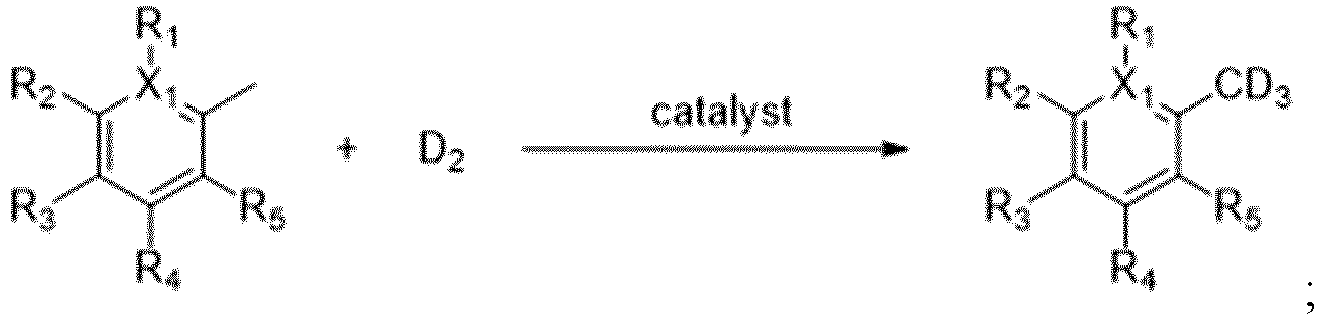 Reaction Equation 2 is:
 R1 to R5 are independently selected from any one of H, C1-C10 hydrocarbon group, C6-C20 aryl group, halogen, C1-C10 hydrocarboxyl group, C3-C9 silyl group, and C1-C20 amino group, two adjacent groups in R1-R3 can be connected into a ring, X1 is a carbon atom or a nitrogen atom, and X2 is an oxygen atom, a sulfur atom, or a nitrogen atom;Reaction Equation 3 is:
 Reaction Equation 4 is:
 R6 to R10 are independently selected from any one of H, C1-C10 hydrocarbon group, C6-C20 aryl group, halogen, C1-C10 hydrocarboxyl group, or C1-C20 amino group, two adjacent groups in R6-R8 can be connected into a ring, X2 is an oxygen atom, a sulfur atom, or a nitrogen atom, and X3 is selected from any one of a silicon atom, an oxygen atom, a sulfur atom, a carbon atom, or a nitrogen atom; R is a C1-C10 hydrocarbon group or a C6-C20 aryl group;Reaction Equation 5 is:
 R11 to R20 are independently selected from any one of H, C1-C10 hydrocarbon group, C6-C20 aryl group, halogen, C1-C10 hydrocarboxyl group, or C1-C20 amino group.
 - The method of any one of claims 1-4, wherein, said deuteration reaction is as shown in any one of Reaction Equation 6 to Reaction Equation 7:Reaction Equation 6 is:
 R21 to R23 are independently selected from any one of H, C1-C10 hydrocarbon group, C6-C20 aryl group, C3-C9 silyl group, C1-C10 alkoxyl group, or C1-C20 amino group, R21 to R23 can be connected into aliphatic hydrocarbon rings or aromatic rings;Reaction Equation 7 is:
 R24 to R28 are independently selected from any one of H, C1-C10 hydrocarbon group, C6-C20 aryl group, halogen, C1-C10 hydrocarboxyl group, C1-C10 hydrocarbon sulfur group, or C1-C20 amino group, X4 is a carbon or nitrogen atom.
 - The method of claim 5 or 6, wherein, said catalyst is selected from at least one of potassium diisopropylamide, potassium bis(trimethylsilyl)amide, potassium tetramethylpiperidide, rubidium diisopropylamide, rubidium bis(trimethylsilyl)amide, rubidium tetramethylpiperidide, cesium diisopropylamide, cesium bis(trimethylsilyl)amide, and cesium tetramethylpiperidide.
- The method of any one of claims 1-4, wherein, said deuteration reaction is as shown in any one of Reaction Equation 8 to Reaction Equation 12;Reaction Equation 8 is:
 Reaction Equation 9 is:
 Reaction Equation 10 is:
 Reaction Equation 11 is:
 Reaction Equation 12 is:
 R29 is independently selected from any one of C1-C10 hydrocarbon group, C6-C20 aryl group, C1-C10 alkyloxyl group, or C1-C20 amino group, R30 is independently selected from any one of C1-C10 hydrocarbon group or C6-C20 aryl group, and R29, R30 can be connected into a ring; R31 to R34 are independently selected from any one of H, C1-C10 hydrocarbon group, C6-C20 aryl group, C1-C10 alkyloxyl group, or C1-C20 amino group, and two adjacent groups among R31 to R34 can be connected into a ring.
 - The method of claim 8, wherein, said catalyst is selected from at least one of potassium tert-butoxide, sodium hydroxide, or potassium hydroxide.
- The method of any one of claims 1-4, wherein, said deuteration reaction is as shown in any one of Reaction Equations 13 to 15;Reaction Equation 13 is:
 Reaction Equation 14 is:
 Reaction Equation 15 is:
 R35 to R40 are independently selected from any one of H, C1-C10 hydrocarbon group, or C6-C20 aryl group, and two adjacent groups among R35 to R40 can be connected into a ring.
 - The method of any one of claims 1-4, wherein, said deuteration reaction is as shown in any one of Reaction Equation 16 to Reaction Equation 17;Reaction Equation 16 is:
 Reaction Equation 17 is:
 R36 to R38 are independently selected from any one of H, C1-C10 hydrocarbon group, or C6-C20 aryl group, and two adjacent groups among R36 to R38 can be connected into a ring, X5 is selected from any one of a silicon atom, an oxygen atom, a sulfur atom, a carbon atom, or a nitrogen atom.
 - According to any one of claims 1-4, wherein, said deuteration reaction is as shown in Reaction Equation 18:Reaction Equation 18 is:
 R41 and R42 are independently selected from any one of H, C1-C10 hydrocarbon group, C6-C20 aryl group, C3-C9 silyl group, C1-C10 alkoxyl group, or C1-C20 amino group, and R41 and R42 can be connected into an aliphatic hydrocarbon ring or an aromatic ring.
 - The method of any one of claims 10-12, wherein, said catalyst is selected from at least one of potassium diisopropylamide, potassium bis(trimethylsilyl)amide, potassium tetramethylpiperidide, rubidium diisopropylamide, rubidium bis(trimethylsilyl)amide, rubidium tetramethylpiperidide, cesium diisopropylamide, cesium bis(trimethylsilyl)amide, and cesium tetramethylpiperidide.
- The method of any one of claims 1-13, wherein, the molar amount of said catalyst is 1%-100% of the molar amount of said compound containing carbon-hydrogen bonds.
- The method of any one of claims 1-14, wherein, the pressure of deuterium gas in said deuteration reaction is between 1 bar-50 bar.
- The method of any one of claims 1-15, wherein, said deuteration reaction is conducted in an organic solvent or under solvent-free conditions, and said organic solvent is selected from at least one of deuterated benzene, benzene, tert-butylbenzene, n-hexane, cyclohexane, decalin, ether, tetrahydrofuran, methyl tert-butyl ether, methyl cyclopentyl ether, and n-butyl ether.
Applications Claiming Priority (6)
| Application Number | Priority Date | Filing Date | Title |
|---|---|---|---|
| CN202110381786.6A CN115197041B (en) | 2021-04-09 | 2021-04-09 | A deuteration method for benzylic carbon-hydrogen bonds |
| CN202110406555.6A CN115215774B (en) | 2021-04-15 | 2021-04-15 | A kind of deuteration method for methyl sulfide compounds |
| CN202110479540.2A CN115260132B (en) | 2021-04-30 | 2021-04-30 | Sp (sp) 2 Deuteration method for hybridized C-H bond |
| CN202111239460.6A CN116023203B (en) | 2021-10-25 | 2021-10-25 | Novel deuteration method for sulfone, sulfoxide, sulfonamide and sulfinamide compounds |
| CN202111239237.1A CN116023324B (en) | 2021-10-25 | 2021-10-25 | A deuterated method for pyridine and its derivatives |
| PCT/CN2022/085660 WO2022214045A1 (en) | 2021-04-09 | 2022-04-07 | Method for preparing deuterated chemical by means of deuteration reaction of carbon-hydrogen bond with deuterium gas under catalysis of alkali |
Publications (2)
| Publication Number | Publication Date |
|---|---|
| EP4321499A1 true EP4321499A1 (en) | 2024-02-14 |
| EP4321499A4 EP4321499A4 (en) | 2025-12-10 |
Family
ID=83545126
Family Applications (1)
| Application Number | Title | Priority Date | Filing Date |
|---|---|---|---|
| EP22784111.1A Pending EP4321499A4 (en) | 2021-04-09 | 2022-04-07 | METHOD FOR THE PRODUCTION OF DEUTERATED CHEMICALS BY DEUTERATE REACTION OF A CARBON-HYDROGEN BOND WITH DEUTERIUM GAS UNDER THE CATALYSIS OF ALKALI |
Country Status (3)
| Country | Link |
|---|---|
| US (1) | US20240376024A1 (en) |
| EP (1) | EP4321499A4 (en) |
| WO (1) | WO2022214045A1 (en) |
Family Cites Families (4)
| Publication number | Priority date | Publication date | Assignee | Title |
|---|---|---|---|---|
| FR1450643A (en) * | 1965-06-30 | 1966-06-24 | Commissariat Energie Atomique | Isotopic enrichment process by bitherme ammonia-hydrogen exchange |
| US3666821A (en) * | 1968-08-29 | 1972-05-30 | Merck & Co Inc | Deuterated methylene chloride |
| CN109020849B (en) * | 2018-08-29 | 2020-11-03 | 海门海康生物医药科技有限公司 | Preparation method of deuterated dimethyl sulfoxide |
| CN111205161B (en) * | 2020-01-16 | 2022-07-05 | 深圳大学 | Synthetic method of aryl deuterated methane |
-
2022
- 2022-04-07 US US18/285,915 patent/US20240376024A1/en active Pending
- 2022-04-07 EP EP22784111.1A patent/EP4321499A4/en active Pending
- 2022-04-07 WO PCT/CN2022/085660 patent/WO2022214045A1/en not_active Ceased
Also Published As
| Publication number | Publication date |
|---|---|
| WO2022214045A1 (en) | 2022-10-13 |
| EP4321499A4 (en) | 2025-12-10 |
| US20240376024A1 (en) | 2024-11-14 |
Similar Documents
| Publication | Publication Date | Title |
|---|---|---|
| CN104592281B (en) | Bifunctional 4-TMS-5-I-1,2,3-triazole compound and its preparation method and application | |
| Varala et al. | Cesium salts in organic synthesis: A Review | |
| CN112675919B (en) | Application of N-heterocyclic carbene-based mixed nickel (II) complex in synthesis of alpha-benzyl benzofuran compound | |
| Jiang et al. | Haloalkyne Chemistry | |
| CN116496231A (en) | Preparation method of N-phenyl-2, 3-dihydro-4H-1, 3-benzothiazine-4-ketone | |
| CN113173939B (en) | Method for synthesizing tri-substituted alkenyl borate through copper-catalyzed three-component reaction | |
| CN112645909B (en) | A method for synthesizing alpha-benzylbenzofuran compounds | |
| CN105732648B (en) | The nitrogen-containing heterocycle compound and synthetic method of a kind of pyrrolo- furans | |
| EP4321499A1 (en) | Method for preparing deuterated chemical by means of deuteration reaction of carbon-hydrogen bond with deuterium gas under catalysis of alkali | |
| Wang et al. | Iron-catalyzed regio-and stereoselective addition of acid chlorides to alkynes | |
| JPWO2002048098A1 (en) | Arylbis (perfluoroalkylsulfonyl) methane and its metal salts, and methods for producing them | |
| EP1404687B1 (en) | Fluorous triphase and other multiphase systems | |
| CN114106046B (en) | Chiral spirocyclic oxazoline-aminophosphine ligand substituted at 5-position of oxazoline ring and preparation method and application thereof | |
| CN109810147B (en) | Pyrene-labeled benzimidazole nitrogen heterocyclic carbene palladium metal complex, and preparation and application thereof | |
| Wu et al. | Heterogeneous chitosan@ nickel (II)-catalyzed tandem radical cyclization of N-arylacrylamides: A general method for constructing fluorinated 3, 3-disubstituted oxindoles using perfluoroalkyl iodides | |
| CN115340485B (en) | Method for synthesizing indole terpene analogues by palladium-catalyzed cascade Heck/carbonyl ortho-alkylation reaction | |
| CN111217847A (en) | Thiosilane ligand, preparation method thereof and application thereof in aryl boronization catalytic reaction | |
| CN117510303A (en) | Synthesis method of monofluoro 1, 4-eneyne compound | |
| CN114907404B (en) | 5- (2- (Disubstituted phosphino) phenyl) -1-alkyl-1H-pyrazolyl phosphine ligand and preparation method and application thereof | |
| CN107915653A (en) | Catalysis ester and amine carry out the method that reaction prepares acid amides | |
| CN110041355B (en) | A kind of method for synthesizing boron-substituted chiral dibenzo-1,4-aza* compounds | |
| Zhang | Synthesis of Diarylmethanes via Pd-Catalyzed Coupling of Aryltosylates with Benzyltitanium Reagents | |
| CN115772171A (en) | Method for synthesizing spiro [ indoline-3, 3' -piperidine ] skeleton under catalysis of monovalent gold | |
| CN111777582B (en) | 2-fluoroalkyl-3-alkynyl substituted naphthofuran compound and preparation method thereof | |
| CN118772063B (en) | A method for synthesizing tetrahydropyridazine compounds |
Legal Events
| Date | Code | Title | Description |
|---|---|---|---|
| STAA | Information on the status of an ep patent application or granted ep patent |
Free format text: STATUS: THE INTERNATIONAL PUBLICATION HAS BEEN MADE |
|
| PUAI | Public reference made under article 153(3) epc to a published international application that has entered the european phase |
Free format text: ORIGINAL CODE: 0009012 |
|
| STAA | Information on the status of an ep patent application or granted ep patent |
Free format text: STATUS: REQUEST FOR EXAMINATION WAS MADE |
|
| 17P | Request for examination filed |
Effective date: 20231013 |
|
| AK | Designated contracting states |
Kind code of ref document: A1 Designated state(s): AL AT BE BG CH CY CZ DE DK EE ES FI FR GB GR HR HU IE IS IT LI LT LU LV MC MK MT NL NO PL PT RO RS SE SI SK SM TR |
|
| DAV | Request for validation of the european patent (deleted) | ||
| DAX | Request for extension of the european patent (deleted) | ||
| A4 | Supplementary search report drawn up and despatched |
Effective date: 20251106 |
|
| RIC1 | Information provided on ipc code assigned before grant |
Ipc: C07B 59/00 20060101AFI20251031BHEP Ipc: C07C 15/14 20060101ALI20251031BHEP Ipc: C07C 319/20 20060101ALI20251031BHEP Ipc: C07D 307/28 20060101ALI20251031BHEP Ipc: C07D 213/127 20060101ALI20251031BHEP Ipc: C07C 209/68 20060101ALI20251031BHEP Ipc: C07C 17/35 20060101ALI20251031BHEP Ipc: C07C 303/40 20060101ALI20251031BHEP Ipc: C07D 213/16 20060101ALI20251031BHEP Ipc: C07D 213/22 20060101ALI20251031BHEP Ipc: C07D 319/12 20060101ALI20251031BHEP Ipc: C07D 333/54 20060101ALI20251031BHEP Ipc: C07D 317/50 20060101ALI20251031BHEP Ipc: C07D 233/06 20060101ALI20251031BHEP Ipc: C07C 41/18 20060101ALI20251031BHEP Ipc: C07C 315/04 20060101ALI20251031BHEP Ipc: C07C 5/00 20060101ALI20251031BHEP Ipc: C07D 209/06 20060101ALI20251031BHEP Ipc: C07D 209/08 20060101ALI20251031BHEP Ipc: C07D 209/86 20060101ALI20251031BHEP |