EP4321498A1 - Triazole methanol as nitrification inhibitor for fertilizer application - Google Patents
Triazole methanol as nitrification inhibitor for fertilizer application Download PDFInfo
- Publication number
- EP4321498A1 EP4321498A1 EP22189690.5A EP22189690A EP4321498A1 EP 4321498 A1 EP4321498 A1 EP 4321498A1 EP 22189690 A EP22189690 A EP 22189690A EP 4321498 A1 EP4321498 A1 EP 4321498A1
- Authority
- EP
- European Patent Office
- Prior art keywords
- composition
- nitrification
- nitrification inhibitor
- inhibitor
- aspects
- Prior art date
- Legal status (The legal status is an assumption and is not a legal conclusion. Google has not performed a legal analysis and makes no representation as to the accuracy of the status listed.)
- Pending
Links
Images


Classifications
-
- C—CHEMISTRY; METALLURGY
- C05—FERTILISERS; MANUFACTURE THEREOF
- C05G—MIXTURES OF FERTILISERS COVERED INDIVIDUALLY BY DIFFERENT SUBCLASSES OF CLASS C05; MIXTURES OF ONE OR MORE FERTILISERS WITH MATERIALS NOT HAVING A SPECIFIC FERTILISING ACTIVITY, e.g. PESTICIDES, SOIL-CONDITIONERS, WETTING AGENTS; FERTILISERS CHARACTERISED BY THEIR FORM
- C05G3/00—Mixtures of one or more fertilisers with additives not having a specially fertilising activity
- C05G3/90—Mixtures of one or more fertilisers with additives not having a specially fertilising activity for affecting the nitrification of ammonium compounds or urea in the soil
-
- Y—GENERAL TAGGING OF NEW TECHNOLOGICAL DEVELOPMENTS; GENERAL TAGGING OF CROSS-SECTIONAL TECHNOLOGIES SPANNING OVER SEVERAL SECTIONS OF THE IPC; TECHNICAL SUBJECTS COVERED BY FORMER USPC CROSS-REFERENCE ART COLLECTIONS [XRACs] AND DIGESTS
- Y02—TECHNOLOGIES OR APPLICATIONS FOR MITIGATION OR ADAPTATION AGAINST CLIMATE CHANGE
- Y02P—CLIMATE CHANGE MITIGATION TECHNOLOGIES IN THE PRODUCTION OR PROCESSING OF GOODS
- Y02P60/00—Technologies relating to agriculture, livestock or agroalimentary industries
- Y02P60/20—Reduction of greenhouse gas [GHG] emissions in agriculture, e.g. CO2
- Y02P60/21—Dinitrogen oxide [N2O], e.g. using aquaponics, hydroponics or efficiency measures
Definitions
- This disclosure generally concerns compositions for maintaining or reducing the loss of nitrogen content in soils.
- Nitrogen is one of the most important nutrients for plant growth and productivity.
- Nitrogen-use efficiency is defined as the ratio of a crop's nitrogen uptake to the total input of nitrogen fertilizer.
- NUE is notoriously poor, with about 50% of nitrogenous fertilizer applied to crop systems lost to the environment as ammonia (NH 3 ), nitrate (NO 3 - ), and nitrous oxide (N 2 O, a greenhouse gas).
- Low NUE in the agriculture industry contributes to high agricultural production costs, environmental pollution, and climate change. These losses are driven by nitrification and subsequent denitrification processes catalyzed by soil microorganisms.
- Nitrification is traditionally considered to be a two-step process where ammonia (NH 3 ) is first oxidized to nitrite (NO 2 - ) by ammonia oxidizers, and subsequently to nitrate (NO 3 - ) by nitrite-oxidizing bacteria (NOB). Recent evidence indicates complete nitrification by Nitrospira bacteria that are present in natural soil environments.
- Nitrification inhibitors are compounds that can prevent or retard the nitrification of ammonia. These inhibitors help to reduce losses of nitrogen in soil that would otherwise be used by plants.
- BNIs Biological Nitrification Inhibitors
- These natural compounds include 2-hydroxy-5-methoxy-1,4-benzoquinone (Sorgoleone), methyl-3-(4-hydroxyphenyl)propionate, and 1,9-decanediol.
- Fertilizer research has led to the development of synthetic nitrification inhibitors (NIs), including nitrapyrin, dicyandiamide (DCD), and 3, 4-dimethylpyrazole phosphate (DMPP).
- NIs synthetic nitrification inhibitors
- DCD dicyandiamide
- DMPP 4-dimethylpyrazole phosphate
- the biological and synthetic nitrification inhibitors are associated with a variety of shortcomings, including instability at high temperatures, instability at high or low pH, variable effectiveness, difficulties in application, high cost, environmental pollution, and food safety risks. Therefore, there exist an unmet need to identify novel, non-toxic nitrification inhibitors that can be effective over broad ranges of soil types, pH, and temperature.
- the solution in some instances lies in nitrification inhibitors disclosed herein and methods for synthesizing the nitrification inhibitors.
- the nitrification inhibitors disclosed herein can include small molecules that can, in some instances, be synthesized in a single step using relatively inexpensive reagents.
- the nitrification inhibitors in some instances, have a high melting point, which facilitates formulating the nitrification inhibitors with melted urea at a temperature of about 132 to 135 °C or greater.
- the nitrification inhibitors exhibit little to no toxicity and are equally or more effective than nitrification inhibitors currently on the market.
- the nitrification inhibitors can be used in a variety of soil types, and over broad ranges of temperature and pH. Certain aspects of the disclosure are therefore directed to a composition that provides reduced nitrification of ammonium nitrogen, the composition comprising a nitrification inhibitor of formula I: wherein R 1 , R 2 , and R 3 are each independently H, substituted or unsubstituted alkyl, or substituted or unsubstituted aryl, or a salt thereof.
- R 1 is H.
- R 2 is H.
- R 3 is H.
- the nitrification inhibitor is further defined as formula I:
- Some aspects of the disclosure are directed to a method for inhibiting the nitrification of ammonia in soil comprising applying to the soil a composition comprising a nitrification inhibitor of formula I.
- the nitrification inhibitor may be applied to the soil by application directly to the soil, by tilling into a soil, by application to water that contacts the soil, etc.
- the nitrification inhibitor is applied to the soil at the same time as, or at a different time than, a fertilizer, water, additional soil, a soil supplement, a seed, a plant, etc.
- the composition in some instances, can consist or consist essentially of the nitrification inhibitor.
- the composition further comprises at least one nitrogenous fertilizer component.
- the at least one nitrogenous fertilizer component can be selected from the group consisting of urea, an ammonium salt, anhydrous ammonia, and combinations thereof.
- the at least one nitrogenous fertilizer components is urea.
- the urea is a solidified urea melt.
- the composition further comprises a phosphate based fertilizer.
- the nitrification inhibitor is comprised within the solidified urea melt.
- the composition further comprises at least one additional nitrification inhibitor.
- the at least one additional nitrification inhibitor can be nitrapyrin, dicyandiamide, ammonium thiosulfate, methyl-3-(4-hydroxyphenyl)propionate, 1,9-decanediol, potassium azide, 2-amino-4-chloro-6-methylpyrimidine, sulfathiazole, 4-amino-1,2,4-triazole, 2,4-diamino-6-trichloromethyl-s-triazine, potassium ethylxanthate, guanylthiourea, 4-nitrobenzotrichloride, 4-mesylbenzotrichloride, sodium thiocarbonate, phenylmercuric acetate, 3, 4-dimethylpyrazole phosphate, or sorgoleone, or combinations thereof.
- the composition further comprises at least one urease inhibitor.
- the at least one urease inhibitor may be at least one of N-(n-butyl) thiophosphoric triamide (NBTPT) and N-(n-propyl) thiophosphoric triamide.
- the composition further comprises at least one additional nitrification inhibitor and at least one urease inhibitor.
- the nitrification inhibitor is comprised within a carrier.
- the carrier comprises plaster of paris, flour, chalk powder, starch, gluten, kaolin, bentonite, colloidal silica, silica, dried distillers grains with solubles, lignin, a synthetic polymer, a wax, chitin, glycoaminoglycans, pectins, hyaluronic acid, chondroitin sulphate, dermatan sulphate, alginic acid, polymannuronic acid, polyguluronic acid, polyglucuronic acid, amylose, amylopectin, callose, chitosan, poly- galactomannan, dextran, xanthan, keratan sulphate, MgO, CaO, bone mill powder, rice husk, CaCO3, Na 2 CO 3 , K 2 CO 3 , KH 2 PO 4 , NaHCO 3 , and/or MgCO 3 .
- the synthetic polymer comprises poly butylene succinate adipate, poly lactic acid, poly butylene succinate, cellulose triacetate, cellulose diacetate, cellulose acetate, a starch acetate, poly(caprolactone), a poly(butylene terephthalate adipate), hydroxypropyl methylcellulose, hydroxyethyl methylcellulose, methylcellulose, ethylcellulose, ethyl methyl cellulose, hydroxy ethyl cellulose, hydroxypropyl cellulose, ethyl hydroxyethyl cellulose, carboxymethyl cellulose, polyethylene glycol, cyclodextrin, or a combination thereof.
- the composition increases nitrogen use efficiency (NUE) of or for a crop.
- the method further comprises applying a nitrogenous fertilizer component to the soil, wherein the nitrogenous fertilizer component and the composition are comprised in two separate compositions.
- the two separate compositions are applied to the soil within one hour of each other.
- the two separate compositions are applied to the soil separately and not within one hour of each other.
- the nitrogenous fertilizer component and the nitrification inhibitor are comprised in a single composition.
- Aspect 1 is a method for inhibiting the nitrification of ammonia in soil comprising applying to the soil a composition comprising a nitrification inhibitor of formula I: wherein R 1 , R 2 , and R 3 are each independently H, substituted or unsubstituted alkyl, or substituted or unsubstituted aryl, or a salt thereof.
- Aspect 2 is the method of aspect 1, wherein the composition further comprises at least one nitrogenous fertilizer component.
- Aspect 3 is the method of aspect 2, wherein the at least one nitrogenous fertilizer component is selected from the group consisting of urea, an ammonium salt, anhydrous ammonia, and combinations thereof.
- Aspect 4 is the method of any of aspects 1 to 3, wherein the composition further comprises at least one additional nitrification inhibitor.
- Aspect 5 is the method of any one of aspects 1 to 4, wherein the at least one additional nitrification inhibitor is selected from the group consisting of nitrapyrin, dicyandiamide, ammonium thiosulfate, methyl-3-(4-hydroxyphenyl)propionate, 1,9-decanediol, potassium azide, 2-amino-4-chloro-6-methylpyrimidine, sulfathiazole, 4-amino-1,2,4-triazole, 2,4-diamino-6-trichloromethyl-s-triazine, potassium ethylxanthate, guanylthiourea, 4-nitrobenzotrichloride, 4-mesylbenzotrichloride, sodium thiocarbonate, phenylmercuric acetate, 3, 4-dimethylpyrazole phosphate, sorgoleone, and combinations thereof.
- the at least one additional nitrification inhibitor is selected from the group consisting of
- Aspect 6 is the method of any one of aspects 1 to 5, wherein the composition further comprises at least one urease inhibitor.
- Aspect 7 is the method of aspect 6, wherein the at least one urease inhibitor is at least one of N-(n-butyl) thiophosphoric triamide and N-(n-propyl) thiophosphoric triamide.
- Aspect 8 is the method of any one of aspects 1 to 7, wherein the composition increases a crop's nitrogen use efficiency (NUE).
- NUE crop's nitrogen use efficiency
- Aspect 9 is the method of any one of aspects 1 to 8, wherein the method further comprises applying a nitrogenous fertilizer component to the soil, wherein the nitrogenous fertilizer component and the composition are comprised in two separate compositions.
- Aspect 10 is the method of aspect 9, wherein the two separate compositions are applied to the soil within one hour of each other.
- Aspect 11 is the method of aspect 9, wherein the two separate compositions are applied to the soil separately and not within one hour of each other.
- Aspect 12 is the method of any one of aspects 1 to 11, wherein R 1 is H.
- Aspect 13 is the method of any one of aspects 1 to 12, wherein R 2 is H.
- Aspect 14 is the method of any one of aspects 1 to 13, wherein R 3 is H.
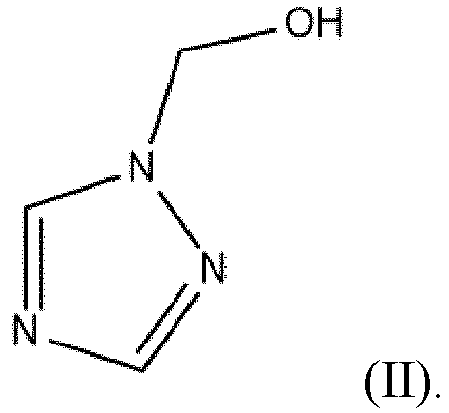
- Aspect 15 is the method of any one of aspects 1 to 14, wherein the nitrification inhibitor is further defined as a nitrification inhibitor of formula II:
- Aspect 16 is the method of any one of aspects 2 to 15, wherein the nitrogenous fertilizer component is urea.
- Aspect 17 is the method of aspect 16, wherein the urea is a solidified urea melt.
- Aspect 18 is the method of aspect 17, wherein the nitrification inhibitor is comprised within the solidified urea melt.
- Aspect 19 is the method of any one of aspects 1 to 18, wherein the nitrification inhibitor is comprised within a carrier.
- Aspect 20 is the method of aspect 19, wherein the carrier comprises plaster of paris, flour, chalk powder, starch, gluten, kaolin, bentonite, colloidal silica, silica, dried distillers grains with solubles, lignin, a synthetic polymer, a wax, chitin, glycoaminoglycans, pectins, hyaluronic acid, chondroitin sulphate, dermatan sulphate, alginic acid, polymannuronic acid, polyguluronic acid, polyglucuronic acid, amylose, amylopectin, callose, chitosan, poly- galactomannan, dextran, xanthan, keratan sulphate, MgO, CaO, bone mill powder, rice husk, CaCO3, Na 2 CO 3 , K 2 CO 3 , KH 2 PO 4 , NaHCO 3 , and/or MgCO 3 .
- Aspect 21 is the method of claim 20, wherein the synthetic polymer comprises poly butylene succinate adipate, poly lactic acid, poly butylene succinate, cellulose triacetate, cellulose diacetate, cellulose acetate, a starch acetate, poly(caprolactone), a poly(butylene terephthalate adipate), hydroxypropyl methylcellulose, hydroxyethyl methylcellulose, methylcellulose, ethylcellulose, ethyl methyl cellulose, hydroxy ethyl cellulose, hydroxypropyl cellulose, ethyl hydroxyethyl cellulose, carboxymethyl cellulose, cyclodextrin, polyethylene glycol, or a combination thereof.
- Aspect 22 is a fertilizer composition that provides reduced nitrification of ammonium nitrogen comprising:
- Aspect 23 is the fertilizer composition of aspect 22, wherein the composition further comprises at least one additional nitrification inhibitor.
- Aspect 24 is the fertilizer composition of aspect 23, wherein the at least one additional nitrification inhibitor is selected from the group consisting of nitrapyrin, dicyandiamide, ammonium thiosulfate, methyl-3-(4-hydroxyphenyl)propionate, 1,9-decanediol, potassium azide, 2-amino-4-chloro-6-methylpyrimidine, sulfathiazole, 4-amino-1,2,4-triazole, 2,4-diamino-6-trichloromethyl-s-triazine, potassium ethylxanthate, guanylthiourea, 4-nitrobenzotrichloride, 4-mesylbenzotrichloride, sodium thiocarbonate, phenylmercuric acetate, 4-dimethylpyrazole phosphate, sorgoleone, and combinations thereof.
- the at least one additional nitrification inhibitor is selected from the group consisting of nitra
- Aspect 25 is the fertilizer composition of any one of aspects 22 to 24, wherein the composition further comprises at least one urease inhibitor.
- Aspect 26 is the fertilizer composition of aspect 25, wherein the ammonia source is ammonium hydroxide (NH 4 OH) and/or ammonia (NH 3 ).
- the ammonia source is ammonium hydroxide (NH 4 OH) and/or ammonia (NH 3 ).
- Aspect 27 is the fertilizer composition of any one of aspects 22 to 26, wherein the nitrification inhibitor is comprised on the surface of the at least one N, P, and/or K fertilizer component.
- Aspect 28 is the fertilizer composition of any one of aspects 22 to 26, wherein the composition comprises an essentially homogeneous mixture of the nitrification inhibitor and the at least one of a N, P, and/or K fertilizer component.
- Aspect 29 is the fertilizer composition of any one of aspects 22 to 28, wherein R 1 is H.
- Aspect 30 is the fertilizer composition of any one of aspects 22 to 29, wherein R 2 is H.
- Aspect 31 is the fertilizer composition of any one of aspects 22 to 30, wherein R 3 is H.
- Aspect 32 is the fertilizer composition of any one of aspects 22 to 31, wherein the nitrification inhibitor is further defined as a nitrification inhibitor of formula II:
- Aspect 33 is the fertilizer composition of any one of aspects 22 to 32, wherein the at least one N, P, and/or K fertilizer component comprises urea.
- Aspect 34 is the fertilizer composition of aspect 33, wherein the nitrification inhibitor is comprised within a solidified urea melt.
- Aspect 35 is the fertilizer composition of any one of aspects 22 to 34, wherein the nitrification inhibitor is comprised within a carrier.
- Aspect 36 is the fertilizer composition of aspect 35, wherein the carrier comprises plaster of paris, flour, chalk powder, starch, gluten, kaolin, bentonite, colloidal silica, silica, dried distillers grains with solubles, lignin, a synthetic polymer, a wax, chitin, glycoaminoglycans, pectins, hyaluronic acid, chondroitin sulphate, dermatan sulphate, alginic acid, polymannuronic acid, polyguluronic acid, polyglucuronic acid, amylose, amylopectin, callose, chitosan, poly-galactomannan, dextran, xanthan, keratan sulphate, MgO, CaO, bone mill powder, rice husk, CaCO 3 , Na 2 CO 3 , K 2 CO 3 , KH 2 PO 4 , NaHCO 3 , and/or MgCO 3 .
- Aspect 37 is the composition of aspect 36, wherein the synthetic polymer comprises poly butylene succinate adipate, poly lactic acid, poly butylene succinate, cellulose triacetate, cellulose diacetate, cellulose acetate, a starch acetate, poly(caprolactone), a poly(butylene terephthalate adipate), hydroxypropyl methylcellulose, hydroxyethyl methylcellulose, methylcellulose, ethylcellulose, ethyl methyl cellulose, hydroxy ethyl cellulose, hydroxypropyl cellulose, ethyl hydroxyethyl cellulose, carboxymethyl cellulose, cyclodextrin, polyethylene glycol, or a combination thereof.
- Aspect 38 is a composition comprising: a nitrification inhibitor of formula I:
- Aspect 39 is the composition of aspect 38, wherein the additional inhibitor comprises the urease inhibitor.
- Aspect 40 is the composition of aspect 39, wherein the urease inhibitor is selected from the group consisting of N-(n-butyl) thiophosphoric triamide and N-(n-propyl) thiophosphoric triamide and combinations thereof.
- Aspect 41 is the composition of any one of aspects 38 to 40, wherein the additional inhibitor comprises the additional nitrification inhibitor.
- Aspect 42 is the composition of aspect 41, wherein the nitrification inhibitor is selected from the group consisting of nitrapyrin, dicyandiamide, ammonium thiosulfate, methyl-3-(4-hydroxyphenyl)propionate, 1,9-decanediol, potassium azide, 2-amino-4-chloro-6-methylpyrimidine, sulfathiazole, 4-amino-1,2,4-triazole, 2,4-diamino-6-trichloromethyl-s-triazine, potassium ethylxanthate, guanylthiourea, 4-nitrobenzotrichloride, 4-mesylbenzotrichloride, sodium thiocarbonate, phenylmercuric acetate, 3, 4-dimethylpyrazole phosphate, and sorgoleone, and combinations thereof.
- the nitrification inhibitor is selected from the group consisting of nitrapyrin, dicyand
- Aspect 43 is the composition of any one of aspects 38 to 42, further comprising a carrier.
- Aspect 44 is the composition of aspect 43, wherein the carrier comprises plaster of paris, flour, chalk powder, starch, gluten, kaolin, bentonite, colloidal silica, silica, dried distillers grains with solubles, lignin, a synthetic polymer, a wax, chitin, glycoaminoglycans, pectins, hyaluronic acid, chondroitin sulphate, dermatan sulphate, alginic acid, polymannuronic acid, polyguluronic acid, polyglucuronic acid, amylose, amylopectin, callose, chitosan, poly-galactomannan, dextran, xanthan, keratan sulphate, MgO, CaO, bone mill powder, rice husk, CaCO 3 , Na 2 CO 3 , K 2 CO 3 , KH 2 PO 4 , NaHCO 3 , and/or MgCO 3 .
- Aspect 45 is the composition of aspect 44, wherein the synthetic polymer comprises poly butylene succinate adipate, poly lactic acid, poly butylene succinate, cellulose triacetate, cellulose diacetate, cellulose acetate, a starch acetate, poly(caprolactone), a poly(butylene terephthalate adipate), hydroxypropyl methylcellulose, hydroxyethyl methylcellulose, methylcellulose, ethylcellulose, ethyl methyl cellulose, hydroxy ethyl cellulose, hydroxypropyl cellulose, ethyl hydroxyethyl cellulose, carboxymethyl cellulose, cyclodextrin, polyethylene glycol, or a combination thereof.
- Aspect 46 is the composition of any one of aspects 38 to 45, wherein R 1 is H.
- Aspect 47 is the composition of any one of aspects 38 to 46, wherein R 2 is H.
- Aspect 48 is the composition of any one of aspects 38 to 47, wherein R 3 is H.
- Aspect 49 is the composition of any one of aspects 38 to 48 wherein the nitrification inhibitor is further defined as a nitrification inhibitor of formula II:
- Aspect 50 is a composition comprising: a nitrification inhibitor of formula I:
- Aspect 51 is the composition of aspect 50, wherein the solid carrier comprises plaster of paris, flour, chalk powder, starch, gluten, kaolin, bentonite, colloidal silica, silica, dried distillers grains with solubles, lignin, a synthetic polymer, a wax, chitin, glycoaminoglycans, pectins, hyaluronic acid, chondroitin sulphate, dermatan sulphate, alginic acid, polymannuronic acid, polyguluronic acid, polyglucuronic acid, amylose, amylopectin, callose, chitosan, poly-galactomannan, dextran, xanthan, keratan sulphate, MgO, CaO, bone mill powder, rice husk, CaCO 3 , Na 2 CO 3 , K 2 CO 3 , KH 2 PO 4 , NaHCO 3 , and/or MgCO 3 .
- Aspect 52 is the composition of aspect 51, wherein the synthetic polymer comprises poly butylene succinate adipate, poly lactic acid, poly butylene succinate, cellulose triacetate, cellulose diacetate, cellulose acetate, a starch acetate, poly(caprolactone), a poly(butylene terephthalate adipate), hydroxypropyl methylcellulose, hydroxyethyl methylcellulose, methylcellulose, ethylcellulose, ethyl methyl cellulose, hydroxy ethyl cellulose, hydroxypropyl cellulose, ethyl hydroxyethyl cellulose, carboxymethyl cellulose, cyclodextrin, polyethylene glycol, or a combination thereof.
- Aspect 53 is the composition of any one of aspects 50 to 52, wherein R 1 is H.
- Aspect 54 is the composition of any one of aspects 50 to 53, wherein R 2 is H.
- Aspect 55 is the composition of any one of aspects 50 to 54, wherein R 3 is H.
- Aspect 56 is the composition of any one of aspects 50 to 55 wherein the nitrification inhibitor is further defined as a nitrification inhibitor of formula II:
- nitrification inhibitor is a compound that inhibits bacteria in soil from converting nitrogen, such as the nitrogen provided in a fertilizer compound, into nitrate.
- urease inhibitor is a compound that inhibits activity of the enzyme urease, an enzyme which converts urea into ammonia.
- fertilizer is defined as a material applied to soils or to plant tissues to supply one or more plant nutrients essential or beneficial to the growth of plants and/or stimulants or enhancers to increase or enhance plant growth.
- granule can include a solid material.
- a granule can have a variety of different shapes, non-limiting examples of which include a spherical, a puck, an oval, a rod, an oblong, or a random shape.
- particle can include a solid material less than a millimeter in its largest dimension.
- particle or “powder” can include a plurality of particles.
- wt. % refers to a weight, volume, or molar percentage of a component, respectively, based on the total weight, the total volume of material, or total moles, that includes the component.
- 10 grams of component in 100 grams of the material is 10 wt. % of component.
- A, B, and/or C includes: A alone, B alone, C alone, a combination of A and B, a combination of A and C, a combination of B and C, or a combination of A, B, and C.
- “and/or” operates as an inclusive or.
- compositions and methods for their use can "comprise,” “consist essentially of,” or “consist of' any of the ingredients or steps disclosed throughout the specification. Compositions and methods “consisting essentially of' any of the ingredients or steps disclosed limits the scope of the claim to the specified materials or steps which do not materially affect the basic and novel characteristic of the claimed invention.
- Nitrification is the process by which ammonia is converted to nitrites (NO 2 - ), nitrates (NO 3 - ), and nitrous oxide (N 2 O) ( FIG. 1 ). This process naturally occurs in the environment, where it is carried out by specialized bacteria. Most nitrification is performed by two groups of ammonia-oxidizing bacteria, Nitrosomonas sp. and Nitrobacter spp. These bacteria are generally ubiquitous components of soil microbial populations. Bacterial enzymes that are key to the nitrification process include ammonia monooxygenase, hydroxylamine dehydrogenase, and nitrite oxidoreductase. Inhibition of the nitrification enzyme ammonia monooxygenase, the first enzyme in the nitrification process, retards the conversion of NH 4 + into NH 2 OH, and slows fertilizer loss due to nitrification.
- compositions that inhibit the nitrification process, thereby increasing nitrogen longevity in soil. This is accomplished by applying one of more of the nitrification inhibitor compounds disclosed herein to a plant, soil, or crop.
- the nitrification inhibitors disclosed herein may be combined with an additional nitrification inhibitor and/or a urease inhibitor that inhibits the conversion of urea into ammonium and carbon dioxide.
- the nitrification inhibitors disclosed herein include small, low molecular weight organic compounds that have no chiral centers. These compounds are relatively inexpensive to synthesize and can be produced in large quantities at a fraction of the cost of other, more structurally-complex nitrification inhibitors.
- compositions comprising a nitrification inhibitor of formula I: wherein R 1 , R 2 , and R 3 are each independently H, substituted or unsubstituted alkyl or substituted or unsubstituted aryl, or a salt thereof.
- the composition may further include at least one nitrogenous fertilizer component, at least one additional nitrification inhibitor, and/or at least one urease inhibitor.
- the nitrification inhibitors may be used to inhibit the nitrification of ammonia in soil by applying the composition to the soil.
- a fertilizer nutrient can be included or excluded in the nitrification inhibitor composition. If included, fertilizer nutrients can be chosen based on the particular needs of certain types of soil, climate, or other growing conditions to maximize the efficacy of the fertilizer in enhancing plant growth and crop yield. Additional additives may also be included or excluded in the nitrification inhibitor composition. Non-limiting examples of additives that can be included or excluded from the nitrification inhibitor composition of the present invention include nitrogen nutrients, phosphorus nutrients, potassium nutrients, micronutrients, and/or secondary nutrients.
- the micronutrient can be copper, iron, chloride, manganese, molybdenum, or nickel, or any combinations thereof.
- the nitrogen nutrient can be urea, ammonium nitrate, ammonium sulfate, diammonium phosphate, monoammonium phosphate, urea-formaldehyde, ammonium chloride, and/or potassium nitrate.
- the secondary nutrients may include calcium, magnesium, and/or sulfur, such as lime and/or superphosphate.
- the nitrification inhibitor composition can include at least one additional nitrification inhibitor and/or at least one urease inhibitor.
- Suitable nitrification inhibitors include, but are not limited to, 3,4-dimethylpyrazole phosphate (DMPP), dicyandiamide (DCD), thiourea (TU), 2-chloro-6-(trichloromethyl)-pyridine (Nitrapyrin), 5-ethoxy-3-trichloromethyl-1,2,4-thiadiazol, which is sold under the tradename Terrazole ® , by OHP Inc., USA, 2-amino 4-chloro 6-methyl pyrimidine (AM), 2-mercaptobenzothiazole (MBT), or 2-sulfanilamidothiazole (ST), and any combination thereof.
- DMPP 3,4-dimethylpyrazole phosphate
- DCD dicyandiamide
- TU thiourea
- 2-chloro-6-(trichloromethyl)-pyridine Na
- a nitrification inhibitor can comprise DMPP, DCD, TU, nitrapyrin, 5-ethoxy-3-trichloromethyl-1,2,4-thiadiazol, AM, MBT, or ST, or a combination thereof.
- a fertilizer composition can comprise NBTPT, DMPP, TU, DCD, PPDA, nitrapyrin, 5-ethoxy-3-trichloromethyl-1,2,4-thiadiazol, AM, MBT, ST, or a combination thereof.
- a binder may be included in the nitrification inhibitor composition.
- exemplary binders include a phosphate, a polyphosphate, a biodegradable polymer, or a wax, or a combination thereof.
- Suitable waxes include, but are not limited to, vegetable waxes, high melt waxes, ethylene bis(stearamide) wax, paraffin waxes, polyethylene based waxes, and olefin waxes.
- Suitable phosphates include, but are not limited to, diammonium phosphate, and monoammonium phosphate.
- Suitable polyphosphates include, but are not limited to, ammonium polyphosphate.
- Suitable biodegradable polymers include, but are not limited to, polyacrylamide, polyacrylic acid, polyacrylonitrile, biodegradable polylactic acid and other biodegradable polymeric material such as polylactic acid, poly(3-hydroxypropionic acid), polyvinyl alcohol, polyethylene glycol, poly e-caprolactone, poly L-lactide, poly butylene succinate, and biodegradable starch based polymers.
- the binder can include plaster of Paris, flour, starch, gluten, kaolin, bentonite, colloidal silica, a cyclodextrin, or combinations thereof.
- Suitable flours include, but are not limited to, rice flour, wheat flour, and bleached wheat flour.
- Suitable starches include, but are not limited to, dextrin modified starches.
- the nitrification inhibitor composition can include a pH buffer.
- pH buffers include MgO, KH 2 PO 4 , NaHCO 3 , chalk powder, aluminum, magnesium hydroxide, aluminum hydroxide/magnesium hydroxide co-precipitate, aluminum hydroxide/sodium bicarbonate co-precipitate, calcium acetate, calcium bicarbonate, calcium borate, calcium carbonate, calcium bicarbonate, calcium citrate, calcium gluconate, calcium hydroxide, dibasic sodium phosphate, dipotassium hydrogen phosphate, dipotassium phosphate, disodium hydrogen phosphate, magnesium acetate, magnesium borate, magnesium bicarbonate, magnesium carbonate, magnesium hydroxide, magnesium lactate, magnesium oxide, magnesium phosphate, magnesium silicate, magnesium succinate, magnesium tartrate, potassium acetate, potassium carbonate, potassium bicarbonate, potassium borate, potassium citrate, potassium metaphosphate, potassium phthalate, potassium phosphate, potassium polyphosphate, potassium pyrophosphate, potassium succinate, magnesium
- the nitrification inhibitor composition described herein can be comprised in a composition useful for application to soil.
- the composition may include fertilizer compounds, micronutrients, primary nutrients, urea, nitrogen nutrients, insecticides, herbicides, or fungicides, or combinations thereof.
- the nitrification inhibitor composition described herein can also be included in a blended composition comprising fertilizers.
- the fertilizer can be urea, monoammonium phosphate (MAP), diammonium phosphate (DAP), muriate of potash (MOP), monopotassium phosphate (MKP), triple super phosphate (TSP), rock phosphate, single super phosphate (SSP), ammonium sulfate, and the like.
- MAP monoammonium phosphate
- DAP diammonium phosphate
- MOP muriate of potash
- MKP monopotassium phosphate
- TSP triple super phosphate
- SSP single super phosphate
- ammonium sulfate and the like.
- a nitrification inhibitor composition formed into a granule can have desirable physical properties such as desired levels of abrasion resistance, granule strength, pelletizability, hygroscopicity, granule shape, and size distribution.
- the nitrification inhibitor composition granule can have a crush strength above 1.5 kgf, such as above 1.8 kgf, such as 2 kgf to 6 kgf, or at least any one of, equal to any one of, or between any two of 2, 2.5, 3, 3.5, 4, 4.5, 5, 5.5, and 6 kgf.
- Bulk density of the fertilizer granules can be 1 g/cc to 1.2 g/cc, or at least any one of, at most any one of, equal to any one of, or between any two of 1, 1.02, 1.04, 1.06, 1.08, 1.1, 1.12, 1.14, 1.16, 1.18, and 1.2 g/cc.
- 10 mg or more, such as 10 mg to 40 mg, or at least any one of, at most any one of, equal to any one of, or between any two of 10, 11, 12, 13, 14, 15, 16, 17, 18, 19, 20, 21, 22, 23, 24, 25, 26, 27, 28, 29, 30, 31, 32, 33, 34, 35, 36, 37, 38, 39, and 40 mg of the fertilizer granule can dissolve in 1 ml of water at a pH 7, under stirring at a rate 90 to 110 rpm, and at an ambient temperature, within 5 minutes of adding 100 mg of the fertilizer granules to the water.
- the fertilizer granule is capable of losing less than 0.13 wt. %, such as 0.02 % to 0.12 wt.
- Attrition loss can be measured using the following attrition loss test.
- the nitrification inhibitor composition can be extruded before drying.
- the extruder can extrude the nitrification inhibitor composition at pressures at least, at most, equal to, or between any two of 1, 2, 3, 4, 5, 6, 7, 8, 9, 10, 11, 12, 13, 14, 15, 16, 17, 18, 19, 20, 21, 22, 23, 24, 25, 26, 27, 28, 29, 30, 31, 32, 33, 34, 35, 36, 37, 38, 39, and 40 bar.
- the extruder can extrude the nitrification inhibitor composition at temperatures at least, at most, equal to, or between any two of -20, -15, -10, 0, 5, 10, 15, 20, 25, 30, 35, 40, 45 and 50 °C.
- the extrudate can be sliced or divided before drying, such as by a die.
- the desired size of a final nitrification inhibitor product can be 0.5 to 5 mm, or 1 to 4 mm, and having a size lower than 0.5 mm or 1 mm, and/or having a size bigger than 4 mm or 5 mm can be obtained using one or more size screens.
- the nitrification inhibitor composition can be rounded and/or spheronized in a spheronizer.
- the nitrification inhibitor composition is contacted with a spheronizer for at least any one of, at most any one of, equal to any one of, or between any two of 5, 10, 15, 20, 25, 30, 35, 40, 50, or 60 seconds.
- the spheronizer in some instances has a rotating or rotatable disk capable of rotating at least any one of, at most any one of, equal to any one of, or between any two of 200, 500, 1000, 1500, 2000, 2500, 3000, 3500, 4000, 4500, 5000 rpm.
- the nitrification inhibitor composition can be dried in a dryer at a temperature 40 °C to 85 °C, or at least any one of, at most any one of, equal to any one of, or between any two of 40, 45, 50, 55, 60, 65, 70, 75, 80 and 85 °C.
- the dryer can be a fluid bed dryer, drum dryer, or flash dryer.
- the nitrification inhibitor composition can be dried in the dryer with an hot air flow having a flow rate of at least any one of, at most any one of, equal to any one of, or between any two of 100, 150, 200, 250, 300, 350, 400, 450, and 500 m 3 /hr and/or a rotation of at least any one of, at most any one of, equal to any one of, or between any two of 5, 10, 15, 20, 25, 30, 35, 40, 45, and 50 rpm.
- the nitrification inhibitor can be used in methods of inhibiting the nitrification of ammonia in soil. Such methods can include applying to the soil an effective amount of a composition and/or blend containing the nitrification inhibitor of the present invention.
- the method may include increasing the growth and yield of crops, trees, ornamentals, etc., such as, for example, palm, coconut, rice, wheat, corn, barley, oats, and/or soybeans.
- the method can include applying the nitrification inhibitor of the present invention to at least one of a soil, an organism, a liquid carrier, a liquid solvent, etc.
- the composition(s) containing the nitrification inhibitor can be applied to plants and/or soil through any suitable method of application.
- Non-limiting examples of plants that can benefit from the nitrification inhibitor of the present invention include vines, trees, shrubs, stalked plants, ferns, etc.
- the plants may include orchard crops, vines, ornamental plants, food crops, timber, and harvested plants.
- the plants may include Gymnosperms, Angiosperms, and/or Pteridophytes.
- compositions comprising the nitrification inhibitor of the present invention can be ascertained by analyzing nitrification activity as described below. It is understood that different soils have different characteristics, which can affect the effectiveness of the nitrification inhibitor compositions.
- the effectiveness of a nitrification inhibitor composition can also be directly compared to other nitrification inhibitor compositions by doing a side-by-side comparison in the same soil under the same conditions.
- a molecular modeling approach was used to predict the relative binding affinity of a compound of Formula I, as compared to nitrification inhibitors dicyandiamide (DCD) and 3,4-dimethylpyrazole phosphate (DMPP) in the active site of modelled ammonia monooxygenase enzyme, also known as nitrification enzyme ( FIG. 2A ).
- the crystal structure of ammonia monooxygenase is unknown, however, literature reveals information by homology modelling and other indirect approaches, which indicates that it is a copper metalloenzyme.
- Ammonia monooxygenase Cu site modelling shows two Cu(II) ions separated by 2.55 ⁇ .
- the atoms of the Cu 2 S 2 rhombus deviate from the plane by 0.2 ⁇ , and the angle between the two CuS 2 planes is 170.1°.
- Cu1 is bound to Met-A, His-A, and Cys-A from both chains in a distorted tetrahedral geometry
- Cu2 is bound to residues, Met-B, His-B, and Cys58-B from both chains, again in a distorted tetrahedral geometry ( FIG. 2A ).
- Both copper atoms depicted in FIG. 2A are in +1-oxidation states.
- DFT density functional theory
- a compound of Formula II candidate inhibitor and the commercial inhibitors DCD and DMPP (for benchmarking purpose) were introduced and the ligand receptor complex geometry minimized using DFT methods.
- the resulting solidified melt was recrystallized from acetone to yield 9.0 g of the Formula II compound.
- the yield was 91%.
- the identity of the Formula II compound was confirmed by 1 H- & 13 C- NMR and LC-MS analysis, and the data is in accordance with the literature. ( Asian J. Chem. 2014, 26, 883-886 ).
- COD refers to the amount of oxygen required to degrade all oxidizable compounds in a measured sample.
- a nitrification batch test was performed under nitrifying conditions.
- the activity of nitrification inhibitor Formula II compound was compared to that of the nitrification inhibitor dicyandiamide (DCD).
- COD and NH 4 -N were added to the sludge with one of the Formula II compound or DCD.
- the COD and NH 4 -N removal was calculated from the analysis results.
- Glycol was included as a reference in the test.
- the pH and oxygen content were also monitored during the tests.
- the pH level was kept between 7 and 8 at the beginning of the tests by adding IN HCl or IN NaOH.
- Oxygen was constantly purged into the sludge solutions throughout the test to get maximum aeration.
- Table 2 includes the concentrations assessed for the five batch tests. A sample concentration of approximately 10% compared to the NH 4 -N concentration was employed. Table 2 SOLUTIONS COD DOSED (mg O2/l) NH 4 -N DOSED (mg/l) SAMPLE WEIGHT (mg) SAMPLE CONCENTRATION (mg/l) DCD 800 50 10.5 5.8 Formula II compound 800 50 13.7 7.6
Landscapes
- Life Sciences & Earth Sciences (AREA)
- Soil Sciences (AREA)
- Pest Control & Pesticides (AREA)
- Chemical & Material Sciences (AREA)
- Organic Chemistry (AREA)
- Fertilizers (AREA)
Abstract
Description
- This disclosure generally concerns compositions for maintaining or reducing the loss of nitrogen content in soils.
- Nitrogen is one of the most important nutrients for plant growth and productivity. Nitrogen-use efficiency (NUE) is defined as the ratio of a crop's nitrogen uptake to the total input of nitrogen fertilizer. In agricultural crops, NUE is notoriously poor, with about 50% of nitrogenous fertilizer applied to crop systems lost to the environment as ammonia (NH3), nitrate (NO3 -), and nitrous oxide (N2O, a greenhouse gas). Low NUE in the agriculture industry contributes to high agricultural production costs, environmental pollution, and climate change. These losses are driven by nitrification and subsequent denitrification processes catalyzed by soil microorganisms.
- Nitrification is traditionally considered to be a two-step process where ammonia (NH3) is first oxidized to nitrite (NO2 -) by ammonia oxidizers, and subsequently to nitrate (NO3 -) by nitrite-oxidizing bacteria (NOB). Recent evidence indicates complete nitrification by Nitrospira bacteria that are present in natural soil environments.
- Various governments throughout the world have imposed regulations that obligate the agricultural industry to reduce their environmental impacts. One method for reducing agricultural environmental impact involves the use of nitrification inhibitors. Nitrification inhibitors are compounds that can prevent or retard the nitrification of ammonia. These inhibitors help to reduce losses of nitrogen in soil that would otherwise be used by plants.
- Some plants develop nitrification inhibition naturally through root exudates termed Biological Nitrification Inhibitors (BNIs). These natural compounds include 2-hydroxy-5-methoxy-1,4-benzoquinone (Sorgoleone), methyl-3-(4-hydroxyphenyl)propionate, and 1,9-decanediol. Fertilizer research has led to the development of synthetic nitrification inhibitors (NIs), including nitrapyrin, dicyandiamide (DCD), and 3, 4-dimethylpyrazole phosphate (DMPP). The biological and synthetic nitrification inhibitors are associated with a variety of shortcomings, including instability at high temperatures, instability at high or low pH, variable effectiveness, difficulties in application, high cost, environmental pollution, and food safety risks. Therefore, there exist an unmet need to identify novel, non-toxic nitrification inhibitors that can be effective over broad ranges of soil types, pH, and temperature.
- A solution to at least some of the problems discussed above is disclosed herein. The solution in some instances lies in nitrification inhibitors disclosed herein and methods for synthesizing the nitrification inhibitors. The nitrification inhibitors disclosed herein can include small molecules that can, in some instances, be synthesized in a single step using relatively inexpensive reagents. The nitrification inhibitors, in some instances, have a high melting point, which facilitates formulating the nitrification inhibitors with melted urea at a temperature of about 132 to 135 °C or greater. The nitrification inhibitors exhibit little to no toxicity and are equally or more effective than nitrification inhibitors currently on the market. The nitrification inhibitors can be used in a variety of soil types, and over broad ranges of temperature and pH. Certain aspects of the disclosure are therefore directed to a composition that provides reduced nitrification of ammonium nitrogen, the composition comprising a nitrification inhibitor of formula I:

- Some aspects of the disclosure are directed to a method for inhibiting the nitrification of ammonia in soil comprising applying to the soil a composition comprising a nitrification inhibitor of formula I. The nitrification inhibitor may be applied to the soil by application directly to the soil, by tilling into a soil, by application to water that contacts the soil, etc. In some instances, the nitrification inhibitor is applied to the soil at the same time as, or at a different time than, a fertilizer, water, additional soil, a soil supplement, a seed, a plant, etc.
- The composition, in some instances, can consist or consist essentially of the nitrification inhibitor. In some aspects, the composition further comprises at least one nitrogenous fertilizer component. The at least one nitrogenous fertilizer component can be selected from the group consisting of urea, an ammonium salt, anhydrous ammonia, and combinations thereof. In specific aspects, the at least one nitrogenous fertilizer components is urea. In some embodiments, the urea is a solidified urea melt. In some aspects, the composition further comprises a phosphate based fertilizer. In some aspects, the nitrification inhibitor is comprised within the solidified urea melt.
- In some aspects, the composition further comprises at least one additional nitrification inhibitor. The at least one additional nitrification inhibitor can be nitrapyrin, dicyandiamide, ammonium thiosulfate, methyl-3-(4-hydroxyphenyl)propionate, 1,9-decanediol, potassium azide, 2-amino-4-chloro-6-methylpyrimidine, sulfathiazole, 4-amino-1,2,4-triazole, 2,4-diamino-6-trichloromethyl-s-triazine, potassium ethylxanthate, guanylthiourea, 4-nitrobenzotrichloride, 4-mesylbenzotrichloride, sodium thiocarbonate, phenylmercuric acetate, 3, 4-dimethylpyrazole phosphate, or sorgoleone, or combinations thereof. In some aspects, the composition further comprises at least one urease inhibitor. The at least one urease inhibitor may be at least one of N-(n-butyl) thiophosphoric triamide (NBTPT) and N-(n-propyl) thiophosphoric triamide. In some aspects, the composition further comprises at least one additional nitrification inhibitor and at least one urease inhibitor.
- In some aspects, the nitrification inhibitor is comprised within a carrier. In some aspects, the carrier comprises plaster of paris, flour, chalk powder, starch, gluten, kaolin, bentonite, colloidal silica, silica, dried distillers grains with solubles, lignin, a synthetic polymer, a wax, chitin, glycoaminoglycans, pectins, hyaluronic acid, chondroitin sulphate, dermatan sulphate, alginic acid, polymannuronic acid, polyguluronic acid, polyglucuronic acid, amylose, amylopectin, callose, chitosan, poly- galactomannan, dextran, xanthan, keratan sulphate, MgO, CaO, bone mill powder, rice husk, CaCO3, Na2CO3, K2CO3, KH2PO4, NaHCO3, and/or MgCO3. In some embodiments, the synthetic polymer comprises poly butylene succinate adipate, poly lactic acid, poly butylene succinate, cellulose triacetate, cellulose diacetate, cellulose acetate, a starch acetate, poly(caprolactone), a poly(butylene terephthalate adipate), hydroxypropyl methylcellulose, hydroxyethyl methylcellulose, methylcellulose, ethylcellulose, ethyl methyl cellulose, hydroxy ethyl cellulose, hydroxypropyl cellulose, ethyl hydroxyethyl cellulose, carboxymethyl cellulose, polyethylene glycol, cyclodextrin, or a combination thereof.
- In some aspects, the composition increases nitrogen use efficiency (NUE) of or for a crop. In some aspects, the method further comprises applying a nitrogenous fertilizer component to the soil, wherein the nitrogenous fertilizer component and the composition are comprised in two separate compositions. In certain aspects, the two separate compositions are applied to the soil within one hour of each other. In other aspects, the two separate compositions are applied to the soil separately and not within one hour of each other. In other aspects, the nitrogenous fertilizer component and the nitrification inhibitor are comprised in a single composition.
- Also disclosed are the following aspects 1 to 56 of the present invention.
- Aspect 1 is a method for inhibiting the nitrification of ammonia in soil comprising applying to the soil a composition comprising a nitrification inhibitor of formula I:

- Aspect 2 is the method of aspect 1, wherein the composition further comprises at least one nitrogenous fertilizer component.
- Aspect 3 is the method of aspect 2, wherein the at least one nitrogenous fertilizer component is selected from the group consisting of urea, an ammonium salt, anhydrous ammonia, and combinations thereof.
- Aspect 4 is the method of any of aspects 1 to 3, wherein the composition further comprises at least one additional nitrification inhibitor.
- Aspect 5 is the method of any one of aspects 1 to 4, wherein the at least one additional nitrification inhibitor is selected from the group consisting of nitrapyrin, dicyandiamide, ammonium thiosulfate, methyl-3-(4-hydroxyphenyl)propionate, 1,9-decanediol, potassium azide, 2-amino-4-chloro-6-methylpyrimidine, sulfathiazole, 4-amino-1,2,4-triazole, 2,4-diamino-6-trichloromethyl-s-triazine, potassium ethylxanthate, guanylthiourea, 4-nitrobenzotrichloride, 4-mesylbenzotrichloride, sodium thiocarbonate, phenylmercuric acetate, 3, 4-dimethylpyrazole phosphate, sorgoleone, and combinations thereof.
- Aspect 6 is the method of any one of aspects 1 to 5, wherein the composition further comprises at least one urease inhibitor.
- Aspect 7 is the method of aspect 6, wherein the at least one urease inhibitor is at least one of N-(n-butyl) thiophosphoric triamide and N-(n-propyl) thiophosphoric triamide.
-
Aspect 8 is the method of any one of aspects 1 to 7, wherein the composition increases a crop's nitrogen use efficiency (NUE). - Aspect 9 is the method of any one of aspects 1 to 8, wherein the method further comprises applying a nitrogenous fertilizer component to the soil, wherein the nitrogenous fertilizer component and the composition are comprised in two separate compositions.
- Aspect 10 is the method of aspect 9, wherein the two separate compositions are applied to the soil within one hour of each other.
- Aspect 11 is the method of aspect 9, wherein the two separate compositions are applied to the soil separately and not within one hour of each other.
- Aspect 12 is the method of any one of aspects 1 to 11, wherein R1 is H.
- Aspect 13 is the method of any one of aspects 1 to 12, wherein R2 is H.
- Aspect 14 is the method of any one of aspects 1 to 13, wherein R3 is H.
- Aspect 15 is the method of any one of aspects 1 to 14, wherein the nitrification inhibitor is further defined as a nitrification inhibitor of formula II:

- Aspect 16 is the method of any one of aspects 2 to 15, wherein the nitrogenous fertilizer component is urea.
- Aspect 17 is the method of aspect 16, wherein the urea is a solidified urea melt.
- Aspect 18 is the method of aspect 17, wherein the nitrification inhibitor is comprised within the solidified urea melt.
- Aspect 19 is the method of any one of aspects 1 to 18, wherein the nitrification inhibitor is comprised within a carrier.
- Aspect 20 is the method of aspect 19, wherein the carrier comprises plaster of paris, flour, chalk powder, starch, gluten, kaolin, bentonite, colloidal silica, silica, dried distillers grains with solubles, lignin, a synthetic polymer, a wax, chitin, glycoaminoglycans, pectins, hyaluronic acid, chondroitin sulphate, dermatan sulphate, alginic acid, polymannuronic acid, polyguluronic acid, polyglucuronic acid, amylose, amylopectin, callose, chitosan, poly- galactomannan, dextran, xanthan, keratan sulphate, MgO, CaO, bone mill powder, rice husk, CaCO3, Na2CO3, K2CO3, KH2PO4, NaHCO3, and/or MgCO3.
- Aspect 21 is the method of claim 20, wherein the synthetic polymer comprises poly butylene succinate adipate, poly lactic acid, poly butylene succinate, cellulose triacetate, cellulose diacetate, cellulose acetate, a starch acetate, poly(caprolactone), a poly(butylene terephthalate adipate), hydroxypropyl methylcellulose, hydroxyethyl methylcellulose, methylcellulose, ethylcellulose, ethyl methyl cellulose, hydroxy ethyl cellulose, hydroxypropyl cellulose, ethyl hydroxyethyl cellulose, carboxymethyl cellulose, cyclodextrin, polyethylene glycol, or a combination thereof.
- Aspect 22 is a fertilizer composition that provides reduced nitrification of ammonium nitrogen comprising:
- at least one nitrogen (N), phosphorus (P), and/or potassium (K) fertilizer component; and
- a nitrification inhibitor of formula I:

- Aspect 23 is the fertilizer composition of aspect 22, wherein the composition further comprises at least one additional nitrification inhibitor.
- Aspect 24 is the fertilizer composition of aspect 23, wherein the at least one additional nitrification inhibitor is selected from the group consisting of nitrapyrin, dicyandiamide, ammonium thiosulfate, methyl-3-(4-hydroxyphenyl)propionate, 1,9-decanediol, potassium azide, 2-amino-4-chloro-6-methylpyrimidine, sulfathiazole, 4-amino-1,2,4-triazole, 2,4-diamino-6-trichloromethyl-s-triazine, potassium ethylxanthate, guanylthiourea, 4-nitrobenzotrichloride, 4-mesylbenzotrichloride, sodium thiocarbonate, phenylmercuric acetate, 4-dimethylpyrazole phosphate, sorgoleone, and combinations thereof.
- Aspect 25 is the fertilizer composition of any one of aspects 22 to 24, wherein the composition further comprises at least one urease inhibitor.
- Aspect 26 is the fertilizer composition of aspect 25, wherein the ammonia source is ammonium hydroxide (NH4OH) and/or ammonia (NH3).
- Aspect 27 is the fertilizer composition of any one of aspects 22 to 26, wherein the nitrification inhibitor is comprised on the surface of the at least one N, P, and/or K fertilizer component.
- Aspect 28 is the fertilizer composition of any one of aspects 22 to 26, wherein the composition comprises an essentially homogeneous mixture of the nitrification inhibitor and the at least one of a N, P, and/or K fertilizer component.
- Aspect 29 is the fertilizer composition of any one of aspects 22 to 28, wherein R1 is H.
- Aspect 30 is the fertilizer composition of any one of aspects 22 to 29, wherein R2 is H.
- Aspect 31 is the fertilizer composition of any one of aspects 22 to 30, wherein R3 is H.
- Aspect 32 is the fertilizer composition of any one of aspects 22 to 31, wherein the nitrification inhibitor is further defined as a nitrification inhibitor of formula II:

- Aspect 33 is the fertilizer composition of any one of aspects 22 to 32, wherein the at least one N, P, and/or K fertilizer component comprises urea.
- Aspect 34 is the fertilizer composition of aspect 33, wherein the nitrification inhibitor is comprised within a solidified urea melt.
- Aspect 35 is the fertilizer composition of any one of aspects 22 to 34, wherein the nitrification inhibitor is comprised within a carrier.
- Aspect 36 is the fertilizer composition of aspect 35, wherein the carrier comprises plaster of paris, flour, chalk powder, starch, gluten, kaolin, bentonite, colloidal silica, silica, dried distillers grains with solubles, lignin, a synthetic polymer, a wax, chitin, glycoaminoglycans, pectins, hyaluronic acid, chondroitin sulphate, dermatan sulphate, alginic acid, polymannuronic acid, polyguluronic acid, polyglucuronic acid, amylose, amylopectin, callose, chitosan, poly-galactomannan, dextran, xanthan, keratan sulphate, MgO, CaO, bone mill powder, rice husk, CaCO3, Na2CO3, K2CO3, KH2PO4, NaHCO3, and/or MgCO3.
- Aspect 37 is the composition of aspect 36, wherein the synthetic polymer comprises poly butylene succinate adipate, poly lactic acid, poly butylene succinate, cellulose triacetate, cellulose diacetate, cellulose acetate, a starch acetate, poly(caprolactone), a poly(butylene terephthalate adipate), hydroxypropyl methylcellulose, hydroxyethyl methylcellulose, methylcellulose, ethylcellulose, ethyl methyl cellulose, hydroxy ethyl cellulose, hydroxypropyl cellulose, ethyl hydroxyethyl cellulose, carboxymethyl cellulose, cyclodextrin, polyethylene glycol, or a combination thereof.
- Aspect 38 is a composition comprising:
a nitrification inhibitor of formula I:
- wherein R1, R2, and R3 are each independently H, substituted or unsubstituted alkyl or substituted or unsubstituted aryl, or a salt thereof; and
- an additional inhibitor comprising a urease inhibitor and/or an additional nitrification inhibitor.
- Aspect 39 is the composition of aspect 38, wherein the additional inhibitor comprises the urease inhibitor.
- Aspect 40 is the composition of aspect 39, wherein the urease inhibitor is selected from the group consisting of N-(n-butyl) thiophosphoric triamide and N-(n-propyl) thiophosphoric triamide and combinations thereof.
- Aspect 41 is the composition of any one of aspects 38 to 40, wherein the additional inhibitor comprises the additional nitrification inhibitor.
- Aspect 42 is the composition of aspect 41, wherein the nitrification inhibitor is selected from the group consisting of nitrapyrin, dicyandiamide, ammonium thiosulfate, methyl-3-(4-hydroxyphenyl)propionate, 1,9-decanediol, potassium azide, 2-amino-4-chloro-6-methylpyrimidine, sulfathiazole, 4-amino-1,2,4-triazole, 2,4-diamino-6-trichloromethyl-s-triazine, potassium ethylxanthate, guanylthiourea, 4-nitrobenzotrichloride, 4-mesylbenzotrichloride, sodium thiocarbonate, phenylmercuric acetate, 3, 4-dimethylpyrazole phosphate, and sorgoleone, and combinations thereof.
- Aspect 43 is the composition of any one of aspects 38 to 42, further comprising a carrier.
- Aspect 44 is the composition of aspect 43, wherein the carrier comprises plaster of paris, flour, chalk powder, starch, gluten, kaolin, bentonite, colloidal silica, silica, dried distillers grains with solubles, lignin, a synthetic polymer, a wax, chitin, glycoaminoglycans, pectins, hyaluronic acid, chondroitin sulphate, dermatan sulphate, alginic acid, polymannuronic acid, polyguluronic acid, polyglucuronic acid, amylose, amylopectin, callose, chitosan, poly-galactomannan, dextran, xanthan, keratan sulphate, MgO, CaO, bone mill powder, rice husk, CaCO3, Na2CO3, K2CO3, KH2PO4, NaHCO3, and/or MgCO3.
- Aspect 45 is the composition of aspect 44, wherein the synthetic polymer comprises poly butylene succinate adipate, poly lactic acid, poly butylene succinate, cellulose triacetate, cellulose diacetate, cellulose acetate, a starch acetate, poly(caprolactone), a poly(butylene terephthalate adipate), hydroxypropyl methylcellulose, hydroxyethyl methylcellulose, methylcellulose, ethylcellulose, ethyl methyl cellulose, hydroxy ethyl cellulose, hydroxypropyl cellulose, ethyl hydroxyethyl cellulose, carboxymethyl cellulose, cyclodextrin, polyethylene glycol, or a combination thereof.
- Aspect 46 is the composition of any one of aspects 38 to 45, wherein R1 is H.
- Aspect 47 is the composition of any one of aspects 38 to 46, wherein R2 is H.
- Aspect 48 is the composition of any one of aspects 38 to 47, wherein R3 is H.
- Aspect 49 is the composition of any one of aspects 38 to 48 wherein the nitrification inhibitor is further defined as a nitrification inhibitor of formula II:

- Aspect 50 is a composition comprising:
a nitrification inhibitor of formula I:
- wherein R1, R2, and R3 are each independently H, substituted or unsubstituted alkyl or substituted or unsubstituted aryl, or a salt thereof; and
- a solid carrier.
- Aspect 51 is the composition of aspect 50, wherein the solid carrier comprises plaster of paris, flour, chalk powder, starch, gluten, kaolin, bentonite, colloidal silica, silica, dried distillers grains with solubles, lignin, a synthetic polymer, a wax, chitin, glycoaminoglycans, pectins, hyaluronic acid, chondroitin sulphate, dermatan sulphate, alginic acid, polymannuronic acid, polyguluronic acid, polyglucuronic acid, amylose, amylopectin, callose, chitosan, poly-galactomannan, dextran, xanthan, keratan sulphate, MgO, CaO, bone mill powder, rice husk, CaCO3, Na2CO3, K2CO3, KH2PO4, NaHCO3, and/or MgCO3.
- Aspect 52 is the composition of aspect 51, wherein the synthetic polymer comprises poly butylene succinate adipate, poly lactic acid, poly butylene succinate, cellulose triacetate, cellulose diacetate, cellulose acetate, a starch acetate, poly(caprolactone), a poly(butylene terephthalate adipate), hydroxypropyl methylcellulose, hydroxyethyl methylcellulose, methylcellulose, ethylcellulose, ethyl methyl cellulose, hydroxy ethyl cellulose, hydroxypropyl cellulose, ethyl hydroxyethyl cellulose, carboxymethyl cellulose, cyclodextrin, polyethylene glycol, or a combination thereof.
- Aspect 53 is the composition of any one of aspects 50 to 52, wherein R1 is H.
- Aspect 54 is the composition of any one of aspects 50 to 53, wherein R2 is H.
- Aspect 55 is the composition of any one of aspects 50 to 54, wherein R3 is H.
- Aspect 56 is the composition of any one of aspects 50 to 55 wherein the nitrification inhibitor is further defined as a nitrification inhibitor of formula II:

- The term "nitrification inhibitor" is a compound that inhibits bacteria in soil from converting nitrogen, such as the nitrogen provided in a fertilizer compound, into nitrate.
- The term "urease inhibitor" is a compound that inhibits activity of the enzyme urease, an enzyme which converts urea into ammonia.
- The term "fertilizer" is defined as a material applied to soils or to plant tissues to supply one or more plant nutrients essential or beneficial to the growth of plants and/or stimulants or enhancers to increase or enhance plant growth.
- The term "granule" can include a solid material. A granule can have a variety of different shapes, non-limiting examples of which include a spherical, a puck, an oval, a rod, an oblong, or a random shape.
- The term "particle" can include a solid material less than a millimeter in its largest dimension.
- The terms "particulate" or "powder" can include a plurality of particles.
- The terms "about" or "approximately" as used herein are defined as being close to as understood by one of ordinary skill in the art. In one non-limiting embodiment, the terms are defined to be within 10%, preferably within 5%, more preferably within 1%, and most preferably within 0.5%.
- The terms "wt. %," "vol.%," or "mol.%" refers to a weight, volume, or molar percentage of a component, respectively, based on the total weight, the total volume of material, or total moles, that includes the component. In a non-limiting example, 10 grams of component in 100 grams of the material is 10 wt. % of component.
- The use of the word "a" or "an" when used in conjunction with the term "comprising" may mean "one," but it is also consistent with the meaning of "one or more," "at least one," and "one or more than one."
- The phrase "and/or" means "and" or "or". To illustrate, A, B, and/or C includes: A alone, B alone, C alone, a combination of A and B, a combination of A and C, a combination of B and C, or a combination of A, B, and C. In other words, "and/or" operates as an inclusive or.
- The words "comprising" (and any form of comprising, such as "comprise" and "comprises"), "having" (and any form of having, such as "have" and "has"), "including" (and any form of including, such as "includes" and "include") or "containing" (and any form of containing, such as "contains" and "contain") are inclusive or open-ended and do not exclude additional, unrecited elements or method steps.
- The compositions and methods for their use can "comprise," "consist essentially of," or "consist of' any of the ingredients or steps disclosed throughout the specification. Compositions and methods "consisting essentially of' any of the ingredients or steps disclosed limits the scope of the claim to the specified materials or steps which do not materially affect the basic and novel characteristic of the claimed invention.
- It is contemplated that any embodiment discussed in this specification can be implemented with respect to any method or composition of the invention, and vice versa. Furthermore, compositions of the invention can be used to achieve methods of the invention.
- Other objects, features and advantages of the present invention will become apparent from the following detailed description. It should be understood, however, that the detailed description and the specific examples, while indicating specific embodiments of the invention, are given by way of illustration only, since various changes and modifications within the spirit and scope of the invention will become apparent to those skilled in the art from this detailed description.
- The following drawings form part of the present specification and are included to further demonstrate certain aspects of the present invention. The invention may be better understood by reference to one or more of these drawings in combination with the detailed description of specific embodiments presented herein.
-
FIG. 1 : Chemical pathway of ammonia to nitrate and N2O. -
FIG. 2 : Active site of ammonium oxidase enzyme.FIG. 2A is a schematic depicting a purported ammonia oxidase copper metalloenzyme active site with two copper atoms.FIG. 2B is a ball and stick model of ammonia oxidase active site. - Human activity has had the single largest influence on the global nitrogen cycle by introducing unprecedented amounts of reactive nitrogen into ecosystems. The agricultural industry, in particular, is the single largest human activity that affects the global nitrogen-cycle. In agricultural systems, rapid and unchecked nitrification results in inefficient nitrogen-use by crops, leading to nitrogen-leakage and environmental pollution.
- Nitrification is the process by which ammonia is converted to nitrites (NO2 -), nitrates (NO3 -), and nitrous oxide (N2O) (
FIG. 1 ). This process naturally occurs in the environment, where it is carried out by specialized bacteria. Most nitrification is performed by two groups of ammonia-oxidizing bacteria, Nitrosomonas sp. and Nitrobacter spp. These bacteria are generally ubiquitous components of soil microbial populations. Bacterial enzymes that are key to the nitrification process include ammonia monooxygenase, hydroxylamine dehydrogenase, and nitrite oxidoreductase. Inhibition of the nitrification enzyme ammonia monooxygenase, the first enzyme in the nitrification process, retards the conversion of NH4 + into NH2OH, and slows fertilizer loss due to nitrification. - Certain aspects of the present disclosure are directed to compositions that inhibit the nitrification process, thereby increasing nitrogen longevity in soil. This is accomplished by applying one of more of the nitrification inhibitor compounds disclosed herein to a plant, soil, or crop. The nitrification inhibitors disclosed herein may be combined with an additional nitrification inhibitor and/or a urease inhibitor that inhibits the conversion of urea into ammonium and carbon dioxide. The nitrification inhibitors disclosed herein include small, low molecular weight organic compounds that have no chiral centers. These compounds are relatively inexpensive to synthesize and can be produced in large quantities at a fraction of the cost of other, more structurally-complex nitrification inhibitors.
- Certain embodiments herein concern a composition comprising a nitrification inhibitor of formula I:

- In some aspects, a fertilizer nutrient can be included or excluded in the nitrification inhibitor composition. If included, fertilizer nutrients can be chosen based on the particular needs of certain types of soil, climate, or other growing conditions to maximize the efficacy of the fertilizer in enhancing plant growth and crop yield. Additional additives may also be included or excluded in the nitrification inhibitor composition. Non-limiting examples of additives that can be included or excluded from the nitrification inhibitor composition of the present invention include nitrogen nutrients, phosphorus nutrients, potassium nutrients, micronutrients, and/or secondary nutrients. The micronutrient can be copper, iron, chloride, manganese, molybdenum, or nickel, or any combinations thereof. The nitrogen nutrient can be urea, ammonium nitrate, ammonium sulfate, diammonium phosphate, monoammonium phosphate, urea-formaldehyde, ammonium chloride, and/or potassium nitrate. In some aspects, the secondary nutrients may include calcium, magnesium, and/or sulfur, such as lime and/or superphosphate.
- In some instances, the nitrification inhibitor composition can include at least one additional nitrification inhibitor and/or at least one urease inhibitor. Suitable nitrification inhibitors include, but are not limited to, 3,4-dimethylpyrazole phosphate (DMPP), dicyandiamide (DCD), thiourea (TU), 2-chloro-6-(trichloromethyl)-pyridine (Nitrapyrin), 5-ethoxy-3-trichloromethyl-1,2,4-thiadiazol, which is sold under the tradename Terrazole®, by OHP Inc., USA, 2-amino 4-chloro 6-methyl pyrimidine (AM), 2-mercaptobenzothiazole (MBT), or 2-sulfanilamidothiazole (ST), and any combination thereof. In one aspect, a nitrification inhibitor can comprise DMPP, DCD, TU, nitrapyrin, 5-ethoxy-3-trichloromethyl-1,2,4-thiadiazol, AM, MBT, or ST, or a combination thereof. In some embodiments, a fertilizer composition can comprise NBTPT, DMPP, TU, DCD, PPDA, nitrapyrin, 5-ethoxy-3-trichloromethyl-1,2,4-thiadiazol, AM, MBT, ST, or a combination thereof.
- In some instances, a binder may be included in the nitrification inhibitor composition. Exemplary binders include a phosphate, a polyphosphate, a biodegradable polymer, or a wax, or a combination thereof. Suitable waxes include, but are not limited to, vegetable waxes, high melt waxes, ethylene bis(stearamide) wax, paraffin waxes, polyethylene based waxes, and olefin waxes. Suitable phosphates include, but are not limited to, diammonium phosphate, and monoammonium phosphate. Suitable polyphosphates include, but are not limited to, ammonium polyphosphate. Suitable biodegradable polymers include, but are not limited to, polyacrylamide, polyacrylic acid, polyacrylonitrile, biodegradable polylactic acid and other biodegradable polymeric material such as polylactic acid, poly(3-hydroxypropionic acid), polyvinyl alcohol, polyethylene glycol, poly e-caprolactone, poly L-lactide, poly butylene succinate, and biodegradable starch based polymers. The binder can include plaster of Paris, flour, starch, gluten, kaolin, bentonite, colloidal silica, a cyclodextrin, or combinations thereof. Suitable flours include, but are not limited to, rice flour, wheat flour, and bleached wheat flour. Suitable starches include, but are not limited to, dextrin modified starches.
- In some instances, the nitrification inhibitor composition can include a pH buffer. Exemplary pH buffers include MgO, KH2PO4, NaHCO3, chalk powder, aluminum, magnesium hydroxide, aluminum hydroxide/magnesium hydroxide co-precipitate, aluminum hydroxide/sodium bicarbonate co-precipitate, calcium acetate, calcium bicarbonate, calcium borate, calcium carbonate, calcium bicarbonate, calcium citrate, calcium gluconate, calcium hydroxide, dibasic sodium phosphate, dipotassium hydrogen phosphate, dipotassium phosphate, disodium hydrogen phosphate, magnesium acetate, magnesium borate, magnesium bicarbonate, magnesium carbonate, magnesium hydroxide, magnesium lactate, magnesium oxide, magnesium phosphate, magnesium silicate, magnesium succinate, magnesium tartrate, potassium acetate, potassium carbonate, potassium bicarbonate, potassium borate, potassium citrate, potassium metaphosphate, potassium phthalate, potassium phosphate, potassium polyphosphate, potassium pyrophosphate, potassium succinate, potassium tartrate, sodium acetate, sodium bicarbonate, sodium borate, sodium carbonate, sodium citrate, sodium gluconate, sodium hydrogen phosphate, sodium hydroxide, sodium lactate, sodium phthalate, sodium phosphate, sodium polyphosphate, sodium pyrophosphate, sodium tartrate, sodium tripolyphosphate, synthetic hydrotalcite, tetrapotassium pyrophosphate, tetrasodium pyrophosphate, tripotassium phosphate, trisodium phosphate, and trometamol, and combinations thereof.
- The nitrification inhibitor composition described herein can be comprised in a composition useful for application to soil. In some aspects, in addition to the nitrification inhibitor composition described herein, the composition may include fertilizer compounds, micronutrients, primary nutrients, urea, nitrogen nutrients, insecticides, herbicides, or fungicides, or combinations thereof. The nitrification inhibitor composition described herein can also be included in a blended composition comprising fertilizers. The fertilizer can be urea, monoammonium phosphate (MAP), diammonium phosphate (DAP), muriate of potash (MOP), monopotassium phosphate (MKP), triple super phosphate (TSP), rock phosphate, single super phosphate (SSP), ammonium sulfate, and the like.
- A nitrification inhibitor composition formed into a granule can have desirable physical properties such as desired levels of abrasion resistance, granule strength, pelletizability, hygroscopicity, granule shape, and size distribution. In some aspects, the nitrification inhibitor composition granule can have a crush strength above 1.5 kgf, such as above 1.8 kgf, such as 2 kgf to 6 kgf, or at least any one of, equal to any one of, or between any two of 2, 2.5, 3, 3.5, 4, 4.5, 5, 5.5, and 6 kgf. Bulk density of the fertilizer granules can be 1 g/cc to 1.2 g/cc, or at least any one of, at most any one of, equal to any one of, or between any two of 1, 1.02, 1.04, 1.06, 1.08, 1.1, 1.12, 1.14, 1.16, 1.18, and 1.2 g/cc. In some aspects, 10 mg or more, such as 10 mg to 40 mg, or at least any one of, at most any one of, equal to any one of, or between any two of 10, 11, 12, 13, 14, 15, 16, 17, 18, 19, 20, 21, 22, 23, 24, 25, 26, 27, 28, 29, 30, 31, 32, 33, 34, 35, 36, 37, 38, 39, and 40 mg of the fertilizer granule can dissolve in 1 ml of water at a pH 7, under stirring at a rate 90 to 110 rpm, and at an ambient temperature, within 5 minutes of adding 100 mg of the fertilizer granules to the water. In some aspects, the fertilizer granule is capable of losing less than 0.13 wt. %, such as 0.02 % to 0.12 wt. %, or at most any one of, equal to any one of, or between any two of 0.02, 0.03, 0.04, 0.05, 0.06, 0.07, 0.08, 0.09, 0.1, 0.11, and 0.12 wt. % in an attrition loss test. Attrition loss can be measured using the following attrition loss test.
- Attrition loss test: A plurality of sieved nitrification inhibitor granules with individual size 2 to 4 mm, and total volume 100 cm3 is weighed (W1) and is placed into the test drum along with the 50 stainless steel balls having a total weight of 100 gm. The drum is closed and rotated for 10 min at 30 rpm. Then, the steel balls are separated from the sample and the material is screened over 2 mm sieve using a sieve shaker. The total weight of the granules over 2 mm are then re-weighed (W2). Results are calculated in terms of % weight loss using the formula:

- In some instances, the nitrification inhibitor composition can be extruded before drying. The extruder can extrude the nitrification inhibitor composition at pressures at least, at most, equal to, or between any two of 1, 2, 3, 4, 5, 6, 7, 8, 9, 10, 11, 12, 13, 14, 15, 16, 17, 18, 19, 20, 21, 22, 23, 24, 25, 26, 27, 28, 29, 30, 31, 32, 33, 34, 35, 36, 37, 38, 39, and 40 bar. The extruder can extrude the nitrification inhibitor composition at temperatures at least, at most, equal to, or between any two of -20, -15, -10, 0, 5, 10, 15, 20, 25, 30, 35, 40, 45 and 50 °C. The extrudate can be sliced or divided before drying, such as by a die.
- In certain aspect, the desired size of a final nitrification inhibitor product, such as a granule, can be 0.5 to 5 mm, or 1 to 4 mm, and having a size lower than 0.5 mm or 1 mm, and/or having a size bigger than 4 mm or 5 mm can be obtained using one or more size screens. In certain aspects, the nitrification inhibitor composition can be rounded and/or spheronized in a spheronizer. In some instances, the nitrification inhibitor composition is contacted with a spheronizer for at least any one of, at most any one of, equal to any one of, or between any two of 5, 10, 15, 20, 25, 30, 35, 40, 50, or 60 seconds. The spheronizer in some instances has a rotating or rotatable disk capable of rotating at least any one of, at most any one of, equal to any one of, or between any two of 200, 500, 1000, 1500, 2000, 2500, 3000, 3500, 4000, 4500, 5000 rpm. In certain aspects, the nitrification inhibitor composition can be dried in a dryer at a temperature 40 °C to 85 °C, or at least any one of, at most any one of, equal to any one of, or between any two of 40, 45, 50, 55, 60, 65, 70, 75, 80 and 85 °C. In some aspects, the dryer can be a fluid bed dryer, drum dryer, or flash dryer. In some aspects, the nitrification inhibitor composition can be dried in the dryer with an hot air flow having a flow rate of at least any one of, at most any one of, equal to any one of, or between any two of 100, 150, 200, 250, 300, 350, 400, 450, and 500 m3/hr and/or a rotation of at least any one of, at most any one of, equal to any one of, or between any two of 5, 10, 15, 20, 25, 30, 35, 40, 45, and 50 rpm.
- The nitrification inhibitor, including nitrification inhibitor granules and compositions containing the nitrification inhibitor, can be used in methods of inhibiting the nitrification of ammonia in soil. Such methods can include applying to the soil an effective amount of a composition and/or blend containing the nitrification inhibitor of the present invention. The method may include increasing the growth and yield of crops, trees, ornamentals, etc., such as, for example, palm, coconut, rice, wheat, corn, barley, oats, and/or soybeans. The method can include applying the nitrification inhibitor of the present invention to at least one of a soil, an organism, a liquid carrier, a liquid solvent, etc. The composition(s) containing the nitrification inhibitor can be applied to plants and/or soil through any suitable method of application.
- Non-limiting examples of plants that can benefit from the nitrification inhibitor of the present invention include vines, trees, shrubs, stalked plants, ferns, etc. The plants may include orchard crops, vines, ornamental plants, food crops, timber, and harvested plants. The plants may include Gymnosperms, Angiosperms, and/or Pteridophytes.
- The effectiveness of compositions comprising the nitrification inhibitor of the present invention can be ascertained by analyzing nitrification activity as described below. It is understood that different soils have different characteristics, which can affect the effectiveness of the nitrification inhibitor compositions. The effectiveness of a nitrification inhibitor composition can also be directly compared to other nitrification inhibitor compositions by doing a side-by-side comparison in the same soil under the same conditions.
- The present invention will be described in greater detail by way of specific examples. The following examples are offered for illustrative purposes only, and are not intended to limit the invention in any manner. Those of skill in the art will readily recognize a variety of noncritical parameters which can be changed or modified to yield essentially the same results.
- A molecular modeling approach was used to predict the relative binding affinity of a compound of Formula I, as compared to nitrification inhibitors dicyandiamide (DCD) and 3,4-dimethylpyrazole phosphate (DMPP) in the active site of modelled ammonia monooxygenase enzyme, also known as nitrification enzyme (
FIG. 2A ). The crystal structure of ammonia monooxygenase is unknown, however, literature reveals information by homology modelling and other indirect approaches, which indicates that it is a copper metalloenzyme. Ammonia monooxygenase Cu site modelling shows two Cu(II) ions separated by 2.55 Å. The atoms of the Cu2S2 rhombus deviate from the plane by 0.2 Å, and the angle between the two CuS2 planes is 170.1°. Cu1 is bound to Met-A, His-A, and Cys-A from both chains in a distorted tetrahedral geometry, while Cu2 is bound to residues, Met-B, His-B, and Cys58-B from both chains, again in a distorted tetrahedral geometry (FIG. 2A ). Both copper atoms depicted inFIG. 2A are in +1-oxidation states. In light of available information of the active site, density functional theory (DFT) modelling was used to examine ammonia monooxygenase active site geometry. The active site geometry was minimized (FIG. 2B ) using B3LYP functional as implemented in the Gaussian 09 package in conjunction with 6-31G(d,p) basis sets for the nonmetal elements such as C, H, N, and O, while for metal Cu an effective core pseudopotentials (SDD) and the associated basis sets with a polarization function was used. An analytical frequency calculation verified all the stationary points. The Gibbs energies were computed at 298.15° K and at atmospheric pressure (unless specified otherwise), assuming an ideal gas behavior using unscaled harmonic vibrational frequencies obtained within the rigid rotor approximation. - A compound of Formula II candidate inhibitor and the commercial inhibitors DCD and DMPP (for benchmarking purpose) were introduced and the ligand receptor complex geometry minimized using DFT methods. The binding energies (BE) of the inhibitors within the active site were estimated using equation (1):

Table 1 - Calculated DFT Binding Energies Candidate Ligand Binding Energy (Ebinding) ΔH kcal/mol 
-25.79 Benchmark Ligands Binding Energy (Ebinding) ΔH kcal/mol 
-24.01 
-29.56 - During competitive inhibition, an effective inhibitor molecule, with a higher binding energy within the enzyme active site, would have lower IC50 values. BE was estimated for candidate Formula II and benchmarks as reported in Table 1. The binding energies of Formula II was within close range of benchmarks, demonstrating that Formula II has comparable affinity for ammonia monooxygenase.
- Synthesis of (1H-1,2,4-triazole-1-yl)-methanol, compound of Formula II: 6.9 g. (0.1 mole) of 1,2,4-triazole, 3.0 g. (0.1 mole) of paraformaldehyde, and a catalytic amount of triethylamine were placed into a flask and the flask was immersed for 1 hour in an oil-bath maintained at 80-90 °C.

- The resulting solidified melt was recrystallized from acetone to yield 9.0 g of the Formula II compound. The yield was 91%. The identity of the Formula II compound was confirmed by 1H- & 13C- NMR and LC-MS analysis, and the data is in accordance with the literature. (Asian J. Chem. 2014, 26, 883-886).
- Crop soil and water were combined to form a sludge. The freshly-acquired sludge contained a high amount of nitrate nitrogen, therefore, the sludge was pretreated to reduce the chance of denitrification during analysis. Ethylene glycol was added to the sludge and the resulting sludge was purged with nitrogen gas for 24 hours to eliminate the nitrate nitrogen. After 24 hours, the sludge was aerated to eliminate the residual chemical oxygen demand (COD) which could be present. COD refers to the amount of oxygen required to degrade all oxidizable compounds in a measured sample.
- A nitrification batch test was performed under nitrifying conditions. The activity of nitrification inhibitor Formula II compound was compared to that of the nitrification inhibitor dicyandiamide (DCD). COD and NH4-N were added to the sludge with one of the Formula II compound or DCD. COD, NH4-N, and NO3-N concentrations were monitored over time (t = 0, 2, 4, 6, 8, 24 and 29 hours). The COD and NH4-N removal was calculated from the analysis results. Glycol was included as a reference in the test.
- The pH and oxygen content were also monitored during the tests. The pH level was kept between 7 and 8 at the beginning of the tests by adding IN HCl or IN NaOH. Oxygen was constantly purged into the sludge solutions throughout the test to get maximum aeration.
- Table 2 includes the concentrations assessed for the five batch tests. A sample concentration of approximately 10% compared to the NH4-N concentration was employed.
Table 2 SOLUTIONS COD DOSED (mg O2/l) NH4-N DOSED (mg/l) SAMPLE WEIGHT (mg) SAMPLE CONCENTRATION (mg/l) DCD 800 50 10.5 5.8 Formula II compound 800 50 13.7 7.6 - The conversion results of COD, NH4-N and NO3-N for the reference and four samples are displayed in the tables below. Values shown in brackets are below the quantification limit and are indicative. Measurements taken at time = 0 were taken 60 seconds after mixing the sludge with the indicated substance. The nitrification process was nominal for both DCD and Formula II compound during the first 8 hours, then nitrification rates increased. The NH4-N and NO3-N concentrations were tested at 29 hours to verify that the nitrification process was still ongoing.
Table 3 - DCD Results TIME (hrs) NH4-N (mg/l) NO3-N (mg/l) COD (mg O2/l) 0 45.9 8.6 757 2 43.0 5.5 558 4 39.4 8.9 360 6 39.7 7.4 190 8 33.2 7.3 121 24 9.9 39.0 48 29 4.0 47.2 - Table 4 - Formula II Compound Results TIME (hrs) NH4-N (mg/l) NO3-N (mg/l) COD (mg O2/l) 0 45.2 8.8 718 2 41.6 13.8 497 4 40.3 11.8 314 6 42.0 7.2 204 8 37.9 < 2.3 (1.5) 158 24 23.8 16.2 60 29 22.9 20.4 - - As demonstrated in Tables 3 and 4 above, both Formula II compound and DCD were effective at inhibiting the nitrification of the ammonia nitrogen (NH4-N) in the sludge. Table 5 below shows that Formula II compound was more effective at inhibiting nitrification during the first 24 hours. Denitrification occurred even though the sludge was pretreated. This can likely be attributed to the high activity of bacteria contained within the sludge.
Table 5 - NH4-N Conversion Rates Compound Conversion Rate During First 24 Hours (mg NH4-N/l·h) DCD 1.5 Formula II compound 0.9 - All of the methods disclosed and claimed herein can be made and executed without undue experimentation in light of the present disclosure. While the compositions and methods of this invention have been described in terms of preferred embodiments, it will be apparent to those of skill in the art that variations may be applied to the methods and in the steps or in the sequence of steps of the method described herein without departing from the concept, spirit and scope of the invention. More specifically, it will be apparent that certain agents which are both chemically and physiologically related may be substituted for the agents described herein while the same or similar results would be achieved. All such similar substitutes and modifications apparent to those skilled in the art are deemed to be within the spirit, scope and concept of the invention as defined by the appended claims.
Claims (15)
- A method for inhibiting the nitrification of ammonia in soil comprising applying to the soil a composition comprising a nitrification inhibitor of Formula I:

- The method of claim 1, wherein the composition further comprises at least one nitrogenous fertilizer component.
- The method of claim 2, wherein the at least one nitrogenous fertilizer component is selected from the group consisting of urea, an ammonium salt, anhydrous ammonia, and combinations thereof.
- The method of any one of claims 1 to 3, wherein the composition further comprises at least one additional nitrification inhibitor.
- The method of claim 4, wherein the at least one additional nitrification inhibitor is selected from the group consisting of nitrapyrin, dicyandiamide, ammonium thiosulfate, methyl-3-(4-hydroxyphenyl)propionate, 1,9-decanediol, potassium azide, 2-amino-4-chloro-6-methylpyrimidine, sulfathiazole, 4-amino-1,2,4-triazole, 2,4-diamino-6-trichloromethyl-s-triazine, potassium ethylxanthate, guanylthiourea, 4-nitrobenzotrichloride, 4-mesylbenzotrichloride, sodium thiocarbonate, phenylmercuric acetate, 3, 4-dimethylpyrazole phosphate, sorgoleone, and combinations thereof.
- The method of any one of claims 1 to 5, wherein the composition further comprises at least one urease inhibitor.
- The method of claim 6, wherein the at least one urease inhibitor is at least one of N-(n-butyl) thiophosphoric triamide and N-(n-propyl) thiophosphoric triamide.
- The method of any one of claims 1 to 7, wherein the method increases a crop's nitrogen use efficiency (NUE).
- The method of any one of claims 1 to 8, wherein the method further comprises applying a nitrogenous fertilizer component to the soil, wherein the nitrogenous fertilizer component and the composition are comprised in two separate compositions.
- The method of any one of claims 1 to 9, wherein R1 is H, R2 is H, and/or R3 is H.
- The method of any one of claims 1 to 10, wherein the nitrification inhibitor is further defined as a compound of Formula II:

- A composition comprising:a nitrification inhibitor of Formula I:
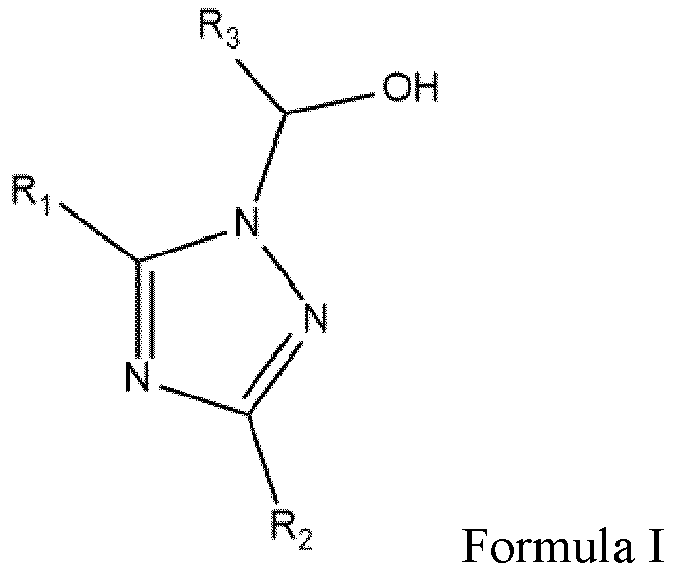 wherein R1, R2, and R3 are each independently H, substituted or unsubstituted alkyl, or substituted or unsubstituted aryl, or a salt thereof; andone or more of:an additional inhibitor comprising a urease inhibitor and/or an additional nitrification inhibitor;a solid carrier; and/orat least one nitrogen (N), phosphorus (P), and/or potassium (K) fertilizer component.
 - The fertilizer composition of claim 12, wherein:the at least one additional nitrification inhibitor is selected from the group consisting of nitrapyrin, dicyandiamide, ammonium thiosulfate, methyl-3-(4-hydroxyphenyl)propionate, 1,9-decanediol, potassium azide, 2-amino-4-chloro-6-methylpyrimidine, sulfathiazole, 4-amino-1,2,4-triazole, 2,4-diamino-6-trichloromethyl-s-triazine, potassium ethylxanthate, guanylthiourea, 4-nitrobenzotrichloride, 4-mesylbenzotrichloride, sodium thiocarbonate, phenylmercuric acetate, 4-dimethylpyrazole phosphate, sorgoleone, and combinations thereof;the at least one urease inhibitor is at least one of N-(n-butyl) thiophosphoric triamide and N-(n-propyl) thiophosphoric triamide;the carrier comprises plaster of paris, flour, chalk powder, starch, gluten, kaolin, bentonite, colloidal silica, silica, dried distillers grains with solubles, lignin, a synthetic polymer, a wax, chitin, glycoaminoglycans, pectins, hyaluronic acid, chondroitin sulphate, dermatan sulphate, alginic acid, polymannuronic acid, polyguluronic acid, polyglucuronic acid, amylose, amylopectin, callose, chitosan, poly- galactomannan, dextran, xanthan, keratan sulphate, MgO, CaO, bone mill powder, rice husk, CaCO3, Na2CO3, K2CO3, KH2PO4, NaHCO3, and/or MgCO3; and/orthe at least one nitrogen (N), phosphorus (P), and/or potassium (K) fertilizer component comprises at least one nitrogenous fertilizer component.
- The fertilizer composition of any one of claims 12 to 13, wherein R1 is H, R2 is H, and/or R3 is H.
- The fertilizer composition of any one of claims 12 to 14, wherein the nitrification inhibitor is further defined as a compound of Formula II:

Priority Applications (3)
| Application Number | Priority Date | Filing Date | Title |
|---|---|---|---|
| EP22189690.5A EP4321498A1 (en) | 2022-08-10 | 2022-08-10 | Triazole methanol as nitrification inhibitor for fertilizer application |
| CN202380064281.4A CN119855797A (en) | 2022-08-10 | 2023-08-10 | Triazolyl carbinols as nitrification inhibitors for fertilizer applications |
| PCT/IB2023/058105 WO2024033872A1 (en) | 2022-08-10 | 2023-08-10 | Triazole methanol as nitrification inhibitor for fertilizer application |
Applications Claiming Priority (1)
| Application Number | Priority Date | Filing Date | Title |
|---|---|---|---|
| EP22189690.5A EP4321498A1 (en) | 2022-08-10 | 2022-08-10 | Triazole methanol as nitrification inhibitor for fertilizer application |
Publications (1)
| Publication Number | Publication Date |
|---|---|
| EP4321498A1 true EP4321498A1 (en) | 2024-02-14 |
Family
ID=82899354
Family Applications (1)
| Application Number | Title | Priority Date | Filing Date |
|---|---|---|---|
| EP22189690.5A Pending EP4321498A1 (en) | 2022-08-10 | 2022-08-10 | Triazole methanol as nitrification inhibitor for fertilizer application |
Country Status (3)
| Country | Link |
|---|---|
| EP (1) | EP4321498A1 (en) |
| CN (1) | CN119855797A (en) |
| WO (1) | WO2024033872A1 (en) |
Cited By (2)
| Publication number | Priority date | Publication date | Assignee | Title |
|---|---|---|---|---|
| EP4660175A1 (en) * | 2024-06-03 | 2025-12-10 | Sabic Agri-Nutrients Company | Nitrification inhibitor for fertilizer application |
| WO2026033469A1 (en) * | 2024-08-09 | 2026-02-12 | SABIC Agri-Nutrients Company | Triazole methanol as nitrification inhibitor for fertilizer application |
Citations (5)
| Publication number | Priority date | Publication date | Assignee | Title |
|---|---|---|---|---|
| WO1995022515A1 (en) * | 1994-02-21 | 1995-08-24 | Skw Stickstoffwerke Piesteritz Gmbh | Combination of active substances for inhibiting or regulating nitrification |
| WO1999058594A1 (en) * | 1998-05-12 | 1999-11-18 | Basf Aktiengesellschaft | Modified polycondensates of asparaginic acid, method for the production thereof, and their use in fertilizers |
| DE19913475A1 (en) * | 1999-03-25 | 2000-09-28 | Piesteritz Stickstoff | Use of non-volatile new and known 2-chloro-1-azolyl-ethanol compounds, as nitrification inhibitors in fertilizers |
| DE102013012498A1 (en) * | 2013-07-26 | 2015-01-29 | Skw Stickstoffwerke Piesteritz Gmbh | Use of simple 1,2,4-triazole derivatives as dry stress tolerance improvers |
| US20180208519A1 (en) * | 2015-07-20 | 2018-07-26 | Sabic Global Technologies B.V. | Fertilizer composition and methods of making and using same |
-
2022
- 2022-08-10 EP EP22189690.5A patent/EP4321498A1/en active Pending
-
2023
- 2023-08-10 WO PCT/IB2023/058105 patent/WO2024033872A1/en not_active Ceased
- 2023-08-10 CN CN202380064281.4A patent/CN119855797A/en active Pending
Patent Citations (5)
| Publication number | Priority date | Publication date | Assignee | Title |
|---|---|---|---|---|
| WO1995022515A1 (en) * | 1994-02-21 | 1995-08-24 | Skw Stickstoffwerke Piesteritz Gmbh | Combination of active substances for inhibiting or regulating nitrification |
| WO1999058594A1 (en) * | 1998-05-12 | 1999-11-18 | Basf Aktiengesellschaft | Modified polycondensates of asparaginic acid, method for the production thereof, and their use in fertilizers |
| DE19913475A1 (en) * | 1999-03-25 | 2000-09-28 | Piesteritz Stickstoff | Use of non-volatile new and known 2-chloro-1-azolyl-ethanol compounds, as nitrification inhibitors in fertilizers |
| DE102013012498A1 (en) * | 2013-07-26 | 2015-01-29 | Skw Stickstoffwerke Piesteritz Gmbh | Use of simple 1,2,4-triazole derivatives as dry stress tolerance improvers |
| US20180208519A1 (en) * | 2015-07-20 | 2018-07-26 | Sabic Global Technologies B.V. | Fertilizer composition and methods of making and using same |
Non-Patent Citations (2)
| Title |
|---|
| ASIAN J. CHEM., vol. 26, 2014, pages 883 - 886 |
| LINDELL S D ET AL: "Synthesis of inhibitors of imidazole glycerol phosphate dehydratase", BIOORGANIC & MEDICINAL CHEMISTRY LETTERS, ELSEVIER, AMSTERDAM NL, vol. 6, no. 5, 5 March 1996 (1996-03-05), pages 547 - 552, XP004135026, ISSN: 0960-894X, DOI: 10.1016/0960-894X(96)00076-5 * |
Cited By (3)
| Publication number | Priority date | Publication date | Assignee | Title |
|---|---|---|---|---|
| EP4660175A1 (en) * | 2024-06-03 | 2025-12-10 | Sabic Agri-Nutrients Company | Nitrification inhibitor for fertilizer application |
| WO2025253284A1 (en) * | 2024-06-03 | 2025-12-11 | SABIC Agri-Nutrients Company | Nitrification inhibitor for fertilizer application |
| WO2026033469A1 (en) * | 2024-08-09 | 2026-02-12 | SABIC Agri-Nutrients Company | Triazole methanol as nitrification inhibitor for fertilizer application |
Also Published As
| Publication number | Publication date |
|---|---|
| WO2024033872A1 (en) | 2024-02-15 |
| CN119855797A (en) | 2025-04-18 |
Similar Documents
| Publication | Publication Date | Title |
|---|---|---|
| Modolo et al. | A minireview on what we have learned about urease inhibitors of agricultural interest since mid-2000s | |
| CA2639995C (en) | Urease-inhibiting compositions conmprising thiophosphoric triamides and fertilizers comprising said compositions | |
| RU2459786C2 (en) | Fertiliser polymer mixtures inhibiting nitrification process in soil | |
| JP5455938B2 (en) | Double salt fertilizer increases crop yield | |
| WO2024033872A1 (en) | Triazole methanol as nitrification inhibitor for fertilizer application | |
| US7875096B2 (en) | Fertilizer | |
| Melara et al. | Enhanced efficiency fertilizer: a review on technologies, perspectives, and research strategies | |
| EP3575278A1 (en) | Liquid nitrogen fertilizer compositions and additives therefor | |
| WO2025016960A1 (en) | Pyrazole derivatives as dual function urease and nitrification inhibitor | |
| CN119768383A (en) | Production of nitrogen, potassium, sulfur nutrients by decarbonization and utilization of calcium sulfate | |
| US20220274897A1 (en) | Sugar alcohol-based micronutrient dispersion | |
| WO2026033469A1 (en) | Triazole methanol as nitrification inhibitor for fertilizer application | |
| WO2026099762A1 (en) | Aminodithiocarbamate derivatives as dual function urease and nitrification inhibitor | |
| WO2025099631A1 (en) | Urease inhibitor for fertilizer application | |
| EP4660175A1 (en) | Nitrification inhibitor for fertilizer application | |
| Graziano | Improvement of nitrogen efficiency by addition of ammonium thiosulfate in the liquid fertilization of maize | |
| JP5728405B2 (en) | Oxamide-containing granular fertilizer | |
| AU2019202705A1 (en) | Particulate nitrification inhibitor systems | |
| WO2019204163A1 (en) | Liquid nitrogen fertilizer compositions and additives therefore | |
| US20260015295A1 (en) | KNH4SO4, CaCO3, CaCl2 FERTILIZER | |
| CN1221493C (en) | Special fertilizer for vegetables | |
| Sohail | Advancements in Precision Fertilization Technologies and Controlled-Dispersion Fertilizers for Sustainable RiceCultivation | |
| US20250367598A1 (en) | Methods for preparation of ca nutrient to support carbon neutrality | |
| EP4613726A1 (en) | Production of nitrogen, potassium, sulfur nutrient through de-carbonization and utilization of calcium sulfate | |
| EP4619364A1 (en) | Fertilizer comprising metal slag and coke |
Legal Events
| Date | Code | Title | Description |
|---|---|---|---|
| PUAI | Public reference made under article 153(3) epc to a published international application that has entered the european phase |
Free format text: ORIGINAL CODE: 0009012 |
|
| STAA | Information on the status of an ep patent application or granted ep patent |
Free format text: STATUS: THE APPLICATION HAS BEEN PUBLISHED |
|
| AK | Designated contracting states |
Kind code of ref document: A1 Designated state(s): AL AT BE BG CH CY CZ DE DK EE ES FI FR GB GR HR HU IE IS IT LI LT LU LV MC MK MT NL NO PL PT RO RS SE SI SK SM TR |
|
| STAA | Information on the status of an ep patent application or granted ep patent |
Free format text: STATUS: REQUEST FOR EXAMINATION WAS MADE |
|
| 17P | Request for examination filed |
Effective date: 20240812 |
|
| RBV | Designated contracting states (corrected) |
Designated state(s): AL AT BE BG CH CY CZ DE DK EE ES FI FR GB GR HR HU IE IS IT LI LT LU LV MC MK MT NL NO PL PT RO RS SE SI SK SM TR |
|
| RAP1 | Party data changed (applicant data changed or rights of an application transferred) |
Owner name: SABIC AGRI-NUTRIENTS COMPANY |