EP4321228A1 - Inflatable skateboarding ramp - Google Patents
Inflatable skateboarding ramp Download PDFInfo
- Publication number
- EP4321228A1 EP4321228A1 EP22784189.7A EP22784189A EP4321228A1 EP 4321228 A1 EP4321228 A1 EP 4321228A1 EP 22784189 A EP22784189 A EP 22784189A EP 4321228 A1 EP4321228 A1 EP 4321228A1
- Authority
- EP
- European Patent Office
- Prior art keywords
- inflatable
- skateboarding
- ramp
- semi
- rigid
- Prior art date
- Legal status (The legal status is an assumption and is not a legal conclusion. Google has not performed a legal analysis and makes no representation as to the accuracy of the status listed.)
- Pending
Links
- 238000005096 rolling process Methods 0.000 claims abstract description 11
- XLYOFNOQVPJJNP-UHFFFAOYSA-N water Substances O XLYOFNOQVPJJNP-UHFFFAOYSA-N 0.000 claims description 9
- 230000000295 complement effect Effects 0.000 claims description 3
- 239000007788 liquid Substances 0.000 claims description 3
- 239000000853 adhesive Substances 0.000 claims description 2
- 230000001070 adhesive effect Effects 0.000 claims description 2
- 230000003100 immobilizing effect Effects 0.000 claims description 2
- 239000000463 material Substances 0.000 description 7
- 238000007667 floating Methods 0.000 description 5
- 238000009434 installation Methods 0.000 description 5
- 238000005188 flotation Methods 0.000 description 4
- 238000010521 absorption reaction Methods 0.000 description 2
- 230000006378 damage Effects 0.000 description 2
- 230000000694 effects Effects 0.000 description 2
- 238000005516 engineering process Methods 0.000 description 2
- 230000035939 shock Effects 0.000 description 2
- 230000007704 transition Effects 0.000 description 2
- 206010016322 Feeling abnormal Diseases 0.000 description 1
- 239000004568 cement Substances 0.000 description 1
- 238000010276 construction Methods 0.000 description 1
- 230000008878 coupling Effects 0.000 description 1
- 238000010168 coupling process Methods 0.000 description 1
- 238000005859 coupling reaction Methods 0.000 description 1
- 239000002184 metal Substances 0.000 description 1
- 238000000034 method Methods 0.000 description 1
- 239000004033 plastic Substances 0.000 description 1
- 239000007787 solid Substances 0.000 description 1
- 239000000126 substance Substances 0.000 description 1
- 239000002023 wood Substances 0.000 description 1
Images




Classifications
-
- A—HUMAN NECESSITIES
- A63—SPORTS; GAMES; AMUSEMENTS
- A63C—SKATES; SKIS; ROLLER SKATES; DESIGN OR LAYOUT OF COURTS, RINKS OR THE LIKE
- A63C19/00—Design or layout of playing courts, rinks, bowling greens or areas for water-skiing; Covers therefor
-
- A—HUMAN NECESSITIES
- A63—SPORTS; GAMES; AMUSEMENTS
- A63C—SKATES; SKIS; ROLLER SKATES; DESIGN OR LAYOUT OF COURTS, RINKS OR THE LIKE
- A63C19/00—Design or layout of playing courts, rinks, bowling greens or areas for water-skiing; Covers therefor
- A63C19/10—Ice-skating or roller-skating rinks; Slopes or trails for skiing, ski-jumping or tobogganing
Definitions
- the present invention relates to a skateboarding ramp that incorporates significant innovations and advantages compared to the techniques used so far.
- the invention proposes a skateboarding ramp made from one or more inflatable bodies that, due to their particular arrangement, allows for the construction and configuration of circuits for skateboarding practice in a wide range of shapes and dimensions, with countless possible combinations of different independent modules.
- skateboarding ramps are typically constructed entirely or partially from cement, wood, plastic, or metal, and they are mostly permanent or have some complexity when it comes to disassembly and transportation.
- skateboarding ramps have a complex configuration with heavy and rigid materials, making their installation, disassembly, and transportation a complicated and costly task. In many cases, they are permanently fixed and cannot be relocated.
- Conventional skateboarding ramps have a complex configuration with heavy and rigid materials that require a hard and completely flat supporting surface to ensure proper use.
- the present invention helps to address and solve this issue because it allows the installation and removal of the skateboarding ramp in a matter of minutes, is easy to transport, and can be installed on any flat surface, including on the water as a floating structure.
- the present invention also offers a material configuration that provides substantial shock absorption, minimizing the risk of serious injuries to participants.
- the present invention has been developed to provide a system for constructing ramps for sports such as skateboarding, scooters, rollerblading, and bicycles, which allows for easy and quick installation and removal without the need for any ground or area preparation work and can be installed on both solid ground and water.
- the new ramp consists of an inflatable base that gives shape and structure to the ramp in question, onto which a semi-rigid surface is attached, featuring one or two entry platforms and a rolling area that allows for proper wheel movement for skateboards, scooters, rollerblades, and bicycles.
- the new inflatable ramp can be set up as an independent ramp or incorporate means of attachment to other ramps, allowing for the assembly of multi-ramp circuits where participants can transition or jump from one ramp to another.
- the attachment means between ramps facilitate keeping at least one of their adjacent sides connected through preferably conventional solidarization means such as straps, belts, or hook-and-loop closures like Velcro ® .
- the semi-rigid surface is attached to the inflatable base through surface fastening means consisting of fastening elements arranged on the upper face of the inflatable base corresponding to complementary fastening elements on the lower face of semi-rigid plates that make up the semi-rigid surface.
- the fastening means for the semi-rigid surface preferably rely on hook-and-loop closures like Velcro ® , keeping both the rolling area and the entry platforms firmly in place to facilitate skateboarding practice.
- the inflatable base has means of securing it to the ground.
- ground securing means are typically formed as skirts attached to the inflatable base, which extend over the ground and are weighted down with ballast elements or stakes.
- skirts can be replaced with straps or belts for tensioning.
- the inflatable base incorporates chambers or ballast compartments designed to be filled with water or another liquid, increasing the stability of the inflatable structures on the ground.
- ballast compartments can be located both inside and outside the inflatable base.
- flotation compartments or chambers are incorporated with a design that allows the use of the ramp as a floating structure.
- these compartments or chambers are filled with air and sized appropriately for the weight and volume of the structure to be maintained on the water.
- the ramp includes a system of leveling chambers located on the underside of the inflatable base that can be selectively inflated with air to level the ramp, allowing the activity to be practiced without modifying the terrain.
- compartments or chambers can be constructed from the same material as the inflatable base.
- a network of ramps and transition modules can be generated and configured, allowing the assembly of these modules in various orders to create a wide variety of circuits. This makes it the first inflatable and modular skate park, which can be easily reconfigured, providing options for creating a vast range of courses.
- the operation of the invention is as follows:
- the ramps take on a suitable configuration and geometric shape for use after inflating the inflatable base through suitable valves, which are not the subject of the invention, and after attaching the semi-rigid plates that make up the semi-rigid surface to the inflatable base using the surface fastening elements.
- the entry platforms are positioned at a higher level than the rolling area, in a configuration commonly known as a “halfpipe” or “quarterpipe,” but they can have countless shapes and sizes depending on the design.
- the ramp When deflated, the ramp is out of use, and the inflatable base, as well as the semi-rigid plates that make up the semi-rigid surface, can be easily folded and stored.
- the ramp according to the invention comprises an inflatable base (1) that shapes the ramp, onto which a semi-rigid surface (2) is attached, featuring entry platforms (3) and a rolling area (4).
- Both the inflatable base (1) and the semi-rigid surface (2) can vary in their chemical composition or type of material, but the combination of these properties (flexible with a semi-rigid "skin") is what validates the product.
- the semi-rigid surface (2) and the inflatable base (1) are joined through surface fastening means.
- These surface fastening means are constituted, as shown in the examples, by fastening elements (5) arranged on the upper face (6) of the inflatable base (1), corresponding to complementary fastening elements on the lower face of semi-rigid plates (7) that make up the semi-rigid surface (2).
- the fastening elements (5) constituting the surface fastening means for the semi-rigid surface may vary and are not the subject of the invention.
- the semi-rigid surface (2) consists of two semi-rigid plates (7) that are joined at a connecting line (25) located in the center of the rolling area (4).
- the connecting line (25) has a receiving edge (21) with a support zone (20) extending from the underside of the semi-rigid plate and upon which a supporting edge (22) of the adjacent semi-rigid plate rests.
- the support zone (20) has a plurality of grooves (23) corresponding to a plurality of protruding pins (24) on the underside of the supporting edge (22). In the assembled position, these pins (24) are inserted into the grooves (23), preventing movement of the contacting surfaces. Subsequently, the semi-rigid plates (7) are perfectly aligned, and the connecting line (25) is covered with an immobilizing adhesive strip (26).
- the inflatable base (1) has means for securing it to the ground, which, in the illustrated example, consist of skirts (8) located at the ends of the ramp, onto which ballast elements (9) are placed.
- the skirts (8) work in combination with spaced-out straps (10) on the sides of the ramp, which are anchored to the ground using securing stakes (11).
- the inflatable base (1) incorporates two external ballast chambers (12) filled with water to increase the stability of the inflatable structures on the ground.
- the inflatable base (1) incorporates six internal ballast chambers (13) filled with water to increase the stability of the inflatable structures on the ground.
- the inflatable base (1) incorporates two flotation chambers (14) filled with air for using the ramp as a floating structure.
- the ramp according to the invention includes a leveling system consisting of leveling chambers (15) located on the underside of the inflatable base (1) that can be independently inflated to level the ramp in cases of uneven terrain, as depicted in Figure (9 ).
- the inflatable base (1), as well as the flotation chambers (14) and leveling chambers (15), have valve means (16) for inflation and deflation, which can be of the type available in the market, and therefore, no further detail is provided in the description.
- the invention allows for the assembly of circuits comprising multiple ramps, as shown in Figures 10 and 11 .
- the inflatable base (1) of each ramp has a configuration with one or both connectable ends (17), which allow for the coupling of ramps. At least one of their adjacent faces (18) is held together with the adjacent ramp using inter-ramp securing means (19), which can be of the type available in the market, and therefore, no further detail is provided in the description.
Landscapes
- Engineering & Computer Science (AREA)
- Architecture (AREA)
- Civil Engineering (AREA)
- Structural Engineering (AREA)
- Professional, Industrial, Or Sporting Protective Garments (AREA)
Abstract
Description
- The present invention relates to a skateboarding ramp that incorporates significant innovations and advantages compared to the techniques used so far.
- More specifically, the invention proposes a skateboarding ramp made from one or more inflatable bodies that, due to their particular arrangement, allows for the construction and configuration of circuits for skateboarding practice in a wide range of shapes and dimensions, with countless possible combinations of different independent modules.
- In the current state of the art, conventional skateboarding ramps are typically constructed entirely or partially from cement, wood, plastic, or metal, and they are mostly permanent or have some complexity when it comes to disassembly and transportation.
- Conventional skateboarding ramps have a complex configuration with heavy and rigid materials, making their installation, disassembly, and transportation a complicated and costly task. In many cases, they are permanently fixed and cannot be relocated.
- The permanent or semi-permanent nature of these structures limits the use of spaces and requires owners to dedicate a considerable amount of space exclusively for the skateboarding ramp.
- Conventional skateboarding ramps have a complex configuration with heavy and rigid materials that require a hard and completely flat supporting surface to ensure proper use.
- It is also common for such structures to require foundations or certain ground preparation work before the installation of the ramp.
- Conventional skateboarding ramps have a rigid configuration and often lead to significant injuries to the users. The materials used do not provide any shock absorption for falls.
- The present invention helps to address and solve this issue because it allows the installation and removal of the skateboarding ramp in a matter of minutes, is easy to transport, and can be installed on any flat surface, including on the water as a floating structure.
- The present invention also offers a material configuration that provides substantial shock absorption, minimizing the risk of serious injuries to participants.
- The present invention has been developed to provide a system for constructing ramps for sports such as skateboarding, scooters, rollerblading, and bicycles, which allows for easy and quick installation and removal without the need for any ground or area preparation work and can be installed on both solid ground and water.
- The new ramp consists of an inflatable base that gives shape and structure to the ramp in question, onto which a semi-rigid surface is attached, featuring one or two entry platforms and a rolling area that allows for proper wheel movement for skateboards, scooters, rollerblades, and bicycles.
- The new inflatable ramp can be set up as an independent ramp or incorporate means of attachment to other ramps, allowing for the assembly of multi-ramp circuits where participants can transition or jump from one ramp to another.
- The attachment means between ramps facilitate keeping at least one of their adjacent sides connected through preferably conventional solidarization means such as straps, belts, or hook-and-loop closures like Velcro®.
- The semi-rigid surface is attached to the inflatable base through surface fastening means consisting of fastening elements arranged on the upper face of the inflatable base corresponding to complementary fastening elements on the lower face of semi-rigid plates that make up the semi-rigid surface.
- The fastening means for the semi-rigid surface preferably rely on hook-and-loop closures like Velcro®, keeping both the rolling area and the entry platforms firmly in place to facilitate skateboarding practice.
- Whether they are standalone ramps or combinable ramps, the inflatable base has means of securing it to the ground.
- These ground securing means are typically formed as skirts attached to the inflatable base, which extend over the ground and are weighted down with ballast elements or stakes.
- Alternatively, these skirts can be replaced with straps or belts for tensioning.
- Additionally, the inflatable base incorporates chambers or ballast compartments designed to be filled with water or another liquid, increasing the stability of the inflatable structures on the ground.
- These ballast compartments can be located both inside and outside the inflatable base.
- In implementations where the ramp is installed floating on water, flotation compartments or chambers are incorporated with a design that allows the use of the ramp as a floating structure. In such cases, these compartments or chambers are filled with air and sized appropriately for the weight and volume of the structure to be maintained on the water.
- To install the device on uneven terrain, the ramp includes a system of leveling chambers located on the underside of the inflatable base that can be selectively inflated with air to level the ramp, allowing the activity to be practiced without modifying the terrain.
- These compartments or chambers can be constructed from the same material as the inflatable base.
- By combining different modular ramps, a network of ramps and transition modules can be generated and configured, allowing the assembly of these modules in various orders to create a wide variety of circuits. This makes it the first inflatable and modular skate park, which can be easily reconfigured, providing options for creating a vast range of courses.
- The operation of the invention is as follows:
The ramps take on a suitable configuration and geometric shape for use after inflating the inflatable base through suitable valves, which are not the subject of the invention, and after attaching the semi-rigid plates that make up the semi-rigid surface to the inflatable base using the surface fastening elements. - In this situation, the entry platforms are positioned at a higher level than the rolling area, in a configuration commonly known as a "halfpipe" or "quarterpipe," but they can have countless shapes and sizes depending on the design.
- When deflated, the ramp is out of use, and the inflatable base, as well as the semi-rigid plates that make up the semi-rigid surface, can be easily folded and stored.
- No permanent or rigid structure is required to create or support the inflatable ramp.
- By using inflatable technology, it allows for the creation of a safe, easy-to-install and uninstall, and fully portable attraction.
- The combination of inflatable technology with a semi-rigid rolling surface material is the foundation of the invention and what truly enables the practice of these sports.
-
-
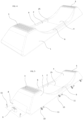
Figure 1 - Isometric view showing an inflated inflatable base with the semi-rigid surface fastening elements visible on the upper face. -
Figure 2 - Exploded isometric view of the new ramp, displaying the inflatable base with two semi-rigid plates forming the two entry platforms and a rolling area of the semi-rigid surface. -
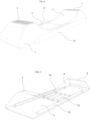
Figure 3 - Detailed view of the rolling area, highlighting the design of the joining profile of the two semi-rigid plates that ensures the continuity and fit of the rolling surface under any circumstances. -
Figure 4 - Isometric view of the ramp showing the inflatable base and the semi-rigid surface attached in a condition for practicing the activity. -
Figure 5 - Isometric view of the ramp displaying the ground fastening means. -
Figure 6 - Isometric view of a version of the ramp according to the invention equipped with external ballast chambers or compartments. -
Figure 7 - Isometric view of a version of the ramp according to the invention equipped with internal ballast chambers or compartments. -
Figure 8 - Isometric view of a version of the ramp according to the invention equipped with flotation chambers designed to allow the ramp to be used as a floating structure. -
Figure 9 - Side view of the new inflatable ramp in an installation incorporating the leveling chamber system. -
Figures 10 and 11 - Perspective views of an example embodiment of the invention as a modular ramp, showing a circuit of three ramps. - As shown in the figures, the ramp according to the invention comprises an inflatable base (1) that shapes the ramp, onto which a semi-rigid surface (2) is attached, featuring entry platforms (3) and a rolling area (4).
- Both the inflatable base (1) and the semi-rigid surface (2) can vary in their chemical composition or type of material, but the combination of these properties (flexible with a semi-rigid "skin") is what validates the product.
- The semi-rigid surface (2) and the inflatable base (1) are joined through surface fastening means.
- These surface fastening means are constituted, as shown in the examples, by fastening elements (5) arranged on the upper face (6) of the inflatable base (1), corresponding to complementary fastening elements on the lower face of semi-rigid plates (7) that make up the semi-rigid surface (2).
- The fastening elements (5) constituting the surface fastening means for the semi-rigid surface may vary and are not the subject of the invention.
- In the illustrated example, the semi-rigid surface (2) consists of two semi-rigid plates (7) that are joined at a connecting line (25) located in the center of the rolling area (4). The connecting line (25) has a receiving edge (21) with a support zone (20) extending from the underside of the semi-rigid plate and upon which a supporting edge (22) of the adjacent semi-rigid plate rests.
- To secure the position of the receiving edge (21) and the supporting edge (22), the support zone (20) has a plurality of grooves (23) corresponding to a plurality of protruding pins (24) on the underside of the supporting edge (22). In the assembled position, these pins (24) are inserted into the grooves (23), preventing movement of the contacting surfaces. Subsequently, the semi-rigid plates (7) are perfectly aligned, and the connecting line (25) is covered with an immobilizing adhesive strip (26).
- The inflatable base (1) has means for securing it to the ground, which, in the illustrated example, consist of skirts (8) located at the ends of the ramp, onto which ballast elements (9) are placed. The skirts (8) work in combination with spaced-out straps (10) on the sides of the ramp, which are anchored to the ground using securing stakes (11).
- In the preferred embodiment shown in
Figure 6 , the inflatable base (1) incorporates two external ballast chambers (12) filled with water to increase the stability of the inflatable structures on the ground. - In the preferred embodiment shown in
Figure 7 , the inflatable base (1) incorporates six internal ballast chambers (13) filled with water to increase the stability of the inflatable structures on the ground. - In the preferred embodiment shown in
Figure 8 , the inflatable base (1) incorporates two flotation chambers (14) filled with air for using the ramp as a floating structure. - The ramp according to the invention includes a leveling system consisting of leveling chambers (15) located on the underside of the inflatable base (1) that can be independently inflated to level the ramp in cases of uneven terrain, as depicted in
Figure (9 ). - The inflatable base (1), as well as the flotation chambers (14) and leveling chambers (15), have valve means (16) for inflation and deflation, which can be of the type available in the market, and therefore, no further detail is provided in the description.
- The invention allows for the assembly of circuits comprising multiple ramps, as shown in
Figures 10 and 11 . - In this type of embodiment, the inflatable base (1) of each ramp has a configuration with one or both connectable ends (17), which allow for the coupling of ramps. At least one of their adjacent faces (18) is held together with the adjacent ramp using inter-ramp securing means (19), which can be of the type available in the market, and therefore, no further detail is provided in the description.
Claims (12)
- An inflatable skateboarding ramp, characterized primarily by comprising an inflatable base (1) that shapes the ramp, a semi-rigid surface (2) located on the upper face of the inflatable base (1), featuring one or two entry platforms (3) as well as a rolling area (4), and surface fastening means that secure the semi-rigid surface (2) and the inflatable base (1).
- An inflatable skateboarding ramp according to claim 1, characterized in that the surface fastening means consist of fastening elements (5) arranged on the upper face (6) of the inflatable base (1), corresponding to complementary fastening elements on the lower face of semi-rigid plates (7) that make up the semi-rigid surface (2).
- An inflatable skateboarding ramp according to claim 1, characterized in that the inflatable base (1) incorporates means for securing it to the ground.
- An inflatable skateboarding ramp according to claim 3, characterized in that the ground securing means consist of skirts (8) attached to the inflatable base (1) at the ends of the ramp, onto which ballast elements (9) or securing stakes (11) are placed.
- An inflatable skateboarding ramp according to claim 3, characterized in that the ground securing means consist of straps (10) or tensioning belts anchored to the ground using securing stakes (11).
- An inflatable skateboarding ramp according to claim 1, characterized in that the inflatable base (1) has ballast chambers to increase the stability of the ramp on the ground.
- An inflatable skateboarding ramp according to claim 6, characterized in that the inflatable base (1) has external ballast chambers (12) capable of being filled with liquid such as water.
- An inflatable skateboarding ramp according to claim 6, characterized in that the inflatable base (1) has internal ballast chambers (13) capable of being filled with liquid such as water.
- An inflatable skateboarding ramp according to claims 1 and 2, characterized in that the semi-rigid surface (2) consists of semi-rigid plates (7).
- An inflatable skateboarding ramp according to claim 9, characterized in that the semi-rigid plates (7) are joined along a connecting line (25) where the edges of the connected plates converge.
- An inflatable skateboarding ramp according to claims 9 and 10, characterized in that the connecting line (25) includes a receiving edge (21) with a support zone (20) extending from the underside of one semi-rigid plate, on which a supporting edge (22) of the adjacent semi-rigid plate rests.
- An inflatable skateboarding ramp according to claims 9, 10, and 11, characterized in that the support zone (20) has a plurality of grooves (23) corresponding to a plurality of protruding pins (24) on the underside of the supporting edge (22), which, in the assembled position, are inserted into the grooves (23) so that the semi-rigid plates (7) are aligned, and an immobilizing adhesive strip (26) is applied over the connecting line (25).
Applications Claiming Priority (2)
| Application Number | Priority Date | Filing Date | Title |
|---|---|---|---|
| ES202130313A ES2865998B2 (en) | 2021-04-09 | 2021-04-09 | inflatable skateboard ramp |
| PCT/ES2022/070187 WO2022214719A1 (en) | 2021-04-09 | 2022-03-30 | Inflatable skateboarding ramp |
Publications (2)
| Publication Number | Publication Date |
|---|---|
| EP4321228A1 true EP4321228A1 (en) | 2024-02-14 |
| EP4321228A4 EP4321228A4 (en) | 2025-05-07 |
Family
ID=78076681
Family Applications (1)
| Application Number | Title | Priority Date | Filing Date |
|---|---|---|---|
| EP22784189.7A Pending EP4321228A4 (en) | 2021-04-09 | 2022-03-30 | INFLATABLE SKATEBOARD RAMP |
Country Status (4)
| Country | Link |
|---|---|
| US (1) | US11786803B2 (en) |
| EP (1) | EP4321228A4 (en) |
| ES (1) | ES2865998B2 (en) |
| WO (1) | WO2022214719A1 (en) |
Families Citing this family (2)
| Publication number | Priority date | Publication date | Assignee | Title |
|---|---|---|---|---|
| USD1047061S1 (en) * | 2022-12-02 | 2024-10-15 | Ninja Mountain Bike Performance, Llc | Bicycle ramp |
| USD1047060S1 (en) * | 2022-12-02 | 2024-10-15 | Ninja Mountain Bike Performance, Llc | Bicycle ramp |
Family Cites Families (12)
| Publication number | Priority date | Publication date | Assignee | Title |
|---|---|---|---|---|
| DE3524494A1 (en) * | 1985-07-09 | 1987-01-15 | Jun Horst Perez | Jump for water sports appliances |
| US6042480A (en) * | 1999-02-05 | 2000-03-28 | Labelson; Ross | Amusement ramp and method for constructing same |
| US6231483B1 (en) * | 1999-06-24 | 2001-05-15 | Forrest B. Phillips | Sliding exercise apparatus and recreational device |
| US6533671B2 (en) | 2001-05-31 | 2003-03-18 | Woodward Camp Properties, Inc. | Composite landing surface for sports |
| US6654977B1 (en) * | 2002-09-05 | 2003-12-02 | Howard Chin | Safety ramp |
| US20070101488A1 (en) * | 2005-11-10 | 2007-05-10 | Ferraro Allan R Sr | Ballast for an inflatable water slide |
| US8348777B2 (en) * | 2008-01-31 | 2013-01-08 | Powdr-Woodward Pa Llc | Sport landing cushion and container |
| US8196244B2 (en) * | 2008-08-28 | 2012-06-12 | Michael Mapp | Modular ramp system |
| WO2015024137A1 (en) * | 2013-08-19 | 2015-02-26 | Polarmond Ag | Lying system and leveling device for a lying system |
| FR3043334B1 (en) * | 2015-11-07 | 2017-12-15 | Wood Structure | SKATEBOARD RAMP-TYPE SLIDING TRACK COMPRISING A RIGID FOAM FREESTANDING CARRIER STRUCTURE AND A SKATING SURFACE |
| WO2018071992A1 (en) * | 2016-10-21 | 2018-04-26 | Scott Allen | A demountable ramp structure |
| US20190001228A1 (en) * | 2017-06-28 | 2019-01-03 | Gary Schmit | Floating water feature attraction |
-
2021
- 2021-04-09 ES ES202130313A patent/ES2865998B2/en active Active
- 2021-08-12 US US17/401,275 patent/US11786803B2/en active Active
-
2022
- 2022-03-30 WO PCT/ES2022/070187 patent/WO2022214719A1/en not_active Ceased
- 2022-03-30 EP EP22784189.7A patent/EP4321228A4/en active Pending
Also Published As
| Publication number | Publication date |
|---|---|
| US20220323851A1 (en) | 2022-10-13 |
| WO2022214719A1 (en) | 2022-10-13 |
| ES2865998A1 (en) | 2021-10-18 |
| US11786803B2 (en) | 2023-10-17 |
| ES2865998B2 (en) | 2022-04-13 |
| EP4321228A4 (en) | 2025-05-07 |
Similar Documents
| Publication | Publication Date | Title |
|---|---|---|
| US5611641A (en) | Crowd control barrier system | |
| RU2549645C2 (en) | Synthetic floor tiles, having partially pliable support structure | |
| US5937586A (en) | Inflatable skating rink | |
| US4644892A (en) | Buoyant trampoline | |
| US5921032A (en) | Convertible sports and exhibition facility and conversion method | |
| US7914385B2 (en) | Dasher boards | |
| US6695707B1 (en) | Amusement ramp structure | |
| US11786803B2 (en) | Inflatable skateboarding ramp | |
| US20160008689A1 (en) | Combination Game Throwing Target and Chair and Method of Assembly | |
| US20120277012A1 (en) | Modular ramp system | |
| US20030187082A1 (en) | Inflatable component connector | |
| US20030116941A1 (en) | Sport board | |
| US4650180A (en) | Sports ground, in particular tennis court or mini court formed by using removable panels | |
| US10315121B2 (en) | Floating mobile water park | |
| US20080029963A1 (en) | Portable gaming system and related methods | |
| US7488525B2 (en) | Impact-attenuating, firm, stable, and slip-resistant surface system | |
| ES2994482T3 (en) | Temporary, relocatable, sports pitch assembly amd its method of assembling | |
| US20170245662A1 (en) | Vehicle display system and method | |
| CN217287144U (en) | Landslide | |
| US3478473A (en) | Foldable bleacher seating for sports areas | |
| CN114404923A (en) | Dry snow landslide | |
| GB2404928B (en) | Modular platform | |
| US20060183574A1 (en) | Portable basketball system | |
| FR2845613A1 (en) | Sports enclosure and gym has base supporting walls with integral exercise apparata and attachable roof | |
| US20230166194A1 (en) | Inflatable entertainment structures |
Legal Events
| Date | Code | Title | Description |
|---|---|---|---|
| STAA | Information on the status of an ep patent application or granted ep patent |
Free format text: STATUS: THE INTERNATIONAL PUBLICATION HAS BEEN MADE |
|
| PUAI | Public reference made under article 153(3) epc to a published international application that has entered the european phase |
Free format text: ORIGINAL CODE: 0009012 |
|
| STAA | Information on the status of an ep patent application or granted ep patent |
Free format text: STATUS: REQUEST FOR EXAMINATION WAS MADE |
|
| 17P | Request for examination filed |
Effective date: 20231005 |
|
| AK | Designated contracting states |
Kind code of ref document: A1 Designated state(s): AL AT BE BG CH CY CZ DE DK EE ES FI FR GB GR HR HU IE IS IT LI LT LU LV MC MK MT NL NO PL PT RO RS SE SI SK SM TR |
|
| DAV | Request for validation of the european patent (deleted) | ||
| DAX | Request for extension of the european patent (deleted) | ||
| A4 | Supplementary search report drawn up and despatched |
Effective date: 20250407 |
|
| RIC1 | Information provided on ipc code assigned before grant |
Ipc: A63C 19/00 20060101AFI20250401BHEP |