EP4321153A1 - Pharmaceutical composition comprising sphingosine-1-phosphate receptor agonist with controlled particle size - Google Patents
Pharmaceutical composition comprising sphingosine-1-phosphate receptor agonist with controlled particle size Download PDFInfo
- Publication number
- EP4321153A1 EP4321153A1 EP22788449.1A EP22788449A EP4321153A1 EP 4321153 A1 EP4321153 A1 EP 4321153A1 EP 22788449 A EP22788449 A EP 22788449A EP 4321153 A1 EP4321153 A1 EP 4321153A1
- Authority
- EP
- European Patent Office
- Prior art keywords
- acid
- pharmaceutical composition
- composition according
- pharmaceutically acceptable
- particle size
- Prior art date
- Legal status (The legal status is an assumption and is not a legal conclusion. Google has not performed a legal analysis and makes no representation as to the accuracy of the status listed.)
- Pending
Links
Images

Classifications
-
- A—HUMAN NECESSITIES
- A61—MEDICAL OR VETERINARY SCIENCE; HYGIENE
- A61K—PREPARATIONS FOR MEDICAL, DENTAL OR TOILETRY PURPOSES
- A61K9/00—Medicinal preparations characterised by special physical form
- A61K9/14—Particulate form, e.g. powders, Processes for size reducing of pure drugs or the resulting products, Pure drug nanoparticles
-
- A—HUMAN NECESSITIES
- A61—MEDICAL OR VETERINARY SCIENCE; HYGIENE
- A61K—PREPARATIONS FOR MEDICAL, DENTAL OR TOILETRY PURPOSES
- A61K31/00—Medicinal preparations containing organic active ingredients
- A61K31/33—Heterocyclic compounds
- A61K31/395—Heterocyclic compounds having nitrogen as a ring hetero atom, e.g. guanethidine or rifamycins
- A61K31/435—Heterocyclic compounds having nitrogen as a ring hetero atom, e.g. guanethidine or rifamycins having six-membered rings with one nitrogen as the only ring hetero atom
- A61K31/44—Non condensed pyridines; Hydrogenated derivatives thereof
- A61K31/445—Non condensed piperidines, e.g. piperocaine
- A61K31/4523—Non condensed piperidines, e.g. piperocaine containing further heterocyclic ring systems
- A61K31/454—Non condensed piperidines, e.g. piperocaine containing further heterocyclic ring systems containing a five-membered ring with nitrogen as a ring hetero atom, e.g. pimozide, domperidone
-
- A—HUMAN NECESSITIES
- A61—MEDICAL OR VETERINARY SCIENCE; HYGIENE
- A61K—PREPARATIONS FOR MEDICAL, DENTAL OR TOILETRY PURPOSES
- A61K47/00—Medicinal preparations characterised by the non-active ingredients used, e.g. carriers or inert additives; Targeting or modifying agents chemically bound to the active ingredient
- A61K47/06—Organic compounds, e.g. natural or synthetic hydrocarbons, polyolefins, mineral oil, petrolatum or ozokerite
- A61K47/08—Organic compounds, e.g. natural or synthetic hydrocarbons, polyolefins, mineral oil, petrolatum or ozokerite containing oxygen, e.g. ethers, acetals, ketones, quinones, aldehydes, peroxides
- A61K47/12—Carboxylic acids; Salts or anhydrides thereof
-
- A—HUMAN NECESSITIES
- A61—MEDICAL OR VETERINARY SCIENCE; HYGIENE
- A61K—PREPARATIONS FOR MEDICAL, DENTAL OR TOILETRY PURPOSES
- A61K47/00—Medicinal preparations characterised by the non-active ingredients used, e.g. carriers or inert additives; Targeting or modifying agents chemically bound to the active ingredient
- A61K47/06—Organic compounds, e.g. natural or synthetic hydrocarbons, polyolefins, mineral oil, petrolatum or ozokerite
- A61K47/26—Carbohydrates, e.g. sugar alcohols, amino sugars, nucleic acids, mono-, di- or oligo-saccharides; Derivatives thereof, e.g. polysorbates, sorbitan fatty acid esters or glycyrrhizin
-
- A—HUMAN NECESSITIES
- A61—MEDICAL OR VETERINARY SCIENCE; HYGIENE
- A61K—PREPARATIONS FOR MEDICAL, DENTAL OR TOILETRY PURPOSES
- A61K47/00—Medicinal preparations characterised by the non-active ingredients used, e.g. carriers or inert additives; Targeting or modifying agents chemically bound to the active ingredient
- A61K47/30—Macromolecular organic or inorganic compounds, e.g. inorganic polyphosphates
- A61K47/36—Polysaccharides; Derivatives thereof, e.g. gums, starch, alginate, dextrin, hyaluronic acid, chitosan, inulin, agar or pectin
- A61K47/38—Cellulose; Derivatives thereof
-
- A—HUMAN NECESSITIES
- A61—MEDICAL OR VETERINARY SCIENCE; HYGIENE
- A61K—PREPARATIONS FOR MEDICAL, DENTAL OR TOILETRY PURPOSES
- A61K9/00—Medicinal preparations characterised by special physical form
- A61K9/14—Particulate form, e.g. powders, Processes for size reducing of pure drugs or the resulting products, Pure drug nanoparticles
- A61K9/141—Intimate drug-carrier mixtures characterised by the carrier, e.g. ordered mixtures, adsorbates, solid solutions, eutectica, co-dried, co-solubilised, co-kneaded, co-milled, co-ground products, co-precipitates, co-evaporates, co-extrudates, co-melts; Drug nanoparticles with adsorbed surface modifiers
- A61K9/146—Intimate drug-carrier mixtures characterised by the carrier, e.g. ordered mixtures, adsorbates, solid solutions, eutectica, co-dried, co-solubilised, co-kneaded, co-milled, co-ground products, co-precipitates, co-evaporates, co-extrudates, co-melts; Drug nanoparticles with adsorbed surface modifiers with organic macromolecular compounds
-
- A—HUMAN NECESSITIES
- A61—MEDICAL OR VETERINARY SCIENCE; HYGIENE
- A61K—PREPARATIONS FOR MEDICAL, DENTAL OR TOILETRY PURPOSES
- A61K9/00—Medicinal preparations characterised by special physical form
- A61K9/20—Pills, tablets, discs, rods
- A61K9/2004—Excipients; Inactive ingredients
- A61K9/2013—Organic compounds, e.g. phospholipids, fats
- A61K9/2018—Sugars, or sugar alcohols, e.g. lactose, mannitol; Derivatives thereof, e.g. polysorbates
-
- A—HUMAN NECESSITIES
- A61—MEDICAL OR VETERINARY SCIENCE; HYGIENE
- A61K—PREPARATIONS FOR MEDICAL, DENTAL OR TOILETRY PURPOSES
- A61K9/00—Medicinal preparations characterised by special physical form
- A61K9/20—Pills, tablets, discs, rods
- A61K9/2004—Excipients; Inactive ingredients
- A61K9/2022—Organic macromolecular compounds
- A61K9/205—Polysaccharides, e.g. alginate, gums; Cyclodextrin
- A61K9/2054—Cellulose; Cellulose derivatives, e.g. hydroxypropyl methylcellulose
-
- A—HUMAN NECESSITIES
- A61—MEDICAL OR VETERINARY SCIENCE; HYGIENE
- A61P—SPECIFIC THERAPEUTIC ACTIVITY OF CHEMICAL COMPOUNDS OR MEDICINAL PREPARATIONS
- A61P25/00—Drugs for disorders of the nervous system
-
- A—HUMAN NECESSITIES
- A61—MEDICAL OR VETERINARY SCIENCE; HYGIENE
- A61P—SPECIFIC THERAPEUTIC ACTIVITY OF CHEMICAL COMPOUNDS OR MEDICINAL PREPARATIONS
- A61P25/00—Drugs for disorders of the nervous system
- A61P25/28—Drugs for disorders of the nervous system for treating neurodegenerative disorders of the central nervous system, e.g. nootropic agents, cognition enhancers, drugs for treating Alzheimer's disease or other forms of dementia
-
- A—HUMAN NECESSITIES
- A61—MEDICAL OR VETERINARY SCIENCE; HYGIENE
- A61P—SPECIFIC THERAPEUTIC ACTIVITY OF CHEMICAL COMPOUNDS OR MEDICINAL PREPARATIONS
- A61P37/00—Drugs for immunological or allergic disorders
- A61P37/02—Immunomodulators
- A61P37/06—Immunosuppressants, e.g. drugs for graft rejection
Definitions
- the present invention relates to a pharmaceutical composition comprising a particle size-adjusted sphingosine-1-phosphate receptor agonist. More specifically, the present invention relates to a pharmaceutical composition comprising 1-[1-chloro-6-(3-chloro-1-isopropyl-1H-indazol-5-ylmethoxy)-3,4-dihydro-naphthalen-2-ylmethyl]-piperidine-4-carboxylic acid of the following Formula 1 or a pharmaceutically acceptable salt thereof as an active ingredient, and a pharmaceutically acceptable carrier, wherein a particle size d(0.9) of the active ingredient is 60 ⁇ m or less:
- Sphingosine-1-phosphate is produced via an intracellular ceramide pathway, in which ceramide is the starting material. Ceramide is produced via two pathways, the first of which is a de novo biosynthetic pathway. Ceramide is also produced by the degradation of sphingomyelin, a cell membrane constituent, in a cell.
- the S1P level in each tissue is controlled by two biosynthetic sphingosine kinases (SphKs) and two biodegradable S1P phosphatases (S1P lyase and lysophospholipid phosphatases).
- S1P- which is produced via phosphorylation of sphingosine by sphingosine kinase-is known to mediate various cellular responses, such as cell proliferation, cytoskeletal organization and migration, adherence- and tight junction assembly, and morphogenesis.
- S1P exists as a combined form with plasma protein including albumin at high level (100 - 1,000 nM) in plasma, while it is at a low level in tissues.
- S1P binds with S1P receptor, a G-protein coupled receptor, to show various biological functions.
- S1P receptor sub-types S1P1 to S1P5 are known up to now and are named endothelial differentiation gene (EDG) receptors 1, 5, 3, 6 and 8, respectively.
- EDG endothelial differentiation gene
- the S1P receptors are known to be involved in various biological functions such as leukocyte recirculation, neural cell proliferation, morphological changes, migration, endothelial function, vasoregulation and cardiovascular development.
- the present invention is intended to provide a pharmaceutical composition that can secure pharmacokinetic properties showing sufficient efficacy in which 1-[1-chloro-6-(3-chloro-1-isopropyl-1H-indazol-5-ylmethoxy)-3,4-dihydro-naphthalen-2-ylmethyl]-piperidine-4-carboxylic acid of the following Formula 1 or a pharmaceutically acceptable salt thereof is comprised with uniform content:
- the present invention provides a pharmaceutical composition
- a pharmaceutical composition comprising 1-[1-chloro-6-(3-chloro-1-isopropyl-1H-indazol-5-ylmethoxy)-3,4-dihydro-naphthalen-2-ylmethyl]-piperidine-4-carboxylic acid or a pharmaceutically acceptable salt thereof as an active ingredient, and a pharmaceutically acceptable carrier, wherein a particle size d(0.9) of the active ingredient is 60 ⁇ m or less.
- a pharmaceutical composition comprising 1-[1-chloro-6-(3-chloro-1-isopropyl-1H-indazol-5-ylmethoxy)-3,4-dihydro-naphthalen-2-ylmethyl]-piperidine-4-carboxylic acid or a pharmaceutically acceptable salt thereof as an active ingredient, and a pharmaceutically acceptable carrier, wherein a particle size d(0.9) of the active ingredient is 60 ⁇ m or less.
- particle size d(0.9) means that 90% of the particle volume has a diameter in a specific diameter d range. Specifically, it means that the particle diameter (d(0.9)) of the point where the cumulative frequency of volume distribution reaches 90% by accumulating from the particle of the smaller particle diameter is within the range of the specific diameter d.
- the active ingredient may be, for example micronized.
- the micronization of the active ingredient may be carried out by a method known in this technical field, for example, milling.
- the lower limit of the particle size d(0.9) is not specifically limited, and may be, for example, more than 0 ⁇ m, 2 ⁇ m or more, or 5 ⁇ m or more, but is not limited thereto. In one embodiment according to the present invention, the particle size d(0.9) of the active ingredient may be 5 to 60 ⁇ m.
- the pharmaceutically acceptable salt may be selected from the group consisting of hydrochloric acid, sulfuric acid, nitric acid, phosphoric acid, hydrobromic acid, hydroiodic acid, tartaric acid, formic acid, citric acid, acetic acid, trichloroacetic acid, trifluoroacetic acid, gluconic acid, benzoic acid, lactic acid, fumaric acid, maleic acid, methanesulfonic acid, benzenesulfonic acid, p-toluenesulfonic acid and naphthalenesulfonic acid.
- the pharmaceutically acceptable salt may be hydrochloric acid.
- the pharmaceutically acceptable carrier is a diluent, a binder, a lubricant and/or a disintegrant.
- the diluent is lactose or a hydrate thereof
- the binder is hydroxypropyl cellulose
- the lubricant is sodium stearyl fumarate
- the disintegrant is croscarmellose sodium.
- the hydrate of lactose is lactose monohydrate.
- the pharmaceutical composition may further comprise other additives-for example, a colorant, a fragrance, a flavoring agent, a sweetener, a coating agent and the like, if necessary.
- the pharmaceutical composition according to the present invention is suitable for preventing or treating diseases related to sphingosine-1-phosphate receptor.
- the pharmaceutical composition may be used in the treatment of autoimmune disease including multiple sclerosis.
- the pharmaceutical composition may be used in the prevention or treatment of a disease caused by undesired lymphocyte infiltration related to sphingosine-1-phosphate.
- the pharmaceutical composition may be used in the prevention or treatment of immunoregulation disorder.
- examples of the immunoregulation disorder may be autoimmune disease or chronic inflammatory disease selected from the group consisting of systemic lupus erythematosus, chronic rheumatoid arthritis, inflammatory bowel diseases, multiple sclerosis, amyotrophic lateral sclerosis (ALS), arteriosclerosis, atherosclerosis, scleroderma and autoimmune hepatitis, but are not limited thereto.
- autoimmune disease or chronic inflammatory disease selected from the group consisting of systemic lupus erythematosus, chronic rheumatoid arthritis, inflammatory bowel diseases, multiple sclerosis, amyotrophic lateral sclerosis (ALS), arteriosclerosis, atherosclerosis, scleroderma and autoimmune hepatitis, but are not limited thereto.
- the pharmaceutical composition according to the present invention can provide a medicament which contains a sphingosine-1-phosphate receptor agonist with a proper uniformity and shows sufficient efficacy.
Landscapes
- Health & Medical Sciences (AREA)
- Chemical & Material Sciences (AREA)
- Life Sciences & Earth Sciences (AREA)
- Animal Behavior & Ethology (AREA)
- Pharmacology & Pharmacy (AREA)
- General Health & Medical Sciences (AREA)
- Public Health (AREA)
- Veterinary Medicine (AREA)
- Medicinal Chemistry (AREA)
- Epidemiology (AREA)
- Engineering & Computer Science (AREA)
- Bioinformatics & Cheminformatics (AREA)
- Chemical Kinetics & Catalysis (AREA)
- General Chemical & Material Sciences (AREA)
- Neurosurgery (AREA)
- Organic Chemistry (AREA)
- Immunology (AREA)
- Biomedical Technology (AREA)
- Neurology (AREA)
- Nuclear Medicine, Radiotherapy & Molecular Imaging (AREA)
- Molecular Biology (AREA)
- Oil, Petroleum & Natural Gas (AREA)
- Biophysics (AREA)
- Inorganic Chemistry (AREA)
- Hospice & Palliative Care (AREA)
- Psychiatry (AREA)
- Biochemistry (AREA)
- Transplantation (AREA)
- Pharmaceuticals Containing Other Organic And Inorganic Compounds (AREA)
- Medicinal Preparation (AREA)
Abstract
Description
- The present invention relates to a pharmaceutical composition comprising a particle size-adjusted sphingosine-1-phosphate receptor agonist. More specifically, the present invention relates to a pharmaceutical composition comprising 1-[1-chloro-6-(3-chloro-1-isopropyl-1H-indazol-5-ylmethoxy)-3,4-dihydro-naphthalen-2-ylmethyl]-piperidine-4-carboxylic acid of the following
Formula 1 or a pharmaceutically acceptable salt thereof as an active ingredient, and a pharmaceutically acceptable carrier, wherein a particle size d(0.9) of the active ingredient is 60 µm or less:
- Sphingosine-1-phosphate (S1P) is produced via an intracellular ceramide pathway, in which ceramide is the starting material. Ceramide is produced via two pathways, the first of which is a de novo biosynthetic pathway. Ceramide is also produced by the degradation of sphingomyelin, a cell membrane constituent, in a cell. The S1P level in each tissue is controlled by two biosynthetic sphingosine kinases (SphKs) and two biodegradable S1P phosphatases (S1P lyase and lysophospholipid phosphatases). S1P-which is produced via phosphorylation of sphingosine by sphingosine kinase-is known to mediate various cellular responses, such as cell proliferation, cytoskeletal organization and migration, adherence- and tight junction assembly, and morphogenesis. S1P exists as a combined form with plasma protein including albumin at high level (100 - 1,000 nM) in plasma, while it is at a low level in tissues.
- S1P binds with S1P receptor, a G-protein coupled receptor, to show various biological functions. As S1P receptor sub-types, S1P1 to S1P5 are known up to now and are named endothelial differentiation gene (EDG)
receptors - Meanwhile, in the preparation of drugs, there is a need to set the particle size specifications for the uniformity and efficacy of an active ingredient. Specifically, when the content of an active ingredient is low, it is necessary to set the particle size specifications to secure the uniformity of the active ingredient in each formulation or pharmacokinetic properties.
- The present invention is intended to provide a pharmaceutical composition that can secure pharmacokinetic properties showing sufficient efficacy in which 1-[1-chloro-6-(3-chloro-1-isopropyl-1H-indazol-5-ylmethoxy)-3,4-dihydro-naphthalen-2-ylmethyl]-piperidine-4-carboxylic acid of the following
Formula 1 or a pharmaceutically acceptable salt thereof is comprised with uniform content:
- In order to solve the above technical problem, the present invention provides a pharmaceutical composition comprising 1-[1-chloro-6-(3-chloro-1-isopropyl-1H-indazol-5-ylmethoxy)-3,4-dihydro-naphthalen-2-ylmethyl]-piperidine-4-carboxylic acid or a pharmaceutically acceptable salt thereof as an active ingredient, and a pharmaceutically acceptable carrier, wherein a particle size d(0.9) of the active ingredient is 60 µm or less.
- The present invention is described in detail hereinafter.
- According to the present invention, there is provided a pharmaceutical composition comprising 1-[1-chloro-6-(3-chloro-1-isopropyl-1H-indazol-5-ylmethoxy)-3,4-dihydro-naphthalen-2-ylmethyl]-piperidine-4-carboxylic acid or a pharmaceutically acceptable salt thereof as an active ingredient, and a pharmaceutically acceptable carrier, wherein a particle size d(0.9) of the active ingredient is 60 µm or less.
- As used herein, "particle size d(0.9)" means that 90% of the particle volume has a diameter in a specific diameter d range. Specifically, it means that the particle diameter (d(0.9)) of the point where the cumulative frequency of volume distribution reaches 90% by accumulating from the particle of the smaller particle diameter is within the range of the specific diameter d.
- In one embodiment according to the present invention, to have a specific particle size, the active ingredient may be, for example micronized. In one embodiment according to the present invention, the micronization of the active ingredient may be carried out by a method known in this technical field, for example, milling.
- In one embodiment according to the present invention, the lower limit of the particle size d(0.9) is not specifically limited, and may be, for example, more than 0 µm, 2 µm or more, or 5 µm or more, but is not limited thereto. In one embodiment according to the present invention, the particle size d(0.9) of the active ingredient may be 5 to 60 µm.
- In one embodiment according to the present invention, the pharmaceutically acceptable salt may be selected from the group consisting of hydrochloric acid, sulfuric acid, nitric acid, phosphoric acid, hydrobromic acid, hydroiodic acid, tartaric acid, formic acid, citric acid, acetic acid, trichloroacetic acid, trifluoroacetic acid, gluconic acid, benzoic acid, lactic acid, fumaric acid, maleic acid, methanesulfonic acid, benzenesulfonic acid, p-toluenesulfonic acid and naphthalenesulfonic acid. In one embodiment according to the present invention, the pharmaceutically acceptable salt may be hydrochloric acid.
- In one embodiment according to the present invention, the pharmaceutically acceptable carrier is a diluent, a binder, a lubricant and/or a disintegrant. In one embodiment according to the present invention, the diluent is lactose or a hydrate thereof, the binder is hydroxypropyl cellulose, the lubricant is sodium stearyl fumarate, and the disintegrant is croscarmellose sodium. In one embodiment according to the present invention, the hydrate of lactose is lactose monohydrate. In one embodiment according to the present invention, the pharmaceutical composition may further comprise other additives-for example, a colorant, a fragrance, a flavoring agent, a sweetener, a coating agent and the like, if necessary.
- The pharmaceutical composition according to the present invention is suitable for preventing or treating diseases related to sphingosine-1-phosphate receptor. In one embodiment according to the present invention, the pharmaceutical composition may be used in the treatment of autoimmune disease including multiple sclerosis. In one embodiment according to the present invention, the pharmaceutical composition may be used in the prevention or treatment of a disease caused by undesired lymphocyte infiltration related to sphingosine-1-phosphate. In one embodiment according to the present invention, the pharmaceutical composition may be used in the prevention or treatment of immunoregulation disorder. In one embodiment according to the present invention, examples of the immunoregulation disorder may be autoimmune disease or chronic inflammatory disease selected from the group consisting of systemic lupus erythematosus, chronic rheumatoid arthritis, inflammatory bowel diseases, multiple sclerosis, amyotrophic lateral sclerosis (ALS), arteriosclerosis, atherosclerosis, scleroderma and autoimmune hepatitis, but are not limited thereto.
- The pharmaceutical composition according to the present invention can provide a medicament which contains a sphingosine-1-phosphate receptor agonist with a proper uniformity and shows sufficient efficacy.
-
-
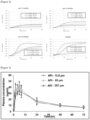
Figure 1 is a graph showing a change in blending uniformity according to time. -
Figure 2 is a graph showing comparison of in vitro dissolution patterns in various buffers. -
Figure 3 is a graph showing comparison of pharmacokinetic property (plasma concentration) according to the particle size. - Hereinafter, the present invention is explained in more detail with the following examples. However, it must be understood that the protection scope of the present invention is not limited to the examples.
- 1-[1-Chloro-6-(3-chloro-1-isopropyl-1H-indazol-5-ylmethoxy)-3,4-dihydro-naphthalen-2-ylmethyl]-piperidine-4-carboxylic acid ethyl ester was synthesized according to the method described in Preparation Example 153-1 of International Publication No.
WO 2014/129796 A1 , the ester was hydrolyzed with NaOH, acidified with HCl, and then crystallization was carried out to obtain the hydrochloride form (hereinafter referred to as "API"). - After mixing the ingredients in accordance with the composition represented in Table 1 below, tablets were prepared by direct compression.
[Table 1] Ingredients Function Note Quantity Mg/T wt% g/batch API Drug Substance Milled 0.5457 0.5457 1.36425 Lactose Monohydrate Diluent SuperTab30GR 88.4543 88.4543 221.1358 Hydroxypropyl cellulose Binder L FP 5.00 5 12.5 Croscarmellose sodium Disintegrant Vivasol 5.00 5 12.5 Sodium stearyl fumarate Lubrication Pruv 1.00 1 2.5 - In order to check the change in uniformity during blending according to the particle size distribution of the active ingredient, samples having various particle distributions as represented in Table 2 below were prepared through milling of the active ingredient.
[Table 2] Sample 1Sample 2Sample 3Sample 4 D(0.1) [µm] 78 6 4 3 D(0.5) [µm] 174 22 10 5 D(0.9) [µm] 309 60 19 9 - After mixing the active ingredients having different particle size distributions in Table 2 using the composition of Table 1, blending uniformity was measured, and the results are represented in
Figure 1 . - As can be seen from
Figure 1 , it could be known that the smaller the particle size, the more advantageous for uniform blending. - Active ingredients having different particle size distributions in Table 3 below were put into gelatin capsules, and the dissolution rate according to time was measured in various pH and fasted state stimulated gastric fluid (FaSSGF) and fasted state stimulated intestinal fluid (FaSSIF, V2).
[Table 3] Sample 5 Sample 6 Sample 7 D(0.1) [µm] 73.9 5.6 2.6 D(0.5) [µm] 176 22.4 6.4 D(0.9) [µm] 297 60.3 15.8 - The results are represented in
Figure 2 . FromFigure 2 , although there is a difference in the degree depending on the conditions of the solution, it was confirmed that there is a difference in the dissolution rate according to the particle size under in vitro conditions. - A crossover design of taking all three tablets (active ingredients having a particle size of Samples 5 to 7) was applied to this experimentation, and the three tablets were administered to male beagle dogs once each with a 14-day wash-out period. Each dose was taken with 50 mL of water while maintaining the fasted state for at least 14 hours. The results are represented in
Figure 3 . - As can be seen from
Figure 3 , it was confirmed that there is a difference in pharmacokinetic (PK) characteristics depending on the API particle size, and it was determined that the particle size d(0.9) based on Cmax should be 60 µm or less to show bioequivalence in terms of pharmacokinetics, and stable efficacy.
Claims (11)
- A pharmaceutical composition comprising 1-[1-chloro-6-(3-chloro-1-isopropyl-1H-indazol-5-ylmethoxy)-3,4-dihydro-naphthalen-2-ylmethyl]-piperidine-4-carboxylic acid or a pharmaceutically acceptable salt thereof as an active ingredient, and a pharmaceutically acceptable carrier, wherein a particle size d(0.9) of the active ingredient is 60 µm or less.
- The pharmaceutical composition according to Claim 1, wherein the particle size d(0.9) of the active ingredient is 5 to 60 µm.
- The pharmaceutical composition according to Claim 1, wherein the pharmaceutically acceptable salt is selected from the group consisting of hydrochloric acid, sulfuric acid, nitric acid, phosphoric acid, hydrobromic acid, hydroiodic acid, tartaric acid, formic acid, citric acid, acetic acid, trichloroacetic acid, trifluoroacetic acid, gluconic acid, benzoic acid, lactic acid, fumaric acid, maleic acid, methanesulfonic acid, benzenesulfonic acid, p-toluenesulfonic acid and naphthalenesulfonic acid.
- The pharmaceutical composition according to Claim 3, wherein the pharmaceutically acceptable salt is hydrochloric acid.
- The pharmaceutical composition according to Claim 1, wherein the pharmaceutically acceptable carrier is a diluent, a binder, a lubricant and/or a disintegrant.
- The pharmaceutical composition according to Claim 5, wherein the diluent is lactose or a hydrate thereof, the binder is hydroxypropyl cellulose, the lubricant is sodium stearyl fumarate, and the disintegrant is croscarmellose sodium.
- The pharmaceutical composition according to Claim 6, wherein the hydrate of lactose is lactose monohydrate.
- The pharmaceutical composition according to Claim 1, which is for use in the treatment of autoimmune disease including multiple sclerosis.
- The pharmaceutical composition according to Claim 1, which is for use in the prevention or treatment of a disease caused by undesired lymphocyte infiltration related to sphingosine-1-phosphate.
- The pharmaceutical composition according to Claim 1, which is for use in the prevention or treatment of immunoregulation disorder.
- The pharmaceutical composition according to Claim 10, wherein the immunoregulation disorder is autoimmune disease or chronic inflammatory disease selected from the group consisting of systemic lupus erythematosus, chronic rheumatoid arthritis, inflammatory bowel diseases, multiple sclerosis, amyotrophic lateral sclerosis (ALS), arteriosclerosis, atherosclerosis, scleroderma and autoimmune hepatitis.
Applications Claiming Priority (2)
| Application Number | Priority Date | Filing Date | Title |
|---|---|---|---|
| KR20210048802 | 2021-04-14 | ||
| PCT/KR2022/005371 WO2022220594A1 (en) | 2021-04-14 | 2022-04-13 | Pharmaceutical composition comprising sphingosine-1-phosphate receptor agonist with controlled particle size |
Publications (2)
| Publication Number | Publication Date |
|---|---|
| EP4321153A1 true EP4321153A1 (en) | 2024-02-14 |
| EP4321153A4 EP4321153A4 (en) | 2024-10-09 |
Family
ID=83640805
Family Applications (1)
| Application Number | Title | Priority Date | Filing Date |
|---|---|---|---|
| EP22788449.1A Pending EP4321153A4 (en) | 2021-04-14 | 2022-04-13 | PHARMACEUTICAL COMPOSITION CONTAINING SPHINGOSINE-1-PHOSPHATE RECEPTOR AGONIST WITH CONTROLLED PARTICLE SIZE |
Country Status (7)
| Country | Link |
|---|---|
| US (1) | US20240207242A1 (en) |
| EP (1) | EP4321153A4 (en) |
| JP (1) | JP7739452B2 (en) |
| KR (1) | KR20220142377A (en) |
| CN (1) | CN117120037A (en) |
| TW (1) | TWI907691B (en) |
| WO (1) | WO2022220594A1 (en) |
Family Cites Families (9)
| Publication number | Priority date | Publication date | Assignee | Title |
|---|---|---|---|---|
| PT2465492E (en) * | 2007-10-12 | 2015-10-15 | Novartis Ag | Compositions comprising sphingosine i phosphate (sip) receptor modulators |
| PT2498609T (en) * | 2009-11-13 | 2018-07-06 | Celgene Int Ii Sarl | Selective heterocyclic sphingosine 1 phosphate receptor modulators |
| EP2390252A1 (en) * | 2010-05-19 | 2011-11-30 | Almirall, S.A. | New pyrazole derivatives |
| WO2012095853A1 (en) * | 2011-01-10 | 2012-07-19 | Novartis Pharma Ag | Modified release formulations comprising sip receptor modulators |
| US20140199382A1 (en) * | 2013-01-11 | 2014-07-17 | Cadila Healthcare Limited | Stable pharmaceutical compositions of an s1p receptor agonist |
| SI2958913T1 (en) | 2013-02-20 | 2018-12-31 | Lg Chem, Ltd. | Sphingosine-1-phosphate receptor agonists, methods of preparing the same, and pharmaceutical compositions containing the same as an active agent |
| US9925138B2 (en) * | 2015-01-20 | 2018-03-27 | Handa Pharmaceuticals, Llc | Stable solid fingolimod dosage forms |
| EP3436451B1 (en) * | 2016-03-30 | 2021-09-29 | University Of Virginia Patent Foundation | Sphingosine kinase inhibitor amidoxime prodrugs |
| KR20180058510A (en) * | 2016-11-24 | 2018-06-01 | 한미약품 주식회사 | Pharmaceutical formulation comprising dapagliflozin l-proline |
-
2022
- 2022-04-13 CN CN202280026363.5A patent/CN117120037A/en active Pending
- 2022-04-13 JP JP2023563069A patent/JP7739452B2/en active Active
- 2022-04-13 WO PCT/KR2022/005371 patent/WO2022220594A1/en not_active Ceased
- 2022-04-13 US US18/555,215 patent/US20240207242A1/en active Pending
- 2022-04-13 EP EP22788449.1A patent/EP4321153A4/en active Pending
- 2022-04-13 KR KR1020220045804A patent/KR20220142377A/en not_active Ceased
- 2022-04-14 TW TW111114265A patent/TWI907691B/en active
Also Published As
| Publication number | Publication date |
|---|---|
| US20240207242A1 (en) | 2024-06-27 |
| TW202302101A (en) | 2023-01-16 |
| WO2022220594A1 (en) | 2022-10-20 |
| EP4321153A4 (en) | 2024-10-09 |
| JP2024514184A (en) | 2024-03-28 |
| JP7739452B2 (en) | 2025-09-16 |
| CN117120037A (en) | 2023-11-24 |
| KR20220142377A (en) | 2022-10-21 |
| TWI907691B (en) | 2025-12-11 |
Similar Documents
| Publication | Publication Date | Title |
|---|---|---|
| SK2612002A3 (en) | Pharmaceutical formulation containing benzamide derivative with improved solubility and oral absorptivity | |
| JP5777712B2 (en) | Methods and formulations for treating sialic acid deficiency | |
| HUE027696T2 (en) | Compositions comprising sphingosine I phosphate (sip) receptor modulators | |
| US12539290B2 (en) | Formulations of AG10 | |
| KR20090016611A (en) | Pharmaceutical composition of memantine | |
| CA3185151A1 (en) | Combination solid oral dosage forms of gonadotropin-releasing hormone antagonists | |
| EP2833871B1 (en) | Prasugrel-containing immediate release stable oral pharmaceutical compositions | |
| US20240207242A1 (en) | Pharmaceutical composition comprising sphingosine-1-phosphate receptor agonist with controlled particle size | |
| WO2012095853A1 (en) | Modified release formulations comprising sip receptor modulators | |
| KR20190089758A (en) | Sustained-release preparation containing mirabegron or pharmaceutically acceptable salt thereof | |
| US20230330077A1 (en) | Use of sphingosine-1-phosphate receptor agonist | |
| KR102885760B1 (en) | Method for preparing solid dosage form comprising sphingosine-1-phosphate receptor agonist | |
| KR102858772B1 (en) | Pharmaceutical composition for tableting by direct compression comprising sphingosine-1-phosphate receptor agonist | |
| KR20220142379A (en) | Method for preparing oral solid dosage form comprising sphingosine-1-phosphate receptor agonist by wet granulation | |
| EP4324827A1 (en) | Pharmaceutically acceptable salt of sphingosine-1-phosphate receptor agonist, and crystalline form thereof | |
| SK11072000A3 (en) | Extended release tiagabine formulations with reduced side-effects | |
| EP1928863A2 (en) | Pharmaceutical dosage forms and compositions comprising lecoztan | |
| WO2025156193A1 (en) | Palbociclib dosage form | |
| CN121729233A (en) | GAL475 compositions and methods of use thereof |
Legal Events
| Date | Code | Title | Description |
|---|---|---|---|
| STAA | Information on the status of an ep patent application or granted ep patent |
Free format text: STATUS: THE INTERNATIONAL PUBLICATION HAS BEEN MADE |
|
| PUAI | Public reference made under article 153(3) epc to a published international application that has entered the european phase |
Free format text: ORIGINAL CODE: 0009012 |
|
| STAA | Information on the status of an ep patent application or granted ep patent |
Free format text: STATUS: REQUEST FOR EXAMINATION WAS MADE |
|
| 17P | Request for examination filed |
Effective date: 20231108 |
|
| AK | Designated contracting states |
Kind code of ref document: A1 Designated state(s): AL AT BE BG CH CY CZ DE DK EE ES FI FR GB GR HR HU IE IS IT LI LT LU LV MC MK MT NL NO PL PT RO RS SE SI SK SM TR |
|
| DAV | Request for validation of the european patent (deleted) | ||
| DAX | Request for extension of the european patent (deleted) | ||
| REG | Reference to a national code |
Ref country code: DE Ref legal event code: R079 Free format text: PREVIOUS MAIN CLASS: A61K0009200000 Ipc: A61K0009140000 |
|
| A4 | Supplementary search report drawn up and despatched |
Effective date: 20240911 |
|
| RIC1 | Information provided on ipc code assigned before grant |
Ipc: A61P 25/00 20060101ALI20240905BHEP Ipc: A61P 37/00 20060101ALI20240905BHEP Ipc: A61K 31/454 20060101ALI20240905BHEP Ipc: A61K 9/20 20060101ALI20240905BHEP Ipc: A61K 9/14 20060101AFI20240905BHEP |