EP4319387A1 - Semi-static harq codebook construction method and apparatus, device, and readable storage medium - Google Patents
Semi-static harq codebook construction method and apparatus, device, and readable storage medium Download PDFInfo
- Publication number
- EP4319387A1 EP4319387A1 EP22774021.4A EP22774021A EP4319387A1 EP 4319387 A1 EP4319387 A1 EP 4319387A1 EP 22774021 A EP22774021 A EP 22774021A EP 4319387 A1 EP4319387 A1 EP 4319387A1
- Authority
- EP
- European Patent Office
- Prior art keywords
- pdsch
- resource allocation
- domain resource
- allocation table
- time domain
- Prior art date
- Legal status (The legal status is an assumption and is not a legal conclusion. Google has not performed a legal analysis and makes no representation as to the accuracy of the status listed.)
- Pending
Links
- 238000010276 construction Methods 0.000 title 1
- 238000013468 resource allocation Methods 0.000 claims abstract description 272
- 238000000034 method Methods 0.000 claims abstract description 49
- 230000015654 memory Effects 0.000 claims description 29
- 125000004122 cyclic group Chemical group 0.000 claims description 3
- 238000005516 engineering process Methods 0.000 description 11
- 238000004891 communication Methods 0.000 description 10
- 230000006870 function Effects 0.000 description 10
- 238000004590 computer program Methods 0.000 description 8
- 230000008569 process Effects 0.000 description 8
- 238000010586 diagram Methods 0.000 description 7
- 230000000694 effects Effects 0.000 description 5
- 238000007726 management method Methods 0.000 description 5
- 238000012545 processing Methods 0.000 description 5
- 230000008901 benefit Effects 0.000 description 3
- 238000012986 modification Methods 0.000 description 3
- 230000004048 modification Effects 0.000 description 3
- 238000013461 design Methods 0.000 description 2
- 230000014509 gene expression Effects 0.000 description 2
- 230000003287 optical effect Effects 0.000 description 2
- VZSRBBMJRBPUNF-UHFFFAOYSA-N 2-(2,3-dihydro-1H-inden-2-ylamino)-N-[3-oxo-3-(2,4,6,7-tetrahydrotriazolo[4,5-c]pyridin-5-yl)propyl]pyrimidine-5-carboxamide Chemical compound C1C(CC2=CC=CC=C12)NC1=NC=C(C=N1)C(=O)NCCC(N1CC2=C(CC1)NN=N2)=O VZSRBBMJRBPUNF-UHFFFAOYSA-N 0.000 description 1
- YLZOPXRUQYQQID-UHFFFAOYSA-N 3-(2,4,6,7-tetrahydrotriazolo[4,5-c]pyridin-5-yl)-1-[4-[2-[[3-(trifluoromethoxy)phenyl]methylamino]pyrimidin-5-yl]piperazin-1-yl]propan-1-one Chemical compound N1N=NC=2CN(CCC=21)CCC(=O)N1CCN(CC1)C=1C=NC(=NC=1)NCC1=CC(=CC=C1)OC(F)(F)F YLZOPXRUQYQQID-UHFFFAOYSA-N 0.000 description 1
- NIPNSKYNPDTRPC-UHFFFAOYSA-N N-[2-oxo-2-(2,4,6,7-tetrahydrotriazolo[4,5-c]pyridin-5-yl)ethyl]-2-[[3-(trifluoromethoxy)phenyl]methylamino]pyrimidine-5-carboxamide Chemical compound O=C(CNC(=O)C=1C=NC(=NC=1)NCC1=CC(=CC=C1)OC(F)(F)F)N1CC2=C(CC1)NN=N2 NIPNSKYNPDTRPC-UHFFFAOYSA-N 0.000 description 1
- AFCARXCZXQIEQB-UHFFFAOYSA-N N-[3-oxo-3-(2,4,6,7-tetrahydrotriazolo[4,5-c]pyridin-5-yl)propyl]-2-[[3-(trifluoromethoxy)phenyl]methylamino]pyrimidine-5-carboxamide Chemical compound O=C(CCNC(=O)C=1C=NC(=NC=1)NCC1=CC(=CC=C1)OC(F)(F)F)N1CC2=C(CC1)NN=N2 AFCARXCZXQIEQB-UHFFFAOYSA-N 0.000 description 1
- 230000002776 aggregation Effects 0.000 description 1
- 238000004220 aggregation Methods 0.000 description 1
- 230000000712 assembly Effects 0.000 description 1
- 238000000429 assembly Methods 0.000 description 1
- 230000009286 beneficial effect Effects 0.000 description 1
- 230000005540 biological transmission Effects 0.000 description 1
- 238000013500 data storage Methods 0.000 description 1
- 238000001514 detection method Methods 0.000 description 1
- 238000007599 discharging Methods 0.000 description 1
- 239000004973 liquid crystal related substance Substances 0.000 description 1
- 230000007774 longterm Effects 0.000 description 1
- 230000007246 mechanism Effects 0.000 description 1
- 210000003733 optic disk Anatomy 0.000 description 1
- 230000002093 peripheral effect Effects 0.000 description 1
- 239000007787 solid Substances 0.000 description 1
- 239000003381 stabilizer Substances 0.000 description 1
- 230000003068 static effect Effects 0.000 description 1
Images




Classifications
-
- H—ELECTRICITY
- H04—ELECTRIC COMMUNICATION TECHNIQUE
- H04L—TRANSMISSION OF DIGITAL INFORMATION, e.g. TELEGRAPHIC COMMUNICATION
- H04L1/00—Arrangements for detecting or preventing errors in the information received
- H04L1/12—Arrangements for detecting or preventing errors in the information received by using return channel
- H04L1/16—Arrangements for detecting or preventing errors in the information received by using return channel in which the return channel carries supervisory signals, e.g. repetition request signals
- H04L1/18—Automatic repetition systems, e.g. Van Duuren systems
- H04L1/1829—Arrangements specially adapted for the receiver end
- H04L1/1861—Physical mapping arrangements
-
- H—ELECTRICITY
- H04—ELECTRIC COMMUNICATION TECHNIQUE
- H04W—WIRELESS COMMUNICATION NETWORKS
- H04W4/00—Services specially adapted for wireless communication networks; Facilities therefor
- H04W4/06—Selective distribution of broadcast services, e.g. multimedia broadcast multicast service [MBMS]; Services to user groups; One-way selective calling services
-
- H—ELECTRICITY
- H04—ELECTRIC COMMUNICATION TECHNIQUE
- H04L—TRANSMISSION OF DIGITAL INFORMATION, e.g. TELEGRAPHIC COMMUNICATION
- H04L1/00—Arrangements for detecting or preventing errors in the information received
- H04L1/12—Arrangements for detecting or preventing errors in the information received by using return channel
- H04L1/16—Arrangements for detecting or preventing errors in the information received by using return channel in which the return channel carries supervisory signals, e.g. repetition request signals
- H04L1/1607—Details of the supervisory signal
- H04L1/1614—Details of the supervisory signal using bitmaps
-
- H—ELECTRICITY
- H04—ELECTRIC COMMUNICATION TECHNIQUE
- H04L—TRANSMISSION OF DIGITAL INFORMATION, e.g. TELEGRAPHIC COMMUNICATION
- H04L1/00—Arrangements for detecting or preventing errors in the information received
- H04L1/12—Arrangements for detecting or preventing errors in the information received by using return channel
- H04L1/16—Arrangements for detecting or preventing errors in the information received by using return channel in which the return channel carries supervisory signals, e.g. repetition request signals
- H04L1/18—Automatic repetition systems, e.g. Van Duuren systems
- H04L1/1812—Hybrid protocols; Hybrid automatic repeat request [HARQ]
-
- H—ELECTRICITY
- H04—ELECTRIC COMMUNICATION TECHNIQUE
- H04L—TRANSMISSION OF DIGITAL INFORMATION, e.g. TELEGRAPHIC COMMUNICATION
- H04L1/00—Arrangements for detecting or preventing errors in the information received
- H04L1/12—Arrangements for detecting or preventing errors in the information received by using return channel
- H04L1/16—Arrangements for detecting or preventing errors in the information received by using return channel in which the return channel carries supervisory signals, e.g. repetition request signals
- H04L1/18—Automatic repetition systems, e.g. Van Duuren systems
- H04L1/1829—Arrangements specially adapted for the receiver end
- H04L1/1854—Scheduling and prioritising arrangements
-
- H—ELECTRICITY
- H04—ELECTRIC COMMUNICATION TECHNIQUE
- H04L—TRANSMISSION OF DIGITAL INFORMATION, e.g. TELEGRAPHIC COMMUNICATION
- H04L1/00—Arrangements for detecting or preventing errors in the information received
- H04L1/12—Arrangements for detecting or preventing errors in the information received by using return channel
- H04L1/16—Arrangements for detecting or preventing errors in the information received by using return channel in which the return channel carries supervisory signals, e.g. repetition request signals
- H04L1/18—Automatic repetition systems, e.g. Van Duuren systems
- H04L1/1867—Arrangements specially adapted for the transmitter end
- H04L1/1893—Physical mapping arrangements
-
- H—ELECTRICITY
- H04—ELECTRIC COMMUNICATION TECHNIQUE
- H04L—TRANSMISSION OF DIGITAL INFORMATION, e.g. TELEGRAPHIC COMMUNICATION
- H04L1/00—Arrangements for detecting or preventing errors in the information received
- H04L1/12—Arrangements for detecting or preventing errors in the information received by using return channel
- H04L1/16—Arrangements for detecting or preventing errors in the information received by using return channel in which the return channel carries supervisory signals, e.g. repetition request signals
- H04L1/18—Automatic repetition systems, e.g. Van Duuren systems
- H04L1/1867—Arrangements specially adapted for the transmitter end
- H04L1/1896—ARQ related signaling
-
- H—ELECTRICITY
- H04—ELECTRIC COMMUNICATION TECHNIQUE
- H04L—TRANSMISSION OF DIGITAL INFORMATION, e.g. TELEGRAPHIC COMMUNICATION
- H04L5/00—Arrangements affording multiple use of the transmission path
- H04L5/003—Arrangements for allocating sub-channels of the transmission path
- H04L5/0053—Allocation of signalling, i.e. of overhead other than pilot signals
- H04L5/0055—Physical resource allocation for ACK/NACK
-
- H—ELECTRICITY
- H04—ELECTRIC COMMUNICATION TECHNIQUE
- H04W—WIRELESS COMMUNICATION NETWORKS
- H04W72/00—Local resource management
- H04W72/04—Wireless resource allocation
- H04W72/044—Wireless resource allocation based on the type of the allocated resource
- H04W72/0446—Resources in time domain, e.g. slots or frames
-
- H—ELECTRICITY
- H04—ELECTRIC COMMUNICATION TECHNIQUE
- H04W—WIRELESS COMMUNICATION NETWORKS
- H04W72/00—Local resource management
- H04W72/04—Wireless resource allocation
- H04W72/044—Wireless resource allocation based on the type of the allocated resource
- H04W72/0453—Resources in frequency domain, e.g. a carrier in FDMA
-
- H—ELECTRICITY
- H04—ELECTRIC COMMUNICATION TECHNIQUE
- H04W—WIRELESS COMMUNICATION NETWORKS
- H04W72/00—Local resource management
- H04W72/20—Control channels or signalling for resource management
- H04W72/23—Control channels or signalling for resource management in the downlink direction of a wireless link, i.e. towards a terminal
- H04W72/232—Control channels or signalling for resource management in the downlink direction of a wireless link, i.e. towards a terminal the control data signalling from the physical layer, e.g. DCI signalling
-
- H—ELECTRICITY
- H04—ELECTRIC COMMUNICATION TECHNIQUE
- H04L—TRANSMISSION OF DIGITAL INFORMATION, e.g. TELEGRAPHIC COMMUNICATION
- H04L1/00—Arrangements for detecting or preventing errors in the information received
- H04L2001/0092—Error control systems characterised by the topology of the transmission link
- H04L2001/0093—Point-to-multipoint
Definitions
- the present disclosure relates to the field of communication technology, in particular to a method and a device for creating a semi-static Hybrid Automatic Repeat reQuest (HARQ) codebook, an apparatus, and a readable storage medium.
- HARQ Hybrid Automatic Repeat reQuest
- the design of a New Radio (NR) semi-static HARQ codebook mainly includes two steps.
- Step 1 determining a set of occasions for candidate Physical Downlink Shared Channel (PDSCH) receptions.
- PDSCH Physical Downlink Shared Channel
- HARQ-ACK HARQ Acknowledgement
- a set of all transmitted downlink data for which the HARQ-ACK feedback needs to be provided needs to be determined based on such parameters as a candidate first set of HARQ feedback timing values K1, a Time Division Duplex (TDD) frame structure configuration, a time domain resource allocation parameter and a Carrier Aggregation (CA) offset.
- TDD Time Division Duplex
- CA Carrier Aggregation
- a User Equipment may support to receive multiple TDM (Time-division multiplexing) PDSCHs within one slot, which needs to be taken into consideration in the design of the NR semi-static HARQ codebook.
- TDM Time-division multiplexing
- the UE when the UE does not support to receive multiple TDM (Time-division multiplexing) PDSCHs, one slot is taken as one PDSCH reception occasion.
- the UE supports to receive multiple TDM (Time-division multiplexing) PDSCHs, the UE selects rows which do not overlap with each other in terms of time resources based on one or more configured time domain resource allocation tables, so as to determine multiple PDSCH reception occasions within the slot.
- Step 2 on the basis of the set of occasions for candidate PDSCH receptions for each cell determined in Step 1, generating, by the UE, ACK information or Negative ACK (NACK) information on each occasion for candidate PDSCH reception based on whether the PDSCH has been received.
- NACK Negative ACK
- An existing NR technology only supports unicast service, and HARQ mechanism is also introduced in multicast/broadcast technology as an NR evolved technology.
- the time domain resource allocation table is configured separately for each UE, i.e., the time domain resource allocation tables are different for the UEs. The UE only needs to determine the set of occasions for candidate PDSCH receptions for the semi-static HARQ codebook based on its own time domain resource allocation table.
- multiple UE which receives the same multicast/broadcast service has a same PDSCH time domain resource allocation table, which may be different from a UE-specific time domain resource allocation tables for transmitting the unicast service.
- a set of PDSCH HARQ feedback timing values K1 for the multicast/broadcast service may also be different from a set of PDSCH HARQ feedback timing values K1 for the unicast service.
- An object of the present disclosure is to provide a method and a device for creating a semi-static HARQ codebook, an apparatus and a readable storage medium, so as to create the semi-static HARQ codebook based on various time domain resource allocation tables.
- the present disclosure provides in some embodiments a method for creating a semi-static HARQ codebook, including determining a set of candidate PDSCH reception occasions and/or a bit length of an HARQ-ACK codebook based on first configuration information.
- the first configuration information includes one or more of a first time domain resource allocation table, a second time domain resource allocation table, a first set of HARQ feedback timing values K1, or a second set of HARQ feedback timing values K1.
- the first time domain resource allocation table is a time domain resource allocation table for a PDSCH for unicast service or a UE-specific PDSCH
- the second time domain resource allocation table is a time domain resource allocation table for multicast PDSCH and/or broadcast PDSCH, or PDSCH common to UEs
- the first set of HARQ feedback timing values K1 is a set of HARQ feedback timing values K1 being associated with unicast PDSCH, the UE-specific PDSCH, UE-specific Downlink Control Information (DCI), or DCI for scheduling the unicast PDSCH
- the second set of HARQ feedback timing values K1 is a set of HARQ feedback timing values K1 being associated with the multicast and/or broadcast PDSCH, the PDSCH common to the UEs, DCI common to the UEs, or DCI for scheduling the multicast PDSCH and/or broadcast PDSCH.
- the UE-specific PDSCH is a PDSCH scheduled by DCI where Cyclic Redundancy Check (CRC) is scrambled with a UE-specific Radio Network Temporary Identity (RNTI), the UE-specific DCI is DCI where the CRC is scrambled with the UE-specific RNTI, the PDSCH common to the UEs is a PDSCH scheduled by the DCI where the CRC is scrambled with a common RNTI to UEs, and the DCI common to the UEs is DCI where the CRC is scrambled with the common RNTI to UEs.
- CRC Cyclic Redundancy Check
- RNTI Radio Network Temporary Identity
- the determining the set of occasions for candidate PDSCH receptions based on the first configuration information includes one of: a first mode in which, in the case that the first time domain resource allocation table and the second time domain resource allocation table are activated or available, determining the set of occasions for candidate PDSCH receptions based on the union of row indexes of the first time domain resource allocation table and the second time domain resource allocation table, or in the case that a specific K1 is included in both the first set of HARQ feedback timing values K1 and the second set of HARQ feedback timing values K1, determining the set of occasions for candidate PDSCH receptions based on the union of row indexes of the first time domain resource allocation table and the second time domain resource allocation table; a second mode in which, in the case that the first time domain resource allocation table and the second time domain resource allocation table are activated or available, determining the set of occasions for candidate PDSCH receptions based on the union of row indexes of a time domain resource allocation table, where the time domain resource
- the determining the bit length of the HARQ-ACK codebook based on the first configuration information includes determining the bit length of the HARQ-ACK codebook based on a maximum value of first element quantity and second element quantity, the first element quantity is the quantity of elements in the first set of occasions for candidate PDSCH receptions determined based on the first time domain resource allocation table, and the second element quantity is the quantity of elements in the second set of occasions for candidate PDSCH receptions determined based on the second time domain resource allocation table.
- the method subsequent to the determining the set of occasions for candidate PDSCH receptions based on the first configuration information, the method further includes determining the bit length of the HARQ-ACK codebook based on the quantity of occasions for candidate PDSCH receptions in the set of occasions for candidate PDSCH receptions.
- the method further includes determining HARQ-ACK information bits based on a decoding result of the PDSCH at each occasion for candidate PDSCH reception in the set of occasions for candidate PDSCH receptions and/or a length of the HARQ-ACK codebook.
- the determining the HARQ-ACK information bits based on the decoding result of the PDSCH at each occasion for candidate PDSCH reception in the set of occasions for candidate PDSCH receptions and/or the length of the HARQ-ACK codebook includes: in the case that the quantity of elements in the determined set of occasions for candidate PDSCH receptions is smaller than the maximum value of the first element quantity and the second element quantity, determining the corresponding HARQ-ACK information bits based on the decoding result of the PDSCH at each occasion for candidate PDSCH reception in the set of occasions for candidate PDSCH receptions, and adding NACK bits until a bit length is equal to the bit length of the HARQ-ACK codebook; or in the case that the quantity of elements in the determined set of occasions for candidate PDSCH receptions is equal to the maximum value of the first element quantity and the second element quantity, determining the corresponding HARQ-ACK information bits based on the decoding result of the PDSCH at each occasion for candidate PDSCH reception in the set
- the present disclosure provides in some embodiments a device for creating a semi-static HARQ codebook, including a first determination module configured to determine a set of candidate PDSCH reception occasions and/or a bit length of an HARQ-ACK codebook based on first configuration information.
- the first configuration information includes one or more of a first time domain resource allocation table, a second time domain resource allocation table, a first set of HARQ feedback timing values K1, or a second set of HARQ feedback timing values K1.
- the first time domain resource allocation table is a time domain resource allocation table for a PDSCH for unicast service or a UE-specific PDSCH
- the second time domain resource allocation table is a time domain resource allocation table for multicast PDSCH and/or broadcast PDSCH, or PDSCH common to UEs
- the first set of HARQ feedback timing values K1 is a set of HARQ feedback timing values Klbeing associated with unicast PDSCH, the UE-specific PDSCH, UE-specific DCI, or DCI for scheduling the unicast PDSCH
- the second set of HARQ feedback timing values K1 is a set of HARQ feedback timing values K1 being associated with the multicast and/or broadcast PDSCH, the PDSCH common to the UEs, DCI common to the UEs, or DCI for scheduling the multicast PDSCH and/or broadcast PDSCH.
- the UE-specific PDSCH is a PDSCH scheduled by DCI where CRC is scrambled with a UE-specific RNTI
- the UE-specific DCI is DCI where the CRC is scrambled with the UE-specific RNTI
- the PDSCH common to the UEs is a PDSCH scheduled by the DCI where the CRC is scrambled with a common RNTI to UEs
- the DCI common to the UEs is DCI where the CRC is scrambled with the common RNTI to UEs.
- the first determination module is further configured to perform one of: a first mode in which, in the case that the first time domain resource allocation table and the second time domain resource allocation table are activated or available, determining the set of occasions for candidate PDSCH receptions based on the union of row indexes of the first time domain resource allocation table and the second time domain resource allocation table, or in the case that a specific K1 is included in both the first set of HARQ feedback timing values K1 and the second set of HARQ feedback timing values K1, determining the set of occasions for candidate PDSCH receptions based on the union of row indexes of the first time domain resource allocation table and the second time domain resource allocation table; a second mode in which, in the case that the first time domain resource allocation table and the second time domain resource allocation table are activated or available, determining the set of occasions for candidate PDSCH receptions based on the union of row indexes of a time domain resource allocation table, where the time domain resource allocation table is the first time-domain resource allocation table or the
- the first determination module is further configured to determine the bit length of the HARQ-ACK codebook based on a maximum value of first element quantity and second element quantity, the first element quantity is the quantity of elements in the first set of occasions for candidate PDSCH receptions determined based on the first time domain resource allocation table, and the second element quantity is the quantity of elements in the second set of occasions for candidate PDSCH receptions determined based on the second time domain resource allocation table.
- the device further includes a second determination module configured to determine the bit length of the HARQ-ACK codebook based on the quantity of occasions for candidate PDSCH receptions in the set of occasions for candidate PDSCH receptions.
- the device further includes a third determination module configured to determine HARQ-ACK information bits based on a decoding result of the PDSCH at each occasion for candidate PDSCH reception in the set of occasions for candidate PDSCH receptions and/or a length of the HARQ-ACK codebook.
- the third determination module is further configured to: in the case that the quantity of elements in the determined set of occasions for candidate PDSCH receptions is smaller than the maximum value of the first element quantity and the second element quantity, determine the corresponding HARQ-ACK information bits based on the decoding result of the PDSCH at each occasion for candidate PDSCH reception in the set of occasions for candidate PDSCH receptions, and add NACK bits until a bit length is equal to the bit length of the HARQ-ACK codebook; or in the case that the quantity of elements in the determined set of occasions for candidate PDSCH receptions is equal to the maximum value of the first element quantity and the second element quantity, determine the corresponding HARQ-ACK information bits based on the decoding result of the PDSCH at each occasion for candidate PDSCH reception in the set of occasions for candidate PDSCH receptions.
- the present disclosure provides in some embodiments a UE, including a processor, a memory, and a program stored in the memory and executed by the processor.
- the program is executed by the processor so as to implement the steps of the above-mentioned method.
- the present disclosure provides in some embodiments a network side device, including a processor, a memory, and a program stored in the memory and executed by the processor.
- the program is executed by the processor so as to implement the steps of the above-mentioned method.
- the present disclosure provides in some embodiments a readable storage medium storing therein a program.
- the program is executed by a processor so as to implement the steps of the above-mentioned method.
- the quantity of occasions for candidate PDSCH receptions in the set of occasions for candidate PDSCH receptions is determined based on a type of the time domain resource allocation table, so it is able to save the HARQ-ACK information bits.
- rows 0, 1 and 2 are row indexes in a PDSCH time domain resource allocation table for unicast service (a first time domain resource allocation table)
- row 3 is a row index in a PDSCH time domain resource allocation table for multicast/broadcast service (a second time domain resource allocation table)
- each row represents a start symbol of a PDSCH and a symbol length.
- two set of HARQ feedback timing values K1 are configured to provide HARQ feedback for the PDSCH for the multicast/unicast service (a second set of HARQ feedback timing values K1) and HARQ feedback for the PDSCH for the unicast service (a first set of HARQ feedback timing values K1).
- K1 included in both the two K1 sets two candidate PDSCH reception occasions need to be determined based on the four rows. Otherwise, for a certain K1, it only exists in a candidate PDSCH reception occasion 1 or a candidate PDSCH reception occasion 2, rather than in both of them.
- whether the UE supports to receive the PDSCH for the TDD unicast service and the PDSCH for the multicast/broadcast service within one slot also depends on a UE capability.
- determining a set of candidate PDSCH reception occasions for a semi-static HARQ codebook different UE capabilities also need to be taken into consideration.
- An object of the present disclosure is to provide a method for creating a semi-static HARQ codebook, which is adapted to such a new scenario where a time domain resource allocation table for unicast service, a time domain resource allocation table for multicast/broadcast service, a set of HARQ feedback timing values K1 for a PDSCH for the unicast service and a set of HARQ feedback timing values K1 for a PDSCH for the multicast/broadcast service are configured for each UE and different UEs have different PDSCH reception capabilities.
- the quantity of PDSCH reception occasions and a length of the HARQ codebook are determined depending on different scenarios, without any necessity to determine the length of the HARQ codebook based on the maximum quantity of PDSCH reception occasions, so it is able to improve the reliability of the HARQ feedback and reduce a resource overhead for the HARQ feedback.
- LTE Long Term Evolution
- LTE-A Long Term Evolution-Advanced
- CDMA Code Division Multiple Access
- TDMA Time Division Multiple Access
- FDMA Frequency Division Multiple Access
- OFDMA Orthogonal Frequency Division Multiple Access
- SC-FDMA Single-Carrier Frequency-Division Multiple Access
- NR New Radio
- 6G 6 th -Generation
- Fig. 2 is a block diagram of an applicable wireless communication system according to one embodiment of the present disclosure.
- the wireless communication system includes a terminal 21 and a network side device 22.
- the terminal 21 may also be called as a User Equipment (UE), and it may be a terminal side device such as a mobile phone, a tablet personal computer, a laptop computer, a Personal Digital Assistant (PDA), a pocket personal computer, a netbook, an ultra-mobile personal computer (UMPC), a Mobile Internet Device (MID), a wearable device a Vehicle User Equipment (VUE) or a Pedestrian User Equipment (PUE).
- the wearable device includes bracelet, earphone or spectacles. It should be appreciated that, the specific type of the terminal 21 will not be particularly defined herein.
- the network side device 22 may be a base station or a core network.
- the base station is called as Node B, evolved Node B, access point, Base Transceiver Station (BTS), radio base station, radio transceiver, Basic Service Set (BSS), Extended Service Set (ESS), home node B, evolved home node B, WLAN access point, Wireless Fidelity (WiFi) node, Transmitting Receiving Point (TRP) or any other appropriate term in the field.
- the network side device shall not be limited to a specific technical term, as long as a same technical effect is achieved. It should be appreciated that, only the base station in the NR system is taken as an example in the embodiments of the present disclosure, but the specific type of the base station will not be particularly defined herein.
- the present disclosure provides in some embodiments a method for creating a semi-static HARQ codebook for a terminal or a network side device, which includes Step 301 of determining a set of candidate PDSCH reception occasions and/or a bit length of an HARQ-ACK codebook based on first configuration information.
- the first configuration information includes one or more of a first time domain resource allocation table, a second time domain resource allocation table, a first set of HARQ feedback timing values K1, or a second set of HARQ feedback timing values K1.
- the first time domain resource allocation table is a time domain resource allocation table for a PDSCH for unicast service or a UE-specific PDSCH
- the second time domain resource allocation table is a time domain resource allocation table for multicast PDSCH and/or broadcast PDSCH, or PDSCH common to UEs
- the first set of HARQ feedback timing values K1 is a set of HARQ feedback timing values K1 being associated with unicast PDSCH
- the second set of HARQ feedback timing values K1 is a set of HARQ feedback timing values K1 being associated with the multicast and/or broadcast PDSCH, the PDSCH common to the UEs, DCI common to the UEs, or DCI for scheduling the multicast PDSCH and/or broadcast PDSCH.
- the UE-specific PDSCH is a PDSCH scheduled by DCI where CRC is scrambled with a UE-specific RNTI
- the UE-specific DCI is DCI where the CRC is scrambled with the UE-specific RNTI, e.g., Cell RNTI (C-RNTI)
- the PDSCH common to the UEs is a PDSCH scheduled by the DCI where the CRC is scrambled with a common RNTI to UEs
- the DCI common to the UEs is DCI where the CRC is scrambled with the common RNTI to UEs, e.g., Group RNTI (G-RNTI).
- C-RNTI Cell RNTI
- G-RNTI Group RNTI
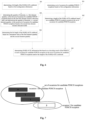
- the determining the set of occasions for candidate PDSCH receptions based on the first configuration information includes one of: a first mode in which, in the case that the first time domain resource allocation table and the second time domain resource allocation table are activated or available, determining the set of occasions for candidate PDSCH receptions based on the union of row indexes of the first time domain resource allocation table and the second time domain resource allocation table, or in the case that a specific K1 is included in both the first set of HARQ feedback timing values K1 and the second set of HARQ feedback timing values K1, determining the set of occasions for candidate PDSCH receptions based on the union of row indexes of the first time domain resource allocation table and the second time domain resource allocation table; a second mode in which, in the case that the first time domain resource allocation table and the second time domain resource allocation table are activated or available, determining the set of occasions for candidate PDSCH receptions based on the union of row indexes of a time domain resource allocation table, where the time domain resource
- the method further includes Step 302 of determining a length of the HARQ-ACK codebook based on a candidate PDSCH reception occasion in the set of occasions for candidate PDSCH receptions.
- the bit length of the bit length of the HARQ-ACK codebook is determined based on the quantity of elements in the candidate PDSCH reception occasion in the set of occasions for candidate PDSCH receptions.
- the method further includes: Step 303 of determining the quantity of elements, i.e., first element quantity, in the first set of occasions for candidate PDSCH receptions based on the first time domain resource allocation table, and determining the quantity of elements, i.e., second element quantity, in the second set of occasions for candidate PDSCH receptions based on the second time domain resource allocation table; and Step 304 of determining the bit length of the HARQ-ACK codebook based on a maximum value of the first element quantity and the second element quantity.
- the first element quantity is the quantity of elements in the first set of candidate PDSCH reception occasions determined based on the first time domain resource allocation table
- the second element quantity is the quantity of elements in the second set of candidate PDSCH reception occasions determined based on the second time domain resource allocation table.
- the method further includes Step 305 of determining HARQ-ACK information bits based on a decoding result of the PDSCH at each occasion for candidate PDSCH reception in the set of occasions for candidate PDSCH receptions and/or the length of the HARQ-ACK codebook.
- the corresponding HARQ-ACK information bits are determined based on the decoding result of the PDSCH at each occasion for candidate PDSCH reception in the set of occasions for candidate PDSCH receptions, and then NACK bits are added until a bit length is equal to the bit length of the HARQ-ACK codebook; or in the case that the quantity of elements in the determined set of occasions for candidate PDSCH receptions is equal to the maximum value of the first element quantity and the second element quantity, the corresponding HARQ-ACK information bits are determined based on the decoding result of the PDSCH at each occasion for candidate PDSCH reception in the set of occasions for candidate PDSCH receptions.
- the quantity of occasions for candidate PDSCH receptions in the set of occasions for candidate PDSCH receptions is determined based on a type of the time domain resource allocation table, so as to save the HARQ-ACK information bits.
- the UE supports to receive or process the PDSCH for the TDD unicast service and the PDSCH for the multicast/broadcast service within one slot.
- Step 1 the UE determines a set of PDSCH reception occasions based on first configuration information.
- the first configuration information includes one or more of a first time domain resource allocation table, a second time domain resource allocation table, a first set of HARQ feedback timing values K1, or a second set of HARQ feedback timing values K1.
- the first time domain resource allocation table is a time domain resource allocation table for a PDSCH for unicast service or a UE-specific PDSCH
- the second time domain resource allocation table is a time domain resource allocation table for multicast PDSCH and/or broadcast PDSCH, or PDSCH common to UEs
- the first set of HARQ feedback timing values K1 is the set of HARQ feedback timing values associated with unicast PDSCH, the UE-specific PDSCH, UE-specific DCI, or DCI for scheduling the unicast PDSCH
- the second set of HARQ feedback timing values K1 is the set of HARQ feedback timing values associated with the multicast and/or broadcast PDSCH, the PDSCH common to the UEs, DCI common to the UEs, or DCI for scheduling the multicast PDSCH and/or broadcast PDSCH.
- the UE-specific PDSCH is a PDSCH scheduled by DCI where CRC is scrambled with a UE-specific RNTI
- the UE-specific DCI is DCI where the CRC is scrambled with the UE-specific RNTI
- the PDSCH common to the UEs is a PDSCH scheduled by the DCI where the CRC is scrambled with a common RNTI to UEs
- the DCI common to the UEs is DCI where the CRC is scrambled with the common RNTI to UEs.
- the UE-specific RNTI is a C-RNTI, a Modulation and Coding Scheme C-RNTI (MCS-C-RNTI), or a Configured Scheduling RNTI (CS-RNTI).
- MCS-C-RNTI Modulation and Coding Scheme C-RNTI
- CS-RNTI Configured Scheduling RNTI
- the common RNTI to UEs is a G-RNTI.
- the UE determines the set of occasions for candidate PDSCH receptions based on the union of row indexes of the first time domain resource allocation table and the second time domain resource allocation table.
- the UE determines the set of occasions for candidate PDSCH receptions based on the activated or available time domain resource allocation table or a set of rows in the time domain resource allocation table associated with K1.
- Step 2 the UE determines the HARQ-ACK information bits based on a candidate PDSCH reception occasion in the set of occasions for candidate PDSCH receptions.
- the UE determines the quantity of occasions for candidate PDSCH receptions in the set of occasions for candidate PDSCH receptions based on a type of the time domain resource allocation table, so as to save the HARQ-ACK information bits.
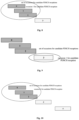
- rows 0, 1 and 2 are rows in a first PDSCH time domain resource allocation table (which belongs to the first time domain resource allocation table), and row 3 is a row in a second PDSCH time domain resource allocation table (which belongs to the second time domain resource allocation table).
- Two sets of HARQ feedback timing values K1 are configured by the network side device for the UE, where a first set of HARQ feedback timing values K1 associated with the first PDSCH time domain resource allocation table or DCI for scheduling the first PDSCH time domain resource allocation table, and the second set of HARQ feedback timing values K1 associated with the second PDSCH time domain resource allocation table or DCI for scheduling the second PDSCH time domain resource allocation table.
- the first PDSCH time domain resource allocation table and the second PDSCH time domain resource allocation table are activated or available, or for a certain K1, it is included in both the first set of HARQ feedback timing values K1 and the second set of HARQ feedback timing values K1.
- the UE determines the set of occasions for candidate PDSCH receptions based on rows 0, 1 and 2 in the first PDSCH time domain resource allocation table and row 3 in the second PDSCH time domain resource allocation table.
- the set of occasions for candidate PDSCH receptions include two candidate PDSCH reception occasions, i.e., a candidate PDSCH reception occasion 1 and a candidate PDSCH reception occasion 2.
- the candidate PDSCH reception occasion 1 corresponds to rows 0, 1 and 2 in the first PDSCH time domain resource allocation table
- the candidate PDSCH reception occasion 2 corresponds to row 3 in the second PDSCH time domain resource allocation table.
- the UE determines the set of occasions for candidate PDSCH receptions only based on rows 0, 1 and 2 in the first PDSCH time domain resource allocation table.
- the set of occasions for candidate PDSCH receptions include the candidate PDSCH resource occasion 1 corresponding to rows 0, 1 and 2 in the first PDSCH time domain resource allocation table.
- the UE determines the set of occasions for candidate PDSCH receptions only based on row 3 in the second PDSCH time domain resource allocation table.
- the set of occasions for candidate PDSCH receptions include the candidate PDSCH resource occasion 1 corresponding to row 3 in the second PDSCH time domain resource allocation table.
- the UE determines the quantity of occasions for candidate PDSCH receptions in the set of occasions for candidate PDSCH receptions based on the type of the time domain resource allocation table, so as to reduce the HARQ-ACK information bits.
- Second scenario the UE does not support to receive or process the PDSCH for the TDD unicast service and the PDSCH for the multicast/broadcast service within one slot.
- Step 1 the UE determines a set of PDSCH reception occasions based on first configuration information.
- the first configuration information includes one or more of a first time domain resource allocation table, a second time domain resource allocation table, a first set of HARQ feedback timing values K1, or a second set of HARQ feedback timing values K1.
- the first time domain resource allocation table is a time domain resource allocation table for a PDSCH for unicast service or a UE-specific PDSCH
- the second time domain resource allocation table is a time domain resource allocation table for multicast PDSCH and/or broadcast PDSCH, or PDSCH common to UEs
- the first set of HARQ feedback timing values K1 is a set of HARQ feedback timing values K1 being associated with unicast PDSCH
- the second set of HARQ feedback timing values K1 is a set of HARQ feedback timing values K1 being associated with the multicast and/or broadcast PDSCH, the PDSCH common to the UEs, DCI common to the UEs, or DCI for scheduling the multicast PDSCH and/or broadcast PDSCH.
- the UE-specific PDSCH is a PDSCH scheduled by DCI where CRC is scrambled with a UE-specific RNTI
- the UE-specific DCI is DCI where the CRC is scrambled with the UE-specific RNTI
- the PDSCH common to the UEs is a PDSCH scheduled by the DCI where the CRC is scrambled with a common RNTI to UEs
- the DCI common to the UEs is DCI where the CRC is scrambled with the common RNTI to UEs.
- the UE-specific RNTI is a C-RNTI, a Modulation and Coding Scheme C-RNTI (MCS-C-RNTI), or a Configured Scheduling RNTI (CS-RNTI).
- MCS-C-RNTI Modulation and Coding Scheme C-RNTI
- CS-RNTI Configured Scheduling RNTI
- the common RNTI to UEs is a G-RNTI.
- the UE determines the set of occasions for candidate PDSCH receptions based on the activated or available time domain resource allocation table, or a set of rows in the time domain resource allocation table associated with K1.
- the UE determines the set of rows in the first time domain resource allocation table or the second time domain resource allocation table based on the type of the received PDSCH or the type of the DCI for scheduling the PDSCH within the slot, so as to determine the set of occasions for candidate PDSCH receptions.
- Step 2 the UE determines a length of the HARQ-ACK codebook.
- Step 3 the UE determines the HARQ-ACK information bits based on a candidate PDSCH reception occasion in the set of occasions for candidate PDSCH receptions.
- Scenario 2-1 for a specific slot, when only one of the first time domain resource allocation table and the second time domain resource allocation table is activated or available, or for a specific K1, it is only included in the first set of HARQ feedback timing values K1 or the second set of HARQ feedback timing values K1, the UE determines the length of the corresponding HARQ-ACK codebook and the HARQ-ACK information bits based on a candidate PDSCH reception occasion in the determined set of candidate PDSCI reception occasions.
- the UE determines the quantity of occasions for candidate PDSCH receptions in the set of occasions for candidate PDSCH receptions based on the type of the time domain resource allocation table, so as to save the HARQ-ACK information bits.
- rows 0, 1 and 2 are rows in a first PDSCH time domain resource allocation table (which belongs to the first time domain resource allocation table), and rows 3 and 4 are rows in a second PDSCH time domain resource allocation table (which belongs to the second time domain resource allocation table).
- the UE does not support to receive the PDSCH for the TDD unicast service and the PDSCH for the multicast/broadcast service within one slot.
- the UE determines the set of occasions for candidate PDSCH receptions only based on rows 0, 1 and 2, and the set of occasions for candidate PDSCH receptions includes a candidate PDSCH reception occasion 1.
- the UE determines the set of occasions for candidate PDSCH receptions only based on rows 3 and 4, and the set of occasions for candidate PDSCH receptions includes candidate PDSCH reception occasions 1 and 2.
- the UE determines the quantity of bits for the HARQ feedback based on the determined set of candidate PDSCH reception occasions.
- Scenario 2-2 for a specific slot, the first time domain resource allocation table and the second time domain resource allocation table are activated or available, or for a specific K1, it is included in both the first set of HARQ feedback timing values K1 and the second set of HARQ feedback timing values K1.
- the UE determines the quantity of elements, i.e., first element quantity, in the first set of occasions for candidate PDSCH receptions based on the first time domain resource allocation table, and determining the quantity of elements, i.e., second element quantity, in the second set of occasions for candidate PDSCH receptions based on the second time domain resource allocation table.
- the first element quantity is the quantity of different candidate PDSCH reception occasions in the first set of candidate PDSCH reception occasions determined based on the first time domain resource allocation table
- the second element quantity is the quantity of different candidate PDSCH reception occasions in the second set of candidate PDSCH reception occasions determined based on the second time domain resource allocation table.
- the UE determines a bit length N of the HARQ-ACK codebook based on a maximum value M of the first element quantity and the second element quantity.
- the corresponding HARQ-ACK information bits are determined based on a candidate PDSCH reception occasion in the set of occasions for candidate PDSCH receptions, and then NACK bits are added until the bit length is equal to N.
- the corresponding HARQ-ACK information bits are determined based on a candidate PDSCH reception occasion in the set of occasions for candidate PDSCH receptions.
- the UE determines the quantity of NACK information bits based on the larger quantity of candidate PDSCH reception occasions, so as to prevent the base station and the UE from understanding the HARQ-ACK information bits non-uniformly when the PDSCH is not received correctly by the UE.
- rows 0, 1 and 2 are rows in a first PDSCH time domain resource allocation table (which belongs to the first time domain resource allocation table), and rows 3 and 4 are rows in a second PDSCH time domain resource allocation table (which belongs to the second time domain resource allocation table).
- the UE does not support to receive the PDSCH for the TDD unicast service and the PDSCH for the multicast/broadcast service within one slot.
- the first PDSCH time domain resource allocation table and the second PDSCH time domain resource allocation table are activated or available, or for a certain K1, it is included in both the first set of HARQ feedback timing values K1 and the second set of HARQ feedback timing values K1.
- the UE determines the first set of candidate PDSCH reception occasions based on the first PDSCH time domain resource allocation table, and the first set of candidate PDSCH reception occasions include a candidate PDSCH reception occasion 1, i.e., the element quantity in the first set of candidate PDSCH reception occasions is 1.
- the UE determines the second set of candidate PDSCH reception occasions based on the second PDSCH time domain resource allocation table, and the second set of candidate PDSCH reception occasions include candidate PDSCH reception occasions 2 and 3, i.e., the second element quantity in the second set of candidate PDSCH reception occasions is 2. Because 1 is smaller than 2, the bit length of the HARQ-ACK codebook within this slot is determined based on the second element quantity, and it includes two bits.
- the UE determines the set of occasions for candidate PDSCH receptions based on the first PDSCH time domain resource allocation table.
- the set of occasions for candidate PDSCH receptions include a candidate PDSCH reception occasion 1, and the UE generates 1-bit HARQ-ACK information. Then, 1-bit NACK information is added after the 1-bit HARQ-ACK information, so as to obtain the 2-bit HARQ-ACK information.
- the UE determines the set of occasions for candidate PDSCH receptions based on the second PDSCH time domain resource allocation table.
- the set of occasions for candidate PDSCH receptions include candidate PDSCH reception occasions 1 and 2, and the UE generates 2-bit HARQ-ACK information.
- the UE When the UE fails to detect any DCI within the slot, it generates 2-bit NACK information.
- the UE determines the quantity of NACK information bits based on the larger quantity of candidate PDSCH reception occasions, so as to prevent the base station and the UE from understanding the HARQ-ACK information bits non-uniformly when the PDSCH is not received correctly by the UE.
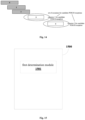
- the present disclosure further provides in some embodiments a device 1500 for creating a semi-static HARQ codebook for a UE or network side device, which includes a first determination module 1501 configured to determine a set of candidate PDSCH reception occasions and/or a bit length of an HARQ-ACK codebook based on first configuration information.
- the first configuration information includes one or more of a first time domain resource allocation table, a second time domain resource allocation table, a first set of HARQ feedback timing values K1, or a second set of HARQ feedback timing values K1.
- the first time domain resource allocation table is a time domain resource allocation table for a PDSCH for unicast service or a UE-specific PDSCH
- the second time domain resource allocation table is a time domain resource allocation table for multicast PDSCH and/or broadcast PDSCH, or PDSCH common to UEs
- the first set of HARQ feedback timing values K1 is a set of HARQ feedback timing values K1 being associated with unicast PDSCH
- the second set of HARQ feedback timing values K1 is a set of HARQ feedback timing values K1 being associated with the multicast and/or broadcast PDSCH, the PDSCH common to the UEs, DCI common to the UEs, or DCI for scheduling the multicast PDSCH and/or broadcast PDSCH.
- the UE-specific PDSCH is a PDSCH scheduled by DCI where CRC is scrambled with a UE-specific RNTI
- the UE-specific DCI is DCI where the CRC is scrambled with the UE-specific RNTI
- the PDSCH common to the UEs is a PDSCH scheduled by the DCI where the CRC is scrambled with a common RNTI to UEs
- the DCI common to the UEs is DCI where the CRC is scrambled with the common RNTI to UEs.
- the first determination module 1501 is further configured to perform one of: a first mode in which, in the case that the first time domain resource allocation table and the second time domain resource allocation table are activated or available, determining the set of occasions for candidate PDSCH receptions based on the union of row indexes of the first time domain resource allocation table and the second time domain resource allocation table, or in the case that a specific K1 is included both the first set of HARQ feedback timing values K1 and the second set of HARQ feedback timing values K1, determining the set of occasions for candidate PDSCH receptions based on the union of row indexes of the first time domain resource allocation table and the second time domain resource allocation table; a second mode in which, in the case that the first time domain resource allocation table and the second time domain resource allocation table are activated or available, determining the set of occasions for candidate PDSCH receptions based on the union of row indexes of a time domain resource allocation table, where the time domain resource allocation table is the first time-domain resource allocation table or
- the first determination module 1501 is further configured to determine the bit length of the HARQ-ACK codebook based on a maximum value of first element quantity and second element quantity, the first element quantity is the quantity of elements in the first set of occasions for candidate PDSCH receptions determined based on the first time domain resource allocation table, and the second element quantity is the quantity of elements in the second set of occasions for candidate PDSCH receptions determined based on the second time domain resource allocation table.
- the device further includes a second determination module configured to determine the bit length of the HARQ-ACK codebook based on the quantity of occasions for candidate PDSCH receptions in the set of occasions for candidate PDSCH receptions.
- the device further includes a third determination module configured to determine HARQ-ACK information bits based on a decoding result of the PDSCH at each occasion for candidate PDSCH reception in the set of occasions for candidate PDSCH receptions and/or a length of the HARQ-ACK codebook.
- the third determination module is further configured to: in the case that the quantity of elements in the determined set of occasions for candidate PDSCH receptions is smaller than the maximum value of the first element quantity and the second element quantity, determine the corresponding HARQ-ACK information bits based on the decoding result of the PDSCH at each occasion for candidate PDSCH reception in the set of occasions for candidate PDSCH receptions, and add NACK bits until a bit length is equal to the bit length of the HARQ-ACK codebook; or in the case that the quantity of elements in the determined set of occasions for candidate PDSCH receptions is equal to the maximum value of the first element quantity and the second element quantity, determine the corresponding HARQ-ACK information bits based on the decoding result of the PDSCH at each occasion for candidate PDSCH reception in the set of occasions for candidate PDSCH receptions.
- the device in the embodiments of the present disclosure is used to implement the method as shown in Figs. 2 to 6 with a same technical effect, which will thus not be particularly defined herein.
- the present disclosure further provides in some embodiments a network side device 1600, which includes a processor 1601, a transceiver 1602, a memory 1603 and a bus interface.
- the network side device 1600 further includes a program stored in the memory 1603 and executed by the processor 1601. The program is executed by the processor 1601 so as to implement the steps as shown in Figs. 2 to 6 .
- bus architecture may include a number of buses and bridges connected to each other, so as to connect various circuits for one or more processors 1601 and one or more memories 1603.
- the bus architecture may be used to connect any other circuits, such as a circuit for a peripheral device, a circuit for a voltage stabilizer and a power management circuit.
- the bus interface may be provided, and the transceiver 1602 may consist of multiple elements, i.e., a transmitter and a receiver for communication with any other devices over a transmission medium.
- the processor 1601 may take charge of managing the bus architecture as well as general processings.
- the memory 1603 may store therein data for the operation of the processor 1601.
- the network side device in the embodiments of the present disclosure is used to implement the method as shown in Figs. 2 to 6 with a same technical effect, which will thus not be particularly defined herein.
- a UE 1700 which includes, but not limited to, a Radio Frequency (RF) unit 1701, a network module 1702, an audio output unit 1703, an input unit 1704, a sensor 1705, a display unit 1706, a user input unit 1707, an interface unit 1708, a memory 1709 and a processor 1710.
- RF Radio Frequency
- the UE 1700 may further include a power source (e.g., battery) for providing power to each member.
- the power source is logically coupled to the processor 1710 through a power source management system, so as to achieve such functions as charging/discharging management and power consumption management through the power source management system.
- the structure in Fig. 17 shall not be construed as limiting the UE.
- the UE may include more or fewer members, or some members may be combined, or the members may be arranged in different modes.
- the input unit 1704 includes a Graphics Processing Unit (GPU) 17041 and a microphone 17042.
- the GPU 17041 is configured to process image data of a static image or video acquired by an image collection unit (e.g., a camera) in a video capturing mode or an image capturing mode.
- the display unit 1706 includes a display panel 17061, e.g., a liquid crystal display panel or an organic light-emitting diode display panel.
- the user input unit 1707 includes a touch panel 17071 and other input device 17072.
- the touch panel 17071 is also called as a touch screen, and it includes a touch detection unit and a touch controller.
- the other input device 17072 may include, but not limited to, a physical keyboard, a functional button (e.g., a volume control button or an on/off button), a trackball, a mouse, and a joystick, which will not be particularly defined herein.
- a functional button e.g., a volume control button or an on/off button
- a trackball e.g., a mouse
- a joystick e.g., a joystick
- the RF unit 1701 may, upon the receipt of downlink data from a network side device, transmit the downlink data to the processor 1710 for subsequent treatment. In addition, the RF unit 1701 may transmit uplink data to the network side device.
- the RF unit 1701 may include, but not limited to, an antenna, at least one amplifier, a transceiver, a coupler, a low-noise amplifier and a duplexer.
- the memory 1709 is configured to store therein a software program or instruction and various data. It may mainly include a program or instruction storage area and a data storage area. An operating system (OS) and at least one program or instruction for the functions (e.g., an audio/image playing function) may be stored in the program or instruction storage area.
- the memory 1709 may include a high-speed random access memory (RAM), or a non-volatile memory, e.g., Read-Only Memory (ROM), Programmable ROM (PROM), Erasable PROM (EPROM), Electrically EPROM (EEPROM) or flash memory.
- the memory includes at least one magnetic disk, a flash memory, or any other volatile solid state memory.
- the processor 1710 may include one or more processing units.
- an application processor and a modem may be integrated into the processor 1710.
- the application processor is mainly configured to process the operating system, a user interface and the application.
- the modem is mainly configured to process wireless communication, e.g., a baseband processor. It should be appreciated that, the modem may also not be integrated into the processor 1710.
- the UE in the embodiments of the present disclosure is used to implement the method as shown in Figs. 2 to 6 with a same technical effect, which will not be particularly defined herein.
- the present disclosure further provides in some embodiments a readable storage medium storing therein a program or instruction.
- the program or instruction is executed by a processor so as to implement the method as shown in Figs. 2 to 6 with a same technical effect, which will not be particularly defined herein.
- the processor is a processor in the above-mentioned UE.
- the readable storage medium includes a computer-readable storage medium, e.g., an ROM, an RAM, a magnetic disk or an optical disk.
- the steps of the methods or algorithm described in conjunction with the contents mentioned hereinabove may be implemented through hardware, or implemented by a processor executing instructions.
- the instructions may consist of corresponding modules stored in a Random Access Memory (RAM), a flash memory, a Read-Only Memory (ROM), an Erasable Programmable Read-Only Memory (EPROM), an Electrically Erasable Programmable Read-Only Memory (EEPROM), a register, a hard disk, a mobile hard disk, a read-only optic disk, or any other known storage medium.
- the storage medium may be coupled to the processor, so that the processor is capable of reading information from the storage medium and writing information into the storage medium.
- the storage medium may be a component of the processor.
- the processor and the storage medium may be located in an Application Specific Integrated Circuit (ASIC).
- ASIC Application Specific Integrated Circuit
- the ASIC may be located in an interface device of a core network.
- the processor and the storage medium may be located in the interface device of the core network as discrete assemblies.
- the functions described in one or more embodiments of the present disclosure may be achieved through hardware, software, firmware or a combination thereof.
- these functions may be stored in the computer-readable medium or transmitted as one or more instructions or codes on the computer-readable medium.
- the computer-readable medium may include a computer-readable storage medium and a communication medium.
- the communication medium may include any medium capable of transmitting a computer program from one place to another place.
- the storage medium may include any available medium capable of being accessed by a general-purpose or dedicated computer.
- the present disclosure may be provided as a method, a system or a computer program product, so the present disclosure may be in the form of full hardware embodiments, full software embodiments, or combinations thereof.
- the present disclosure may be in the form of a computer program product implemented on one or more computer-readable storage mediums (including but not limited to disk memory, compact disc-read only memory (Compact Disc-Read Only Memory, CD-ROM) and optical memory) including computer-readable program codes.
- These computer program instructions may also be stored in a computer readable storage that may guide the computer or the other programmable data process devices to function in a certain way, so that the instructions stored in the computer readable storage may create a product including an instruction unit which achieves the functions assigned in one or more flows in the flow chart and/or one or more blocks in the block diagram.
- These computer program instructions may also be loaded in the computer or the other programmable data process devices, so that a series of operation steps are executed on the computer or the other programmable devices to create processes achieved by the computer. Therefore, the instructions executed in the computer or the other programmable devices provide the steps for achieving the function assigned in one or more flows in the flow chart and/or one or more blocks in the block diagram.
Landscapes
- Engineering & Computer Science (AREA)
- Signal Processing (AREA)
- Computer Networks & Wireless Communication (AREA)
- Multimedia (AREA)
- Mobile Radio Communication Systems (AREA)
- Financial Or Insurance-Related Operations Such As Payment And Settlement (AREA)
- Detection And Prevention Of Errors In Transmission (AREA)
- Compression, Expansion, Code Conversion, And Decoders (AREA)
- Signal Processing For Digital Recording And Reproducing (AREA)
Abstract
Description
- This application claims a priority of the
Chinese patent application No. 202110326142.7 filed on March 26, 2021 - The present disclosure relates to the field of communication technology, in particular to a method and a device for creating a semi-static Hybrid Automatic Repeat reQuest (HARQ) codebook, an apparatus, and a readable storage medium.
- The design of a New Radio (NR) semi-static HARQ codebook mainly includes two steps.
- Step 1: determining a set of occasions for candidate Physical Downlink Shared Channel (PDSCH) receptions.
- In other words, with respect to an HARQ Acknowledgement (HARQ-ACK) feedback within a certain slot n, a set of all transmitted downlink data for which the HARQ-ACK feedback needs to be provided needs to be determined based on such parameters as a candidate first set of HARQ feedback timing values K1, a Time Division Duplex (TDD) frame structure configuration, a time domain resource allocation parameter and a Carrier Aggregation (CA) offset.
- In the NR, a User Equipment (UE) may support to receive multiple TDM (Time-division multiplexing) PDSCHs within one slot, which needs to be taken into consideration in the design of the NR semi-static HARQ codebook.
- To be specific, when the UE does not support to receive multiple TDM (Time-division multiplexing) PDSCHs, one slot is taken as one PDSCH reception occasion. When the UE supports to receive multiple TDM (Time-division multiplexing) PDSCHs, the UE selects rows which do not overlap with each other in terms of time resources based on one or more configured time domain resource allocation tables, so as to determine multiple PDSCH reception occasions within the slot.
- Step 2: on the basis of the set of occasions for candidate PDSCH receptions for each cell determined in
Step 1, generating, by the UE, ACK information or Negative ACK (NACK) information on each occasion for candidate PDSCH reception based on whether the PDSCH has been received. - An existing NR technology only supports unicast service, and HARQ mechanism is also introduced in multicast/broadcast technology as an NR evolved technology. In the existing NR technology, the time domain resource allocation table is configured separately for each UE, i.e., the time domain resource allocation tables are different for the UEs. The UE only needs to determine the set of occasions for candidate PDSCH receptions for the semi-static HARQ codebook based on its own time domain resource allocation table.
- However, after the introduction of the NR multicast/broadcast technology, multiple UE which receives the same multicast/broadcast service has a same PDSCH time domain resource allocation table, which may be different from a UE-specific time domain resource allocation tables for transmitting the unicast service. In addition, a set of PDSCH HARQ feedback timing values K1 for the multicast/broadcast service may also be different from a set of PDSCH HARQ feedback timing values K1 for the unicast service. Hence, there is an urgent need to provide a comprehensive scheme about how to take these two types of time domain resource allocation tables and two types of sets of K1 into consideration when determining the set of occasions for candidate PDSCH receptions for the semi-static HARQ codebook.
- An object of the present disclosure is to provide a method and a device for creating a semi-static HARQ codebook, an apparatus and a readable storage medium, so as to create the semi-static HARQ codebook based on various time domain resource allocation tables.
- In one aspect, the present disclosure provides in some embodiments a method for creating a semi-static HARQ codebook, including determining a set of candidate PDSCH reception occasions and/or a bit length of an HARQ-ACK codebook based on first configuration information. The first configuration information includes one or more of a first time domain resource allocation table, a second time domain resource allocation table, a first set of HARQ feedback timing values K1, or a second set of HARQ feedback timing values K1. The first time domain resource allocation table is a time domain resource allocation table for a PDSCH for unicast service or a UE-specific PDSCH, the second time domain resource allocation table is a time domain resource allocation table for multicast PDSCH and/or broadcast PDSCH, or PDSCH common to UEs, the first set of HARQ feedback timing values K1 is a set of HARQ feedback timing values K1 being associated with unicast PDSCH, the UE-specific PDSCH, UE-specific Downlink Control Information (DCI), or DCI for scheduling the unicast PDSCH, and the second set of HARQ feedback timing values K1 is a set of HARQ feedback timing values K1 being associated with the multicast and/or broadcast PDSCH, the PDSCH common to the UEs, DCI common to the UEs, or DCI for scheduling the multicast PDSCH and/or broadcast PDSCH.
- In some possible embodiments of the present disclosure, the UE-specific PDSCH is a PDSCH scheduled by DCI where Cyclic Redundancy Check (CRC) is scrambled with a UE-specific Radio Network Temporary Identity (RNTI), the UE-specific DCI is DCI where the CRC is scrambled with the UE-specific RNTI, the PDSCH common to the UEs is a PDSCH scheduled by the DCI where the CRC is scrambled with a common RNTI to UEs, and the DCI common to the UEs is DCI where the CRC is scrambled with the common RNTI to UEs.
- In some possible embodiments of the present disclosure, the determining the set of occasions for candidate PDSCH receptions based on the first configuration information includes one of: a first mode in which, in the case that the first time domain resource allocation table and the second time domain resource allocation table are activated or available, determining the set of occasions for candidate PDSCH receptions based on the union of row indexes of the first time domain resource allocation table and the second time domain resource allocation table, or in the case that a specific K1 is included in both the first set of HARQ feedback timing values K1 and the second set of HARQ feedback timing values K1, determining the set of occasions for candidate PDSCH receptions based on the union of row indexes of the first time domain resource allocation table and the second time domain resource allocation table; a second mode in which, in the case that the first time domain resource allocation table and the second time domain resource allocation table are activated or available, determining the set of occasions for candidate PDSCH receptions based on the union of row indexes of a time domain resource allocation table, where the time domain resource allocation table is the first time-domain resource allocation table or the second time-domain resource allocation table which is determined by the type of the received PDSCH or the type of the DCI for scheduling the PDSCH, or in the case that the specific K1 is included in both the first set of HARQ feedback timing values K1 and the second set of HARQ feedback timing values K1, determining the set of occasions for candidate PDSCH receptions based on the union of row indexes of a time domain resource allocation table, where the time domain resource allocation table is the first time-domain resource allocation table or the second time-domain resource allocation table which is determined by the type of the received PDSCH or the type of the DCI for scheduling the PDSCH; or a third mode in which, in the case that only one of the first time domain resource allocation table and the second time domain resource allocation table is activated or available, determining the set of occasions for candidate PDSCH receptions based on the union of row indexes of the activated or available time domain resource allocation table, or in the case that the specific K1 is only included in the first set of HARQ feedback timing values K1 or the second set of HARQ feedback timing values K1, determining the set of occasions for candidate PDSCH receptions based on the union of row indexes of the first time domain resource allocation table or the second time domain resource allocation table associated with the specific K1.
- In some possible embodiments of the present disclosure, the determining the bit length of the HARQ-ACK codebook based on the first configuration information includes determining the bit length of the HARQ-ACK codebook based on a maximum value of first element quantity and second element quantity, the first element quantity is the quantity of elements in the first set of occasions for candidate PDSCH receptions determined based on the first time domain resource allocation table, and the second element quantity is the quantity of elements in the second set of occasions for candidate PDSCH receptions determined based on the second time domain resource allocation table.
- In some possible embodiments of the present disclosure, subsequent to the determining the set of occasions for candidate PDSCH receptions based on the first configuration information, the method further includes determining the bit length of the HARQ-ACK codebook based on the quantity of occasions for candidate PDSCH receptions in the set of occasions for candidate PDSCH receptions.
- In some possible embodiments of the present disclosure, the method further includes determining HARQ-ACK information bits based on a decoding result of the PDSCH at each occasion for candidate PDSCH reception in the set of occasions for candidate PDSCH receptions and/or a length of the HARQ-ACK codebook.
- In some possible embodiments of the present disclosure, the determining the HARQ-ACK information bits based on the decoding result of the PDSCH at each occasion for candidate PDSCH reception in the set of occasions for candidate PDSCH receptions and/or the length of the HARQ-ACK codebook includes: in the case that the quantity of elements in the determined set of occasions for candidate PDSCH receptions is smaller than the maximum value of the first element quantity and the second element quantity, determining the corresponding HARQ-ACK information bits based on the decoding result of the PDSCH at each occasion for candidate PDSCH reception in the set of occasions for candidate PDSCH receptions, and adding NACK bits until a bit length is equal to the bit length of the HARQ-ACK codebook; or in the case that the quantity of elements in the determined set of occasions for candidate PDSCH receptions is equal to the maximum value of the first element quantity and the second element quantity, determining the corresponding HARQ-ACK information bits based on the decoding result of the PDSCH at each occasion for candidate PDSCH reception in the set of occasions for candidate PDSCH receptions.
- In another aspect, the present disclosure provides in some embodiments a device for creating a semi-static HARQ codebook, including a first determination module configured to determine a set of candidate PDSCH reception occasions and/or a bit length of an HARQ-ACK codebook based on first configuration information. The first configuration information includes one or more of a first time domain resource allocation table, a second time domain resource allocation table, a first set of HARQ feedback timing values K1, or a second set of HARQ feedback timing values K1. The first time domain resource allocation table is a time domain resource allocation table for a PDSCH for unicast service or a UE-specific PDSCH, the second time domain resource allocation table is a time domain resource allocation table for multicast PDSCH and/or broadcast PDSCH, or PDSCH common to UEs, the first set of HARQ feedback timing values K1 is a set of HARQ feedback timing values Klbeing associated with unicast PDSCH, the UE-specific PDSCH, UE-specific DCI, or DCI for scheduling the unicast PDSCH, and the second set of HARQ feedback timing values K1 is a set of HARQ feedback timing values K1 being associated with the multicast and/or broadcast PDSCH, the PDSCH common to the UEs, DCI common to the UEs, or DCI for scheduling the multicast PDSCH and/or broadcast PDSCH.
- In some possible embodiments of the present disclosure, the UE-specific PDSCH is a PDSCH scheduled by DCI where CRC is scrambled with a UE-specific RNTI, the UE-specific DCI is DCI where the CRC is scrambled with the UE-specific RNTI, the PDSCH common to the UEs is a PDSCH scheduled by the DCI where the CRC is scrambled with a common RNTI to UEs, and the DCI common to the UEs is DCI where the CRC is scrambled with the common RNTI to UEs.
- In some possible embodiments of the present disclosure, the first determination module is further configured to perform one of: a first mode in which, in the case that the first time domain resource allocation table and the second time domain resource allocation table are activated or available, determining the set of occasions for candidate PDSCH receptions based on the union of row indexes of the first time domain resource allocation table and the second time domain resource allocation table, or in the case that a specific K1 is included in both the first set of HARQ feedback timing values K1 and the second set of HARQ feedback timing values K1, determining the set of occasions for candidate PDSCH receptions based on the union of row indexes of the first time domain resource allocation table and the second time domain resource allocation table; a second mode in which, in the case that the first time domain resource allocation table and the second time domain resource allocation table are activated or available, determining the set of occasions for candidate PDSCH receptions based on the union of row indexes of a time domain resource allocation table, where the time domain resource allocation table is the first time-domain resource allocation table or the second time-domain resource allocation table which is determined by the type of the received PDSCH or the type of the DCI for scheduling the PDSCH, or in the case that the specific K1 is included in both the first set of HARQ feedback timing values K1 and the second set of HARQ feedback timing values K1, determining the set of occasions for candidate PDSCH receptions based on the union of row indexes of a time domain resource allocation table, where the time domain resource allocation table is the first time-domain resource allocation table or the second time-domain resource allocation table which is determined by the type of the received PDSCH or the type of the DCI for scheduling the PDSCH; or a third mode in which, in the case that only one of the first time domain resource allocation table and the second time domain resource allocation table is activated or available, determining the set of occasions for candidate PDSCH receptions based on the union of row indexes of the activated or available time domain resource allocation table, or in the case that the specific K1 is only included in the first set of HARQ feedback timing values K1 or the second set of HARQ feedback timing values K1, determining the set of occasions for candidate PDSCH receptions based on the union of row indexes of the first time domain resource allocation table or the second time domain resource allocation table associated with the specific K1.
- In some possible embodiments of the present disclosure, the first determination module is further configured to determine the bit length of the HARQ-ACK codebook based on a maximum value of first element quantity and second element quantity, the first element quantity is the quantity of elements in the first set of occasions for candidate PDSCH receptions determined based on the first time domain resource allocation table, and the second element quantity is the quantity of elements in the second set of occasions for candidate PDSCH receptions determined based on the second time domain resource allocation table.
- In some possible embodiments of the present disclosure, the device further includes a second determination module configured to determine the bit length of the HARQ-ACK codebook based on the quantity of occasions for candidate PDSCH receptions in the set of occasions for candidate PDSCH receptions.
- In some possible embodiments of the present disclosure, the device further includes a third determination module configured to determine HARQ-ACK information bits based on a decoding result of the PDSCH at each occasion for candidate PDSCH reception in the set of occasions for candidate PDSCH receptions and/or a length of the HARQ-ACK codebook.
- In some possible embodiments of the present disclosure, the third determination module is further configured to: in the case that the quantity of elements in the determined set of occasions for candidate PDSCH receptions is smaller than the maximum value of the first element quantity and the second element quantity, determine the corresponding HARQ-ACK information bits based on the decoding result of the PDSCH at each occasion for candidate PDSCH reception in the set of occasions for candidate PDSCH receptions, and add NACK bits until a bit length is equal to the bit length of the HARQ-ACK codebook; or in the case that the quantity of elements in the determined set of occasions for candidate PDSCH receptions is equal to the maximum value of the first element quantity and the second element quantity, determine the corresponding HARQ-ACK information bits based on the decoding result of the PDSCH at each occasion for candidate PDSCH reception in the set of occasions for candidate PDSCH receptions.
- In yet another aspect, the present disclosure provides in some embodiments a UE, including a processor, a memory, and a program stored in the memory and executed by the processor. The program is executed by the processor so as to implement the steps of the above-mentioned method.
- In still yet another aspect, the present disclosure provides in some embodiments a network side device, including a processor, a memory, and a program stored in the memory and executed by the processor. The program is executed by the processor so as to implement the steps of the above-mentioned method.
- In still yet another aspect, the present disclosure provides in some embodiments a readable storage medium storing therein a program. The program is executed by a processor so as to implement the steps of the above-mentioned method.
- According to the embodiments of the present disclosure, the quantity of occasions for candidate PDSCH receptions in the set of occasions for candidate PDSCH receptions is determined based on a type of the time domain resource allocation table, so it is able to save the HARQ-ACK information bits.
- Through reading the detailed description hereinafter, the other advantages and benefits will be apparent to a person skilled in the art. The drawings are only used to show the preferred embodiments, but shall not be construed as limiting the present disclosure. In addition, in the drawings, same reference symbols represent same members. In these drawings,
-
Fig. 1 is a schematic view showing candidate PDSCH reception occasions and rows in corresponding PDSCH time domain resource allocation tables; -
Fig. 2 is a schematic view showing an applicable wireless communication system according to one embodiment of the present disclosure; -
Fig. 3 is a flow chart of a method for creating a semi-static HARQ codebook according to one embodiment of the present disclosure; -
Fig. 4 is another schematic view showing the method for creating the semi-static HARQ codebook according to one embodiment of the present disclosure; -
Fig. 5 is yet another schematic view showing the method for creating the semi-static HARQ codebook according to one embodiment of the present disclosure; -
Fig. 6 is still yet another schematic view showing the method for creating the semi-static HARQ codebook according to one embodiment of the present disclosure; -
Figs. 7 to 14 are schematic views showing the creation of the semi-static HARQ codebook according to one embodiment of the present disclosure; -
Fig. 15 is a schematic view showing a device for creating a semi-static HARQ codebook according to one embodiment of the present disclosure; -
Fig. 16 is a schematic view showing a network side device according to one embodiment of the present disclosure; and -
Fig. 17 is a schematic view showing a UE according to one embodiment of the present disclosure. - As shown in
Fig. 1 , for a certain downlink slot,rows row 3 is a row index in a PDSCH time domain resource allocation table for multicast/broadcast service (a second time domain resource allocation table), and each row represents a start symbol of a PDSCH and a symbol length. When a UE supports to receive a PDSCH for a TDD unicast service and a PDSCH for the multicast/broadcast service within one slot, it is necessary to determine two candidate PDSCH reception occasions based on the four rows. - In addition, for the UE, two set of HARQ feedback timing values K1 are configured to provide HARQ feedback for the PDSCH for the multicast/unicast service (a second set of HARQ feedback timing values K1) and HARQ feedback for the PDSCH for the unicast service (a first set of HARQ feedback timing values K1). For K1 included in both the two K1 sets, two candidate PDSCH reception occasions need to be determined based on the four rows. Otherwise, for a certain K1, it only exists in a candidate
PDSCH reception occasion 1 or a candidatePDSCH reception occasion 2, rather than in both of them. - In addition, whether the UE supports to receive the PDSCH for the TDD unicast service and the PDSCH for the multicast/broadcast service within one slot also depends on a UE capability. When determining a set of candidate PDSCH reception occasions for a semi-static HARQ codebook, different UE capabilities also need to be taken into consideration.
- Referring to
Fig. 1 again, when the UE does not support to receive the PDSCH for the TDD unicast service and the PDSCH for the multicast/broadcast service within one slot, there is only the candidatePDSCH reception occasion 1 or the candidatePDSCH reception occasion 2, rather than both of them, within the slot. - An object of the present disclosure is to provide a method for creating a semi-static HARQ codebook, which is adapted to such a new scenario where a time domain resource allocation table for unicast service, a time domain resource allocation table for multicast/broadcast service, a set of HARQ feedback timing values K1 for a PDSCH for the unicast service and a set of HARQ feedback timing values K1 for a PDSCH for the multicast/broadcast service are configured for each UE and different UEs have different PDSCH reception capabilities. The quantity of PDSCH reception occasions and a length of the HARQ codebook are determined depending on different scenarios, without any necessity to determine the length of the HARQ codebook based on the maximum quantity of PDSCH reception occasions, so it is able to improve the reliability of the HARQ feedback and reduce a resource overhead for the HARQ feedback.
- In order to make the objects, the technical solutions and the advantages of the present disclosure more apparent, the present disclosure will be described hereinafter in a clear and complete manner in conjunction with the drawings and embodiments. Obviously, the following embodiments only relate to a part of, rather than all of, the embodiments of the present disclosure, and based on these embodiments, a person skilled in the art may, without any creative effort, obtain the other embodiments, which also fall within the scope of the present disclosure.
- Such terms as "include" or any other variations involved in the specification and the appended claims intend to provide non-exclusive coverage, so that a procedure, method, system, product or device including a series of steps or units may also include any other elements not listed herein, or may include any inherent steps or units of the procedure, method, system, product or device. The expression "and/or" involved in the embodiments of the present disclosure may represent at least one of listed items. For example, "A and/or B" may represent that, there is only A, there are both A and B, and there is only B.
- In the embodiments of the present disclosure, such expressions as "illustrative" and "for example" are only used to show examples or explanations. Any illustrative embodiment or scheme in the embodiments of the present disclosure shall not be construed as being superior over the other embodiment or scheme. Definitely, these words intend to exhibit relevant concepts in a concrete manner.
- It should be appreciated that, the technology described in the context shall not be limited to a Long Term Evolution (LTE)/LTE-Advanced (LTE-A) system, and it may also be applied to various wireless communication systems, e.g., Code Division Multiple Access (CDMA), Time Division Multiple Access (TDMA), Frequency Division Multiple Access (FDMA), Orthogonal Frequency Division Multiple Access (OFDMA), Single-Carrier Frequency-Division Multiple Access (SC-FDMA), or any other system. The technology described in the context may be applied to the above-mentioned systems and radio technologies, or applied to the other systems and radio technologies. However, a New Radio (NR) system has been described illustratively hereinafter, and terms for the NR system have been used in most of the description, although these technologies may also be applied to the systems other than the NR system, e.g., a 6th-Generation (6G) communication system.
-
Fig. 2 is a block diagram of an applicable wireless communication system according to one embodiment of the present disclosure. The wireless communication system includes a terminal 21 and anetwork side device 22. The terminal 21 may also be called as a User Equipment (UE), and it may be a terminal side device such as a mobile phone, a tablet personal computer, a laptop computer, a Personal Digital Assistant (PDA), a pocket personal computer, a netbook, an ultra-mobile personal computer (UMPC), a Mobile Internet Device (MID), a wearable device a Vehicle User Equipment (VUE) or a Pedestrian User Equipment (PUE). The wearable device includes bracelet, earphone or spectacles. It should be appreciated that, the specific type of the terminal 21 will not be particularly defined herein. Thenetwork side device 22 may be a base station or a core network. The base station is called as Node B, evolved Node B, access point, Base Transceiver Station (BTS), radio base station, radio transceiver, Basic Service Set (BSS), Extended Service Set (ESS), home node B, evolved home node B, WLAN access point, Wireless Fidelity (WiFi) node, Transmitting Receiving Point (TRP) or any other appropriate term in the field. The network side device shall not be limited to a specific technical term, as long as a same technical effect is achieved. It should be appreciated that, only the base station in the NR system is taken as an example in the embodiments of the present disclosure, but the specific type of the base station will not be particularly defined herein. - As shown in
Fig. 3 , the present disclosure provides in some embodiments a method for creating a semi-static HARQ codebook for a terminal or a network side device, which includesStep 301 of determining a set of candidate PDSCH reception occasions and/or a bit length of an HARQ-ACK codebook based on first configuration information. The first configuration information includes one or more of a first time domain resource allocation table, a second time domain resource allocation table, a first set of HARQ feedback timing values K1, or a second set of HARQ feedback timing values K1. The first time domain resource allocation table is a time domain resource allocation table for a PDSCH for unicast service or a UE-specific PDSCH, the second time domain resource allocation table is a time domain resource allocation table for multicast PDSCH and/or broadcast PDSCH, or PDSCH common to UEs, the first set of HARQ feedback timing values K1 is a set of HARQ feedback timing values K1 being associated with unicast PDSCH, the UE-specific PDSCH, UE-specific DCI, or DCI for scheduling the unicast PDSCH, and the second set of HARQ feedback timing values K1 is a set of HARQ feedback timing values K1 being associated with the multicast and/or broadcast PDSCH, the PDSCH common to the UEs, DCI common to the UEs, or DCI for scheduling the multicast PDSCH and/or broadcast PDSCH. - In some possible embodiments of the present disclosure, the UE-specific PDSCH is a PDSCH scheduled by DCI where CRC is scrambled with a UE-specific RNTI, the UE-specific DCI is DCI where the CRC is scrambled with the UE-specific RNTI, e.g., Cell RNTI (C-RNTI), the PDSCH common to the UEs is a PDSCH scheduled by the DCI where the CRC is scrambled with a common RNTI to UEs, and the DCI common to the UEs is DCI where the CRC is scrambled with the common RNTI to UEs, e.g., Group RNTI (G-RNTI).
- In some possible embodiments of the present disclosure, the determining the set of occasions for candidate PDSCH receptions based on the first configuration information includes one of: a first mode in which, in the case that the first time domain resource allocation table and the second time domain resource allocation table are activated or available, determining the set of occasions for candidate PDSCH receptions based on the union of row indexes of the first time domain resource allocation table and the second time domain resource allocation table, or in the case that a specific K1 is included in both the first set of HARQ feedback timing values K1 and the second set of HARQ feedback timing values K1, determining the set of occasions for candidate PDSCH receptions based on the union of row indexes of the first time domain resource allocation table and the second time domain resource allocation table; a second mode in which, in the case that the first time domain resource allocation table and the second time domain resource allocation table are activated or available, determining the set of occasions for candidate PDSCH receptions based on the union of row indexes of a time domain resource allocation table, where the time domain resource allocation table is the first time-domain resource allocation table or the second time-domain resource allocation table which is determined by the type of the received PDSCH or the type of the DCI for scheduling the PDSCH, or in the case that the specific K1 is included in both the first set of HARQ feedback timing values K1 and the second set of HARQ feedback timing values K1, determining the set of occasions for candidate PDSCH receptions based on the union of row indexes of a time domain resource allocation table, where the time domain resource allocation table is the first time-domain resource allocation table or the second time-domain resource allocation table which is determined by the type of the received PDSCH or the type of the DCI for scheduling the PDSCH; or a third mode in which, in the case that only one of the first time domain resource allocation table and the second time domain resource allocation table is activated or available, determining the set of occasions for candidate PDSCH receptions based on the union of row indexes of the activated or available time domain resource allocation table, or in the case that the specific K1 is only included in the first set of HARQ feedback timing values K1 or the second set of HARQ feedback timing values K1, determining the set of occasions for candidate PDSCH receptions based on the union of row indexes of the first time domain resource allocation table or the second time domain resource allocation table associated with the specific K1.
- In another possible embodiment of the present disclosure, based on
Fig. 3 , as shown inFig. 4 , the method further includesStep 302 of determining a length of the HARQ-ACK codebook based on a candidate PDSCH reception occasion in the set of occasions for candidate PDSCH receptions. - For example, the bit length of the bit length of the HARQ-ACK codebook is determined based on the quantity of elements in the candidate PDSCH reception occasion in the set of occasions for candidate PDSCH receptions.
- In yet another possible embodiment of the present disclosure, based on
Fig. 3 , as shown inFig. 5 , the method further includes: Step 303 of determining the quantity of elements, i.e., first element quantity, in the first set of occasions for candidate PDSCH receptions based on the first time domain resource allocation table, and determining the quantity of elements, i.e., second element quantity, in the second set of occasions for candidate PDSCH receptions based on the second time domain resource allocation table; and Step 304 of determining the bit length of the HARQ-ACK codebook based on a maximum value of the first element quantity and the second element quantity. The first element quantity is the quantity of elements in the first set of candidate PDSCH reception occasions determined based on the first time domain resource allocation table, and the second element quantity is the quantity of elements in the second set of candidate PDSCH reception occasions determined based on the second time domain resource allocation table. - In still yet another possible embodiment of the present disclosure, based on
Figs. 3, 4 and 5 , as shown inFig. 6 , the method further includesStep 305 of determining HARQ-ACK information bits based on a decoding result of the PDSCH at each occasion for candidate PDSCH reception in the set of occasions for candidate PDSCH receptions and/or the length of the HARQ-ACK codebook. - In some embodiments of the present disclosure, in the case that the quantity of elements in the determined set of occasions for candidate PDSCH receptions is smaller than the maximum value of the first element quantity and the second element quantity, the corresponding HARQ-ACK information bits are determined based on the decoding result of the PDSCH at each occasion for candidate PDSCH reception in the set of occasions for candidate PDSCH receptions, and then NACK bits are added until a bit length is equal to the bit length of the HARQ-ACK codebook; or in the case that the quantity of elements in the determined set of occasions for candidate PDSCH receptions is equal to the maximum value of the first element quantity and the second element quantity, the corresponding HARQ-ACK information bits are determined based on the decoding result of the PDSCH at each occasion for candidate PDSCH reception in the set of occasions for candidate PDSCH receptions.
- In the embodiments of the present disclosure, the quantity of occasions for candidate PDSCH receptions in the set of occasions for candidate PDSCH receptions is determined based on a type of the time domain resource allocation table, so as to save the HARQ-ACK information bits.
- The present disclosure will be described hereinafter in conjunction with a first scenario and a second scenario.
- First scenario: the UE supports to receive or process the PDSCH for the TDD unicast service and the PDSCH for the multicast/broadcast service within one slot.
- Step 1: the UE determines a set of PDSCH reception occasions based on first configuration information. The first configuration information includes one or more of a first time domain resource allocation table, a second time domain resource allocation table, a first set of HARQ feedback timing values K1, or a second set of HARQ feedback timing values K1. The first time domain resource allocation table is a time domain resource allocation table for a PDSCH for unicast service or a UE-specific PDSCH, the second time domain resource allocation table is a time domain resource allocation table for multicast PDSCH and/or broadcast PDSCH, or PDSCH common to UEs, the first set of HARQ feedback timing values K1 is the set of HARQ feedback timing values associated with unicast PDSCH, the UE-specific PDSCH, UE-specific DCI, or DCI for scheduling the unicast PDSCH, and the second set of HARQ feedback timing values K1 is the set of HARQ feedback timing values associated with the multicast and/or broadcast PDSCH, the PDSCH common to the UEs, DCI common to the UEs, or DCI for scheduling the multicast PDSCH and/or broadcast PDSCH.
- The UE-specific PDSCH is a PDSCH scheduled by DCI where CRC is scrambled with a UE-specific RNTI, the UE-specific DCI is DCI where the CRC is scrambled with the UE-specific RNTI, the PDSCH common to the UEs is a PDSCH scheduled by the DCI where the CRC is scrambled with a common RNTI to UEs, and the DCI common to the UEs is DCI where the CRC is scrambled with the common RNTI to UEs.
- For example, the UE-specific RNTI is a C-RNTI, a Modulation and Coding Scheme C-RNTI (MCS-C-RNTI), or a Configured Scheduling RNTI (CS-RNTI). The common RNTI to UEs is a G-RNTI.
- For a specific slot, when both the first time domain resource allocation table and the second time domain resource allocation table are activated or available, or for a specific K1, when it is included both in the first set of HARQ feedback timing values K1 and the second set of HARQ feedback timing values K1, the UE determines the set of occasions for candidate PDSCH receptions based on the union of row indexes of the first time domain resource allocation table and the second time domain resource allocation table.
- For a specific slot, when both the first time domain resource allocation table and the second time domain resource allocation table are activated or available, or for a specific K1, when it is only included in the first set of HARQ feedback timing values K1 or the second set of HARQ feedback timing values K1, the UE determines the set of occasions for candidate PDSCH receptions based on the activated or available time domain resource allocation table or a set of rows in the time domain resource allocation table associated with K1.
- Step 2: the UE determines the HARQ-ACK information bits based on a candidate PDSCH reception occasion in the set of occasions for candidate PDSCH receptions.
- The UE determines the quantity of occasions for candidate PDSCH receptions in the set of occasions for candidate PDSCH receptions based on a type of the time domain resource allocation table, so as to save the HARQ-ACK information bits.
- As shown in
Fig. 7 ,rows row 3 is a row in a second PDSCH time domain resource allocation table (which belongs to the second time domain resource allocation table). Two sets of HARQ feedback timing values K1 are configured by the network side device for the UE, where a first set of HARQ feedback timing values K1 associated with the first PDSCH time domain resource allocation table or DCI for scheduling the first PDSCH time domain resource allocation table, and the second set of HARQ feedback timing values K1 associated with the second PDSCH time domain resource allocation table or DCI for scheduling the second PDSCH time domain resource allocation table. - For a certain slot, the first PDSCH time domain resource allocation table and the second PDSCH time domain resource allocation table are activated or available, or for a certain K1, it is included in both the first set of HARQ feedback timing values K1 and the second set of HARQ feedback timing values K1.
- The UE determines the set of occasions for candidate PDSCH receptions based on
rows row 3 in the second PDSCH time domain resource allocation table. The set of occasions for candidate PDSCH receptions include two candidate PDSCH reception occasions, i.e., a candidatePDSCH reception occasion 1 and a candidatePDSCH reception occasion 2. The candidatePDSCH reception occasion 1 corresponds torows PDSCH reception occasion 2 corresponds to row 3 in the second PDSCH time domain resource allocation table. - As shown in
Fig. 8 , for a certain slot, when only the first PDSCH time domain resource allocation table is activated or available, or for a certain K1, when it is only included in the first set of HARQ feedback timing values K1, the UE determines the set of occasions for candidate PDSCH receptions only based onrows PDSCH resource occasion 1 corresponding torows - As shown in
Fig. 9 , for a certain slot, when only the second PDSCH time domain resource allocation table is activated or available, or for a certain K1, when it is only included in the second set of HARQ feedback timing values K1, the UE determines the set of occasions for candidate PDSCH receptions only based onrow 3 in the second PDSCH time domain resource allocation table. The set of occasions for candidate PDSCH receptions include the candidatePDSCH resource occasion 1 corresponding to row 3 in the second PDSCH time domain resource allocation table. - In Examples 1-1, 1-2 and 1-3, the UE determines the quantity of occasions for candidate PDSCH receptions in the set of occasions for candidate PDSCH receptions based on the type of the time domain resource allocation table, so as to reduce the HARQ-ACK information bits.
- Second scenario: the UE does not support to receive or process the PDSCH for the TDD unicast service and the PDSCH for the multicast/broadcast service within one slot.
- Step 1: the UE determines a set of PDSCH reception occasions based on first configuration information. The first configuration information includes one or more of a first time domain resource allocation table, a second time domain resource allocation table, a first set of HARQ feedback timing values K1, or a second set of HARQ feedback timing values K1. The first time domain resource allocation table is a time domain resource allocation table for a PDSCH for unicast service or a UE-specific PDSCH, the second time domain resource allocation table is a time domain resource allocation table for multicast PDSCH and/or broadcast PDSCH, or PDSCH common to UEs, the first set of HARQ feedback timing values K1 is a set of HARQ feedback timing values K1 being associated with unicast PDSCH, the UE-specific PDSCH, UE-specific DCI, or DCI for scheduling the unicast PDSCH, and the second set of HARQ feedback timing values K1 is a set of HARQ feedback timing values K1 being associated with the multicast and/or broadcast PDSCH, the PDSCH common to the UEs, DCI common to the UEs, or DCI for scheduling the multicast PDSCH and/or broadcast PDSCH.
- The UE-specific PDSCH is a PDSCH scheduled by DCI where CRC is scrambled with a UE-specific RNTI, the UE-specific DCI is DCI where the CRC is scrambled with the UE-specific RNTI, the PDSCH common to the UEs is a PDSCH scheduled by the DCI where the CRC is scrambled with a common RNTI to UEs, and the DCI common to the UEs is DCI where the CRC is scrambled with the common RNTI to UEs.
- For example, the UE-specific RNTI is a C-RNTI, a Modulation and Coding Scheme C-RNTI (MCS-C-RNTI), or a Configured Scheduling RNTI (CS-RNTI). The common RNTI to UEs is a G-RNTI.
- For a specific slot, when only one of the first time domain resource allocation table and the second time domain resource allocation table is activated or available, or for a specific K1, when it is only included in the first set of HARQ feedback timing values K1 or the second set of HARQ feedback timing values K1, the UE determines the set of occasions for candidate PDSCH receptions based on the activated or available time domain resource allocation table, or a set of rows in the time domain resource allocation table associated with K1.
- For a specific slot, when both the first time domain resource allocation table and the second time domain resource allocation table are activated or available, or for a specific K1, when it is included in both the first set of HARQ feedback timing values K1 and the second set of HARQ feedback timing values K1, the UE determines the set of rows in the first time domain resource allocation table or the second time domain resource allocation table based on the type of the received PDSCH or the type of the DCI for scheduling the PDSCH within the slot, so as to determine the set of occasions for candidate PDSCH receptions.
- Step 2: the UE determines a length of the HARQ-ACK codebook.
- Step 3: the UE determines the HARQ-ACK information bits based on a candidate PDSCH reception occasion in the set of occasions for candidate PDSCH receptions.
- Scenario 2-1: for a specific slot, when only one of the first time domain resource allocation table and the second time domain resource allocation table is activated or available, or for a specific K1, it is only included in the first set of HARQ feedback timing values K1 or the second set of HARQ feedback timing values K1, the UE determines the length of the corresponding HARQ-ACK codebook and the HARQ-ACK information bits based on a candidate PDSCH reception occasion in the determined set of candidate PDSCI reception occasions.
- The UE determines the quantity of occasions for candidate PDSCH receptions in the set of occasions for candidate PDSCH receptions based on the type of the time domain resource allocation table, so as to save the HARQ-ACK information bits.
- As shown in
Figs. 10 and11 ,rows rows - For a certain slot, when only the first PDSCH time domain resource allocation table is activated or available, or for a certain K1, it is only included in the first set of HARQ feedback timing values K1, the UE determines the set of occasions for candidate PDSCH receptions only based on
rows PDSCH reception occasion 1. - For a certain slot, when only the second PDSCH time domain resource allocation table is activated or available, or for a certain K1, it is only included in the second set of HARQ feedback timing values K1, the UE determines the set of occasions for candidate PDSCH receptions only based on
rows PDSCH reception occasions - The UE determines the quantity of bits for the HARQ feedback based on the determined set of candidate PDSCH reception occasions.
- Scenario 2-2: for a specific slot, the first time domain resource allocation table and the second time domain resource allocation table are activated or available, or for a specific K1, it is included in both the first set of HARQ feedback timing values K1 and the second set of HARQ feedback timing values K1.
- The UE determines the quantity of elements, i.e., first element quantity, in the first set of occasions for candidate PDSCH receptions based on the first time domain resource allocation table, and determining the quantity of elements, i.e., second element quantity, in the second set of occasions for candidate PDSCH receptions based on the second time domain resource allocation table. The first element quantity is the quantity of different candidate PDSCH reception occasions in the first set of candidate PDSCH reception occasions determined based on the first time domain resource allocation table, and the second element quantity is the quantity of different candidate PDSCH reception occasions in the second set of candidate PDSCH reception occasions determined based on the second time domain resource allocation table.
- The UE determines a bit length N of the HARQ-ACK codebook based on a maximum value M of the first element quantity and the second element quantity.
- When the quantity of elements in the determined set of occasions for candidate PDSCH receptions is smaller than M, the corresponding HARQ-ACK information bits are determined based on a candidate PDSCH reception occasion in the set of occasions for candidate PDSCH receptions, and then NACK bits are added until the bit length is equal to N.
- When the quantity of elements in the determined set of occasions for candidate PDSCH receptions is equal to M, the corresponding HARQ-ACK information bits are determined based on a candidate PDSCH reception occasion in the set of occasions for candidate PDSCH receptions.
- The UE determines the quantity of NACK information bits based on the larger quantity of candidate PDSCH reception occasions, so as to prevent the base station and the UE from understanding the HARQ-ACK information bits non-uniformly when the PDSCH is not received correctly by the UE.
- As shown in
Fig. 12 ,rows rows - For a certain slot, the first PDSCH time domain resource allocation table and the second PDSCH time domain resource allocation table are activated or available, or for a certain K1, it is included in both the first set of HARQ feedback timing values K1 and the second set of HARQ feedback timing values K1. The UE determines the first set of candidate PDSCH reception occasions based on the first PDSCH time domain resource allocation table, and the first set of candidate PDSCH reception occasions include a candidate
PDSCH reception occasion 1, i.e., the element quantity in the first set of candidate PDSCH reception occasions is 1. The UE determines the second set of candidate PDSCH reception occasions based on the second PDSCH time domain resource allocation table, and the second set of candidate PDSCH reception occasions include candidatePDSCH reception occasions - As shown in
Fig. 13 , when the PDSCH correctly received by the UE within the slot is a PDSCH to which the first PDSCH time domain resource allocation table is applied, or a PDSCH for the unicast service, or a UE-specific PDSCH, or a PDSCH scheduled by the DCI where the CRC is scrambled with the UE-specific RNTI, the UE determines the set of occasions for candidate PDSCH receptions based on the first PDSCH time domain resource allocation table. The set of occasions for candidate PDSCH receptions include a candidatePDSCH reception occasion 1, and the UE generates 1-bit HARQ-ACK information. Then, 1-bit NACK information is added after the 1-bit HARQ-ACK information, so as to obtain the 2-bit HARQ-ACK information. - As shown in
Fig. 14 , when the PDSCH correctly received by the UE within the slot is a PDSCH to which the second PDSCH time domain resource allocation table is applied, or a PDSCH for the multicast/broadcast service, or a PDSCH shared by multiple UEs, or a PDSCH scheduled by the DCI where the CRC is scrambled with the common RNTI to UEs, the UE determines the set of occasions for candidate PDSCH receptions based on the second PDSCH time domain resource allocation table. The set of occasions for candidate PDSCH receptions include candidatePDSCH reception occasions - When the UE fails to detect any DCI within the slot, it generates 2-bit NACK information.
- According to the embodiments of the present disclosure, the UE determines the quantity of NACK information bits based on the larger quantity of candidate PDSCH reception occasions, so as to prevent the base station and the UE from understanding the HARQ-ACK information bits non-uniformly when the PDSCH is not received correctly by the UE.
- As shown in
Fig. 15 , the present disclosure further provides in some embodiments adevice 1500 for creating a semi-static HARQ codebook for a UE or network side device, which includes afirst determination module 1501 configured to determine a set of candidate PDSCH reception occasions and/or a bit length of an HARQ-ACK codebook based on first configuration information. The first configuration information includes one or more of a first time domain resource allocation table, a second time domain resource allocation table, a first set of HARQ feedback timing values K1, or a second set of HARQ feedback timing values K1. The first time domain resource allocation table is a time domain resource allocation table for a PDSCH for unicast service or a UE-specific PDSCH, the second time domain resource allocation table is a time domain resource allocation table for multicast PDSCH and/or broadcast PDSCH, or PDSCH common to UEs, the first set of HARQ feedback timing values K1 is a set of HARQ feedback timing values K1 being associated with unicast PDSCH, the UE-specific PDSCH, UE-specific DCI, or DCI for scheduling the unicast PDSCH, and the second set of HARQ feedback timing values K1 is a set of HARQ feedback timing values K1 being associated with the multicast and/or broadcast PDSCH, the PDSCH common to the UEs, DCI common to the UEs, or DCI for scheduling the multicast PDSCH and/or broadcast PDSCH. - In some possible embodiments of the present disclosure, the UE-specific PDSCH is a PDSCH scheduled by DCI where CRC is scrambled with a UE-specific RNTI, the UE-specific DCI is DCI where the CRC is scrambled with the UE-specific RNTI, the PDSCH common to the UEs is a PDSCH scheduled by the DCI where the CRC is scrambled with a common RNTI to UEs, and the DCI common to the UEs is DCI where the CRC is scrambled with the common RNTI to UEs.
- In some possible embodiments of the present disclosure, the first determination module 1501 is further configured to perform one of: a first mode in which, in the case that the first time domain resource allocation table and the second time domain resource allocation table are activated or available, determining the set of occasions for candidate PDSCH receptions based on the union of row indexes of the first time domain resource allocation table and the second time domain resource allocation table, or in the case that a specific K1 is included both the first set of HARQ feedback timing values K1 and the second set of HARQ feedback timing values K1, determining the set of occasions for candidate PDSCH receptions based on the union of row indexes of the first time domain resource allocation table and the second time domain resource allocation table; a second mode in which, in the case that the first time domain resource allocation table and the second time domain resource allocation table are activated or available, determining the set of occasions for candidate PDSCH receptions based on the union of row indexes of a time domain resource allocation table, where the time domain resource allocation table is the first time-domain resource allocation table or the second time-domain resource allocation table which is determined by the type of the received PDSCH or the type of the DCI for scheduling the PDSCH, or in the case that the specific K1 is included in both the first set of HARQ feedback timing values K1 and the second set of HARQ feedback timing values K1, determining the set of occasions for candidate PDSCH receptions based on the union of row indexes of a time domain resource allocation table, where the time domain resource allocation table is the first time-domain resource allocation table or the second time-domain resource allocation table which is determined by the type of the received PDSCH or the type of the DCI for scheduling the PDSCH; or a third mode in which, in the case that only one of the first time domain resource allocation table and the second time domain resource allocation table is activated or available, determining the set of occasions for candidate PDSCH receptions based on the union of row indexes of the activated or available time domain resource allocation table, or in the case that the specific K1 is only included in the first set of HARQ feedback timing values K1 or the second set of HARQ feedback timing values K1, determining the set of occasions for candidate PDSCH receptions based on the union of row indexes of the first time domain resource allocation table or the second time domain resource allocation table associated with the specific K1.
- In some possible embodiments of the present disclosure, the
first determination module 1501 is further configured to determine the bit length of the HARQ-ACK codebook based on a maximum value of first element quantity and second element quantity, the first element quantity is the quantity of elements in the first set of occasions for candidate PDSCH receptions determined based on the first time domain resource allocation table, and the second element quantity is the quantity of elements in the second set of occasions for candidate PDSCH receptions determined based on the second time domain resource allocation table. - In some possible embodiments of the present disclosure, the device further includes a second determination module configured to determine the bit length of the HARQ-ACK codebook based on the quantity of occasions for candidate PDSCH receptions in the set of occasions for candidate PDSCH receptions.
- In some possible embodiments of the present disclosure, the device further includes a third determination module configured to determine HARQ-ACK information bits based on a decoding result of the PDSCH at each occasion for candidate PDSCH reception in the set of occasions for candidate PDSCH receptions and/or a length of the HARQ-ACK codebook.
- In some possible embodiments of the present disclosure, the third determination module is further configured to: in the case that the quantity of elements in the determined set of occasions for candidate PDSCH receptions is smaller than the maximum value of the first element quantity and the second element quantity, determine the corresponding HARQ-ACK information bits based on the decoding result of the PDSCH at each occasion for candidate PDSCH reception in the set of occasions for candidate PDSCH receptions, and add NACK bits until a bit length is equal to the bit length of the HARQ-ACK codebook; or in the case that the quantity of elements in the determined set of occasions for candidate PDSCH receptions is equal to the maximum value of the first element quantity and the second element quantity, determine the corresponding HARQ-ACK information bits based on the decoding result of the PDSCH at each occasion for candidate PDSCH reception in the set of occasions for candidate PDSCH receptions.
- The device in the embodiments of the present disclosure is used to implement the method as shown in
Figs. 2 to 6 with a same technical effect, which will thus not be particularly defined herein. - As shown in
Fig. 16 , the present disclosure further provides in some embodiments anetwork side device 1600, which includes aprocessor 1601, atransceiver 1602, amemory 1603 and a bus interface. Thenetwork side device 1600 further includes a program stored in thememory 1603 and executed by theprocessor 1601. The program is executed by theprocessor 1601 so as to implement the steps as shown inFigs. 2 to 6 . - In
Fig. 16 , bus architecture may include a number of buses and bridges connected to each other, so as to connect various circuits for one ormore processors 1601 and one ormore memories 1603. In addition, as is known in the art, the bus architecture may be used to connect any other circuits, such as a circuit for a peripheral device, a circuit for a voltage stabilizer and a power management circuit. The bus interface may be provided, and thetransceiver 1602 may consist of multiple elements, i.e., a transmitter and a receiver for communication with any other devices over a transmission medium. - The
processor 1601 may take charge of managing the bus architecture as well as general processings. Thememory 1603 may store therein data for the operation of theprocessor 1601. - The network side device in the embodiments of the present disclosure is used to implement the method as shown in
Figs. 2 to 6 with a same technical effect, which will thus not be particularly defined herein. - As shown in
Fig. 17 , the present disclosure further provides in some embodiments aUE 1700 which includes, but not limited to, a Radio Frequency (RF)unit 1701, anetwork module 1702, anaudio output unit 1703, aninput unit 1704, asensor 1705, adisplay unit 1706, auser input unit 1707, aninterface unit 1708, amemory 1709 and aprocessor 1710. - It should be appreciated that, the
UE 1700 may further include a power source (e.g., battery) for providing power to each member. The power source is logically coupled to theprocessor 1710 through a power source management system, so as to achieve such functions as charging/discharging management and power consumption management through the power source management system. The structure inFig. 17 shall not be construed as limiting the UE. The UE may include more or fewer members, or some members may be combined, or the members may be arranged in different modes. - It should be appreciated that, in the embodiments of the present disclosure, the
input unit 1704 includes a Graphics Processing Unit (GPU) 17041 and amicrophone 17042. TheGPU 17041 is configured to process image data of a static image or video acquired by an image collection unit (e.g., a camera) in a video capturing mode or an image capturing mode. Thedisplay unit 1706 includes adisplay panel 17061, e.g., a liquid crystal display panel or an organic light-emitting diode display panel. Theuser input unit 1707 includes atouch panel 17071 andother input device 17072. Thetouch panel 17071 is also called as a touch screen, and it includes a touch detection unit and a touch controller. Theother input device 17072 may include, but not limited to, a physical keyboard, a functional button (e.g., a volume control button or an on/off button), a trackball, a mouse, and a joystick, which will not be particularly defined herein. - In the embodiments of the present disclosure, the
RF unit 1701 may, upon the receipt of downlink data from a network side device, transmit the downlink data to theprocessor 1710 for subsequent treatment. In addition, theRF unit 1701 may transmit uplink data to the network side device. Usually, theRF unit 1701 may include, but not limited to, an antenna, at least one amplifier, a transceiver, a coupler, a low-noise amplifier and a duplexer. - The
memory 1709 is configured to store therein a software program or instruction and various data. It may mainly include a program or instruction storage area and a data storage area. An operating system (OS) and at least one program or instruction for the functions (e.g., an audio/image playing function) may be stored in the program or instruction storage area. In addition, thememory 1709 may include a high-speed random access memory (RAM), or a non-volatile memory, e.g., Read-Only Memory (ROM), Programmable ROM (PROM), Erasable PROM (EPROM), Electrically EPROM (EEPROM) or flash memory. For example, the memory includes at least one magnetic disk, a flash memory, or any other volatile solid state memory. - The
processor 1710 may include one or more processing units. In some possible embodiments of the present disclosure, an application processor and a modem may be integrated into theprocessor 1710. The application processor is mainly configured to process the operating system, a user interface and the application. The modem is mainly configured to process wireless communication, e.g., a baseband processor. It should be appreciated that, the modem may also not be integrated into theprocessor 1710. - The UE in the embodiments of the present disclosure is used to implement the method as shown in
Figs. 2 to 6 with a same technical effect, which will not be particularly defined herein. - The present disclosure further provides in some embodiments a readable storage medium storing therein a program or instruction. The program or instruction is executed by a processor so as to implement the method as shown in
Figs. 2 to 6 with a same technical effect, which will not be particularly defined herein. - The processor is a processor in the above-mentioned UE. The readable storage medium includes a computer-readable storage medium, e.g., an ROM, an RAM, a magnetic disk or an optical disk.
- The steps of the methods or algorithm described in conjunction with the contents mentioned hereinabove may be implemented through hardware, or implemented by a processor executing instructions. The instructions may consist of corresponding modules stored in a Random Access Memory (RAM), a flash memory, a Read-Only Memory (ROM), an Erasable Programmable Read-Only Memory (EPROM), an Electrically Erasable Programmable Read-Only Memory (EEPROM), a register, a hard disk, a mobile hard disk, a read-only optic disk, or any other known storage medium. Illustratively, the storage medium may be coupled to the processor, so that the processor is capable of reading information from the storage medium and writing information into the storage medium. Of course, the storage medium may be a component of the processor. The processor and the storage medium may be located in an Application Specific Integrated Circuit (ASIC). In addition, the ASIC may be located in an interface device of a core network. Of course, the processor and the storage medium may be located in the interface device of the core network as discrete assemblies.
- It should be appreciated that, the functions described in one or more embodiments of the present disclosure may be achieved through hardware, software, firmware or a combination thereof. When the functions are achieved through software, these functions may be stored in the computer-readable medium or transmitted as one or more instructions or codes on the computer-readable medium. The computer-readable medium may include a computer-readable storage medium and a communication medium. The communication medium may include any medium capable of transmitting a computer program from one place to another place. The storage medium may include any available medium capable of being accessed by a general-purpose or dedicated computer.
- The objects, the technical solutions and the beneficial effects of the present disclosure have been described hereinabove in details. It should be appreciated that, the above description may be for illustrative purposes only, but shall not be used to limit the scope of the present disclosure. Any modifications, equivalents or improvements shall also fall within the scope of the present disclosure.
- It should be appreciated that, the present disclosure may be provided as a method, a system or a computer program product, so the present disclosure may be in the form of full hardware embodiments, full software embodiments, or combinations thereof. In addition, the present disclosure may be in the form of a computer program product implemented on one or more computer-readable storage mediums (including but not limited to disk memory, compact disc-read only memory (Compact Disc-Read Only Memory, CD-ROM) and optical memory) including computer-readable program codes.
- The present disclosure has been described with reference to the flow charts and/or block diagrams of the method, device (system) and computer program product according to the embodiments of the present disclosure. It should be understood that computer program instructions may be used to implement each of the work flows and/or blocks in the flow charts and/or the block diagrams, and the combination of the work flows and/or blocks in the flow charts and/or the block diagrams. These computer program instructions may be provided to a processor of a common computer, a dedicated computer, an embedded processor or any other programmable data processing devices to create a machine, so that instructions capable of being executed by the processor of the computer or the other programmable data processing devices may create a device to achieve the functions assigned in one or more work flows in the flow chart and/or one or more blocks in the block diagram.
- These computer program instructions may also be stored in a computer readable storage that may guide the computer or the other programmable data process devices to function in a certain way, so that the instructions stored in the computer readable storage may create a product including an instruction unit which achieves the functions assigned in one or more flows in the flow chart and/or one or more blocks in the block diagram.
- These computer program instructions may also be loaded in the computer or the other programmable data process devices, so that a series of operation steps are executed on the computer or the other programmable devices to create processes achieved by the computer. Therefore, the instructions executed in the computer or the other programmable devices provide the steps for achieving the function assigned in one or more flows in the flow chart and/or one or more blocks in the block diagram.
- The above embodiments are for illustrative purposes only, but the present disclosure is not limited thereto. Obviously, a person skilled in the art may make further modifications and improvements without departing from the spirit of the present disclosure, and these modifications and improvements shall also fall within the scope of the present disclosure.
Claims (17)
- A method for creating semi-static Hybrid Automatic Repeat reQuest (HARQ) codebook, comprising determining a set of occasions for candidate Physical Downlink Shared Channel (PDSCH) receptions and/or a bit length of an HARQ Acknowledgement (HARQ-ACK) codebook based on first configuration information,wherein the first configuration information comprises one or more of a first time domain resource allocation table, a second time domain resource allocation table, a first set of HARQ feedback timing values K1, or a second set of HARQ feedback timing values K1,wherein the first time domain resource allocation table is a time domain resource allocation table for unicast PDSCH or User Equipment (UE)-specific PDSCH;the second time domain resource allocation table is a time domain resource allocation table for multicast PDSCH and/or broadcast PDSCH, or PDSCH common to UEs;the first set of HARQ feedback timing values K1 is the set of HARQ feedback timing values associated with unicast PDSCH, the UE-specific PDSCH, UE-specific Downlink Control Information (DCI), or DCI for scheduling the unicast PDSCH; andthe second set of HARQ feedback timing values K1 is the set of HARQ feedback timing values associated with the multicast PDSCH and/or broadcast PDSCH, the PDSCH common to the UEs, DCI common to the UEs, or DCI for scheduling the multicast PDSCH and/or broadcast PDSCH.
- The method according to claim 1, wherein the UE-specific PDSCH is a PDSCH scheduled by DCI where Cyclic Redundancy Check (CRC) is scrambled with a UE-specific Radio Network Temporary Identity (RNTI), the UE-specific DCI is DCI where the CRC is scrambled with the UE-specific RNTI, the PDSCH common to the UEs is a PDSCH scheduled by the DCI where the CRC is scrambled with a common RNTI to UEs, and the DCI common to the UEs is DCI where the CRC is scrambled with the common RNTI to UEs.
- The method according to claim 1, wherein the determining the set of occasions for candidate PDSCH receptions based on the first configuration information comprises one of:a first mode in which, in the case that the first time domain resource allocation table and the second time domain resource allocation table are activated or available, determining the set of occasions for candidate PDSCH receptions based on the union of row indexes of the first time domain resource allocation table and the second time domain resource allocation table, or in the case that a specific K1 is included in both the first set of HARQ feedback timing values K1 and the second set of HARQ feedback timing values K1, determining the set of occasions for candidate PDSCH receptions based on the union of row indexes of the first time domain resource allocation table and the second time domain resource allocation table;a second mode in which, in the case that the first time domain resource allocation table and the second time domain resource allocation table are activated or available, determining the set of occasions for candidate PDSCH receptions based on the union of row indexes of a time domain resource allocation table, where the time domain resource allocation table is the first time-domain resource allocation table or the second time-domain resource allocation table which is determined by the type of the received PDSCH or the type of the DCI for scheduling the PDSCH, or in the case that the specific K1 is included in both the first set of HARQ feedback timing values K1 and the second set of HARQ feedback timing values K1, determining the set of occasions for candidate PDSCH receptions based on the union of row indexes of a time domain resource allocation table, where the time domain resource allocation table is the first time-domain resource allocation table or the second time-domain resource allocation table which is determined by the type of the received PDSCH or the type of the DCI for scheduling the PDSCH; ora third mode in which, in the case that only one of the first time domain resource allocation table and the second time domain resource allocation table is activated or available, determining the set of occasions for candidate PDSCH receptions based on the union of row indexes of the activated or available time domain resource allocation table, or in the case that the specific K1 is only included in the first set of HARQ feedback timing values K1 or the second set of HARQ feedback timing values K1, determining the set of occasions for candidate PDSCH receptions based on the union of row indexes of the first time domain resource allocation table or the second time domain resource allocation table associated with the specific K1.
- The method according to claim 1, wherein the determining the bit length of the HARQ-ACK codebook based on the first configuration information comprises determining the bit length of the HARQ-ACK codebook based on a maximum value of first element quantity and second element quantity, the first element quantity is the quantity of elements in the first set of occasions for candidate PDSCH receptions determined based on the first time domain resource allocation table, and the second element quantity is the quantity of elements in the second set of occasions for candidate PDSCH receptions determined based on the second time domain resource allocation table.
- The method according to claim 1 or 3, wherein subsequent to the determining the set of occasions for candidate PDSCH receptions based on the first configuration information, the method further comprises determining the bit length of the HARQ-ACK codebook based on the quantity of occasions for candidate PDSCH receptions in the set of occasions for candidate PDSCH receptions.
- The method according to any one of claims 3 to 5, further comprising determining HARQ-ACK information bits based on a decoding result of the PDSCH at each occasion for candidate PDSCH reception in the set of occasions for candidate PDSCH receptions and/or a length of the HARQ-ACK codebook.
- The method according to claim 6, wherein the determining the HARQ-ACK information bits based on the decoding result of the PDSCH at each occasion for candidate PDSCH reception in the set of occasions for candidate PDSCH receptions and/or the length of the HARQ-ACK codebook comprises:in the case that the quantity of elements in the determined set of occasions for candidate PDSCH receptions is smaller than the maximum value of the first element quantity and the second element quantity, determining the corresponding HARQ-ACK information bits based on the decoding result of the PDSCH at each occasion for candidate PDSCH reception in the set of occasions for candidate PDSCH receptions, and adding Negative ACK (NACK) bits until a bit length is equal to the bit length of the HARQ-ACK codebook; orin the case that the quantity of elements in the determined set of occasions for candidate PDSCH receptions is equal to the maximum value of the first element quantity and the second element quantity, determining the corresponding HARQ-ACK information bits based on the decoding result of the PDSCH at each occasion for candidate PDSCH reception in the set of occasions for candidate PDSCH receptions.
- A device for creating a semi-static HARQ codebook, comprising a first determination module configured to determine a set of candidate PDSCH reception occasions and/or a bit length of an HARQ-ACK codebook based on first configuration information,wherein the first configuration information comprises one or more of a first time domain resource allocation table, a second time domain resource allocation table, a first set of HARQ feedback timing values K1, or a second set of HARQ feedback timing values K1,wherein the first time domain resource allocation table is a time domain resource allocation unicast service table for unicast PDSCH or User Equipment (UE)-specific PDSCH;the second time domain resource allocation table is a time domain resource allocation table for multicast PDSCH and/or broadcast PDSCH, or PDSCH common to UEs;the first set of HARQ feedback timing values K1 is the set of HARQ feedback timing values associated with unicast PDSCH, the UE-specific PDSCH, UE-specific Downlink Control Information (DCI), or DCI for scheduling the unicast PDSCH; andthe second set of HARQ feedback timing values K1 is the set of HARQ feedback timing values associated with the multicast and/or broadcast PDSCH, the PDSCH common to the UEs, DCI common to the UEs, or DCI for scheduling the multicast PDSCH and/or broadcast PDSCH.
- The device according to claim 8, wherein the UE-specific PDSCH is a PDSCH scheduled by DCI where Cyclic Redundancy Check (CRC) is scrambled with a UE-specific Radio Network Temporary Identity (RNTI), the UE-specific DCI is DCI where the CRC is scrambled with the UE-specific RNTI, the PDSCH common to the UEs is a PDSCH scheduled by the DCI where the CRC is scrambled with a common RNTI to UEs, and the DCI common to the UEs is DCI where the CRC is scrambled with the common RNTI to UEs.
- The device according to claim 8, wherein the first determination module is further configured to perform one of:a first mode in which, in the case that the first time domain resource allocation table and the second time domain resource allocation table are activated or available, determining the set of occasions for candidate PDSCH receptions based on the union of row indexes of the first time domain resource allocation table and the second time domain resource allocation table, or in the case that a specific K1 is included in both the first set of HARQ feedback timing values K1 and the second set of HARQ feedback timing values K1, determining the set of occasions for candidate PDSCH receptions based on the union of row indexes of the first time domain resource allocation table and the second time domain resource allocation table;a second mode in which, in the case that the first time domain resource allocation table and the second time domain resource allocation table are activated or available, determining the set of occasions for candidate PDSCH receptions based on the union of row indexes of a time domain resource allocation table, where the time domain resource allocation table is the first time-domain resource allocation table or the second time-domain resource allocation table which is determined by the type of the received PDSCH or the type of the DCI for scheduling the PDSCH, or in the case that the specific K1 is included in both the first set of HARQ feedback timing values K1 and the second set of HARQ feedback timing values K1, determining the set of occasions for candidate PDSCH receptions based on the union of row indexes of a time domain resource allocation table, where the time domain resource allocation table is the first time-domain resource allocation table or the second time-domain resource allocation table which is determined by the type of the received PDSCH or the type of the DCI for scheduling the PDSCH; ora third mode in which, in the case that only one of the first time domain resource allocation table and the second time domain resource allocation table is activated or available, determining the set of occasions for candidate PDSCH receptions based on the union of row indexes of the activated or available time domain resource allocation table, or in the case that the specific K1 is only included in the first set of HARQ feedback timing values K1 or the second set of HARQ feedback timing values K1, determining the set of occasions for candidate PDSCH receptions based on the union of row indexes of the first time domain resource allocation table or the second time domain resource allocation table associated with the specific K1.
- The device according to claim 8, wherein the first determination module is further configured to determine the bit length of the HARQ-ACK codebook based on a maximum value of first element quantity and second element quantity, the first element quantity is the quantity of elements in the first set of occasions for candidate PDSCH receptions determined based on the first time domain resource allocation table, and the second element quantity is the quantity of elements in the second set of occasions for candidate PDSCH receptions determined based on the second time domain resource allocation table.
- The device according to claim 8 or 11, further comprising a second determination module configured to determine the bit length of the HARQ-ACK codebook based on the quantity of occasions for candidate PDSCH receptions in the set of occasions for candidate PDSCH receptions.
- The device according to any one of claims 10 to 12, further comprising a third determination module configured to determine HARQ-ACK information bits based on a decoding result of the PDSCH at each occasion for candidate PDSCH reception in the set of occasions for candidate PDSCH receptions and/or a length of the HARQ-ACK codebook.
- The device according to claim 13, wherein the third determination module is further configured to:in the case that the quantity of elements in the determined set of occasions for candidate PDSCH receptions is smaller than the maximum value of the first element quantity and the second element quantity, determine the corresponding HARQ-ACK information bits based on the decoding result of the PDSCH at each occasion for candidate PDSCH reception in the set of occasions for candidate PDSCH receptions, and add Negative ACK (NACK) bits until a bit length is equal to the bit length of the HARQ-ACK codebook; orin the case that the quantity of elements in the determined set of occasions for candidate PDSCH receptions is equal to the maximum value of the first element quantity and the second element quantity, determine the corresponding HARQ-ACK information bits based on the decoding result of the PDSCH at each occasion for candidate PDSCH reception in the set of occasions for candidate PDSCH receptions.
- A User Equipment (UE), comprising a processor, a memory, and a program stored in the memory and executed by the processor, wherein the program is executed by the processor so as to implement the steps of the method according to any one of claims 1 to 7.
- A network side device, comprising a processor, a memory, and a program stored in the memory and executed by the processor, wherein the program is executed by the processor so as to implement the steps of the method according to any one of claims 1 to 7.
- A readable storage medium storing therein a program, wherein the program is executed by a processor so as to implement the steps of the method according to any one of claims 1 to 7.
Applications Claiming Priority (2)
| Application Number | Priority Date | Filing Date | Title |
|---|---|---|---|
| CN202110326142.7A CN115134759B (en) | 2021-03-26 | 2021-03-26 | Semi-static HARQ codebook construction method, device, equipment and readable storage medium |
| PCT/CN2022/079284 WO2022199359A1 (en) | 2021-03-26 | 2022-03-04 | Semi-static harq codebook construction method and apparatus, device, and readable storage medium |
Publications (2)
| Publication Number | Publication Date |
|---|---|
| EP4319387A1 true EP4319387A1 (en) | 2024-02-07 |
| EP4319387A4 EP4319387A4 (en) | 2025-03-12 |
Family
ID=83373933
Family Applications (1)
| Application Number | Title | Priority Date | Filing Date |
|---|---|---|---|
| EP22774021.4A Pending EP4319387A4 (en) | 2021-03-26 | 2022-03-04 | METHOD AND APPARATUS FOR CONSTRUCTING SEMI-STATIC HARQ CODEBOOK, DEVICE AND READABLE STORAGE MEDIUM |
Country Status (9)
| Country | Link |
|---|---|
| US (1) | US20240163028A1 (en) |
| EP (1) | EP4319387A4 (en) |
| JP (1) | JP7622246B2 (en) |
| CN (1) | CN115134759B (en) |
| AU (1) | AU2022245639B2 (en) |
| BR (1) | BR112023019628A2 (en) |
| CA (1) | CA3212967A1 (en) |
| MX (1) | MX2023011270A (en) |
| WO (1) | WO2022199359A1 (en) |
Cited By (1)
| Publication number | Priority date | Publication date | Assignee | Title |
|---|---|---|---|---|
| EP4319015A4 (en) * | 2021-04-02 | 2024-09-11 | Datang Mobile Communications Equipment Co., Ltd. | METHOD FOR TRANSMITTING AND METHOD FOR RECEIVING A HARQ CODEBOOK, DEVICE AND STORAGE MEDIUM |
Families Citing this family (1)
| Publication number | Priority date | Publication date | Assignee | Title |
|---|---|---|---|---|
| CN113966627B (en) * | 2021-09-10 | 2024-02-23 | 北京小米移动软件有限公司 | A codebook feedback method, codebook feedback device and storage medium |
Family Cites Families (29)
| Publication number | Priority date | Publication date | Assignee | Title |
|---|---|---|---|---|
| WO2016119198A1 (en) * | 2015-01-30 | 2016-08-04 | Qualcomm Incorporated | Support of transmission mode and impact on pdcch blind decodes of ptm (point-to-multipoint) transmission |
| CN111034113B (en) * | 2018-02-27 | 2022-09-16 | Lg电子株式会社 | Method and apparatus for transmitting and receiving HARQ-ACK signal |
| EP3547593B1 (en) * | 2018-03-28 | 2021-08-18 | ASUSTek Computer Inc. | Method and apparatus for determining codebook size in a wireless communication system |
| CN110324126B (en) * | 2018-03-30 | 2020-12-04 | 电信科学技术研究院有限公司 | Data transmission method, terminal equipment and network equipment |
| CN110324117B (en) * | 2018-03-30 | 2021-10-26 | 大唐移动通信设备有限公司 | Data transmission method, terminal equipment and network equipment |
| CN110635870B (en) * | 2018-06-22 | 2021-05-18 | 华为技术有限公司 | Method and device for generating hybrid automatic repeat request (HARQ) information |
| CN110830174B (en) * | 2018-08-10 | 2020-11-27 | 北京紫光展锐通信技术有限公司 | Method for generating semi-static HARQ-ACK codebook, user terminal, and readable storage medium |
| CN110943805B (en) * | 2018-09-21 | 2021-06-04 | 电信科学技术研究院有限公司 | HARQ-ACK transmission method, terminal equipment and network equipment |
| WO2020067782A1 (en) * | 2018-09-28 | 2020-04-02 | Samsung Electronics Co., Ltd. | Method and device for transmitting or receiving groupcast feedback in wireless cellular communication system |
| CN117377094A (en) * | 2019-01-09 | 2024-01-09 | 韦勒斯标准与技术协会公司 | Device and method for transmitting uplink control channel in wireless communication system |
| US11831438B2 (en) * | 2019-04-09 | 2023-11-28 | Samsung Electronics Co., Ltd | Method and apparatus for transmission and reception of HARQ-ACK feedback in wireless communication system |
| CN111865506B (en) * | 2019-04-30 | 2023-12-12 | 华为技术有限公司 | Semi-static codebook generation method and communication device |
| US12003338B2 (en) * | 2019-05-03 | 2024-06-04 | Telefonaktiebolaget Lm Ericsson (Publ) | Systems and methods of HARQ codebook determination for multiple PUCCH |
| CN112311501B (en) * | 2019-07-29 | 2022-04-05 | 华为技术有限公司 | Communication method and communication device |
| CN112311512B (en) * | 2019-07-30 | 2021-11-09 | 中国移动通信有限公司研究院 | Method for determining and indicating hybrid automatic retransmission codebook, terminal and network equipment |
| CN112351504B (en) * | 2019-08-08 | 2022-04-08 | 大唐移动通信设备有限公司 | HARQ-ACK feedback method, terminal and network side equipment |
| US12549292B2 (en) * | 2019-08-16 | 2026-02-10 | Telefonaktiebolaget Lm Ericsson (Publ) | HARQ codebooks for multiple DL SPS |
| CN114009113A (en) * | 2019-09-29 | 2022-02-01 | Oppo广东移动通信有限公司 | HARQ feedback method and terminal equipment |
| US12177160B2 (en) * | 2019-11-20 | 2024-12-24 | Lg Electronics Inc. | Method for transmitting HARQ-ACK codebook, user equipment, device and storage medium, and method and base station for receiving HARQ-ACK codebook |
| EP4195822A4 (en) * | 2020-08-06 | 2024-02-28 | Sony Group Corporation | COMMUNICATION PROCESS |
| TW202224372A (en) * | 2020-10-08 | 2022-06-16 | 香港商翼勝科技有限公司 | Harq processing method, user equipment, and base station |
| US20230422275A1 (en) * | 2020-11-27 | 2023-12-28 | Electronics And Telecommunications Research Institute | Method and device for supporting multicast transmission |
| US12016016B2 (en) * | 2021-01-08 | 2024-06-18 | Ofinno, Llc | Uplink control multiplexing of a PUCCH repetition |
| CN115085870B (en) * | 2021-03-10 | 2024-07-05 | 维沃移动通信有限公司 | Semi-static HARQ-ACK codebook generation method and terminal |
| WO2022191672A1 (en) * | 2021-03-12 | 2022-09-15 | Samsung Electronics Co., Ltd. | Method and apparatus for determining priority regarding downlink control information reception in wireless communication system |
| CN115174005B (en) * | 2021-04-06 | 2024-09-27 | 北京紫光展锐通信技术有限公司 | Retransmission response feedback method and device, and terminal equipment |
| US12396023B2 (en) * | 2021-04-16 | 2025-08-19 | Ofinno, Llc | Semi-persistent scheduling in high frequency |
| CN115315003A (en) * | 2021-05-08 | 2022-11-08 | 北京三星通信技术研究有限公司 | Signal transmission method and equipment |
| US12580692B2 (en) * | 2022-02-11 | 2026-03-17 | Qualcomm Incorporated | Fallback operation for a semi-static hybrid automatic repeat request feedback codebook for multicast |
-
2021
- 2021-03-26 CN CN202110326142.7A patent/CN115134759B/en active Active
-
2022
- 2022-03-04 MX MX2023011270A patent/MX2023011270A/en unknown
- 2022-03-04 AU AU2022245639A patent/AU2022245639B2/en active Active
- 2022-03-04 WO PCT/CN2022/079284 patent/WO2022199359A1/en not_active Ceased
- 2022-03-04 CA CA3212967A patent/CA3212967A1/en active Pending
- 2022-03-04 BR BR112023019628A patent/BR112023019628A2/en unknown
- 2022-03-04 EP EP22774021.4A patent/EP4319387A4/en active Pending
- 2022-03-04 JP JP2023558612A patent/JP7622246B2/en active Active
- 2022-03-04 US US18/549,455 patent/US20240163028A1/en active Pending
Cited By (1)
| Publication number | Priority date | Publication date | Assignee | Title |
|---|---|---|---|---|
| EP4319015A4 (en) * | 2021-04-02 | 2024-09-11 | Datang Mobile Communications Equipment Co., Ltd. | METHOD FOR TRANSMITTING AND METHOD FOR RECEIVING A HARQ CODEBOOK, DEVICE AND STORAGE MEDIUM |
Also Published As
| Publication number | Publication date |
|---|---|
| AU2022245639A1 (en) | 2023-09-28 |
| AU2022245639B2 (en) | 2024-08-22 |
| BR112023019628A2 (en) | 2023-11-14 |
| CA3212967A1 (en) | 2022-09-29 |
| CN115134759A (en) | 2022-09-30 |
| MX2023011270A (en) | 2023-10-04 |
| CN115134759B (en) | 2024-11-08 |
| EP4319387A4 (en) | 2025-03-12 |
| JP7622246B2 (en) | 2025-01-27 |
| WO2022199359A1 (en) | 2022-09-29 |
| JP2024512580A (en) | 2024-03-19 |
| US20240163028A1 (en) | 2024-05-16 |
Similar Documents
| Publication | Publication Date | Title |
|---|---|---|
| CN111865506B (en) | Semi-static codebook generation method and communication device | |
| US12432747B2 (en) | Frequency domain resource assignment method and device | |
| US11665685B2 (en) | Method for data processing, user equipment, and network-side device | |
| US9473281B2 (en) | Methods, apparatuses and computer program products for providing dynamic uplink-downlink reconfiguration information to user equipments | |
| EP4152852A1 (en) | Method for determining feedback information transmission location and device | |
| EP4307589B1 (en) | Semi-static harq-ack codebook generating method and terminal | |
| US11297616B2 (en) | Multi-slot transmission method and device | |
| AU2022245639B2 (en) | Method and Device for Creating Semi-Static Harq Codebook, Apparatus and Readable Storage Medium | |
| JP2019523613A (en) | Using control resources for data transmission | |
| CN114362900A (en) | Method, device and equipment for indicating SPS PDSCH and readable storage medium | |
| US20240023108A1 (en) | Method and apparatus for determining pucch resource, and terminal | |
| WO2022012433A1 (en) | Harq-ack feedback method and device | |
| US20240080840A1 (en) | Dynamic harq-ack codebook processing method and apparatus, device, and readable storage medium | |
| HK40099647A (en) | Semi-static harq codebook construction method and apparatus, device, and readable storage medium | |
| WO2022127702A1 (en) | Information determination method and apparatus, and communication device | |
| WO2022143875A1 (en) | Channel scheduling method and communication device | |
| US20240048294A1 (en) | Pdsch transmission method and apparatus, pdsch reception method and apparatus, and communication device | |
| US20230422269A1 (en) | Channel transmission behavior determining method and apparatus and terminal | |
| US12445234B2 (en) | Method, apparatus, and terminal for feeding back HARQ-ACK information | |
| US20230421307A1 (en) | Information Feedback Method, Information Sending Method, and Terminal and Network Side Device | |
| WO2024108904A1 (en) | Ue capability sharing | |
| CN121056082A (en) | Information transmission methods, terminals and network-side equipment |
Legal Events
| Date | Code | Title | Description |
|---|---|---|---|
| STAA | Information on the status of an ep patent application or granted ep patent |
Free format text: STATUS: THE INTERNATIONAL PUBLICATION HAS BEEN MADE |
|
| PUAI | Public reference made under article 153(3) epc to a published international application that has entered the european phase |
Free format text: ORIGINAL CODE: 0009012 |
|
| STAA | Information on the status of an ep patent application or granted ep patent |
Free format text: STATUS: REQUEST FOR EXAMINATION WAS MADE |
|
| 17P | Request for examination filed |
Effective date: 20230911 |
|
| AK | Designated contracting states |
Kind code of ref document: A1 Designated state(s): AL AT BE BG CH CY CZ DE DK EE ES FI FR GB GR HR HU IE IS IT LI LT LU LV MC MK MT NL NO PL PT RO RS SE SI SK SM TR |
|
| REG | Reference to a national code |
Ref country code: HK Ref legal event code: DE Ref document number: 40099647 Country of ref document: HK |
|
| DAV | Request for validation of the european patent (deleted) | ||
| DAX | Request for extension of the european patent (deleted) | ||
| REG | Reference to a national code |
Ref country code: DE Ref legal event code: R079 Free format text: PREVIOUS MAIN CLASS: H04W0072040000 Ipc: H04L0001000000 |
|
| A4 | Supplementary search report drawn up and despatched |
Effective date: 20250211 |
|
| RIC1 | Information provided on ipc code assigned before grant |
Ipc: H04W 72/04 20230101ALI20250205BHEP Ipc: H04W 4/06 20090101ALI20250205BHEP Ipc: H04L 5/00 20060101ALI20250205BHEP Ipc: H04L 1/1867 20230101ALI20250205BHEP Ipc: H04L 1/1829 20230101ALI20250205BHEP Ipc: H04L 1/18 20230101ALI20250205BHEP Ipc: H04L 1/1607 20230101ALI20250205BHEP Ipc: H04L 1/00 20060101AFI20250205BHEP |