EP4317980A2 - Methods of assessing antibody-drug conjugates - Google Patents
Methods of assessing antibody-drug conjugates Download PDFInfo
- Publication number
- EP4317980A2 EP4317980A2 EP23217146.2A EP23217146A EP4317980A2 EP 4317980 A2 EP4317980 A2 EP 4317980A2 EP 23217146 A EP23217146 A EP 23217146A EP 4317980 A2 EP4317980 A2 EP 4317980A2
- Authority
- EP
- European Patent Office
- Prior art keywords
- antibody
- drug
- sample
- absorbance
- wavelength
- Prior art date
- Legal status (The legal status is an assumption and is not a legal conclusion. Google has not performed a legal analysis and makes no representation as to the accuracy of the status listed.)
- Pending
Links
Classifications
-
- G—PHYSICS
- G01—MEASURING; TESTING
- G01J—MEASUREMENT OF INTENSITY, VELOCITY, SPECTRAL CONTENT, POLARISATION, PHASE OR PULSE CHARACTERISTICS OF INFRARED, VISIBLE OR ULTRAVIOLET LIGHT; COLORIMETRY; RADIATION PYROMETRY
- G01J3/00—Spectrometry; Spectrophotometry; Monochromators; Measuring colours
- G01J3/28—Investigating the spectrum
- G01J3/42—Absorption spectrometry; Double beam spectrometry; Flicker spectrometry; Reflection spectrometry
- G01J3/427—Dual wavelengths spectrometry
-
- G—PHYSICS
- G01—MEASURING; TESTING
- G01N—INVESTIGATING OR ANALYSING MATERIALS BY DETERMINING THEIR CHEMICAL OR PHYSICAL PROPERTIES
- G01N33/00—Investigating or analysing materials by specific methods not covered by groups G01N1/00 - G01N31/00
- G01N33/48—Biological material, e.g. blood, urine; Haemocytometers
- G01N33/50—Chemical analysis of biological material, e.g. blood, urine; Testing involving biospecific ligand binding methods; Immunological testing
- G01N33/68—Chemical analysis of biological material, e.g. blood, urine; Testing involving biospecific ligand binding methods; Immunological testing involving proteins, peptides or amino acids
- G01N33/6854—Immunoglobulins
-
- A—HUMAN NECESSITIES
- A61—MEDICAL OR VETERINARY SCIENCE; HYGIENE
- A61K—PREPARATIONS FOR MEDICAL, DENTAL OR TOILETRY PURPOSES
- A61K47/00—Medicinal preparations characterised by the non-active ingredients used, e.g. carriers or inert additives; Targeting or modifying agents chemically bound to the active ingredient
- A61K47/50—Medicinal preparations characterised by the non-active ingredients used, e.g. carriers or inert additives; Targeting or modifying agents chemically bound to the active ingredient the non-active ingredient being chemically bound to the active ingredient, e.g. polymer-drug conjugates
- A61K47/51—Medicinal preparations characterised by the non-active ingredients used, e.g. carriers or inert additives; Targeting or modifying agents chemically bound to the active ingredient the non-active ingredient being chemically bound to the active ingredient, e.g. polymer-drug conjugates the non-active ingredient being a modifying agent
- A61K47/62—Medicinal preparations characterised by the non-active ingredients used, e.g. carriers or inert additives; Targeting or modifying agents chemically bound to the active ingredient the non-active ingredient being chemically bound to the active ingredient, e.g. polymer-drug conjugates the non-active ingredient being a modifying agent the modifying agent being a protein, peptide or polyamino acid
- A61K47/66—Medicinal preparations characterised by the non-active ingredients used, e.g. carriers or inert additives; Targeting or modifying agents chemically bound to the active ingredient the non-active ingredient being chemically bound to the active ingredient, e.g. polymer-drug conjugates the non-active ingredient being a modifying agent the modifying agent being a protein, peptide or polyamino acid the modifying agent being a pre-targeting system involving a peptide or protein for targeting specific cells
-
- A—HUMAN NECESSITIES
- A61—MEDICAL OR VETERINARY SCIENCE; HYGIENE
- A61K—PREPARATIONS FOR MEDICAL, DENTAL OR TOILETRY PURPOSES
- A61K47/00—Medicinal preparations characterised by the non-active ingredients used, e.g. carriers or inert additives; Targeting or modifying agents chemically bound to the active ingredient
- A61K47/50—Medicinal preparations characterised by the non-active ingredients used, e.g. carriers or inert additives; Targeting or modifying agents chemically bound to the active ingredient the non-active ingredient being chemically bound to the active ingredient, e.g. polymer-drug conjugates
- A61K47/51—Medicinal preparations characterised by the non-active ingredients used, e.g. carriers or inert additives; Targeting or modifying agents chemically bound to the active ingredient the non-active ingredient being chemically bound to the active ingredient, e.g. polymer-drug conjugates the non-active ingredient being a modifying agent
- A61K47/68—Medicinal preparations characterised by the non-active ingredients used, e.g. carriers or inert additives; Targeting or modifying agents chemically bound to the active ingredient the non-active ingredient being chemically bound to the active ingredient, e.g. polymer-drug conjugates the non-active ingredient being a modifying agent the modifying agent being an antibody, an immunoglobulin or a fragment thereof, e.g. an Fc-fragment
- A61K47/6801—Drug-antibody or immunoglobulin conjugates defined by the pharmacologically or therapeutically active agent
- A61K47/6803—Drugs conjugated to an antibody or immunoglobulin, e.g. cisplatin-antibody conjugates
-
- A—HUMAN NECESSITIES
- A61—MEDICAL OR VETERINARY SCIENCE; HYGIENE
- A61K—PREPARATIONS FOR MEDICAL, DENTAL OR TOILETRY PURPOSES
- A61K47/00—Medicinal preparations characterised by the non-active ingredients used, e.g. carriers or inert additives; Targeting or modifying agents chemically bound to the active ingredient
- A61K47/50—Medicinal preparations characterised by the non-active ingredients used, e.g. carriers or inert additives; Targeting or modifying agents chemically bound to the active ingredient the non-active ingredient being chemically bound to the active ingredient, e.g. polymer-drug conjugates
- A61K47/51—Medicinal preparations characterised by the non-active ingredients used, e.g. carriers or inert additives; Targeting or modifying agents chemically bound to the active ingredient the non-active ingredient being chemically bound to the active ingredient, e.g. polymer-drug conjugates the non-active ingredient being a modifying agent
- A61K47/68—Medicinal preparations characterised by the non-active ingredients used, e.g. carriers or inert additives; Targeting or modifying agents chemically bound to the active ingredient the non-active ingredient being chemically bound to the active ingredient, e.g. polymer-drug conjugates the non-active ingredient being a modifying agent the modifying agent being an antibody, an immunoglobulin or a fragment thereof, e.g. an Fc-fragment
- A61K47/6801—Drug-antibody or immunoglobulin conjugates defined by the pharmacologically or therapeutically active agent
- A61K47/6803—Drugs conjugated to an antibody or immunoglobulin, e.g. cisplatin-antibody conjugates
- A61K47/68031—Drugs conjugated to an antibody or immunoglobulin, e.g. cisplatin-antibody conjugates the drug being an auristatin
-
- A—HUMAN NECESSITIES
- A61—MEDICAL OR VETERINARY SCIENCE; HYGIENE
- A61K—PREPARATIONS FOR MEDICAL, DENTAL OR TOILETRY PURPOSES
- A61K47/00—Medicinal preparations characterised by the non-active ingredients used, e.g. carriers or inert additives; Targeting or modifying agents chemically bound to the active ingredient
- A61K47/50—Medicinal preparations characterised by the non-active ingredients used, e.g. carriers or inert additives; Targeting or modifying agents chemically bound to the active ingredient the non-active ingredient being chemically bound to the active ingredient, e.g. polymer-drug conjugates
- A61K47/51—Medicinal preparations characterised by the non-active ingredients used, e.g. carriers or inert additives; Targeting or modifying agents chemically bound to the active ingredient the non-active ingredient being chemically bound to the active ingredient, e.g. polymer-drug conjugates the non-active ingredient being a modifying agent
- A61K47/68—Medicinal preparations characterised by the non-active ingredients used, e.g. carriers or inert additives; Targeting or modifying agents chemically bound to the active ingredient the non-active ingredient being chemically bound to the active ingredient, e.g. polymer-drug conjugates the non-active ingredient being a modifying agent the modifying agent being an antibody, an immunoglobulin or a fragment thereof, e.g. an Fc-fragment
- A61K47/6801—Drug-antibody or immunoglobulin conjugates defined by the pharmacologically or therapeutically active agent
- A61K47/6803—Drugs conjugated to an antibody or immunoglobulin, e.g. cisplatin-antibody conjugates
- A61K47/68033—Drugs conjugated to an antibody or immunoglobulin, e.g. cisplatin-antibody conjugates the drug being a maytansine
-
- G—PHYSICS
- G01—MEASURING; TESTING
- G01N—INVESTIGATING OR ANALYSING MATERIALS BY DETERMINING THEIR CHEMICAL OR PHYSICAL PROPERTIES
- G01N21/00—Investigating or analysing materials by the use of optical means, i.e. using sub-millimetre waves, infrared, visible or ultraviolet light
- G01N21/17—Systems in which incident light is modified in accordance with the properties of the material investigated
- G01N21/25—Colour; Spectral properties, i.e. comparison of effect of material on the light at two or more different wavelengths or wavelength bands
- G01N21/27—Colour; Spectral properties, i.e. comparison of effect of material on the light at two or more different wavelengths or wavelength bands using photo-electric detection ; circuits for computing concentration
-
- G—PHYSICS
- G01—MEASURING; TESTING
- G01N—INVESTIGATING OR ANALYSING MATERIALS BY DETERMINING THEIR CHEMICAL OR PHYSICAL PROPERTIES
- G01N21/00—Investigating or analysing materials by the use of optical means, i.e. using sub-millimetre waves, infrared, visible or ultraviolet light
- G01N21/17—Systems in which incident light is modified in accordance with the properties of the material investigated
- G01N21/25—Colour; Spectral properties, i.e. comparison of effect of material on the light at two or more different wavelengths or wavelength bands
- G01N21/31—Investigating relative effect of material at wavelengths characteristic of specific elements or molecules, e.g. atomic absorption spectrometry
-
- G—PHYSICS
- G01—MEASURING; TESTING
- G01N—INVESTIGATING OR ANALYSING MATERIALS BY DETERMINING THEIR CHEMICAL OR PHYSICAL PROPERTIES
- G01N21/00—Investigating or analysing materials by the use of optical means, i.e. using sub-millimetre waves, infrared, visible or ultraviolet light
- G01N21/17—Systems in which incident light is modified in accordance with the properties of the material investigated
- G01N21/25—Colour; Spectral properties, i.e. comparison of effect of material on the light at two or more different wavelengths or wavelength bands
- G01N21/31—Investigating relative effect of material at wavelengths characteristic of specific elements or molecules, e.g. atomic absorption spectrometry
- G01N21/3103—Atomic absorption analysis
-
- G—PHYSICS
- G01—MEASURING; TESTING
- G01N—INVESTIGATING OR ANALYSING MATERIALS BY DETERMINING THEIR CHEMICAL OR PHYSICAL PROPERTIES
- G01N21/00—Investigating or analysing materials by the use of optical means, i.e. using sub-millimetre waves, infrared, visible or ultraviolet light
- G01N21/17—Systems in which incident light is modified in accordance with the properties of the material investigated
- G01N21/25—Colour; Spectral properties, i.e. comparison of effect of material on the light at two or more different wavelengths or wavelength bands
- G01N21/31—Investigating relative effect of material at wavelengths characteristic of specific elements or molecules, e.g. atomic absorption spectrometry
- G01N21/314—Investigating relative effect of material at wavelengths characteristic of specific elements or molecules, e.g. atomic absorption spectrometry with comparison of measurements at specific and non-specific wavelengths
-
- G—PHYSICS
- G01—MEASURING; TESTING
- G01N—INVESTIGATING OR ANALYSING MATERIALS BY DETERMINING THEIR CHEMICAL OR PHYSICAL PROPERTIES
- G01N30/00—Investigating or analysing materials by separation into components using adsorption, absorption or similar phenomena or using ion-exchange, e.g. chromatography or field flow fractionation
- G01N30/02—Column chromatography
-
- G—PHYSICS
- G01—MEASURING; TESTING
- G01N—INVESTIGATING OR ANALYSING MATERIALS BY DETERMINING THEIR CHEMICAL OR PHYSICAL PROPERTIES
- G01N31/00—Investigating or analysing non-biological materials by the use of the chemical methods specified in the subgroup; Apparatus specially adapted for such methods
- G01N31/02—Investigating or analysing non-biological materials by the use of the chemical methods specified in the subgroup; Apparatus specially adapted for such methods using precipitation
-
- G—PHYSICS
- G16—INFORMATION AND COMMUNICATION TECHNOLOGY [ICT] SPECIALLY ADAPTED FOR SPECIFIC APPLICATION FIELDS
- G16B—BIOINFORMATICS, i.e. INFORMATION AND COMMUNICATION TECHNOLOGY [ICT] SPECIALLY ADAPTED FOR GENETIC OR PROTEIN-RELATED DATA PROCESSING IN COMPUTATIONAL MOLECULAR BIOLOGY
- G16B5/00—ICT specially adapted for modelling or simulations in systems biology, e.g. gene-regulatory networks, protein interaction networks or metabolic networks
-
- G—PHYSICS
- G16—INFORMATION AND COMMUNICATION TECHNOLOGY [ICT] SPECIALLY ADAPTED FOR SPECIFIC APPLICATION FIELDS
- G16C—COMPUTATIONAL CHEMISTRY; CHEMOINFORMATICS; COMPUTATIONAL MATERIALS SCIENCE
- G16C20/00—Chemoinformatics, i.e. ICT specially adapted for the handling of physicochemical or structural data of chemical particles, elements, compounds or mixtures
- G16C20/30—Prediction of properties of chemical compounds, compositions or mixtures
-
- B—PERFORMING OPERATIONS; TRANSPORTING
- B01—PHYSICAL OR CHEMICAL PROCESSES OR APPARATUS IN GENERAL
- B01D—SEPARATION
- B01D15/00—Separating processes involving the treatment of liquids with solid sorbents; Apparatus therefor
- B01D15/08—Selective adsorption, e.g. chromatography
- B01D15/26—Selective adsorption, e.g. chromatography characterised by the separation mechanism
- B01D15/34—Size-selective separation, e.g. size-exclusion chromatography; Gel filtration; Permeation
-
- G—PHYSICS
- G01—MEASURING; TESTING
- G01N—INVESTIGATING OR ANALYSING MATERIALS BY DETERMINING THEIR CHEMICAL OR PHYSICAL PROPERTIES
- G01N21/00—Investigating or analysing materials by the use of optical means, i.e. using sub-millimetre waves, infrared, visible or ultraviolet light
- G01N21/17—Systems in which incident light is modified in accordance with the properties of the material investigated
- G01N21/25—Colour; Spectral properties, i.e. comparison of effect of material on the light at two or more different wavelengths or wavelength bands
- G01N21/31—Investigating relative effect of material at wavelengths characteristic of specific elements or molecules, e.g. atomic absorption spectrometry
- G01N2021/3129—Determining multicomponents by multiwavelength light
-
- G—PHYSICS
- G01—MEASURING; TESTING
- G01N—INVESTIGATING OR ANALYSING MATERIALS BY DETERMINING THEIR CHEMICAL OR PHYSICAL PROPERTIES
- G01N30/00—Investigating or analysing materials by separation into components using adsorption, absorption or similar phenomena or using ion-exchange, e.g. chromatography or field flow fractionation
- G01N30/02—Column chromatography
- G01N30/88—Integrated analysis systems specially adapted therefor, not covered by a single one of the groups G01N30/04 - G01N30/86
- G01N2030/8809—Integrated analysis systems specially adapted therefor, not covered by a single one of the groups G01N30/04 - G01N30/86 analysis specially adapted for the sample
- G01N2030/8813—Integrated analysis systems specially adapted therefor, not covered by a single one of the groups G01N30/04 - G01N30/86 analysis specially adapted for the sample biological materials
-
- G—PHYSICS
- G01—MEASURING; TESTING
- G01N—INVESTIGATING OR ANALYSING MATERIALS BY DETERMINING THEIR CHEMICAL OR PHYSICAL PROPERTIES
- G01N21/00—Investigating or analysing materials by the use of optical means, i.e. using sub-millimetre waves, infrared, visible or ultraviolet light
- G01N21/17—Systems in which incident light is modified in accordance with the properties of the material investigated
- G01N21/25—Colour; Spectral properties, i.e. comparison of effect of material on the light at two or more different wavelengths or wavelength bands
- G01N21/31—Investigating relative effect of material at wavelengths characteristic of specific elements or molecules, e.g. atomic absorption spectrometry
- G01N21/33—Investigating relative effect of material at wavelengths characteristic of specific elements or molecules, e.g. atomic absorption spectrometry using ultraviolet light
Definitions
- ADCs Antibody-drug-conjugates
- ADCs are an emerging class of drug molecules. Their ability to locate to a specific target and deliver a potent drug makes them an attractive option for developing a target based therapeutic product.
- ADCs are produced by chemically linking potent drug molecules to a monoclonal antibody via a selected chemical linker. The average number of drug molecules that are conjugated to the monoclonal antibody is called drug-to-antibody ratio, (“DAR"). DAR is an important quality attribute of ADC products, because it can impact product efficacy, safety and/or stability. Accordingly, methods of assessing DAR of ADC products in a reliable and high throughput manner are desirable.
- the present disclosure provides methods of assessing DAR of ADC products that provide advantages over known methods. Specifically, methods of the disclosure can be used in high-throughput applications and/or without having to dilute ADC samples during the assessment.
- DAR has traditionally been measured using UV-Vis spectroscopy (see, e.g., Chen, Methods Mol. Biol. 1045:267-73 (2013 )).
- DAR measurement for an ADC product using UV-Vis spectroscopy relies on the difference in absorption maxima for the antibody (e.g., 280 nm) and the absorption maxima for the drug (e.g., at 252 nm).
- the average DAR can be calculated using the difference in the measured absorption at 280 nm and 252 nm for the conjugated material.
- the UV-Vis method is widely used in industry, it lacks the throughput needed for formulation screening studies. It also cannot be used without sample dilution, leading to errors associated with sample dilution.
- the present disclosure is thus based, at least in part, on alternative methods for measuring DAR using size exclusion chromatography (e.g., UPLC) and slope spectroscopy. These methods were characterized and compared to UV-Vis spectroscopy with respect to reproducibility, precision and sensitivity.
- the data generated support use of UPLC-based DAR methods to overcome the throughput limitations of traditional UV-Vis methods.
- the slope spectroscopy based method can be used to analyze ADC samples without sample dilution.
- size exclusion is used to determine DAR.
- the methods disclosed herein comprise applying a sample comprising an antibody-drug conjugate to a size-exclusion chromatography matrix.
- the methods disclosed herein comprise applying to and running a sample comprising an antibody-drug conjugate through a size-exclusion chromatography matrix.
- a total amount of ADC sample is applied to a size exclusion matrix for analysis. For example, the following UPLC-based methodology was used to assess DAR.
- the relative percentage of each species was calculated from the ratio of the area of individual peaks to the total area of all peaks.
- the relative percent area of the following was reported as an indicator of purity: % Total HMW, % Native (or Main or Monomer), and % Total LMW.
- the total area of all peaks was summed and used in subsequent DAR calculations. However, in some embodiments, only the area of the native peak is used.
- Empower's Apex Track integration method with peak shoulder detection.
- the retention time integration range is molecule dependent, but is usually within 3-9 minutes.
- the total area of all peaks was summed and used in subsequent DAR calculations. However, in some embodiments, only the area of the native peak is used.
- DAR was determined from the total peak area at 280 nm (A max for the ADC) and the total peak area at 252 nm (A max for the drug). Although 252 nm is a common A max for drug conjugates used for ADCs, an appropriate wavelength can be selected for a specific conjugate, e.g., using known methods. The amount of drug bound to the antibody can be determined by the difference in total peak areas at these two wavelengths, using the naked antibody as a reference standard, if applicable.
- DAR ⁇ 252 nm mAb ⁇ Total Area 280 nm ⁇ ⁇ 280 nm mAb ⁇ Total Area 252 nm ⁇ 280nm drug ⁇ Total Area 252 nm ⁇ ⁇ 252 nm drug ⁇ Total Area 280 nm
- Equation 1 does not require the use of a naked antibody reference standard. However, systematic determination of extinction coefficients ( ⁇ ) for both the antibody and the drug at 252 nm is required.
- the extinction coefficient at a given wavelength can readily be calculated from the Beer-Lambert law by using a solution of either the antibody or the drug having a known concentration and measuring the absorbance at the given wavelength.
- DAR ⁇ 280 nm mAb Total Area 280 nm mAb ⁇ Total Area 252 nm ADC ⁇ Total Area 280nm mAb ⁇ Total Area 280 nm ADC ⁇ Total Area 252 nm mAb ⁇ 252 nm drug ⁇ Total Area 280 nm ADC ⁇ ⁇ 280 nm drug ⁇ Total Area 252 nm ADC
- Equation 2 does not require extinction coefficient determination for the antibody at 252 nm, but it does require collection of UPLC data for a naked antibody reference standard.
- Size exclusion chromatography generally refers to separation of molecules by size, where the chromatographic elution time is characteristic for a particular molecule. Additional methods include, e.g., SEC-HPLC, reversed phase (RP) HPLC, RP-UPLC.
- an ADC sample is not diluted prior to analysis by size exclusion chromatography (e.g., HPLC or UPLC). In some embodiments, an ADC sample does not require dilution prior to analysis by size exclusion chromatography as a total amount of the ADC sample is applied to the size exclusion chromatography matrix. In some embodiments, a sample containing about 1 ⁇ g/ ⁇ L to about 500 ⁇ g/ ⁇ L ADC is analyzed.
- DAR is determined by calculating the concentrations of antibody and drug in an ADC sample.
- slope spectroscopy is a known method for determining the absorbance of a solution at various path lengths. The values of the absorbance at various path lengths can then be used, based on the Beer-Lambert law, to calculate the concentration of a compound in the solution.
- Methods and systems employing slope spectroscopy are known (see, e.g., US Publ. No. 20120130649 ) and commercially available (see, e.g., SoloVPE (C Technologies, Inc., Bridgewater, NJ)). Such methods and systems were adapted to measure concentrations of antibody and drug in ADC preparations, from which a DAR was determined.
- an ADC sample can be placed in a vessel; a probe can be moved relative to the vessel such that the probe makes contact with the bottom of the vessel; the probe can be moved relative to the vessel such that the probe moves from the bottom of the vessel through the sample by a predetermined increment such that a preselected path length through the solution is obtained; an absorbance reading can be taken at an absorption maxima for the antibody; the probe can be moved repeatedly relative to the sample and a measurement can be taken; a regression line can be generated from the absorbance and path length such that a slope of the regression line is obtained; and the concentration of the antibody can be determined by dividing the slope of the regression line by the extinction coefficient of the antibody. The steps can then be repeated using the absorption maxima for the drug to determine the concentration of the drug. DAR can be calculated from the determined drug concentration and antibody concentration.
- an ADC sample is not diluted prior to analysis by slope spectroscopy. In some embodiments, a sample containing about 0.1 ⁇ g/ ⁇ L to about 500 ⁇ g/ ⁇ L ADC is analyzed.
- antibody-drug conjugate refers to a protein that is created by linking an antibody to a biologically active cytotoxic payload or drug.
- ADC Antibody-drug conjugates
- ADC are generally produced through chemical modification/coupling reactions known to those skilled in the art. Any antibody-drug conjugate can be analyzed using the methods described herein.
- an antibody-drug conjugate includes an anti-tumor antibody (see, e.g., Adler et al., Hematol. Oncol. Clin. North Am. 26:447-81 (2012 ); Li et al., Drug Discov. Ther. 7:178-84 (2013 ); Scott et al., Cancer Immun. 12:14 (2012 ); and Sliwkowski et al., Science 341:1192-1198 (2013 )).
- Table 1 presents a non-comprehensive list of certain human polypeptide antigens targeted by known, available antibody agents, and notes certain cancer indications for which the antibody agents have been proposed to be useful.
- Table 1 Human Antigen Antibody (commercial or scientific name) Cancer indication CD2 Siplizumab Non-Hodgkin's Lymphoma CD3 UCHT1 Peripheral or Cutaneous T-cell Lymphoma CD4 HuMax-CD4 CD19 SAR3419, MEDI-551 Diffuse Large B-cell Lymphoma CD19 and CD3 or CD22 Bispecific antibodies such as Blinatumomab, DT2219ARL Non-Hodgkin's Lymphoma CD20 Rituximab, Veltuzumab, Tositumomab, Ofatumumab, Ibritumomab, Obinutuzumab, B cell malignancies (Non-Hodgkin's lymphoma, Chronic lymphocytic leukemia) CD22 (SIGLEC2) Inotuzumab, tetraxetan,CAT
- an antibody-drug conjugate includes a drug that is one or more of pro-apoptotic, cytostatic and/or cytotoxic agents, for example specifically including agents utilized and/or recommended for use in treating one or more diseases, disorders or conditions associated with undesirable cell proliferation.
- a drug is a chemotherapeutic agent useful in the treatment of cancer.
- a chemotherapeutic agent may be or comprise one or more alkylating agents, one or more anthracyclines, one or more cytoskeletal disruptors (e.g., microtubule targeting agents such as taxanes, maytansine and analogs thereof), one or more epothilones, one or more histone deacetylase inhibitors (HDACs), one or more topoisomerase inhibitors (e.g., inhibitors of topoisomerase I and/or topoisomerase II), one or more kinase inhibitors, one or more nucleotide analogs or nucleotide precursor analogs, one or more peptide antibiotics, one or more platinum-based agents, one or more retinoids, one or more vinca alkaloids, and/or one or more analogs of one or more of the following (i.e., that share a relevant anti-proliferative activity).
- HDACs histone deacetylase inhibitors
- topoisomerase inhibitors e
- a chemotherapeutic agent may be or comprise one or more of Actinomycin, All-trans retinoic acid, an Auiristatin, Azacitidine, Azathioprine, Bleomycin, Bortezomib, Carboplatin, Capecitabine, Cisplatin, Chlorambucil, Cyclophosphamide, Curcumin, Cytarabine, Daunorubicin, Docetaxel, Doxifluridine, Doxorubicin, Epirubicin, Epothilone, Etoposide, Fluorouracil, Gemcitabine, Hydroxyurea, Idarubicin, Imatinib, Irinotecan, Maytansine and/or analogs thereof (e.g., DM1), Mechlorethamine, Mercaptopurine, Methotrexate, Mitoxantrone, a Maytansinoid, Oxaliplatin, Paclitaxel, Pemetrexed, Teniposide,
- an antibody-drug conjugate assessed using a method of the disclosure is hLL1-doxorubicin, hRS7-SN-38, hMN-14-SN-38, hLL2-SN-38, hA20-SN-38, hPAM4-SN-38, hLL1-SN-38, hRS7-Pro-2-P-Dox, hMN-14-Pro-2-P-Dox, hLL2-Pro-2-P-Dox, hA20-Pro-2-P-Dox, hPAM4-Pro-2-P-Dox, hLL1-Pro-2-P-Dox, P4/D10-doxorubicin, gemtuzumab ozogamicin, brentuximab vedotin, trastuzumab emtansine, inotuzumab ozogamicin, glembatumomab vedotin, SAR3419, SAR566658
- Methods of the disclosure have a variety of applications and include, e.g., quality control at different stages of manufacture of a drug substance or drug product, analysis of an ADC preparation prior to and/or after completion of a drug substance or drug product manufacture (e.g., prior to or after distribution to a fill/finish environment or facility), prior to or after release of a drug substance or drug product into commerce (e.g., before distribution to a pharmacy, a caregiver, a patient, or other end-user).
- an ADC preparation is a drug substance (an active pharmaceutical ingredient or "API") or a drug product (an API formulated for use in a subject such as a human patient).
- an ADC preparation is from a stage of manufacture or use that is prior to release to care givers or other end-users; prior to packaging into individual dosage forms, such as syringes, pens, vials, or multi-dose vials; prior to determination that the batch can be commercially released, prior to production of a Certificate of Testing, Material Safety Data Sheet (MSDS) or Certificate of Analysis (CofA) of the preparation.
- MSDS Material Safety Data Sheet
- CofA Certificate of Analysis
- assessments from methods described herein are useful for guiding, controlling or implementing a number of activities or steps in the process of making, distributing, and monitoring and providing for the safe and efficacious use of an ADC preparation.
- a criterion e.g., a particular DAR, average DAR, and/or DAR range
- a decision or step is taken.
- Methods described herein may include making a decision: (a) as to whether an ADC preparation may be formulated into drug substance or drug product; (b) as to whether an ADC preparation may be reprocessed (e.g., the preparation may undergo a repetition of a previous process step); and/or (c) that the ADC preparation is not suitable for formulation into drug substance or drug product.
- methods comprise: formulating as referred to in step (a), reprocessing as referred to in step (b), or rendering the preparation unusable for commercial release, e.g., by labeling it or destroying it, as referred to in step (c).
- the invention comprises the following numbered embodiments:
Landscapes
- Physics & Mathematics (AREA)
- Health & Medical Sciences (AREA)
- Life Sciences & Earth Sciences (AREA)
- Spectroscopy & Molecular Physics (AREA)
- Chemical & Material Sciences (AREA)
- Engineering & Computer Science (AREA)
- Immunology (AREA)
- General Health & Medical Sciences (AREA)
- General Physics & Mathematics (AREA)
- Analytical Chemistry (AREA)
- Biochemistry (AREA)
- Pathology (AREA)
- Bioinformatics & Cheminformatics (AREA)
- Molecular Biology (AREA)
- Theoretical Computer Science (AREA)
- Urology & Nephrology (AREA)
- Biomedical Technology (AREA)
- Hematology (AREA)
- Biotechnology (AREA)
- Bioinformatics & Computational Biology (AREA)
- Medicinal Chemistry (AREA)
- Cell Biology (AREA)
- Proteomics, Peptides & Aminoacids (AREA)
- Microbiology (AREA)
- Food Science & Technology (AREA)
- Crystallography & Structural Chemistry (AREA)
- Medical Informatics (AREA)
- Computing Systems (AREA)
- Evolutionary Biology (AREA)
- Physiology (AREA)
- Biophysics (AREA)
- Mathematical Physics (AREA)
- Animal Behavior & Ethology (AREA)
- Epidemiology (AREA)
- Veterinary Medicine (AREA)
- Pharmacology & Pharmacy (AREA)
- Public Health (AREA)
- Chemical Kinetics & Catalysis (AREA)
- Peptides Or Proteins (AREA)
- Medicines Containing Antibodies Or Antigens For Use As Internal Diagnostic Agents (AREA)
Abstract
Description
- This application claims priority to
U.S. Provisional Patent Application No. 62/556,153 filed September 8, 2017 - Antibody-drug-conjugates (ADCs) are an emerging class of drug molecules. Their ability to locate to a specific target and deliver a potent drug makes them an attractive option for developing a target based therapeutic product. ADCs are produced by chemically linking potent drug molecules to a monoclonal antibody via a selected chemical linker. The average number of drug molecules that are conjugated to the monoclonal antibody is called drug-to-antibody ratio, ("DAR"). DAR is an important quality attribute of ADC products, because it can impact product efficacy, safety and/or stability. Accordingly, methods of assessing DAR of ADC products in a reliable and high throughput manner are desirable.
- The present disclosure provides methods of assessing DAR of ADC products that provide advantages over known methods. Specifically, methods of the disclosure can be used in high-throughput applications and/or without having to dilute ADC samples during the assessment.
- DAR has traditionally been measured using UV-Vis spectroscopy (see, e.g., Chen, Methods Mol. Biol. 1045:267-73 (2013)). The basis for this analysis is the Beer-Lambert law, a direct proportional relationship between the absorbance and concentration of a substance:

- DAR measurement for an ADC product using UV-Vis spectroscopy relies on the difference in absorption maxima for the antibody (e.g., 280 nm) and the absorption maxima for the drug (e.g., at 252 nm). For example, the average DAR can be calculated using the difference in the measured absorption at 280 nm and 252 nm for the conjugated material. Although the UV-Vis method is widely used in industry, it lacks the throughput needed for formulation screening studies. It also cannot be used without sample dilution, leading to errors associated with sample dilution.
- The present disclosure is thus based, at least in part, on alternative methods for measuring DAR using size exclusion chromatography (e.g., UPLC) and slope spectroscopy. These methods were characterized and compared to UV-Vis spectroscopy with respect to reproducibility, precision and sensitivity. The data generated support use of UPLC-based DAR methods to overcome the throughput limitations of traditional UV-Vis methods. Further, the slope spectroscopy based method can be used to analyze ADC samples without sample dilution.
- In one embodiment, size exclusion is used to determine DAR. In some embodiments, the methods disclosed herein comprise applying a sample comprising an antibody-drug conjugate to a size-exclusion chromatography matrix. In some embodiments, the methods disclosed herein comprise applying to and running a sample comprising an antibody-drug conjugate through a size-exclusion chromatography matrix. In some embodiments, a total amount of ADC sample is applied to a size exclusion matrix for analysis. For example, the following UPLC-based methodology was used to assess DAR.
Column: Waters Acquity UPLC BEH200 SEC (Part# 186005225) 4.6mm x 15cm, 1.7 µm particle size, max pressure: 1034 bar 2 columns attached inline Mobile Phase: Perchlorate SEC Buffer: 10 mM Phosphate, pH 6.0 1M NaClO4 Gradient Info: Isocratic Flow Rate: 0.4 mL/min Method Run Time: 12 minutes Column Temperature: Not controlled Wavelength of Detection 280 nm and 252 nm (or Amax for conjugated drug) Target Injection Amount 6-150 µg ADC (no dilution) - Data collected at 280 nm were integrated using Empower's Apex Track integration method with peak shoulder detection. The retention time integration range is molecule dependent, but is usually within 3-9 minutes. The peak with largest height and area was classified as "native", "main" or "monomer" peak. Any peaks eluting earlier than the "native" peak were classified as "HMW" peaks. Any peaks eluting later than the "native peak" were classified as "LMW" peaks.
- The relative percentage of each species was calculated from the ratio of the area of individual peaks to the total area of all peaks. The relative percent area of the following was reported as an indicator of purity: % Total HMW, % Native (or Main or Monomer), and % Total LMW. The total area of all peaks was summed and used in subsequent DAR calculations. However, in some embodiments, only the area of the native peak is used.
- Data collected at 252 nm were integrated using Empower's Apex Track integration method with peak shoulder detection. The retention time integration range is molecule dependent, but is usually within 3-9 minutes. The total area of all peaks was summed and used in subsequent DAR calculations. However, in some embodiments, only the area of the native peak is used.
- DAR was determined from the total peak area at 280 nm (Amax for the ADC) and the total peak area at 252 nm (Amax for the drug). Although 252 nm is a common Amax for drug conjugates used for ADCs, an appropriate wavelength can be selected for a specific conjugate, e.g., using known methods. The amount of drug bound to the antibody can be determined by the difference in total peak areas at these two wavelengths, using the naked antibody as a reference standard, if applicable.
- The following two equations (which were derived from the Beer-Lambert law) were verified and demonstrated consistency.

- Equation 1 does not require the use of a naked antibody reference standard. However, systematic determination of extinction coefficients (ε) for both the antibody and the drug at 252 nm is required. The extinction coefficient at a given wavelength can readily be calculated from the Beer-Lambert law by using a solution of either the antibody or the drug having a known concentration and measuring the absorbance at the given wavelength.

- Equation 2 does not require extinction coefficient determination for the antibody at 252 nm, but it does require collection of UPLC data for a naked antibody reference standard.
- Although UPLC has been exemplified, other size exclusion chromatography techniques can be used in methods described herein. Size exclusion chromatography generally refers to separation of molecules by size, where the chromatographic elution time is characteristic for a particular molecule. Additional methods include, e.g., SEC-HPLC, reversed phase (RP) HPLC, RP-UPLC.
- In some embodiments, an ADC sample is not diluted prior to analysis by size exclusion chromatography (e.g., HPLC or UPLC). In some embodiments, an ADC sample does not require dilution prior to analysis by size exclusion chromatography as a total amount of the ADC sample is applied to the size exclusion chromatography matrix. In some embodiments, a sample containing about 1 µg/µL to about 500 µg/µL ADC is analyzed.
- In some embodiments, DAR is determined by calculating the concentrations of antibody and drug in an ADC sample. For example, slope spectroscopy is a known method for determining the absorbance of a solution at various path lengths. The values of the absorbance at various path lengths can then be used, based on the Beer-Lambert law, to calculate the concentration of a compound in the solution. Methods and systems employing slope spectroscopy are known (see, e.g.,
US Publ. No. 20120130649 ) and commercially available (see, e.g., SoloVPE (C Technologies, Inc., Bridgewater, NJ)). Such methods and systems were adapted to measure concentrations of antibody and drug in ADC preparations, from which a DAR was determined. - For example, an ADC sample can be placed in a vessel; a probe can be moved relative to the vessel such that the probe makes contact with the bottom of the vessel; the probe can be moved relative to the vessel such that the probe moves from the bottom of the vessel through the sample by a predetermined increment such that a preselected path length through the solution is obtained; an absorbance reading can be taken at an absorption maxima for the antibody; the probe can be moved repeatedly relative to the sample and a measurement can be taken; a regression line can be generated from the absorbance and path length such that a slope of the regression line is obtained; and the concentration of the antibody can be determined by dividing the slope of the regression line by the extinction coefficient of the antibody. The steps can then be repeated using the absorption maxima for the drug to determine the concentration of the drug. DAR can be calculated from the determined drug concentration and antibody concentration.
- In some embodiments, an ADC sample is not diluted prior to analysis by slope spectroscopy. In some embodiments, a sample containing about 0.1 µg/µL to about 500 µg/µL ADC is analyzed.
- The term "antibody-drug conjugate" as used herein, refers to a protein that is created by linking an antibody to a biologically active cytotoxic payload or drug. Antibody-drug conjugates (ADC) are generally produced through chemical modification/coupling reactions known to those skilled in the art. Any antibody-drug conjugate can be analyzed using the methods described herein.
- In some embodiments, an antibody-drug conjugate includes an anti-tumor antibody (see, e.g., Adler et al., Hematol. Oncol. Clin. North Am. 26:447-81 (2012); Li et al., Drug Discov. Ther. 7:178-84 (2013); Scott et al., Cancer Immun. 12:14 (2012); and Sliwkowski et al., Science 341:1192-1198 (2013)). Table 1 presents a non-comprehensive list of certain human polypeptide antigens targeted by known, available antibody agents, and notes certain cancer indications for which the antibody agents have been proposed to be useful. Any of the antibodies in Table 1 can be included in an antibody-drug conjugate assessed using methods of the disclosure.
Table 1: Human Antigen Antibody (commercial or scientific name) Cancer indication CD2 Siplizumab Non-Hodgkin's Lymphoma CD3 UCHT1 Peripheral or Cutaneous T-cell Lymphoma CD4 HuMax-CD4 CD19 SAR3419, MEDI-551 Diffuse Large B-cell Lymphoma CD19 and CD3 or CD22 Bispecific antibodies such as Blinatumomab, DT2219ARL Non-Hodgkin's Lymphoma CD20 Rituximab, Veltuzumab, Tositumomab, Ofatumumab, Ibritumomab, Obinutuzumab, B cell malignancies (Non-Hodgkin's lymphoma, Chronic lymphocytic leukemia) CD22 (SIGLEC2) Inotuzumab, tetraxetan,CAT-8015, DCDT2980S, Bectumomab Chemotherapy-resistant hairy cell leukemia, Hodgkin's lymphoma CD30 Brentuximab vedotin CD33 Gemtuzumab ozogamicin (Mylotarg) Acute myeloid leukemia CD37 TRU-016 Chronic lymphocytic leukemia CD38 Daratumumab Multiple myeloma, hematological tumors CD40 Lucatumumab Non-Hodgkin's lymphoma CD52 Alemtuzumab (Campath) Chronic lymphocytic leukemia CD56 (NCAM1) Lorvotuzumab Small Cell Lung Cancer CD66e (CEA) Labetuzumab Breast, colon and lung tumors CD70 SGN-75 Non-Hodgkin's lymphoma CD74 Milatuzumab Non-Hodgkin's lymphoma CD138 (SYND1) BT062 Multiple Myeloma CD152 (CTLA-4) Ipilimumab Metastatic melanoma CD221 (IGF1R) AVE1642, IMC-A12, MK-0646, R150, CP 751871 Glioma, lung, breast, head and neck, prostate and thyroid cancer CD254 (RANKL) Denosumab Breast and prostate carcinoma CD261 (TRAILR1) Mapatumumab Colon, lung and pancreas tumors and haematological malignancies CD262 (TRAILR2) HGS-ETR2, CS-1008 CD326 (Epcam) Edrecolomab, 17-1A, IGN101, Catumaxomab, Adecatumumab Colon and rectal cancer, malignant ascites, epithelial tumors (breast, colon, lung) CD309 (VEGFR2) IM-2C6, CDP791 Epithelium-derived solid tumors CD319 (SLAMF7) HuLuc63 Multiple myeloma CD340 (HER2) Trastuzumab, Pertuzumab, Adotrastuzumab emtansine Breast cancer CAIX (CA9) cG250 Renal cell carcinoma EGFR (c-erbB) Cetuximab, Panitumumab, nimotuzumab and 806 Solid tumors including glioma, lung, breast, colon, and head and neck tumors EPHA3 (HEK) KB004, IIIA4 Lung, kidney and colon tumors, melanoma, glioma and haematological malignancies Episialin Epitumomab Epithelial ovarian tumors FAP Sibrotuzumab and F19 Colon, breast, lung, pancreas, and head and neck tumors HLA-DR beta Apolizumab Chronic lymphocytic leukemia, non-Hodkin's lymphoma FOLR-1 Farletuzumab Ovarian tumors 5T4 Anatumomab Non-small cell lung cancer GD3/GD2 3F8, ch14.18, KW-2871 Neuroectodermal and epithelial tumors gpA33 huA33 Colorectal carcinoma GPNMB Glembatumumab Breast cancer HER3 (ERBB3) MM-121 Breast, colon, lung, ovarian, and prostate tumors Integrin αVβ3 Etaracizumab Tumor vasculature Integrin α5β1 Volociximab Tumor vasculature Lewis-Y antigen hu3S193, IgN311 Breast, colon, lung and prostate tumors MET (HGFR) AMG 102, METMAB, SCH900105 Breast, ovary and lung tumors Mucin-1/CanAg Pemtumomab, oregovomab, Cantuzumab Breast, colon, lung and ovarian tumors PSMA ADC, J591 Prostate Cancer Phosphatidylserine Bavituximab Solid tumors TAG-72 Minretumomab Breast, colon and lung tumors Tenascin 81C6 Glioma, breast and prostate tumours VEGF Bevacizumab Tumour vasculature - In some embodiments, an antibody-drug conjugate includes a drug that is one or more of pro-apoptotic, cytostatic and/or cytotoxic agents, for example specifically including agents utilized and/or recommended for use in treating one or more diseases, disorders or conditions associated with undesirable cell proliferation. In many embodiments, a drug is a chemotherapeutic agent useful in the treatment of cancer. In some embodiments, a chemotherapeutic agent may be or comprise one or more alkylating agents, one or more anthracyclines, one or more cytoskeletal disruptors (e.g., microtubule targeting agents such as taxanes, maytansine and analogs thereof), one or more epothilones, one or more histone deacetylase inhibitors (HDACs), one or more topoisomerase inhibitors (e.g., inhibitors of topoisomerase I and/or topoisomerase II), one or more kinase inhibitors, one or more nucleotide analogs or nucleotide precursor analogs, one or more peptide antibiotics, one or more platinum-based agents, one or more retinoids, one or more vinca alkaloids, and/or one or more analogs of one or more of the following (i.e., that share a relevant anti-proliferative activity). In some particular embodiments, a chemotherapeutic agent may be or comprise one or more of Actinomycin, All-trans retinoic acid, an Auiristatin, Azacitidine, Azathioprine, Bleomycin, Bortezomib, Carboplatin, Capecitabine, Cisplatin, Chlorambucil, Cyclophosphamide, Curcumin, Cytarabine, Daunorubicin, Docetaxel, Doxifluridine, Doxorubicin, Epirubicin, Epothilone, Etoposide, Fluorouracil, Gemcitabine, Hydroxyurea, Idarubicin, Imatinib, Irinotecan, Maytansine and/or analogs thereof (e.g., DM1), Mechlorethamine, Mercaptopurine, Methotrexate, Mitoxantrone, a Maytansinoid, Oxaliplatin, Paclitaxel, Pemetrexed, Teniposide, Tioguanine, Topotecan, Valrubicin, Vinblastine, Vincristine, Vindesine, Vinorelbine, and combinations thereof.
- In some embodiments, an antibody-drug conjugate assessed using a method of the disclosure is hLL1-doxorubicin, hRS7-SN-38, hMN-14-SN-38, hLL2-SN-38, hA20-SN-38, hPAM4-SN-38, hLL1-SN-38, hRS7-Pro-2-P-Dox, hMN-14-Pro-2-P-Dox, hLL2-Pro-2-P-Dox, hA20-Pro-2-P-Dox, hPAM4-Pro-2-P-Dox, hLL1-Pro-2-P-Dox, P4/D10-doxorubicin, gemtuzumab ozogamicin, brentuximab vedotin, trastuzumab emtansine, inotuzumab ozogamicin, glembatumomab vedotin, SAR3419, SAR566658, BIIB015, BT062, CMC-544, SAR3419, CDX-011, SGN-75, SGN-CD19A, AMG-172, AMG-595, BAY-94-9343, ASG-5ME, ASG-22ME, ASG-16M8F, MDX-1203, MLN-0264, anti-PSMA ADC, RG-7450, RG-7458, RG-7593, RG-7596, RG-7598, RG-7599, RG-7600, RG-7636, ABT-414, IMGN-853, IMGN-529, IMGN-901, vorsetuzumab mafodotin, or lorvotuzumab mertansine (see, e.g., Sassoon et al., Methods Mol. Biol. 1045:1-27 (2013); Bouchard et al., Bioorganic Med. Chem. Lett. 24: 5357-5363 (2014)).
- Methods of the disclosure have a variety of applications and include, e.g., quality control at different stages of manufacture of a drug substance or drug product, analysis of an ADC preparation prior to and/or after completion of a drug substance or drug product manufacture (e.g., prior to or after distribution to a fill/finish environment or facility), prior to or after release of a drug substance or drug product into commerce (e.g., before distribution to a pharmacy, a caregiver, a patient, or other end-user). In some instances, an ADC preparation is a drug substance (an active pharmaceutical ingredient or "API") or a drug product (an API formulated for use in a subject such as a human patient). In some instances, an ADC preparation is from a stage of manufacture or use that is prior to release to care givers or other end-users; prior to packaging into individual dosage forms, such as syringes, pens, vials, or multi-dose vials; prior to determination that the batch can be commercially released, prior to production of a Certificate of Testing, Material Safety Data Sheet (MSDS) or Certificate of Analysis (CofA) of the preparation.
- Assessments from methods described herein are useful for guiding, controlling or implementing a number of activities or steps in the process of making, distributing, and monitoring and providing for the safe and efficacious use of an ADC preparation. Thus, in an embodiment, e.g., responsive to the evaluation, e.g., depending on whether a criterion is met (e.g., a particular DAR, average DAR, and/or DAR range), a decision or step is taken. Methods described herein may include making a decision: (a) as to whether an ADC preparation may be formulated into drug substance or drug product; (b) as to whether an ADC preparation may be reprocessed (e.g., the preparation may undergo a repetition of a previous process step); and/or (c) that the ADC preparation is not suitable for formulation into drug substance or drug product. In some instances, methods comprise: formulating as referred to in step (a), reprocessing as referred to in step (b), or rendering the preparation unusable for commercial release, e.g., by labeling it or destroying it, as referred to in step (c).
In addition, the invention comprises the following numbered embodiments: - 1. A method of determining a ratio of drug to antibody (DAR) in a sample comprising an antibody-drug conjugate, comprising:
- applying the sample to a size exclusion chromatography matrix;
- detecting absorbance of the sample at a first light wavelength (λ1), wherein the first wavelength is a predetermined absorbance maxima of the antibody;
- detecting absorbance of the sample at a second light wavelength (λ2), wherein the second wavelength is a predetermined absorbance maxima of the drug;
- determining the total absorbance of the sample at the first and second wavelengths; and,
- calculating a DAR using the following Equation 1:

- wherein


- 2. A method of determining a ratio of drug to antibody (DAR) in a sample comprising an antibody-drug conjugate, comprising:
- measuring total absorbance of the sample comprising the antibody-drug conjugate by:
- applying the sample comprising the antibody-drug conjugate to a size exclusion chromatography matrix;
- detecting absorbance of the sample at a first light wavelength (λ1), wherein the first wavelength is a predetermined absorbance maxima of the antibody;
- detecting absorbance of the sample at a second light wavelength (λ2), wherein the second wavelength is a predetermined absorbance maxima of the drug;
- determining the total absorbance of the sample at the first and second wavelengths;
- measuring total absorbance of a sample comprising the antibody by:
- applying the sample comprising the antibody to a size exclusion chromatography matrix;
- detecting absorbance of the sample comprising the antibody at the first light wavelength (λ1);
- detecting absorbance of the sample comprising the antibody at the second light wavelength (λ2); and
- determining the total absorbance of the sample comprising the antibody at the first and second wavelengths; and
- calculating a DAR using the following Equation 2:

- wherein


- measuring total absorbance of the sample comprising the antibody-drug conjugate by:
- 3. A method of determining a ratio of drug to antibody (DAR) in a sample comprising an antibody-drug conjugate, comprising:
- placing the sample in a vessel;
- moving a probe relative to the vessel such that the probe makes contact with the bottom of the vessel;
- moving the probe relative to the vessel such that the probe moves from the bottom of the vessel through the sample by a predetermined increment such that a preselected path length through the solution is obtained;
- detecting absorbance of the sample at a first light wavelength (λ1), wherein the first wavelength is a predetermined absorbance maxima of the antibody;
- repeating steps of moving the probe relative to the sample and taking a measurement at the first wavelength;
- generating a regression line from the absorbance at the first wavelength and path length such that a slope of the regression line is obtained;
- determining the concentration of the antibody by dividing the slope of the regression line by an extinction coefficient of the antibody at the first wavelength;
- detecting absorbance of the sample at a second light wavelength (λ2), wherein the second wavelength is a predetermined absorbance maxima of the drug;
- repeating steps of moving the probe relative to the sample and taking a measurement at the second wavelength;
- generating a regression line from the absorbance at the second wavelength and path length such that a slope of the regression line is obtained;
- determining the concentration of the drug by dividing the slope of the regression line by an extinction coefficient of the drug at the second wavelength; and
- calculating a DAR using the determined concentration of drug and the determined concentration of antibody.
Claims (9)
- A method of determining a ratio of drug to antibody (DAR) in a sample comprising an antibody-drug conjugate, comprising:measuring total absorbance of the sample comprising the antibody-drug conjugate by:applying the sample comprising the antibody-drug conjugate to a size exclusion chromatography matrix;detecting absorbance of the sample at a first light wavelength (λ1), wherein the first wavelength is a predetermined absorbance maxima of the antibody;detecting absorbance of the sample at a second light wavelength (λ2), wherein the second wavelength is a predetermined absorbance maxima of the drug;determining the total absorbance of the sample at the first and second wavelengths;measuring total absorbance of a sample comprising the antibody by:applying the sample comprising the antibody to a size exclusion chromatography matrix;detecting absorbance of the sample comprising the antibody at the first light wavelength (λ1);detecting absorbance of the sample comprising the antibody at the second light wavelength (λ2); anddetermining the total absorbance of the sample comprising the antibody at the first and second wavelengths; andcalculating a DAR using the following Equation 2:
 wherein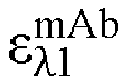


- The method of claim 1, wherein the antibody-drug conjugate comprises an anti-tumor antibody.
- The method of claim 1, further comprising:
calculating the extinction coefficient of the antibody at the first light wavelength and/or at the second light wavelength by measuring the absorbance at said first light wavelength and/or said second light wavelength, respectively, of a solution of the antibody having a known concentration. - The method of claim 1, further comprising:
calculating the extinction coefficient of the drug at the first light wavelength and/or at the second light wavelength by measuring the absorbance at said first light wavelength and/or said second light wavelength, respectively, of a solution of the drug having a known concentration. - The method of claim 1, wherein the size exclusion chromatography comprises ultra-performance liquid chromatography (UPLC), a reversed phase (RP) UPLC, or a high-performance liquid chromatography (HPLC).
- The method of claim 1, wherein the sample includes 1 µg/µL to 500 µg/µL of antibody-drug-conjugate (ADC).
- The method of claim 1, wherein the drug is a pro-apoptotic, cytostatic or cytotoxic agent.
- The method of claim 1, wherein integrating peaks of absorbance responses includes detecting a peak shoulder of each peak of absorbance response.
- The method of claim 1, wherein the time interval is between 3 to 9 minutes.
Applications Claiming Priority (3)
| Application Number | Priority Date | Filing Date | Title |
|---|---|---|---|
| US201762556153P | 2017-09-08 | 2017-09-08 | |
| EP18779493.8A EP3679344B1 (en) | 2017-09-08 | 2018-09-05 | Methods of assessing antibody-drug conjugates |
| PCT/US2018/049599 WO2019050981A1 (en) | 2017-09-08 | 2018-09-05 | Methods of assessing antibody-drug conjugates |
Related Parent Applications (1)
| Application Number | Title | Priority Date | Filing Date |
|---|---|---|---|
| EP18779493.8A Division EP3679344B1 (en) | 2017-09-08 | 2018-09-05 | Methods of assessing antibody-drug conjugates |
Publications (2)
| Publication Number | Publication Date |
|---|---|
| EP4317980A2 true EP4317980A2 (en) | 2024-02-07 |
| EP4317980A3 EP4317980A3 (en) | 2024-04-17 |
Family
ID=63708452
Family Applications (2)
| Application Number | Title | Priority Date | Filing Date |
|---|---|---|---|
| EP23217146.2A Pending EP4317980A3 (en) | 2017-09-08 | 2018-09-05 | Methods of assessing antibody-drug conjugates |
| EP18779493.8A Active EP3679344B1 (en) | 2017-09-08 | 2018-09-05 | Methods of assessing antibody-drug conjugates |
Family Applications After (1)
| Application Number | Title | Priority Date | Filing Date |
|---|---|---|---|
| EP18779493.8A Active EP3679344B1 (en) | 2017-09-08 | 2018-09-05 | Methods of assessing antibody-drug conjugates |
Country Status (15)
| Country | Link |
|---|---|
| US (3) | US10976241B2 (en) |
| EP (2) | EP4317980A3 (en) |
| JP (2) | JP7798470B2 (en) |
| KR (3) | KR102559940B1 (en) |
| CN (2) | CN117030649A (en) |
| AR (1) | AR112996A1 (en) |
| AU (1) | AU2018328212A1 (en) |
| BR (1) | BR112020000978A2 (en) |
| CA (2) | CA3297825A1 (en) |
| EA (1) | EA202090627A1 (en) |
| IL (3) | IL307618B2 (en) |
| MX (1) | MX2020002395A (en) |
| SG (1) | SG11202000242PA (en) |
| TW (1) | TW201920933A (en) |
| WO (1) | WO2019050981A1 (en) |
Families Citing this family (5)
| Publication number | Priority date | Publication date | Assignee | Title |
|---|---|---|---|---|
| US7808641B2 (en) * | 2007-04-13 | 2010-10-05 | C Technologies Inc. | Interactive variable pathlength device |
| JP7798470B2 (en) * | 2017-09-08 | 2026-01-14 | リジェネロン・ファーマシューティカルズ・インコーポレイテッド | Method for evaluating antibody-drug conjugates |
| CN111812220A (en) * | 2020-05-29 | 2020-10-23 | 南京品生医学检验实验室有限公司 | Method for detecting concentration of antitumor drug in blood plasma |
| JP7174205B1 (en) * | 2022-05-23 | 2022-11-17 | 岡野 浩志 | A dry ice production system that uses carbon dioxide in the air as a gas source and can also supply air for air conditioning. |
| CN120369658B (en) * | 2025-06-26 | 2025-08-29 | 凯莱英生命科学技术(天津)有限公司 | Method for determining extinction coefficient of toxin linker in antibody-coupled drug and method for detecting drug-antibody coupling ratio in antibody-coupled drug |
Citations (1)
| Publication number | Priority date | Publication date | Assignee | Title |
|---|---|---|---|---|
| US20120130649A1 (en) | 2007-04-13 | 2012-05-24 | C Technologies, Incorporated | Interactive variable pathlength device |
Family Cites Families (4)
| Publication number | Priority date | Publication date | Assignee | Title |
|---|---|---|---|---|
| EP2277044B1 (en) * | 2008-05-13 | 2015-06-17 | Genentech, Inc. | Analysis of antibody drug conjugates by bead-based affinity capture and mass spectrometry |
| EP3015116B1 (en) * | 2013-06-24 | 2020-02-26 | ABLBio | Antibody-drug conjugate having improved stability and use thereof |
| US10261058B2 (en) * | 2014-01-14 | 2019-04-16 | Bio-Rad Laboratories, Inc. | Method and system for liquid chromatography data analysis |
| JP7798470B2 (en) * | 2017-09-08 | 2026-01-14 | リジェネロン・ファーマシューティカルズ・インコーポレイテッド | Method for evaluating antibody-drug conjugates |
-
2018
- 2018-09-05 JP JP2020509083A patent/JP7798470B2/en active Active
- 2018-09-05 AU AU2018328212A patent/AU2018328212A1/en not_active Abandoned
- 2018-09-05 CA CA3297825A patent/CA3297825A1/en active Pending
- 2018-09-05 CN CN202311006893.6A patent/CN117030649A/en active Pending
- 2018-09-05 IL IL307618A patent/IL307618B2/en unknown
- 2018-09-05 KR KR1020207006712A patent/KR102559940B1/en active Active
- 2018-09-05 EP EP23217146.2A patent/EP4317980A3/en active Pending
- 2018-09-05 US US16/121,909 patent/US10976241B2/en active Active
- 2018-09-05 KR KR1020237024975A patent/KR102605352B1/en active Active
- 2018-09-05 CA CA3069455A patent/CA3069455A1/en active Pending
- 2018-09-05 CN CN201880058051.6A patent/CN111148985B/en active Active
- 2018-09-05 MX MX2020002395A patent/MX2020002395A/en unknown
- 2018-09-05 KR KR1020237039624A patent/KR102757150B1/en active Active
- 2018-09-05 AR ARP180102519A patent/AR112996A1/en not_active Application Discontinuation
- 2018-09-05 TW TW107131123A patent/TW201920933A/en unknown
- 2018-09-05 BR BR112020000978-4A patent/BR112020000978A2/en not_active IP Right Cessation
- 2018-09-05 SG SG11202000242PA patent/SG11202000242PA/en unknown
- 2018-09-05 EP EP18779493.8A patent/EP3679344B1/en active Active
- 2018-09-05 WO PCT/US2018/049599 patent/WO2019050981A1/en not_active Ceased
- 2018-09-05 EA EA202090627A patent/EA202090627A1/en unknown
- 2018-09-05 IL IL300065A patent/IL300065B2/en unknown
-
2020
- 2020-01-14 IL IL272028A patent/IL272028B2/en unknown
-
2021
- 2021-02-19 US US17/179,734 patent/US20210172866A1/en not_active Abandoned
-
2024
- 2024-02-19 JP JP2024023000A patent/JP2024071381A/en active Pending
- 2024-07-24 US US18/782,279 patent/US20240377412A1/en active Pending
Patent Citations (1)
| Publication number | Priority date | Publication date | Assignee | Title |
|---|---|---|---|---|
| US20120130649A1 (en) | 2007-04-13 | 2012-05-24 | C Technologies, Incorporated | Interactive variable pathlength device |
Non-Patent Citations (6)
| Title |
|---|
| ADLER ET AL., HEMATOL. ONCOL. CLIN. NORTH AM., vol. 26, 2012, pages 447 - 81 |
| BOUCHARD ET AL., BIOORGANIC MED. CHEM. LETT., vol. 24, 2014, pages 5357 - 5363 |
| LI ET AL., DRUG DISCOV. THER., vol. 7, 2013, pages 178 - 84 |
| SASSOON ET AL., METHODS MOL. BIOL., vol. 1045, 2013, pages 267 - 27 |
| SCOTT ET AL., CANCER IMMUN., vol. 12, 2012, pages 14 |
| SLIWKOWSKI ET AL., SCIENCE, vol. 341, 2013, pages 1192 - 1198 |
Also Published As
Similar Documents
| Publication | Publication Date | Title |
|---|---|---|
| EP3679344B1 (en) | Methods of assessing antibody-drug conjugates | |
| Boehm et al. | Extended glycoprotein structure of the seven domains in human carcinoembryonic antigen by X-ray and neutron solution scattering and an automated curve fitting procedure: implications for cellular adhesion | |
| CN109069631A (en) | The composition of total preparation comprising anti-PD-L1 and anti-CTLA-4 antibody | |
| Pivot et al. | A randomized phase I pharmacokinetic study comparing biosimilar candidate SB3 and trastuzumab in healthy male subjects | |
| Fabrizio et al. | B7-H3/CD276 and small-cell lung cancer: What's new? | |
| AU2016316758B2 (en) | Antibodies and assays for detection of CD37 | |
| KR20240099432A (en) | Stable formulation containing bispecific BCMA/CD3 antibody | |
| Kim et al. | Evorpacept plus rituximab for the treatment of relapsed or refractory non-Hodgkin lymphoma: results from the phase I ASPEN-01 study | |
| AU2017226960B2 (en) | Clinical assessment of M-protein response in multiple myeloma | |
| Perobelli et al. | Quantitation of the monoclonal antibody Denosumab by bioassay and validated LC methods | |
| Muratori et al. | Target therapies in recurrent or metastatic head and neck cancer: state of the art and novel perspectives. A systematic review | |
| KR20080026206A (en) | How to measure the pharmacokinetics of a targeted therapeutic | |
| Liu et al. | CAR T cells targeting B7H3 demonstrate potent preclinical activity against AML and ESCC | |
| Livinalli et al. | Monoclonal Antibodies for Cancer | |
| Devi et al. | Robust Analytical Method Development and Validation for HER2 Antibody and Enzymatic Adjuvant in Clinical Preparations | |
| Tania | Targeted treatment in patients with non-small cell lung cancer: Use of Bevacizumab and its Biosimilars | |
| TW202530697A (en) | Biomarkers for eribulin-based antibody-drug conjugates and methods of use | |
| Van Gijzel | Design and development of dextran-drug conjugates for enhanced tumour targeting | |
| Qin et al. | H1L1, a humanized anti-FGF2 monoclonal antibody with potent anti-tumor activity in A549 | |
| D’Eall et al. | Modulation of antibody-dependent cellular cytotoxicity of EGFR-specific heavy-chain antibodies through hinge engineering | |
| MX2008000286A (en) | Methods of determining pharmacokinetics of targeted therapies |
Legal Events
| Date | Code | Title | Description |
|---|---|---|---|
| PUAI | Public reference made under article 153(3) epc to a published international application that has entered the european phase |
Free format text: ORIGINAL CODE: 0009012 |
|
| STAA | Information on the status of an ep patent application or granted ep patent |
Free format text: STATUS: THE APPLICATION HAS BEEN PUBLISHED |
|
| AC | Divisional application: reference to earlier application |
Ref document number: 3679344 Country of ref document: EP Kind code of ref document: P |
|
| AK | Designated contracting states |
Kind code of ref document: A2 Designated state(s): AL AT BE BG CH CY CZ DE DK EE ES FI FR GB GR HR HU IE IS IT LI LT LU LV MC MK MT NL NO PL PT RO RS SE SI SK SM TR |
|
| REG | Reference to a national code |
Ref country code: DE Ref legal event code: R079 Free format text: PREVIOUS MAIN CLASS: G01N0033680000 Ipc: G01N0021000000 |
|
| PUAL | Search report despatched |
Free format text: ORIGINAL CODE: 0009013 |
|
| AK | Designated contracting states |
Kind code of ref document: A3 Designated state(s): AL AT BE BG CH CY CZ DE DK EE ES FI FR GB GR HR HU IE IS IT LI LT LU LV MC MK MT NL NO PL PT RO RS SE SI SK SM TR |
|
| RIC1 | Information provided on ipc code assigned before grant |
Ipc: G01N 21/33 20060101ALI20240314BHEP Ipc: G01N 30/88 20060101ALI20240314BHEP Ipc: G01N 30/02 20060101ALI20240314BHEP Ipc: B01D 15/34 20060101ALI20240314BHEP Ipc: G01N 33/68 20060101ALI20240314BHEP Ipc: G01N 21/00 20060101AFI20240314BHEP |
|
| STAA | Information on the status of an ep patent application or granted ep patent |
Free format text: STATUS: REQUEST FOR EXAMINATION WAS MADE |
|
| 17P | Request for examination filed |
Effective date: 20241017 |
|
| RBV | Designated contracting states (corrected) |
Designated state(s): AL AT BE BG CH CY CZ DE DK EE ES FI FR GB GR HR HU IE IS IT LI LT LU LV MC MK MT NL NO PL PT RO RS SE SI SK SM TR |
|
| STAA | Information on the status of an ep patent application or granted ep patent |
Free format text: STATUS: EXAMINATION IS IN PROGRESS |
|
| 17Q | First examination report despatched |
Effective date: 20260318 |