EP4317833A1 - Piping for adapted thermal conductivity - Google Patents
Piping for adapted thermal conductivity Download PDFInfo
- Publication number
- EP4317833A1 EP4317833A1 EP22382743.7A EP22382743A EP4317833A1 EP 4317833 A1 EP4317833 A1 EP 4317833A1 EP 22382743 A EP22382743 A EP 22382743A EP 4317833 A1 EP4317833 A1 EP 4317833A1
- Authority
- EP
- European Patent Office
- Prior art keywords
- thermal conductivity
- piping
- central tube
- adapted thermal
- conductivity according
- Prior art date
- Legal status (The legal status is an assumption and is not a legal conclusion. Google has not performed a legal analysis and makes no representation as to the accuracy of the status listed.)
- Pending
Links
Images

Classifications
-
- F—MECHANICAL ENGINEERING; LIGHTING; HEATING; WEAPONS; BLASTING
- F24—HEATING; RANGES; VENTILATING
- F24T—GEOTHERMAL COLLECTORS; GEOTHERMAL SYSTEMS
- F24T10/00—Geothermal collectors
- F24T10/10—Geothermal collectors with circulation of working fluids through underground channels, the working fluids not coming into direct contact with the ground
- F24T10/13—Geothermal collectors with circulation of working fluids through underground channels, the working fluids not coming into direct contact with the ground using tube assemblies suitable for insertion into boreholes in the ground, e.g. geothermal probes
- F24T10/15—Geothermal collectors with circulation of working fluids through underground channels, the working fluids not coming into direct contact with the ground using tube assemblies suitable for insertion into boreholes in the ground, e.g. geothermal probes using bent tubes; using tubes assembled with connectors or with return headers
-
- F—MECHANICAL ENGINEERING; LIGHTING; HEATING; WEAPONS; BLASTING
- F24—HEATING; RANGES; VENTILATING
- F24T—GEOTHERMAL COLLECTORS; GEOTHERMAL SYSTEMS
- F24T10/00—Geothermal collectors
- F24T2010/50—Component parts, details or accessories
Definitions
- the object of the present invention application is to register a piping for adapted thermal conductivity, which incorporates notable innovations and advantages compared to techniques used hitherto.
- the invention proposes the development of a piping for adapted thermal conductivity, which, due to the particular arrangement thereof, enables the thermal conductivity properties thereof to be quite substantially improved in relation to other arrangements known and used in the state of the art, while also maintaining the good properties thereof that are required for its installation and use.
- PE-100 is known in the state of the art as a material used in geothermal system applications.
- the low thermal conductivity of this material has been one of the problems to be improved in order to accelerate the adoption and deployment of such geothermal systems.
- the present invention contributes to solving the present problem, since it enables the thermal conductivity properties thereof to be quite substantially improved in relation to other arrangements known and used in the state of the art, while also maintaining the good properties thereof that are required for its installation and use.
- the present invention has been developed in order to provide a piping for adapted thermal conductivity, comprising a central tube and three lateral tubes arranged parallel to the central tube, the lateral tubes being distributed radially, regularly and concentrically about the axial axis of the central tube, so that in a cross-sectional view each lateral tube is in tangential contact with the central tube, the central tube and the lateral tubes being simultaneously and jointly covered in their path by a grout; the central tube being made of PE-100 foamed and the lateral tubes being made of 15% graphite and 75% of a blend of high-density PE-100 and EVA (ethylene vinyl acetate), the proportion of said blend in turn being 80% PE-100 and 20% EVA, including, in addition to all this, additives such as compatibilisers.
- PE-100 foamed PE-100 foamed
- EVA ethylene vinyl acetate
- the resulting density is greater than 950 kg/m3.
- the melt flow rate of the conductive compound is less than or equal to 0.5 gr/600s (at 190°C, 5Kg).
- the longitudinal shrinkage is less than or equal to 0.3 mm/m/°C ( ⁇ 3%).
- the oxidation induction time is greater than 20 minutes.
- the elongation at break is greater than 350%.
- the resistance to internal pressure at 20°C is greater than 100 hours.
- the resistance to internal pressure at 80°C is greater than 165 hours.
- the piping for adapted thermal conductivity results from the use of large-scale single screw extruder, conventional extrusion line for the extrusion of polyethylene pipes and prior to pipe extrusion, melt compounding technology using a co-rotating twin-screw extruder used for the preparation of the conductive compound.
- One of the basic objectives of the piping for adapted thermal conductivity of the present invention has been to develop a material that guarantees a good adequate compromise between the improved conductivity and the remaining properties of installation and use thereof, after performing assays of different configurations and conditions and to demonstrate its superior performance.
- the piping for adapted thermal conductivity of the present invention in its different assays, has shown that it is functional and meets higher efficiency objectives. Accordingly, the proposed invention has entailed a development of certain geometric configurations for which the new features of the piping for adapted thermal conductivity of the present invention enable further improvements. This is the case of the coaxial configuration thereof, which incorporates three lateral high conductivity tubes and one inner low conductivity tube as fluid return.
- FIG. 1 schematically shows, the geometries known in the state of the art for heat exchangers can be grouped into two basic patterns, U-tube and coaxial, and the latter is subdivided into simple coaxial, complex coaxial and helical.
- Double U-tube heat exchangers can be optimised, and the coaxial heat exchanger may offer good potential for efficiency improvement.
- the efficiency of the system is greatly improved by combining low thermal conductivity pipes (thermal insulating pipes) with high thermal conductivity pipes, both simple coaxial and complex specific coaxial designs.
- HDPE high-density polyethylene
- PE-100 This material provides the flexibility, resistance to impact, and resistance to scratching required for pipe coiling and to withstand the operations involved in the installation thereof.
- a standard PE-100 pipe shows a thermal conductivity of approximately 0.4 W/mK.
- conductive carbonaceous fillers such as graphite and graphene find wide application due to their favorable combination of properties such as low friction, chemical inertness, absence of inherent abrasiveness, high thermal conductivity, thermal stability and electrical conductivity, among others. These properties are a consequence of the particular morphology thereof and of the way in which the carbon atoms are bonded.
- the piping for adapted thermal conductivity of the proposed invention comprises a central tube 1 and three lateral tubes 2 arranged parallel to the central tube 1, as can be schematically seen in the cross-sectional view of Figure 2 .
- the lateral tubes 2 are distributed radially, regularly and concentrically about the axial axis of the central tube 1, so that each lateral tube 2 is in tangential contact with the central tube 1, with a "tri-lobed" arrangement, as can be seen in the cross section of Figure 2 .
- the central tube 1 and the lateral tubes 2 are simultaneously and jointly covered in their path by a grout 3.
- the central tube 1 being made of PE-100 foamed and the lateral tubes 2 are made of 15% graphite and 75% of a blend of high-density PE-100 and EVA (ethylene vinyl acetate), the proportion of said blend in turn being 80% PE-100 and 20% EVA, including, in addition to all this, additives such as compatibilisers.
- PE-100 high-density PE-100 and EVA (ethylene vinyl acetate)
- EVA ethylene vinyl acetate
- the piping for adapted thermal conductivity of the present invention results from the use of large-scale single screw extruder, conventional extrusion line for the extrusion of polyethylene pipes.
- melt compounding technology using a co-rotating twin-screw extruder was used for the preparation of the conductive compound.
- the piping for adapted thermal conductivity of the present invention improves one of the two key parameters that affect the performance of arrangements of this type: ground conductivity and borehole thermal resistance called Rb. In particular we aim at reducing Rb substantially.
- the Rb value results from the combination of the thermal resistances present in the system: fluid-pipe, pipe-grout and resistance of the borehole configuration itself (which depends, among other things, to a large extent on the distances between pipes or the space between the pipe legs).
- a reduction of Rb makes it possible to reduce the resistance of the thermal exchange between the ground and the temperature of the pipe inside the heat transfer fluid in a heat pump.
- the piping for adapted thermal conductivity of the invention has a notable impact on the improvement of Rb. This means that due to the piping for adapted thermal conductivity of the proposed invention, with the "tri-lobed" arrangement thereof and arrangement of materials used, reductions of up to 40% in the required length and resistances of the exchanger well are achieved in comparison with the values known in the state of the art.
- the piping for adapted thermal conductivity of the proposed invention provides the advantage of an increase in the thermal conductivity of the pipe, thus solving the technical problem of increasing the performance of heat exchange in a geothermal system, while maintaining certain physical properties such as strength, flexibility, and durability.
- the plastic formulation developed in the piping for adapted thermal conductivity of the proposed invention is a thermoplastic compound of different components that enables the thermal conductivity of the Polyethylene PE-100 normally used in shallow geothermal energy to be substantially increased.
- the formulation used in the piping for adapted thermal conductivity of the proposed invention enables the reference conductivity value of PE-100 to be increased from 0.4 W/(mK) to a contrasted value of around 1.0 W/(m.K), thus substantially increasing the performance of the geothermal exchange.
- the geometrical and material configuration allows to limit the heat transfer (known as thermal bridge) between the lateral tubes and the central tube, thus additionally increasing the efficiency of the heat exchanger.
- the developed mixture enables the main mechanical features that are essential for handling these pipes to be maintained, such as flexibility, impact index and durability, among others.
- PE-100-based thermoconductive compounds were developed by combining the PE matrix with different amounts of expanded graphite, showing thermal conductivities of 1.0-1.2 W/mK.
Landscapes
- Engineering & Computer Science (AREA)
- Life Sciences & Earth Sciences (AREA)
- General Life Sciences & Earth Sciences (AREA)
- Sustainable Development (AREA)
- Sustainable Energy (AREA)
- Chemical & Material Sciences (AREA)
- Combustion & Propulsion (AREA)
- Mechanical Engineering (AREA)
- General Engineering & Computer Science (AREA)
- Rigid Pipes And Flexible Pipes (AREA)
Abstract
Description
- The object of the present invention application is to register a piping for adapted thermal conductivity, which incorporates notable innovations and advantages compared to techniques used hitherto.
- More specifically, the invention proposes the development of a piping for adapted thermal conductivity, which, due to the particular arrangement thereof, enables the thermal conductivity properties thereof to be quite substantially improved in relation to other arrangements known and used in the state of the art, while also maintaining the good properties thereof that are required for its installation and use.
- A large number of installed conventional geothermal systems are known in the state of the art. However, the market share of this technology is still limited by the comparatively high installation costs thereof compared to air source heat pump systems.
- Obtaining pipes with higher thermal conductivity would enable the installation costs of geothermal systems to be reduced, since less pipes, perforations and materials would be required to enable the same thermal exchange.
- Likewise, PE-100 is known in the state of the art as a material used in geothermal system applications. The low thermal conductivity of this material has been one of the problems to be improved in order to accelerate the adoption and deployment of such geothermal systems.
- This improved conductivity must be compatible with other basic properties of the material to guarantee that the handling, flexibility, resistance to pressure and aging conditions of the material are not affected. This difficult compromise between the properties of the material has been the reason why no alternative material to PE-100 has obtained wide acceptance since the beginning of the implementation of geothermal systems in the market.
- The present invention contributes to solving the present problem, since it enables the thermal conductivity properties thereof to be quite substantially improved in relation to other arrangements known and used in the state of the art, while also maintaining the good properties thereof that are required for its installation and use.
- The present invention has been developed in order to provide a piping for adapted thermal conductivity, comprising a central tube and three lateral tubes arranged parallel to the central tube, the lateral tubes being distributed radially, regularly and concentrically about the axial axis of the central tube, so that in a cross-sectional view each lateral tube is in tangential contact with the central tube, the central tube and the lateral tubes being simultaneously and jointly covered in their path by a grout; the central tube being made of PE-100 foamed and the lateral tubes being made of 15% graphite and 75% of a blend of high-density PE-100 and EVA (ethylene vinyl acetate), the proportion of said blend in turn being 80% PE-100 and 20% EVA, including, in addition to all this, additives such as compatibilisers.
- Preferably, in the piping for adapted thermal conductivity, the resulting density is greater than 950 kg/m3.
- Preferably, in the piping for adapted thermal conductivity, the melt flow rate of the conductive compound is less than or equal to 0.5 gr/600s (at 190°C, 5Kg).
- Preferably, in the piping for adapted thermal conductivity, the longitudinal shrinkage is less than or equal to 0.3 mm/m/°C (≤3%).
- Preferably, in the piping for adapted thermal conductivity, the oxidation induction time is greater than 20 minutes.
- Preferably, in the piping for adapted thermal conductivity, the elongation at break is greater than 350%.
- Preferably, in the piping for adapted thermal conductivity, the resistance to internal pressure at 20°C is greater than 100 hours.
- Preferably, in the piping for adapted thermal conductivity, the resistance to internal pressure at 80°C is greater than 165 hours.
- Alternatively, the piping for adapted thermal conductivity results from the use of large-scale single screw extruder, conventional extrusion line for the extrusion of polyethylene pipes and prior to pipe extrusion, melt compounding technology using a co-rotating twin-screw extruder used for the preparation of the conductive compound.
- One of the basic objectives of the piping for adapted thermal conductivity of the present invention has been to develop a material that guarantees a good adequate compromise between the improved conductivity and the remaining properties of installation and use thereof, after performing assays of different configurations and conditions and to demonstrate its superior performance.
- The piping for adapted thermal conductivity of the present invention, in its different assays, has shown that it is functional and meets higher efficiency objectives. Accordingly, the proposed invention has entailed a development of certain geometric configurations for which the new features of the piping for adapted thermal conductivity of the present invention enable further improvements. This is the case of the coaxial configuration thereof, which incorporates three lateral high conductivity tubes and one inner low conductivity tube as fluid return.
- Due to the present invention, it quite substantially improves the thermal conductivity properties thereof in relation to other arrangements known and used in the state of the art, while also maintaining the good properties thereof that are required for its installation and use.
- As a result of all this, a reduction in the installation costs of geothermal systems of around 6% can be achieved just by taking into account the piping material, a reduction between 6% and 20% if the thermal conductivity of the grout formulation and the distances between the pipes are further optimised, and finally of more than 20% if the new materials are combined within the new configuration defined by the piping for adapted thermal conductivity of the present invention, i.e., with the "tri-lobed" arrangement thereof that makes optimal use of high and low conductivity polymers.
- Other features and advantages of the piping for adapted thermal conductivity object of invention will become apparent from the description of a preferred, but not exclusive, embodiment, which is illustrated by way of non-limiting example in the accompanying drawings, wherein:
-
-
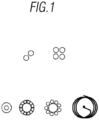
Figure 1 is a schematic view of different cross sections of pipes known in the state of the art. -
Figure 2 is a schematic view of a cross section of a preferred embodiment of the piping for adapted thermal conductivity of the present invention. - As
Figure 1 schematically shows, the geometries known in the state of the art for heat exchangers can be grouped into two basic patterns, U-tube and coaxial, and the latter is subdivided into simple coaxial, complex coaxial and helical. - Double U-tube heat exchangers can be optimised, and the coaxial heat exchanger may offer good potential for efficiency improvement.
- High thermal conductivity pipes developed and tested in U-tube and double U-tube heat exchanger configurations show increased system efficiency.
- In the specific case of coaxial geometry, the efficiency of the system is greatly improved by combining low thermal conductivity pipes (thermal insulating pipes) with high thermal conductivity pipes, both simple coaxial and complex specific coaxial designs.
- More particularly, the usual pipes for U-pipe and double-U-pipe configurations in geothermal applications are made of high-density polyethylene (HDPE). The standard grade of HDPE, widely used for these applications, is called PE-100. This material provides the flexibility, resistance to impact, and resistance to scratching required for pipe coiling and to withstand the operations involved in the installation thereof. A standard PE-100 pipe shows a thermal conductivity of approximately 0.4 W/mK.
- Moreover, conductive carbonaceous fillers such as graphite and graphene find wide application due to their favorable combination of properties such as low friction, chemical inertness, absence of inherent abrasiveness, high thermal conductivity, thermal stability and electrical conductivity, among others. These properties are a consequence of the particular morphology thereof and of the way in which the carbon atoms are bonded.
- According to the invention itself, the piping for adapted thermal conductivity of the proposed invention comprises a
central tube 1 and threelateral tubes 2 arranged parallel to thecentral tube 1, as can be schematically seen in the cross-sectional view ofFigure 2 . - The
lateral tubes 2 are distributed radially, regularly and concentrically about the axial axis of thecentral tube 1, so that eachlateral tube 2 is in tangential contact with thecentral tube 1, with a "tri-lobed" arrangement, as can be seen in the cross section ofFigure 2 . - The
central tube 1 and thelateral tubes 2 are simultaneously and jointly covered in their path by agrout 3. - The
central tube 1 being made of PE-100 foamed and thelateral tubes 2 are made of 15% graphite and 75% of a blend of high-density PE-100 and EVA (ethylene vinyl acetate), the proportion of said blend in turn being 80% PE-100 and 20% EVA, including, in addition to all this, additives such as compatibilisers. - In the proposed invention, the combination of an optimised amount of expanded graphite with other additives such as compatibilisers (based on grafted maleic anhydride polyolefins and grafted epoxy group polyolefins), fluidisers and elastomeric polymers such as ethylene vinyl acetate (EVA), has led to a high thermal conductivity compound that is suitable for plastic pipe extrusion processes with a melt flow rate (MFR) between 0.2 and 0.3 g/600s (190°C, 5Kg) thermal conductivity in the range of 0.86 and 1.0 W/mK and modulated mechanical properties, specifically bending and impact properties.
- Furthermore, the piping for adapted thermal conductivity of the present invention results from the use of large-scale single screw extruder, conventional extrusion line for the extrusion of polyethylene pipes. Prior to pipe extrusion, melt compounding technology using a co-rotating twin-screw extruder, was used for the preparation of the conductive compound.
- The piping for adapted thermal conductivity of the present invention improves one of the two key parameters that affect the performance of arrangements of this type: ground conductivity and borehole thermal resistance called Rb. In particular we aim at reducing Rb substantially.
- The Rb value results from the combination of the thermal resistances present in the system: fluid-pipe, pipe-grout and resistance of the borehole configuration itself (which depends, among other things, to a large extent on the distances between pipes or the space between the pipe legs).
- A reduction of Rb makes it possible to reduce the resistance of the thermal exchange between the ground and the temperature of the pipe inside the heat transfer fluid in a heat pump.
- The piping for adapted thermal conductivity of the invention has a notable impact on the improvement of Rb. This means that due to the piping for adapted thermal conductivity of the proposed invention, with the "tri-lobed" arrangement thereof and arrangement of materials used, reductions of up to 40% in the required length and resistances of the exchanger well are achieved in comparison with the values known in the state of the art.
- The piping for adapted thermal conductivity of the proposed invention provides the advantage of an increase in the thermal conductivity of the pipe, thus solving the technical problem of increasing the performance of heat exchange in a geothermal system, while maintaining certain physical properties such as strength, flexibility, and durability.
- The plastic formulation developed in the piping for adapted thermal conductivity of the proposed invention is a thermoplastic compound of different components that enables the thermal conductivity of the Polyethylene PE-100 normally used in shallow geothermal energy to be substantially increased.
- The formulation used in the piping for adapted thermal conductivity of the proposed invention enables the reference conductivity value of PE-100 to be increased from 0.4 W/(mK) to a contrasted value of around 1.0 W/(m.K), thus substantially increasing the performance of the geothermal exchange. Moreover, the geometrical and material configuration allows to limit the heat transfer (known as thermal bridge) between the lateral tubes and the central tube, thus additionally increasing the efficiency of the heat exchanger. At the same time, the developed mixture enables the main mechanical features that are essential for handling these pipes to be maintained, such as flexibility, impact index and durability, among others.
- PE-100-based thermoconductive compounds were developed by combining the PE matrix with different amounts of expanded graphite, showing thermal conductivities of 1.0-1.2 W/mK.
- The details, shapes, dimensions and other accessory elements, as well as the materials used to manufacture the piping for adapted thermal conductivity of the invention, may be suitably substituted for others which are technically equivalent and do not diverge from the essential nature of the invention, nor the scope defined by the claims included below.
Claims (9)
- A piping for adapted thermal conductivity, characterised in that it comprises a central tube (1) and three lateral tubes (2) arranged parallel to the central tube (1), the lateral tubes (2) being distributed radially, regularly and concentrically about the axial axis of the central tube (1), so that in a cross-sectional view each lateral tube (2) is in tangential contact with the central tube (1), the central tube (1) and the lateral tubes (2) being simultaneously and jointly covered in their path by a grout (3); the central tube (1) being made of PE-100 foamed and the lateral tubes (2) being made of 15% graphite and 75% of a blend of high-density PE-100 and EVA (ethylene vinyl acetate), the proportion of said blend in turn being 80% PE-100 and 20% EVA, including, in addition to all this, additives such as compatibilisers.
- The piping for adapted thermal conductivity according to the preceding claim, wherein the resulting density is greater than 950 kg/m3.
- The piping for adapted thermal conductivity according to claim 1, wherein the melt flow rate of the conductive compound is less than or equal to 0.5 gr/600s (at 190°C, 5Kg).
- The piping for adapted thermal conductivity according to claim 1, wherein the longitudinal shrinkage is less than or equal to 0.3 mm/m/°C (≤3%).
- The piping for adapted thermal conductivity according to claim 1, wherein the oxidation induction time is greater than 20 minutes.
- The piping for adapted thermal conductivity according to claim 1, wherein the elongation at break is greater than 350%.
- The piping for adapted thermal conductivity according to claim 1, wherein the resistance to internal pressure at 20°C is greater than 100 hours.
- The piping for adapted thermal conductivity according to claim 1, wherein the resistance to internal pressure at 80°C is greater than 165 hours.
- The piping for adapted thermal conductivity according to any of the preceding claims, resulting from the use of large-scale single screw extruder, extrusion line for the extrusion of polyethylene pipes, and prior to pipe extrusion, melt compounding technology using a co-rotating twin-screw extruder used for the preparation of the conductive compound.
Priority Applications (1)
| Application Number | Priority Date | Filing Date | Title |
|---|---|---|---|
| EP22382743.7A EP4317833A1 (en) | 2022-08-01 | 2022-08-01 | Piping for adapted thermal conductivity |
Applications Claiming Priority (1)
| Application Number | Priority Date | Filing Date | Title |
|---|---|---|---|
| EP22382743.7A EP4317833A1 (en) | 2022-08-01 | 2022-08-01 | Piping for adapted thermal conductivity |
Publications (1)
| Publication Number | Publication Date |
|---|---|
| EP4317833A1 true EP4317833A1 (en) | 2024-02-07 |
Family
ID=82786703
Family Applications (1)
| Application Number | Title | Priority Date | Filing Date |
|---|---|---|---|
| EP22382743.7A Pending EP4317833A1 (en) | 2022-08-01 | 2022-08-01 | Piping for adapted thermal conductivity |
Country Status (1)
| Country | Link |
|---|---|
| EP (1) | EP4317833A1 (en) |
Citations (4)
| Publication number | Priority date | Publication date | Assignee | Title |
|---|---|---|---|---|
| US20120175077A1 (en) * | 2009-06-09 | 2012-07-12 | Reijer Willem Lehmann | Geothermal Heat Exchanger |
| CN105627605A (en) * | 2016-01-12 | 2016-06-01 | 太原理工大学 | Vertical buried tube heat exchanger with multiple water supply branch tubes and one water return tube |
| WO2018107308A1 (en) * | 2016-12-16 | 2018-06-21 | Borouge Compounding Shanghai Co., Ltd. | Heat conductive pe composition for pipe applications |
| CN110951142B (en) * | 2019-12-12 | 2022-07-01 | 佛山佛塑科技集团股份有限公司 | High-thermal-conductivity radiation crosslinked polyethylene pipe and preparation method and application thereof |
-
2022
- 2022-08-01 EP EP22382743.7A patent/EP4317833A1/en active Pending
Patent Citations (4)
| Publication number | Priority date | Publication date | Assignee | Title |
|---|---|---|---|---|
| US20120175077A1 (en) * | 2009-06-09 | 2012-07-12 | Reijer Willem Lehmann | Geothermal Heat Exchanger |
| CN105627605A (en) * | 2016-01-12 | 2016-06-01 | 太原理工大学 | Vertical buried tube heat exchanger with multiple water supply branch tubes and one water return tube |
| WO2018107308A1 (en) * | 2016-12-16 | 2018-06-21 | Borouge Compounding Shanghai Co., Ltd. | Heat conductive pe composition for pipe applications |
| CN110951142B (en) * | 2019-12-12 | 2022-07-01 | 佛山佛塑科技集团股份有限公司 | High-thermal-conductivity radiation crosslinked polyethylene pipe and preparation method and application thereof |
Similar Documents
| Publication | Publication Date | Title |
|---|---|---|
| CN102719011B (en) | Novel polypropylene double-wall corrugated pipe and preparation method thereof | |
| CN110951142B (en) | High-thermal-conductivity radiation crosslinked polyethylene pipe and preparation method and application thereof | |
| CN105570560B (en) | Graphene increased thermal conductivity compound polyolefin tubing | |
| CN102672934B (en) | Production method of buried cracking-resistant polyethylene pipeline for fuel gas | |
| CN107940123A (en) | A kind of polyketone internal lining pipe, polyketone liner composite oil pipe and preparation method thereof | |
| CN102705591A (en) | Heat-resistant and pressure-resistant polyethylene composite pipe | |
| CN102128316A (en) | Heat-resisting polyethylene plastic pipe with high heat conductivity | |
| CN110901005B (en) | Oxygen-blocking and scale-preventing composite pipe and preparation method thereof | |
| CN119119642B (en) | Rubber hose for liquid cooling system and manufacturing method thereof | |
| CN110240805B (en) | Graphene modified polyphenylene sulfide material, preparation method thereof and heat-conducting plastic pipe | |
| CN112066095A (en) | Heat-resistant high-density polyethylene structural wall B-shaped pipe and preparation method thereof | |
| CN105330929A (en) | Double-wall corrugated pipe and preparation method thereof | |
| CN116285060A (en) | Composite high-heat-conductivity floor heating pipe and preparation method thereof | |
| CN111253665A (en) | High density polyethylene pipe and method for making same | |
| CN116533602A (en) | High-performance PE composite conductive pipeline for oil and gas mine and preparation method thereof | |
| CN101225198A (en) | Super high molecular weight reinforced high thermal-conductive polyethylene pipe for ground source heat pump | |
| CN108586940A (en) | A kind of preparation method of the weather-proof uvioresistant PP-R pipes of outdoor use | |
| CN115027102B (en) | High-strength medium conveying pipeline with temperature and preparation method thereof | |
| CN109233095A (en) | Modified polypropylene material for refrigerator ice milk layer drawer | |
| CN106380658A (en) | PE corrugated pipe with strong pressure resistance and preparation method thereof | |
| CN115560137B (en) | Polypropylene pipe and its preparation method and application | |
| CN109021405A (en) | A kind of PPR pipe and its preparation method and application of high intensity high/low temperature toughness | |
| CN101817217A (en) | Method for manufacturing heat-conduction plastic pipe | |
| CN209671785U (en) | A kind of HDPE reinforced winding structure wall pipe | |
| CN117359973A (en) | High gas barrier graphene/high-density polyethylene composite pipe and preparation method |
Legal Events
| Date | Code | Title | Description |
|---|---|---|---|
| PUAI | Public reference made under article 153(3) epc to a published international application that has entered the european phase |
Free format text: ORIGINAL CODE: 0009012 |
|
| STAA | Information on the status of an ep patent application or granted ep patent |
Free format text: STATUS: THE APPLICATION HAS BEEN PUBLISHED |
|
| AK | Designated contracting states |
Kind code of ref document: A1 Designated state(s): AL AT BE BG CH CY CZ DE DK EE ES FI FR GB GR HR HU IE IS IT LI LT LU LV MC MK MT NL NO PL PT RO RS SE SI SK SM TR |
|
| STAA | Information on the status of an ep patent application or granted ep patent |
Free format text: STATUS: REQUEST FOR EXAMINATION WAS MADE |
|
| 17P | Request for examination filed |
Effective date: 20240724 |
|
| RBV | Designated contracting states (corrected) |
Designated state(s): AL AT BE BG CH CY CZ DE DK EE ES FI FR GB GR HR HU IE IS IT LI LT LU LV MC MK MT NL NO PL PT RO RS SE SI SK SM TR |
|
| STAA | Information on the status of an ep patent application or granted ep patent |
Free format text: STATUS: EXAMINATION IS IN PROGRESS |
|
| 17Q | First examination report despatched |
Effective date: 20260302 |