EP4317816A1 - Machine learning device, ventilation control device, and ventilation control method - Google Patents
Machine learning device, ventilation control device, and ventilation control method Download PDFInfo
- Publication number
- EP4317816A1 EP4317816A1 EP22780988.6A EP22780988A EP4317816A1 EP 4317816 A1 EP4317816 A1 EP 4317816A1 EP 22780988 A EP22780988 A EP 22780988A EP 4317816 A1 EP4317816 A1 EP 4317816A1
- Authority
- EP
- European Patent Office
- Prior art keywords
- target space
- carbon dioxide
- dioxide concentration
- prediction
- unit
- Prior art date
- Legal status (The legal status is an assumption and is not a legal conclusion. Google has not performed a legal analysis and makes no representation as to the accuracy of the status listed.)
- Withdrawn
Links
Images



Classifications
-
- F—MECHANICAL ENGINEERING; LIGHTING; HEATING; WEAPONS; BLASTING
- F24—HEATING; RANGES; VENTILATING
- F24F—AIR-CONDITIONING; AIR-HUMIDIFICATION; VENTILATION; USE OF AIR CURRENTS FOR SCREENING
- F24F11/00—Control or safety arrangements
- F24F11/30—Control or safety arrangements for purposes related to the operation of the system, e.g. for safety or monitoring
- F24F11/46—Improving electric energy efficiency or saving
-
- F—MECHANICAL ENGINEERING; LIGHTING; HEATING; WEAPONS; BLASTING
- F24—HEATING; RANGES; VENTILATING
- F24F—AIR-CONDITIONING; AIR-HUMIDIFICATION; VENTILATION; USE OF AIR CURRENTS FOR SCREENING
- F24F11/00—Control or safety arrangements
- F24F11/62—Control or safety arrangements characterised by the type of control or by internal processing, e.g. using fuzzy logic, adaptive control or estimation of values
- F24F11/63—Electronic processing
-
- F—MECHANICAL ENGINEERING; LIGHTING; HEATING; WEAPONS; BLASTING
- F24—HEATING; RANGES; VENTILATING
- F24F—AIR-CONDITIONING; AIR-HUMIDIFICATION; VENTILATION; USE OF AIR CURRENTS FOR SCREENING
- F24F11/00—Control or safety arrangements
- F24F11/0001—Control or safety arrangements for ventilation
-
- F—MECHANICAL ENGINEERING; LIGHTING; HEATING; WEAPONS; BLASTING
- F24—HEATING; RANGES; VENTILATING
- F24F—AIR-CONDITIONING; AIR-HUMIDIFICATION; VENTILATION; USE OF AIR CURRENTS FOR SCREENING
- F24F11/00—Control or safety arrangements
- F24F11/62—Control or safety arrangements characterised by the type of control or by internal processing, e.g. using fuzzy logic, adaptive control or estimation of values
- F24F11/63—Electronic processing
- F24F11/64—Electronic processing using pre-stored data
-
- G—PHYSICS
- G05—CONTROLLING; REGULATING
- G05B—CONTROL OR REGULATING SYSTEMS IN GENERAL; FUNCTIONAL ELEMENTS OF SUCH SYSTEMS; MONITORING OR TESTING ARRANGEMENTS FOR SUCH SYSTEMS OR ELEMENTS
- G05B15/00—Systems controlled by a computer
- G05B15/02—Systems controlled by a computer electric
-
- F—MECHANICAL ENGINEERING; LIGHTING; HEATING; WEAPONS; BLASTING
- F24—HEATING; RANGES; VENTILATING
- F24F—AIR-CONDITIONING; AIR-HUMIDIFICATION; VENTILATION; USE OF AIR CURRENTS FOR SCREENING
- F24F2110/00—Control inputs relating to air properties
- F24F2110/50—Air quality properties
- F24F2110/65—Concentration of specific substances or contaminants
- F24F2110/70—Carbon dioxide
-
- F—MECHANICAL ENGINEERING; LIGHTING; HEATING; WEAPONS; BLASTING
- F24—HEATING; RANGES; VENTILATING
- F24F—AIR-CONDITIONING; AIR-HUMIDIFICATION; VENTILATION; USE OF AIR CURRENTS FOR SCREENING
- F24F2120/00—Control inputs relating to users or occupants
- F24F2120/10—Occupancy
-
- G—PHYSICS
- G05—CONTROLLING; REGULATING
- G05B—CONTROL OR REGULATING SYSTEMS IN GENERAL; FUNCTIONAL ELEMENTS OF SUCH SYSTEMS; MONITORING OR TESTING ARRANGEMENTS FOR SUCH SYSTEMS OR ELEMENTS
- G05B2219/00—Program-control systems
- G05B2219/20—Pc systems
- G05B2219/26—Pc applications
- G05B2219/2614—HVAC, heating, ventillation, climate control
-
- G—PHYSICS
- G05—CONTROLLING; REGULATING
- G05B—CONTROL OR REGULATING SYSTEMS IN GENERAL; FUNCTIONAL ELEMENTS OF SUCH SYSTEMS; MONITORING OR TESTING ARRANGEMENTS FOR SUCH SYSTEMS OR ELEMENTS
- G05B2219/00—Program-control systems
- G05B2219/20—Pc systems
- G05B2219/26—Pc applications
- G05B2219/2642—Domotique, domestic, home control, automation, smart house
Definitions
- the present disclosure relates to a machine learning device, a ventilation control device, and a ventilation control method.
- Patent Literature 1 Japanese Unexamined Patent Application Publication No. 2010-96382 .
- a machine learning device includes a first acquisition unit, a second acquisition unit, and a learning unit.
- the first acquisition unit acquires environmental information on a target space.
- the second acquisition unit acquires number-of-people information indicating the number of people in the target space.
- the learning unit learns the environmental information acquired by the first acquisition unit and the number-of-people information acquired by the second acquisition unit in association with each other.
- the environmental information includes an actual carbon dioxide concentration in the target space.
- the machine learning device may create a carbon dioxide concentration estimation model that is specific to the target space and is usable for appropriate ventilation control in the target space.
- a machine learning device is the machine learning device according to the first aspect further including a prediction unit that predicts a carbon dioxide concentration in the target space after a certain period of time as a prediction value from the environmental information and the number-of-people information, based on a result of the learning by the learning unit.
- the machine learning device predicts the carbon dioxide concentration after the certain period of time from the environmental information and the number-of-people information on the target space, based on a result of the learning by the learning unit. Thus, even when the environment or the number of people in the target space changes within a certain period of time, the machine learning device may estimate the carbon dioxide concentration specific to the target space with high accuracy.
- a machine learning device is the machine learning device according to the second aspect, in which the prediction unit predicts amount of change in a carbon dioxide concentration in the target space as the prediction value.
- the machine learning device predicts the amount of change in the carbon dioxide concentration from the environmental information and the number-of-people information on the target space, based on a result of the learning by the learning unit. Thus, even when the environment or the number of people in the target space changes, the machine learning device may estimate the amount of change in the carbon dioxide concentration specific to the target space with high accuracy.
- a machine learning device is the machine learning device according to any one of the first aspect to the third aspect, in which the second acquisition unit further acquires biometric information on people in the target space.
- the learning unit further learns the biometric information acquired by the second acquisition unit in association.
- the machine learning device uses, as input information, the biometric information on the people in the target space and thus may estimate the carbon dioxide concentration specific to the target space including the people with high accuracy.
- a machine learning device is the machine learning device according to the fourth aspect, in which the biometric information includes a conversation amount or a body temperature of the people in the target space.
- the biometric information includes the conversation amount or the body temperature of the people in the target space, and thus the machine learning device may estimate the carbon dioxide concentration specific to the target space including the people with high accuracy.
- a machine learning device is the machine learning device according to the fourth aspect or the fifth aspect, in which the biometric information further includes gender, age, physique, or posture of the people in the target space.
- the biometric information further includes the gender, age, physique, or posture of the people in the target space, and thus the machine learning device may estimate the carbon dioxide concentration specific to the target space including the people with high accuracy.
- a machine learning device is the machine learning device according to any one of the first aspect to the sixth aspect, in which the environmental information includes a carbon dioxide concentration of outside air, or opening or closing of a door or a window of the target space.
- the environmental information includes the carbon dioxide concentration of the outside air or the opening or closing of the door or the window of the target space.
- the machine learning device may estimate the carbon dioxide concentration specific to the target space with high accuracy.
- a machine learning device is the machine learning device according to the seventh aspect, in which the environmental information further includes a ventilation volume of the target space or a volume of the target space.
- the environmental information further includes the ventilation volume of the target space or the volume of the target space, and thus the machine learning device may estimate the carbon dioxide concentration specific to the target space with high accuracy.
- a ventilation control device includes the machine learning device according to the second aspect and a control unit.
- the control unit controls a ventilating device installed in the target space, based on the prediction value of the carbon dioxide concentration in the target space after the certain period of time, the prediction value being an output from the prediction unit of the machine learning device.
- the ventilation control device controls the ventilating device, based on the prediction value of the carbon dioxide concentration in the target space after the certain period of time, the ventilation control device may predict the carbon dioxide concentration in the target space after the certain period of time in advance to perform appropriate ventilation control on the target space.
- a ventilation control device includes a first prediction unit, a second prediction unit, and a control unit.
- the first prediction unit predicts a carbon dioxide concentration in a first target space after a certain period of time as a prediction value from environmental information and number-of-people information for the first target space, based on a result of the learning by the learning unit of the machine learning device according to the first aspect.
- the second prediction unit predicts a carbon dioxide concentration in a second target space after a certain period of time as a prediction value from environmental information and number-of-people information for the second target space, based on a result of the learning by the learning unit of the machine learning device according to the first aspect.
- the control unit controls a ventilating device installed in the first target space, based on the prediction value of the carbon dioxide concentration in the first target space after the certain period of time, the prediction value being an output from the first prediction unit.
- the control unit controls a ventilating device installed in the second target space, based on the prediction value of the carbon dioxide concentration in the second target space after the certain period of time, the prediction value being an output from the second prediction unit.
- the ventilation control device includes the individual prediction units for the respective target spaces that predict the carbon dioxide concentrations in the respective target spaces after the certain period of time, the ventilation control device may predict the carbon dioxide concentration in each of the target spaces after the certain period of time in advance to perform appropriate ventilation control on each of the target spaces.
- a ventilation control method includes a prediction step and a control step.
- a carbon dioxide concentration in the target space after a certain period of time is predicted as a prediction value from the environmental information and the number-of-people information, based on a result of the learning by the learning unit of the machine learning device according to the first aspect.
- a ventilating device installed in the target space is controlled based on the prediction value of the carbon dioxide concentration in the target space after the certain period of time, the prediction value being an output in the prediction step.
- the ventilating device Since in the ventilation control method, the ventilating device is controlled based on the prediction value of the carbon dioxide concentration in the target space after the certain period of time, the carbon dioxide concentration in the target space after the certain period of time may be predicted in advance, so that appropriate ventilation control may be performed on the target space.
- a ventilation control method includes a first prediction step, a second prediction step, and a control step.
- a carbon dioxide concentration in a first target space after a certain period of time is predicted as a prediction value from environmental information and number-of-people information for the first target space, based on a result of the learning by the learning unit of the machine learning device according to the first aspect.
- a carbon dioxide concentration in a second target space after a certain period of time is predicted as a prediction value from environmental information and number-of-people information for the second target space, based on a result of the learning by the learning unit of the machine learning device according to the first aspect.
- a ventilating device installed in the first target space is controlled based on the prediction value of the carbon dioxide concentration in the first target space after the certain period of time, the prediction value being an output in the first prediction step.
- the control unit controls a ventilating device installed in the second target space, based on the prediction value of the carbon dioxide concentration in the second target space after the certain period of time, the prediction value being an output in the second prediction step.
- the individual prediction steps for the respective target spaces are included in which the carbon dioxide concentrations in the respective target spaces after the certain period of time are predicted, the carbon dioxide concentration in each of the target spaces after the certain period of time may be predicted in advance, so that appropriate ventilation control may be performed on each of the target space.
- a ventilation control system 1 of the present embodiment is a system provided to perform ventilation control for rooms R1 to R3 that are target spaces. As illustrated in Fig. 2 , the ventilation control system 1 mainly includes dampers 80a to 80c, a duct pipe 81, a fan 82, carbon-dioxide sensors 60a to 60d, cameras 70a to 70c, and a ventilation control device 200.
- the ventilation control device 200 is implemented by a computer.
- the ventilation control device 200 includes a machine learning device 100 and a control unit 50.
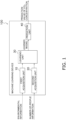
- the machine learning device 100 includes a first acquisition unit 10, a second acquisition unit 20, a learning unit 30, and a prediction unit 40.
- the first acquisition unit 10 acquires environmental information on the target spaces R1 to R3.
- the second acquisition unit 20 acquires number-of-people information indicating the numbers of people in the target spaces R1 to R3.
- the learning unit 30 learns the environmental information and the number-of-people information in association with each other.
- the prediction unit 40 predicts carbon dioxide concentrations in the target spaces R1 to R3 after a certain period of time as prediction values from the environmental information and the number-of-people information, based on a result of the learning by the learning unit 30.
- the ventilation control device 200 controls the dampers 80a to 80c, based on the prediction values of the carbon dioxide concentrations in the rooms R1 to R3 after the certain period of time, the prediction values being outputs from the prediction unit 40 of the machine learning device 100.
- the machine learning device 100 acquires actual carbon dioxide concentrations in the rooms R1 to R3 from the carbon dioxide sensors 60a to 60c installed in the rooms R1 to R3, over a network 90. Furthermore, the machine learning device 100 acquires an external carbon dioxide concentration from the carbon dioxide sensor 60d externally installed, over the network 90. Furthermore, the machine learning device 100 acquires the number-of-people information on the rooms R1 to R3 from the cameras 70a to 70c installed in the rooms R1 to R3, over the network 90.
- the first acquisition unit 10 acquires the environmental information on the rooms R1 to R3 which are the target spaces.
- the environmental information includes the actual carbon dioxide concentrations in the target spaces R1 to R3.
- the environmental information on the target spaces R1 to R3 further includes a carbon dioxide concentration of the outside air and ventilation volumes of the target spaces R1 to R2 or volumes of the target spaces R1 to R3.
- the ventilation volumes of the target spaces R1 to R3 are ventilation volumes of the dampers 80a to 80c which are ventilating devices.
- the first acquisition unit 10 acquires the actual carbon dioxide concentrations in the target spaces R1 to R3 by using the carbon dioxide concentration sensors 60a to 60c.
- the first acquisition unit 10 acquires the carbon dioxide concentration of the outside air by using the external carbon dioxide sensor 60d.
- the first acquisition unit 10 acquires the ventilation volumes of the dampers 80a to 80c, which are the ventilating devices, from a catalog or the like of the ventilating devices.
- the first acquisition unit 10 acquires the volumes of the target spaces R1 to R3 using a drawing.
- the second acquisition unit 20 acquires the number-of-people information indicating the numbers of people in the rooms R1 to R3 which are the target spaces.
- the second acquisition unit 20 acquires the number-of-people information indicating the numbers of people in the rooms R1 to R3 by using the cameras 70a to 70c installed in the rooms R1 to R3.
- the number of people in the room R1 is two.
- the number of people in the room R2 is zero.
- the number of people in the room R3 is five.
- the learning unit 30 learns the environmental information acquired by the first acquisition unit 10 and the number-of-people information acquired by the second acquisition unit 20 in association with each other.
- the learning unit 30 performs machine learning by using, as information, the environmental information and the number-of-people information that are different among the target spaces, and creates a carbon dioxide concentration estimation model expressed by Formula 1 below.
- ⁇ C ⁇ t C 0 ⁇ C ⁇ Qm V ⁇ a + M h ⁇ n V ⁇ b
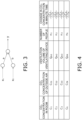
- Fig. 3 is a schematic view of a model of neurons in a neural network. As illustrated in Fig. 3 , the neurons output an output y in response to a plurality of inputs (inputs x 1 and x 2 in Fig. 3 ). Each input (inputs x 1 and x 2 in Fig. 3 ) is multiplied by a corresponding weight. A weight a corresponds to the input x 1 . A weight b corresponds to the input x 2 .
- the input x 1 represents (C o -C) * Q m /V which is a change in the carbon dioxide concentration caused by the ventilating device.
- the input x 2 indicates M h * n/V which is a change in the carbon dioxide concentration caused by people.
- the output y indicates ⁇ C/ ⁇ t (slope).
- the weights (coefficients) a and b are learned through comparison between ⁇ C/ ⁇ t (slope) and actual values of the carbon dioxide concentration, using the steepest descent method.
- the values of the weights a and b are determined for each of the target spaces R1 to R3.
- the prediction unit 40 predicts the carbon dioxide concentrations in the target spaces R1 to R3 after the certain period of time as prediction values from the environmental information and the number-of-people information on the target spaces R1 to R3, based on a result of the learning by the learning unit 30.
- the prediction unit 40 predicts the carbon dioxide concentration in the target space R1 after the certain period of time as the prediction value using the carbon dioxide concentration estimation model (learned model) expressed by Formula 1 created through the learning by the learning unit 30 from the environmental information and the number-of-people information on the target space R1 as input information.
- the prediction unit 40 predicts the carbon dioxide concentration in the target space R2 after the certain period of time as the prediction value using the carbon dioxide concentration estimation model expressed by Formula 1 created through the learning by the learning unit 30 from the environmental information and the number-of-people information on the target space R2 as input information.
- the prediction unit 40 predicts the carbon dioxide concentration in the target space R3 after the certain period of time as the prediction value using the carbon dioxide concentration estimation model expressed by Formula 1 created through the learning by the learning unit 30 from the environmental information and the number-of-people information on the target space R3 as input information.
- the prediction unit 40 may predict the carbon dioxide concentrations after the certain period of time, that is, after an elapse of time ⁇ t, using ⁇ C/ ⁇ t in Formula 1.
- the control unit 50 controls the dampers 80a to 80c installed in the target spaces R1 to R3, based on the prediction values of the carbon dioxide concentrations in the target spaces R1 to R3 after the certain period of time, the prediction values being outputs from the prediction unit 40 of the machine learning device 100.
- the control unit 50 is implemented by a computer.
- the control unit 50 includes a control calculation device and a storage device (not illustrated).
- a processor such as a CPU or a GPU is usable for the control calculation device.
- the control calculation device reads a program stored in the storage device and executes predetermined image processing and calculation processing based on the program. Furthermore, based on the program, the control calculation device may write a calculation result to the storage device and read information stored in the storage device.
- the storage device is usable for a database.
- the learning unit 30 learns the environmental information, the number-of-people information, and the change in the carbon dioxide concentration in a minute time, as a learning data set.
- the environmental information includes the actual carbon dioxide concentrations in the rooms, the carbon dioxide concentration of the outside air, and the ventilation volumes of the ventilating devices.
- the number-of-people information is information indicating the number of people in a target space.
- Fig. 4 illustrates an example of the learning data for the room R1.
- the room R1 is assumed to have a room volume V1 and has the damper 80a as the ventilating device.
- learning is performed using a learning data set for outputting a carbon dioxide concentration ⁇ C 1 / ⁇ t 1 in a minute time, from inputs including a carbon dioxide concentration C 1 in the room, a carbon dioxide concentration C o1 of the outside air, a ventilation volume Q m1 of the ventilating device, and the number n 1 of people in the room R1.
- learning is performed using a learning data set for outputting a carbon dioxide concentration ⁇ C 2 / ⁇ t 2 in a minute time, from inputs including a carbon dioxide concentration C 2 in the room, a carbon dioxide concentration C o2 of the outside air, a ventilation volume Q m2 of the ventilating device, and the number n 2 of people in the room R1. Furthermore, learning is performed using a learning data set for outputting a carbon dioxide concentration ⁇ C 3 / ⁇ t 3 in a minute time, from inputs including a carbon dioxide concentration C 3 in the room, a carbon dioxide concentration C o3 of the outside air, a ventilation volume Q m3 of the ventilating device, and the number n 3 of people in the room R1.
- learning is performed using a learning data set for outputting a carbon dioxide concentration ⁇ C k / ⁇ t k in a minute time, from inputs including a carbon dioxide concentration C k in the room, a carbon dioxide concentration C ok of the outside air, a ventilation volume Q mk of the ventilating device, and the number n k of people in the room R1.
- Fig. 5 illustrates an example of changes in the actual value and the prediction value of the carbon dioxide concentration in the target space R1 over time.
- a solid line indicates the actual value of the carbon dioxide concentration
- a dotted line indicates the prediction value of the carbon dioxide concentration.
- the prediction value is obtained by using the carbon dioxide concentration estimation model obtained by the learning using the learning data sets for the target space R1.
- the prediction value is obtained by predicting the carbon dioxide concentration after 10 minutes from a certain time point.
- a mean deviation and a standard deviation between the actual value and the prediction value of the carbon dioxide concentration in the target space R1 are respectively 9.3 ppm and 8.0 ppm.
- a mean deviation and a standard deviation of the carbon dioxide concentration in the target space R1 are respectively 12.2 ppm and 8.5 ppm, meaning that the accuracy of the prediction value of the carbon dioxide concentration decreases.
- Fig. 6 is a flowchart for the ventilation control system 1.
- step S1 the environmental information on the target spaces R1 to R3 is acquired (step S1).
- step S2 The number-of-people information indicating the numbers of people in the target spaces R1 to R3 is acquired (step S2).
- the carbon dioxide concentrations in the target spaces R1 to R3 after a certain period of time are predicted based on a result of the learning by the learning unit 30 (step S3).
- the carbon dioxide concentrations in the target spaces R1 to R3 after 10 minutes are assumed to be predicted.
- step S3 the carbon dioxide concentration in the target space R1 after 10 minutes is predicted based on a result of the learning by the learning unit 30 using, as input information, the environmental information and the number-of-people information on the target space R1. Furthermore, the carbon dioxide concentration in the target space R2 after 10 minutes is predicted based on a result of the learning by the learning unit 30 using, as input information, the environmental information and the number-of-people information on the target space R2. Furthermore, the carbon dioxide concentration in the target space R3 after 10 minutes is predicted based on a result of the learning by the learning unit 30 using, as input information, the environmental information and the number-of-people information on the target space R3.
- step S4 the dampers 80a to 80c are controlled based on the carbon dioxide concentrations predicted in step S3 (step S4).
- the machine learning device 100 of the present embodiment includes the first acquisition unit 10, the second acquisition unit 20, and the learning unit 30.
- the first acquisition unit 10 acquires the environmental information on the target spaces R1 to R3.
- the second acquisition unit 20 acquires the number-of-people information indicating the numbers of people in the target spaces R1 to R3.
- the learning unit 30 learns the environmental information acquired by the first acquisition unit 10 and the number-of-people information acquired by the second acquisition unit 20 in association with each other.
- the environmental information includes the actual carbon dioxide concentrations in the target spaces R1 to R3.
- the ventilation control is performed by monitoring the carbon dioxide concentration in real time to control the carbon dioxide concentration in a target space
- the time required for starting the ventilating device and for data communication vary among properties.
- the carbon dioxide concentration may rise due to a sudden increase in the number of people in the room, an increase in the amount of speech, or the like, before the ventilation volume set for the ventilating device is reached.
- detection of a rise in the carbon dioxide concentration may be delayed.
- the machine learning device 100 may create carbon dioxide concentration estimation models that are specific to the target spaces R1 to R3 and are usable for appropriate ventilation control in the target spaces R1 to R3.
- characteristics of the changes in the carbon dioxide concentrations, which differ among the target spaces, are recognized, so that the carbon dioxide concentrations may be estimated with high accuracy.
- the machine learning device 100 of the present embodiment further includes the prediction unit 40 that predicts the carbon dioxide concentrations in the target spaces R1 to R3 after a certain period of time as prediction values from the environmental information and the number-of-people information, based on a result of the learning by the learning unit 30.
- the machine learning device 100 predicts the carbon dioxide concentrations after the certain period of time from the environmental information and the number-of-people information on the target spaces R1 to R3, based on a result of the learning by the learning unit 30. Thus, even when the environments or the numbers of people in the target spaces R1 to R3 change within the certain period of time, the carbon dioxide concentrations specific to the target spaces R1 to R3 may be estimated with high accuracy.
- the environmental information further includes the ventilation volumes of the target spaces R1 to R3 or the volumes of the target spaces.
- the carbon dioxide concentrations specific to the target spaces R1 to R3 may be estimated with high accuracy.
- the ventilation control device 200 of the present embodiment includes the machine learning device 100 and the control unit 50.
- the control unit 50 controls the ventilating devices 80a to 80c installed in the target spaces R1 to R3, based on the prediction values of the carbon dioxide concentrations in the target spaces R1 to R3 after the certain period of time, the prediction values being outputs from the prediction unit 40 of the machine learning device 100.
- the ventilation control device 200 controls the ventilating devices 80a to 80c, based on the prediction values of the carbon dioxide concentrations in the target spaces R1 to R3 after the certain period of time, the carbon dioxide concentrations in the target spaces R1 to R3 after the certain period of time are predicted in advance, so that appropriate ventilation control may be performed on the target spaces R1 to R3.
- the prediction values of the carbon dioxide concentrations in the target spaces R1 to R3 after the certain period of time are used to perform ventilation-associated operation in a feed-forward manner, and thus safety may be improved.
- both safety and energy conservation are achievable by performing necessary and sufficient ventilation to maintain the carbon dioxide concentrations at a certain set value or lower.
- a ventilation control method by the ventilation control device 200 of the present embodiment includes a prediction step and a control step.
- the prediction step the carbon dioxide concentrations in the target spaces R1 to R3 after a certain period of time are predicted as prediction values from the environmental information and the number-of-people information, based on a result of the learning by the learning unit 30 of the machine learning device 100.
- the ventilating devices installed in the target spaces R1 to R3 are controlled based on the prediction values of the carbon dioxide concentrations in the target spaces R1 to R3 after the certain period of time, the prediction values being outputs in the prediction step.
- the ventilation control device 200 since the ventilating devices are controlled based on the prediction values of the carbon dioxide concentrations in the target spaces R1 to R3 after the certain period of time, the carbon dioxide concentrations in the target spaces R1 to R3 after the certain period of time are predicted in advance, so that appropriate ventilation control may be performed on the target spaces R1 to R3.
- the prediction unit 40 predicts the carbon dioxide concentrations in the target spaces R1 to R3 after a certain period of time as prediction values is described.
- the prediction unit 40 may alternatively predict the amount of change in the carbon dioxide concentrations in the target spaces as a prediction value.
- the prediction unit predicting the amount of change in the carbon dioxide concentrations from the environmental information and the number-of-people information on the target spaces R1 to R3, based on a result of the learning by the learning unit, even when the environments or the numbers of people in the target spaces R1 to R3 change, the amount of change in the carbon dioxide concentrations specific to the target spaces R1 to R3 may be estimated with high accuracy.
- the prediction unit 40 predicts the carbon dioxide concentrations in the target spaces R1 to R3 after a certain period of time as prediction values is described.
- the prediction unit 40 may also predict the carbon dioxide concentrations in the target spaces R1 to R3 in a steady state.
- the environmental information is the carbon dioxide concentration of the outside air and the ventilation volumes of the target spaces or the volumes of the target spaces is described, but this is not construed in a limiting sense.
- the environmental information may be opening or closing of a door or a window of the target space.
- the carbon dioxide concentrations specific to the target spaces R1 to R3 may be predicted with high accuracy.
- the carbon dioxide concentration is predicted in a case where input information such as the ventilation volume or the opening or closing of the window changes, so that an action for setting the carbon dioxide concentration to be equal to or lower than a predetermined carbon dioxide concentration, such as opening the window, may be proposed.
- the first acquisition unit 10 acquires the carbon dioxide concentration of the outside air by using the external carbon dioxide sensor 60d is described, but this is not construed in a limiting sense.
- a value of 420 ppm which is the carbon dioxide concentration generally contained in the atmosphere, may be used as the value of the carbon dioxide concentration of the outside air.
- the second acquisition unit 20 acquires the number-of-people information is described, but this is not construed in a limiting sense.
- the second acquisition unit may further acquire biometric information on people in the target space.
- Fig. 7 is a functional block diagram of a machine learning device 110 of Modification 1D.
- the machine learning device 110 includes the first acquisition unit 10, a second acquisition unit 21, the learning unit 30, and the prediction unit 40.
- the first acquisition unit 10 acquires the environmental information on the target spaces R1 to R3.
- the second acquisition unit 21 acquires the number-of-people information indicating the numbers of people in the target spaces R1 to R3 and biometric information on the people in the target spaces R1 to R3.
- the learning unit 30 learns the environmental information, the number-of-people information, and the biometric information in association with each other.
- the prediction unit 40 predicts the carbon dioxide concentrations in the target spaces R1 to R3 after a certain period of time as prediction values from the environmental information, the number-of-people information, and the biometric information, based on a result of the learning by the learning unit 30.
- the biometric information may include the conversation amount or the body temperature of the people in the target spaces R1 to R3.
- the biometric information may further include the gender, age, physique, or posture of the people in the target spaces R1 to R3.
- the second acquisition unit 21 acquires the conversation amount of the people using, for example, a sound sensor.
- the second acquisition unit 21 acquires the body temperature of the people using a thermosensor.
- the second acquisition unit 21 acquires the gender, age, physique, or posture of people using a camera.
- Fig. 8 is a flowchart of a ventilation control system of Modification 1D.
- step S1 the environmental information on the target spaces R1 to R3 is acquired (step S11).
- the number-of-people information indicating the numbers of people in the target spaces R1 to R3 is acquired (step S12).
- step S13 the biometric information on the people in the target spaces R1 to R3 is acquired (step S13).
- step S14 the carbon dioxide concentrations in the target spaces R1 to R3 after a certain period of time are predicted based on a result of the learning by the learning unit 30 (step S14).
- the dampers 80a to 80c are controlled based on the carbon dioxide concentrations predicted in step S14 (step S15).
- the machine learning device 110 of Modification 1D further uses, as the input information, the biometric information on the people in the target spaces, whereby the carbon dioxide concentrations specific to the target spaces R1 to R3 including the people may be estimated with high accuracy.
- the biometric information includes the conversation amount or the body temperature of the people in the target spaces.
- the carbon dioxide concentrations specific to the target spaces R1 to R3 including the people may be estimated with high accuracy.
- the biometric information further includes the gender, age, physique, or posture of the people in the target spaces R1 to R3, whereby the carbon dioxide concentrations specific to the target spaces R1 to R3 including the people may be estimated with high accuracy.
- the first acquisition unit 10 acquires the volumes of the target spaces R1 to R3 using a drawing is described, but this is not construed in a limiting sense.
- the volume of the target space may also be estimated using the number-of-people information in the target space, the carbon dioxide concentration in the room, the carbon dioxide concentration in the outside air, and the ventilation volume of the ventilating device. For example, when the number of people in the target space is zero, the volume of the target space may be estimated from a reduction in the carbon dioxide concentration in the target space between a certain time point t1 and a time point t2 different from t1.
- the carbon dioxide concentrations in a case where the target spaces R1 to R3 include people may be estimated when the control unit 50 of the ventilation control device 200 controls the ventilating devices 80a to 80c, to perform ventilation control to maintain the carbon dioxide concentrations at a threshold or lower.
- Fig. 9A illustrates an example of a change in the prediction value of the carbon dioxide concentration in the target space R1 over time.
- Fig. 9B illustrates an example of a change in the number of people in the target space R1 over time.
- Fig. 9C illustrates an example of a change in the time required for the carbon dioxide concentration in the target space R1 to reach the threshold over time.
- the threshold of the carbon dioxide concentration is assumed to be 1000 ppm.
- the time required for the carbon dioxide concentration to reach the threshold is set to 20 minute.
- the ventilation control is performed when the time required for the prediction value of the carbon dioxide concentration in the target space R1 to reach the threshold is five minutes or less.
- the number of people in the target space R1 is 0 at 0:00 and 30 at 1:00.
- the actual value of the carbon dioxide concentration in the target space R1 is about 820 ppm.
- the prediction value of the carbon dioxide concentration in the target space R1 is about 958 ppm at 1:00.
- the carbon dioxide concentration in the target space R1 is estimated to rise from 0:00 to 1:00.
- the time required for the prediction value of the carbon dioxide concentration in the target space R1 to reach the threshold becomes short between 0:00 and 1:00, and the time required for reaching the threshold is five minutes at 1:00.
- the prediction value of the carbon dioxide concentration in the target space R1 further rises and exceeds the threshold, which is 1000 ppm, until about 2:30.
- the ventilation control is performed on the target space R1 from 1:00 to about 2:30.
- both safety and energy conservation are achievable by performing ventilation control to maintain the carbon dioxide concentration at the threshold or lower.
- a change in the carbon dioxide concentration in the target space may be displayed on a display by using the prediction value of the carbon dioxide concentration in the target space output from the prediction unit 40, which enables a user of the target space to recognize the change in the carbon dioxide concentration.
- the display may display the time required for the prediction value of the carbon dioxide concentration in the target space to reach a predetermined set value.
- the change in the carbon dioxide concentration in the target space is not limited to a case where the carbon dioxide concentration in the target space rises, and also includes a case where the carbon dioxide concentration in the target space drops.
- the learning unit 30 performs machine learning using a supervised neural network to create the carbon dioxide concentration estimation model is described, but this is not construed in a limiting sense.
- the machine learning method linear regression, deep learning, long short term memory (LSTM), or the like may be used.
- a ventilation control system 2 of the present embodiment is a system provided to perform ventilation control for rooms R1 to R3. As illustrated in Fig. 11 , the ventilation control system 2 mainly includes dampers 80a to 80c, a duct pipe 81, a fan 82, carbon-dioxide sensors 60a to 60d, cameras 70a to 70c, prediction units 41a to 41c, a machine learning device 120, and a ventilation control device 210.
- the ventilation control device 210 is implemented by a computer.
- the ventilation control device 200 includes a control unit 51.
- the machine learning device 120 includes the first acquisition unit 10, the second acquisition unit 20, and the learning unit 30.
- the first acquisition unit 10 acquires environmental information on the target spaces R1 to R3.
- the second acquisition unit 20 acquires number-of-people information indicating the numbers of people in the target spaces R1 to R3.
- the learning unit 30 learns the environmental information and the number-of-people information in association with each other.
- the prediction units 41a to 41c are provided in the rooms R1 to R3.
- the prediction units 41a to 41c include learned models as a result of the learning by the machine learning device 120.
- the prediction units 41a to 41c predict the carbon dioxide concentrations in the target spaces R1 to R3 after a certain period of time as prediction values from the environmental information and the number-of-people information, based on a result of the learning by the learning unit 30 of the machine learning device 120.
- the ventilation control device 210 controls the dampers 80a to 80c, based on the prediction values of the carbon dioxide concentrations in the rooms R1 to R3 after the certain period of time, the prediction values being outputs from the prediction units 41a to 41c.
- the machine learning device 120 acquires the actual carbon dioxide concentrations in the rooms R1 to R3 from the carbon dioxide sensors 60a to 60c installed in the rooms R1 to R3, over a network 90. Furthermore, the machine learning device 100 acquires an external carbon dioxide concentration from a carbon dioxide sensor 60d externally installed, over the network 90. Furthermore, the machine learning device 100 acquires the number-of-people information on the rooms R1 to R3 from the cameras 70a to 70c installed in the rooms R1 to R3, over the network 90.
- the machine learning device 120 includes the first acquisition unit 10, the second acquisition unit 20, and the learning unit 30. Since the configurations of the first acquisition unit 10, the second acquisition unit 20, and the learning unit 30 are the same as those in the first embodiment, a detailed description thereof will be omitted.
- the prediction unit 41a is installed in the target space R1.
- the prediction unit 41a predicts, for the target space R1, the carbon dioxide concentration in the target space R1 after a certain period of time as a prediction value from the environmental information and the number-of-people information on the target space R1, based on a result of the learning by the learning unit 30 of the machine learning device 120.
- the prediction unit 41b is installed in the target space R2.
- the prediction unit 41b predicts, for the target space R2, the carbon dioxide concentration in the target space R2 after a certain period of time as a prediction value from the environmental information and the number-of-people information on the target space R2, based on a result of the learning by the learning unit 30 of the machine learning device 120.
- the prediction unit 41c is installed in the target space R3.
- the prediction unit 41c predicts, for the target space R3, the carbon dioxide concentration in the target space R3 after a certain period of time as a prediction value from the environmental information and the number-of-people information on the target space R3, based on a result of the learning by the learning unit 30 of the machine learning device 120.
- the control unit 51 controls the damper 80a installed in the target space R1, based on the prediction value of the carbon dioxide concentration in the target space R1 after the certain period of time, the prediction value being an output from the prediction unit 41a.
- the control unit 51 controls the damper 80b installed in the target space R2, based on the prediction value of the carbon dioxide concentration in the target space R2 after the certain period of time, the prediction value being an output from the prediction unit 41b.
- the control unit 51 controls the damper 80c installed in the target space R3, based on the prediction value of the carbon dioxide concentration in the target space R3 after the certain period of time, the prediction value being an output from the prediction unit 41c.
- the control unit 51 is implemented by a computer.
- the control unit 51 includes a control calculation device and a storage device (not illustrated).
- a processor such as a CPU or a GPU is usable for the control calculation device.
- the control calculation device reads a program stored in the storage device and executes predetermined image processing and calculation processing based on the program. Furthermore, based on the program, the control calculation device may write a calculation result to the storage device and read information stored in the storage device.
- the storage device is usable for a database.
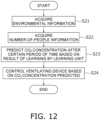
- Fig. 12 is a flowchart of the ventilation control system 2. Since the processing is substantially the same as that in the first embodiment illustrated in Fig. 6 , a detailed description thereof will be omitted.
- the carbon dioxide concentrations after a certain period of time are predicted using the prediction unit 40 of the machine learning device 100.
- the second embodiment is different from the first embodiment in that, in step S23, the carbon dioxide concentrations are predicted using the prediction units 41a to 41c respectively provided in the target spaces R1 to R3.
- the ventilation control device 210 of the present embodiment includes the first prediction unit 41a, the second prediction unit 41b, the third prediction unit 41c, and the control unit 50.
- the first prediction unit 41a predicts, for the first target space R1, the carbon dioxide concentration in the first target space R1 after a certain period of time as a prediction value from the environmental information and the number-of-people information, based on a result of the learning by the learning unit 30 of the machine learning device 120.
- the second prediction unit 41b predicts, for the second target space R2, the carbon dioxide concentration in the second target space R2 after a certain period of time as a prediction value from the environmental information and the number-of-people information, based on a result of the learning by the learning unit 30 of the machine learning device 120.
- the third prediction unit 41c predicts, for the third target space R3, the carbon dioxide concentration in the third target space R3 after a certain period of time as a prediction value from the environmental information and the number-of-people information, based on a result of the learning by the learning unit 30 of the machine learning device 120.
- the control unit 51 controls the ventilating device 80a installed in the first target space R1, based on the prediction value of the carbon dioxide concentration in the first target space R1 after the certain period of time, the prediction value being an output from the first prediction unit 41a.
- the control unit 51 controls the ventilating device 80b installed in the second target space R2, based on the prediction value of the carbon dioxide concentration in the second target space R2 after the certain period of time, the prediction value being an output from the second prediction unit 41b.
- the control unit 51 controls the ventilating device 80c installed in the third target space R3, based on the prediction value of the carbon dioxide concentration in the third target space R3 after the certain period of time, the prediction value being an output from the third prediction unit 41c.
- the ventilation control device 210 since the target spaces R1 to R3 are provided with the individual prediction units 41a to 41c that predict the carbon dioxide concentrations in the respective target spaces R1 to R3 after the certain period of time, the carbon dioxide concentration in each of the target spaces R1 to R3 after the certain period of time is predicted in advance, so that appropriate ventilation control may be performed on each of the target spaces R1 to R3.
- a ventilation control method performed by the ventilation control device 210 of the present embodiment includes a first prediction step, a second prediction step, a third prediction step, and a control step.
- the first prediction step for the first target space R1, the carbon dioxide concentration in the first target space R1 after a certain period of time is predicted as a prediction value from the environmental information and the number-of-people information, based on a result of the learning by the learning unit 30 of the machine learning device 120.
- the carbon dioxide concentration in the second target space R2 after a certain period of time is predicted as a prediction value from the environmental information and the number-of-people information, based on a result of the learning by the learning unit 30 of the machine learning device 120.
- the carbon dioxide concentration in the third target space R3 after a certain period of time is predicted as a prediction value from the environmental information and the number-of-people information, based on a result of the learning by the learning unit 30 of the machine learning device 120.
- the ventilating device installed in the first target space R1 is controlled based on the prediction value of the carbon dioxide concentration in the first target space R1 after the certain period of time, the prediction value being an output in the first prediction step.
- the ventilating device installed in the second target space R2 is controlled based on the prediction value of the carbon dioxide concentration in the second target space R2 after the certain period of time, the prediction value being an output in the second prediction step.
- the ventilating device installed in the third target space R3 is controlled based on the prediction value of the carbon dioxide concentration in the third target space R3 after the certain period of time, the prediction value being an output in the third prediction step.
- the ventilation control method by the ventilation control device 210 since the target spaces R1 to R3 are provided with the individual prediction steps of predicting the carbon dioxide concentrations in the respective target spaces R1 to R3 after the certain period of time, the carbon dioxide concentration in each of the target spaces R1 to R3 after the certain period of time is predicted in advance, so that appropriate ventilation control may be performed on each of the target spaces R1 to R3.
- the prediction unit may be provided in each of two or more rooms.
- the target space may be a single room, and the prediction unit may be provided in one target space.
Landscapes
- Engineering & Computer Science (AREA)
- General Engineering & Computer Science (AREA)
- Signal Processing (AREA)
- Chemical & Material Sciences (AREA)
- Mechanical Engineering (AREA)
- Combustion & Propulsion (AREA)
- Physics & Mathematics (AREA)
- Fuzzy Systems (AREA)
- Mathematical Physics (AREA)
- Automation & Control Theory (AREA)
- General Physics & Mathematics (AREA)
- Ventilation (AREA)
- Air Conditioning Control Device (AREA)
Abstract
Description
- The present disclosure relates to a machine learning device, a ventilation control device, and a ventilation control method.
- In the related art, the amount of carbon dioxide in a room is measured by a carbon dioxide sensor, and when the amount of carbon dioxide as a result of the measurement exceeds a predetermined value, the amount of ventilation air is controlled (Patent Literature 1 (
Japanese Unexamined Patent Application Publication No. 2010-96382 - There is a problem in that when the amount of ventilation air is controlled based on the result of measuring the amount of carbon dioxide in a room using the carbon dioxide sensor, the amount of ventilation air may fail to be controlled appropriately, due to the carbon dioxide concentration further rising before the ventilation volume set for a ventilation device is reached.
- A machine learning device according to a first aspect includes a first acquisition unit, a second acquisition unit, and a learning unit. The first acquisition unit acquires environmental information on a target space. The second acquisition unit acquires number-of-people information indicating the number of people in the target space. The learning unit learns the environmental information acquired by the first acquisition unit and the number-of-people information acquired by the second acquisition unit in association with each other. The environmental information includes an actual carbon dioxide concentration in the target space.
- The machine learning device may create a carbon dioxide concentration estimation model that is specific to the target space and is usable for appropriate ventilation control in the target space.
- A machine learning device according to a second aspect is the machine learning device according to the first aspect further including a prediction unit that predicts a carbon dioxide concentration in the target space after a certain period of time as a prediction value from the environmental information and the number-of-people information, based on a result of the learning by the learning unit.
- The machine learning device predicts the carbon dioxide concentration after the certain period of time from the environmental information and the number-of-people information on the target space, based on a result of the learning by the learning unit. Thus, even when the environment or the number of people in the target space changes within a certain period of time, the machine learning device may estimate the carbon dioxide concentration specific to the target space with high accuracy.
- A machine learning device according to a third aspect is the machine learning device according to the second aspect, in which the prediction unit predicts amount of change in a carbon dioxide concentration in the target space as the prediction value.
- The machine learning device predicts the amount of change in the carbon dioxide concentration from the environmental information and the number-of-people information on the target space, based on a result of the learning by the learning unit. Thus, even when the environment or the number of people in the target space changes, the machine learning device may estimate the amount of change in the carbon dioxide concentration specific to the target space with high accuracy.
- A machine learning device according to a fourth aspect is the machine learning device according to any one of the first aspect to the third aspect, in which the second acquisition unit further acquires biometric information on people in the target space. The learning unit further learns the biometric information acquired by the second acquisition unit in association.
- The machine learning device uses, as input information, the biometric information on the people in the target space and thus may estimate the carbon dioxide concentration specific to the target space including the people with high accuracy.
- A machine learning device according to a fifth aspect is the machine learning device according to the fourth aspect, in which the biometric information includes a conversation amount or a body temperature of the people in the target space.
- The biometric information includes the conversation amount or the body temperature of the people in the target space, and thus the machine learning device may estimate the carbon dioxide concentration specific to the target space including the people with high accuracy.
- A machine learning device according to a sixth aspect is the machine learning device according to the fourth aspect or the fifth aspect, in which the biometric information further includes gender, age, physique, or posture of the people in the target space.
- The biometric information further includes the gender, age, physique, or posture of the people in the target space, and thus the machine learning device may estimate the carbon dioxide concentration specific to the target space including the people with high accuracy.
- A machine learning device according to a seventh aspect is the machine learning device according to any one of the first aspect to the sixth aspect, in which the environmental information includes a carbon dioxide concentration of outside air, or opening or closing of a door or a window of the target space.
- The environmental information includes the carbon dioxide concentration of the outside air or the opening or closing of the door or the window of the target space. Thus, even when ventilation of the target space is performed by the opening or closing of the door or the window, the machine learning device may estimate the carbon dioxide concentration specific to the target space with high accuracy.
- A machine learning device according to an eighth aspect is the machine learning device according to the seventh aspect, in which the environmental information further includes a ventilation volume of the target space or a volume of the target space.
- The environmental information further includes the ventilation volume of the target space or the volume of the target space, and thus the machine learning device may estimate the carbon dioxide concentration specific to the target space with high accuracy.
- A ventilation control device according to a ninth aspect includes the machine learning device according to the second aspect and a control unit. The control unit controls a ventilating device installed in the target space, based on the prediction value of the carbon dioxide concentration in the target space after the certain period of time, the prediction value being an output from the prediction unit of the machine learning device.
- Since the ventilation control device controls the ventilating device, based on the prediction value of the carbon dioxide concentration in the target space after the certain period of time, the ventilation control device may predict the carbon dioxide concentration in the target space after the certain period of time in advance to perform appropriate ventilation control on the target space.
- A ventilation control device according to a tenth aspect includes a first prediction unit, a second prediction unit, and a control unit. The first prediction unit predicts a carbon dioxide concentration in a first target space after a certain period of time as a prediction value from environmental information and number-of-people information for the first target space, based on a result of the learning by the learning unit of the machine learning device according to the first aspect. The second prediction unit predicts a carbon dioxide concentration in a second target space after a certain period of time as a prediction value from environmental information and number-of-people information for the second target space, based on a result of the learning by the learning unit of the machine learning device according to the first aspect. The control unit controls a ventilating device installed in the first target space, based on the prediction value of the carbon dioxide concentration in the first target space after the certain period of time, the prediction value being an output from the first prediction unit. The control unit controls a ventilating device installed in the second target space, based on the prediction value of the carbon dioxide concentration in the second target space after the certain period of time, the prediction value being an output from the second prediction unit.
- Since the ventilation control device includes the individual prediction units for the respective target spaces that predict the carbon dioxide concentrations in the respective target spaces after the certain period of time, the ventilation control device may predict the carbon dioxide concentration in each of the target spaces after the certain period of time in advance to perform appropriate ventilation control on each of the target spaces.
- A ventilation control method according to an eleventh aspect includes a prediction step and a control step. In the prediction step, a carbon dioxide concentration in the target space after a certain period of time is predicted as a prediction value from the environmental information and the number-of-people information, based on a result of the learning by the learning unit of the machine learning device according to the first aspect. In the control step, a ventilating device installed in the target space is controlled based on the prediction value of the carbon dioxide concentration in the target space after the certain period of time, the prediction value being an output in the prediction step.
- Since in the ventilation control method, the ventilating device is controlled based on the prediction value of the carbon dioxide concentration in the target space after the certain period of time, the carbon dioxide concentration in the target space after the certain period of time may be predicted in advance, so that appropriate ventilation control may be performed on the target space.
- A ventilation control method according to a twelfth aspect includes a first prediction step, a second prediction step, and a control step. In the first prediction step, a carbon dioxide concentration in a first target space after a certain period of time is predicted as a prediction value from environmental information and number-of-people information for the first target space, based on a result of the learning by the learning unit of the machine learning device according to the first aspect. In the second prediction step, a carbon dioxide concentration in a second target space after a certain period of time is predicted as a prediction value from environmental information and number-of-people information for the second target space, based on a result of the learning by the learning unit of the machine learning device according to the first aspect. In the control step, a ventilating device installed in the first target space is controlled based on the prediction value of the carbon dioxide concentration in the first target space after the certain period of time, the prediction value being an output in the first prediction step. The control unit controls a ventilating device installed in the second target space, based on the prediction value of the carbon dioxide concentration in the second target space after the certain period of time, the prediction value being an output in the second prediction step.
- Since in the ventilation control method, the individual prediction steps for the respective target spaces are included in which the carbon dioxide concentrations in the respective target spaces after the certain period of time are predicted, the carbon dioxide concentration in each of the target spaces after the certain period of time may be predicted in advance, so that appropriate ventilation control may be performed on each of the target space.
-
-
Fig. 1 is a functional block diagram of a machine learning device. -
Fig. 2 is a functional block diagram of a ventilation control system. -
Fig. 3 is a schematic view of a model of neurons in a neural network. -
Fig. 4 is a diagram illustrating an example of learning data. -
Fig. 5 is a diagram illustrating an example of changes in an actual value and a prediction value of a carbon dioxide concentration over time. -
Fig. 6 is a flowchart for the ventilation control system. -
Fig. 7 is a functional block diagram of a machine learning device. -
Fig. 8 is a flowchart of a ventilation control system. -
Fig. 9A is a diagram illustrating an example of a change in a prediction value of a carbon dioxide concentration over time. -
Fig. 9B is a diagram illustrating an example of a change in the number of people in a room over time. -
Fig. 9C is a diagram illustrating an example of a change in time required for reaching a threshold over time. -
Fig. 10 is a functional block diagram of a machine learning device. -
Fig. 11 is a functional block diagram of a ventilation control system. -
Fig. 12 is a flowchart of the ventilation control system. - <First embodiment>
- A ventilation control system 1 of the present embodiment is a system provided to perform ventilation control for rooms R1 to R3 that are target spaces. As illustrated in
Fig. 2 , the ventilation control system 1 mainly includesdampers 80a to 80c, aduct pipe 81, afan 82, carbon-dioxide sensors 60a to 60d,cameras 70a to 70c, and aventilation control device 200. - The
ventilation control device 200 is implemented by a computer. Theventilation control device 200 includes amachine learning device 100 and acontrol unit 50. - As illustrated in
Fig. 1 , themachine learning device 100 includes afirst acquisition unit 10, asecond acquisition unit 20, alearning unit 30, and aprediction unit 40. Thefirst acquisition unit 10 acquires environmental information on the target spaces R1 to R3. Thesecond acquisition unit 20 acquires number-of-people information indicating the numbers of people in the target spaces R1 to R3. Thelearning unit 30 learns the environmental information and the number-of-people information in association with each other. Theprediction unit 40 predicts carbon dioxide concentrations in the target spaces R1 to R3 after a certain period of time as prediction values from the environmental information and the number-of-people information, based on a result of the learning by thelearning unit 30. - The
ventilation control device 200 controls thedampers 80a to 80c, based on the prediction values of the carbon dioxide concentrations in the rooms R1 to R3 after the certain period of time, the prediction values being outputs from theprediction unit 40 of themachine learning device 100. - The
machine learning device 100 acquires actual carbon dioxide concentrations in the rooms R1 to R3 from thecarbon dioxide sensors 60a to 60c installed in the rooms R1 to R3, over anetwork 90. Furthermore, themachine learning device 100 acquires an external carbon dioxide concentration from thecarbon dioxide sensor 60d externally installed, over thenetwork 90. Furthermore, themachine learning device 100 acquires the number-of-people information on the rooms R1 to R3 from thecameras 70a to 70c installed in the rooms R1 to R3, over thenetwork 90. - The
first acquisition unit 10 acquires the environmental information on the rooms R1 to R3 which are the target spaces. In the present embodiment, the environmental information includes the actual carbon dioxide concentrations in the target spaces R1 to R3. The environmental information on the target spaces R1 to R3 further includes a carbon dioxide concentration of the outside air and ventilation volumes of the target spaces R1 to R2 or volumes of the target spaces R1 to R3. The ventilation volumes of the target spaces R1 to R3 are ventilation volumes of thedampers 80a to 80c which are ventilating devices. - In the present embodiment, the
first acquisition unit 10 acquires the actual carbon dioxide concentrations in the target spaces R1 to R3 by using the carbondioxide concentration sensors 60a to 60c. Thefirst acquisition unit 10 acquires the carbon dioxide concentration of the outside air by using the externalcarbon dioxide sensor 60d. Thefirst acquisition unit 10 acquires the ventilation volumes of thedampers 80a to 80c, which are the ventilating devices, from a catalog or the like of the ventilating devices. Thefirst acquisition unit 10 acquires the volumes of the target spaces R1 to R3 using a drawing. - The
second acquisition unit 20 acquires the number-of-people information indicating the numbers of people in the rooms R1 to R3 which are the target spaces. In the present embodiment, thesecond acquisition unit 20 acquires the number-of-people information indicating the numbers of people in the rooms R1 to R3 by using thecameras 70a to 70c installed in the rooms R1 to R3. As illustrated inFig. 2 , the number of people in the room R1 is two. The number of people in the room R2 is zero. The number of people in the room R3 is five. - The
learning unit 30 learns the environmental information acquired by thefirst acquisition unit 10 and the number-of-people information acquired by thesecond acquisition unit 20 in association with each other. Thelearning unit 30 performs machine learning by using, as information, the environmental information and the number-of-people information that are different among the target spaces, and creates a carbon dioxide concentration estimation model expressed by Formula 1 below.
- C: carbon dioxide concentration in room (ppm)
- Co: carbon dioxide concentration of outside air (ppm)
- Qm: ventilation volume of ventilating device (m3/h)
- V: room volume (m3)
- Mh: general carbon dioxide emission of people (m3/h·persons)
- N: number of people (persons)
-
Fig. 3 is a schematic view of a model of neurons in a neural network. As illustrated inFig. 3 , the neurons output an output y in response to a plurality of inputs (inputs x1 and x2 inFig. 3 ). Each input (inputs x1 and x2 inFig. 3 ) is multiplied by a corresponding weight. A weight a corresponds to the input x1. A weight b corresponds to the input x2. - In the present embodiment, the input x1 represents (Co-C) * Qm/V which is a change in the carbon dioxide concentration caused by the ventilating device. The input x2 indicates Mh * n/V which is a change in the carbon dioxide concentration caused by people. The output y indicates ΔC/Δt (slope).
- In the present embodiment, the weights (coefficients) a and b are learned through comparison between ΔC/Δt (slope) and actual values of the carbon dioxide concentration, using the steepest descent method. The values of the weights a and b are determined for each of the target spaces R1 to R3.
- The
prediction unit 40 predicts the carbon dioxide concentrations in the target spaces R1 to R3 after the certain period of time as prediction values from the environmental information and the number-of-people information on the target spaces R1 to R3, based on a result of the learning by thelearning unit 30. - The
prediction unit 40 predicts the carbon dioxide concentration in the target space R1 after the certain period of time as the prediction value using the carbon dioxide concentration estimation model (learned model) expressed by Formula 1 created through the learning by thelearning unit 30 from the environmental information and the number-of-people information on the target space R1 as input information. - The
prediction unit 40 predicts the carbon dioxide concentration in the target space R2 after the certain period of time as the prediction value using the carbon dioxide concentration estimation model expressed by Formula 1 created through the learning by thelearning unit 30 from the environmental information and the number-of-people information on the target space R2 as input information. - The
prediction unit 40 predicts the carbon dioxide concentration in the target space R3 after the certain period of time as the prediction value using the carbon dioxide concentration estimation model expressed by Formula 1 created through the learning by thelearning unit 30 from the environmental information and the number-of-people information on the target space R3 as input information. - The
prediction unit 40 may predict the carbon dioxide concentrations after the certain period of time, that is, after an elapse of time Δt, using ΔC/Δt in Formula 1. - The
control unit 50 controls thedampers 80a to 80c installed in the target spaces R1 to R3, based on the prediction values of the carbon dioxide concentrations in the target spaces R1 to R3 after the certain period of time, the prediction values being outputs from theprediction unit 40 of themachine learning device 100. - The
control unit 50 is implemented by a computer. Thecontrol unit 50 includes a control calculation device and a storage device (not illustrated). A processor such as a CPU or a GPU is usable for the control calculation device. The control calculation device reads a program stored in the storage device and executes predetermined image processing and calculation processing based on the program. Furthermore, based on the program, the control calculation device may write a calculation result to the storage device and read information stored in the storage device. The storage device is usable for a database. - The
learning unit 30 learns the environmental information, the number-of-people information, and the change in the carbon dioxide concentration in a minute time, as a learning data set. In the present embodiment, the environmental information includes the actual carbon dioxide concentrations in the rooms, the carbon dioxide concentration of the outside air, and the ventilation volumes of the ventilating devices. The number-of-people information is information indicating the number of people in a target space. -
Fig. 4 illustrates an example of the learning data for the room R1. The room R1 is assumed to have a room volume V1 and has thedamper 80a as the ventilating device. As illustrated inFig. 4 , learning is performed using a learning data set for outputting a carbon dioxide concentration ΔC1/Δt1 in a minute time, from inputs including a carbon dioxide concentration C1 in the room, a carbon dioxide concentration Co1 of the outside air, a ventilation volume Qm1 of the ventilating device, and the number n1 of people in the room R1. Furthermore, learning is performed using a learning data set for outputting a carbon dioxide concentration ΔC2/Δt2 in a minute time, from inputs including a carbon dioxide concentration C2 in the room, a carbon dioxide concentration Co2 of the outside air, a ventilation volume Qm2 of the ventilating device, and the number n2 of people in the room R1. Furthermore, learning is performed using a learning data set for outputting a carbon dioxide concentration ΔC3/Δt3 in a minute time, from inputs including a carbon dioxide concentration C3 in the room, a carbon dioxide concentration Co3 of the outside air, a ventilation volume Qm3 of the ventilating device, and the number n3 of people in the room R1. Furthermore, learning is performed using a learning data set for outputting a carbon dioxide concentration ΔCk/Δtk in a minute time, from inputs including a carbon dioxide concentration Ck in the room, a carbon dioxide concentration Cok of the outside air, a ventilation volume Qmk of the ventilating device, and the number nk of people in the room R1. -
Fig. 5 illustrates an example of changes in the actual value and the prediction value of the carbon dioxide concentration in the target space R1 over time. A solid line indicates the actual value of the carbon dioxide concentration, and a dotted line indicates the prediction value of the carbon dioxide concentration. The prediction value is obtained by using the carbon dioxide concentration estimation model obtained by the learning using the learning data sets for the target space R1. The prediction value is obtained by predicting the carbon dioxide concentration after 10 minutes from a certain time point. When the carbon dioxide concentration estimation model obtained by the learning using the learning data sets for the target space R1 is used, a mean deviation and a standard deviation between the actual value and the prediction value of the carbon dioxide concentration in the target space R1 are respectively 9.3 ppm and 8.0 ppm. - On the other hand, when the carbon dioxide concentration estimation model obtained by the learning using learning data sets for another room is used for obtaining the prediction value of the carbon dioxide concentration in the target space R1, a mean deviation and a standard deviation of the carbon dioxide concentration in the target space R1 are respectively 12.2 ppm and 8.5 ppm, meaning that the accuracy of the prediction value of the carbon dioxide concentration decreases. Thus, it is preferable to create the carbon dioxide concentration estimation model from the environmental information and the number-of-people information that are data on the target space.
-
Fig. 6 is a flowchart for the ventilation control system 1. - First of all, in step S1, the environmental information on the target spaces R1 to R3 is acquired (step S1). The number-of-people information indicating the numbers of people in the target spaces R1 to R3 is acquired (step S2).
- Next, the carbon dioxide concentrations in the target spaces R1 to R3 after a certain period of time are predicted based on a result of the learning by the learning unit 30 (step S3). In the present embodiment, the carbon dioxide concentrations in the target spaces R1 to R3 after 10 minutes are assumed to be predicted.
- In step S3, the carbon dioxide concentration in the target space R1 after 10 minutes is predicted based on a result of the learning by the
learning unit 30 using, as input information, the environmental information and the number-of-people information on the target space R1. Furthermore, the carbon dioxide concentration in the target space R2 after 10 minutes is predicted based on a result of the learning by thelearning unit 30 using, as input information, the environmental information and the number-of-people information on the target space R2. Furthermore, the carbon dioxide concentration in the target space R3 after 10 minutes is predicted based on a result of the learning by thelearning unit 30 using, as input information, the environmental information and the number-of-people information on the target space R3. - Next, the
dampers 80a to 80c are controlled based on the carbon dioxide concentrations predicted in step S3 (step S4). - (5-1)
Themachine learning device 100 of the present embodiment includes thefirst acquisition unit 10, thesecond acquisition unit 20, and thelearning unit 30. Thefirst acquisition unit 10 acquires the environmental information on the target spaces R1 to R3. Thesecond acquisition unit 20 acquires the number-of-people information indicating the numbers of people in the target spaces R1 to R3. Thelearning unit 30 learns the environmental information acquired by thefirst acquisition unit 10 and the number-of-people information acquired by thesecond acquisition unit 20 in association with each other. The environmental information includes the actual carbon dioxide concentrations in the target spaces R1 to R3. - When the ventilation control is performed by monitoring the carbon dioxide concentration in real time to control the carbon dioxide concentration in a target space, the time required for starting the ventilating device and for data communication vary among properties. Thus, the carbon dioxide concentration may rise due to a sudden increase in the number of people in the room, an increase in the amount of speech, or the like, before the ventilation volume set for the ventilating device is reached. Furthermore, it takes time for the carbon dioxide concentration to diffuse after a person enters a target space. Thus, detection of a rise in the carbon dioxide concentration may be delayed.
- The
machine learning device 100 may create carbon dioxide concentration estimation models that are specific to the target spaces R1 to R3 and are usable for appropriate ventilation control in the target spaces R1 to R3. Thus, with themachine learning device 100 of the present embodiment, characteristics of the changes in the carbon dioxide concentrations, which differ among the target spaces, are recognized, so that the carbon dioxide concentrations may be estimated with high accuracy. - (5-2)
Themachine learning device 100 of the present embodiment further includes theprediction unit 40 that predicts the carbon dioxide concentrations in the target spaces R1 to R3 after a certain period of time as prediction values from the environmental information and the number-of-people information, based on a result of the learning by thelearning unit 30. - The
machine learning device 100 predicts the carbon dioxide concentrations after the certain period of time from the environmental information and the number-of-people information on the target spaces R1 to R3, based on a result of the learning by thelearning unit 30. Thus, even when the environments or the numbers of people in the target spaces R1 to R3 change within the certain period of time, the carbon dioxide concentrations specific to the target spaces R1 to R3 may be estimated with high accuracy. - (5-3)
In themachine learning device 100 according to the present embodiment, the environmental information further includes the ventilation volumes of the target spaces R1 to R3 or the volumes of the target spaces. - In the
machine learning device 100, with the environmental information further including the ventilation volumes of the target spaces R1 to R3 or the volumes of the target spaces R1 to R3, the carbon dioxide concentrations specific to the target spaces R1 to R3 may be estimated with high accuracy. - (5-4)
Theventilation control device 200 of the present embodiment includes themachine learning device 100 and thecontrol unit 50. Thecontrol unit 50 controls theventilating devices 80a to 80c installed in the target spaces R1 to R3, based on the prediction values of the carbon dioxide concentrations in the target spaces R1 to R3 after the certain period of time, the prediction values being outputs from theprediction unit 40 of themachine learning device 100. - The Ministry of Health, Labour and Welfare has announced that the carbon dioxide concentration in a room not higher than 1000 ppm is one indication that the room is not a poorly ventilated enclosed space. On the other hand, due to the impact of infections, people are becoming more aware of enclosed spaces, resulting in excessive ventilation in some cases to suppress infection risks. As a result, the amount of energy consumption has increased due to factors such as an increase in the outside air load.
- Since the
ventilation control device 200 controls theventilating devices 80a to 80c, based on the prediction values of the carbon dioxide concentrations in the target spaces R1 to R3 after the certain period of time, the carbon dioxide concentrations in the target spaces R1 to R3 after the certain period of time are predicted in advance, so that appropriate ventilation control may be performed on the target spaces R1 to R3. In addition, in theventilation control device 200, the prediction values of the carbon dioxide concentrations in the target spaces R1 to R3 after the certain period of time are used to perform ventilation-associated operation in a feed-forward manner, and thus safety may be improved. Thus, both safety and energy conservation are achievable by performing necessary and sufficient ventilation to maintain the carbon dioxide concentrations at a certain set value or lower. - (5-5)
A ventilation control method by theventilation control device 200 of the present embodiment includes a prediction step and a control step. In the prediction step, the carbon dioxide concentrations in the target spaces R1 to R3 after a certain period of time are predicted as prediction values from the environmental information and the number-of-people information, based on a result of the learning by thelearning unit 30 of themachine learning device 100. In the control step, the ventilating devices installed in the target spaces R1 to R3 are controlled based on the prediction values of the carbon dioxide concentrations in the target spaces R1 to R3 after the certain period of time, the prediction values being outputs in the prediction step. - In the ventilation control method by the
ventilation control device 200, since the ventilating devices are controlled based on the prediction values of the carbon dioxide concentrations in the target spaces R1 to R3 after the certain period of time, the carbon dioxide concentrations in the target spaces R1 to R3 after the certain period of time are predicted in advance, so that appropriate ventilation control may be performed on the target spaces R1 to R3. - In the present embodiment, a case where the
prediction unit 40 predicts the carbon dioxide concentrations in the target spaces R1 to R3 after a certain period of time as prediction values is described. Theprediction unit 40 may alternatively predict the amount of change in the carbon dioxide concentrations in the target spaces as a prediction value. - With the prediction unit predicting the amount of change in the carbon dioxide concentrations from the environmental information and the number-of-people information on the target spaces R1 to R3, based on a result of the learning by the learning unit, even when the environments or the numbers of people in the target spaces R1 to R3 change, the amount of change in the carbon dioxide concentrations specific to the target spaces R1 to R3 may be estimated with high accuracy.
- In the present embodiment, a case where the
prediction unit 40 predicts the carbon dioxide concentrations in the target spaces R1 to R3 after a certain period of time as prediction values is described. Theprediction unit 40 may also predict the carbon dioxide concentrations in the target spaces R1 to R3 in a steady state. - Based on input information on the target space at a certain time point, the
prediction unit 40 may calculate and predict a concentration (carbon dioxide concentration in the steady state) at which the carbon dioxide concentration is maximized in the input information. For example, a value C in Formula 1 when ΔC/Δt = 0, obtained using the environmental information and the number-of-people information on the target space at a certain time point, serves as the prediction value of the carbon dioxide concentration in the target space in the steady state. - In this way, how much the carbon dioxide concentration will rise may be predicted in advance using the input information such as the number-of-people information.
- In the present embodiment, a case where the environmental information is the carbon dioxide concentration of the outside air and the ventilation volumes of the target spaces or the volumes of the target spaces is described, but this is not construed in a limiting sense. The environmental information may be opening or closing of a door or a window of the target space.
- With the environmental information including the opening or closing of a door or a window of the target spaces R1 to R3, even when ventilation of the target spaces R1 to R3 is performed by the opening or closing of the door or the window, the carbon dioxide concentrations specific to the target spaces R1 to R3 may be predicted with high accuracy.
- By using the carbon dioxide concentration estimation model for each of the target spaces R1 to R3, for example, the carbon dioxide concentration is predicted in a case where input information such as the ventilation volume or the opening or closing of the window changes, so that an action for setting the carbon dioxide concentration to be equal to or lower than a predetermined carbon dioxide concentration, such as opening the window, may be proposed.
- In the present embodiment, a case where the
first acquisition unit 10 acquires the carbon dioxide concentration of the outside air by using the externalcarbon dioxide sensor 60d is described, but this is not construed in a limiting sense. For example, when the carbon dioxide concentration of the outside air is not able to be acquired, a value of 420 ppm, which is the carbon dioxide concentration generally contained in the atmosphere, may be used as the value of the carbon dioxide concentration of the outside air. - In the present embodiment, a case where the
second acquisition unit 20 acquires the number-of-people information is described, but this is not construed in a limiting sense. For example, the second acquisition unit may further acquire biometric information on people in the target space. -
Fig. 7 is a functional block diagram of amachine learning device 110 of Modification 1D. - As illustrated in
Fig. 7 , themachine learning device 110 includes thefirst acquisition unit 10, asecond acquisition unit 21, thelearning unit 30, and theprediction unit 40. Thefirst acquisition unit 10 acquires the environmental information on the target spaces R1 to R3. Thesecond acquisition unit 21 acquires the number-of-people information indicating the numbers of people in the target spaces R1 to R3 and biometric information on the people in the target spaces R1 to R3. Thelearning unit 30 learns the environmental information, the number-of-people information, and the biometric information in association with each other. Theprediction unit 40 predicts the carbon dioxide concentrations in the target spaces R1 to R3 after a certain period of time as prediction values from the environmental information, the number-of-people information, and the biometric information, based on a result of the learning by thelearning unit 30. - The biometric information may include the conversation amount or the body temperature of the people in the target spaces R1 to R3. The biometric information may further include the gender, age, physique, or posture of the people in the target spaces R1 to R3.
- The
second acquisition unit 21 acquires the conversation amount of the people using, for example, a sound sensor. Thesecond acquisition unit 21 acquires the body temperature of the people using a thermosensor. Thesecond acquisition unit 21 acquires the gender, age, physique, or posture of people using a camera. -
Fig. 8 is a flowchart of a ventilation control system of Modification 1D. - First of all, in step S1, the environmental information on the target spaces R1 to R3 is acquired (step S11). The number-of-people information indicating the numbers of people in the target spaces R1 to R3 is acquired (step S12). Next, the biometric information on the people in the target spaces R1 to R3 is acquired (step S13). Next, the carbon dioxide concentrations in the target spaces R1 to R3 after a certain period of time are predicted based on a result of the learning by the learning unit 30 (step S14). The
dampers 80a to 80c are controlled based on the carbon dioxide concentrations predicted in step S14 (step S15). - The
machine learning device 110 of Modification 1D further uses, as the input information, the biometric information on the people in the target spaces, whereby the carbon dioxide concentrations specific to the target spaces R1 to R3 including the people may be estimated with high accuracy. - With the
machine learning device 110, the biometric information includes the conversation amount or the body temperature of the people in the target spaces. Thus, even in a case where the carbon dioxide concentration rises due to an increase in the conversation amount of people in the target spaces R1 to R3, the carbon dioxide concentrations specific to the target spaces R1 to R3 including the people may be estimated with high accuracy. - With the
machine learning device 110, the biometric information further includes the gender, age, physique, or posture of the people in the target spaces R1 to R3, whereby the carbon dioxide concentrations specific to the target spaces R1 to R3 including the people may be estimated with high accuracy. - In the present embodiment, a case where the
first acquisition unit 10 acquires the volumes of the target spaces R1 to R3 using a drawing is described, but this is not construed in a limiting sense. - The volume of the target space may also be estimated using the number-of-people information in the target space, the carbon dioxide concentration in the room, the carbon dioxide concentration in the outside air, and the ventilation volume of the ventilating device. For example, when the number of people in the target space is zero, the volume of the target space may be estimated from a reduction in the carbon dioxide concentration in the target space between a certain time point t1 and a time point t2 different from t1.
- The carbon dioxide concentrations in a case where the target spaces R1 to R3 include people may be estimated when the
control unit 50 of theventilation control device 200 controls theventilating devices 80a to 80c, to perform ventilation control to maintain the carbon dioxide concentrations at a threshold or lower. -
Fig. 9A illustrates an example of a change in the prediction value of the carbon dioxide concentration in the target space R1 over time.Fig. 9B illustrates an example of a change in the number of people in the target space R1 over time.Fig. 9C illustrates an example of a change in the time required for the carbon dioxide concentration in the target space R1 to reach the threshold over time. - The threshold of the carbon dioxide concentration is assumed to be 1000 ppm. When the estimated carbon dioxide concentration in the steady state is equal to or lower than the threshold, the time required for the carbon dioxide concentration to reach the threshold is set to 20 minute. The ventilation control is performed when the time required for the prediction value of the carbon dioxide concentration in the target space R1 to reach the threshold is five minutes or less.
- For example, as illustrated in
Fig. 9B , the number of people in the target space R1 is 0 at 0:00 and 30 at 1:00. - At 0:00, the actual value of the carbon dioxide concentration in the target space R1 is about 820 ppm. Thereafter, as illustrated in
Fig. 9A , the prediction value of the carbon dioxide concentration in the target space R1 is about 958 ppm at 1:00. Thus, the carbon dioxide concentration in the target space R1 is estimated to rise from 0:00 to 1:00. As illustrated inFig. 9C , the time required for the prediction value of the carbon dioxide concentration in the target space R1 to reach the threshold becomes short between 0:00 and 1:00, and the time required for reaching the threshold is five minutes at 1:00. Thereafter, as illustrated inFig. 9A , the prediction value of the carbon dioxide concentration in the target space R1 further rises and exceeds the threshold, which is 1000 ppm, until about 2:30. Between 1:00 to about 2:30, as illustrated inFig. 9C , the time required for the prediction value of the carbon dioxide concentration in the target space R1 to reach the threshold is 5 minutes or less. Therefore, the ventilation control is performed on the target space R1 from 1:00 to about 2:30. - With the carbon dioxide concentration in a case where the target space includes people thus estimated, both safety and energy conservation are achievable by performing ventilation control to maintain the carbon dioxide concentration at the threshold or lower.
- Furthermore, a change in the carbon dioxide concentration in the target space may be displayed on a display by using the prediction value of the carbon dioxide concentration in the target space output from the
prediction unit 40, which enables a user of the target space to recognize the change in the carbon dioxide concentration. For example, as the change in the carbon dioxide concentration in the target space, the display may display the time required for the prediction value of the carbon dioxide concentration in the target space to reach a predetermined set value. The change in the carbon dioxide concentration in the target space is not limited to a case where the carbon dioxide concentration in the target space rises, and also includes a case where the carbon dioxide concentration in the target space drops. - In the present embodiment, a case where the
learning unit 30 performs machine learning using a supervised neural network to create the carbon dioxide concentration estimation model is described, but this is not construed in a limiting sense. Alternatively, as the machine learning method, linear regression, deep learning, long short term memory (LSTM), or the like may be used. - A
ventilation control system 2 of the present embodiment is a system provided to perform ventilation control for rooms R1 to R3. As illustrated inFig. 11 , theventilation control system 2 mainly includesdampers 80a to 80c, aduct pipe 81, afan 82, carbon-dioxide sensors 60a to 60d,cameras 70a to 70c,prediction units 41a to 41c, amachine learning device 120, and aventilation control device 210. - The
ventilation control device 210 is implemented by a computer. Theventilation control device 200 includes acontrol unit 51. - As illustrated in
Fig. 10 , themachine learning device 120 includes thefirst acquisition unit 10, thesecond acquisition unit 20, and thelearning unit 30. Thefirst acquisition unit 10 acquires environmental information on the target spaces R1 to R3. Thesecond acquisition unit 20 acquires number-of-people information indicating the numbers of people in the target spaces R1 to R3. Thelearning unit 30 learns the environmental information and the number-of-people information in association with each other. - The
prediction units 41a to 41c are provided in the rooms R1 to R3. Theprediction units 41a to 41c include learned models as a result of the learning by themachine learning device 120. Theprediction units 41a to 41c predict the carbon dioxide concentrations in the target spaces R1 to R3 after a certain period of time as prediction values from the environmental information and the number-of-people information, based on a result of the learning by thelearning unit 30 of themachine learning device 120. - The
ventilation control device 210 controls thedampers 80a to 80c, based on the prediction values of the carbon dioxide concentrations in the rooms R1 to R3 after the certain period of time, the prediction values being outputs from theprediction units 41a to 41c. - The
machine learning device 120 acquires the actual carbon dioxide concentrations in the rooms R1 to R3 from thecarbon dioxide sensors 60a to 60c installed in the rooms R1 to R3, over anetwork 90. Furthermore, themachine learning device 100 acquires an external carbon dioxide concentration from acarbon dioxide sensor 60d externally installed, over thenetwork 90. Furthermore, themachine learning device 100 acquires the number-of-people information on the rooms R1 to R3 from thecameras 70a to 70c installed in the rooms R1 to R3, over thenetwork 90. - As illustrated in
Fig. 10 , themachine learning device 120 includes thefirst acquisition unit 10, thesecond acquisition unit 20, and thelearning unit 30. Since the configurations of thefirst acquisition unit 10, thesecond acquisition unit 20, and thelearning unit 30 are the same as those in the first embodiment, a detailed description thereof will be omitted. - The
prediction unit 41a is installed in the target space R1. Theprediction unit 41a predicts, for the target space R1, the carbon dioxide concentration in the target space R1 after a certain period of time as a prediction value from the environmental information and the number-of-people information on the target space R1, based on a result of the learning by thelearning unit 30 of themachine learning device 120. - The
prediction unit 41b is installed in the target space R2. Theprediction unit 41b predicts, for the target space R2, the carbon dioxide concentration in the target space R2 after a certain period of time as a prediction value from the environmental information and the number-of-people information on the target space R2, based on a result of the learning by thelearning unit 30 of themachine learning device 120. - The
prediction unit 41c is installed in the target space R3. Theprediction unit 41c predicts, for the target space R3, the carbon dioxide concentration in the target space R3 after a certain period of time as a prediction value from the environmental information and the number-of-people information on the target space R3, based on a result of the learning by thelearning unit 30 of themachine learning device 120. - The
control unit 51 controls thedamper 80a installed in the target space R1, based on the prediction value of the carbon dioxide concentration in the target space R1 after the certain period of time, the prediction value being an output from theprediction unit 41a. Thecontrol unit 51 controls thedamper 80b installed in the target space R2, based on the prediction value of the carbon dioxide concentration in the target space R2 after the certain period of time, the prediction value being an output from theprediction unit 41b. Thecontrol unit 51 controls thedamper 80c installed in the target space R3, based on the prediction value of the carbon dioxide concentration in the target space R3 after the certain period of time, the prediction value being an output from theprediction unit 41c. - The
control unit 51 is implemented by a computer. Thecontrol unit 51 includes a control calculation device and a storage device (not illustrated). A processor such as a CPU or a GPU is usable for the control calculation device. The control calculation device reads a program stored in the storage device and executes predetermined image processing and calculation processing based on the program. Furthermore, based on the program, the control calculation device may write a calculation result to the storage device and read information stored in the storage device. The storage device is usable for a database. -
Fig. 12 is a flowchart of theventilation control system 2. Since the processing is substantially the same as that in the first embodiment illustrated inFig. 6 , a detailed description thereof will be omitted. In the first embodiment, in step S3, the carbon dioxide concentrations after a certain period of time are predicted using theprediction unit 40 of themachine learning device 100. The second embodiment is different from the first embodiment in that, in step S23, the carbon dioxide concentrations are predicted using theprediction units 41a to 41c respectively provided in the target spaces R1 to R3. - (4-1)
Theventilation control device 210 of the present embodiment includes thefirst prediction unit 41a, thesecond prediction unit 41b, thethird prediction unit 41c, and thecontrol unit 50. Thefirst prediction unit 41a predicts, for the first target space R1, the carbon dioxide concentration in the first target space R1 after a certain period of time as a prediction value from the environmental information and the number-of-people information, based on a result of the learning by thelearning unit 30 of themachine learning device 120. Thesecond prediction unit 41b predicts, for the second target space R2, the carbon dioxide concentration in the second target space R2 after a certain period of time as a prediction value from the environmental information and the number-of-people information, based on a result of the learning by thelearning unit 30 of themachine learning device 120. Thethird prediction unit 41c predicts, for the third target space R3, the carbon dioxide concentration in the third target space R3 after a certain period of time as a prediction value from the environmental information and the number-of-people information, based on a result of the learning by thelearning unit 30 of themachine learning device 120. Thecontrol unit 51 controls theventilating device 80a installed in the first target space R1, based on the prediction value of the carbon dioxide concentration in the first target space R1 after the certain period of time, the prediction value being an output from thefirst prediction unit 41a. Thecontrol unit 51 controls theventilating device 80b installed in the second target space R2, based on the prediction value of the carbon dioxide concentration in the second target space R2 after the certain period of time, the prediction value being an output from thesecond prediction unit 41b. Thecontrol unit 51 controls theventilating device 80c installed in the third target space R3, based on the prediction value of the carbon dioxide concentration in the third target space R3 after the certain period of time, the prediction value being an output from thethird prediction unit 41c. - With the
ventilation control device 210, since the target spaces R1 to R3 are provided with theindividual prediction units 41a to 41c that predict the carbon dioxide concentrations in the respective target spaces R1 to R3 after the certain period of time, the carbon dioxide concentration in each of the target spaces R1 to R3 after the certain period of time is predicted in advance, so that appropriate ventilation control may be performed on each of the target spaces R1 to R3. - (4-2)
A ventilation control method performed by theventilation control device 210 of the present embodiment includes a first prediction step, a second prediction step, a third prediction step, and a control step. In the first prediction step, for the first target space R1, the carbon dioxide concentration in the first target space R1 after a certain period of time is predicted as a prediction value from the environmental information and the number-of-people information, based on a result of the learning by thelearning unit 30 of themachine learning device 120. In the second prediction step, for the second target space R2, the carbon dioxide concentration in the second target space R2 after a certain period of time is predicted as a prediction value from the environmental information and the number-of-people information, based on a result of the learning by thelearning unit 30 of themachine learning device 120. In the third prediction step, for the third target space R3, the carbon dioxide concentration in the third target space R3 after a certain period of time is predicted as a prediction value from the environmental information and the number-of-people information, based on a result of the learning by thelearning unit 30 of themachine learning device 120. In the control step, the ventilating device installed in the first target space R1 is controlled based on the prediction value of the carbon dioxide concentration in the first target space R1 after the certain period of time, the prediction value being an output in the first prediction step. In the control step, the ventilating device installed in the second target space R2 is controlled based on the prediction value of the carbon dioxide concentration in the second target space R2 after the certain period of time, the prediction value being an output in the second prediction step. In the control step, the ventilating device installed in the third target space R3 is controlled based on the prediction value of the carbon dioxide concentration in the third target space R3 after the certain period of time, the prediction value being an output in the third prediction step. - With the ventilation control method by the
ventilation control device 210, since the target spaces R1 to R3 are provided with the individual prediction steps of predicting the carbon dioxide concentrations in the respective target spaces R1 to R3 after the certain period of time, the carbon dioxide concentration in each of the target spaces R1 to R3 after the certain period of time is predicted in advance, so that appropriate ventilation control may be performed on each of the target spaces R1 to R3. - In the present embodiment, a case where the three rooms include the first to
third prediction units 41a to 41b is described, but this is not construed in a limiting sense. For example, the prediction unit may be provided in each of two or more rooms. Alternatively, the target space may be a single room, and the prediction unit may be provided in one target space. - While embodiments of the present disclosure have been described above, it should be understood that various changes in mode and detail may be made without departing from the spirit and scope of the present disclosure as set forth in the claims.
-
- 1, 2 Ventilation control system
- 100, 110, 120 Machine learning device
- 200, 210 Ventilation control device
- 10 First acquisition unit
- 20, 21 Second acquisition unit
- 30 Learning unit
- 40, 41a to 41c Prediction unit
- 50, 51 Control unit
- 60a to 60d Carbon dioxide sensor
- 70a to 70c Camera
- 80a to 80c Damper (ventilating device)
- 81 Duct pipe
- 82 Fan
- 90 Network
- PTL 1:
Japanese Unexamined Patent Application Publication No. 2010-96382
Claims (12)
- A machine learning device (100, 110, 120) comprising:a first acquisition unit (10) configured to acquire environmental information on a target space;a second acquisition unit (20, 21) configured to acquire number-of-people information indicating number of people in the target space; anda learning unit (30) configured to learn the environmental information acquired by the first acquisition unit and the number-of-people information acquired by the second acquisition unit in association with each other,
whereinthe environmental information includes an actual carbon dioxide concentration in the target space. - The machine learning device according to claim 1 further comprising a prediction unit (40, 41a to 41c) configured to predict a carbon dioxide concentration in the target space after a certain period of time as a prediction value from the environmental information and the number-of-people information, based on a result of learning by the learning unit.
- The machine learning device according to claim 2, wherein the prediction unit predicts amount of change in a carbon dioxide concentration in the target space as the prediction value.
- The machine learning device according to any one of claims 1 to 3, whereinthe second acquisition unit further acquires biometric information on people in the target space, andthe learning unit further learns the biometric information acquired by the second acquisition unit in association.
- The machine learning device according to claim 4, wherein the biometric information includes a conversation amount or a body temperature of the people in the target space.
- The machine learning device according to claim 4 or 5, wherein the biometric information further includes gender, age, physique, or posture of the people in the target space.
- The machine learning device according to any one of claims 1 to 6, wherein the environmental information includes a carbon dioxide concentration of outside air, or opening or closing of a door or a window of the target space.
- The machine learning device according to claim 7, wherein the environmental information further includes a ventilation volume of the target space or a volume of the target space.
- A ventilation control device (200) comprising:the machine learning device according to claim 2; anda control unit (50) configured to control a ventilating device installed in the target space, based on the prediction value of the carbon dioxide concentration in the target space after the certain period of time, the prediction value being an output from the prediction unit of the machine learning device.
- A ventilation control device (210) comprising:a first prediction unit configured to predict a carbon dioxide concentration in a first target space after a certain period of time as a prediction value from the environmental information and the number-of-people information of the first target space, based on a result of learning by the learning unit of the machine learning device according to claim 1;a second prediction unit configured to predict a carbon dioxide concentration in a second target space after a certain period of time as a prediction value from the environmental information and the number-of-people information of the second target space, based on a result of learning by the learning unit of the machine learning device according to claim 1; anda control unit (51) configured to control a ventilating device installed in the first target space, based on the prediction value of the carbon dioxide concentration in the first target space after the certain period of time, the prediction value being an output from the first prediction unit, and control a ventilating device installed in the second target space, based on the prediction value of the carbon dioxide concentration in the second target space after the certain period of time, the prediction value being an output from the second prediction unit.
- A ventilation control method comprising:a prediction step of predicting a carbon dioxide concentration in the target space after a certain period of time as a prediction value from the environmental information and the number-of-people information, based on a result of learning by the learning unit of the machine learning device according to claim 1; anda control step of controlling a ventilating device installed in the target space, based on the prediction value of the carbon dioxide concentration in the target space after the certain period of time, the prediction value being an output in the prediction step.
- A ventilation control method comprising:a first prediction step of predicting a carbon dioxide concentration in a first target space after a certain period of time as a prediction value from the environmental information and the number-of-people information of the first target space, based on a result of learning by the learning unit of the machine learning device according to claim 1;a second prediction step of predicting a carbon dioxide concentration in a second target space after a certain period of time as a prediction value from the environmental information and the number-of-people information of the second target space, based on a result of learning by the learning unit of the machine learning device according to claim 1; anda control step of controlling a ventilating device installed in the first target space, based on the prediction value of the carbon dioxide concentration in the first target space after the certain period of time, the prediction value being an output in the first prediction step, and controlling a ventilating device installed in the second target space, based on the prediction value of the carbon dioxide concentration in the second target space after the certain period of time, the prediction value being an output in the second prediction step.
Applications Claiming Priority (2)
| Application Number | Priority Date | Filing Date | Title |
|---|---|---|---|
| JP2021061762A JP2022157502A (en) | 2021-03-31 | 2021-03-31 | Machine learning device, ventilation control device, and ventilation control method |
| PCT/JP2022/015676 WO2022210777A1 (en) | 2021-03-31 | 2022-03-29 | Machine learning device, ventilation control device, and ventilation control method |
Publications (2)
| Publication Number | Publication Date |
|---|---|
| EP4317816A1 true EP4317816A1 (en) | 2024-02-07 |
| EP4317816A4 EP4317816A4 (en) | 2024-11-27 |
Family
ID=83459481
Family Applications (1)
| Application Number | Title | Priority Date | Filing Date |
|---|---|---|---|
| EP22780988.6A Withdrawn EP4317816A4 (en) | 2021-03-31 | 2022-03-29 | MACHINE LEARNING DEVICE, VENTILATION CONTROL DEVICE AND VENTILATION CONTROL METHOD |
Country Status (4)
| Country | Link |
|---|---|
| US (1) | US20240011658A1 (en) |
| EP (1) | EP4317816A4 (en) |
| JP (1) | JP2022157502A (en) |
| WO (1) | WO2022210777A1 (en) |
Families Citing this family (5)
| Publication number | Priority date | Publication date | Assignee | Title |
|---|---|---|---|---|
| US12498129B2 (en) | 2021-03-26 | 2025-12-16 | Asahi Kasei Microdevices Corporation | Risk information provision device, risk information provision system, risk information provision method, and computer-readable medium |
| US20230054957A1 (en) * | 2021-08-23 | 2023-02-23 | Asahi Kasei Microdevices Corporation | Carbon dioxide concentration prediction system, carbon dioxide concentration prediction method, and computer readable medium |
| US12571554B2 (en) * | 2022-02-09 | 2026-03-10 | Tyco Fire & Security Gmbh | Building management system with clean air features |
| WO2024157395A1 (en) * | 2023-01-25 | 2024-08-02 | 三菱電機株式会社 | Air conditioning system |
| JP7623622B1 (en) | 2023-07-14 | 2025-01-29 | ダイキン工業株式会社 | Air conditioning system and ventilation control method |
Family Cites Families (7)
| Publication number | Priority date | Publication date | Assignee | Title |
|---|---|---|---|---|
| JPH11264590A (en) * | 1998-03-18 | 1999-09-28 | Mitsubishi Electric Corp | How to operate the ventilation system |
| JP2010096382A (en) | 2008-10-15 | 2010-04-30 | Panasonic Corp | Ventilation device |
| WO2015173842A1 (en) * | 2014-05-12 | 2015-11-19 | 三菱電機株式会社 | Parameter learning device and parameter learning method |
| JP2017003203A (en) * | 2015-06-11 | 2017-01-05 | 株式会社東芝 | Estimation apparatus, estimation method, and estimation program |
| JP2018048749A (en) * | 2016-09-20 | 2018-03-29 | 株式会社東芝 | Estimation apparatus, estimation system, estimation method, and estimation program |
| JP2020144628A (en) * | 2019-03-06 | 2020-09-10 | パナソニックIpマネジメント株式会社 | Carbon dioxide concentration prediction device, carbon dioxide concentration prediction method, drowsiness prediction device, and drowsiness prediction method |
| JP2020154976A (en) * | 2019-03-22 | 2020-09-24 | 株式会社Jvcケンウッド | In-vehicle environment warning device and in-vehicle environment warning method |
-
2021
- 2021-03-31 JP JP2021061762A patent/JP2022157502A/en active Pending
-
2022
- 2022-03-29 WO PCT/JP2022/015676 patent/WO2022210777A1/en not_active Ceased
- 2022-03-29 EP EP22780988.6A patent/EP4317816A4/en not_active Withdrawn
-
2023
- 2023-09-25 US US18/372,484 patent/US20240011658A1/en active Pending
Also Published As
| Publication number | Publication date |
|---|---|
| JP2022157502A (en) | 2022-10-14 |
| US20240011658A1 (en) | 2024-01-11 |
| WO2022210777A1 (en) | 2022-10-06 |
| EP4317816A4 (en) | 2024-11-27 |
Similar Documents
| Publication | Publication Date | Title |
|---|---|---|
| US20240011658A1 (en) | Machine learning device, ventilation control device, and ventilation control method | |
| Jin et al. | Occupancy detection via environmental sensing | |
| Chen et al. | Environmental sensors-based occupancy estimation in buildings via IHMM-MLR | |
| JP5406006B2 (en) | Number estimation device and number estimation method | |
| EP3617872A1 (en) | Information processing device, information processing method, and program | |
| Jiang et al. | Bayesian filtering for building occupancy estimation from carbon dioxide concentration | |
| JP2018048749A (en) | Estimation apparatus, estimation system, estimation method, and estimation program | |
| CN113821903B (en) | Temperature control method and equipment, modularized data center and storage medium | |
| EP3511871A1 (en) | Time-series-data feature-amount extraction device, time-series-data feature-amount extraction method and time-series-data feature-amount extraction program | |
| EP3770522B1 (en) | Air conditioner and control method thereof | |
| EP3936948A1 (en) | Equipment control system | |
| Michaelides et al. | Contaminant event monitoring in multi-zone buildings using the state-space method | |
| JPWO2013157332A1 (en) | Action identification device, action identification system, and action identification program | |
| Fan et al. | Real-time machine learning-based recognition of human thermal comfort-related activities using inertial measurement unit data | |
| Nienaber et al. | Validation, optimisation and comparison of carbon dioxide-based occupancy estimation algorithms | |
| US12340672B2 (en) | Health status determination system, residence, management device, and health status determination method | |
| KR102124425B1 (en) | Method and apparatus for estimating a predicted time series data | |
| Karasoulas et al. | Hidden Markov models for presence detection based on CO2 fluctuations | |
| JP2020067948A (en) | Analysis apparatus, analysis method, and analysis program | |
| Rastogi et al. | IoT-based occupancy estimation models for indoor non-residential environments | |
| WO2022059137A1 (en) | Air conditioning system, learning device, and inference device | |
| JPWO2018043232A1 (en) | Temperature estimation system, temperature estimation method, and recording medium recording temperature estimation program | |
| JP7395076B2 (en) | Equipment control device and equipment control method | |
| JP6880154B2 (en) | Information processing equipment, information processing methods and information processing programs | |
| CN119096208A (en) | State detection device, state detection method, learning model generation method and computer program |
Legal Events
| Date | Code | Title | Description |
|---|---|---|---|
| STAA | Information on the status of an ep patent application or granted ep patent |
Free format text: STATUS: THE INTERNATIONAL PUBLICATION HAS BEEN MADE |
|
| PUAI | Public reference made under article 153(3) epc to a published international application that has entered the european phase |
Free format text: ORIGINAL CODE: 0009012 |
|
| STAA | Information on the status of an ep patent application or granted ep patent |
Free format text: STATUS: REQUEST FOR EXAMINATION WAS MADE |
|
| 17P | Request for examination filed |
Effective date: 20231013 |
|
| AK | Designated contracting states |
Kind code of ref document: A1 Designated state(s): AL AT BE BG CH CY CZ DE DK EE ES FI FR GB GR HR HU IE IS IT LI LT LU LV MC MK MT NL NO PL PT RO RS SE SI SK SM TR |
|
| DAV | Request for validation of the european patent (deleted) | ||
| DAX | Request for extension of the european patent (deleted) | ||
| P01 | Opt-out of the competence of the unified patent court (upc) registered |
Free format text: CASE NUMBER: APP_38413/2024 Effective date: 20240627 |
|
| A4 | Supplementary search report drawn up and despatched |
Effective date: 20241030 |
|
| RIC1 | Information provided on ipc code assigned before grant |
Ipc: G05B 15/02 20060101ALI20241024BHEP Ipc: F24F 7/007 20060101ALI20241024BHEP Ipc: F24F 11/64 20180101ALI20241024BHEP Ipc: F24F 11/46 20180101ALI20241024BHEP Ipc: F24F 11/30 20180101AFI20241024BHEP |
|
| STAA | Information on the status of an ep patent application or granted ep patent |
Free format text: STATUS: THE APPLICATION IS DEEMED TO BE WITHDRAWN |
|
| 18D | Application deemed to be withdrawn |
Effective date: 20250520 |