EP4317150A1 - Crystal form vii of melanocortin receptor agonist compound and method for preparing same - Google Patents
Crystal form vii of melanocortin receptor agonist compound and method for preparing same Download PDFInfo
- Publication number
- EP4317150A1 EP4317150A1 EP22799148.6A EP22799148A EP4317150A1 EP 4317150 A1 EP4317150 A1 EP 4317150A1 EP 22799148 A EP22799148 A EP 22799148A EP 4317150 A1 EP4317150 A1 EP 4317150A1
- Authority
- EP
- European Patent Office
- Prior art keywords
- crystalline form
- form vii
- compound
- preparing
- amine
- Prior art date
- Legal status (The legal status is an assumption and is not a legal conclusion. Google has not performed a legal analysis and makes no representation as to the accuracy of the status listed.)
- Pending
Links
Images



Classifications
-
- C—CHEMISTRY; METALLURGY
- C07—ORGANIC CHEMISTRY
- C07D—HETEROCYCLIC COMPOUNDS
- C07D207/00—Heterocyclic compounds containing five-membered rings not condensed with other rings, with one nitrogen atom as the only ring hetero atom
- C07D207/02—Heterocyclic compounds containing five-membered rings not condensed with other rings, with one nitrogen atom as the only ring hetero atom with only hydrogen or carbon atoms directly attached to the ring nitrogen atom
- C07D207/04—Heterocyclic compounds containing five-membered rings not condensed with other rings, with one nitrogen atom as the only ring hetero atom with only hydrogen or carbon atoms directly attached to the ring nitrogen atom having no double bonds between ring members or between ring members and non-ring members
- C07D207/10—Heterocyclic compounds containing five-membered rings not condensed with other rings, with one nitrogen atom as the only ring hetero atom with only hydrogen or carbon atoms directly attached to the ring nitrogen atom having no double bonds between ring members or between ring members and non-ring members with hetero atoms or with carbon atoms having three bonds to hetero atoms with at the most one bond to halogen, e.g. ester or nitrile radicals, directly attached to ring carbon atoms
- C07D207/16—Carbon atoms having three bonds to hetero atoms with at the most one bond to halogen, e.g. ester or nitrile radicals
-
- C—CHEMISTRY; METALLURGY
- C07—ORGANIC CHEMISTRY
- C07D—HETEROCYCLIC COMPOUNDS
- C07D413/00—Heterocyclic compounds containing two or more hetero rings, at least one ring having nitrogen and oxygen atoms as the only ring hetero atoms
- C07D413/14—Heterocyclic compounds containing two or more hetero rings, at least one ring having nitrogen and oxygen atoms as the only ring hetero atoms containing three or more hetero rings
-
- C—CHEMISTRY; METALLURGY
- C07—ORGANIC CHEMISTRY
- C07D—HETEROCYCLIC COMPOUNDS
- C07D207/00—Heterocyclic compounds containing five-membered rings not condensed with other rings, with one nitrogen atom as the only ring hetero atom
- C07D207/02—Heterocyclic compounds containing five-membered rings not condensed with other rings, with one nitrogen atom as the only ring hetero atom with only hydrogen or carbon atoms directly attached to the ring nitrogen atom
- C07D207/04—Heterocyclic compounds containing five-membered rings not condensed with other rings, with one nitrogen atom as the only ring hetero atom with only hydrogen or carbon atoms directly attached to the ring nitrogen atom having no double bonds between ring members or between ring members and non-ring members
- C07D207/10—Heterocyclic compounds containing five-membered rings not condensed with other rings, with one nitrogen atom as the only ring hetero atom with only hydrogen or carbon atoms directly attached to the ring nitrogen atom having no double bonds between ring members or between ring members and non-ring members with hetero atoms or with carbon atoms having three bonds to hetero atoms with at the most one bond to halogen, e.g. ester or nitrile radicals, directly attached to ring carbon atoms
- C07D207/14—Nitrogen atoms not forming part of a nitro radical
-
- A—HUMAN NECESSITIES
- A61—MEDICAL OR VETERINARY SCIENCE; HYGIENE
- A61K—PREPARATIONS FOR MEDICAL, DENTAL OR TOILETRY PURPOSES
- A61K31/00—Medicinal preparations containing organic active ingredients
- A61K31/33—Heterocyclic compounds
- A61K31/395—Heterocyclic compounds having nitrogen as a ring hetero atom, e.g. guanethidine or rifamycins
- A61K31/535—Heterocyclic compounds having nitrogen as a ring hetero atom, e.g. guanethidine or rifamycins having six-membered rings with at least one nitrogen and one oxygen as the ring hetero atoms, e.g. 1,2-oxazines
- A61K31/5375—1,4-Oxazines, e.g. morpholine
- A61K31/5377—1,4-Oxazines, e.g. morpholine not condensed and containing further heterocyclic rings, e.g. timolol
-
- A—HUMAN NECESSITIES
- A61—MEDICAL OR VETERINARY SCIENCE; HYGIENE
- A61P—SPECIFIC THERAPEUTIC ACTIVITY OF CHEMICAL COMPOUNDS OR MEDICINAL PREPARATIONS
- A61P15/00—Drugs for genital or sexual disorders; Contraceptives
- A61P15/10—Drugs for genital or sexual disorders; Contraceptives for impotence
-
- A—HUMAN NECESSITIES
- A61—MEDICAL OR VETERINARY SCIENCE; HYGIENE
- A61P—SPECIFIC THERAPEUTIC ACTIVITY OF CHEMICAL COMPOUNDS OR MEDICINAL PREPARATIONS
- A61P29/00—Non-central analgesic, antipyretic or antiinflammatory agents, e.g. antirheumatic agents; Non-steroidal antiinflammatory drugs [NSAID]
-
- A—HUMAN NECESSITIES
- A61—MEDICAL OR VETERINARY SCIENCE; HYGIENE
- A61P—SPECIFIC THERAPEUTIC ACTIVITY OF CHEMICAL COMPOUNDS OR MEDICINAL PREPARATIONS
- A61P3/00—Drugs for disorders of the metabolism
- A61P3/04—Anorexiants; Antiobesity agents
-
- A—HUMAN NECESSITIES
- A61—MEDICAL OR VETERINARY SCIENCE; HYGIENE
- A61P—SPECIFIC THERAPEUTIC ACTIVITY OF CHEMICAL COMPOUNDS OR MEDICINAL PREPARATIONS
- A61P3/00—Drugs for disorders of the metabolism
- A61P3/08—Drugs for disorders of the metabolism for glucose homeostasis
- A61P3/10—Drugs for disorders of the metabolism for glucose homeostasis for hyperglycaemia, e.g. antidiabetics
-
- C—CHEMISTRY; METALLURGY
- C07—ORGANIC CHEMISTRY
- C07B—GENERAL METHODS OF ORGANIC CHEMISTRY; APPARATUS THEREFOR
- C07B2200/00—Indexing scheme relating to specific properties of organic compounds
- C07B2200/13—Crystalline forms, e.g. polymorphs
Definitions
- the present invention relates to a crystalline form VII of a novel compound exhibiting an excellent agonistic activity for a melanocortin receptor, a method for preparing the same, and a pharmaceutical composition comprising the same.
- Leptin protein is a hormone secreted by adipocytes, and its secretion amount increases with an increase in body fat content. It regulates functions of various neuropeptides produced from hypothalamus, thereby regulating various in vivo functions, including appetite, body fat content, and energy metabolism ( Schwartz, et al., Nature 404, 661-671 (2000 )).
- the leptin protein signal transduction for controlling appetite and body weight is made through the regulation of many factors downstream, the most representative of which are melanocortin, agouti-related peptide (AgRP), and neuropeptide Y (NPY) hormones.
- proopiomelanocortin POMC
- a small peptide hormone, alpha-melanocyte-stimulating hormone (MSH) is produced from POMC neurons.
- the hormone is an agonist for melanocortin-4 receptors (MC4R) of second-order neurons and ultimately induces appetite decrease.
- M4R melanocortin-4 receptors
- NPY NPY also increases, which ultimately promotes appetite. That is, according to the change of leptin, the alpha-MSH hormone and the AgRP hormone act as agonists and antagonists for MC4R and thus are involved in appetite control.
- the Alpha-MSH hormone binds to three MCR subtypes in addition to MC4R to induce various physiological reactions.
- Five MCR subtypes have been identified so far.
- MC1R is expressed mainly in skin cells and is involved in regulating melanin pigmentation (skin pigmentation).
- MC2R is expressed mainly in the adrenal gland and is known to be involved in the production of glucocorticoid hormones. Its ligand is only adrenocorticotropic hormone (ACTH) derived from POMC.
- ACTH adrenocorticotropic hormone
- MC3R and MC4R which are expressed mainly in the central nervous system, are involved in regulating appetite, energy metabolism, and body fat storage efficiency, and MC5R expressed in various tissues is known to regulate exocrine function ( Wikberg, et al., Pharm Res 42 (5) 393-420 (2000 )).
- MC4R receptor activates appetite decrease and energy metabolism increase and thus has an effect of efficiently reducing body weight. Therefore, it has been proven to be a major action point in the development of anti-obesity drugs (Review: Wikberg, Eur. J.
- MC4R The role of MC4R in the control of appetite and body weight was primarily demonstrated through an experiment in an animal model of abnormal expression of the agouti protein (agouti mouse).
- agouti protein the agouti protein was expressed at a high concentration in the central nervous system and acted as an antagonist of MC4R in the hypothalamus to cause obesity ( Yen, TT et al., FASEB J. 8, 479-488 (1994 ); Lu D., et al. Nature 371, 799-802 (1994 )).
- agouti-related peptides similar to the actual agouti protein were expressed in hypothalamic nerves, and these are also known to be antagonists for MC4R and be involved in controlling appetite ( Shutter, et al., Genes Dev., 11, 593-602 (1997 ); Ollman, et al. Science 278, 135-138 (1997 )).
- Anorectic agents acting on the central nervous system were the main types of anti-obesity drugs developed so far. Among them, most were drugs that modulate the action of neurotransmitters. Examples include noradrenalin agents (phentermine and mazindol), serotonergic agents, fluoxetine and sibutramine, and the like.
- noradrenalin agents phentermine and mazindol
- serotonergic agents fluoxetine and sibutramine, and the like.
- the neurotransmitter modulators have a wide range of effects on various physiological actions in addition to appetite suppression, through numerous subtype receptors. Accordingly, the modulators lack selectivity for each subtype, and thus have a major disadvantage in that they are accompanied by various side effects when administered for a long period.
- melanocortin agonists are neuropeptides, not neurotransmitters.
- the receptor is a G-protein coupled receptor (GPCR) that belongs to the most successful category of new drug action points developed so far.
- GPCR G-protein coupled receptor
- the inventors of the present invention have conducted extensive studies and invented a novel compound of the following formula 1 having an excellent agonistic activity selective for a melanocortin receptor, in particular, melanocortin-4 receptor (MC4R), and a method for preparing the same (application no. KR 10-2019-0141649 (filed on 7 November 2019 )): (wherein R 1 is a C 2 -C 5 alkyl.) .
- the crystal structure of a pharmaceutically active ingredient often affects the chemical stability of the drug. Different crystallization conditions and storage conditions can lead to changes in the crystal structure of the compound, and sometimes the accompanying production of other forms of the crystalline form.
- an amorphous drug product does not have a regular crystal structure, and often has other defects such as poor product stability, smaller particle size, difficult filtration, easy agglomeration, and poor flowability. Thus, it is necessary to improve various physical properties of the product. As such, it is necessary to study crystal structures having high purity and good chemical stability for a single compound.
- An aspect of the present invention provides a stable crystalline form of a novel compound having an excellent agonistic activity, which is selective for a melanocortin receptor, in particular, melanocortin-4 receptor (MC4R), and a method for preparing the same.
- M4R melanocortin-4 receptor
- Another aspect of the present invention provides a pharmaceutical composition comprising the stable crystalline form of the novel compound.
- the compound of formula 1 can have an asymmetric carbon center and an asymmetric axis or an asymmetric plane, it can exist as cis or trans isomers, R or S isomers, racemates, diastereomer mixtures, and individual diastereomers, all of which are within the scope of the compound of formula 1.
- the compound of formula 1 is used to include all of the compound of formula 1, a pharmaceutically acceptable salt, an isomer, and a solvate thereof.
- R 1 is a C 2 to C 5 alkyl. In another embodiment, according to the present invention, in formula 1, R 1 is a straight-chain or branched C 2 to C 5 alkyl, for example, ethyl, n-propyl, iso-propyl, n-butyl, iso-butyl, sec-butyl, or tert-butyl.
- R 1 is a C 2 or C 3 alkyl. In another embodiment, according to the present invention, in formula 1, R 1 is a straight-chain or branched C 2 or C 3 alkyl, for example, ethyl, n-propyl, or iso-propyl.
- the pharmaceutically acceptable salt includes, but is not limited to, acid-addition salts which are formed from inorganic acids, such as hydrochloric acid, sulfuric acid, nitric acid, phosphoric acid, hydrobromic acid, and hydroiodic acid; organic carboxylic acids, such as tartaric acid, formic acid, citric acid, acetic acid, trichloroacetic acid, trifluoroacetic acid, gluconic acid, benzoic acid, lactic acid, fumaric acid, and maleic acid; or sulfonic acids, such as methanesulfonic acid, benzenesulfonic acid, p-toluenesulfonic acid, or naphthalene-sulfonic acid.
- inorganic acids such as hydrochloric acid, sulfuric acid, nitric acid, phosphoric acid, hydrobromic acid, and hydroiodic acid
- organic carboxylic acids such as tartaric acid, formic acid, citric acid, acetic
- the solvate may include a hydrate; or a solvate with an organic solvent selected from the group consisting of methanol, ethanol, 2-propanol, 1,2-propanediol, 1,3-propanediol, n-butanol, 1,4-butanediol, tert-butanol, acetic acid, acetone, butyl acetate, methyl acetate, ethyl acetate, propyl acetate, t-butyl acetate, isobutyl acetate, methylethylketone, 2-pentanone, tetrahydrofuran, acetonitrile, chloroform, toluene, dimethyl ether, diethyl ether, methyl ethyl ether, methyl phenyl ether, ethyl phenyl ether, diphenyl ether, and mixtures of two or more organic solvent selected from the group consisting of
- the crystalline form VII may be a crystalline form of the pharmaceutically acceptable salt of the compound of formula 1.
- the pharmaceutically acceptable salt of the compound of formula 1 may be a hydrochloride compound of the following formula 2: wherein R 2 is a C 2 -C 5 alkyl.
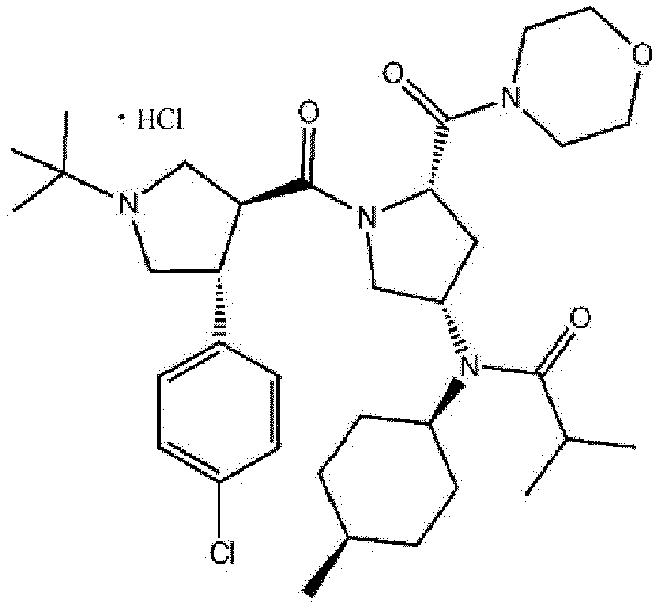
- the pharmaceutically acceptable salt of the compound of formula 1 may be N -((3 S ,5 S )-1-((3 S ,4 R )-1-( tert- butyl)-4-(4-chlorophenyl)pyrrolidine-3-carbonyl)-5-(morpholine-4-carbonyl)pyrrolidin-3-yl)- N -((1 s ,4 R )-4-methylcyclohexyl)isobutyramide hydrochloride of the following formula 3:
- the crystalline form VII may be a crystalline form of the solvate, specifically the hydrate of the pharmaceutically acceptable salt of the compound of formula 1.
- the crystalline form VII may be a crystalline form of the hydrochloride of the compound of formula 1.
- the crystalline form VII may be a crystalline form of the compound of the following formula 4.
- the crystalline form VII shows characteristic peaks including 3 or more, 5 or more, or all peaks selected from among 8.24 ⁇ 0.2°, 10.24 ⁇ 0.2°, 10.68 ⁇ 0.2°, 13.54 ⁇ 0.2°, 16.04 ⁇ 0.2°, and 19.50 ⁇ 0.2°, as analyzed by X-ray powder diffraction (XRD).
- XRD X-ray powder diffraction
- the crystalline form VII may have the XRD pattern shown in FIG. 4 .
- the crystalline form VII may have the DSC profile shown in FIG. 5 .
- the crystalline form VII according to the present invention in the thermogravimetric analysis (TGA) profile, may have 10% or less, for example, 0.1% to 10%, 0.1% to 5%, 0.1% to 3%, or 1% to 3% of a weight loss when heated to a temperature of 200°C or less, for example, at a temperature of 165 to 175°C.
- TGA thermogravimetric analysis
- the crystalline form VII may have the TGA profile shown in FIG. 6 .
- DSC Differential scanning calorimetry
- TGA Thermogravimetric analysis
- the crystalline form VII may have higher purity than a crude compound of formula 1, an amorphous compound of formula 1, or other crystalline forms of the compound of formula 1, and may be physically and chemically more stable.
- the agonistic ability for the melanocortin-4 receptor and preventive or therapeutic effects on diseases, such as obesity, diabetes, inflammation, erectile dysfunction, or the like, of the crystalline form VII of the compound of formula 1, may be more excellent than those of known melanocortin-4 receptor agonists.
- the effects of the present invention are not limited thereto.
- the present invention provides a method for preparing the crystalline form VII, comprising the steps of: preparing a mixed solution by dissolving the compound of formula 1 in a crystallization solvent containing a tertiary amine compound; and obtaining crystals from the mixed solution by evaporating the crystallization solvent from the mixed solution.
- the compound represented by formula 1 is dissolved in a crystallization solvent containing an amine compound.
- the compound of formula 1 for preparing the crystalline form VII may be a compound of formula 1, a salt thereof, an isomer thereof, or a solvate thereof.
- the compound of formula 1 may be obtained by the preparation method described in the specification of application no. KR 10-2019-0141649 (filed on 7 November 2019 ) .
- the crystallization solvent should be used containing a tertiary amine compound.
- the 'tertiary amine compound' refers to an amine compound substituted with three independent substituents.
- each substituent may be independently selected from among a C 1 to C 10 alkyl group.
- the tertiary amine compound may include, but is not limited to, trimethylamine, triethylamine, tripropylamine, triisopropylamine, tributylamine, tri-sec-butylamine, N,N-dimethylethanamine, N-ethyl-N-methylethanamine, N-ethyl-N-methylpropan-1-amine, N-ethyl-N-methylpropan-2-amine, N,N-dimethylpropan-1-amine, N,N-dimethylpropan-2-amine, N,N,2-trimethylpropan-1-amine, N,N-dimethylbutan-2-amine, or a mixture thereof.
- the tertiary amine compound may include triethylamine.
- the crystallization solvent may further include, in addition to the tertiary amine compound, a solvent that makes the solubility of a tertiary amine compound excellent.
- the crystallization solvent may be a mixture of a tertiary amine compound and water.
- the tertiary amine compound and water may be used in a volume ratio of 90 to 99:1 to 10, specifically, 95:5.
- the crystallization solvent may be a mixed solvent in which triethylamine and water are mixed in a volume ratio of 95:5.
- the crystallization solvent may be used in an amount sufficient to completely dissolve the compound of formula 1.
- a mixed solution in which the compound of formula 1 has been dissolved may have a concentration of 10 g/mL to 200 mg/mL, 50 mg/mL to 150 mg/mL, 80 mg/mL to 120 mg/mL, or 100 mg/mL.
- crystals are obtained by evaporating the crystallization solvent from the mixed solution.
- crystals may be obtained from the mixed solution by a known solvent evaporation crystallization method.
- the mixed solution when the crystallization solvent is evaporated from the mixed solution, the mixed solution may become a supersaturated solution, and thus crystals may be precipitated.
- the solvent may be evaporated while the temperature of the mixed solution is maintained.
- the crystallization solvent in the mixed solution may be evaporated at room temperature.
- the crystallization solvent in the mixed solution may be evaporated at atmospheric pressure and room temperature.
- the method when crystals are precipitated from the mixed solution by evaporating the crystallization solvent, the method may further include a step for drying the precipitated crystals.
- the obtained crystals may be dried.
- the present invention is not limited thereto.
- drying may be carried out by placing the obtained crystals at a temperature of 100 to 200°C.
- the present invention is not limited thereto.
- drying may be carried out by placing the obtained crystals on a hot plate at 170°C.
- the present invention is not limited thereto.
- the crystalline form VII as obtained above may have higher purity than a crude compound of formula 1, an amorphous compound of formula 1, or any other crystalline forms of formula 1, and may be physically and chemically more stable.
- the effects of the present invention are not limited thereto.
- the present invention provides a pharmaceutical composition
- a pharmaceutical composition comprising: (i) the crystalline form VII; and (ii) a pharmaceutically acceptable carrier.
- the crystalline form VII exhibits excellent agonistic actions on melanocortin receptors, in particular, melanocortin-4 receptors (MC4R).
- M4R melanocortin-4 receptors
- the present invention can provide a pharmaceutical composition for agonizing melanocortin receptors, the composition containing the above-described crystalline form VII as an active ingredient.
- the pharmaceutical composition may be a composition for agonizing the function of the melanocortin-4 receptor.
- the pharmaceutical composition can exhibit excellent effects of preventing or treating obesity, diabetes, inflammation, and erectile dysfunction, it may be a composition for preventing or treating obesity, diabetes, inflammation, or erectile dysfunction.
- the use of the present invention is not limited the diseases.
- carrier refers to a compound that facilitates the introduction of compounds into a cell or tissue.
- the total daily dose to be administered to a host in a single dose or in divided doses may be preferably in the range of 0.01 to 10 mg/kg body weight.
- the specific dose level for an individual patient may vary depending on the specific compound to be used, the patient's weight, sex, health status, diet, administration time of the drug, administration method, excretion rate, drug combination, the severity of the disease, or the like.
- the crystalline form VII of the present invention may be administered by any route as desired.
- the amorphous compound of the present invention may be administered parenterally or orally.
- the pharmaceutical composition of the present invention may be in various oral dosage forms, such as tablets, pills, powders, capsules, granules, syrups, or emulsions, or parenteral dosage forms, such as injection preparations for intramuscular, intravenous, or subcutaneous administration.
- Preparations for injection may be prepared according to known techniques using suitable dispersing agents, wetting agents, suspending agents, or excipients.
- Excipients that can be used in the pharmaceutical preparation of the present invention include, but are not limited to, sweeteners, binders, solubilizers, solubilizing agents, wetting agents, emulsifiers, isotonic agents, adsorbents, disintegrants, antioxidants, preservatives, lubricants, fillers, fragrances, etc.
- lactose lactose, dextrose, sucrose, mannitol, sorbitol, cellulose, glycine, silica, magnesium aluminum silicate, starch, gelatin, gum tragacanth, arginic acid, sodium alginate, methylcellulose, sodium carboxymethyl cellulose, water, ethanol, polyethylene glycol, polyvinyl pyrrolidone, sodium chloride, calcium chloride, orange essence, strawberry essence, vanilla flavor, etc. may be used.
- examples of the carrier to be used may include, but are not limited to, cellulose, calcium silicate, corn starch, lactose, sucrose, dextrose, calcium phosphate, stearic acid, magnesium stearate, calcium stearate, gelatin, talc, etc.
- examples of the carrier may include, but are not limited to, water, saline, aqueous glucose solution, an aqueous sugar-like solution, alcohols, glycol, ethers, oils, fatty acids, fatty acid esters, glycerides, etc.
- M4R melanocortin-4 receptors
- a crystalline form VII as described above for use in treating or preventing obesity, diabetes, inflammation, or erectile dysfunction.
- a method for agonizing the function of melanocortin receptors in particular, melanocortin-4 receptors (MC4R)
- M4R melanocortin-4 receptors
- a method for treating obesity, diabetes, inflammation, or erectile dysfunction comprising a step for administering to a subject the above-described crystalline form VII.
- the crystalline form VII exhibits excellent agonistic action on melanocortin receptors, in particular, melanocortin-4 receptors (MC4R), and thus can be usefully used for preventing or treating obesity, diabetes, inflammation, and erectile dysfunction.
- melanocortin-4 receptors M4R
- the crystalline form VII exhibits an on-target effect on melanocortin-4 receptors, thereby exhibiting weight loss and diet reduction effects, without affecting anxiety and depression.
- it can be administered without any safety issues, such as side effects of human ether-a-go-go related gene (hERG) inhibition or mutagenesis.
- hERG human ether-a-go-go related gene
- the crystalline form VII has purity, yield, physical and chemical stability, which are more excellent than the crude compound of formula 1, the amorphous compound of formula 1, or any other crystalline forms of formula 1.
- the crystalline form VII may have superior solubility, storage stability, and production stability to the compound of formula 1, the amorphous compound of formula 1, or any other crystalline forms of formula 1.
- the title compound was obtained through the following steps A, B, C, D, and E.
- Step A Preparation of 1-(tert-butyl) 2-methyl (2S,4S)-4-azidopyrrolidine-1,2-dicarboxylate
- Step B Preparation of 1-(tert-butyl) 2-methyl (2S,4S)-4-aminopyrrolidine-1,2-dicarboxylate
- Step C Preparation of 1-(tert-butyl) 2-methyl (2S,4S)-4-(((1s,4R)-4-methylcyclohexyl)amino)pyrrolidine-1,2-dicarboxylate
- Step D Preparation of 1-(tert-butyl) 2-methyl (2S,4S)-4-(N-((1s,4R)-4-methylcyclohexyl)isobutyramido)pyrrolidine-1,2-dicarboxylate
- Step E Preparation of methyl (2S,4S)-4-(N-((ls,4R)-4-methylcyclohexyl)isobutyramido)pyrrolidine-2-carboxylate hydrochloride
- the title compound was obtained through the following steps A, B, and C.
- Step A Preparation of methyl (2S,4S)-1-((3S,4R)-1-(tert-butyl)-4-(4-chlorophenyl)pyrrolidine-3-carbonyl)-4-(N-((1s,4R)-4-methylcyclohexyl)isobutyramido)pyrrolidine-2-carboxylate
- the mixture was stirred at room temperature for 16 hours, the reaction solvent was concentrated under reduced pressure, 0.5 N sodium hydroxide aqueous solution was added, and then, extraction was performed twice with ethyl acetate. The organic layer was washed twice with sodium chloride aqueous solution and water, dried over anhydrous magnesium sulfate, and filtered.
- Step B Preparation of (2S,4S)-1-((3S,4R)-1-(tert-butyl)-4-(4-chlorophenyl)pyrrolidine-3-carbonyl)-4-(N-((1s,4R)-4-methylcyclohexyl)isobutyramido)pyrrolidine-2-carboxylic acid
- the mixture was stirred at room temperature for 16 hours, the pH was adjusted to about 5 with 6 N aqueous hydrochloric acid solution, and then the reaction solution was concentrated under reduced pressure.
- the concentrate was dissolved in dichloromethane, and then the insoluble solid was filtered through a paper filter. The filtrate was concentrated under reduced pressure to obtain the crude title compound (38.4 g, 99%), which was used in the next step without purification.
- Step C Preparation of N-((3S,5S)-1-((3S,4R)-1-(tert-butyl)-4-(4-chlorophenyl)pyrrolidine-3-carbonyl)-5-(morpholine-4-carbonyl)pyrrolidin-3-yl)-N-((1s,4R)-4-methylcyclohexyl)isobutyramide
- the mixture was stirred at room temperature for 16 hours, the reaction solution was concentrated under reduced pressure, 0.5 N sodium hydroxide aqueous solution was added, and then extraction was performed twice with ethyl acetate. The organic layer was washed twice with sodium chloride aqueous solution and water, dried over anhydrous magnesium sulfate, and filtered.
- the XRD ( FIG. 1 ), DSC ( FIG. 2 ), and TGA ( FIG. 3 ) analyses results for the compound of Preparation Example 4 were shown in FIGs. 1 to 3 , respectively. The analyses results confirmed that it was an amorphous compound.
- the XRD, DSC, and TGA analysis methods each are as described in Experimental Examples for Example 1 below.
- the XRD measurement result of the obtained crystalline form VII is shown in FIG. 4 .
- the crystalline form VII As confirmed in the spectrum shown in FIG. 4 , the crystalline form VII, according to the present invention, exhibited characteristic peaks (2 ⁇ ) at 8.24°, 10.24°, 10.68°, 13.54°, 16.04°, and 19.50°.
- the specific values of the XRD are shown in Table 1 below. [Table 1] 2 ⁇ Relative Intensity (I/I 0 ) 8.24 630 10.24 1361 10.68 853 13.54 706 16.04 1481 19.50 1077
- DSC (Q2000, TA instrument, USA) was used to measure de-solvated temperature, transient temperature, and melting temperature. 30°C to 300°C was scanned at a rate of 10°C/min with a nitrogen purging at a rate of 50 ml/min.
- the DSC measurement result of the obtained crystalline form VII is shown in FIG. 5 .
- Volatile content analysis including surface water and the solvate was performed by Thermogravimetric analysis (TGA8000, PerkinElmer, USA). 5 mg of a sample was weighed in an open aluminum pan, and TGA was performed. The sample was heated from 30°C to 300°C at a rate of 10°C/min. During measurement, nitrogen gas was introduced into the inside of the instrument at a rate of 20 mL/min to block the inflow of oxygen and other gases.
- the TGA measurement result of the obtained crystalline form VII is shown in FIG. 6 .
Landscapes
- Health & Medical Sciences (AREA)
- Chemical & Material Sciences (AREA)
- Organic Chemistry (AREA)
- Veterinary Medicine (AREA)
- Medicinal Chemistry (AREA)
- Pharmacology & Pharmacy (AREA)
- Life Sciences & Earth Sciences (AREA)
- Animal Behavior & Ethology (AREA)
- General Health & Medical Sciences (AREA)
- Public Health (AREA)
- Diabetes (AREA)
- Chemical Kinetics & Catalysis (AREA)
- General Chemical & Material Sciences (AREA)
- Nuclear Medicine, Radiotherapy & Molecular Imaging (AREA)
- Engineering & Computer Science (AREA)
- Bioinformatics & Cheminformatics (AREA)
- Hematology (AREA)
- Endocrinology (AREA)
- Obesity (AREA)
- Epidemiology (AREA)
- Rheumatology (AREA)
- Gynecology & Obstetrics (AREA)
- Emergency Medicine (AREA)
- Pain & Pain Management (AREA)
- Reproductive Health (AREA)
- Child & Adolescent Psychology (AREA)
- Pharmaceuticals Containing Other Organic And Inorganic Compounds (AREA)
- Organic Low-Molecular-Weight Compounds And Preparation Thereof (AREA)
- Plural Heterocyclic Compounds (AREA)
- Medicines That Contain Protein Lipid Enzymes And Other Medicines (AREA)
- Peptides Or Proteins (AREA)
Abstract
Description
- The present invention claims the benefit of priority based on
Korean Patent Application No. 10-2021-0058702, filed on May 6, 2021 - [Technical Field]
- The present invention relates to a crystalline form VII of a novel compound exhibiting an excellent agonistic activity for a melanocortin receptor, a method for preparing the same, and a pharmaceutical composition comprising the same.
- Leptin protein is a hormone secreted by adipocytes, and its secretion amount increases with an increase in body fat content. It regulates functions of various neuropeptides produced from hypothalamus, thereby regulating various in vivo functions, including appetite, body fat content, and energy metabolism (Schwartz, et al., Nature 404, 661-671 (2000)). The leptin protein signal transduction for controlling appetite and body weight is made through the regulation of many factors downstream, the most representative of which are melanocortin, agouti-related peptide (AgRP), and neuropeptide Y (NPY) hormones.
- When the concentration of leptin in the blood increases as a result of excess calories in vivo, the secretion of proopiomelanocortin (POMC) protein hormone from the pituitary gland increases and the production of AgRP and NPY decreases. A small peptide hormone, alpha-melanocyte-stimulating hormone (MSH), is produced from POMC neurons. The hormone is an agonist for melanocortin-4 receptors (MC4R) of second-order neurons and ultimately induces appetite decrease. Meanwhile, when the concentration of leptin decreases as a result of calorie deficiency, the expression of AgRP, an MC4R antagonist, increases, and the expression of NPY also increases, which ultimately promotes appetite. That is, according to the change of leptin, the alpha-MSH hormone and the AgRP hormone act as agonists and antagonists for MC4R and thus are involved in appetite control.
- The Alpha-MSH hormone binds to three MCR subtypes in addition to MC4R to induce various physiological reactions. Five MCR subtypes have been identified so far. Among them, MC1R is expressed mainly in skin cells and is involved in regulating melanin pigmentation (skin pigmentation). MC2R is expressed mainly in the adrenal gland and is known to be involved in the production of glucocorticoid hormones. Its ligand is only adrenocorticotropic hormone (ACTH) derived from POMC. MC3R and MC4R, which are expressed mainly in the central nervous system, are involved in regulating appetite, energy metabolism, and body fat storage efficiency, and MC5R expressed in various tissues is known to regulate exocrine function (Wikberg, et al., Pharm Res 42 (5) 393-420 (2000)). In particular, activation of the MC4R receptor induce appetite decrease and energy metabolism increase and thus has an effect of efficiently reducing body weight. Therefore, it has been proven to be a major action point in the development of anti-obesity drugs (Review: Wikberg, Eur. J. Pharmacol 375, 295-310 (1999)); Wikberg, et al., Pharm Res 42 (5) 393-420 (2000) ; Douglas et al., Eur J Pharm 450, 93-109 (2002); O'Rahilly et al., Nature Med 10, 351-352 (2004)).
- The role of MC4R in the control of appetite and body weight was primarily demonstrated through an experiment in an animal model of abnormal expression of the agouti protein (agouti mouse). In the case of the Agouti mouse, it was found that due to genetic mutation, the agouti protein was expressed at a high concentration in the central nervous system and acted as an antagonist of MC4R in the hypothalamus to cause obesity (Yen, TT et al., FASEB J. 8, 479-488 (1994); Lu D., et al. Nature 371, 799-802 (1994)). Subsequent research results showed that the agouti-related peptides (AgRP) similar to the actual agouti protein were expressed in hypothalamic nerves, and these are also known to be antagonists for MC4R and be involved in controlling appetite (Shutter, et al., Genes Dev., 11, 593-602 (1997); Ollman, et al. Science 278, 135-138 (1997)).
- Intracerebral administration of alpha-MSH, which is an in vivo MC4R agonist, to animals leads to the effect of reducing appetite. When treating the animals with SHU9119 (peptide) or HS014 (peptide), which are MC4R antagonists, it was observed that appetite increased again (Kask et al., Biochem. Biophys. Res. Comm. 245, 90-93 (1998)). In addition, in animal studies using Melanotan II (MTII, Ac-Nle-c[Asp-His-DPhe-Arg-Trp-Lys]-NH2) and the similar agonist thereof, HP228, after intracerebral, intraperitoneal, or subcutaneous administration, efficiencies of inhibiting appetite, reducing body weight, increasing energy metabolism, etc. were found. (Thiele T. E., et al. Am J Physiol 274 (1 Pt 2), R248-54 (1998); Lee M. D., et al. FASEB J 12, A552 (1998); Murphy B., et al. J Appl Physiol 89, 273-82 (2000)). On the contrary, administration of the representative SHU9119 to animals showed significant and sustained feed intake and weight gain, providing pharmacological evidence that MCR agonists could be anti-obesity agents. The effect of reducing appetite, which is clearly exhibited upon administration of MTII, was not observed in MC4R knock-out (KO) mice. This experimental result proves again that the appetite-reducing effect is achieved mainly through the activation of MC4R (Marsh, et al., Nat Genet 21, 119-122 (1999)).
- Anorectic agents acting on the central nervous system were the main types of anti-obesity drugs developed so far. Among them, most were drugs that modulate the action of neurotransmitters. Examples include noradrenalin agents (phentermine and mazindol), serotonergic agents, fluoxetine and sibutramine, and the like. However, the neurotransmitter modulators have a wide range of effects on various physiological actions in addition to appetite suppression, through numerous subtype receptors. Accordingly, the modulators lack selectivity for each subtype, and thus have a major disadvantage in that they are accompanied by various side effects when administered for a long period.
- Meanwhile, melanocortin agonists are neuropeptides, not neurotransmitters. Given that in MC4R gene KO mice, all functions other than energy metabolism are normal, they have an advantage as an action point in that they can induce only weight loss through appetite suppression without affecting other physiological functions. In particular, the receptor is a G-protein coupled receptor (GPCR) that belongs to the most successful category of new drug action points developed so far. Thus, the action point greatly differ from existing action points in that it is relatively easy to secure selectivity for subtype receptors.
- As an example of utilizing a melanocortin receptor as an action point, international publication nos.
WO 2008/007930 andWO 2010/056022 disclose compounds as agonists of the melanocortin receptor. - In addition, the inventors of the present invention have conducted extensive studies and invented a novel compound of the following
formula 1 having an excellent agonistic activity selective for a melanocortin receptor, in particular, melanocortin-4 receptor (MC4R), and a method for preparing the same (application no.KR 10-2019-0141649 (filed on 7 November 2019 
- Meanwhile, the crystal structure of a pharmaceutically active ingredient often affects the chemical stability of the drug. Different crystallization conditions and storage conditions can lead to changes in the crystal structure of the compound, and sometimes the accompanying production of other forms of the crystalline form. In general, an amorphous drug product does not have a regular crystal structure, and often has other defects such as poor product stability, smaller particle size, difficult filtration, easy agglomeration, and poor flowability. Thus, it is necessary to improve various physical properties of the product. As such, it is necessary to study crystal structures having high purity and good chemical stability for a single compound.
-
- (Patent Document 1) International Patent Application Publication No.
WO 2008/007930 - (Patent Document 2) International Patent Application Publication No.
WO 2010/056022 - An aspect of the present invention provides a stable crystalline form of a novel compound having an excellent agonistic activity, which is selective for a melanocortin receptor, in particular, melanocortin-4 receptor (MC4R), and a method for preparing the same.
- Another aspect of the present invention provides a pharmaceutical composition comprising the stable crystalline form of the novel compound.
- According to an aspect of the present invention,
- there is provided a crystalline form VII of a compound of the following
formula 1, a pharmaceutically acceptable salt, or a solvate thereof, - wherein the X-ray powder diffraction pattern has 3 or more or 5 or more characteristic peaks selected from among peaks with the following diffraction angles (2θ values) of: 8.24±0.2°, 10.24±0.2°, 10.68±0.2°, 13.54±0.2°, 16.04±0.2°, and 19.50±0.2°,

- R1 is a C2-C5 alkyl.
- Since the compound of
formula 1 can have an asymmetric carbon center and an asymmetric axis or an asymmetric plane, it can exist as cis or trans isomers, R or S isomers, racemates, diastereomer mixtures, and individual diastereomers, all of which are within the scope of the compound offormula 1. - In the present specification, unless otherwise specified for convenience, the compound of
formula 1 is used to include all of the compound offormula 1, a pharmaceutically acceptable salt, an isomer, and a solvate thereof. - In one embodiment, according to the present invention, in
formula 1, R1 is a C2 to C5 alkyl. In another embodiment, according to the present invention, informula 1, R1 is a straight-chain or branched C2 to C5 alkyl, for example, ethyl, n-propyl, iso-propyl, n-butyl, iso-butyl, sec-butyl, or tert-butyl. - In another embodiment, according to the present invention, in
formula 1, R1 is a C2 or C3 alkyl. In another embodiment, according to the present invention, informula 1, R1 is a straight-chain or branched C2 or C3 alkyl, for example, ethyl, n-propyl, or iso-propyl. - In one embodiment, according to the present invention, the pharmaceutically acceptable salt includes, but is not limited to, acid-addition salts which are formed from inorganic acids, such as hydrochloric acid, sulfuric acid, nitric acid, phosphoric acid, hydrobromic acid, and hydroiodic acid; organic carboxylic acids, such as tartaric acid, formic acid, citric acid, acetic acid, trichloroacetic acid, trifluoroacetic acid, gluconic acid, benzoic acid, lactic acid, fumaric acid, and maleic acid; or sulfonic acids, such as methanesulfonic acid, benzenesulfonic acid, p-toluenesulfonic acid, or naphthalene-sulfonic acid.
- In one embodiment, according to the present invention, the solvate may include a hydrate; or a solvate with an organic solvent selected from the group consisting of methanol, ethanol, 2-propanol, 1,2-propanediol, 1,3-propanediol, n-butanol, 1,4-butanediol, tert-butanol, acetic acid, acetone, butyl acetate, methyl acetate, ethyl acetate, propyl acetate, t-butyl acetate, isobutyl acetate, methylethylketone, 2-pentanone, tetrahydrofuran, acetonitrile, chloroform, toluene, dimethyl ether, diethyl ether, methyl ethyl ether, methyl phenyl ether, ethyl phenyl ether, diphenyl ether, and mixtures of two or more thereof.
- In one embodiment, according to the present invention, the crystalline form VII may be a crystalline form of the pharmaceutically acceptable salt of the compound of
formula 1. - The pharmaceutically acceptable salt of the compound of
formula 1 may be a hydrochloride compound of the following formula 2:
- In another embodiment, according to the present invention, the pharmaceutically acceptable salt of the compound of
formula 1 may be N-((3S,5S)-1-((3S,4R)-1-(tert-butyl)-4-(4-chlorophenyl)pyrrolidine-3-carbonyl)-5-(morpholine-4-carbonyl)pyrrolidin-3-yl)-N-((1s,4R)-4-methylcyclohexyl)isobutyramide hydrochloride of the following formula 3:
- In another embodiment, according to the present invention, the crystalline form VII may be a crystalline form of the solvate, specifically the hydrate of the pharmaceutically acceptable salt of the compound of
formula 1. - More specifically, the crystalline form VII may be a crystalline form of the hydrochloride of the compound of
formula 1. - In one embodiment, according to the present invention, the crystalline form VII may be a crystalline form of the compound of the following
formula 4.
- The crystalline form VII, according to the present invention, shows characteristic peaks including 3 or more, 5 or more, or all peaks selected from among 8.24±0.2°, 10.24±0.2°, 10.68±0.2°, 13.54±0.2°, 16.04±0.2°, and 19.50±0.2°, as analyzed by X-ray powder diffraction (XRD).
- In one embodiment, according to the present invention, the crystalline form VII may have the XRD pattern shown in
FIG. 4 . - In the differential scanning calorimetry (DSC) profile of the crystalline form VII, according to the present invention, an endothermic peak appears at 165 to 175°C.
- In one embodiment, according to the present invention, the crystalline form VII may have the DSC profile shown in
FIG. 5 . - The crystalline form VII according to the present invention, in the thermogravimetric analysis (TGA) profile, may have 10% or less, for example, 0.1% to 10%, 0.1% to 5%, 0.1% to 3%, or 1% to 3% of a weight loss when heated to a temperature of 200°C or less, for example, at a temperature of 165 to 175°C.
- In one embodiment, according to the present invention, the crystalline form VII may have the TGA profile shown in
FIG. 6 . - In the present specification,
- X-ray diffraction (XRD) analysis shows the results obtained by PXRD (Cu Kα radiation (λ=1.54Å), Rigaku,
Miniflex 600, Japan). - Differential scanning calorimetry (DSC) analysis shows the results obtained by DSC (Q2000, TA instrument, USA).
- Thermogravimetric analysis (TGA) shows the results obtained by TGA (TGA8000, PerkinElmer, USA).
- The crystalline form VII may have higher purity than a crude compound of
formula 1, an amorphous compound offormula 1, or other crystalline forms of the compound offormula 1, and may be physically and chemically more stable. - In addition, the agonistic ability for the melanocortin-4 receptor and preventive or therapeutic effects on diseases, such as obesity, diabetes, inflammation, erectile dysfunction, or the like, of the crystalline form VII of the compound of
formula 1, may be more excellent than those of known melanocortin-4 receptor agonists. However, the effects of the present invention are not limited thereto. - In another aspect, the present invention provides a method for preparing the crystalline form VII, comprising the steps of: preparing a mixed solution by dissolving the compound of
formula 1 in a crystallization solvent containing a tertiary amine compound; and obtaining crystals from the mixed solution by evaporating the crystallization solvent from the mixed solution. - First, the compound represented by
formula 1 is dissolved in a crystallization solvent containing an amine compound. - The compound of
formula 1 for preparing the crystalline form VII may be a compound offormula 1, a salt thereof, an isomer thereof, or a solvate thereof. - The compound of
formula 1 may be obtained by the preparation method described in the specification of application no.KR 10-2019-0141649 (filed on 7 November 2019 - The crystallization solvent should be used containing a tertiary amine compound. The 'tertiary amine compound' refers to an amine compound substituted with three independent substituents. Herein, each substituent may be independently selected from among a C1 to C10 alkyl group.
- The tertiary amine compound may include, but is not limited to, trimethylamine, triethylamine, tripropylamine, triisopropylamine, tributylamine, tri-sec-butylamine, N,N-dimethylethanamine, N-ethyl-N-methylethanamine, N-ethyl-N-methylpropan-1-amine, N-ethyl-N-methylpropan-2-amine, N,N-dimethylpropan-1-amine, N,N-dimethylpropan-2-amine, N,N,2-trimethylpropan-1-amine, N,N-dimethylbutan-2-amine, or a mixture thereof.
- In one embodiment, according to the present invention, the tertiary amine compound may include triethylamine.
- In another embodiment, according to the present invention, the crystallization solvent may further include, in addition to the tertiary amine compound, a solvent that makes the solubility of a tertiary amine compound excellent.
- In another embodiment, according to the present invention, the crystallization solvent may be a mixture of a tertiary amine compound and water.
- In another embodiment, according to the present invention, as the crystallization solvent, the tertiary amine compound and water may be used in a volume ratio of 90 to 99:1 to 10, specifically, 95:5.
- In another embodiment, according to the present invention, the crystallization solvent may be a mixed solvent in which triethylamine and water are mixed in a volume ratio of 95:5.
- The crystallization solvent may be used in an amount sufficient to completely dissolve the compound of
formula 1. For example, a mixed solution in which the compound offormula 1 has been dissolved may have a concentration of 10 g/mL to 200 mg/mL, 50 mg/mL to 150 mg/mL, 80 mg/mL to 120 mg/mL, or 100 mg/mL. - Next, crystals are obtained by evaporating the crystallization solvent from the mixed solution.
- In the present invention, crystals may be obtained from the mixed solution by a known solvent evaporation crystallization method.
- In one embodiment, according to the present invention, when the crystallization solvent is evaporated from the mixed solution, the mixed solution may become a supersaturated solution, and thus crystals may be precipitated.
- In another embodiment, according to the present invention, during evaporation of the crystallization solvent, the solvent may be evaporated while the temperature of the mixed solution is maintained.
- In another embodiment, according to the present invention, the crystallization solvent in the mixed solution may be evaporated at room temperature.
- In another embodiment, according to the present invention, the crystallization solvent in the mixed solution may be evaporated at atmospheric pressure and room temperature.
- According to the present invention, when crystals are precipitated from the mixed solution by evaporating the crystallization solvent, the method may further include a step for drying the precipitated crystals.
- In one embodiment, according to the present invention, when the amount of crystals produced from the mixed solution that has become a supersaturated solution no longer increases, the obtained crystals may be dried. However, the present invention is not limited thereto.
- In another embodiment, according to the present invention, drying may be carried out by placing the obtained crystals at a temperature of 100 to 200°C. However, the present invention is not limited thereto.
- In another embodiment, according to the present invention, drying may be carried out by placing the obtained crystals on a hot plate at 170°C. However, the present invention is not limited thereto.
- The crystalline form VII as obtained above may have higher purity than a crude compound of
formula 1, an amorphous compound offormula 1, or any other crystalline forms offormula 1, and may be physically and chemically more stable. However, the effects of the present invention are not limited thereto. - In another aspect, the present invention provides a pharmaceutical composition comprising: (i) the crystalline form VII; and (ii) a pharmaceutically acceptable carrier.
- The crystalline form VII, according to the present invention, exhibits excellent agonistic actions on melanocortin receptors, in particular, melanocortin-4 receptors (MC4R). Thus, the present invention can provide a pharmaceutical composition for agonizing melanocortin receptors, the composition containing the above-described crystalline form VII as an active ingredient. Specifically, the pharmaceutical composition may be a composition for agonizing the function of the melanocortin-4 receptor.
- In addition, since the pharmaceutical composition can exhibit excellent effects of preventing or treating obesity, diabetes, inflammation, and erectile dysfunction, it may be a composition for preventing or treating obesity, diabetes, inflammation, or erectile dysfunction. However, the use of the present invention is not limited the diseases.
- As used herein, "carrier" refers to a compound that facilitates the introduction of compounds into a cell or tissue.
- When the crystalline form VII of the present invention is administered for clinical purposes, the total daily dose to be administered to a host in a single dose or in divided doses may be preferably in the range of 0.01 to 10 mg/kg body weight. However, the specific dose level for an individual patient may vary depending on the specific compound to be used, the patient's weight, sex, health status, diet, administration time of the drug, administration method, excretion rate, drug combination, the severity of the disease, or the like.
- The crystalline form VII of the present invention may be administered by any route as desired. For example, the amorphous compound of the present invention may be administered parenterally or orally.
- The pharmaceutical composition of the present invention may be in various oral dosage forms, such as tablets, pills, powders, capsules, granules, syrups, or emulsions, or parenteral dosage forms, such as injection preparations for intramuscular, intravenous, or subcutaneous administration.
- Preparations for injection may be prepared according to known techniques using suitable dispersing agents, wetting agents, suspending agents, or excipients.
- Excipients that can be used in the pharmaceutical preparation of the present invention include, but are not limited to, sweeteners, binders, solubilizers, solubilizing agents, wetting agents, emulsifiers, isotonic agents, adsorbents, disintegrants, antioxidants, preservatives, lubricants, fillers, fragrances, etc. For example, as excipients, lactose, dextrose, sucrose, mannitol, sorbitol, cellulose, glycine, silica, magnesium aluminum silicate, starch, gelatin, gum tragacanth, arginic acid, sodium alginate, methylcellulose, sodium carboxymethyl cellulose, water, ethanol, polyethylene glycol, polyvinyl pyrrolidone, sodium chloride, calcium chloride, orange essence, strawberry essence, vanilla flavor, etc. may be used.
- When the pharmaceutical composition of the present invention is in an oral dosage form, examples of the carrier to be used may include, but are not limited to, cellulose, calcium silicate, corn starch, lactose, sucrose, dextrose, calcium phosphate, stearic acid, magnesium stearate, calcium stearate, gelatin, talc, etc.
- When the pharmaceutical composition of the present invention is in an injectable preparation form, examples of the carrier may include, but are not limited to, water, saline, aqueous glucose solution, an aqueous sugar-like solution, alcohols, glycol, ethers, oils, fatty acids, fatty acid esters, glycerides, etc.
- In another aspect, there is provided a crystalline form VII as described above for use in agonizing the functions of melanocortin receptors, in particular, melanocortin-4 receptors (MC4R).
- In one embodiment, there is provided a crystalline form VII as described above for use in treating or preventing obesity, diabetes, inflammation, or erectile dysfunction.
- In another aspect, there is provided a method for agonizing the function of melanocortin receptors, in particular, melanocortin-4 receptors (MC4R), the method comprising a step for administering to a subject the above-described crystalline form VII.
- In another aspect, there is provided a method for treating obesity, diabetes, inflammation, or erectile dysfunction, the method comprising a step for administering to a subject the above-described crystalline form VII.
- The crystalline form VII, according to the present invention, exhibits excellent agonistic action on melanocortin receptors, in particular, melanocortin-4 receptors (MC4R), and thus can be usefully used for preventing or treating obesity, diabetes, inflammation, and erectile dysfunction.
- The crystalline form VII, according to the present invention, exhibits an on-target effect on melanocortin-4 receptors, thereby exhibiting weight loss and diet reduction effects, without affecting anxiety and depression. In addition, it can be administered without any safety issues, such as side effects of human ether-a-go-go related gene (hERG) inhibition or mutagenesis.
- In addition, the crystalline form VII, according to the present invention, has purity, yield, physical and chemical stability, which are more excellent than the crude compound of
formula 1, the amorphous compound offormula 1, or any other crystalline forms offormula 1. - Specifically, the crystalline form VII may have superior solubility, storage stability, and production stability to the compound of
formula 1, the amorphous compound offormula 1, or any other crystalline forms offormula 1. -
-
FIG. 1 is a graph of the XRD result of Preparation Example 4. -
FIG. 2 is a graph of the DSC result of Preparation Example 4. -
FIG. 3 is a graph of the TGA result of Preparation Example 4. -
FIG. 4 is a graph of the XRD result of Example 1. -
FIG. 5 is a graph of the DSC result of Example 1. -
FIG. 6 is a graph of the TGA result of Example 1. - Hereinafter, the present invention will be described in more detail through Preparation Examples and Examples. However, these Examples are merely illustrative of the present invention, and the scope of the present invention is not limited thereto.
- Preparation Example 1: Preparation of methyl (2S,4S)-4-(N-((1s,4R)-4-methylcyclohexyl)isobutyramido)pyrrolidine-2-carboxylate hydrochloride

- The title compound was obtained through the following steps A, B, C, D, and E.
- 1-(tert-butyl) 2-methyl (2S,4R)-4-((methylsulfonyl)oxy)pyrrolidine-1,2-dicarboxylate (48.5 g, 150 mmol) was dissolved in N,N'-dimethylformamide (250 ml) under nitrogen, and sodium azide (19.5 g, 300 ml) was added. After stirring at 80°C for 16 hours, the reaction solvent was concentrated under reduced pressure, water was added, and extraction was performed twice with ethyl acetate. The organic layer was washed with an aqueous sodium chloride solution and water, dried over anhydrous magnesium sulfate, and filtered. The filtrate was concentrated under reduced pressure to obtain crude 1-(tert-butyl) 2-methyl (2S,4S)-4-azidopyrrolidine-1,2-dicarboxylate (39.59 g, 98%), which was used in the next step without purification.
- MS [M+H] = 271 (M+1)
- 1H NMR (400 MHz, CD3OD) δ 4.43-4.37 (m, 1H), 4.35-4.27 (br, 1H), 3.77 (s, 1.8H), 3.76 (s, 1.2H), 3.73-3.66 (m, 1H), 3.44-3.38 (m, 1H), 2.63-2.49 (m, 1H), 2.19-2.11 (m, 1H), 1.50 (s, 4.5H), 1.44 (s, 4.5H)
- 1-(tert-butyl) 2-methyl (2S,4S)-4-azidopyrrolidine-1,2-dicarboxylate (24.59 g, 91.0 mmol) obtained in step A above was dissolved in tetrahydrofuran (180 ml), and 1 M trimethylphosphine tetrahydro solution (109.2 ml, 109.2 mmol) was slowly added at 0°C. The mixture was stirred at the same temperature for 1 hour and then at room temperature for 3 hours. After the reaction solvent was concentrated under reduced pressure, dichloromethane (100 ml) and water (150 ml) were added, and the mixture was stirred for about 30 minutes. The layers were separated and were extracted once more with dichloromethane, and the organic layer was dried over anhydrous magnesium sulfate and was filtered. The filtrate was concentrated under reduced pressure to obtain crude 1-(tert-butyl) 2-methyl (2S,4S)-4-aminopyrrolidine-1,2-dicarboxylate (20.62 g, 93%), which was used in the next step without purification.
- MS [M+H] = 245 (M+1)
- 1H NMR (400 MHz, CD3OD) δ 4.27 (m, 1H), 3.77 (s, 1.8H), 3.76 (s,1.2H), 3.75-3.67 (m, 1H), 3.50-3.42 (m, 1H), 3.22-3.17 (m, 1H), 2.58-2.47 (m,1H), 1.82-1.71 (m, 1H), 1.48 (s, 4.5H), 1.42 (s, 4.5H)
- 1-(tert-butyl) 2-methyl (2S,4S)-4-aminopyrrolidine-1,2-dicarboxylate (20.62 g, 84.4 mmol) obtained in step B above was dissolved in dichloroethane (150 ml), and 4-methylcyclohexanone (9.5 ml, 101.3 mmol) was added. Sodium triacetoxyborohydride (26.8 g, 126.6 mmol) was added at 0°C, and the mixture was stirred at room temperature for 16 hours. The reaction solvent was concentrated under reduced pressure, water was added, and extraction was performed twice with ethyl acetate. The organic layer was washed with an aqueous sodium chloride solution, dried over anhydrous magnesium sulfate, and filtered. The filtrate was concentrated under reduced pressure and purified by column chromatography to obtain 1-(tert-butyl) 2-methyl (2S,4S)-4-(((1s,4R)-4-methylcyclohexyl)amino)pyrrolidine-1,2-dicarboxylate (22.9 g, 80%) .
- MS [M+H] = 341 (M+1)
- 1H NMR (400 MHz, CD3OD) δ 4.26 (m, 1H), 3.76 (s, 1.8H), 3.75 (s, 1.2H), 3.78-3.71 (m, 1H), 3.49-3.40 (m, 1H), 3.22-3.16 (m, 1H), 2.69-2.60(br, 1H), 2.58-2.46 (m, 1H), 1.87-1.77 (m, 1H), 1.73-1.63 (m, 1H), 1.62-1.35(m, 8H), 1.48 (s, 4.5H), 1.42 (s, 4.5H), 0.96 (d, 3H)
- 1-(tert-butyl) 2-methyl (2S,4S)-4-(((1s,4R)-4-methylcyclohexyl)amino)pyrrolidine-1,2-dicarboxylate obtained in step C above (37.29 g, 109.5 mmol) was dissolved in dichloromethane (500 ml), triethyl amine (61.1 ml, 438.1 mmol) was added, and then isobutyryl chloride (11.7 ml, 219 mmol) was slowly added at 0°C. After the mixture was stirred at room temperature for 16 hours, the reaction solvent was concentrated under reduced pressure, an aqueous sodium hydrogen carbonate solution was added, and extraction was performed twice with ethyl acetate. The organic layer was washed with an aqueous sodium chloride solution and water, dried over anhydrous magnesium sulfate, and filtered. The filtrate was concentrated under reduced pressure, and purified by column chromatography to obtain 1-(tert-butyl) 2-methyl (2S,4S)-4-(N-((1s,4R)-4-methylcyclohexyl)isobutyramido)pyrrolidine-1,2-dicarboxylate (38.79 g, 86%).
- MS [M+H] = 411 (M+1)
- 1H NMR (400 MHz, CD3OD) δ 4.27 (m, 1H), 3.76 (s, 1.8H), 3.75 (s, 1.2H), 3.78-3.72 (m, 1H), 3.50-3.41 (m, 1H), 3.33-3.14 (m, 1H), 2.69-2.60 (m, 2H), 2.57-2.43 (m, 1H), 1.87-1.79 (m, 1H), 1.70-1.61 (m, 1H), 1.60-1.32 (m, 8H), 1.47 (s, 4.5H), 1.41 (s, 4.5H), 1.10 (dd, 6H), 0.99 (d, 3H)
- 1-(tert-butyl) 2-methyl (2S,4S)-4-(N-((1s,4R)-4-methylcyclohexyl)isobutyramido)pyrrolidine-1,2-dicarboxylate (34.0 g, 82.8 mmol) obtained in step D above was dissolved in dichloromethane (200 ml), and a solution of 4 N hydrochloric acid in 1,4-dioxane solution (82.8 ml, 331.3 mmol) was added at 0°C. After the mixture was stirred at room temperature for 6 hours, the reaction solvent was concentrated under reduced pressure to obtain crude (28.7 g, 99%), which was used in the next step without purification.
- MS[M+H] = 311 (M+1)
-

- The title compound was obtained according to the method described in international patent publication no.
WO 2004/092126 . - MS[ M+H] = 282 (M+1)
- 1H NMR (400 MHz, CD3OD) δ 7.43-7.33 (m, 4H), 3.90-3.69 (m, 3H), 3.59 (dd, J = 11.2, 10.0 Hz, 1H), 3.29 (dd, J = 11.2, 11.2 Hz, 1H), 3.18-3.09 (m, 1H), 1.44 (s, 9H)
-

- The title compound was obtained through the following steps A, B, and C.
- Methyl (2S,4S)-4-(N-((1s,4R)-4-methylcyclohexyl)isobutyramido)pyrrolidine-2-carboxylate hydrochloride (28.7 g, 82.73 mmol) obtained in Preparation Example 1, (3S,4R)-1-(tert-butyl)-4-(4-chlorophenyl)pyrrolidine-3-carboxylic acid (24.5 g, 86.87 mmol) obtained in Preparation Example 2, 1-(3-dimethylaminopropyl)-3-ethylcarbodiimide hydrochloride (22.2 g, 115.83 mmol), and 1-hydroxybenzotriazole hydrate (15.7 g, 115.83 mmol) were dissolved in N,N'-dimethylformamide (400 ml), and N,N'-diisopropylethylamine (72.0 ml, 413.66 mmol) was added slowly. The mixture was stirred at room temperature for 16 hours, the reaction solvent was concentrated under reduced pressure, 0.5 N sodium hydroxide aqueous solution was added, and then, extraction was performed twice with ethyl acetate. The organic layer was washed twice with sodium chloride aqueous solution and water, dried over anhydrous magnesium sulfate, and filtered. The filtrate was concentrated under reduced pressure and purified by column chromatography to obtain methyl (2S,4S)-1-((3S,4R)-1-(tert-butyl)-4-(4-chlorophenyl)pyrrolidine-3-carbonyl)-4-(N-((1s,4R)-4-methylcyclohexyl)isobutyramido)pyrrolidine-2-carboxylate (41.19 g, 87%).
- MS [M+H] = 575 (M+1)
- Methyl (2S,4S)-1-((3S,4R)-1-(tert-butyl)-4-(4-chlorophenyl)pyrrolidine-3-carbonyl)-4-(N-((1s,4R)-4-methylcyclohexyl)isobutyramido)pyrrolidine-2-carboxylate (39.4 g, 68.62 mmol) obtained in step A above was dissolved in methanol (450 ml), and then, 6 N sodium hydroxide aqueous solution (57.2 ml, 343.09 mmol) was added. The mixture was stirred at room temperature for 16 hours, the pH was adjusted to about 5 with 6 N aqueous hydrochloric acid solution, and then the reaction solution was concentrated under reduced pressure. The concentrate was dissolved in dichloromethane, and then the insoluble solid was filtered through a paper filter. The filtrate was concentrated under reduced pressure to obtain the crude title compound (38.4 g, 99%), which was used in the next step without purification.
- MS [M+H] = 561 (M+1)
- (2S,4S)-1-((3S,4R)-1-(tert-butyl)-4-(4-chlorophenyl)pyrrolidine-3-carbonyl)-4-(N-((1s,4R)-4-methylcyclohexyl)isobutyramido)pyrrolidine-2-carboxylic acid (38.4 g, 68.60 mmol) obtained in step B above, 1-(3-dimethylaminopropyl)-3-ethylcarbodiimide hydrochloride (18.4 g, 96.04 mmol), and 1-hydroxybenzotriazole hydrate (13.0 g, 96.04 mmol) were dissolved in N,N'-dimethylformamide (200 ml), and then morpholine (5.9 ml, 68.80 mmol) and N,N'-diisopropylethylamine (59.7 ml, 343.02 mmol) were sequentially and slowly added. The mixture was stirred at room temperature for 16 hours, the reaction solution was concentrated under reduced pressure, 0.5 N sodium hydroxide aqueous solution was added, and then extraction was performed twice with ethyl acetate. The organic layer was washed twice with sodium chloride aqueous solution and water, dried over anhydrous magnesium sulfate, and filtered. The filtrate was concentrated under reduced pressure and purified by column chromatography to obtain N-((3S,5S)-1-((3S,4R)-1-(tert-butyl)-4-(4-chlorophenyl)pyrrolidine-3-carbonyl)-5-(morpholine-4-carbonyl)pyrrolidin-3-yl)-N-((1s,4R)-4-methylcyclohexyl)isobutyramide (37.05 g, 86%).
- MS [M+H] = 630 (M+1)
-

- Based on 1 g of the compound (MC70) prepared in Preparation Example 3 above, 19 mL of MBTE was used to dissolve the compound (MC70) at 25°C. After dissolution was completed, 1 mL of heptane was added, and then the mixture was cooled to -5 to 0°C. After the set temperature was reached, 1 equivalent of 4 M HCl/EtOAc was added dropwise, the mixture was stirred for about 90 minutes, and filtered to obtain the title compound (MC71). (yield: about 90%)
- The XRD (
FIG. 1 ), DSC (FIG. 2 ), and TGA (FIG. 3 ) analyses results for the compound of Preparation Example 4 were shown inFIGs. 1 to 3 , respectively. The analyses results confirmed that it was an amorphous compound. The XRD, DSC, and TGA analysis methods each are as described in Experimental Examples for Example 1 below. -
- 100 mg of the compound of Preparation Example 4 (MC71) prepared above was dissolved in 950 µL of triethylamine and 50 µL of water, and then the solvent was evaporated at room temperature until crystals were formed. Subsequently, the formed crystals were dried on a hot plate at 170°C to obtain the title crystalline form VII.
- 1 g of the compound (MC71) of Preparation Example 4 prepared above was dissolved in 1 mL of EtOAc at room temperature. After completion of dissolution, the mixture was stirred for about 43 hours with an electronic stirrer, but the same crystals as in Example 1 were not obtained.
- For powder XRD diffraction pattern, PXRD (Cu Kα radiation (λ=1.54 Å), Rigaku,
Miniflex 600, Japan) was used, and the tube voltage and tube current were set to 45 kV and 15 mA, respectively, and then Bragg angles (2θ) in a range of 3 to 40° were measured with the scan rate of 0.02°/s and the step speed of 4°/min. - The XRD measurement result of the obtained crystalline form VII is shown in
FIG. 4 . - As confirmed in the spectrum shown in
FIG. 4 , the crystalline form VII, according to the present invention, exhibited characteristic peaks (2θ) at 8.24°, 10.24°, 10.68°, 13.54°, 16.04°, and 19.50°. The specific values of the XRD are shown in Table 1 below.[Table 1] 2θ Relative Intensity (I/I0) 8.24 630 10.24 1361 10.68 853 13.54 706 16.04 1481 19.50 1077 - DSC (Q2000, TA instrument, USA) was used to measure de-solvated temperature, transient temperature, and melting temperature. 30°C to 300°C was scanned at a rate of 10°C/min with a nitrogen purging at a rate of 50 ml/min.
- The DSC measurement result of the obtained crystalline form VII is shown in
FIG. 5 . - As can be seen in
FIG. 5 , for the crystalline form VII, an endothermic peak was observed at about 168.2°C. The temperature values have an error of ±5°C. - Volatile content analysis including surface water and the solvate was performed by Thermogravimetric analysis (TGA8000, PerkinElmer, USA). 5 mg of a sample was weighed in an open aluminum pan, and TGA was performed. The sample was heated from 30°C to 300°C at a rate of 10°C/min. During measurement, nitrogen gas was introduced into the inside of the instrument at a rate of 20 mL/min to block the inflow of oxygen and other gases.
- The TGA measurement result of the obtained crystalline form VII is shown in
FIG. 6 . - As can be seen in
FIG. 6 , for the crystalline form VII, a weight loss of about 1.33% was observed at a temperature of 165°C to 175°C. After about 250°C, a weight loss due to decomposition occurred. The temperature values have an error of ±5°C.
Claims (14)
- A crystalline form VII of a compound of the following formula 1, a pharmaceutically acceptable salt thereof, or a solvate thereof,wherein the X-ray powder diffraction pattern has 3 or more characteristic peaks selected from among peaks with the following diffraction angles (2θ values) of: ): 8.24±0.2°, 10.24±0.2°, 10.68±0.2°, 13.54±0.2°, 16.04±0.2°, and 19.50±0.2°,
 R1 is a C2-C5 alkyl.
 - The crystalline form VII of claim 1, wherein R1 is a C2-C4 alkyl.
- The crystalline form VII of claim 1, wherein the pharmaceutically acceptable salt of the compound of the formula 1 is selected from the group consisting of hydrochloride, sulfate, nitrate, phosphate, hydrobromide, and hydroiodide of the compound.
- The crystalline form VII of claim 1, which is a crystalline form of N-((3S,5S)-1-((3S,4R)-1-(tert-butyl)-4-(4-chlorophenyl)pyrrolidine-3-carbonyl)-5-(morpholine-4-carbonyl)pyrrolidin-3-yl)-N-((1s,4R)-4-methylcyclohexyl)isobutyramide hydrochloride.
- A method for preparing the crystalline form VII described in any one of claims 1 to 4, the method comprising the steps of:preparing a mixed solution by dissolving the compound of the formula 1 in a crystallization solvent containing a tertiary amine compound; andobtaining crystals from the mixed solution by evaporating the crystallization solvent from the mixed solution.
- The method for preparing the crystalline form VII of claim 5, wherein the tertiary amine compound includes trimethylamine, triethylamine, tripropylamine, triisopropylamine, tributylamine, tri-sec-butylamine, N,N-dimethylethanamine, N-ethyl-N-methylethanamine, N-ethyl-N-methylpropan-1-amine, N-ethyl-N-methylpropan-2-amine, N,N-dimethylpropan-1-amine, N,N-dimethylpropan-2-amine, N,N,2-trimethylpropan-1-amine, N,N-dimethylbutan-2-amine, or a mixture thereof.
- The method for preparing the crystalline form VII of claim 5, wherein the solvent is evaporated while the temperature of the mixed solution is maintained.
- The method for preparing the crystalline form VII of claim 5, wherein the crystallization solvent in the mixed solution is evaporated at room temperature.
- The method for preparing the crystalline form VII of claim 5, wherein the crystallization solvent further includes water.
- The method for preparing the crystalline form VII of claim 9, wherein, as the crystallization solvent, the tertiary amine compound and water are used in a volume ratio of 90 to 99:1 to 10.
- The method for preparing the crystalline form VII of claim 5, further comprising a step for drying the obtained crystals by evaporating the crystallization solvent.
- A pharmaceutical composition comprising the crystalline form VII, according to any one of claims 1-4, and a pharmaceutically acceptable carrier.
- A pharmaceutical composition for agonizing the function of a melanocortin-4 receptor, the composition comprising the crystalline form VII, according to any one of claims 1-4, and a pharmaceutically acceptable carrier.
- The pharmaceutical composition of claim 13, which is for preventing or treating obesity, diabetes, inflammation, or erectile dysfunction.
Applications Claiming Priority (2)
| Application Number | Priority Date | Filing Date | Title |
|---|---|---|---|
| KR20210058702 | 2021-05-06 | ||
| PCT/KR2022/006479 WO2022235105A1 (en) | 2021-05-06 | 2022-05-06 | Crystal form vii of melanocortin receptor agonist compound and method for preparing same |
Publications (2)
| Publication Number | Publication Date |
|---|---|
| EP4317150A1 true EP4317150A1 (en) | 2024-02-07 |
| EP4317150A4 EP4317150A4 (en) | 2024-10-30 |
Family
ID=83932334
Family Applications (1)
| Application Number | Title | Priority Date | Filing Date |
|---|---|---|---|
| EP22799148.6A Pending EP4317150A4 (en) | 2021-05-06 | 2022-05-06 | CRYSTALLINE FORM VII OF A MELANOCORTIN RECEPTOR AGONIST COMPOUND AND PROCESS FOR ITS PREPARATION |
Country Status (10)
| Country | Link |
|---|---|
| US (1) | US20240239783A1 (en) |
| EP (1) | EP4317150A4 (en) |
| JP (1) | JP2024518056A (en) |
| KR (2) | KR102854596B1 (en) |
| CN (1) | CN117255786A (en) |
| AU (2) | AU2022269993A1 (en) |
| BR (1) | BR112023022863A2 (en) |
| CA (1) | CA3217201A1 (en) |
| MX (1) | MX2023013042A (en) |
| WO (1) | WO2022235105A1 (en) |
Families Citing this family (2)
| Publication number | Priority date | Publication date | Assignee | Title |
|---|---|---|---|---|
| EP4265255A4 (en) * | 2020-12-22 | 2024-06-19 | Lg Chem, Ltd. | USE AS A SELECTIVE MALANOCORTIN-4 RECEPTOR AGONIST |
| WO2025144899A1 (en) * | 2023-12-26 | 2025-07-03 | Lg Chem, Ltd. | Use of melanocortin-4 receptor agonists for the treatment of a lepr and/or sh2b1 deficiency |
Family Cites Families (22)
| Publication number | Priority date | Publication date | Assignee | Title |
|---|---|---|---|---|
| US4754030A (en) * | 1985-02-01 | 1988-06-28 | Bristol-Myers Company | Cefbuperazone crystalline triethylamine salt |
| CA2377369A1 (en) | 1999-06-04 | 2000-12-14 | Merck & Co., Inc. | Substituted piperidines as melanocortin-4 receptor agonists |
| WO2002059107A1 (en) | 2001-01-23 | 2002-08-01 | Eli Lilly And Company | Substituted piperidines/piperazines as melanocortin receptor agonists |
| EP1425577A4 (en) * | 2001-08-10 | 2004-12-29 | Symyx Technologies Inc | Apparatuses and methods for creating and testing pre-formulations and systems for same |
| AR044510A1 (en) | 2003-04-14 | 2005-09-14 | Merck & Co Inc | PROCEDURE AND INTERMEDIATES TO PREPARE CARBOXILIC ACIDS OF PIRROLIDINE |
| CA2545644C (en) | 2003-11-12 | 2011-11-01 | Lg Life Sciences Ltd. | Melanocortin receptor agonists |
| GB0402492D0 (en) * | 2004-02-04 | 2004-03-10 | Pfizer Ltd | Pharmaceutically active compounds |
| WO2007002462A2 (en) | 2005-06-27 | 2007-01-04 | Merck & Co., Inc. | Crystalline forms of mc4r agonist and process for synthesis |
| KR20080007051A (en) * | 2006-07-14 | 2008-01-17 | 주식회사 엘지생명과학 | Anti-inflammatory agents of melanocytes |
| TWI332501B (en) | 2006-07-14 | 2010-11-01 | Lg Life Sciences Ltd | Melanocortin receptor agonists |
| KR20080007046A (en) * | 2006-07-14 | 2008-01-17 | 주식회사 엘지생명과학 | Anti-inflammatory agents of melanocytes |
| UA99555C2 (en) | 2008-11-12 | 2012-08-27 | Элджи Лайф Саенсез Лтд. | Melanocortin receptor agonists |
| KR20170100313A (en) * | 2016-02-25 | 2017-09-04 | 주식회사 천보 | Co-crystal of Androstenone and Vanillin, Method for Preparing or Use Thereof |
| EP3580194A4 (en) | 2017-02-08 | 2020-12-30 | Tilray, Inc. | METHOD AND DEVICE FOR LOW PRESSURE RADIANT ENERGY PROCESSING OF CANNABIS |
| MA54619A (en) | 2018-12-28 | 2021-11-03 | Mitsubishi Tanabe Pharma Corp | PYROPHOSPHORIC ACID COMPOUND CRYSTAL |
| PL3953327T3 (en) * | 2019-11-07 | 2024-05-06 | Lg Chem, Ltd. | Melanocortin-4 receptor agonists |
| JP7419029B2 (en) | 2019-11-14 | 2024-01-22 | 大塚電子株式会社 | Linearity correction method for optical measurement device, optical measurement method, and optical measurement device |
| WO2022092913A1 (en) * | 2020-10-29 | 2022-05-05 | 주식회사 엘지화학 | Crystalline form iii of melanocortin receptor agonist compound and method for preparing same |
| EP4219473A4 (en) * | 2020-10-29 | 2024-03-13 | Lg Chem, Ltd. | Crystal type ii of malanocortin receptor agonist compound and method for preparing same |
| MX2023004731A (en) * | 2020-10-29 | 2023-05-10 | Lg Chemical Ltd | Crystal form iv of melanocortin receptor agonist compound, and preparation method therefor. |
| EP4249484A4 (en) * | 2020-12-22 | 2024-05-15 | Lg Chem, Ltd. | CRYSTAL TYPE II OF A MELANOCORTIN RECEPTOR AGONIST COMPOUND AND METHOD FOR THE PREPARATION THEREOF |
| CN116669743A (en) * | 2020-12-22 | 2023-08-29 | 株式会社Lg化学 | Crystalline form I of melanocortin receptor agonist compounds and process for preparing same |
-
2022
- 2022-05-06 CA CA3217201A patent/CA3217201A1/en active Pending
- 2022-05-06 MX MX2023013042A patent/MX2023013042A/en unknown
- 2022-05-06 US US18/558,148 patent/US20240239783A1/en active Pending
- 2022-05-06 KR KR1020220055895A patent/KR102854596B1/en active Active
- 2022-05-06 AU AU2022269993A patent/AU2022269993A1/en not_active Abandoned
- 2022-05-06 JP JP2023568098A patent/JP2024518056A/en active Pending
- 2022-05-06 WO PCT/KR2022/006479 patent/WO2022235105A1/en not_active Ceased
- 2022-05-06 EP EP22799148.6A patent/EP4317150A4/en active Pending
- 2022-05-06 CN CN202280032151.8A patent/CN117255786A/en active Pending
- 2022-05-06 BR BR112023022863A patent/BR112023022863A2/en unknown
-
2025
- 2025-05-23 AU AU2025203828A patent/AU2025203828A1/en active Pending
- 2025-08-29 KR KR1020250122179A patent/KR20250135150A/en active Pending
Also Published As
| Publication number | Publication date |
|---|---|
| EP4317150A4 (en) | 2024-10-30 |
| BR112023022863A2 (en) | 2024-01-23 |
| KR20220151570A (en) | 2022-11-15 |
| US20240239783A1 (en) | 2024-07-18 |
| JP2024518056A (en) | 2024-04-24 |
| KR102854596B1 (en) | 2025-09-03 |
| AU2025203828A1 (en) | 2025-06-12 |
| CA3217201A1 (en) | 2022-11-10 |
| WO2022235105A1 (en) | 2022-11-10 |
| AU2022269993A1 (en) | 2023-11-02 |
| KR20250135150A (en) | 2025-09-12 |
| MX2023013042A (en) | 2023-11-15 |
| CN117255786A (en) | 2023-12-19 |
Similar Documents
| Publication | Publication Date | Title |
|---|---|---|
| EP4219474A1 (en) | Crystalline form iii of melanocortin receptor agonist compound and method for preparing same | |
| AU2021367714B2 (en) | Crystalline form iv of melanocortin receptor agonist compound and preparation method therefor | |
| AU2021367713B2 (en) | Crystalline form i of melanocortin receptor agonist compound and preparation method therefor | |
| AU2021371829B2 (en) | Crystalline form ii of melanocortin receptor agonist compound and preparation method therefor | |
| EP4249482A1 (en) | Amorphous melanocortin receptor agonist and method for preparing same | |
| EP4249483A1 (en) | Crystalline form i of melanocortin receptor agonist compound and method for preparing same | |
| EP4249484A1 (en) | Crystal type ii of melanocortin receptor agonist compound and method for preparing same | |
| AU2025203828A1 (en) | Crystal form vii of melanocortin receptor agonist compound and method for preparing same | |
| AU2025203783A1 (en) | Crystalline form v of melanocortin receptor agonist compound, and method for preparing same | |
| EP4219471A1 (en) | Amorphous melanocortin-4 receptor agonist | |
| EP4249485A1 (en) | Crystalline form iii of melanocortin receptor agonist compound and preparation method therefor | |
| EP4317148A1 (en) | Sulfate crystals of melanocortin receptor agonist compound and method of producing same | |
| EP4317151A1 (en) | Crystal form iv of organic acid salts of melanocortin receptor agonist compound, and preparation method thereof | |
| EP4321512A1 (en) | Co-crystal of melanocortin receptor agonist compound and vanillin and method for preparing same |
Legal Events
| Date | Code | Title | Description |
|---|---|---|---|
| STAA | Information on the status of an ep patent application or granted ep patent |
Free format text: STATUS: THE INTERNATIONAL PUBLICATION HAS BEEN MADE |
|
| PUAI | Public reference made under article 153(3) epc to a published international application that has entered the european phase |
Free format text: ORIGINAL CODE: 0009012 |
|
| STAA | Information on the status of an ep patent application or granted ep patent |
Free format text: STATUS: REQUEST FOR EXAMINATION WAS MADE |
|
| 17P | Request for examination filed |
Effective date: 20231030 |
|
| AK | Designated contracting states |
Kind code of ref document: A1 Designated state(s): AL AT BE BG CH CY CZ DE DK EE ES FI FR GB GR HR HU IE IS IT LI LT LU LV MC MK MT NL NO PL PT RO RS SE SI SK SM TR |
|
| DAV | Request for validation of the european patent (deleted) | ||
| DAX | Request for extension of the european patent (deleted) | ||
| REG | Reference to a national code |
Ref country code: DE Ref legal event code: R079 Free format text: PREVIOUS MAIN CLASS: C07D0403060000 Ipc: C07D0207160000 |
|
| A4 | Supplementary search report drawn up and despatched |
Effective date: 20240926 |
|
| RIC1 | Information provided on ipc code assigned before grant |
Ipc: A61K 31/5377 20060101ALI20240920BHEP Ipc: A61P 15/10 20060101ALI20240920BHEP Ipc: A61P 29/00 20060101ALI20240920BHEP Ipc: A61P 3/10 20060101ALI20240920BHEP Ipc: A61P 3/04 20060101ALI20240920BHEP Ipc: C07D 207/16 20060101AFI20240920BHEP |
|
| STAA | Information on the status of an ep patent application or granted ep patent |
Free format text: STATUS: EXAMINATION IS IN PROGRESS |
|
| 17Q | First examination report despatched |
Effective date: 20251029 |