EP4316475A1 - Merkel cell activator, synaptic vesicle enhancer, neurotransmitter release accelerator, method for assessing neurotransmitter release activity of merkel cells, and method for screening for neurotransmitter release accelerator for merkel cells - Google Patents
Merkel cell activator, synaptic vesicle enhancer, neurotransmitter release accelerator, method for assessing neurotransmitter release activity of merkel cells, and method for screening for neurotransmitter release accelerator for merkel cells Download PDFInfo
- Publication number
- EP4316475A1 EP4316475A1 EP22775501.4A EP22775501A EP4316475A1 EP 4316475 A1 EP4316475 A1 EP 4316475A1 EP 22775501 A EP22775501 A EP 22775501A EP 4316475 A1 EP4316475 A1 EP 4316475A1
- Authority
- EP
- European Patent Office
- Prior art keywords
- together form
- methyl
- merkel
- cells
- merkel cells
- Prior art date
- Legal status (The legal status is an assumption and is not a legal conclusion. Google has not performed a legal analysis and makes no representation as to the accuracy of the status listed.)
- Pending
Links
- 210000000716 merkel cell Anatomy 0.000 title claims abstract description 148
- 238000000034 method Methods 0.000 title claims abstract description 75
- 230000003957 neurotransmitter release Effects 0.000 title claims abstract description 52
- 230000000694 effects Effects 0.000 title claims abstract description 29
- 210000002504 synaptic vesicle Anatomy 0.000 title claims abstract description 19
- 238000012216 screening Methods 0.000 title claims abstract description 16
- 239000012190 activator Substances 0.000 title 1
- 239000003623 enhancer Substances 0.000 title 1
- 239000003795 chemical substances by application Substances 0.000 claims abstract description 76
- 210000003491 skin Anatomy 0.000 claims abstract description 70
- NGYMOTOXXHCHOC-UHFFFAOYSA-N 3-methyl-5-(2,2,3-trimethylcyclopent-3-en-1-yl)pentan-2-ol Chemical compound CC(O)C(C)CCC1CC=C(C)C1(C)C NGYMOTOXXHCHOC-UHFFFAOYSA-N 0.000 claims abstract description 58
- 230000003213 activating effect Effects 0.000 claims abstract description 28
- 239000000700 radioactive tracer Substances 0.000 claims abstract description 25
- 230000002708 enhancing effect Effects 0.000 claims abstract description 18
- 125000002496 methyl group Chemical group [H]C([H])([H])* 0.000 claims description 76
- 229910052739 hydrogen Inorganic materials 0.000 claims description 57
- 239000001257 hydrogen Substances 0.000 claims description 57
- UFHFLCQGNIYNRP-UHFFFAOYSA-N Hydrogen Chemical compound [H][H] UFHFLCQGNIYNRP-UHFFFAOYSA-N 0.000 claims description 45
- 150000001875 compounds Chemical class 0.000 claims description 44
- 239000002858 neurotransmitter agent Substances 0.000 claims description 39
- 125000001559 cyclopropyl group Chemical group [H]C1([H])C([H])([H])C1([H])* 0.000 claims description 38
- 230000037319 collagen production Effects 0.000 claims description 26
- 239000000126 substance Substances 0.000 claims description 25
- 125000001495 ethyl group Chemical group [H]C([H])([H])C([H])([H])* 0.000 claims description 19
- 210000002569 neuron Anatomy 0.000 claims description 18
- 230000008859 change Effects 0.000 claims description 16
- 230000035807 sensation Effects 0.000 claims description 16
- 238000012258 culturing Methods 0.000 claims description 14
- 230000002999 depolarising effect Effects 0.000 claims description 13
- CYVGAJHMMVDTDZ-JQWIXIFHSA-N (2s)-2-methyl-4-[(1s)-2,2,3-trimethylcyclopent-3-en-1-yl]butan-1-ol Chemical compound OC[C@@H](C)CC[C@H]1CC=C(C)C1(C)C CYVGAJHMMVDTDZ-JQWIXIFHSA-N 0.000 claims description 8
- 230000005062 synaptic transmission Effects 0.000 claims description 5
- 230000000638 stimulation Effects 0.000 abstract description 20
- 230000028161 membrane depolarization Effects 0.000 abstract description 9
- 210000004027 cell Anatomy 0.000 description 50
- 239000000523 sample Substances 0.000 description 44
- 101000594466 Homo sapiens Olfactory receptor 2AT4 Proteins 0.000 description 43
- 102100035503 Olfactory receptor 2AT4 Human genes 0.000 description 43
- 230000004913 activation Effects 0.000 description 25
- 210000002950 fibroblast Anatomy 0.000 description 25
- 239000002537 cosmetic Substances 0.000 description 24
- 208000003251 Pruritus Diseases 0.000 description 23
- 239000002609 medium Substances 0.000 description 22
- 210000004761 scalp Anatomy 0.000 description 22
- 230000003187 abdominal effect Effects 0.000 description 20
- 101000994460 Homo sapiens Keratin, type I cytoskeletal 20 Proteins 0.000 description 18
- 102100032700 Keratin, type I cytoskeletal 20 Human genes 0.000 description 18
- 102100023972 Keratin, type II cytoskeletal 8 Human genes 0.000 description 17
- 108010022452 Collagen Type I Proteins 0.000 description 16
- 102000012422 Collagen Type I Human genes 0.000 description 16
- 239000000243 solution Substances 0.000 description 16
- 238000012360 testing method Methods 0.000 description 16
- 239000000047 product Substances 0.000 description 14
- 210000001044 sensory neuron Anatomy 0.000 description 14
- 230000007803 itching Effects 0.000 description 13
- 125000004435 hydrogen atom Chemical group [H]* 0.000 description 12
- 208000004454 Hyperalgesia Diseases 0.000 description 11
- 206010053552 allodynia Diseases 0.000 description 11
- 229940079593 drug Drugs 0.000 description 11
- 239000003814 drug Substances 0.000 description 11
- 210000002615 epidermis Anatomy 0.000 description 10
- 239000000171 lavandula angustifolia l. flower oil Substances 0.000 description 10
- 230000002265 prevention Effects 0.000 description 10
- 208000024891 symptom Diseases 0.000 description 10
- 238000010186 staining Methods 0.000 description 9
- 239000006228 supernatant Substances 0.000 description 9
- 241000283707 Capra Species 0.000 description 8
- 239000003855 balanced salt solution Substances 0.000 description 7
- 238000005259 measurement Methods 0.000 description 7
- 238000002360 preparation method Methods 0.000 description 7
- 210000000130 stem cell Anatomy 0.000 description 7
- 230000003247 decreasing effect Effects 0.000 description 6
- 108020004999 messenger RNA Proteins 0.000 description 6
- 239000000203 mixture Substances 0.000 description 6
- 210000005036 nerve Anatomy 0.000 description 6
- 230000001737 promoting effect Effects 0.000 description 6
- 210000000225 synapse Anatomy 0.000 description 6
- 239000006144 Dulbecco’s modified Eagle's medium Substances 0.000 description 5
- YKPUWZUDDOIDPM-SOFGYWHQSA-N capsaicin Chemical compound COC1=CC(CNC(=O)CCCC\C=C\C(C)C)=CC=C1O YKPUWZUDDOIDPM-SOFGYWHQSA-N 0.000 description 5
- 238000001727 in vivo Methods 0.000 description 5
- 230000001537 neural effect Effects 0.000 description 5
- 102000004169 proteins and genes Human genes 0.000 description 5
- 108090000623 proteins and genes Proteins 0.000 description 5
- 102000005962 receptors Human genes 0.000 description 5
- 108020003175 receptors Proteins 0.000 description 5
- 230000000946 synaptic effect Effects 0.000 description 5
- 108091032973 (ribonucleotides)n+m Proteins 0.000 description 4
- CYVGAJHMMVDTDZ-UHFFFAOYSA-N 2-methyl-4-(2,2,3-trimethylcyclopent-3-en-1-yl)butan-1-ol Chemical compound OCC(C)CCC1CC=C(C)C1(C)C CYVGAJHMMVDTDZ-UHFFFAOYSA-N 0.000 description 4
- IJGRMHOSHXDMSA-UHFFFAOYSA-N Atomic nitrogen Chemical compound N#N IJGRMHOSHXDMSA-UHFFFAOYSA-N 0.000 description 4
- TWRXJAOTZQYOKJ-UHFFFAOYSA-L Magnesium chloride Chemical compound [Mg+2].[Cl-].[Cl-] TWRXJAOTZQYOKJ-UHFFFAOYSA-L 0.000 description 4
- FAPWRFPIFSIZLT-UHFFFAOYSA-M Sodium chloride Chemical compound [Na+].[Cl-] FAPWRFPIFSIZLT-UHFFFAOYSA-M 0.000 description 4
- 238000002316 cosmetic surgery Methods 0.000 description 4
- 210000004207 dermis Anatomy 0.000 description 4
- 238000000338 in vitro Methods 0.000 description 4
- 238000004519 manufacturing process Methods 0.000 description 4
- 210000002966 serum Anatomy 0.000 description 4
- 239000001306 (7E,9E,11E,13E)-pentadeca-7,9,11,13-tetraen-1-ol Substances 0.000 description 3
- IAZDPXIOMUYVGZ-UHFFFAOYSA-N Dimethylsulphoxide Chemical compound CS(C)=O IAZDPXIOMUYVGZ-UHFFFAOYSA-N 0.000 description 3
- 208000002193 Pain Diseases 0.000 description 3
- WDVSHHCDHLJJJR-UHFFFAOYSA-N Proflavine Chemical compound C1=CC(N)=CC2=NC3=CC(N)=CC=C3C=C21 WDVSHHCDHLJJJR-UHFFFAOYSA-N 0.000 description 3
- 238000011529 RT qPCR Methods 0.000 description 3
- 240000000513 Santalum album Species 0.000 description 3
- 235000008632 Santalum album Nutrition 0.000 description 3
- 230000001133 acceleration Effects 0.000 description 3
- 239000000556 agonist Substances 0.000 description 3
- 230000001270 agonistic effect Effects 0.000 description 3
- 239000012228 culture supernatant Substances 0.000 description 3
- 238000002845 discoloration Methods 0.000 description 3
- 230000001747 exhibiting effect Effects 0.000 description 3
- 230000035800 maturation Effects 0.000 description 3
- 230000010412 perfusion Effects 0.000 description 3
- 239000000843 powder Substances 0.000 description 3
- 230000001953 sensory effect Effects 0.000 description 3
- 210000004927 skin cell Anatomy 0.000 description 3
- 230000002123 temporal effect Effects 0.000 description 3
- 210000001519 tissue Anatomy 0.000 description 3
- 238000011870 unpaired t-test Methods 0.000 description 3
- KJPRLNWUNMBNBZ-QPJJXVBHSA-N (E)-cinnamaldehyde Chemical compound O=C\C=C\C1=CC=CC=C1 KJPRLNWUNMBNBZ-QPJJXVBHSA-N 0.000 description 2
- KHQDWCKZXLWDNM-KPKJPENVSA-N (e)-2-ethyl-4-(2,2,3-trimethylcyclopent-3-en-1-yl)but-2-en-1-ol Chemical compound CC\C(CO)=C/CC1CC=C(C)C1(C)C KHQDWCKZXLWDNM-KPKJPENVSA-N 0.000 description 2
- QZFSNJAQFWEXEA-MDZDMXLPSA-N (e)-3,3-dimethyl-5-(2,2,3-trimethylcyclopent-3-en-1-yl)pent-4-en-2-ol Chemical compound CC(O)C(C)(C)\C=C\C1CC=C(C)C1(C)C QZFSNJAQFWEXEA-MDZDMXLPSA-N 0.000 description 2
- RNLHVODSMDJCBR-VURMDHGXSA-N (z)-3-methyl-5-(2,2,3-trimethylcyclopent-3-en-1-yl)pent-4-en-2-ol Chemical compound CC(O)C(C)\C=C/C1CC=C(C)C1(C)C RNLHVODSMDJCBR-VURMDHGXSA-N 0.000 description 2
- JKMHFZQWWAIEOD-UHFFFAOYSA-N 2-[4-(2-hydroxyethyl)piperazin-1-yl]ethanesulfonic acid Chemical compound OCC[NH+]1CCN(CCS([O-])(=O)=O)CC1 JKMHFZQWWAIEOD-UHFFFAOYSA-N 0.000 description 2
- 102100022900 Actin, cytoplasmic 1 Human genes 0.000 description 2
- 108010085238 Actins Proteins 0.000 description 2
- UXVMQQNJUSDDNG-UHFFFAOYSA-L Calcium chloride Chemical compound [Cl-].[Cl-].[Ca+2] UXVMQQNJUSDDNG-UHFFFAOYSA-L 0.000 description 2
- 108091006146 Channels Proteins 0.000 description 2
- 102000008186 Collagen Human genes 0.000 description 2
- 108010035532 Collagen Proteins 0.000 description 2
- WQZGKKKJIJFFOK-GASJEMHNSA-N Glucose Natural products OC[C@H]1OC(O)[C@H](O)[C@@H](O)[C@@H]1O WQZGKKKJIJFFOK-GASJEMHNSA-N 0.000 description 2
- 239000007995 HEPES buffer Substances 0.000 description 2
- 101001129788 Homo sapiens Piezo-type mechanosensitive ion channel component 2 Proteins 0.000 description 2
- 102000012547 Olfactory receptors Human genes 0.000 description 2
- 108050002069 Olfactory receptors Proteins 0.000 description 2
- 229930040373 Paraformaldehyde Natural products 0.000 description 2
- 206010070834 Sensitisation Diseases 0.000 description 2
- OAKFACUIGQLOCA-UHFFFAOYSA-N [1-methyl-2-[(1,2,2-trimethyl-3-bicyclo[3.1.0]hexanyl)methyl]cyclopropyl]methanol Chemical compound OCC1(C)CC1CC1C(C)(C)C2(C)CC2C1 OAKFACUIGQLOCA-UHFFFAOYSA-N 0.000 description 2
- 239000001110 calcium chloride Substances 0.000 description 2
- 229910001628 calcium chloride Inorganic materials 0.000 description 2
- 229960002504 capsaicin Drugs 0.000 description 2
- 235000017663 capsaicin Nutrition 0.000 description 2
- 230000036755 cellular response Effects 0.000 description 2
- 229940117916 cinnamic aldehyde Drugs 0.000 description 2
- KJPRLNWUNMBNBZ-UHFFFAOYSA-N cinnamic aldehyde Natural products O=CC=CC1=CC=CC=C1 KJPRLNWUNMBNBZ-UHFFFAOYSA-N 0.000 description 2
- 229920001436 collagen Polymers 0.000 description 2
- 239000003636 conditioned culture medium Substances 0.000 description 2
- 230000002500 effect on skin Effects 0.000 description 2
- 210000001339 epidermal cell Anatomy 0.000 description 2
- 239000000686 essence Substances 0.000 description 2
- 238000011156 evaluation Methods 0.000 description 2
- 230000005284 excitation Effects 0.000 description 2
- 230000006870 function Effects 0.000 description 2
- 210000003780 hair follicle Anatomy 0.000 description 2
- 238000011532 immunohistochemical staining Methods 0.000 description 2
- 238000007689 inspection Methods 0.000 description 2
- 210000002510 keratinocyte Anatomy 0.000 description 2
- UWKAYLJWKGQEPM-LBPRGKRZSA-N linalyl acetate Chemical compound CC(C)=CCC[C@](C)(C=C)OC(C)=O UWKAYLJWKGQEPM-LBPRGKRZSA-N 0.000 description 2
- 239000007788 liquid Substances 0.000 description 2
- 229910001629 magnesium chloride Inorganic materials 0.000 description 2
- 239000003550 marker Substances 0.000 description 2
- 239000000463 material Substances 0.000 description 2
- 210000005155 neural progenitor cell Anatomy 0.000 description 2
- 229910052757 nitrogen Inorganic materials 0.000 description 2
- 238000012758 nuclear staining Methods 0.000 description 2
- -1 pack Substances 0.000 description 2
- 229920002866 paraformaldehyde Polymers 0.000 description 2
- NRNCYVBFPDDJNE-UHFFFAOYSA-N pemoline Chemical compound O1C(N)=NC(=O)C1C1=CC=CC=C1 NRNCYVBFPDDJNE-UHFFFAOYSA-N 0.000 description 2
- 230000008569 process Effects 0.000 description 2
- 238000011160 research Methods 0.000 description 2
- 230000008313 sensitization Effects 0.000 description 2
- 239000011780 sodium chloride Substances 0.000 description 2
- 239000007787 solid Substances 0.000 description 2
- 238000005406 washing Methods 0.000 description 2
- 108091003079 Bovine Serum Albumin Proteins 0.000 description 1
- 108090000715 Brain-derived neurotrophic factor Proteins 0.000 description 1
- 102000004219 Brain-derived neurotrophic factor Human genes 0.000 description 1
- 241000195940 Bryophyta Species 0.000 description 1
- 241000700199 Cavia porcellus Species 0.000 description 1
- 201000004624 Dermatitis Diseases 0.000 description 1
- 240000006829 Ficus sundaica Species 0.000 description 1
- 102000034615 Glial cell line-derived neurotrophic factor Human genes 0.000 description 1
- 108091010837 Glial cell line-derived neurotrophic factor Proteins 0.000 description 1
- 244000165082 Lavanda vera Species 0.000 description 1
- 235000010701 Lavanda vera Nutrition 0.000 description 1
- 241001465754 Metazoa Species 0.000 description 1
- 108010025020 Nerve Growth Factor Proteins 0.000 description 1
- 102100031694 Piezo-type mechanosensitive ion channel component 2 Human genes 0.000 description 1
- 238000011530 RNeasy Mini Kit Methods 0.000 description 1
- 102000003566 TRPV1 Human genes 0.000 description 1
- 101150016206 Trpv1 gene Proteins 0.000 description 1
- 239000000443 aerosol Substances 0.000 description 1
- 108010029483 alpha 1 Chain Collagen Type I Proteins 0.000 description 1
- 239000005557 antagonist Substances 0.000 description 1
- 239000003788 bath preparation Substances 0.000 description 1
- 229960000074 biopharmaceutical Drugs 0.000 description 1
- 210000004556 brain Anatomy 0.000 description 1
- 239000000470 constituent Substances 0.000 description 1
- 239000006071 cream Substances 0.000 description 1
- 230000002950 deficient Effects 0.000 description 1
- 230000004069 differentiation Effects 0.000 description 1
- 239000006185 dispersion Substances 0.000 description 1
- 238000009826 distribution Methods 0.000 description 1
- 239000002552 dosage form Substances 0.000 description 1
- 239000000975 dye Substances 0.000 description 1
- 239000003995 emulsifying agent Substances 0.000 description 1
- 239000000839 emulsion Substances 0.000 description 1
- 238000005516 engineering process Methods 0.000 description 1
- 238000002474 experimental method Methods 0.000 description 1
- 239000012091 fetal bovine serum Substances 0.000 description 1
- SKTIZSRPCXRDHX-UHFFFAOYSA-N ffn 511 Chemical compound C12=C3CCCN2CCCC1=CC1=C3OC(=O)C=C1CCN SKTIZSRPCXRDHX-UHFFFAOYSA-N 0.000 description 1
- GNBHRKFJIUUOQI-UHFFFAOYSA-N fluorescein Chemical compound O1C(=O)C2=CC=CC=C2C21C1=CC=C(O)C=C1OC1=CC(O)=CC=C21 GNBHRKFJIUUOQI-UHFFFAOYSA-N 0.000 description 1
- 239000007850 fluorescent dye Substances 0.000 description 1
- 238000012632 fluorescent imaging Methods 0.000 description 1
- 210000003953 foreskin Anatomy 0.000 description 1
- 239000000499 gel Substances 0.000 description 1
- 210000004209 hair Anatomy 0.000 description 1
- 210000003128 head Anatomy 0.000 description 1
- 235000003642 hunger Nutrition 0.000 description 1
- 230000001939 inductive effect Effects 0.000 description 1
- 238000001361 intraarterial administration Methods 0.000 description 1
- 230000003834 intracellular effect Effects 0.000 description 1
- 238000001990 intravenous administration Methods 0.000 description 1
- 239000004816 latex Substances 0.000 description 1
- 229920000126 latex Polymers 0.000 description 1
- 239000001102 lavandula vera Substances 0.000 description 1
- 239000003446 ligand Substances 0.000 description 1
- UWKAYLJWKGQEPM-UHFFFAOYSA-N linalool acetate Natural products CC(C)=CCCC(C)(C=C)OC(C)=O UWKAYLJWKGQEPM-UHFFFAOYSA-N 0.000 description 1
- 238000010859 live-cell imaging Methods 0.000 description 1
- 239000006210 lotion Substances 0.000 description 1
- 230000007246 mechanism Effects 0.000 description 1
- 210000000412 mechanoreceptor Anatomy 0.000 description 1
- 229960000901 mepacrine Drugs 0.000 description 1
- 238000001462 microwave scanning near-field microscopy Methods 0.000 description 1
- 235000011929 mousse Nutrition 0.000 description 1
- 210000000653 nervous system Anatomy 0.000 description 1
- 230000016195 neuron homeostasis Effects 0.000 description 1
- 230000001473 noxious effect Effects 0.000 description 1
- 239000003921 oil Substances 0.000 description 1
- 239000002674 ointment Substances 0.000 description 1
- 230000003287 optical effect Effects 0.000 description 1
- 210000003607 pacinian corpuscle Anatomy 0.000 description 1
- 230000000737 periodic effect Effects 0.000 description 1
- 239000000546 pharmaceutical excipient Substances 0.000 description 1
- 229910052700 potassium Inorganic materials 0.000 description 1
- 239000011591 potassium Substances 0.000 description 1
- 239000003755 preservative agent Substances 0.000 description 1
- 230000035755 proliferation Effects 0.000 description 1
- 230000001902 propagating effect Effects 0.000 description 1
- GPKJTRJOBQGKQK-UHFFFAOYSA-N quinacrine Chemical compound C1=C(OC)C=C2C(NC(C)CCCN(CC)CC)=C(C=CC(Cl)=C3)C3=NC2=C1 GPKJTRJOBQGKQK-UHFFFAOYSA-N 0.000 description 1
- 230000004044 response Effects 0.000 description 1
- 238000007665 sagging Methods 0.000 description 1
- 210000002107 sheath cell Anatomy 0.000 description 1
- 230000037351 starvation Effects 0.000 description 1
- 238000001256 steam distillation Methods 0.000 description 1
- 238000007920 subcutaneous administration Methods 0.000 description 1
- 230000001225 therapeutic effect Effects 0.000 description 1
- 230000036962 time dependent Effects 0.000 description 1
- 239000000341 volatile oil Substances 0.000 description 1
- XLYOFNOQVPJJNP-UHFFFAOYSA-N water Substances O XLYOFNOQVPJJNP-UHFFFAOYSA-N 0.000 description 1
- 230000029663 wound healing Effects 0.000 description 1
- 230000037303 wrinkles Effects 0.000 description 1
Images





Classifications
-
- C—CHEMISTRY; METALLURGY
- C12—BIOCHEMISTRY; BEER; SPIRITS; WINE; VINEGAR; MICROBIOLOGY; ENZYMOLOGY; MUTATION OR GENETIC ENGINEERING
- C12N—MICROORGANISMS OR ENZYMES; COMPOSITIONS THEREOF; PROPAGATING, PRESERVING, OR MAINTAINING MICROORGANISMS; MUTATION OR GENETIC ENGINEERING; CULTURE MEDIA
- C12N5/00—Undifferentiated human, animal or plant cells, e.g. cell lines; Tissues; Cultivation or maintenance thereof; Culture media therefor
- C12N5/06—Animal cells or tissues; Human cells or tissues
- C12N5/0602—Vertebrate cells
- C12N5/0625—Epidermal cells, skin cells; Cells of the oral mucosa
-
- A—HUMAN NECESSITIES
- A61—MEDICAL OR VETERINARY SCIENCE; HYGIENE
- A61K—PREPARATIONS FOR MEDICAL, DENTAL OR TOILETRY PURPOSES
- A61K31/00—Medicinal preparations containing organic active ingredients
- A61K31/045—Hydroxy compounds, e.g. alcohols; Salts thereof, e.g. alcoholates
-
- A—HUMAN NECESSITIES
- A61—MEDICAL OR VETERINARY SCIENCE; HYGIENE
- A61K—PREPARATIONS FOR MEDICAL, DENTAL OR TOILETRY PURPOSES
- A61K8/00—Cosmetics or similar toiletry preparations
- A61K8/18—Cosmetics or similar toiletry preparations characterised by the composition
- A61K8/30—Cosmetics or similar toiletry preparations characterised by the composition containing organic compounds
- A61K8/33—Cosmetics or similar toiletry preparations characterised by the composition containing organic compounds containing oxygen
- A61K8/34—Alcohols
-
- A—HUMAN NECESSITIES
- A61—MEDICAL OR VETERINARY SCIENCE; HYGIENE
- A61P—SPECIFIC THERAPEUTIC ACTIVITY OF CHEMICAL COMPOUNDS OR MEDICINAL PREPARATIONS
- A61P17/00—Drugs for dermatological disorders
-
- A—HUMAN NECESSITIES
- A61—MEDICAL OR VETERINARY SCIENCE; HYGIENE
- A61P—SPECIFIC THERAPEUTIC ACTIVITY OF CHEMICAL COMPOUNDS OR MEDICINAL PREPARATIONS
- A61P17/00—Drugs for dermatological disorders
- A61P17/04—Antipruritics
-
- A—HUMAN NECESSITIES
- A61—MEDICAL OR VETERINARY SCIENCE; HYGIENE
- A61P—SPECIFIC THERAPEUTIC ACTIVITY OF CHEMICAL COMPOUNDS OR MEDICINAL PREPARATIONS
- A61P25/00—Drugs for disorders of the nervous system
-
- A—HUMAN NECESSITIES
- A61—MEDICAL OR VETERINARY SCIENCE; HYGIENE
- A61Q—SPECIFIC USE OF COSMETICS OR SIMILAR TOILETRY PREPARATIONS
- A61Q19/00—Preparations for care of the skin
-
- C—CHEMISTRY; METALLURGY
- C07—ORGANIC CHEMISTRY
- C07C—ACYCLIC OR CARBOCYCLIC COMPOUNDS
- C07C33/00—Unsaturated compounds having hydroxy or O-metal groups bound to acyclic carbon atoms
- C07C33/05—Alcohols containing rings other than six-membered aromatic rings
- C07C33/12—Alcohols containing rings other than six-membered aromatic rings containing five-membered rings
-
- C—CHEMISTRY; METALLURGY
- C07—ORGANIC CHEMISTRY
- C07C—ACYCLIC OR CARBOCYCLIC COMPOUNDS
- C07C33/00—Unsaturated compounds having hydroxy or O-metal groups bound to acyclic carbon atoms
- C07C33/05—Alcohols containing rings other than six-membered aromatic rings
- C07C33/14—Alcohols containing rings other than six-membered aromatic rings containing six-membered rings
-
- C—CHEMISTRY; METALLURGY
- C07—ORGANIC CHEMISTRY
- C07C—ACYCLIC OR CARBOCYCLIC COMPOUNDS
- C07C45/00—Preparation of compounds having >C = O groups bound only to carbon or hydrogen atoms; Preparation of chelates of such compounds
- C07C45/61—Preparation of compounds having >C = O groups bound only to carbon or hydrogen atoms; Preparation of chelates of such compounds by reactions not involving the formation of >C = O groups
- C07C45/65—Preparation of compounds having >C = O groups bound only to carbon or hydrogen atoms; Preparation of chelates of such compounds by reactions not involving the formation of >C = O groups by splitting-off hydrogen atoms or functional groups; by hydrogenolysis of functional groups
-
- G—PHYSICS
- G01—MEASURING; TESTING
- G01N—INVESTIGATING OR ANALYSING MATERIALS BY DETERMINING THEIR CHEMICAL OR PHYSICAL PROPERTIES
- G01N33/00—Investigating or analysing materials by specific methods not covered by groups G01N1/00 - G01N31/00
- G01N33/48—Biological material, e.g. blood, urine; Haemocytometers
- G01N33/50—Chemical analysis of biological material, e.g. blood, urine; Testing involving biospecific ligand binding methods; Immunological testing
- G01N33/5005—Chemical analysis of biological material, e.g. blood, urine; Testing involving biospecific ligand binding methods; Immunological testing involving human or animal cells
- G01N33/5008—Chemical analysis of biological material, e.g. blood, urine; Testing involving biospecific ligand binding methods; Immunological testing involving human or animal cells for testing or evaluating the effect of chemical or biological compounds, e.g. drugs, cosmetics
- G01N33/5044—Chemical analysis of biological material, e.g. blood, urine; Testing involving biospecific ligand binding methods; Immunological testing involving human or animal cells for testing or evaluating the effect of chemical or biological compounds, e.g. drugs, cosmetics involving specific cell types
- G01N33/5058—Neurological cells
-
- G—PHYSICS
- G01—MEASURING; TESTING
- G01N—INVESTIGATING OR ANALYSING MATERIALS BY DETERMINING THEIR CHEMICAL OR PHYSICAL PROPERTIES
- G01N33/00—Investigating or analysing materials by specific methods not covered by groups G01N1/00 - G01N31/00
- G01N33/48—Biological material, e.g. blood, urine; Haemocytometers
- G01N33/50—Chemical analysis of biological material, e.g. blood, urine; Testing involving biospecific ligand binding methods; Immunological testing
- G01N33/5005—Chemical analysis of biological material, e.g. blood, urine; Testing involving biospecific ligand binding methods; Immunological testing involving human or animal cells
- G01N33/5008—Chemical analysis of biological material, e.g. blood, urine; Testing involving biospecific ligand binding methods; Immunological testing involving human or animal cells for testing or evaluating the effect of chemical or biological compounds, e.g. drugs, cosmetics
- G01N33/5082—Supracellular entities, e.g. tissue, organisms
-
- G—PHYSICS
- G01—MEASURING; TESTING
- G01N—INVESTIGATING OR ANALYSING MATERIALS BY DETERMINING THEIR CHEMICAL OR PHYSICAL PROPERTIES
- G01N33/00—Investigating or analysing materials by specific methods not covered by groups G01N1/00 - G01N31/00
- G01N33/48—Biological material, e.g. blood, urine; Haemocytometers
- G01N33/50—Chemical analysis of biological material, e.g. blood, urine; Testing involving biospecific ligand binding methods; Immunological testing
- G01N33/94—Chemical analysis of biological material, e.g. blood, urine; Testing involving biospecific ligand binding methods; Immunological testing involving narcotics or drugs or pharmaceuticals, neurotransmitters or associated receptors
- G01N33/9406—Neurotransmitters
-
- C—CHEMISTRY; METALLURGY
- C07—ORGANIC CHEMISTRY
- C07C—ACYCLIC OR CARBOCYCLIC COMPOUNDS
- C07C2601/00—Systems containing only non-condensed rings
- C07C2601/02—Systems containing only non-condensed rings with a three-membered ring
-
- C—CHEMISTRY; METALLURGY
- C07—ORGANIC CHEMISTRY
- C07C—ACYCLIC OR CARBOCYCLIC COMPOUNDS
- C07C2601/00—Systems containing only non-condensed rings
- C07C2601/06—Systems containing only non-condensed rings with a five-membered ring
- C07C2601/10—Systems containing only non-condensed rings with a five-membered ring the ring being unsaturated
-
- C—CHEMISTRY; METALLURGY
- C07—ORGANIC CHEMISTRY
- C07C—ACYCLIC OR CARBOCYCLIC COMPOUNDS
- C07C2602/00—Systems containing two condensed rings
- C07C2602/02—Systems containing two condensed rings the rings having only two atoms in common
- C07C2602/14—All rings being cycloaliphatic
- C07C2602/18—All rings being cycloaliphatic the ring system containing six carbon atoms
-
- C—CHEMISTRY; METALLURGY
- C12—BIOCHEMISTRY; BEER; SPIRITS; WINE; VINEGAR; MICROBIOLOGY; ENZYMOLOGY; MUTATION OR GENETIC ENGINEERING
- C12N—MICROORGANISMS OR ENZYMES; COMPOSITIONS THEREOF; PROPAGATING, PRESERVING, OR MAINTAINING MICROORGANISMS; MUTATION OR GENETIC ENGINEERING; CULTURE MEDIA
- C12N2503/00—Use of cells in diagnostics
- C12N2503/02—Drug screening
Definitions
- the present invention relates to a Merkel cell activating agent, and to a synaptic vesicle enhancing agent for Merkel cells.
- the present invention further relates to a method for assessing neurotransmitter release activity of Merkel cells, to a method for screening for a neurotransmitter release accelerating agent utilizing the assessment method, and to a neurotransmitter release accelerating agent screened by the screening method.
- Receptors associated with tactile sensation are excited by mechanical stimulation, and as a result thereof, a signal is sent to the brain via sensory nerves.
- Examples of receptors excited by mechanical stimuli include Merkel cells present in the deepest regions of the epidermis, Meissner's corpuscles present in the dermis outermost layer, and Pacinian corpuscles and Ruffini endings found in the deep dermis.
- Sensory nerve endings are connected through synapses to Merkel cells, neurotransmitters are secreted into the synapses when the cells are excited by mechanical stimuli, and information is transmitted to sensory nerves. It has been suggested that Merkel cell Piezo2 channels are involved in sensing of mechanical stimulation (NPL 1: Nature (2014) Column 509, pages 622-626 ).
- OR2AT4 which is an olfactory receptor, is expressed in keratinocytes, the main constituent cells of the epidermis, and sandalore, which is an antagonist thereof, has been reported to promote wound healing by inducing intracellular signals by acting on OR2AT4 (NPL 2: J Investigative Dermatology (2014) vol. 134, p. 2823-2832 ).
- the receptor OR2AT4 is also expressed in hair follicle sheath cells, and application of Sandalore has been reported to induce hair extension (PTL 1: Japanese Patent Public Inspection No. 2019-519502 , NPL 3: Nat Commun. (2016) Sep 18; 9(1):3624 ).
- the inventors of the present invention have conducted extensive research on skin care with focus on tactile sensation, and an object of the present invention is to obtain a drug that activates Merkel cells.
- Activity by Merkel cells has conventionally been evaluated using changes in the levels of certain proteins expressed by the Merkel cells as the index.
- the amount of such proteins vary over relatively long periods of several hours to several days, making it impossible to evaluate immediate changes in activity.
- the amount of such proteins also merely enables for indirect measurement of Merkel cell activity. It is an object of the present invention to measure direct and immediate activity of Merkel cells during depolarization.
- OR2AT4 which is an olfactory receptor expressed in the skin, and examined the presence thereof in cell lines other than keratinocytes, it was surprisingly found that OR2AT4 is expressed in Merkel cells. Moreover, it was also found that Merkel cells are activated by applying the OR2AT4 agonist, sandalore, to Merkel cells, thereby leading to completion of the present invention.
- the present invention relates to the following:
- the present inventors further conducted avid research on the mechanism of release of neurotransmitters by excitation of Merkel cells, focusing on perceptible tactile sensation with skin care, for example, and as a result devised the present invention upon finding that with Merkel cells incorporating a fluorescent tracer, the neurotransmitter release activity of the Merkel cells can be evaluated by measuring the change in fluorescent brightness value before and after depolarizing stimulus under a fluorescent microscope.
- the present invention relates to the following:
- Merkel cells can be activated by applying Sandalore and/or its analog. It is thus possible to provide a skin care method focusing on tactile sensation, via activation of Merkel cells.
- the assessment method can be utilized for screening of a neurotransmitter release activity accelerating agent. Sandalore and its analogs were also screened as neurotransmitter release activity accelerating agents.
- the present invention relates to a Merkel cell activating agent comprising Sandalore (3-methyl-5-(2,2,3-trimethyl-cyclopenta-3-en-1-yl)-pentan-2-ol [ CAS:65113-99-7 ]) or its analog.
- Sandalore is represented by the following chemical structure: Sandalore was developed and marketed as a compound having the aroma of sandalwood.
- the aroma component of sandalwood is primarily santalol, including its stereoisomer.
- Santalol is known to have an ⁇ form and a ⁇ form. Santalol is difficult to synthesize due to its complex structure, and therefore aromatics having aroma similar to sandalwood but with simpler structures have been synthesized, with Sandalore being one of them.
- Sandalore acts as an agonist for the olfactory receptor OR2AT4.
- Sandalore and its analogs are compounds with agonistic action for OR2AT4.
- One example of a Sandalore analog with agonistic action for OR2AT4 is Brahmanol (2-methyl-4-(2,2,3-trimethyl-3 -cyclopenten-1 -yl)-butan-1 -ol [ CAS:72089-08-8 ]) (NPL 2).
- Brahmanol is represented by the following chemical structure:
- Examples of Sandalore or its analogs exhibiting agonistic action for OR2AT4 include the following compounds: [Table 1] IUPAC Nomenclature CAS No. Structural Formula Formula/ MW 1 3-methyl-5-(2,2,3-trimethylcyclopent-3-en-1-yl)pentan-2-ol 65113-99-7 C 14 H 26 O 210.36 2 (4Z)-3-methyl-5-(2,2,3-trimethyl cyclopent-3-en-1-yl)pent-4-en-2-ol 67801-20-1 C 14 H 24 O 208.35 3 1-methyl-2-((1,2,2-trimethylbicyclo (3.1.0)hex-3-yl)methyl)-cyclopropane-methanol 198404-98-7 C 15 H 26 O 222.37 4 (E)-3,3-dimethyl-5-(2,2,3-trimethyl cyclopent-3-en-1-yl)pent-4-en-2-ol 107898-54-4 C 15 H 26 O 222.37 5 2-
- Activation of Merkel cells refers to proliferation or maturation of Merkel cells. Merkel cells undergo changes in their expression markers during the maturation process. Although CK8, CK18 and CK20 are used as Merkel cell markers, CK8 is expressed in the undifferentiated state, CK18 is expressed in activated Merkel cells, and CK20 is expressed in the mature state ( PLoS Genet (2016) Jul 14; 12(7):e1006151 .). Merkel cells can be activated by application of the Merkel cell activating agent of the present invention. Specifically, application of a Merkel cell activating agent makes it possible to increase expression of proteins associated with synaptic vesicles, such as Piccolo, in the activated Merkel cells. Activation of Merkel cells accelerates release of neurotransmitters into synapses, thereby enhancing tactile sensation.
- CK8 is expressed in the undifferentiated state
- CK18 is expressed in activated Merkel cells
- CK20 is expressed in the mature state ( PLoS Genet (2016) Jul 14; 12(7):e1006151 .).
- Another aspect of the invention relates to a synaptic vesicle enhancing agent for Merkel cells comprising Sandalore or analog thereof.
- Application of a synaptic vesicle enhancing agent for Merkel cells comprising Sandalore or analog thereof increases the number of synaptic vesicles in the Merkel cells.
- By enhancing synaptic vesicles the efficiency of neurotransmission between Merkel cells and neurons is increased, and neurons associated with tactile sensation are activated. Activation of neurons in the dermis layer increases collagen production by dermal fibroblasts.
- the present invention therefore relates to a collagen production accelerating agent that includes Sandalore or its analog.
- Another aspect of the invention may relate to a composition
- a composition comprising Sandalore or its analog, which is for treatment, prevention or alleviation of at least one symptom selected from the group consisting of itching, skin pruritus, alloknesis and allodynia.
- Yet another aspect of the invention relates to a method for activating Merkel cells in vitro or in vivo and to a method for accelerating release of neurotransmitters from Merkel cells either in vitro or in vivo, comprising application of Sandalore or analog thereof.
- the method for activating Merkel cells in vitro or the method for accelerating release of neurotransmitters from Merkel cells in vitro comprises a step of culturing a cell group or tissue containing Merkel cells in a solution that contains Sandalore or its analog.
- the method for activating Merkel cells in vivo or the method for accelerating release of neurotransmitters from Merkel cells in vivo includes a step of administering Sandalore or its analog to any subject.
- Activation of Merkel cells in vivo allows treatment, prevention or alleviation of at least one symptom selected from the group consisting of itching, skin pruritus, alloknesis and allodynia. Therefore, a Merkel cell activating agent or neurotransmitter release accelerating agent of the invention may be an agent for treatment, prevention or alleviation of at least one symptom selected from the group consisting of itching, skin pruritus, alloknesis and allodynia.
- the subject that is administered the Sandalore or its analog may be a subject with decreased Merkel cell activity, a subject with dulled tactile sensation, a subject with decreased collagen production, or a subject suffering from or desiring prevention or alleviation of at least one symptom selected from the group consisting of itching, skin pruritus, alloknesis and allodynia.
- Administration of Sandalore or its analog may be administration by any route such as a transdermal, oral, transmucosal, nasal, intravenous, intraarterial or subcutaneous route, but transdermal or transmucosal administration is preferred from the viewpoint of acting on Merkel cells.
- the Sandalore or its analog may be applied to any part of the skin, such as skin of the face, head, neck, extremities or trunk.
- the Merkel cell activating agent, synaptic vesicle enhancing agent and/or neurotransmitter release accelerating agent of the invention may each be incorporated in a cosmetic, drug or quasi drug.
- a drug may be administered orally or parenterally, such as by transdermal administration.
- the dosage form may be an external preparation for skin.
- An external preparation for skin is not particularly restricted so long as it can be applied to skin, and it may be applied in the form of a solution, emulsion, solid, semi-solid, powder, powder dispersion, separated water-oil bilayer, separated water-oil-powder trilayer, unguent, gel, aerosol, mousse or stick, for example.
- a cosmetic for preparation as an external preparation for skin, bases commonly used for external preparations for skin, as well as excipients, such as preservatives, emulsifying agents and pH adjustors, may also be used.
- a cosmetic it may be added to a cosmetic for the face or body such as a cosmetic water, latex, essence, cream, lotion, pack, essence or gel, a makeup cosmetic such as a foundation, makeup base or concealer, or a bath preparation.
- a cosmetic containing the component of the invention activates Merkel cells and accelerates activation of neurons and associated collagen production. It may therefore be used in a cosmetic for improving wrinkles and sagging by accelerating collagen production.
- the Merkel cell activating agent, synaptic vesicle enhancing agent and/or neurotransmitter release accelerating agent of the invention may be arbitrarily selected from the viewpoint of exhibiting a desired effect such as a Merkel cell activating effect, a synapse enhancing effect or an effect of accelerating release of neurotransmitters from Merkel cells, or from the viewpoint of accelerating collagen production.
- the Sandalore or analog thereof may be added at 0.0005% to 0.5%. From the viewpoint of exhibiting a satisfactory effect, it is preferably added at 0.001% or greater and more preferably 0.005% or greater. From the viewpoint of avoiding strong odor, it is preferably added at 0.1% or lower and more preferably 0.05% or lower.
- the invention also relates to a method for assessing neurotransmitter release activity of Merkel cells in a skin sample. Specifically, the assessment method includes the following steps:
- Merkel cells are found in the maximum depth of the epidermis and perform a function as mechanically stimulated receptors. When Merkel cells are excited by mechanical stimulation and become depolarized, neurotransmitters are secreted into the synaptic cleft and a signal is transmitted through the synapse to sensory nerves. It has been suggested that Merkel cell Piezo2 channels are involved in sensing of mechanical stimulation. Merkel cells undergo changes in their expression markers during the maturation process. Merkel cells in a skin sample can be identified by using a fluorescent dye that is specifically taken up into Merkel cells, such as Quinacrine or FM dye, as the marker. According to a different aspect, a protein expressed by Merkel cells may be detected as the marker, such as one or more cell surface markers selected from the group consisting of CK8, CK18 and CK20.
- a skin sample may be any sample containing Merkel cells, and non-Merkel cells may also be included.
- the skin sample may be derived from any animal, but is preferably derived from a human from the viewpoint of developing a cosmetic or drug.
- Cells other than Merkel cells may be skin cells such as epidermal cells or dermal cells, and nervous system cells such as neurons may also be included.
- the skin sample may be a skin sample harvested from a subject, or it may be a cultured product. More preferably, epidermal cells or dermal cells are cultured to construct a three-dimensional cultured skin model.
- Neurotransmitter release activity is determined based on the amount of neurotransmitter released from the Merkel cells.
- Merkel cells When Merkel cells receive a depolarizing stimulus, they release neurotransmitters into the synaptic cleft, propagating the stimulation signal. Some of the neurotransmitters released into the synaptic cleft cause excitation of nerves as they bind to nerve receptors. Some of the neurotransmitters released into the synaptic cleft are taken back up through receptors expressed on the Merkel cells.
- Monoamine neurotransmitters are one type of neurotransmitter released by Merkel cells. According to the invention, neurotransmitter release activity is determined by incorporating a neurotransmitter fluorescent tracer into the Merkel cells and measuring the change in fluorescent tracer in the cells during depolarization.
- the neurotransmitter fluorescent tracer is dissolved in the medium to 1 to 50 ⁇ M concentration, and taken up into the Merkel cells by culturing for 30 minutes to 12 hours.
- the fluorescent tracer is an analog of the neurotransmitter that has observable fluorescence.
- FFN206 (4-(2-aminoethyl)-7-(methylamino)-2H-1-benzopyran-2-one dihydrochloride) (NPL 4: Neuron (2016)19:100(6):1401-1413 ) or FFN511 ((9-(2-aminoethyl)-2,3,6,7-tetrahydro-1H, 5H, 11H-[1]-benzopyrano[6,7,8-ij]quinolysine-11-one)) may be used, for example.
- the fluorescent tracer in the cells during depolarization is measured by observing the sample under a fluorescent microscope, and measuring the fluorescent brightness value before depolarization and the fluorescent brightness value after the depolarizing stimulus.
- the fluorescent brightness value measurement may also be carried out periodically. In the case of periodic measurement, the fluorescence will undergo gradual discoloration, and therefore the fluorescent brightness value may be corrected in consideration of discoloration.
- the fluorescent tracer is released into the synaptic cleft together with the neurotransmitter, thereby decreasing the fluorescent brightness value in the cells.
- the fluorescent brightness value may be measured in the whole cell, or it may be determined in a specific region near the synapse, such as in a synaptic vesicle region.
- the depolarizing stimulus may be mechanical stimulation or drug stimulation.
- Mechanical stimulation may be applied using a probe on the Merkel cells. The mechanical stimulation may also be applied until deformation of the cells is observed.
- Drug stimulation may be applied using a drug that causes depolarization. Sandalore and its analogs are examples of such drugs. More specifically, depolarizing stimulus may be applied by introducing a drug-containing medium that causes depolarization under perfusion conditions.
- Another aspect of the invention relates to a method for screening a neurotransmitter release accelerating agent for Merkel cells, utilizing a method for assessing neurotransmitter release activity of Merkel cells.
- a screening method includes the following steps, specifically:
- Candidate substances for neurotransmitter release accelerating agents include substances belonging to a library such as a cosmetic material library, extract library, drug library or compound library.
- a neurotransmitter release accelerating agent can induce depolarization of Merkel cells, and may therefore be considered to be a depolarizing stimulator or Merkel cell activating agent.
- the neurotransmitter release accelerating agent induces depolarization of Merkel cells and accelerates neurotransmitter release from the Merkel cells. By accelerating neurotransmitter release, the efficiency of neurotransmission between Merkel cells and neurons is increased, and neurons associated with tactile sensation are activated.
- a lower concentration of neurotransmitter release accelerating agent can be used to sensitize Merkel cells, i.e. to convert the Merkel cells to a more easily depolarizable state, so that it may also be considered to be a Merkel cell sensitization accelerating agent.
- the Merkel cells are therefore activated even by weak mechanical stimulation.
- the efficiency of neurotransmission between Merkel cells and neurons is thereby increased, and neurons associated with tactile sensation are activated. Activation of neurons in the dermis layer increases collagen production by dermal fibroblasts.
- the invention therefore also relates to a collagen production accelerating agent that includes a neurotransmitter release accelerating agent.
- Yet another aspect of the invention relates to a neurotransmitter release accelerating agent selected by the screening method described above. More specifically, Sandalore and its analogs are screened as neurotransmitter release accelerating agents. The invention therefore further relates to a neurotransmitter release accelerating agent or collagen production accelerating agent including one or more selected from the group consisting of Sandalore and its analogs.
- Example 1 Distribution of Merkel cells in scalp sample and abdominal skin sample
- Human scalp from the temporal and occipital regions or abdominal skin was taken from healthy subjects (20 to 60 years of age: total of 13) that had received common cosmetic surgery or plastic surgery, and used after obtaining informed consent and ethical approval (Muenster University).
- the human scalp skin was taken from three males and three females, while the abdominal skin was taken from 6 females and one male.
- Each of the scalp samples and abdominal skin samples were cut into 4 mm pieces, embedded in OCT and frozen in liquid nitrogen.
- the OCT-embedded samples were sectioned using a Leica cryostat.
- the tissue frozen section was fixed with 4% paraformaldehyde, preincubated with 10% goat serum (for OR2AT4) or 5% goat serum + 0.3% TritonX-100, and then incubated overnight at 4°C in the corresponding primary antibody solution. Each was then incubated for 45 minutes at room temperature in the secondary antibody solution.
- DAPI (1 ⁇ g/ml) was used for nuclear staining.
- the primary antibodies used were anti-OR2AT4 antibody (distributor: Eurogentech, Product No.: custom made, 1910432), anti-CK8 antibody (distributor: Progen, Product No.: GP-CK8) and anti-CK18 antibody (distributor: Progen, Product No.: GP-CK18), and the subsequent secondary antibodies used were Goat anti-Rabbit IgG (H+L) Cross-Adsorbed Secondary Antibody (distributor: Invitrogen, Product No.: A-11008), Goat anti-Mouse IgG (H+L) Highly Cross-Adsorbed Secondary Antibody (distributor: Invitrogen, Product No.: A-11030) and Fluorescein (FITC)- conjugated AffiniPure Goat Anti Guinea Pig IgG (H+L) (distributor: Jackson ImmunoResearch, Product No.: 106-095-003), in combination with each of the primary antibodies, respectively.
- the staining intensity was evaluated for a clearly defined reference region by quantitative (immune) histomorphological measurement 31, 32 using NIH ImageJ software (NIH, Bethesda, MD, USA).
- Human scalp from the temporal and occipital regions was taken from healthy female subjects (47 to 60 years of age) that had received common cosmetic surgery, and used after obtaining informed consent and ethical approval (Muenster University).
- Scalp samples including hair follicles were taken using a 6 mm punch from the occipital region (donors 1, 2, 3 and 4) or the temporal region (donor 5) of female subjects: a 60-year-old female (donor 1), a 55-year-old male (donor 2), a 47-year-old male (donor 3), a 40-year-old female (donor 4) and a 40-year old female donor 5).
- the obtained samples were placed in 25 ng/ml NGF-added DMEM/F12 medium and cultured in a 5% CO 2 humidified atmosphere at 37°C (day 0). On day 1, the medium was exchanged with medium containing Sandalore (500 ⁇ M).
- a 0.1% DMSO-containing medium was used as a control.
- the samples were collected, embedded in OCT and frozen in liquid nitrogen.
- the OCT-embedded samples were sectioned using a Leica cryostat.
- the primary antibody staining the tissue frozen section was fixed with 4% paraformaldehyde, preincubated with 5% goat serum + 0.3% TritonX-100, and then incubated overnight at 4°C in the corresponding primary antibody solution. Each was then incubated for 45 minutes at room temperature in the secondary antibody solution.
- DAPI (1 ⁇ g/ml) was used for nuclear staining.
- the primary antibodies used were anti-CK20 antibody (distributor: Progen, Product No.: Product No.: 61054) and anti-Piccolo antibody (distributor: Novus Biologicals (Tocris), Product No.: NBP1-90250), and the subsequent secondary antibodies used were Goat anti-Rabbit IgG (H+L) Cross-Adsorbed Secondary Antibody (distributor: Invitrogen, Product No.: A-11008) and Goat anti-Mouse IgG (H+L) Highly Cross-Adsorbed Secondary Antibody (distributor: Invitrogen, Product No.: A-11030), in combination with each of the primary antibodies, respectively.
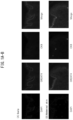
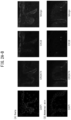
- DAPI distributed-Aldrich, Product No.: 10236276001. Fluorescent microscope photographs are shown in Fig. 4 ( Fig. 4A : Vehicle (control), Fig. 4B : Sandalore). The number of CK20-positive cells expressing Piccolo in a specified region in a photograph taken under a fluorescent microscope were counted and shown in a graph ( Fig. 4C ). Sandalore increased the number of Merkel cells expressing Piccolo.
- iPS cell-derived sensory neuron progenitor cells (i-SNs, ax0055, Axol Bioscience, Cambridge, United Kingdom) were cultured according to the manufacturer's instructions ( FIG. 5A ). Specifically, the cells were plated in a 24-well plate coated with Sure-Bond XF (ax0053) and cultured in Sensory Neuron Maintenance Medium (SNMM, ax0060) with addition of 25 ng/mL GDNF, 25 ng/mL BDNF, 10 ng/mL NGF and 10 ng/mL NT-3. Culturing was continued for 5 weeks while exchanging half of the medium every 3 to 4 days, resulting in differentiation to sensory neurons. After culturing for 5 weeks, the culture solution was collected and the supernatant was obtained.
- SNMM Sensory Neuron Maintenance Medium
- the fibroblasts were obtained by isolating neonatal foreskin fibroblasts after informed consent, and growing them for 2 days in a humidified atmosphere of 95% air and 5% CO 2 at 37°C, in Dulbecco's Modified Eagle medium (Life Technologies Japan Ltd., Tokyo, Japan) containing 10% fetal bovine serum.
- the supernatant (300 ⁇ l) of the culture solution obtained in method (1) was mixed with the fibroblast culture solution in a proportion of 1:1 and cultured for 4 hours, after which the collagen production was measured by the method of (2-2) below.
- the control used was a mixture of the medium for the iPS cell-derived sensory neuron progenitor cells, instead of the culture solution supernatant, with the fibroblast culture solution in a proportion of 1:1.
- the mRNA expression level of type I collagen was measured by quantitative real-time PCR. Specifically, the measurement was carried out using TaqMan RNA-to-C 1-Step Kit (Applied Biosystems #4392938), TaqMan probe and type I collagen ⁇ 1 primer (Hs00164004, Taqman, Applied Biosystems).
- the internal control used was ⁇ -actin (Hs01060665), and the expression level was normalized against ⁇ -actin.
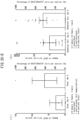
- Fig. 5B The results are shown in Fig. 5B .
- the supernatant was added to the neuron culture solution (conditioned medium)
- mRNA expression level of type I collagen by fibroblasts was significantly increased compared to the non-added control. This suggests that a neuron-derived component acts to accelerate production of collagen by fibroblasts.
- Lavender oil purchased from Vaillant, France essential oil containing ⁇ 30% linalyl acetate obtained by steam distillation of Lavandula vera DC. flowers was used. Also used as test substances were the publicly known TRPV1 ligands capsaicin (Cap) (Sigma-Aldrich Japan, KK.) and cinnamaldehyde (CNM 125 ⁇ M) (Sigma-Aldrich Japan, KK.).
- the total amount (600 ⁇ l) of the supernatant of neural progenitor cells cultured for at least 5 weeks using the same materials and method as Example 4 was collected, and then 500 ⁇ l of medium, prepared by adding the test substance of (1) to fibroblast-containing medium for a final lavender oil concentration of 0.005%, was added to the neural progenitor cells and the mixture was allowed to stand for 15 minutes in an incubator.
- the same test was carried out using 0.25 ⁇ M capsaicin (Cap 0.25 ⁇ M) and cinnamaldehyde (CNM 125 ⁇ M) as test substances.
- RNA was collected.
- DMEM prepared with the test substance at the same final lavender oil concentration of 0.005% was directly mixed with fibroblasts and allowed to stand for 4 hours, after which the RNA was collected.
- the collected RNA was measured for type I collagen by quantitative real-time PCR in the same manner as Example 4.
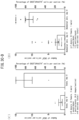
- Fig. 6 The results are shown in Fig. 6 .
- Fig. 6A the culture supernatants of iPS cell-derived sensory neuron progenitor cells stimulated with lavender oil had accelerated type I collagen production by the fibroblasts.
- Fig. 6B direct addition of lavender oil in the same concentration without neural activation to the fibroblasts did not show any significant acceleration of type I collagen production.
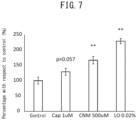
- Example 5 The effect of directly adding the test substance at higher concentration than in Example 5 was examined. Specifically, collagen was measured after direct application to fibroblasts by the same method as the control experiment of Example 5, except that the test substance of Example 5 was added to a final lavender oil concentration of 0.02%.
- Fig. 7 The results are shown in Fig. 7 .
- Fig. 7 acceleration of type I collagen production by fibroblasts was observed when the test substance was at high concentration.
- Fig. 6B the fact that such an effect was not seen at low concentration suggests that type I collagen production by fibroblasts was accelerated via neural activation by neural activation substances such as lavender oil.
- the skin was exposed to 25 units/ml of a dispase-PBS solution for 15 minutes at 37°C to detach the epidermis.
- the epidermis isolated from the fresh human skin was cultured for 30 minutes in a high-potassium extracellular solution (5 mM NaCl, 140 mM KCl, 10 mM HEPES (pH 7.4), 10 mM D-glucose, 2 mM MgCl 2 and 2 mM CaCl 2 ) containing FFN206 (Tocris, Catalog No. 5043), and the fluorescent-labeled neurotransmitter FFN206 was specifically taken up into the Merkel cells.
- a high-potassium extracellular solution 5 mM NaCl, 140 mM KCl, 10 mM HEPES (pH 7.4), 10 mM D-glucose, 2 mM MgCl 2 and 2 mM CaCl 2
- FFN206 fluorescent-labeled neurotransmitter FFN206 was specifically taken up into the Merkel cells.
- BSS Breast salt solution
- 5 mM KCl 5 mM KCl
- 10 mM HEPES pH 7.4
- 10 mM D-glucose 2 mM MgCl 2 and 2 mM CaCl 2
- A 500 ⁇ M Sandalore (Givaudan)/BSS solution
- BSS solution alone was circulated from 5 minutes (300 s) until the end of observation (600 s).
- the brightness value data were acquired using a Fluoview (Olympus).
- the cell response was evaluated based on the brightness value of FFN206, using cellSens (Olympus) and MATLAB (Mathworks).
- An ROI was created following the FFN206 signal, evaluating the time-dependent change in average brightness value within the ROI.
- the change in brightness value of the baseline in each ROI was determined by nonlinear approximation, and the brightness value with the effect of discoloration eliminated was determined based on the approximation results for baseline.
- the average brightness value at baseline 300 s was divided by the brightness value at each time point to calculate the normalized brightness value (%).
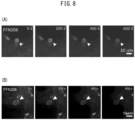
- the index for evaluation of cellular response was lowering of the normalized brightness value by at least 3 S.D. from the average value for baseline in each ROI during Sandalore stimulation (after 300 s) ( Fig. 8A ). In the control, no lowering was observed in the brightness value by BSS solution circulation after 5 minutes ( Fig. 8B ).
Landscapes
- Health & Medical Sciences (AREA)
- Life Sciences & Earth Sciences (AREA)
- Chemical & Material Sciences (AREA)
- Engineering & Computer Science (AREA)
- Biomedical Technology (AREA)
- Organic Chemistry (AREA)
- General Health & Medical Sciences (AREA)
- Immunology (AREA)
- Bioinformatics & Cheminformatics (AREA)
- Medicinal Chemistry (AREA)
- Molecular Biology (AREA)
- Veterinary Medicine (AREA)
- Urology & Nephrology (AREA)
- Hematology (AREA)
- Animal Behavior & Ethology (AREA)
- Cell Biology (AREA)
- Public Health (AREA)
- Biotechnology (AREA)
- Pharmacology & Pharmacy (AREA)
- Dermatology (AREA)
- Chemical Kinetics & Catalysis (AREA)
- Microbiology (AREA)
- Biochemistry (AREA)
- Analytical Chemistry (AREA)
- General Physics & Mathematics (AREA)
- Pathology (AREA)
- Nuclear Medicine, Radiotherapy & Molecular Imaging (AREA)
- General Chemical & Material Sciences (AREA)
- Food Science & Technology (AREA)
- Physics & Mathematics (AREA)
- Zoology (AREA)
- Neurology (AREA)
- Tropical Medicine & Parasitology (AREA)
- Toxicology (AREA)
- Epidemiology (AREA)
- Genetics & Genomics (AREA)
- Wood Science & Technology (AREA)
- Neurosurgery (AREA)
- Emergency Medicine (AREA)
- Birds (AREA)
Abstract
Description
- The present invention relates to a Merkel cell activating agent, and to a synaptic vesicle enhancing agent for Merkel cells.
- The present invention further relates to a method for assessing neurotransmitter release activity of Merkel cells, to a method for screening for a neurotransmitter release accelerating agent utilizing the assessment method, and to a neurotransmitter release accelerating agent screened by the screening method.
- Receptors associated with tactile sensation are excited by mechanical stimulation, and as a result thereof, a signal is sent to the brain via sensory nerves. Examples of receptors excited by mechanical stimuli include Merkel cells present in the deepest regions of the epidermis, Meissner's corpuscles present in the dermis outermost layer, and Pacinian corpuscles and Ruffini endings found in the deep dermis. Sensory nerve endings are connected through synapses to Merkel cells, neurotransmitters are secreted into the synapses when the cells are excited by mechanical stimuli, and information is transmitted to sensory nerves. It has been suggested that Merkel cell Piezo2 channels are involved in sensing of mechanical stimulation (NPL 1: Nature (2014) Column 509, pages 622-626). It has been reported that when Merkel cells are decreased, this can lead to alloknesis, a condition in which itching is induced by stimuli that normally do not produce itching sensation, while activation of Merkel cells inhibits itching (NPL 5). It has also been reported that PIEZO2-deficient individuals are unable to induce sensitization or pain reaction even at sites of skin inflammation, and that PIEZO2 channels are therapeutic targets for allodynia, a condition in which pain is produced by non-noxious stimulation which normally does not cause pain (NPL 6).
- On the other hand, OR2AT4, which is an olfactory receptor, is expressed in keratinocytes, the main constituent cells of the epidermis, and sandalore, which is an antagonist thereof, has been reported to promote wound healing by inducing intracellular signals by acting on OR2AT4 (NPL 2: J Investigative Dermatology (2014) vol. 134, p. 2823-2832). The receptor OR2AT4 is also expressed in hair follicle sheath cells, and application of Sandalore has been reported to induce hair extension (PTL 1:
Japanese Patent Public Inspection No. 2019-519502 - [PTL 1]
Japanese Patent Public Inspection No. 2019-519502 -
- [NPL 1] Nature (2014)volume 509, p. 622-626
- [NPL 2] Journal of Investigative Dermatology (2014) 134:2823-2832
- [NPL 3] Nat Commun. (2018) Sep 18; 9(1):3624
- [NPL 4] Neuron (2018)19:100(6):1401-1413
- [NPL 5] Science. 2018 May 04; 360(6388): 530-533. doi:10.1126/science.aar570
- [NPL 6] Sci Transl Med. (2018)10(462)eaat9892. doi: 10.1126/scitranslmed. aat9892
- The inventors of the present invention have conducted extensive research on skin care with focus on tactile sensation, and an object of the present invention is to obtain a drug that activates Merkel cells.
- Activity by Merkel cells has conventionally been evaluated using changes in the levels of certain proteins expressed by the Merkel cells as the index. However, the amount of such proteins vary over relatively long periods of several hours to several days, making it impossible to evaluate immediate changes in activity. The amount of such proteins also merely enables for indirect measurement of Merkel cell activity. It is an object of the present invention to measure direct and immediate activity of Merkel cells during depolarization.
- When the inventors of the present invention focused on OR2AT4, which is an olfactory receptor expressed in the skin, and examined the presence thereof in cell lines other than keratinocytes, it was surprisingly found that OR2AT4 is expressed in Merkel cells. Moreover, it was also found that Merkel cells are activated by applying the OR2AT4 agonist, sandalore, to Merkel cells, thereby leading to completion of the present invention.
- The present invention relates to the following:
- [A1-1] A Merkel cell activating agent, comprising a compound represented by the following formula:

- R1 and R2 together form a double bond, or R1 and R2 together form a cyclopropyl group;
- R3 and R4 are the same or different and are independently selected from hydrogen and methyl, or R3 and R4 together form a double bond;
- R5 and R6 are the same or different and are independently selected from hydrogen and methyl, or R5 and R6 together form a double bond; or R5 and R6 together form a cyclopropyl group;
- R7 is methyl or ethyl; and
- R8 is hydrogen or methyl].
- [A1-2] A compound represented by the following formula, for use in treatment or prevention of at least one symptom selected from the group consisting of itching, skin pruritus, alloknesis and allodynia through activation of Merkel cells:

- R1 and R2 together form a double bond, or R1 and R2 together form a cyclopropyl group;
- R3 and R4 are the same or different and are independently selected from hydrogen and methyl, or R3 and R4 together form a double bond;
- R5 and R6 are the same or different and are independently selected from hydrogen and methyl, or R5 and R6 together form a double bond; or R5 and R6 together form a cyclopropyl group;
- R7 is methyl or ethyl; and
- R8 is hydrogen or methyl].
- [A1-3] A cosmetic method through activation of Merkel cells, comprising administering a compound represented by the following formula:


- R1 and R2 together form a double bond, or R1 and R2 together form a cyclopropyl group;
- R3 and R4 are the same or different and are independently selected from hydrogen and methyl, or R3 and R4 together form a double bond;
- R5 and R6 are the same or different and are independently selected from hydrogen and methyl, or R5 and R6 together form a double bond; or R5 and R6 together form a cyclopropyl group;
- R7 is methyl or ethyl; and
- R8 is hydrogen or methyl].
- [A1-4] A method for activation of Merkel cells, comprising administering a compound represented by the following formula to a subject in need of activation of Merkel cells:

- R1 and R2 together form a double bond, or R1 and R2 together form a cyclopropyl group;
- R3 and R4 are the same or different and are independently selected from hydrogen and methyl, or R3 and R4 together form a double bond;
- R5 and R6 are the same or different and are independently selected from hydrogen and methyl, or R5 and R6 together form a double bond; or R5 and R6 together form a cyclopropyl group;
- R7 is methyl or ethyl; and
- R8 is hydrogen or methyl].
- [A1-5] Use of a compound represented by the following formula for production of a Merkel cell activating agent:

- R1 and R2 together form a double bond, or R1 and R2 together form a cyclopropyl group;
- R3 and R4 are the same or different and are independently selected from hydrogen and methyl, or R3 and R4 together form a double bond;
- R5 and R6 are the same or different and are independently selected from hydrogen and methyl, or R5 and R6 together form a double bond; or R5 and R6 together form a cyclopropyl group;
- R7 is methyl or ethyl; and
- R8 is hydrogen or methyl].
- [A2] The activating agent, compound, cosmetic method, method for activation or use according to any one of [A1-1] to [A1-5] above, wherein the compound is Sandalore or Brahmanol.
- [A3] The activating agent, compound, cosmetic method, method for activation or use according to any one of [A1-1] to [A1-5] or [A2] above, which enhances tactile sensation.
- [A3-2] The activating agent, compound, cosmetic method, method for activation or use according to any one of [A1-1] to [A1-5], [A2] or [A3] above, which is for treatment, prevention or alleviation of at least one symptom selected from the group consisting of itching, skin pruritus, alloknesis and allodynia.
- [A4-1] A synaptic vesicle enhancing agent for Merkel cells, comprising a compound represented by the following formula:

- R1 and R2 together form a double bond, or R1 and R2 together form a cyclopropyl group;
- R3 and R4 are the same or different and are independently selected from hydrogen and methyl, or R3 and R4 together form a double bond;
- R5 and R6 are the same or different and are independently selected from hydrogen and methyl, or R5 and R6 together form a double bond; or R5 and R6 together form a cyclopropyl group;
- R7 is methyl or ethyl; and
- R8 is hydrogen or methyl].
- [A4-2] A compound represented by the following formula, for use in treatment, prevention or alleviation of at least one symptom selected from the group consisting of itching, skin pruritus, alloknesis and allodynia via enhancement of synaptic vesicles in Merkel cells:

- R1 and R2 together form a double bond, or R1 and R2 together form a cyclopropyl group;
- R3 and R4 are the same or different and are independently selected from hydrogen and methyl, or R3 and R4 together form a double bond;
- R5 and R6 are the same or different and are independently selected from hydrogen and methyl, or R5 and R6 together form a double bond; or R5 and R6 together form a cyclopropyl group;
- R7 is methyl or ethyl; and
- R8 is hydrogen or methyl].
- [A4-3] A cosmetic method through enhancement of synaptic vesicles in Merkel cells, comprising administering a compound represented by the following formula:

- R1 and R2 together form a double bond, or R1 and R2 together form a cyclopropyl group;
- R3 and R4 are the same or different and are independently selected from hydrogen and methyl, or R3 and R4 together form a double bond;
- R5 and R6 are the same or different and are independently selected from hydrogen and methyl, or R5 and R6 together form a double bond; or R5 and R6 together form a cyclopropyl group;
- R7 is methyl or ethyl; and
- Rg is hydrogen or methyl].
- [A4-4] An enhancement method for synaptic vesicles in Merkel cells, comprising administering a compound represented by the following formula to a subject in need of enhancement of synaptic vesicles in Merkel cells:


- R1 and R2 together form a double bond, or R1 and R2 together form a cyclopropyl group;
- R3 and R4 are the same or different and are independently selected from hydrogen and methyl, or R3 and R4 together form a double bond;
- R5 and R6 are the same or different and are independently selected from hydrogen and methyl, or R5 and R6 together form a double bond; or R5 and R6 together form a cyclopropyl group;
- R7 is methyl or ethyl; and
- R8 is hydrogen or methyl].
- [A4-5] Use of a compound represented by the following formula for production of a synaptic vesicle enhancing agent for Merkel cells:

- R1 and R2 together form a double bond, or R1 and R2 together form a cyclopropyl group;
- R3 and R4 are the same or different and are independently selected from hydrogen and methyl, or R3 and R4 together form a double bond;
- R5 and R6 are the same or different and are independently selected from hydrogen and methyl, or R5 and R6 together form a double bond; or R5 and R6 together form a cyclopropyl group;
- R7 is methyl or ethyl; and
- R8 is hydrogen or methyl].
- [A5] The activating agent, compound, cosmetic method, method for activation or use according to any one of [A4-1] to [A4-5] above, wherein the compound is Sandalore or Brahmanol.
- [A6] The activating agent, compound, cosmetic method, method for activation or use according to any one of [A4-1] to [A4-5] or [A5] above, wherein the enhancing agent increases the efficiency of neurotransmission between Merkel cells and neurons.
- [A7] The activating agent, compound, cosmetic method, method for activation or use according to any one of [A4-1] to [A4-5], [A5] or [A6] above, which enhances tactile sensation.
- [A8] The activating agent, compound, cosmetic method, method for activation or use according to any one of [A4-1] to [A4-5] or [A5] to [A7] above, which enhances collagen production.
- [A9] The activating agent, compound, cosmetic method, method for activation or use according to any one of [A4-1] to [A4-5] or [A5] to [A8] above, which is for treatment, prevention or alleviation of at least one symptom selected from the group consisting of itching, skin pruritus, alloknesis and allodynia.
- The present inventors further conducted avid research on the mechanism of release of neurotransmitters by excitation of Merkel cells, focusing on perceptible tactile sensation with skin care, for example, and as a result devised the present invention upon finding that with Merkel cells incorporating a fluorescent tracer, the neurotransmitter release activity of the Merkel cells can be evaluated by measuring the change in fluorescent brightness value before and after depolarizing stimulus under a fluorescent microscope.
- The present invention relates to the following:
- [B1] A method for assessing neurotransmitter release activity of Merkel cells in a skin sample, comprising:
- culturing the skin sample in medium containing a neurotransmitter fluorescent tracer;
- applying depolarizing stimulus; and
- measuring the change in fluorescent brightness value of the Merkel cells before and after depolarizing stimulus, under a fluorescent microscope.
- [B2] The assessment method according to [B1] above, wherein the neurotransmitter fluorescent tracer is a monoamine neurotransmitter fluorescent tracer.
- [B3] The assessment method according to [B1] or [B2], wherein the skin sample is a human skin sample.
- [B4] A method for screening a neurotransmitter release accelerating agent for Merkel cells in a skin sample, wherein the method includes:
- culturing the skin sample in medium containing a neurotransmitter fluorescent tracer;
- adding a candidate substance for a neurotransmitter release accelerating agent; and
- measuring the change in fluorescent brightness value of the Merkel cells before and after addition, under a fluorescent microscope.
- [B5] The screening method according to [B4] above, wherein the neurotransmitter fluorescent tracer is a monoamine neurotransmitter fluorescent tracer.
- [B6] The screening method according to [B4] or [B5], wherein the skin sample is a human skin sample.
- [B7-1] A neurotransmitter release accelerating agent for Merkel cells, comprising a compound represented by the following formula:

- R1 and R2 together form a double bond, or R1 and R2 together form a cyclopropyl group;
- R3 and R4 are the same or different and are independently selected from hydrogen and methyl, or R3 and R4 together form a double bond;
- R5 and R6 are the same or different and are independently selected from hydrogen and methyl, or R5 and R6 together form a double bond; or R5 and R6 together form a cyclopropyl group;
- R7 is methyl or ethyl; and
- Rg is hydrogen or methyl].
- [B7-2] A compound represented by the following formula for use in treatment or prevention of at least one symptom selected from the group consisting of itching, skin pruritus, alloknesis and allodynia via promoting release of neurotransmitters in Merkel cells:

- R1 and R2 together form a double bond, or R1 and R2 together form a cyclopropyl group;
- R3 and R4 are the same or different and are independently selected from hydrogen and methyl, or R3 and R4 together form a double bond;
- R5 and R6 are the same or different and are independently selected from hydrogen and methyl, or R5 and R6 together form a double bond; or R5 and R6 together form a cyclopropyl group;
- R7 is methyl or ethyl; and
- Rg is hydrogen or methyl].
- [B7-3] A cosmetic method via promoting release of neurotransmitters in Merkel cells, comprising administering a compound represented by the following formula:

- R1 and R2 together form a double bond, or R1 and R2 together form a cyclopropyl group;
- R3 and R4 are the same or different and are independently selected from hydrogen and methyl, or R3 and R4 together form a double bond;
- R5 and R6 are the same or different and are independently selected from hydrogen and methyl, or R5 and R6 together form a double bond; or R5 and R6 together form a cyclopropyl group;
- R7 is methyl or ethyl; and
- R8 is hydrogen or methyl].
- [B7-4] A method for promoting release of neurotransmitters in Merkel cells, comprising administering a compound represented by the following formula to a subject in need of release of neurotransmitters in Merkel cells:

- R1 and R2 together form a double bond, or R1 and R2 together form a cyclopropyl group;
- R3 and R4 are the same or different and are independently selected from hydrogen and methyl, or R3 and R4 together form a double bond;
- R5 and R6 are the same or different and are independently selected from hydrogen and methyl, or R5 and R6 together form a double bond; or R5 and R6 together form a cyclopropyl group;
- R7 is methyl or ethyl; and
- R8 is hydrogen or methyl].
- [B7-5] Use of a compound represented by the following formula for production of a neurotransmitter release accelerating agent for Merkel cells:


- R1 and R2 together form a double bond, or R1 and R2 together form a cyclopropyl group;
- R3 and R4 are the same or different and are independently selected from hydrogen and methyl, or R3 and R4 together form a double bond;
- R5 and R6 are the same or different and are independently selected from hydrogen and methyl, or R5 and R6 together form a double bond; or R5 and R6 together form a cyclopropyl group;
- R7 is methyl or ethyl; and
- R8 is hydrogen or methyl].
- [B8] The neurotransmitter release accelerating agent, compound, cosmetic method, promoting method or use according to any one of [B7-1] to [B7-5] above, wherein the compound is Sandalore or Brahmanol.
- [B9] The neurotransmitter release accelerating agent, compound, cosmetic method, promoting method or use according to any one of [B7-1] to [B7-5] or [B8] above, which enhances tactile sensation.
- [B10] The neurotransmitter release accelerating agent, compound, cosmetic method, promoting method or use according to any one of [B7-1] to [B7-5], [B8] or [B9] above, which enhances collagen production.
- [B11] The neurotransmitter release accelerating agent, compound, cosmetic method, enhancement method or use according to any one of [B7-1] to [B7-5], [B8], [B9] or [B10] above, which is for treatment, prevention or alleviation of at least one symptom selected from the group consisting of itching, skin pruritus, alloknesis and allodynia.
- Merkel cells can be activated by applying Sandalore and/or its analog. It is thus possible to provide a skin care method focusing on tactile sensation, via activation of Merkel cells.
- It is also possible to evaluate neurotransmitter release activity when Merkel cells have been depolarized. The assessment method can be utilized for screening of a neurotransmitter release activity accelerating agent. Sandalore and its analogs were also screened as neurotransmitter release activity accelerating agents.
-
-
Figs. 1A and 1B show the results of co-staining a skin sample with the Merkel cell markers CK8 and OR2AT4, and observation under a fluorescent microscope. Scalp samples (A) and abdominal skin samples (B) were co-stained with CK8 and OR2AT4 and photographed. - The left graph in
Fig. 1C shows the count of cells double-positive for OR2AT4 and CK8 in a specified region of the scalp sample. The right graph shows the ratio of cells double-positive for OR2AT4 and CK8 with respect to CK8-positive cells in the scalp sample. The left graph inFig. 1D shows the count of cells double-positive for OR2AT4 and CK8 in a specified region of the abdominal sample. The right graph shows the ratio of cells double-positive for OR2AT4 and CK8 with respect to CK8-positive cells in the abdominal sample. -
Figs. 2A and 2B show the results of co-staining a skin sample with the Merkel cell markers CK18 and OR2AT4, and observation under a fluorescent microscope. Scalp samples (A) and abdominal skin samples (B) were co-stained with CK18 and OR2AT4 and photographed. - The left graph in
Fig. 2C shows the count of cells double-positive for OR2AT4 and CK18 in a specified region of the scalp sample. The right graph shows the ratio of cells double-positive for OR2AT4 and CK18 with respect to CK18-positive cells in the scalp sample. The left graph inFig. 2D shows the count of cells double-positive for OR2AT4 and CK18 in a specified region of the abdominal sample. The right graph shows the ratio of cells double-positive for OR2AT4 and CK18 with respect to CK18-positive cells in the abdominal sample. -
Figs. 3A and 3B show the results of co-staining a skin sample with the Merkel cell markers CK20 and OR2AT4, and observation under a fluorescent microscope. Scalp samples (A) and abdominal skin samples (B) were co-stained with CK20 and OR2AT4 and photographed. - The left graph in
Fig. 3C shows the count of cells double-positive for OR2AT4 and CK20 in a specified region of the scalp sample. The right graph shows the ratio of cells double-positive for OR2AT4 and CK20 with respect to CK20-positive cells in the scalp sample. The left graph inFig. 3D shows the count of cells double-positive for OR2AT4 and CK20 in a specified region of the abdominal sample. The right graph shows the ratio of cells double-positive for OR2AT4 and CK20 with respect to CK20-positive cells in the abdominal sample. -
Figs. 4A and 4B show CK20-positive cells expressing Piccolo in a sample to which Sandalore was applied, photographed under a fluorescent microscope (Fig. 4A : control (vehicle),Fig. 4B : Sandalore). -
Fig. 4C is a graph showing the number of CK20-positive cells expressing Piccolo in a specified region in a photograph taken under a fluorescent microscope. -
Fig. 5A shows iPS cell-derived sensory neuron progenitor cells.Fig. 5B shows the relative value for type I collagen mRNA expression level with addition of culture supernatant of iPS cell-derived sensory neuron progenitor cells (conditioned medium) to fibroblasts, compared to
** addition of unconditioned medium to fibroblasts. The error bars represent average ±SD and ** represents statistically significant difference in an unpaired t test (**P <0.01). -
Fig. 6A shows mRNA expression level of type I collagen when medium supernatant of iPS cell-derived sensory neuron progenitor cells stimulated with a test substance (lavender oil: LO 0.005%) was added to fibroblasts.Fig. 6B shows mRNA expression level of type I collagen when the test substance was directly added to fibroblasts at the same concentration. In the graphs, collagen production is represented as a relative value with the control (test substance not added: control) as 100%. The error bars represent average ±SD, represents statistically significant difference in an unpaired t test (*P <0.05), and n.s. represents no statistically significant difference. -
Fig. 7 shows mRNA expression level of type I collagen when a test substance at higher concentration thanFig. 6B (4-fold) (lavender oil: LO 0.02%) was added directly to fibroblasts. Collagen production is represented as a relative value with the control (test substance not added: ** control) as 100%. The error bars represent average ±SD,** represents statistically significant difference in an unpaired t test (**p <0.01), and n.s. represents no statistically significant difference. -
Fig. 8 is a set of photographs showing change in fluorescence in Merkel cells incorporating a fluorescent tracer (FFN206), after 0, 200, 400 and 600 seconds.Fig. 8A shows change in fluorescence after application of Sandalore stimulation from 300 seconds to 600 seconds, andFig. 8B shows change in fluorescence after circulation of BSS solution from 300 seconds to 600 seconds, as a control. -
Fig. 9 is a graph showing change in fluorescent brightness value of Merkel cells in fluorescent imaging for 10 minutes. At 5 minutes (300 seconds), Sandalore was introduced and the fluorescent brightness value decreased (black circles). BSS solution was circulated at 5 minutes (300 seconds) as a control (white squares). - The present invention relates to a Merkel cell activating agent comprising Sandalore (3-methyl-5-(2,2,3-trimethyl-cyclopenta-3-en-1-yl)-pentan-2-ol [CAS:65113-99-7]) or its analog. Sandalore is represented by the following chemical structure:


- Examples of Sandalore or its analogs exhibiting agonistic action for OR2AT4 include the following compounds:
[Table 1] IUPAC Nomenclature CAS No. Structural Formula Formula/ MW 1 3-methyl-5-(2,2,3-trimethylcyclopent-3-en-1-yl)pentan-2-ol 65113-99-7 
C14H26O 210.36 2 (4Z)-3-methyl-5-(2,2,3-trimethyl cyclopent-3-en-1-yl)pent-4-en-2-ol 67801-20-1 
C14H24O 208.35 3 1-methyl-2-((1,2,2-trimethylbicyclo (3.1.0)hex-3-yl)methyl)-cyclopropane-methanol 198404-98-7 
C15H26O 222.37 4 (E)-3,3-dimethyl-5-(2,2,3-trimethyl cyclopent-3-en-1-yl)pent-4-en-2-ol 107898-54-4 
C15H26O 222.37 5 2-methyl-4-(2,2,3-trimethyl-3-cyclopenten-1-yl)butanol 72089-08-8 
C13H24O 196.34 6 (E)-2-ethyl-4-(2,2,3-trimethyl cyclopent-3-en-1-yl)but-2-en-1-ol 28219-61-6 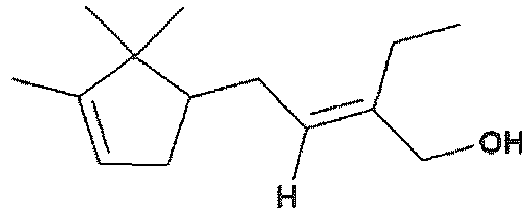
C14H24O 208.35 7 (E)-2-methyl-4-(2,2,3)-trimethyl-3- cyclopenten-1-yl)-2-buten-1-ol 28219-60-5 
C13H22O 194.32 - Examples of Sandalore or analogues thereof relate to compounds represented by the following formula:

- R1 and R2 together form a double bond, or R1 and R2 together form a cyclopropyl group;
- R3 and R4 are the same or different and are independently selected from hydrogen and methyl, or R3 and R4 together form a double bond;
- R5 and R6 are the same or different and are independently selected from hydrogen and methyl, or R5 and R6 together form a double bond; or R5 and R6 together form a cyclopropyl group;
- R7 is methyl or ethyl; and
- Rg is hydrogen or methyl]. These compounds may also include optical isomers. The compounds function as OR2AT4 agonists, similar to Sandalore. The compounds also activate Merkel cells, similar to Sandalore, and accelerate release of neurotransmitters from Merkel cells.
- Activation of Merkel cells refers to proliferation or maturation of Merkel cells. Merkel cells undergo changes in their expression markers during the maturation process. Although CK8, CK18 and CK20 are used as Merkel cell markers, CK8 is expressed in the undifferentiated state, CK18 is expressed in activated Merkel cells, and CK20 is expressed in the mature state (PLoS Genet (2016) Jul 14; 12(7):e1006151.). Merkel cells can be activated by application of the Merkel cell activating agent of the present invention. Specifically, application of a Merkel cell activating agent makes it possible to increase expression of proteins associated with synaptic vesicles, such as Piccolo, in the activated Merkel cells. Activation of Merkel cells accelerates release of neurotransmitters into synapses, thereby enhancing tactile sensation.
- Another aspect of the invention relates to a synaptic vesicle enhancing agent for Merkel cells comprising Sandalore or analog thereof. Application of a synaptic vesicle enhancing agent for Merkel cells comprising Sandalore or analog thereof increases the number of synaptic vesicles in the Merkel cells. By enhancing synaptic vesicles, the efficiency of neurotransmission between Merkel cells and neurons is increased, and neurons associated with tactile sensation are activated. Activation of neurons in the dermis layer increases collagen production by dermal fibroblasts. The present invention therefore relates to a collagen production accelerating agent that includes Sandalore or its analog. Another aspect of the invention may relate to a composition comprising Sandalore or its analog, which is for treatment, prevention or alleviation of at least one symptom selected from the group consisting of itching, skin pruritus, alloknesis and allodynia.
- Yet another aspect of the invention relates to a method for activating Merkel cells in vitro or in vivo and to a method for accelerating release of neurotransmitters from Merkel cells either in vitro or in vivo, comprising application of Sandalore or analog thereof. The method for activating Merkel cells in vitro or the method for accelerating release of neurotransmitters from Merkel cells in vitro comprises a step of culturing a cell group or tissue containing Merkel cells in a solution that contains Sandalore or its analog. The method for activating Merkel cells in vivo or the method for accelerating release of neurotransmitters from Merkel cells in vivo includes a step of administering Sandalore or its analog to any subject. Activation of Merkel cells in vivo allows treatment, prevention or alleviation of at least one symptom selected from the group consisting of itching, skin pruritus, alloknesis and allodynia. Therefore, a Merkel cell activating agent or neurotransmitter release accelerating agent of the invention may be an agent for treatment, prevention or alleviation of at least one symptom selected from the group consisting of itching, skin pruritus, alloknesis and allodynia. The subject that is administered the Sandalore or its analog may be a subject with decreased Merkel cell activity, a subject with dulled tactile sensation, a subject with decreased collagen production, or a subject suffering from or desiring prevention or alleviation of at least one symptom selected from the group consisting of itching, skin pruritus, alloknesis and allodynia. Administration of Sandalore or its analog may be administration by any route such as a transdermal, oral, transmucosal, nasal, intravenous, intraarterial or subcutaneous route, but transdermal or transmucosal administration is preferred from the viewpoint of acting on Merkel cells. When the Sandalore or its analog is to be administered percutaneously, the Sandalore or its analog may be applied to any part of the skin, such as skin of the face, head, neck, extremities or trunk.
- The Merkel cell activating agent, synaptic vesicle enhancing agent and/or neurotransmitter release accelerating agent of the invention may each be incorporated in a cosmetic, drug or quasi drug. Such a drug may be administered orally or parenterally, such as by transdermal administration. For transdermal administration, the dosage form may be an external preparation for skin. An external preparation for skin is not particularly restricted so long as it can be applied to skin, and it may be applied in the form of a solution, emulsion, solid, semi-solid, powder, powder dispersion, separated water-oil bilayer, separated water-oil-powder trilayer, unguent, gel, aerosol, mousse or stick, for example. For preparation as an external preparation for skin, bases commonly used for external preparations for skin, as well as excipients, such as preservatives, emulsifying agents and pH adjustors, may also be used. For addition to a cosmetic, it may be added to a cosmetic for the face or body such as a cosmetic water, latex, essence, cream, lotion, pack, essence or gel, a makeup cosmetic such as a foundation, makeup base or concealer, or a bath preparation. Using a cosmetic containing the component of the invention activates Merkel cells and accelerates activation of neurons and associated collagen production. It may therefore be used in a cosmetic for improving wrinkles and sagging by accelerating collagen production.
- The Merkel cell activating agent, synaptic vesicle enhancing agent and/or neurotransmitter release accelerating agent of the invention may be arbitrarily selected from the viewpoint of exhibiting a desired effect such as a Merkel cell activating effect, a synapse enhancing effect or an effect of accelerating release of neurotransmitters from Merkel cells, or from the viewpoint of accelerating collagen production. From the viewpoint of addition as an external preparation for skin, the Sandalore or analog thereof may be added at 0.0005% to 0.5%. From the viewpoint of exhibiting a satisfactory effect, it is preferably added at 0.001% or greater and more preferably 0.005% or greater. From the viewpoint of avoiding strong odor, it is preferably added at 0.1% or lower and more preferably 0.05% or lower.
- The invention also relates to a method for assessing neurotransmitter release activity of Merkel cells in a skin sample. Specifically, the assessment method includes the following steps:
- culturing the skin sample in medium containing a neurotransmitter fluorescent tracer;
- applying depolarizing stimulus; and
- measuring the change in fluorescent brightness value of the Merkel cells before and after depolarizing stimulus, under a fluorescent microscope. A washing step or medium exchange step may also be carried out after the step of culturing the skin sample in medium containing a fluorescent tracer. Such a method may be carried out under perfusion conditions. The method allows direct and immediate evaluation of the neurotransmitter release activity of Merkel cells.
- Merkel cells are found in the maximum depth of the epidermis and perform a function as mechanically stimulated receptors. When Merkel cells are excited by mechanical stimulation and become depolarized, neurotransmitters are secreted into the synaptic cleft and a signal is transmitted through the synapse to sensory nerves. It has been suggested that Merkel cell Piezo2 channels are involved in sensing of mechanical stimulation. Merkel cells undergo changes in their expression markers during the maturation process. Merkel cells in a skin sample can be identified by using a fluorescent dye that is specifically taken up into Merkel cells, such as Quinacrine or FM dye, as the marker. According to a different aspect, a protein expressed by Merkel cells may be detected as the marker, such as one or more cell surface markers selected from the group consisting of CK8, CK18 and CK20.
- A skin sample may be any sample containing Merkel cells, and non-Merkel cells may also be included. The skin sample may be derived from any animal, but is preferably derived from a human from the viewpoint of developing a cosmetic or drug. Cells other than Merkel cells may be skin cells such as epidermal cells or dermal cells, and nervous system cells such as neurons may also be included. The skin sample may be a skin sample harvested from a subject, or it may be a cultured product. More preferably, epidermal cells or dermal cells are cultured to construct a three-dimensional cultured skin model.
- Neurotransmitter release activity is determined based on the amount of neurotransmitter released from the Merkel cells. When Merkel cells receive a depolarizing stimulus, they release neurotransmitters into the synaptic cleft, propagating the stimulation signal. Some of the neurotransmitters released into the synaptic cleft cause excitation of nerves as they bind to nerve receptors. Some of the neurotransmitters released into the synaptic cleft are taken back up through receptors expressed on the Merkel cells. Monoamine neurotransmitters are one type of neurotransmitter released by Merkel cells. According to the invention, neurotransmitter release activity is determined by incorporating a neurotransmitter fluorescent tracer into the Merkel cells and measuring the change in fluorescent tracer in the cells during depolarization. The neurotransmitter fluorescent tracer is dissolved in the medium to 1 to 50 µM concentration, and taken up into the Merkel cells by culturing for 30 minutes to 12 hours. The fluorescent tracer is an analog of the neurotransmitter that has observable fluorescence. From the viewpoint of observing uptake into the Merkel cells and release by the Merkel cells, FFN206 (4-(2-aminoethyl)-7-(methylamino)-2H-1-benzopyran-2-one dihydrochloride) (NPL 4:Neuron (2018)19:100(6):1401-1413) or FFN511 ((9-(2-aminoethyl)-2,3,6,7-tetrahydro-1H, 5H, 11H-[1]-benzopyrano[6,7,8-ij]quinolysine-11-one)) may be used, for example.
- The fluorescent tracer in the cells during depolarization is measured by observing the sample under a fluorescent microscope, and measuring the fluorescent brightness value before depolarization and the fluorescent brightness value after the depolarizing stimulus. The fluorescent brightness value measurement may also be carried out periodically. In the case of periodic measurement, the fluorescence will undergo gradual discoloration, and therefore the fluorescent brightness value may be corrected in consideration of discoloration. After the depolarizing stimulus, the fluorescent tracer is released into the synaptic cleft together with the neurotransmitter, thereby decreasing the fluorescent brightness value in the cells. The fluorescent brightness value may be measured in the whole cell, or it may be determined in a specific region near the synapse, such as in a synaptic vesicle region.
- The depolarizing stimulus may be mechanical stimulation or drug stimulation. Mechanical stimulation may be applied using a probe on the Merkel cells. The mechanical stimulation may also be applied until deformation of the cells is observed. Drug stimulation may be applied using a drug that causes depolarization. Sandalore and its analogs are examples of such drugs. More specifically, depolarizing stimulus may be applied by introducing a drug-containing medium that causes depolarization under perfusion conditions.
- Another aspect of the invention relates to a method for screening a neurotransmitter release accelerating agent for Merkel cells, utilizing a method for assessing neurotransmitter release activity of Merkel cells. Such a screening method includes the following steps, specifically:
- culturing the skin sample in medium containing a neurotransmitter fluorescent tracer;
- adding a candidate substance for a neurotransmitter release accelerating agent; and
- measuring the change in fluorescent brightness value of the Merkel cells before and after addition, under a fluorescent microscope. The screening method allows screening of a neurotransmitter release accelerating agent that accelerates neurotransmitter release in Merkel cells. A washing step or medium exchange step may also be carried out after the step of culturing the skin sample in medium containing a fluorescent tracer. Such a method may be carried out under perfusion conditions. When the fluorescent brightness value has significantly decreased, the candidate substance may be selected as a neurotransmitter release accelerating agent for Merkel cells.
- Candidate substances for neurotransmitter release accelerating agents include substances belonging to a library such as a cosmetic material library, extract library, drug library or compound library. A neurotransmitter release accelerating agent can induce depolarization of Merkel cells, and may therefore be considered to be a depolarizing stimulator or Merkel cell activating agent.
- The neurotransmitter release accelerating agent induces depolarization of Merkel cells and accelerates neurotransmitter release from the Merkel cells. By accelerating neurotransmitter release, the efficiency of neurotransmission between Merkel cells and neurons is increased, and neurons associated with tactile sensation are activated. According to another aspect, a lower concentration of neurotransmitter release accelerating agent can be used to sensitize Merkel cells, i.e. to convert the Merkel cells to a more easily depolarizable state, so that it may also be considered to be a Merkel cell sensitization accelerating agent. The Merkel cells are therefore activated even by weak mechanical stimulation. The efficiency of neurotransmission between Merkel cells and neurons is thereby increased, and neurons associated with tactile sensation are activated. Activation of neurons in the dermis layer increases collagen production by dermal fibroblasts. The invention therefore also relates to a collagen production accelerating agent that includes a neurotransmitter release accelerating agent.
- Yet another aspect of the invention relates to a neurotransmitter release accelerating agent selected by the screening method described above. More specifically, Sandalore and its analogs are screened as neurotransmitter release accelerating agents. The invention therefore further relates to a neurotransmitter release accelerating agent or collagen production accelerating agent including one or more selected from the group consisting of Sandalore and its analogs.
- Human scalp from the temporal and occipital regions or abdominal skin was taken from healthy subjects (20 to 60 years of age: total of 13) that had received common cosmetic surgery or plastic surgery, and used after obtaining informed consent and ethical approval (Muenster University). The human scalp skin was taken from three males and three females, while the abdominal skin was taken from 6 females and one male.
- Each of the scalp samples and abdominal skin samples were cut into 4 mm pieces, embedded in OCT and frozen in liquid nitrogen. The OCT-embedded samples were sectioned using a Leica cryostat. As the primary antibody staining, the tissue frozen section was fixed with 4% paraformaldehyde, preincubated with 10% goat serum (for OR2AT4) or 5% goat serum + 0.3% TritonX-100, and then incubated overnight at 4°C in the corresponding primary antibody solution. Each was then incubated for 45 minutes at room temperature in the secondary antibody solution. DAPI (1 µg/ml) was used for nuclear staining.
- The primary antibodies used were anti-OR2AT4 antibody (distributor: Eurogentech, Product No.: custom made, 1910432), anti-CK8 antibody (distributor: Progen, Product No.: GP-CK8) and anti-CK18 antibody (distributor: Progen, Product No.: GP-CK18), and the subsequent secondary antibodies used were Goat anti-Rabbit IgG (H+L) Cross-Adsorbed Secondary Antibody (distributor: Invitrogen, Product No.: A-11008), Goat anti-Mouse IgG (H+L) Highly Cross-Adsorbed Secondary Antibody (distributor: Invitrogen, Product No.: A-11030) and Fluorescein (FITC)- conjugated AffiniPure Goat Anti Guinea Pig IgG (H+L) (distributor: Jackson ImmunoResearch, Product No.: 106-095-003), in combination with each of the primary antibodies, respectively. The nuclear stain used was DAPI (distributor: Sigma-Aldrich, Product No.: 10236276001).
- The co-staining results with OR2AT4 and CK8 were represented (
Fig. 1A : scalp,Fig. 1B : abdominal skin), the number of cells double-positive for OR2AT4 and CK8 in a specified region were counted (Fig. 1C left,Fig. 1D left), and the ratio of the number of cells double-positive for OR2AT4 and CK8 with respect to the number of CK8-positive cells was represented (Fig. 1C right,Fig. 1D right). In the scalp and abdominal skin epidermis, approximately 50 to 60% of the CK8-positive immature Merkel cells expressed OR2AT4. - The co-staining results with OR2AT4 and CK18 were represented (
Fig. 2A : scalp,Fig. 2B : abdominal skin), the number of cells double-positive for OR2AT4 and CK18 in a specified region were counted (Fig. 2C left,Fig. 2D left), and the ratio of the number of cells double-positive for OR2AT4 and CK18 with respect to the number of CK18-positive cells was represented (Fig. 2C right,Fig. 2D right). In the scalp and abdominal skin epidermis, approximately 50% of the CK18-positive intermediate-mature Merkel cells expressed OR2AT4. - The co-staining results with OR2AT4 and CK20 were represented (
Fig. 3A : scalp,Fig. 3B : abdominal skin), the number of cells double-positive for OR2AT4 and CK20 in a specified region were counted (Fig. 3C left,Fig. 3D left), and the ratio of the number of cells double-positive for OR2AT4 and CK8 with respect to the number of CK20-positive cells was represented (Fig. 3C right,Fig. 3D right).
In the scalp and abdominal skin epidermis, approximately 70 to 85% of the CK20-positive mature Merkel cells expressed OR2AT4. - The staining intensity was evaluated for a clearly defined reference region by quantitative (immune)
histomorphological measurement 31, 32 using NIH ImageJ software (NIH, Bethesda, MD, USA). - Human scalp from the temporal and occipital regions was taken from healthy female subjects (47 to 60 years of age) that had received common cosmetic surgery, and used after obtaining informed consent and ethical approval (Muenster University).
- Scalp samples including hair follicles were taken using a 6 mm punch from the occipital region (
donors day 1, the medium was exchanged with medium containing Sandalore (500 µM). A 0.1% DMSO-containing medium was used as a control. Onday 3 the samples were collected, embedded in OCT and frozen in liquid nitrogen. The OCT-embedded samples were sectioned using a Leica cryostat. As the primary antibody staining, the tissue frozen section was fixed with 4% paraformaldehyde, preincubated with 5% goat serum + 0.3% TritonX-100, and then incubated overnight at 4°C in the corresponding primary antibody solution. Each was then incubated for 45 minutes at room temperature in the secondary antibody solution. DAPI (1 µg/ml) was used for nuclear staining. - The primary antibodies used were anti-CK20 antibody (distributor: Progen, Product No.: Product No.: 61054) and anti-Piccolo antibody (distributor: Novus Biologicals (Tocris), Product No.: NBP1-90250), and the subsequent secondary antibodies used were Goat anti-Rabbit IgG (H+L) Cross-Adsorbed Secondary Antibody (distributor: Invitrogen, Product No.: A-11008) and Goat anti-Mouse IgG (H+L) Highly Cross-Adsorbed Secondary Antibody (distributor: Invitrogen, Product No.: A-11030), in combination with each of the primary antibodies, respectively. The nuclear stain used was DAPI (distributor: Sigma-Aldrich, Product No.: 10236276001). Fluorescent microscope photographs are shown in
Fig. 4 (Fig. 4A : Vehicle (control),Fig. 4B : Sandalore). The number of CK20-positive cells expressing Piccolo in a specified region in a photograph taken under a fluorescent microscope were counted and shown in a graph (Fig. 4C ). Sandalore increased the number of Merkel cells expressing Piccolo. - Human iPS cell-derived sensory neuron progenitor cells (i-SNs, ax0055, Axol Bioscience, Cambridge, United Kingdom) were cultured according to the manufacturer's instructions (
Fig. 5A ). Specifically, the cells were plated in a 24-well plate coated with Sure-Bond XF (ax0053) and cultured in Sensory Neuron Maintenance Medium (SNMM, ax0060) with addition of 25 ng/mL GDNF, 25 ng/mL BDNF, 10 ng/mL NGF and 10 ng/mL NT-3. Culturing was continued for 5 weeks while exchanging half of the medium every 3 to 4 days, resulting in differentiation to sensory neurons. After culturing for 5 weeks, the culture solution was collected and the supernatant was obtained. - The fibroblasts were obtained by isolating neonatal foreskin fibroblasts after informed consent, and growing them for 2 days in a humidified atmosphere of 95% air and 5% CO2 at 37°C, in Dulbecco's Modified Eagle medium (Life Technologies Japan Ltd., Tokyo, Japan) containing 10% fetal bovine serum. The supernatant (300 µl) of the culture solution obtained in method (1) was mixed with the fibroblast culture solution in a proportion of 1:1 and cultured for 4 hours, after which the collagen production was measured by the method of (2-2) below. The control used was a mixture of the medium for the iPS cell-derived sensory neuron progenitor cells, instead of the culture solution supernatant, with the fibroblast culture solution in a proportion of 1:1.
- After serum starvation, total RNA was isolated from the fibroblasts cultured for 4 hours in the presence of or in the absence of neuron medium supernatant, using an RNeasy Mini Kit (250) (Qiagen #74106). The mRNA expression level of type I collagen was measured by quantitative real-time PCR. Specifically, the measurement was carried out using TaqMan RNA-to-C 1-Step Kit (Applied Biosystems #4392938), TaqMan probe and type I collagen α1 primer (Hs00164004, Taqman, Applied Biosystems). The internal control used was β-actin (Hs01060665), and the expression level was normalized against β-actin.
- The results are shown in
Fig. 5B . When the supernatant was added to the neuron culture solution (conditioned medium), mRNA expression level of type I collagen by fibroblasts was significantly increased compared to the non-added control. This suggests that a neuron-derived component acts to accelerate production of collagen by fibroblasts. - In order to confirm that type I collagen production by fibroblasts was accelerated by neural activation, a culture supernatant of neurons stimulated by lavender oil, which was confirmed to activate nerves, was used and type I collagen production was measured.
- Lavender oil purchased from Vaillant, France (essential oil containing ≥30% linalyl acetate obtained by steam distillation of Lavandula vera DC. flowers) was used. Also used as test substances were the publicly known TRPV1 ligands capsaicin (Cap) (Sigma-Aldrich Japan, KK.) and cinnamaldehyde (CNM 125 µM) (Sigma-Aldrich Japan, KK.).
- The total amount (600 µl) of the supernatant of neural progenitor cells cultured for at least 5 weeks using the same materials and method as Example 4 was collected, and then 500 µl of medium, prepared by adding the test substance of (1) to fibroblast-containing medium for a final lavender oil concentration of 0.005%, was added to the neural progenitor cells and the mixture was allowed to stand for 15 minutes in an incubator. The same test was carried out using 0.25 µM capsaicin (Cap 0.25 µM) and cinnamaldehyde (CNM 125 µM) as test substances. The supernatant containing the test substance was then collected and DMEM was added to prepare a mixture with a composition of supernatant:DMEM = 1:3. The mixture was applied in an amount of 1 ml each to fibroblasts cultured in a 12-well plate by the same method as Example 4, and after standing for 4 hours, the RNA was collected. As a control, DMEM prepared with the test substance at the same final lavender oil concentration of 0.005% was directly mixed with fibroblasts and allowed to stand for 4 hours, after which the RNA was collected. The collected RNA was measured for type I collagen by quantitative real-time PCR in the same manner as Example 4.
- The results are shown in
Fig. 6 . As shown inFig. 6A , the culture supernatants of iPS cell-derived sensory neuron progenitor cells stimulated with lavender oil had accelerated type I collagen production by the fibroblasts. However, as shown inFig. 6B , direct addition of lavender oil in the same concentration without neural activation to the fibroblasts did not show any significant acceleration of type I collagen production. - The effect of directly adding the test substance at higher concentration than in Example 5 was examined. Specifically, collagen was measured after direct application to fibroblasts by the same method as the control experiment of Example 5, except that the test substance of Example 5 was added to a final lavender oil concentration of 0.02%.
- The results are shown in
Fig. 7 . As shown inFig. 7 , acceleration of type I collagen production by fibroblasts was observed when the test substance was at high concentration. However, the fact that such an effect was not seen at low concentration (Fig. 6B ) suggests that type I collagen production by fibroblasts was accelerated via neural activation by neural activation substances such as lavender oil. - Fresh skin excised from the abdominal region of a 42-year-old female healthy subject and a 48-year-old healthy subject, both having undergone cosmetic surgery, was used for experimentation within 5 days, after obtaining informed consent and ethical approval. The skin was exposed to 25 units/ml of a dispase-PBS solution for 15 minutes at 37°C to detach the epidermis.
- The epidermis isolated from the fresh human skin was cultured for 30 minutes in a high-potassium extracellular solution (5 mM NaCl, 140 mM KCl, 10 mM HEPES (pH 7.4), 10 mM D-glucose, 2 mM MgCl2 and 2 mM CaCl2) containing FFN206 (Tocris, Catalog No. 5043), and the fluorescent-labeled neurotransmitter FFN206 was specifically taken up into the Merkel cells.
- The FFN206 signal in the epidermis containing the Merkel cells that had taken up FFN206 was observed for 10 minutes under circulating conditions. BSS (Balanced salt solution) solution (140 mM NaCl, 5 mM KCl, 10 mM HEPES (pH 7.4), 10 mM D-glucose, 2 mM MgCl2 and 2 mM CaCl2) was circulated for the first 5 minutes, as baseline. After 5 minutes (300 s) until the end of observation (600 s), circulation was with 500 µM Sandalore (Givaudan)/BSS solution (A). As a control, BSS solution alone was circulated from 5 minutes (300 s) until the end of observation (600 s). The brightness value data were acquired using a Fluoview (Olympus).
- The cell response was evaluated based on the brightness value of FFN206, using cellSens (Olympus) and MATLAB (Mathworks). An ROI was created following the FFN206 signal, evaluating the time-dependent change in average brightness value within the ROI. The change in brightness value of the baseline in each ROI was determined by nonlinear approximation, and the brightness value with the effect of discoloration eliminated was determined based on the approximation results for baseline. The average brightness value at baseline 300 s was divided by the brightness value at each time point to calculate the normalized brightness value (%). The index for evaluation of cellular response was lowering of the normalized brightness value by at least 3 S.D. from the average value for baseline in each ROI during Sandalore stimulation (after 300 s) (
Fig. 8A ). In the control, no lowering was observed in the brightness value by BSS solution circulation after 5 minutes (Fig. 8B ). - In order to confirm release of FFN206 by stimulation with 500 µM Sandalore, live cell imaging was carried out for 10 minutes and the brightness value of the FFN206 signal was observed. The results showed a response by Merkel cells to Sandalore stimulation (
Fig. 8 andFig. 9 ). InFig. 8 andFig. 9 it is seen that the brightness value continued to decrease beyond the reaction line calculated from baseline, after inflow of Sandalore stimulation at 300 s.Fig. 8(A) shows change in brightness value in mouse epidermis, with Sandalore activating Merkel cells via OR2AT4 expressed in the Merkel cells, and acceleration of neurotransmitter release being observed.
Claims (18)
- A Merkel cell activating agent, comprising a compound represented by the following formula:
 R1 and R2 together form a double bond, or R1 and R2 together form a cyclopropyl group;R3 and R4 are the same or different and are independently selected from hydrogen and methyl, or R3 and R4 together form a double bond;R5 and R6 are the same or different and are independently selected from hydrogen and methyl, or R5 and R6 together form a double bond; or R5 and R6 together form a cyclopropyl group;R7 is methyl or ethyl; andRg is hydrogen or methyl].
 - The activating agent according to claim 1, wherein the compound is Sandalore or Brahmanol.
- The activating agent according to claim 1 or 2, which enhances tactile sensation.
- A synaptic vesicle enhancing agent for Merkel cells, comprising a compound represented by the following formula:
 R1 and R2 together form a double bond, or R1 and R2 together form a cyclopropyl group;R3 and R4 are the same or different and are independently selected from hydrogen and methyl, or R3 and R4 together form a double bond;R5 and R6 are the same or different and are independently selected from hydrogen and methyl, or R5 and R6 together form a double bond; or R5 and R6 together form a cyclopropyl group;R7 is methyl or ethyl; andRg is hydrogen or methyl].
 - The enhancing agent according to claim 4, wherein the compound is Sandalore or Brahmanol.
- The enhancing agent according to claim 4 or 5, wherein the enhancing agent increases the efficiency of neurotransmission between Merkel cells and neurons.
- The enhancing agent according to any one of claims 4 to 6, which enhances tactile sensation.
- The enhancing agent according to any one of claims 4 to 7, which enhances collagen production.
- A method for assessing neurotransmitter release activity of Merkel cells in a skin sample, comprising:culturing the skin sample in medium containing a neurotransmitter fluorescent tracer;applying depolarizing stimulus; andmeasuring the change in fluorescent brightness value of the Merkel cells before and after depolarizing stimulus, under a fluorescent microscope.
- The assessment method according to claim 9, wherein the neurotransmitter fluorescent tracer is a monoamine neurotransmitter fluorescent tracer.
- The assessment method according to claim 9 or 10, wherein the skin sample is a human skin sample.
- A method for screening a neurotransmitter release accelerating agent for Merkel cells in a skin sample, comprising:culturing the skin sample in medium containing a neurotransmitter fluorescent tracer;adding a candidate substance for a neurotransmitter release accelerating agent; andmeasuring the change in fluorescent brightness value of the Merkel cells before and after addition, under a fluorescent microscope.
- The screening method according to claim 12, wherein the neurotransmitter fluorescent tracer is a monoamine neurotransmitter fluorescent tracer.
- The screening method according to claim 12 or 13, wherein the skin sample is a human skin sample.
- A neurotransmitter release accelerating agent for Merkel cells, comprising a compound represented by the following formula:
 R1 and R2 together form a double bond, or R1 and R2 together form a cyclopropyl group;R3 and R4 are the same or different and are independently selected from hydrogen and methyl, or R3 and R4 together form a double bond;R5 and R6 are the same or different and are independently selected from hydrogen and methyl, or R5 and R6 together form a double bond; or R5 and R6 together form a cyclopropyl group;R7 is methyl or ethyl; andRg is hydrogen or methyl].
 - The neurotransmitter release accelerating agent according to claim 15, wherein the compound is Sandalore or Brahmanol.
- The neurotransmitter release accelerating agent according to claim 15 or 16, which enhances tactile sensation.
- The neurotransmitter release accelerating agent according to any one of claims 15 to 17, which enhances collagen production.
Applications Claiming Priority (3)
| Application Number | Priority Date | Filing Date | Title |
|---|---|---|---|
| JP2021047727 | 2021-03-22 | ||
| JP2021093246 | 2021-06-02 | ||
| PCT/JP2022/012849 WO2022202714A1 (en) | 2021-03-22 | 2022-03-18 | Merkel cell activator, synaptic vesicle enhancer, neurotransmitter release accelerator, method for assessing neurotransmitter release activity of merkel cells, and method for screening for neurotransmitter release accelerator for merkel cells |
Publications (2)
| Publication Number | Publication Date |
|---|---|
| EP4316475A1 true EP4316475A1 (en) | 2024-02-07 |
| EP4316475A4 EP4316475A4 (en) | 2025-03-26 |
Family
ID=83397359
Family Applications (1)
| Application Number | Title | Priority Date | Filing Date |
|---|---|---|---|
| EP22775501.4A Pending EP4316475A4 (en) | 2021-03-22 | 2022-03-18 | MERKEL CELL ACTIVATOR, SYNAPTIC VESICLE ACTIVATOR, NEUROTRANSMITTER RELEASE ACCELERATOR, METHOD FOR EVALUATING NEUROTRANSMITTER RELEASE ACTIVITY OF MERKEL CELLS, AND METHOD FOR SCREENING NEUROTRANSMITTER RELEASE ACCELERATOR FOR MERKEL CELLS |
Country Status (3)
| Country | Link |
|---|---|
| EP (1) | EP4316475A4 (en) |
| JP (1) | JP7869195B2 (en) |
| WO (1) | WO2022202714A1 (en) |
Families Citing this family (2)
| Publication number | Priority date | Publication date | Assignee | Title |
|---|---|---|---|---|
| JP7679576B2 (en) * | 2021-06-21 | 2025-05-20 | 株式会社ファンケル | Skin Sensitivity Enhancers |
| JP7436069B1 (en) | 2022-11-07 | 2024-02-21 | 株式会社桃谷順天館 | Piezo2 receptor gene expression promoter and Piezo2 receptor protein production promoter |
Family Cites Families (3)
| Publication number | Priority date | Publication date | Assignee | Title |
|---|---|---|---|---|
| JP5615527B2 (en) | 2009-11-05 | 2014-10-29 | 日本メナード化粧品株式会社 | Oxytocin production promoter |
| EP2957283B1 (en) | 2014-06-19 | 2022-12-21 | Symrise AG | Process for identification of medicaments for acceleration of wound healing |
| ITUA20163604A1 (en) * | 2016-05-19 | 2017-11-19 | Giuliani Spa | COMPOUNDS TO PROMOTE HAIR GROWTH IN MAN AND / OR TO STOP OR DELAY ITS FALL, AND COMPOSITIONS FOR SUCH USES |
-
2022
- 2022-03-18 EP EP22775501.4A patent/EP4316475A4/en active Pending
- 2022-03-18 JP JP2023509149A patent/JP7869195B2/en active Active
- 2022-03-18 WO PCT/JP2022/012849 patent/WO2022202714A1/en not_active Ceased
Also Published As
| Publication number | Publication date |
|---|---|
| EP4316475A4 (en) | 2025-03-26 |
| WO2022202714A1 (en) | 2022-09-29 |
| JP7869195B2 (en) | 2026-06-02 |
| JPWO2022202714A1 (en) | 2022-09-29 |
Similar Documents
| Publication | Publication Date | Title |
|---|---|---|
| Tak et al. | A randomized, double-blind, vehicle-controlled clinical study of hair regeneration using adipose-derived stem cell constituent extract in androgenetic alopecia | |
| JP2993905B2 (en) | Cosmetic or pharmaceutical composition containing at least one Iris extract in wrinkle treatment | |
| US20220323532A1 (en) | Compositions comprising plant-derived exosome-like nanovesicles or exosomes and methods of use thereof | |
| JP7034944B2 (en) | Compounds that promote hair growth and / or inhibit or delay hair loss in humans, as well as compositions for such use. | |
| JP2013063972A (en) | Composition for treating symptom of skin aging | |
| TW202135779A (en) | Composition for promoting hair regrowth, mitochondria rich plasma, manufacturing method thereof, and use thereof | |
| BR112021015826A2 (en) | COSMETIC COMPOSITION | |
| Zheng et al. | An androgenetic alopecia remedy based on marine collagen peptide-incorporated dissolving microneedles | |
| Panchaprateep | Medical treatment for androgenetic alopecia | |
| WO2022202714A1 (en) | Merkel cell activator, synaptic vesicle enhancer, neurotransmitter release accelerator, method for assessing neurotransmitter release activity of merkel cells, and method for screening for neurotransmitter release accelerator for merkel cells | |
| Albuquerque et al. | Ibrutinib topical delivery for melanoma treatment: The effect of nanostructured lipid carriers’ composition on the controlled drug skin deposition | |
| US20060003919A1 (en) | Cosmetic/dermatological applications of LIF | |
| WO2014013014A1 (en) | Jak inhibitors for activation of epidermal stem cell populations | |
| JP6688051B2 (en) | Melanin production inhibitor | |
| Babizhayev | Treatment of skin aging and photoaging with innovative oral dosage forms of nonhydrolized carnosine and carcinine | |
| Dong et al. | Rejuvenating senescent hair follicles: a novel conjugated linoleic acid based nanovesicle approach to treat androgenic alopecia | |
| KR102890438B1 (en) | Scalp-derived peptides alleviating hair loss symptoms | |
| WO2021147740A1 (en) | Use of mapk/erk pathway inhibitor in antagonizing skin aging and radiation-induced premature aging | |
| CN116940348A (en) | Meckel cell activator, enhancer for synaptic vesicle, neurotransmitter release promoter, method for evaluating neurotransmitter release activity of Meckel cell, and method for screening neurotransmitter release promoter of Meckel cell | |
| CN118591366A (en) | Cosmetic composition | |
| JP2022508512A (en) | Acupuncture point delivery of steroids and macromolecules | |
| Lai et al. | Topical application of Yolk lecithin liposomes reinforces skin barrier function against chemical agents such as psoriasis-inducing IMQ and alleviates disease phenotype | |
| EP4525823B1 (en) | Olfactory receptor 2a4/7 agonist for promoting hair growth and improving aesthetic aspect | |
| Döge | Evaluation of ex vivo human skin as model for the investigation of nanoparticle-based drug delivery systems for anti-inflammatory topical dermatotherapy | |
| JP2026042897A (en) | Drugs and cosmetic methods for anti-photoaging, and screening methods for anti-photoaging agents |
Legal Events
| Date | Code | Title | Description |
|---|---|---|---|
| STAA | Information on the status of an ep patent application or granted ep patent |
Free format text: STATUS: THE INTERNATIONAL PUBLICATION HAS BEEN MADE |
|
| PUAI | Public reference made under article 153(3) epc to a published international application that has entered the european phase |
Free format text: ORIGINAL CODE: 0009012 |
|
| STAA | Information on the status of an ep patent application or granted ep patent |
Free format text: STATUS: REQUEST FOR EXAMINATION WAS MADE |
|
| 17P | Request for examination filed |
Effective date: 20230919 |
|
| AK | Designated contracting states |
Kind code of ref document: A1 Designated state(s): AL AT BE BG CH CY CZ DE DK EE ES FI FR GB GR HR HU IE IS IT LI LT LU LV MC MK MT NL NO PL PT RO RS SE SI SK SM TR |
|
| DAV | Request for validation of the european patent (deleted) | ||
| DAX | Request for extension of the european patent (deleted) | ||
| A4 | Supplementary search report drawn up and despatched |
Effective date: 20250220 |
|
| RIC1 | Information provided on ipc code assigned before grant |
Ipc: A61P 17/04 20060101ALI20250214BHEP Ipc: G01N 33/50 20060101ALI20250214BHEP Ipc: G01N 33/483 20060101ALI20250214BHEP Ipc: G01N 33/15 20060101ALI20250214BHEP Ipc: C12Q 1/02 20060101ALI20250214BHEP Ipc: C12N 5/071 20100101ALI20250214BHEP Ipc: A61Q 19/00 20060101ALI20250214BHEP Ipc: A61P 43/00 20060101ALI20250214BHEP Ipc: A61P 25/02 20060101ALI20250214BHEP Ipc: A61P 25/00 20060101ALI20250214BHEP Ipc: A61P 17/00 20060101ALI20250214BHEP Ipc: A61K 8/34 20060101ALI20250214BHEP Ipc: A61K 31/045 20060101AFI20250214BHEP |