EP4312454A1 - 5g registration resultant value handling - Google Patents
5g registration resultant value handling Download PDFInfo
- Publication number
- EP4312454A1 EP4312454A1 EP23186132.9A EP23186132A EP4312454A1 EP 4312454 A1 EP4312454 A1 EP 4312454A1 EP 23186132 A EP23186132 A EP 23186132A EP 4312454 A1 EP4312454 A1 EP 4312454A1
- Authority
- EP
- European Patent Office
- Prior art keywords
- network
- registration
- access
- registered
- access type
- Prior art date
- Legal status (The legal status is an assumption and is not a legal conclusion. Google has not performed a legal analysis and makes no representation as to the accuracy of the status listed.)
- Granted
Links
Images



Classifications
-
- H—ELECTRICITY
- H04—ELECTRIC COMMUNICATION TECHNIQUE
- H04W—WIRELESS COMMUNICATION NETWORKS
- H04W60/00—Affiliation to network, e.g. registration; Terminating affiliation with the network, e.g. de-registration
- H04W60/005—Multiple registrations, e.g. multihoming
-
- H—ELECTRICITY
- H04—ELECTRIC COMMUNICATION TECHNIQUE
- H04W—WIRELESS COMMUNICATION NETWORKS
- H04W88/00—Devices specially adapted for wireless communication networks, e.g. terminals, base stations or access point devices
- H04W88/02—Terminal devices
- H04W88/06—Terminal devices adapted for operation in multiple networks or having at least two operational modes, e.g. multi-mode terminals
-
- H—ELECTRICITY
- H04—ELECTRIC COMMUNICATION TECHNIQUE
- H04W—WIRELESS COMMUNICATION NETWORKS
- H04W36/00—Hand-off or reselection arrangements
- H04W36/14—Reselecting a network or an air interface
-
- H—ELECTRICITY
- H04—ELECTRIC COMMUNICATION TECHNIQUE
- H04W—WIRELESS COMMUNICATION NETWORKS
- H04W48/00—Access restriction; Network selection; Access point selection
- H04W48/18—Selecting a network or a communication service
Definitions
- This invention relates to wireless communication capable of 5G registration resultant value handling when UE is registered to networks via both 3GPP access and non-3GPP access.
- 3GPP and 5G New Radio (NR) mobile telecommunication systems provide high data rate, lower latency and improved system performances.
- 5G terrestrial New Radio (NR) access network includes a plurality of base stations, e.g., Next Generation Node-Bs (gNBs), communicating with a plurality of mobile stations referred as user equipment (UEs).
- gNBs Next Generation Node-Bs
- UEs user equipment
- OFDMA Orthogonal Frequency Division Multiple Access
- Multiple access in the downlink is achieved by assigning different sub-bands (i.e., groups of subcarriers, denoted as resource blocks (RBs)) of the system bandwidth to individual users based on their existing channel condition.
- RBs resource blocks
- UEs can be simultaneously connected to both 3GPP access and non-3GPP access (using non-access stratum (NAS) signalling), thus the 5GS is able to take advantage of these multiple accesses to improve the user experience and optimize the traffic distribution across various accesses. Accordingly, UE can register to one or more networks over 3GPP access, over non-3GPP access, or over both 3GPP and non-3GPP.
- NAS non-access stratum
- UE After UE transmits a REGISTRATION REQUEST message to the network, UE receives a REGISTRATION ACCEPT message, which carries a 5GS registration result value in the 5GS registration result IE. If the 5GS registration result value indicates "3GPP access”, the UE consider itself as being registered to 3GPP access only. If the 5GS registration result value indicates "non-3GPP access”, the UE consider itself as being registered to non-3GPP access only. If the 5GS registration result value indicates "3GPP access and non-3GPP access”, the UE consider itself as being registered to both 3GPP access and non-3GPP access. However, the 5GS registration result value received over a first access may not indicate the UE registration status for a second access.
- This invention aims at providing a method of determining UE registration status for a LTE that is registered to networks over 3GPP and non-3GPP accesses. This is achieved by methods and a LTE according to claims 1, 7 and 12, respectively.
- the dependent claims pertain to corresponding further developments and improvements.
- the claimed UE triggers registration to a Public Land Mobile Network (PLMN) or Standalone Non-Public Network (SNPN) over a second access, and receives a REGISTRATION ACCEPT message from the network over the second access.
- the REGISTRATION ACCEPT message carries a 5GS registration result IE having a 5GS registration result value.
- LTE is not registered to a first network over a first access.
- the registration result value indicates BOTH the first access AND the second access, which is inaccurate. Accordingly, UE should ignore the registration result value and considers itself NOT registered to the first access.
- UE is registered to a first network over a first access. However, the registration result value indicates the second access ONLY, which is inaccurate.
- LTE should ignore the registration result value and considers itself registered to BOTH the first access AND the second access.
- UE triggers registration to a first network over a first access.
- the registration result value indicates the second access ONLY. Accordingly, LTE should ignore the registration result value and considers itself registered to the first access ONLY or to BOTH the first access AND the second access.
- FIG.1 illustrates an exemplary 5G network 100 and a method of determining registration status when a User Equipment (UE) is registered to the same or different networks over 3GPP access and non-3GPP access in accordance with one novel aspect.
- 5G new radio (NR) network 100 comprises a user equipment (UE) 101, a 3GPP access 102 (e.g., a 3GPP radio access network (RAN)), a non-3GPP access 103 (e.g., a non-3GPP RAN), an access and mobility management function (AMF) 110, a session management function (SMF) 111, a non-3GPP interworking function (N3IWF) 112, a user plane function (UPF) 113, and a 5G core (5GC) data network 120.
- UE user equipment
- 3GPP access 102 e.g., a 3GPP radio access network (RAN)
- a non-3GPP access 103 e.g., a non-3GPP RAN
- AMF
- the AMF 110 communicates with the base stations in the 3GPP access 102, the SMF 111, and the UPF 113 for access and mobility management of wireless access devices in the 5G network 100.
- SMF 111 is primarily responsible for interacting with the decoupled data plane, creating, updating, and removing PDU sessions and managing session context with the UPF 113.
- N3IWF 112 interfaces to 5G core network control plane functions, responsible for routing messages outside 5G RAN.
- an RAN provides radio access for the UE 101 via a radio access technology (RAT).
- RAT radio access technology
- the AMF 110 and the SMF 111 communicate with RAN and 5GC for access and mobility management and PDU session management of wireless access devices in the 5G network 100.
- the 3GPP access 102 may include base stations (gNBs or eNBs) providing radio access for the LTE 101 via various 3GPP RATs including 5G, 4G, and 3G/2G.
- the non-3GPP access 103 may include access points (APs) providing radio access for the UE 101 via non-3GPP RAT including WiFi.
- the UE 101 can obtain access to data network 120 through 3GPP access 102, AMF 110, SMF 111, and UPF 113.
- the UE 101 can obtain access to data network 120 through non-3GPP access 103, N3IWF 112, AMF 110, SMF 111, and UPF 113.
- the UE 101 may be equipped with a single radio frequency (RF) module or transceiver or multiple RF modules or transceivers for services via different RATs/CNs.
- RF radio frequency
- LTE 101 may be a smart phone, a wearable device, an Internet of Things (IoT) device, a tablet, etc.
- UEs can be simultaneously connected to both 3GPP access and non-3GPP access (using non-access stratum (NAS) signalling), thus the 5GS is able to take advantage of these multiple accesses to improve the user experience and optimize the traffic distribution across various accesses.
- NAS non-access stratum
- a UE can register to one or more networks in 5GS over 3GPP access, over non-3GPP access, or over both 3GPP and non-3GPP.
- UE After UE transmits a REGISTRATION REQUEST message to the network, UE receives a REGISTRATION ACCEPT message, which carries a 5GS registration result value in the 5GS registration result IE. If the 5GS registration result value indicates "3GPP access", the UE consider itself as being registered to 3GPP access only.
- the 5GS registration result value indicates "non-3GPP access”
- the UE consider itself as being registered to non-3GPP access only.
- the 5GS registration result value indicates "3GPP access and non-3GPP access”
- the UE consider itself as being registered to both 3GPP access and non-3GPP access.
- the 5GS registration result value received over a first access may not accurately indicate the UE registration status for a second access, especially when the LTE is registered to different networks.
- LTE 101 may send a REGISTRATION REQUEST message to a Public Land Mobile Network (PLMN) or Standalone Non-Public Network (SNPN) over a second access, and receives a REGISTRATION ACCEPT message from the network over the second access.
- PLMN Public Land Mobile Network
- SNPN Standalone Non-Public Network
- the REGISTRATION ACCEPT message carries a 5GS registration result IE having a 5GS registration result value.
- UE 101 is not registered to a first network over a first access.
- the registration result value indicates BOTH the first access AND the second access, which is inaccurate.
- UE 101 should ignore the registration result value and considers itself NOT registered to the first access.
- LTE 101 is registered to a first network over a first access.
- the registration result value indicates the second access ONLY, which is inaccurate. Accordingly, UE 101 should ignore the registration result value and considers itself registered to BOTH the first access AND the second access.
- UE 101 triggers registration to a first network over a first access. However, the registration result value indicates the second access ONLY. Accordingly, UE 101 should ignore the registration result value and considers itself registered to the first access ONLY or to BOTH the first access AND the second access.
- FIG.2 illustrates simplified block diagrams of wireless devices, e.g., a UE 201 and a network entity 211 in accordance with embodiments of the current invention.
- Network entity 211 may be a base station and/or an AMF/SMF.
- Network entity 211 has an antenna 215, which transmits and receives radio signals.
- a radio frequency RF transceiver module 214 coupled with the antenna, receives RF signals from antenna 215, converts them to baseband signals and sends them to processor 213.
- RF transceiver 214 also converts received baseband signals from processor 213, converts them to RF signals, and sends out to antenna 215.
- Processor 213 processes the received baseband signals and invokes different functional modules to perform features in base station 211.
- Memory 212 stores program instructions and data 220 to control the operations of base station 211.
- network entity 211 also includes protocol stack 280 and a set of control function modules and circuits 290.
- Protocol stacks 280 includes Non-Access-Stratum (NAS) layer to communicate with an AMF/SMF/MME entity connecting to the core network, Radio Resource Control (RRC) layer for high layer configuration and control, Packet Data Convergence Protocol/Radio Link Control (PDCP/RLC) layer, Media Access Control (MAC) layer, and Physical (PHY) layer.
- NAS Non-Access-Stratum
- RRC Radio Resource Control
- PDCP/RLC Packet Data Convergence Protocol/Radio Link Control
- MAC Media Access Control
- PHY Physical
- control function modules and circuits 290 includes a registration circuit 291 that handles registration procedures, a connection handling circuit 292 that handles signaling connections, and a configuration and control circuit 293 that provides different parameters to configure and control UE of related functionalities including registration and paging.
- the network entity 211 can be one 5GS network component or more than one 5GS network components (e.g., access network + AMF + N3IWF + SMF, etc.).
- UE 201 has memory 202, a processor 203, and radio frequency (RF) transceiver module 204.
- RF transceiver 204 is coupled with antenna 205, receives RF signals from antenna 205, converts them to baseband signals, and sends them to processor 203.
- RF transceiver 204 also converts received baseband signals from processor 203, converts them to RF signals, and sends out to antenna 205.
- Processor 203 processes the received baseband signals and invokes different functional modules and circuits to perform features in UE 201.
- Memory 202 stores data and program instructions 210 to be executed by the processor to control the operations of LTE 201.
- Suitable processors include, by way of example, a special purpose processor, a digital signal processor (DSP), a plurality of micro-processors, one or more micro-processor associated with a DSP core, a controller, a microcontroller, application specific integrated circuits (ASICs), file programmable gate array (FPGA) circuits, and other type of integrated circuits (ICs), and/or state machines.
- DSP digital signal processor
- ASICs application specific integrated circuits
- FPGA file programmable gate array
- ICs integrated circuits
- Protocol stacks 260 includes NAS layer to communicate with an AMF/SMF/MME entity connecting to the core network, RRC layer for high layer configuration and control, PDCP/RLC layer, MAC layer, and PHY layer.
- Control function modules and circuits 270 may be implemented and configured by software, firmware, hardware, and/or combination thereof. The control function modules and circuits, when executed by the processors via program instructions contained in the memory, interwork with each other to allow LTE 201 to perform embodiments and functional tasks and features in the network.
- control function modules and circuits 270 includes a registration handling circuit 271 that performs registration procedure with the network, a connection handling circuit 272 that handles RRC and NAS signaling connection, and a config and control circuit 273 that handles configuration and control parameters including determining UE access identity.
- the UE receives a registration result value from a second network over a second access that indicates a registration status of a first network over a first access. The UE ignores the registration result value because it does not accurately indicate the registration status of the first network over the first access.
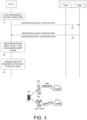
- FIG.3 illustrates a first embodiment of UE performing registration over a second access and receives a registration result value when a UE is not registered to a first access in accordance with one novel aspect.
- UE 301 determines that it is not registered to PLMN1 over a first access, e.g., 3GPP access 302.
- UE 301 triggers a registration by sending a REGISTRATION REQUEST message to PLMN2 over a second access, e.g., non-3GPP access 303.
- UE 301 receives a REGISTRATION ACCEPT message from PLMN2 over the second access type.
- the REGISTRATION ACCEPT message comprises a 5GS registration result IE, which carries a 5GS registration result value.
- UE 301 can access PLMN1 over 3GPP access 302 via a first AMF1, and UE 301 can access PLMN2 over non-3GPP access 303 via a second AMF2.
- PLMN1 and PLMN2 belong to the same network, then AMF1 and AMF2 can be the same network entity. However, the UE 301 may deregister locally without notifying the AMF1 or AMF2. As a result, the AMF1 will provide wrong results.
- PLMN1 and PLMN2 are two different networks, then AMF1 and AMF2 are two different entities.
- AMF1 may not know the current configuration and status of the UE with respect to non-3GPP access/PLMN2 that is stored in AMF2, and AMF2 may not know the current configuration and status of the UE with respect to 3GPP access/PLMN1 that is stored in AMF1.
- UE 301 is not registered to PLMN1 over 3GPP access.
- AMF2 may not know the 5GS registration result over 3GPP access that is stored in AMF1.
- UE 301 When UE 301 receives the 5GS registration result IE, and when the 5GS registration result value indicates that the LTE is registered to both 3GPP access and non-3GPP access, UE 301 thus ignores the 5GS registration result value with respect to 3GPP access, and considers itself NOT YET registered to the first PLMN1 over 3GPP access. However, UE 301 considers itself registered to the second PLMN2 over non-3GPP access based on the 5GS registration result value.
- FIG.4 illustrates a second embodiment performing registration over a second access and receives a registration result value when a UE is registered to a first access in accordance with one novel aspect.
- UE 401 determines that it is registered to PLMN1 over a first access, e.g., 3GPP access 402.
- UE 401 triggers a registration by sending a REGISTRATION REQUEST message to PLMN2 over a second access, e.g., non-3GPP access 403.
- UE 401 receives a REGISTRATION ACCEPT message from PLMN2 over the second access type.
- the REGISTRATION ACCEPT message comprises a 5GS registration result IE, which carries a 5GS registration result value.
- FIG.5 illustrates a third embodiment performing registration over a first access and receives a registration result value indicating UE is registered to a second access in accordance with one novel aspect.
- UE 501 triggers a registration procedure to PLMN1 over a first access, e.g., 3GPP access.
- LTE 501 receives a REGISTRATION ACCEPT message from PLMN2 over the first access type, e.g., 3GPP access.
- the REGISTRATION ACCEPT message comprises a 5GS registration result IE, which carries a 5GS registration result value which indicating the UE 501 is registered to the second access, e.g., non-3GPP access.
- FIG. 6 is a flow chart of a method of determining UE registration status for a LTE that is registered to different PLMN networks over 3GPP and non-3GPP accesses in accordance with one novel aspect.
- a LTE transmits a REGISTRATION REQUEST message to a second network over a second access type, wherein the LTE is not registered to a first network via a first access type.
- the UE receives a REGISTRATION ACCEPT message over the second access type from the second network, wherein the message carries a 5GS registration result information element (IE).
- IE 5GS registration result information element
- the UE derives a 5GS registration result value that indicates whether the UE is registered to the first network and the second network.
- the UE ignores the 5GS registration result value and considers the UE is not registered to the first network over the first access type.
- FIG. 7 is a flow chart of a method of determining UE registration status for a LTE that is registered to different PLMN networks over 3GPP and non-3GPP accesses in accordance with one novel aspect.
- a LTE transmits a REGISTRATION REQUEST message to a second network over a second access type, wherein the LTE is registered to a first network via a first access type.
- the UE receives a REGISTRATION ACCEPT message over the second access type from the second network, wherein the message carries a 5GS registration result information element (IE).
- IE 5GS registration result information element
- the UE derives a 5GS registration result value that indicates whether the UE is registered to the second network only.
- the UE ignores the 5GS registration result value and considers the UE is registered to the first network over the first access type.
Landscapes
- Engineering & Computer Science (AREA)
- Computer Networks & Wireless Communication (AREA)
- Signal Processing (AREA)
- Mobile Radio Communication Systems (AREA)
Abstract
Description
- This invention relates to wireless communication capable of 5G registration resultant value handling when UE is registered to networks via both 3GPP access and non-3GPP access.
- Third generation partnership project (3GPP) and 5G New Radio (NR) mobile telecommunication systems provide high data rate, lower latency and improved system performances. In 3GPP NR, 5G terrestrial New Radio (NR) access network includes a plurality of base stations, e.g., Next Generation Node-Bs (gNBs), communicating with a plurality of mobile stations referred as user equipment (UEs). Orthogonal Frequency Division Multiple Access (OFDMA) has been selected for NR downlink radio access scheme due to its robustness to multipath fading, higher spectral efficiency, and bandwidth scalability. Multiple access in the downlink is achieved by assigning different sub-bands (i.e., groups of subcarriers, denoted as resource blocks (RBs)) of the system bandwidth to individual users based on their existing channel condition.
- Operators are seeking ways to balance data traffic between mobile networks and non-3GPP access in a way that is transparent to users and reduces mobile network congestion. In 5GS, UEs can be simultaneously connected to both 3GPP access and non-3GPP access (using non-access stratum (NAS) signalling), thus the 5GS is able to take advantage of these multiple accesses to improve the user experience and optimize the traffic distribution across various accesses. Accordingly, UE can register to one or more networks over 3GPP access, over non-3GPP access, or over both 3GPP and non-3GPP.
- After UE transmits a REGISTRATION REQUEST message to the network, UE receives a REGISTRATION ACCEPT message, which carries a 5GS registration result value in the 5GS registration result IE. If the 5GS registration result value indicates "3GPP access", the UE consider itself as being registered to 3GPP access only. If the 5GS registration result value indicates "non-3GPP access", the UE consider itself as being registered to non-3GPP access only. If the 5GS registration result value indicates "3GPP access and non-3GPP access", the UE consider itself as being registered to both 3GPP access and non-3GPP access. However, the 5GS registration result value received over a first access may not indicate the UE registration status for a second access.
- A solution is sought.
- This invention aims at providing a method of determining UE registration status for a LTE that is registered to networks over 3GPP and non-3GPP accesses. This is achieved by methods and a LTE according to
claims 1, 7 and 12, respectively. The dependent claims pertain to corresponding further developments and improvements. - As will be seen more clearly from the detailed description below, the claimed UE triggers registration to a Public Land Mobile Network (PLMN) or Standalone Non-Public Network (SNPN) over a second access, and receives a REGISTRATION ACCEPT message from the network over the second access. The REGISTRATION ACCEPT message carries a 5GS registration result IE having a 5GS registration result value. In
case 1, LTE is not registered to a first network over a first access. However, the registration result value indicates BOTH the first access AND the second access, which is inaccurate. Accordingly, UE should ignore the registration result value and considers itself NOT registered to the first access. Incase 2, UE is registered to a first network over a first access. However, the registration result value indicates the second access ONLY, which is inaccurate. Accordingly, LTE should ignore the registration result value and considers itself registered to BOTH the first access AND the second access. Incase 3, UE triggers registration to a first network over a first access. However, the registration result value indicates the second access ONLY. Accordingly, LTE should ignore the registration result value and considers itself registered to the first access ONLY or to BOTH the first access AND the second access. - In the following, the invention is further illustrated by way of example, taking reference to the following drawings. Thereof:
-
FIG. 1 illustrates an exemplary 5G network and a method of determining registration status when a User Equipment (UE) is registered to the same or different networks over 3GPP access and non-3GPP access in accordance with one novel aspect. -
FIG.2 illustrates simplified block diagrams of a user equipment (UE) and a network entity in accordance with embodiments of the current invention. -
FIG.3 illustrates a first embodiment of UE performing registration over a second access and receives a registration result value when a UE is not registered to a first access in accordance with one novel aspect. -
FIG.4 illustrates a second embodiment performing registration over a second access and receives a registration result value when a UE is registered to a first access in accordance with one novel aspect. -
FIG.5 illustrates a third embodiment performing registration over a first access and receives a registration result value indicating a second access is registered in accordance with one novel aspect. -
FIG.6 is a flow chart of a method of determining UE registration status for a UE that is registered to networks over 3GPP and non-3GPP accesses in accordance with one novel aspect. -
FIG.7 is a flow chart of a method of determining UE registration status for a UE that is registered to different networks over 3GPP and non-3GPP accesses in accordance with one novel aspect. - Reference will now be made in detail to some embodiments of the invention, examples of which are illustrated in the accompanying drawings.
-
FIG.1 illustrates anexemplary 5G network 100 and a method of determining registration status when a User Equipment (UE) is registered to the same or different networks over 3GPP access and non-3GPP access in accordance with one novel aspect. 5G new radio (NR)network 100 comprises a user equipment (UE) 101, a 3GPP access 102 (e.g., a 3GPP radio access network (RAN)), a non-3GPP access 103 (e.g., a non-3GPP RAN), an access and mobility management function (AMF) 110, a session management function (SMF) 111, a non-3GPP interworking function (N3IWF) 112, a user plane function (UPF) 113, and a 5G core (5GC)data network 120. The AMF 110 communicates with the base stations in the3GPP access 102, theSMF 111, and the UPF 113 for access and mobility management of wireless access devices in the5G network 100. SMF 111 is primarily responsible for interacting with the decoupled data plane, creating, updating, and removing PDU sessions and managing session context with the UPF 113. N3IWF 112 interfaces to 5G core network control plane functions, responsible for routing messages outside 5G RAN. - In Access Stratum (AS) layer, an RAN provides radio access for the UE 101 via a radio access technology (RAT). In Non-Access Stratum (NAS) layer, the AMF 110 and the
SMF 111 communicate with RAN and 5GC for access and mobility management and PDU session management of wireless access devices in the5G network 100. The3GPP access 102 may include base stations (gNBs or eNBs) providing radio access for theLTE 101 via various 3GPP RATs including 5G, 4G, and 3G/2G. Thenon-3GPP access 103 may include access points (APs) providing radio access for the UE 101 via non-3GPP RAT including WiFi. The UE 101 can obtain access todata network 120 through3GPP access 102, AMF 110, SMF 111, and UPF 113. The UE 101 can obtain access todata network 120 throughnon-3GPP access 103, N3IWF 112, AMF 110, SMF 111, and UPF 113. The UE 101 may be equipped with a single radio frequency (RF) module or transceiver or multiple RF modules or transceivers for services via different RATs/CNs. In some examples, LTE 101 may be a smart phone, a wearable device, an Internet of Things (IoT) device, a tablet, etc. - In 5GS, UEs can be simultaneously connected to both 3GPP access and non-3GPP access (using non-access stratum (NAS) signalling), thus the 5GS is able to take advantage of these multiple accesses to improve the user experience and optimize the traffic distribution across various accesses. Accordingly, a UE can register to one or more networks in 5GS over 3GPP access, over non-3GPP access, or over both 3GPP and non-3GPP. After UE transmits a REGISTRATION REQUEST message to the network, UE receives a REGISTRATION ACCEPT message, which carries a 5GS registration result value in the 5GS registration result IE. If the 5GS registration result value indicates "3GPP access", the UE consider itself as being registered to 3GPP access only. If the 5GS registration result value indicates "non-3GPP access", the UE consider itself as being registered to non-3GPP access only. If the 5GS registration result value indicates "3GPP access and non-3GPP access", the UE consider itself as being registered to both 3GPP access and non-3GPP access. However, the 5GS registration result value received over a first access may not accurately indicate the UE registration status for a second access, especially when the LTE is registered to different networks.
- In accordance with one novel aspect, a method of determining UE registration status for a UE that is registered to networks over 3GPP and non-3GPP accesses is proposed. As depicted in
FIG.1 (130),LTE 101 may send a REGISTRATION REQUEST message to a Public Land Mobile Network (PLMN) or Standalone Non-Public Network (SNPN) over a second access, and receives a REGISTRATION ACCEPT message from the network over the second access. The REGISTRATION ACCEPT message carries a 5GS registration result IE having a 5GS registration result value. Incase 1,UE 101 is not registered to a first network over a first access. However, the registration result value indicates BOTH the first access AND the second access, which is inaccurate. Accordingly,UE 101 should ignore the registration result value and considers itself NOT registered to the first access. Incase 2,LTE 101 is registered to a first network over a first access. However, the registration result value indicates the second access ONLY, which is inaccurate. Accordingly,UE 101 should ignore the registration result value and considers itself registered to BOTH the first access AND the second access. Incase 3,UE 101 triggers registration to a first network over a first access. However, the registration result value indicates the second access ONLY. Accordingly,UE 101 should ignore the registration result value and considers itself registered to the first access ONLY or to BOTH the first access AND the second access. -
FIG.2 illustrates simplified block diagrams of wireless devices, e.g., aUE 201 and anetwork entity 211 in accordance with embodiments of the current invention.Network entity 211 may be a base station and/or an AMF/SMF.Network entity 211 has anantenna 215, which transmits and receives radio signals. A radio frequencyRF transceiver module 214, coupled with the antenna, receives RF signals fromantenna 215, converts them to baseband signals and sends them toprocessor 213.RF transceiver 214 also converts received baseband signals fromprocessor 213, converts them to RF signals, and sends out toantenna 215.Processor 213 processes the received baseband signals and invokes different functional modules to perform features inbase station 211.Memory 212 stores program instructions anddata 220 to control the operations ofbase station 211. In the example ofFIG. 2 ,network entity 211 also includesprotocol stack 280 and a set of control function modules andcircuits 290. Protocol stacks 280 includes Non-Access-Stratum (NAS) layer to communicate with an AMF/SMF/MME entity connecting to the core network, Radio Resource Control (RRC) layer for high layer configuration and control, Packet Data Convergence Protocol/Radio Link Control (PDCP/RLC) layer, Media Access Control (MAC) layer, and Physical (PHY) layer. In one example, control function modules andcircuits 290 includes aregistration circuit 291 that handles registration procedures, aconnection handling circuit 292 that handles signaling connections, and a configuration and control circuit 293 that provides different parameters to configure and control UE of related functionalities including registration and paging. Thenetwork entity 211 can be one 5GS network component or more than one 5GS network components (e.g., access network + AMF + N3IWF + SMF, etc.). - Similarly,
UE 201 hasmemory 202, aprocessor 203, and radio frequency (RF)transceiver module 204.RF transceiver 204 is coupled withantenna 205, receives RF signals fromantenna 205, converts them to baseband signals, and sends them toprocessor 203.RF transceiver 204 also converts received baseband signals fromprocessor 203, converts them to RF signals, and sends out toantenna 205.Processor 203 processes the received baseband signals and invokes different functional modules and circuits to perform features inUE 201.Memory 202 stores data andprogram instructions 210 to be executed by the processor to control the operations ofLTE 201. Suitable processors include, by way of example, a special purpose processor, a digital signal processor (DSP), a plurality of micro-processors, one or more micro-processor associated with a DSP core, a controller, a microcontroller, application specific integrated circuits (ASICs), file programmable gate array (FPGA) circuits, and other type of integrated circuits (ICs), and/or state machines. A processor in associated with software may be used to implement and configure features ofLTE 201. -
UE 201 also includes protocol stacks 260 and a set of control function modules andcircuits 270. Protocol stacks 260 includes NAS layer to communicate with an AMF/SMF/MME entity connecting to the core network, RRC layer for high layer configuration and control, PDCP/RLC layer, MAC layer, and PHY layer. Control function modules andcircuits 270 may be implemented and configured by software, firmware, hardware, and/or combination thereof. The control function modules and circuits, when executed by the processors via program instructions contained in the memory, interwork with each other to allowLTE 201 to perform embodiments and functional tasks and features in the network. In one example, control function modules andcircuits 270 includes aregistration handling circuit 271 that performs registration procedure with the network, aconnection handling circuit 272 that handles RRC and NAS signaling connection, and a config and control circuit 273 that handles configuration and control parameters including determining UE access identity. In one embodiment, the UE receives a registration result value from a second network over a second access that indicates a registration status of a first network over a first access. The UE ignores the registration result value because it does not accurately indicate the registration status of the first network over the first access. - The 5GS registration result IE can carry three different 5GS registration result values. If the 5GS registration result value = "3GPP access", then the UE should consider itself as being registered to 3GPP access only, and not registered to non-3GPP access. If the UE is in 5GMM-REGISTERED state over non-3GPP access and on the same PLMN as 3GPP access, then the UE enters state 5GMM-DEREGISTERED. If the 5GS registration result value = "non-3GPP access", then the UE should consider itself as being registered to non-3GPP access only, and not registered to 3GPP access. If the UE is in 5GMM-REGISTERED state over 3GPP access and on the same PLMN as non-3GPP access, then the UE enters state 5GMM-DEREGISTERED. If the 5GS registration result value = "3GPP access and non-3GPP access", then the UE should consider itself as being registered to both 3GPP access and being registered to non-3GPP access.
-
FIG.3 illustrates a first embodiment of UE performing registration over a second access and receives a registration result value when a UE is not registered to a first access in accordance with one novel aspect. Instep 311,UE 301 determines that it is not registered to PLMN1 over a first access, e.g.,3GPP access 302. Instep 321,UE 301 triggers a registration by sending a REGISTRATION REQUEST message to PLMN2 over a second access, e.g.,non-3GPP access 303. Instep 322,UE 301 receives a REGISTRATION ACCEPT message from PLMN2 over the second access type. The REGISTRATION ACCEPT message comprises a 5GS registration result IE, which carries a 5GS registration result value. Instep 331,UE 301 derives the 5GS registration result value = "3GPP access and non-3GPP access", indicating that the UE is registered to both networks over 3GPP access and over non-3GPP access. However,UE 301 knows that it is not registered to the first PLMN1. Since the 5GS registration result value is received over non-3GPP access, it may not accurately indicate the registration status for PLMN1 over 3GPP access. As a result,UE 301 ignores the received 5GS registration result value with respect to 3GPP access, and still considers itself NOT YET registered to the first PLMN1 over 3GPP access. - In
FIG. 3 ,UE 301 can access PLMN1 over3GPP access 302 via a first AMF1, andUE 301 can access PLMN2 overnon-3GPP access 303 via a second AMF2. If PLMN1 and PLMN2 belong to the same network, then AMF1 and AMF2 can be the same network entity. However, theUE 301 may deregister locally without notifying the AMF1 or AMF2. As a result, the AMF1 will provide wrong results. On the other hand, if PLMN1 and PLMN2 are two different networks, then AMF1 and AMF2 are two different entities. As a result, AMF1 may not know the current configuration and status of the UE with respect to non-3GPP access/PLMN2 that is stored in AMF2, and AMF2 may not know the current configuration and status of the UE with respect to 3GPP access/PLMN1 that is stored in AMF1. In the embodiment ofFIG. 3 ,UE 301 is not registered to PLMN1 over 3GPP access. AMF2 may not know the 5GS registration result over 3GPP access that is stored in AMF1. WhenUE 301 receives the 5GS registration result IE, and when the 5GS registration result value indicates that the LTE is registered to both 3GPP access and non-3GPP access,UE 301 thus ignores the 5GS registration result value with respect to 3GPP access, and considers itself NOT YET registered to the first PLMN1 over 3GPP access. However,UE 301 considers itself registered to the second PLMN2 over non-3GPP access based on the 5GS registration result value. -
FIG.4 illustrates a second embodiment performing registration over a second access and receives a registration result value when a UE is registered to a first access in accordance with one novel aspect. Instep 411,UE 401 determines that it is registered to PLMN1 over a first access, e.g.,3GPP access 402. Instep 421,UE 401 triggers a registration by sending a REGISTRATION REQUEST message to PLMN2 over a second access, e.g.,non-3GPP access 403. In step 422,UE 401 receives a REGISTRATION ACCEPT message from PLMN2 over the second access type. The REGISTRATION ACCEPT message comprises a 5GS registration result IE, which carries a 5GS registration result value. Instep 431,UE 401 derives the 5GS registration result value = "non-3GPP access only", indicating that the LTE is registered to PLMN2 over non-3GPP access only. However,UE 401 knows that it is registered to the first PLMN1. Since the 5GS registration result value is received over non-3GPP access, it may not accurately indicate the registration status for PLMN1 over 3GPP access. As a result,UE 401 ignores the received 5GS registration result value with respect to 3GPP access, and considers itself being registered to the first PLMN1 over 3GPP access. However,UE 401 considers itself registered to the second PLMN2 over non-3GPP access based on the 5GS registration result value. -
FIG.5 illustrates a third embodiment performing registration over a first access and receives a registration result value indicating UE is registered to a second access in accordance with one novel aspect. Instep 511,UE 501 triggers a registration procedure to PLMN1 over a first access, e.g., 3GPP access. Instep 521,LTE 501 receives a REGISTRATION ACCEPT message from PLMN2 over the first access type, e.g., 3GPP access. The REGISTRATION ACCEPT message comprises a 5GS registration result IE, which carries a 5GS registration result value which indicating theUE 501 is registered to the second access, e.g., non-3GPP access. Instep 531,UE 501 derives the 5GS registration result value = "non-3GPP access only", indicating that the UE is registered to PLMN2 over non-3GPP access only. However,UE 501 knows that it triggers registration to the first PLMN1 over 3GPP, and did not trigger registration to the second PLMN2 over non-3GPP access. As a result,UE 501 ignores the received 5GS registration result value with respect to 3GPP access, and still considers itself being registered to the first PLMN1 over 3GPP access, or considers itself being registered to both the first PLMN over 3GPP access and the second PLMN over non-3GPP access. -
FIG. 6 is a flow chart of a method of determining UE registration status for a LTE that is registered to different PLMN networks over 3GPP and non-3GPP accesses in accordance with one novel aspect. Instep 601, a LTE transmits a REGISTRATION REQUEST message to a second network over a second access type, wherein the LTE is not registered to a first network via a first access type. Instep 602, the UE receives a REGISTRATION ACCEPT message over the second access type from the second network, wherein the message carries a 5GS registration result information element (IE). Instep 603, the UE derives a 5GS registration result value that indicates whether the UE is registered to the first network and the second network. Instep 604, the UE ignores the 5GS registration result value and considers the UE is not registered to the first network over the first access type. -
FIG. 7 is a flow chart of a method of determining UE registration status for a LTE that is registered to different PLMN networks over 3GPP and non-3GPP accesses in accordance with one novel aspect. Instep 701, a LTE transmits a REGISTRATION REQUEST message to a second network over a second access type, wherein the LTE is registered to a first network via a first access type. Instep 702, the UE receives a REGISTRATION ACCEPT message over the second access type from the second network, wherein the message carries a 5GS registration result information element (IE). Instep 703, the UE derives a 5GS registration result value that indicates whether the UE is registered to the second network only. Instep 704, the UE ignores the 5GS registration result value and considers the UE is registered to the first network over the first access type.
Claims (15)
- A method, characterized by:transmitting a REGISTRATION REQUEST message by a User Equipment (UE) (101, 201, 301) to a second network (100) over a second access type, wherein the UE is not registered to a first network (100) via a first access type;receiving a REGISTRATION ACCEPT message over the second access type from the second network (100), wherein the message carries a 5GS registration result information element (IE);deriving a 5GS registration result value that indicates whether the UE (101, 201, 301) is registered to the first network (100) and the second network (100); andignoring the 5GS registration result value and considering the LTE (101, 201, 301) is not registered to the first network (100) over the first access type.
- The method of Claim 1, characterized in that one of the first access type and the second access type is 3GPP access type (102), and the other of the first access type and the second access type is non-3GPP access type (103).
- The method of Claim 1, characterized in that the 5GS registration result value is set to 3GPP access and non-3GPP access indicating that the UE (101, 201, 301) is registered to both the first network (100) and the second network (100).
- The method of Claim 1, characterized in that the first network (100) and the second network (100) are two different public land mobile networks (PLMNs).
- The method of Claim 1, characterized in that the first network (100) and the second network (100) are the same public land mobile network (PLMN).
- A method, characterized by:transmitting a REGISTRATION REQUEST message by a User Equipment (UE) (101, 201, 301) to a second network (100) over a second access type, wherein the UE (101, 201, 301) is registered to a first network (100) via a first access type;receiving a REGISTRATION ACCEPT message over the second access type from the second network (100), wherein the message carries a 5GS registration result information element (IE);deriving a 5GS registration result value that indicates whether the UE (101, 201, 301) is registered to the second network (100) only; andignoring the 5GS registration result value and considering the UE (101, 201, 301) is registered to the first network (100) over the first access type.
- The method of Claim 6, characterized in that the one of the first access type and the second access type is 3GPP access type (102), and the other of the first access type and the second access type is non-3GPP access type (103).
- The method of Claim 6, characterized in that the 5GS registration result value is set to the second access indicating that the UE (101, 201, 301) is registered to the second network (100) only.
- The method of Claim 6, characterized in that the first network (100) and the second network (100) are two different public land mobile networks (PLMNs).
- A User Equipment (UE) (101, 201, 301), characterized by:a transmitter (204) that transmitting a REGISTRATION REQUEST message to a second network (100) over a second access type, wherein the LTE has a first registration status with a first network (100) over a first access type;a receiver (204) that receives a REGISTRATION ACCEPT message over the second access type from the second network (100), wherein the message carries a 5GS registration result information element (IE); anda control circuit (270) that derives a 5GS registration result value that indicates a second registration status with the first network (100) over the first access type, wherein the UE (101, 201, 301) ignores the 5GS registration result value and considers the UE (101, 201, 301) is registered or not registered to the first network (100) over the first access type based on the first registration status.
- The UE (101, 201, 301) of Claim 10, characterized in that one of the first access type and the second access type is 3GPP access type (102), and the other of the first access type and the second access type is non-3GPP access type (103).
- The UE (101, 201, 301) of Claim 10, characterized in that the first network (100) and the second network (100) are two different public land mobile networks (PLMNs).
- The UE (101, 201, 301) of Claim 10, characterized in that the first network (100) and the second network (100) are the same public land mobile network (PLMN).
- The LTE (101, 201, 301) of Claim 10, characterized in that the first registration status indicates the LTE (101, 201, 301) is registered to the first network (100) and the second registration status indicates the LTE (101, 201, 301) is not registered to the first network (100).
- The LTE (101, 201, 301) of Claim 10, characterized in that the first registration status indicates the LTE (101, 201, 301) is not registered to the first network and the second registration status indicates the LTE (101, 201, 301) is registered to the first network.
Applications Claiming Priority (2)
| Application Number | Priority Date | Filing Date | Title |
|---|---|---|---|
| US202263369770P | 2022-07-29 | 2022-07-29 | |
| US18/218,097 US20240040530A1 (en) | 2022-07-29 | 2023-07-04 | 5g registration resultant value handling |
Publications (2)
| Publication Number | Publication Date |
|---|---|
| EP4312454A1 true EP4312454A1 (en) | 2024-01-31 |
| EP4312454B1 EP4312454B1 (en) | 2025-05-14 |
Family
ID=87418776
Family Applications (1)
| Application Number | Title | Priority Date | Filing Date |
|---|---|---|---|
| EP23186132.9A Active EP4312454B1 (en) | 2022-07-29 | 2023-07-18 | 5g registration resultant value handling |
Country Status (3)
| Country | Link |
|---|---|
| US (1) | US20240040530A1 (en) |
| EP (1) | EP4312454B1 (en) |
| TW (1) | TW202410723A (en) |
-
2023
- 2023-07-04 US US18/218,097 patent/US20240040530A1/en active Pending
- 2023-07-18 EP EP23186132.9A patent/EP4312454B1/en active Active
- 2023-07-28 TW TW112128295A patent/TW202410723A/en unknown
Non-Patent Citations (2)
| Title |
|---|
| "3rd Generation Partnership Project; Technical Specification Group Core Network and Terminals; Non-Access-Stratum (NAS) protocol for 5G System (5GS); Stage 3; (Release 17)", 27 June 2022 (2022-06-27), XP052201477, Retrieved from the Internet <URL:https://ftp.3gpp.org/3guInternal/3GPP_ultimate_versions_to_be_transposed/sentToDpc/24501-h71.zip 24501-h71.docx> [retrieved on 20220627] * |
| YUANCHIEH (CARLSON) LIN ET AL: "Clarification of 5GS registration result value handling", vol. 3GPP CT 1, no. Online; 20220818 - 20220826, 11 August 2022 (2022-08-11), XP052185526, Retrieved from the Internet <URL:https://www.3gpp.org/ftp/tsg_ct/WG1_mm-cc-sm_ex-CN1/TSGC1_137e/Docs/C1-224682.zip C1-224682_Clarification of 5GS registration result value handling_24501_CR4479.docx> [retrieved on 20220811] * |
Also Published As
| Publication number | Publication date |
|---|---|
| TW202410723A (en) | 2024-03-01 |
| US20240040530A1 (en) | 2024-02-01 |
| EP4312454B1 (en) | 2025-05-14 |
Similar Documents
| Publication | Publication Date | Title |
|---|---|---|
| US11197216B2 (en) | Handling of collision between SR procedure and PDU session establishment procedure for PDU session handover | |
| US20240267774A1 (en) | Apparatus and method for measurement in wireless communication system | |
| JP6915038B2 (en) | Registration refusal due to incompatibility of IoT (cellular internet of things) function | |
| WO2020078374A1 (en) | 5gsm handling on invalid pdu session | |
| US11553549B2 (en) | Multi-access PDU session state synchronization between UE and network | |
| US20210250409A1 (en) | Handling of Multi-Access PDU Session Upgrade | |
| US11503667B2 (en) | Enhancement for multi-access PDU session release | |
| CN110769458A (en) | Communication method, access network device and terminal device | |
| CN110999426B (en) | Method of performing measurement and terminal for performing measurement | |
| EP4207931A1 (en) | Method and device for adding 3gpp pdn leg to an ma pdu session with non-3gpp leg | |
| US12238790B2 (en) | MA PDU session and user plane resource establishment for data transmission | |
| CN114079990A (en) | Communication method and device | |
| US12010549B2 (en) | Handling of 5GSM congestion timers | |
| EP4366403A1 (en) | Deregistration and emm parameter handling considering access type | |
| TWI843376B (en) | Methods and user equipment for wireless communications | |
| CN116471706B (en) | User equipment routing strategy provision method and user equipment | |
| US12568549B2 (en) | MA PDU reactivation requested handling | |
| EP4322699A1 (en) | Access handling when stopping 5gsm congestion timers | |
| EP4312454B1 (en) | 5g registration resultant value handling | |
| EP4312450B1 (en) | Interworking without n26 interface support or not supported received in non-3gpp access | |
| EP4312455B1 (en) | Ue access identity determination for 3gpp and non-3gpp accesses | |
| CN117479141A (en) | 5G registration result value processing method and its user equipment | |
| WO2024221146A1 (en) | User equipment time synchronization update in rrc_inactive | |
| CN117479255A (en) | Methods and user equipment for performing inter-system changes | |
| CN117998571A (en) | Consider access type deregistration and EMM parameter processing |
Legal Events
| Date | Code | Title | Description |
|---|---|---|---|
| PUAI | Public reference made under article 153(3) epc to a published international application that has entered the european phase |
Free format text: ORIGINAL CODE: 0009012 |
|
| STAA | Information on the status of an ep patent application or granted ep patent |
Free format text: STATUS: THE APPLICATION HAS BEEN PUBLISHED |
|
| AK | Designated contracting states |
Kind code of ref document: A1 Designated state(s): AL AT BE BG CH CY CZ DE DK EE ES FI FR GB GR HR HU IE IS IT LI LT LU LV MC ME MK MT NL NO PL PT RO RS SE SI SK SM TR |
|
| STAA | Information on the status of an ep patent application or granted ep patent |
Free format text: STATUS: REQUEST FOR EXAMINATION WAS MADE |
|
| 17P | Request for examination filed |
Effective date: 20240319 |
|
| RBV | Designated contracting states (corrected) |
Designated state(s): AL AT BE BG CH CY CZ DE DK EE ES FI FR GB GR HR HU IE IS IT LI LT LU LV MC ME MK MT NL NO PL PT RO RS SE SI SK SM TR |
|
| GRAP | Despatch of communication of intention to grant a patent |
Free format text: ORIGINAL CODE: EPIDOSNIGR1 |
|
| STAA | Information on the status of an ep patent application or granted ep patent |
Free format text: STATUS: GRANT OF PATENT IS INTENDED |
|
| RIC1 | Information provided on ipc code assigned before grant |
Ipc: H04W 48/18 20090101ALN20250122BHEP Ipc: H04W 36/14 20090101ALN20250122BHEP Ipc: H04W 88/06 20090101ALI20250122BHEP Ipc: H04W 60/00 20090101AFI20250122BHEP |
|
| INTG | Intention to grant announced |
Effective date: 20250211 |
|
| GRAS | Grant fee paid |
Free format text: ORIGINAL CODE: EPIDOSNIGR3 |
|
| GRAA | (expected) grant |
Free format text: ORIGINAL CODE: 0009210 |
|
| STAA | Information on the status of an ep patent application or granted ep patent |
Free format text: STATUS: THE PATENT HAS BEEN GRANTED |
|
| AK | Designated contracting states |
Kind code of ref document: B1 Designated state(s): AL AT BE BG CH CY CZ DE DK EE ES FI FR GB GR HR HU IE IS IT LI LT LU LV MC ME MK MT NL NO PL PT RO RS SE SI SK SM TR |
|
| RAP3 | Party data changed (applicant data changed or rights of an application transferred) |
Owner name: MEDIATEK INC. |
|
| REG | Reference to a national code |
Ref country code: GB Ref legal event code: FG4D |
|
| RIN1 | Information on inventor provided before grant (corrected) |
Inventor name: LIN, YUAN-CHIEH Inventor name: YANG, YUNG-CHUN Inventor name: LIN, YU-HSIN |
|
| REG | Reference to a national code |
Ref country code: CH Ref legal event code: EP |
|
| REG | Reference to a national code |
Ref country code: DE Ref legal event code: R096 Ref document number: 602023003453 Country of ref document: DE |
|
| REG | Reference to a national code |
Ref country code: IE Ref legal event code: FG4D |
|
| PGFP | Annual fee paid to national office [announced via postgrant information from national office to epo] |
Ref country code: FR Payment date: 20250528 Year of fee payment: 3 |
|
| REG | Reference to a national code |
Ref country code: NL Ref legal event code: MP Effective date: 20250514 |
|
| PG25 | Lapsed in a contracting state [announced via postgrant information from national office to epo] |
Ref country code: FI Free format text: LAPSE BECAUSE OF FAILURE TO SUBMIT A TRANSLATION OF THE DESCRIPTION OR TO PAY THE FEE WITHIN THE PRESCRIBED TIME-LIMIT Effective date: 20250514 Ref country code: ES Free format text: LAPSE BECAUSE OF FAILURE TO SUBMIT A TRANSLATION OF THE DESCRIPTION OR TO PAY THE FEE WITHIN THE PRESCRIBED TIME-LIMIT Effective date: 20250514 Ref country code: PT Free format text: LAPSE BECAUSE OF FAILURE TO SUBMIT A TRANSLATION OF THE DESCRIPTION OR TO PAY THE FEE WITHIN THE PRESCRIBED TIME-LIMIT Effective date: 20250915 |
|
| PGFP | Annual fee paid to national office [announced via postgrant information from national office to epo] |
Ref country code: DE Payment date: 20250430 Year of fee payment: 3 |
|
| REG | Reference to a national code |
Ref country code: LT Ref legal event code: MG9D |
|
| PG25 | Lapsed in a contracting state [announced via postgrant information from national office to epo] |
Ref country code: GR Free format text: LAPSE BECAUSE OF FAILURE TO SUBMIT A TRANSLATION OF THE DESCRIPTION OR TO PAY THE FEE WITHIN THE PRESCRIBED TIME-LIMIT Effective date: 20250815 Ref country code: NO Free format text: LAPSE BECAUSE OF FAILURE TO SUBMIT A TRANSLATION OF THE DESCRIPTION OR TO PAY THE FEE WITHIN THE PRESCRIBED TIME-LIMIT Effective date: 20250814 |
|
| PG25 | Lapsed in a contracting state [announced via postgrant information from national office to epo] |
Ref country code: NL Free format text: LAPSE BECAUSE OF FAILURE TO SUBMIT A TRANSLATION OF THE DESCRIPTION OR TO PAY THE FEE WITHIN THE PRESCRIBED TIME-LIMIT Effective date: 20250514 Ref country code: PL Free format text: LAPSE BECAUSE OF FAILURE TO SUBMIT A TRANSLATION OF THE DESCRIPTION OR TO PAY THE FEE WITHIN THE PRESCRIBED TIME-LIMIT Effective date: 20250514 |
|
| REG | Reference to a national code |
Ref country code: AT Ref legal event code: MK05 Ref document number: 1795879 Country of ref document: AT Kind code of ref document: T Effective date: 20250514 |
|
| PG25 | Lapsed in a contracting state [announced via postgrant information from national office to epo] |
Ref country code: BG Free format text: LAPSE BECAUSE OF FAILURE TO SUBMIT A TRANSLATION OF THE DESCRIPTION OR TO PAY THE FEE WITHIN THE PRESCRIBED TIME-LIMIT Effective date: 20250514 |
|
| PG25 | Lapsed in a contracting state [announced via postgrant information from national office to epo] |
Ref country code: HR Free format text: LAPSE BECAUSE OF FAILURE TO SUBMIT A TRANSLATION OF THE DESCRIPTION OR TO PAY THE FEE WITHIN THE PRESCRIBED TIME-LIMIT Effective date: 20250514 |
|
| PG25 | Lapsed in a contracting state [announced via postgrant information from national office to epo] |
Ref country code: AT Free format text: LAPSE BECAUSE OF FAILURE TO SUBMIT A TRANSLATION OF THE DESCRIPTION OR TO PAY THE FEE WITHIN THE PRESCRIBED TIME-LIMIT Effective date: 20250514 |
|
| PG25 | Lapsed in a contracting state [announced via postgrant information from national office to epo] |
Ref country code: RS Free format text: LAPSE BECAUSE OF FAILURE TO SUBMIT A TRANSLATION OF THE DESCRIPTION OR TO PAY THE FEE WITHIN THE PRESCRIBED TIME-LIMIT Effective date: 20250814 |
|
| PG25 | Lapsed in a contracting state [announced via postgrant information from national office to epo] |
Ref country code: IS Free format text: LAPSE BECAUSE OF FAILURE TO SUBMIT A TRANSLATION OF THE DESCRIPTION OR TO PAY THE FEE WITHIN THE PRESCRIBED TIME-LIMIT Effective date: 20250914 |
|
| PG25 | Lapsed in a contracting state [announced via postgrant information from national office to epo] |
Ref country code: LV Free format text: LAPSE BECAUSE OF FAILURE TO SUBMIT A TRANSLATION OF THE DESCRIPTION OR TO PAY THE FEE WITHIN THE PRESCRIBED TIME-LIMIT Effective date: 20250514 |
|
| PG25 | Lapsed in a contracting state [announced via postgrant information from national office to epo] |
Ref country code: SM Free format text: LAPSE BECAUSE OF FAILURE TO SUBMIT A TRANSLATION OF THE DESCRIPTION OR TO PAY THE FEE WITHIN THE PRESCRIBED TIME-LIMIT Effective date: 20250514 Ref country code: DK Free format text: LAPSE BECAUSE OF FAILURE TO SUBMIT A TRANSLATION OF THE DESCRIPTION OR TO PAY THE FEE WITHIN THE PRESCRIBED TIME-LIMIT Effective date: 20250514 |
|
| PG25 | Lapsed in a contracting state [announced via postgrant information from national office to epo] |
Ref country code: CZ Free format text: LAPSE BECAUSE OF FAILURE TO SUBMIT A TRANSLATION OF THE DESCRIPTION OR TO PAY THE FEE WITHIN THE PRESCRIBED TIME-LIMIT Effective date: 20250514 |
|
| PG25 | Lapsed in a contracting state [announced via postgrant information from national office to epo] |
Ref country code: EE Free format text: LAPSE BECAUSE OF FAILURE TO SUBMIT A TRANSLATION OF THE DESCRIPTION OR TO PAY THE FEE WITHIN THE PRESCRIBED TIME-LIMIT Effective date: 20250514 |
|
| PG25 | Lapsed in a contracting state [announced via postgrant information from national office to epo] |
Ref country code: SK Free format text: LAPSE BECAUSE OF FAILURE TO SUBMIT A TRANSLATION OF THE DESCRIPTION OR TO PAY THE FEE WITHIN THE PRESCRIBED TIME-LIMIT Effective date: 20250514 |
|
| PG25 | Lapsed in a contracting state [announced via postgrant information from national office to epo] |
Ref country code: IT Free format text: LAPSE BECAUSE OF FAILURE TO SUBMIT A TRANSLATION OF THE DESCRIPTION OR TO PAY THE FEE WITHIN THE PRESCRIBED TIME-LIMIT Effective date: 20250514 |
|
| REG | Reference to a national code |
Ref country code: DE Ref legal event code: R097 Ref document number: 602023003453 Country of ref document: DE |
|
| PG25 | Lapsed in a contracting state [announced via postgrant information from national office to epo] |
Ref country code: RO Free format text: LAPSE BECAUSE OF FAILURE TO SUBMIT A TRANSLATION OF THE DESCRIPTION OR TO PAY THE FEE WITHIN THE PRESCRIBED TIME-LIMIT Effective date: 20250514 |
|
| PG25 | Lapsed in a contracting state [announced via postgrant information from national office to epo] |
Ref country code: LU Free format text: LAPSE BECAUSE OF NON-PAYMENT OF DUE FEES Effective date: 20250718 |
|
| PLBE | No opposition filed within time limit |
Free format text: ORIGINAL CODE: 0009261 |
|
| STAA | Information on the status of an ep patent application or granted ep patent |
Free format text: STATUS: NO OPPOSITION FILED WITHIN TIME LIMIT |
|
| REG | Reference to a national code |
Ref country code: CH Ref legal event code: L10 Free format text: ST27 STATUS EVENT CODE: U-0-0-L10-L00 (AS PROVIDED BY THE NATIONAL OFFICE) Effective date: 20260325 |
|
| REG | Reference to a national code |
Ref country code: BE Ref legal event code: MM Effective date: 20250731 |
|
| PG25 | Lapsed in a contracting state [announced via postgrant information from national office to epo] |
Ref country code: BE Free format text: LAPSE BECAUSE OF NON-PAYMENT OF DUE FEES Effective date: 20250731 |
|
| 26N | No opposition filed |
Effective date: 20260217 |