EP4312450A1 - Interworking without n26 interface support or not supported received in non-3gpp access - Google Patents
Interworking without n26 interface support or not supported received in non-3gpp access Download PDFInfo
- Publication number
- EP4312450A1 EP4312450A1 EP23187163.3A EP23187163A EP4312450A1 EP 4312450 A1 EP4312450 A1 EP 4312450A1 EP 23187163 A EP23187163 A EP 23187163A EP 4312450 A1 EP4312450 A1 EP 4312450A1
- Authority
- EP
- European Patent Office
- Prior art keywords
- network
- supported
- interface
- interworking
- access
- Prior art date
- Legal status (The legal status is an assumption and is not a legal conclusion. Google has not performed a legal analysis and makes no representation as to the accuracy of the status listed.)
- Granted
Links
Images

Classifications
-
- H—ELECTRICITY
- H04—ELECTRIC COMMUNICATION TECHNIQUE
- H04W—WIRELESS COMMUNICATION NETWORKS
- H04W36/00—Hand-off or reselection arrangements
- H04W36/14—Reselecting a network or an air interface
-
- H—ELECTRICITY
- H04—ELECTRIC COMMUNICATION TECHNIQUE
- H04W—WIRELESS COMMUNICATION NETWORKS
- H04W36/00—Hand-off or reselection arrangements
- H04W36/16—Performing reselection for specific purposes
- H04W36/18—Performing reselection for specific purposes for allowing seamless reselection, e.g. soft reselection
-
- H—ELECTRICITY
- H04—ELECTRIC COMMUNICATION TECHNIQUE
- H04W—WIRELESS COMMUNICATION NETWORKS
- H04W36/00—Hand-off or reselection arrangements
- H04W36/0005—Control or signalling for completing the hand-off
- H04W36/0011—Control or signalling for completing the hand-off for data sessions of end-to-end connection
- H04W36/0022—Control or signalling for completing the hand-off for data sessions of end-to-end connection for transferring data sessions between adjacent core network technologies
- H04W36/00222—Control or signalling for completing the hand-off for data sessions of end-to-end connection for transferring data sessions between adjacent core network technologies between different packet switched [PS] network technologies, e.g. transferring data sessions between LTE and WLAN or LTE and 5G
Definitions
- the disclosed embodiments relate generally to wireless communication, and, more particularly, to performing inter-system change and handling indication of interworking without N26 interface supported when received over non-3GPP access.
- 3GPP and 5G New Radio (NR) mobile telecommunication systems provide high data rate, lower latency and improved system performances.
- 5G terrestrial New Radio (NR) access network includes a plurality of base stations, e.g., Next Generation Node-Bs (gNBs), communicating with a plurality of mobile stations referred as user equipment (UEs).
- OFDMA Orthogonal Frequency Division Multiple Access
- Multiple access in the downlink is achieved by assigning different sub-bands (i.e., groups of subcarriers, denoted as resource blocks (RBs)) of the system bandwidth to individual users based on their existing channel condition.
- RBs resource blocks
- UEs can be simultaneously registered and connected to both 3GPP access and non-3GPP access (using NAS signalling), thus the 5GS is able to take advantage of these multiple accesses to improve the user experience and optimize the traffic distribution across various accesses.
- the UE When a UE registers to 3GPP or non-3GPP access, the UE will receive a REGISTRATION ACCEPT message, carrying a 5GS network feature support IE, which in turn carries an indication "interworking without N26 interface supported” or an indication "interworking without N26 interface not supported”.
- an IWK N26 bit in the 5GS network feature support IE can be set to "interworking without N26 interface supported" or "interworking without N26 interface not supported”.
- first network and second network can be same PLMN, or different PLMNs, same SNPN, or different SNPNs. However, such UE behavior may not be correct.
- a method and a user equipment according to the invention are defined in the independent claims.
- the dependent claims define preferred embodiments thereof.
- a method of performing intersystem change without N26 interface supported or not supported when a UE is registered to the same or different networks over 3GPP and non-3GPP accesses is proposed.
- UE registers to one or more PLMN/SNPN over 3GPP access and non-3GPP access.
- UE receives a REGISTRATION ACCEPT message over 3GPP access, which carries a first 5GS network feature support IE, which indicates that interworking without N26 interface not supported.
- UE also receives a REGISTRATION ACCEPT message over non-3GPP access, which carries a second 5GS network feature support IE, which indicates that interworking without N26 interface supported.
- UE ignores the second indication received over non-3GPP access and considers that N26 interface is supported for interworking.
- UE triggers a TAU procedure over LTE in 4G EPS.
- a UE maintains one or more Protocol Data Unit (PDU) sessions in 5GS, wherein the UE is registered to a first network via a first access type, and wherein the first network indicates interworking without N26 interface not supported.
- the UE receives a REGISTRATION ACCEPT message over a second access type from a second network, wherein the second network indicates interworking without N26 interface supported.
- the UE performs an intersystem change from 5GS to EPS.
- the UE triggers a tracking area update (TAU) procedure in EPS.
- TAU tracking area update
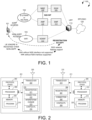
- Figure 1 illustrates an exemplary 5G network and a method of performing intersystem change without N26 interface supported or not supported when a User Equipment (UE) is registered to the same or different networks over 3GPP access and non-3GPP accesses in accordance with one novel aspect.
- UE User Equipment
- 5G/4G network 100 comprises a user equipment (UE) 101, a 3GPP access 102 (e.g., a 3GPP radio access network (E-UTRAN or NG-RAN)), a non-3GPP access 103 (e.g., a non-3GPP WiFi), an access and mobility management function (AMF) 110 or a mobility management entity (MME) 130, a session management function (SMF) 111 or a serving gateway (SGW) 131, a non-3GPP interworking function (N3IWF) 112, a user plane function (UPF) 113, and a 5G core or evolved packet core (5GC or EPC) data network 120.
- UE user equipment
- 3GPP access 102 e.g., a 3GPP radio access network (E-UTRAN or NG-RAN)
- a non-3GPP access 103 e.g., a non-3GPP WiFi
- AMF access and mobility management function
- MME mobility management entity
- SGW serving gateway
- the AMF 110 communicates with the base stations in the 3GPP access 102, the SMF 111, and the UPF 113 for access and mobility management of wireless access devices in the 5G network 100.
- the SMF 111 is primarily responsible for interacting with the decoupled data plane, creating, updating, and removing PDU sessions and managing session context with the UPF 113.
- the N3IWF 112 interfaces to 5G core network control plane functions, responsible for routing messages outside 5G RAN.
- an RAN provides radio access for the UE 101 via a radio access technology (RAT).
- RAT radio access technology
- NAS Non-Access Stratum
- the AMF 110 and the SMF 111 communicate with RAN and 5GC for access and mobility management and PDU session management of wireless access devices in the 5G network 100.
- the 3GPP access 102 may include base stations (gNBs or eNBs) providing radio access for the UE 101 via various 3GPP RATs including 5G, 4G, and 3G/2G.
- the non-3GPP access 103 may include access points (APs) providing radio access for the UE 101 via non-3GPP FAT including WiFi.
- the UE 101 can obtain access to data network 120 through 3GPP access 102, AMF 110/MME 130, SMF 111/SGW 131, and UPF 113.
- the UE 101 can obtain access to data network 120 through non-3GPP access 103, N3IWF 112, AMF/MME, SMF/SGW, and UPF 113.
- the UE 101 may be equipped with a single radio frequency (RF) module or transceiver or multiple RF modules or transceivers for services via different RATs/CNs.
- UE 101 may be a smart phone, a wearable device, an Internet of Things (IoT) device, a tablet, etc.
- IoT Internet of Things
- a protocol data unit (PDU) session defines the association between a UE and the data network that provides a PDU connectivity service.
- the PDU session establishment is a parallel procedure of PDN connection (bearer) procedure in 4G/LTE.
- PDN connection bearer
- an intersystem change from 5G N1 mode to 4G S1 mode may occur, it involves an N26 interface: an interface between a mobility management entity (e.g., MME 130) in EPS and an access and mobility management function (e.g., AMF 110) in 5GS.
- MME 130 mobility management entity
- AMF 110 access and mobility management function
- the UE When a UE registers to 3GPP or non-3GPP access, the UE will receive a REGISTRATION ACCEPT message, carrying a 5GS network feature support IE, which in turn carries an indication "interworking without N26 interface supported” or an indication "interworking without N26 interface not supported". In another word, an IWK N26 bit in the 5GS network feature support IE can be set to "interworking without N26 interface supported” or "interworking without N26 interface not supported”. In current protocol, if a UE is registered to 3GPP access to a first network with a first configuration: “interworking without N26 interface supported” or “interworking without N26 interface not supported", and the UE is registered to non-3GPP access to a second network with a second configuration.
- the UE will consider using the second configuration in the first network.
- such UE behavior may not be correct, especially if the second configuration is related to interworking feature support that is received over non-3GPP access type, because N26 is a 3GPP-specific configuration and it can be ignored when the UE receives related information over non-3GPP access.
- UE 101 registers to one or more Public Land Mobile Network (PLMN) or Standalone Non-Public Network (SNPN) over 3GPP access 102 and non-3GPP access 103.
- PLMN Public Land Mobile Network
- SNPN Standalone Non-Public Network
- UE 101 receives a REGISTRATION ACCEPT message over 3GPP access, which carries a first 5GS network feature support IE, which indicates that interworking without N26 interface not supported (e.g., N26 interface is supported for interworking).
- PLMN Public Land Mobile Network
- SNPN Standalone Non-Public Network
- UE 101 also receives a REGISTRATION ACCEPT message over non-3GPP access, which carries a second 5GS network feature support IE, which indicates that interworking without N26 interface supported (e.g., N26 interface is not supported for interworking). UE 101 ignores the second indication received over non-3GPP access and considers that N26 interface is supported for interworking. As a result, after intersystem change from 5G to 4G, UE 101 triggers a TAU procedure (not ATTACH procedure) over LTE in 4G EPS.
- a TAU procedure not ATTACH procedure
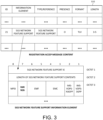
- FIG. 2 illustrates simplified block diagrams of wireless devices, e.g., a UE 201 and a network entity 211 in accordance with embodiments of the current invention.
- Network entity 211 may be a base station and/or an AMF/SMF.
- Network entity 211 has an antenna 215, which transmits and receives radio signals.
- a radio frequency RF transceiver module 214 coupled with the antenna, receives RF signals from antenna 215, converts them to baseband signals and sends them to processor 213.
- RF transceiver 214 also converts received baseband signals from processor 213, converts them to RF signals, and sends out to antenna 215.
- Processor 213 processes the received baseband signals and invokes different functional modules to perform features in base station 211.
- Network entity 211 stores program instructions and data 220 to control the operations of base station 211.
- network entity 211 also includes protocol stack 280 and a set of control function modules and circuits 290.
- Protocol stacks 280 includes Non-Access-Stratum (NAS) layer to communicate with an AMF/SMF/MME entity connecting to the core network, Radio Resource Control (RRC) layer for high layer configuration and control, Packet Data Convergence Protocol/Radio Link Control (PDCP/RLC) layer, Media Access Control (MAC) layer, and Physical (PHY) layer.
- NAS Non-Access-Stratum
- RRC Radio Resource Control
- PDCP/RLC Packet Data Convergence Protocol/Radio Link Control
- MAC Media Access Control
- PHY Physical
- control function modules and circuits 290 includes a registration circuit 291 that handles registration procedures, a connection handling circuit 292 that handles signaling connections, and a configuration and control circuit 293 that provides different parameters to configure and control UE of related functionalities including registration and paging.
- the network entity 211 can be one 5GS network component or more than one 5GS network components (e.g., access network + AMF + N3IWF + SMF, etc.)
- UE 201 has memory 202, a processor 203, and radio frequency (RF) transceiver module 204.
- RF transceiver 204 is coupled with antenna 205, receives RF signals from antenna 205, converts them to baseband signals, and sends them to processor 203.
- RF transceiver 204 also converts received baseband signals from processor 203, converts them to RF signals, and sends out to antenna 205.
- Processor 203 processes the received baseband signals and invokes different functional modules and circuits to perform features in UE 201.
- Memory 202 stores data and program instructions 210 to be executed by the processor to control the operations of UE 201.
- Suitable processors include, by way of example, a special purpose processor, a digital signal processor (DSP), a plurality of micro-processors, one or more micro-processor associated with a DSP core, a controller, a microcontroller, application specific integrated circuits (ASICs), file programmable gate array (FPGA) circuits, and other type of integrated circuits (ICs), and/or state machines.
- DSP digital signal processor
- ASICs application specific integrated circuits
- FPGA file programmable gate array
- ICs integrated circuits
- Protocol stacks 260 includes NAS layer to communicate with an AMF/SMF/MME entity connecting to the core network, RRC layer for high layer configuration and control, PDCP/RLC layer, MAC layer, and PHY layer.
- Control function modules and circuits 270 may be implemented and configured by software, firmware, hardware, and/or combination thereof. The control function modules and circuits, when executed by the processors via program instructions contained in the memory, interwork with each other to allow UE 201 to perform embodiments and functional tasks and features in the network.
- control function modules and circuits 270 includes a registration handling circuit 271 that performs registration procedure with the network, a connection handling circuit 272 that handles RRC and NAS signaling connection, a intersystem change handling circuit 273 for performing intersystem change, and a config and control circuit 274 that handles configuration and control parameters including obtaining and determining network feature support.
- Figure 3 illustrates the content of a REGISTRATION ACCEPT message and a 5GS NETWORK FEATURE SUPPORT IE with IWK N26 interface support indication.
- the UE sends a REGISTRATION REQUEST message to the network.
- the UE receives a REGISTRATION ACCEPT message from the network.
- the REGISTRATION ACCEPT message comprises many information elements (IEs), including a 5GS network feature support IE, as depicted in table 510.
- the contents of the 5GS network feature support IE in turn are carried by certain bits, each bit indicates whether certain network feature is supported or not supported.
- the N26 interface is the interface between a mobility management entity (MME) in EPS and an access and mobility management function (AMF) in 5GS.
- MME mobility management entity
- AMF access and mobility management function
- N26 interface If N26 interface is supported, then upon intersystem change from 5GS to EPS, the PDU session(s) in 5GS will be transferred to corresponding PDN connections by the network, and the UE only needs to initiate a tracking area update (TAU) procedure.
- TAU tracking area update
- the UE if N26 interface is not supported, then upon intersystem change from 5GS to EPS, the UE needs to send an ATTACH REQUEST message containing a PDN CONNECTIVITY REQUEST message with request type set to "handover" or "handover of emergency bearer services" to transfer the PDU session(s) from N1 mode to S1 mode.
- the UE also needs to initiate PDN connectivity activation procedures for each of the corresponding PDU sessions.
- FIG. 4 illustrates a sequence flow between a UE and a network entity for performing intersystem change based on N26 interface (not) supported indication received over 3GPP or non-3GPP access in accordance with one novel aspect.
- UE 401 registers to PLMN1 by sending a REGISTRATION REQUEST message over 3GPP access 402, the request message carries UE-Requested information.
- UE 401 receives a REGISTRATION ACCEPT message over 3GPP access, the REGISTRATION ACCEPT message carries a list of information elements (IEs), e.g., a 5GS network feature support IE.
- IEs information elements
- PLMN1 indicates to UE that interworking with N26 interface is supported.
- UE 401 UE 401 registers to PLMN2 by sending a REGISTRATION REQUEST message over non-3GPP access 403, the request message carries UE-Requested information.
- the REGISTRATION ACCEPT message carries a list of information elements (IEs), e.g., a 5GS network feature support IE.
- IEs information elements
- PLMN2 indicates to UE that interworking with N26 interface is not supported.
- UE should update its configuration based on the newly received 5GS network feature support IE.
- the second IWK N26 indicator is provided via non-3GPP access, and N26 interface is a 3GPP-specific configuration, therefore such indication should be ignored by the UE for intersystem change from 5GS to EPS to handover PDU sessions to PDN connections.
- UE 401 performs an intersystem change from 5GS to EPS (N1 mode to S1 mode).
- UE 401 ignores the second IWK N26 indicator that is provided via non-3GPP access from PLMN2.
- UE 401 knows that interworking with N26 interface is supported by the network, and the PDU sessions in 5GS will be handover to the corresponding PDN connections in EPS by the network.
- UE 401 triggers a TAU procedure (not an ATTACH procedure) in LTE to complete the intersystem change.
- the benefit of triggering the TAU procedure is that the UE and the network can carry the 5G registration information and the 5G PDU sessions to 4G in a single TAU procedure. If IWK N26 is not supported, then the UE needs to perform multiple procedures, e.g., an ATTACH procedure and one or more PDN connectivity activation procedures to complete the intersystem change.
- the first network PLMN1 and the second network PLMN2 can be the same PLMN, or can be different PLMNs.
- the first network can be SNPN1, and the second network can be SNPN2, and SNPN1 and SNPN2 can be the same SNPN, or can be different SNPNs.
- UE In general, for configurations received over 3GPP and non-3GPP from the first network and the second network, if the first network and the second network are the same, then UE maintains a common configuration; if the first network and the second network are different, then UE maintains two independent configurations. In the case of IWK N26 however, since N26 is a 3GPP-specific configuration, UE should ignore the IWK N26 indicator received over non-3GPP access.
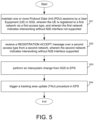
- FIG. 5 is a flow chart of a method of performing intersystem change without N26 interface supported or not supported when UE is registered to the same or different networks over 3GPP and non-3GPP accesses in accordance with one novel aspect of the present invention.
- a UE maintains one or more Protocol Data Unit (PDU) sessions in 5GS, wherein the UE is registered to a first network via a first access type, and wherein the first network indicates interworking without N26 interface not supported.
- the UE receives a REGISTRATION ACCEPT message over a second access type from a second network, wherein the second network indicates interworking without N26 interface supported.
- the UE performs an intersystem change from 5GS to EPS.
- the UE triggers a tracking area update (TAU) procedure in EPS.
- TAU tracking area update
Landscapes
- Engineering & Computer Science (AREA)
- Computer Networks & Wireless Communication (AREA)
- Signal Processing (AREA)
- Mobile Radio Communication Systems (AREA)
Abstract
Description
- This application claims priority under 35 U.S.C. §119 from
U.S. Provisional Application Number 63/369,669, entitled "Interworking without N26 interface support or not supported received in non-3GPP access", filed on July 28, 2022 - The disclosed embodiments relate generally to wireless communication, and, more particularly, to performing inter-system change and handling indication of interworking without N26 interface supported when received over non-3GPP access.
- Third generation partnership project (3GPP) and 5G New Radio (NR) mobile telecommunication systems provide high data rate, lower latency and improved system performances. In 3GPP NR, 5G terrestrial New Radio (NR) access network (includes a plurality of base stations, e.g., Next Generation Node-Bs (gNBs), communicating with a plurality of mobile stations referred as user equipment (UEs). Orthogonal Frequency Division Multiple Access (OFDMA) has been selected for NR downlink radio access scheme due to its robustness to multipath fading, higher spectral efficiency, and bandwidth scalability. Multiple access in the downlink is achieved by assigning different sub-bands (i.e., groups of subcarriers, denoted as resource blocks (RBs)) of the system bandwidth to individual users based on their existing channel condition.
- In 5GS, UEs can be simultaneously registered and connected to both 3GPP access and non-3GPP access (using NAS signalling), thus the 5GS is able to take advantage of these multiple accesses to improve the user experience and optimize the traffic distribution across various accesses. When a UE registers to 3GPP or non-3GPP access, the UE will receive a REGISTRATION ACCEPT message, carrying a 5GS network feature support IE, which in turn carries an indication "interworking without N26 interface supported" or an indication "interworking without N26 interface not supported". In another word, an IWK N26 bit in the 5GS network feature support IE can be set to "interworking without N26 interface supported" or "interworking without N26 interface not supported".
- In current protocol, if a UE is registered to 3GPP access to first network with a first configuration: "interworking without N26 interface supported" or "interworking without N26 interface not supported", and the UE is registered to non-3GPP access to second network with a second configuration. Then the UE will consider using the second configuration in the first network, the first network and second network can be same PLMN, or different PLMNs, same SNPN, or different SNPNs. However, such UE behavior may not be correct.
- A method and a user equipment according to the invention are defined in the independent claims. The dependent claims define preferred embodiments thereof. A method of performing intersystem change without N26 interface supported or not supported when a UE is registered to the same or different networks over 3GPP and non-3GPP accesses is proposed. UE registers to one or more PLMN/SNPN over 3GPP access and non-3GPP access. UE receives a REGISTRATION ACCEPT message over 3GPP access, which carries a first 5GS network feature support IE, which indicates that interworking without N26 interface not supported. UE also receives a REGISTRATION ACCEPT message over non-3GPP access, which carries a second 5GS network feature support IE, which indicates that interworking without N26 interface supported. UE ignores the second indication received over non-3GPP access and considers that N26 interface is supported for interworking. As a result, after intersystem change from 5G to 4G, UE triggers a TAU procedure over LTE in 4G EPS.
- In one embodiment, a UE maintains one or more Protocol Data Unit (PDU) sessions in 5GS, wherein the UE is registered to a first network via a first access type, and wherein the first network indicates interworking without N26 interface not supported. The UE receives a REGISTRATION ACCEPT message over a second access type from a second network, wherein the second network indicates interworking without N26 interface supported. The UE performs an intersystem change from 5GS to EPS. The UE triggers a tracking area update (TAU) procedure in EPS.
- Other embodiments and advantages are described in the detailed description below. This summary does not purport to define the invention. The invention is defined by the claims.
- The accompanying drawings, where like numerals indicate like components, illustrate embodiments of the invention.
-
Figure 1 illustrates an exemplary 5G network and a method of performing intersystem change without N26 interface supported or not supported when a User Equipment (UE) is registered to the same or different networks over 3GPP access and non-3GPP accesses in accordance with one novel aspect. -
Figure 2 illustrates simplified block diagrams of a user equipment (UE) and a network entity in accordance with embodiments of the current invention. -
Figure 3 illustrates the content of a REGISTRATION ACCEPT message and a 5GS NETWORK FEATURE SUPPORT IE with IWK N26 interface support indication. -
Figure 4 illustrates a sequence flow between a UE and a network entity for performing intersystem change based on N26 interface (not) supported indication received over 3GPP or non-3GPP access in accordance with one novel aspect. -
Figure 5 is a flow chart of a method of performing intersystem change without N26 interface supported or not supported when UE is registered to the same or different networks over 3GPP and non-3GPP accesses in accordance with one novel aspect of the present invention. - Reference will now be made in detail to some embodiments of the invention, examples of which are illustrated in the accompanying drawings.
-
Figure 1 illustrates an exemplary 5G network and a method of performing intersystem change without N26 interface supported or not supported when a User Equipment (UE) is registered to the same or different networks over 3GPP access and non-3GPP accesses in accordance with one novel aspect. 5G/4G network 100 comprises a user equipment (UE) 101, a 3GPP access 102 (e.g., a 3GPP radio access network (E-UTRAN or NG-RAN)), a non-3GPP access 103 (e.g., a non-3GPP WiFi), an access and mobility management function (AMF) 110 or a mobility management entity (MME) 130, a session management function (SMF) 111 or a serving gateway (SGW) 131, a non-3GPP interworking function (N3IWF) 112, a user plane function (UPF) 113, and a 5G core or evolved packet core (5GC or EPC)data network 120. In 5G, the AMF 110 communicates with the base stations in the3GPP access 102, theSMF 111, and the UPF 113 for access and mobility management of wireless access devices in the5G network 100. TheSMF 111 is primarily responsible for interacting with the decoupled data plane, creating, updating, and removing PDU sessions and managing session context with the UPF 113. The N3IWF 112 interfaces to 5G core network control plane functions, responsible for routing messages outside 5G RAN. - In Access Stratum (AS) layer, an RAN provides radio access for the UE 101 via a radio access technology (RAT). In Non-Access Stratum (NAS) layer, the AMF 110 and the
SMF 111 communicate with RAN and 5GC for access and mobility management and PDU session management of wireless access devices in the5G network 100. The3GPP access 102 may include base stations (gNBs or eNBs) providing radio access for the UE 101 via various 3GPP RATs including 5G, 4G, and 3G/2G. Thenon-3GPP access 103 may include access points (APs) providing radio access for the UE 101 via non-3GPP FAT including WiFi. The UE 101 can obtain access todata network 120 through3GPP access 102, AMF 110/MME 130, SMF 111/SGW 131, and UPF 113. The UE 101 can obtain access todata network 120 throughnon-3GPP access 103, N3IWF 112, AMF/MME, SMF/SGW, and UPF 113. The UE 101 may be equipped with a single radio frequency (RF) module or transceiver or multiple RF modules or transceivers for services via different RATs/CNs. In some examples, UE 101 may be a smart phone, a wearable device, an Internet of Things (IoT) device, a tablet, etc. - In 5GS, a protocol data unit (PDU) session defines the association between a UE and the data network that provides a PDU connectivity service. The PDU session establishment is a parallel procedure of PDN connection (bearer) procedure in 4G/LTE. When the UE has at least one active PDU session, an intersystem change from 5G N1 mode to 4G S1 mode may occur, it involves an N26 interface: an interface between a mobility management entity (e.g., MME 130) in EPS and an access and mobility management function (e.g., AMF 110) in 5GS.
- When a UE registers to 3GPP or non-3GPP access, the UE will receive a REGISTRATION ACCEPT message, carrying a 5GS network feature support IE, which in turn carries an indication "interworking without N26 interface supported" or an indication "interworking without N26 interface not supported". In another word, an IWK N26 bit in the 5GS network feature support IE can be set to "interworking without N26 interface supported" or "interworking without N26 interface not supported". In current protocol, if a UE is registered to 3GPP access to a first network with a first configuration: "interworking without N26 interface supported" or "interworking without N26 interface not supported", and the UE is registered to non-3GPP access to a second network with a second configuration. Then the UE will consider using the second configuration in the first network. However, such UE behavior may not be correct, especially if the second configuration is related to interworking feature support that is received over non-3GPP access type, because N26 is a 3GPP-specific configuration and it can be ignored when the UE receives related information over non-3GPP access.
- In accordance with one novel aspect, a method of performing intersystem change without N26 interface supported or not supported when UE is registered to the same or different networks over 3GPP and non-3GPP accesses is proposed. As depicted in
Figure 1 , UE 101 registers to one or more Public Land Mobile Network (PLMN) or Standalone Non-Public Network (SNPN) over3GPP access 102 and non-3GPPaccess 103. UE 101 receives a REGISTRATION ACCEPT message over 3GPP access, which carries a first 5GS network feature support IE, which indicates that interworking without N26 interface not supported (e.g., N26 interface is supported for interworking). UE 101 also receives a REGISTRATION ACCEPT message over non-3GPP access, which carries a second 5GS network feature support IE, which indicates that interworking without N26 interface supported (e.g., N26 interface is not supported for interworking). UE 101 ignores the second indication received over non-3GPP access and considers that N26 interface is supported for interworking. As a result, after intersystem change from 5G to 4G, UE 101 triggers a TAU procedure (not ATTACH procedure) over LTE in 4G EPS. -
Figure 2 illustrates simplified block diagrams of wireless devices, e.g., aUE 201 and anetwork entity 211 in accordance with embodiments of the current invention.Network entity 211 may be a base station and/or an AMF/SMF.Network entity 211 has anantenna 215, which transmits and receives radio signals. A radio frequencyRF transceiver module 214, coupled with the antenna, receives RF signals fromantenna 215, converts them to baseband signals and sends them toprocessor 213.RF transceiver 214 also converts received baseband signals fromprocessor 213, converts them to RF signals, and sends out toantenna 215.Processor 213 processes the received baseband signals and invokes different functional modules to perform features inbase station 211.Memory 212 stores program instructions anddata 220 to control the operations ofbase station 211. In the example ofFigure 2 ,network entity 211 also includesprotocol stack 280 and a set of control function modules andcircuits 290. Protocol stacks 280 includes Non-Access-Stratum (NAS) layer to communicate with an AMF/SMF/MME entity connecting to the core network, Radio Resource Control (RRC) layer for high layer configuration and control, Packet Data Convergence Protocol/Radio Link Control (PDCP/RLC) layer, Media Access Control (MAC) layer, and Physical (PHY) layer. In one example, control function modules andcircuits 290 includes aregistration circuit 291 that handles registration procedures, aconnection handling circuit 292 that handles signaling connections, and a configuration and control circuit 293 that provides different parameters to configure and control UE of related functionalities including registration and paging. Thenetwork entity 211 can be one 5GS network component or more than one 5GS network components (e.g., access network + AMF + N3IWF + SMF, etc.) - Similarly,
UE 201 hasmemory 202, aprocessor 203, and radio frequency (RF)transceiver module 204.RF transceiver 204 is coupled withantenna 205, receives RF signals fromantenna 205, converts them to baseband signals, and sends them toprocessor 203.RF transceiver 204 also converts received baseband signals fromprocessor 203, converts them to RF signals, and sends out toantenna 205.Processor 203 processes the received baseband signals and invokes different functional modules and circuits to perform features inUE 201.Memory 202 stores data andprogram instructions 210 to be executed by the processor to control the operations ofUE 201. Suitable processors include, by way of example, a special purpose processor, a digital signal processor (DSP), a plurality of micro-processors, one or more micro-processor associated with a DSP core, a controller, a microcontroller, application specific integrated circuits (ASICs), file programmable gate array (FPGA) circuits, and other type of integrated circuits (ICs), and/or state machines. A processor in associated with software may be used to implement and configure features ofUE 201. -
UE 201 also includes protocol stacks 260 and a set of control function modules andcircuits 270. Protocol stacks 260 includes NAS layer to communicate with an AMF/SMF/MME entity connecting to the core network, RRC layer for high layer configuration and control, PDCP/RLC layer, MAC layer, and PHY layer. Control function modules andcircuits 270 may be implemented and configured by software, firmware, hardware, and/or combination thereof. The control function modules and circuits, when executed by the processors via program instructions contained in the memory, interwork with each other to allowUE 201 to perform embodiments and functional tasks and features in the network. In one example, control function modules andcircuits 270 includes aregistration handling circuit 271 that performs registration procedure with the network, aconnection handling circuit 272 that handles RRC and NAS signaling connection, a intersystemchange handling circuit 273 for performing intersystem change, and a config andcontrol circuit 274 that handles configuration and control parameters including obtaining and determining network feature support. -
Figure 3 illustrates the content of a REGISTRATION ACCEPT message and a 5GS NETWORK FEATURE SUPPORT IE with IWK N26 interface support indication. When a UE tries to register to a network, the UE sends a REGISTRATION REQUEST message to the network. In response, the UE receives a REGISTRATION ACCEPT message from the network. The REGISTRATION ACCEPT message comprises many information elements (IEs), including a 5GS network feature support IE, as depicted in table 510. The contents of the 5GS network feature support IE in turn are carried by certain bits, each bit indicates whether certain network feature is supported or not supported. - For example,
bit 7 of the 5GS network feature support IE carries an IWK N26 indication, which indicates whether interworking without N26 interface is supported or not supported. If IWK N26 (bit 7) == 0, it indicates interworking without N26 interface not supported (e.g., interworking with N26 interface is supported), and if IWK N26 (bit 7) == 1, it indicates interworking without N26 interface supported (e.g., interworking with N26 interface is not supported). Note that the N26 interface is the interface between a mobility management entity (MME) in EPS and an access and mobility management function (AMF) in 5GS. If N26 interface is supported, then upon intersystem change from 5GS to EPS, the PDU session(s) in 5GS will be transferred to corresponding PDN connections by the network, and the UE only needs to initiate a tracking area update (TAU) procedure. On the other hand, if N26 interface is not supported, then upon intersystem change from 5GS to EPS, the UE needs to send an ATTACH REQUEST message containing a PDN CONNECTIVITY REQUEST message with request type set to "handover" or "handover of emergency bearer services" to transfer the PDU session(s) from N1 mode to S1 mode. The UE also needs to initiate PDN connectivity activation procedures for each of the corresponding PDU sessions. -
Figure 4 illustrates a sequence flow between a UE and a network entity for performing intersystem change based on N26 interface (not) supported indication received over 3GPP or non-3GPP access in accordance with one novel aspect. Instep 411,UE 401 registers to PLMN1 by sending a REGISTRATION REQUEST message over3GPP access 402, the request message carries UE-Requested information. In step 412,UE 401 receives a REGISTRATION ACCEPT message over 3GPP access, the REGISTRATION ACCEPT message carries a list of information elements (IEs), e.g., a 5GS network feature support IE. For example, the 5GS network feature support IE carries a first IWK N26 indicator (e.g.,bit 7 == 0) to indicate that interworking without N26 interface is not supported. In other words, PLMN1 indicates to UE that interworking with N26 interface is supported. - In
step 421,UE 401UE 401 registers to PLMN2 by sending a REGISTRATION REQUEST message overnon-3GPP access 403, the request message carries UE-Requested information. Instep 422,UE 401 receives a REGISTRATION ACCEPT message over non-3GPP access, the REGISTRATION ACCEPT message carries a list of information elements (IEs), e.g., a 5GS network feature support IE. For example, the 5GS network feature support IE carries a second IWK N26 indicator (e.g.,bit 7 == 1) to indicate that interworking without N26 interface is supported. In other words, PLMN2 indicates to UE that interworking with N26 interface is not supported. Typically, UE should update its configuration based on the newly received 5GS network feature support IE. However, because the second IWK N26 indicator is provided via non-3GPP access, and N26 interface is a 3GPP-specific configuration, therefore such indication should be ignored by the UE for intersystem change from 5GS to EPS to handover PDU sessions to PDN connections. - Accordingly, in
step 431,UE 401 performs an intersystem change from 5GS to EPS (N1 mode to S1 mode). Instep 441,UE 401 ignores the second IWK N26 indicator that is provided via non-3GPP access from PLMN2. As a result,UE 401 knows that interworking with N26 interface is supported by the network, and the PDU sessions in 5GS will be handover to the corresponding PDN connections in EPS by the network. Instep 451,UE 401 triggers a TAU procedure (not an ATTACH procedure) in LTE to complete the intersystem change. - The benefit of triggering the TAU procedure is that the UE and the network can carry the 5G registration information and the 5G PDU sessions to 4G in a single TAU procedure. If IWK N26 is not supported, then the UE needs to perform multiple procedures, e.g., an ATTACH procedure and one or more PDN connectivity activation procedures to complete the intersystem change. Note that the first network PLMN1 and the second network PLMN2 can be the same PLMN, or can be different PLMNs. In addition, the first network can be SNPN1, and the second network can be SNPN2, and SNPN1 and SNPN2 can be the same SNPN, or can be different SNPNs. In general, for configurations received over 3GPP and non-3GPP from the first network and the second network, if the first network and the second network are the same, then UE maintains a common configuration; if the first network and the second network are different, then UE maintains two independent configurations. In the case of IWK N26 however, since N26 is a 3GPP-specific configuration, UE should ignore the IWK N26 indicator received over non-3GPP access.
-
Figure 5 is a flow chart of a method of performing intersystem change without N26 interface supported or not supported when UE is registered to the same or different networks over 3GPP and non-3GPP accesses in accordance with one novel aspect of the present invention. Instep 501, a UE maintains one or more Protocol Data Unit (PDU) sessions in 5GS, wherein the UE is registered to a first network via a first access type, and wherein the first network indicates interworking without N26 interface not supported. Instep 502, the UE receives a REGISTRATION ACCEPT message over a second access type from a second network, wherein the second network indicates interworking without N26 interface supported. Instep 503, the UE performs an intersystem change from 5GS to EPS. Instep 504, the UE triggers a tracking area update (TAU) procedure in EPS. - Although the present invention has been described in connection with certain specific embodiments for instructional purposes, the present invention is not limited thereto. Accordingly, various modifications, adaptations, and combinations of various features of the described embodiments can be practiced without departing from the scope of the invention as set forth in the claims.
Claims (15)
- A method, comprising:maintaining one or more Protocol Data Unit, in the following also referred to as PDU, sessions by a User Equipment, in the following also referred to as UE, in 5GS, wherein the UE is registered to a first network via a first access type, and wherein the first network indicates interworking without N26 interface not supported (501);receiving a REGISTRATION ACCEPT message over a second access type from a second network, wherein the second network indicates interworking without N26 interface supported (502);performing an intersystem change from 5GS to EPS (503); andtriggering a tracking area update, in the following also referred to as TAU, procedure in EPS (504).
- The method of Claim 1, wherein the first access type is 3GPP access, and wherein the second access type is non-3GPP access.
- The method of Claim 1 or 2, wherein the UE supports sending an ATTACH REQUEST message to transfer the one or more PDU session from 5GS to EPS, and wherein the ATTACH REQUEST message carries a PDN CONNECTIVITY REQUEST message with a request type set to handover.
- The method of any one of Claims 1 to 3, wherein UE ignores the indication from the second network.
- The method of any one of Claims 1 to 4, wherein the UE considers interworking without N26 interface not supported and does not send an ATTACH REQUEST message to EPS.
- The method of any one of Claims 1 to 5, wherein the REGISTRATION ACCEPT message carries a 5GS network feature support IE with an IWK N26 indication.
- The method of any one of Claims 1 to 6, wherein the first network and the second network belong to the same public land mobile network, in the following also referred to as PLMN, or the same standalone non-public network, in the following also referred to as SNPN.
- The method of any one of Claims 1 to 6, wherein the first network and the second network belong to different PLMNs or different SNPNs.
- A User Equipment, in the following also referred to as UE, comprising:a connection handling circuit (272) that maintains one or more Protocol Data Unit, in the following also referred to as PDU, sessions in 5GS, wherein the UE is registered to a first network via a first access type, and wherein the first network indicates interworking without N26 interface not supported;a receiver (271) that receives a REGISTRATION ACCEPT message over a second access type from a second network, wherein the second network indicates interworking without N26 interface supported;an intersystem change handling circuit (273) that performs an intersystem change from 5GS to EPS; anda transmitter (204) that sends a tracking area update, in the following also referred to as TAU, request to trigger a TAU procedure in EPS.
- The UE of Claim 9, wherein the first access type is 3GPP access, and wherein the second access type is non-3GPP access.
- The UE of Claim 9 or 10, wherein the UE supports sending an ATTACH REQUEST message to transfer the one or more PDU session from 5GS to EPS, and wherein the ATTACH REQUEST message carries a PDN CONNECTIVITY REQUEST message with a request type set to handover.
- The UE of any one of Claims 9 to 11, wherein UE ignores the indication from the second network.
- The UE of any one of Claims 9 to 12, wherein the UE considers interworking without N26 interface not supported and does not send an ATTACH REQUEST message to EPS.
- The UE of any one of Claims 9 to 13, wherein the REGISTRATION ACCEPT message carries a 5GS network feature support IE with an IWK N26 indication.
- The UE of any one of Claims 9 to 14, wherein the first network and the second network belong to the same public land mobile network (PLMN) or the same standalone non-public network, in the following also referred to as SNPN; or
wherein the first network and the second network belong to different PLMNs or different SNPNs.
Applications Claiming Priority (2)
| Application Number | Priority Date | Filing Date | Title |
|---|---|---|---|
| US202263369669P | 2022-07-28 | 2022-07-28 | |
| US18/218,099 US20240040459A1 (en) | 2022-07-28 | 2023-07-04 | Interworking without n26 interface support or not supported received in non-3gpp access |
Publications (2)
| Publication Number | Publication Date |
|---|---|
| EP4312450A1 true EP4312450A1 (en) | 2024-01-31 |
| EP4312450B1 EP4312450B1 (en) | 2025-05-21 |
Family
ID=87429406
Family Applications (1)
| Application Number | Title | Priority Date | Filing Date |
|---|---|---|---|
| EP23187163.3A Active EP4312450B1 (en) | 2022-07-28 | 2023-07-24 | Interworking without n26 interface support or not supported received in non-3gpp access |
Country Status (3)
| Country | Link |
|---|---|
| US (1) | US20240040459A1 (en) |
| EP (1) | EP4312450B1 (en) |
| TW (1) | TW202408286A (en) |
Citations (1)
| Publication number | Priority date | Publication date | Assignee | Title |
|---|---|---|---|---|
| EP3866498A2 (en) * | 2020-02-11 | 2021-08-18 | Nokia Technologies Oy | Methods, apparatuses, and computer program products for handling emergency services in private networks |
-
2023
- 2023-07-04 US US18/218,099 patent/US20240040459A1/en active Pending
- 2023-07-24 EP EP23187163.3A patent/EP4312450B1/en active Active
- 2023-07-28 TW TW112128389A patent/TW202408286A/en unknown
Patent Citations (1)
| Publication number | Priority date | Publication date | Assignee | Title |
|---|---|---|---|---|
| EP3866498A2 (en) * | 2020-02-11 | 2021-08-18 | Nokia Technologies Oy | Methods, apparatuses, and computer program products for handling emergency services in private networks |
Non-Patent Citations (1)
| Title |
|---|
| "5G ; Non-Access-Stratum (NAS) protocol for 5G System (5GS); Stage 3 (3GPP TS 24.501 version 16.12.0 Release 16)", vol. 3GPP CT, no. V16.12.0, 25 July 2022 (2022-07-25), pages 1 - 760, XP014440376, Retrieved from the Internet <URL:http://www.etsi.org/deliver/etsi_ts/124500_124599/124501/16.12.00_60/ts_124501v161200p.pdf> [retrieved on 20220725] * |
Also Published As
| Publication number | Publication date |
|---|---|
| TW202408286A (en) | 2024-02-16 |
| US20240040459A1 (en) | 2024-02-01 |
| EP4312450B1 (en) | 2025-05-21 |
Similar Documents
| Publication | Publication Date | Title |
|---|---|---|
| US11039361B2 (en) | Enhanced 5GSM state mapping when interworking | |
| US11582656B2 (en) | 5GSM handling on invalid PDU session | |
| US20210250409A1 (en) | Handling of Multi-Access PDU Session Upgrade | |
| US11553549B2 (en) | Multi-access PDU session state synchronization between UE and network | |
| EP4207931A1 (en) | Method and device for adding 3gpp pdn leg to an ma pdu session with non-3gpp leg | |
| US20220104075A1 (en) | Pdu session establishment accept handling for ma pdu sessions | |
| US11259205B2 (en) | IP multimedia core network subsystem signaling in 5GS | |
| US12238790B2 (en) | MA PDU session and user plane resource establishment for data transmission | |
| WO2020224597A1 (en) | Pdn connection supports interworking to 5gs | |
| EP4366403A1 (en) | Deregistration and emm parameter handling considering access type | |
| CN116390276B (en) | Method and user equipment for wireless communication | |
| EP4207876A1 (en) | Method for handling pdu session establishment when maximum number of pdu sessions has been reached | |
| EP4240095A1 (en) | Method for handling session management timer after intersystem change | |
| US12568549B2 (en) | MA PDU reactivation requested handling | |
| EP4312450B1 (en) | Interworking without n26 interface support or not supported received in non-3gpp access | |
| EP4366385A1 (en) | Ursp rule reusing pdn legged ma pdu session handling | |
| EP4312454B1 (en) | 5g registration resultant value handling | |
| EP4207935A1 (en) | Ma pdu deactivation procedure for ma pdu with pdn leg | |
| EP4210428A1 (en) | Support redundant pdu session after inter-system change | |
| CN117479255A (en) | Methods and user equipment for performing inter-system changes | |
| BR102023015232A2 (en) | INTERWORKING WITHOUT N26 INTERFACE SUPPORT OR UNSUPPORTED RECEIVED ON NON-3GPP ACCESS |
Legal Events
| Date | Code | Title | Description |
|---|---|---|---|
| PUAI | Public reference made under article 153(3) epc to a published international application that has entered the european phase |
Free format text: ORIGINAL CODE: 0009012 |
|
| STAA | Information on the status of an ep patent application or granted ep patent |
Free format text: STATUS: THE APPLICATION HAS BEEN PUBLISHED |
|
| AK | Designated contracting states |
Kind code of ref document: A1 Designated state(s): AL AT BE BG CH CY CZ DE DK EE ES FI FR GB GR HR HU IE IS IT LI LT LU LV MC ME MK MT NL NO PL PT RO RS SE SI SK SM TR |
|
| STAA | Information on the status of an ep patent application or granted ep patent |
Free format text: STATUS: REQUEST FOR EXAMINATION WAS MADE |
|
| 17P | Request for examination filed |
Effective date: 20240711 |
|
| RBV | Designated contracting states (corrected) |
Designated state(s): AL AT BE BG CH CY CZ DE DK EE ES FI FR GB GR HR HU IE IS IT LI LT LU LV MC ME MK MT NL NO PL PT RO RS SE SI SK SM TR |
|
| GRAP | Despatch of communication of intention to grant a patent |
Free format text: ORIGINAL CODE: EPIDOSNIGR1 |
|
| STAA | Information on the status of an ep patent application or granted ep patent |
Free format text: STATUS: GRANT OF PATENT IS INTENDED |
|
| INTG | Intention to grant announced |
Effective date: 20250109 |
|
| GRAS | Grant fee paid |
Free format text: ORIGINAL CODE: EPIDOSNIGR3 |
|
| GRAA | (expected) grant |
Free format text: ORIGINAL CODE: 0009210 |
|
| STAA | Information on the status of an ep patent application or granted ep patent |
Free format text: STATUS: THE PATENT HAS BEEN GRANTED |
|
| AK | Designated contracting states |
Kind code of ref document: B1 Designated state(s): AL AT BE BG CH CY CZ DE DK EE ES FI FR GB GR HR HU IE IS IT LI LT LU LV MC ME MK MT NL NO PL PT RO RS SE SI SK SM TR |
|
| RAP3 | Party data changed (applicant data changed or rights of an application transferred) |
Owner name: MEDIATEK INC. |
|
| REG | Reference to a national code |
Ref country code: GB Ref legal event code: FG4D |
|
| REG | Reference to a national code |
Ref country code: CH Ref legal event code: EP |
|
| REG | Reference to a national code |
Ref country code: DE Ref legal event code: R096 Ref document number: 602023003582 Country of ref document: DE |
|
| REG | Reference to a national code |
Ref country code: IE Ref legal event code: FG4D |
|
| PGFP | Annual fee paid to national office [announced via postgrant information from national office to epo] |
Ref country code: FR Payment date: 20250613 Year of fee payment: 3 |
|
| REG | Reference to a national code |
Ref country code: NL Ref legal event code: MP Effective date: 20250521 |
|
| PG25 | Lapsed in a contracting state [announced via postgrant information from national office to epo] |
Ref country code: FI Free format text: LAPSE BECAUSE OF FAILURE TO SUBMIT A TRANSLATION OF THE DESCRIPTION OR TO PAY THE FEE WITHIN THE PRESCRIBED TIME-LIMIT Effective date: 20250521 Ref country code: ES Free format text: LAPSE BECAUSE OF FAILURE TO SUBMIT A TRANSLATION OF THE DESCRIPTION OR TO PAY THE FEE WITHIN THE PRESCRIBED TIME-LIMIT Effective date: 20250521 Ref country code: PT Free format text: LAPSE BECAUSE OF FAILURE TO SUBMIT A TRANSLATION OF THE DESCRIPTION OR TO PAY THE FEE WITHIN THE PRESCRIBED TIME-LIMIT Effective date: 20250922 |
|
| PGFP | Annual fee paid to national office [announced via postgrant information from national office to epo] |
Ref country code: DE Payment date: 20250725 Year of fee payment: 3 |
|
| REG | Reference to a national code |
Ref country code: LT Ref legal event code: MG9D |
|
| PG25 | Lapsed in a contracting state [announced via postgrant information from national office to epo] |
Ref country code: GR Free format text: LAPSE BECAUSE OF FAILURE TO SUBMIT A TRANSLATION OF THE DESCRIPTION OR TO PAY THE FEE WITHIN THE PRESCRIBED TIME-LIMIT Effective date: 20250822 Ref country code: NO Free format text: LAPSE BECAUSE OF FAILURE TO SUBMIT A TRANSLATION OF THE DESCRIPTION OR TO PAY THE FEE WITHIN THE PRESCRIBED TIME-LIMIT Effective date: 20250821 |
|
| PG25 | Lapsed in a contracting state [announced via postgrant information from national office to epo] |
Ref country code: NL Free format text: LAPSE BECAUSE OF FAILURE TO SUBMIT A TRANSLATION OF THE DESCRIPTION OR TO PAY THE FEE WITHIN THE PRESCRIBED TIME-LIMIT Effective date: 20250521 Ref country code: PL Free format text: LAPSE BECAUSE OF FAILURE TO SUBMIT A TRANSLATION OF THE DESCRIPTION OR TO PAY THE FEE WITHIN THE PRESCRIBED TIME-LIMIT Effective date: 20250521 |
|
| PG25 | Lapsed in a contracting state [announced via postgrant information from national office to epo] |
Ref country code: BG Free format text: LAPSE BECAUSE OF FAILURE TO SUBMIT A TRANSLATION OF THE DESCRIPTION OR TO PAY THE FEE WITHIN THE PRESCRIBED TIME-LIMIT Effective date: 20250521 |
|
| PG25 | Lapsed in a contracting state [announced via postgrant information from national office to epo] |
Ref country code: HR Free format text: LAPSE BECAUSE OF FAILURE TO SUBMIT A TRANSLATION OF THE DESCRIPTION OR TO PAY THE FEE WITHIN THE PRESCRIBED TIME-LIMIT Effective date: 20250521 |
|
| PGFP | Annual fee paid to national office [announced via postgrant information from national office to epo] |
Ref country code: AT Payment date: 20251020 Year of fee payment: 3 |
|
| PG25 | Lapsed in a contracting state [announced via postgrant information from national office to epo] |
Ref country code: RS Free format text: LAPSE BECAUSE OF FAILURE TO SUBMIT A TRANSLATION OF THE DESCRIPTION OR TO PAY THE FEE WITHIN THE PRESCRIBED TIME-LIMIT Effective date: 20250821 |
|
| PG25 | Lapsed in a contracting state [announced via postgrant information from national office to epo] |
Ref country code: IS Free format text: LAPSE BECAUSE OF FAILURE TO SUBMIT A TRANSLATION OF THE DESCRIPTION OR TO PAY THE FEE WITHIN THE PRESCRIBED TIME-LIMIT Effective date: 20250921 |
|
| PG25 | Lapsed in a contracting state [announced via postgrant information from national office to epo] |
Ref country code: LV Free format text: LAPSE BECAUSE OF FAILURE TO SUBMIT A TRANSLATION OF THE DESCRIPTION OR TO PAY THE FEE WITHIN THE PRESCRIBED TIME-LIMIT Effective date: 20250521 |
|
| REG | Reference to a national code |
Ref country code: AT Ref legal event code: MK05 Ref document number: 1797954 Country of ref document: AT Kind code of ref document: T Effective date: 20250521 |
|
| PG25 | Lapsed in a contracting state [announced via postgrant information from national office to epo] |
Ref country code: SM Free format text: LAPSE BECAUSE OF FAILURE TO SUBMIT A TRANSLATION OF THE DESCRIPTION OR TO PAY THE FEE WITHIN THE PRESCRIBED TIME-LIMIT Effective date: 20250521 Ref country code: AT Free format text: LAPSE BECAUSE OF FAILURE TO SUBMIT A TRANSLATION OF THE DESCRIPTION OR TO PAY THE FEE WITHIN THE PRESCRIBED TIME-LIMIT Effective date: 20250521 Ref country code: DK Free format text: LAPSE BECAUSE OF FAILURE TO SUBMIT A TRANSLATION OF THE DESCRIPTION OR TO PAY THE FEE WITHIN THE PRESCRIBED TIME-LIMIT Effective date: 20250521 |
|
| PG25 | Lapsed in a contracting state [announced via postgrant information from national office to epo] |
Ref country code: CZ Free format text: LAPSE BECAUSE OF FAILURE TO SUBMIT A TRANSLATION OF THE DESCRIPTION OR TO PAY THE FEE WITHIN THE PRESCRIBED TIME-LIMIT Effective date: 20250521 |
|
| PG25 | Lapsed in a contracting state [announced via postgrant information from national office to epo] |
Ref country code: EE Free format text: LAPSE BECAUSE OF FAILURE TO SUBMIT A TRANSLATION OF THE DESCRIPTION OR TO PAY THE FEE WITHIN THE PRESCRIBED TIME-LIMIT Effective date: 20250521 |
|
| PG25 | Lapsed in a contracting state [announced via postgrant information from national office to epo] |
Ref country code: SK Free format text: LAPSE BECAUSE OF FAILURE TO SUBMIT A TRANSLATION OF THE DESCRIPTION OR TO PAY THE FEE WITHIN THE PRESCRIBED TIME-LIMIT Effective date: 20250521 |
|
| PG25 | Lapsed in a contracting state [announced via postgrant information from national office to epo] |
Ref country code: IT Free format text: LAPSE BECAUSE OF FAILURE TO SUBMIT A TRANSLATION OF THE DESCRIPTION OR TO PAY THE FEE WITHIN THE PRESCRIBED TIME-LIMIT Effective date: 20250521 |
|
| REG | Reference to a national code |
Ref country code: DE Ref legal event code: R097 Ref document number: 602023003582 Country of ref document: DE |
|
| PG25 | Lapsed in a contracting state [announced via postgrant information from national office to epo] |
Ref country code: RO Free format text: LAPSE BECAUSE OF FAILURE TO SUBMIT A TRANSLATION OF THE DESCRIPTION OR TO PAY THE FEE WITHIN THE PRESCRIBED TIME-LIMIT Effective date: 20250521 |
|
| PG25 | Lapsed in a contracting state [announced via postgrant information from national office to epo] |
Ref country code: LU Free format text: LAPSE BECAUSE OF NON-PAYMENT OF DUE FEES Effective date: 20250724 |
|
| REG | Reference to a national code |
Ref country code: BE Ref legal event code: MM Effective date: 20250731 |
|
| PLBE | No opposition filed within time limit |
Free format text: ORIGINAL CODE: 0009261 |
|
| STAA | Information on the status of an ep patent application or granted ep patent |
Free format text: STATUS: NO OPPOSITION FILED WITHIN TIME LIMIT |
|
| REG | Reference to a national code |
Ref country code: CH Ref legal event code: L10 Free format text: ST27 STATUS EVENT CODE: U-0-0-L10-L00 (AS PROVIDED BY THE NATIONAL OFFICE) Effective date: 20260402 |
|
| PG25 | Lapsed in a contracting state [announced via postgrant information from national office to epo] |
Ref country code: BE Free format text: LAPSE BECAUSE OF NON-PAYMENT OF DUE FEES Effective date: 20250731 |
|
| 26N | No opposition filed |
Effective date: 20260224 |