EP4312411A1 - First communication device and computer program for second communication device - Google Patents

First communication device and computer program for second communication device Download PDF

Info

Publication number
EP4312411A1
EP4312411A1 EP23187903.2A EP23187903A EP4312411A1 EP 4312411 A1 EP4312411 A1 EP 4312411A1 EP 23187903 A EP23187903 A EP 23187903A EP 4312411 A1 EP4312411 A1 EP 4312411A1
Authority
EP
European Patent Office
Prior art keywords
communication device
writing
request
acquisition request
oid
Prior art date
Legal status (The legal status is an assumption and is not a legal conclusion. Google has not performed a legal analysis and makes no representation as to the accuracy of the status listed.)
Pending
Application number
EP23187903.2A
Other languages
German (de)
French (fr)
Inventor
Satoru Yanagi
Satoshi Matsushita
Munehisa Matsuda
Kiyotaka Ohara
Katsunori Enomoto
Yuki Yada
Kyohei Mori
Hideki Nogawa
Tetsuya Okuno
Koki IZUMI
Current Assignee (The listed assignees may be inaccurate. Google has not performed a legal analysis and makes no representation or warranty as to the accuracy of the list.)
Brother Industries Ltd
Original Assignee
Brother Industries Ltd
Priority date (The priority date is an assumption and is not a legal conclusion. Google has not performed a legal analysis and makes no representation as to the accuracy of the date listed.)
Filing date
Publication date
Application filed by Brother Industries Ltd filed Critical Brother Industries Ltd
Publication of EP4312411A1 publication Critical patent/EP4312411A1/en
Pending legal-status Critical Current

Links

Images

Classifications

    • HELECTRICITY
    • H04ELECTRIC COMMUNICATION TECHNIQUE
    • H04LTRANSMISSION OF DIGITAL INFORMATION, e.g. TELEGRAPHIC COMMUNICATION
    • H04L41/00Arrangements for maintenance, administration or management of data switching networks, e.g. of packet switching networks
    • H04L41/02Standardisation; Integration
    • H04L41/0213Standardised network management protocols, e.g. simple network management protocol [SNMP]
    • HELECTRICITY
    • H04ELECTRIC COMMUNICATION TECHNIQUE
    • H04LTRANSMISSION OF DIGITAL INFORMATION, e.g. TELEGRAPHIC COMMUNICATION
    • H04L41/00Arrangements for maintenance, administration or management of data switching networks, e.g. of packet switching networks
    • H04L41/02Standardisation; Integration
    • H04L41/022Multivendor or multi-standard integration
    • HELECTRICITY
    • H04ELECTRIC COMMUNICATION TECHNIQUE
    • H04LTRANSMISSION OF DIGITAL INFORMATION, e.g. TELEGRAPHIC COMMUNICATION
    • H04L41/00Arrangements for maintenance, administration or management of data switching networks, e.g. of packet switching networks
    • H04L41/02Standardisation; Integration
    • H04L41/0246Exchanging or transporting network management information using the Internet; Embedding network management web servers in network elements; Web-services-based protocols
    • H04L41/0266Exchanging or transporting network management information using the Internet; Embedding network management web servers in network elements; Web-services-based protocols using meta-data, objects or commands for formatting management information, e.g. using eXtensible markup language [XML]
    • HELECTRICITY
    • H04ELECTRIC COMMUNICATION TECHNIQUE
    • H04LTRANSMISSION OF DIGITAL INFORMATION, e.g. TELEGRAPHIC COMMUNICATION
    • H04L41/00Arrangements for maintenance, administration or management of data switching networks, e.g. of packet switching networks
    • H04L41/28Restricting access to network management systems or functions, e.g. using authorisation function to access network configuration
    • HELECTRICITY
    • H04ELECTRIC COMMUNICATION TECHNIQUE
    • H04LTRANSMISSION OF DIGITAL INFORMATION, e.g. TELEGRAPHIC COMMUNICATION
    • H04L69/00Network arrangements, protocols or services independent of the application payload and not provided for in the other groups of this subclass
    • H04L69/18Multiprotocol handlers, e.g. single devices capable of handling multiple protocols
    • GPHYSICS
    • G06COMPUTING OR CALCULATING; COUNTING
    • G06FELECTRIC DIGITAL DATA PROCESSING
    • G06F16/00Information retrieval; Database structures therefor; File system structures therefor
    • G06F16/20Information retrieval; Database structures therefor; File system structures therefor of structured data, e.g. relational data
    • G06F16/21Design, administration or maintenance of databases

Definitions

  • Japanese Patent Application No. 2008-065833 disclosed a peripheral device with an MIB (Management Information Base) database.
  • MIB Management Information Base
  • SNMP Simple Network Management Protocol
  • the disclosure herein provides techniques for securely writing setting values in an MIB database.
  • a first communication device disclosed herein may comprise: a database configured to, for each of a plurality of object IDs (OIDs) of Management Information Base (MIB), store the OID in association with a setting value; a request receiving unit configured to receive a writing request from a second communication device by using a second communication scheme different from a first communication scheme including Simple Network Management Protocol (SNMP), the writing request including an OID and a setting value, and the second communication scheme including at least one of encryption of communication data and authentication of a sender of the writing request; and a writing control unit configured to, in a case where the writing request is received from the second communication device, write the setting value included in the writing request in the database in association with the OID included in the writing request.
  • MIB Management Information Base
  • the computer program causes a processor of the second communication device to function as: a writing request sending unit configured to send a writing request to a first communication device by using a second communication scheme different from a first communication scheme including Simple Network Management Protocol (SNMP), the writing request including an object ID (OID) of Management Information Base (MIB) and a setting value, the second communication scheme including at least one of encryption of communication data and authentication of a sender of the writing request, and wherein in a case where the first communication device receives the writing request from the second communication device, the first communication device writes the setting value included in the writing request in a database of MIB in association with the OID included in the writing request.
  • SNMP Simple Network Management Protocol
  • OID object ID
  • MIB Management Information Base
  • the second communication scheme includes at least one of encryption of communication data and authentication of sender of the writing request
  • the second communication scheme is more secure than the first communication scheme including SNMP.
  • the writing request is communicated using the relatively secure second communication scheme. The setting value thus can be securely written in the MIB database.
  • Computer program for implementing the above-described first communication device and a non-transitory computer-readable recording medium storing this computer program are also novel and useful. Further, a method performed by the above-described first communication device is novel and useful. Also, the above-described second communication device itself and a computer program for implementing the above-described second communication device are novel and useful. Further, a method performed by the above-described second communication device is novel and useful.
  • a communication system 2 comprises a printer 10 and a terminal device 100.
  • the devices 10, 100 are connected to a LAN (local area network) 4 and are communicable with each other via the LAN 4.
  • the LAN 4 may be a wired LAN or a wireless LAN.
  • the printer 10 writes and sends information according to requests from the terminal device 100.
  • an acquisition request for acquiring information is a command according to HTTPS (Hypertext Transfer Protocol Secure) or SNMP (Simple Network Management Protocol).
  • a writing request for writing information is a command according to HTTPS.
  • the printer 10 is a peripheral device (e.g., a peripheral device of the terminal device 100) configured to execute a print function.
  • the printer 10 may be a multifunctional device configured to execute a scan function, a FAX function, etc. in addition to the print function.
  • the printer 10 comprises a LAN interface 20, a print executing unit 22, and a controller 30.
  • the units 20 to 30 are connected to a bus line (reference sign omitted).
  • bus line reference sign omitted.
  • interface may be abbreviated as "I/F”.
  • the LAN I/F 20 is for communication via the LAN 4 and is connected to the LAN 4.
  • the print executing unit 22 comprises a print mechanism of an inkjet scheme, laser scheme, or the like.
  • the controller 30 comprises a CPU 32 and a memory 34.
  • the memory 34 is configured of a volatile memory and a non-volatile memory.
  • the CPU 32 executes various processes according to programs 40, 42 stored in the memory 34.
  • An OS (operating system) program 40 is a program for controlling basic operation of the printer 10.
  • An application 42 is a program for accessing a database 50, which will be described later.
  • the memory 34 further stores the database 50 and a whitelist 52.
  • the programs 40, 42, the database 50, and the whitelist 52 are stored, for example, in the non-volatile memory of the memory 34.
  • the database 50 stores various information (referred to as "MIB values” hereinafter) of the printer 10.
  • the MIB values indicate, for example, a remaining amount in a consumable article, MAC address, name (i.e., user name), IP address, installed location, access destination, error history, status (print in progress, standby, etc.), print setting (e.g., default resolution for print), etc. of the printer 10.
  • the database 50 stores the above-mentioned various information in a tree structure (i.e., hierarchical structure). This collection of various data in the tree structure is referred to as "MIB (Management Information Base)".
  • the database 50 stores a content and an OID (object ID) in association with each MIB value.
  • the content is a character string indicating the meaning of the MIB value.
  • the OID is an identifier for identifying the MIB value.
  • the whitelist 52 is a list of OIDs.
  • the whitelist 52 is used in processes of FIGS. 10 and 11 , which will be described later.
  • the whitelist 52 may have a different data formation from that of the database 50 or may be a part of the database 50.
  • the terminal device 100 is a user terminal such as a desktop PC, a laptop PC, a tablet PC, a mobile phone (e.g., smartphone), or the like.
  • the terminal device 100 comprises an operation unit 110, a LAN I/F 120, and a controller 130.
  • the operation unit 110 comprises a plurality of keys. A user can input various instructions to the terminal device 100 by operating the operation unit 110.
  • the operation unit 110 may comprise a so-called touch screen.
  • the LAN I/F 120 is connected to the LAN 4.
  • the controller 130 comprises a CPU 132 and a memory 134.
  • the CPU 132 executes various processes according to programs 140, 142 stored in the memory 134.
  • An OS program 140 is a program for controlling basic operation of the terminal device 100.
  • An application 142 is a program for sending the acquisition request and the write request to the printer 10.
  • the application 142 is provided, for example, by the vendor of the printer 10.
  • the application 142 is downloaded, for example, from a server on the Internet.
  • the memory 134 further stores a whitelist 152.
  • the whitelist 152 is a list of OIDs.
  • the whitelist 152 is stored in the memory 134 by the application 142.
  • the whitelist 152 is used in processes of FIGS. 7 and 8 , which will be described later.
  • the whitelist 152 is identical to the whitelist 52 of the printer 10.
  • the whitelist 152 may be different from the whitelist 52. For example, one or more OIDs included in the whitelist 152 may not be included in the whitelist 52.
  • the LAN I/F 20 can communicate with the terminal device 100 by selectively using one of a first communication scheme including SNMP and a second communication scheme including HTTPS.
  • the application 42 of the printer 10 controls communication using the second communication scheme.
  • the application 42 executes, via an MIB interface 51, communication of MIB values stored in association with the OIDs on the whitelist 52 among the MIB values in the database 50.
  • MIB values stored in association with OIDs that are not on the whitelist 52 among the MIB values in the database 50 are communicated according to SNMP via the MIB interface 51.
  • the first communication scheme including SNMP and UDP is an upper layer of IP (Internet Protocol) in the network layer of the OSI reference model.
  • SNMP is the application layer of the OSI reference model.
  • SNMP accesses the database 50, via the MIB interface 51, in accordance with a command according to SNMP received from the terminal device 100. Specifically, SNMP acquires information from the database 50 via the MIB interface 51. SNMP then sends the information acquired from the database 50 to the terminal device 100 as a response to the command according to SNMP.
  • the second communication scheme including HTTP, TCP, and TLS is also an upper layer of IP.
  • HTTP is the application layer of the OSI reference model and TLS is the session layer of the OSI reference model.
  • TLS is a protocol for encrypting communication data and is a next-generation standard of SSL (Secure Socket Layer).
  • HTTPS is a combination of HTTP and TLS (or SSL).
  • JSON Java Script Object Notation
  • XML Extensible Markup Language
  • commands and responses thereto according to HTTPS in the JSON format are communicated between the printer 10 and the terminal device 100.
  • the MXL format may be used instead of the JSON format.
  • HTTP executes authentication using a user name (i.e., ID) and a password.
  • the memory 34 of the printer 10 stores information "Authentication (e.g., a user name and a password)" to be used for HTTP authentication.
  • HTTP supports basic authentication and digest authentication.
  • the basic authentication is a scheme for coding a user name and a password by Base64 and sending it.
  • the digest authentication is a scheme for hashing a user name and a password and sending it.
  • a plain text generated by coding a user name and a password by Base64 is sent, while in the digest authentication, a value generated by hashing a user name and a password is sent.
  • the digest authentication is more secure than the basic authentication.
  • the digest authentication is used.
  • the basic authentication may be used.
  • the application 42 of the printer 10 is an upper layer of HTTP.
  • the application 42 interprets what is described in the JSON format included in a command according to HTTPS received from the terminal device 100 and accesses the database 50 via the MIB interface 51. Further, the application 42 describes a result of the access to the database 50 via the MIB interface 51 (e.g., information in the database 50) in the JSON format to generate a response.
  • FIG. 6 a process executed by the CPU 132 of the terminal device 100 according to the application 142 is described. The process of FIG. 6 is triggered by activation of the application 142.
  • the CPU 132 monitors in S10 whether an acquisition operation for acquiring an MIB value of the printer 10 is performed at the operation unit 110 and monitors in S20 whether a writing operation for writing an MIB value in the printer 10 is performed at the operation unit 110.
  • the acquisition operation includes an operation of designating one or more items from among a plurality of items (i.e., a plurality of contents) corresponding to a plurality of MIB values of the printer 10.
  • the writing operation includes an operation of designating one or more items corresponding to one or more MIB values (i.e., IP address, setting values of print setting, etc.) to be written in the printer 10, and an operation of inputting, for each of the designated one or more items, an MBI value to be written in the printer 10.
  • the acquisition operation and the writing operation are, for example, operations on screens displayed on a display (not illustrated) of the terminal device 100.
  • An acquisition request is at least one of an acquisition request according to HTTP (referred to as “HTTP acquisition request” hereinafter) and an acquisition request according to SNMP (referred to as “SNMP acquisition request” hereinafter).
  • HTTP acquisition request is, for example, a command according to HTTP POST method that includes a header in which "X-HTTP-Method-Override "GET" is written (see FIG. 7 ).
  • GET "X-HTTP-Method-Override
  • the HTTP acquisition request may be a command according to HTTP GET method.
  • the SNMP acquisition request is, for example, a command according to SNMP GET method.
  • the CPU 132 sends an acquisition request generated in the acquisition request generation process of S12 to the printer 10 via the LAN I/F 120 and the LAN 4.
  • the generated acquisition request is an HTTP acquisition request
  • HTTP user authentication is executed between the terminal device 100 and the printer 10.
  • a TLS session is established between the terminal device 100 and the printer 10.
  • the HTTP acquisition request is sent to the printer 10 using the TLS session. That is, the HTTP acquisition request is encoded by TLS.
  • the generated acquisition request is an SNMP acquisition request
  • user authentication is not executed. Further, the SNMP acquisition request is not encoded.
  • the CPU 132 receives, via the LAN I/F 120 and the LAN 4, a process response as a response to the acquisition request sent in S14.
  • a process response to an HTTP acquisition request is encoded by TLS, whereas a process response to an SNMP acquisition request is not encoded.
  • the CPU 132 returns to the monitoring in S10 and the monitoring in S20.
  • a writing request is a command according to HTTP POST method.
  • Subsequent S24 is the same as S14 except that a writing request generated in S22 is sent to the printer 10.
  • HTTP user authentication is executed and the writing request is encoded by TLS.
  • the CPU 132 receives, via the LAN I/F 120 and the LAN 4, a process response as a response to the writing request sent in S24.
  • the process response to the writing request is encoded by TLS.
  • the CPU 132 determines whether the one OID selected in S40 is on the whitelist 152.
  • the whitelist 152 includes, for example, OIDs corresponding to relatively highly confidential MIB values.
  • the OIDs on the whitelist 152 are, for example, OIDs of a private MIB.
  • the CPU 132 When determining that the one OID selected in S40 is on the whitelist 152 (YES in S42), the CPU 132 adds the one OID selected in S40 to an HTTP acquisition request in S44. Specifically, as illustrated in FIG. 7 , a combination of "key” and the OID (e.g., "1.3.6.1.4.1.xxxxxx.1”) is written in the body of the HTTP acquisition request.
  • the CPU 132 When determining that the one OID selected in S40 is not on the whitelist 152 (NO in S42), the CPU 132 adds the one OID selected in S40 to an SNMP acquisition request in S48. This OID is written in the body of the SNMP acquisition request (not illustrated).
  • the CPU 132 determines in S46 whether there is an unselected OID among the one or more target OIDs. When determining that there is an unselected OID among the one or more target OIDs (YES in S46), the CPU 132 returns to S40 and selects another OID.
  • the CPU 132 When determining that there is no unselected OID among the one or more target OIDs (NO in S46), the CPU 132 terminates the process of FIG. 7 .
  • S50, S52 are the same as S40, S42 in FIG. 7 except that one or more OIDs corresponding to the one or more MIB values inputted by the writing operation are used.
  • the CPU 132 When determining that the one OID selected in S50 is on the whitelist 152 (YES in S42), the CPU 132 adds the one OID selected in S50 to a writing request in S54. Specifically, a combination of "key", the OID, and an MIB value to be written into the printer 10 (i.e., MIB value inputted by the user) is written in the body of the writing request according to HTTPS. When S54 is completed, the CPU 132 proceeds to S56.
  • the CPU 132 When determining that the one OID selected in S50 is not on the whitelist 152 (NO in S42), the CPU 132 skips S54 and proceeds to S56.
  • S56 is the same as S46 in FIG. 7 . That is, whether an MIB value is permitted to be written or not is determined based on the whitelist 152.
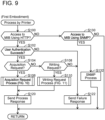
  • FIG. 9 a process executed by the CPU 32 of the printer 10 according to programs (e.g., 42) and protocols (e.g., SNMP) is described. The process of FIG. 9 is triggered by the printer 10 being turned on.
  • programs e.g., 42
  • protocols e.g., SNMP
  • the CPU 32 monitors in S 100 whether an event of accessing the MIB database 50 using HTTP occurs, and monitors in S 130 whether an event of accessing the MIB database 50 using SNMP occurs.
  • the event of S100 includes that the LAN I/F 20 receives a command according to HTTP from the terminal device 100.
  • the event of S 130 includes that the LAN I/F 20 receives a command according to SNMP.
  • the CPU 32 executes S 102 and subsequent steps according to the application 42.
  • the CPU 32 determines whether HTTP user authentication between the terminal device 100 and the printer 10 has succeeded.
  • the CPU 32 proceeds to S104.
  • the CPU 32 determines whether the command according to HTTP received from the terminal device 100 (referred to as "received command" hereinafter) is an acquisition request.
  • the CPU 32 executes an acquisition request process (see FIG. 10 ) in S 106, which is a process according to the acquisition request.
  • the CPU 32 sends, via the LAN I/F 20 and the LAN 4, a process response generated in the acquisition request process of S 106 to the terminal device 100.
  • S 120 may be executed according to the application 42 or HTTP.
  • the CPU 32 returns to the monitoring in S 100 and the monitoring in S130.
  • the CPU 32 determines in S 108 whether the received command is a writing request.
  • the CPU 32 executes a writing request process (see FIG. 11 ) in S110, which is a process according to the writing request.
  • S 120 following S110 the CPU 32 sends, via the LAN I/F 20 and the LAN 4, a process response generated in the writing request process of S 110 to the terminal device 100.
  • the CPU 32 When determining that the user authentication has failed (NO in S102) or when determining that the received command is neither of an acquisition request nor a writing request (e.g., the received command is a request that is not supported by the printer 10) (NO in S 108), the CPU 32 skips S106 to S 120 and proceeds to S 122. In S 122, the CPU 32 sends a failure response to the terminal device 100 via the LAN I/F 20 and the LAN 4. The failure response indicates that a process according to the received command has failed. When S 122 is completed, the CPU 32 returns to the monitoring in S 100 and the monitoring in S130.
  • the CPU 32 executes an SNMP process.
  • the SNMP process includes sending, via the LAN I/F 20 and the LAN 4, a response to the command according to SNMP to the terminal device 100.
  • the command according to SNMP is an SNMP acquisition request (see S48 in FIG. 7 )
  • the CPU 32 specifies each of one or more OIDs included in the SNMP acquisition request.
  • the CPU 32 acquires, for each of the specified one or more OIDs, an MIB value stored in association with the OID from the database 50.
  • the CPU 32 sends a response according to SNMP including the acquired one or more MIB values to the termina device 100.
  • S132 is completed, the CPU 32 returns to the monitoring in S100 and the monitoring in S130.
  • the CPU 32 specifies an OID associated with the one "key" selected in S140 from the HTTP acquisition request.
  • the CPU 32 determines whether the specified OID is on the whitelist 52.
  • the whitelist 52 includes OIDs corresponding to relatively highly confidential MIB values.
  • the CPU 32 When determining that the specified OID is not on the whitelist 52 (NO in S142), the CPU 32 skips S144 and S146, which will be described later, and proceeds to S148. In S148, the CPU 32 determines whether there is an unselected "key” among the one or more "keys” included in the HTTP acquisition request. When determining that there is an unselected "key” among the one or more "keys” included in the HTTP acquisition request (YES in S148), the CPU 32 returns to S140 and selects another "key".
  • the CPU 32 When determining that there is no unselected "key” among the one or more "keys” included in the HTTP acquisition request (NO in S148), the CPU 32 terminates the process of FIG. 10 .
  • the CPU 32 When determining that the specified OID is on the whitelist 52 (YES in S142), the CPU 32 acquires in S144, via the MIB interface 51, an MIB value stored in association with the specified OID from the database 50.
  • the CPU 32 adds the MIB value acquired in S144 to a process response to the HTTP acquisition request. Specifically, as illustrated in FIG. 10 , a combination of "key”, the specified OID (e.g., "1.3.6.1.4.1.xxxxxx.1”), and the acquired MIB value (e.g., e-mail address (account name "admin” and server name “example.com”)) is written in the body of the process response.
  • the CPU 32 proceeds to S148.
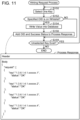
  • the CPU 32 When determining that the specified OID is on the whitelist 52 (YES in S152), the CPU 32 specifies an MIB value associated with the specified OID from the writing request in S154. The CPU 32 then writes, via the MIB interface 51, the specified MIB value in the database 50 in association with the specified OID. In other words, the MIB value stored in association with the specified OID in the database 50 is updated to the MIB value included in the writing request.
  • the CPU 32 adds a success status "OK” indicating that the specified MIB value has been successfully written to a process response to the writing request. Specifically, as illustrated in FIG. 11 , a combination of "key”, the specified OID (e.g., "1.3.6.1.4.1.xxxxxx.1"), and the success status "OK” is written in the body of the process response.
  • S158 is the same as S 148 in FIG. 10 except that the one or more "keys" included in the writing request are used.
  • the CPU 32 When determining that the specified OID is not on the whitelist 52 (NO in S152), the CPU 32 skips S 154 and S156 and proceeds to S158. Whether an MIB value is permitted to be written or not is determined based on the whitelist 152.
  • HTTPS Since HTTPS includes user authentication and encryption of communication data, it is more secure than SNMP.
  • communication of writing request can be executed using relatively secure HTTPS (S22 and S24 in FIG. 6 , S108 and S110 in FIG. 9 ).
  • MIB values i.e., setting values
  • MIB is widely known, and if the management means for the database 50 is switched to a means other than MIB, the general versatility may be decreased.
  • secure writing can be realized without switching widely known MIB to another means. A decrease in the general versatility can be suppressed.
  • communication of acquisition request can also be executed using relatively secure HTTPS (S12 and S14 in FIG. 6 , S104 and S106 in FIG. 9 ).
  • MIB values in the database 50 can be securely sent to the terminal device 100.
  • a comparative example can be contemplated in which S48 in FIG. 7 (sending of SNMP acquisition request) is not executed.
  • the terminal device 100 cannot receive MIB values corresponding to OIDs that are not on the whitelist 152 among the one or more items designated in S10 of FIG. 6 .
  • the terminal device 100 can receive MIB values corresponding to OIDs that are not on the whitelist 152 (e.g., MIB values with relatively low confidentiality) using SNMP. Convenience for the user of the terminal device 100 is improved.
  • the above-described comparative example may be employed.
  • a comparative example can be contemplated in which S130 and S 132 in FIG. 9 are not executed.
  • the printer 10 does not send a response to the SNMP acquisition request from the terminal device 100. MIB values corresponding to the items designated by the user may not be acquired.
  • the SNMP process in which a response to the SNMP acquisition request is sent is executed. Convenience for the user of the terminal device 100 is improved.
  • the above-described comparative example may be employed.
  • a comparative example can be contemplated in which the determination using the whitelist 152 (S42 in FIG. 7 , S52 in FIG. 8 ) and the determination using the whitelist 52 (S142 in FIG. 10 , S152 in FIG. 11 ) are not executed.
  • MIB values corresponding to OIDs that are not on the whitelist 152 namely the MIB values with relatively low confidentiality
  • MIB values with relatively low confidentiality are also encoded by HTTP.
  • MIB values with relatively low confidentiality are communicated with the terminal device 100 without being encoded.
  • unnecessary encryption of MIB values with relatively low confidentiality can be suppressed.
  • the above-described comparative example may be employed.
  • a comparative example can be contemplated in which a blacklist is used instead of the whitelists 52 and 152.
  • a blacklist is used instead of the whitelists 52 and 152.
  • a new OID is added to the database 50.
  • the new OID In order to prohibit communication of an MIB value corresponding to the new OID, the new OID needs to be added to the blacklist. Without the addition of the new OID to the blacklist, the MIB value corresponding to the new OID may be leaked.
  • the MIB value corresponding to the new OID is not communicated unless the new OID is added to the whitelists. The leak of the MIB value corresponding to the new OID can be prevented.
  • the above-described blacklist may be used.
  • the printer 10 of the present embodiment may have a function of permitting writing in the database 50 in accordance with a writing request according to SNMP. In the present embodiment, use of this function is not permitted.
  • the printer 10, the memory 34, and the database 50 are examples of "first communication device”, “memory”, and “database”, respectively.
  • the whitelist 52 is an example of "second list”.
  • the terminal device 100 and the whitelist 152 are examples of "second communication device” and "fourth list”, respectively.
  • the HTTP acquisition request is an example of "second acquisition request”.
  • S108 and S110 in FIG. 9 are examples of "receive a writing request from a second communication device” and “write the setting value included in the writing request in the database", respectively.
  • S24 in FIG. 6 is an example of "send a writing request to a first communication device”.
  • an acquisition request is a command according to SNMP and a writing request is a command according to HTTPS.
  • the application 42 controls communication using the second communication scheme.
  • Monitoring in S210 and monitoring in S220 are the same as the monitoring in S10 and the monitoring in S20 in FIG. 6 .
  • S222 to S230 executed when the writing operation is performed at the operation unit 110 are the same as S22 to S30 in FIG. 6 .
  • the CPU 132 sends an SNMP acquisition request to the printer 10 via the LAN I/F 120 and the LAN 4 in S212.
  • the SNMP acquisition request in S212 includes OIDs corresponding to all contents selected by the acquisition operation.
  • the CPU 132 receives a process response to the request in S212 via the LAN I/F 120 and the LAN 4.
  • the process response in S214 includes, for each of all the OIDs included in the SNMP acquisition request in S212, the OID and an MIB value in the database 50 corresponding to the OID.
  • the CPU 132 returns to the monitoring in S210 and the monitoring in S220.
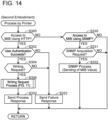
  • S300, S302, S304, S330 are the same as S100, S102, S108, S130 in FIG. 9 .
  • the CPU 32 when determining that the command according to HTTP received from the terminal device 100 is a writing request (YES in S304), the CPU 32 proceeds to S306 and S320.
  • S306 and S320 are the same as S110 and S120 in FIG. 9 .
  • S322 is the same as S122 in FIG. 9 . That is, when a request other than a writing request (e.g., HTTP acquisition request) is received, a process according to that request is not executed and a failure response is sent to the terminal device 100.
  • a writing request e.g., HTTP acquisition request
  • S330 When an event of accessing the MIB database 50 using SNMP occurs (S330), the CPU 32 proceeds to S331. In S331, the CPU 32 determines whether the command according to SNMP received from the terminal device 100 is an SNMP acquisition request. When determining that the command received from the termina device 100 is an SNMP acquisition request (YES in S331), the CPU 32 proceeds to S332. S332 is the same as S132 in FIG. 9 .
  • the CPU 32 When determining that the command received from the terminal device 100 is not an SNMP acquisition request (NO in S331), the CPU 32 skips S332 and terminates the process of FIG. 14 .
  • the CPU 32 does not execute the SNMP process according to the writing request according to SNMP. It is possible to suppress an MIB value from being written using communication according to SNMP.
  • MIB values can be securely written in the MIB database 50 using HTTPS.
  • HTTPS is not used to acquire MIB values in the printer 10.
  • Writing of MIB values affects the operation of the printer 10 more significantly than acquisition of MIB values.
  • writing, which affects the operation of the printer 10 more significantly is securely executed, whereas acquisition, which affects the operation of the printer 10 less significantly, is executed using conventional SNMP to suppress a decrease in user convenience.
  • both of secure communication and suppression of decrease in user convenience can be achieved.
  • the determinations using the whitelists 52 and 152 are executed in the present embodiment as well. Whether MIB values are permitted to be written or not can be set based on the whitelists 52 and 152.
  • OIDs on the whitelists 52 and 152 include OIDs corresponding to personal information (e.g., an address list, etc.), an IP address, etc.
  • the whitelists 52 and 152 are used for a writing request according to HTTPS but are not used for an acquisition request according to SNMP (S212 in FIG. 13 ).
  • the user is not limited with respect to acquisition of MIB values. User convenience is improved.
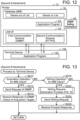
  • the memory 34 of the printer 10 stores SNMP setting information 60, as illustrated in FIG. 12 .
  • the SNMP setting information 60 is selectively set to either of "ON” indicating that the SNMP process according to the SNMP acquisition request (i.e., the process in S332) is permitted and "OFF” indicating that the SNMP process according to the SNMP acquisition request is prohibited.
  • the SNMP setting information 60 indicates "ON”.
  • SNMP setting information 60 that includes setting information corresponding to the SNMP acquisition request and setting information corresponding to the writing request according to SNMP may be stored.
  • the setting information corresponding to the SNMP acquisition request may indicate "ON (i.e., permission)" by default
  • the setting information corresponding to the writing request according to SNMP may indicate "OFF” by default.
  • the whitelist 52 and the SNMP setting information 60 are examples of "first list” and “setting information", respectively.
  • the whitelist 152 is an example of "third list”.
  • the SNMP acquisition request is an example of "first acquisition request”.
  • S304 and S306 in FIG. 14 are examples of "receive a writing request from a second communication device” and “write the setting value included in the writing request in the database", respectively.
  • S224 in FIG. 13 is an example of "send a writing request to a first communication device”.
  • the "first communication device” is not limited to the printer 10 and may be, for example, a terminal device such as a desktop PC, a server, or the like.
  • the "second communication device” is not limited to the terminal device 100 and may be a peripheral device such as the printer 10, a server, or the like.
  • the "second communication scheme” may not include TLS but may include HTTP.
  • the "writing request (and acquisition request)” may not use TLS (or SSL) but may use HTTP.
  • the "authentication of a sender of the writing request” is not limited to user authentication and may be, for example, authentication of a device that sent a writing request.
  • the "second communication scheme” suffices by including at least one of encryption of communication data and authentication of a sender of a writing request, and the "second communication scheme” is not limited to HTTP and HTTPS so long as it is a protocol that includes at least one of encryption of communication data and authentication of a sender of a writing request.
  • the printer 10 may not store the whitelist 52. Further, the terminal device 100 may not store the whitelist 152. In the present modification, at least one of the "first list”, “second list”, “third list”, and “fourth list” may be omitted. Further, in the present modification, at least one of S42 in FIG. 7 , S52 in FIG. 8 , S142 in FIG. 10 , and S152 in FIG. 11 may be omitted.
  • (Modification 6) S132 in FIG. 9 may not be executed.
  • the setting value stored in the database in association with each of the (L1 - L2) OIDs may not be sendable to the second communication device by using the first communication scheme including SNMP.
  • Modification 7 S331 and S332 in FIG. 14 may not be executed. In the present modification, receiving the "first acquisition request" may be omitted.
  • an acquisition target OID may be selected using the whitelist 52.
  • the SNMP setting information 60 may not be stored in the memory 34. In the present modification, the "setting information" may be omitted.
  • (Modification 12) S48 in FIG. 7 may not be executed.
  • a setting value stored in the database in association with each of the (L3 - L4) OIDs may not be receivable from the first communication device by using the first communication scheme including SNMP.
  • an OID included in the SNMP acquisition request may be selected using the whitelist 152.
  • FIGS. 6 to 11 , FIG. 13 , and FIG. 14 are implemented by the CPU 32 (or 132) executing the programs 40, 42 (or 140, 142). Instead of this, one or more of the processes may be implemented by hardware such as a logic circuit, etc.
  • a first communication device comprising:

Landscapes

  • Engineering & Computer Science (AREA)
  • Computer Networks & Wireless Communication (AREA)
  • Signal Processing (AREA)
  • Computer Security & Cryptography (AREA)
  • Computer And Data Communications (AREA)
  • Databases & Information Systems (AREA)
  • Theoretical Computer Science (AREA)
  • Data Mining & Analysis (AREA)
  • Physics & Mathematics (AREA)
  • General Engineering & Computer Science (AREA)
  • General Physics & Mathematics (AREA)

Abstract

A first communication device (10) may include: a database (50) configured to, for each of a plurality of OIDs of MIB, store the OID in association with a setting value; a request receiving unit (30) configured to receive a writing request from a second communication device (100) by using a second communication scheme different from a first communication scheme including SNMP, the writing request including an OID and a setting value, and the second communication scheme including at least one of encryption of communication data and authentication of a sender of the writing request; and a writing control unit (30) configured to, in a case where the writing request is received from the second communication device (100), write the setting value included in the writing request in the database (50) in association with the OID included in the writing request.

Description

    BACKGROUND ART
  • Japanese Patent Application No. 2008-065833 disclosed a peripheral device with an MIB (Management Information Base) database. SNMP (Simple Network Management Protocol) is used to acquire setting values in the MIB database and to write setting values in MIB.
  • DESCRIPTION
  • The disclosure herein provides techniques for securely writing setting values in an MIB database.
  • A first communication device disclosed herein may comprise: a database configured to, for each of a plurality of object IDs (OIDs) of Management Information Base (MIB), store the OID in association with a setting value; a request receiving unit configured to receive a writing request from a second communication device by using a second communication scheme different from a first communication scheme including Simple Network Management Protocol (SNMP), the writing request including an OID and a setting value, and the second communication scheme including at least one of encryption of communication data and authentication of a sender of the writing request; and a writing control unit configured to, in a case where the writing request is received from the second communication device, write the setting value included in the writing request in the database in association with the OID included in the writing request.
  • Further disclosed herein is computer program for a second communication device. The computer program causes a processor of the second communication device to function as: a writing request sending unit configured to send a writing request to a first communication device by using a second communication scheme different from a first communication scheme including Simple Network Management Protocol (SNMP), the writing request including an object ID (OID) of Management Information Base (MIB) and a setting value, the second communication scheme including at least one of encryption of communication data and authentication of a sender of the writing request, and wherein in a case where the first communication device receives the writing request from the second communication device, the first communication device writes the setting value included in the writing request in a database of MIB in association with the OID included in the writing request.
  • Since the second communication scheme includes at least one of encryption of communication data and authentication of sender of the writing request, the second communication scheme is more secure than the first communication scheme including SNMP. According to the above-described first communication device and non-transitory computer-readable recording medium, the writing request is communicated using the relatively secure second communication scheme. The setting value thus can be securely written in the MIB database.
  • Computer program for implementing the above-described first communication device and a non-transitory computer-readable recording medium storing this computer program are also novel and useful. Further, a method performed by the above-described first communication device is novel and useful. Also, the above-described second communication device itself and a computer program for implementing the above-described second communication device are novel and useful. Further, a method performed by the above-described second communication device is novel and useful.
    • FIG. 1 illustrates a configuration of a communication system.
    • FIG. 2 illustrates a block diagram of a printer.
    • FIG. 3 illustrates a block diagram of a terminal device.
    • FIG. 4 illustrates communication protocols between the printer and the terminal device.
    • FIG. 5 illustrates the OSI reference model and MIB.
    • FIG. 6 illustrates a flowchart of a process by the terminal device.
    • FIG. 7 illustrates a flowchart of an acquisition request generation process.
    • FIG. 8 illustrates a flowchart of a writing request generation process.
    • FIG. 9 illustrates a flowchart of a process by the printer.
    • FIG. 10 illustrates a flowchart of an acquisition request process.
    • FIG. 11 illustrates a flowchart of a writing request process.
    • FIG. 12 illustrates communication protocols between the printer and the terminal device.
    • FIG. 13 illustrates a flowchart of a process by the terminal device.
    • FIG. 14 illustrates a flowchart of a process by the printer.
  • (First Embodiment) (Configuration of Communication System 2; FIG. 1) As illustrated in FIG. 1, a communication system 2 comprises a printer 10 and a terminal device 100. The devices 10, 100 are connected to a LAN (local area network) 4 and are communicable with each other via the LAN 4. The LAN 4 may be a wired LAN or a wireless LAN. In the present embodiment, the printer 10 writes and sends information according to requests from the terminal device 100. In the present embodiment, an acquisition request for acquiring information is a command according to HTTPS (Hypertext Transfer Protocol Secure) or SNMP (Simple Network Management Protocol). Further, in the present embodiment, a writing request for writing information is a command according to HTTPS.
  • (Configuration of Printer 10; FIG. 2) The printer 10 is a peripheral device (e.g., a peripheral device of the terminal device 100) configured to execute a print function. In a modification, the printer 10 may be a multifunctional device configured to execute a scan function, a FAX function, etc. in addition to the print function. The printer 10 comprises a LAN interface 20, a print executing unit 22, and a controller 30. The units 20 to 30 are connected to a bus line (reference sign omitted). Hereinafter, "interface" may be abbreviated as "I/F".
  • The LAN I/F 20 is for communication via the LAN 4 and is connected to the LAN 4. The print executing unit 22 comprises a print mechanism of an inkjet scheme, laser scheme, or the like.
  • The controller 30 comprises a CPU 32 and a memory 34. The memory 34 is configured of a volatile memory and a non-volatile memory. The CPU 32 executes various processes according to programs 40, 42 stored in the memory 34. An OS (operating system) program 40 is a program for controlling basic operation of the printer 10. An application 42 is a program for accessing a database 50, which will be described later. The memory 34 further stores the database 50 and a whitelist 52. The programs 40, 42, the database 50, and the whitelist 52 are stored, for example, in the non-volatile memory of the memory 34.
  • The database 50 stores various information (referred to as "MIB values" hereinafter) of the printer 10. The MIB values indicate, for example, a remaining amount in a consumable article, MAC address, name (i.e., user name), IP address, installed location, access destination, error history, status (print in progress, standby, etc.), print setting (e.g., default resolution for print), etc. of the printer 10. The database 50 stores the above-mentioned various information in a tree structure (i.e., hierarchical structure). This collection of various data in the tree structure is referred to as "MIB (Management Information Base)". Specifically, the database 50 stores a content and an OID (object ID) in association with each MIB value. The content is a character string indicating the meaning of the MIB value. The OID is an identifier for identifying the MIB value.
  • The whitelist 52 is a list of OIDs. The whitelist 52 is used in processes of FIGS. 10 and 11, which will be described later. The whitelist 52 may have a different data formation from that of the database 50 or may be a part of the database 50.
  • (Configuration of Terminal Device 100; FIG. 3) The terminal device 100 is a user terminal such as a desktop PC, a laptop PC, a tablet PC, a mobile phone (e.g., smartphone), or the like. The terminal device 100 comprises an operation unit 110, a LAN I/F 120, and a controller 130. The operation unit 110 comprises a plurality of keys. A user can input various instructions to the terminal device 100 by operating the operation unit 110. The operation unit 110 may comprise a so-called touch screen. The LAN I/F 120 is connected to the LAN 4.
  • The controller 130 comprises a CPU 132 and a memory 134. The CPU 132 executes various processes according to programs 140, 142 stored in the memory 134. An OS program 140 is a program for controlling basic operation of the terminal device 100. An application 142 is a program for sending the acquisition request and the write request to the printer 10. The application 142 is provided, for example, by the vendor of the printer 10. The application 142 is downloaded, for example, from a server on the Internet.
  • The memory 134 further stores a whitelist 152. The whitelist 152 is a list of OIDs. The whitelist 152 is stored in the memory 134 by the application 142. The whitelist 152 is used in processes of FIGS. 7 and 8, which will be described later. In the present embodiment, the whitelist 152 is identical to the whitelist 52 of the printer 10. In a modification, the whitelist 152 may be different from the whitelist 52. For example, one or more OIDs included in the whitelist 152 may not be included in the whitelist 52.
  • (Communication Protocols between Printer 10 and Terminal Device 100; FIG.4, FIG. 5) As a communication protocol for communicating MIB values of the printer 10 between the printer 10 and the terminal device 100, a protocol according to UDP (User Datagram Protocol) in the transport layer of the OSI (Open Systems Interconnection) reference model is widely known. Specifically, SNMP (Simple Network Management Protocol) is known. SNMP is SNMPv1 or SNMPv2. It can be contemplated that not only UDP but also a communication protocol according to TCP (Transmission Control Protocol) in the transport layer of the OSI reference model is used as a communication protocol for communicating MIB values. Specifically, it can be contemplated that HTTPS is used. This is because HTTPS is more secure than SNMPv1 and SNMPv2 since it employs user authentication and encryption of communication data. Thus, it is possible to prevent MIB values of the printer 10 from being illicitly written or acquired by a third party.
  • As illustrated in FIG. 4, the LAN I/F 20 can communicate with the terminal device 100 by selectively using one of a first communication scheme including SNMP and a second communication scheme including HTTPS. The application 42 of the printer 10 controls communication using the second communication scheme. Although details will be described later, the application 42 executes, via an MIB interface 51, communication of MIB values stored in association with the OIDs on the whitelist 52 among the MIB values in the database 50. On the other hand, MIB values stored in association with OIDs that are not on the whitelist 52 among the MIB values in the database 50 are communicated according to SNMP via the MIB interface 51.
  • As illustrated in FIG. 5, the first communication scheme including SNMP and UDP is an upper layer of IP (Internet Protocol) in the network layer of the OSI reference model. Here, SNMP is the application layer of the OSI reference model. SNMP accesses the database 50, via the MIB interface 51, in accordance with a command according to SNMP received from the terminal device 100. Specifically, SNMP acquires information from the database 50 via the MIB interface 51. SNMP then sends the information acquired from the database 50 to the terminal device 100 as a response to the command according to SNMP.
  • Further, as illustrated in FIG. 5, the second communication scheme including HTTP, TCP, and TLS (Transport Layer Security) is also an upper layer of IP. Here, HTTP is the application layer of the OSI reference model and TLS is the session layer of the OSI reference model. TLS is a protocol for encrypting communication data and is a next-generation standard of SSL (Secure Socket Layer). HTTPS is a combination of HTTP and TLS (or SSL). Normally, commands and responses thereto according to HTTPS use general formats such as JSON (Java Script Object Notation), XML (Extensible Markup Language), etc. In the present embodiment, commands and responses thereto according to HTTPS in the JSON format are communicated between the printer 10 and the terminal device 100. In a modification, the MXL format may be used instead of the JSON format.
  • HTTP executes authentication using a user name (i.e., ID) and a password. The memory 34 of the printer 10 stores information "Authentication (e.g., a user name and a password)" to be used for HTTP authentication. Here, HTTP supports basic authentication and digest authentication. The basic authentication is a scheme for coding a user name and a password by Base64 and sending it. The digest authentication is a scheme for hashing a user name and a password and sending it. In the basic authentication, a plain text generated by coding a user name and a password by Base64 is sent, while in the digest authentication, a value generated by hashing a user name and a password is sent. Thus, the digest authentication is more secure than the basic authentication. In the present embodiment, the digest authentication is used. In a modification, the basic authentication may be used.
  • As illustrated in FIG. 5, the application 42 of the printer 10 is an upper layer of HTTP. The application 42 interprets what is described in the JSON format included in a command according to HTTPS received from the terminal device 100 and accesses the database 50 via the MIB interface 51. Further, the application 42 describes a result of the access to the database 50 via the MIB interface 51 (e.g., information in the database 50) in the JSON format to generate a response.
  • (Process by Terminal Device 100; FIG. 6) Referring to FIG. 6,a process executed by the CPU 132 of the terminal device 100 according to the application 142 is described. The process of FIG. 6 is triggered by activation of the application 142.
  • The CPU 132 monitors in S10 whether an acquisition operation for acquiring an MIB value of the printer 10 is performed at the operation unit 110 and monitors in S20 whether a writing operation for writing an MIB value in the printer 10 is performed at the operation unit 110. The acquisition operation includes an operation of designating one or more items from among a plurality of items (i.e., a plurality of contents) corresponding to a plurality of MIB values of the printer 10. The writing operation includes an operation of designating one or more items corresponding to one or more MIB values (i.e., IP address, setting values of print setting, etc.) to be written in the printer 10, and an operation of inputting, for each of the designated one or more items, an MBI value to be written in the printer 10. The acquisition operation and the writing operation are, for example, operations on screens displayed on a display (not illustrated) of the terminal device 100.
  • When the acquisition operation is performed at the operation unit 110 (YES in S10), the CPU 132 executes an acquisition request generation process (see FIG. 7) for generating an acquisition request in S12. An acquisition request is at least one of an acquisition request according to HTTP (referred to as "HTTP acquisition request" hereinafter) and an acquisition request according to SNMP (referred to as "SNMP acquisition request" hereinafter). The HTTP acquisition request is, for example, a command according to HTTP POST method that includes a header in which "X-HTTP-Method-Override "GET" is written (see FIG. 7). In a modification, the HTTP acquisition request may be a command according to HTTP GET method. The SNMP acquisition request is, for example, a command according to SNMP GET method.
  • In subsequent S14, the CPU 132 sends an acquisition request generated in the acquisition request generation process of S12 to the printer 10 via the LAN I/F 120 and the LAN 4. In case where the generated acquisition request is an HTTP acquisition request, HTTP user authentication is executed between the terminal device 100 and the printer 10. When the user authentication succeeds, a TLS session is established between the terminal device 100 and the printer 10. The HTTP acquisition request is sent to the printer 10 using the TLS session. That is, the HTTP acquisition request is encoded by TLS. On the other hand, in case where the generated acquisition request is an SNMP acquisition request, user authentication is not executed. Further, the SNMP acquisition request is not encoded.
  • In S30 following S14, the CPU 132 receives, via the LAN I/F 120 and the LAN 4, a process response as a response to the acquisition request sent in S14. Here, a process response to an HTTP acquisition request is encoded by TLS, whereas a process response to an SNMP acquisition request is not encoded. When S30 is completed, the CPU 132 returns to the monitoring in S10 and the monitoring in S20.
  • When the writing operation is performed at the operation unit 110 (YES in S20), the CPU 132 executes a writing request generation process for generating a writing request (see FIG. 8) in S22. A writing request is a command according to HTTP POST method.
  • Subsequent S24 is the same as S14 except that a writing request generated in S22 is sent to the printer 10. For sending of the writing request, HTTP user authentication is executed and the writing request is encoded by TLS.
  • In S30 following S24, the CPU 132 receives, via the LAN I/F 120 and the LAN 4, a process response as a response to the writing request sent in S24. The process response to the writing request is encoded by TLS.
  • (Acquisition Request Generation Process; FIG. 7) The acquisition request generation process of S 12 in FIG. 6 is described. In S40, the CPU 132 selects one OID from among one or more OIDs corresponding to the one or more contents selected by the acquisition operation (referred to as "one or more target OIDs" hereinafter).
  • In subsequent S42, the CPU 132 determines whether the one OID selected in S40 is on the whitelist 152. The whitelist 152 includes, for example, OIDs corresponding to relatively highly confidential MIB values. The OIDs on the whitelist 152 are, for example, OIDs of a private MIB.
  • When determining that the one OID selected in S40 is on the whitelist 152 (YES in S42), the CPU 132 adds the one OID selected in S40 to an HTTP acquisition request in S44. Specifically, as illustrated in FIG. 7, a combination of "key" and the OID (e.g., "1.3.6.1.4.1.xxxxxx.1") is written in the body of the HTTP acquisition request.
  • When determining that the one OID selected in S40 is not on the whitelist 152 (NO in S42), the CPU 132 adds the one OID selected in S40 to an SNMP acquisition request in S48. This OID is written in the body of the SNMP acquisition request (not illustrated).
  • When S44 or S48 is completed, the CPU 132 determines in S46 whether there is an unselected OID among the one or more target OIDs. When determining that there is an unselected OID among the one or more target OIDs (YES in S46), the CPU 132 returns to S40 and selects another OID.
  • When determining that there is no unselected OID among the one or more target OIDs (NO in S46), the CPU 132 terminates the process of FIG. 7.
  • (Writing Request Generation Process; FIG. 8) The writing request generation process of S24 in FIG. 6 is described. S50, S52 are the same as S40, S42 in FIG. 7 except that one or more OIDs corresponding to the one or more MIB values inputted by the writing operation are used.
  • When determining that the one OID selected in S50 is on the whitelist 152 (YES in S42), the CPU 132 adds the one OID selected in S50 to a writing request in S54. Specifically, a combination of "key", the OID, and an MIB value to be written into the printer 10 (i.e., MIB value inputted by the user) is written in the body of the writing request according to HTTPS. When S54 is completed, the CPU 132 proceeds to S56.
  • When determining that the one OID selected in S50 is not on the whitelist 152 (NO in S42), the CPU 132 skips S54 and proceeds to S56. S56 is the same as S46 in FIG. 7. That is, whether an MIB value is permitted to be written or not is determined based on the whitelist 152.
  • (Process by Printer 10; FIG. 9) Referring to FIG. 9, a process executed by the CPU 32 of the printer 10 according to programs (e.g., 42) and protocols (e.g., SNMP) is described. The process of FIG. 9 is triggered by the printer 10 being turned on.
  • The CPU 32 monitors in S 100 whether an event of accessing the MIB database 50 using HTTP occurs, and monitors in S 130 whether an event of accessing the MIB database 50 using SNMP occurs. The event of S100 includes that the LAN I/F 20 receives a command according to HTTP from the terminal device 100. The event of S 130 includes that the LAN I/F 20 receives a command according to SNMP.
  • When the event of S 100 occurs (YES in S 100), the CPU 32 executes S 102 and subsequent steps according to the application 42. In S102, the CPU 32 determines whether HTTP user authentication between the terminal device 100 and the printer 10 has succeeded. When determining that the user authentication has succeeded (YES in S102), the CPU 32 proceeds to S104.
  • In S 104, the CPU 32 determines whether the command according to HTTP received from the terminal device 100 (referred to as "received command" hereinafter) is an acquisition request. When determining that the received command is an acquisition request (YES in S104), the CPU 32 executes an acquisition request process (see FIG. 10) in S 106, which is a process according to the acquisition request. In S 120 following S106, the CPU 32 sends, via the LAN I/F 20 and the LAN 4, a process response generated in the acquisition request process of S 106 to the terminal device 100. S 120 may be executed according to the application 42 or HTTP. When S 120 is completed, the CPU 32 returns to the monitoring in S 100 and the monitoring in S130.
  • When determining that the received command is not an acquisition request (NO in S 104), the CPU 32 determines in S 108 whether the received command is a writing request. When determining that the received command is a writing request (YES in S108), the CPU 32 executes a writing request process (see FIG. 11) in S110, which is a process according to the writing request. In S 120 following S110, the CPU 32 sends, via the LAN I/F 20 and the LAN 4, a process response generated in the writing request process of S 110 to the terminal device 100.
  • When determining that the user authentication has failed (NO in S102) or when determining that the received command is neither of an acquisition request nor a writing request (e.g., the received command is a request that is not supported by the printer 10) (NO in S 108), the CPU 32 skips S106 to S 120 and proceeds to S 122. In S 122, the CPU 32 sends a failure response to the terminal device 100 via the LAN I/F 20 and the LAN 4. The failure response indicates that a process according to the received command has failed. When S 122 is completed, the CPU 32 returns to the monitoring in S 100 and the monitoring in S130.
  • When the event of S130 occurs (YES in S130), the CPU 32 proceeds to S132. In S132, the CPU 32 executes an SNMP process. The SNMP process includes sending, via the LAN I/F 20 and the LAN 4, a response to the command according to SNMP to the terminal device 100. For example, when the command according to SNMP is an SNMP acquisition request (see S48 in FIG. 7), the CPU 32 specifies each of one or more OIDs included in the SNMP acquisition request. The CPU 32 then acquires, for each of the specified one or more OIDs, an MIB value stored in association with the OID from the database 50. Then, the CPU 32 sends a response according to SNMP including the acquired one or more MIB values to the termina device 100. When S132 is completed, the CPU 32 returns to the monitoring in S100 and the monitoring in S130.
  • (Acquisition Request Process; FIG. 10) The acquisition request process of S106 in FIG. 9 is described. In S140, the CPU 32 selects one "key" from among one or more "keys" included in the HTTP acquisition request.
  • In subsequent S142, the CPU 32 specifies an OID associated with the one "key" selected in S140 from the HTTP acquisition request. The CPU 32 then determines whether the specified OID is on the whitelist 52. As with the whitelist 152 of the terminal device 100, the whitelist 52 includes OIDs corresponding to relatively highly confidential MIB values.
  • When determining that the specified OID is not on the whitelist 52 (NO in S142), the CPU 32 skips S144 and S146, which will be described later, and proceeds to S148. In S148, the CPU 32 determines whether there is an unselected "key" among the one or more "keys" included in the HTTP acquisition request. When determining that there is an unselected "key" among the one or more "keys" included in the HTTP acquisition request (YES in S148), the CPU 32 returns to S140 and selects another "key".
  • When determining that there is no unselected "key" among the one or more "keys" included in the HTTP acquisition request (NO in S148), the CPU 32 terminates the process of FIG. 10.
  • When determining that the specified OID is on the whitelist 52 (YES in S142), the CPU 32 acquires in S144, via the MIB interface 51, an MIB value stored in association with the specified OID from the database 50.
  • In S146, the CPU 32 adds the MIB value acquired in S144 to a process response to the HTTP acquisition request. Specifically, as illustrated in FIG. 10, a combination of "key", the specified OID (e.g., "1.3.6.1.4.1.xxxxxx.1"), and the acquired MIB value (e.g., e-mail address (account name "admin" and server name "example.com")) is written in the body of the process response. When S146 is completed, the CPU 32 proceeds to S148.
  • (Writing Request Process; FIG. 11) The writing request process of S110 in FIG. 9 is described. S150, S152 are the same as S140, S142 in FIG. 10 except that one or more "keys" included in the writing request are used.
  • When determining that the specified OID is on the whitelist 52 (YES in S152), the CPU 32 specifies an MIB value associated with the specified OID from the writing request in S154. The CPU 32 then writes, via the MIB interface 51, the specified MIB value in the database 50 in association with the specified OID. In other words, the MIB value stored in association with the specified OID in the database 50 is updated to the MIB value included in the writing request.
  • In subsequent S156, the CPU 32 adds a success status "OK" indicating that the specified MIB value has been successfully written to a process response to the writing request. Specifically, as illustrated in FIG. 11, a combination of "key", the specified OID (e.g., "1.3.6.1.4.1.xxxxxx.1"), and the success status "OK" is written in the body of the process response. When S156 is completed, the CPU 32 proceeds to S158. S158 is the same as S 148 in FIG. 10 except that the one or more "keys" included in the writing request are used.
  • When determining that the specified OID is not on the whitelist 52 (NO in S152), the CPU 32 skips S 154 and S156 and proceeds to S158. Whether an MIB value is permitted to be written or not is determined based on the whitelist 152.
  • (Effects of Present Embodiment) Since HTTPS includes user authentication and encryption of communication data, it is more secure than SNMP. In the present embodiment, communication of writing request can be executed using relatively secure HTTPS (S22 and S24 in FIG. 6, S108 and S110 in FIG. 9). MIB values (i.e., setting values) can be securely written in the MIB database 50. Especially, MIB is widely known, and if the management means for the database 50 is switched to a means other than MIB, the general versatility may be decreased. In the present embodiment, secure writing can be realized without switching widely known MIB to another means. A decrease in the general versatility can be suppressed.
  • Further, in the present embodiment, communication of acquisition request can also be executed using relatively secure HTTPS (S12 and S14 in FIG. 6, S104 and S106 in FIG. 9). MIB values in the database 50 can be securely sent to the terminal device 100.
  • A comparative example can be contemplated in which S48 in FIG. 7 (sending of SNMP acquisition request) is not executed. In this comparative example, the terminal device 100 cannot receive MIB values corresponding to OIDs that are not on the whitelist 152 among the one or more items designated in S10 of FIG. 6. In contrast, in the present embodiment, the terminal device 100 can receive MIB values corresponding to OIDs that are not on the whitelist 152 (e.g., MIB values with relatively low confidentiality) using SNMP. Convenience for the user of the terminal device 100 is improved. In a modification, the above-described comparative example may be employed.
  • Further, a comparative example can be contemplated in which S130 and S 132 in FIG. 9 are not executed. In this comparative example, the printer 10 does not send a response to the SNMP acquisition request from the terminal device 100. MIB values corresponding to the items designated by the user may not be acquired. In contrast, in the present embodiment, the SNMP process in which a response to the SNMP acquisition request is sent is executed. Convenience for the user of the terminal device 100 is improved. In a modification, the above-described comparative example may be employed.
  • Further, a comparative example can be contemplated in which the determination using the whitelist 152 (S42 in FIG. 7, S52 in FIG. 8) and the determination using the whitelist 52 (S142 in FIG. 10, S152 in FIG. 11) are not executed. In this comparative example, MIB values corresponding to OIDs that are not on the whitelist 152, namely the MIB values with relatively low confidentiality, are also encoded by HTTP. In contrast, in the present embodiment, MIB values with relatively low confidentiality are communicated with the terminal device 100 without being encoded. In the present embodiment, unnecessary encryption of MIB values with relatively low confidentiality can be suppressed. In a modification, the above-described comparative example may be employed.
  • Further, a comparative example can be contemplated in which a blacklist is used instead of the whitelists 52 and 152. For example, it can be contemplated that a new OID is added to the database 50. In order to prohibit communication of an MIB value corresponding to the new OID, the new OID needs to be added to the blacklist. Without the addition of the new OID to the blacklist, the MIB value corresponding to the new OID may be leaked. In contrast, in the present embodiment, the MIB value corresponding to the new OID is not communicated unless the new OID is added to the whitelists. The leak of the MIB value corresponding to the new OID can be prevented. In a modification, the above-described blacklist may be used.
  • Further, the printer 10 of the present embodiment may have a function of permitting writing in the database 50 in accordance with a writing request according to SNMP. In the present embodiment, use of this function is not permitted.
  • (Correspondence Relationships) The printer 10, the memory 34, and the database 50 are examples of "first communication device", "memory", and "database", respectively. The whitelist 52 is an example of "second list". The terminal device 100 and the whitelist 152 are examples of "second communication device" and "fourth list", respectively. The HTTP acquisition request is an example of "second acquisition request".
  • S108 and S110 in FIG. 9 are examples of "receive a writing request from a second communication device" and "write the setting value included in the writing request in the database", respectively. S24 in FIG. 6 is an example of "send a writing request to a first communication device".
  • (Second Embodiment) (Configuration of Communication System 2; FIG. 1) The configuration of the communication system 2 is the same as that of the first embodiment. In the present embodiment, an acquisition request is a command according to SNMP and a writing request is a command according to HTTPS. In the present embodiment, the application 42 controls communication using the second communication scheme.
  • (Process by Terminal Device 100; FIG. 13) Monitoring in S210 and monitoring in S220 are the same as the monitoring in S10 and the monitoring in S20 in FIG. 6. S222 to S230 executed when the writing operation is performed at the operation unit 110 (YES in S220) are the same as S22 to S30 in FIG. 6.
  • When the acquisition operation is performed at the operation unit 110 (YES in S210), the CPU 132 sends an SNMP acquisition request to the printer 10 via the LAN I/F 120 and the LAN 4 in S212. The SNMP acquisition request in S212 includes OIDs corresponding to all contents selected by the acquisition operation.
  • In subsequent S214, the CPU 132 receives a process response to the request in S212 via the LAN I/F 120 and the LAN 4. The process response in S214 includes, for each of all the OIDs included in the SNMP acquisition request in S212, the OID and an MIB value in the database 50 corresponding to the OID. When S214 is completed, the CPU 132 returns to the monitoring in S210 and the monitoring in S220.
  • (Process by Printer 10; FIG. 14) S300, S302, S304, S330 are the same as S100, S102, S108, S130 in FIG. 9. In the present embodiment, when determining that the command according to HTTP received from the terminal device 100 is a writing request (YES in S304), the CPU 32 proceeds to S306 and S320. S306 and S320 are the same as S110 and S120 in FIG. 9.
  • When determining that the command according to HTTP received from the terminal device 100 is not a writing request (NO in S304), the CPU 32 proceeds to S322. S322 is the same as S122 in FIG. 9. That is, when a request other than a writing request (e.g., HTTP acquisition request) is received, a process according to that request is not executed and a failure response is sent to the terminal device 100.
  • When an event of accessing the MIB database 50 using SNMP occurs (S330), the CPU 32 proceeds to S331. In S331, the CPU 32 determines whether the command according to SNMP received from the terminal device 100 is an SNMP acquisition request. When determining that the command received from the termina device 100 is an SNMP acquisition request (YES in S331), the CPU 32 proceeds to S332. S332 is the same as S132 in FIG. 9.
  • When determining that the command received from the terminal device 100 is not an SNMP acquisition request (NO in S331), the CPU 32 skips S332 and terminates the process of FIG. 14. For example, when the command received from the terminal device 100 is a writing request according to SNMP, the CPU 32 does not execute the SNMP process according to the writing request according to SNMP. It is possible to suppress an MIB value from being written using communication according to SNMP.
  • (Effects of Present Embodiment) In the present embodiment, as with the first embodiment, MIB values can be securely written in the MIB database 50 using HTTPS.
  • In the present embodiment, HTTPS is not used to acquire MIB values in the printer 10. Writing of MIB values affects the operation of the printer 10 more significantly than acquisition of MIB values. In the preset embodiment, writing, which affects the operation of the printer 10 more significantly, is securely executed, whereas acquisition, which affects the operation of the printer 10 less significantly, is executed using conventional SNMP to suppress a decrease in user convenience. In the present embodiment, both of secure communication and suppression of decrease in user convenience can be achieved.
  • The determinations using the whitelists 52 and 152 (S52 in FIG. 8, S152 in FIG. 11) are executed in the present embodiment as well. Whether MIB values are permitted to be written or not can be set based on the whitelists 52 and 152. For example, OIDs on the whitelists 52 and 152 include OIDs corresponding to personal information (e.g., an address list, etc.), an IP address, etc.
  • In the present embodiment, the whitelists 52 and 152 are used for a writing request according to HTTPS but are not used for an acquisition request according to SNMP (S212 in FIG. 13). As compared to the case of writing MIB values, the user is not limited with respect to acquisition of MIB values. User convenience is improved.
  • In the present embodiment, the memory 34 of the printer 10 stores SNMP setting information 60, as illustrated in FIG. 12. The SNMP setting information 60 is selectively set to either of "ON" indicating that the SNMP process according to the SNMP acquisition request (i.e., the process in S332) is permitted and "OFF" indicating that the SNMP process according to the SNMP acquisition request is prohibited. By default, the SNMP setting information 60 indicates "ON". By changing the SNMP setting information from "ON" to "OFF", communication using SNMP can be limited. In a modification, SNMP setting information 60 that includes setting information corresponding to the SNMP acquisition request and setting information corresponding to the writing request according to SNMP may be stored. In this modification, for example, the setting information corresponding to the SNMP acquisition request may indicate "ON (i.e., permission)" by default, and the setting information corresponding to the writing request according to SNMP may indicate "OFF" by default.
  • (Correspondence Relationships) The whitelist 52 and the SNMP setting information 60 are examples of "first list" and "setting information", respectively. The whitelist 152 is an example of "third list". The SNMP acquisition request is an example of "first acquisition request".
  • S304 and S306 in FIG. 14 are examples of "receive a writing request from a second communication device" and "write the setting value included in the writing request in the database", respectively. S224 in FIG. 13 is an example of "send a writing request to a first communication device".
  • While the invention has been described in conjunction with various example structures outlined above and illustrated in the figures, various alternatives, modifications, variations, improvements, and/or substantial equivalents, whether known or that may be presently unforeseen, may become apparent to those having at least ordinary skill in the art. Accordingly, the example embodiments of the disclosure, as set forth above, are intended to be illustrative of the invention, and not limiting the invention. Various changes may be made without departing from the spirit and scope of the disclosure. Therefore, the disclosure is intended to embrace all known or later developed alternatives, modifications, variations, improvements, and/or substantial equivalents. Some specific examples of potential alternatives, modifications, or variations in the described invention are provided below.
  • (Modification 1) The "first communication device" is not limited to the printer 10 and may be, for example, a terminal device such as a desktop PC, a server, or the like. The "second communication device" is not limited to the terminal device 100 and may be a peripheral device such as the printer 10, a server, or the like.
  • (Modification 2) The "second communication scheme" may not include TLS but may include HTTP. In other words, the "writing request (and acquisition request)" may not use TLS (or SSL) but may use HTTP.
  • (Modification 3) The "authentication of a sender of the writing request" is not limited to user authentication and may be, for example, authentication of a device that sent a writing request. Further, the "second communication scheme" suffices by including at least one of encryption of communication data and authentication of a sender of a writing request, and the "second communication scheme" is not limited to HTTP and HTTPS so long as it is a protocol that includes at least one of encryption of communication data and authentication of a sender of a writing request.
  • (Modification 4) The printer 10 may not store the whitelist 52. Further, the terminal device 100 may not store the whitelist 152. In the present modification, at least one of the "first list", "second list", "third list", and "fourth list" may be omitted. Further, in the present modification, at least one of S42 in FIG. 7, S52 in FIG. 8, S142 in FIG. 10, and S152 in FIG. 11 may be omitted.
  • (Modification 5) S104 and S106 in FIG. 9 may not be executed. In the present modification, receiving the "second acquisition request" may be omitted.
  • (Modification 6) S132 in FIG. 9 may not be executed. In the present modification, the setting value stored in the database in association with each of the (L1 - L2) OIDs may not be sendable to the second communication device by using the first communication scheme including SNMP.
  • (Modification 7) S331 and S332 in FIG. 14 may not be executed. In the present modification, receiving the "first acquisition request" may be omitted.
  • (Modification 8) In S332 of FIG. 14, an acquisition target OID may be selected using the whitelist 52.
  • (Modification 9) In the second embodiment, when a writing request according to SNMP is received by the printer 10 (NO in S331), one or more MIB values among all MIB values included in the writing request may be permitted to be written in the database 50.
  • (Modification 10) The SNMP setting information 60 may not be stored in the memory 34. In the present modification, the "setting information" may be omitted.
  • (Modification 11) S12 and S14 in FIG. 6 may not be executed. In the present modification, sending the "second acquisition request" may be omitted.
  • (Modification 12) S48 in FIG. 7 may not be executed. In the present modification, a setting value stored in the database in association with each of the (L3 - L4) OIDs may not be receivable from the first communication device by using the first communication scheme including SNMP.
  • (Modification 13) S212 and S214 in FIG. 13 may not be executed. In the present modification, sending the "first acquisition request" may be omitted.
  • (Modification 14) In S212 in FIG. 13, an OID included in the SNMP acquisition request may be selected using the whitelist 152.
  • (Modification 15) In the embodiments above, the processes of FIGS. 6 to 11, FIG. 13, and FIG. 14 are implemented by the CPU 32 (or 132) executing the programs 40, 42 (or 140, 142). Instead of this, one or more of the processes may be implemented by hardware such as a logic circuit, etc.
  • The following is a list of features of the technology disclosed herein.
  • (Item 1) A first communication device comprising:
    • a database configured to, for each of a plurality of object IDs (OIDs) of Management Information Base (MIB), store the OID in association with a setting value;
    • a request receiving unit configured to receive a writing request from a second communication device by using a second communication scheme different from a first communication scheme including Simple Network Management Protocol (SNMP), the writing request including an OID and a setting value, and the second communication scheme including at least one of encryption of communication data and authentication of a sender of the writing request; and
    • a writing control unit configured to, in a case where the writing request is received from the second communication device, write the setting value included in the writing request in the database in association with the OID included in the writing request.
  • (Item 2) The first communication device according to item 1, wherein
    the first communication device further comprises:
    • a first acquisition request receiving unit configured to receive a first acquisition request from the second communication device by using the first communication scheme including SNMP, the first acquisition request including an OID; and
    • a first value sending unit configured to, in a case where the first acquisition request is received from the second communication device, send, to the second communication device by using the first communication scheme, a setting value stored in the database in association with the OID included in the first acquisition request.
  • (Item 3) The first communication device according to item 2, wherein
    • a memory of the first communication device stores a first list which is a list of predetermined OIDs,
    • the first communication device further comprises:
      • a first selecting unit configured to, in the case where the writing request is received from the second communication device, select N2 writing target OIDs from among N1 OIDs included in the writing request by using the first list, wherein the N1 is an integer greater than or equal to 2, and the N2 is an integer less than or equal to the N1,
      • the writing request includes, for each of the N2 writing target OIDs, a writing target setting value associated with the writing target OID,
      • the writing control unit writes, for each of the N2 writing target OIDs, the writing target setting value corresponding to the writing target OID in the database in association with the writing target OID, and
      • the setting value included in the writing request corresponding to each of (N1 - N2) OIDs is not written in the database, wherein the (N1 - N2) is an integer greater than or equal to 1.
  • (Item 4) The first communication device according to item 3, wherein
    • the OID included in the first acquisition request comprises two or more OIDs, and
    • the first value sending unit sends, for each of the two or more OIDs in the first acquisition request, a setting value stored in the database in association with the OID to the second communication device, without using the first list.
  • (Item 5) The first communication device according to item 2, wherein
    even in a case where a predetermined request for requesting writing of a setting value is received from the second communication device by using the first communication scheme including SNMP, the writing of the setting value according to the predetermined request is not executed.
  • (Item 6) The first communication device according to item 5, wherein
    • a memory of the first communication device stores setting information related to SNMP, and
    • the setting information includes a first default value for permitting a process according to the first acquisition request using the first communication scheme and a second default value for prohibiting a process according to the predetermined request using the first communication scheme.
  • (Item 7) The first communication device according to item 1, wherein
    the first communication device further comprises:
    • a second acquisition request receiving unit configured to receive a second acquisition request from the second communication device by using the second communication scheme, the second acquisition request including an OID; and
    • a second value sending unit configured to, in a case where the second acquisition request is received from the second communication device, send, to the second communication device by using the second communication scheme, a setting value stored in the database in association with the OID included in the second acquisition request.
  • (Item 8) The first communication device according to item 7, wherein
    • a memory of the first communication device stores a second list which is a list of predetermined OIDs,
    • the first communication device further comprises:
      • a second selecting unit configured to, in the case where the writing request is received from the second communication device, select M2 writing target OIDs from among M1 OIDs included in the writing request by using the second list, wherein the M1 is an integer greater than or equal to 2, and the M2 is an integer less than or equal to the M1; and
      • a third selecting unit configured to, in the case where the second acquisition request is received from the second communication device, select L2 acquisition target OIDs from among L1 OIDs included in the second acquisition request by using the second list, wherein the L1 is an integer greater than or equal to 2, and the L2 is an integer less than or equal to the L1,
      • the writing request includes, for each of the M2 writing target OIDs, a writing target setting value associated with the writing target OID,
      • the writing control unit writes, for each of the M2 writing target OIDs, the writing target setting value corresponding to the writing target OID in the database in association with the writing target OID,
      • the setting value in the writing request corresponding to each of (M1 - M2) OIDs is not written in the database, wherein the (M1 - M2) is an integer greater than or equal to 1,
      • the second value sending unit sends, for each of the L2 acquisition target OIDs, a setting value stored in the database in association with the acquisition target OID to the second communication device, and
      • sending of the setting value stored in the database in association with each of (L1 - L2) OIDs included in the second acquisition request by using the second communication scheme is not executed, wherein the (L1 - L2) is an integer greater than or equal to 1.
  • (Item 9) The first communication device according to item 8, wherein
    the setting value stored in the database in association with each of the (L1 - L2) OIDs is sendable to the second communication device by using the first communication scheme including the SNMP.
  • (Item 10) The first communication device according to any one of items 1 to 9, wherein
    the second communication scheme includes Hypertext Transfer Protocol Secure (HTTPS).
  • (Item 11) The first communication device according to any one of items 1 to 10, wherein
    • the writing request includes plural pieces of set information, and
    • the plural pieces of set information each indicate a set of an OID and a setting value.
  • (Item 12) A computer program for a second communication device, wherein the computer program causes a processor of the second communication device to function as:
    • a writing request sending unit configured to send a writing request to a first communication device by using a second communication scheme different from a first communication scheme including Simple Network Management Protocol (SNMP), the writing request including an object ID (OID) of Management Information Base (MIB) and a setting value, the second communication scheme including at least one of encryption of communication data and authentication of a sender of the writing request, and wherein
    • in a case where the first communication device receives the writing request from the second communication device, the first communication device writes the setting value included in the writing request in a database of MIB in association with the OID included in the writing request.
  • (Item 13) The computer program according to item 12, wherein the computer program further causes the processor to function as:
    • a first acquisition request sending unit configured to send a first acquisition request to the first communication device by using the first communication scheme including SNMP, the first acquisition request including an OID; and
    • a first response receiving unit configured to receive a first response to the first acquisition request from the first communication device by using the first communication scheme, the first response including a setting value stored in the database in association with the OID included in the first acquisition request.
  • (Item 14) The computer program according to item 13, wherein the second communication device stores a third list which is a list of predetermined OIDs,
    the computer program further causes the processor to function as:
    • a third selecting unit configured to, in a case where N3 setting items are specified in the second communication device, select N4 writing target OIDs from amongN3 OIDs corresponding to the N3 setting items, wherein the N3 is an integer greater than or equal to 2, and the N4 is an integer less than or equal to the N3, and
    • the writing request includes the N4 writing target OIDs and does not include (N3 - N4) OIDs among the N3 OIDs, wherein the (N3 - N4) is an integer greater than or equal to 1.
  • (Item 15) The computer program according to item 14, wherein the first acquisition request sending unit, in a case where K setting items are specified in the second communication device, sends the first acquisition request including K OIDs corresponding to the K setting items without using the third list, wherein K is an integer greater than or equal to 2.
  • (Item 16) The computer program according to item 12, wherein
    the computer program further causes the processor to function as:
    • a second acquisition request sending unit configured to send a second acquisition request to the first communication device by using the second communication scheme, the second acquisition request including an OID; and
    • a second response receiving unit configured to receive a second response to the second acquisition request from the first communication device by using the second communication scheme, the second response including a setting value stored in the database in association with the OID included in the second acquisition request.
  • (Item 17) The computer program according to item 16, wherein
    • the second communication device stores a fourth list which is a list of predetermined OIDs,
    • the computer program further causes the processor to function as:
      • a fourth selecting unit configured to, in a case where M3 setting items are specified in the second communication device, select M4 writing target OIDs from among M3 OIDs corresponding to the M3 setting items by using the fourth list, wherein the M3 is an integer greater than or equal to 2, and the M4 is an integer less than or equal to the M3; and
      • a fifth selecting unit configured to, in a case where L3 setting items are specified in the second communication device, select L4 acquisition target OIDs from among L3 OIDs corresponding to the L3 setting items by using the fourth list, wherein the L3 is an integer greater than or equal to 2, and the L4 is an integer less than or equal to the L3,
      • the writing request includes the M4 writing target OIDs and does not include (M3 - M4) OIDs among the M3 OIDs, wherein (M3 - M4) is an integer greater than or equal to 1, and
      • the second acquisition request includes the L4 acquisition target OIDs and does not include (L3 - L4) OIDs among the L3 OIDs, wherein the (L3 - L4) is an integer greater than or equal to 1.
  • (Item 18) The computer program according to item 16, wherein
    a setting value stored in the database in association with each of the (L3 - L4) OIDs is receivable from the first communication device by using the first communication scheme including SNMP.
  • (Item 19) The computer program according to any one of items 12 to 18, wherein the second communication scheme includes Hypertext Transfer Protocol Secure (HTTPS).
  • (Item 20) The computer program according to any one of items 12 to 19, wherein
    • the writing request includes plural pieces of set information, and
    • the plural pieces of set information each indicate a set of the OID and the setting value.
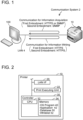
Claims (13)

  1. A first communication device (10) comprising:
    a database (50) configured to, for each of a plurality of object IDs (OIDs) of Management Information Base (MIB), store the OID in association with a setting value;
    a request receiving unit (30) configured to receive a writing request from a second communication device (100) by using a second communication scheme different from a first communication scheme including Simple Network Management Protocol (SNMP), the writing request including an OID and a setting value, and the second communication scheme including at least one of encryption of communication data and authentication of a sender of the writing request; and
    a writing control unit (30) configured to, in a case where the writing request is received from the second communication device (100), write the setting value included in the writing request in the database (50) in association with the OID included in the writing request.
  2. The first communication device (10) according to claim 1, wherein
    the first communication device (10) further comprises:
    a first acquisition request receiving unit (30) configured to receive a first acquisition request from the second communication device (100) by using the first communication scheme including SNMP, the first acquisition request including an OID; and
    a first value sending unit (30) configured to, in a case where the first acquisition request is received from the second communication device (100), send, to the second communication device (100) by using the first communication scheme, a setting value stored in the database (50) in association with the OID included in the first acquisition request.
  3. The first communication device (10) according to claim 2, wherein
    a memory of the first communication device (10) stores a first list which is a list of predetermined OIDs,
    the first communication device (10) further comprises:
    a first selecting unit (30) configured to, in the case where the writing request is received from the second communication device (100), select N2 writing target OIDs from among N1 OIDs included in the writing request by using the first list, wherein the N1 is an integer greater than or equal to 2, and the N2 is an integer less than or equal to the N1,
    the writing request includes, for each of the N2 writing target OIDs, a writing target setting value associated with the writing target OID,
    the writing control unit (30) writes, for each of the N2 writing target OIDs, the writing target setting value corresponding to the writing target OID in the database (50) in association with the writing target OID, and
    the setting value included in the writing request corresponding to each of (N1 - N2) OIDs is not written in the database (50), wherein the (N1 - N2) is an integer greater than or equal to 1.
  4. The first communication device (10) according to claim 3, wherein
    the OID included in the first acquisition request comprises two or more OIDs, and
    the first value sending unit (30) sends, for each of the two or more OlDs in the first acquisition request, a setting value stored in the database (50) in association with the OID to the second communication device (100), without using the first list.
  5. The first communication device (10) according to claim 2, wherein
    even in a case where a predetermined request for requesting writing of a setting value is received from the second communication device (100) by using the first communication scheme including SNMP, the writing of the setting value according to the predetermined request is not executed.
  6. The first communication device (10) according to claim 5, wherein
    a memory of the first communication device (10) stores setting information related to SNMP, and
    the setting information includes a first default value for permitting a process according to the first acquisition request using the first communication scheme and a second default value for prohibiting a process according to the predetermined request using the first communication scheme.
  7. The first communication device (10) according to claim 1, wherein
    the first communication device (10) further comprises:
    a second acquisition request receiving unit (30) configured to receive a second acquisition request from the second communication device (100) by using the second communication scheme, the second acquisition request including an OID; and
    a second value sending unit (30) configured to, in a case where the second acquisition request is received from the second communication device (100), send, to the second communication device (100) by using the second communication scheme, a setting value stored in the database (50) in association with the OID included in the second acquisition request.
  8. A computer program (142) for a second communication device (100), wherein the computer program (142) causes a processor (132) of the second communication device (100) to function as:
    a writing request sending unit configured to send a writing request to a first communication device (10) by using a second communication scheme different from a first communication scheme including Simple Network Management Protocol (SNMP), the writing request including an object ID (OID) of Management Information Base (MIB) and a setting value, the second communication scheme including at least one of encryption of communication data and authentication of a sender of the writing request, and wherein
    in a case where the first communication device (10) receives the writing request from the second communication device (100), the first communication device (10) writes the setting value included in the writing request in a database of MIB in association with the OID included in the writing request.
  9. The computer program (142) according to claim 8, wherein the computer program (142) further causes the processor (132) to function as:
    a first acquisition request sending unit configured to send a first acquisition request to the first communication device (10) by using the first communication scheme including SNMP, the first acquisition request including an OID; and
    a first response receiving unit configured to receive a first response to the first acquisition request from the first communication device (10) by using the first communication scheme, the first response including a setting value stored in the database in association with the OID included in the first acquisition request.
  10. The computer program (142) according to claim 9, wherein the second communication device (100) stores a third list which is a list of predetermined OIDs,
    the computer program (142) further causes the processor (132) to function as:
    a third selecting unit configured to, in a case where N3 setting items are specified in the second communication device (100), select N4 writing target OIDs from amongN3 OIDs corresponding to the N3 setting items, wherein the N3 is an integer greater than or equal to 2, and the N4 is an integer less than or equal to the N3, and
    the writing request includes the N4 writing target OIDs and does not include (N3 - N4) OIDs among the N3 OlDs, wherein the (N3 - N4) is an integer greater than or equal to 1.
  11. The computer program (142) according to claim 10, wherein the first acquisition request sending unit, in a case where K setting items are specified in the second communication device (100), sends the first acquisition request including K OIDs corresponding to the K setting items without using the third list, wherein K is an integer greater than or equal to 2.
  12. The computer program (142) according to claim 8, wherein
    the computer program (142) further causes the processor (132) to function as:
    a second acquisition request sending unit configured to send a second acquisition request to the first communication device (10) by using the second communication scheme, the second acquisition request including an OID; and
    a second response receiving unit configured to receive a second response to the second acquisition request from the first communication device (10) by using the second communication scheme, the second response including a setting value stored in the database in association with the OID included in the second acquisition request.
  13. The computer program (142) according to claim 12, wherein
    a setting value stored in the database in association with each of the (L3 - L4) OIDs is receivable from the first communication device (10) by using the first communication scheme including SNMP.
EP23187903.2A 2022-07-29 2023-07-26 First communication device and computer program for second communication device Pending EP4312411A1 (en)

Applications Claiming Priority (1)

Application Number Priority Date Filing Date Title
JP2022121711A JP2024018393A (en) 2022-07-29 2022-07-29 Computer program for a first communication device and a second communication device

Publications (1)

Publication Number Publication Date
EP4312411A1 true EP4312411A1 (en) 2024-01-31

Family

ID=87474034

Family Applications (1)

Application Number Title Priority Date Filing Date
EP23187903.2A Pending EP4312411A1 (en) 2022-07-29 2023-07-26 First communication device and computer program for second communication device

Country Status (3)

Country Link
US (1) US12526179B2 (en)
EP (1) EP4312411A1 (en)
JP (1) JP2024018393A (en)

Citations (1)

* Cited by examiner, † Cited by third party
Publication number Priority date Publication date Assignee Title
JP2008065833A (en) 2006-09-08 2008-03-21 Ricoh Co Ltd System, method, and computer program product for acquiring information from a remote device using HTTP protocol

Family Cites Families (7)

* Cited by examiner, † Cited by third party
Publication number Priority date Publication date Assignee Title
US6182157B1 (en) * 1996-09-19 2001-01-30 Compaq Computer Corporation Flexible SNMP trap mechanism
JP4596384B2 (en) * 2002-03-22 2010-12-08 ブラザー工業株式会社 Client server system, server, server embedded device and program
JP2004264995A (en) 2003-02-28 2004-09-24 Toshiba Tec Corp Office equipment, information equipment, office equipment information management system, office equipment information management method, and information management program
US10523689B2 (en) * 2007-06-12 2019-12-31 Icontrol Networks, Inc. Communication protocols over internet protocol (IP) networks
JP2011254196A (en) * 2010-06-01 2011-12-15 Hitachi Ltd Network system, network management device, and gateway device
US9413615B1 (en) * 2012-03-02 2016-08-09 Juniper Networks, Inc. Trap filtering within a device management protocol
US9971840B2 (en) * 2014-05-07 2018-05-15 Connectwise, Inc. Systems and methods for discovering and monitoring devices using search patterns for object identifiers and values

Patent Citations (1)

* Cited by examiner, † Cited by third party
Publication number Priority date Publication date Assignee Title
JP2008065833A (en) 2006-09-08 2008-03-21 Ricoh Co Ltd System, method, and computer program product for acquiring information from a remote device using HTTP protocol

Non-Patent Citations (3)

* Cited by examiner, † Cited by third party
Title
BADRA LIMOS LABORATORY A LUCHUK SNMP RESEARCH M ET AL: "Using the NETCONF Protocol over Transport Layer Security (TLS); draft-ietf-netconf-rfc5539bis-02.txt", USING THE NETCONF PROTOCOL OVER TRANSPORT LAYER SECURITY (TLS); DRAFT-IETF-NETCONF-RFC5539BIS-02.TXT, INTERNET ENGINEERING TASK FORCE, IETF; STANDARDWORKINGDRAFT, INTERNET SOCIETY (ISOC) 4, RUE DES FALAISES CH- 1205 GENEVA, SWITZERLAND, 21 February 2013 (2013-02-21), pages 1 - 20, XP015092523 *
LI HUAWEI TECHNOLOGIES D HARRINGTON HUAWEI TECHNOLOGIES (USA) Y: "Accessing MIBs using NETCONF; draft-li-ngo-access-mib-01.txt", ACCESSING MIBS USING NETCONF; DRAFT-LI-NGO-ACCESS-MIB-01.TXT, INTERNET ENGINEERING TASK FORCE, IETF; STANDARDWORKINGDRAFT, INTERNET SOCIETY (ISOC) 4, RUE DES FALAISES CH- 1205 GENEVA, SWITZERLAND, no. 1, 20 June 2007 (2007-06-20), XP015051938 *
VAUGHN K ET AL: "Transport Layer Security Verion 1.3 (TLS 1.3) Transport Model for the Simple Network Management Protocol Version 3 (SNMPv3) draft-vaughn-tlstm-update-00; draft-vaughn-tlstm-update-00.txt", 29 March 2021 (2021-03-29), pages 1 - 70, XP015145174, Retrieved from the Internet <URL:https://tools.ietf.org/html/draft-vaughn-tlstm-update-00> [retrieved on 20210329] *

Also Published As

Publication number Publication date
US20240037075A1 (en) 2024-02-01
US12526179B2 (en) 2026-01-13
JP2024018393A (en) 2024-02-08

Similar Documents

Publication Publication Date Title
US10432594B2 (en) Primitive functions for use in remote computer management
US8271637B2 (en) Remote computer management when a proxy server is present at the site of a managed computer
US9160614B2 (en) Remote computer management using network communications protocol that enables communication through a firewall and/or gateway
US7827547B1 (en) Use of a dynamically loaded library to update remote computer management capability
JP4579597B2 (en) Information processing apparatus, information processing method, and program
CN101237424A (en) Network printing system, network communication method, host computer, and image forming device
JP2011243093A (en) Information processor, user authentication method and computer program
US11483440B2 (en) Function executing device displays approval screens, when executing requests receive from external devices, for executing first and second functions
US20130262650A1 (en) Management of a device connected to a remote computer using the remote computer to effect management actions
JP2025072408A (en) Image forming system, image forming apparatus
US12526179B2 (en) First communication device and non-transitory computer-readable recording medium storing computer-readable instructions for second communication device
US12625988B2 (en) Communication device, terminal device, non-transitory computer-readable recording medium storing computer-readable instructions thereof and control method thereof
US11956227B2 (en) Communication device, non-transitory computer-readable recording medium storing computer-readable instructions for communication device, and method performed by communication device for changing a password
JP2007257525A (en) Device management device
JP7271988B2 (en) Communication device and computer program for communication device
JP2007087384A (en) System, method and program for controlling network apparatus
JP4730604B2 (en) Image forming apparatus
JP2024018397A (en) Communication device, computer program for communication device, and control method
JP2024018388A (en) Communication device and computer program for communication device and method executed by communication device
JP2024018390A (en) Communication devices and computer programs for communication devices

Legal Events

Date Code Title Description
PUAI Public reference made under article 153(3) epc to a published international application that has entered the european phase

Free format text: ORIGINAL CODE: 0009012

STAA Information on the status of an ep patent application or granted ep patent

Free format text: STATUS: THE APPLICATION HAS BEEN PUBLISHED

AK Designated contracting states

Kind code of ref document: A1

Designated state(s): AL AT BE BG CH CY CZ DE DK EE ES FI FR GB GR HR HU IE IS IT LI LT LU LV MC ME MK MT NL NO PL PT RO RS SE SI SK SM TR

P01 Opt-out of the competence of the unified patent court (upc) registered

Effective date: 20240206

STAA Information on the status of an ep patent application or granted ep patent

Free format text: STATUS: REQUEST FOR EXAMINATION WAS MADE

17P Request for examination filed

Effective date: 20240411

RBV Designated contracting states (corrected)

Designated state(s): AL AT BE BG CH CY CZ DE DK EE ES FI FR GB GR HR HU IE IS IT LI LT LU LV MC ME MK MT NL NO PL PT RO RS SE SI SK SM TR

STAA Information on the status of an ep patent application or granted ep patent

Free format text: STATUS: EXAMINATION IS IN PROGRESS

17Q First examination report despatched

Effective date: 20251029