EP4312337A1 - Circuit of wireless charging, method of charging battery and wearable device - Google Patents
Circuit of wireless charging, method of charging battery and wearable device Download PDFInfo
- Publication number
- EP4312337A1 EP4312337A1 EP22204717.7A EP22204717A EP4312337A1 EP 4312337 A1 EP4312337 A1 EP 4312337A1 EP 22204717 A EP22204717 A EP 22204717A EP 4312337 A1 EP4312337 A1 EP 4312337A1
- Authority
- EP
- European Patent Office
- Prior art keywords
- charging
- voltage
- battery
- circuit
- wireless
- Prior art date
- Legal status (The legal status is an assumption and is not a legal conclusion. Google has not performed a legal analysis and makes no representation as to the accuracy of the status listed.)
- Pending
Links
Images




Classifications
-
- H—ELECTRICITY
- H02—GENERATION; CONVERSION OR DISTRIBUTION OF ELECTRIC POWER
- H02J—ELECTRIC POWER NETWORKS; CIRCUIT ARRANGEMENTS OR SYSTEMS FOR SUPPLYING OR DISTRIBUTING ELECTRIC POWER; SYSTEMS FOR STORING ELECTRIC ENERGY
- H02J50/00—Circuit arrangements or systems for wireless supply or distribution of electric power
- H02J50/10—Circuit arrangements or systems for wireless supply or distribution of electric power using inductive coupling
-
- H—ELECTRICITY
- H02—GENERATION; CONVERSION OR DISTRIBUTION OF ELECTRIC POWER
- H02J—ELECTRIC POWER NETWORKS; CIRCUIT ARRANGEMENTS OR SYSTEMS FOR SUPPLYING OR DISTRIBUTING ELECTRIC POWER; SYSTEMS FOR STORING ELECTRIC ENERGY
- H02J7/00—Circuit arrangements for charging or discharging batteries or for supplying loads from batteries
- H02J7/90—Regulation of charging or discharging current or voltage
-
- H—ELECTRICITY
- H02—GENERATION; CONVERSION OR DISTRIBUTION OF ELECTRIC POWER
- H02J—ELECTRIC POWER NETWORKS; CIRCUIT ARRANGEMENTS OR SYSTEMS FOR SUPPLYING OR DISTRIBUTING ELECTRIC POWER; SYSTEMS FOR STORING ELECTRIC ENERGY
- H02J50/00—Circuit arrangements or systems for wireless supply or distribution of electric power
- H02J50/80—Circuit arrangements or systems for wireless supply or distribution of electric power involving the exchange of data, concerning supply or distribution of electric power, between transmitting devices and receiving devices
-
- H—ELECTRICITY
- H02—GENERATION; CONVERSION OR DISTRIBUTION OF ELECTRIC POWER
- H02J—ELECTRIC POWER NETWORKS; CIRCUIT ARRANGEMENTS OR SYSTEMS FOR SUPPLYING OR DISTRIBUTING ELECTRIC POWER; SYSTEMS FOR STORING ELECTRIC ENERGY
- H02J7/00—Circuit arrangements for charging or discharging batteries or for supplying loads from batteries
- H02J7/60—Circuit arrangements for charging or discharging batteries or for supplying loads from batteries including safety or protection arrangements
- H02J7/64—Circuit arrangements for charging or discharging batteries or for supplying loads from batteries including safety or protection arrangements against overvoltage
-
- H—ELECTRICITY
- H02—GENERATION; CONVERSION OR DISTRIBUTION OF ELECTRIC POWER
- H02J—ELECTRIC POWER NETWORKS; CIRCUIT ARRANGEMENTS OR SYSTEMS FOR SUPPLYING OR DISTRIBUTING ELECTRIC POWER; SYSTEMS FOR STORING ELECTRIC ENERGY
- H02J7/00—Circuit arrangements for charging or discharging batteries or for supplying loads from batteries
- H02J7/80—Circuit arrangements for charging or discharging batteries or for supplying loads from batteries including monitoring or indicating arrangements
-
- H—ELECTRICITY
- H02—GENERATION; CONVERSION OR DISTRIBUTION OF ELECTRIC POWER
- H02J—ELECTRIC POWER NETWORKS; CIRCUIT ARRANGEMENTS OR SYSTEMS FOR SUPPLYING OR DISTRIBUTING ELECTRIC POWER; SYSTEMS FOR STORING ELECTRIC ENERGY
- H02J7/00—Circuit arrangements for charging or discharging batteries or for supplying loads from batteries
- H02J7/80—Circuit arrangements for charging or discharging batteries or for supplying loads from batteries including monitoring or indicating arrangements
- H02J7/82—Control of state of charge [SOC]
-
- H—ELECTRICITY
- H02—GENERATION; CONVERSION OR DISTRIBUTION OF ELECTRIC POWER
- H02J—ELECTRIC POWER NETWORKS; CIRCUIT ARRANGEMENTS OR SYSTEMS FOR SUPPLYING OR DISTRIBUTING ELECTRIC POWER; SYSTEMS FOR STORING ELECTRIC ENERGY
- H02J7/00—Circuit arrangements for charging or discharging batteries or for supplying loads from batteries
- H02J7/90—Regulation of charging or discharging current or voltage
- H02J7/933—Regulation of charging or discharging current or voltage the cycle being controlled or terminated in response to electric parameters
-
- H—ELECTRICITY
- H02—GENERATION; CONVERSION OR DISTRIBUTION OF ELECTRIC POWER
- H02J—ELECTRIC POWER NETWORKS; CIRCUIT ARRANGEMENTS OR SYSTEMS FOR SUPPLYING OR DISTRIBUTING ELECTRIC POWER; SYSTEMS FOR STORING ELECTRIC ENERGY
- H02J7/00—Circuit arrangements for charging or discharging batteries or for supplying loads from batteries
- H02J7/90—Regulation of charging or discharging current or voltage
- H02J7/96—Regulation of charging or discharging current or voltage in response to battery voltage
-
- H—ELECTRICITY
- H02—GENERATION; CONVERSION OR DISTRIBUTION OF ELECTRIC POWER
- H02J—ELECTRIC POWER NETWORKS; CIRCUIT ARRANGEMENTS OR SYSTEMS FOR SUPPLYING OR DISTRIBUTING ELECTRIC POWER; SYSTEMS FOR STORING ELECTRIC ENERGY
- H02J7/00—Circuit arrangements for charging or discharging batteries or for supplying loads from batteries
- H02J7/90—Regulation of charging or discharging current or voltage
- H02J7/971—Regulation of charging or discharging current or voltage the charge cycle being controlled or terminated in response to non-electric parameters
-
- H—ELECTRICITY
- H02—GENERATION; CONVERSION OR DISTRIBUTION OF ELECTRIC POWER
- H02M—APPARATUS FOR CONVERSION BETWEEN AC AND AC, BETWEEN AC AND DC, OR BETWEEN DC AND DC, AND FOR USE WITH MAINS OR SIMILAR POWER SUPPLY SYSTEMS; CONVERSION OF DC OR AC INPUT POWER INTO SURGE OUTPUT POWER; CONTROL OR REGULATION THEREOF
- H02M3/00—Conversion of DC power input into DC power output
- H02M3/02—Conversion of DC power input into DC power output without intermediate conversion into AC
- H02M3/04—Conversion of DC power input into DC power output without intermediate conversion into AC by static converters
- H02M3/06—Conversion of DC power input into DC power output without intermediate conversion into AC by static converters using resistors or capacitors, e.g. potential divider
- H02M3/07—Conversion of DC power input into DC power output without intermediate conversion into AC by static converters using resistors or capacitors, e.g. potential divider using capacitors charged and discharged alternately by semiconductor devices with control electrode, e.g. charge pumps
- H02M3/072—Conversion of DC power input into DC power output without intermediate conversion into AC by static converters using resistors or capacitors, e.g. potential divider using capacitors charged and discharged alternately by semiconductor devices with control electrode, e.g. charge pumps adapted to generate an output voltage whose value is lower than the input voltage
-
- H—ELECTRICITY
- H02—GENERATION; CONVERSION OR DISTRIBUTION OF ELECTRIC POWER
- H02J—ELECTRIC POWER NETWORKS; CIRCUIT ARRANGEMENTS OR SYSTEMS FOR SUPPLYING OR DISTRIBUTING ELECTRIC POWER; SYSTEMS FOR STORING ELECTRIC ENERGY
- H02J2207/00—Details of circuit arrangements for charging or discharging batteries or supplying loads from batteries
- H02J2207/20—Charging or discharging characterised by the power electronics converter
Definitions
- the invention relates to a field of electronic technologies, and particularly to a circuit of wireless charging, a method of charging a battery, and a wearable device.
- the wearable electronic device is integrated with a power supply battery.
- Wireless charging is a future technology trend in the wearable electronic device due to its characteristics of beauty, comfort and experience.
- a circuit of wireless charging, a method of charging a battery, and a wearable device are provided in the present invention.
- a circuit of wireless charging for a wearable device includes: a wireless receiver, configured to receive a charging power transmitted by a wireless transmitter of a wireless charging apparatus through electromagnetic induction; a charge pump circuit connected to a voltage output end of the wireless receiver, configured to receive an input voltage from the voltage output end that is boosted, and step down the input voltage to an output voltage of the charge pump circuit, to charge a battery in the wearable device based on the input voltage that has been stepped down; a step-down converter circuit connected to the voltage output end of the wireless receiver, configured to perform the step-down charging on the battery at least in response to determining that a charging mode is in a constant voltage mode; and a controller electrically connected to the wireless receiver, the charge pump circuit and the step-down converter circuit, configured to select one between the charge pump circuit and the step-down converter circuit as a charging path to charge the battery based on a voltage difference between the input voltage from the voltage output end of the wireless receiver and a charging
- the controller is configured to, select the charge pump circuit to charge the battery in response to monitoring that the input voltage from the voltage output end of the wireless receiver is two or more times of the charging voltage of the battery; and select the step-down converter circuit to charge the battery in response to monitoring that the input voltage from the voltage output end of the wireless receiver is less than twice the charging voltage of the battery.
- the controller is configured to determine a remaining power of the battery; and determine a charging mode of the wireless charging circuit for the wearable device based on the remaining power of the battery; different charging modes correspond to different charging voltages of the wireless charging circuit for the wearable device.
- the controller is configured to, charge the battery in a first charging mode through the step-down converter circuit in response to the remaining power of the battery being greater than a first threshold; and charge the battery in a second charging mode through the charge pump circuit in response to the remaining power of the battery being less than the first threshold, the first charging mode is different from the second charging mode, and the charging voltage of the battery under the first charging mode is less than the charging voltage of the battery under the second charging mode.
- the controller is configured to acquire a physical sign state of a human body; and charge the battery in a first charging mode by the step-down converter circuit in response to determining that the physical sign state is determined to be a sleep state; charge the battery in a second charging mode by the charge pump circuit in response to determining that the physical sign state is determined to be an active state.
- the charge pump circuit at least includes: a charge pump chip at least including a voltage input pin; and an overvoltage protection pin; a triode at least including a drain connected to the voltage output end of the wireless receiver, configured to receive the input voltage from the voltage output end; a source connected to the voltage input pin of the charge pump chip, configured to transmit the input voltage to the charge pump chip; and a gate connected to the overvoltage protection pin of the charge pump chip, configured to provide overvoltage protection for the charge pump chip.
- the charge pump chip includes: a voltage output pin; the voltage output pin is connected to a capacitor for energy storage; and a first terminal of the capacitor is grounded, and a second terminal of the capacitor is configured to connect a positive electrode of the battery.
- the step-down converter circuit includes: a converter chip including a voltage input pin connected to the voltage output end of the wireless receiver, configured to receive the input voltage from the voltage output end; and a charging current output pin connected to a positive electrode of the battery, configured to charge the battery.
- a circuit of wireless charging for a wireless charging apparatus includes: a wireless transmitter, configured to transmit a charging power with a wireless receiver of a wearable device through electromagnetic induction; and a control unit electrically connected to the wireless transmitter, configured to adjust a coil voltage of the wireless transmitter based on a charging voltage of a battery of the wearable device, in which adjusting the coil voltage of the wireless transmitter may include boosting the coil voltage of the wireless transmitter.
- a wireless communication between the wireless transmitter and the wireless receiver is established; and, the control unit is configured to acquire the charging voltage of the battery through the wireless communication, and adjust the coil voltage of the wireless transmitter based on a boost requirement of a charge pump circuit of the wearable device.
- control unit is configured to, acquire a communication mark used in response to determining the wireless communication between the wearable device and a wireless charging apparatus is established, in which the communication mark is at least configured to identify whether the wearable device is an authorizable charging terminal of the wireless charging apparatus, and the wireless charging apparatus at least includes the wireless charging circuit; and wirelessly charge the wearable device through the wireless charging circuit based on the wireless communication established in response to determining that the communication mark identifies that the wearable device is the authorizable charging terminal of the wireless charging apparatus.
- a method of charging a battery for a wearable device includes: monitoring a voltage difference between an input voltage from a voltage output end of a wireless receiver and a charging voltage of a battery of a wearable device; and selecting one circuit between a charge pump circuit and a step-down converter circuit as a charging path to charge the battery based on the voltage difference between the input voltage from the voltage output end of the wireless receiver and the charging voltage of the battery;
- the wireless receiver is configured to receive a charging power transmitted by a wireless transmitter through electromagnetic induction;
- the charge pump circuit is configured to receive an input voltage from the voltage output end that is boosted, and step down the input voltage to an output voltage of the charge pump circuit, to charge the battery based on the input voltage that has been stepped down;
- the step-down converter circuit is configured to perform step-down charging on the battery at least in a case that a charging mode is in a constant voltage mode.
- selecting one circuit between the charge pump circuit and the step-down converter circuit as the charging path to charge the battery based on the voltage difference between the input voltage from the voltage output end of the wireless receiver and the charging voltage of the battery includes: selecting the charge pump circuit to charge the battery in response to monitoring that the input voltage from the voltage output end of the wireless receiver is two or more times of the charging voltage of the battery; and selecting the step-down converter circuit to charge the battery in response to monitoring that the input voltage from the voltage output end of the wireless receiver is less than twice the charging voltage of the battery.
- a method of charging a battery for a wireless charging apparatus includes: acquiring a charging voltage of a battery of a wearable device; adjusting a coil voltage of a wireless transmitter of the wireless charging apparatus based on the charging voltage of the battery of the wearable device, in which adjusting the coil voltage of the wireless transmitter comprises boosting the coil voltage of the wireless transmitter; the wireless transmitter is configured to transmit a charging power with a wireless receiver of the wearable device through electromagnetic induction.
- a wearable device includes: a battery; and the circuit of wireless charging as described in the first aspect connected to a positive electrode of the battery, configured to charge the battery.
- a computer readable storage medium storing a computer program.
- the computer program is configured to implement the method as described in the third aspect or the fourth aspect when executed by a processor.
- the technical solution according to embodiments of the present invention may include the following beneficial effect.
- the circuit of wireless charging for the wearable device in an embodiment of the invention includes the wireless receiver configured to receive the charging power transmitted by the wireless transmitter through electromagnetic induction; the charge pump circuit connected to the voltage output end of the wireless receiver, configured to receive a boosted input voltage from the voltage output end, and step down the input voltage to an output voltage of the charge pump circuit, to charge a battery in the wearable device based on the stepped down voltage; the step-down converter circuit connected to the voltage output end of the wireless receiver, configured to perform the step-down charging on the battery at least in a case that a charging mode is in a constant voltage mode; and the controller electrically connected to the wireless receiver, the charge pump circuit and the step-down converter circuit, configured to select one between the charge pump circuit and the step-down converter circuit as the charging path to charge the battery based on the voltage difference between the input voltage from the voltage output end of the wireless receiver and a charging voltage of the battery.
- the charge pump circuit is provided in the charging circuit, and the output voltage is stepped down based on the energy storage of the
- the wearable electronic device is integrated with a power supply battery.
- Wireless charging is a future technology trend in the wearable electronic device due to its characteristics of beauty, comfort and experience.
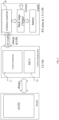
- FIG. 1 is a schematic diagram illustrating a circuit of wireless charging for a wearable device according to an embodiment.
- the circuit of wireless charging for the wearable device may include a wireless receiver 10, a charge pump circuit 12, a step-down converter circuit 13 and a controller 14.
- the wireless receiver 10 is configured to receive a charging power transmitted by a wireless transmitter 11 through electromagnetic induction.
- FIG. 3 shows an illustrative circuit of the wireless receiver.
- the charge pump circuit 12 is connected to a voltage output end Vbus of the wireless receiver 10 and is configured to boost an input voltage from the voltage output end Vbus, and step down an output voltage of the charge pump circuit 12 through energy storage of an internal capacitor, to perform step-down charging on a battery.
- the step-down converter circuit 13 is connected to the voltage output end Vbus of the wireless receiver 10 and is at least configured to perform the step-down charging on the battery in a constant voltage mode.
- the controller 14 is electrically connected to the wireless receiver 10, the charge pump circuit 12 and the step-down converter circuit 13, and is configured to select one circuit between the charge pump circuit 12 and the step-down converter circuit 13 as a charging path to charge the battery based on a voltage difference between the input voltage from the voltage output end Vbus of the wireless receiver 10 and a charging voltage of the battery.
- FIG. 2 is a schematic diagram illustrating a structure of a circuit of wireless charging for a wearable device according to an embodiment.
- a back-stage Charger illustrated in FIG. 2 may include the charge pump circuit 12 and the step-down converter circuit 13 illustrated in FIG. 1 .
- AC/DC refers to a power converter with AC input and DC output.
- the charge pump circuit 12 may step down the output voltage of the voltage output end Vbus through the energy storage of the capacitor to charge the battery, which may reduce a power loss and improve a charging efficiency compared with the converter. Voltage may be stepped down in an integer multiple. For example, when the charging voltage of the battery is 3V, the voltage of the voltage output end Vbus is 6V, 9V, etc. The charge pump circuit 12 may step down the voltage 6V, 9V of the voltage output end to the charging voltage 3V of the battery, to charge the battery.
- a wireless charging circuit for a wireless charging apparatus may include a wireless transmitter 11 and a control unit 15.
- the wireless transmitter 11 is configured to transmit a charging power through electromagnetic induction between the wireless transmitter 11 and the wireless receiver 10.
- the control unit 15 is electrically connected to the wireless transmitter 11, and is configured to adjust a coil voltage of the wireless transmitter 11 based on the charging voltage of the battery, including boosting the coil voltage of the wireless transmitter 11.
- the control unit 15 may include a controller.
- the control unit 15 may include the MCU as shown in FIG. 2 .
- the wireless transmitter 11 is in a wireless charging apparatus and coupled to an electromagnetic coil of the wireless receiver 10 in the wearable device to transmit the charging power.
- the wireless charging apparatus may be a device capable of charging, such as a wireless charging base or a mobile phone with reverse charging function.
- the control unit 15 in the wireless charging apparatus may boost the coil voltage of a charging power transmitted by the wireless transmitter 11 based on the monitored charging voltage of the battery, to boost the input voltage from the voltage output end Vbus of the wireless receiver 10.
- the control unit 15 in the wireless charging apparatus may boost the coil voltage of a charging power transmitted by the wireless transmitter 11 based on the monitored charging voltage of the battery, to boost the input voltage from the voltage output end Vbus of the wireless receiver 10.
- the controller 14 is in a wearable device, and connected with the wireless receiver 10, the charge pump circuit 12 and the step-down converter circuit 13 through an I 2 C bus.
- the controller 14 may read the input voltage from the wireless receiver 10 by the I 2 C bus, and select one circuit between the charge pump circuit 12 and the step-down converter circuit 13 as the charging path to charge the battery based on the voltage difference between the input voltage from the voltage output end Vbus of the wireless receiver 10 and the charging voltage of the battery. For example, when the voltage difference between the input voltage from the voltage output end Vbus of the wireless receiver 10 and the charging voltage of the battery is an integer multiple greater than or equal to 2 of the charging voltage of the battery, the charge pump circuit 12 is selected as the charging path to charge the battery.
- the step-down converter circuit 13 When the voltage difference between the input voltage from the voltage output end Vbus of the wireless receiver 10 and the charging voltage of the battery is less than the charging voltage of the battery, the step-down converter circuit 13 is selected as the charging circuit to charge the battery. For example, when the charging voltage of the battery is 3V, the voltage of the voltage output end Vbus is 6V, or 9V, etc. Selecting the charge pump circuit 12 as the charging path may cause the voltage 6V or 9V of the voltage output end Vbus to be stepped down to the charging voltage 3V of the battery, to charge the battery.
- the circuit of wireless charging for the wearable device in an embodiment of the invention includes the wireless receiver 10 configured to receive the charging power transmitted by the wireless transmitter 11 through electromagnetic induction; the charge pump circuit 12 connected to the voltage output end Vbus of the wireless receiver 10, configured to step down the output voltage of the charge pump circuit 12 through energy storage of the internal capacitor, to perform step-down charging on the battery; the step-down converter circuit 13 connected to the voltage output end Vbus of the wireless receiver 10, at least configured to perform the step-down charging on the battery in the constant voltage mode; and the controller 14 electrically connected to the wireless receiver, the charge pump circuit 12 and the step-down converter circuit 13, configured to select one between the charge pump circuit 12 and the step-down converter circuit 13 as the charging path to charge the battery based on the voltage difference between the input voltage from the voltage output end Vbus of the wireless receiver 10 and a charging voltage of the battery.
- the charge pump circuit 12 is provided in the charging circuit for the wearable device, and the output voltage is stepped down based on the energy storage of the capacitor to charge the battery, which is beneficial
- a wireless communication between the wireless transmitter 11 and the wireless receiver 10 may be established.
- the control unit 15 is configured to acquire the charging voltage of the battery through the wireless communication, and adjust the coil voltage of the wireless transmitter 11 based on a boost requirement of the charge pump circuit 12.
- the battery is charged via the wireless charging apparatus.
- the wireless communication between the wireless transmitter 11 of the wireless charging apparatus and the wireless receiver 10 of the wearable device may be established.
- the wireless charging apparatus may monitor or acquire charging data of the battery in the wearable device through the wireless communication.
- the charging data may include the charging voltage of the battery.
- the control unit 15 in the wireless charging apparatus may adjust the coil voltage of the wireless transmitter 11 based on the boost requirement of the charge pump circuit 12 by acquiring the charging voltage of the battery through the wireless communication.
- control unit 15 is configured to acquire a communication mark used when the wireless communication between the wearable device and a wireless charging apparatus is established.
- the communication mark is at least configured to identify whether the wearable device is an authorizable charging terminal of the wireless charging apparatus, and the wireless charging apparatus at least includes the wireless charging circuit.
- the control unit 15 is configured to perform the wireless charging on the wearable device through the wireless charging circuit based on the established wireless communication in response to determining that the communication mark identifies that the wearable device is the authorizable charging terminal of the wireless charging apparatus.
- the communication mark is configured to identify whether the wearable device is the authorizable charging terminal of the wireless charging apparatus. It may be determined that the wearable device is the authorizable charging terminal of the wireless charging apparatus in response to determining that the communication mark is successfully matched. In this case, the wireless charging apparatus may establish the wireless communication with the wearable device. Then, based on the established wireless communication, the wearable device is wirelessly charged through the wireless charging circuit.
- the communication mark may be determined as any form of information mark, such as a character mark or a character string mark.
- the controller 14 is configured to,
- Different charging modes correspond to different charging voltages of the wireless charging circuit for the wearable device.
- the charging modes at least may include a quick charge mode, a constant voltage mode, etc.
- the battery When the remaining power of the battery is very small, the battery may be charged in the quick charge mode.
- the wearable device In the quick charge mode, the wearable device may be charged by the charge pump circuit 12 in a constant current charging manner.
- the charging voltage of the battery When the charging voltage of the battery is boosted as the battery is charged, the input voltage of the charge pump circuit 12 will be constantly boosted. However, the current may remain basically stable to quickly charge the battery.
- determining the charging mode of the wireless charging circuit for the wearable device based on the remaining power of the battery may include:
- controller 14 is configured to:
- the wearable device when the physical sign state is the sleep state, the wearable device is in a rest state, and the step-down charging is performed on the battery in the first charging mode with a small current through the step-down converter circuit 13.
- the physical sign state is the active state, the wearable device is in an operating state, and the step-down charging is performed on the battery in the second charging mode with a large current through the step-down converter circuit 13.
- the physical sign state may be monitored by the wearable device itself, or may be acquired from a mobile phone, a mobile phone or another wearable device, etc.
- the mobile phone may acquire the physical sign state monitored before charging the wearable device, determine the physical sign state of the human body in combination with historical data, lifestyle statistics of the user, etc., and then send the physical sign state to the wearable device.
- the wearable device may receive the physical sign state of the human body monitored by another wearable device, or receive the physical sign state of the human body obtained by the mobile phone from another wearable device.
- the physical sign state may also be input by the user.
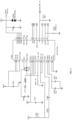
- the charge pump circuit 12 at least includes:
- the controller 14 controls the operating state of the charge pump circuit 12 by controlling turn-on and turn-off of the triode.
- the charge pump circuit 12 When the triode is turned on, the charge pump circuit 12 operates, and when the triode is turned off, the charge pump circuit 12 does not operate.
- the controller 14 controls the step-down converter circuit 13 not to operate via an I 2 C bus.
- the controller 14 controls the step-down converter circuit 13 to operate via the I 2 C bus.
- the charge pump circuit 12 generally operates in the constant current mode, to charge the battery.
- the voltage input pins VBUS_1 ⁇ VBUS 4 at least include:
- the first input pin, the second input pin, the third input pin, and the fourth input pin each is connected in parallel with the source of the triode.
- the charge pump chip may include four voltage input pins.
- the four voltage input pins are connected in parallel with the source of the triode, such that the four voltage input pins operate.
- the charge pump chip may include:
- a first terminal of the capacitor is grounded, and a second terminal of the capacitor is configured to connect a positive electrode VBAT of the battery.
- the capacitor for energy storage may include a plurality of capacitors connected in parallel.
- the voltage output pin is serially connected with the plurality of capacitors connected in parallel, to achieve capacitive energy storage.
- the voltage output pins VOUT_1 ⁇ VOUT 8 may include:
- the first output pin, the second output pin, the third output pin, the fourth output pin, the fifth output pin, the sixth output pin, the seventh output pin and the eighth output pin are connected in parallel with each other, and then serially connected with the capacitor.
- the charge pump chip may include eight voltage output pins, the eight voltage output pins connected in parallel are serially connected with the capacitor, such that the eight voltage output pins are energized to operate.
- the step-down converter circuit 13 may include:
- the converter chip outputs a voltage at the charging current output pins after stepping down a voltage input into the voltage input pins, to charge the battery.
- the step-down converter circuit 13 generally operates in the constant voltage mode.
- a method of charging a battery for a wearable device may include:
- the wireless receiver is configured to receive a charging power transmitted by a wireless transmitter through electromagnetic induction.
- the charge pump circuit connected to the voltage output end of the wireless receiver is configured to boost the input voltage from the voltage output end.
- the step-down converter circuit connected to the voltage output end of the wireless receiver is at least configured to perform step-down charging on the battery in a constant voltage mode.
- selecting one circuit between the charge pump circuit and the step-down converter circuit as the charging circuit to charge the battery based on the voltage difference between the input voltage from the voltage output end of the wireless receiver and the charging voltage of the battery may include:
- the charging current output pins BAT1- BAT4 include:
- the first charging current output pin, the second charging current output pin, the third charging current output pin and the fourth charging current output pin connected in parallel are connected with the positive electrode of the battery.
- the converter chip may include four charging current output pins BAT; the four charging current output pins BAT connected in parallel are connected with the positive electrode of the battery, to charge the battery.
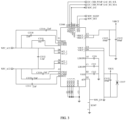
- C3206-C3211 are capacitors, and R3239 is an inductor.
- REF, BATSNS, PMID1, PMID2 on a chip are various functional pins of the converter chip.
- FIG. 6 is a schematic diagram illustrating a power distribution of a circuit of wireless charging according to an embodiment. As illustrated in FIG. 6 , it may be determined that a coil loss dominates during wireless charging.
- a coil loss dominates during wireless charging.
- the invention when charging with the same charging power, with boosting the input voltage from the voltage output end of the wireless receiver by boosting the coil voltage of the charging power of the wireless transmitter, a current under the same power is reduced since a voltage of the electromagnetic coil is boosted.
- an electric energy loss during charging the battery may be reduced and a charging efficiency may be improved.
- FIG. 7 is a schematic diagram illustrating current and voltage change in a charging process of a circuit of wireless charging according to an embodiment of the invention.
- IBAT represents a charging current
- VBUS represents an output voltage of the charging base (a wireless transmitter);
- a charging process may include at least three stages: an initial stage (0-500 ⁇ 0.18s), a quick charge stage (500 ⁇ 0.18s ⁇ 6000 ⁇ 0.18s), and a constant voltage stage (6000 ⁇ 0.18s ⁇ 30000 ⁇ 0.18s).
- the output voltage of the charging base (the wireless transmitter) is 7V
- the charging current is 0.3A.
- the output voltage oscillates between 11V and 12V, and the charging current is between 0.9A and 1.0A.
- the constant voltage stage that is, during a stage of charging with the step-down converter circuit, the output voltage is between 7V and 8V, and the charging current is continuously reduced from 0.8A to 0A until the charging is completed.
- a method of charging a battery for a wearable device may include:
- the wireless receiver is configured to receive a charging power transmitted by a wireless transmitter through electromagnetic induction.
- the charge pump circuit connected to the voltage output end of the wireless receiver is configured to boost the input voltage from the voltage output end.
- the step-down converter circuit connected to the voltage output end of the wireless receiver is at least configured to perform step-down charging on the battery in a constant voltage mode.
- selecting one circuit between the charge pump circuit and the step-down converter circuit as the charging circuit to charge the battery based on the voltage difference between the input voltage from the voltage output end of the wireless receiver and the charging voltage of the battery may include:
- the charge pump circuit may step down the input voltage from the voltage output end through energy storage of a capacitor to charge the battery, which may reduce a power loss and improve a charging efficiency compared with the converter.
- Voltage may be stepped down in an integer multiple. For example, when the charging voltage of the battery is 3V, the voltage of the voltage output end is 6V, 9V, etc.
- a charge pump circuit may step down the voltage 6V, 9V of the voltage output end to the charging voltage 3V of the battery, to charge the battery.
- a wireless charging circuit for a wireless charging apparatus may include a wireless transmitter and a control unit.
- the wireless transmitter is configured to transmit a charging power with the wireless receiver through electromagnetic induction.
- the control unit is electrically connected to the wireless transmitter, and is configured to adjust a coil voltage of the wireless transmitter based on the charging voltage of the battery.
- the wireless transmitter is in the wireless charging apparatus and coupled to an electromagnetic coil of the wireless receiver in the wearable device to transmit the charging power.
- the control unit in the wireless charging apparatus may boost the coil voltage of a charging power transmitted by the wireless transmitter based on the monitored charging voltage of the battery, to boost the input voltage from the voltage output end of the wireless receiver.
- the control unit in the wireless charging apparatus may boost the coil voltage of a charging power transmitted by the wireless transmitter based on the monitored charging voltage of the battery, to boost the input voltage from the voltage output end of the wireless receiver.
- the controller is in a wearable device, and connected with the wireless receiver, the charge pump circuit and the step-down converter circuit through an I 2 C bus.
- the controller may read the input voltage from the wireless receiver by the I 2 C bus, and select one circuit between the charge pump circuit and the step-down converter circuit as the charging circuit to charge the battery based on the voltage difference between the input voltage from the voltage output end of the wireless receiver and the charging voltage of the battery. For example, when the voltage difference between the input voltage from the voltage output end of the wireless receiver and the charging voltage of the battery is an integer multiple greater than or equal to 2 of the charging voltage of the battery, the charge pump circuit is selected as the charging circuit to charge the battery.
- the step-down converter circuit is selected as the charging circuit to charge the battery.
- the charging voltage of the battery is 3V
- the voltage of the voltage output end is 6V, or 9V, etc. Selecting the charge pump circuit as the charging circuit may cause the voltage 6V or 9V of the voltage output end to be stepped down to the charging voltage 3V of the battery, to charge the battery.
- the circuit of wireless charging for the wearable device in an embodiment of the invention includes the wireless receiver configured to receive the charging power transmitted by the wireless transmitter through electromagnetic induction; the charge pump circuit connected to the voltage output end of the wireless receiver, configured to step down the output voltage of the charge pump circuit through energy storage of the internal capacitor, to perform step-down charging on the battery; the step-down converter circuit connected to the voltage output end of the wireless receiver, at least configured to perform the step-down charging on the battery in the constant voltage mode; and the controller electrically connected to the wireless receiver, the charge pump circuit and the step-down converter circuit, configured to select one circuit between the charge pump circuit and the step-down converter circuit as the charging circuit to charge the battery based on the voltage difference between the input voltage from the voltage output end of the wireless receiver and a charging voltage of the battery.
- the charge pump circuit is provided in the charging circuit, and the output voltage is stepped down based on the energy storage of the capacitor to charge the battery, which is beneficial to reducing a power loss and improving a charging efficiency.
- a wearable device is provided in an embodiment of the present invention.
- the wearable device may include:
- a system of charging management is provided in an embodiment of the present invention.
- the system may include: a processor and a memory configured to store a computer program executable on the processor.
- the processor is configured to perform the blocks of the method as described in the above embodiments when running the computer program.
- the wearable device may include a watch, a bracelet, etc.
- a computer readable storage medium storing a computer program.
- the computer program is configured to implement the blocks of the method as described in the above embodiments when executed by a processor.
- FIG. 8 is a block diagram illustrating an electronic device according to an example embodiment.
- the electronic device may be a mobile phone, a computer, a digital broadcasting electronic device, a messaging device, a game console, a tablet device, a medical equipment, a fitness equipment, a personal digital assistant, etc.
- the electronic device may include one or more components: a processing component 802, a memory 804, a power supply component 806, a multimedia component 808, an audio component 810, an input/output (I/O) of interface 812, a sensor component 814, and a communication component 816.
- the processing component 802 generally controls the whole operation of the electronic device, such as the operations related to touch, phone call, data communication, camera operation and recording operation.
- the processing component 802 may include one or more processors 820 to perform instructions, to complete all or part of blocks of the above method.
- the processing component 802 may include one or more modules for the convenience of interaction between the processing component 802 and other components.
- the processing component 802 may include a multimedia module for the convenience of interaction between the multimedia component 808 and the processing component 802.
- the memory 804 is configured to store all types of data to support the operation of the electronic device. Examples of the data include the instructions of any applications or methods operated on the electronic device, contact data, phone book data, messages, pictures, videos, etc.
- the memory 804 may be implemented by any type of volatile or non-volatile storage devices or their combination, such as a static random access memory (SRAM), an electrically erasable programmable read-only memory (EEPROM), an erasable programmable read-only memory (EPROM), a programmable read-only memory (PROM), a read-only memory (ROM), a magnetic memory, a flash memory, a magnetic disk or an optical disk.
- SRAM static random access memory
- EEPROM electrically erasable programmable read-only memory
- EPROM erasable programmable read-only memory
- PROM programmable read-only memory
- ROM read-only memory
- the power supply component 806 may provide power for all components of the electronic device.
- the power supply component 806 may include a power supply management system, one or more power supplies, and other units related to generating, managing and distributing power for the electronic device.
- the multimedia component 808 includes an output interface screen provided between the electronic device and the user.
- a screen may include a liquid crystal display (LCD) and a touch panel (TP).
- the screen may be implemented as a touch screen to receive input signals from the user.
- the touch panel includes one or more touch sensors to sense touching, sliding and gestures on the touch panel. The touch sensor may not only sense the boundary of touch or slide action, but also detect the duration and pressure related to the touching or sliding operation.
- the multimedia component 808 includes a front camera and/or a rear camera. When the electronic device is in operation mode, such as shooting mode or video mode, the front camera or the rear camera may receive the external multimedia data.
- Each front camera and rear camera may be a fixed optical lens system or an optical lens system with focal length and optical zoom capacity.
- the audio component 810 is configured as an output and/or input signal.
- the audio component 810 includes a microphone (MIC).
- the microphone is configured to receive the external audio signals.
- the audio signals received may be further stored in the memory 804 or sent via the communication component 816.
- the audio component 810 further includes a speaker configured to output an audio signal.
- the I/O interface 812 provides an interface for the processing component 802 and the peripheral interface module, and the peripheral interface module may be a keyboard, a click wheel, a button, etc.
- the buttons may include but not limited to a home button, a volume button, a start button and a lock button.
- the sensor component 814 includes one or more sensors, configured to provide various aspects of status assessment for the electronic device.
- the sensor component 814 may detect the on/off state of the electronic device and the relative positioning of the component.
- the component is a display and a keypad of the electronic device.
- the sensor component 814 may further detect the location change of the electronic device or one component of the electronic device, the presence or absence of contact between the user and the device, the orientation or acceleration/deceleration of the device, and the temperature change of the device.
- the sensor component 814 may include a proximity sensor, which is configured to detect the existence of the objects nearby without any physical contact.
- the sensor component 814 may further include a light sensor such as CMOS or CCD image sensor, which is configured to use in imaging applications.
- the sensor component 814 may further include an acceleration transducer, a gyroscope sensor, a magnetic sensor, a pressure sensor or a temperature sensor.
- the communication component 816 is configured for the convenience of wire or wireless communication between the electronic device and other devices.
- the electronic device may access wireless networks based on a communication standard, such as Wi-Fi, 4G or 5G, or their combination.
- the communication component 816 receives broadcast signals or broadcast-related information from an external broadcast management system via a broadcast channel.
- the communication component 816 includes a near field communication (NFC) module to facilitate short-range communication.
- NFC near field communication
- an NFC module may be implemented based on radio frequency identification (RFID) technology, infrared data association (IRDA) technology, ultra-wideband (UWB) technology, bluetooth (BT) technology and other technologies.
- RFID radio frequency identification
- IRDA infrared data association
- UWB ultra-wideband
- BT bluetooth
- the electronic device may be implemented by one or more application specific integrated circuits(ASIC), digital signal processors (DSP), digital signal processing devices (DSPD), programmable logic devices (PLD), field programmable gate arrays (FPGA), controllers, microcontrollers, microprocessors or other electronics components, which is configured to perform the above method.
- ASIC application specific integrated circuits
- DSP digital signal processors
- DSPD digital signal processing devices
- PLD programmable logic devices
- FPGA field programmable gate arrays
- controllers microcontrollers, microprocessors or other electronics components, which is configured to perform the above method.
Landscapes
- Engineering & Computer Science (AREA)
- Power Engineering (AREA)
- Computer Networks & Wireless Communication (AREA)
- Charge And Discharge Circuits For Batteries Or The Like (AREA)
- Secondary Cells (AREA)
Abstract
A circuit of wireless charging, a method of charging a battery, and a wearable device. The circuit includes: a wireless receiver (10); a charge pump circuit (12) connected to a voltage output end of the wireless receiver (10), configured to receive an input voltage from the voltage output end that is boosted, and step down the input voltage to an output voltage of the charge pump circuit (12) to charge a battery; a step-down converter circuit (13) configured to perform the step-down charging on the battery in response to determining that a charging mode is in a constant voltage mode; a controller (14) configured to select one between the charge pump circuit (12) and the step-down converter circuit (13) as a charging path to charge the battery based on a voltage difference between the input voltage from the voltage output end of the wireless receiver (10) and a charging voltage of the battery.
Description
- The invention relates to a field of electronic technologies, and particularly to a circuit of wireless charging, a method of charging a battery, and a wearable device.
- With the development of electronic technologies, various electronic devices are emerging, including a wearable electronic device. The wearable electronic device is integrated with a power supply battery. Wireless charging is a future technology trend in the wearable electronic device due to its characteristics of beauty, comfort and experience.
- A circuit of wireless charging, a method of charging a battery, and a wearable device are provided in the present invention.
- According a first aspect of embodiments of the present invention, a circuit of wireless charging for a wearable device is provided. The circuit includes: a wireless receiver, configured to receive a charging power transmitted by a wireless transmitter of a wireless charging apparatus through electromagnetic induction; a charge pump circuit connected to a voltage output end of the wireless receiver, configured to receive an input voltage from the voltage output end that is boosted, and step down the input voltage to an output voltage of the charge pump circuit, to charge a battery in the wearable device based on the input voltage that has been stepped down; a step-down converter circuit connected to the voltage output end of the wireless receiver, configured to perform the step-down charging on the battery at least in response to determining that a charging mode is in a constant voltage mode; and a controller electrically connected to the wireless receiver, the charge pump circuit and the step-down converter circuit, configured to select one between the charge pump circuit and the step-down converter circuit as a charging path to charge the battery based on a voltage difference between the input voltage from the voltage output end of the wireless receiver and a charging voltage of the battery.
- In some embodiments, the controller is configured to, select the charge pump circuit to charge the battery in response to monitoring that the input voltage from the voltage output end of the wireless receiver is two or more times of the charging voltage of the battery; and select the step-down converter circuit to charge the battery in response to monitoring that the input voltage from the voltage output end of the wireless receiver is less than twice the charging voltage of the battery.
- In some embodiments, the controller is configured to determine a remaining power of the battery; and determine a charging mode of the wireless charging circuit for the wearable device based on the remaining power of the battery; different charging modes correspond to different charging voltages of the wireless charging circuit for the wearable device.
- In some embodiments, the controller is configured to, charge the battery in a first charging mode through the step-down converter circuit in response to the remaining power of the battery being greater than a first threshold; and charge the battery in a second charging mode through the charge pump circuit in response to the remaining power of the battery being less than the first threshold, the first charging mode is different from the second charging mode, and the charging voltage of the battery under the first charging mode is less than the charging voltage of the battery under the second charging mode.
- In some embodiments, the controller is configured to acquire a physical sign state of a human body; and charge the battery in a first charging mode by the step-down converter circuit in response to determining that the physical sign state is determined to be a sleep state; charge the battery in a second charging mode by the charge pump circuit in response to determining that the physical sign state is determined to be an active state.
- In some embodiments, the charge pump circuit at least includes: a charge pump chip at least including a voltage input pin; and an overvoltage protection pin; a triode at least including a drain connected to the voltage output end of the wireless receiver, configured to receive the input voltage from the voltage output end; a source connected to the voltage input pin of the charge pump chip, configured to transmit the input voltage to the charge pump chip; and a gate connected to the overvoltage protection pin of the charge pump chip, configured to provide overvoltage protection for the charge pump chip.
- In some embodiments, the charge pump chip includes: a voltage output pin; the voltage output pin is connected to a capacitor for energy storage; and a first terminal of the capacitor is grounded, and a second terminal of the capacitor is configured to connect a positive electrode of the battery.
- In some embodiments, the step-down converter circuit includes: a converter chip including a voltage input pin connected to the voltage output end of the wireless receiver, configured to receive the input voltage from the voltage output end; and a charging current output pin connected to a positive electrode of the battery, configured to charge the battery.
- According to a second aspect of embodiments of the present invention, a circuit of wireless charging for a wireless charging apparatus is provided. The apparatus includes: a wireless transmitter, configured to transmit a charging power with a wireless receiver of a wearable device through electromagnetic induction; and a control unit electrically connected to the wireless transmitter, configured to adjust a coil voltage of the wireless transmitter based on a charging voltage of a battery of the wearable device, in which adjusting the coil voltage of the wireless transmitter may include boosting the coil voltage of the wireless transmitter.
- In some embodiments, a wireless communication between the wireless transmitter and the wireless receiver is established; and, the control unit is configured to acquire the charging voltage of the battery through the wireless communication, and adjust the coil voltage of the wireless transmitter based on a boost requirement of a charge pump circuit of the wearable device.
- In some embodiments, the control unit is configured to, acquire a communication mark used in response to determining the wireless communication between the wearable device and a wireless charging apparatus is established, in which the communication mark is at least configured to identify whether the wearable device is an authorizable charging terminal of the wireless charging apparatus, and the wireless charging apparatus at least includes the wireless charging circuit; and wirelessly charge the wearable device through the wireless charging circuit based on the wireless communication established in response to determining that the communication mark identifies that the wearable device is the authorizable charging terminal of the wireless charging apparatus.
- According to a third aspect of embodiments of the present invention, a method of charging a battery for a wearable device is provided. The method includes: monitoring a voltage difference between an input voltage from a voltage output end of a wireless receiver and a charging voltage of a battery of a wearable device; and selecting one circuit between a charge pump circuit and a step-down converter circuit as a charging path to charge the battery based on the voltage difference between the input voltage from the voltage output end of the wireless receiver and the charging voltage of the battery; the wireless receiver is configured to receive a charging power transmitted by a wireless transmitter through electromagnetic induction; the charge pump circuit is configured to receive an input voltage from the voltage output end that is boosted, and step down the input voltage to an output voltage of the charge pump circuit, to charge the battery based on the input voltage that has been stepped down; and the step-down converter circuit, is configured to perform step-down charging on the battery at least in a case that a charging mode is in a constant voltage mode.
- In some embodiments, selecting one circuit between the charge pump circuit and the step-down converter circuit as the charging path to charge the battery based on the voltage difference between the input voltage from the voltage output end of the wireless receiver and the charging voltage of the battery includes: selecting the charge pump circuit to charge the battery in response to monitoring that the input voltage from the voltage output end of the wireless receiver is two or more times of the charging voltage of the battery; and selecting the step-down converter circuit to charge the battery in response to monitoring that the input voltage from the voltage output end of the wireless receiver is less than twice the charging voltage of the battery.
- According a fourth aspect of embodiments of the present invention, a method of charging a battery for a wireless charging apparatus is provided, and includes: acquiring a charging voltage of a battery of a wearable device; adjusting a coil voltage of a wireless transmitter of the wireless charging apparatus based on the charging voltage of the battery of the wearable device, in which adjusting the coil voltage of the wireless transmitter comprises boosting the coil voltage of the wireless transmitter; the wireless transmitter is configured to transmit a charging power with a wireless receiver of the wearable device through electromagnetic induction.
- According a fifth aspect of embodiments of the present invention, a wearable device is provided, and includes: a battery; and the circuit of wireless charging as described in the first aspect connected to a positive electrode of the battery, configured to charge the battery.
- According to a sixth aspect of embodiments of the present invention, a computer readable storage medium storing a computer program is provided. The computer program is configured to implement the method as described in the third aspect or the fourth aspect when executed by a processor.
- The technical solution according to embodiments of the present invention may include the following beneficial effect.
- The circuit of wireless charging for the wearable device in an embodiment of the invention includes the wireless receiver configured to receive the charging power transmitted by the wireless transmitter through electromagnetic induction; the charge pump circuit connected to the voltage output end of the wireless receiver, configured to receive a boosted input voltage from the voltage output end, and step down the input voltage to an output voltage of the charge pump circuit, to charge a battery in the wearable device based on the stepped down voltage; the step-down converter circuit connected to the voltage output end of the wireless receiver, configured to perform the step-down charging on the battery at least in a case that a charging mode is in a constant voltage mode; and the controller electrically connected to the wireless receiver, the charge pump circuit and the step-down converter circuit, configured to select one between the charge pump circuit and the step-down converter circuit as the charging path to charge the battery based on the voltage difference between the input voltage from the voltage output end of the wireless receiver and a charging voltage of the battery. In the present invention, the charge pump circuit is provided in the charging circuit, and the output voltage is stepped down based on the energy storage of the capacitor to charge the battery, which is beneficial to reducing a power loss and improving a charging efficiency.
- It should be noted that, the details above and in the following are exemplary and illustrative, and do not constitute the limitation on the present invention.
- The drawings herein are incorporated into the specification and constitute a part of the specification, show embodiments in conformity with embodiments of the present invention, and explain the principle of the present invention together with the specification.
-
FIG. 1 is a schematic diagram illustrating a circuit of wireless charging for a wearable device according to an embodiment of the invention. -
FIG. 2 is a schematic diagram illustrating a structure of a circuit of wireless charging for a wearable device according to an embodiment of the invention. -
FIG. 3 is a schematic diagram illustrating a circuit of a wireless receiver according to an embodiment of the invention. -
FIG. 4 is a schematic diagram illustrating a charge pump circuit according to an embodiment of the invention. -
FIG. 5 is a schematic diagram illustrating a step-down converter circuit according to an embodiment of the invention. -
FIG. 6 is a schematic diagram illustrating a power distribution of a circuit of wireless charging according to an embodiment of the invention. -
FIG. 7 is a schematic diagram illustrating current and voltage variation in a charging process of a circuit of wireless charging according to an embodiment of the invention. -
FIG. 8 is a block diagram illustrating an electronic device according to an embodiment of the invention. - The example embodiments will be described in detail here, and examples thereof are shown in the accompanying drawings. When the following descriptions refer to the accompanying drawings, unless otherwise indicated, the same numbers in different drawings represent the same or similar elements. The implementations described in the following exemplary embodiments do not represent all implementations consistent with the present invention. Rather, they are merely examples of apparatuses consistent with some aspects of the invention as detailed in the appended claims.
- With the development of electronic technologies, various electronic devices are emerging, including a wearable electronic device. The wearable electronic device is integrated with a power supply battery. Wireless charging is a future technology trend in the wearable electronic device due to its characteristics of beauty, comfort and experience.
- A circuit of wireless charging for a wearable device is provided in an embodiment of the invention.
FIG. 1 is a schematic diagram illustrating a circuit of wireless charging for a wearable device according to an embodiment. As illustrated inFIG. 1 , the circuit of wireless charging for the wearable device may include awireless receiver 10, acharge pump circuit 12, a step-down converter circuit 13 and acontroller 14. - The
wireless receiver 10 is configured to receive a charging power transmitted by awireless transmitter 11 through electromagnetic induction. For example,FIG. 3 shows an illustrative circuit of the wireless receiver. - The
charge pump circuit 12 is connected to a voltage output end Vbus of thewireless receiver 10 and is configured to boost an input voltage from the voltage output end Vbus, and step down an output voltage of thecharge pump circuit 12 through energy storage of an internal capacitor, to perform step-down charging on a battery. - The step-
down converter circuit 13 is connected to the voltage output end Vbus of thewireless receiver 10 and is at least configured to perform the step-down charging on the battery in a constant voltage mode. - The
controller 14 is electrically connected to thewireless receiver 10, thecharge pump circuit 12 and the step-down converter circuit 13, and is configured to select one circuit between thecharge pump circuit 12 and the step-down converter circuit 13 as a charging path to charge the battery based on a voltage difference between the input voltage from the voltage output end Vbus of thewireless receiver 10 and a charging voltage of the battery. - In an embodiment of the present invention,
FIG. 2 is a schematic diagram illustrating a structure of a circuit of wireless charging for a wearable device according to an embodiment. A back-stage Charger illustrated inFIG. 2 may include thecharge pump circuit 12 and the step-down converter circuit 13 illustrated inFIG. 1 . AC/DC refers to a power converter with AC input and DC output. - The
charge pump circuit 12 may step down the output voltage of the voltage output end Vbus through the energy storage of the capacitor to charge the battery, which may reduce a power loss and improve a charging efficiency compared with the converter. Voltage may be stepped down in an integer multiple. For example, when the charging voltage of the battery is 3V, the voltage of the voltage output end Vbus is 6V, 9V, etc. Thecharge pump circuit 12 may step down the voltage 6V, 9V of the voltage output end to the charging voltage 3V of the battery, to charge the battery. - In an embodiment of the invention, a wireless charging circuit for a wireless charging apparatus may include a
wireless transmitter 11 and acontrol unit 15. - The
wireless transmitter 11 is configured to transmit a charging power through electromagnetic induction between thewireless transmitter 11 and thewireless receiver 10. - The
control unit 15 is electrically connected to thewireless transmitter 11, and is configured to adjust a coil voltage of thewireless transmitter 11 based on the charging voltage of the battery, including boosting the coil voltage of thewireless transmitter 11. In some examples, thecontrol unit 15 may include a controller. For example, thecontrol unit 15 may include the MCU as shown inFIG. 2 . - In an embodiment of the invention, the
wireless transmitter 11 is in a wireless charging apparatus and coupled to an electromagnetic coil of thewireless receiver 10 in the wearable device to transmit the charging power. - For example, the wireless charging apparatus may be a device capable of charging, such as a wireless charging base or a mobile phone with reverse charging function.
- In an embodiment of the present invention, since the
charge pump circuit 12 may regulate a voltage drop, thecontrol unit 15 in the wireless charging apparatus may boost the coil voltage of a charging power transmitted by thewireless transmitter 11 based on the monitored charging voltage of the battery, to boost the input voltage from the voltage output end Vbus of thewireless receiver 10. When charging with the same charging power, with boosting the input voltage from the voltage output end Vbus of thewireless receiver 10 by boosting the coil voltage of the charging power of thewireless transmitter 11, a current under the same power is reduced since a voltage of the electromagnetic coil is boosted. A power loss of coils between thewireless transmitter 11 and thewireless receiver 10 may be effectively reduced based on a power loss P = I2R. In addition, with regulating the voltage drop by thecharge pump circuit 12, an electric energy loss during charging the battery may be reduced and a charging efficiency may be improved. - In an embodiment of the present invention, the
controller 14 is in a wearable device, and connected with thewireless receiver 10, thecharge pump circuit 12 and the step-downconverter circuit 13 through an I2C bus. Thecontroller 14 may read the input voltage from thewireless receiver 10 by the I2C bus, and select one circuit between thecharge pump circuit 12 and the step-downconverter circuit 13 as the charging path to charge the battery based on the voltage difference between the input voltage from the voltage output end Vbus of thewireless receiver 10 and the charging voltage of the battery. For example, when the voltage difference between the input voltage from the voltage output end Vbus of thewireless receiver 10 and the charging voltage of the battery is an integer multiple greater than or equal to 2 of the charging voltage of the battery, thecharge pump circuit 12 is selected as the charging path to charge the battery. When the voltage difference between the input voltage from the voltage output end Vbus of thewireless receiver 10 and the charging voltage of the battery is less than the charging voltage of the battery, the step-downconverter circuit 13 is selected as the charging circuit to charge the battery. For example, when the charging voltage of the battery is 3V, the voltage of the voltage output end Vbus is 6V, or 9V, etc. Selecting thecharge pump circuit 12 as the charging path may cause the voltage 6V or 9V of the voltage output end Vbus to be stepped down to the charging voltage 3V of the battery, to charge the battery. - The circuit of wireless charging for the wearable device in an embodiment of the invention includes the
wireless receiver 10 configured to receive the charging power transmitted by thewireless transmitter 11 through electromagnetic induction; thecharge pump circuit 12 connected to the voltage output end Vbus of thewireless receiver 10, configured to step down the output voltage of thecharge pump circuit 12 through energy storage of the internal capacitor, to perform step-down charging on the battery; the step-downconverter circuit 13 connected to the voltage output end Vbus of thewireless receiver 10, at least configured to perform the step-down charging on the battery in the constant voltage mode; and thecontroller 14 electrically connected to the wireless receiver, thecharge pump circuit 12 and the step-downconverter circuit 13, configured to select one between thecharge pump circuit 12 and the step-downconverter circuit 13 as the charging path to charge the battery based on the voltage difference between the input voltage from the voltage output end Vbus of thewireless receiver 10 and a charging voltage of the battery. In the present invention, thecharge pump circuit 12 is provided in the charging circuit for the wearable device, and the output voltage is stepped down based on the energy storage of the capacitor to charge the battery, which is beneficial to reducing a power loss and improving a charging efficiency. - In some embodiments, a wireless communication between the
wireless transmitter 11 and thewireless receiver 10 may be established. - The
control unit 15 is configured to acquire the charging voltage of the battery through the wireless communication, and adjust the coil voltage of thewireless transmitter 11 based on a boost requirement of thecharge pump circuit 12. - In an embodiment of the invention, the battery is charged via the wireless charging apparatus. The wireless communication between the
wireless transmitter 11 of the wireless charging apparatus and thewireless receiver 10 of the wearable device may be established. The wireless charging apparatus may monitor or acquire charging data of the battery in the wearable device through the wireless communication. The charging data may include the charging voltage of the battery. Thecontrol unit 15 in the wireless charging apparatus may adjust the coil voltage of thewireless transmitter 11 based on the boost requirement of thecharge pump circuit 12 by acquiring the charging voltage of the battery through the wireless communication. - In some embodiments, the
control unit 15 is configured to acquire a communication mark used when the wireless communication between the wearable device and a wireless charging apparatus is established. The communication mark is at least configured to identify whether the wearable device is an authorizable charging terminal of the wireless charging apparatus, and the wireless charging apparatus at least includes the wireless charging circuit. - The
control unit 15 is configured to perform the wireless charging on the wearable device through the wireless charging circuit based on the established wireless communication in response to determining that the communication mark identifies that the wearable device is the authorizable charging terminal of the wireless charging apparatus. - In an embodiment of the present invention, before the wireless charging apparatus establishes the wireless communication with the wearable device, it is required to match the communication mark. In the invention, the communication mark is configured to identify whether the wearable device is the authorizable charging terminal of the wireless charging apparatus. It may be determined that the wearable device is the authorizable charging terminal of the wireless charging apparatus in response to determining that the communication mark is successfully matched. In this case, the wireless charging apparatus may establish the wireless communication with the wearable device. Then, based on the established wireless communication, the wearable device is wirelessly charged through the wireless charging circuit. The communication mark may be determined as any form of information mark, such as a character mark or a character string mark.
- In some embodiments, the
controller 14 is configured to, - determine a remaining power of the battery, and
- determine a charging mode of the wireless charging circuit for the wearable device based on the remaining power of the battery.
- Different charging modes correspond to different charging voltages of the wireless charging circuit for the wearable device.
- In an embodiment of the invention, the charging modes at least may include a quick charge mode, a constant voltage mode, etc. When the remaining power of the battery is very small, the battery may be charged in the quick charge mode. In the quick charge mode, the wearable device may be charged by the
charge pump circuit 12 in a constant current charging manner. When the charging voltage of the battery is boosted as the battery is charged, the input voltage of thecharge pump circuit 12 will be constantly boosted. However, the current may remain basically stable to quickly charge the battery. - In an embodiment of the invention, determining the charging mode of the wireless charging circuit for the wearable device based on the remaining power of the battery may include:
- performing the step-down charging on the battery in a first charging mode through the step-down
converter circuit 13 in response to determining that the remaining power of the battery is greater than a first threshold; and - performing the step-down charging on the battery in a second charging mode through the
charge pump circuit 12 in response to determining that the remaining power of the battery is less than the first threshold, the first charging mode is different from the second charging mode, and the charging voltage of the battery under the first charging mode is less than the charging voltage of the battery under the second charging mode. - In some embodiments, the
controller 14 is configured to: - acquire a physical sign state of a human body; and
- perform the step-down charging on the battery in a first charging mode by the step-down
converter circuit 13 in response to determining that the physical sign state is a sleep state; - perform the step-down charging on the battery in a second charging mode by the
charge pump circuit 12 in response to determining that the physical sign state is an active state. - In an embodiment of the invention, when the physical sign state is the sleep state, the wearable device is in a rest state, and the step-down charging is performed on the battery in the first charging mode with a small current through the step-down
converter circuit 13. When the physical sign state is the active state, the wearable device is in an operating state, and the step-down charging is performed on the battery in the second charging mode with a large current through the step-downconverter circuit 13. - It is noted that the physical sign state may be monitored by the wearable device itself, or may be acquired from a mobile phone, a mobile phone or another wearable device, etc. For example, the mobile phone may acquire the physical sign state monitored before charging the wearable device, determine the physical sign state of the human body in combination with historical data, lifestyle statistics of the user, etc., and then send the physical sign state to the wearable device. For another example, the wearable device may receive the physical sign state of the human body monitored by another wearable device, or receive the physical sign state of the human body obtained by the mobile phone from another wearable device. In addition, the physical sign state may also be input by the user.
- In some embodiments, as illustrated in
FIG. 4 , thecharge pump circuit 12 at least includes: - a charge pump chip, at least including:
- voltage input pins
VBUS_1~ VBUS 4; - an overvoltage protection pin OVPGATE;
- a triode Q3220, at least including:
- a drain D connected to the voltage output end Vbus of the
wireless receiver 10, configured to receive an output voltage of the voltage output end Vbus; - a source S connected to the voltage input pin of the charge pump chip, configured to transmit the output voltage to the charge pump chip; and
- a gate G connected to the overvoltage protection pin OVPGATE of the charge pump chip, configured to provide overvoltage protection for the charge pump chip.
- In an embodiment of the invention, the
controller 14 controls the operating state of thecharge pump circuit 12 by controlling turn-on and turn-off of the triode. When the triode is turned on, thecharge pump circuit 12 operates, and when the triode is turned off, thecharge pump circuit 12 does not operate. When thecharge pump circuit 12 operates, thecontroller 14 controls the step-downconverter circuit 13 not to operate via an I2C bus. When thecharge pump circuit 12 does not operate, thecontroller 14 controls the step-downconverter circuit 13 to operate via the I2C bus. Thecharge pump circuit 12 generally operates in the constant current mode, to charge the battery. - In some embodiments, the voltage input pins
VBUS_1~ VBUS 4 at least include: - a first input pin VBUS_1;
- a second
input pin VBUS 2; - a third
input pin VBUS 3; and - a fourth
input pin VBUS 4. - The first input pin, the second input pin, the third input pin, and the fourth input pin each is connected in parallel with the source of the triode.
- In an embodiment of the invention, the charge pump chip may include four voltage input pins. The four voltage input pins are connected in parallel with the source of the triode, such that the four voltage input pins operate.
- In some embodiments, the charge pump chip may include:
- voltage output pins VOUT_1~ VOUT_8; and
- the voltage output pins are connected to a capacitor C3217/C3219 for energy storage.
- A first terminal of the capacitor is grounded, and a second terminal of the capacitor is configured to connect a positive electrode VBAT of the battery.
- In an embodiment of the invention, the capacitor for energy storage may include a plurality of capacitors connected in parallel. The voltage output pin is serially connected with the plurality of capacitors connected in parallel, to achieve capacitive energy storage.
- In some embodiments, the voltage output pins
VOUT_1~ VOUT 8 may include: - a first
output pin VOUT 1; - a second
output pin VOUT 2; - a third
output pin VOUT 3; - a fourth
output pin VOUT 4; - a fifth
output pin VOUT 5; - a sixth
output pin VOUT 6; - a seventh output pin VOUT_7;
- an eighth
output pin VOUT 8. - The first output pin, the second output pin, the third output pin, the fourth output pin, the fifth output pin, the sixth output pin, the seventh output pin and the eighth output pin are connected in parallel with each other, and then serially connected with the capacitor.
- In an embodiment of the invention, the charge pump chip may include eight voltage output pins, the eight voltage output pins connected in parallel are serially connected with the capacitor, such that the eight voltage output pins are energized to operate.
- In some embodiments, as illustrated in
FIG. 5 , the step-downconverter circuit 13 may include: - a converter chip, including:
- a voltage input pin VBUS1/VBUS2 connected to the voltage output end Vbus of the
wireless receiver 10, configured to receive the output voltage from the voltage output end; and - charging current output pins BAT1~ BAT4 connected to a positive electrode of the battery, configured to charge the battery.
- In an embodiment of the invention, the converter chip outputs a voltage at the charging current output pins after stepping down a voltage input into the voltage input pins, to charge the battery. The step-down
converter circuit 13 generally operates in the constant voltage mode. - According to a second aspect of embodiments of the present invention, a method of charging a battery for a wearable device is provided. The method may include:
- monitoring a voltage difference between an input voltage from a voltage output end of a wireless receiver and a charging voltage of a battery; and
- selecting one circuit between a charge pump circuit and a step-down converter circuit as a charging circuit to charge the battery based on the voltage difference between the input voltage from the voltage output end of the wireless receiver and the charging voltage of the battery.
- The wireless receiver is configured to receive a charging power transmitted by a wireless transmitter through electromagnetic induction. The charge pump circuit connected to the voltage output end of the wireless receiver, is configured to boost the input voltage from the voltage output end. The step-down converter circuit connected to the voltage output end of the wireless receiver, is at least configured to perform step-down charging on the battery in a constant voltage mode.
- In some embodiments, selecting one circuit between the charge pump circuit and the step-down converter circuit as the charging circuit to charge the battery based on the voltage difference between the input voltage from the voltage output end of the wireless receiver and the charging voltage of the battery may include:
- selecting the charge pump circuit to charge the battery in response to monitoring that the input voltage from the voltage output end of the wireless receiver is N times of the charging voltage of the battery, N is greater than or equal to 2; and
- selecting the step-down converter circuit to charge the battery in response to monitoring that the input voltage from the voltage output end of the wireless receiver is less than twice the charging voltage of the battery.
- In some embodiments, the charging current output pins BAT1- BAT4, include:
- a first charging current
output pin BAT 1; - a second charging current output pin BAT2;
- a third charging current output pin BAT3; and
- a fourth charging current output pin BAT4.
- The first charging current output pin, the second charging current output pin, the third charging current output pin and the fourth charging current output pin connected in parallel are connected with the positive electrode of the battery.
- In an embodiment of the invention, the converter chip may include four charging current output pins BAT; the four charging current output pins BAT connected in parallel are connected with the positive electrode of the battery, to charge the battery. As illustrated in
FIG. 5 , C3206-C3211 are capacitors, and R3239 is an inductor. REF, BATSNS, PMID1, PMID2 on a chip are various functional pins of the converter chip. -
FIG. 6 is a schematic diagram illustrating a power distribution of a circuit of wireless charging according to an embodiment. As illustrated inFIG. 6 , it may be determined that a coil loss dominates during wireless charging. In the invention, when charging with the same charging power, with boosting the input voltage from the voltage output end of the wireless receiver by boosting the coil voltage of the charging power of the wireless transmitter, a current under the same power is reduced since a voltage of the electromagnetic coil is boosted. A power loss of coils between the wireless transmitter and the wireless receiver may be effectively reduced based on a power loss P = I2R. In addition, with regulating the voltage drop by the charge pump circuit, an electric energy loss during charging the battery may be reduced and a charging efficiency may be improved. -
FIG. 7 is a schematic diagram illustrating current and voltage change in a charging process of a circuit of wireless charging according to an embodiment of the invention. As illustrated inFIG. 7 , IBAT represents a charging current, and VBUS represents an output voltage of the charging base (a wireless transmitter); a charging process may include at least three stages: an initial stage (0-500∗0.18s), a quick charge stage (500∗0.18s ~ 6000∗0.18s), and a constant voltage stage (6000∗0.18s ~ 30000∗0.18s). During the initial stage, the output voltage of the charging base (the wireless transmitter) is 7V, and the charging current is 0.3A. During the quick charge stage, that is, during a stage of charging with the charge pump circuit, the output voltage oscillates between 11V and 12V, and the charging current is between 0.9A and 1.0A. During the constant voltage stage, that is, during a stage of charging with the step-down converter circuit, the output voltage is between 7V and 8V, and the charging current is continuously reduced from 0.8A to 0A until the charging is completed. - According to a second aspect of embodiments of the present invention, a method of charging a battery for a wearable device is provided. The method may include:
- monitoring a voltage difference between an input voltage from a voltage output end of a wireless receiver and a charging voltage of a battery; and
- selecting one circuit between a charge pump circuit and a step-down converter circuit as a charging circuit to charge the battery based on the voltage difference between the input voltage from the voltage output end of the wireless receiver and the charging voltage of the battery.
- The wireless receiver is configured to receive a charging power transmitted by a wireless transmitter through electromagnetic induction. The charge pump circuit connected to the voltage output end of the wireless receiver is configured to boost the input voltage from the voltage output end. The step-down converter circuit connected to the voltage output end of the wireless receiver is at least configured to perform step-down charging on the battery in a constant voltage mode.
- In an embodiment of the invention, selecting one circuit between the charge pump circuit and the step-down converter circuit as the charging circuit to charge the battery based on the voltage difference between the input voltage from the voltage output end of the wireless receiver and the charging voltage of the battery may include:
- selecting the charge pump circuit to charge the battery in response to monitoring that the input voltage from the voltage output end of the wireless receiver is N times of the charging voltage of the battery, N is greater than or equal to 2; and
- selecting the step-down converter circuit to charge the battery in response to monitoring that the input voltage from the voltage output end of the wireless receiver is less than twice the charging voltage of the battery.
- In an embodiment of the present invention, the charge pump circuit may step down the input voltage from the voltage output end through energy storage of a capacitor to charge the battery, which may reduce a power loss and improve a charging efficiency compared with the converter. Voltage may be stepped down in an integer multiple. For example, when the charging voltage of the battery is 3V, the voltage of the voltage output end is 6V, 9V, etc. A charge pump circuit may step down the voltage 6V, 9V of the voltage output end to the charging voltage 3V of the battery, to charge the battery.
- In an embodiment of the invention, a wireless charging circuit for a wireless charging apparatus may include a wireless transmitter and a control unit.
- The wireless transmitter is configured to transmit a charging power with the wireless receiver through electromagnetic induction.
- The control unit is electrically connected to the wireless transmitter, and is configured to adjust a coil voltage of the wireless transmitter based on the charging voltage of the battery.
- In an embodiment of the invention, the wireless transmitter is in the wireless charging apparatus and coupled to an electromagnetic coil of the wireless receiver in the wearable device to transmit the charging power.
- In an embodiment of the present invention, since the charge pump circuit may regulate a voltage drop, the control unit in the wireless charging apparatus may boost the coil voltage of a charging power transmitted by the wireless transmitter based on the monitored charging voltage of the battery, to boost the input voltage from the voltage output end of the wireless receiver. With boosting the input voltage from the voltage output end of the wireless receiver by boosting the coil voltage of the charging power of the wireless transmitter, a power loss of coils between the wireless transmitter and the wireless receiver may be effectively reduced. In addition, with regulating the voltage drop by the charge pump circuit, an electric energy loss during charging the battery may be reduced and a charging efficiency may be improved.
- In an embodiment of the present invention, the controller is in a wearable device, and connected with the wireless receiver, the charge pump circuit and the step-down converter circuit through an I2C bus. The controller may read the input voltage from the wireless receiver by the I2C bus, and select one circuit between the charge pump circuit and the step-down converter circuit as the charging circuit to charge the battery based on the voltage difference between the input voltage from the voltage output end of the wireless receiver and the charging voltage of the battery. For example, when the voltage difference between the input voltage from the voltage output end of the wireless receiver and the charging voltage of the battery is an integer multiple greater than or equal to 2 of the charging voltage of the battery, the charge pump circuit is selected as the charging circuit to charge the battery. When the voltage difference between the input voltage from the voltage output end of the wireless receiver and the charging voltage of the battery is less than the charging voltage of the battery, the step-down converter circuit is selected as the charging circuit to charge the battery. For example, when the charging voltage of the battery is 3V, the voltage of the voltage output end is 6V, or 9V, etc. Selecting the charge pump circuit as the charging circuit may cause the voltage 6V or 9V of the voltage output end to be stepped down to the charging voltage 3V of the battery, to charge the battery.
- The circuit of wireless charging for the wearable device in an embodiment of the invention includes the wireless receiver configured to receive the charging power transmitted by the wireless transmitter through electromagnetic induction; the charge pump circuit connected to the voltage output end of the wireless receiver, configured to step down the output voltage of the charge pump circuit through energy storage of the internal capacitor, to perform step-down charging on the battery; the step-down converter circuit connected to the voltage output end of the wireless receiver, at least configured to perform the step-down charging on the battery in the constant voltage mode; and the controller electrically connected to the wireless receiver, the charge pump circuit and the step-down converter circuit, configured to select one circuit between the charge pump circuit and the step-down converter circuit as the charging circuit to charge the battery based on the voltage difference between the input voltage from the voltage output end of the wireless receiver and a charging voltage of the battery. In the present invention, the charge pump circuit is provided in the charging circuit, and the output voltage is stepped down based on the energy storage of the capacitor to charge the battery, which is beneficial to reducing a power loss and improving a charging efficiency.
- A wearable device is provided in an embodiment of the present invention. The wearable device may include:
- a battery; and
- a circuit of wireless charging as described in the above embodiments connected to a positive electrode of the battery, configured to charge the battery.
- A system of charging management is provided in an embodiment of the present invention.
- The system may include: a processor and a memory configured to store a computer program executable on the processor. The processor is configured to perform the blocks of the method as described in the above embodiments when running the computer program.
- In an embodiment of the present invention, the wearable device may include a watch, a bracelet, etc.
- According to an embodiment of the present invention, a computer readable storage medium storing a computer program is provided. The computer program is configured to implement the blocks of the method as described in the above embodiments when executed by a processor.
-
FIG. 8 is a block diagram illustrating an electronic device according to an example embodiment. For example, the electronic device may be a mobile phone, a computer, a digital broadcasting electronic device, a messaging device, a game console, a tablet device, a medical equipment, a fitness equipment, a personal digital assistant, etc. - Referring to
FIG. 8 , the electronic device may include one or more components: aprocessing component 802, amemory 804, apower supply component 806, amultimedia component 808, anaudio component 810, an input/output (I/O) ofinterface 812, asensor component 814, and a communication component 816. - The
processing component 802 generally controls the whole operation of the electronic device, such as the operations related to touch, phone call, data communication, camera operation and recording operation. Theprocessing component 802 may include one ormore processors 820 to perform instructions, to complete all or part of blocks of the above method. In addition, theprocessing component 802 may include one or more modules for the convenience of interaction between theprocessing component 802 and other components. For example, theprocessing component 802 may include a multimedia module for the convenience of interaction between themultimedia component 808 and theprocessing component 802. - The
memory 804 is configured to store all types of data to support the operation of the electronic device. Examples of the data include the instructions of any applications or methods operated on the electronic device, contact data, phone book data, messages, pictures, videos, etc. Thememory 804 may be implemented by any type of volatile or non-volatile storage devices or their combination, such as a static random access memory (SRAM), an electrically erasable programmable read-only memory (EEPROM), an erasable programmable read-only memory (EPROM), a programmable read-only memory (PROM), a read-only memory (ROM), a magnetic memory, a flash memory, a magnetic disk or an optical disk. - The
power supply component 806 may provide power for all components of the electronic device. Thepower supply component 806 may include a power supply management system, one or more power supplies, and other units related to generating, managing and distributing power for the electronic device. - The
multimedia component 808 includes an output interface screen provided between the electronic device and the user. In some embodiments, a screen may include a liquid crystal display (LCD) and a touch panel (TP). When the screen includes a touch panel, the screen may be implemented as a touch screen to receive input signals from the user. The touch panel includes one or more touch sensors to sense touching, sliding and gestures on the touch panel. The touch sensor may not only sense the boundary of touch or slide action, but also detect the duration and pressure related to the touching or sliding operation. In some embodiments, themultimedia component 808 includes a front camera and/or a rear camera. When the electronic device is in operation mode, such as shooting mode or video mode, the front camera or the rear camera may receive the external multimedia data. Each front camera and rear camera may be a fixed optical lens system or an optical lens system with focal length and optical zoom capacity. - The
audio component 810 is configured as an output and/or input signal. For example, theaudio component 810 includes a microphone (MIC). When the electronic device is in operation mode, such as call mode, record mode, and speech recognition mode, the microphone is configured to receive the external audio signals. The audio signals received may be further stored in thememory 804 or sent via the communication component 816. In some embodiments, theaudio component 810 further includes a speaker configured to output an audio signal. - The I/
O interface 812 provides an interface for theprocessing component 802 and the peripheral interface module, and the peripheral interface module may be a keyboard, a click wheel, a button, etc. The buttons may include but not limited to a home button, a volume button, a start button and a lock button. - The
sensor component 814 includes one or more sensors, configured to provide various aspects of status assessment for the electronic device. For example, thesensor component 814 may detect the on/off state of the electronic device and the relative positioning of the component. For example, the component is a display and a keypad of the electronic device. Thesensor component 814 may further detect the location change of the electronic device or one component of the electronic device, the presence or absence of contact between the user and the device, the orientation or acceleration/deceleration of the device, and the temperature change of the device. Thesensor component 814 may include a proximity sensor, which is configured to detect the existence of the objects nearby without any physical contact. Thesensor component 814 may further include a light sensor such as CMOS or CCD image sensor, which is configured to use in imaging applications. In some embodiments, thesensor component 814 may further include an acceleration transducer, a gyroscope sensor, a magnetic sensor, a pressure sensor or a temperature sensor. - The communication component 816 is configured for the convenience of wire or wireless communication between the electronic device and other devices. The electronic device may access wireless networks based on a communication standard, such as Wi-Fi, 4G or 5G, or their combination. In an exemplary embodiment, the communication component 816 receives broadcast signals or broadcast-related information from an external broadcast management system via a broadcast channel. In an exemplary embodiment, the communication component 816 includes a near field communication (NFC) module to facilitate short-range communication. For example, an NFC module may be implemented based on radio frequency identification (RFID) technology, infrared data association (IRDA) technology, ultra-wideband (UWB) technology, bluetooth (BT) technology and other technologies.
- In an example embodiment, the electronic device may be implemented by one or more application specific integrated circuits(ASIC), digital signal processors (DSP), digital signal processing devices (DSPD), programmable logic devices (PLD), field programmable gate arrays (FPGA), controllers, microcontrollers, microprocessors or other electronics components, which is configured to perform the above method.
- After considering the specification and practicing the invention herein, those skilled in the art will easily think of other implementations. The present application is intended to cover any variations, usages, or adaptive changes of the present invention. These variations, usages, or adaptive changes follow the general principles of the present invention and include common knowledge or conventional technical means in the technical field not disclosed by the present invention. The description and the embodiments are to be regarded as exemplary only, and the true scope of the present invention is given by the appended claims.
- It should be understood that the present invention is not limited to the precise structure described above and shown in the drawings, and various modifications and changes may be made without departing from its scope. The scope of the present application is only limited by the appended claims. The scope of the present application is only limited by the appended claims.
Claims (15)
- A circuit of wireless charging for a wearable device, comprising:a wireless receiver (10), configured to receive a charging power transmitted by a wireless transmitter (11) of a wireless charging apparatus through electromagnetic induction;a charge pump circuit (12) connected to a voltage output end of the wireless receiver (10), configured to receive an input voltage from the voltage output end that is boosted, and step down the input voltage to an output voltage of the charge pump circuit (12), to charge a battery in the wearable device based on the input voltage that is stepped down;a step-down converter circuit (13) connected to the voltage output end of the wireless receiver (10), configured to perform step-down charging on the battery at least in response to determining that a charging mode is in a constant voltage mode; anda controller (14) electrically connected to the wireless receiver (10), the charge pump circuit (12) and the step-down converter circuit (13), configured to select one between the charge pump circuit (12) and the step-down converter circuit (13) as a charging path to charge the battery based on a voltage difference between the input voltage from the voltage output end of the wireless receiver (10) and a charging voltage of the battery.
- The circuit of claim 1, wherein the controller (14) is configured to:select the charge pump circuit (12) to charge the battery in response to monitoring that the input voltage from the voltage output end of the wireless receiver (10) is two or more times of the charging voltage of the battery; andselect the step-down converter circuit (13) to charge the battery in response to monitoring that the input voltage from the voltage output end of the wireless receiver (10) is less than twice the charging voltage of the battery.
- The circuit of claim 2, wherein, the controller (15) is configured to:determine a remaining power of the battery; anddetermine a charging mode of the wireless charging circuit for the wearable device based on the remaining power of the battery;wherein, different charging modes correspond to different charging voltages of the wireless charging circuit for the wearable device.
- The circuit of claim 3, wherein the controller (14) is configured to:charge the battery in a first charging mode through the step-down converter circuit (13) in response to the remaining power of the battery being greater than a first threshold; andcharge the battery in a second charging mode through the charge pump circuit (12) in response to the remaining power of the battery being less than the first threshold, wherein the first charging mode is different from the second charging mode, and the charging voltage of the battery under the first charging mode is less than the charging voltage of the battery under the second charging mode.
- The circuit of any one of claims 1 to 4, wherein the controller (14) is configured to:acquire a physical sign state of a human body; andcharge the battery in a first charging mode by the step-down converter circuit (13) in response to determining that the physical sign state is determined to be a sleep state;charge the battery in a second charging mode by the charge pump circuit (12) in response to determining that the physical sign state is determined to be an active state.
- The circuit of any one of claims 1 to 5, wherein the charge pump circuit (12) at least comprises:a charge pump chip, at least comprising:a voltage input pin; andan overvoltage protection pin;a triode, at least comprising:a drain connected to the voltage output end of the wireless receiver (10), configured to receive the input voltage from the voltage output end;a source connected to the voltage input pin of the charge pump chip (12), configured to transmit the input voltage to the charge pump chip (12); anda gate connected to the overvoltage protection pin of the charge pump chip (12), configured to provide overvoltage protection for the charge pump chip (12).
- The circuit of claim 6, wherein, the charge pump chip (12) comprises:a voltage output pin;wherein the voltage output pin is connected to a capacitor for energy storage; anda first terminal of the capacitor is grounded, and a second terminal of the capacitor is configured to connect a positive electrode of the battery.
- The circuit of any one of claims 1 to 7, wherein the step-down convector circuit (13) comprises:
a converter chip, comprising:a voltage input pin connected to the voltage output end of the wireless receiver (10), configured to receive the input voltage from the voltage output end; anda charging current output pin connected to a positive electrode of the battery, configured to charge the battery. - A circuit of wireless charging for a wireless charging apparatus, comprising:a wireless transmitter (11), configured to transmit a charging power with a wireless receiver (10) of a wearable device through electromagnetic induction; anda control unit (15) electrically connected to the wireless transmitter (11), configured to adjust a coil voltage of the wireless transmitter (11) based on a charging voltage of a battery of the wearable device, wherein adjusting the coil voltage of the wireless transmitter (11) comprises boosting the coil voltage of the wireless transmitter (11).
- The circuit of claim 9, wherein, a wireless communication between the wireless transmitter (11) and the wireless receiver (10) is established; and
the control unit (15) is configured to acquire the charging voltage of the battery through the wireless communication, and adjust the coil voltage of the wireless transmitter (11) based on a boost requirement of a charge pump circuit (12) of the wearable device. - The circuit of claim 10, wherein, the control unit (15) is configured to,acquire a communication mark used in response to determining the wireless communication between the wearable device and a wireless charging apparatus is established, wherein the communication mark is at least configured to identify whether the wearable device is an authorizable charging terminal of the wireless charging apparatus, and the wireless charging apparatus at least comprises the wireless charging circuit; andwirelessly charge the wearable device through the wireless charging circuit based on the wireless communication established in response to determining that the communication mark identifies that the wearable device is the authorizable charging terminal of the wireless charging apparatus.
- A method of charging a battery for a wearable device, comprising:monitoring a voltage difference between an input voltage from a voltage output end of a wireless receiver and a charging voltage of a battery of a wearable device; andselecting one circuit between a charge pump circuit and a step-down converter circuit as a charging path to charge the battery based on the voltage difference between the input voltage from the voltage output end of the wireless receiver and the charging voltage of the battery;wherein, the wireless receiver is configured to receive a charging power transmitted by a wireless transmitter through electromagnetic induction; the charge pump circuit is configured to receive an input voltage from the voltage output end that is boosted, and step down the input voltage to an output voltage of the charge pump circuit, to charge the battery based on the input voltage that is stepped down; and the step-down converter circuit is configured to perform step-down charging on the battery at least in response to determining that a charging mode is in a constant voltage mode.
- The method of claim 12, wherein selecting one circuit between the charge pump circuit and the step-down converter circuit as the charging path to charge the battery based on the voltage difference between the input voltage from the voltage output end of the wireless receiver and the charging voltage of the battery comprises:selecting the charge pump circuit to charge the battery in response to monitoring that the input voltage from the voltage output end of the wireless receiver is two or more times of the charging voltage of the battery; andselecting the step-down converter circuit to charge the battery in response to monitoring that the input voltage from the voltage output end of the wireless receiver is less than twice the charging voltage of the battery.
- A method of charging a battery for a wireless charging apparatus, comprising:acquiring a charging voltage of a battery of a wearable device;adjusting a coil voltage of a wireless transmitter of the wireless charging apparatus based on the charging voltage of the battery of the wearable device, wherein adjusting the coil voltage of the wireless transmitter comprises boosting the coil voltage of the wireless transmitter;wherein the wireless transmitter is configured to transmit a charging power with a wireless receiver of the wearable device through electromagnetic induction.
- A wearable device, comprising:a battery; anda circuit of wireless charging according to any one of claims 1 to 8, connected to a positive electrode of the battery, configured to charge the battery.
Applications Claiming Priority (1)
| Application Number | Priority Date | Filing Date | Title |
|---|---|---|---|
| CN202210901362.2A CN117526471A (en) | 2022-07-28 | 2022-07-28 | Wireless charging circuits and wearable devices applied to wearable devices |
Publications (1)
| Publication Number | Publication Date |
|---|---|
| EP4312337A1 true EP4312337A1 (en) | 2024-01-31 |
Family
ID=84044898
Family Applications (1)
| Application Number | Title | Priority Date | Filing Date |
|---|---|---|---|
| EP22204717.7A Pending EP4312337A1 (en) | 2022-07-28 | 2022-10-31 | Circuit of wireless charging, method of charging battery and wearable device |
Country Status (3)
| Country | Link |
|---|---|
| US (1) | US20240039334A1 (en) |
| EP (1) | EP4312337A1 (en) |
| CN (1) | CN117526471A (en) |
Families Citing this family (2)
| Publication number | Priority date | Publication date | Assignee | Title |
|---|---|---|---|---|
| CN113725958A (en) * | 2021-08-17 | 2021-11-30 | 珠海市魅族科技有限公司 | Battery power supply adjusting circuit, adjusting method, charging wire and terminal equipment |
| EP4250518A1 (en) * | 2022-03-25 | 2023-09-27 | BrainLit AB | Charging a battery of a battery powered device |
Citations (7)
| Publication number | Priority date | Publication date | Assignee | Title |
|---|---|---|---|---|
| US20150006395A1 (en) * | 2013-07-01 | 2015-01-01 | Htc Corporation | Method for Wireless Charging Authentication and Related Wireless Charging System |
| US20200076249A1 (en) * | 2018-08-29 | 2020-03-05 | Huawei Technologies Co., Ltd. | In-band communication during wireless battery charging |
| WO2020062481A1 (en) * | 2018-09-28 | 2020-04-02 | 北京小米移动软件有限公司 | Wireless charging receiving apparatus, charging system and terminal |
| KR102264015B1 (en) * | 2017-04-07 | 2021-06-11 | 광동 오포 모바일 텔레커뮤니케이션즈 코포레이션 리미티드 | Wireless charging system, wireless charging method and charging standby equipment |
| US20210273465A1 (en) * | 2018-12-21 | 2021-09-02 | Guangdong Oppo Mobile Telecommunications Corp., Ltd. | Charging control method, device to-be-charged and wireless charging device |
| US20210408818A1 (en) * | 2019-08-22 | 2021-12-30 | Huawei Technologies Co., Ltd. | Wireless Power Transfer System and Method |
| US20220085642A1 (en) * | 2019-09-18 | 2022-03-17 | Huawei Digital Power Technologies Co., Ltd. | Wirelessly charged electronic device, wireless charging method, and wireless charging system |
-
2022
- 2022-07-28 CN CN202210901362.2A patent/CN117526471A/en active Pending
- 2022-10-31 US US17/978,200 patent/US20240039334A1/en active Pending
- 2022-10-31 EP EP22204717.7A patent/EP4312337A1/en active Pending
Patent Citations (7)
| Publication number | Priority date | Publication date | Assignee | Title |
|---|---|---|---|---|
| US20150006395A1 (en) * | 2013-07-01 | 2015-01-01 | Htc Corporation | Method for Wireless Charging Authentication and Related Wireless Charging System |
| KR102264015B1 (en) * | 2017-04-07 | 2021-06-11 | 광동 오포 모바일 텔레커뮤니케이션즈 코포레이션 리미티드 | Wireless charging system, wireless charging method and charging standby equipment |
| US20200076249A1 (en) * | 2018-08-29 | 2020-03-05 | Huawei Technologies Co., Ltd. | In-band communication during wireless battery charging |
| WO2020062481A1 (en) * | 2018-09-28 | 2020-04-02 | 北京小米移动软件有限公司 | Wireless charging receiving apparatus, charging system and terminal |
| US20210273465A1 (en) * | 2018-12-21 | 2021-09-02 | Guangdong Oppo Mobile Telecommunications Corp., Ltd. | Charging control method, device to-be-charged and wireless charging device |
| US20210408818A1 (en) * | 2019-08-22 | 2021-12-30 | Huawei Technologies Co., Ltd. | Wireless Power Transfer System and Method |
| US20220085642A1 (en) * | 2019-09-18 | 2022-03-17 | Huawei Digital Power Technologies Co., Ltd. | Wirelessly charged electronic device, wireless charging method, and wireless charging system |
Also Published As
| Publication number | Publication date |
|---|---|
| US20240039334A1 (en) | 2024-02-01 |
| CN117526471A (en) | 2024-02-06 |
Similar Documents
| Publication | Publication Date | Title |
|---|---|---|
| US11527905B2 (en) | Wireless charging receiver, charging system and terminal | |
| KR102258143B1 (en) | Charging circuit for electronic device | |
| JP2021502040A5 (en) | ||
| EP4312337A1 (en) | Circuit of wireless charging, method of charging battery and wearable device | |
| CN113725937B (en) | Battery charging method and electronic equipment | |
| KR20150112717A (en) | Method for charging battery and electronic device | |
| CN117335512A (en) | Charge and discharge circuits, charge and discharge batteries and electronic equipment | |
| CN113451669A (en) | Charging method and device, electronic device and storage medium | |
| CN113193607A (en) | Battery charging method and device, electronic equipment and storage medium | |
| CN112821475A (en) | Charging circuit, charging control method and device | |
| CN104917238A (en) | Intelligent equipment, and method and device for controlling power supply of equipment | |
| CN118263938A (en) | Charging method, device, electronic device and storage medium | |
| CN111509789B (en) | Charging method and device | |
| CN223797929U (en) | Charging and discharging circuit and electronic equipment | |
| CN223583822U (en) | Charging and discharging circuits, power management chips, and electronic devices | |
| CN120049543A (en) | Charging control method, device, electronic equipment and storage medium | |
| CN117526470A (en) | Wireless charging method, device, wearable device and storage medium | |
| CN222602277U (en) | Power supply circuit and electronic equipment | |
| CN222966761U (en) | Wireless charging circuit, wireless charging chip and electronic equipment | |
| CN222706271U (en) | Charging circuit and electronic equipment | |
| CN223297499U (en) | Voltage conversion circuits and electronic devices | |
| CN113224803B (en) | Charging control method, device and storage medium | |
| CN118572804A (en) | Charging control method and device, electronic device and storage medium | |
| CN120222517A (en) | Charging circuit and control method, charging chip, electronic device and storage medium | |
| CN120728773A (en) | Charge pump circuit, electronic device, charging method, storage medium and program product |
Legal Events
| Date | Code | Title | Description |
|---|---|---|---|
| PUAI | Public reference made under article 153(3) epc to a published international application that has entered the european phase |
Free format text: ORIGINAL CODE: 0009012 |
|
| STAA | Information on the status of an ep patent application or granted ep patent |
Free format text: STATUS: REQUEST FOR EXAMINATION WAS MADE |
|
| 17P | Request for examination filed |
Effective date: 20221031 |
|
| AK | Designated contracting states |
Kind code of ref document: A1 Designated state(s): AL AT BE BG CH CY CZ DE DK EE ES FI FR GB GR HR HU IE IS IT LI LT LU LV MC ME MK MT NL NO PL PT RO RS SE SI SK SM TR |