EP4311709A1 - On-board passenger assistance system and method for vehicle and vehicle - Google Patents
On-board passenger assistance system and method for vehicle and vehicle Download PDFInfo
- Publication number
- EP4311709A1 EP4311709A1 EP22198738.1A EP22198738A EP4311709A1 EP 4311709 A1 EP4311709 A1 EP 4311709A1 EP 22198738 A EP22198738 A EP 22198738A EP 4311709 A1 EP4311709 A1 EP 4311709A1
- Authority
- EP
- European Patent Office
- Prior art keywords
- passenger
- module
- image data
- user
- assistance system
- Prior art date
- Legal status (The legal status is an assumption and is not a legal conclusion. Google has not performed a legal analysis and makes no representation as to the accuracy of the status listed.)
- Granted
Links
Images

Classifications
-
- B—PERFORMING OPERATIONS; TRANSPORTING
- B60—VEHICLES IN GENERAL
- B60K—ARRANGEMENT OR MOUNTING OF PROPULSION UNITS OR OF TRANSMISSIONS IN VEHICLES; ARRANGEMENT OR MOUNTING OF PLURAL DIVERSE PRIME-MOVERS IN VEHICLES; AUXILIARY DRIVES FOR VEHICLES; INSTRUMENTATION OR DASHBOARDS FOR VEHICLES; ARRANGEMENTS IN CONNECTION WITH COOLING, AIR INTAKE, GAS EXHAUST OR FUEL SUPPLY OF PROPULSION UNITS IN VEHICLES
- B60K35/00—Instruments specially adapted for vehicles; Arrangement of instruments in or on vehicles
- B60K35/10—Input arrangements, i.e. from user to vehicle, associated with vehicle functions or specially adapted therefor
-
- B—PERFORMING OPERATIONS; TRANSPORTING
- B60—VEHICLES IN GENERAL
- B60K—ARRANGEMENT OR MOUNTING OF PROPULSION UNITS OR OF TRANSMISSIONS IN VEHICLES; ARRANGEMENT OR MOUNTING OF PLURAL DIVERSE PRIME-MOVERS IN VEHICLES; AUXILIARY DRIVES FOR VEHICLES; INSTRUMENTATION OR DASHBOARDS FOR VEHICLES; ARRANGEMENTS IN CONNECTION WITH COOLING, AIR INTAKE, GAS EXHAUST OR FUEL SUPPLY OF PROPULSION UNITS IN VEHICLES
- B60K35/00—Instruments specially adapted for vehicles; Arrangement of instruments in or on vehicles
- B60K35/20—Output arrangements, i.e. from vehicle to user, associated with vehicle functions or specially adapted therefor
- B60K35/28—Output arrangements, i.e. from vehicle to user, associated with vehicle functions or specially adapted therefor characterised by the type of the output information, e.g. video entertainment or vehicle dynamics information; characterised by the purpose of the output information, e.g. for attracting the attention of the driver
-
- G—PHYSICS
- G06—COMPUTING OR CALCULATING; COUNTING
- G06V—IMAGE OR VIDEO RECOGNITION OR UNDERSTANDING
- G06V40/00—Recognition of biometric, human-related or animal-related patterns in image or video data
- G06V40/10—Human or animal bodies, e.g. vehicle occupants or pedestrians; Body parts, e.g. hands
- G06V40/16—Human faces, e.g. facial parts, sketches or expressions
- G06V40/174—Facial expression recognition
-
- B—PERFORMING OPERATIONS; TRANSPORTING
- B60—VEHICLES IN GENERAL
- B60K—ARRANGEMENT OR MOUNTING OF PROPULSION UNITS OR OF TRANSMISSIONS IN VEHICLES; ARRANGEMENT OR MOUNTING OF PLURAL DIVERSE PRIME-MOVERS IN VEHICLES; AUXILIARY DRIVES FOR VEHICLES; INSTRUMENTATION OR DASHBOARDS FOR VEHICLES; ARRANGEMENTS IN CONNECTION WITH COOLING, AIR INTAKE, GAS EXHAUST OR FUEL SUPPLY OF PROPULSION UNITS IN VEHICLES
- B60K2360/00—Indexing scheme associated with groups B60K35/00 or B60K37/00 relating to details of instruments or dashboards
- B60K2360/16—Type of output information
- B60K2360/175—Autonomous driving
-
- G—PHYSICS
- G06—COMPUTING OR CALCULATING; COUNTING
- G06F—ELECTRIC DIGITAL DATA PROCESSING
- G06F3/00—Input arrangements for transferring data to be processed into a form capable of being handled by the computer; Output arrangements for transferring data from processing unit to output unit, e.g. interface arrangements
- G06F3/14—Digital output to display device ; Cooperation and interconnection of the display device with other functional units
-
- G—PHYSICS
- G09—EDUCATION; CRYPTOGRAPHY; DISPLAY; ADVERTISING; SEALS
- G09G—ARRANGEMENTS OR CIRCUITS FOR CONTROL OF INDICATING DEVICES USING STATIC MEANS TO PRESENT VARIABLE INFORMATION
- G09G2354/00—Aspects of interface with display user
-
- G—PHYSICS
- G09—EDUCATION; CRYPTOGRAPHY; DISPLAY; ADVERTISING; SEALS
- G09G—ARRANGEMENTS OR CIRCUITS FOR CONTROL OF INDICATING DEVICES USING STATIC MEANS TO PRESENT VARIABLE INFORMATION
- G09G2380/00—Specific applications
- G09G2380/10—Automotive applications
Definitions
- the present disclosure relates to an on-board passenger assistance system for a vehicle, a vehicle comprising such on-board passenger assistance system, and an on-board passenger assistance method for a vehicle.
- Automated driving technology provides comfort to occupants of a vehicle by taking over operational decision to propel the vehicle without any human control. Accordingly, a driver of the vehicle may engage in other tasks than driving.
- An infotainment system is generally integrated in the vehicle to provide information and entertainment visually and audibly to the occupants.
- a driver can utilize the infotainment system via a human-machine interface during the vehicle travels in an automated driving mode. As one of the several possible tasks, the driver can actively monitor an ongoing situation inside the vehicle, which may be not visible to the driver.
- an improved on-board passenger assistance system and/or method which may facilitate a user to monitor a vehicle cabin, and particularly supporting the user in monitoring other passengers, identifying emotions and/or needs, and/or reacting to the identified needs accordingly.
- the on-board passenger assistance system comprises a passenger monitoring system, an identifying module, a planning module, and a suggesting module.
- the passenger monitoring system is configured to monitor a passenger, particularly an infant, and comprises a passenger monitoring unit, which is configured to generate image data, particularly facial image data, of the monitored passenger.
- the identifying module is configured to identify needs of the monitored passenger based on facial expressions shown in the generated image data.
- the identifying module comprises a neural network being trained to identify the needs of a passenger based on facial expressions.
- the planning module is configured to plan routes based on maps and/or traffic to support addressing/fulfilling the needs being identified by the identifying module.
- the suggesting module is configured to provide suggestions and/or information to address/fulfil the needs being identified by the identifying module to a user via a human-machine interface unit.
- the term "needs" relates to events, like certain emotions, feelings etc. that require action. For example, when a child is hungry, the child's hunger is a need that requires action, namely feeding the child.
- Another example for a need may be a child getting sleepy or cranky, wherein playing a song and/or reading a story may help the child falling asleep or may help lighting the child's mood.
- a child's sleep may be an ambiguous event, that is, the child being sound asleep may represent an event that does not require action whereas the child sleeping restlessly may represent an event that does require action, e.g., playing a lullaby and/or changing the route to a quieter route etc.
- the user may be a driver of the vehicle and/or a front-passenger of the vehicle.
- the passenger monitoring system may provide an integrated passenger monitoring system of a vehicle cabin.
- the passenger monitoring system via the human-machine interface unit, the passenger monitoring system is able to provide the user with visual information about the vehicle cabin, particularly over an area, such as a rear seating area, of the vehicle, which is usually poorly visible, or even invisible, to the user, particularly, when the user is looking ahead towards the road.
- a position of the passenger to be monitored is not limited to the rear seating area but may be any position in the vehicle cabin.
- the passenger monitoring unit may comprise at least one optical sensor such as a camera.
- the optical image sensor may be arranged at the position, where the passenger and/or a passenger seat of the passenger may be reliably monitored.
- the optical image sensor may face the passenger and/or the passenger seat to be monitored.
- the passenger monitoring unit may be configured to capture at least one image of the passenger and generated image data.
- the passenger monitoring unit, particularly the optical image sensor may also be able to generate photo image data and/or video image data.
- the identifying module is trained with images containing different facial expressions of passenger, e.g. babies, infants etc., labeled with reasons, and /or events, e.g., needs, which allow the identifying module to identify particularly needs accurately.
- the labeling of the images and/or at least an initial training of the neural network may be performed, e.g. by a development team of the OEM, before implementing the identifying module into the on-board passenger assistance system.
- the planning module is configured to plan routes based on maps and/or traffic, e.g., to reach certain destinations and/or to adapt the route to a certain drive mode etc. For example, when the identifying module identifies that the monitored passenger, particularly an infant, need a change of diaper, the planning module may plan the route to the closest shopping mall, petrol station with toilets etc. In another example, the planning module may adapt the route to roads with less traffic, a lower maximum permitted speed etc., when the monitored passenger feels uncomfortable with the current traffic situation and/or is tired and tries to fall asleep etc.
- the suggesting module then provides suggestions and/or information, e.g., the route adaptation planned by the planning module, playing a song, playing a video etc. to the user via the human-machine interface unit, e.g., visually via a display element of the human-machine interface unit, and/or audibly via an audible element of the human-machine interface unit.
- the user may choose between different suggestions and/or may decline any suggestions provided by the suggesting module.
- the on-board passenger assistance system allows adapting a currently monitored situation to improve its monitoring ability and/or assist a decision to be processed to react to the currently monitored situation, thereby improving a safety of the vehicle during traveling.
- the on-board passenger assistance system enables notifying the user when events, particularly related to feelings and needs of the monitored passenger, are identified during trips.
- the on-board passenger assistance system provides the user with suggestions regarding possible actions to address the identified feelings and/or needs, as well as enables reminding the user to perform routine tasks, e.g., feeding of the passenger.
- the human-machine interface unit may be configured to interact with the user. Accordingly, the human-machine interface unit may be able to receive an input from the user and to provide an output, particularly in response to the received input. Specifically, the human-machine interface unit may be configured to provide information of the passenger to be monitored to the user.
- the user's input may be entered to the human-machine interface unit via a touch control, a voice control and/or a gesture control of the user.
- the user's input may comprise at least one of annotating, recording and replaying the generated image data.
- the human-machine interface unit may be part of an infotainment system of the vehicle, and comprises at least a display element.
- the display element may be arranged in the user's visual field. Accordingly, the display element may be arranged at a front side of the user.
- the display element may be integrated in a Center Stack Display (CSD), Head-up Display (HUD), Drivers Information Module (DIM) and/or Infotainment Head Unit (IHU).
- the seating position of the user may vary depending on the size of the user and/or an activated driving mode of the vehicle. Therefore, the display element may be arranged such that it is positioned in a field of the user's view, e.g., facing the user, allowing a comfortable monitoring regardless of a seating position.
- the on-board passenger assistance system is able to monitor at least one passenger, but also more than one passenger.
- the on-board passenger assistance system particularly the passenger monitoring system, may be able to monitor several passengers either in sequence or simultaneously.
- the monitored passenger may be a baby or a child sitting in a child car seat. Specifically, in case of an infant carrier car seat, the driver may have difficulty to safely monitor the baby. In such a case, the passenger monitoring unit may be arranged to reliably generate image data of the baby. Additionally, or alternatively, the monitored passenger may be a disabled person, e.g., aided by an equipment. Thus, the passenger to be monitored may be a person requiring an assistance equipment, such as a wheelchair, respiratory equipment, etc. The passenger monitoring unit may be adapted to assist monitoring such disabled person or infirm person sitting in the vehicle. Further, the passenger monitoring nit may be adapted to monitor a pet, e.g. a dog. In such case, the identifying module may be trained to identify needs of such pet.
- the on-board passenger assistance system may further comprise an annotating module being configured to receive the user's input annotating the generated image data being displayed on a display element of the human-machine interface unit.
- the annotating module may be configured to receive the user's input annotating the generated image data being displayed on a display element of an external system.
- the external system may be a smartphone, a tablet etc. comprising an image data annotating mode, e.g., implemented through an app being installed on the external system.
- the annotating module may allow the user labeling the generated image data with the corresponding emotion, feeling, and/or need.
- the user's input may be a confirmation or correction of the identified need in the generated image data, and/or the user's input being an assignment of a need to a facial expression shown in the generated image data.
- Such input may allow the user to correct emotions, feelings and/or needs which have been misidentified by the identifying module, and/or to assign the generated image data emotions, feelings and/or needs, in case the identifying unit was unable to identify an emotion, feeling and/or need in the generated image data.
- the neural network may be configured to be continuously trained based on the user's input received by the annotating module.
- the neural network may be configured to be continuously trained based on the generated image data being annotated by the user. This may allow the identifying unit, particularly the neural network, to continuously enhance the identification/recognition of emotions, feelings and/or needs based on facial expression not only in general, but specific to the monitored passenger, thereby increasing the accuracy of correctly identifying emotions, feelings and/or needs, particularly emotion, feelings and/or needs specific for the monitored passenger.
- the monitored passenger may be a child
- the facial expressions of children may be very individual, that is, a certain facial expression may correspond to anger for one child, but for another child, the same certain facial expression may correspond to hunger.
- the neural network may continuously enhance identifying/recognizing the emotions, feelings and/or needs of a certain monitored passenger correctly. Therefore, the on-board passenger assistance system may become more accurate and thus, more useful over time.
- training the neural network continuously may allow the on-board passenger assistance system, and particularly the identifying module, adapting to certain passengers and/or to changes in the meaning of facial expressions or of the facial expression itself over time.
- the monitored passenger may be a baby at first, which becomes a toddler over time etc.
- the neural network of the identifying unit by continuously learning from the annotated generated image data, the neural network of the identifying unit, and therefore, the on-board passenger assistance system may be able to adapt to changes and thus, may be able to at least maintain a certain level of accuracy in identifying emotions, feelings and/or needs correctly.
- the suggesting module may be further configured to receive the user's input confirming and/or declining the provided suggestions/information, particularly via the human-machine interface unit. This may allow the user to choose a suggestion from several suggestion being preferred by the user. Further, it may allow the user to prevent the on-board passenger assistance system from performing a suggestion being unsuitable for the situation, etc.
- the identifying module may be configured to notify the user of the identified needs via the human-machine interface unit.
- the notification may be a visual notification e.g. via the display element and/or an acoustic notification, e.g., via an audio element. This may prevent the user from repeatedly checking on the monitored passenger, thereby increasing the safety of the vehicle during travelling, particularly in case the user is the driver of the vehicle.
- the passenger monitoring system may further comprise a control unit being configured to activate displaying the generated image data on a display element of the human-machine interface unit in case, an (unsupervised) autonomous driving mode is activated, and/or to deactivate displaying the generated image data on the display element of the human-machine interface unit in case, the autonomous driving mode is deactivated and no front-passenger is detected.
- a control unit being configured to activate displaying the generated image data on a display element of the human-machine interface unit in case, an (unsupervised) autonomous driving mode is activated, and/or to deactivate displaying the generated image data on the display element of the human-machine interface unit in case, the autonomous driving mode is deactivated and no front-passenger is detected.
- the control unit may be an electronic control unit (ECU).
- the control unit may include, for example, one or more central processing units (CPUs), graphic processing units (GPUs) dedicated to perform calculations/transaction and/or other processing devices. Further, the control unit may be able to communicate, control and/or retrieve information from the passenger monitoring unit via a wired or a wireless connection.
- CPUs central processing units
- GPUs graphic processing units
- the control unit may be adapted to communicate with a drive pilot unit of the vehicle that may be configured to determine a driving mode and/or perform the determined driving mode. Specifically, the control unit may receive information indicating the driving mode such as manual, automated driving (AD) and/or advanced driver assistance system (ADAS). Further, the control unit may be adapted to communicate with a passenger detection unit of the vehicle that may be configured to determine the number and/or seating position of the passengers. Further, the control unit may be configured to decide if it is safe to display the generated image data via the human-machine interface based on the driving mode of the vehicle and/or the presence/absence of a front-passenger.
- AD manual, automated driving
- ADAS advanced driver assistance system
- control unit when the control unit receives the information that the, particularly unsupervised, autonomous driving mode is activated, the control unit may allow, particularly activate, displaying the generated image data on the display element of the human-machine interface unit regardless of whether a front-passenger is present.
- control unit may prevent, particularly deactivate, displaying the generated image data on the display element of the human-machine interface unit, when the control unit further receives the information that no front-passenger is present.
- control unit may be configured to allow, particularly activate, displaying the generated image data on the display element, on request of the user, e.g., by the user's input via the human-machine interface unit indicating the user's wish to see the generated image data.
- the control unit may be further configured to communicate with a driver monitoring system (DMS) of the vehicle, which may be configured to monitor the condition and/or attention of the driver, e.g., by monitoring the eyes of the driver (view direction, concentration etc.).
- DMS driver monitoring system
- the control unit may deactivate displaying the generated image data on the display element, when the DMS determines that the driver is distracted by looking on the generated image data too often.
- the passenger monitoring unit may continue monitoring the passenger and generating respective image data. Accordingly, safety of the vehicle may be improved.
- control unit of the passenger monitoring system may be further configured to store the generated image data in a storage medium, particularly regardless of the current driving mode.
- the passenger monitoring system may be coupled with an external storage medium element. Additionally, or alternatively, the storage medium may be integrated in the passenger monitoring system.
- the control unit may be adapted to transfer data from the passenger monitoring unit to the storage medium to store the generated image data via a wired or wireless connection. This may allow annotating the generated image data at a later stage, e.g., during a break, or at home via the external system etc. Thereby, no generated image data may be lost and therefore may be used to train the neural network of the identifying module.
- the storage medium may be comprised in an internal computing device, such as a computer's SSD, or a removable device, such as an external HDD or universal serial bus (USB) flash drive.
- an internal computing device such as a computer's SSD
- a removable device such as an external HDD or universal serial bus (USB) flash drive.
- storage medium elements including magnetic tape, compact discs (CDs) and non-volatile memory (NVM) cards.
- the storage medium may be also a cloud-based data storage.
- the annotating module may be (automatically) activated in case an (unsupervised) autonomous driving mode is activated and/or the annotating module being manually activatable in case the autonomous driving mode is deactivated.
- the vehicle While the (unsupervised) autonomous driving mode is activated, the vehicle is propelled without needing any human control. Thus, regardless of the fact whether the user is the driver and/or the front-passenger, annotating the generated image data by the user is safe.
- the (unsupervised) autonomous driving mode is deactivated, displaying and/or annotating the generated image data may decrease the safety of the vehicle, in case the user may be the driver.
- annotating the generated image data by the front-passenger may not have any influence on the safety of the vehicle. Therefore, the annotating module may be manually activatable, allowing the front-passenger to annotate the generated image data also in case, the (unsupervised) autonomous driving mode is deactivated.
- the on-board passenger assistance system may be further connectable to external systems and/or apps, the external system being an audio device, and/or a video playing device, and/or a smartphone, tablet etc.
- the audio device and/or the video playing device may be implemented in the vehicle.
- the on-board passenger assistance system may have access to systems already installed in the vehicle, and therefore may not need to include such systems.
- the on-board passenger assistance system may use a smartphone, tablet etc. being connected to the on-board vehicle assistance system as visual and/or acoustic output systems.
- the generated image data being stored in the storage medium being accessible and/or annotatable via the human-machine interface unit and/or by external system, e.g., via an app.
- This allows the user to view and/or annotate the generated image data any time.
- image data being generated at a time during which the user may not be allowed annotating the generated image data, cannot annotate the image data and/or does not want to annotate the generated image data, may be stored and annotated later and may therefore be still available and/or usable for training the neural network.
- a vehicle comprising a human-machine interface unit and an on-board passenger assistance system as described above.
- the vehicle may further comprise a drive pilot unit, which may communicate with the control unit of the passenger monitoring system.
- an on-board passenger assistance method for a vehicle comprising the following steps:
- the method may be at least partly computer-implemented, and may be implemented in software or in hardware, or in software and hardware. Further, the method may be carried out by computer program instructions running on means that provide data processing functions.
- the data processing means may be a suitable computing means, such as an electronic control module etc., which may also be a distributed computer system.
- the data processing means or the computer respectively, may comprise one or more of a processor, a memory, a data interface, or the like.
- the method may further comprise a step of receiving, by the annotating module, the user's input to the generated image data being displayed on a display element of the output unit, particularly, when the autonomous driving mode is activated.
- the method may further comprise a step of training the identifying module, particularly the neural network, based on the user's input received by the annotating module.
- FIG. 1 shows schematically and exemplarily a block diagram of an example of an on-board passenger assistance system 100 for a vehicle 1000.
- the on-board passenger assistance system 100 comprises a passenger monitoring system 102, an identifying module 104, a planning module 106, a suggesting module 108 and an annotating module 110.
- the passenger monitoring system 102 comprises a passenger monitoring unit 112, which is configured to generate image data, particularly facial image data, of the monitored passenger (see Figure 2 ).
- the identifying module 104 is configured to identify needs of the monitored passenger based on facial expressions shown in the image data generated by the passenger monitoring unit 112,
- the identifying module 104 comprises a neural network (not shown) being trained to identify the needs of a passenger based on facial expressions.
- the planning module 108 is configured to plan routes based on maps and/or traffic to support addressing/fulfilling of the needs being identified by the identifying module 104
- the suggesting module 108 is configured to provide suggestions and/or information, e.g., routes planned by the planning module and/or playing a specific song, and the like, to address the needs being identified by the identifying module 104 to a user, e.g., a driver and/or a front-passenger (not shown) via an human-machine interface unit 114 (see also Figure 2 ).
- the annotating module 110 is configured to receive the user's input annotating the generated image data being displayed on a display element 116 of the human-machine interface unit 114 (see Figure 2 ) and/or being displayed on a display element (not shown) of an external system 118, e.g., a smartphone, a tablet etc.
- an external system 118 e.g., a smartphone, a tablet etc.
- the on-board passenger assistance system 100 is connectable with various external systems 118, which may be comprised in the vehicle 1000 such as an audio playing device 120, e.g., speakers, video playing devices 122, and/or a drive pilot unit 124.
- the on-board passenger assistance system 100 may use the external system such as the audio playing device 120 and/or the video playing device 122 for addressing the identified need of the passenger, e.g., playing a lullaby, in case the identified need is that the monitored passenger, particularly a child, is tired and tries to sleep.
- the external systems 118 such as the drive pilot unit 124, may transmit information to the on-board passenger assistance system 100, which may have an influence on the processes of the on-board passenger assistance system 100.
- the on-board passenger assistance system 100 may further comprise a central processing unit (CPU) 126, which is configured to receive, process and/or output information from/to the passenger monitoring system 102, the identifying module 104, the planning module 106, the suggesting module 108 and/or the annotating module 110. Further, the on-board passenger assistance system 100 may comprise a storage medium 128 configured to store image data being generated by the passenger monitoring unit 112. The image data stored in the storage medium 128 may be accessible via the human-machine interface unit 114 and/or external devices 118, such as a smartphone, tablet etc. by a wired or wireless connection.
- CPU central processing unit
- Figure 3 shows schematically and exemplarily an on-board passenger assistance method 130, wherein the steps are not necessarily performed in the shown order:
- the passenger monitoring system 102 receives information, whether an (unsupervised) autonomous driving mode of the vehicle 1000 is activated.
- the passenger monitoring system 102 particularly the passenger monitoring unit 112, generates image data of the passenger, particularly an infant, to be monitored.
- the method 130 then proceeds with a step S3, wherein the generated image data is displayed on the display element 116 of the human-machine interface unit 114.
- the annotating module 110 receives the user's input annotating the generated image data being displayed on a display element 116 of the human-machine interface unit 114.
- the identifying module 104 identifies needs of the passenger based on facial expressions shown in the generated image data.
- the panning module 106 plans routes based on maps and/or traffic to support addressing and/or fulfilling the identified needs, and in a step S7, the suggesting module 108 provides suggestions and/or information to address/fulfil the identified need to the user via the human-machine interface unit 114.
- the method 130 skips the steps S3 and S4 and proceeds with step S5.
- a computer program may be stored/distributed on a suitable medium such as an optical storage medium or a solid-state medium supplied together with or as part of other hardware, but may also be distributed in other forms, such as via the Internet or other wired or wireless telecommunication systems. Any reference signs in the claims should not be construed as limiting the scope of the claims.
Landscapes
- Engineering & Computer Science (AREA)
- Chemical & Material Sciences (AREA)
- Combustion & Propulsion (AREA)
- Transportation (AREA)
- Mechanical Engineering (AREA)
- General Health & Medical Sciences (AREA)
- Health & Medical Sciences (AREA)
- Oral & Maxillofacial Surgery (AREA)
- Human Computer Interaction (AREA)
- Physics & Mathematics (AREA)
- General Physics & Mathematics (AREA)
- Multimedia (AREA)
- Theoretical Computer Science (AREA)
- Fittings On The Vehicle Exterior For Carrying Loads, And Devices For Holding Or Mounting Articles (AREA)
- Traffic Control Systems (AREA)
Abstract
Description
- The present disclosure relates to an on-board passenger assistance system for a vehicle, a vehicle comprising such on-board passenger assistance system, and an on-board passenger assistance method for a vehicle.
- Automated driving technology provides comfort to occupants of a vehicle by taking over operational decision to propel the vehicle without any human control. Accordingly, a driver of the vehicle may engage in other tasks than driving. An infotainment system is generally integrated in the vehicle to provide information and entertainment visually and audibly to the occupants. Thus, a driver can utilize the infotainment system via a human-machine interface during the vehicle travels in an automated driving mode. As one of the several possible tasks, the driver can actively monitor an ongoing situation inside the vehicle, which may be not visible to the driver.
- Hence, there may be a need to provide an improved on-board passenger assistance system and/or method, which may facilitate a user to monitor a vehicle cabin, and particularly supporting the user in monitoring other passengers, identifying emotions and/or needs, and/or reacting to the identified needs accordingly.
- The object of the present disclosure is at least partially solved or alleviated by the subject-matter of the appended independent claims, wherein further examples are incorporated in the dependent claims.
- According to a first aspect, there is provided a, particularly virtual, on-board passenger assistance system for a vehicle. The on-board passenger assistance system comprises a passenger monitoring system, an identifying module, a planning module, and a suggesting module. The passenger monitoring system is configured to monitor a passenger, particularly an infant, and comprises a passenger monitoring unit, which is configured to generate image data, particularly facial image data, of the monitored passenger. The identifying module is configured to identify needs of the monitored passenger based on facial expressions shown in the generated image data. The identifying module comprises a neural network being trained to identify the needs of a passenger based on facial expressions. The planning module is configured to plan routes based on maps and/or traffic to support addressing/fulfilling the needs being identified by the identifying module. The suggesting module is configured to provide suggestions and/or information to address/fulfil the needs being identified by the identifying module to a user via a human-machine interface unit.
- The term "needs" relates to events, like certain emotions, feelings etc. that require action. For example, when a child is hungry, the child's hunger is a need that requires action, namely feeding the child. Another example for a need may be a child getting sleepy or cranky, wherein playing a song and/or reading a story may help the child falling asleep or may help lighting the child's mood. For example, a child's sleep may be an ambiguous event, that is, the child being sound asleep may represent an event that does not require action whereas the child sleeping restlessly may represent an event that does require action, e.g., playing a lullaby and/or changing the route to a quieter route etc. The user may be a driver of the vehicle and/or a front-passenger of the vehicle.
- The passenger monitoring system may provide an integrated passenger monitoring system of a vehicle cabin. In particular, via the human-machine interface unit, the passenger monitoring system is able to provide the user with visual information about the vehicle cabin, particularly over an area, such as a rear seating area, of the vehicle, which is usually poorly visible, or even invisible, to the user, particularly, when the user is looking ahead towards the road. However, a position of the passenger to be monitored is not limited to the rear seating area but may be any position in the vehicle cabin.
- The passenger monitoring unit may comprise at least one optical sensor such as a camera. The optical image sensor may be arranged at the position, where the passenger and/or a passenger seat of the passenger may be reliably monitored. For example, the optical image sensor may face the passenger and/or the passenger seat to be monitored. The passenger monitoring unit may be configured to capture at least one image of the passenger and generated image data. In other words, the passenger monitoring unit, particularly the optical image sensor, may also be able to generate photo image data and/or video image data.
- The identifying module, particularly the neural network, is trained with images containing different facial expressions of passenger, e.g. babies, infants etc., labeled with reasons, and /or events, e.g., needs, which allow the identifying module to identify particularly needs accurately. The labeling of the images and/or at least an initial training of the neural network may be performed, e.g. by a development team of the OEM, before implementing the identifying module into the on-board passenger assistance system.
- The planning module is configured to plan routes based on maps and/or traffic, e.g., to reach certain destinations and/or to adapt the route to a certain drive mode etc. For example, when the identifying module identifies that the monitored passenger, particularly an infant, need a change of diaper, the planning module may plan the route to the closest shopping mall, petrol station with toilets etc. In another example, the planning module may adapt the route to roads with less traffic, a lower maximum permitted speed etc., when the monitored passenger feels uncomfortable with the current traffic situation and/or is tired and tries to fall asleep etc.
- The suggesting module then provides suggestions and/or information, e.g., the route adaptation planned by the planning module, playing a song, playing a video etc. to the user via the human-machine interface unit, e.g., visually via a display element of the human-machine interface unit, and/or audibly via an audible element of the human-machine interface unit. By this, the user may choose between different suggestions and/or may decline any suggestions provided by the suggesting module.
- Thus, the on-board passenger assistance system allows adapting a currently monitored situation to improve its monitoring ability and/or assist a decision to be processed to react to the currently monitored situation, thereby improving a safety of the vehicle during traveling. In other words, the on-board passenger assistance system enables notifying the user when events, particularly related to feelings and needs of the monitored passenger, are identified during trips. Further, the on-board passenger assistance system provides the user with suggestions regarding possible actions to address the identified feelings and/or needs, as well as enables reminding the user to perform routine tasks, e.g., feeding of the passenger.
- The human-machine interface unit may be configured to interact with the user. Accordingly, the human-machine interface unit may be able to receive an input from the user and to provide an output, particularly in response to the received input. Specifically, the human-machine interface unit may be configured to provide information of the passenger to be monitored to the user. The user's input may be entered to the human-machine interface unit via a touch control, a voice control and/or a gesture control of the user. The user's input may comprise at least one of annotating, recording and replaying the generated image data.
- Further, the human-machine interface unit may be part of an infotainment system of the vehicle, and comprises at least a display element. The display element may be arranged in the user's visual field. Accordingly, the display element may be arranged at a front side of the user. For example, the display element may be integrated in a Center Stack Display (CSD), Head-up Display (HUD), Drivers Information Module (DIM) and/or Infotainment Head Unit (IHU). Further, the seating position of the user may vary depending on the size of the user and/or an activated driving mode of the vehicle. Therefore, the display element may be arranged such that it is positioned in a field of the user's view, e.g., facing the user, allowing a comfortable monitoring regardless of a seating position.
- Further, it should be noted that, even if it is referred to a monitored passenger, the on-board passenger assistance system is able to monitor at least one passenger, but also more than one passenger. In case of more than one passenger, the on-board passenger assistance system, particularly the passenger monitoring system, may be able to monitor several passengers either in sequence or simultaneously.
- The monitored passenger may be a baby or a child sitting in a child car seat. Specifically, in case of an infant carrier car seat, the driver may have difficulty to safely monitor the baby. In such a case, the passenger monitoring unit may be arranged to reliably generate image data of the baby. Additionally, or alternatively, the monitored passenger may be a disabled person, e.g., aided by an equipment. Thus, the passenger to be monitored may be a person requiring an assistance equipment, such as a wheelchair, respiratory equipment, etc. The passenger monitoring unit may be adapted to assist monitoring such disabled person or infirm person sitting in the vehicle. Further, the passenger monitoring nit may be adapted to monitor a pet, e.g. a dog. In such case, the identifying module may be trained to identify needs of such pet.
- According to an example, the on-board passenger assistance system may further comprise an annotating module being configured to receive the user's input annotating the generated image data being displayed on a display element of the human-machine interface unit. Additionally, or alternatively, the annotating module may be configured to receive the user's input annotating the generated image data being displayed on a display element of an external system. The external system may be a smartphone, a tablet etc. comprising an image data annotating mode, e.g., implemented through an app being installed on the external system. Thus, the annotating module may allow the user labeling the generated image data with the corresponding emotion, feeling, and/or need.
- According to an example, the user's input may be a confirmation or correction of the identified need in the generated image data, and/or the user's input being an assignment of a need to a facial expression shown in the generated image data. Such input may allow the user to correct emotions, feelings and/or needs which have been misidentified by the identifying module, and/or to assign the generated image data emotions, feelings and/or needs, in case the identifying unit was unable to identify an emotion, feeling and/or need in the generated image data.
- According to an example, the neural network may be configured to be continuously trained based on the user's input received by the annotating module. In other words, the neural network may be configured to be continuously trained based on the generated image data being annotated by the user. This may allow the identifying unit, particularly the neural network, to continuously enhance the identification/recognition of emotions, feelings and/or needs based on facial expression not only in general, but specific to the monitored passenger, thereby increasing the accuracy of correctly identifying emotions, feelings and/or needs, particularly emotion, feelings and/or needs specific for the monitored passenger.
- For example, the monitored passenger may be a child, the facial expressions of children may be very individual, that is, a certain facial expression may correspond to anger for one child, but for another child, the same certain facial expression may correspond to hunger. By continuously training the neural network with annotated generated image data, which correspond to individual or specific image data, the neural network may continuously enhance identifying/recognizing the emotions, feelings and/or needs of a certain monitored passenger correctly. Therefore, the on-board passenger assistance system may become more accurate and thus, more useful over time.
- Further, training the neural network continuously may allow the on-board passenger assistance system, and particularly the identifying module, adapting to certain passengers and/or to changes in the meaning of facial expressions or of the facial expression itself over time. For example, in case, the monitored passenger may be a baby at first, which becomes a toddler over time etc., by continuously learning from the annotated generated image data, the neural network of the identifying unit, and therefore, the on-board passenger assistance system may be able to adapt to changes and thus, may be able to at least maintain a certain level of accuracy in identifying emotions, feelings and/or needs correctly.
- According to an example, the suggesting module may be further configured to receive the user's input confirming and/or declining the provided suggestions/information, particularly via the human-machine interface unit. This may allow the user to choose a suggestion from several suggestion being preferred by the user. Further, it may allow the user to prevent the on-board passenger assistance system from performing a suggestion being unsuitable for the situation, etc.
- According to an example, the identifying module may be configured to notify the user of the identified needs via the human-machine interface unit. The notification may be a visual notification e.g. via the display element and/or an acoustic notification, e.g., via an audio element. This may prevent the user from repeatedly checking on the monitored passenger, thereby increasing the safety of the vehicle during travelling, particularly in case the user is the driver of the vehicle.
- According to an example, the passenger monitoring system may further comprise a control unit being configured to activate displaying the generated image data on a display element of the human-machine interface unit in case, an (unsupervised) autonomous driving mode is activated, and/or to deactivate displaying the generated image data on the display element of the human-machine interface unit in case, the autonomous driving mode is deactivated and no front-passenger is detected.
- The control unit may be an electronic control unit (ECU). The control unit may include, for example, one or more central processing units (CPUs), graphic processing units (GPUs) dedicated to perform calculations/transaction and/or other processing devices. Further, the control unit may be able to communicate, control and/or retrieve information from the passenger monitoring unit via a wired or a wireless connection.
- The control unit may be adapted to communicate with a drive pilot unit of the vehicle that may be configured to determine a driving mode and/or perform the determined driving mode. Specifically, the control unit may receive information indicating the driving mode such as manual, automated driving (AD) and/or advanced driver assistance system (ADAS). Further, the control unit may be adapted to communicate with a passenger detection unit of the vehicle that may be configured to determine the number and/or seating position of the passengers. Further, the control unit may be configured to decide if it is safe to display the generated image data via the human-machine interface based on the driving mode of the vehicle and/or the presence/absence of a front-passenger.
- In other words, when the control unit receives the information that the, particularly unsupervised, autonomous driving mode is activated, the control unit may allow, particularly activate, displaying the generated image data on the display element of the human-machine interface unit regardless of whether a front-passenger is present. In case, the control unit receives the information that the, particularly unsupervised, autonomous driving mode is deactivated, the control unit may prevent, particularly deactivate, displaying the generated image data on the display element of the human-machine interface unit, when the control unit further receives the information that no front-passenger is present.
- In case, the autonomous drive mode is deactivated but a front-passenger is present, the control unit may be configured to allow, particularly activate, displaying the generated image data on the display element, on request of the user, e.g., by the user's input via the human-machine interface unit indicating the user's wish to see the generated image data.
- The control unit may be further configured to communicate with a driver monitoring system (DMS) of the vehicle, which may be configured to monitor the condition and/or attention of the driver, e.g., by monitoring the eyes of the driver (view direction, concentration etc.). In case, the autonomous driving mode is deactivated, the front-passenger is present and the generated image data is displayed on the display element, the control unit may deactivate displaying the generated image data on the display element, when the DMS determines that the driver is distracted by looking on the generated image data too often.
- However, regardless of whether the generated image data may be displayed on the display element, the passenger monitoring unit may continue monitoring the passenger and generating respective image data. Accordingly, safety of the vehicle may be improved.
- According to an example, the control unit of the passenger monitoring system may be further configured to store the generated image data in a storage medium, particularly regardless of the current driving mode. The passenger monitoring system may be coupled with an external storage medium element. Additionally, or alternatively, the storage medium may be integrated in the passenger monitoring system. The control unit may be adapted to transfer data from the passenger monitoring unit to the storage medium to store the generated image data via a wired or wireless connection. This may allow annotating the generated image data at a later stage, e.g., during a break, or at home via the external system etc. Thereby, no generated image data may be lost and therefore may be used to train the neural network of the identifying module.
- The storage medium may be comprised in an internal computing device, such as a computer's SSD, or a removable device, such as an external HDD or universal serial bus (USB) flash drive. There are also other types of storage medium elements, including magnetic tape, compact discs (CDs) and non-volatile memory (NVM) cards. The storage medium may be also a cloud-based data storage.
- According to an example, the annotating module may be (automatically) activated in case an (unsupervised) autonomous driving mode is activated and/or the annotating module being manually activatable in case the autonomous driving mode is deactivated.
- While the (unsupervised) autonomous driving mode is activated, the vehicle is propelled without needing any human control. Thus, regardless of the fact whether the user is the driver and/or the front-passenger, annotating the generated image data by the user is safe. In case, the (unsupervised) autonomous driving mode is deactivated, displaying and/or annotating the generated image data may decrease the safety of the vehicle, in case the user may be the driver. However, annotating the generated image data by the front-passenger may not have any influence on the safety of the vehicle. Therefore, the annotating module may be manually activatable, allowing the front-passenger to annotate the generated image data also in case, the (unsupervised) autonomous driving mode is deactivated.
- According to an example, the on-board passenger assistance system may be further connectable to external systems and/or apps, the external system being an audio device, and/or a video playing device, and/or a smartphone, tablet etc. The audio device and/or the video playing device may be implemented in the vehicle. Thus, the on-board passenger assistance system may have access to systems already installed in the vehicle, and therefore may not need to include such systems. Additionally, or alternatively, the on-board passenger assistance system may use a smartphone, tablet etc. being connected to the on-board vehicle assistance system as visual and/or acoustic output systems.
- According to an example, the generated image data being stored in the storage medium being accessible and/or annotatable via the human-machine interface unit and/or by external system, e.g., via an app. This allows the user to view and/or annotate the generated image data any time. Thus, image data being generated at a time, during which the user may not be allowed annotating the generated image data, cannot annotate the image data and/or does not want to annotate the generated image data, may be stored and annotated later and may therefore be still available and/or usable for training the neural network.
- According to a second aspect, there is provided a vehicle comprising a human-machine interface unit and an on-board passenger assistance system as described above. The vehicle may further comprise a drive pilot unit, which may communicate with the control unit of the passenger monitoring system.
- According to a third aspect, there is provided an on-board passenger assistance method for a vehicle according to the second aspect, the method comprising the following steps:
- receiving, by the passenger monitoring system, information whether an autonomous driving mode of the vehicle is activated or deactivated,
- generating, by the passenger monitoring system, image data of a passenger, particularly an infant,
- identifying, by the identifying module, needs of the passenger based on facial expressions shown in the generated image data,
- planning, by the planning module, routes based on maps and/or traffic to support addressing/fulfilling the identified needs, and
- providing, by the suggesting module, suggestions and/or information to address/fulfil the identified needs to a user/driver via the human-machine interface unit.
- The method may be at least partly computer-implemented, and may be implemented in software or in hardware, or in software and hardware. Further, the method may be carried out by computer program instructions running on means that provide data processing functions. The data processing means may be a suitable computing means, such as an electronic control module etc., which may also be a distributed computer system. The data processing means or the computer, respectively, may comprise one or more of a processor, a memory, a data interface, or the like.
- According to an example, the method may further comprise a step of receiving, by the annotating module, the user's input to the generated image data being displayed on a display element of the output unit, particularly, when the autonomous driving mode is activated.
- According to an example, the method may further comprise a step of training the identifying module, particularly the neural network, based on the user's input received by the annotating module.
- It should be noted that the above examples may be combined with each other irrespective of the aspect involved. Accordingly, the method may be combined with structural features and, likewise, the system and the vehicle may be combined with features described above with regard to the method.
- These and other aspects of the present disclosure will become apparent from and elucidated with reference to the embodiments described hereinafter.
- Exemplary examples of the disclosure will be described in the following with reference to the following drawings.
- Fig. 1
- shows a schematic block diagram of an exemplary on-board passenger assistance system according to the present disclosure.
- Fig. 2
- shows schematically and exemplarily an example of a vehicle comprising an on-board passenger assistance system according to the present disclosure.
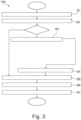
- Fig. 3
- shows a schematic flow diagram of an exemplary on-board passenger assistance method according to the present disclosure.
- The figures are merely schematic representations and serve only to illustrate examples of the disclosure. Identical or equivalent elements are in principle provided with the same reference signs.
-
Figure 1 shows schematically and exemplarily a block diagram of an example of an on-boardpassenger assistance system 100 for avehicle 1000. The on-boardpassenger assistance system 100 comprises apassenger monitoring system 102, an identifyingmodule 104, aplanning module 106, a suggestingmodule 108 and anannotating module 110. - The
passenger monitoring system 102 comprises apassenger monitoring unit 112, which is configured to generate image data, particularly facial image data, of the monitored passenger (seeFigure 2 ). The identifyingmodule 104 is configured to identify needs of the monitored passenger based on facial expressions shown in the image data generated by thepassenger monitoring unit 112, The identifyingmodule 104 comprises a neural network (not shown) being trained to identify the needs of a passenger based on facial expressions. - The
planning module 108 is configured to plan routes based on maps and/or traffic to support addressing/fulfilling of the needs being identified by the identifyingmodule 104, the suggestingmodule 108 is configured to provide suggestions and/or information, e.g., routes planned by the planning module and/or playing a specific song, and the like, to address the needs being identified by the identifyingmodule 104 to a user, e.g., a driver and/or a front-passenger (not shown) via an human-machine interface unit 114 (see alsoFigure 2 ). Theannotating module 110 is configured to receive the user's input annotating the generated image data being displayed on adisplay element 116 of the human-machine interface unit 114 (seeFigure 2 ) and/or being displayed on a display element (not shown) of an external system 118, e.g., a smartphone, a tablet etc. - Further, the on-board
passenger assistance system 100 is connectable with various external systems 118, which may be comprised in thevehicle 1000 such as anaudio playing device 120, e.g., speakers,video playing devices 122, and/or a drive pilot unit 124. The on-boardpassenger assistance system 100 may use the external system such as theaudio playing device 120 and/or thevideo playing device 122 for addressing the identified need of the passenger, e.g., playing a lullaby, in case the identified need is that the monitored passenger, particularly a child, is tired and tries to sleep. The external systems 118, such as the drive pilot unit 124, may transmit information to the on-boardpassenger assistance system 100, which may have an influence on the processes of the on-boardpassenger assistance system 100. - The on-board
passenger assistance system 100 may further comprise a central processing unit (CPU) 126, which is configured to receive, process and/or output information from/to thepassenger monitoring system 102, the identifyingmodule 104, theplanning module 106, the suggestingmodule 108 and/or theannotating module 110. Further, the on-boardpassenger assistance system 100 may comprise astorage medium 128 configured to store image data being generated by thepassenger monitoring unit 112. The image data stored in thestorage medium 128 may be accessible via the human-machine interface unit 114 and/or external devices 118, such as a smartphone, tablet etc. by a wired or wireless connection. -
Figure 3 shows schematically and exemplarily an on-boardpassenger assistance method 130, wherein the steps are not necessarily performed in the shown order: - In a step S1, the
passenger monitoring system 102 receives information, whether an (unsupervised) autonomous driving mode of thevehicle 1000 is activated. In a step S2, thepassenger monitoring system 102, particularly thepassenger monitoring unit 112, generates image data of the passenger, particularly an infant, to be monitored. - When the autonomous driving mode of the
vehicle 1000 is activated, themethod 130 then proceeds with a step S3, wherein the generated image data is displayed on thedisplay element 116 of the human-machine interface unit 114. In a step S4, the annotatingmodule 110 receives the user's input annotating the generated image data being displayed on adisplay element 116 of the human-machine interface unit 114. In a step S5, the identifyingmodule 104 identifies needs of the passenger based on facial expressions shown in the generated image data. In a step S6, thepanning module 106 plans routes based on maps and/or traffic to support addressing and/or fulfilling the identified needs, and in a step S7, the suggestingmodule 108 provides suggestions and/or information to address/fulfil the identified need to the user via the human-machine interface unit 114. - When the autonomous driving mode of the
vehicle 1000 is deactivated, themethod 130 skips the steps S3 and S4 and proceeds with step S5. - Other variations to the disclosed examples can be understood and effected by those skilled in the art in practicing the claimed disclosure, from the study of the drawings, the disclosure, and the appended claims. In the claims the word "comprising" does not exclude other elements or steps and the indefinite article "a" or "an" does not exclude a plurality. A single processor or other unit may fulfill the functions of several items or steps recited in the claims. The mere fact that certain measures are recited in mutually different dependent claims does not indicate that a combination of these measures cannot be used to advantage. A computer program may be stored/distributed on a suitable medium such as an optical storage medium or a solid-state medium supplied together with or as part of other hardware, but may also be distributed in other forms, such as via the Internet or other wired or wireless telecommunication systems. Any reference signs in the claims should not be construed as limiting the scope of the claims.
-
- 100
- on-board passenger assistance system
- 102
- passenger monitoring system
- 104
- identifying module
- 106
- planning module
- 108
- suggesting module
- 110
- annotating module
- 112
- passenger monitoring unit
- 114
- human-machine interface unit
- 116
- display element
- 118
- external system
- 120
- audio playing device
- 122
- video playing device
- 124
- drive pilot unit
- 126
- central processing unit (CPU)
- 128
- storage medium
- 130
- method
- 1000
- vehicle
Claims (15)
- An on-board passenger assistance system (100) for a vehicle (1000), comprising:a passenger monitoring system (102) configured to monitor a passenger, the passenger monitoring system (102) comprising a passenger monitoring unit (112) configured to generate image data of the monitored passenger,an identifying module (104) configured to identify needs of the monitored passenger based on facial expressions shown in the generated image data, the identifying module (104) comprising a neural network being trained to identify the needs of a passenger based on facial expressions,a planning module (106) configured to plan routes based on maps and/or traffic to support addressing of the needs being identified by the identifying module (104), anda suggesting module (108) configured to provide suggestions and/or information to address the needs being identified by the identifying module (104) to a user via a human-machine interface unit (114).
- The on-board passenger assistance system (100) according to claim 1, further comprising an annotating module (110) being configured to receive the user's input annotating the generated image data being displayed on a display element (116) of the human-machine interface unit (114) and/or being displayed on a display element of an external system (118).
- The on-board passenger assistance system (100) according to claim 2, the user's input being a confirmation or correction of the identified need in the generated image data, and/or the user's input being an assignment of a need to a facial expression shown in the generated image data.
- The on-board passenger assistance system (100) according to claim 2 or 3, the neural network being configured to be continuously trained based on the user's input received by the annotating module (110).
- The on-board passenger assistance system (100) according to any of claims 1 to 4, the suggesting module (108) further being configured to receive the user's input confirming and/or declining the provided suggestions/information via the human-machine interface unit (114).
- The on-board passenger assistance system (100) according to claim 4, the identifying module (104) being configured to notify the user of the identified needs via the human-machine interface unit (114).
- The on-board passenger assistance system (100) according to any of claims 1 to 6, the passenger monitoring system (102) further comprising a control unit being configured to activate displaying the generated image data on a display element (116) of the human-machine interface unit (114) in case an autonomous driving mode is activated, and/or to deactivate displaying the generated image data on the display element (116) of the human-machine interface unit (114) in case the autonomous driving mode is deactivated and no front-passenger is detected.
- The on-board passenger assistance system (100) according to claim 7, the control unit of the passenger monitoring system (102) further being configured to store the generated image data in a storage medium (128).
- The on-board passenger assistance system (100) according to any of claims 2 to 8, the annotating module (110) being activated in case an autonomous driving mode is activated and/or the annotating module (110) being manually activatable in case the autonomous driving mode is deactivated.
- The on-board passenger assistance system (100) according to any of claims 1 to 9, further being connectable to external systems (118) and/or apps, the external system (118) being an audio device (120), and/or a video playing device (122), and/or a smartphone.
- The on-board passenger assistance system (100) according to any of claims 8 to 10, the generated image data being stored in the storage medium (128) being accessible and/or annotatable via the human-machine interface unit (114) and/or by external systems (118).
- A vehicle (1000) comprising:a human-machine interface unit (114), andan on-board passenger assistance system (100) according to any of claims 1 to 11.
- An on-board passenger assistance method (130) for a vehicle (1000) according to claim 12, the method (130) comprising the following steps:receiving, by the passenger monitoring system (102), information whether an autonomous driving mode of the vehicle (1000) is activated or deactivated,generating, by the passenger monitoring system (120), image data of a passenger,identifying, by the identifying module (104), needs of the passenger based on facial expressions shown in the generated image data,planning, by the planning module (106), routes based on maps and/or traffic to support addressing the identified needs, andproviding, by the suggesting module (108), suggestions and/or information to address the identified needs to a user/driver via the human-machine interface unit (114).
- The method (130) according to claim 13, further comprising receiving, by the annotating module (110), the user's input to the generated image data being displayed on a display element (116) of the human-machine interface unit (114).
- The method (130) according to claim 14, further comprising training the identifying module (104) based on the user's input received by the annotating module (110).
Applications Claiming Priority (1)
| Application Number | Priority Date | Filing Date | Title |
|---|---|---|---|
| EP22186974.6A EP4311707B1 (en) | 2022-07-26 | 2022-07-26 | Passenger monitoring system |
Publications (2)
| Publication Number | Publication Date |
|---|---|
| EP4311709A1 true EP4311709A1 (en) | 2024-01-31 |
| EP4311709B1 EP4311709B1 (en) | 2025-03-12 |
Family
ID=82742951
Family Applications (2)
| Application Number | Title | Priority Date | Filing Date |
|---|---|---|---|
| EP22186974.6A Active EP4311707B1 (en) | 2022-07-26 | 2022-07-26 | Passenger monitoring system |
| EP22198738.1A Active EP4311709B1 (en) | 2022-07-26 | 2022-09-29 | On-board passenger assistance system and method for vehicle and vehicle |
Family Applications Before (1)
| Application Number | Title | Priority Date | Filing Date |
|---|---|---|---|
| EP22186974.6A Active EP4311707B1 (en) | 2022-07-26 | 2022-07-26 | Passenger monitoring system |
Country Status (1)
| Country | Link |
|---|---|
| EP (2) | EP4311707B1 (en) |
Citations (2)
| Publication number | Priority date | Publication date | Assignee | Title |
|---|---|---|---|---|
| US20190162549A1 (en) * | 2010-06-07 | 2019-05-30 | Affectiva, Inc. | Cognitive state vehicle navigation based on image processing |
| US20210261050A1 (en) * | 2020-02-21 | 2021-08-26 | Cobalt Industries Inc. | Real-time contextual vehicle lighting systems and methods |
Family Cites Families (3)
| Publication number | Priority date | Publication date | Assignee | Title |
|---|---|---|---|---|
| US10723267B2 (en) * | 2014-09-19 | 2020-07-28 | Be Topnotch, Llc | Display rear passenger view on a display screen in vehicle |
| US20170330044A1 (en) * | 2016-05-10 | 2017-11-16 | GM Global Technology Operations LLC | Thermal monitoring in autonomous-driving vehicles |
| US11645855B2 (en) * | 2020-12-28 | 2023-05-09 | Toyota Motor Engineering & Manufacturing North America, Inc. | Camera system to monitor the passengers in a vehicle and detect passenger activities |
-
2022
- 2022-07-26 EP EP22186974.6A patent/EP4311707B1/en active Active
- 2022-09-29 EP EP22198738.1A patent/EP4311709B1/en active Active
Patent Citations (2)
| Publication number | Priority date | Publication date | Assignee | Title |
|---|---|---|---|---|
| US20190162549A1 (en) * | 2010-06-07 | 2019-05-30 | Affectiva, Inc. | Cognitive state vehicle navigation based on image processing |
| US20210261050A1 (en) * | 2020-02-21 | 2021-08-26 | Cobalt Industries Inc. | Real-time contextual vehicle lighting systems and methods |
Also Published As
| Publication number | Publication date |
|---|---|
| EP4311709B1 (en) | 2025-03-12 |
| EP4311707A1 (en) | 2024-01-31 |
| EP4311707B1 (en) | 2024-11-13 |
Similar Documents
| Publication | Publication Date | Title |
|---|---|---|
| CN106462027B (en) | Method for controlling a vehicle system in a motor vehicle | |
| JPWO2020054458A1 (en) | Information processing equipment, mobile devices, and methods, and programs | |
| US10989554B2 (en) | System and method for emotion navigation routing | |
| US11292490B2 (en) | Contextual autonomous vehicle support through pictorial interaction | |
| CN113299089B (en) | Vehicle control device and vehicle control system | |
| JP7251524B2 (en) | Drowsiness Sign Notification System, Drowsiness Sign Notification Method, and Drowsiness Sign Notification Program | |
| US20230373518A1 (en) | Method for prompting driver, and vehicle control device | |
| JP2018179547A (en) | Safe driving support system, safe driving support method, and safe driving support program | |
| WO2019208450A1 (en) | Driving assistance device, driving assistance method, and program | |
| JP7354942B2 (en) | Driving support device and driving support method | |
| Asha et al. | Designing inclusive interaction with autonomous vehicles for older passengers | |
| JP2024041746A (en) | information processing equipment | |
| JP3907509B2 (en) | Emergency call device | |
| EP4311709B1 (en) | On-board passenger assistance system and method for vehicle and vehicle | |
| WO2022124164A1 (en) | Attention object sharing device, and attention object sharing method | |
| JP2010282368A (en) | Driving support device and program | |
| JP7456355B2 (en) | Occupant detection system | |
| JP2005352895A (en) | Vehicle driver awakening system | |
| Pape et al. | Empathic assistants–Methods and use cases in automated and non-automated driving | |
| JP2021149617A (en) | Recommendation guidance device, recommendation guidance method, and recommendation guidance program | |
| US10969240B2 (en) | Systems and methods for controlling vehicle systems using experience attributes | |
| WO2021176633A1 (en) | Driver state estimation device and driver state estimation method | |
| JP7798741B2 (en) | Notification device, notification method, and notification computer program | |
| KR20200080376A (en) | Vehicle and control method for the same | |
| JP2024066808A (en) | In-vehicle systems |
Legal Events
| Date | Code | Title | Description |
|---|---|---|---|
| PUAI | Public reference made under article 153(3) epc to a published international application that has entered the european phase |
Free format text: ORIGINAL CODE: 0009012 |
|
| STAA | Information on the status of an ep patent application or granted ep patent |
Free format text: STATUS: REQUEST FOR EXAMINATION WAS MADE |
|
| 17P | Request for examination filed |
Effective date: 20230914 |
|
| AK | Designated contracting states |
Kind code of ref document: A1 Designated state(s): AL AT BE BG CH CY CZ DE DK EE ES FI FR GB GR HR HU IE IS IT LI LT LU LV MC MK MT NL NO PL PT RO RS SE SI SK SM TR |
|
| REG | Reference to a national code |
Ref country code: DE Ref legal event code: R079 Free format text: PREVIOUS MAIN CLASS: B60K0037060000 Ipc: B60K0035100000 Ref country code: DE Ref legal event code: R079 Ref document number: 602022011667 Country of ref document: DE Free format text: PREVIOUS MAIN CLASS: B60K0037060000 Ipc: B60K0035100000 |
|
| GRAP | Despatch of communication of intention to grant a patent |
Free format text: ORIGINAL CODE: EPIDOSNIGR1 |
|
| STAA | Information on the status of an ep patent application or granted ep patent |
Free format text: STATUS: GRANT OF PATENT IS INTENDED |
|
| RIC1 | Information provided on ipc code assigned before grant |
Ipc: G06F 3/14 20060101ALI20241004BHEP Ipc: G06V 40/16 20220101ALI20241004BHEP Ipc: B60K 35/28 20240101ALI20241004BHEP Ipc: B60K 35/10 20240101AFI20241004BHEP |
|
| INTG | Intention to grant announced |
Effective date: 20241023 |
|
| GRAS | Grant fee paid |
Free format text: ORIGINAL CODE: EPIDOSNIGR3 |
|
| GRAA | (expected) grant |
Free format text: ORIGINAL CODE: 0009210 |
|
| STAA | Information on the status of an ep patent application or granted ep patent |
Free format text: STATUS: THE PATENT HAS BEEN GRANTED |
|
| AK | Designated contracting states |
Kind code of ref document: B1 Designated state(s): AL AT BE BG CH CY CZ DE DK EE ES FI FR GB GR HR HU IE IS IT LI LT LU LV MC MK MT NL NO PL PT RO RS SE SI SK SM TR |
|
| REG | Reference to a national code |
Ref country code: GB Ref legal event code: FG4D |
|
| REG | Reference to a national code |
Ref country code: CH Ref legal event code: EP |
|
| P01 | Opt-out of the competence of the unified patent court (upc) registered |
Free format text: CASE NUMBER: APP_9183/2025 Effective date: 20250224 |
|
| REG | Reference to a national code |
Ref country code: DE Ref legal event code: R096 Ref document number: 602022011667 Country of ref document: DE |
|
| REG | Reference to a national code |
Ref country code: IE Ref legal event code: FG4D |
|
| PG25 | Lapsed in a contracting state [announced via postgrant information from national office to epo] |
Ref country code: RS Free format text: LAPSE BECAUSE OF FAILURE TO SUBMIT A TRANSLATION OF THE DESCRIPTION OR TO PAY THE FEE WITHIN THE PRESCRIBED TIME-LIMIT Effective date: 20250612 |
|
| PG25 | Lapsed in a contracting state [announced via postgrant information from national office to epo] |
Ref country code: FI Free format text: LAPSE BECAUSE OF FAILURE TO SUBMIT A TRANSLATION OF THE DESCRIPTION OR TO PAY THE FEE WITHIN THE PRESCRIBED TIME-LIMIT Effective date: 20250312 |
|
| PG25 | Lapsed in a contracting state [announced via postgrant information from national office to epo] |
Ref country code: ES Free format text: LAPSE BECAUSE OF FAILURE TO SUBMIT A TRANSLATION OF THE DESCRIPTION OR TO PAY THE FEE WITHIN THE PRESCRIBED TIME-LIMIT Effective date: 20250312 |
|
| REG | Reference to a national code |
Ref country code: LT Ref legal event code: MG9D |
|
| PG25 | Lapsed in a contracting state [announced via postgrant information from national office to epo] |
Ref country code: NO Free format text: LAPSE BECAUSE OF FAILURE TO SUBMIT A TRANSLATION OF THE DESCRIPTION OR TO PAY THE FEE WITHIN THE PRESCRIBED TIME-LIMIT Effective date: 20250612 |
|
| PG25 | Lapsed in a contracting state [announced via postgrant information from national office to epo] |
Ref country code: HR Free format text: LAPSE BECAUSE OF FAILURE TO SUBMIT A TRANSLATION OF THE DESCRIPTION OR TO PAY THE FEE WITHIN THE PRESCRIBED TIME-LIMIT Effective date: 20250312 |
|
| REG | Reference to a national code |
Ref country code: NL Ref legal event code: MP Effective date: 20250312 |
|
| PG25 | Lapsed in a contracting state [announced via postgrant information from national office to epo] |
Ref country code: LV Free format text: LAPSE BECAUSE OF FAILURE TO SUBMIT A TRANSLATION OF THE DESCRIPTION OR TO PAY THE FEE WITHIN THE PRESCRIBED TIME-LIMIT Effective date: 20250312 |
|
| PG25 | Lapsed in a contracting state [announced via postgrant information from national office to epo] |
Ref country code: GR Free format text: LAPSE BECAUSE OF FAILURE TO SUBMIT A TRANSLATION OF THE DESCRIPTION OR TO PAY THE FEE WITHIN THE PRESCRIBED TIME-LIMIT Effective date: 20250613 Ref country code: BG Free format text: LAPSE BECAUSE OF FAILURE TO SUBMIT A TRANSLATION OF THE DESCRIPTION OR TO PAY THE FEE WITHIN THE PRESCRIBED TIME-LIMIT Effective date: 20250312 |
|
| REG | Reference to a national code |
Ref country code: AT Ref legal event code: MK05 Ref document number: 1774752 Country of ref document: AT Kind code of ref document: T Effective date: 20250312 |
|
| PG25 | Lapsed in a contracting state [announced via postgrant information from national office to epo] |
Ref country code: NL Free format text: LAPSE BECAUSE OF FAILURE TO SUBMIT A TRANSLATION OF THE DESCRIPTION OR TO PAY THE FEE WITHIN THE PRESCRIBED TIME-LIMIT Effective date: 20250312 |
|
| PG25 | Lapsed in a contracting state [announced via postgrant information from national office to epo] |
Ref country code: SE Free format text: LAPSE BECAUSE OF FAILURE TO SUBMIT A TRANSLATION OF THE DESCRIPTION OR TO PAY THE FEE WITHIN THE PRESCRIBED TIME-LIMIT Effective date: 20250312 |
|
| PG25 | Lapsed in a contracting state [announced via postgrant information from national office to epo] |
Ref country code: SM Free format text: LAPSE BECAUSE OF FAILURE TO SUBMIT A TRANSLATION OF THE DESCRIPTION OR TO PAY THE FEE WITHIN THE PRESCRIBED TIME-LIMIT Effective date: 20250312 |
|
| PG25 | Lapsed in a contracting state [announced via postgrant information from national office to epo] |
Ref country code: PT Free format text: LAPSE BECAUSE OF FAILURE TO SUBMIT A TRANSLATION OF THE DESCRIPTION OR TO PAY THE FEE WITHIN THE PRESCRIBED TIME-LIMIT Effective date: 20250714 |
|
| PGFP | Annual fee paid to national office [announced via postgrant information from national office to epo] |
Ref country code: DE Payment date: 20250820 Year of fee payment: 4 |
|
| PG25 | Lapsed in a contracting state [announced via postgrant information from national office to epo] |
Ref country code: IT Free format text: LAPSE BECAUSE OF FAILURE TO SUBMIT A TRANSLATION OF THE DESCRIPTION OR TO PAY THE FEE WITHIN THE PRESCRIBED TIME-LIMIT Effective date: 20250312 Ref country code: PL Free format text: LAPSE BECAUSE OF FAILURE TO SUBMIT A TRANSLATION OF THE DESCRIPTION OR TO PAY THE FEE WITHIN THE PRESCRIBED TIME-LIMIT Effective date: 20250312 |
|
| PG25 | Lapsed in a contracting state [announced via postgrant information from national office to epo] |
Ref country code: AT Free format text: LAPSE BECAUSE OF FAILURE TO SUBMIT A TRANSLATION OF THE DESCRIPTION OR TO PAY THE FEE WITHIN THE PRESCRIBED TIME-LIMIT Effective date: 20250312 |
|
| PGFP | Annual fee paid to national office [announced via postgrant information from national office to epo] |
Ref country code: FR Payment date: 20250820 Year of fee payment: 4 |
|
| PG25 | Lapsed in a contracting state [announced via postgrant information from national office to epo] |
Ref country code: EE Free format text: LAPSE BECAUSE OF FAILURE TO SUBMIT A TRANSLATION OF THE DESCRIPTION OR TO PAY THE FEE WITHIN THE PRESCRIBED TIME-LIMIT Effective date: 20250312 Ref country code: CZ Free format text: LAPSE BECAUSE OF FAILURE TO SUBMIT A TRANSLATION OF THE DESCRIPTION OR TO PAY THE FEE WITHIN THE PRESCRIBED TIME-LIMIT Effective date: 20250312 |
|
| PG25 | Lapsed in a contracting state [announced via postgrant information from national office to epo] |
Ref country code: RO Free format text: LAPSE BECAUSE OF FAILURE TO SUBMIT A TRANSLATION OF THE DESCRIPTION OR TO PAY THE FEE WITHIN THE PRESCRIBED TIME-LIMIT Effective date: 20250312 |
|
| PG25 | Lapsed in a contracting state [announced via postgrant information from national office to epo] |
Ref country code: SK Free format text: LAPSE BECAUSE OF FAILURE TO SUBMIT A TRANSLATION OF THE DESCRIPTION OR TO PAY THE FEE WITHIN THE PRESCRIBED TIME-LIMIT Effective date: 20250312 |
|
| PG25 | Lapsed in a contracting state [announced via postgrant information from national office to epo] |
Ref country code: IS Free format text: LAPSE BECAUSE OF FAILURE TO SUBMIT A TRANSLATION OF THE DESCRIPTION OR TO PAY THE FEE WITHIN THE PRESCRIBED TIME-LIMIT Effective date: 20250712 |
|
| REG | Reference to a national code |
Ref country code: DE Ref legal event code: R097 Ref document number: 602022011667 Country of ref document: DE |
|
| PG25 | Lapsed in a contracting state [announced via postgrant information from national office to epo] |
Ref country code: DK Free format text: LAPSE BECAUSE OF FAILURE TO SUBMIT A TRANSLATION OF THE DESCRIPTION OR TO PAY THE FEE WITHIN THE PRESCRIBED TIME-LIMIT Effective date: 20250312 |
|
| PLBE | No opposition filed within time limit |
Free format text: ORIGINAL CODE: 0009261 |
|
| STAA | Information on the status of an ep patent application or granted ep patent |
Free format text: STATUS: NO OPPOSITION FILED WITHIN TIME LIMIT |
|
| REG | Reference to a national code |
Ref country code: CH Ref legal event code: L10 Free format text: ST27 STATUS EVENT CODE: U-0-0-L10-L00 (AS PROVIDED BY THE NATIONAL OFFICE) Effective date: 20260121 |
|
| 26N | No opposition filed |
Effective date: 20251215 |
|
| REG | Reference to a national code |
Ref country code: CH Ref legal event code: H13 Free format text: ST27 STATUS EVENT CODE: U-0-0-H10-H13 (AS PROVIDED BY THE NATIONAL OFFICE) Effective date: 20260504 |