EP4310813A1 - Application server, base station, dynamic map distribution system, control circuit, storage medium, and information distribution method - Google Patents
Application server, base station, dynamic map distribution system, control circuit, storage medium, and information distribution method Download PDFInfo
- Publication number
- EP4310813A1 EP4310813A1 EP21931503.3A EP21931503A EP4310813A1 EP 4310813 A1 EP4310813 A1 EP 4310813A1 EP 21931503 A EP21931503 A EP 21931503A EP 4310813 A1 EP4310813 A1 EP 4310813A1
- Authority
- EP
- European Patent Office
- Prior art keywords
- dynamic map
- base station
- mobile object
- map information
- information
- Prior art date
- Legal status (The legal status is an assumption and is not a legal conclusion. Google has not performed a legal analysis and makes no representation as to the accuracy of the status listed.)
- Granted
Links
Images




Classifications
-
- G—PHYSICS
- G01—MEASURING; TESTING
- G01C—MEASURING DISTANCES, LEVELS OR BEARINGS; SURVEYING; NAVIGATION; GYROSCOPIC INSTRUMENTS; PHOTOGRAMMETRY OR VIDEOGRAMMETRY
- G01C21/00—Navigation; Navigational instruments not provided for in groups G01C1/00 - G01C19/00
- G01C21/38—Electronic maps specially adapted for navigation; Updating thereof
- G01C21/3885—Transmission of map data to client devices; Reception of map data by client devices
-
- H—ELECTRICITY
- H04—ELECTRIC COMMUNICATION TECHNIQUE
- H04W—WIRELESS COMMUNICATION NETWORKS
- H04W36/00—Hand-off or reselection arrangements
- H04W36/0005—Control or signalling for completing the hand-off
- H04W36/0011—Control or signalling for completing the hand-off for data sessions of end-to-end connection
-
- G—PHYSICS
- G08—SIGNALLING
- G08G—TRAFFIC CONTROL SYSTEMS
- G08G1/00—Traffic control systems for road vehicles
- G08G1/09—Arrangements for giving variable traffic instructions
- G08G1/0962—Arrangements for giving variable traffic instructions having an indicator mounted inside the vehicle, e.g. giving voice messages
- G08G1/0968—Systems involving transmission of navigation instructions to the vehicle
- G08G1/0969—Systems involving transmission of navigation instructions to the vehicle having a display in the form of a map
-
- B—PERFORMING OPERATIONS; TRANSPORTING
- B60—VEHICLES IN GENERAL
- B60W—CONJOINT CONTROL OF VEHICLE SUB-UNITS OF DIFFERENT TYPE OR DIFFERENT FUNCTION; CONTROL SYSTEMS SPECIALLY ADAPTED FOR HYBRID VEHICLES; ROAD VEHICLE DRIVE CONTROL SYSTEMS FOR PURPOSES NOT RELATED TO THE CONTROL OF A PARTICULAR SUB-UNIT
- B60W60/00—Drive control systems specially adapted for autonomous road vehicles
-
- G—PHYSICS
- G08—SIGNALLING
- G08G—TRAFFIC CONTROL SYSTEMS
- G08G1/00—Traffic control systems for road vehicles
- G08G1/09—Arrangements for giving variable traffic instructions
-
- G—PHYSICS
- G08—SIGNALLING
- G08G—TRAFFIC CONTROL SYSTEMS
- G08G1/00—Traffic control systems for road vehicles
- G08G1/09—Arrangements for giving variable traffic instructions
- G08G1/0962—Arrangements for giving variable traffic instructions having an indicator mounted inside the vehicle, e.g. giving voice messages
- G08G1/0967—Systems involving transmission of highway information, e.g. weather, speed limits
- G08G1/096766—Systems involving transmission of highway information, e.g. weather, speed limits where the system is characterised by the origin of the information transmission
- G08G1/096775—Systems involving transmission of highway information, e.g. weather, speed limits where the system is characterised by the origin of the information transmission where the origin of the information is a central station
-
- H—ELECTRICITY
- H04—ELECTRIC COMMUNICATION TECHNIQUE
- H04W—WIRELESS COMMUNICATION NETWORKS
- H04W36/00—Hand-off or reselection arrangements
-
- H—ELECTRICITY
- H04—ELECTRIC COMMUNICATION TECHNIQUE
- H04W—WIRELESS COMMUNICATION NETWORKS
- H04W4/00—Services specially adapted for wireless communication networks; Facilities therefor
- H04W4/30—Services specially adapted for particular environments, situations or purposes
- H04W4/40—Services specially adapted for particular environments, situations or purposes for vehicles, e.g. vehicle-to-pedestrians [V2P]
- H04W4/44—Services specially adapted for particular environments, situations or purposes for vehicles, e.g. vehicle-to-pedestrians [V2P] for communication between vehicles and infrastructures, e.g. vehicle-to-cloud [V2C] or vehicle-to-home [V2H]
-
- H—ELECTRICITY
- H04—ELECTRIC COMMUNICATION TECHNIQUE
- H04W—WIRELESS COMMUNICATION NETWORKS
- H04W36/00—Hand-off or reselection arrangements
- H04W36/02—Buffering or recovering information during reselection ; Modification of the traffic flow during hand-off
-
- H—ELECTRICITY
- H04—ELECTRIC COMMUNICATION TECHNIQUE
- H04W—WIRELESS COMMUNICATION NETWORKS
- H04W36/00—Hand-off or reselection arrangements
- H04W36/24—Reselection being triggered by specific parameters
- H04W36/32—Reselection being triggered by specific parameters by location or mobility data, e.g. speed data
Definitions
- the present disclosure relates to an application server, a base station, a dynamic map delivery system, a control circuit, a storage medium, and an information delivery method for delivering a dynamic map.
- a data delivery system delivers a dynamic map as a V2X application to a vehicle that implements automated driving under a specific condition (Level 2 automated driving) so as to implement fully automated driving under a specific condition (Level 4 automated driving).
- the dynamic map is a digital map in which dynamic information such as movement of persons and semi-static information such as construction information are overlaid on static information such as a three-dimensional map including lanes, structures, and the like.
- the level of automated driving can be raised by delivering the dynamic map, which is important for determining the driving policy, to the vehicle.
- a bottleneck in maintaining the performance of Level 4 automated driving is the communication quality between the vehicle to which the dynamic map is delivered and the network or the communication quality between the vehicle to which the dynamic map is delivered and the roadside unit. Therefore, standards for 5th Generation (5G) mobile communication systems specify that deterioration in communication quality is avoided by constantly setting up redundant sessions.
- 5G 5th Generation
- 5G standards also consider situations in which redundant sessions cannot be set up due to the influence of the communication environment, vehicle capacity, and the like, specifying that communication interruption or fallback operation is performed in situations in which redundant sessions cannot be set up.
- a vehicle performs base station switching by handover under the environment of communication interruption or fallback operation, continued delivery of the dynamic map to the vehicle causes a loss of delivery information, which greatly affects the performance of the automated driving.
- the vehicle communication device calculates the handover timing for base station switching based on the level of signals received from base stations. Then, the vehicle control device lowers the service level of travel assistance control based on the handover timing.
- Patent Literature 1 Japanese Patent Application Laid-open No. 2014-044639
- Patent Literature 1 Although the technique of Patent Literature 1, although the handover timing can be estimated, the vehicle cannot receive the dynamic map at the handover timing. This is problematic in that the vehicle cannot update the dynamic map under fallback operation and has to lower the level of automated driving.
- the present disclosure has been made in view of the above, and an object thereof is to obtain an application server capable of executing base station switching by handover without lowering the level of automated driving even under fallback operation.
- an application server delivers dynamic map information to a first mobile object that receives the dynamic map information, the dynamic map information being information of a dynamic map that is used for execution of fully automated driving under a specific condition.
- the application server delivers the dynamic map information to the first mobile object via the first base station and a communication device capable of receiving the dynamic map information from the first base station.
- the application server according to the present disclosure can achieve the effect of executing base station switching by handover without lowering the level of automated driving even under fallback operation.
- FIG. 1 is a diagram illustrating a configuration of a dynamic map delivery system according to the first embodiment.
- the dynamic map delivery system 1 includes an application server 10, base stations 20a and 20b, and mobile objects 30x and 30y.
- An example of the mobile objects 30x and 30y is a communication terminal that is installed in a vehicle or the like, that is, a mobile communication device.
- the application server 10 is a server that stores application data including dynamic map information, i.e. information of a dynamic map.
- the dynamic map information is information that is provided to the mobile objects 30x and 30y.
- the application server 10 delivers the dynamic map information to the mobile object 30x via the base station 20a or the base station 20b.
- the dynamic map information includes static information that is information of a three-dimensional map such as the position of road surfaces, the position of lanes, and the position of buildings.
- the dynamic map information also includes semi-static information such as a schedule of traffic regulations, a schedule of road construction, and weather information.
- the dynamic map information also includes semi-dynamic information such as information on accidents, information on traffic jams, and information on traffic regulations.
- the dynamic map information also includes dynamic information such as movement of persons.
- the application server 10 stores the dynamic map information in which the static information, the semi-static information, the semi-dynamic information, and the dynamic information are combined.
- the application server 10 delivers the dynamic map information to the mobile objects 30x and 30y in accordance with the timing at which the mobile objects 30x and 30y update the dynamic map information.
- the application server 10 may be disposed in any way in the dynamic map delivery system 1.
- the application server 10 may be disposed ahead of the core network for communication, or may be disposed immediately below the base stations 20a and 20b.
- the application server 10 may be installed at distributed locations according to the update frequency of delivery data such as the dynamic map information.
- the base stations 20a and 20b are communication base stations that deliver delivery data such as the dynamic map information to users (in the first embodiment, the mobile objects 30x and 30y) designated by the application server 10.
- the base station 20a can transmit the dynamic map information to the mobile objects 30x and 30y in a first area.
- the base station 20b can transmit the dynamic map information to the mobile objects 30x and 30y in a second area.
- the base station 20a is a first base station, and the base station 20b is a second base station.
- the first area and the second area partially overlap, and handover can be executed in the overlapping area.
- Either the base station 20a or the base station 20b can connect to the mobile object 30x at a specific timing and provide the service of delivering delivery data such as the dynamic map information.
- the base stations 20a and 20b are never simultaneously connected to the mobile object 30x.
- the base stations 20a and 20b undergo an instantaneous interruption of communication with the mobile object 30x.
- either the base station 20a or the base station 20b can connect to the mobile object 30y at a specific timing and provide the service of delivering delivery data such as the dynamic map information.
- the base stations 20a and 20b are never simultaneously connected to the mobile object 30y.
- the base stations 20a and 20b undergo an instantaneous interruption of communication with the mobile object 30y.
- the mobile object 30x includes a mobile communication unit 300x capable of executing communication with the base stations 20a and 20b.
- the mobile object 30x includes a sidelink communication unit 301x capable of executing sidelink communication with a nearby mobile object (here, the mobile object 30y) or a roadside unit (not illustrated). Note that the following description refers to a case where the sidelink communication unit 301x of the mobile object 30x executes communication processing with the mobile object 30y.
- the mobile communication unit 300x acquires the dynamic map information from the application server 10 via the base station 20a or 20b.
- FIG. 1 illustrates a situation in which the mobile communication unit 300x is connected to the base station 20a and is about to perform a handover to the base station 20b.
- the mobile communication unit 300x of the mobile object 30x cannot be connected to a plurality of base stations simultaneously during fallback operation.
- fallback operation refers to an operation in which the mobile object 30x continues operational processing while executing restrictions on processing speed, some functions, and the like.
- the mobile communication unit 300x When performing a handover during fallback operation, the mobile communication unit 300x is for a moment not connected to either the base station 20a or the base station 20b.
- a sidelink communication unit 301y to be described later transmits the dynamic map information to the mobile object 30x.
- the sidelink communication unit 301x acquires the dynamic map information via the mobile object 30y, and the mobile object 30x executes Level 4 automated driving.
- the first embodiment describes a case where the mobile object 30x acquires the dynamic map information from the application server 10 via the mobile object 30y during the handover, but the mobile object 30x may acquire the dynamic map information from the application server 10 via another communication device.
- the mobile object 30x may acquire the dynamic map information from the application server 10 via a roadside unit having a function similar to that of the mobile object 30y.
- the mobile object 30y has a function similar to that of the mobile object 30x.
- the mobile object 30y includes a mobile communication unit 300y capable of executing communication with the base stations 20a and 20b.
- the mobile object 30y includes the sidelink communication unit 301y capable of executing sidelink communication with a nearby mobile object (here, the mobile object 30x) or a roadside unit (not illustrated). Note that the following description refers to a case where the sidelink communication unit 301y of the mobile object 30y executes communication processing with the mobile object 30x.
- the mobile communication unit 300y acquires the dynamic map information from the application server 10 via the base station 20a or 20b.
- FIG. 1 illustrates a situation in which the mobile communication unit 300y is connected to the base station 20a and is capable of receiving the dynamic map information from the application server 10.
- the mobile communication unit 300y of the mobile object 30y cannot be connected to a plurality of base stations simultaneously during fallback operation. Therefore, when performing a handover during fallback operation, the mobile communication unit 300y is for a moment not connected to either the base station 20a or the base station 20b.
- the sidelink communication unit 301x transmits the dynamic map information to the mobile object 30y.
- the sidelink communication unit 301y acquires the dynamic map information via the mobile object 30x, and the mobile object 30y executes Level 4 automated driving.
- the mobile object 30x is a first mobile object, and the mobile object 30y is a communication device.
- the communication device is a second mobile object or a roadside unit. Note that the first embodiment assumes that there is no timing at which the mobile object 30y is disconnected from the base station 20a until the mobile object 30x completes the handover.
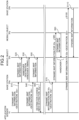
- FIG. 2 is a sequence diagram illustrating a procedure for delivering dynamic map information by the dynamic map delivery system according to the first embodiment.
- FIG. 2 illustrates an operational flowchart for a data transmission/reception process that is executed among the application server 10, the base stations 20a and 20b, and the mobile objects 30x and 30y.
- the following section describes a case where the mobile object 30x moves from an area where communication with the base station 20a is possible to an area where communication with the base station 20b is possible.
- the mobile object 30x is denoted by “30x” and the mobile object 30y is denoted by “30y”.
- ⁇ destination: 30x> indicates that the destination is the mobile object 30x
- ⁇ destination: 30y> indicates that the destination is the mobile object 30y
- ⁇ new destination: 30y> indicates that the destination is changed to the mobile object 30y.
- the application server 10 transmits, to the base station 20a, the dynamic map information the destination of which is the mobile object 30x (S10).
- the base station 20a receives the dynamic map information and transmits the dynamic map information to the mobile object 30x (S20).
- the mobile object 30x receives the dynamic map information, and executes the fully automated driving of the vehicle under a specific condition (Level 4 automated driving) using the dynamic map information.
- the mobile object 30x may move from an area where communication with the base station 20a can be performed to an area where communication with the base station 20b can be performed.
- the base station 20a notifies the mobile object 30x to perform a handover to the base station 20b before the base station 20a becomes unable to communicate with the mobile object 30x.
- the base station 20a also notifies the mobile object 30x of the handover timing, i.e. the timing when the handover is performed. In this manner, when the mobile object 30x is performing fallback operation, the base station 20a notifies the mobile object 30x of the handover destination and the handover timing (S30).
- the base station 20a may determine whether the mobile object 30x is starting fallback operation based on whether the mobile object 30x satisfies a condition for starting fallback operation, or may inquire of the mobile object 30x whether to start fallback operation.
- the base station 20a sets, as the timing when the handover is performed, a timing at which the mobile object 30x loses only information with a high update frequency among the dynamic map information.
- Information with a high update frequency is information that is updated at shorter intervals than specific time intervals.
- An example of information with a high update frequency is the dynamic information included in the dynamic map information.
- the application server 10 transmits the dynamic map information the destination of which is the mobile object 30x to the base station 20a (S40).
- the base station 20a receives the dynamic map information and transmits the dynamic map information to the mobile object 30x (S50).
- the base station 20a After notifying the mobile object 30x of the handover destination and the handover timing, the base station 20a selects the mobile object 30y near the mobile object 30x, and requests the mobile object 30x to establish a sidelink connection between the mobile object 30x and the mobile object 30y.
- the communication device that is selected by the base station 20a is a device (here, the mobile object 30y) capable of sidelink connection with the mobile object 30x.
- the sidelink connection is a sidelink-type connection in which direct communication is performed between the vehicles, namely between the mobile objects 30x and 30y.
- the mobile object 30x After receiving the request, the mobile object 30x makes a request to the mobile object 30y for the sidelink connection with the mobile object 30y. As a result, the mobile object 30y accepts the sidelink connection, and communication through the sidelink connection is enabled between the mobile objects 30x and 30y.
- the base station 20a may request the mobile object 30y to establish a sidelink connection between the mobile objects 30x and 30y.
- the mobile object 30y makes a request to the mobile object 30x for the sidelink connection with the mobile object 30x. Then, the mobile object 30x accepts the sidelink connection, and communication through the sidelink connection is enabled between the mobile objects 30x and 30y.
- the base station 20a After completing the sidelink connection, the base station 20a transmits a destination change request to the application server 10 (S60). Specifically, the base station 20a requests the application server 10 to designate the mobile object 30y as the destination of the dynamic information of the dynamic map information to be delivered to the mobile object 30x and deliver the dynamic information. This request specifies that the timing at which the mobile object 30y is designated as the destination is the timing when the mobile object 30x performs the handover from the base station 20a to the base station 20b. That is, the base station 20a transmits, to the application server 10, a request for changing the destination to the mobile object 30y at the handover timing of the mobile object 30x. In addition, the base station 20a transmits the handover timing of the mobile object 30x to the application server 10.
- the application server 10 delivers the dynamic information of the dynamic map information for the mobile object 30x to the base station 20a by setting the mobile object 30y as the destination (S70).
- the base station 20a transmits the dynamic information of the dynamic map information for the mobile object 30x to the mobile object 30y (S80).
- the base station 20a adds flag information indicating that relay is to be performed to a packet of dynamic map information (in the first embodiment, dynamic information) and transmits the packet to the mobile object 30y.
- the mobile object 30y relays the dynamic information of the dynamic map information for the mobile object 30x received from the base station 20a to the mobile object 30x by utilizing the communication having the communication session established by the sidelink connection (S90). In this case, the mobile object 30y determines whether the packet of dynamic information contains flag information indicating that relay is to be performed. In response to determining that the packet contains flag information, the mobile object 30y relays the dynamic information to the mobile object 30x in the sidelink connection.
- the mobile object 30y relays the dynamic information of the dynamic map information for the mobile object 30x received from the base station 20a to the mobile object 30x.
- the destination change is not limited to the case where the base station 20a requests the application server 10 to change the destination and the application server 10 changes the destination of the dynamic information.
- the base station 20a may receive the dynamic information addressed to the mobile object 30x from the application server 10 and change the destination to the mobile object 30y.
- the mobile object 30x cancels the communication session between the mobile objects 30x and 30y. Thereafter, the application server 10 transmits the dynamic map information for the mobile object 30x to the base station 20b (S100), and the base station 20b transmits the dynamic map information to the mobile object 30x (S110). Then, the mobile object 30x receives the dynamic map information from the base station 20b.
- the mobile object 30y relays the dynamic map information that may have been lost in the mobile object 30x to the mobile object 30x, and thus the mobile object 30x can acquire the dynamic map information without losing the dynamic map information.
- the dynamic map delivery system 1 can execute Level 4 automated driving.
- another device instead of the mobile object 30y may relay the dynamic map information to the mobile object 30x.
- the device that relays the dynamic map information to the mobile object 30x is a roadside unit
- the roadside unit near the point where the mobile object 30x performs the handover relays the dynamic map information to the mobile object 30x.
- the mobile object 30y relays the dynamic information of the dynamic map information for the mobile object 30x received from the base station 20a to the mobile object 30x.
- the dynamic map delivery system 1 can execute the switching to the base station 20b by handover without lowering the level of automated driving even when the mobile object 30x is under fallback operation. Therefore, the dynamic map delivery system 1 can execute Level 4 automated driving even at the handover timing during fallback operation.
- the mobile object 30x determines the handover timing and notifies the base station 20a of the handover timing, and the base station 20a transmits the dynamic map information that is lost at the handover timing to the mobile object 30y.
- the dynamic map delivery system 1 according to the second embodiment has the same configuration as the dynamic map delivery system 1 according to the first embodiment.
- the mobile object 30y autonomously determines the handover timing, and notifies the base station 20a of the determined handover timing.
- the base station 20a causes the mobile object 30y to relay the dynamic map information that is lost at the handover timing determined by the mobile object 30x so that the dynamic map information is transmitted to the mobile object 30x.
- the mobile object 30x determines the handover timing.
- the dynamic map delivery system 1 can execute the switching to the base station 20b by handover without lowering the level of automated driving even when the mobile object 30x is under fallback operation as in the first embodiment. Therefore, the dynamic map delivery system 1 can execute Level 4 automated driving even at the handover timing during fallback operation as in the first embodiment.
- the third embodiment will be described with reference to FIGS. 3 and 4 .
- the other mobile object 30y different from the mobile object 30x relays the dynamic information to the mobile object 30x to maintain the Level 4 automated driving of the mobile object 30x.
- the base station 20a interpolates the dynamic information by predicting the dynamic information, and delivers the predicted dynamic information to the mobile object 30x in advance.
- FIG. 3 is a diagram illustrating a configuration of a dynamic map delivery system according to the third embodiment.
- Components in FIG. 3 that achieve the same functions as those of the dynamic map delivery system 1 according to the first embodiment illustrated in FIG. 1 are denoted by the same reference signs, and redundant descriptions are omitted.
- the dynamic map delivery system 2 includes the application server 10, the base stations 20a and 20b, and the mobile object 30x.
- the third embodiment describes a case where the mobile object 30x performs a handover from the base station 20a to the base station 20b during fallback operation. During fallback operation, the mobile object 30x cannot be connected to a plurality of base stations simultaneously, and is for a moment not connected to either the base station 20a or the base station 20b.
- the base stations 20a and 20b according to the third embodiment include data servers 200a and 200b, respectively.
- the data server 200a is a server that stores the dynamic map information that has been delivered from the application server 10 to the mobile object 30x.
- the data server 200b is a server that stores the dynamic map information to be delivered from the application server 10 to the mobile object 30x.
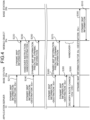
- FIG. 4 is a sequence diagram illustrating a procedure for delivering dynamic map information by the dynamic map delivery system according to the third embodiment. Note that processes similar to the processes described in the first and second embodiments are not described here.
- FIG. 4 illustrates an operational flowchart for a data transmission/reception process that is executed among the application server 10, the base stations 20a and 20b, and the mobile object 30x.
- the following section describes a case where the mobile object 30x moves from an area where communication with the base station 20a is possible to an area where communication with the base station 20b is possible.
- the mobile object 30x is denoted by "30x" as in FIG. 2 .
- ⁇ 20a ⁇ 20b> indicates that the delivery route is changed from the base station 20a to the base station 20b.
- the processes S210 and S220 illustrated in FIG. 4 are similar to the processes S10 and S20 described in FIG. 2 . That is, the application server 10 transmits, to the base station 20a, the dynamic map information the destination of which is the mobile object 30x (S210). The base station 20a receives the dynamic map information and transmits the dynamic map information to the mobile object 30x (S220). As a result, the mobile object 30x receives the dynamic map information, and executes the fully automated driving of the vehicle under a specific condition (Level 4 automated driving) using the dynamic map information.
- Level 4 automated driving the fully automated driving of the vehicle under a specific condition
- the mobile object 30x may move from an area where communication with the base station 20a can be performed to an area where communication with the base station 20b can be performed.
- the base station 20a notifies the mobile object 30x of the handover destination and a handover instruction, i.e. an instruction to perform the handover, before the base station 20a becomes unable to communicate with the mobile object 30x (S230).
- the base station 20a notifies the mobile object 30x of the handover destination and the handover instruction at the timing when the mobile object 30x performs the handover to the base station 20b.
- the base station 20a confirms the dynamic map information accumulated in the data server 200a.
- the base station 20a extracts the dynamic map information transmitted to the mobile object 30x from the dynamic map information accumulated in the data server 200a, and predicts, from the extracted dynamic map information, future dynamic map information corresponding to the time required for the handover. That is, the base station 20a predicts the dynamic map information in the period in which the mobile object 30x executes the handover.
- the future dynamic map information predicted by the base station 20a is predictive dynamic information, i.e. dynamic information predicted.
- the time required for the handover may be a time set in advance as a literal, or may be a time estimated by the base station 20a.
- the future dynamic map information predicted by the base station 20a may include semi-dynamic information, semi-static information, static information, and the like.
- the base station 20a may notify the mobile object 30x of the handover destination and the handover timing in the process S230.
- the application server 10 transmits, to the base station 20a, the dynamic map information the destination of which is the mobile object 30x (S240). As a result, the base station 20a receives the dynamic map information.
- the base station 20a adds the future information predicted, namely the predictive dynamic information, to the received dynamic map information, and transmits the dynamic map information to the mobile object 30x (S250). That is, after notifying the mobile object 30x to perform the handover, the base station 20a transmits the predictive dynamic information to the mobile object 30x in response to the dynamic map information from the application server 10. In other words, the base station 20a starts transmitting the predictive dynamic information to the mobile object 30x at the timing when the base station 20a notifies the mobile object 30x to perform the handover.
- the application server 10 continues the process of transmitting the dynamic map information the destination of which is the mobile object 30x to the base station 20a (S260).
- the base station 20a receives the dynamic map information.
- the base station 20a continues the process of adding the future information predicted, namely the predictive dynamic information, to the received dynamic map information and transmitting the dynamic map information to the mobile object 30x (S270).
- the application server 10 continues the process of transmitting the dynamic map information the destination of which is the mobile object 30x to the base station 20a until a wiring route change request is made by the base station 20a (S280).
- the base station 20a continues the process of adding the predictive dynamic information to the received dynamic map information and transmitting the dynamic map information to the mobile object 30x until the timing when the mobile object 30x starts the handover. Once the mobile object 30x starts the handover, the base station 20a stops the process of transmitting the dynamic map information the destination of which is the mobile object 30x to the mobile object 30x.
- the mobile object 30x executes the fully automated driving of the vehicle under a specific condition (Level 4 automated driving) based on the dynamic map information and the predictive dynamic information received from the base station 20a.
- the base station 20a requests the application server 10 to change the delivery route (S290). That is, the base station 20a requests the application server 10 to change the destination of the dynamic map information for the mobile object 30x from the base station 20a to the base station 20b.
- the application server 10 changes the destination of the dynamic map information for the mobile object 30x from the base station 20a to the base station 20b. That is, the application server 10 transmits, to the base station 20b, the dynamic map information the destination of which is the mobile object 30x (S300).
- the base station 20b receives the dynamic map information and transmits the dynamic map information to the mobile object 30x (S310).
- the mobile object 30x receives the dynamic map information, and executes the fully automated driving of the vehicle under a specific condition (Level 4 automated driving) using the dynamic map information.
- the processes S260 to S280 are not executed.
- the handover may be started after the processes S260 and S270 are performed multiple times.
- the second and third embodiments may be combined. That is, in the dynamic map delivery system 2, the mobile object 30x may determine the handover timing and notify the base station 20a of the handover timing, and the base station 20a may add the predictive dynamic information that is lost at the handover timing to the dynamic map information and transmit the dynamic map information to the mobile object 30y.
- the base station 20a predicts the future dynamic information at the time of the handover and transmits the predictive dynamic information to the mobile object 30x.
- the dynamic map delivery system 2 can execute the switching to the base station 20b by handover without lowering the level of automated driving even under fallback operation. Therefore, the dynamic map delivery system 2 can execute Level 4 automated driving even at the handover timing during fallback operation as in the first embodiment.
- the base station 20a according to the fourth embodiment transmits predictive dynamic information to the mobile object 30x less frequently than the base station 20a according to the third embodiment.
- the dynamic map delivery system 2 according to the fourth embodiment has the same configuration as the dynamic map delivery system 2 according to the third embodiment.
- FIG. 5 is a sequence diagram illustrating a procedure for delivering dynamic map information by the dynamic map delivery system according to the fourth embodiment. Note that processes similar to the processes described in the first to third embodiments are not described here. Like FIG. 3 , FIG. 4 illustrates an operational flowchart for a data transmission/reception process that is executed among the application server 10, the base stations 20a and 20b, and the mobile object 30x.
- the base station 20a starts transmitting the predictive dynamic information to the mobile object 30x at the timing when the base station 20a notifies the mobile object 30x to perform the handover.
- the base station 20a notifies the mobile object 30x of the handover timing, and transmits the predictive dynamic information to the mobile object 30x immediately before the handover timing.
- the processes S410 to S450 illustrated in FIG. 5 are similar to the processes S10 to S50 described in FIG. 2 .
- the base station 20a notifies the mobile object 30x of the handover destination and the handover timing before the base station 20a becomes unable to communicate with the base station 20a.
- the dynamic map delivery system 2 executes the processes S460 to S510 which are similar to the processes S260 to S310.
- the base station 20a adds the future information predicted, namely the predictive dynamic information, to the received dynamic map information and transmits the dynamic map information to the mobile object 30x. That is, the base station 20a transmits the dynamic map information received from the application server 10 and the predictive dynamic information predicted using the data server 200a to the mobile object 30x immediately before the designated handover timing. Thereafter, the mobile object 30x executes the handover from the base station 20a to the base station 20b, and the application server 10 executes the change of the delivery route.
- the second and fourth embodiments may be combined. That is, in the dynamic map delivery system 2, the mobile object 30x may determine the handover timing and notify the base station 20a of the handover timing, and the base station 20a may add the predictive dynamic information that is lost at the handover timing to the dynamic map information and transmit the dynamic map information to the mobile object 30y.
- the base station 20a transmits the predictive dynamic information to the mobile object 30x immediately before the handover timing.
- the dynamic map delivery system 2 can execute Level 4 automated driving similar to that in the first embodiment with a small amount of information transmission as compared with the third embodiment.
- the fifth embodiment will be described with reference to FIGS. 6 and 7 .
- the dynamic information of the dynamic map information is relayed when a plurality of mobile objects perform a handover.
- FIG. 6 is a diagram illustrating a configuration of a dynamic map delivery system according to the fifth embodiment. Components in FIG. 6 that achieve the same functions as those of the dynamic map delivery system 1 according to the first embodiment illustrated in FIG. 1 are denoted by the same reference signs, and redundant descriptions are omitted.
- the dynamic map delivery system 3 has the same components as the dynamic map delivery system 1. That is, the dynamic map delivery system 3 includes the application server 10, the base stations 20a and 20b, and the mobile objects 30x and 30y.
- both the mobile objects 30x and 30y are connected to the base station 20a, and each of the mobile objects 30x and 30y performs a handover to the base station 20b under fallback operation.
- the mobile object 30x performs the handover first, and the mobile object 30y performs the handover later.
- the mobile object 30x starts moving from an area where communication with the base station 20a is possible to an area where communication with the base station 20b is possible earlier than the mobile object 30y.
- FIG. 7 is a sequence diagram illustrating a procedure for delivering dynamic map information by the dynamic map delivery system according to the fifth embodiment. Note that processes similar to the processes described in the first to fourth embodiments are not described here.
- FIG. 7 illustrates an operational flowchart for a data transmission/reception process that is executed among the application server 10, the base stations 20a and 20b, and the mobile objects 30x and 30y.
- the mobile objects 30x and 30y may move from an area where communication with the base station 20a can be performed to an area where communication with the base station 20b can be performed.
- the base station 20a notifies the mobile objects 30x and 30y that the mobile objects 30x and 30y perform a handover to the base station 20b before the base station 20a becomes unable to communicate with the mobile object 30x.
- the base station 20a if the base station 20a can confirm that the mobile objects 30x and 30y are starting fallback operation, the base station 20a also notifies the mobile objects 30x and 30y of the timing when the handover is performed. In this manner, the base station 20a notifies the mobile object 30x of the handover destination and the handover timing (S610), and notifies the mobile object 30y of the handover destination and the handover timing (S620).
- the base station 20a instructs the mobile objects 30x and 30y to set up a communication session between the mobile objects 30x and 30y and in which order the handovers are performed. Following this instruction, the mobile objects 30x and 30y set up the communication session.
- the dynamic map delivery system 2 executes the processes S630 to S700 which are similar to the processes S40 to S110. As a result, at the timing when the mobile object 30x performs the handover from the base station 20a to the base station 20b, the mobile object 30y relays the dynamic information included in the dynamic map information for the mobile object 30x received from the base station 20a to the mobile object 30x.
- the mobile object 30x does not cancel the communication session between the mobile objects 30x and 30y following the completion of the handover to the base station 20b.
- the mobile object 30y executes the handover from the base station 20a to the base station 20b. Specifically, until receiving a change of the destination of the dynamic map information from the base station 20a, the application server 10 transmits the dynamic map information the destination of which is the mobile object 30y to the base station 20a (S710).
- the base station 20a transmits a destination change request to the application server 10 (S720). Specifically, the base station 20a requests the application server 10 to designate the mobile object 30x as the destination of the dynamic information of the dynamic map to be delivered to the mobile object 30y and deliver the dynamic information. This request specifies that the timing at which the mobile object 30x is designated as the destination and the dynamic information is delivered is the timing when the mobile object 30y performs the handover from the base station 20a to the base station 20b. That is, the base station 20a transmits, to the application server 10, a request for changing the destination to the mobile object 30x at the handover timing of the mobile object 30y. In addition, the base station 20a transmits the handover timing of the mobile object 30y to the application server 10.
- the application server 10 delivers the dynamic information of the dynamic map information for the mobile object 30y to the base station 20b by setting the mobile object 30x as the destination (S730).
- the base station 20b transmits the dynamic information of the dynamic map information for the mobile object 30y to the mobile object 30x (S740). In this case, the base station 20b adds flag information indicating that relay is to be performed to a packet of dynamic information and transmits the packet to the mobile object 30x.
- the mobile object 30x relays the dynamic information of the dynamic map information for the mobile object 30y received from the base station 20b to the mobile object 30y by utilizing the communication having the communication session established by the sidelink connection (S750). In this case, the mobile object 30x determines whether the packet of dynamic information contains flag information indicating that relay is to be performed. In response to determining that the packet contains flag information, the mobile object 30x relays the dynamic information to the mobile object 30y in the sidelink connection.
- the mobile object 30x when the mobile object 30y performs the handover from the base station 20a to the base station 20b, the mobile object 30x relays the dynamic information of the dynamic map information for the mobile object 30y received from the base station 20b to the mobile object 30y.
- the dynamic map delivery system 3 can deliver the dynamic map information to the plurality of mobile objects 30x and 30y under fallback operation without losing the dynamic map information at the handover timing.
- the base station 20a does not necessarily make a destination change request to the application server 10 for changing the destination of the dynamic information, but the base station 20a may receive the dynamic information addressed to the mobile object 30y from the application server 10 and change the destination to the mobile object 30x.
- the mobile object 30y cancels the communication session between the mobile objects 30x and 30y. Thereafter, the application server 10 transmits the dynamic map information to the base station 20b, and the base station 20b transmits the dynamic map information to the mobile object 30y. Then, the mobile object 30y receives the dynamic map information from the base station 20b.
- the second and fifth embodiments may be combined. That is, in the dynamic map delivery system 2, the mobile object 30x may determine the handover timing and notify the base station 20a of the handover timing, and the base station 20a may transmit the dynamic map information that is lost at the handover timing to the mobile object 30y. In addition, in the dynamic map delivery system 2, the mobile object 30y may determine the handover timing and notify the base station 20a of the handover timing, and the base station 20a may transmit the dynamic map information that is lost at the handover timing to the mobile object 30x.
- the third and fifth embodiments may be combined. That is, in the dynamic map delivery system 3, the base station 20a may transmit the predictive dynamic information to the mobile objects 30x and 30y.
- the fourth and fifth embodiments may be combined. That is, in the dynamic map delivery system 3, the base station 20a may transmit the predictive dynamic information to the mobile object 30x immediately before the handover timing of the mobile object 30x. In addition, in the dynamic map delivery system 2, the base station 20a may transmit the predictive dynamic information to the mobile object 30y immediately before the handover timing of the mobile object 30y.
- the second and fifth embodiments may be combined. That is, in the dynamic map delivery system 3, the mobile objects 30x and 30y may determine the handover timing and notify the base station 20a of the handover timing, and the base station 20a may add the predictive dynamic information that is lost at the handover timing to the dynamic map information and transmit the dynamic map information to the mobile objects 30x and 30y.
- the mobile object 30y when the mobile object 30x performs the handover, the mobile object 30y relays the dynamic information of the dynamic map information for the mobile object 30x received from the base station 20a to the mobile object 30x. In addition, when the mobile object 30y performs the handover, the mobile object 30x relays the dynamic information of the dynamic map information for the mobile object 30y received from the base station 20b to the mobile object 30y.
- the dynamic map delivery system 3 can execute the switching to the base station 20b by handover without lowering the level of automated driving even when the plurality of mobile objects 30x and 30y are under fallback operation. Therefore, the dynamic map delivery system 3 can execute Level 4 automated driving even at the handover timing during fallback operation as in the first embodiment.
- the application server 10 is implemented by processing circuitry.
- the processing circuitry may be a memory and a processor that executes a program stored in the memory, or may be dedicated hardware.
- the processing circuitry is also called a control circuit.
- FIG. 8 is a diagram illustrating an exemplary configuration of processing circuitry in the case that the processing circuitry provided in the application server according to the first to fifth embodiments is implemented by a processor and a memory.
- the processing circuitry 90 illustrated in FIG. 8 is a control circuit and includes a processor 91 and a memory 92.
- each function of the processing circuitry 90 is implemented by software, firmware, or a combination of software and firmware.
- Software or firmware is described as a program and stored in the memory 92.
- the processor 91 reads and executes the program stored in the memory 92, thereby implementing each function.
- the processing circuitry 90 includes the memory 92 for storing a program that results in the execution of processing of the application server 10. It can also be said that this program is a program for causing the application server 10 to execute each function implemented by the processing circuitry 90.
- This program may be provided by a storage medium in which the program is stored, or may be provided by other means such as a communication medium.
- the above program is a program that causes the application server 10 to execute the process of delivering the dynamic map information to the mobile objects 30x and 30y via the base station 20a or the base station 20b.
- the processor 91 is exemplified by a central processing unit (CPU), a processing device, an arithmetic device, a microprocessor, a microcomputer, or a digital signal processor (DSP).
- Examples of the memory 92 include a non-volatile or volatile semiconductor memory, a magnetic disk, a flexible disk, an optical disc, a compact disc, a mini disc, a digital versatile disc (DVD), and the like.
- Examples of non-volatile or volatile semiconductor memories include a random access memory (RAM), a read only memory (ROM), a flash memory, an erasable programmable ROM (EPROM), an electrically EPROM (EEPROM, registered trademark), and the like.
- FIG. 9 is a diagram illustrating an example of processing circuitry in the case that the processing circuitry provided in the application server according to the first to fifth embodiments is implemented by dedicated hardware.
- the processing circuitry 93 illustrated in FIG. 9 is a single circuit, a composite circuit, a programmed processor, a parallel programmed processor, an application specific integrated circuit (ASIC), a field programmable gate array (FPGA), or a combination thereof.
- the processing circuitry 93 may be partially implemented by dedicated hardware, and partially implemented by software or firmware. In this manner, the processing circuitry 93 can implement the above-described functions using dedicated hardware, software, firmware, or a combination thereof.
- 1 to 3 dynamic map delivery system 10 application server; 20a, 20b base station; 30x, 30y mobile object; 90, 93 processing circuitry; 91 processor; 92 memory; 200a, 200b data server; 300x, 300y mobile communication unit; 301x, 301y sidelink communication unit.
Landscapes
- Engineering & Computer Science (AREA)
- Physics & Mathematics (AREA)
- General Physics & Mathematics (AREA)
- Radar, Positioning & Navigation (AREA)
- Remote Sensing (AREA)
- Computer Networks & Wireless Communication (AREA)
- Signal Processing (AREA)
- Automation & Control Theory (AREA)
- Atmospheric Sciences (AREA)
- Life Sciences & Earth Sciences (AREA)
- Human Computer Interaction (AREA)
- Transportation (AREA)
- Mechanical Engineering (AREA)
- Mobile Radio Communication Systems (AREA)
- Control Of Driving Devices And Active Controlling Of Vehicle (AREA)
- Traffic Control Systems (AREA)
Abstract
Description
- The present disclosure relates to an application server, a base station, a dynamic map delivery system, a control circuit, a storage medium, and an information delivery method for delivering a dynamic map.
- There is a system in which a data delivery system delivers a dynamic map as a V2X application to a vehicle that implements automated driving under a specific condition (
Level 2 automated driving) so as to implement fully automated driving under a specific condition (Level 4 automated driving). The dynamic map is a digital map in which dynamic information such as movement of persons and semi-static information such as construction information are overlaid on static information such as a three-dimensional map including lanes, structures, and the like. The level of automated driving can be raised by delivering the dynamic map, which is important for determining the driving policy, to the vehicle. - A bottleneck in maintaining the performance of Level 4 automated driving is the communication quality between the vehicle to which the dynamic map is delivered and the network or the communication quality between the vehicle to which the dynamic map is delivered and the roadside unit. Therefore, standards for 5th Generation (5G) mobile communication systems specify that deterioration in communication quality is avoided by constantly setting up redundant sessions.
- In addition, 5G standards also consider situations in which redundant sessions cannot be set up due to the influence of the communication environment, vehicle capacity, and the like, specifying that communication interruption or fallback operation is performed in situations in which redundant sessions cannot be set up. When a vehicle performs base station switching by handover under the environment of communication interruption or fallback operation, continued delivery of the dynamic map to the vehicle causes a loss of delivery information, which greatly affects the performance of the automated driving.
- For this reason, in the communication control system of
Patent Literature 1, the vehicle communication device calculates the handover timing for base station switching based on the level of signals received from base stations. Then, the vehicle control device lowers the service level of travel assistance control based on the handover timing. - Patent Literature 1:
Japanese Patent Application Laid-open No. 2014-044639 - However, with the technique of
Patent Literature 1, although the handover timing can be estimated, the vehicle cannot receive the dynamic map at the handover timing. This is problematic in that the vehicle cannot update the dynamic map under fallback operation and has to lower the level of automated driving. - The present disclosure has been made in view of the above, and an object thereof is to obtain an application server capable of executing base station switching by handover without lowering the level of automated driving even under fallback operation.
- In order to solve the above-described problems and achieve the object, an application server according to the present disclosure delivers dynamic map information to a first mobile object that receives the dynamic map information, the dynamic map information being information of a dynamic map that is used for execution of fully automated driving under a specific condition. When the first mobile object executes a handover from a first base station capable of transmitting the dynamic map information in a first area to a second base station capable of transmitting the dynamic map information in a second area, in a case where the first mobile object is in fallback operation in which simultaneous communication with the first base station and the second base station is unavailable, the application server delivers the dynamic map information to the first mobile object via the first base station and a communication device capable of receiving the dynamic map information from the first base station.
- The application server according to the present disclosure can achieve the effect of executing base station switching by handover without lowering the level of automated driving even under fallback operation.
-
-
FIG. 1 is a diagram illustrating a configuration of a dynamic map delivery system according to a first embodiment. -
FIG. 2 is a sequence diagram illustrating a procedure for delivering dynamic map information by the dynamic map delivery system according to the first embodiment. -
FIG. 3 is a diagram illustrating a configuration of a dynamic map delivery system according to a third embodiment. -
FIG. 4 is a sequence diagram illustrating a procedure for delivering dynamic map information by the dynamic map delivery system according to the third embodiment. -
FIG. 5 is a sequence diagram illustrating a procedure for delivering dynamic map information by a dynamic map delivery system according to a fourth embodiment. -
FIG. 6 is a diagram illustrating a configuration of a dynamic map delivery system according to a fifth embodiment. -
FIG. 7 is a sequence diagram illustrating a procedure for delivering dynamic map information by the dynamic map delivery system according to the fifth embodiment. -
FIG. 8 is a diagram illustrating an exemplary configuration of processing circuitry in the case that the processing circuitry provided in the application server according to the first to fifth embodiments is implemented by a processor and a memory. -
FIG. 9 is a diagram illustrating an example of processing circuitry in the case that the processing circuitry provided in the application server according to the first to fifth embodiments is implemented by dedicated hardware. - Hereinafter, an application server, a base station, a dynamic map delivery system, a control circuit, a storage medium, and an information delivery method according to embodiments of the present disclosure will be described in detail with reference to the drawings.
-
FIG. 1 is a diagram illustrating a configuration of a dynamic map delivery system according to the first embodiment. The dynamicmap delivery system 1 includes anapplication server 10,base stations mobile objects mobile objects - The
application server 10 is a server that stores application data including dynamic map information, i.e. information of a dynamic map. The dynamic map information is information that is provided to themobile objects application server 10 delivers the dynamic map information to themobile object 30x via thebase station 20a or thebase station 20b. - The dynamic map information includes static information that is information of a three-dimensional map such as the position of road surfaces, the position of lanes, and the position of buildings. The dynamic map information also includes semi-static information such as a schedule of traffic regulations, a schedule of road construction, and weather information. The dynamic map information also includes semi-dynamic information such as information on accidents, information on traffic jams, and information on traffic regulations. The dynamic map information also includes dynamic information such as movement of persons. The
application server 10 stores the dynamic map information in which the static information, the semi-static information, the semi-dynamic information, and the dynamic information are combined. - The
application server 10 delivers the dynamic map information to themobile objects mobile objects application server 10 may be disposed in any way in the dynamicmap delivery system 1. For example, theapplication server 10 may be disposed ahead of the core network for communication, or may be disposed immediately below thebase stations application server 10 may be installed at distributed locations according to the update frequency of delivery data such as the dynamic map information. - The
base stations mobile objects application server 10. - The
base station 20a can transmit the dynamic map information to themobile objects base station 20b can transmit the dynamic map information to themobile objects base station 20a is a first base station, and thebase station 20b is a second base station. The first area and the second area partially overlap, and handover can be executed in the overlapping area. - Either the
base station 20a or thebase station 20b can connect to themobile object 30x at a specific timing and provide the service of delivering delivery data such as the dynamic map information. During the fallback operation of themobile object 30x, thebase stations mobile object 30x. When themobile object 30x in the fallback operation performs a handover, thebase stations mobile object 30x. - Similarly, either the
base station 20a or thebase station 20b can connect to themobile object 30y at a specific timing and provide the service of delivering delivery data such as the dynamic map information. During the fallback operation of themobile object 30y, thebase stations mobile object 30y. When themobile object 30y in the fallback operation performs a handover, thebase stations mobile object 30y. - The
mobile object 30x includes amobile communication unit 300x capable of executing communication with thebase stations mobile object 30x includes asidelink communication unit 301x capable of executing sidelink communication with a nearby mobile object (here, themobile object 30y) or a roadside unit (not illustrated). Note that the following description refers to a case where thesidelink communication unit 301x of themobile object 30x executes communication processing with themobile object 30y. - In the
mobile object 30x, themobile communication unit 300x acquires the dynamic map information from theapplication server 10 via thebase station FIG. 1 illustrates a situation in which themobile communication unit 300x is connected to thebase station 20a and is about to perform a handover to thebase station 20b. - The
mobile communication unit 300x of themobile object 30x cannot be connected to a plurality of base stations simultaneously during fallback operation. The term "fallback operation" as used herein refers to an operation in which themobile object 30x continues operational processing while executing restrictions on processing speed, some functions, and the like. - When performing a handover during fallback operation, the
mobile communication unit 300x is for a moment not connected to either thebase station 20a or thebase station 20b. When themobile object 30x performs a handover during fallback operation, asidelink communication unit 301y to be described later transmits the dynamic map information to themobile object 30x. As a result, thesidelink communication unit 301x acquires the dynamic map information via themobile object 30y, and themobile object 30x executes Level 4 automated driving. - The first embodiment describes a case where the
mobile object 30x acquires the dynamic map information from theapplication server 10 via themobile object 30y during the handover, but themobile object 30x may acquire the dynamic map information from theapplication server 10 via another communication device. For example, themobile object 30x may acquire the dynamic map information from theapplication server 10 via a roadside unit having a function similar to that of themobile object 30y. - The
mobile object 30y has a function similar to that of themobile object 30x. Themobile object 30y includes amobile communication unit 300y capable of executing communication with thebase stations mobile object 30y includes thesidelink communication unit 301y capable of executing sidelink communication with a nearby mobile object (here, themobile object 30x) or a roadside unit (not illustrated). Note that the following description refers to a case where thesidelink communication unit 301y of themobile object 30y executes communication processing with themobile object 30x. - In the
mobile object 30y, themobile communication unit 300y acquires the dynamic map information from theapplication server 10 via thebase station FIG. 1 illustrates a situation in which themobile communication unit 300y is connected to thebase station 20a and is capable of receiving the dynamic map information from theapplication server 10. - The
mobile communication unit 300y of themobile object 30y cannot be connected to a plurality of base stations simultaneously during fallback operation. Therefore, when performing a handover during fallback operation, themobile communication unit 300y is for a moment not connected to either thebase station 20a or thebase station 20b. When themobile object 30y performs a handover during fallback operation, thesidelink communication unit 301x transmits the dynamic map information to themobile object 30y. As a result, thesidelink communication unit 301y acquires the dynamic map information via themobile object 30x, and themobile object 30y executes Level 4 automated driving. - The
mobile object 30x is a first mobile object, and themobile object 30y is a communication device. The communication device is a second mobile object or a roadside unit. Note that the first embodiment assumes that there is no timing at which themobile object 30y is disconnected from thebase station 20a until themobile object 30x completes the handover. - Next, processing for delivering dynamic map information in the dynamic
map delivery system 1 will be described.FIG. 2 is a sequence diagram illustrating a procedure for delivering dynamic map information by the dynamic map delivery system according to the first embodiment. -
FIG. 2 illustrates an operational flowchart for a data transmission/reception process that is executed among theapplication server 10, thebase stations mobile objects mobile object 30x moves from an area where communication with thebase station 20a is possible to an area where communication with thebase station 20b is possible. - Note that in some parts in
FIG. 2 , themobile object 30x is denoted by "30x" and themobile object 30y is denoted by "30y". For example, <destination: 30x> indicates that the destination is themobile object 30x, and <destination: 30y> indicates that the destination is themobile object 30y. In addition, <new destination: 30y> indicates that the destination is changed to themobile object 30y. - The
application server 10 transmits, to thebase station 20a, the dynamic map information the destination of which is themobile object 30x (S10). Thebase station 20a receives the dynamic map information and transmits the dynamic map information to themobile object 30x (S20). As a result, themobile object 30x receives the dynamic map information, and executes the fully automated driving of the vehicle under a specific condition (Level 4 automated driving) using the dynamic map information. - The
mobile object 30x may move from an area where communication with thebase station 20a can be performed to an area where communication with thebase station 20b can be performed. In this case, thebase station 20a notifies themobile object 30x to perform a handover to thebase station 20b before thebase station 20a becomes unable to communicate with themobile object 30x. At the time of this notification, if thebase station 20a can confirm that themobile object 30x is starting fallback operation, thebase station 20a also notifies themobile object 30x of the handover timing, i.e. the timing when the handover is performed. In this manner, when themobile object 30x is performing fallback operation, thebase station 20a notifies themobile object 30x of the handover destination and the handover timing (S30). - For example, the
base station 20a may determine whether themobile object 30x is starting fallback operation based on whether themobile object 30x satisfies a condition for starting fallback operation, or may inquire of themobile object 30x whether to start fallback operation. - If the
mobile object 30x executes the handover while staying in fallback operation, loss is caused in the reception of the dynamic map information. Thebase station 20a sets, as the timing when the handover is performed, a timing at which themobile object 30x loses only information with a high update frequency among the dynamic map information. Information with a high update frequency is information that is updated at shorter intervals than specific time intervals. An example of information with a high update frequency is the dynamic information included in the dynamic map information. - Thereafter, until receiving a change of the destination of the dynamic map information from the
base station 20a, theapplication server 10 transmits the dynamic map information the destination of which is themobile object 30x to thebase station 20a (S40). As a result, thebase station 20a receives the dynamic map information and transmits the dynamic map information to themobile object 30x (S50). - After notifying the
mobile object 30x of the handover destination and the handover timing, thebase station 20a selects themobile object 30y near themobile object 30x, and requests themobile object 30x to establish a sidelink connection between themobile object 30x and themobile object 30y. The communication device that is selected by thebase station 20a is a device (here, themobile object 30y) capable of sidelink connection with themobile object 30x. The sidelink connection is a sidelink-type connection in which direct communication is performed between the vehicles, namely between themobile objects - After receiving the request, the
mobile object 30x makes a request to themobile object 30y for the sidelink connection with themobile object 30y. As a result, themobile object 30y accepts the sidelink connection, and communication through the sidelink connection is enabled between themobile objects - Note that the
base station 20a may request themobile object 30y to establish a sidelink connection between themobile objects mobile object 30y makes a request to themobile object 30x for the sidelink connection with themobile object 30x. Then, themobile object 30x accepts the sidelink connection, and communication through the sidelink connection is enabled between themobile objects - After completing the sidelink connection, the
base station 20a transmits a destination change request to the application server 10 (S60). Specifically, thebase station 20a requests theapplication server 10 to designate themobile object 30y as the destination of the dynamic information of the dynamic map information to be delivered to themobile object 30x and deliver the dynamic information. This request specifies that the timing at which themobile object 30y is designated as the destination is the timing when themobile object 30x performs the handover from thebase station 20a to thebase station 20b. That is, thebase station 20a transmits, to theapplication server 10, a request for changing the destination to themobile object 30y at the handover timing of themobile object 30x. In addition, thebase station 20a transmits the handover timing of themobile object 30x to theapplication server 10. - As a result, at the timing when the
mobile object 30x performs the handover from thebase station 20a to thebase station 20b, theapplication server 10 delivers the dynamic information of the dynamic map information for themobile object 30x to thebase station 20a by setting themobile object 30y as the destination (S70). - The
base station 20a transmits the dynamic information of the dynamic map information for themobile object 30x to themobile object 30y (S80). In this case, thebase station 20a adds flag information indicating that relay is to be performed to a packet of dynamic map information (in the first embodiment, dynamic information) and transmits the packet to themobile object 30y. - The
mobile object 30y relays the dynamic information of the dynamic map information for themobile object 30x received from thebase station 20a to themobile object 30x by utilizing the communication having the communication session established by the sidelink connection (S90). In this case, themobile object 30y determines whether the packet of dynamic information contains flag information indicating that relay is to be performed. In response to determining that the packet contains flag information, themobile object 30y relays the dynamic information to themobile object 30x in the sidelink connection. - In this manner, when the
mobile object 30x performs the handover from thebase station 20a to thebase station 20b, themobile object 30y relays the dynamic information of the dynamic map information for themobile object 30x received from thebase station 20a to themobile object 30x. - Note that the destination change is not limited to the case where the
base station 20a requests theapplication server 10 to change the destination and theapplication server 10 changes the destination of the dynamic information. For example, thebase station 20a may receive the dynamic information addressed to themobile object 30x from theapplication server 10 and change the destination to themobile object 30y. - After the handover to the
base station 20b is completed, themobile object 30x cancels the communication session between themobile objects application server 10 transmits the dynamic map information for themobile object 30x to thebase station 20b (S100), and thebase station 20b transmits the dynamic map information to themobile object 30x (S110). Then, themobile object 30x receives the dynamic map information from thebase station 20b. - As described above, in the dynamic
map delivery system 1, themobile object 30y relays the dynamic map information that may have been lost in themobile object 30x to themobile object 30x, and thus themobile object 30x can acquire the dynamic map information without losing the dynamic map information. As a result, the dynamicmap delivery system 1 can execute Level 4 automated driving. - Note that during the handover, another device (e.g. a roadside unit) instead of the
mobile object 30y may relay the dynamic map information to themobile object 30x. In a case where the device that relays the dynamic map information to themobile object 30x is a roadside unit, the roadside unit near the point where themobile object 30x performs the handover relays the dynamic map information to themobile object 30x. - Thus, in the first embodiment, when the
mobile object 30x performs the handover, themobile object 30y relays the dynamic information of the dynamic map information for themobile object 30x received from thebase station 20a to themobile object 30x. As a result, the dynamicmap delivery system 1 can execute the switching to thebase station 20b by handover without lowering the level of automated driving even when themobile object 30x is under fallback operation. Therefore, the dynamicmap delivery system 1 can execute Level 4 automated driving even at the handover timing during fallback operation. - Next, the second embodiment will be described. In the second embodiment, the
mobile object 30x determines the handover timing and notifies thebase station 20a of the handover timing, and thebase station 20a transmits the dynamic map information that is lost at the handover timing to themobile object 30y. - The dynamic
map delivery system 1 according to the second embodiment has the same configuration as the dynamicmap delivery system 1 according to the first embodiment. In the first embodiment, only the dynamic information is relayed by themobile object 30y so that the information relayed is limited to a minimum data amount. In the second embodiment, themobile object 30x autonomously determines the handover timing, and notifies thebase station 20a of the determined handover timing. Thebase station 20a causes themobile object 30y to relay the dynamic map information that is lost at the handover timing determined by themobile object 30x so that the dynamic map information is transmitted to themobile object 30x. - Thus, in the second embodiment, the
mobile object 30x determines the handover timing. As a result, while the handover timing is determined by themobile object 30x, the dynamicmap delivery system 1 can execute the switching to thebase station 20b by handover without lowering the level of automated driving even when themobile object 30x is under fallback operation as in the first embodiment. Therefore, the dynamicmap delivery system 1 can execute Level 4 automated driving even at the handover timing during fallback operation as in the first embodiment. - Next, the third embodiment will be described with reference to
FIGS. 3 and4 . In the first and second embodiments, the othermobile object 30y different from themobile object 30x relays the dynamic information to themobile object 30x to maintain the Level 4 automated driving of themobile object 30x. In the third embodiment, thebase station 20a interpolates the dynamic information by predicting the dynamic information, and delivers the predicted dynamic information to themobile object 30x in advance. -
FIG. 3 is a diagram illustrating a configuration of a dynamic map delivery system according to the third embodiment. Components inFIG. 3 that achieve the same functions as those of the dynamicmap delivery system 1 according to the first embodiment illustrated inFIG. 1 are denoted by the same reference signs, and redundant descriptions are omitted. - The dynamic
map delivery system 2 includes theapplication server 10, thebase stations mobile object 30x. The third embodiment describes a case where themobile object 30x performs a handover from thebase station 20a to thebase station 20b during fallback operation. During fallback operation, themobile object 30x cannot be connected to a plurality of base stations simultaneously, and is for a moment not connected to either thebase station 20a or thebase station 20b. - The
base stations data servers data server 200a is a server that stores the dynamic map information that has been delivered from theapplication server 10 to themobile object 30x. Thedata server 200b is a server that stores the dynamic map information to be delivered from theapplication server 10 to themobile object 30x. - Next, processing for delivering dynamic map information in the dynamic
map delivery system 2 will be described.FIG. 4 is a sequence diagram illustrating a procedure for delivering dynamic map information by the dynamic map delivery system according to the third embodiment. Note that processes similar to the processes described in the first and second embodiments are not described here. -
FIG. 4 illustrates an operational flowchart for a data transmission/reception process that is executed among theapplication server 10, thebase stations mobile object 30x. The following section describes a case where themobile object 30x moves from an area where communication with thebase station 20a is possible to an area where communication with thebase station 20b is possible. - Note that in some parts in
FIG. 4 , themobile object 30x is denoted by "30x" as inFIG. 2 . For example, <20a→20b> indicates that the delivery route is changed from thebase station 20a to thebase station 20b. - The processes S210 and S220 illustrated in
FIG. 4 are similar to the processes S10 and S20 described inFIG. 2 . That is, theapplication server 10 transmits, to thebase station 20a, the dynamic map information the destination of which is themobile object 30x (S210). Thebase station 20a receives the dynamic map information and transmits the dynamic map information to themobile object 30x (S220). As a result, themobile object 30x receives the dynamic map information, and executes the fully automated driving of the vehicle under a specific condition (Level 4 automated driving) using the dynamic map information. - The
mobile object 30x may move from an area where communication with thebase station 20a can be performed to an area where communication with thebase station 20b can be performed. In this case, thebase station 20a notifies themobile object 30x of the handover destination and a handover instruction, i.e. an instruction to perform the handover, before thebase station 20a becomes unable to communicate with themobile object 30x (S230). - Specifically, the
base station 20a notifies themobile object 30x of the handover destination and the handover instruction at the timing when themobile object 30x performs the handover to thebase station 20b. At the time of this notification, if thebase station 20a can confirm that themobile object 30x is starting fallback operation, thebase station 20a confirms the dynamic map information accumulated in thedata server 200a. Thebase station 20a extracts the dynamic map information transmitted to themobile object 30x from the dynamic map information accumulated in thedata server 200a, and predicts, from the extracted dynamic map information, future dynamic map information corresponding to the time required for the handover. That is, thebase station 20a predicts the dynamic map information in the period in which themobile object 30x executes the handover. - The future dynamic map information predicted by the
base station 20a is predictive dynamic information, i.e. dynamic information predicted. The time required for the handover may be a time set in advance as a literal, or may be a time estimated by thebase station 20a. Note that the future dynamic map information predicted by thebase station 20a may include semi-dynamic information, semi-static information, static information, and the like. - Note that the
base station 20a may notify themobile object 30x of the handover destination and the handover timing in the process S230. - The
application server 10 transmits, to thebase station 20a, the dynamic map information the destination of which is themobile object 30x (S240). As a result, thebase station 20a receives the dynamic map information. Thebase station 20a adds the future information predicted, namely the predictive dynamic information, to the received dynamic map information, and transmits the dynamic map information to themobile object 30x (S250). That is, after notifying themobile object 30x to perform the handover, thebase station 20a transmits the predictive dynamic information to themobile object 30x in response to the dynamic map information from theapplication server 10. In other words, thebase station 20a starts transmitting the predictive dynamic information to themobile object 30x at the timing when thebase station 20a notifies themobile object 30x to perform the handover. - The
application server 10 continues the process of transmitting the dynamic map information the destination of which is themobile object 30x to thebase station 20a (S260). Thebase station 20a receives the dynamic map information. Thebase station 20a continues the process of adding the future information predicted, namely the predictive dynamic information, to the received dynamic map information and transmitting the dynamic map information to themobile object 30x (S270). - The
application server 10 continues the process of transmitting the dynamic map information the destination of which is themobile object 30x to thebase station 20a until a wiring route change request is made by thebase station 20a (S280). - The
base station 20a continues the process of adding the predictive dynamic information to the received dynamic map information and transmitting the dynamic map information to themobile object 30x until the timing when themobile object 30x starts the handover. Once themobile object 30x starts the handover, thebase station 20a stops the process of transmitting the dynamic map information the destination of which is themobile object 30x to themobile object 30x. Themobile object 30x executes the fully automated driving of the vehicle under a specific condition (Level 4 automated driving) based on the dynamic map information and the predictive dynamic information received from thebase station 20a. - Once the
mobile object 30x starts the handover, thebase station 20a requests theapplication server 10 to change the delivery route (S290). That is, thebase station 20a requests theapplication server 10 to change the destination of the dynamic map information for themobile object 30x from thebase station 20a to thebase station 20b. - As a result, the
application server 10 changes the destination of the dynamic map information for themobile object 30x from thebase station 20a to thebase station 20b. That is, theapplication server 10 transmits, to thebase station 20b, the dynamic map information the destination of which is themobile object 30x (S300). Thebase station 20b receives the dynamic map information and transmits the dynamic map information to themobile object 30x (S310). As a result, themobile object 30x receives the dynamic map information, and executes the fully automated driving of the vehicle under a specific condition (Level 4 automated driving) using the dynamic map information. - Note that if the
mobile object 30x starts the handover immediately after S250, the processes S260 to S280 are not executed. In addition, the handover may be started after the processes S260 and S270 are performed multiple times. - The second and third embodiments may be combined. That is, in the dynamic
map delivery system 2, themobile object 30x may determine the handover timing and notify thebase station 20a of the handover timing, and thebase station 20a may add the predictive dynamic information that is lost at the handover timing to the dynamic map information and transmit the dynamic map information to themobile object 30y. - Thus, in the third embodiment, the
base station 20a predicts the future dynamic information at the time of the handover and transmits the predictive dynamic information to themobile object 30x. As a result, the dynamicmap delivery system 2 can execute the switching to thebase station 20b by handover without lowering the level of automated driving even under fallback operation. Therefore, the dynamicmap delivery system 2 can execute Level 4 automated driving even at the handover timing during fallback operation as in the first embodiment. - Next, the fourth embodiment will be described with reference to
FIG. 5 . Thebase station 20a according to the fourth embodiment transmits predictive dynamic information to themobile object 30x less frequently than thebase station 20a according to the third embodiment. - The dynamic
map delivery system 2 according to the fourth embodiment has the same configuration as the dynamicmap delivery system 2 according to the third embodiment. -
FIG. 5 is a sequence diagram illustrating a procedure for delivering dynamic map information by the dynamic map delivery system according to the fourth embodiment. Note that processes similar to the processes described in the first to third embodiments are not described here. LikeFIG. 3 ,FIG. 4 illustrates an operational flowchart for a data transmission/reception process that is executed among theapplication server 10, thebase stations mobile object 30x. - In the third embodiment, the
base station 20a starts transmitting the predictive dynamic information to themobile object 30x at the timing when thebase station 20a notifies themobile object 30x to perform the handover. In the fourth embodiment, thebase station 20a notifies themobile object 30x of the handover timing, and transmits the predictive dynamic information to themobile object 30x immediately before the handover timing. - The processes S410 to S450 illustrated in
FIG. 5 are similar to the processes S10 to S50 described inFIG. 2 . For example, in S430, as in S30, thebase station 20a notifies themobile object 30x of the handover destination and the handover timing before thebase station 20a becomes unable to communicate with thebase station 20a. - Thereafter, the dynamic
map delivery system 2 executes the processes S460 to S510 which are similar to the processes S260 to S310. For example, in S470, as in S270, thebase station 20a adds the future information predicted, namely the predictive dynamic information, to the received dynamic map information and transmits the dynamic map information to themobile object 30x. That is, thebase station 20a transmits the dynamic map information received from theapplication server 10 and the predictive dynamic information predicted using thedata server 200a to themobile object 30x immediately before the designated handover timing. Thereafter, themobile object 30x executes the handover from thebase station 20a to thebase station 20b, and theapplication server 10 executes the change of the delivery route. - The second and fourth embodiments may be combined. That is, in the dynamic
map delivery system 2, themobile object 30x may determine the handover timing and notify thebase station 20a of the handover timing, and thebase station 20a may add the predictive dynamic information that is lost at the handover timing to the dynamic map information and transmit the dynamic map information to themobile object 30y. - Thus, in the fourth embodiment, the
base station 20a transmits the predictive dynamic information to themobile object 30x immediately before the handover timing. As a result, the dynamicmap delivery system 2 can execute Level 4 automated driving similar to that in the first embodiment with a small amount of information transmission as compared with the third embodiment. - Next, the fifth embodiment will be described with reference to
FIGS. 6 and7 . In the fifth embodiment, the dynamic information of the dynamic map information is relayed when a plurality of mobile objects perform a handover. -
FIG. 6 is a diagram illustrating a configuration of a dynamic map delivery system according to the fifth embodiment. Components inFIG. 6 that achieve the same functions as those of the dynamicmap delivery system 1 according to the first embodiment illustrated inFIG. 1 are denoted by the same reference signs, and redundant descriptions are omitted. - The dynamic map delivery system 3 has the same components as the dynamic
map delivery system 1. That is, the dynamic map delivery system 3 includes theapplication server 10, thebase stations mobile objects - In the fifth embodiment, both the
mobile objects base station 20a, and each of themobile objects base station 20b under fallback operation. In this case, themobile object 30x performs the handover first, and themobile object 30y performs the handover later. For example, themobile object 30x starts moving from an area where communication with thebase station 20a is possible to an area where communication with thebase station 20b is possible earlier than themobile object 30y. -
FIG. 7 is a sequence diagram illustrating a procedure for delivering dynamic map information by the dynamic map delivery system according to the fifth embodiment. Note that processes similar to the processes described in the first to fourth embodiments are not described here. -
FIG. 7 illustrates an operational flowchart for a data transmission/reception process that is executed among theapplication server 10, thebase stations mobile objects - The
mobile objects base station 20a can be performed to an area where communication with thebase station 20b can be performed. In this case, thebase station 20a notifies themobile objects mobile objects base station 20b before thebase station 20a becomes unable to communicate with themobile object 30x. At the time of this notification, if thebase station 20a can confirm that themobile objects base station 20a also notifies themobile objects base station 20a notifies themobile object 30x of the handover destination and the handover timing (S610), and notifies themobile object 30y of the handover destination and the handover timing (S620). - When notifying the
mobile objects base station 20a instructs themobile objects mobile objects mobile objects - The dynamic
map delivery system 2 executes the processes S630 to S700 which are similar to the processes S40 to S110. As a result, at the timing when themobile object 30x performs the handover from thebase station 20a to thebase station 20b, themobile object 30y relays the dynamic information included in the dynamic map information for themobile object 30x received from thebase station 20a to themobile object 30x. - Note that the
mobile object 30x according to the fifth embodiment does not cancel the communication session between themobile objects base station 20b. After themobile object 30x completes the handover to thebase station 20b, themobile object 30y executes the handover from thebase station 20a to thebase station 20b. Specifically, until receiving a change of the destination of the dynamic map information from thebase station 20a, theapplication server 10 transmits the dynamic map information the destination of which is themobile object 30y to thebase station 20a (S710). - Once the
mobile object 30x completes the handover to thebase station 20b, thebase station 20a transmits a destination change request to the application server 10 (S720). Specifically, thebase station 20a requests theapplication server 10 to designate themobile object 30x as the destination of the dynamic information of the dynamic map to be delivered to themobile object 30y and deliver the dynamic information. This request specifies that the timing at which themobile object 30x is designated as the destination and the dynamic information is delivered is the timing when themobile object 30y performs the handover from thebase station 20a to thebase station 20b. That is, thebase station 20a transmits, to theapplication server 10, a request for changing the destination to themobile object 30x at the handover timing of themobile object 30y. In addition, thebase station 20a transmits the handover timing of themobile object 30y to theapplication server 10. - As a result, at the timing when the
mobile object 30y performs the handover from thebase station 20a to thebase station 20b, theapplication server 10 delivers the dynamic information of the dynamic map information for themobile object 30y to thebase station 20b by setting themobile object 30x as the destination (S730). - The
base station 20b transmits the dynamic information of the dynamic map information for themobile object 30y to themobile object 30x (S740). In this case, thebase station 20b adds flag information indicating that relay is to be performed to a packet of dynamic information and transmits the packet to themobile object 30x. - The
mobile object 30x relays the dynamic information of the dynamic map information for themobile object 30y received from thebase station 20b to themobile object 30y by utilizing the communication having the communication session established by the sidelink connection (S750). In this case, themobile object 30x determines whether the packet of dynamic information contains flag information indicating that relay is to be performed. In response to determining that the packet contains flag information, themobile object 30x relays the dynamic information to themobile object 30y in the sidelink connection. - In this manner, when the
mobile object 30y performs the handover from thebase station 20a to thebase station 20b, themobile object 30x relays the dynamic information of the dynamic map information for themobile object 30y received from thebase station 20b to themobile object 30y. As a result, the dynamic map delivery system 3 can deliver the dynamic map information to the plurality ofmobile objects - Note that the
base station 20a does not necessarily make a destination change request to theapplication server 10 for changing the destination of the dynamic information, but thebase station 20a may receive the dynamic information addressed to themobile object 30y from theapplication server 10 and change the destination to themobile object 30x. - After the handover to the
base station 20b is completed, themobile object 30y cancels the communication session between themobile objects application server 10 transmits the dynamic map information to thebase station 20b, and thebase station 20b transmits the dynamic map information to themobile object 30y. Then, themobile object 30y receives the dynamic map information from thebase station 20b. - The second and fifth embodiments may be combined. That is, in the dynamic
map delivery system 2, themobile object 30x may determine the handover timing and notify thebase station 20a of the handover timing, and thebase station 20a may transmit the dynamic map information that is lost at the handover timing to themobile object 30y. In addition, in the dynamicmap delivery system 2, themobile object 30y may determine the handover timing and notify thebase station 20a of the handover timing, and thebase station 20a may transmit the dynamic map information that is lost at the handover timing to themobile object 30x. - Moreover, the third and fifth embodiments may be combined. That is, in the dynamic map delivery system 3, the
base station 20a may transmit the predictive dynamic information to themobile objects - Moreover, the fourth and fifth embodiments may be combined. That is, in the dynamic map delivery system 3, the
base station 20a may transmit the predictive dynamic information to themobile object 30x immediately before the handover timing of themobile object 30x. In addition, in the dynamicmap delivery system 2, thebase station 20a may transmit the predictive dynamic information to themobile object 30y immediately before the handover timing of themobile object 30y. - Moreover, the second and fifth embodiments may be combined. That is, in the dynamic map delivery system 3, the
mobile objects base station 20a of the handover timing, and thebase station 20a may add the predictive dynamic information that is lost at the handover timing to the dynamic map information and transmit the dynamic map information to themobile objects - Thus, in the fifth embodiment, when the
mobile object 30x performs the handover, themobile object 30y relays the dynamic information of the dynamic map information for themobile object 30x received from thebase station 20a to themobile object 30x. In addition, when themobile object 30y performs the handover, themobile object 30x relays the dynamic information of the dynamic map information for themobile object 30y received from thebase station 20b to themobile object 30y. - As a result, the dynamic map delivery system 3 can execute the switching to the
base station 20b by handover without lowering the level of automated driving even when the plurality ofmobile objects - Next, a hardware configuration of the
application server 10 will be described. Theapplication server 10 is implemented by processing circuitry. The processing circuitry may be a memory and a processor that executes a program stored in the memory, or may be dedicated hardware. The processing circuitry is also called a control circuit. -
FIG. 8 is a diagram illustrating an exemplary configuration of processing circuitry in the case that the processing circuitry provided in the application server according to the first to fifth embodiments is implemented by a processor and a memory. Theprocessing circuitry 90 illustrated inFIG. 8 is a control circuit and includes a processor 91 and amemory 92. In a case where theprocessing circuitry 90 is configured with the processor 91 and thememory 92, each function of theprocessing circuitry 90 is implemented by software, firmware, or a combination of software and firmware. Software or firmware is described as a program and stored in thememory 92. In theprocessing circuitry 90, the processor 91 reads and executes the program stored in thememory 92, thereby implementing each function. That is, theprocessing circuitry 90 includes thememory 92 for storing a program that results in the execution of processing of theapplication server 10. It can also be said that this program is a program for causing theapplication server 10 to execute each function implemented by theprocessing circuitry 90. This program may be provided by a storage medium in which the program is stored, or may be provided by other means such as a communication medium. - It can also be said that the above program is a program that causes the
application server 10 to execute the process of delivering the dynamic map information to themobile objects base station 20a or thebase station 20b. - The processor 91 is exemplified by a central processing unit (CPU), a processing device, an arithmetic device, a microprocessor, a microcomputer, or a digital signal processor (DSP). Examples of the
memory 92 include a non-volatile or volatile semiconductor memory, a magnetic disk, a flexible disk, an optical disc, a compact disc, a mini disc, a digital versatile disc (DVD), and the like. Examples of non-volatile or volatile semiconductor memories include a random access memory (RAM), a read only memory (ROM), a flash memory, an erasable programmable ROM (EPROM), an electrically EPROM (EEPROM, registered trademark), and the like. -
FIG. 9 is a diagram illustrating an example of processing circuitry in the case that the processing circuitry provided in the application server according to the first to fifth embodiments is implemented by dedicated hardware. For example, theprocessing circuitry 93 illustrated inFIG. 9 is a single circuit, a composite circuit, a programmed processor, a parallel programmed processor, an application specific integrated circuit (ASIC), a field programmable gate array (FPGA), or a combination thereof. Theprocessing circuitry 93 may be partially implemented by dedicated hardware, and partially implemented by software or firmware. In this manner, theprocessing circuitry 93 can implement the above-described functions using dedicated hardware, software, firmware, or a combination thereof. - The configurations described in the above-mentioned embodiments indicate examples. The embodiments can be combined with another well-known technique and with each other, and some of the configurations can be omitted or changed in a range not departing from the gist.
- 1 to 3 dynamic map delivery system; 10 application server; 20a, 20b base station; 30x, 30y mobile object; 90, 93 processing circuitry; 91 processor; 92 memory; 200a, 200b data server; 300x, 300y mobile communication unit; 301x, 301y sidelink communication unit.
Claims (18)
- An application server that delivers dynamic map information to a first mobile object that receives the dynamic map information, the dynamic map information being information of a dynamic map that is used for execution of fully automated driving under a specific condition, wherein
when the first mobile object executes a handover from a first base station capable of transmitting the dynamic map information in a first area to a second base station capable of transmitting the dynamic map information in a second area, in a case where the first mobile object is in fallback operation in which simultaneous communication with the first base station and the second base station is unavailable, the application server delivers the dynamic map information to the first mobile object via the first base station and a communication device capable of receiving the dynamic map information from the first base station. - A base station capable of transmitting dynamic map information in a first area to a first mobile object that receives the dynamic map information, the dynamic map information being information of a dynamic map that is used for execution of fully automated driving under a specific condition, wherein
when the first mobile object executes a handover from the base station to an other base station capable of transmitting the dynamic map information in a second area, in a case where the first mobile object is in fallback operation in which simultaneous communication with the base station and the other base station is unavailable, the base station receives the dynamic map information from an application server that delivers the dynamic map information, and transmits the dynamic map information to the first mobile object via a communication device capable of receiving the dynamic map information. - A dynamic map delivery system comprising:a first mobile object to receive dynamic map information that is information of a dynamic map that is used for execution of fully automated driving under a specific condition;a first base station capable of transmitting the dynamic map information in a first area;a second base station capable of transmitting the dynamic map information in a second area;an application server to deliver the dynamic map information to a first mobile object via the first base station or the second base station; anda communication device capable of receiving the dynamic map information from the first base station, whereinwhen the first mobile object executes a handover from the first base station to the second base station, in a case where the first mobile object is in fallback operation in which simultaneous communication with the first base station and the second base station is unavailable, the communication device receives the dynamic map information from the first base station and transmits the dynamic map information to the first mobile object, and the first mobile object receives the dynamic map information from the communication device.
- The dynamic map delivery system according to claim 3, whereinin a case where the first mobile object is in the fallback operation when executing the handover, the first base station transmits, to the application server, a request for changing a destination of the dynamic map information to be delivered to the first mobile object from the first mobile object to the communication device,upon receiving the request, the application server changes the destination of the dynamic map information to be delivered to the first mobile object from the first mobile object to the communication device, and transmits the dynamic map information to the first base station,the first base station transmits, to the communication device, the dynamic map information the destination of which has been changed,the communication device transmits, to the first mobile object, the dynamic map information the destination of which has been changed, andthe first mobile object receives the dynamic map information the destination of which has been changed.
- The dynamic map delivery system according to claim 3 or 4, wherein
the first mobile object receives the dynamic map information from the communication device by performing sidelink communication with the communication device. - The dynamic map delivery system according to any one of claims 3 to 5, wherein
the first base station transmits dynamic information including information on movement of a person as the dynamic map information to the first mobile object via the communication device. - The dynamic map delivery system according to claim 6, wherein
the first base station sets, as a timing of the handover, a timing at which loss is caused only in reception of the dynamic information in the first mobile object by the first mobile object executing the handover while staying in the fallback operation, and notifies the first mobile object of the timing of the handover. - The dynamic map delivery system according to any one of claims 3 to 7, whereinthe first mobile object autonomously determines a timing of the handover, and notifies the first base station of a handover timing determined, andthe first base station transmits, to the first mobile object via the communication device, the dynamic map information that is lost at the handover timing determined by the first mobile object.
- The dynamic map delivery system according to any one of claims 3 to 8, whereinthe first base station adds flag information to the dynamic map information and transmits the dynamic map information to the communication device, the flag information indicating that the dynamic map information is to be transmitted by the communication device to the first mobile object, andthe communication device transmits the dynamic map information to the first mobile object in a case where the dynamic map information contains the flag information.
- The dynamic map delivery system according to claim 6 or 7, whereinthe first base station includes a data server to store the dynamic map information that has been delivered from the application server to the first mobile object, predicts dynamic information at a time when the first mobile object performs the handover based on the dynamic map information stored in the data server, and transmits the dynamic information predicted to the first mobile object as predictive dynamic information, andduring the handover, the fully automated driving under the specific condition is executed using the predictive dynamic information.
- The dynamic map delivery system according to claim 10, wherein
after notifying the first mobile object of a timing of the handover, the first base station starts a process of adding the predictive dynamic information to the dynamic map information and transmitting the dynamic map information to the first mobile object. - The dynamic map delivery system according to claim 10, wherein
the first base station adds the predictive dynamic information to the dynamic map information received immediately before the first mobile object starts the handover, and transmits the dynamic map information to the first mobile object. - The dynamic map delivery system according to any one of claims 10 to 12, wherein
the first base station predicts the dynamic map information corresponding to a time required for the handover, and transmits the dynamic information predicted to the first mobile object as predictive dynamic information. - The dynamic map delivery system according to any one of claims 3 to 13, wherein
when the first mobile object and the communication device execute a handover from the first base station to the second base station, in a case where the first mobile object and the communication device are in fallback operation in which simultaneous communication with the first base station and the second base station is unavailable, after the first mobile object receives the dynamic map information via the first base station and the communication device, the communication device receives the dynamic map information via the second base station and the first mobile object. - The dynamic map delivery system according to any one of claims 3 to 13, wherein
the communication device is a second mobile object or a roadside unit. - A control circuit for controlling an application server that delivers dynamic map information to a first mobile object that receives the dynamic map information, the dynamic map information being information of a dynamic map that is used for execution of fully automated driving under a specific condition, the control circuit causing the application server to execute
when the first mobile object executes a handover from a first base station capable of transmitting the dynamic map information in a first area to a second base station capable of transmitting the dynamic map information in a second area, in a case where the first mobile object is in fallback operation in which simultaneous communication with the first base station and the second base station is unavailable, delivering the dynamic map information to the first mobile object via the first base station and a communication device capable of receiving the dynamic map information from the first base station. - A storage medium storing a program for controlling an application server that delivers dynamic map information to a first mobile object that receives the dynamic map information, the dynamic map information being information of a dynamic map that is used for execution of fully automated driving under a specific condition, the program causing the application server to execute
when the first mobile object executes a handover from a first base station capable of transmitting the dynamic map information in a first area to a second base station capable of transmitting the dynamic map information in a second area, in a case where the first mobile object is in fallback operation in which simultaneous communication with the first base station and the second base station is unavailable, delivering the dynamic map information to the first mobile object via the first base station and a communication device capable of receiving the dynamic map information from the first base station. - An information delivery method for an application server to deliver dynamic map information to a first mobile object that receives the dynamic map information, the dynamic map information being information of a dynamic map that is used for execution of fully automated driving under a specific condition, the information delivery method comprising
a delivery step in which when the first mobile object executes a handover from a first base station capable of transmitting the dynamic map information in a first area to a second base station capable of transmitting the dynamic map information in a second area, in a case where the first mobile object is in fallback operation in which simultaneous communication with the first base station and the second base station is unavailable, the application server delivers the dynamic map information to the first mobile object via the first base station and a communication device capable of receiving the dynamic map information from the first base station.
Applications Claiming Priority (1)
| Application Number | Priority Date | Filing Date | Title |
|---|---|---|---|
| PCT/JP2021/010758 WO2022195751A1 (en) | 2021-03-17 | 2021-03-17 | Application server, base station, dynamic map distribution system, control circuit, storage medium, and information distribution method |
Publications (3)
| Publication Number | Publication Date |
|---|---|
| EP4310813A1 true EP4310813A1 (en) | 2024-01-24 |
| EP4310813A4 EP4310813A4 (en) | 2024-05-01 |
| EP4310813B1 EP4310813B1 (en) | 2025-08-13 |
Family
ID=83320113
Family Applications (1)
| Application Number | Title | Priority Date | Filing Date |
|---|---|---|---|
| EP21931503.3A Active EP4310813B1 (en) | 2021-03-17 | 2021-03-17 | Application server, base station, dynamic map distribution system, control circuit, storage medium, and information distribution method |
Country Status (6)
| Country | Link |
|---|---|
| US (1) | US20230388867A1 (en) |
| EP (1) | EP4310813B1 (en) |
| JP (1) | JP7378664B2 (en) |
| KR (1) | KR20230142771A (en) |
| CN (1) | CN116964654A (en) |
| WO (1) | WO2022195751A1 (en) |
Families Citing this family (1)
| Publication number | Priority date | Publication date | Assignee | Title |
|---|---|---|---|---|
| US12587995B2 (en) * | 2023-02-15 | 2026-03-24 | Qualcomm Incorporated | Map-aided node selection for positioning and radio frequency sensing |
Family Cites Families (15)
| Publication number | Priority date | Publication date | Assignee | Title |
|---|---|---|---|---|
| WO2007069406A1 (en) * | 2005-12-15 | 2007-06-21 | Mitsubishi Electric Corporation | Communication system, transmission-side communication device, and reception-side communication device |
| JP4951554B2 (en) * | 2007-10-31 | 2012-06-13 | 京セラ株式会社 | Handover control method and control device using the same |
| US8290468B2 (en) * | 2007-10-31 | 2012-10-16 | Kyocera Corporation | Method for controlling a handover that switches connection from a source base station apparatus to a destination base station apparatus, and control apparatus and terminal apparatus utilizing the same |
| JP5987556B2 (en) | 2012-08-28 | 2016-09-07 | 株式会社デンソー | Communication control system |
| KR20140044639A (en) | 2012-10-05 | 2014-04-15 | (주)제주사랑농수산 | Toothpaste composition for whitening tooth using scoria powder |
| DE102015209137A1 (en) * | 2015-05-19 | 2016-11-24 | Robert Bosch Gmbh | Method and system for controlling a driving function of a vehicle |
| JP6598107B2 (en) * | 2015-07-30 | 2019-10-30 | シャープ株式会社 | Server apparatus and management method |
| JP2018106504A (en) * | 2016-12-27 | 2018-07-05 | 株式会社豊田中央研究所 | Information management control device, information management control program |
| EP4344325A3 (en) * | 2017-05-04 | 2024-12-11 | Koninklijke Philips N.V. | Intra-group communication |
| JP6721014B2 (en) * | 2017-09-28 | 2020-07-08 | 株式会社デンソー | Vehicle communication system, vehicle communication device, and management device |
| JP6765362B2 (en) * | 2017-11-06 | 2020-10-07 | Kddi株式会社 | Server device and its control method, and program |
| JP6967491B2 (en) * | 2018-07-12 | 2021-11-17 | Kddi株式会社 | Terminal equipment, base station equipment, control methods thereof, and programs in a wireless communication system in which a handover including a relay transmission line is executed. |
| EP3817454B1 (en) * | 2019-10-31 | 2024-08-07 | Mitsubishi Electric R&D Centre Europe B.V. | Switching a sidelink from a source cell to a target cell using a fallback link |
| EP4354960A3 (en) * | 2019-12-16 | 2024-07-10 | Mitsubishi Electric R&D Centre Europe B.V. | Common sidelink special resources |
| US11963051B2 (en) * | 2020-09-17 | 2024-04-16 | Intel Corporation | Context aware handovers |
-
2021
- 2021-03-17 KR KR1020237030260A patent/KR20230142771A/en not_active Ceased
- 2021-03-17 WO PCT/JP2021/010758 patent/WO2022195751A1/en not_active Ceased
- 2021-03-17 EP EP21931503.3A patent/EP4310813B1/en active Active
- 2021-03-17 JP JP2023506472A patent/JP7378664B2/en active Active
- 2021-03-17 CN CN202180095492.5A patent/CN116964654A/en active Pending
-
2023
- 2023-08-15 US US18/234,131 patent/US20230388867A1/en active Pending
Also Published As
| Publication number | Publication date |
|---|---|
| KR20230142771A (en) | 2023-10-11 |
| EP4310813A4 (en) | 2024-05-01 |
| US20230388867A1 (en) | 2023-11-30 |
| JP7378664B2 (en) | 2023-11-13 |
| CN116964654A (en) | 2023-10-27 |
| JPWO2022195751A1 (en) | 2022-09-22 |
| EP4310813B1 (en) | 2025-08-13 |
| WO2022195751A1 (en) | 2022-09-22 |
Similar Documents
| Publication | Publication Date | Title |
|---|---|---|
| US12457532B2 (en) | User equipment supporting conditional handovers to cells of a cellular network and a cellular network supporting conditional handovers | |
| US12556987B2 (en) | Signaling efficiency improvements in non-terrestrial networks | |
| US11006258B2 (en) | External communication system for vehicle | |
| US11218853B2 (en) | External communication system for vehicle | |
| US11432221B2 (en) | Cell reselection for an aerial UE | |
| EP3072329B1 (en) | Selection of a connection point based on the determined location of a mobile device | |
| CN113615245A (en) | Switching control method, device, equipment and storage medium | |
| US20240251322A1 (en) | Satellite Communication Handover Method, Control Apparatus, and Terminal Device | |
| CN111836315A (en) | Joint handover method, apparatus, device and storage medium | |
| EP4310813B1 (en) | Application server, base station, dynamic map distribution system, control circuit, storage medium, and information distribution method | |
| WO2018036609A1 (en) | Traffic control of a vehicle control device | |
| CN116998216A (en) | Communication apparatus and method for maintaining ultra-reliable communications in wireless communication networks | |
| JP2022055894A (en) | Communication system, transmitting station, receiving station, mobile station, communication method, and computer program | |
| WO2020003814A1 (en) | Car-to-car communication system, vehicle communication device | |
| US20200084685A1 (en) | Communication method, electronic device, and communication system | |
| KR20250048957A (en) | Method and apparatus for cell selection in non terrestrial network | |
| WO2024171342A1 (en) | Wireless communication system, handover control device, wireless communication method, and program for controlling handover | |
| CN119422410A (en) | Switching support device and method | |
| EP4507412A1 (en) | Sidelink positioning procedure handling during handover | |
| US20250150921A1 (en) | Mobile communication device, method for controlling same, and storage medium | |
| EP4513141A1 (en) | Method and apparatus for determining route feasibility | |
| EP4507413A1 (en) | Radio terminals, location management apparatus for radio communication networks | |
| CN112954650B (en) | Tunnel-based network switching method and device, mobile carrier and storage medium | |
| JP2025163913A (en) | Communication system, program, and communication method | |
| JP2026035057A (en) | Wireless communication system, network device, satellite base station device, and control method and program thereof |
Legal Events
| Date | Code | Title | Description |
|---|---|---|---|
| STAA | Information on the status of an ep patent application or granted ep patent |
Free format text: STATUS: THE INTERNATIONAL PUBLICATION HAS BEEN MADE |
|
| PUAI | Public reference made under article 153(3) epc to a published international application that has entered the european phase |
Free format text: ORIGINAL CODE: 0009012 |
|
| STAA | Information on the status of an ep patent application or granted ep patent |
Free format text: STATUS: REQUEST FOR EXAMINATION WAS MADE |
|
| 17P | Request for examination filed |
Effective date: 20230814 |
|
| AK | Designated contracting states |
Kind code of ref document: A1 Designated state(s): AL AT BE BG CH CY CZ DE DK EE ES FI FR GB GR HR HU IE IS IT LI LT LU LV MC MK MT NL NO PL PT RO RS SE SI SK SM TR |
|
| A4 | Supplementary search report drawn up and despatched |
Effective date: 20240403 |
|
| RIC1 | Information provided on ipc code assigned before grant |
Ipc: H04W 36/32 20090101ALI20240326BHEP Ipc: H04W 36/02 20090101ALI20240326BHEP Ipc: G01C 21/00 20060101ALI20240326BHEP Ipc: B60W 60/00 20200101ALI20240326BHEP Ipc: H04W 36/00 20090101ALI20240326BHEP Ipc: G08G 1/09 20060101AFI20240326BHEP |
|
| DAV | Request for validation of the european patent (deleted) | ||
| DAX | Request for extension of the european patent (deleted) | ||
| GRAP | Despatch of communication of intention to grant a patent |
Free format text: ORIGINAL CODE: EPIDOSNIGR1 |
|
| STAA | Information on the status of an ep patent application or granted ep patent |
Free format text: STATUS: GRANT OF PATENT IS INTENDED |
|
| RIC1 | Information provided on ipc code assigned before grant |
Ipc: H04W 36/32 20090101ALI20250225BHEP Ipc: H04W 36/02 20090101ALI20250225BHEP Ipc: G01C 21/00 20060101ALI20250225BHEP Ipc: B60W 60/00 20200101ALI20250225BHEP Ipc: H04W 36/00 20090101ALI20250225BHEP Ipc: G08G 1/09 20060101AFI20250225BHEP |
|
| INTG | Intention to grant announced |
Effective date: 20250321 |
|
| GRAS | Grant fee paid |
Free format text: ORIGINAL CODE: EPIDOSNIGR3 |
|
| GRAA | (expected) grant |
Free format text: ORIGINAL CODE: 0009210 |
|
| STAA | Information on the status of an ep patent application or granted ep patent |
Free format text: STATUS: THE PATENT HAS BEEN GRANTED |
|
| AK | Designated contracting states |
Kind code of ref document: B1 Designated state(s): AL AT BE BG CH CY CZ DE DK EE ES FI FR GB GR HR HU IE IS IT LI LT LU LV MC MK MT NL NO PL PT RO RS SE SI SK SM TR |
|
| REG | Reference to a national code |
Ref country code: GB Ref legal event code: FG4D |
|
| REG | Reference to a national code |
Ref country code: CH Ref legal event code: EP |
|
| REG | Reference to a national code |
Ref country code: DE Ref legal event code: R096 Ref document number: 602021036404 Country of ref document: DE |
|
| REG | Reference to a national code |
Ref country code: IE Ref legal event code: FG4D |
|
| REG | Reference to a national code |
Ref country code: NL Ref legal event code: MP Effective date: 20250813 |
|
| PG25 | Lapsed in a contracting state [announced via postgrant information from national office to epo] |
Ref country code: IS Free format text: LAPSE BECAUSE OF FAILURE TO SUBMIT A TRANSLATION OF THE DESCRIPTION OR TO PAY THE FEE WITHIN THE PRESCRIBED TIME-LIMIT Effective date: 20251213 |
|
| PG25 | Lapsed in a contracting state [announced via postgrant information from national office to epo] |
Ref country code: NO Free format text: LAPSE BECAUSE OF FAILURE TO SUBMIT A TRANSLATION OF THE DESCRIPTION OR TO PAY THE FEE WITHIN THE PRESCRIBED TIME-LIMIT Effective date: 20251113 |
|
| REG | Reference to a national code |
Ref country code: LT Ref legal event code: MG9D |
|
| PG25 | Lapsed in a contracting state [announced via postgrant information from national office to epo] |
Ref country code: PT Free format text: LAPSE BECAUSE OF FAILURE TO SUBMIT A TRANSLATION OF THE DESCRIPTION OR TO PAY THE FEE WITHIN THE PRESCRIBED TIME-LIMIT Effective date: 20251215 |
|
| PG25 | Lapsed in a contracting state [announced via postgrant information from national office to epo] |
Ref country code: FI Free format text: LAPSE BECAUSE OF FAILURE TO SUBMIT A TRANSLATION OF THE DESCRIPTION OR TO PAY THE FEE WITHIN THE PRESCRIBED TIME-LIMIT Effective date: 20250813 |
|
| PG25 | Lapsed in a contracting state [announced via postgrant information from national office to epo] |
Ref country code: HR Free format text: LAPSE BECAUSE OF FAILURE TO SUBMIT A TRANSLATION OF THE DESCRIPTION OR TO PAY THE FEE WITHIN THE PRESCRIBED TIME-LIMIT Effective date: 20250813 Ref country code: NL Free format text: LAPSE BECAUSE OF FAILURE TO SUBMIT A TRANSLATION OF THE DESCRIPTION OR TO PAY THE FEE WITHIN THE PRESCRIBED TIME-LIMIT Effective date: 20250813 |
|
| PG25 | Lapsed in a contracting state [announced via postgrant information from national office to epo] |
Ref country code: GR Free format text: LAPSE BECAUSE OF FAILURE TO SUBMIT A TRANSLATION OF THE DESCRIPTION OR TO PAY THE FEE WITHIN THE PRESCRIBED TIME-LIMIT Effective date: 20251114 |
|
| PG25 | Lapsed in a contracting state [announced via postgrant information from national office to epo] |
Ref country code: SE Free format text: LAPSE BECAUSE OF FAILURE TO SUBMIT A TRANSLATION OF THE DESCRIPTION OR TO PAY THE FEE WITHIN THE PRESCRIBED TIME-LIMIT Effective date: 20250813 |
|
| PG25 | Lapsed in a contracting state [announced via postgrant information from national office to epo] |
Ref country code: LV Free format text: LAPSE BECAUSE OF FAILURE TO SUBMIT A TRANSLATION OF THE DESCRIPTION OR TO PAY THE FEE WITHIN THE PRESCRIBED TIME-LIMIT Effective date: 20250813 |
|
| PG25 | Lapsed in a contracting state [announced via postgrant information from national office to epo] |
Ref country code: PL Free format text: LAPSE BECAUSE OF FAILURE TO SUBMIT A TRANSLATION OF THE DESCRIPTION OR TO PAY THE FEE WITHIN THE PRESCRIBED TIME-LIMIT Effective date: 20250813 Ref country code: BG Free format text: LAPSE BECAUSE OF FAILURE TO SUBMIT A TRANSLATION OF THE DESCRIPTION OR TO PAY THE FEE WITHIN THE PRESCRIBED TIME-LIMIT Effective date: 20250813 |
|
| PG25 | Lapsed in a contracting state [announced via postgrant information from national office to epo] |
Ref country code: RS Free format text: LAPSE BECAUSE OF FAILURE TO SUBMIT A TRANSLATION OF THE DESCRIPTION OR TO PAY THE FEE WITHIN THE PRESCRIBED TIME-LIMIT Effective date: 20251113 |
|
| PG25 | Lapsed in a contracting state [announced via postgrant information from national office to epo] |
Ref country code: ES Free format text: LAPSE BECAUSE OF FAILURE TO SUBMIT A TRANSLATION OF THE DESCRIPTION OR TO PAY THE FEE WITHIN THE PRESCRIBED TIME-LIMIT Effective date: 20250813 |
|
| REG | Reference to a national code |
Ref country code: AT Ref legal event code: MK05 Ref document number: 1825586 Country of ref document: AT Kind code of ref document: T Effective date: 20250813 |
|
| PG25 | Lapsed in a contracting state [announced via postgrant information from national office to epo] |
Ref country code: SM Free format text: LAPSE BECAUSE OF FAILURE TO SUBMIT A TRANSLATION OF THE DESCRIPTION OR TO PAY THE FEE WITHIN THE PRESCRIBED TIME-LIMIT Effective date: 20250813 |
|
| PGFP | Annual fee paid to national office [announced via postgrant information from national office to epo] |
Ref country code: GB Payment date: 20260202 Year of fee payment: 6 |
|
| PG25 | Lapsed in a contracting state [announced via postgrant information from national office to epo] |
Ref country code: DK Free format text: LAPSE BECAUSE OF FAILURE TO SUBMIT A TRANSLATION OF THE DESCRIPTION OR TO PAY THE FEE WITHIN THE PRESCRIBED TIME-LIMIT Effective date: 20250813 |
|
| PGFP | Annual fee paid to national office [announced via postgrant information from national office to epo] |
Ref country code: DE Payment date: 20260128 Year of fee payment: 6 |
|
| PG25 | Lapsed in a contracting state [announced via postgrant information from national office to epo] |
Ref country code: AT Free format text: LAPSE BECAUSE OF FAILURE TO SUBMIT A TRANSLATION OF THE DESCRIPTION OR TO PAY THE FEE WITHIN THE PRESCRIBED TIME-LIMIT Effective date: 20250813 |
|
| PG25 | Lapsed in a contracting state [announced via postgrant information from national office to epo] |
Ref country code: IT Free format text: LAPSE BECAUSE OF FAILURE TO SUBMIT A TRANSLATION OF THE DESCRIPTION OR TO PAY THE FEE WITHIN THE PRESCRIBED TIME-LIMIT Effective date: 20250813 |
|
| PGFP | Annual fee paid to national office [announced via postgrant information from national office to epo] |
Ref country code: FR Payment date: 20260209 Year of fee payment: 6 |
|
| PG25 | Lapsed in a contracting state [announced via postgrant information from national office to epo] |
Ref country code: CZ Free format text: LAPSE BECAUSE OF FAILURE TO SUBMIT A TRANSLATION OF THE DESCRIPTION OR TO PAY THE FEE WITHIN THE PRESCRIBED TIME-LIMIT Effective date: 20250813 |
|
| PG25 | Lapsed in a contracting state [announced via postgrant information from national office to epo] |
Ref country code: SK Free format text: LAPSE BECAUSE OF FAILURE TO SUBMIT A TRANSLATION OF THE DESCRIPTION OR TO PAY THE FEE WITHIN THE PRESCRIBED TIME-LIMIT Effective date: 20250813 Ref country code: EE Free format text: LAPSE BECAUSE OF FAILURE TO SUBMIT A TRANSLATION OF THE DESCRIPTION OR TO PAY THE FEE WITHIN THE PRESCRIBED TIME-LIMIT Effective date: 20250813 |