EP4310467A1 - Coherent fading noise suppression method and apparatus for optical fiber sensing data - Google Patents
Coherent fading noise suppression method and apparatus for optical fiber sensing data Download PDFInfo
- Publication number
- EP4310467A1 EP4310467A1 EP22913261.8A EP22913261A EP4310467A1 EP 4310467 A1 EP4310467 A1 EP 4310467A1 EP 22913261 A EP22913261 A EP 22913261A EP 4310467 A1 EP4310467 A1 EP 4310467A1
- Authority
- EP
- European Patent Office
- Prior art keywords
- optical fibre
- sensing data
- fading
- fibre sensing
- point
- Prior art date
- Legal status (The legal status is an assumption and is not a legal conclusion. Google has not performed a legal analysis and makes no representation as to the accuracy of the status listed.)
- Granted
Links
Images



Classifications
-
- G—PHYSICS
- G01—MEASURING; TESTING
- G01D—MEASURING NOT SPECIALLY ADAPTED FOR A SPECIFIC VARIABLE; ARRANGEMENTS FOR MEASURING TWO OR MORE VARIABLES NOT COVERED IN A SINGLE OTHER SUBCLASS; TARIFF METERING APPARATUS; MEASURING OR TESTING NOT OTHERWISE PROVIDED FOR
- G01D5/00—Mechanical means for transferring the output of a sensing member; Means for converting the output of a sensing member to another variable where the form or nature of the sensing member does not constrain the means for converting; Transducers not specially adapted for a specific variable
- G01D5/26—Mechanical means for transferring the output of a sensing member; Means for converting the output of a sensing member to another variable where the form or nature of the sensing member does not constrain the means for converting; Transducers not specially adapted for a specific variable characterised by optical transfer means, i.e. using infrared, visible, or ultraviolet light
- G01D5/32—Mechanical means for transferring the output of a sensing member; Means for converting the output of a sensing member to another variable where the form or nature of the sensing member does not constrain the means for converting; Transducers not specially adapted for a specific variable characterised by optical transfer means, i.e. using infrared, visible, or ultraviolet light with attenuation or whole or partial obturation of beams of light
- G01D5/34—Mechanical means for transferring the output of a sensing member; Means for converting the output of a sensing member to another variable where the form or nature of the sensing member does not constrain the means for converting; Transducers not specially adapted for a specific variable characterised by optical transfer means, i.e. using infrared, visible, or ultraviolet light with attenuation or whole or partial obturation of beams of light the beams of light being detected by photocells
- G01D5/353—Mechanical means for transferring the output of a sensing member; Means for converting the output of a sensing member to another variable where the form or nature of the sensing member does not constrain the means for converting; Transducers not specially adapted for a specific variable characterised by optical transfer means, i.e. using infrared, visible, or ultraviolet light with attenuation or whole or partial obturation of beams of light the beams of light being detected by photocells influencing the transmission properties of an optical fibre
- G01D5/35338—Mechanical means for transferring the output of a sensing member; Means for converting the output of a sensing member to another variable where the form or nature of the sensing member does not constrain the means for converting; Transducers not specially adapted for a specific variable characterised by optical transfer means, i.e. using infrared, visible, or ultraviolet light with attenuation or whole or partial obturation of beams of light the beams of light being detected by photocells influencing the transmission properties of an optical fibre using other arrangements than interferometer arrangements
- G01D5/35354—Sensor working in reflection
- G01D5/35358—Sensor working in reflection using backscattering to detect the measured quantity
-
- H—ELECTRICITY
- H04—ELECTRIC COMMUNICATION TECHNIQUE
- H04B—TRANSMISSION
- H04B10/00—Transmission systems employing electromagnetic waves other than radio-waves, e.g. infrared, visible or ultraviolet light, or employing corpuscular radiation, e.g. quantum communication
- H04B10/25—Arrangements specific to fibre transmission
- H04B10/2507—Arrangements specific to fibre transmission for the reduction or elimination of distortion or dispersion
- H04B10/2537—Arrangements specific to fibre transmission for the reduction or elimination of distortion or dispersion due to scattering processes, e.g. Raman or Brillouin scattering
-
- G—PHYSICS
- G01—MEASURING; TESTING
- G01D—MEASURING NOT SPECIALLY ADAPTED FOR A SPECIFIC VARIABLE; ARRANGEMENTS FOR MEASURING TWO OR MORE VARIABLES NOT COVERED IN A SINGLE OTHER SUBCLASS; TARIFF METERING APPARATUS; MEASURING OR TESTING NOT OTHERWISE PROVIDED FOR
- G01D5/00—Mechanical means for transferring the output of a sensing member; Means for converting the output of a sensing member to another variable where the form or nature of the sensing member does not constrain the means for converting; Transducers not specially adapted for a specific variable
- G01D5/26—Mechanical means for transferring the output of a sensing member; Means for converting the output of a sensing member to another variable where the form or nature of the sensing member does not constrain the means for converting; Transducers not specially adapted for a specific variable characterised by optical transfer means, i.e. using infrared, visible, or ultraviolet light
- G01D5/32—Mechanical means for transferring the output of a sensing member; Means for converting the output of a sensing member to another variable where the form or nature of the sensing member does not constrain the means for converting; Transducers not specially adapted for a specific variable characterised by optical transfer means, i.e. using infrared, visible, or ultraviolet light with attenuation or whole or partial obturation of beams of light
- G01D5/34—Mechanical means for transferring the output of a sensing member; Means for converting the output of a sensing member to another variable where the form or nature of the sensing member does not constrain the means for converting; Transducers not specially adapted for a specific variable characterised by optical transfer means, i.e. using infrared, visible, or ultraviolet light with attenuation or whole or partial obturation of beams of light the beams of light being detected by photocells
- G01D5/353—Mechanical means for transferring the output of a sensing member; Means for converting the output of a sensing member to another variable where the form or nature of the sensing member does not constrain the means for converting; Transducers not specially adapted for a specific variable characterised by optical transfer means, i.e. using infrared, visible, or ultraviolet light with attenuation or whole or partial obturation of beams of light the beams of light being detected by photocells influencing the transmission properties of an optical fibre
- G01D5/35338—Mechanical means for transferring the output of a sensing member; Means for converting the output of a sensing member to another variable where the form or nature of the sensing member does not constrain the means for converting; Transducers not specially adapted for a specific variable characterised by optical transfer means, i.e. using infrared, visible, or ultraviolet light with attenuation or whole or partial obturation of beams of light the beams of light being detected by photocells influencing the transmission properties of an optical fibre using other arrangements than interferometer arrangements
- G01D5/35354—Sensor working in reflection
- G01D5/35358—Sensor working in reflection using backscattering to detect the measured quantity
- G01D5/35361—Sensor working in reflection using backscattering to detect the measured quantity using elastic backscattering to detect the measured quantity, e.g. using Rayleigh backscattering
-
- G—PHYSICS
- G01—MEASURING; TESTING
- G01H—MEASUREMENT OF MECHANICAL VIBRATIONS OR ULTRASONIC, SONIC OR INFRASONIC WAVES
- G01H9/00—Measuring mechanical vibrations or ultrasonic, sonic or infrasonic waves by using radiation-sensitive means, e.g. optical means
- G01H9/004—Measuring mechanical vibrations or ultrasonic, sonic or infrasonic waves by using radiation-sensitive means, e.g. optical means using fibre optic sensors
-
- G—PHYSICS
- G01—MEASURING; TESTING
- G01V—GEOPHYSICS; GRAVITATIONAL MEASUREMENTS; DETECTING MASSES OR OBJECTS; TAGS
- G01V1/00—Seismology; Seismic or acoustic prospecting or detecting
- G01V1/22—Transmitting seismic signals to recording or processing apparatus
- G01V1/226—Optoseismic systems
-
- G—PHYSICS
- G01—MEASURING; TESTING
- G01V—GEOPHYSICS; GRAVITATIONAL MEASUREMENTS; DETECTING MASSES OR OBJECTS; TAGS
- G01V1/00—Seismology; Seismic or acoustic prospecting or detecting
- G01V1/28—Processing seismic data, e.g. for interpretation or for event detection
- G01V1/36—Effecting static or dynamic corrections on records, e.g. correcting spread; Correlating seismic signals; Eliminating effects of unwanted energy
-
- H—ELECTRICITY
- H04—ELECTRIC COMMUNICATION TECHNIQUE
- H04B—TRANSMISSION
- H04B10/00—Transmission systems employing electromagnetic waves other than radio-waves, e.g. infrared, visible or ultraviolet light, or employing corpuscular radiation, e.g. quantum communication
- H04B10/07—Arrangements for monitoring or testing transmission systems; Arrangements for fault measurement of transmission systems
- H04B10/071—Arrangements for monitoring or testing transmission systems; Arrangements for fault measurement of transmission systems using a reflected signal, e.g. using optical time domain reflectometers [OTDR]
-
- G—PHYSICS
- G01—MEASURING; TESTING
- G01M—TESTING STATIC OR DYNAMIC BALANCE OF MACHINES OR STRUCTURES; TESTING OF STRUCTURES OR APPARATUS, NOT OTHERWISE PROVIDED FOR
- G01M11/00—Testing of optical apparatus; Testing structures by optical methods not otherwise provided for
- G01M11/30—Testing of optical devices, constituted by fibre optics or optical waveguides
- G01M11/31—Testing of optical devices, constituted by fibre optics or optical waveguides with a light emitter and a light receiver being disposed at the same side of a fibre or waveguide end-face, e.g. reflectometers
- G01M11/3109—Reflectometers detecting the back-scattered light in the time-domain, e.g. OTDR
-
- G—PHYSICS
- G01—MEASURING; TESTING
- G01V—GEOPHYSICS; GRAVITATIONAL MEASUREMENTS; DETECTING MASSES OR OBJECTS; TAGS
- G01V1/00—Seismology; Seismic or acoustic prospecting or detecting
- G01V1/16—Receiving elements for seismic signals; Arrangements or adaptations of receiving elements
- G01V1/20—Arrangements of receiving elements, e.g. geophone pattern
- G01V1/201—Constructional details of seismic cables, e.g. streamers
- G01V1/208—Constructional details of seismic cables, e.g. streamers having a continuous structure
-
- G—PHYSICS
- G01—MEASURING; TESTING
- G01V—GEOPHYSICS; GRAVITATIONAL MEASUREMENTS; DETECTING MASSES OR OBJECTS; TAGS
- G01V2210/00—Details of seismic processing or analysis
- G01V2210/20—Trace signal pre-filtering to select, remove or transform specific events or signal components, i.e. trace-in/trace-out
- G01V2210/22—Time-domain filtering
-
- G—PHYSICS
- G01—MEASURING; TESTING
- G01V—GEOPHYSICS; GRAVITATIONAL MEASUREMENTS; DETECTING MASSES OR OBJECTS; TAGS
- G01V2210/00—Details of seismic processing or analysis
- G01V2210/30—Noise handling
-
- G—PHYSICS
- G01—MEASURING; TESTING
- G01V—GEOPHYSICS; GRAVITATIONAL MEASUREMENTS; DETECTING MASSES OR OBJECTS; TAGS
- G01V2210/00—Details of seismic processing or analysis
- G01V2210/30—Noise handling
- G01V2210/32—Noise reduction
-
- H—ELECTRICITY
- H04—ELECTRIC COMMUNICATION TECHNIQUE
- H04B—TRANSMISSION
- H04B10/00—Transmission systems employing electromagnetic waves other than radio-waves, e.g. infrared, visible or ultraviolet light, or employing corpuscular radiation, e.g. quantum communication
- H04B10/07—Arrangements for monitoring or testing transmission systems; Arrangements for fault measurement of transmission systems
-
- H—ELECTRICITY
- H04—ELECTRIC COMMUNICATION TECHNIQUE
- H04B—TRANSMISSION
- H04B10/00—Transmission systems employing electromagnetic waves other than radio-waves, e.g. infrared, visible or ultraviolet light, or employing corpuscular radiation, e.g. quantum communication
- H04B10/25—Arrangements specific to fibre transmission
- H04B10/2507—Arrangements specific to fibre transmission for the reduction or elimination of distortion or dispersion
-
- Y—GENERAL TAGGING OF NEW TECHNOLOGICAL DEVELOPMENTS; GENERAL TAGGING OF CROSS-SECTIONAL TECHNOLOGIES SPANNING OVER SEVERAL SECTIONS OF THE IPC; TECHNICAL SUBJECTS COVERED BY FORMER USPC CROSS-REFERENCE ART COLLECTIONS [XRACs] AND DIGESTS
- Y02—TECHNOLOGIES OR APPLICATIONS FOR MITIGATION OR ADAPTATION AGAINST CLIMATE CHANGE
- Y02D—CLIMATE CHANGE MITIGATION TECHNOLOGIES IN INFORMATION AND COMMUNICATION TECHNOLOGIES [ICT], I.E. INFORMATION AND COMMUNICATION TECHNOLOGIES AIMING AT THE REDUCTION OF THEIR OWN ENERGY USE
- Y02D30/00—Reducing energy consumption in communication networks
- Y02D30/70—Reducing energy consumption in communication networks in wireless communication networks
Definitions
- the present disclosure relates to the technical field of optical fibre sensing data processing, in particular to a method and device for suppressing interference fading noise of optical fibre sensing data, a processor, and a computer-readable storage medium.
- the optical fibre sensing technology is continuously applied to various fields in life and production.
- the optical fibre distributed acoustic sensing technology is a detection technology based on Rayleigh scattering principle of an optical fibre, and is widely used in the technical fields of borehole seismic data acquisition, dam safety monitoring, security and the like.
- the vibration information around the optical fibre is acquired through phase demodulation.
- the optical fibre can continuously sense the acoustic vibration information around the optical fibre, and record the related vibration or strain data through high-density time and space sampling.
- the optical fibre distributed acoustic sensing technology generally adopts a phase-sensitive optical time domain reflectometer, and the phase information of Rayleigh scattering is obtained through in-phase and quadrature-phase demodulation.
- the phase demodulation signal will submerge the effective signal due to too high phase noise, which cannot realise the accurate detection of external signals, thus greatly reducing the accuracy of optical fibre sensing and causing great trouble to technicians.
- embodiments of the present disclosure provide a method for suppressing interference fading noise of optical fibre sensing data, which analyses the original optical fibre sensing data and determines the corresponding signal fading point, and automatically supplements the fading point for the optical fibre sensing data through linear interpolation of adjacent normal points according to the signal fading point, thereby obtaining the optical fibre sensing data overcoming the interference fading, and improving the accuracy of optical fibre sensing data collection.
- an embodiment of the present disclosure provides a method for suppressing interference fading noise of optical fibre sensing data, comprising: acquiring optical fibre sensing data not subjected to interference fading noise suppression; determining a fading point amplitude threshold based on the optical fibre sensing data; determining a signal fading point based on the fading point amplitude threshold; performing signal interpolation processing on the optical fibre sensing data corresponding to the signal fading point to obtain a signal subjected to interference fading noise suppression; and performing phase demodulation and phase unwrapping processing on the signal subjected to interference fading noise suppression to obtain processed optical fibre sensing data.
- an optical fibre is disposed at a detected position, and acquiring the optical fibre sensing data not subjected to interference fading noise suppression comprises: acquiring initial optical fibre sensing data detected at the detected position; performing a direct current offset correction operation and an amplitude and phase imbalance correction on the initial optical fibre sensing data to obtain corrected optical fibre sensing data; and taking the corrected optical fibre sensing data as the optical fibre sensing data not subjected to interference fading noise suppression.
- determining the fading point amplitude threshold based on the optical fibre sensing data comprises: determining a preset reference position; determining, among the optical fibre sensing data, at least one set of reference optical fibre sensing data within a preset range of the preset reference position; generating a corresponding amplitude-phase diagram based on the at least one set of reference optical fibre sensing data; determining phase divergence information of the at least one set of reference optical fibre sensing data based on the amplitude-phase diagram; and determining the fading point amplitude threshold based on the phase divergence information.
- determining the signal fading point based on the fading point amplitude threshold comprises: comparing the amplitude of each optical fibre sensing data with the fading point amplitude threshold in turn; determining a point corresponding to the optical fibre sensing data of which the amplitude is smaller than the fading point amplitude threshold as a signal fading point, and determining a point corresponding to the optical fibre sensing data of which the amplitude is greater than the fading point amplitude threshold as a normal point.
- performing signal interpolation processing on the optical fibre sensing data corresponding to the signal fading point to obtain a signal subjected to interference fading noise suppression comprises: performing signal interpolation processing on all fading points by an adjacent normal point interpolation method to obtain a signal subjected to interference fading noise suppression.
- the present disclosure further provides a device for suppressing interference fading noise of optical fibre sensing data, comprising: an optical fibre sensing data acquisition unit, used for acquiring optical fibre sensing data not subjected to interference fading noise suppression; a threshold determination unit, used for determining a fading point amplitude threshold based on the optical fibre sensing data; a fading point determination unit, used for determining a signal fading point based on the fading point amplitude threshold; a fading noise elimination unit, used for performing signal interpolation processing on the optical fibre sensing data corresponding to the signal fading point to obtain a signal subjected to interference fading noise suppression; and a subsequent processing unit, used for performing phase demodulation and phase unwrapping processing on the signal subjected to interference fading noise suppression to obtain processed optical fibre sensing data.
- an optical fibre is disposed at a detected position
- the optical fibre sensing data acquisition unit comprises: an initial optical fibre sensing data acquisition module, used for acquiring initial optical fibre sensing data at the detected position; a data correction module, used for performing a direct current offset correction operation and an amplitude and phase imbalance correction on the initial optical fibre sensing data to obtain corrected optical fibre sensing data; and a data determination module, used for taking the corrected optical fibre sensing data as the optical fibre sensing data not subjected to interference fading noise suppression.
- the threshold determination unit comprises: a reference position determination module, used for determining a preset reference position; a reference information determination module, used for determining, among the optical fibre sensing data, at least one set of reference optical fibre sensing data within a preset range of the preset reference position; a cross plot generation module, used for generating a corresponding amplitude-phase diagram based on the at least one set of reference optical fibre sensing data; a phase divergence information determination module, used for determining phase divergence information of the at least one set of reference optical fibre sensing data based on the amplitude-phase diagram; and a threshold determination module, used for determining a fading point amplitude threshold based on the phase divergence information.
- a reference position determination module used for determining a preset reference position
- a reference information determination module used for determining, among the optical fibre sensing data, at least one set of reference optical fibre sensing data within a preset range of the preset reference position
- a cross plot generation module used for generating a
- the fading point determination unit comprises: a comparison module, used for comparing the amplitude of each optical fibre sensing data with the fading point amplitude threshold in turn; a fading point determination module, used for a point corresponding to the optical fibre sensing data of which the amplitude is smaller than the fading point amplitude threshold as a signal fading point, and determining a point corresponding to the optical fibre sensing data of which the amplitude is greater than the fading point amplitude threshold as a normal point.
- the fading noise elimination unit is used for performing signal interpolation processing on all fading points by an adjacent normal point interpolation method to obtain a signal subjected to interference fading noise suppression.
- the present disclosure also provides a processor, configured to perform the method for suppressing interference fading noise of optical fibre sensing data provided by the present disclosure.
- the present disclosure also provides a computer-readable storage medium, storing a computer program therein, wherein the computer program, when executed by a processor, implements the method for suppressing interference fading noise of optical fibre sensing data provided by the present disclosure.
- the present disclosure has at least the following technical effects: in the process of collecting optical fibre sensing data, by analysing the collected original optical fibre sensing data, determining the signal fading point corresponding to the optical fibre sensing data by determining the fading point amplitude threshold, and performing adjacent normal point interpolation on the original optical fibre sensing data according to the signal fading point for suppressing the fading noise of the optical fibre sensing data, the problem of interference fading noise of the optical fibre sensing data in the collecting process is overcome, the accuracy of the collected optical fibre sensing data is improved, and the actual demands of technicians are satisfied.
- system and “network” in the embodiments of the present disclosure can be used interchangeably.
- “plurality of' means two or more, and in view of this, “plurality of' can also be understood as “at least two” in the embodiments of the present disclosure.
- " and/or" which describes the association relationship of associated objects indicates that three relationships can exist, for example, A and/or B, which can mean that A exists alone, A and B exist together, and B exists alone.
- the character “/”, unless otherwise specified generally indicates that the associated objects before and after the "P' are in an "OR" relationship.
- an embodiment of the present disclosure provides a method for suppressing interference fading noise of optical fibre sensing data, comprising:
- an optical fibre is laid at the detected position and is subjected to sufficient coupling, and a DAS (distributed acoustic sensor) is connected to one end of the optical fibre, the DAS emits laser pulses, and an IQ (In-phase/Quadrature) signal from Rayleigh scattering of the optical pulses is obtained by a coherent detection method, and corresponding optical fibre sensing data is obtained after the signal is subjected to phase demodulation.
- IQ In-phase/Quadrature
- optical fibre sensing data which is a demodulated phase diagram of DAS data not subjected to interference fading noise suppression in a method for suppressing interference fading noise of optical fibre sensing data provided by an embodiment of the present disclosure, so in order to solve the technical problems existing in the prior art, the above-mentioned obtained optical fibre sensing data is optimised.
- determining the fading point amplitude threshold based on the optical fibre sensing data comprises:
- the optical fibre sensing data is statistically analysed.
- a preset reference position is determined, the preset reference position is a middle position j0 of the optical fibre to be measured, at this time, n depth points are determined within a preset range of the middle position j0, and at least one set of reference optical fibre sensing data of the n depth points is extracted, wherein n is a positive integer greater than 0, at this time, a corresponding amplitude-phase diagram is generated based on the amplitude A and phase ⁇ of the optical fibre sensing data, and referring to FIG. 4 , ⁇ is the demodulated phase obtained by spatial differential or global phase demodulation based on ⁇ _0.
- phase divergence trend of all points of the amplitude-phase diagram is analysed, a region of significant phase divergence is determined in the phase divergence trend information, and a value corresponding to an intersection of the region of significant phase divergence and a region of non-significant phase divergence is determined as a fading point amplitude threshold.
- determining the signal fading point based on the fading point amplitude threshold comprises:
- point-by-point calculation is performed on each obtained optical fibre sensing data using the fading point amplitude threshold obtained by calculation, and points corresponding to the optical fibre sensing data of which the amplitude is smaller than the fading point amplitude threshold are obtained as signal fading points, and points corresponding to the remaining information are taken as normal points.
- the optical fibre sensing data corresponding to the signal fading points is linearly interpolated by using adjacent normal point data, thereby realising suppression on the fading noise of the optical fibre sensing data corresponding to each signal fading point.
- the signal fading points are accurately identified, and the optical fibre sensing data corresponding to each signal fading point is interpolated by using adjacent normal points, thereby effectively overcoming the influence caused by interference fading on the normal optical fibre sensing data, effectively improving the accuracy of the collected optical fibre sensing data, and improving the accuracy of subsequent data analysis.
- further processing such as phase demodulation and phase unwrapping is performed, thereby obtaining the final optical fibre sensing data.
- FIG. 6 which is a demodulated phase diagram of DAS data subjected to interference fading noise suppression according to an embodiment of the present disclosure.
- the above steps can also be performed on optical fibre sensing data obtained by artificial seismic source excitation or microseismic monitoring according to actual needs, to obtain corresponding processed optical fibre sensing data, and more accurate optical fibre sensing data processing can be realised by combining the subsequently obtained processed optical fibre sensing data, so as to provide accurate data support for subsequent seismic data processing and calculation, and satisfy actual demands of technicians.
- an embodiment of the present disclosure provides a device for suppressing interference fading noise of optical fibre sensing data, comprising: an optical fibre sensing data acquisition unit, used for acquiring optical fibre sensing data not subjected to interference fading noise suppression; a threshold determination unit, used for determining a fading point amplitude threshold based on the optical fibre sensing data; a fading point determination unit, used for determining a signal fading point based on the fading point amplitude threshold; a fading noise elimination unit, used for performing signal interpolation processing on the optical fibre sensing data corresponding to the signal fading point to obtain a signal subjected to interference fading noise suppression; and a subsequent processing unit, used for performing phase demodulation and phase unwrapping processing on the signal subjected to interference fading noise suppression to obtain processed optical fibre sensing data.
- the optical fibre is laid at the detected position
- the optical fibre sensing data acquisition unit comprises: an initial optical fibre sensing data acquisition module, used for acquiring initial optical fibre sensing data detected at the detected position; a data correction module, used for performing a direct current offset correction operation and an amplitude and phase imbalance correction operation on the initial optical fibre sensing data to obtain corrected optical fibre sensing data; and a data determination module, used for taking the corrected optical fibre sensing data as the optical fibre sensing data not subjected to interference fading noise suppression.
- the threshold determination unit comprises: a reference position determination module, used for determining a preset reference position; a reference information determination module, used for determining, among the optical fibre sensing data, at least one set of reference optical fibre sensing data within a preset range of the preset reference position; a cross plot generation module, used for generating a corresponding amplitude-phase diagram based on the at least one set of reference optical fibre sensing data; a phase divergence information determination module, used for determining phase divergence information of the at least one set of reference optical fibre sensing data based on the amplitude-phase diagram; and a threshold determination module, used for determining a fading point amplitude threshold based on the phase divergence information.
- the fading point determination unit comprises: a comparison module, used for comparing an amplitude of each optical fibre sensing data with the fading point amplitude threshold in turn; and a fading point determination module, used for determining a point corresponding to the optical fibre sensing data of which the amplitude is smaller than the fading point amplitude threshold as a signal fading point, and determining a point corresponding to the optical fibre sensing data of which the amplitude is greater than the fading point amplitude threshold as a normal point.
- the fading noise elimination unit is used for performing signal interpolation processing on all fading points by an adjacent normal point interpolation method to obtain a signal subjected to interference fading noise suppression.
- embodiments of the present disclosure also provide a processor, configured to perform the method for suppressing interference fading noise of optical fibre sensing data according to the present disclosure.
- an embodiment of the present disclosure provides a computer-readable storage medium, storing a computer program therein, wherein the computer program, when executed by a processor, implements the method for suppressing interference fading noise of optical fibre sensing data according to the present disclosure.
- the aforementioned storage medium includes a USB flash disk, a mobile hard disk, a read-only memory (ROM), a random access memory (RAM), a magnetic disk or an optical disk and other media that can store program codes.
Landscapes
- Physics & Mathematics (AREA)
- Engineering & Computer Science (AREA)
- General Physics & Mathematics (AREA)
- Remote Sensing (AREA)
- Life Sciences & Earth Sciences (AREA)
- Acoustics & Sound (AREA)
- Environmental & Geological Engineering (AREA)
- Geology (AREA)
- General Life Sciences & Earth Sciences (AREA)
- Geophysics (AREA)
- Computer Networks & Wireless Communication (AREA)
- Signal Processing (AREA)
- Electromagnetism (AREA)
- Optical Transform (AREA)
- Optical Communication System (AREA)
Abstract
Description
- The present disclosure relates to the technical field of optical fibre sensing data processing, in particular to a method and device for suppressing interference fading noise of optical fibre sensing data, a processor, and a computer-readable storage medium.
- With the continuous development of science and technology, the optical fibre sensing technology is continuously applied to various fields in life and production. The optical fibre distributed acoustic sensing technology is a detection technology based on Rayleigh scattering principle of an optical fibre, and is widely used in the technical fields of borehole seismic data acquisition, dam safety monitoring, security and the like.
- In the application process, the vibration information around the optical fibre is acquired through phase demodulation. As a sensing medium and a transmission medium, the optical fibre can continuously sense the acoustic vibration information around the optical fibre, and record the related vibration or strain data through high-density time and space sampling.
- In the prior art, the optical fibre distributed acoustic sensing technology generally adopts a phase-sensitive optical time domain reflectometer, and the phase information of Rayleigh scattering is obtained through in-phase and quadrature-phase demodulation. However, in the practical application process, because the light intensity and phase of Rayleigh scattering have random statistical characteristics in space and time, interference fading will lead to inconsistent phase noise levels of data collected at different positions, so when the intensity of Rayleigh scattering at some positions is weak due to interference fading, the phase demodulation signal will submerge the effective signal due to too high phase noise, which cannot realise the accurate detection of external signals, thus greatly reducing the accuracy of optical fibre sensing and causing great trouble to technicians.
- In order to overcome the above technical problems existing in the prior art, embodiments of the present disclosure provide a method for suppressing interference fading noise of optical fibre sensing data, which analyses the original optical fibre sensing data and determines the corresponding signal fading point, and automatically supplements the fading point for the optical fibre sensing data through linear interpolation of adjacent normal points according to the signal fading point, thereby obtaining the optical fibre sensing data overcoming the interference fading, and improving the accuracy of optical fibre sensing data collection.
- In order to achieve the above object, an embodiment of the present disclosure provides a method for suppressing interference fading noise of optical fibre sensing data, comprising: acquiring optical fibre sensing data not subjected to interference fading noise suppression; determining a fading point amplitude threshold based on the optical fibre sensing data; determining a signal fading point based on the fading point amplitude threshold; performing signal interpolation processing on the optical fibre sensing data corresponding to the signal fading point to obtain a signal subjected to interference fading noise suppression; and performing phase demodulation and phase unwrapping processing on the signal subjected to interference fading noise suppression to obtain processed optical fibre sensing data.
- Preferably, an optical fibre is disposed at a detected position, and acquiring the optical fibre sensing data not subjected to interference fading noise suppression comprises: acquiring initial optical fibre sensing data detected at the detected position; performing a direct current offset correction operation and an amplitude and phase imbalance correction on the initial optical fibre sensing data to obtain corrected optical fibre sensing data; and taking the corrected optical fibre sensing data as the optical fibre sensing data not subjected to interference fading noise suppression.
- Preferably, determining the fading point amplitude threshold based on the optical fibre sensing data comprises: determining a preset reference position; determining, among the optical fibre sensing data, at least one set of reference optical fibre sensing data within a preset range of the preset reference position; generating a corresponding amplitude-phase diagram based on the at least one set of reference optical fibre sensing data; determining phase divergence information of the at least one set of reference optical fibre sensing data based on the amplitude-phase diagram; and determining the fading point amplitude threshold based on the phase divergence information.
- Preferably, determining the signal fading point based on the fading point amplitude threshold comprises: comparing the amplitude of each optical fibre sensing data with the fading point amplitude threshold in turn; determining a point corresponding to the optical fibre sensing data of which the amplitude is smaller than the fading point amplitude threshold as a signal fading point, and determining a point corresponding to the optical fibre sensing data of which the amplitude is greater than the fading point amplitude threshold as a normal point.
- Preferably, performing signal interpolation processing on the optical fibre sensing data corresponding to the signal fading point to obtain a signal subjected to interference fading noise suppression comprises: performing signal interpolation processing on all fading points by an adjacent normal point interpolation method to obtain a signal subjected to interference fading noise suppression.
- Correspondingly, the present disclosure further provides a device for suppressing interference fading noise of optical fibre sensing data, comprising: an optical fibre sensing data acquisition unit, used for acquiring optical fibre sensing data not subjected to interference fading noise suppression; a threshold determination unit, used for determining a fading point amplitude threshold based on the optical fibre sensing data; a fading point determination unit, used for determining a signal fading point based on the fading point amplitude threshold; a fading noise elimination unit, used for performing signal interpolation processing on the optical fibre sensing data corresponding to the signal fading point to obtain a signal subjected to interference fading noise suppression; and a subsequent processing unit, used for performing phase demodulation and phase unwrapping processing on the signal subjected to interference fading noise suppression to obtain processed optical fibre sensing data.
- Preferably, an optical fibre is disposed at a detected position, and the optical fibre sensing data acquisition unit comprises: an initial optical fibre sensing data acquisition module, used for acquiring initial optical fibre sensing data at the detected position; a data correction module, used for performing a direct current offset correction operation and an amplitude and phase imbalance correction on the initial optical fibre sensing data to obtain corrected optical fibre sensing data; and a data determination module, used for taking the corrected optical fibre sensing data as the optical fibre sensing data not subjected to interference fading noise suppression.
- Preferably, the threshold determination unit comprises: a reference position determination module, used for determining a preset reference position; a reference information determination module, used for determining, among the optical fibre sensing data, at least one set of reference optical fibre sensing data within a preset range of the preset reference position; a cross plot generation module, used for generating a corresponding amplitude-phase diagram based on the at least one set of reference optical fibre sensing data; a phase divergence information determination module, used for determining phase divergence information of the at least one set of reference optical fibre sensing data based on the amplitude-phase diagram; and a threshold determination module, used for determining a fading point amplitude threshold based on the phase divergence information. Preferably, the fading point determination unit comprises: a comparison module, used for comparing the amplitude of each optical fibre sensing data with the fading point amplitude threshold in turn; a fading point determination module, used for a point corresponding to the optical fibre sensing data of which the amplitude is smaller than the fading point amplitude threshold as a signal fading point, and determining a point corresponding to the optical fibre sensing data of which the amplitude is greater than the fading point amplitude threshold as a normal point.
- Preferably, the fading noise elimination unit is used for performing signal interpolation processing on all fading points by an adjacent normal point interpolation method to obtain a signal subjected to interference fading noise suppression.
- In another aspect, the present disclosure also provides a processor, configured to perform the method for suppressing interference fading noise of optical fibre sensing data provided by the present disclosure.
- In another aspect, the present disclosure also provides a computer-readable storage medium, storing a computer program therein, wherein the computer program, when executed by a processor, implements the method for suppressing interference fading noise of optical fibre sensing data provided by the present disclosure.
- Through the technical solution provided by the present disclosure, the present disclosure has at least the following technical effects:
in the process of collecting optical fibre sensing data, by analysing the collected original optical fibre sensing data, determining the signal fading point corresponding to the optical fibre sensing data by determining the fading point amplitude threshold, and performing adjacent normal point interpolation on the original optical fibre sensing data according to the signal fading point for suppressing the fading noise of the optical fibre sensing data, the problem of interference fading noise of the optical fibre sensing data in the collecting process is overcome, the accuracy of the collected optical fibre sensing data is improved, and the actual demands of technicians are satisfied. Other features and advantages of embodiments of the present disclosure will be described in detail in the Detailed Description section that follows. - The accompanying drawings are intended to provide a further understanding of the embodiments of the present disclosure and constitute a part of this specification, and together with the detailed description below serve to explain, but not to limit, the embodiments of the present disclosure. In the drawings:
-
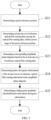
FIG. 1 is a specific implementation flowchart of a method for suppressing interference fading noise of optical fibre sensing data according to an embodiment of the present disclosure; -
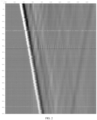
FIG. 2 is a demodulated phase diagram of DAS data not subjected to interference fading noise suppression in a method for suppressing interference fading noise of optical fibre sensing data provided by an embodiment of the present disclosure; -
FIG. 3 is a specific implementation flowchart of determining a fading point amplitude threshold in a method for suppressing interference fading noise of optical fibre sensing data according to an embodiment of the present disclosure; -
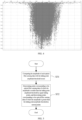
FIG. 4 is an amplitude-phase diagram of a method for suppressing interference fading noise of optical fibre sensing data according to an embodiment of the present disclosure; -
FIG. 5 is a specific implementation flowchart of determining a signal fading point in a method for suppressing interference fading noise of optical fibre sensing data according to an embodiment of the present disclosure; -
FIG. 6 is a demodulated phase diagram of DAS data subjected to interference fading noise suppression in a method for suppressing interference fading noise of optical fibre sensing data provided by an embodiment of the present disclosure; and -
FIG. 7 is a structural schematic diagram of a device for suppressing interference fading noise of optical fibre sensing data according to an embodiment of the present disclosure. - The specific implementations of the embodiments of the present disclosure will be described in detail with reference to the accompanying drawings. It should be understood that the specific implementations described here are only used to illustrate and explain the embodiments of the present disclosure, and are not used to limit the embodiments of the present disclosure.
- The terms "system" and "network" in the embodiments of the present disclosure can be used interchangeably. "plurality of' means two or more, and in view of this, "plurality of' can also be understood as "at least two" in the embodiments of the present disclosure. " and/or", which describes the association relationship of associated objects, indicates that three relationships can exist, for example, A and/or B, which can mean that A exists alone, A and B exist together, and B exists alone. In addition, the character "/", unless otherwise specified, generally indicates that the associated objects before and after the "P' are in an "OR" relationship. In addition, it should be understood that in the description of the embodiments of the present disclosure, words such as "first" and "second" are only used for the purpose of distinguishing descriptions, and cannot be understood as indicating or implying relative importance, nor can they be understood as indicating or implying the order. Referring to
FIG. 1 , an embodiment of the present disclosure provides a method for suppressing interference fading noise of optical fibre sensing data, comprising: - S10) acquiring optical fibre sensing data not subjected to interference fading noise suppression;
- S20) determining a fading point amplitude threshold based on the optical fibre sensing data;
- S30) determining a signal fading point based on the fading point amplitude threshold;
- S40) performing signal interpolation processing on the optical fibre sensing data corresponding to the signal fading point to obtain a signal subjected to interference fading noise suppression; and S50) performing phase demodulation and phase unwrapping processing on the signal subjected to interference fading noise suppression to obtain processed optical fibre sensing data.
- In the process of collecting optical fibre sensing data, an optical fibre is laid at the detected position and is subjected to sufficient coupling, and a DAS (distributed acoustic sensor) is connected to one end of the optical fibre, the DAS emits laser pulses, and an IQ (In-phase/Quadrature) signal from Rayleigh scattering of the optical pulses is obtained by a coherent detection method, and corresponding optical fibre sensing data is obtained after the signal is subjected to phase demodulation. However, in the prior art, the data obtained after phase demodulation processing is directly performed on the optical fibre sensing data has a large noise, thus practical demands of technicians cannot be met. For example, referring to
FIG. 2 , which is a demodulated phase diagram of DAS data not subjected to interference fading noise suppression in a method for suppressing interference fading noise of optical fibre sensing data provided by an embodiment of the present disclosure, so in order to solve the technical problems existing in the prior art, the above-mentioned obtained optical fibre sensing data is optimised. - In one possible implementation, optical fibre sensing data not subjected to interference fading noise suppression is first obtained, the optical fibre sensing device is an instrument centered on a phase-sensitive optical time domain reflectometer, and is disposed at a detected position, during acquisition of optical fibre sensing data, initial optical fibre sensing data detected at each detected position is first acquired, the initial optical fibre sensing data is the above-mentioned IQ signal, then a direct current offset correction operation and an amplitude and phase imbalance correction operation are performed on the initial optical fibre sensing data to obtain a corrected IQ signal, wherein the corrected information is output IQ information I (i, j), Q (i, j) at different moments and at different observation points, wherein i represents the ith sampling time of the optical fibre sensing device and j represents the serial number of the jth detected position, and the amplitude A and direct phase ω_0 of the optical fibre sensing data can be calculated according to the IQ information, and can be specifically represented as: A(i,j)=sqrt(I(i,j)*I(i,j)+Q(i,j)*Q(i,j)), ω_0 (i,j)=arctan((Q(i,j))/(I(i,j))). The corrected IQ signal can then be used as the optical fibre sensing data not subjected to interference fading noise suppression. The fading point amplitude threshold is then further acquired.
- Referring to
FIG. 3 , in an embodiment of the present disclosure, determining the fading point amplitude threshold based on the optical fibre sensing data comprises: - S21) determining a preset reference position;
- S22) determining, among the optical fibre sensing data, at least one set of reference optical fibre sensing data within a preset range of the preset reference position;
- S23) generating a corresponding amplitude-phase diagram based on the at least one set of reference optical fibre sensing data;
- S24) determining phase divergence information of the at least one set of reference optical fibre sensing data based on the amplitude-phase diagram; and
- S25) determining the fading point amplitude threshold based on the phase divergence information.
- In one possible embodiment, after the collected optical fibre sensing data is acquired, the optical fibre sensing data is statistically analysed. First, a preset reference position is determined, the preset reference position is a middle position j0 of the optical fibre to be measured, at this time, n depth points are determined within a preset range of the middle position j0, and at least one set of reference optical fibre sensing data of the n depth points is extracted, wherein n is a positive integer greater than 0, at this time, a corresponding amplitude-phase diagram is generated based on the amplitude A and phase ω of the optical fibre sensing data, and referring to
FIG. 4 , ω is the demodulated phase obtained by spatial differential or global phase demodulation based on ω_0. At this time, a phase divergence trend of all points of the amplitude-phase diagram is analysed, a region of significant phase divergence is determined in the phase divergence trend information, and a value corresponding to an intersection of the region of significant phase divergence and a region of non-significant phase divergence is determined as a fading point amplitude threshold. - In the embodiment of the present disclosure, by analysing the phase divergence trend of the optical fibre sensing data graphically, the region where the trend changes significantly can be effectively identified, thus improving the accuracy of trend analysis, and at the same time, the value corresponding to the point where the phase divergence trend changes significantly is used as the fading point amplitude threshold, so that the effect of subsequent interference fading noise suppression can be effectively improved, and the accuracy of noise suppression is improved. After the fading point amplitude threshold is determined, the signal fading point is further determined. Referring to
FIG. 5 , in an embodiment of the present disclosure, determining the signal fading point based on the fading point amplitude threshold comprises: - S31) comparing an amplitude of each optical fibre sensing data with the fading point amplitude threshold in turn; and
- S32) determining a point corresponding to the optical fibre sensing data of which the amplitude is smaller than the fading point amplitude threshold as a signal fading point, and determining a point corresponding to the optical fibre sensing data of which the amplitude is is greater than the fading point amplitude threshold as a normal point.
- For example, in one possible implementation, point-by-point calculation is performed on each obtained optical fibre sensing data using the fading point amplitude threshold obtained by calculation, and points corresponding to the optical fibre sensing data of which the amplitude is smaller than the fading point amplitude threshold are obtained as signal fading points, and points corresponding to the remaining information are taken as normal points. Further, the optical fibre sensing data corresponding to the signal fading points is linearly interpolated by using adjacent normal point data, thereby realising suppression on the fading noise of the optical fibre sensing data corresponding to each signal fading point.
- In the embodiment of the present disclosure, in the process of collecting the optical fibre sensing data, the signal fading points are accurately identified, and the optical fibre sensing data corresponding to each signal fading point is interpolated by using adjacent normal points, thereby effectively overcoming the influence caused by interference fading on the normal optical fibre sensing data, effectively improving the accuracy of the collected optical fibre sensing data, and improving the accuracy of subsequent data analysis. After the signal is interpolated, further processing such as phase demodulation and phase unwrapping is performed, thereby obtaining the final optical fibre sensing data. Referring to
FIG. 6 , which is a demodulated phase diagram of DAS data subjected to interference fading noise suppression according to an embodiment of the present disclosure. - After the processed optical fibre sensing data is obtained, it is readily known to those skilled in the art that, the above steps can also be performed on optical fibre sensing data obtained by artificial seismic source excitation or microseismic monitoring according to actual needs, to obtain corresponding processed optical fibre sensing data, and more accurate optical fibre sensing data processing can be realised by combining the subsequently obtained processed optical fibre sensing data, so as to provide accurate data support for subsequent seismic data processing and calculation, and satisfy actual demands of technicians.
- Hereinafter, a device for suppressing interference fading noise of optical fibre sensing data provided by an embodiment of the present disclosure will be described with reference to the accompanying drawings.
- Referring to
FIG. 7 , based on the same inventive concept, an embodiment of the present disclosure provides a device for suppressing interference fading noise of optical fibre sensing data, comprising: an optical fibre sensing data acquisition unit, used for acquiring optical fibre sensing data not subjected to interference fading noise suppression; a threshold determination unit, used for determining a fading point amplitude threshold based on the optical fibre sensing data; a fading point determination unit, used for determining a signal fading point based on the fading point amplitude threshold; a fading noise elimination unit, used for performing signal interpolation processing on the optical fibre sensing data corresponding to the signal fading point to obtain a signal subjected to interference fading noise suppression; and a subsequent processing unit, used for performing phase demodulation and phase unwrapping processing on the signal subjected to interference fading noise suppression to obtain processed optical fibre sensing data. - In the embodiment of the present disclosure, the optical fibre is laid at the detected position, and the optical fibre sensing data acquisition unit comprises: an initial optical fibre sensing data acquisition module, used for acquiring initial optical fibre sensing data detected at the detected position; a data correction module, used for performing a direct current offset correction operation and an amplitude and phase imbalance correction operation on the initial optical fibre sensing data to obtain corrected optical fibre sensing data; and a data determination module, used for taking the corrected optical fibre sensing data as the optical fibre sensing data not subjected to interference fading noise suppression.
- In an embodiment of the present disclosure, the threshold determination unit comprises: a reference position determination module, used for determining a preset reference position; a reference information determination module, used for determining, among the optical fibre sensing data, at least one set of reference optical fibre sensing data within a preset range of the preset reference position; a cross plot generation module, used for generating a corresponding amplitude-phase diagram based on the at least one set of reference optical fibre sensing data; a phase divergence information determination module, used for determining phase divergence information of the at least one set of reference optical fibre sensing data based on the amplitude-phase diagram; and a threshold determination module, used for determining a fading point amplitude threshold based on the phase divergence information.
- In the embodiment of the present disclosure, the fading point determination unit comprises: a comparison module, used for comparing an amplitude of each optical fibre sensing data with the fading point amplitude threshold in turn; and a fading point determination module, used for determining a point corresponding to the optical fibre sensing data of which the amplitude is smaller than the fading point amplitude threshold as a signal fading point, and determining a point corresponding to the optical fibre sensing data of which the amplitude is greater than the fading point amplitude threshold as a normal point.
- In the embodiment of the present disclosure, the fading noise elimination unit is used for performing signal interpolation processing on all fading points by an adjacent normal point interpolation method to obtain a signal subjected to interference fading noise suppression.
- Further, embodiments of the present disclosure also provide a processor, configured to perform the method for suppressing interference fading noise of optical fibre sensing data according to the present disclosure.
- Further, an embodiment of the present disclosure provides a computer-readable storage medium, storing a computer program therein, wherein the computer program, when executed by a processor, implements the method for suppressing interference fading noise of optical fibre sensing data according to the present disclosure.
- Optional implementations of embodiments of the present disclosure are described in detail above in conjunction with the accompanying drawings, however, the embodiments of the present disclosure are not limited to the specific details in the above implementations, and many simple variations can be made to the technical solutions of the embodiments of the present disclosure within the scope of the technical idea of the embodiments of the present disclosure, and these simple variations all belong to the protection scope of the embodiments of the present disclosure.
- It needs to be further noted that the various specific features described in the above detailed description can be combined in any suitable manner without contradiction. In order to avoid unnecessary repetition, embodiments of the present disclosure will not explain any possible combinations.
- Those skilled in the art will appreciate that all or part of the steps in the method for realising the embodiments described above may be performed by instructing related hardware through a program, the program is stored in a storage medium and includes instructions for causing a single-chip microcomputer, chip or processor to execute all or part of the steps of the method according to the various embodiments of the present application. The aforementioned storage medium includes a USB flash disk, a mobile hard disk, a read-only memory (ROM), a random access memory (RAM), a magnetic disk or an optical disk and other media that can store program codes.
- In addition, various different implementations of the embodiments of the present disclosure can also be arbitrarily combined, as long as they do not violate the idea of the embodiments of the present disclosure, which should also be considered as the content disclosed in the embodiments of the present disclosure.
Claims (12)
- A method for suppressing interference fading noise of optical fibre sensing data, characterized by comprising:acquiring optical fibre sensing data not subjected to interference fading noise suppression;determining a fading point amplitude threshold based on the optical fibre sensing data;determining a signal fading point based on the fading point amplitude threshold;performing signal interpolation processing on the optical fibre sensing data corresponding to the signal fading point to obtain a signal subjected to interference fading noise suppression; andperforming phase demodulation and phase unwrapping processing on the signal subjected to interference fading noise suppression to obtain processed optical fibre sensing data.
- The method according to claim 1, characterized in that an optical fibre is disposed at a detected position, and acquiring the optical fibre sensing data not subjected to interference fading noise suppression comprises:acquiring initial optical fibre sensing data at the detected position;performing a direct current offset correction operation and an amplitude and phase imbalance correction operation on the initial optical fibre sensing data to obtain corrected optical fibre sensing data; andtaking the corrected optical fibre sensing data as the optical fibre sensing data not subjected to interference fading noise suppression.
- The method according to claim 1, characterized in that determining the fading point amplitude threshold based on the optical fibre sensing data comprises:determining a preset reference position;determining, among the optical fibre sensing data, at least one set of reference optical fibre sensing data within a preset range of the preset reference position;generating a corresponding amplitude-phase diagram based on the at least one set of reference optical fibre sensing data;determining phase divergence information of the at least one set of reference optical fibre sensing data based on the amplitude-phase diagram; anddetermining the fading point amplitude threshold based on the signal phase divergence information.
- The method according to claim 2, characterized in that determining the signal fading point based on the fading point amplitude threshold comprises:comparing an amplitude of each optical fibre sensing data with the fading point amplitude threshold in turn; anddetermining a point corresponding to the optical fibre sensing data of which the amplitude is smaller than the fading point amplitude threshold as a signal fading point, and determining a point corresponding to the optical fibre sensing data of which the amplitude is greater than the fading point amplitude threshold as a normal point.
- The method according to claim 1, characterized in that performing signal interpolation processing on the optical fibre sensing data corresponding to the signal fading point to obtain a signal subjected to interference fading noise suppression comprises:
performing signal interpolation processing on all fading points by an adjacent normal point interpolation method to obtain a signal subjected to interference fading noise suppression. - A device for suppressing interference fading noise of optical fibre sensing data, characterized by comprising:an optical fibre sensing data acquisition unit, used for acquiring optical fibre sensing data not subjected to interference fading noise suppression;a threshold determination unit, used for determining a fading point amplitude threshold based on the optical fibre sensing data;a fading point determination unit, used for determining a signal fading point based on the fading point amplitude threshold;a fading noise elimination unit, used for performing signal interpolation processing on the optical fibre sensing data corresponding to the signal fading point to obtain a signal subjected to interference fading noise suppression; anda subsequent processing unit, used for performing phase demodulation and phase unwrapping processing on the signal subjected to interference fading noise suppression to obtain processed optical fibre sensing data.
- The device according to claim 6, characterized in that an optical fibre is disposed at a detected position, and the optical fibre sensing data acquisition unit comprises:an initial optical fibre sensing data acquisition module, used for acquiring initial optical fibre sensing data detected at the detected position;a data correction module, used for performing a direct current offset correction operation and an amplitude and phase imbalance correction operation on the initial optical fibre sensing data to obtain corrected optical fibre sensing data; anda data determination module, used for taking the corrected optical fibre sensing data as the optical fibre sensing data not subjected to interference fading noise suppression.
- The device according to claim 6, characterized in that the threshold determination unit comprises:a reference position determination module, used for determining a preset reference position;a reference information determination module, used for determining, among the optical fibre sensing data, at least one set of reference optical fibre sensing data within a preset range of the preset reference position;a cross plot generation module, used for generating a corresponding amplitude-phase diagram based on the at least one set of reference optical fibre sensing data;a phase divergence information determination module, used for determining phase divergence information of the at least one set of reference optical fibre sensing data based on the amplitude-phase diagram; anda threshold determination module, used for determining a fading point amplitude threshold based on the phase divergence information.
- The device according to claim 7, characterized in that the fading point determination unit comprises:a comparison module, used for comparing an amplitude of each optical fibre sensing data with the fading point amplitude threshold in turn; anda fading point determination module, used for determining a point corresponding to the optical fibre sensing data of which the amplitude is smaller than the fading point amplitude threshold as a signal fading point, and determining a point corresponding to the optical fibre sensing data of which the amplitude is greater than the fading point amplitude threshold as a normal point.
- The device according to claim 6, characterized in that the fading noise elimination unit is used for:
performing signal interpolation processing on all fading points by an adjacent normal point interpolation method to obtain a signal subjected to interference fading noise suppression. - A processor, characterized by being configured to perform the method for suppressing interference fading noise of optical fibre sensing data according to any one of claims 1 to 5.
- A computer-readable storage medium storing a computer program, characterized in that the computer program, when executed by a processor, implements the method for suppressing interference fading noise of optical fibre sensing data according to any one of claims 1-5.
Applications Claiming Priority (2)
| Application Number | Priority Date | Filing Date | Title |
|---|---|---|---|
| CN202111654292.7A CN116429236B (en) | 2021-12-30 | 2021-12-30 | Method and device for suppressing coherent fading noise of optical fiber sensing data |
| PCT/CN2022/102944 WO2023123972A1 (en) | 2021-12-30 | 2022-06-30 | Coherent fading noise suppression method and apparatus for optical fiber sensing data |
Publications (3)
| Publication Number | Publication Date |
|---|---|
| EP4310467A1 true EP4310467A1 (en) | 2024-01-24 |
| EP4310467A4 EP4310467A4 (en) | 2024-09-18 |
| EP4310467B1 EP4310467B1 (en) | 2025-08-06 |
Family
ID=86997369
Family Applications (1)
| Application Number | Title | Priority Date | Filing Date |
|---|---|---|---|
| EP22913261.8A Active EP4310467B1 (en) | 2021-12-30 | 2022-06-30 | Coherent fading noise suppression method and apparatus for optical fiber sensing data |
Country Status (4)
| Country | Link |
|---|---|
| US (1) | US12615086B2 (en) |
| EP (1) | EP4310467B1 (en) |
| CN (1) | CN116429236B (en) |
| WO (1) | WO2023123972A1 (en) |
Families Citing this family (4)
| Publication number | Priority date | Publication date | Assignee | Title |
|---|---|---|---|---|
| CN116907627B (en) * | 2023-09-13 | 2023-12-19 | 之江实验室 | Optical path difference auxiliary-based large dynamic range distributed phase sensing method and device |
| CN120120964A (en) * | 2023-12-08 | 2025-06-10 | 中国石油天然气集团有限公司 | Distributed displacement sensing phase demodulation method, device and equipment |
| CN120121143A (en) * | 2023-12-08 | 2025-06-10 | 中国石油天然气集团有限公司 | Method, device and equipment for eliminating coherent fading noise |
| CN120445384B (en) * | 2025-06-06 | 2026-01-09 | 北京科技大学 | Phase unwrapping method and device applied to ship collision bridge body vibration monitoring |
Family Cites Families (19)
| Publication number | Priority date | Publication date | Assignee | Title |
|---|---|---|---|---|
| JP3070880B2 (en) * | 1992-02-28 | 2000-07-31 | 日本電信電話株式会社 | Backscattered light measuring device |
| NO322073B1 (en) * | 1999-06-23 | 2006-08-07 | Optoplan As | Polarization Control Procedure |
| CN102322880B (en) * | 2011-08-18 | 2013-06-05 | 天津大学 | Polarization sensitive distributive optical frequency domain reflection disturbance sensor and demodulation method |
| US10018036B2 (en) * | 2014-07-30 | 2018-07-10 | Halliburton Energy Services, Inc. | Distributed sensing systems and methods with I/Q data balancing based on ellipse fitting |
| US10444391B2 (en) * | 2014-09-12 | 2019-10-15 | Halliburton Energy Services, Inc. | Noise removal for distributed acoustic sensing data |
| US10180515B2 (en) * | 2014-10-01 | 2019-01-15 | Halliburton Energy Services, Inc. | Trace downsampling of distributed acoustic sensor data |
| CN106092305B (en) * | 2016-08-25 | 2022-02-18 | 上海交通大学 | Distributed optical fiber sensing system and vibration detection positioning method thereof |
| US11111780B2 (en) * | 2017-02-21 | 2021-09-07 | Halliburton Energy Services, Inc. | Distributed acoustic sensing system with phase modulator for mitigating faded channels |
| CN107907151B (en) * | 2017-12-15 | 2020-08-07 | 中国人民解放军国防科技大学 | ФOTDR and sensing method based on optical frequency modulation and direct detection |
| CN110048765B (en) | 2018-09-30 | 2021-06-22 | 南京大学 | phi-OTDR quantitative measurement method based on integral least square fitting |
| CN114008433B (en) | 2019-05-21 | 2024-04-02 | 日本电信电话株式会社 | Phase measurement method and signal processing device |
| US11566937B2 (en) * | 2019-05-22 | 2023-01-31 | Nec Corporation | Rayleigh fading mitigation via short pulse coherent distributed acoustic sensing with multi-location beating-term combination |
| CN110207804B (en) | 2019-06-21 | 2020-07-14 | 华中科技大学 | A Discrete Processing Method of Distributed Acoustic Sensing Based on Single-mode Optical Fiber |
| CN110487389B (en) * | 2019-09-03 | 2022-01-14 | 南京大学 | Coherent fading suppression method based on optimal position tracking |
| US11913785B2 (en) * | 2020-04-17 | 2024-02-27 | Huvr, Inc. | Extended reach ring interferometer with at least two broadband light sources and signal antifading topology for event detection, location and characterization |
| CN112595492B (en) * | 2020-11-03 | 2022-09-13 | 烽火通信科技股份有限公司 | COTDR method and system for synchronous monitoring of loss and disturbance events |
| CN112747815B (en) * | 2021-01-06 | 2024-02-02 | 苏州光格科技股份有限公司 | A coherent fading noise suppression method in distributed optical fiber acoustic wave sensing system |
| CN113176075B (en) * | 2021-04-26 | 2022-03-25 | 南京大学 | Coherent and polarization fading suppression method for synchronous monitoring of loss and vibration |
| CN113418539B (en) * | 2021-06-21 | 2022-03-25 | 南京大学 | Self-heterodyne phi-OTDR system with free multi-spatial resolution |
-
2021
- 2021-12-30 CN CN202111654292.7A patent/CN116429236B/en active Active
-
2022
- 2022-06-30 EP EP22913261.8A patent/EP4310467B1/en active Active
- 2022-06-30 US US18/287,209 patent/US12615086B2/en active Active
- 2022-06-30 WO PCT/CN2022/102944 patent/WO2023123972A1/en not_active Ceased
Also Published As
| Publication number | Publication date |
|---|---|
| CN116429236B (en) | 2025-10-17 |
| EP4310467B1 (en) | 2025-08-06 |
| CN116429236A (en) | 2023-07-14 |
| WO2023123972A1 (en) | 2023-07-06 |
| EP4310467A4 (en) | 2024-09-18 |
| US20240204872A1 (en) | 2024-06-20 |
| US12615086B2 (en) | 2026-04-28 |
Similar Documents
| Publication | Publication Date | Title |
|---|---|---|
| EP4310467B1 (en) | Coherent fading noise suppression method and apparatus for optical fiber sensing data | |
| CN116429235B (en) | Global phase quadrature demodulation method and device for optical fiber sensing data | |
| CN110824007B (en) | Tubular pile crack detection method and system | |
| CN116413787B (en) | Method and device for inverting formation wave impedance using DAS well seismic data | |
| CN108254798A (en) | A method and device for quickly locating underground optical cables | |
| EP4310785B1 (en) | Depth calibration method and apparatus for downhole optical fiber | |
| CN116818082A (en) | Method and device for suppressing interference fading and storage device | |
| CN113311426A (en) | Method and system for determining landslide occurrence probability | |
| CN116429234B (en) | Method and system for correcting imbalance of orthogonal demodulation of optical fiber distributed acoustic wave sensing data | |
| CN119984474B (en) | System and method for identifying vibration signal type based on POTDR | |
| CN106656315A (en) | Optical cable disturbance detection system and detection method based on fiber interference principle | |
| CN114997232B (en) | Method, processor and storage medium for determining the direction of optical cable | |
| CN111596357B (en) | Method and device for analyzing working state of submarine acquisition node | |
| CN114993217B (en) | Method, processor and storage medium for determining the coiled length of optical cable | |
| CN119533777A (en) | A method and device for detecting buried pipeline leakage using optical fiber composite | |
| CN120236606B (en) | DAS-based audio data acquisition method, system, electronic equipment and storage medium | |
| US10319156B2 (en) | Method and system for detecting a condition of an electric machine | |
| CN119757991B (en) | A Method and System for Detecting Partial Discharge in Cables Based on Photonic Lanterns and Few-Mode Fibers | |
| CN120763635B (en) | BOTDR signal processing method, system, equipment and storage medium | |
| CN119471786B (en) | Optical cable burial depth detection method, system, electronic equipment and storage medium | |
| CN116717410B (en) | A method and apparatus for condition monitoring of hydropower units | |
| CN120389808B (en) | An acoustically compatible anti-interference method for harmonics | |
| CN119254321A (en) | Optical cable route detection method, device, electronic equipment and storage medium | |
| CN121323600A (en) | Method and system for acquiring sensing data of optical fiber gyroscope | |
| CN113078945A (en) | Power transmission line fault positioning method and system, electronic equipment and storage medium |
Legal Events
| Date | Code | Title | Description |
|---|---|---|---|
| STAA | Information on the status of an ep patent application or granted ep patent |
Free format text: STATUS: THE INTERNATIONAL PUBLICATION HAS BEEN MADE |
|
| PUAI | Public reference made under article 153(3) epc to a published international application that has entered the european phase |
Free format text: ORIGINAL CODE: 0009012 |
|
| STAA | Information on the status of an ep patent application or granted ep patent |
Free format text: STATUS: REQUEST FOR EXAMINATION WAS MADE |
|
| 17P | Request for examination filed |
Effective date: 20231020 |
|
| AK | Designated contracting states |
Kind code of ref document: A1 Designated state(s): AL AT BE BG CH CY CZ DE DK EE ES FI FR GB GR HR HU IE IS IT LI LT LU LV MC MK MT NL NO PL PT RO RS SE SI SK SM TR |
|
| REG | Reference to a national code |
Ref country code: DE Ref legal event code: R079 Free format text: PREVIOUS MAIN CLASS: G01H0009000000 Ipc: G01D0005353000 Ref country code: DE Ref legal event code: R079 Ref document number: 602022019186 Country of ref document: DE Free format text: PREVIOUS MAIN CLASS: G01H0009000000 Ipc: G01D0005353000 |
|
| A4 | Supplementary search report drawn up and despatched |
Effective date: 20240816 |
|
| RIC1 | Information provided on ipc code assigned before grant |
Ipc: G01V 1/22 20060101ALI20240809BHEP Ipc: G01V 1/20 20060101ALI20240809BHEP Ipc: G01V 1/36 20060101ALI20240809BHEP Ipc: G06F 18/00 20230101ALI20240809BHEP Ipc: G01H 9/00 20060101ALI20240809BHEP Ipc: G01D 5/353 20060101AFI20240809BHEP |
|
| GRAP | Despatch of communication of intention to grant a patent |
Free format text: ORIGINAL CODE: EPIDOSNIGR1 |
|
| STAA | Information on the status of an ep patent application or granted ep patent |
Free format text: STATUS: GRANT OF PATENT IS INTENDED |
|
| INTG | Intention to grant announced |
Effective date: 20250218 |
|
| DAV | Request for validation of the european patent (deleted) | ||
| DAX | Request for extension of the european patent (deleted) | ||
| GRAS | Grant fee paid |
Free format text: ORIGINAL CODE: EPIDOSNIGR3 |
|
| GRAA | (expected) grant |
Free format text: ORIGINAL CODE: 0009210 |
|
| STAA | Information on the status of an ep patent application or granted ep patent |
Free format text: STATUS: THE PATENT HAS BEEN GRANTED |
|
| AK | Designated contracting states |
Kind code of ref document: B1 Designated state(s): AL AT BE BG CH CY CZ DE DK EE ES FI FR GB GR HR HU IE IS IT LI LT LU LV MC MK MT NL NO PL PT RO RS SE SI SK SM TR |
|
| REG | Reference to a national code |
Ref country code: GB Ref legal event code: FG4D |
|
| REG | Reference to a national code |
Ref country code: CH Ref legal event code: EP |
|
| REG | Reference to a national code |
Ref country code: IE Ref legal event code: FG4D |
|
| REG | Reference to a national code |
Ref country code: DE Ref legal event code: R096 Ref document number: 602022019186 Country of ref document: DE |
|
| REG | Reference to a national code |
Ref country code: NL Ref legal event code: MP Effective date: 20250806 |
|
| PG25 | Lapsed in a contracting state [announced via postgrant information from national office to epo] |
Ref country code: IS Free format text: LAPSE BECAUSE OF FAILURE TO SUBMIT A TRANSLATION OF THE DESCRIPTION OR TO PAY THE FEE WITHIN THE PRESCRIBED TIME-LIMIT Effective date: 20251206 |
|
| PG25 | Lapsed in a contracting state [announced via postgrant information from national office to epo] |
Ref country code: NO Free format text: LAPSE BECAUSE OF FAILURE TO SUBMIT A TRANSLATION OF THE DESCRIPTION OR TO PAY THE FEE WITHIN THE PRESCRIBED TIME-LIMIT Effective date: 20251106 |
|
| REG | Reference to a national code |
Ref country code: LT Ref legal event code: MG9D |
|
| PG25 | Lapsed in a contracting state [announced via postgrant information from national office to epo] |
Ref country code: PT Free format text: LAPSE BECAUSE OF FAILURE TO SUBMIT A TRANSLATION OF THE DESCRIPTION OR TO PAY THE FEE WITHIN THE PRESCRIBED TIME-LIMIT Effective date: 20251209 |
|
| PG25 | Lapsed in a contracting state [announced via postgrant information from national office to epo] |
Ref country code: FI Free format text: LAPSE BECAUSE OF FAILURE TO SUBMIT A TRANSLATION OF THE DESCRIPTION OR TO PAY THE FEE WITHIN THE PRESCRIBED TIME-LIMIT Effective date: 20250806 |
|
| PG25 | Lapsed in a contracting state [announced via postgrant information from national office to epo] |
Ref country code: HR Free format text: LAPSE BECAUSE OF FAILURE TO SUBMIT A TRANSLATION OF THE DESCRIPTION OR TO PAY THE FEE WITHIN THE PRESCRIBED TIME-LIMIT Effective date: 20250806 Ref country code: NL Free format text: LAPSE BECAUSE OF FAILURE TO SUBMIT A TRANSLATION OF THE DESCRIPTION OR TO PAY THE FEE WITHIN THE PRESCRIBED TIME-LIMIT Effective date: 20250806 |
|
| PG25 | Lapsed in a contracting state [announced via postgrant information from national office to epo] |
Ref country code: GR Free format text: LAPSE BECAUSE OF FAILURE TO SUBMIT A TRANSLATION OF THE DESCRIPTION OR TO PAY THE FEE WITHIN THE PRESCRIBED TIME-LIMIT Effective date: 20251107 |
|
| PG25 | Lapsed in a contracting state [announced via postgrant information from national office to epo] |
Ref country code: SE Free format text: LAPSE BECAUSE OF FAILURE TO SUBMIT A TRANSLATION OF THE DESCRIPTION OR TO PAY THE FEE WITHIN THE PRESCRIBED TIME-LIMIT Effective date: 20250806 |
|
| PG25 | Lapsed in a contracting state [announced via postgrant information from national office to epo] |
Ref country code: LV Free format text: LAPSE BECAUSE OF FAILURE TO SUBMIT A TRANSLATION OF THE DESCRIPTION OR TO PAY THE FEE WITHIN THE PRESCRIBED TIME-LIMIT Effective date: 20250806 |
|
| PG25 | Lapsed in a contracting state [announced via postgrant information from national office to epo] |
Ref country code: PL Free format text: LAPSE BECAUSE OF FAILURE TO SUBMIT A TRANSLATION OF THE DESCRIPTION OR TO PAY THE FEE WITHIN THE PRESCRIBED TIME-LIMIT Effective date: 20250806 Ref country code: BG Free format text: LAPSE BECAUSE OF FAILURE TO SUBMIT A TRANSLATION OF THE DESCRIPTION OR TO PAY THE FEE WITHIN THE PRESCRIBED TIME-LIMIT Effective date: 20250806 |
|
| PG25 | Lapsed in a contracting state [announced via postgrant information from national office to epo] |
Ref country code: RS Free format text: LAPSE BECAUSE OF FAILURE TO SUBMIT A TRANSLATION OF THE DESCRIPTION OR TO PAY THE FEE WITHIN THE PRESCRIBED TIME-LIMIT Effective date: 20251106 |
|
| PG25 | Lapsed in a contracting state [announced via postgrant information from national office to epo] |
Ref country code: ES Free format text: LAPSE BECAUSE OF FAILURE TO SUBMIT A TRANSLATION OF THE DESCRIPTION OR TO PAY THE FEE WITHIN THE PRESCRIBED TIME-LIMIT Effective date: 20250806 |
|
| REG | Reference to a national code |
Ref country code: AT Ref legal event code: MK05 Ref document number: 1822325 Country of ref document: AT Kind code of ref document: T Effective date: 20250806 |
|
| PG25 | Lapsed in a contracting state [announced via postgrant information from national office to epo] |
Ref country code: SM Free format text: LAPSE BECAUSE OF FAILURE TO SUBMIT A TRANSLATION OF THE DESCRIPTION OR TO PAY THE FEE WITHIN THE PRESCRIBED TIME-LIMIT Effective date: 20250806 |
|
| PG25 | Lapsed in a contracting state [announced via postgrant information from national office to epo] |
Ref country code: DK Free format text: LAPSE BECAUSE OF FAILURE TO SUBMIT A TRANSLATION OF THE DESCRIPTION OR TO PAY THE FEE WITHIN THE PRESCRIBED TIME-LIMIT Effective date: 20250806 |
|
| PG25 | Lapsed in a contracting state [announced via postgrant information from national office to epo] |
Ref country code: AT Free format text: LAPSE BECAUSE OF FAILURE TO SUBMIT A TRANSLATION OF THE DESCRIPTION OR TO PAY THE FEE WITHIN THE PRESCRIBED TIME-LIMIT Effective date: 20250806 |
|
| PG25 | Lapsed in a contracting state [announced via postgrant information from national office to epo] |
Ref country code: IT Free format text: LAPSE BECAUSE OF FAILURE TO SUBMIT A TRANSLATION OF THE DESCRIPTION OR TO PAY THE FEE WITHIN THE PRESCRIBED TIME-LIMIT Effective date: 20250806 |
|
| PG25 | Lapsed in a contracting state [announced via postgrant information from national office to epo] |
Ref country code: CZ Free format text: LAPSE BECAUSE OF FAILURE TO SUBMIT A TRANSLATION OF THE DESCRIPTION OR TO PAY THE FEE WITHIN THE PRESCRIBED TIME-LIMIT Effective date: 20250806 |
|
| PG25 | Lapsed in a contracting state [announced via postgrant information from national office to epo] |
Ref country code: EE Free format text: LAPSE BECAUSE OF FAILURE TO SUBMIT A TRANSLATION OF THE DESCRIPTION OR TO PAY THE FEE WITHIN THE PRESCRIBED TIME-LIMIT Effective date: 20250806 Ref country code: SK Free format text: LAPSE BECAUSE OF FAILURE TO SUBMIT A TRANSLATION OF THE DESCRIPTION OR TO PAY THE FEE WITHIN THE PRESCRIBED TIME-LIMIT Effective date: 20250806 |