EP4309563B1 - Endoscopic medical device, in particular for colonoscopy - Google Patents
Endoscopic medical device, in particular for colonoscopy Download PDFInfo
- Publication number
- EP4309563B1 EP4309563B1 EP23187041.1A EP23187041A EP4309563B1 EP 4309563 B1 EP4309563 B1 EP 4309563B1 EP 23187041 A EP23187041 A EP 23187041A EP 4309563 B1 EP4309563 B1 EP 4309563B1
- Authority
- EP
- European Patent Office
- Prior art keywords
- medical device
- arms
- endoscopic medical
- main body
- branches
- Prior art date
- Legal status (The legal status is an assumption and is not a legal conclusion. Google has not performed a legal analysis and makes no representation as to the accuracy of the status listed.)
- Active
Links
Images


Classifications
-
- A—HUMAN NECESSITIES
- A61—MEDICAL OR VETERINARY SCIENCE; HYGIENE
- A61B—DIAGNOSIS; SURGERY; IDENTIFICATION
- A61B1/00—Instruments for performing medical examinations of the interior of cavities or tubes of the body by visual or photographical inspection, e.g. endoscopes; Illuminating arrangements therefor
- A61B1/00147—Holding or positioning arrangements
- A61B1/00148—Holding or positioning arrangements using anchoring means
-
- A—HUMAN NECESSITIES
- A61—MEDICAL OR VETERINARY SCIENCE; HYGIENE
- A61B—DIAGNOSIS; SURGERY; IDENTIFICATION
- A61B1/00—Instruments for performing medical examinations of the interior of cavities or tubes of the body by visual or photographical inspection, e.g. endoscopes; Illuminating arrangements therefor
- A61B1/31—Instruments for performing medical examinations of the interior of cavities or tubes of the body by visual or photographical inspection, e.g. endoscopes; Illuminating arrangements therefor for the rectum, e.g. proctoscopes, sigmoidoscopes, colonoscopes
-
- A—HUMAN NECESSITIES
- A61—MEDICAL OR VETERINARY SCIENCE; HYGIENE
- A61B—DIAGNOSIS; SURGERY; IDENTIFICATION
- A61B1/00—Instruments for performing medical examinations of the interior of cavities or tubes of the body by visual or photographical inspection, e.g. endoscopes; Illuminating arrangements therefor
- A61B1/00064—Constructional details of the endoscope body
-
- A—HUMAN NECESSITIES
- A61—MEDICAL OR VETERINARY SCIENCE; HYGIENE
- A61B—DIAGNOSIS; SURGERY; IDENTIFICATION
- A61B1/00—Instruments for performing medical examinations of the interior of cavities or tubes of the body by visual or photographical inspection, e.g. endoscopes; Illuminating arrangements therefor
- A61B1/00064—Constructional details of the endoscope body
- A61B1/00071—Insertion part of the endoscope body
- A61B1/0008—Insertion part of the endoscope body characterised by distal tip features
-
- A—HUMAN NECESSITIES
- A61—MEDICAL OR VETERINARY SCIENCE; HYGIENE
- A61B—DIAGNOSIS; SURGERY; IDENTIFICATION
- A61B1/00—Instruments for performing medical examinations of the interior of cavities or tubes of the body by visual or photographical inspection, e.g. endoscopes; Illuminating arrangements therefor
- A61B1/00064—Constructional details of the endoscope body
- A61B1/00071—Insertion part of the endoscope body
- A61B1/0008—Insertion part of the endoscope body characterised by distal tip features
- A61B1/00087—Tools
-
- A—HUMAN NECESSITIES
- A61—MEDICAL OR VETERINARY SCIENCE; HYGIENE
- A61B—DIAGNOSIS; SURGERY; IDENTIFICATION
- A61B1/00—Instruments for performing medical examinations of the interior of cavities or tubes of the body by visual or photographical inspection, e.g. endoscopes; Illuminating arrangements therefor
- A61B1/00064—Constructional details of the endoscope body
- A61B1/00071—Insertion part of the endoscope body
- A61B1/0008—Insertion part of the endoscope body characterised by distal tip features
- A61B1/00101—Insertion part of the endoscope body characterised by distal tip features the distal tip features being detachable
-
- A—HUMAN NECESSITIES
- A61—MEDICAL OR VETERINARY SCIENCE; HYGIENE
- A61B—DIAGNOSIS; SURGERY; IDENTIFICATION
- A61B1/00—Instruments for performing medical examinations of the interior of cavities or tubes of the body by visual or photographical inspection, e.g. endoscopes; Illuminating arrangements therefor
- A61B1/005—Flexible endoscopes
- A61B1/0051—Flexible endoscopes with controlled bending of insertion part
- A61B1/0055—Constructional details of insertion parts, e.g. vertebral elements
-
- A—HUMAN NECESSITIES
- A61—MEDICAL OR VETERINARY SCIENCE; HYGIENE
- A61B—DIAGNOSIS; SURGERY; IDENTIFICATION
- A61B1/00—Instruments for performing medical examinations of the interior of cavities or tubes of the body by visual or photographical inspection, e.g. endoscopes; Illuminating arrangements therefor
- A61B1/04—Instruments for performing medical examinations of the interior of cavities or tubes of the body by visual or photographical inspection, e.g. endoscopes; Illuminating arrangements therefor combined with photographic or television appliances
-
- A—HUMAN NECESSITIES
- A61—MEDICAL OR VETERINARY SCIENCE; HYGIENE
- A61B—DIAGNOSIS; SURGERY; IDENTIFICATION
- A61B1/00—Instruments for performing medical examinations of the interior of cavities or tubes of the body by visual or photographical inspection, e.g. endoscopes; Illuminating arrangements therefor
- A61B1/32—Devices for opening or enlarging the visual field, e.g. of a tube of the body
-
- A—HUMAN NECESSITIES
- A61—MEDICAL OR VETERINARY SCIENCE; HYGIENE
- A61B—DIAGNOSIS; SURGERY; IDENTIFICATION
- A61B1/00—Instruments for performing medical examinations of the interior of cavities or tubes of the body by visual or photographical inspection, e.g. endoscopes; Illuminating arrangements therefor
- A61B1/005—Flexible endoscopes
- A61B1/009—Flexible endoscopes with bending or curvature detection of the insertion part
Definitions
- the present invention relates to an endoscopic medical device, in particular for colonoscopy.
- Various prior art solutions provide for colonoscopy devices which set out to increase the adenoma detection rate (ADR) during endoscopic procedures, especially for endoscopic screening.
- ADR adenoma detection rate
- an overall view of an endoscopic medical device, in particular for colonoscopy is generally indicated with 4.
- the endoscopic medical device 4 comprises a main body 8, cylindrical with respect to a main extension axis X-X, which extends from a proximal end 12 to a distal end 16.
- Said main body 8 is hollow so as to delimit a cavity 20 adapted to at least partially house a distal portion 24 of an endoscope 28 which can be associated therewith, on the side of said proximal end 12 of the main body 8.
- the main body 8 at an outer side wall 32, opposite to said cavity 20, has a plurality of flexible fins 36 provided with arms 40 which, in a resting condition, extend along main directions Y-Y incident with said main extension axis X-X according to an opening angle ⁇ comprised between 10 and 55 degrees, measured from the side of the distal end 16.
- said opening angle ⁇ is comprised between 20 and 45 degrees, preferably it is comprised between 35 and 39 degrees, even preferably it is equal to 37 degrees.
- Said arms 40 are engaged with the outer side wall 32 at fixing ends 44 for fixing to the main body 8 and, at cantilevered ends 48, opposite to the fixing ends 44, branch into pairs of arms 52,56 arranged symmetrically with respect to a centerline plane M-M passing through said arms 40 and through said main extension axis X-X.
- said radius of curvature R is comprised between 1.4 and 2.4 mm, preferably it is equal to 1.9 m.
- said rounded tips 64 may be cylindrical-shaped with circular cross-section or they may be spherical.
- 3 to 5 flexible fins 36 are provided, preferably angularly equally spaced from each other, with respect to the main extension axis X-X, along the outer side wall 32.
- the arm 40 has a greater thickness than the thickness of said branches 52,56.
- the arm 40 has a greater width than the width of said branches 52,56.
- the arm 40 and the branches 52,56 have a quadrangular cross-section 68 with rounded edges 72, wherein the section is oriented so as to have a lesser moment of inertia with respect to a bending along the main extension axis X-X.
- the arm 40 and the branches 52,56 have a constant thickness with respect to a radial cross-sectional plane parallel with and passing through the main extension axis X-X.
- said thickness of the arm 40 and of the branches 52,56 is preferably smaller than a diameter D of said rounded tips 64 of the branches 52,56.
- the width of the branches 52,56, and preferably also of the arm 40 is smaller than a diameter D of said rounded tips 64 of the branches 52,56.
- the main body 8 and the flexible fins 36 are made of medical grade silicone material or a thermoplastic elastomer.
- said material has a hardness between 40 and 60 SHORE A, preferably equal to about 50 SHORE A.
- said flexible fins 36 have an increasing flexibility moving from the fixing ends 44 to the free ends 60.
- said arms 40 have a cantilevered length L, with respect to the fixing end 44, which are smaller than the lengths of said branches 52,56, equal to the distance between the cantilevered end 48 of the arm 40 and the free ends 60.
- the free ends 60 of the branches 52,56, opposite to the cantilevered end 48 of the arm 40 diverge with respect to each other for a transversal distance T which is greater than the length of the arms 40.
- Said transversal distance T is for example equal to a diameter of the main body 8, measured perpendicularly to the main extension axis X-X.
- the main body 8 at the fixing ends 44 of the arms 40, on the side of the distal end 16, has bulges 76 which serve as upper stops in the rotation of the arms 40 towards the distal end 16 of the main body 8.
- the main body 8 at the fixing ends 44 of the arms 40, on the side of the proximal end 12, has recesses 80 which serve as partial seats of the arms 40 when rotated bent towards the proximal end 12 of the main body 8.
- the main body 8, at the distal end 16, comprises a cap 84.
- Said cap 84 is advantageously transparent, preferably having a height comprised between 1 and 4 mm, even more preferably equal to 2 mm, and it is particularly made of the same material as the endoscopic medical device 4.
- the cap 84 has a hole 86 preferably arranged at the lens of the endoscope 28. Said hole 86 advantageously allows the draining of the liquids cleaning the lens of the endoscope 28 from any dirt that could stop in the cap 84 during the endoscopic examination.
- a blocking ring 88 is provided, which is positioned on the tip or distal end 16 of the main body 8 and shaped so as to allow to correctly position the endoscopic medical device 4 on the tip of the endoscope 28.
- said blocking ring 88 is positioned below said hole 86; preferably said blocking ring 88 forms an abutment or stop for the distal portion 24 of the endoscope 28 and it guarantees the correct and full insertion of the endoscopic medical device 4 on the endoscope 28.
- the blocking ring 88 further advantageously allows to prevent the endoscope 28 from being positioned erroneously at the area designed for the cap 84, and therefore prevent the lens of the endoscope 28 from coming into contact with the mucous membrane.
- the cap 84 has a flared top portion 92 having a flaring angle ⁇ greater than 95°, measured with respect to a horizontal plane perpendicular to the main extension axis X-X.
- Said flared top portion 92 has the advantage of not interfering with the view angle of the video camera arranged on the distal portion 24 of the endoscope 28.
- such flared top portion 92 advantageously allows to prevent the excessive bending of the cap 84 (for example if made of soft silicone material) both inwards and outwards with respect to the visual field of the endoscope 28.
- the main body 8 is fitted onto the tip or distal portion 24 of an endoscope 28 to enable the introduction thereof.
- the flexible fins 36 elastically bend towards the proximal end 12 of the main body 8; in particular, the branches 52,56 bend more with respect to the arms 40 which are stiffer. Therefore, the branches 52,56 collapse flattening downwards on the endoscope. This characteristic is particularly advantageous should there be encountered stenosis or stricture of the colon, during an endoscopic examination.
- the flexibility of the branches 52 and 56 also allows not to cause traumas to the patient, when retracting the endoscopic medical device 4.
- the retraction of the endoscope is not always linear and continuous; at times one had to advance and then return backwards again.
- the distal flexibility of the fins, and in particular of the branches 52,56 allows the tips 64 of the arms 40 not to pivot on the walls of the colon and therefore avoid micro traumas to the mucous membrane.
- having flexible tips means being sure not to ever apply excessive forces to the colon, given that, encountering resistance, the endoscopic medical device 4 will yield elastically instead of the anatomy of the patient yielding.
- the geometric conformation of the doubled branches 52,56 allows greater stability of the medical device.
- the double branches 52,56 support each other, mutually supporting the overall radial opening of the medical device, preventing it from losing grip on the tissue, like it happens in the case of systems with single fins. Should a branch 52,56 slip, the remaining part binds the branch 56,52 thereto without gripping, holding it in position for a resumption of the function thereof.
- the arm 40 on the one hand allows a certain bending independence of the branches 52,56 which may therefore better adapt to the morphological conformation of the cavity section to be explored and - on the other hand - it creates a constraint between the branches 52,56 in question.
- the apex of the oval that is the bulging 76 of the material above the fixing end 44 of each arm 52,56 serves as a block for the arms 40 when retracting the medical device 4.
- the arms 40 always remain in open position adapted to facilitate the gripping and the stretching of the colon folds, always in a non-traumatic manner.
- the bulging 76 prevents the arms 40 of the medical device 4, when retracting the instrument, from projecting excessively forward, therefore entering into the visual field of the video camera and interfering with the endoscopic examination.
- the present invention allows to overcome the drawbacks observed in the prior art.
- the present invention allows to stretch - effectively and in a non-traumatic fashion - the folds of the colon, so as to increase the adenoma detection rate (adr) during endoscopic procedures, especially endoscopic screening.
- the enlarged and rounded tips are non-traumatic and, at the same time, they have an improved grip so as to grip the tissues better. Furthermore, the rounded shape allows to prevent lesions to the mucous membrane.
- the central body with a thicker arched structure allows to effectively support the stem, and it also facilitates the insertion of the medical device into the endoscope.
- the device of the present invention better adapts to the morphology of the colonoscope.
- a more adherent fitting of the medical device ensures a better fixing thereof and ensures that the latter never inadvertently detaches from the tip of the colonoscope like it happens in some prior art solutions.
- the embodiment of the endoscopic medical device made of silicone material, makes the device soft and adaptable to the colonoscope.
- the diameters of the colonoscope most commonly used for endoscopic screening procedures are 12.8 mm and 13.2 mm.
- the device is made smaller in diameter with respect to these dimensions, so that it can (for example thanks to the properties of silicone) be elastic and widen fitting into the colonoscope.
- the device of the present invention advantageously has a smaller thickness with respect to the prior art solutions: therefore, such small thickness facilitates the step for inserting and advancing the instrument into the colon section, when the arms, and in particular the branches, collapse flattening downwards on the endoscope. This characteristic is particularly advantageous should there be encountered stenosis and stricture of the colon.
- the number of fulcrums of the arms which branch from the central body are advantageously small with respect to the prior art solutions: this allows to widen the empty spaces between the bases of the arms, allowing a very easy and effortless through-passing of fluids and stool.
- the blocking ring positioned on the tip of the medical device allows to correctly position the medical device on the tip of the endoscope.
- the apex and the oval serves as a rotary block for the arms when retracting the medical device.
- the arms remain in open position adapted to facilitate the gripping and the stretching of the colon folds, always in a non-traumatic manner.
- the bulging of the material above the fulcrum of the arms further prevents the arms of the device, when retracting the instrument, from projecting excessively forward, therefore entering into the visual field of the video camera, interfering with the endoscopic examination.
- the geometric conformation of the double branches allows greater stability of the medical device.
- the double branches support each other, mutually supporting the overall radial opening of the medical device, preventing it from losing grip on the tissue, like it happens in the case of systems with single fins.
- the Y-shaped system therefore ensures greater stability, a greater opening and a greater effectiveness of the device especially in terms of non-traumatic stretching of the colon folds.
- the remaining part binds the branch thereto without gripping, holding it in position for a resumption of the function thereof.
- the conformation of the arms and of the branches allows greater grip and anchoring on the intestinal folds and curves during the endoscopic examination, while ensuring non-traumatic maneuver at the same time. Therefore, this also allows a faster advancement of the instrument and makes the exam shorter and less painful for the patient.
- the embodiment of the device provided with a cap prevents the lens of the instrument from directly resting on the mucous membrane therefore obstructing the endoscopic read-out when moving the endoscope.
- the endoscopic medical device provided with cap the latter is not framed by the video camera, in particular due to its flared shape. Therefore, this offers the benefits of a cap but without the classic visibility limitation of the cap, visibility being crucial during screening examinations.
- the device becomes a further arm of the operator and helps the latter both to maneuver the grip on the colon and move the tissues or folds of the colon out of the way.
Landscapes
- Health & Medical Sciences (AREA)
- Life Sciences & Earth Sciences (AREA)
- Surgery (AREA)
- Nuclear Medicine, Radiotherapy & Molecular Imaging (AREA)
- Biomedical Technology (AREA)
- Optics & Photonics (AREA)
- Pathology (AREA)
- Radiology & Medical Imaging (AREA)
- Biophysics (AREA)
- Engineering & Computer Science (AREA)
- Physics & Mathematics (AREA)
- Heart & Thoracic Surgery (AREA)
- Medical Informatics (AREA)
- Molecular Biology (AREA)
- Animal Behavior & Ethology (AREA)
- General Health & Medical Sciences (AREA)
- Public Health (AREA)
- Veterinary Medicine (AREA)
- Endoscopes (AREA)
Description
- The present invention relates to an endoscopic medical device, in particular for colonoscopy.
- Various prior art solutions provide for colonoscopy devices which set out to increase the adenoma detection rate (ADR) during endoscopic procedures, especially for endoscopic screening.
- To this end, during endoscopic examination, there arises the need to thoroughly inspect colon in all its parts, checking behind each curve and each single mucous membrane fold.
- The problem raises from the fact that such inspection is long and complex if carried out appropriately, it requires multiple maneuvers by the operator and these maneuvers do not always allow to stretch the colon in a sensitive, non-traumatic and efficient manner.
- It is clear that the need to stretch fully is diametrically opposed to that of stretching in a non-traumatic fashion.
- Therefore, there arises the need for providing devices that are simultaneously capable of obtaining a complete and non-traumatic screening.
- Up to date, prior art solutions are not able to meet this need; as a matter of fact, they are complex, traumatic and make the procedure longer and more complicated.
- Prior art documents
WO2016/210306 andCN207870874 disclose each a similar device to the one claimed by the invention. However, they are structurally different. - Therefore, there is felt the need to overcome the drawbacks and limitations mentioned with reference to the prior art.
- Such need is met by an endoscopic medical device according to claim 1.
- Further characteristics and advantages of present the invention will be more apparent from the description outlined below regarding the preferred and non-limiting examples thereof, wherein:
-
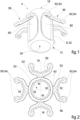
figure 1 shows a front perspective view of an endoscopic medical device, according to an embodiment of the present invention; -
figure 2 shows a top plan view of the endoscopic medical device offigure 1 ; -
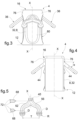
figure 3 shows a lateral view of the endoscopic medical device offigure 1 ; -
figure 4 shows a cross-sectional view of the endoscopic medical device offigure 1 ; -
figure 5 shows some enlarged details, even cross-sectional, of the endoscopic medical device offigure 1 ; -
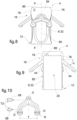
figure 6 shows a front perspective view of an endoscopic medical device, according to a further embodiment of the present invention; -
figure 7 shows a top plan view of the endoscopic medical device offigure 6 ; -
figure 8 shows a lateral view of the endoscopic medical device offigure 6 ; -
figure 9 shows a cross-sectional view of the endoscopic medical device offigure 6 ; -
figure 10 shows some enlarged details, even cross-sectional, of the endoscopic medical device offigure 6 ; -
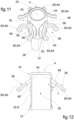
figure 11 shows a top perspective view of a colonoscopy on whose distal end there is fitted an endoscopic medical device according to a first embodiment of the present invention; -
figure 12 shows a cross-sectional view of the endoscopic medical device shown infigure 11 ; -
figure 13 shows a top perspective view of a colonoscopy on whose distal end there has been fitted an endoscopic medical device according to a second embodiment of the present invention; -
figure 14 shows a cross-sectional view of the endoscopic medical device shown infigure 12 ; -
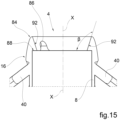
figure 15 shows a cross-sectional enlarged view of a distal portion of the endoscopic medical device according to a possible embodiment of the present invention. - The elements or components shared by the embodiments described below will be indicated using the same reference numerals.
- With reference to the above-mentioned figures, an overall view of an endoscopic medical device, in particular for colonoscopy, is generally indicated with 4.
- In particular, the endoscopic
medical device 4 comprises amain body 8, cylindrical with respect to a main extension axis X-X, which extends from aproximal end 12 to adistal end 16. - Said
main body 8 is hollow so as to delimit acavity 20 adapted to at least partially house adistal portion 24 of anendoscope 28 which can be associated therewith, on the side of saidproximal end 12 of themain body 8. - The
main body 8, at an outer side wall 32, opposite to saidcavity 20, has a plurality offlexible fins 36 provided witharms 40 which, in a resting condition, extend along main directions Y-Y incident with said main extension axis X-X according to an opening angle α comprised between 10 and 55 degrees, measured from the side of thedistal end 16. - According to a possible embodiment, said opening angle α is comprised between 20 and 45 degrees, preferably it is comprised between 35 and 39 degrees, even preferably it is equal to 37 degrees.
- Said
arms 40 are engaged with the outer side wall 32 atfixing ends 44 for fixing to themain body 8 and, atcantilevered ends 48, opposite to thefixing ends 44, branch into pairs ofarms arms 40 and through said main extension axis X-X. - According to a possible embodiment, said
branches cantilevered end 48 of thearm 40, have rounded tips 64 having a determined radius of curvature R. - According to an embodiment, said radius of curvature R is comprised between 1.4 and 2.4 mm, preferably it is equal to 1.9 m.
- According to an embodiment, said rounded tips 64 may be cylindrical-shaped with circular cross-section or they may be spherical.
- According to a possible embodiment, 3 to 5
flexible fins 36 are provided, preferably angularly equally spaced from each other, with respect to the main extension axis X-X, along the outer side wall 32. - According to a possible embodiment, the
arm 40 has a greater thickness than the thickness of saidbranches - According to a possible embodiment, the
arm 40 has a greater width than the width of saidbranches - According to a possible embodiment, the
arm 40 and thebranches quadrangular cross-section 68 withrounded edges 72, wherein the section is oriented so as to have a lesser moment of inertia with respect to a bending along the main extension axis X-X. - According to a possible embodiment, the
arm 40 and thebranches - According to an embodiment, said thickness of the
arm 40 and of thebranches branches - According to an embodiment, the width of the
branches arm 40, is smaller than a diameter D of said rounded tips 64 of thebranches - Advantageously, the
main body 8 and theflexible fins 36 are made of medical grade silicone material or a thermoplastic elastomer. Advantageously, furthermore, said material has a hardness between 40 and 60 SHORE A, preferably equal to about 50 SHORE A. - Preferably, said
flexible fins 36 have an increasing flexibility moving from thefixing ends 44 to the free ends 60. - According to a possible embodiment, said
arms 40 have a cantilevered length L, with respect to thefixing end 44, which are smaller than the lengths of saidbranches cantilevered end 48 of thearm 40 and the free ends 60. - According to a possible embodiment, the free ends 60 of the
branches cantilevered end 48 of thearm 40, diverge with respect to each other for a transversal distance T which is greater than the length of thearms 40. - Said transversal distance T is for example equal to a diameter of the
main body 8, measured perpendicularly to the main extension axis X-X. - According to a possible embodiment, the
main body 8, at thefixing ends 44 of thearms 40, on the side of thedistal end 16, hasbulges 76 which serve as upper stops in the rotation of thearms 40 towards thedistal end 16 of themain body 8. - According to a possible embodiment, the
main body 8, at thefixing ends 44 of thearms 40, on the side of theproximal end 12, hasrecesses 80 which serve as partial seats of thearms 40 when rotated bent towards theproximal end 12 of themain body 8. - According to a possible embodiment, the
main body 8, at thedistal end 16, comprises acap 84. Saidcap 84 is advantageously transparent, preferably having a height comprised between 1 and 4 mm, even more preferably equal to 2 mm, and it is particularly made of the same material as the endoscopicmedical device 4. According to a possible embodiment, thecap 84 has ahole 86 preferably arranged at the lens of theendoscope 28. Saidhole 86 advantageously allows the draining of the liquids cleaning the lens of theendoscope 28 from any dirt that could stop in thecap 84 during the endoscopic examination. - According to a possible embodiment, for a blocking
ring 88 is provided, which is positioned on the tip ordistal end 16 of themain body 8 and shaped so as to allow to correctly position the endoscopicmedical device 4 on the tip of theendoscope 28. Preferably, said blockingring 88 is positioned below saidhole 86; preferably said blockingring 88 forms an abutment or stop for thedistal portion 24 of theendoscope 28 and it guarantees the correct and full insertion of the endoscopicmedical device 4 on theendoscope 28. - The blocking
ring 88 further advantageously allows to prevent theendoscope 28 from being positioned erroneously at the area designed for thecap 84, and therefore prevent the lens of theendoscope 28 from coming into contact with the mucous membrane. - According to a possible embodiment, the
cap 84 has a flaredtop portion 92 having a flaring angle β greater than 95°, measured with respect to a horizontal plane perpendicular to the main extension axis X-X. Said flaredtop portion 92 has the advantage of not interfering with the view angle of the video camera arranged on thedistal portion 24 of theendoscope 28. Furthermore, such flaredtop portion 92 advantageously allows to prevent the excessive bending of the cap 84 (for example if made of soft silicone material) both inwards and outwards with respect to the visual field of theendoscope 28. - Below is the functional description of the endoscopic medical device according to the present invention.
- As mentioned above, the
main body 8 is fitted onto the tip ordistal portion 24 of anendoscope 28 to enable the introduction thereof. - When introducing into the body cavity and during the endoscopic examination, the
flexible fins 36 elastically bend towards theproximal end 12 of themain body 8; in particular, thebranches arms 40 which are stiffer. Therefore, thebranches - This characteristic is particularly advantageous, even generally during the advancement of the endoscopic
medical device 4 given that it makes the profile of the instrument narrower and therefore the instrument may advance without difficulty. The flexibility of thebranches medical device 4. The retraction of the endoscope is not always linear and continuous; at times one had to advance and then return backwards again. The distal flexibility of the fins, and in particular of thebranches arms 40 not to pivot on the walls of the colon and therefore avoid micro traumas to the mucous membrane. Furthermore, when retracting the endoscopicmedical device 4, having flexible tips means being sure not to ever apply excessive forces to the colon, given that, encountering resistance, the endoscopicmedical device 4 will yield elastically instead of the anatomy of the patient yielding. - The geometric conformation of the doubled
branches double branches branch branch - Therefore, the
arm 40 on the one hand allows a certain bending independence of thebranches branches - Furthermore, the apex of the oval, that is the bulging 76 of the material above the fixing
end 44 of eacharm arms 40 when retracting themedical device 4. In this manner, thearms 40 always remain in open position adapted to facilitate the gripping and the stretching of the colon folds, always in a non-traumatic manner. - Furthermore, the bulging 76 prevents the
arms 40 of themedical device 4, when retracting the instrument, from projecting excessively forward, therefore entering into the visual field of the video camera and interfering with the endoscopic examination. - As observable in the light of the above, the present invention allows to overcome the drawbacks observed in the prior art.
- In particular, the present invention allows to stretch - effectively and in a non-traumatic fashion - the folds of the colon, so as to increase the adenoma detection rate (adr) during endoscopic procedures, especially endoscopic screening.
- Advantageously, the enlarged and rounded tips are non-traumatic and, at the same time, they have an improved grip so as to grip the tissues better. Furthermore, the rounded shape allows to prevent lesions to the mucous membrane.
- The central body with a thicker arched structure allows to effectively support the stem, and it also facilitates the insertion of the medical device into the endoscope.
- Furthermore, the device of the present invention better adapts to the morphology of the colonoscope. A more adherent fitting of the medical device ensures a better fixing thereof and ensures that the latter never inadvertently detaches from the tip of the colonoscope like it happens in some prior art solutions. The embodiment of the endoscopic medical device made of silicone material, makes the device soft and adaptable to the colonoscope. The diameters of the colonoscope most commonly used for endoscopic screening procedures are 12.8 mm and 13.2 mm. The device is made smaller in diameter with respect to these dimensions, so that it can (for example thanks to the properties of silicone) be elastic and widen fitting into the colonoscope. Once inserted, between the smaller diameter, the inherent ultra-high anti-slip property of silicone, and the absence of a rigid structure on the body of the endoscopic medical device, ensure a perfect fitting and that the endoscopic medical device can never be inadvertently detached from the tip or distal portion of the endoscope.
- There can be used any material other than silicone provided it has the same properties and/or the same advantages.
- Furthermore, the device of the present invention advantageously has a smaller thickness with respect to the prior art solutions: therefore, such small thickness facilitates the step for inserting and advancing the instrument into the colon section, when the arms, and in particular the branches, collapse flattening downwards on the endoscope. This characteristic is particularly advantageous should there be encountered stenosis and stricture of the colon.
- Furthermore, the number of fulcrums of the arms which branch from the central body are advantageously small with respect to the prior art solutions: this allows to widen the empty spaces between the bases of the arms, allowing a very easy and effortless through-passing of fluids and stool.
- Furthermore, the blocking ring positioned on the tip of the medical device allows to correctly position the medical device on the tip of the endoscope.
- Furthermore, the apex and the oval, that is the bulging of the material above the fulcrum of each arm, serves as a rotary block for the arms when retracting the medical device. In this manner, the arms remain in open position adapted to facilitate the gripping and the stretching of the colon folds, always in a non-traumatic manner.
- The bulging of the material above the fulcrum of the arms further prevents the arms of the device, when retracting the instrument, from projecting excessively forward, therefore entering into the visual field of the video camera, interfering with the endoscopic examination.
- The geometric conformation of the double branches allows greater stability of the medical device. As a matter of fact, the double branches support each other, mutually supporting the overall radial opening of the medical device, preventing it from losing grip on the tissue, like it happens in the case of systems with single fins. The Y-shaped system therefore ensures greater stability, a greater opening and a greater effectiveness of the device especially in terms of non-traumatic stretching of the colon folds. As a matter of fact, should a part or branch of the arm slip, the remaining part binds the branch thereto without gripping, holding it in position for a resumption of the function thereof.
- According to the current endoscopic techniques, in order to obtain a progressive advancement of the colonoscope one has to carry out maneuvers which provide for - continuously and alternatively - pushing the instrument, anchoring to the colon, and retracting the instrument. Advantageously, the conformation of the arms and of the branches allows greater grip and anchoring on the intestinal folds and curves during the endoscopic examination, while ensuring non-traumatic maneuver at the same time. Therefore, this also allows a faster advancement of the instrument and makes the exam shorter and less painful for the patient.
- The embodiment of the device provided with a cap prevents the lens of the instrument from directly resting on the mucous membrane therefore obstructing the endoscopic read-out when moving the endoscope. Experiments showed that - in the version of the endoscopic medical device provided with cap, the latter is not framed by the video camera, in particular due to its flared shape. Therefore, this offers the benefits of a cap but without the classic visibility limitation of the cap, visibility being crucial during screening examinations.
- Furthermore, the device becomes a further arm of the operator and helps the latter both to maneuver the grip on the colon and move the tissues or folds of the colon out of the way.
- With the aim of meeting contingent and specific needs, a person skilled in the art may subject the solutions described above to numerous modifications and variants.
- The scope of protection of the invention is defined by the claims below.
Claims (15)
- Endoscopic medical device (4) comprising a main body (8), cylindrical with respect to a main extension axis (X-X), which extends from a proximal end (12) to a distal end (16),said main body (8) being hollow so as to delimit a cavity (20) adapted to at least partially house a distal portion (24) of an endoscope (28) which can be associated therewith, on the side of said proximal end (12) of the main body (8),said main body (8), at an outer side wall (32), opposite to said cavity (20), having a plurality of flexible fins (36) provided with arms (40) which, in a resting condition, extend along main directions (Y-Y) incident with said main extension axis (X-X) according to an opening angle (α) comprised between 10 and 55 degrees, measured from the side of the distal end (16),wherein said arms (40) are engaged with the outer side wall (32) at fixing ends (44) for fixing to the main body (8),said endoscopic medical device (4) being characterized in that said arms (40), at cantilevered ends (48) opposite to the fixing ends (44), branch into pairs of branches (52,56), arranged symmetrically with respect to a centerline plane (M-M) passing through said arms (40) and through said main extension axis (X-X).
- Endoscopic medical device (4) according to claim 1, characterized in that 3 to 5 flexible fins (36) are provided along the outer side wall (32) of the main body (8), and wherein said opening angle (α) is comprised between 20 and 45 degrees, preferably it is comprised between 35 and 39 degrees, preferably it is equal to 37 degrees.
- Endoscopic medical device (4) according to claim 1 or 2, characterized in that said branches (52,56), at free ends (60), opposite to the cantilevered end (48) of the arm (40), have rounded tips (64) having a determined radius of curvature (R), preferably comprised between 1.4 and 2.4 mm, more preferably equal to 1.9 mm,
wherein the width of the branches (52,56), and preferably also of the arm (40), is smaller than a diameter (D) of said rounded tips (64) of the branches (52,56). - Endoscopic medical device (4) according to claim 3, characterized in that said rounded tips (64) have a cylindrical shape with circular cross-section or they are spherical.
- Endoscopic medical device (4) according to any one of claims 1 to 4, characterized in that the arms (40) have a greater width than the width of said branches (52,56).
- Endoscopic medical device (4) according to any one of claims 1 to 5, characterized in that the arms (40) and the branches (52,56) have a constant thickness with respect to a radial cross-sectional plane parallel with and passing through the main extension axis (X-X).
- Endoscopic medical device (4) according to any one of claims 1 to 6, characterized in that the arms (40) and the branches (52,56) have a quadrangular cross-section (68) with rounded edges (72), wherein the quadrangular cross-section (68) is oriented so as to have lesser moment of inertia with respect to a bending along the main extension axis (X-X).
- Endoscopic medical device (4) according to any one of claims 1 to 7, characterized in that said flexible fins (36) have an increasing flexibility moving from the fixing ends (44) to the free ends (60).
- Endoscopic medical device (4) according to any one of claims 1 to 8, characterized in that said arms (40) have a cantilevered length, with respect to the fixing end (44), which is smaller than the lengths of said branches (52,56), equal to the distance between the cantilevered end (48) of the arm (40) and the free ends (60).
- Endoscopic medical device (4) according to any one of claims 1 to 9, characterized in that the free ends (60) of the branches (52,56), opposite to the cantilevered end (48) of the arm (40), diverge with respect to each other for a transversal distance (T) which is greater than the length of the arms (40) and preferably equal to a diameter of the main body (8).
- Endoscopic medical device (4) according to any one of claims 1 to 10, characterized in that the main body (8), at the fixing ends of the arms, on the side of the distal end, has bulges which serve as upper stops in the rotation of the arms towards the distal end.
- Endoscopic medical device (4) according to any one of claims 1 to 11, characterized in that the main body, at the ends for fixing the arms, on the side of the proximal end, has recesses which serve as partial seats of the arms when rotated or bent towards the proximal end.
- Endoscopic medical device (4) according to any one of claims 1 to 12, characterized in that the main body, at the distal end, comprises a cap (84).
- Endoscopic medical device (4) according to claim 13, characterized in that the cap (84) has a flared top portion (92) having a flaring angle (β) greater than 95°, said flaring angle being measured with respect to a horizontal plane perpendicular to the main extension axis (X-X).
- Endoscopic medical device (4) according to any one of claims 1 to 14, characterized in that a blocking ring (88) is provided, which is positioned on the tip of the main body and shaped so as to allow to correctly position the endoscopic medical device (4) on the tip of the endoscope (28).
Applications Claiming Priority (1)
| Application Number | Priority Date | Filing Date | Title |
|---|---|---|---|
| IT102022000015456A IT202200015456A1 (en) | 2022-07-22 | 2022-07-22 | ENDOSCOPIC MEDICAL DEVICE, ESPECIALLY FOR COLONOSCOPY |
Publications (3)
| Publication Number | Publication Date |
|---|---|
| EP4309563A1 EP4309563A1 (en) | 2024-01-24 |
| EP4309563C0 EP4309563C0 (en) | 2025-02-12 |
| EP4309563B1 true EP4309563B1 (en) | 2025-02-12 |
Family
ID=83505967
Family Applications (1)
| Application Number | Title | Priority Date | Filing Date |
|---|---|---|---|
| EP23187041.1A Active EP4309563B1 (en) | 2022-07-22 | 2023-07-21 | Endoscopic medical device, in particular for colonoscopy |
Country Status (5)
| Country | Link |
|---|---|
| US (1) | US20240023804A1 (en) |
| EP (1) | EP4309563B1 (en) |
| CN (1) | CN117426736A (en) |
| BR (1) | BR102023014827A2 (en) |
| IT (1) | IT202200015456A1 (en) |
Citations (3)
| Publication number | Priority date | Publication date | Assignee | Title |
|---|---|---|---|---|
| WO2015153507A1 (en) | 2014-03-31 | 2015-10-08 | Spiration, Inc. | Anchoring mechanisms and systems for endoluminal devices |
| WO2016210306A1 (en) | 2015-06-25 | 2016-12-29 | Medivators Inc. | Fitting for a medical scoping device |
| CN207870874U (en) | 2017-06-22 | 2018-09-18 | 深圳万和制药有限公司 | Improve the extension fixture of endoscopy effect |
-
2022
- 2022-07-22 IT IT102022000015456A patent/IT202200015456A1/en unknown
-
2023
- 2023-07-20 US US18/224,111 patent/US20240023804A1/en active Pending
- 2023-07-21 CN CN202310907114.3A patent/CN117426736A/en active Pending
- 2023-07-21 EP EP23187041.1A patent/EP4309563B1/en active Active
- 2023-07-24 BR BR102023014827-1A patent/BR102023014827A2/en unknown
Patent Citations (3)
| Publication number | Priority date | Publication date | Assignee | Title |
|---|---|---|---|---|
| WO2015153507A1 (en) | 2014-03-31 | 2015-10-08 | Spiration, Inc. | Anchoring mechanisms and systems for endoluminal devices |
| WO2016210306A1 (en) | 2015-06-25 | 2016-12-29 | Medivators Inc. | Fitting for a medical scoping device |
| CN207870874U (en) | 2017-06-22 | 2018-09-18 | 深圳万和制药有限公司 | Improve the extension fixture of endoscopy effect |
Also Published As
| Publication number | Publication date |
|---|---|
| EP4309563A1 (en) | 2024-01-24 |
| US20240023804A1 (en) | 2024-01-25 |
| IT202200015456A1 (en) | 2024-01-22 |
| EP4309563C0 (en) | 2025-02-12 |
| BR102023014827A2 (en) | 2024-01-30 |
| CN117426736A (en) | 2024-01-23 |
Similar Documents
| Publication | Publication Date | Title |
|---|---|---|
| JP6495556B2 (en) | Endoscope top mounting device | |
| JP6884144B2 (en) | Mounting device for the top of the endoscope | |
| US11559195B2 (en) | Rigid endoscope cover and endoscope unit | |
| EP4309563B1 (en) | Endoscopic medical device, in particular for colonoscopy | |
| GB2638752A (en) | Medical device accessory | |
| GB2637738A (en) | Medical device accessory |
Legal Events
| Date | Code | Title | Description |
|---|---|---|---|
| PUAI | Public reference made under article 153(3) epc to a published international application that has entered the european phase |
Free format text: ORIGINAL CODE: 0009012 |
|
| STAA | Information on the status of an ep patent application or granted ep patent |
Free format text: STATUS: THE APPLICATION HAS BEEN PUBLISHED |
|
| AK | Designated contracting states |
Kind code of ref document: A1 Designated state(s): AL AT BE BG CH CY CZ DE DK EE ES FI FR GB GR HR HU IE IS IT LI LT LU LV MC ME MK MT NL NO PL PT RO RS SE SI SK SM TR |
|
| P01 | Opt-out of the competence of the unified patent court (upc) registered |
Effective date: 20240125 |
|
| STAA | Information on the status of an ep patent application or granted ep patent |
Free format text: STATUS: REQUEST FOR EXAMINATION WAS MADE |
|
| 17P | Request for examination filed |
Effective date: 20240625 |
|
| RBV | Designated contracting states (corrected) |
Designated state(s): AL AT BE BG CH CY CZ DE DK EE ES FI FR GB GR HR HU IE IS IT LI LT LU LV MC ME MK MT NL NO PL PT RO RS SE SI SK SM TR |
|
| GRAP | Despatch of communication of intention to grant a patent |
Free format text: ORIGINAL CODE: EPIDOSNIGR1 |
|
| STAA | Information on the status of an ep patent application or granted ep patent |
Free format text: STATUS: GRANT OF PATENT IS INTENDED |
|
| RIC1 | Information provided on ipc code assigned before grant |
Ipc: A61B 1/00 20060101AFI20240903BHEP |
|
| INTG | Intention to grant announced |
Effective date: 20240924 |
|
| GRAS | Grant fee paid |
Free format text: ORIGINAL CODE: EPIDOSNIGR3 |
|
| GRAA | (expected) grant |
Free format text: ORIGINAL CODE: 0009210 |
|
| STAA | Information on the status of an ep patent application or granted ep patent |
Free format text: STATUS: THE PATENT HAS BEEN GRANTED |
|
| AK | Designated contracting states |
Kind code of ref document: B1 Designated state(s): AL AT BE BG CH CY CZ DE DK EE ES FI FR GB GR HR HU IE IS IT LI LT LU LV MC ME MK MT NL NO PL PT RO RS SE SI SK SM TR |
|
| REG | Reference to a national code |
Ref country code: GB Ref legal event code: FG4D |
|
| REG | Reference to a national code |
Ref country code: CH Ref legal event code: EP |
|
| REG | Reference to a national code |
Ref country code: DE Ref legal event code: R096 Ref document number: 602023001995 Country of ref document: DE |
|
| REG | Reference to a national code |
Ref country code: IE Ref legal event code: FG4D |
|
| U01 | Request for unitary effect filed |
Effective date: 20250218 |
|
| U07 | Unitary effect registered |
Designated state(s): AT BE BG DE DK EE FI FR IT LT LU LV MT NL PT RO SE SI Effective date: 20250224 |
|
| P04 | Withdrawal of opt-out of the competence of the unified patent court (upc) registered |
Free format text: CASE NUMBER: APP_8565/2025 Effective date: 20250219 |
|
| PG25 | Lapsed in a contracting state [announced via postgrant information from national office to epo] |
Ref country code: RS Free format text: LAPSE BECAUSE OF FAILURE TO SUBMIT A TRANSLATION OF THE DESCRIPTION OR TO PAY THE FEE WITHIN THE PRESCRIBED TIME-LIMIT Effective date: 20250512 |
|
| PG25 | Lapsed in a contracting state [announced via postgrant information from national office to epo] |
Ref country code: PL Free format text: LAPSE BECAUSE OF FAILURE TO SUBMIT A TRANSLATION OF THE DESCRIPTION OR TO PAY THE FEE WITHIN THE PRESCRIBED TIME-LIMIT Effective date: 20250212 |
|
| PG25 | Lapsed in a contracting state [announced via postgrant information from national office to epo] |
Ref country code: ES Free format text: LAPSE BECAUSE OF FAILURE TO SUBMIT A TRANSLATION OF THE DESCRIPTION OR TO PAY THE FEE WITHIN THE PRESCRIBED TIME-LIMIT Effective date: 20250212 |
|
| PG25 | Lapsed in a contracting state [announced via postgrant information from national office to epo] |
Ref country code: IS Free format text: LAPSE BECAUSE OF FAILURE TO SUBMIT A TRANSLATION OF THE DESCRIPTION OR TO PAY THE FEE WITHIN THE PRESCRIBED TIME-LIMIT Effective date: 20250612 Ref country code: NO Free format text: LAPSE BECAUSE OF FAILURE TO SUBMIT A TRANSLATION OF THE DESCRIPTION OR TO PAY THE FEE WITHIN THE PRESCRIBED TIME-LIMIT Effective date: 20250512 |
|
| PG25 | Lapsed in a contracting state [announced via postgrant information from national office to epo] |
Ref country code: HR Free format text: LAPSE BECAUSE OF FAILURE TO SUBMIT A TRANSLATION OF THE DESCRIPTION OR TO PAY THE FEE WITHIN THE PRESCRIBED TIME-LIMIT Effective date: 20250212 |
|
| PG25 | Lapsed in a contracting state [announced via postgrant information from national office to epo] |
Ref country code: GR Free format text: LAPSE BECAUSE OF FAILURE TO SUBMIT A TRANSLATION OF THE DESCRIPTION OR TO PAY THE FEE WITHIN THE PRESCRIBED TIME-LIMIT Effective date: 20250513 |
|
| U20 | Renewal fee for the european patent with unitary effect paid |
Year of fee payment: 3 Effective date: 20250723 |
|
| PG25 | Lapsed in a contracting state [announced via postgrant information from national office to epo] |
Ref country code: SM Free format text: LAPSE BECAUSE OF FAILURE TO SUBMIT A TRANSLATION OF THE DESCRIPTION OR TO PAY THE FEE WITHIN THE PRESCRIBED TIME-LIMIT Effective date: 20250212 |
|
| PG25 | Lapsed in a contracting state [announced via postgrant information from national office to epo] |
Ref country code: CZ Free format text: LAPSE BECAUSE OF FAILURE TO SUBMIT A TRANSLATION OF THE DESCRIPTION OR TO PAY THE FEE WITHIN THE PRESCRIBED TIME-LIMIT Effective date: 20250212 |
|
| PG25 | Lapsed in a contracting state [announced via postgrant information from national office to epo] |
Ref country code: SK Free format text: LAPSE BECAUSE OF FAILURE TO SUBMIT A TRANSLATION OF THE DESCRIPTION OR TO PAY THE FEE WITHIN THE PRESCRIBED TIME-LIMIT Effective date: 20250212 |
|
| PLBI | Opposition filed |
Free format text: ORIGINAL CODE: 0009260 |
|
| PLAX | Notice of opposition and request to file observation + time limit sent |
Free format text: ORIGINAL CODE: EPIDOSNOBS2 |
|
| 26 | Opposition filed |
Opponent name: KEYMED (MEDICAL & INDUSTRIAL EQUIPMENT) LIMITED Effective date: 20251112 |
|
| PLBB | Reply of patent proprietor to notice(s) of opposition received |
Free format text: ORIGINAL CODE: EPIDOSNOBS3 |