EP4309281B1 - Motor position estimation using current ripples - Google Patents
Motor position estimation using current ripples Download PDFInfo
- Publication number
- EP4309281B1 EP4309281B1 EP22729993.0A EP22729993A EP4309281B1 EP 4309281 B1 EP4309281 B1 EP 4309281B1 EP 22729993 A EP22729993 A EP 22729993A EP 4309281 B1 EP4309281 B1 EP 4309281B1
- Authority
- EP
- European Patent Office
- Prior art keywords
- values
- current
- delta
- ecu
- filter
- Prior art date
- Legal status (The legal status is an assumption and is not a legal conclusion. Google has not performed a legal analysis and makes no representation as to the accuracy of the status listed.)
- Active
Links
Images




Classifications
-
- H—ELECTRICITY
- H02—GENERATION; CONVERSION OR DISTRIBUTION OF ELECTRIC POWER
- H02P—CONTROL OR REGULATION OF ELECTRIC MOTORS, ELECTRIC GENERATORS OR DYNAMO-ELECTRIC CONVERTERS; CONTROLLING TRANSFORMERS, REACTORS OR CHOKE COILS
- H02P7/00—Arrangements for regulating or controlling the speed or torque of electric DC motors
- H02P7/0094—Arrangements for regulating or controlling the speed or torque of electric DC motors wherein the position is detected using the ripple of the current caused by the commutator
-
- H—ELECTRICITY
- H02—GENERATION; CONVERSION OR DISTRIBUTION OF ELECTRIC POWER
- H02P—CONTROL OR REGULATION OF ELECTRIC MOTORS, ELECTRIC GENERATORS OR DYNAMO-ELECTRIC CONVERTERS; CONTROLLING TRANSFORMERS, REACTORS OR CHOKE COILS
- H02P7/00—Arrangements for regulating or controlling the speed or torque of electric DC motors
-
- B—PERFORMING OPERATIONS; TRANSPORTING
- B60—VEHICLES IN GENERAL
- B60N—SEATS SPECIALLY ADAPTED FOR VEHICLES; VEHICLE PASSENGER ACCOMMODATION NOT OTHERWISE PROVIDED FOR
- B60N2/00—Seats specially adapted for vehicles; Arrangement or mounting of seats in vehicles
- B60N2/02—Seats specially adapted for vehicles; Arrangement or mounting of seats in vehicles the seat or part thereof being movable, e.g. adjustable
- B60N2/0224—Non-manual adjustments, e.g. with electrical operation
- B60N2/02246—Electric motors therefor
-
- B—PERFORMING OPERATIONS; TRANSPORTING
- B60—VEHICLES IN GENERAL
- B60N—SEATS SPECIALLY ADAPTED FOR VEHICLES; VEHICLE PASSENGER ACCOMMODATION NOT OTHERWISE PROVIDED FOR
- B60N2/00—Seats specially adapted for vehicles; Arrangement or mounting of seats in vehicles
- B60N2/02—Seats specially adapted for vehicles; Arrangement or mounting of seats in vehicles the seat or part thereof being movable, e.g. adjustable
- B60N2/0224—Non-manual adjustments, e.g. with electrical operation
- B60N2/0244—Non-manual adjustments, e.g. with electrical operation with logic circuits
-
- B—PERFORMING OPERATIONS; TRANSPORTING
- B60—VEHICLES IN GENERAL
- B60N—SEATS SPECIALLY ADAPTED FOR VEHICLES; VEHICLE PASSENGER ACCOMMODATION NOT OTHERWISE PROVIDED FOR
- B60N2/00—Seats specially adapted for vehicles; Arrangement or mounting of seats in vehicles
- B60N2/02—Seats specially adapted for vehicles; Arrangement or mounting of seats in vehicles the seat or part thereof being movable, e.g. adjustable
- B60N2/04—Seats specially adapted for vehicles; Arrangement or mounting of seats in vehicles the seat or part thereof being movable, e.g. adjustable the whole seat being movable
- B60N2/06—Seats specially adapted for vehicles; Arrangement or mounting of seats in vehicles the seat or part thereof being movable, e.g. adjustable the whole seat being movable slidable
-
- B—PERFORMING OPERATIONS; TRANSPORTING
- B60—VEHICLES IN GENERAL
- B60N—SEATS SPECIALLY ADAPTED FOR VEHICLES; VEHICLE PASSENGER ACCOMMODATION NOT OTHERWISE PROVIDED FOR
- B60N2230/00—Communication or electronic aspects
- B60N2230/30—Signal processing of sensor data
Definitions
- the present disclosure relates generally to a method for monitoring and controlling an electric motor. More particularly, the invention relates to a method for determining a rotational position and/or a speed of a brushed direct current electric motor from a plurality of ripple peaks of the motor's current.
- the method comprises the steps of measuring raw current values drawn by the motor to reposition the seat assembly, temporally dividing the raw current values into sections based on size and variations in the raw current values, filtering the raw current values in each section to obtain filtered current values, determining a median value of the filtered current values for each section to obtain a plurality of sequential median values, determining a trend in the plurality of sequential median values, removing the trend from the plurality of sequential median values to obtain detrended values, determining a difference in magnitude between successive detrended values to obtain delta values, identifying a plurality of peaks in the delta values, determining which of the plurality of peaks has an amplitude greater than a threshold, wherein the peaks having an amplitude greater than the threshold correspond to detected local peaks within the filtered current values, and determining a rotational position or a speed based on the detected local peaks.
- FIGs 1-25 illustrate a system and method of controlling a seat assembly 10.
- an exemplary seat assembly 10 includes a seat back 12, a seat cushion 14, a seat base 16, a pair of adjuster assemblies 18, and a linkage assembly 20.
- the seat back 12 is rotatably coupled to the seat cushion 14.
- the linkage assembly 20 pivotably couples the seat cushion 14 to the seat base 16.
- the seat base 16 is transposable fore and aft along the pair of adjuster assemblies 18.
- the motor 24 is a bushed direct current (DC) motor 24, the internal components of which generate a ripple effect on the current drawn by the motor 24.
- DC direct current
- the ripples in the raw current waveform 46 are mixed with electrical noise from the commutator, ADC noise, and transient conditions.
- the systems and methods described below separate the electrical noise and the transient conditions from the ripples in the raw current waveform 46 to isolate the current ripples, which can then be used to indicate the motor 24 rotation speed and/or position.
- the adaptive buffer algorithm 62 places the current samples into raw current buffers for processing.
- the size of the raw current buffers differs depending on whether the current is in transient conditions or steady state.
- the ECU 22 begins by initializing the buffer parameters (step 88).
- the buffer parameters include a maximum buffer size Bmax, a timer T0, a minimum current stored in the buffer Cmin, the relative time at which the minimum current was recorded T1m, a maximum current stored in the buffer Cmax, and the relative time at which the maximum current was recorded T1M.
- An exemplary maximum buffer size Bmax is about 30-40 samples, but may be adjusted to reflect the motor 24 being evaluated.
- the ECU 22 then updates the buffer parameters (step 100) by resetting the timer T0, the minimum timer T1m and the maximum timer T1M to zero, and by setting the minimum current Cmin and the maximum current Cmax equal to the raw current value.
- the ECU 22 then starts a new raw buffer (step 102) and stores the raw current value into the raw buffer (step 104).
- the ECU 22 also performs step 104 if, at step 96, it determined that the raw buffer was not full.
- the ECU 22 determines if there is still current running through the motor 24 (i.e., if the motor 24 is still running) (step 106). If the motor 24 is still running, then the ECU 22 returns to step 90 to obtain the next current value. Otherwise, the ECU 22 applies the selective adaptive filter 64 to the data remaining in the raw buffer (step 108).
- step 94 if the raw current value is less than the minimum current Cmin, then the minimum current Cmin is set equal to the raw current value and minimum timer T1m is set equal to the timer T0 (step 110). Also at step 94, if the raw current value is greater than the maximum current Cmax, then the maximum current Cmax is set equal to the raw current value and maximum timer T1M is set equal to the timer T0 (step 110).
- the current range threshold TH_dC may be determined based on the line voltage Vin received by the ECU 22 in addition to the difference in time dT.
- the line voltage Vin is the battery voltage and may vary in magnitude based on temperature, load on the battery, the amount of stored charge in the battery, the battery age, the battery state of health, and the like as non-limiting examples.
- the current range threshold TH_dC may be determined using a lookup table listing values of threshold TH_dC based on the line voltage Vin and delta time dT.
- step 98 the ECU 22 proceeds with step 98 to apply the selective adaptive filter 64 to the data in the raw buffer. If the current range dC does not exceed the threshold TH_dC, then the ECU 22 proceeds with step 96 to determine whether the raw buffer is full.
- the ECU 22 begins by determining the integration factor IntF for the current raw buffer (step 122).
- step 136 If at step 136 the absolute value of delta current dC divided by delta time dT
- is not greater than the threshold TH_IF, then the ECU 22 calculates a new integration factor IntF as the maximum value of the minimum integration factor IntF_min and the last integration factor IntF_last minus the delta decrement D_dec (step 140, equation 4) IntF max IntF _ min , IntF _ last ⁇ D _ dec
- the relationship between the coefficient magnitude and the coefficient indices varies as a function of the integration factor IntF.
- the integration factor IntF increases from IntF mid to IntF high , more weight is put on the new data entering the filter (arrow 156) and less weight is put on the older data (arrow 158) to shorten the response time.
- the integration factor IntF decreases from IntF mid to IntF 0 , less weight is put on the new data entering the filter (arrow 160) and more weight is put on the old data (arrow 162) until all data is treated equally when the integration factor IntF reaches zero IntF 0 .
- the magnitude of the coefficients alternatively may be determined based on a lookup chart listing values for each coefficient for ranges of the integration factor IntF.
- the selective adaptive filter 64 adjusts the weights wm of the filter coefficients and the number m of past raw current values used in the filter based on the amount of variation in the raw current values in the raw buffer. Adjusting the filter coefficients and the number of past raw current values improves the response time of the filter in comparison to using fixed filter coefficients and a fixed number of past values.
- the selective adaptive filter 64 shortens the response time of the filter when transient conditions are detected. In contrast, the selective adaptive filter 64 increases the response time of the filter during steady state conditions. Adjusting the filter response time relative to the amount of local variation in raw current values allows for noise to be filtered from the current waveform 46 while preserving the current ripples.
- the ECU 22 initially determines the median parameters (step 172).
- the median parameters include the maximum buffer size b_max, the shift S in the median value and the number of filtered current values P that are used to calculate a mean value.
- the values for length P, shift S, and maximum buffer size b_max may be predetermined values stored in memory in the ECU 22. Those design parameter values are derived through optimization of the experimental data.
- the ECU 22 also may determine and/or adjust these values based on the amount of variation in the filtered buffer, the detected transient conditions, the delta current dC, the delta time dT, the integration factor IntF, and/or other conditions detected by the ECU 22.
- the ECU 22 determines the average of P filtered current values centered around the shifted middle position (step 184) and stores this "modified median value" in a median buffer 170 (step 186).
- the ECU 22 may adjust the value of P to ensure that the median is calculated properly (e.g., if n is even, the ECU 22 adjusts P to be even).
- the ECU 22 may apply a standard median filter to the data in the filtered buffer.
- a standard median filter is obtained by setting the length P equal to 1 and setting shift S equal to 0.
- Figures 16-18 illustrate the effect of applying the selective adaptive filter 64 and the adaptive median filter 66 to the raw current waveform 46 (X).
- Figure 16 shows the effect on the entire current waveform 46 from Figure 2
- Figure 17 shows an enlarged view of the effect when the seat assembly 10 encounters an expected or unexpected impact or obstruction (portion D of Figure 2 )
- Figure 18 shows an enlarged view of the effect during steady state conditions (portion C of Figure 2 ).
- the raw current waveform 46 (X) has greater fluctuations than the filtered current Y because the selective adaptive filter 64 filters a portion of the noise out of the raw current waveform 46 (X) while minimizing distortions in the filtered current waveform Y caused by the filtering process.
- the filtered current Y has greater fluctuations than the modified median filtered data Z because the adaptive median filter 66 removes localized spikes in the filtered current Y while maintaining shifts in the filtered raw current values Y(k) that are indicative of jumps in amplitude related to movement of the seat assembly 10.
- the adaptive median filter 66 is configurable to emphasize edged effects in the filtered buffers and to provide a balance between smoothness and abrupt transitions in the filtered current values Y(k).
- the median current waveform Z tracks closely to the general shape of the raw current waveform 46 (X) and the filtered current waveform Y with a reduction of the fluctuations caused by noise.
- the selective adaptive filter 64 requires a high resolution signal to process the data.
- the raw current values are logged at a high speed at about 1 sample per millisecond when they are processed through the adaptive buffer algorithm 62, the selective adaptive filter 64 and the adaptive median filter 66.
- a slower sample rate of about 1 sample per 5 milliseconds is sufficient for remainder of the system 60.
- the ECU 22 applies a de-sampling algorithm 68 to the median filtered values to reduce the sample rate, which also reduces the amount of processing required by the ECU 22.
- the de-sampling algorithm 68 is further illustrated in Figure 19 .
- the ECU 22 de-samples the data in the median buffer 170 by a predetermined amount. For example, when the ECU 22 de-samples by a factor of three, the ECU 22 partitions the data stored in the median buffer 170 into groups 188 of three consecutive median values 188a, 188b, 188c. Next, the ECU 22 stores the first value 188a in each group 188 into a de-sampled buffer 190 and discards the next two values 188b, 188c. The ECU 22 repeats the de-sampling process for each group 188 of three values 188a, 188b, 188c stored in the median buffer 170.
Landscapes
- Engineering & Computer Science (AREA)
- Power Engineering (AREA)
- Seats For Vehicles (AREA)
- Control Of Position Or Direction (AREA)
Description
- The present disclosure relates generally to a method for monitoring and controlling an electric motor. More particularly, the invention relates to a method for determining a rotational position and/or a speed of a brushed direct current electric motor from a plurality of ripple peaks of the motor's current.
- Brushed direct current (DC) motors are commonly used in automotive power seat assemblies. For more complex applications, such as memory seats or anti-pinch functions, hall effect sensors are included with the motors to provide position feedback to an embedded electronic control unit (ECU). The ECU controls the movement and positioning of the seat assemblies based in part on the position feedback from the hall effect sensors.
- However, adding hall effect sensors to the seat assemblies adds cost and complexity due to the hall effect sensors, extra wires connected between the hall effect sensors and the ECU, and additional digital channels on a controller in the ECU for processing the hall effect signals. Eliminating the hall effect sensors improves system level reliability as well as reducing overall cost of the seat assemblies. It is further desirable to eliminate the hall effect sensors so the extra wires and additional data channels on the controller are not required.
-
US 2020/0186062 A1 discloses a method for controlling a mechanically commutated direct current electric motor. - The invention provides a method for monitoring a motor within a seat assembly in an automotive vehicle comprising the features of
claim 1. - The method comprises the steps of measuring raw current values drawn by the motor to reposition the seat assembly, temporally dividing the raw current values into sections based on size and variations in the raw current values, filtering the raw current values in each section to obtain filtered current values, determining a median value of the filtered current values for each section to obtain a plurality of sequential median values, determining a trend in the plurality of sequential median values, removing the trend from the plurality of sequential median values to obtain detrended values, determining a difference in magnitude between successive detrended values to obtain delta values, identifying a plurality of peaks in the delta values, determining which of the plurality of peaks has an amplitude greater than a threshold, wherein the peaks having an amplitude greater than the threshold correspond to detected local peaks within the filtered current values, and determining a rotational position or a speed based on the detected local peaks.
- Advantages of the present invention will be readily appreciated as the same becomes better understood by reference to the following detailed description when considered in connection with the accompanying drawings wherein:
-
Figure 1 is a perspective view of a seat assembly having a motor operatively coupled to gears, according to one embodiment of the present invention; -
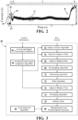
Figure 2 is a graphical representation of current drawn by the motor during movement of the seat assembly; -
Figure 3 illustrates a system for determining motor position and speed, according to one embodiment of the present invention; -
Figure 4 is a flow chart of the adaptive buffer algorithm ofFigure 3 ; -
Figure 5 is an exemplary surface plot for determining a delta current threshold, according to one embodiment of the present invention; -
Figure 6 is a flow chart of the selective adaptive filter ofFigure 3 ; -
Figure 7 is a flow chart of a method of determining an integration factor, according to one embodiment of the present invention; -
Figure 8 is a flow chart of another method of determining an integration factor, according to another embodiment of the present invention; -
Figure 9 is an exemplary graph comparing a delta function with the change in current divided by the change in time (dC/dT); -
Figures 10-13 illustrate how the magnitude of finite impulse response coefficients vary with changes to the integration factor; -
Figure 14 is a diagrammatic representation of the adaptive median filter ofFigure 3 ; -
Figure 15 is a flow chart of the adaptive median filter ofFigure 3 ; -
Figure 16 is a graphical representation of the changes to the current waveform ofFigure 2 as the current is processed according to one embodiment of the present invention; -
Figure 17 is an enlarged graphical representation of a portion of the current waveform shown inFigure 16 ; -
Figure 18 is an enlarged graphical representation of a portion of the current waveforms shown inFigure 16 ; -
Figure 19 is diagrammatic representation of the de-sampling algorithm ofFigure 3 ; -
Figure 20 is an enlarged graphical representation of the waveform ofFigure 18 after processing according to one embodiment of the present invention; -
Figure 21 is a diagrammatic representation of the delta algorithm ofFigure 3 ; -
Figure 22 is a graphical representation of the waveform ofFigure 16 after processing according to one embodiment of the present invention; -
Figure 23 is a graphical representation of the waveform ofFigure 22 after processing according to one embodiment of the present invention; -
Figure 24 is an enlarged graphical representation of a portion of the waveform ofFigure 23 ; and -
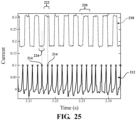
Figure 25 is a graphical representation comparing the waveform ofFigure 24 with corresponding hall effect pulses. - The present invention relates to systems and methods for detecting a rotational position and/or speed in the operation of seat assemblies 10 in automotive vehicles. Directional references employed or shown in the description, figures, or claims, such as top, bottom, upper, lower, upward, downward, lengthwise, widthwise, left, right, and the like, are relative terms employed for ease of description and are not intended to limit the scope of the invention in any respect. Referring to the Figures, like numerals indicate like or corresponding parts throughout the several views.
-
Figures 1-25 illustrate a system and method of controlling aseat assembly 10. As depicted inFigure 1 , anexemplary seat assembly 10 includes aseat back 12, aseat cushion 14, aseat base 16, a pair ofadjuster assemblies 18, and alinkage assembly 20. Theseat back 12 is rotatably coupled to theseat cushion 14. Thelinkage assembly 20 pivotably couples theseat cushion 14 to theseat base 16. Theseat base 16 is transposable fore and aft along the pair ofadjuster assemblies 18. - The
seat assembly 10 also includes an electronic control unit (ECU) 22, amotor 24 having adrive shaft 26 extending from themotor 24, and one ormore gears 28 operatively coupled with thedrive shaft 26. The ECU 22 controls the movement and positioning of theseat assembly 10 by controlling power to themotor 24 which drives thegears 28. TheECU 22 not only controls the movement and positioning of theseat assembly 10, but it also monitors these activities to ensure that they are working properly over time. - The
ECU 22 is configured to monitor the current drawn by themotor 24 during operation, as reflected in an exemplarycurrent waveform 46 shown inFigure 2 . When themotor 24 initially receives power, themotor 24 begins to rotate thedrive shaft 26 causing the one ormore gears 28 to rotate. The current drawn by themotor 24 rapidly increases as themotor 24 initiates rotation of thedrive shaft 26 and the one ormore gears 28, as well as initiating movement of equipment tied togears 28, as reflected in portion A of thecurrent waveform 46 inFigure 2 . After thegears 28 start moving, less power is needed to drive thegears 28. Therefore, the current will begin to decrease after it reaches apeak 48, as reflected in portion B of thecurrent waveform 46. Portion C shows thecurrent waveform 46 during steady state conditions. Portion D ofFigure 2 shows thecurrent waveform 46 when thegears 28 and/or theseat assembly 10 encounter an expected or unexpected impact or obstruction. - In the embodiment shown in
Figure 1 , themotor 24 is a bushed direct current (DC)motor 24, the internal components of which generate a ripple effect on the current drawn by themotor 24. However, the ripples in the rawcurrent waveform 46 are mixed with electrical noise from the commutator, ADC noise, and transient conditions. The systems and methods described below separate the electrical noise and the transient conditions from the ripples in the rawcurrent waveform 46 to isolate the current ripples, which can then be used to indicate themotor 24 rotation speed and/or position. -
Figure 3 illustrates asystem 60 for determining the position and/or speed of themotor 24 from the rawcurrent waveform 46 drawn by themotor 24 according to one embodiment of the present invention. Thesystem 60 includes anadaptive buffer algorithm 62, a selectiveadaptive filter 64, anadaptive median filter 66, a de-samplingalgorithm 68, adetrending algorithm 70, adelta algorithm 72, a secondadaptive median filter 74, areshaping algorithm 76, a Kalmanfilter 78 and a threshold and final position/speed calculator 80. Thesystem 60 also includes a control andsignal processing coordinator 82, a coefficient andlength adaptation algorithm 84, and anevent detection algorithm 86. Thesystem 60 initiates when theECU 22 sends power to themotor 24 to move theseat assembly 10. The rawcurrent waveform 46 drawn by themotor 24 is initially processed by theadaptive buffer algorithm 62. - The
adaptive buffer algorithm 62 places the current samples into raw current buffers for processing. The size of the raw current buffers differs depending on whether the current is in transient conditions or steady state. Referring toFigure 4 , in theadaptive buffer algorithm 62, theECU 22 begins by initializing the buffer parameters (step 88). The buffer parameters include a maximum buffer size Bmax, a timer T0, a minimum current stored in the buffer Cmin, the relative time at which the minimum current was recorded T1m, a maximum current stored in the buffer Cmax, and the relative time at which the maximum current was recorded T1M. An exemplary maximum buffer size Bmax is about 30-40 samples, but may be adjusted to reflect themotor 24 being evaluated. During initialization, the timer T0, the relative time at which the minimum current was recorded T1m, the relative time at which the maximum current was recorded T1M, the minimum current stored in the buffer Cmin, and the maximum current stored in the buffer Cmax are set to zero. - After initializing the buffer parameters (step 88), the
ECU 22 obtains a sample of the current from the motor 24 (step 90) and increments the timer T0 (step 92). The timer T0 identifies the relative time at which each current value is read into the buffer. Alternatively, theECU 22 may record the actual time that the current value is read into the buffer. TheECU 22 then determines whether the current value is between Cmin and Cmax (step 94). If theECU 22 determines that the current value is between Cmin and Cmax, then theECU 22 determines if the raw buffer is full (step 96) by determining whether T0 exceeds Bmax. If the raw buffer is full, then theECU 22 applies the selectiveadaptive filter 64 to the data in the raw buffer (step 98). TheECU 22 then updates the buffer parameters (step 100) by resetting the timer T0, the minimum timer T1m and the maximum timer T1M to zero, and by setting the minimum current Cmin and the maximum current Cmax equal to the raw current value. TheECU 22 then starts a new raw buffer (step 102) and stores the raw current value into the raw buffer (step 104). TheECU 22 also performsstep 104 if, atstep 96, it determined that the raw buffer was not full. TheECU 22 then determines if there is still current running through the motor 24 (i.e., if themotor 24 is still running) (step 106). If themotor 24 is still running, then theECU 22 returns to step 90 to obtain the next current value. Otherwise, theECU 22 applies the selectiveadaptive filter 64 to the data remaining in the raw buffer (step 108). - At
step 94, if the raw current value is less than the minimum current Cmin, then the minimum current Cmin is set equal to the raw current value and minimum timer T1m is set equal to the timer T0 (step 110). Also atstep 94, if the raw current value is greater than the maximum current Cmax, then the maximum current Cmax is set equal to the raw current value and maximum timer T1M is set equal to the timer T0 (step 110). TheECU 22 then determines a current range threshold TH_dC (step 111) based on the difference in time (i.e., delta time dT) between the maximum current and the minimum current (i.e., T1m - T1m).
- The current range threshold TH_dC may be determined based on the line voltage Vin received by the
ECU 22 in addition to the difference in time dT. The line voltage Vin is the battery voltage and may vary in magnitude based on temperature, load on the battery, the amount of stored charge in the battery, the battery age, the battery state of health, and the like as non-limiting examples. The current range threshold TH_dC may be determined using a lookup table listing values of threshold TH_dC based on the line voltage Vin and delta time dT. Alternatively, the current range threshold TH_dC may be determined using a three-dimensional surface plot 114 as reflected inFigure 5 where the x-axis reflects delta time dT, the z-axis reflects the line voltage Vin, and the y-axis reflects the threshold TH_dC. As shown, theplot 114 may be used to determine the currentrange threshold TH_dC 116 based on the value ofVin 118 and the value ofdT 120. - The
ECU 22 then determines whether the current range (i.e., delta current dC) exceeds the current range threshold TH_dC (step 112). The current range dC is the difference between the maximum current Cmax and the minimum current Cmin (i.e., Cmax-Cmin).
- If the current range dC exceeds the current range threshold TH_dC, then the
ECU 22 proceeds withstep 98 to apply the selectiveadaptive filter 64 to the data in the raw buffer. If the current range dC does not exceed the threshold TH_dC, then theECU 22 proceeds withstep 96 to determine whether the raw buffer is full. - As discussed above, the
ECU 22 applies the selectiveadaptive filter 64 to the data in the raw buffer if the current range dC exceeds a threshold TH_dC (step 112) or if the raw buffer is full (step 96). Thus, theECU 22 uses theadaptive buffer algorithm 62 to temporally divide the raw current values into sections based on size and variations in the raw current values. The amount of data processed by the selectiveadaptive filter 64 is based in part on delta current over delta time dC/dT. For example, as reflected inFigure 2 ,buffer 50 has fewer raw current values thanbuffer 52 sincebuffer 50 occurs during transient conditions (portions A, B) andbuffer 52 occurs during steady state conditions (portion C). - Referring to
Figure 3 , after running theadaptive buffer algorithm 62, theECU 22 applies the selectiveadaptive filter 64 on the data stored in the raw buffers. The buffer parameters that are initialized at step 88 (Figure 4 ) include integration parameters that are processed by the selectiveadaptive filter 64. The integration parameters include the last integration factor IntF_last, a maximum integration factor IntF_max, a minimum integration factor IntF min, an incremental delta D_inc, a decremental delta D_dec, and a threshold TH_IF for the integration factor IntF. The last integration factor IntF_last is initially set to zero, while the remaining integration parameters are predefined parameters stored in memory. These remaining integration parameters may be determined based on experimentation during a design phase and optionally may be determined based on calibration of theseat assembly 10. Referring toFigure 6 , in the selectiveadaptive filter 64, theECU 22 begins by determining the integration factor IntF for the current raw buffer (step 122). - A
first method 132 to determine the integration factor IntF (step 122) is shown inFigure 7 . TheECU 22 initially calculates the absolute value of delta current dC divided by delta time dT |dC/dT| (step 134). Next, theECU 22 determines if the absolute value of delta current dC divided by delta time dT |dC/dT| is greater than the threshold TH_IF (step 136). If the absolute value of delta current dC divided by delta time dT |dC/dT| is greater than threshold TH_IF, then theECU 22 calculates a new integration factor IntF as the minimum value of the maximum integration factor IntF_max and the last integration factor IntF_last plus delta increment D_inc (step 138, equation 3).
- If at
step 136 the absolute value of delta current dC divided by delta time dT |dC/dT| is not greater than the threshold TH_IF, then theECU 22 calculates a new integration factor IntF as the maximum value of the minimum integration factor IntF_min and the last integration factor IntF_last minus the delta decrement D_dec (step 140, equation 4)
- A
second method 142 to determine the integration factor IntF (step 122) is shown inFigure 8 . TheECU 22 initially calculates the delta current dC divided by delta time dT dC/dT (step 144). TheECU 22 uses the delta current dC divided by delta time dT dC/dT to determine a delta parameter (step 146).Figure 9 shows anexemplary graph 154 illustrating thedelta parameter 152 as a function of the delta current dC divided by delta time dT dC/dT 150. Thedelta parameter 152 may be determined from thegraph 154. Alternatively, theECU 22 may use a lookup table that lists values of thedelta parameter 152 for various dC/dT ratios 150. - Returning to
Figure 8 , after thedelta parameter 152 is determined (step 146), theECU 22 calculates a new integration factor IntF by a) adding the last integration factor IntF_last and delta (IntF_last+delta), b) selecting the maximum value of the minimum integration factor IntF_min and IntF_last+delta, and c) selecting the minimum of IntF_max and max (IntF_min, IntF_last+delta) (step 148 and equation 5).
- Returning to
Figure 6 , after determining the integration factor IntF atstep 122, theECU 22 applies a finite impulse response (FIR) filter to the data in the raw buffer (step 124) and stores the filtered data into a filtered buffer (step 126). Alternatively, theECU 22 may apply a rolling average (RA) filter or an infinite impulse response (IIR) filter rather than the FIR filter without varying the scope of the present invention. - The FIR filter uses a number m of past raw current values to create a newly filtered
signal using equation 6 shown below where X(k) is the raw current value at time k and Y(k) is the output of the FIR filter at time k. The number m of historical raw current values used to filter a specific raw current value may be a predetermined value stored in memory. Alternatively, the number m also may be determined or adjusted based on the integration factor IntF, the delta current dC, the delta time dT, and the like as non-limiting examples without varying the scope of the present invention. The relative weights of the FIR coefficients w0... wm for the FIR filter are determined based on the integration factor IntF, and the sum of the FIR coefficients is equal to 1 (equation 7).

-
Figures 10-12 graphically illustrate how the FIR coefficients vary with changes to the integration factor IntF.Figure 10 illustrates the FIR coefficients when the integration factor IntF is equal to 0,Figure 11 shows the FIR coefficients when the integration factor IntF is larger than 0 but less than the maximum integration factor IntF_max, andFigure 12 shows the FIR coefficients when the integration factor IntF is equal to the maximum integration factor IntF_max. - Referring to
Figure 10 , when the integration factor IntF is equal to 0, all of the raw current samples are weighed equally, and the FIR coefficients have an equal magnitude of 1/m. Referring toFigure 11 , as the integration factor IntF increases, the FIR coefficients for the newer raw current samples increase as the FIR coefficients for the older raw current samples decrease. Thus, as the integration factor IntF increases, the FIR filter places greater weight on coefficients for the newer raw current samples in comparison to the coefficients for older raw current samples. Referring toFigure 12 , at the maximum integration factor IntF_max, the FIR coefficients for the oldest raw sample currents become negligible and, in some cases, may be 0, thereby reducing the number m of raw current values used to filter the raw current samples. - As reflected in
Figure 13 , the relationship between the coefficient magnitude and the coefficient indices varies as a function of the integration factor IntF. As the integration factor IntF increases from IntFmid to IntFhigh, more weight is put on the new data entering the filter (arrow 156) and less weight is put on the older data (arrow 158) to shorten the response time. As the integration factor IntF decreases from IntFmid to IntF0, less weight is put on the new data entering the filter (arrow 160) and more weight is put on the old data (arrow 162) until all data is treated equally when the integration factor IntF reaches zero IntF0. The magnitude of the coefficients alternatively may be determined based on a lookup chart listing values for each coefficient for ranges of the integration factor IntF. - The selective
adaptive filter 64 adjusts the weights wm of the filter coefficients and the number m of past raw current values used in the filter based on the amount of variation in the raw current values in the raw buffer. Adjusting the filter coefficients and the number of past raw current values improves the response time of the filter in comparison to using fixed filter coefficients and a fixed number of past values. The selectiveadaptive filter 64 shortens the response time of the filter when transient conditions are detected. In contrast, the selectiveadaptive filter 64 increases the response time of the filter during steady state conditions. Adjusting the filter response time relative to the amount of local variation in raw current values allows for noise to be filtered from thecurrent waveform 46 while preserving the current ripples. - Returning to
Figure 6 , after storing the filtered data atstep 126, theECU 22 sets the last integration factor IntF_last to the current integration factor IntF (step 128) to process the next raw buffer. Referring toFigure 3 , after applying the selectiveadaptive filter 64, theECU 22 applies the AdaptiveMedian Filter 66 to the data in the filtered buffer. The adaptivemedian filter 66 is shown in more detail inFigures 14 and15 . - Referring to
Figure 15 , theECU 22 initially determines the median parameters (step 172). The median parameters include the maximum buffer size b_max, the shift S in the median value and the number of filtered current values P that are used to calculate a mean value. The values for length P, shift S, and maximum buffer size b_max may be predetermined values stored in memory in theECU 22. Those design parameter values are derived through optimization of the experimental data. TheECU 22 also may determine and/or adjust these values based on the amount of variation in the filtered buffer, the detected transient conditions, the delta current dC, the delta time dT, the integration factor IntF, and/or other conditions detected by theECU 22. - Next, the
ECU 22 determines if the size of the filtered buffer exceeds the maximum buffer size b_max (step 174). If the size of the filtered buffer exceeds the maximum buffer size, then theECU 22 splits the filtered buffer into smaller filtered buffers (step 176) until the size of the filtered buffer is less than the maximum b_max. TheECU 22 then sorts the filtered current values from a minimum value to a maximum value (step 178). For example, as reflected inFigure 14 , if the filteredbuffer 166 includes n values, theECU 22 sorts the values from min Y to max Y inarray 168. Next, theECU 22 determines the middle position (the

ECU 22rounds 
- The
ECU 22 then determines the average of P filtered current values centered around the shifted middle position (step 184) and stores this "modified median value" in a median buffer 170 (step 186). TheECU 22 may adjust the value of P to ensure that the median is calculated properly (e.g., if n is even, theECU 22 adjusts P to be even). In some instances, theECU 22 may apply a standard median filter to the data in the filtered buffer. A standard median filter is obtained by setting the length P equal to 1 and setting shift S equal to 0. -
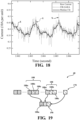
Figures 16-18 illustrate the effect of applying the selectiveadaptive filter 64 and the adaptivemedian filter 66 to the raw current waveform 46 (X).Figure 16 shows the effect on the entirecurrent waveform 46 fromFigure 2 , whileFigure 17 shows an enlarged view of the effect when theseat assembly 10 encounters an expected or unexpected impact or obstruction (portion D ofFigure 2 ) andFigure 18 shows an enlarged view of the effect during steady state conditions (portion C ofFigure 2 ). - As reflected in
Figures 16-18 , the raw current waveform 46 (X) has greater fluctuations than the filtered current Y because the selectiveadaptive filter 64 filters a portion of the noise out of the raw current waveform 46 (X) while minimizing distortions in the filtered current waveform Y caused by the filtering process. Similarly, the filtered current Y has greater fluctuations than the modified median filtered data Z because the adaptivemedian filter 66 removes localized spikes in the filtered current Y while maintaining shifts in the filtered raw current values Y(k) that are indicative of jumps in amplitude related to movement of theseat assembly 10. The adaptivemedian filter 66 is configurable to emphasize edged effects in the filtered buffers and to provide a balance between smoothness and abrupt transitions in the filtered current values Y(k). The median current waveform Z tracks closely to the general shape of the raw current waveform 46 (X) and the filtered current waveform Y with a reduction of the fluctuations caused by noise. - The selective
adaptive filter 64 requires a high resolution signal to process the data. Thus, the raw current values are logged at a high speed at about 1 sample per millisecond when they are processed through theadaptive buffer algorithm 62, the selectiveadaptive filter 64 and the adaptivemedian filter 66. A slower sample rate of about 1 sample per 5 milliseconds is sufficient for remainder of thesystem 60. Accordingly, referring toFigure 3 , theECU 22 applies ade-sampling algorithm 68 to the median filtered values to reduce the sample rate, which also reduces the amount of processing required by theECU 22. Thede-sampling algorithm 68 is further illustrated inFigure 19 . - Referring to
Figure 19 , theECU 22 de-samples the data in themedian buffer 170 by a predetermined amount. For example, when theECU 22 de-samples by a factor of three, theECU 22 partitions the data stored in themedian buffer 170 intogroups 188 of three consecutivemedian values ECU 22 stores thefirst value 188a in eachgroup 188 into ade-sampled buffer 190 and discards the next twovalues ECU 22 repeats the de-sampling process for eachgroup 188 of threevalues median buffer 170. - Referring to
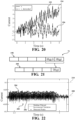
Figure 3 , after theECU 22 applies thede-sampling algorithm 68, theECU 22 applies adetrending algorithm 70 to the de-sampled values. Referring toFigure 20 , theECU 22 determines atrend 194 in thede-sampled waveform 192 and subtracts thetrend 194 from thede-sampled waveform 192 to produce adetrended waveform 196. - Next, referring to
Figure 3 , theECU 22 applies adelta algorithm 72 to the detrended values. Thedelta algorithm 72 further reduces any interference from trends within thecurrent waveform 46. Referring toFigure 21 , in thedelta algorithm 72, theECU 22 obtains successive detrended values from thedetrended buffer 198, calculates a delta value as the difference between these successive detrended values, and stores the delta values in adelta buffer 200. For example, if D(kas) is the delta value at de-sampled time kdS, d(kdS) is the detrended value at de-sampled time kdS, and d(kdS-1) is the detrended value at de-sampled time kdS-1, theECU 22 calculates the delta value D(kdS) using equation 8 shown below:

- Referring to
Figure 3 , after applying thedelta algorithm 72, theECU 22 applies a second adaptivemedian filter 74 to the delta values D. In some embodiments, theECU 22 may omit the second adaptivemedian filter 74 without varying the scope of the present invention. The second adaptivemedian filter 74 uses the same process shown inFigure 15 for the adaptivemedian filter 66. TheECU 22 may select values for length P, shift S, and maximum buffer size b_max for the second adaptivemedian filter 74 based on predetermined values and/or based on the amount of variation detected in the delta values D in thedelta buffer 200. - Referring to
Figure 3 , theECU 22 next applies areshaping algorithm 76 to the median delta waveform.Figure 22 illustrates an exemplarymedian delta waveform 202 for the median delta values D. Thedelta waveform 202 includeslocal peaks 204 as well asnon-peak values 206. Thelocal peaks 204 generally correspond to the current ripples in the rawcurrent waveform 46 with thenon-peak values 206 generally corresponding to noise in thecurrent waveform 46. - The reshaping
algorithm 76 reshapes thedelta waveform 202 to enhance the separation between thelocal peaks 204 and the non-peak values 206. To reshape thedelta waveform 202, theECU 22 selects thelocal peaks 204 having a magnitude greater than apredetermined threshold 208 and shifts theselocal peaks 204 to have a magnitude corresponding to a predetermined raisedlevel 210. As shown inFigures 22 and23 , the shiftedlocal peaks 214 have a magnitude of the raisedlevel 210 while the remaining portion of the delta waveform 216 (i.e., the noise values) has the same magnitude in both the reshapeddelta waveform 212 and theoriginal delta waveform 202.Figure 24 shows an enlarged view of a portion of the reshapeddelta waveform 212 ofFigure 23 . - Referring to
Figure 3 , the reshapeddelta waveform 212 is filtered using aKalman filter 78 to further separate the shiftedlocal peaks 214 from the noise values 216. It will be appreciated that theKalman filter 78 may be omitted without altering the scope of the present invention. After theECU 22 processes the reshapeddelta waveform 212 through theoptional Kalman filter 78, theECU 22 applies a threshold and final position/speed calculator 80 to determine the speed and/or position of themotor 24. -
Figure 25 shows a comparison of the reshapeddelta waveform 212 and the correspondinghall effect waveform 218 produced by a hall effect sensor when it is operatively coupled to thedrive shaft 26 of theDC motor 24. InFigure 25 , thehall effect waveform 218 is shifted in amplitude to improve clarity. Thehall effect waveform 218 includes a plurality of spaced aparthall effect pulses 220 having a high portion 222 and alow portion 224. Comparing thehall effect waveform 218 with the reshapeddelta waveform 212, the reshapeddelta waveform 212 includes a shiftedlocal peak 214 for each of the high andlow portions 222, 224 of thehall effect waveform 218. As reflected inFigure 25 , the shiftedlocal peaks 214 occur during the respective high andlow portions 222, 224 of thehall effect pulses 220. However, the shiftedlocal peaks 214 may drift within the respective high andlow portions 222, 224 of thehall effect pulses 220 over time. - Each
local peak 214 in the reshapeddelta waveform 212 generally corresponds to a current ripple in thecurrent waveform 46. Thus, theECU 22 uses the shiftedlocal peaks 214 in the reshapeddelta waveform 212 to determine the ripple counts. TheECU 22 then determines the rotational position and speed of themotor drive shaft 26 based on the ripple counts. The method to determine the rotational position and speed from the ripple counts is similar to methods used to determine the rotational position and speed based on the hall effect waveform with modifications to account for having ripple counts in place of thehall effect pulses 220. - Referring to
Figure 3 , theECU 22 also obtains control information relating to the position of theseat assembly 10, requests received to reposition theseat assembly 10, and/or the power provided to themotor 24. TheECU 22 uses the control information and the control andsignal processing coordinator 82 to coordinate processing of the raw current values through the components of thesystem 60, including whether to process the data through the second adaptivemedian filter 74 and theKalman filter 78. - The
ECU 22 uses the coefficient andlength adaption algorithm 84 to adjust one or more parameters of theadaptive buffer algorithm 62, the selectiveadaptive filter 64 and the adaptivemedian filters - Referring to
Figure 3 , thesystem 60 also includes anevent detection algorithm 86. TheECU 22 uses theevent detection algorithm 86 to detect impacts related to movement of theseat assembly 10 such as theseat assembly 10 reaching an end of travel, impacting an obstruction, and the like as non-limiting examples. TheECU 22 may modify the determined rotational position and speed based on any event that it detects to avoid over- or undercounting of the current ripples. - As discussed above, the
system 60 of the present invention provides motor speed and position feedback based on current ripples in thecurrent waveform 46 drawn by themotor 24 without relying on a hall effect sensor. The elimination of the hall effect sensor improves system level reliability as well as reduces overall cost of theseat assembly 10. - The invention has been described in an illustrative manner, and it is to be understood that the terminology, which has been used, is intended to be in the nature of words of description rather than of limitation. Many modifications and variations of the present invention are possible in light of the above teachings. It is, therefore, to be understood that within the scope of the appended claims, the invention may be practiced other than as specifically described.
Claims (4)
- A method for monitoring a motor (24) within a seat assembly (10) in an automotive vehicle, the method comprising the steps of:measuring raw current values drawn by the motor (24) to reposition the seat assembly (10);temporally dividing the raw current values into sections based on size and variations in the raw current values;filtering the raw current values in each section to obtain filtered current values; characterised bydetermining a median value of the filtered current values for each section to obtain a plurality of sequential median values;determining a trend in the plurality of sequential median values;removing the trend from the plurality of sequential median values to obtain detrended values;determining a difference in magnitude between successive detrended values to obtain delta values (D);identifying a plurality of peaks in the delta values (D);determining which of the plurality of peaks has an amplitude greater than a threshold (208), wherein the peaks having an amplitude greater than the threshold (208) correspond to detected local peaks (204) within the filtered current values; anddetermining a rotational position or a speed based on the detected local peaks (204).
- The method as set forth in claim 1, wherein the step of filtering the raw current values comprises the steps of:applying an adaptive filter (64) to the raw current values to obtain the filtered current values, wherein the adaptive filter (64) includes a plurality of filter coefficients; andadjusting the plurality of filter coefficients based on the variations in the raw current values.
- The method as set forth in claim 2, wherein the adaptive filter (64) comprises a finite impulse response filter, a rolling average filter, or an infinite impulse response filter.
- The method as set forth in claim 1, further comprising the step of:
filtering the delta values (D) using a Kalman filter prior to identifying the plurality of peaks in the delta values (D).
Applications Claiming Priority (2)
| Application Number | Priority Date | Filing Date | Title |
|---|---|---|---|
| US202163190995P | 2021-05-20 | 2021-05-20 | |
| PCT/US2022/030226 WO2022246176A1 (en) | 2021-05-20 | 2022-05-20 | Motor position estimation using current ripples |
Publications (2)
| Publication Number | Publication Date |
|---|---|
| EP4309281A1 EP4309281A1 (en) | 2024-01-24 |
| EP4309281B1 true EP4309281B1 (en) | 2024-07-10 |
Family
ID=82020124
Family Applications (1)
| Application Number | Title | Priority Date | Filing Date |
|---|---|---|---|
| EP22729993.0A Active EP4309281B1 (en) | 2021-05-20 | 2022-05-20 | Motor position estimation using current ripples |
Country Status (5)
| Country | Link |
|---|---|
| US (1) | US20240267033A1 (en) |
| EP (1) | EP4309281B1 (en) |
| CN (1) | CN117378137A (en) |
| CA (1) | CA3218161A1 (en) |
| WO (1) | WO2022246176A1 (en) |
Family Cites Families (8)
| Publication number | Priority date | Publication date | Assignee | Title |
|---|---|---|---|---|
| US8193746B2 (en) * | 2008-05-23 | 2012-06-05 | Lear Corporation | Automotive electric motor speed control system |
| CN103688460A (en) * | 2011-03-14 | 2014-03-26 | 提爱思科技股份有限公司 | Pulsation extraction device, motor control device, vehicle seat, and pulsation extraction method |
| IT201700023222A1 (en) * | 2017-03-01 | 2018-09-01 | Automotive Lighting Italia S P A Lighting & Body Electronics | "Anti-pinching process for automatic movement apparatus of windows sliding in a motor vehicle, in particular an automatic window-lifting apparatus and relative device" |
| FR3076677B1 (en) * | 2018-01-09 | 2020-11-27 | Inteva Products France Sas | CASCADE COUNTING CIRCUIT INCLUDING A VARIABLE Ripple Threshold Detection |
| KR101889983B1 (en) * | 2018-02-14 | 2018-08-20 | 디와이오토 주식회사 | Method and Apparatus for control safty power-window |
| DE102019132913A1 (en) * | 2018-12-06 | 2020-06-10 | Magna Closures Inc. | WAVE COUNTING FILTERING AND METHOD AND SYSTEM FOR DETECTING PEAK VALUES |
| DE102019211800B4 (en) * | 2019-08-06 | 2022-12-15 | Conti Temic Microelectronic Gmbh | Method and device for determining the speed and the angle of rotation of a motor shaft of a mechanically commutated DC motor |
| EP4005866B1 (en) * | 2020-11-30 | 2023-07-12 | IMS Gear SE & Co. KGaA | Seat longitudinal adjustment device, method to adjust a seat and vehicle with such a seat longitudinal adjustment device. |
-
2022
- 2022-05-20 CA CA3218161A patent/CA3218161A1/en active Pending
- 2022-05-20 EP EP22729993.0A patent/EP4309281B1/en active Active
- 2022-05-20 WO PCT/US2022/030226 patent/WO2022246176A1/en not_active Ceased
- 2022-05-20 US US18/562,432 patent/US20240267033A1/en active Pending
- 2022-05-20 CN CN202280035721.9A patent/CN117378137A/en active Pending
Also Published As
| Publication number | Publication date |
|---|---|
| US20240267033A1 (en) | 2024-08-08 |
| CA3218161A1 (en) | 2022-11-24 |
| CN117378137A (en) | 2024-01-09 |
| EP4309281A1 (en) | 2024-01-24 |
| WO2022246176A1 (en) | 2022-11-24 |
Similar Documents
| Publication | Publication Date | Title |
|---|---|---|
| EP0734890B1 (en) | Suspension system control apparatus and method | |
| JP3228342B2 (en) | Elevator speed control | |
| JPWO1997047551A1 (en) | Elevator speed control device | |
| US5570289A (en) | Vehicle suspension control with wheel and body demand force phase determination | |
| KR100524169B1 (en) | Motor abnormality detecting apparatus | |
| CN107415788A (en) | Adjustable damping system for seat | |
| US20040085035A1 (en) | Position control apparatus for motor | |
| EP0734891B1 (en) | Suspension system control method and apparatus | |
| US6564110B1 (en) | Position controlling apparatus capable of reducing the effect of disturbance | |
| GB2251672A (en) | Controlling damping force characteristic of shock absorber applicable to automotive suspension | |
| US5289380A (en) | System and method for controlling damping force characteristic of shock absorber applicable to automotive suspension | |
| EP4309281B1 (en) | Motor position estimation using current ripples | |
| CN113715616B (en) | Control method and control system for jitter filtering of accelerator pedal | |
| US8058834B2 (en) | Control device for automatic transmission | |
| US5389867A (en) | Control system for actuator applicable to servo system having low resolution sensor and speed-reduction gear mechanism | |
| CN117227737A (en) | Wheel end required torque filtering method and device, vehicle and storage medium | |
| KR19990063537A (en) | Suspension control unit | |
| GB2254122A (en) | Automotive shock absorber damping control | |
| US8022653B2 (en) | Method and circuit arrangement for the electrical control and/or regulation of the movement of an electrically driven unit | |
| JPH07117857B2 (en) | Hysteresis reduction method and hysteresis-reduced electromechanical converter | |
| US7460974B2 (en) | Multiple-point smoothing method for motor-speed estimation | |
| JP5261070B2 (en) | DC motor rotation state detection device and DC motor control device | |
| JP2022074403A (en) | Gear fatigue estimation device | |
| KR20170119123A (en) | Control system and method using sliding mode disturbance observer with controller for separate compensation of disturbance | |
| CN118435518A (en) | Motor control device and automatic adjustment method thereof |
Legal Events
| Date | Code | Title | Description |
|---|---|---|---|
| STAA | Information on the status of an ep patent application or granted ep patent |
Free format text: STATUS: UNKNOWN |
|
| STAA | Information on the status of an ep patent application or granted ep patent |
Free format text: STATUS: THE INTERNATIONAL PUBLICATION HAS BEEN MADE |
|
| PUAI | Public reference made under article 153(3) epc to a published international application that has entered the european phase |
Free format text: ORIGINAL CODE: 0009012 |
|
| STAA | Information on the status of an ep patent application or granted ep patent |
Free format text: STATUS: REQUEST FOR EXAMINATION WAS MADE |
|
| 17P | Request for examination filed |
Effective date: 20231017 |
|
| AK | Designated contracting states |
Kind code of ref document: A1 Designated state(s): AL AT BE BG CH CY CZ DE DK EE ES FI FR GB GR HR HU IE IS IT LI LT LU LV MC MK MT NL NO PL PT RO RS SE SI SK SM TR |
|
| REG | Reference to a national code |
Ref country code: DE Ref legal event code: R079 Free format text: PREVIOUS MAIN CLASS: H02P0007000000 Ipc: B60N0002020000 Ref document number: 602022004502 Country of ref document: DE |
|
| GRAP | Despatch of communication of intention to grant a patent |
Free format text: ORIGINAL CODE: EPIDOSNIGR1 |
|
| STAA | Information on the status of an ep patent application or granted ep patent |
Free format text: STATUS: GRANT OF PATENT IS INTENDED |
|
| RIC1 | Information provided on ipc code assigned before grant |
Ipc: H02P 7/00 20160101ALI20240125BHEP Ipc: B60N 2/06 20060101ALI20240125BHEP Ipc: B60N 2/02 20060101AFI20240125BHEP |
|
| INTG | Intention to grant announced |
Effective date: 20240213 |
|
| GRAS | Grant fee paid |
Free format text: ORIGINAL CODE: EPIDOSNIGR3 |
|
| GRAA | (expected) grant |
Free format text: ORIGINAL CODE: 0009210 |
|
| STAA | Information on the status of an ep patent application or granted ep patent |
Free format text: STATUS: THE PATENT HAS BEEN GRANTED |
|
| AK | Designated contracting states |
Kind code of ref document: B1 Designated state(s): AL AT BE BG CH CY CZ DE DK EE ES FI FR GB GR HR HU IE IS IT LI LT LU LV MC MK MT NL NO PL PT RO RS SE SI SK SM TR |
|
| DAV | Request for validation of the european patent (deleted) | ||
| DAX | Request for extension of the european patent (deleted) | ||
| REG | Reference to a national code |
Ref country code: CH Ref legal event code: EP |
|
| P01 | Opt-out of the competence of the unified patent court (upc) registered |
Free format text: CASE NUMBER: APP_38016/2024 Effective date: 20240626 |
|
| REG | Reference to a national code |
Ref country code: DE Ref legal event code: R096 Ref document number: 602022004502 Country of ref document: DE |
|
| REG | Reference to a national code |
Ref country code: LT Ref legal event code: MG9D |
|
| REG | Reference to a national code |
Ref country code: NL Ref legal event code: MP Effective date: 20240710 |
|
| PG25 | Lapsed in a contracting state [announced via postgrant information from national office to epo] |
Ref country code: PT Free format text: LAPSE BECAUSE OF FAILURE TO SUBMIT A TRANSLATION OF THE DESCRIPTION OR TO PAY THE FEE WITHIN THE PRESCRIBED TIME-LIMIT Effective date: 20241111 |
|
| REG | Reference to a national code |
Ref country code: AT Ref legal event code: MK05 Ref document number: 1701774 Country of ref document: AT Kind code of ref document: T Effective date: 20240710 |
|
| PG25 | Lapsed in a contracting state [announced via postgrant information from national office to epo] |
Ref country code: NL Free format text: LAPSE BECAUSE OF FAILURE TO SUBMIT A TRANSLATION OF THE DESCRIPTION OR TO PAY THE FEE WITHIN THE PRESCRIBED TIME-LIMIT Effective date: 20240710 |
|
| PG25 | Lapsed in a contracting state [announced via postgrant information from national office to epo] |
Ref country code: PT Free format text: LAPSE BECAUSE OF FAILURE TO SUBMIT A TRANSLATION OF THE DESCRIPTION OR TO PAY THE FEE WITHIN THE PRESCRIBED TIME-LIMIT Effective date: 20241111 Ref country code: NL Free format text: LAPSE BECAUSE OF FAILURE TO SUBMIT A TRANSLATION OF THE DESCRIPTION OR TO PAY THE FEE WITHIN THE PRESCRIBED TIME-LIMIT Effective date: 20240710 |
|
| PG25 | Lapsed in a contracting state [announced via postgrant information from national office to epo] |
Ref country code: NO Free format text: LAPSE BECAUSE OF FAILURE TO SUBMIT A TRANSLATION OF THE DESCRIPTION OR TO PAY THE FEE WITHIN THE PRESCRIBED TIME-LIMIT Effective date: 20241010 |
|
| PG25 | Lapsed in a contracting state [announced via postgrant information from national office to epo] |
Ref country code: GR Free format text: LAPSE BECAUSE OF FAILURE TO SUBMIT A TRANSLATION OF THE DESCRIPTION OR TO PAY THE FEE WITHIN THE PRESCRIBED TIME-LIMIT Effective date: 20241011 Ref country code: FI Free format text: LAPSE BECAUSE OF FAILURE TO SUBMIT A TRANSLATION OF THE DESCRIPTION OR TO PAY THE FEE WITHIN THE PRESCRIBED TIME-LIMIT Effective date: 20240710 Ref country code: PL Free format text: LAPSE BECAUSE OF FAILURE TO SUBMIT A TRANSLATION OF THE DESCRIPTION OR TO PAY THE FEE WITHIN THE PRESCRIBED TIME-LIMIT Effective date: 20240710 |
|
| PG25 | Lapsed in a contracting state [announced via postgrant information from national office to epo] |
Ref country code: BG Free format text: LAPSE BECAUSE OF FAILURE TO SUBMIT A TRANSLATION OF THE DESCRIPTION OR TO PAY THE FEE WITHIN THE PRESCRIBED TIME-LIMIT Effective date: 20240710 |
|
| PG25 | Lapsed in a contracting state [announced via postgrant information from national office to epo] |
Ref country code: LV Free format text: LAPSE BECAUSE OF FAILURE TO SUBMIT A TRANSLATION OF THE DESCRIPTION OR TO PAY THE FEE WITHIN THE PRESCRIBED TIME-LIMIT Effective date: 20240710 |
|
| PG25 | Lapsed in a contracting state [announced via postgrant information from national office to epo] |
Ref country code: AT Free format text: LAPSE BECAUSE OF FAILURE TO SUBMIT A TRANSLATION OF THE DESCRIPTION OR TO PAY THE FEE WITHIN THE PRESCRIBED TIME-LIMIT Effective date: 20240710 Ref country code: IS Free format text: LAPSE BECAUSE OF FAILURE TO SUBMIT A TRANSLATION OF THE DESCRIPTION OR TO PAY THE FEE WITHIN THE PRESCRIBED TIME-LIMIT Effective date: 20241110 |
|
| PG25 | Lapsed in a contracting state [announced via postgrant information from national office to epo] |
Ref country code: HR Free format text: LAPSE BECAUSE OF FAILURE TO SUBMIT A TRANSLATION OF THE DESCRIPTION OR TO PAY THE FEE WITHIN THE PRESCRIBED TIME-LIMIT Effective date: 20240710 |
|
| PG25 | Lapsed in a contracting state [announced via postgrant information from national office to epo] |
Ref country code: ES Free format text: LAPSE BECAUSE OF FAILURE TO SUBMIT A TRANSLATION OF THE DESCRIPTION OR TO PAY THE FEE WITHIN THE PRESCRIBED TIME-LIMIT Effective date: 20240710 Ref country code: RS Free format text: LAPSE BECAUSE OF FAILURE TO SUBMIT A TRANSLATION OF THE DESCRIPTION OR TO PAY THE FEE WITHIN THE PRESCRIBED TIME-LIMIT Effective date: 20241010 |
|
| PG25 | Lapsed in a contracting state [announced via postgrant information from national office to epo] |
Ref country code: RS Free format text: LAPSE BECAUSE OF FAILURE TO SUBMIT A TRANSLATION OF THE DESCRIPTION OR TO PAY THE FEE WITHIN THE PRESCRIBED TIME-LIMIT Effective date: 20241010 Ref country code: PL Free format text: LAPSE BECAUSE OF FAILURE TO SUBMIT A TRANSLATION OF THE DESCRIPTION OR TO PAY THE FEE WITHIN THE PRESCRIBED TIME-LIMIT Effective date: 20240710 Ref country code: NO Free format text: LAPSE BECAUSE OF FAILURE TO SUBMIT A TRANSLATION OF THE DESCRIPTION OR TO PAY THE FEE WITHIN THE PRESCRIBED TIME-LIMIT Effective date: 20241010 Ref country code: LV Free format text: LAPSE BECAUSE OF FAILURE TO SUBMIT A TRANSLATION OF THE DESCRIPTION OR TO PAY THE FEE WITHIN THE PRESCRIBED TIME-LIMIT Effective date: 20240710 Ref country code: IS Free format text: LAPSE BECAUSE OF FAILURE TO SUBMIT A TRANSLATION OF THE DESCRIPTION OR TO PAY THE FEE WITHIN THE PRESCRIBED TIME-LIMIT Effective date: 20241110 Ref country code: HR Free format text: LAPSE BECAUSE OF FAILURE TO SUBMIT A TRANSLATION OF THE DESCRIPTION OR TO PAY THE FEE WITHIN THE PRESCRIBED TIME-LIMIT Effective date: 20240710 Ref country code: GR Free format text: LAPSE BECAUSE OF FAILURE TO SUBMIT A TRANSLATION OF THE DESCRIPTION OR TO PAY THE FEE WITHIN THE PRESCRIBED TIME-LIMIT Effective date: 20241011 Ref country code: FI Free format text: LAPSE BECAUSE OF FAILURE TO SUBMIT A TRANSLATION OF THE DESCRIPTION OR TO PAY THE FEE WITHIN THE PRESCRIBED TIME-LIMIT Effective date: 20240710 Ref country code: ES Free format text: LAPSE BECAUSE OF FAILURE TO SUBMIT A TRANSLATION OF THE DESCRIPTION OR TO PAY THE FEE WITHIN THE PRESCRIBED TIME-LIMIT Effective date: 20240710 Ref country code: BG Free format text: LAPSE BECAUSE OF FAILURE TO SUBMIT A TRANSLATION OF THE DESCRIPTION OR TO PAY THE FEE WITHIN THE PRESCRIBED TIME-LIMIT Effective date: 20240710 Ref country code: AT Free format text: LAPSE BECAUSE OF FAILURE TO SUBMIT A TRANSLATION OF THE DESCRIPTION OR TO PAY THE FEE WITHIN THE PRESCRIBED TIME-LIMIT Effective date: 20240710 |
|
| REG | Reference to a national code |
Ref country code: DE Ref legal event code: R082 Ref document number: 602022004502 Country of ref document: DE Representative=s name: WITTE, WELLER & PARTNER PATENTANWAELTE MBB, DE |
|
| REG | Reference to a national code |
Ref country code: DE Ref legal event code: R097 Ref document number: 602022004502 Country of ref document: DE |
|
| PG25 | Lapsed in a contracting state [announced via postgrant information from national office to epo] |
Ref country code: SM Free format text: LAPSE BECAUSE OF FAILURE TO SUBMIT A TRANSLATION OF THE DESCRIPTION OR TO PAY THE FEE WITHIN THE PRESCRIBED TIME-LIMIT Effective date: 20240710 Ref country code: DK Free format text: LAPSE BECAUSE OF FAILURE TO SUBMIT A TRANSLATION OF THE DESCRIPTION OR TO PAY THE FEE WITHIN THE PRESCRIBED TIME-LIMIT Effective date: 20240710 Ref country code: RO Free format text: LAPSE BECAUSE OF FAILURE TO SUBMIT A TRANSLATION OF THE DESCRIPTION OR TO PAY THE FEE WITHIN THE PRESCRIBED TIME-LIMIT Effective date: 20240710 |
|
| PG25 | Lapsed in a contracting state [announced via postgrant information from national office to epo] |
Ref country code: EE Free format text: LAPSE BECAUSE OF FAILURE TO SUBMIT A TRANSLATION OF THE DESCRIPTION OR TO PAY THE FEE WITHIN THE PRESCRIBED TIME-LIMIT Effective date: 20240710 |
|
| PG25 | Lapsed in a contracting state [announced via postgrant information from national office to epo] |
Ref country code: CZ Free format text: LAPSE BECAUSE OF FAILURE TO SUBMIT A TRANSLATION OF THE DESCRIPTION OR TO PAY THE FEE WITHIN THE PRESCRIBED TIME-LIMIT Effective date: 20240710 |
|
| PG25 | Lapsed in a contracting state [announced via postgrant information from national office to epo] |
Ref country code: SK Free format text: LAPSE BECAUSE OF FAILURE TO SUBMIT A TRANSLATION OF THE DESCRIPTION OR TO PAY THE FEE WITHIN THE PRESCRIBED TIME-LIMIT Effective date: 20240710 Ref country code: IT Free format text: LAPSE BECAUSE OF FAILURE TO SUBMIT A TRANSLATION OF THE DESCRIPTION OR TO PAY THE FEE WITHIN THE PRESCRIBED TIME-LIMIT Effective date: 20240710 |
|
| PLBE | No opposition filed within time limit |
Free format text: ORIGINAL CODE: 0009261 |
|
| STAA | Information on the status of an ep patent application or granted ep patent |
Free format text: STATUS: NO OPPOSITION FILED WITHIN TIME LIMIT |
|
| 26N | No opposition filed |
Effective date: 20250411 |
|
| PGFP | Annual fee paid to national office [announced via postgrant information from national office to epo] |
Ref country code: DE Payment date: 20250325 Year of fee payment: 4 |
|
| PG25 | Lapsed in a contracting state [announced via postgrant information from national office to epo] |
Ref country code: SE Free format text: LAPSE BECAUSE OF FAILURE TO SUBMIT A TRANSLATION OF THE DESCRIPTION OR TO PAY THE FEE WITHIN THE PRESCRIBED TIME-LIMIT Effective date: 20240710 |
|
| REG | Reference to a national code |
Ref country code: CH Ref legal event code: H13 Free format text: ST27 STATUS EVENT CODE: U-0-0-H10-H13 (AS PROVIDED BY THE NATIONAL OFFICE) Effective date: 20251223 |
|
| PG25 | Lapsed in a contracting state [announced via postgrant information from national office to epo] |
Ref country code: LU Free format text: LAPSE BECAUSE OF NON-PAYMENT OF DUE FEES Effective date: 20250520 |
|
| PG25 | Lapsed in a contracting state [announced via postgrant information from national office to epo] |
Ref country code: CH Free format text: LAPSE BECAUSE OF NON-PAYMENT OF DUE FEES Effective date: 20250531 |
|
| REG | Reference to a national code |
Ref country code: BE Ref legal event code: MM Effective date: 20250531 |
|
| PG25 | Lapsed in a contracting state [announced via postgrant information from national office to epo] |
Ref country code: MC Free format text: LAPSE BECAUSE OF FAILURE TO SUBMIT A TRANSLATION OF THE DESCRIPTION OR TO PAY THE FEE WITHIN THE PRESCRIBED TIME-LIMIT Effective date: 20240710 |
|
| PG25 | Lapsed in a contracting state [announced via postgrant information from national office to epo] |
Ref country code: IE Free format text: LAPSE BECAUSE OF NON-PAYMENT OF DUE FEES Effective date: 20250520 |
|
| PG25 | Lapsed in a contracting state [announced via postgrant information from national office to epo] |
Ref country code: BE Free format text: LAPSE BECAUSE OF NON-PAYMENT OF DUE FEES Effective date: 20250531 |
|
| PGFP | Annual fee paid to national office [announced via postgrant information from national office to epo] |
Ref country code: FR Payment date: 20260309 Year of fee payment: 5 |