EP4307742A2 - Preventing counterfeit communication devices from accessing resources - Google Patents
Preventing counterfeit communication devices from accessing resources Download PDFInfo
- Publication number
- EP4307742A2 EP4307742A2 EP23212821.5A EP23212821A EP4307742A2 EP 4307742 A2 EP4307742 A2 EP 4307742A2 EP 23212821 A EP23212821 A EP 23212821A EP 4307742 A2 EP4307742 A2 EP 4307742A2
- Authority
- EP
- European Patent Office
- Prior art keywords
- communication device
- attributes
- identity information
- reference values
- subject
- Prior art date
- Legal status (The legal status is an assumption and is not a legal conclusion. Google has not performed a legal analysis and makes no representation as to the accuracy of the status listed.)
- Pending
Links
Images

Classifications
-
- H—ELECTRICITY
- H04—ELECTRIC COMMUNICATION TECHNIQUE
- H04L—TRANSMISSION OF DIGITAL INFORMATION, e.g. TELEGRAPHIC COMMUNICATION
- H04L63/00—Network architectures or network communication protocols for network security
- H04L63/10—Network architectures or network communication protocols for network security for controlling access to devices or network resources
-
- G—PHYSICS
- G06—COMPUTING OR CALCULATING; COUNTING
- G06F—ELECTRIC DIGITAL DATA PROCESSING
- G06F21/00—Security arrangements for protecting computers, components thereof, programs or data against unauthorised activity
- G06F21/30—Authentication, i.e. establishing the identity or authorisation of security principals
-
- H—ELECTRICITY
- H04—ELECTRIC COMMUNICATION TECHNIQUE
- H04L—TRANSMISSION OF DIGITAL INFORMATION, e.g. TELEGRAPHIC COMMUNICATION
- H04L63/00—Network architectures or network communication protocols for network security
- H04L63/08—Network architectures or network communication protocols for network security for authentication of entities
-
- H—ELECTRICITY
- H04—ELECTRIC COMMUNICATION TECHNIQUE
- H04L—TRANSMISSION OF DIGITAL INFORMATION, e.g. TELEGRAPHIC COMMUNICATION
- H04L63/00—Network architectures or network communication protocols for network security
- H04L63/08—Network architectures or network communication protocols for network security for authentication of entities
- H04L63/0876—Network architectures or network communication protocols for network security for authentication of entities based on the identity of the terminal or configuration, e.g. MAC address, hardware or software configuration or device fingerprint
-
- H—ELECTRICITY
- H04—ELECTRIC COMMUNICATION TECHNIQUE
- H04L—TRANSMISSION OF DIGITAL INFORMATION, e.g. TELEGRAPHIC COMMUNICATION
- H04L63/00—Network architectures or network communication protocols for network security
- H04L63/10—Network architectures or network communication protocols for network security for controlling access to devices or network resources
- H04L63/102—Entity profiles
-
- H—ELECTRICITY
- H04—ELECTRIC COMMUNICATION TECHNIQUE
- H04L—TRANSMISSION OF DIGITAL INFORMATION, e.g. TELEGRAPHIC COMMUNICATION
- H04L63/00—Network architectures or network communication protocols for network security
- H04L63/14—Network architectures or network communication protocols for network security for detecting or protecting against malicious traffic
-
- H—ELECTRICITY
- H04—ELECTRIC COMMUNICATION TECHNIQUE
- H04L—TRANSMISSION OF DIGITAL INFORMATION, e.g. TELEGRAPHIC COMMUNICATION
- H04L67/00—Network arrangements or protocols for supporting network services or applications
- H04L67/01—Protocols
- H04L67/02—Protocols based on web technology, e.g. hypertext transfer protocol [HTTP]
-
- H—ELECTRICITY
- H04—ELECTRIC COMMUNICATION TECHNIQUE
- H04W—WIRELESS COMMUNICATION NETWORKS
- H04W12/00—Security arrangements; Authentication; Protecting privacy or anonymity
- H04W12/12—Detection or prevention of fraud
-
- H—ELECTRICITY
- H04—ELECTRIC COMMUNICATION TECHNIQUE
- H04W—WIRELESS COMMUNICATION NETWORKS
- H04W12/00—Security arrangements; Authentication; Protecting privacy or anonymity
- H04W12/08—Access security
Definitions
- the present disclosure relates to selectively preventing communication devices from accessing a resource. It has particular application to preventing a counterfeit communication device from accessing a resource such as a web resource or network resource.
- Communication devices having web browsers for retrieving information from the Web broadly fall into two categories: desktop computers and mobile devices. Counterfeits of both these types of communication device are increasingly available to consumers, but in particular counterfeit mobile communication devices.
- Counterfeit communication devices tend to be of inferior quality, often having substandard components or running incorrect software. This leads to problems for users, who encounter problems using their counterfeit communication device. These problems might be readily apparent, such as a low quality display, short battery life or poor performance. In other cases the problems may not be immediately apparent, such as a fake fingerprint sensor that allows access to a device with any fingerprint or software running in the background that leaks private information to a third party. Indeed, some counterfeit communication devices are even dangerous to use, because, for example, they have poor quality batteries that are likely to overheat or cause a fire, or because they expose users to unnecessarily high levels of electromagnetic radiation.
- Counterfeit communication devices also create problems for manufacturers and service providers, not just through loss of revenue from lost sales, but due to having to deal with enquiries from users having problems using counterfeit communication devices.
- Counterfeit mobile communication devices also often perform poorly in a mobile communication network, causing unusually high interference with other devices, using excessive amounts of the available bandwidth and unexpectedly dropping calls and data connections.
- the present disclosure seeks to overcome or ameliorate these difficulties.
- apparatus for preventing access to a resource comprising a processor arranged to:
- a method of preventing access to a resource comprising:
- a network comprising the apparatus and the subject communication device described above, wherein the subject communication device comprises a processor and a memory storing instructions that, when executed by the processor, cause the processor to: receive the computer executable code and execute the code to retrieve from the subject communication device actual values of a plurality of attributes of the subject communication device and to transmit the actual values of the plurality of attributes to the apparatus.
- the instructions cause the processor to :
- the request received from the subject communication device may include the identity information.
- the identity information may be a portion of an Hypertext Transfer Protocol (HTTP) header of the request, such as a User Agent string.
- HTTP Hypertext Transfer Protocol
- the instructions cause the processor to receive the identity information from a mobile communication network via which the processor receives the request from the subject communication device.
- Tthe identity information may an International Mobile Station Equipment Identity, IMEI, or Type Allocation Code, TAC, of the subject communication device.
- IMEI International Mobile Station Equipment Identity
- TAC Type Allocation Code
- the instructions cause the processor to determine the confidence score by comparing the actual values to the reference values to identify a group of attributes for which the actual values and the reference values do not match, and by selecting the confidence parameters of the reference values of the attributes of the group for combination.
- the instructions cause the processor to determine the confidence score by comparing the actual values to the reference values to identify a group of attributes for which the actual values and the reference values match, and by selecting the confidence parameters of the reference values of the attributes of the group for combination.
- the instructions may cause the processor to:
- the instructions may alternatively cause the processor to determine the confidence score by applying a weighting to each of the confidence parameters and by combining the confidence parameters based on the applied weightings.
- the weightings may be retrieved from the device property store.
- the instructions cause the processor to prevent the subject communication device from accessing the resource by transmitting a web page component to the subject communication device, which web page component causes the subject communication device to transmit an indication that it is prevented from accessing the resource.
- the computer executable code may be executable by a web browser of the subject communication device. Additionally or alternatively, the computer executable code comprises an application executable by the operating system of the subject communication device.
- the computer executable code may comprise first instructions executable by a processor of the subject communication device to retrieve one or more actual values stored by the subject communication device and second instructions executable by the subject communication device to test a component of the subject communication device to determine an actual value representative of performance of the component.
- apparatus for determining that a subject communication device is counterfeit comprising a processor and a memory storing instructions that, when executed by the processor, cause the processor to:
- a method of determining that a subject communication device is counterfeit comprising:
- the instructions cause the processor to request the second identity information from a mobile communication network via which the request is received from the subject communication device, and the second identity information is received from the mobile communication network.
- the second identity information may be an International Mobile Station Equipment Identity, IMEI, or Type Allocation Code, TAC, of the subject communication device.
- the second identity information my be a portion of an Hypertext Transfer Protocol (HTTP) header of the request, such as a User Agent Profile (UAProf) header.
- HTTP Hypertext Transfer Protocol
- UProf User Agent Profile
- the first identity information may be a portion of an Hypertext Transfer Protocol (HTTP) header of the request, such as a User Agent string.
- HTTP Hypertext Transfer Protocol
- the apparatus includes the device property store, wherein the device property store comprises reference values for the plurality of attributes for different sample communication devices, the reference values belonging to each different sample communication device being indexed by the first identity information associated with the respective sample communication device and also being indexed by the second identity information associated with sample communication device.
- the device property store comprises reference values for the plurality of attributes for different sample communication devices, the reference values belonging to each different sample communication device being indexed by the first identity information associated with the respective sample communication device and also being indexed by the second identity information associated with sample communication device.
- the method can be implemented, at least in part, using computer program code.
- computer software or computer program code adapted to carry out the method described above when processed by a computer processing means.
- the computer software or computer program code can be carried by computer readable medium.
- the medium may be a physical storage medium such as a Read Only Memory (ROM) chip.
- ROM Read Only Memory
- it may be a disk such as a Digital Video Disk (DVD-ROM) or Compact Disk (CD-ROM).
- DVD-ROM Digital Video Disk
- CD-ROM Compact Disk
- It could also be a signal such as an electronic signal over wires, an optical signal or a radio signal such as to a satellite or the like.
- the disclosure also extends to a processor running the software or code, e.g. a computer configured to carry out the method described above.
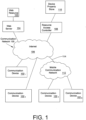
- a communication network 100 comprises a plurality of communication devices 102 1,2,...N arranged to access a web server 104 via the Internet 106.
- the communication network 100 includes a resource access controller 108 and a device property store 110.
- the plurality of communication devices 102 1, 2,...N are arranged to communicate with the resource access controller 108 via the Internet 106 and the resource access controller 108 is arranged to communicate with the device property store 110.
- the resource access controller 108 and the device property store 110 are implemented on a single computer arranged to access the Internet 106 using a hardwired broadband line.
- the resource access controller 108 and device property store 110 comprise multiple computers or are implemented as part of the functionality of a multi-purpose computer.
- the resource access controller 108 may be implemented on one computer and the device property store 110 to be implemented on a different computer, or as a separate storage device.
- communication between the resource access controller 108 and the device property store 110 is typically via a Local Area Network (LAN) that is also part of the communication network 100, but in other embodiments it can be via the Internet 106.
- LAN Local Area Network
- the communication network 100 incorporates a mobile communication network 112; that is, a cellular radio network using an appropriate communication standard, such as Global System for Mobile Communications (GSM), Universal Mobile Telecommunications System (UMTS) or Long-Term Evolution (LTE), to provide data communication.
- GSM Global System for Mobile Communications
- UMTS Universal Mobile Telecommunications System
- LTE Long-Term Evolution
- the mobile communication network 112 is linked to the Internet 106 via a gateway 114. At least some of the communication devices 102 1,2,...N are able to access the Internet 106 and hence the web server 104 via the mobile communication network 112.
- the resource access controller 108 is operable to control access to a resource by the communication devices 102 1,2 ,...N .
- the resource is a web resource 105 hosted on the web server 104.
- the web resource 105 is a web page hosted by the web server 104, although in other embodiments it is another type of web resource, such as a data file, media file or image file.
- the resource is part of an application 232 running on the communication device102 1,2,...N , such as the pages of a mobile banking application that lie behind a login page.
- the resource may be the parts of the application that require authentication to access,
- the web server 104 is a computer device that is able to access the Internet 106 via a suitable communication link.
- the web server 104 comprises multiple computers or is implemented as part of the functionality of a multi-purpose computer or a general purpose computer.
- the communication link is a wireless or hardwired broadband connection, via a leased line, Digital Subscriber Line (DSL), optical fibre or cable.
- DSL Digital Subscriber Line
- the web server 104 is implemented as a single dedicated computer, and is arranged to access the Internet 106 via a DSL.
- the web server 104 hosts a web site.
- the web site is a customer support web site for the mobile communication network 112.
- the web site contains information useful to users of the communication devices 102 1, 2,...N . Such information includes explanations of how to solve common problems, and contact details for a customer support centre that can assist users with less common problems.
- the web site comprises multiple web pages and web resources.
- the web resource 105 access to which is controlled by the resource access controller 108, comprises a portion of the web site.
- the web resource 105 might handle or contain personal information, such as a payment or account service, or facilitate purchase of products or services.
- the resource is a network resource, such as a hardware device or a network service.
- the resource is a service provided by the mobile communication network 112, such as data or voice communication over the mobile communication network 112.
- the resource access controller 108 and mobile communication network 112 may be operable to control access to communication services over the mobile communication network 112 itself.
- the resource is effectively part of the mobile communication network 112. Nonetheless, the web site hosted by the web server 104 is instrumental in managing access the resource, as explained in more detail below.
- the communication devices 102 1, 2,...N are any type of device capable of communicating via the Internet 106 and optionally the mobile communication network 112.
- communication devices 102 1,2,...N incorporating a Subscriber Identification Module (SIM) card compatible with the mobile network 112 can communicate with the Internet 106 via the mobile communication network 112.
- SIM Subscriber Identification Module
- a non-exhaustive list of examples of such communication devices 102 1,2,...N includes a Smartphone, a mobile telephone, a Personal Digital Assistant (PDAs), a tablet computer, a laptop computer, an eReader, a vehicle, a vehicle communication apparatus, a vehicle entertainment apparatus, a navigation device, a tracking device and a watch.
- the communication devices 102 1,2,...N are Smartphones.
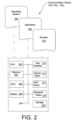
- the communication devices 102 1, 2,...N each comprise a processor in the form of a Central Processing Unit (CPU) 202, memory 204, a Graphics Processing Unit (GPU) 206, a battery 208, a user interface 210, a cellular radio unit 212, a Wi-Fi radio unit 214, a Bluetooth ® radio unit 216 and storage 218.
- the CPU 202, memory 204, GPU 206, user interface 210, cellular radio unit 212, Wi-Fi radio unit 214, Bluetooth ® radio unit 216 and storage 218 are coupled to one another via a bus 220.
- the communication device 102 1, 2,...N is operable to run an operating system 230, which in turn supports software running on the communication device 102 1,2,...N , including the application 232 and web browser 234.
- the CPU 202 executes instructions, including instructions stored in the memory 204 and storage 218.
- the instructions executed by the processor 202 include instructions for coordinating the other components of the communication device 102 1,2,...N , such as the user interface 210, cellular radio unit 212, Wi-Fi radio unit 214, Bluetooth ® radio unit 216, and instructions of the operating system 230, application 232 and browser 234.
- the CPU 202 is operable to communicate with a user through the user interface 210.
- the user interface 210 comprises a display and a touch sensitive screen.
- the display is a Thin-Film-Transistor (TFT) Liquid Crystal Display (LCD) display or an Organic Light Emitting Diode (OLED) display, or other appropriate display.
- TFT Thin-Film-Transistor
- LCD Liquid Crystal Display
- OLED Organic Light Emitting Diode
- the memory 204 is implemented as one or more of a computer-readable media, a volatile memory unit or units, or a non-volatile memory unit or units, making up Random Access Memory (RAM).
- Storage 218 is provided integrally with the communication device 102 1, 2,...N .
- the storage 218 may comprise removable storage connected to communication device 102 1, 2,...N via an interface (not shown).
- the storage 218 is arranged to store computer executable code defining the operating system 230, applications 232 and browser 234, as well as instructions for operating components of the communication device 102 1, 2,...N .
- the memory 204 is also arranged to store elements of this computer executable code.
- the elements of the computer executable code stored by the memory 204 comprise instructions essential to basic operation of the communication device 102 1, 2,...N and elements that are stored transiently whilst some particular process is handled by the CPU 202 or GPU 208.
- the communication device 102 1,2,...N is arranged to communicate wirelessly via the cellular radio unit 212, Wi-Fi radio unit 214 and Bluetooth ® radio unit 216.
- the communication device 102 1, 2,...N is able to communicate via the Internet 106 using the Wi-Fi radio unit 214 when a Wi-Fi gateway is available and able to communicate via the Internet 106 using the cellular radio unit 212 when the mobile communication network 112 is available.
- the CPU 202 is arranged to control the cellular radio unit 212 and Wi-Fi radio unit 214 to allow the communication device 102 1, 2,...N to communicate via the Internet 106 by seamlessly swapping between use of the cellular radio unit 212 and Wi-Fi radio unit 214 according to conditions.
- communication devices 102 1, 2,...N are illustrated as connected directly to the Internet 106 in the scenario of Wi-Fi communication and via the mobile communication network 112 in the scenario of cellular radio communication.
- the cellular radio unit 212 provides for data communication under various modes.
- second generation (2G) technologies such as GSM General Packet Radio Service (GPRS)
- third generation (3G) technologies such as UMTS High Speed Packet Access (HSPA)
- fourth generation (4G) technologies such as LTE-Advanced may all be supported.
- 2G General Packet Radio Service
- 3G Third generation
- 4G fourth generation
- communication via the Internet 106 uses Hypertext Transfer Protocol (HTTP).
- HTTP Hypertext Transfer Protocol
- the HTTP layer of the communication method is generally managed by the browser 234.
- the browser 234 is of a type capable of operating on whichever of the communication devices 102 1,2,...N it is installed.
- the browser 234 is usually of the type provided with the operating system 230 first installed on the communication device 102 1, 2,...N by the manufacturer.
- this is Safari TM for communication devices 102 1,2,...N having the Apple TM iOS operating system, Chrome TM for communication devices 102 1, 2,...N having the Android TM operating system or Microsoft Edge TM for communication devices 102 1, 2,...N having the Windows 10 Mobile TM operating system.
- it is possible for users to change the browser 234 of a communication device 102 1, 2,...N and this is accounted for by method described below.
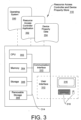
- the resource access controller 108 and device property store 110 together comprise a processor in the form of a CPU 302, a memory 304, an integrated storage device 306, a removable storage device 308, a communication interface 310 and a user interface 312 coupled to one another by a bus 314.
- the user interface 312 incorporates a display 316 and an input-output device 318, which in this embodiment is a keyboard and mouse.
- the CPU 302 executes instructions, including instructions stored in the memory 304, the integrated storage device 306 and/or removable storage device 308.
- the memory 304 stores instructions and other information for use by the CPU 302.
- the memory 304 is the main memory of the computer. It usually comprises both Random Access Memory (RAM) and Read Only Memory (ROM).
- the integrated storage device 306 provides mass storage for the resource access controller 108 and device property store 110.
- the integral storage device 306 is a hard disk device, a flash memory or some other similar solid state memory device, or an array of such devices.
- the removable storage device 308 provides auxiliary storage for the resource access controller 108 and device property store 110.
- the removable storage device 306 is a floppy disk drive, optical disk drive, such as a Compact Disk (CD) drive or Digital Versatile Disk (DVD) drive, a portable flash drive or some other similar portable solid state memory device, or an array of such devices.
- CD Compact Disk
- DVD Digital Versatile Disk
- a computer program product includes instructions for carrying out the method described below.
- the computer program product is stored, at different stages, in any one of the memory 304, integrated storage device 306 and removable storage device 308.
- the storage of the computer program product is non-transitory, except when instructions included in the computer program product are being executed by the processor 302, in which case the instructions are sometimes stored temporarily in the memory 304.
- the removable storage device 308, or a part of the removable storage device 308 carrying information, such as a CD or DVD can be removed from the resource access controller 108 and device property store 110, such that the computer program product is held separately from the resource access controller 108 and device property store 110 from time to time.
- Elements of the computer software product may also be present on the communication devices 102 1, 2,...N , as evident from the description below.
- the communication interface 310 is typically an Ethernet network adaptor coupling the bus 314 to an Ethernet socket.
- the Ethernet socket is coupled to a modem that provides access to the Internet 106 via the hardwired broadband line.
- the Ethernet socket is usually coupled to the modem via a wired connection, but the connection could alternatively be wireless.
- the resource access controller 108 and device property store 110 incorporate the modem.
- the modem is a broadband modem, but it can alternatively be any suitable type of modem, such as a optical network unit.
- the communication devices 102 1, 2,...N , the web server 104 and the resource access controller 108 are connected to the Internet 106, they can communicate with one another via the Internet 106.
- the communication devices 102 1, 2,...N , the web server 104 and the resource access controller 108 communicate with one another using a communication protocol.
- the communication protocol is Hypertext Transfer Protocol (HTTP).
- the resource access controller 108 hosts a web page component.
- the resource access controller 108 is effectively a web server.
- the web page component comprises first computer executable code arranged to cause the communication devices 102 1, 2,...N to perform operations.
- the web page component comprises HyperText Markup Language (HTML) and JavaScript TM code.
- the web site hosted by the web server 104 includes second computer executable code arranged to direct the communication devices 102 1, 2,...N to the web page component hosted by the resource access controller 108.
- the second computer executable code is an HTML iframe.
- This second computer executable code defines, amongst other things, the position and dimensions of a part of the web page in which the web page component is to be rendered by the browser 234 of the communication devices 102 1,2,...N .
- the first computer executable code includes the content to be displayed in the iframe. Where content is to be displayed in the iframe, the iframe is defined as having a dimensions suitable for displaying the content. However, this is not always necessary.
- the iframe can be defined by the second computer executable code as having zero dimensions, e.g. zero pixels high and zero pixels wide, and that the iframe is not visible when the second computer executable code is rendered by the browser 234 of one of the communication devices 102 1, 2,...N .
- the second computer executable code comprises link to the web page component hosted by the resource access controller 108.
- the link causes the subject communication device 102 1, 2,...N to transmit a request for the web page component to the resource access controller 108.
- the resource access controller 108 transmits the web page component to the subject communication device 102 1, 2,...N for rendering (but not necessarily display) in the iframe by the web browser 234 of the communication device 102 1, 2,...N .
- the second computer executable code loads the web page component as a JavaScript TM library. That is, the first computer executable code comprises a JavaScript TM library loadable by the web page.
- the first computer executable code is stored by one of the communication devices 102 1,2,...N as part of the application 232.
- the application 232 communicates with the resource access controller 108 over the internet 106, but is not a web browser per se.
- the first computer executable code is JavaScript TM that runs within the application 232 and the second computer code is part of the application that presents the user with an option to access the resource and initiate running of the first computer code within the application 232.
- the device property store 110 stores information about properties of the communication devices 102 1,2,...N . Specifically, the device property store 110 stores values of attributes of the communication devices 102 1,2,...N .
- a property is a characteristic of a communication device 102 1, 2,...N , such as a physical feature or capability of the communication device 102 1,2,...N or its software.
- Each property is considered to comprise an attribute having a value.
- an attribute is the nature of the property and the value is the measure of the property.
- screen width is a property defined by an attribute of "number of pixels across the width of the screen” and a value of "150 pixels”.
- ability to display Joint Photographic Experts Group (JPEG) images is a property defined by an attribute of "Support for displaying JPEG images?" and a value of "true" (or “false”).
- the operating system version of a communication device 102 1, 2,...N is a property defined by an attribute of "operating system version number” and a value of "8.2.1".
- the manufacturer of a communication device 102 1, 2,...N is a property defined by an attribute of "name of manufacturer” and a value of "Apple”. It can therefore be appreciated that the values can be Boolean, numbers or strings.
- Values are stored for the same attributes for different types of the communication devices 102 1, 2,...N .
- the device property store 110 includes values for the same set of attributes.
- the device property store 110 also stores confidence parameters for the values. Each confidence parameter represents the probability that an actual communication device 102 1, 2,...N with the same User Agent string, TAC or such like as that by which the set of properties is indexed has the value stored in the device property store 110 for the attribute to which confidence parameter applies.
- a User Agent string is a string found in request headers of requests sent by web browsers using HTTP.
- User Agent strings are usually unique to the type of the subject communication device type 102 1, 2,...N and its web browser. It may also be unique to the version of the type of the subject communication device 102 1, 2,...N and/or its web browser, that is updates that may have been made to the subject communication device 102 1, 2,...N and/or its web browser since they were first manufactured or supplied to the user. So, in this embodiment, all communication devices 102 1, 2,...N having the same User Agent string are considered to be the same type of communication device 102 1,2,...N .
- the properties stored in the device property store 110 are stored as described in patent publication no. WO2009/101414 , the entire content of which is incorporated herein by reference.
- This means that the User Agent strings in the device property store 110 are arranged in a trie based on traversing the characters of the User Agent strings from left to right. Properties are indexed at nodes of the trie, positioned at the highest node in the tree at which the property is common to all communication devices 102 1, 2,...N having a User Agent string referenced by the node.
- the values are indexed according to a User Agent Profile and Type Allocation Code (TAC) of the type of communication device 102 1, 2,...N .
- TAC User Agent Profile and Type Allocation Code
- the User Agent Profile is generally found in the HTTP header and takes the form of a URL linking to a profile of device characteristics.
- the User Agent Profile is generally unique to the type of communication device 102 1, 2,...N , so the User Agent Profile can be used to index the values in the device property store in a similar way to the User Agent header.
- the TAC is again a string or code unique to the to the type of communication device 102 1, 2,...N . Since a TAC is only 8 digits long, it may be less helpful to use a trie for the TACs, as a simple look up table may suffice.
- the set of values of each type of communication device 102 1, 2,...N is accessible in the device property store using the TAC. It is also possible to query and retrieve the sets of values for the different types of communication device 102 1, 2,...N using other unique identifiers in the device property store, such as the Vendor Model Number.
- a fictional example of the properties stored in the device property store 110 is given in Table 1 below, for a type of communication device 102 1, 2,...N indexed by user agent string having Vendor Model Number iPhone 6 A1549.
- Table 1 User Agent String: Mozilla/5.0 (iPhone; CPU iPhone OS 7_0 like Mac OS X) AppleWebKit/546.10 (KHTML, like Gecko) Version/6.0 Mobile/7E18WD Safari/8536.25
- User Agent Profile http://nds1.nds.apple.com/uaprof/A1549ir200.xml
- Type Allocation code 359230066 Attribute Value Confidence Device Vendor Apple 99.9% Device Model (Vendor Model Number) iPhone 6 A1549 99.9% Manufacturer Apple 99.9% Screen Width 750 99.9% Screen Height 1334 99.9% Screen Color Depth 24 99.9% NFC True 99.9% Camera 8.0 99.9% CPU Speed Score >2.4 86.5% Operating System Name iOS 99.9% Operating System Version 8 99.9% Operating System
- a communication device 102 1,2...N first requests access to the resource.
- the request is in the form of an HTTP request sent to the web server 104 for the web server 104 to deliver the web resource 105 to the communication device 102 1,2...N .
- the request may be in the form of an HTTP request to the web server 104 for permission to access the network resource.
- the request may be in the form of an attempt to access the resource within the application 232.
- the communication device 102 1,2,...N making the request can be any of the communication devices 102 1,2,...N .
- the communication device 102 1, 2,...N sending the request for the resource and consequently being subjected to the method is referred to as the subject communication device 102 1, 2,...N .
- the subject communication device 102 1,2,...N first sends an HTTP request to the web server 104 for a web page of the web site hosted by the web server 104, which web page includes the second computer executable code.
- the web server 104 delivers the web page to the subject communication device 102 1, 2,...N in response to the request.
- the second computer executable code directs the subject communication device 102 1, 2,...N to the web page component hosted by the resource access controller 108.
- the resource access controller 108 delivers the web page component to the subject communication device 102 1, 2,...N .
- the user of the subject communication device attempts to access the resource via the application 232 running on the subject communication device 102 1, 2,...N , and this causes the first computer code to start running in the application 232.
- the HTTP request includes a request header and the request header includes a User Agent string associated with the subject communication device 102 1,2,...N . It also usually includes a User Agent Profile.
- the application 232 can access the memory 204 and/or storage 218 of the subject communication device 102 1, 2,...N to retrieve the User Agent Profile or TAC of the subject communication device 102 1, 2,...N .
- the TAC is retrieved by polling the mobile communication network 112, which has knowledge of the TAC whenever the subject communication device 102 1,2,...N communications over the mobile communication network 112.
- first identity information is obtained, in the form of the User Agent string or the User Agent Profile.
- the resource access controller 108 uses this first identity information, at step 408, to search for the device type in the device property store 110. This is usually achieved by retrieving the Vendor model number associated with the User Agent string or the User Agent Profile in the device property store 110.
- second identity information is obtained, in the form of the User Agent Profile (where this was not the first identity information) or TAC.
- the resource access controller 108 uses this information, at step 412, to search for the device type in the device property store 110. Again, this is usually achieved by retrieving the Vendor model number associated with the User Agent Profile or TAC in the device property store 110.
- the device type based on the first identity information is compared to the device type based on the second identity information, e.g. the two retrieved Vendor model numbers are compared to one another. If the device type based on the first identity information is not the same, e.g. does not match, the device type based on the second identity information, the subject communication device 102 1, 2,...N is determined to be counterfeit. On the other hand, if the device type based on the first identity information is the same as, e.g. matches, the device type based on the second identity information, it is much less likely that the subject communication device 102 1, 2,...N is counterfeit.
- the method ends here, with a determination having been made that the subject communication device 102 1, 2,...N is counterfeit or not.
- the method continues.
- the device type based on the first identity information is not the same as the device type based on the second identity information
- the subject communication device 102 1, 2,...N is prevented from accessing the resource.
- the method progresses to make further checks.
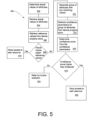
- the first computer executable code proceeds, at step 502, to determine properties of the subject communication device 102 1, 2,...N .
- the web page component determines actual values of attributes of the subject communication device 102 1, 2,...N . This involves retrieving values from a memory of the subject communication device 102 1,2,...N . It also involves testing the subject communication device 102 1,2,...N to establish values of other attributes of the subject communication device 102 1,2,...N .
- the first computer executable code retrieves actual values of attributes of the subject communication device 102 1,2,...N from the memory of the subject communication device 102 1,2,...N by looking up values in the memory of the subject communication device 102 1, 2,...N . Examples of attributes whose values are retrieved in this way can be found in Table 1.
- the first computer executable code also tests the subject communication device 102 1,2,...N to establish actual values of other attributes of the subject communication device 102 1, 2,...N by requesting the subject communication device 102 1, 2,...N to perform operations.
- the web page component requests the CPU 202 of the subject communication device 102 1, 2,...N to process third computer executable code and measures the time it takes for the third computer executable code to be processed by the CPU 202. This allows the web page component to determine the speed of the CPU 202 of the subject communication device 102 1, 2,...N . This test returns an actual value for the attribute of "CPU score".
- the first computer executable code has determined the properties of the subject communication device 102 1,2,...N , in one embodiment it transmits the actual values of the attributes to the resource access controller 108, which in turn receives them at step 504. In an alternative embodiment, the actual values are received and stored by the subject communication device 102 1, 2,...N for analysis by the subject communication device 102 1, 2,...N .
- the resource access controller 108 or the subject communication device 102 1,2,...N uses the first or second identity information, such as the User Agent string or TAC, to look up reference values for the attributes in the device property store 110. In one embodiment, this involves comparing the stored User Agent string to the User Agent strings in the device property store 110. In order to do this, the a query is sent to the device property store 110 including the stored User Agent string. The query uses the stored User Agent string to traverse the tree of User Agent strings in the device property store 110, retrieving properties indexed at the nodes of the tree that it passes.
- the first or second identity information such as the User Agent string or TAC
- the query causes all the properties for the type of communication device 102 1, 2,...N associated with the User Agent string to be retrieved from the device property store 110. If the stored User Agent string is not exactly the same as User Agent string in the device property store 110, then just the properties indexed at nodes of the tree referenced by an initial part of a User Agent string in the device property store 110 that matches the stored User Agent string are retrieved.
- the resource access controller 108 compares the actual values of the attributes to the reference values of the attributes, at step 508. If all of the actual values are the same as the reference values, the resource access controller 108 or subject communication device 102 1, 2,...N determines, at step 510, that the subject communication device 102 1, 2,...N is allowed to access the resource. Alternatively, if an actual value of any of the attributes is different to the reference value for that attribute, the resource access controller 108 generates, at step 512, a group of attributes for which the actual value is different to the reference value.
- the confidence parameters for the reference values are retrieved from a device property store 110.
- the confidence parameters are combined, at step 516, to generate a confidence score for the subject communication device 102 1...N
- a confidence score for the subject communication device 102 1...N
- an average of the confidence values of the group of attributes for which the actual value is different to the reference value is found. This average will be high if the reference values of the attributes in the group are considered to be known with a high degree of confidence.
- the confidence score will be lower.
- the confidence score is used to determine whether or not to prevent the subject communication device 102 1...N from accessing the resource. In this embodiment, this is achieved by comparing the confidence score to a threshold. If the confidence score is higher than the threshold, then, at step 520, the subject communication device 102 1...N is prevented from accessing the resource. On the other hand, if the confidence score is lower than the threshold, then in one embodiment, the subject communication device 102 1...N is allowed to access the resource. However, in the illustrated embodiment, at step 522, the subject communication device 102 1...N is instead referred for further assessment.
- Preventing access to the resource is implemented within the application 232 of the communication device 102 1...N , or by sending a token to the web server 104 indicative of permission to denial of permission to access the resource. It is also possible to store the result of the method, for example as a cookie in the web browser 234.
- a group of attributes for which the actual values and the reference values match can be selected, and the confidence score can be calculated using reference values of those attributes. It is also possible to apply weightings to the each of the confidence parameters before calculating the average or otherwise combining, processing or considering the confidence parameters to generate the confidence scores.
- the resource access controller 108 is described as being implemented in a server and the device property store 110 is implemented in a memory device of the server. This is not essential.
- the resource access controller 108 and device property store 110 may be separate from one another. They may additionally be located at different physical locations. This may mean that they communicate with each other via a Local Area Network (LAN) or via the Internet 106.
- LAN Local Area Network
Landscapes
- Engineering & Computer Science (AREA)
- Computer Security & Cryptography (AREA)
- Signal Processing (AREA)
- Computer Networks & Wireless Communication (AREA)
- Computer Hardware Design (AREA)
- General Engineering & Computer Science (AREA)
- Computing Systems (AREA)
- Theoretical Computer Science (AREA)
- Power Engineering (AREA)
- Software Systems (AREA)
- Physics & Mathematics (AREA)
- General Physics & Mathematics (AREA)
- Information Transfer Between Computers (AREA)
- Computer And Data Communications (AREA)
Abstract
Description
- The present disclosure relates to selectively preventing communication devices from accessing a resource. It has particular application to preventing a counterfeit communication device from accessing a resource such as a web resource or network resource.
- Communication devices having web browsers for retrieving information from the Web broadly fall into two categories: desktop computers and mobile devices. Counterfeits of both these types of communication device are increasingly available to consumers, but in particular counterfeit mobile communication devices.
- Counterfeit communication devices tend to be of inferior quality, often having substandard components or running incorrect software. This leads to problems for users, who encounter problems using their counterfeit communication device. These problems might be readily apparent, such as a low quality display, short battery life or poor performance. In other cases the problems may not be immediately apparent, such as a fake fingerprint sensor that allows access to a device with any fingerprint or software running in the background that leaks private information to a third party. Indeed, some counterfeit communication devices are even dangerous to use, because, for example, they have poor quality batteries that are likely to overheat or cause a fire, or because they expose users to unnecessarily high levels of electromagnetic radiation. Counterfeit communication devices also create problems for manufacturers and service providers, not just through loss of revenue from lost sales, but due to having to deal with enquiries from users having problems using counterfeit communication devices. Counterfeit mobile communication devices also often perform poorly in a mobile communication network, causing unusually high interference with other devices, using excessive amounts of the available bandwidth and unexpectedly dropping calls and data connections.
- In order to address this, attention has so far largely been focussed on limiting the distribution of counterfeit communication devices. For example, with the assistance of government agencies, efforts have been made to intercept shipments of counterfeit communication devices. Attempts have also been made to educate consumers so that they do not unintentionally or knowingly purchase counterfeit communication devices. These measures have not been entirely successful.
- More recently, it has been proposed to block a communication device from operating on a network if it appears to be counterfeit. For example, it has been proposed to block mobile communication devices that have an invalid International Mobile Equipment Identity (IMEI) number. This can be useful, but since many counterfeit devices carry a valid IMEI number, albeit a duplicate or stolen one, the method has not proven to be a reliable way of blocking many counterfeit mobile communication devices. More generally, as counterfeit devices become more sophisticated, they increasingly mimic device identifiers, such as IMEI numbers or User Agent strings, and device capabilities, such as software versions, without perceivable error. It is therefore becoming ever more difficult to distinguish counterfeit and genuine devices from one another.
- The present disclosure seeks to overcome or ameliorate these difficulties.
- According to a first aspect of the present disclosure, there is provided apparatus for preventing access to a resource, the apparatus comprising a processor arranged to:
- receive a request from a subject communication device for access to the resource;
- cause transmission of computer executable code to the subject communication device, which computer executable code is arranged, when executed by the subject communication device, to retrieve from the subject communication device actual values of a plurality of attributes of the subject communication device and to transmit the actual values of the plurality of attributes to the apparatus;
- receive the actual values of the plurality of attributes from the subject communication device;
- retrieve from a device property store reference values of the plurality of attributes;
- compare the actual values to the reference values to identify a group of attributes for which the actual values and the reference values do not match;
- retrieve from the device property store confidence parameters for the reference values of the group of attributes; and
- prevent the subject communication device from accessing the network resource in response to a determination based on the retrieved confidence parameters.
- According to a second aspect of the present disclosure, there is provided a method of preventing access to a resource, the method comprising:
- receiving a request from a subject communication device for access to the resource;
- causing transmission of computer executable code to the subject communication device, which computer executable code is arranged, when executed by the subject communication device, to retrieve from the subject communication device actual values of a plurality of attributes of the subject communication device and to transmit the actual values of the plurality of attributes to the apparatus;
- receiving the actual values of the plurality of attributes from the subject communication device;
- retrieving from a device property store reference values of the plurality of attributes along with a confidence parameter for each of the reference values;
- determining a confidence score for the subject communication device by comparing the actual values to the reference values and selectively combining the confidence parameters based on the comparison; and
- preventing the subject communication device from accessing the resource based on the comparison and the confidence score.
- According to a third aspect of the present disclosure, there is provided a network comprising the apparatus and the subject communication device described above, wherein the subject communication device comprises a processor and a memory storing instructions that, when executed by the processor, cause the processor to:
receive the computer executable code and execute the code to retrieve from the subject communication device actual values of a plurality of attributes of the subject communication device and to transmit the actual values of the plurality of attributes to the apparatus. - Optionally, the instructions cause the processor to :
- receive identity information representing the identity of the subject communication device; and
- select the reference values of the plurality of attributes for retrieval from the device property store based on the identity information.
- The request received from the subject communication device may include the identity information.
- The identity information may be a portion of an Hypertext Transfer Protocol (HTTP) header of the request, such as a User Agent string.
- Optionally, the instructions cause the processor to receive the identity information from a mobile communication network via which the processor receives the request from the subject communication device.
- Tthe identity information may an International Mobile Station Equipment Identity, IMEI, or Type Allocation Code, TAC, of the subject communication device.
- In one example, the instructions cause the processor to determine the confidence score by comparing the actual values to the reference values to identify a group of attributes for which the actual values and the reference values do not match, and by selecting the confidence parameters of the reference values of the attributes of the group for combination.
- In another example, the instructions cause the processor to determine the confidence score by comparing the actual values to the reference values to identify a group of attributes for which the actual values and the reference values match, and by selecting the confidence parameters of the reference values of the attributes of the group for combination.
- Optionally, the instructions may cause the processor to:
- compare the confidence score to a threshold; and
- prevent the subject communication device from accessing the resource in response to the comparison.
- The instructions may alternatively cause the processor to determine the confidence score by applying a weighting to each of the confidence parameters and by combining the confidence parameters based on the applied weightings.
- The weightings may be retrieved from the device property store.
- Optionally, the instructions cause the processor to prevent the subject communication device from accessing the resource by transmitting a web page component to the subject communication device, which web page component causes the subject communication device to transmit an indication that it is prevented from accessing the resource.
- The computer executable code may be executable by a web browser of the subject communication device. Additionally or alternatively, the computer executable code comprises an application executable by the operating system of the subject communication device.
- The computer executable code may comprise first instructions executable by a processor of the subject communication device to retrieve one or more actual values stored by the subject communication device and second instructions executable by the subject communication device to test a component of the subject communication device to determine an actual value representative of performance of the component.
- According to a fourth aspect of the present disclosure, there is provided apparatus for determining that a subject communication device is counterfeit, the apparatus comprising a processor and a memory storing instructions that, when executed by the processor, cause the processor to:
- receive a request from the subject communication device for a web page component, the request including first identity information representing the identity of the subject communication device;
- receive second identity information representing the identity of the subject communication device;
- retrieve first reference values of a plurality of attributes from a device property store based on the first identity information;
- retrieve second reference values of the plurality of attributes from a device property store based on the second identity information;
- compare the first reference values of each of the plurality of attributes to the second reference values of each of the plurality of attributes respectively; and
- determine that the subject communication device is counterfeit when based on one or more of the first reference values of the plurality of attributes being different to the second reference value of that attribute.
- According to a fifth aspect of the present disclosure there is provided a method of determining that a subject communication device is counterfeit, the method comprising:
- receiving a request from a subject communication device for a web page component, the request including first identity information representing the identity of the subject communication device;
- receiving second identity information representing the identity of the subject communication device;
- retrieving first reference values of a plurality of attributes from a device property store based on the first identity information;
- retrieving second reference values of the plurality of attributes from a device property store based on the second identity information;
- comparing the first reference values of each of the plurality of attributes to the second reference values of each of the plurality of attributes respectively; and
- determining that the subject communication device is counterfeit when based on one or more of the first reference values of the plurality of attributes being different to the second reference value of that attribute..
- Optionally, the instructions cause the processor to request the second identity information from a mobile communication network via which the request is received from the subject communication device, and the second identity information is received from the mobile communication network.
- The second identity information may be an International Mobile Station Equipment Identity, IMEI, or Type Allocation Code, TAC, of the subject communication device.
The second identity information my be a portion of an Hypertext Transfer Protocol (HTTP) header of the request, such as a User Agent Profile (UAProf) header. - The first identity information may be a portion of an Hypertext Transfer Protocol (HTTP) header of the request, such as a User Agent string.
- Optionally, the apparatus includes the device property store, wherein the device property store comprises reference values for the plurality of attributes for different sample communication devices, the reference values belonging to each different sample communication device being indexed by the first identity information associated with the respective sample communication device and also being indexed by the second identity information associated with sample communication device.
- Use of the words "apparatus", "server", "communication device", "processor" and so on are intended to be general rather than specific. Whilst these features of the disclosure may be implemented using an individual component, such as a computer or a central processing unit (CPU), they can equally well be implemented using other suitable components or a combination of components. For example, they could be implemented using a hard-wired circuit or circuits, e.g. an integrated circuit, or using embedded software.
- It can also be appreciated that the method can be implemented, at least in part, using computer program code. According to another aspect of the present disclosure, there is therefore provided computer software or computer program code adapted to carry out the method described above when processed by a computer processing means. The computer software or computer program code can be carried by computer readable medium. The medium may be a physical storage medium such as a Read Only Memory (ROM) chip. Alternatively, it may be a disk such as a Digital Video Disk (DVD-ROM) or Compact Disk (CD-ROM). It could also be a signal such as an electronic signal over wires, an optical signal or a radio signal such as to a satellite or the like. The disclosure also extends to a processor running the software or code, e.g. a computer configured to carry out the method described above.
- A preferred embodiment of the invention is described below, by way of example only, with reference to the accompanying drawings.
-
-
Figure 1 is a schematic diagram of a communication network illustrating a preferred embodiment of the present disclosure; -
Figure 2 is a schematic diagram of a communication device of the communication network; -
Figure 3 is a schematic diagram of a resource access controller and device property store of the communication network; -
Figure 4 is a flowchart illustrating a first stage of a method of preventing access to a resource by a counterfeit communication device operating in the communication network; -
Figure 5 is a flowchart illustrating a second stage of the method preventing access to a resource by a counterfeit communication device operating in the communication network. - Referring to
Figure 1 , according to a first embodiment, acommunication network 100 comprises a plurality ofcommunication devices 1021,2,...N arranged to access aweb server 104 via theInternet 106. Thecommunication network 100 includes aresource access controller 108 and adevice property store 110. The plurality ofcommunication devices 1021, 2,...N are arranged to communicate with theresource access controller 108 via theInternet 106 and theresource access controller 108 is arranged to communicate with thedevice property store 110. In this embodiment, theresource access controller 108 and thedevice property store 110 are implemented on a single computer arranged to access theInternet 106 using a hardwired broadband line. In other embodiments, theresource access controller 108 anddevice property store 110 comprise multiple computers or are implemented as part of the functionality of a multi-purpose computer. It is also possible for theresource access controller 108 to be implemented on one computer and thedevice property store 110 to be implemented on a different computer, or as a separate storage device. In this scenario, communication between theresource access controller 108 and thedevice property store 110 is typically via a Local Area Network (LAN) that is also part of thecommunication network 100, but in other embodiments it can be via theInternet 106. - The
communication network 100 incorporates amobile communication network 112; that is, a cellular radio network using an appropriate communication standard, such as Global System for Mobile Communications (GSM), Universal Mobile Telecommunications System (UMTS) or Long-Term Evolution (LTE), to provide data communication. Themobile communication network 112 is linked to theInternet 106 via agateway 114. At least some of thecommunication devices 1021,2,...N are able to access theInternet 106 and hence theweb server 104 via themobile communication network 112. - The
resource access controller 108 is operable to control access to a resource by thecommunication devices 1021,2 ,...N. In this embodiment, the resource is aweb resource 105 hosted on theweb server 104. Specifically, theweb resource 105 is a web page hosted by theweb server 104, although in other embodiments it is another type of web resource, such as a data file, media file or image file. In another embodiment, the resource is part of anapplication 232 running on the communication device1021,2,...N, such as the pages of a mobile banking application that lie behind a login page. In other words, the resource may be the parts of the application that require authentication to access, - The
web server 104 is a computer device that is able to access theInternet 106 via a suitable communication link. In different embodiments, theweb server 104 comprises multiple computers or is implemented as part of the functionality of a multi-purpose computer or a general purpose computer. The communication link is a wireless or hardwired broadband connection, via a leased line, Digital Subscriber Line (DSL), optical fibre or cable. In the illustrated embodiment, theweb server 104 is implemented as a single dedicated computer, and is arranged to access theInternet 106 via a DSL. - The
web server 104 hosts a web site. In this embodiment, the web site is a customer support web site for themobile communication network 112. The web site contains information useful to users of thecommunication devices 1021, 2,...N. Such information includes explanations of how to solve common problems, and contact details for a customer support centre that can assist users with less common problems. As such, the web site comprises multiple web pages and web resources. Theweb resource 105, access to which is controlled by theresource access controller 108, comprises a portion of the web site. Theweb resource 105 might handle or contain personal information, such as a payment or account service, or facilitate purchase of products or services. - In other embodiments, the resource is a network resource, such as a hardware device or a network service. In particular, in one embodiment the resource is a service provided by the
mobile communication network 112, such as data or voice communication over themobile communication network 112. In other words, theresource access controller 108 andmobile communication network 112 may be operable to control access to communication services over themobile communication network 112 itself. In this scenario, the resource is effectively part of themobile communication network 112. Nonetheless, the web site hosted by theweb server 104 is instrumental in managing access the resource, as explained in more detail below. - The
communication devices 1021, 2,...N are any type of device capable of communicating via theInternet 106 and optionally themobile communication network 112. Typically,communication devices 1021,2,...N incorporating a Subscriber Identification Module (SIM) card compatible with themobile network 112 can communicate with theInternet 106 via themobile communication network 112. A non-exhaustive list of examples ofsuch communication devices 1021,2,...N includes a Smartphone, a mobile telephone, a Personal Digital Assistant (PDAs), a tablet computer, a laptop computer, an eReader, a vehicle, a vehicle communication apparatus, a vehicle entertainment apparatus, a navigation device, a tracking device and a watch. - In this embodiment, the
communication devices 1021,2,...N are Smartphones. Referring toFigure 2 , thecommunication devices 1021, 2,...N each comprise a processor in the form of a Central Processing Unit (CPU) 202,memory 204, a Graphics Processing Unit (GPU) 206, abattery 208, a user interface 210, acellular radio unit 212, a Wi-Fi radio unit 214, a Bluetooth® radio unit 216 andstorage 218. TheCPU 202,memory 204,GPU 206, user interface 210,cellular radio unit 212, Wi-Fi radio unit 214, Bluetooth® radio unit 216 andstorage 218 are coupled to one another via abus 220. Thecommunication device 1021, 2,...N is operable to run anoperating system 230, which in turn supports software running on thecommunication device 1021,2,...N, including theapplication 232 andweb browser 234. - The
CPU 202 executes instructions, including instructions stored in thememory 204 andstorage 218. The instructions executed by theprocessor 202 include instructions for coordinating the other components of thecommunication device 1021,2,...N, such as the user interface 210,cellular radio unit 212, Wi-Fi radio unit 214, Bluetooth® radio unit 216, and instructions of theoperating system 230,application 232 andbrowser 234. - The
CPU 202 is operable to communicate with a user through the user interface 210. In this embodiment, the user interface 210 comprises a display and a touch sensitive screen. The display is a Thin-Film-Transistor (TFT) Liquid Crystal Display (LCD) display or an Organic Light Emitting Diode (OLED) display, or other appropriate display. - The
memory 204 is implemented as one or more of a computer-readable media, a volatile memory unit or units, or a non-volatile memory unit or units, making up Random Access Memory (RAM).Storage 218 is provided integrally with thecommunication device 1021, 2,...N. In addition, thestorage 218 may comprise removable storage connected tocommunication device 1021, 2,...N via an interface (not shown). Thestorage 218 is arranged to store computer executable code defining theoperating system 230,applications 232 andbrowser 234, as well as instructions for operating components of thecommunication device 1021, 2,...N. Thememory 204 is also arranged to store elements of this computer executable code. Typically, the elements of the computer executable code stored by thememory 204 comprise instructions essential to basic operation of thecommunication device 1021, 2,...N and elements that are stored transiently whilst some particular process is handled by theCPU 202 orGPU 208. - The
communication device 1021,2,...N is arranged to communicate wirelessly via thecellular radio unit 212, Wi-Fi radio unit 214 and Bluetooth® radio unit 216. Typically, thecommunication device 1021, 2,...N is able to communicate via theInternet 106 using the Wi-Fi radio unit 214 when a Wi-Fi gateway is available and able to communicate via theInternet 106 using thecellular radio unit 212 when themobile communication network 112 is available. TheCPU 202 is arranged to control thecellular radio unit 212 and Wi-Fi radio unit 214 to allow thecommunication device 1021, 2,...N to communicate via theInternet 106 by seamlessly swapping between use of thecellular radio unit 212 and Wi-Fi radio unit 214 according to conditions. Hence, for the purposes of the present disclosure,communication devices 1021, 2,...N are illustrated as connected directly to theInternet 106 in the scenario of Wi-Fi communication and via themobile communication network 112 in the scenario of cellular radio communication. - The
cellular radio unit 212 provides for data communication under various modes. For example, second generation (2G) technologies, such as GSM General Packet Radio Service (GPRS), third generation (3G) technologies, such as UMTS High Speed Packet Access (HSPA), and fourth generation (4G) technologies, such as LTE-Advanced may all be supported. However, regardless of which mode of data communication is operating at any given time, it will be understood that communication via theInternet 106 uses Hypertext Transfer Protocol (HTTP). The HTTP layer of the communication method is generally managed by thebrowser 234. - The
browser 234 is of a type capable of operating on whichever of thecommunication devices 1021,2,...N it is installed. Thebrowser 234 is usually of the type provided with theoperating system 230 first installed on thecommunication device 1021, 2,...N by the manufacturer. Currently, this is Safari™ forcommunication devices 1021,2,...N having the Apple™ iOS operating system, Chrome™ forcommunication devices 1021, 2,...N having the Android™ operating system or Microsoft Edge™ forcommunication devices 1021, 2,...N having the Windows 10 Mobile™ operating system. However, it is possible for users to change thebrowser 234 of acommunication device 1021, 2,...N, and this is accounted for by method described below. - Referring to
Figure 3 , theresource access controller 108 anddevice property store 110 together comprise a processor in the form of aCPU 302, amemory 304, anintegrated storage device 306, aremovable storage device 308, acommunication interface 310 and auser interface 312 coupled to one another by abus 314. Theuser interface 312 incorporates adisplay 316 and an input-output device 318, which in this embodiment is a keyboard and mouse. - The
CPU 302 executes instructions, including instructions stored in thememory 304, theintegrated storage device 306 and/orremovable storage device 308. - The
memory 304 stores instructions and other information for use by theCPU 302. Thememory 304 is the main memory of the computer. It usually comprises both Random Access Memory (RAM) and Read Only Memory (ROM). - The
integrated storage device 306 provides mass storage for theresource access controller 108 anddevice property store 110. In different implementations, theintegral storage device 306 is a hard disk device, a flash memory or some other similar solid state memory device, or an array of such devices. - The
removable storage device 308 provides auxiliary storage for theresource access controller 108 anddevice property store 110. In different implementations, theremovable storage device 306 is a floppy disk drive, optical disk drive, such as a Compact Disk (CD) drive or Digital Versatile Disk (DVD) drive, a portable flash drive or some other similar portable solid state memory device, or an array of such devices. - A computer program product is provided that includes instructions for carrying out the method described below. The computer program product is stored, at different stages, in any one of the
memory 304, integratedstorage device 306 andremovable storage device 308. The storage of the computer program product is non-transitory, except when instructions included in the computer program product are being executed by theprocessor 302, in which case the instructions are sometimes stored temporarily in thememory 304. It should also be noted that theremovable storage device 308, or a part of theremovable storage device 308 carrying information, such as a CD or DVD, can be removed from theresource access controller 108 anddevice property store 110, such that the computer program product is held separately from theresource access controller 108 anddevice property store 110 from time to time. Elements of the computer software product may also be present on thecommunication devices 1021, 2,...N, as evident from the description below. - The
communication interface 310 is typically an Ethernet network adaptor coupling thebus 314 to an Ethernet socket. The Ethernet socket is coupled to a modem that provides access to theInternet 106 via the hardwired broadband line. The Ethernet socket is usually coupled to the modem via a wired connection, but the connection could alternatively be wireless. In other embodiments, theresource access controller 108 anddevice property store 110 incorporate the modem. In this embodiment, the modem is a broadband modem, but it can alternatively be any suitable type of modem, such as a optical network unit. - Since the
communication devices 1021, 2,...N, theweb server 104 and theresource access controller 108 are connected to theInternet 106, they can communicate with one another via theInternet 106. Thecommunication devices 1021, 2,...N, theweb server 104 and theresource access controller 108 communicate with one another using a communication protocol. In this embodiment, the communication protocol is Hypertext Transfer Protocol (HTTP). - In one embodiment, the
resource access controller 108 hosts a web page component. As such, theresource access controller 108 is effectively a web server. The web page component comprises first computer executable code arranged to cause thecommunication devices 1021, 2,...N to perform operations. In this embodiment, the web page component comprises HyperText Markup Language (HTML) and JavaScript™ code. - The web site hosted by the
web server 104 includes second computer executable code arranged to direct thecommunication devices 1021, 2,...N to the web page component hosted by theresource access controller 108. In this embodiment, the second computer executable code is an HTML iframe. This second computer executable code defines, amongst other things, the position and dimensions of a part of the web page in which the web page component is to be rendered by thebrowser 234 of thecommunication devices 1021,2,...N. In some instances the first computer executable code includes the content to be displayed in the iframe. Where content is to be displayed in the iframe, the iframe is defined as having a dimensions suitable for displaying the content. However, this is not always necessary. It is also possible for no content to be provided in the first computer executable code for display in the iframe. This means that the iframe can be defined by the second computer executable code as having zero dimensions, e.g. zero pixels high and zero pixels wide, and that the iframe is not visible when the second computer executable code is rendered by thebrowser 234 of one of thecommunication devices 1021, 2,...N. - As part of the definition of the iframe, the second computer executable code comprises link to the web page component hosted by the
resource access controller 108. When the iframe is loaded by thebrowser 234 of thecommunication device 1021, 2,...N, the link causes thesubject communication device 1021, 2,...N to transmit a request for the web page component to theresource access controller 108. In response to the request, theresource access controller 108 transmits the web page component to thesubject communication device 1021, 2,...N for rendering (but not necessarily display) in the iframe by theweb browser 234 of thecommunication device 1021, 2,...N. - In a variation to this embodiment, instead of an iframe, the second computer executable code loads the web page component as a JavaScript™ library. That is, the first computer executable code comprises a JavaScript™ library loadable by the web page.
- In another embodiment, the first computer executable code is stored by one of the
communication devices 1021,2,...N as part of theapplication 232. Theapplication 232 communicates with theresource access controller 108 over theinternet 106, but is not a web browser per se. In this case, the first computer executable code is JavaScript™ that runs within theapplication 232 and the second computer code is part of the application that presents the user with an option to access the resource and initiate running of the first computer code within theapplication 232. - The
device property store 110 stores information about properties of thecommunication devices 1021,2,...N. Specifically, thedevice property store 110 stores values of attributes of thecommunication devices 1021,2,...N. - A property is a characteristic of a
communication device 1021, 2,...N, such as a physical feature or capability of thecommunication device 1021,2,...N or its software. Each property is considered to comprise an attribute having a value. In other words, an attribute is the nature of the property and the value is the measure of the property. For example, screen width is a property defined by an attribute of "number of pixels across the width of the screen" and a value of "150 pixels". In another example, ability to display Joint Photographic Experts Group (JPEG) images is a property defined by an attribute of "Support for displaying JPEG images?" and a value of "true" (or "false"). In another example, the operating system version of acommunication device 1021, 2,...N is a property defined by an attribute of "operating system version number" and a value of "8.2.1". In yet another example, the manufacturer of acommunication device 1021, 2,...N is a property defined by an attribute of "name of manufacturer" and a value of "Apple". It can therefore be appreciated that the values can be Boolean, numbers or strings. - Values are stored for the same attributes for different types of the
communication devices 1021, 2,...N. In other words, for each type ofdevice 1021,2,...N, thedevice property store 110 includes values for the same set of attributes. - The
device property store 110 also stores confidence parameters for the values. Each confidence parameter represents the probability that anactual communication device 1021, 2,...N with the same User Agent string, TAC or such like as that by which the set of properties is indexed has the value stored in thedevice property store 110 for the attribute to which confidence parameter applies. - The values are indexed according to User Agent strings associated with the different types of
communication devices 1021, 2,...N. A User Agent string is a string found in request headers of requests sent by web browsers using HTTP. User Agent strings are usually unique to the type of the subjectcommunication device type 1021, 2,...N and its web browser. It may also be unique to the version of the type of thesubject communication device 1021, 2,...N and/or its web browser, that is updates that may have been made to thesubject communication device 1021, 2,...N and/or its web browser since they were first manufactured or supplied to the user. So, in this embodiment, allcommunication devices 1021, 2,...N having the same User Agent string are considered to be the same type ofcommunication device 1021,2,...N. - In this embodiment, the properties stored in the
device property store 110 are stored as described in patent publication no.WO2009/101414 , the entire content of which is incorporated herein by reference. This means that the User Agent strings in thedevice property store 110 are arranged in a trie based on traversing the characters of the User Agent strings from left to right. Properties are indexed at nodes of the trie, positioned at the highest node in the tree at which the property is common to allcommunication devices 1021, 2,...N having a User Agent string referenced by the node. - In addition, the values are indexed according to a User Agent Profile and Type Allocation Code (TAC) of the type of
communication device 1021, 2,...N. The User Agent Profile is generally found in the HTTP header and takes the form of a URL linking to a profile of device characteristics. The User Agent Profile is generally unique to the type ofcommunication device 1021, 2,...N, so the User Agent Profile can be used to index the values in the device property store in a similar way to the User Agent header. The TAC is again a string or code unique to the to the type ofcommunication device 1021, 2,...N. Since a TAC is only 8 digits long, it may be less helpful to use a trie for the TACs, as a simple look up table may suffice. However, the set of values of each type ofcommunication device 1021, 2,...N is accessible in the device property store using the TAC. It is also possible to query and retrieve the sets of values for the different types ofcommunication device 1021, 2,...N using other unique identifiers in the device property store, such as the Vendor Model Number. - A fictional example of the properties stored in the
device property store 110 is given in Table 1 below, for a type ofcommunication device 1021, 2,...N indexed by user agent string having Vendor Model Number iPhone 6 A1549.Table 1 User Agent String: Mozilla/5.0 (iPhone; CPU iPhone OS 7_0 like Mac OS X) AppleWebKit/546.10 (KHTML, like Gecko) Version/6.0 Mobile/7E18WD Safari/8536.25 User Agent Profile: http://nds1.nds.apple.com/uaprof/A1549ir200.xml Type Allocation code: 359230066 Attribute Value Confidence Device Vendor Apple 99.9% Device Model (Vendor Model Number) iPhone 6 A1549 99.9% Manufacturer Apple 99.9% Screen Width 750 99.9% Screen Height 1334 99.9% Screen Color Depth 24 99.9% NFC True 99.9% Camera 8.0 99.9% CPU Speed Score >2.4 86.5% Operating System Name iOS 99.9% Operating System Version 8 99.9% Operating System Android False 99.9% Operating System Bada False 99.9% Operating System iOS True 99.9% Operating System Rim False 99.9% Operating System Windows Mobile False 99.9% Browser Name Safari 99.9% Browser Rendering Engine WebKit 99.9% Markup XHTML MP 1.2 True 99.9% Image Gif87 True 99.9% Image GIF89A True 99.9% Image JPG True 99.9% Image PNG True 99.9% Cookie True 99.9% Hypertext Transfer Protocol Secure (HTTPS) True 99.9% Memory Limit Download 0 99.9% Flash Capable False 93.3% Java Script Support Basic Java Script True 98.0% General Packet Radio Service (GPRS) True 99.9% Enhanced Data rates for GSM Evolution (EDGE) True 99.9% High-Speed Downlink Packet Access (HSDPA) True 99.9% Universal Mobile Telecommunications System (UMTS) True 99.9% Evolved High-Speed Packet Access (HSPA+) True 99.9% Long Term Evolution (LTE) True 99.9% LTE Category 4 99.9% Stream 3GP H.264 Level 1.3 True 99.9% Stream 3GPP H.263 False 99.9% 3GP H.264 Level 1.3 True 99.9% MP4 H.264 Level 1.3 True 99.9% - Referring to
Figure 4 , in afirst stage 400 of a method of preventing acommunication device 1021,2...N from accessing a resource, atstep 402, acommunication device 1021,2...N first requests access to the resource. In this embodiment, the request is in the form of an HTTP request sent to theweb server 104 for theweb server 104 to deliver theweb resource 105 to thecommunication device 1021,2...N. However, where the resource is a network resource managed by themobile communication network 112, the request may be in the form of an HTTP request to theweb server 104 for permission to access the network resource. Where the resource is already present on thecommunication device 1021,2...N as part of theapplication 232, the request may be in the form of an attempt to access the resource within theapplication 232. - The
communication device 1021,2,...N making the request can be any of thecommunication devices 1021,2,...N. For the purposes of the present description, thecommunication device 1021, 2,...N sending the request for the resource and consequently being subjected to the method is referred to as thesubject communication device 1021, 2,...N. - In one embodiment, the
subject communication device 1021,2,...N first sends an HTTP request to theweb server 104 for a web page of the web site hosted by theweb server 104, which web page includes the second computer executable code. Theweb server 104 delivers the web page to thesubject communication device 1021, 2,...N in response to the request. When theweb browser 234 of thesubject communication device 1021, 2,...N renders the web page, the second computer executable code directs thesubject communication device 1021, 2,...N to the web page component hosted by theresource access controller 108. In response to this request, atstep 402, theresource access controller 108 delivers the web page component to thesubject communication device 1021, 2,...N. In another of the embodiments, the user of the subject communication device attempts to access the resource via theapplication 232 running on thesubject communication device 1021, 2,...N, and this causes the first computer code to start running in theapplication 232. - The HTTP request includes a request header and the request header includes a User Agent string associated with the
subject communication device 1021,2,...N. It also usually includes a User Agent Profile. Similarly, theapplication 232 can access thememory 204 and/orstorage 218 of thesubject communication device 1021, 2,...N to retrieve the User Agent Profile or TAC of thesubject communication device 1021, 2,...N. In another embodiment, the TAC is retrieved by polling themobile communication network 112, which has knowledge of the TAC whenever thesubject communication device 1021,2,...N communications over themobile communication network 112. - In more detail, at
step 406, first identity information is obtained, in the form of the User Agent string or the User Agent Profile. Theresource access controller 108 uses this first identity information, atstep 408, to search for the device type in thedevice property store 110. This is usually achieved by retrieving the Vendor model number associated with the User Agent string or the User Agent Profile in thedevice property store 110. - Next, at
step 410, second identity information is obtained, in the form of the User Agent Profile (where this was not the first identity information) or TAC. Theresource access controller 108 uses this information, atstep 412, to search for the device type in thedevice property store 110. Again, this is usually achieved by retrieving the Vendor model number associated with the User Agent Profile or TAC in thedevice property store 110. - At
step 414, the device type based on the first identity information is compared to the device type based on the second identity information, e.g. the two retrieved Vendor model numbers are compared to one another. If the device type based on the first identity information is not the same, e.g. does not match, the device type based on the second identity information, thesubject communication device 1021, 2,...N is determined to be counterfeit. On the other hand, if the device type based on the first identity information is the same as, e.g. matches, the device type based on the second identity information, it is much less likely that thesubject communication device 1021, 2,...N is counterfeit. - In one embodiment, the method ends here, with a determination having been made that the
subject communication device 1021, 2,...N is counterfeit or not. However, in order to improve reliability, in other embodiments, the method continues. In particular, if the device type based on the first identity information is not the same as the device type based on the second identity information, atstep 416 thesubject communication device 1021, 2,...N is prevented from accessing the resource. On the other hand, if the device type based on the first identity information is the same as the device type based on the second identity information, atstep 418 the method progresses to make further checks. - Referring to
Figure 5 , in asecond stage 500 of the method of preventing acommunication device 1021,2...N from accessing a resource, the first computer executable code proceeds, atstep 502, to determine properties of thesubject communication device 1021, 2,...N. Specifically, the web page component determines actual values of attributes of thesubject communication device 1021, 2,...N. This involves retrieving values from a memory of thesubject communication device 1021,2,...N. It also involves testing thesubject communication device 1021,2,...N to establish values of other attributes of thesubject communication device 1021,2,...N. - The first computer executable code retrieves actual values of attributes of the
subject communication device 1021,2,...N from the memory of thesubject communication device 1021,2,...N by looking up values in the memory of thesubject communication device 1021, 2,...N. Examples of attributes whose values are retrieved in this way can be found in Table 1. - The first computer executable code also tests the
subject communication device 1021,2,...N to establish actual values of other attributes of thesubject communication device 1021, 2,...N by requesting thesubject communication device 1021, 2,...N to perform operations. For example, the web page component requests theCPU 202 of thesubject communication device 1021, 2,...N to process third computer executable code and measures the time it takes for the third computer executable code to be processed by theCPU 202. This allows the web page component to determine the speed of theCPU 202 of thesubject communication device 1021, 2,...N. This test returns an actual value for the attribute of "CPU score". - Once the first computer executable code has determined the properties of the
subject communication device 1021,2,...N, in one embodiment it transmits the actual values of the attributes to theresource access controller 108, which in turn receives them atstep 504. In an alternative embodiment, the actual values are received and stored by thesubject communication device 1021, 2,...N for analysis by thesubject communication device 1021, 2,...N. - At
step 506, theresource access controller 108 or the subject communication device 1021,2,...N (depending on the embodiment) uses the first or second identity information, such as the User Agent string or TAC, to look up reference values for the attributes in thedevice property store 110. In one embodiment, this involves comparing the stored User Agent string to the User Agent strings in thedevice property store 110. In order to do this, the a query is sent to thedevice property store 110 including the stored User Agent string. The query uses the stored User Agent string to traverse the tree of User Agent strings in thedevice property store 110, retrieving properties indexed at the nodes of the tree that it passes. If the stored User Agent string directly matches a User Agent string in thedevice property store 110, the query causes all the properties for the type ofcommunication device 1021, 2,...N associated with the User Agent string to be retrieved from thedevice property store 110. If the stored User Agent string is not exactly the same as User Agent string in thedevice property store 110, then just the properties indexed at nodes of the tree referenced by an initial part of a User Agent string in thedevice property store 110 that matches the stored User Agent string are retrieved. - Once the
resource access controller 108 has retrieved the properties from thedevice property store 110, it compares the actual values of the attributes to the reference values of the attributes, atstep 508. If all of the actual values are the same as the reference values, theresource access controller 108 orsubject communication device 1021, 2,...N determines, atstep 510, that thesubject communication device 1021, 2,...N is allowed to access the resource. Alternatively, if an actual value of any of the attributes is different to the reference value for that attribute, theresource access controller 108 generates, atstep 512, a group of attributes for which the actual value is different to the reference value. - At
step 514, the confidence parameters for the reference values are retrieved from adevice property store 110. The confidence parameters are combined, atstep 516, to generate a confidence score for thesubject communication device 1021...N In more detail, an average of the confidence values of the group of attributes for which the actual value is different to the reference value is found. This average will be high if the reference values of the attributes in the group are considered to be known with a high degree of confidence. Alternatively, if there are attributes in the group for which the reference values are known with less certainty, for example because the value changes frequently due to software or firmware updates or such like, then the confidence score will be lower. - At
step 518, the confidence score is used to determine whether or not to prevent thesubject communication device 1021...N from accessing the resource. In this embodiment, this is achieved by comparing the confidence score to a threshold. If the confidence score is higher than the threshold, then, atstep 520, thesubject communication device 1021...N is prevented from accessing the resource. On the other hand, if the confidence score is lower than the threshold, then in one embodiment, thesubject communication device 1021...N is allowed to access the resource. However, in the illustrated embodiment, atstep 522, thesubject communication device 1021...N is instead referred for further assessment. - Preventing access to the resource is implemented within the
application 232 of thecommunication device 1021...N, or by sending a token to theweb server 104 indicative of permission to denial of permission to access the resource. It is also possible to store the result of the method, for example as a cookie in theweb browser 234. - In an alternative embodiment, a group of attributes for which the actual values and the reference values match can be selected, and the confidence score can be calculated using reference values of those attributes. It is also possible to apply weightings to the each of the confidence parameters before calculating the average or otherwise combining, processing or considering the confidence parameters to generate the confidence scores.
- The described embodiments of the invention are only examples of how the invention may be implemented. Modifications, variations and changes to the described embodiments will occur to those having appropriate skills and knowledge. These modifications, variations and changes may be made without departure from the scope of the claims.
- For example, the
resource access controller 108 is described as being implemented in a server and thedevice property store 110 is implemented in a memory device of the server. This is not essential. Theresource access controller 108 anddevice property store 110 may be separate from one another. They may additionally be located at different physical locations. This may mean that they communicate with each other via a Local Area Network (LAN) or via theInternet 106. - The invention is further illustrated by the following clauses. The following clauses serve to illustrate the possibilities of combining different features of the invention in order to arrive at an embodiment according to the invention.
- 1. Apparatus (108) for preventing access to a resource, the apparatus (108) comprising a processor (302) and a memory (304) storing instructions that, when executed by the processor (302), cause the processor (302) to:
- receive a request from a subject communication device (1021...N) for access to the resource;
- cause transmission of computer executable code to the subject communication device (1021...N), which computer executable code is arranged, when executed by the subject communication device (1021...N), to retrieve from the subject communication device (1021...N) actual values of a plurality of attributes of the subject communication device (1021...N) and to transmit the actual values of the plurality of attributes to the apparatus (108);
- receive the actual values of the plurality of attributes from the subject communication device (1021...N);
- retrieve from a device property store (110) reference values of the plurality of attributes along with a confidence parameter for each of the reference values;
- determine a confidence score for the subject communication device (1021...N) by comparing the actual values to the reference values and selectively combining the confidence parameters based on the comparison; and
- prevent the subject communication device (1021...N) from accessing the resource based on the comparison and the confidence score.
- 2. The apparatus (108) of
clause 1, wherein the instructions cause the processor (302) to :- receive identity information representing the identity of the subject communication device (1021...N); and
- select the reference values of the plurality of attributes for retrieval from the device property store (110) based on the identity information.
- 3. The apparatus (108) of
clause 2, wherein the request received from the subject communication device (1021...N) includes the identity information. - 4. The apparatus (108) of
clause 2 orclause 3, wherein the identity information is a portion of an Hypertext Transfer Protocol (HTTP) header of the request, such as a User Agent string. - 5. The apparatus (108) of
clause 2, wherein the instructions cause the processor (302) to receive the identity information from a mobile communication network via which the processor receives the request from the subject communication device (1021...N). - 6. The apparatus (108) of clause 5, wherein the identity information is an International Mobile Station Equipment Identity, IMEI, or Type Allocation Code, TAC, of the subject communication device (1021...N).
- 7. The apparatus (108) of any one of the preceding clauses, wherein the instructions cause the processor (302) to determine the confidence score by comparing the actual values to the reference values to identify a group of attributes for which the actual values and the reference values do not match, and by selecting the confidence parameters of the reference values of the attributes of the group for combination.
- 8. The apparatus (108) of any one of the preceding clauses, wherein the instructions cause the processor (302) to determine the confidence score by comparing the actual values to the reference values to identify a group of attributes for which the actual values and the reference values match, and by selecting the confidence parameters of the reference values of the attributes of the group for combination.
- 9. The apparatus (108) of any one of the preceding clauses, wherein the instructions cause the processor (302) to:
- compare the confidence score to a threshold; and
- prevent the subject communication device (1021...N) from accessing the resource in response to the comparison.
- 10. The apparatus (108) of any one of the preceding clauses, wherein the instructions cause the processor (302) to determine the confidence score by applying a weighting to each of the confidence parameters and by combining the confidence parameters based on the applied weightings.
- 11. The apparatus (108) of clause 8, wherein the instructions cause the processor (302) to retrieve the weightings from the device property store.
- 12. The apparatus (108) of any one of the preceding clauses, wherein the instructions cause the processor (302) to prevent the subject communication device (1021...N) from accessing the resource by transmitting a web page component to the subject communication device (1021...N), which web page component causes the subject communication device (1021...N) to transmit an indication that it is prevented from accessing the resource.
- 13. The apparatus (108) of any one of the preceding clauses, wherein the computer executable code is executable by a web browser of the subject communication device.
- 14. The apparatus (108) of any one of
clauses 1 to 13, wherein the computer executable code comprises an application executable by the operating system of the subject communication device. - 15. The apparatus (108) of any one of
clauses 1 to 13, wherein the computer executable code comprises first instructions executable by a processor of the subject communication device to retrieve one or more actual values stored by the subject communication device and second instructions executable by the subject communication device to test a component of the subject communication device to determine an actual value representative of performance of the component. - 16. A network (100) comprising the apparatus (108) and the subject communication device (1021...N) of any one of the preceding clauses, wherein the subject communication device (1021...N) comprises a processor (202) and a memory (204) storing instructions that, when executed by the processor (202), cause the processor (202) to:
receive the computer executable code and execute the code to retrieve from the subject communication device (1021...N) actual values of a plurality of attributes of the subject communication device (1021...N) and to transmit the actual values of the plurality of attributes to the apparatus (108). - 17. A method of preventing access to a resource, the method comprising:
- receiving a request from a subject communication device (1021...N) for access to the resource;
- causing transmission of computer executable code to the subject communication device (1021...N), which computer executable code is arranged, when executed by the subject communication device (1021...N), to retrieve from the subject communication device (1021...N) actual values of a plurality of attributes of the subject communication device (1021...N) and to transmit the actual values of the plurality of attributes to the apparatus (108);
- receiving the actual values of the plurality of attributes from the subject communication device (1021...N);
- retrieving from a device property store (110) reference values of the plurality of attributes along with a confidence parameter for each of the reference values;
- determining a confidence score for the subject communication device (1021...N) by comparing the actual values to the reference values and selectively combining the confidence parameters based on the comparison; and
- preventing the subject communication device (1021...N) from accessing the resource based on the comparison and the confidence score.
- 18. Apparatus (108) for determining that a subject communication device is counterfeit, the apparatus (108) comprising a processor (302) and a memory (304) storing instructions that, when executed by the processor (302), cause the processor (302) to:
- receive a request from the subject communication device (1021...N) for a web page component, the request including first identity information representing the identity of the subject communication device (1021...N);
- receive second identity information representing the identity of the subject communication device (1021...N);
- retrieve first reference values of a plurality of attributes from a device property store (110) based on the first identity information;
- retrieve second reference values of the plurality of attributes from a device property store (110) based on the second identity information;
- compare the first reference values of each of the plurality of attributes to the second reference values of each of the plurality of attributes respectively; and
- determine that the subject communication device (1021...N) is counterfeit when based on one or more of the first reference values of the plurality of attributes being different to the second reference value of that attribute.
- 19. The apparatus (108) of clause 18, wherein the instructions cause the processor (302) to request the second identity information from a mobile communication network (112) via which the request is received from the subject communication device (1021...N), and wherein the second identity information is received from the mobile communication network (112).
- 20. The apparatus (108) of clause 18 or clause 19, wherein the second identity information is an International Mobile Station Equipment Identity, IMEI, or Type Allocation Code, TAC, of the subject communication device (1021...N).
- 21. The apparatus (108) of clause 18, wherein the second identity information is a portion of an Hypertext Transfer Protocol (HTTP) header of the request, such as a User Agent Profile (UAProf) header.
- 22. The apparatus of any one of clauses 18 to 21, wherein the first identity information is a portion of an Hypertext Transfer Protocol (HTTP) header of the request, such as a User Agent string.
- 23. The apparatus (108) of any one of clauses 18 to 22 including the device property store (110), wherein the device property store (110) comprises reference values for the plurality of attributes for different sample communication devices (1021...N), the reference values belonging to each different sample communication device (1021...N) being indexed by the first identity information associated with the respective sample communication device (1021...N) and also being indexed by the second identity information associated with sample communication device (1021...N).
- 24. A method of determining that a subject communication device is counterfeit, the method comprising:
- receiving a request from a subject communication device (1021...N) for a web page component, the request including first identity information representing the identity of the subject communication device (1021...N);
- receiving second identity information representing the identity of the subject communication device (1021...N);
- retrieving first reference values of a plurality of attributes from a device property store (110) based on the first identity information;
- retrieving second reference values of the plurality of attributes from a device property store (110) based on the second identity information;
- comparing the first reference values of each of the plurality of attributes to the second reference values of each of the plurality of attributes respectively; and
- determining that the subject communication device (1021...N) is counterfeit when based on one or more of the first reference values of the plurality of attributes being different to the second reference value of that attribute.
- 25. Computer software, stored on a non-transitory medium, for carrying out the method of clause 17 or clause 24 when processed by a processor.
Claims (7)
- Apparatus (108) for determining that a subject communication device is counterfeit, the apparatus (108) comprising a processor (302) and a memory (304) storing instructions that, when executed by the processor (302), cause the processor (302) to:receive a request from the subject communication device (1021...N) for a web page component, the request including first identity information representing the identity of the subject communication device (1021...N);receive second identity information representing the identity of the subject communication device (1021...N);retrieve first reference values of a plurality of attributes from a device property store (110) based on the first identity information;retrieve second reference values of the plurality of attributes from a device property store (110) based on the second identity information;compare the first reference values of each of the plurality of attributes to the second reference values of each of the plurality of attributes respectively; anddetermine that the subject communication device (1021...N) is counterfeit when based on one or more of the first reference values of the plurality of attributes being different to the second reference value of that attribute.
- The apparatus (108) of claim 1, wherein the instructions cause the processor (302) to request the second identity information from a mobile communication network (112) via which the request is received from the subject communication device (1021...N), and wherein the second identity information is received from the mobile communication network (112).
- The apparatus (108) of claim 1 or claim 2, wherein the second identity information is an International Mobile Station Equipment Identity, IMEI, or Type Allocation Code, TAC, of the subject communication device (1021...N).
- The apparatus (108) of claim 1, wherein the second identity information is a portion of an Hypertext Transfer Protocol (HTTP) header of the request, such as a User Agent Profile (UAProf) header.
- The apparatus of any one of claims 1 to 4, wherein the first identity information is a portion of an Hypertext Transfer Protocol (HTTP) header of the request, such as a User Agent string.
- The apparatus (108) of any one of claims 1 to 5 including the device property store (110), wherein the device property store (110) comprises reference values for the plurality of attributes for different sample communication devices (1021...N), the reference values belonging to each different sample communication device (1021...N) being indexed by the first identity information associated with the respective sample communication device (1021...N) and also being indexed by the second identity information associated with sample communication device (1021...N).
- A method of determining that a subject communication device is counterfeit, the method comprising:receiving a request from a subject communication device (1021...N) for a web page component, the request including first identity information representing the identity of the subject communication device (1021...N);receiving second identity information representing the identity of the subject communication device (1021...N);retrieving first reference values of a plurality of attributes from a device property store (110) based on the first identity information;retrieving second reference values of the plurality of attributes from a device property store (110) based on the second identity information;comparing the first reference values of each of the plurality of attributes to the second reference values of each of the plurality of attributes respectively; anddetermining that the subject communication device (1021...N) is counterfeit when based on one or more of the first reference values of the plurality of attributes being different to the second reference value of that attribute.
Priority Applications (1)
| Application Number | Priority Date | Filing Date | Title |
|---|---|---|---|
| EP23212821.5A EP4307742A3 (en) | 2017-09-05 | 2017-09-05 | Preventing counterfeit communication devices from accessing resources |
Applications Claiming Priority (3)
| Application Number | Priority Date | Filing Date | Title |
|---|---|---|---|
| EP23212821.5A EP4307742A3 (en) | 2017-09-05 | 2017-09-05 | Preventing counterfeit communication devices from accessing resources |
| PCT/GB2017/052584 WO2019048807A1 (en) | 2017-09-05 | 2017-09-05 | Preventing counterfeit communication devices from accessing resources |
| EP17784991.6A EP3679699B1 (en) | 2017-09-05 | 2017-09-05 | Preventing counterfeit communication devices from accessing resources |
Related Parent Applications (1)
| Application Number | Title | Priority Date | Filing Date |
|---|---|---|---|
| EP17784991.6A Division EP3679699B1 (en) | 2017-09-05 | 2017-09-05 | Preventing counterfeit communication devices from accessing resources |
Publications (2)
| Publication Number | Publication Date |
|---|---|
| EP4307742A2 true EP4307742A2 (en) | 2024-01-17 |
| EP4307742A3 EP4307742A3 (en) | 2024-04-03 |
Family
ID=60120079
Family Applications (2)
| Application Number | Title | Priority Date | Filing Date |
|---|---|---|---|
| EP23212821.5A Pending EP4307742A3 (en) | 2017-09-05 | 2017-09-05 | Preventing counterfeit communication devices from accessing resources |
| EP17784991.6A Active EP3679699B1 (en) | 2017-09-05 | 2017-09-05 | Preventing counterfeit communication devices from accessing resources |
Family Applications After (1)
| Application Number | Title | Priority Date | Filing Date |
|---|---|---|---|
| EP17784991.6A Active EP3679699B1 (en) | 2017-09-05 | 2017-09-05 | Preventing counterfeit communication devices from accessing resources |
Country Status (3)
| Country | Link |
|---|---|
| US (2) | US11178149B2 (en) |
| EP (2) | EP4307742A3 (en) |
| WO (1) | WO2019048807A1 (en) |
Families Citing this family (2)
| Publication number | Priority date | Publication date | Assignee | Title |
|---|---|---|---|---|
| EP4307742A3 (en) | 2017-09-05 | 2024-04-03 | Deviceatlas Limited | Preventing counterfeit communication devices from accessing resources |
| US12407512B2 (en) * | 2022-12-21 | 2025-09-02 | Microsoft Technology Licensing, Llc | Securing a computing device accessory |
Citations (1)
| Publication number | Priority date | Publication date | Assignee | Title |
|---|---|---|---|---|
| WO2009101414A2 (en) | 2008-02-12 | 2009-08-20 | Mtld Top Level Domain Limited | Determining a property of a communication device |
Family Cites Families (16)
| Publication number | Priority date | Publication date | Assignee | Title |
|---|---|---|---|---|
| WO2008129773A1 (en) * | 2007-03-30 | 2008-10-30 | Access Co., Ltd. | Portable communication terminal and program executed by portable communication terminal |
| WO2010062986A2 (en) * | 2008-11-26 | 2010-06-03 | Ringcentral, Inc. | Fraud prevention techniques |
| US8726407B2 (en) * | 2009-10-16 | 2014-05-13 | Deviceauthority, Inc. | Authentication of computing and communications hardware |
| US8381266B2 (en) * | 2009-10-27 | 2013-02-19 | Computer Associates Think, Inc. | Method and system for machine identification |
| GB2485241A (en) | 2010-11-05 | 2012-05-09 | Bluecava Inc | Incremental browser-based fingerprinting of a computing device |
| GB2491101B (en) * | 2011-04-15 | 2013-07-10 | Bluecava Inc | Detection of spoofing of remote client system information |
| EP2719211B1 (en) * | 2011-06-07 | 2018-12-26 | Nokia Technologies Oy | Method and apparatus for the detection of unlicensed user equipment |
| US9107076B1 (en) * | 2012-07-27 | 2015-08-11 | Sprint Communications Company L.P. | Data fraud detection via device type identification |
| US8761757B2 (en) * | 2012-09-14 | 2014-06-24 | Tektronix, Inc. | Identification of communication devices in telecommunication networks |
| US10846627B2 (en) * | 2012-09-19 | 2020-11-24 | Etsia Digital, Inc. | Method, apparatus, and program product for generating product repair cost estimates |
| US9106693B2 (en) * | 2013-03-15 | 2015-08-11 | Juniper Networks, Inc. | Attack detection and prevention using global device fingerprinting |
| US10122747B2 (en) * | 2013-12-06 | 2018-11-06 | Lookout, Inc. | Response generation after distributed monitoring and evaluation of multiple devices |
| US10516690B2 (en) * | 2015-02-10 | 2019-12-24 | Cequence Security, Inc. | Physical device detection for a mobile application |
| US9769671B1 (en) * | 2016-06-13 | 2017-09-19 | T-Mobile Usa, Inc. | Securing identities of chipsets of mobile devices |
| US10248782B2 (en) * | 2017-01-27 | 2019-04-02 | Duo Security, Inc. | Systems and methods for access control to web applications and identification of web browsers |
| EP4307742A3 (en) | 2017-09-05 | 2024-04-03 | Deviceatlas Limited | Preventing counterfeit communication devices from accessing resources |
-
2017
- 2017-09-05 EP EP23212821.5A patent/EP4307742A3/en active Pending
- 2017-09-05 US US16/644,725 patent/US11178149B2/en active Active
- 2017-09-05 WO PCT/GB2017/052584 patent/WO2019048807A1/en not_active Ceased
- 2017-09-05 EP EP17784991.6A patent/EP3679699B1/en active Active
-
2020
- 2020-12-22 US US17/131,440 patent/US11743261B2/en active Active
Patent Citations (1)
| Publication number | Priority date | Publication date | Assignee | Title |
|---|---|---|---|---|
| WO2009101414A2 (en) | 2008-02-12 | 2009-08-20 | Mtld Top Level Domain Limited | Determining a property of a communication device |
Also Published As
| Publication number | Publication date |
|---|---|
| US20200267154A1 (en) | 2020-08-20 |
| WO2019048807A1 (en) | 2019-03-14 |
| EP3679699A1 (en) | 2020-07-15 |
| US11178149B2 (en) | 2021-11-16 |
| EP4307742A3 (en) | 2024-04-03 |
| US11743261B2 (en) | 2023-08-29 |
| US20210112061A1 (en) | 2021-04-15 |
| EP3679699B1 (en) | 2023-11-29 |
Similar Documents
| Publication | Publication Date | Title |
|---|---|---|
| US11968217B2 (en) | Domain name and URL visual verification for increased security | |
| US9235586B2 (en) | Reputation checking obtained files | |
| US20190124076A1 (en) | Method and system for verifying an account operation | |
| US20160241589A1 (en) | Method and apparatus for identifying malicious website | |
| US8763101B2 (en) | Multi-factor authentication using a unique identification header (UIDH) | |
| US10469484B1 (en) | Automatic discovery and retrieval of interoperable applications | |
| US8351335B2 (en) | Intelligent hotspot connection systems and methods | |
| CN111159269B (en) | Data processing method, device and system | |
| US20160285781A1 (en) | Data processing method, apparatus, client, server and system | |
| US11172520B2 (en) | Connection method and device | |
| CN105100119A (en) | URL detection method and device | |
| CN107766358A (en) | The method and relevant apparatus that a kind of page is shared | |
| CN109257321A (en) | Safe login method and device | |
| US11743261B2 (en) | Preventing counterfeit communication devices from accessing resources | |
| US11244053B2 (en) | Counterfeit electronic device detection | |
| CN113709136B (en) | Access request verification method and device | |
| CN106302519A (en) | The method of a kind of internet security management and terminal | |
| US20220131855A1 (en) | Information processing device, control method for information processing device, and recording medium | |
| WO2017088294A1 (en) | Method and device for establishing wireless connection | |
| US20200274950A1 (en) | Method and server for displaying access content | |
| CN108495356B (en) | A method and device for filtering wireless access points | |
| US20190332767A1 (en) | Security module for mobile devices | |
| US10187262B2 (en) | Automated multi-user system detection | |
| US20120317186A1 (en) | Web based system and method for cross-site personalisation | |
| US9191287B1 (en) | System and method for linking multiple devices into a single profile when making online purchases |
Legal Events
| Date | Code | Title | Description |
|---|---|---|---|
| PUAI | Public reference made under article 153(3) epc to a published international application that has entered the european phase |
Free format text: ORIGINAL CODE: 0009012 |
|
| STAA | Information on the status of an ep patent application or granted ep patent |
Free format text: STATUS: THE APPLICATION HAS BEEN PUBLISHED |
|
| AC | Divisional application: reference to earlier application |
Ref document number: 3679699 Country of ref document: EP Kind code of ref document: P |
|
| AK | Designated contracting states |
Kind code of ref document: A2 Designated state(s): AL AT BE BG CH CY CZ DE DK EE ES FI FR GB GR HR HU IE IS IT LI LT LU LV MC MK MT NL NO PL PT RO RS SE SI SK SM TR |
|
| PUAL | Search report despatched |
Free format text: ORIGINAL CODE: 0009013 |
|
| AK | Designated contracting states |
Kind code of ref document: A3 Designated state(s): AL AT BE BG CH CY CZ DE DK EE ES FI FR GB GR HR HU IE IS IT LI LT LU LV MC MK MT NL NO PL PT RO RS SE SI SK SM TR |
|
| RIC1 | Information provided on ipc code assigned before grant |
Ipc: H04W 12/08 20210101ALI20240228BHEP Ipc: G06F 21/30 20130101ALI20240228BHEP Ipc: H04L 9/40 20220101ALI20240228BHEP Ipc: H04W 12/12 20210101AFI20240228BHEP |
|
| STAA | Information on the status of an ep patent application or granted ep patent |
Free format text: STATUS: REQUEST FOR EXAMINATION WAS MADE |
|
| 17P | Request for examination filed |
Effective date: 20241002 |
|
| RBV | Designated contracting states (corrected) |
Designated state(s): AL AT BE BG CH CY CZ DE DK EE ES FI FR GB GR HR HU IE IS IT LI LT LU LV MC MK MT NL NO PL PT RO RS SE SI SK SM TR |
|
| STAA | Information on the status of an ep patent application or granted ep patent |
Free format text: STATUS: EXAMINATION IS IN PROGRESS |
|
| 17Q | First examination report despatched |
Effective date: 20250214 |
|
| GRAP | Despatch of communication of intention to grant a patent |
Free format text: ORIGINAL CODE: EPIDOSNIGR1 |
|
| STAA | Information on the status of an ep patent application or granted ep patent |
Free format text: STATUS: GRANT OF PATENT IS INTENDED |
|
| INTG | Intention to grant announced |
Effective date: 20260114 |