EP4307650A1 - A computer-implemented method and system for response time reduction in emergency incident events - Google Patents
A computer-implemented method and system for response time reduction in emergency incident events Download PDFInfo
- Publication number
- EP4307650A1 EP4307650A1 EP22185300.5A EP22185300A EP4307650A1 EP 4307650 A1 EP4307650 A1 EP 4307650A1 EP 22185300 A EP22185300 A EP 22185300A EP 4307650 A1 EP4307650 A1 EP 4307650A1
- Authority
- EP
- European Patent Office
- Prior art keywords
- emergency
- call
- intelligent agent
- artificial intelligent
- calls
- Prior art date
- Legal status (The legal status is an assumption and is not a legal conclusion. Google has not performed a legal analysis and makes no representation as to the accuracy of the status listed.)
- Pending
Links
Images


Classifications
-
- H—ELECTRICITY
- H04—ELECTRIC COMMUNICATION TECHNIQUE
- H04M—TELEPHONIC COMMUNICATION
- H04M3/00—Automatic or semi-automatic exchanges
- H04M3/42—Systems providing special services or facilities to subscribers
- H04M3/50—Centralised arrangements for answering calls; Centralised arrangements for recording messages for absent or busy subscribers ; Centralised arrangements for recording messages
- H04M3/51—Centralised call answering arrangements requiring operator intervention, e.g. call or contact centers for telemarketing
- H04M3/5116—Centralised call answering arrangements requiring operator intervention, e.g. call or contact centers for telemarketing for emergency applications
-
- G—PHYSICS
- G06—COMPUTING OR CALCULATING; COUNTING
- G06Q—INFORMATION AND COMMUNICATION TECHNOLOGY [ICT] SPECIALLY ADAPTED FOR ADMINISTRATIVE, COMMERCIAL, FINANCIAL, MANAGERIAL OR SUPERVISORY PURPOSES; SYSTEMS OR METHODS SPECIALLY ADAPTED FOR ADMINISTRATIVE, COMMERCIAL, FINANCIAL, MANAGERIAL OR SUPERVISORY PURPOSES, NOT OTHERWISE PROVIDED FOR
- G06Q10/00—Administration; Management
- G06Q10/06—Resources, workflows, human or project management; Enterprise or organisation planning; Enterprise or organisation modelling
- G06Q10/063—Operations research, analysis or management
- G06Q10/0631—Resource planning, allocation, distributing or scheduling for enterprises or organisations
- G06Q10/06313—Resource planning in a project environment
-
- G—PHYSICS
- G10—MUSICAL INSTRUMENTS; ACOUSTICS
- G10L—SPEECH ANALYSIS TECHNIQUES OR SPEECH SYNTHESIS; SPEECH RECOGNITION; SPEECH OR VOICE PROCESSING TECHNIQUES; SPEECH OR AUDIO CODING OR DECODING
- G10L15/00—Speech recognition
- G10L15/08—Speech classification or search
-
- G—PHYSICS
- G10—MUSICAL INSTRUMENTS; ACOUSTICS
- G10L—SPEECH ANALYSIS TECHNIQUES OR SPEECH SYNTHESIS; SPEECH RECOGNITION; SPEECH OR VOICE PROCESSING TECHNIQUES; SPEECH OR AUDIO CODING OR DECODING
- G10L15/00—Speech recognition
- G10L15/22—Procedures used during a speech recognition process, e.g. man-machine dialogue
-
- H—ELECTRICITY
- H04—ELECTRIC COMMUNICATION TECHNIQUE
- H04M—TELEPHONIC COMMUNICATION
- H04M3/00—Automatic or semi-automatic exchanges
- H04M3/42—Systems providing special services or facilities to subscribers
- H04M3/50—Centralised arrangements for answering calls; Centralised arrangements for recording messages for absent or busy subscribers ; Centralised arrangements for recording messages
- H04M3/51—Centralised call answering arrangements requiring operator intervention, e.g. call or contact centers for telemarketing
- H04M3/5183—Call or contact centers with computer-telephony arrangements
-
- G—PHYSICS
- G10—MUSICAL INSTRUMENTS; ACOUSTICS
- G10L—SPEECH ANALYSIS TECHNIQUES OR SPEECH SYNTHESIS; SPEECH RECOGNITION; SPEECH OR VOICE PROCESSING TECHNIQUES; SPEECH OR AUDIO CODING OR DECODING
- G10L15/00—Speech recognition
- G10L15/08—Speech classification or search
- G10L2015/088—Word spotting
Definitions
- the present invention relates to a computer-implemented method and a system for response-time-reduction in emergency incident events.
- NG9-1-1/NG1-1-2 The current trend in public safety is the Next Generation of Emergency Systems, known as NG9-1-1/NG1-1-2.
- NG9-1-1/NG1-1-2 is a technology that allows the public to share richer, more detailed data (e. g. videos, images, texts) with emergency call centers and the call operators. It also enhances the ability of emergency call centers to communicate with each other and improves system resiliency.
- the call operator can have some computer-based assistance, but not in the field of drastically reducing the response time of the emergency responders. Especially in cases where the calls need to be directed towards a waiting queue, valuable info might be delayed being transferred to the responders.
- the Next Generation of 9-1-1/1-1-2 systems allow seamless information sharing about emergency incidents between call centers, first responders, trauma centers and other emergency response entities.
- all the existing solutions rely on the call takers answering the emergency calls and asking for information from the callers, for example, who are the individuals involved in an emergency incident or who are witnesses of such incidence.
- the calls might stay in the queue for a long time before they are answered. While these calls are waiting, the emergency services may be unaware of the emergency incident waiting to be reported, having no information to share or to act upon.
- the present invention is based on the object to provide a computer-implemented method and a corresponding system for response-time-reduction in emergency incident events. Another object of the method and a system is to automatically dispatch first responders to an identified emergency scene.
- a computer-implemented method for response-time-reduction in emergency incident events comprises monitoring, by an artificial intelligent (Al) agent (according to the invention it may also be referred as an artificial intelligence agent), an emergency environment in real-time upon an occurrence or change in one or more emergency incident information value, then analyzing, by the AI agent, if the one or more emergency incident information value occurs and/or reaches across one or more predefined threshold; ad-hoc dispatching, by the artificial intelligent agent, of one or more first responder if the analysis has shown that this is necessary; rewarding, by the emergency environment, the artificial intelligent agent on the performance of the monitoring and/or the ad-hoc dispatching; adjusting, by the artificial intelligent agent, the one or more predefined threshold according to the reward.
- an artificial intelligent agent according to the invention it may also be referred as an artificial intelligence agent
- the response time is defined as the period that is needed from the moment that someone calls the emergency services, until the arrival of the first responders at the emergency scene to provide help.
- the response time can be increased drastically, in cases where a major catastrophic event occurs (e. g., an earthquake, a car crash pileup, a shooting attack, an airplane crash, etc.), where the emergency service call centers become congestive due to the high number of calls, and the calls are placed in a waiting queue. In this case, precious information might also be lost, because the relevant calls that would supply the call operators with this information, might not be able to converse with him/her immediately.
- a major catastrophic event e. e., an earthquake, a car crash pileup, a shooting attack, an airplane crash, etc.
- an AI agent also called AI algorithm
- RL Reinforcement Learning
- RL is an area of machine learning concerned with how intelligent agents ought to take actions in an environment to maximize the notion of cumulative reward.
- RL is one of three basic machine learning paradigms, alongside supervised learning, and unsupervised learning.
- RL differs from supervised learning in not needing labelled input/output pairs be presented, and in not needing sub-optimal actions to be explicitly corrected. Instead, the focus is on finding a balance between exploration (of uncharted territory) and exploitation (of current knowledge). Partially supervised RL algorithms can combine the advantages of supervised and RL algorithms.
- MDP Markov decision process
- the artificial intelligence agent is a Reinforcement Learning algorithm which uses rewards and punishments as signals for positive and negative behavior. It will be developed and installed on a server (local or cloud) and will be part of the emergency call center.
- the step of monitoring the emergency environment comprises identifying, by the AI agent, all incoming calls, queued calls and/or media data of one or more callers in one or more emergency call centers and/or wherein the emergency environment further comprises identifying, by the AI agent, the location and/or the type of the incoming calls, queued calls and/or the media data.
- the call center can be a Public Safety Answering Point (PSAP) or any other Next Generation entity able to receive and answer emergency calls.
- PSAP Public Safety Answering Point
- the geological position of these calls/data is understood.
- the exact location of the call/data can either be based on the antenna broadcasting data or on GPS.
- media data means all data sources other than classic phone calls such as video and audio streams, text or image messages, and maps with locations, etc.
- the step of monitoring the emergency environment comprises clustering, by the artificial intelligent agent, several calls from a specific location or a sub-location and/or rating, by the artificial agent, several calls which are used to give information about the scale of an incident.
- Clustering of calls can, for example, take place for certain locations where there is a higher crime rate or where there is a permanent increased traffic volume etc. Rating several calls can reveal, for example, a more and/or quicker flow of calls which means a bigger urgency for first responders.
- the clustering comprises automatically setting, by the AI agent, a radius determining the special location according to at least one of a predefined incident identification, an accessibility for rescue forces, a network coverage in mobile and/or wired call networks, a geophysical location, a road and street network, a traffic volume, an occurrence of an event and/or a weather event.
- a predefined incident identification is, for example, a car crash, a shooting incident, an explosion, or any other emergency incident.
- a radius of 50 m to 200 m may be set while for a shooting or an explosion a radius of about 500 m to one or more km may be set.
- the AI agent can set these metrics higher or lower if, for example, the call or data analysis shows that the shooting is shifting or expanding.
- the AI agent can take other events at certain locations into account when determining the radius such as weather, scheduled events such as concerts or sporting events, geographical conditions such as a steep gradient, or network coverage in the mobile network.
- the step of analyzing the monitored emergency environment further comprising identifying, by the AI agent, keywords or key noises in the ambient noise from the one or more caller whose call is waiting in a queue and matching identified keywords and/or key noises to predefined keywords and/or predefined key noises.
- predefined key noises can be, for example, the sound of gunshots, explosions or people screaming.
- Predetermined keywords to be considered can be, for example, robbery, help, bomb, terrorist, car crash, fire etc.
- the step of analyzing the monitored emergency environment further comprises prompting, by the AI agent, one or more caller whose call is waiting in the queue, to give a description of the emergency incident to the AI agent and/or scanning, by the AI agent, a conversation or a report from one or more caller who is giving a description of the emergency incident for specific keywords and/or key noises.
- the AI agent can be designed as a chatbot to interact with the one or more caller.
- a predefined list of questions about emergency incidents is asked by the AI agent to the one or more caller, who then can answer them.
- the AI agent can search and analyze the conversation or the purely conversational report for specific keywords.
- Action-delay means that in the case of a terrorist attack, there might be a building that is set on fire (e. g. by an explosion), but the calls initiated to report this are placed in the waiting queue due to heavy call traffic. Consequently, this means that there will be a delay to inform the fire brigade, although it was needed in the first place.
- the AI agent can get an accurate picture of the situation much faster and can act accordingly which, of course, shortens the time in which the one or more first responder arrives at the accident/scene.
- the step of monitoring the emergency environment comprises using, by the AI agent, a speech-to-text analysis to create a transcript of the description of the emergency incident that the one or more caller gives to identify several keywords.
- the AI agent also further analyzes numbers mentioned in relation to specific keywords, e. g. number of people seen, number of vehicles involved in the incident, etc.
- the step of analyzing the monitored emergency environment comprises identifying, by the AI agent, the number of calls in the queue and/or the waiting time for each call in the queue to be answered.
- the step of analyzing the monitored emergency environment comprises identifying, by the AI agent, the call status of the one or more call taker in the call center and/or the status of each of the one or more first responder.
- call status is understood to mean busy/available.
- the step of ad-hoc dispatching comprises sending, by the AI agent, a message with all necessary information to each of the appropriate one or more first responder that need to be involved in the emergency incident.
- message means any kind of message that is suitable to inform the one or more first responder, e. g. this can be in the form of a text message, a preconfigured voice notification or in any other conceivable way of messaging.
- the step of ad-hoc dispatching comprises simultaneous dispatching, by the AI agent, of different first responders and/or different emergency departments.
- This is especially beneficial when dealing with a large-scale critical event where multiple calls are received simultaneously, such as an earthquake, a car crash pileup, a shooting, a plane crash, etc.
- the calls towards the emergency system might refer to people who are threatened by someone using a gun and is taking hostages, transferring the information between different departments is critical.
- the AI agent can inform the police, the fire brigade and/or a special operations unit (e. g. a special weapons and tactics - SWAT - unit) simultaneously, thereby saving an enormous amount of time.
- the step of analyzing the monitored emergency environment comprises automatically prompting, by the AI agent, the one or more caller and/or automatically scanning, by the AI agent, ongoing conversations, reports of conversations and/or ambient noise of calls in the queue upon keywords and/or key noises, if there are minimum of N calls waiting in a queue to be answered from the same area and on the same time.
- the minimum of N calls waiting in the queue to be answered can be set to be 20 calls, preferably 10 and particularly preferably 5. If the minimum number of calls in the queue is exceeded, the AI agent will automatically scan for specific words, i. e., fire, shooter, earthquake, airplane crash, boat sinking etc. in conversations, reports, or ambient noise of calls in the queue.
- the step of analyzing the monitored emergency environment comprises identifying, by the AI agent, an area or building with precedence in combination with a specific keyword or key noise, then the AI agent proceeds with ad-hoc dispatching of the first responders or emergency departments which are necessary according to the identified area or building with precedence in combination with the specific keyword or key noise, without waiting for more calls to converse with the AI agent and without further information about the emergency incident.
- Buildings or areas with precedence like universities, schools, government buildings, malls, public institutions etc. where many people gather, can have a bigger precedence.
- This process will cover even the most extreme of cases where, for example, a major car crash or pileup has happened outside a university, but at the same time there is an active shooter inside a university building, and both of these incidents (related or not) are reported from the same area.
- the step of rewarding comprises measuring, by the artificial intelligent agent (10), the call waiting time until an incoming call is answered by the one or more call taker or the one or more first responder and/or measuring, by the artificial intelligent agent (10), the response time which is the time for first responders to arrive on the emergency incident scene.
- the artificial intelligent agent measures the performance of the emergency services, thereby using established methods to track one or more of the following metrics: call waiting time (time until an incoming call is answered by a call taker or a first responder) and/or response time (time for first responder(s) to arrive on the emergency scene).
- call waiting time time until an incoming call is answered by a call taker or a first responder
- response time time for first responder(s) to arrive on the emergency scene.
- a system for response-time-reduction in emergency incident events wherein the system is adapted to perform the steps of the method for response-time-reduction in emergency incident events.
- the system comprises an AI agent which can be located inside or outside the system but is connected to it.
- the system can further comprise a call center or a Public Safety Answering Point (PSAP) that can accept incoming emergency calls with the help of its call taker and/or transfer the calls to queues.
- PSAP Public Safety Answering Point
- the AI agent has access to the call center, i. e. the AI agent can see and handle all calls.
- the system is advantageously configured to communicate with one or more first responder or emergency departments and to notify them simultaneously in case of an identified emergency.
- a program element which when being executed by a processor is adapted to carry out steps of the method for response-time-reduction in emergency incident events.
- a computer-readable medium comprising program code which when being executed by a processor is adapted to carry out steps of the method for response-time-reduction in emergency incident events.
- a computer-readable medium may be a floppy disk, a hard disk, a USB (Universal Serial Bus) storage device, a RAM (Random Access Memory), a ROM (read only memory) or an EPROM (Erasable Programmable Read Only Memory).
- a computer readable medium may also be a data communication network, e. g. the Internet, which may allow downloading a program code.
- Fig. 1 schematically shows an overview of the method steps for response-time-reduction in emergency incident events according to an embodiment of the invention.
- an agent 10 observes an emergency environment 20 in real-time.
- the AI agent 10 monitors in a first step S100 different emergency incident information values such as incoming calls 50 to a call center 40, including several other values or attributes of each incoming call 50.
- the call center 40 can be a PSAP. Values such as location and type of each incoming call can be monitored. The exact location of the call can either be based on the antenna broadcasting data or on GPS.
- the type of each incoming call is the type of transmission of the call, e. g. from a mobile, from a landline/fixed phone.
- Further values or attributes can be the number of calls from specific locations and/or the rate of incoming calls.
- the calls can be counted internally by the AI agent and can be clustered or categorized by location or even sub-location, to provide a better situational awareness to one or more first responder.
- the rate of incoming calls can be used to give information about the scale of the incident, more and/or quicker flow of calls mean a bigger urgency for responders.
- all queued calls 60 in the call center 40 including various values or attributes of each queued call 60 such as location of each queued call 60, type of each queued call 60 (e. g. from a mobile, from a landline/fixed phone) can be additionally monitored by the AI agent.
- the AI agent analyzes the calls waiting in the queue. The number of calls in the queue and the time the calls have already spent in the queue are considered notable values to monitor.
- the AI agent can monitor media data 70 like media streams (video/audio streams), text/image/voice messages and the like which modern call centers can handle nowadays. These data can be analyzed by the AI agent using additional tools like image recognition, speech-to-text analysis etc.
- the AI agent can either monitor the waiting calls or contact the callers directly, depending on how many calls are already on hold. When the AI agent monitors the calls, it looks for key noises or sounds within the call. Such key noises or sounds may represent, for example, gunshots from a gun, a call for help from a person, or the like. If the AI agent contacts the caller directly, this can be done in the form of a chatbot where the caller is asked to give a short description of the incident. According to the invention, however, it is also possible that a predefined list of questions such as: where did the accident happen, how many people are involved, what did exactly happen, etc. is already provided or queried by the AI agent acting as a chatbot.
- the agent automatically evaluates this and compares, if the keyword is linked to other information like the number of injured persons or similar.
- the number of times a certain keyword is mentioned, the evaluation of the caller's voice for stress, as well as other values can be analyzed by the AI agent.
- different keywords are weighted differently so that, if a certain number of different keywords appears in the report of the caller, a predefined threshold is exceeded or not reached, the AI agent can then automatically initiate an ad-hoc distribution of first responders.
- the AI agent can also monitor the call status (available/busy) of each individual call taker or operator of a call center as well as the call status of the individual first responders to acquire knowledge about their availability.
- step S200 If the analysis of step S200 reveals that it is necessary to send first responders 30 to an emergency incident scene, the AI agent 10 ad-hoc dispatches one or more first responder 30 in step S300.
- the AI agent 10 acts on the emergency environment 20 by deciding the precedence and the emergency level of an emergency incident and how to treat it, in terms of first responders 30 that need to be dispatched.
- the AI agent 10 will comprise a message with all the necessary information and distribute it to the relevant departments that need to be involved in the event.
- the message contents will inform the first responders 30 about the severity and the scale of the emergency incident, so that the relevant first responders 30 and their emergency departments will know quickly and before they converse with the call taker 42 in the call center 40, how many personnel and vehicles need to be dispatched to the incident scene. This means that time can be saved, and more details from the call takers 42 in the call center 40 can be obtained in the time between preparation and action.
- the message sent by the algorithm underlying the AI agent 10 can be of different forms.
- One option would be to initiate a call (or send a text/voice message), including a prerecorded message which will inform about the number of calls received from a specific location together with the major keywords parsed by the AI agent 10 and the total number of calls placed towards the emergency call system (the latter can be used to denote the potential scale of the event).
- the AI agent 10 can send a map of the area marked with bullets that will denote the exact location of every phone call received from the call takers/call operators 42 in the call center 40 or which has entered the waiting queue 41.
- the emergency environment 20 measures the performance of the emergency services, using established methods to track at least one or more of the following metrics: the call waiting time, defined as the time until an incoming call is answered by a call taker 42 or a first responder 30 and the response time, which is defined as the time for first responders 30 to arrive on the emergency scene after an emergency incident has been recognized as valid.
- the call waiting time defined as the time until an incoming call is answered by a call taker 42 or a first responder 30
- the response time which is defined as the time for first responders 30 to arrive on the emergency scene after an emergency incident has been recognized as valid.
- step S400 the emergency environment 20 rewards the AI agent 10, with either a negative or a positive reward.
- a negative reward if the performance of the emergency services deteriorates. The more the performance declines, the higher the negative reward will be.
- a positive reward if the performance of the emergency services improves or stays within an optimal range for the performance attributes/values being measured. Likewise, the positive reward will be higher as the performance improves, compared to a performance being stable in an optimal range.
- the AI agent 10 could handle the call location in a different way.
- the location could also be configured and defined based on the individual event. So, for example, if a car crash occurs, the exact location area can be set to a 100 m radius around the scene. But on the other hand, for a shooting incident or an explosion, the location can be set to a radius of 500 m, because it is more likely to be spotted in a greater distance.
- An important aspect of the invention proposed, is that the use of a machine learning algorithm (Al agent) 10 will be able to process and assess many parameters simultaneously and will decide which emergency responder departments need to be informed before the first responders 30 converse with the call taker or operator 42, and how (by voice, video, text etc.).
- the first responders 30 will already have a first idea of the incident and its scale and most essentially build a better situational awareness of the incident.
- the feedback from the responders 30, will be used as a reward (positive/negative) to the AI agent 10, and that will evolve it to even higher standards.
- the AI agent 10 adjusts, the one or more predefined threshold according to the reward in step S500.
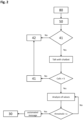
- Fig. 2 shows a flowchart of the method for response-time-reduction in emergency incident events according to another embodiment of the invention.
- one or more call 50 from one or more caller 80 arrives at an emergency call center.
- the AI agent monitors whether the incoming calls 50 are directly forwarded to a call taker 42 of the call center or whether they are placed in a queue 41. If the calls are found in the queue 41, the AI agent as a chatbot will connect to the call and prompt the caller to give a description of the accident or any other emergency event (talk with chatbot). Afterwards, the call can be reassigned to a queue 41 in order to be still available for possible further inquiries by a call taker 42.
- the AI agent automatically begins to query the descriptions of the callers for keywords and other values.
- the AI agent compares the values of the different calls in the queue 41 and the descriptions given by the callers, and at the same time the calls made by the call center call takers for common or predefined keywords and/or other values.
- Each keyword can be assigned a predefined value beforehand - this also applies to other values such as the caller's stress level, etc. If the evaluation of the individual values exceeds a predefined threshold (threshold > x), the AI agent automatically initiates the dispatch of first responders.
- the AI agent can send an automated message to the first responders 30 or to the emergency departments, containing the most important information needed for the emergency response and for determining the appropriate resources. However, if the threshold is not exceeded, the evaluation continues in the background, but no first responder 30 units are dispatched.
- Fig. 3 shows in a schematic illustration an overview about a Reinforcement Learning algorithm of the AI agent 10.
- the AI agent 10 comprises a Reinforcement Learning algorithm, which uses rewards and punishments as signals for positive and negative behavior. It can be developed and installed on a server (local or cloud) and can be part of the emergency call center 40 (aka a PSAP).
- the algorithm can be based on an action-reward feedback loop as it is presented below:
- a Markov Decision Process (MDP) mathematical framework can be used to describe the functioning of the algorithm, since it incorporates a set of finite environment states (S), a set of values (V) based on the algorithm's actions (A) and a reward process (R).
- S finite environment states
- V value
- R reward process
- the AI agent 10 is rewarded by the emergency environment 20.
- the reward is automatically calculated using a computer implemented method which identifies how well the algorithm responds to the various events based on the (a) call waiting time before a call is serviced by a call taker, or (b) on the time needed for the responders 30 to arrive at the scene, or (c) both.
- the same is applicable for the response time from the responders 30 or the combination of times. The less the time, the bigger the reward score (R) for the AI agent 10.
Landscapes
- Engineering & Computer Science (AREA)
- Business, Economics & Management (AREA)
- Marketing (AREA)
- Human Resources & Organizations (AREA)
- Signal Processing (AREA)
- Physics & Mathematics (AREA)
- Audiology, Speech & Language Pathology (AREA)
- Human Computer Interaction (AREA)
- Computational Linguistics (AREA)
- Acoustics & Sound (AREA)
- Multimedia (AREA)
- Health & Medical Sciences (AREA)
- Emergency Management (AREA)
- Economics (AREA)
- Strategic Management (AREA)
- Entrepreneurship & Innovation (AREA)
- Educational Administration (AREA)
- Development Economics (AREA)
- Biodiversity & Conservation Biology (AREA)
- Game Theory and Decision Science (AREA)
- Life Sciences & Earth Sciences (AREA)
- Operations Research (AREA)
- Quality & Reliability (AREA)
- Tourism & Hospitality (AREA)
- General Business, Economics & Management (AREA)
- General Physics & Mathematics (AREA)
- Theoretical Computer Science (AREA)
- Alarm Systems (AREA)
Abstract
Description
- The present invention relates to a computer-implemented method and a system for response-time-reduction in emergency incident events.
- The current trend in public safety is the Next Generation of Emergency Systems, known as NG9-1-1/NG1-1-2. In essence, it is a technology that allows the public to share richer, more detailed data (e. g. videos, images, texts) with emergency call centers and the call operators. It also enhances the ability of emergency call centers to communicate with each other and improves system resiliency. Currently, in most cases the call operator can have some computer-based assistance, but not in the field of drastically reducing the response time of the emergency responders. Especially in cases where the calls need to be directed towards a waiting queue, valuable info might be delayed being transferred to the responders.
- When an emergency event occurs, there is a call flow towards the emergency call operators. Sometimes, this call flow is manageable by the call operators and sometimes, especially in major catastrophic events like earthquakes, massive fires, terrorist attacks, car crash pileups, flooding or airplane disasters it is not manageable, and this forces some calls to enter a waiting queue, before they are serviced by the call operator. In both cases, there is a precious time interval between the information processed by the call operator and the passing of this information to the emergency departments that will dispatch the appropriate forces (e. g. personnel, units, and vehicles). Therefore, in many circumstances, the call operators can't have an overall situation awareness and that can lead to a delay in informing the suitable emergency departments that need to be involved. Therefore, first responders might lose precious time and that can make the difference between life and death.
- The Next Generation of 9-1-1/1-1-2 systems allow seamless information sharing about emergency incidents between call centers, first responders, trauma centers and other emergency response entities. However, all the existing solutions rely on the call takers answering the emergency calls and asking for information from the callers, for example, who are the individuals involved in an emergency incident or who are witnesses of such incidence. In cases where a major incident occurs, there is a vast number of calls towards the 9-1-1/1-1-2 operators or call takers resulting in calls being placed at a queue waiting to be answered. Depending on the severity and the extent of the event, the calls might stay in the queue for a long time before they are answered. While these calls are waiting, the emergency services may be unaware of the emergency incident waiting to be reported, having no information to share or to act upon.
- There are existing solutions, that are tackling some aspects automatically, and by using some text transcription technologies, or an algorithm to handle the calls placed in queue. But all those are functioning as assisting technologies to the call operator without using any machine learning techniques that will allow them to evolve and help towards the best handling of an emergency event. There is currently no process of handling an emergency call (either live call or call on hold) by using a machine learning algorithm, that would be able to provide essential information to the first responders before they converse with the call operator.
- Therefore, the present invention is based on the object to provide a computer-implemented method and a corresponding system for response-time-reduction in emergency incident events. Another object of the method and a system is to automatically dispatch first responders to an identified emergency scene.
- These objects are solved by a method having the features according to
claim 1 and a system having the features of claim 15. Preferred embodiments of the invention are defined in the respective dependent claims. - According to the invention, a computer-implemented method for response-time-reduction in emergency incident events is provided, the method comprises monitoring, by an artificial intelligent (Al) agent (according to the invention it may also be referred as an artificial intelligence agent), an emergency environment in real-time upon an occurrence or change in one or more emergency incident information value, then analyzing, by the AI agent, if the one or more emergency incident information value occurs and/or reaches across one or more predefined threshold; ad-hoc dispatching, by the artificial intelligent agent, of one or more first responder if the analysis has shown that this is necessary; rewarding, by the emergency environment, the artificial intelligent agent on the performance of the monitoring and/or the ad-hoc dispatching; adjusting, by the artificial intelligent agent, the one or more predefined threshold according to the reward.
- According to the invention, the response time is defined as the period that is needed from the moment that someone calls the emergency services, until the arrival of the first responders at the emergency scene to provide help.
- The response time can be increased drastically, in cases where a major catastrophic event occurs (e. g., an earthquake, a car crash pileup, a shooting attack, an airplane crash, etc.), where the emergency service call centers become congestive due to the high number of calls, and the calls are placed in a waiting queue. In this case, precious information might also be lost, because the relevant calls that would supply the call operators with this information, might not be able to converse with him/her immediately.
- As soon as a call is placed towards an emergency call center and its operator (also called call takers or agents), an AI agent (also called AI algorithm) starts in the background of the call. The AI algorithm leverages Reinforcement Learning (RL) to decide how to distribute incoming emergency calls more effectively, by distributing some of the calls directly to one or more first responders, thus bypassing the one or more call takers so that the response time is reduced.
- RL according to the invention is an area of machine learning concerned with how intelligent agents ought to take actions in an environment to maximize the notion of cumulative reward. RL is one of three basic machine learning paradigms, alongside supervised learning, and unsupervised learning.
- RL differs from supervised learning in not needing labelled input/output pairs be presented, and in not needing sub-optimal actions to be explicitly corrected. Instead, the focus is on finding a balance between exploration (of uncharted territory) and exploitation (of current knowledge). Partially supervised RL algorithms can combine the advantages of supervised and RL algorithms.
- The environment is typically stated in the form of a Markov decision process (MDP) because many RL algorithms for this context use dynamic programming techniques. The main difference between the classical dynamic programming methods and RL algorithms is that the latter do not assume knowledge of an exact mathematical model of the MDP, and they target large MDPs where exact methods become infeasible.
- The environment in the sense of the invention is defined as:
- i. The emergency call takers.
- ii. The emergency responders.
- iii. An emergency call centre, where all the emergency calls arrive and are handled by the emergency call takers.
- iv. An information system tracking the position of all the emergency responders and the emergency incident that they may be responding to.
- The artificial intelligence agent (Al agent) is a Reinforcement Learning algorithm which uses rewards and punishments as signals for positive and negative behavior. It will be developed and installed on a server (local or cloud) and will be part of the emergency call center.
- According to a preferred embodiment of the method, the step of monitoring the emergency environment comprises identifying, by the AI agent, all incoming calls, queued calls and/or media data of one or more callers in one or more emergency call centers and/or wherein the emergency environment further comprises identifying, by the AI agent, the location and/or the type of the incoming calls, queued calls and/or the media data.
- Thereby, the call center can be a Public Safety Answering Point (PSAP) or any other Next Generation entity able to receive and answer emergency calls. Under the location of the incoming calls, queued calls and/or media data, the geological position of these calls/data is understood. The exact location of the call/data can either be based on the antenna broadcasting data or on GPS. By type is understood in which way the calls or data were transmitted, e. g. from a mobile or from a landline/fixed phone. In the sense of the invention, media data means all data sources other than classic phone calls such as video and audio streams, text or image messages, and maps with locations, etc.
- According to another preferred embodiment of the method, the step of monitoring the emergency environment comprises clustering, by the artificial intelligent agent, several calls from a specific location or a sub-location and/or rating, by the artificial agent, several calls which are used to give information about the scale of an incident. Clustering of calls can, for example, take place for certain locations where there is a higher crime rate or where there is a permanent increased traffic volume etc. Rating several calls can reveal, for example, a more and/or quicker flow of calls which means a bigger urgency for first responders.
- According to another preferred embodiment of the method, the clustering comprises automatically setting, by the AI agent, a radius determining the special location according to at least one of a predefined incident identification, an accessibility for rescue forces, a network coverage in mobile and/or wired call networks, a geophysical location, a road and street network, a traffic volume, an occurrence of an event and/or a weather event.
- In the sense of the invention, a predefined incident identification is, for example, a car crash, a shooting incident, an explosion, or any other emergency incident. For a car crash a radius of 50 m to 200 m may be set while for a shooting or an explosion a radius of about 500 m to one or more km may be set. Further, the AI agent can set these metrics higher or lower if, for example, the call or data analysis shows that the shooting is shifting or expanding. Furthermore, the AI agent can take other events at certain locations into account when determining the radius such as weather, scheduled events such as concerts or sporting events, geographical conditions such as a steep gradient, or network coverage in the mobile network.
- According to still another preferred embodiment of the method, the step of analyzing the monitored emergency environment further comprising identifying, by the AI agent, keywords or key noises in the ambient noise from the one or more caller whose call is waiting in a queue and matching identified keywords and/or key noises to predefined keywords and/or predefined key noises. Such predefined key noises can be, for example, the sound of gunshots, explosions or people screaming. Predetermined keywords to be considered can be, for example, robbery, help, bomb, terrorist, car crash, fire etc.
- According to yet another preferred embodiment of the method, the step of analyzing the monitored emergency environment further comprises prompting, by the AI agent, one or more caller whose call is waiting in the queue, to give a description of the emergency incident to the AI agent and/or scanning, by the AI agent, a conversation or a report from one or more caller who is giving a description of the emergency incident for specific keywords and/or key noises. The AI agent can be designed as a chatbot to interact with the one or more caller. In the sense of the invention, it is also possible that a predefined list of questions about emergency incidents is asked by the AI agent to the one or more caller, who then can answer them. Thus, for example, the type of incident, the location, the number of injured persons, etc. can be recorded. At the same time or shortly thereafter, the AI agent can search and analyze the conversation or the purely conversational report for specific keywords.
- Action-delay means that in the case of a terrorist attack, there might be a building that is set on fire (e. g. by an explosion), but the calls initiated to report this are placed in the waiting queue due to heavy call traffic. Consequently, this means that there will be a delay to inform the fire brigade, although it was needed in the first place. By scanning the conversations or reports, the AI agent can get an accurate picture of the situation much faster and can act accordingly which, of course, shortens the time in which the one or more first responder arrives at the accident/scene.
- According to yet another preferred embodiment of the method, the step of monitoring the emergency environment comprises using, by the AI agent, a speech-to-text analysis to create a transcript of the description of the emergency incident that the one or more caller gives to identify several keywords. Thereby, the AI agent also further analyzes numbers mentioned in relation to specific keywords, e. g. number of people seen, number of vehicles involved in the incident, etc.
- According to another preferred embodiment of the method, the step of analyzing the monitored emergency environment comprises identifying, by the AI agent, the number of calls in the queue and/or the waiting time for each call in the queue to be answered.
- According to still another preferred embodiment of the method, the step of analyzing the monitored emergency environment comprises identifying, by the AI agent, the call status of the one or more call taker in the call center and/or the status of each of the one or more first responder. For the purposes of the invention, call status is understood to mean busy/available. According to the invention, it is also possible to analyze the state of exhaustion or the mental and/or physical stress of the one or more call taker and/or first responder in order to select the teams that are best suited for the mission.
- Further, according to a preferred embodiment of the method, the step of ad-hoc dispatching comprises sending, by the AI agent, a message with all necessary information to each of the appropriate one or more first responder that need to be involved in the emergency incident. In the sense of the invention, message means any kind of message that is suitable to inform the one or more first responder, e. g. this can be in the form of a text message, a preconfigured voice notification or in any other conceivable way of messaging.
- According to yet another preferred embodiment of the method, the step of ad-hoc dispatching comprises simultaneous dispatching, by the AI agent, of different first responders and/or different emergency departments. This is especially beneficial when dealing with a large-scale critical event where multiple calls are received simultaneously, such as an earthquake, a car crash pileup, a shooting, a plane crash, etc. For example, in a shooting attack at a university, the calls towards the emergency system might refer to people who are threatened by someone using a gun and is taking hostages, transferring the information between different departments is critical. In this case the AI agent can inform the police, the fire brigade and/or a special operations unit (e. g. a special weapons and tactics - SWAT - unit) simultaneously, thereby saving an incredible amount of time.
- According to yet another preferred embodiment of the method, the step of analyzing the monitored emergency environment comprises automatically prompting, by the AI agent, the one or more caller and/or automatically scanning, by the AI agent, ongoing conversations, reports of conversations and/or ambient noise of calls in the queue upon keywords and/or key noises, if there are minimum of N calls waiting in a queue to be answered from the same area and on the same time. As an example, the minimum of N calls waiting in the queue to be answered can be set to be 20 calls, preferably 10 and particularly preferably 5. If the minimum number of calls in the queue is exceeded, the AI agent will automatically scan for specific words, i. e., fire, shooter, earthquake, airplane crash, boat sinking etc. in conversations, reports, or ambient noise of calls in the queue.
- Further, according to a preferred embodiment of the method, the step of analyzing the monitored emergency environment comprises identifying, by the AI agent, an area or building with precedence in combination with a specific keyword or key noise, then the AI agent proceeds with ad-hoc dispatching of the first responders or emergency departments which are necessary according to the identified area or building with precedence in combination with the specific keyword or key noise, without waiting for more calls to converse with the AI agent and without further information about the emergency incident. Buildings or areas with precedence like universities, schools, government buildings, malls, public institutions etc. where many people gather, can have a bigger precedence. For example, this means that in the case where all emergency lines are busy, and a single call from a university enters the queue, having the one or more caller reporting to the AI agent that there is an active shooter in the University, then the AI agent will proceed with the sending of the notification of all relevant one or more first responder or relevant emergency departments, without waiting for more calls to provide information about the incident. This process will cover even the most extreme of cases where, for example, a major car crash or pileup has happened outside a university, but at the same time there is an active shooter inside a university building, and both of these incidents (related or not) are reported from the same area.
- According to yet another preferred embodiment of the method, the step of rewarding comprises measuring, by the artificial intelligent agent (10), the call waiting time until an incoming call is answered by the one or more call taker or the one or more first responder and/or measuring, by the artificial intelligent agent (10), the response time which is the time for first responders to arrive on the emergency incident scene.
- The artificial intelligent agent measures the performance of the emergency services, thereby using established methods to track one or more of the following metrics: call waiting time (time until an incoming call is answered by a call taker or a first responder) and/or response time (time for first responder(s) to arrive on the emergency scene). Clearly, a lower value in the above performance metrics indicates a better performance.
- According to the invention, a system for response-time-reduction in emergency incident events is provided, wherein the system is adapted to perform the steps of the method for response-time-reduction in emergency incident events. Advantageously, the system comprises an AI agent which can be located inside or outside the system but is connected to it. The system can further comprise a call center or a Public Safety Answering Point (PSAP) that can accept incoming emergency calls with the help of its call taker and/or transfer the calls to queues. The AI agent has access to the call center, i. e. the AI agent can see and handle all calls. Further, the system is advantageously configured to communicate with one or more first responder or emergency departments and to notify them simultaneously in case of an identified emergency.
- According to yet another aspect of the present invention, a program element is provided which when being executed by a processor is adapted to carry out steps of the method for response-time-reduction in emergency incident events.
- According to another aspect of the present invention, a computer-readable medium comprising program code is provided which when being executed by a processor is adapted to carry out steps of the method for response-time-reduction in emergency incident events.
- A computer-readable medium may be a floppy disk, a hard disk, a USB (Universal Serial Bus) storage device, a RAM (Random Access Memory), a ROM (read only memory) or an EPROM (Erasable Programmable Read Only Memory). A computer readable medium may also be a data communication network, e. g. the Internet, which may allow downloading a program code.
- It has also to be noted that aspects of the invention have been described with reference to different subject-matters. In particular, some aspects or embodiments have been described with reference to apparatus type claims whereas other aspects have been described with reference to method type claims. However, a person skilled in the art will gather from the above and the following description that, unless otherwise notified, in addition to any combination between features belonging to one type of subject-matter also any combination between features relating to different types of subject-matters is considered to be disclosed with this text. In particular, combinations between features relating to the apparatus type claims and features relating to the method type claims are considered to be disclosed. The invention and embodiments thereof will be described below in further detail in connection with the drawing(s).
- Fig. 1
- shows in a schematic illustration an overview about the method steps for response-time-reduction in emergency incident events according to an embodiment of the invention;
- Fig. 2
- shows a flowchart of the method for response-time-reduction in emergency incident events according to another embodiment of the invention;
- Fig. 3
- shows in a schematic illustration an overview about a Reinforcement Learning algorithm of the artificial intelligence agent according to an embodiment of the invention.
-
Fig. 1 schematically shows an overview of the method steps for response-time-reduction in emergency incident events according to an embodiment of the invention. AsFig. 1 shows, anagent 10 observes anemergency environment 20 in real-time. Thereby, theAI agent 10 monitors in a first step S100 different emergency incident information values such asincoming calls 50 to acall center 40, including several other values or attributes of eachincoming call 50. Thecall center 40 can be a PSAP. Values such as location and type of each incoming call can be monitored. The exact location of the call can either be based on the antenna broadcasting data or on GPS. The type of each incoming call is the type of transmission of the call, e. g. from a mobile, from a landline/fixed phone. - Further values or attributes can be the number of calls from specific locations and/or the rate of incoming calls. The calls can be counted internally by the AI agent and can be clustered or categorized by location or even sub-location, to provide a better situational awareness to one or more first responder. Whereby, the rate of incoming calls can be used to give information about the scale of the incident, more and/or quicker flow of calls mean a bigger urgency for responders.
- Further, all queued calls 60 in the
call center 40, including various values or attributes of each queued call 60 such as location of each queued call 60, type of each queued call 60 (e. g. from a mobile, from a landline/fixed phone) can be additionally monitored by the AI agent. In a next step S200, the AI agent analyzes the calls waiting in the queue. The number of calls in the queue and the time the calls have already spent in the queue are considered notable values to monitor. - Furthermore, the AI agent can monitor media data 70 like media streams (video/audio streams), text/image/voice messages and the like which modern call centers can handle nowadays. These data can be analyzed by the AI agent using additional tools like image recognition, speech-to-text analysis etc.
- The AI agent can either monitor the waiting calls or contact the callers directly, depending on how many calls are already on hold. When the AI agent monitors the calls, it looks for key noises or sounds within the call. Such key noises or sounds may represent, for example, gunshots from a gun, a call for help from a person, or the like. If the AI agent contacts the caller directly, this can be done in the form of a chatbot where the caller is asked to give a short description of the incident. According to the invention, however, it is also possible that a predefined list of questions such as: where did the accident happen, how many people are involved, what did exactly happen, etc. is already provided or queried by the AI agent acting as a chatbot. If keywords like fire, police, shooting or similar are mentioned in such a conversation or in such a description of the caller, the agent automatically evaluates this and compares, if the keyword is linked to other information like the number of injured persons or similar. The number of times a certain keyword is mentioned, the evaluation of the caller's voice for stress, as well as other values can be analyzed by the AI agent. According to the invention, it is possible that different keywords are weighted differently so that, if a certain number of different keywords appears in the report of the caller, a predefined threshold is exceeded or not reached, the AI agent can then automatically initiate an ad-hoc distribution of first responders. Furthermore, the AI agent can also monitor the call status (available/busy) of each individual call taker or operator of a call center as well as the call status of the individual first responders to acquire knowledge about their availability.
- If the analysis of step S200 reveals that it is necessary to send
first responders 30 to an emergency incident scene, theAI agent 10 ad-hoc dispatches one or morefirst responder 30 in step S300. TheAI agent 10 acts on theemergency environment 20 by deciding the precedence and the emergency level of an emergency incident and how to treat it, in terms offirst responders 30 that need to be dispatched. - Therefore, the
AI agent 10 will comprise a message with all the necessary information and distribute it to the relevant departments that need to be involved in the event. The message contents will inform thefirst responders 30 about the severity and the scale of the emergency incident, so that the relevantfirst responders 30 and their emergency departments will know quickly and before they converse with thecall taker 42 in thecall center 40, how many personnel and vehicles need to be dispatched to the incident scene. This means that time can be saved, and more details from thecall takers 42 in thecall center 40 can be obtained in the time between preparation and action. - The message sent by the algorithm underlying the
AI agent 10 can be of different forms. One option would be to initiate a call (or send a text/voice message), including a prerecorded message which will inform about the number of calls received from a specific location together with the major keywords parsed by theAI agent 10 and the total number of calls placed towards the emergency call system (the latter can be used to denote the potential scale of the event). - In the case where a
caller 80 has provided video footage or images during his initial call, those images/video could be attached to the message sent by the AI agent to the variousfirst responders 30 and their departments. - Another option would be that together with the message, the
AI agent 10 can send a map of the area marked with bullets that will denote the exact location of every phone call received from the call takers/call operators 42 in thecall center 40 or which has entered the waitingqueue 41. - Depending on the
AI agent 10, actions when and which calls to distribute tofirst responders 30, these actions will have an impact to the overall performance of the emergency services. - The
emergency environment 20 measures the performance of the emergency services, using established methods to track at least one or more of the following metrics: the call waiting time, defined as the time until an incoming call is answered by acall taker 42 or afirst responder 30 and the response time, which is defined as the time forfirst responders 30 to arrive on the emergency scene after an emergency incident has been recognized as valid. - Clearly, a lower value in the above performance metrics indicates a better performance. After each action of the
AI agent 10, in step S400 theemergency environment 20 rewards theAI agent 10, with either a negative or a positive reward. A negative reward if the performance of the emergency services deteriorates. The more the performance declines, the higher the negative reward will be. A positive reward if the performance of the emergency services improves or stays within an optimal range for the performance attributes/values being measured. Likewise, the positive reward will be higher as the performance improves, compared to a performance being stable in an optimal range. - At this point it is worth to mention, that a potential improvement would be that the
AI agent 10 could handle the call location in a different way. The location could also be configured and defined based on the individual event. So, for example, if a car crash occurs, the exact location area can be set to a 100 m radius around the scene. But on the other hand, for a shooting incident or an explosion, the location can be set to a radius of 500 m, because it is more likely to be spotted in a greater distance. - An important aspect of the invention proposed, is that the use of a machine learning algorithm (Al agent) 10 will be able to process and assess many parameters simultaneously and will decide which emergency responder departments need to be informed before the
first responders 30 converse with the call taker oroperator 42, and how (by voice, video, text etc.). By using the method according to the invention, thefirst responders 30 will already have a first idea of the incident and its scale and most essentially build a better situational awareness of the incident. The feedback from theresponders 30, will be used as a reward (positive/negative) to theAI agent 10, and that will evolve it to even higher standards. - Then, after the reward was received, the
AI agent 10 adjusts, the one or more predefined threshold according to the reward in step S500. -
Fig. 2 shows a flowchart of the method for response-time-reduction in emergency incident events according to another embodiment of the invention. In this embodiment, one ormore call 50 from one ormore caller 80 arrives at an emergency call center. The AI agent monitors whether theincoming calls 50 are directly forwarded to acall taker 42 of the call center or whether they are placed in aqueue 41. If the calls are found in thequeue 41, the AI agent as a chatbot will connect to the call and prompt the caller to give a description of the accident or any other emergency event (talk with chatbot). Afterwards, the call can be reassigned to aqueue 41 in order to be still available for possible further inquiries by acall taker 42. However, as in this example, if more than 5 calls are waiting in thequeue 41 or are asked by the chatbot for the description of the accident and these calls were assigned to a defined location or can be assigned to a location, the AI agent automatically begins to query the descriptions of the callers for keywords and other values. The AI agent compares the values of the different calls in thequeue 41 and the descriptions given by the callers, and at the same time the calls made by the call center call takers for common or predefined keywords and/or other values. Each keyword can be assigned a predefined value beforehand - this also applies to other values such as the caller's stress level, etc. If the evaluation of the individual values exceeds a predefined threshold (threshold > x), the AI agent automatically initiates the dispatch of first responders. In this case, the AI agent can send an automated message to thefirst responders 30 or to the emergency departments, containing the most important information needed for the emergency response and for determining the appropriate resources. However, if the threshold is not exceeded, the evaluation continues in the background, but nofirst responder 30 units are dispatched. -
Fig. 3 shows in a schematic illustration an overview about a Reinforcement Learning algorithm of theAI agent 10. TheAI agent 10 comprises a Reinforcement Learning algorithm, which uses rewards and punishments as signals for positive and negative behavior. It can be developed and installed on a server (local or cloud) and can be part of the emergency call center 40 (aka a PSAP). The algorithm can be based on an action-reward feedback loop as it is presented below: - The basic terms of the algorithm are the following:
- a) The
emergency environment 20 according to the invention. - b) The states. There are 4 different states for the algorithm:
- i. S0: Standby state when no call is placed in the queue.
- ii. S1: Calculation of call waiting time until an operator answers the call.
- iii. S2: Calculation of the response time until the
responders 30 arrive at the emergency scene. - iv. Action state. Forwarding the emergency call or distributing a message (or both) to the emergency responders, including important data (location of calls, type of calls, keywords parsed by chatbot, incoming call rate towards the
emergency call center 40.
- c) The reward.
- In this specific embodiment, a Markov Decision Process (MDP) mathematical framework can be used to describe the functioning of the algorithm, since it incorporates a set of finite environment states (S), a set of values (V) based on the algorithm's actions (A) and a reward process (R). The mathematical equation that can summarize the MDP is the following:

- Where:
- V(s): Is the value stored after every action on every step and after a reward is given after that step.
- R: The rewards given after every step.
- St: The value of every step. In this case it can be the calculation of (a) the call waiting time until a call is serviced by an operator, or (b) the calculation of the response time needed for the
responders 30 to arrive at the scene or (c) both. - y: is a universal discount rate, which takes values between 0 and 1. It is always less than 1, so events in the distant future are weighted less than events in the immediate future.
- After each of its actions, the
AI agent 10, is rewarded by theemergency environment 20. The reward is automatically calculated using a computer implemented method which identifies how well the algorithm responds to the various events based on the (a) call waiting time before a call is serviced by a call taker, or (b) on the time needed for theresponders 30 to arrive at the scene, or (c) both. - The expression that can justify the reward process can be:

- Where:
- R: is the reward
- t: is the time (in seconds) described in (a), (b) or (c) above.
- For example:
If the call waiting time is 2 minutes (120 secs) the reward will be R = 1/120 = 0.008 but if the call waiting time is 1 minute (60 secs) the reward will be R = 1/60 = 0.01, which is by far better. The same is applicable for the response time from theresponders 30 or the combination of times. The less the time, the bigger the reward score (R) for theAI agent 10. - It should be noted that the term "comprising" does not exclude other elements or steps and the "a" or "an" does not exclude a plurality. Further, elements described in association with different embodiments may be combined.
- It should also be noted that reference signs in the claims shall not be construed as limiting the scope of the claims.
-
- 10
- artificial intelligent agent
- 20
- emergency environment
- 30
- first responder(s)
- 40
- call center
- 41
- queue
- 42
- call taker
- 50
- incoming calls
- 60
- queued calls
- 70
- media data
- 80
- caller
- S100 - S500
- Method step S100 to S500
Claims (15)
- A computer-implemented method for response-time-reduction in emergency incident events comprising:S100 monitoring, by an artificial intelligent agent (10), an emergency environment (20) in real-time upon an occurrence or change in one or more emergency incident information value;S200 analyzing, by the artificial intelligent agent (10), if the one or more emergency incident information value occurs and/or reaches across one or more predefined threshold;S300 ad-hoc dispatching, by the artificial intelligent agent (10), of one or more first responder (30) if the analysis reveals that this is necessary;S400 rewarding, by the emergency environment (20), the artificial intelligent agent (10) on the performance of the monitoring and/or the ad-hoc dispatching;S500 adjusting, by the artificial intelligent agent (10), the one or more predefined threshold according to the reward.
- The computer-implemented method according to claim 1, wherein the step of monitoring the emergency environment (20) comprises identifying, by the artificial intelligent agent (10), all incoming calls (50), queued calls (60) and/or media data (70) of one or more caller (80) in one or more emergency call center (40) and/or wherein monitoring the emergency environment (20) further comprises identifying, by the artificial intelligent agent (10), the location and/or the type of the incoming calls (50), the queued calls (60) and/or the media data (70).
- The computer-implemented method according to claim 2, wherein the step of monitoring the emergency environment comprises (20) clustering, by the artificial intelligent agent (10), several calls from a specific location or a sub-location and/or rating, by the artificial agent, several calls which are used to give information about the scale of an incident.
- The computer-implemented method according to claim 3, the clustering further comprising automatically setting, by the artificial intelligent agent (10), a radius determining the special location according to at least one of a predefined incident identification, accessibility for rescue forces, network coverage in mobile and/or wired call networks, geophysical location, road and street network, traffic volume, occurrence of special events and/or weather events.
- The computer-implemented method according to any of the preceding claims, wherein the step of analyzing the monitored emergency environment (20) further comprising identifying, by the artificial intelligent agent (10), keywords or key noises in the ambient noise from the one or more caller (80) whose call is waiting in a queue (41) and matching identified keywords and/or key noises to predefined keywords and/or predefined key noises.
- The computer-implemented method according to any of the preceding claims, wherein the step of analyzing the monitored emergency environment (20) comprises prompting, by the artificial intelligent agent (10), the one or more caller (80) whose call is waiting in a queue (41), to give a description of the emergency incident and/or scanning, by the artificial intelligent agent (10), a conversation from the one or more caller (80) who is giving a description of the emergency incident for specific keywords and/or key noises.
- The computer-implemented method according to claim 6, wherein, using, by the artificial intelligence agent (10), a speech-to-text analysis to create a transcript of the description of the emergency incident that the one or more caller (80) gives to identify keywords.
- The computer-implemented method according to any of the preceding claims, wherein the step of analyzing the monitored emergency environment (20) comprises identifying, by the artificial intelligent agent (10), the number of calls in a queue (60) and/or the waiting time for each call in the queue (60) to be answered.
- The computer-implemented method according to any of the preceding claims, wherein the step of analyzing the monitored emergency environment (20) comprises identifying, by the artificial agent (10), the call status of one or more call taker (42) in the call center (40) and/or the call status of each of the one or more first responder (30).
- The computer-implemented method according to any of the preceding claims, wherein the step of analyzing the monitored emergency environment (20) comprises automatically prompting, by the artificial intelligent agent (10), the one or more caller (80) and/or automatically scanning, by the artificial intelligent agent (10), ongoing conversations, reports of conversations and/or ambient noise of calls in the queue (60) upon keywords and/or key noises, if there are minimum of N calls waiting in a queue (60) to be answered from the same area and on the same time.
- The computer-implemented method according to any of the preceding claims, wherein the step of ad-hoc dispatching comprises sending, by the artificial intelligent agent (10), a message with all necessary information to each of the appropriate one or more first responder (30) that need to be involved in the emergency incident.
- The computer-implemented method according to any of the preceding claims, wherein the step of ad-hoc dispatching comprises simultaneous dispatching, by the artificial intelligent agent (10), of different one or more first responders (30) and/or different emergency departments.
- The computer-implemented method according to any of the preceding claims, wherein the step of analyzing the monitored emergency environment (20) comprises identifying, by the artificial intelligent agent (10), an area or building with precedence in combination with a specific keyword or key noise, then the artificial intelligent agent (10) proceeds with ad-hoc dispatching of the one or more first responder (30) or emergency departments which are necessary according to the identified area or building with precedence in combination with the specific keyword or key noise, without waiting for more calls to converse with the artificial intelligent agent (10) and without further information about the emergency incident.
- The computer-implemented method according to any of the preceding claims, wherein the step of rewarding comprises measuring, by the artificial intelligent agent (10), the call waiting time, which is the time until an incoming call is answered by one or more call taker (42) or one or more first responder (30) and/or measuring, by the artificial intelligent agent (10), the response time, which is the time for first responders to arrive on the emergency incident scene.
- A system for response-time-reduction in emergency incident events, wherein the system is adapted to perform the method for response-time-reduction in emergency incident events according to any of the claims 1 to 14.
Priority Applications (2)
| Application Number | Priority Date | Filing Date | Title |
|---|---|---|---|
| EP22185300.5A EP4307650A1 (en) | 2022-07-15 | 2022-07-15 | A computer-implemented method and system for response time reduction in emergency incident events |
| US18/171,705 US12316806B2 (en) | 2022-07-15 | 2023-02-21 | Computer-implemented method and system for response time reduction in emergency incident events |
Applications Claiming Priority (1)
| Application Number | Priority Date | Filing Date | Title |
|---|---|---|---|
| EP22185300.5A EP4307650A1 (en) | 2022-07-15 | 2022-07-15 | A computer-implemented method and system for response time reduction in emergency incident events |
Publications (1)
| Publication Number | Publication Date |
|---|---|
| EP4307650A1 true EP4307650A1 (en) | 2024-01-17 |
Family
ID=82846590
Family Applications (1)
| Application Number | Title | Priority Date | Filing Date |
|---|---|---|---|
| EP22185300.5A Pending EP4307650A1 (en) | 2022-07-15 | 2022-07-15 | A computer-implemented method and system for response time reduction in emergency incident events |
Country Status (2)
| Country | Link |
|---|---|
| US (1) | US12316806B2 (en) |
| EP (1) | EP4307650A1 (en) |
Cited By (1)
| Publication number | Priority date | Publication date | Assignee | Title |
|---|---|---|---|---|
| CN120336888A (en) * | 2025-06-13 | 2025-07-18 | 西南科技大学 | A statistical and analytical method for building pedestrian simulation |
Families Citing this family (2)
| Publication number | Priority date | Publication date | Assignee | Title |
|---|---|---|---|---|
| US12288459B1 (en) * | 2024-12-31 | 2025-04-29 | Rapidsos, Inc. | Systems and methods of providing emergency notifications to operations centers using radio-based dispatches |
| US12489845B1 (en) * | 2025-06-18 | 2025-12-02 | Carbyne Ltd. | Autonomous public safety answering point (PSAP) |
Citations (1)
| Publication number | Priority date | Publication date | Assignee | Title |
|---|---|---|---|---|
| US20210385638A1 (en) * | 2018-10-26 | 2021-12-09 | Motorola Solutions, Inc. | Device, system and method for modifying actions associated with an emergency call |
Family Cites Families (5)
| Publication number | Priority date | Publication date | Assignee | Title |
|---|---|---|---|---|
| US10911926B2 (en) * | 2019-03-29 | 2021-02-02 | Rapidsos, Inc. | Systems and methods for emergency data integration |
| WO2021246880A1 (en) * | 2020-06-03 | 2021-12-09 | Motorola Solutions, Inc | System and method for tracking and display of compliance with instructions provided by emergency call taker |
| US11388625B1 (en) * | 2020-12-21 | 2022-07-12 | Motorola Solutions, Inc. | Call overload handing for a public safety answering point |
| US11218862B1 (en) * | 2021-02-11 | 2022-01-04 | Motorola Solutions, Inc. | Device, system and method for transitioning a public-safety answering point to an automated review mode |
| US11887464B2 (en) * | 2021-12-22 | 2024-01-30 | Motorola Solutions, Inc. | Security ecosystem, device and method for distributing physical resources based on workflow interactions |
-
2022
- 2022-07-15 EP EP22185300.5A patent/EP4307650A1/en active Pending
-
2023
- 2023-02-21 US US18/171,705 patent/US12316806B2/en active Active
Patent Citations (1)
| Publication number | Priority date | Publication date | Assignee | Title |
|---|---|---|---|---|
| US20210385638A1 (en) * | 2018-10-26 | 2021-12-09 | Motorola Solutions, Inc. | Device, system and method for modifying actions associated with an emergency call |
Cited By (1)
| Publication number | Priority date | Publication date | Assignee | Title |
|---|---|---|---|---|
| CN120336888A (en) * | 2025-06-13 | 2025-07-18 | 西南科技大学 | A statistical and analytical method for building pedestrian simulation |
Also Published As
| Publication number | Publication date |
|---|---|
| US12316806B2 (en) | 2025-05-27 |
| US20240022663A1 (en) | 2024-01-18 |
Similar Documents
| Publication | Publication Date | Title |
|---|---|---|
| US12316806B2 (en) | Computer-implemented method and system for response time reduction in emergency incident events | |
| US11205148B2 (en) | Observation platform for using structured communications | |
| US10715662B2 (en) | System and method for artificial intelligence on hold call handling | |
| US10348888B1 (en) | Call management system for a command center utilizing call metadata | |
| US9867023B2 (en) | Emergency messaging system and method of responding to an emergency | |
| US10163330B1 (en) | System and method for securely accessing online systems | |
| EP3654678B1 (en) | System, device, and method for recommending public safety resource allocation | |
| US10931759B2 (en) | Methods and systems for establishing a moderated communication channel | |
| KR20140088836A (en) | Methods and systems for searching utilizing acoustical context | |
| US10764437B2 (en) | Call management system for a command center | |
| US12568170B2 (en) | Prioritizing emergency calls based on caller response to automated query | |
| US20250131815A1 (en) | Parameter Prioritized Hirable Emergency Service Providers | |
| EP3804287B1 (en) | Call management system for a dispatch center | |
| US11909914B2 (en) | Forwarding emergency messages from IoT devices to PSAPs | |
| US20220270461A1 (en) | Artificial intelligence for event response | |
| US20220201547A1 (en) | Call overload handing for a public safety answering point | |
| US20250233941A1 (en) | Categorizing calls using early call information systems and methods | |
| US12489845B1 (en) | Autonomous public safety answering point (PSAP) | |
| Hunt et al. | A functional task analysis of time-pressured decision making | |
| US20220174454A1 (en) | Safety detection controller | |
| EP4576647A1 (en) | Method and system for multidimensional blockchain mining | |
| EP4233321B1 (en) | Device and method for rebroadcasting communication data with additional context data | |
| EP4465612B1 (en) | Method and system for clustering emergency calls | |
| Lee et al. | Uncertainty-Aware AI-Facilitated Decision Support System for Emergency Call Takers | |
| US9396647B2 (en) | System of detecting incarceration of an individual and notifying interested parties, and related methods |
Legal Events
| Date | Code | Title | Description |
|---|---|---|---|
| PUAI | Public reference made under article 153(3) epc to a published international application that has entered the european phase |
Free format text: ORIGINAL CODE: 0009012 |
|
| STAA | Information on the status of an ep patent application or granted ep patent |
Free format text: STATUS: THE APPLICATION HAS BEEN PUBLISHED |
|
| AK | Designated contracting states |
Kind code of ref document: A1 Designated state(s): AL AT BE BG CH CY CZ DE DK EE ES FI FR GB GR HR HU IE IS IT LI LT LU LV MC MK MT NL NO PL PT RO RS SE SI SK SM TR |
|
| RAP1 | Party data changed (applicant data changed or rights of an application transferred) |
Owner name: ATOS PUBLIC SAFETY LLC |
|
| STAA | Information on the status of an ep patent application or granted ep patent |
Free format text: STATUS: REQUEST FOR EXAMINATION WAS MADE |
|
| P01 | Opt-out of the competence of the unified patent court (upc) registered |
Effective date: 20240227 |
|
| 17P | Request for examination filed |
Effective date: 20240325 |
|
| RBV | Designated contracting states (corrected) |
Designated state(s): AL AT BE BG CH CY CZ DE DK EE ES FI FR GB GR HR HU IE IS IT LI LT LU LV MC MK MT NL NO PL PT RO RS SE SI SK SM TR |
|
| STAA | Information on the status of an ep patent application or granted ep patent |
Free format text: STATUS: EXAMINATION IS IN PROGRESS |
|
| 17Q | First examination report despatched |
Effective date: 20241204 |
|
| GRAP | Despatch of communication of intention to grant a patent |
Free format text: ORIGINAL CODE: EPIDOSNIGR1 |
|
| STAA | Information on the status of an ep patent application or granted ep patent |
Free format text: STATUS: GRANT OF PATENT IS INTENDED |
|
| INTG | Intention to grant announced |
Effective date: 20260227 |