EP4304186A1 - Re-encoding segment boundaries in timed content based on marker locations - Google Patents
Re-encoding segment boundaries in timed content based on marker locations Download PDFInfo
- Publication number
- EP4304186A1 EP4304186A1 EP23179996.6A EP23179996A EP4304186A1 EP 4304186 A1 EP4304186 A1 EP 4304186A1 EP 23179996 A EP23179996 A EP 23179996A EP 4304186 A1 EP4304186 A1 EP 4304186A1
- Authority
- EP
- European Patent Office
- Prior art keywords
- content
- location
- segment
- subsection
- sequence
- Prior art date
- Legal status (The legal status is an assumption and is not a legal conclusion. Google has not performed a legal analysis and makes no representation as to the accuracy of the status listed.)
- Pending
Links
- 239000003550 marker Substances 0.000 title claims abstract description 75
- 238000012545 processing Methods 0.000 claims abstract description 47
- 238000000034 method Methods 0.000 claims description 68
- 238000003780 insertion Methods 0.000 claims description 11
- 230000037431 insertion Effects 0.000 claims description 11
- 238000004806 packaging method and process Methods 0.000 claims description 8
- 230000003044 adaptive effect Effects 0.000 claims description 4
- 238000000638 solvent extraction Methods 0.000 claims description 4
- 230000009471 action Effects 0.000 description 60
- 238000004891 communication Methods 0.000 description 11
- 238000010586 diagram Methods 0.000 description 9
- 238000003908 quality control method Methods 0.000 description 7
- 230000008569 process Effects 0.000 description 6
- 238000003860 storage Methods 0.000 description 6
- 241000237858 Gastropoda Species 0.000 description 4
- 238000013459 approach Methods 0.000 description 4
- 238000013528 artificial neural network Methods 0.000 description 4
- 238000004519 manufacturing process Methods 0.000 description 4
- 238000012986 modification Methods 0.000 description 3
- 230000004048 modification Effects 0.000 description 3
- 238000012552 review Methods 0.000 description 3
- 230000003750 conditioning effect Effects 0.000 description 2
- 238000009826 distribution Methods 0.000 description 2
- 230000002452 interceptive effect Effects 0.000 description 2
- 238000010801 machine learning Methods 0.000 description 2
- 238000013178 mathematical model Methods 0.000 description 2
- 230000003287 optical effect Effects 0.000 description 2
- 238000005192 partition Methods 0.000 description 2
- 238000004321 preservation Methods 0.000 description 2
- 239000002096 quantum dot Substances 0.000 description 2
- 230000007704 transition Effects 0.000 description 2
- 238000010200 validation analysis Methods 0.000 description 2
- 230000002730 additional effect Effects 0.000 description 1
- 238000004458 analytical method Methods 0.000 description 1
- 238000003491 array Methods 0.000 description 1
- 238000013473 artificial intelligence Methods 0.000 description 1
- 230000003190 augmentative effect Effects 0.000 description 1
- 230000008859 change Effects 0.000 description 1
- 230000008878 coupling Effects 0.000 description 1
- 238000010168 coupling process Methods 0.000 description 1
- 238000005859 coupling reaction Methods 0.000 description 1
- 238000013135 deep learning Methods 0.000 description 1
- 230000001419 dependent effect Effects 0.000 description 1
- 238000001514 detection method Methods 0.000 description 1
- 238000000605 extraction Methods 0.000 description 1
- 230000003116 impacting effect Effects 0.000 description 1
- 239000004973 liquid crystal related substance Substances 0.000 description 1
- 238000007477 logistic regression Methods 0.000 description 1
- 238000003058 natural language processing Methods 0.000 description 1
- 230000008707 rearrangement Effects 0.000 description 1
- 238000006467 substitution reaction Methods 0.000 description 1
- 239000013589 supplement Substances 0.000 description 1
- 238000012549 training Methods 0.000 description 1
- 238000012546 transfer Methods 0.000 description 1
- 230000009466 transformation Effects 0.000 description 1
- 230000000007 visual effect Effects 0.000 description 1
Images



Classifications
-
- H—ELECTRICITY
- H04—ELECTRIC COMMUNICATION TECHNIQUE
- H04N—PICTORIAL COMMUNICATION, e.g. TELEVISION
- H04N21/00—Selective content distribution, e.g. interactive television or video on demand [VOD]
- H04N21/20—Servers specifically adapted for the distribution of content, e.g. VOD servers; Operations thereof
- H04N21/23—Processing of content or additional data; Elementary server operations; Server middleware
- H04N21/234—Processing of video elementary streams, e.g. splicing of video streams or manipulating encoded video stream scene graphs
- H04N21/23424—Processing of video elementary streams, e.g. splicing of video streams or manipulating encoded video stream scene graphs involving splicing one content stream with another content stream, e.g. for inserting or substituting an advertisement
-
- H—ELECTRICITY
- H04—ELECTRIC COMMUNICATION TECHNIQUE
- H04N—PICTORIAL COMMUNICATION, e.g. TELEVISION
- H04N21/00—Selective content distribution, e.g. interactive television or video on demand [VOD]
- H04N21/40—Client devices specifically adapted for the reception of or interaction with content, e.g. set-top-box [STB]; Operations thereof
- H04N21/43—Processing of content or additional data, e.g. demultiplexing additional data from a digital video stream; Elementary client operations, e.g. monitoring of home network or synchronising decoder's clock; Client middleware
- H04N21/44—Processing of video elementary streams, e.g. splicing a video clip retrieved from local storage with an incoming video stream or rendering scenes according to encoded video stream scene graphs
- H04N21/44016—Processing of video elementary streams, e.g. splicing a video clip retrieved from local storage with an incoming video stream or rendering scenes according to encoded video stream scene graphs involving splicing one content stream with another content stream, e.g. for substituting a video clip
-
- G—PHYSICS
- G11—INFORMATION STORAGE
- G11B—INFORMATION STORAGE BASED ON RELATIVE MOVEMENT BETWEEN RECORD CARRIER AND TRANSDUCER
- G11B27/00—Editing; Indexing; Addressing; Timing or synchronising; Monitoring; Measuring tape travel
- G11B27/02—Editing, e.g. varying the order of information signals recorded on, or reproduced from, record carriers
- G11B27/031—Electronic editing of digitised analogue information signals, e.g. audio or video signals
- G11B27/036—Insert-editing
-
- G—PHYSICS
- G11—INFORMATION STORAGE
- G11B—INFORMATION STORAGE BASED ON RELATIVE MOVEMENT BETWEEN RECORD CARRIER AND TRANSDUCER
- G11B27/00—Editing; Indexing; Addressing; Timing or synchronising; Monitoring; Measuring tape travel
- G11B27/10—Indexing; Addressing; Timing or synchronising; Measuring tape travel
- G11B27/19—Indexing; Addressing; Timing or synchronising; Measuring tape travel by using information detectable on the record carrier
- G11B27/28—Indexing; Addressing; Timing or synchronising; Measuring tape travel by using information detectable on the record carrier by using information signals recorded by the same method as the main recording
-
- H—ELECTRICITY
- H04—ELECTRIC COMMUNICATION TECHNIQUE
- H04N—PICTORIAL COMMUNICATION, e.g. TELEVISION
- H04N21/00—Selective content distribution, e.g. interactive television or video on demand [VOD]
- H04N21/20—Servers specifically adapted for the distribution of content, e.g. VOD servers; Operations thereof
- H04N21/23—Processing of content or additional data; Elementary server operations; Server middleware
- H04N21/234—Processing of video elementary streams, e.g. splicing of video streams or manipulating encoded video stream scene graphs
- H04N21/2343—Processing of video elementary streams, e.g. splicing of video streams or manipulating encoded video stream scene graphs involving reformatting operations of video signals for distribution or compliance with end-user requests or end-user device requirements
- H04N21/234345—Processing of video elementary streams, e.g. splicing of video streams or manipulating encoded video stream scene graphs involving reformatting operations of video signals for distribution or compliance with end-user requests or end-user device requirements the reformatting operation being performed only on part of the stream, e.g. a region of the image or a time segment
-
- H—ELECTRICITY
- H04—ELECTRIC COMMUNICATION TECHNIQUE
- H04N—PICTORIAL COMMUNICATION, e.g. TELEVISION
- H04N21/00—Selective content distribution, e.g. interactive television or video on demand [VOD]
- H04N21/20—Servers specifically adapted for the distribution of content, e.g. VOD servers; Operations thereof
- H04N21/23—Processing of content or additional data; Elementary server operations; Server middleware
- H04N21/238—Interfacing the downstream path of the transmission network, e.g. adapting the transmission rate of a video stream to network bandwidth; Processing of multiplex streams
- H04N21/2383—Channel coding or modulation of digital bit-stream, e.g. QPSK modulation
-
- H—ELECTRICITY
- H04—ELECTRIC COMMUNICATION TECHNIQUE
- H04N—PICTORIAL COMMUNICATION, e.g. TELEVISION
- H04N21/00—Selective content distribution, e.g. interactive television or video on demand [VOD]
- H04N21/40—Client devices specifically adapted for the reception of or interaction with content, e.g. set-top-box [STB]; Operations thereof
- H04N21/43—Processing of content or additional data, e.g. demultiplexing additional data from a digital video stream; Elementary client operations, e.g. monitoring of home network or synchronising decoder's clock; Client middleware
- H04N21/435—Processing of additional data, e.g. decrypting of additional data, reconstructing software from modules extracted from the transport stream
- H04N21/4355—Processing of additional data, e.g. decrypting of additional data, reconstructing software from modules extracted from the transport stream involving reformatting operations of additional data, e.g. HTML pages on a television screen
-
- H—ELECTRICITY
- H04—ELECTRIC COMMUNICATION TECHNIQUE
- H04N—PICTORIAL COMMUNICATION, e.g. TELEVISION
- H04N21/00—Selective content distribution, e.g. interactive television or video on demand [VOD]
- H04N21/40—Client devices specifically adapted for the reception of or interaction with content, e.g. set-top-box [STB]; Operations thereof
- H04N21/43—Processing of content or additional data, e.g. demultiplexing additional data from a digital video stream; Elementary client operations, e.g. monitoring of home network or synchronising decoder's clock; Client middleware
- H04N21/44—Processing of video elementary streams, e.g. splicing a video clip retrieved from local storage with an incoming video stream or rendering scenes according to encoded video stream scene graphs
- H04N21/44008—Processing of video elementary streams, e.g. splicing a video clip retrieved from local storage with an incoming video stream or rendering scenes according to encoded video stream scene graphs involving operations for analysing video streams, e.g. detecting features or characteristics in the video stream
-
- H—ELECTRICITY
- H04—ELECTRIC COMMUNICATION TECHNIQUE
- H04N—PICTORIAL COMMUNICATION, e.g. TELEVISION
- H04N21/00—Selective content distribution, e.g. interactive television or video on demand [VOD]
- H04N21/40—Client devices specifically adapted for the reception of or interaction with content, e.g. set-top-box [STB]; Operations thereof
- H04N21/43—Processing of content or additional data, e.g. demultiplexing additional data from a digital video stream; Elementary client operations, e.g. monitoring of home network or synchronising decoder's clock; Client middleware
- H04N21/44—Processing of video elementary streams, e.g. splicing a video clip retrieved from local storage with an incoming video stream or rendering scenes according to encoded video stream scene graphs
- H04N21/4402—Processing of video elementary streams, e.g. splicing a video clip retrieved from local storage with an incoming video stream or rendering scenes according to encoded video stream scene graphs involving reformatting operations of video signals for household redistribution, storage or real-time display
-
- H—ELECTRICITY
- H04—ELECTRIC COMMUNICATION TECHNIQUE
- H04N—PICTORIAL COMMUNICATION, e.g. TELEVISION
- H04N21/00—Selective content distribution, e.g. interactive television or video on demand [VOD]
- H04N21/40—Client devices specifically adapted for the reception of or interaction with content, e.g. set-top-box [STB]; Operations thereof
- H04N21/43—Processing of content or additional data, e.g. demultiplexing additional data from a digital video stream; Elementary client operations, e.g. monitoring of home network or synchronising decoder's clock; Client middleware
- H04N21/44—Processing of video elementary streams, e.g. splicing a video clip retrieved from local storage with an incoming video stream or rendering scenes according to encoded video stream scene graphs
- H04N21/4402—Processing of video elementary streams, e.g. splicing a video clip retrieved from local storage with an incoming video stream or rendering scenes according to encoded video stream scene graphs involving reformatting operations of video signals for household redistribution, storage or real-time display
- H04N21/440281—Processing of video elementary streams, e.g. splicing a video clip retrieved from local storage with an incoming video stream or rendering scenes according to encoded video stream scene graphs involving reformatting operations of video signals for household redistribution, storage or real-time display by altering the temporal resolution, e.g. by frame skipping
-
- H—ELECTRICITY
- H04—ELECTRIC COMMUNICATION TECHNIQUE
- H04N—PICTORIAL COMMUNICATION, e.g. TELEVISION
- H04N21/00—Selective content distribution, e.g. interactive television or video on demand [VOD]
- H04N21/80—Generation or processing of content or additional data by content creator independently of the distribution process; Content per se
- H04N21/81—Monomedia components thereof
- H04N21/812—Monomedia components thereof involving advertisement data
-
- H—ELECTRICITY
- H04—ELECTRIC COMMUNICATION TECHNIQUE
- H04N—PICTORIAL COMMUNICATION, e.g. TELEVISION
- H04N21/00—Selective content distribution, e.g. interactive television or video on demand [VOD]
- H04N21/80—Generation or processing of content or additional data by content creator independently of the distribution process; Content per se
- H04N21/83—Generation or processing of protective or descriptive data associated with content; Content structuring
- H04N21/84—Generation or processing of descriptive data, e.g. content descriptors
-
- H—ELECTRICITY
- H04—ELECTRIC COMMUNICATION TECHNIQUE
- H04N—PICTORIAL COMMUNICATION, e.g. TELEVISION
- H04N21/00—Selective content distribution, e.g. interactive television or video on demand [VOD]
- H04N21/80—Generation or processing of content or additional data by content creator independently of the distribution process; Content per se
- H04N21/83—Generation or processing of protective or descriptive data associated with content; Content structuring
- H04N21/845—Structuring of content, e.g. decomposing content into time segments
- H04N21/8455—Structuring of content, e.g. decomposing content into time segments involving pointers to the content, e.g. pointers to the I-frames of the video stream
-
- H—ELECTRICITY
- H04—ELECTRIC COMMUNICATION TECHNIQUE
- H04N—PICTORIAL COMMUNICATION, e.g. TELEVISION
- H04N21/00—Selective content distribution, e.g. interactive television or video on demand [VOD]
- H04N21/80—Generation or processing of content or additional data by content creator independently of the distribution process; Content per se
- H04N21/83—Generation or processing of protective or descriptive data associated with content; Content structuring
- H04N21/845—Structuring of content, e.g. decomposing content into time segments
- H04N21/8456—Structuring of content, e.g. decomposing content into time segments by decomposing the content in the time domain, e.g. in time segments
-
- H—ELECTRICITY
- H04—ELECTRIC COMMUNICATION TECHNIQUE
- H04N—PICTORIAL COMMUNICATION, e.g. TELEVISION
- H04N19/00—Methods or arrangements for coding, decoding, compressing or decompressing digital video signals
- H04N19/40—Methods or arrangements for coding, decoding, compressing or decompressing digital video signals using video transcoding, i.e. partial or full decoding of a coded input stream followed by re-encoding of the decoded output stream
Definitions
- the present invention relates to a method and a system for encoding content.
- ABR adjustable bit-rate
- interstitial content such as advertisements (ads) for instance.
- ads advertisements
- introducing that content post production can result in an unpleasant or confusing experience for a consumer viewing the content during playback.
- an ad that has been naively inserted into AV content may appear mid-scene, or even mid-shot, thereby jarringly disrupting the viewing experience of the consumer.
- a conventional approach to adding interstitial content that avoids viewer disruption and aesthetic unpleasantness is to re-encode the content in its entirety, this time taking into account splice points for use in conditioning segment boundaries for ads or other interstitial content.
- this conventional approach is undesirably, and in some instances impracticably, expensive in terms both of compute time and the quality control (QC) review required for the re-encoded content.
- An embodiment of the present invention is as follows: A method comprising:
- the method further comprising: packaging the re-encoded subsection of the sequence as a replacement for the subsection of the sequence including the content segment containing the location.
- the method further comprising: before re-encoding, determining, based on the content, an optimal subsection of the sequence for re-encoding, the optimal subsection including a plurality of content segments in addition to the content segment containing the location.
- the method wherein at least one of the plurality of content segments precedes the content segment containing the location or succeeds the content segment containing the location.
- the method wherein the content segment containing the location includes content metadata, the method further comprising: partitioning, based on the location of the new segment boundary, the content metadata between content segments that border the new segment boundary.
- the method further comprising: packaging the re-encoded subsection of the sequence and the partitioned content metadata, as a replacement for the subsection of the sequence including the content segment containing the location.
- the method further comprising: updating, based on the re-encoding, a playlist for the content.
- the content comprises adaptive bit-rate (ABR) content.
- ABR adaptive bit-rate
- the location within the sequence identified by the marker data comprises an insertion point for interstitial content into the sequence of content segments.
- the subsection of the sequence including the content segment containing the location comprises at least one fewer content segment than the re-encoded subsection of the sequence.
- a system including a processing hardware and a system memory storing a software code that when executed performs the method as disclosed herein.
- a system comprising:
- processing hardware is further configured to execute the software code to: package the re-encoded subsection of the sequence as a replacement for the subsection of the sequence including the content segment containing the location.
- processing hardware is further configured to execute the software code to: before re-encoding, determine, based on the content, an optimal subsection of the sequence for re-encoding, the optimal subsection including a plurality of content segments in addition to the content segment containing the location.
- the system wherein at least one of the plurality of content segments precedes the content segment containing the location or succeeds the content segment containing the location.
- the processing hardware is further configured to execute the software code to: partition, based on the location of the new segment boundary, the content metadata between content segments that border the new segment boundary.
- processing hardware is further configured to execute the software code to: package the re-encoded subsection of the sequence and the partitioned content metadata as a replacement for the subsection of the sequence including the content segment containing the location.
- processing hardware is further configured to execute the software code to: update, based on the re-encoding, a playlist for the content.
- the content comprises adaptive bit-rate (ABR) content.
- ABR adaptive bit-rate
- the location within the sequence identified by the marker data comprises an insertion point for interstitial content into the sequence of content segments.
- the subsection of the sequence including the content segment containing the location comprises at least one fewer content segment than the re-encoded subsection of the sequence.
- the method further comprising: packaging, by the software code executed by the processing hardware, the re-encoded subsection of the sequence as a replacement for the subsection of the sequence including the content segment containing the location.
- the method further comprising: before re-encoding, determining, by the software code executed by the processing hardware based on the content, an optimal subsection of the sequence for re-encoding, the optimal subsection including a plurality of content segments in addition to the content segment containing the location.
- the method wherein at least one of the plurality of content segments precedes the content segment containing the location or succeeds the content segment containing the location.
- the method further comprising: partitioning, by the software code executed by the processing hardware based on the location of the new segment boundary, the content metadata between content segments that border the new segment boundary.
- the method further comprising: packaging the re-encoded subsection of the sequence and the partitioned content metadata, by the software code executed by the processing hardware, as a replacement for the subsection of the sequence including the content segment containing the location.
- the method further comprising: updating, by the software code executed by the processing hardware based on the re-encoding, a playlist for the content.
- the content comprises adaptive bit-rate (ABR) content.
- ABR adaptive bit-rate
- the location within the sequence identified by the marker data comprises an insertion point for interstitial content into the sequence of content segments.
- the subsection of the sequence including the content segment containing the location comprises at least one fewer content segment than the re-encoded subsection of the sequence.
- interstitial content in the form of an advertisement (hereinafter "ad") that has been naively inserted into AV content may appear mid-scene, or even mid-shot, thereby jarringly disrupting the viewing experience of the consumer.
- a conventional approach to adding interstitial content that avoids viewer disruption and aesthetic unpleasantness is to re-encode the content in its entirety, this time taking into account splice points for use in conditioning segment boundaries for ads or other interstitial content.
- this conventional approach is undesirably, and in some instances impracticably, expensive in terms both of compute time and the quality control (QC) review required for the re-encoded content.
- QC quality control
- micro-encoding refers to the selective re-encoding of one or more sections of content that has previously been transcoded, but less than all of the content, in order to enable the introduction of new interstitial content, such as ads for example, without negatively impacting the aesthetic integrity of creative intent of the original content.
- the surgical micro-encoding solution disclosed in the present application enables creation of new segment boundaries where ones did not previously exist by advantageously considering new content segment boundary locations, existing content segment boundaries, restrictions on minimum and maximum content segment durations, the potential for subjective audio or video irregularities produced by re-encoding, and preservation of original metadata, as well as modification needs to alternate content playlists.
- the present solution advances the state-of-the-art as described above while significantly reducing the time required to re-encode, as well as the QC time required in validation, because only surgically targeted micro-areas are re-encoded.
- the present surgical micro-encoding solution may be implemented using automated or substantially automated systems and methods.
- the terms “automation,” “automated,” and “automating” refer to systems and processes that do not require the participation of a human user, such as a system administrator.
- a human editor or QC technician may review the performance of the systems and methods disclosed herein, that human involvement is optional.
- the processes described in the present application may be performed under the control of hardware processing components of the disclosed systems.
- content may refer to a variety of different types and genres of AV content, as well as to video unaccompanied by audio, or audio unaccompanied by video.
- AV content include adjustable bit-rate (ABR) content in the form of movies, TV episodes or series, video games, and sporting events.
- ABR adjustable bit-rate
- content may be or include digital representations of persons, fictional characters, locations, objects, and identifiers such as brands and logos, for example, which populate a virtual reality (VR), augmented reality (AR), or mixed reality (MR) environment.
- VR virtual reality
- AR augmented reality
- MR mixed reality
- content may depict virtual worlds that can be experienced by any number of users synchronously and persistently, while providing continuity of data such as personal identity, user history, entitlements, possessions, payments, and the like. It is noted that the concepts disclosed by the present application may also be applied to content that is a hybrid of traditional AV and fully immersive VR/AR/MR experiences, such as interactive video.
- FIG. 1 shows a diagram of exemplary system 100 for surgically micro-encoding content, according to one implementation.
- System 100 includes computing platform 102 having processing hardware 104, and system memory 106 implemented as a computer-readable non-transitory storage medium.
- system memory 106 stores micro-encoding software code 110, and may optionally store content database 108.
- system 100 may be implemented in a use environment including content source 116 providing transcoded content 130 (hereinafter "content 130") and marker data 126 for content 130, communication network 112, and user 124 utilizing user system 120 including display 122.
- content 130 provides transcoded content 130
- communication network 112 provides transcoded content 130
- user 124 utilizing user system 120 including display 122.
- Figure 1 shows network communication links 114 communicatively coupling content source 116 and user system 120 with system 100 via communication network 112.
- re-encoded content 150 corresponding to content 130 and provided by micro-encoding software code 110.
- system 100 may receive content 130 from content source 116 via communication network 112 and network communication links 114, in some implementations, content source 116 may take the form of a content source integrated with computing platform 102, or may be in direct communication with system 100, as shown by dashed communication link 118.
- system memory 106 may take the form of any computer-readable non-transitory storage medium.
- computer-readable non-transitory storage medium refers to any medium, excluding a carrier wave or other transitory signal that provides instructions to processing hardware of a computing platform, such as processing hardware 104 of computing platform 102.
- a computer-readable non-transitory storage medium may correspond to various types of media, such as volatile media and non-volatile media, for example.
- Volatile media may include dynamic memory, such as dynamic random access memory (dynamic RAM), while non-volatile memory may include optical, magnetic, or electrostatic storage devices.
- dynamic RAM dynamic random access memory
- non-volatile memory may include optical, magnetic, or electrostatic storage devices.
- Common forms of computer-readable non-transitory storage media include, for example, optical discs, RAM, programmable read-only memory (PROM), erasable PROM (EPROM), and FLASH memory.
- system 100 may include one or more computing platforms, such as computer servers for example, which may be co-located, or may form an interactively linked but distributed system, such as a cloud-based system, for instance.
- processing hardware 104 and system memory 106 may correspond to distributed processor and memory resources within system 100.
- micro-encoding software code 110 and optional content database 108 may be stored remotely from one another within the distributed memory resources of system 100.
- Processing hardware 104 may include multiple hardware processing units, such as one or more central processing units, one or more graphics processing units, one or more tensor processing units, one or more field-programmable gate arrays (FPGAs), and an application programming interface (API) server, for example.
- CPU central processing unit
- GPU graphics processing unit
- tensor processing unit TPU
- a CPU includes an Arithmetic Logic Unit (ALU) for carrying out the arithmetic and logical operations of computing platform 102, as well as a Control Unit (CU) for retrieving programs, such as micro-encoding software code 110, from system memory 106, while a GPU may be implemented to reduce the processing overhead of the CPU by performing computationally intensive graphics or other processing tasks.
- a TPU is an application-specific integrated circuit (ASIC) configured specifically for artificial intelligence (AI) applications such as machine learning modeling.
- ASIC application-specific integrated circuit
- machine learning model or “ML model” may refer to a mathematical model for making future predictions based on patterns learned from samples of data or “training data.”
- Various learning algorithms can be used to map correlations between input data and output data. These correlations form the mathematical model that can be used to make future predictions on new input data.
- a predictive model may include one or more logistic regression models, Bayesian models, or neural networks (NNs).
- NNs neural networks
- a "deep neural network,” in the context of deep learning may refer to a NN that utilizes multiple hidden layers between input and output layers, which may allow for learning based on features not explicitly defined in raw data.
- NNs may be trained as classifiers and may be utilized to perform image processing or natural-language processing.
- computing platform 102 may correspond to one or more web servers, accessible over a packet-switched network such as the Internet, for example.
- computing platform 102 may correspond to one or more computer servers supporting a private wide area network (WAN), local area network (LAN), or included in another type of limited distribution or private network.
- system 100 may be implemented virtually, such as in a data center.
- system 100 may be implemented in software, or as virtual machines.
- user system 120 is shown as a desktop computer in Figure 1 , that representation is provided merely as an example as well. More generally, user system 120 may be any suitable mobile or stationary computing device or system that implements data processing capabilities sufficient to provide a user interface, support connections to communication network 112, and implement the functionality ascribed to user system 120 herein. For example, in other implementations, user system 120 and may take the form of a laptop computer, tablet computer, or smartphone.
- display 122 may be physically integrated with user system 120, or may be communicatively coupled to but physically separate from respective user system 120.
- display 122 will typically be integrated with user system 120.
- user system 120 is implemented as a desktop computer
- display 122 may take the form of a monitor separate from user system 120 in the form of a computer tower.
- display 122 of user system 120 may be implemented as a liquid crystal display (LCD), a light-emitting diode (LED) display, an organic light-emitting diode (OLED) display, a quantum dot (QD) display, or any other suitable display screen that performs a physical transformation of signals to light.
- LCD liquid crystal display
- LED light-emitting diode
- OLED organic light-emitting diode
- QD quantum dot
- Figure 2A shows an exemplary diagram depicting four alternative regions of a content segment that an insertion point for interstitial content may occupy, according to one implementation.
- content 230 includes a sequence of content segments 232, each defined by segment boundaries 234.
- markers 238a, 238b, 238c, and 238d identifying respective desired locations for insertion of interstitial content, and minimum content segment duration 233.
- Figure 2A shows multiple shaded boxes, represented by exemplary shaded box 236, each of which simply represents a slug, i.e., one or more transition frames where video/audio transitions to black/silence for a few seconds, as known in the art.
- Slugs are often used to delineate a place for an ad-break or other interstitial content. Slugs allow for a pleasant subjective viewer experience when transitioning from content to an ad, for example, and back again. As shown in Figure 2A , it may be desirable for each of markers 238a, 238b, 238c, and 238d to be located at the mid-point of a respective slug. It is noted that although the present application refers to the presence of black slugs, it is the positions of markers 238a, 238b, 238c, and 238d that is being addressed.
- Content 230 corresponds in general to content 130, in Figure 1 .
- content 130 may share any of the characteristics attributed to content 230 by the present disclosure, and vice versa. That is to say, like content 230, content 130 may include a sequence of content segments 232 characterized by minimum content segment duration 233.
- minimum content segment duration 233 it is noted that for a variety of reasons there may be limitations imposed on the minimum and maximum content segment duration. In a practical sense, for example, it is undesirable to have a content segment that includes only a single frame. As a result, it may be the case that a streaming service has or imposes minimum content segment duration 233 on the content they deliver. Furthermore, for some ABR protocols, maximum content segment duration 233 may be predetermined, and that value may be included in the description of the content. For example, in Hypertext Transfer Protocol (HTTP) Live Streaming (HLS), the content playlist tag EXT-X-TARGETDURATION is required and specifies maximum content segment duration 233.
- HTTP Hypertext Transfer Protocol
- HLS Live Streaming
- the position of a marker in relation to an existing segment boundary 234 can be described as being in one of four relative positions identified in Figure 2A as Case 0, Case 1, Case 2, and Case 3.
- Case 0, marker 238a already aligns perfectly with an existing segment boundary.
- no further processing or re-encoding is necessary because segment boundary 234 enabling insertion of interstitial content at the location of marker 238a already exists.
- the location of marker 238b is within minimum content segment duration 233 from segment boundary 234 at the beginning of a content segment. Consequently, simply creating a new segment boundary at the location of marker 238b would violate minimum content segment duration 233.
- the location of marker 238d is within minimum content segment duration 233 from segment boundary 234 at the end of a content segment. Consequently, simply creating a new segment boundary at the location of marker 238d would also violate minimum content segment duration 233.
- Case 2 by contrast to Case 0, Case 1, and Case 3, the location of marker 238c is not located within minimum content segment duration 233 from a segment boundary 234 at the beginning or at the end of a content segment. As a result, creation of a new segment boundary at the location of marker 238c would not violate minimum content segment duration 233.
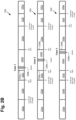
- Figure 2B shows an exemplary diagram depicting respective strategies for surgically micro-encoding content for each of three of the alternatives depicted in Figure 2A , i.e., Case 1, Case 2, and Case 3, according to one implementation. It is noted that any features identified in Figure 2B by reference numbers identical to those used to identify features in Figure 2A correspond respectively to those features and may share any of the characteristics attributed to those corresponding features, above.
- content 230 includes a sequence of content segments 232a, 232b, 232c, 232d, 232e, 232f, and 232g (hereinafter "content segments 232a-232g"), and segment boundaries represented by exemplary segment boundaries 234a and 234b. Also shown in Figure 2B are markers 238b, 238c, and 238d, as well as their respective slugs.
- re-encoding cannot start at the beginning of content segment 232d containing marker 238b because if re-encoding were to start at the beginning of content segment 232d and a new segment boundary were to be produced at marker 238b, the minimum content segment duration requirement discussed above by reference to Figure 2A would be violated. Thus, re-encoding must start no later than the start time of the preceding content segment start, i.e., the start time of preceding and adjoining content segment 232c. For Case 1, re-encoding can finish at the end of content segment 232d containing marker 238b.
- re-encoding for Case 1 may begin prior to content segment 232c, such as at the beginning of content segment 232b for example, or at the beginning of any content segment preceding content segment 232b.
- re-encoding for Case 1 may finish at the end of a later content segment, such as the end of content segment 232e for example, or the end of a subsequent content segment.
- re-encoding can start at the beginning of content segment 232d containing marker 238b and can finish at the end of content segment 232d because marker 238c is not located within the minimum content segment duration of either segment boundary 234a or 234b of content segment 232d. It is noted that although the minimum subsection of content 230 that must be re-encoded to produce a new segment boundary at the location of marker 238c starts and ends at the content boundaries of content segment 232d containing the location of marker 238c, other re-encoding durations are possible. For example re-encoding for Case 2 may begin prior to content segment 232d, such as at the beginning of content segment 232c for example, or at the beginning of any content segment preceding content segment 232c. In addition, or alternatively, re-encoding for Case 2 may finish at the end of a later content segment, such as the end of content segment 232e for example, or the end of a subsequent content segment.
- re-encoding can start at the beginning of content segment 232d containing marker 238b but cannot finish at the end of content segment 232d because if re-encoding were to finish at the end of content segment 232d and a new segment boundary were to be produced at marker 23 8d, the minimum content segment duration requirement discussed above by reference to Figure 2A would be violated. Thus, re-encoding must finish no earlier than the end time of the succeeding content segment end, i.e., the end time of succeeding and adjoining content segment 232e. For Case 3, re-encoding can start at the beginning of content segment 232d containing marker 23 8d, as noted above.
- re-encoding for Case 3 may begin prior to content segment 232d, such as at the beginning of content segment 232c for example, or at the beginning of any content segment preceding content segment 232c.
- re-encoding for Case 3 may finish at the end of a later content segment, such as the end of content segment 232f for example, or the end of a subsequent content segment.
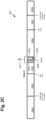
- Figure 2C shows an exemplary diagram depicting a strategy for surgically micro-encoding content for an alternative use case, i.e., Case 4, according to one implementation. It is noted that any feature in Figure 2C identified by a reference number identical to a reference number appearing in Figure 2B corresponds to that feature and may share any of the characteristics attributed to that corresponding feature by the present disclosure. As shown in Figure 2C , in Case 4 marker 238e is located within minimum content segment duration 233 of each of segment boundaries 234a and 234b of content segment 232d.
- re-encoding cannot start at the beginning of content segment 232d containing marker 238e because if re-encoding were to start at the beginning of content segment 232d and a new segment boundary were to be produced at marker 238b, the minimum content segment duration requirement discussed above by reference to Figure 2A would be violated.
- re-encoding must start no later than the start time of the preceding content segment start, i.e., the start time of preceding and adjoining content segment 232c.
- re-encoding durations are possible.
- re-encoding for Case 4 may begin prior to content segment 232c, such as at the beginning of content segment 232b for example, or at the beginning of any content segment preceding content segment 232b.
- re-encoding for Case 4 may finish at the end of a later content segment, such as the end of content segment 232f for example, or the end of a subsequent content segment.
- the re-encoding strategies for each of Case 1, Case 2, Case 3, and Case 4 identifies a minimum subsection of content 230 to be re-encoded that is characterized by a data triplet including a start time for the minimum subsection, an end time for the minimum subsection, and a marker location. It is further noted that although the re-encoding strategies applied to Case 1, Case 3, and Case 4 produce a new segment boundary at the respective locations of markers 232b, 232d, and 232e by effectively shifting one or more existing segment boundaries to a new location without adding more content segments to content 230, the strategy applied to Case 2 partitions single content segment 232d into two content segments.
- any subsection of content 230 that undergoes re-encoding according to the present novel and inventive surgical micro-encoding techniques initially includes an integer number "N" of content segments
- that re-encoded subsection may include N content segments or N+1 content segments.
- the subsection of content 230 that undergoes re-encoding and initially includes N content segments may be re-encoded into N content segments, N+1 content segments, or more than N+1 content segments.
- the original subsection of content 230 may include at least one fewer content segment than that subsection after it is re-encoded.
- the start and end times for the minimum re-encoding subsections of content 230 described above do not consider characteristics of the underlying content that may result in one or both of those start and end times for re-encoding being less than optimal.
- content at the start location of the minimum re-encoding subsection, its end, or both may have certain attributes that if re-encoding were to start or end there, may result in an audio artifact, a video artifact, or both an audio artifact and a video artifact noticeable upon playback of content 230.
- the process for identifying an optimal re-encoding subsequence of content 230 that includes the minimum re-encoding subsequences described above by reference to Case 1, Case 2, Case 3, and Case 4 may include a variety of methods to reduce or eliminate such issues.
- the process of determining an optimal start time and end time for re-encoding may consider one or more of content metadata, such as Dolby Vision ® shot metadata, scene change detection, chunk boundary complexity analysis, and the like.
- content metadata such as Dolby Vision ® shot metadata, scene change detection, chunk boundary complexity analysis, and the like.
- the end result is analogous, a data triplet identifying a start time for the re-encoding subsection, an end time for the re-encoding subsection, and a location of a marker contained within the re-encoding subsection. Determination of an optimal subsection for re-encoding of content 230 seeks to minimize audio and visual impacts upon replacement of the original content with the re-encoded content.
- the surgical micro-encoding of a content subsection disclosed in the present application results in the following features: 1) re-encoding of a content subsection having N content segments results in a re-encoded subsection having N or greater than N content segments, 2) only the first content segment start of the re-encoded content subsection is guaranteed to be aligned to the start time of the original content subsection, 3) a new segment boundary will be produced that is aligned to the location of a marker, and 4) the last frame (in display order) of the last content segment of the re-encoded content subsection will be the same as the last frame of the last content segment of the original content subsection.
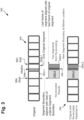
- Figure 3 shows diagram 300 of a more detailed example of surgically micro-encoding content, according to one implementation. It is noted that the example shown in Figure 3 corresponds to Case 1, in Figures 2A and 2B . As shown in Figure 3 , only content segment 332d-1 of content 330-1 containing the location of marker 338b, and its preceding content segment 332c-1 are surgically re-encoded to produce re-encoded content 350 having new segment boundary 340 at the location of marker 338b.
- Marker 338b, content 330, content segment 332c-1, content segment 332d-1, and re-encoded content 350 correspond respectively in general to marker 238b, content 130/230, content segment 232c, content segment 232d, and re-encoded content 150, shown variously in Figures 1 , 2A , and 2B . Consequently, marker 238b, content 130/230, content segment 232c, content segment 232d, and re-encoded content 150 may share any of the characteristics attributed to respective marker 338b, content 330, content segment 332c-1, content segment 332d-1, and re-encoded content 350 by the present disclosure, and vice versa.
- some media formats such as Dolby Vision ® for example, contain perframe content metadata, which is associated with, or integrated with, the underlying video frames.
- metadata may further be the result of a linear process that started at the beginning of content 130/230/330 and continues through to its end.
- the present surgical micro-encoding solution may include extraction of such metadata from the existing content segments and appropriate placement of that metadata into the re-encoded content segments.
- content metadata associated with or included in content segment 332d-1 may be partitioned between re-encoded content segments 332c-2 and 332d-2 that border new segment boundary 340 based on the location of new segment boundary 340.
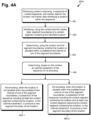
- Figure 4A shows flowchart 460A presenting an exemplary method for surgically micro-encoding content, according to one implementation. With respect to the method outlined in Figure 4A , it is noted that certain details and features have been left out of flowchart 460A in order not to obscure the discussion of the inventive features in the present application.
- flowchart 460A begins with receiving content 130/230 comprising a sequence of content segments 232, and marker data 126 for the content, marker data 126 identifying a location within the sequence (action 461). It is noted that the location within the sequence of content segments 232 included in content 130/230 that is identified by marker data 126 may be an insertion point for interstitial content into the sequence of content segments 232.
- Content 130/230 and marker data 126 may be received in action 461 by micro-encoding software code 110, executed by processing hardware 104 of system 100.
- content 130/230 and marker data 126 may be received by system 100 from content source 116, either via communication network 112 and network communication links 114 or directly via communication link 118.
- content 130/230 may include any of a variety of different types and genres of AV content, as well as to video unaccompanied by audio, or audio unaccompanied by video.
- AV content include ABR content in the form of movies, TV episodes or series, video games, and sporting events.
- content 130/230 may be or include digital representations of persons, fictional characters, locations, objects, and identifiers such as brands and logos, for example, which populate a VR, AR, or MR environment.
- content 130/230 may depict virtual worlds that can be experienced by any number of users synchronously and persistently, while providing continuity of data such as personal identity, user history, entitlements, possessions, payments, and the like.
- content 130/230 may be or include a hybrid of traditional AV and fully immersive VR/AR/MR experiences, such as interactive video.
- Flowchart 460A further includes identifying, using content 130/230 and marker data 126, segment boundaries of a content segment containing the location identified by marker data 126 (action 462). Identification of the segment boundaries of the content segment containing the location identified by marker data 126 may be performed in action 462 by micro-encoding software code 110, executed by processing hardware 104 of computing platform 102, using any suitable technique known in the art.
- Flowchart 460A further includes determining, using the location identified by marker data 126 and the segment boundaries identified in action 462, whether the location identified by marker data 126 is situated within a predetermined interval of one of those segment boundaries (action 463).
- a predetermined interval may be minimum content segment duration 233 in Figure 2A
- action 463 may correspond to determining whether the location identified by marker data 126 corresponds to Case 1, Case 2, Case 3, or Case 4 illustrated in Figures 2A , 2B , and 2C with respect to content segment 232d in Figures 2B and 2C .
- Action 463 may be performed by micro-encoding software code 110, executed by processing hardware 104 of computing platform 102.
- a minimum subsection for re-encoding content 230 to produce a new segment boundary may be identified based on the determination performed in action 463. However and as further discussed above, in some implementations, it may be advantageous or desirable to re-encode an optimal subsection of content 230, where that optimal subsection is longer than the minimum subsection and includes the minimum subsection.
- flowchart 460A may further include determining, based on content 130/230, an optimal subsection of the sequence for re-encoding, the optimal subsection including multiple content segments in addition to content segment 232d containing the location (action 464). It is noted that action 464 is optional, and in some implementations may be omitted from the method outlined by flowchart 460A. However, in implementations in which action 464 is included in the method outlined by flowchart 460A, action 464 may be performed by micro-encoding software code 110, executed by processing hardware 104 of computing platform 102, as described above by reference to Figure 2B .
- one or more of the multiple content segments in addition to content segment 232d that are included in the optimal subsection may precede content segment 232d, may succeed 232d, or one or more of those content segments may precede and one or more of those content segments may succeed content segment 232d.
- Flowchart 460A further includes re-encoding a subsection of the sequence to produce new segment boundary 340 at the location identified by marker data 126.
- the subsection to be re-encoded includes at least content segment 232d containing the location identified by marker data 126 and may include not more than content section 232d (action 465-1).
- the subsection to be re-encoded includes at least the content segment containing that location and a content segment adjoining content segment 232d containing that location, i.e., either content segment 232c preceding content segment 232d or content segment 232e succeeding content segment 232d, and may include not more than content segment 232d and one of content segments 232c or 232e (action 465-2).
- actions 464 and 465 may be omitted from flowchart 460A. In those implementations, action 463 may be followed directly by action 466.
- re-encoding of a subsection of content 230 that includes content segment 232d is performed according to action 465-1 or action 465-2, that re-encoding may be performed by micro-encoding software code 110, executed by processing hardware 104 of computing platform 102.
- content 130/230 may have previously been transcoded, segmented, potentially encrypted, ABR media playlists produced, and the resultant content 130/230 is only stored on an origin. That is to say, the original transcoded version of content 130/230 may not exist or may be unavailable.
- action 465-1 or action 465-2 may include obtaining the origin and re-encoding a subsection of the origin.
- action 465-1 or action 465-2 may include first decoding the subsection of content 230 to be re-encoded, and then re-encoding that subsection.
- FIG. 4B shows flowchart 460B describing exemplary actions for extending the method outlined in Figure 4A , according to one implementation. With respect to the actions described in Figure 4B , it is noted that certain details and features have been left out of flowchart 460B in order not to obscure the discussion of the inventive features in the present application.
- content segment 332d-1 that includes the location identified by marker data 126 may further correspond to content metadata associated with or included in content segment 332d-1.
- the method outlined by flowcharts 460A and 460B may further include partitioning that content metadata between re-encoded content segments 332c-2 and 332d-2 that border new segment boundary 340 based on the location of new segment boundary 340 (action 466). It is noted that action 466 is optional, and in some implementations may be omitted from the method extended by flowchart 460B. However, in implementations in which action 466 is included in the method extended by flowchart 460B, action 466 may be performed by micro-encoding software code 110, executed by processing hardware 104 of computing platform 102, as described above by reference to Figure 3 .
- Flowchart 460B may further include packaging the subsection of the sequence re-encoded in action 465-1 or 465-2, or the subsection of the sequence re-encoded in action 465-1 or 465-2 and the content metadata partitioned in action 466, as a replacement for the subsection of the sequence that includes content segment 232d containing the location identified by marker data 126 (action 467).
- the subsection of the sequence re-encoded in action 465-1 or 465-2, or the subsection of the sequence re-encoded in action 465-1 or 465-2 and the content metadata partitioned in action 466 may be packaged, or packaged and encrypted, into any desired packaging format, such as Common Media Application Format (CMAF), for example.
- CMAF Common Media Application Format
- action 467 is optional, and in some implementations may be omitted from the method extended by flowchart 460B. In implementations in which action 467 is included in the method extended by flowchart 460B, action 467 may be performed by micro-encoding software code 110, executed by processing hardware 104 of computing platform 102.
- Flowchart 460B may further include updating a playlist for content 130/230 based on the re-encoding performed in action 465-1 or 465-2 (action 468).
- Many ABR protocol specifications use a form of playlist that uses Uniform Resource Identifiers (URIs), such as Uniform Resource Locators (URLs) for example, for discrete segmented files.
- URIs Uniform Resource Identifiers
- URLs Uniform Resource Locators
- an existing playlist for content 130/230 may be based on action 465-1 or 465-2.
- the subsection re-encoded in action 465-1 or 465-2 may need to be delineated per a given ABR protocol specification.
- action 468 is optional, and in some implementations may be omitted from the method extended by flowchart 460B. However, in implementations in which action 468 is included in the method extended by flowchart 460B, action 468 may be performed by micro-encoding software code 110, executed by processing hardware 104 of computing platform 102.
- actions 461, 462, and 463 (hereinafter “actions 461-463"), actions 461-463 and 465-1, actions 461-463 and 465-2, actions 461-463, 464, and 465-1, actions 461-463, 464, and 465-2, or any of those afore-mentioned sequences of actions in combination with one or more of actions 466, 467, and 468 may be performed as automated processes from which human involvement may be omitted.
- the present application discloses systems and methods for surgically micro-encoding content.
- the surgical micro-encoding solution disclosed in the present application enables creation of new segment boundaries where ones did not previously exist by advantageously considering new content segment boundary locations, existing content segment boundaries, restrictions on minimum and maximum content segment durations, the potential for subjective audio or video irregularities produced by re-encoding, and preservation of original metadata, as well as modification needs to alternate content playlists.
- the present solution advances the state-of-the-art as described above while significantly reducing the time required to re-encode, as well as the QC time required in validation, because only surgically targeted micro-areas are re-encoded.
Landscapes
- Engineering & Computer Science (AREA)
- Multimedia (AREA)
- Signal Processing (AREA)
- Business, Economics & Management (AREA)
- Marketing (AREA)
- Two-Way Televisions, Distribution Of Moving Picture Or The Like (AREA)
Abstract
Description
- The present invention relates to a method and a system for encoding content.
- Due to its nearly universal popularity as a content medium, ever more audio-video (AV) content is being produced and made available to consumers. Moreover, as streaming platforms have become increasingly important distribution hubs for AV content, adjustable bit-rate (ABR) AV content has become increasingly important as well, due to variable network conditions and differences in data processing capabilities among the wide variety of consumer devices that receive streaming content. As a result, the efficiency with which AV content, including ABR content, can be supplemented or enhanced post production has become increasingly important to the producers, owners, and distributors of that content.
- By way of example, in some use cases it may be advantageous or desirable to supplement AV content, post production, through the addition of interstitial content, such as advertisements (ads) for instance. In cases in which the AV content was originally produced without predetermined insertion points for interstitial content, introducing that content post production can result in an unpleasant or confusing experience for a consumer viewing the content during playback. For example, an ad that has been naively inserted into AV content may appear mid-scene, or even mid-shot, thereby jarringly disrupting the viewing experience of the consumer. A conventional approach to adding interstitial content that avoids viewer disruption and aesthetic unpleasantness is to re-encode the content in its entirety, this time taking into account splice points for use in conditioning segment boundaries for ads or other interstitial content. However, this conventional approach is undesirably, and in some instances impracticably, expensive in terms both of compute time and the quality control (QC) review required for the re-encoded content.
- It is the object of the present invention to provide a method and a system for encoding content which are improved in this connection.
- The invention is defined by the features of the independent claims. The dependent claims describe preferred embodiments.
- An embodiment of the present invention is as follows:
A method comprising: - receiving content comprising a sequence of content segments, and marker data for the content, the marker data identifying a location within the sequence;
- identifying, using the content and the marker data, segment boundaries of a content segment containing the identified location;
- determining, using the location and the segment boundaries, whether the location is situated within a predetermined interval of one of the segment boundaries; and
- re-encoding, based on determining, a subsection of the sequence to produce a new segment boundary at the location;
- wherein when the location is determined to not be situated within the predetermined interval of one of the segment boundaries, the subsection of the sequence includes the content segment containing the location, and wherein when the location is determined to be situated within the predetermined interval of one of the segment boundaries, the subsection of the sequence includes the content segment containing the location and a content segment adjoining the content segment containing the location.
- Optionally the method, further comprising:
packaging the re-encoded subsection of the sequence as a replacement for the subsection of the sequence including the content segment containing the location. - Optionally the method, further comprising:
before re-encoding, determining, based on the content, an optimal subsection of the sequence for re-encoding, the optimal subsection including a plurality of content segments in addition to the content segment containing the location. - Optionally the method, wherein at least one of the plurality of content segments precedes the content segment containing the location or succeeds the content segment containing the location.
- Optionally the method, wherein the content segment containing the location includes content metadata, the method further comprising:
partitioning, based on the location of the new segment boundary, the content metadata between content segments that border the new segment boundary. - Optionally the method, further comprising:
packaging the re-encoded subsection of the sequence and the partitioned content metadata, as a replacement for the subsection of the sequence including the content segment containing the location. - Optionally the method, further comprising:
updating, based on the re-encoding, a playlist for the content. - Optionally the method, wherein the content comprises adaptive bit-rate (ABR) content.
- Optionally the method, wherein the location within the sequence identified by the marker data comprises an insertion point for interstitial content into the sequence of content segments.
- Optionally the method, wherein the subsection of the sequence including the content segment containing the location comprises at least one fewer content segment than the re-encoded subsection of the sequence.
- A system including a processing hardware and a system memory storing a software code that when executed performs the method as disclosed herein.
- Further embodiments of the invention may be as follows:
A system comprising: - a computing platform having a processing hardware and a system memory storing a software code;
- the processing hardware configured to execute the software code to:
- receive content comprising a sequence of content segments, and marker data for the content, the marker data identifying a location within the sequence;
- identify, using the content and the marker data, segment boundaries of a content segment containing the identified location;
- determine, using the location and the segment boundaries, whether the location is situated within a predetermined interval of one of the segment boundaries; and
- re-encode, based on determining, a subsection of the sequence to produce a new segment boundary at the location;
- wherein when the location is determined to not be situated within the predetermined interval of one of the segment boundaries, the subsection of the sequence includes the content segment containing the location, and wherein when the location is determined to be situated within the predetermined interval of one of the segment boundaries, the subsection of the sequence includes the content segment containing the location and a content segment adjoining the content segment containing the location.
- Optionally the system, wherein the processing hardware is further configured to execute the software code to:
package the re-encoded subsection of the sequence as a replacement for the subsection of the sequence including the content segment containing the location. - Optionally the system, wherein the processing hardware is further configured to execute the software code to:
before re-encoding, determine, based on the content, an optimal subsection of the sequence for re-encoding, the optimal subsection including a plurality of content segments in addition to the content segment containing the location. - Optionally the system, wherein at least one of the plurality of content segments precedes the content segment containing the location or succeeds the content segment containing the location.
- Optionally the system, wherein the content segment containing the location includes content metadata, and wherein the processing hardware is further configured to execute the software code to:
partition, based on the location of the new segment boundary, the content metadata between content segments that border the new segment boundary. - Optionally the system, wherein the processing hardware is further configured to execute the software code to:
package the re-encoded subsection of the sequence and the partitioned content metadata as a replacement for the subsection of the sequence including the content segment containing the location. - Optionally the system, wherein the processing hardware is further configured to execute the software code to:
update, based on the re-encoding, a playlist for the content. - Optionally the system, wherein the content comprises adaptive bit-rate (ABR) content.
- Optionally the system, wherein the location within the sequence identified by the marker data comprises an insertion point for interstitial content into the sequence of content segments.
- Optionally the system, wherein the subsection of the sequence including the content segment containing the location comprises at least one fewer content segment than the re-encoded subsection of the sequence.
- A method for use by a system including a computing platform having a processing hardware, and a system memory storing a software code, the method comprising:
- receiving, by the software code executed by the processing hardware, content comprising a sequence of content segments, and marker data for the content, the marker data identifying a location within the sequence;
- identifying, by the software code executed by the processing hardware and using the content and the marker data, segment boundaries of a content segment containing the identified location;
- determining, by the software code executed by the processing hardware and using the location and the segment boundaries, whether the location is situated within a predetermined interval of one of the segment boundaries; and
- re-encoding, by the software code executed by the processing hardware based on determining, a subsection of the sequence to produce a new segment boundary at the location;
- wherein when the location is determined to not be situated within the predetermined interval of one of the segment boundaries, the subsection of the sequence includes the content segment containing the location, and wherein when the location is determined to be situated within the predetermined interval of one of the segment boundaries, the subsection of the sequence includes the content segment containing the location and a content segment adjoining the content segment containing the location.
- Optionally the method, further comprising:
packaging, by the software code executed by the processing hardware, the re-encoded subsection of the sequence as a replacement for the subsection of the sequence including the content segment containing the location. - Optionally the method, further comprising:
before re-encoding, determining, by the software code executed by the processing hardware based on the content, an optimal subsection of the sequence for re-encoding, the optimal subsection including a plurality of content segments in addition to the content segment containing the location. - Optionally the method, wherein at least one of the plurality of content segments precedes the content segment containing the location or succeeds the content segment containing the location.
- Optionally the method, wherein the content segment containing the location includes content metadata, the method further comprising:
partitioning, by the software code executed by the processing hardware based on the location of the new segment boundary, the content metadata between content segments that border the new segment boundary. - Optionally the method, further comprising:
packaging the re-encoded subsection of the sequence and the partitioned content metadata, by the software code executed by the processing hardware, as a replacement for the subsection of the sequence including the content segment containing the location. - Optionally the method, further comprising:
updating, by the software code executed by the processing hardware based on the re-encoding, a playlist for the content. - Optionally the method, wherein the content comprises adaptive bit-rate (ABR) content.
- Optionally the method, wherein the location within the sequence identified by the marker data comprises an insertion point for interstitial content into the sequence of content segments.
- Optionally the method, wherein the subsection of the sequence including the content segment containing the location comprises at least one fewer content segment than the re-encoded subsection of the sequence.
- Exemplary embodiments of the invention will be described in connection with the drawings.
-
-
Figure 1 shows a diagram of an exemplary system for surgically micro-encoding content, according to one implementation; -
Figure 2A shows an exemplary diagram depicting four alternative regions of a content segment that an insertion point for interstitial content may occupy, according to one implementation; -
Figure 2B shows an exemplary diagram depicting respective strategies for surgically micro-encoding content for each of three of the alternatives depicted inFigure 2A , according to one implementation; -
Figure 2C shows an exemplary diagram depicting a strategy for surgically micro-encoding content for an alternative use case, according to one implementation; -
Figure 3 shows a more detailed example of surgically micro-encoding content, according to one implementation; -
Figure 4A shows a flowchart outlining an exemplary method for surgically micro-encoding content, according to one implementation; and -
Figure 4B shows a flowchart describing exemplary actions for extending the method outlined inFigure 4A , according to one implementation. - The following description contains specific information pertaining to implementations in the present disclosure. One skilled in the art will recognize that the present disclosure may be implemented in a manner different from that specifically discussed herein. The drawings in the present application and their accompanying detailed description are directed to merely exemplary implementations. Unless noted otherwise, like or corresponding elements among the figures may be indicated by like or corresponding reference numerals. Moreover, the drawings and illustrations in the present application are generally not to scale, and are not intended to correspond to actual relative dimensions.
- As noted above, in cases in which the audio-video (AV) content is originally produced without predetermined insertion points for interstitial content, introducing that content post production can result in an unpleasant or confusing experience for a consumer viewing the content during playback. For example, interstitial content in the form of an advertisement (hereinafter "ad") that has been naively inserted into AV content may appear mid-scene, or even mid-shot, thereby jarringly disrupting the viewing experience of the consumer. A conventional approach to adding interstitial content that avoids viewer disruption and aesthetic unpleasantness is to re-encode the content in its entirety, this time taking into account splice points for use in conditioning segment boundaries for ads or other interstitial content. However and as also noted above, this conventional approach is undesirably, and in some instances impracticably, expensive in terms both of compute time and the quality control (QC) review required for the re-encoded content.
- The present application discloses systems and methods for surgically micro-encoding content. It is noted that, as defined in the present application, the expression "micro-encoding" refers to the selective re-encoding of one or more sections of content that has previously been transcoded, but less than all of the content, in order to enable the introduction of new interstitial content, such as ads for example, without negatively impacting the aesthetic integrity of creative intent of the original content. The surgical micro-encoding solution disclosed in the present application enables creation of new segment boundaries where ones did not previously exist by advantageously considering new content segment boundary locations, existing content segment boundaries, restrictions on minimum and maximum content segment durations, the potential for subjective audio or video irregularities produced by re-encoding, and preservation of original metadata, as well as modification needs to alternate content playlists. In addition, the present solution advances the state-of-the-art as described above while significantly reducing the time required to re-encode, as well as the QC time required in validation, because only surgically targeted micro-areas are re-encoded. Moreover, the present surgical micro-encoding solution may be implemented using automated or substantially automated systems and methods.
- As defined in the present application, the terms "automation," "automated," and "automating" refer to systems and processes that do not require the participation of a human user, such as a system administrator. For example, although in some implementations a human editor or QC technician may review the performance of the systems and methods disclosed herein, that human involvement is optional. Thus, in some implementations, the processes described in the present application may be performed under the control of hardware processing components of the disclosed systems.
- It is also noted that, as defined in the present application, "content" may refer to a variety of different types and genres of AV content, as well as to video unaccompanied by audio, or audio unaccompanied by video. Specific examples of AV content include adjustable bit-rate (ABR) content in the form of movies, TV episodes or series, video games, and sporting events. In addition, or alternatively, in some implementations, "content" may be or include digital representations of persons, fictional characters, locations, objects, and identifiers such as brands and logos, for example, which populate a virtual reality (VR), augmented reality (AR), or mixed reality (MR) environment. Moreover, that content may depict virtual worlds that can be experienced by any number of users synchronously and persistently, while providing continuity of data such as personal identity, user history, entitlements, possessions, payments, and the like. It is noted that the concepts disclosed by the present application may also be applied to content that is a hybrid of traditional AV and fully immersive VR/AR/MR experiences, such as interactive video.
-
Figure 1 shows a diagram ofexemplary system 100 for surgically micro-encoding content, according to one implementation.System 100 includescomputing platform 102 havingprocessing hardware 104, andsystem memory 106 implemented as a computer-readable non-transitory storage medium. As shown inFigure 1 , according to some implementations,system memory 106 storesmicro-encoding software code 110, and may optionally storecontent database 108. - As further shown in
Figure 1 ,system 100 may be implemented in a use environment includingcontent source 116 providing transcoded content 130 (hereinafter "content 130") andmarker data 126 forcontent 130,communication network 112, anduser 124 utilizinguser system 120 includingdisplay 122. In addition,Figure 1 showsnetwork communication links 114 communicativelycoupling content source 116 anduser system 120 withsystem 100 viacommunication network 112. Also shown inFigure 1 isre-encoded content 150 corresponding tocontent 130 and provided bymicro-encoding software code 110. - It is noted that although
system 100 may receivecontent 130 fromcontent source 116 viacommunication network 112 andnetwork communication links 114, in some implementations,content source 116 may take the form of a content source integrated withcomputing platform 102, or may be in direct communication withsystem 100, as shown by dashedcommunication link 118. - With respect to the representation of
system 100 shown inFigure 1 , it is noted that althoughmicro-encoding software code 110 andoptional content database 108 are depicted as being stored insystem memory 106 for conceptual clarity, more generally,system memory 106 may take the form of any computer-readable non-transitory storage medium. The expression "computer-readable non-transitory storage medium," as used in the present application, refers to any medium, excluding a carrier wave or other transitory signal that provides instructions to processing hardware of a computing platform, such asprocessing hardware 104 ofcomputing platform 102. Thus, a computer-readable non-transitory storage medium may correspond to various types of media, such as volatile media and non-volatile media, for example. Volatile media may include dynamic memory, such as dynamic random access memory (dynamic RAM), while non-volatile memory may include optical, magnetic, or electrostatic storage devices. Common forms of computer-readable non-transitory storage media include, for example, optical discs, RAM, programmable read-only memory (PROM), erasable PROM (EPROM), and FLASH memory. - It is further noted that although
Figure 1 depictsmicro-encoding software code 110 andoptional content database 108 as being mutually co-located insystem memory 106, that representation is also merely provided as an aid to conceptual clarity. More generally,system 100 may include one or more computing platforms, such as computer servers for example, which may be co-located, or may form an interactively linked but distributed system, such as a cloud-based system, for instance. As a result,processing hardware 104 andsystem memory 106 may correspond to distributed processor and memory resources withinsystem 100. Thus, it is to be understood thatmicro-encoding software code 110 andoptional content database 108 may be stored remotely from one another within the distributed memory resources ofsystem 100. -
Processing hardware 104 may include multiple hardware processing units, such as one or more central processing units, one or more graphics processing units, one or more tensor processing units, one or more field-programmable gate arrays (FPGAs), and an application programming interface (API) server, for example. By way of definition, as used in the present application, the terms "central processing unit" (CPU), "graphics processing unit" (GPU), and "tensor processing unit" (TPU) have their customary meaning in the art. That is to say, a CPU includes an Arithmetic Logic Unit (ALU) for carrying out the arithmetic and logical operations ofcomputing platform 102, as well as a Control Unit (CU) for retrieving programs, such asmicro-encoding software code 110, fromsystem memory 106, while a GPU may be implemented to reduce the processing overhead of the CPU by performing computationally intensive graphics or other processing tasks. A TPU is an application-specific integrated circuit (ASIC) configured specifically for artificial intelligence (AI) applications such as machine learning modeling. - Moreover, as defined in the present application, the expression "machine learning model" or "ML model" may refer to a mathematical model for making future predictions based on patterns learned from samples of data or "training data." Various learning algorithms can be used to map correlations between input data and output data. These correlations form the mathematical model that can be used to make future predictions on new input data. Such a predictive model may include one or more logistic regression models, Bayesian models, or neural networks (NNs). Moreover, a "deep neural network," in the context of deep learning, may refer to a NN that utilizes multiple hidden layers between input and output layers, which may allow for learning based on features not explicitly defined in raw data. In various implementations, NNs may be trained as classifiers and may be utilized to perform image processing or natural-language processing.
- In some implementations,
computing platform 102 may correspond to one or more web servers, accessible over a packet-switched network such as the Internet, for example. Alternatively,computing platform 102 may correspond to one or more computer servers supporting a private wide area network (WAN), local area network (LAN), or included in another type of limited distribution or private network. As yet another alternative, in some implementations,system 100 may be implemented virtually, such as in a data center. For example, in some implementations,system 100 may be implemented in software, or as virtual machines. - Although
user system 120 is shown as a desktop computer inFigure 1 , that representation is provided merely as an example as well. More generally,user system 120 may be any suitable mobile or stationary computing device or system that implements data processing capabilities sufficient to provide a user interface, support connections tocommunication network 112, and implement the functionality ascribed touser system 120 herein. For example, in other implementations,user system 120 and may take the form of a laptop computer, tablet computer, or smartphone. - With respect to display 122 of
user system 120,display 122 may be physically integrated withuser system 120, or may be communicatively coupled to but physically separate fromrespective user system 120. For example, whereuser system 120 is implemented as a smartphone, laptop computer, or tablet computer,display 122 will typically be integrated withuser system 120. By contrast, whereuser system 120 is implemented as a desktop computer,display 122 may take the form of a monitor separate fromuser system 120 in the form of a computer tower. Furthermore, display 122 ofuser system 120 may be implemented as a liquid crystal display (LCD), a light-emitting diode (LED) display, an organic light-emitting diode (OLED) display, a quantum dot (QD) display, or any other suitable display screen that performs a physical transformation of signals to light. -
Figure 2A shows an exemplary diagram depicting four alternative regions of a content segment that an insertion point for interstitial content may occupy, according to one implementation. As shown inFigure 2A ,content 230 includes a sequence ofcontent segments 232, each defined bysegment boundaries 234. Also shown inFigure 2A aremarkers content segment duration 233. In addition,Figure 2A shows multiple shaded boxes, represented by exemplary shadedbox 236, each of which simply represents a slug, i.e., one or more transition frames where video/audio transitions to black/silence for a few seconds, as known in the art. Slugs are often used to delineate a place for an ad-break or other interstitial content. Slugs allow for a pleasant subjective viewer experience when transitioning from content to an ad, for example, and back again. As shown inFigure 2A , it may be desirable for each ofmarkers markers -
Content 230 corresponds in general tocontent 130, inFigure 1 . Thus,content 130 may share any of the characteristics attributed tocontent 230 by the present disclosure, and vice versa. That is to say, likecontent 230,content 130 may include a sequence ofcontent segments 232 characterized by minimumcontent segment duration 233. - With respect to minimum
content segment duration 233, it is noted that for a variety of reasons there may be limitations imposed on the minimum and maximum content segment duration. In a practical sense, for example, it is undesirable to have a content segment that includes only a single frame. As a result, it may be the case that a streaming service has or imposes minimumcontent segment duration 233 on the content they deliver. Furthermore, for some ABR protocols, maximumcontent segment duration 233 may be predetermined, and that value may be included in the description of the content. For example, in Hypertext Transfer Protocol (HTTP) Live Streaming (HLS), the content playlist tag EXT-X-TARGETDURATION is required and specifies maximumcontent segment duration 233. - Thus, the position of a marker in relation to an existing
segment boundary 234 can be described as being in one of four relative positions identified inFigure 2A asCase 0,Case 1,Case 2, andCase 3. InCase 0,marker 238a already aligns perfectly with an existing segment boundary. As a result, forCase 0 no further processing or re-encoding is necessary becausesegment boundary 234 enabling insertion of interstitial content at the location ofmarker 238a already exists. - In
Case 1, by contrast, the location ofmarker 238b is within minimumcontent segment duration 233 fromsegment boundary 234 at the beginning of a content segment. Consequently, simply creating a new segment boundary at the location ofmarker 238b would violate minimumcontent segment duration 233. Analogously, the location ofmarker 238d is within minimumcontent segment duration 233 fromsegment boundary 234 at the end of a content segment. Consequently, simply creating a new segment boundary at the location ofmarker 238d would also violate minimumcontent segment duration 233. - In
Case 2, by contrast toCase 0,Case 1, andCase 3, the location ofmarker 238c is not located within minimumcontent segment duration 233 from asegment boundary 234 at the beginning or at the end of a content segment. As a result, creation of a new segment boundary at the location ofmarker 238c would not violate minimumcontent segment duration 233. -
Figure 2B shows an exemplary diagram depicting respective strategies for surgically micro-encoding content for each of three of the alternatives depicted inFigure 2A , i.e.,Case 1,Case 2, andCase 3, according to one implementation. It is noted that any features identified inFigure 2B by reference numbers identical to those used to identify features inFigure 2A correspond respectively to those features and may share any of the characteristics attributed to those corresponding features, above. - As shown in
Figure 2B ,content 230 includes a sequence ofcontent segments content segments 232a-232g"), and segment boundaries represented byexemplary segment boundaries Figure 2B aremarkers - For
Case 1, re-encoding cannot start at the beginning ofcontent segment 232d containing marker 238b because if re-encoding were to start at the beginning ofcontent segment 232d and a new segment boundary were to be produced atmarker 238b, the minimum content segment duration requirement discussed above by reference toFigure 2A would be violated. Thus, re-encoding must start no later than the start time of the preceding content segment start, i.e., the start time of preceding and adjoiningcontent segment 232c. ForCase 1, re-encoding can finish at the end ofcontent segment 232d containing marker 238b. - It is noted that although the minimum subsection of
content 230 that must be re-encoded to produce a new segment boundary at the location ofmarker 238b finishes at the end ofcontent segment 232d containing the location ofmarker 238b and starts at the beginning ofcontent segment 232c preceding and adjoiningcontent segment 232d, other re-encoding durations are possible. For example re-encoding forCase 1 may begin prior tocontent segment 232c, such as at the beginning ofcontent segment 232b for example, or at the beginning of any content segment precedingcontent segment 232b. In addition, or alternatively, re-encoding forCase 1 may finish at the end of a later content segment, such as the end ofcontent segment 232e for example, or the end of a subsequent content segment. - For
Case 2, re-encoding can start at the beginning ofcontent segment 232d containing marker 238b and can finish at the end ofcontent segment 232d becausemarker 238c is not located within the minimum content segment duration of eithersegment boundary content segment 232d. It is noted that although the minimum subsection ofcontent 230 that must be re-encoded to produce a new segment boundary at the location ofmarker 238c starts and ends at the content boundaries ofcontent segment 232d containing the location ofmarker 238c, other re-encoding durations are possible. For example re-encoding forCase 2 may begin prior tocontent segment 232d, such as at the beginning ofcontent segment 232c for example, or at the beginning of any content segment precedingcontent segment 232c. In addition, or alternatively, re-encoding forCase 2 may finish at the end of a later content segment, such as the end ofcontent segment 232e for example, or the end of a subsequent content segment. - For
Case 3, re-encoding can start at the beginning ofcontent segment 232d containing marker 238b but cannot finish at the end ofcontent segment 232d because if re-encoding were to finish at the end ofcontent segment 232d and a new segment boundary were to be produced at marker 23 8d, the minimum content segment duration requirement discussed above by reference toFigure 2A would be violated. Thus, re-encoding must finish no earlier than the end time of the succeeding content segment end, i.e., the end time of succeeding and adjoiningcontent segment 232e. ForCase 3, re-encoding can start at the beginning ofcontent segment 232d containing marker 23 8d, as noted above. - Although the minimum subsection of
content 230 that must be re-encoded to produce a new segment boundary at the location ofmarker 238d starts at the beginning ofcontent segment 232d containing the location ofmarker 238d and finishes at the end ofcontent segment 232e succeeding and adjoiningcontent segment 232d, other re-encoding durations are possible. For example re-encoding forCase 3 may begin prior tocontent segment 232d, such as at the beginning ofcontent segment 232c for example, or at the beginning of any content segment precedingcontent segment 232c. In addition, or alternatively, re-encoding forCase 3 may finish at the end of a later content segment, such as the end ofcontent segment 232f for example, or the end of a subsequent content segment. -
Figure 2C shows an exemplary diagram depicting a strategy for surgically micro-encoding content for an alternative use case, i.e.,Case 4, according to one implementation. It is noted that any feature inFigure 2C identified by a reference number identical to a reference number appearing inFigure 2B corresponds to that feature and may share any of the characteristics attributed to that corresponding feature by the present disclosure. As shown inFigure 2C , inCase 4marker 238e is located within minimumcontent segment duration 233 of each ofsegment boundaries content segment 232d. - Analogously to
Case 1 described above, forCase 4, re-encoding cannot start at the beginning ofcontent segment 232d containing marker 238e because if re-encoding were to start at the beginning ofcontent segment 232d and a new segment boundary were to be produced atmarker 238b, the minimum content segment duration requirement discussed above by reference toFigure 2A would be violated. Thus, re-encoding must start no later than the start time of the preceding content segment start, i.e., the start time of preceding and adjoiningcontent segment 232c. However, analogously toCase 3, forCase 4, re-encoding cannot finish at the end ofcontent segment 232d because if re-encoding were to finish at the end ofcontent segment 232d and a new segment boundary were to be produced atmarker 238e, the minimum content segment duration requirement discussed above by reference toFigure 2A would also be violated. Thus, re-encoding must finish no earlier than the end time of the succeeding content segment end, i.e., the end time of succeeding and adjoiningcontent segment 232e. Thus, ForCase 4, re-encoding can start at the beginning ofcontent segment 232c and may finish at the end ofcontent segment 232e. - Although the minimum subsection of
content 230 that must be re-encoded to produce a new segment boundary at the location ofmarker 238e starts at the beginning ofcontent segment 232c preceding and adjoiningcontent segment 232d containing the location ofmarker 238e and finishes at the end ofcontent segment 232e succeeding and adjoiningcontent segment 232d, other re-encoding durations are possible. For example re-encoding forCase 4 may begin prior tocontent segment 232c, such as at the beginning ofcontent segment 232b for example, or at the beginning of any content segment precedingcontent segment 232b. In addition, or alternatively, re-encoding forCase 4 may finish at the end of a later content segment, such as the end ofcontent segment 232f for example, or the end of a subsequent content segment. - It is noted that the re-encoding strategies for each of
Case 1,Case 2,Case 3, andCase 4 identifies a minimum subsection ofcontent 230 to be re-encoded that is characterized by a data triplet including a start time for the minimum subsection, an end time for the minimum subsection, and a marker location. It is further noted that although the re-encoding strategies applied toCase 1,Case 3, andCase 4 produce a new segment boundary at the respective locations ofmarkers content 230, the strategy applied toCase 2 partitionssingle content segment 232d into two content segments. - Thus, where any subsection of
content 230 that undergoes re-encoding according to the present novel and inventive surgical micro-encoding techniques initially includes an integer number "N" of content segments, after re-encoding, that re-encoded subsection may include N content segments or N+1 content segments. Moreover, because forCase 2 the only requirement imposed on re-encoding is that the start and end ofcontent segment 232d, and the location ofmarker 238c are honored, in some implementations the subsection ofcontent 230 that undergoes re-encoding and initially includes N content segments may be re-encoded into N content segments, N+1 content segments, or more than N+1 content segments. In other words, the original subsection ofcontent 230 may include at least one fewer content segment than that subsection after it is re-encoded. - The start and end times for the minimum re-encoding subsections of
content 230 described above do not consider characteristics of the underlying content that may result in one or both of those start and end times for re-encoding being less than optimal. For example, content at the start location of the minimum re-encoding subsection, its end, or both may have certain attributes that if re-encoding were to start or end there, may result in an audio artifact, a video artifact, or both an audio artifact and a video artifact noticeable upon playback ofcontent 230. The process for identifying an optimal re-encoding subsequence ofcontent 230 that includes the minimum re-encoding subsequences described above by reference toCase 1,Case 2,Case 3, andCase 4 may include a variety of methods to reduce or eliminate such issues. For example, the process of determining an optimal start time and end time for re-encoding may consider one or more of content metadata, such as Dolby Vision® shot metadata, scene change detection, chunk boundary complexity analysis, and the like. The end result is analogous, a data triplet identifying a start time for the re-encoding subsection, an end time for the re-encoding subsection, and a location of a marker contained within the re-encoding subsection. Determination of an optimal subsection for re-encoding ofcontent 230 seeks to minimize audio and visual impacts upon replacement of the original content with the re-encoded content. - Whether the minimum subsection of
content 230 described above or an optimal subsection ofcontent 230 that includes the minimum subsection is re-encoded, the surgical micro-encoding of a content subsection disclosed in the present application results in the following features: 1) re-encoding of a content subsection having N content segments results in a re-encoded subsection having N or greater than N content segments, 2) only the first content segment start of the re-encoded content subsection is guaranteed to be aligned to the start time of the original content subsection, 3) a new segment boundary will be produced that is aligned to the location of a marker, and 4) the last frame (in display order) of the last content segment of the re-encoded content subsection will be the same as the last frame of the last content segment of the original content subsection. -
Figure 3 shows diagram 300 of a more detailed example of surgically micro-encoding content, according to one implementation. It is noted that the example shown inFigure 3 corresponds toCase 1, inFigures 2A and2B . As shown inFigure 3 ,only content segment 332d-1 of content 330-1 containing the location ofmarker 338b, and its precedingcontent segment 332c-1 are surgically re-encoded to producere-encoded content 350 havingnew segment boundary 340 at the location ofmarker 338b. -
Marker 338b,content 330,content segment 332c-1,content segment 332d-1, andre-encoded content 350 correspond respectively in general tomarker 238b,content 130/230,content segment 232c,content segment 232d, andre-encoded content 150, shown variously inFigures 1 ,2A , and2B . Consequently,marker 238b,content 130/230,content segment 232c,content segment 232d, andre-encoded content 150 may share any of the characteristics attributed torespective marker 338b,content 330,content segment 332c-1,content segment 332d-1, andre-encoded content 350 by the present disclosure, and vice versa. - The rationale for re-encoding a subsection of
content 330 includingcontent segments 332c-1 and 332d-1 is described above by reference toFigure 2B andCase 1, and will not be repeated. However, it is noted that according to the example shown inFigure 3 , the re-encoding ofcontent segments 332c-1 and 332d-1 to results inre-encoded content segment 332c-2 that includes all oforiginal content segment 332c-1 and a portion oforiginal content segment 332d-1, whilere-encoded content segment 332d-2 includes less than all oforiginal content segment 332d-1. - It is noted that some media formats, such as Dolby Vision® for example, contain perframe content metadata, which is associated with, or integrated with, the underlying video frames. Such metadata may further be the result of a linear process that started at the beginning of
content 130/230/330 and continues through to its end. In those use cases, the present surgical micro-encoding solution may include extraction of such metadata from the existing content segments and appropriate placement of that metadata into the re-encoded content segments. Referring to the exemplary use case shown inFigure 3 , content metadata associated with or included incontent segment 332d-1 may be partitioned betweenre-encoded content segments 332c-2 and 332d-2 that bordernew segment boundary 340 based on the location ofnew segment boundary 340. - The functionality of
system 100 will be further described by reference toFigure 4A. Figure 4A showsflowchart 460A presenting an exemplary method for surgically micro-encoding content, according to one implementation. With respect to the method outlined inFigure 4A , it is noted that certain details and features have been left out offlowchart 460A in order not to obscure the discussion of the inventive features in the present application. - Referring now to
Figure 4A in combination withFigures 1 and2A ,flowchart 460A begins with receivingcontent 130/230 comprising a sequence ofcontent segments 232, andmarker data 126 for the content,marker data 126 identifying a location within the sequence (action 461). It is noted that the location within the sequence ofcontent segments 232 included incontent 130/230 that is identified bymarker data 126 may be an insertion point for interstitial content into the sequence ofcontent segments 232.Content 130/230 andmarker data 126 may be received inaction 461 bymicro-encoding software code 110, executed by processinghardware 104 ofsystem 100. For example, as shown inFigure 1 , in some implementations,content 130/230 andmarker data 126 may be received bysystem 100 fromcontent source 116, either viacommunication network 112 andnetwork communication links 114 or directly viacommunication link 118. - As noted above,
content 130/230 may include any of a variety of different types and genres of AV content, as well as to video unaccompanied by audio, or audio unaccompanied by video. Specific examples of AV content include ABR content in the form of movies, TV episodes or series, video games, and sporting events. In addition, or alternatively, in some implementations,content 130/230 may be or include digital representations of persons, fictional characters, locations, objects, and identifiers such as brands and logos, for example, which populate a VR, AR, or MR environment. Moreover,content 130/230 may depict virtual worlds that can be experienced by any number of users synchronously and persistently, while providing continuity of data such as personal identity, user history, entitlements, possessions, payments, and the like. Alternatively, or in addition,content 130/230 may be or include a hybrid of traditional AV and fully immersive VR/AR/MR experiences, such as interactive video. -
Flowchart 460A further includes identifying, usingcontent 130/230 andmarker data 126, segment boundaries of a content segment containing the location identified by marker data 126 (action 462). Identification of the segment boundaries of the content segment containing the location identified bymarker data 126 may be performed inaction 462 bymicro-encoding software code 110, executed by processinghardware 104 ofcomputing platform 102, using any suitable technique known in the art. -
Flowchart 460A further includes determining, using the location identified bymarker data 126 and the segment boundaries identified inaction 462, whether the location identified bymarker data 126 is situated within a predetermined interval of one of those segment boundaries (action 463). By way of example, and as shown inFigures 2A and2B , in some implementations, such a predetermined interval may be minimumcontent segment duration 233 inFigure 2A , andaction 463 may correspond to determining whether the location identified bymarker data 126 corresponds toCase 1,Case 2,Case 3, orCase 4 illustrated inFigures 2A ,2B , and2C with respect tocontent segment 232d inFigures 2B and2C .Action 463 may be performed bymicro-encoding software code 110, executed by processinghardware 104 ofcomputing platform 102. - As discussed above by reference to
Figures 2B and2C , a minimum subsection forre-encoding content 230 to produce a new segment boundary may be identified based on the determination performed inaction 463. However and as further discussed above, in some implementations, it may be advantageous or desirable to re-encode an optimal subsection ofcontent 230, where that optimal subsection is longer than the minimum subsection and includes the minimum subsection. - Thus, in some implementations,
flowchart 460A may further include determining, based oncontent 130/230, an optimal subsection of the sequence for re-encoding, the optimal subsection including multiple content segments in addition tocontent segment 232d containing the location (action 464). It is noted thataction 464 is optional, and in some implementations may be omitted from the method outlined byflowchart 460A. However, in implementations in whichaction 464 is included in the method outlined byflowchart 460A,action 464 may be performed bymicro-encoding software code 110, executed by processinghardware 104 ofcomputing platform 102, as described above by reference toFigure 2B . It is noted that, as further described above by reference toFigure 2B , in various use case, one or more of the multiple content segments in addition tocontent segment 232d that are included in the optimal subsection may precedecontent segment 232d, may succeed 232d, or one or more of those content segments may precede and one or more of those content segments may succeedcontent segment 232d. - Referring to
Figure 3 in combination withFigures 1 ,2A ,2B ,2C , and4A ,Flowchart 460A further includes re-encoding a subsection of the sequence to producenew segment boundary 340 at the location identified bymarker data 126. When that location is determined to not be situated within the predetermined interval of one of the segment boundaries ofcontent segment 232d inaction 463, the subsection to be re-encoded includes atleast content segment 232d containing the location identified bymarker data 126 and may include not more thancontent section 232d (action 465-1). However, when the location identified bymarker data 126 is determined to be situated within the predetermined interval of one of the segment boundaries ofcontent segment 232d, the subsection to be re-encoded includes at least the content segment containing that location and a content segment adjoiningcontent segment 232d containing that location, i.e., eithercontent segment 232c precedingcontent segment 232d orcontent segment 232e succeedingcontent segment 232d, and may include not more thancontent segment 232d and one ofcontent segments actions 464 and 465 may be omitted fromflowchart 460A. In those implementations,action 463 may be followed directly byaction 466. - Whether re-encoding of a subsection of
content 230 that includescontent segment 232d is performed according to action 465-1 or action 465-2, that re-encoding may be performed bymicro-encoding software code 110, executed by processinghardware 104 ofcomputing platform 102. It is noted that in some use cases,content 130/230 may have previously been transcoded, segmented, potentially encrypted, ABR media playlists produced, and theresultant content 130/230 is only stored on an origin. That is to say, the original transcoded version ofcontent 130/230 may not exist or may be unavailable. In those use cases, action 465-1 or action 465-2 may include obtaining the origin and re-encoding a subsection of the origin. However, in use cases in which the original transcoded version ofcontent 130/230 is available, action 465-1 or action 465-2 may include first decoding the subsection ofcontent 230 to be re-encoded, and then re-encoding that subsection. - Although in some implementations, the method outlined by
flowchart 460A may conclude with action 465-1 or action 465-2, in other implementations, that method may be extended to include additional actions. Referring now toFigure 4B, Figure 4B showsflowchart 460B describing exemplary actions for extending the method outlined inFigure 4A , according to one implementation. With respect to the actions described inFigure 4B , it is noted that certain details and features have been left out offlowchart 460B in order not to obscure the discussion of the inventive features in the present application. - In some use cases, as described above by reference to
Figure 3 with further reference toFigure 1 ,content segment 332d-1 that includes the location identified bymarker data 126 may further correspond to content metadata associated with or included incontent segment 332d-1. In those use cases, the method outlined byflowcharts re-encoded content segments 332c-2 and 332d-2 that bordernew segment boundary 340 based on the location of new segment boundary 340 (action 466). It is noted thataction 466 is optional, and in some implementations may be omitted from the method extended byflowchart 460B. However, in implementations in whichaction 466 is included in the method extended byflowchart 460B,action 466 may be performed bymicro-encoding software code 110, executed by processinghardware 104 ofcomputing platform 102, as described above by reference toFigure 3 . -
Flowchart 460B may further include packaging the subsection of the sequence re-encoded in action 465-1 or 465-2, or the subsection of the sequence re-encoded in action 465-1 or 465-2 and the content metadata partitioned inaction 466, as a replacement for the subsection of the sequence that includescontent segment 232d containing the location identified by marker data 126 (action 467). By way of example, the subsection of the sequence re-encoded in action 465-1 or 465-2, or the subsection of the sequence re-encoded in action 465-1 or 465-2 and the content metadata partitioned inaction 466 may be packaged, or packaged and encrypted, into any desired packaging format, such as Common Media Application Format (CMAF), for example. However, it is noted thataction 467 is optional, and in some implementations may be omitted from the method extended byflowchart 460B. In implementations in whichaction 467 is included in the method extended byflowchart 460B,action 467 may be performed bymicro-encoding software code 110, executed by processinghardware 104 ofcomputing platform 102. -
Flowchart 460B may further include updating a playlist forcontent 130/230 based on the re-encoding performed in action 465-1 or 465-2 (action 468). Many ABR protocol specifications use a form of playlist that uses Uniform Resource Identifiers (URIs), such as Uniform Resource Locators (URLs) for example, for discrete segmented files. In those use cases, an existing playlist forcontent 130/230 may be based on action 465-1 or 465-2. Alternatively, the subsection re-encoded in action 465-1 or 465-2 may need to be delineated per a given ABR protocol specification. For example, in HLS, if the encoding parameters or encoding sequence is different than the original, a #EXT-X-DISCONTINUITY tag is used. It is noted thataction 468 is optional, and in some implementations may be omitted from the method extended byflowchart 460B. However, in implementations in whichaction 468 is included in the method extended byflowchart 460B,action 468 may be performed bymicro-encoding software code 110, executed by processinghardware 104 ofcomputing platform 102. - With respect to the actions described by
flowcharts actions actions - Thus, the present application discloses systems and methods for surgically micro-encoding content. The surgical micro-encoding solution disclosed in the present application enables creation of new segment boundaries where ones did not previously exist by advantageously considering new content segment boundary locations, existing content segment boundaries, restrictions on minimum and maximum content segment durations, the potential for subjective audio or video irregularities produced by re-encoding, and preservation of original metadata, as well as modification needs to alternate content playlists. Moreover, the present solution advances the state-of-the-art as described above while significantly reducing the time required to re-encode, as well as the QC time required in validation, because only surgically targeted micro-areas are re-encoded.
- From the above description it is manifest that various techniques can be used for implementing the concepts described in the present application without departing from the scope of those concepts. Moreover, while the concepts have been described with specific reference to certain implementations, a person of ordinary skill in the art would recognize that changes can be made in form and detail without departing from the scope of those concepts. As such, the described implementations are to be considered in all respects as illustrative and not restrictive. It should also be understood that the present application is not limited to the particular implementations described herein, but many rearrangements, modifications, and substitutions are possible without departing from the scope of the present claims.
Claims (11)
- A method comprising:receiving content comprising a sequence of content segments, and marker data for the content, the marker data identifying a location within the sequence;identifying, using the content and the marker data, segment boundaries of a content segment containing the identified location;determining, using the location and the segment boundaries, whether the location is situated within a predetermined interval of one of the segment boundaries; andre-encoding, based on determining, a subsection of the sequence to produce a new segment boundary at the location;wherein when the location is determined to not be situated within the predetermined interval of one of the segment boundaries, the subsection of the sequence includes the content segment containing the location, and wherein when the location is determined to be situated within the predetermined interval of one of the segment boundaries, the subsection of the sequence includes the content segment containing the location and a content segment adjoining the content segment containing the location.
- The method of claim 1, further comprising:
packaging the re-encoded subsection of the sequence as a replacement for the subsection of the sequence including the content segment containing the location. - The method of any of preceding claims, further comprising:
before re-encoding, determining, based on the content, an optimal subsection of the sequence for re-encoding, the optimal subsection including a plurality of content segments in addition to the content segment containing the location. - The method of claim 3, wherein at least one of the plurality of content segments precedes the content segment containing the location or succeeds the content segment containing the location.
- The method of any of preceding claims, wherein the content segment containing the location includes content metadata, the method further comprising:
partitioning, based on the location of the new segment boundary, the content metadata between content segments that border the new segment boundary. - The method of claim 5, further comprising:
packaging the re-encoded subsection of the sequence and the partitioned content metadata, as a replacement for the subsection of the sequence including the content segment containing the location. - The method of any of preceding claims, further comprising:
updating, based on the re-encoding, a playlist for the content. - The method of any of preceding claims, wherein the content comprises adaptive bit-rate (ABR) content.
- The method of any of preceding claims, wherein the location within the sequence identified by the marker data comprises an insertion point for interstitial content into the sequence of content segments.
- The method of any of preceding claims, wherein the subsection of the sequence including the content segment containing the location comprises at least one fewer content segment than the re-encoded subsection of the sequence.
- A system including a processing hardware and a system memory storing a software code that when executed performs the method of any of claims 1-10.
Applications Claiming Priority (1)
| Application Number | Priority Date | Filing Date | Title |
|---|---|---|---|
| US17/861,063 US12126879B2 (en) | 2022-07-08 | 2022-07-08 | Surgical micro-encoding of content |
Publications (1)
| Publication Number | Publication Date |
|---|---|
| EP4304186A1 true EP4304186A1 (en) | 2024-01-10 |
Family
ID=86899407
Family Applications (1)
| Application Number | Title | Priority Date | Filing Date |
|---|---|---|---|
| EP23179996.6A Pending EP4304186A1 (en) | 2022-07-08 | 2023-06-19 | Re-encoding segment boundaries in timed content based on marker locations |
Country Status (4)
| Country | Link |
|---|---|
| US (1) | US12126879B2 (en) |
| EP (1) | EP4304186A1 (en) |
| JP (1) | JP7621422B2 (en) |
| CN (1) | CN117376637A (en) |
Families Citing this family (1)
| Publication number | Priority date | Publication date | Assignee | Title |
|---|---|---|---|---|
| US12563273B1 (en) * | 2024-10-30 | 2026-02-24 | Pluto Inc. | Methods and systems for managing streaming video sub-clips for frame accurate server side content insertion |
Citations (6)
| Publication number | Priority date | Publication date | Assignee | Title |
|---|---|---|---|---|
| WO2008056358A2 (en) * | 2006-11-10 | 2008-05-15 | Media Layers Ltd | Method and computer program product for providing advertisements to a mobile user device |
| WO2008057444A2 (en) * | 2006-11-03 | 2008-05-15 | Micronets, Inc. | Movie advertising placement optimization and playback techniques and content tracking for movie segment bookmarks |
| CN101621636B (en) * | 2008-06-30 | 2011-04-20 | 北京大学 | Method and system for inserting and transforming advertisement sign based on visual attention module |
| WO2016071401A1 (en) * | 2014-11-04 | 2016-05-12 | Thomson Licensing | Method and system of determination of a video scene for video insertion |
| WO2020006250A1 (en) * | 2018-06-28 | 2020-01-02 | Dolby Laboratories Licensing Corporation | Frame conversion for adaptive streaming alignment |
| US10841666B1 (en) * | 2020-03-31 | 2020-11-17 | Amazon Technologies, Inc. | Generation of points of insertion of directed content into a video asset |
Family Cites Families (7)
| Publication number | Priority date | Publication date | Assignee | Title |
|---|---|---|---|---|
| US8301884B2 (en) * | 2002-09-16 | 2012-10-30 | Samsung Electronics Co., Ltd. | Method of managing metadata |
| US20080189733A1 (en) * | 2006-10-31 | 2008-08-07 | Apostolopoulos John G | Content rating systems and methods |
| WO2013155611A1 (en) * | 2012-04-18 | 2013-10-24 | Mdialog Corporation | Method and system for inserting content into streaming media at arbitrary time points |
| US9402114B2 (en) * | 2012-07-18 | 2016-07-26 | Cisco Technology, Inc. | System and method for providing randomization in adaptive bitrate streaming environments |
| US9344748B2 (en) * | 2014-03-31 | 2016-05-17 | Arris Enterprises, Inc. | Adaptive streaming transcoder synchronization |
| US10448065B2 (en) * | 2017-05-12 | 2019-10-15 | Comcast Cable Communications, Llc | Conditioning segmented content |
| US11128688B2 (en) | 2019-10-16 | 2021-09-21 | Disney Enterprises, Inc. | Transcoder conditioning for segment fluidity |
-
2022
- 2022-07-08 US US17/861,063 patent/US12126879B2/en active Active
-
2023
- 2023-06-16 JP JP2023099111A patent/JP7621422B2/en active Active
- 2023-06-19 EP EP23179996.6A patent/EP4304186A1/en active Pending
- 2023-07-04 CN CN202310816142.4A patent/CN117376637A/en active Pending
Patent Citations (6)
| Publication number | Priority date | Publication date | Assignee | Title |
|---|---|---|---|---|
| WO2008057444A2 (en) * | 2006-11-03 | 2008-05-15 | Micronets, Inc. | Movie advertising placement optimization and playback techniques and content tracking for movie segment bookmarks |
| WO2008056358A2 (en) * | 2006-11-10 | 2008-05-15 | Media Layers Ltd | Method and computer program product for providing advertisements to a mobile user device |
| CN101621636B (en) * | 2008-06-30 | 2011-04-20 | 北京大学 | Method and system for inserting and transforming advertisement sign based on visual attention module |
| WO2016071401A1 (en) * | 2014-11-04 | 2016-05-12 | Thomson Licensing | Method and system of determination of a video scene for video insertion |
| WO2020006250A1 (en) * | 2018-06-28 | 2020-01-02 | Dolby Laboratories Licensing Corporation | Frame conversion for adaptive streaming alignment |
| US10841666B1 (en) * | 2020-03-31 | 2020-11-17 | Amazon Technologies, Inc. | Generation of points of insertion of directed content into a video asset |
Non-Patent Citations (3)
| Title |
|---|
| "Digital program insertion cueing message for cable television systems; J.181 (2014) Amendment 1 (09/14)", ITU-T STANDARD, INTERNATIONAL TELECOMMUNICATION UNION, GENEVA ; CH, no. J.181 (2014) Amendment 1 (09/14), 12 September 2014 (2014-09-12), pages 1 - 70, XP044122845 * |
| ANON: "Digital Program Insertion Cueing Message", 1 January 2022 (2022-01-01), XP093096862, Retrieved from the Internet <URL:https://wagtail-prod-storage.s3.amazonaws.com/documents/SCTE_35_2022b.pdf> [retrieved on 20231031] * |
| SAIZ EDUARDO ET AL: "VOD2Live: Exploring the technical challenges in the adaptive generation of linear FAST channels from existing on-demand and live content and personalised ad selection", 2022 IEEE INTERNATIONAL SYMPOSIUM ON BROADBAND MULTIMEDIA SYSTEMS AND BROADCASTING (BMSB), IEEE, 15 June 2022 (2022-06-15), pages 1 - 6, XP034154739, DOI: 10.1109/BMSB55706.2022.9828764 * |
Also Published As
| Publication number | Publication date |
|---|---|
| JP7621422B2 (en) | 2025-01-24 |
| CN117376637A (en) | 2024-01-09 |
| US12126879B2 (en) | 2024-10-22 |
| JP2024008850A (en) | 2024-01-19 |
| US20240015369A1 (en) | 2024-01-11 |
Similar Documents
| Publication | Publication Date | Title |
|---|---|---|
| US12342046B2 (en) | Systems and methods for deep recommendations using signature analysis | |
| US11297388B2 (en) | Systems and methods for deep recommendations using signature analysis | |
| US11651026B2 (en) | System and method for automatically preparing personalized video presentations | |
| US12374013B2 (en) | Distribution of sign language enhanced content | |
| US12395690B2 (en) | Accessibility enhanced content delivery | |
| US12137273B2 (en) | Rendering a dynamic endemic banner on streaming platforms using content recommendation systems and advanced banner personalization | |
| US20250267315A1 (en) | Methods For Generating Advertisement Videos Consistent With The Context And Storyline Of A Primary Video Stream | |
| US20250016428A1 (en) | Distributing digital data in a distributed computing environment | |
| US12126879B2 (en) | Surgical micro-encoding of content | |
| CN121194030A (en) | Video processors, methods, devices, storage media, and program products | |
| JP2025170028A (en) | Information processing method, information processing program, and information processing device | |
| CA2973717A1 (en) | System and method for supplemental content selection and delivery | |
| EP4548595A1 (en) | Generating boundary points for media content | |
| US12382112B2 (en) | Targeted re-processing of digital content | |
| US12452477B2 (en) | Video and audio synchronization with dynamic frame and sample rates | |
| CN111343483B (en) | Method and device for prompting media content segment, storage medium and electronic device | |
| WO2022235831A1 (en) | Distribution of sign language enhanced content | |
| US20230239527A1 (en) | Automation of User-Initiated Content Modification | |
| US20260089368A1 (en) | Video transformation techniques | |
| US20260017892A1 (en) | Artificial Intelligence Based Content Immersion Environment Generation | |
| EP4334927B1 (en) | Accessibility enhanced content rendering | |
| CN111435996A (en) | Information distribution method and device | |
| US20260107035A1 (en) | Content item placement suggestions for scripted media content | |
| EP4475538A1 (en) | Identifying constraints on media content usage using watermarks | |
| Wang et al. | Research on Optimization of AIGC Technology for Enhanced Short Video Creation Processes |
Legal Events
| Date | Code | Title | Description |
|---|---|---|---|
| PUAI | Public reference made under article 153(3) epc to a published international application that has entered the european phase |
Free format text: ORIGINAL CODE: 0009012 |
|
| STAA | Information on the status of an ep patent application or granted ep patent |
Free format text: STATUS: THE APPLICATION HAS BEEN PUBLISHED |
|
| AK | Designated contracting states |
Kind code of ref document: A1 Designated state(s): AL AT BE BG CH CY CZ DE DK EE ES FI FR GB GR HR HU IE IS IT LI LT LU LV MC ME MK MT NL NO PL PT RO RS SE SI SK SM TR |
|
| STAA | Information on the status of an ep patent application or granted ep patent |
Free format text: STATUS: REQUEST FOR EXAMINATION WAS MADE |
|
| 17P | Request for examination filed |
Effective date: 20240328 |
|
| RBV | Designated contracting states (corrected) |
Designated state(s): AL AT BE BG CH CY CZ DE DK EE ES FI FR GB GR HR HU IE IS IT LI LT LU LV MC ME MK MT NL NO PL PT RO RS SE SI SK SM TR |