EP4302685A1 - Method for determining user's state and device for performing same - Google Patents
Method for determining user's state and device for performing same Download PDFInfo
- Publication number
- EP4302685A1 EP4302685A1 EP23733830.6A EP23733830A EP4302685A1 EP 4302685 A1 EP4302685 A1 EP 4302685A1 EP 23733830 A EP23733830 A EP 23733830A EP 4302685 A1 EP4302685 A1 EP 4302685A1
- Authority
- EP
- European Patent Office
- Prior art keywords
- user
- biometric information
- electronic device
- current state
- biometric
- Prior art date
- Legal status (The legal status is an assumption and is not a legal conclusion. Google has not performed a legal analysis and makes no representation as to the accuracy of the status listed.)
- Pending
Links
Images


Classifications
-
- G—PHYSICS
- G16—INFORMATION AND COMMUNICATION TECHNOLOGY [ICT] SPECIALLY ADAPTED FOR SPECIFIC APPLICATION FIELDS
- G16H—HEALTHCARE INFORMATICS, i.e. INFORMATION AND COMMUNICATION TECHNOLOGY [ICT] SPECIALLY ADAPTED FOR THE HANDLING OR PROCESSING OF MEDICAL OR HEALTHCARE DATA
- G16H40/00—ICT specially adapted for the management or administration of healthcare resources or facilities; ICT specially adapted for the management or operation of medical equipment or devices
- G16H40/60—ICT specially adapted for the management or administration of healthcare resources or facilities; ICT specially adapted for the management or operation of medical equipment or devices for the operation of medical equipment or devices
- G16H40/63—ICT specially adapted for the management or administration of healthcare resources or facilities; ICT specially adapted for the management or operation of medical equipment or devices for the operation of medical equipment or devices for local operation
-
- A—HUMAN NECESSITIES
- A61—MEDICAL OR VETERINARY SCIENCE; HYGIENE
- A61B—DIAGNOSIS; SURGERY; IDENTIFICATION
- A61B5/00—Measuring for diagnostic purposes; Identification of persons
- A61B5/68—Arrangements of detecting, measuring or recording means, e.g. sensors, in relation to patient
- A61B5/6887—Arrangements of detecting, measuring or recording means, e.g. sensors, in relation to patient mounted on external non-worn devices, e.g. non-medical devices
- A61B5/6898—Portable consumer electronic devices, e.g. music players, telephones, tablet computers
-
- A—HUMAN NECESSITIES
- A24—TOBACCO; CIGARS; CIGARETTES; SIMULATED SMOKING DEVICES; SMOKERS' REQUISITES
- A24F—SMOKERS' REQUISITES; MATCH BOXES; SIMULATED SMOKING DEVICES
- A24F40/00—Electrically operated smoking devices; Component parts thereof; Manufacture thereof; Maintenance or testing thereof; Charging means specially adapted therefor
- A24F40/40—Constructional details, e.g. connection of cartridges and battery parts
-
- A—HUMAN NECESSITIES
- A24—TOBACCO; CIGARS; CIGARETTES; SIMULATED SMOKING DEVICES; SMOKERS' REQUISITES
- A24F—SMOKERS' REQUISITES; MATCH BOXES; SIMULATED SMOKING DEVICES
- A24F40/00—Electrically operated smoking devices; Component parts thereof; Manufacture thereof; Maintenance or testing thereof; Charging means specially adapted therefor
- A24F40/40—Constructional details, e.g. connection of cartridges and battery parts
- A24F40/42—Cartridges or containers for inhalable precursors
-
- A—HUMAN NECESSITIES
- A24—TOBACCO; CIGARS; CIGARETTES; SIMULATED SMOKING DEVICES; SMOKERS' REQUISITES
- A24F—SMOKERS' REQUISITES; MATCH BOXES; SIMULATED SMOKING DEVICES
- A24F40/00—Electrically operated smoking devices; Component parts thereof; Manufacture thereof; Maintenance or testing thereof; Charging means specially adapted therefor
- A24F40/50—Control or monitoring
- A24F40/51—Arrangement of sensors
-
- A—HUMAN NECESSITIES
- A24—TOBACCO; CIGARS; CIGARETTES; SIMULATED SMOKING DEVICES; SMOKERS' REQUISITES
- A24F—SMOKERS' REQUISITES; MATCH BOXES; SIMULATED SMOKING DEVICES
- A24F40/00—Electrically operated smoking devices; Component parts thereof; Manufacture thereof; Maintenance or testing thereof; Charging means specially adapted therefor
- A24F40/50—Control or monitoring
- A24F40/53—Monitoring, e.g. fault detection
-
- A—HUMAN NECESSITIES
- A24—TOBACCO; CIGARS; CIGARETTES; SIMULATED SMOKING DEVICES; SMOKERS' REQUISITES
- A24F—SMOKERS' REQUISITES; MATCH BOXES; SIMULATED SMOKING DEVICES
- A24F40/00—Electrically operated smoking devices; Component parts thereof; Manufacture thereof; Maintenance or testing thereof; Charging means specially adapted therefor
- A24F40/65—Devices with integrated communication means, e.g. wireless communication means
-
- A—HUMAN NECESSITIES
- A24—TOBACCO; CIGARS; CIGARETTES; SIMULATED SMOKING DEVICES; SMOKERS' REQUISITES
- A24F—SMOKERS' REQUISITES; MATCH BOXES; SIMULATED SMOKING DEVICES
- A24F40/00—Electrically operated smoking devices; Component parts thereof; Manufacture thereof; Maintenance or testing thereof; Charging means specially adapted therefor
- A24F40/85—Maintenance, e.g. cleaning
-
- A—HUMAN NECESSITIES
- A61—MEDICAL OR VETERINARY SCIENCE; HYGIENE
- A61B—DIAGNOSIS; SURGERY; IDENTIFICATION
- A61B5/00—Measuring for diagnostic purposes; Identification of persons
- A61B5/0002—Remote monitoring of patients using telemetry, e.g. transmission of vital signals via a communication network
- A61B5/0015—Remote monitoring of patients using telemetry, e.g. transmission of vital signals via a communication network characterised by features of the telemetry system
- A61B5/0022—Monitoring a patient using a global network, e.g. telephone networks, internet
-
- A—HUMAN NECESSITIES
- A61—MEDICAL OR VETERINARY SCIENCE; HYGIENE
- A61B—DIAGNOSIS; SURGERY; IDENTIFICATION
- A61B5/00—Measuring for diagnostic purposes; Identification of persons
- A61B5/02—Detecting, measuring or recording for evaluating the cardiovascular system, e.g. pulse, heart rate, blood pressure or blood flow
- A61B5/0205—Simultaneously evaluating both cardiovascular conditions and different types of body conditions, e.g. heart and respiratory condition
-
- A—HUMAN NECESSITIES
- A61—MEDICAL OR VETERINARY SCIENCE; HYGIENE
- A61B—DIAGNOSIS; SURGERY; IDENTIFICATION
- A61B5/00—Measuring for diagnostic purposes; Identification of persons
- A61B5/02—Detecting, measuring or recording for evaluating the cardiovascular system, e.g. pulse, heart rate, blood pressure or blood flow
- A61B5/024—Measuring pulse rate or heart rate
- A61B5/02438—Measuring pulse rate or heart rate with portable devices, e.g. worn by the patient
-
- A—HUMAN NECESSITIES
- A61—MEDICAL OR VETERINARY SCIENCE; HYGIENE
- A61B—DIAGNOSIS; SURGERY; IDENTIFICATION
- A61B5/00—Measuring for diagnostic purposes; Identification of persons
- A61B5/08—Measuring devices for evaluating the respiratory organs
- A61B5/082—Evaluation by breath analysis, e.g. determination of the chemical composition of exhaled breath
-
- A—HUMAN NECESSITIES
- A61—MEDICAL OR VETERINARY SCIENCE; HYGIENE
- A61B—DIAGNOSIS; SURGERY; IDENTIFICATION
- A61B5/00—Measuring for diagnostic purposes; Identification of persons
- A61B5/08—Measuring devices for evaluating the respiratory organs
- A61B5/097—Devices for facilitating collection of breath or for directing breath into or through measuring devices
-
- A—HUMAN NECESSITIES
- A61—MEDICAL OR VETERINARY SCIENCE; HYGIENE
- A61B—DIAGNOSIS; SURGERY; IDENTIFICATION
- A61B5/00—Measuring for diagnostic purposes; Identification of persons
- A61B5/145—Measuring characteristics of blood in vivo, e.g. gas concentration or pH-value ; Measuring characteristics of body fluids or tissues, e.g. interstitial fluid or cerebral tissue
- A61B5/14542—Measuring characteristics of blood in vivo, e.g. gas concentration or pH-value ; Measuring characteristics of body fluids or tissues, e.g. interstitial fluid or cerebral tissue for measuring blood gases
-
- A—HUMAN NECESSITIES
- A61—MEDICAL OR VETERINARY SCIENCE; HYGIENE
- A61B—DIAGNOSIS; SURGERY; IDENTIFICATION
- A61B5/00—Measuring for diagnostic purposes; Identification of persons
- A61B5/16—Devices for psychotechnics; Testing reaction times ; Devices for evaluating the psychological state
- A61B5/165—Evaluating the state of mind, e.g. depression, anxiety
-
- A—HUMAN NECESSITIES
- A61—MEDICAL OR VETERINARY SCIENCE; HYGIENE
- A61B—DIAGNOSIS; SURGERY; IDENTIFICATION
- A61B5/00—Measuring for diagnostic purposes; Identification of persons
- A61B5/24—Detecting, measuring or recording bioelectric or biomagnetic signals of the body or parts thereof
- A61B5/316—Modalities, i.e. specific diagnostic methods
- A61B5/318—Heart-related electrical modalities, e.g. electrocardiography [ECG]
- A61B5/332—Portable devices specially adapted therefor
-
- A—HUMAN NECESSITIES
- A61—MEDICAL OR VETERINARY SCIENCE; HYGIENE
- A61B—DIAGNOSIS; SURGERY; IDENTIFICATION
- A61B5/00—Measuring for diagnostic purposes; Identification of persons
- A61B5/72—Signal processing specially adapted for physiological signals or for diagnostic purposes
- A61B5/7271—Specific aspects of physiological measurement analysis
- A61B5/7275—Determining trends in physiological measurement data; Predicting development of a medical condition based on physiological measurements, e.g. determining a risk factor
-
- A—HUMAN NECESSITIES
- A61—MEDICAL OR VETERINARY SCIENCE; HYGIENE
- A61B—DIAGNOSIS; SURGERY; IDENTIFICATION
- A61B5/00—Measuring for diagnostic purposes; Identification of persons
- A61B5/74—Details of notification to user or communication with user or patient; User input means
-
- A—HUMAN NECESSITIES
- A61—MEDICAL OR VETERINARY SCIENCE; HYGIENE
- A61M—DEVICES FOR INTRODUCING MEDIA INTO, OR ONTO, THE BODY; DEVICES FOR TRANSDUCING BODY MEDIA OR FOR TAKING MEDIA FROM THE BODY; DEVICES FOR PRODUCING OR ENDING SLEEP OR STUPOR
- A61M15/00—Inhalators
- A61M15/0001—Details of inhalators; Constructional features thereof
- A61M15/0013—Details of inhalators; Constructional features thereof with inhalation check valves
-
- A—HUMAN NECESSITIES
- A61—MEDICAL OR VETERINARY SCIENCE; HYGIENE
- A61M—DEVICES FOR INTRODUCING MEDIA INTO, OR ONTO, THE BODY; DEVICES FOR TRANSDUCING BODY MEDIA OR FOR TAKING MEDIA FROM THE BODY; DEVICES FOR PRODUCING OR ENDING SLEEP OR STUPOR
- A61M15/00—Inhalators
- A61M15/0091—Inhalators mechanically breath-triggered
- A61M15/0095—Preventing manual activation in absence of inhalation
-
- A—HUMAN NECESSITIES
- A61—MEDICAL OR VETERINARY SCIENCE; HYGIENE
- A61M—DEVICES FOR INTRODUCING MEDIA INTO, OR ONTO, THE BODY; DEVICES FOR TRANSDUCING BODY MEDIA OR FOR TAKING MEDIA FROM THE BODY; DEVICES FOR PRODUCING OR ENDING SLEEP OR STUPOR
- A61M15/00—Inhalators
- A61M15/06—Inhaling appliances shaped like cigars, cigarettes or pipes
-
- G—PHYSICS
- G16—INFORMATION AND COMMUNICATION TECHNOLOGY [ICT] SPECIALLY ADAPTED FOR SPECIFIC APPLICATION FIELDS
- G16H—HEALTHCARE INFORMATICS, i.e. INFORMATION AND COMMUNICATION TECHNOLOGY [ICT] SPECIALLY ADAPTED FOR THE HANDLING OR PROCESSING OF MEDICAL OR HEALTHCARE DATA
- G16H20/00—ICT specially adapted for therapies or health-improving plans, e.g. for handling prescriptions, for steering therapy or for monitoring patient compliance
- G16H20/10—ICT specially adapted for therapies or health-improving plans, e.g. for handling prescriptions, for steering therapy or for monitoring patient compliance relating to drugs or medications, e.g. for ensuring correct administration to patients
- G16H20/13—ICT specially adapted for therapies or health-improving plans, e.g. for handling prescriptions, for steering therapy or for monitoring patient compliance relating to drugs or medications, e.g. for ensuring correct administration to patients delivered from dispensers
-
- G—PHYSICS
- G16—INFORMATION AND COMMUNICATION TECHNOLOGY [ICT] SPECIALLY ADAPTED FOR SPECIFIC APPLICATION FIELDS
- G16H—HEALTHCARE INFORMATICS, i.e. INFORMATION AND COMMUNICATION TECHNOLOGY [ICT] SPECIALLY ADAPTED FOR THE HANDLING OR PROCESSING OF MEDICAL OR HEALTHCARE DATA
- G16H50/00—ICT specially adapted for medical diagnosis, medical simulation or medical data mining; ICT specially adapted for detecting, monitoring or modelling epidemics or pandemics
- G16H50/20—ICT specially adapted for medical diagnosis, medical simulation or medical data mining; ICT specially adapted for detecting, monitoring or modelling epidemics or pandemics for computer-aided diagnosis, e.g. based on medical expert systems
-
- A—HUMAN NECESSITIES
- A24—TOBACCO; CIGARS; CIGARETTES; SIMULATED SMOKING DEVICES; SMOKERS' REQUISITES
- A24F—SMOKERS' REQUISITES; MATCH BOXES; SIMULATED SMOKING DEVICES
- A24F40/00—Electrically operated smoking devices; Component parts thereof; Manufacture thereof; Maintenance or testing thereof; Charging means specially adapted therefor
- A24F40/40—Constructional details, e.g. connection of cartridges and battery parts
- A24F40/48—Fluid transfer means, e.g. pumps
- A24F40/485—Valves; Apertures
-
- A—HUMAN NECESSITIES
- A61—MEDICAL OR VETERINARY SCIENCE; HYGIENE
- A61B—DIAGNOSIS; SURGERY; IDENTIFICATION
- A61B5/00—Measuring for diagnostic purposes; Identification of persons
- A61B5/02—Detecting, measuring or recording for evaluating the cardiovascular system, e.g. pulse, heart rate, blood pressure or blood flow
- A61B5/021—Measuring pressure in heart or blood vessels
Definitions
- the following embodiments relate to technology for determining a state of a user, and more specifically, to technology for determining the state of the user based on a biometric substance of the user.
- An embodiment may provide a method of determining a state of a user.
- An embodiment may provide an apparatus for determining a state of a user.
- a method of determining a state of a user includes receiving biometric information of the user from an electronic device, the electronic device including at least one biometric sensor configured to measure the biometric information, and determining a current state of the user based on the biometric information, wherein the electronic device is a device configured to provide an aerosol to the user.
- the receiving of the biometric information may include receiving the biometric information from a user terminal connected to the electronic device through near-field wireless communication, and the method of determining the state of the user may further include transmitting the determined current state to the user terminal, wherein the user terminal may be configured to notify the user of the current state by outputting the current state.
- a first biometric sensor among the at least one biometric sensor may be located in a mouthpiece of the electronic device.
- the first biometric sensor may be configured to measure first biometric information by detecting a target substance included in at least one of liquid and gas in an exhalation of the user.
- a second biometric sensor among the at least one biometric sensor may be configured to measure second biometric information by measuring an electrocardiogram, a heart rate, or blood oxygen saturation of the user.
- the determining of the current state of the user based on the biometric information may include obtaining standard biometric information of the user and determining the current state based on the standard biometric information and the biometric information.
- the standard biometric information may be a standard electrocardiogram, a standard heart rate, or standard blood oxygen saturation of the user, wherein the standard electrocardiogram, the standard heart rate, or the standard blood oxygen saturation of the user may be pre-stored.
- the biometric information may be biometric information of the user in a state in which the aerosol may be provided.
- the electronic device may include a mouthpiece, a reservoir configured to store the aerosol, and a connection path configured to connect the mouthpiece to the reservoir, wherein the reservoir may include a valve of which a state changes based on negative pressure applied by the user, and the aerosol is provided from the reservoir through the connection path as the state of the valve changes.
- a first biometric sensor among the at least one biometric sensor may be located in the mouthpiece or the connection path.
- a server for determining a state of a user includes a memory configured to store a program to determine the state of the user and a processor configured to perform the program, wherein the processor may be configured to receive biometric information of the user from an electronic device, the electronic device including at least one biometric sensor configured to measure the biometric information, and determine a current state of the user based on the biometric information, wherein the electronic device may be a device configured to provide an aerosol to the user.
- the processor may be configured to receive the biometric information from a user terminal connected to the electronic device through near-field wireless communication, determine the current state of the user based on the biometric information, and transmit the determined current state to the user terminal, wherein the user terminal may be configured to notify the user of the current state by outputting the current state.
- first a first component
- second a component
- first component a second component
- first component a first component
- second component a component within the scope of the present disclosure
- one component is “connected” to another component, it may be understood that the one component is directly connected or coupled to another component or still another component is interposed between the two components.
- FIG. 1 is a diagram illustrating a system that determines a state of a user, according to an embodiment.
- a system 100 may include an electronic device 102 and a server 110.
- the electronic device 102 may be an aerosol-generating apparatus.
- the electronic device 102 (or the aerosol-generating apparatus) may be referred to as an inhaler apparatus, an electronic cigarette apparatus, or a smoking stick.
- the electronic device 102 as the aerosol-generating apparatus is described in detail below with reference to FIGS. 2 and 3 .
- the electronic device 102 may include a communication unit that is capable of performing cellular communications and may be connected to the server 110 through cellular communications.
- the system 100 may further include a user terminal 105.
- the user terminal 105 may be a mobile communication terminal or a wearable apparatus.
- the wearable apparatus may be, for example, a smart watch or smart glasses and is not limited to the described embodiments.
- the electronic device 102 and the user terminal 105 may be connected through near-field wireless communication and the electronic device 102 may be connected to the server 110 through the user terminal 105.
- a user may be provided with an aerosol generated by the electronic device 102.
- the aerosol may include substances that include nicotine.
- the aerosol may include substances that do not include nicotine.
- the substances of the aerosol may include water, solvent, ethanol, a plant extract, fragrance, flavoring agent, or vitamin blend.
- the fragrance may include menthol, peppermint, spearmint oil, various fruit flavored components, and the like but is not limited thereto.
- the flavoring agent may include an ingredient that may provide various flavors or savors to a user.
- the vitamin blend may be a mixture of at least one of vitamin A, vitamin B, vitamin C, and vitamin E but is not limited thereto.
- the electronic device 102 may generate the aerosol using a substance in a cartridge that is inserted in the electronic device 102.
- the cartridge may be of a gaseous, liquid, or solid type.
- the cartridge may be a canister.
- the electronic device 102 using the cartridge may be an inhaler apparatus. A structure of the electronic device 102 as the inhaler apparatus is described in detail below with reference to FIG. 2 .
- the electronic device 102 may generate the aerosol by applying heat to a cigarette or a cartridge inserted in the electronic device 102.
- the electronic device 102 may generate the aerosol using a substance in a liquid-type cartridge or a solid-type cartridge in the electronic device 102.
- a method of generating the aerosol by the electronic device 102 may not be limited to the described embodiments. The structure of the electronic device 102 that generates the aerosol by applying heat to the cartridge is described in detail below with reference to FIG. 3 .
- the electronic device 102 may generate sensing information on the electronic device 102 or a user.
- the sensing information may include biometric information of a user that uses the electronic device 102.
- the server 110 that received the biometric information from the electronic device 102 may determine information related to a health state of the user based on the biometric information and may provide a service related to health care to the user based on the determined information.
- the sensing information may include exercise information of the electronic device 102. A method of determining a state of a user is described in detail below with reference to FIGS. 4 to 6 .
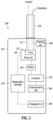
- FIG. 2 is a diagram illustrating a configuration of an electronic device according to an embodiment.
- an electronic device 200 of the inhaler apparatus type may include a housing 210, a mouthpiece 220, a connecting passage 222, a replaceable cartridge 230, a charging lever 240, a reservoir 250, a sensing unit 260, a controller 270, a communication unit 280, and a battery 290.
- the housing 210 may be formed so that the replaceable cartridge 230 may be inserted in the housing 210.
- the housing 210 may include a transparent portion so that the remaining amount of the cartridge 230 may be shown to the outside.
- the transparent portion of the housing 210 may be referred to as a sight window.
- a user may charge a substance in the cartridge 230 to the reservoir 250 through the charging lever 240.
- the mechanical position of the cartridge 230 may be changed (e.g., pushed upwards) and as the position thereof is changed, the substance in the cartridge 230 may be discharged to the outside.
- the discharged substance may be stored in the reservoir 250. That is, the reservoir 250 may be charged by the user pushing the charging lever 240.
- the substance charged in the reservoir 250 may be an amount that the user may inhale about "200" times.
- the reservoir 250 may include a valve 252.
- the position of a piston connected to the valve 252 may change according to the strength of the generated negative pressure and the degree of opening of the valve 252 may be adjusted according to the position of the piston.
- the valve 252 may be opened due to the generated negative pressure and the substance in the reservoir 250 may be discharged into the connecting passage 222 through the opened valve 252.
- the substance discharged into the connecting passage 222 may be an aerosol. The user may inhale the aerosol through the connecting passage 222 and the mouthpiece 220.
- the user may control the amount of the aerosol to be inhaled by adjusting the level of negative pressure. For example, when the user vigorously inhales the mouthpiece 220, the user may inhale a lot of aerosols. When the aerosol is provided to the user in the above manner, droplets generated by an aerosol that is not inhaled may be reduced.
- the sensing unit 260 may include a first biometric sensor capable of detecting biometric information from a substance excreted from the user.
- a biometric substance excreted from the user while the user is using the electronic device 200 may flow into the inside of the electronic device 200 (e.g., into the mouthpiece 220 and the connecting passage 222).
- the biometric substance may include gas and saliva in exhalation.
- the first biometric sensor capable of detecting the biometric substance may be placed in the electronic device 200 into which the biometric substance may flow.
- the first biometric sensor may include at least one of a sensor capable of detecting specific gas and a sensor capable of detecting a specific substance in a liquid such as saliva.
- the sensing unit 260 may further include at least one of a heart rate sensor, a blood pressure sensor, an electrocardiogram sensor, and a blood oxygen saturation sensor as a second biometric sensor.
- the second biometric sensor may be exposed on the housing 210 or on the outside of the housing 210 to contact with the user's skin.
- the second biometric sensor may include a sensor capable of measuring the user's body composition.
- the body composition may include skeletal muscle mass, basal metabolic rate, body water content, and body fat mass. When the user grabs the electronic device 200, the user's body composition may be measured.
- the sensing unit 260 may further include a third biometric sensor that is capable of measuring exercise information of the electronic device 200 such as an accelerator sensor and an impact sensor.
- the controller 270 may control the overall operation of the sensing unit 260 and the communication unit 280, which may be connected to the controller 270.
- the controller 270 may include at least one processor.
- the processor may be implemented as an array of multiple logic gates or may be implemented as a combination of a general-purpose microprocessor and a memory in which a program that may be executed by the microprocessor is stored.
- the processor may also be implemented as other types of hardware.
- the communication unit 280 may transmit data generated by the electronic device 200 to an external apparatus (e.g., the user terminal 105 and the server 110) through cellular communication and/or near-field wireless communication.
- an external apparatus e.g., the user terminal 105 and the server 110
- the data generated by the electronic device 200 is described in detail below with reference to FIG. 5 .
- the communication unit 280 may include Bluetooth communication, a Bluetooth Low Energy (BLE) communication unit, a near-field wireless communication unit, a wireless local area network (WLAN), a ZigBee communication unit, an Infrared Data Association (IrDA) communication unit, a Wi-Fi Direct (WFD) communication unit, an ultra-wideband (UWB) communication unit, an ANT+ communication unit, and the like but is not limited thereto.
- BLE Bluetooth Low Energy
- WLAN wireless local area network
- ZigBee ZigBee communication unit
- IrDA Infrared Data Association
- WFD Wi-Fi Direct
- UWB ultra-wideband
- ANT+ communication unit an ANT+ communication unit
- the battery 290 may provide power used for the electronic device 200 to operate.
- the battery 290 may provide the power needed for the sensing unit 260, the controller 270, and the communication unit 280 to operate.
- the battery 290 may provide the power needed for a display, a sensor, a motor, and the like included in the electronic device 200 to operate.
- FIG. 3 is a diagram illustrating a configuration of an electronic device according to another embodiment.
- An electronic device 300 may include a housing 310, a sensing unit 360, a replaceable cartridge (e.g., a solid-type cartridge or a liquid-type cartridge) 330, a coil 340, a controller (not illustrated), a communication unit (not illustrated), and a battery 350.
- the coil 340 may generate heat by receiving energy from the battery 350.
- the cartridge 330 may generate an aerosol using the heat generated by the coil 340.
- a user may inhale the generated aerosol through a mouthpiece 320 (or a tip portion).
- sensing unit 360 Descriptions on the sensing unit 360, the controller, and the communication unit according to an embodiment may be replaced by the descriptions on the sensing unit 260, the controller 270, and the communication unit 280 described above with reference to FIG. 2 .
- FIG. 4 is a diagram illustrating a configuration of a server according to an embodiment.
- a server 400 may include a communication unit 410, a processor 420, and a memory 430.
- the server 400 may be the server 110 described above with reference to FIG. 1 .
- the communication unit 410 may transmit and receive data while being connected to the processor 420 and the memory 430.
- the communication unit 410 may transmit and receive the data while being connected to another external apparatus.
- the term “transmit and receive “A”” may refer to “transmit and receive "information or data that represents A.””
- the communication unit 410 may be implemented as circuitry in the server 400.
- the communication unit 410 may include an internal bus and an external bus.
- the communication unit 410 may be a component that connects the server 400 to an external apparatus.
- the communication unit 410 may be an interface.
- the communication unit 410 may receive data from the external apparatus and transmit the data to the processor 420 and the memory 430.
- the processor 420 may process data that the communication unit 410 received and data stored in the memory 430.
- a "processor” may be a hardware-implemented data processing device having a circuit with a physical structure for executing desired operations.
- the desired operations may include code or instructions in a program.
- the hardware-implemented data processing device may include a microprocessor, a central processing unit (CPU), a processor core, a multi-core processor, a multiprocessor, an application-specific integrated circuit (ASIC), a field programmable gate array (FPGA), and the like.
- the processor 420 may execute computer-readable code (e.g., software) stored in a memory (e.g., the memory 430) and instructions induced by the processor 200.
- computer-readable code e.g., software
- the memory 430 may store data that the communication unit 410 received and data processed by the processor 420.
- the memory 430 may store a program (or an application, software, etc.).
- the stored program may be a combination of syntaxes that are coded so that a current state of a user may be determined and that are executable by the processor 420.
- the memory 430 may include at least one volatile memory, non-volatile memory, and random-access memory (RAM), flash memory, a hard disk drive, and an optical disc drive.
- volatile memory non-volatile memory
- RAM random-access memory
- flash memory flash memory
- hard disk drive hard disk drive
- optical disc drive optical disc drive
- the memory 430 may store a set of instructions (e.g., software) for operating the server 400.
- the set of instructions for operating the server 400 may be executed by the processor 420.
- the communication unit 410, the processor 420, and the memory 430 are described in detail below with reference to FIGS. 5 and 6 .
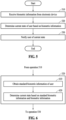
- FIG. 5 is a flowchart of a method of determining a state of a user, according to an embodiment.
- Operations 510 to 530 below may be performed by the server 400 that is described above with reference to FIG. 4 .
- the server 400 may receive biometric information from an electronic device (e.g., the electronic device 102 of FIG. 1 , the electronic device 200 of FIG. 2 , and the electronic device 300 of FIG. 3 ).
- the biometric information may be information generated by the first biometric sensor and/or the second biometric sensor of the sensing unit 260 of FIG. 2 or the sensing unit 360 of FIG. 3 .
- a substance generated when a disease develops or progresses may be a biomarker, and a biometric sensor of the electronic device may detect the biomarker.
- the detected biomarker may be included in the biometric information.
- the biometric information may include whether a specific gas included in a user's exhalation is detected and the concentration of the gas.
- the biometric information may be whether a specific substance included in the user's saliva is detected.
- the biometric information may further include at least one of a heart rate, blood pressure, an electrocardiogram, and blood oxygen saturation of the user.
- the server 400 may receive exercise information other than the biometric information from an electronic device.
- the exercise information may be information generated by the third biometric sensor of the sensing unit 260 of FIG. 2 or the sensing unit 360 of FIG. 3 .
- the electronic device when an electronic device is not directly connected to the server 400, the electronic device may be connected to the server 400 through a user terminal (e.g., the user terminal 105 of FIG. 1 ) that is a mobile communication terminal.
- the user terminal may, through an application installed on the user terminal, receive the biometric information and transmit the received biometric information to the server 400.
- the server 400 may determine a current state of the user based on the biometric information.
- the current state may include whether the user has a specific disease.
- the specific disease may include an oral disease, a genetic disease, and the like.
- the genetic disease may include diabetes, dementia, and the like and is not limited to the described embodiments.
- detection information of a biomarker that is predetermined for a specific disease is included in the biometric information, the current state of the user may be determined based on the detection information.
- the current state may be a stress level of the user.
- the stress level of the user may be determined based on at least one of the heart rate, the blood pressure, the electrocardiogram, and the blood oxygen saturation of the user.
- a method of determining the current state of the user based on at least one of the heart rate, the blood pressure, the electrocardiogram, and the blood oxygen saturation of the user is described in detail below with reference to FIG. 6 .
- the server 400 may store the history of the user.
- the history may be stored in association with the current state and a determination time of the user.
- the user may check their health state through the history.
- the server 400 may notify the user of the current state.
- the server 400 may transmit the determined current state to the electronic device, and the electronic device may notify the user of the current state through a display, a speaker, and a vibration motor.
- the server 400 may transmit the determined current state to the user terminal, and the user terminal may output the current state to the user through an application.
- operations 510 to 530 above are described with reference to FIG. 4 as being performed by the server 400, when the user terminal has sufficient computing ability, operations corresponding to operations 510 to 530 may also be performed by the user terminal.
- operations 510 to 530 above are described with reference to FIG. 4 as being performed by the server 400, when the electronic device has sufficient computing ability, operations corresponding to operations 510 to 530 may also be performed by the electronic device. An operation corresponding to operation 510 may not be performed by the electronic device.
- FIG. 6 is a flowchart of a method of determining a current state based on standard biometric information of a user, according to an embodiment.
- operation 520 described above with reference to FIG. 5 may include operations 610 and 620 below.
- the server 400 may obtain standard biometric information of an identified user. For example, the server 400 may identify the user through an identifier that is transmitted along with the standard biometric information.
- the standard biometric information may be information on a standard electrocardiogram, a standard hear rate, and standard blood oxygen saturation of the user.
- the standard biometric information of the user may be pre-measured by the electronic device and the result may be stored in the server 400.
- the standard biometric information may be pre-measured in various states of the user. For example, the standard biometric information may be obtained in a state of high stress. In another example, the standard biometric information may be obtained in a state of low stress. In another example, standard biometric information may be obtained in a comfortable state.
- the server may determine the current state based on the standard biometric information and the biometric information received from the electronic device. For example, the current state may be determined based on the similarity between the standard biometric information and the biometric information. The determined current state may correspond to the stress level of the user.
- the method according to the above-described embodiments may be recorded in non-transitory computer-readable media including program instructions to implement various operations which may be performed by a computer.
- the media may also include the program instructions, data files, data structures, and the like alone or in combination.
- the program instructions recorded on the media may be those specially designed and constructed for the purposes of the embodiments, or they may be of the well-known kind and available to those having skill in the computer software arts.
- non-transitory computer-readable media examples include magnetic media such as hard disks, floppy disks, and magnetic tape; optical media such as CD ROM discs and DVDs; magneto-optical media such as floptical disks; and hardware devices that are specially configured to store and perform program instructions, such as read-only memory (ROM), random access memory (RAM), flash memory, and the like.
- program instructions include both machine code, such as code produced by a compiler, and higher-level code that may be executed by the computer using an interpreter.
- the above-described hardware devices may be configured to act as one or more software modules in order to perform the operations of the above-described embodiments, or vice versa.
- the software may include a computer program, a piece of code, an instruction, or some combination thereof, to independently or collectively instruct or configure the processing device to operate as desired.
- Software and data may be embodied permanently or temporarily in any type of machine, component, physical or virtual equipment, computer storage medium or device, or in a propagated signal wave capable of providing instructions or data to or being interpreted by the processing device.
- the software may also be distributed over network coupled computer systems so that the software is stored and executed in a distributed fashion.
- the software and data may be stored by one or more non-transitory computer readable recording media.
Landscapes
- Health & Medical Sciences (AREA)
- Life Sciences & Earth Sciences (AREA)
- Engineering & Computer Science (AREA)
- Biomedical Technology (AREA)
- Public Health (AREA)
- General Health & Medical Sciences (AREA)
- Medical Informatics (AREA)
- Heart & Thoracic Surgery (AREA)
- Veterinary Medicine (AREA)
- Animal Behavior & Ethology (AREA)
- Pathology (AREA)
- Physics & Mathematics (AREA)
- Surgery (AREA)
- Biophysics (AREA)
- Molecular Biology (AREA)
- Physiology (AREA)
- Pulmonology (AREA)
- Cardiology (AREA)
- Psychiatry (AREA)
- Primary Health Care (AREA)
- Epidemiology (AREA)
- Bioinformatics & Cheminformatics (AREA)
- Anesthesiology (AREA)
- Hematology (AREA)
- Social Psychology (AREA)
- Multimedia (AREA)
- Developmental Disabilities (AREA)
- Educational Technology (AREA)
- Hospice & Palliative Care (AREA)
- Psychology (AREA)
- Child & Adolescent Psychology (AREA)
- General Business, Economics & Management (AREA)
- Business, Economics & Management (AREA)
- Computer Networks & Wireless Communication (AREA)
- Computer Vision & Pattern Recognition (AREA)
- Artificial Intelligence (AREA)
- Optics & Photonics (AREA)
- Data Mining & Analysis (AREA)
- Databases & Information Systems (AREA)
- Signal Processing (AREA)
Abstract
Description
- The following embodiments relate to technology for determining a state of a user, and more specifically, to technology for determining the state of the user based on a biometric substance of the user.
- Recently, various methods of providing an aerosol to a user are being developed. For example, a need for an apparatus for providing an aerosol such as an electronic cigarette and an inhaler is gradually increasing. In addition, as the need for the method increases, various functions that may be used in the apparatus for providing an aerosol are continually being developed.
- An embodiment may provide a method of determining a state of a user.
- An embodiment may provide an apparatus for determining a state of a user.
- A method of determining a state of a user according to an embodiment includes receiving biometric information of the user from an electronic device, the electronic device including at least one biometric sensor configured to measure the biometric information, and determining a current state of the user based on the biometric information, wherein the electronic device is a device configured to provide an aerosol to the user.
- The receiving of the biometric information may include receiving the biometric information from a user terminal connected to the electronic device through near-field wireless communication, and the method of determining the state of the user may further include transmitting the determined current state to the user terminal, wherein the user terminal may be configured to notify the user of the current state by outputting the current state.
- A first biometric sensor among the at least one biometric sensor may be located in a mouthpiece of the electronic device.
- The first biometric sensor may be configured to measure first biometric information by detecting a target substance included in at least one of liquid and gas in an exhalation of the user.
- A second biometric sensor among the at least one biometric sensor may be configured to measure second biometric information by measuring an electrocardiogram, a heart rate, or blood oxygen saturation of the user.
- The determining of the current state of the user based on the biometric information may include obtaining standard biometric information of the user and determining the current state based on the standard biometric information and the biometric information.
- The standard biometric information may be a standard electrocardiogram, a standard heart rate, or standard blood oxygen saturation of the user, wherein the standard electrocardiogram, the standard heart rate, or the standard blood oxygen saturation of the user may be pre-stored.
- The biometric information may be biometric information of the user in a state in which the aerosol may be provided.
- The electronic device may include a mouthpiece, a reservoir configured to store the aerosol, and a connection path configured to connect the mouthpiece to the reservoir, wherein the reservoir may include a valve of which a state changes based on negative pressure applied by the user, and the aerosol is provided from the reservoir through the connection path as the state of the valve changes.
- A first biometric sensor among the at least one biometric sensor may be located in the mouthpiece or the connection path.
- A server for determining a state of a user includes a memory configured to store a program to determine the state of the user and a processor configured to perform the program, wherein the processor may be configured to receive biometric information of the user from an electronic device, the electronic device including at least one biometric sensor configured to measure the biometric information, and determine a current state of the user based on the biometric information, wherein the electronic device may be a device configured to provide an aerosol to the user.
- The processor may be configured to receive the biometric information from a user terminal connected to the electronic device through near-field wireless communication, determine the current state of the user based on the biometric information, and transmit the determined current state to the user terminal, wherein the user terminal may be configured to notify the user of the current state by outputting the current state.
-
-
FIG. 1 is a diagram illustrating a system that determines a state of a user of an embodiment. -
FIG. 2 is a diagram illustrating a configuration of an electronic device according to an embodiment. -
FIG. 3 is a diagram illustrating a configuration of an electronic device of another embodiment. -
FIG. 4 is a diagram illustrating a configuration of a server according to an embodiment. -
FIG. 5 is a flowchart of a method of determining a state of a user, according to an embodiment. -
FIG. 6 is a flowchart of a method of determining a current state based on standard biometric information of a user, according to an embodiment. - The following structural or functional descriptions of embodiments described herein are merely intended for the purpose of describing the embodiments described herein and may be implemented in various forms. Thus, actual form of implementation is not limited to the embodiments described herein, and should be understood to include all changes, equivalents, and replacements within the idea and the technical scope of the disclosure.
- Although terms of "first," "second," and the like are used to explain various components, the components are not limited to such terms. These terms are used only to distinguish one component from another component. For example, a first component may be referred to as a second component, and similarly, the second component may be referred to as the first component within the scope of the present disclosure.
- When it is mentioned that one component is "connected" to another component, it may be understood that the one component is directly connected or coupled to another component or still another component is interposed between the two components.
- As used herein, the singular forms "a," "an," and "the" are intended to include the plural forms as well, unless the context clearly indicates otherwise. It will be further understood that the terms "include," "comprise," and/or "comprising," when used in this specification, specify the presence of stated features, integers, steps, operations, elements, components or a combination thereof, but do not preclude the presence or addition of one or more other features, integers, steps, operations, elements, components, and/or groups thereof.
- Unless otherwise defined herein, all terms used herein including technical or scientific terms have the same meanings as those generally understood by one of ordinary skill in the art. Terms defined in dictionaries generally used should be construed to have meanings matching contextual meanings in the related art and are not to be construed as an ideal or excessively formal meaning unless otherwise defined herein.
- Hereinafter, embodiments will be described in detail with reference to the accompanying drawings. When describing the embodiments with reference to the accompanying drawings, like reference numerals refer to like components and a repeated description related thereto will be omitted.
-
FIG. 1 is a diagram illustrating a system that determines a state of a user, according to an embodiment. - According to an embodiment, a
system 100 may include anelectronic device 102 and aserver 110. For example, theelectronic device 102 may be an aerosol-generating apparatus. The electronic device 102 (or the aerosol-generating apparatus) may be referred to as an inhaler apparatus, an electronic cigarette apparatus, or a smoking stick. Theelectronic device 102 as the aerosol-generating apparatus is described in detail below with reference toFIGS. 2 and3 . - For example, the
electronic device 102 may include a communication unit that is capable of performing cellular communications and may be connected to theserver 110 through cellular communications. - According to an embodiment, the
system 100 may further include auser terminal 105. For example, theuser terminal 105 may be a mobile communication terminal or a wearable apparatus. The wearable apparatus may be, for example, a smart watch or smart glasses and is not limited to the described embodiments. - For example, the
electronic device 102 and theuser terminal 105 may be connected through near-field wireless communication and theelectronic device 102 may be connected to theserver 110 through theuser terminal 105. - A user may be provided with an aerosol generated by the
electronic device 102. For example, the aerosol may include substances that include nicotine. In another example, the aerosol may include substances that do not include nicotine. The substances of the aerosol may include water, solvent, ethanol, a plant extract, fragrance, flavoring agent, or vitamin blend. The fragrance may include menthol, peppermint, spearmint oil, various fruit flavored components, and the like but is not limited thereto. The flavoring agent may include an ingredient that may provide various flavors or savors to a user. The vitamin blend may be a mixture of at least one of vitamin A, vitamin B, vitamin C, and vitamin E but is not limited thereto. - According to an embodiment, the
electronic device 102 may generate the aerosol using a substance in a cartridge that is inserted in theelectronic device 102. The cartridge may be of a gaseous, liquid, or solid type. The cartridge may be a canister. Theelectronic device 102 using the cartridge may be an inhaler apparatus. A structure of theelectronic device 102 as the inhaler apparatus is described in detail below with reference toFIG. 2 . - According to another example, the
electronic device 102 may generate the aerosol by applying heat to a cigarette or a cartridge inserted in theelectronic device 102. For example, theelectronic device 102 may generate the aerosol using a substance in a liquid-type cartridge or a solid-type cartridge in theelectronic device 102. A method of generating the aerosol by theelectronic device 102 may not be limited to the described embodiments. The structure of theelectronic device 102 that generates the aerosol by applying heat to the cartridge is described in detail below with reference toFIG. 3 . - According to an embodiment, using various sensors included in the
electronic device 102, theelectronic device 102 may generate sensing information on theelectronic device 102 or a user. For example, the sensing information may include biometric information of a user that uses theelectronic device 102. Theserver 110 that received the biometric information from theelectronic device 102 may determine information related to a health state of the user based on the biometric information and may provide a service related to health care to the user based on the determined information. In another example, the sensing information may include exercise information of theelectronic device 102. A method of determining a state of a user is described in detail below with reference toFIGS. 4 to 6 . -
FIG. 2 is a diagram illustrating a configuration of an electronic device according to an embodiment. - According to an embodiment, the
electronic device 102 described above with reference toFIG. 1 may be of an inhaler apparatus type. For example, anelectronic device 200 of the inhaler apparatus type may include ahousing 210, amouthpiece 220, a connectingpassage 222, areplaceable cartridge 230, a charginglever 240, areservoir 250, asensing unit 260, acontroller 270, acommunication unit 280, and abattery 290. - The
housing 210 may be formed so that thereplaceable cartridge 230 may be inserted in thehousing 210. For example, thehousing 210 may include a transparent portion so that the remaining amount of thecartridge 230 may be shown to the outside. The transparent portion of thehousing 210 may be referred to as a sight window. - A user may charge a substance in the
cartridge 230 to thereservoir 250 through the charginglever 240. When the user pushes the charginglever 240, the mechanical position of thecartridge 230 may be changed (e.g., pushed upwards) and as the position thereof is changed, the substance in thecartridge 230 may be discharged to the outside. The discharged substance may be stored in thereservoir 250. That is, thereservoir 250 may be charged by the user pushing the charginglever 240. For example, the substance charged in thereservoir 250 may be an amount that the user may inhale about "200" times. - According to an embodiment, the
reservoir 250 may include avalve 252. When negative pressure is generated in the connectingpassage 222 connected to thereservoir 252, the position of a piston connected to thevalve 252 may change according to the strength of the generated negative pressure and the degree of opening of thevalve 252 may be adjusted according to the position of the piston. For example, when the user generates negative pressure in the connectingpassage 222 through themouthpiece 220, thevalve 252 may be opened due to the generated negative pressure and the substance in thereservoir 250 may be discharged into the connectingpassage 222 through the openedvalve 252. The substance discharged into the connectingpassage 222 may be an aerosol. The user may inhale the aerosol through the connectingpassage 222 and themouthpiece 220. The user may control the amount of the aerosol to be inhaled by adjusting the level of negative pressure. For example, when the user vigorously inhales themouthpiece 220, the user may inhale a lot of aerosols. When the aerosol is provided to the user in the above manner, droplets generated by an aerosol that is not inhaled may be reduced. - According to an embodiment, the
sensing unit 260 may include a first biometric sensor capable of detecting biometric information from a substance excreted from the user. A biometric substance excreted from the user while the user is using theelectronic device 200 may flow into the inside of the electronic device 200 (e.g., into themouthpiece 220 and the connecting passage 222). For example, the biometric substance may include gas and saliva in exhalation. The first biometric sensor capable of detecting the biometric substance may be placed in theelectronic device 200 into which the biometric substance may flow. For example, the first biometric sensor may include at least one of a sensor capable of detecting specific gas and a sensor capable of detecting a specific substance in a liquid such as saliva. - According to an embodiment, the
sensing unit 260 may further include at least one of a heart rate sensor, a blood pressure sensor, an electrocardiogram sensor, and a blood oxygen saturation sensor as a second biometric sensor. For example, the second biometric sensor may be exposed on thehousing 210 or on the outside of thehousing 210 to contact with the user's skin. In another example, the second biometric sensor may include a sensor capable of measuring the user's body composition. For example, the body composition may include skeletal muscle mass, basal metabolic rate, body water content, and body fat mass. When the user grabs theelectronic device 200, the user's body composition may be measured. - According to an embodiment, the
sensing unit 260 may further include a third biometric sensor that is capable of measuring exercise information of theelectronic device 200 such as an accelerator sensor and an impact sensor. - According to an embodiment, the
controller 270 may control the overall operation of thesensing unit 260 and thecommunication unit 280, which may be connected to thecontroller 270. For example, thecontroller 270 may include at least one processor. The processor may be implemented as an array of multiple logic gates or may be implemented as a combination of a general-purpose microprocessor and a memory in which a program that may be executed by the microprocessor is stored. In addition, one of ordinary skill in the art to which the present embodiment belongs may understand that the processor may also be implemented as other types of hardware. - According to an embodiment, the
communication unit 280 may transmit data generated by theelectronic device 200 to an external apparatus (e.g., theuser terminal 105 and the server 110) through cellular communication and/or near-field wireless communication. The data generated by theelectronic device 200 is described in detail below with reference toFIG. 5 . - The
communication unit 280 may include Bluetooth communication, a Bluetooth Low Energy (BLE) communication unit, a near-field wireless communication unit, a wireless local area network (WLAN), a ZigBee communication unit, an Infrared Data Association (IrDA) communication unit, a Wi-Fi Direct (WFD) communication unit, an ultra-wideband (UWB) communication unit, an ANT+ communication unit, and the like but is not limited thereto. - According to an embodiment, the
battery 290 may provide power used for theelectronic device 200 to operate. For example, thebattery 290 may provide the power needed for thesensing unit 260, thecontroller 270, and thecommunication unit 280 to operate. In addition, thebattery 290 may provide the power needed for a display, a sensor, a motor, and the like included in theelectronic device 200 to operate. -
FIG. 3 is a diagram illustrating a configuration of an electronic device according to another embodiment. - An
electronic device 300 according to an embodiment may include ahousing 310, asensing unit 360, a replaceable cartridge (e.g., a solid-type cartridge or a liquid-type cartridge) 330, acoil 340, a controller (not illustrated), a communication unit (not illustrated), and abattery 350. For example, thecoil 340 may generate heat by receiving energy from thebattery 350. Thecartridge 330 may generate an aerosol using the heat generated by thecoil 340. A user may inhale the generated aerosol through a mouthpiece 320 (or a tip portion). - Descriptions on the
sensing unit 360, the controller, and the communication unit according to an embodiment may be replaced by the descriptions on thesensing unit 260, thecontroller 270, and thecommunication unit 280 described above with reference toFIG. 2 . -
FIG. 4 is a diagram illustrating a configuration of a server according to an embodiment. - According to an embodiment, a
server 400 may include acommunication unit 410, aprocessor 420, and amemory 430. For example, theserver 400 may be theserver 110 described above with reference toFIG. 1 . - The
communication unit 410 may transmit and receive data while being connected to theprocessor 420 and thememory 430. Thecommunication unit 410 may transmit and receive the data while being connected to another external apparatus. Hereinafter, the term "transmit and receive "A"" may refer to "transmit and receive "information or data that represents A."" - The
communication unit 410 may be implemented as circuitry in theserver 400. For example, thecommunication unit 410 may include an internal bus and an external bus. In another example, thecommunication unit 410 may be a component that connects theserver 400 to an external apparatus. Thecommunication unit 410 may be an interface. Thecommunication unit 410 may receive data from the external apparatus and transmit the data to theprocessor 420 and thememory 430. - The
processor 420 may process data that thecommunication unit 410 received and data stored in thememory 430. A "processor" may be a hardware-implemented data processing device having a circuit with a physical structure for executing desired operations. For example, the desired operations may include code or instructions in a program. For example, the hardware-implemented data processing device may include a microprocessor, a central processing unit (CPU), a processor core, a multi-core processor, a multiprocessor, an application-specific integrated circuit (ASIC), a field programmable gate array (FPGA), and the like. - The
processor 420 may execute computer-readable code (e.g., software) stored in a memory (e.g., the memory 430) and instructions induced by theprocessor 200. - The
memory 430 may store data that thecommunication unit 410 received and data processed by theprocessor 420. For example, thememory 430 may store a program (or an application, software, etc.). The stored program may be a combination of syntaxes that are coded so that a current state of a user may be determined and that are executable by theprocessor 420. - According to an aspect, the
memory 430 may include at least one volatile memory, non-volatile memory, and random-access memory (RAM), flash memory, a hard disk drive, and an optical disc drive. - The
memory 430 may store a set of instructions (e.g., software) for operating theserver 400. The set of instructions for operating theserver 400 may be executed by theprocessor 420. - The
communication unit 410, theprocessor 420, and thememory 430 are described in detail below with reference toFIGS. 5 and 6 . -
FIG. 5 is a flowchart of a method of determining a state of a user, according to an embodiment. -
Operations 510 to 530 below may be performed by theserver 400 that is described above with reference toFIG. 4 . - In
operation 510, theserver 400 may receive biometric information from an electronic device (e.g., theelectronic device 102 ofFIG. 1 , theelectronic device 200 ofFIG. 2 , and theelectronic device 300 ofFIG. 3 ). The biometric information may be information generated by the first biometric sensor and/or the second biometric sensor of thesensing unit 260 ofFIG. 2 or thesensing unit 360 ofFIG. 3 . - According to an embodiment, a substance generated when a disease develops or progresses may be a biomarker, and a biometric sensor of the electronic device may detect the biomarker. The detected biomarker may be included in the biometric information.
- For example, the biometric information may include whether a specific gas included in a user's exhalation is detected and the concentration of the gas. In another example, the biometric information may be whether a specific substance included in the user's saliva is detected. In another example, the biometric information may further include at least one of a heart rate, blood pressure, an electrocardiogram, and blood oxygen saturation of the user.
- According to an embodiment, the
server 400 may receive exercise information other than the biometric information from an electronic device. The exercise information may be information generated by the third biometric sensor of thesensing unit 260 ofFIG. 2 or thesensing unit 360 ofFIG. 3 . - According to an embodiment, when an electronic device is not directly connected to the
server 400, the electronic device may be connected to theserver 400 through a user terminal (e.g., theuser terminal 105 ofFIG. 1 ) that is a mobile communication terminal. The user terminal may, through an application installed on the user terminal, receive the biometric information and transmit the received biometric information to theserver 400. - In
operation 520, theserver 400 may determine a current state of the user based on the biometric information. - According to an embodiment, the current state may include whether the user has a specific disease. For example, the specific disease may include an oral disease, a genetic disease, and the like. The genetic disease may include diabetes, dementia, and the like and is not limited to the described embodiments. When detection information of a biomarker that is predetermined for a specific disease is included in the biometric information, the current state of the user may be determined based on the detection information.
- According to an embodiment, the current state may be a stress level of the user. For example, the stress level of the user may be determined based on at least one of the heart rate, the blood pressure, the electrocardiogram, and the blood oxygen saturation of the user. A method of determining the current state of the user based on at least one of the heart rate, the blood pressure, the electrocardiogram, and the blood oxygen saturation of the user is described in detail below with reference to
FIG. 6 . - According to an embodiment, the
server 400 may store the history of the user. For example, the history may be stored in association with the current state and a determination time of the user. The user may check their health state through the history. - In
operation 530, theserver 400 may notify the user of the current state. For example, theserver 400 may transmit the determined current state to the electronic device, and the electronic device may notify the user of the current state through a display, a speaker, and a vibration motor. In another example, theserver 400 may transmit the determined current state to the user terminal, and the user terminal may output the current state to the user through an application. - According to an embodiment, although
operations 510 to 530 above are described with reference toFIG. 4 as being performed by theserver 400, when the user terminal has sufficient computing ability, operations corresponding tooperations 510 to 530 may also be performed by the user terminal. - According to an embodiment, although
operations 510 to 530 above are described with reference toFIG. 4 as being performed by theserver 400, when the electronic device has sufficient computing ability, operations corresponding tooperations 510 to 530 may also be performed by the electronic device. An operation corresponding tooperation 510 may not be performed by the electronic device. -
FIG. 6 is a flowchart of a method of determining a current state based on standard biometric information of a user, according to an embodiment. - According to an embodiment,
operation 520 described above with reference toFIG. 5 may includeoperations - In
operation 610, theserver 400 may obtain standard biometric information of an identified user. For example, theserver 400 may identify the user through an identifier that is transmitted along with the standard biometric information. - For example, the standard biometric information may be information on a standard electrocardiogram, a standard hear rate, and standard blood oxygen saturation of the user. The standard biometric information of the user may be pre-measured by the electronic device and the result may be stored in the
server 400. The standard biometric information may be pre-measured in various states of the user. For example, the standard biometric information may be obtained in a state of high stress. In another example, the standard biometric information may be obtained in a state of low stress. In another example, standard biometric information may be obtained in a comfortable state. - In
operation 620, the server may determine the current state based on the standard biometric information and the biometric information received from the electronic device. For example, the current state may be determined based on the similarity between the standard biometric information and the biometric information. The determined current state may correspond to the stress level of the user. - The method according to the above-described embodiments may be recorded in non-transitory computer-readable media including program instructions to implement various operations which may be performed by a computer. The media may also include the program instructions, data files, data structures, and the like alone or in combination. The program instructions recorded on the media may be those specially designed and constructed for the purposes of the embodiments, or they may be of the well-known kind and available to those having skill in the computer software arts. Examples of non-transitory computer-readable media include magnetic media such as hard disks, floppy disks, and magnetic tape; optical media such as CD ROM discs and DVDs; magneto-optical media such as floptical disks; and hardware devices that are specially configured to store and perform program instructions, such as read-only memory (ROM), random access memory (RAM), flash memory, and the like. Examples of program instructions include both machine code, such as code produced by a compiler, and higher-level code that may be executed by the computer using an interpreter. The above-described hardware devices may be configured to act as one or more software modules in order to perform the operations of the above-described embodiments, or vice versa.
- The software may include a computer program, a piece of code, an instruction, or some combination thereof, to independently or collectively instruct or configure the processing device to operate as desired. Software and data may be embodied permanently or temporarily in any type of machine, component, physical or virtual equipment, computer storage medium or device, or in a propagated signal wave capable of providing instructions or data to or being interpreted by the processing device. The software may also be distributed over network coupled computer systems so that the software is stored and executed in a distributed fashion. The software and data may be stored by one or more non-transitory computer readable recording media.
- While this disclosure includes embodiments illustrated with reference to limited drawings, it will be apparent to one of ordinary skill in the art that various changes in form and details may be made in these embodiments without departing from the spirit and scope of the claims and their equivalents. Descriptions of features or aspects in each embodiment are to be considered as being applicable to similar features or aspects in other embodiments. Suitable results may be achieved if the described techniques are performed in a different order, and/or if components in a described system, architecture, device, or circuit are coupled or combined in a different manner and/or replaced or supplemented by other components or their equivalents.
- Therefore, the scope of the disclosure is defined not by the detailed description, but by the claims and their equivalents, and all variations within the scope of the claims and their equivalents are to be construed as being included in the disclosure.
Claims (13)
- A method of determining a state of a user, the method comprising:receiving biometric information of the user from an electronic device, the electronic device comprising at least one biometric sensor configured to measure the biometric information; anddetermining a current state of the user based on the biometric information,wherein the electronic device is a device configured to provide an aerosol to the user.
- The method of claim 1, whereinthe receiving of the biometric information comprises receiving the biometric information from a user terminal connected to the electronic device through near-field wireless communication, andthe method further comprises transmitting the determined current state to the user terminal,wherein the user terminal is configured to notify the user of the current state by outputting the current state.
- The method of claim 1, wherein a first biometric sensor among the at least one biometric sensor is located in a mouthpiece of the electronic device.
- The method of claim 3, wherein the first biometric sensor is configured to measure first biometric information by detecting a target substance included in at least one of liquid and gas in an exhalation of the user.
- The method of claim 3, wherein a second biometric sensor among the at least one biometric sensor is configured to measure second biometric information by measuring an electrocardiogram, a heart rate, or blood oxygen saturation of the user.
- The method of claim 5, wherein the determining of the current state of the user based on the biometric information comprises:obtaining standard biometric information of the user; anddetermining the current state based on the standard biometric information and the biometric information.
- The method of claim 6, wherein the standard biometric information is a standard electrocardiogram, a standard heart rate, or standard blood oxygen saturation of the user, which is pre-stored.
- The method of claim 1, wherein the biometric information is biometric information of the user in a state in which the aerosol is provided.
- The method of claim 1, wherein the electronic device comprises:a mouthpiece;a reservoir configured to store the aerosol; anda connection path configured to connect the mouthpiece to the reservoir,wherein the reservoir comprises a valve of which a state changes based on negative pressure applied by the user, and the aerosol is provided from the reservoir through the connection path as the state of the valve changes.
- The method of claim 9, wherein a first biometric sensor among the at least one biometric sensor is located in the mouthpiece or the connection path.
- A non-transitory computer-readable storage medium storing instructions that, when executed by a processor, cause the processor to perform the method of claim 1.
- A server for determining a state of a user, the server comprising:a memory configured to store a program to determine the state of the user; anda processor configured to perform the program,wherein the processor is configured to:receive biometric information of the user from an electronic device, the electronic device comprising at least one biometric sensor configured to measure the biometric information; anddetermine a current state of the user based on the biometric information,wherein the electronic device is a device configured to provide an aerosol to the user.
- The server of claim 12, wherein the processor is configured to:receive the biometric information from a user terminal connected to the electronic device through near-field wireless communication;determine the current state of the user based on the biometric information; andtransmit the determined current state to the user terminal,wherein the user terminal is configured to notify the user of the current state by outputting the current state.
Applications Claiming Priority (2)
| Application Number | Priority Date | Filing Date | Title |
|---|---|---|---|
| KR1020220063540A KR102810304B1 (en) | 2022-05-24 | 2022-05-24 | Method for determining state of user and apparatus performing the method |
| PCT/KR2023/003604 WO2023229173A1 (en) | 2022-05-24 | 2023-03-17 | Method for determining user's state and device for performing same |
Publications (2)
| Publication Number | Publication Date |
|---|---|
| EP4302685A1 true EP4302685A1 (en) | 2024-01-10 |
| EP4302685A4 EP4302685A4 (en) | 2024-07-10 |
Family
ID=87473899
Family Applications (1)
| Application Number | Title | Priority Date | Filing Date |
|---|---|---|---|
| EP23733830.6A Pending EP4302685A4 (en) | 2022-05-24 | 2023-03-17 | METHOD FOR DETERMINING USER STATUS AND DEVICE FOR CARRYING OUT THE SAME |
Country Status (6)
| Country | Link |
|---|---|
| US (1) | US20240387033A1 (en) |
| EP (1) | EP4302685A4 (en) |
| JP (1) | JP7631656B2 (en) |
| KR (1) | KR102810304B1 (en) |
| CN (1) | CN117460451A (en) |
| WO (1) | WO2023229173A1 (en) |
Family Cites Families (11)
| Publication number | Priority date | Publication date | Assignee | Title |
|---|---|---|---|---|
| CA2683884C (en) * | 2007-04-18 | 2012-10-30 | Japan Tobacco Inc. | Smoking article |
| US20140261400A1 (en) * | 2013-03-14 | 2014-09-18 | Pneumoflex Systems, Llc | Intra-oral nebulizer activated by negative inspiratory pressure |
| US11696604B2 (en) * | 2014-03-13 | 2023-07-11 | Rai Strategic Holdings, Inc. | Aerosol delivery device and related method and computer program product for controlling an aerosol delivery device based on input characteristics |
| GB201517088D0 (en) * | 2015-09-28 | 2015-11-11 | Nicoventures Holdings Ltd | Electronic aerosol provision systems and methods |
| CA3022918A1 (en) * | 2016-05-03 | 2017-11-09 | Pneuma Respiratory, Inc. | Systems and methods for pulmonary health management |
| KR20250112309A (en) * | 2018-03-14 | 2025-07-23 | 필립모리스 프로덕츠 에스.에이. | Aerosol-generating system with biosensor |
| JP6774478B2 (en) * | 2018-11-02 | 2020-10-21 | 日本たばこ産業株式会社 | Personal health assessment system |
| KR20210105338A (en) * | 2018-12-19 | 2021-08-26 | 제이티 인터내셔널 소시에떼 아노님 | electronic cigarette |
| EP4710805A3 (en) * | 2019-12-30 | 2026-04-22 | RAI Strategic Holdings, Inc. | A heart rate monitor for an aerosol delivery device |
| KR102477685B1 (en) * | 2020-06-15 | 2022-12-14 | 주식회사 케이티앤지 | Aerosol generating device and operation method thereof |
| KR102550138B1 (en) * | 2020-08-24 | 2023-06-30 | 주식회사 케이티앤지 | Aerosol generating device |
-
2022
- 2022-05-24 KR KR1020220063540A patent/KR102810304B1/en active Active
-
2023
- 2023-03-17 WO PCT/KR2023/003604 patent/WO2023229173A1/en not_active Ceased
- 2023-03-17 US US18/271,941 patent/US20240387033A1/en active Pending
- 2023-03-17 JP JP2023539143A patent/JP7631656B2/en active Active
- 2023-03-17 CN CN202380011250.2A patent/CN117460451A/en active Pending
- 2023-03-17 EP EP23733830.6A patent/EP4302685A4/en active Pending
Also Published As
| Publication number | Publication date |
|---|---|
| JP7631656B2 (en) | 2025-02-19 |
| EP4302685A4 (en) | 2024-07-10 |
| KR20230164265A (en) | 2023-12-04 |
| US20240387033A1 (en) | 2024-11-21 |
| WO2023229173A1 (en) | 2023-11-30 |
| CN117460451A (en) | 2024-01-26 |
| JP2024524790A (en) | 2024-07-09 |
| KR102810304B1 (en) | 2025-05-21 |
Similar Documents
| Publication | Publication Date | Title |
|---|---|---|
| KR102309201B1 (en) | Aerosol delivery device and system for evaluation of personal health condition | |
| CN106852123B (en) | System, method and device for stimulating use of inhaler | |
| US12620410B2 (en) | Aligning parameter data with audio recordings | |
| KR102721300B1 (en) | Method and apparatus for outputting image for virtual reality or augmented reality | |
| EP3037993A1 (en) | Method and apparatus for processing user lactate level information | |
| Abushakra et al. | Lung capacity estimation through acoustic signal of breath | |
| US20240387033A1 (en) | Method for determining state of user and apparatus performing the method | |
| CN104799813A (en) | Diet support device and method | |
| EP4303700A1 (en) | Method and device for realizing virtual smoke | |
| WO2020014326A1 (en) | Breath measurement device | |
| US11701055B2 (en) | Using personalized physiological parameters for sleep/wake detection | |
| US12620149B2 (en) | Method and apparatus for outputting virtual smoke image | |
| US12614333B2 (en) | Method and apparatus for outputting virtual smoke image | |
| EP4303699A1 (en) | Method and device for generating virtual smoke | |
| EP4303705A1 (en) | Method and device for generating virtual smoke | |
| US12100070B1 (en) | Method and apparatus for implementing virtual smoke | |
| EP4303704A1 (en) | Method and apparatus for creating virtual smoke | |
| US20240423284A1 (en) | Method and apparatus for implementing virtual smoke | |
| EP4303706A1 (en) | Method and device for generating virtual smoke | |
| EP4303701A1 (en) | Method and device for generating virtual smoke | |
| EP4623737A1 (en) | Information processing device, information processing method, and program | |
| EP4332734A1 (en) | Method and apparatus for outputting virtual smoke image | |
| Schneller et al. | 4219 Discrepancies in flavor preferences among adult ever users of various tobacco products in the US–Findings from The Population Assessment of Tobacco and Health Study (2015-2016) | |
| JP2025529205A (en) | Systems and methods for measuring mechanical impedance of the respiratory system | |
| Alt | Flow Measurement in Smart Inhalers for Connected Drug Delivery |
Legal Events
| Date | Code | Title | Description |
|---|---|---|---|
| STAA | Information on the status of an ep patent application or granted ep patent |
Free format text: STATUS: UNKNOWN |
|
| STAA | Information on the status of an ep patent application or granted ep patent |
Free format text: STATUS: THE INTERNATIONAL PUBLICATION HAS BEEN MADE |
|
| PUAI | Public reference made under article 153(3) epc to a published international application that has entered the european phase |
Free format text: ORIGINAL CODE: 0009012 |
|
| STAA | Information on the status of an ep patent application or granted ep patent |
Free format text: STATUS: REQUEST FOR EXAMINATION WAS MADE |
|
| 17P | Request for examination filed |
Effective date: 20230704 |
|
| AK | Designated contracting states |
Kind code of ref document: A1 Designated state(s): AL AT BE BG CH CY CZ DE DK EE ES FI FR GB GR HR HU IE IS IT LI LT LU LV MC ME MK MT NL NO PL PT RO RS SE SI SK SM TR |
|
| A4 | Supplementary search report drawn up and despatched |
Effective date: 20240606 |
|
| RIC1 | Information provided on ipc code assigned before grant |
Ipc: A61B 5/00 20060101AFI20240531BHEP |
|
| DAV | Request for validation of the european patent (deleted) | ||
| DAX | Request for extension of the european patent (deleted) | ||
| STAA | Information on the status of an ep patent application or granted ep patent |
Free format text: STATUS: EXAMINATION IS IN PROGRESS |
|
| 17Q | First examination report despatched |
Effective date: 20260224 |