EP4301157B1 - Feed ingredient derived from biomasses of soybean meal - Google Patents
Feed ingredient derived from biomasses of soybean meal Download PDFInfo
- Publication number
- EP4301157B1 EP4301157B1 EP21770181.2A EP21770181A EP4301157B1 EP 4301157 B1 EP4301157 B1 EP 4301157B1 EP 21770181 A EP21770181 A EP 21770181A EP 4301157 B1 EP4301157 B1 EP 4301157B1
- Authority
- EP
- European Patent Office
- Prior art keywords
- weight
- feed ingredient
- biomass
- fermented feed
- soybean meal
- Prior art date
- Legal status (The legal status is an assumption and is not a legal conclusion. Google has not performed a legal analysis and makes no representation as to the accuracy of the status listed.)
- Active
Links
Images




Classifications
-
- A—HUMAN NECESSITIES
- A23—FOODS OR FOODSTUFFS; TREATMENT THEREOF, NOT COVERED BY OTHER CLASSES
- A23K—FODDER
- A23K10/00—Animal feeding-stuffs
- A23K10/10—Animal feeding-stuffs obtained by microbiological or biochemical processes
- A23K10/12—Animal feeding-stuffs obtained by microbiological or biochemical processes by fermentation of natural products, e.g. of vegetable material, animal waste material or biomass
-
- A—HUMAN NECESSITIES
- A23—FOODS OR FOODSTUFFS; TREATMENT THEREOF, NOT COVERED BY OTHER CLASSES
- A23K—FODDER
- A23K10/00—Animal feeding-stuffs
- A23K10/30—Animal feeding-stuffs from material of plant origin, e.g. roots, seeds or hay; from material of fungal origin, e.g. mushrooms
-
- A—HUMAN NECESSITIES
- A23—FOODS OR FOODSTUFFS; TREATMENT THEREOF, NOT COVERED BY OTHER CLASSES
- A23K—FODDER
- A23K10/00—Animal feeding-stuffs
- A23K10/30—Animal feeding-stuffs from material of plant origin, e.g. roots, seeds or hay; from material of fungal origin, e.g. mushrooms
- A23K10/37—Animal feeding-stuffs from material of plant origin, e.g. roots, seeds or hay; from material of fungal origin, e.g. mushrooms from waste material
- A23K10/38—Animal feeding-stuffs from material of plant origin, e.g. roots, seeds or hay; from material of fungal origin, e.g. mushrooms from waste material from distillers' or brewers' waste
-
- A—HUMAN NECESSITIES
- A23—FOODS OR FOODSTUFFS; TREATMENT THEREOF, NOT COVERED BY OTHER CLASSES
- A23K—FODDER
- A23K20/00—Accessory food factors for animal feeding-stuffs
- A23K20/10—Organic substances
- A23K20/163—Sugars; Polysaccharides
-
- A—HUMAN NECESSITIES
- A23—FOODS OR FOODSTUFFS; TREATMENT THEREOF, NOT COVERED BY OTHER CLASSES
- A23K—FODDER
- A23K50/00—Feeding-stuffs specially adapted for particular animals
- A23K50/10—Feeding-stuffs specially adapted for particular animals for ruminants
-
- A—HUMAN NECESSITIES
- A23—FOODS OR FOODSTUFFS; TREATMENT THEREOF, NOT COVERED BY OTHER CLASSES
- A23K—FODDER
- A23K50/00—Feeding-stuffs specially adapted for particular animals
- A23K50/30—Feeding-stuffs specially adapted for particular animals for swines
-
- A—HUMAN NECESSITIES
- A23—FOODS OR FOODSTUFFS; TREATMENT THEREOF, NOT COVERED BY OTHER CLASSES
- A23K—FODDER
- A23K50/00—Feeding-stuffs specially adapted for particular animals
- A23K50/60—Feeding-stuffs specially adapted for particular animals for weanlings
-
- A—HUMAN NECESSITIES
- A23—FOODS OR FOODSTUFFS; TREATMENT THEREOF, NOT COVERED BY OTHER CLASSES
- A23K—FODDER
- A23K50/00—Feeding-stuffs specially adapted for particular animals
- A23K50/70—Feeding-stuffs specially adapted for particular animals for birds
- A23K50/75—Feeding-stuffs specially adapted for particular animals for birds for poultry
-
- Y—GENERAL TAGGING OF NEW TECHNOLOGICAL DEVELOPMENTS; GENERAL TAGGING OF CROSS-SECTIONAL TECHNOLOGIES SPANNING OVER SEVERAL SECTIONS OF THE IPC; TECHNICAL SUBJECTS COVERED BY FORMER USPC CROSS-REFERENCE ART COLLECTIONS [XRACs] AND DIGESTS
- Y02—TECHNOLOGIES OR APPLICATIONS FOR MITIGATION OR ADAPTATION AGAINST CLIMATE CHANGE
- Y02P—CLIMATE CHANGE MITIGATION TECHNOLOGIES IN THE PRODUCTION OR PROCESSING OF GOODS
- Y02P60/00—Technologies relating to agriculture, livestock or agroalimentary industries
- Y02P60/80—Food processing, e.g. use of renewable energies or variable speed drives in handling, conveying or stacking
- Y02P60/87—Re-use of by-products of food processing for fodder production
Definitions
- the present invention relates to a feed ingredient derived from dehulled and defatted soybean meal and spent brewer's yeast, a method for its preparation, and use of the feed ingredient.
- bio-products that primarily can be used as food or feed or as ingredients in food or feed.
- the basic constituents in such products are proteins, fats, and carbohydrates.
- Suitable biomasses for such products are oil bearing crops such as oilseeds, cereals, and legumes.
- Cereals have a protein content up to 15 % e.g. in wheat, and legumes have a protein content of up to 40 % e.g. in soybeans, based on dry matter.
- soybean meal is widely used in animal feed as a source of protein and energy.
- Beans are important ingredients in animal feeds because of the high protein content.
- beans are also a source of energy due to their oil content. Oil is typically extracted and used in other applications, hereafter the defatted soybean can be used as a principal source of protein in animal feed.
- Soybeans are also rich in fiber.
- fibers have been considered as anti-nutritional factors because monogastric animals and in particular young animals are not able to degrade fiber due to an unmatured gastro-intestinal microbiota.
- Fibers are carbohydrates combined by different molecular bindings, and molecular structures, and collectively described as molecules not digested in the small intestine, and includes non-starch polysaccharides (NSP). Fibers can be degraded in the lower part of the digestive systems by the host microbiota through the physiological process of incomplete fermentation. Fiber was originally considered to be an anti-nutritional factor as animals was not able to degrade non-starch polysaccharides (NSP) and subsequently utilize the degradation products e.g. organic acids.
- NSP non-starch polysaccharides
- New and more advanced feed additives in the form of either in-feed enzymes or probiotics are now available in animal feed.
- the purpose of some specific feed additives is to utilize more of the beans and through that minimize excreta and improve utilization of the bean.
- yeast as a production aid to degrade NSP and protein structures of soybeans has only been described to a limited degree.
- the object of the present invention is to provide a new fermented feed ingredient having a higher content of soluble NSP than soybean meal after processing with yeast.
- Another object is to provide a product having a beneficial peptide size distribution.
- Yet another object is to provide a new product that produces organic acids when fed to the animal and provide more energy to the animals.
- WO 2006/102907 A1 describes fermented protein rich products on basis of fermented pulses and yeast, wherein the fermentation is followed by a heating step.
- the present invention relates to a fermented feed ingredient derived from spent brewer's yeast and a biomass of proteinaceous plant parts, where said biomass comprises 50% by weight or more of dehulled and defatted soybean meal, wherein the crude protein content of said feed ingredient is in the range of from 35% to 65% by weight on dry matter basis, and wherein from 2% to 8% by weight on dry matter basis of the protein is derived from yeast, and wherein the feed ingredient comprises at least 10 % more of soluble non-starch polysaccharides (NSP) than the biomass from where the feed ingredient is derived.
- NSP soluble non-starch polysaccharides
- the invention in a second aspect relates to a method for preparing a fermented feed ingredient according to the invention, the method comprising mixing a biomass of proteinaceous plant parts, where said biomass comprises 50% by weight or more of dehulled and defatted soybean meal with spent brewer's yeast in a ratio of biomass to yeast of 100:2 to 100:8 by weight of dry matter, and water, to a reaction dry matter content of 44% to 53% and feeding the resulting mixture to a reaction container, where after the mixture is incubated for 8-20 hours at 24-35 °C, optionally heat treated, and dried to 3% to 10% moisture.
- the present inventors have found that when they apply spent brewer's yeast in a specified amount, the enzymes - having carbohydrase activity (such as NSP-ase activity) and protease activity - can modify the structures of the NSP and the proteins in soybean meal (SBM) in a favourable way. Therefore, when a biomass comprising predominantly soybean meal, e.g. with at least 50 % by weight SBM, is processed with spent brewer's yeast it is possible to solubilise a part of the insoluble NSP in the biomass thereby providing a new feed ingredient having a higher content of soluble NSP than the soybean meal.
- carbohydrase activity such as NSP-ase activity
- protease activity - can modify the structures of the NSP and the proteins in soybean meal (SBM) in a favourable way. Therefore, when a biomass comprising predominantly soybean meal, e.g. with at least 50 % by weight SBM, is processed with spent brewer's yeast it is
- Degradation of NSP in the soybeans and the production of organic acids when fed to the animal provide more energy to the animals, in piglets as well as all other (farming and domestic) animals, and also provides improved growth performance and better weight uniformity in pre-weaned animals as a response to better utilization of the feed ingredient.
- the new product has surprisingly further improved product characteristics when comparing to its raw material in the form of a beneficial peptide size distribution of the protein.
- the invention further provides a feed product or a nutritional supplement for production animals containing from 0.5 to 99% by weight of the feed ingredient of the invention, such as a feed product for use in a diet for production animals, preferably newborn and young animals, such as piglets, calves, and poultry.
- the invention relates to use of a fermented feed ingredient according to the invention for the manufacture of a processed feed product for animal consumption.
- a fermented feed ingredient derived from spent brewer's yeast and a biomass of proteinaceous plant parts is described, where said biomass comprises 50% by weight or more of dehulled and defatted soybean meal, wherein the crude protein content of said feed ingredient is in the range of from 35% to 65% by weight on dry matter basis, and wherein from 2% to 8% by weight on dry matter basis of the protein is derived from yeast.
- biomass refers to proteinaceous plant parts - e.g. comprising 50% by weight or more of dehulled and defatted soybean meal.
- the remaining proteinaceous plant parts may e.g. be selected from seeds, cereals, pulses, grasses, such as beans, peas, and Lucerne, and mixtures thereof.
- soybean in particular products from soy beans, and mixtures thereof.
- the soybean can be from any soybean source, such as from South or North America or Asia or Europe, and it can be of gene modified origin (GMO) or of non-gene modified origin (non-GMO).
- GMO gene modified origin
- non-GMO non-gene modified origin
- Soybean meal (SBM) is dehulled and defatted soybean.
- Dietary fibres comprise soluble and insoluble, non-starch polysaccharides (NSP) and may comprise oligosaccharides, lignin, and resistant starch.
- NSP non-starch polysaccharides
- the raw biomasses selected in the context of the present invention only contain minor amounts of oligosaccharides and resistant starch, or are substantially free of resistant starch.
- Four main analytical methods are used to describe fibers in animal feeds. The dietary fiber analysis is the most detailed and descriptive methodology to identify different fiber fractions. The methodology quantifies the content of both soluble and insoluble non-starch polysaccharides (NSP) (Englyst et al., 1994).
- Spent brewer's yeast is known to the skilled person and is a by-product from brewing. Spent brewer's yeast may e.g. belong to the Saccharomyces cerevisiae strains.
- Comprise ready-to-use feed or feed ingredients for production animals such as piglets, calves, poultry, furred animals, and sheep.
- composition comprising a chemical compound may thus comprise additional chemical compounds, etc.
- the invention in its first aspect, relates to a fermented feed ingredient derived from spent brewer's yeast and a biomass of proteinaceous plant parts, where said biomass comprises 50% by weight or more of dehulled and defatted soybean meal, wherein the crude protein content of said feed ingredient is in the range of from 35% to 65% by weight on dry matter basis, and wherein from 2% to 8% by weight on dry matter basis of the protein is derived from yeast, and wherein the feed ingredient comprises at least 10 % more of soluble non-starch polysaccharides (NSP) than the biomass from where the feed ingredient is derived.
- NSP soluble non-starch polysaccharides
- the spent brewer's yeast may e.g. be present in an amount of from 2 to 8 %, such as 2%, 2.5%, 3%, 3.5%, 4%, 4.5, 5°/, 6%, 7%, or 8% by weight of dry matter.
- the biomass of proteinaceous plant part may comprise 50% by weight or less of proteinaceous plant part other than dehulled and defatted soybean meal.
- a fermented feed ingredient derived from spent brewer's yeast and a biomass of proteinaceous plant parts where said biomass comprises 50% by weight or more of dehulled and defatted soybean meal, wherein the crude protein content of said feed ingredient is in the range of from 35% to 65% by weight on dry matter basis, and wherein from 2% to 8% by weight on dry matter basis of the protein is derived from yeast.
- the spent brewer's yeast may e.g. be present in an amount of from 2 to 8 %, such as 2%, 2.5%, 3%, 3.5%, 4%, 4.5, 5°/, 6%, 7%, or 8% by weight of dry matter.
- the biomass of proteinaceous plant part may comprise 50% by weight or less of proteinaceous plant part other than dehulled and defatted soybean meal.
- the biomass of proteinaceous plant part may comprise at least 55% by weight of dehulled and defatted soybean meal, such as at least 60% by weight, such as at least 65% by weight, such as at least 70% by weight, such as at least 75% by weight, such as at least 80% by weight, such as at least 85% by weight, such as at least 90% by weight, such as at least 95% by weight, or such as at least 99% by weight of dehulled and defatted soybean meal.
- the biomass of proteinaceous plant part may comprise dehulled and defatted soybean meal in the range of from 50% to 100% by weight, such as in the range of from 60% to 100% by weight, such as in the range of from 70% to 100% by weight, such as in the range of from 80% to 100% by weight.
- the crude protein content of the feed ingredient may be in the range of from 40% to 65% by weight on dry matter basis, such as in the range of from 45% to 65% by weight on dry matter basis, or such as in the range of from 50% to 60% by weight on dry matter basis.
- from 2% to 6°/ by weight on dry matter basis of the protein may be derived from yeast, or such as from 2% to 5% by weight on dry matter basis of the protein may be derived from yeast.
- That the feed ingredient comprises at least 10 % more of soluble non-starch polysaccharides (NSP) than the biomass from where the feed ingredient is derived means that the amount of NSP in the feed ingredient is at least 10% higher than the amount of NSP in the biomass from where the feed ingredient is derived.
- the content of soluble and insoluble NSP in the feed ingredient and in the specific biomass from where the feed ingredient is derived can be determined by analysis according to the Dietary fiber analysis (Englyst et al., 1994). The data as disclosed herein shows that the feed ingredient comprises at least 10 % more of soluble non-starch polysaccharides (NSP) than the biomass from where the feed ingredient is derived.
- the feed ingredient may comprise at least 15 % more of soluble NSP than the biomass from where the feed ingredient is derived.
- the feed ingredient may comprise at least 20 % more of soluble NSP than the biomass from where the feed ingredient is derived.
- the feed ingredient may comprise in the range of from 10% to 50% more of soluble NSP than the biomass from where the feed ingredient is derived.
- the feed ingredient may have an at least 2% (MJ/kg DM)increased amount of metabolisable energy (ME) compared to the amount of ME in the biomass from where the feed ingredient is derived.
- the feed ingredient may have an increased amount of metabolisable energy (ME) in the range of from 1.5% to 10% (MJ/kg DM) compared to the amount of ME in the biomass from where the feed ingredient is derived.
- ME metabolisable energy
- the feed ingredient may comprise at least 5 % less insoluble NSP than the biomass from where the feed ingredient is derived.
- the feed ingredient may have a higher fraction of soluble peptides below 20 kDa compared to the fraction of soluble peptides below 20 kDa in the biomass from where the feed ingredient is derived.
- the feed ingredient have a higher fraction of soluble peptides below 20 kDa of 6-10 % compared to the fraction of soluble peptides below 20 kDa in the biomass from where the feed ingredient is derived.
- the product of the invention can be prepared by a method wherein a biomass comprising 50% by weight or more of dehulled and defatted soybean meal is mixed with spent brewer's yeast in a ratio of 100:2 to 100:8 of soybean meal: yeast by weight of dry matter, and water, to a reaction dry matter content of 44% to 53% by weight and fed to a reaction container, where after the mixture is incubated for 8-20 hours at 24-35 °C, optionally heat treated, and then dried to 3% to 10% moisture.
- the invention relates to a method for preparing a fermented feed ingredient according to any of the claims 1-12 comprising mixing a biomass of proteinaceous plant parts, where said biomass comprises 50% by weight or more of dehulled and defatted soybean meal with spent brewer's yeast in a ratio of biomass to yeast of 100:2 to 100:8 by weight of dry matter, and water, to a reaction dry matter content of 44% to 53% by weight and feeding the resulting mixture to a reaction container, where after the mixture is incubated for 8-20 hours at 24-35 °C , optionally heat treated, and dried to 3% to 10% moisture.
- the a ratio of biomass to yeast may e.g. be 100:2, 100:3, 100:4, 100:5, 100:6, 100:7, or 100:8 by weight of dry matter.
- the dry matter content in the reaction mixture fed to the reaction container may by 44%, 45%, 46%, 47%, 48%, 49%, 50%, 51%, 52% or 53% by weight.
- reaction temperature and time any embodiments of the method of the invention.
- a feed product or a nutritional supplement for production animals containing from 0.5% to 99% by weight of the feed ingredient of the invention is described.
- the feed product or nutritional supplement may be for use in a diet for production animals, such as a diet for improving performance in production animals, in particular newborn and young animals, such as piglets, calves, and poultry.
- a feed ingredient according to the invention in a diet for production animals, in particular newborn and young animals, such as piglets, calves, and chickens is disclosed.
- Five batches of the product of invention were prepared from five different raw material hatches as follows: Five samples of dehulled and defatted soybean meal were mixed with spent brewer's yeast in a ratio of soybean meal : yeast of approximately 100:2 to 100:5 by weight of dry matter, and water, to a reaction dry matter content in the starting mixture of approximately 50% and fed to a reaction container, where after the mixture is incubated for at least 8 hours at 24-35 °C , optionally heat treated, and then dried to 5% to 8% moisture.
- the content of soluble and insoluble NSP in batch 1-5 of example A and five corresponding SBM products was determined.
- the reference products are originating from the exact same biomasses as used to produce the corresponding batches, e.g. the biomass used to produce batch 1 are the same biomass as SBM 1 and so forth.
- Figure 1 shows both the content of soluble NSP (S-NSP) and insoluble NSP (I-NSP) for each screening and the average of the results of the screening.
- S-NSP soluble NSP
- I-NSP insoluble NSP
- the results show that the content of S-NSP in the batches is on average 6.4°/ by weight, as compared to 5.1 % by weight in the untreated SBM reference product. This means, on average, that about 25 % more of the NSP were made soluble during the processing of the SBM into the product of the invention by processing with the yeast.
- the calves were 3-6 weeks old, from the same farm and fed the same diet, consisting mainly of whole milk.
- the rumen were transported directly to the lab in pre-heated ( ⁇ 39°C) thermos boxes. Abomasal and ruminal fluid was filtered through double layered cheesecloth.
- a rumen buffer media was prepared by adding the filtered abomasal and ruminal fluid to a standard buffer solution, which was prepared as described by Menke and Steingass (1988).
- Feeding Diets were formulated according to Dutch Feed Recommendation system (20% crude protein in starter feed), and two dietary treatments were fed:
- the trial was performed on a commercial feedlot farm South Africa.
- Lambs were weaned at the age of 54 days, weighed at birth and at weaning.
- SDS quantification determines the fraction of total soluble protein within a given range of peptide sizes.
- the product of the invention contains a higher fraction of soluble peptides below 20 kDa. This is illustrated in Figure 9 .
- the composition of peptides within each size category seems to be more optimal for the product of invention as it favours utilization within the animal. Improved utilization within the animal is seen by increased speed of absorption in the intestine as further illustrated in example 6.
- a total of 7 cross-bred (Danish Landrace, Yorkshire x Duroc) pigs with an average body weight of 18 ⁇ 1.25 kg were fed a commercial diet prior to the study.
- the pigs were fitted with a jugular vein catheter 3 days before the experimental period. Starting with day one of the trial, the pigs were fed the experimental diet (product of the invention (batches) as listed in example 5) in the morning from day 4 to 5 for 15 min. and received ad libitum of the commercial diet (untreated SBM as listed in example 5) in the afternoon, followed by feed withdrawal after an hour from feeding. Diets were balanced on 20% crude protein.
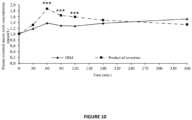
- the product of the invention and SBM originated from the same soy batch. Blood samples were collected at time points 0, 30, 60, 90, 120, 180 and 360 minutes after feeding. Plasma was analysed for individual amino acids. The results are shown in Figure 10 .
Landscapes
- Life Sciences & Earth Sciences (AREA)
- Chemical & Material Sciences (AREA)
- Polymers & Plastics (AREA)
- Engineering & Computer Science (AREA)
- Zoology (AREA)
- Food Science & Technology (AREA)
- Animal Husbandry (AREA)
- Birds (AREA)
- Biotechnology (AREA)
- Molecular Biology (AREA)
- Physiology (AREA)
- Health & Medical Sciences (AREA)
- Mycology (AREA)
- Botany (AREA)
- Sustainable Development (AREA)
- Biochemistry (AREA)
- Biomedical Technology (AREA)
- Microbiology (AREA)
- Feed For Specific Animals (AREA)
- Fodder In General (AREA)
- Medicines Containing Material From Animals Or Micro-Organisms (AREA)
- Medicines Containing Plant Substances (AREA)
Description
- The present invention relates to a feed ingredient derived from dehulled and defatted soybean meal and spent brewer's yeast, a method for its preparation, and use of the feed ingredient.
- There is a need for bio-products that primarily can be used as food or feed or as ingredients in food or feed. The basic constituents in such products are proteins, fats, and carbohydrates. Suitable biomasses for such products are oil bearing crops such as oilseeds, cereals, and legumes. Cereals have a protein content up to 15 % e.g. in wheat, and legumes have a protein content of up to 40 % e.g. in soybeans, based on dry matter.
- In particular, soybean meal is widely used in animal feed as a source of protein and energy. Beans are important ingredients in animal feeds because of the high protein content. However, beans are also a source of energy due to their oil content. Oil is typically extracted and used in other applications, hereafter the defatted soybean can be used as a principal source of protein in animal feed.
- Soybeans are also rich in fiber. Generally, fibers have been considered as anti-nutritional factors because monogastric animals and in particular young animals are not able to degrade fiber due to an unmatured gastro-intestinal microbiota. Fibers are carbohydrates combined by different molecular bindings, and molecular structures, and collectively described as molecules not digested in the small intestine, and includes non-starch polysaccharides (NSP). Fibers can be degraded in the lower part of the digestive systems by the host microbiota through the physiological process of incomplete fermentation. Fiber was originally considered to be an anti-nutritional factor as animals was not able to degrade non-starch polysaccharides (NSP) and subsequently utilize the degradation products e.g. organic acids.
- New and more advanced feed additives in the form of either in-feed enzymes or probiotics are now available in animal feed. The purpose of some specific feed additives is to utilize more of the beans and through that minimize excreta and improve utilization of the bean. In some animal feeding, it is now common to add "exogenous" enzymes to the final diet formulation, but the enzyme is not in action before it is consumed with the rest of the diet, working in the gut environment of the animal (Kiarie et al 2013, Scapini et al 2018). The use of yeast as a production aid to degrade NSP and protein structures of soybeans has only been described to a limited degree.
- Surprisingly, it has now been found by the present inventors, that when one treats a biomass comprising at least 50 % by weight soybean with yeast added in a specified amount, the process can degrade NSP and protein structures; the yeast expresses specific carbohydrate and protein targeting/modifying enzymes.
- Accordingly, the object of the present invention is to provide a new fermented feed ingredient having a higher content of soluble NSP than soybean meal after processing with yeast.
- Another object is to provide a product having a beneficial peptide size distribution. By feeding an animal with the product of the invention, more protein will be absorbed in the small intestine so that less protein will be bypassing the small intestine and become excreted in the faeces.
- Yet another object is to provide a new product that produces organic acids when fed to the animal and provide more energy to the animals.
- It is also an object to provide a method for preparing the new feed ingredient.
- Finally, it is an object to provide improved growth performance and better weight uniformity in pre-weaned animals as a response to better utilization of the feed ingredient.
- These objects are fulfilled with the product of the present invention.
WO 2006/102907 A1 describes fermented protein rich products on basis of fermented pulses and yeast, wherein the fermentation is followed by a heating step. - Accordingly, in a first aspect the present invention relates to a fermented feed ingredient derived from spent brewer's yeast and a biomass of proteinaceous plant parts, where said biomass comprises 50% by weight or more of dehulled and defatted soybean meal, wherein the crude protein content of said feed ingredient is in the range of from 35% to 65% by weight on dry matter basis, and wherein from 2% to 8% by weight on dry matter basis of the protein is derived from yeast, and wherein the feed ingredient comprises at least 10 % more of soluble non-starch polysaccharides (NSP) than the biomass from where the feed ingredient is derived.
- In a second aspect the invention relates to a method for preparing a fermented feed ingredient according to the invention, the method comprising mixing a biomass of proteinaceous plant parts, where said biomass comprises 50% by weight or more of dehulled and defatted soybean meal with spent brewer's yeast in a ratio of biomass to yeast of 100:2 to 100:8 by weight of dry matter, and water, to a reaction dry matter content of 44% to 53% and feeding the resulting mixture to a reaction container, where after the mixture is incubated for 8-20 hours at 24-35 °C, optionally heat treated, and dried to 3% to 10% moisture.
- Surprisingly, the present inventors have found that when they apply spent brewer's yeast in a specified amount, the enzymes - having carbohydrase activity (such as NSP-ase activity) and protease activity - can modify the structures of the NSP and the proteins in soybean meal (SBM) in a favourable way. Therefore, when a biomass comprising predominantly soybean meal, e.g. with at least 50 % by weight SBM, is processed with spent brewer's yeast it is possible to solubilise a part of the insoluble NSP in the biomass thereby providing a new feed ingredient having a higher content of soluble NSP than the soybean meal. Degradation of NSP in the soybeans and the production of organic acids when fed to the animal provide more energy to the animals, in piglets as well as all other (farming and domestic) animals, and also provides improved growth performance and better weight uniformity in pre-weaned animals as a response to better utilization of the feed ingredient.
- In addition to increased solubility of the NSP, the new product has surprisingly further improved product characteristics when comparing to its raw material in the form of a beneficial peptide size distribution of the protein.
- In a third aspect, the invention further provides a feed product or a nutritional supplement for production animals containing from 0.5 to 99% by weight of the feed ingredient of the invention, such as a feed product for use in a diet for production animals, preferably newborn and young animals, such as piglets, calves, and poultry.
- In a 4th aspect, the invention relates to use of a fermented feed ingredient according to the invention for the manufacture of a processed feed product for animal consumption.
- A fermented feed ingredient derived from spent brewer's yeast and a biomass of proteinaceous plant parts is described, where said biomass comprises 50% by weight or more of dehulled and defatted soybean meal, wherein the crude protein content of said feed ingredient is in the range of from 35% to 65% by weight on dry matter basis, and wherein from 2% to 8% by weight on dry matter basis of the protein is derived from yeast.
- In the context of the present invention, the following terms are meant to comprise the following, unless defined elsewhere in the description.
- Comprises biological material produced by the photosynthesis and that can be used in industrial production. In the present context, biomass refers to proteinaceous plant parts - e.g. comprising 50% by weight or more of dehulled and defatted soybean meal. The remaining proteinaceous plant parts may e.g. be selected from seeds, cereals, pulses, grasses, such as beans, peas, and Lucerne, and mixtures thereof.
- Refers to plant matter in the form of soybean products, in particular products from soy beans, and mixtures thereof. The soybean can be from any soybean source, such as from South or North America or Asia or Europe, and it can be of gene modified origin (GMO) or of non-gene modified origin (non-GMO). Soybean meal (SBM) is dehulled and defatted soybean.
- Dietary fibres comprise soluble and insoluble, non-starch polysaccharides (NSP) and may comprise oligosaccharides, lignin, and resistant starch. The raw biomasses selected in the context of the present invention only contain minor amounts of oligosaccharides and resistant starch, or are substantially free of resistant starch. Four main analytical methods are used to describe fibers in animal feeds. The dietary fiber analysis is the most detailed and descriptive methodology to identify different fiber fractions. The methodology quantifies the content of both soluble and insoluble non-starch polysaccharides (NSP) (Englyst et al., 1994).
- Spent brewer's yeast is known to the skilled person and is a by-product from brewing. Spent brewer's yeast may e.g. belong to the Saccharomyces cerevisiae strains.
- Comprise ready-to-use feed or feed ingredients for production animals such as piglets, calves, poultry, furred animals, and sheep.
- The term "comprising" is to be interpreted as specifying the presence of the stated part(s), step(s), feature(s), composition(s), chemical(s), or component(s), but does not exclude the presence of one or more additional parts, steps, features, compositions, chemicals or components. E.g., a composition comprising a chemical compound may thus comprise additional chemical compounds, etc.
- The invention is illustrated in the drawing, wherein:
-
Figure 1 shows screening results of the content of soluble and insoluble NSP in five different batches (batches 1-5) of the invention processed with spent-brewer's yeast and corresponding SBM (raw untreated) products (SBM 1-5). -
Figure 2a shows the production of organic acids in the animal after feeding with a product of the invention in comparison with feeding with untreated SBM. -
Figure 2b shows the increase in metabolisable energy (ME) in the animal after feeding with a product of the invention in comparison with feeding with untreated SBM. -
Figure 3 shows the growth performance (body weight/age) in calves after feeding with a product of the invention in comparison with feeding untreated SBM. -
Figure 4 shows the weight uniformity in pre-weaned calves after feeding with a product of the invention in comparison with feeding with untreated SBM. -
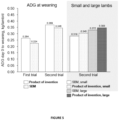
Figures 5 and6 show the growth performance and weight uniformity in lambs after feeding with a product of the invention in comparison with feeding with untreated SBM. -
Figures 7 and8 show the relative peptide size distribution in five different batches (batches 6-10) of the invention processed with spent-brewer's yeast and corresponding SBM (raw untreated) products (SBM 6-10). -
Figure 9 shows peptide size distribution in the soluble phase of two different batches of the invention and corresponding SBM (raw untreated) products. -
Figure 10 shows plasma analysis for individual amino acids in blood samples after feeding with a product of the invention and untreated SBM, respectively, originated from the same soy batch. Blood samples were collected attime points - In its first aspect, the invention relates to a fermented feed ingredient derived from spent brewer's yeast and a biomass of proteinaceous plant parts, where said biomass comprises 50% by weight or more of dehulled and defatted soybean meal, wherein the crude protein content of said feed ingredient is in the range of from 35% to 65% by weight on dry matter basis, and wherein from 2% to 8% by weight on dry matter basis of the protein is derived from yeast, and wherein the feed ingredient comprises at least 10 % more of soluble non-starch polysaccharides (NSP) than the biomass from where the feed ingredient is derived.
- In one embodiment of the invention in its first aspect, the spent brewer's yeast may e.g. be present in an amount of from 2 to 8 %, such as 2%, 2.5%, 3%, 3.5%, 4%, 4.5, 5°/, 6%, 7%, or 8% by weight of dry matter.
- In any of the embodiments of this aspect, the biomass of proteinaceous plant part may comprise 50% by weight or less of proteinaceous plant part other than dehulled and defatted soybean meal.
- Also disclosed herein, in a fifth aspect, is a fermented feed ingredient derived from spent brewer's yeast and a biomass of proteinaceous plant parts, where said biomass comprises 50% by weight or more of dehulled and defatted soybean meal, wherein the crude protein content of said feed ingredient is in the range of from 35% to 65% by weight on dry matter basis, and wherein from 2% to 8% by weight on dry matter basis of the protein is derived from yeast.
- In one embodiment of the invention in its fifth aspect, the spent brewer's yeast may e.g. be present in an amount of from 2 to 8 %, such as 2%, 2.5%, 3%, 3.5%, 4%, 4.5, 5°/, 6%, 7%, or 8% by weight of dry matter.
- In any of the embodiments of this aspect, the biomass of proteinaceous plant part may comprise 50% by weight or less of proteinaceous plant part other than dehulled and defatted soybean meal.
- In any of the embodiments of the invention, the biomass of proteinaceous plant part may comprise at least 55% by weight of dehulled and defatted soybean meal, such as at least 60% by weight, such as at least 65% by weight, such as at least 70% by weight, such as at least 75% by weight, such as at least 80% by weight, such as at least 85% by weight, such as at least 90% by weight, such as at least 95% by weight, or such as at least 99% by weight of dehulled and defatted soybean meal.
- In any of the embodiments of the invention, the biomass of proteinaceous plant part may comprise dehulled and defatted soybean meal in the range of from 50% to 100% by weight, such as in the range of from 60% to 100% by weight, such as in the range of from 70% to 100% by weight, such as in the range of from 80% to 100% by weight.
- In any of the embodiments of the invention, the crude protein content of the feed ingredient may be in the range of from 40% to 65% by weight on dry matter basis, such as in the range of from 45% to 65% by weight on dry matter basis, or such as in the range of from 50% to 60% by weight on dry matter basis.
- In any of the embodiments of the invention, from 2% to 6°/ by weight on dry matter basis of the protein may be derived from yeast, or such as from 2% to 5% by weight on dry matter basis of the protein may be derived from yeast.
- That the feed ingredient comprises at least 10 % more of soluble non-starch polysaccharides (NSP) than the biomass from where the feed ingredient is derived means that the amount of NSP in the feed ingredient is at least 10% higher than the amount of NSP in the biomass from where the feed ingredient is derived. The content of soluble and insoluble NSP in the feed ingredient and in the specific biomass from where the feed ingredient is derived can be determined by analysis according to the Dietary fiber analysis (Englyst et al., 1994). The data as disclosed herein shows that the feed ingredient comprises at least 10 % more of soluble non-starch polysaccharides (NSP) than the biomass from where the feed ingredient is derived. Hence, there has been a modification of the NSP structure caused by NSP-ase active enzymes expressed by the spent brewer's yeast.
- In any of the embodiments of the invention, the feed ingredient may comprise at least 15 % more of soluble NSP than the biomass from where the feed ingredient is derived.
- In any of the embodiments of the invention, the feed ingredient may comprise at least 20 % more of soluble NSP than the biomass from where the feed ingredient is derived.
- In any of the embodiments of the invention, the feed ingredient may comprise in the range of from 10% to 50% more of soluble NSP than the biomass from where the feed ingredient is derived.
- In any of the embodiments of the invention, the feed ingredient may have an at least 2% (MJ/kg DM)increased amount of metabolisable energy (ME) compared to the amount of ME in the biomass from where the feed ingredient is derived.
- In any of the embodiments of the invention, the feed ingredient may have an increased amount of metabolisable energy (ME) in the range of from 1.5% to 10% (MJ/kg DM) compared to the amount of ME in the biomass from where the feed ingredient is derived.
- In any of the embodiments of the invention, the feed ingredient may comprise at least 5 % less insoluble NSP than the biomass from where the feed ingredient is derived.
- In any of the embodiments of the invention, the feed ingredient may have a higher fraction of soluble peptides below 20 kDa compared to the fraction of soluble peptides below 20 kDa in the biomass from where the feed ingredient is derived.
- In any of the embodiments of the invention, the feed ingredient have a higher fraction of soluble peptides below 20 kDa of 6-10 % compared to the fraction of soluble peptides below 20 kDa in the biomass from where the feed ingredient is derived.
- The product of the invention can be prepared by a method wherein a biomass comprising 50% by weight or more of dehulled and defatted soybean meal is mixed with spent brewer's yeast in a ratio of 100:2 to 100:8 of soybean meal: yeast by weight of dry matter, and water, to a reaction dry matter content of 44% to 53% by weight and fed to a reaction container, where after the mixture is incubated for 8-20 hours at 24-35 °C, optionally heat treated, and then dried to 3% to 10% moisture.
- Accordingly, in its second aspect, the invention relates to a method for preparing a fermented feed ingredient according to any of the claims 1-12 comprising mixing a biomass of proteinaceous plant parts, where said biomass comprises 50% by weight or more of dehulled and defatted soybean meal with spent brewer's yeast in a ratio of biomass to yeast of 100:2 to 100:8 by weight of dry matter, and water, to a reaction dry matter content of 44% to 53% by weight and feeding the resulting mixture to a reaction container, where after the mixture is incubated for 8-20 hours at 24-35 °C , optionally heat treated, and dried to 3% to 10% moisture.
- In any embodiment of the method of the invention, the a ratio of biomass to yeast may e.g. be 100:2, 100:3, 100:4, 100:5, 100:6, 100:7, or 100:8 by weight of dry matter.
- In any of the embodiments of the method of the invention, the dry matter content in the reaction mixture fed to the reaction container, may by 44%, 45%, 46%, 47%, 48%, 49%, 50%, 51%, 52% or 53% by weight.
- In any embodiments of the method of the invention, the skilled person would be able to select reaction temperature and time.
- A feed product or a nutritional supplement for production animals containing from 0.5% to 99% by weight of the feed ingredient of the invention is described. In any embodiment of the invention in this aspect, the feed product or nutritional supplement may be for use in a diet for production animals, such as a diet for improving performance in production animals, in particular newborn and young animals, such as piglets, calves, and poultry.
- In another aspect of the invention, use of a feed ingredient according to the invention in a diet for production animals, in particular newborn and young animals, such as piglets, calves, and chickens is disclosed.
- Five batches of the product of invention were prepared from five different raw material hatches as follows:
Five samples of dehulled and defatted soybean meal were mixed with spent brewer's yeast in a ratio of soybean meal : yeast of approximately 100:2 to 100:5 by weight of dry matter, and water, to a reaction dry matter content in the starting mixture of approximately 50% and fed to a reaction container, where after the mixture is incubated for at least 8 hours at 24-35 °C , optionally heat treated, and then dried to 5% to 8% moisture. - The protein content and moisture of the five products were determined to the following:
Batch 1Batch 2Batch 3Batch 4Batch 5Protein as is wt% (Dumas) 56.65% 55.80% 55.00% 56.24% 58.17% Moisture (103°C 4h) 7.17% 7.40% 7.72% 6.92% 5.37% - In this screening, the content of soluble and insoluble NSP in batch 1-5 of example A and five corresponding SBM products (SBM 1-5) (reference products - corresponding samples of dehulled and defatted soybean meal) was determined. The reference products are originating from the exact same biomasses as used to produce the corresponding batches, e.g. the biomass used to produce
batch 1 are the same biomass asSBM 1 and so forth. - The content of soluble and insoluble NSP's in the products were analysed according to the Dietary fiber analysis (Englyst et al., 1994).
- The results are illustrated in
Figure 1 , which shows both the content of soluble NSP (S-NSP) and insoluble NSP (I-NSP) for each screening and the average of the results of the screening. The results show that the content of S-NSP in the batches is on average 6.4°/ by weight, as compared to 5.1 % by weight in the untreated SBM reference product. This means, on average, that about 25 % more of the NSP were made soluble during the processing of the SBM into the product of the invention by processing with the yeast. - Note: During the incubation process of the biomass, 9% by weight of the biomass was lost (due to loss of anti-nutritional factors (ANF's)), whereby the other nutrients were up-concentrated. The products comprised about 55-56% by weight crude protein. The NSP fractions were also up-concentrated. If the increased content of S-NSP was solely due to up-concentration, the content would be:
5.1 weight % S-NSP (in the SBM reference product)/0.91 (loss of 9% biomass) => 5.6%, which is less than the actual result of 6.4 weight %. - This shows that there has been a modification of the NSP structure caused by NSP-ase active enzymes expressed by the spent brewer's yeast.
- An experiment was performed to describe the improved organic acid production in the gut system in pre-weaned calves and the corresponding increase in energy value of the feed ingredient based on Ex-Vivo trials.
- Six samples from the same biomass (soy) batch were used: Two samples of untreated SBM and four samples of the product of the invention disclosed herein . The six feed samples were ground to 1 mm, and 0.5±0.030 g of each of the six feed samples was placed into a 100 mL incubation jar (Duran®). Four replicates were made of each feed (n=24) along with four jars without feed (inoculum baseline fermentation, referred to as blanks). Fresh abomasal (340 mL from each calf) and ruminal (50 mL from each calf) fluid (pH: 4.8-5.2) was pooled from 3 male calves, i.e. a total of 390 mL fluid from each calf. The calves were 3-6 weeks old, from the same farm and fed the same diet, consisting mainly of whole milk. The rumen were transported directly to the lab in pre-heated (~39°C) thermos boxes. Abomasal and ruminal fluid was filtered through double layered cheesecloth. A rumen buffer media was prepared by adding the filtered abomasal and ruminal fluid to a standard buffer solution, which was prepared as described by Menke and Steingass (1988).
- All six feed samples and 90 ml of the rumen buffer media were added to each bottle, flushed with CO2 and incubated at 39°C for 48 hours. Cumulative gas production was recorded every 10 min. using the ANKOMRF system (vented at 51.71 mbar), as described by Cattani et al. (2014). The reaction was stopped after 48 hours by placing the jars on ice. Filtered fluid from each incubation bottle was collected for organic acid analyses. Energy content (ME, MJ/kgDM) of feeds was calculated based on 24 hours fermentation by using the German energy evaluation system (DLG, 2013
- The results of organic acid production and the metabolisable energy are shown in
Figures 2a and 2b , respectively. As can be seen from thefigure 2a , between 18 and 27% higher organic acid production in the calves fed on the products of the invention is o compared to calves fed on unprocessed SBM. This corresponds to 3% higher metabolisable energy in the product of the invention compared to SBM. Young animals digestive system is not fully developed and hence, they have difficulties in digesting the insoluble NSP fractions whereas they are able to digest the soluble NSP fractions. When the animals in this example are fed with the product of the invention, having a higher amount of soluble NSP than the untreated SBM, the results show that they will have a higher amount of organic acids in the gut than if fed with the untreated SBM. - An experiment was performed to describe the improved growth performance and better weight uniformity in pre-weaned calves as a response to better utilization of the feed ingredient.
- The trial was performed on a commercial farm in the Netherlands. A total of 121 calves arrived on the same day at 2 weeks of age (14.77±0.18 days; 54.16±0.33 kg body weight [mean±SEM; standard error of the mean]) and were weaned at 6-8 weeks of age. Calves were group housed.
- Feeding: Diets were formulated according to Dutch Feed Recommendation system (20% crude protein in starter feed), and two dietary treatments were fed:
- SBM = 13.75% inclusion rate Control)
- product of the invention = 16.03% inclusion rate
- Diets were fed for ad libitum consumption from start (2 weeks of age) to the eighth week of trial (= 10 weeks of age).
- Measurements: Body weight (BW) was measured at the start of the trial (~
week 2 of age), atweek figure 3 . - The calves fed on the product of the invention were small at the beginning of the trial, but at 15 weeks of age the calves became significantly heavier than the SBM fed calves. At slaughter the calves were 5 kg heavier and carcass weight was 2 kg heavier than SBM fed calves. Better weight uniformity was obtained when the product of the invention was fed. On arrival at the farm, calves were split into two groups depending on their weight above or below 54kg. Little calves reached the same weight as bigger calves by
week 15 when fed the product of the invention, whereas little calves fed untreated SBM were significantly smaller. The trend lasted throughout the entire experiment. These data indicate that more energy and nutrients were provided from the product of the invention and that young animals benefitted more from a pre-digested fed. The results are shown inFigure 4 . - An experiment was performed to describe the improved growth performance and better uniformity in lambs as a response to better utilization of the feed ingredient.
- The trial was performed on a commercial feedlot farm South Africa.
- Two identical trials with sheep were performed with Dormer or the Dohne Merino breeds. Lambs were allocated to one of two treatments (19.3% crude protein; 11.9 MJ ME/kg):
- Control: SBM (19.5% inclusion rate in the starter feed)
- Test: product of the invention (15% inclusion rate in the starter feed)
- Lambs were weaned at the age of 54 days, weighed at birth and at weaning.
- Lambs gained more weight when the product of the invention compared to untreated SBM. Lambs fed product of the invention were more uniform in weight. The results are shown in
Figures 5 and6 . - Five samples of raw materials and corresponding untreated SBM products were prepared in PBS extraction buffer (10% solution). After 24 hours of extraction, all samples were heated at 95°C for 15min and centrifuged. Supernatants were diluted in sample buffer according to Laemmli et al. (Laemmli et al., 1970) and loaded on Criterion TGX, Precast Gels (Bio-Rad) using The Criterion Cell (Bio-Ras, 1656019). The gel was fixed and stained with Coomassie brilliant blue.
- Quantification of the gel provides the following results:
Protein size kDa SBM 6 Batch 6SBM 7Batch 7SBM 8Batch 8SBM 9Batch 9SBM 10Batch 10≥60 34.2% 34.7% 34.0% 34.6% 31.4% 32.0% 34.7% 35.0% 33.2% 33.9% 20-60 42.2% 40.2% 40.8% 38.6% 41.6% 39.0% 41.9% 38.9% 40.9% 39.1% ≤20 23.6% 25.1% 25.2% 26.8% 27.0% 29.0% 23.5% 26.1% 25.9% 27.0% - The results are illustrated in
Figures 7 and8 .Peptide size kDa Average SBM Average Product of the invention >60 33.5 34.0 20-60 41.5 39.2 <20 25.0 26.7 - SDS quantification determines the fraction of total soluble protein within a given range of peptide sizes. The product of the invention contains a higher fraction of soluble peptides below 20 kDa. This is illustrated in
Figure 9 . Besides the increased fraction of smaller peptides, the composition of peptides within each size category seems to be more optimal for the product of invention as it favours utilization within the animal. Improved utilization within the animal is seen by increased speed of absorption in the intestine as further illustrated in example 6. - An experiment was performed to describe the improved lysine absorption in weaning piglets.
- A total of 7 cross-bred (Danish Landrace, Yorkshire x Duroc) pigs with an average body weight of 18 ± 1.25 kg were fed a commercial diet prior to the study. The pigs were fitted with a
jugular vein catheter 3 days before the experimental period. Starting with day one of the trial, the pigs were fed the experimental diet (product of the invention (batches) as listed in example 5) in the morning fromday 4 to 5 for 15 min. and received ad libitum of the commercial diet (untreated SBM as listed in example 5) in the afternoon, followed by feed withdrawal after an hour from feeding. Diets were balanced on 20% crude protein. The product of the invention and SBM originated from the same soy batch. Blood samples were collected attime points Figure 10 . - As can be seen from the results, peak absorption of essential amino acids is 60 min. post feeding in the product of the invention and more essential amino acids are available and absorbed faster. Amino acid absorption and the following deposition in the muscles of the animals requires energy. Energy comes from sugar and starch which is absorbed quickly (within an hour) by the animals, so by time-optimising the absorption of both energy and amino acids, a higher muscle formation is the result. In the product of the invention, the concentration of amino acids are higher which will entail that more amino acids can be deposited in the muscles of the animal and hence the animal will increase weight faster.
-
- Englyst HN, Quigley ME and Hudson GJ (1994) Analyst, 119, 1497-1509.
- Cattani, M., Tagliapietra, F., Maccarana, L., Hansen, H.H., Bailoni, L., Schiavon, S. 2014. In vitro total gas and methane production measurements from closed or vented rumen batch culture systems. Journal of Dairy Science, 97:1736-1741.
- DLG, 2013. Arbeitskreises Futter und Fütterung: Leitfaden zur Berechnung des Energiegehaltes bei Einzel- und Mischfuttermitteln für die Schweine- und Rinderfütterung. DLG Verlag.
- Menke, K.H., Steingass, H. 1988. Estimation of the energetic feed value obtained from chemical analysis and in vitro gas production using rumen fluid. Animal Research and Development, 10:7-55.
- Laemmli, U.K. 1970. Cleavage of Structural Proteins during the Assembly of the Head of Bacteriophage T4. Nature vol. 227 680-685.
Claims (14)
- A fermented feed ingredient derived from spent brewer's yeast and a biomass of proteinaceous plant parts, where said biomass comprises 50% by weight or more of dehulled and defatted soybean meal, wherein the crude protein content of said fermented feed ingredient is in the range of from 35% to 65% by weight on dry matter basis, wherein from 2% to 8% by weight on dry matter basis of the protein is derived from yeast, and wherein part of the insoluble non-starch polysaccharides (NSP) present in said biomass has been solubilised by processing with the spent brewer's yeast whereby said fermented feed ingredient comprises an at least 10 % higher content of soluble non-starch polysaccharides (NSP) than the unprocessed soybean meal in said biomass.
- The fermented feed ingredient according to claim 1 wherein the biomass of proteinaceous plant part comprises 50% by weight or less of proteinaceous plant part other than dehulled and defatted soybean meal.
- The fermented feed ingredient according to any of the proceeding claims wherein the biomass of proteinaceous plant part comprises at least 55% by weight of dehulled and defatted soybean meal, such as at least 60% by weight, such as at least 65% by weight, such as at least 70% by weight, such as at least 75% by weight, such as at least 80% by weight, such as at least 85% by weight, such as at least 90% by weight, such as at least 95% by weight, or such as at least 99% by weight of dehulled and defatted soybean meal.
- The fermented feed ingredient according to any of the proceeding claims wherein the biomass of proteinaceous plant part comprises dehulled and defatted soybean meal in the range of from 50% to 100% by weight, such as in the range of from 60% to 100% by weight, such as in the range of from 70% to 100% by weight, such as in the range of from 80% to 100% by weight.
- The fermented feed ingredient according to any of the proceeding claims wherein the crude protein content of said fermented feed ingredient is in the range of from 40% to 65% by weight on dry matter basis, such as in the range of from 45% to 65% by weight on dry matter basis, or such as in the range of from 50% to 60% by weight on dry matter basis.
- The fermented feed ingredient according to any of the proceeding claims wherein from 2% to 6% by weight on dry matter basis of the protein is derived from yeast, or such as from 2% to 5% by weight on dry matter basis of the protein is derived from yeast.
- The fermented feed ingredient according to any of the proceeding claims wherein said fermented feed ingredient comprises an at least 15 % higher content of soluble NSP than the unprocessed soybean meal in said biomass, such as an at least 20 % higher content.
- The fermented feed ingredient according to any of the proceeding claims wherein said fermented feed ingredient comprises a higher content of soluble NSP in the range of from 10% to 50% than the unprocessed soybean meal in the biomass.
- The fermented feed ingredient according to any of the proceeding claims wherein said fermented feed ingredient is having an at least 2% (MJ/kg DM) increased amount of metabolisable energy (ME) compared to the amount of ME in the biomass from where the feed ingredient is derived.
- The fermented feed ingredient according to any of the proceeding claims wherein said fermented feed ingredient is having an increased amount of metabolisable energy (ME) in the range of from 1.5% to 10% (MJ/kg DM) compared to the amount of ME in the biomass from where the feed ingredient is derived.
- The fermented feed ingredient according to any of the proceeding claims, wherein said fermented feed ingredient comprises an at least 5 % lower content of insoluble non-starch polysaccharides (NSP) than the unprocessed soybean meal in said biomass.
- The fermented feed ingredient according to any of the proceeding claims wherein said fermented feed ingredient is having a higher fraction of soluble peptides below 20 kDa compared to the fraction of soluble peptides below 20 kDa in the biomass from where the feed ingredient is derived.
- Method for preparing a fermented feed ingredient according to any of the claims 1-12 comprising mixing a biomass of proteinaceous plant parts, where said biomass comprises 50% by weight or more of dehulled and defatted soybean meal with spent brewer's yeast in a ratio of biomass to yeast of 100:2 to 100:8 by weight of dry matter, and water, to a reaction dry matter content of 44% to 53% by weight and feeding the resulting mixture to a reaction container, where after the mixture is incubated for 8-20 hours at 24-35 °C, optionally heat treated, and dried to 3% to 10% moisture.
- Use of a fermented feed ingredient according to any of the claims 1-12 for the manufacture of a processed feed product for animal consumption, preferably wherein the animal are production animals, more preferably newborn and young animals, such as piglets, calves, and poultry, in need of prebiotic oligosaccharides.
Applications Claiming Priority (2)
| Application Number | Priority Date | Filing Date | Title |
|---|---|---|---|
| EP21160730.4A EP4052588B1 (en) | 2021-03-04 | 2021-03-04 | Feed ingredient derived from biomasses of soybean meal |
| PCT/EP2021/073868 WO2022184285A1 (en) | 2021-03-04 | 2021-08-30 | Feed ingredient derived from biomasses of soybean meal |
Publications (2)
| Publication Number | Publication Date |
|---|---|
| EP4301157A1 EP4301157A1 (en) | 2024-01-10 |
| EP4301157B1 true EP4301157B1 (en) | 2024-10-23 |
Family
ID=74858342
Family Applications (2)
| Application Number | Title | Priority Date | Filing Date |
|---|---|---|---|
| EP21160730.4A Active EP4052588B1 (en) | 2021-03-04 | 2021-03-04 | Feed ingredient derived from biomasses of soybean meal |
| EP21770181.2A Active EP4301157B1 (en) | 2021-03-04 | 2021-08-30 | Feed ingredient derived from biomasses of soybean meal |
Family Applications Before (1)
| Application Number | Title | Priority Date | Filing Date |
|---|---|---|---|
| EP21160730.4A Active EP4052588B1 (en) | 2021-03-04 | 2021-03-04 | Feed ingredient derived from biomasses of soybean meal |
Country Status (11)
| Country | Link |
|---|---|
| US (1) | US20240138441A1 (en) |
| EP (2) | EP4052588B1 (en) |
| JP (1) | JP7781902B2 (en) |
| KR (1) | KR20230148848A (en) |
| CN (1) | CN116801726A (en) |
| AR (1) | AR125020A1 (en) |
| CA (1) | CA3208088A1 (en) |
| DK (1) | DK4301157T3 (en) |
| ES (1) | ES2999300T3 (en) |
| PL (1) | PL4301157T3 (en) |
| WO (1) | WO2022184285A1 (en) |
Citations (1)
| Publication number | Priority date | Publication date | Assignee | Title |
|---|---|---|---|---|
| EP2655644B1 (en) * | 2010-12-22 | 2018-12-12 | Direvo Industrial Biotechnology GmbH | Improving fermentation processes and by-products |
Family Cites Families (6)
| Publication number | Priority date | Publication date | Assignee | Title |
|---|---|---|---|---|
| MY128092A (en) * | 1996-07-10 | 2007-01-31 | Manda Fermentation Co Ltd | Fermented composition, method for manufacturing same, and applications thereof |
| MX2007012132A (en) * | 2005-04-01 | 2008-03-10 | Hamlet Protein As | Fermented protein product. |
| US8153174B2 (en) | 2005-04-01 | 2012-04-10 | Hamlet Protein A/S | Fermented protein product |
| KR101169794B1 (en) * | 2008-12-30 | 2012-07-30 | 진도군 | Additive for feed using distiller's dried grain produced from Jindo-Hongju and manufacturing method thereof and method for breeding pig |
| DK3010352T3 (en) * | 2013-06-21 | 2021-03-08 | Dupont Nutrition Biosci Aps | METHOD OF PREPARING FEED ADDITION |
| CN111296654A (en) * | 2020-03-05 | 2020-06-19 | 浙江科峰生物技术有限公司 | Yeast-derived fermented feed and application thereof |
-
2021
- 2021-03-04 EP EP21160730.4A patent/EP4052588B1/en active Active
- 2021-08-30 US US18/548,923 patent/US20240138441A1/en active Pending
- 2021-08-30 DK DK21770181.2T patent/DK4301157T3/en active
- 2021-08-30 ES ES21770181T patent/ES2999300T3/en active Active
- 2021-08-30 CN CN202180092715.2A patent/CN116801726A/en active Pending
- 2021-08-30 WO PCT/EP2021/073868 patent/WO2022184285A1/en not_active Ceased
- 2021-08-30 JP JP2023553349A patent/JP7781902B2/en active Active
- 2021-08-30 CA CA3208088A patent/CA3208088A1/en active Pending
- 2021-08-30 PL PL21770181.2T patent/PL4301157T3/en unknown
- 2021-08-30 KR KR1020237032958A patent/KR20230148848A/en active Pending
- 2021-08-30 EP EP21770181.2A patent/EP4301157B1/en active Active
-
2022
- 2022-03-03 AR ARP220100470A patent/AR125020A1/en unknown
Patent Citations (1)
| Publication number | Priority date | Publication date | Assignee | Title |
|---|---|---|---|---|
| EP2655644B1 (en) * | 2010-12-22 | 2018-12-12 | Direvo Industrial Biotechnology GmbH | Improving fermentation processes and by-products |
Also Published As
| Publication number | Publication date |
|---|---|
| AR125020A1 (en) | 2023-05-31 |
| WO2022184285A1 (en) | 2022-09-09 |
| ES2999300T3 (en) | 2025-02-25 |
| PL4301157T3 (en) | 2025-03-03 |
| KR20230148848A (en) | 2023-10-25 |
| EP4052588A1 (en) | 2022-09-07 |
| JP7781902B2 (en) | 2025-12-08 |
| EP4301157A1 (en) | 2024-01-10 |
| CA3208088A1 (en) | 2022-09-09 |
| JP2024509832A (en) | 2024-03-05 |
| DK4301157T3 (en) | 2024-12-02 |
| EP4052588B1 (en) | 2026-04-08 |
| US20240138441A1 (en) | 2024-05-02 |
| CN116801726A (en) | 2023-09-22 |
Similar Documents
| Publication | Publication Date | Title |
|---|---|---|
| CN101489412B (en) | Use of bacterial amylases in feed for bovine animals | |
| JP6667454B2 (en) | Use of enzyme compositions in ruminant feed | |
| EP0976838A1 (en) | Enzymes mixture | |
| US6436451B1 (en) | Method of reducing cholesterol in chicken eggs | |
| CN105053566B (en) | A kind of bicycle beam wood seed Pepsin feed addictive and preparation method thereof | |
| Tonukari et al. | A novel pig feed formulation containing Aspergillus niger CSA35 pretreated-cassava peels and its effect on growth and selected biochemical parameters of pigs | |
| EP3735837A1 (en) | Method for producing fermented composition with improved odor using yeast | |
| CN115736090A (en) | Preparation method of fermented roxburgh rose residue coarse feed and application of fermented roxburgh rose residue coarse feed in meat buffalo TMR feed | |
| KR102459207B1 (en) | Mixed feed with fermentation organism mixture and method for manufacturing the same | |
| Getabalew et al. | The application of biotechnology on livestock feed improvement | |
| CN114831211A (en) | Leaven for soybean meal feed | |
| US3243299A (en) | Monogastric feed concentrate containing rumen microorganisms and lactic ferment and process of preparation | |
| EP4052588B1 (en) | Feed ingredient derived from biomasses of soybean meal | |
| Svihus et al. | Effect of different preservation methods for high-moisture barley on feeding value for broiler chickens | |
| Recalde et al. | Feeding almond hulls to light lambs: Effects on growth performance, digestive utilization and blood metabolites | |
| Emmanuel et al. | Nutritive value of fermented cassava peel meal on growth performance and nutrient digestibility of broiler chickens | |
| Ajayi | Ileal crude protein digestibility of feather meal supplemented with protease in broiler chickens | |
| EA048102B1 (en) | FEED INGREDIENT OBTAINED FROM SOYBEAN MEAL BIOMASS | |
| Williams | High protein corn fermentation products for swine derived from corn ethanol production | |
| BR112023013524B1 (en) | FERMENTED FOOD INGREDIENT DERIVED FROM SPENT BREWER'S YEAST AND SOYBEAN MEAL BIOMASS, ITS USE AND METHOD OF PREPARATION | |
| Bölükbaş et al. | Effect of urea and/or crude glycerin treatment on the nutrient composition and in vitro true digestibility of different varieties of rice straw | |
| Armstrong et al. | The application of biotechnology for future livestock production | |
| WO2024194349A1 (en) | Method of preparing a nutritional product from mannan-rich materials | |
| Mahrous et al. | Effect of Feeding Non-Conventional Energy on Productive Performance of Rahmani Lambs. | |
| Jansman et al. | EFFECTS OF DIETARY INCLUSION OF HULLS OF FABA BEANS (VICIA FABA L.) WITH A LOW AND HIGH CONTENT OF CONDENSED TANNINS ON SOME PHYSIOLOGICAL PARAMETERS IN PIGLETS |
Legal Events
| Date | Code | Title | Description |
|---|---|---|---|
| STAA | Information on the status of an ep patent application or granted ep patent |
Free format text: STATUS: UNKNOWN |
|
| STAA | Information on the status of an ep patent application or granted ep patent |
Free format text: STATUS: THE INTERNATIONAL PUBLICATION HAS BEEN MADE |
|
| PUAI | Public reference made under article 153(3) epc to a published international application that has entered the european phase |
Free format text: ORIGINAL CODE: 0009012 |
|
| STAA | Information on the status of an ep patent application or granted ep patent |
Free format text: STATUS: REQUEST FOR EXAMINATION WAS MADE |
|
| 17P | Request for examination filed |
Effective date: 20230911 |
|
| AK | Designated contracting states |
Kind code of ref document: A1 Designated state(s): AL AT BE BG CH CY CZ DE DK EE ES FI FR GB GR HR HU IE IS IT LI LT LU LV MC MK MT NL NO PL PT RO RS SE SI SK SM TR |
|
| DAV | Request for validation of the european patent (deleted) | ||
| DAX | Request for extension of the european patent (deleted) | ||
| GRAP | Despatch of communication of intention to grant a patent |
Free format text: ORIGINAL CODE: EPIDOSNIGR1 |
|
| STAA | Information on the status of an ep patent application or granted ep patent |
Free format text: STATUS: GRANT OF PATENT IS INTENDED |
|
| INTG | Intention to grant announced |
Effective date: 20240710 |
|
| GRAS | Grant fee paid |
Free format text: ORIGINAL CODE: EPIDOSNIGR3 |
|
| GRAA | (expected) grant |
Free format text: ORIGINAL CODE: 0009210 |
|
| STAA | Information on the status of an ep patent application or granted ep patent |
Free format text: STATUS: THE PATENT HAS BEEN GRANTED |
|
| P01 | Opt-out of the competence of the unified patent court (upc) registered |
Free format text: CASE NUMBER: APP_49192/2024 Effective date: 20240829 |
|
| AK | Designated contracting states |
Kind code of ref document: B1 Designated state(s): AL AT BE BG CH CY CZ DE DK EE ES FI FR GB GR HR HU IE IS IT LI LT LU LV MC MK MT NL NO PL PT RO RS SE SI SK SM TR |
|
| REG | Reference to a national code |
Ref country code: GB Ref legal event code: FG4D |
|
| REG | Reference to a national code |
Ref country code: CH Ref legal event code: EP |
|
| REG | Reference to a national code |
Ref country code: DE Ref legal event code: R096 Ref document number: 602021020716 Country of ref document: DE |
|
| REG | Reference to a national code |
Ref country code: IE Ref legal event code: FG4D |
|
| REG | Reference to a national code |
Ref country code: DK Ref legal event code: T3 Effective date: 20241129 |
|
| REG | Reference to a national code |
Ref country code: NL Ref legal event code: FP |
|
| REG | Reference to a national code |
Ref country code: LT Ref legal event code: MG9D Ref country code: ES Ref legal event code: FG2A Ref document number: 2999300 Country of ref document: ES Kind code of ref document: T3 Effective date: 20250225 |
|
| REG | Reference to a national code |
Ref country code: AT Ref legal event code: MK05 Ref document number: 1734042 Country of ref document: AT Kind code of ref document: T Effective date: 20241023 |
|
| PG25 | Lapsed in a contracting state [announced via postgrant information from national office to epo] |
Ref country code: IS Free format text: LAPSE BECAUSE OF FAILURE TO SUBMIT A TRANSLATION OF THE DESCRIPTION OR TO PAY THE FEE WITHIN THE PRESCRIBED TIME-LIMIT Effective date: 20250223 Ref country code: PT Free format text: LAPSE BECAUSE OF FAILURE TO SUBMIT A TRANSLATION OF THE DESCRIPTION OR TO PAY THE FEE WITHIN THE PRESCRIBED TIME-LIMIT Effective date: 20250224 Ref country code: HR Free format text: LAPSE BECAUSE OF FAILURE TO SUBMIT A TRANSLATION OF THE DESCRIPTION OR TO PAY THE FEE WITHIN THE PRESCRIBED TIME-LIMIT Effective date: 20241023 |
|
| PG25 | Lapsed in a contracting state [announced via postgrant information from national office to epo] |
Ref country code: FI Free format text: LAPSE BECAUSE OF FAILURE TO SUBMIT A TRANSLATION OF THE DESCRIPTION OR TO PAY THE FEE WITHIN THE PRESCRIBED TIME-LIMIT Effective date: 20241023 |
|
| PG25 | Lapsed in a contracting state [announced via postgrant information from national office to epo] |
Ref country code: BG Free format text: LAPSE BECAUSE OF FAILURE TO SUBMIT A TRANSLATION OF THE DESCRIPTION OR TO PAY THE FEE WITHIN THE PRESCRIBED TIME-LIMIT Effective date: 20241023 |
|
| PG25 | Lapsed in a contracting state [announced via postgrant information from national office to epo] |
Ref country code: NO Free format text: LAPSE BECAUSE OF FAILURE TO SUBMIT A TRANSLATION OF THE DESCRIPTION OR TO PAY THE FEE WITHIN THE PRESCRIBED TIME-LIMIT Effective date: 20250123 |
|
| PG25 | Lapsed in a contracting state [announced via postgrant information from national office to epo] |
Ref country code: AT Free format text: LAPSE BECAUSE OF FAILURE TO SUBMIT A TRANSLATION OF THE DESCRIPTION OR TO PAY THE FEE WITHIN THE PRESCRIBED TIME-LIMIT Effective date: 20241023 Ref country code: LV Free format text: LAPSE BECAUSE OF FAILURE TO SUBMIT A TRANSLATION OF THE DESCRIPTION OR TO PAY THE FEE WITHIN THE PRESCRIBED TIME-LIMIT Effective date: 20241023 Ref country code: GR Free format text: LAPSE BECAUSE OF FAILURE TO SUBMIT A TRANSLATION OF THE DESCRIPTION OR TO PAY THE FEE WITHIN THE PRESCRIBED TIME-LIMIT Effective date: 20250124 |
|
| PG25 | Lapsed in a contracting state [announced via postgrant information from national office to epo] |
Ref country code: RS Free format text: LAPSE BECAUSE OF FAILURE TO SUBMIT A TRANSLATION OF THE DESCRIPTION OR TO PAY THE FEE WITHIN THE PRESCRIBED TIME-LIMIT Effective date: 20250123 |
|
| PG25 | Lapsed in a contracting state [announced via postgrant information from national office to epo] |
Ref country code: SM Free format text: LAPSE BECAUSE OF FAILURE TO SUBMIT A TRANSLATION OF THE DESCRIPTION OR TO PAY THE FEE WITHIN THE PRESCRIBED TIME-LIMIT Effective date: 20241023 |
|
| PGFP | Annual fee paid to national office [announced via postgrant information from national office to epo] |
Ref country code: DK Payment date: 20250623 Year of fee payment: 5 |
|
| PGFP | Annual fee paid to national office [announced via postgrant information from national office to epo] |
Ref country code: NL Payment date: 20250620 Year of fee payment: 5 |
|
| PG25 | Lapsed in a contracting state [announced via postgrant information from national office to epo] |
Ref country code: EE Free format text: LAPSE BECAUSE OF FAILURE TO SUBMIT A TRANSLATION OF THE DESCRIPTION OR TO PAY THE FEE WITHIN THE PRESCRIBED TIME-LIMIT Effective date: 20241023 |
|
| PG25 | Lapsed in a contracting state [announced via postgrant information from national office to epo] |
Ref country code: RO Free format text: LAPSE BECAUSE OF FAILURE TO SUBMIT A TRANSLATION OF THE DESCRIPTION OR TO PAY THE FEE WITHIN THE PRESCRIBED TIME-LIMIT Effective date: 20241023 |
|
| REG | Reference to a national code |
Ref country code: DE Ref legal event code: R097 Ref document number: 602021020716 Country of ref document: DE |
|
| PG25 | Lapsed in a contracting state [announced via postgrant information from national office to epo] |
Ref country code: SK Free format text: LAPSE BECAUSE OF FAILURE TO SUBMIT A TRANSLATION OF THE DESCRIPTION OR TO PAY THE FEE WITHIN THE PRESCRIBED TIME-LIMIT Effective date: 20241023 |
|
| PG25 | Lapsed in a contracting state [announced via postgrant information from national office to epo] |
Ref country code: CZ Free format text: LAPSE BECAUSE OF FAILURE TO SUBMIT A TRANSLATION OF THE DESCRIPTION OR TO PAY THE FEE WITHIN THE PRESCRIBED TIME-LIMIT Effective date: 20241023 |
|
| PG25 | Lapsed in a contracting state [announced via postgrant information from national office to epo] |
Ref country code: IT Free format text: LAPSE BECAUSE OF FAILURE TO SUBMIT A TRANSLATION OF THE DESCRIPTION OR TO PAY THE FEE WITHIN THE PRESCRIBED TIME-LIMIT Effective date: 20241023 |
|
| PLBE | No opposition filed within time limit |
Free format text: ORIGINAL CODE: 0009261 |
|
| STAA | Information on the status of an ep patent application or granted ep patent |
Free format text: STATUS: NO OPPOSITION FILED WITHIN TIME LIMIT |
|
| PG25 | Lapsed in a contracting state [announced via postgrant information from national office to epo] |
Ref country code: SE Free format text: LAPSE BECAUSE OF FAILURE TO SUBMIT A TRANSLATION OF THE DESCRIPTION OR TO PAY THE FEE WITHIN THE PRESCRIBED TIME-LIMIT Effective date: 20241023 |
|
| 26N | No opposition filed |
Effective date: 20250724 |
|
| PGFP | Annual fee paid to national office [announced via postgrant information from national office to epo] |
Ref country code: DE Payment date: 20250714 Year of fee payment: 5 |
|
| PGFP | Annual fee paid to national office [announced via postgrant information from national office to epo] |
Ref country code: PL Payment date: 20250721 Year of fee payment: 5 |
|
| PGFP | Annual fee paid to national office [announced via postgrant information from national office to epo] |
Ref country code: ES Payment date: 20251027 Year of fee payment: 5 |
|
| REG | Reference to a national code |
Ref country code: CH Ref legal event code: H13 Free format text: ST27 STATUS EVENT CODE: U-0-0-H10-H13 (AS PROVIDED BY THE NATIONAL OFFICE) Effective date: 20260324 |
|
| PG25 | Lapsed in a contracting state [announced via postgrant information from national office to epo] |
Ref country code: MC Free format text: LAPSE BECAUSE OF FAILURE TO SUBMIT A TRANSLATION OF THE DESCRIPTION OR TO PAY THE FEE WITHIN THE PRESCRIBED TIME-LIMIT Effective date: 20241023 |
|
| PG25 | Lapsed in a contracting state [announced via postgrant information from national office to epo] |
Ref country code: LU Free format text: LAPSE BECAUSE OF NON-PAYMENT OF DUE FEES Effective date: 20250830 |
|
| PG25 | Lapsed in a contracting state [announced via postgrant information from national office to epo] |
Ref country code: CH Free format text: LAPSE BECAUSE OF NON-PAYMENT OF DUE FEES Effective date: 20250831 |
|
| GBPC | Gb: european patent ceased through non-payment of renewal fee |
Effective date: 20250830 |